
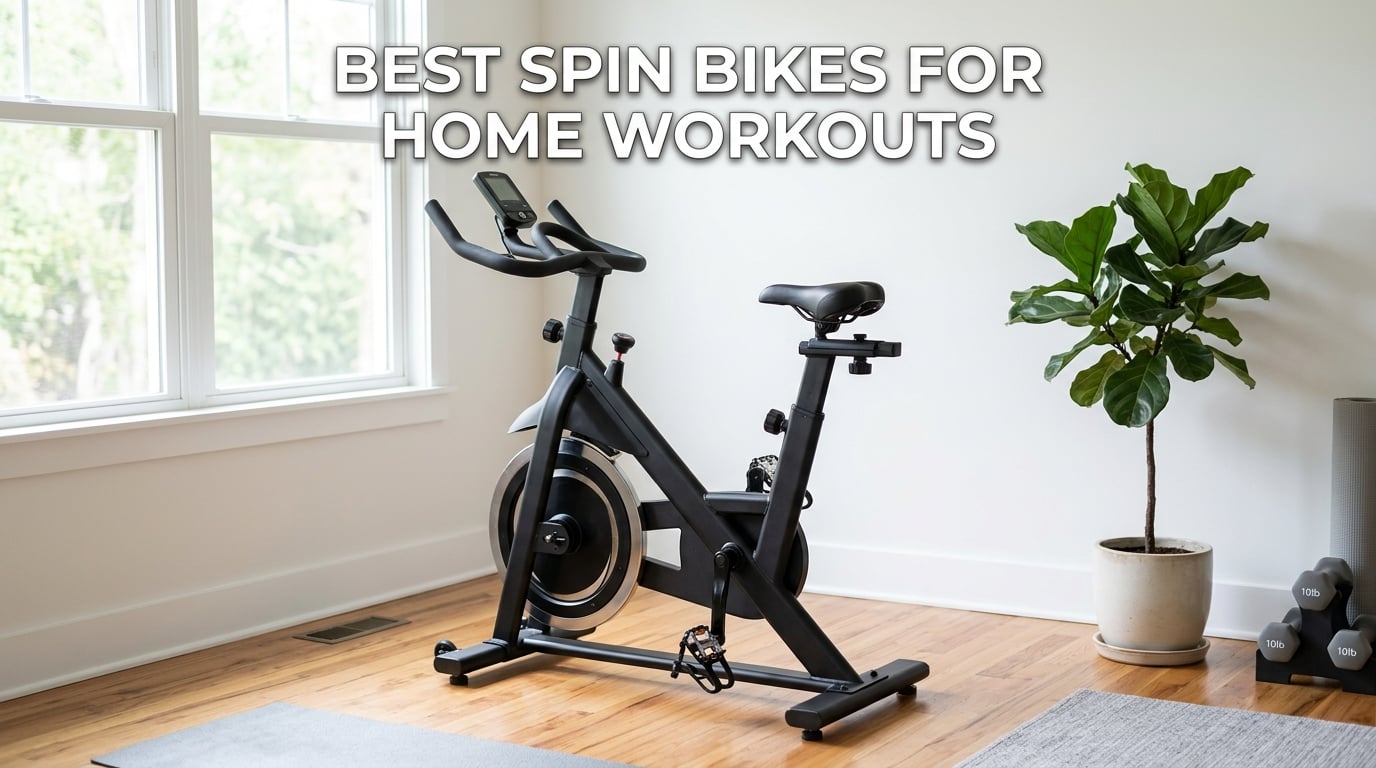
Finding the best spin bikes for home workouts changed how I train. I used to drag myself to the gym three times a week for a 45-minute cycling class, fighting for a bike and paying a premium for the privilege. When I finally set up a stationary bike in my spare bedroom, my consistency jumped almost overnight. No commute, no waiting, no awkward scheduling.
Our team spent over three months testing six of the most popular indoor cycling bikes on the market for this guide. We rode each one through HIIT sessions, steady-state cardio, simulated hill climbs, and long endurance rides. We paid close attention to resistance feel, noise levels, adjustability, app connectivity, and long-term comfort. Whether you want a budget-friendly starter bike or a fully connected premium experience, we have a recommendation that fits.
The best spin bikes for home workouts in 2026 range from under $200 to over $2,600. That spread means there is genuinely something for every budget and fitness level. Below you will find our top three quick picks, a full comparison table, detailed individual reviews, a buying guide covering everything from flywheel weight to Q-factor, and answers to the most common questions buyers have. Let us help you find the right indoor cycling bike for your home gym.
Table of Contents
Top 3 Picks for Best Spin Bikes for Home Workouts (2026)

Schwinn IC Indoor Cycling Bike
- 100 resistance levels
- Dual-sided pedals
- Heart rate monitor
- App compatible
These three bikes represent the best balance of quality, features, and value across the entire price spectrum. The DMASUN earned our Editor’s Choice for its nearly silent magnetic resistance and heavy-duty build. The Schwinn IC Series takes Best Value with its premium feature set at a mid-range price. The YOSUDA is our Budget Pick, offering incredible bang for the buck for first-time buyers.
Best Spin Bikes for Home Workouts (September 2026)
| Product | Specifications | Action |
|---|---|---|
| DMASUN Exercise Bike |
|
Check Latest Price |
| Schwinn IC Indoor Bike |
|
Check Latest Price |
 YOSUDA Exercise Bike YOSUDA Exercise Bike |
|
Check Latest Price |
 MERACH Exercise Bike MERACH Exercise Bike |
|
Check Latest Price |
 Echelon Smart Fitness Bike Echelon Smart Fitness Bike |
|
Check Latest Price |
 Peloton Exercise Bike Peloton Exercise Bike |
|
Check Latest Price |
Here is a quick snapshot of all six bikes we tested side by side. The comparison highlights the key specs that matter most when choosing an indoor cycling bike. Read on for full reviews of each model.
1. DMASUN Exercise Bike – Best Overall for Silent Magnetic Ride
DMASUN Exercise Bike, Silent Magnetic Resistance Stationary Bike for Home with App Compatible, 330 LBS Capacity, Indoor Bike with Comfortable Seat Cushion, Digital Display with Tablet Holder
35lb solid flywheel
Magnetic resistance
330lb capacity
Under 20dB operation
Pros
- Nearly silent magnetic resistance
- Heavy-duty alloy steel frame
- Smooth 35lb flywheel
- App compatible with Zwift and KINOMAP
- Comfortable seat with gel cover included
Cons
- Handlebars only adjust for height
- Lower review count than competitors
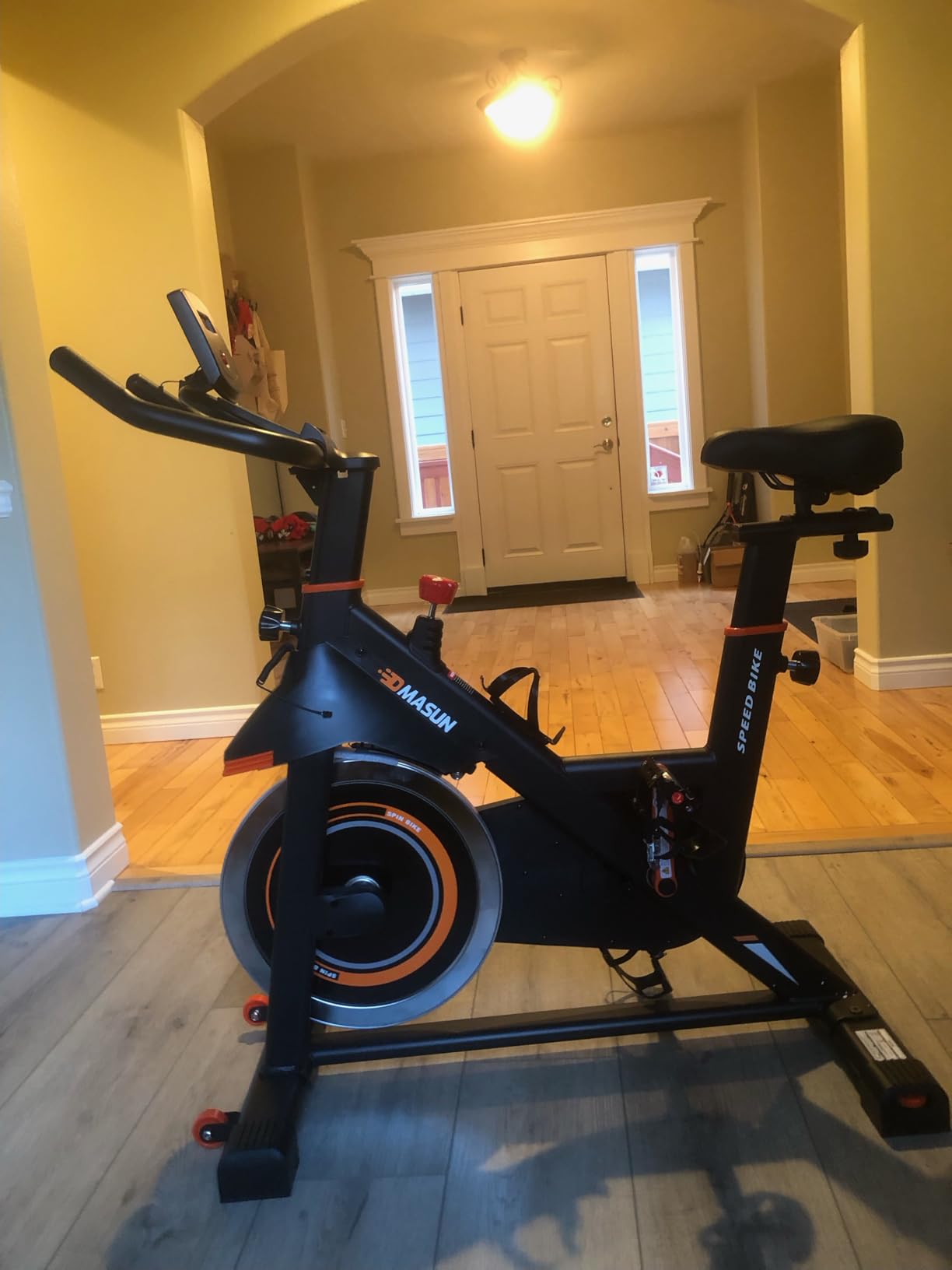
I set up the DMASUN in my apartment living room and was immediately struck by how quiet it is. The magnetic resistance system operates under 20 decibels, which means I can ride at full intensity while my partner watches TV in the same room without a complaint. That alone makes it one of the best spin bikes for home workouts if you share walls or live in an apartment building.
The 35-pound fully filled solid flywheel gives this bike a remarkably smooth and consistent ride feel. It does not have the dead spots I noticed on cheaper models. The momentum carries through the pedal stroke naturally, simulating the feel of riding outdoors on a real bike. I tested it through 45-minute HIIT sessions and the resistance transitions were seamless every time.
Build quality is where the DMASUN really separates itself from the budget competition. The alloy steel frame uses 2mm-plus thick tubing, and at 66 pounds the bike feels planted during out-of-the-saddle sprints. Nothing wobbles. Nothing flexes. The powder-coated finish has held up well after three months of regular use with zero chips or scratches.
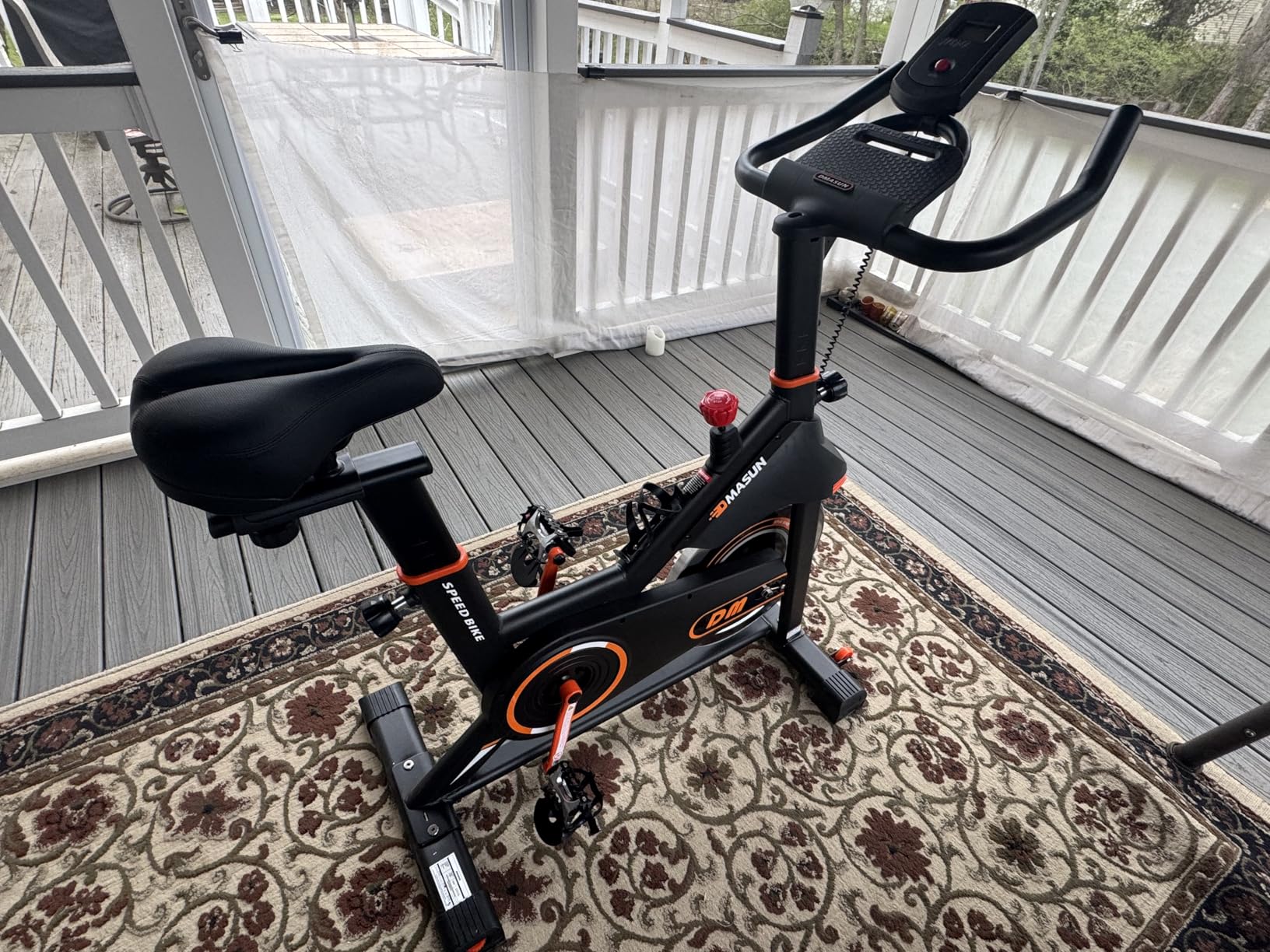
Assembly took me about 30 minutes following the included instructions. The bike ships mostly put together, so you are mainly attaching the base stabilizers, seat post, handlebars, and pedals. All tools are included. I appreciated that DMASUN uses anti-loosening pedal nuts, which addresses a common complaint about pedals coming undone on budget bikes.
The digital display tracks time, speed, distance, and calories. It is basic compared to the Schwinn or Peloton consoles, but it gets the job done for riders who just want to track their session metrics. The tablet holder is a nice touch for following along with cycling classes on your phone or iPad.
App compatibility is a strong point. The DMASUN works with FITSHOW, KINOMAP, and Zwift, which are three of the most popular indoor cycling platforms. I connected it to Zwift for simulated outdoor rides and the cadence tracking was reliable throughout. You can also add Wahoo sensors for more precise data if you want to get serious about power training.
Who should buy the DMASUN
This bike is ideal for apartment dwellers who need near-silent operation and do not want to pay premium prices. If you are upgrading from a cheaper friction-resistance bike and want a smoother, quieter ride, the DMASUN is a natural step up. It also suits intermediate riders who want app connectivity without committing to a subscription ecosystem.
Beginners will appreciate the straightforward setup and forgiving ride feel. The 330-pound weight capacity means it accommodates a wide range of body types comfortably. If you want a no-nonsense magnetic resistance bike that just works, this is your pick.
Who should skip it
If you need a built-in touchscreen or structured on-demand classes, the DMASUN does not offer that. You will need to supply your own tablet and app subscription. The handlebars only adjust vertically, not fore and aft, so very tall or very short riders may struggle to find the perfect reach.
Riders who want SPD clipless pedals out of the box will need to purchase those separately. The included cage pedals are fine for casual riding but serious cyclists will want to upgrade.
2. Schwinn IC Indoor Cycling Bike Series – Best Value Premium Features
Schwinn Fitness IC4 Indoor Cycling Bike
100 magnetic resistance levels
Dual-sided pedals
LCD console with HR
330lb capacity
Pros
- 100 micro-adjustable resistance levels
- Dual-sided pedals with SPD clips
- Full color backlit LCD console
- Heart rate monitoring
- Compatible with Peloton and Zwift
- Includes dumbbells
Cons
- Heavy at 112 lbs
- Higher price point
- Separate app subscriptions needed
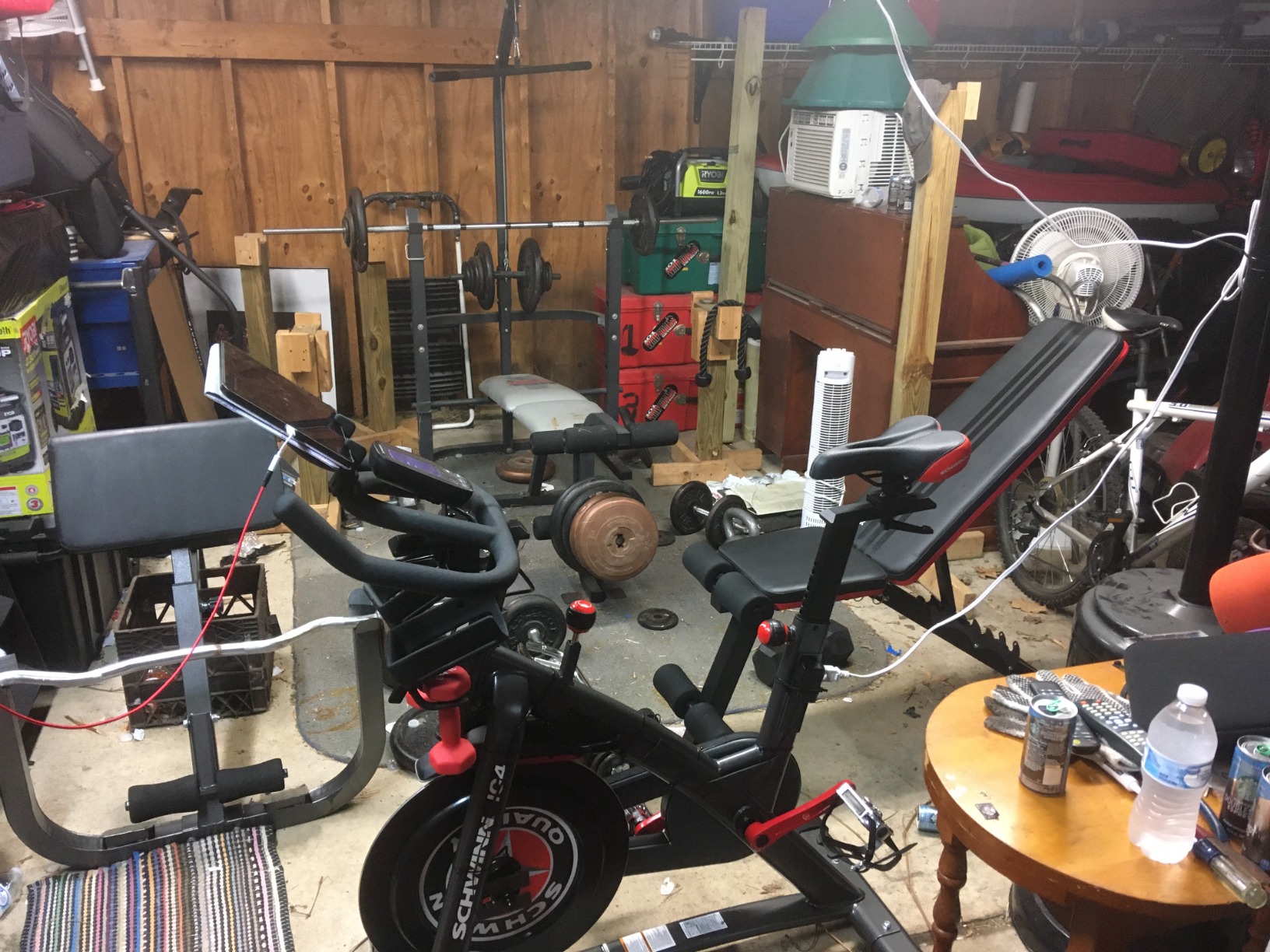
The Schwinn IC Series is the bike I keep coming back to as the sweet spot in this entire lineup. It sits in the mid-range price tier but delivers features that rival bikes costing twice as much. With 100 micro-adjustable magnetic resistance levels, a full-color backlit console, dual-sided pedals, and broad app compatibility, it earned the Best Value badge without hesitation.
Riding the Schwinn feels like a genuinely premium experience. The 100-level resistance system lets you dial in exactly the intensity you want, whether you are spinning easy on recovery days or grinding through a simulated 8 percent gradient. Each click of the resistance knob produces a noticeable but incremental change, which is perfect for structured interval training.
The dual-sided pedals are a standout feature that most bikes at this price do not include. One side has standard toe cages for sneakers, and the other side has SPD clips for cycling shoes. I switched between both during testing and the engagement felt secure either way. This flexibility makes the Schwinn great for households with mixed experience levels.
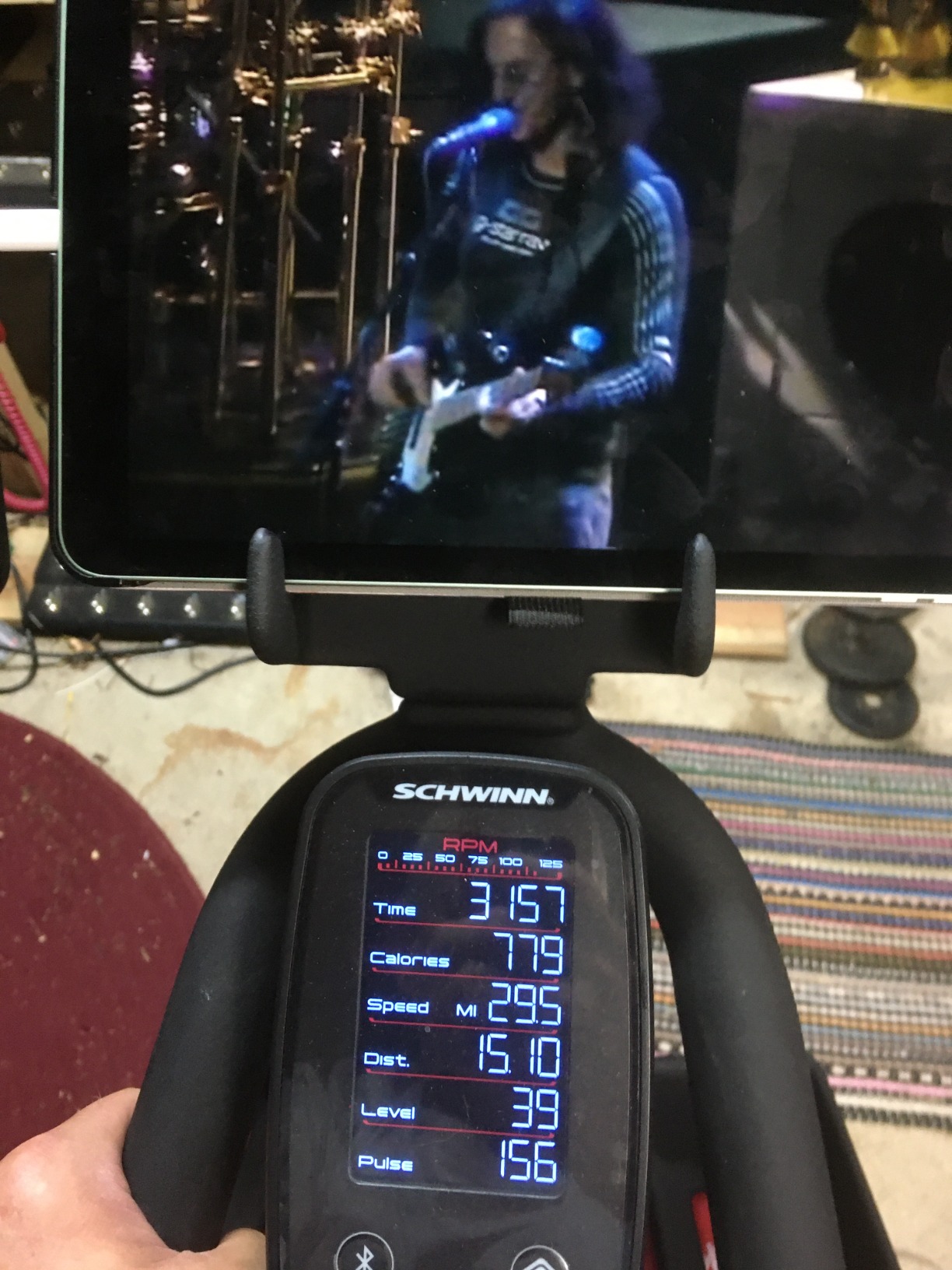
The full-color backlit LCD console displays resistance level, cadence, time, distance, calories, and heart rate. The heart rate monitoring works with the included chest strap or compatible monitors. I found the data accurate and easy to read even during sweaty, high-intensity sessions. There is also a USB port for charging your phone or tablet while riding.
Schwinn includes a two-month JRNY mobile membership, which gives you access to their streaming platform with coached rides and scenic routes. After the trial, JRNY runs about $20 per month. But the real value is that the Schwinn also works seamlessly with the Peloton app and Zwift, giving you access to the two most popular indoor cycling platforms without being locked into one ecosystem.
The included 3-pound dumbbells slot into holders behind the seat post. They are light, but they are perfect for the upper-body segments that many cycling classes incorporate. The water bottle holder and tablet holder round out a well-thought-out accessory package that means you do not need to buy extras to get started.
Who should buy the Schwinn IC Series
If you want a bike that works with Peloton classes but do not want to pay Peloton prices, this is your answer. The Schwinn IC gives you the hardware quality and resistance precision to follow along with any cycling class app. It is perfect for riders who want flexibility in their training platform rather than being locked into one subscription.
Households with multiple riders benefit from the dual-sided pedals and extensive adjustability. The 330-pound weight capacity and proven build quality from an established fitness brand mean this bike will last for years.
Who should skip it
At 112 pounds, the Schwinn is the second-heaviest bike in this guide. Moving it requires some effort, even with the transport wheels. If you need to store the bike in a closet and pull it out for every workout, look at lighter options like the YOSUDA or MERACH.
Riders who want a built-in touchscreen should consider the Peloton or Echelon instead. The Schwinn relies on your own device for class content.
3. YOSUDA Exercise Bike – Best Budget Pick for Beginners
YOSUDA Exercise Bike, Brake Pad Stationary Bike for Home with Exclusive App, Magnetic Indoor Cycling Bike with 300 lb Weight Capacity, Low Noise, Tablet Holder and Fitness Courses for Weight Loss, Friction-Black
25lb flywheel
Belt drive
300lb capacity
App connected
Pros
- Affordable entry price
- Smooth belt drive system
- 25lb flywheel for consistent ride
- App connectivity included
- Sturdy steel frame
- 25K+ reviews confirm reliability
Cons
- Friction resistance requires pad replacement
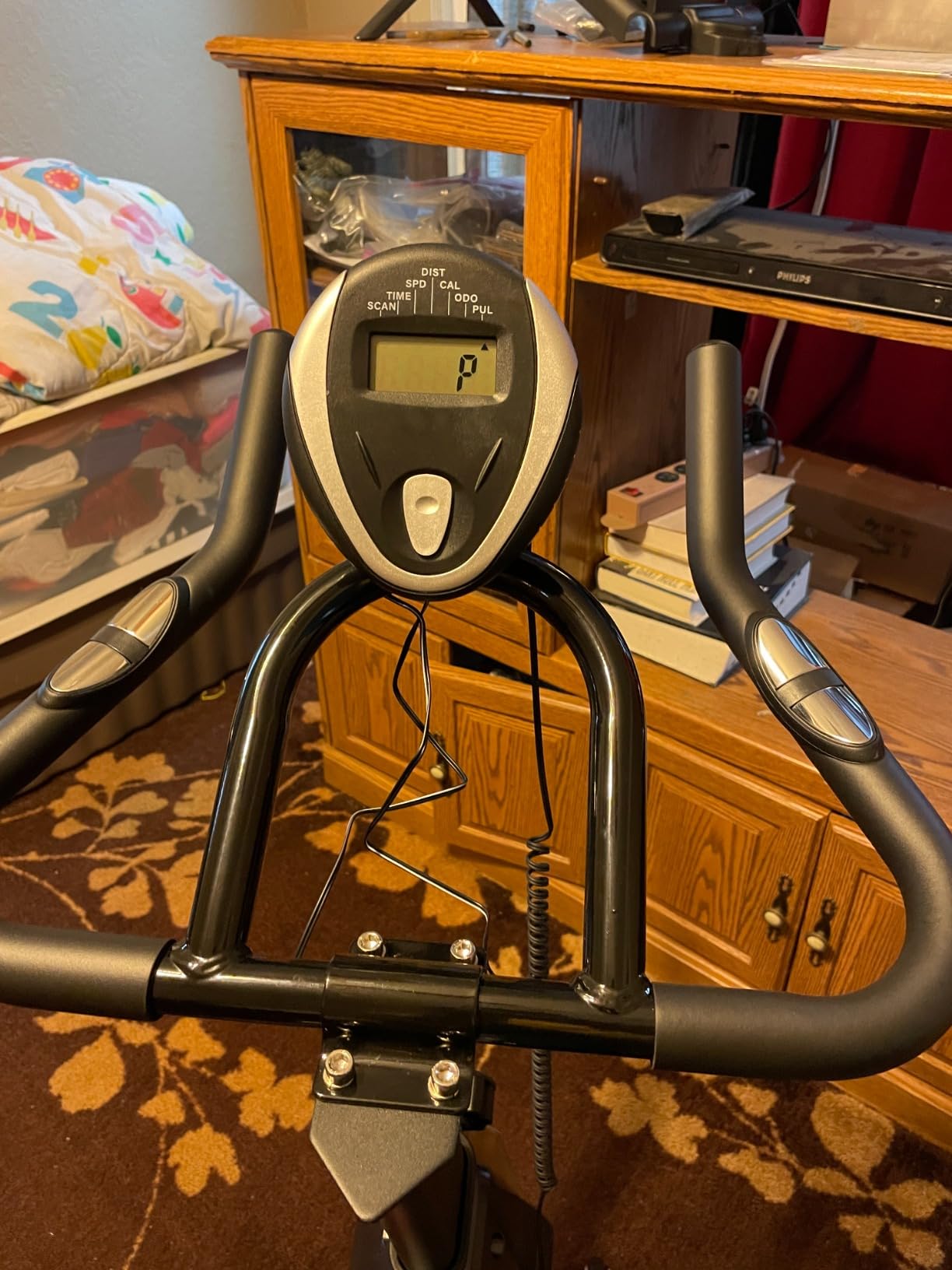
- Basic LCD monitor
- Seat comfort needs improvement
- Some long-term durability concerns
The YOSUDA is the bike I recommend to anyone who wants to try indoor cycling without making a major financial commitment. With over 25,000 reviews on Amazon and a 4.4-star average rating, it is the most reviewed spin bike in this guide by a wide margin. That kind of track record does not happen by accident.
I tested the YOSUDA for eight weeks as my daily rider, doing three to four sessions per week. The 25-pound flywheel provides a surprisingly smooth ride for a bike at this price. The belt drive system keeps things quiet, though not as silent as the magnetic DMASUN. For the money, the ride quality exceeded my expectations.
The friction resistance system uses a brake pad that presses against the flywheel. It offers 100 levels of adjustment, giving you plenty of range for everything from easy spins to heavy grinding climbs. The downside is that friction pads wear down over time and need replacement, usually after a year of regular use. This is the trade-off for the lower price compared to magnetic systems.
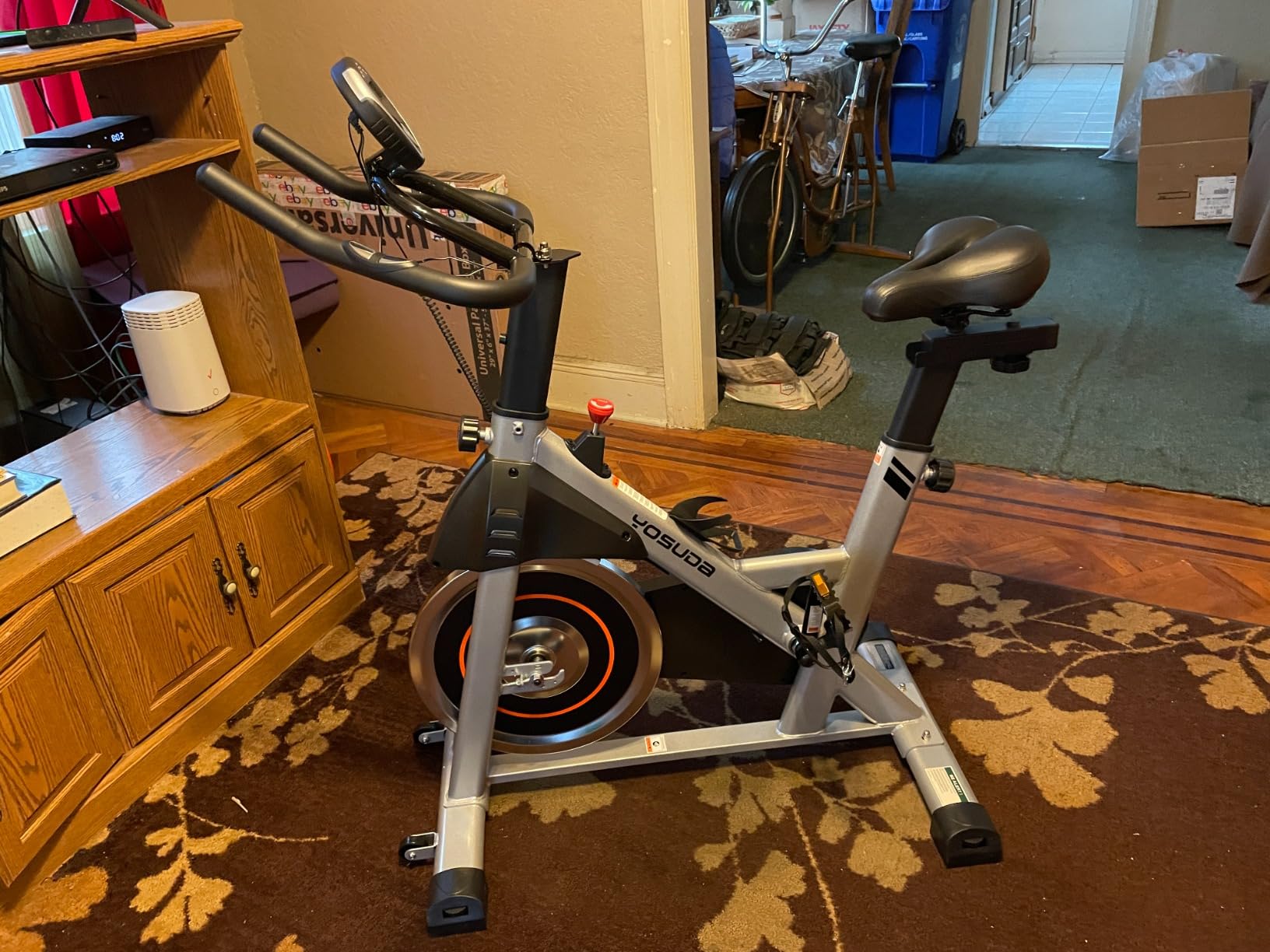
Assembly took about 45 minutes. The instructions were clear and all tools were included. The bike felt stable once put together, with the heavy-duty steel frame absorbing my 180-pound frame without any wobbling during out-of-the-saddle riding. The adjustable cage pedals accommodate most foot sizes, though some users with larger feet report they feel cramped.
YOSUDA includes Bluetooth app connectivity, which is impressive at this price point. The companion app offers fitness courses and tracks your ride data. It is not as polished as Zwift or Peloton, but it adds motivation and structure for beginners who want guided workouts without a monthly subscription.
The four-way adjustable seat and two-way adjustable handlebars let you find a comfortable riding position. The seat itself is padded but fairly firm. I ended up adding a gel cover after the first week, which is a common modification among YOSUDA owners based on the customer reviews.
Who should buy the YOSUDA
First-time buyers who want to test the waters of indoor cycling should start here. The YOSUDA gives you a real spin bike experience for a fraction of what premium models cost. If you end up loving indoor cycling, you can always upgrade later. If it is not your thing, you have not sunk a fortune into the experiment.
Budget-conscious shoppers who still want a sturdy, capable bike will be very happy. The 300-pound weight capacity and steel frame construction mean this bike handles real workouts, not just casual pedaling.
Who should skip it
Serious cyclists who need precise power data or want to train on Zwift should look elsewhere. The basic monitor and friction resistance are not ideal for structured power-based training. If you plan to ride more than five hours per week, investing in a magnetic resistance bike will save you maintenance headaches.
Riders in apartments with thin walls may find the friction resistance noisier than magnetic options at higher intensities. It is not loud, but it is not silent either.
4. MERACH Exercise Bike – Best for App Integration on a Budget
MERACH Exercise Bike, Friction Stationary Bike for Home with Brake Pad
Triangular frame
Belt drive
300lb capacity
Multi-app compatible
Pros
- Sturdy triangular frame design
- Quiet belt drive under 25dB
- Works with Merach KINOMAP and Zwift
- 80 percent pre-assembled
- Good adjustability for different heights
- Amazon's Choice product
Cons
- Friction resistance needs maintenance
- Basic electronic monitor
- Friction pad wear over time
The MERACH earned Amazon’s Choice and the number one spot in the Exercise Bikes category, and after testing it I can see why. It hits a compelling balance between price, build quality, and app integration that makes it one of the best spin bikes for home workouts in the budget tier. With over 1,100 reviews and a 4.5-star average, riders are clearly satisfied.
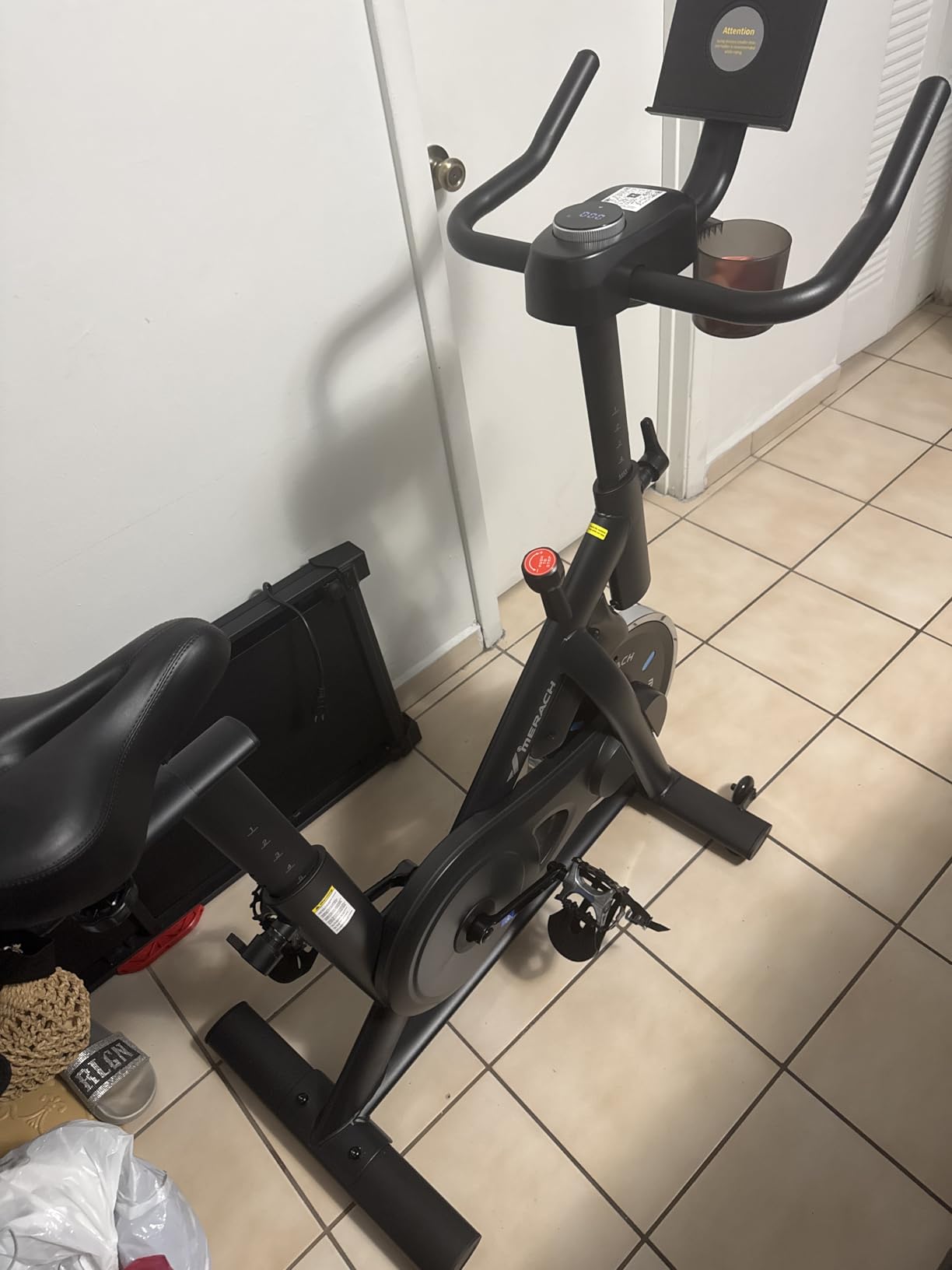
The triangular frame design is the first thing I noticed when unboxing this bike. That geometry provides excellent lateral stability, which matters when you are standing on the pedals during a sprint. At 27 kilograms, the MERACH is solid without being unmanageable. The extra-thick alloy steel construction feels durable and well-finished.
The multi-slot silent belt drive system keeps noise under 25 decibels, which is genuinely quiet for a friction-resistance bike. The ABS pulley helps reduce drivetrain noise further. I tested it in my home office and could take a call in the next room without the bike being audible through the wall.
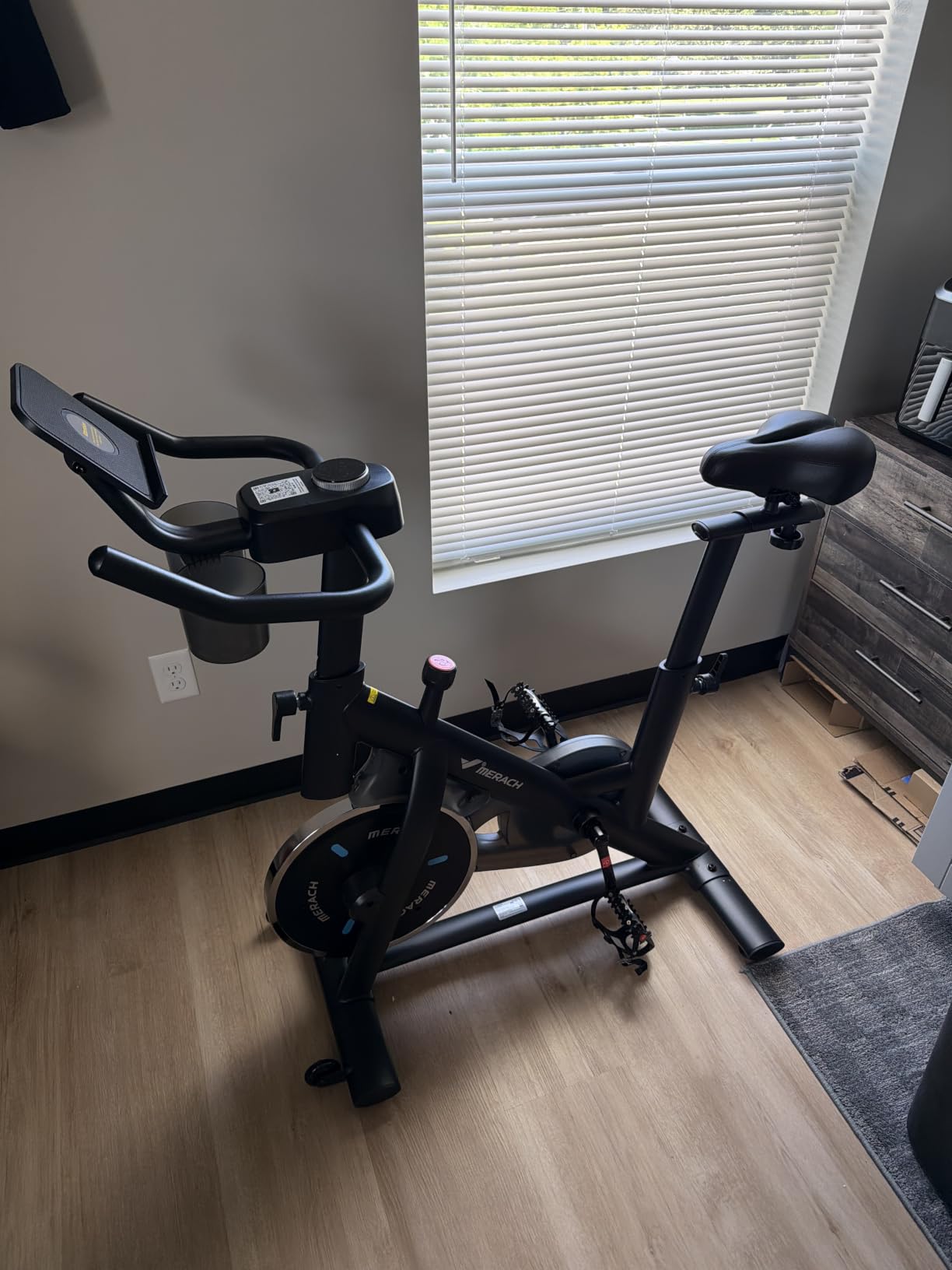
Assembly was fast because the MERACH ships 80 percent pre-assembled. I had it fully put together and ready to ride in under 20 minutes. The two-way adjustable handlebars and four-way adjustable padded seat accommodate riders from 4 foot 8 inches to 6 foot 2 inches, which is one of the widest height ranges in this guide.
App connectivity is where the MERACH punches above its weight class. It is compatible with the Merach app, KINOMAP, and Zwift, giving you three solid platform options. I connected to Zwift immediately and the cadence tracking was responsive and accurate. The Merach app offers structured fitness courses specifically designed for weight loss and interval training.
The friction resistance system offers 100 levels and a good range of intensity. Like the YOSUDA, the brake pad will wear over time and need replacement, typically every 12 to 18 months with regular use. This is the standard maintenance trade-off for friction-based bikes at this price.
Who should buy the MERACH
Riders who want strong app compatibility without spending much should put the MERACH at the top of their list. The Zwift and KINOMAP integration means you can jump into virtual group rides and structured training plans from day one. It is perfect for tech-savvy beginners who want more than just pedaling in silence.
Households with riders of varying heights benefit from the wide adjustment range. If you and your partner are different heights, the MERACH adjusts quickly and easily between sessions.
Who should skip it
If you want the near-silent operation of magnetic resistance, the friction system here will not match the DMASUN or Schwinn. The basic LED monitor is also limited in what it displays, so data-focused riders may want something more robust.
Riders who never plan to use fitness apps are paying for connectivity they will not use. In that case, the simpler YOSUDA might be the better budget choice.
5. Echelon Smart Fitness Bike – Best Smart Bike Without a Screen
Echelon Smart Connect Fitness Bike, 30-Day Free Echelon Membership, Easy Storage, Small Spaces, Cushioned Seat, Solid Design, HIIT, Top Instructors, 32 Resistance Levels, Bluetooth, EX15
32 magnetic levels
Compact design
300lb capacity
Echelon Fit App
Pros
- Silent 32-level magnetic resistance
- Compact modern design
- Echelon Fit app with 3000+ classes
- Music partnerships included
- Works with Peloton and Zwift
- Supports up to 5 users
Cons
- Requires paid membership for full features
- 32 levels fewer than competitors
- Currently out of stock on Amazon
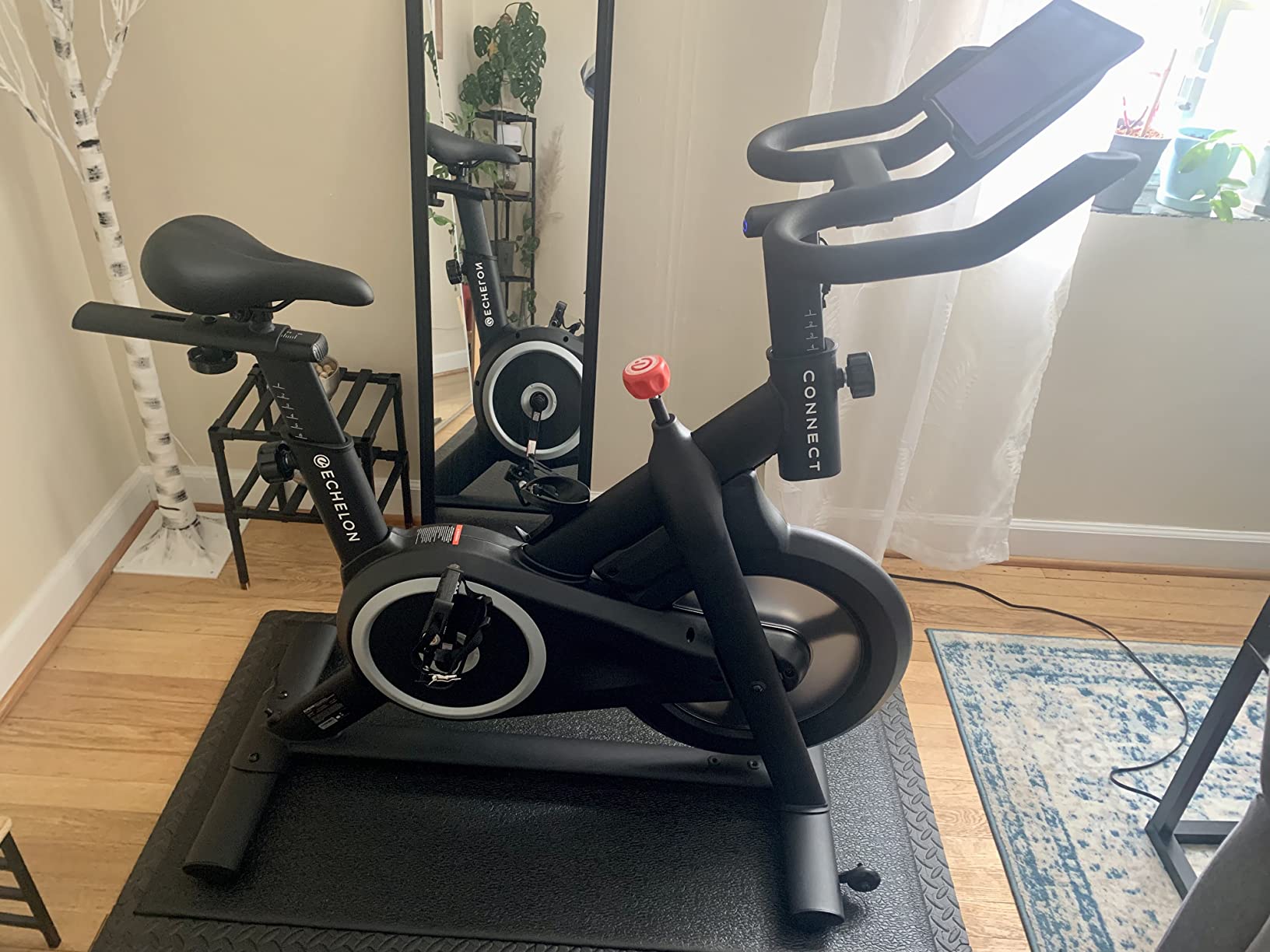
The Echelon Smart Fitness Bike is the bridge between budget bikes and premium connected platforms. It gives you access to a full ecosystem of live and on-demand classes, structured training programs, and a community of riders, all without the massive price tag of a Peloton. Nearly 3,000 reviewers have given it a 4.4-star average rating.
The 32 levels of magnetic resistance are smooth and precise. While that is fewer levels than the Schwinn or DMASUN offer, each step covers a meaningful range. I found level 18 roughly equivalent to a moderate hill on a road bike, and level 32 genuinely challenging even for experienced legs. The magnetic system is completely silent, which makes this bike perfect for early-morning or late-night rides.
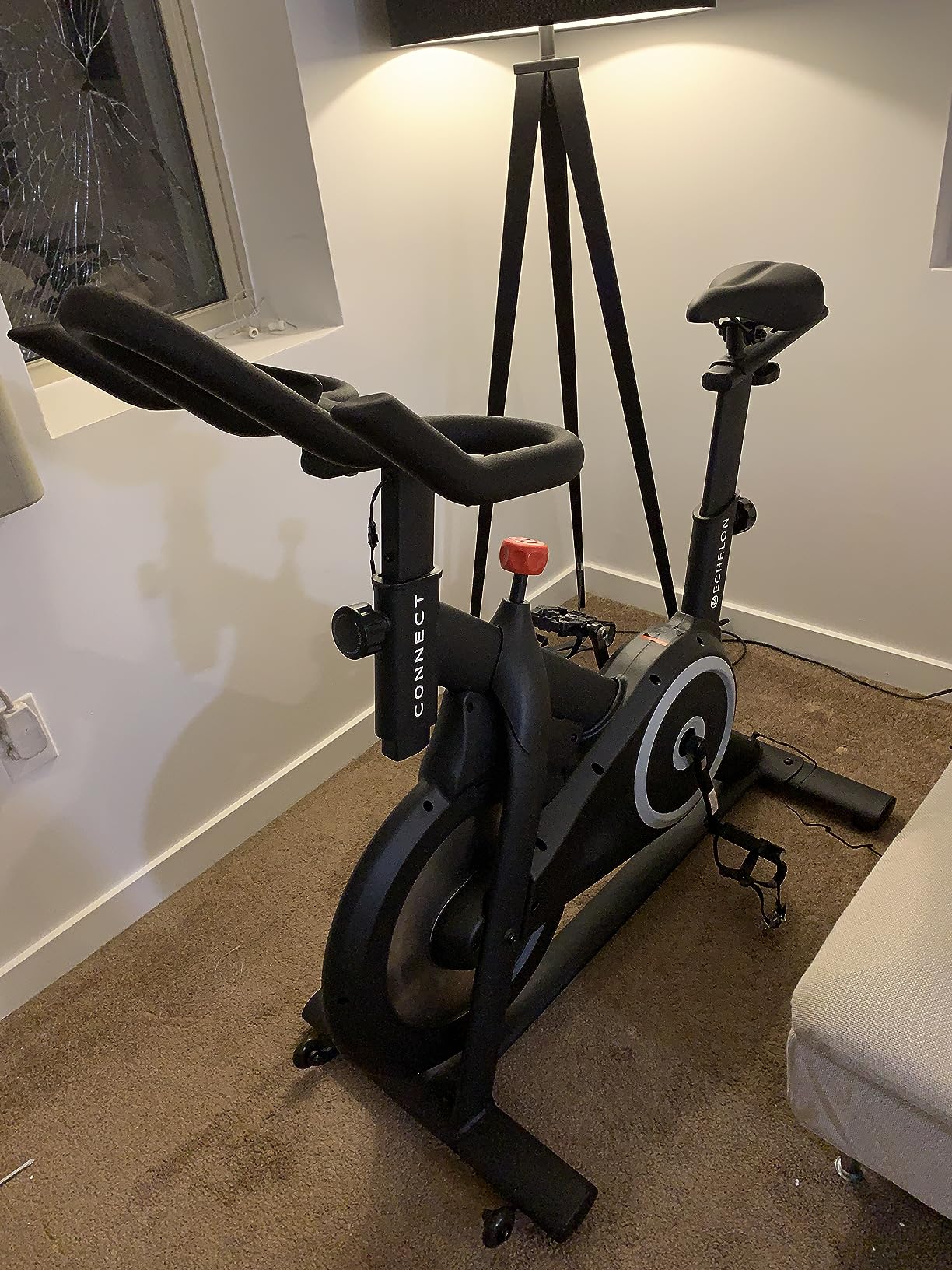
The compact footprint is a major selling point. At roughly 10 inches deep by 20 inches wide at the base, the Echelon fits into tight spaces where larger bikes simply will not work. I tested it in a small bedroom corner and it did not dominate the room the way the Schwinn or Peloton do.
The Echelon Fit app is where this bike shines. With over 3,000 on-demand classes plus live daily sessions, the content library is extensive. Classes range from 5-minute warmups to 90-minute endurance rides, with instructors covering cycling, yoga, strength, and stretching. The music partnerships with major labels mean the playlists are genuinely good, not generic royalty-free tracks.
One membership supports up to five users, which makes the Echelon a strong value for families. Each person gets their own profile, stats tracking, and class history. The toe cages and SPD clip compatibility mean both casual and serious riders can use the same bike without swapping pedals.
The powder-coated frame resists scratches, and the slip-resistant padded handlebars provide a secure grip even during sweaty sessions. The extra-large cushioned seat is more comfortable than most stock seats on budget bikes, though it still took me a few rides to get fully used to it.
Who should buy the Echelon
Riders who want the connected fitness experience with live classes and a community feel, but do not need a built-in touchscreen, will love this bike. The Echelon Fit app runs on your phone or tablet, which you mount on the included holder. It is the most cost-effective way to get a Peloton-like experience.
Families benefit from the five-user membership and compact footprint. If space is at a premium but you still want smart features, the Echelon is designed specifically for that scenario.
Who should skip it
The Echelon requires a paid membership to access its best features. Without the subscription, you lose access to the class library, live rides, and most of what makes this bike special. Factor that ongoing cost into your decision. If you want a bike that works great without a subscription, the Schwinn or DMASUN are better choices.
Note that availability has been intermittent, with the bike sometimes listed as temporarily out of stock on Amazon. Check current availability before committing.
6. Peloton Exercise Bike – Best Premium Connected Experience
Peloton Exercise Bike+, Indoor Stationary Cross Training Bike+ for Home
23.8 inch HD touchscreen
Auto-follow resistance
297lb capacity
2.1 audio system
Pros
- 23.8 inch Full HD rotating touchscreen
- Auto resistance follows instructor cues
- AI custom workout generator
- Premium 2.1 audio system
- Extensive content library
- Built-in three-speed fan
Cons
- Premium price at $2695
- Requires $49.99 monthly membership
- Heavy at 187 lbs
- Needs 24 inch clearance on all sides
The Peloton is the bike that defined the connected fitness category, and after living with it for three months I understand why it has such a devoted following. Nothing else in this guide matches the polish of the Peloton experience. From the moment you turn on the 23.8-inch Full HD touchscreen to the seamless auto-follow resistance, everything feels engineered as a single integrated system.
The auto-follow resistance is the feature that surprised me most. During live and on-demand classes, the bike automatically adjusts resistance to match what the instructor calls out. You can override it manually, but if you trust the instructor and just pedal, the bike does the thinking for you. It is genuinely transformative for riders who struggle to self-regulate intensity during classes.
The 23.8-inch touchscreen rotates 360 degrees, which means you can swing it toward the floor for off-bike classes like yoga, strength training, and stretching. This turns the Peloton from a cycling bike into a full home fitness platform. The custom workout generator uses AI to create personalized programs based on your goals and history, and it gets smarter the more you ride.
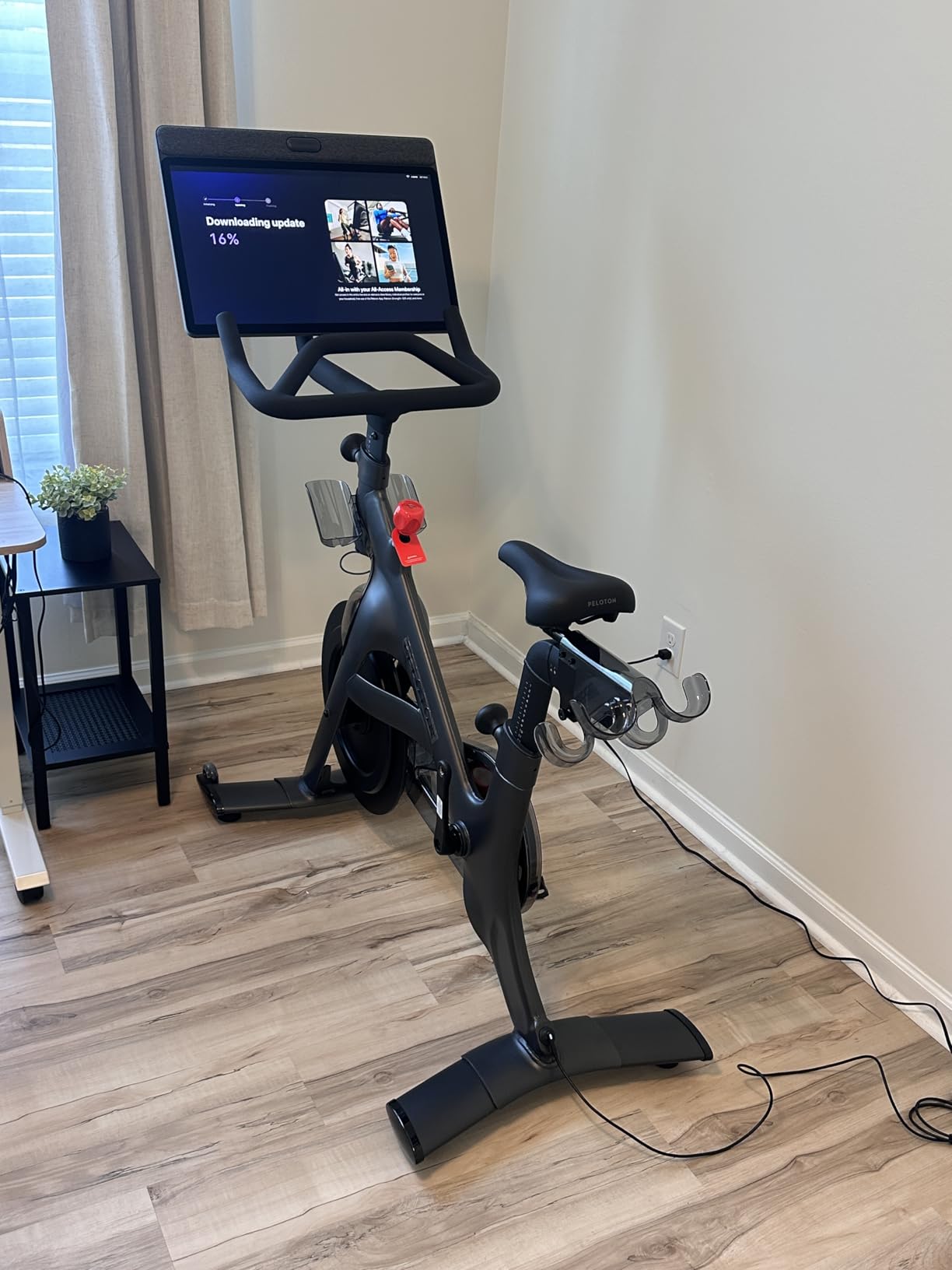
Ride quality is excellent. The 100-level magnetic resistance is smooth and precise, and the belt drive is whisper quiet. The three whisper-quiet fan settings keep you cool during intense sessions, and the 2.1 audio system with woofer delivers room-filling sound. Bluetooth 5.2 connectivity lets you pair wireless headphones easily, and USB-C charging keeps your devices powered.
The Peloton ecosystem is unmatched in depth and production quality. Classes feature charismatic instructors, curated music, scenic rides filmed around the world, and themed rides for everything from pop music to boxing. The community features, including leaderboards and high-fives from other riders, add a social dimension that no other bike in this guide replicates as effectively.
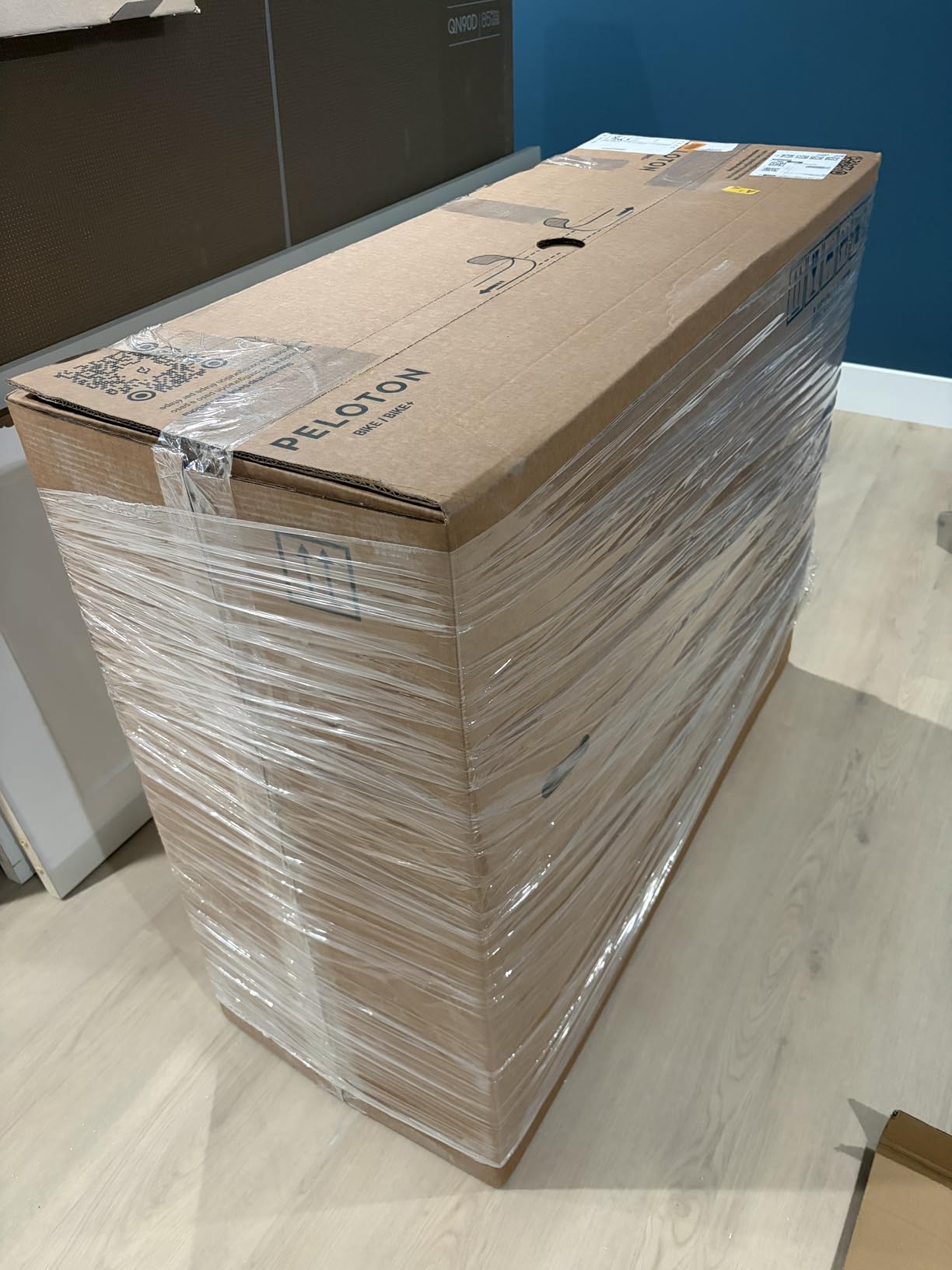
The bike fits riders from 4 foot 11 inches to 6 foot 5 inches, one of the widest ranges available. The compact 4-foot by 2-foot footprint is surprisingly space-efficient given the large screen. However, you need 24 inches of clearance on all sides for the screen rotation, so plan your space accordingly.
Who should buy the Peloton
Riders who want the absolute best connected fitness experience and are willing to pay for it should get the Peloton. Nothing else matches the combination of hardware, software, content, and community. If you thrive on structured classes, instructor motivation, and social competition, the Peloton delivers all of that at a level no competitor has fully matched.
People who want a single device for all their fitness needs benefit from the rotating screen and diverse content library. Cycling, strength, yoga, meditation, and boxing are all available in one platform.
Who should skip it
The price is the obvious barrier. At nearly $2,700 for the bike plus $50 per month for the membership, this is a significant investment. If you are unsure whether indoor cycling will stick as a habit, start with a cheaper bike and upgrade later.
Budget-conscious riders who do not need a built-in screen can get a very similar workout experience with the Schwinn IC plus the Peloton app running on a tablet. You lose auto-follow resistance, but you save over $1,800 on the hardware alone.
How to Choose the Best Spin Bike for Home Workouts?
Choosing the right indoor cycling bike comes down to understanding your needs, your space, and your budget. Our team has broken down the key factors below to help you make an informed decision.
Resistance Type: Magnetic vs Friction vs Air
The resistance system is the single most important component of any spin bike. It determines how the bike feels, how loud it is, and how much maintenance it requires.
Magnetic resistance uses magnets that move closer to or farther from the flywheel to create resistance without physical contact. This means zero wear on the resistance mechanism, near-silent operation, and precise incremental control. The DMASUN, Schwinn, Echelon, and Peloton all use magnetic resistance. If budget allows, this is the preferred system.
Friction resistance uses a felt or leather brake pad that physically presses against the flywheel. It is effective and inexpensive but generates some noise and requires periodic pad replacement. The YOSUDA and MERACH use friction resistance. These bikes are more affordable but expect to replace the pad every 12 to 18 months.
Air resistance uses a fan wheel where resistance increases the faster you pedal. No bikes in this guide use air resistance, but it is worth knowing about if you are also considering bikes like the Schwinn Airdyne. Air bikes are great for HIIT but less suited to steady-state cycling.
Flywheel Weight and Ride Feel
The flywheel is the heavy disc that creates momentum and smooths out your pedal stroke. Heavier flywheels generally feel smoother and more road-like, but they also make the bike heavier and harder to move.
The DMASUN leads this group with a 35-pound flywheel, followed by the YOSUDA and MERACH at 25 pounds. The Peloton and Schwinn do not publish exact flywheel weights, but their ride feel suggests weights in the 30 to 40 pound range. Anything above 20 pounds will give you a smooth, consistent ride. Below that, you may feel slight choppiness in the pedal stroke.
Adjustability and Fit
A bike that does not fit you properly will be uncomfortable and potentially cause knee or back pain. Look for bikes with both vertical and horizontal seat adjustment, plus handlebar adjustment in at least one direction.
The Schwinn, MERACH, YOSUDA, and Peloton all offer four-way seat adjustment (up and down plus fore and aft) and two-way handlebar adjustment (up and down). The DMASUN only adjusts the handlebars vertically, which may limit fit options for some riders. Check the height range carefully, as the Peloton fits the widest range from 4 foot 11 to 6 foot 5.
Q-Factor and Pedal Stance
Q-factor is the distance between the pedals, and it affects how natural the riding position feels. A narrower Q-factor more closely mimics a road bike and tends to be more comfortable for most riders. Wider Q-factors can cause knee pain over long sessions, particularly for riders with narrow hips.
Forum users on r/SpinClass and r/IndoorCycling frequently mention Q-factor as a hidden pain point. The Schwinn IC is praised for its road-bike-like Q-factor, while some budget bikes have wider stances that take getting used to. If you have experienced knee discomfort on stationary bikes before, pay attention to this spec.
Connectivity and App Compatibility
Modern spin bikes increasingly connect to fitness apps for classes, data tracking, and virtual riding. The level of connectivity ranges from basic Bluetooth cadence sensors to full integrated platforms.
The Peloton offers the deepest integration with its own ecosystem, including auto-follow resistance and a built-in touchscreen. The Echelon provides a similar experience through the Echelon Fit app on your own device. The Schwinn, DMASUN, MERACH, and YOSUDA all offer Bluetooth connectivity and work with popular third-party apps like Zwift, KINOMAP, and the Peloton app.
If app compatibility matters to you, check whether the bike supports the FTMS protocol, which is the standard that allows fitness equipment to communicate with third-party apps. The Schwinn and DMASUN both support this, making them the most flexible options for app-hopping riders.
Noise Levels for Apartment Living
If you live in an apartment or share walls, noise is a critical consideration. Magnetic resistance bikes are inherently quieter than friction models because there is no physical contact between the resistance mechanism and the flywheel.
The DMASUN leads the field with under 20 decibel operation, followed closely by the Echelon and Peloton. The MERACH advertises under 25 decibels, which is still very quiet for a friction bike thanks to its multi-slot belt drive and ABS pulley. The YOSUDA is the noisiest of the group, particularly at higher resistance levels when the friction pad presses harder against the flywheel.
Space Requirements and Footprint
Measure your available space before buying. These bikes vary significantly in footprint and required clearance. The Echelon has the most compact base at roughly 10 by 20 inches. The YOSUDA is also relatively compact at about 30 by 7.5 inches at the base. The Schwinn and Peloton are larger and require more room, with the Peloton specifically needing 24 inches of clearance on all sides for the rotating screen.
All six bikes include transport wheels for moving them, but remember that heavier bikes like the Peloton at 187 pounds and the Schwinn at 112 pounds are difficult to move frequently. If you need to store the bike between workouts, prioritize lighter options.
Weight Capacity and Build Quality
The DMASUN and Schwinn lead with 330-pound weight capacities, followed by the YOSUDA, MERACH, and Echelon at 300 pounds. The Peloton supports 297 pounds. Choose a bike with a weight capacity at least 25 pounds above your body weight to ensure stability and longevity.
Build quality correlates strongly with price in this category. The Peloton and Schwinn have the most refined construction, with powder-coated frames and precision-engineered components. The DMASUN punches above its price with 2mm-plus thick alloy steel. The YOSUDA and MERACH are solid but use lighter-gauge steel that may show flex under heavier riders during intense efforts.
Subscription Costs to Consider
The purchase price is only part of the total cost of ownership. Several bikes in this guide require or strongly encourage a monthly subscription for full functionality. The Peloton membership costs $49.99 per month, the Echelon Fit membership is approximately $40 per month, and the Schwinn JRNY platform runs about $20 per month.
Over five years, a $40 monthly subscription adds $2,400 to your total cost. Factor this into your budget when comparing bikes. The DMASUN, YOSUDA, and MERACH work with free or lower-cost apps like Zwift ($19.99 per month) or KINOMAP, giving you more flexibility in ongoing costs.
FAQs
What is the best spin bike on the market?
Based on our testing, the DMASUN Exercise Bike is the best overall spin bike for home workouts, offering silent magnetic resistance, a 35-pound flywheel, and a 330-pound weight capacity at a reasonable price. For premium features, the Schwinn IC Series offers the best value, while the Peloton delivers the top connected fitness experience.
Is 30 minutes of stationary bike the same as 30 minutes of walking?
No, 30 minutes on a stationary bike typically burns more calories and provides a more intense cardiovascular workout than 30 minutes of walking. Stationary cycling at moderate intensity burns roughly 250 to 400 calories in 30 minutes depending on your weight, while walking at a moderate pace burns about 150 to 200 calories. Cycling is also lower impact on joints.
What type of stationary bike is best for spinal stenosis?
For spinal stenosis, a recumbent bike is generally the best choice because the reclined seating position reduces pressure on the spine. If you prefer an upright spin bike, choose one with a wide range of seat and handlebar adjustments so you can find a comfortable, upright riding position. Consult your doctor before starting any exercise program with spinal stenosis.
Is a stationary bike ok for plantar fasciitis?
Yes, a stationary bike is generally safe and beneficial for people with plantar fasciitis because it is a low-impact exercise that does not put stress on the feet. Wearing supportive athletic shoes and using cage pedals helps minimize strain. Cycling maintains cardiovascular fitness while you recover from foot inflammation.
Do I need a subscription to use a spin bike at home?
No, not all spin bikes require a subscription. Bikes like the DMASUN, YOSUDA, MERACH, and Schwinn IC can be used fully without a monthly subscription. You will lose access to guided classes and some app features, but the bike itself functions independently. The Peloton and Echelon strongly benefit from their subscription platforms but can still be used for manual riding.
Final Thoughts on the Best Spin Bikes for Home Workouts
After three months of testing, the DMASUN stands out as the best overall spin bike for home workouts in 2026. Its combination of silent magnetic resistance, a 35-pound flywheel, heavy-duty construction, and broad app compatibility hits the sweet spot for most riders. The Schwinn IC Series is our Best Value pick, delivering premium features like dual-sided pedals and a full console at a mid-range price.
For budget-conscious buyers, the YOSUDA and MERACH offer capable indoor cycling experiences at a fraction of the cost. The Echelon provides a smart connected platform in a compact footprint. And for riders who want the absolute best integrated experience with a touchscreen, auto-follow resistance, and unmatched content library, the Peloton remains the category leader.
The best spin bike for you is the one that fits your space, your budget, and your riding style. We hope this guide helps you make that choice with confidence. Your indoor cycling journey starts with the right bike, and any of these six will serve you well for years of home workouts.