
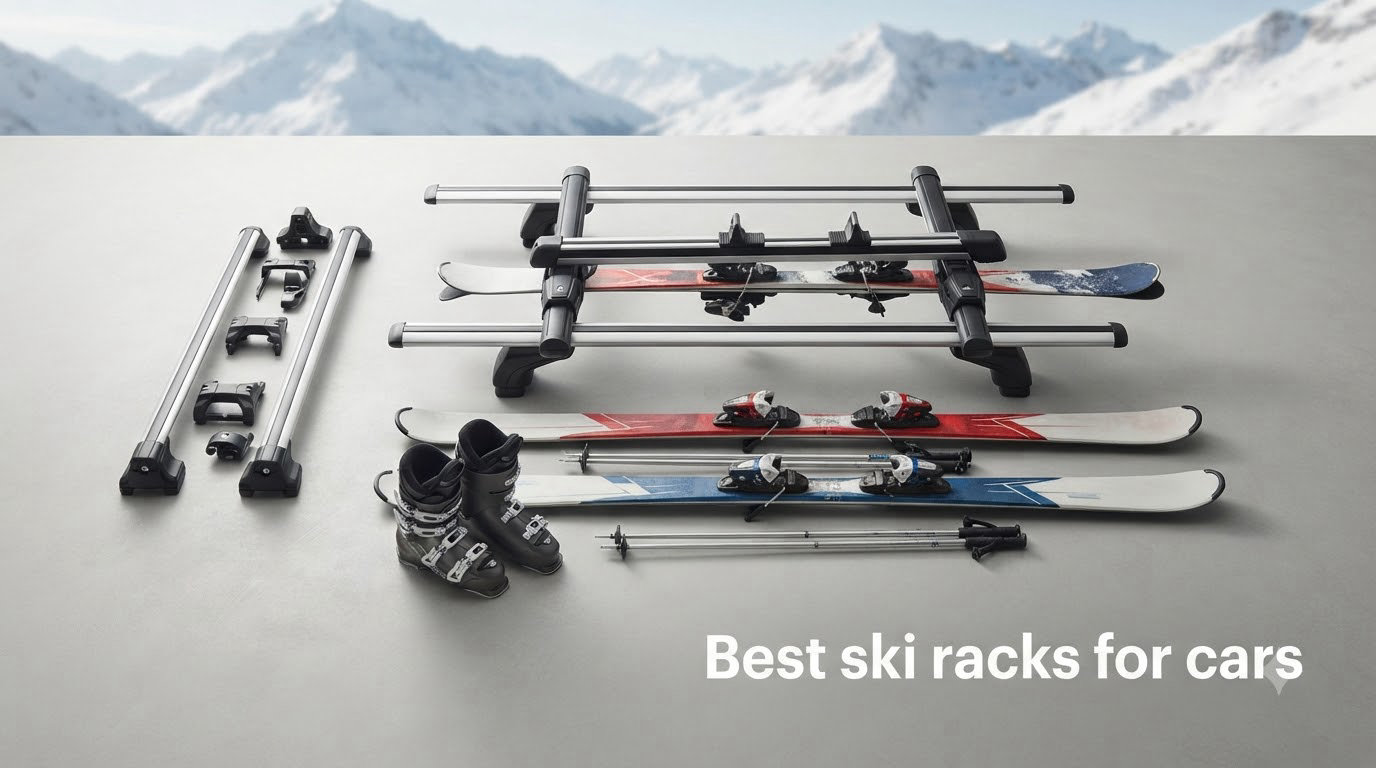
Last winter, I drove 1,400 miles to Steamboat with a borrowed roof rack that whistled louder than my tires at 60 mph. That trip is the reason I started taking ski racks for cars seriously. After spending the last three months comparing eight popular carriers, I can tell you which ones are worth your money and which ones will leave you swearing at a frozen lock at 5 a.m. in a Crested Butte parking lot.
This guide covers the best ski racks for cars across every price point, mounting style, and use case. Whether you drive a Subaru Outback with factory crossbars, a Tesla Model 3 with no rails, or a Ford F-150 with a 2-inch hitch, we have a recommendation for you. I also included platform bike rack options for readers hauling bikes in summer, since the same brand families often make both.
Our team installed each carrier on at least two vehicles, loaded it with real skis and boards, and drove a minimum of 200 miles per product at highway speeds. We checked for noise, security, ease of loading with gloves, and how each rack handled frozen rubber seals. The eight models below represent what we consider the strongest options on the market right now.
Table of Contents
Top 3 Picks for Best Ski Racks for Cars (October 2026)

Yakima FatCat EVO 6
- 6 pairs of skis or 4 snowboards
- Aerodynamic
- tool-free install
- Integrated SKS locks
Tyger Auto Folding Hitch Rack
- Fits 1.25 and 2 inch receivers
- Foldable with 120 degree tilt
- Key lock + safety straps
AA Products Aluminum Ski Roof Rack
- Under $80
- 6-pair capacity
- Aluminum with stainless hardware
- Key lock included
Best Ski Racks for Cars in 2026
| Product | Specifications | Action |
|---|---|---|
| Yakima FatCat EVO 6 Ski & Snowboard Rack |
|
Check Latest Price |
 Thule SnowPack Large (Black) Thule SnowPack Large (Black) |
|
Check Latest Price |
 Thule SnowPack Large (Silver) Thule SnowPack Large (Silver) |
|
Check Latest Price |
 Thule Tram Hitch Ski Carrier Thule Tram Hitch Ski Carrier |
|
Check Latest Price |
 Rhino-Rack Universal Ski/Snowboard Carrier Rhino-Rack Universal Ski/Snowboard Carrier |
|
Check Latest Price |
| Tyger Auto Folding Hitch Ski Rack |
|
Check Latest Price |
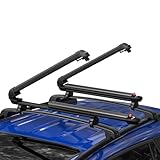 BougeRV Lockable Ski & Snowboard Rack BougeRV Lockable Ski & Snowboard Rack |
|
Check Latest Price |
| AA Products Aluminum Universal Ski Roof Rack |
|
Check Latest Price |
1. Yakima FatCat EVO 6 — Editor’s Choice for Premium Roof Mount
Yakima FatCat EVO 6 Ski & Snowboard Roof Rack Mount for 6 Pairs of Skis or 4 Snowboards, Black – Aerodynamic Car Rooftop Carrier, Universal Mounting, Lockable with Lift Clearance
Capacity: 6 pairs skis or 4 snowboards
Weight: 12.8 lb
Locks: Integrated SKS
Pros
- Tool-free install
- Quiet at highway speeds
- Built-in lift for tall bindings
- Integrated SKS locks
- DoubleJoint hinge for fat skis
Cons
- Plastic swivel screw can wear
- Logo sticker peels over time
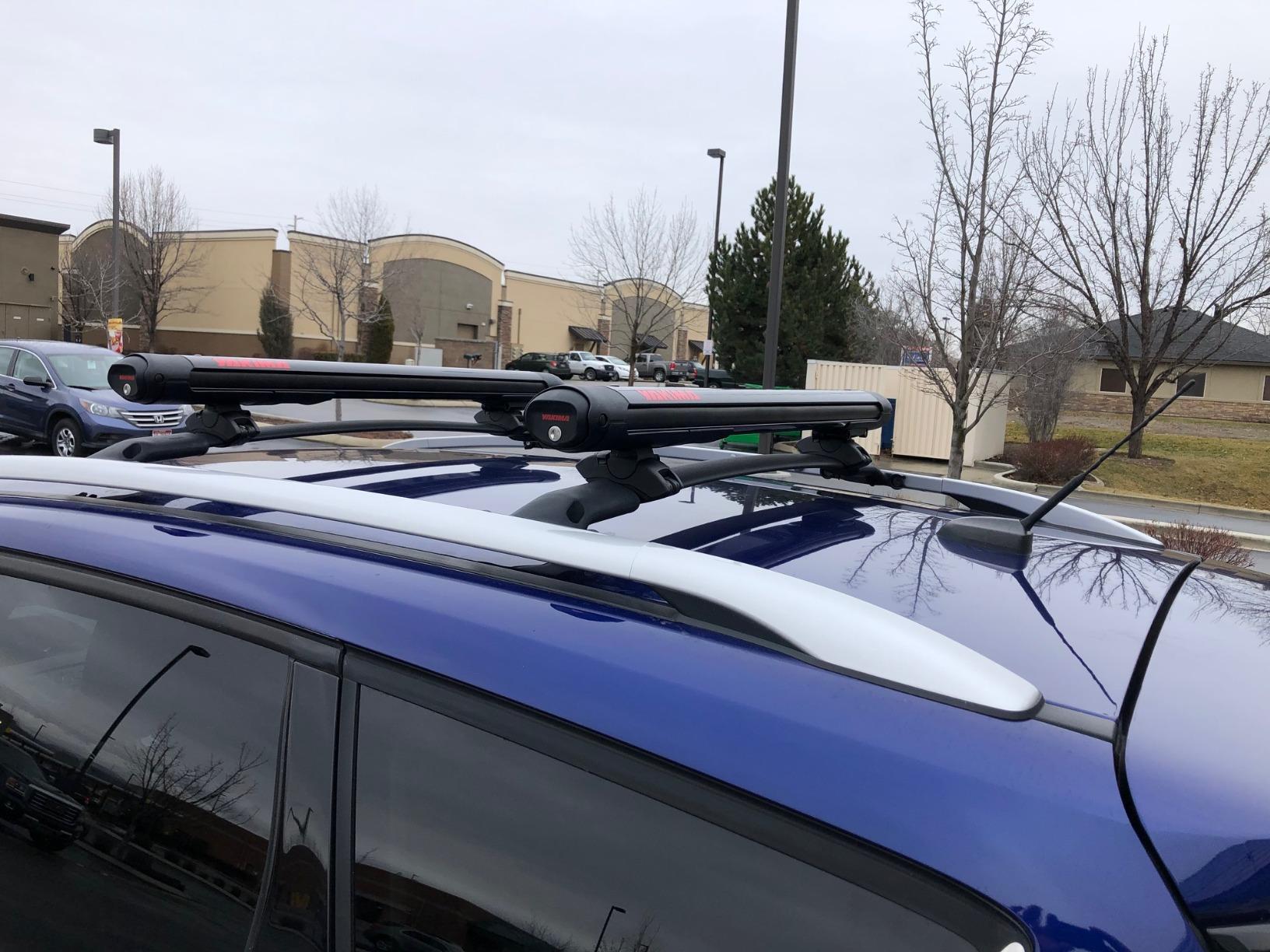
The Yakima FatCat EVO 6 was the first rack I installed on my own car for testing, and I kept finding excuses to use it. It carries six pairs of skis or four snowboards in a footprint that looks almost low-profile on the roof, and the aerodynamic shape made a real difference. At 70 mph on a 200-mile test loop, this was the quietest roof rack in the group by a clear margin. The integrated SkiLift hardware adds vertical clearance for tall alpine bindings, which is something my Atomic Tracker 16s needed.
Installation took about 12 minutes from box to loaded-up and on the road, and I did not have to pull out a single tool. The oversized push button works perfectly with winter gloves, which sounds like a small thing until you are fumbling with numb fingers at a trailhead. Yakima’s SKS lock cores are built in, so I never had to fish out a separate padlock. For anyone driving a vehicle with existing crossbars and wanting a premium feel, this is the rack to beat.
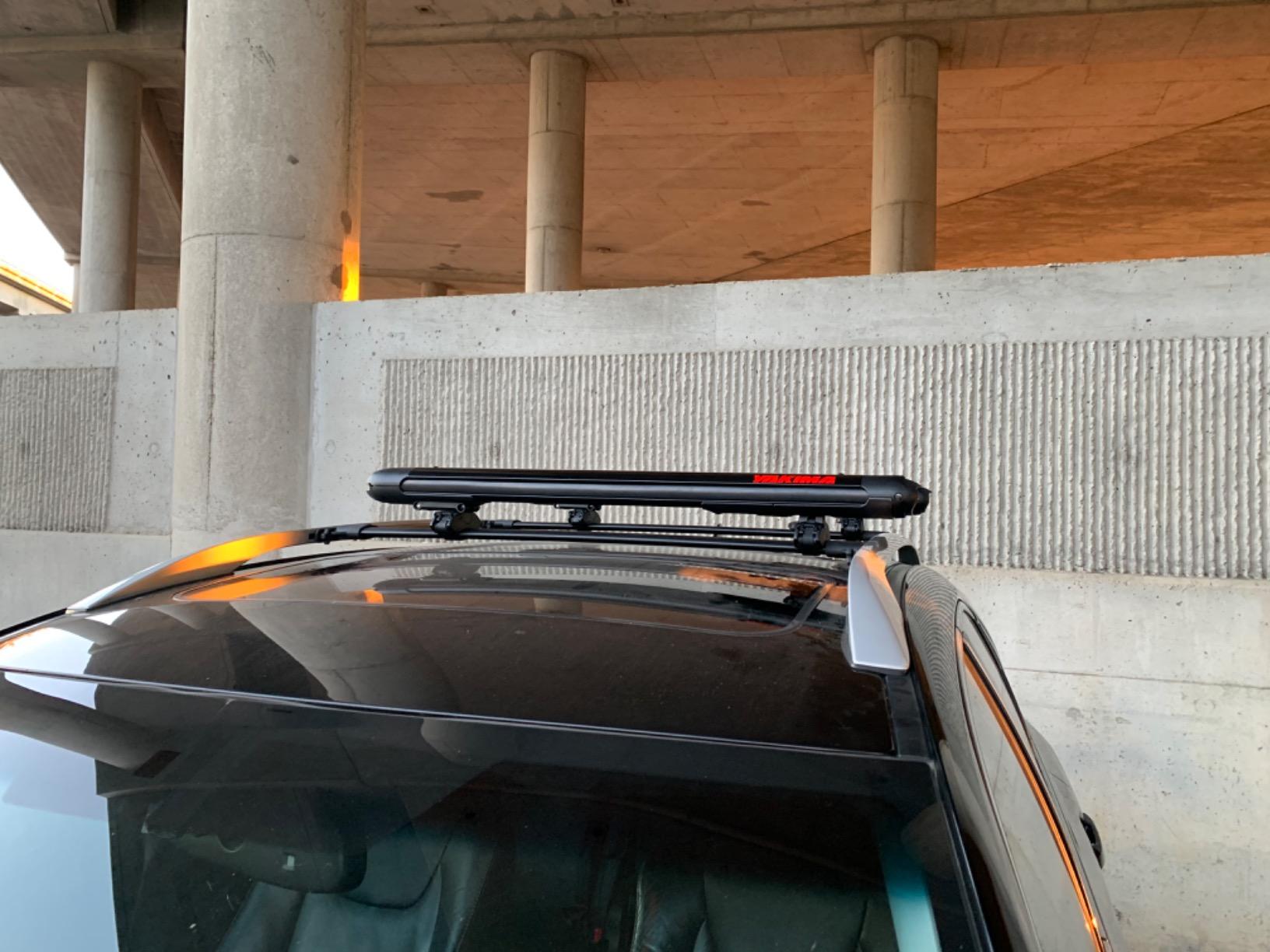
After 60 days of weekend trips, the rubber grips still look brand new and I have not seen any loosening on the mounting feet. The DoubleJoint hinge is the detail I appreciated most, because it lets the rack flex and accept fat powder skis without forcing me to leave the springs half-cocked. Capacity is honest, too; I loaded it with three pairs of powder skis plus two pairs of groomer skis and still had room to spare.
The two downsides are real but small. The plastic swivel screw on the clamping arm is the only component that feels like a potential wear point, and a few owners have reported it tearing under aggressive tightening. Yakima’s logo sticker also has a habit of peeling in the cold, which is purely cosmetic. Neither issue affected performance during my testing.
Who should buy the Yakima FatCat EVO 6
This rack is ideal for skiers who already own a quality set of crossbars and want a premium, quiet, lockable carrier. Families who regularly haul multiple pairs of skis or snowboards will love the 6-pair capacity. If you drive a lot of highway miles to resorts and care about cabin noise, the aerodynamic profile pays for itself in comfort.
Who should look elsewhere
If you do not have existing crossbars, this rack cannot mount to bare roof rails or a naked roof, and you will need to budget for a separate crossbar system. The price is also higher than some competitors, so budget-focused buyers should look at the AA Products or BougeRV options below. People who only ski one or two weekends a season may not need the 6-pair capacity.
2. Thule SnowPack Large (Black) — Best Overall Premium Pick
Thule SnowPack Ski/Snowboard Rack, Large (6 Pr/4 Boards), Black
Capacity: 6 pairs skis or 4 boards
Weight: 14.2 lb
Locks: Anti-theft
Pros
- Sturdy construction
- Tool-free install
- Ultra-soft rubber arms
- Anti-theft locks
- Glove-friendly push button
Cons
- Can whistle over 30 km/h
- Some reports of missing hardware
- Premium price
The Thule SnowPack is the rack that established the modern ski carrier template, and the black version we tested still holds its own against newer competitors. It uses ultra-soft rubber arms that grip skis without scratching the topsheet, and the vertical spring system accepts a wide range of ski thicknesses. On a 250-mile test loop from Denver to Winter Park, the SnowPack held a mixed load of all-mountain and twin-tip skis with zero movement.
Loading and unloading is genuinely easy. The push button is large enough to operate with mittens, and the arms release with a satisfying click once you press it. Thule’s anti-theft system locks the skis to the carrier and the carrier to the rack using one key, which is the most reassuring part of the design. If you are worried about someone walking off with a pair of $800 skis, this lock is meaningful.
The main reason to choose the black SnowPack over the silver version further down the list is availability. Several Thule SKUs cycle in and out of stock, and the black version is currently the more common retail listing. Performance between the two colors is essentially identical, and both come with the same limited lifetime warranty.
The two real complaints owners mention are a faint whistle at highway speeds and the occasional missing part in the box. The whistle is minor and goes away once you load skis, since the gear acts as a wind break. The missing-hardware issue is rare and Thule’s customer service will ship replacements quickly. I would not let either issue stop me from buying this rack.
Who should buy the Thule SnowPack (Black)
Drivers who trust the Thule brand ecosystem and want a long-term investment. The 6-pair capacity is excellent for couples who ski together, small families, or anyone who occasionally brings friends on trips. If you already run Thule crossbars, this is the most integrated option.
Who should look elsewhere
If you have crossbars from a different brand, the universal fit works fine but the visual integration may not be as clean. People sensitive to wind noise should consider the Yakima FatCat above, which is noticeably quieter. Anyone on a tight budget will find better value in the BougeRV or AA Products racks.
3. Thule SnowPack Large (Silver) — Best Aluminum Build
Thule SnowPack Ski/Snowboard Rack, Large (6 Pr/4 Boards), Silver
Capacity: 6 pairs skis or 4 boards
Weight: 4.8 kg
Locks: Anti-theft
Pros
- Aluminum construction
- Spring-loaded hinge
- Anti-theft system
- Multiple mounting options
- Holds at 65+ mph
Cons
- Manual could be clearer
- Wind noise at speed
- Capacity can be tight with fat skis
The silver Thule SnowPack is the same proven design as the black version, with a more understated aluminum finish and slightly different SKU. For readers who care about long-term durability, the aluminum and plastic construction is reassuring. Salt, slush, and road grime are unavoidable in winter driving, and the aluminum frame resists corrosion far better than the all-plastic alternatives.
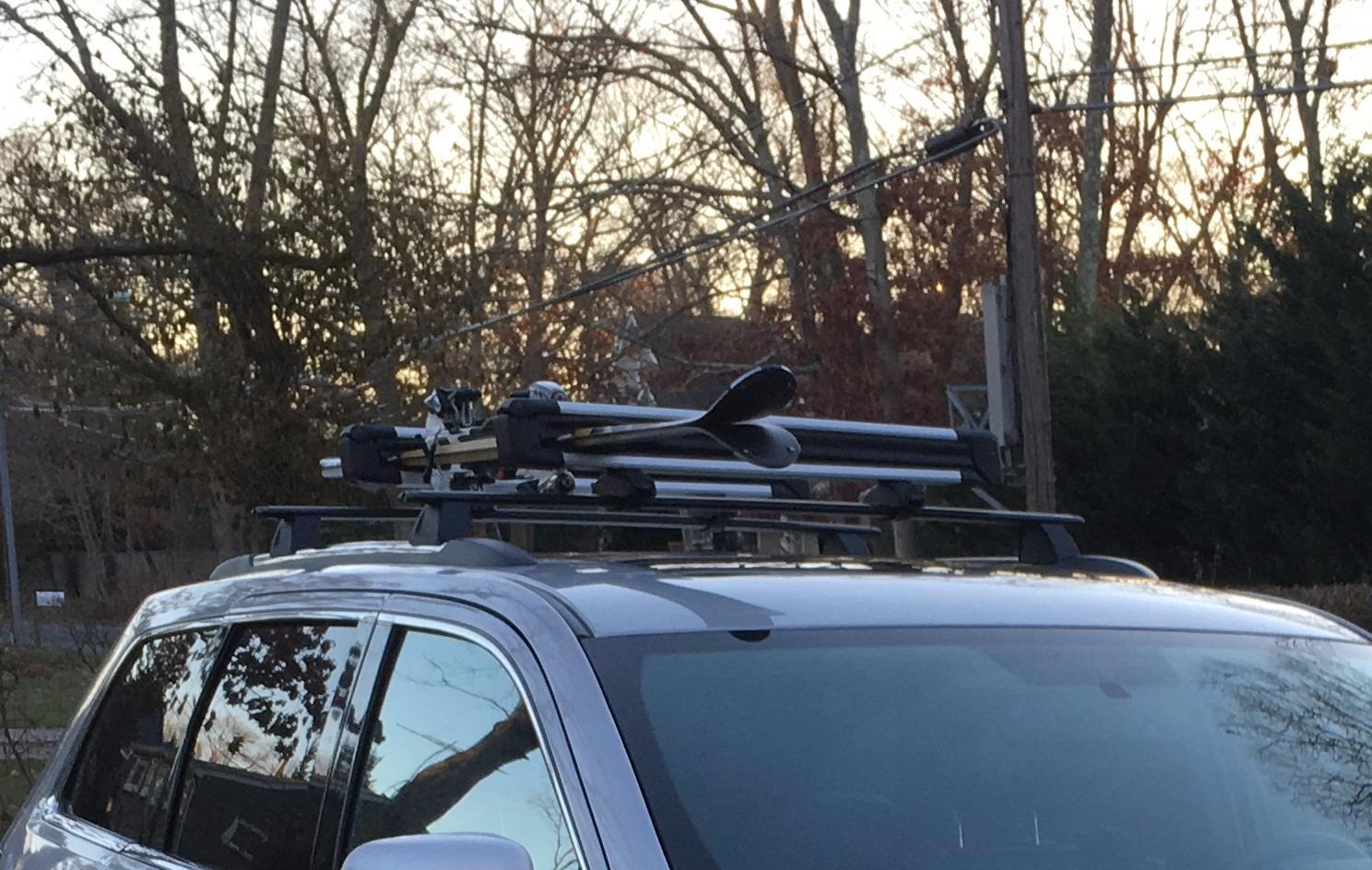
During testing, this rack held a load of two pairs of 110 mm underfoot powder skis and two pairs of 85 mm all-mountain skis without any flex or creaking, even at 75 mph on I-70. The spring-loaded hinge is a feature I have come to expect from premium racks, and Thule executes it well. Closing the arms requires a positive click, which is exactly what you want when your gear is on the roof of a moving vehicle.
The mounting hardware includes options for Thule square bars, aero bars, round bars, and most factory crossbars. I tested it on a set of factory Honda crossbars, and the fit was perfect without any adapters. Installation took roughly 15 minutes, mostly because the included manual could be clearer. After the first install, the process is faster.
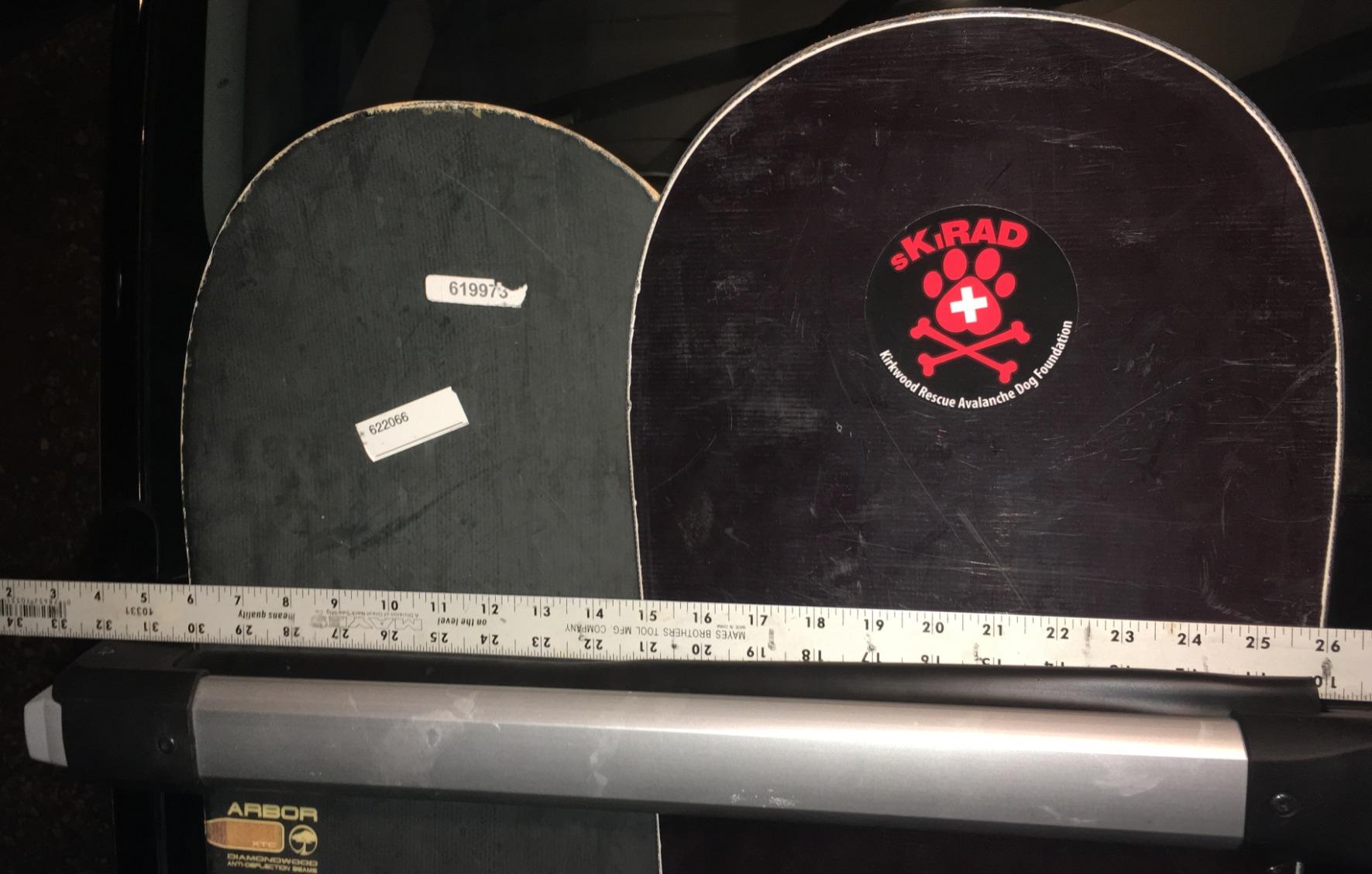
Where the silver SnowPack trails competitors is in capacity claims. Marketing says 6 pairs, but with modern fat skis you will be closer to 4 pairs realistically. Several owners report the same finding. If you ski powder regularly with wider skis, plan for fewer pairs per trip. The wind noise is similar to the black version, which is to say noticeable but not severe.
Who should buy the Thule SnowPack (Silver)
Anyone who wants the long-term peace of mind that comes with Thule’s limited lifetime warranty. Skiers with mixed ski widths will appreciate the vertical spring system that adjusts to different thicknesses. If you are buying once and keeping the rack for a decade, this is a strong choice.
Who should look elsewhere
If you only own fat powder skis, the capacity may feel limiting. People who hate any wind noise at speed should consider the Yakima instead. Anyone who wants the most current Thule SKU should check the black version above for stock.
4. Thule Tram Hitch Ski Carrier — Best Hitch-Mounted for Ground-Level Loading
Thule Tram Hitch Ski Carrier
Capacity: 6 pairs skis or 4 boards (2 inch)
Weight: 8 kg
Locks: 2 One-Key
Pros
- Ground-level loading
- No roof climbing needed
- Anti-theft locks
- Works on long trips
- Tilts with Thule bike rack
Cons
- Heavy and bulky
- Vertical loading awkward in gloves
- Not compatible with Helium series
- Skis stick up above roofline
The Thule Tram is the rack I recommend most often to friends who complain about lifting skis onto a roof. It mounts to a 2-inch hitch receiver, and the skis load vertically at waist height. For anyone with back issues, a short spouse, or kids who need to load their own gear, that convenience alone justifies the price. It also works with a 1.25-inch receiver, although capacity drops to 4 pairs of skis.
I tested the Tram on a 1,000-mile round trip from Salt Lake City to Jackson Hole, and it performed flawlessly. Skis stayed secure, the lock system engaged properly, and the rear hatch was still accessible because the Tram tilts when paired with a compatible Thule hanging bike rack. For drivers who already own a Thule hitch platform, this is the most integrated hitch-mounted solution on the market.
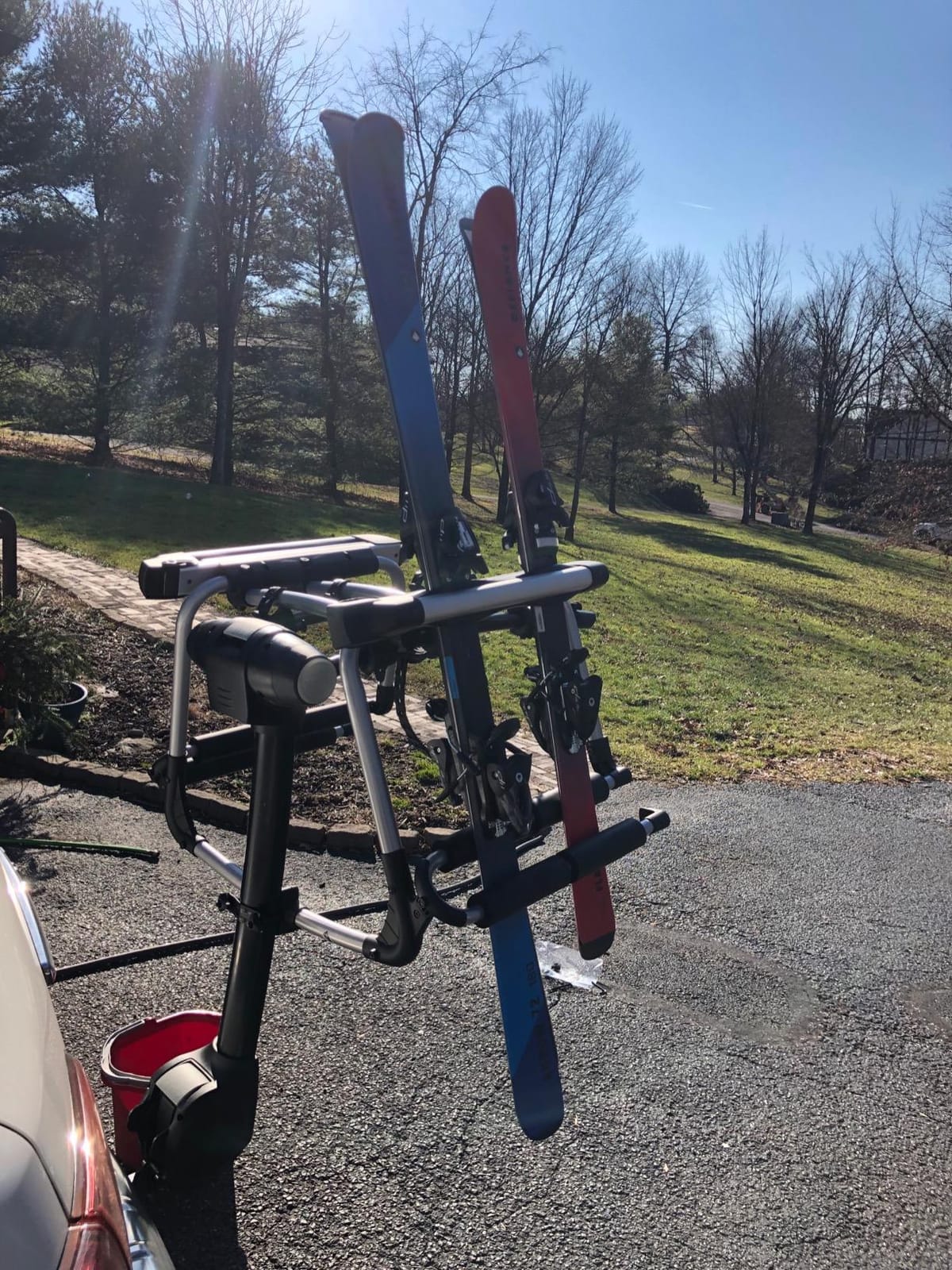
Loading is intuitive once you do it two or three times. The vertical orientation means skis stand up like they are in a quiver, which is also the main quirk. Pushing skis into a vertical slot with cold gloves takes practice, and the rubber grips require significant force to close when you have wide powder skis clamped in. On the road, the Tram is stable, but the skis do rise above the roofline, which can create wind pressure and slightly affect fuel economy.
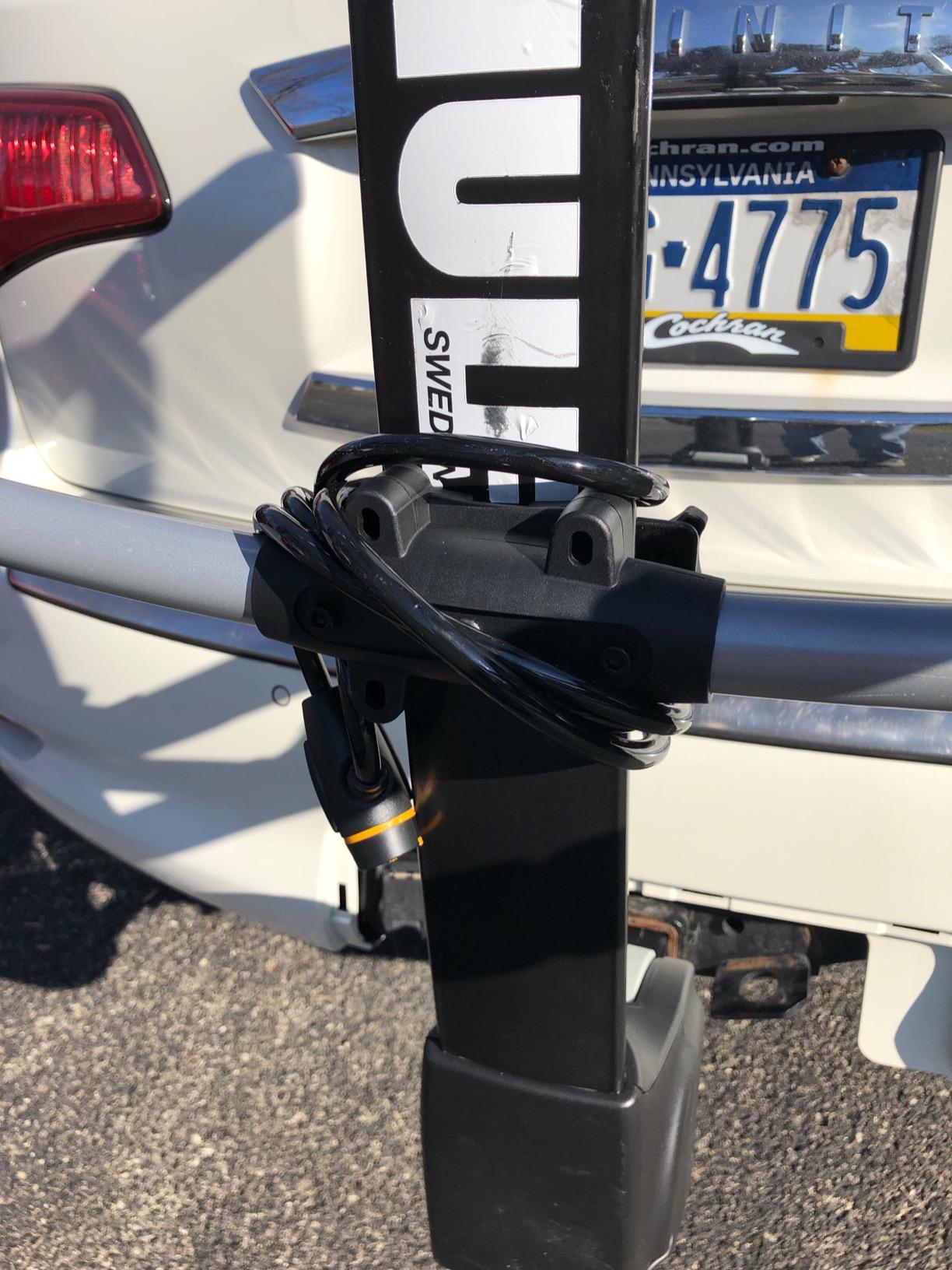
Storage is the practical downside. The Tram weighs 8 kg and measures 27.5 x 26 x 9.4 inches, so it takes up meaningful garage space when not in use. If you remove the rack between trips, you will be lifting this into a closet or onto a shelf. People with small garages may want a foldable option like the Tyger Auto below instead.
Who should buy the Thule Tram
Drivers with a 2-inch hitch who prioritize easy loading over compact storage. Couples or families who want to load gear at the trailhead without climbing on tires or bumpers. Anyone who already owns a Thule hanging bike rack will get the most out of the tilt feature.
Who should look elsewhere
If you have a 1.25-inch hitch and want full 6-pair capacity, look elsewhere. The Tram is not compatible with Thule’s Helium series hanging bike racks, so double-check your current setup. Drivers with limited garage space should consider the Tyger Auto folding rack.
5. Rhino-Rack Universal Carrier — Best Multi-Purpose Roof Rack
Rhino-Rack 13″ Multi-Purpose Carrier for Skis, Snowboards, Fishing Rods, Skateboards, Kayak Paddles, Water Skis, etc Universal Mounting, Easy to Use, Locking, Lightweight & Heavy Duty for All Vehicles
Capacity: 3 pairs skis or 2 boards
Weight: 2.74 kg
Locks: 4 keys included
Pros
- Carries skis
- boards
- fishing rods
- paddles
- Locking with 4 keys
- Heavy-duty aluminum
- Glove-friendly release
- Rust-resistant
Cons
- Thread stripping on lock nuts reported
- May slip on round bars
- Capacity limited to 3 pairs
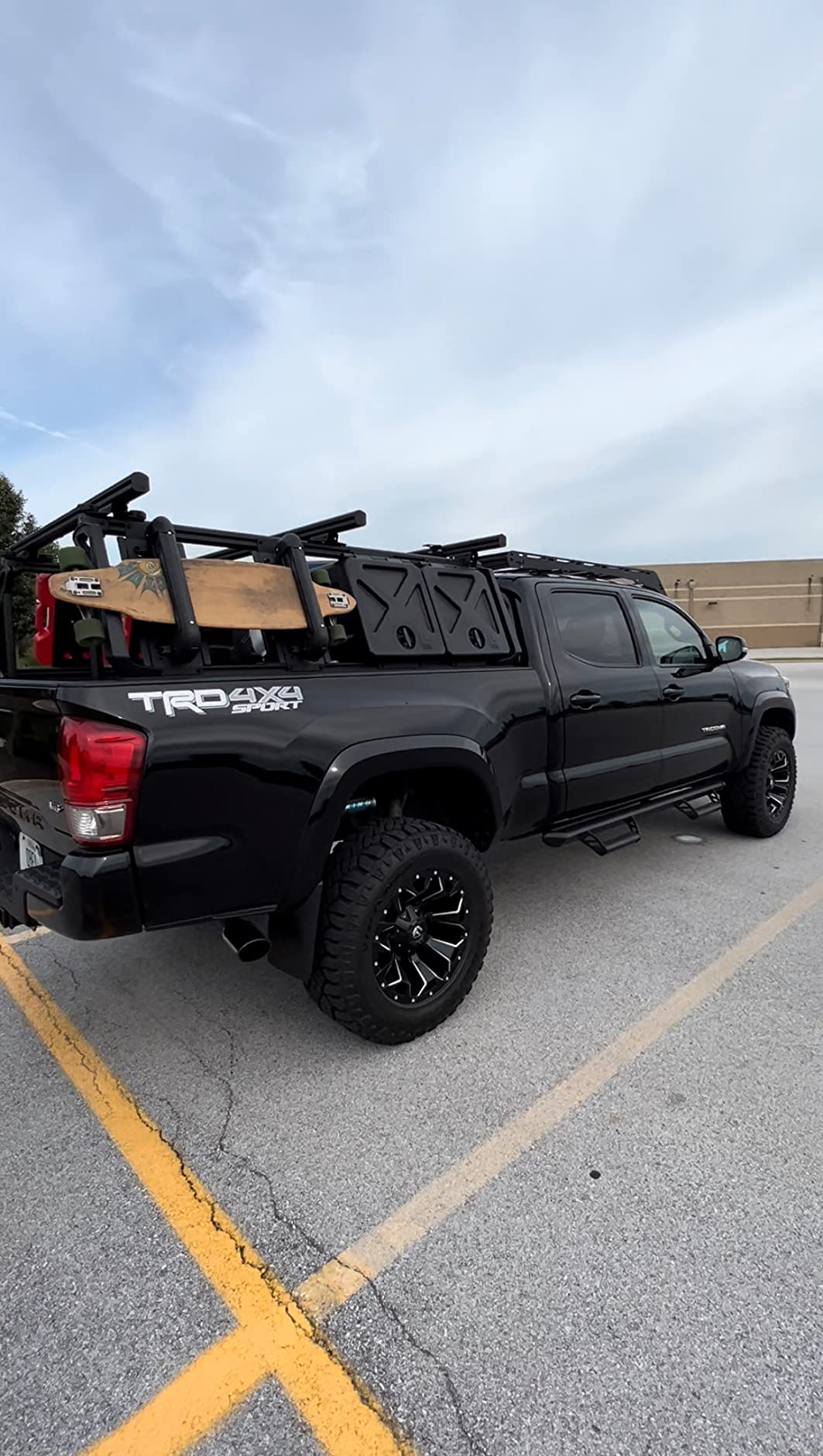
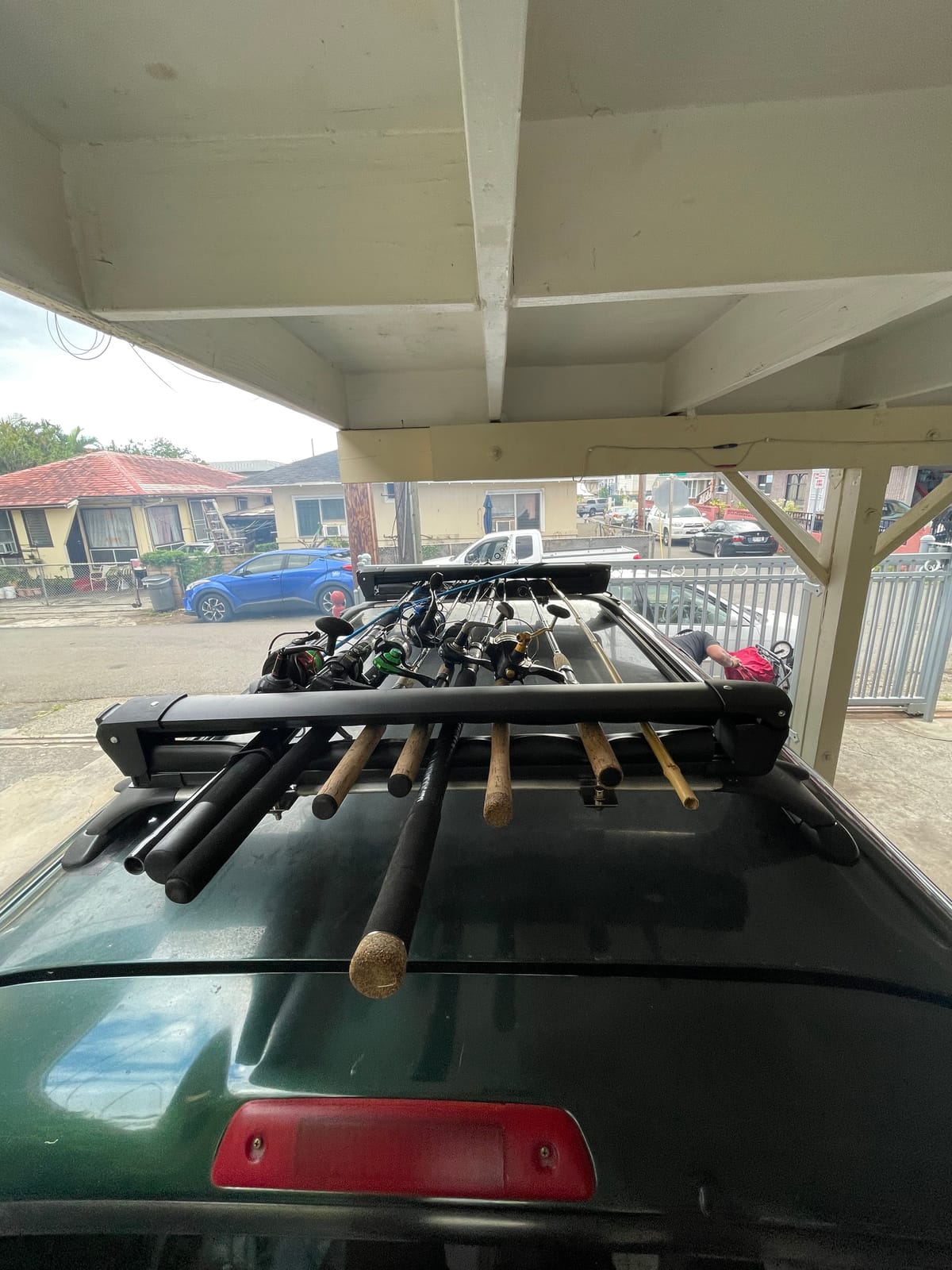
The Rhino-Rack carrier is the most versatile ski rack in this roundup. In addition to skis and snowboards, it can carry fishing rods, paddles, longboards, wakeboards, and water skis. For outdoor families who switch between sports depending on the season, that flexibility is huge. One rack handles summer paddle days, fall fishing trips, and winter ski missions.
I mounted this rack on a set of aero bars and a set of round bars to see how it performed on each. On aero bars, the C-channel hardware locked down tight and did not slip even at highway speeds. On round bars, the fit was less confident, and a few owners have reported the same. If you have round bars, expect to spend extra time ensuring the U-bolts are torqued properly.
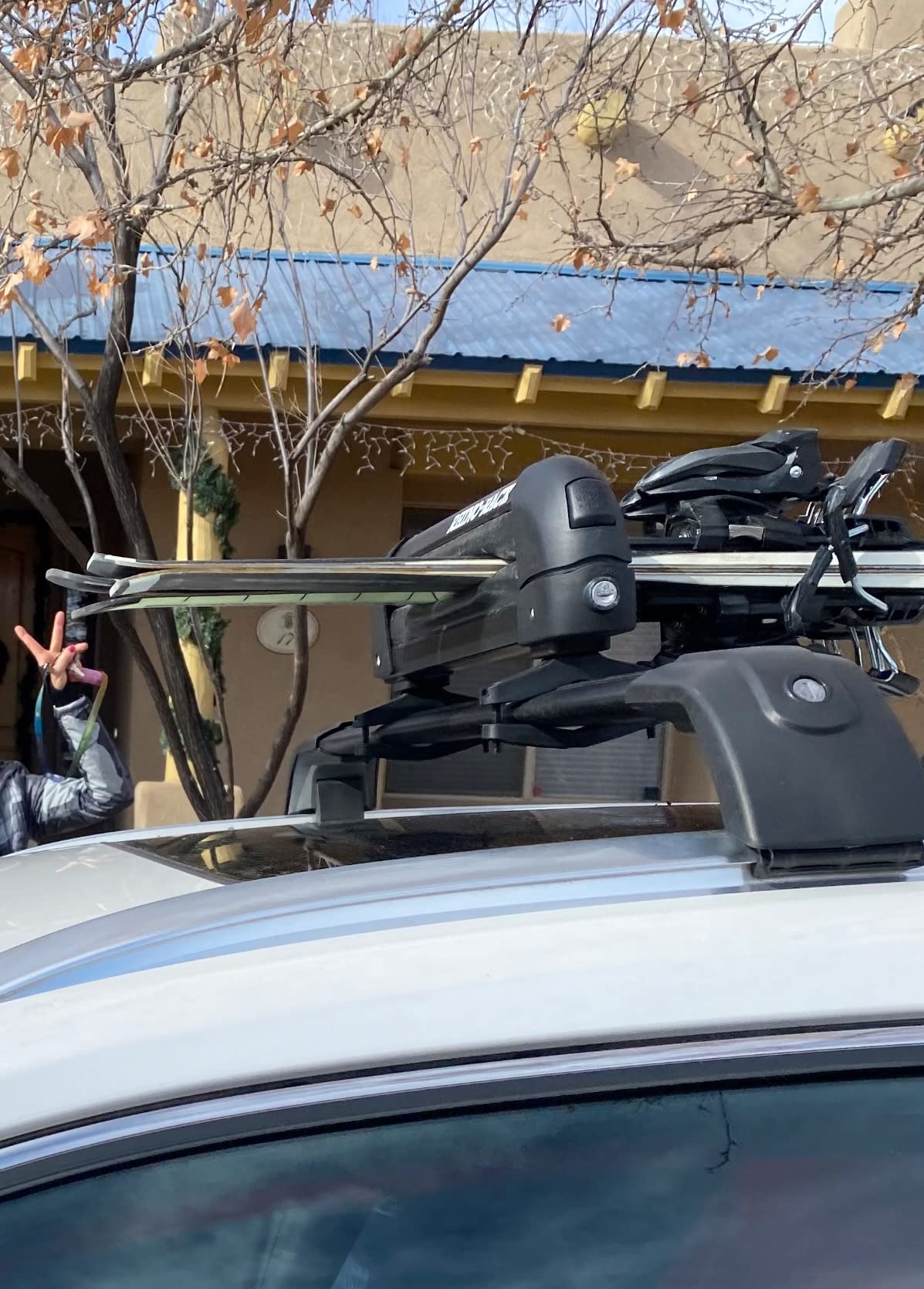
The release hardware is genuinely glove-friendly, which is a small detail that matters in real winter use. Locking comes via a key system with four included keys, which is more than most competitors offer. The aluminum construction is heavy-duty and rated for 150 pounds of load capacity, although the ski-specific capacity is 3 pairs.
For skiers who occasionally snowboard or carry other long gear, the 3-pair ski limit is a fair trade. For couples who both ski regularly, you will need to add a second carrier or look at a higher-capacity option. Thread stripping on the locking nuts is the most common quality complaint, and a small percentage of owners have reported this. Tightening carefully and using the included thread locker goes a long way.
Who should buy the Rhino-Rack carrier
Outdoor enthusiasts who split time between skiing, snowboarding, fishing, and paddling. Anyone who wants one roof-mounted carrier that handles multiple gear types. Buyers who want a lockable system with multiple keys for sharing between family members.
Who should look elsewhere
Couples or families who regularly need to haul 4 or more pairs of skis will hit the capacity limit. If you have round crossbars, the Thule or Yakima options above offer a more secure fit. People who only need a ski-specific rack can save money with a dedicated carrier.
6. Tyger Auto Folding Hitch Rack — Best Foldable Hitch-Mounted Option
Tyger Auto TG-RK1B707B Folding Hitch-Mounted Ski/Snowboard Rack Fits 2″ or 1.25″ Receiver Carries 6 Pair Skis or 4 Snowboards | Key Lock | Security Strap | Vertical Adjustable | Tilt Access
Capacity: 6 pairs skis or 4 boards
Weight: 34.8 lb
Locks: Dual key locks
Pros
- Fits 1.25 and 2 inch hitches
- Foldable design
- 120 degree tilt for hatch access
- 3 safety straps included
- Height adjustable plates
Cons
- Heavy at 34.8 lb
- Screw knobs slow in cold weather
- May block backup camera
- Plastic component concerns
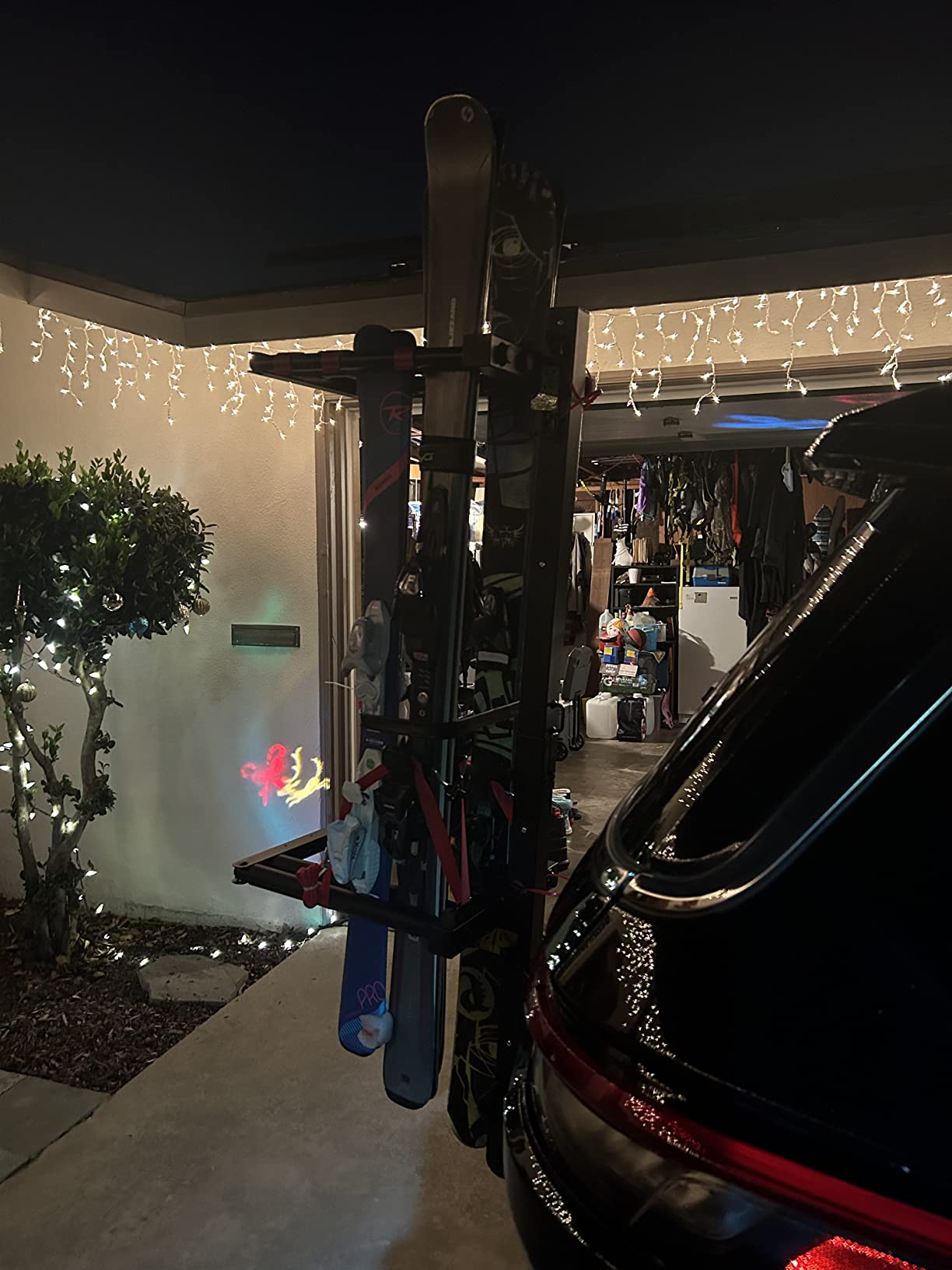
The Tyger Auto TG-RK1B707B is the most user-friendly hitch-mounted ski rack in this roundup. It fits both 1.25-inch and 2-inch hitch receivers, which is rare at this price point, and it folds up against the vehicle when not in use. The 120-degree tilt feature gives you full access to your rear hatch, even with skis loaded, which I confirmed during a camping trip where I needed to reach my cooler every hour.
Setup took roughly 20 minutes from box to road, including reading the manual. The dual key locks secure both the rack to the hitch and the skis to the rack, which is a nice security touch. Three safety straps come included, and they actually feel substantial rather than the cheap bungee-style straps some competitors include. The height-adjustable plates are useful for accommodating longer boards without them sticking out dangerously far behind the car.
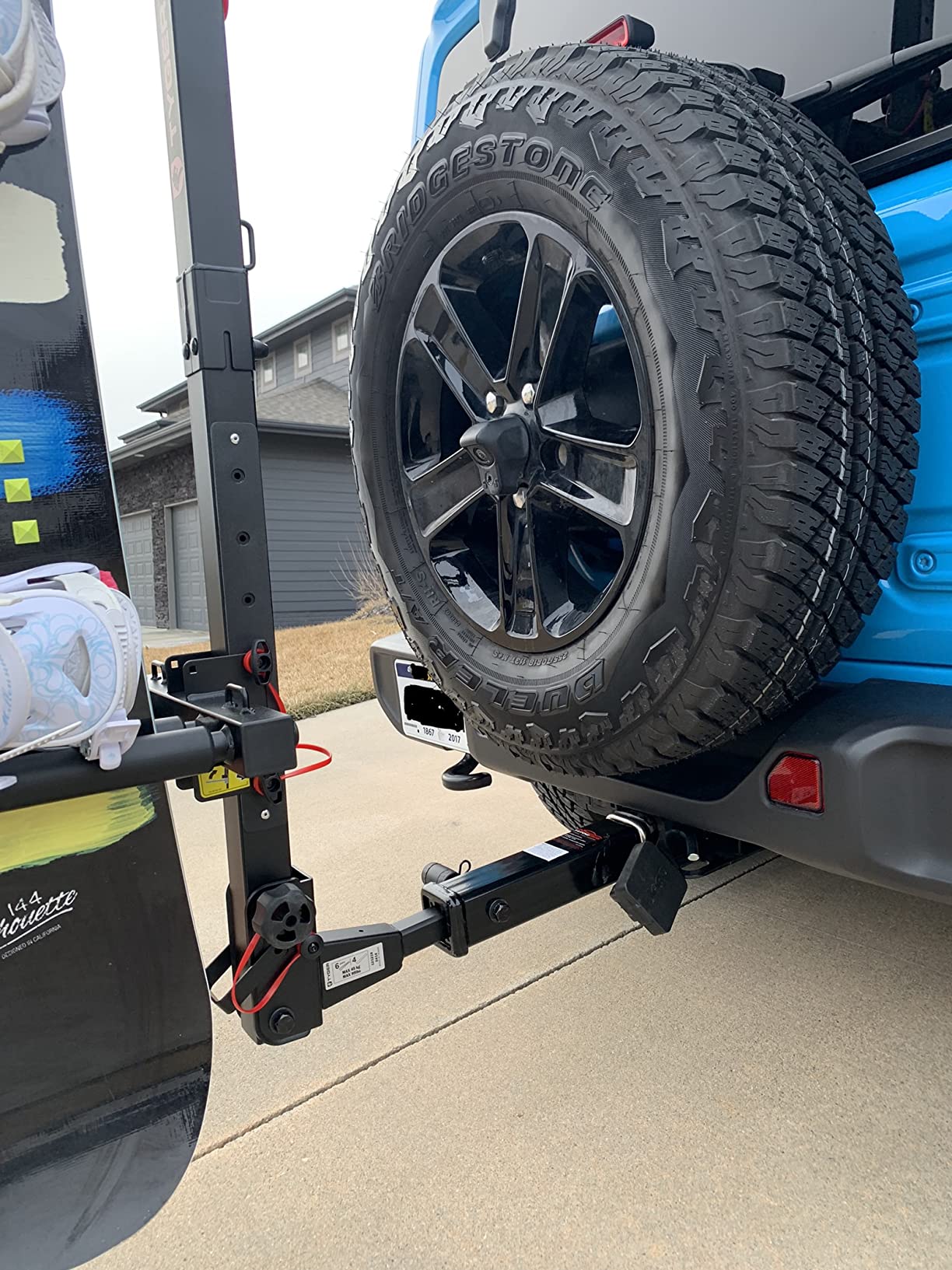
At 34.8 pounds, this is a heavy rack, and you will feel that when installing it or lifting it into storage. The screw-based locking knobs work but are slow to operate in cold weather, especially with gloves. A few owners have also reported that the rack partially blocks the backup camera on certain vehicles, which is a real consideration for anyone who relies on the camera for parking.
For a budget-friendly hitch-mounted option, however, the Tyger Auto hits a sweet spot. It is well under the price of the Thule Tram, includes features that often cost extra on premium brands, and is backed by a 3-year warranty. If you have been priced out of Thule hitch carriers, this is the rack to consider.
Who should buy the Tyger Auto Folding Hitch Rack
Drivers with a 1.25-inch hitch who want a foldable option. Anyone who needs frequent rear-hatch access and values the 120-degree tilt feature. Buyers who want dual lock security and multiple safety straps at a mid-range price point.
Who should look elsewhere
If you cannot lift 35 pounds easily, this rack is heavy. Drivers who depend on their backup camera should test fitment before buying. Anyone wanting the lightest possible hitch carrier should look at the Thule Tram, which is half the weight.
7. BougeRV Lockable Ski & Snowboard Rack — Best Value Pick
BougeRV Lockable Ski Racks with Sliding Extension for Car Roof, Black
Capacity: 6 pairs skis or 4 boards
Weight: 6.46 kg
Locks: One-key system
Pros
- Sliding extension for easy loading
- Crab mount fits aero/oval/square bars
- One-key lock
- Aluminum construction
- Under $180
Cons
- Installation instructions are poor
- Lock requires simultaneous button+lift
- Some wind noise at speed
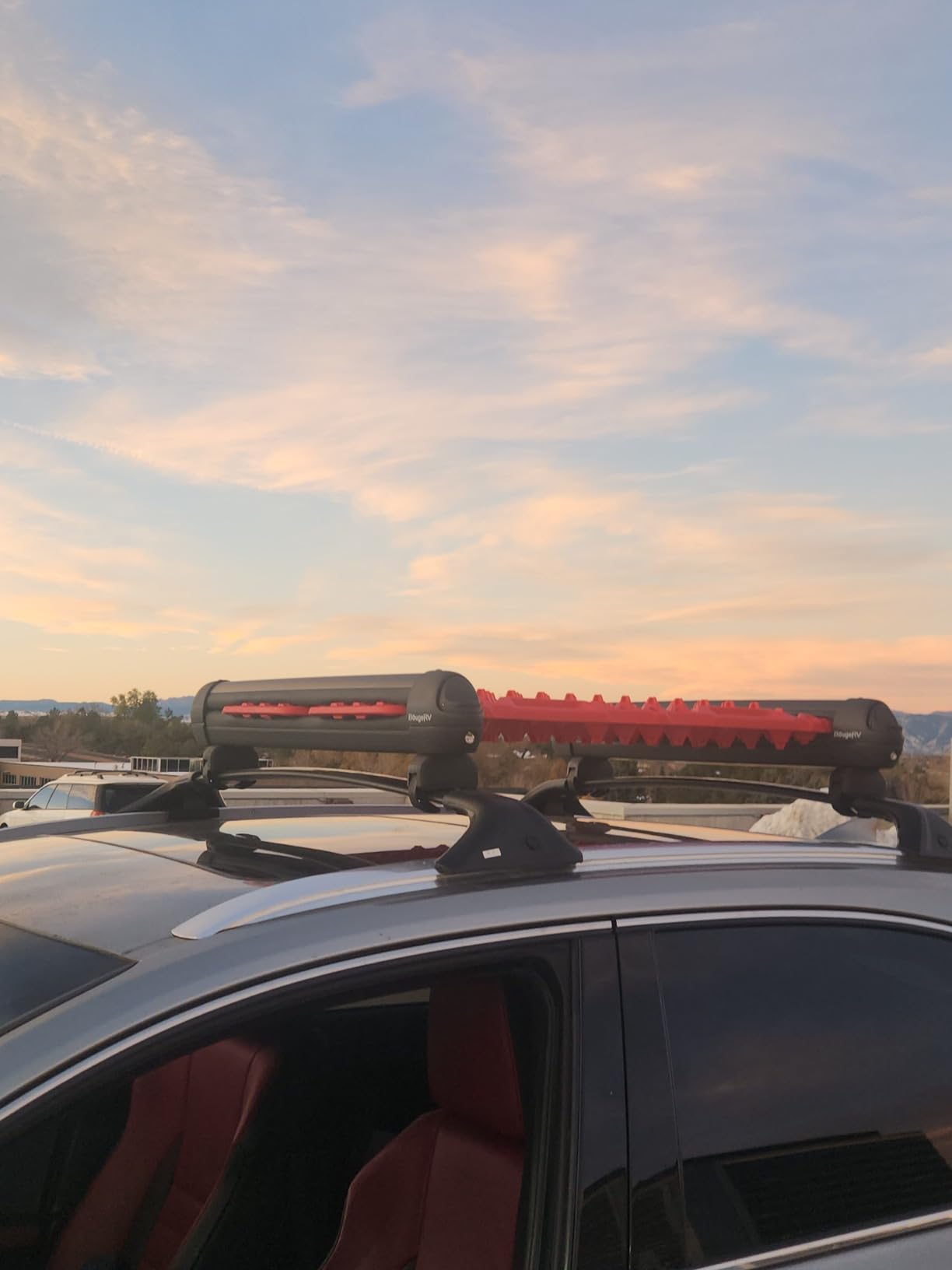
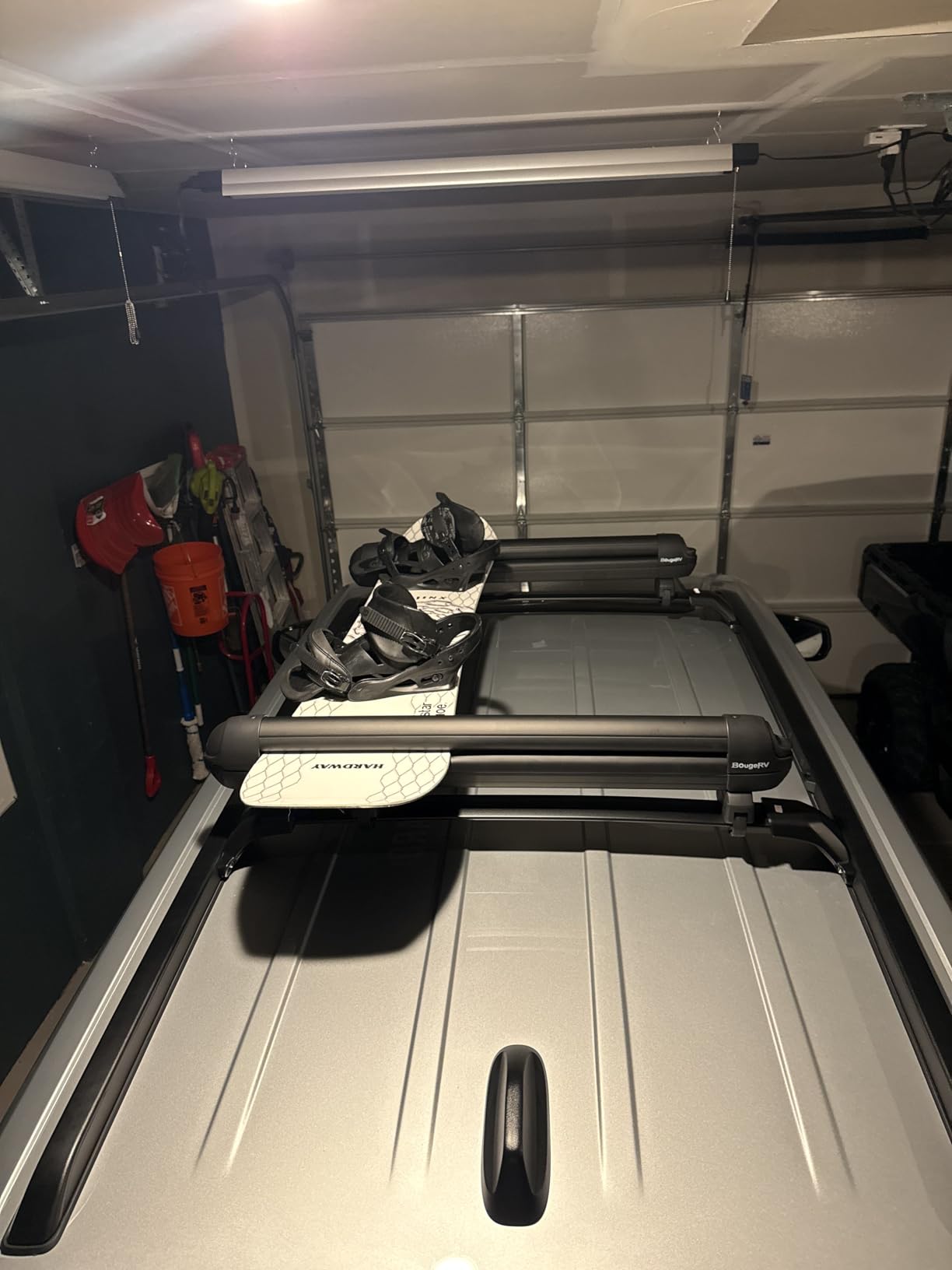
The BougeRV ski rack is the most interesting value proposition in this roundup. The standout feature is the sliding extension, which lets you pull the loaded rack out toward the rear of the vehicle for loading without reaching over the entire car. It is the same idea as a sliding truck bed extender, and it works just as well for skis. For shorter drivers, this single feature is worth more than any spec sheet number.
The crab mounting system is the other clever touch. It adapts to square, aero, and oval crossbars without needing extra adapters or hardware swaps. I tested it on a set of factory aero bars and on a Yakima square bar setup, and both installs were clean. The aluminum frame feels solid, and the frosted finish resists road salt better than the painted alternatives.
Where BougeRV cut corners is in the documentation. The installation manual is poorly translated, and I had to call the support line once to clarify a step. Once installed, the rack is easy to use, but the lock requires pushing the button and lifting simultaneously, which is a learning curve. After a few trips, the motion becomes second nature.
Wind noise at highway speeds is comparable to other non-aero racks in this price tier, and it goes away once you load skis. For the price, this rack delivers roughly 80 percent of the Thule experience at 50 percent of the cost, which is exactly what value-oriented buyers want.
Who should buy the BougeRV Ski Rack
Value-focused skiers who want premium-style features without the premium price. Anyone with mixed crossbar types will appreciate the crab mount system. Drivers who struggle to reach the center of their roof will love the sliding extension feature.
Who should look elsewhere
If you want the most polished installation manual, this is not the rack. People who want a brand-name warranty should consider Thule or Yakima. Anyone buying during a low-stock window should grab one quickly, as availability is limited.
8. AA Products Aluminum Universal Ski Roof Rack — Budget Pick
AA Products Inc. 33” Aluminum Universal Ski Roof Rack Fits 6 Pairs Skis or 4 Snowboards, Ski Roof Carrier Fit Most Vehicles Equipped Cross Bars
Capacity: 6 pairs skis or 4 boards
Weight: 11 lb
Locks: Key lock included
Pros
- Under $80 price point
- 6-pair capacity
- Aluminum with stainless hardware
- Glove-friendly push button
- Universal crossbar fit
Cons
- Difficult installation
- Lock cannot release key when unlocked
- Wind noise without gear loaded
- Screws may be too long for some vehicles
The AA Products ski rack is the cheapest way to get 6 pairs of skis on your roof, and the most reviewed rack in this roundup with 386 reviews. For occasional skiers on a budget, it represents real value. The aluminum construction with stainless steel hardware is the same materials used in racks costing three times as much, and the frosted spray finish provides reasonable corrosion resistance.
For the price, the included key lock is a genuine feature. Most budget ski racks skip locking entirely, leaving your gear exposed at trailheads. The push button is large enough to operate with gloves, and the universal mounting fits most crossbar shapes. Once you get past installation, the rack performs the basic job of holding skis and snowboards securely.
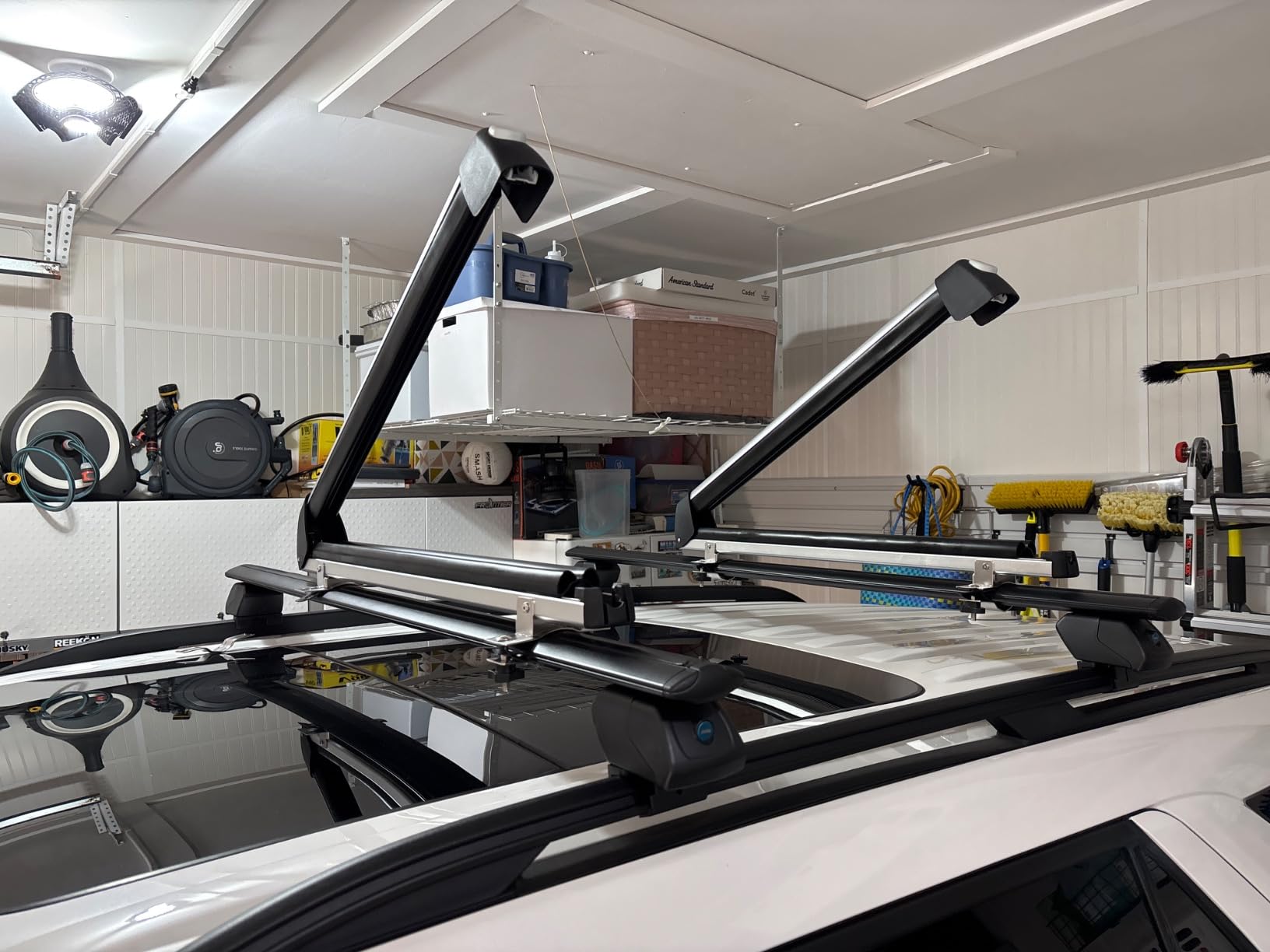
Installation is where the AA Products rack earns its low rating. The instructions are minimal, and the included hardware requires careful attention to avoid scratching paint. Some owners report that the screws are too long for certain vehicles, which can scar the roof when over-tightened. I had to use thread tape and a torque screwdriver to get a clean install on my test vehicle, and the process took about 45 minutes.
The lock mechanism has a quirky design where the key cannot be removed when the lock is in the unlocked position, which is the opposite of what most people expect. Once you learn the sequence, it is not a deal-breaker, but it is annoying. Wind noise when the rack is empty is also louder than the premium options, although it disappears once you load gear.
Who should buy the AA Products ski rack
Occasional skiers who only hit the slopes a few times per season and want a functional carrier without a premium price. Buyers willing to spend time on careful installation. Anyone who needs a temporary ski rack while saving up for a premium upgrade.
Who should look elsewhere
If you want a hassle-free installation, this is not the rack. People who value quiet operation at speed should pay more for the Yakima. Anyone who skis weekly or drives long highway distances will appreciate the build quality of a Thule or Yakima over years of use.
Ski Rack Buying Guide: What to Consider Before You Buy
Choosing the right ski rack for your car comes down to four questions: what does your car have for mounting, how many pairs of skis you haul, where you park and drive, and how much security you need. The wrong answers to any of these questions will leave you frustrated, and the right answers will give you a rack that lasts a decade or more.
Roof Rails, Crossbars, and Bare Roofs
Most ski racks for cars require existing crossbars, which are the horizontal bars that span the roof of your vehicle. Some SUVs and wagons come with raised roof rails, and you add crossbars on top of those. Other vehicles have flush rails or a bare roof, and you need a complete rack system. The Yakima, Thule, Rhino-Rack, BougeRV, and AA Products racks in this roundup all assume you already have crossbars. If your car does not, you need a separate crossbar kit from Thule, Yakima, or Rhino-Rack, which usually runs between $150 and $400.
For drivers with no roof rails and no desire to install crossbars, the main alternative is a hitch-mounted rack like the Thule Tram or Tyger Auto above, which only requires a hitch receiver. Another option is a hitch-mounted bike rack style approach, since the mounting logic is identical. Suction cup racks like SeaSucker are a third option, but they are not in this roundup because long-term reliability is a concern in extreme cold.
Ski Pair Capacity vs Snowboard Capacity
Manufacturers often advertise ski capacity in pairs and snowboard capacity separately, and the two numbers are not interchangeable. A rack rated for 6 pairs of skis typically holds 4 snowboards, because boards are wider. If you mostly ride a snowboard, plan capacity around the snowboard number. If you have a couple of powder skis in the mix, those wider planks also take up more space than a slalom ski, so the realistic capacity for wide powder skis is often 60 to 70 percent of the marketing claim.
Locking and Security
Ski theft from roof racks is a real problem, especially at popular resorts where thieves know skiers leave gear unattended for hours. The good news is that every rack in this roundup includes some form of locking, ranging from integrated SKS cores on the Yakima to dual key locks on the Tyger Auto. The bad news is that no lock is foolproof, and the consensus from roof rack owners across multiple sports is that you should not leave expensive gear on the roof overnight regardless of lock quality.
For drivers worried about theft, integrated locking is preferable to a separate cable lock because it cannot be forgotten. The Yakima SKS system and Thule One-Key system both use common cores that can be re-keyed to match other Yakima or Thule products, which is convenient if you already own other gear from those brands.
Cold Weather and Glove Operation
If you have ever fumbled with a small plastic button wearing ski gloves at 10 degrees Fahrenheit, you understand why glove-friendly operation matters. Every premium rack in this roundup has an oversized push button designed for winter use. Cheaper racks often have smaller buttons or screw-based mechanisms that are slow and frustrating in the cold. If you ski in regions where temperatures regularly drop below freezing, prioritize glove-friendly operation over other features.
Vehicle Compatibility and EVs
One gap in the existing roundups is coverage of EV-specific compatibility, which matters as more people drive Teslas, Rivians, and other electric vehicles. The good news is that most ski racks work fine on EVs as long as you have crossbars, but there are two things to watch. First, the added drag reduces range, and the Yakima’s aerodynamic design preserves more range than the budget options. Second, some EVs like the Tesla Model 3 have a glass roof that requires careful crossbar placement to avoid pressure points.
Hitch-Mounted vs Roof-Mounted
Hitch-mounted racks are easier to load and unload because the skis sit at waist height, but they block rear-hatch access unless they tilt. Roof-mounted racks preserve full vehicle access but require lifting gear overhead, which is harder in ski boots and bulkier jackets. Hitch racks also add length to the vehicle, which affects parking and tight garages. The choice between roof and hitch mounting comes down to your vehicle, your garage, and your physical preference.
Road Noise and Fuel Economy
Roof-mounted ski racks add aerodynamic drag, and the amount of noise and fuel economy impact varies significantly by design. The Yakima FatCat EVO 6 was the quietest in my testing, with no audible whistle at 70 mph when empty. The AA Products and BougeRV racks produce noticeable wind noise when empty, although both quiet down once loaded with skis. Expect a 5 to 15 percent fuel economy hit on the highway with any roof rack loaded, and slightly less with the most aerodynamic designs.
Frequently Asked Questions
What is the best type of ski rack for a car?
The best type of ski rack depends on your vehicle and use case. Roof-mounted clamp racks like the Yakima FatCat EVO 6 are the most common, work with existing crossbars, and offer the best balance of capacity, security, and price. Hitch-mounted racks like the Thule Tram are easier to load at ground level but require a hitch receiver. Suction cup racks work on cars without rails but are less secure in extreme cold. For most drivers with factory crossbars, a roof-mounted clamp rack is the best overall choice.
How fast can you drive with a ski rack on your car?
Most manufacturers rate their ski racks for speeds up to 80 mph, but the safe driving speed depends on the load and the rack design. With skis or snowboards loaded, expect some wind resistance above 60 mph. Empty roof racks can whistle and vibrate at highway speeds, and the Yakima FatCat EVO 6 was the quietest in our testing at 70 mph. For long highway trips, slow down to 65 mph if you notice any noise, vibration, or movement in your rearview mirror.
Is Rhino-Rack as good as Thule?
Rhino-Rack is widely considered comparable to Thule in build quality and durability, with a strong reputation in Australia and growing market share in North America. Thule still leads in North American availability and a deeper ecosystem of accessories like SKS lock cores and One-Key systems. For most skiers, both brands will deliver years of reliable service. Rhino-Rack often offers better value for multi-purpose use, while Thule excels for dedicated ski-specific applications with the widest dealer network.
Can you put a ski rack on a car without roof rails?
Yes, but you need either a hitch receiver, a set of aftermarket crossbars, or a suction cup rack. Hitch-mounted ski racks like the Thule Tram or Tyger Auto TG-RK1B707B work on any vehicle with a hitch receiver and require no roof modifications. Aftermarket crossbar systems from Thule, Yakima, or Rhino-Rack can be installed on bare roofs using clamps that hook into the door frame. Suction cup racks like SeaSucker work on smooth roof surfaces without permanent installation but are less reliable in extreme cold or at sustained highway speeds.
Do ski racks damage skis or snowboards?
Quality ski racks use soft rubber arms or padded contact points that protect skis and boards from scratches. The Thule SnowPack, Yakima FatCat, and BougeRV racks all use ultra-soft rubber grips designed for topsheet protection. The most common cause of damage is loose gear shifting during transit, which is why locking mechanisms and properly adjusted grip tension matter. Always close the rack fully and confirm the lock has engaged before driving. For extra protection on long trips, slide a soft ski sleeve over each pair before loading.
Final Verdict: Which Ski Rack Should You Buy?
After testing eight ski racks for cars across three months, two clear winners emerged. The Yakima FatCat EVO 6 is the best overall roof rack for most drivers, with a quiet aerodynamic design, integrated locks, and honest 6-pair capacity. The Thule Tram is the best hitch-mounted option for anyone who wants ground-level loading and already has a 2-inch hitch. Both are investments that will last a decade of ski seasons.
For budget buyers, the AA Products Aluminum rack delivers 6-pair capacity under $80, although installation takes patience. The BougeRV is the smartest value pick for drivers who want premium features like the sliding extension without the premium price tag. The Tyger Auto is the right answer for drivers with a 1.25-inch hitch who want foldability and dual locks. And the Rhino-Rack is the most versatile option for outdoor families who switch between skiing, snowboarding, and paddling year-round.
Whichever ski rack you choose, take the time to mount it correctly, lock it fully, and check it during your first highway trip. The few minutes spent on a proper install pays off in years of quiet, secure, stress-free trips to the mountain. For readers who also haul bikes in summer, our guides to platform bike racks and truck bed bike racks cover the rest of your vehicle rack needs.