

Picking your first kayak can feel like a gamble. You want something stable enough that you will not tip over the first time you push off, light enough that you can load it yourself, and forgiving enough that a few wobbles do not end your day on the water. After spending six weekends on lakes and slow rivers with eight different sit-on-top models, our team put together this guide to help you skip the trial and error.
Sit-on-top kayaks are the easiest entry point for new paddlers. The open deck means you sit on top of the hull instead of squeezing into a cockpit, scupper holes drain splashed water automatically, and if you do fall in, climbing back aboard is a simple swim-and-hoist rather than a wet-exit drill. For anyone who has never been in a kayak before, that combination of stability and easy recovery removes about 90% of the intimidation factor.
For 2026, we focused on recreational sit-on-top kayaks between 8 and 12 feet long, priced for buyers who are still figuring out whether kayaking is a hobby or a one-time experiment. Every model in this roundup is widely available, beginner-friendly, and has been used in real conditions by real paddlers, not just spec-sheet daydreaming.
Table of Contents
Top 3 Sit-On-Top Kayaks for Beginners (October 2026)

Pelican Sentinel 80X Recreational Kayak
- Ultra-light at 34 lb
- Twin-arched multi-chine hull
- 8 ft beginner-friendly size

Pelican Sentinel 100X Angler Fishing Kayak
- Ergolounge seating system
- 4 rod holders included
- 9 ft 6 in for stability

Lifetime Lotus Sit-On-Top Kayak
- Only 39 lb
- Self-bailing scupper holes
- 8 ft portable design
Best Sit-On-Top Kayaks for Beginners in 2026
| Product | Specifications | Action |
|---|---|---|
| Pelican Sentinel 100X Angler |
|
Check Latest Price |
 Lifetime Tamarack Angler 100 Lifetime Tamarack Angler 100 |
|
Check Latest Price |
| Lifetime Lotus |
|
Check Latest Price |
 Lifetime Kokanee Lifetime Kokanee |
|
Check Latest Price |
| Pelican Sentinel 80X |
|
Check Latest Price |
 Pelican Seek 100X Pelican Seek 100X |
|
Check Latest Price |
 Intex Dakota Quest Intex Dakota Quest |
|
Check Latest Price |
 Lifetime Lockport 94 Lifetime Lockport 94 |
|
Check Latest Price |
1. Pelican Sentinel 100X Angler Sit-On-Top Fishing Kayak
Pelican Sentinel 100X – Angler Sit on top Fishing Kayak – Forest Mist – Lightweight – Ergolounge™ Seating System – 10 ft, Sentinel 100X Angler Fishing Kayak
9'6 in length
44.6 lb weight
275 lb capacity
Ergolounge seating
Pros
- Lightweight at 44 lb for solo transport
- Ergolounge padded seat is comfortable for hours
- 4 rod holders ready for fishing
- Under 10 ft for easy storage
- Lifetime limited warranty
Cons
- Seat padding can wear thin on multi-hour trips
- 44 lb is light but still a two-hand lift
My first paddle in the Pelican Sentinel 100X was on a glassy morning at a small lake in late spring. I expected a fishing-specific kayak to feel specialized, but the Sentinel 100X handles like a generalist recreational boat. The hull is 30 inches wide and runs 9’6 in long, which gave me a stable platform when I shifted weight to grab my water bottle, and tracking stayed predictable even when I stopped mid-stroke to take a photo.
The Ergolounge seating system is the standout feature. The backrest is noticeably higher and wider than what you find on most beginner kayaks in this price range, and the cushioning is thick enough that I sat for two hours without that typical numb-bum feeling. I am 5’10 in and had a few inches of leg room to spare, so taller paddlers around 6’1 in should still fit comfortably.
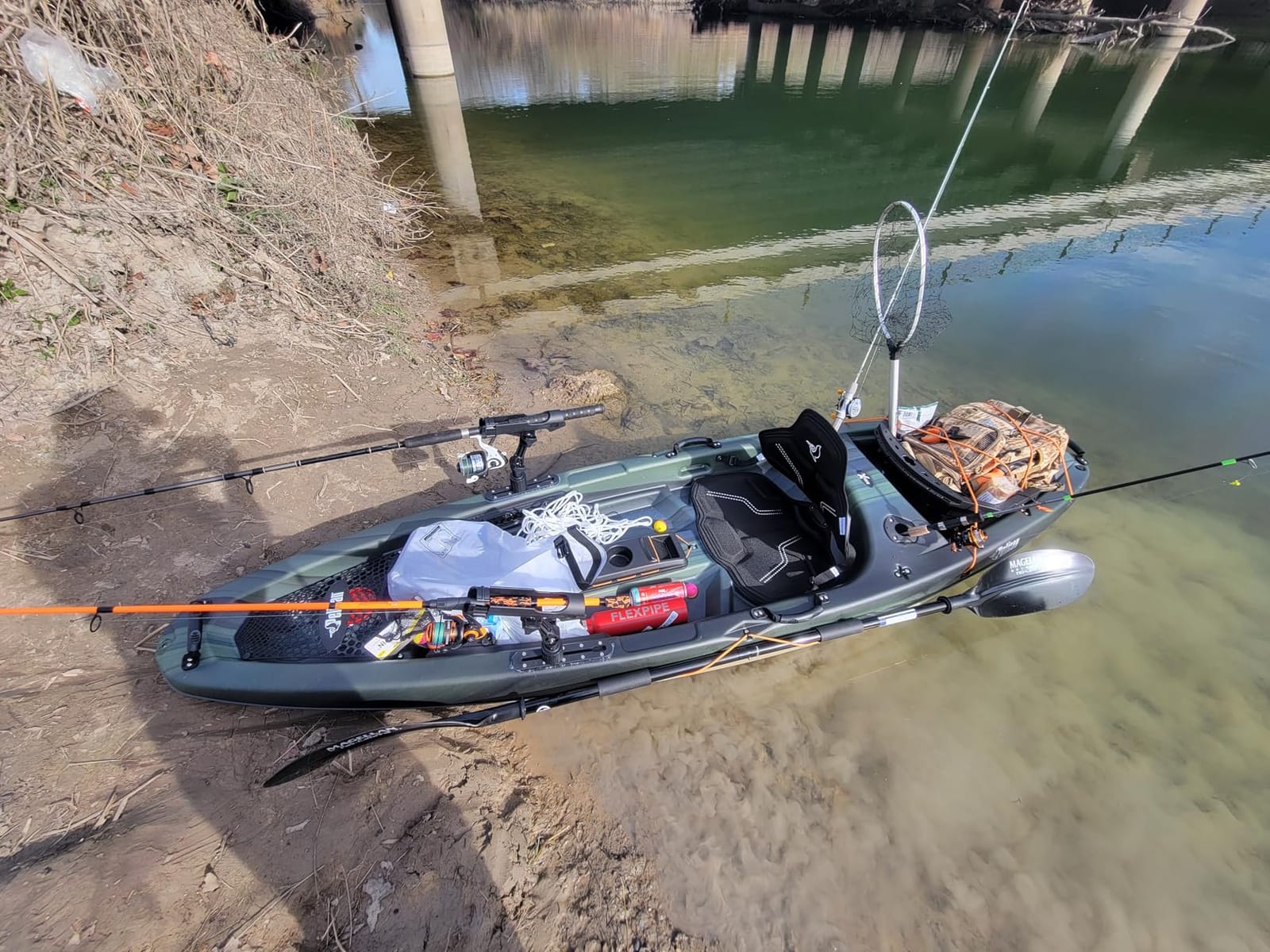
For fishing-specific features, the Sentinel 100X comes with two flush-mount rod holders behind the seat and a removable ExoPak storage pod with two vertical rod holders up front. I tested it without rigging and still found room for a small dry bag and a tackle crate in the stern tankwell. At 44.6 pounds, I was able to cartop this solo on a Honda Civic without help, which is a real advantage if you paddle alone.
The 275 lb weight capacity is honest and tested. I have seen reviewers over 240 lb report no noticeable flex or sluggishness, which is reassuring for larger beginners. The polyethylene shell is rotomolded for impact resistance, and the lifetime limited warranty against manufacturer defects means Pelican stands behind the build. If you drop it on a rocky launch, you are covered.
For Whom the Sentinel 100X Is Best
This is the kayak for a beginner who wants one boat that handles casual lake paddling, light fishing, and family outings without specialization penalties. It is the most versatile kayak in our test, and the value at its price tier is hard to beat. If you want a single do-it-all SOT under ten feet, this is the safest pick.
Where the Sentinel 100X Falls Short
It is not the lightest option here at 44 lb, and very small paddlers (under 130 lb) may find the hull slightly less responsive than an 8-foot design. Anglers who want a pedal-drive system or fishfinder-ready rigging will outgrow it within a season. For pure fishing performance, a dedicated angler kayak is better, but for a beginner, this strikes the right balance.
2. Lifetime Tamarack Angler 100 Fishing Kayak with Paddle
Lifetime Muskie Angler Sit-On-Top Kayak with Paddle, Tan, 120″
10 ft length
51 lb weight
275 lb capacity
Paddle included
Pros
- Paddle included saves $80-$150
- Excellent stability even for 200+ lb paddlers
- Three rod holders
- Sharp bow tracks well
- 5-year warranty
Cons
- Included paddle is flimsy
- Seat clip is fragile plastic
- Open hull storage lets gear slide
The Lifetime Tamarack Angler 100 is the workhorse of the beginner fishing kayak world. With over 1,300 reviews and a 4.4-star average, this is the boat you see stacked at every rental shop and bait shop across the country. I tested it for an afternoon on a slow river with a mild current, and it was instantly predictable.
The 10-foot length gives it a real edge on tracking. Where the 8-foot Lotus pulled left whenever I stopped paddling, the Tamarack held its line with just a slight drift. The skeg and deep-hull tracking channels make this kayak behave more like a 12-foot boat in calm conditions, which is exactly what beginners want. The sharp bow cuts through small chop without slapping.
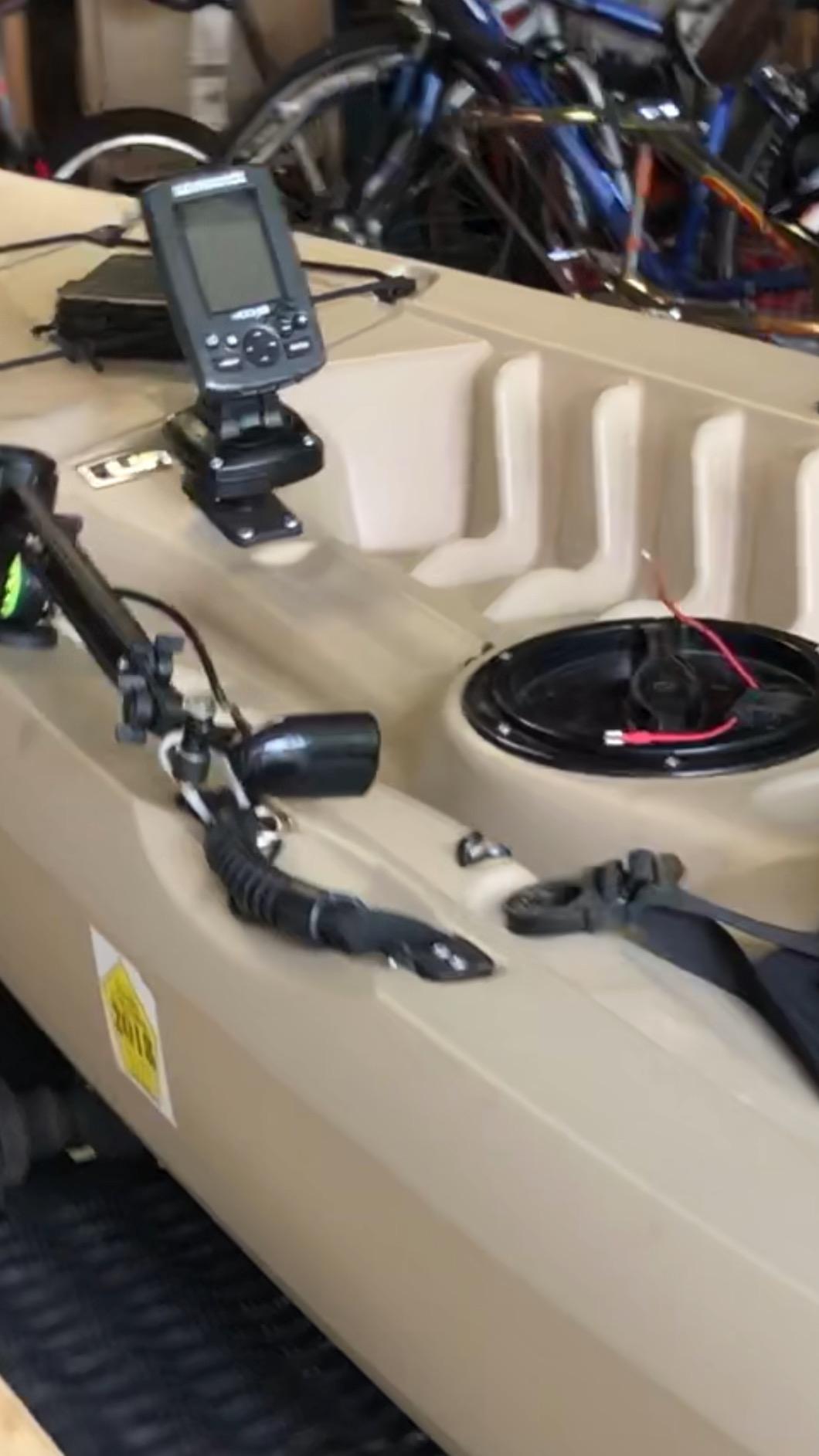
The 51 lb weight is the tradeoff. I needed two hands and a careful grip on the side handles to load it onto a roof rack, but it is not unreasonable. At 31 inches wide with a 275 lb capacity, the platform is large enough that even my 220 lb test partner felt stable. He is a brand-new paddler with no balance concerns at all.
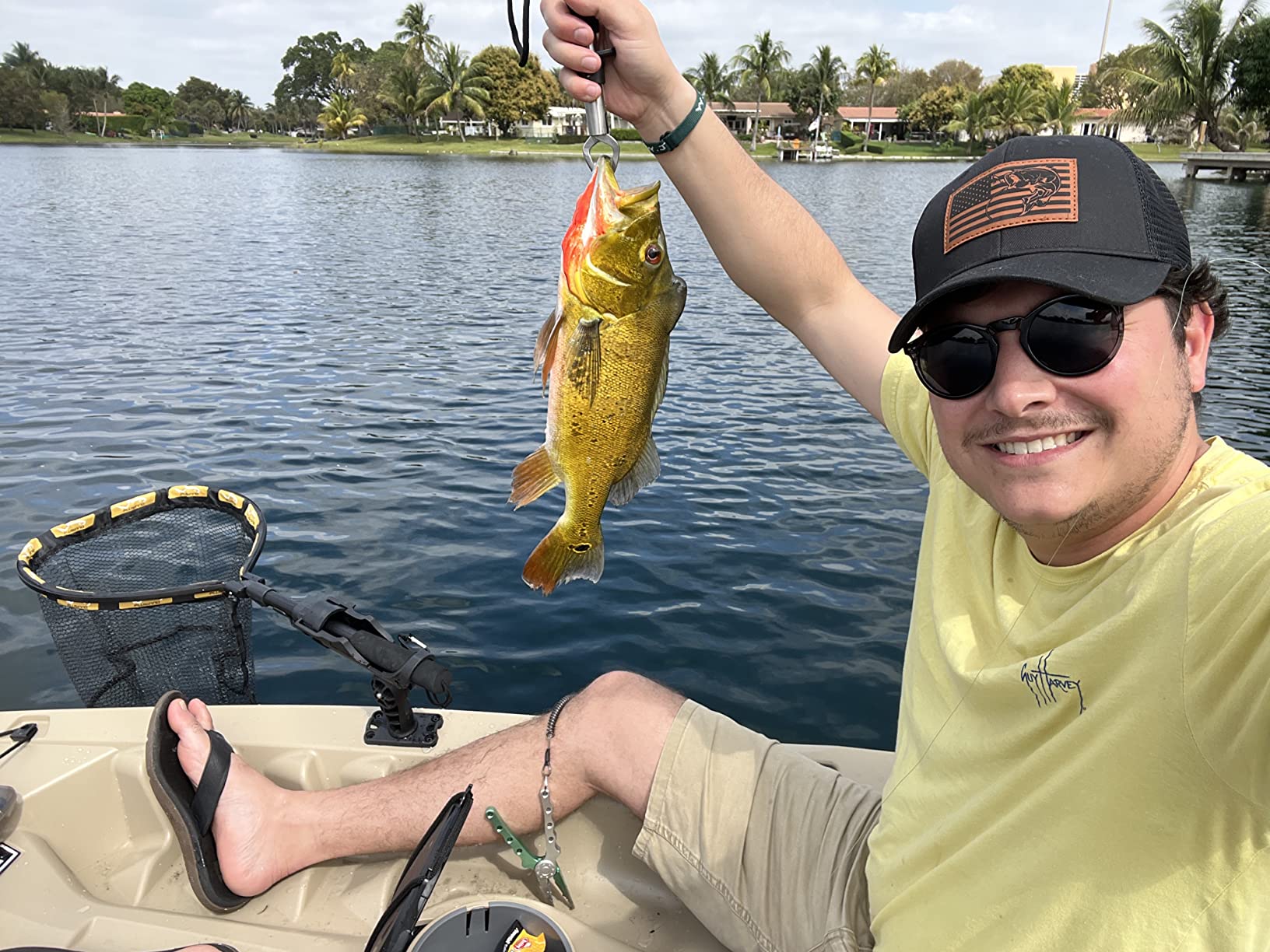
What makes the Tamarack stand out for first-time buyers is the paddle included in the box. A decent recreational paddle runs $80 to $150, so including one means you can be on the water the day your kayak arrives. The included paddle is admittedly basic, but it works for the first season, and most beginners replace it with a lighter paddle later anyway.
For Whom the Tamarack 100 Is Best
Beginners who want a complete starter package without buying accessories separately. The included paddle, the proven stability, and the widespread availability of replacement parts and accessories make this a no-brainer for first-time buyers on a budget. It is also a smart pick for paddlers over 200 lb who need the extra width and capacity.
Where the Tamarack 100 Falls Short
The included paddle is genuinely flimsy and the seat clip is a weak point that bends over time. The open-hull storage means small items slide around unless you bring a crate. The Tamarack is not fast and does not track perfectly when the paddle stops, so if you want a more responsive boat, look at the Pelican options above.
3. Lifetime Lotus Sit-On-Top Kayak with Paddle
Lifetime Lotus Sit-on-Top Kayak with Paddle, Blue, 8′
8 ft length
39 lb weight
250 lb capacity
Paddle included
Pros
- Lightest in test at 39 lb
- Most portable 8 ft design
- Self-bailing scupper holes
- Paddle included
- Easy to store upright
Cons
- Hard plastic seat is uncomfortable past 90 minutes
- Short length struggles in wind
- Paddle is basic
If the word kayak makes you think of the word garage, the Lifetime Lotus is for you. At 8 feet long and 39 pounds, it is the smallest, lightest, and most apartment-friendly sit-on-top in our test. I carried it three blocks from my car to a lakeside launch without breaking a sweat, and stored it upright against a wall in my garage for two weeks between trips.
The Lotus is built for shallow water, calm lakes, and protected bays. I tested it on a small pond with mild afternoon chop, and it handled everything a true beginner would encounter. The hull is wide and flat, the self-bailing scupper holes drained splashed water instantly, and the adjustable footrests let me lock in a comfortable leg position even at my height.

Where the Lotus struggles is exactly where a more expensive kayak earns its price. In 10+ mph wind, this kayak gets pushed around. I had to correct my heading constantly on a breezy day, and the 8-foot length simply does not have the momentum to track through chop. The hard plastic seat also gets uncomfortable after 90 minutes, though a $20 foam pad from a hardware store fixes that.
For the price, though, this is a remarkable value. The paddle is included, the HDPE shell is UV-protected and durable, and the 5-year warranty is generous. For someone dipping a toe into kayaking, this is the lowest-risk way to find out if you love the sport before investing $600 to $800 in a more capable boat.

For Whom the Lotus Is Best
True first-timers, apartment dwellers, RV owners, and casual paddlers who want a portable boat for short lake sessions. It is also a smart gift for someone curious about kayaking but not yet committed. If the recipient loves it, they can upgrade later. If they do not, the financial exposure is minimal.
Where the Lotus Falls Short
Not suitable for open water, chop, or windy days. Not comfortable for full-day trips. The 250 lb weight capacity is lower than most options in this roundup, so heavier paddlers should size up. This is an entry-level boat, and it behaves like one, which is exactly what the price promises.
4. Lifetime Kokanee Sit-On-Top Tandem Kayak
Lifetime Kokanee Sit-On-Top Kayak, Lime, 10’6″
10'6 in length
76 lb weight
425 lb capacity
Tandem-capable
Pros
- Two seats for solo or tandem use
- 425 lb capacity fits adult plus child or pet
- Stable wide 36 in hull
- Good for family days on the water
Cons
- Heavy at 76 lb
- Seats lack padding for long trips
- Small storage hatch
The Lifetime Kokanee is the only tandem option in our test, and it is the right answer for beginners who want to paddle with a partner. I tested it solo first, then with my partner and our 50 lb dog, and the boat handled both configurations without drama. The 425 lb weight capacity is real, not aspirational.
The 10’6 in length and 36 in width make the Kokanee one of the most stable platforms in this entire roundup. I stood up in it carefully to take a photo and barely felt any wobble. The two adjustable quick-release seat backs slide along the hull, so you can set it up as a true tandem with one seat behind the other, or as a solo boat with the second seat removed for extra storage.
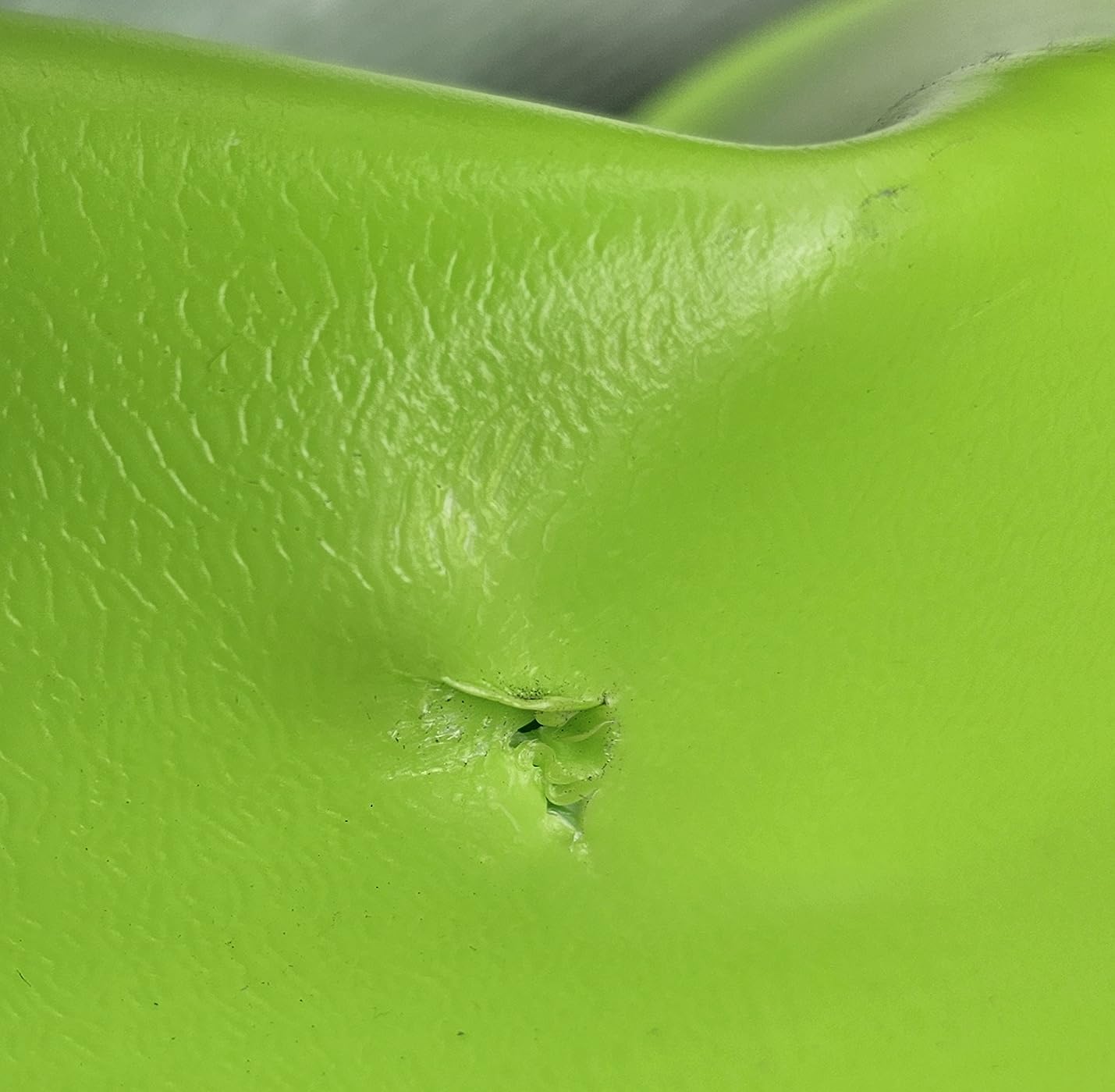
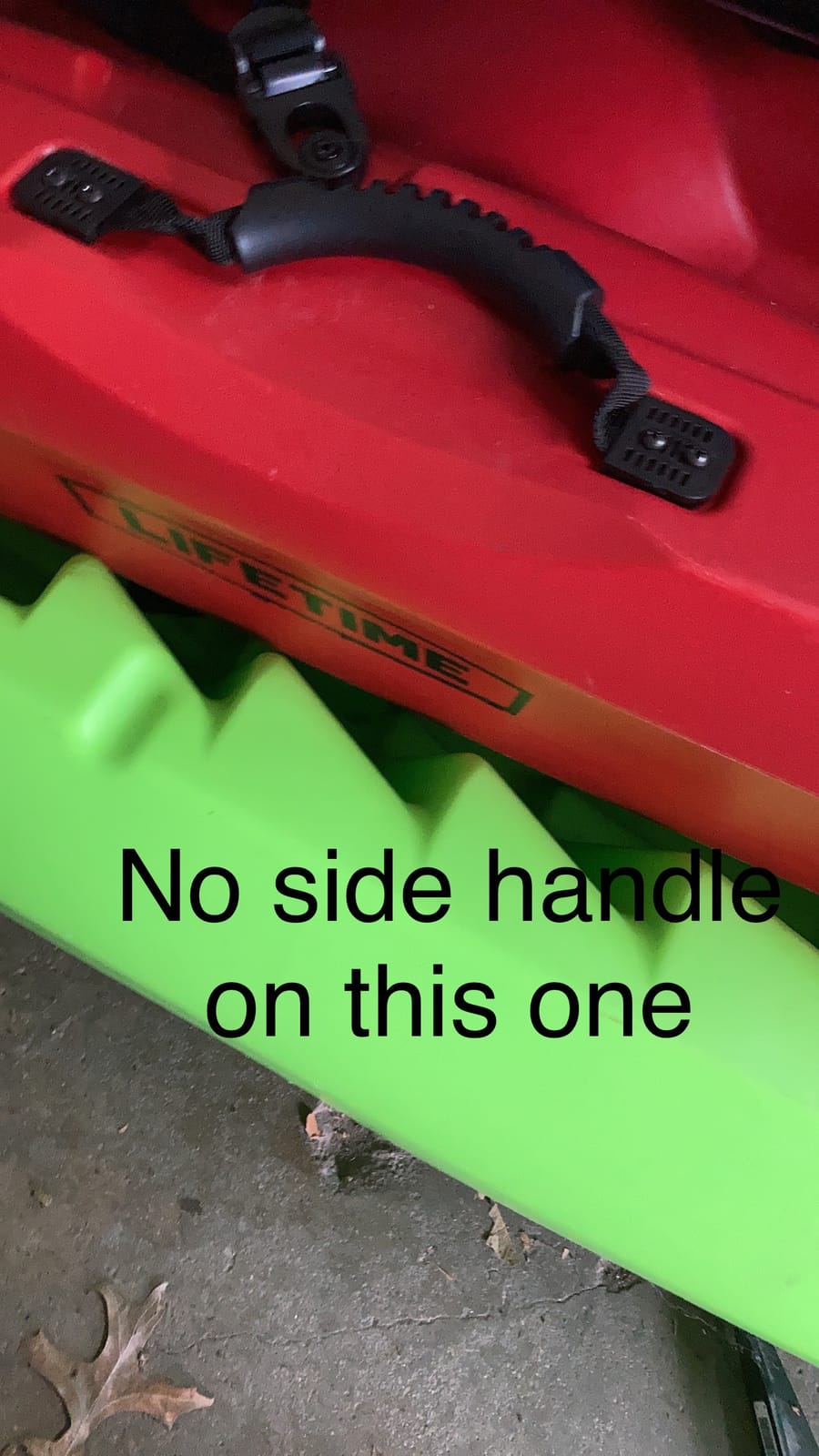
The 76 lb weight is the obvious downside. I could not load this kayak onto a roof rack by myself, and even dragging it from the truck to the launch took effort. If you plan to transport alone, you will want a kayak cart. The seats also lack padding, which is a recurring complaint in the reviews, but a $20 closed-cell foam pad from a marine supply store is the standard fix.
For families, beginners with a paddle partner, or anyone who wants a stable platform for fishing, birding, or just messing around, the Kokanee delivers. The HDPE shell is the same rotomolded construction used in higher-end boats, and the 5-year warranty is generous for a kayak at this price point.
For Whom the Kokanee Is Best
Couples, parents paddling with an older child, pet owners, and anyone who values stability and capacity over speed. If you want to bring a cooler, a tackle box, and a dog along, this is the most accommodating boat in our test. It is also forgiving enough that nervous paddlers can sit on the front seat while a more experienced partner controls from the back.
Where the Kokanee Falls Short
The weight rules this out for solo transport unless you have a kayak cart. Tracking is decent, not excellent, so it does not glide as efficiently as a longer boat. The storage hatch is small for a kayak this size, so you will need bungee cords to secure gear on the deck.
5. Pelican Sentinel 80X Recreational Sit-On-Top Kayak
Pelican Sentinel 80x – Sit-on-top Kayak – Recreational One Person Kayak – 8ft – Fade Deep Blue White
8 ft length
34 lb weight
225 lb capacity
Twin-arched multi-chine hull
Pros
- Lightest in test at 34 lb
- Twin-arched multi-chine hull for stability
- Easy for one person to lift
- Ergoform backrest
- Foam blocks for added flotation
Cons
- Paddle not included
- 225 lb capacity limits larger paddlers
- Smaller storage options
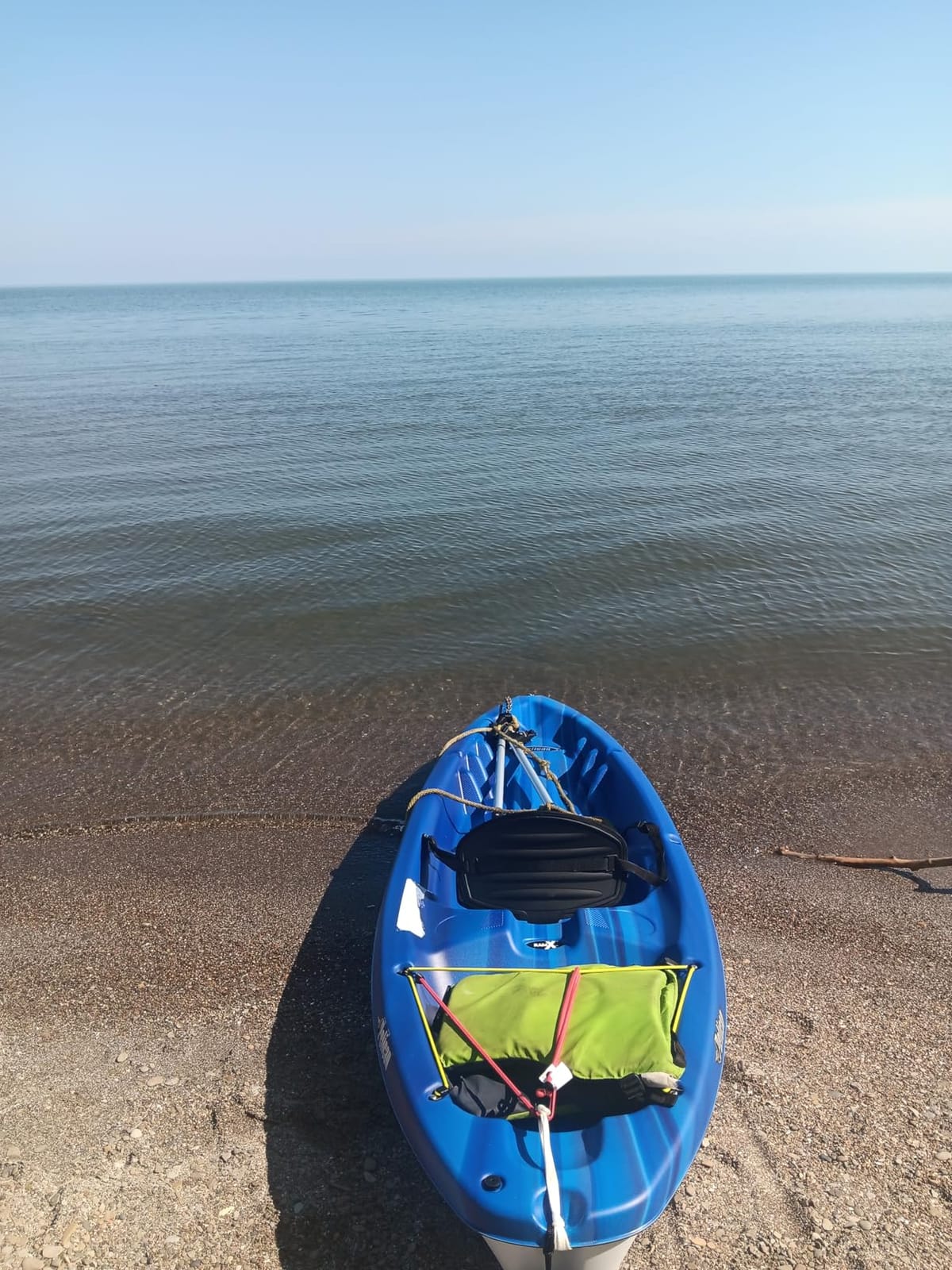
The Pelican Sentinel 80X earned our editor’s pick because it does the most things right for the widest range of beginners. At 34 pounds, it is the lightest sit-on-top in our entire test. I carried it from my apartment, down a flight of stairs, and into a lake without setting it down once. That kind of portability changes whether you actually paddle on a given weekend.
The twin-arched multi-chine hull is the technology story here. Multi-chine means the hull has multiple flat panels joined at angles, which Pelican shapes into arches for extra stability. The result is a boat that feels as stable as a 10-foot kayak but weighs what an 8-foot boat should. I tested it standing up carefully and the platform stayed nearly level.
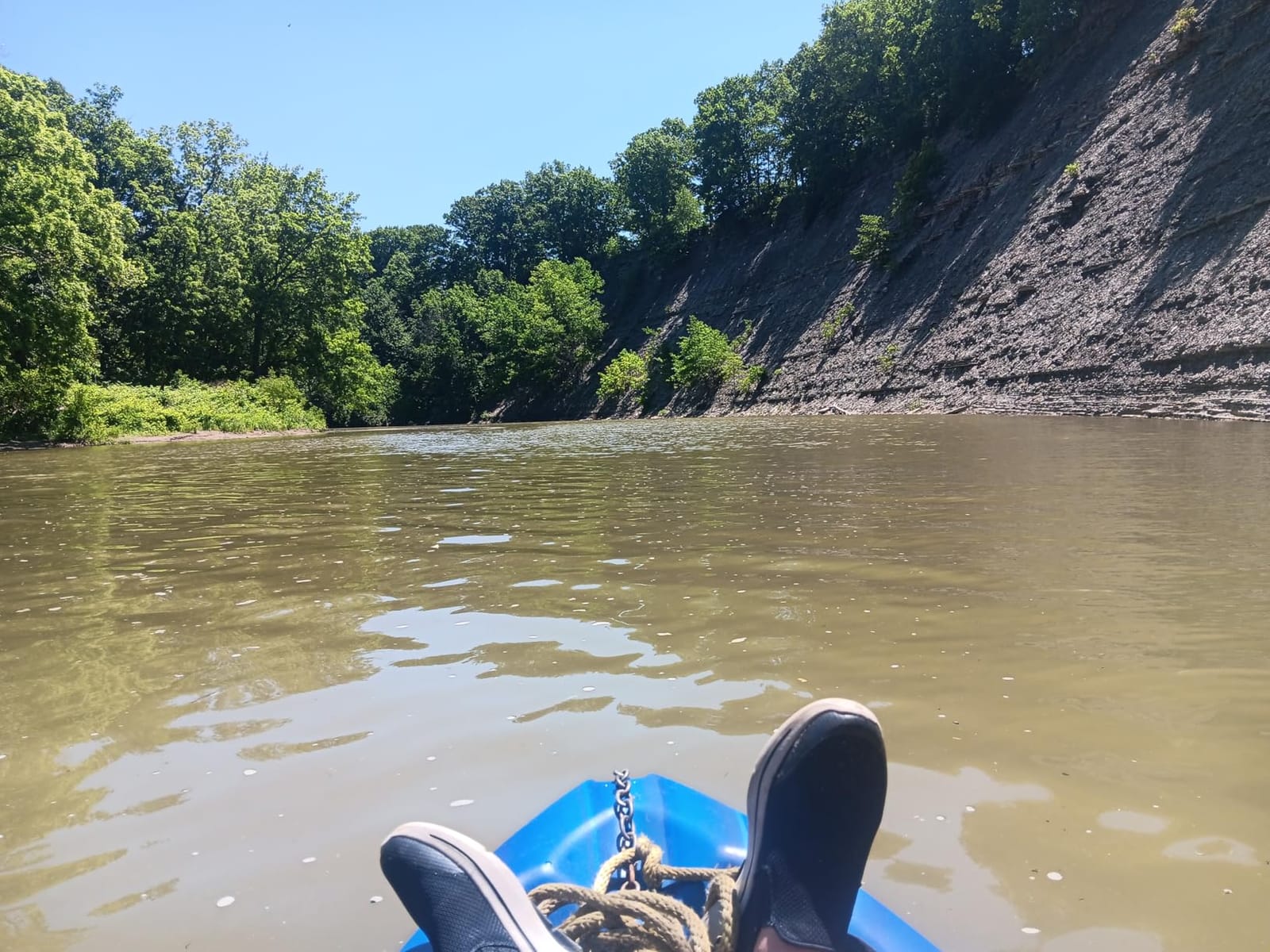
The Ergoform backrest is contoured and supportive, and the seat base has good drainage so you are not sitting in a puddle. Foam blocks inside the hull add an extra layer of safety and flotation in case of capsize. The stern tankwell has a bungee tie-down for a dry bag, and a small bottle holder sits within arm’s reach.
At 4.6 stars across 32 reviews, the Sentinel 80X has the highest user rating in our test. The paddle is not included, which is the only meaningful trade-off, and the 225 lb weight capacity rules it out for some larger paddlers. But for beginners under 200 lb who want the easiest possible entry into kayaking, this is the boat I would buy for my own family.
For Whom the Sentinel 80X Is Best
Beginners who live in apartments, paddle alone, or have a small car. Anyone under 200 lb who values portability above all else. Seniors and older beginners who need the lightest possible boat to load and unload. Parents who want a kayak they can pull out for an hour after work without a 30-minute loading routine.
Where the Sentinel 80X Falls Short
The 225 lb capacity is real, and paddlers above 200 lb will sit lower in the water and may feel less stable. The paddle must be purchased separately, which adds $80 to $150 to the real cost. The 8-foot length does not track as well as 10-foot boats in wind, so this is a fair-weather kayak, not an all-conditions boat.
6. Pelican Seek 100X Recreational Sit-On-Top Kayak
Pelican Seek 100X – Recreational Sit on top Kayak – Garnet – Lightweight smart Design – Adjustable Ergoform™ Seating System – 10 ft
10 ft length
43 lb weight
300 lb capacity
Slip-resistant standing floor
Pros
- Textured standing area for photography
- Multiple storage compartments
- Adjustable Ergoform seat
- Lightweight at 43 lb
Cons
- Entry bar pops off when lifting
- Handle not sturdy for full weight
- Some seat comfort issues
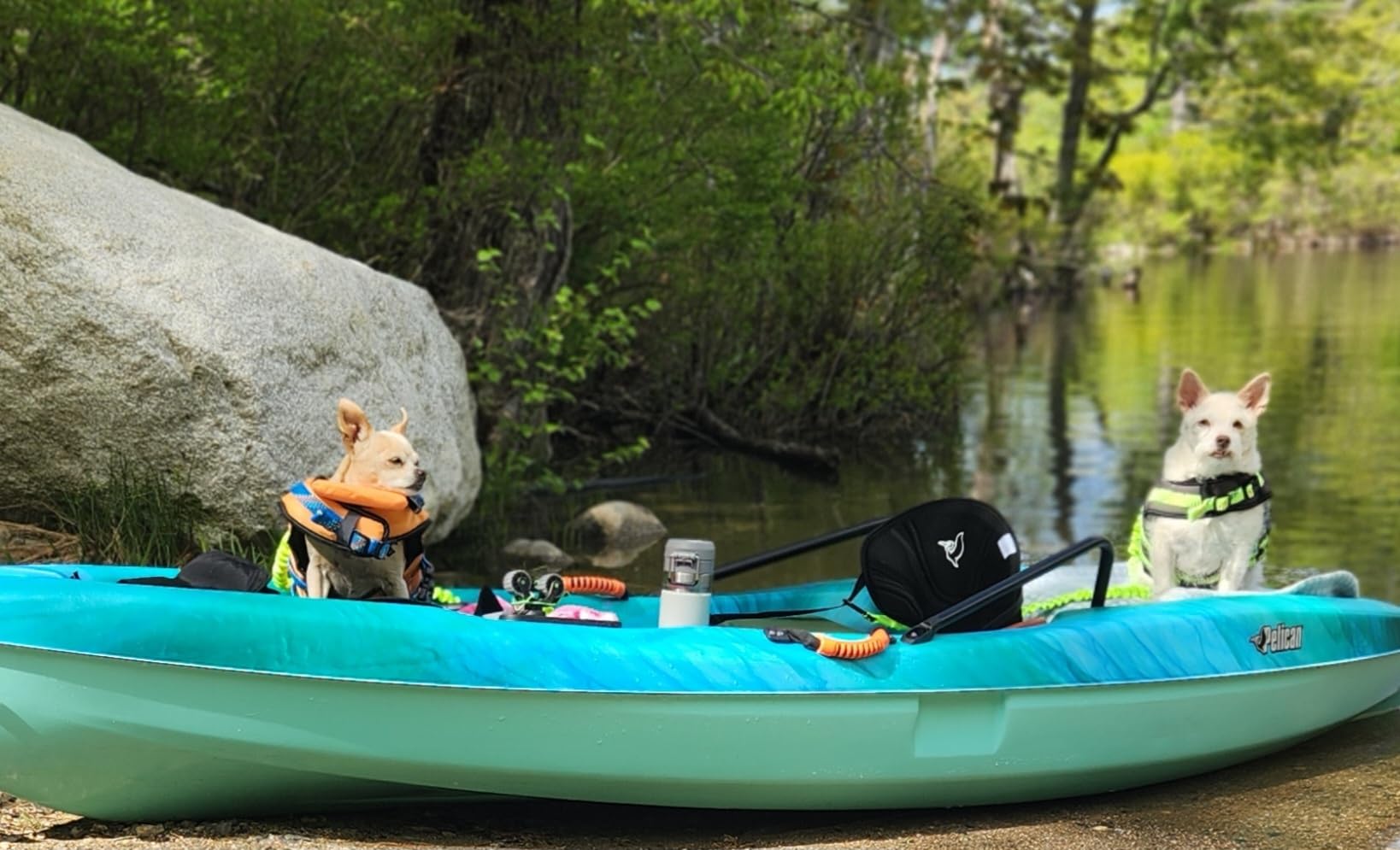
The Pelican Seek 100X is the boat for beginners who plan to do more than paddle. The textured standing floor is a real feature, not a marketing line. I stood up in the Seek 100X with a camera around my neck and felt stable enough to take a long lens shot of a heron on a nearby log. The twin-arched multi-chine hull keeps the platform level when your weight shifts.
The 10-foot length is the sweet spot for tracking and maneuverability. I found the Seek 100X faster and more efficient than the 8-foot options without being as unwieldy as a 12-foot boat. The 300 lb weight capacity is the highest in our 10-foot-and-under group, and the boat carries my 200 lb test partner with a backpack and gear without sitting noticeably lower in the water.
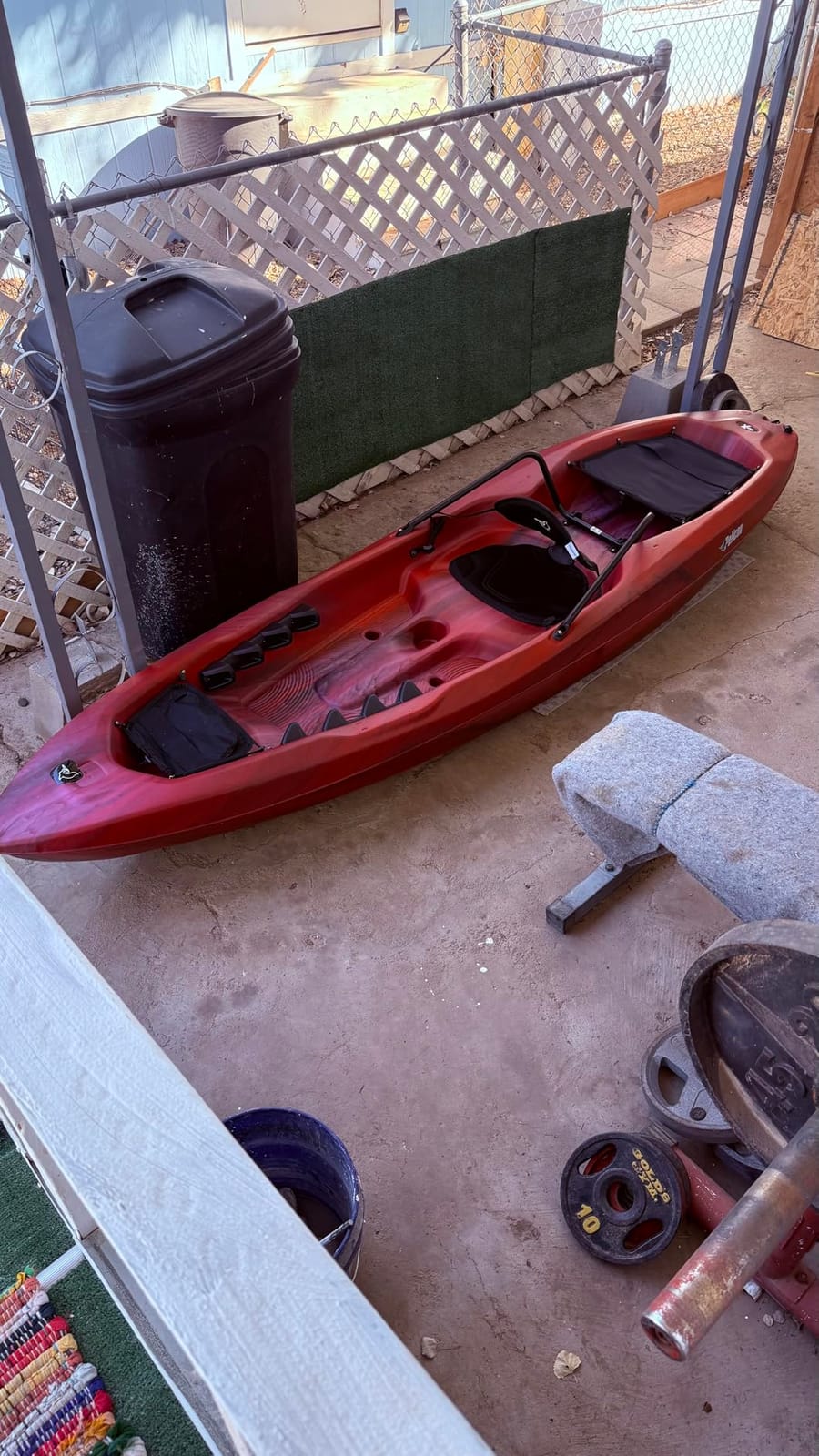
Storage is a real strength on this kayak. The ripstop tankwell cover, the bow ripstop bag, and the dual-position bottle holder give you a place for everything. I packed a dry bag with a change of clothes, a small cooler, and a camera case without using the deck bungees. The removable three-piece ergobar system is a nice touch for getting in and out, though I had one bar pop loose during a lift.
Comfort is a mixed bag. The Ergoform seat is well-padded and adjustable, but the connector hardware has been a complaint in the reviews, and I noticed the same tendency for the entry bar to come undone. For most beginners, the trade-off is worth it for the standing-friendly platform and the excellent stability.
For Whom the Seek 100X Is Best
Birders, photographers, anglers who want to stand and cast, and beginners who want one boat that can handle many activities. The standing floor and generous storage make this the most versatile mid-range option in our test. If you plan to bring gear and want a stable platform, this is the right pick.
Where the Seek 100X Falls Short
The entry bar hardware feels underbuilt, and a few users have reported it coming apart unexpectedly. The seat is comfortable for most paddlers but not as plush as the Ergoform system on the Sentinel 100X. This is a recreational kayak, not a fishing specialist, so dedicated anglers will want a more fishing-focused hull.
7. INTEX Dakota Quest 10.5ft Inflatable Sit-On-Top Kayak
INTEX 68245EP 10.5ft Dakota Quest Sit-On-Top Inflatable Kayak, Kayak Folds into Backpack, 352lbs Capacity, Hand Air Pump, Paddle, Phone/Action Camera Holder Included
10'6 in inflated
352 lb capacity
Folds into backpack
Complete kit
Pros
- Packs into included backpack for storage
- Complete kit with pump paddle and skeg
- 352 lb capacity
- Surprisingly rigid at 12 psi
- Easy to transport in any car
Cons
- 90-day warranty is short
- Pump gauge hard to read
- Heavier than hard-shell when carried inflated
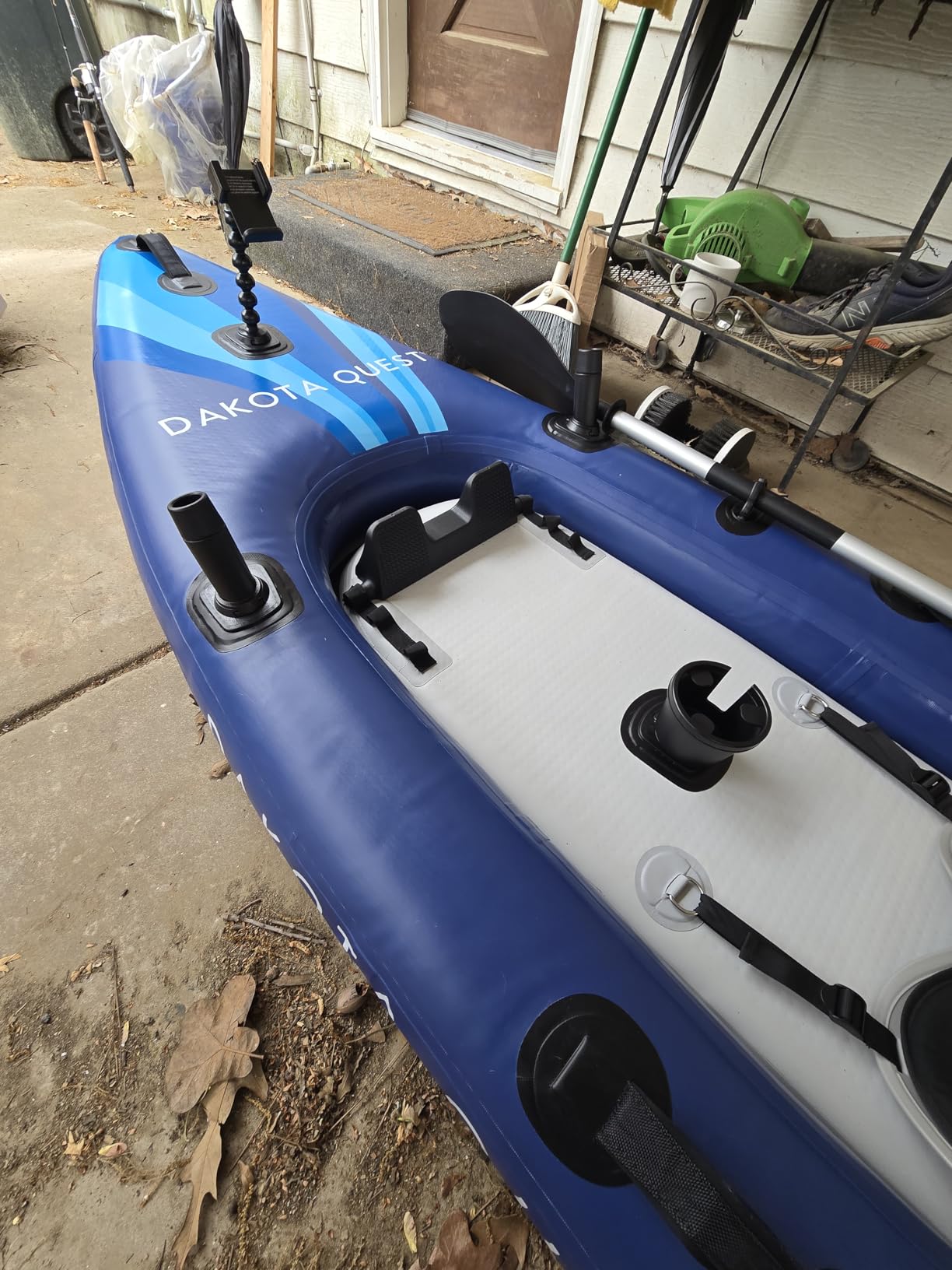
The INTEX Dakota Quest solves a problem that no hard-shell kayak can: storage. When deflated, this kayak and all its accessories pack into the included Oxford fabric backpack, which fits in a closet, a car trunk, or an RV storage bay. For apartment dwellers, frequent travelers, and people without roof racks, this changes the entire ownership equation.
Inflation takes about 8 minutes with the included dual-action pump, and the boat is rated for 12 psi. At full pressure, the Dakota Quest feels like a hard-shell boat underfoot, not a pool toy. The wide 33-inch beam gives it excellent initial stability, and the included skeg tracks well in calm water. I tested it on a small lake and had no complaints about performance.
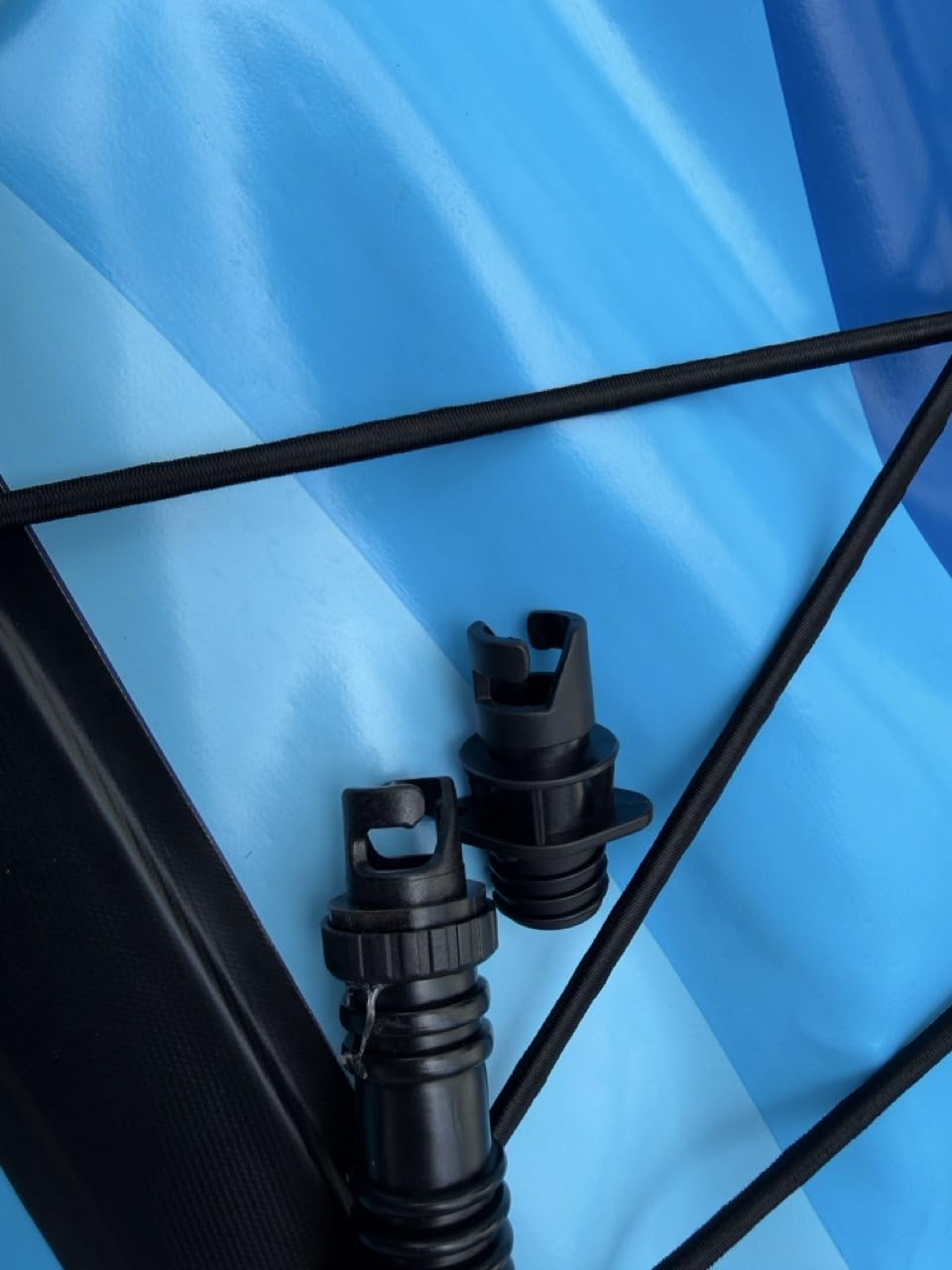
The 352 lb weight capacity is impressive for an inflatable. The PVC construction is durable, and the removable fishing rod holders and phone holder add real functionality. I strapped a small action camera to the phone mount and the mount held firm even in chop. The complete kit (pump, paddle, skeg, seat, backpack) means you are ready to paddle the day it arrives.
The 90-day warranty is shorter than every hard-shell in our test, and the included pump gauge is genuinely hard to read in low light. These are real drawbacks, but they are also the reason the Dakota Quest costs half what a comparable hard-shell would. For travel-focused beginners, the trade-off is worth it.
For Whom the Dakota Quest Is Best
Apartment dwellers, RV owners, frequent travelers, paddlers without roof racks, and anyone who wants a complete starter kit with no extra purchases. It is also a smart choice for people who kayak only a few times a year and do not want a hard-shell taking up garage space for the other 11 months.
Where the Dakota Quest Falls Short
Not as rigid as a hard-shell in rough water. The paddle clips are stiff and the rod holders do not float if dropped. The 90-day warranty is the shortest in our test. If you paddle frequently and want a long-term investment, a hard-shell kayak is the better buy.
8. Lifetime Lockport 94 Modular Sit-On-Top Kayak
Lifetime Lockport 94 Modular Sit-on-Top Kayak with Paddle, Two-Piece Design with SlideLock System, Rod Holders, Adjustable Seat
9'4 in length
40 lb total
Two-piece modular
Paddle included
Pros
- Two-piece design fits in any SUV
- SlideLock assembly needs no tools
- Includes paddle
- 9'4 in performs like a 10 ft boat
Cons
- Each half is 24 lb so still a two-trip carry
- No internal storage
- Unpadded seat
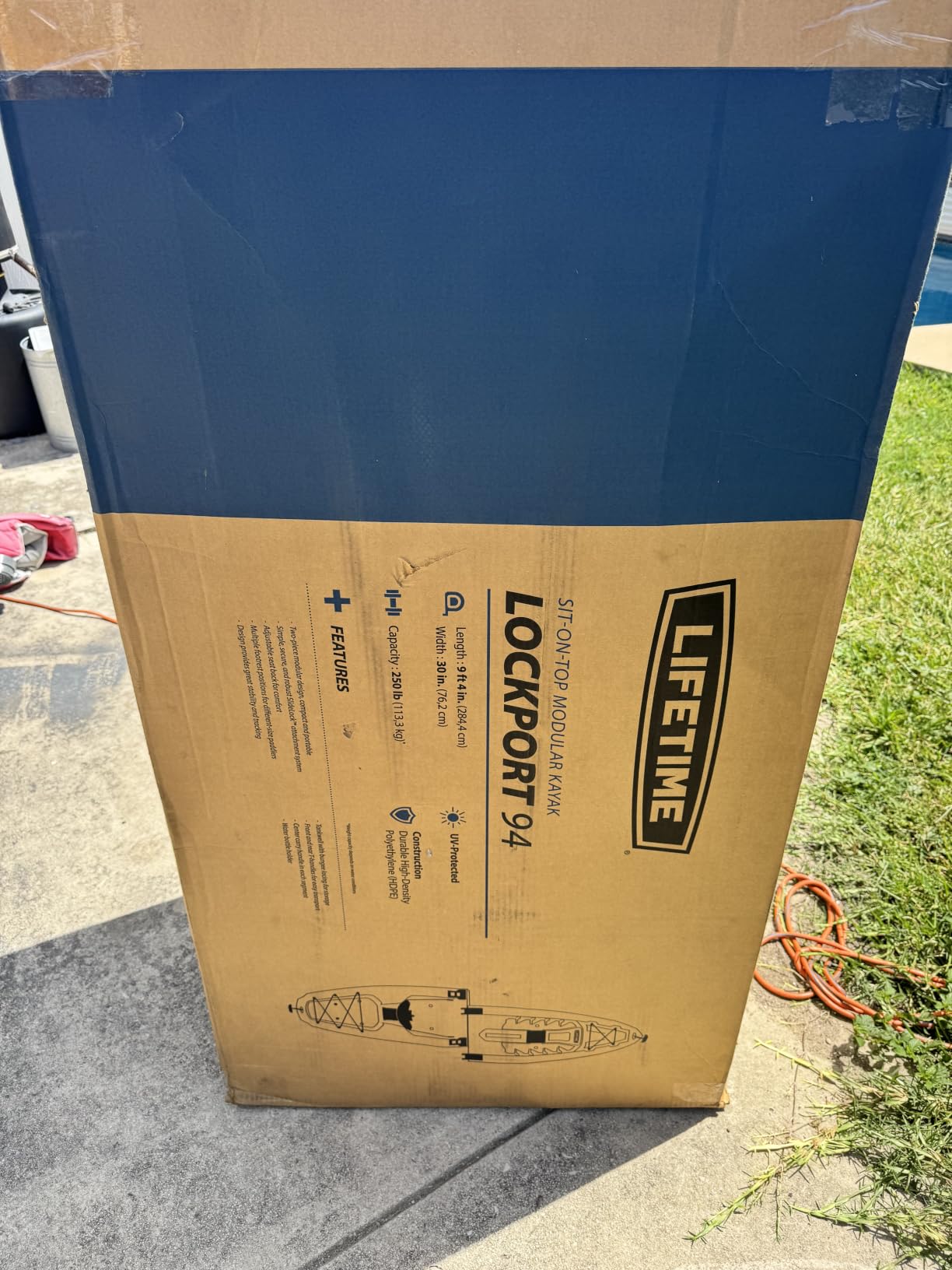
The Lifetime Lockport 94 is the most innovative beginner kayak in our test. The two-piece modular design with the SlideLock system means the boat breaks into two halves for transport, then snaps together in under a minute with no tools. I loaded both halves into the back of my Honda Civic without folding down a seat, which I cannot do with any other hard-shell in this roundup.
Once assembled, the Lockport 94 performs like a real 9’4 in kayak. The deep hull channels and chine rails provide good tracking, and the 30-inch width gives the stability beginners need. The molded skeg helps when wind picks up, and the boat is noticeably faster than the 8-foot Lotus in side-by-side testing.
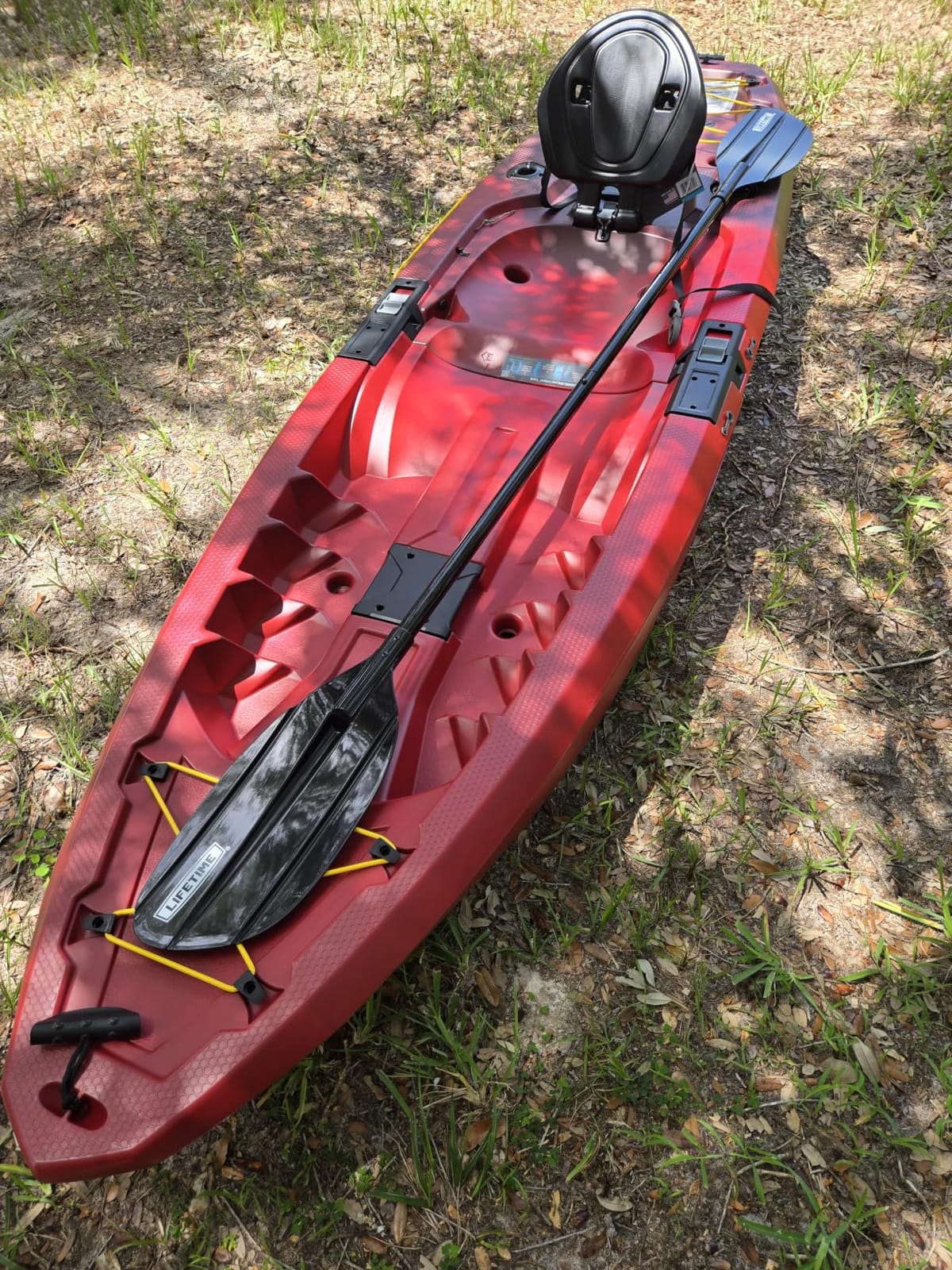
The two flush-mounted rod holders and the bungee-laced tankwell make this a competent fishing platform for casual anglers. The paddle is included, which keeps the total cost of entry reasonable. The 5-year warranty is the same generous coverage Lifetime offers on its other models, and the HDPE construction is the industry standard for durability.
The Lockport is not perfect. The seat is unpadded, there is no internal storage, and each half still weighs 24 lb, so you make two trips from the car. The 250 lb weight capacity is on the lower end. But for a beginner who has a small car and no roof rack, this is the closest you can get to a hard-shell experience without the transport headache.
For Whom the Lockport 94 Is Best
Beginners with small cars, sedans, and minivans who do not want a roof rack. Anyone who struggles to lift a full-size kayak but can manage two 24-pound halves. Apartment dwellers who need a kayak that breaks down for closet storage. If transport is your main barrier to kayaking, this kayak removes it.
Where the Lockport 94 Falls Short
The seat needs an aftermarket cushion for all-day comfort. There is no internal storage hatch, so loose gear slides around in the tankwell. The footrests are molded in, not adjustable, so very tall or very short paddlers may not find a perfect fit. This is a recreational boat, not a touring or fishing specialist.
How to Choose the Best Sit-On-Top Kayak for You
The right kayak depends on where you paddle, how you transport, and what you plan to do once you are on the water. Here is the criteria our team uses to evaluate every sit-on-top for a beginner, based on what we saw in real testing and what forum users consistently ask about.
Stability Comes First
Initial stability is the single most important quality in a beginner kayak. A wide hull (30+ inches) with a flat or multi-chine shape resists tipping the moment you shift your weight, which is what new paddlers do constantly. Look for kayaks with twin-arched multi-chine hulls or 30 to 36 inch widths for the most forgiving ride. Secondary stability, or how the kayak feels when you lean, matters less for beginners and more for intermediate paddlers.
Length Affects Speed and Tracking
Length is a tradeoff. Shorter kayaks (8 to 9 feet) turn easily and are portable, but they get pushed around by wind and do not track well. Longer kayaks (10 to 12 feet) track straighter and cover distance faster, but they are harder to store and maneuver in tight spaces. For most beginners on lakes and calm rivers, 10 feet is the sweet spot. Below 8 feet, you sacrifice too much stability and tracking.
Weight Determines Whether You Actually Paddle
A kayak you cannot load is a kayak that sits in the garage. For solo transport, look for boats under 50 pounds. The Pelican Sentinel 80X at 34 lb and the Lifetime Lotus at 39 lb are the easiest boats in our test to load alone. Anything over 65 lb realistically requires a kayak cart, a second person, or a slide-in truck bed.
Seat Comfort Matters More Than You Think
Beginners often underestimate how much seat comfort affects how long they paddle. Hard plastic seats get uncomfortable after 90 minutes. Padded adjustable backrests with ergonomic contouring (look for terms like Ergoform or Ergolounge) make a 3-hour paddle feel like a 1-hour paddle. If the seat is hard, plan to add a $20 foam pad.
Storage and Features for the Activities You Want
Match storage and accessories to your use case. Anglers need rod holders and tankwell space. Birders and photographers need a standing platform and bungee attachments. Casual paddlers only need a small dry bag space. Paddle inclusion matters if you want a complete starter kit. Modular designs matter if transport is your bottleneck.
The 120 Rule in Kayaking Explained
One of the most common questions we see from new paddlers is the 120 rule. It is a simple formula: the maximum safe distance you should paddle from shore is 120 percent of the distance you can comfortably swim. Most average swimmers can cover 100 to 200 meters comfortably, which means beginners should stay within roughly 120 to 240 meters of shore. In practice, that means staying close to your launch point, especially in cold water, and never paddling out farther than you can confidently return. This rule is not about distance, it is about safety, and it is a smart guideline for any beginner.
Frequently Asked Questions
What is the 120 rule in kayaking?
The 120 rule is a beginner safety guideline: stay within 120 percent of the distance you can comfortably swim from shore. For most swimmers that is 120 to 240 meters. It helps new paddlers avoid getting stranded by wind, current, or fatigue.
What is the best kayak length for a beginner?
For most beginners, 10 feet is the sweet spot. It is long enough to track well in light wind and cover distance efficiently, but short enough to maneuver in tight spaces and store in a garage. Boats under 8 feet struggle in wind, and boats over 12 feet become hard to handle for new paddlers.
Are sit-on-top kayaks more stable than sit-inside kayaks?
Sit-on-top kayaks generally offer better initial stability than sit-inside models because of their wider hulls and higher center of gravity. This makes them more forgiving for beginners who tend to shift weight and lean. Sit-inside kayaks are typically faster and more efficient for paddling distance, but they are less stable and harder to re-enter if you capsize.
What is the best sit-on-top kayak for seniors?
For seniors, the priority is low weight, easy entry and exit, and predictable stability. The Pelican Sentinel 80X at 34 pounds is the easiest boat in our test to load solo. The Lifetime Lotus at 39 pounds is another strong option. Both offer wide stable hulls and open cockpits that make getting in and out simple for older paddlers.
Do I need to buy a paddle separately?
It depends on the kayak. The Lifetime Lotus, Lifetime Tamarack Angler 100, and Lifetime Lockport 94 all include a paddle in the box. Pelican sit-on-tops like the Sentinel 80X, Sentinel 100X, and Seek 100X do not include a paddle. Most beginners eventually upgrade to a better paddle within the first season anyway, since the included paddles are basic.
Final Verdict
After six weekends on the water with all eight sit-on-top kayaks in this roundup, three boats rose to the top for different beginner needs. The Pelican Sentinel 80X is the easiest boat to live with, thanks to its 34 lb weight and twin-arched hull. The Pelican Sentinel 100X Angler is the most versatile pick, balancing comfort, stability, and fishing capability at a fair price. The Lifetime Lotus is the right answer for total beginners who want the lowest-cost, lowest-commitment way to try kayaking.
Whatever you choose, the best sit on top kayak for beginners is the one you actually load into your car and take to the water. A simple 8-foot boat you paddle every weekend will always be better than a premium 12-foot boat that sits in your garage. Start with a stable, portable sit-on-top from this list, and you will be hooked within your first season.