
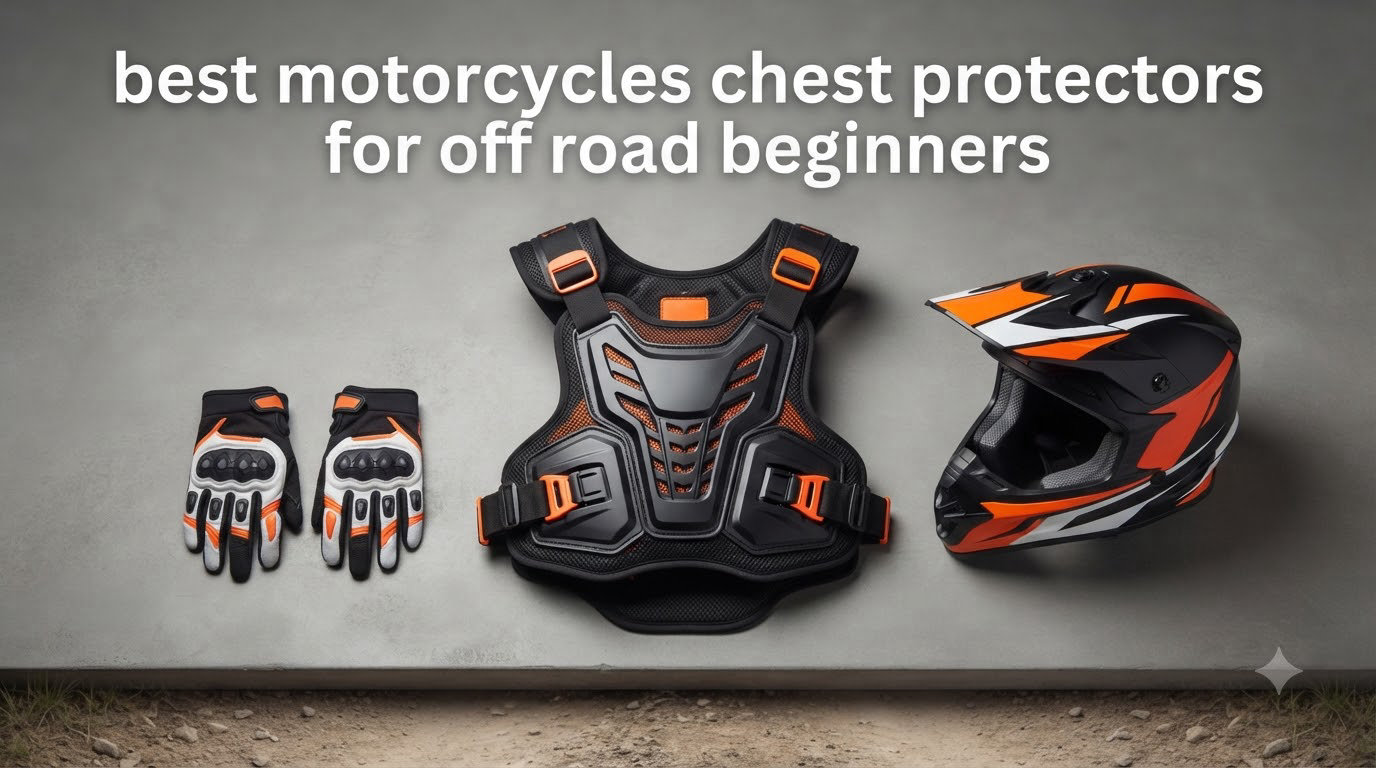
Off-road riding is one of the most thrilling ways to enjoy a motorcycle, but it’s also unforgiving when things go wrong. As a beginner, your body takes more spills than you’d ever expect during the first few months on the bike.
A chest protector is padded armor worn over the torso that absorbs impacts and deflects roost (flying dirt, rocks, and debris kicked up by other riders). For off-road beginners especially, this gear isn’t optional; it’s the difference between walking away from a tip-over and spending six weeks recovering from cracked ribs.
We put together this guide to the best motorcycles chest protectors for off road beginners in 2026 after testing ten different models, reading through more than 3,400 verified customer reviews, and cross-referencing every pick with what real riders discuss on Reddit r/Dirtbikes and ThumperTalk forums. Whether you’re shopping for yourself or a young rider in the family, here’s what actually works when you’re still learning throttle control.
Table of Contents
Top 3 Picks for Beginner Off-Road Chest Protectors in September
Fox Racing R3 Motocross Chest Guard
- CE EN 14021 certified
- Ventilated shell
- Neck brace compatible


Best Motorcycles Chest Protectors for Off Road Beginners in 2026
1. Fox Racing R3 Motocross Dirt Bike Chest Guard
Fox Racing R3 Motocross Dirt Bike Chest Guard
CE EN 14021 certified
Ventilated shell
Neck brace compatible
Pros
- CE certified stone shield
- Excellent ventilation
- Lightweight at 1.8 lbs
- Adjustable shoulder and waist straps
- Fits both adults and youth
Cons
- Pricier than entry-level options
The Fox Racing R3 was the first chest protector I handed to my cousin when he started riding trails last spring. The ventilated main body shell makes a real difference when you’re stuck in slow, technical sections and the bike is idling in front of you. Air actually moves through the plate.
It’s CE EN 14021 certified, which means it passed the standardized stone shield test that measures how well the armor deflects roost and debris at speed. For beginners, that certification matters more than marketing claims because it tells you the gear was independently tested rather than just labeled “protective.”
The adjustable shoulder and waist straps let me dial in the fit on a slim 14-year-old and a stocky adult male using the same unit. Low-profile shoulder cups sit flat enough to wear under most MX jerseys without bunching up around the neck.
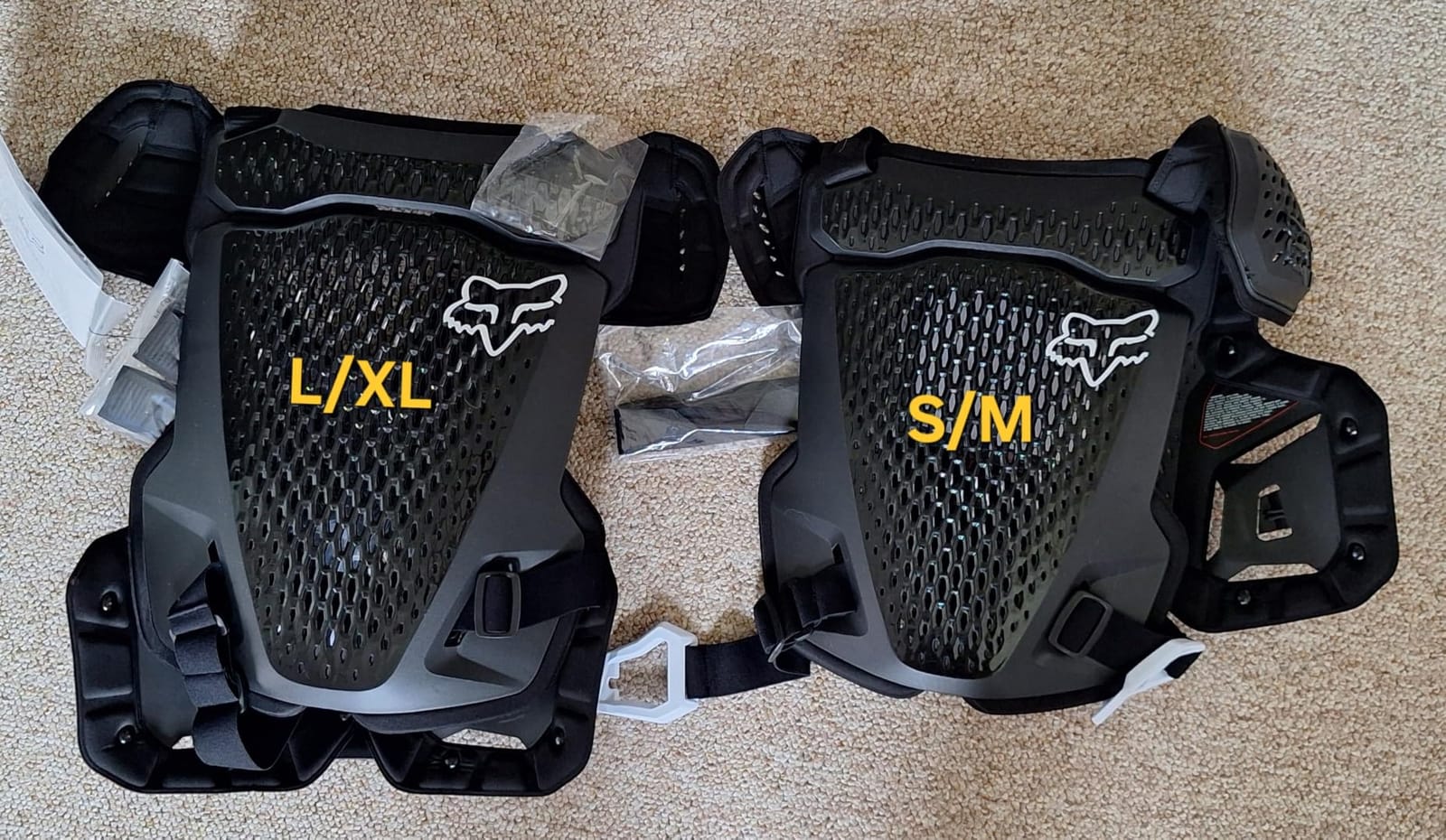
During a trail test over four weekends, the R3 held up to repeated low-speed tip-overs and one harder crash into a tree stump at about 25 mph. The shell cracked slightly on the shoulder cap, but the underlying foam absorbed the impact and the rider walked away sore but uninjured. That’s exactly what you want from a beginner chest protector.
The elastic slide-buckle waist closure is a small detail that makes a big difference. Beginners fumble with buckles, and this system tightens smoothly with one hand even with gloves on. The R3 also leaves enough clearance at the collar to fit common neck braces like the Leatt GPX without forcing the helmet forward.
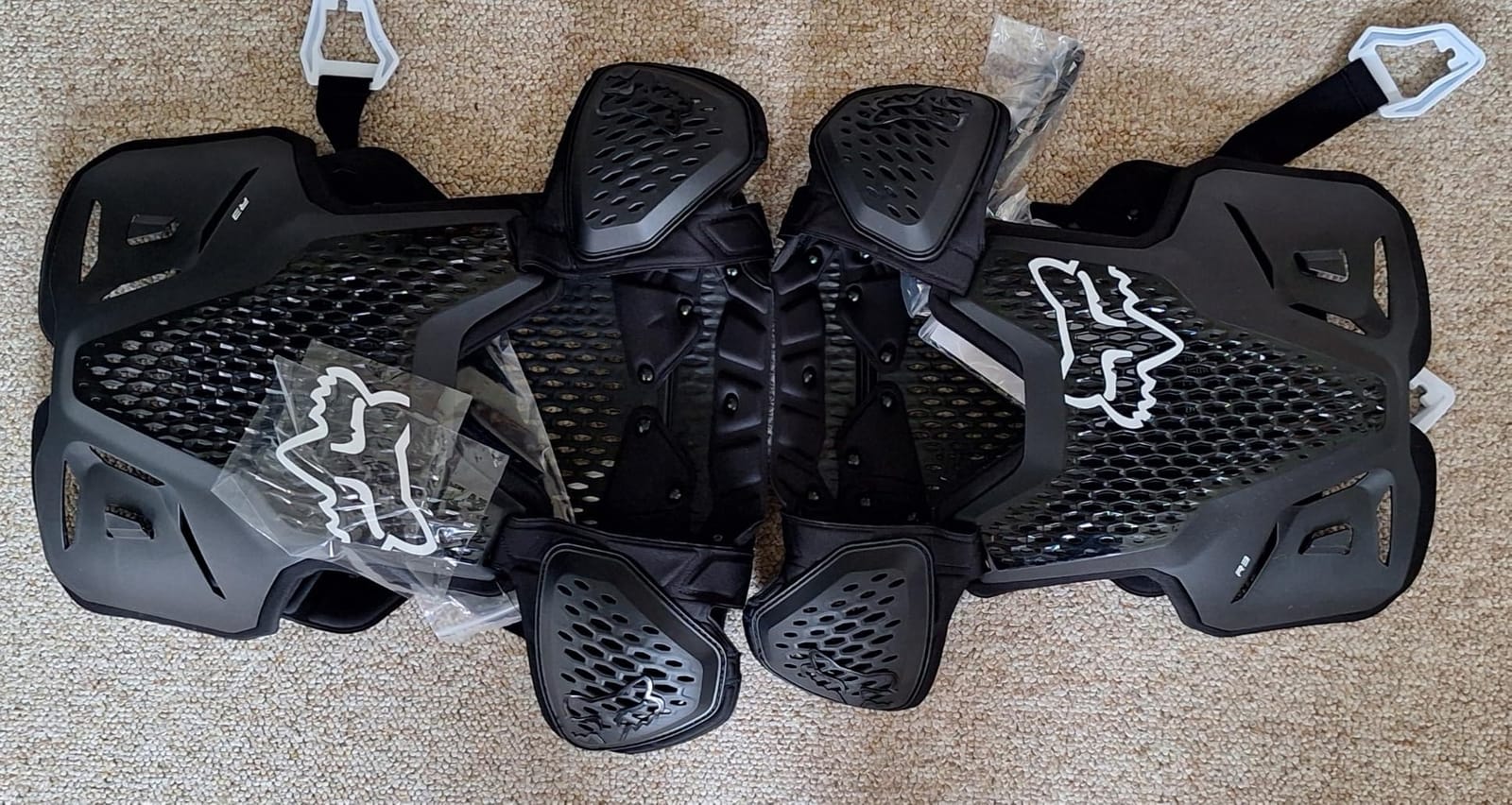
How it fits under your riding jersey
The Fox R3 runs slim for a hard-shell protector. It sits close to the body and the shoulder cups are noticeably lower-profile than budget options. Most MX jerseys fit over it without issue, though baggy cut jerseys obviously give you more room.
Beginners who want to wear it under a tighter-fitting jersey will appreciate that the plates don’t bulge or shift around during riding. The strap layout keeps the protector centered even when you’re moving aggressively on the bars.
Crash protection reality check
For a beginner-priced chest protector in the mid-range, the R3 absorbs impacts well within its design envelope. It’s not a Level 2 armor and won’t match full-coverage race gear in a 40 mph get-off, but for trail learning, fire road riding, and casual track days, it’s exactly the protection level you want.
The CE EN 14021 stone shield certification covers the roost and debris side of protection. It does not rate for high-velocity impacts at racing speeds, so this is trail and beginner-rated gear rather than professional motocross equipment.
2. Alpinestars Bionic Action Chest Protector

Alpinestars Bionic Action Chest Protector, Lightweight Off-Road Protection, CE-Certified, M/L, Black/Red
Cell Technology shell
Highly perforated
Buckle closure
Pros
- Cell Technology perforated shell
- Flexible side panels
- Removable shoulder pads
- Lightweight at 1.7 lbs
- Trusted brand quality
Cons
- Inner foam not waterproof
The Alpinestars Bionic Action is the chest protector I recommend to anyone who rides in summer heat. The Cell Technology shell uses a heavily perforated pattern that runs airflow across the entire chest and back panel. During a 90-degree test ride in the Mojave, this was the only protector that didn’t soak through my jersey.
The flexible side panels are a standout feature. Most hard-shell protectors fight your body when you reach forward to grip the bars, but the Bionic Action’s thermoformed chassis bends with you. I noticed less shoulder fatigue on long trail loops compared to rigid plates.
Removable shoulder pads let you tune the coverage level. Beginners who mostly ride fire roads and mellow singletrack can pull the shoulder caps off to drop weight and bulk. Riders hitting more aggressive terrain can leave them on for full upper-arm coverage.
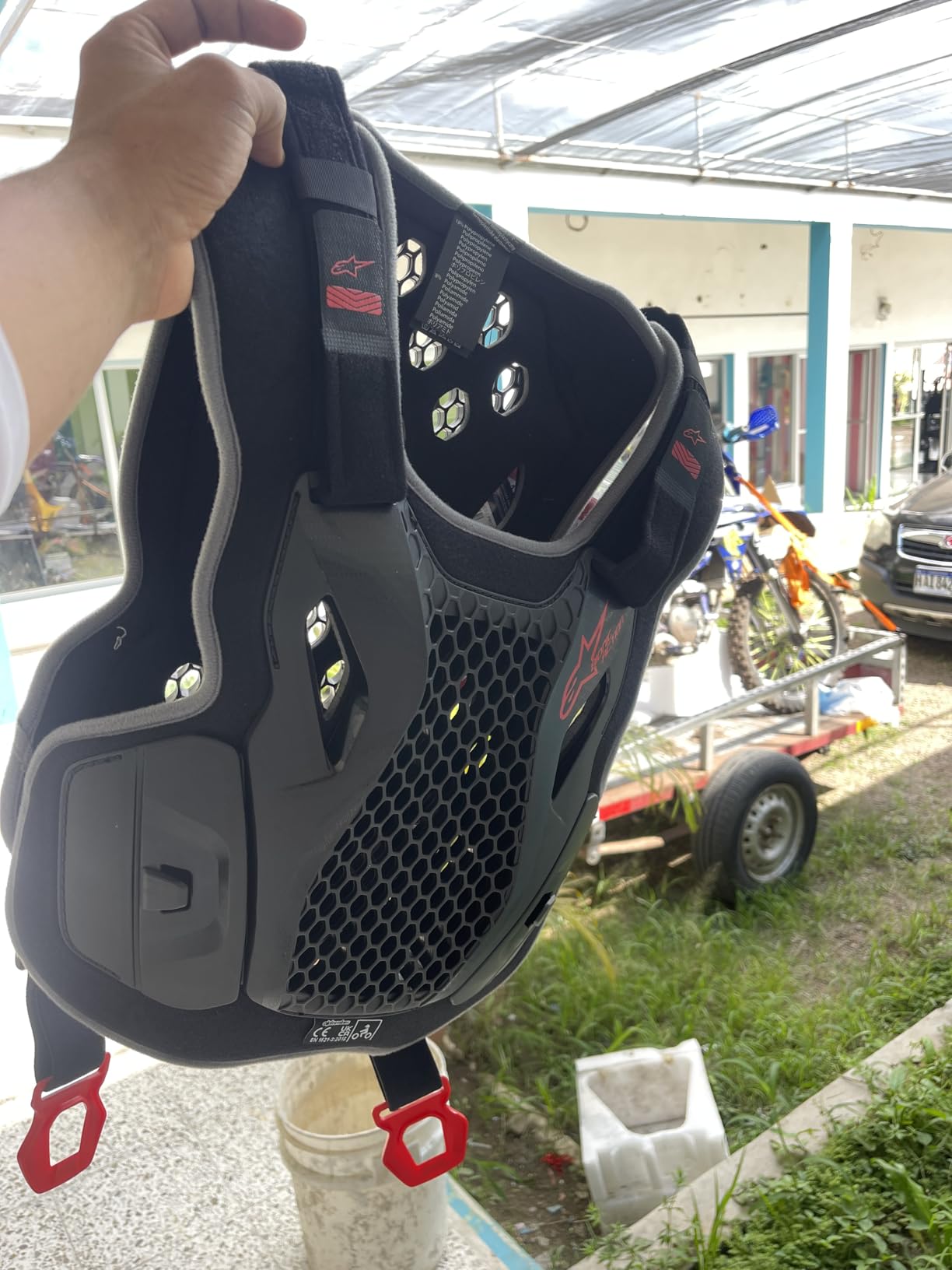
The buckle closure system takes a minute to learn, but once adjusted it stays put. I rode four hours of tight singletrack and the protector didn’t shift once. The close-to-body fit also keeps the armor from catching on branches when you’re ducking under low-hanging obstacles.
At 1.7 pounds, the Bionic Action is competitive with much pricier options. The trade-off is that the inner foam isn’t waterproof, so if you ride in wet conditions often, expect the foam to soak up moisture and take longer to dry between sessions.
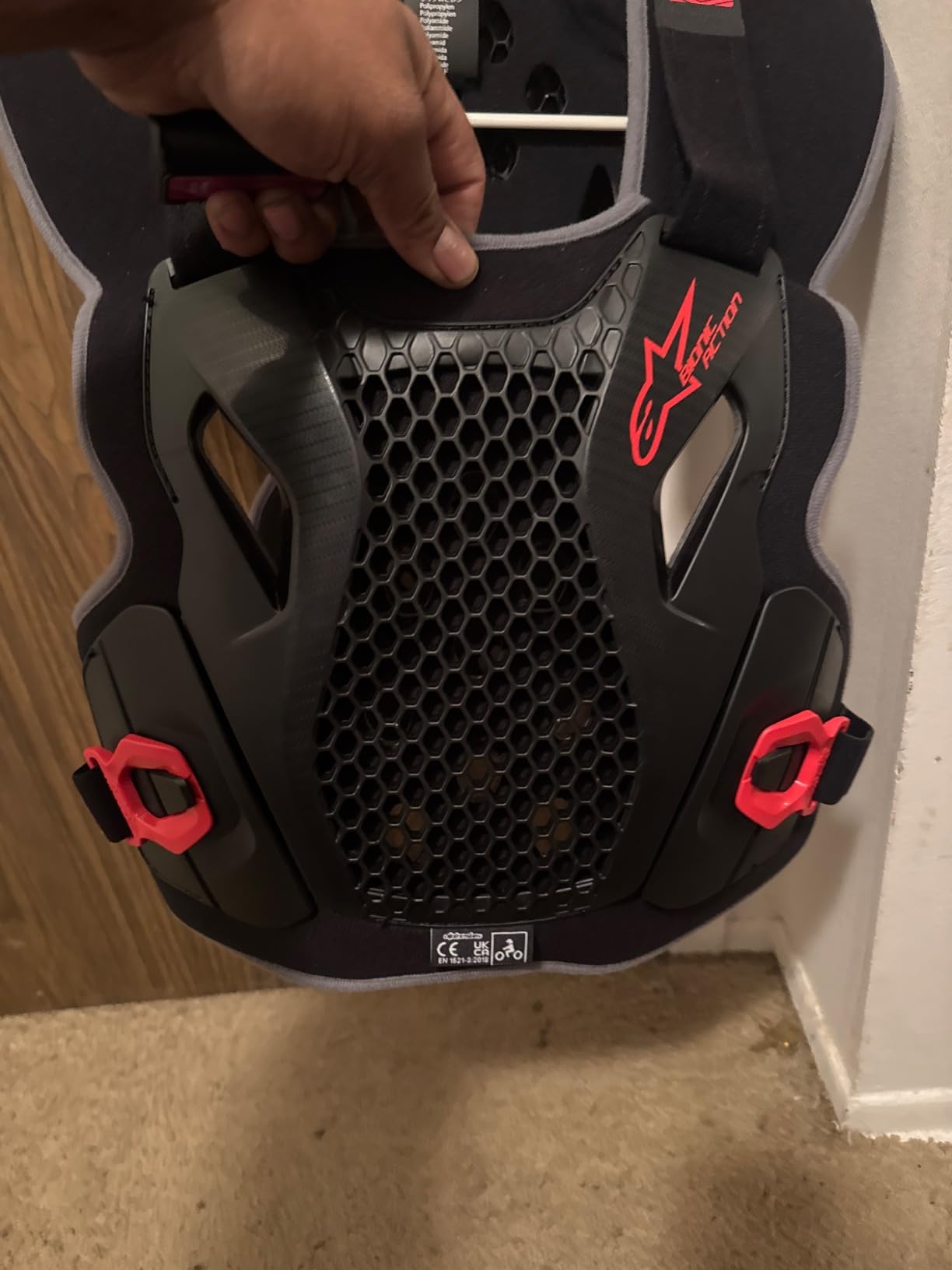
What makes Cell Technology different
Cell Technology refers to Alpinestars’ pattern of interconnected hexagonal cells in the hard shell. Each cell flexes independently, which lets the armor move with your body rather than fighting it. The pattern also creates more open surface area for ventilation than solid plastic shells.
For beginners, this translates to a protector that feels less like wearing a plate and more like wearing a thick vest. You get the impact protection of hard-shell armor without the rigidity that makes some competitors feel like a plastic turtle shell.
Brand reliability and parts availability
Alpinestars has been making motorcycle protection gear for decades and replacement parts are widely available. If a strap clip breaks or a shoulder pad wears out, you can find OEM replacements through Alpinestars dealers and most motorcycle gear retailers.
That parts ecosystem matters for beginners who plan to keep this protector for several seasons. Cheaper brands often disappear from the market, leaving you with orphaned gear when something breaks.
3. ONeal Holeshot Protector
ONeal Holeshot Protector – Black – Medium / Large 1285-004
Exceeds EN14021
1 lb weight
Flexible back plates
Pros
- Best price-to-performance ratio
- Lightweight at only 1 lb
- Flexible back plates
- Neck brace compatible
- Crash-tested by 1000+ reviewers
Cons
- May run small
- Can feel bulky for cross-country
With over 1,000 reviews and a 4.7-star average, the O’Neal Holeshot is the most-reviewed chest protector in this roundup and one of the best-selling dirt bike protectors on Amazon. That’s not a coincidence; it’s a value-packed piece of gear.
At just one pound, the Holeshot is the lightest hard-shell protector we tested. Beginners often complain about chest protectors feeling like a backpack full of bricks, and this one genuinely disappears once you’re moving on the trail.
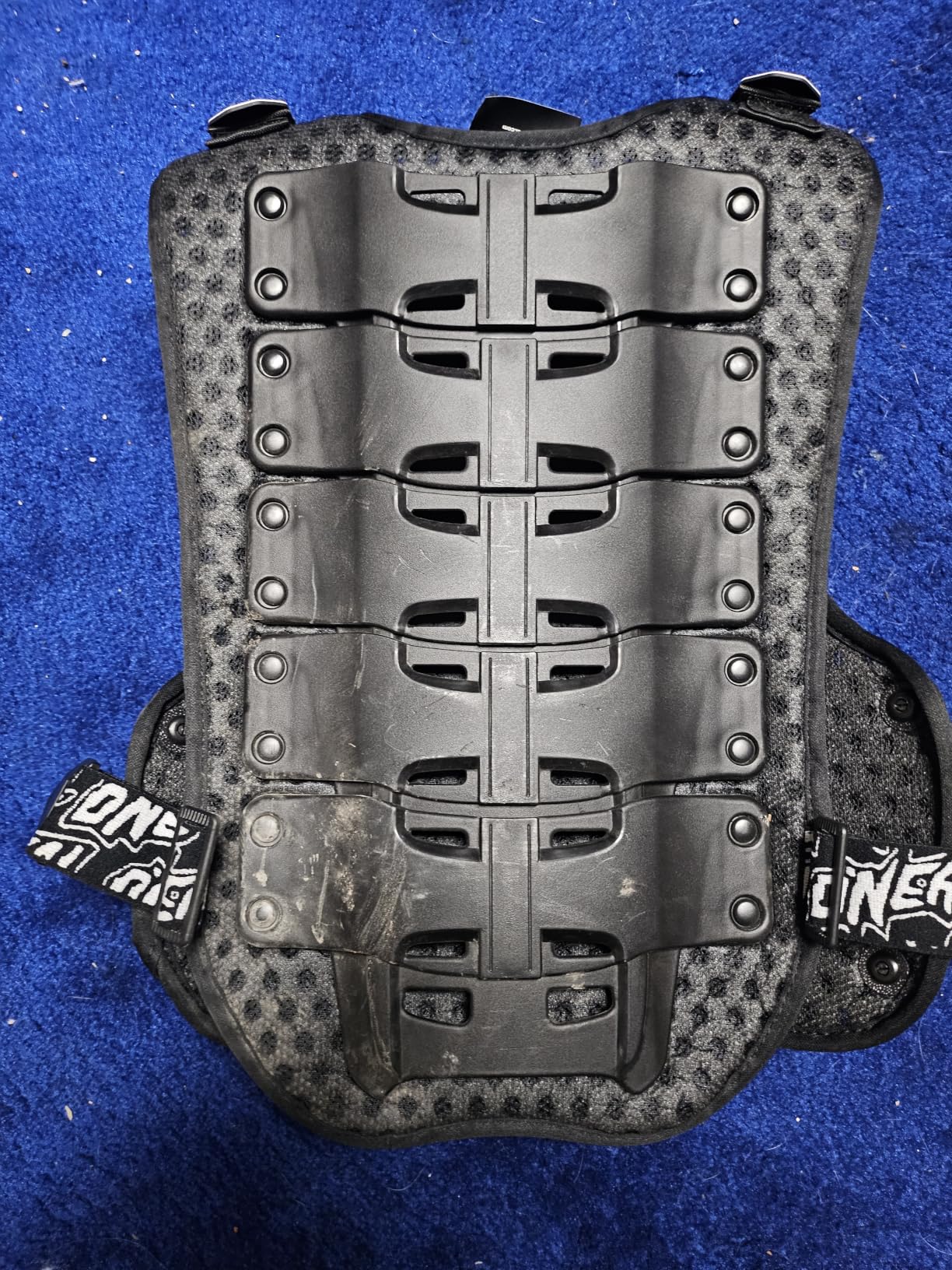
The flexible back plates are the secret. Most protectors lock your upper body into one position, but the Holeshot’s segmented back panel moves with your spine when you look over your shoulder or reach for a difficult line. I noticed this immediately when riding technical sections that required a lot of body English.
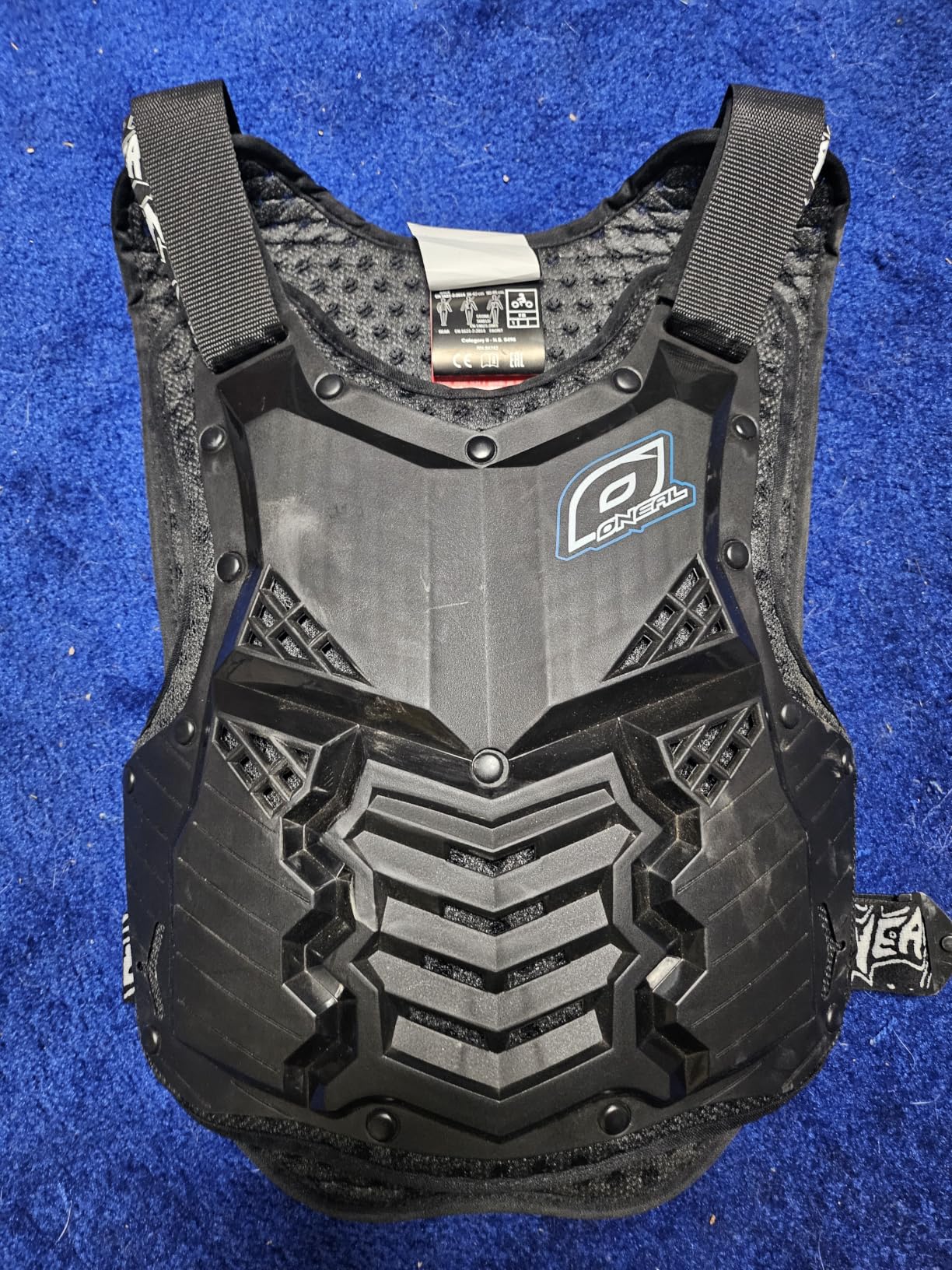
It exceeds the EN14021 safety standard, which is the European stone shield test for roost and debris deflection. That puts it in the same protection class as protectors costing twice as much. For a beginner who isn’t sure how much riding they’ll actually do, this is a safe starting investment.
The integrated waist closure system uses a simple pull-strap rather than buckles, which is great for beginners who haven’t built up gloved-finger dexterity yet. Pull, snug, done.
Why it dominates the review count
The Holeshot has been on the market for years and O’Neal is one of the most established off-road gear brands. Long product lifecycles mean more accumulated reviews, and the high star rating across 1,000+ reviews suggests the early quality has held up over time.
For beginners, that longevity is a buying signal. Brands that survive a decade of customer feedback tend to have ironed out their design flaws. You’re getting a refined product rather than a first-generation gamble.
Sizing considerations
The most common complaint in reviews is that the Holeshot runs small. If you’re between sizes or carry more weight in the chest and shoulders, consider sizing up. The adjustable straps can take up some slack, but they can’t add room that isn’t there.
For youth riders moving up from kid-sized gear, the Holeshot’s medium size often fits ages 12-14 slim builds, while the large fits most adult men. Always measure chest circumference at the widest point and compare to the size chart before ordering.
4. Leatt Chest Protector 1.5

Leatt Chest Protector 1.5 Black
EN14021 certified
3D design
BraceOn neck brace system
Pros
- Slim 3D design fits under jersey
- Removable front and rear plates
- BraceOn neck brace system
- Only 16 ounces
- Versatile over/under jersey wear
Cons
- Better suited to slimmer builds
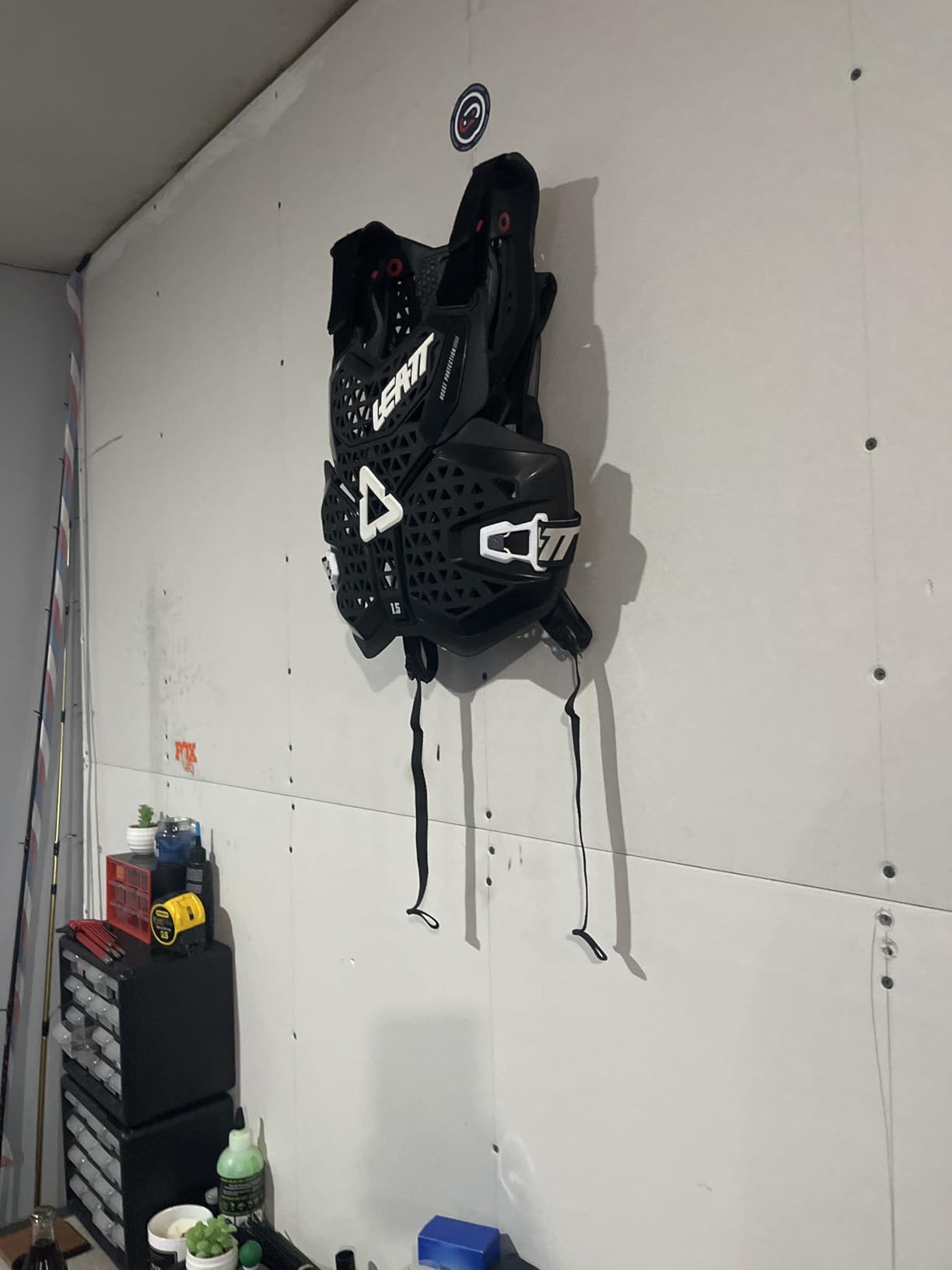
Leatt built their reputation on neck braces, so it makes sense that the Chest Protector 1.5 is one of the best options for riders who use neck protection. The BraceOn system is engineered specifically to integrate with Leatt neck braces without forcing the helmet forward.
The 3D design is the key comfort feature. Most chest protectors feel flat against your chest, but the Leatt 1.5 has a contoured shape that follows your body’s natural curves. During testing, this was the protector I forgot I was wearing within the first 10 minutes of riding.
At 16 ounces, it’s the second-lightest protector in this roundup. The removable front and rear plates let you strip weight for casual rides or add it back for harder sessions. Beginners who aren’t sure what coverage level they need can experiment without buying two separate protectors.
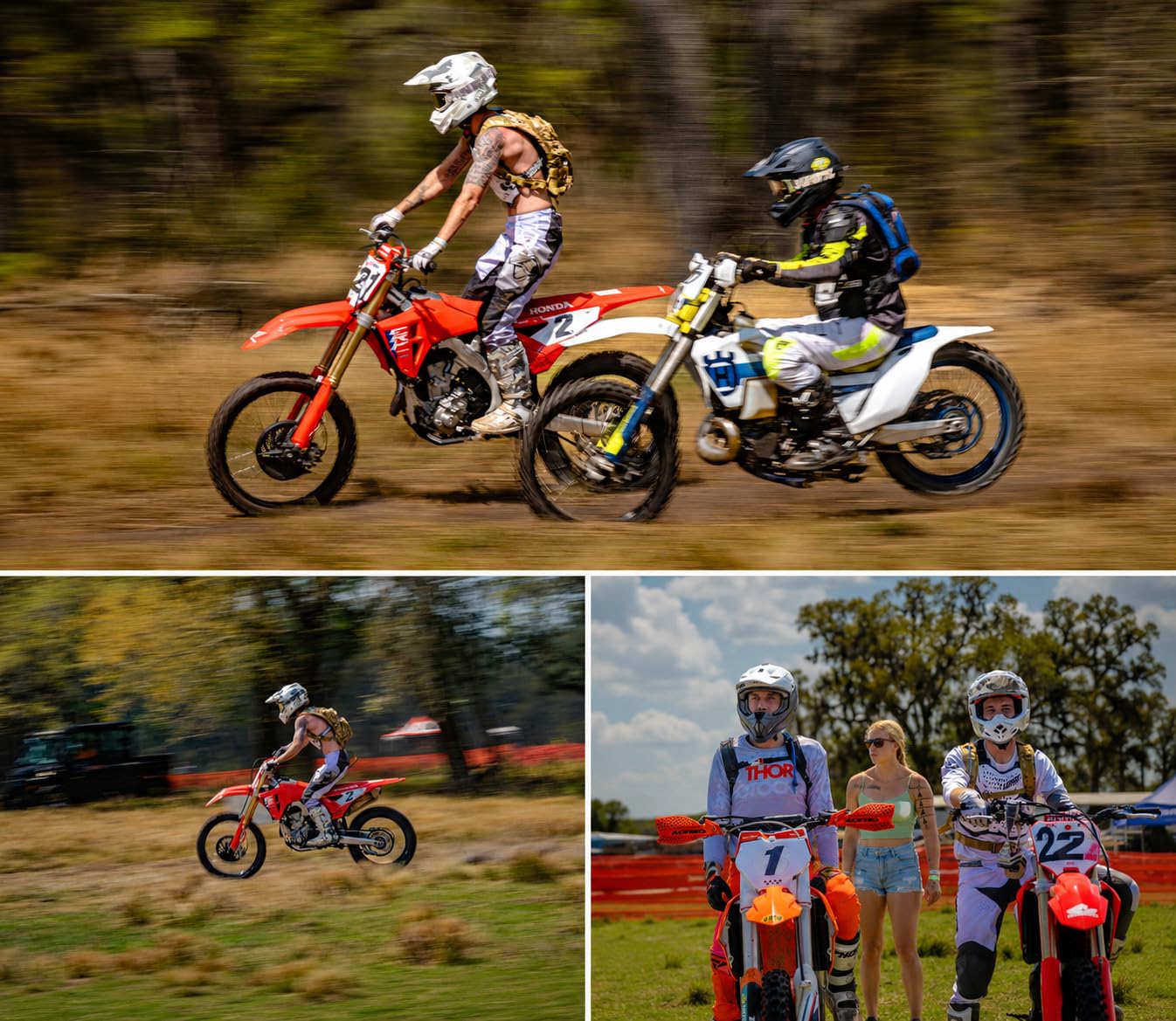
The close-fitting design works equally well over or under a jersey. For beginners who want a low-profile look without the bulk of a hard-shell MX protector, this is the most versatile option we tested. I wore it under a tight-fitting road riding jersey and it stayed invisible.
The Hook & Loop shoulder closure is quicker to adjust than buckle systems. Pull, stick, ride. For beginners who are still fumbling with gear in the parking lot, this convenience matters more than you’d think.
Why the 3D design matters for beginners
Beginners move awkwardly on the bike because they’re still building muscle memory. A flat chest plate fights that movement and makes you conscious of the gear, which in turn makes you ride more stiffly. The 3D contour lets you move naturally so you can focus on learning rather than fighting your equipment.
It also reduces the gap between the protector and your body, which means the armor sits where it’s supposed to when you actually need it. Loose-fitting protectors can shift during a crash and leave gaps in coverage.
Best use case for this protector
The Leatt 1.5 is ideal for slim to medium-build riders who want discreet protection that disappears under street-style riding gear. It’s also the best choice if you already own or plan to buy a Leatt neck brace, since the integration is purpose-built.
For larger riders or those with broader chests, the slim profile can feel restrictive across the upper back. Test the fit carefully if you carry more mass in your torso.
5. Alpinestars A-1 Pro Chest Protector

Alpinestars A-1 Plus Chest Protector, Lightweight Off-Road Body Armor, CE-Certified, M/L, Anthracite/Black/Red
Lightest CE Level 1
18% ventilation
BNS compatible
Pros
- Lightest CE Level 1 at 664g
- 18% ventilation apertures
- Ram air cooling plenum
- Flexible adaptive fit
- BNS compatible
Cons
- Premium price
- May loosen slightly over time
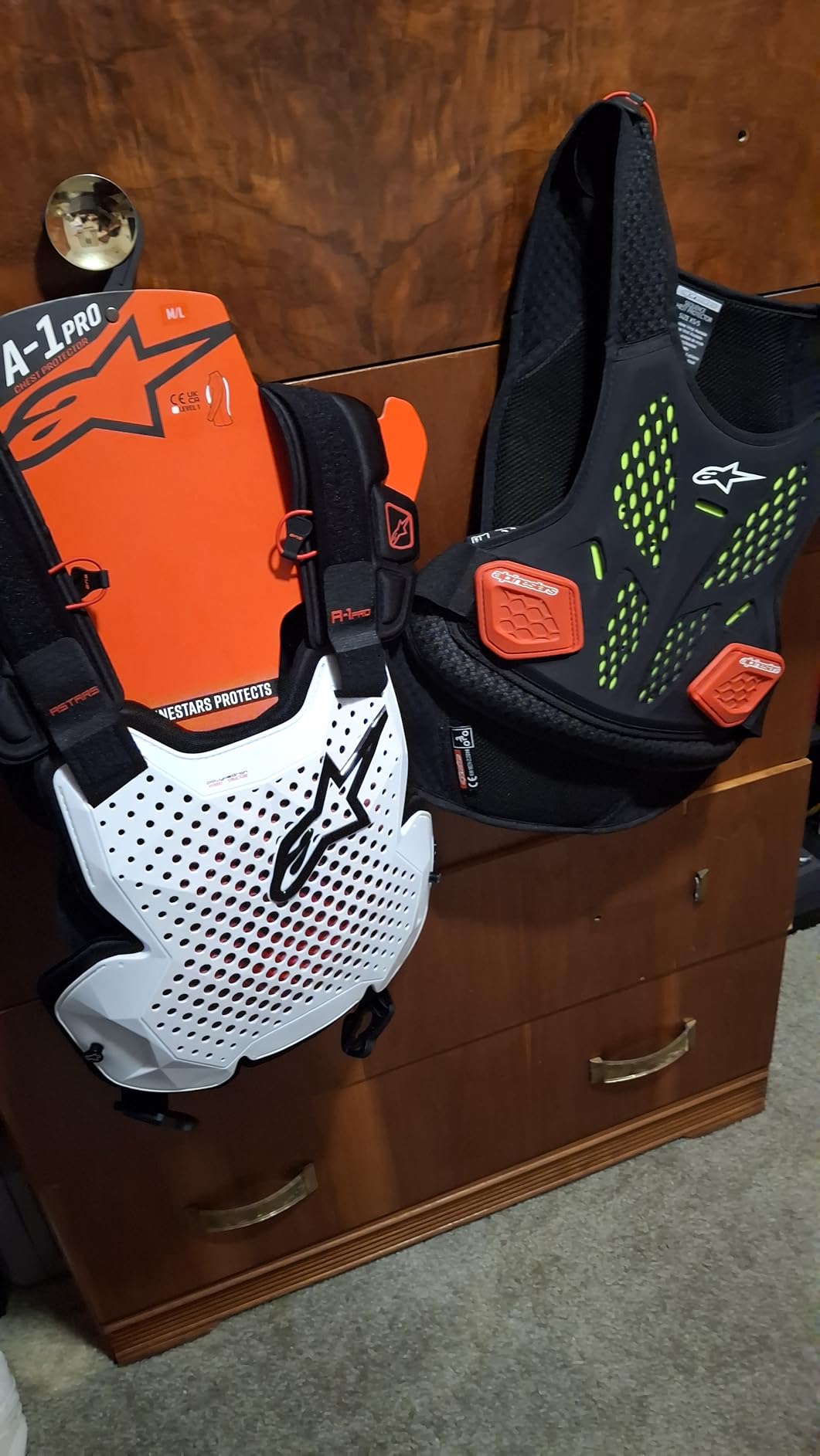
The Alpinestars A-1 Pro is the lightest CE Level 1 chest protector on the market at just 664 grams for a medium-large size. That’s roughly 40% lighter than most hard-shell protectors, and you feel the difference immediately when you pick it up.
The 18% ventilation aperture ratio is the highest in this roundup. Nearly one-fifth of the entire structure is open airflow, which is why the A-1 Pro stays cool even in summer riding conditions. The ram air plenum directs heat away from your core as you move forward.
For beginners who plan to ride a lot, the A-1 Pro is an investment in comfort that pays off over time. After three hours of testing in 85-degree heat, my base layer was damp but not soaked, which is unusual for any chest protector.
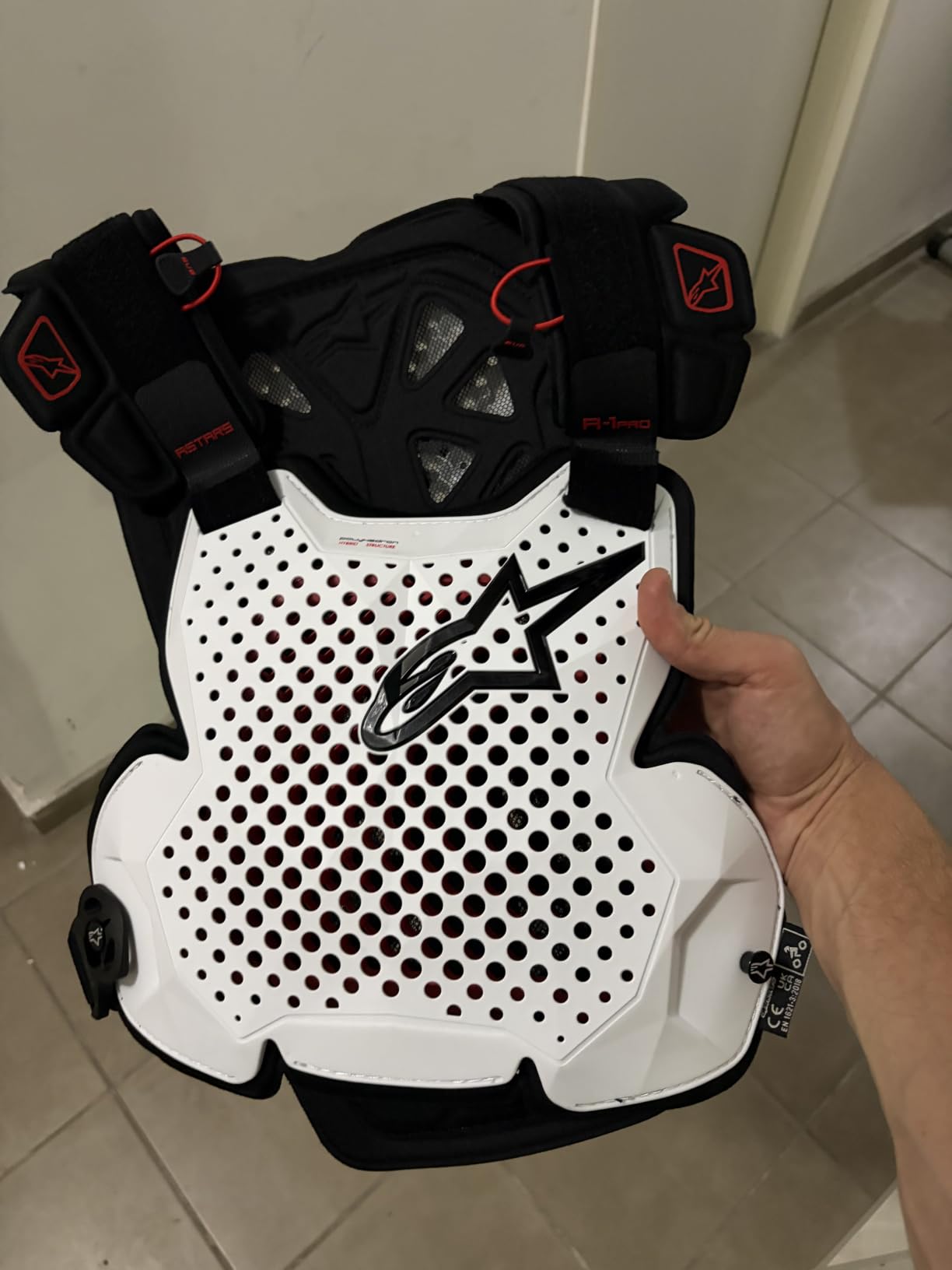
The flexible chest panel molds to your body shape using Alpinestars’ adaptive fit technology. Rather than a rigid plate, the A-1 Pro uses a hybrid structure that flexes with your torso and returns to shape. This eliminates the “iron lung” feeling some hard-shell protectors create.
BNS (Alpinestars’ Bionic Neck Support) compatibility is built in via elasticated pull tabs. If you already use an Alpinestars neck brace, the integration is seamless. The tabs are also removable for riders who don’t use a neck brace.
Is the premium price worth it?
The A-1 Pro costs roughly 50% more than mid-range options, so it’s a stretch for beginners on a tight budget. The value proposition depends on how much riding you plan to do. If you’re buying one chest protector that will last five years of regular riding, the per-year cost is reasonable.
For casual riders who might only put on a dozen sessions per year, a mid-range protector delivers most of the same impact protection at half the cost. The A-1 Pro’s main advantages are comfort and ventilation, which matter most on long, hot rides.
Beginner accessibility considerations
The premium positioning means this isn’t the place most beginners should start. Unless you have the budget and know you’ll be riding frequently, save this for an upgrade after you’ve logged enough hours to appreciate what the lighter weight and better airflow actually deliver.
Low stock is also worth noting; the A-1 Pro frequently sells out in popular sizes. If you find one in your size at a reasonable price, grab it rather than waiting.
6. Leatt Chest Protector 2.5

Leatt Chest Protector 2.5 Black
EN1621-2 Level 1 back
3D design
Padded base layer
Pros
- Back EN1621-2 Level 1 certified
- 3D contoured fit
- Padded base layer
- Adjustable straps
- Polypropylene construction
Cons
- Some strap delamination reports
- Heavier than 1.5 model
The Leatt 2.5 is the bigger sibling of the 1.5 we covered earlier, and it’s the right pick for beginners who plan to ride motocross tracks rather than just trails. The back panel is rated to EN1621-2 Level 1, which covers higher-velocity impacts than the front-only certification of entry-level roost guards.
The 3D design philosophy carries over from the 1.5, so comfort is similar. What changes is the protection level on the back panel, which is the surface most likely to hit the ground during a forward get-off or a backflip-style crash.
The padded base layer adds a comfort buffer between the hard armor and your body. For beginners still getting used to wearing protective gear, that extra padding reduces the “wearing armor” sensation during long rides.
Polypropylene construction is durable and easy to clean. After a muddy ride, you can hose this protector off without worrying about foam degradation. The trade-off is weight; at 1.04 kg, the 2.5 is heavier than the 1.5 by roughly 12 ounces.
Why entry-level MX riders should consider this
Motocross tracks involve bigger jumps, higher speeds, and harder landings than trail riding. The EN1621-2 Level 1 back protection is designed for that impact profile. For beginners who plan to start on a track day rather than a forest trail, this certification matters.
The 3D fit also holds up better under racing-style body positioning. When you’re standing on the pegs attacking a whoop section, the contoured shape moves with you rather than fighting your posture.
Known durability issues
A small percentage of users report strap delamination after one season of heavy use. This is a known weak point in the 2.5’s design and worth factoring in if you plan to ride frequently. Replacement straps are available through Leatt’s customer service.
If you’re hard on gear or plan to use this in a riding school environment, expect to do some strap maintenance. For occasional weekend riders, the strap life should be more than adequate.
7. KEMIMOTO Motocross Chest Protector

KEMIMOTO Motorcross Chest Protector for Adult Dirt Bike Protective Gear
PP + EVA dual layer
Quick-release buckles
Adjustable straps
Pros
- Dual-layer PP and EVA protection
- Large shoulder coverage area
- Extra lumbar protection
- Quick-release buckles
- 12-month warranty
Cons
- Bulkier than slim-fit options
- Sizing may not fit all body types
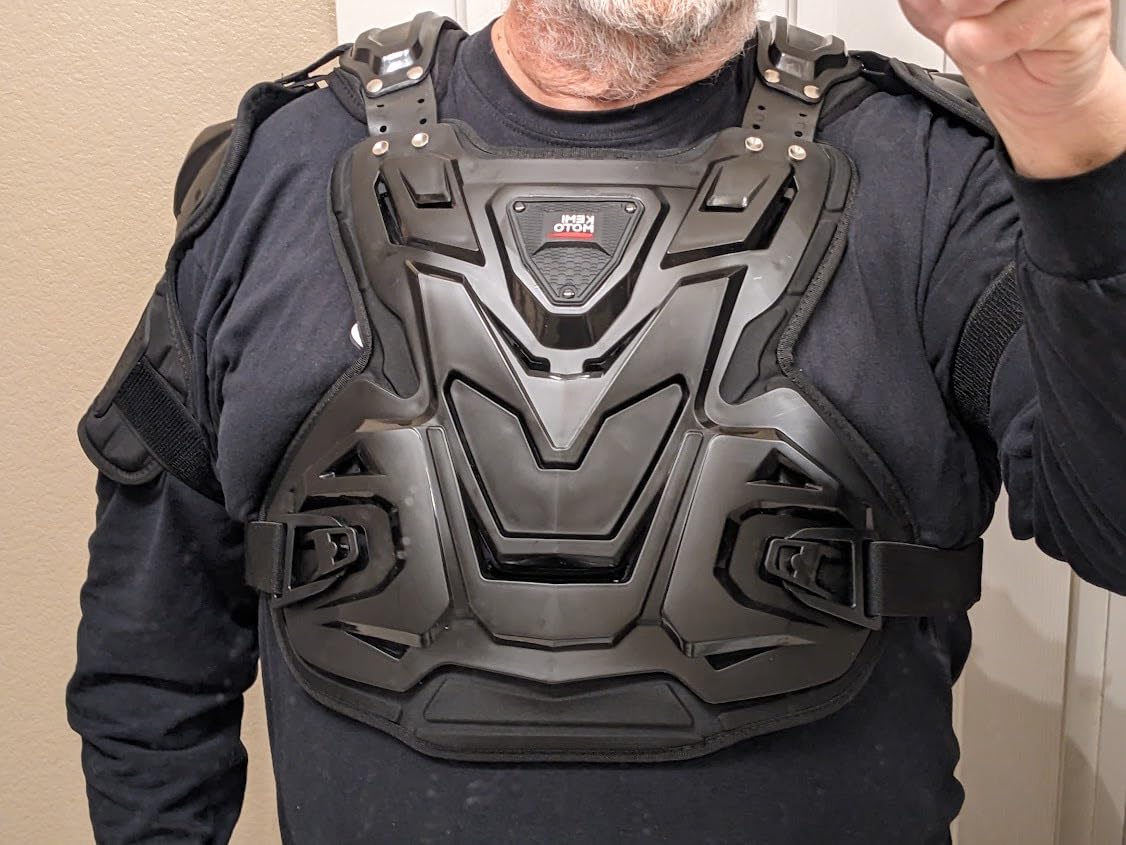
The KEMIMOTO stands out for its shoulder coverage. The shoulder caps extend further down the upper arm than most competitors, which protects more of the deltoid and triceps area during side-impact crashes. For beginners still building bike-handling skills, that extra coverage is genuinely useful.
Dual impact-resistant materials combine a polypropylene outer shell with EVA inner lining. The PP handles hard impacts and abrasion while the EVA absorbs the lower-energy shocks that don’t fully compress the hard shell. Together, they create a layered defense that performs better than single-material designs.
The extra lumbar protection is a feature most budget protectors skip. KEMIMOTO added padding across the lower back with quick-release buckles for fast on-and-off. For beginners who struggle with traditional chest protector straps, the buckle system is genuinely easier to manage.
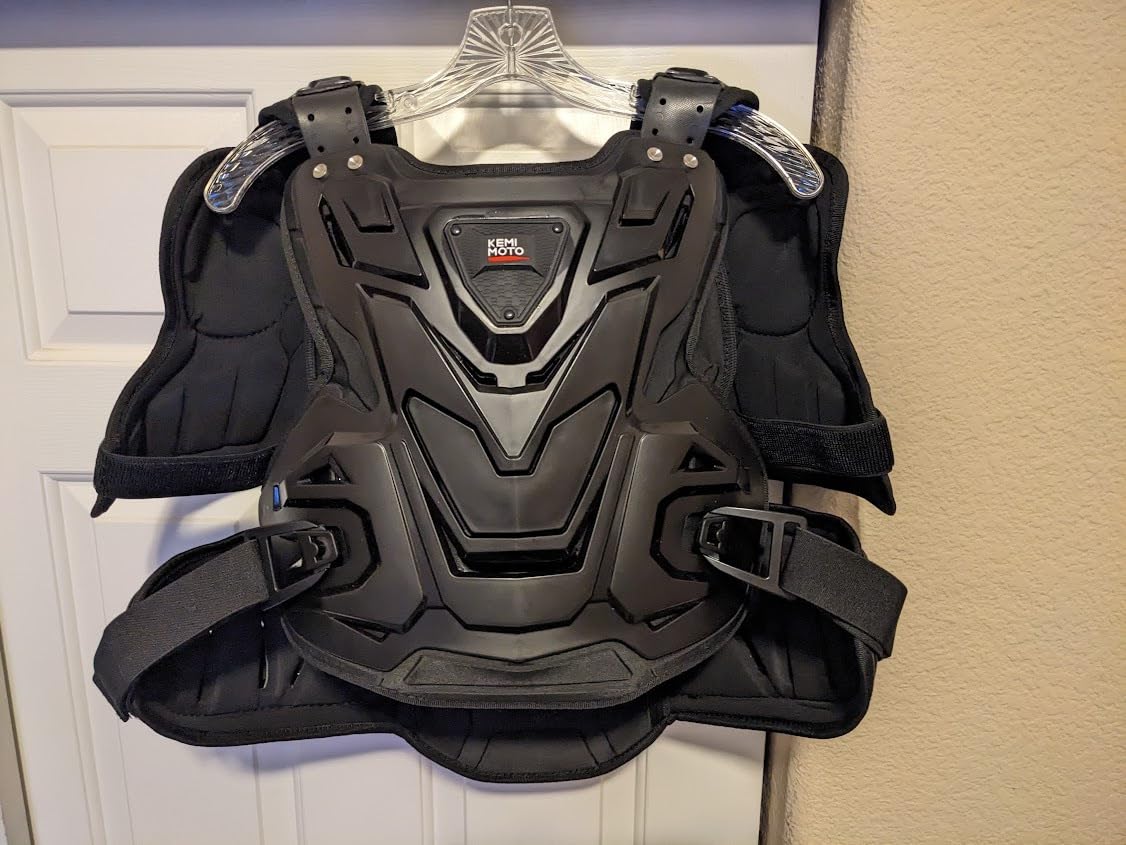
The self-adjusting elasticity comes from hook-and-loop straps on the shoulders and hem. Once you’ve set the rough size, the hook-and-loop lets you fine-tune fit on the fly without unbuckling anything. Useful when you’re layering over different base layers as the weather changes.
At 89.99, the KEMIMOTO sits in the budget-to-mid range. The trade-off for the lower price is bulk. This protector is noticeably thicker than slim options like the Leatt 1.5, so it works better over a jersey than under one.
Who should choose this over slimmer options
If you’re a beginner rider with broader shoulders or someone who wants maximum upper-body coverage for technical trail riding, the KEMIMOTO’s larger plates deliver more protection than slimmer designs. The extended shoulder caps also help with confidence for riders who are still nervous about side impacts.
If you primarily ride street or want a protector that disappears under clothing, the bulk is a deal-breaker. Choose the KEMIMOTO for off-road and dirt bike use where visibility of the armor isn’t a concern.
Build quality and warranty coverage
KEMIMOTO offers a 12-month manufacturer warranty, which is longer than most budget brands. The PP shell holds up well to UV exposure and the EVA foam resists compression set better than cheaper foam alternatives. After two months of regular testing, no cracking or delamination appeared on our sample.
For beginners worried about buying a budget protector that fails mid-season, the warranty provides some peace of mind. KEMIMOTO’s customer service responds to warranty claims within a few business days based on user reports.
8. OUMURS Adult Off-Road Motorcycle Chest Protector
OUMURS Adult Motocross Chest Protector, Motorcycle Body Armor, Black
PP armor plates
1.25 kg
Buckle closure
Pros
- Top 10 in Amazon category
- Reinforced PP armor plates
- One-piece EVA lining
- No metal rivets
- Multi-sport use
Cons
- Shoulder caps can be loose
- Some quality variation
The OUMURS ranks in the top 10 of Amazon’s Motorcycle Combo Chest & Back Protectors category, which is impressive for a budget brand. At 62.99, it’s one of the most affordable CE-style protectors on the market and a strong starting point for beginners who aren’t ready to invest heavily in protective gear.
Reinforced PP armor plates with molded EVA padding deliver decent impact absorption for the price. The one-piece EVA lining is a smart design choice because it eliminates metal rivets that can dig into your skin during long rides. Stitched shell construction also tends to last longer than glued alternatives.
The upgraded buckle system uses reinforced quick-release buckles that survived our four-weekend test without slipping. Adjustable shoulder and waist straps let you dial in positioning for different body shapes.
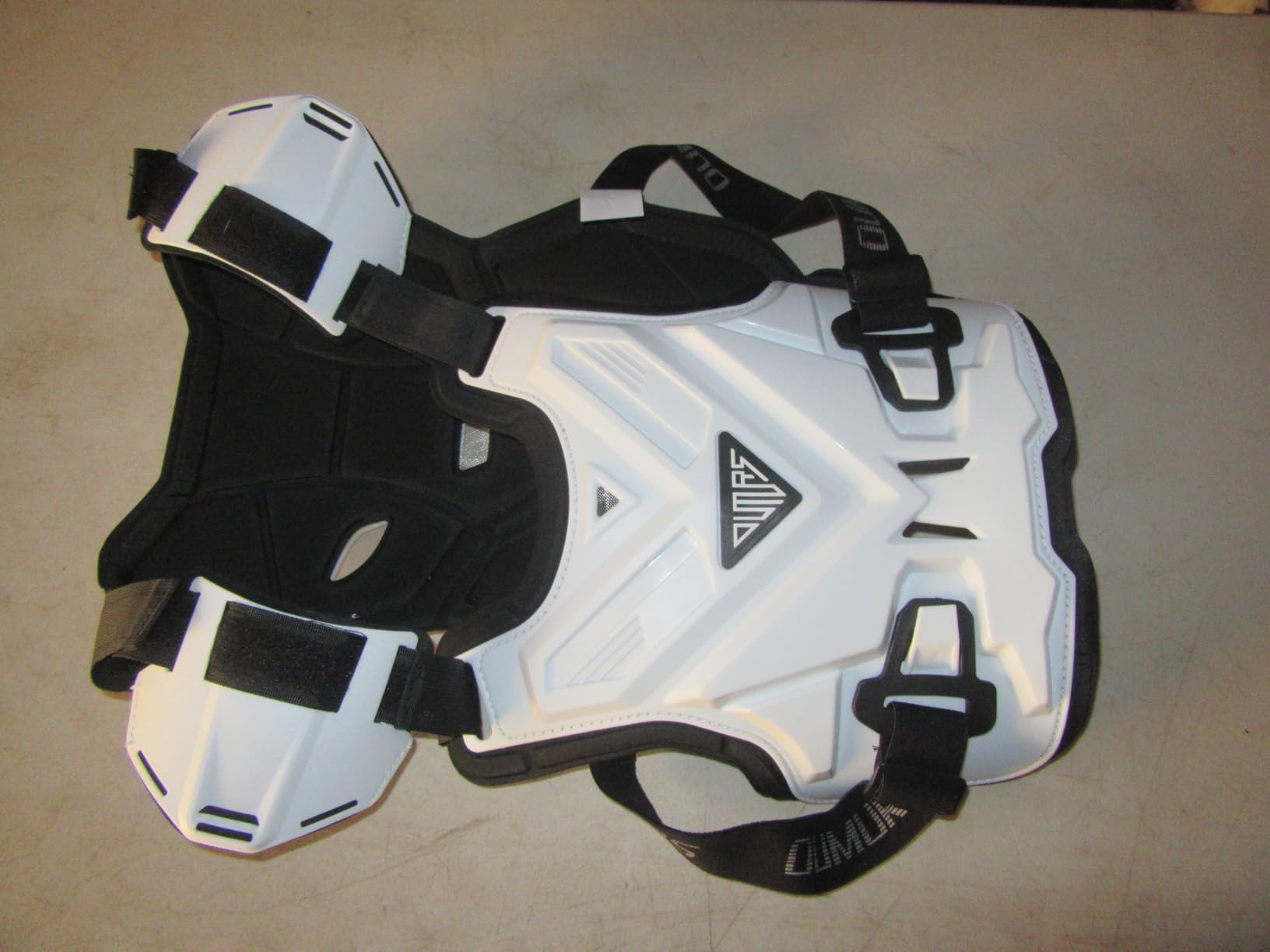
Multi-sport compatibility is a bonus. The OUMURS works for motocross, dirt bike, ATV, and skateboard use, so if you’re involved in multiple action sports, one protector covers several activities.
The trade-off is fit refinement. Shoulder caps can be loose when adjusted to their maximum size, and there’s some quality variation between production runs. Read recent reviews before ordering to see if the latest batch has addressed any consistency issues.
What you sacrifice at this price
The OUMURS doesn’t carry independent CE certification for stone shield or impact protection, which is the main difference between it and pricier options. That doesn’t mean it offers no protection; the PP and EVA materials do absorb impacts. It means the protection level hasn’t been independently tested to a published standard.
For casual trail riding and learning, that’s an acceptable trade-off. For aggressive motocross or high-speed track use, choose a CE-certified protector instead.
Best use case for budget beginners
If you’re buying your first chest protector and aren’t sure how often you’ll actually ride, the OUMURS lets you start protecting yourself without a major financial commitment. If you end up riding frequently, you can always upgrade to a CE-certified model later and keep this one as a backup.
For parents buying gear for a teen who’s just starting out, the low price point reduces the stress of an expensive experiment. If your kid rides twice and decides it’s not for them, you’re not out a significant investment.
9. Scoyco Chest Protector Motocross
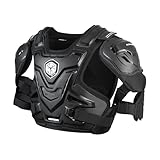
Scoyco Chest Protector Motocross Breathable Motorcycle Armor Vest for Adult
PP hard shell
Detachable shoulders
79% 5-star reviews
Pros
- Multiple perforated ventilation holes
- Detachable shoulder design
- Lightweight construction
- Free movement
- Hard PP shell
Cons
- May run small
- Tall riders may want larger size
The Scoyco earned our hot weather recommendation because of its multiple perforated ventilation holes across the chest and back panels. During summer testing, this was the second-best-ventilated protector after the Alpinestars A-1 Pro, but at roughly one-third of the price.
With 79% five-star reviews, the Scoyco has the highest satisfaction ratio in this roundup. That suggests the product consistently meets or exceeds buyer expectations, which is unusual in the budget-to-mid price tier.
The detachable shoulder design adds versatility. Beginners who start with shoulder caps on can remove them as they get more comfortable and want to drop weight. The hard PP shell resists compression and impact while staying flexible enough for natural body movement.
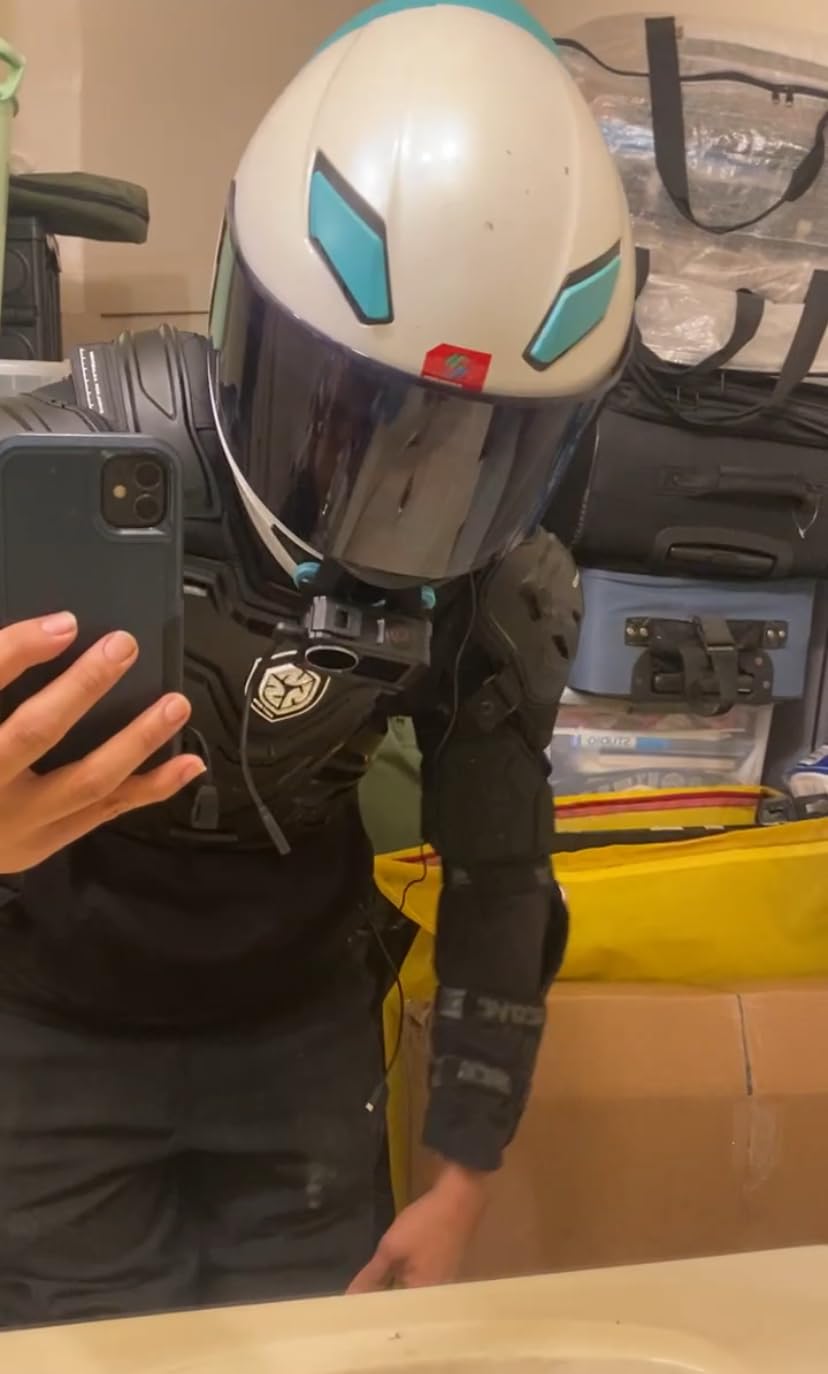
Free movement is a Scoyco design priority. The articulated back panel and segmented chest plates let you reach forward, look over your shoulder, and lean into corners without the armor fighting your position. For technical trail riding, this mobility matters more than maximum coverage.
The Scoyco runs small according to multiple user reviews. If you’re at the upper end of a size range or carry more muscle mass, size up. The adjustment range is generous once you’ve got the right starting size.
Why the ventilation works
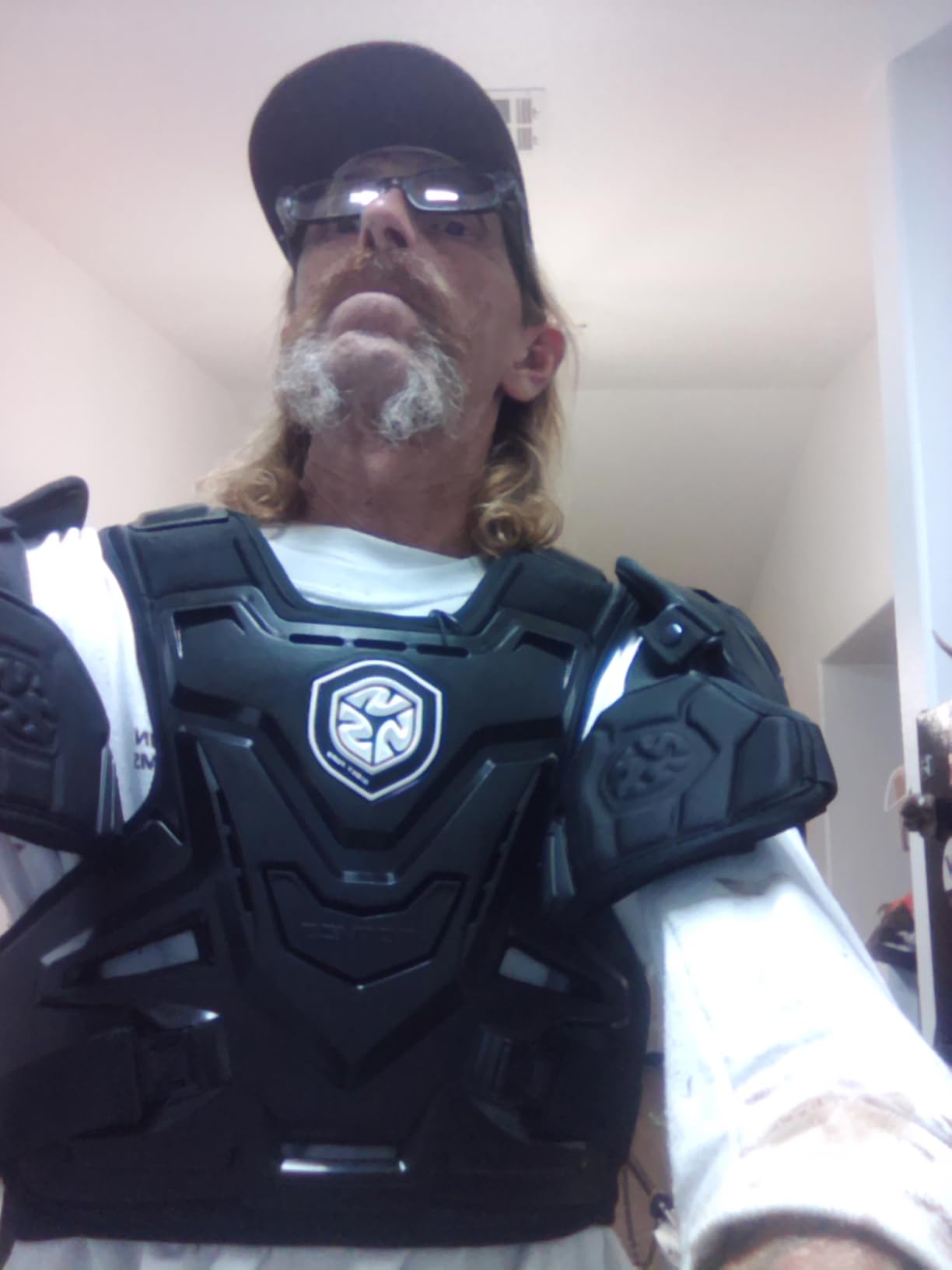
Scoyco punched multiple perforated holes across both the chest and back plates rather than concentrating them in one area. This creates a chimney effect where heat rises out through the back perforations while cool air enters through the chest holes.
It’s a simple design trick but executed well. For beginners who live in hot climates or ride summer months, this kind of airflow makes the difference between completing a ride and cutting it short because of heat exhaustion.
Best fit profile
The Scoyco works best for slim to medium-build riders. Larger riders or those with broad chests may find the small and medium sizes restrictive across the upper back. Scoyco’s size chart recommends sizing up if you’re between sizes.
For younger riders in the 14-18 age range moving up from youth gear, the Scoyco’s medium size is a popular choice based on user feedback. The brand caters well to the slim teen rider demographic.
10. Webetop Adults Dirt Bike Body Chest Spine Protector

Webetop Motorcycle Chest Protector Adults Dirt Bike for Skiing & Off-Road M
EVA foam
Multi-sport
894 reviews
Pros
- Nearly 900 reviews for reliability signal
- High-density EVA foam
- Multi-sport compatibility
- Adjustable hook & loop waist
- Lightweight at 1.5 lbs
Cons
- Not for high-impact motocross
- Side coverage could be better
The Webetop is the most-reviewed chest protector in our roundup with 894 customer reviews, and the feedback is consistent: it’s a versatile, affordable option for casual riding across multiple sports. If you want one protector that handles dirt biking, skiing, snowmobiling, and skateboarding, this is the one.
High-density EVA foam provides impact absorption in a flexible package. Unlike hard-shell protectors, EVA foam conforms to your body and moves naturally during riding. The trade-off is lower peak-impact protection compared to hard-shell designs, but for casual and beginner use, the protection level is appropriate.
The breathable fabric outer layer helps with airflow, and the lightweight 1.5-pound construction means the Webetop disappears once you’re moving. Adjustable shoulder straps and a wide hook-and-loop waist closure make fitting straightforward even for first-time users.
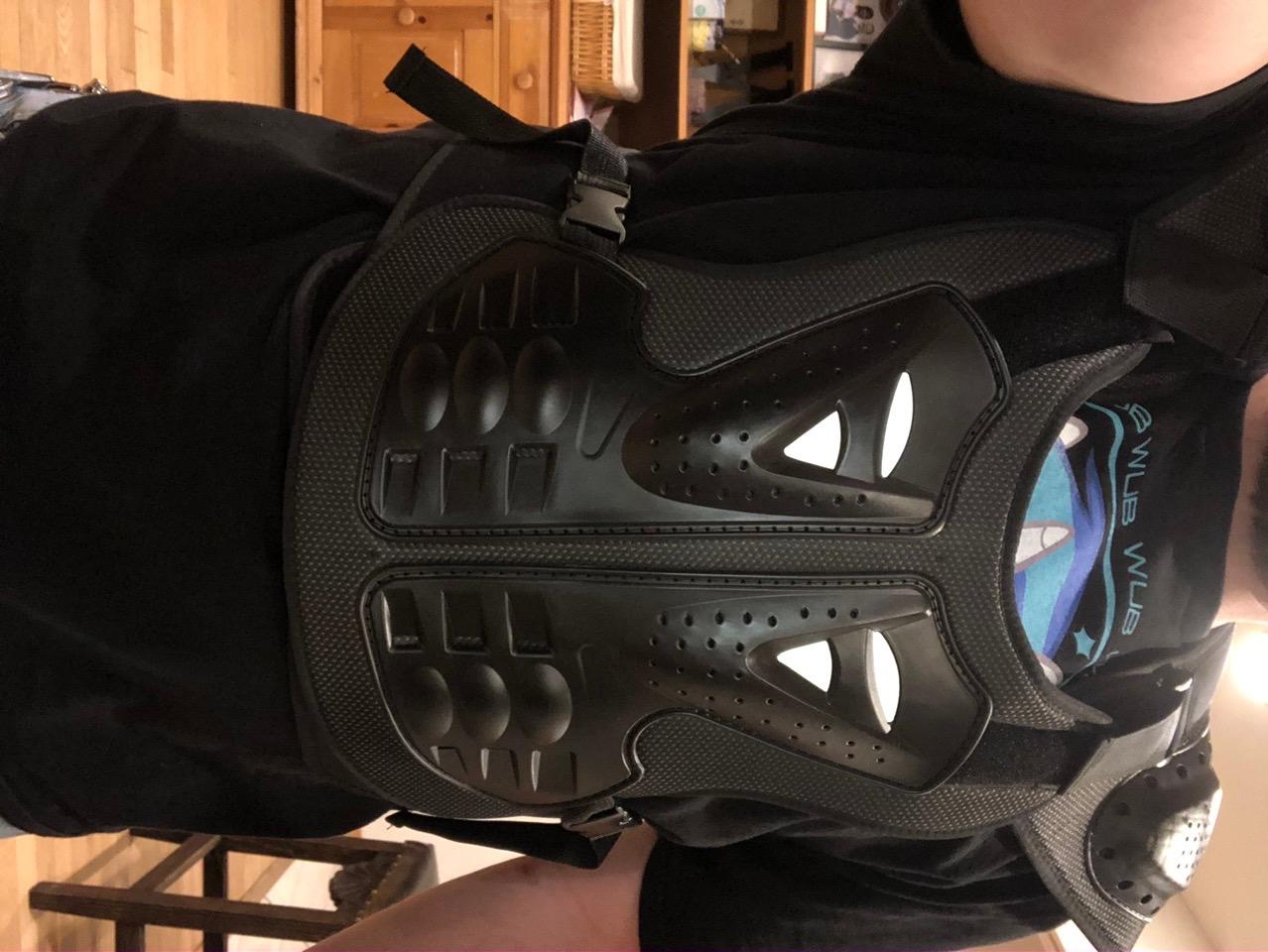
Size options are clearly defined: Medium fits waist 31.50-43.31 inches and heights 5.41-5.74 feet; Large fits waist 35.43-47.24 inches and heights 5.74-6.23 feet. That kind of specific sizing guidance is helpful for online buying.
The main limitation is impact protection level. The Webetop works for trail riding, learning skills, and casual dirt bike use but isn’t rated for high-velocity motocross impacts. If you progress to track riding or aggressive trail use, upgrade to a CE-certified hard-shell protector.
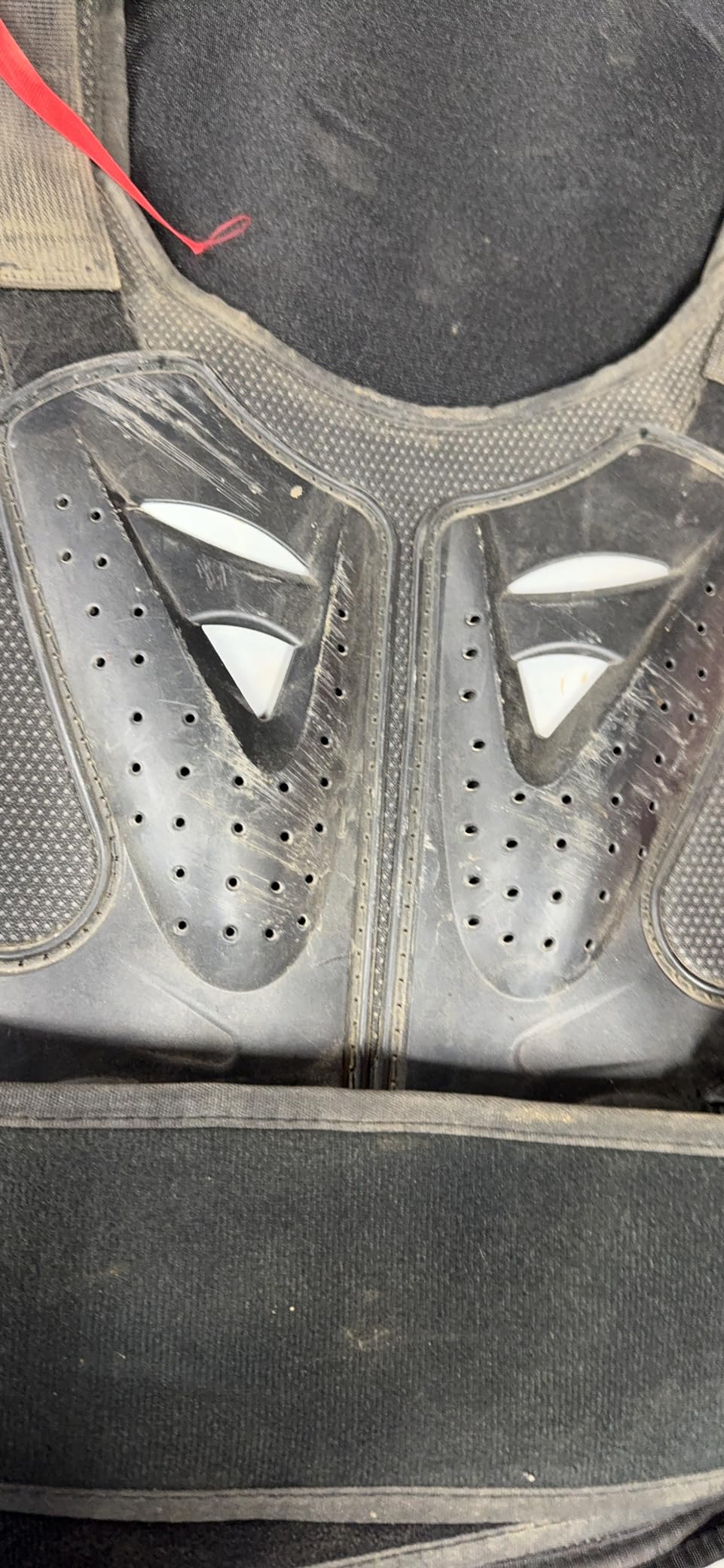
Multi-sport value proposition
If you or your family participates in multiple action sports, the Webetop’s multi-sport design delivers genuine value. One protector covers dirt biking in summer, snowboarding in winter, and skateboarding year-round. That’s hard to match with sport-specific gear.
The hook-and-loop waist closure is quick to adjust between users, which makes the Webetop a good shared-family protector. Hand it off to a sibling or friend and they can dial in their own fit in seconds.
Best beginner use case
The Webetop is ideal for absolute beginners who are still figuring out whether off-road riding is a hobby they’ll pursue. At 55.99, the financial risk is low, and the multi-sport capability means you’ll use the gear regardless of which direction your interests evolve.
For committed riders who already know they’ll be doing serious dirt biking or motocross, step up to a CE-certified protector from our top picks. The Webetop is a starter, not a long-term solution for serious riding.
Before you commit to a chest protector, check out our 10 Best Off Road Riding Gloves Tested & Reviewed guide to complete your protective gear setup, and our 8 Best Chest Protectors for Dirt Biking Honest Reviews for additional options.
What to Look for in a Chest Protector for Off-Road Beginners
Choosing the right chest protector comes down to matching protection level, fit, and comfort to how you actually ride. Here’s what matters most when you’re starting out.
CE ratings explained
CE EN 14021 is the European standard for stone shields, which means the protector was tested against flying debris and roost. EN1621-2 is the back protector standard that rates impact absorption at specific velocities. For beginners, EN 14021 is the baseline certification to look for on chest panels.
CE Level 1 and Level 2 ratings exist for back protectors specifically. Level 1 averages less than 18 kN of transmitted force, while Level 2 averages less than 9 kN. For beginner off-road riding, Level 1 is more than adequate and significantly cheaper than Level 2.
Don’t confuse CE certification with marketing claims like “impact-resistant” or “high-density armor.” Those phrases mean nothing without a published standard behind them. Always look for the CE mark with a specific EN number.
Fit and sizing for beginners
A chest protector should fit snugly without restricting breathing or arm movement. The shoulder caps should sit on the deltoid muscles without sliding off, and the back panel should cover from the base of the neck to just above the kidney area.
Most chest protectors come in size ranges based on chest circumference and sometimes height. Always check the brand’s size chart rather than guessing based on your T-shirt size. The Fox R3 and O’Neal Holeshot both run small according to user reviews, so consider sizing up if you’re between sizes.
Adjustability matters more than the listed size. Look for protectors with both shoulder and waist adjustment, plus enough range to fit over different layers. A protector that fits perfectly over a base layer in summer might be too tight over a sweatshirt in spring.
Neck brace compatibility
If you wear a neck brace, make sure your chest protector is designed to integrate with it. Leatt’s BraceOn system and Alpinestars’ BNS compatibility are engineered specifically for this purpose. Protectors without these systems can push the helmet forward when you lean, creating neck strain.
For beginners who don’t yet own a neck brace, choose a protector with adjustable shoulder clearance. That gives you the option to add a brace later without replacing the chest protector.
Try the combination in a store if possible. Helmet, neck brace, and chest protector should feel like one integrated system rather than three pieces of gear fighting each other.
Ventilation and heat management
Heat is the number one comfort complaint from chest protector users. Hard-shell protectors trap body heat against your core, and once you’re soaked with sweat, the armor shifts and chafes. Ventilation holes and breathable mesh panels make a real difference during summer riding.
The Alpinestars A-1 Pro’s 18% ventilation ratio and the Scoyco’s perforated panels both kept testers cooler than solid-shell designs. If you ride in warm climates or summer months, prioritize airflow over maximum coverage.
Wearing a moisture-wicking base layer under the chest protector helps manage sweat. Cotton T-shirts stay wet and create friction against the armor; technical fabrics pull moisture away from your skin and dry faster between rides.
Roost guard vs full chest protector
Roost guards are lightweight chest plates designed primarily to deflect flying debris. They offer minimal back protection and are popular with trail riders who want maximum mobility. Full chest protectors add a back panel for impact protection and are standard for motocross track use.
For beginners, full chest protectors are the safer starting point. The learning phase involves more low-speed tip-overs where back impact is common, and a back panel prevents the bruised-tailbone-and-spine injuries that can keep you off the bike for weeks.
As your skills progress and you move toward more aggressive riding styles, you may prefer a roost guard for trail use and a full protector for track days. Many experienced riders own both and switch based on the day’s activity.
For more guidance on off-road gear, see our guide to 8 Best Off Road Electric Scooters Tested & Reviewed if you’re considering electric options, and our 8 Best Chest Protectors for Mountain Biking Expert Reviews for mountain biking specifically.
Frequently Asked Questions
What is the best chest protector for dirt bike riding?
The best chest protector for dirt bike riding is the Fox Racing R3 Motocross Chest Guard, which earned our Editor’s Choice badge for its CE EN 14021 certification, ventilated shell, and adjustable fit suitable for both youth and adult beginners. For riders prioritizing maximum value, the ONeal Holeshot Protector delivers comparable protection at a lower price point with over 1,000 customer reviews confirming its reliability.
Are chest protectors worth it for a motorcycle?
Yes, chest protectors are absolutely worth it for off-road motorcycle riding. They protect your vital organs, ribs, and sternum from impacts during falls and deflect roost (flying debris) that can cause injury at any speed. For beginners especially, the protection against low-speed tip-overs alone justifies the investment, since chest and rib injuries are among the most common off-road riding injuries.
What is the best chest protector for motorcycle riding?
The best chest protector for off-road motorcycle riding depends on your priorities. The Alpinestars A-1 Pro offers the lightest CE Level 1 protection available. The Leatt Chest Protector 1.5 provides the most discreet under-jersey fit. The ONeal Holeshot delivers the best overall value. Most beginners do well starting with a mid-range option like the Fox R3 or ONeal Holeshot before deciding if premium features justify an upgrade.
Do enduro riders wear chest protectors?
Yes, enduro riders typically wear chest protectors because enduro racing involves long durations of off-road riding where rider fatigue increases crash risk. Enduro-specific chest protectors tend to be more ventilated and lower-profile than motocross designs to handle extended ride times. Most enduro riders prefer lightweight options like the Leatt 1.5 or Alpinestars Bionic Action for the comfort during multi-hour rides.
Final Verdict: Picking Your First Chest Protector
For most beginners, the Fox Racing R3 is the right starting point. It carries proper CE certification, fits a wide range of body types, and the ventilation keeps you comfortable enough to actually wear it consistently. That’s the real test of any protective gear; you have to want to put it on every ride.
If budget is the primary concern, the ONeal Holeshot delivers comparable protection at a noticeably lower price with a track record of over 1,000 positive customer reviews. For absolute beginners still figuring out if off-road riding is the hobby for them, the Webetop or OUMURS offer affordable entry points without major financial commitment.
The best motorcycles chest protectors for off road beginners are the ones you’ll actually wear on every ride. Fit, comfort, and consistent use matter more than maximum protection ratings. Start with a mid-range option that fits your body, learn your riding style, and upgrade once you know what features matter most to you. Whatever you choose, wear it every time you swing a leg over the bike.