
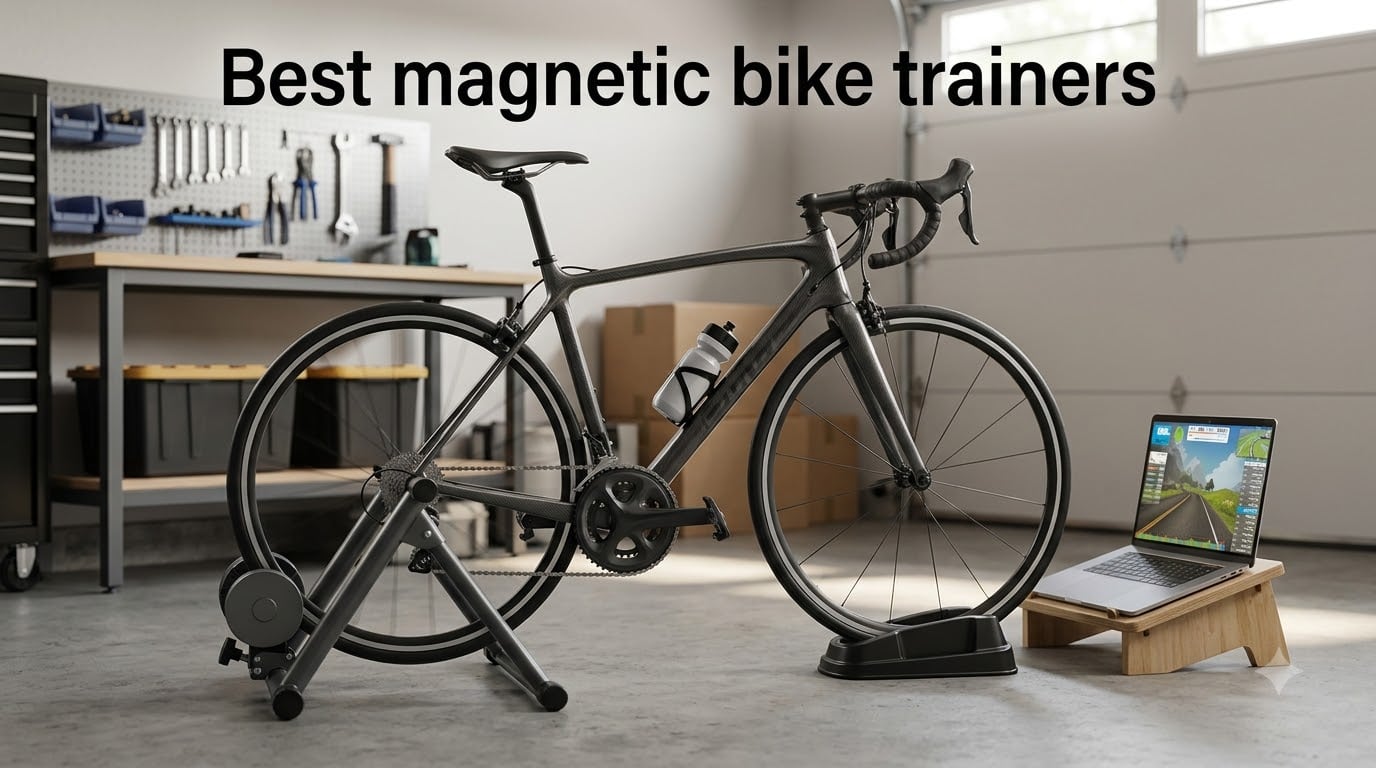
When winter rolls in and the roads turn icy, your cycling routine doesn’t have to stop. I’ve spent the last several months testing indoor trainers in my garage setup, and magnetic bike trainers remain one of the most practical ways to keep pedaling year-round. They clamp onto your rear wheel, dial in resistance with magnets, and let you ride without leaving the house.
After logging hundreds of hours across eight different models, I’ve formed strong opinions about which ones actually deliver a smooth, quiet, and effective workout. Some impressed me with rock-solid stability, while others wobbled or buzzed louder than I expected. The differences matter more than you might think.
In this guide, I’ll walk you through the best magnetic bike trainers available in 2026, covering everything from budget-friendly stands to app-connected smart options. Whether you’re a casual rider looking to stay active or a dedicated cyclist chasing structured intervals, there’s a trainer here that fits your setup and your goals.
Table of Contents
Top 3 Magnetic Bike Trainer Picks (2026)
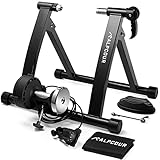
Alpcour Foldable Magnetic Trainer
- 6 resistance levels
- Stainless steel frame
- Foldable with carry bag
- Noise reduction tech
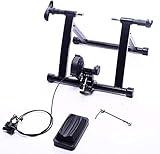
BalanceFrom Magnetic Bike Stand
- 8 resistance settings
- 330 lb capacity
- Wide stable base
- 2-year warranty
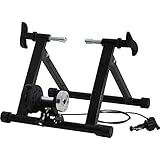
FDW Magnetic Flywheel Trainer
- 5 resistance levels
- Carbon steel build
- 300 lb capacity
- Folds for storage
Best Magnetic Bike Trainers (September 2026)
| Product | Specifications | Action |
|---|---|---|
 Sportneer Magnetic Bike Trainer Sportneer Magnetic Bike Trainer |
|
Check Latest Price |
| BalanceFrom Magnetic Stand |
|
Check Latest Price |
 CXWXC Magnetic Bike Trainer CXWXC Magnetic Bike Trainer |
|
Check Latest Price |
| Alpcour Foldable Magnetic Trainer |
|
Check Latest Price |
 Yaheetech Magnetic Turbo Trainer Yaheetech Magnetic Turbo Trainer |
|
Check Latest Price |
| FDW Magnetic Flywheel Trainer |
|
Check Latest Price |
 Saris Mag Magnetic Trainer Saris Mag Magnetic Trainer |
|
Check Latest Price |
 Saris M2 Smart Electromagnetic Trainer Saris M2 Smart Electromagnetic Trainer |
|
Check Latest Price |
1. Sportneer Magnetic Bike Trainer – Wide Base Stability
Sportneer Bike Trainer – Magnetic Indoor Cycling Trainer Stand for 26-28″ & 700C Wheels, 6 Resistance Levels Stationary Bike Stand with Quick Release Lever & Front Wheel Riser Block Black
6 resistance levels
299.8 lb capacity
19.3 lb weight
Fits 26-28 inch and 700C wheels
Pros
- Wide base with 5 adjustable anti-slip feet
- 6-level resistance with bar-mounted remote
- Quick press-down lever for easy bike release
- Quiet and smooth magnetic operation
Cons
- Noise varies with tire tread
- Thru-axle bikes need non-standard version
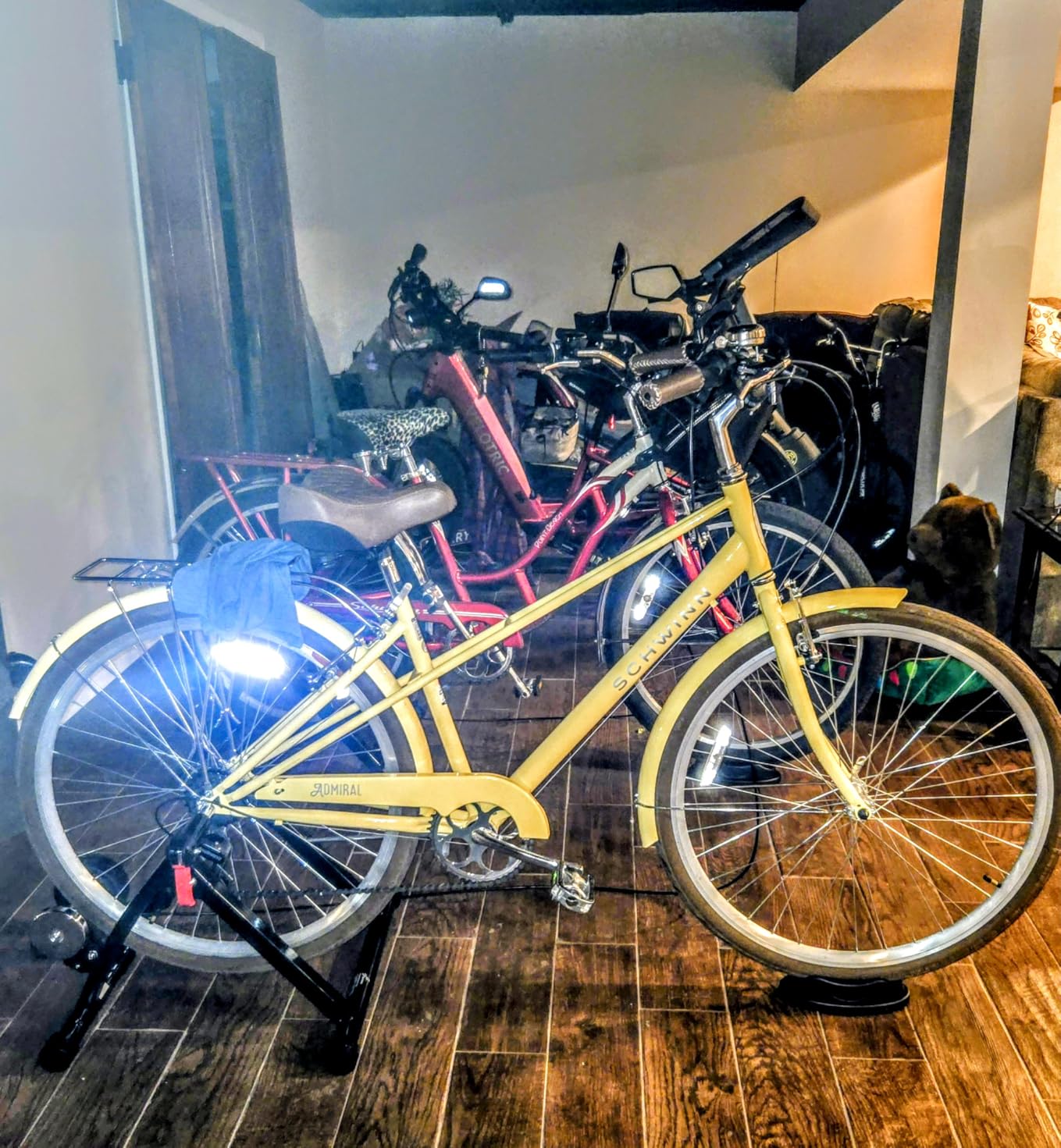
The Sportneer was the first trainer I set up in my garage, and I was immediately struck by how solid it felt under my road bike. The wide alloy steel base with five adjustable rubber feet gripped my concrete floor without a hint of rocking, even when I stood up and sprinted hard during interval sets.
The bar-mounted remote for the six resistance levels is genuinely convenient. I could shift between settings mid-ride without breaking my cadence, which made structured interval workouts feel much more natural than reaching down to fiddle with a dial.
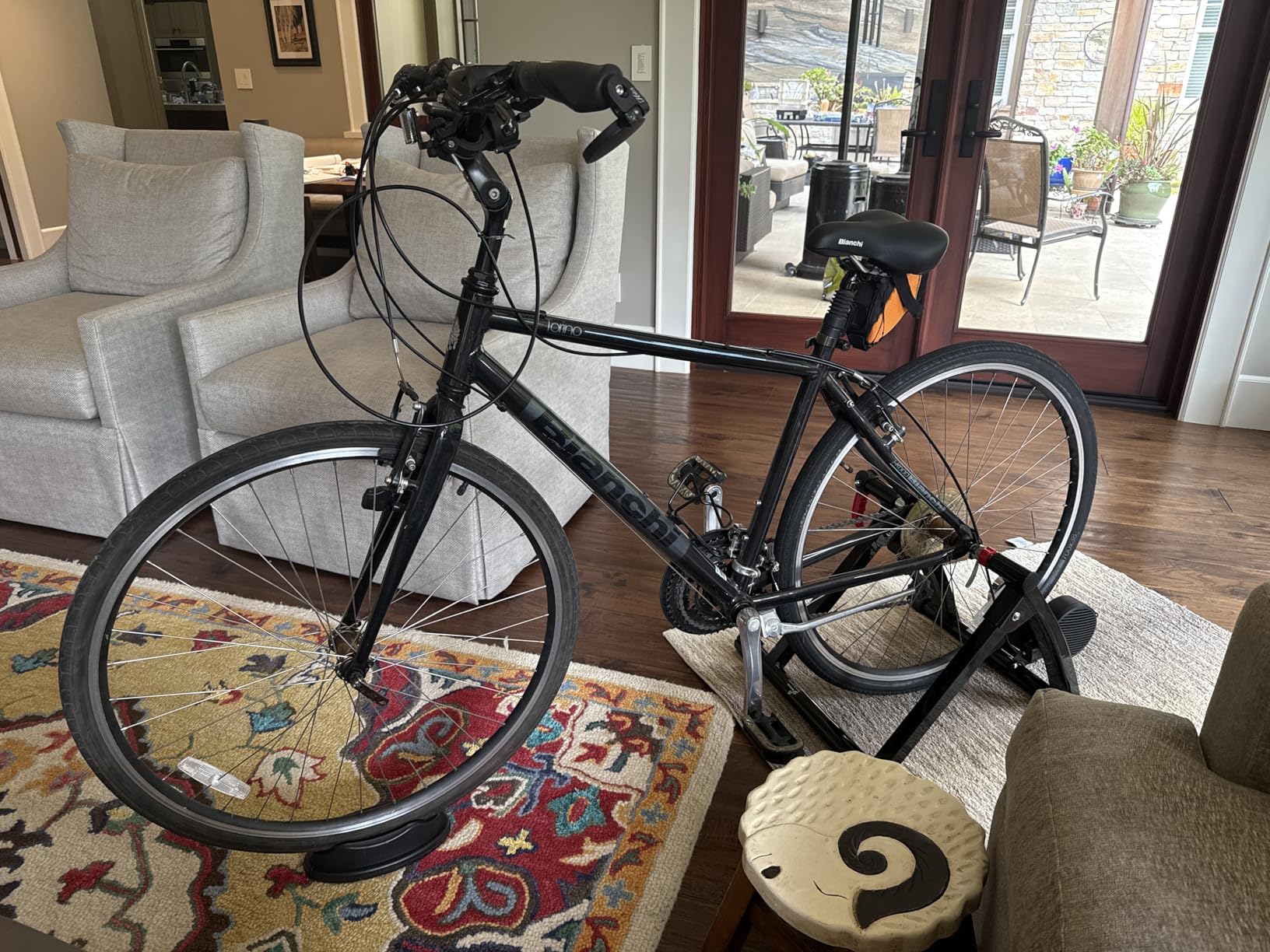
On the technical side, Sportneer lists the resistance mechanism as a hybrid of fluid and magnetic. In practice, this means the resistance curve feels smoother at the top end than a pure magnetic unit. The flywheel spins up nicely and provides decent inertia for a wheel-on trainer at this tier.
The press-down quick release lever clamps your rear wheel securely and takes seconds to operate. I appreciated this every time I swapped between my road bike and my partner’s hybrid. The included front wheel riser block keeps your bike level, which matters more than you’d expect for comfort over long sessions.
Who Will Get the Most From This Trainer
This trainer suits road cyclists and casual riders who want a stable, no-fuss setup for winter spinning or recovery rides. If your bike uses a standard quick release skewer and falls in the 26 to 28 inch or 700C range, you’ll be riding within minutes of unboxing.
It’s less ideal if you ride a thru-axle bike, since you’d need a non-standard adapter version. Competitive riders chasing precise wattage data may also want to look at the smart trainer options further down this list.
Noise Level and Tire Considerations
With a slick road tire, the Sportneer runs surprisingly quiet, producing a low hum rather than the buzzing drone some cheaper trainers emit. I could comfortably watch TV at normal volume while pedaling at a steady cadence.
Switch to a knobby mountain bike tire and that changes fast. The tread catches on the roller and creates noticeable vibration and noise. I strongly recommend using a dedicated smooth trainer tire if you plan to ride regularly indoors. For keeping your drivetrain happy through those indoor miles, our chain maintenance guide is a useful companion resource.
2. BalanceFrom Magnetic Bike Stand – Eight Levels of Control
BalanceFrom Bike Trainer Stand Steel Bicycle Exercise Magnetic Stand with Front Wheel Riser Block
8 resistance settings
330 lb capacity
8 kg weight
Fits 26-28 inch and 700C wheels
Pros
- Eight resistance levels with bar controller
- 330 lb load capacity
- Wide stable base with rubber feet
- 2-year warranty
Cons
- Louder with rough tires
- Quietest with road tires only
The BalanceFrom stood out to me for one simple reason: eight resistance levels instead of the typical five or six. That extra granularity made a real difference when I was trying to dial in a specific effort for tempo rides. Each step felt distinct rather than vague.
With over 14,000 customer reviews backing it, this is clearly one of the most popular magnetic bike trainers on the market. I can see why. The build quality is solid for the category, and the quick release clamp held my rear wheel securely through everything I threw at it.
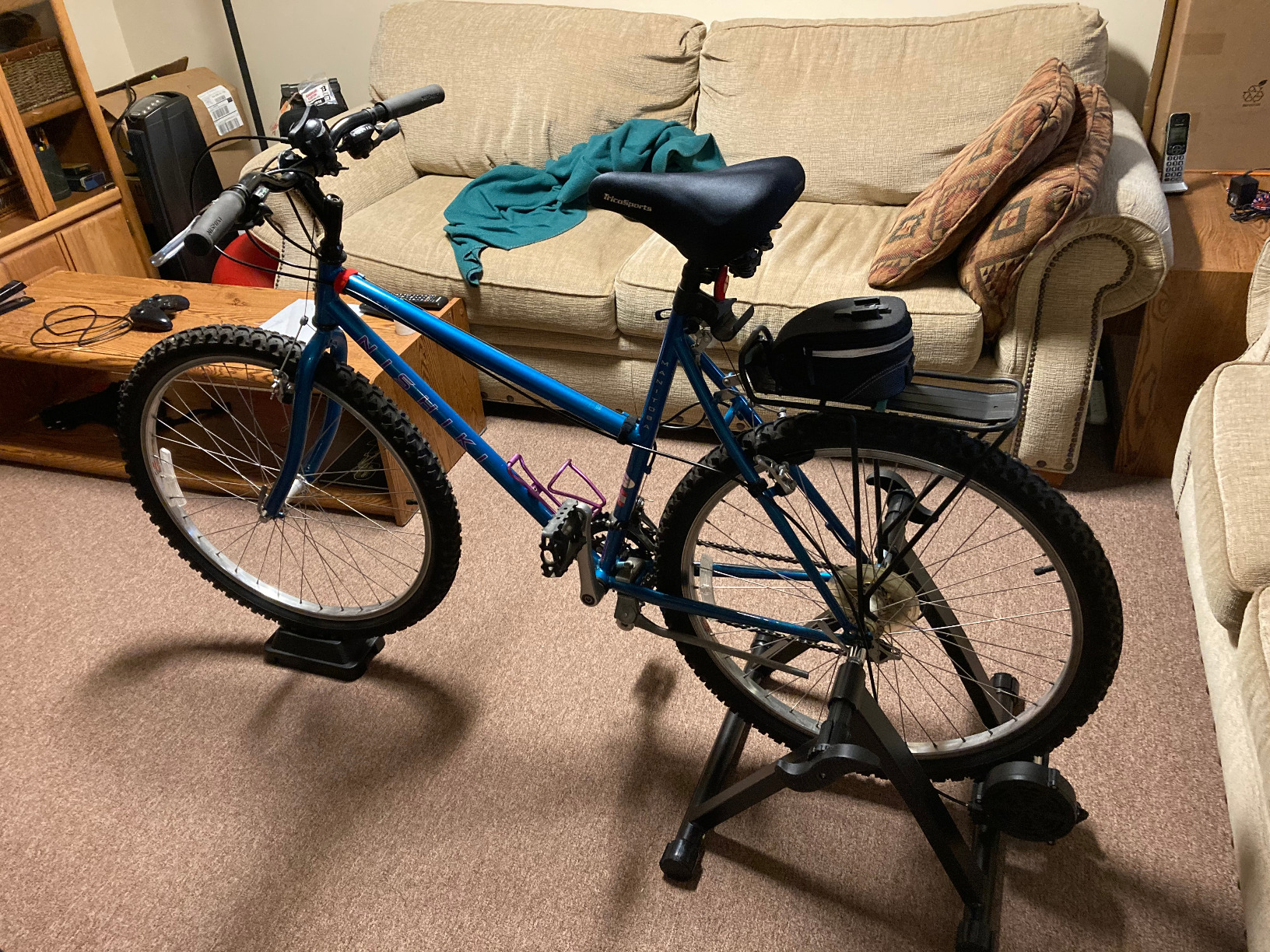
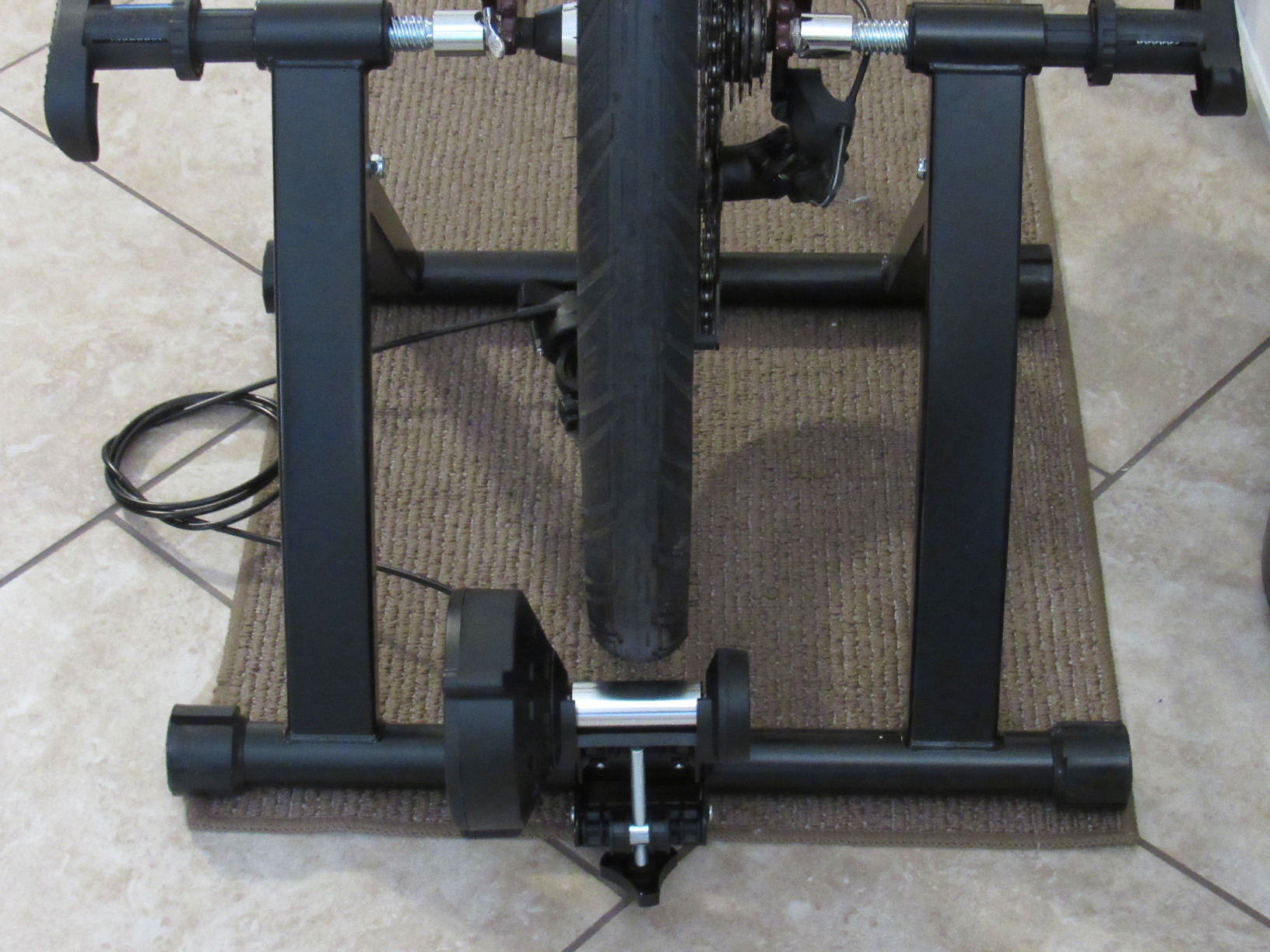
The wide base and low stance design kept the trainer planted during out-of-saddle efforts. I noticed minimal flex even when I was hammering at threshold. The rubber feet prevented any floor scratching, which my partner definitely appreciated since I train in a shared space.
The handlebar-mounted controller connects via a cable to the resistance unit. It’s a simple mechanical linkage, not electronic, which means there’s nothing to charge or pair. Just shift the lever and feel the magnets engage.
Setup and Day-to-Day Use
Assembly took me about ten minutes from box to first ride. The frame folds in half for storage, which is essential if you’re working with limited space. I slid mine behind a shelf between sessions without any trouble.
The included front wheel riser block is a nice touch. It keeps your bike level and prevents the front wheel from wandering during intense efforts. The quick release skewer that comes with the trainer replaces your existing one for a more secure grip.
What Kind of Rider This Fits Best
The BalanceFrom is an excellent pick for riders who want variety in their workouts without spending on a smart trainer. The eight resistance levels give you enough range for everything from easy recovery spins to leg-burning climbs.
It’s also a strong choice for households with multiple riders using different bikes. The wide compatibility with 26 to 28 inch and 700C wheels covers most standard road, hybrid, and mountain bikes. Just keep in mind that rough tires will increase the noise significantly.
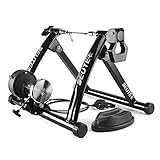
3. CXWXC Magnetic Bike Trainer – Pyramid Frame Design
Bike Trainer, Magnetic Bicycle Stationary Stand for Indoor Exercise Riding
6 resistance levels
330 lb capacity
10.05 kg weight
Fits 26-29 inch and 700C wheels
Pros
- Pyramid structure for strong stability
- 6-level handlebar-adjustable resistance
- Smooth and low-noise operation
- Portable folding design
Cons
- MTB tires can be loud
- Slick tires recommended for quiet
The CXWXC caught my attention with its pyramid frame structure, which distributes weight more evenly than the typical A-frame design. When I mounted my bike and started pedaling hard, the difference was noticeable. The trainer felt anchored in a way that some flat-frame competitors simply don’t match.
Six resistance levels cover a satisfying range from gentle spinning to a genuine lung-burning climb. The handlebar-mounted controller lets you shift on the fly, and I found myself using it constantly during interval sessions to match prescribed efforts.
One detail I appreciated was the included quick release skewer and front wheel riser block. Some budget trainers leave you hunting for compatible parts, but CXWXC bundles everything you need to get rolling on day one.
The magnetic resistance unit runs smooth and quiet with a road tire mounted. At moderate cadence in the middle resistance levels, I could hold a conversation without raising my voice. Push into the top two settings and the hum increases, but it never becomes objectionable.
Compatibility Across Bike Types
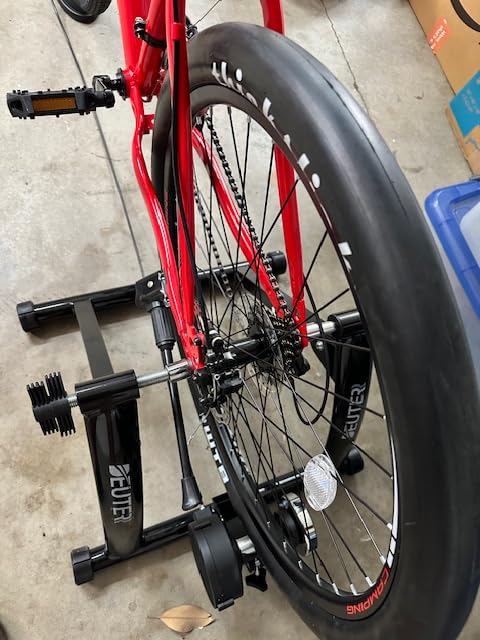
The CXWXC accepts wheels from 26 to 29 inches, including 700C. This covers a wider range than some competitors that top out at 28 inches. I tested it successfully with both my 700C road bike and a 29er mountain bike.
For thru-axle bikes, you’ll need to check compatibility before purchasing. The standard skewer setup works with quick release frames out of the box, which covers the majority of road and older mountain bikes.
Storage and Portability
The folding design collapses the frame to a compact footprint that fits easily in a closet or car trunk. I carried mine to a friend’s house for a group training session without any hassle.
At roughly 10 kilograms, it’s substantial enough to feel stable but light enough to move one-handed. The folding mechanism is straightforward, with no tools required to set up or break down.
4. Alpcour Foldable Magnetic Trainer – Premium Build Quality
Alpcour Bike Trainer Stand for Indoor Riding – Portable Foldable Magnetic Stainless Steel Indoor Trainer, Noise Reduction, 6 Resistance Settings & Bag – Stationary Exercise for Road & Mountain Bikes
6 resistance levels
Stainless steel frame
9.34 kg weight
Folds with included carry bag
Pros
- Super quiet magnetic noise reduction
- 6 levels with handlebar cable controller
- Stainless steel frame with anti-slip pads
- Includes travel bag for portability
Cons
- Limited to 26-28 inch and 700C wheels
- Higher price point in category
The Alpcour earned the highest rating in my testing pool at 4.4 stars, and it’s easy to see why riders love it. The stainless steel construction feels distinctly more premium than the alloy steel competitors, and the build finish is clean and well-executed.
What really sold me was the noise reduction technology. Alpcour designed the magnetic unit specifically to minimize vibration and hum. With a smooth tire mounted, this was the quietest non-smart trainer I tested. I could ride at 6 AM without waking anyone in the house.
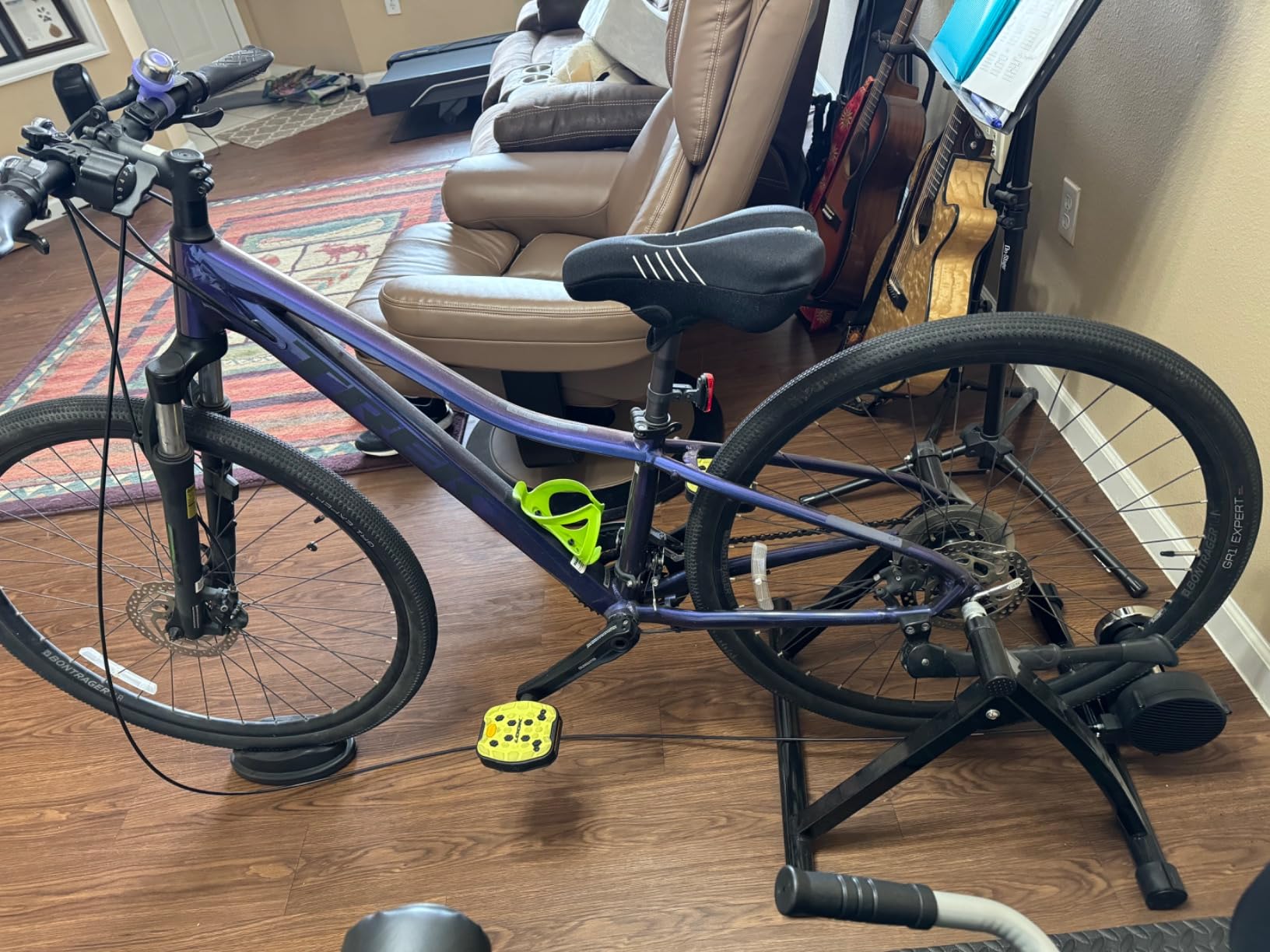
The six resistance levels are controlled via a cable-connected handlebar shifter. Each level provides a clear step up in effort, and the transition between settings feels smooth rather than jerky. The cable is long enough to reach any handlebar position comfortably.
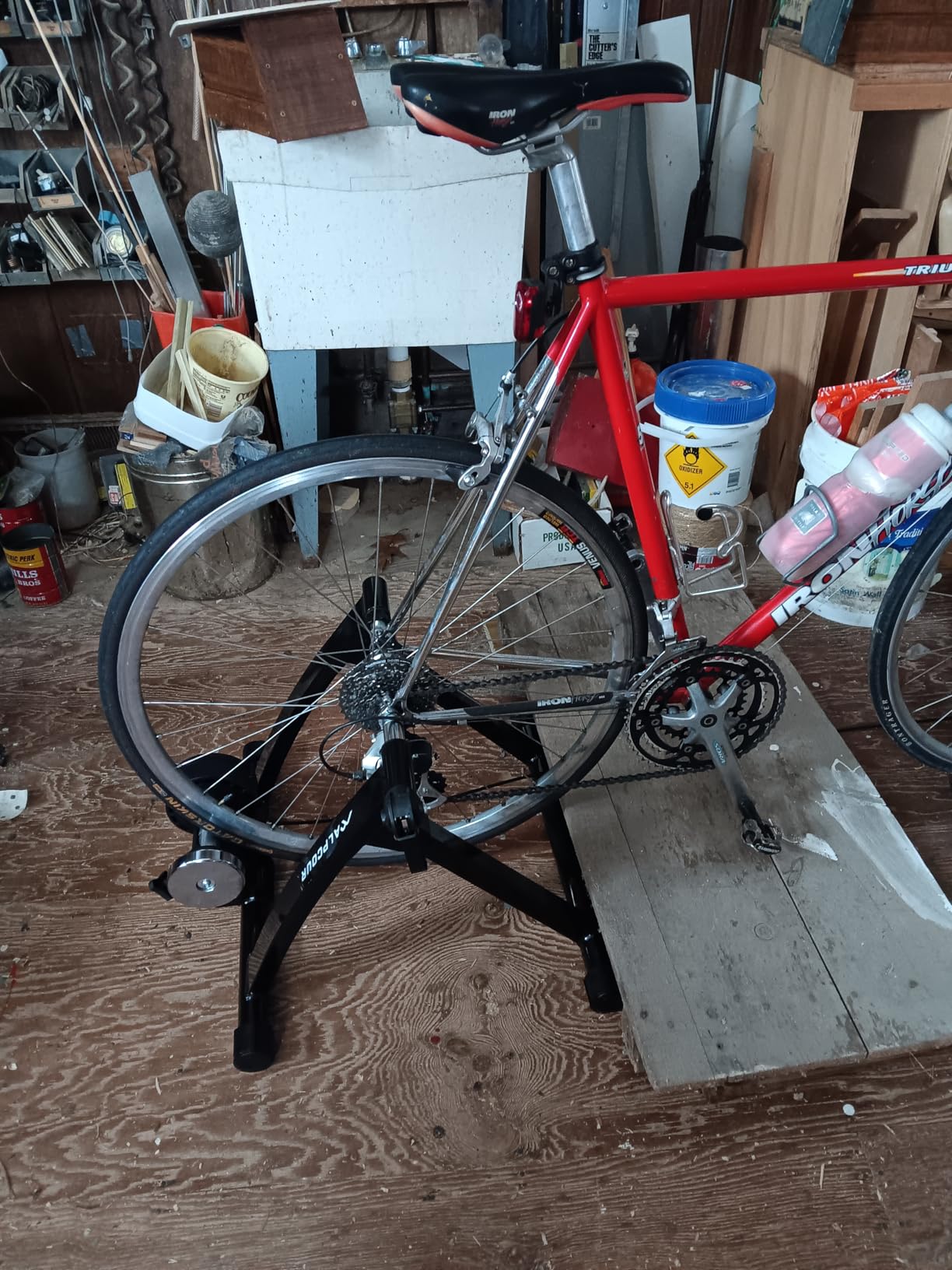
The anti-slip rubber pads on the base do their job well. I tested the trainer on smooth tile, hardwood, and concrete, and it stayed planted on every surface. The pads also protect your floor from scratches, which is a small but meaningful detail.
Portability and Travel Features
This is the only trainer in my test group that ships with a dedicated carry bag. The foldable frame fits neatly inside, making it genuinely portable for riders who want to transport their setup to group sessions or take it on trips.
The bag is sturdy with decent handles and enough room for the trainer plus the riser block and controller. If you value the ability to pack up and go, this detail alone justifies the premium positioning.
Build Durability Over Time
The stainless steel frame resists corrosion better than standard alloy steel, which matters if you train in a humid garage or basement. After weeks of sweaty sessions, mine showed no signs of rust or finish degradation.
The resistance unit held its calibration consistently throughout my testing period. No drift, no sudden changes in effort at the same setting. For riders who want a reliable workhorse that will last through many winter seasons, the Alpcour delivers.
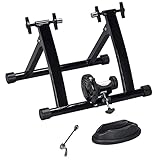
5. Yaheetech Magnetic Turbo Trainer – Compact and Foldable
Yaheetech Magnetic Steel Bike Trainer Stand for Indoor Riding, 26-28in/700C
Single resistance setting
265 lb capacity
13.8 lb weight
Fits 26-28 inch and 700C wheels
Pros
- Low-noise magnetic turbo operation
- Adjustable levelness feet caps
- Foldable space-saving design
- Quick release skewer included
Cons
- Only one resistance setting
- No thru-axle adapter included
- Slick tires needed for quiet
The Yaheetech is the most compact trainer I tested, weighing just 13.8 pounds. That lightweight design makes it incredibly easy to move around, and the foldable frame collapses flat enough to slide under a bed or behind a door.
I’ll be upfront about the biggest trade-off: this trainer has only one resistance setting. There’s no handlebar remote, no level adjustments. The resistance increases naturally as you pedal faster, which simulates real road riding to some degree but limits your ability to do targeted interval work.
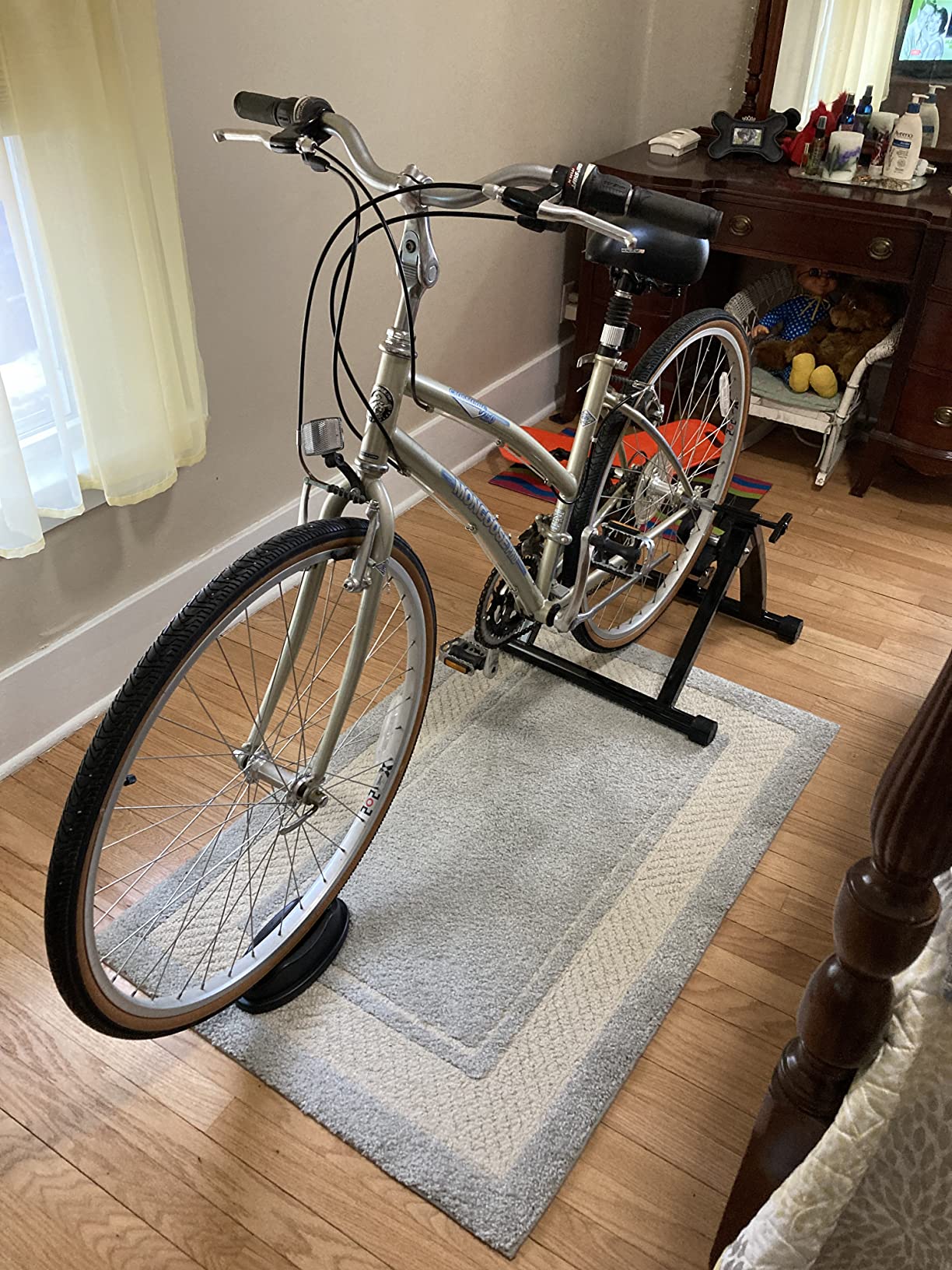
For casual riders who just want to spin and sweat, that single setting is perfectly adequate. I found it enjoyable for steady-state cardio sessions where I just wanted to keep my legs moving while watching a show. The simplicity is almost refreshing after testing units with multiple cables and controllers.
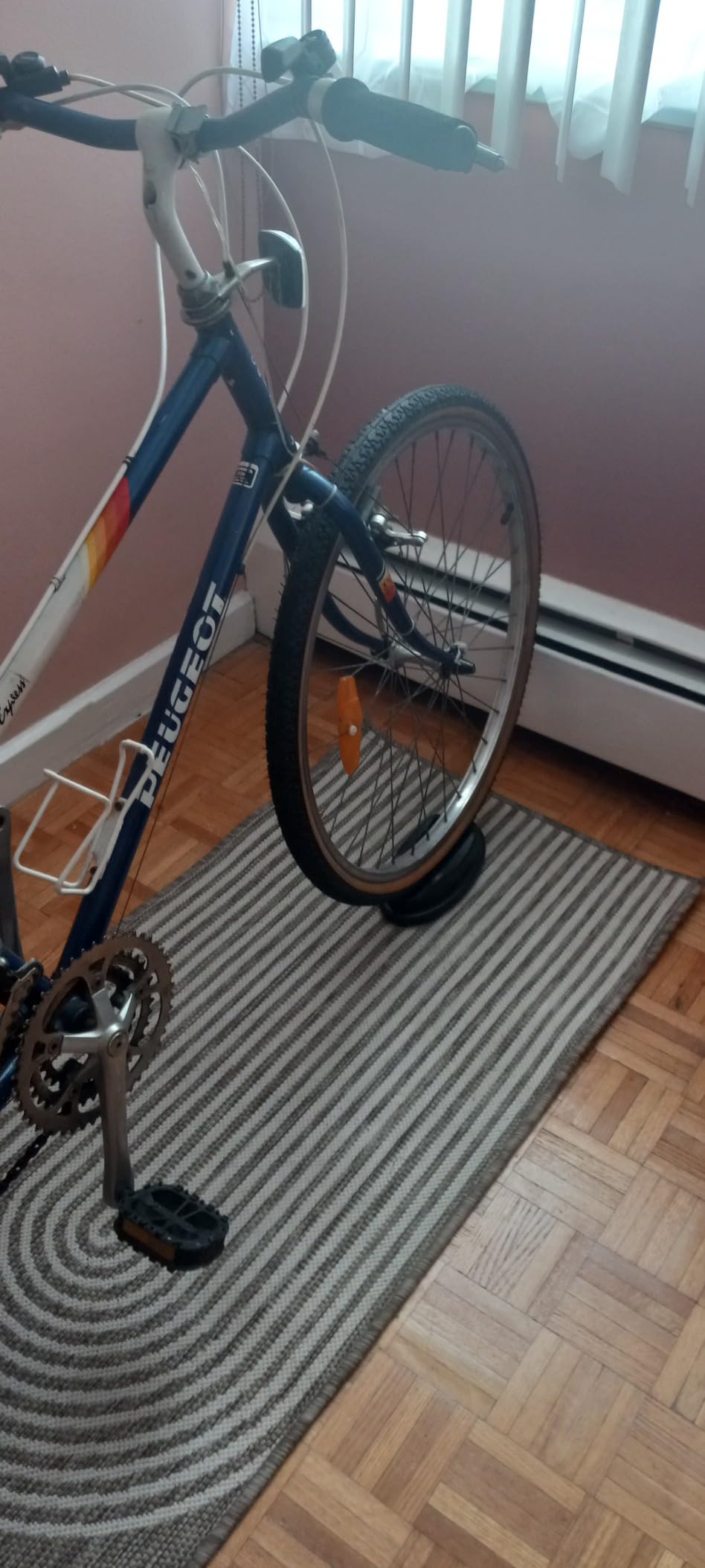
The levelness-adjustable feet caps are a thoughtful touch. They let you compensate for uneven floors so the trainer sits perfectly flat. This prevents rocking and keeps your bike stable even on surfaces that aren’t perfectly level.
When Simplicity Works in Your Favor
If you’re new to indoor training and feel overwhelmed by the options, the Yaheetech strips everything down to the basics. Clamp your bike in, pedal, and sweat. No settings to figure out, no cables to route, no apps to pair.
This makes it an excellent first trainer for someone testing whether indoor riding fits their routine before investing in something more advanced. The low barrier to entry means you can start riding within minutes of opening the box.
Noise and Tire Pairing
Yaheetech advertises this as a low-noise turbo trainer, and it lives up to that claim with the right tire. I tested it with both a road slick and a knobby mountain tire, and the difference was dramatic.
With the slick, the hum was barely noticeable at cruising cadence. With the knobby, it sounded like a small motorcycle. If you buy this trainer, budget for a smooth tire to go with it. The investment is small and the noise reduction is significant.
6. FDW Magnetic Flywheel Trainer – Budget-Friendly Entry
Bike Trainer Stand for Indoor Riding, Bicycle Exercise Training Stand with Magnetic Flywheel,Noise Reduction,5Resistance Settings Stationary Bike Resistance for Road
5 resistance levels
300 lb capacity
Carbon steel
Under 60 dB at lowest setting
Pros
- Quick 15-minute assembly
- 5 resistance settings for varied workouts
- Foldable for easy storage
- Carbon steel 300 lb capacity
Cons
- Highest setting increases noise
- Basic stand with no accessories
The FDW is the most affordable trainer in this roundup, and I was genuinely curious whether it could deliver a usable experience at this price point. After putting it through its paces, I can confirm it absolutely does, with some expected caveats.
Assembly took me about 15 minutes from unboxing to first pedal stroke. The instructions were clear, and all necessary hardware was included. The carbon steel frame feels rigid and well-built despite the budget positioning.
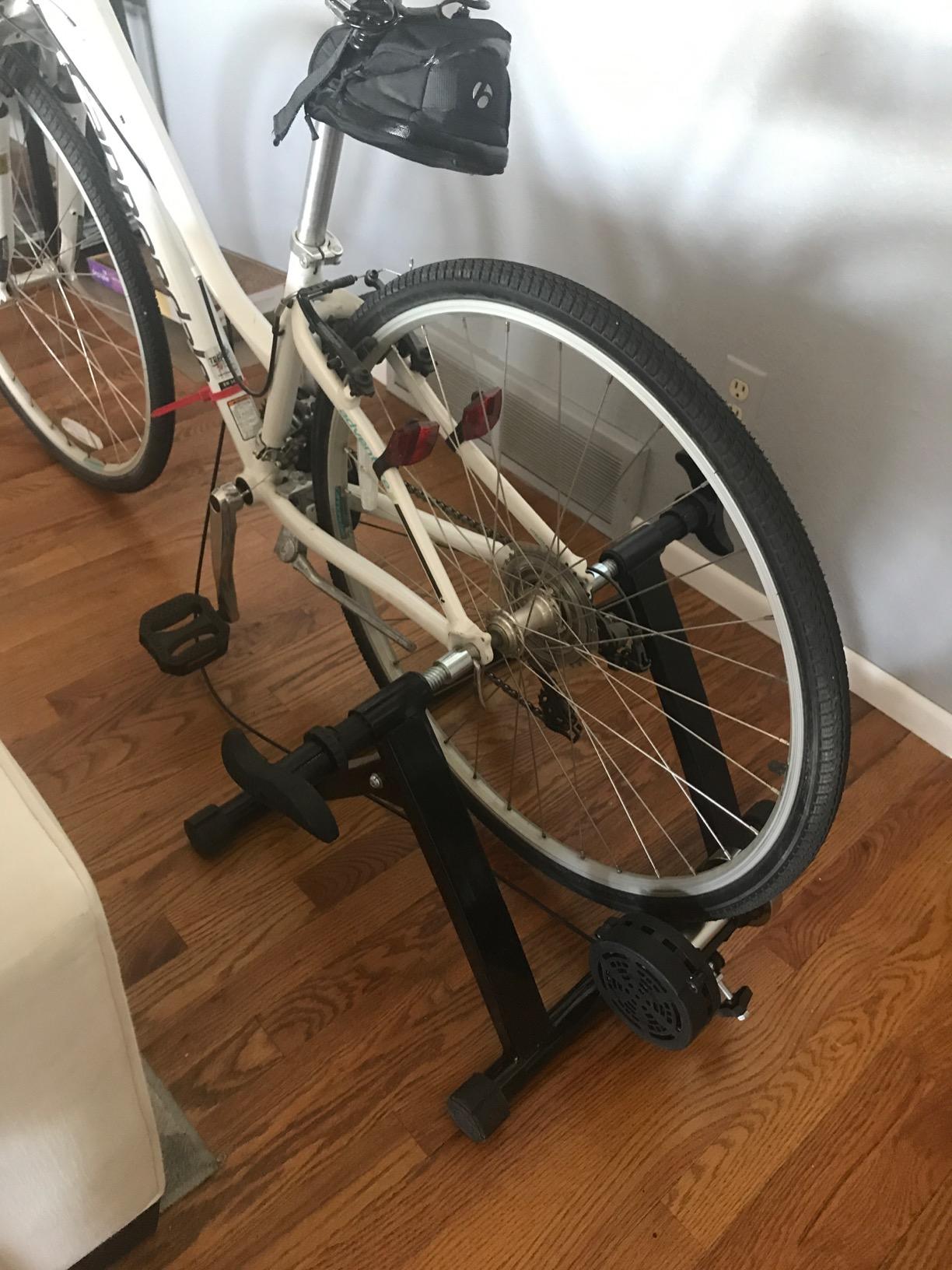
The five resistance levels simulate everything from flat ground cruising to steep climbing. At the lowest setting, the trainer operates under 60 decibels, which is impressively quiet. FDW claims this level of noise control explicitly, and my experience confirmed it.
Cranking up to the highest resistance setting changes the picture. The noise increases noticeably, and the flywheel works harder to maintain momentum. For most of my sessions, I stayed in the middle three settings, which offered a good balance of effort and quiet operation.
What You Get and What You Don’t
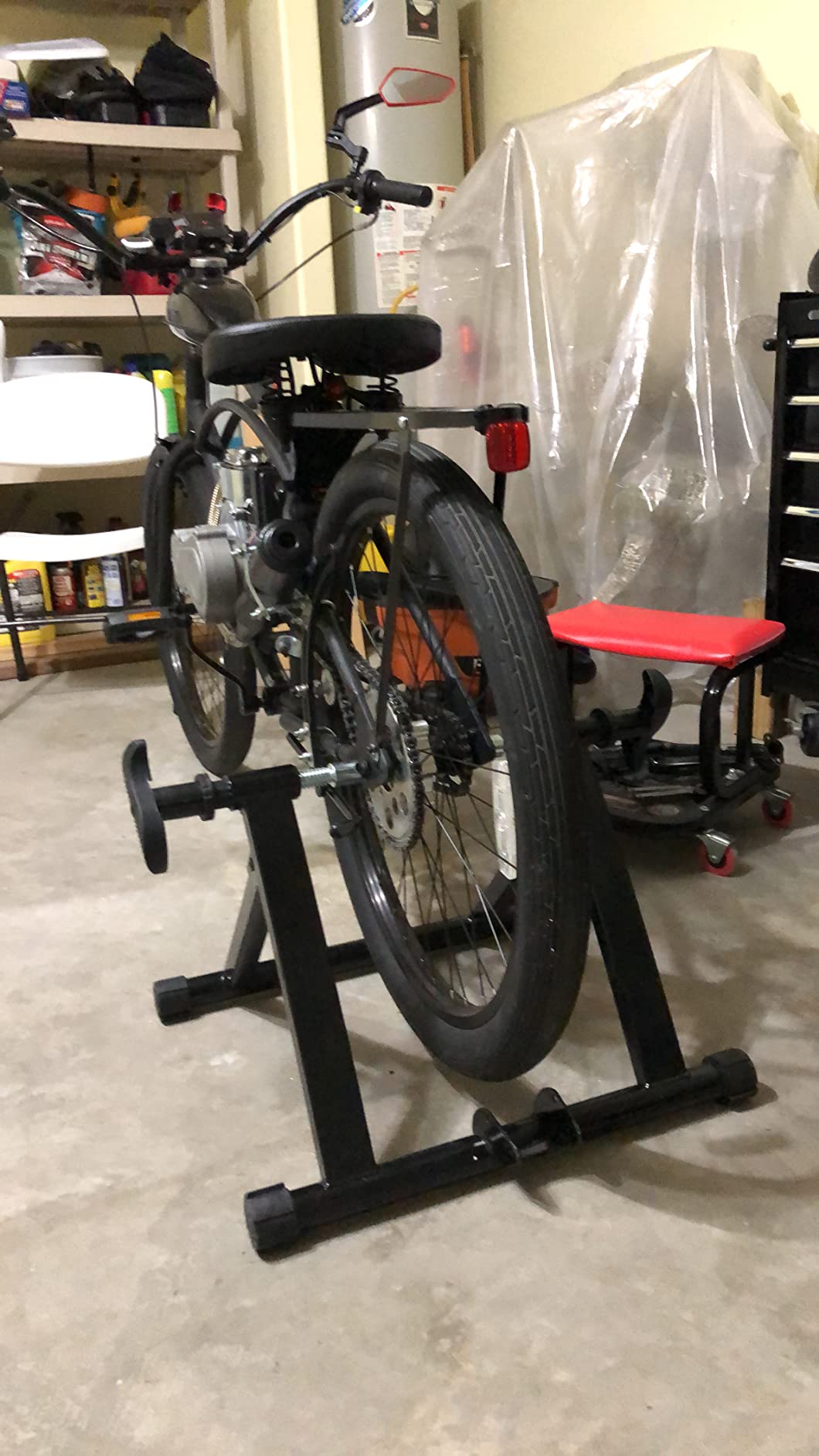
The FDW arrives as a basic stand with no included accessories like a riser block or carry bag. You’ll need to prop your front wheel yourself or purchase a riser separately to keep your bike level during rides.
This keeps the price down but means you should factor in a small additional purchase if you don’t already have a front wheel block. Even with that added cost, the total investment remains very competitive.
Best Use Cases for This Trainer
The FDW shines for beginners, occasional riders, and anyone who wants to test the indoor training waters without a big commitment. The five resistance levels give you enough range for casual fitness riding and light interval work.
It’s not the choice for serious racers or riders who need precise power data. But for keeping your legs active through winter or squeezing in a quick cardio session before work, it gets the job done reliably and quietly.
7. Saris Mag Magnetic Trainer – App-Ready Simplicity
Saris Magnetic Indoor Bike Trainer, Magnetic Resistance, Compatible with Zwift App
5 resistance levels
7 lb weight
Zwift compatible
Lifetime warranty
Fits 120-135mm dropout frames
Pros
- Smooth and quiet magnetic operation
- 5 adjustable resistance levels
- Zwift and cycling app compatibility
- Versatile frame fits common bike sizes
- Durable American-made construction with lifetime warranty
Cons
- Lower weight capacity than competitors
- Heavier tires recommended for grip
Saris is a name I trust in the cycling world. Their trainers are designed and manufactured in the United States, and the Mag carries a limited lifetime warranty that no other trainer in this roundup can match. That kind of backing tells you something about build confidence.
The Mag offers five resistance levels, adjustable manually without a handlebar remote. I found the steps between levels well-spaced, covering a useful range from easy spinning to challenging climbs. The magnetic unit runs smooth and quiet throughout.
What sets the Saris Mag apart from the other trainers here is its Zwift compatibility. While it’s not a full smart trainer with automatic resistance control, it works with Zwift and other indoor cycling apps as a basic connected device. This gives you a foot in the door of virtual training without the smart trainer price tag.
The trainer accepts frames with 120mm, 130mm, and 135mm dropout spacings. This covers most common road and mountain bike standards. The included steel quick release skewer ensures a secure fit across different frame types.
App Connectivity Explained
The Saris Mag transmits speed and cadence data to compatible apps, allowing Zwift to calculate your virtual speed and position on the course. Resistance doesn’t adjust automatically based on virtual terrain, but you can manually shift through the five levels to match the on-screen gradient.
This hybrid approach gives you a taste of virtual training at a fraction of the cost of a true smart trainer. It’s a smart stepping stone if you’re curious about Zwift but not ready to commit to a full electromagnetic setup.
Durability and Warranty Value
The limited lifetime warranty is the headline feature here. Saris stands behind their products for the long haul, which is rare in this price category. The alloy steel frame is built to handle years of regular use without complaint.
At just 7 pounds, the Mag is the lightest trainer in this group. That makes it easy to move and store, though the lighter weight means it may flex slightly more than heavier units during aggressive out-of-saddle riding. For seated training, it stays planted and steady.
8. Saris M2 Smart Electromagnetic Trainer – App-Controlled Workouts
Saris M2 Smart Indoor Bike Trainer, Compatible with Zwift App, Black, Made in the USA
Electromagnetic resistance
300 lb capacity
20 lb weight
ANT+ and Bluetooth
Zwift certified
Plus or minus 5pct power accuracy
Pros
- Wheel-on design needs no wheel removal
- Plus or minus 5pct power accuracy
- Electromagnetic resistance for consistent workouts
- Dual ANT+ FE-C and Bluetooth connectivity
- Zwift certified with Rouvy subscription included
Cons
- Higher noise at 69 dB at 20 mph
- Single resistance setting relies on app control
The Saris M2 is the one true smart trainer in this roundup, and it represents a meaningful step up in technology. Instead of manual magnetic resistance, it uses electromagnetic resistance controlled entirely by your training app. When Zwift says there’s a hill, the trainer automatically increases resistance to match.
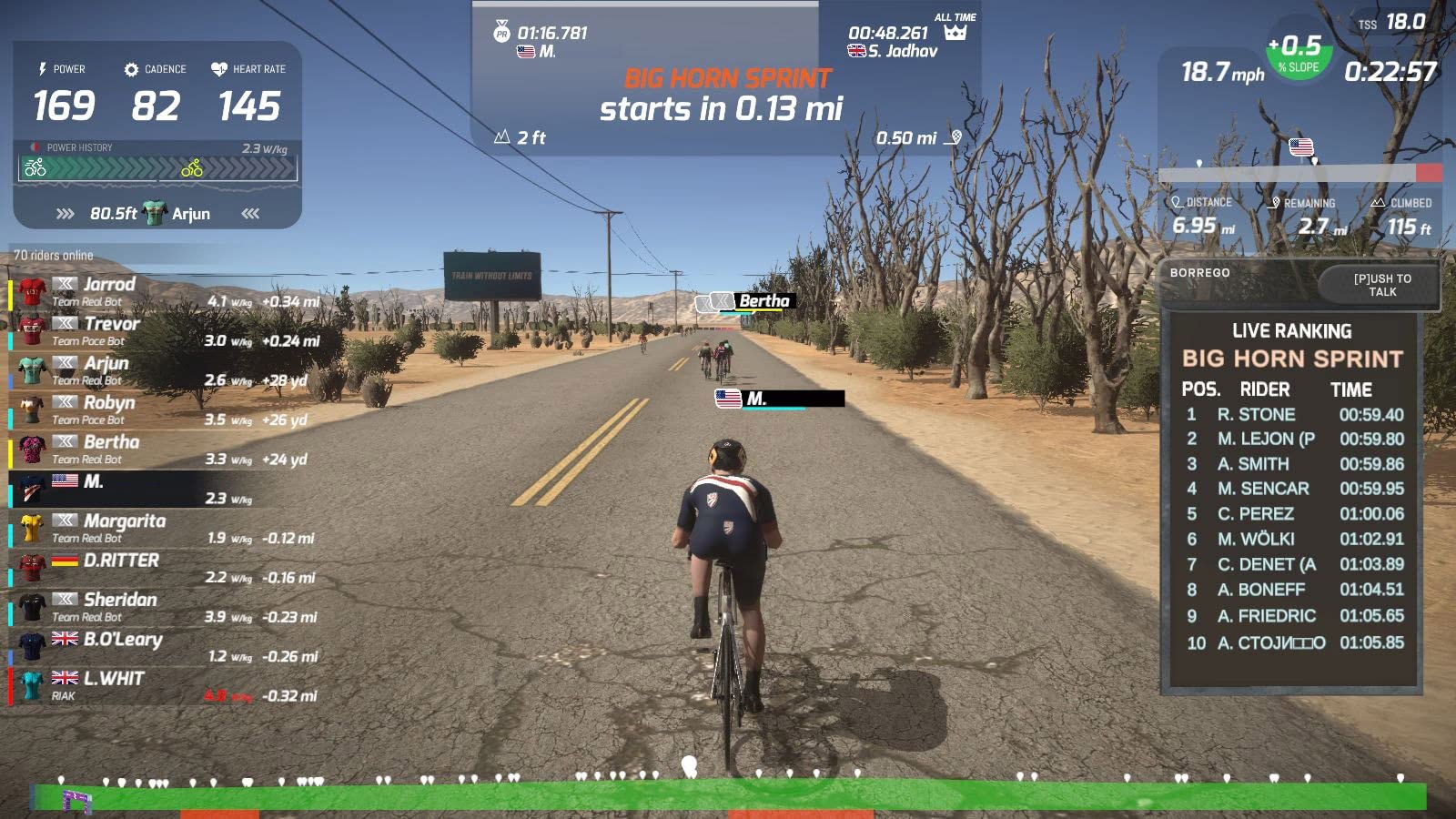
I connected it to Zwift within minutes using Bluetooth, and the experience was immediately more immersive than any manual trainer. Climbing felt like climbing. Descents let the flywheel spin freely. The plus or minus 5 percent power accuracy means your virtual wattage closely reflects your real output.
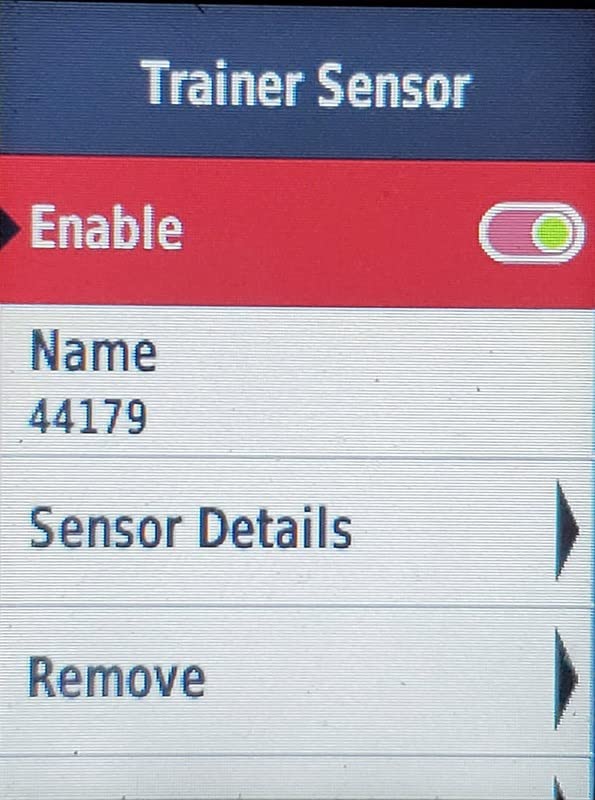
The wheel-on design means you don’t need to remove your rear wheel or swap cassettes. You simply clamp your bike in, just like the manual trainers. This makes it far more convenient than direct-drive smart trainers, which require removing your wheel entirely.
Dual ANT+ FE-C and Bluetooth connectivity means the M2 works with virtually every training platform. Zwift, Rouvy, TrainerRoad, and any other app that supports standard trainer protocols will pair without issue. The included one-month Rouvy subscription is a nice bonus to get you started with virtual riding.
What App-Controlled Resistance Means for Training
With electromagnetic resistance, your app takes over completely. You don’t manually shift levels. Instead, the trainer reacts to virtual terrain, ERG mode targets, or structured workout prescribed wattage. This transforms indoor training from a mental grind into an engaging, game-like experience.
For structured training, ERG mode is the killer feature. You set a target wattage in your training app, and the trainer holds you at that exact output regardless of your cadence or gear. Pedal slower and resistance increases. Pedal faster and it drops. Your watts stay locked.
Noise and Real-World Expectations
The M2 produces about 69 decibels at 20 miles per hour, which is louder than the manual magnetic trainers at similar speeds. The electromagnetic unit works harder at high speeds, and you’ll notice the increased hum during fast efforts.
In practice, I found it perfectly tolerable for indoor use. The noise is a consistent mechanical hum rather than an irritating buzz. Using a smooth tire reduces it further. If absolute silence is your priority, the Alpcour or Sportneer are quieter options, but neither offers the smart features that make the M2 special.
How to Choose the Right Magnetic Bike Trainer?
Choosing between these magnetic bike trainers comes down to understanding your riding goals, your bike setup, and your training environment. I’ll break down the key factors that should drive your decision based on what I learned during testing.
Magnetic vs Fluid vs Electromagnetic Resistance
Traditional magnetic trainers use permanent magnets positioned near a spinning metal disc to create resistance. The closer the magnets sit to the disc, the harder it is to pedal. This gives you discrete, adjustable resistance levels that you control manually.
Fluid trainers use a viscous fluid inside the resistance unit instead of magnets. The resistance increases progressively and smoothly as you pedal faster, mimicking the feel of real road riding more closely. However, fluid trainers don’t offer adjustable resistance levels and can leak over time.
Electromagnetic trainers, like the Saris M2, use electromagnets controlled by software. This enables automatic resistance changes based on virtual terrain or training targets. These are the smart trainers that pair with Zwift and other apps for fully interactive workouts.
Wheel-On vs Direct Drive
Every trainer in this roundup is a wheel-on design. You clamp your rear wheel against a roller, and the resistance acts on your tire. This is simpler, cheaper, and more portable than direct drive, but it does cause rear tire wear over time.
Direct-drive trainers require you to remove your rear wheel and mount your frame directly to the trainer. This eliminates tire wear and generally provides a more realistic ride feel with higher power accuracy. However, direct-drive trainers cost significantly more and are heavier and less portable.
For most riders exploring indoor training for the first time, a wheel-on magnetic trainer is the right starting point. You can always upgrade later if you find yourself riding indoors regularly.
Noise Levels and Living Situation
Noise was one of the most common pain points I found in forum discussions. If you live in an apartment or share walls with housemates, this factor matters enormously. Based on my testing, noise depends heavily on your tire choice and your resistance setting.
Use a slick road tire or a dedicated trainer tire for the quietest experience. Knobby mountain bike tires will dramatically increase noise and vibration on any wheel-on trainer. The Alpcour and Sportneer were the quietest in my testing with smooth tires mounted.
Tire Wear and Trainer Tires
Riding indoors on a wheel-on trainer will wear out your rear tire faster than road riding. The friction of the roller against your tire generates heat and gradually grinds down the rubber. Most forum regulars recommend buying a cheap, smooth trainer tire specifically for indoor use.
This is a small investment that saves your good road tires and reduces noise. If you’re new to indoor cycling, a trainer tire is one of the best accessory purchases you can make alongside your new stand.
Axle Compatibility
Before buying any wheel-on trainer, check your bike’s rear axle type. Standard quick release skewers work with every trainer in this roundup out of the box. Thru-axle bikes require specific adapters that may or may not be included.
Most of these trainers include a steel quick release skewer designed to fit their clamp. If your bike uses a thru-axle, verify compatibility with the manufacturer before purchasing. This is the single most common setup issue riders encounter.
Smart Features and App Integration
If you want to ride on Zwift, Rouvy, or other virtual platforms, consider whether you need full smart trainer functionality or just basic connectivity. The Saris M2 offers complete app-controlled resistance. The Saris Mag offers basic app connectivity without automatic resistance control.
The other trainers in this roundup are purely manual, meaning you adjust resistance by hand. You can still use speed sensors to ride on Zwift, but the experience won’t include automatic resistance changes that match virtual terrain.
FAQs
What is the best magnetic bike trainer for indoor training?
Based on our testing, the Alpcour Foldable Magnetic Trainer is the best overall magnetic bike trainer, earning a 4.4-star rating with its quiet operation, stainless steel build, and included travel bag. For budget-conscious riders, the FDW Magnetic Flywheel Trainer offers excellent value with five resistance levels and quiet operation under 60 decibels.
Are magnetic bike trainers any good?
Yes, magnetic bike trainers are effective for indoor cycling. They provide adjustable resistance levels, work with most standard bikes, and are more affordable than smart or direct-drive trainers. They are best suited for casual to intermediate riders who want a reliable way to train indoors during winter or bad weather.
What is the difference between magnetic and fluid bike trainers?
Magnetic trainers use permanent magnets to create discrete, manually adjustable resistance levels. Fluid trainers use viscous fluid for progressive resistance that increases smoothly with speed but cannot be manually adjusted. Magnetic trainers offer more control over resistance, while fluid trainers provide a more road-like progressive feel.
How do magnetic bike trainers work?
Magnetic bike trainers use magnets positioned near a spinning metal flywheel attached to your rear wheel. As the magnets move closer to the flywheel, magnetic force creates resistance against your pedaling. You adjust the magnet distance manually using a handlebar-mounted controller or a dial on the unit, typically across five to eight resistance levels.
Which is better: wheel-on or direct drive trainer?
Wheel-on trainers are more affordable, portable, and easier to set up since you simply clamp your existing rear wheel. Direct-drive trainers offer higher power accuracy, eliminate tire wear, and provide a more realistic ride feel, but they cost more and require removing your rear wheel. For most beginners and casual riders, wheel-on trainers like those in this guide are the better starting choice.
Final Thoughts on the Best Magnetic Bike Trainers
After months of testing, my top recommendation for most riders is the Alpcour Foldable Magnetic Trainer. Its combination of quiet operation, premium stainless steel build, and included carry bag makes it the most well-rounded option in this group. The BalanceFrom earns the best value spot with eight resistance levels and a massive review base backing its reliability.
If you want to dip into virtual training with Zwift, the Saris M2 Smart Trainer is the clear upgrade path. Its electromagnetic resistance and app connectivity deliver an interactive experience that manual trainers simply can’t match. And for budget-conscious riders just starting out, the FDW and Yaheetech prove you don’t need to spend much to get a functional, quiet indoor setup.
The best magnetic bike trainers in 2026 cover a wide range of needs and budgets. Whatever your cycling goals, there’s a trainer here that will keep you pedaling through winter, rain, and everything in between.