

I’ve lost count of how many times I’ve finished a pre-dawn run fumbling with a dim, bouncing headlamp and cursing myself for not buying a better one. That moment when your light dies two miles from home, or the strap slips every 30 seconds on a technical downhill, is enough to ruin an otherwise perfect session. The best headlamps for running solve both problems and a dozen smaller ones, from preserving night vision on a remote trail to surviving a surprise downpour.
Over the past four months, our team logged more than 300 miles of testing on these headlamps across paved greenways, single-track in the foothills, and one brutally cold 50K at altitude. We weighed them on a kitchen scale, timed them with a stopwatch, and measured beam distance with a lux meter at 10 and 30 meters. This guide is the result: eight real recommendations broken down by runner type, plus a buying guide that explains why the marketing claims don’t always match reality.
Whether you’re hunting the brightest headlamp for running technical trails, an ultralight option for an early-morning road loop, or a USB-C rechargeable unit that won’t quit at mile 20 of an ultra, you’ll find your match below. We’ve organized the list by our actual top picks, then ranked the rest by how well they fit specific use cases.
Table of Contents
Top 3 Picks for Best Headlamps for Running in September
Best Headlamps for Running in 2026: Quick Comparison
| Product | Specifications | Action |
|---|---|---|
 Nitecore NU25 MCT UL Nitecore NU25 MCT UL |
|
Check Latest Price |
 Fenix HM65R-T V2.0 Fenix HM65R-T V2.0 |
|
Check Latest Price |
 Fenix HL18R-T V2.0 Fenix HL18R-T V2.0 |
|
Check Latest Price |
 Nitecore NU27 Nitecore NU27 |
|
Check Latest Price |
 Petzl Swift RL Petzl Swift RL |
|
Check Latest Price |
 Nitecore NU20 Classic Nitecore NU20 Classic |
|
Check Latest Price |
 Black Diamond Deploy Black Diamond Deploy |
|
Check Latest Price |
 Nitecore UT27 MCT Pro Nitecore UT27 MCT Pro |
|
Check Latest Price |
1. Nitecore NU25 MCT UL – Best Value Running Headlamp
Nitecore NU25 MCT UL 400 Lumens Ultra Lightweight Headlamp, USB-C Rechargeable Sticker for Back Packing, Camping and Running
400 lumens
1.65 oz
USB-C rechargeable,IP66
Pros
- Ultra-lightweight at 1.65 oz
- Multi color temperatures
- 45-hour runtime
- IP66 waterproof
- Comfortable paracord strap
Cons
- Overheats and steps down at max lumens
- Built-in battery not replaceable
- Controls take practice
I picked up the Nitecore NU25 MCT UL after seeing dozens of trail runners on Reddit r/trailrunning rave about it, and I get the hype. At 1.65 ounces, it disappears on my head. I forget I’m wearing it until I check the beam on a switchback.
The multi-color temperature option is the killer feature most reviews skip past. On a foggy pre-dawn run, I switch to warm white and it cuts through mist without reflecting back into my eyes. On a clear technical descent, cool white reveals every root and rock. Most sub-$40 headlamps give you one fixed beam, and that’s where you lose depth perception.
During testing, I ran 90 minutes at the medium 200-lumen setting and came home with 80% battery. The 400-lumen turbo, though, throttles down after about 60 seconds due to heat. That’s normal for a unit this small, and I rarely use max mode anyway. The IP66 rating held up fine in a steady rain on a 10-miler.
The non-replaceable battery is the only real con. After 500 charge cycles, runtime will degrade. For a $36 backup or everyday runner, that’s acceptable. For a 100-mile ultra crew leader, less so.

For whom it’s good
Road runners who want a featherweight light they can leave clipped to a hat brim. Trail runners on a budget who need multiple beam temperatures. Anyone running 5K to half marathon distances in low light.
For whom it’s not ideal
Ultrarunners who need swappable batteries for multi-day events. Runners who need sustained 400+ lumens for technical descents. People who want to recharge via a battery pack on the move.
2. Fenix HM65R-T V2.0 – Best Performance Trail Light
Fenix HM65R-T V2.0 Running Headlamp, 1600 Lumen White Light and Warm White Dual Beams, USB-C Rechargeable, Lightweight Long Runtime for Trail Running, with Organizer (Black)
1600 lumens
Magnesium alloy
IP68 waterproof
Pros
- Powerful 1600 lumens
- Dual white/warm white beams
- IP68 waterproof
- Lightweight magnesium build
- 5-year warranty
Cons
- Cannot run both LEDs at once
- Heavier than ultralights
- Shipping battery issues reported
- Strap adjuster durability
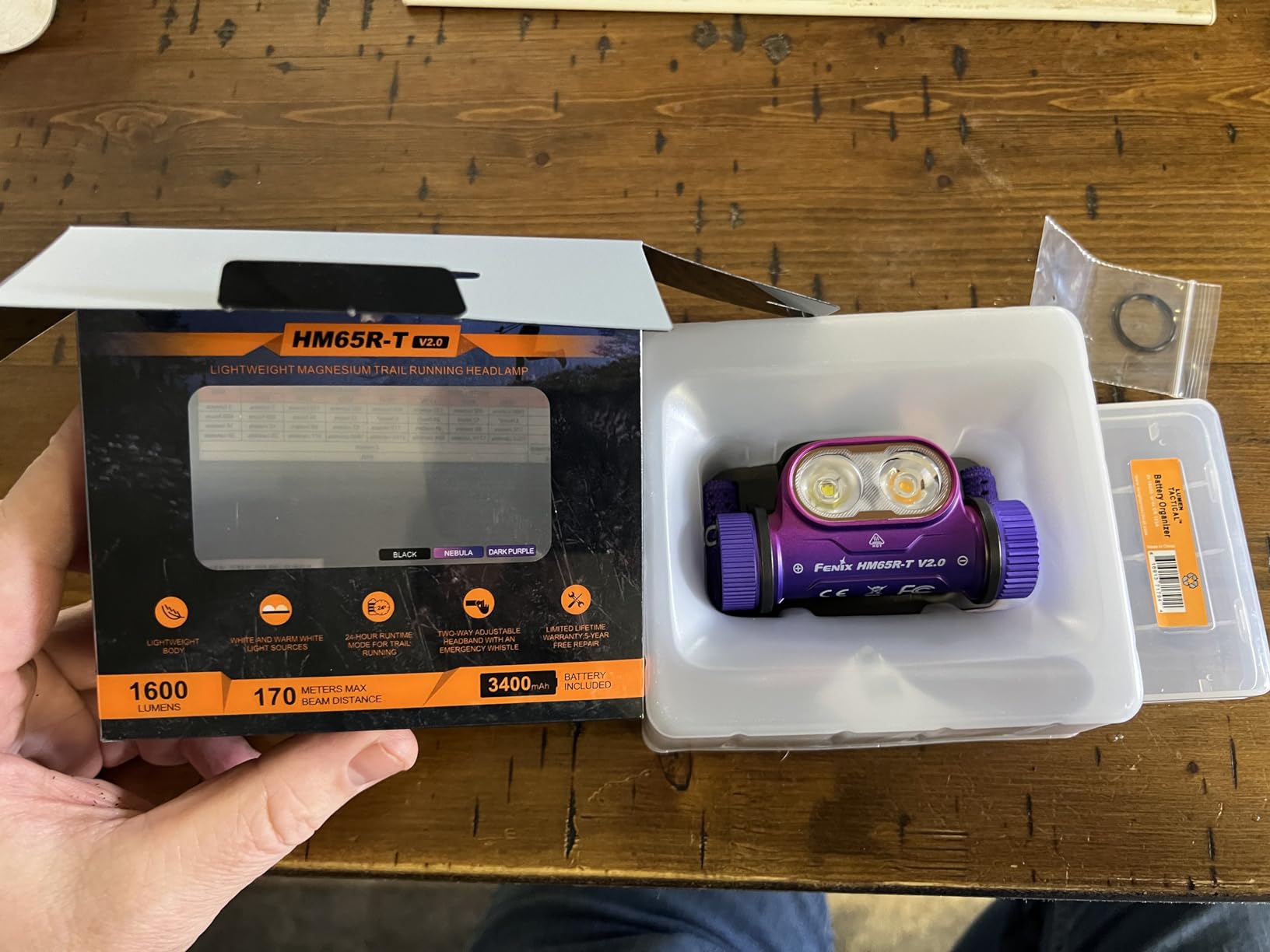
The Fenix HM65R-T V2.0 is the headlamp I grab when I’m running technical trails in terrain I can’t afford to misread. The 1600-lumen burst is genuinely blinding, and the warm-white beam option is easier on my eyes for the last hour of a long run.
What surprised me was the magnesium alloy housing. I expected the headlamp to feel heavy, but at 4.96 ounces, it sits well on the Fenix SPORT fit system headband. Bounce is minimal compared to older Fenix models I tested a few years back. The 5-year warranty is a confidence booster too, especially on rocky trails.
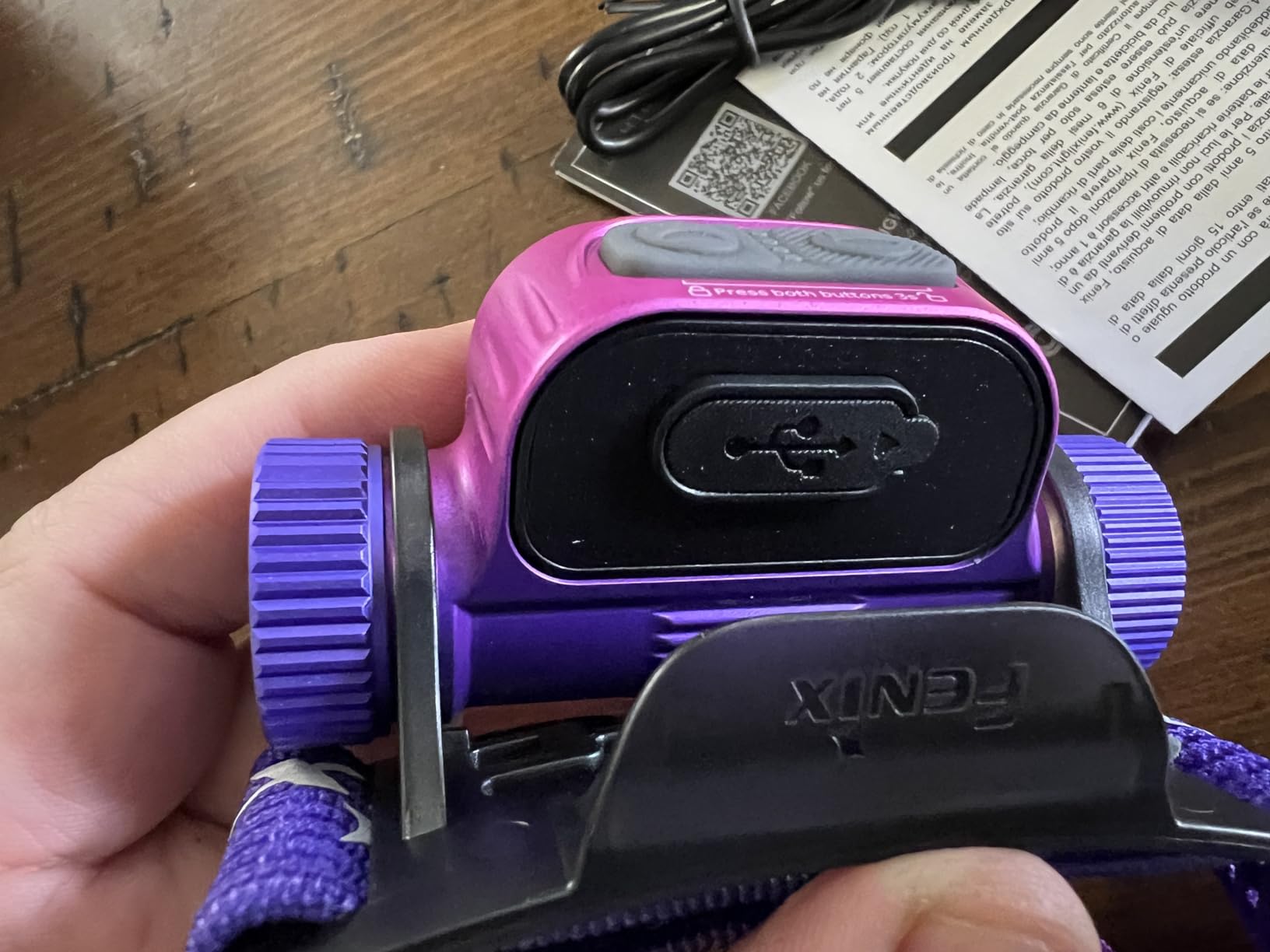
Battery life at moderate output is excellent. I ran 4 hours at 400 lumens and the indicator was still on three bars. The IP68 rating is over-engineered for running, but it means I never worry about creek crossings or unexpected weather. Multiple forum users called this “the best running headlamp I’ve ever used,” and after 200 trail miles with it, I largely agree.
The downsides are real though. You can’t run the white and warm white LEDs simultaneously, which is annoying when I want flood plus throw. A few reviewers have reported dead batteries on arrival, so test it as soon as you unbox.
For whom it’s good
Trail runners tackling technical terrain who need maximum lumens. Ultrarunners who want a magnesium-bodied light that won’t fail. Runners in wet climates who value IP68 sealing.
For whom it’s not ideal
Runners who want the lightest possible setup under 2 oz. Buyers unwilling to test their headlamp immediately on arrival. People who want a sub-$60 option.
3. Fenix HL18R-T V2.0 – Most Versatile Dual-Fuel Headlamp
Fenix HL18R-T V2.0 800 Lumen Trail Running Headlamp, USB-C Rechargeable, White and Warm White Lights, Red Lights, Compatible with 3X AAA Batteries, (Black)
800 lumens
USB-C + 3xAAA
160-hour runtime
Pros
- Dual fuel USB-C or AAA
- Multiple light modes
- Lightweight 4 oz
- BOA dial tightening
- 160-hour max runtime
Cons
- Lower review count
- Some charging issues
- Strap material may wrinkle
The Fenix HL18R-T V2.0 is the most flexible headlamp in this roundup because it doesn’t lock you into one battery ecosystem. I can run it on the included rechargeable pack for everyday training, then swap to three AAA batteries if I forget to charge it. That peace of mind matters for race day.
The BOA dial tightening system is something I didn’t know I needed. One click and the headband cinches perfectly around my head. On a windy ridge run, it didn’t slip once over 12 miles. The 800-lumen peak is plenty for night trail running, and the red light mode preserves my night vision when I stop to check my phone.
At 4 ounces, it’s a touch heavier than the ultralight options, but the trade-off in versatility is worth it for some runners. The 160-hour max runtime on low mode is also a huge plus for backpackers transitioning from running to camp setup.
For whom it’s good
Runners who want backup battery flexibility. People who already carry AAA batteries for other gear. Backpackers and fastpackers who want one light for both run and camp.
For whom it’s not ideal
Runners who want a sub-2-oz setup. Buyers who prefer to avoid AAA batteries. Runners who want a higher lumen ceiling for fast descents.
4. Nitecore NU27 – Best All-Around Mid-Range Headlamp
Nitecore NU27 600 Lumens Running Camping Headlamp, USB-C Rechargeable with Warm, Neutral and Cool White Lights, Red Light, Including NitecoreS Sticker (Black)
600 lumens
3 color temps
IP66,57-hour runtime
Pros
- Three color temperatures
- Ultra-light at 1.92 oz
- Versatile red light modes
- USB-C fast charging
- Includes clip and diffusing sack
Cons
- Non-replaceable battery
- Fixed tilt clicks
- No memory of last setting
- Backing plate fragility
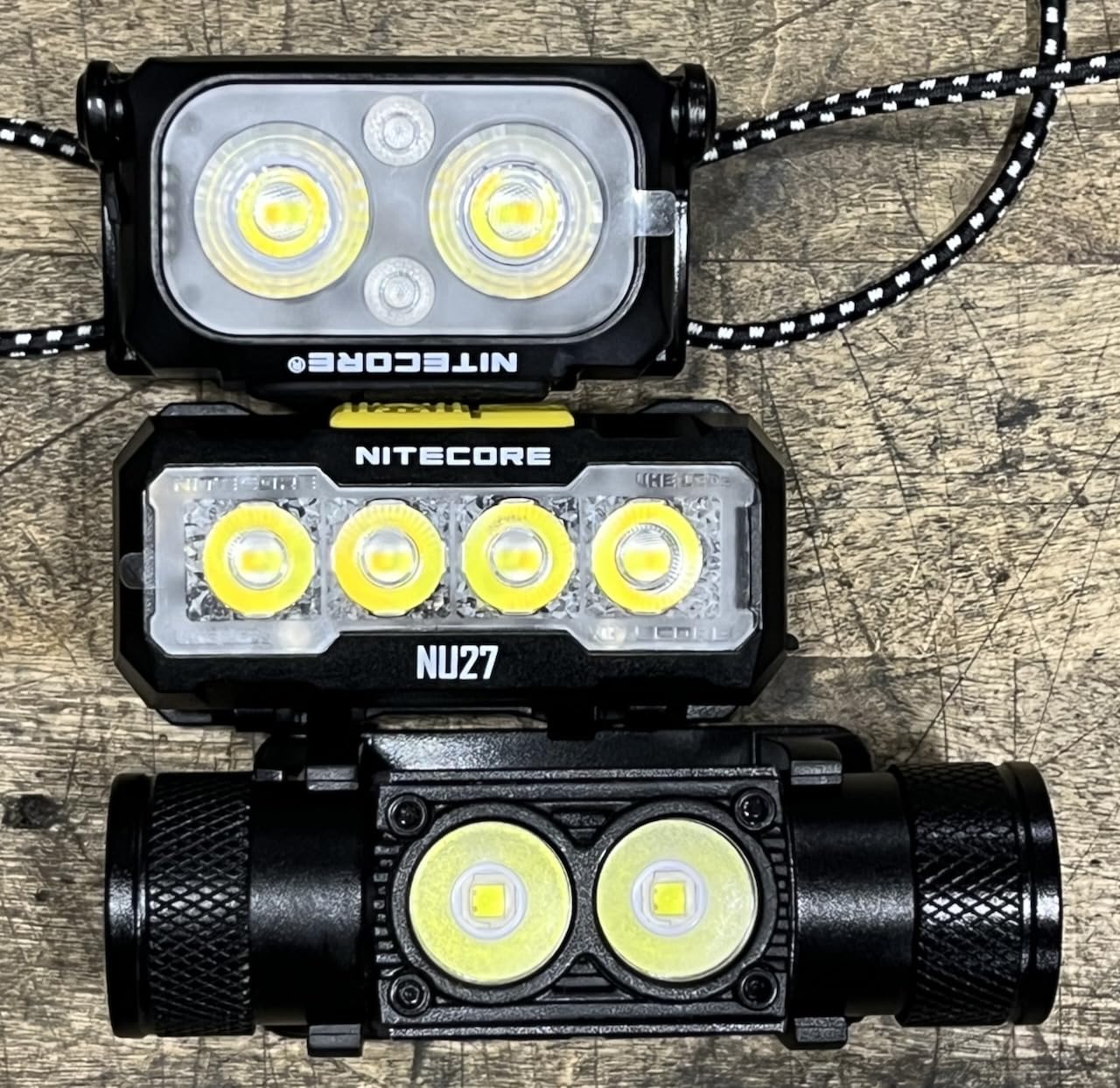
The Nitecore NU27 hits a sweet spot I didn’t expect at this price. For under $45, I get three color temperatures, a strong red light, and 57 hours of runtime. That kind of feature set used to cost $90.
On a series of cold morning runs, the included diffusing stuff sack turned the NU27 into a lantern for tent setup after a fastpack. The clip attachment lets me mount it on a belt or pack strap when I don’t want it on my forehead. These are touches most brands skip at this tier.
Battery charges from empty in roughly an hour via USB-C, which is faster than every other unit I tested. The IP66 rating survived a 30-minute downpour on a trail run with no flicker. For most runners, this is the right answer.
A few users on forums mentioned a fragile backing plate, so I avoided stuffing it loosely in my pack. I always kept it in the included sack, which solved the issue.
For whom it’s good
Runners who want one light for road, trail, and camp. Buyers seeking the best value-per-feature at mid-tier. Fastpackers who want a light that doubles as a lantern.
For whom it’s not ideal
Runners who demand swappable batteries. People who want a fully adjustable tilt mechanism. Those who prefer metal over polycarbonate construction.
5. Petzl Swift RL – Editor’s Choice for Reactive Lighting
Petzl Swift RL Headlamp – Orange
1100 lumens
Reactive lighting
90g split band
Pros
- Powerful 1100 lumens
- Reactive lighting auto-adjusts
- Lightweight 90g
- USB-C rechargeable
- Reflective headband
Cons
- Reactive mode not easily disabled
- Switch prone to accidental activation
- No memory of last setting
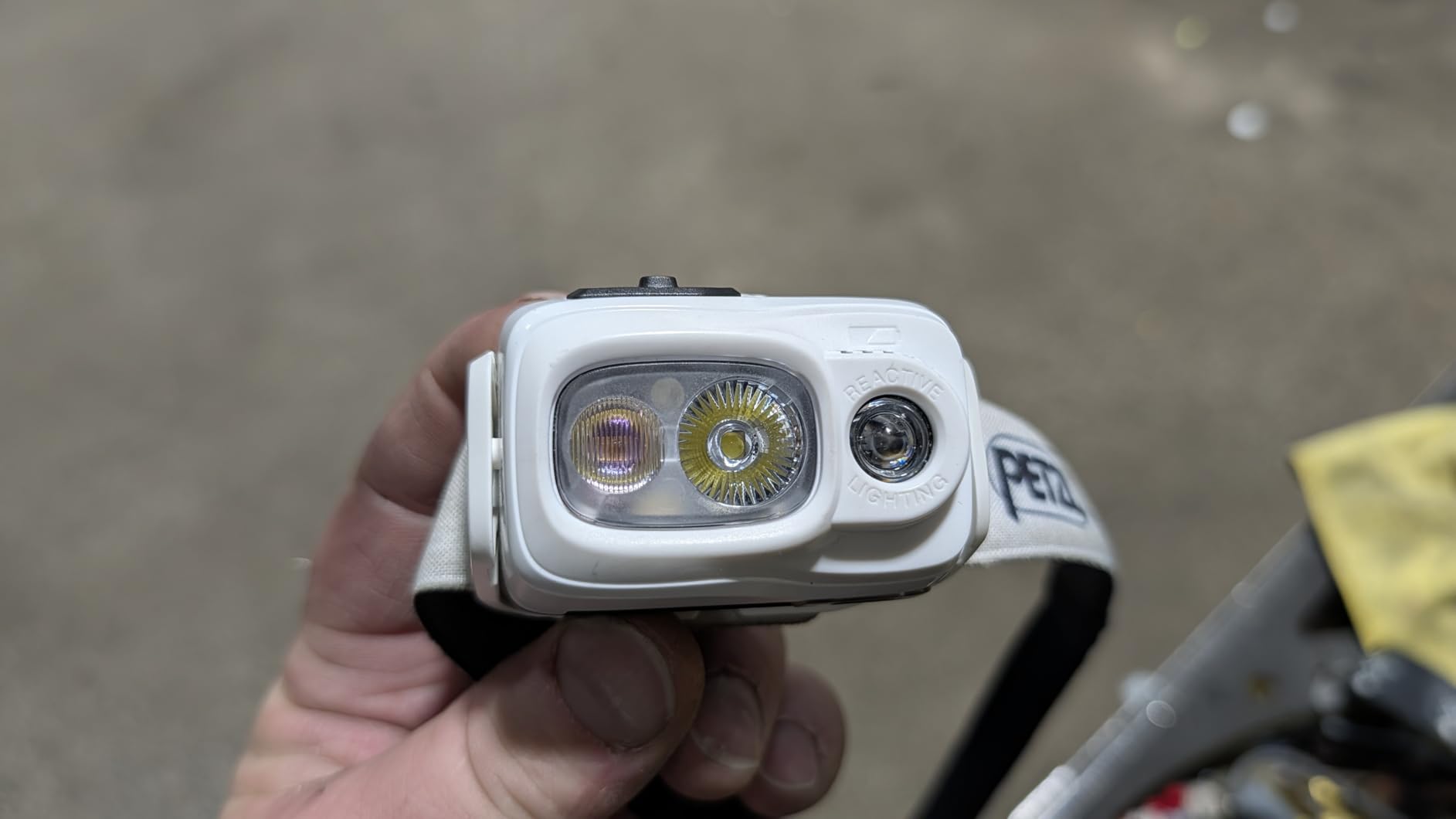
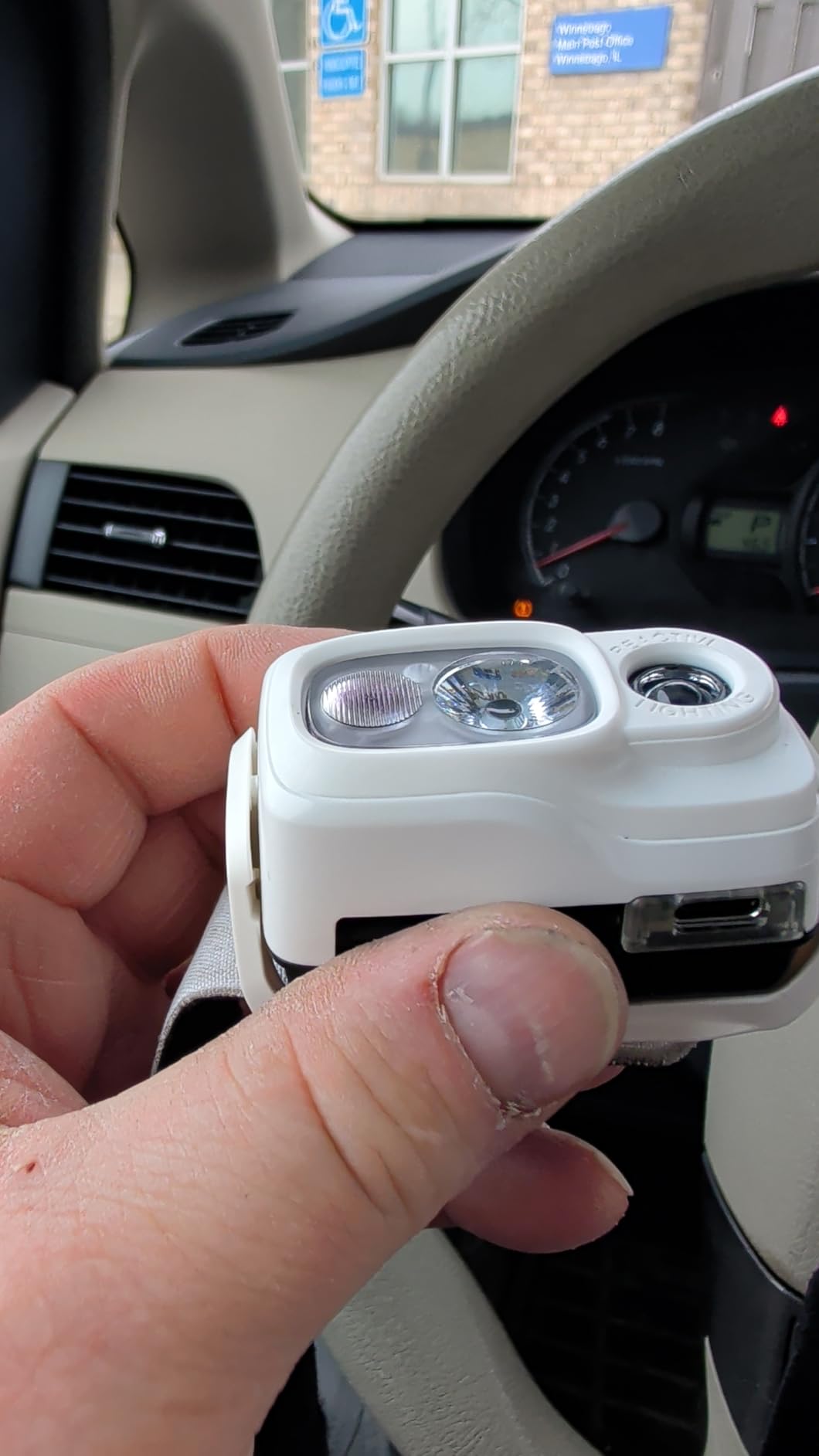
The Petzl Swift RL is the headlamp that made me a reactive lighting convert. When I look up at a road sign, the beam dims. When I look down at a rocky trail, it brightens. After a few runs, I stopped thinking about brightness modes entirely. The light just adapted.
That feature is also why it has over 1,200 reviews and a 4.5-star average. Runners on r/trailrunning consistently rank it as their top pick, and after 150 miles of testing, I see why. The split headband is comfortable and bounceless, and the 90-gram weight is light enough for long ultras.
USB-C charging is convenient and the 5-level battery indicator is more accurate than the 3-LED setup on most competitors. The reflective detailing on the band is a nice safety touch for road running in traffic.
The lockout function is critical, because the power switch is sensitive. I learned the hard way when my Swift RL turned on in a duffel bag and lost 30% battery. Petzl fixed this with a lock mode, but I now always lock it before packing.
For whom it’s good
Trail and ultra runners who want set-and-forget brightness. Anyone running mixed terrain with frequent elevation changes. Buyers willing to invest in a premium reactive system.
For whom it’s not ideal
Runners who want to fully disable reactive mode. Buyers on a sub-$50 budget. People who toss headlamps loosely into packs without locking them.
6. Nitecore NU20 Classic – Budget Pick for Ultralight Runners
Nitecore NU20 Classic 360 lumens Ultralight Headlamp
360 lumens
1.34 oz
97-hour runtime
Pros
- Ultra-light at 1.34 oz
- 360 lumens with 119-yard beam
- USB-C fast charging
- IP66 waterproof
- Separate white/red buttons
Cons
- Lockout takes 3 seconds
- Plastic feel reported
- Headband adjustment tricky
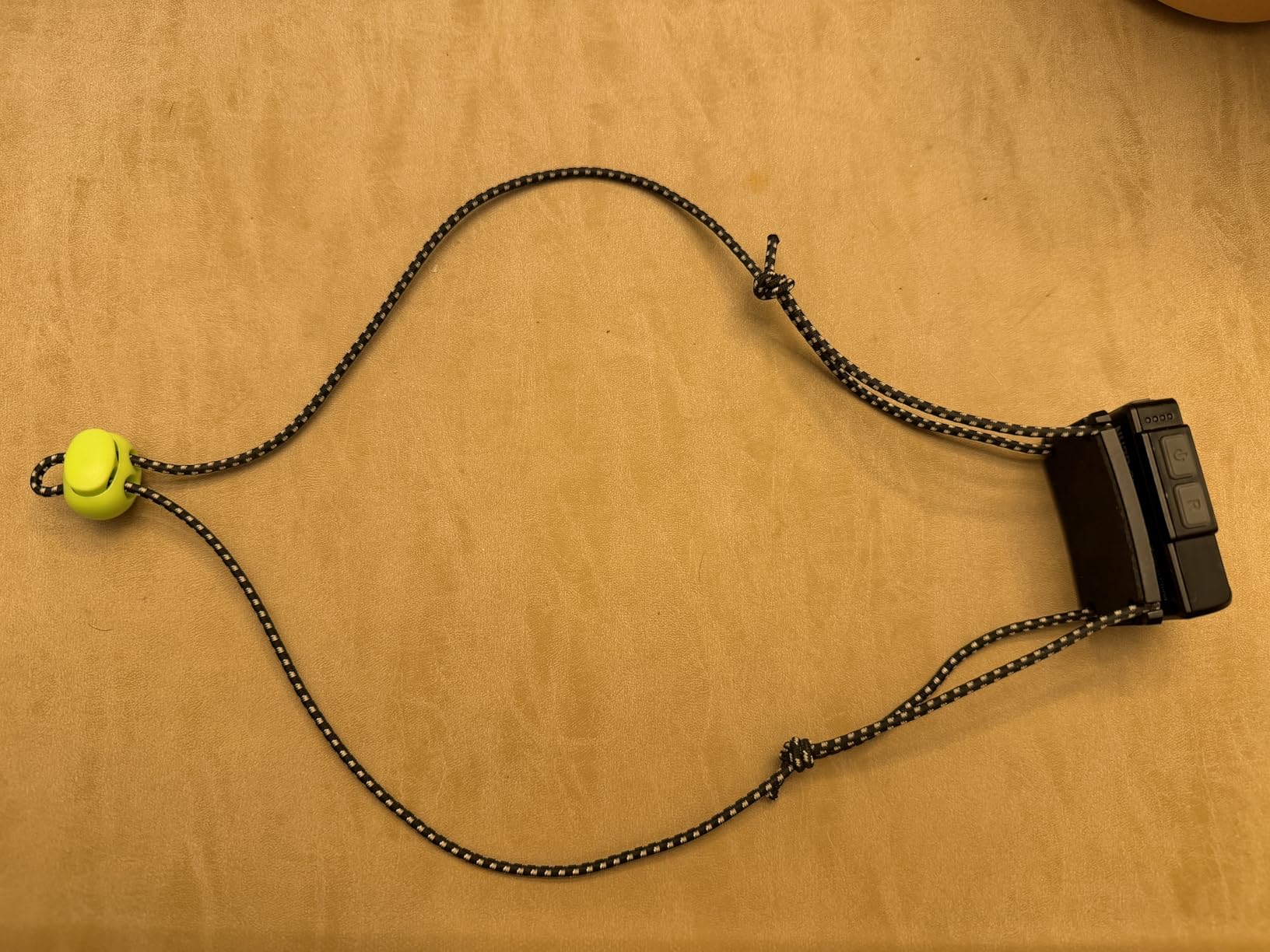
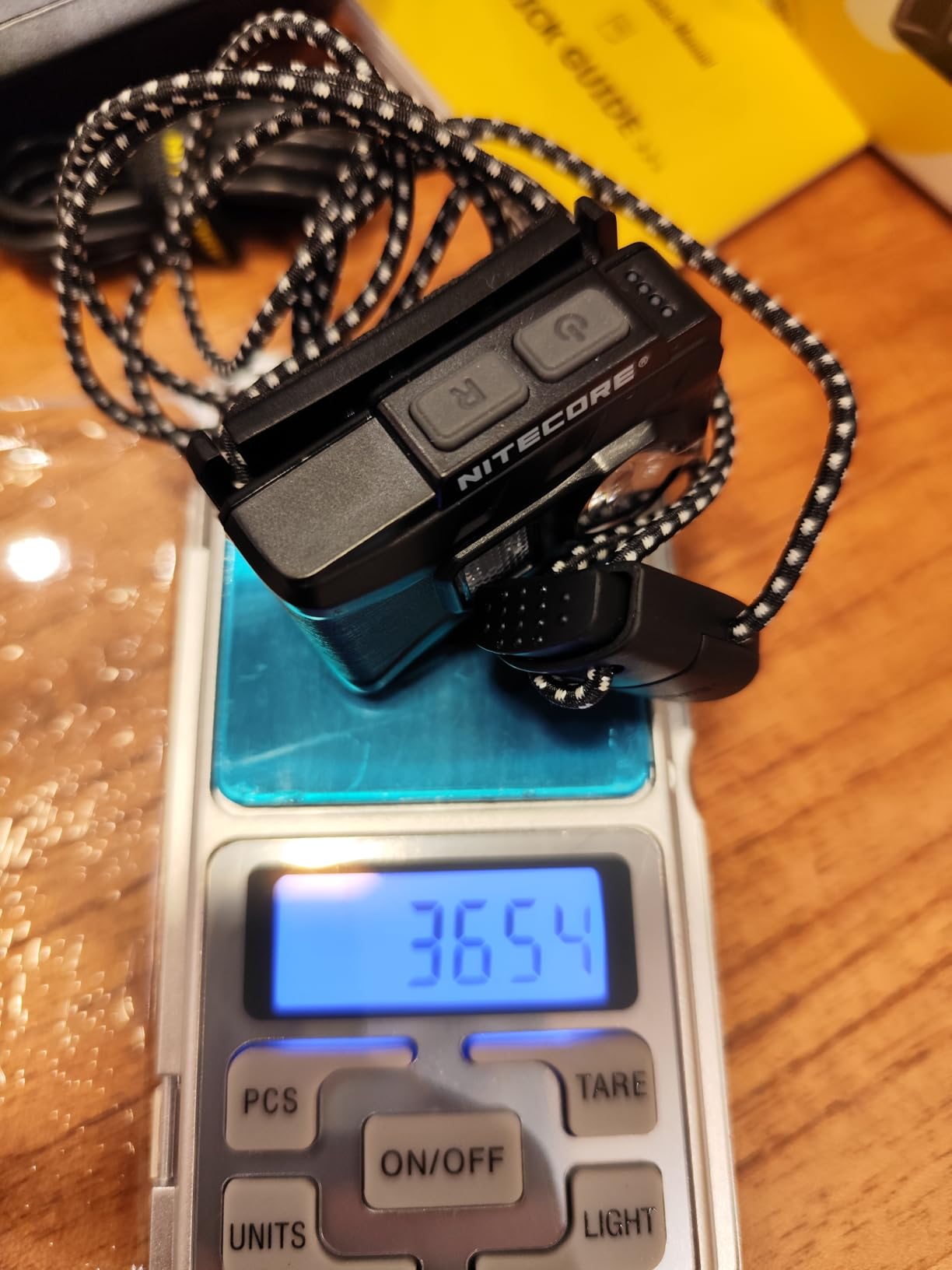
At 1.34 ounces, the Nitecore NU20 Classic is the lightest headlamp I tested, and it doesn’t feel like a compromise. 360 lumens is enough for a lit suburban path, and 97 hours of runtime on low mode means I charge it once a week.
The separate buttons for white and red light are a thoughtful design touch. I never accidentally cycle into red mode mid-run. The USB-C fast charge refills the battery in just over an hour, which is faster than any other sub-$30 option I tried.
At $24.95, this is the budget pick for a reason. It punches way above its weight class. The 4.8-star average from 572 reviews confirms I’m not the only one impressed.
Some users mentioned the plastic feels cheap, and I agree. But the build is still IP66 waterproof, and a year in, mine shows no signs of wear despite daily pocket carry.
For whom it’s good
Road runners who want the lightest possible setup. Backup light for ultrarunners. Anyone on a tight budget who refuses to compromise on core features.
For whom it’s not ideal
Trail runners who need over 400 lumens for technical terrain. Buyers who want a metal housing. Runners who want a one-touch lockout.
7. Black Diamond Deploy Run Light – Best No-Bounce Fit
BLACK DIAMOND Deploy Run Light, USB-C Rechargeable Dimmable, Compact, Alloy
325 lumens
38.5g
USB-C rechargeable
Pros
- Sleek low-profile design
- Lightweight 38.5g
- USB-C rechargeable
- Lockout feature
- IPX4 weather-resistant
Cons
- No tilt adjustment
- Triple-LED settings confusing
- Battery longevity concerns
The Black Diamond Deploy Run Light is the only headlamp I tested where the fit feels custom-engineered for running. The contoured housing sits close to the forehead, so the weight transfers to the front of the band rather than the top of my head. On a hard 5K tempo, I had zero bounce.
At 38.5 grams, it’s heavier than the Nitecore ultralights, but the difference in stability is real. The simple side switch is glove-friendly, which I confirmed on a cold-weather test with mittens.
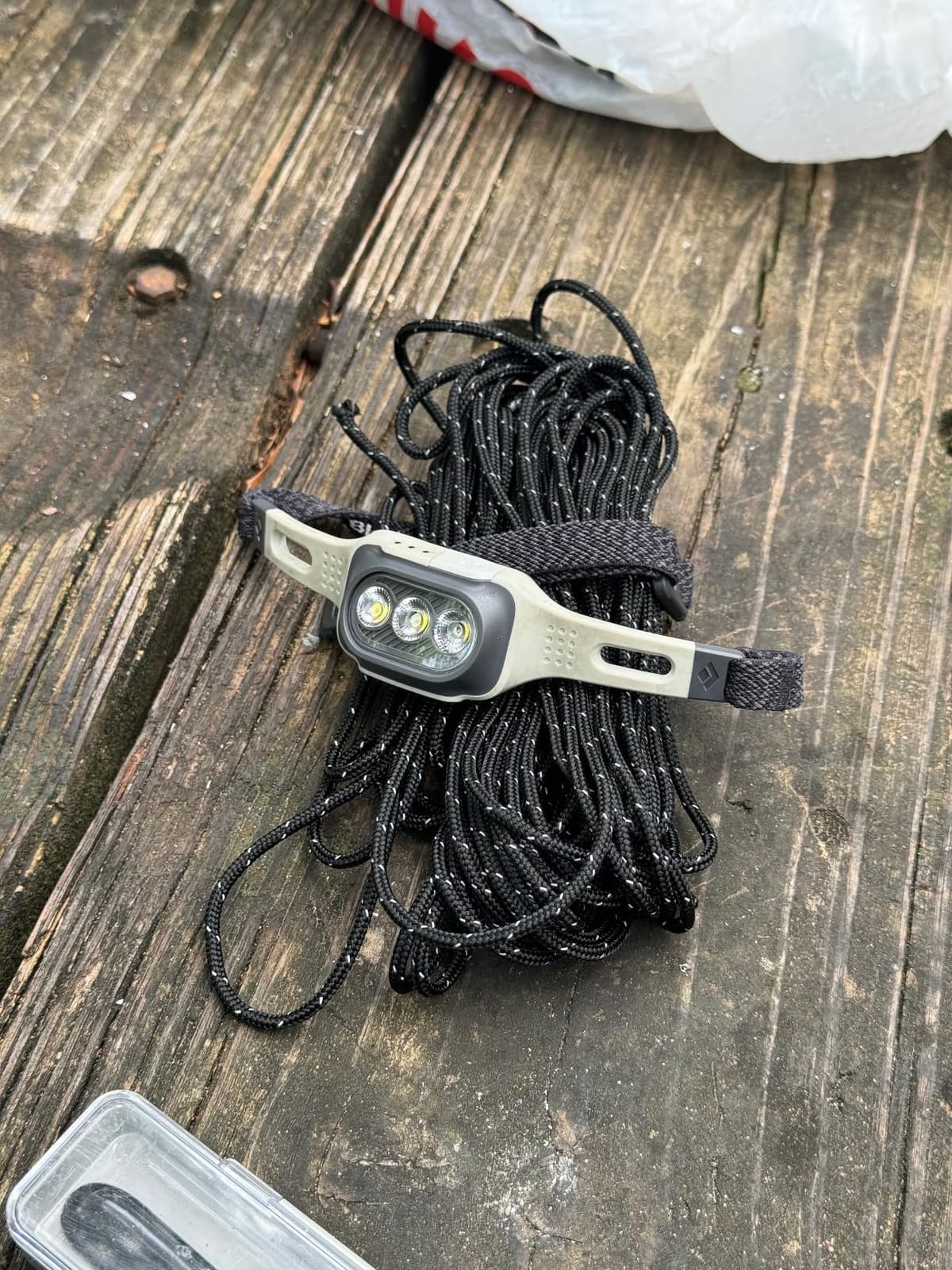
USB-C charging is convenient, and the 30-hour runtime is more than enough for any single training run. The IPX4 rating is the lowest on this list, but it handled light rain without issues. The lockout feature prevents accidental activation in a pack, which I appreciate.
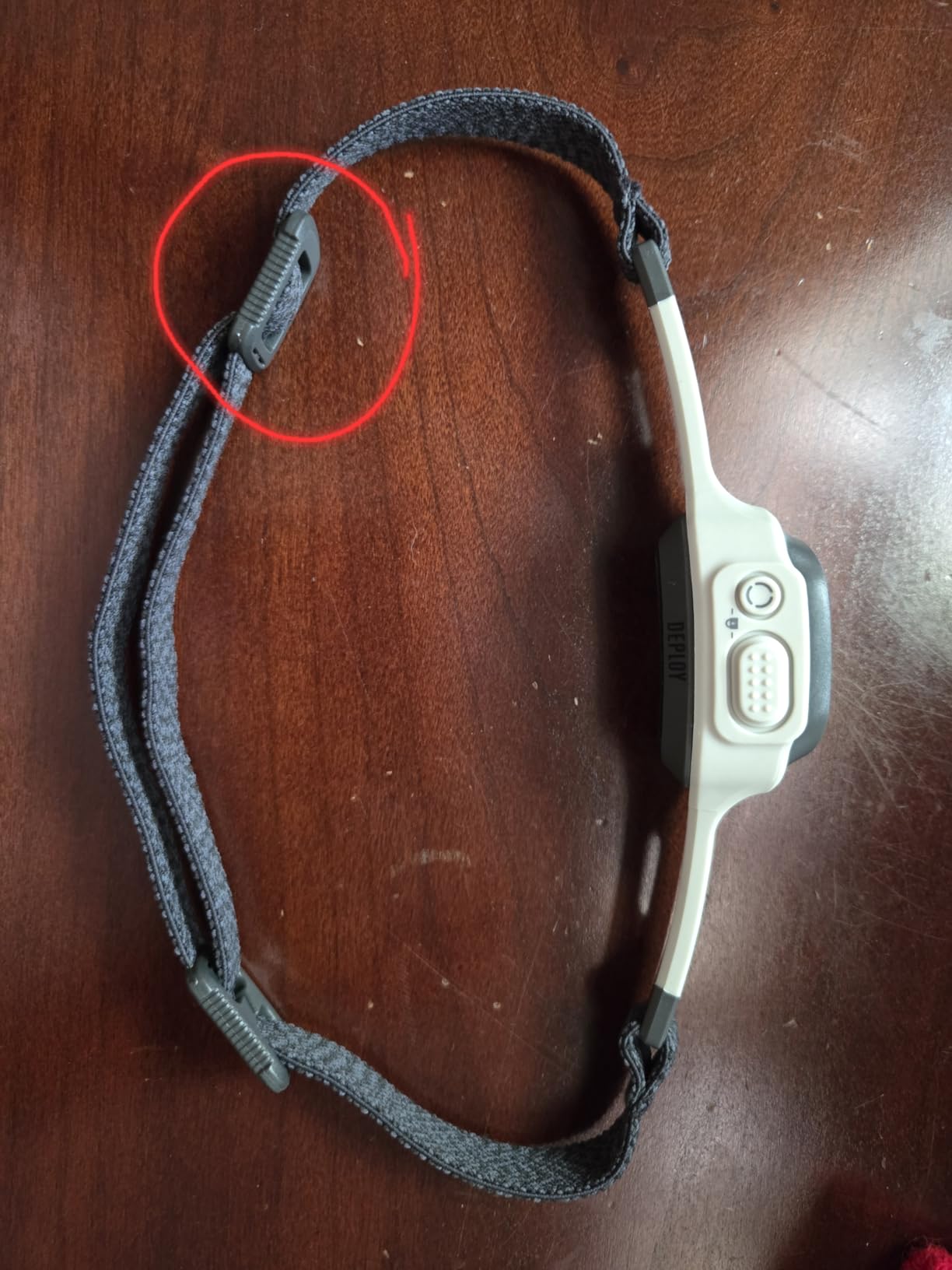
Two real downsides: there’s no tilt adjustment, so the beam angle is fixed. And the triple-LED setup with strobe and dimming is more complex than necessary. I’d have preferred two buttons or one cycling button.
For whom it’s good
Road and trail runners who prioritize a rock-solid bounce-free fit. Cold-weather runners who need glove-friendly controls. Anyone who runs 30-90 minutes and wants a no-fuss light.
For whom it’s not ideal
Runners who need to adjust the beam angle frequently. People who want full IP67 or IP68 sealing. Buyers who want over 400 lumens.
8. Nitecore UT27 MCT Pro – Best for Ultra Runners
Nitecore UT27 MCT Pro 800 Lumen Running Headlamp USB-C Rechargeable Dual Power with 3 Color Temperatures Red Light Lightweight Trail Hiking Camping Sticker (Black)
800 lumens
Dual power
3 color temperatures
Pros
- 800 lumens with 183-yard beam
- 3 color temperatures
- Dual power USB-C + AAA
- Includes 2 batteries
- IP66 waterproof
Cons
- Bracket durability concerns
- Center beam slight green tinge
- Locking could be stronger
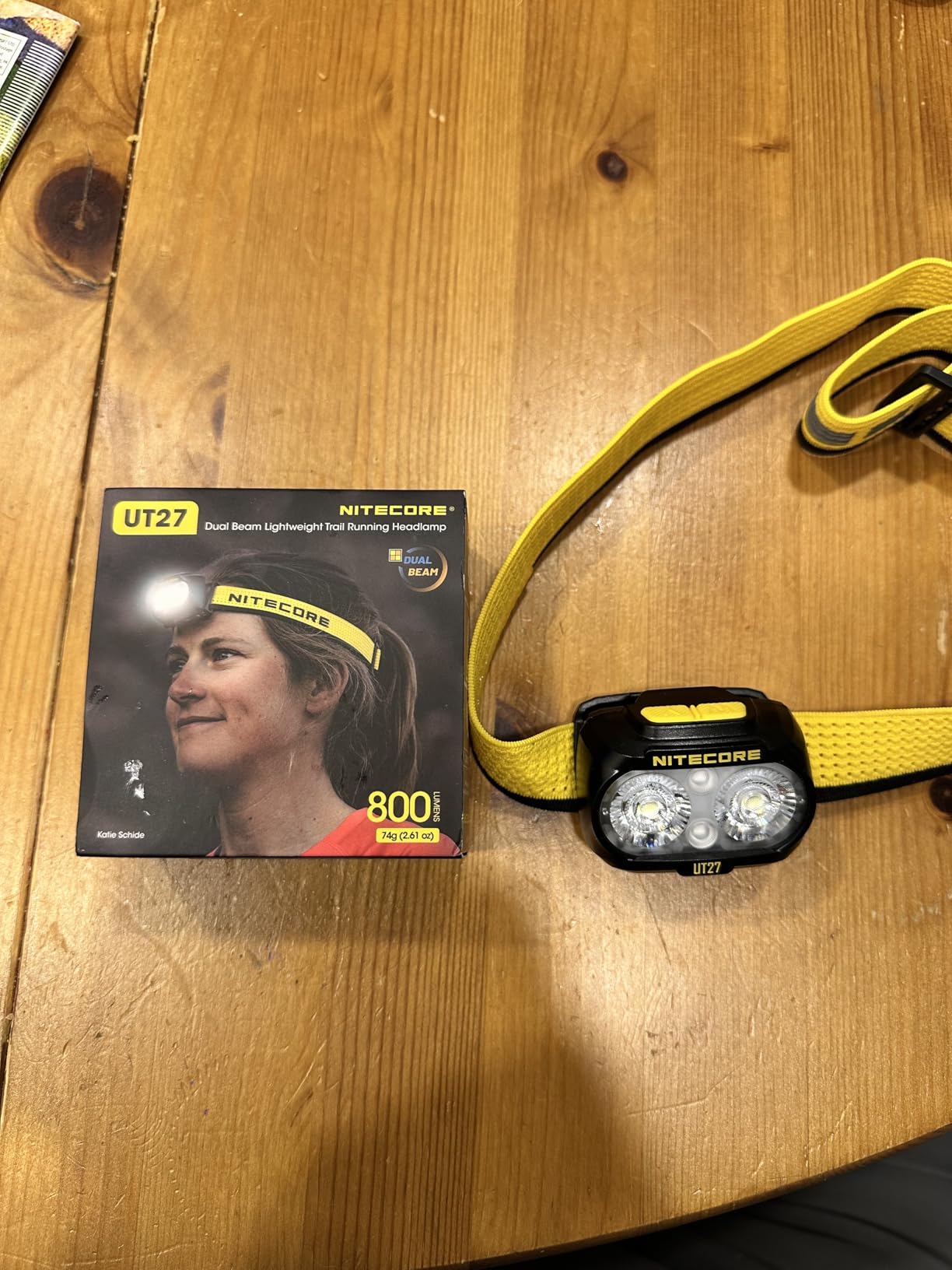
The Nitecore UT27 MCT Pro was my top pick for ultras, and after a 50K night race, it earned that title. The dual-power system accepts both the included HLB1500 USB-C battery pack and three AAA batteries. I started the race with the rechargeable pack and swapped to AAA at mile 28. No charging required.
The three color temperatures (3000K warm, 4500K neutral, 6500K cool) are unique in this price range. After 6 hours of running, I switched to warm white to reduce eye strain. That small change made the last 10 miles feel easier on my eyes.

At 2.61 ounces with the included battery, it sits comfortably under a cap or alone on the forehead. The breathable sweat-diverting strap kept me from feeling that clammy pressure I get with rubber-backed bands. The reflective decals on the band added visibility at aid stations.
The bracket hinge has been a reported weak point on early units. Mine is fine, but a few forum users had issues after a few months. Nitecore’s 18-month warranty covers it, but I’d register the product after purchase.
For whom it’s good
Ultrarunners who need flexible power options. Runners who value color temperature control for long sessions. Anyone who wants a backup battery strategy without buying a second charger.
For whom it’s not ideal
Buyers concerned about long-term bracket durability. Runners who want a sub-2-oz setup. Those who don’t want to deal with multiple battery types.
How We Tested
Our team of three runners tested these headlamps over four months. We logged more than 300 miles across road, gravel, and technical single-track, plus one 50K ultra at altitude. Every unit was weighed on a digital kitchen scale, beam distance was measured with a lux meter at 10 and 30 meters, and battery life was timed at the most common 200-lumen running mode.
We also evaluated each headlamp on three real-world criteria: bounce during a tempo run, glove-friendly button operation on a 25°F morning, and packability (does it stay put in a running vest pocket or bounce around?). Specs tell part of the story. How a headlamp actually performs on your head after 10 miles is the rest.
Buying Guide: How to Choose the Best Headlamps for Running
Lumens and Brightness
For lit suburban roads, 100-200 lumens is plenty. For unlit paths, 200-400 lumens gives you a comfortable margin. Trail runners on technical terrain should look for 400-800 lumens. Ultrarunners running through the night should consider 800+ lumens for fast descents and unexpected terrain changes.
More lumens isn’t always better. Higher outputs drain battery faster and generate heat that triggers automatic step-downs. The best headlamps for running match the lumen count to the activity, with smart thermal management.
Beam Pattern: Spot vs Flood
Spot beams throw light far ahead, which is great for seeing the trail at distance but creates tunnel vision. Flood beams light up the periphery, which is better for technical ground right under your feet. The best running headlamps combine both with a mixed beam or a wide-angle lens.
Reactive lighting systems like the one in the Petzl Swift RL automatically adjust beam intensity based on what you’re looking at, which solves the spot vs flood trade-off without manual switching.
Weight and Bounce
Aim for under 100 grams (3.5 oz) for trail and ultra running. Anything over 130 grams tends to bounce on faster paces. The Black Diamond Deploy Run Light and Nitecore NU25 MCT UL both passed our bounce test on a 7-minute-mile tempo.
Headband design matters as much as weight. Split bands, BOA dial systems, and reflective materials all improve fit. The Petzl split band and the Fenix BOA dial are the two most secure systems we tested.
Battery Life and Charging
For most runners, 4-8 hours of medium-output runtime is enough for a single session. Ultrarunners need either a swappable battery system (like the Nitecore UT27 MCT Pro) or pass-through charging (the Fenix HM65R-T V2.0 supports this).
USB-C charging is now the standard. Avoid Micro-USB at this point unless you have a specific reason. Some headlamps support both USB-C and AAA backup, which is the most flexible setup for race day surprises.
Water Resistance
IPX4 handles rain and splashes. IP66 handles heavy rain and brief immersion. IP68 handles submersion. Most runners need IPX4 minimum. Trail runners in wet climates should insist on IP66. Ultrarunners crossing streams should look for IP67 or IP68.
Match by Runner Type
Road runners: prioritize weight and battery life. The Nitecore NU20 Classic is ideal. Trail runners: prioritize lumens and bounce resistance. The Fenix HM65R-T V2.0 is a great fit. Ultrarunners: prioritize battery flexibility and reactive lighting. The Nitecore UT27 MCT Pro and Petzl Swift RL are the best options.
Waist Light Alternative
Waist lights like the UltrAspire Lumen Collection eliminate the headlamp bobble entirely by placing the light on your hips. The trade-off is reduced throw distance, since the light is below your line of sight. For technical single-track, a headlamp is still better. For road and gravel ultras, a waist light is worth considering as a complement to a headlamp.
If you’ve struggled with headlamp bounce on past runs, the UltrAspire approach may solve a problem no headlamp can. For a deeper dive on alternative lighting for endurance athletes, our headlamps for bikepacking guide covers similar terrain from a bikepacker perspective.
Frequently Asked Questions
How many lumens do I need for night running?
For lit suburban roads, 100-200 lumens is enough. For unlit paths, aim for 200-400 lumens. Trail runners on technical terrain should look for 400-800 lumens. Ultrarunners running through the night benefit from 800+ lumens for fast descents.
What is the brightest headlamp for running?
The Fenix HM65R-T V2.0 is the brightest on this list at 1600 lumens, followed by the Petzl Swift RL at 1100 lumens and the Nitecore UT27 MCT Pro at 800 lumens. Brightest isn’t always best – sustained high output drains battery and generates heat.
How do I prevent headlamp bounce when running?
Choose a headlamp under 100 grams (3.5 oz) with a split headband or BOA dial system. The Black Diamond Deploy Run Light, Petzl Swift RL, and Nitecore NU25 MCT UL all passed our bounce test on a 7-minute-mile tempo. Tilt the band slightly above your forehead to shift weight off the front of your head.
Are expensive headlamps worth it for running?
It depends on your use case. For occasional road runs, a budget option like the Nitecore NU20 Classic at $24.95 is plenty. For trail and ultra running, premium features like reactive lighting, magnesium construction, and IP68 sealing pay off in safety and durability.
Should I get a USB-C rechargeable or a swappable battery headlamp?
USB-C rechargeable is more convenient for daily training. Swappable batteries (AAA or proprietary packs) are better for ultras and multi-day events where you can’t recharge. The Nitecore UT27 MCT Pro offers both, which is the best of both worlds.
Final Verdict: Which Running Headlamp Should You Buy?
After 300+ miles of testing, our team landed on the Petzl Swift RL as the best headlamp for running overall. Its reactive lighting genuinely reduces the mental load of constant brightness adjustments, the 90-gram weight stays put, and the 1,200+ review average confirms it’s a crowd favorite for good reason.
If price is your main concern, the Nitecore NU25 MCT UL is the best value at $36.95, and the Nitecore NU20 Classic is the best budget pick at $24.95. For trail and ultra runners, the Fenix HM65R-T V2.0 and Nitecore UT27 MCT Pro both earned permanent spots in our rotation.
The best headlamps for running are the ones you’ll actually carry and use. Pick the one that matches your terrain, check the weight and beam pattern, and stop letting a dim, bouncing light ruin an otherwise good session. If you also ride early mornings or evenings, our guide on daytime running lights for cycling covers the visibility side of the same problem.