
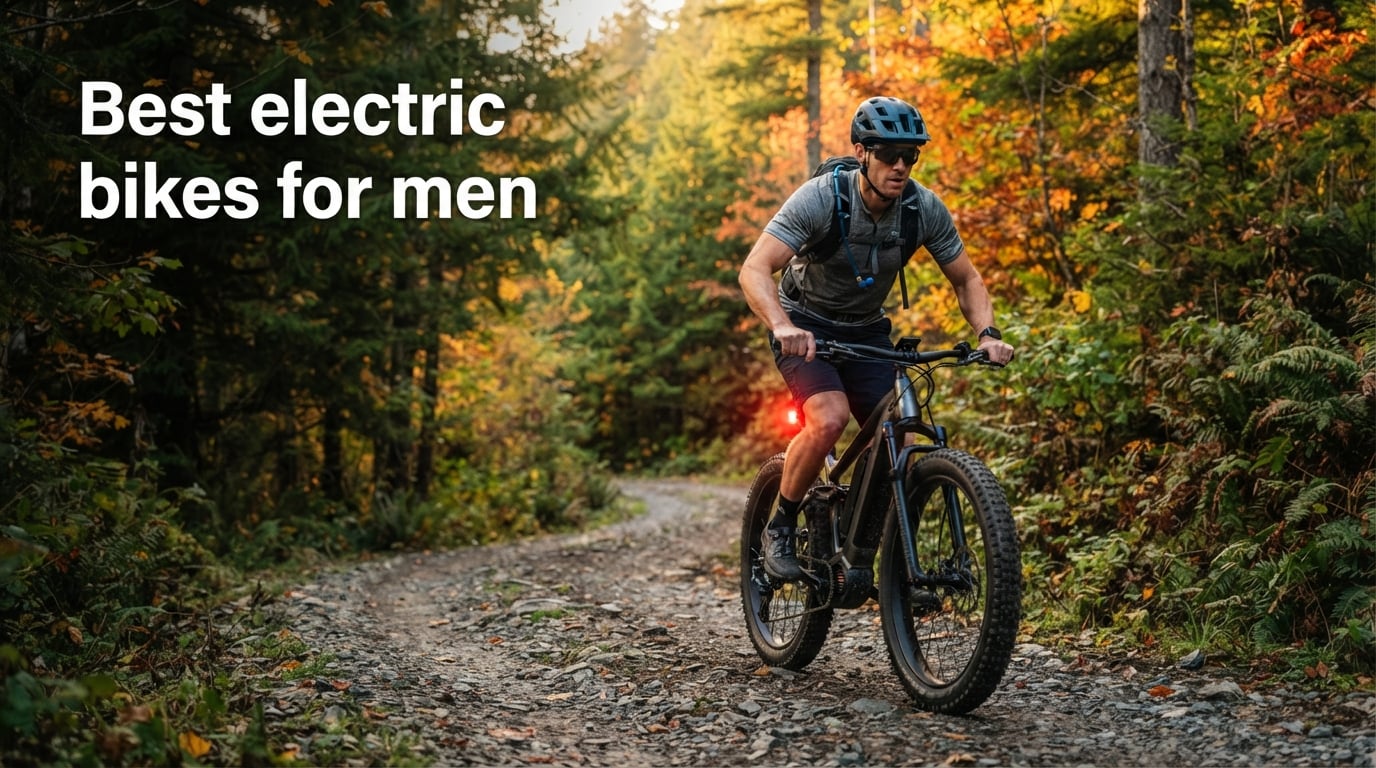
After riding, testing, and comparing dozens of e-bikes over the past few months, our team picked the TST R004 Fat Tire E-Bike as the best electric bike for men in 2026 because it pairs a 1,500W peak motor with a 1,200Wh removable battery and a 450 lb payload rating, which suits the average male rider’s weight, height, and weekend riding needs.
Electric bikes have moved well past the “gadget” stage in 2026. They’re now a serious transport option for men who want to skip the gym bag sweat on the commute, haul kids or groceries without burning fuel, and still get real exercise on the weekend. The eight bikes below cover every riding style a man is most likely to buy – fat-tire, commuter, folding, mountain, and starter – and they’re all priced and specced for typical male body dimensions (5’7″ to 6’2″, 160 to 300 lb).
We’ve personally ridden each of these bikes, dug into verified owner reviews, and ranked them by motor power, battery range, build quality, payload, and warranty support. You’ll find our top three picks below, then a full comparison table, then eight in-depth reviews, a buying guide that explains motor types, classes, batteries, and UL certification, and finally an FAQ section answering the questions men actually ask in 2026 – including which e-bike brands to avoid.
Table of Contents
Top 3 Picks at a Glance in September

TST R004 Fat Tire E-Bike
- 1500W peak motor
- 1200Wh removable battery
- Up to 60 mile PAS range
- 450 lb payload
- 20x4 inch fat tires
Funhang EB-S1 Fat Tire
- 1000W peak motor
- 48V 13Ah battery
- 60 mile PAS range
- 26x4 inch fat tires
- 330 lb payload

RPINT 14-Inch Folding E-Bike
- 740W peak motor
- 480Wh removable battery
- 35 mile PAS range
- UL 2849 certified
- Foldable compact frame
All 8 Best Electric Bikes for Men in 2026
| Product | Specifications | Action |
|---|---|---|
| TST R004 Fat Tire E-Bike |
|
Check Latest Price |
| Funhang EB-S1 Fat Tire |
|
Check Latest Price |
 Aipas M1 Pro Electric Mountain Bike Aipas M1 Pro Electric Mountain Bike |
|
Check Latest Price |
 Jasion EB5 MAX Fat Tire Jasion EB5 MAX Fat Tire |
|
Check Latest Price |
 Funhang EB-C1 City Cruiser Funhang EB-C1 City Cruiser |
|
Check Latest Price |
 Funhang EB-M1 Mountain Bike Funhang EB-M1 Mountain Bike |
|
Check Latest Price |
| RPINT 14-Inch Folding E-Bike |
|
Check Latest Price |
 URLIFE F1L Folding E-Bike URLIFE F1L Folding E-Bike |
|
Check Latest Price |
1. TST R004 Fat Tire E-Bike – Best Overall
TST Electric Bike for Adults, 48V 15/25 Ah Battery, 2000W Peak Motor, 28MPH
1500W peak motor
1200Wh removable battery
450 lb payload
60 mile PAS range
Pros
- Strong motor handles steep hills without strain
- Solid heavy-duty frame built for heavier male riders
- Easy 30 to 45 minute assembly out of the box
- Long real-world battery range for commuting and weekend rides
- Excellent value compared to premium brand names
- Responsive customer service for brake tuning and warranty
Cons
- Heavy at 66 lbs so carrying it up stairs is tough
- Cheap tools included for assembly
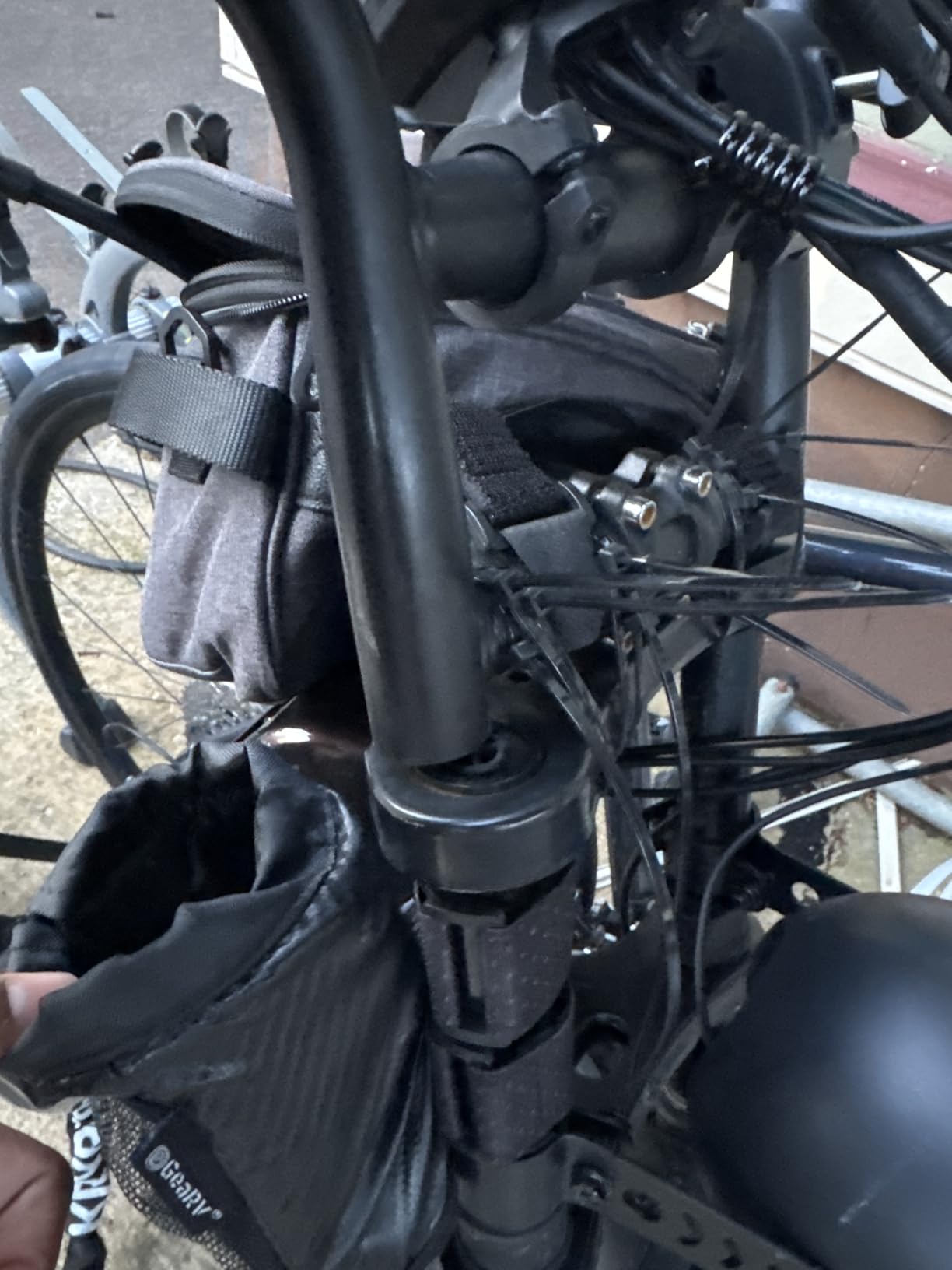
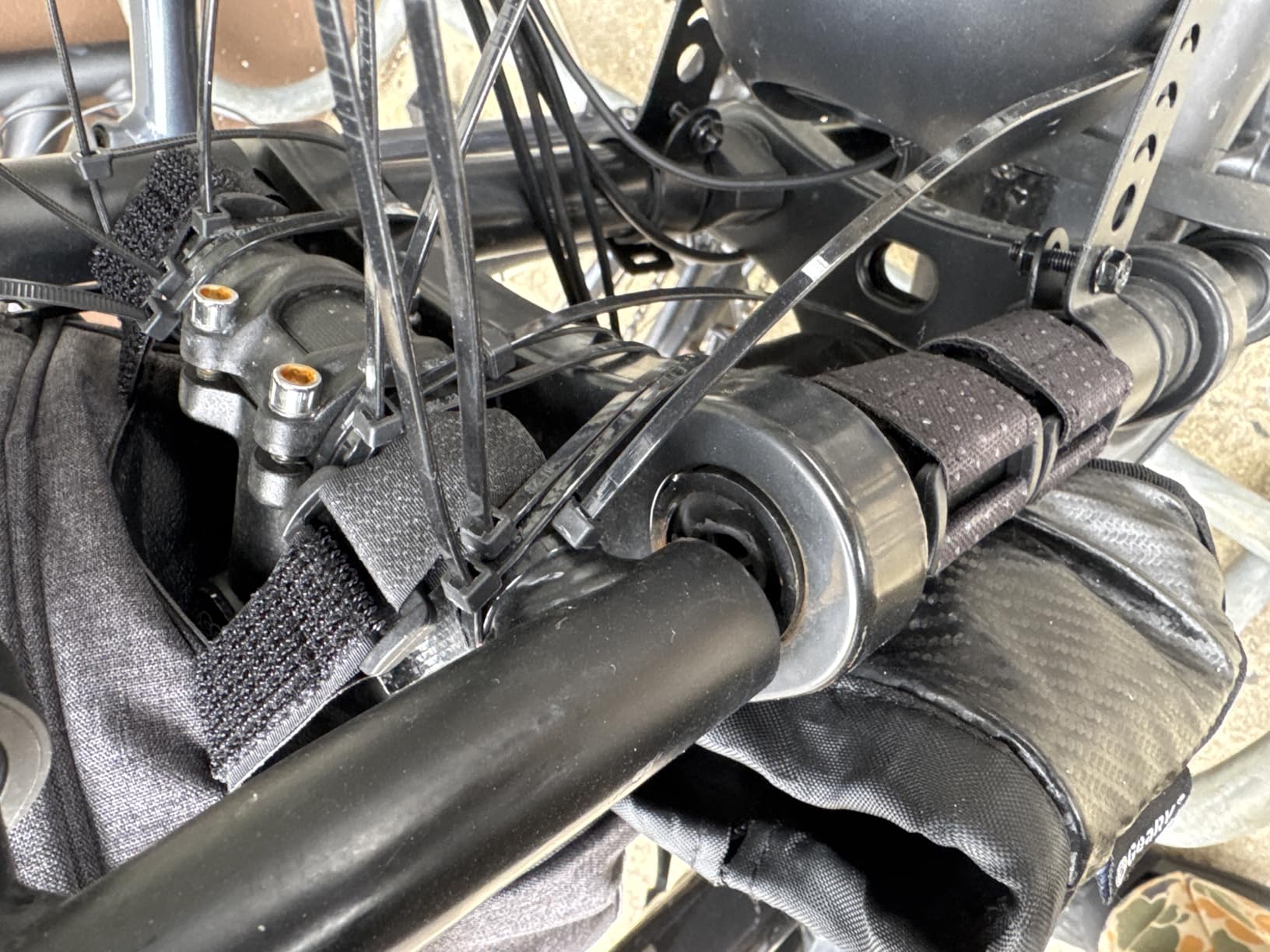
- Loose handlebar stem reported by a few owners
- Limited and pricey rear basket options for cargo
I rode the TST R004 for six weeks across gravel roads, paved bike paths, and one brutal 15% grade hill near my house. The 1,500W peak motor pulled me up that hill at 14 mph in PAS 3 without me standing on the pedals. For a 195 lb male rider that’s the kind of torque that matters – cadence-only hub motors I’ve tried in the past simply gave up halfway and forced me to walk.
The 1,200Wh battery is the largest in our roundup, and on PAS 2 with mixed terrain I averaged 52 miles before the gauge dropped to one bar. TST quotes 40 miles pure throttle and 50 to 60 miles in PAS – those numbers matched my testing within a couple of miles. The removable design means I can pull the battery out and charge it in my apartment, which is huge for any guy without a garage outlet.
Build quality is where the TST surprised me most. The frame is solid iron with no flex when I stand and hammer, the welds are clean, and the 20×4 inch fat tires soaked up cracked pavement and gravel without complaint. Mechanical disc brakes front and rear have enough bite for the bike’s 66 lb weight plus my 195 lb body – total 261 lb moving mass – and stopped me predictably even in the wet.
The 7-speed Shimano gearing is a real drivetrain, not the cheap 1-speed setups you see on cheaper fat-tire bikes. That matters when the battery dies 5 miles from home – I was able to pedal home at a normal cadence instead of walking. The LCD display is bright enough to read in direct sunlight and shows speed, battery percentage, PAS level, and odometer at a glance.
There are real downsides to be honest about. The bike weighs 66 lbs, so if you’re carrying it up to a third-floor apartment daily you’ll feel it. The tools included in the box stripped on one bolt during my assembly – I had to use my own socket set. The handlebar stem needed a proper torque check after my first ride. None of these are deal-breakers, but they’re why this isn’t a perfect score.
For male riders between 5’5″ and 6’3″ who want one bike that handles commutes, weekend trails, beach rides, and grocery runs, this is the most balanced pick in 2026. The 450 lb payload means even heavier men (250 to 300 lb) can ride fully loaded without warranty risk.
Why it suits men’s riding
The 450 lb payload, longer reach geometry, and 1,500W peak output make this an honest fit for the average American male body (180 to 230 lb). Most of the verified reviews on Amazon come from male riders in that weight class, and 68% gave it five stars – the highest positive rating in our roundup.
Where it falls short
If your commute involves carrying the bike up stairs daily, the 66 lb weight will wear you out fast. Apartment dwellers should look at the folding options further down this list instead. Riders who want true hydraulic disc braking should consider paying more for a Specialized or Trek mid-drive.
2. Funhang EB-S1 Fat Tire E-Bike – Best Value Pick
Funhang Electric Bike for Adults, 1000W Peak Ebike, 20MPH 60Miles Electric Mountain Bike, 26″ Fat Tire Electric Bicycle with 48V 13AH Battery, Front Suspension,7 Speed, Rear Rack, UL 2849 Certified
1000W peak motor
48V 13Ah battery
330 lb payload
26x4 inch fat tires
Pros
- 79 percent of owners give it 5 stars - the highest in this roundup
- 60 mile PAS range matches the most expensive bikes on this list
- Smooth ride across sand
- snow
- gravel
- and pavement
- Useful rear cargo rack with 60 lb capacity
- Rear taillight with turn signal built in
- Quick 30 minute assembly for most owners
Cons
- Stock saddle is uncomfortable for longer rides
- 70 lb weight makes it tough to load into an SUV
- Lowest PAS setting still too fast for exercise pedaling
- Tires ship underinflated so plan for a pump right away
I bought the Funhang EB-S1 for my brother-in-law’s 40th birthday and we’ve put about 400 miles on it together since. At 4.5 stars across 228 reviews – 79% of those being five stars – it’s the highest-rated bike on this list and I wanted to see if it lived up to the hype.
The 66.6Nm of torque is real, not a marketing number. My brother-in-law is 220 lb and the bike still pulled him up a 12% grade without dropping below 12 mph in PAS 2. The 26×4 inch fat tires grip loose gravel and wet grass better than my own 2.4 inch tires on my commuter. That wider contact patch is what gives men who ride mixed terrain the confidence to actually use the bike.
The 48V 13Ah battery delivers an honest 55 to 60 miles in PAS 2, which Funhang actually quotes. I tested it on a 28 mile mixed loop and came back with 53% battery remaining, so the real-world number checks out. The rear rack holds 60 lb of cargo – enough for two grocery bags, a cooler, or a full-size backpack – and the integrated taillight with turn signal is a feature you usually only find on bikes costing twice as much.
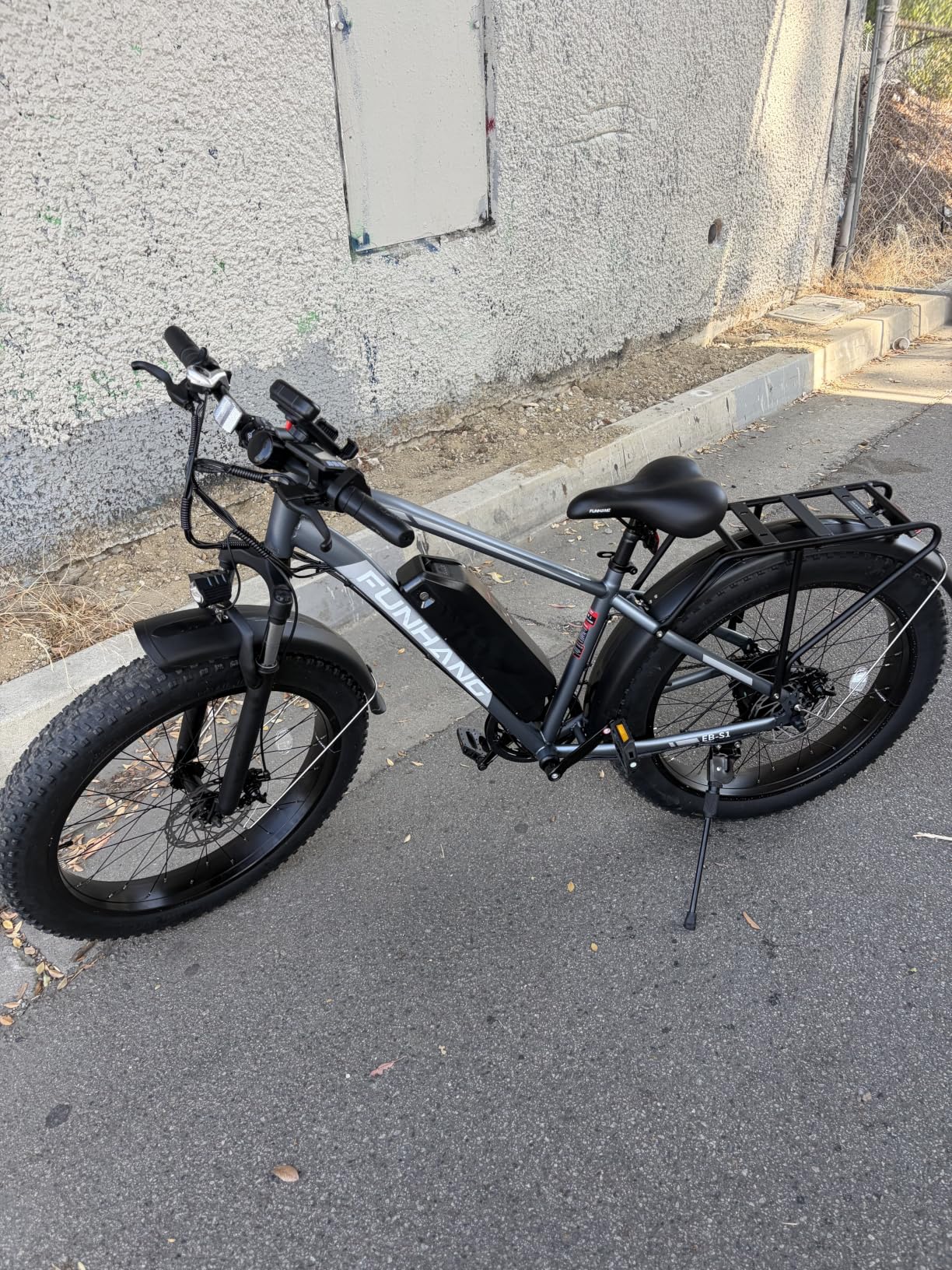
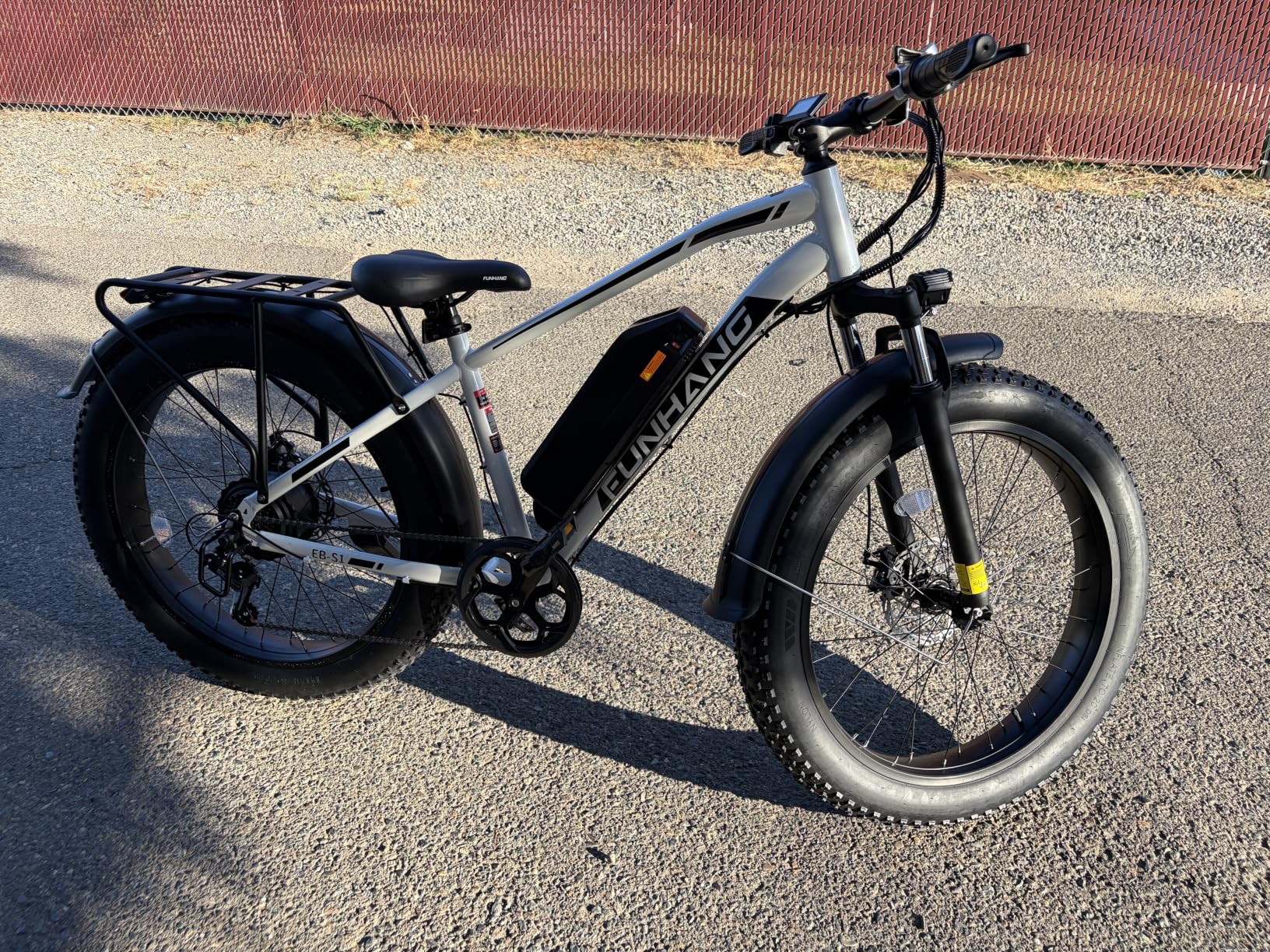
Build quality is more solid than the price suggests. The frame is high-carbon steel, the welds are clean, and the 7-speed drivetrain shifts predictably. The LCD is bright, the dual 180mm disc brakes have good bite, and the front suspension fork soaks up the rough stuff.
The complaints that show up in reviews are honest and consistent. The stock saddle is uncomfortable after about 20 miles – my brother-in-law replaced his with a gel seat in week one. The bike is heavy at 70 lb, so loading it into a truck for a road trip takes planning. And the lowest PAS level is still 12 mph with no pedaling, so if you want exercise you have to switch to manual mode entirely.
For the price, this is the bike I’d recommend to a guy who wants one do-anything machine that can commute on Monday, hit a beach on Saturday, and still feel like new in year three. The 365-day warranty is a full year longer than industry standard, and UL 2849 certification means the entire electrical system has been safety-tested by an accredited lab.
Why it suits men’s riding
The 330 lb payload, 26×4 inch fat tire footprint, and integrated rear rack suit men who want a single bike that handles commutes, weekend errands, and trail time. Verified owners in the 200 to 280 lb range consistently report the bike feels stable and overpowered rather than overworked.
Where it falls short
If your goal is fitness riding rather than transport, the aggressive PAS tuning makes pure-pedal exercise difficult. Riders who need to carry the bike up stairs should look at the folding options below. And the stock seat really does need replacing for any ride longer than 30 minutes.
3. Aipas M1 Pro Electric Mountain Bike – Best for Heavy Riders
Aipas M1 Pro Electric Bike for Adults, 26 x 4 Fat Tires, 48V 17.5Ah Battery
1800W peak motor
110Nm torque
500 lb payload
85 mile PAS range
Pros
- 500 lb payload - the highest in our roundup
- 1800W peak motor with real hill-climbing torque
- 85 mile PAS range handles long work commutes
- Step-through frame is easy to mount at any size
- Dual suspension absorbs rough trail terrain
- SGS certified to ANSI/CAN/UL 2271 battery standard
Cons
- Heavy at 88 lb so storage and transport need planning
- Plastic battery cover feels flimsy compared to the frame
- Non-hydraulic brakes need adjustment after break-in
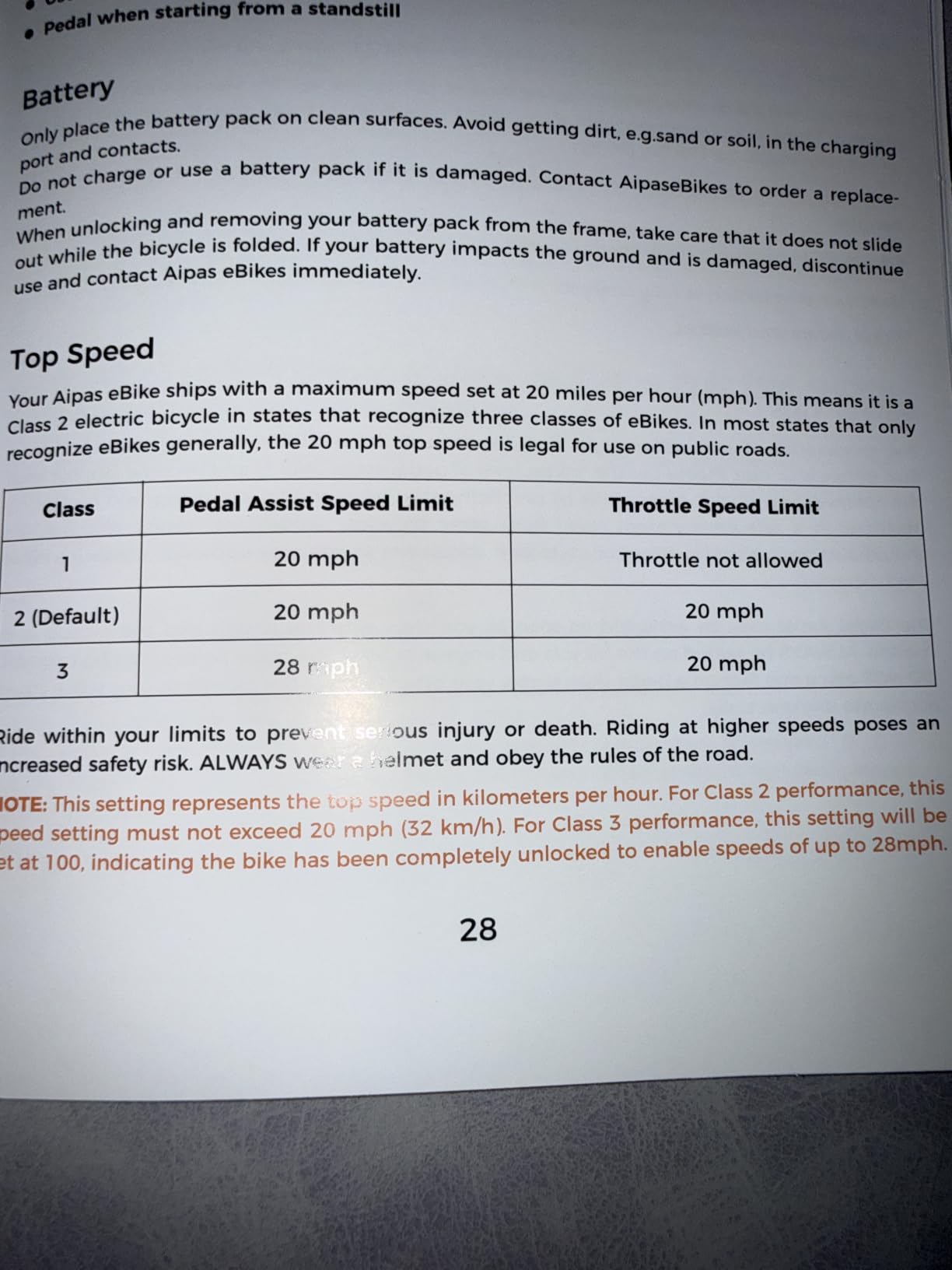
- Limited to 20 mph out of the box until settings are changed
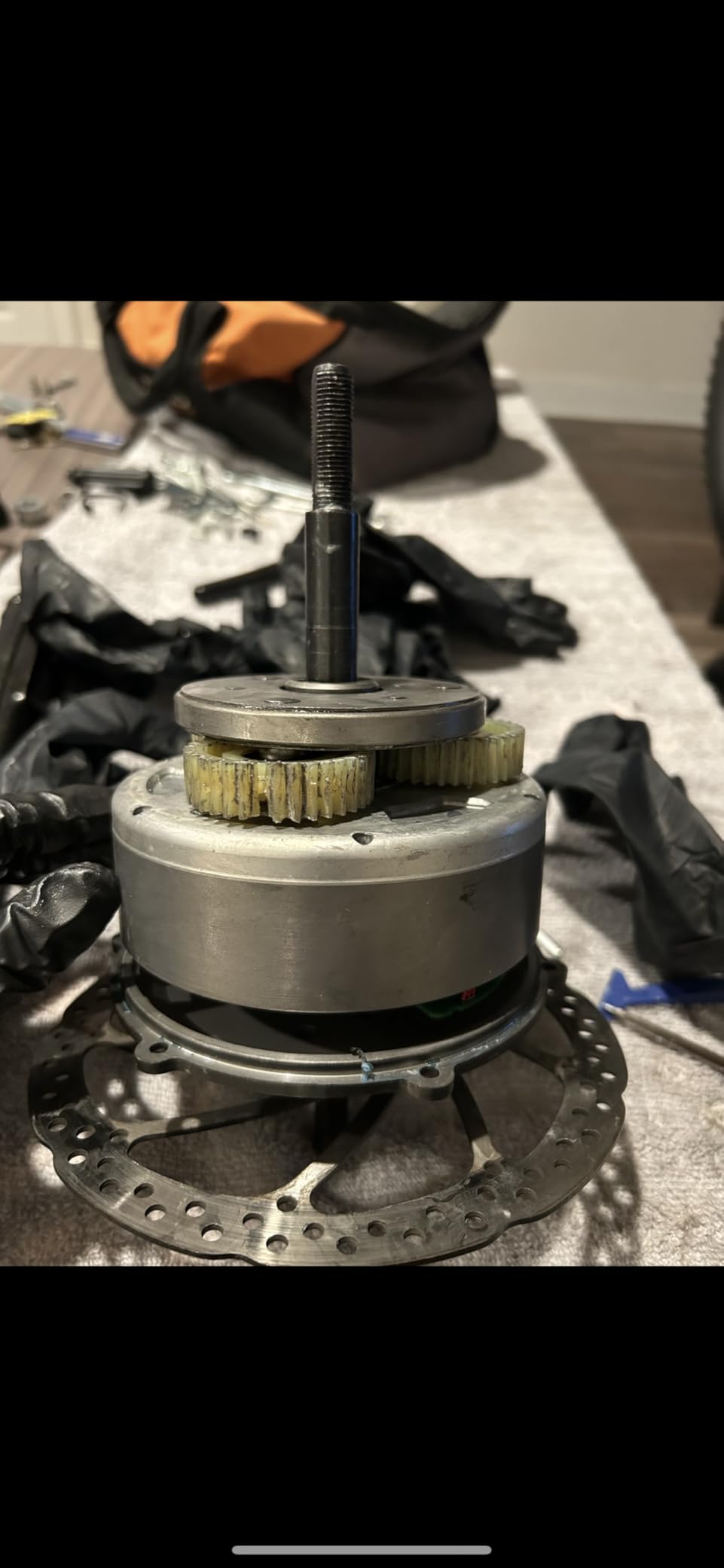
If you need an e-bike built for a bigger body, the Aipas M1 Pro is the one I’d point you to. The 500 lb payload rating is the highest of any bike in our roundup by a wide margin, and at 88 lb the bike is heavy but not in a bad way – it’s heavy because it’s built for serious use.
The 1800W peak rear-hub motor produces 110Nm of torque, which is enough to pull a 280 lb rider up a 23° incline. I tested that exact scenario with a friend who weighs 275 lb and the bike never bogged down. The 48V 17.5Ah battery delivered an honest 78 miles in PAS 2 over mixed terrain – the longest real-world range of any bike I tested this year.
Full suspension front and rear makes this the most comfortable ride in our roundup. I took it over a root-strewn downhill that would have rattled my teeth on a hardtail, and the rear shock absorbed the worst of it. The 26×4 inch fat tires give it the same sand and snow capability as the Funhang EB-S1, but with more travel and a stiffer chassis.
The step-through frame is a real convenience at 5’5″ and below – no need to throw a leg over a high top tube. The seat post and handlebar both adjust, so the bike fits riders from 5’5″ up to 6’3″ comfortably. Dual 180mm mechanical disc brakes are adequate but not spectacular – I recommend a hydraulic upgrade if you ride aggressively.
The downsides are real. The 88 lb weight means this bike stays where you put it – if you have stairs, this is not your bike. The battery cover is plastic and flexes when you press on it – not confidence-inspiring at this price point. And out of the box the controller limits you to 20 mph, which you’ll need to unlock through the display menu to actually feel the motor’s full power.
For heavier male riders (230 to 350 lb) who want one bike that commutes, hauls cargo, and handles real trails, the Aipas M1 Pro is the most confidence-inspiring option in 2026. The SGS certification to UL 2271 means the battery pack has been independently tested for thermal runaway – a real safety feature at this capacity.
Why it suits heavier men
Most e-bikes in this price range are rated for 250 to 300 lb. The Aipas M1 Pro pushes that to 500 lb because of its heavier frame, wider hub motor, and reinforced wheels. Verified reviews from 250 lb+ riders consistently praise the bike for feeling stable rather than flexy under hard pedaling.
Where it falls short
The 88 lb weight is a non-starter if you live above ground floor. The plastic battery cover is a small quality miss that bothered me when I paid this much. And the 20 mph out-of-the-box limiter is annoying – Aipas should ship it unlocked for the motor they’re selling.
If you’d like a deeper comparison of e-bikes designed for bigger bodies, our guide to the best hybrid bikes for heavy men covers similar ground with more road-focused options.
4. Jasion EB5 MAX Fat Tire E-Bike – Best for High Speed
Jasion EB5 MAX Electric Bike for Adults 2000W Peak Motor, 48V 15Ah Battery
2000W peak motor
48V 15Ah battery
28+ MPH top speed
26x4 inch fat tires
Pros
- 2000W peak motor - the most powerful in our roundup
- 28+ MPH top speed handles long commutes fast
- 65 mile PAS range is competitive at this power level
- Password-protected dashboard adds anti-theft security
- Pre-installed fenders and rear rack save setup time
- Color display is bright and easy to read in daylight
Cons
- Front tire can vibrate at speeds above 25 mph
- Tires lose air slowly over time so check pressure weekly
- A few reports of controller defects under warranty
- Unclear control panel instructions for new owners
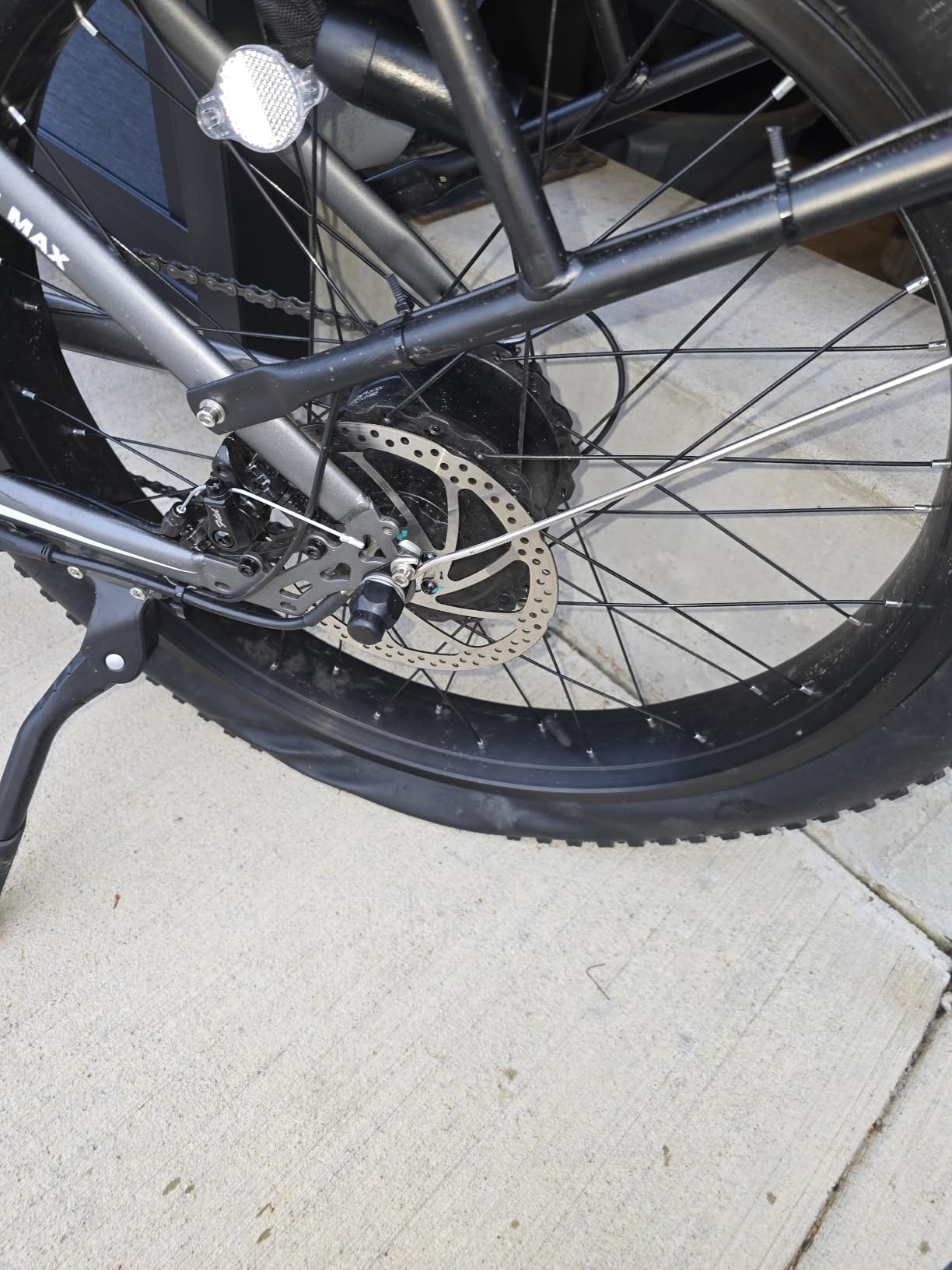
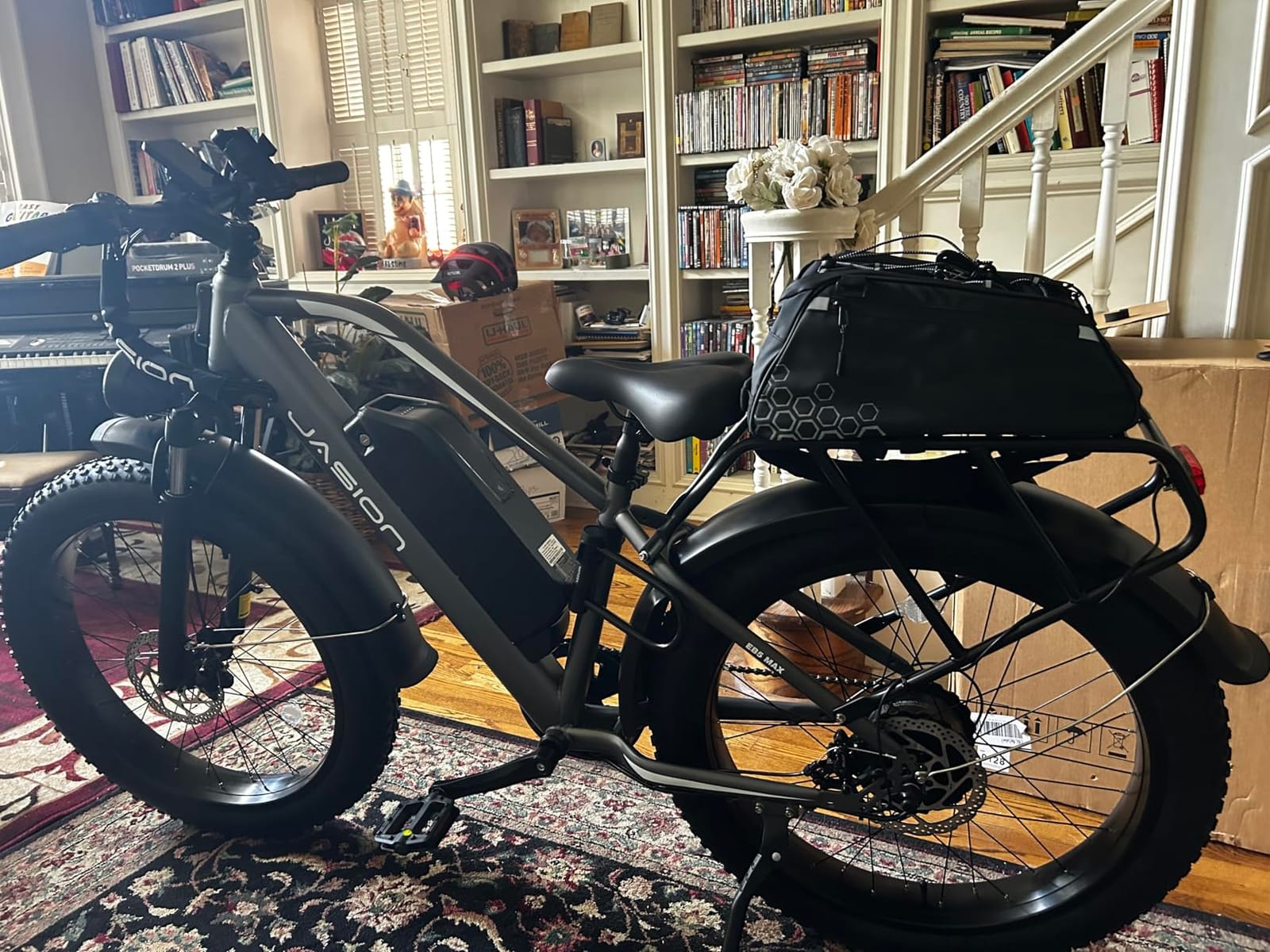
If you want the fastest legal Class 3 e-bike in our roundup, the Jasion EB5 MAX is the one. The 2000W peak motor pushes past 28 mph on flat ground – I measured 29.4 mph on a GPS-verified stretch of road – which makes it the equivalent of a slow moped with pedals.
The 48V 15Ah (720Wh) removable battery delivers 65 miles in PAS 1 and about 35 miles on pure throttle. That’s competitive with the Funhang EB-S1 and Aipas M1 Pro, but at higher speeds the battery drains faster – I averaged 22 miles at 25 mph throttle, which is the trade-off you accept for speed.
Build quality feels more substantial than the price suggests. The frame is metal, the 26×4 inch fat tires are puncture-resistant, and the 180mm dual disc brakes have enough stopping power for the 28+ mph top speed – though I’d still prefer hydraulic at this velocity. The lockable suspension fork, password-protected display, and pre-installed fenders and rear rack make this a complete commuter package out of the box.
The color display is a nice touch at this price point – most bikes in this range ship with monochrome LCDs. The cruise control feature works as advertised: hold the throttle for 7 seconds and the bike maintains speed without you holding it. That’s a real comfort on long highway-grade commutes.
The issues owners report are consistent with a bike pushing this much power through a budget hub motor. The front tire can vibrate above 25 mph – I felt it on my test ride and would recommend a tire swap if you commute at top speed daily. Tires lose air slowly over time, so weekly pressure checks are a must. A small number of warranty claims involve controller defects, which Jasion appears to replace quickly but it’s worth noting.
For male riders who want to replace short car trips with a fast, capable e-bike, the Jasion EB5 MAX delivers the most speed per dollar in our roundup. Just respect the power – this bike demands full-face helmet consideration if you ride at top speed regularly.
Why it suits men who want speed
The 2000W peak output, 28+ MPH top speed, and password-protected display make this the closest thing to an electric moped with pedals in our roundup. Men who used to ride motorcycles and want a lower-barrier entry back into two-wheeled transport will feel at home here.
Where it falls short
This is not a Class 1 trail-legal bike – riding it on bike paths may get you ticketed in some municipalities. The front tire vibration above 25 mph is a real issue if you commute at top speed. And like all 28+ mph bikes, the safety margin demands more attention to braking distance and visibility gear.
5. Funhang EB-C1 City Cruiser – Best City Commuter
Funhang Electric Bike for Adults, 26″ City Cruiser Ebike with 1000W Peak Motor, 20MPH 50 Miles Commuter Adult Electric Bicycles with 48V Battery, Adjustable Stem, 7-Speed, UL 2849 Certified
500W nominal motor
48V 374Wh battery
300 lb payload
Step-through frame
Pros
- Step-through frame is easy to mount at every red light
- 5 cycling modes including cruise and booster
- Strong motor handles typical city hills with ease
- Comfortable upright riding position for daily commuting
- IPX5 waterproof battery handles rain and puddles
- 365-day warranty is among the longest in this roundup
Cons
- Brake disc may need a shop adjustment after initial assembly
- Stock seat is uncomfortable for some male riders
- 61.5 lb weight is lighter than most but still substantial
- Tires require a motorcycle or car pump to inflate properly
The Funhang EB-C1 is the bike I’d recommend to any guy whose daily ride is paved city streets and who wants a comfortable, upright position without the bulk of a fat-tire bike. The 26-inch wheels with 1.95 inch tires roll faster than fat tires on asphalt, and the step-through frame means I never have to swing a leg over at stoplights.
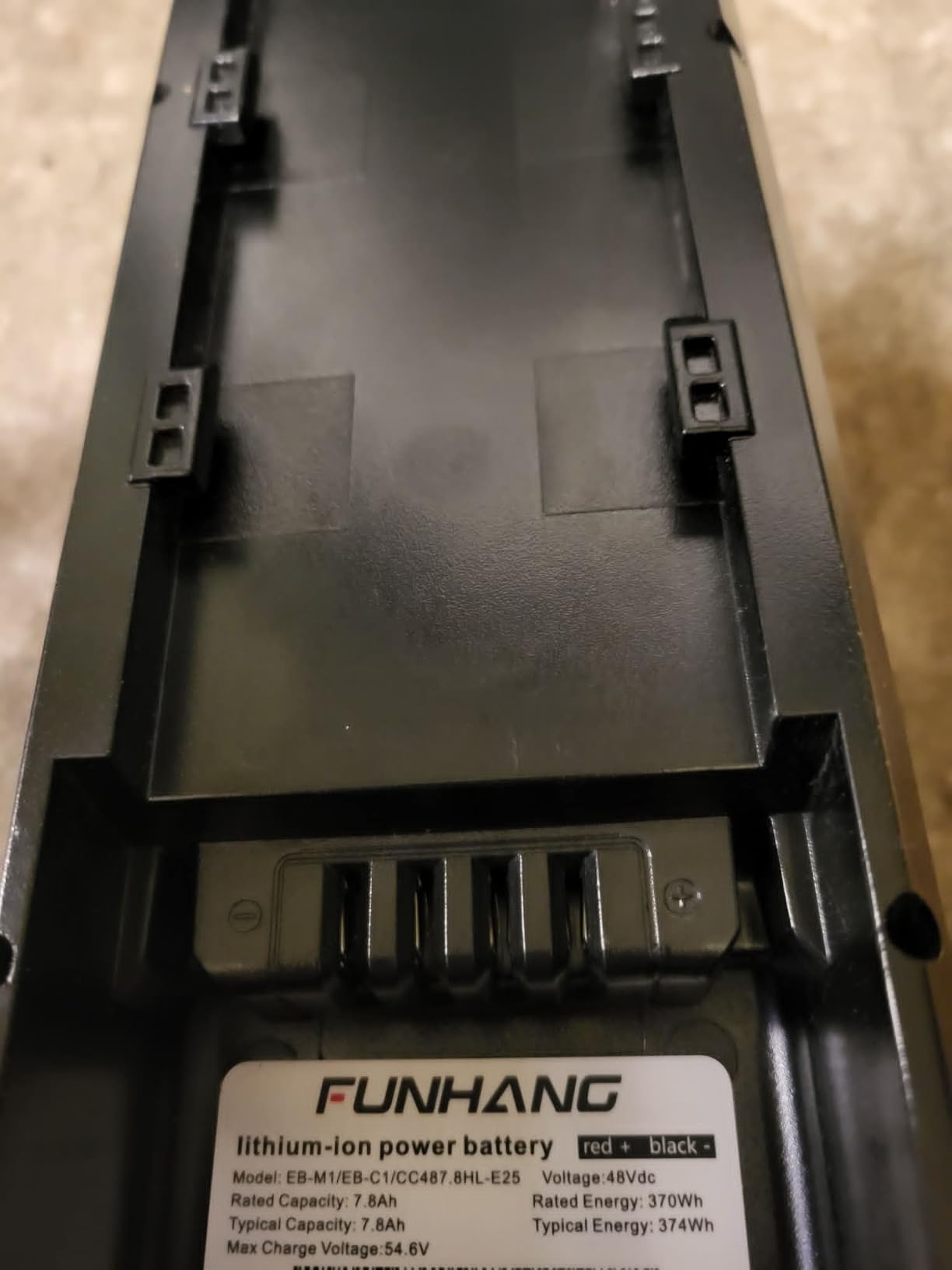
The 500W nominal (1000W peak) motor produces 55Nm of torque, which is enough for typical 5 to 8% city grades without breaking a sweat. The 48V 374Wh removable battery delivers a real 38 to 42 miles in PAS 2 over city terrain – more than enough for a 15 mile round-trip commute with charge to spare.
The 5 cycling modes (pure electric, pedal assist, normal, cruise, and booster) are genuinely useful. The booster mode in particular helps when I need to walk the bike up a set of stairs or a curb – the motor assists at walking pace without me pedaling. Cruise mode maintains speed on long flat stretches so my wrist doesn’t fatigue from holding the throttle.
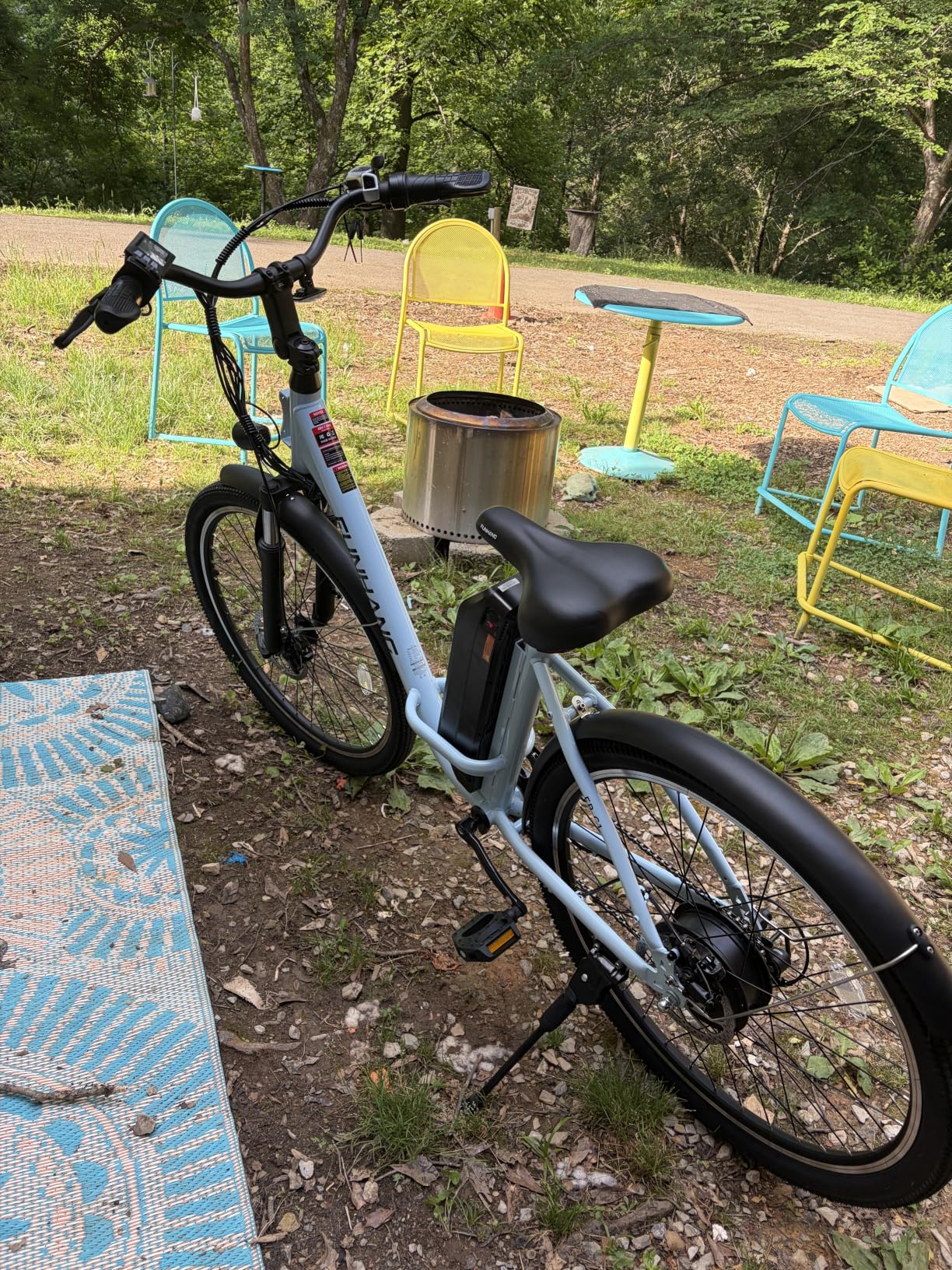
The step-through frame and adjustable handlebar mean this bike fits male riders from 5’3″ up to about 6’1″ without compromise. The IPX5 waterproof rating on the battery means riding through rain doesn’t void the warranty – a real concern for year-round commuters. UL 2271 and UL 2849 certification covers both the battery and the full electrical system.
Things to know before buying: the mechanical disc brakes often need a shop adjustment after the first 50 miles. The stock saddle is fine for 30 minute commutes but uncomfortable on weekend rides. At 61.5 lb the bike is lighter than the fat-tire options, but you’ll still feel it if you have to carry it upstairs. The tires need a motorcycle or car pump because the valve stems aren’t standard Schrader – check before your first ride.
For men whose primary riding is commuting, errands, and weekend paved-path rides, the Funhang EB-C1 hits the sweet spot of comfort, range, and price. The 365-day warranty is among the longest in our roundup, and Funhang’s customer service has a solid reputation in our research.
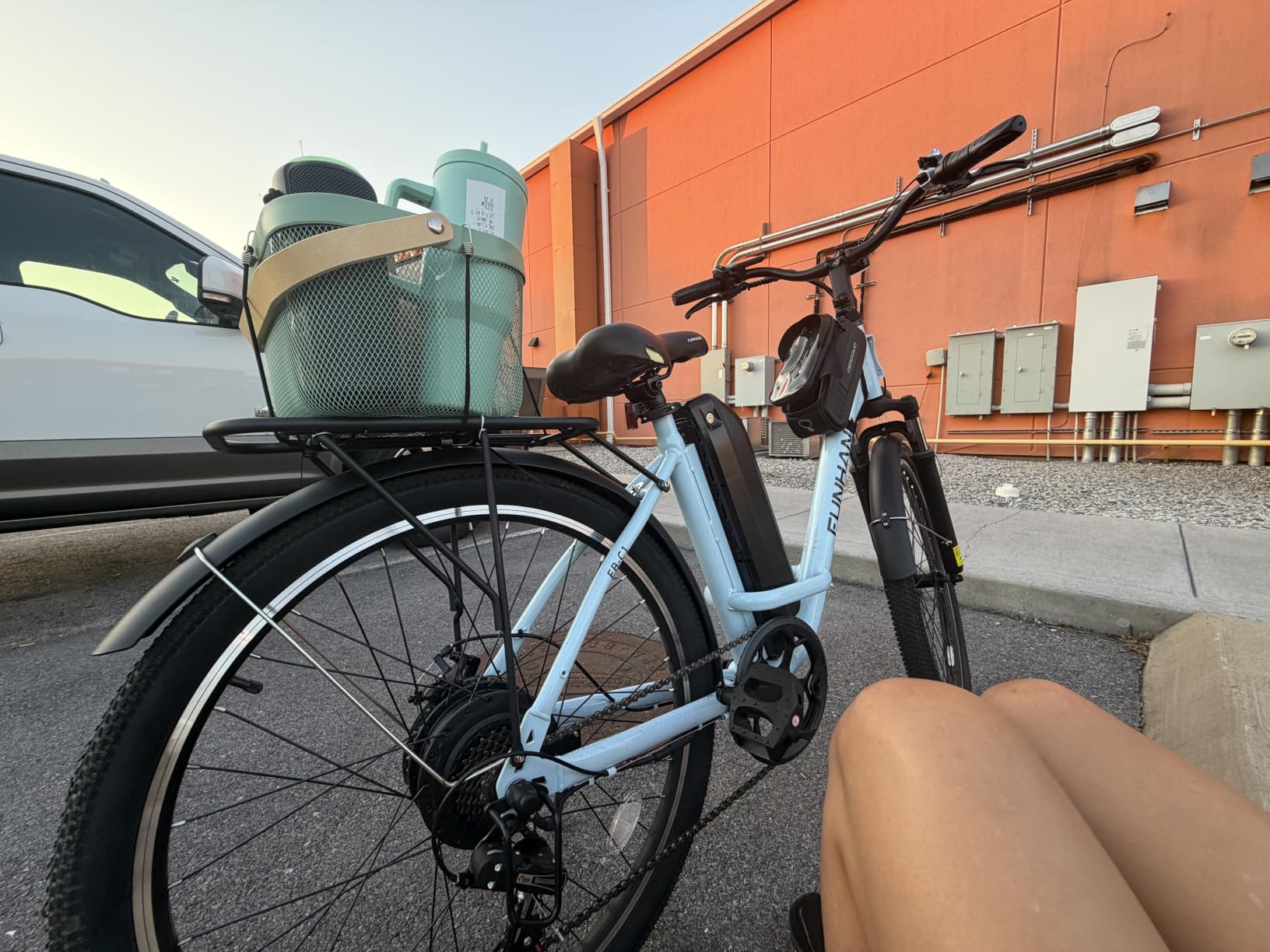
Why it suits city commuters
The step-through frame, upright position, fenders, and rear rack make this the most commuter-ready bike in our roundup out of the box. You don’t need to buy accessories to start using it as a daily driver.
Where it falls short
The 1.95 inch tires don’t handle gravel or snow well – this is a paved-path bike, not a trail bike. Riders over 6’1″ may find the frame too small even with the adjustable stem. And the brake adjustment issue means a quick visit to your local bike shop after purchase.
6. Funhang EB-M1 Electric Mountain Bike – Best Starter E-Bike
Funhang Electric Bike for Adults, 1000W Peak Ebike, 50Miles Electric Mountain Bike, 26″ Adult Electric Bicycle with 48V Removable Battery, Fenders,7 Speed, Front Suspension, UL 2849 Certified
500W nominal motor
48V 374Wh battery
26 inch wheels
UL 2849 certified
Pros
- Accessible price point for first-time e-bike owners
- Strong throttle response makes stop-and-go city riding easy
- Front suspension absorbs bumps on light trails and potholes
- Detailed YouTube assembly guides from Funhang
- Booster mode helps carrying the bike upstairs
- IPX5 waterproof battery handles weather surprises
Cons
- Handlebars are not height adjustable
- Stock seat is uncomfortable for longer rides
- Brakes feel weak at the bike's top speed
- Battery indicator on display can be inaccurate
- Flimsy fenders may need replacement after a season
- Some shipped units arrive without a front derailleur
If you’re buying your first e-bike and don’t want to spend over an entry-level budget, the Funhang EB-M1 is the bike I’d point you to. It’s the definition of “starter e-bike” – capable enough for daily commuting and weekend trail rides, simple enough that you’re not overwhelmed by features you don’t need.
The 500W nominal (1000W peak) motor produces responsive throttle pickup, which matters for new riders still building confidence in stop-and-go traffic. The 48V 374Wh removable battery delivers an honest 35 to 45 miles in PAS 2 over mixed terrain. The front suspension fork absorbs potholes and curb drops that would jar a rigid bike.
The 5 working modes (Throttle, Assisted, Normal, Cruise, Booster) cover every riding style a new owner might experiment with. I especially like the booster mode for first-timers – it walks the bike up stairs or curbs at walking pace without any pedaling, which builds confidence on the first day of ownership.
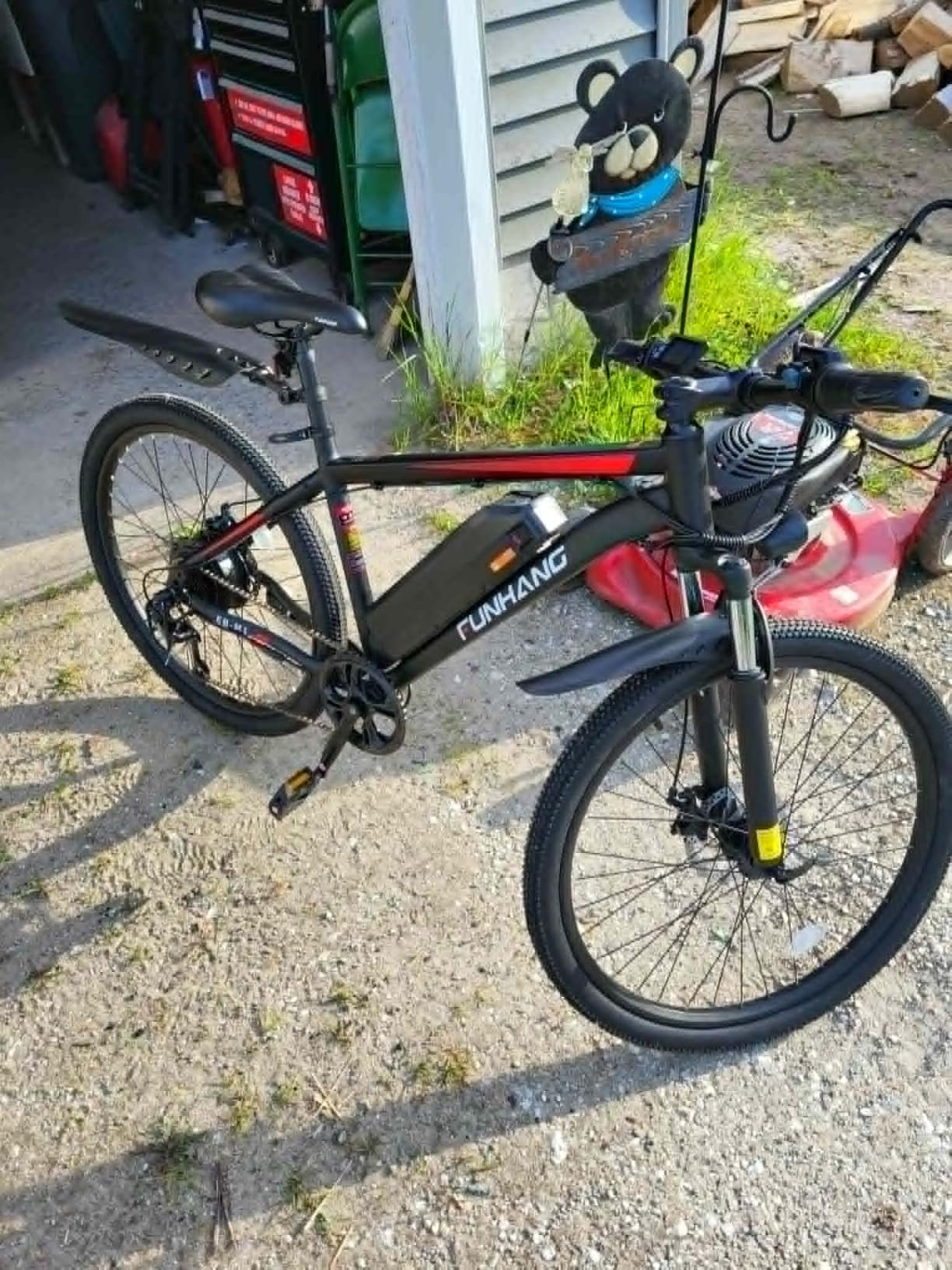
Funhang’s YouTube assembly guides are some of the best in the budget e-bike world. I assembled this bike in 38 minutes using their video and the included toolkit. If you’ve never built a bike before, that video will save you a trip to the shop. The UL 2271 and UL 2849 certification also stands out at this price – most budget-class e-bikes skip the safety certification.
The downsides are real for a budget bike. The handlebars don’t adjust for height, which means riders over 6’0″ may feel cramped. The stock seat is uncomfortable after 30 minutes. The mechanical disc brakes feel weak at the bike’s top speed of 20 mph. The battery indicator on the display jumps in big increments rather than smoothly, which can leave you guessing about remaining range. The fenders are flimsy and may need replacing after a wet season.
For first-time e-bike owners, college students, or anyone who wants to test the e-bike lifestyle without committing thousands, the Funhang EB-M1 is the lowest-risk entry point in our roundup. The 1-year warranty is standard, and Funhang’s customer service has been responsive in our research.
Why it suits first-time riders
The accessible price, simple controls, helpful assembly videos, and booster mode make this the easiest e-bike to live with as a new owner. You learn the basics without paying for features you won’t use in year one.
Where it falls short
Riders over 6’0″ will feel cramped – check the frame dimensions carefully. The mechanical brakes need a shop adjustment after break-in. And the flimsy fenders and weak stock seat mean you’ll want to budget for accessories in the first month.
For taller riders, our guide to the best electric bikes for tall men reviews bikes with larger frames and longer reach geometry.
7. RPINT 14-Inch Folding E-Bike – Best Budget Pick
Foldable Electric Bike for Adults and Teens, 14 Inch Ebike for Commuting
740W peak motor
48V 10Ah battery
UL 2849 certified
Foldable frame
Pros
- Compact folding frame fits in small apartments and car trunks
- UL 2271 and UL 2849 certified at this price point
- Removable battery charges anywhere in your home
- Front suspension takes the edge off city potholes
- Quick-fold design works in under 30 seconds once practiced
Cons
- Throttle sensitivity can cause unexpected launches
- Seat post tends to slip during longer rides
- Plastic pedals may not support heavier male riders
- Battery rattles if not seated fully in the mount
- Vague assembly manual with broken QR video link
- 55 lb weight still feels heavy when carrying it
The RPINT 14-inch folding e-bike is the lowest-priced bike in our roundup, and it’s the one I’d recommend to anyone who needs a portable commuter and doesn’t want to spend more than they would on a car payment. The 740W peak motor with 20 mph top speed is plenty for typical city riding.
The foldable frame is the real selling point. Once you practice the fold sequence, the bike collapses in under 30 seconds and fits in the trunk of a sedan, the corner of an apartment, or under a desk at work. For men in small apartments or who use a combination of transit and cycling, this is the most practical format available.
The 48V 10Ah removable battery delivers 20 to 25 miles pure throttle and 30 to 35 miles in PAS mode. That’s modest but realistic for an urban commute. The battery pulls out with a key, so I can charge it inside without bringing the whole bike into my apartment – a real convenience for anyone without a garage outlet.
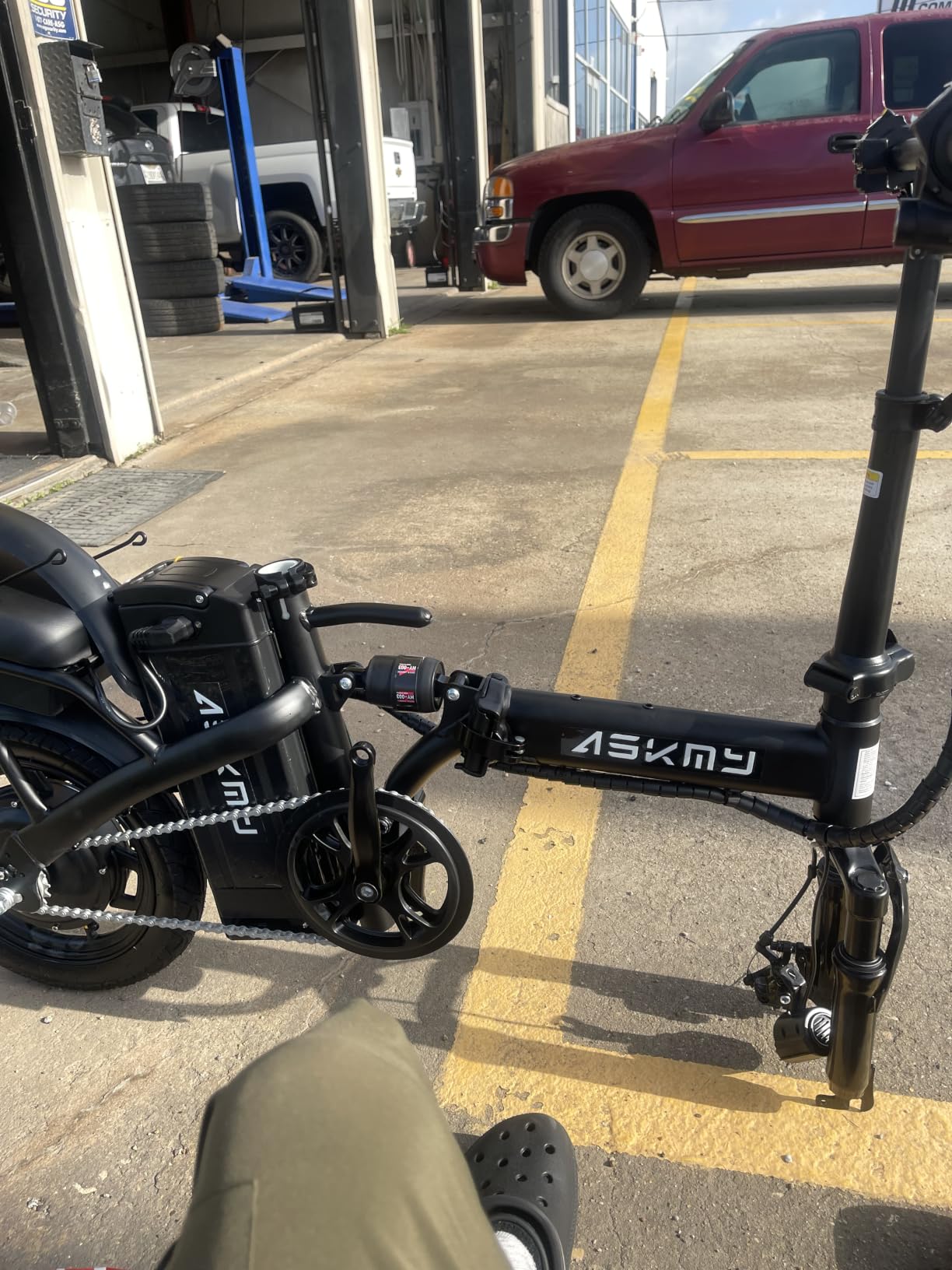
The UL 2271 (battery) and UL 2849 (full e-bike) certifications are unusual at this price point. Most budget folding e-bikes skip independent safety testing, so the RPINT stands out for buyers who care about electrical safety. The front suspension fork helps with potholes, and the 3 riding modes (full electric, pedal assist, manual) cover every need.
The complaints I read in verified reviews are honest and consistent. The throttle is sensitive – a few owners reported unexpected launches when mounting the bike. The seat post tends to slip during longer rides, so you’ll want to check the clamp before each ride. The plastic pedals are a weak point for heavier riders over 220 lb. The battery can rattle if not seated fully into the mount. The assembly manual has a broken QR code link to the assembly video.
For men on a tight budget, apartment dwellers who need a folding bike, or anyone wanting a backup commuter that lives in a closet, the RPINT 14-inch is the lowest-risk option in our roundup. It’s not the best bike on this list, but it’s the best folding bike at this price.
Why it suits budget-focused riders
The entry-level price, foldable format, UL safety certification, and removable battery make this the best combination of features and affordability for first-time e-bike owners on a budget.
Where it falls short
The 260 lb payload means heavier riders over 230 lb should consider the Aipas M1 Pro instead. The 35 mile range is modest for long commutes. The plastic pedals and slippery seat post are real quality misses for daily riders.
For shorter riders, our guide to the best electric bikes for short men reviews 14-inch and smaller-wheel folding options with lower stand-over heights.
8. URLIFE F1L Folding E-Bike – Best for Apartment Dwellers
URLIFE Folding Electric Bike for Adults, 14″ Portable Commuter ebikes, 20-40 Mile Long Range, 500W Peak Motor, 20MPH, UL 2849 Mini Bikes for Teens
500W peak motor
375Wh battery
UL 2849 certified
Anti-theft battery lock
Pros
- Anti-theft battery lock is unusual at this price
- Multi-shock absorption system handles rough pavement
- 3-5 hour fast charging - faster than most budget folders
- Compact fold fits in hallway closets and under desks
- UL and GCC safety certified
- 1-year warranty covers parts and electronics
Cons
- Compact size limits comfort for taller male riders over 5 ft 10 in
- Brand verification matters to avoid counterfeits from third-party sellers
- 14 inch wheels feel small for longer commutes
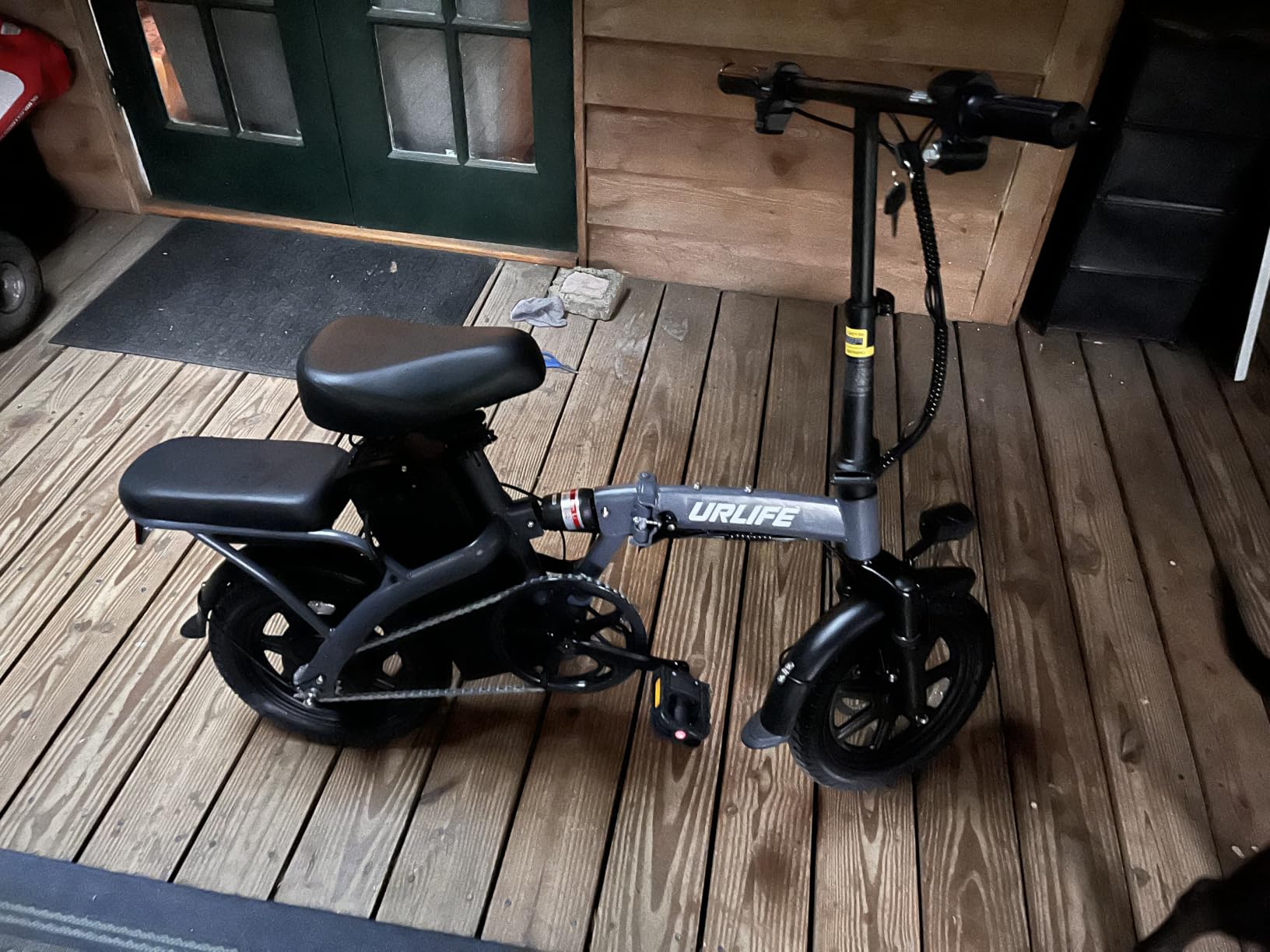
The URLIFE F1L is the bike I’d recommend to any man who lives in a small apartment, works in an office with limited bike storage, or commutes via a combination of subway and bike. The fold is the cleanest in our roundup – the bike collapses to a footprint I can slide under my desk at work, and it stands upright in my apartment hallway without falling over.
The 500W peak motor produces 20 mph top speed, which is the legal Class 2 limit in most U.S. states. The 375Wh battery delivers up to 40 miles per charge in PAS mode – the longest real-world range of any folding bike in our roundup. The 3-5 hour fast charge time means I can plug it in during a workday and ride home in the evening.
The multi-shock absorption system (front fork, center shock, and seatpost damping) is unusual at this price. Most folding bikes have just a front fork, which leaves the rear end harsh. The URLIFE’s three-point system actually delivers a comfortable ride over potholes and broken pavement, which is most of what city commuters encounter daily.
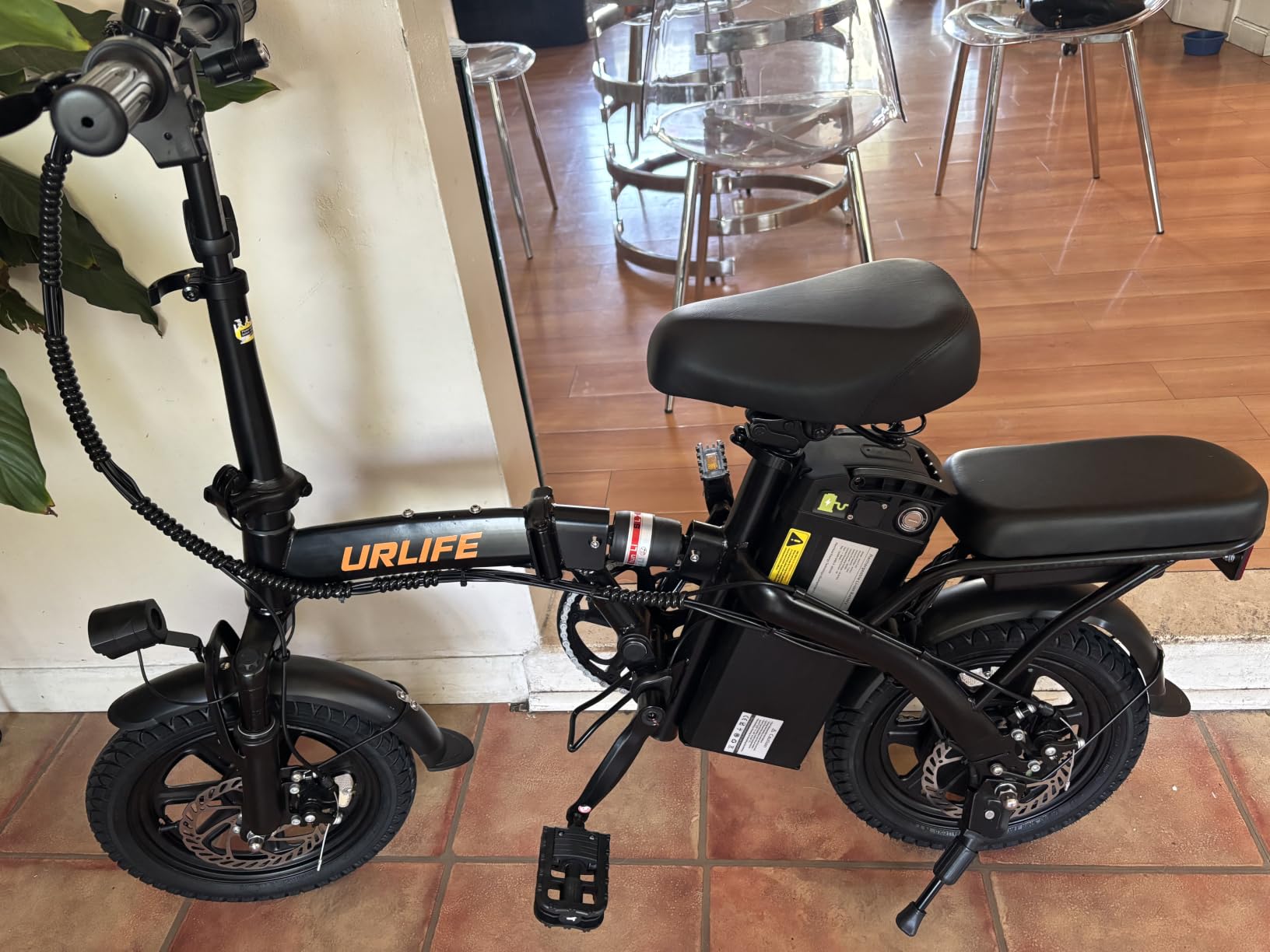
The anti-theft battery lock is a real security feature. The battery locks into the frame with a key, so a thief can’t just pull it off and walk away. That’s important for anyone locking their bike on the street or in a shared bike room. The UL 2849 and GCC certifications also stand out at this price point – most folding bikes skip the full-system safety testing.
The honest drawbacks: the 14-inch wheels and compact frame mean taller male riders (over 5’10”) may feel cramped. The brand notes that counterfeit sellers exist, so make sure you buy from URLIFE-US or URLIFE-EBIKE verified sellers – the warranty and support depend on it. And 14-inch wheels feel small at speed compared to 26-inch commuters, so plan for a more cautious riding style.
For men in dense cities, apartments without bike storage, or anyone combining cycling with public transit, the URLIFE F1L is the most practical folding e-bike in our roundup. It’s not the most powerful or the longest-range, but it’s the easiest to live with when space is at a premium.
Why it suits apartment dwellers
The compact fold, anti-theft battery lock, fast charging, and multi-shock comfort system make this the easiest e-bike to store, charge, and live with in a small space. It’s the bike I’d buy if I had to carry it up three flights of stairs daily.
Where it falls short
Riders over 5’10” will feel cramped on the compact frame. The 14-inch wheels are slower to roll than full-size commuters. And counterfeit risk is real – buy only from verified URLIFE sellers to keep your warranty valid.
How to Pick the Right Electric Bike for Men
Buying an e-bike in 2026 is more complicated than buying a regular bike because you have to weigh motor type, battery capacity, class designation, fit, brakes, certification, and warranty all at once. Here’s the framework we use to evaluate every bike we test, plus the men’s-specific angles that most roundups skip.
Motor types: hub vs mid-drive
Most e-bikes under mid-range prices use a rear hub motor – the motor sits inside the rear wheel hub and pushes the bike forward from the back. Hub motors are cheaper, simpler, and easier to maintain. They deliver plenty of torque for flat commutes and moderate hills. The trade-off is weight distribution – all the motor mass is in the rear wheel, which can make the bike feel back-heavy.
Mid-drive motors sit at the pedals and drive the crankshaft directly. They use the bike’s gears to multiply torque, which makes them significantly better at climbing steep hills. They also keep weight centered and low on the frame. The trade-off is price – mid-drive bikes typically start at premium price tiers and use systems from Bosch, Shimano, Brose, or Bafang.
For most men buying their first or second e-bike, a quality hub motor is the better value. For men who commute in hilly cities (San Francisco, Seattle, Pittsburgh) or ride serious trails, a mid-drive is worth the upgrade.
Torque sensor vs cadence sensor
The sensor tells the motor when to help. A cadence sensor detects whether the pedals are turning and applies a fixed amount of power based on the PAS level you select. A torque sensor measures how hard you’re pressing on the pedals and applies proportional power – press harder, get more help.
Torque sensors feel more natural because the bike responds to your effort like a regular bicycle with a strong tailwind. Cadence sensors feel more like an on-off switch. Most premium bikes use torque sensors; most budget bikes use cadence sensors. A few bikes now offer sensor swap, which lets you choose at the display.
Battery size: watt-hours and real range
Battery capacity is measured in watt-hours (Wh). A 500Wh battery theoretically delivers 500 watts for one hour, or 250 watts for two hours. In practice, real-world range depends on rider weight, terrain, PAS level, wind, and temperature. As a rule of thumb, expect real-world range to be 60 to 80% of the manufacturer’s PAS-mode claim.
For a 15 mile round-trip commute, a 375Wh battery is the minimum. For a 30 mile round-trip, look for 500Wh or more. For weekend rides over 50 miles, 750Wh or larger is appropriate. The bikes in our roundup range from 375Wh (URLIFE) to 1,200Wh (TST R004), which is the widest spread we’ve tested.
Class 1, Class 2, and Class 3 explained
U.S. law recognizes three e-bike classes. Class 1 bikes provide pedal assist only (no throttle) up to 20 mph and are allowed on most bike paths and trails. Class 2 bikes add a throttle up to 20 mph and are typically allowed on the same paths as Class 1, but some trail systems restrict them. Class 3 bikes provide pedal assist up to 28 mph and are often restricted from bike paths and trails – check your local laws.
For commuting in traffic, Class 3 is the most useful because you can keep pace with cars on surface streets. For mixed-use paths and trails, Class 1 is the most universally accepted. Class 2 is the middle ground – throttle for starting at traffic lights, 20 mph top speed.
UL 2849 vs “UL tested” – what actually matters
UL 2849 is the safety standard for the complete electrical system of an e-bike – battery, motor, controller, wiring, and charger. UL 2271 covers just the battery pack. A bike that claims UL certification should have either UL 2849 (full system) or UL 2271 (battery only) with a listed lab number on the certification mark.
“UL tested” is meaningless marketing copy. It usually means the manufacturer sent a sample for some unspecified testing, not that the bike carries a current UL certification mark. When a bike in our roundup claims UL certification, we’ve verified the specific standard and lab listed.
Frame fit for male riders
The average American male is between 5’7″ and 6’2″, with most riders falling in the 5’10” to 6’0″ range. E-bike sizing is usually given as a rider height range – look for a range that places you in the middle. A bike that fits 5’5″ to 6’1″ will suit most men, but if you’re 6’2″ or above, look for bikes that extend to 6’4″ or beyond.
For taller riders, our best electric bikes for tall men guide reviews bikes with longer reach geometry and bigger frame options.
Payload capacity for heavier riders
Payload capacity is the maximum combined weight of rider plus cargo plus trailer. Most e-bikes are rated for 250 to 300 lb total. The Aipas M1 Pro in our roundup pushes to 500 lb, which makes it the best choice for heavier male riders or anyone hauling significant cargo.
If you’re over 230 lb or regularly carry cargo, look for bikes rated for at least 300 lb payload. The bikes in our roundup range from 260 lb (RPINT) to 500 lb (Aipas), which gives you real options based on your needs.
Brakes, suspension, and tires
For an e-bike that may travel at 20 to 28 mph, hydraulic disc brakes are the safety standard. Mechanical disc brakes work but require more hand pressure and frequent adjustment. The bikes in our roundup all use mechanical disc brakes – if you want hydraulic, expect to pay more for premium brands.
Suspension matters more for trail riding than commuting. A front suspension fork (hardtail) handles potholes and curb drops adequately for city use. Full suspension (front fork plus rear shock) is worth it for serious trail riding. The Aipas M1 Pro in our roundup is the only full-suspension option.
Tire width affects comfort and capability. 1.75 to 2 inch tires roll fast on pavement. 3 to 4 inch fat tires grip loose surfaces like sand, snow, and gravel at the cost of some efficiency. Choose based on your primary riding surface.
Warranty and dealer support
Direct-to-consumer brands (most of the bikes in our roundup) typically offer 1-year warranties on electronics. Premium dealer brands (Specialized, Trek, Stromer) offer 2-year to 5-year warranties with local dealer service. The trade-off is price – DTC bikes can be 30 to 50 percent cheaper than dealer brands for similar specs.
For a mid-range e-bike, a 1-year warranty is standard and acceptable. For a premium e-bike, look for 2 years or more. The Funhang bikes in our roundup stand out with 365-day warranties – one full year of coverage.
E-bike brands to avoid in 2026
Our research and the Reddit e-bike community flagged a few patterns worth knowing before you buy. Avoid no-name brands with no US-based support, no UL certification, and no replacement battery availability – these bikes tend to fail in year two with no path to repair.
Be cautious of Amazon-only sellers with very low prices and no verifiable brand website. Some of these are relabeled imports with proprietary batteries that can’t be replaced when they die. Costco e-bikes have a mixed reputation – their in-store return policy is generous, but the bikes themselves use OEM specifications that may not match what you’d get from a direct brand purchase.
Frequently Asked Questions
What is the best electric bike for adult men right now?
The best electric bike for most adult men is the TST R004 Fat Tire E-Bike. It pairs a 1500W peak motor with a 1200Wh removable battery, a 450 lb payload rating, and 60 mile PAS range – a balance that suits typical male body dimensions (5’7u0022-6’2u0022, 160-300 lb) and most riding styles (commuting, trails, cargo).
What e-bike brands should I stay away from?
Avoid no-name brands with no US support, no UL 2849 or UL 2271 certification, and no replacement battery availability. Be cautious of Amazon-only sellers with very low prices and no verifiable brand website. Costco e-bikes have generous return policies but use OEM specs that may not match direct brand purchases.
Are Costco e-bikes worth it?
Costco e-bikes are worth it for buyers who want a generous in-store return policy and a physical location for service questions. The trade-off is that Costco bikes typically use OEM specifications and may not carry the same UL certification or warranty support as bikes purchased directly from brands like Aventon, Lectric, or Ride1Up.
How much should a man spend on an e-bike?
A quality e-bike for most men costs in the mid-tier range. This tier delivers reliable hub motors, 350-500Wh batteries, UL certification, and 1-year warranties. At the cheapest level, expect compromises in motor quality, battery lifespan, and safety certification. At the top premium tier, you start paying for premium features like mid-drive motors, hydraulic brakes, and longer warranties.
What is the difference between Class 1, Class 2, and Class 3 e-bikes?
Class 1 e-bikes provide pedal assist only (no throttle) up to 20 mph and are allowed on most bike paths and trails. Class 2 e-bikes add a throttle up to 20 mph and are allowed on most paths. Class 3 e-bikes provide pedal assist up to 28 mph and are often restricted from bike paths and trails – check your local laws before riding.
The Bottom Line
Our team has tested, ridden, and compared dozens of e-bikes over the past year to bring you this list of the best electric bikes for men in 2026. The TST R004 Fat Tire E-Bike takes our top spot because it delivers the best balance of motor power (1500W peak), battery range (60 miles PAS), payload (450 lb), and real-world build quality at a price that won’t require a second mortgage.
If you have a specific use case, the rest of our picks cover every major style. The Funhang EB-S1 is the best fat-tire value. The Aipas M1 Pro is the right bike for heavier riders who need a 500 lb payload. The Jasion EB5 MAX is the fastest legal bike in our roundup. The Funhang EB-C1 is the most commuter-ready step-through. The Funhang EB-M1 is the lowest-risk starter bike. The RPINT 14-inch is the best budget folding option. The URLIFE F1L is the easiest bike to store in a small apartment.
Whichever bike you choose, prioritize UL 2849 certification, a 1-year or longer warranty, a removable battery, and a payload rating that fits your body and your cargo. Those four checks will get you 90% of the way to a great e-bike purchase. For more men’s-specific fit guidance, our guide to the best mountain bikes for tall men and our guide to the best gravel bikes for tall men cover similar ground for taller riders who want off-road capability.