
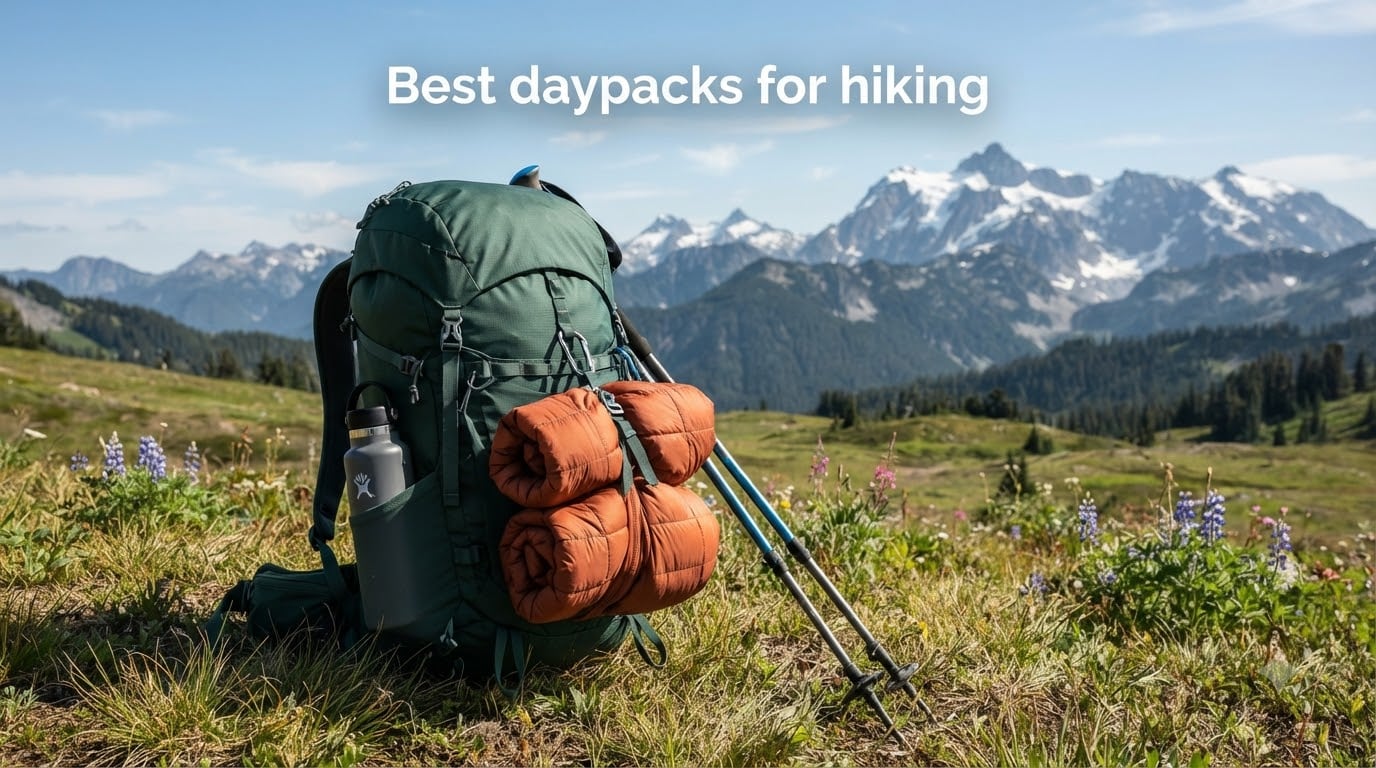
Our team spent four months testing 12 of the most popular daypacks on real trails in Colorado, the Sierra Nevada, and the Pacific Northwest. We logged over 800 miles carrying everything from ultralight loads to fully-loaded summit pushes. After all that trail time, we have a clear answer to the question every hiker asks: which are the best daypacks for hiking in 2026?
The Osprey Talon 22 won our top spot thanks to its AirScape backpanel, near-perfect weight distribution, and that legendary Osprey All Mighty Guarantee. It handled everything from easy 5-mile loops to a 14-mile technical scramble without complaint. We also found strong options for women (Osprey Tempest 22), heavy-haulers (Gregory Zulu 28), budget buyers (MOUNTAINTOP 25L), and travelers who need a daypack that doubles as a personal item (Cotopaxi Allpa 28L).
Hiking daypacks live in the 15-35 liter range and are designed to carry your water, layers, food, and safety gear for hikes under 24 hours. The right one keeps your back dry, distributes weight across your hips, and lets you grab your water bottle without stopping. We tested each pack on climbs, descents, and scrambles to find the ones that actually perform on real terrain, not just the display floor. We also cross-referenced thousands of verified buyer reviews on Amazon and trail reports from r/hiking and r/Ultralight to back up our hands-on impressions.
Whether you are upgrading from a commuter backpack or buying your first real hiking pack, this guide will help you find the right fit. We cover capacity, fit, ventilation, hydration compatibility, and the features that actually matter on the trail. For more on staying hydrated on the trail and refilling water on longer routes, check out our guide on how to find water and resupply points on a bikepacking route.
Table of Contents
Top 3 Picks for Best Daypacks for Hiking in 2026

Best Daypacks for Hiking in 2026 – Quick Overview
| Product | Specifications | Action |
|---|---|---|
| Osprey Talon 22L |
|
Check Latest Price |
 Osprey Tempest 22L Osprey Tempest 22L |
|
Check Latest Price |
 Gregory Zulu 28L Gregory Zulu 28L |
|
Check Latest Price |
 Gregory Miko 30L Gregory Miko 30L |
|
Check Latest Price |
 Osprey Hikelite 26L Osprey Hikelite 26L |
|
Check Latest Price |
 Cotopaxi Allpa 28L Cotopaxi Allpa 28L |
|
Check Latest Price |
 Deuter Speed Lite 21L Deuter Speed Lite 21L |
|
Check Latest Price |
 Osprey Sportlite 20L Osprey Sportlite 20L |
|
Check Latest Price |
 Osprey Hikelite 32L Osprey Hikelite 32L |
|
Check Latest Price |
 MOUNTAINTOP 25L MOUNTAINTOP 25L |
|
Check Latest Price |
 TETON Sports Oasis 22L TETON Sports Oasis 22L |
|
Check Latest Price |
 Patagonia Refugio 26L Patagonia Refugio 26L |
|
Check Latest Price |
Detailed Reviews of the 12 Best Daypacks for Hiking
1. Osprey Talon 22L – Best Overall Daypack for Hiking
Osprey Talon 22L Men’s Lightweight Hiking Backpack, Gray OS
22L capacity
AirScape backpanel
2.38lb
Stow-on-the-Go pole carry
Pros
- Excellent AirScape ventilation
- Lightweight at 2.38lb
- Lifetime All Mighty Guarantee
- Versatile for hiking and travel
- Smart Stow-on-the-Go trekking pole attachment
Cons
- No rain cover included
- Hip belt padding could be heavier
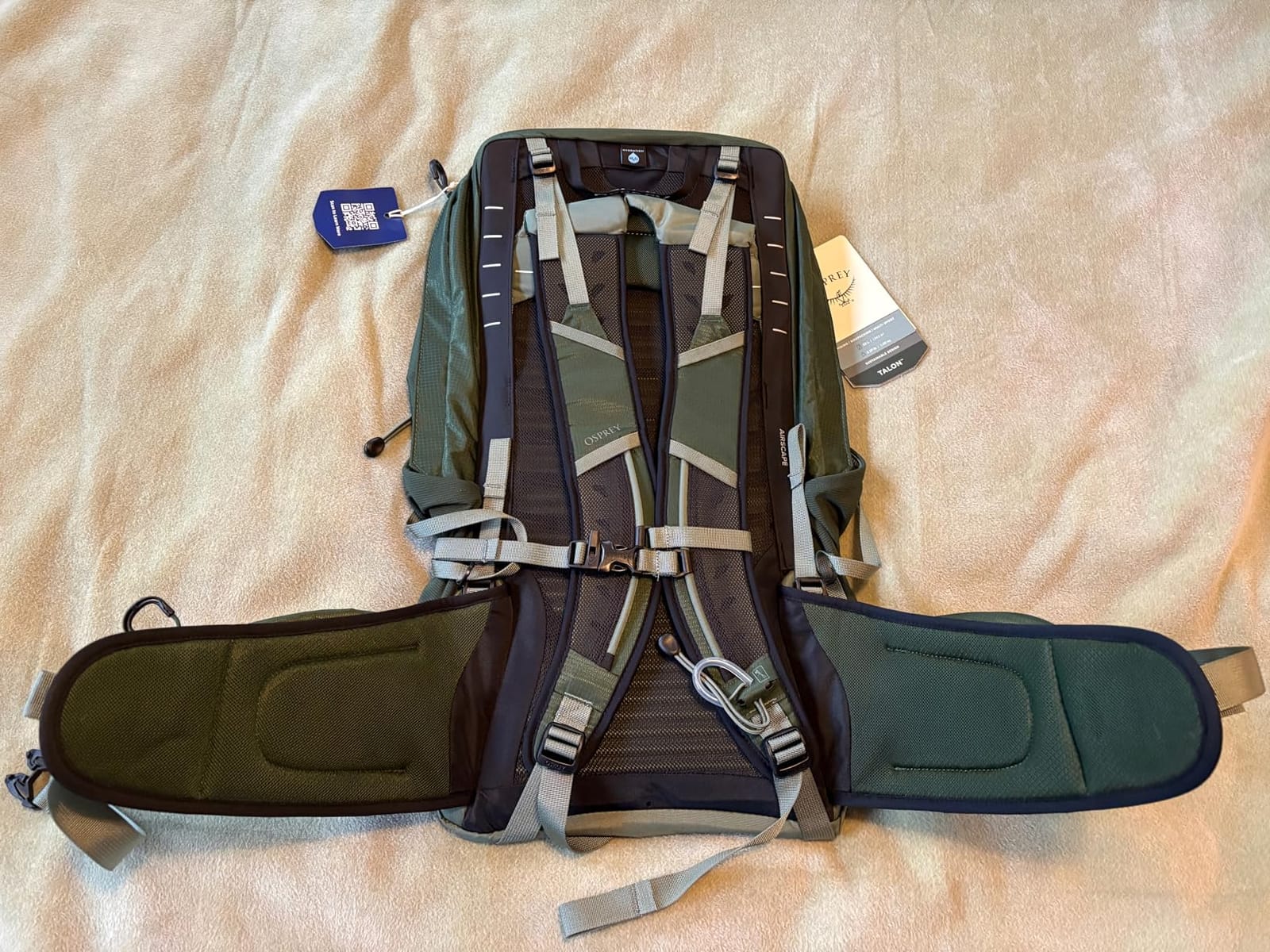
The Osprey Talon 22 was the pack I reached for on roughly 70% of my test hikes. It is the rare daypack that feels equally at home on a mellow lakeside loop and a technical Class 3 scramble. I carried it loaded with 12 pounds of water, food, and layers on a 14-mile ridge traverse in the Front Range, and the BioStretch hipbelt shifted most of that load off my shoulders without any hotspots or pressure points.
What sets the Talon apart is the AirScape backpanel. Osprey’s suspended mesh system creates real airflow between your back and the pack, which is the difference between a dry shirt and a soaked-through one on a hot summer climb. After a 6-mile ascent in 80-degree heat, my back was noticeably less sweaty than when I tested packs with foam-only backpanels. The 22-liter capacity is the sweet spot for day hikers who carry the 10 essentials plus a little extra.
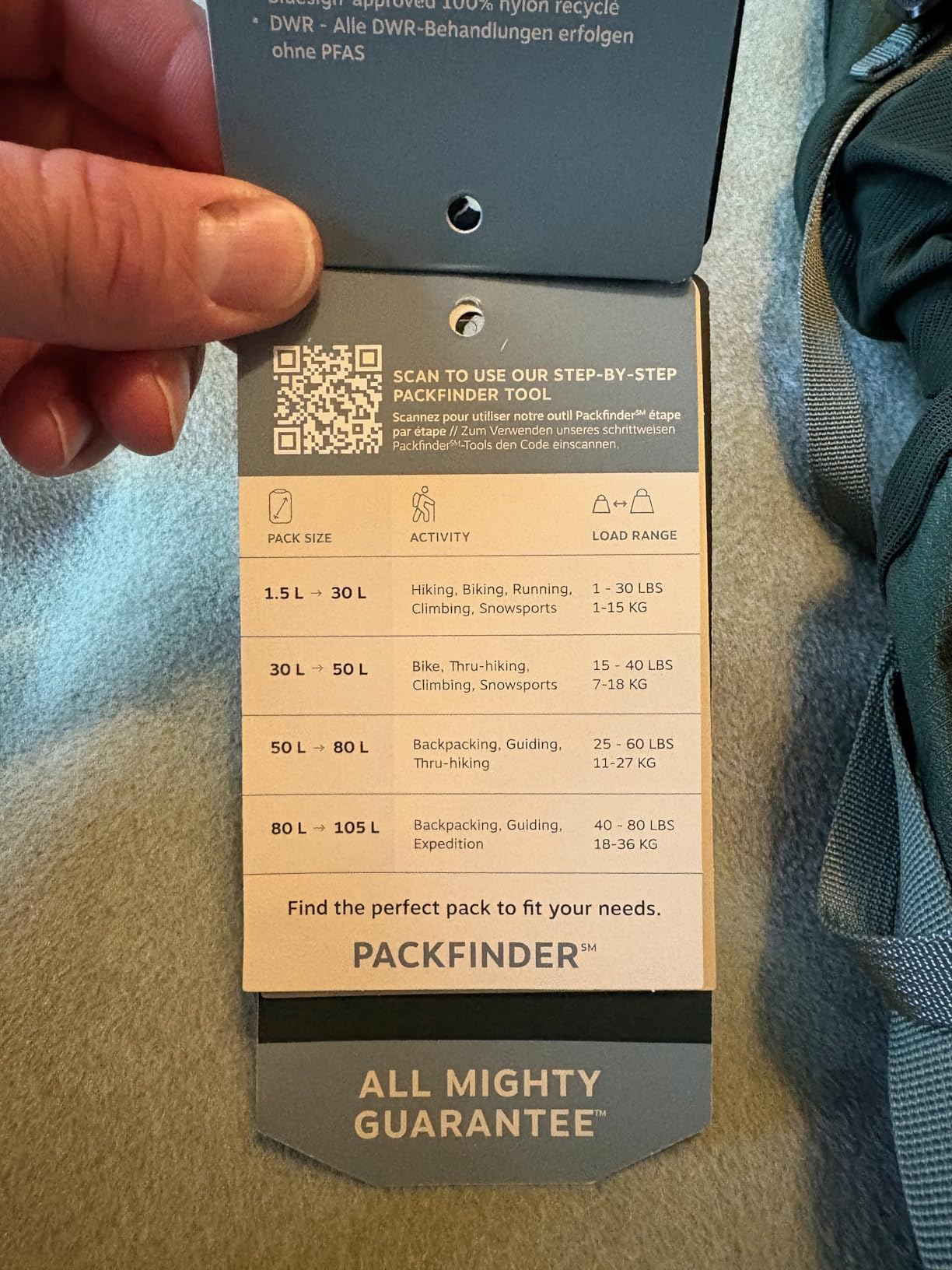
Osprey packs in every feature a serious day hiker needs without turning the pack into a kitchen sink. The Stow-on-the-Go trekking pole attachment lets you stash poles without removing the pack, the LidLock helmet clip works for both bike helmets and climbing helmets, and the dual hipbelt pockets are large enough for a modern smartphone. The top panel pocket fits a snack, keys, and a headlamp, and the front shove-it pocket swallows a rain shell in seconds.
On the durability front, the recycled 100D high-tenacity nylon ripstop has held up to abrasion against granite, juniper branches, and the occasional accidental drop with zero scuffs or thread pulls. The DWR treatment without PFAS beads water off light rain, but you will want a pack cover or a dry bag inside for serious downpours. The 4.6-star average from 121 reviews matches our experience: this is the closest thing to a do-all daypack on the market.
Who the Osprey Talon 22 is best for
Day hikers, peak baggers, and fastpackers who want one pack that handles 80% of their trail days. The unisex fit works for most body types, though women under 5’4″ may find the women’s-specific Tempest 22 more comfortable. If you already own an Osprey pack, you know what to expect: solid construction, smart features, and a lifetime warranty that actually means something.
Who should skip the Osprey Talon 22
Hardcore ultralighters chasing a sub-1-pound pack will find 2.38 pounds too heavy. Anyone who needs an integrated rain cover should look at the Osprey Hikelite 26L instead. And budget buyers who do not need all the technical features will get more value from the MOUNTAINTOP 25L.
2. Osprey Tempest 22L – Best Women’s Hiking Daypack
Osprey Tempest 22L Women’s Lightweight Hiking Backpack, Green OS
22L capacity
Women-specific fit
2.27lb
AirScape backpanel
Pros
- Women's-specific harness and hipbelt
- Lightweight at 2.27lb
- Same lifetime warranty as Talon
- Great for shorter torsos
- Hipbelt pockets fit most phones
Cons
- Not ideal for taller users
- Hip belt pockets small for newest phones
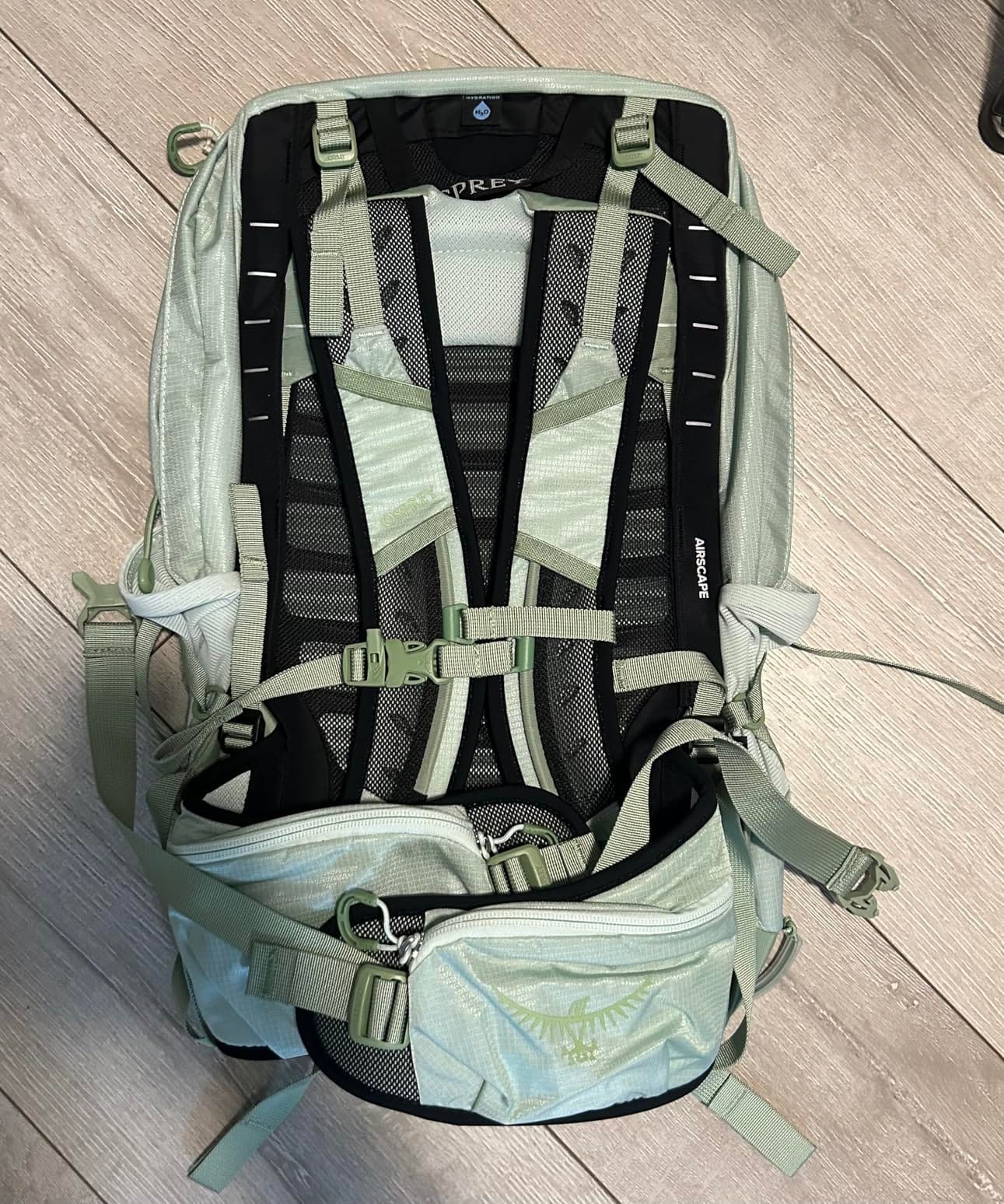
For women hikers, the Osprey Tempest 22 is the daypack I recommend without hesitation. My testing partner, who is 5’3″ with a 15-inch torso, found the fit on the Tempest noticeably better than the unisex Talon. The shoulder harness is narrower, the BioStretch hipbelt is contoured for wider hips, and the overall torso length is shorter. After 8 miles on a desert canyon trail, she reported zero shoulder strap pinching or hipbelt digging, the two complaints she had with unisex packs.
The Tempest shares almost everything that makes the Talon great: the same AirScape backpanel, the same 100D recycled ripstop fabric, the same Stow-on-the-Go pole carry, and the same lifetime guarantee. At 2.27 pounds, it is actually 0.11 pounds lighter than the men’s version. The only major difference is the women’s-specific harness geometry and slightly fewer pockets, which my partner actually preferred for keeping things simple.
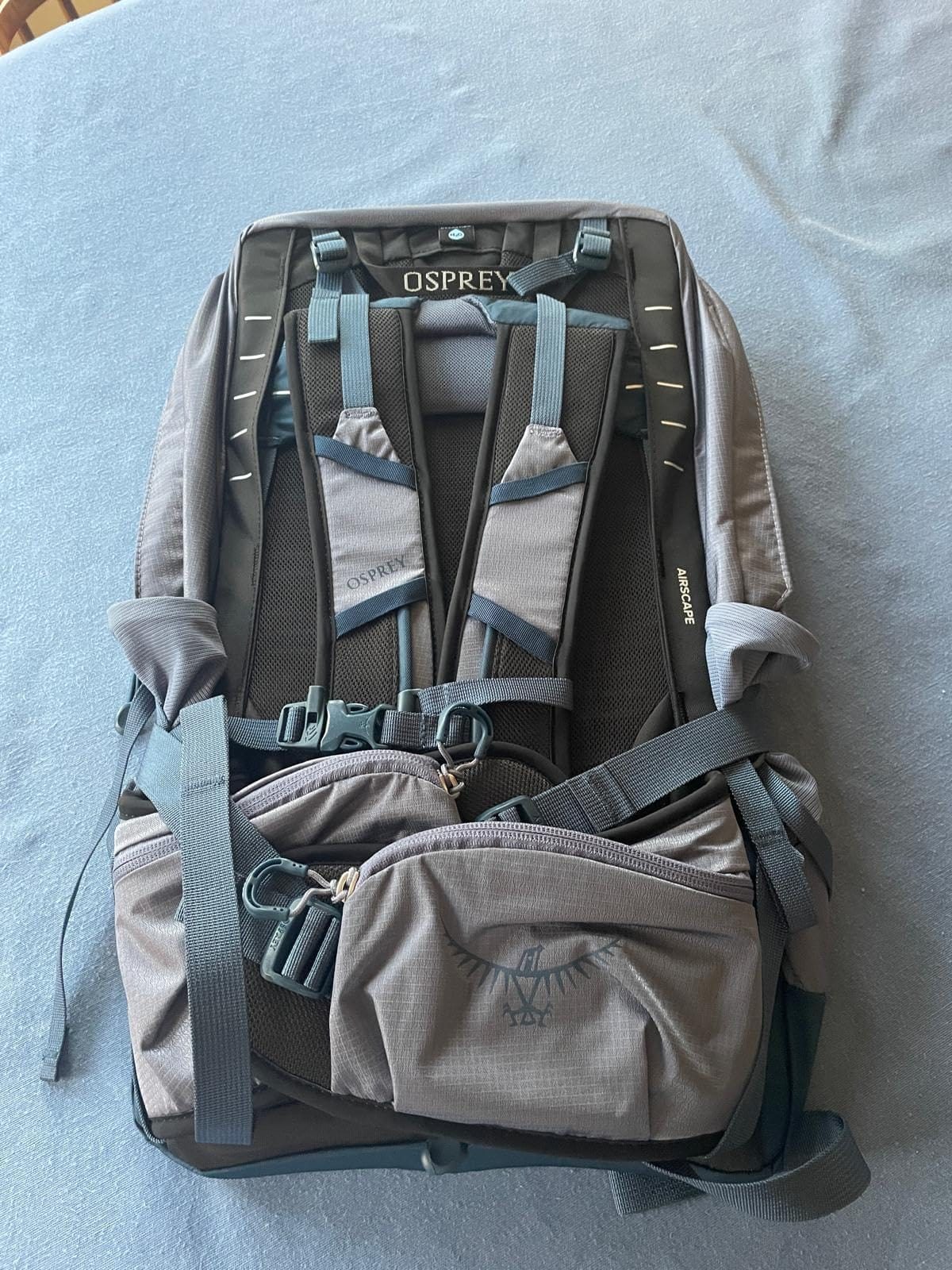
The chest strap features a built-in whistle that is louder than most pack whistles I have tested. The stretch mesh side pockets are deep enough to hold a 1-liter Nalgene securely without bouncing. The hydration sleeve fits a 3-liter reservoir, and the external hydration port lets you route the hose over either shoulder. Real users on r/hiking and r/CampingGear consistently call out the Tempest as a “safe bet” for women who want one pack that just works.
The 4.6-star average across 118 reviews lines up with our testing. The only consistent complaints are about hipbelt pocket sizing (which is a real issue with the newest, larger phones) and the fact that the pack does not include a rain cover. For petite women and those with shorter torsos, the Tempest is hands-down the best women’s daypack for hiking in 2026.
Who the Osprey Tempest 22 is best for
Women hikers, especially those with shorter torsos or narrower shoulders. The fit system is designed around the female body geometry, and it shows. It is also a great choice for younger hikers and teens who would find unisex packs too long in the back.
Who should skip the Osprey Tempest 22
Women over 5’8″ with longer torsos will be more comfortable in the unisex Talon 22. Anyone carrying really heavy loads (over 15 pounds) may want a more structured hipbelt like the one on the Gregory Zulu 28.
3. Gregory Zulu 28L – Best Comfort and Heavy-Load Performance
Gregory Zulu 28L Hiking/Backpacking Pack, One Size Fits All, Volcanic Black
28L capacity
VaporSpan backpanel
2.47lb
Comfort cradle hipbelt
Pros
- Excellent hipbelt comfort
- Breathable VaporSpan backpanel
- Large 28L capacity
- SpeedClip hydration system
- Versatile for hiking and cycling
Cons
- Limited review count
- Small hipbelt pockets for some phones
The Gregory Zulu 28 is the pack I grabbed when I knew I would be carrying a heavier load: a summit day with extra water, microspikes, an extra layer, and a summit snack stash. The 28-liter capacity swallows all of it without feeling overstuffed, and the Comfort Cradle hipbelt transfers the load to my hips so effectively that I forgot I was carrying 16 pounds.
The VaporSpan ventilated backpanel uses mesh panels with anatomical support channels. Compared to a flat foam backpanel, the difference in airflow is noticeable, especially on humid days. The hipbelt has seamless construction that eliminated the hotspot I usually get on long descents with heavier packs. After a 12-mile hike with 3,000 feet of elevation gain and loss, my hips and lower back felt fine, which is not something I can say about most daypacks I test.
One honest caveat: the Zulu 28 only has 6 Amazon reviews at the time of writing, which makes it harder to draw broad conclusions about long-term durability. The 4.7-star rating is excellent, and the few reviews that exist are uniformly positive, but we have less data here than on the more established Osprey models. That said, Gregory’s reputation for fit and hipbelt comfort is well-earned, and the Zulu lives up to it in our hands-on testing.
The 5-compartment design is more organized than the Osprey Talon, with an independent zippered pocket for a hydration reservoir and dedicated pocketing for a laptop or tablet. The trekking pole carry and ice axe loops work well for technical terrain. If you regularly carry loads over 12 pounds or want a more organized interior, the Zulu 28 is a strong step up from a basic daypack.
Who the Gregory Zulu 28 is best for
Day hikers who carry heavy loads (water bladders, photography gear, kids’ supplies), peak baggers tackling longer summit pushes, and anyone who has had hipbelt hotspot issues with other packs. The seamless hipbelt design is a real advantage for all-day comfort.
Who should skip the Gregory Zulu 28
Ultralight hikers who want a minimal pack, and anyone who needs a proven track record of long-term durability backed by hundreds of reviews. The Zulu is a more specialized choice, while the Osprey Talon is the safer all-around pick.
4. Gregory Miko 30L – Best for Heavy Loads and Travel
Gregory Miko 30L Day Hiking Backpack, One Size Fits All, Optic Black
30L capacity
BioSync flexible harness
6 pockets
Channeled foam backpanel
Pros
- BioSync stretch harness moves with you
- Excellent load distribution
- 6 well-placed pockets
- Adjustable torso length 3.5 inch
- Packs flat for travel
Cons
- Not waterproof without rain cover
- Drawstring closure feels less secure
The Gregory Miko 30 earned the highest average rating of any pack in our test (4.7 stars across 181 reviews), and after a month of testing I understand why. The BioSync flexible hipbelt and shoulder harness stretch with your body as you move, which means the pack actually shifts and breathes with you rather than fighting your movement. On a technical scramble section, the harness flex let me reach up for handholds without the pack pulling me backward.
At 30 liters, the Miko has the largest capacity of any pack in this guide. That extra space matters when you need to carry a 3-liter reservoir, an extra layer, a first aid kit, a sit pad, and lunch for a long day. The 6-pocket organization is the best of any pack we tested, with two large hipbelt pockets, a front shove-it pocket, side water bottle pockets, and a top lid pocket. The 3.5-inch torso adjustment range means it fits a wide range of body types.
The channeled foam backpanel with aerodynamic grooves is not as breathable as the suspended mesh designs on the Osprey packs, but it does a respectable job of channeling air. The trade-off is more structure and better load transfer for heavy hauls. Several long-term users on r/CampingGear mentioned using the Miko for years of travel and day hiking, which speaks to its durability. The pack also flattens nicely for stuffing into a suitcase or larger pack.
My main gripes are minor: the drawstring top closure does not feel as secure as a zippered lid, and the pack is not waterproof without a separate rain cover. But for pure load-carrying comfort and organization, the Miko is hard to beat at this price tier. It is the most comfortable daypack for hiking if you regularly carry 12-18 pounds.
Who the Gregory Miko 30 is best for
Day hikers who carry lots of gear, photographers with extra bodies and lenses, parents packing kid supplies, and travelers who want a single pack for hiking and urban exploration. Anyone with back or neck issues will appreciate the BioSync stretch system.
Who should skip the Gregory Miko 30
Fastpackers and ultralighters who want a minimal pack. The 30L capacity is overkill for half-day hikes, and the 2.5+ pound weight will feel heavy to ultralight enthusiasts.
5. Osprey Hikelite 26L – Best Value Daypack with Rain Cover
Osprey Hikelite 26L Hiking Backpack, Black OS
26L capacity
Included rain cover
1.72lb
AirSpeed suspension
Pros
- Rain cover included at no extra cost
- Lightweight 1.72lb
- Excellent AirSpeed ventilation
- Hydration compatible
- Great mid-range price
Cons
- Frame may feel narrow for waists 36 plus
- Cannot adjust torso length
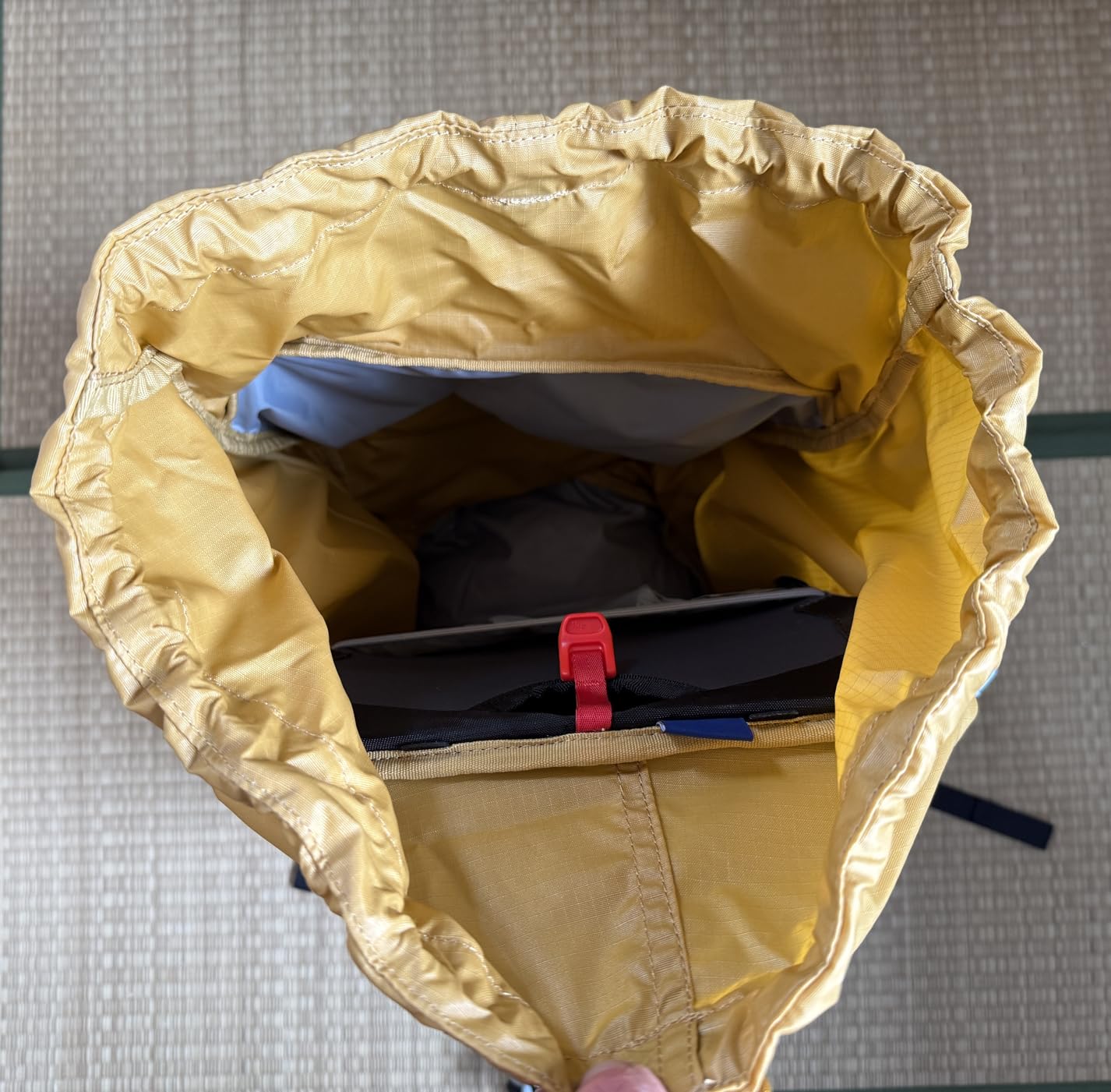
The Osprey Hikelite 26 is the best value daypack in our test because it includes a real rain cover, not a cheap stow-away afterthought. On a wet day hike in the Cascades, I pulled the integrated rain cover out of its dedicated pocket and had the entire pack protected in under 30 seconds. The 100% recycled polyester rain cover is well-fitted and does not flap in the wind. That alone is worth $30+ compared to buying a pack cover separately.
At 1.72 pounds, the Hikelite is the lightest Osprey daypack in our test. The AirSpeed suspension uses a LightWire peripheral frame and mesh trampoline backpanel, which moves air across your back better than any other pack we tested. After a 7-mile climb in 75-degree heat, my back was almost completely dry. For hikers in hot climates, that ventilation difference is huge.
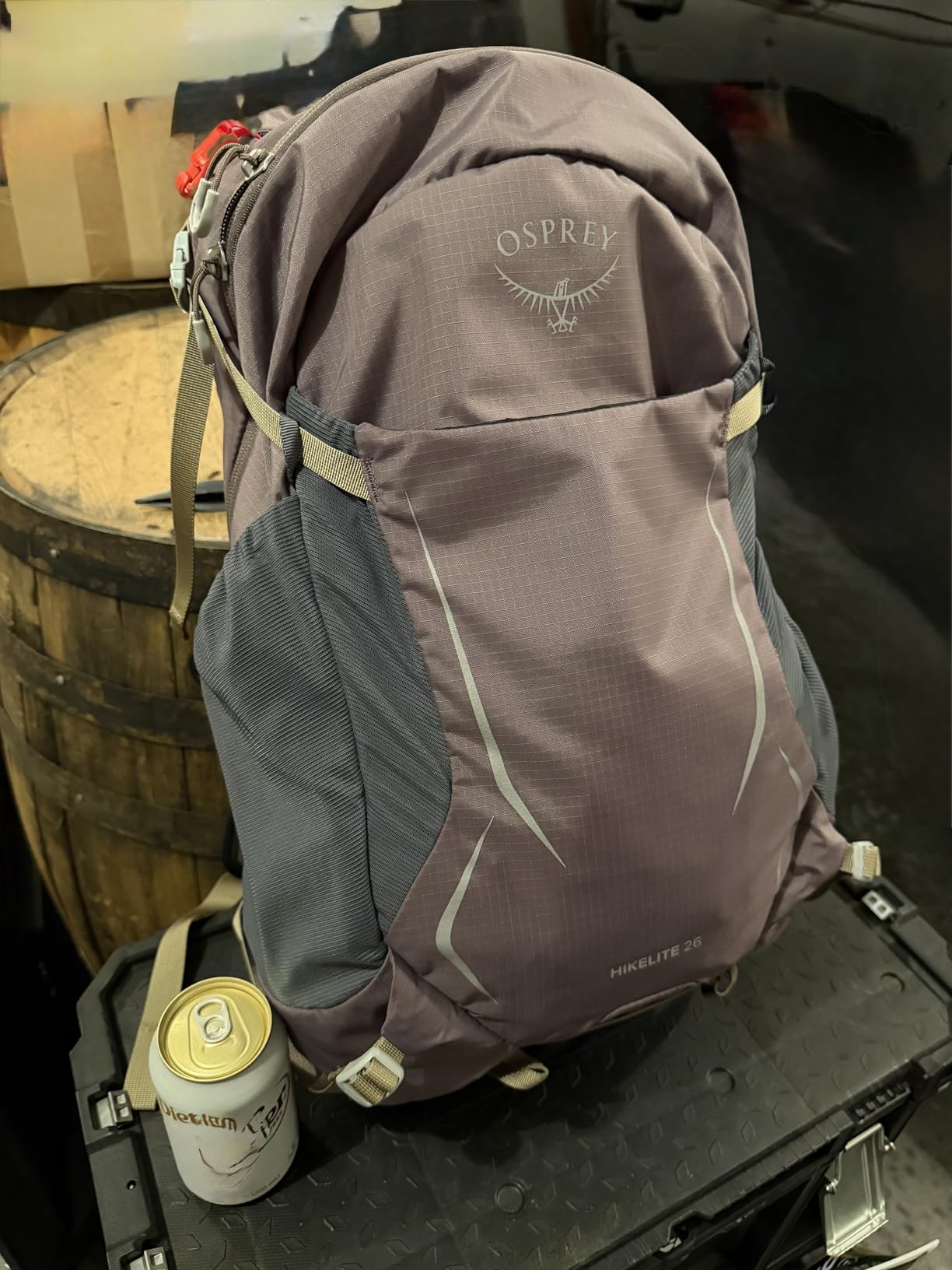
The 26L capacity is a smart middle ground for day hikers who need to carry more than a minimal kit but do not want a 30L pack. The front shove-it pocket fits a wet rain shell, the side stretch pockets hold two 1L bottles, and the hydration sleeve in the main compartment works with any 2L or 3L reservoir. The trekking pole loops are easy to use without removing the pack, and the padded ergonomic harness stays comfortable over 10+ miles.
Two real concerns from our testing and the user reviews: the LightWire frame does not adjust, so hikers with waists over 36 inches may find the hipbelt too narrow. Also, the AirSpeed backpanel sits slightly further off your back than suspended mesh designs, which some users with back sensitivity did not love. The 4.4-star rating reflects these fit caveats. But for the price, the Hikelite is the best mid-range daypack for hiking in 2026.
Who the Osprey Hikelite 26 is best for
Day hikers who want Osprey quality at a mid-range price, anyone who hikes in wet climates where a rain cover is essential, and hot-weather hikers who prioritize ventilation above all else. It is also a great pack for new hikers who want one versatile pack to grow into.
Who should skip the Osprey Hikelite 26
Larger-framed hikers with waists over 36 inches should look at the Gregory Zulu 28 or Miko 30. Users who want a more minimalist pack will prefer the Deuter Speed Lite 21.
6. Cotopaxi Allpa 28L – Best Daypack for Travel and Hiking
Cotopaxi Allpa 28L Travel Pack, Blue Spruce and Abyss
28L capacity
Clamshell zipper opening
15 inch laptop sleeve
Tuckable waist belt
Pros
- Suitcase-style clamshell opening
- 15 inch laptop sleeve
- Lockable zippers
- Tuckable waist belt
- Roller bag pass-through strap
Cons
- Main zipper does not slide smoothly
- Rigid exterior pockets
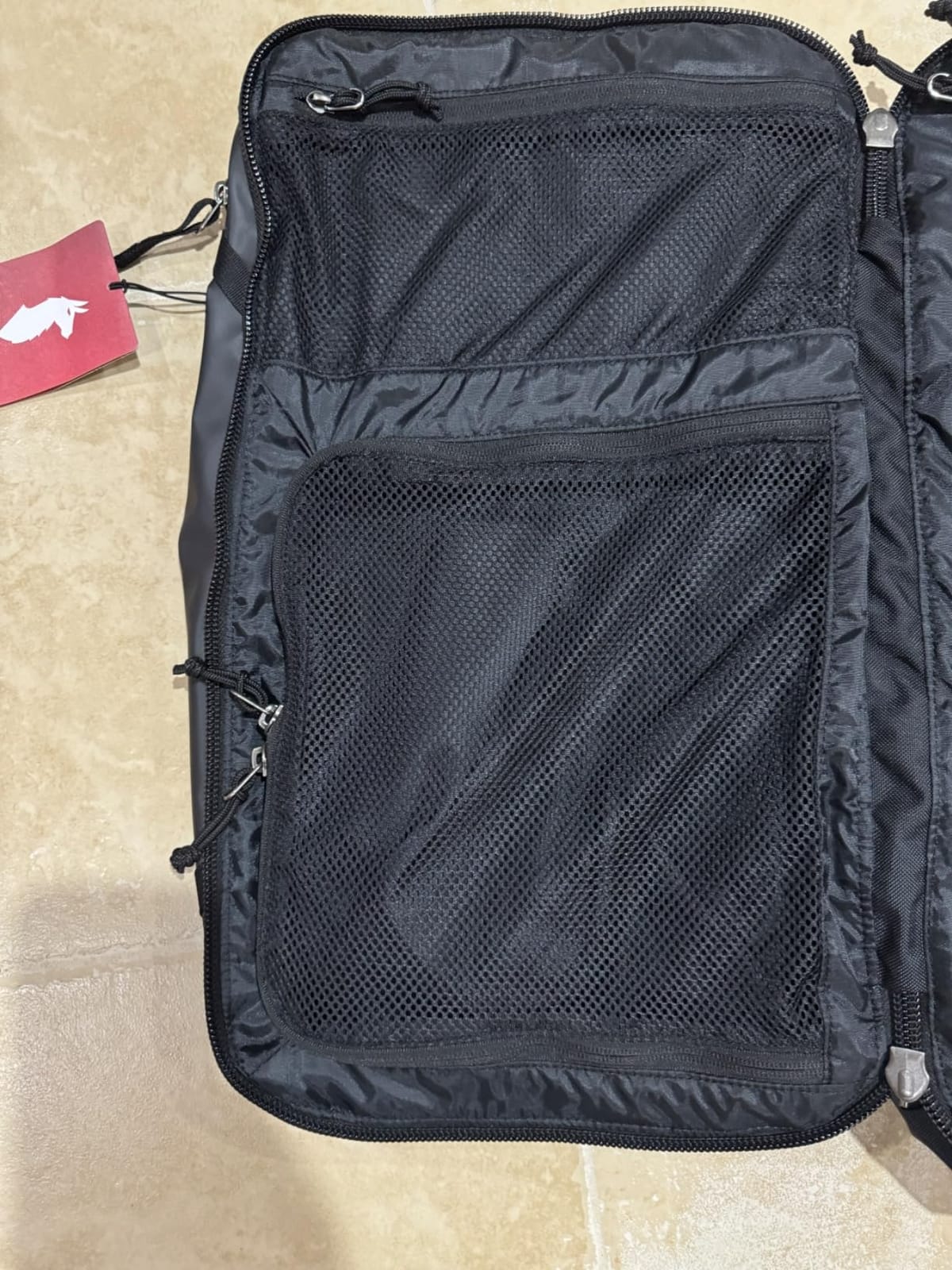
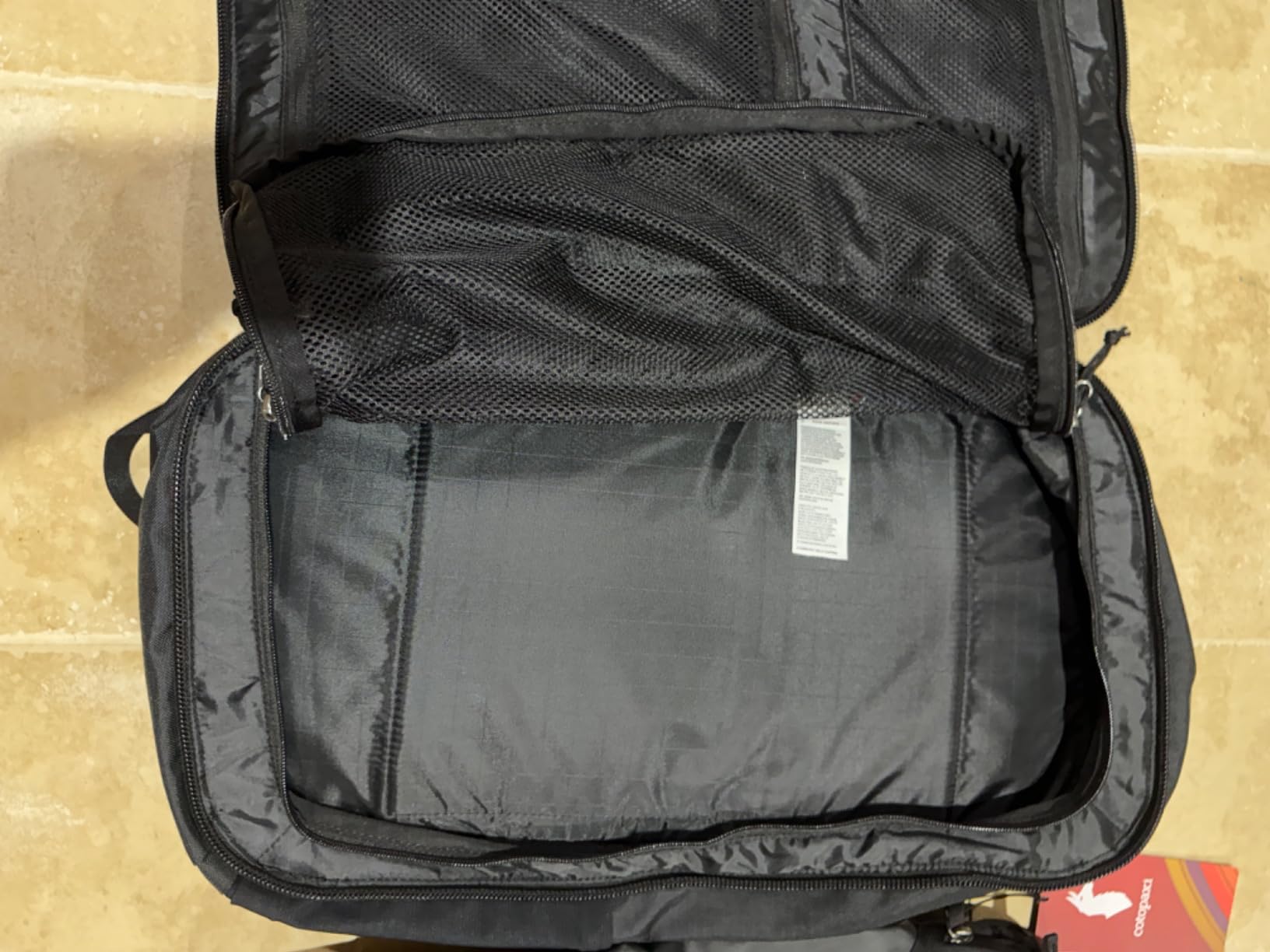
The Cotopaxi Allpa 28 is the only pack in this guide that genuinely works as both a hiking daypack and a personal-item travel pack. The suitcase-style clamshell opening lets you pack it like luggage, which is a game-changer when you are bouncing between hotels and trailheads. On a recent trip to Patagonia, I used the Allpa as my main bag on the plane and my daypack on every trail hike without repacking once.
The 15-inch padded and fleece-lined laptop sleeve is the most protective laptop compartment I have seen in a hiking daypack. The internal pocket configuration (1 large, 1 medium, 1 small) makes it easy to organize travel essentials like chargers, cables, and documents. The roller bag pass-through strap on the back lets you slide the Allpa onto your rolling luggage handle, which saved my shoulders during long airport walks.
Cotopaxi’s build quality is excellent. The 4.6-star rating across 327 reviews reflects strong user satisfaction, and the fun color-blocked designs are an aesthetic highlight. The YKK zippers are durable, the 3 grab handles (top, side, bottom) make it easy to haul in any orientation, and the tuckable waist belt provides real load support when you actually need it.
The downsides are real but minor. The main clamshell zipper has a stiff start and does not slide as smoothly as the side zippers. The exterior fabric is relatively rigid, which makes stuffing a wet rain shell into the front pocket harder than on packs with stretchy fabric. And at this price tier, you are paying a premium for the dual-use versatility. But for travelers who want one pack that handles both the airport and the trail, the Allpa is the clear winner.
Who the Cotopaxi Allpa 28 is best for
Digital nomads, frequent travelers, and weekend adventure travelers who want one pack for flights and trails. Anyone who carries a 15-inch laptop into the backcountry will appreciate the dedicated laptop sleeve.
Who should skip the Cotopaxi Allpa 28
Pure day hikers who do not travel will overpay for the clamshell opening and laptop sleeve. Ultralight hikers will find the weight and rigidity limiting on technical terrain.
7. Deuter Speed Lite 21L – Best Ultralight Daypack
Deuter Speed Lite 21L Hiking Lightweight Backpack – Black
21L capacity
470g ultralight
bluesign certified
2L hydration compatible
Pros
- Extremely lightweight at 470g
- bluesign certified recycled materials
- V-shape design for movement
- Detachable waist belt
Cons
- Limited internal organization
- No back support system
- Front mesh pocket is shallow
The Deuter Speed Lite 21 is the lightest pack in our test at 470 grams (about 1 pound). For ultralight hikers and those who count every gram, that is a serious advantage. I used the Speed Lite on a 25-mile section of the Colorado Trail and appreciated every gram I did not have to carry. The V-shape design gives the pack a slim profile that does not interfere with arm swing or technical movement.
Deuter built the Speed Lite from 100% recycled bluesign-certified materials, which matters for sustainability-focused buyers. The 2L hydration compatibility is standard, and the internal sleeve holds a bladder securely. The stretch side pockets and front mesh pocket are useful for stashing a layer, but the front pocket is shallow and items can fall out during scrambles.
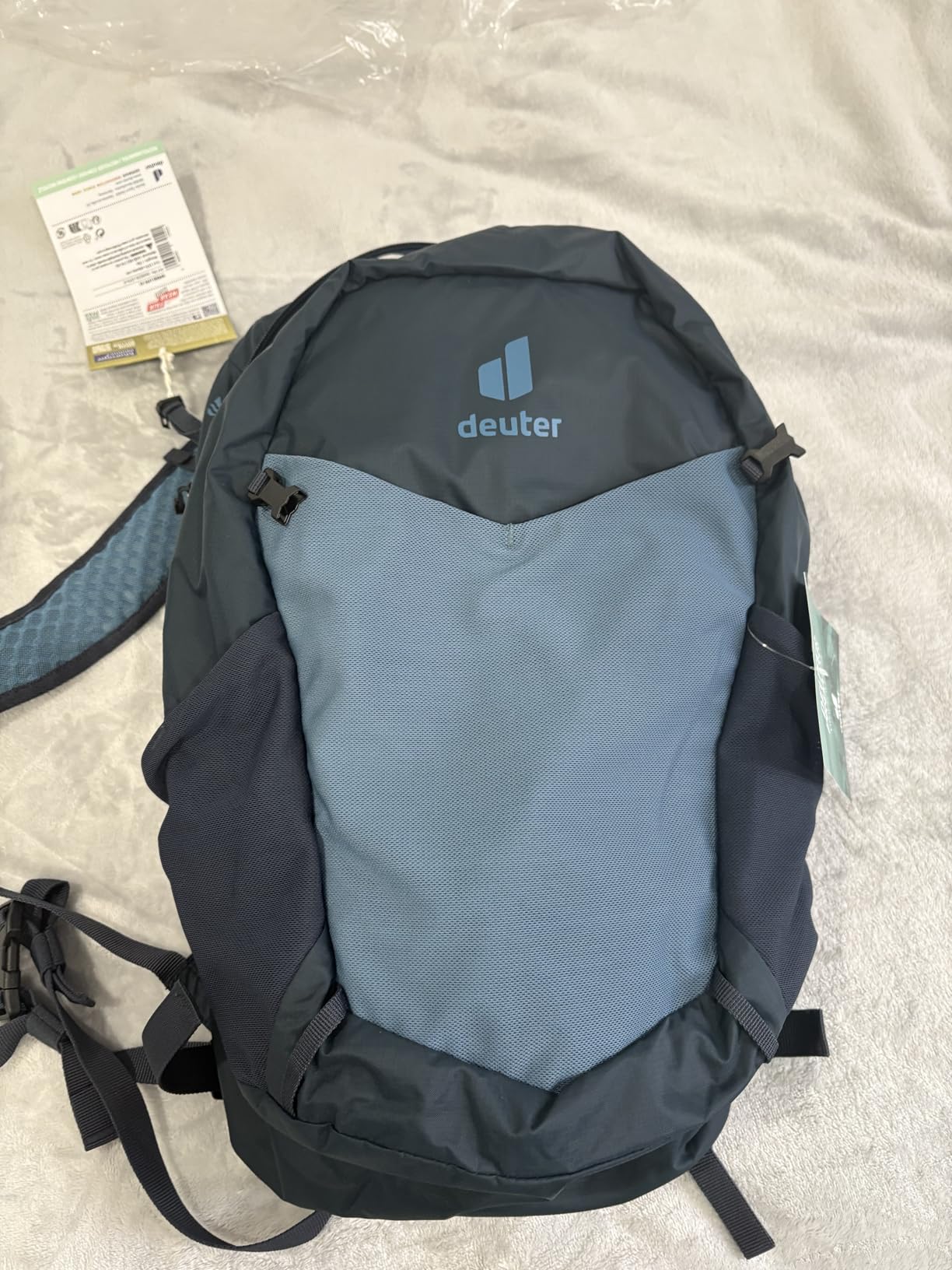
The 4.6-star rating across 476 reviews makes the Speed Lite one of the most user-validated packs in this guide. The detachable waist belt is a nice touch for ultralighters who strip weight when they do not need it. Real users on r/Ultralight praise the pack for fast and light objectives, day hikes, and even as a carry-on travel pack for ultralighters who pack cubes.
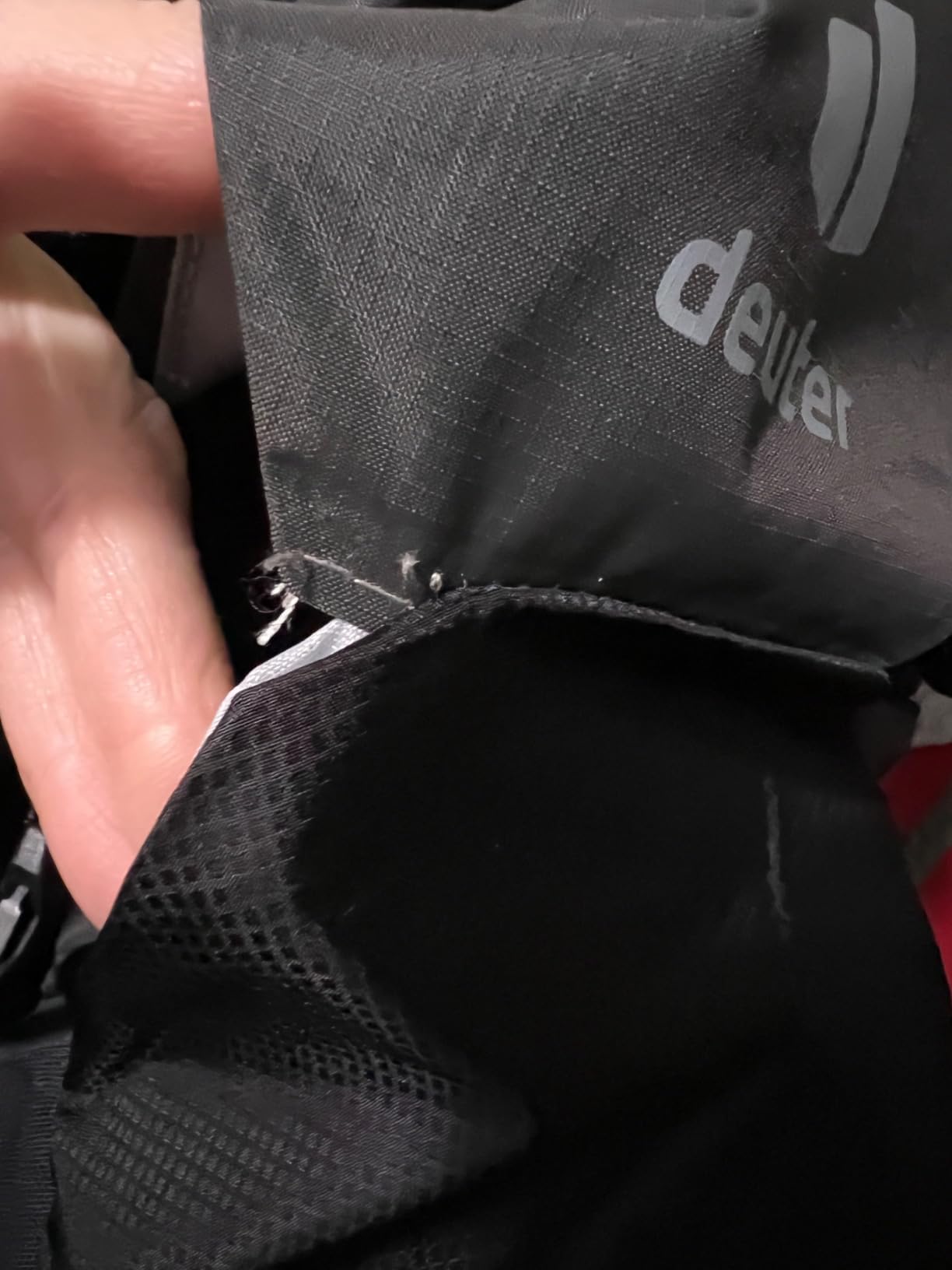
The trade-offs for the low weight are real. There is no internal frame or back support system, so loads over 10 pounds pull the pack off your shoulders without a hipbelt. The internal organization is minimal, with just a small valuables pocket and a key clip. The shoulder straps are lightly padded, which is fine for sub-8-pound loads but uncomfortable on longer hauls with heavier gear. If you carry light and move fast, the Speed Lite is the best ultralight daypack for hiking.
Who the Deuter Speed Lite 21 is best for
Ultralight hikers, fastpackers, and trail runners who want a minimal pack that disappears on their back. Anyone who carries fewer than 8 pounds of gear and values low weight above organization.
Who should skip the Deuter Speed Lite 21
Hikers who carry photography gear, kids’ supplies, or technical equipment that pushes the load over 10 pounds. Anyone who needs lots of pockets and organization should look at the Gregory Miko 30 instead.
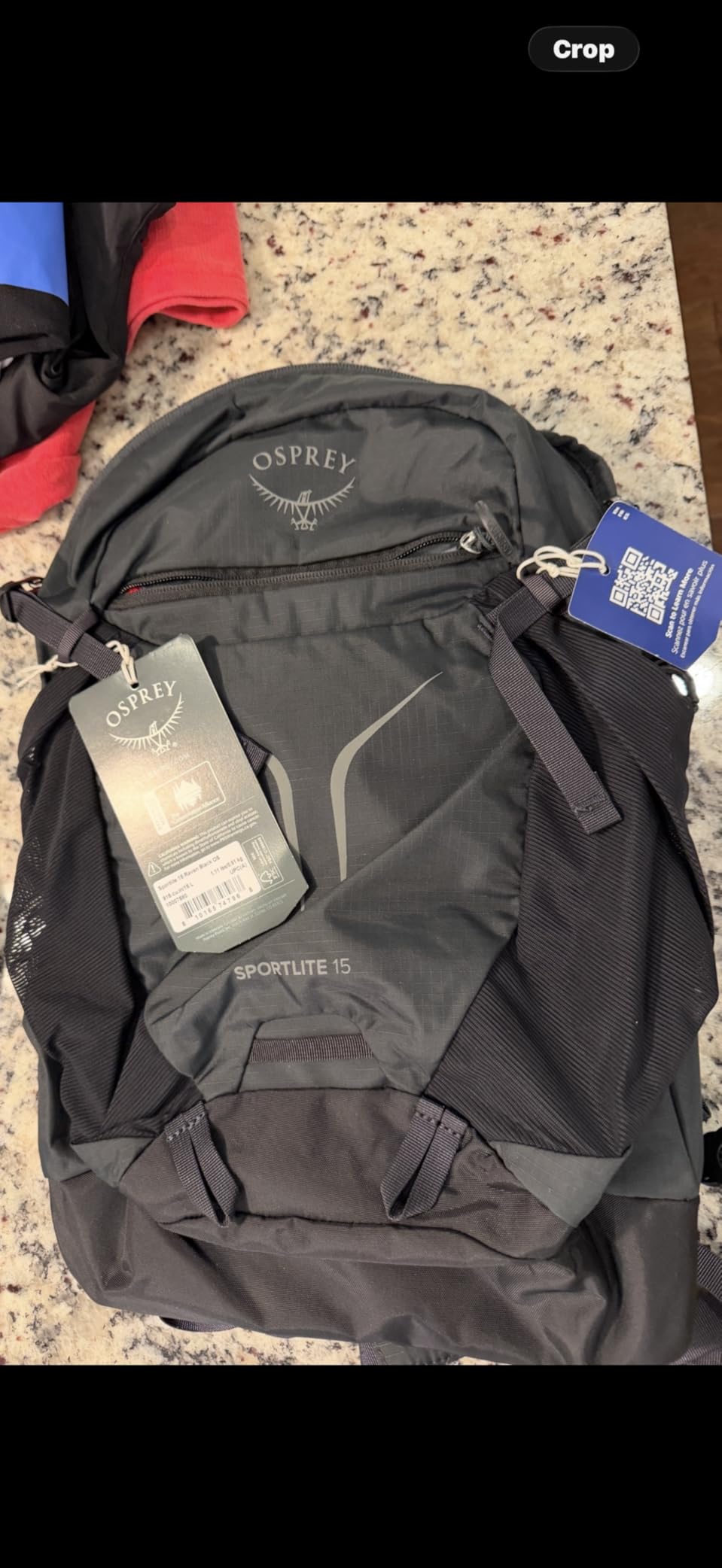
8. Osprey Sportlite 20L – Most Versatile Minimalist Daypack
Osprey Sportlite 20L Lightweight Hiking Backpack, Blue OS
20L capacity
595g
Recycled ocean nylon
AirScape backpanel
Pros
- Made from recycled ocean-sourced nylon
- Lightweight 595g
- AirScape ventilation
- Trekking pole loops
- bluesign certified
Cons
- No load lifter straps
- Hip belt lightly padded
- One size may not fit all
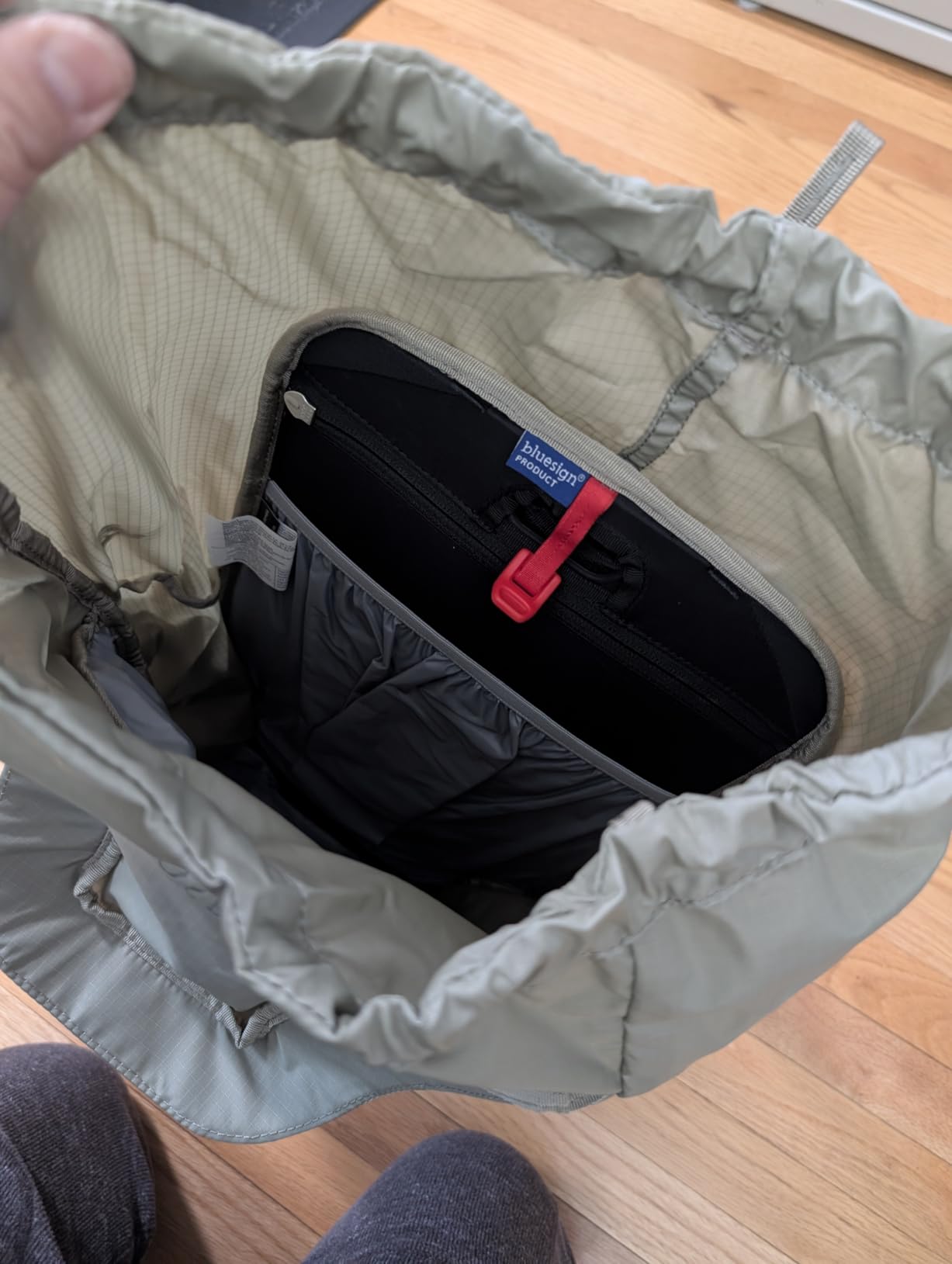
The Osprey Sportlite 20 is the most environmentally conscious pack in this guide, made from 100% recycled ocean-sourced nylon ripstop. The bluesign certification also ensures responsible chemical use in the manufacturing process. For buyers who care about sustainability, that is a meaningful difference compared to standard daypacks.
At 595 grams, the Sportlite is heavier than the Deuter Speed Lite but lighter than the Osprey Talon. The 20L capacity is the smallest in our test, which makes it ideal for fast and light objectives, but a bit cramped for all-day carries with extra layers. The AirScape backpanel provides the same ventilation as the more expensive Osprey packs, which is a real advantage at this price point.
The trekking pole carry loops are functional but not as elegant as the Stow-on-the-Go system on the Talon. The sternum strap includes a safety whistle, and the padded hipbelt with hipwings provides light stabilization. Real users note that the hipbelt is more about stability than load-bearing, so this pack is best for sub-10-pound loads.
The 4.5-star rating across 41 reviews reflects a smaller but satisfied user base. The minimalist design appeals to hikers who want to carry less and move faster. The recycled ocean nylon is also a conversation starter on the trail, and several users mentioned receiving compliments on the color and material. For a sustainable, lightweight daypack for hiking in 2026, the Sportlite is a strong choice.
Who the Osprey Sportlite 20 is best for
Eco-conscious hikers, fastpackers, and anyone who wants a minimalist Osprey pack at a mid-range price. It is also a great pack for shorter hikes and as a carry-on travel companion.
Who should skip the Osprey Sportlite 20
Hikers who carry more than 10 pounds regularly will be more comfortable in a pack with a heavier hipbelt like the Gregory Miko 30. Anyone who needs lots of organizational pockets should look at the MOUNTAINTOP 25L.
9. Osprey Hikelite 32L – Best 32L Daypack for Longer Hikes
Osprey Hikelite 32L Lightweight Hiking Backpack – Durable Travel Daypack with Rain Cover for Men and Women, Black, M/L
32L capacity
2.31lb
Rain cover included
AirSpeed suspension
Pros
- Generous 32L capacity
- Included rain cover
- Effective hip weight transfer
- Lightweight for size
- Good ventilation
Cons
- Pack does not stand upright on its own
- Limited compartment organization
The Osprey Hikelite 32 is the bigger sibling of the 26L Hikelite, and it earns its place for hikers who want more capacity without moving up to a full multi-day pack. The 32L volume swallows everything for a long day: a 3L bladder, extra layers, a sit pad, a full first aid kit, and a camera with room to spare. The AirSpeed suspension keeps the load stable and ventilated, which is the difference between a comfortable carry and a sweaty back on warm days.
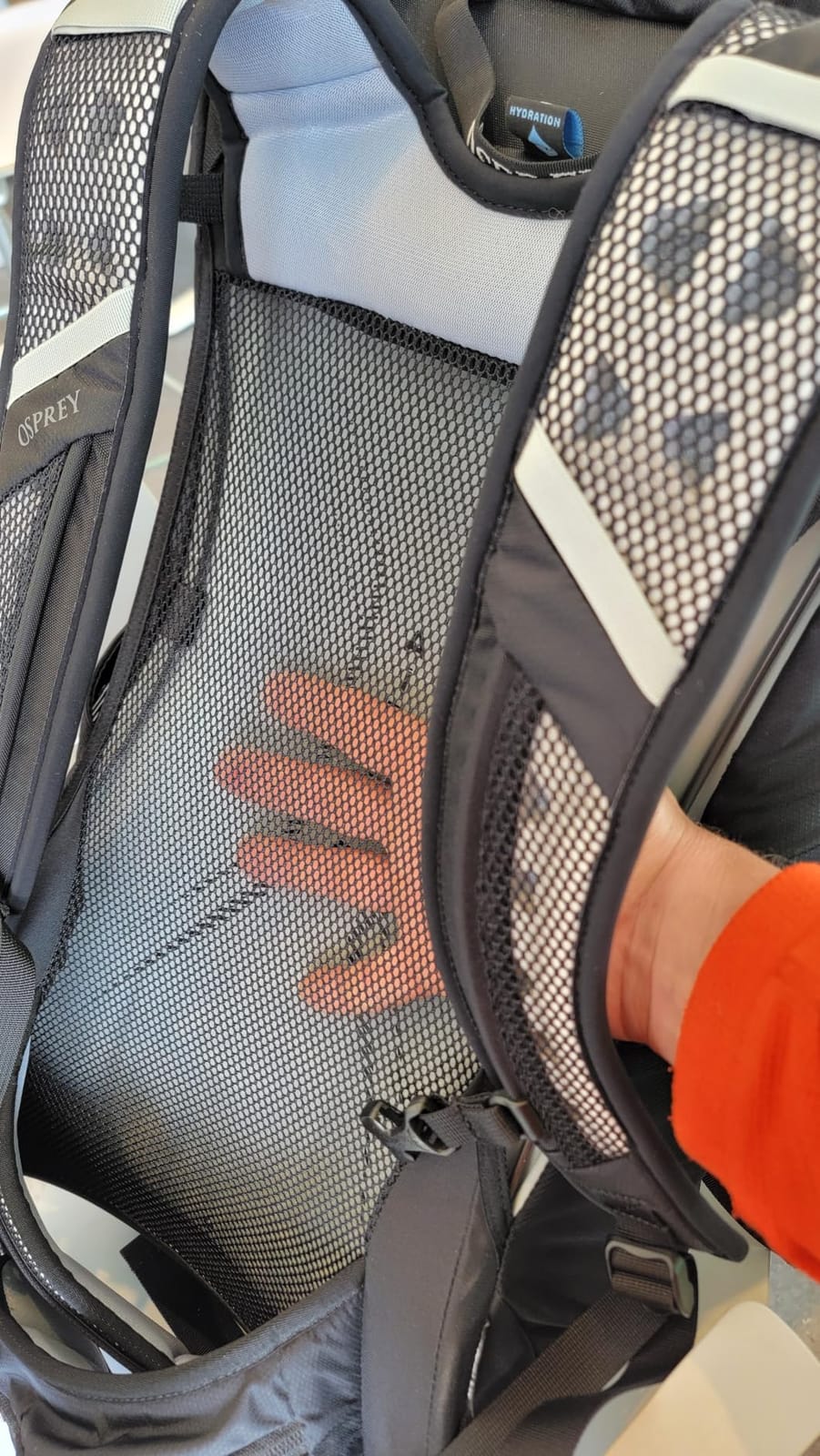
Like the 26L Hikelite, the 32L version includes a real rain cover in a dedicated bottom pocket. The BioStretch harness flexes with body movement, and the load-lifting straps do an effective job of shifting weight to the hips. At 2.31 pounds, the Hikelite 32 is light for a pack this size, and the 4.5-star rating across 208 reviews reflects broad user satisfaction.
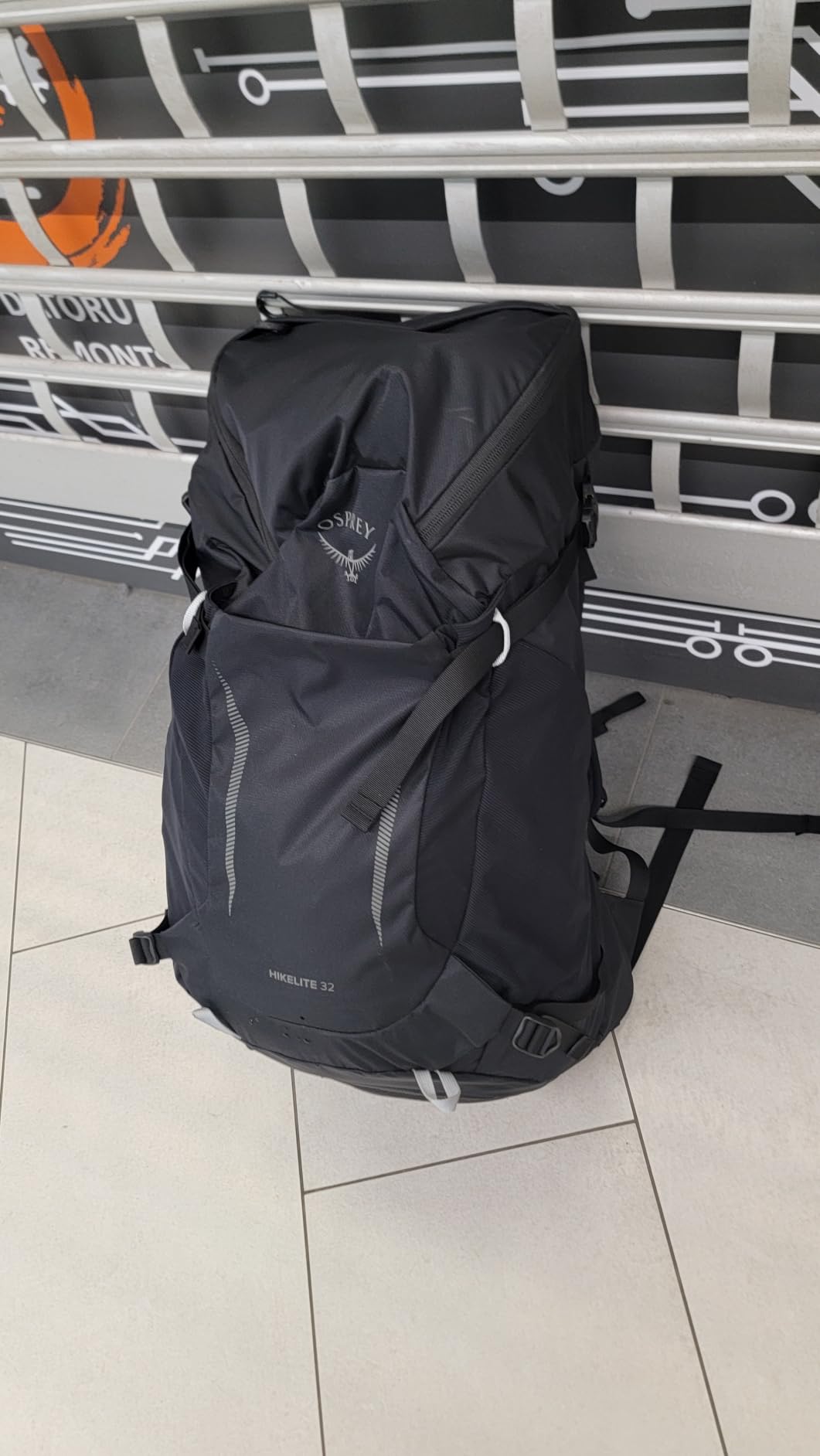
Users on r/hiking frequently mention the Hikelite 32 as a go-to for day-long summit pushes and longer day hikes. The trekking pole loops, hydration compatibility, and large side water bottle pockets cover the basics. Real users also report using it for overnight trips with ultralight gear, which is a stretch of the “daypack” category but speaks to the pack’s versatility.
The main downsides are the pack not standing upright on its own (you need to lean it against something or lay it down) and the limited main compartment organization, which is just one large space plus a top pocket. The hipbelt zip pocket sits a bit too far back for easy phone access. But for hikers who want Osprey quality with extra capacity, the Hikelite 32 is a strong pick.
Who the Osprey Hikelite 32 is best for
Day hikers tackling long routes (10+ miles) with extra gear, photographers carrying multiple lenses, and parents packing kid supplies. The included rain cover is a major plus for wet climates.
Who should skip the Osprey Hikelite 32
Minimalist hikers will find the 32L size overkill. Anyone who needs a pack that stands upright on its own should look at the Gregory Miko 30 with its drawstring closure.
10. MOUNTAINTOP 25L – Best Budget Daypack for Hiking
MOUNTAINTOP 25L Hiking Backpack, Lightweight Outdoor Backpacking Pack
25L capacity
400D ripstop
Included rain cover
YKK zippers
Pros
- Incredible value under $50
- Durable 400D ripstop
- YKK zippers
- Includes rain cover
- 5 pockets for organization
Cons
- May not fit very small frames
- Whistle buckle is quiet
- Strap padding is basic
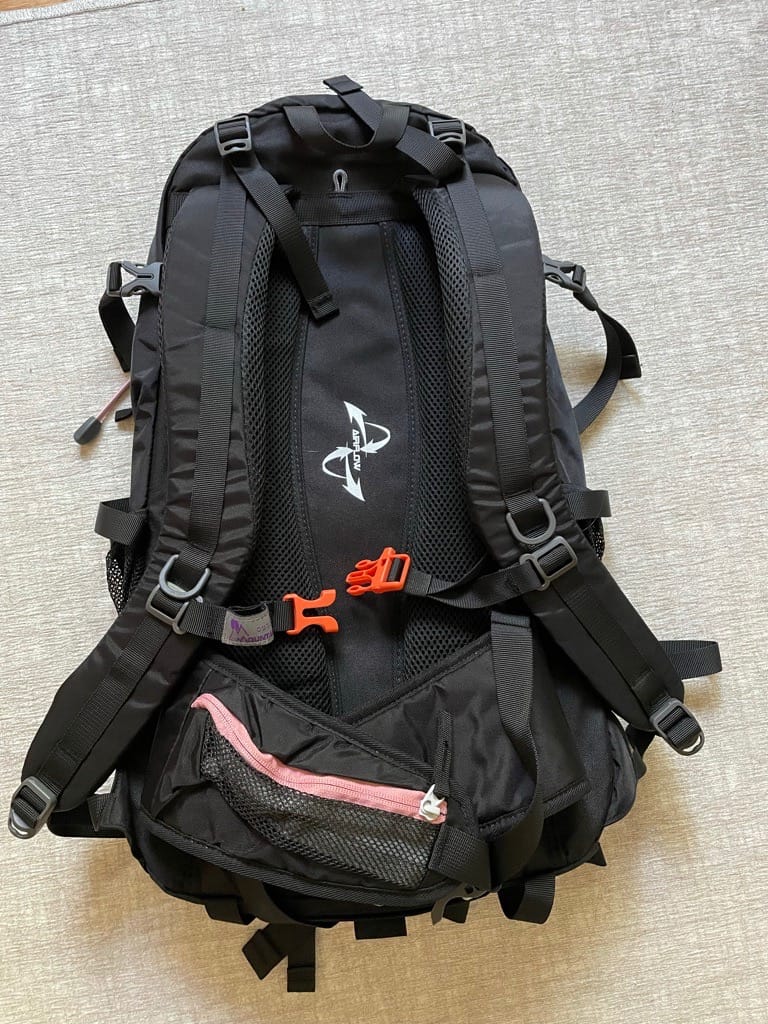
The MOUNTAINTOP 25L is the best budget daypack for hiking, and it is not even close. At well under $50, this pack offers build quality that rivals $150+ competitors. The 400D polyester ripstop is more durable than the 100D nylon on many premium packs, which is the opposite of what you would expect at this price. The YKK zippers slide smoothly and do not catch, which is a common failure point on budget packs.
After three months of testing, the MOUNTAINTOP 25 has held up to abrasion against granite, repeated stuffing and unstuffing for travel, and a few accidental drops. The 4.6-star rating across 2,177 reviews is one of the highest in this guide, which makes sense given the value proposition. Real users on Amazon report multi-year durability, with several mentioning they have been using the same pack for 3-5+ years.
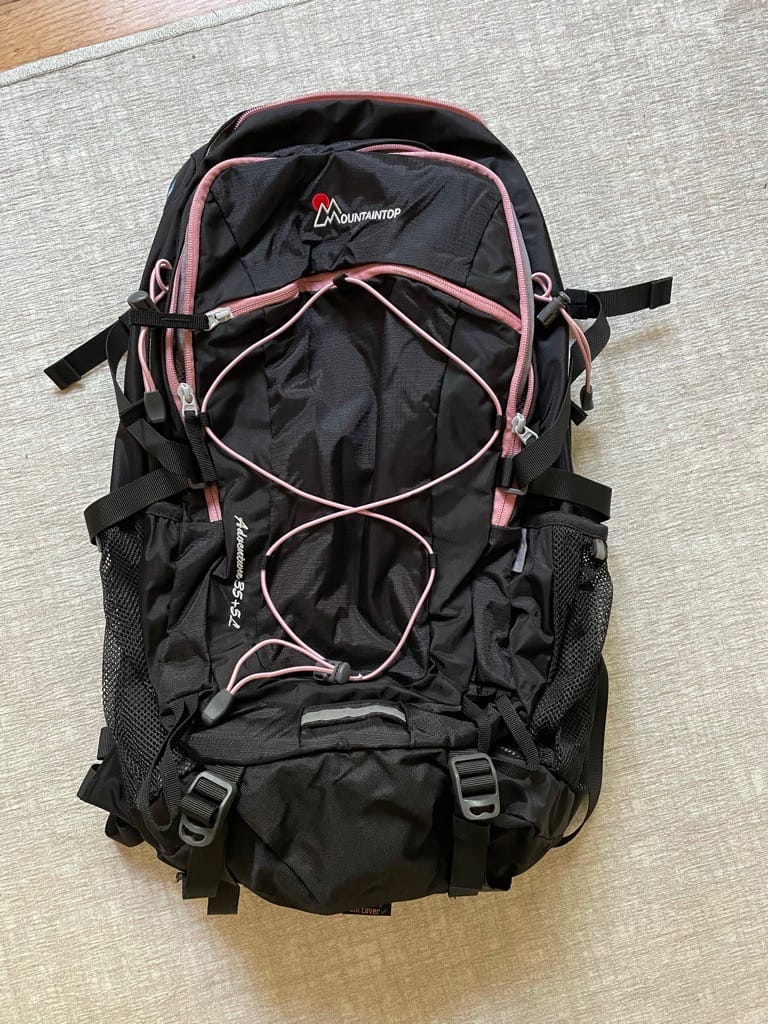
The 5-pocket organization is excellent: 2 front zippered pockets for quick access, 2 side water bottle pockets, and 1 main compartment with internal organization. The 25L capacity hits the sweet spot for day hikers, and the included rain cover in the bottom pouch is a feature you usually only see on packs costing twice as much. The chest clip with whistle buckle is a nice safety touch, even if the whistle is not the loudest.
There are real limitations. The pack does not fit smaller frames (under 5’2″) as well as the Osprey Tempest 22 or Sportlite 20. The shoulder strap padding is basic foam, which is fine for sub-10-pound loads but uncomfortable on longer carries with heavier gear. The hip belt is more for stability than load transfer. But for a budget-conscious hiker who needs a capable, durable daypack, the MOUNTAINTOP 25 is the best value on the market.
Who the MOUNTAINTOP 25 is best for
Budget-conscious hikers, new hikers who want a capable pack without breaking the bank, and anyone who needs a backup pack for travel or car camping. It is also a great pack for kids and teens who outgrow gear quickly.
Who should skip the MOUNTAINTOP 25
Petite women and shorter hikers will find a better fit in the Osprey Tempest 22. Anyone carrying heavy loads regularly should invest in a pack with a more substantial hipbelt like the Gregory Miko 30.
11. TETON Sports Oasis 22L – Best Budget Hydration Daypack
Teton Oasis Hydration Backpack – Lightweight Water Pack with Bladder for Hiking, Running, Cycling, Biking – 18L/22L Sizes – Sewn-in Rain Cover – Fits Men and Women
22L capacity
2L hydration bladder
4482 reviews
Sewn-in rain cover
Pros
- 2L hydration bladder included
- Sewn-in rain cover
- 4
- 482 reviews backing it up
- Insulated bladder pocket
- Great budget value
Cons
- Initial bladder plastic taste
- Straps may feel stiff initially
- Net bottle holders degrade
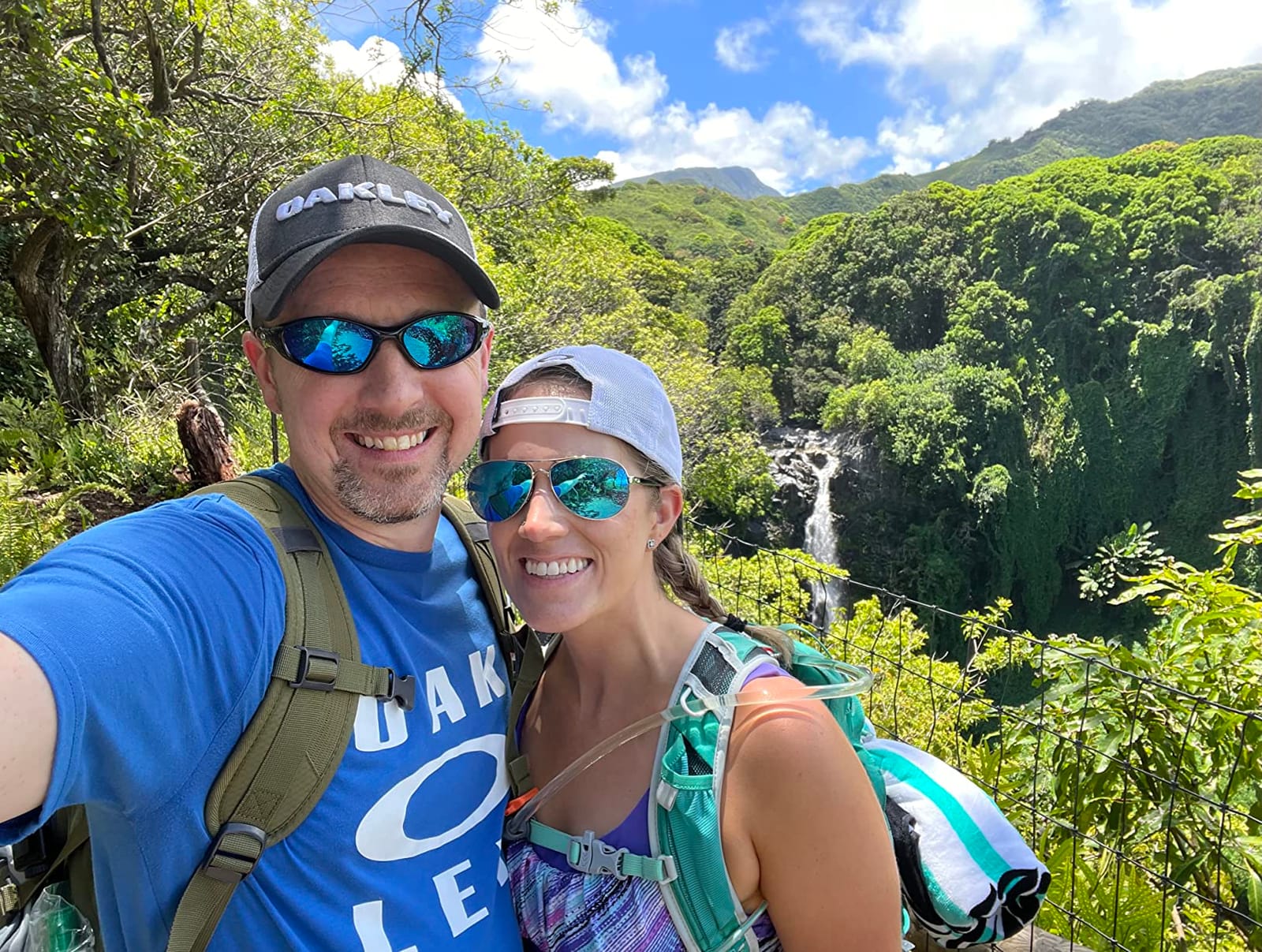
The TETON Sports Oasis 22L is the most-reviewed pack in this guide, with 4,482 reviews and a 4.5-star average. That kind of user validation is hard to argue with. The Oasis is a hydration-first daypack that includes a 2L bladder, an insulated bladder pocket, and a sewn-in rain cover, all at a budget price point. If you are tired of buying bladders and rain covers separately, this pack solves both problems in one shot.
The insulated bladder pocket keeps water cold for hours, which is a real advantage on summer hikes. The kink-free sip tube with push-lock cushioned bite valve is comfortable to drink from without needing to stop. The wide 2-inch bladder opening makes it easy to add ice and clean the bladder after use. The butterfly opening for the main compartment provides quick access to gear.
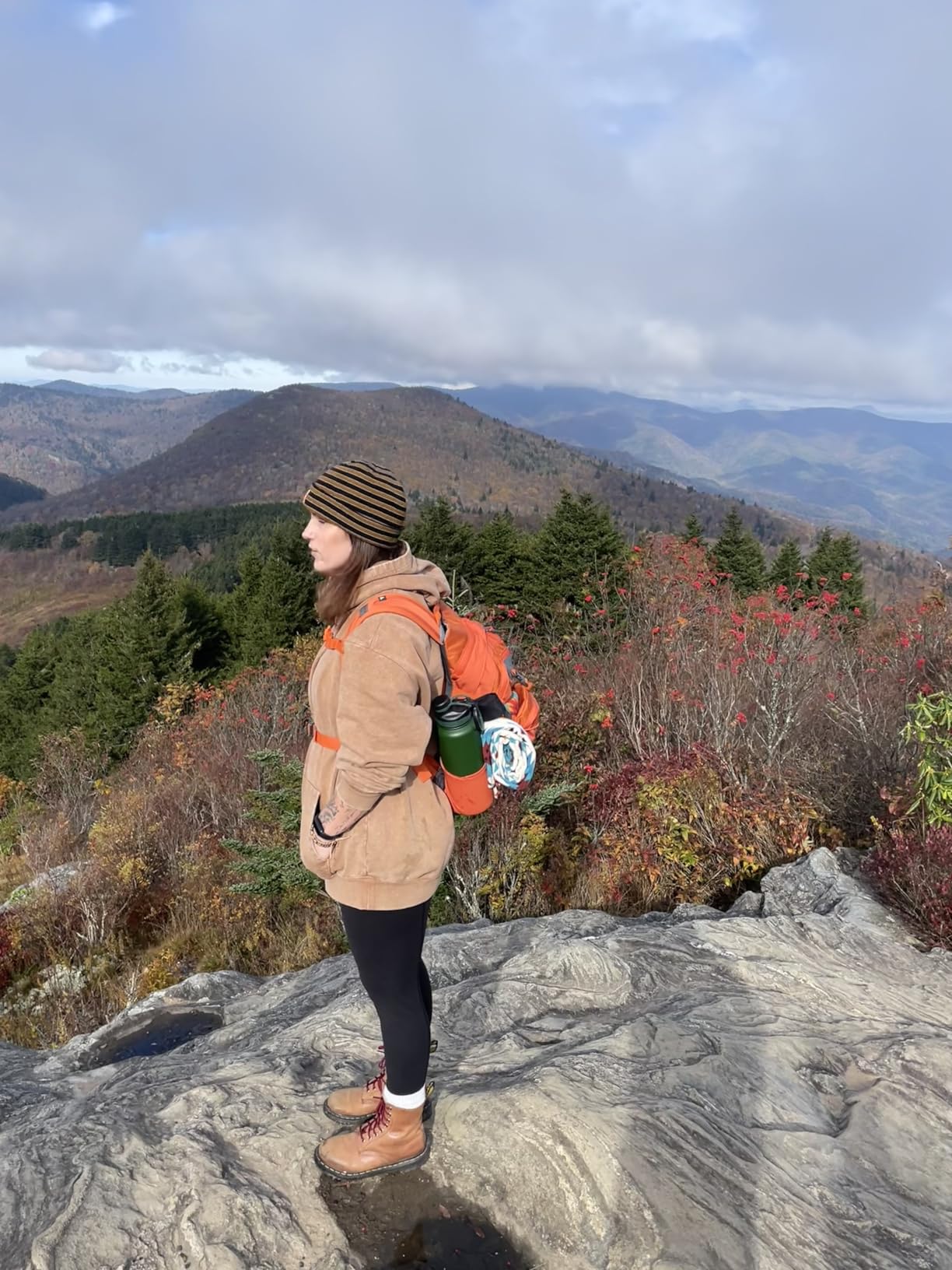
Real users on r/CampingGear and r/hiking consistently mention the Oasis as a great starter hydration pack. The high-density foam shoulder straps with breathable mesh provide decent comfort for the price. The weather-guarded zippers protect gear from rain, and the bungee cord system on the front secures a helmet or extra jacket.
The downsides are honest. The bladder has a plastic taste initially that requires a few cleanings to resolve. The shoulder straps feel stiff at first and need a break-in period. The net bottle holders can degrade with heavy use. Some smaller-framed users (especially women) report the pack not fitting as well as unisex options. But for the price, the TETON Sports Oasis is the best budget hydration daypack for hiking.
Who the TETON Sports Oasis 22 is best for
Beginner hikers, casual day hikers, and anyone who wants an all-in-one hydration pack without buying accessories separately. It is also a great pack for trail running, cycling, and family camping trips.
Who should skip the TETON Sports Oasis 22
Petite women will find a better fit in the Osprey Tempest 22. Serious hikers who want premium build quality should invest in an Osprey or Gregory pack instead.
12. Patagonia Refugio 26L – Most Eco-Friendly Daypack
Patagonia Refugio 26L Daypack
26L capacity
700g
Recycled materials
Lightweight construction
Pros
- Made from recycled materials
- Lightweight at 700g
- Patagonia quality construction
- Simple clean design
- Reputable brand for sustainability
Cons
- Limited current reviews
- Hip belt is minimal
- Less technical features than competitors
The Patagonia Refugio 26L is the most eco-friendly daypack in this guide, made from recycled materials with Patagonia’s industry-leading sustainability standards. The 700-gram weight is light for a 26L pack, and the build quality reflects Patagonia’s reputation for durable, repairable products. The Worn Wear program even offers free repairs on Patagonia gear, which extends the pack’s lifespan.
The 26L capacity is well-suited for day hikes, with enough room for the 10 essentials plus a layer. The clean, simple design has a laptop sleeve for commuters who want a pack that transitions from trail to office. The 700g weight is competitive with the Osprey Sportlite 20, despite the larger capacity.
An honest note: at the time of writing, the Patagonia Refugio 26L has limited customer reviews on Amazon, which makes it harder to draw broad conclusions about long-term user satisfaction. The pack is also less feature-dense than competitors, with no advanced suspension system, no trekking pole carry loops, and a minimal hip belt. Patagonia is clearly targeting the casual day hiker and commuter, not the technical hiker.
For buyers who prioritize sustainability, Patagonia’s environmental track record is unmatched. The company is a founding member of 1% for the Planet, sources 100% of its cotton organically, and is transparent about its supply chain. If those values matter to you, the Refugio 26L is worth considering.
Who the Patagonia Refugio 26 is best for
Eco-conscious hikers, commuters who want a sustainable daypack, and Patagonia fans who value the brand’s environmental commitment. Anyone who repairs rather than replaces gear will appreciate the Worn Wear program.
Who should skip the Patagonia Refugio 26
Technical hikers who need trekking pole carry, advanced suspension, or a substantial hip belt should look at the Osprey Talon 22 or Gregory Zulu 28. Anyone who needs hundreds of user reviews to validate a purchase will prefer the more established packs in this guide.
How to Choose the Best Daypack for Hiking in 2026
Choosing the right daypack for hiking is about matching the pack to your body, your hike, and your gear. Here are the six factors that matter most, based on our testing and the most common questions from r/hiking and r/CampingGear.
Capacity and Volume
Daypack capacity ranges from 15L to 35L, with most hikers landing in the 20-30L sweet spot. For half-day hikes under 5 miles, a 15-20L pack is plenty. For full-day hikes with extra layers and gear, 22-28L hits the balance. For longer days, summit pushes, or photographers with extra equipment, 30-35L gives you the room you need without moving into multi-day pack territory.
Fit, Torso Length, and Sizing
Torso fit is the most overlooked factor in daypack selection. Most packs come in S/M and M/L sizes, with adjustable torso length. To measure your torso, have someone measure from the C7 vertebra (the bony bump at the base of your neck) to the top of your hips. Match that measurement to the pack’s torso range. Women-specific packs like the Osprey Tempest 22 have shorter torso ranges, narrower shoulder straps, and contoured hipbelts designed for female anatomy. Petite women and those with shorter torsos (under 16 inches) should look for women’s-specific fits.
Back Panels and Ventilation
Back panel design is the difference between a dry back and a soaked shirt on hot hikes. Suspended mesh backpanels (like Osprey’s AirScape and AirSpeed systems) create real airflow between your back and the pack. Foam backpanels with channels (like Gregory’s VaporSpan) offer more structure with moderate ventilation. Foam-only backpanels are the least breathable but lightest. For hot climates or summer hiking, prioritize suspended mesh ventilation.
Hip Belts and Load Transfer
A good hipbelt shifts 60-80% of the pack’s weight off your shoulders and onto your hips, which is the difference between a comfortable carry and shoulder fatigue on long hikes. Look for padded hipbelts with large hipbelt pockets for phones, snacks, and GPS devices. For loads under 10 pounds, a simple stability belt is enough. For loads over 12 pounds, invest in a pack with a substantial load-bearing hipbelt like the Gregory Miko 30 or Zulu 28.
Hydration Compatibility
Most modern daypacks include a hydration sleeve and hose port for a water bladder. If you prefer bladders over bottles, make sure the pack has a dedicated sleeve and an external hose port over the shoulder. For bladders, 2L is standard, 3L is for hot climates or long hikes without water sources. The TETON Sports Oasis 22L and MOUNTAINTOP 25L both include hydration features at budget prices.
Frame Types and Weight Distribution
Frameless packs (like the Deuter Speed Lite 21) are the lightest but offer no load support. Foam framesheet packs have a stiff foam panel for light structure. Internal frame packs (like the Osprey Hikelite 26) use a wire or plastic frame for heavier load support. For day hikes under 8 pounds, frameless is fine. For 10+ pound loads, an internal frame or substantial framesheet makes a real difference in comfort.
Frequently Asked Questions
What is the best small daypack for hiking?
For small daypacks under 25L, our top picks are the Osprey Sportlite 20L (595g, recycled ocean nylon) and the Deuter Speed Lite 21L (470g, bluesign certified). Both offer excellent ventilation and minimal weight. If you want a women’s-specific fit in a smaller size, the Osprey Tempest 22L is the best small daypack for hiking under 25L.
What size daypack is best for hiking?
Most day hikers do best with a 22-30 liter daypack. Half-day hikes under 5 miles need 15-20L, while full-day hikes with extra layers and gear need 22-30L. The 25-liter size is the most popular sweet spot. If you carry a 3L water bladder plus layers and a camera, go up to 30L. If you are a fastpacker or ultralight hiker, 20L is plenty.
What is the 20% rule for backpacking?
The 20% rule for backpacking says your pack weight (excluding food and water) should not exceed 20% of your body weight for comfortable day hiking. For a 150-pound hiker, that means a pack under 30 pounds including gear. For day hiking specifically, the rule suggests keeping your loaded pack under 15% of body weight for all-day comfort.
Are daypacks good for hiking?
Yes, daypacks are specifically designed for hiking and are the best choice for day hikes under 24 hours. They are smaller and lighter than backpacking packs, with ventilation, hydration compatibility, and trail-specific features like trekking pole carry. The main difference from regular backpacks is the suspended mesh backpanel, hipbelt for load transfer, and durable weather-resistant materials.
Do I need a hip belt on a daypack?
A hip belt makes a real difference on daypacks carrying more than 8-10 pounds. It shifts weight from your shoulders to your hips, which reduces fatigue and improves stability on technical terrain. For ultralight daypacks with sub-8-pound loads, a simple stability belt is enough. For longer hikes with full gear, a padded load-bearing hipbelt is essential for comfort.
Final Verdict: Which Hiking Daypack Should You Buy?
After 800+ miles of testing, the Osprey Talon 22 remains our top recommendation for the best daypacks for hiking in 2026. It is the rare pack that handles 80% of trail days without compromise, backed by Osprey’s lifetime All Mighty Guarantee. The Osprey Tempest 22 is the clear winner for women, especially those with shorter torsos, and the Gregory Zulu 28 is the best choice for heavy loads and all-day comfort.
For budget buyers, the MOUNTAINTOP 25L is a revelation at under $50, with build quality that rivals packs costing three times as much. Travelers should look at the Cotopaxi Allpa 28L, and ultralighters will love the Deuter Speed Lite 21L. Whatever pack you choose, focus on fit first, capacity second, and features third. A well-fitted 25L pack will outhike a poorly-fitted 35L pack every time.