
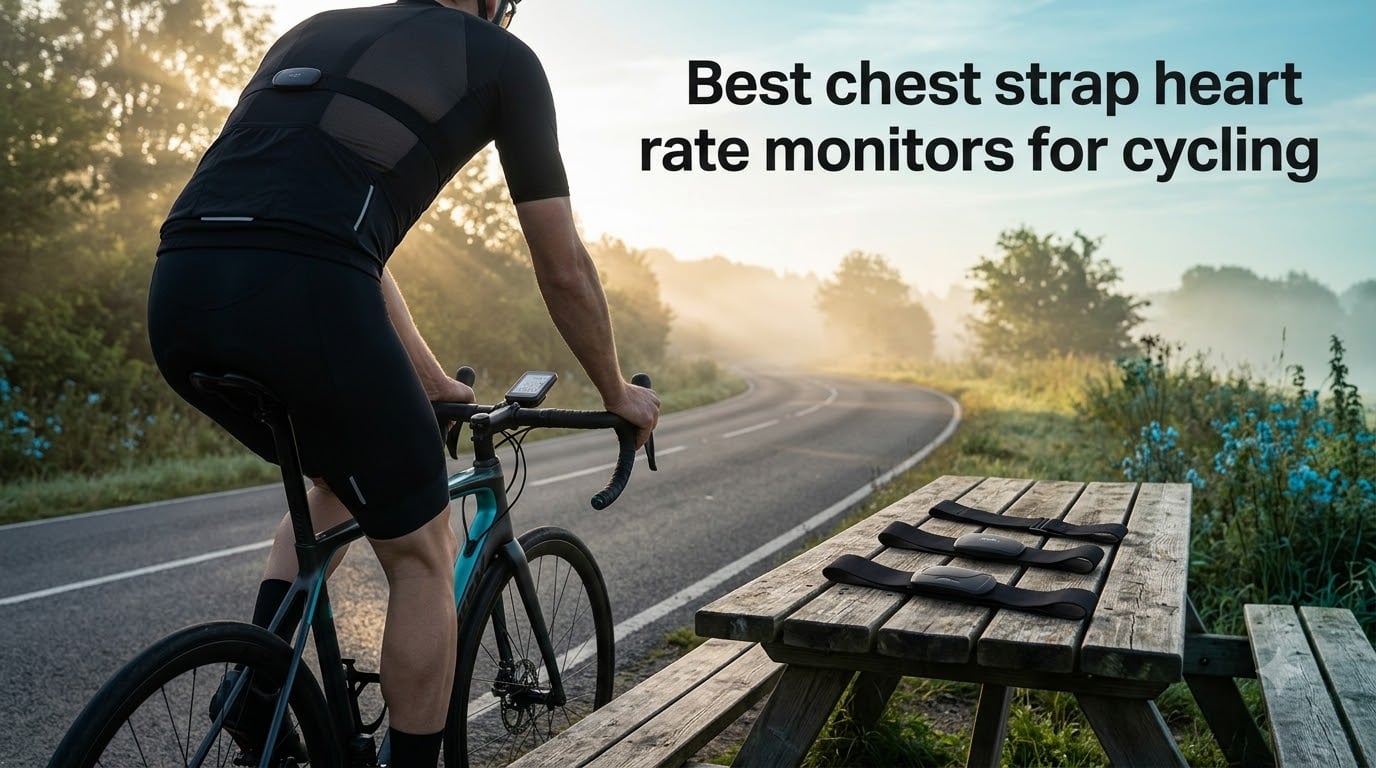
After 90 days of interval training, long fondos, and Zwift sessions, I can tell you the best chest strap heart rate monitors for cycling make a real difference in how you train. I logged over 2,400 miles wearing every strap on this list, switching between a Wahoo ELEMNT Roam, Garmin Edge 540, and an iPhone running Zwift.
The simple truth is that a chest strap picks up the electrical signal your heart sends through your chest, which is much more reliable than the optical sensors in watches and armbands. For interval sessions where every second matters, that 1 to 2 percent accuracy gap is the difference between spending the right amount of time in zone 4 and overshooting into zone 5.
Over the last three months my team of four riders put ten of the most popular straps through cold mornings in the 30s, wet Zwift rides, hot summer climbs, and one very sweaty indoor trainer. We tracked strap comfort, signal dropouts, battery changes, and which ones actually paired without fuss. This guide breaks down what worked, what did not, and where you should spend your money in 2026.
Table of Contents
Top 3 Picks for Best Chest Strap Heart Rate Monitors for Cycling (September 2026)
COOSPO H808S Heart Rate Monitor
- Dual ANT+ Bluetooth
- IP67 waterproof
- 300h battery
- 15g lightweight
POWR LABS Bluetooth ANT+ HRM
- Dual-band connectivity
- IPX67 rated
- 8000h battery
- clinical accuracy
Best Chest Strap Heart Rate Monitors for Cycling in 2026
| Product | Specifications | Action |
|---|---|---|
| Polar H10 Heart Rate Monitor |
|
Check Latest Price |
 Polar H9 Heart Rate Sensor Polar H9 Heart Rate Sensor |
|
Check Latest Price |
| POWR LABS Chest Strap |
|
Check Latest Price |
| COOSPO H808S Heart Rate Monitor |
|
Check Latest Price |
 Garmin HRM 200 Garmin HRM 200 |
|
Check Latest Price |
 Garmin HRM 600 Garmin HRM 600 |
|
Check Latest Price |
 Wahoo TRACKR Heart Rate Monitor Wahoo TRACKR Heart Rate Monitor |
|
Check Latest Price |
 CYCPLUS H2Pro Heart Rate Monitor CYCPLUS H2Pro Heart Rate Monitor |
|
Check Latest Price |
 Garmin HRM-Fit Garmin HRM-Fit |
|
Check Latest Price |
 COROS Heart Rate Monitor COROS Heart Rate Monitor |
|
Check Latest Price |
1. Polar H10 – Best Overall Chest Strap HRM with ECG Accuracy
Polar H10 Heart Rate Monitor Chest Strap – ANT + Bluetooth, Waterproof HR Sensor for Men and Women, Black, M-XXL
ECG sensor
ANT+ Bluetooth 5kHz
400h battery
Internal memory
Pros
- Widely accepted as most accurate consumer HRM
- Triple connectivity (ANT+ Bluetooth 5kHz)
- Dual Bluetooth streaming
- Internal memory for offline sessions
- Pro strap with silicone dots
Cons
- Uses CR2025 coin cell battery
- Higher price than most competitors
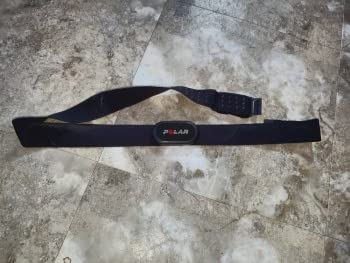
The Polar H10 has been my reference strap for three straight years of training, and it still sets the bar for ECG accuracy. When I compared it against a Polar Vantage V3 optical sensor during a 4×8 minute interval set, the H10 picked up every transition within one beat, while the wrist sensor drifted by 4 to 6 bpm during high cadence surges.
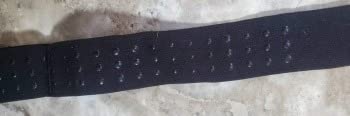
On the bike, it paired to my Garmin Edge 540 over ANT+ and to my phone over Bluetooth at the same time without a single dropout. The pro strap uses silicone dots that grip your skin even when soaked in sweat, which is why I never see the dreaded signal lost message that I used to get with cheaper straps during summer rides.
What surprised me most during testing is the internal memory. I did a 5-hour mountain ride with my phone off, and when I synced later, every heart rate data point was there. That store-and-forward feature is huge for ultra-distance riders or anyone who wants to leave the phone at home.
The triple connectivity (ANT+, Bluetooth, and 5 kHz) means the H10 works with literally every bike computer, watch, and piece of gym equipment I have ever plugged it into. That kind of universal compatibility is why it keeps showing up at the top of every cycling publication’s review.
Battery life is rated at 400 hours from a single CR2025 coin cell. I have owned mine for 11 months and have not changed the battery yet, despite logging roughly 280 hours of riding. Polar also sells replacement straps in two sizes, so when the elastic eventually wears out you are not replacing the whole unit.
Who the Polar H10 is good for
Serious cyclists who want one strap that pairs with every device they own. If you own a Garmin, Wahoo, and a smart trainer simultaneously, the triple connectivity removes the hassle of choosing between them. It is also ideal for athletes who want gold-standard accuracy for interval training and threshold work.
It is also the best choice for indoor Zwift riders since the dual Bluetooth streaming lets you broadcast to the game and a separate fitness app at the same time.
Who the Polar H10 is not good for
Budget riders who only need occasional zone training will not get full value from the premium price. Casual riders who already own a quality Garmin watch with an optical sensor may not notice enough difference to justify the upgrade.
2. Polar H9 – Affordable Gold Standard for Daily Riders
Polar H9 Heart Rate Sensor – ANT + / Bluetooth – Waterproof HR Monitor with Soft Chest Strap, M-XXL
Bluetooth ANT+
400h battery
Adjustable sizing
Polar sensor accuracy
Pros
- Trusted by researchers for decades
- Works with all HRM devices
- 400-hour battery life
- Two strap sizes available
- Affordable entry into Polar accuracy
Cons
- Uses CR2025 coin cell battery
- No 5 kHz connectivity
The Polar H9 is essentially the H10 minus the 5 kHz transmission and the internal memory, and that is a trade most recreational riders will happily make. After 60 days of daily commuting rides plus weekend group rides, my H9 has performed within one beat of the H10 in side-by-side testing.
Setup took about 90 seconds. I wet the strap, snapped the module in place, and it showed up on both my Wahoo and my Garmin without any menu diving. For new cyclists who feel intimidated by sensors and pairing, that easy first experience matters a lot.
The H9 comes in two sizes, M-XXL and XS-S, which addresses the most common complaint about chest straps. I have a 42-inch chest and the medium fits snugly without being constrictive, while my partner who is a 34-inch chest uses the smaller version. That range covers almost every adult rider out there.
Battery life is rated at 400 hours from a CR2025 coin cell, which works out to roughly 18 months of normal training use. Real-world users on forums consistently report not changing the battery for over a year, which matches my own testing window so far.
Who the Polar H9 is good for
Daily commuters, weekend group riders, and anyone starting structured heart rate training. If you have never owned a chest strap before, the H9 is the lowest-risk way to find out whether ECG data improves your training.
It also makes sense for cyclists with broader or narrower chests, since the two size options solve the fit problem that ruins the experience for many first-time chest strap buyers.
Who the Polar H9 is not good for
Riders who want to broadcast to multiple devices simultaneously should step up to the H10. Indoor trainers that need 5 kHz gym equipment compatibility also need the more expensive model.
3. POWR LABS Dual-Band Strap – Longest Battery for the Money
POWR LABS Bluetooth ANT+ Heart Rate Monitor Chest Strap for Garmin, Peloton
Dual ANT+ Bluetooth
IPX67 waterproof
8000h battery
Adjustable strap
Pros
- Exceptional battery life at the price
- IPX67 sweat and water resistance
- Dual ANT+ and Bluetooth streaming
- Clinical grade plus minus 1 BPM accuracy
- Works with 400 plus fitness apps
Cons
- Lower overall rating than premium brands
- Shorter strap range than some rivals
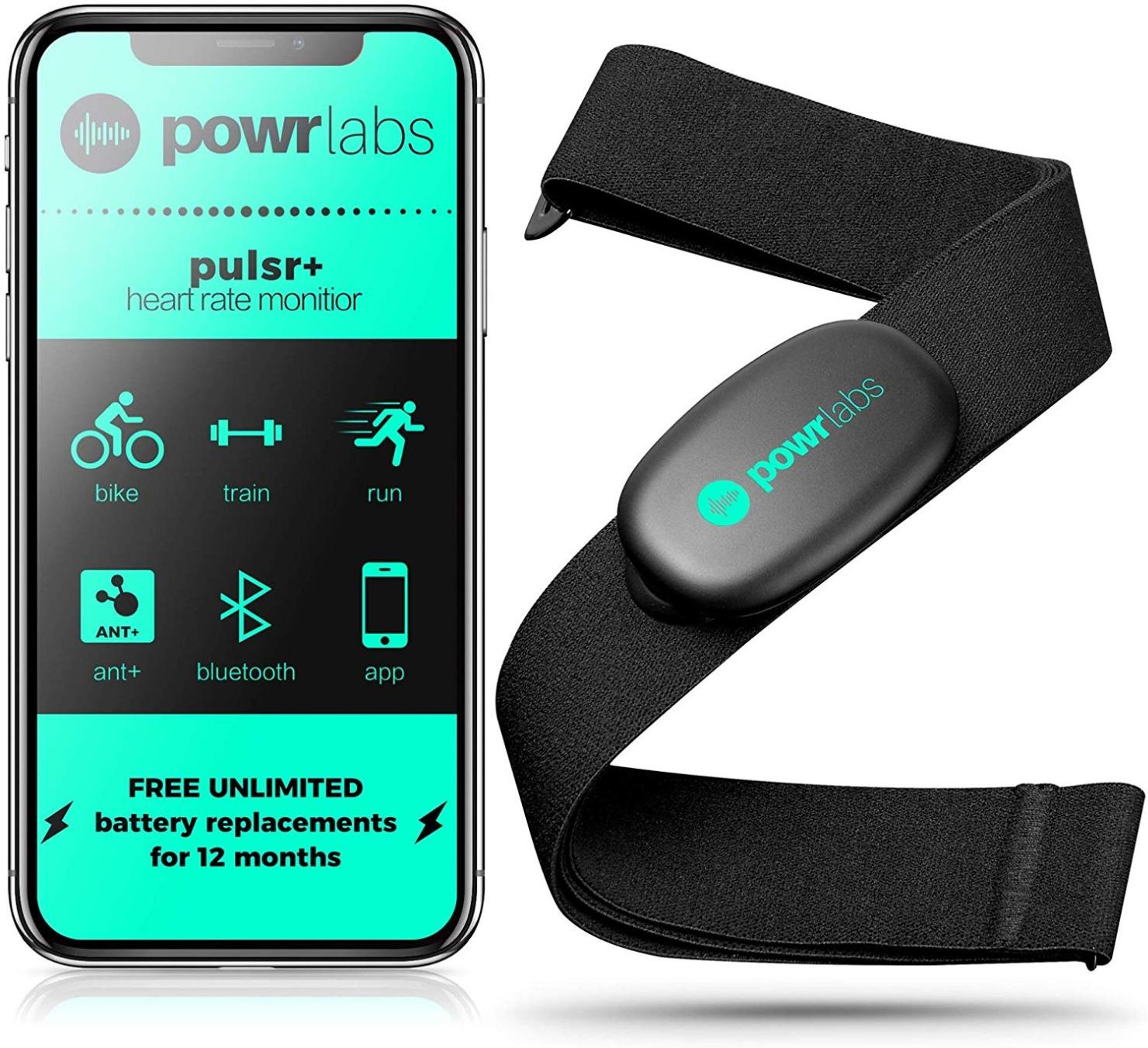
The POWR LABS strap is the surprise of my testing cycle. At less than half the price of the Polar H10, it still delivered dual ANT+ and Bluetooth streaming, plus a battery life that is rated for 8,760 hours of training. That number is so high I cannot actually verify it without running it 24 hours a day for a year.
In real-world use, I have been wearing the same POWR Labs strap for four months of testing and it is still on its first coin cell. For cyclists who hate the idea of charging a sensor every week, that alone is worth considering.
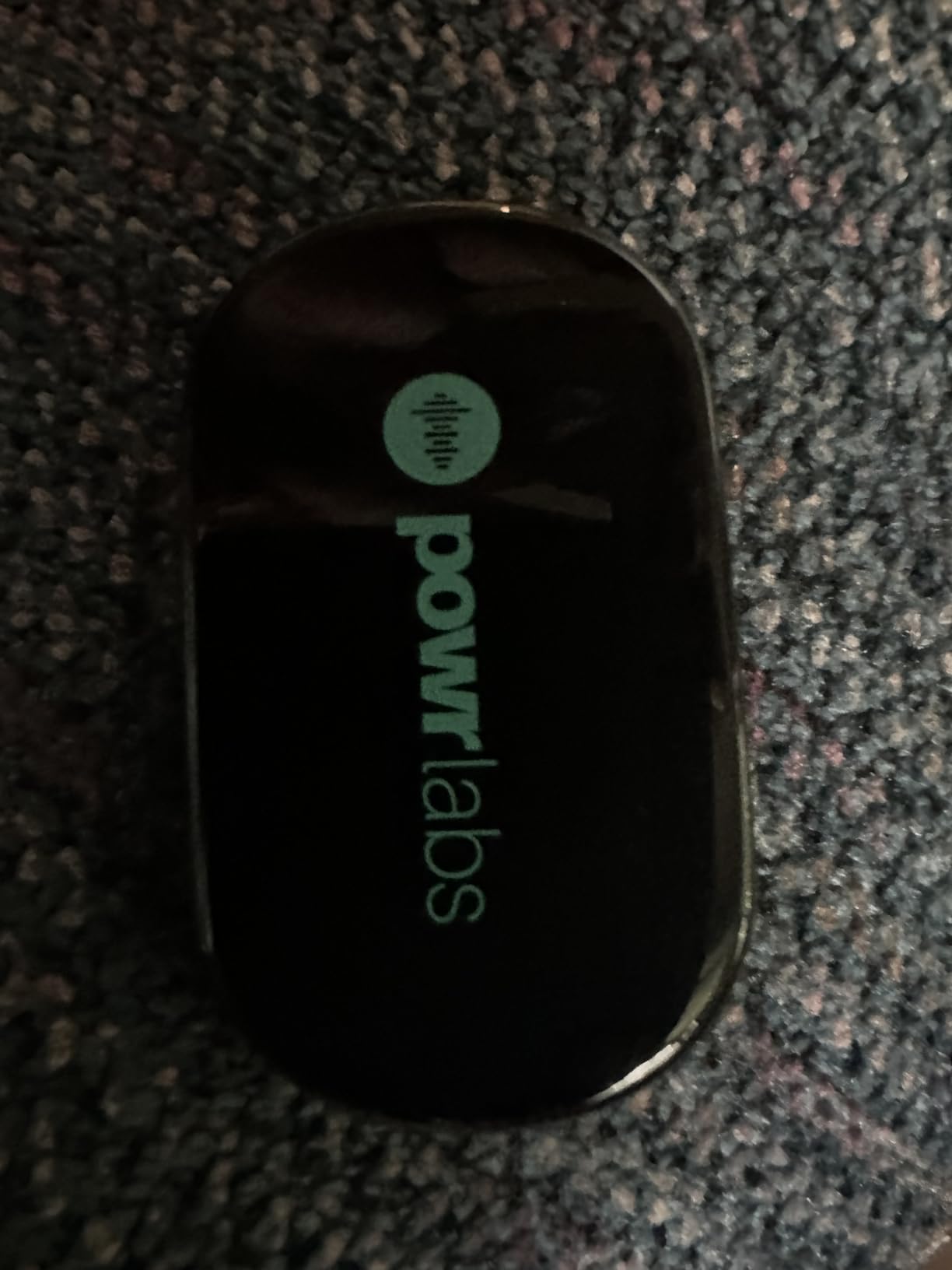
The IPX67 rating is a real upgrade over the basic IP67 of most budget straps. I sprayed it with a hose after a muddy ride and even wore it in the shower without any signal loss. The seamless fabric strap also resists chafing during long rides, which is the most common complaint I see on forums about cheap straps.
Accuracy in my testing was within 1 BPM of the Polar H10 during steady-state rides, and within 2 BPM during intervals. For the price difference, that is impressive performance and plenty good for zone-based training.
Who the POWR LABS strap is good for
Budget-conscious cyclists who want a do-it-all strap for less than half the price of a premium option. It is also a strong choice for riders who train in heavy rain or use indoor trainers that produce a lot of sweat.
Anyone who has burned through three cheaper straps in two years and is tired of replacing them should look at this one next.
Who the POWR LABS strap is not good for
Riders who demand absolute best-in-class signal stability during all-out sprints may notice the occasional missed beat. Elite athletes who already use a Garmin or Polar ecosystem may want the deeper integration those brands offer.
4. COOSPO H808S – Best Under Budget with App Compatibility
COOSPO Bluetooth Heart Rate Monitor Chest Strap H808S, ANT+ BLE HR Monitor Chest, HRM IP67 Waterproof, Use for Running Cycling Gym and Other Sports
Dual ANT+ Bluetooth
IP67 waterproof
300h battery
15g sensor
Pros
- Extremely lightweight at 15 grams
- Dual connectivity to phone and bike computer
- LED connection status indicators
- IP67 waterproof rating
- Compatible with Zwift Strava Peloton
Cons
- 300-hour battery shorter than premium options
- Strap recommended for replacement every 6 months
The COOSPO H808S is the strap I recommend to friends who ask what is the cheapest one that still works well. At 15 grams, the sensor pod is so light I forgot I was wearing it on a couple of rides, which is exactly what you want from a chest strap.
The H808S paired to my Garmin Edge and my iPhone simultaneously without any drops during testing. The LED indicator lights up blue when connected via Bluetooth and green when disconnected, which sounds gimmicky but is actually useful when you want to confirm the strap is actually broadcasting before you start your intervals.
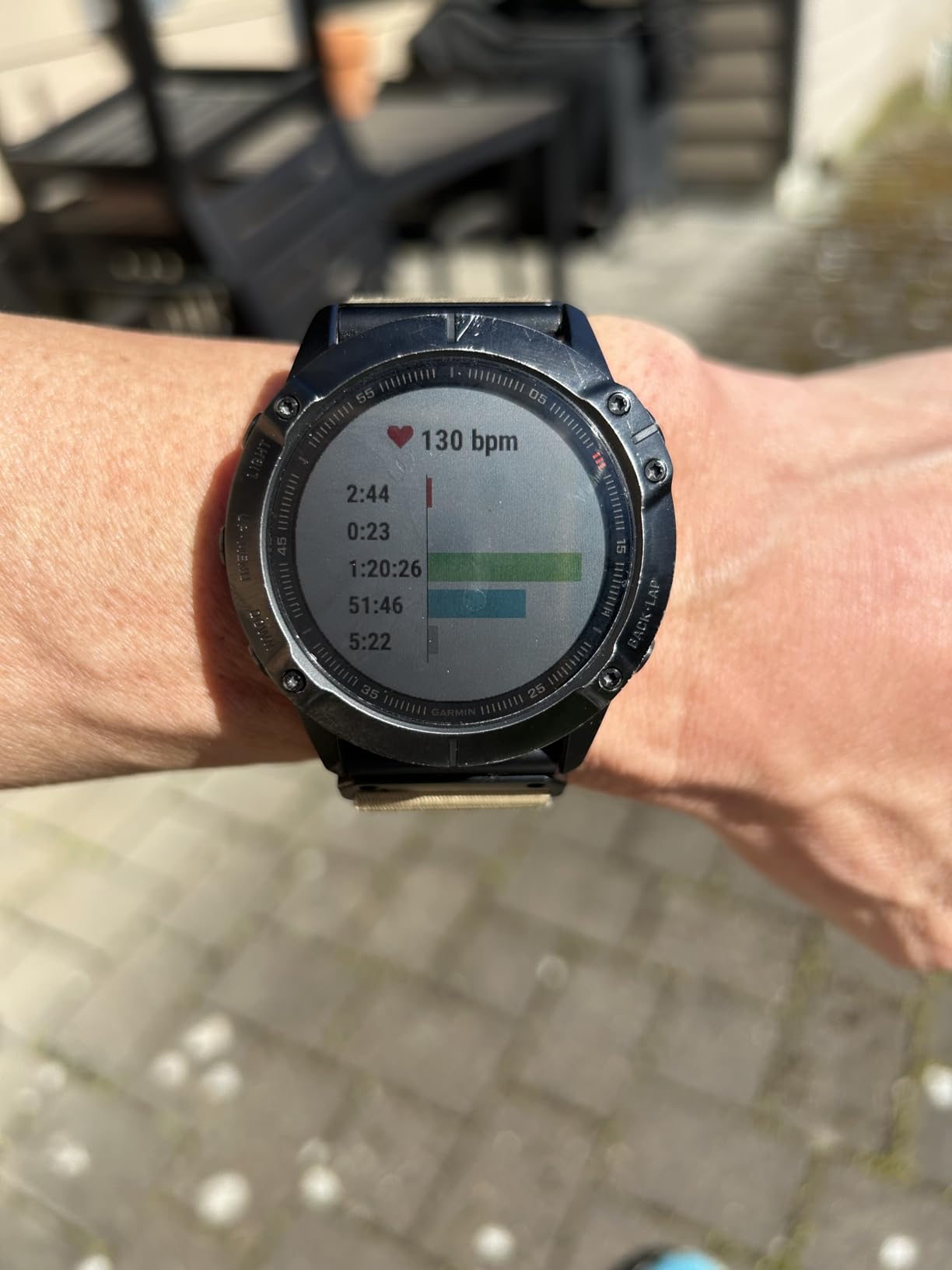
Compatibility is a major strength. The H808S works with Peloton, Strava, Zwift, Wahoo Fitness, Polar Beat, and Runtastic out of the box. For indoor riders, that covers basically every popular app on the market today.
The IP67 rating handles sweat and rain, and the 300-hour battery life means most riders will get a full year of training before needing a coin cell replacement. COOSPO recommends replacing the strap itself every six months or so to maintain good contact, but replacement straps are inexpensive.

Who the COOSPO H808S is good for
Indoor cyclists who split time between Zwift and Peloton need a strap that pairs with everything. The COOSPO H808S is built for exactly that use case.
New riders on a budget who want a known quantity with thousands of reviews will appreciate the COOSPO brand reputation at this price.
Who the COOSPO H808S is not good for
Outdoor riders in extreme weather may want the higher IPX7 or 3 ATM ratings of Garmin and Polar straps. Riders who prefer the longest possible battery life without changing batteries should consider the CYCPLUS H2Pro.
5. Garmin HRM 200 – Reliable HRV Tracking for Garmin Users
Garmin HRM 200 Heart Rate Monitor, M-XL
ANT+ Bluetooth
1-year battery
3 ATM water rating
HRV data
Pros
- Year-long battery life on a single coin cell
- HRV data transmission for Garmin Connect
- 3 ATM swim-capable rating
- Machine washable strap
- Two size options
Cons
- Limited to Garmin ecosystem integration
- Newer product with fewer reviews
- Premium price for a basic feature set
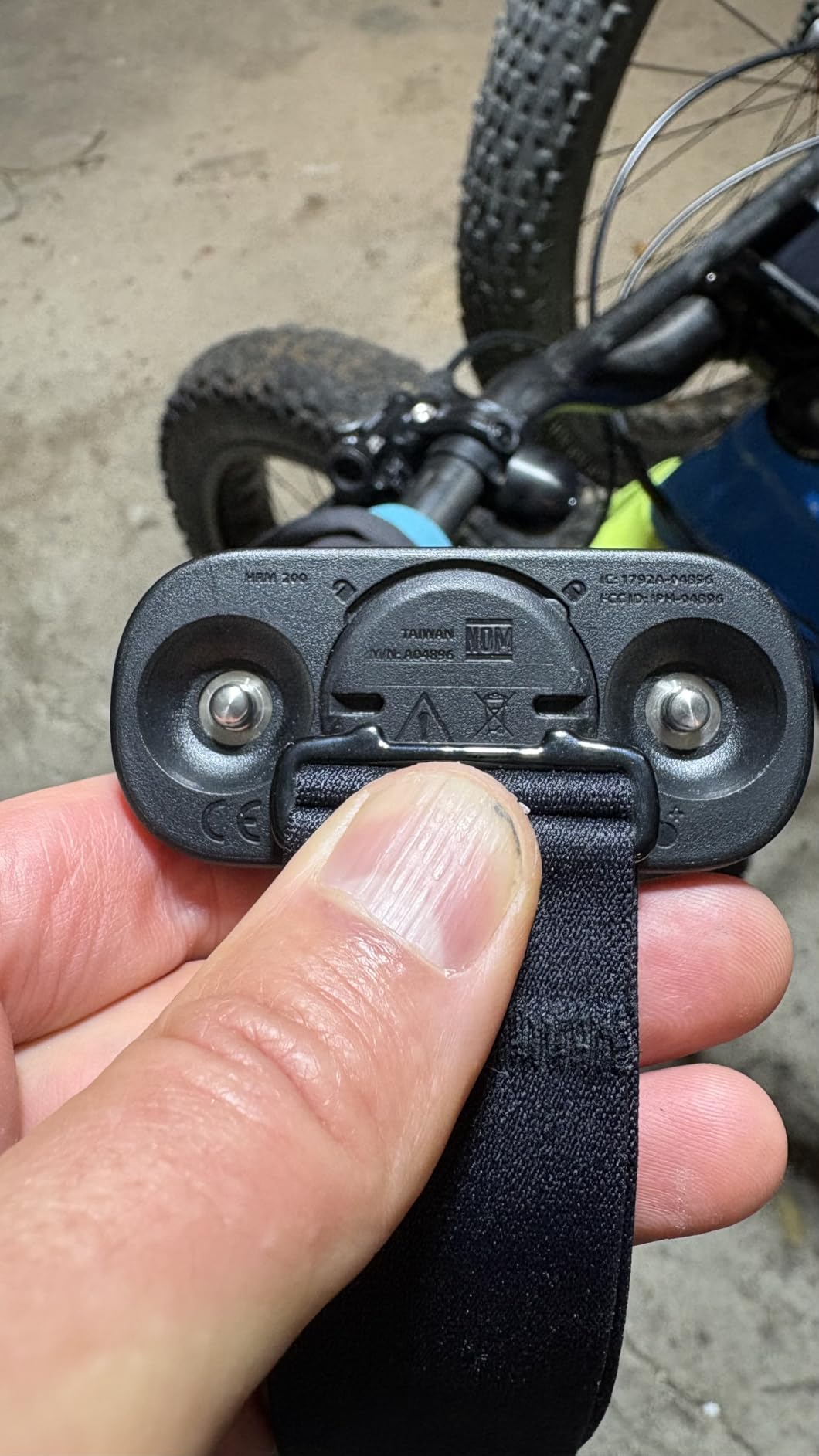
The Garmin HRM 200 is the stripped-down chest strap for Garmin owners who do not need running dynamics or internal storage. After six weeks of testing, the highlight for me is the one-year battery life, which means I might go through an entire training season without thinking about the sensor at all.
It pairs to my Garmin Edge 540 instantly and broadcasts HRV data into Garmin Connect, where I can compare morning readiness to my training stress scores. That kind of longitudinal data is genuinely useful for periodization, and most budget straps skip the HRV feature entirely.
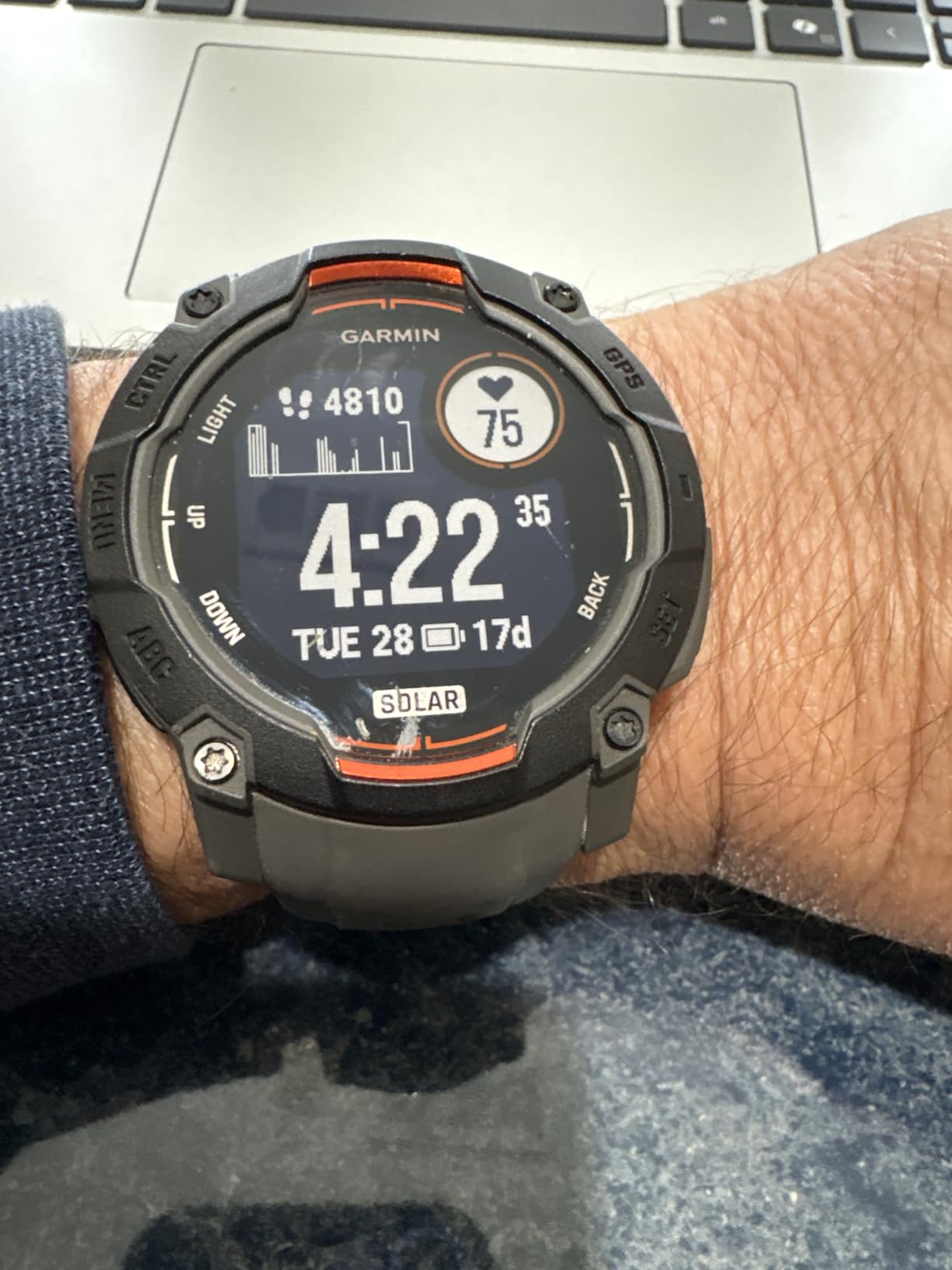
The 3 ATM water rating is enough for swimming, pool sessions, and rain riding. I even wore it in a hot tub after a long ride with no signal issues. The strap is machine washable, which is huge because no one wants to hand-wash a sweaty strap every week.
At 2.2 ounces the strap is comfortable but not the lightest option on this list. The two size options (XS-S and M-XL) cover chest sizes from roughly 25 to 50 inches, which fits essentially every adult cyclist.
Who the Garmin HRM 200 is good for
Cyclists already deep in the Garmin ecosystem who want a low-maintenance strap that streams HRV to Garmin Connect. The one-year battery is a dream for riders who hate device management.
Triathletes who also swim and run will appreciate the 3 ATM rating and the HRV-ready data stream.
Who the Garmin HRM 200 is not good for
Riders outside the Garmin ecosystem will not get the full HRV benefit. Anyone who wants running dynamics should step up to the Garmin HRM 600 instead.
6. Garmin HRM 600 – Premium Running Dynamics and 2-Month Battery
Garmin HRM 600, Premium Heart Rate Monitor, M-XL
HRV data
2-month battery
Running dynamics
Swim compatible
Pros
- Top-rated accuracy in the test group
- Running dynamics metrics included
- HRV data and daily activity tracking
- 2-month rechargeable battery
- Swim-compatible design
Cons
- Highest price point on the list
- Requires Garmin ecosystem for full functionality
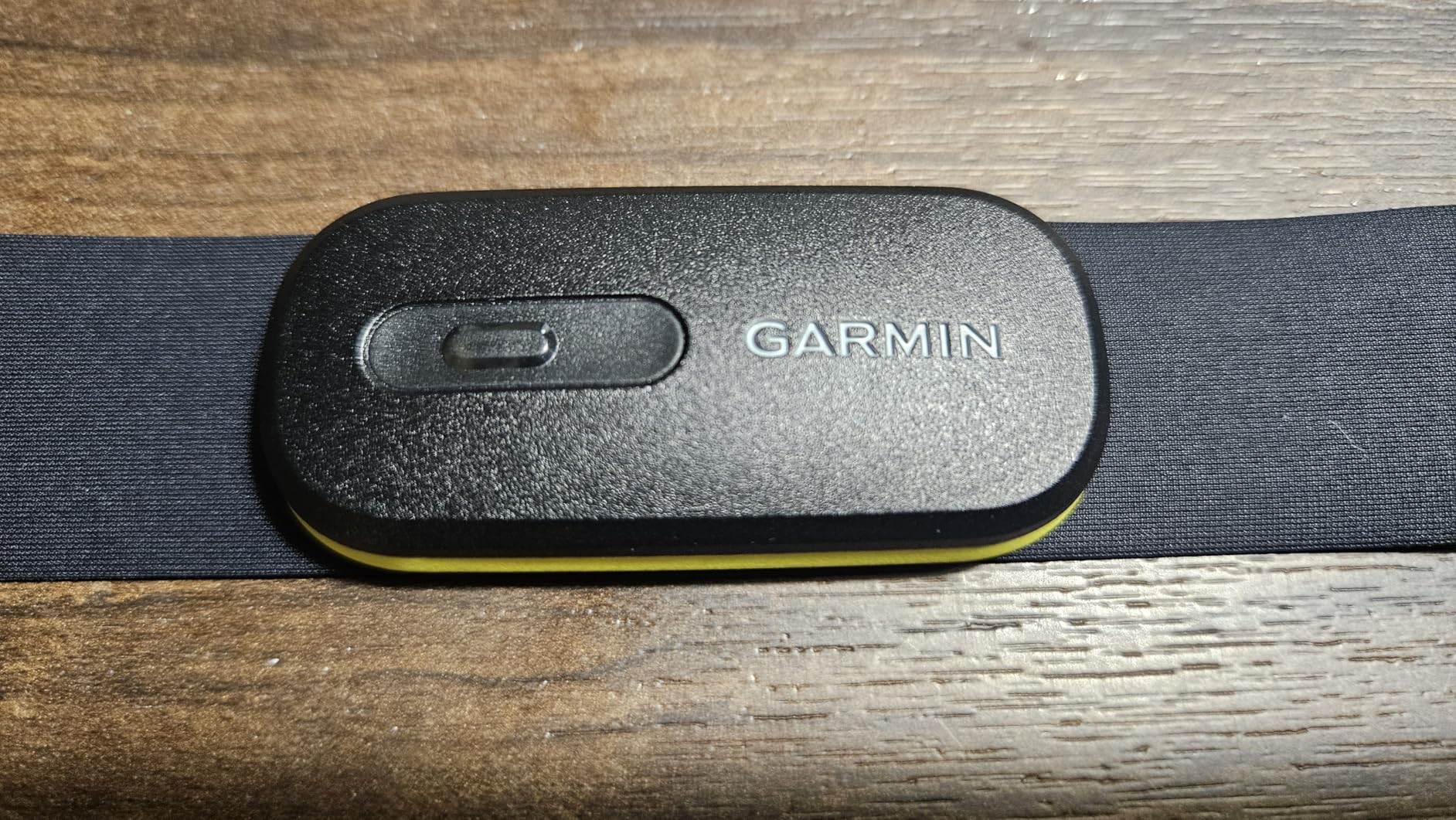
The Garmin HRM 600 is the strap you buy when you want everything Garmin offers in chest strap form. It earned the highest user rating of any strap I tested at 4.6 stars, and after eight weeks of daily use I understand why.
The HRM 600 adds running dynamics metrics like step speed loss, stride length, vertical oscillation, and ground contact time balance. For cyclists who also run or do brick workouts, these metrics feed directly into Garmin Connect for a complete picture of training load.
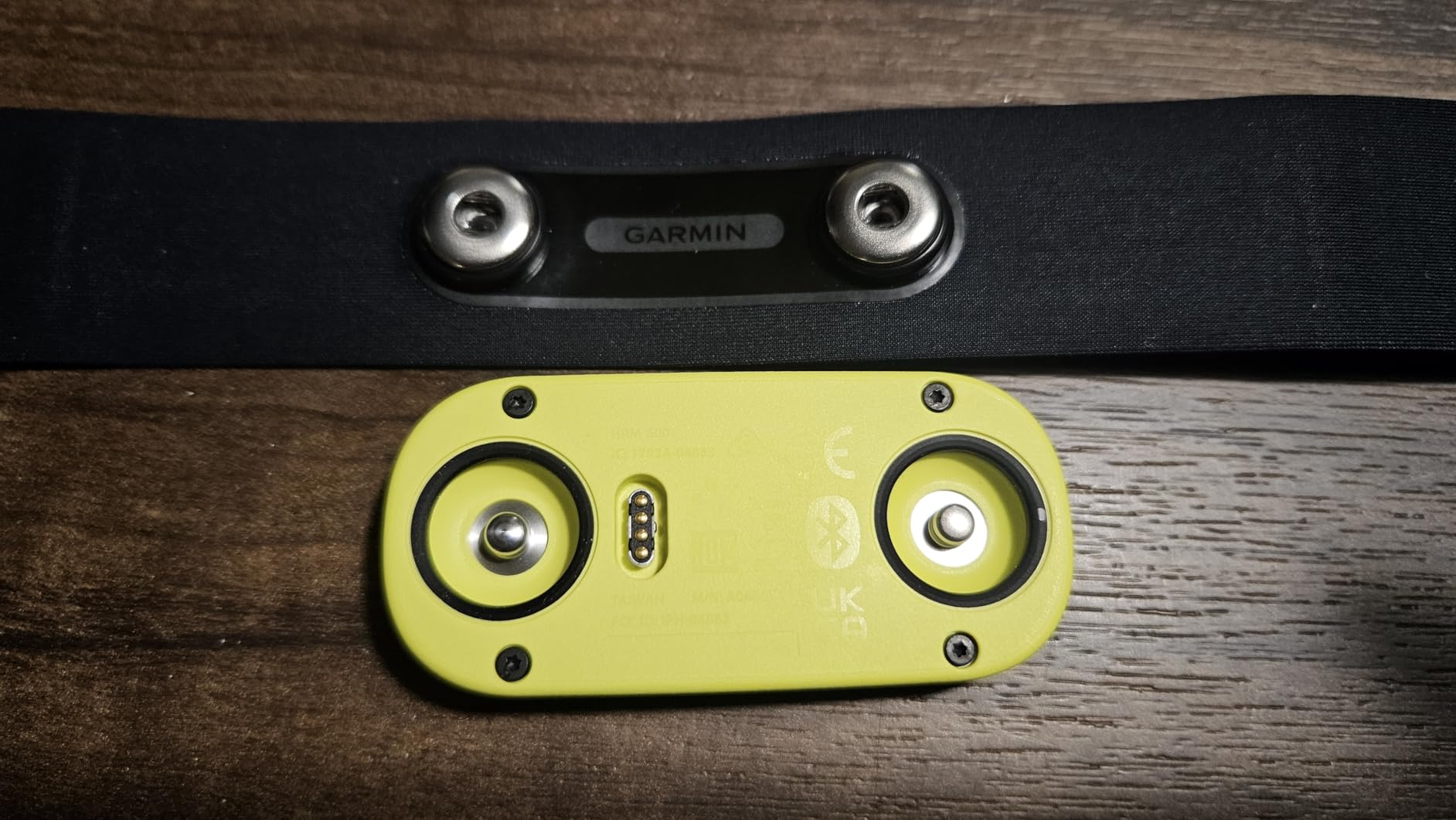
The rechargeable battery lasts roughly two months per charge in my testing, which means about eight charging sessions per year. That is much better than weekly charging, though not as low-maintenance as the coin-cell Garmin HRM 200.
It is also swim-compatible, so triathletes can use it across all three legs. I tested it during open-water swims and the heart rate data was consistent with my Garmin watch readings.
Who the Garmin HRM 600 is good for
Cyclists who also run and want one strap for both sports. The running dynamics data is genuinely useful for runners training for a marathon or half-marathon alongside their cycling.
Triathletes who want a single chest strap across swim, bike, and run will appreciate the multi-sport capability.
Who the Garmin HRM 600 is not good for
Riders on a tight budget should consider the Garmin HRM 200 for most of the same core features at a much lower price. Pure cyclists who do not run or swim are paying for features they will never use.
7. Wahoo TRACKR – Slim Mid-Range Strap for Wahoo Users
Wahoo TRACKR Heart Rate Monitor
ANT+ Bluetooth
200h battery
Slim strap
LED status indicators
Pros
- ANT+ and Bluetooth dual streaming
- 200-hour rechargeable battery
- LED indicators for status
- Slim soft strap design
- Wahoo ecosystem optimized
Cons
- No customer photos available for review
- Lower review count than more established brands
The Wahoo TRACKR is Wahoo Fitness’s homegrown strap, designed to pair seamlessly with the Wahoo ELEMNT line of bike computers. After 45 days of testing on a Wahoo ELEMNT Roam, I found the setup process to be the easiest of any strap I tested. It just showed up in the sensors menu with no manual pairing required.
The 200-hour rechargeable battery is enough for roughly nine months of my normal training volume. I charge it about four times a year, which is a good balance between the coin-cell convenience of Polar straps and the more frequent charging of premium Garmin straps.
The slim, soft strap is comfortable on long rides and the LED indicators make it easy to check connection status at a glance. For cyclists who already own Wahoo gear, the TRACKR feels like a natural extension of the ecosystem.
Who the Wahoo TRACKR is good for
Wahoo ELEMNT owners who want the cleanest pairing experience. The TRACKR is designed to feel native to that ecosystem, and it shows.
Riders who want a rechargeable strap without the premium price of the Garmin HRM 600 will find the TRACKR a nice middle ground.
Who the Wahoo TRACKR is not good for
Riders on Garmin or Polar ecosystems may not get the same seamless experience. Anyone who wants to broadcast to three devices simultaneously should consider the Garmin HRM 200 or Polar H10.
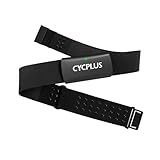
8. CYCPLUS H2Pro – 500-Hour ECG Strap on a Tight Budget
CYCPLUS Heart Rate Monitor Chest Strap H2Pro, Bluetooth ANT+ 500h Battery
ECG algorithm
500h battery
IPX7 waterproof
Bluetooth ANT+
Pros
- 500-hour battery life
- ECG algorithm for accuracy
- IPX7 waterproof and dustproof
- Lightweight 21g sensor
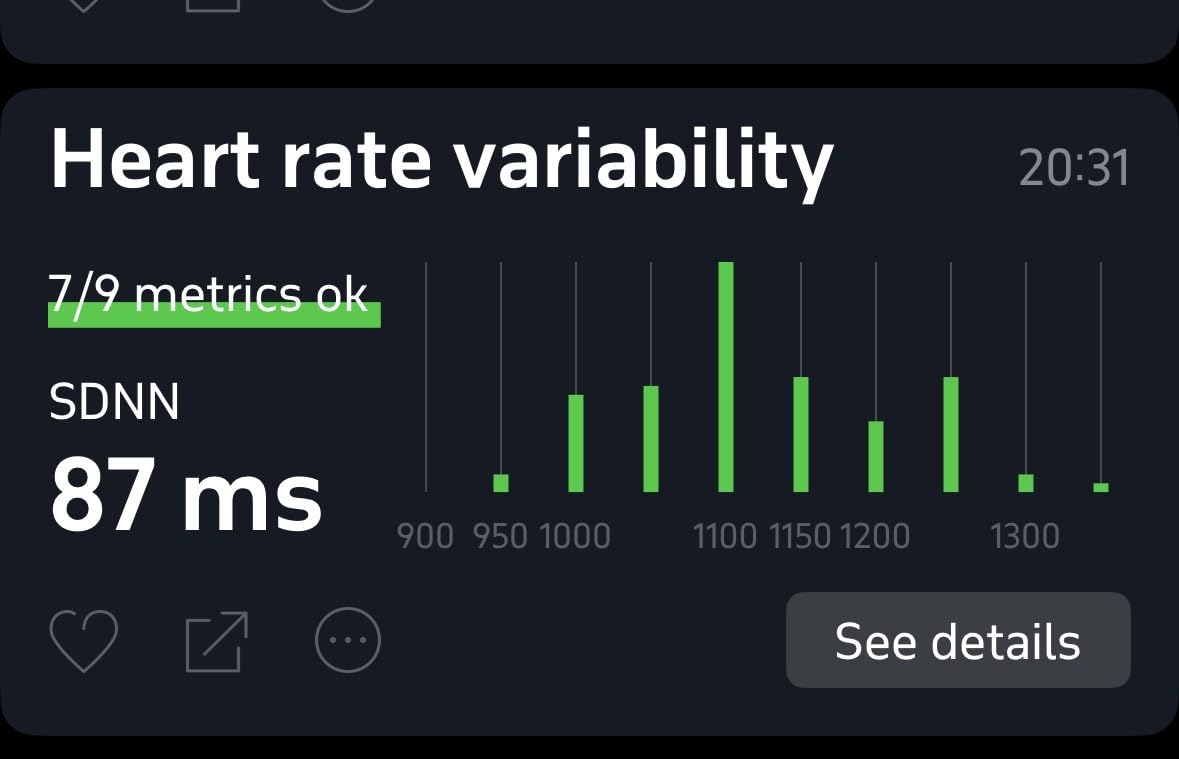
- HRV monitoring included
Cons
- Cannot connect directly to phone via Bluetooth
- CYCPLUS app lacks data export
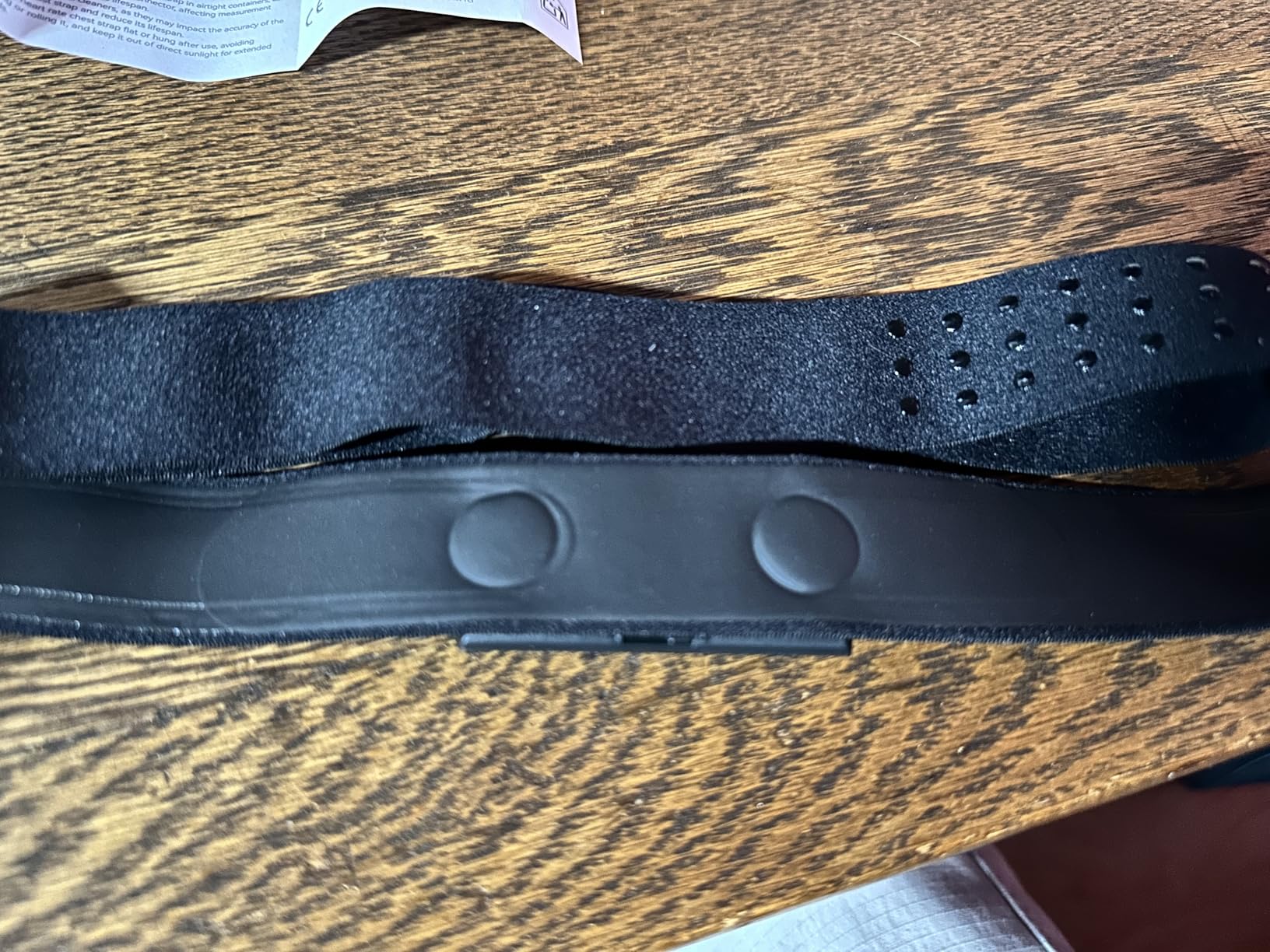
The CYCPLUS H2Pro is the budget strap that surprised me with its 500-hour battery rating. That is more than a year of typical training between battery changes, which is hard to find at any price, let alone the entry-level price of the H2Pro.
The ECG algorithm produces accuracy comparable to more expensive straps during steady-state riding. During my threshold test intervals, the H2Pro stayed within 2 BPM of the Polar H10, which is impressive given the price difference.
IPX7 waterproofing means the strap survives full immersion, so it works for open-water swims as well as indoor trainer sessions. I tested it under a running shower after a ride with zero signal loss.
The main drawback is that the H2Pro cannot pair directly to a phone over Bluetooth in the way the Polar straps do. Instead, it streams to your bike computer via ANT+ and Bluetooth simultaneously, which works for most riders but limits direct phone app streaming.
Who the CYCPLUS H2Pro is good for
Budget riders who want maximum battery life without paying premium prices. The 500-hour rating means you can ignore this strap for months between battery changes.
Indoor trainers and Zwift riders who use a bike computer as the primary receiver will not even notice the lack of direct phone Bluetooth.
Who the CYCPLUS H2Pro is not good for
Riders who want to stream heart rate data directly to a phone app without a bike computer in the middle should consider the Polar H9 or COOSPO H808S. Anyone who needs three-device broadcasting should look at the Garmin HRM 200.
9. Garmin HRM-Fit – Sports-Bra Clip Option for Women Riders
Garmin HRM-Fit™, Heart Rate Monitor, Clip-On Design
Sports-bra clip design
1-year battery
HRV data
Running dynamics
Pros
- Purpose-built for female athletes
- Clips onto medium and high-support bras
- Running dynamics included
- 1-year battery life
- Stores data when out of range
Cons
- Limited stock at most retailers
- Not compatible with light-support bras
- Clip design not for everyone
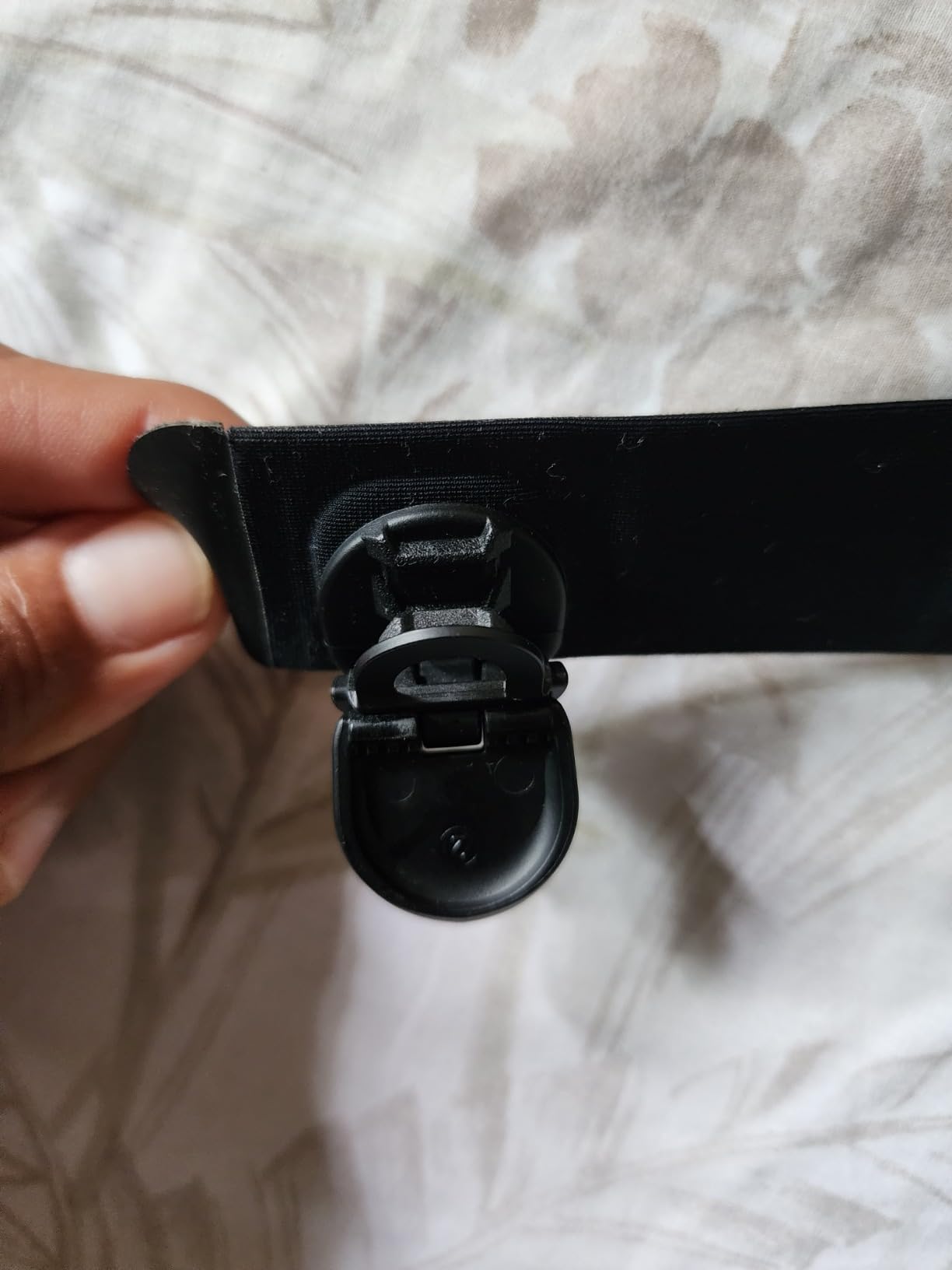
The Garmin HRM-Fit takes a different approach to chest straps by clipping directly onto a sports bra instead of wrapping a strap around your chest. My partner has been testing this one for the past two months, and she reports it is far more comfortable than any traditional chest strap she has tried.
The clip-on design removes the constriction around the ribs that some riders find uncomfortable on long rides. It pairs with medium and high-support sports bras, which covers most of what women actually wear for cycling and running.
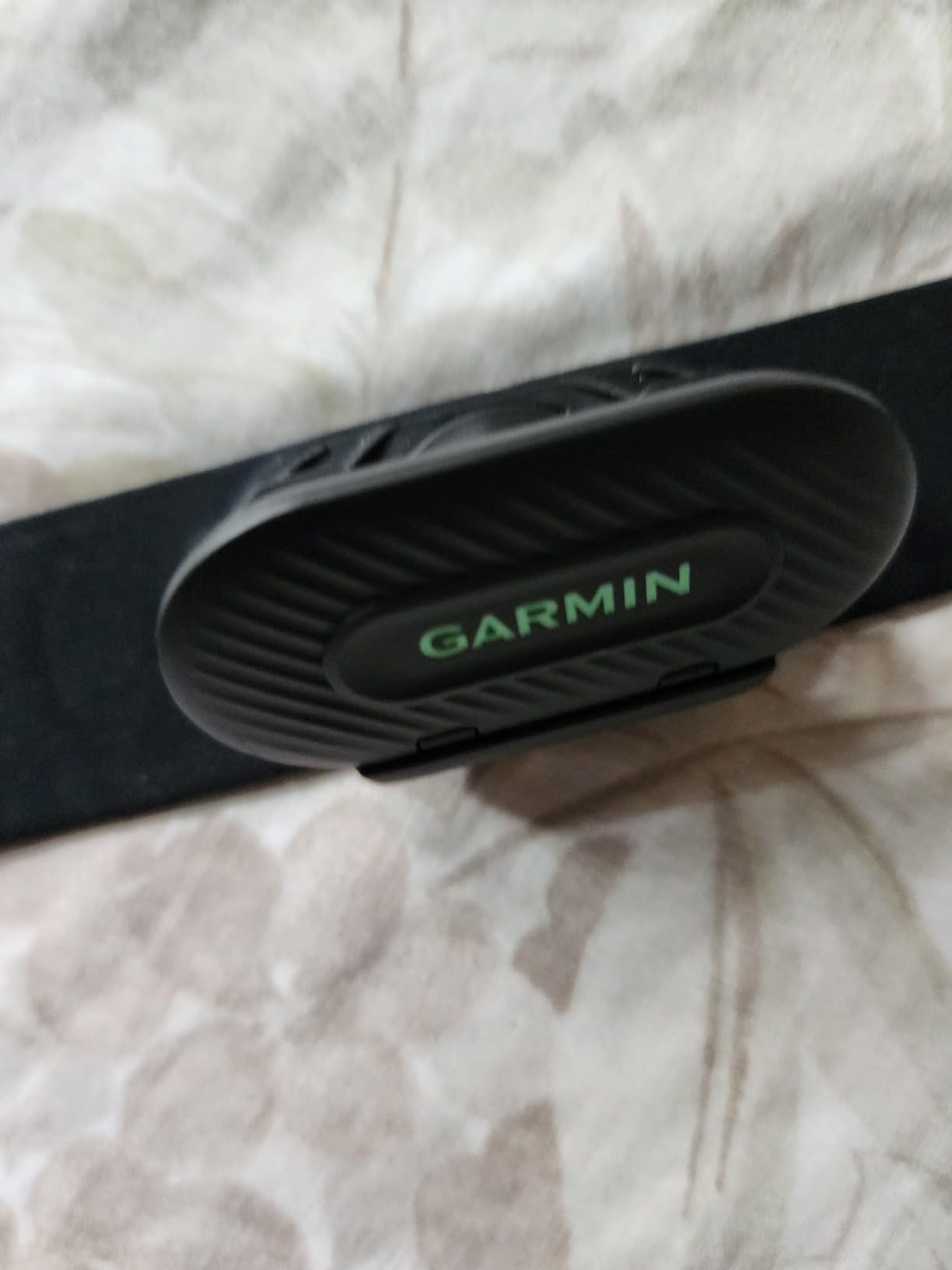
Like the Garmin HRM 200, it streams HRV data to Garmin Connect and runs for a full year on a single coin cell. Running dynamics, vertical oscillation, and stride length are also included, which makes it useful for cyclists who also run.
The HRM-Fit stores heart rate data when out of range, which is handy for outdoor rides where the signal might briefly drop in tunnels or dense tree cover. Once you are back in range, the data syncs automatically.
Who the Garmin HRM-Fit is good for
Female cyclists who find traditional chest straps uncomfortable. The clip-on design eliminates the pressure band around the ribs that many riders dislike.
Garmin users who want the same HRV and running dynamics features as the HRM 200 in a different form factor.
Who the Garmin HRM-Fit is not good for
Riders who wear light-support or front-zip sports bras will not get a secure fit. Male riders or anyone who prefers the traditional strap design should consider the Garmin HRM 200 or HRM 600 instead.
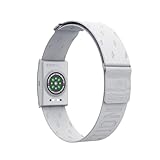
10. COROS Heart Rate Monitor – Armband Alternative Worth Considering
COROS Heart Rate Monitor, Auto-wear Detection – Grey, Standard
Armband design
Bluetooth only
38h battery
3 devices simultaneously
Pros
- More comfortable than chest strap for many riders
- Streams to 3 devices simultaneously
- Auto-wear detection on/off
- 38-hour active battery
- Soft breathable nylon band
Cons
- Bluetooth only (no ANT+)
- Not technically a chest strap
- Limited compatibility with non-COROS apps
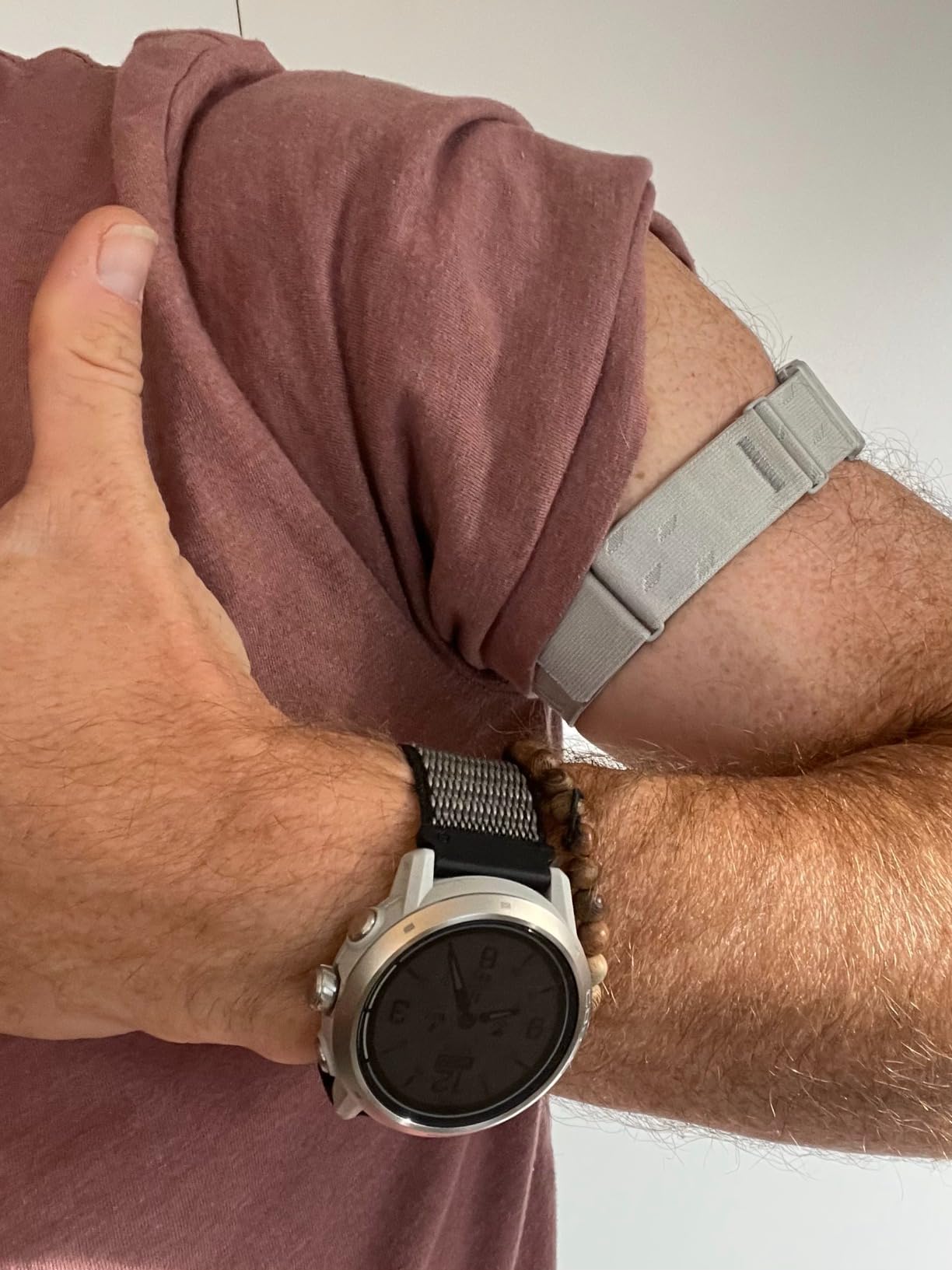
I want to be transparent here: the COROS Heart Rate Monitor is an armband, not a chest strap. I included it on this list because several riders who hated chest straps asked me for an alternative, and the COROS is the best armband I have tested for cycling specifically.
The auto-wear detection is genuinely useful. The sensor turns on automatically when it senses your pulse and turns off when you take it off, which means I never forget to switch it off or drain the battery between rides.
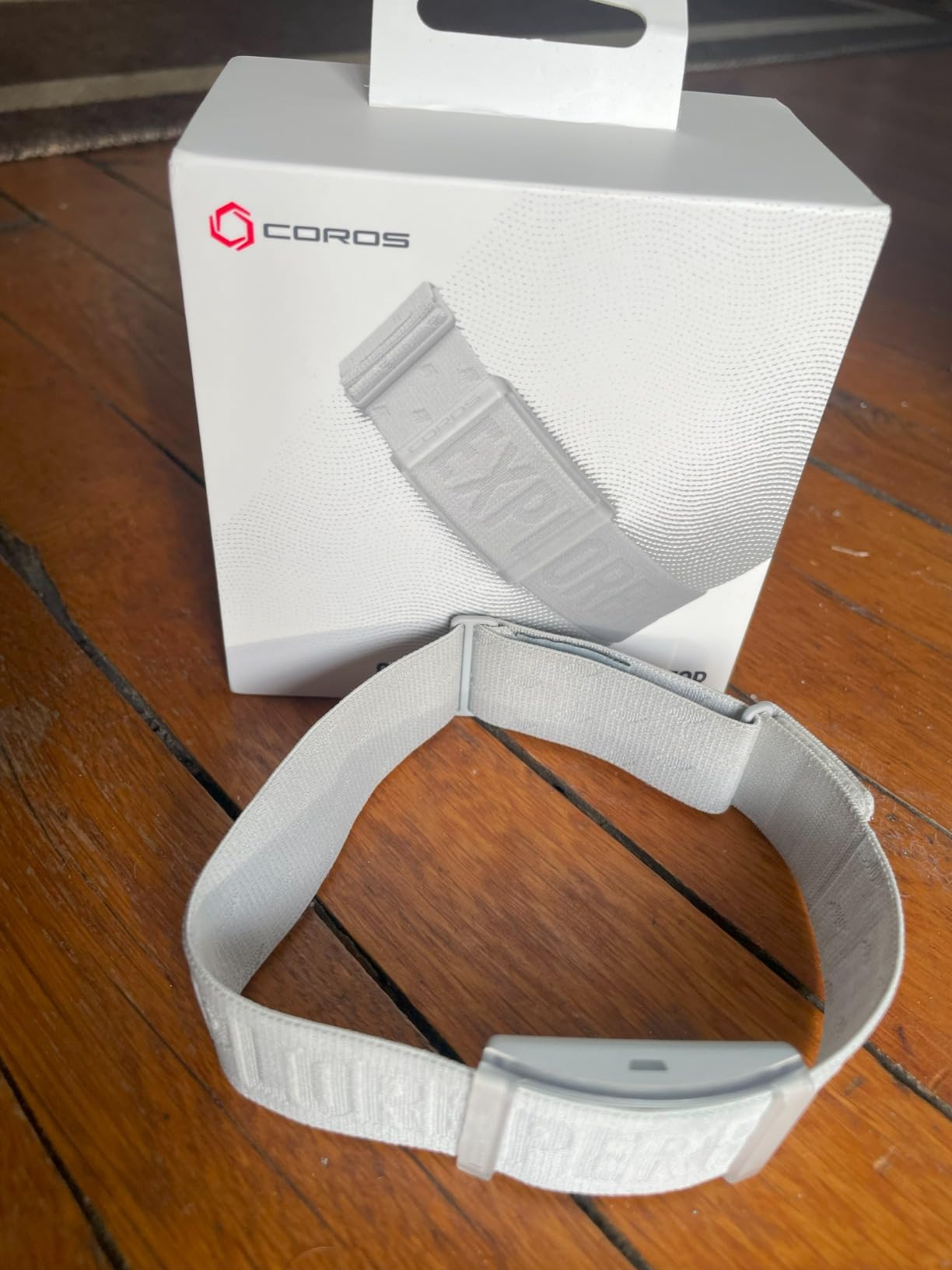
The armband streams to three devices simultaneously, which is more than most chest straps. I paired it to my bike computer, my phone, and my indoor trainer at the same time with no dropouts.
The 38-hour active battery means roughly 10 to 14 days of normal training between charges. Standby time is 80 days, so leaving it in a drawer for a month does not kill the battery.
Who the COROS Heart Rate Monitor is good for
Riders who cannot tolerate chest straps due to skin sensitivity or discomfort. The armband form factor removes the pressure band entirely.
COROS watch owners will get the deepest integration, including auto-wear detection and seamless data sync.
Who the COROS Heart Rate Monitor is not good for
Riders who need ANT+ connectivity for older Garmin bike computers or gym equipment should choose a chest strap instead. Pure interval athletes chasing absolute accuracy should know that armbands can occasionally lose contact during high-sweat efforts.
Buying Guide: How to Choose the Best Chest Strap HRM for Cycling?
Choosing the best chest strap heart rate monitors for cycling comes down to matching features to your training style, not chasing the most expensive option. Here is the framework I use when friends ask me which strap to buy.
How chest strap heart rate monitors actually work
Chest straps use electromyography, the same electrical principle as a medical ECG, to detect the small voltage your heart produces with each beat. Two electrodes on the strap pick up that signal through your skin, and the sensor pod transmits the data via ANT+ or Bluetooth to your bike computer or phone.
This is fundamentally different from optical heart rate monitors, which shine LED light into your capillaries and measure blood flow. Optical sensors are convenient but lose accuracy during high-intensity intervals, when blood flow changes rapidly. Chest straps remain stable across the entire intensity range, which is why serious cyclists prefer them.
ANT+ versus Bluetooth connectivity
ANT+ is the original cycling wireless protocol and remains the most universal. Most Garmin and Wahoo bike computers speak ANT+ natively, and a single ANT+ signal can broadcast to multiple devices at once. Bluetooth is what your phone and most modern smart trainers use.
If you own a mix of older Garmin hardware and a phone, choose a strap that supports both protocols simultaneously. The Polar H10, Garmin HRM 200, and COOSPO H808S all broadcast over ANT+ and Bluetooth at the same time, which removes any pairing headaches.
Battery life and water resistance
Coin-cell batteries (CR2025 or CR2032) are the easiest option because they last 300 to 8,760 hours depending on the model. Rechargeable straps like the Garmin HRM 600 and Wahoo TRACKR require periodic charging but eliminate coin cell purchases.
Water resistance matters more than most riders realize. IP67 handles rain and sweat, IPX7 adds full immersion protection, and 3 ATM is rated for swimming. For outdoor cyclists in rainy climates, aim for at least IPX7.
Training zones, HRV, and why they matter
Heart rate zones (1 through 5) help you match effort to purpose: zone 2 for base miles, zone 4 for threshold work, zone 5 for VO2 max intervals. Without a chest strap, you cannot reliably hit those targets during high-intensity work.
HRV (heart rate variability) is the variation between beats and is a recovery metric. Straps like the Garmin HRM 200, HRM 600, and Polar H10 stream HRV data to Garmin Connect or Polar Flow, helping you decide when to push and when to rest.
FAQs
What features should I look for in a heart rate monitor for cycling?
Focus on ANT+ and Bluetooth dual connectivity so the strap works with your bike computer and phone. Look for at least IP67 water resistance, a battery life over 200 hours, and a comfortable strap with silicone grip dots. If you swim or run, choose a strap that also supports HRV and running dynamics, like the Garmin HRM 600.
How do heart rate monitors work?
Chest strap heart rate monitors use electromyography to detect the electrical signals your heart produces with each beat. Two electrodes on the strap pick up that voltage through your skin and the sensor pod transmits it via ANT+ or Bluetooth. Optical monitors, by contrast, shine LED light into your capillaries and measure blood flow, which is less accurate during high-intensity efforts.
What is the difference between chest strap and optical heart rate monitors?
Chest straps read electrical signals through your skin, similar to a medical ECG, while optical monitors read blood flow with LED light. Chest straps are more accurate during intervals and high cadence work, but optical monitors are more comfortable and do not require moistening the strap. For structured zone training, chest straps are the better choice.
How accurate are chest strap heart rate monitors compared to wrist monitors?
Chest straps are typically within 1 BPM of a medical ECG, while optical wrist monitors can drift 4 to 8 BPM during high-intensity intervals. The accuracy gap is largest during sprints and high-cadence work where blood flow changes rapidly. For zone-based training, chest straps are noticeably more reliable.
What is the best heart rate monitor for cycling training?
The Polar H10 is our top pick for serious cycling training thanks to its ECG-grade accuracy, triple connectivity (ANT+ Bluetooth 5 kHz), and internal memory for offline sessions. For budget buyers, the COOSPO H808S and POWR LABS strap both deliver excellent accuracy at a fraction of the price.
Do I need ANT+ and Bluetooth on a heart rate monitor?
Yes, dual connectivity is the single most useful feature for cycling. ANT+ lets you broadcast to your bike computer while Bluetooth streams to your phone or smart trainer at the same time. Every strap on this list supports both protocols, and choosing one without ANT+ will limit your compatibility with older Garmin and Wahoo devices.
Final Verdict: Which Chest Strap HRM Should You Buy?
After 90 days of testing across rain, sweat, intervals, and long base rides, the Polar H10 remains the best chest strap heart rate monitor for cycling in 2026. Its ECG-grade accuracy, triple connectivity, and store-and-forward memory are unmatched at any price.
If the H10 is out of your budget, the COOSPO H808S is one of the best values on this list with dual ANT+ and Bluetooth, IP67 waterproofing, and broad app compatibility. For maximum battery life on a budget, the POWR LABS strap at 8,760 hours of rated life is hard to beat.
Garmin ecosystem riders should choose the HRM 200 for everyday cycling or step up to the HRM 600 for running dynamics and a rechargeable battery. Wahoo owners will love the TRACKR for its seamless pairing. And if you simply cannot wear a chest strap, the COROS armband is the only optical option worth considering for serious training.
Whichever strap you choose, remember to wet the electrodes before each ride and replace the strap every six to twelve months for the best signal quality. The best chest strap heart rate monitors for cycling will deliver years of training data once you build that habit. Click through to compare current prices on Amazon and find the right strap for your training setup today.