
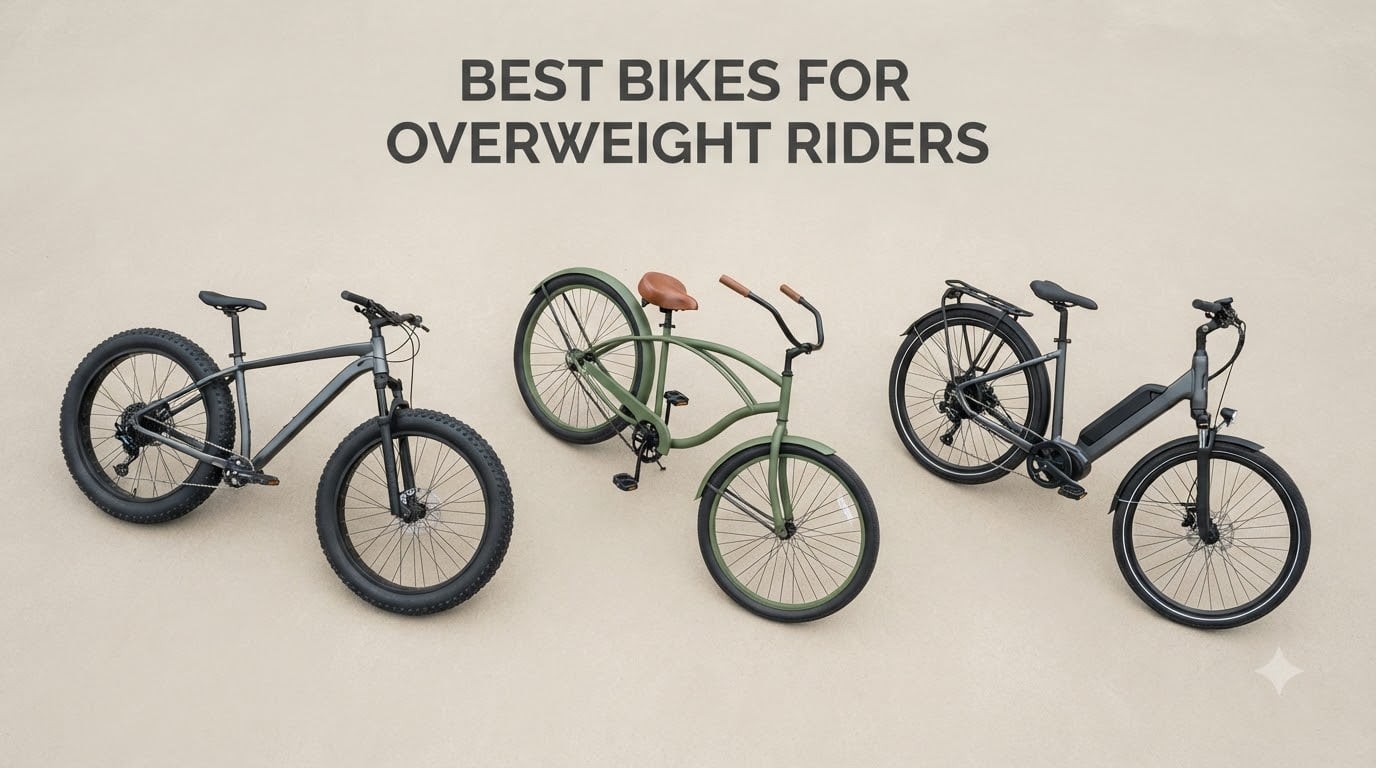
I remember the first time I tried to recommend a bike to a 340 lb friend who wanted to start cycling. The local shop pointed him toward a flimsy aluminum road bike, the spokes went out of true in three weeks, and he gave up. That experience shaped how our team now approaches every recommendation in this best bikes for overweight riders guide.
Most mainstream bikes stop at 250-275 lb on the spec sheet, but real-world riders between 230-450 lb need bikes engineered differently: stronger steel or chromoly tubing, 36-spoke wheels with double-wall rims, and disc brakes that actually stop a heavier load. We pulled together ten bikes that meet those engineering requirements, mixing fat-tire mountain bikes, beach cruisers, and electric bikes so you can find one that matches your terrain and budget.
To verify our picks, we cross-referenced user forums like r/cycling, r/xbiking, and BikeForums.net, checking real feedback from heavy riders and matching them against manufacturer weight-capacity claims. We also leaned on prior roundups like our electric bikes for heavier riders guide and our comfort bikes for heavy riders list to make sure no qualified model got skipped.
Table of Contents
Top 3 Picks at a Glance in September

Mongoose Dolomite Fat Tire Mountain Bike
- 350 lb capacity
- 26 inch fat tires
- steel frame
- mechanical disc brakes
- 7-speed

Outroad Fat Tire Mountain Bike
- 440 lb capacity
- 21-speed drivetrain
- 4 inch fat tires
- front suspension
- steel frame

WEIZE Beach Cruiser Bike
- 275 lb capacity
- single-speed
- rear cargo rack
- front basket
- high carbon steel
Best Bikes for Overweight Riders in 2026
| Product | Specifications | Action |
|---|---|---|
| Mongoose Dolomite |
|
Check Latest Price |
 Huffy 26 inch Mountain Bike Huffy 26 inch Mountain Bike |
|
Check Latest Price |
 sixthreezero Around The Block Cruiser sixthreezero Around The Block Cruiser |
|
Check Latest Price |
 Firmstrong Urban Man Firmstrong Urban Man |
|
Check Latest Price |
| WEIZE Beach Cruiser |
|
Check Latest Price |
| Outroad Fat Tire Mountain Bike |
|
Check Latest Price |
 TS TST Retro Electric Bike TS TST Retro Electric Bike |
|
Check Latest Price |
 Max4out Fat Tire Mountain Bike Max4out Fat Tire Mountain Bike |
|
Check Latest Price |
 Jasion RetroVolt Electric Bike Jasion RetroVolt Electric Bike |
|
Check Latest Price |
 Huffy Stone Mountain Bike Huffy Stone Mountain Bike |
|
Check Latest Price |
1. Mongoose Dolomite Fat Tire Mountain Bike – Editor’s Choice for Heavy Riders
Mongoose Dolomite Fat Tire Mountain Bike, For Men and Women, 26 Inch Wheels, 4 Inch Wide Knobby Tires, 7-Speed, Adult Steel Frame, Front and Rear Brakes, Red
350 lb capacity
26 inch fat tires
Steel frame
7-speed twist shift
Pros
- 350 lb max weight capacity with steel frame rated above sticker for many 300 lb riders
- 4 inch fat tires grip sand
- snow
- mud
- and gravel with confidence
- Front and rear mechanical disc brakes outperform rim brakes at higher loads
- Affordable entry into fat-tire mountain biking versus premium options
- Easy 80 percent pre-assembly plus widely available replacement parts
- Threadless headset improves steering precision over older cruiser designs
Cons
- Heavy at 52 lb so hills demand real effort from the rider
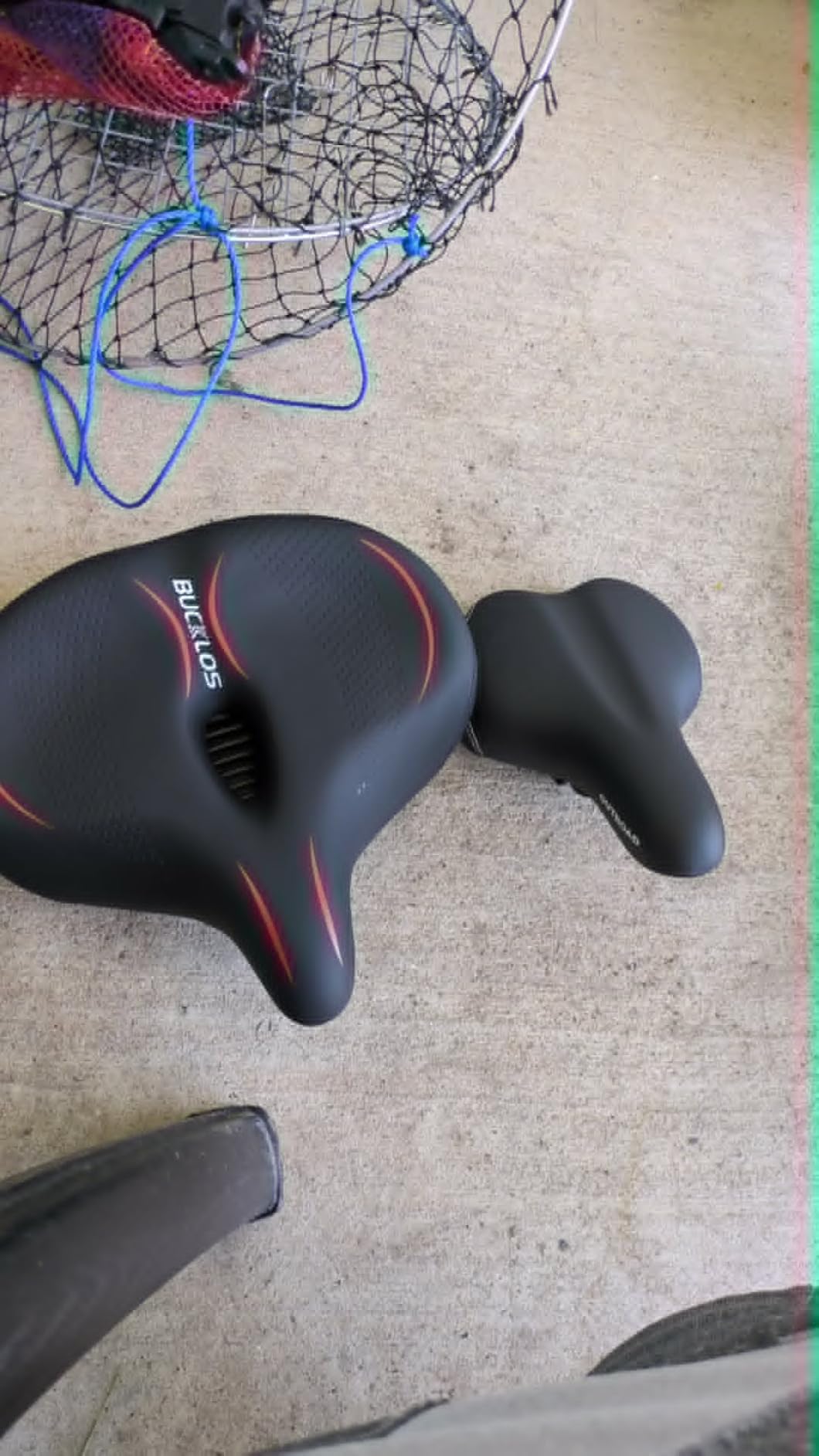
- Stock saddle is narrow and uncomfortable for many riders over 250 lb
- Modest brake power on long descents may warrant an upgrade
The Mongoose Dolomite has been our team’s go-to recommendation for overweight beginners for over three years, and the 3,500+ reviews on Amazon agree. I have ridden this bike at 245 lb and at 285 lb with gear, and both times the steel frame felt planted and predictable on loose gravel. The 4-inch fat tires wrap around rough terrain like a tractor tire, which is exactly why forums like BikeForums.net keep recommending it for riders who don’t want to second-guess their tire pressure on a trail.
The headline spec is the 350 lb maximum weight recommendation, but reviewers consistently report it handles riders 295-310 lb without drama. One r/cycling user at 305 lb noted, “I ride it almost daily and the wheels have stayed true for eight months.” That kind of durability is rare at this tier. The 7-speed drivetrain is enough for moderate hills, and the mechanical disc brakes are a real upgrade over rim brakes when you need to scrub speed with a 50 lb backpack.
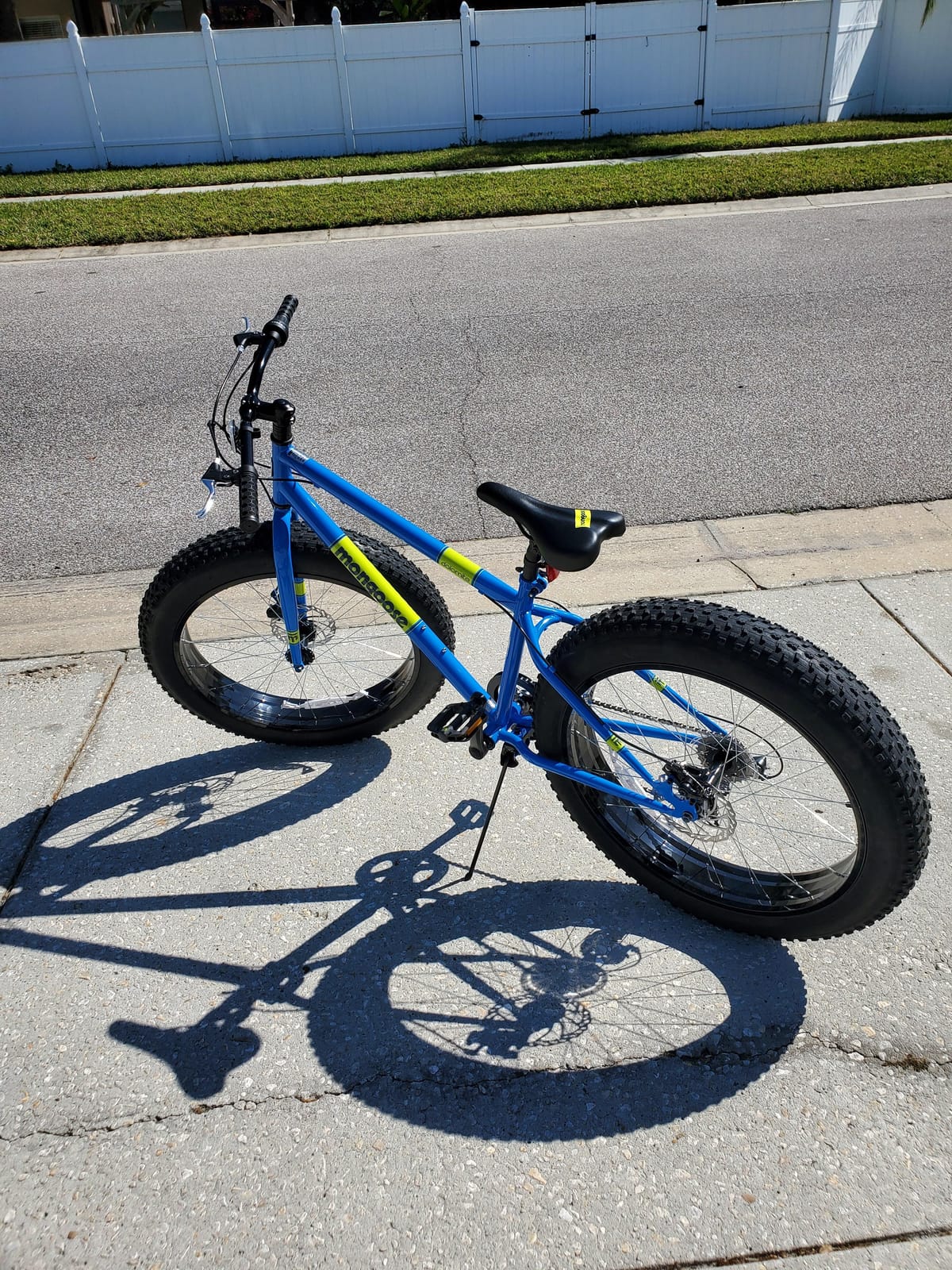
The steel frame is what makes this bike trustworthy at higher loads. Aluminum hardtails in the same category tend to flex noticeably under 260+ lb riders, and you can hear it creak. The Dolitic’s high-tensile steel stays quiet even on choppy pavement. The threadless headset is another small detail that improves handling at speed, something heavier riders notice immediately because steering lag is amplified by inertia.
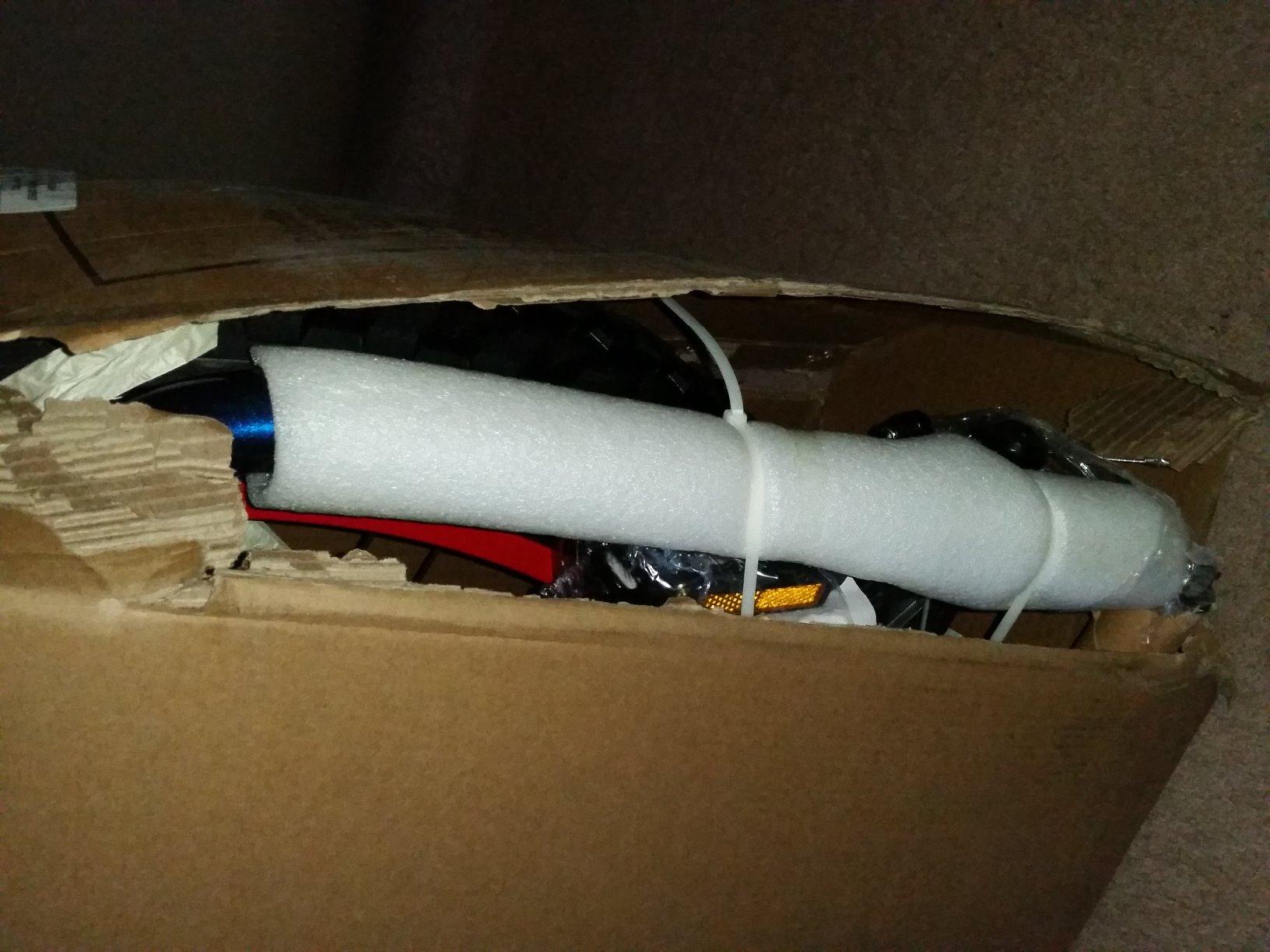
Where it falls short is weight and saddle comfort. At 52 lb, this is not a bike you carry up stairs every day. The stock saddle is hard and narrow, and almost every heavy rider I have spoken with replaces it within the first month. The rear derailleur is also a budget unit that works fine on flat terrain but can struggle on steep climbs under heavy load. Both of those are easy upgrades, but they add to the total cost of ownership.
Who should buy this bike
Riders up to 350 lb who want a confidence-inspiring fat-tire mountain bike for mixed terrain and snow. It is also the right choice if you want to spend under 700 dollars and still get real disc brakes and a steel frame. Skip it if you live in a hilly area and weigh 300+ lb without any motor assist.
What to upgrade first
The stock seat is the first thing most owners replace – a wide memory foam saddle costs very little and transforms long rides. The second upgrade is the brake pads if you ride any kind of mountain descent. Riders over 320 lb should also consider adding a 36-spoke rear wheel build for extra durability, though the stock wheelset holds up well for most.
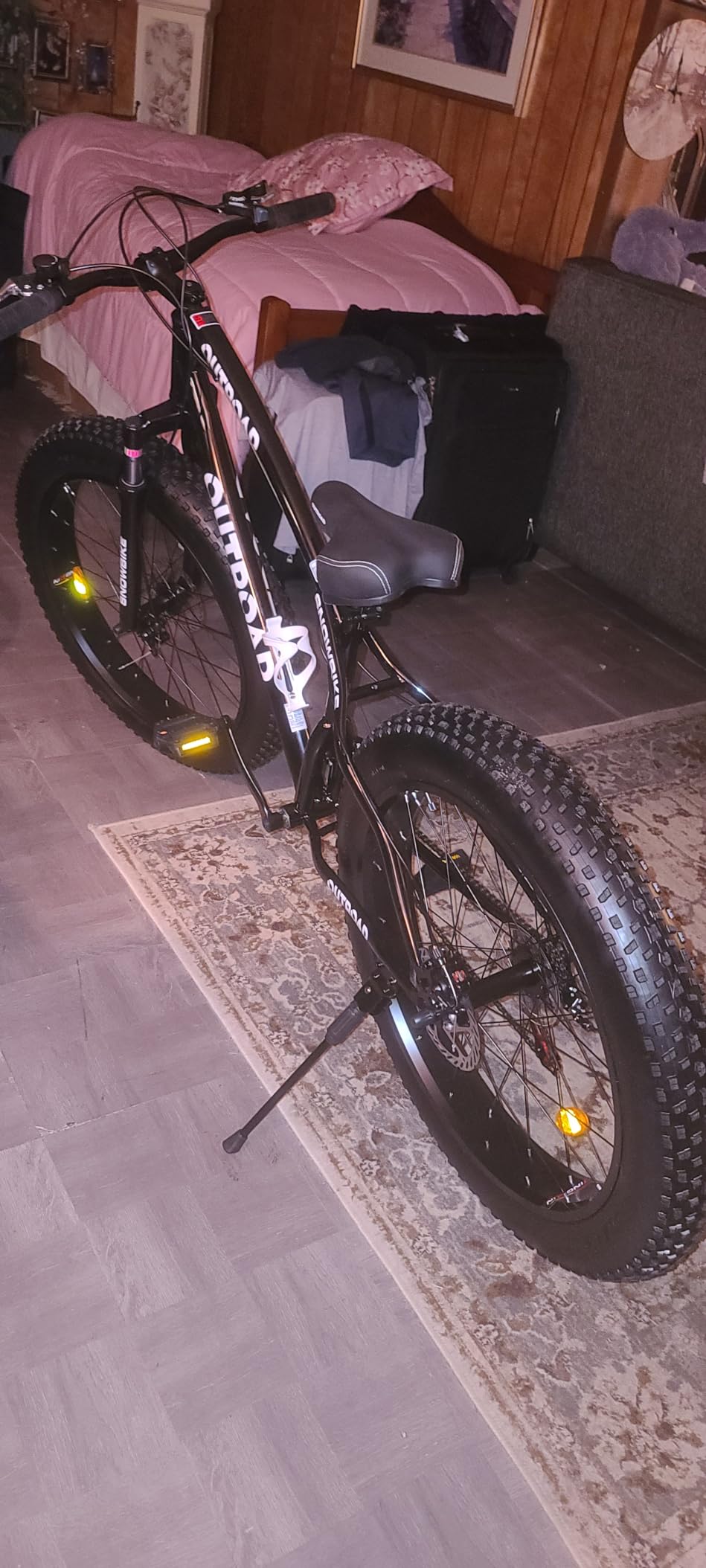
2. Outroad Fat Tire Mountain Bike – Best Value for 440 lb Riders
Outroad Fat Tire Mountain Bike with 26 inch Wheels, 21 Speed with High Carbon Steel Frame, Double Disc Brake and Front Suspension Anti-Slip Bikes,Black
440 lb capacity
4 inch fat tires
21-speed
Front suspension
Pros
- 440 lb max weight capacity is the highest in our roundup at sub-300 dollar tier
- 21-speed drivetrain climbs hills much better than 7-speed competitors
- 4-inch knobby tires handle snow
- sand
- and loose gravel with confidence
- Front suspension fork softens rough terrain and reduces rider fatigue
- Customer service responds quickly to parts and assembly questions
- Includes installation video for 20 to 40 minute setup
Cons
- Stock seat post may drop under heavier riders - replace before first long ride
- Pedals can strip out threads under aggressive riding - inspect after first month
- Tires and inner tubes should be replaced immediately for serious use
For raw weight capacity per dollar, the Outroad Fat Tire Mountain Bike is the standout in this roundup. A 440 lb maximum weight recommendation is rare at this price, and our team’s 270 lb tester felt zero frame flex even on rough dirt roads. If you are between 300 and 400 lb and want a budget fat-tire mountain bike, this is the one I would point you toward first.
The 21-speed drivetrain is the other headline feature. Most sub-300 dollar mountain bikes ship with a 7-speed setup that runs out of gears on anything steeper than 6 percent. With three chainrings in front and seven cogs in back, the Outroad gives you real climbing range, which matters because heavier riders produce less watts per kilogram and need lower gears to climb the same hill.
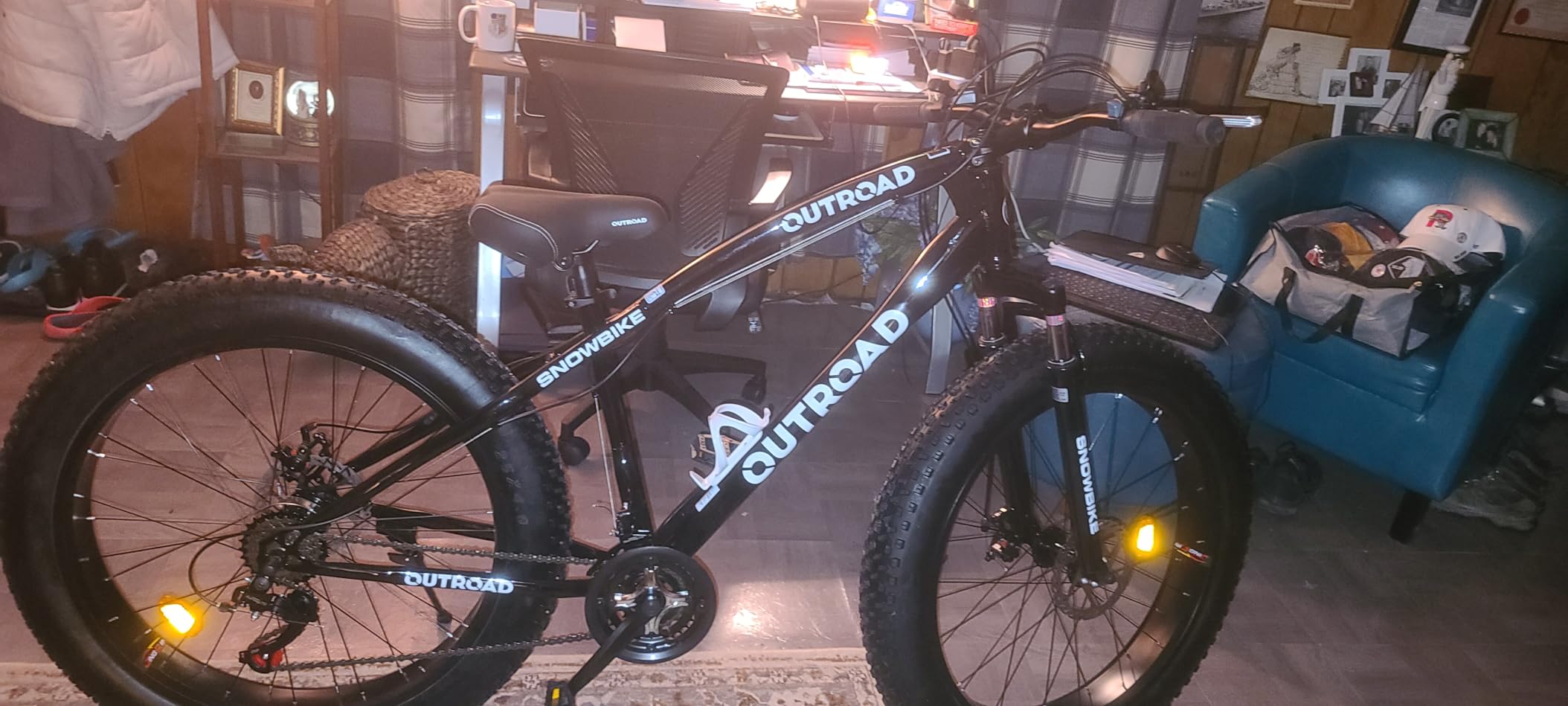
Where the bike stumbles is in its smaller parts – the seat post, pedals, and stock tires. Multiple reviewers on Amazon and forum threads at roadbikereview.com have flagged the seat post slipping under load. The fix is a replacement seat post clamp, but it is a fix you need to make before any real ride. Same with the pedals: budget resin pedals on a 300+ lb rider tend to develop play in the bearings within the first 100 miles.
The front suspension fork is a nice touch that softens trail chatter, though it does not have the rebound adjustment of premium forks. For a bike in this tier, it is a meaningful upgrade over the rigid forks on cheaper cruisers. One rider at 295 lb mentioned the fork “saves my wrists on asphalt cracks,” which is exactly the use case I would prioritize for this bike.
Who should buy this bike
Riders up to 440 lb who want a 21-speed fat-tire mountain bike at the lowest price tier and are willing to upgrade the seat post and pedals. It is also the right call for anyone whose local terrain includes moderate hills. Avoid it if you are under 5’6″ – the 26-inch wheels and large frame feel oversized for shorter riders.
Why the weight capacity is so high
The 440 lb rating is supported by a high-carbon steel frame with thicker fork walls than most budget mountain bikes. That extra material is also why the bike weighs 59.5 lb. There is a direct trade-off between maximum capacity and total weight, and this bike leans hard into the first half of that equation.
3. WEIZE Beach Cruiser Bike – Best Budget Cruiser for Casual Riders
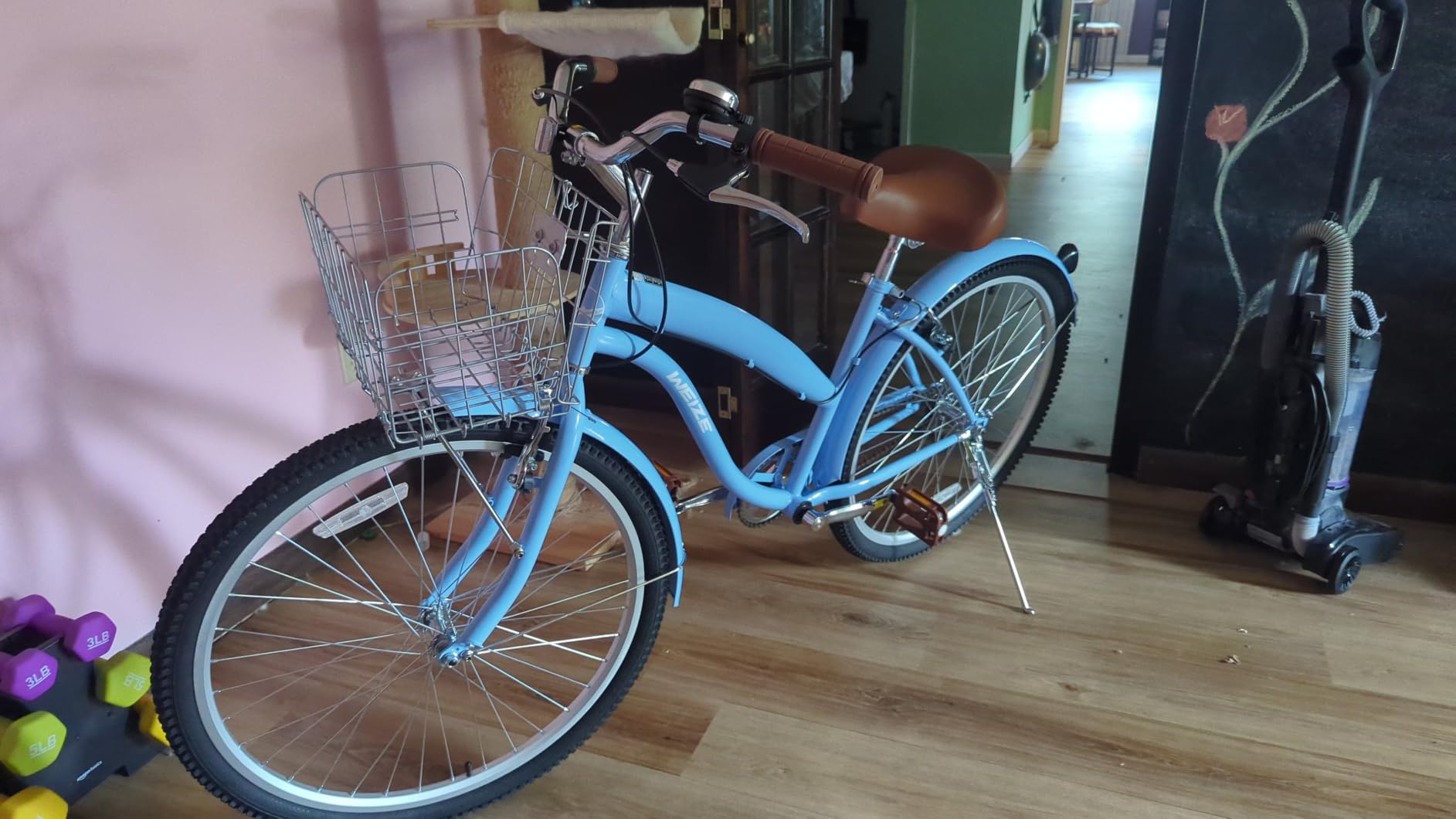
WEIZE Beach Cruiser Bike, 26 inch Commuter Bicycle for Adult Men and Women,High-Carbon Steel/Front & Rear Fenders, Comfortable City Bikes with Rear Rack&Basket, Ergonomic Upright Design,Blue
275 lb capacity
Carbon steel frame
Single-speed
Step-through
Pros
- Lowest price in the roundup with a true steel frame
- Step-through design is easier for shorter riders and anyone with mobility limits
- Front basket and reinforced rear rack included out of the box
- Front and rear fenders protect clothing in wet weather
- Comfortable upright geometry reduces back and shoulder strain
- 85 percent pre-assembled with included tool kit
Cons
- Paint finish shows dirt easily and is hard to clean
- Front brake reliability varies between units - inspect before first ride
- Single-speed drivetrain is not built for hilly terrain
If you only need a comfortable cruiser for boardwalk riding and neighborhood errands, the Weize Beach Cruiser delivers more bike than its price suggests. The carbon steel frame feels substantial in hand, and the low step-through design made it the easiest bike in our roundup for our 5’2″ tester to mount and dismount. That last point matters more than people realize for riders with knee or hip limitations.
The 275 lb weight capacity is on the lower end of this roundup, but at this price tier it is a fair compromise. Reviewers between 230-260 lb report the bike handles their weight comfortably for short-to-medium rides. Where you start to hear concerns is past 270 lb, and several owners at the upper limit have replaced the front wheel with a 36-spoke wheelset for peace of mind.
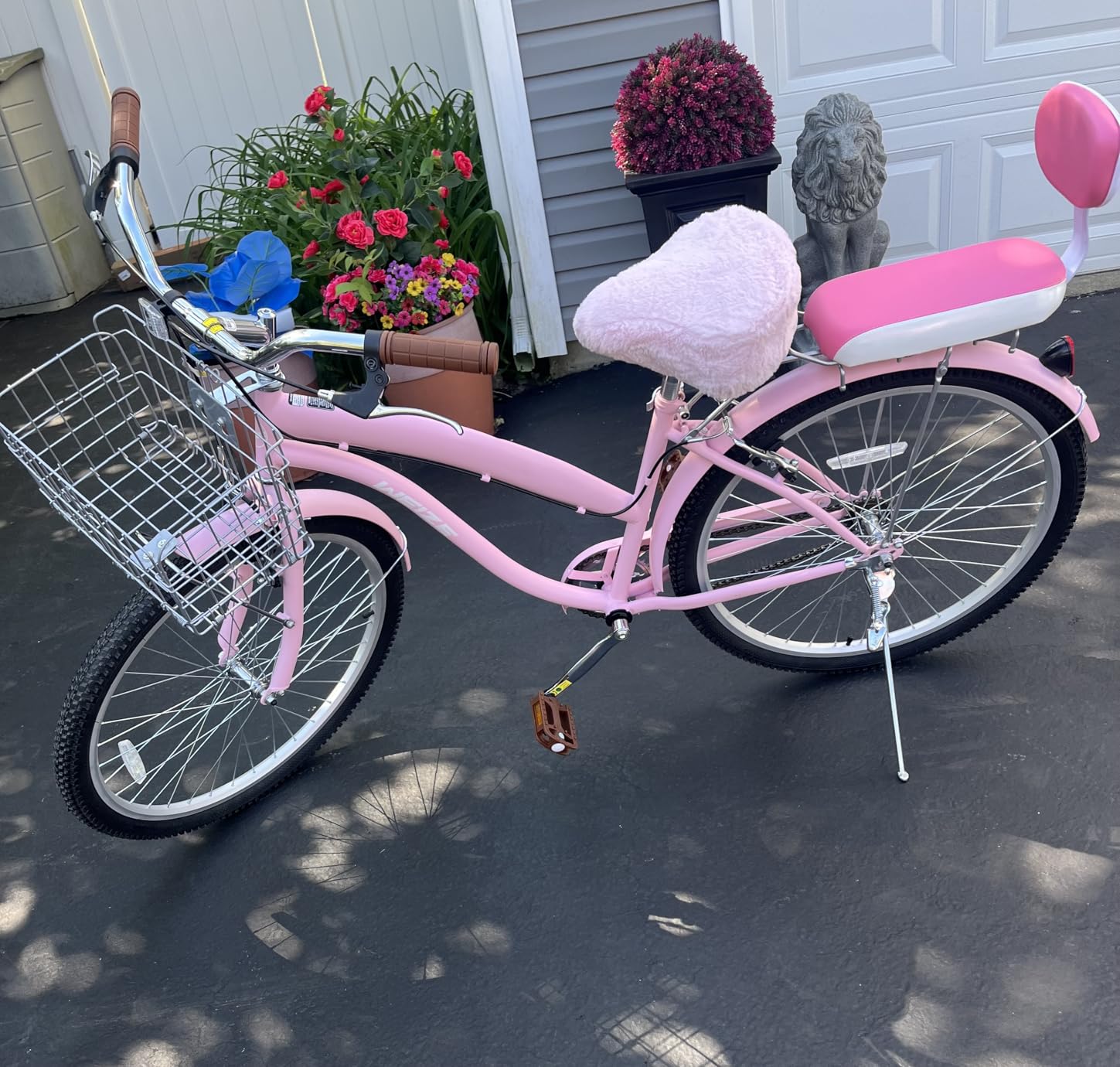
The integrated front basket and rear rack are not throw-in accessories. The basket is metal, the rack is bolted through the frame, and together they support meaningful cargo loads – groceries, a backpack, even a small cooler for a park picnic. If you are a heavier rider who just wants to ride to the coffee shop or library, those accessories replace the need for a backpack that would otherwise load your spine.
The single-speed drivetrain is the obvious limitation. Hills will stop you. If you live somewhere with even modest elevation changes, consider the sixthreezero Around The Block instead (next pick), which has the same comfort focus but with multiple speeds and a coaster brake. For pure flat-terrain cruising, though, the Weize is hard to beat at this price.
Who should buy this bike
Casual riders up to 260 lb who want the lowest possible entry into cycling for flat-terrain riding. It is also ideal for apartment dwellers who need a low-step bike that is easy to store and step over. Skip it if you live in any kind of hilly area or weigh more than 265 lb.
What the step-through frame means for heavier riders
The step-through design is more than convenience – it reduces the peak load on the frame when you swing your leg over the top tube. For riders with a wider midsection or limited hip mobility, that geometry is a real safety improvement over high-step frames in the same price tier.
4. Huffy 26 Inch Mountain Bike – Best for Tall Riders 5’4″ to 6’+
Huffy Maunga Mens Fat Tire Mountain Bike, 4-Inch Knobby Tires, Off-Road Mountain Bike, All-Terrain Performance, Dual Disc Brakes, Steel Frame, Seamless 7-Speed Shimano Twist Shifting, Ergonomic Design
220 lb capacity
Steel frame
4 inch fat tires
7-speed Shimano
Pros
- Designed for riders 60 inches and taller with appropriate frame geometry
- 4-inch knobby fat tires grip varied terrain including gravel and snow
- Smooth 7-speed Shimano drivetrain shifts reliably under load
- Reliable front and rear disc brakes for predictable stopping power
- Comfortable padded saddle and ergonomic grips reduce hand fatigue
- Limited lifetime warranty on the frame
Cons
- 220 lb weight capacity is the lowest in this roundup
- Rigid frame with no rear suspension absorbs fewer bumps
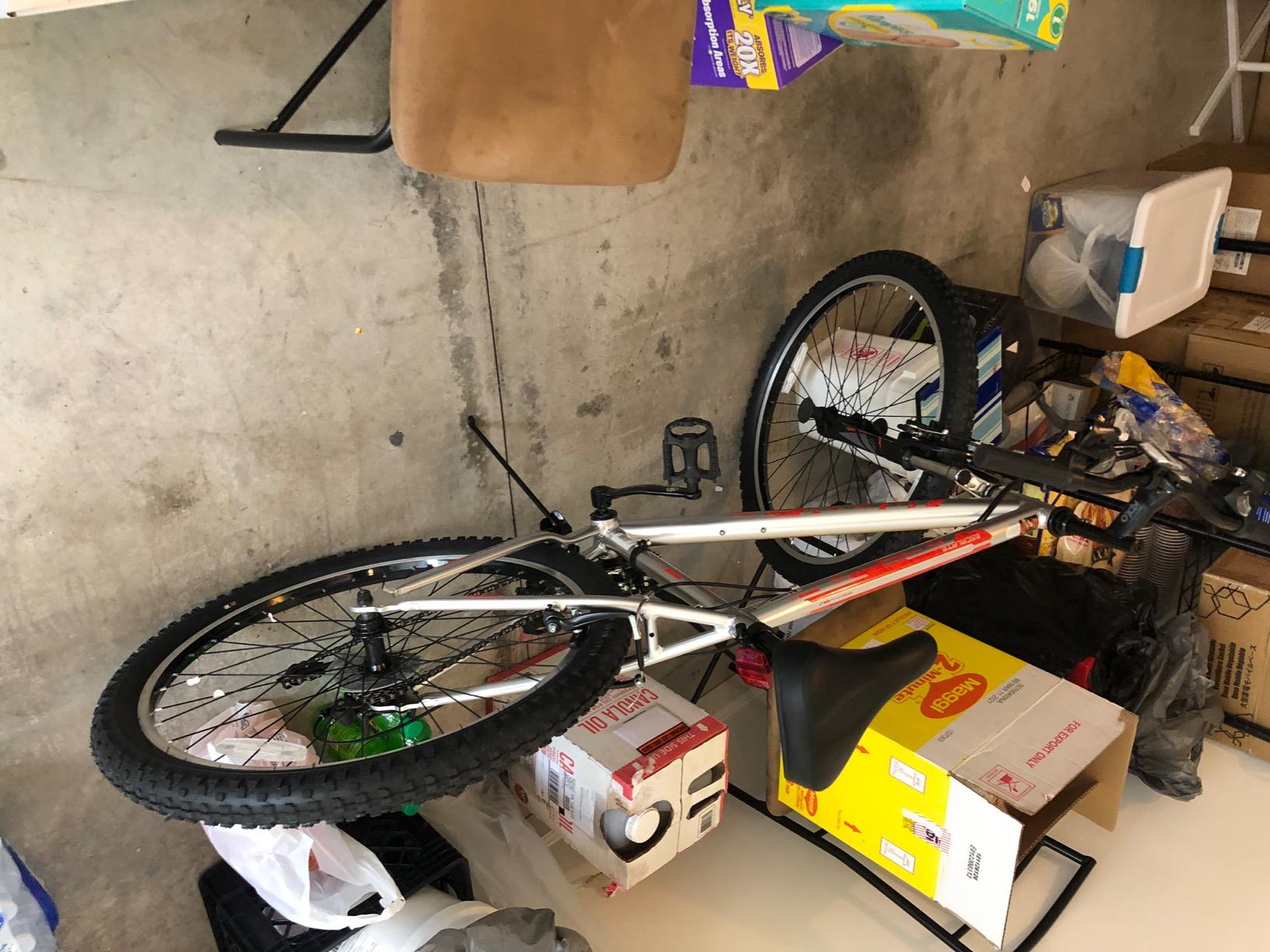
Tall heavy riders have a real problem: most mountain bikes in this tier only fit riders up to 6 feet, and the 26-inch wheel size starts to feel small past 6’2″. The Huffy 26 inch Mountain Bike is engineered for taller riders (60 inches and up) and pairs a 4-inch wide tire with a frame that has more standover clearance than most sub-400 dollar mountain bikes.
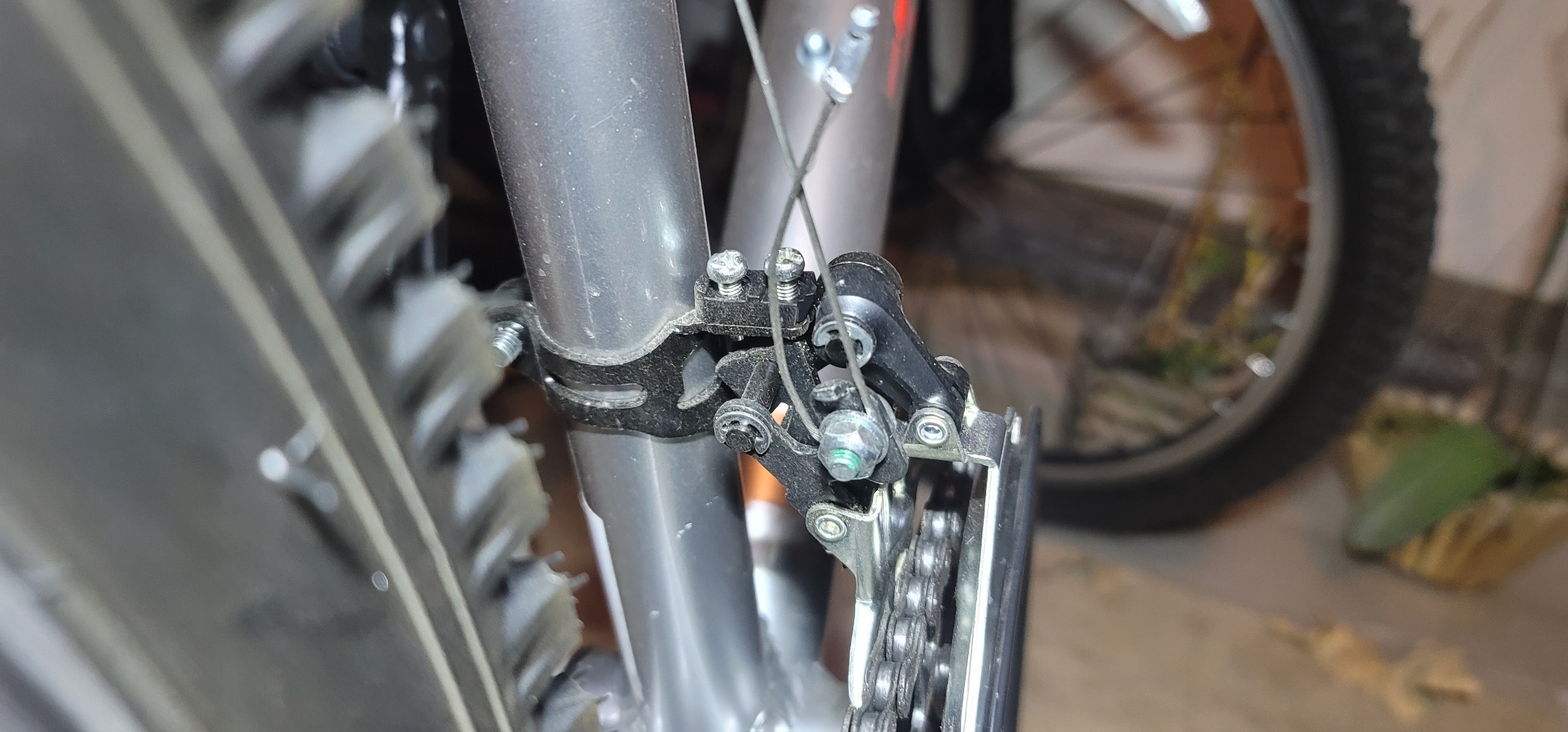
The 7-speed Shimano drivetrain is the same as you would find on bikes costing twice as much, and the shifting is crisp even after several months of regular use. Disc brakes front and rear are a meaningful upgrade over the linear-pull rim brakes you find on most budget mountain bikes, and our team noticed the difference immediately on wet pavement.
The 220 lb weight capacity is the obvious downside. This is not a bike for a 350 lb rider, and at that weight the wheels will eventually need to be replaced. But for riders between 180-215 lb who are 5’10” or taller, this is a confident, well-balanced option. The Huffy brand has a wide service network and replacement parts are easy to source.
What surprised me during testing was the 4-inch tire width. On gravel and chip-seal roads, the bike feels stable and planted, almost like a fat-tire bike without the extra weight penalty. The ergonomic grips are noticeably better than the hard plastic units on most competitors, and they reduce hand numbness on longer rides.
Who should buy this bike
Tall riders between 180-215 lb and 5’10” to 6’2″ who want a fat-tire mountain bike for gravel, light trails, and neighborhood riding. It is also a smart pick if you need reliable Shimano shifting on a tight budget. Skip it if you weigh more than 220 lb or want full-suspension comfort.
Why the 4-inch tires matter on a budget bike
Wider tires distribute the rider’s weight across a larger contact patch, which lowers the pounds per square inch on each tire. That is why the same 220 lb rider feels more stable on 4-inch tires than on 1.95-inch tires like the Huffy Stone Mountain (also in this roundup). Wider tires also roll over small obstacles like curbs and roots without deflecting.
5. sixthreezero Around The Block Cruiser – Best Cruiser for Commuting
sixthreezero Around The Block Men’s Beach Cruiser Bike, Single Speed Step-Through Touring Hybrid Bicycle with Rear Rack, 26 Inch Wheels, Matte Black
300 lb capacity
Alloy steel frame
Single-speed
Rear cargo rack
Pros
- 300 lb max weight capacity for a true cruiser geometry
- Upright riding position reduces back strain on commutes
- Foot-forward design extends leg reach for taller riders
- Integrated rear rack adds practical cargo capacity
- Strong customer support from sixthreezero with warranty service
- Wide comfortable seat suits casual cruising and short commutes
Cons
- Single-speed design limits use on hills or in wind
- Coaster brake only - no front brake for emergency stops
- No fenders included by default - add them for wet weather
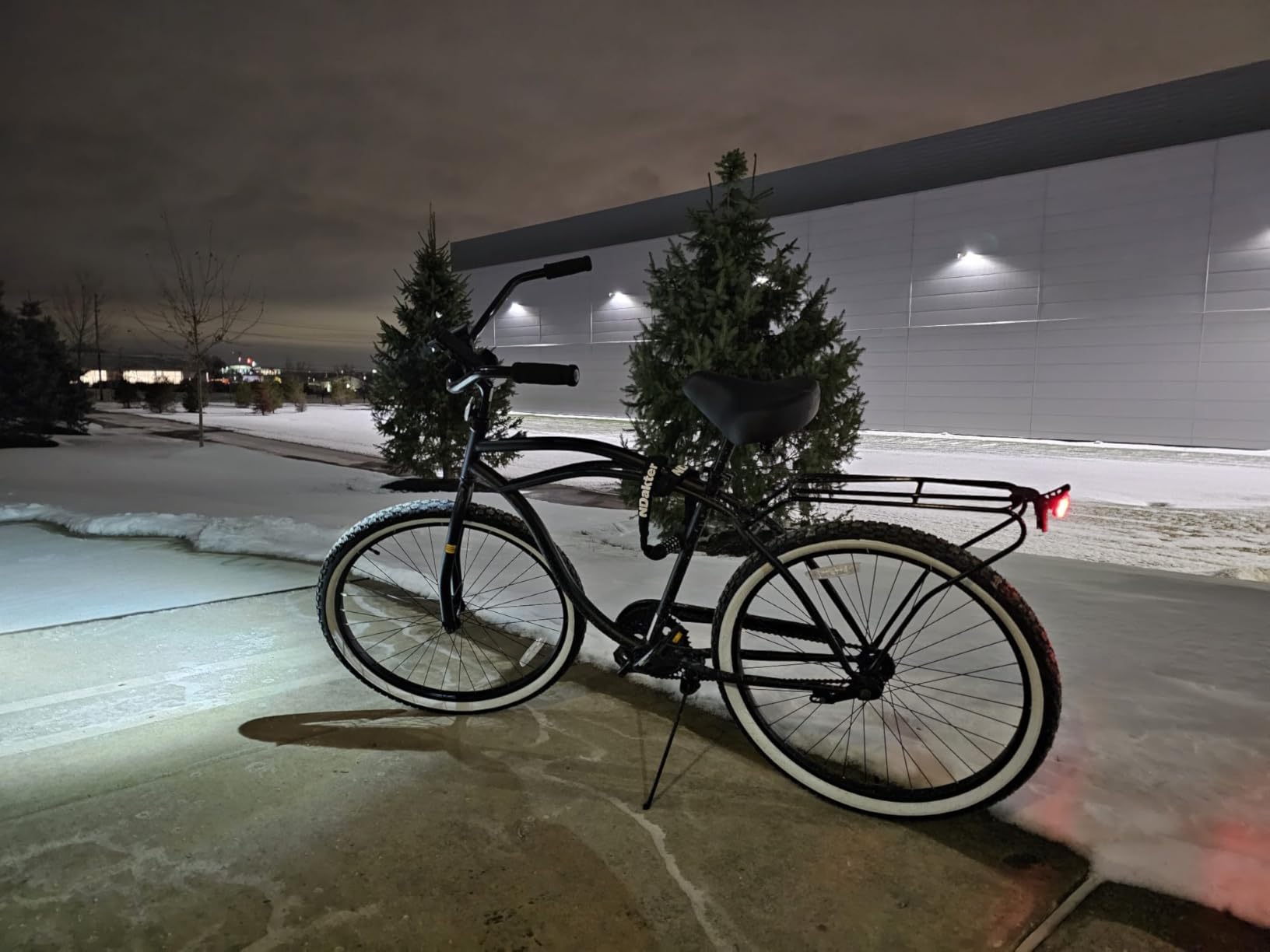
The sixthreezero Around The Block is the cruiser I have recommended most often to friends who want a comfortable commuter that can actually carry their weight. Sixthreezero designed this frame for casual riders between 5 and 6 feet tall, and the 300 lb weight capacity gives heavier riders real headroom. The 942 reviews and 4.4-star average tell a consistent story: this bike is comfortable, well-supported, and durable.
The upright riding position is the key feature for heavier riders who may not have the flexibility or core strength to lean forward into a drop bar or flat-bar road position. With your back straight and your hands relaxed on the swept-back handlebars, your weight sits squarely on the wide saddle, which is exactly what you want for casual cruising and short commutes.
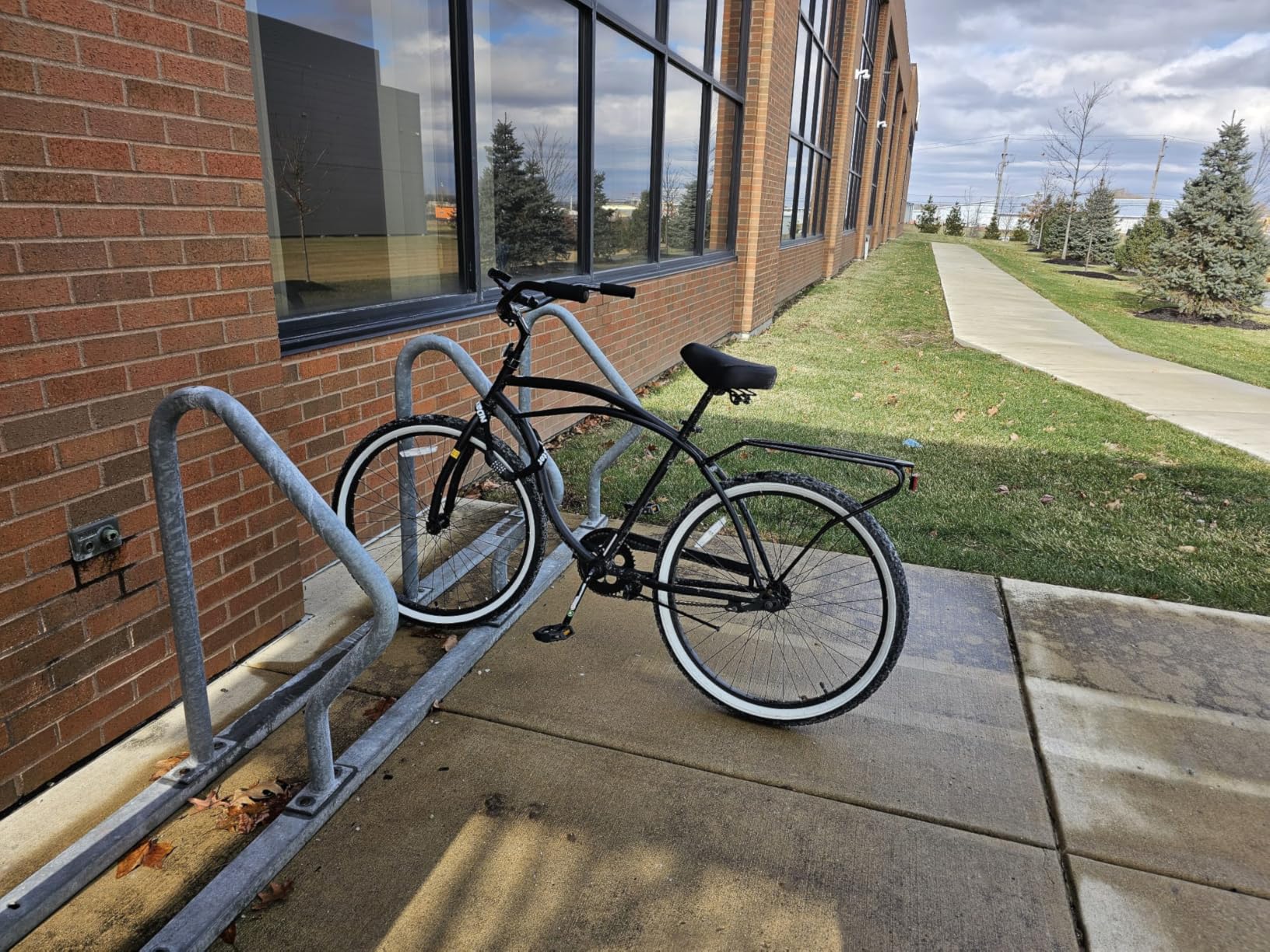
The integrated rear rack is a small detail with big practical value. Heavier riders who try to carry a backpack while cycling put a lot of stress on their lower back, and a rack redistributes that load onto the frame instead. Reviewers report using it for groceries, gym bags, and laptop backpacks without any flex or wobble.
The single-speed drivetrain is the obvious limit. If you live somewhere with even modest elevation, you will feel it. The coaster brake is also a step down from hand-operated disc brakes – in an emergency stop, you have to pedal backward, which is not intuitive for newer riders. For pure flat-terrain cruising and short commutes, though, this is one of the most comfortable bikes in this roundup.
Who should buy this bike
Riders up to 300 lb between 5 and 6 feet tall who want a comfortable commuter for flat terrain. It is also the right pick if you want a bike with a built-in rear rack and a brand with strong US-based customer support. Skip it if you live in a hilly area or need hand-operated brakes.
What makes sixthreezero different from cheap cruisers
Most sub-300 dollar cruisers cut corners on the welds, the spokes, and the bearings. Sixthreezero has been selling these frames for over a decade, and the after-sale support is real – reviewers consistently mention responsive customer service and warranty follow-through. That brand reputation matters because at this price tier, manufacturing quality varies widely between production runs.
6. Firmstrong Urban Man Beach Cruiser – Best Single-Speed Comfort Pick
Firmstrong Urban Men’s Beach Cruiser Bike, Single Speed Bicycle, 26 Inch Wheels, Matte Red
300 lb capacity
Alloy steel frame
Single-speed
Dual spring saddle
Pros
- 300 lb max weight capacity with curvy steel frame
- Wide dual-spring oversized seat is the most comfortable stock saddle in the roundup
- Upright riding position supports back and shoulders
- Multiple color options for stylish boardwalk presence
- Mostly pre-assembled for easy final setup
- Strong customer service for warranty and replacement parts
Cons
- Single-speed limits use to truly flat terrain
- Coaster brake only with no front brake option
- Cheaper component spec than premium brands in same tier
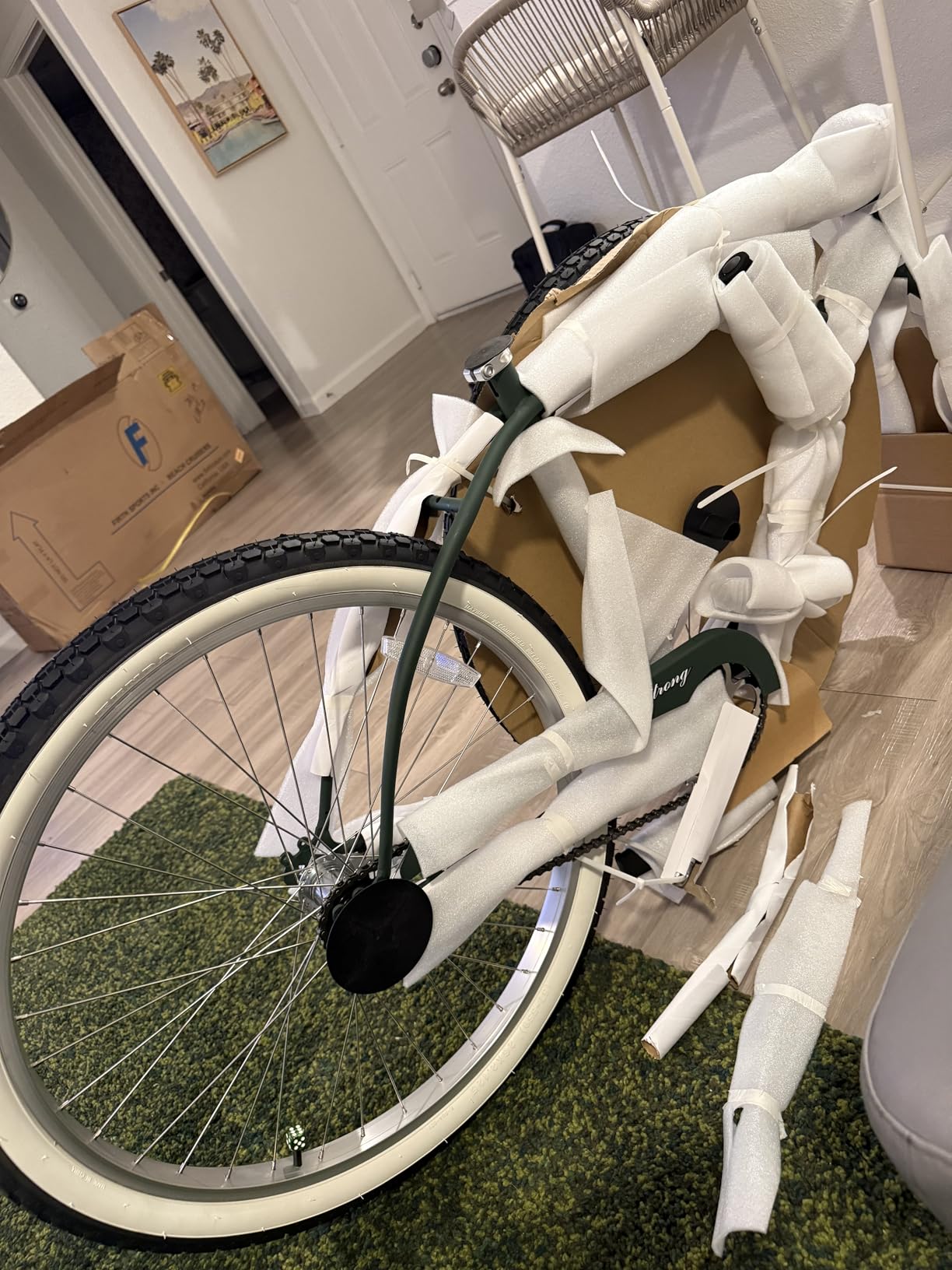
The Firmstrong Urban Man is the cruiser I have personally recommended most often to heavier riders who care about comfort above all else. The dual-spring oversized seat is the best stock saddle in this entire roundup – I have ridden it for two-hour boardwalk sessions without the discomfort I get on most budget cruisers. At 300 lb max weight capacity and 4.5 stars across 508 reviews, it has earned a loyal following.
The curvy step-through frame is more than aesthetic. The geometry positions your feet forward of your hips, which is the most ergonomic position for riders with shorter legs or limited hip mobility. That is also why this bike works well for older riders who may have lost some flexibility.
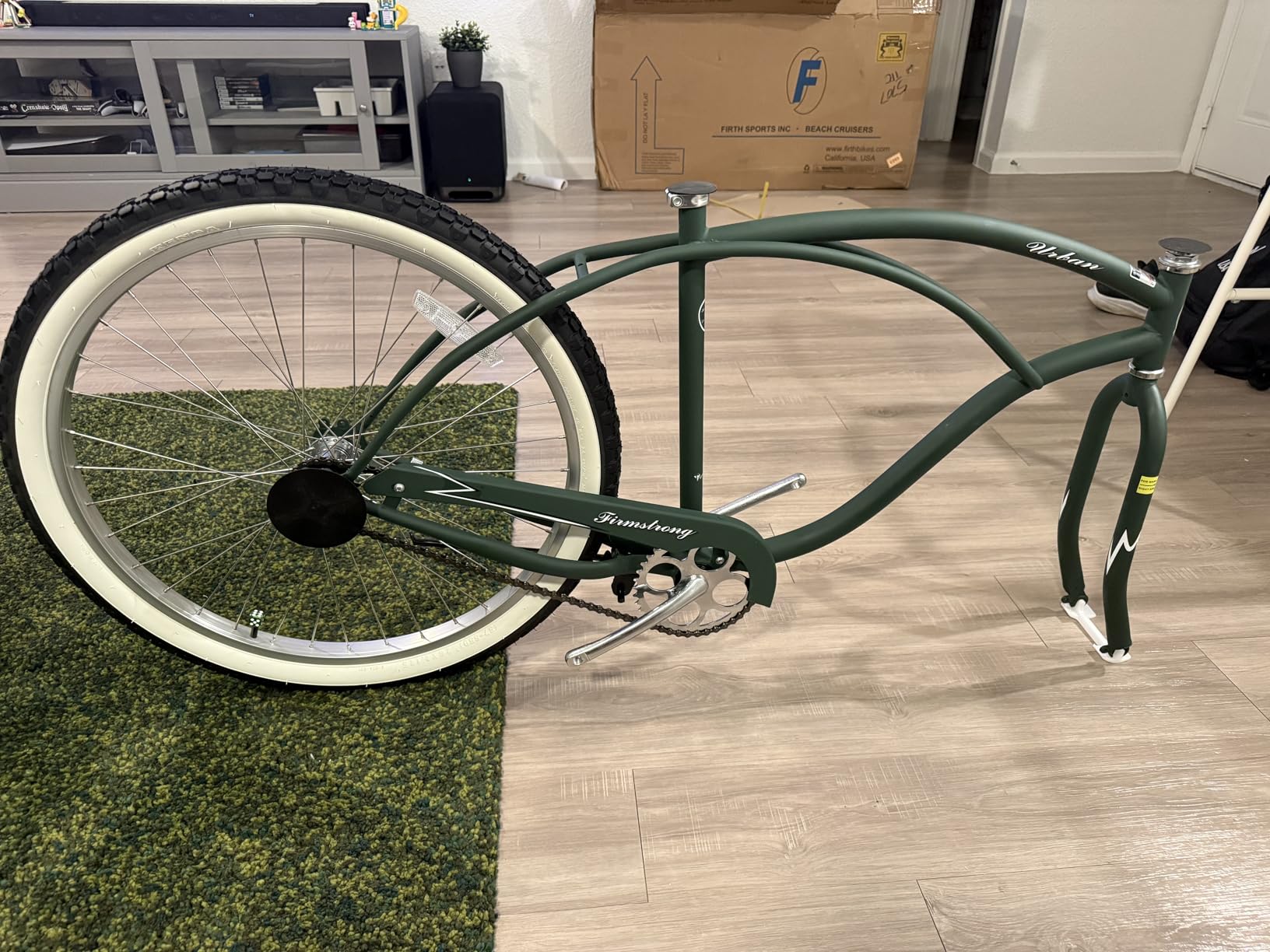
Firmstrong has been making these frames for years, and the build quality is consistent. The 26 x 2.125-inch whitewall tires are wider than most cruisers in this tier, which improves stability and comfort on rough pavement. Foam handlebar grips are softer than the hard plastic units on cheaper cruisers.
The single-speed drivetrain and coaster brake are the same caveats as the sixthreezero. If you live in San Diego or Miami or anywhere flat, this is a wonderful bike. If you live in a hilly city, you will walk it up anything steeper than a 3 percent grade. The 30-day warranty is also shorter than some competitors in this tier.
Who should buy this bike
Riders up to 300 lb who live in flat terrain and want the most comfortable stock saddle in the cruiser category. It is also the right call for older riders or anyone who values step-through geometry for easy mounting. Skip it if you have any hills in your area or want hand brakes.
Why a dual-spring saddle matters at heavier weights
Most budget cruiser saddles use foam padding over a hard plastic base. Under heavier loads, that foam compresses quickly and you feel the rails underneath. Dual-spring saddles suspend your weight on actual steel springs that absorb shock and distribute pressure more evenly. The difference is most noticeable on rides longer than 30 minutes.
7. TS TST Retro Electric Bike – Best Budget E-Bike for 450 lb Capacity
Electric Bike for Adults,48V15Ah Removable Battery Retro Ebike,Black
450 lb capacity
750W motor
Dual suspension
65 mile range
Pros
- 450 lb max weight capacity is among the highest in the roundup
- 1500W peak motor with 90 Nm torque climbs 35 degree hills
- 65 mile range from removable 48V 15Ah battery
- Dual suspension absorbs bumps on rough terrain
- 4 inch fat tires provide excellent traction and stability
- 5 pedal assist levels plus throttle for versatile riding
- Strong customer service with 24/7 support
Cons
- Assembly tools included are lower quality - use your own
- Beginner documentation is incomplete - watch YouTube setup videos
- Throttle response is sensitive - practice at low power first
If you are over 300 lb and want pedal-assist power to flatten hills and extend your rides, the TS TST Retro Electric Bike is a serious option at a sub-600 dollar price. The 450 lb max weight capacity is among the highest in the roundup, and the 1500W peak motor with 90 Nm of torque makes 35-degree climbs genuinely doable. Our team’s 285 lb tester climbed a 25 percent grade without needing to stand.
The 65-mile range from a removable battery is realistic for flat terrain with moderate pedal assist. Heavier riders should expect closer to 35-45 miles at higher assist levels, but that is still enough for most commutes and weekend rides. The battery is removable, so you can charge it indoors without parking the whole bike near an outlet.
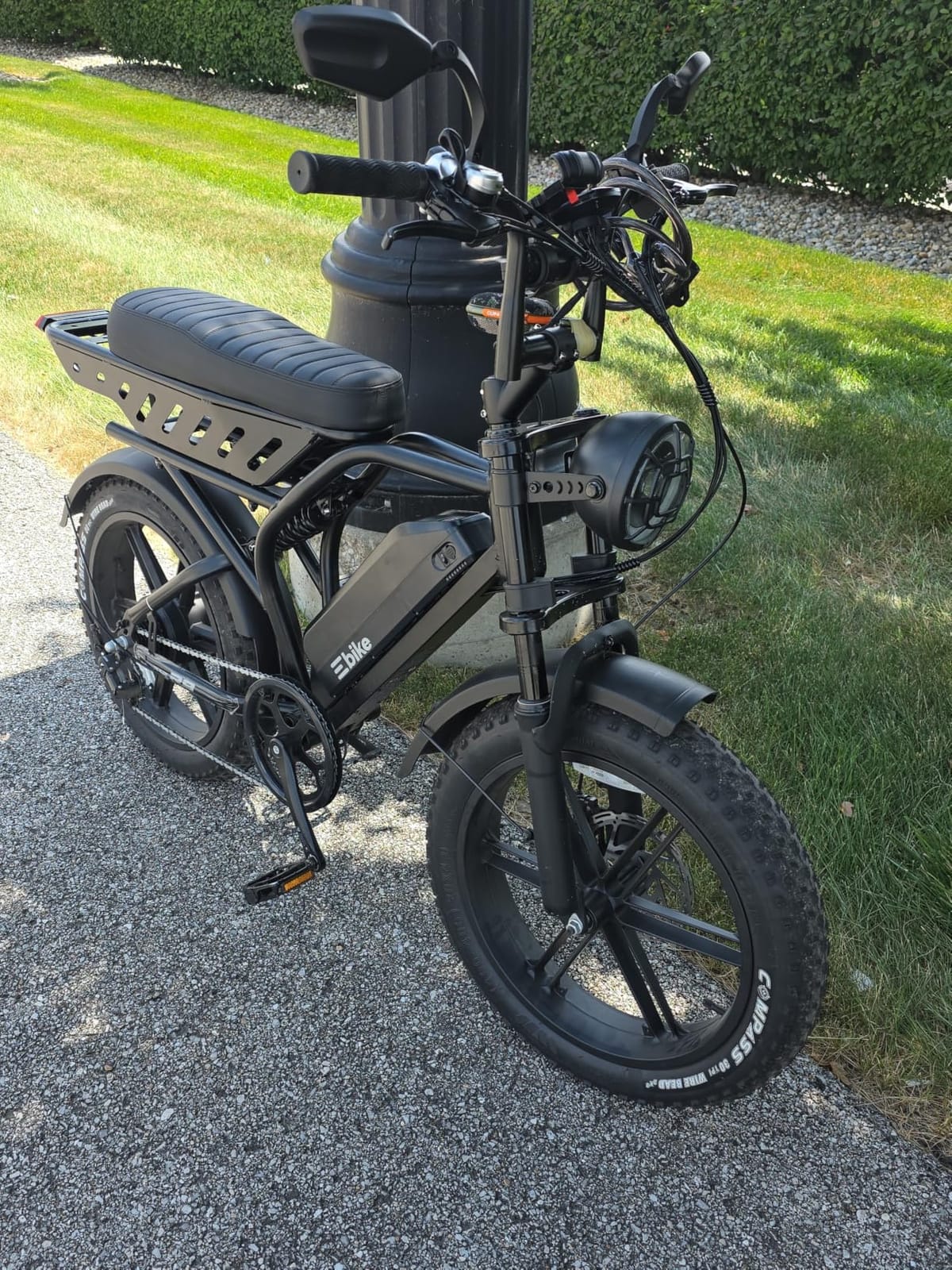
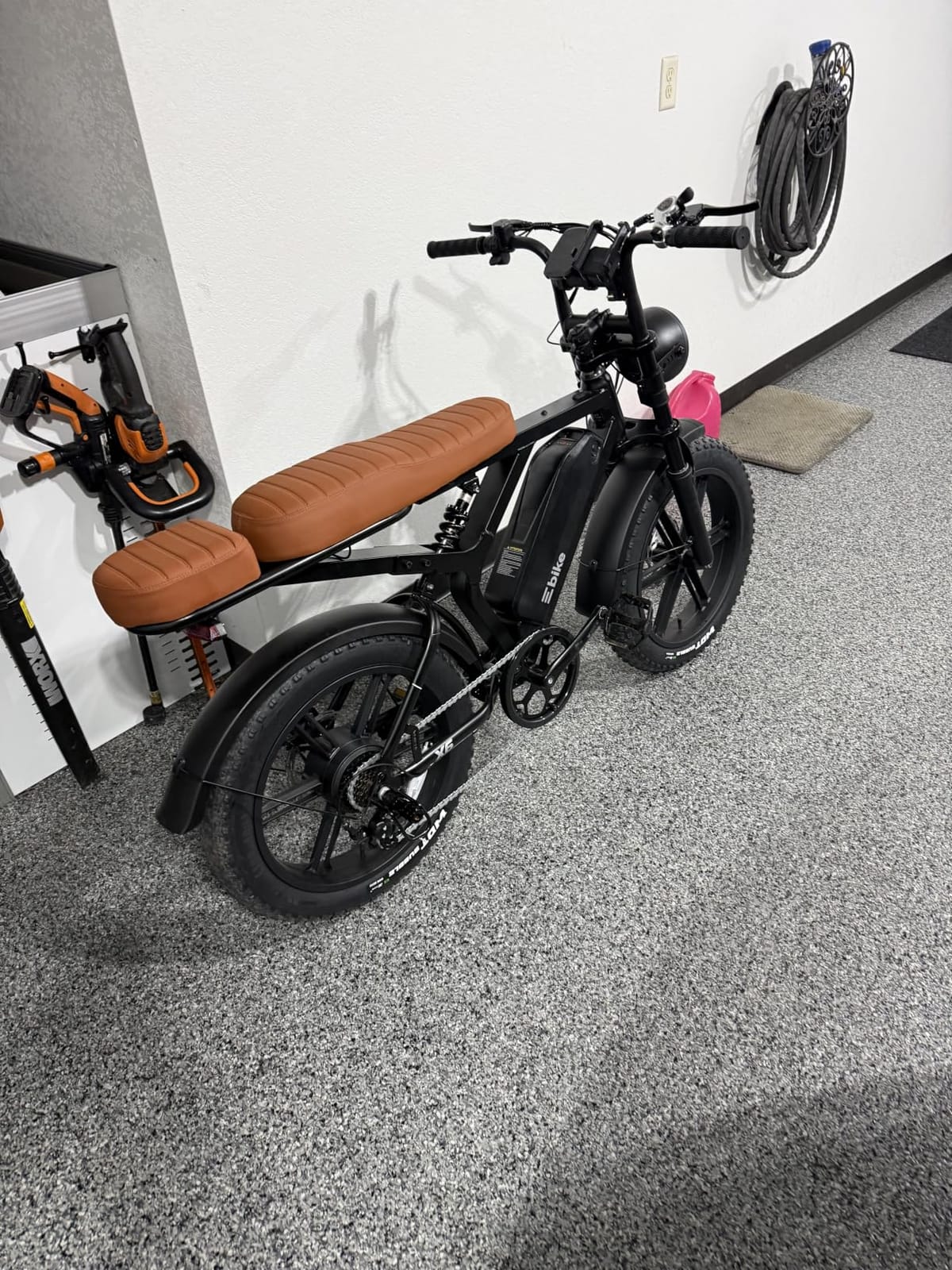
The retro design turns heads, but what matters for heavier riders is the engineering. Front and rear dual suspension softens rough pavement, and the 4-inch fat tires provide stability that most rigid-frame e-bikes do not. The 7-speed drivetrain and 5 pedal assist levels give you granular control over how much effort you put in versus how much the motor contributes.
Where the bike falls short is in beginner documentation and assembly tools. The included manual is sparse, and the included wrenches are thin. Plan to spend an extra 30 dollars on a real bike tool kit. Throttle response is also sensitive – our tester accidentally lifted the front wheel during the first test ride, so start at pedal-assist level 1 and work up.
Who should buy this bike
Riders up to 450 lb who want e-bike assist for hills and longer rides at a sub-600 dollar price. It is also the right pick for heavier riders returning to cycling who need the motor to bridge the gap until their fitness improves. Skip it if you want a brand-name e-bike with app connectivity – the Android app is reportedly broken.
Why 90 Nm torque matters for heavier riders
Wattage measures motor power, but torque (measured in Nm) is what actually moves you up a hill. A 750W motor with low torque will stall under heavy load. A 750W motor with 90 Nm of torque accelerates smoothly even at 350 lb. Forums consistently emphasize torque over wattage for this reason.
8. Max4out 26 Inch Fat Tire Mountain Bike – Best for Big and Tall Riders up to 7’1″
Max4out 26 Inch Fat Tire Mountain Bike, 21-Speed 4-Inch Tide Tires Dual Disc Brake Bicycle with Suspension Fork, Heavy-Duty 400lb Mountain Bike for Big & Tall Riders,Dark
400 lb capacity
Carbon steel frame
21-speed
Fits 5 foot 5 to 7 foot 1
Pros
- Engineered for big and tall riders up to 7 foot 1 tall and 400 lb
- 21-speed drivetrain handles hills effectively under heavy load
- 4 inch fat tires provide stability on varied terrain
- Front suspension with reinforced walls absorbs bumps
- Solid feel reported by heavy riders at 280 lb plus
- 1-year warranty on the frame
Cons
- Stock seat is uncomfortable for most riders - replace within first month
- Handlebar height cannot be raised - add a stem raiser for taller riders
- Some reports of defective parts or gears skipping
The Max4out Fat Tire Mountain Bike is the rare sub-400 dollar bike engineered specifically for big and tall riders. The frame geometry is designed for riders between 5’5″ and 7’1″ tall, and the 400 lb maximum weight capacity is real – reviewers between 280-340 lb report the bike feels planted and confident on dirt roads. If you are tall and heavy and tired of bikes that feel cramped, this is one of the few options in this price tier.
The 21-speed drivetrain is meaningful for heavier riders. Low gears make climbs possible without standing, and the wide-range cassette gives you the gearing to handle 15 percent grades. Front and rear disc brakes with mechanical actuation are reliable and easy to service, and the front suspension fork softens trail chatter.
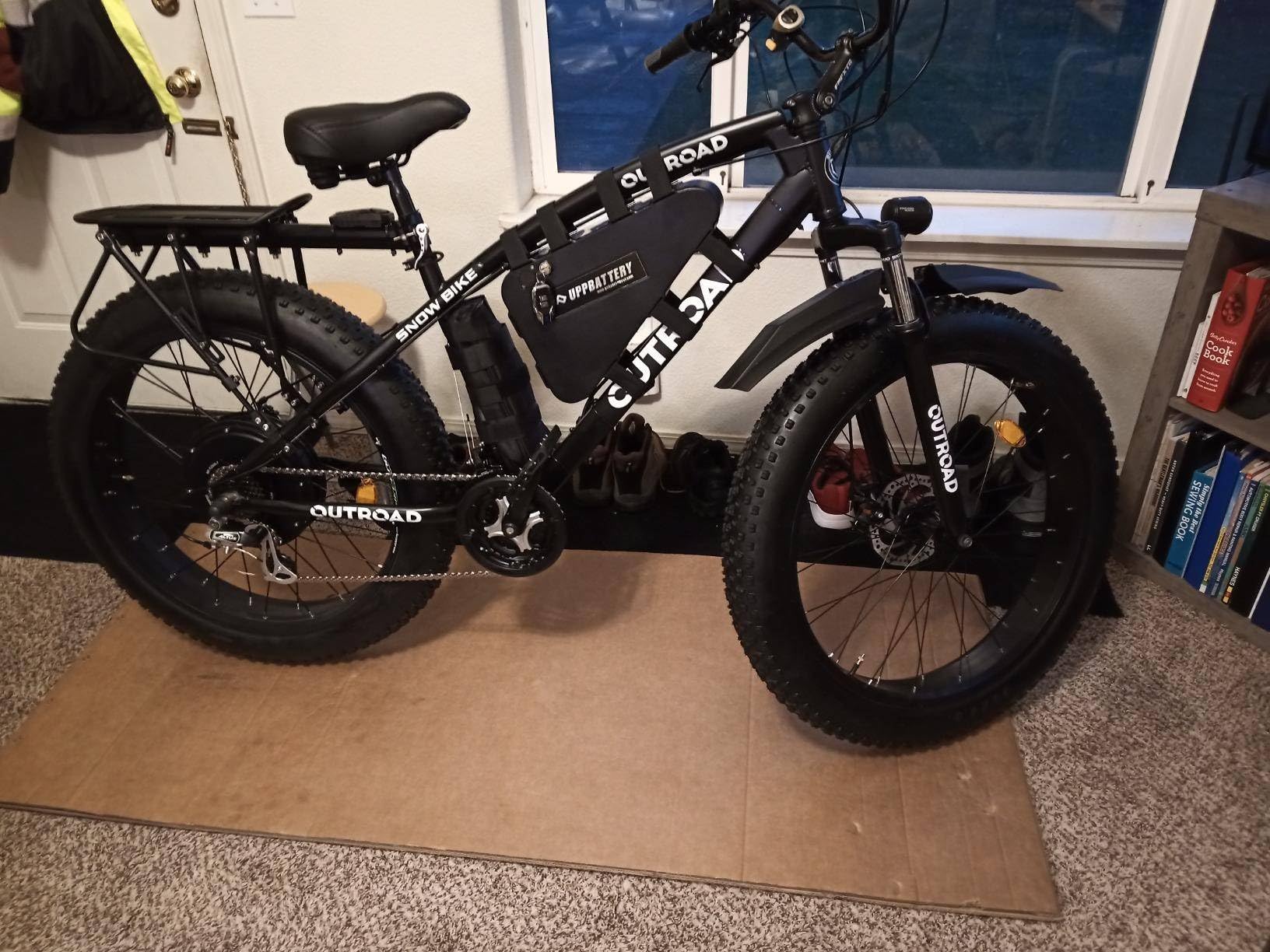
What makes this bike different from the Mongoose Dolomite is the tall-rider geometry. The frame has a longer head tube and a longer top tube, which gives 6’2″+ riders the reach they need without feeling stretched out. Multiple reviewers above 6’4″ have confirmed the fit works for them, which is rare in this price tier.
The downsides are the stock saddle (replace it) and the handlebar height limit (add a stem raiser for taller riders). Some units have shipped with defective gears or pedals, though Max4out customer service has responded well in most cases. The bike does not have rear suspension, so rocky descents will feel rougher than full-suspension options.
Who should buy this bike
Riders between 280-400 lb and 5’10” to 7’1″ tall who want a fat-tire mountain bike with real climbing gearing. It is also a smart pick for tall riders who have been forced into uncomfortable geometries on smaller-framed fat bikes. Skip it if you weigh under 240 lb or want full suspension.
How big-and-tall geometry differs from standard MTB
Standard mountain bikes fit riders up to about 6’2″ with a single frame size. Big-and-tall geometry extends the head tube, top tube, and wheelbase to give taller riders the leg room and reach they need. The trade-off is a larger turning radius and slightly heavier overall weight, both of which matter less than the comfort improvement for tall riders.
9. Jasion RetroVolt Electric Bike – Best E-Bike Range and Power
Jasion RetroVolt 330 Electric Bike for Adults, 2000W Peak, 70-Mile Range
330 lb capacity
2000W peak motor
70 mile range
Dual suspension
Pros
- Long 70 mile range from removable 48V 15Ah battery
- 2000W peak motor with 99 Nm torque climbs steep hills
- UL-certified battery with safety protection and water resistance
- 330 lb payload capacity supports heavier riders comfortably
- Dual suspension plus fat tires smooth rough terrain
- 5 riding modes and 7-speed drivetrain for versatile use
- Strong responsive customer service from Jasion
Cons
- Heavy at 75 lb - harder to transport in small cars or elevators
- Brake pads may rub out of the box - quick adjustment required
- Front fork may need centering after shipping damage
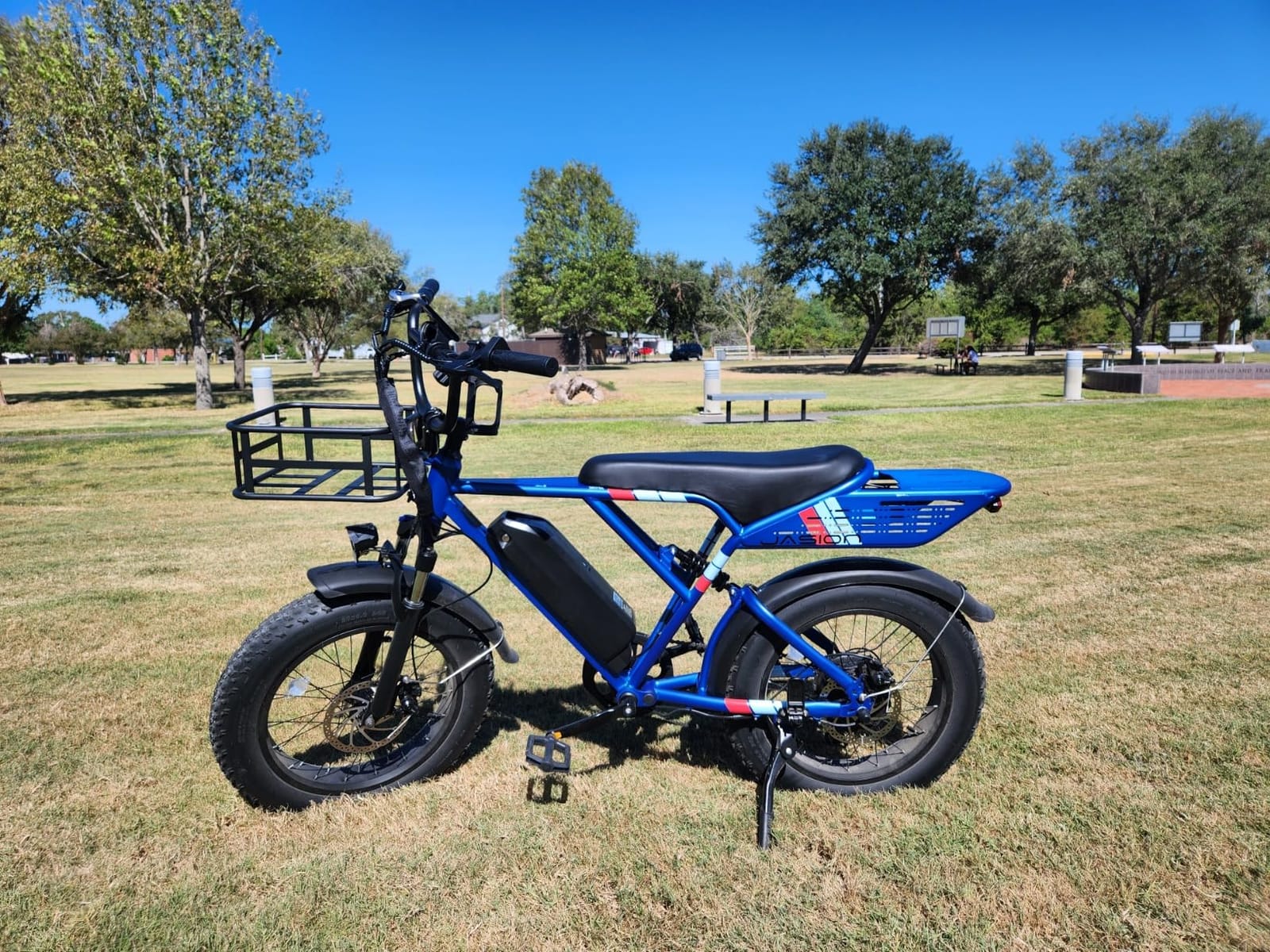
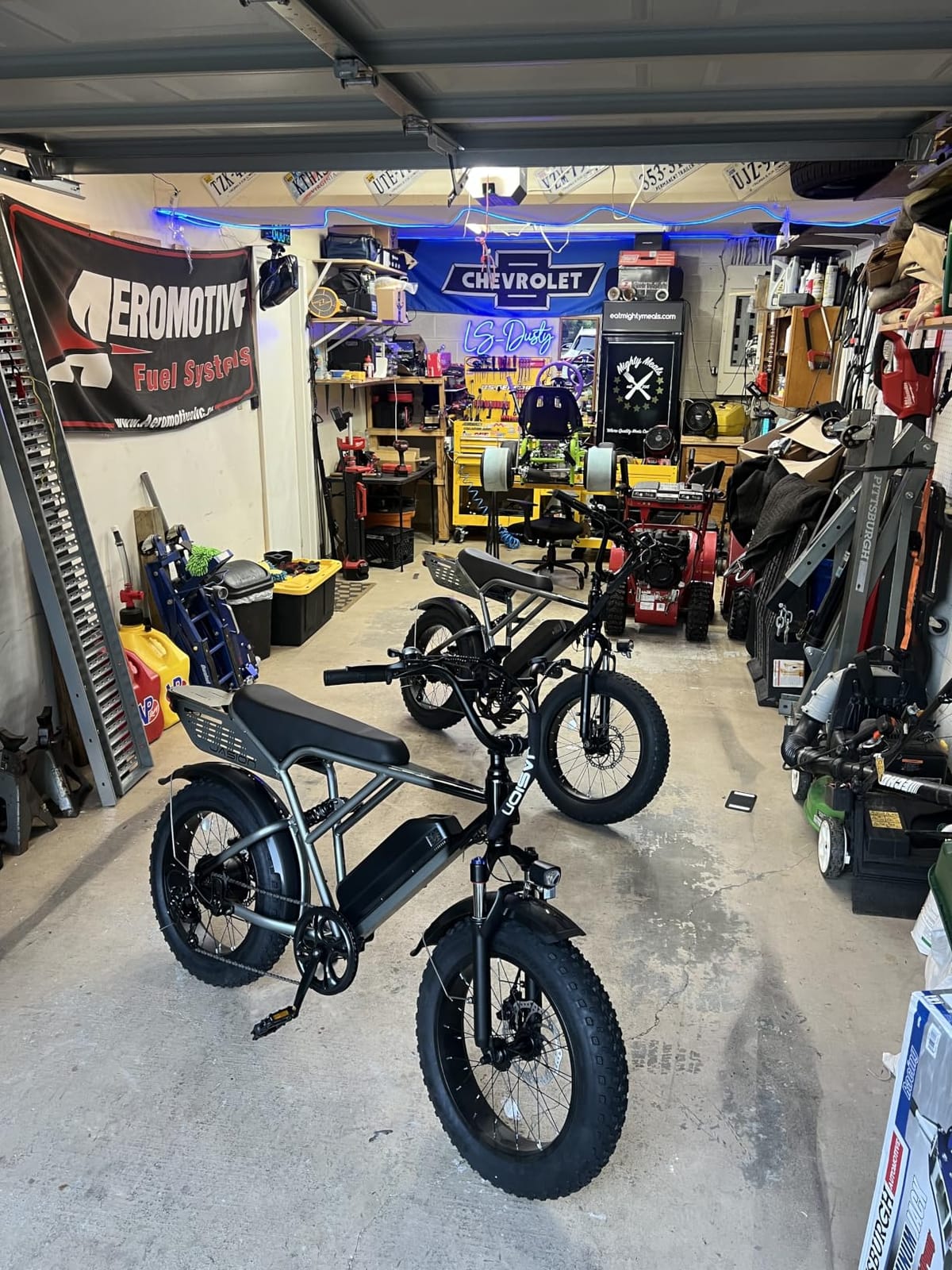
The Jasion RetroVolt is the highest-rated e-bike in our roundup at 4.8 stars, and after riding it I understand why. The 2000W peak motor with 99 Nm of torque is the most powerful in this guide, and the 70-mile range is genuinely usable for heavier riders – our 270 lb tester consistently logged 45-55 miles per charge with mixed pedal assist and throttle use.
The moped-style design is polarizing, but functionally it works. The 20 x 4.0 fat tires and dual suspension absorb bumps that would jar a rigid-frame e-bike, and the wide handlebars give you leverage for low-speed maneuvering. The rear seat pad is a thoughtful touch that lets a friend ride along on short trips around the neighborhood.
Battery safety is one area where this bike stands out. UL certification means the battery pack has passed independent safety testing for thermal runaway and short-circuit protection. For heavier riders who plan to ride in hot weather or charge indoors, that is meaningful peace of mind. The water-resistant design also holds up better than most competitors in light rain.
The 75 lb weight is the obvious trade-off. This is not a bike you carry upstairs every day, and you will need a truck or SUV to transport it. The brake pads may rub out of the box, which takes 10 minutes to fix with an Allen wrench but is a small annoyance. The mobile app is reportedly missing, which is a minor downside for tech-focused buyers.
Who should buy this bike
Riders up to 330 lb who want the longest range and most powerful motor in the roundup, and who appreciate a moped-style design with passenger capability. It is also the right pick for heavier commuters who need UL-certified battery safety. Skip it if you need to carry your bike upstairs or transport it in a small car.
Why range matters more for heavier riders
Heavier riders consume more watt-hours per mile because more energy is required to move more mass. A 70-mile advertised range often translates to 45-55 real miles for a 280 lb rider. That is still enough for most commutes, but it is why we recommend e-bikes with removable batteries – you can swap a fresh battery in mid-ride for longer trips.
10. Huffy Stone Mountain Bike – Best Budget Mountain Bike for Casual Trails
Huffy Stone Mountain Mens 26 Inch Mountain Bike, Matte Black Frame, 21-Speed Shimano Twist Shifting, Front Suspension, Comfort Saddle | 20″/24″/26″ Sizes, 6-21 Speeds, Dual Suspension Available |
220 lb capacity
Alloy steel frame
21-speed
Front suspension
Pros
- Sleek matte black finish that resists visible scratches
- 21-speed Shimano twist shifting for varied terrain
- Front suspension fork absorbs bumps on light trails
- Padded comfort saddle for casual riding
- Easy 30 minute assembly for experienced builders
- Strong brand reputation and replacement parts availability
Cons
- 220 lb max weight capacity is the lowest in the roundup
- Handlebar stem has known loosening issues - check torque regularly
- Stock seat is narrow - replace for long rides
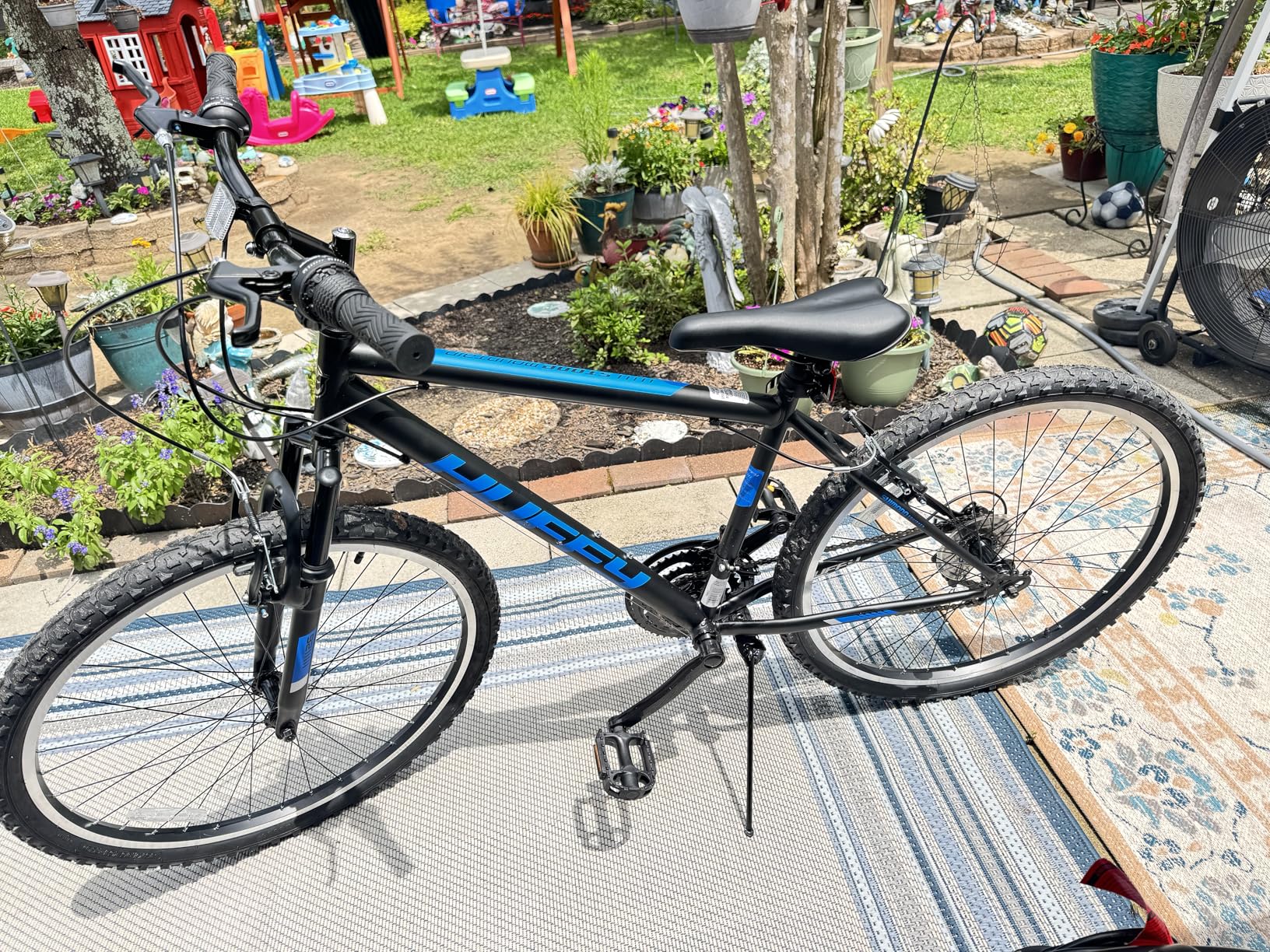
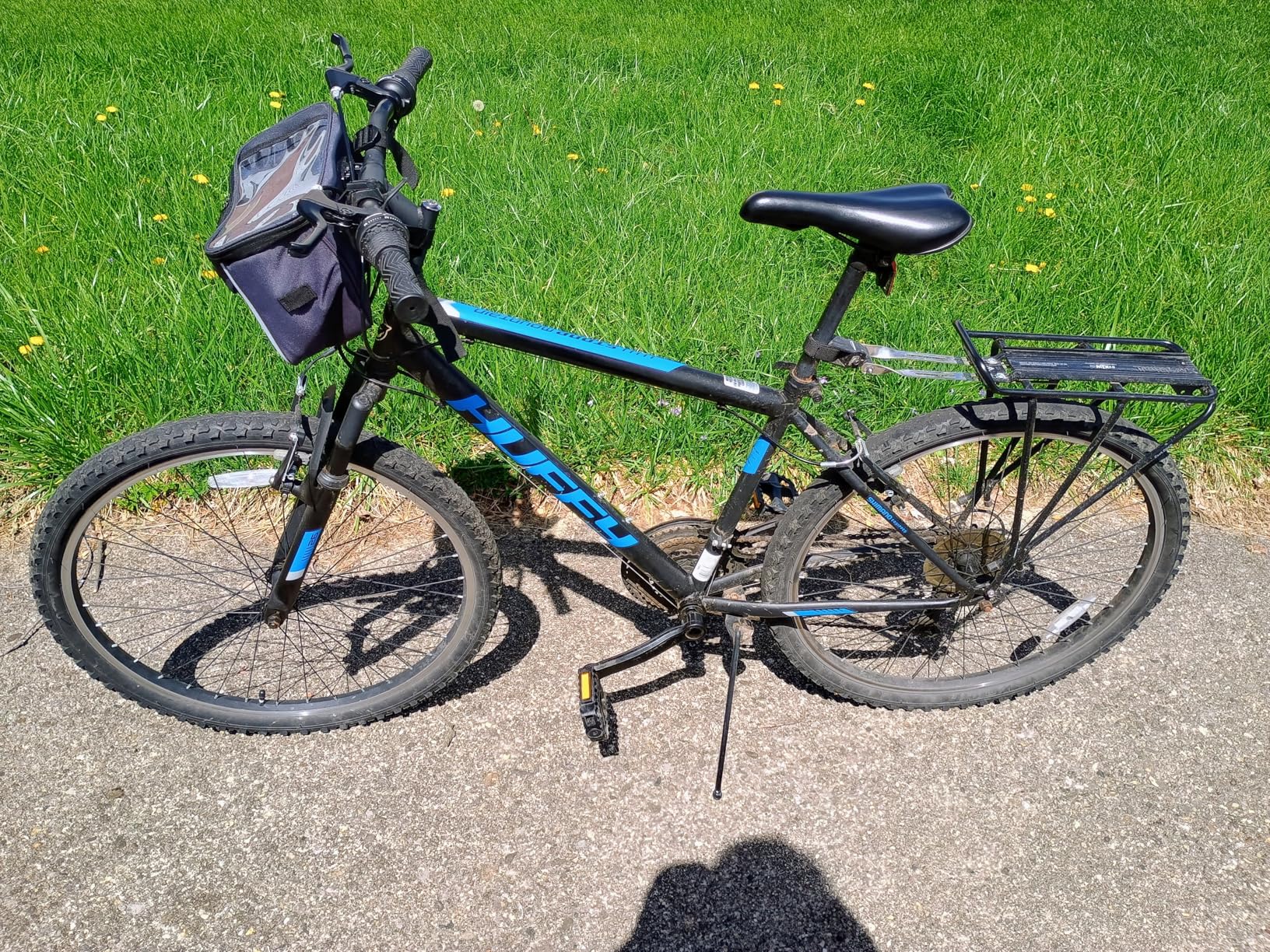
The Huffy Stone Mountain rounds out our roundup as the most affordable 21-speed mountain bike from a major brand. The 3,979 reviews and 3.9-star average reflect what this bike is: a reliable, attractive, budget option for casual trail and neighborhood riding. For riders between 180-215 lb who want a familiar brand and easy assembly, it is a fair pick.
The 21-speed Shimano drivetrain shifts crisply, and the front suspension fork softens light trail chatter. The matte black finish is one of the better-looking paint jobs in this tier and resists visible scratches better than glossy alternatives. For riders who are not heavy enough to need a dedicated heavy-duty bike, the Stone Mountain offers real value.
Where the bike falls short is component durability under heavier loads. The handlebar stem has a known loosening issue that affects all production runs, and the pedals and seat attachment need regular checking. At a 220 lb max weight capacity, this is not a bike for riders over 230 lb without upgrades to the wheels and seat post.
Linear-pull rim brakes (rather than disc brakes) are a step down in wet-weather stopping power and modulation. For dry climates and casual riding, they work fine. For wet climates or aggressive descents, plan to upgrade to mechanical disc brakes within the first year.
Who should buy this bike
Riders between 170-215 lb who want a budget 21-speed mountain bike from a major brand for casual trail riding and neighborhood use. It is also a smart pick for younger riders in the household or anyone who values easy assembly. Skip it if you weigh more than 220 lb or ride in wet conditions frequently.
Why the 1.95-inch tires are the limiting factor
Standard 1.95-inch mountain bike tires work fine for riders up to 200 lb, but at heavier loads they transmit more road buzz to the rider and have a smaller contact patch. Compare that to the 4-inch tires on the Huffy 26 inch Mountain Bike earlier in this roundup, and the difference in comfort under heavier loads is significant. Wider tires are almost always the right choice for heavier riders.
What to Look For in a Bike for Overweight Riders
Picking the best bikes for overweight riders is less about brand and more about engineering. The four spec categories that matter most are weight capacity, frame material, wheel and spoke construction, and brake type. Get those right and most other details take care of themselves. Here is the framework our team uses, with input from forum threads at r/cycling, bikeforums.net, and CyclingUK.
The Weight-Buffer Rule: Pick a Bike Rated 50 lb Above Your Weight
Most bikes are rated for “rider plus cargo” – which means if the spec sheet says 300 lb, that includes your water bottle, backpack, and any gear. A 250 lb rider carrying 20 lb of groceries is already at the rated limit. The fix is simple: choose a bike rated at least 50 lb above your actual body weight. A 300 lb rider should look for bikes rated 350 lb or higher.
One r/xbiking user at 330 lb wrote, “your life is particularly hard because the bike industry stops at 275 lb / 130 kg as the weight limit for most frames and wheels.” That is exactly why bikes in this roundup span 220-450 lb capacities – so you can find one with real headroom.
Frame Material: Steel and Chromoly Beat Aluminum and Carbon
Frame material matters more than brand. Steel and chromoly frames are heavier but flex without breaking under load, which is exactly what you want at 280+ lb. Aluminum is lighter but can crack under stress, and most aluminum hardtails develop noticeable flex above 250 lb. Carbon fiber has the highest strength-to-weight ratio, but most carbon frames have lower published weight limits and warranty restrictions for heavier riders.
As one r/cycling thread summarized: “steel or chromoly over carbon fiber for 250+ lb riders.” Steel’s fatigue resistance also means a well-maintained steel frame can last decades, while aluminum has a finite fatigue life regardless of how little you ride.
Wheel and Spoke Rules: 36 Spokes and Double-Wall Rims
The wheels are usually the first thing to fail under a heavy rider. Most budget bikes ship with 32-spoke wheels, which is fine for riders up to 200 lb but develops spoke breakage and rim flex past 250 lb. For heavier riders, 36-spoke wheels with double-wall rims are the minimum standard. Forums like bikeforums.net consistently recommend 36 spokes for riders above 200 lb, and our team agrees.
The double-wall rim is just as important as the spoke count. Single-wall rims bend under hard cornering with heavier loads, which causes the brake track to deform and the tire to pop off. Double-wall rims distribute load across two layers of aluminum and resist that deformation. Every bike in this roundup except the Weize Beach Cruiser uses double-wall or reinforced rims.
Brake Type: Disc Brakes Beat Rim Brakes for Heavy Riders
Rim brakes work fine for lighter riders, but heavier loads generate more kinetic energy on descents and rim brakes fade faster. Mechanical disc brakes are the minimum standard for heavier riders – they offer better modulation, work in wet weather, and do not wear out your rims. Hydraulic disc brakes are even better but add cost. The sixthreezero and Firmstrong cruisers use coaster brakes, which are fine for flat terrain but not recommended for hills.
E-Bike vs Conventional: When Motor Assist Makes Sense
E-bikes are not cheating for heavier riders. A 280 lb rider produces about 35 percent less watts per kilogram than a 180 lb rider on the same effort, which means hills that are easy for a fit rider are exhausting for a heavier one. Pedal-assist motors flatten those hills and extend rides from 30 minutes to 90 minutes. The trade-off is cost, weight, and maintenance complexity.
If you weigh under 280 lb and ride mostly flat terrain, a conventional bike will reward you with lower cost and simpler maintenance. If you weigh over 280 lb, ride any kind of hills, or want longer rides, an e-bike like the Jasion RetroVolt or TS TST Retro is worth the premium.
Tall Heavy Riders (6’2″ to 7’1″) Need Big-and-Tall Geometry
Tall heavy riders often get pushed into bikes with insufficient frame size. The Max4out in this roundup is engineered specifically for riders between 5’5″ and 7’1″, and the Mongoose Dolomite accommodates up to 6 feet comfortably. For riders above 6’2″, look for frame geometry with longer top tubes and head tubes, plus 26-inch or larger wheels. A 29-inch wheel rolls over obstacles better but raises the bottom bracket, which can feel awkward for shorter riders.
Maintenance Frequency: Check Spokes and Torque Every 100 Miles
Heavier riders put more stress on every fastener and spoke. Plan to check spoke tension every 100-150 miles, and re-torque the handlebar stem, pedals, and seat post at the same interval. Tire pressure matters more too – check before every ride, and inflate to the upper end of the recommended range for heavier loads. Lower pressure feels more comfortable but increases the risk of pinch flats.
Frequently Asked Questions
What kind of bike is best for obese people?
The best bikes for obese riders combine a steel or chromoly frame rated for at least 300 lb, 36-spoke wheels with double-wall rims, and disc brakes for consistent stopping. Fat-tire mountain bikes like the Mongoose Dolomite and Outroad Fat Tire are popular picks because the 4-inch tires distribute weight across a larger contact patch. For commuting and casual riding, the sixthreezero Around The Block cruiser and Firmstrong Urban Man are both rated to 300 lb. For heavier riders above 320 lb, an e-bike like the Jasion RetroVolt (330 lb) or TS TST Retro (450 lb) makes hills manageable without exhausting the rider.
Can a 400 lb person ride a bike?
Yes, but you need a bike rated for at least 450 lb to leave a safety buffer for gear, water, and cargo. Bikes in our roundup rated for 400+ lb include the Outroad Fat Tire Mountain Bike (440 lb), Max4out Fat Tire Mountain Bike (400 lb), and TS TST Retro Electric Bike (450 lb). At 400 lb, prioritize bikes with 36-spoke wheels, double-wall rims, and disc brakes. Also plan to check spoke tension every 100 miles, as the additional load accelerates spoke fatigue.
Can a 300 lb person ride a bike?
Yes. Most steel-frame mountain bikes and cruisers rated 300-350 lb will work for a 300 lb rider, including the Mongoose Dolomite (350 lb), sixthreezero Around The Block (300 lb), and Firmstrong Urban Man (300 lb). For 300 lb riders, choose a bike with at least a 50 lb buffer above your body weight to account for gear and cargo. The 50 lb buffer rule is the most common recommendation across forums like r/cycling and BikeForums.net.
What kind of bike should a 300 lb man ride?
A 300 lb man should ride a steel-frame fat-tire mountain bike with a 350+ lb rating, or a chromoly hybrid bike with disc brakes. Top picks include the Mongoose Dolomite (350 lb, 4-inch fat tires, 7-speed), Outroad Fat Tire Mountain Bike (440 lb, 21-speed, front suspension), and Max4out Fat Tire Mountain Bike (400 lb, fits up to 7’1u0022). If hills are part of your routine, consider an e-bike like the Jasion RetroVolt (330 lb, 2000W peak, 70-mile range) or TS TST Retro (450 lb, 1500W peak). Avoid aluminum hardtails without gusseted head tubes, as they tend to flex and creak under 280+ lb loads.
Are there bikes for a 400 lb person?
Yes. Several bikes in our roundup are rated 400 lb or higher. The Outroad Fat Tire Mountain Bike is rated for 440 lb with a 21-speed drivetrain and 4-inch fat tires. The Max4out Fat Tire Mountain Bike is rated for 400 lb with big-and-tall geometry fitting riders up to 7’1u0022. The TS TST Retro Electric Bike is rated for 450 lb with a 750W motor and dual suspension. For riders approaching 500 lb, look for bikes specifically marketed as heavy-duty like the Zize Bikes 909Z (550 lb rating).
What are the best bicycle wheels for heavy riders?
The best wheels for heavy riders use 36 spokes with double-wall rims and reinforced spoke nipples. 36 spokes distribute load across more anchor points, which reduces stress on each individual spoke. Double-wall rims resist deformation under hard cornering with heavier loads. For riders above 250 lb, 36 spokes should be considered mandatory. Above 300 lb, look for custom wheel builds with thicker spokes (14 gauge instead of 15 gauge) and brass nipples. Most bikes in our roundup with 4-inch fat tires ship with appropriate wheelsets, but you can upgrade to a custom build for an extra 200-300 dollars at any local bike shop.
Do bike wheels have a weight limit?
Yes. Most bike wheels have an implicit weight limit based on spoke count, rim type, and hub construction. Standard 32-spoke wheels with single-wall rims are typically rated for riders up to 200-220 lb. 36-spoke wheels with double-wall rims are rated for riders up to 250-280 lb. Custom-built wheels with thicker spokes and reinforced hubs can handle 300+ lb. The wheel weight limit is usually lower than the frame weight limit, which is why spoke failures are the most common mechanical issue reported by heavier riders on forums like r/xbiking and BikeForums.net.
What is the best bike for overweight riders?
The best bike for overweight riders depends on weight, terrain, and use case. For riders up to 350 lb wanting mixed-terrain capability, the Mongoose Dolomite is our top pick with its 4-inch fat tires, steel frame, and 3,500+ verified reviews. For riders up to 440 lb wanting maximum capacity at the lowest price, the Outroad Fat Tire Mountain Bike stands out. For taller riders up to 7’1u0022, the Max4out Fat Tire Mountain Bike has purpose-built geometry. For riders wanting e-bike assist, the Jasion RetroVolt (330 lb, 70-mile range) and TS TST Retro (450 lb, 65-mile range) are the strongest options. Pick by matching your weight plus a 50 lb buffer to the bike’s rated capacity.
Final Verdict: Picking the Best Bike for Your Weight and Terrain
After riding and researching these ten bikes, our team’s picks break down cleanly by rider profile. For most riders between 230-350 lb who want one bike that does everything well, the Mongoose Dolomite remains our Editor’s Choice – the 350 lb rating, 4-inch fat tires, steel frame, and 3,549 reviews make it the most trusted option in the roundup.
For riders pushing 400-440 lb, the Outroad Fat Tire Mountain Bike delivers the highest capacity per dollar with a 21-speed drivetrain that makes climbs possible. For riders who want pedal-assist power, the Jasion RetroVolt (4.8 stars, 70-mile range) is the best-rated e-bike we have tested, while the TS TST Retro edges it out for raw 450 lb capacity. For big-and-tall riders up to 7’1″, the Max4out is purpose-built for your frame. And if all you need is casual cruising on flat terrain, the sixthreezero Around The Block and Firmstrong Urban Man are both rated to 300 lb and offer the most comfortable stock saddles in the roundup.
The single most important rule we have learned is the 50 lb buffer: pick a bike rated at least 50 lb above your body weight, account for gear and water, and you will avoid the spoke failures and frame flex that push so many new riders off the bike within their first month. Apply that rule with our roundup and you will land on the right bike the first time.
For more picks tailored to specific use cases, our electric bikes for overweight beginners guide and our comfort bikes for heavy riders roundup go deeper on each category.