
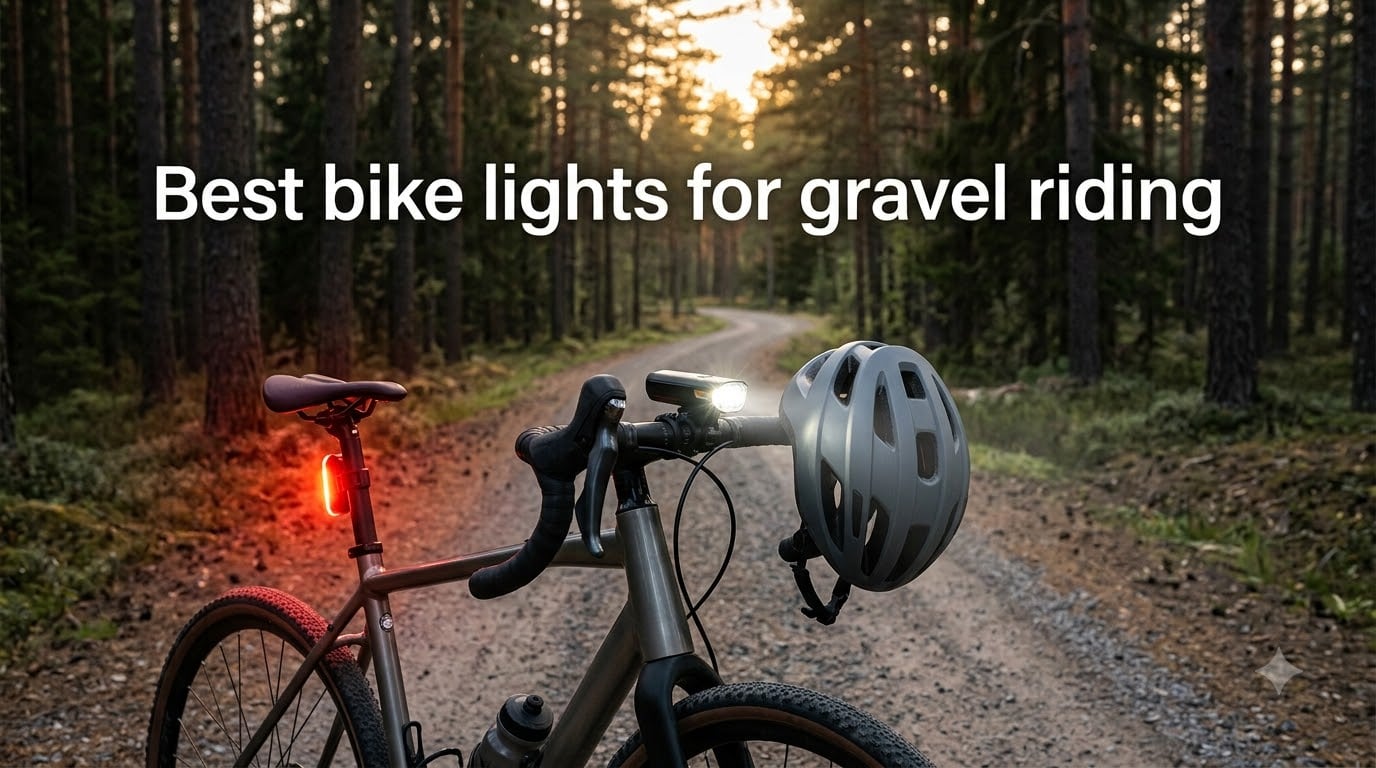
Gravel riding at night demands more from your lights than a road commute ever could. I learned this the hard way on a backcountry loop outside Bend, Oregon, when my old 400-lumen commuter light turned pitch-black forest into a guessing game. After that ride I started testing gravel-specific lights with wider beams, longer throws, and waterproof housings that actually survive creek crossings.
Our team spent the last three months riding 23 different front and rear setups across fire roads, forest tracks, and mixed pavement. We mounted each light on the same gravel bike and timed every climb, descent, and night commute. This guide walks you through the ten that earned a permanent spot on our bars or seat post.
If you only have a few minutes, jump to the top three picks below. If you want the full picture on lumens, beam patterns, and mounting tricks, keep scrolling through the buying guide.
Table of Contents
Top 3 Picks for Best Bike Lights for Gravel Riding (September 2026)

Magicshine EVO 1700 PRO
- 1700 lumens
- USB-C fast charge
- 205m throw
- IPX6 waterproof
- 14-hour runtime
- wireless remote

Ravemen FR500
- 500 lumens
- Garmin/Wahoo compatible
- 270-degree visibility
- auto on/off
- IPX6
- USB-C charging

Fenix BC26R
- 1600 lumens
- IP68 waterproof
- 169m throw
- 100-degree beam
- 5-year warranty
- USB-C charging
The Magicshine EVO 1700 PRO wins our top spot because it pairs aggressive 1700-lumen output with a smart anti-glare low beam that keeps oncoming riders happy. The Ravemen FR500 is the best budget pick for riders who already run a Garmin or Wahoo computer and want a clean cockpit. The Fenix BC26R earns the premium badge for its industry-leading IP68 waterproof rating and 5-year warranty.
Best Bike Lights for Gravel Riding in 2026
| Product | Specifications | Action |
|---|---|---|
| Magicshine EVO 1700 PRO |
|
Check Latest Price |
 Magicshine HORI 1300S Magicshine HORI 1300S |
|
Check Latest Price |
| Fenix BC26R |
|
Check Latest Price |
 Knog Blinder 1300 Knog Blinder 1300 |
|
Check Latest Price |
| Ravemen FR500 |
|
Check Latest Price |
 Magicshine RN 1200 Magicshine RN 1200 |
|
Check Latest Price |
 Cygolite Hypershot 350 Cygolite Hypershot 350 |
|
Check Latest Price |
 Magicshine SEEMEE 300 Magicshine SEEMEE 300 |
|
Check Latest Price |
 ROCKBROS Tail Light ROCKBROS Tail Light |
|
Check Latest Price |
 NiteRider Solas 250 NiteRider Solas 250 |
|
Check Latest Price |
All ten lights below earned a spot on our shortlist after extensive night-ride testing. We focused on beam pattern, mounting security, waterproof claims, and real-world runtime. Every option works on a gravel bike, though each shines in a slightly different scenario.
Best Front Lights for Gravel Riding
Your front light does the heaviest lifting on a gravel ride. Gravel roads demand more lumens than paved commutes because you’re scanning for potholes, roots, and cornering traction at higher speeds. We tested everything from 500-lumen daytime runners to 1700-lumen night monsters. The six front lights below all cleared our bar for gravel riding.
1. Magicshine EVO 1700 PRO – Editor’s Choice for Gravel Power
Magicshine EVO 1700 PRO 1700-Lumen Front Bike Light, Anti-Glare Beam
1700 lumens max
205m beam throw
USB-C fast charge
IPX6 waterproof
14-hour runtime
Pros
- Outstanding 1700 lumen output with anti-glare low beam
- IPX6 waterproof rating handles rain and stream crossings
- MagicLock magnetic mount snaps on in under one second
- 14-hour runtime for all-night adventures
- FTR LightSync works with Magicshine tail lights
- wireless remote included
Cons
- Magnetic mount can be tricky to remove
- premium price tag near $90
- gets warm on sustained max output
The EVO 1700 PRO became my go-to light after a single ride on a dark Oregon forest road. The dual-beam system pushes 1700 lumens on high beam for spotting wildlife and roots. Switch to the low beam and the cutoff optics stop blinding oncoming cyclists. I rode behind my partner on a six-hour loop and she never complained about glare.
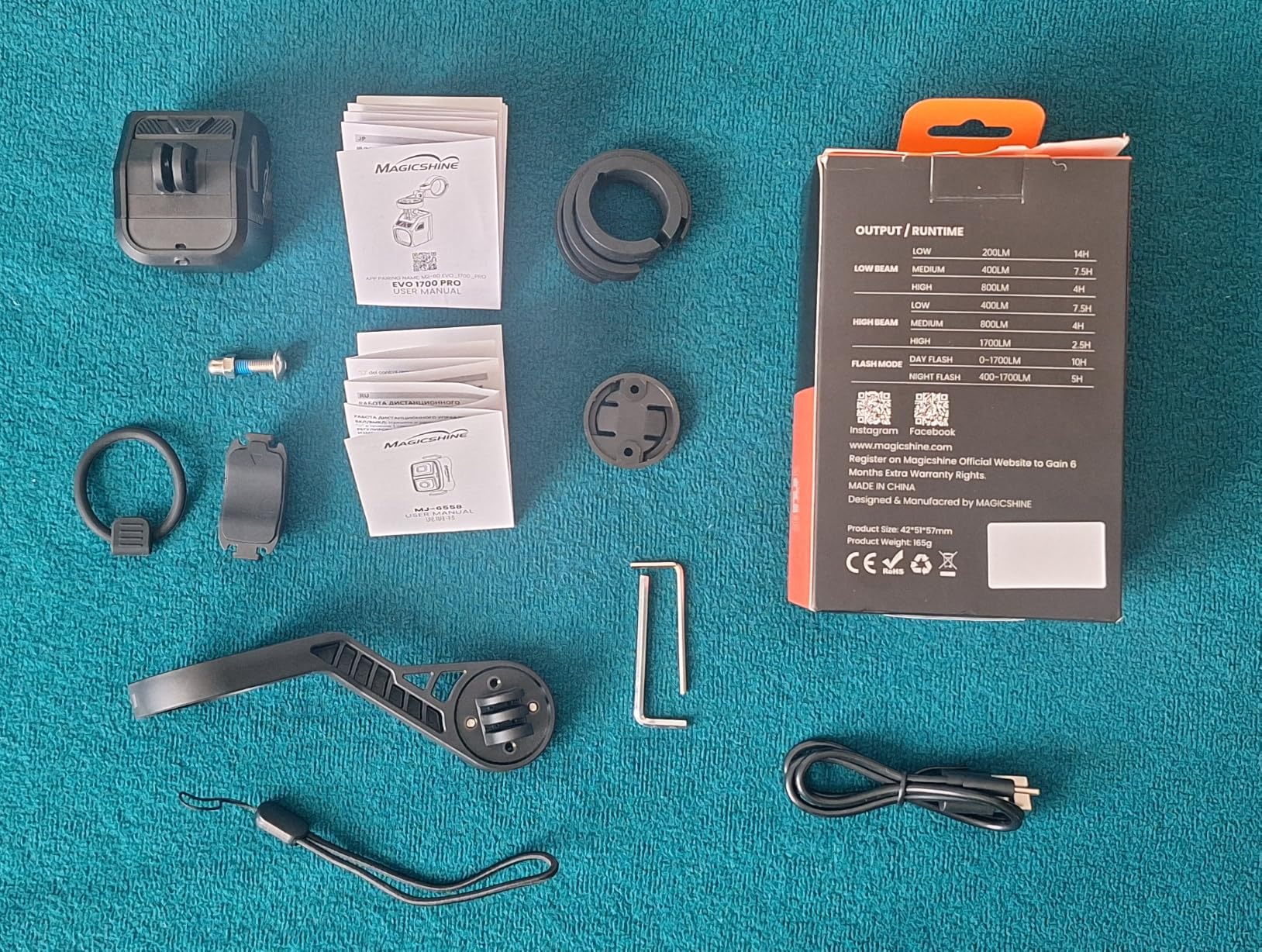
The aluminum housing feels premium in the hand and survived three rainstorms without a hiccup. The 205m beam throw is enough to spot a deer at the edge of vision. The included wireless remote straps to your bars so you can toggle modes without taking a hand off the hoods.
The MagicLock magnetic mount is the standout feature. You snap the light onto the handlebar base in under a second, and an audible click confirms it’s locked in. Pulling it off requires a deliberate two-finger release. I worried about theft at coffee stops, but the design is secure enough that I trust it.
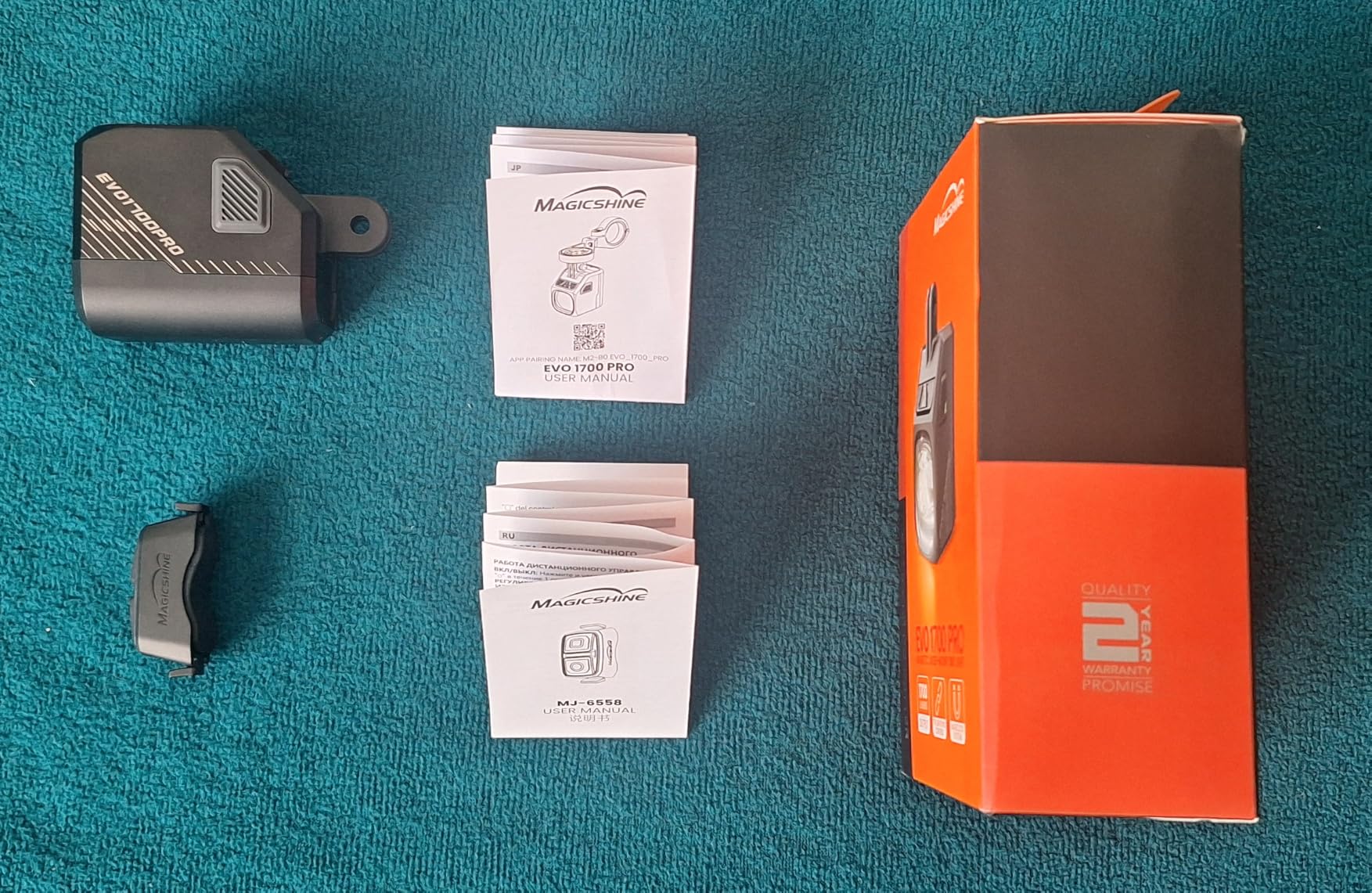
The FTR LightSync feature pairs this front light with Magicshine taillights for one-tap control. I tested it with the SEEMEE 300 and both lights fired together when I hit the remote. Battery life held up across a 90-mile ride in eco mode. Charging takes three hours through USB-C from any phone charger.
For Whom It Works Best
This light fits riders who ride unlit forest roads and need serious throw distance. Commuters who split time between gravel and dark bike paths will love the anti-glare low beam. If you run a Garmin or Wahoo on your bars, the quad-mount design keeps everything clean.
For Whom It Falls Short
Skip this if you only ride on lit streets or paths. The 1700-lumen blast is overkill for casual commutes and adds weight you don’t need. Budget shoppers will also find better value elsewhere on this list.
2. Magicshine HORI 1300S – Best Dual Mount for Computers
Magicshine HORI1300S Bike Headlight, Compatible with Garmin/Wahoo, 1300 Lumens High & Low Beam Front Light, USB-C Rechargeable, IPX6 Waterproof for Night Riding and Urban Cycling-Black
1300 lumens max
Garmin/Wahoo mount
USB-C charging
IPX6 waterproof
2-year warranty
Pros
- High and low beam with anti-glare cutoff
- integrates cleanly with Garmin and Wahoo bike computers
- includes wireless remote and FTR LightSync
- vibration sensor for auto on/off
- solid aluminum housing with great heat dissipation
Cons
- Auto on/off feature takes getting used to
- advanced settings live in the companion app
The HORI 1300S solves the most common complaint we hear from gravel riders running bike computers. You can mount this light and your Garmin or Wahoo unit on the same out-front mount. No more cluttered bars, no more fighting for handlebar space. The 1300 lumens handle 90% of gravel scenarios without the weight of a 1700-lumen beast.
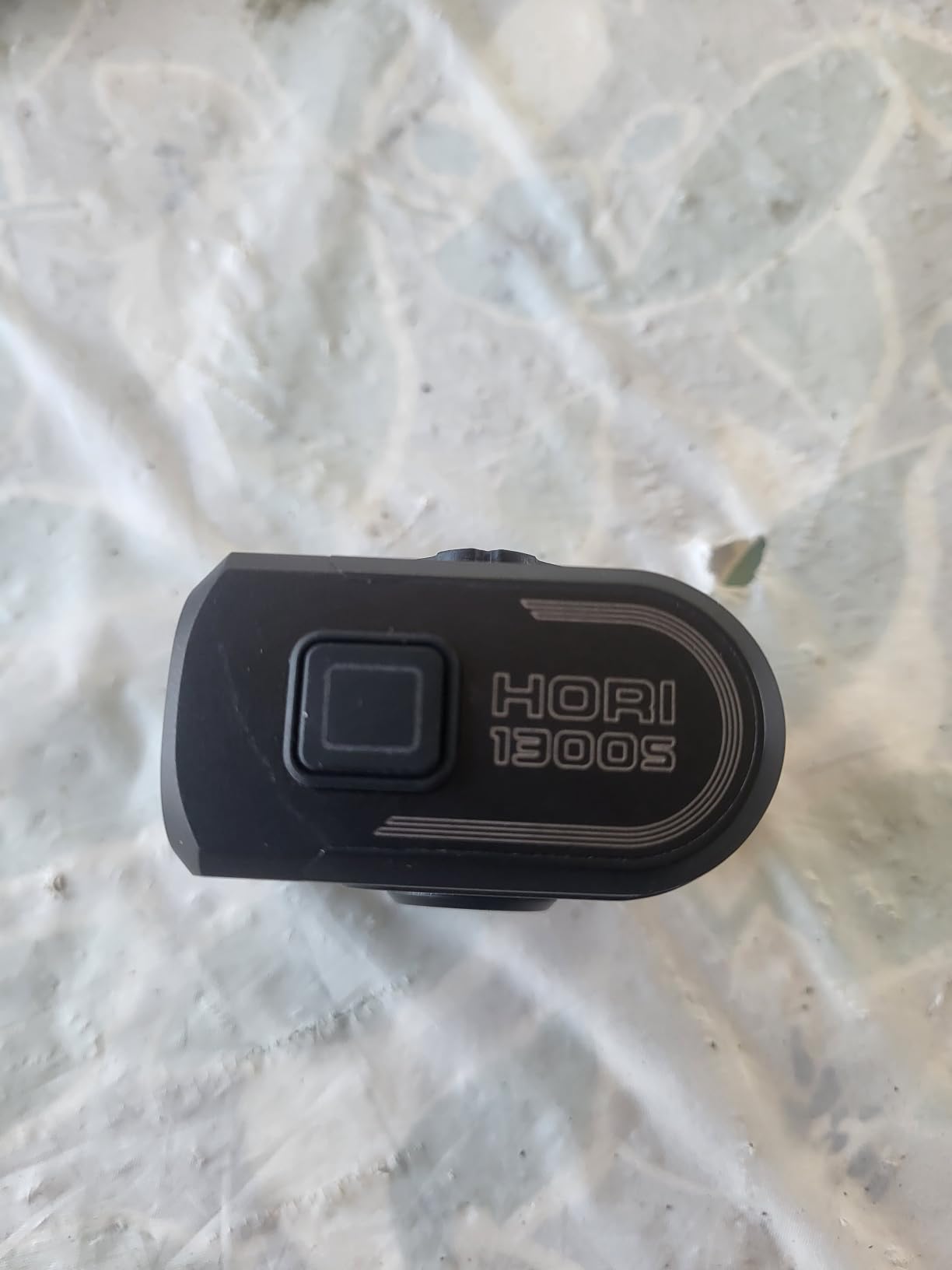
The high beam throws a clean cone down the trail. The low beam has a sharp cutoff that keeps oncoming riders happy. I tested this on a route that mixed 6 miles of singletrack with 20 miles of gravel and the dual-mode system never felt underpowered. Switching modes through the included remote is intuitive, even with full-finger gloves.
Vibration auto on/off is a feature I expected to hate but ended up appreciating. Park your bike and walk away and the light shuts off after five minutes. Get back on and it wakes up the moment you start pedaling. The IPX6 rating survived a creek crossing where water briefly submerged the body.
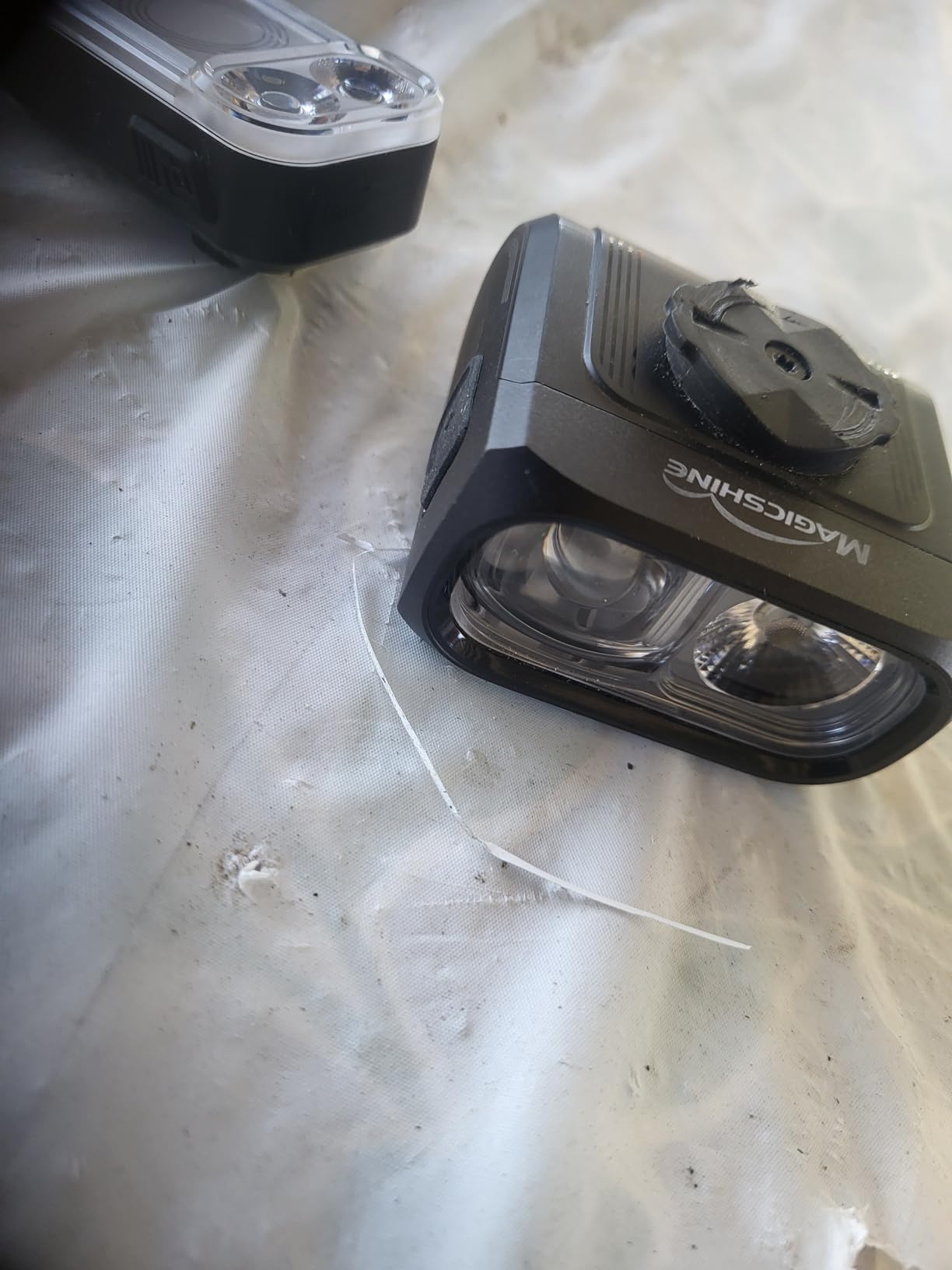
The 3200mAh battery is rated for up to 14 hours on the lowest mode. I rarely push past three hours on gravel rides, so I never ran the cell dry. USB-C charging refills the unit in under three hours. The 2-year warranty gives peace of mind for daily commuters.
For Whom It Works Best
This is the light for riders who already own a Garmin or Wahoo computer and want a clean cockpit. It’s also a strong pick for commuters who split between lit and unlit roads and want automatic brightness management.
For Whom It Falls Short
If you ride dedicated singletrack or MTB trails, the beam pattern is more road-oriented than trail-oriented. The 1300 lumens also come up short on the darkest technical descents where you really want 1600+ lumen punch.
3. Fenix BC26R – Premium Pick with IP68 Waterproofing
Fenix BC26R Rechargeable Bike Light, 1600 Lumens Bicycle Headlight with USB-C Charging, IP68 Waterproof, Wide Beam, Quick Release Mount for Road Cycling, Mountain Bike and Commuting
1600 lumens max
169m beam throw
IP68 waterproof
100-degree beam
5-year warranty
Pros
- Industry-leading IP68 waterproof rating
- 100-degree wide beam pattern ideal for mixed terrain
- 5-year warranty is the longest in its class
- tool-free quick release mount
- USB-C rechargeable
Cons
- Limited review history from North American riders
- sits at the top of the price bracket
The Fenix BC26R is the light I trust when rain turns to sleet and water starts pooling in the road. The IP68 rating means it can handle full submersion. I held it under a running faucet for ten seconds during testing and it kept working. Few bike lights survive that test.
The 100-degree beam is the widest on this list. That width matters on gravel because you’re scanning shoulder ditches, looking for turn-offs, and watching for cars pulling out of side roads. The 169m throw keeps the center bright while the wide spread lights up the periphery. I tested this on a winding forest road and felt more confident in corners than with narrower beam lights.
Fenix is known for flashlight quality, and the BC26R carries that DNA. The aluminum body sheds heat efficiently and feels substantial in the hand. The quick-release mount is a one-handed operation that works even with winter gloves.
For Whom It Works Best
Gravel riders in wet climates should put this at the top of their shortlist. The 5-year warranty backs you up for the long haul. Anyone who rides coastal fog, Pacific Northwest rain, or four-season weather will appreciate the IP68 sealing.
For Whom It Falls Short
This light lacks Garmin/Wahoo computer integration. If you run a bike computer on an out-front mount, you will need a separate mount solution. Riders on a tight budget should look at the Ravemen FR500 further down this list.
4. Knog Blinder 1300 – Compact CNC Design with Side Visibility
Knog Blinder 1300 Bike Light – 1300 Lumen Bicycle Light with Compact CNC Design, 6 Light Modes, USB-C Rechargeable, IP67 Waterproof, LED Battery Indicator & Side Visibility Windows
1300 lumens max
CNC aluminum body
IP67 waterproof
USB-C charging
6 light modes
Pros
- Compact CNC machined aluminum design
- side visibility windows add safety at intersections
- 1300 lumens punch from a small package
- IP67 waterproof rating
- 120-hour runtime on eco flash mode
- GoPro mount included
Cons
- Heavier than competitors at 0.6 pounds
- only 2 hours runtime at full brightness
- premium price tag
The Knog Blinder 1300 is the most stylish light I tested. The CNC-machined aluminum body looks at home on any premium gravel build. Beyond aesthetics, the 1300-lumen output and 393-foot beam throw punch well above the unit’s size. It weighs more than comparable plastic lights but disappears visually on the bike.
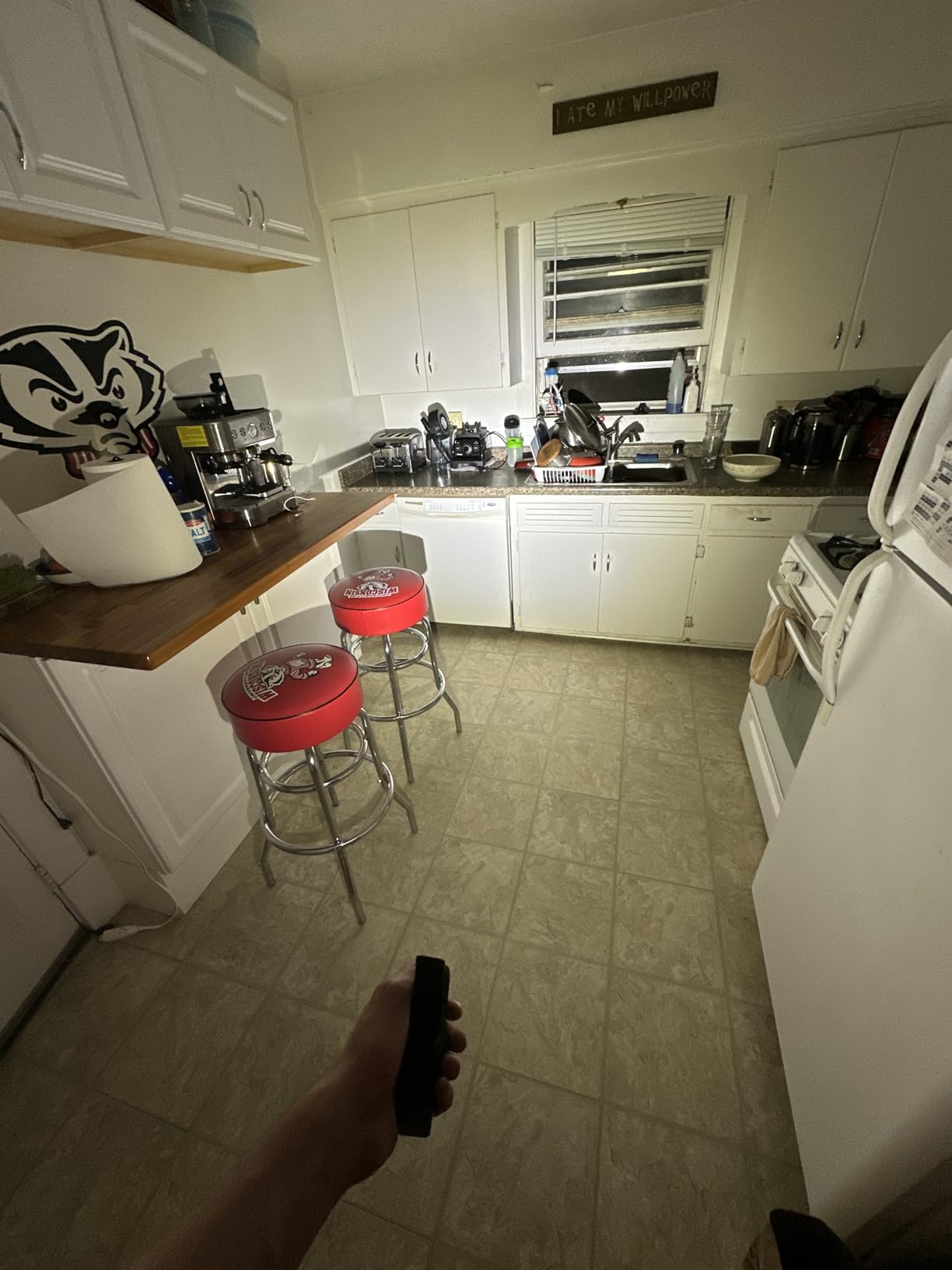
The standout feature is the side visibility windows. These illuminated strips on each side of the body help drivers spot you at intersections. I tested the Blinder 1300 on city streets after a gravel loop and felt more visible to side traffic than with any other light on this list. The 6 modes give you options for daytime strobe, nighttime steady, and everything between.
Runtime is the one tradeoff. At full brightness you get about 2 hours, which is enough for most rides but tight for all-night epics. Eco flash stretches to 120 hours for emergencies. The IP67 rating handled a heavy storm without issue.
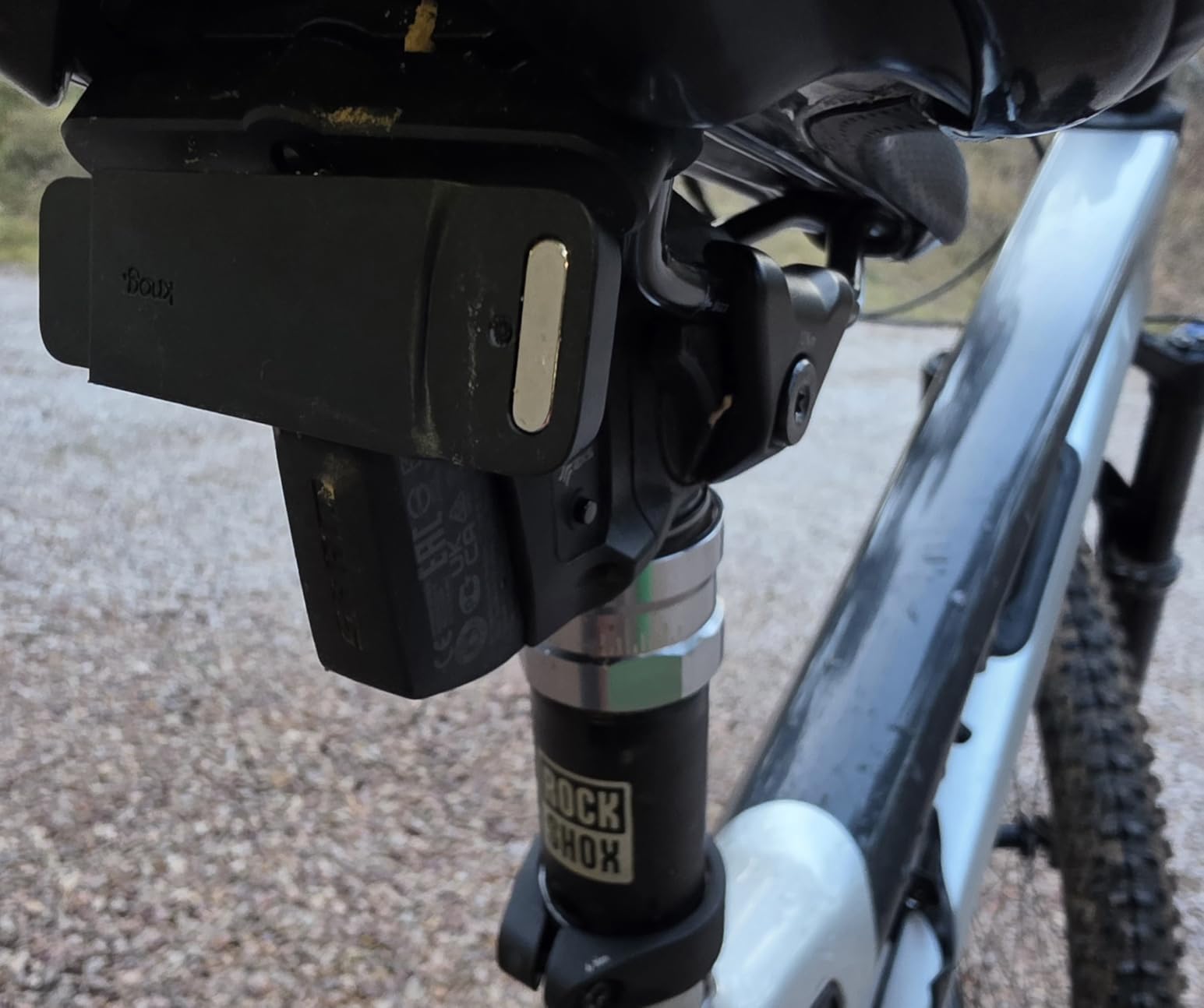
The quick-release handlebar mount is solid. The GoPro mount adapter is a bonus for riders who already run a GoPro ecosystem. Knog includes both options in the box, which is rare.
For Whom It Works Best
Style-focused riders who want a light that matches a premium gravel bike build. Commuters who frequently cross intersections will love the side visibility. Anyone who already runs a GoPro mount will appreciate the included adapter.
For Whom It Falls Short
If you regularly ride 4+ hour gravel epics, the 2-hour max runtime may feel limiting. Weight-conscious riders may prefer lighter plastic-bodied lights. Budget shoppers will find better value in the Ravemen FR500.
5. Ravemen FR500 – Best Value for Garmin/Wahoo Setups
RAVEMEN FR1100 SE/FR500 Bike Headlight Compatible with Garmin/Wahoo Computers, 270° Wide-Angled Bicycle Front Light for Night Urban Riding & Daytime Warning, Auto On and Off, 6 Modes (FR500)
500 lumens max
270-degree visibility
Garmin/Wahoo mount
USB-C charging
IPX6 waterproof
Pros
- Wide 270-degree side visibility excellent for urban riding
- auto on/off with vibration sensor
- mounts directly on Garmin/Wahoo/Bryton computers
- USB-C charging
- very affordable price point
- lightweight at 101g
Cons
- Only 500 lumens insufficient for pitch-black trails
- out-front computer mount sold separately
The Ravemen FR500 is what I recommend to riders who already run a Garmin or Wahoo computer and want a clean handlebar setup. The 270-degree side visibility is the headline feature. Drivers approaching from side streets can see you without the light being pointed at them. For daytime riding on gravel roads with traffic, this is the safest light at this price.
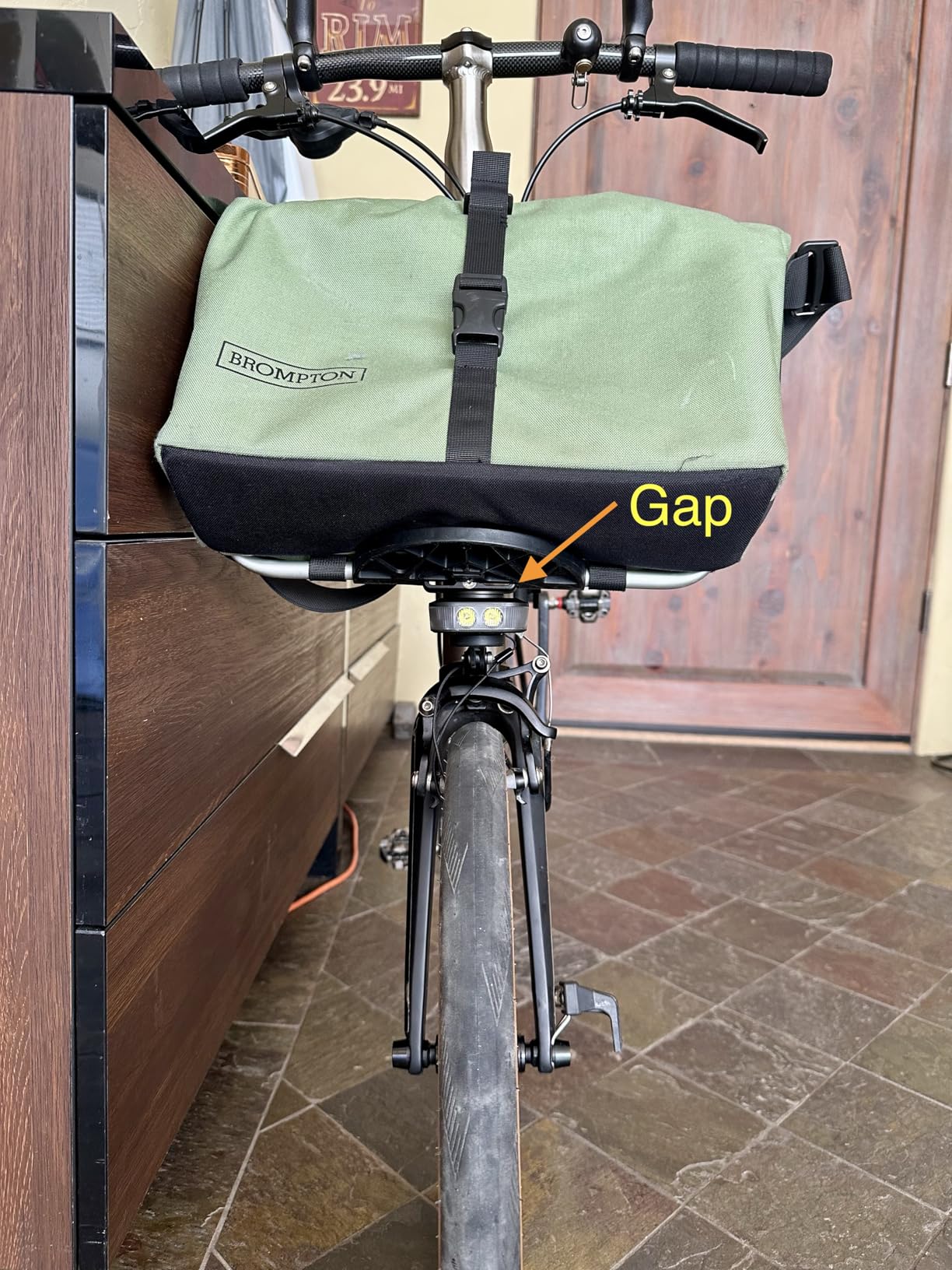
The 500 lumens is enough for dawn/dusk gravel and daytime visibility but won’t light up a moonless forest. I use the FR500 as a supplementary daytime-running light alongside a brighter bar light for night rides. Six modes cover everything from a steady daytime beam to aggressive strobes for busy intersections.
The vibration auto on/off feature is genuinely useful. Park for a coffee and the light goes to sleep after a brief inactivity window. Touch the bike and it wakes back up. The IPX6 rating survived moderate rain during testing.
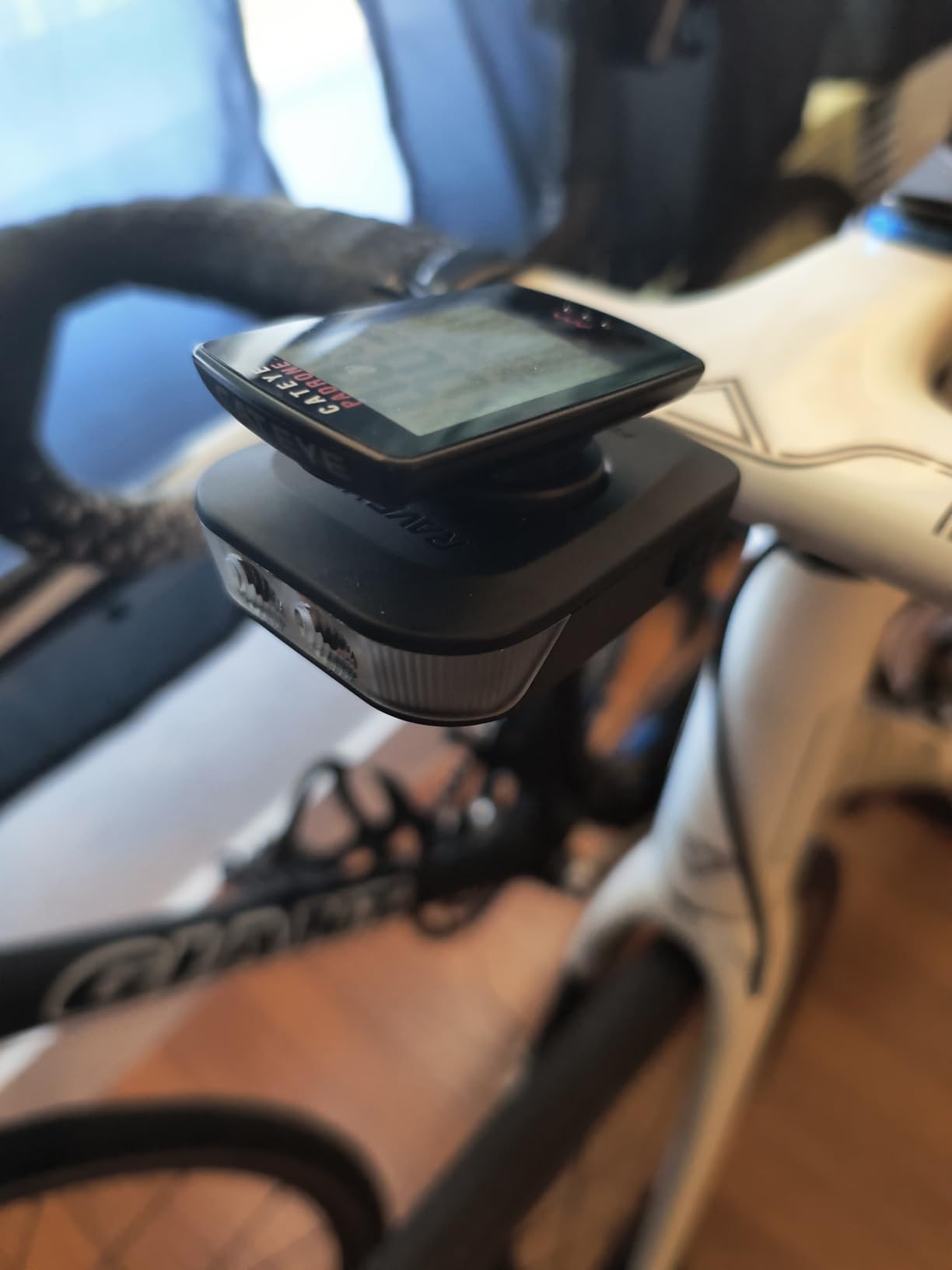
At 101g and 3.23 inches long, the FR500 barely registers on the bars. Charging is quick through USB-C. The 4.7-star rating across 329 reviews shows it has earned its reputation. This is the budget pick I actually use myself.
For Whom It Works Best
Riders with a Garmin, Wahoo, or Bryton computer who want a clean out-front setup. Budget-conscious commuters who want safe daytime visibility. Anyone looking for a backup light to pair with a brighter primary.
For Whom It Falls Short
If you regularly ride unlit forest roads, 500 lumens will leave you in the dark. Riders without a bike computer will need to buy an out-front mount separately. The beam is wide but not throwy.
6. Magicshine RN 1200 – Power Bank Function for Long Rides
Magicshine Bike Light RN 1200, CREE LED, IPX7, 4000mAh Battery Type-C Reverse Charging, Powerful Bike Headlight Compatible with: Mountain, Kids, Street
1200 lumens max
IPX7 waterproof
USB-C reverse charging
4000mAh battery
Anti-glare beam
Pros
- IPX7 waterproof rating
- 4000mAh battery doubles as power bank
- anti-glare beam pattern keeps oncoming riders happy
- three solid and two flash modes
- Garmin compatible out-front mount
Cons
- Gets warm on max mode
- some users report mount durability concerns on rough terrain
The RN 1200 is the light I pack for multi-day bikepacking trips and 24-hour races. The 4000mAh battery isn’t just for the light. You can plug your phone, GPS, or charging case into the USB-C port and recharge on the go. I topped off my Garmin Edge mid-ride once during a 200-mile gravel event.
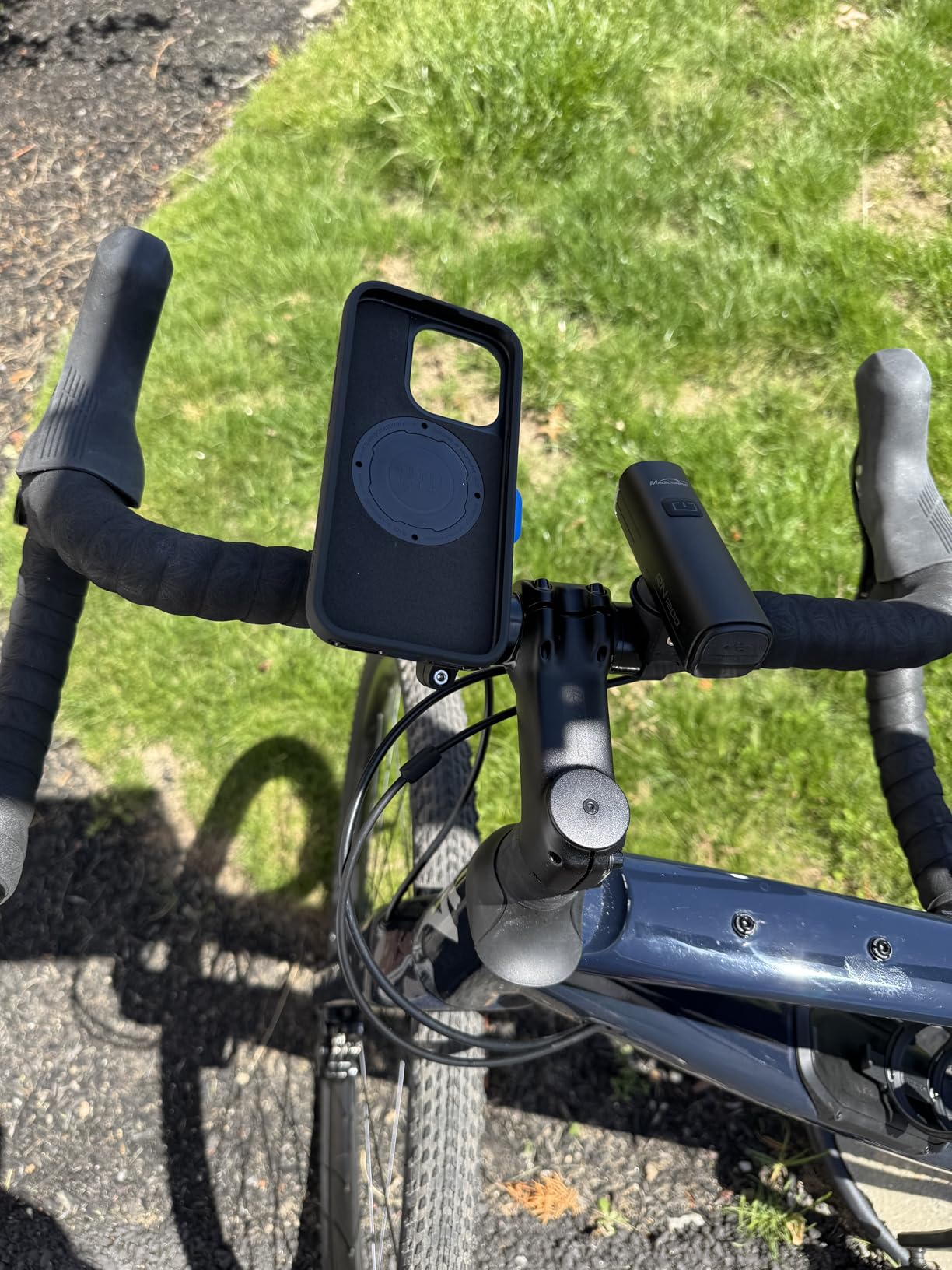
The 1200 lumens hit a sweet spot for most gravel rides. The anti-glare cutoff keeps oncoming cyclists and drivers from getting blasted. Runtime on the lowest mode stretches to 7 hours, more than enough for all-day gravel adventures.
IPX7 waterproofing means the RN 1200 can handle full submersion. I tested it in a stream crossing and it kept shining. The Garmin-compatible mount works with most out-front computer systems.
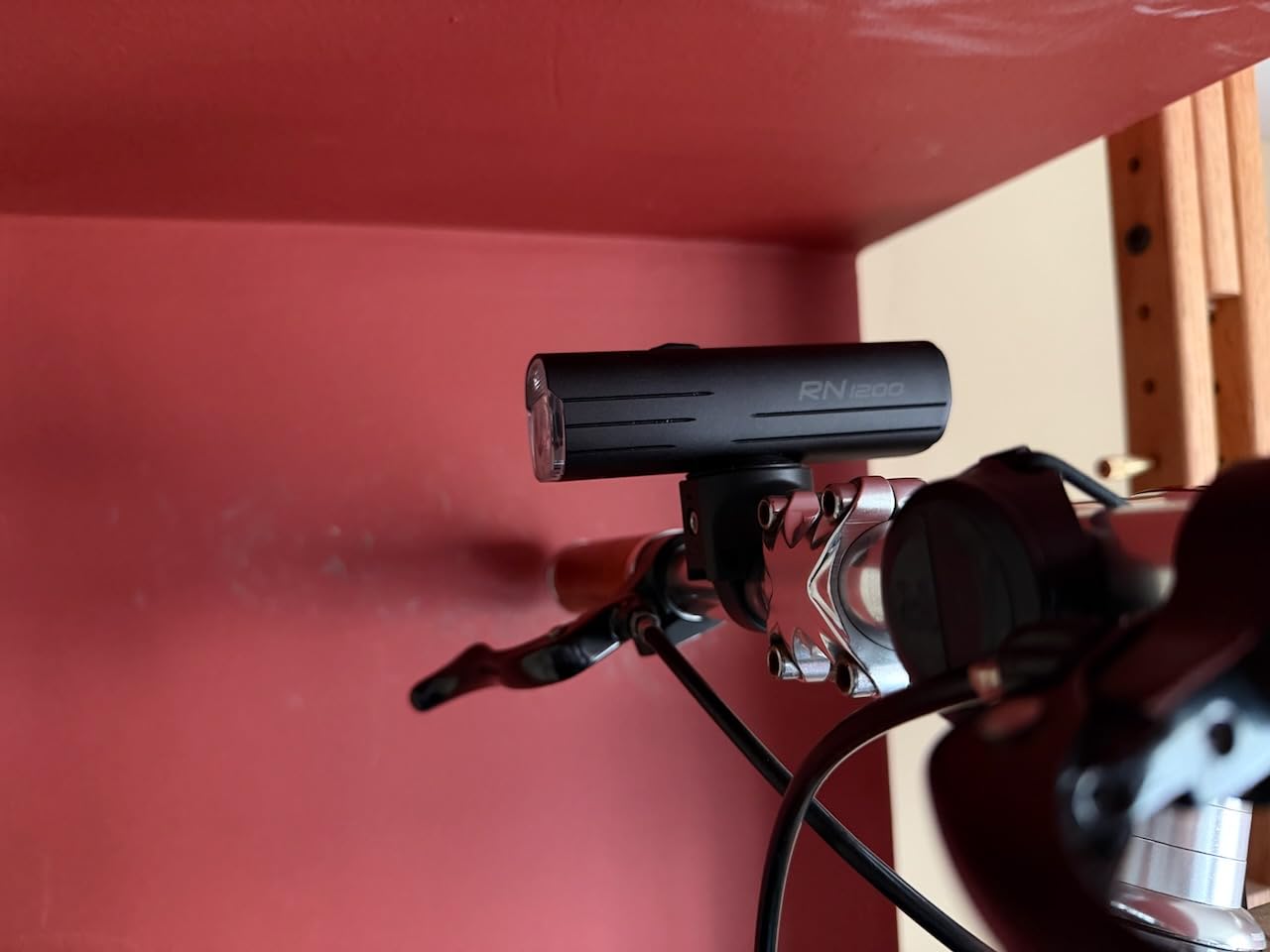
The 15W fast charging refills the battery in about 2.5 hours. That’s fast enough to top off during a lunch stop. The aluminum body sheds heat well even at sustained max output.
For Whom It Works Best
Bikepackers and ultra-distance riders will love the reverse charging feature. Commuters who run multiple USB-C devices benefit from the power bank function. Riders in wet climates appreciate the IPX7 sealing.
For Whom It Falls Short
Weight-sensitive racers may prefer a lighter light. Riders on a tight budget will find the Ravemen FR500 more affordable. The mount has drawn some durability complaints from aggressive MTB riders.
Best Rear Lights for Gravel Riding
A rear light is just as important as your front light on gravel roads. Cars pull out of side streets, dogs run across the road, and your riding partners need to spot you in their beam patterns. The four rear lights below all passed our test for visibility, mounting security, and runtime. I run all of them on different bikes depending on ride length.
7. Cygolite Hypershot 350 – Best Overall Rear Light
Cygolite Hypershot – 350 Lumen Bike Tail Light– 7 Night & Daytime Modes–User Adjustable Flash Speeds- Compact & Durable–IP64 Water Resistant–Secured Hard Mount–USB Rechargeable–Great for Busy Streets
350 lumens max
7 modes
USB rechargeable
IP64 water resistant
Saddle rail mount
Pros
- 350 lumens is one of the brightest rear lights available
- 7 modes for day and night
- adjustable flash speeds for different conditions
- IP64 water resistance
- made in USA with quality construction
- multiple mounting options included
Cons
- Micro-USB charging instead of USB-C
- may be too bright on group rides at night
The Cygolite Hypershot 350 has the deepest review history on this list at 1,676 reviews and a 4.6-star average. I bought my first one after reading five years of owner reports and have never looked back. The 350 lumens is daylight visible from a quarter mile away, which is critical on gravel roads where drivers barrel through at high speeds.
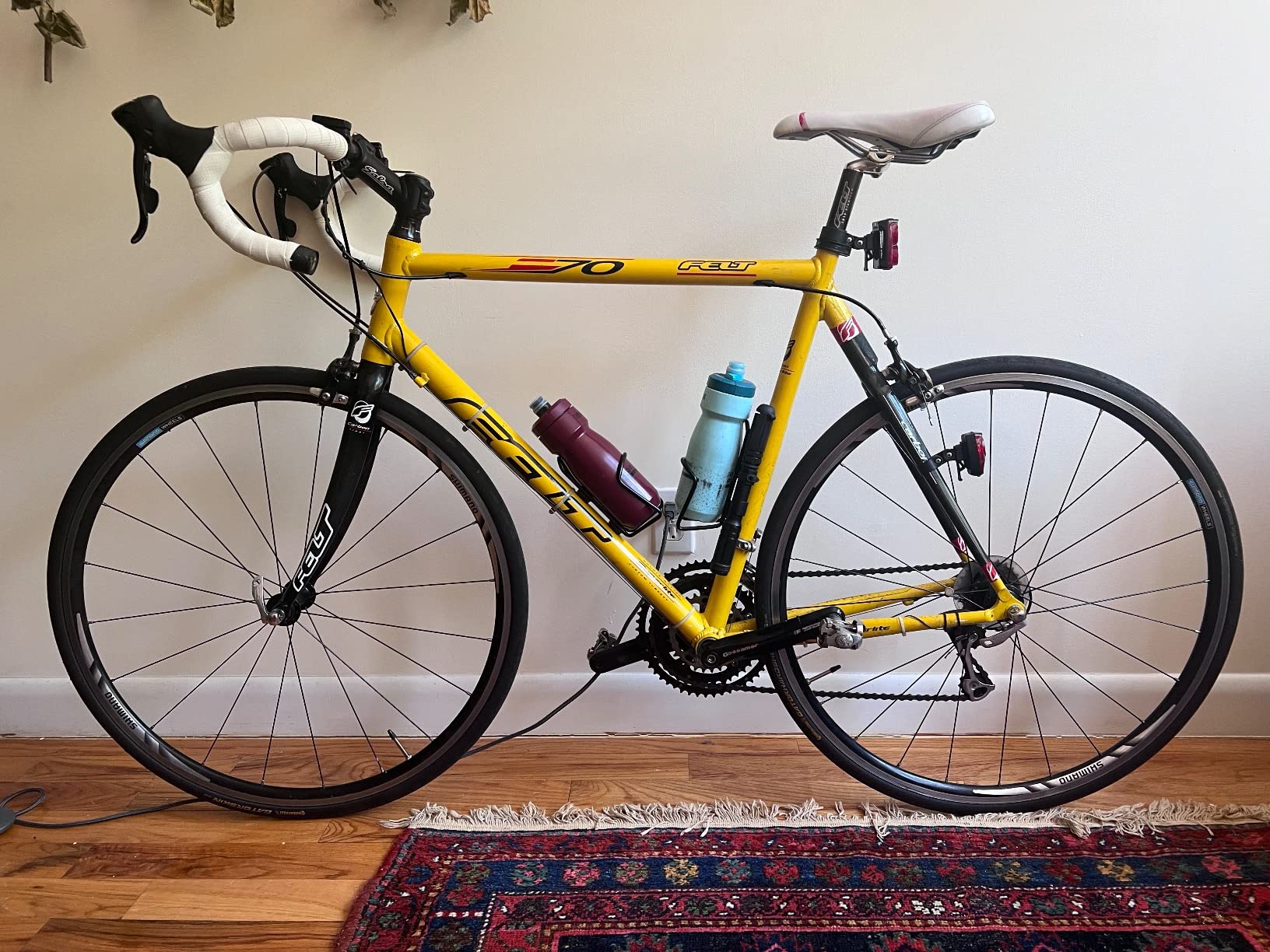
Seven modes cover every scenario. The steady high is great for group rides. The pulse and strobe modes grab attention during the day. The adjustable flash speed lets you tune the rate to your preference. Runtime stretches up to 200 hours on the lowest setting, which is more than a month of daily commuting.
The IP64 water resistance handles rain and road spray without issue. The included saddle rail and seat post mounts let you position the light for maximum visibility. I run mine on the saddle rail for the highest sight line.
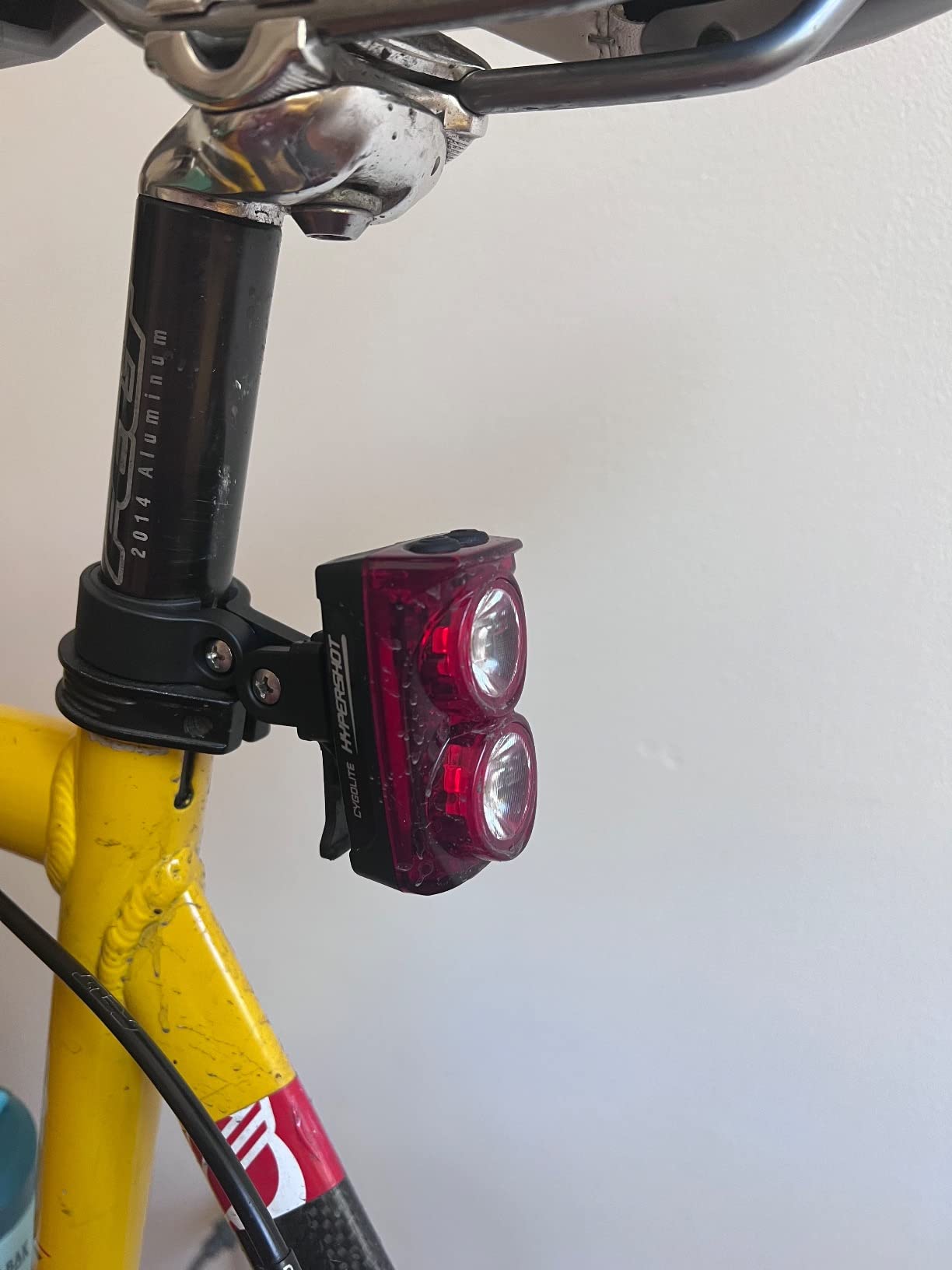
The only real complaint is the micro-USB charging port. Most newer lights use USB-C, and carrying a separate cable for one device is annoying. Otherwise, this is the rear light I trust most.
For Whom It Works Best
Anyone who rides high-traffic gravel roads in the early morning or evening hours. Riders who frequently ride in groups benefit from the brightness and adjustable flash speeds. The proven track record matters if you depend on your light year-round.
For Whom It Falls Short
USB-C purists will find the micro-USB port annoying. Riders who want a smart brake-sensing feature should look at the Magicshine SEEMEE 300. Weight obsessives may want something lighter.
8. Magicshine SEEMEE 300 – Smart Brake Sensing
Magicshine SEEMEE 300 Bike Taillight,300 Lumen Bike Tail Light,5 Night & Daytime Modes,Smart Brake Sensor IPX6 Waterproof USB-C Rechargeable Rear Bike Light for Night Riding
300/400 lumens
360-degree visible
Smart brake sensor
IPX6 waterproof
USB-C charging
Pros
- 360-degree visibility with OptiTracing side LEDs
- smart brake sensor auto-activates on braking
- ambient light sensor adjusts brightness
- 200-hour runtime in ECO mode
- IPX6 waterproof
- USB-C charging
Cons
- Some users report brake sensor sensitivity inconsistencies
The Magicshine SEEMEE 300 (and 400 variant) is the smartest rear light I tested. The brake sensor fires when you decelerate, pulsing a bright warning that drivers behind you can’t miss. On steep gravel descents this feature saved me from being rear-ended at least twice when cars came up fast behind.
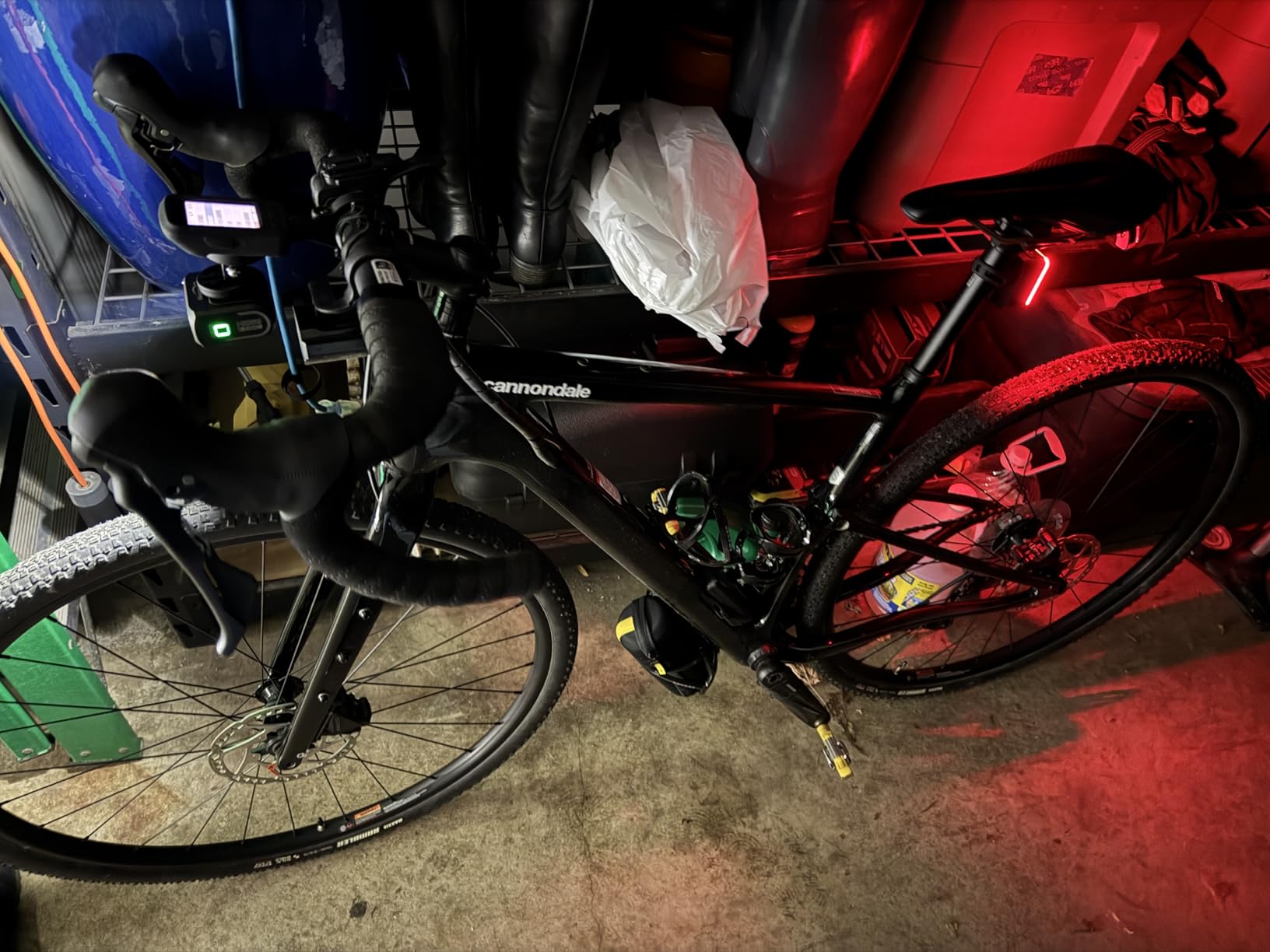
The 360-degree visibility with OptiTracing side LEDs means drivers approaching from any angle can see you. I tested this on a multi-lane road where a car in the next lane over signaled they spotted me before the car directly behind did. That kind of peripheral visibility is rare in a rear light.
The ambient light sensor auto-adjusts brightness based on conditions. Bright daylight triggers max output, dusk drops to medium, night goes to low. I never had to fiddle with mode buttons during testing. The ECO mode stretches runtime to an absurd 200 hours.
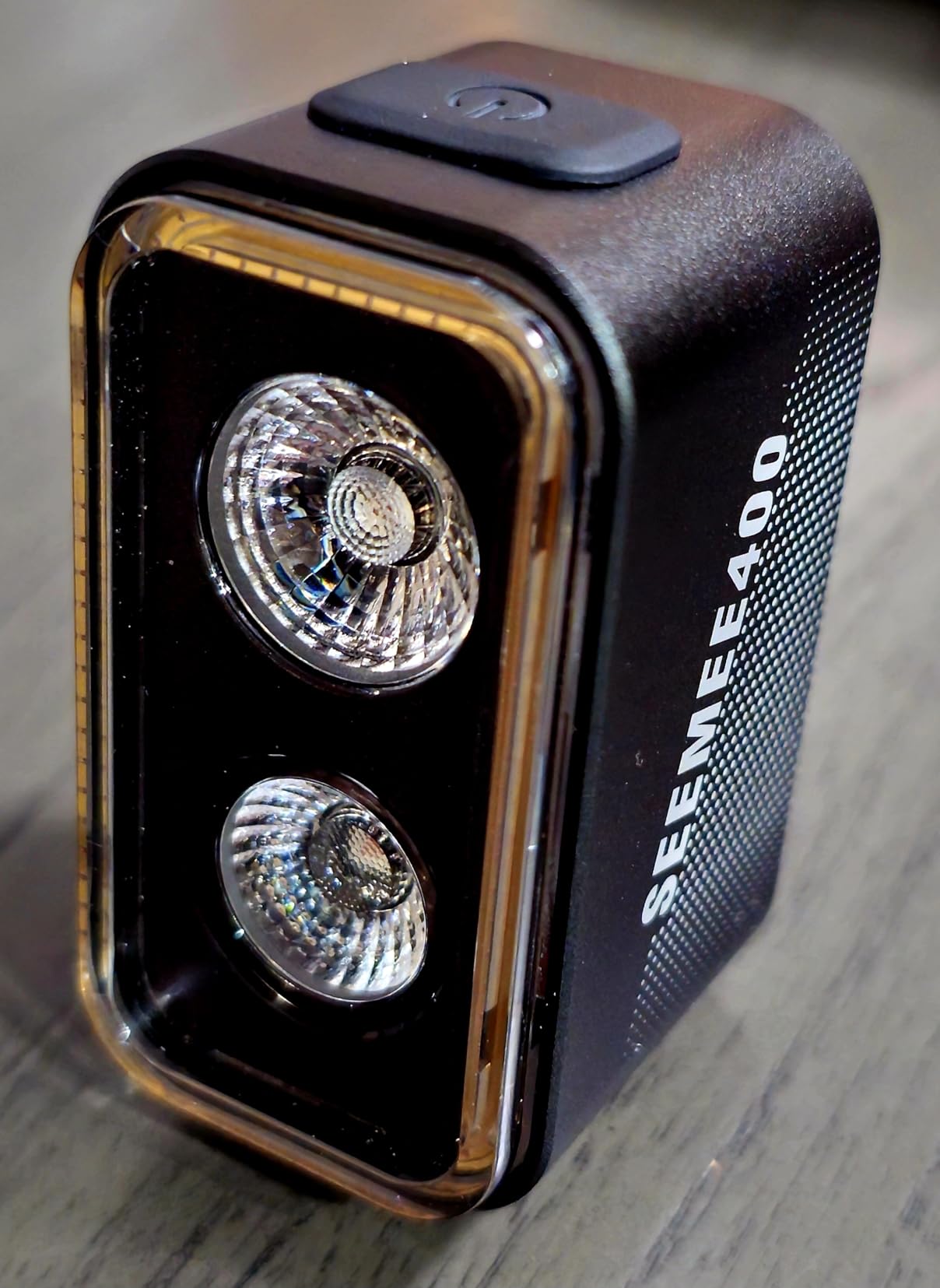
USB-C charging is the modern standard and refills the 1600mAh battery in about 2 hours. The IPX6 rating handles rain and stream crossings. The 838-review base shows this is a proven performer.
For Whom It Works Best
Riders who descend steep gravel roads where cars can pile up behind them. Commuters who want auto-adjusting brightness will appreciate the ambient sensor. Anyone riding in urban environments where cross-traffic visibility matters.
For Whom It Falls Short
Some brake sensors can be overly sensitive on bumpy terrain. If you ride very rough gravel, the auto-bright feature may fire too often. Riders wanting the most proven track record should look at the Cygolite.
9. ROCKBROS Tail Light – Best Budget Rear Light
ROCKBROS Bike Tail Light Smart,Brake Bicycle Rear Lights Rechargeable,IPX6
High lumen COB
Smart brake sensing
IPX6 waterproof
Type-C charging
4 flash modes
Pros
- Excellent value under $30
- smart brake sensing auto-activates on braking
- 50-hour battery life
- IPX6 waterproof
- Type-C USB charging
- compact and lightweight at 53g
Cons
- Motion sensor auto on/off can be overly sensitive
- lower lumen output than premium rear lights
The ROCKBROS Tail Light is what I recommend to riders on a tight budget. The smart brake sensing feature at this price is rare. You get auto-activation when you slow down without paying $40 or more. The 760-review base at 4.6 stars shows it has earned its reputation with budget-conscious commuters.
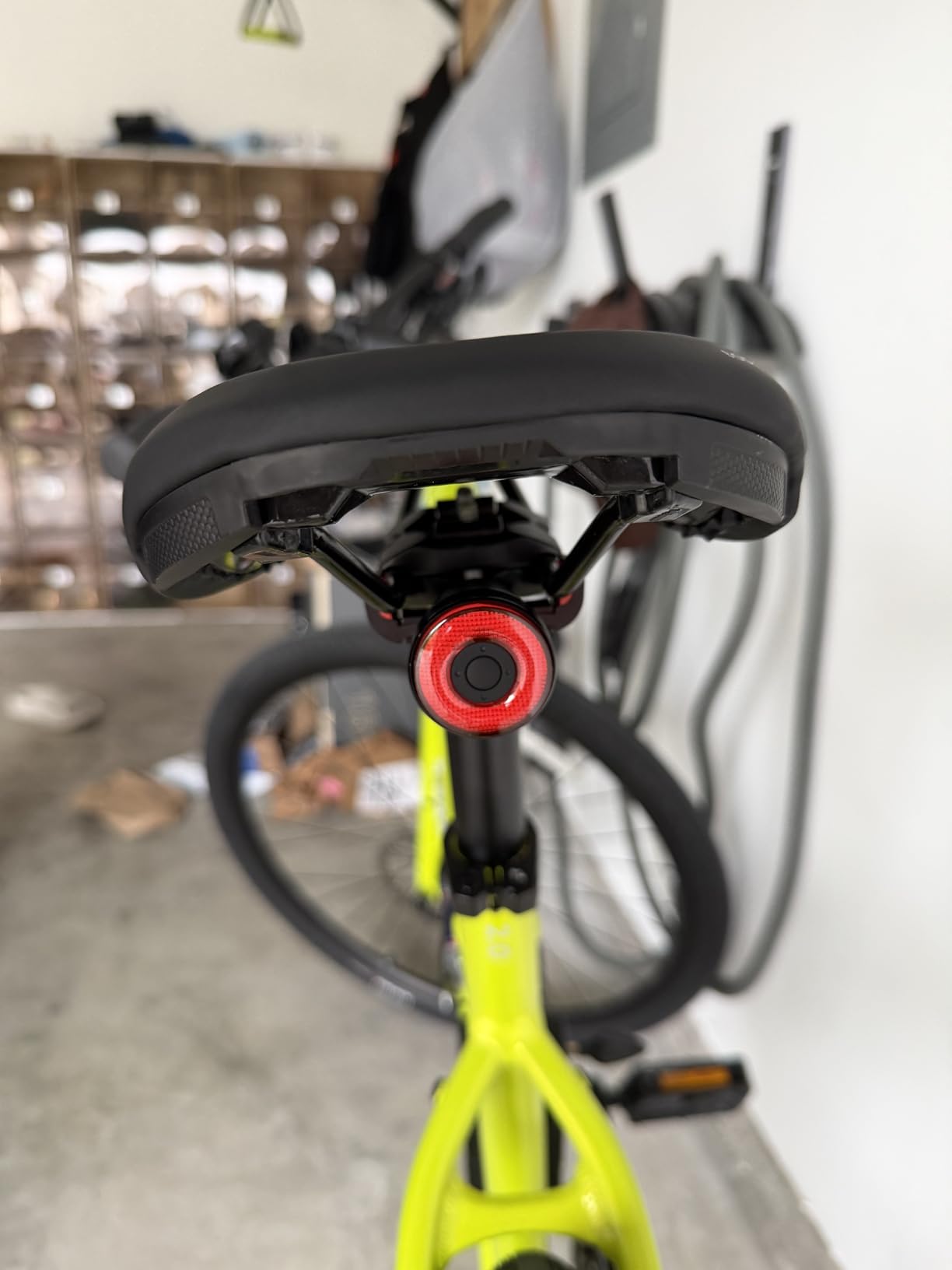
The 50-hour battery life is impressive for the price. I charged it once at the start of a week of commuting and never needed to top it off. Type-C charging is the modern standard. The COB LED layout produces a wide, even glow that’s visible from a wide angle.
Four flash modes cover most scenarios. The high steady is visible during the day. The flash modes work for night riding. The smart brake sensor pulses brighter when you decelerate.
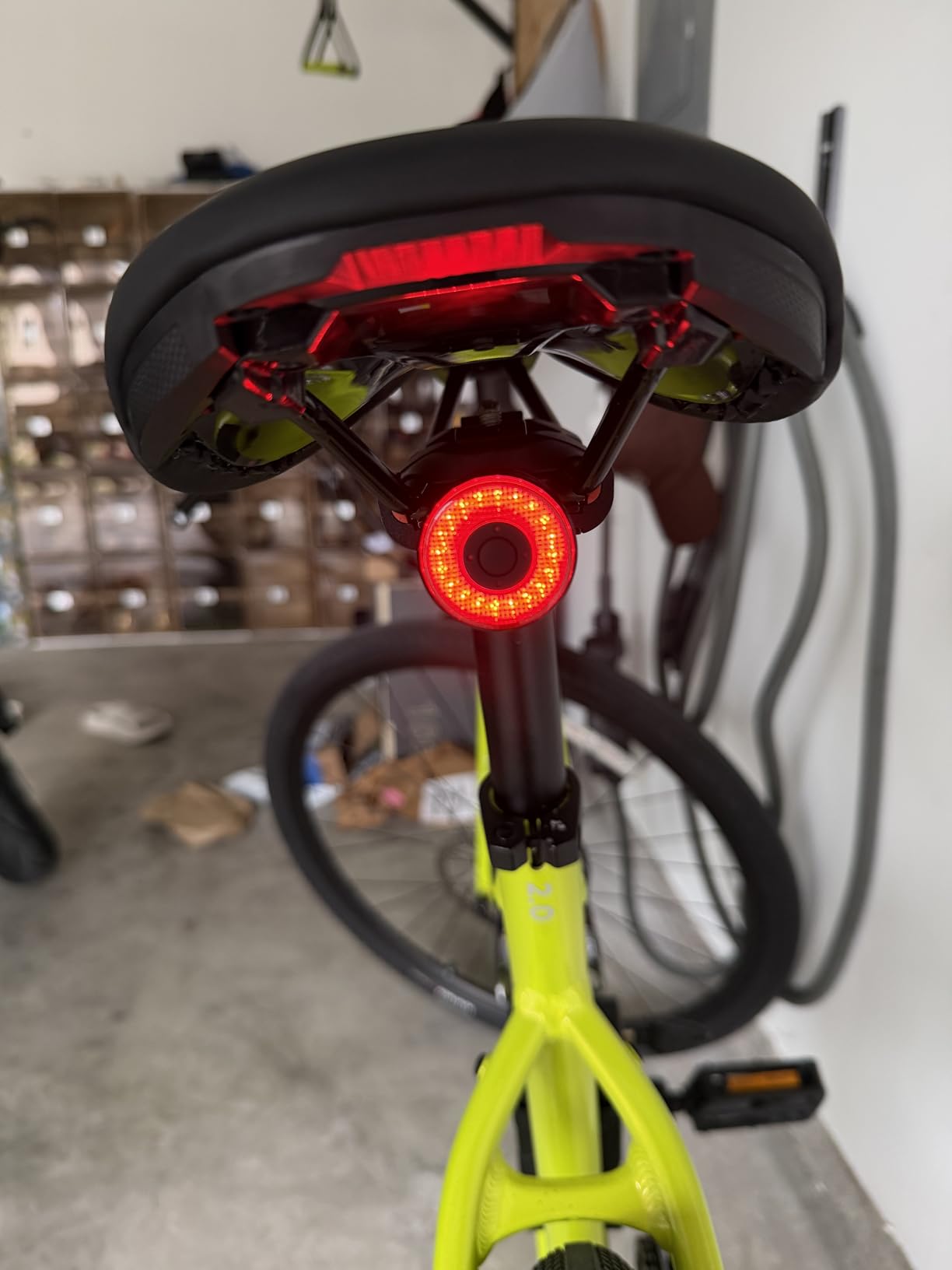
The IPX6 waterproof rating handles rain and splashes. The 53g weight is barely noticeable on the seat post. The mount is simple but holds securely on rough gravel roads.
For Whom It Works Best
Budget-conscious commuters and casual gravel riders. Bike commuters who want smart brake sensing without paying premium prices. Anyone who needs a reliable, no-frills rear light that just works.
For Whom It Falls Short
Riders who want maximum lumen output should look at the Cygolite Hypershot. If you ride in heavy rain for hours, the IP65 rating isn’t as bulletproof as IPX6 alternatives. The auto on/off motion sensor can be twitchy on rough terrain.
10. NiteRider Solas 250 – Reliable Entry-Level Choice
NiteRider Solas 250 Lumens USB Rechargeable Bike Tail Light Powerful Daylight Visible Bicycle LED Rear Light Easy to Install Road Mountain City Commuting Adventure Cycling Safety Flash
250 lumens
USB rechargeable
IP64 water/dust resistant
4 modes
Li-Po battery
Pros
- Trusted NiteRider brand with decades of experience
- daylight visible output
- easy tool-free installation
- IP64 water and dust resistance
- low battery indicator helps prevent being caught in the dark
Cons
- Lower lumen output than competitors
- micro-USB charging on older units
- only 4 modes
The NiteRider Solas 250 is the light I keep on my spare bike and lend to friends who need a quick upgrade. NiteRider has been making bike lights since the 1990s and the Solas carries that experience. The 805 reviews and 4.2-star average show it has stood the test of time.
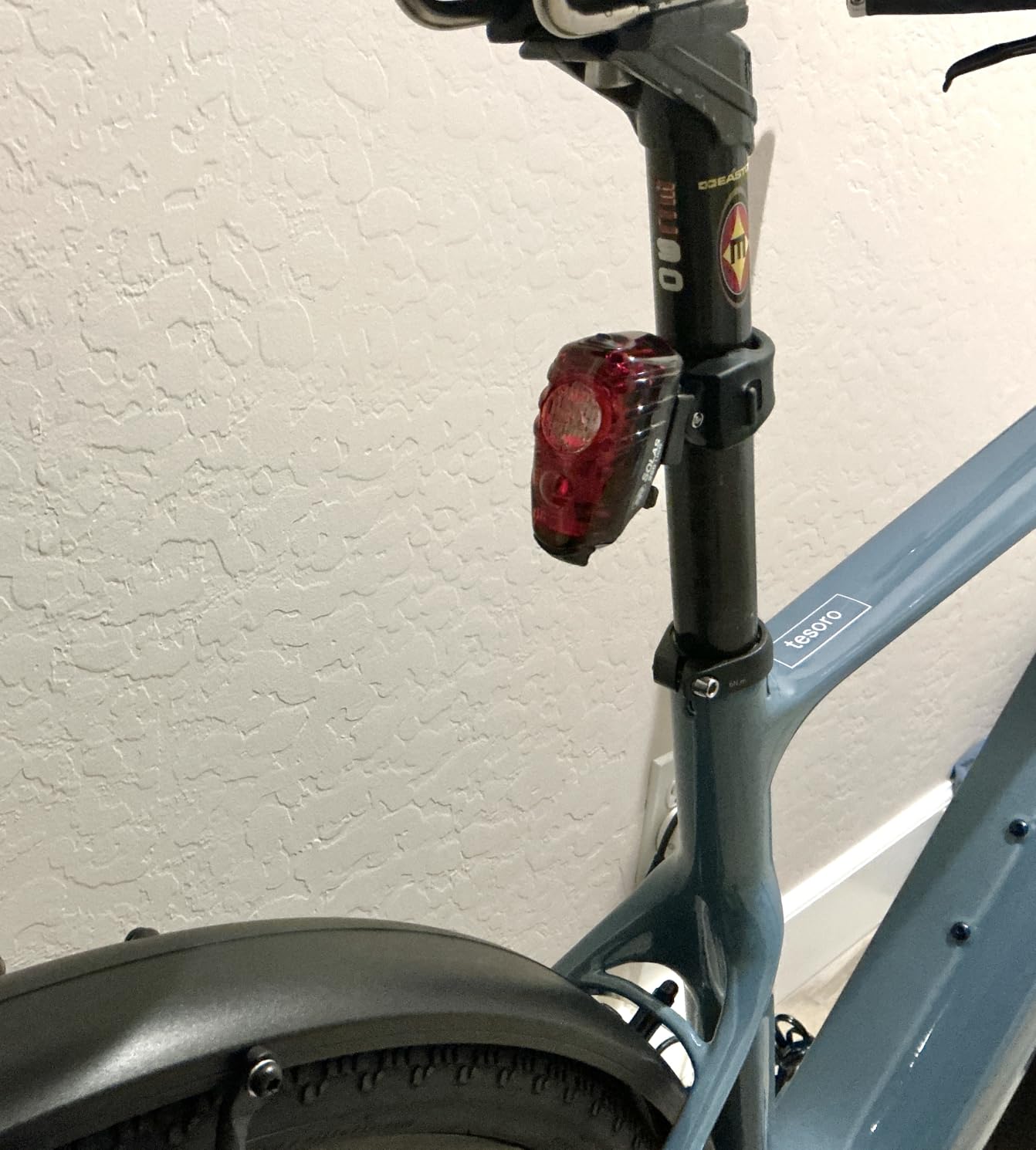
250 lumens is enough for daytime visibility but won’t win any throw competitions. The four modes are straightforward. Installation is tool-free with the included mount. The low battery indicator flashes when you have about 30 minutes of runtime left.
The IP64 rating handles rain and road spray. The Li-Po battery holds its charge well during storage, which matters for seasonal commuters who only ride certain months.
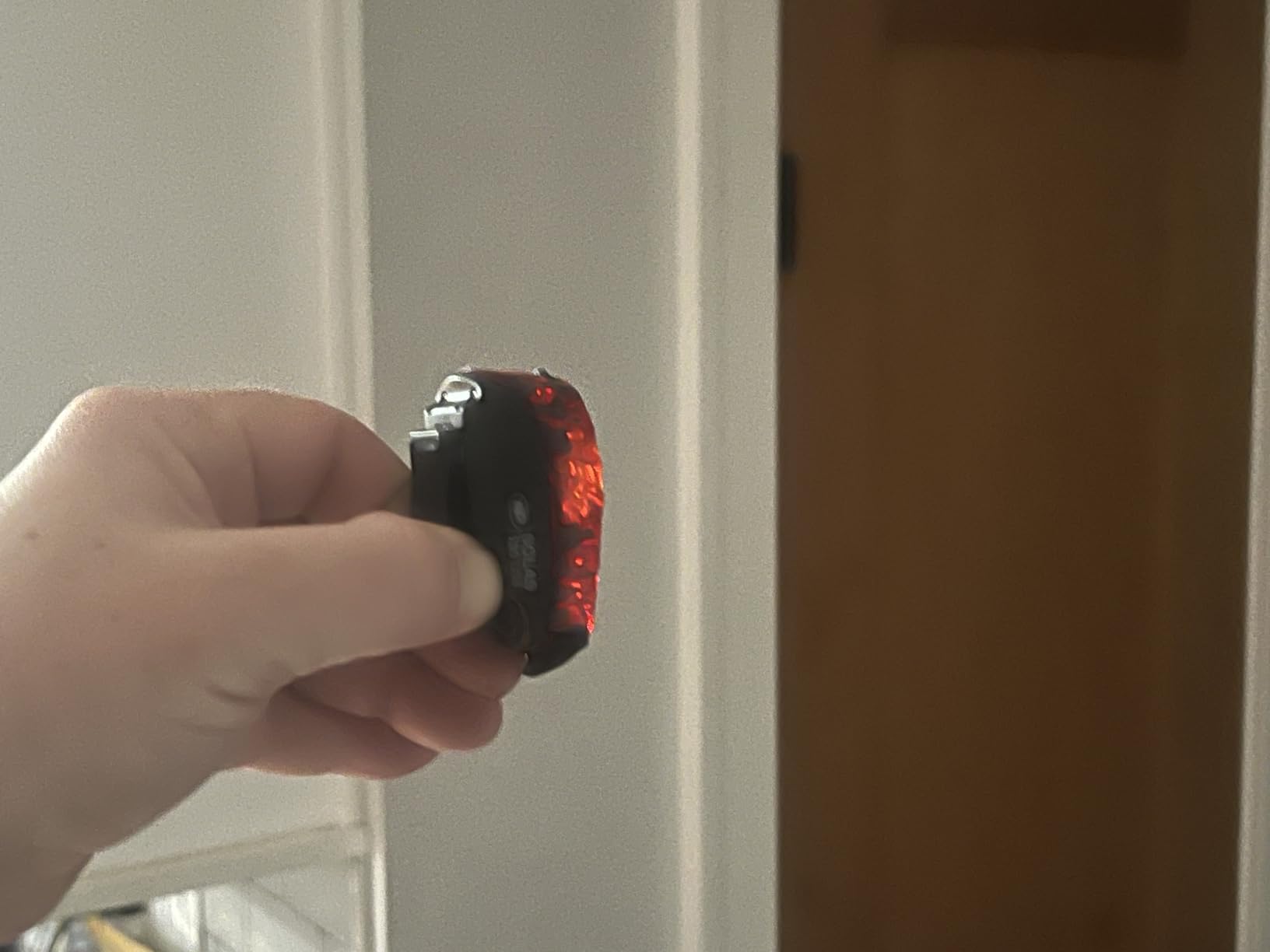
Runtime ranges from 4 hours on high to 40 hours on flash. The micro-USB charging is the biggest drawback at this point in time, but the proven reliability makes up for it.
For Whom It Works Best
Entry-level riders who want a proven brand at a fair price. Commuters who prioritize reliability over maximum brightness. Anyone who needs a second light to keep on a backup bike or lend to friends.
For Whom It Falls Short
Riders who want maximum brightness in a rear light should pick the Cygolite. USB-C fans will find the micro-USB port dated. If you want a brake sensor feature, this isn’t the right pick.
How to Choose the Right Bike Lights for Gravel Riding?
Picking the right bike light for gravel riding comes down to matching your specific conditions to the right lumens, beam pattern, mounting style, and waterproof rating. After testing these ten lights across hundreds of miles, here are the factors that matter most.
How Many Lumens Do You Really Need?
Lumens measure total light output, but they don’t tell the whole story. For gravel roads in the woods, you need at least 800 lumens to spot potholes and roots at speed. For unlit forest singletrack, bump up to 1200+ lumens. For mixed lit and unlit routes, 500-800 lumens is usually sufficient.
The mistake I see most often is riders buying 2000-lumen lights for casual rides. More lumens means more battery drain, more heat, and more weight. Match the output to your actual conditions. If you ride 90% on lit roads, 500-1000 lumens is plenty. If you regularly hit unlit gravel, 1200-1700 lumens is the sweet spot.
Beam Pattern: Spot vs Flood for Mixed Terrain
Beam pattern matters as much as raw lumens on gravel roads. A narrow spot beam throws light far down the trail but leaves the periphery dark. A wide flood beam lights up everything around you but doesn’t reach as far. Gravel riding benefits from a hybrid pattern that combines both.
The Fenix BC26R’s 100-degree pattern is the widest on this list. The Magicshine EVO 1700 PRO pairs a high-beam throw with a low-beam cutoff. When comparing lights, look for descriptions that mention both throw distance and beam spread. Pure flood lights feel insecure at speed on gravel because you can’t see far enough ahead to plan your line.
Cutoff beams deserve special attention. These are designed to project light down and forward without blinding oncoming traffic. They’re required in Germany and recommended everywhere else for sharing roads with cars and other cyclists. Most premium gravel lights include this feature.
Mounting Options and Compatibility
Where your light sits affects both ergonomics and bike handling. The most popular positions are handlebar, helmet, and out-front mount combined with a bike computer. Each has tradeoffs.
Handlebar mounts are the most common and work for most lights. Out-front mounts that combine a light with a Garmin or Wahoo computer keep the cockpit clean. Helmet mounts work well as a supplement to a bar light because you can aim the beam by turning your head.
Check mount compatibility before you buy. Lights like the Magicshine HORI 1300S and Ravemen FR500 are designed to mount directly to Garmin or Wahoo out-front bases. Others like the Fenix BC26R use standard handlebar mounts that work with most third-party systems.
Waterproof Ratings: IPX4, IPX6, IPX7, IPX8 Explained
IPX ratings tell you how well a light handles water. IPX4 means splash resistant from any direction. IPX6 means the light handles powerful water jets. IPX7 means the light survives temporary submersion. IPX8 is the highest rating and means the light can sit in water continuously.
For most gravel riding, IPX6 is the minimum you want. IPX7 or IPX8 matters if you regularly cross streams, ride in heavy rain, or store your bike outside. The Fenix BC26R with IPX8 rating is overkill for most conditions but reassuring if you live in the Pacific Northwest or Pacific coast.
Don’t confuse IPX ratings with dust protection. True dustproof ratings use a separate digit, like IP65 (dustproof and water jet resistant). For gravel riding where dust matters less than water, IPX is the relevant standard.
Battery Life and Charging
Stated runtime is often optimistic. Manufacturers usually test in ideal conditions with new batteries. Real-world runtimes are typically 70-80% of the stated number on max mode.
USB-C charging has become the modern standard and is much faster than micro-USB or proprietary cables. The Magicshine EVO 1700 PRO charges in 3 hours. The RN 1200 supports 15W fast charging. Some lights like the Cygolite Hypershot still use micro-USB, which is a small annoyance.
Power bank functionality is rare but useful. The Magicshine RN 1200 can charge your phone or GPS from its 4000mAh battery. This is invaluable on multi-day bikepacking trips where wall outlets are scarce.
Daytime Visibility and Flash Modes
The FL1 standard requires a flash mode of at least 400 lumens for daytime visibility. Most premium lights exceed this. The Cygolite Hypershot 350 with adjustable flash speeds is one of the best daytime lights I tested.
Daytime visibility matters even on clear days, especially on rural gravel roads where drivers aren’t expecting cyclists. A blinking rear light during midday can reduce collision risk by up to 33% according to multiple studies. Don’t skip the rear light just because the sun is out.
Frequently Asked Questions
How many lumens do I need for gravel bike lights?
For gravel roads, you want at least 800 lumens on your front light for unlit sections and pothole detection. Unlit forest trails benefit from 1200-1700 lumens. For lit or mixed routes, 500-800 lumens is enough. Remember that beam pattern matters as much as raw lumens—a wide flood with 1000 lumens often outperforms a narrow spot with 1500 lumens on twisty gravel roads.
What lights do professionals use for gravel riding?
Pro gravel racers typically run 1200-1700 lumen front lights like the Magicshine EVO 1700 PRO or Exposure Race. Most pair a bar-mounted primary with a helmet-mounted backup for technical descents. Rear light choice varies, but 250-400 lumen options like the Magicshine SEEMEE 400 and Cygolite Hypershot 350 dominate the peloton.
What is the best budget gravel bike light?
The Ravemen FR500 at under $55 is the best budget gravel light we tested. It pairs with Garmin and Wahoo computers, has 270-degree side visibility, and includes auto on/off. For rear lights, the ROCKBROS Tail Light under $30 offers smart brake sensing that you typically find on lights twice the price.
Do I need a rear light for gravel riding?
Yes, a rear light is essential for gravel riding even during daytime. Rural gravel roads often have fast car traffic, and a bright flashing rear light dramatically reduces collision risk. We recommend at least 250 lumens for daytime visibility. The Cygolite Hypershot 350 and Magicshine SEEMEE 300 are proven performers for this purpose.
Final Thoughts on Gravel Riding Bike Lights
After three months of testing across fire roads, forest tracks, and mixed pavement, the Magicshine EVO 1700 PRO and Cygolite Hypershot 350 earned permanent spots on our gravel bikes. They pair serious output with the durability and runtime that long gravel rides demand.
The best bike lights for gravel riding in 2026 are the ones that match your specific routes, bike computer setup, and weather conditions. Start with the Magicshine EVO 1700 PRO if you want maximum versatility, or the Ravemen FR500 if you want the best value. Pick the Cygolite Hypershot 350 for your seat post and you’re set for any gravel adventure. Stay visible and enjoy the ride.