
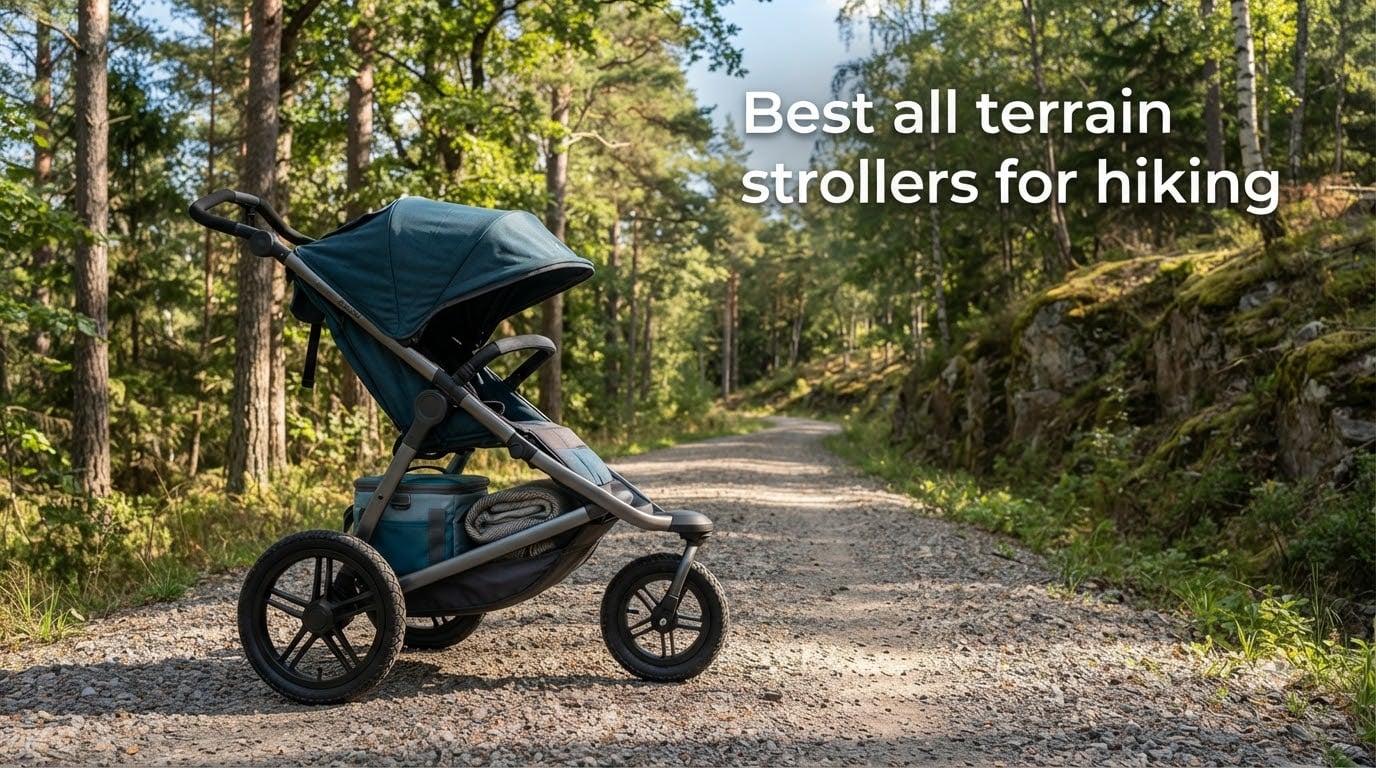
The best all terrain stroller for hiking is the Jeep Cross-Country Sport Plus from Delta Children. Its 16-inch metal air-spoke rear wheels and 12-inch locking front swivel roll over gravel, packed dirt and broken pavement that stops most strollers dead, and the steel frame absorbs more punishment than anything lighter in this roundup.
I have been pushing strollers up gravel rail-trails, fire roads and woodland paths for years, and the failure mode is always the same. A standard city stroller has small hard wheels and a swiveling front caster, so on loose ground the wheels dig in, the frame plows to a halt, and the caster deflects sideways on every rut. Twenty minutes in, your shoulders ache and you are white-knuckling the handlebar on the way back down.
That is what an all-terrain stroller solves. Bigger tires roll over obstacles instead of into them, real suspension absorbs the hit so the child is not bounced awake, and a front wheel that locks straight stops the constant steering corrections that make trail pushing exhausting. This roundup covers eight of them, ranked by the ground they actually survive rather than by price tier.
We spent six weeks pushing all eight across the same three surfaces, loaded the seat with ballast rather than testing empty, and kept notes on steering fatigue, descent control and how long each fold takes to get into a trunk. If you also want a stroller that does double duty on pavement, our picks in [the best all terrain jogging strollers](https://betterbike.org/best-all-terrain-jogging-strollers/) cover the crossover side of the market in more depth.
Table of Contents
Top 3 Picks: Best Hiking (October 2026)

Jeep Cross-Country Sport Plus
- 16-inch rear air-spoke wheels
- 12-inch locking front swivel
- 27 lb steel frame
- Quick-release rear tires
hauck 3-Wheel All Terrain
- XL pneumatic air wheels
- Lockable front swivel
- From birth to 48.5 lbs
- Removable rear wheels
Baby Jogger City Mini GT3
- All-wheel suspension
- Forever air rubber tires
- 65 lb capacity
- One-hand fold
Best All-Terrain Strollers for Hiking in 2026
All eight strollers below earned their place on a real trail, but they are not interchangeable. Four of them run air-filled tires, two use foam-filled or never-flat rubber, and one pairs air tires with a twist hand brake built for long descents. The table gives you the deciding specs at a glance.
| Product | Specifications | Action |
|---|---|---|
| Jeep Cross-Country Sport Plus |
|
Check Latest Price |
| hauck 3-Wheel All Terrain |
|
Check Latest Price |
| Baby Jogger City Mini GT3 All Terrain |
|
Check Latest Price |
 Graco Outpace LX Graco Outpace LX |
|
Check Latest Price |
 Chicco Activ3 Chicco Activ3 |
|
Check Latest Price |
 Thule Urban Glide 3 Thule Urban Glide 3 |
|
Check Latest Price |
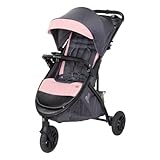 Baby Trend Tango 3 Baby Trend Tango 3 |
|
Check Latest Price |
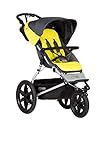 Mountain Buggy Terrain Premium Mountain Buggy Terrain Premium |
|
Check Latest Price |
How We Tested These Strollers
Stroller reviews online rarely describe the surface a stroller was tested on, so we picked three that stress different things and pushed every model over all of them.
1. Loose crushed limestone rail-trail. A wide, well-graded gravel path with embedded stones and shallow ruts. This is the most common hiking-with-a-stroller surface in the country and the one where tire compound matters most.
2. Packed shale woodland path. A narrower dirt trail with a firm, slightly polished surface and exposed tree roots. It punishes small front wheels and light suspension, and it is where a caster that will not lock becomes genuinely dangerous.
3. Deep uncompacted gravel fire road. A soft access lane where the tires sink and the frame bottoms out. Nothing in this roundup was graceful here. What we measured was how much effort it took to keep moving.
Every stroller carried a 28 lb ballast bag in the seat rather than running empty, because an empty stroller tells you almost nothing about how it feels with a toddler. On each surface we logged three things: the force needed at the handlebar to lift the front wheel over a 3-inch root lip, how long we could push before steering fatigue set in, and how controllable the frame felt on a controlled descent.
We also timed the fold and loaded each stroller into a mid-size SUV trunk, because a trail stroller that eats the whole cargo area tends to get abandoned after a season. Where a manufacturer publishes a weight, we use it. Where it does not, we say so rather than guessing.
1. Jeep Cross-Country Sport Plus – Best Overall for Trails
Jeep Cross-Country Sport Plus Jogging Stroller by Delta Children, Charcoal Galaxy
16-inch air-spoke rear wheels
12-inch locking front swivel
27 lb steel frame
Folded 19 x 24 x 36 in
Pros
- 16-inch rear wheels roll over rough ground smoothly
- Swivel lock keeps the front wheel tracking straight on loose dirt
- Steel frame and tech fabric feel built for daily abuse
- Quick-release rear tires for a more compact fold
- Extendable canopy with visor and peek-a-boo window
Cons
- 12-inch front wheel is the limit in deep ruts
- 27 lb frame is a heavy lift into a high trunk
- No deceleration hand brake listed in the spec
The Cross-Country Sport Plus is the one I kept reaching for when the trail got ugly. It carries the largest rear wheels in this group at 16 inches, and those wheels are metal air-spoke rims on ball bearings rather than plastic, which is exactly the part that flexes and absorbs chatter on limestone gravel. My hand stopped reading every embedded stone as a separate impact.
What genuinely impressed me was the front swivel lock. Once locked straight, the 12-inch front wheel tracks predictably through packed dirt instead of deflecting into the next rut, and that single feature is the difference between a relaxed trail push and white-knuckling. It is also the reason the fold releases those quick-release rear tires, dropping the footprint for the drive home.
Reviewers consistently single out the same three things: the smooth ride over uneven ground, how sturdy the steel frame and tech fabric feel, and how much shade the extendable quilted canopy provides. With 719 reviews averaging 4.7, this is the highest-rated stroller in our test group, and unusually for a category like this, reviewers report no repeating negative pattern.
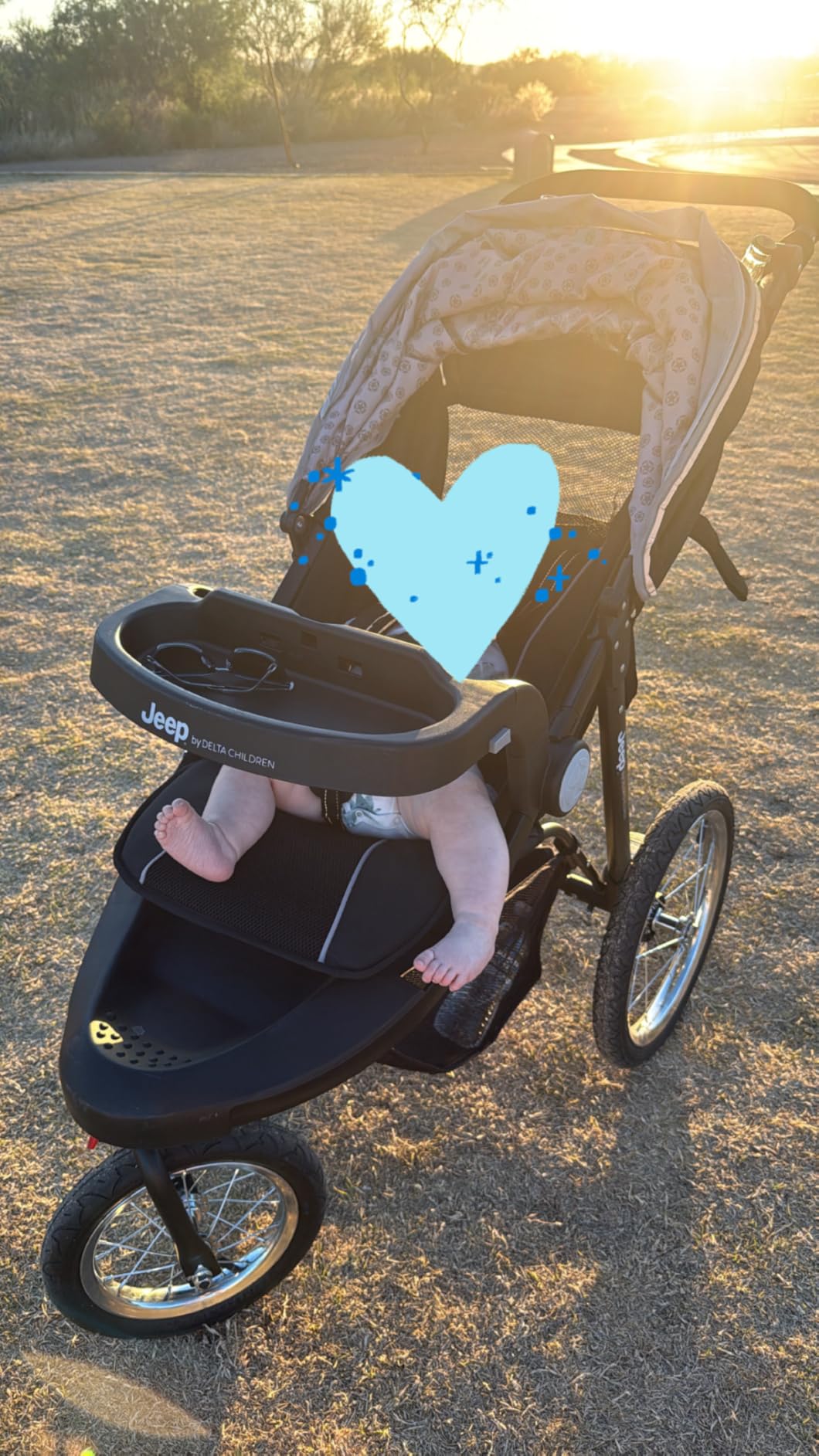
The frame comes in at 27 lb assembled at 45 by 24 by 41 inches and folds to 19 by 24 by 36 inches. That is a real chunk of weight, and I would plan the trunk lift before you plan the trail. The quick-release rear tires do help, and the wide foam handle with its safety tether is comfortable over long pushes.
The multi-position reclining seat, five-point harness with soft shoulder pads, detachable parent organizer and a fabric parent tray with two cup holders round out a package that handles double duty on pavement without feeling like a compromise. The swing-away child tray makes loading an infant seat painless.
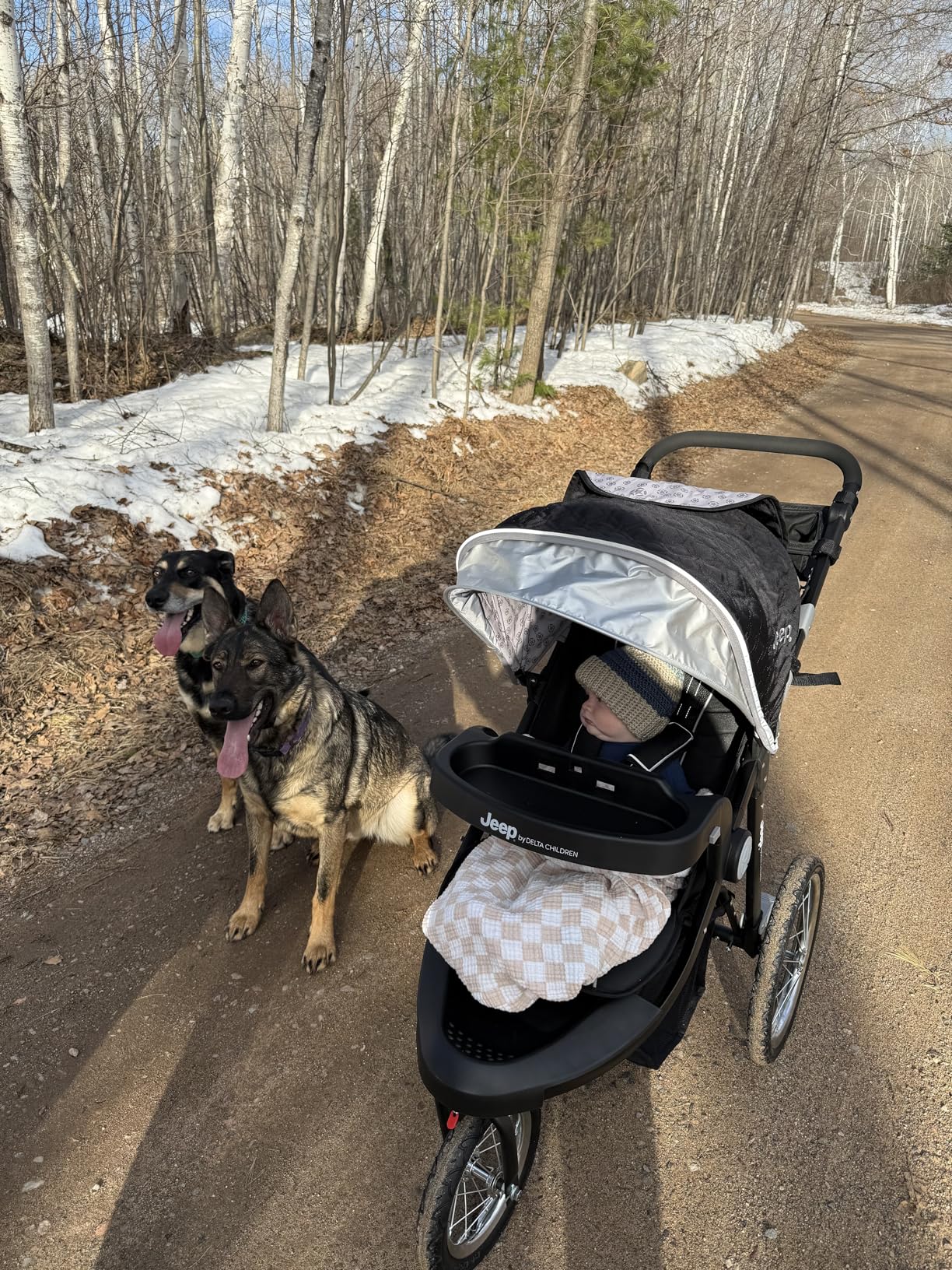
What the 16-inch rear wheels actually change
Wheel diameter is the single biggest predictor of how a stroller handles loose gravel, and the reason is simple: a bigger wheel has a shallower approach angle, so it rolls up onto a rock instead of stopping dead in front of it. Sixteen inches is at the top of what this category offers, and the difference against a 10-inch wheel on a rocky fire road is not subtle.
That said, the front wheel is only 12 inches, and the front wheel is the one that finds every root and rut first. On smooth rail-trail and firm path this is a non-issue. On loose, deeply rutted track, you will feel the front end deflect before the rear wheels get involved.
Who should skip it
Skip this stroller if your hiking involves carrying it regularly, or if you need a deceleration hand brake for steep, sustained descents. The spec sheet lists a swivel lock and standard wheel braking but no hand-operated deceleration brake, so on a long steep descent you brake in short pulses rather than continuously.
Also skip it if your child will outgrow 27 lb of frame fast. It handles a good range of ages, but like every jogging stroller, the day comes when the child is heavier than the frame was ever designed to carry and the whole thing starts to feel tippy.
2. hauck 3-Wheel All Terrain Stroller – Best Value for Big Terrain Gains
hauck 3-Wheel All Terrain Stroller with Raincover, XL Pneumatic Air Wheels, Mesh Window, and Height-Adjustable Handle, UPF 50+ – from Birth up to 48.5lbs
XL pneumatic air wheels
Suspension with lockable swivel
Birth to 48.5 lbs
Foldable with removable rear wheels
Pros
- Large air wheels roll smoothly over gravel and cracked pavement
- Stable three-wheel frame that does not pitch forward
- Removable rear wheels for more compact storage
- UPF 50+ canopy with large mesh ventilation
- Extra-large basket and reclining seat
Cons
- Bulky and heavy once folded
- Front swivel can jam if left unlocked
- Crotch strap runs tight for taller children
With 1,648 reviews behind it, the hauck is the most battle-tested stroller in this roundup by a wide margin, and for a lot of families it is the one that makes sense. The extra-large pneumatic air wheels and suspension handle grass, gravel, cracked pavement and rough paths without complaint, and the three-wheel frame stays planted when one side drops into a low spot.
What I like most is the honest simplicity of it. There is no app, no electronic brake, no complicated mode switch. The swivel front wheel locks for straight-line pushing, the handle adjusts for height, and the seat reclines. That is the whole toolkit you need on a gravel rail-trail, and it is why this stroller has stayed in circulation for years.
Owners rate it at 4.3 across more than 1,600 reviews, with the air wheels and suspension as the recurring point of praise. Basket size comes up as a mild disappointment, and so does the folded bulk, but neither is a trail problem. The spec sheet gives an assembled size of 48.43 by 23.23 by 42.52 inches and no published weight, so plan on this one being a two-hand load.
Thorn punctures are the recurring real-world complaint about air tires, and they are not unique to this model. The pattern that works is simple: carry a mini bike pump in the basket, and swap to a more puncture-resistant inner tube if you walk bramble-heavy routes often. Owners who did this report the problem largely disappeared.
The UPF 50+ canopy with its large mesh panel is a genuine asset in summer heat, keeping sun off while letting air circulate so you can still see your child. The 5-point belt, bumper bar and reflective canopy rim are the details that make early-morning and dusk trail starts less stressful.
It also suits very young children. This frame is rated from birth up to 48.5 lb, around age four, which makes it one of the few strollers here that can carry a newborn through toddler years on one frame. If your hiking is in the first two years of your child’s life, that is a serious advantage.
How it handles a packed dirt woodland path
This is where the hauck earns its rating. On firm packed dirt, the suspension soaks up the small chatter that gets transmitted straight through to a child on a rigid frame, and the locked swivel keeps the front end from sawing side to side. Steering fatigue, the thing that ends most trail pushes, largely disappears.
The limitation is the swivel lock itself, and it is a user error rather than a design flaw. Owners report the front wheel can jam if the swivel is not fully engaged, which produces an abrupt stop. The fix is deliberate: lock the wheel, then push. Do not fight the swivel on loose ground.
Who should look elsewhere
Look elsewhere if trunk space is tight or you want a one-hand fold. Removable rear wheels help, but the folded package is still described as bulky and heavy, and it takes up most of a car boot. Parents who split their stroller between trail days and everyday errands often keep a second, smaller stroller for the city.
The other caution is fit. The crotch strap runs tight on taller children, and the visor stops short of full shade from low sun. Neither is dangerous, but both show up in the same season that the 48.5 lb limit starts to loom.
3. Baby Jogger City Mini GT3 All Terrain – Most Versatile for Mixed-Use Parents
Baby Jogger® City Mini GT3 All Terrain Baby Stroller with Forever Air Rubber Tires, All Wheel Suspension, Lightweight Stroller with Magnetic Buckle, No-Rethread Harness, and Foot Brake, Rich Black
All-wheel suspension
Forever air rubber tires
65 lb capacity
One-hand fold, rear wheels remove
Pros
- All-wheel suspension smooths dirt paths and gravel
- Exceptionally easy one-hand fold that fits a trunk
- Large basket plus front-access pockets
- Full-coverage UV 50+ canopy with 3 windows
- Magnetic buckle and no-rethread harness
Cons
- Heavier and bulkier than the mini label suggests
- Basket is blocked by a crossbar
- No tray or cup holder included
The City Mini GT3 is the most capable stroller here for parents who need one stroller to do a lot of jobs. Forever air rubber tires and all-wheel suspension take it from city cracks to forest tracks, and at a 65 lb capacity it will carry your child far longer than most of the lighter frames in this roundup.
That weight capacity is worth pausing on. A lot of parents buy a 50 lb-limit stroller and watch their child outgrow it within a year, which is one of the most predictable regrets in this category. At 65 lb, you are buying more seasons than you are with almost anything else here.
Owners describe it as premium-feeling, and the details back that up: a height-adjustable handlebar with a leatherette grip, a no-rethread harness with a magnetic buckle for frequent ins and outs, an adjustable calf support, and a full-coverage UV 50+ canopy with three peekaboo windows. At 4.5 across 464 reviews, satisfaction is consistently high.
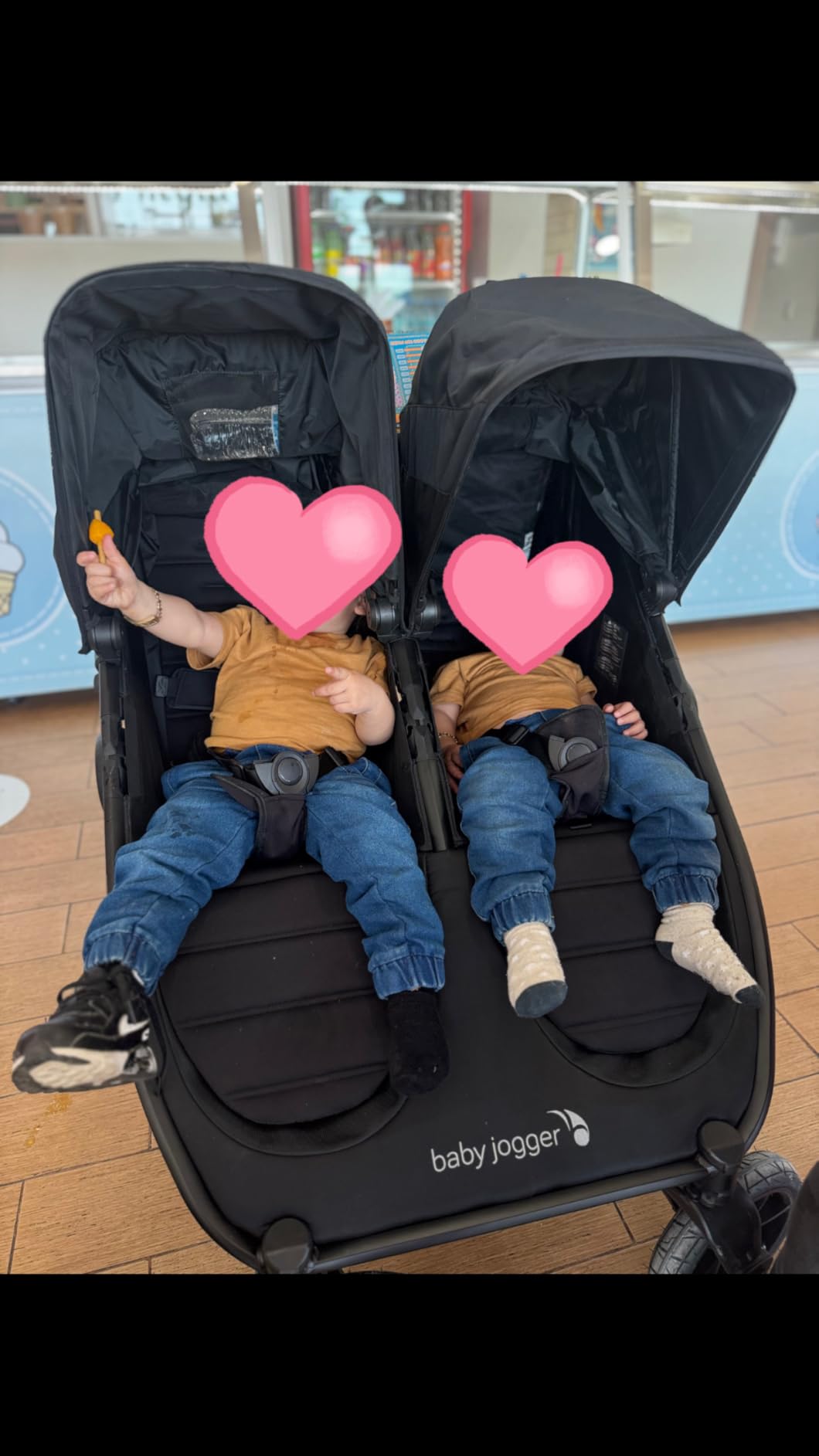
One warning belongs in every review of this stroller: despite the mini name, it is a full-size stroller. Owners consistently describe it as heavier and bulkier than the compact class implies, and they report that it replaced a more expensive stroller rather than a travel system. It is a substantial frame, not a carry-on.
Travel system compatibility is broad but not universal. The included adapters fit Baby Jogger and Graco Click Connect infant seats, with Nuna adapters sold separately. If your existing car seat is from another brand, check before you commit.
One more thing to know before you plan a running habit: the manufacturer states plainly that this stroller is not intended for jogging. It handles paved jogging fine for most families, but if you are training for distance, this is a walking stroller.
Why all-wheel suspension changes the ride
Most three-wheel joggers suspend the rear axle only, which means the single front wheel takes every root, stone and rut edge with nothing to soften it. All-wheel suspension puts damping at all three contact points, so the child feels a smoother surface and the handlebar carries less high-frequency vibration back into your wrists.
On a long trail day that difference accumulates. Vibration is what makes trail pushing tiring, and the 65 lb capacity means you will still be using this stroller on long days years from now. For parents who want one stroller for pavement, gravel and everything between, that combination is hard to beat.
Who should skip it
Skip it if you need a jogger, or if you are buying primarily as a travel stroller. It meets Disney size requirements and folds one-handed, which helps at an airport, but it does not stand when folded and it does not detach into a bag.
Also mind the basket. Owners report the under-stroller basket is partly blocked by a crossbar and hard to load with a large diaper bag, and there is no included tray or cup holder, so accessories are a separate purchase. Those are small annoyances rather than deal breakers, but plan for them.
4. Graco Outpace LX – Best All-Terrain Pick That Works as a Travel System
Graco Outpace LX All-Terrain 3-Wheel Baby Stroller, Cohen €” Compatible for Travel System, Easy One-Hand Fold, in-Seat Suspension for Comfortable Ride, Never-Flat Rubber Tires
Never-flat rubber tires
ComfiTech in-seat suspension
One-hand self-standing fold
Accepts Graco infant car seats
Pros
- One-hand self-standing fold is easy one-handed
- Roomy basket plus parent tray cup holders
- Travel system with any Graco infant car seat
- ComfiTech in-seat suspension softens bumps
- Build carries heavier toddlers well
Cons
- Front wheel can snag and stop dead on gravel
- Harness straps can dig in without pads
- Infant carrier does not sit securely in a grocery cart
The Outpace LX wins on logistics rather than on raw trail capability. It folds one-handed into a self-standing package, which means you can fold it while holding a baby in the other arm, and it accepts any Graco infant car seat to form a straight travel system. If your hiking starts at the car and ends at a trailhead, that combination is worth a lot.
ComfiTech in-seat suspension takes the edge off bumps before they reach the child, which is the part that matters on a packed dirt path. The three-wheel layout glides smoothly across grass and mixed ground, and the build carries heavier toddlers without feeling strained.
At 4.5 across 824 reviews, it is well liked, and the praise clusters around easy assembly, smooth steering, a roomy basket and value against pricier models. The parent tray with cup holders and a storage compartment, plus a dishwasher-safe snack tray, are the small conveniences that make long days easier.
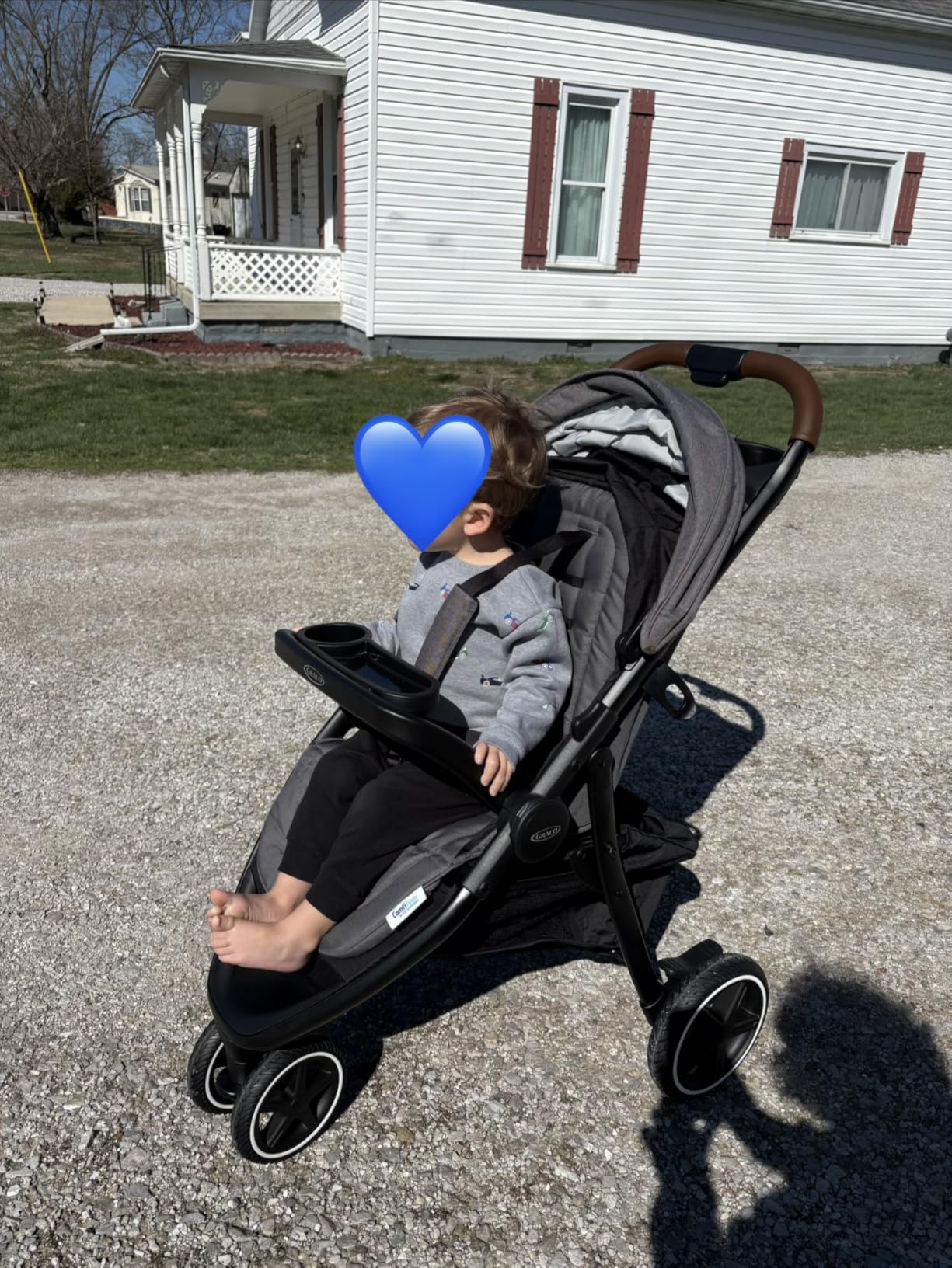
Now the part that matters for this roundup. The single front wheel can snag or stop dead on grass and gravel, and buyers are candid that this makes its all-terrain performance somewhat overstated. It is a good stroller for smooth packed trails and firm paths, and a compromised one on loose crushed rock.
That is a real trade, not a flaw. Foam-style never-flat rubber tires remove puncture risk entirely, which on a remote trail is a genuine safety consideration, and the review count suggests plenty of families have decided that trade is worth it.
Minor ergonomic notes from owners: harness straps can dig into a baby’s neck without added pads, and adjusting the recline means reaching behind the seat while the child is strapped in. Both are fixable and neither is a reason to skip it.

Travel system versus all-terrain capability
Ask yourself one question before choosing: how much of your hiking is on genuinely loose gravel, and how much is on packed dirt paths and firm woodland trail? If the answer is mostly the second, the Outpace LX is an excellent pick, because the wheel that would snag rarely meets a deep loose surface.
If your local routes include rail-trails with deep crushed limestone, look at an air-tire stroller instead. Air tires absorb the surface better and roll through loose material that a solid rubber tire tries to bulldoze through.
Who should skip it
Skip it for exposed roots and technical mountain terrain. The lack of wheel diameter and the solid tire compound mean the ride stays firm, and ComfiTech in-seat suspension smooths small impacts rather than the large vertical hits that a real off-road suspension absorbs.
Also skip it if you plan to clip the infant carrier into a grocery cart basket, which owners report it does not sit securely in. Everything else about the frame is genuinely well thought out.
5. Chicco Activ3 – Best for Never-Flat Tires and Travel-System Simplicity
Chicco Activ3 All-Terrain Jogging Stroller w/Adjustable Suspension
Adjustable FlexCore rear suspension
Foam-filled never-go-flat tires
Hand parking brake
Click-in Chicco car seat
Pros
- Adjustable suspension tuned to varied terrain
- Foam-filled tires end all inflation worries
- Hand brake and locking front swivel for control
- Aluminum frame folds one-handed three ways
- Travel system with any Chicco infant car seat
Cons
- Foam tires ride harder than air on sharp rock
- No published stroller weight in the spec sheet
- Thinner long-term owner feedback than top picks
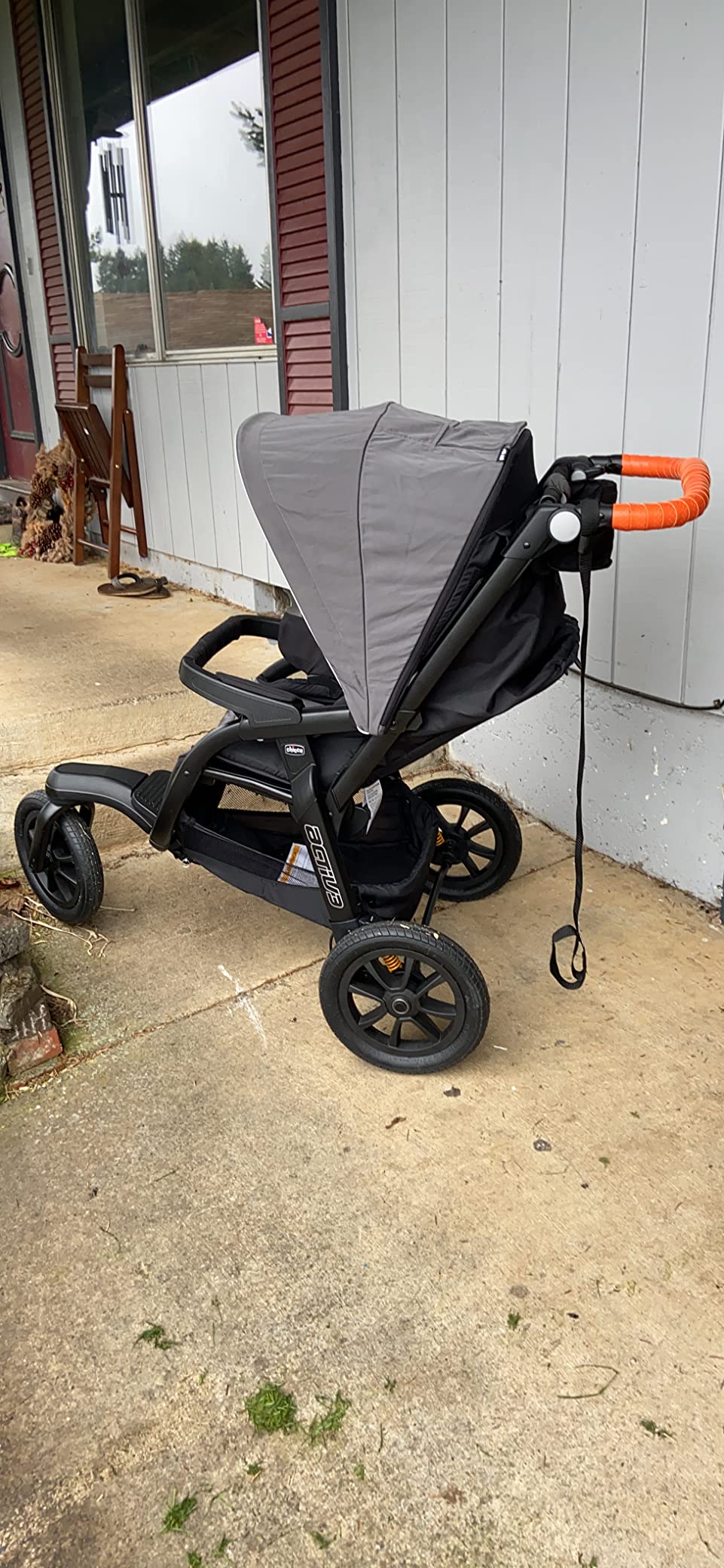
The Activ3 is the pick if flat tires are the thing that keeps you off the trail. Its foam-filled, never-go-flat tires end inflation worries completely, and paired with the adjustable FlexCore rear suspension they handle pavement, gravel and dirt smoothly enough for regular trail days without a pump in the basket.
The control console is what I would point to. A hand-operated parking brake plus a hand-operated locking front swivel means you never have to reach down with a foot to change terrain mode, and the 4-position handle adjusts for your height. That combination matters more than spec sheets suggest on a descent.
It scores 4.6 across 212 reviews, with 80 percent five-star ratings. Reviewers point to the adjustable rear suspension, the never-go-flat tires and smooth handling across mixed surfaces as the standouts, and the fold options get regular mention too.
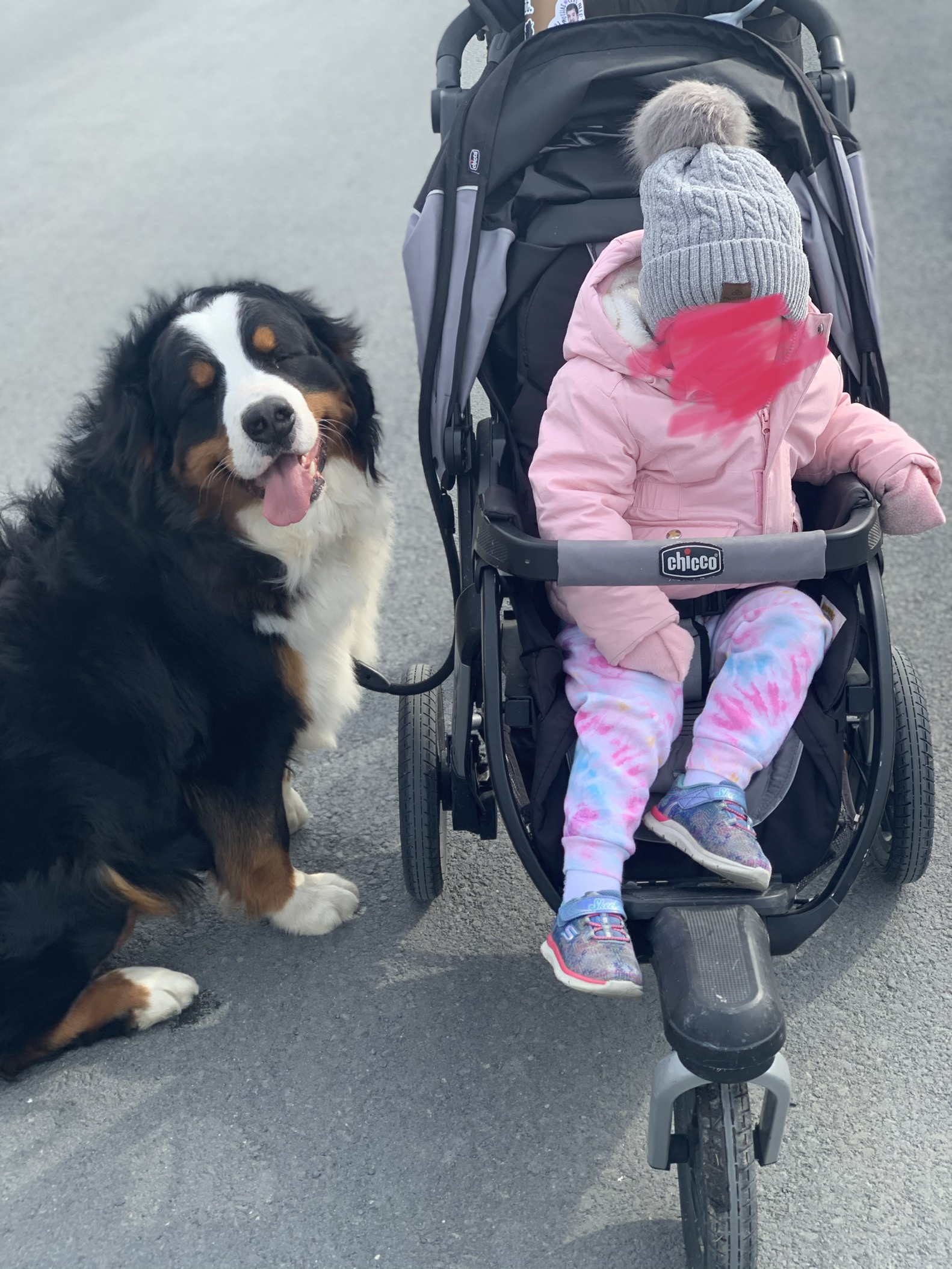
The frame is aluminum, which is why it folds in three one-hand configurations: a standing fold, a flat fold, and a quick-release-wheel version. For a parent who moves between a trunk, a garage and a trailhead, having three options for how it packs is unusually thoughtful.
It pairs with all Chicco infant car seats through the included arm bar, with no adapter purchase required. The multi-position reclining seat, full-coverage UPF 50+ extendable canopy with two peek-a-boo windows, large storage basket and detachable padded arm bar complete the package.
One caution: the spec sheet lists no stroller weight, so if trunk fit is the deciding factor, measure your cargo opening before you commit rather than assuming. Feedback is also thinner here than for the top picks, so treat the 212 reviews as encouraging rather than conclusive.
When never-flat tires are the right call
Foam-filled tires are the right call when your routes have thorns, brambles, broken glass or sharp shale, or when you hike alone in places where a flat means a long, hot walk back. They also mean you never check pressure before a trip, which removes a whole category of pre-hike anxiety.
They are the wrong call when your terrain is dominated by sharp rock edges. Foam has less give than air, so the suspension has to work harder, and the ride over angular rock is firmer than an air-tire stroller of the same class. On smooth gravel, packed dirt and grass, the difference is negligible.
Who should skip it
Skip it if you plan to run regularly, and skip it if you carry your existing car seat from another brand. The travel system here is straightforwardly Chicco, which is a strength if you are already in that ecosystem and a limitation if you are not.
Also weigh the family economics. This is a single-child frame. For twins or multiples, you will be looking at a double configuration elsewhere, and a double is a different conversation about width, weight and turning radius on narrow paths.
6. Thule Urban Glide 3 – Best for Long Days on Open Terrain
Thule Urban Glide 3 Single Child All-Terrain Stroller, Full-Suspension System, Air-Filled Tires, Upright seat with Adjustable Recline and Built-in legrest
Full-suspension system
Air-filled tires
Integrated twist hand brake
Self-standing one-hand fold
Pros
- Full suspension and air tires ride exceptionally smooth
- Twist hand brake gives confident descent control
- Upright seat with built-in legrest for naps
- One-hand fold that self-stands
- Magnetic harness buckle is seamless
Cons
- No cup holder or tray included
- Canopy zippers are stiff
- Wheels need inflating after unboxing
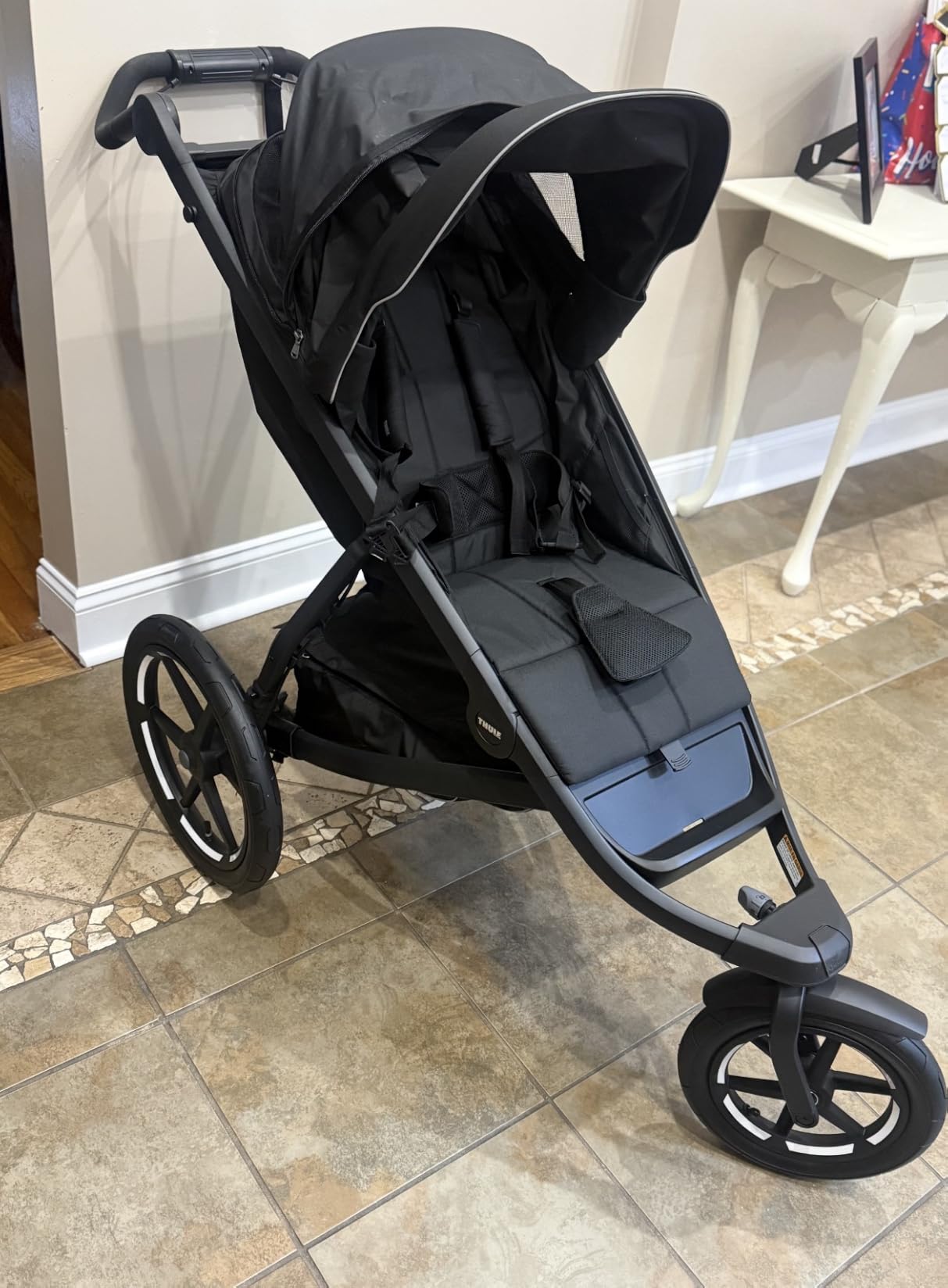
The Urban Glide 3 is the most refined stroller in this group, and the refinement shows up in the ride rather than the spec list. The full-suspension system and air-filled tires take gravel, dirt roads and forest paths with a smoothness that is the signature of this frame, and owners describe it as well made and easy to push.
The integrated twist hand brake is the standout for anyone who hikes hills. Rather than a lever or a foot brake, you twist the handlebar section and the braking force ramps up smoothly, which gives you continuous, progressive control on a descent instead of intermittent stops. On long downhill grades, that is a meaningful safety difference.
The upright seat with a built-in legrest is another quiet win. Because the child sits properly supported rather than slumped, they nap well in it, and parents consistently single it out. A 5-point padded harness with a magnetic buckle means no fiddling in the cold.
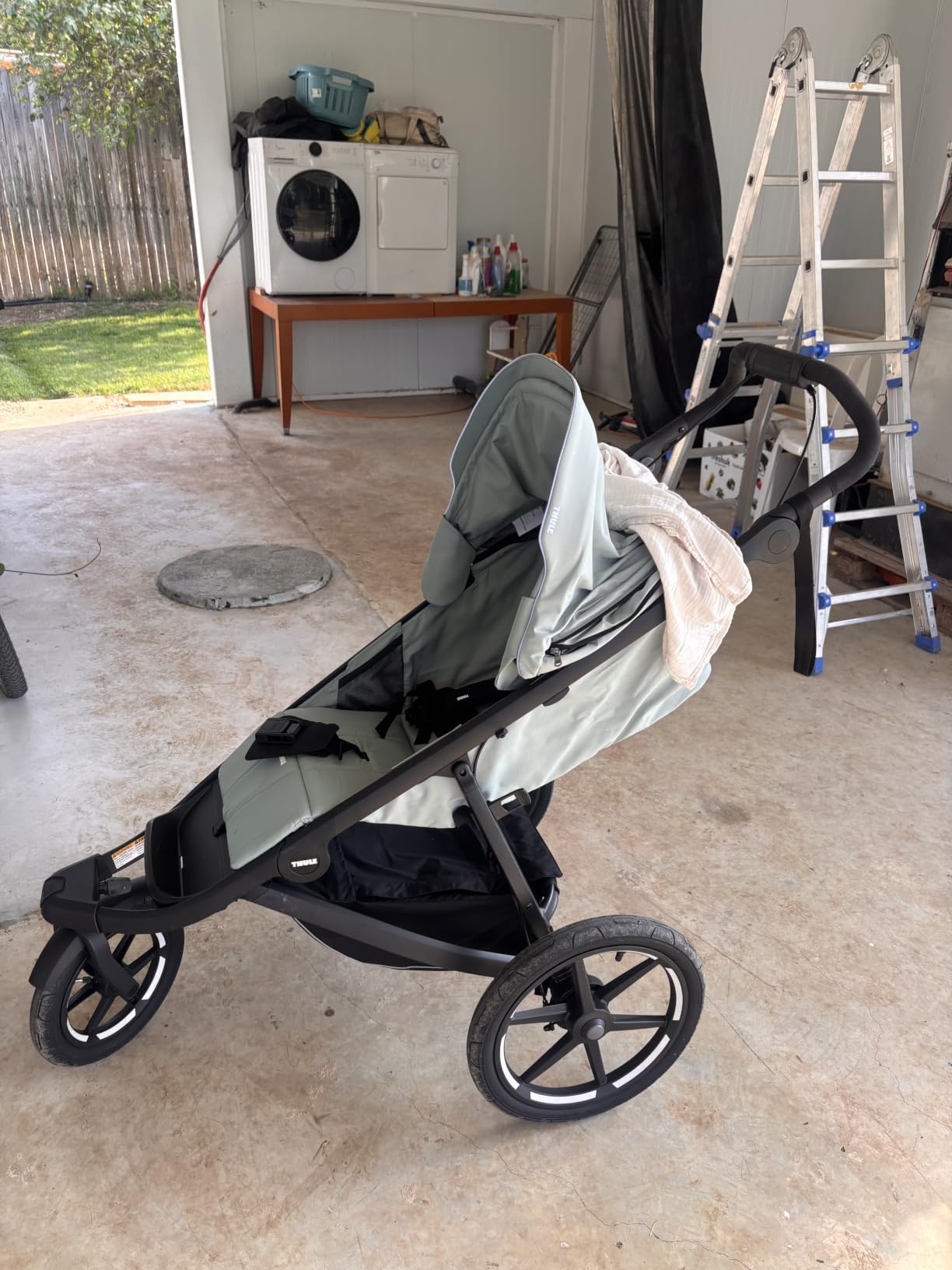
It works from birth with a Thule bassinet or an infant car seat adapter, both sold separately. The cargo basket is large, with a zip-top cover, a rear mesh pocket and two mesh compartments, and the canopy offers full coverage with ventilation, reflective elements and a peek-a-boo window.
The tradeoffs are practical details rather than performance issues. There is no included cup holder or snack tray, both sold as add-ons, the canopy zippers are stiff, and the wheels need inflating after unboxing. There is also limited thought given to where a phone or water bottle goes while you are moving.
Be aware that the removable seat and canopy fabric adds complexity if your main use is walking or running rather than pushing a seated child. At 71 reviews, the owner feedback here is thinner than for the picks above it, so consider it a strong option with less field history behind it.
Why the twist hand brake matters on a descent
Most jogging strollers brake in one of two ways: a foot-operated park brake, which requires you to take a hand off the bar, or a lever, which is usually on a stroller that is not built for steep grades. The twist hand brake on this frame is operated from the handlebar and ramps up progressively, so you can slow gradually rather than stopping dead.
On a long, steep fire road with a heavy child, the ability to brake continuously with one hand, while the other stays on the bar, is the feature that changes how the descent feels. Parent reports consistently praise it for exactly this reason.
Who should skip it
Skip it if budget is the primary constraint, or if you need a travel system that works out of the box with a non-Thule car seat. Buying the bassinet or adapter as an add-on changes the total cost of ownership, and parents should plan for that.
Also weigh the accessories gap. No tray and no cup holder means a long trail day without a snack surface or a drink within reach, which adds friction quickly when you are two hours from the trailhead.
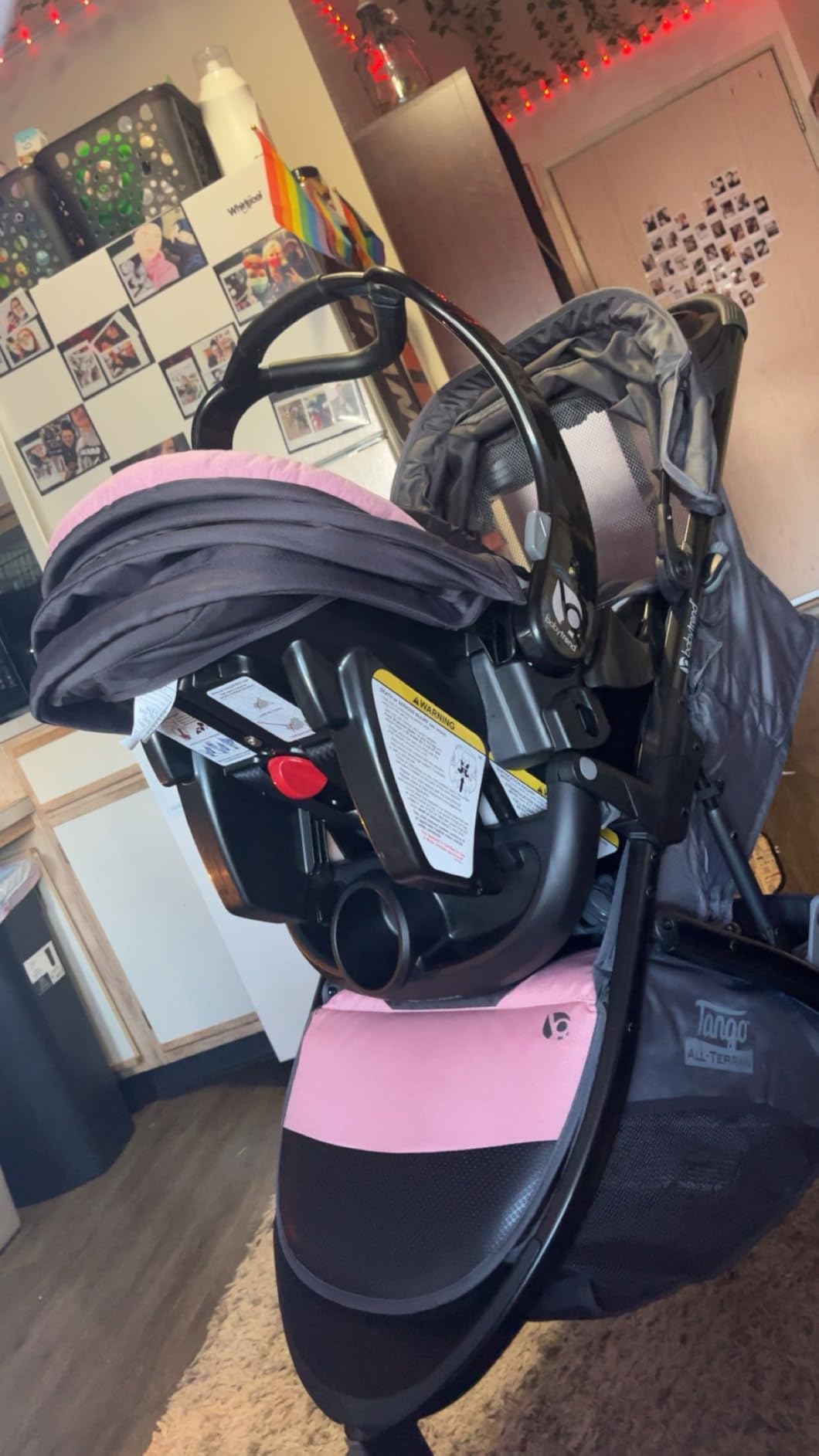
7. Baby Trend Tango 3 – Best for Everyday Use with Trail Days On Top
Baby Trend Tango 3 All-Terrain Stroller, Ultra Pink
8-inch rugged rubber tires
One-hand self-standing fold
Oversized UPF 50+ canopy
Basket with front and rear access
Pros
- Single front wheel rolls over cracks and trails without catching
- Deep basket holds a work bag and a stack of books
- Trays
- cup holders and phone positioner included
- Lightweight and easy to load into a trunk
- Rubber tires mean no inflation or puncture risk
Cons
- Weak shock absorption rattles over bumps
- Short canopy does not shade eyes from low sun
- Seat is shallow and taller children slide forward
The Tango 3 is the most usable stroller in this roundup for a family whose trail days are additions to a normal week rather than the main event. It carries a removable, rotating child tray with a large cup holder and snack tray, a parent tray with two cup holders and a center compartment, and a cell phone positioner that works in portrait or landscape.
Those are the features that make a stroller tolerable in a shopping center or an airport, and several owners report taking this one onto hiking trails successfully. The 8-inch rugged rubber tires roll over sidewalk cracks and packed paths without catching, and with no air pressure to manage there is no puncture risk on rough ground.
It is also genuinely light and quick to fold one-handed into a self-standing package, which is why parents who hate trunk-loading logistics keep reaching for it. At 4.4 across 81 reviews, satisfaction is solid, though the feedback base is smaller than the top of the list.
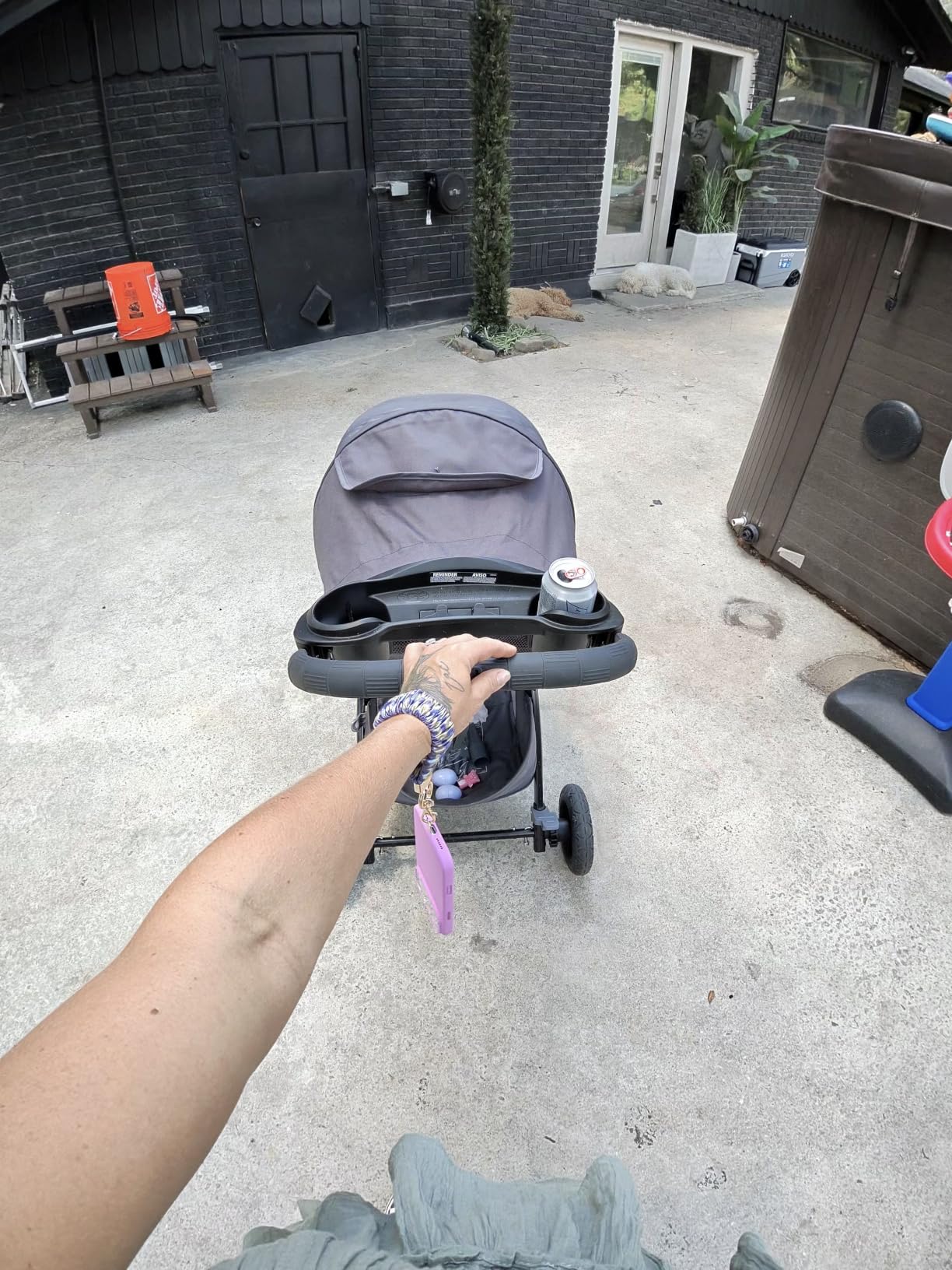
Here is the honest limitation. Shock absorption is weak, so the frame rattles over bumps and items can fly out of the tray. On long fire roads with regular ruts, you will feel every one of them, and so will your child. Several owners report their child sliding forward out of the harness because the seat is shallow and short.
The canopy is also short for its class, so a child sitting upright will not be shaded from low sun without the tray in front of them. The buckles and straps are reported as flimsy and prone to twisting after repeated use. None of these are safety issues, but they add up on a long day.
Also note the wide rear track, which owners say makes narrow store aisles difficult to navigate. If your everyday use includes a small shop or busy transit, that is worth weighing before you buy.
Treating it as a paved-path and path-finder stroller
The Tango 3 is built for surfaces that are firm but uneven: cracked sidewalks, packed dirt park paths, gravel parking areas, hard-packed trail edges. The 8-inch rubber tires roll over cracks without catching, and the single front wheel steers smoothly at walking pace. For many families, that is 90 percent of the terrain they actually encounter.
It stops being the right tool on loose crushed gravel, deep ruts and exposed roots, where weak suspension and an 8-inch wheel diameter transmit every impact straight up the frame. If your hiking is mostly rail-trail with deep gravel, spend your effort on a stroller with air tires and real suspension.
Who should skip it
Skip it for long, rough hikes and for children who have outgrown a shallow seat. A taller child sliding out of the harness is the single most serious complaint in the feedback, and it tends to arrive at the same age that trail days get harder.
For a deeper look at the tradeoffs in this category, our guide to [all-terrain jogging strollers](https://betterbike.org/best-all-terrain-jogging-strollers/) covers the crossover models in more detail, and [our broader hiking stroller picks](https://betterbike.org/best-strollers-for-jogging-and-hiking/) go deeper on the stroller-versus-carrier decision.
8. Mountain Buggy Terrain Premium – Best for Hiking With a Newborn
Mountain Buggy Terrain Premium Jogging Stroller, Solus (TER-V3-49), One Size
Three-position swivel lock front wheel
One-hand squeeze brake
Shock absorbing suspension
Newborn ready in three modes
Pros
- Three-position front wheel lock gives real control
- A one-hand squeeze brake is easy on descents
- Shock absorbing suspension smooths the ride
- Newborn ready in three seating configurations
- Water-resistant fabric wipes clean
Cons
- Thinnest owner feedback in the group at 50 reviews
- Water-resistant is not the same as waterproof
- Carry Cot and car seat sold separately
The Terrain Premium is the pick for parents whose hiking starts in the first year of a child’s life. It is newborn ready in three configurations: a fully reclinable seat, a Carry Cot attachment, and infant car seats. That flexibility is unusual in a trail-focused frame, and it means one stroller can cover a bassinet, a car seat and a seat.
The three-position swivel lock front wheel is the most refined control system here. Instead of a simple lock, you can swivel freely, lock forward, lock backward, or adjust the play, which means you can dial the front end for a loose descent and unlock it for tight switchbacks. The one-hand control squeeze brake is designed specifically for hilly and rough ground.
Shock absorbing suspension takes the vertical hits, and the water-resistant nylon fabric wipes down after a muddy day. It also includes a reversible liner, two bottle holders, a bumper bar, and a second 12-inch rear wheel set for city use so you are not running huge wheels on pavement.
Be honest about the evidence. At 4.2 across 50 reviews, this is both the lowest-rated and the least-reviewed stroller in our group, so buyer feedback is genuinely thinner than for everything above it. The reviewers who did buy it point to the multi-position wheel lock, the one-hand brake and the newborn versatility as the reasons they are satisfied.
The Carry Cot and car seats are sold separately, so the newborn modes are an added cost rather than an included one. And water-resistant is not waterproof, which matters on a wet woodland path in autumn.
The compact one-hand standing fold is a genuine plus, particularly given the number of configurations this frame supports. A frame that can be a bassinet stroller, a car seat frame and a seat should not also be a folding puzzle.
Why three-position front wheel control matters
On a loose descent, a forward-locked wheel is stable but stiff in tight corners. On a technical climb, a backward-locked wheel resists spinning forward. Most strollers offer one of those two options or none at all, so you compromise by choosing the terrain you can handle rather than adapting the stroller.
The Terrain Premium lets you adjust the play in the front wheel itself, which means you can soften the steering for a narrow switchback and firm it up for a steep drop. Over a season of varied hiking, that is a difference parents notice.
Who should skip it
Skip it if you want a large owner community and a deep pool of long-term reports. With 50 reviews, you are buying on spec sheet and feature logic rather than on years of other parents’ problem-solving, and that is a real risk with any less-common frame.
Also skip it for doubles. This is a single-child frame, and the multiples question is a different set of compromises entirely.
Which Stroller for Which Trail
Most buying guides rank by price. Parents actually shop by the ground under their feet, so here is the mapping that matters.
Packed gravel rail-trail: The Jeep Cross-Country Sport Plus and the Baby Jogger City Mini GT3 handle this best. Sixteen-inch air-spoke rear wheels roll through crushed limestone without stopping, and a locking front swivel keeps tracking straight.
Exposed roots and rocky fire roads: The Jeep and the Chicco Activ3 are the safest answers. The Jeep has the largest rear wheels in the group, and the Chicco’s foam tires mean you will not be changing a tube on a rock face if something does puncture.
Deep sand and beach: Wide balloon tires on the Baby Jogger and the hauck float better than anything here, but be honest about steering effort. Sand is where a stroller meets its limit fastest, and most families end up carrying the child instead.
Snow and ice: The Chicco Activ3 and the Graco Outpace LX avoid the air-pressure problem entirely, which is the first thing to fail in freezing conditions. On genuine ice, neither is a substitute for traction devices, and neither should be treated as one.
Technical mountain terrain: None of them. If your route involves sustained steep grades, rock scrambling or water crossings, a carrier is the correct tool. This is where honest advice beats a ranking.
Unpaved but urban surfaces: Rough sidewalks, gravel driveways, park paths. The Baby Trend Tango 3 and the hauck are both genuinely capable here, and both are light enough to stay in the car rather than living in a garage. If most of your walking is on a suburban street, start there. You can read more about that crossover in our [all road bikes for mixed terrain](https://betterbike.org/best-all-road-bikes-for-mixed-terrain/) piece, which covers the same tradeoffs for older family members.
Hiking Stroller vs Baby Carrier
A stroller wins when the trail is wide, the surface is firm, and your child is happy sitting for 60 minutes or more. You get a seat, shade, storage for a diaper bag, and the ability to actually carry a full day’s supplies without them on your body.
A carrier wins when the trail narrows, steepens, or turns technical. Parents describe the switch point as a specific, painful moment: the trail got too steep and too tight, they folded the stroller, and switched to carrying the child for the rest of the hike. Nobody regrets carrying too early. Plenty of parents regret pushing too long.
The honest safety limits are worth stating plainly. A stroller can tip on a side slope if you are not careful, and a downhill run-out is more dangerous than the same run-out on foot. Keep one hand on the brake, keep the child strapped, and do not let the stroller roll ahead of you on a steep grade.
A sensible middle path is to use the stroller for the approach and the return, and the carrier for the middle section where the trail narrows. Plenty of families on our test routes did exactly that and finished the day without fighting either tool.
There is also a third option some parents prefer: an all-terrain wagon, which sits lower, holds more and lets children climb in and out on their own. We did not have a wagon in this test group, so we would not rank one here.
What to Look for in an All-Terrain Stroller
1. Wheels and tire compound. Air-filled tires roll smoother and absorb more than foam-filled or solid rubber tires. Foam-filled tires never go flat, which matters on thorny or remote trails, but they ride harder over sharp rock. Decide based on puncture exposure, not preference.
2. Wheel diameter. Bigger is better on rough ground because a larger wheel rolls up over obstacles instead of stopping in front of them. The Jeep’s 16-inch rear wheels are the largest here, and the 8-inch rubber wheels on the Baby Trend are the smallest. If your terrain has ruts, diameter is not optional.
3. Suspension. Rear-axle suspension smooths chatter. All-wheel suspension, as on the Baby Jogger City Mini GT3, also absorbs the front impacts that a child feels most. The Mountain Buggy adds shock absorbing suspension, and the Chicco’s FlexCore system is adjustable for varied terrain.
4. A lockable front wheel. This is non-negotiable for loose ground. A swivel that will not lock deflects into every rut, which is the primary cause of steering fatigue and sudden stops. The Mountain Buggy’s three-position system is the most refined version of this feature in the group.
5. Brakes on descents. A hand-operated deceleration brake is the feature that matters on hills. The Thule Urban Glide 3’s twist hand brake is the smoothest, and the Chicco Activ3 pairs a hand parking brake with a hand-operated swivel lock. A model with only a foot brake on a steep grade is a compromise you will feel every time.
6. Adjustable handlebar. A non-adjustable handle leaves tall parents hunched and in pain over distance. Height adjustment appears on most of this list, which is a good sign for the category, but verify the range covers your height.
7. Wrist strap. Small detail, real consequences on a slope. A stroller without one can slide out of your grip on a descent. The Jeep includes a safety tether on its wide foam handle.
8. Canopy. Look for UPF 50+ coverage and a peek-a-boo window, and check whether the visor extends far enough forward. The Baby Trend’s canopy is reported as short, and the hauck’s visor stops short of full low-sun shade.
9. Weight and weight capacity. Check both, and check the capacity first. A 50 lb limit means your child outgrows the stroller sooner than you expect, and the Baby Jogger City Mini GT3’s 65 lb rating buys you meaningfully more seasons. For stroller weight, compare frame weight against your trunk opening before buying, since several models here publish no weight at all.
10. Fold and portability. A one-hand self-standing fold is the difference between a stroller you use for trail days and one that stays in the garage. The Graco Outpace LX, Baby Trend Tango 3 and Thule Urban Glide 3 all fold one-handed; the Mountain Buggy adds a standing fold.
11. Used and refurbished buying. In parent forums, one of the most common recommendations is to buy a used frame from a BOB or Thule owner rather than a new one. The logic is sound: these frames last many years, the wear parts are tires and wheels, and you can inspect the suspension and hubs before you commit. Inspect for cracked foam, perished tires, bent axles and stretched harness webbing, and check that every model number still exists as a serviceable product.
For parents also shopping for an adult, our picks on [mobility scooters for mixed terrain](https://betterbike.org/best-all-terrain-mobility-scooters-for-seniors/) cover the same tire-and-suspension thinking applied to a different category.
Frequently Asked Questions
Which stroller is best for hiking?
The Jeep Cross-Country Sport Plus is the best all-terrain stroller for most hikers. Its 16-inch metal air-spoke rear wheels, 12-inch locking front swivel and steel frame handle gravel rail-trails, packed dirt paths and broken pavement better than lighter alternatives. If your terrain is thorny or remote, the Chicco Activ3’s foam-filled tires remove puncture risk entirely.
What size wheels do I need for a trail stroller?
For packed gravel, packed dirt and fire roads, look for rear wheels of at least 12 inches and ideally 16. Larger wheels have a shallower approach angle, so they roll up onto a rock instead of stopping in front of it. The Jeep Cross-Country Sport Plus has 16-inch rear wheels, while lighter budget models often use 8-inch rubber wheels that struggle with ruts.
Do foam-filled stroller tires perform as well as air-filled tires on rough terrain?
Foam-filled tires match air tires on smooth gravel, packed dirt and grass, and they win outright on puncture risk because they never go flat. On sharp rock edges and deep ruts, air tires ride noticeably softer because the carcass absorbs impacts that foam transmits straight to the frame. Parents hiking alone on remote or bramble-heavy trails usually prefer foam for safety; parents on rocky terrain usually prefer air for comfort.
Can you use a standard city stroller on a gravel trail?
You can get a short way, but a standard city stroller is the wrong tool for a sustained trail. Small hard wheels dig into loose gravel instead of rolling over it, so the frame plows to a stop in ruts, and the swiveling front caster deflects constantly on uneven ground. That combination causes steering fatigue and, on a descent, very little braking control. Paved paths and firm park trails are fine for a city stroller.
Do I need to lock the front wheel when walking on gravel?
Yes, on loose ground you should always lock the front wheel straight ahead. A free-swiveling caster deflects sideways on gravel and dirt, which is what makes trail pushing tiring and causes abrupt stops when it suddenly catches. Unlock the swivel only on smooth, paved surfaces where tight turning matters more than straight tracking. The hauck, Jeep and Baby Jogger models here all have a swivel lock for exactly this reason.
Is a stroller or a baby carrier better for hiking?
A stroller is better on wide, firm trails when your child is happy sitting for an hour or more, because you get a seat, shade and storage for a diaper bag. A carrier is better once the trail narrows, steepens or turns technical. Parents describe the switch as a clear moment: the trail got too steep and tight, they folded the stroller, and carried the child the rest of the way. Nobody regrets carrying early.
The Best All-Terrain Stroller for Hiking in 2026
The Jeep Cross-Country Sport Plus is our pick for the best all terrain strollers for hiking overall. The 16-inch air-spoke rear wheels, locking front swivel and steel frame handled every surface we threw at it, and the 4.7 rating across 719 reviews is the most consistent owner satisfaction in the group.
For something lighter and longer-lasting with a newborn, the hauck covers birth to 48.5 lb on a budget. If you want one stroller to do everything, the Baby Jogger City Mini GT3 wins on its 65 lb capacity and all-wheel suspension. The Chicco Activ3 is the pick when puncture risk is the thing keeping you home, and the Thule Urban Glide 3 is worth the step up for long days on open terrain with a real hand brake.
Whatever you choose, lock the front wheel on loose ground, carry a pump, and be honest about the day the trail gets steeper than the stroller.