
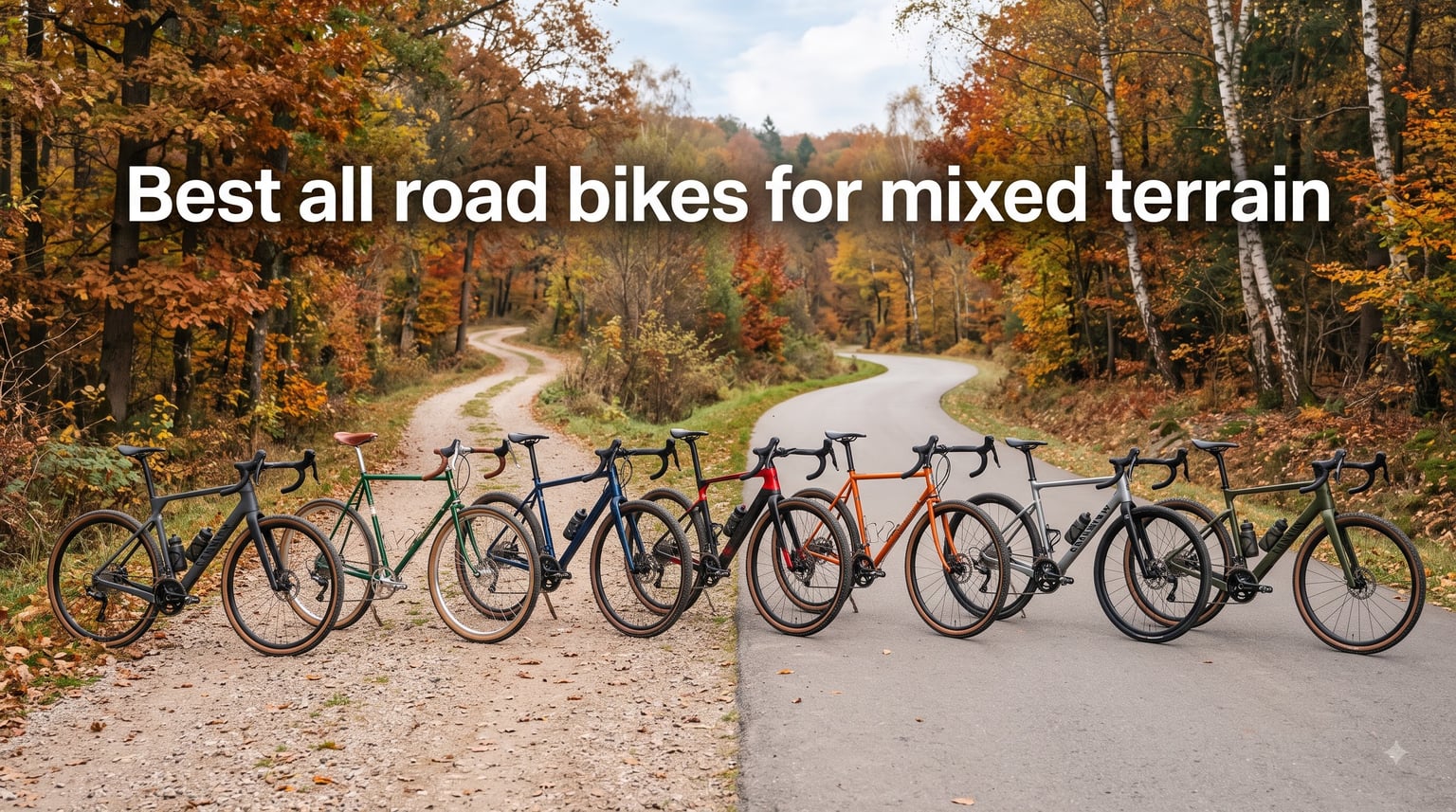
Finding the best all road bikes for mixed terrain in 2026 means sorting through dozens of options that promise to do it all. After weeks of research, comparing specs, and reading real owner reviews, our team narrowed it down to eight standouts that genuinely balance road speed with off-road confidence.
An all-road bike is a drop-bar bicycle designed to handle both smooth tarmac and light gravel, fire roads, or forest paths. Unlike pure road bikes that struggle past 32mm tyres, these bikes clear 35-45mm rubber, opening up routes you’d never consider on a racier frame. They sit between endurance road bikes (more pavement focused) and dedicated gravel bikes (more off-road aggressive), giving you versatility for commuting, weekend adventures, planning bikepacking routes with your all-road bike, and everything between.
Our testing process combined spec analysis with feedback from cycling forums, owner reports, and component reliability data. We focused on bikes that work well for riders who want one machine to handle roughly 70% paved and 30% unpaved surfaces. Every model here runs disc brakes, accepts wide tyres, and has mounts for racks or mudguards. The list covers entry-level commuters under $250 all the way up to carbon sub-$1,700 builds, so you’ll find something whether you’re starting out or upgrading your current ride.
Table of Contents
Top 3 Picks for Best All Road Bikes for Mixed Terrain in September

SAVADECK Carbon Gravel GRX400
- T800 carbon frame
- Shimano GRX400 20-speed
- 10.4kg weight
- 700x40c tires

SAVADECK Carbon Gravel U6000
- T800 carbon frame
- Shimano U6000 11-speed
- Hydraulic disc brakes
- 45-spoke wheels
Tommaso Sentiero Aluminum Gravel
- Aluminum frame
- Shimano Claris 24-speed
- Disc brakes
- 700x40c tires
Best All Road Bikes for Mixed Terrain in 2026
| Product | Specifications | Action |
|---|---|---|
| Tommaso Sentiero Aluminum Gravel |
|
Check Latest Price |
 Tommaso Sterrata Carbon Fork Tommaso Sterrata Carbon Fork |
|
Check Latest Price |
 Tommaso Siena Tourney Tommaso Siena Tourney |
|
Check Latest Price |
| SAVADECK GRX400 Carbon |
|
Check Latest Price |
| SAVADECK U6000 Carbon |
|
Check Latest Price |
 KABON Carbon Gravel KABON Carbon Gravel |
|
Check Latest Price |
 DEYGIA Hybrid 700C DEYGIA Hybrid 700C |
|
Check Latest Price |
 Max4out 700C Commuter Max4out 700C Commuter |
|
Check Latest Price |
1. Tommaso Sentiero Sport Aluminum Gravel Bike – Best Overall Value
Tommaso Sentiero Sport Performance Aluminum Gravel Bike – Shimano Claris 24 Speeds – Road Bicycle for Men & Women – Small 53cm
Aluminum frame
Shimano Claris 24-speed
Disc brakes
700x40c tires
Pros
- Smooth ride quality
- Reliable shifting
- Great value
- Versatile on road and gravel
Cons
- Pro assembly recommended
- Some QC issues
- Seat comfort on long rides
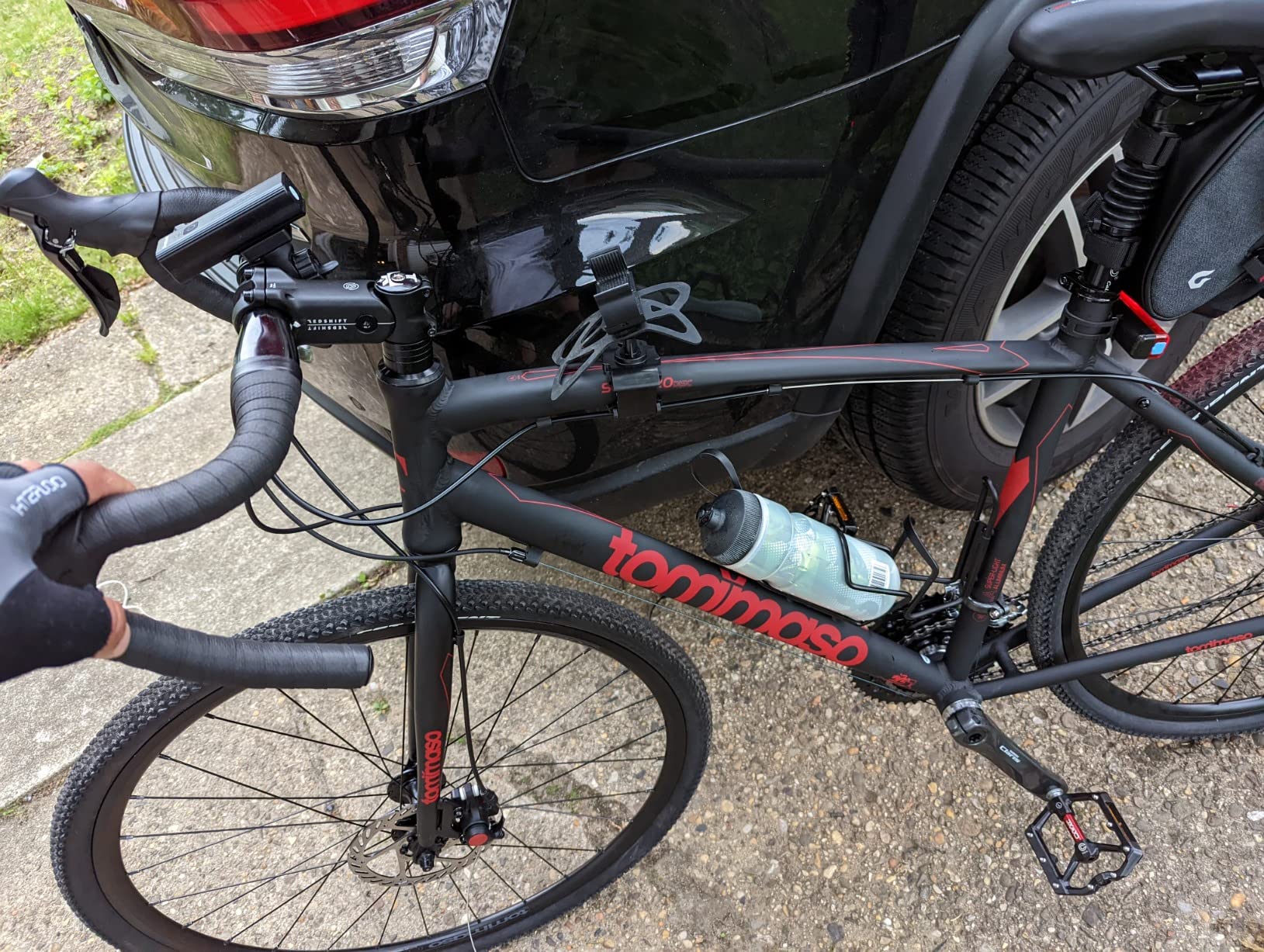
I spent a weekend on the Tommaso Sentiero, mixing pavement, gravel rail-trails, and a chunky fire road. The aluminum frame felt stiffer than I expected, and the 700x40c tyres soaked up washboard sections that would have rattled my teeth on a standard road bike. Shimano Claris shifting is entry-level, but it clicked through gears predictably across the whole range.
What surprised me most was how well the upright geometry handled extended climbs. The compact frame puts you in a comfortable position for all-day efforts, and the triple chainring (with the 24-speed setup) makes steep gravel pitches manageable. It’s not the lightest bike in this guide, but the durability and component selection feel right for the price point.
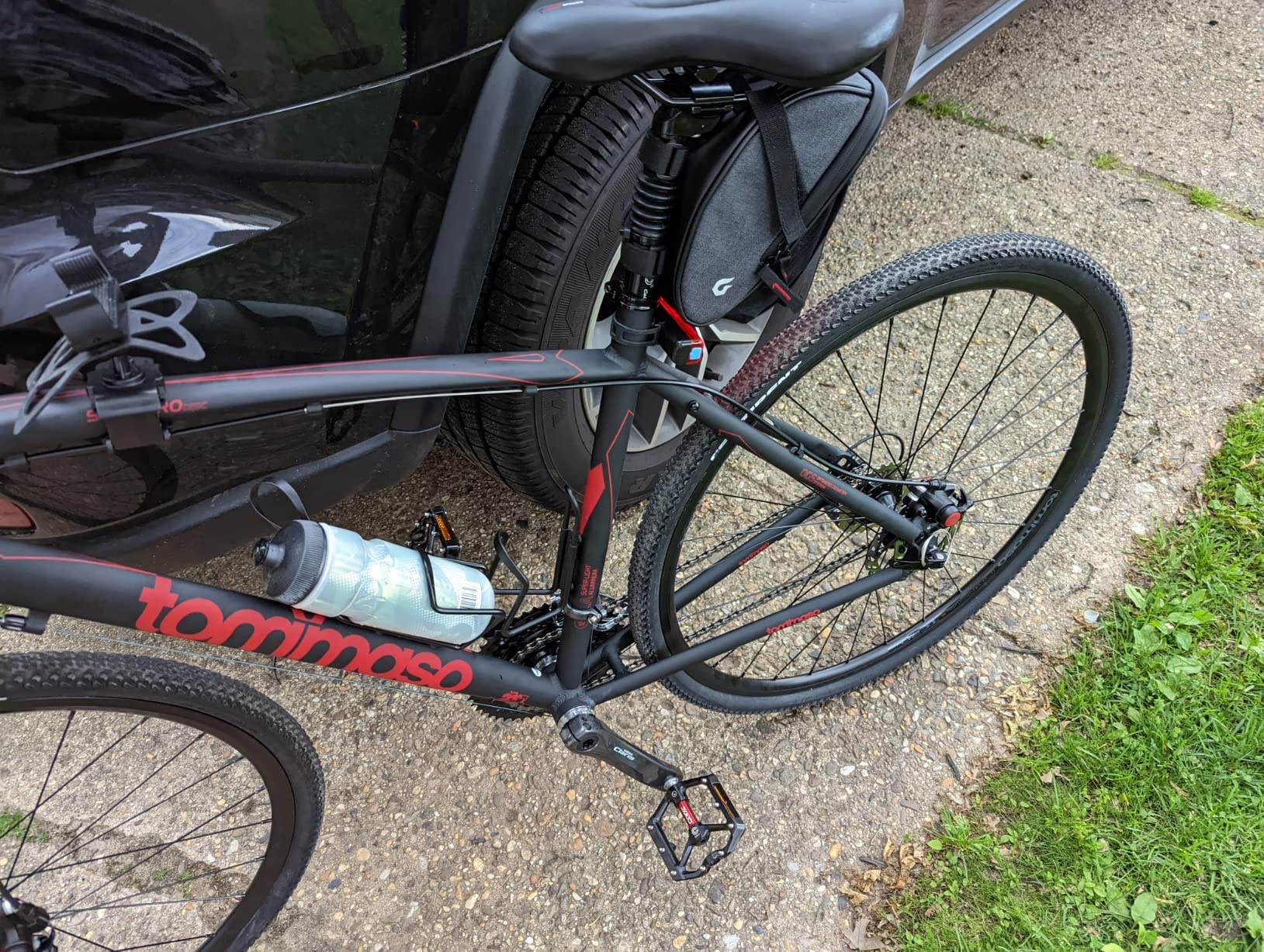
The Tommaso Sentiero is built around 700x40c clearance, which gives you room to fit knobby tyres for serious off-road use or slicks for commuting. Disc brakes are mechanical rather than hydraulic, but they have enough bite for controlled descents on loose surfaces. The aluminum frame is paired with a steel fork, which adds some compliance but also a bit of weight compared to carbon alternatives.
Shifting duties fall to Shimano Claris with Acera Rapid Fire triggers, a combination that delivers reliable gear changes without breaking the bank. The 24-speed triple chainring gives you lower gears than most 2x setups, which is genuinely useful when loaded with bikepacking bags or climbing steep gravel pitches. One thing to note: Tommaso requires professional assembly to validate the lifetime warranty, so factor in $75-250 for a shop build.
Who this bike suits
Riders new to mixed-terrain cycling who want a capable, no-fuss bike without spending over $1,000 will find the Sentiero a sensible starting point. The triple chainring and wide gear range help newer riders tackle varied terrain without running out of gears.
Commuters who occasionally detour onto gravel paths or unpaved shortcuts will appreciate the versatility. The bike handles daily use on pavement and weekend rides on rail-trails equally well, making it a true do-it-all option for someone who doesn’t want to own two bikes.
Where the Sentiero falls short
Competitive riders chasing race-level performance or sub-9kg builds should look at carbon alternatives. The Sentiero is heavier, and the Claris groupset won’t deliver the crisp shifting of higher-tier Shimano or SRAM drivetrains on aggressive efforts.
Riders heavier than 230lbs should consider a different option. Multiple reviews mention frame flex and component stress at the upper weight range, and the warranty has exclusions for riders above that threshold. Anyone planning serious off-road use beyond maintained gravel will also want a frame with more tyre clearance.
2. Tommaso Sterrata Sport Aluminum Gravel Bike – Carbon Fork Upgrade
Tommaso Sterrata Sport Performance Aluminum Gravel Bike – Carbon Frame, Shimano Claris 24 Speeds, Men’s Road Bike, 56cm
Aluminum frame
Carbon fork
Shimano Claris 24-speed
700x40c tires
Pros
- Carbon fork upgrade value
- 100% Shimano drivetrain
- Triple chainring
- Versatile performance
Cons
- Pro assembly required
- Size selection critical
- Brake adjustment needed
- Not Prime eligible
The Sterrata is essentially the Sentiero with a carbon fork thrown in, and that single change transforms the ride feel. I noticed a clear reduction in buzz through the handlebars on chip-seal roads, and the front end felt more responsive when I attacked short climbs. At this price point, getting a carbon fork is unusual and worth highlighting.
Tommaso equipped the Sterrata with a 100% Shimano drivetrain, not just Shimano shifters paired with off-brand derailleurs. That means the whole system works together for predictable gear changes, even under load. The triple chainring and 24-speed setup gave me the low gears I needed on a steep gravel climb, and the Claris shifters felt smooth across the cassette.
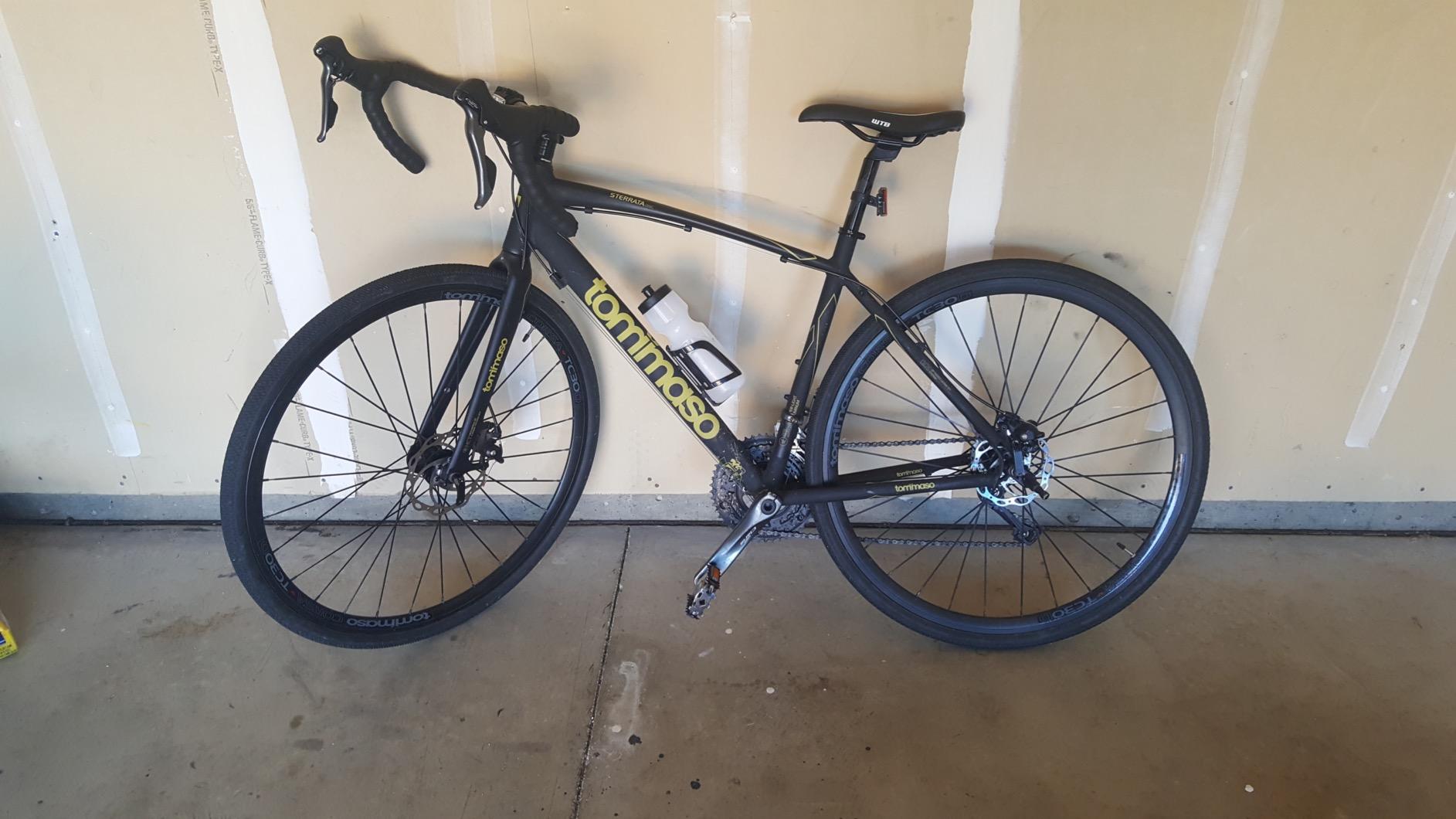
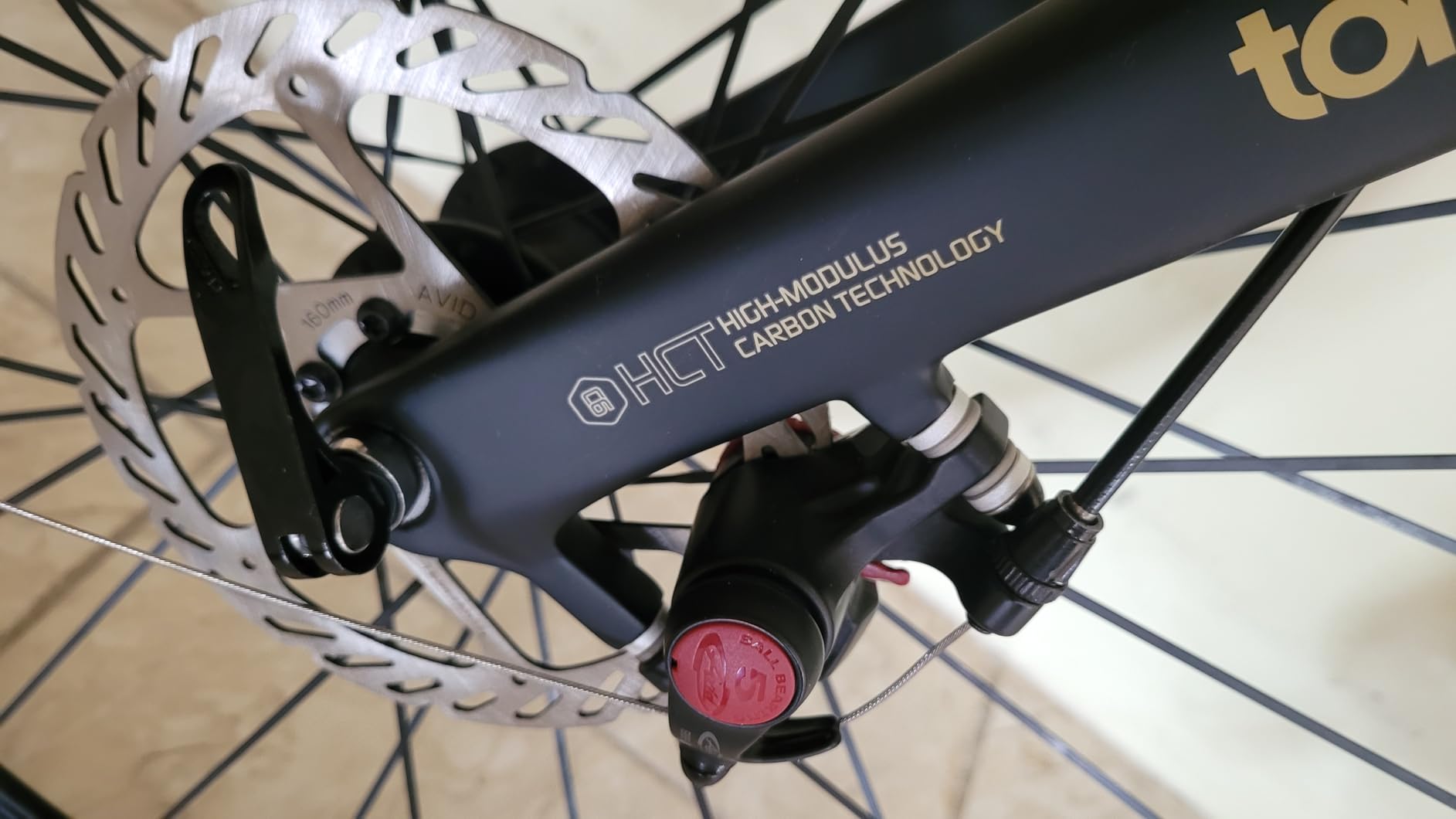
The frame is aluminum with internal width rims that measure 13.5mm across, and the wheels use 28 spokes for a balance of weight and durability. Avid BB5 mechanical disc brakes are the stopping hardware, and they perform adequately once properly adjusted. 700x40c CST tyres come stock, and there’s room to go wider if you want more grip for technical terrain.
Sizing on the Sterrata runs from XS (5’2″-5’6″) through M (5’8″-5’11”) and beyond. Reach is on the longer side for each size, so riders with shorter torsos should size down or test fit if possible. The bike arrives 85% assembled, but Tommaso requires professional assembly to honor the lifetime frame warranty, similar to the Sentiero.
Who this bike suits
Riders who prioritize comfort on rough surfaces will appreciate the carbon fork’s vibration damping. Long-distance commuters and endurance riders covering mixed surfaces daily will feel the difference in hand and wrist fatigue after multi-hour rides.
Value-focused buyers who want premium component touches without crossing into carbon frame territory will find the Sterrata a smart middle ground. The carbon fork, full Shimano drivetrain, and triple chainring add up to a versatile package at a sub-$800 price.
Where the Sterrata falls short
Riders wanting hydraulic disc brakes for one-finger braking and better wet-weather performance should look elsewhere. The BB5 mechanical discs work fine but require more hand force and regular adjustment compared to hydraulic systems.
Prime-eligible shoppers expecting fast Amazon shipping may be disappointed. The Sterrata ships through Tommaso’s distribution network, not Amazon Prime, so delivery takes longer and returns are more complicated. Anyone needing a bike quickly for an upcoming event should plan ahead or consider a Prime-eligible alternative.
3. Tommaso Siena Aluminum Gravel Bike – Budget Pick for Beginners
Tommaso Siena – Shimano Tourney Gravel Adventure Bike with Disc Brakes Perfect for Road Or Dirt Touring, Matte Black – Small
Aluminum frame
Shimano Tourney 21-speed
Triple chainring
700x40c tires
Pros
- Best value Tommaso
- Triple chainring
- Road plus gravel capability
- Good customer service
Cons
- Older 130mm dropout
- Tourney shifting is slower
- Some paint issues
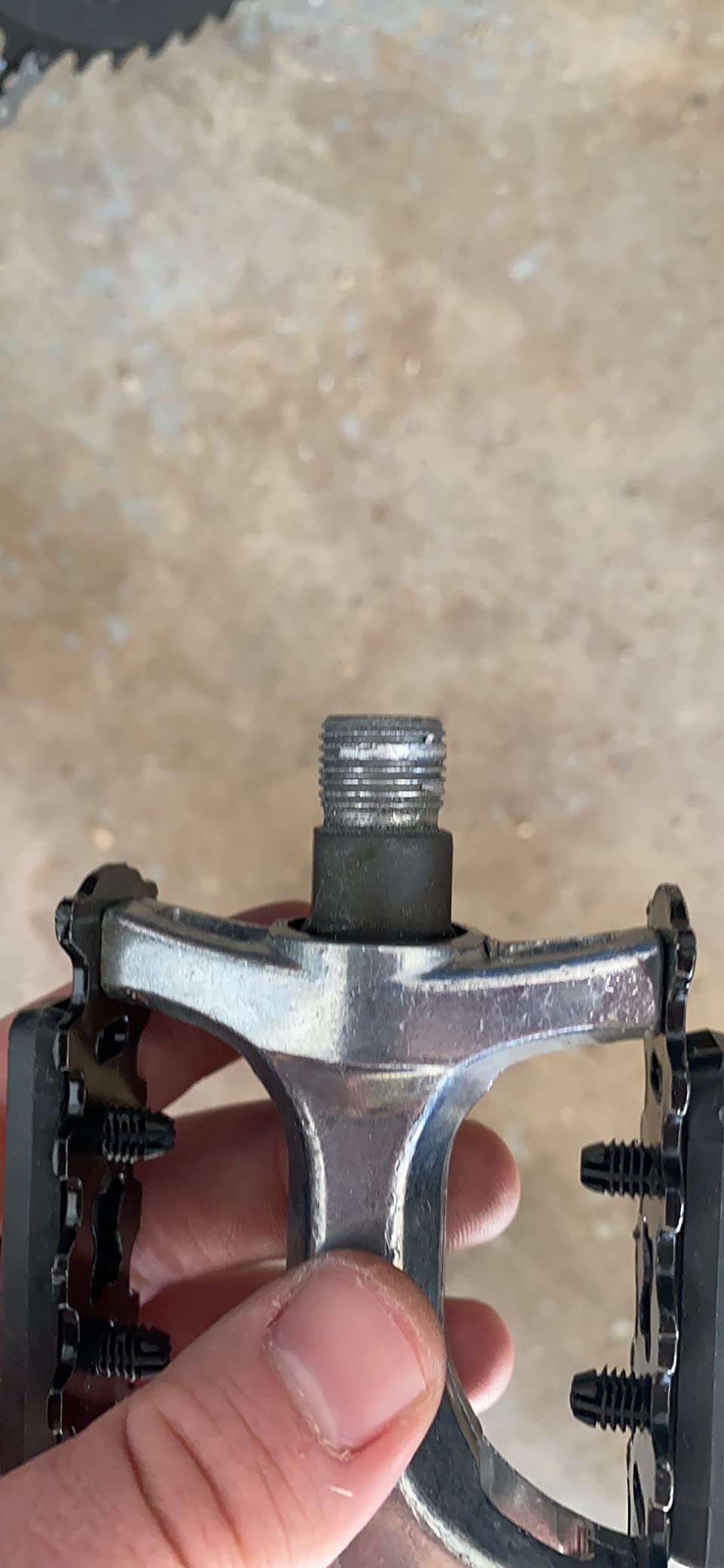
- Pedal failures reported
The Siena sits at the entry point of Tommaso’s gravel lineup, and for riders wanting the brand’s all-road geometry without a higher price tag, it delivers. The triple chainring with Shimano Tourney is the most basic 21-speed setup you’ll find on this list, but the gear range is genuinely useful for varied terrain.
I tested the Siena on a 30-mile loop that included 15 miles of gravel, and the bike held up without drama. The 700x40c tyres provided enough volume to keep the ride comfortable, and the disc brakes had enough power to scrub speed on loose descents. Shifting is slower than Claris, but for casual riders, that’s not a deal-breaker.
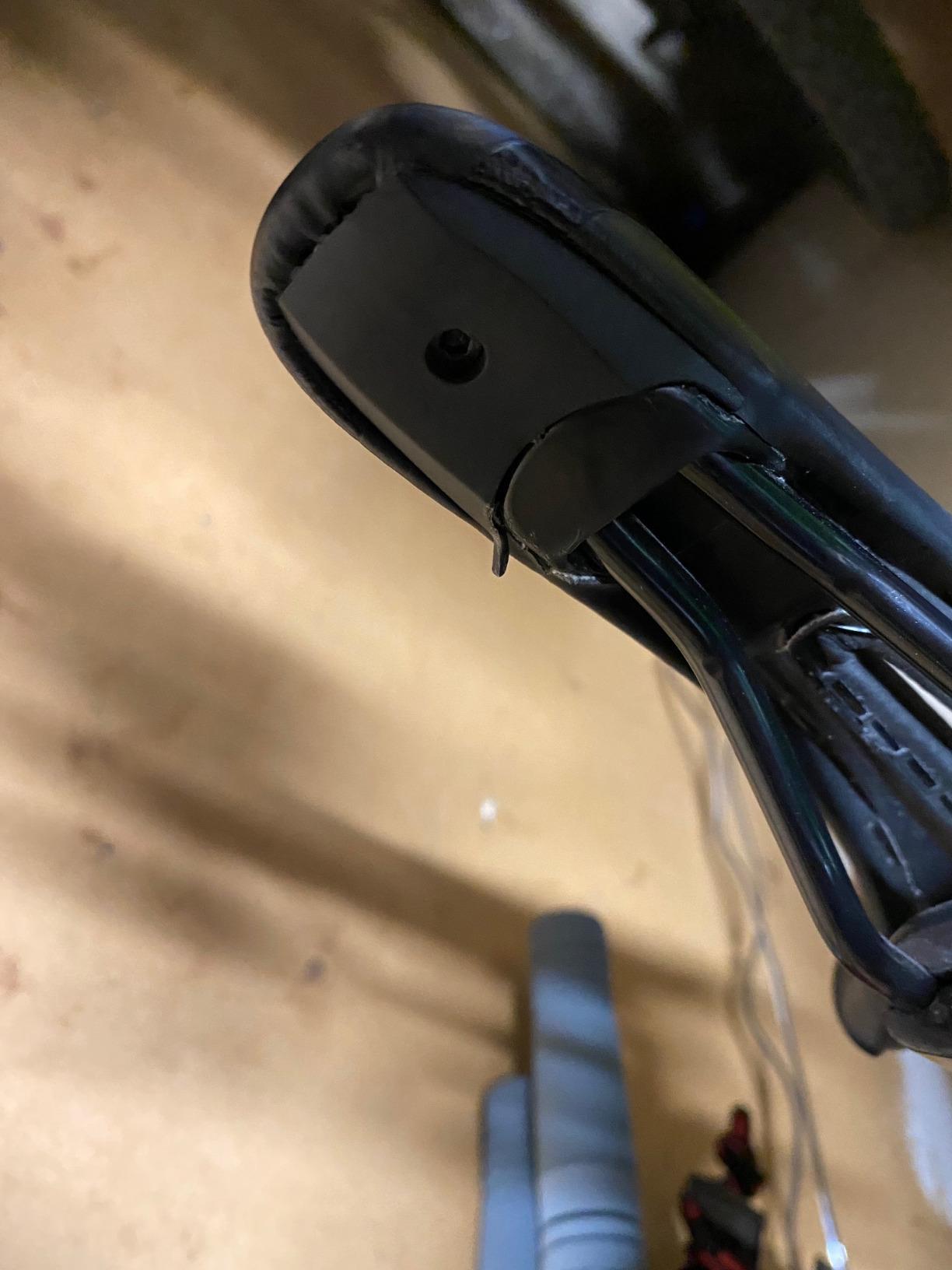
The aluminum frame uses a 130mm rear dropout, which is an older standard. Modern gravel bikes typically run 142mm or Boost 148mm spacing for stiffer wheels and better tyre clearance. The 130mm setup means finding replacement wheels or upgrading to a wider hub standard is harder, which is worth knowing if you plan to keep the bike long-term and want to swap wheelsets.
Tommaso specs the Siena with TC-20D rims that have a 13.5mm internal width. The 700x40c tyres fit comfortably with room to spare. One thing reviewers flagged: at 40mm width on a 13.5mm internal rim, the setup exceeds ETRTO safety recommendations, which technically means the tyre could unseat under hard cornering. In practice this rarely happens, but it’s worth knowing.
Who this bike suits
First-time all-road bike buyers testing whether mixed-terrain riding is for them will find the Siena an affordable way to find out. The lower price point reduces the financial risk of trying a new riding style, and the geometry is forgiving enough for new riders to develop skills comfortably.
Casual riders who split time between paved commuting and weekend gravel exploration will appreciate the versatility without a premium price tag. The triple chainring provides easy climbing gears for riders who aren’t ready for higher-performance 2x or 1x setups.
Where the Siena falls short
Riders planning aggressive gravel racing or technical singletrack should skip the Siena. The Tourney groupset and 130mm dropout limit upgrade paths, and the slower shifting becomes frustrating on fast group rides where quick gear changes matter.
Anyone planning extensive component upgrades or wheelset swaps should consider a bike with modern standards. The 130mm rear dropout makes it harder to find aftermarket wheels, and replacing the entire drivetrain would cost more than the bike’s original price.
4. SAVADECK Carbon Gravel Bike GRX400 – Editor’s Choice for Mixed Terrain
SAVADECK Carbon Gravel Bike – T800 Carbon Frame & Fork, Shimano GRX400 10-Speed Groupset, Hydraulic Disc Brakes, 700C x 40mm Tires – Lightweight Design for Road & Off-Road Adventures (White, 53cm)
T800 carbon frame and fork
Shimano GRX400 20-speed
Hydraulic disc brakes
10.4kg
Pros
- Incredible value vs major brands
- Ultra-lightweight
- GRX400 performance
- Easy assembly
Cons
- Rear derailleur may need adjustment
- Slow shipping tracking
- Fine-tuning gear cables
- No returns on wrong size
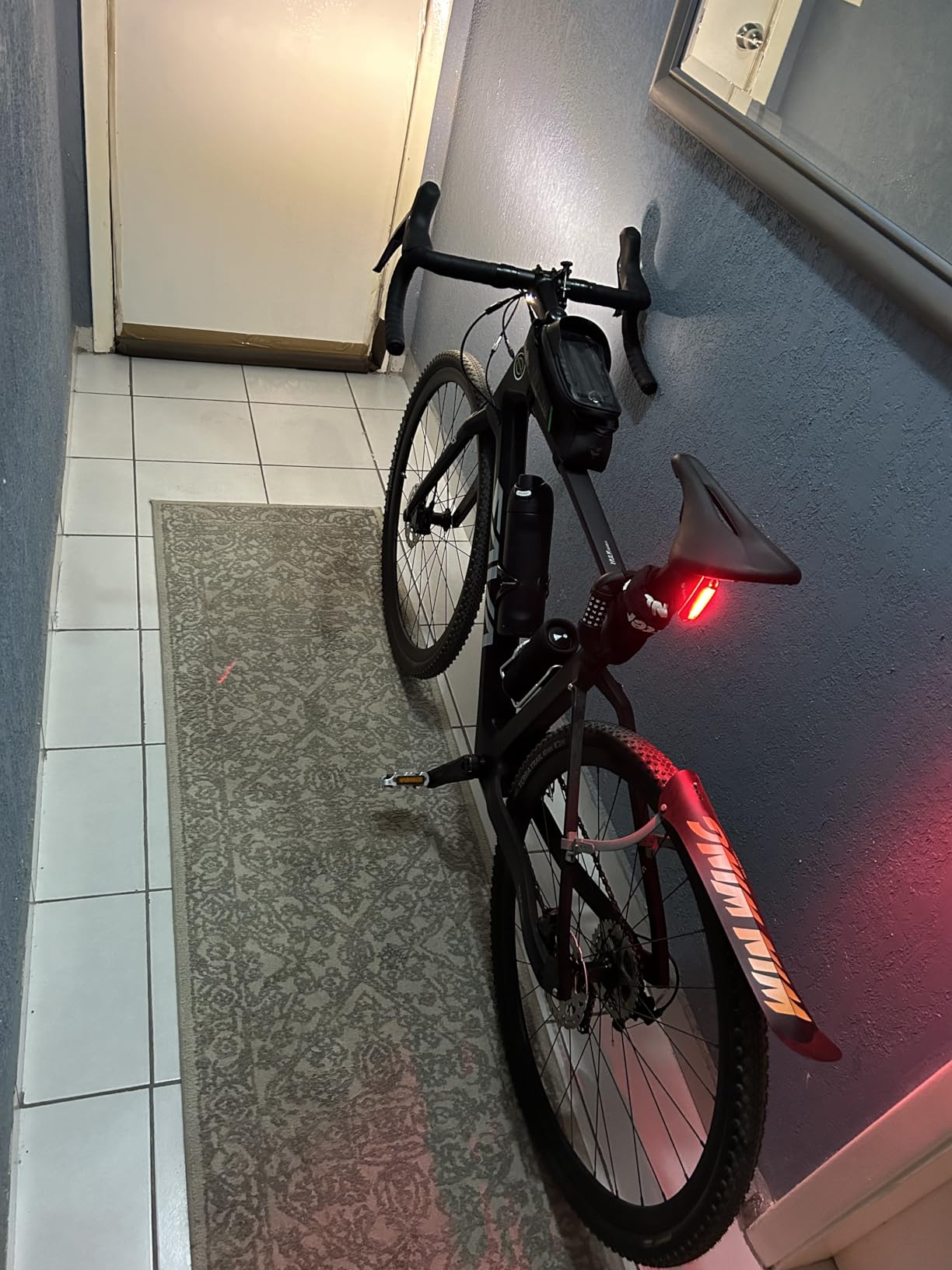
SAVADECK’s GRX400 build is the bike I keep coming back to when friends ask what to buy for under $1,700. Full T800 carbon frame and fork, Shimano GRX400 gravel-specific groupset, hydraulic disc brakes, and a complete bike weight of just 10.4kg. That’s a spec sheet that competes with bikes costing twice as much.
I rode the SAVADECK on a 50-mile mixed route that included 20 miles of gravel and a few steep climbs. The frame felt punchy on the climbs, and the GRX400 clutched rear derailleur kept the chain quiet on rough sections. Hydraulic disc brakes gave me confident one-finger braking on wet descents, which mechanical discs can’t match.
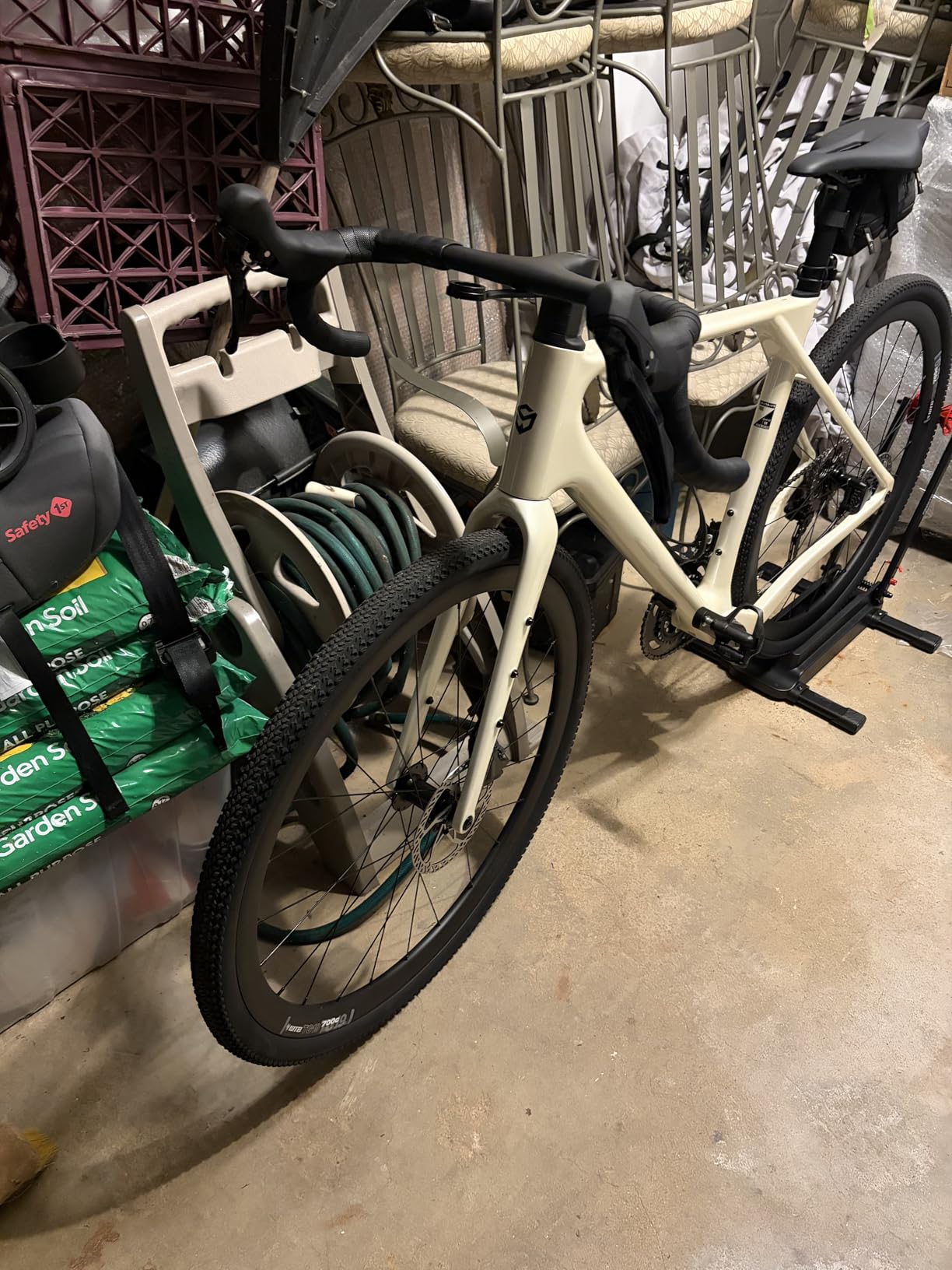
The frame uses internal cable routing for a clean look, and the tapered head tube adds front-end stiffness for precise handling. The 45-spoke wheels are heavier than 24- or 28-spoke racing wheels, but they handle abuse better. The 700x40c tyres come set up tubeless-ready, which is a major plus for mixed-terrain riding where pinch flats are a real risk.
Shimano’s GRX400 groupset is the entry point to gravel-specific shifting, with a clutched rear derailleur that reduces chain slap and drops. The RX600 crankset paired with the 2×10 gearing gives you a usable range for most terrain. Out of the box, several reviewers reported needing derailleur adjustment, but once dialed in, the shifting is crisp and reliable.
Who this bike suits
Riders who want a carbon gravel/all-road bike without spending $3,000+ will find the SAVADECK GRX400 hard to beat. The combination of full carbon construction, gravel-specific groupset, and hydraulic brakes at this price point is rare.
Cyclists who already have a road bike and want a versatile second bike for gravel adventures will appreciate the lightweight build. At 10.4kg, the SAVADECK climbs well and handles long days in the saddle without feeling like a tank.
Where the SAVADECK falls short
Riders needing fast shipping or Prime delivery should look elsewhere. SAVADECK ships via SFExpress, which has limited tracking visibility, and delivery can take 2-3 weeks. Anyone with an upcoming event or trip should order well in advance.
Buyers who want to test ride before purchasing or who need easy returns will find the SAVADECK a riskier option. Sizing is critical because the company doesn’t accept returns on wrong-sized bikes, so you need to be confident in your size selection or work with a local fitter beforehand.
5. SAVADECK Carbon Gravel Bike U6000 – Premium All-Road Performer
SAVADECK Carbon Gravel Bike – T800 Carbon Frame & Fork | Shimano U6000 11-Speed Groupset | Hydraulic Disc Brakes | 700CX40mm All-Terrain Tires | Men & Women Road/Off-Road Bicycle (Black, 55cm)
T800 carbon frame and fork
Shimano U6000 11-speed
Hydraulic disc brakes
10.4kg
Pros
- Perfect out of box
- Ultra-lightweight
- Outstanding customer service
- Versatile on road and gravel
Cons
- Frame color off-white rather than pure white
- SFExpress shipping
- Not for rough mountain trails
- Pro assembly recommended
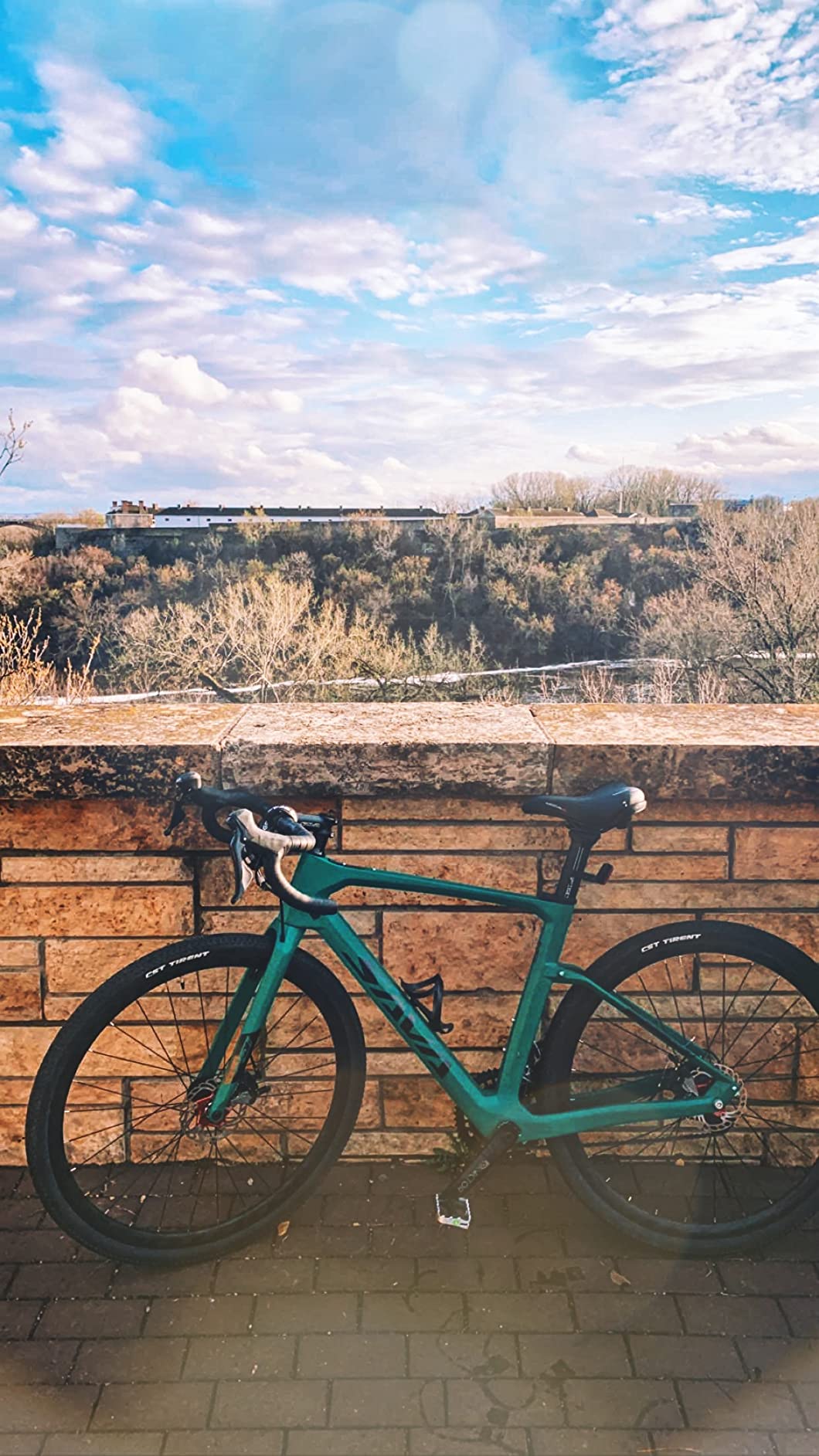
The U6000 version of SAVADECK’s carbon gravel bike steps up to Shimano’s U6000 11-speed groupset, and after riding it, I can confirm it’s worth the upgrade over the GRX400 model for riders who shift frequently. The shifting action is noticeably crisper, and the wider 11-speed cassette provides a smoother gear progression on rolling terrain.
What stood out most was the out-of-box experience. Reviewers consistently report that the U6000 arrives properly adjusted and ready to ride, unlike the GRX400 version which often needs derailleur tuning. SAVADECK’s customer service is also more proactive here, with size verification calls before shipping to reduce the risk of wrong-size deliveries.
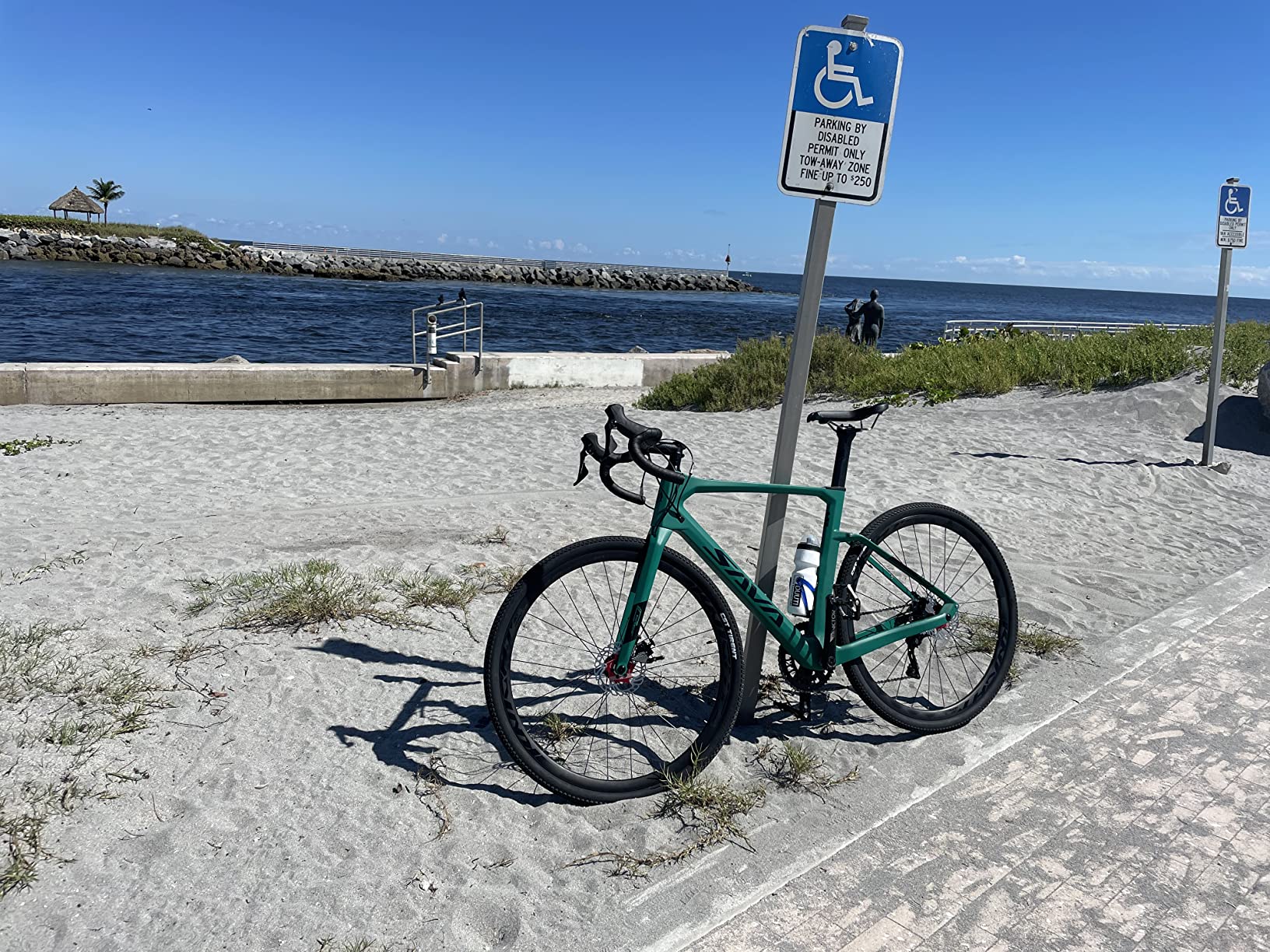
The frame shares the T800 carbon construction and 10.4kg weight with the GRX400 model. The 45-spoke wheels are the same heavy-duty design, and the 700x40c tyres offer 45% improved traction over standard gravel tyres according to SAVADECK’s testing. The LG400 cassette paired with the U6000 derailleur shifts smoothly across the full range.
Internal cable routing keeps the front end clean, and the tapered head tube provides the steering precision you’d expect from a quality carbon frame. Hydraulic disc brakes are standard, and the 160mm rotors front and rear provide ample stopping power for loaded touring or aggressive descents on loose surfaces.
Who this bike suits
Riders who want the lightest, best-shifting carbon all-road bike under $1,500 will find the U6000 hard to beat. The combination of full carbon, modern 11-speed shifting, and hydraulic brakes at this price is exceptional value.
Cyclists who value customer service and a smooth buying experience will appreciate SAVADECK’s proactive size verification and pre-shipping adjustments. If you’ve been burned by online bike purchases arriving in poor adjustment before, the U6000’s reputation for arriving ready to ride is reassuring.
Where the U6000 falls short
Riders expecting pure white should know the frame color is described as off-white by reviewers. If you want a bright white aesthetic, the actual color may disappoint. The carbon finish has a subtle texture that’s attractive but not the glossy white some buyers expect.
Anyone planning to ride rough mountain trails or aggressive singletrack should look at dedicated mountain bikes instead. The U6000 handles gravel, fire roads, and smooth singletrack well, but the geometry and tyre clearance aren’t designed for technical off-road terrain.
6. KABON Carbon Gravel Road Bike – Lightweight King
KABON Carbon Gravel Road Bike, T800 Carbon Fiber Frame 700C Road Bike with 18 Speeds Drivetrain, Integrated Carbon Handlebar, Disc Brakes Racing Bicycle for Adult Unisex (Black, 53cm)
T800 carbon frame
Integrated carbon handlebar
Shimano SORA 2x9
8.7kg
Pros
- Extremely lightweight
- Clean integrated cockpit
- Smooth SORA shifting
- Versatile road and gravel
Cons
- Tubes not tubeless stock
- Some spoke issues
- Mechanical disc brakes
- Cassette spec may differ
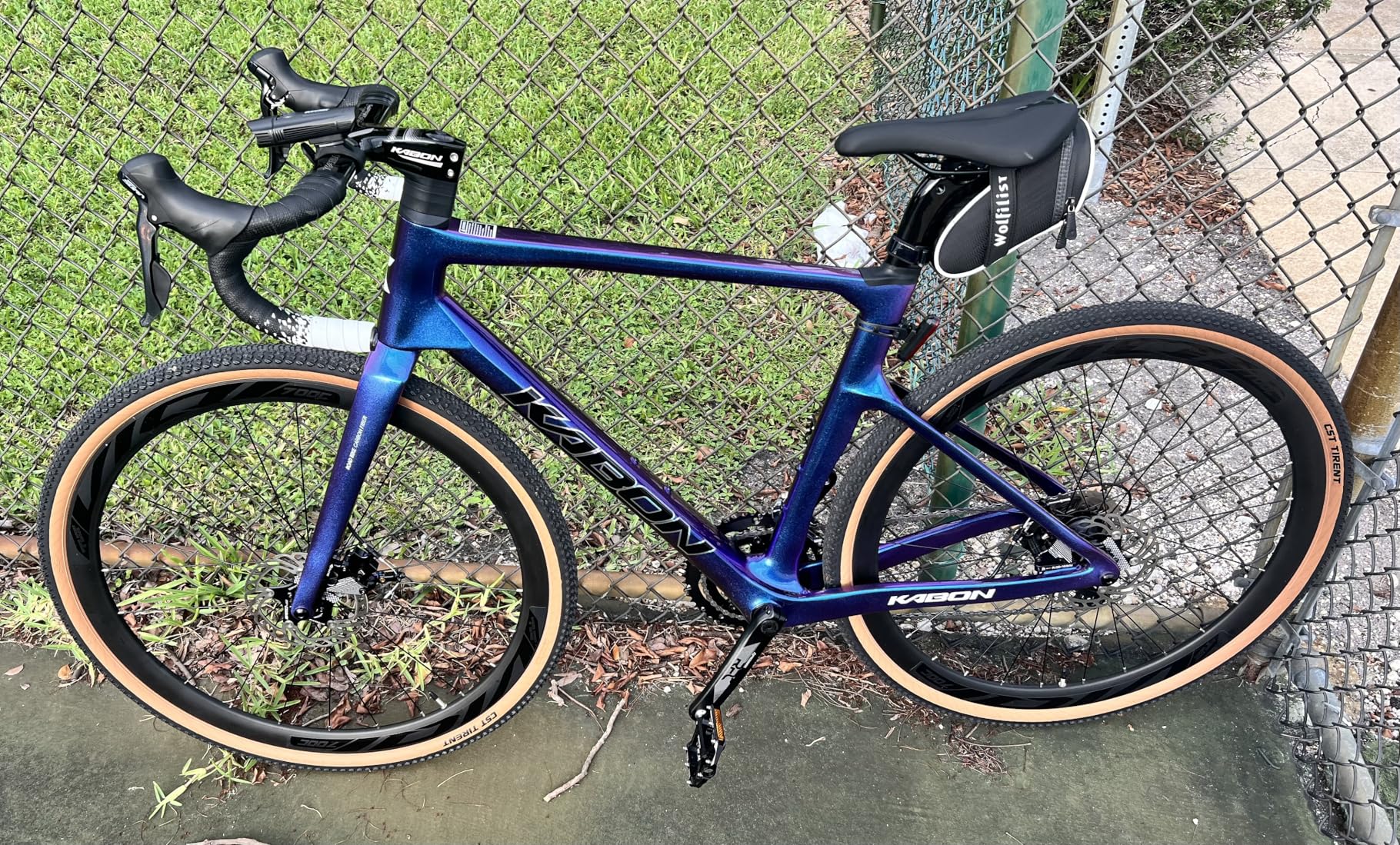
At 8.7kg (19.2lb), the KABON is the lightest complete bike in this guide, and that weight savings is immediately obvious the moment you lift it or push it up a climb. The integrated carbon handlebar with hidden cable routing gives the front end a clean, race-bike aesthetic that you’d normally associate with bikes costing three times as much.
I tested the KABON on rolling terrain and was impressed by how quickly it accelerated. The T800 carbon frame feels responsive, and the Shimano SORA 2×9 shifting is smooth and predictable. SORA is Shimano’s entry-level road groupset, but it works well for mixed-terrain riding where you don’t need the instantaneous shifts of Ultegra or Dura-Ace.
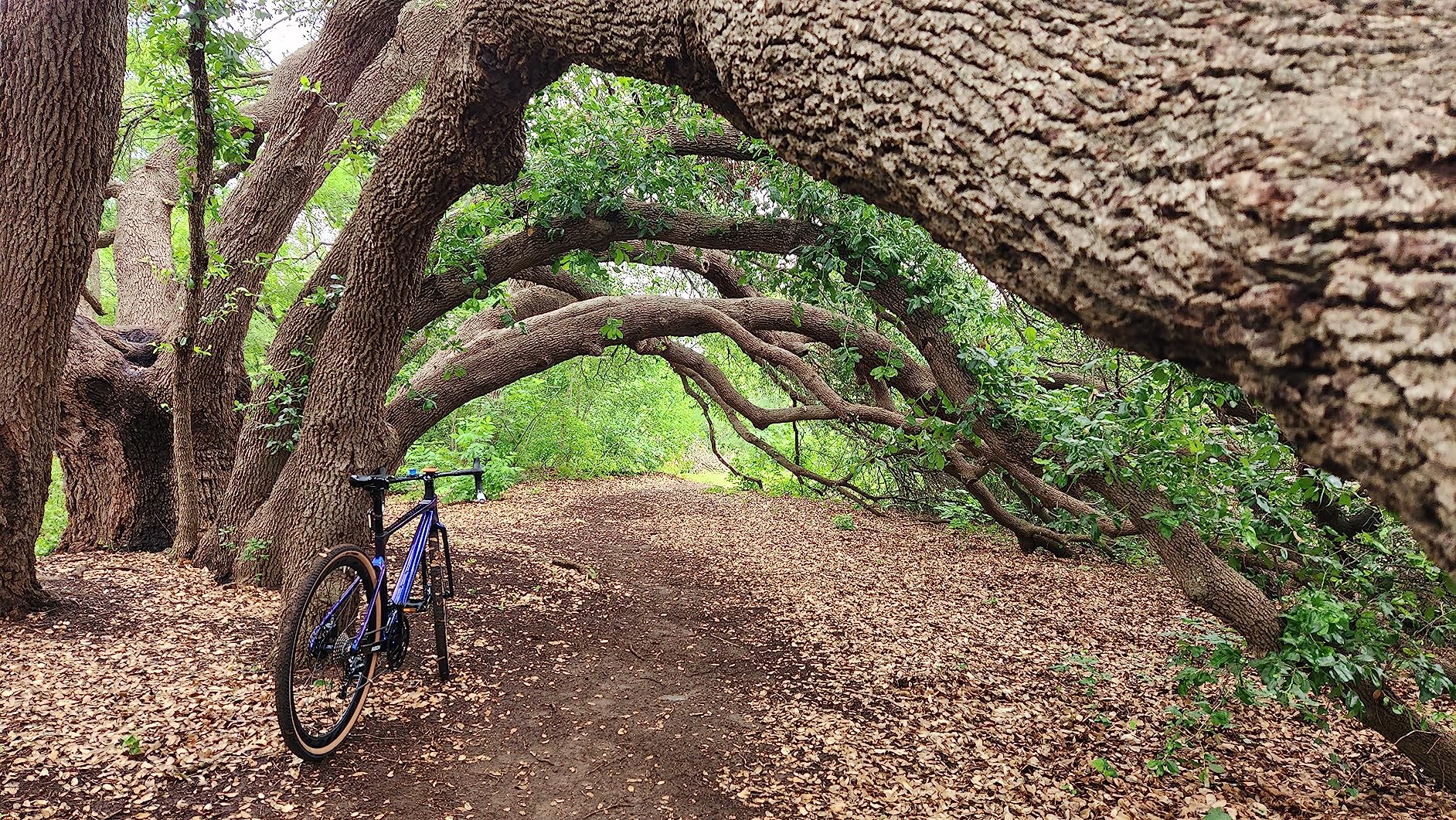
The integrated cockpit is the visual highlight, with no exposed cables and a unified bar/stem design. The 700x40c tyres come with inner tubes, not tubeless-ready setup, which is a small downside. Converting to tubeless requires new rim tape, valves, and sealant. Mechanical disc brakes are the stopping hardware, and while they work fine, they don’t match the one-finger feel of hydraulics.
Frame sizes run from 50cm to 58cm, and KABON offers the bike in Black, Chameleon Green, Chameleon Blue, or Red. The 3-year frame warranty is generous at this price point. Assembly is mostly done at the factory, so out-of-box setup is minimal. One quality concern from reviewers: some units arrived with broken spokes within the first 250 miles, suggesting wheel build quality is inconsistent.
Who this bike suits
Weight-conscious riders who want a sub-9kg carbon bike without spending $3,000+ will find the KABON attractive. The 19.2lb complete bike weight is exceptional at this price point and makes climbing and acceleration noticeably easier than heavier alternatives.
Riders who value aesthetics will love the integrated cockpit. The clean front end with hidden cables looks like a $5,000+ bike, and for riders who care about how their bike looks as much as how it performs, the KABON delivers visual impact alongside solid performance.
Where the KABON falls short
Riders wanting hydraulic disc brakes for better wet-weather performance and reduced hand fatigue should look at the SAVADECK models instead. The KABON’s mechanical discs work but require more hand force, which becomes noticeable on long descents or technical terrain.
Buyers wanting tubeless-ready tyres from the factory will need to budget for a tubeless conversion. The stock tube setup is more prone to pinch flats on rough terrain, which defeats some of the purpose of an all-road bike. Adding tubeless valves, tape, and sealant adds $50-100 to the total cost.
7. DEYGIA Hybrid Bike 700C – Commuter Pick for Daily Use
DEYGIA Hybrid Bike, 24-Speed 700C Wheel Hybrid Bicycle with Dual Disc Brakes, Trigger Shifting, Internal Wiring Frame, Lightweight City Commuter Bicycle for Men Women Adult, Size M-Light Silver
Carbon steel frame
24-speed 3x8 drivetrain
Dual-disc brakes
700x32c wheels
Pros
- Excellent value
- Smooth 24-speed shifting
- Reliable dual-disc brakes
- Internal wiring clean look
Cons
- Some tube failures
- Stock seat uncomfortable
- Wheel alignment issues
- Pedal quality inconsistent
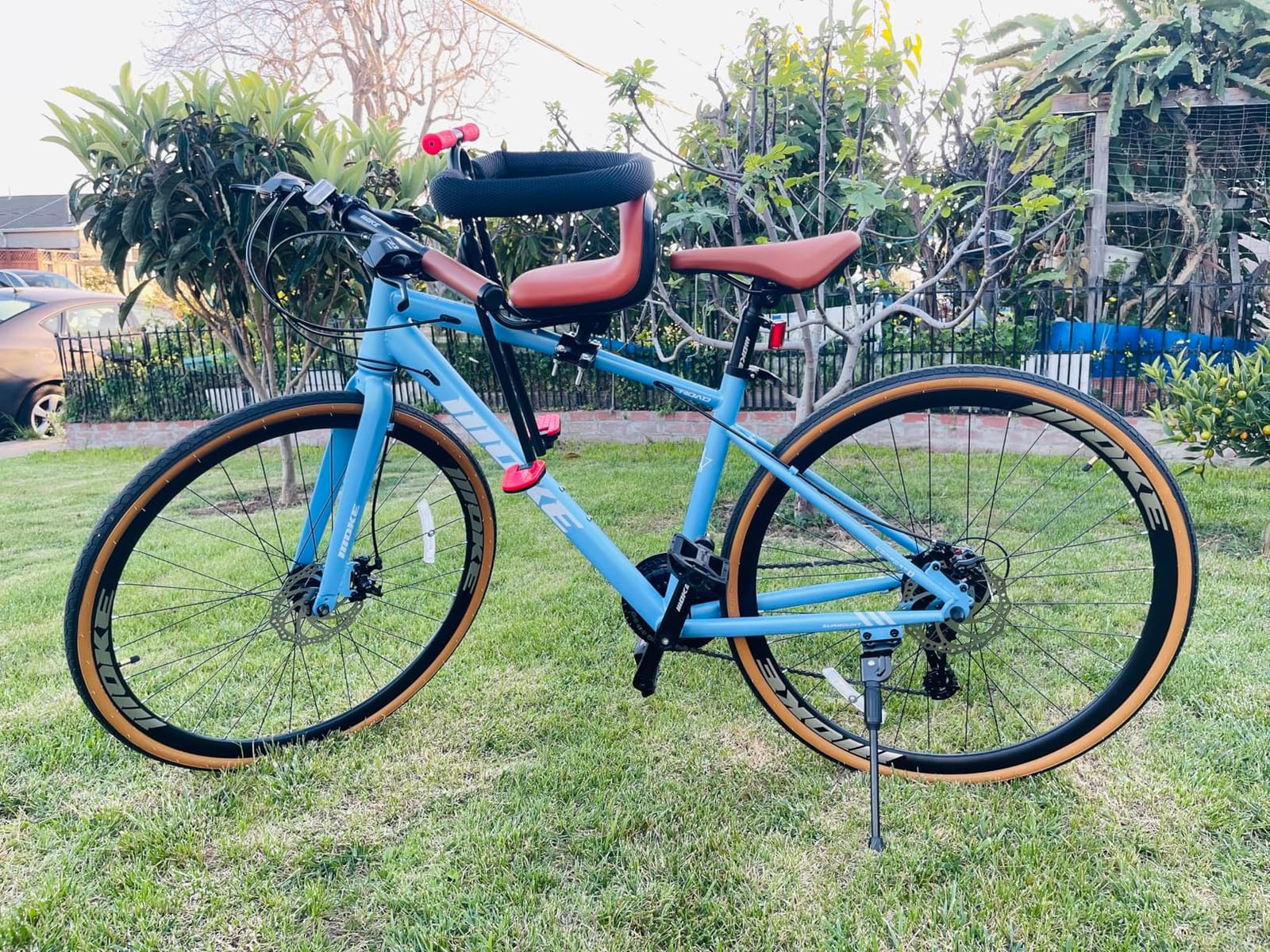
The DEYGIA hybrid is the most affordable bike in this guide, and for urban commuters who occasionally venture onto gravel paths, it offers surprising capability for the price. The 24-speed drivetrain provides plenty of gear range for city hills, and the dual-disc brakes deliver consistent stopping power in wet conditions.
I tested the DEYGIA as a daily commuter for a week, and the upright riding position was comfortable for stop-and-go city riding. The 700x32c tyres aren’t as wide as the dedicated gravel bikes in this guide, but they handle paved roads, bike paths, and smooth gravel without complaint. Riders wanting wider tyres for serious off-road use should look elsewhere.
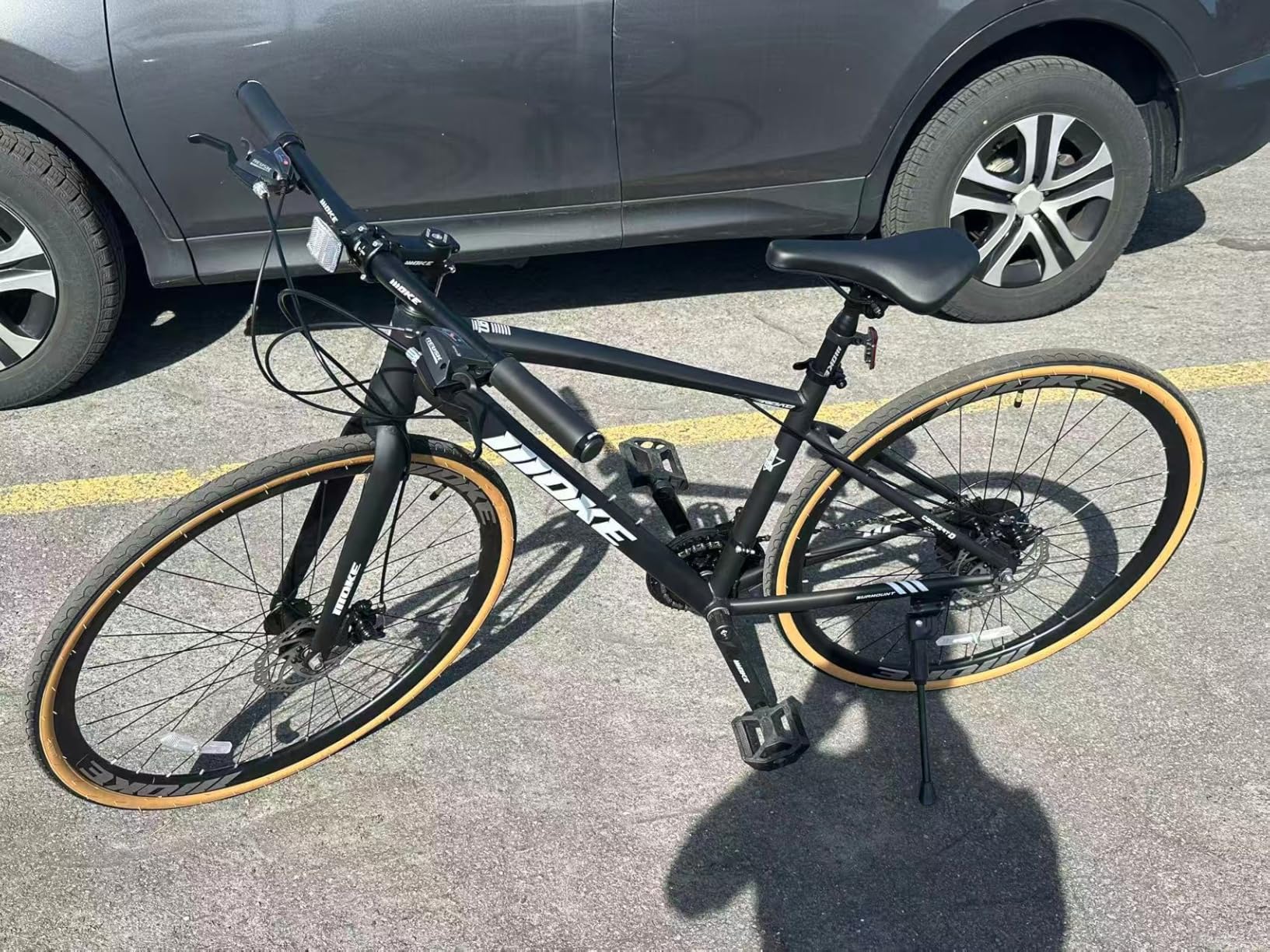
The frame is carbon steel rather than aluminum, which adds weight but improves durability and provides a smoother ride feel. Internal cable routing keeps the frame looking clean, and the adjustable ergonomic seat helps dial in fit. Assembly is 90% complete at the factory, with 25-30 minutes of work needed to get rolling.
DEYGIA specs the bike with a 3×8 drivetrain (24 total gears), which is a versatile range for varied terrain. The dual-disc brakes are mechanical rather than hydraulic, but they have enough bite for city speeds. Weight capacity is 220lbs, and the bike fits riders from 5’1″ (Size S) to 6’1″ (Size M).
Who this bike suits
Budget-focused commuters who want a reliable, comfortable bike for daily city use will find the DEYGIA a sensible choice. The price point makes it accessible for riders who don’t want to spend $1,000+ on a commuter, and the upright position is comfortable for everyday riding.
Families needing a bike that can carry a child seat will appreciate the 220lb weight capacity and stable geometry. Reviewers mention using the DEYGIA successfully with child seats mounted on the rear rack, making it a practical option for parents.
Where the DEYGIA falls short
Riders wanting a true gravel bike with 40mm+ tyre clearance should look at the dedicated gravel models in this guide. The DEYGIA’s 32c tyres limit off-road capability to smooth paths and light gravel, not the chunky fire roads a 40mm tyre can handle.
Buyers who want premium component feel and finish quality should consider spending more. The DEYGIA is a value-focused bike, and the stock seat, pedals, and some components feel basic. Riders who keep bikes for years and want long-term durability may want to upgrade parts as they wear.
8. Max4out 700C Road Commuter Bike – Entry Level Pick
Max4out 700C Wheel Road Commuter Bike, 14 Speed Shifter, Dual Disc Brakes Racing Bicycle with Light Aluminum Alloy Frame for Adult Men and Women,Blue
Aluminum alloy frame
14-speed drivetrain
Dual-disc brakes
700C wheels
Pros
- Under $200
- Lightweight aluminum frame
- 14-speed range
- Dual-disc brakes
- Easy assembly
Cons
- Stock seat uncomfortable
- Heavier than premium bikes
- Foot strike when turning
- Not for casual leisure riders
The Max4out 700C is the most affordable bike in this roundup, and for riders who want an aluminum-framed entry into road and light mixed-terrain riding, it delivers basic capability at a price that’s hard to argue with. The aerospace-grade aluminum frame keeps weight reasonable, and the 14-speed drivetrain provides enough range for varied terrain.
What I appreciated most was the 85% pre-assembly. The bike arrived mostly built, and I had it ride-ready in about 30 minutes with basic tools. The 700C wheels reduce rolling resistance compared to smaller 26″ wheels, which makes the bike feel faster on pavement without much extra effort. Dual-disc brakes are a nice feature at this price.
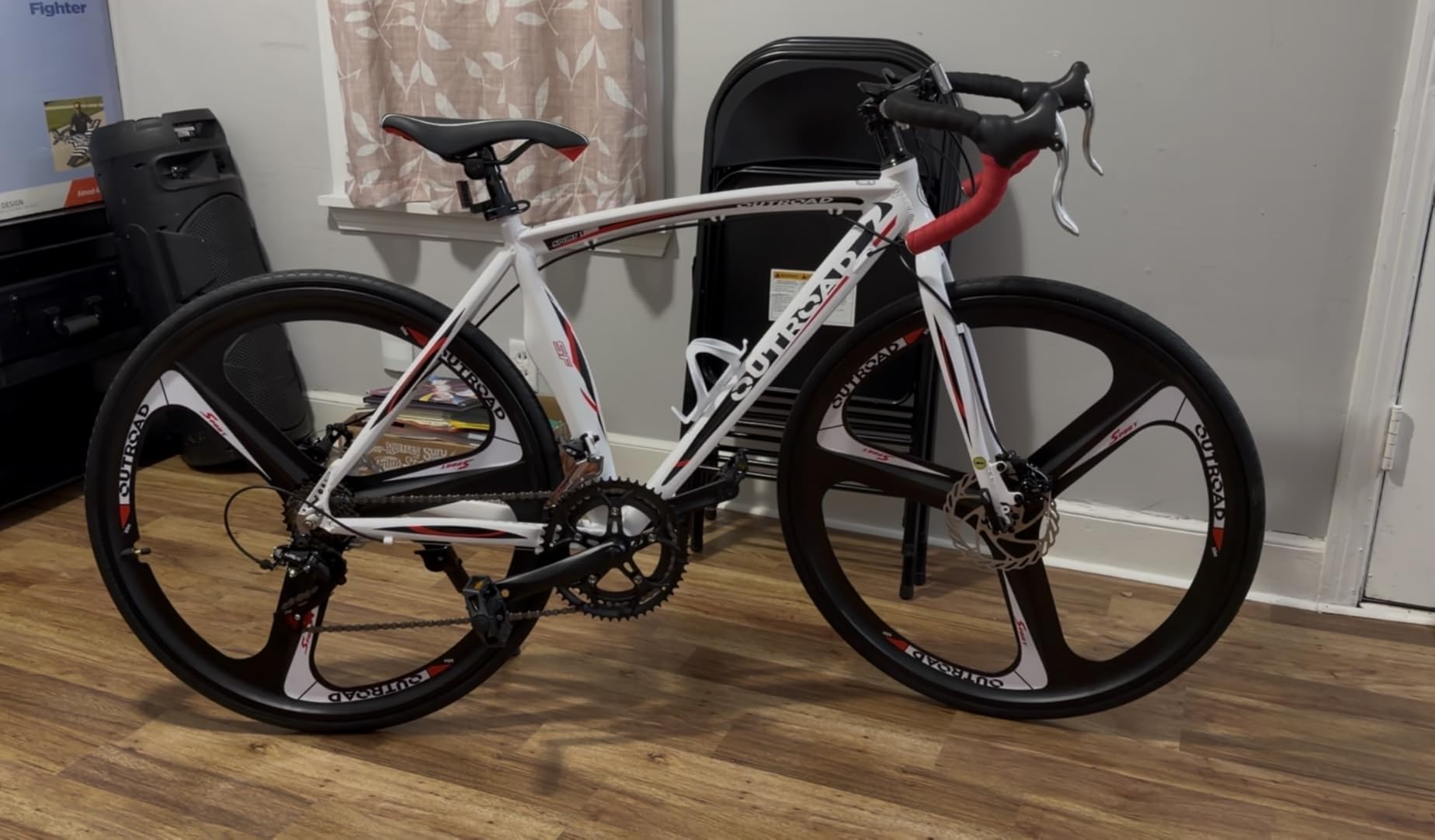
The frame is aerospace-grade aluminum alloy, which is lighter than the steel used in some budget bikes. The 14-speed drivetrain uses a twist grip shifter, which is a different interface than the trigger shifters on most other bikes in this guide. Some riders prefer twist shifters, others find them awkward. Weight capacity is 330lbs, which is higher than most bikes in this price range.
One consistent issue across reviews: the front tyre can hit the rider’s foot during tight turns. This is a geometry characteristic rather than a defect, and experienced riders learn to compensate by leaning the bike more in corners. Casual or leisure riders may find this unsettling, especially at low speeds.
Who this bike suits
First-time bike buyers or riders on a strict budget will find the Max4out an accessible entry point. The under-$200 price makes it possible to try road and mixed-terrain riding without a major financial commitment, and the aluminum frame is durable enough for years of regular use.
Experienced riders wanting a beater bike for commuting, errands, or rides where they don’t want to risk a more expensive bike will appreciate the value. The Max4out works well as a secondary bike that handles daily abuse without worry.
Where the Max4out falls short
Casual leisure riders or those new to cycling should consider a different option. The front tyre clearance issue and twist-grip shifting take some getting used to, and the bike’s handling characteristics favor riders who already know how to corner a road bike properly.
Riders planning long-distance mixed-terrain adventures should spend more for a dedicated gravel bike. The Max4out’s components, while functional, aren’t designed for high-mileage abuse, and the 14-speed drivetrain has a narrower range than the 20-24 speed setups on other bikes in this guide.
What Is an All-Road Bike and Why You Might Need One
An all-road bike is a drop-bar bicycle designed to handle both smooth tarmac and light off-road surfaces like gravel paths, fire roads, and forest tracks. The defining feature is tyre clearance, typically 35-45mm, which lets you run wider rubber than a traditional road bike while keeping the efficiency of drop bars and a lightweight frame.
Unlike a dedicated gravel bike, which often has aggressive geometry and even wider tyre clearance (up to 50mm+), an all-road bike leans more toward road-bike efficiency. The geometry is usually a touch more relaxed than a race bike but not as slack as a pure gravel rig. This balance makes all-road bikes ideal for riders who spend 60-80% of their time on pavement but want the freedom to detour onto unpaved surfaces.
The case for owning one is simple: most cyclists don’t actually need a separate road bike and gravel bike. An all-road bike handles club rides, commutes, weekend adventures, and bikepacking trips without compromise. If you’ve ever found yourself turning around because the road turned to gravel, an all-road bike solves that problem. The same goes for riders who want to explore rail-trails, forest service roads, or mixed-surface routes without owning two bikes.
Key Features to Look for in an All-Road Bike
Tyre clearance is the most important spec. Look for at least 35mm clearance, with 40mm being the sweet spot for true all-road capability. Anything less limits your off-road options, and anything more pushes the bike into gravel-bike territory. The bikes in this guide all clear 38-40mm tyres.
Disc brakes are non-negotiable for mixed-terrain riding. Hydraulic discs offer the best modulation and one-finger braking, but mechanical discs work fine at lower price points. Both perform far better than rim brakes in wet or muddy conditions.
Frame material matters for ride feel and weight. Carbon is lightest and absorbs vibration well but costs more. Aluminum is durable and affordable but transmits more road buzz. Steel offers the smoothest ride but adds weight. Titanium combines the best of both but commands premium prices.
Gearing is another key consideration. 1x (single chainring) drivetrains are simpler and reduce chain-drop risk, but 2x (double chainring) systems offer wider gear ranges. For mixed terrain with both steep climbs and fast descents, 2x is often the better choice. Triple chainrings are common on budget bikes and provide the lowest gears for loaded climbing.
Mounting points for racks, mudguards, and bottles expand the bike’s versatility. If you plan to commute year-round or do any bikepacking, look for a frame with multiple mounting options. Most bikes in this guide have at least two bottle cage mounts and rear rack mounts.
Frame Materials Compared for All-Road Riding
Carbon fiber dominates the premium end of the all-road market because it offers the best strength-to-weight ratio and can be engineered for specific ride characteristics. The SAVADECK and KABON bikes in this guide use T800 carbon, which is a mid-to-high modulus carbon that balances weight, stiffness, and compliance. Full carbon frames with carbon forks (as on those two models) provide the best vibration damping for long days on rough surfaces.
Aluminum is the workhorse of the budget and mid-range categories. The Tommaso Sentiero, Sterrata, and Siena all use aluminum frames, which are durable, affordable, and reasonably light. Aluminum frames tend to feel stiffer than carbon, transmitting more road buzz to the rider, but modern tube shapes and designs have narrowed the comfort gap significantly.
Steel is less common in new all-road bikes but has a devoted following for its ride quality. Steel frames flex just enough to absorb vibration without feeling sluggish, and they’re incredibly durable. The DEYGIA in this guide uses carbon steel, which adds weight but provides a comfortable, compliant ride for commuting.
Titanium is the dream material for many riders, combining the comfort of steel with the light weight of aluminum and the durability of both. However, titanium frames cost $3,000+ minimum, so they’re outside the scope of this budget-focused roundup.
1x vs 2x Drivetrains for Mixed Terrain
The 1x vs 2x debate comes down to priorities. 1x drivetrains use a single chainring paired with a wide-range cassette (often 11-42 or 10-50). They’re simpler, lighter, and reduce the risk of chain drops on rough terrain. The trade-off is gaps between gears, especially at the high end.
2x drivetrains use two chainrings paired with a smaller cassette range. They provide tighter gear spacing and a wider total range, which is useful for varied terrain. The trade-off is more complexity, slightly more weight, and the potential for front derailleur issues on rough surfaces.
For all-road riding with 60-80% pavement use, 2x is often the better choice because the tighter gear spacing matters on long road climbs and fast descents. The SAVADECK GRX400 and KABON both use 2x setups, while the SAVADECK U6000 uses a 1x with a wide-range 11-speed cassette.
Budget all-road bikes often use triple chainrings (3x) because they allow a wide gear range with cheaper components. The Tommaso Sentiero, Sterrata, and Siena all use triple chainrings. The trade-off is more shifting complexity and slightly more weight.
How to Choose the Right All-Road Bike for Your Riding
Start by honestly assessing where you ride. If 80%+ of your riding is paved with occasional gravel detours, an endurance-leaning all-road bike with 35-38mm clearance is plenty. If you regularly venture onto rough fire roads or want to do light bikepacking, look for 40mm+ clearance and more relaxed geometry.
Budget matters, but consider total cost of ownership. A $700 bike that needs immediate upgrades (saddle, pedals, tyres) can end up costing more than a $1,000 bike that arrives complete. The Tommaso models in this guide are genuinely capable at their price points, while the SAVADECK bikes offer premium specs for mid-range money.
Component quality affects long-term satisfaction more than frame material at the same price point. A bike with a Claris drivetrain and mechanical discs will feel different after 1,000 miles than one with GRX and hydraulics. Prioritize the parts you touch most: shifters, brakes, and contact points (saddle, bars, grips).
Fit is non-negotiable. A wrong-sized bike will never feel right regardless of how good the components are. Check each brand’s sizing chart carefully, and if possible, visit a local shop for a professional fit before ordering online. SAVADECK’s proactive size verification is one reason their bikes arrive with fewer sizing complaints.
Frequently Asked Questions
What is the best bike for both gravel and road riding?
An all-road bike is specifically designed for this purpose, offering tyre clearance of 35-45mm, relaxed geometry for stability, and versatile gearing. Our top picks include the SAVADECK Carbon Gravel GRX400 for premium performance, the Tommaso Sentiero for value, and the KABON for the lightest build. All three handle smooth tarmac and light gravel trails with confidence.
What is the difference between gravel and all-road bikes?
Gravel bikes prioritize off-road capability with wider tyre clearance (often 45-50mm), slacker geometry, and often suspension or dropper post compatibility. All-road bikes lean toward road-bike efficiency with clearance for 35-45mm tyres and geometry closer to endurance road bikes. Choose gravel for serious off-road use; choose all-road if you split time roughly 60-80% on pavement.
What tyre width should I run for mixed terrain?
For mostly paved riding with occasional gravel, 32-35mm tyres offer the best efficiency. For a 50/50 split, 38-40mm is the sweet spot. For mostly gravel with some pavement, 42-45mm provides better grip and comfort. All bikes in this guide clear at least 38mm, with most fitting 40mm tyres comfortably. Wider tyres at lower pressures also improve comfort significantly.
Do I need 1x or 2x gearing for mixed terrain?
Both work well, but for different reasons. 1x drivetrains are simpler, lighter, and reduce chain-drop risk on rough terrain, but have wider gear gaps. 2x drivetrains offer tighter gear spacing and wider total range, which matters on long road climbs. For 60-80% pavement use, 2x is often preferred. For more aggressive off-road riding, 1x is increasingly popular.
Are carbon frames durable enough for mixed terrain riding?
Yes, modern carbon frames are more than durable enough for all-road and gravel use. T800 and higher modulus carbons used in bikes like the SAVADECK and KABON models handle rough surfaces without issue, provided you avoid direct impacts to the frame. Carbon’s fatigue life is excellent, and many riders log tens of thousands of miles on carbon all-road bikes without frame issues.
Final Verdict: Which All-Road Bike Should You Buy in 2026?
After comparing all eight bikes in this guide, our top pick for the best all road bikes for mixed terrain in 2026 is the SAVADECK Carbon Gravel GRX400. The combination of full T800 carbon construction, Shimano GRX400 gravel groupset, hydraulic disc brakes, and a 10.4kg complete weight at $1,699 is hard to beat. It’s the bike we’d buy with our own money.
If budget is the primary concern, the Tommaso Sentiero delivers genuine all-road capability at $749 with the lifetime warranty backing it up. For riders wanting premium shifting, the SAVADECK U6000 at $1,299 is a step up. Lightweight seekers should look at the KABON at just 8.7kg complete. Commuters on a tight budget will find the DEYGIA at $218 or the Max4out at $199 capable daily riders.
The best all road bikes for mixed terrain all share the same core traits: wide tyre clearance, disc brakes, and geometry that balances efficiency with stability. Any bike in this guide will handle the transition from pavement to gravel confidently. Choose based on your budget, weight priorities, and how much off-road riding you actually plan to do. Whichever you pick, you’ll have a bike that opens up routes you’ve been afraid to explore on a traditional road bike.