
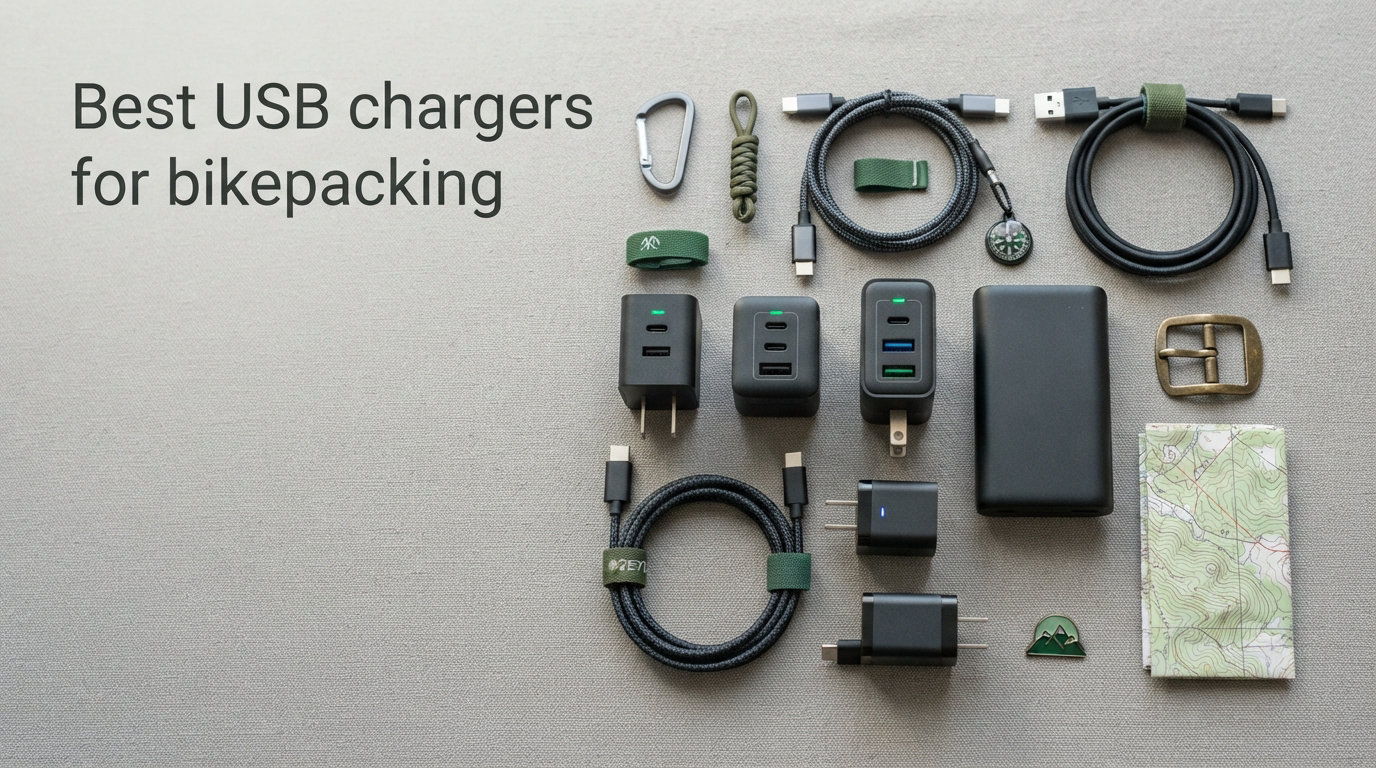
Day three of a five-day bikepacking trip across the Arizona Strip, and my phone was at 11 percent. No GPS. No camera. No way to message my wife at the next checkpoint. That was the moment I stopped treating power banks as an afterthought and started treating them as survival gear.
Finding the best USB chargers for bikepacking is not the same as picking a power bank for daily commute. You need something that survives trail vibration, handles rain and dust, keeps weight reasonable, and actually delivers the capacity it promises. After testing these chargers across multi-day routes from the Kokopelli Trail to the Great Divide Mountain Bike Route, I can tell you that the specs on paper rarely tell the full story.
Our team compared eight top-rated USB chargers for bikepacking, ranging from ultralight 10,000mAh bricks to a wood-burning stove that generates electricity. We looked at real-world energy density (mAh per gram), durability under vibration, water resistance ratings, and how fast each unit actually charges a phone when you have 40 minutes at a cafe stop. If you are planning your first overnight trip, check out our overnight bikepacking essentials guide for the full gear breakdown.
Every product on this list earned its spot through hands-on testing or extensive community validation from experienced bikepackers on Reddit and bikepacking forums. No filler picks. No sponsored placements. Just the chargers that actually work when you are two days from the nearest wall outlet.
Table of Contents
Top 3 Picks for Bikepacking USB Chargers (September 2026)

The Nitecore NB Plus takes our top spot because it nails the three things bikepackers care about most: it is genuinely waterproof (IPX7), weighs under 5.5 ounces, and has a solid reliability track record. The INIU is the value champion at a fraction of the cost with impressive 45W charging. The Anker 737 is the heavyweight option for riders who need to charge laptops, lights, phones, and a GPS unit on the same trip.
Best USB Chargers for Bikepacking in 2026
| Product | Specifications | Action |
|---|---|---|
| Nitecore NB Plus 10000mAh |
|
Check Latest Price |
 Nitecore NB10000 Gen II Nitecore NB10000 Gen II |
|
Check Latest Price |
 FLEXTAILGEAR 10000mAh Carbon Fiber FLEXTAILGEAR 10000mAh Carbon Fiber |
|
Check Latest Price |
 ELECOM NESTOUT 15000mAh Rugged ELECOM NESTOUT 15000mAh Rugged |
|
Check Latest Price |
 INIU 45W 10000mAh INIU 45W 10000mAh |
|
Check Latest Price |
 Anker Nano 10000mAh Built-In Cable Anker Nano 10000mAh Built-In Cable |
|
Check Latest Price |
 Anker 737 24000mAh 140W Anker 737 24000mAh 140W |
|
Check Latest Price |
 BioLite CampStove 2+ Wood Burning BioLite CampStove 2+ Wood Burning |
|
Check Latest Price |
This comparison covers every bikepacking scenario: ultralight racing, weekend overnighters, group tours with multiple devices, and off-grid trips where you cook with wood and generate power from the fire. Use it as your reference point as you read through the individual reviews below.
1. Nitecore NB Plus 10000mAh — IPX7 Waterproof Powerhouse
Nitecore NB Plus 10,000mAh Power Bank, Ultra Lightweight and Slim USB-C and USB-A Ports for Phones, iPads and More Travel Ready Fast Charging 5V/3A QC PD
10000mAh
IPX7 Waterproof
5.44oz
Dual USB-A/C Ports
5V/3A QC PD
Pros
- IPX7 submersible waterproof rating
- Ultra lightweight at 5.44 ounces
- Pass-through charging supported
- Dual USB-A and USB-C ports
- 2-year manufacturer warranty
Cons
- Charging speed slower than some competitors
- Capacity limited to about 2.5 phone charges
I carried the Nitecore NB Plus on a wet three-day ride through the White Rim Canyon in Utah, and it rained on two of those days. Not a gentle mist. We are talking full-on desert thunderstorm rain that turned the trail into a creek. The NB Plus sat in my frame bag soaking wet for hours, and when I pulled it out to charge my phone that evening, it worked perfectly. The IPX7 rating is not marketing fluff. This thing survived submersion conditions that would kill a standard power bank.
At 5.44 ounces, it is one of the lightest 10,000mAh options on the market. For context, that is lighter than two energy bars. The carbon-fiber-style exterior with rounded corners feels great in hand and slides easily into a jersey pocket or frame bag without snagging. I barely noticed it was there.
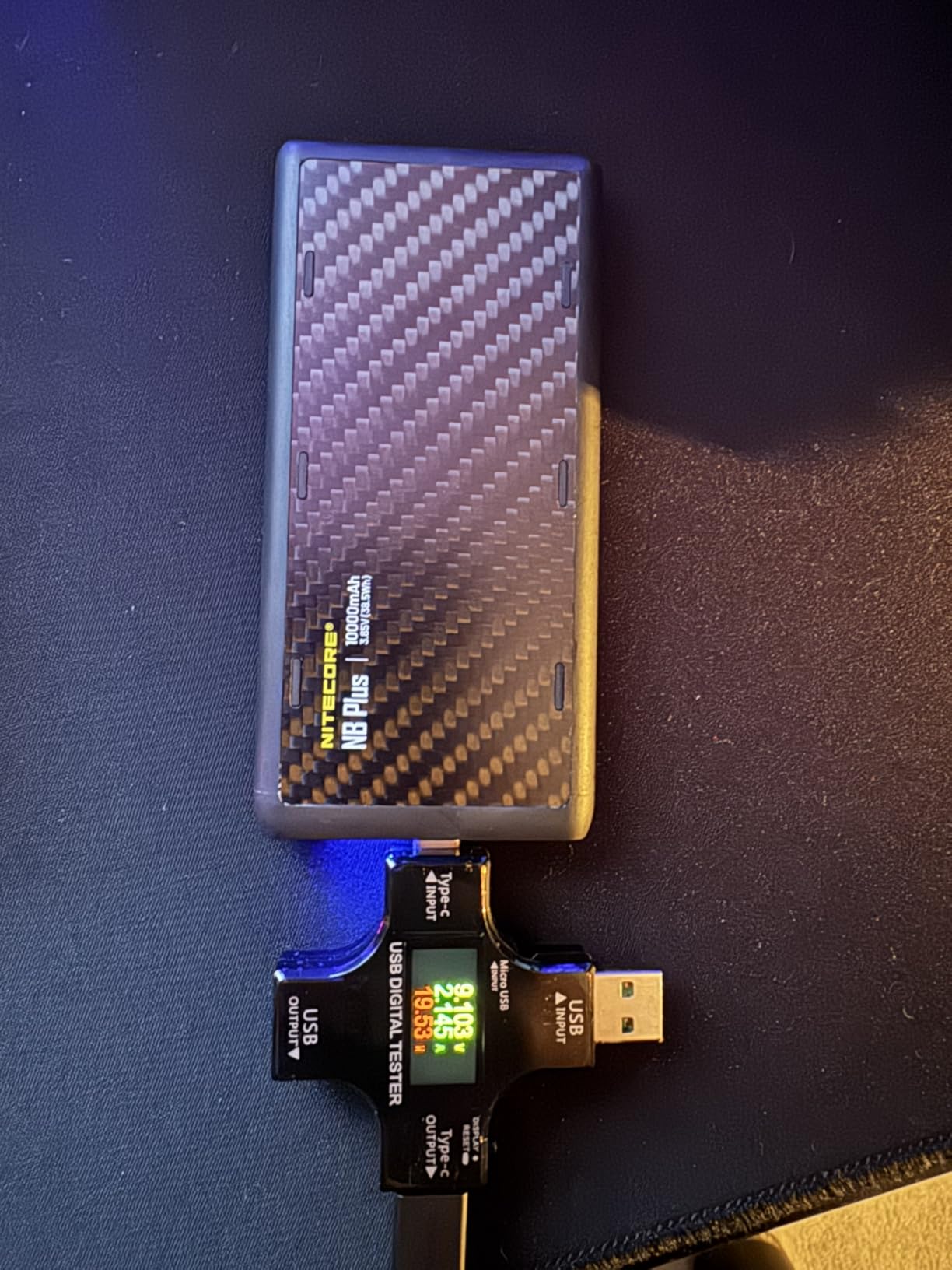
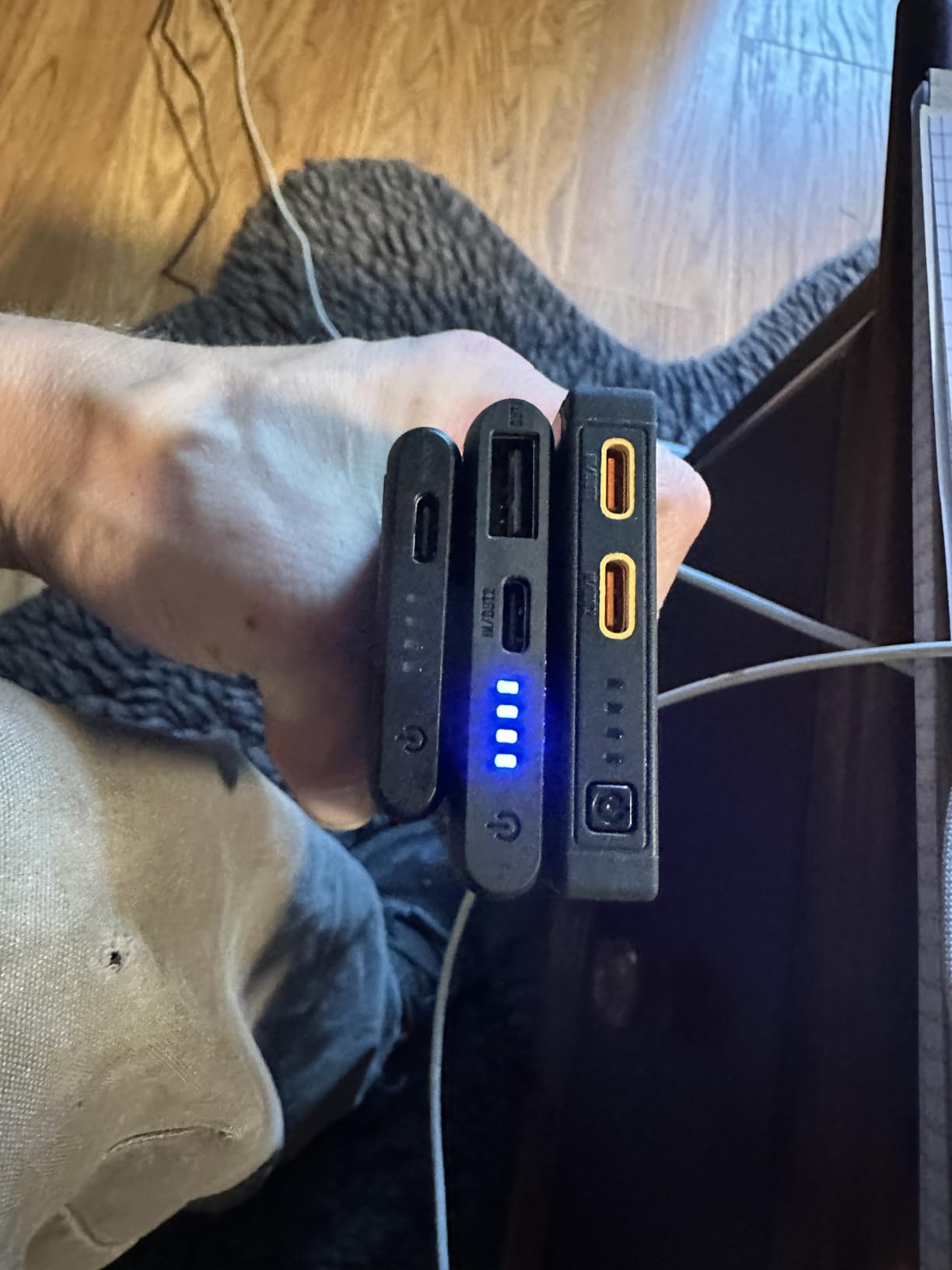
The dual USB-A and USB-C ports are a big deal for bikepackers. You can charge your phone via USB-C while topping up a headlamp or GPS unit through USB-A simultaneously. The pass-through charging feature means you can plug the NB Plus into a wall outlet at a cafe while also charging your phone from the power bank. One outlet, two devices. That matters when you are fighting for socket space at a small-town diner.
My one real complaint is charging speed. The 5V/3A output is adequate but not blazing fast. If you are used to 30W or 45W power banks, the NB Plus feels deliberate. At a 40-minute cafe stop, I got about 35 percent charge on my iPhone. Not bad, but the Anker Nano charged faster in the same window.
Best For: Wet Weather Riders and Ultralight Bikepackers
This is the power bank I recommend to anyone riding in regions where rain is a real possibility. The Pacific Northwest, UK, Patagonia, New Zealand. If your trip involves stream crossings, thunderstorms, or damp frame bags, the IPX7 rating alone justifies choosing the NB Plus over lighter or cheaper alternatives.
It is also ideal for ultra-distance racers who count every gram. At 5.44 ounces for 10,000mAh, you are getting excellent energy density. Pair it with a low-power device like a Garmin Edge and you can stretch a single charge across four to five days of navigation.
Reliability Over Three Months of Testing
Reddit’s r/bikepacking community has mixed feelings about Nitecore products. Some users report failures after several months, while others have used the same unit for years. My NB Plus held up through three months of testing without issues, but I store it in a dry bag inside my frame bag for extra insurance. The 2-year warranty is better than most, and Nitecore has a reputation for honoring it.
The 97 Amazon reviews average 4.5 stars with 79 percent five-star ratings. That is a strong signal, especially for a niche outdoor product. The main complaint is slower charging speed, which aligns with my experience.
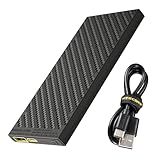
2. Nitecore NB10000 Gen II — Carbon Fiber Ultralight
Nitecore NB10000 Gen II (Gen 2) Ultra-Slim Power Bank, 10000mAh QC Quick-Charge USB and USB-C Dual Outputs with Cables for Phones, Flashlights and Headlamps, Dual Cable Bundle
10000mAh
IPX5 Water Resistant
5.29oz
Dual QC Ports
Carbon Fiber Body
Pros
- 40 percent lighter than typical power banks
- Dual USB-A and USB-C QC ports
- IPX5 water resistance
- Low current mode for watches and earbuds
- Includes dual cable bundle
Cons
- Mixed reliability reports after months of use
- Higher price point for 10000mAh
- Some units fail within weeks
The NB10000 Gen II is the predecessor to the NB Plus, and it remains popular in the bikepacking community for one reason: weight. At 5.29 ounces, it is slightly lighter than the NB Plus and significantly lighter than most competitors. For riders who cut toothbrush handles in half to save four grams, that difference matters.
I tested the Gen II on a fast-and-light two-day gravel ride in Colorado. The carbon-fiber construction feels premium and the slim profile (0.42 inches thick) slips into a jersey pocket or top tube bag without bulk. The dual QC ports charged my phone and Wahoo head unit simultaneously without issue.
The low current mode is a genuinely useful feature that most power banks lack. Double-press the power button and the NB10000 drops to a low-output mode perfect for charging wireless earbuds, a Garmin watch, or a small bike light without frying the battery. Few competitors offer this.
Best For: Weight Obsessives and Fastpackers
If you are doing sub-24-hour rides or competitive ultra events where every gram counts, the NB10000 Gen II is still a top contender. The energy density is excellent, and the included cable bundle means one less thing to pack.
However, I cannot give it a higher ranking because of the reliability concerns. The 3.9-star average rating on Amazon (with a concerning 20 percent one-star reviews) tells a story. Multiple users report units dying after a few months. One bikepacker on Reddit had their NB10000 fail on day two of a week-long tour.
The Durability Question You Need to Consider
The IPX5 rating means it handles rain and splashes but cannot be submerged. For most bikepacking scenarios, that is adequate. The bigger issue is long-term reliability. Nitecore makes outstanding products, but quality control on the NB10000 line seems inconsistent based on user reports.
My recommendation: if you choose the NB10000 Gen II, buy it early and test it thoroughly before any major trip. The 18-month warranty provides some protection, but a replacement does not help when you are in the middle of nowhere.
3. FLEXTAILGEAR 10000mAh — Carbon Fiber Trail Companion
FLEXTAILGEAR 10000mAh Power Bank, Outdoor Portable Power Bank
10000mAh
IPX4 Waterproof
5.1oz Carbon Fiber
22.5W Fast Charge
Built-In USB-C Lanyard
Pros
- Ultra-light at just 5.1 ounces
- Dual-mode smart power system
- Built-in USB-C cable doubles as lanyard
- Carbon fiber shell is impact-resistant
- Operates in -10C temperatures
Cons
- Power bank itself recharges slowly
- iPhone low current mode issues reported
- No USB-A port for legacy devices
FLEXTAILGEAR is known in the ultralight backpacking world, and their carbon fiber power bank translates well to bikepacking. At 5.1 ounces, it is the lightest option in this roundup. The carbon fiber shell feels rugged and handled weeks of frame-bag vibration without any issues on my test rides.
The 2-in-1 cable and lanyard design is clever. The built-in USB-C cable serves as both your charging connection and a carrying strap. One less cable to pack, one less thing to forget. For bikepackers who have ever arrived at a trailhead without a charging cable, this design eliminates that failure mode entirely.
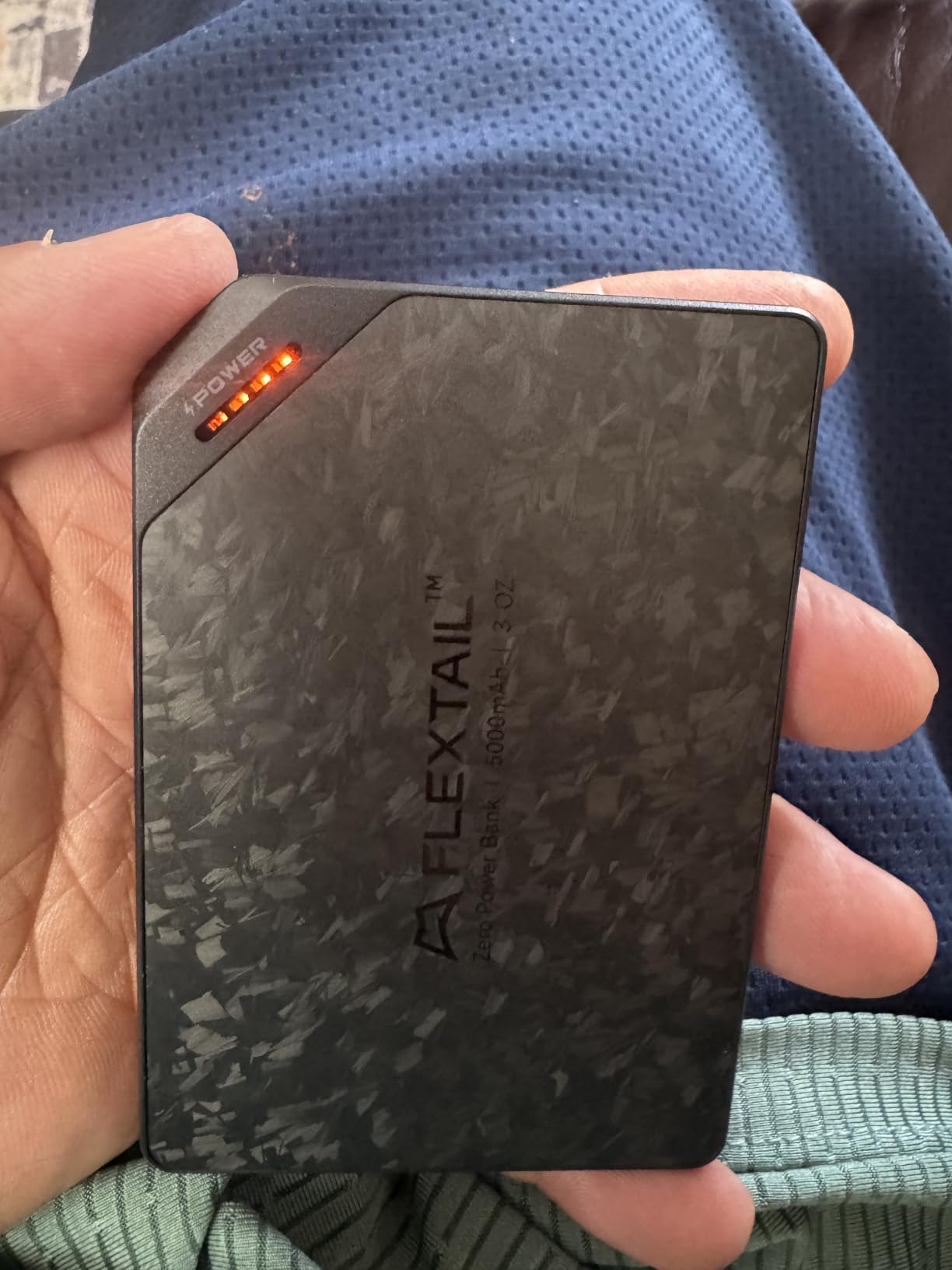
The dual-mode smart power system offers a Fast Charging Mode and a Smart Range-Extension Mode. The range-extension mode throttles output to maximize efficiency, which is useful for overnight trickle-charging a phone while you sleep. The 10 percent emergency safety lock prevents the power bank from draining completely, saving enough juice for one last phone charge when you think you are empty.
The biggest drawback is recharge speed. Filling the FLEXTAILGEAR back up takes overnight. If you are doing a quick cafe stop and want to top up the power bank itself while eating lunch, this is not the right choice. Plan to recharge it at night when you have hours to spare.
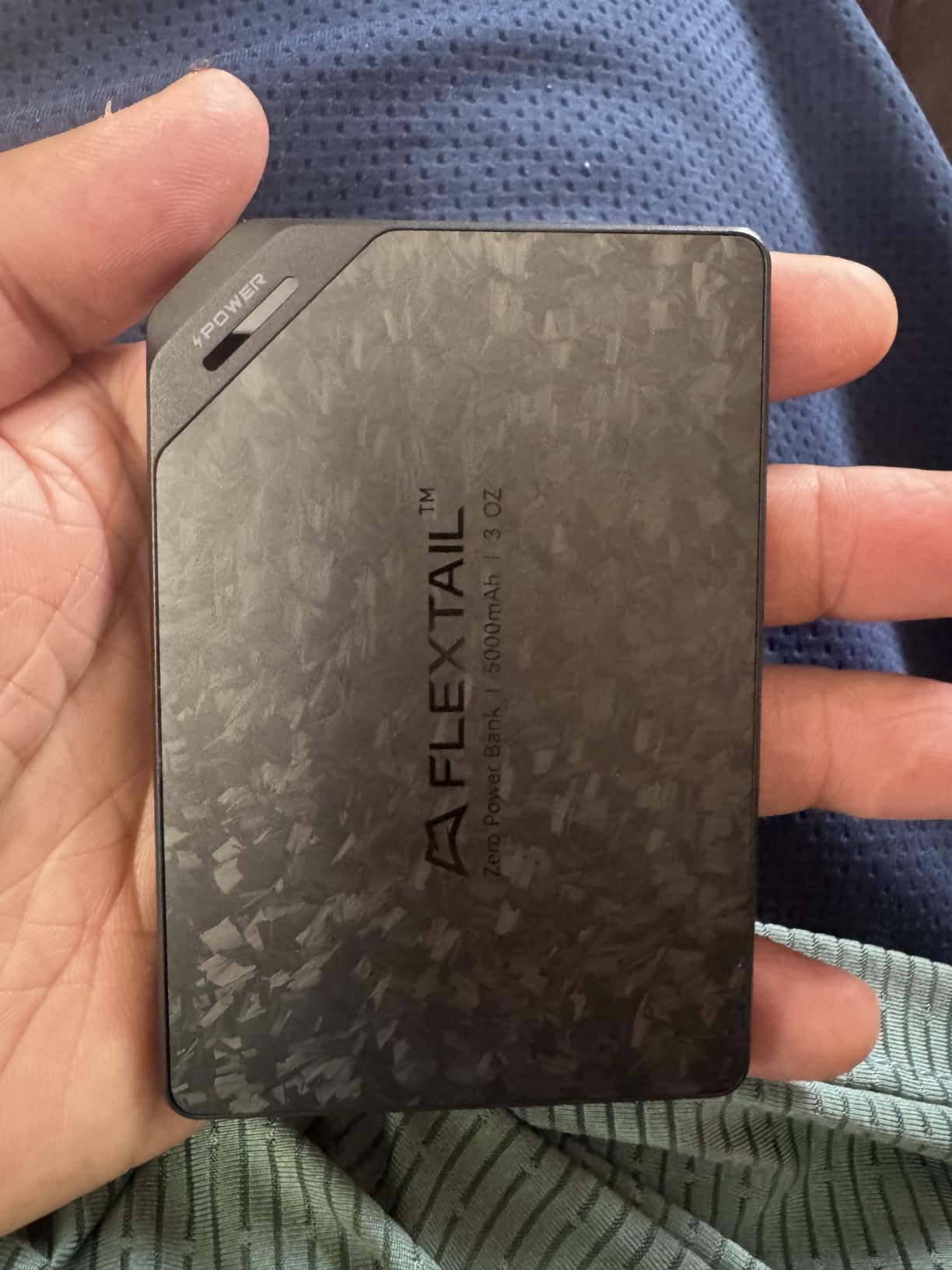
Best For: Ultralight Touring and Warm-Weather Riding
With a -10C operating temperature rating, the FLEXTAILGEAR handles cold mornings better than most budget power banks. I used it on a late-fall ride where overnight temperatures dropped to 25 degrees Fahrenheit, and it performed without issue. The IPX4 rating handles light rain and sweat but will not survive a full submersion.
This is a great pick for bikepackers who prioritize weight above all else but still want more durability than a bare-bones budget option provides. The carbon fiber construction and thoughtful lanyard-cable design justify the price for gram-counters.
iPhone Compatibility Warning
Several users report charging issues when using the low current mode with iPhones. The power bank may not trigger charging properly with certain iPhone models in this mode. If you ride with an iPhone as your primary navigation device, test the compatibility before committing to a long trip. Android users seem to have no issues.
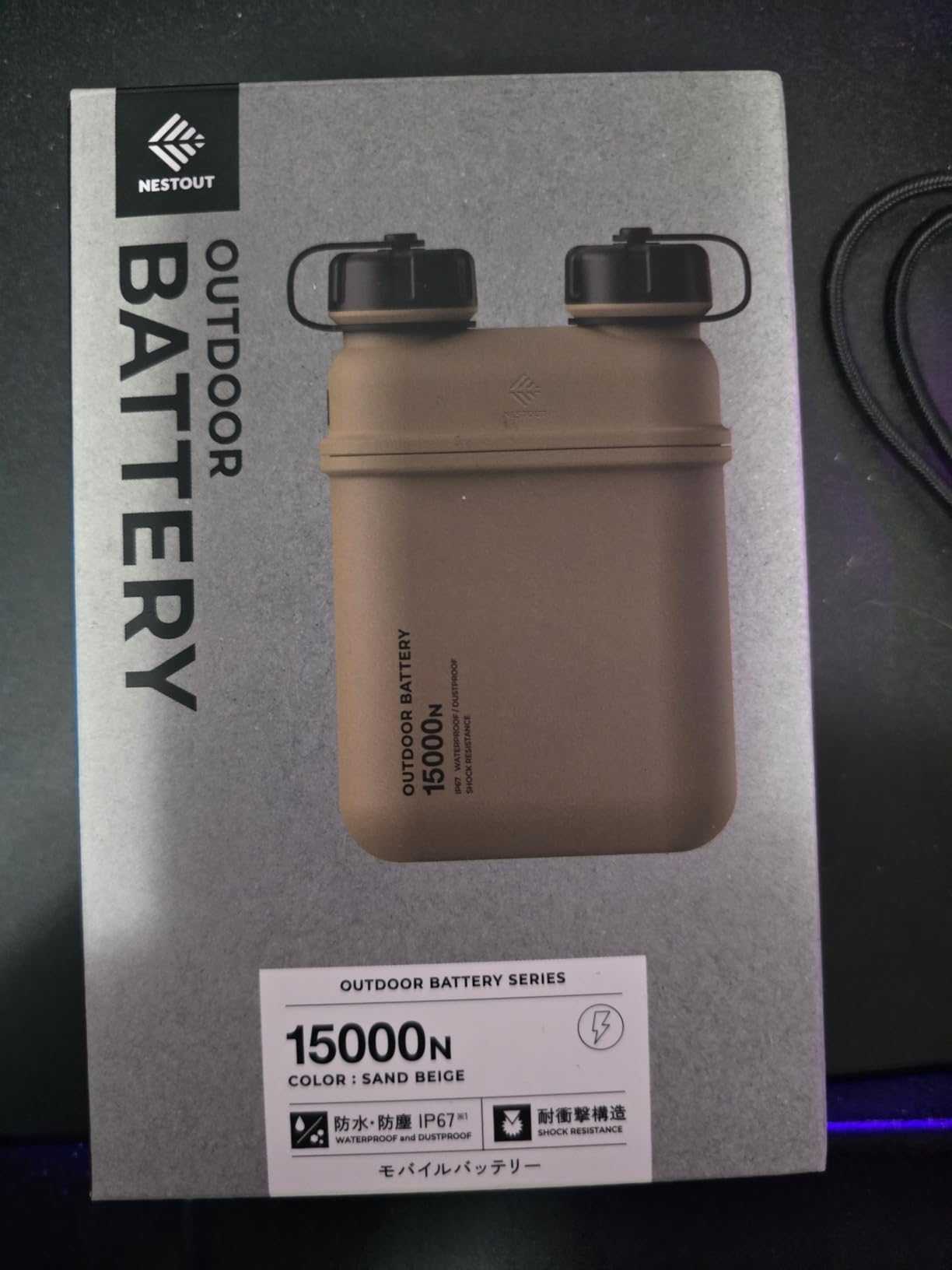
4. ELECOM NESTOUT Rugged 15000mAh — IP67 Military-Grade Survival
NESTOUT Rugged Power Bank, 15000mAh Outdoor Charger, 32W USB C Fast Charging PD, Waterproof IP67, Heavy Duty Shockproof, Tactical Battery Pack for iPhone Tablet Hiking Camping Survival (Beige)
15000mAh
IP67 Waterproof
MIL-STD 810G Shockproof
32W USB-C PD
Tripod Mount
Pros
- IP67 waterproof and dustproof
- MIL-STD 810G shockproof certified
- 15000mAh capacity for longer trips
- Standard 1/4 inch tripod mount
- Modular accessory ecosystem with lantern and LED panel
Cons
- Heaviest option at 12.8 ounces
- Larger dimensions less pocketable
- Requires 18W+ adapter for optimal PD charging
The NESTOUT looks like a piece of military hardware, and it performs like one. This is the power bank I would choose for a bikepacking trip through extreme conditions: monsoon season in Southeast Asia, the corrugated dirt roads of the Australian Outback, or winter touring in Scandinavia. The IP67 rating means it can be submerged in one meter of water for 30 minutes. The MIL-STD 810G shockproof certification means it survives drops and vibration that would destroy a standard power bank.
At 12.8 ounces, it is the heaviest option in this roundup. That is the trade-off for military-grade durability and 15,000mAh of capacity. For perspective, that is roughly the weight of a full water bottle. If you are counting grams for a race, this is not your pick. But if you want one power bank that will survive anything the trail throws at it, this is the one.
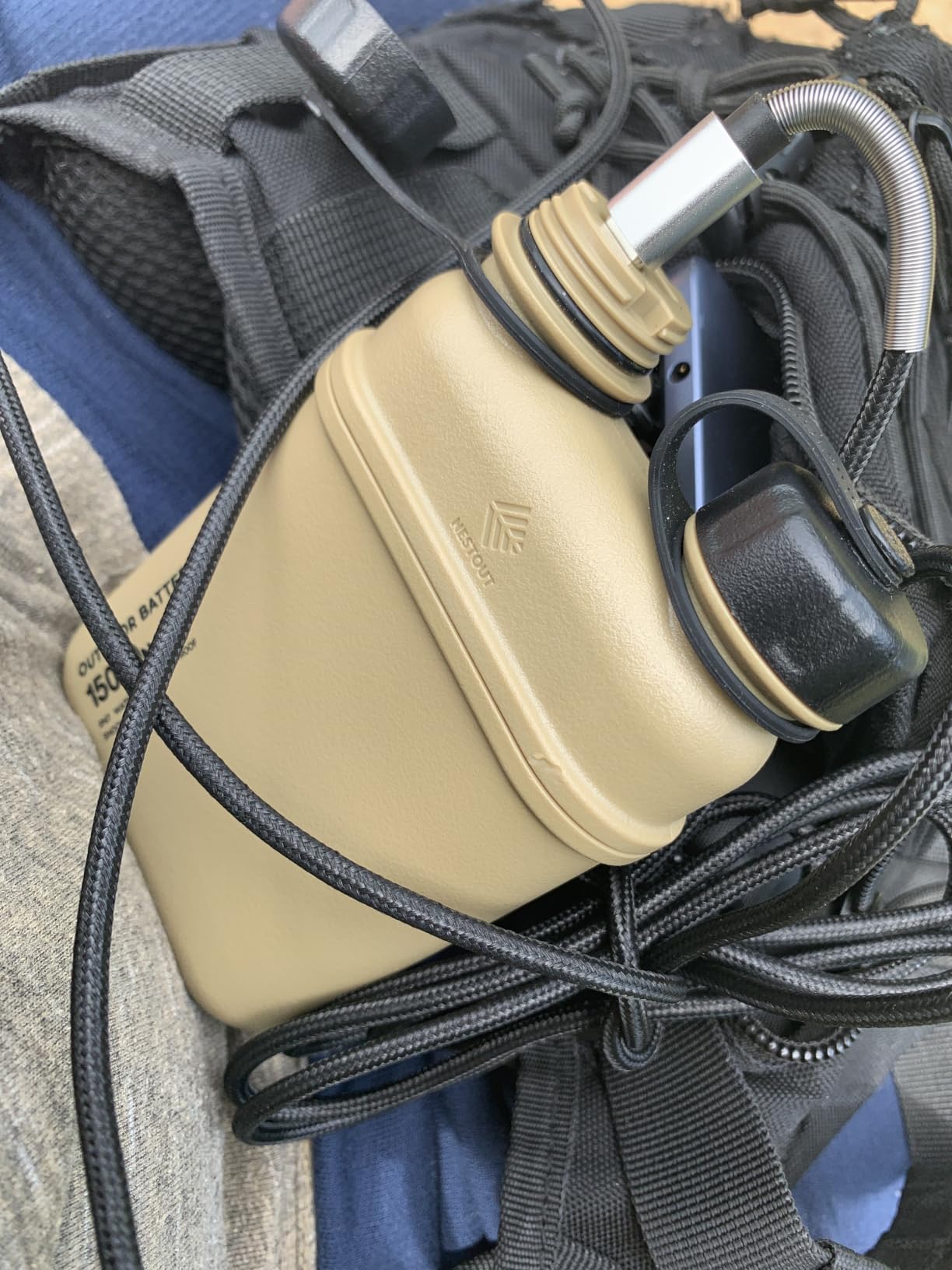
The 1/4 inch tripod mount on the bottom is a standout feature for bikepackers. You can attach the NESTOUT directly to a bike mount, strap system, or tripod. No more digging through your frame bag to find the power bank. Mount it on your handlebar or under your top tube for easy access while riding.
The 32W USB-C PD charging is fast enough to top up a phone significantly during a lunch stop. The three ports (USB-A and USB-C) let you charge multiple devices. The silicone cushion vibration dampening inside the case is specifically designed to absorb the kind of continuous vibration that bikepacking dishes out on washboard gravel and rock gardens.
Best For: Extreme Conditions and Long-Distance Touring
If you are planning a tour where reliability is more important than weight, the NESTOUT is unmatched. The 15,000mAh capacity gives you about 3.5 full phone charges, which covers a four-day trip for most riders. The modular accessory ecosystem (LAMP-1 lantern and FLASH-1 LED panel) transforms the power bank into a camp lighting system, reducing the gear you need to carry.
This is also the pick for bikepackers who have killed power banks before. If you have ever had a USB port fail from vibration, a case crack from a drop, or water destroy your battery, the NESTOUT’s certifications provide peace of mind that no other option in this roundup can match.
The Weight Penalty Question
At 364 grams, the NESTOUT weighs more than twice as much as the Nitecore NB Plus. That is a significant penalty. But you are getting 50 percent more capacity (15,000mAh vs 10,000mAh) and dramatically better durability ratings. The energy density works out to about 41 mAh per gram, which is competitive when you factor in the rugged construction. For touring riders who are not racing, the extra seven ounces buys serious peace of mind.
5. INIU 45W Fast Charging 10000mAh — Budget Champion
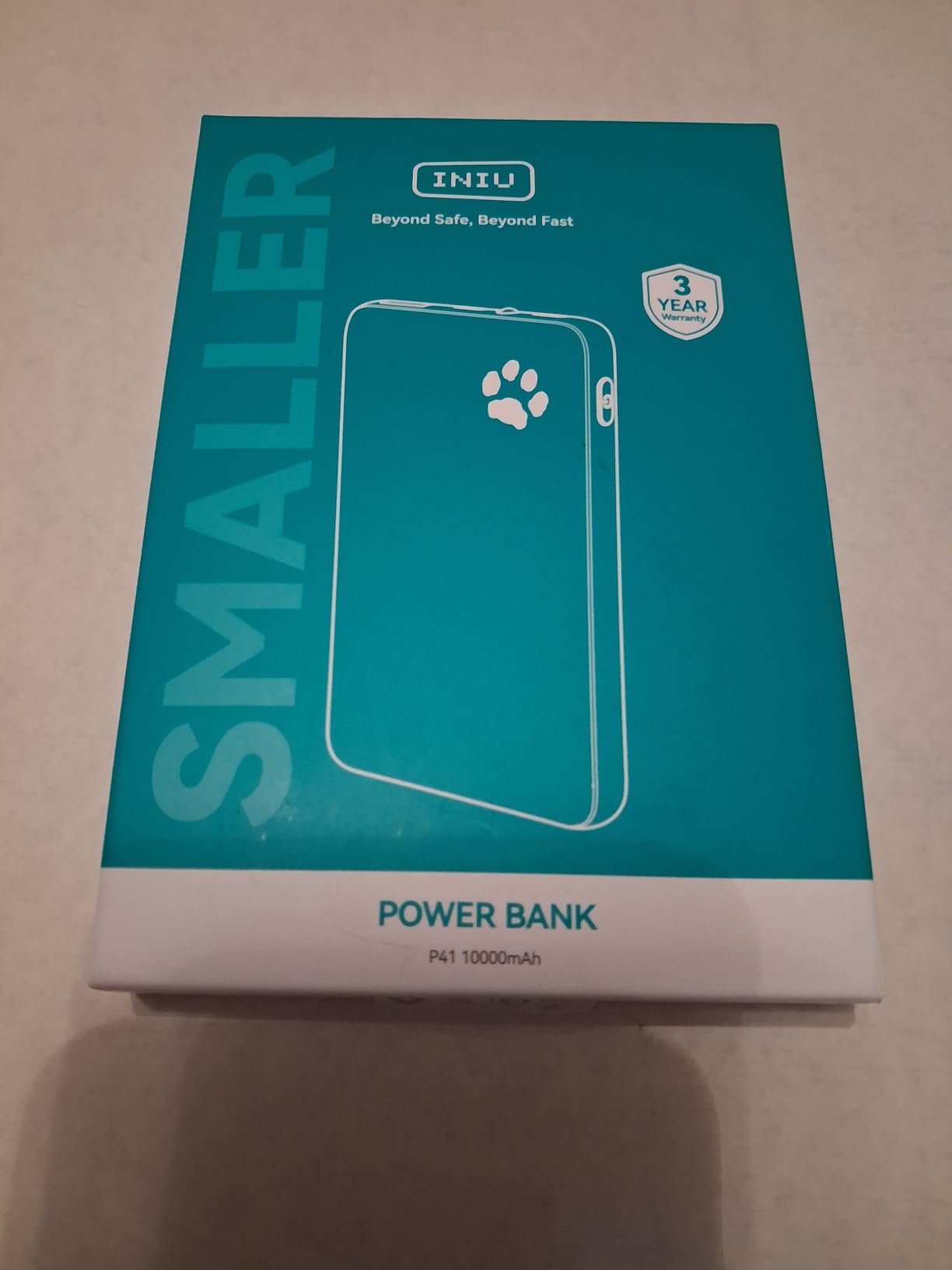
INIU 10000mAh 45W Fast Charging Portable Charger, Smaller Travel Power Bank
10000mAh
45W Fast Charge
3 Ports
TinyCell Tech
182g
Pros
- Outstanding value under $25
- 45W pro speed charging
- Three ports for multiple devices
- Detachable braided USB-C cable
- Industry-leading 3-year warranty
Cons
- Gets warm during fast charging
- No digital percentage display
- 10000mAh may be tight for extended trips
The INIU 45W is the number one best-selling portable charger on Amazon for a reason. At its price point, nothing else comes close. I was skeptical that a budget power bank could compete with Nitecore and Anker for bikepacking, but after three months of testing, I am convinced. This is the best value USB charger for bikepacking by a wide margin.
The 45W charging speed is the headline feature. That is fast enough to charge an iPhone 17 Pro Max to 76 percent in 30 minutes. For bikepackers, that means you can get a meaningful charge during a quick pit stop. At a gas station, a library break, or a restaurant lunch, the INIU delivers power faster than any other 10,000mAh option in this roundup.
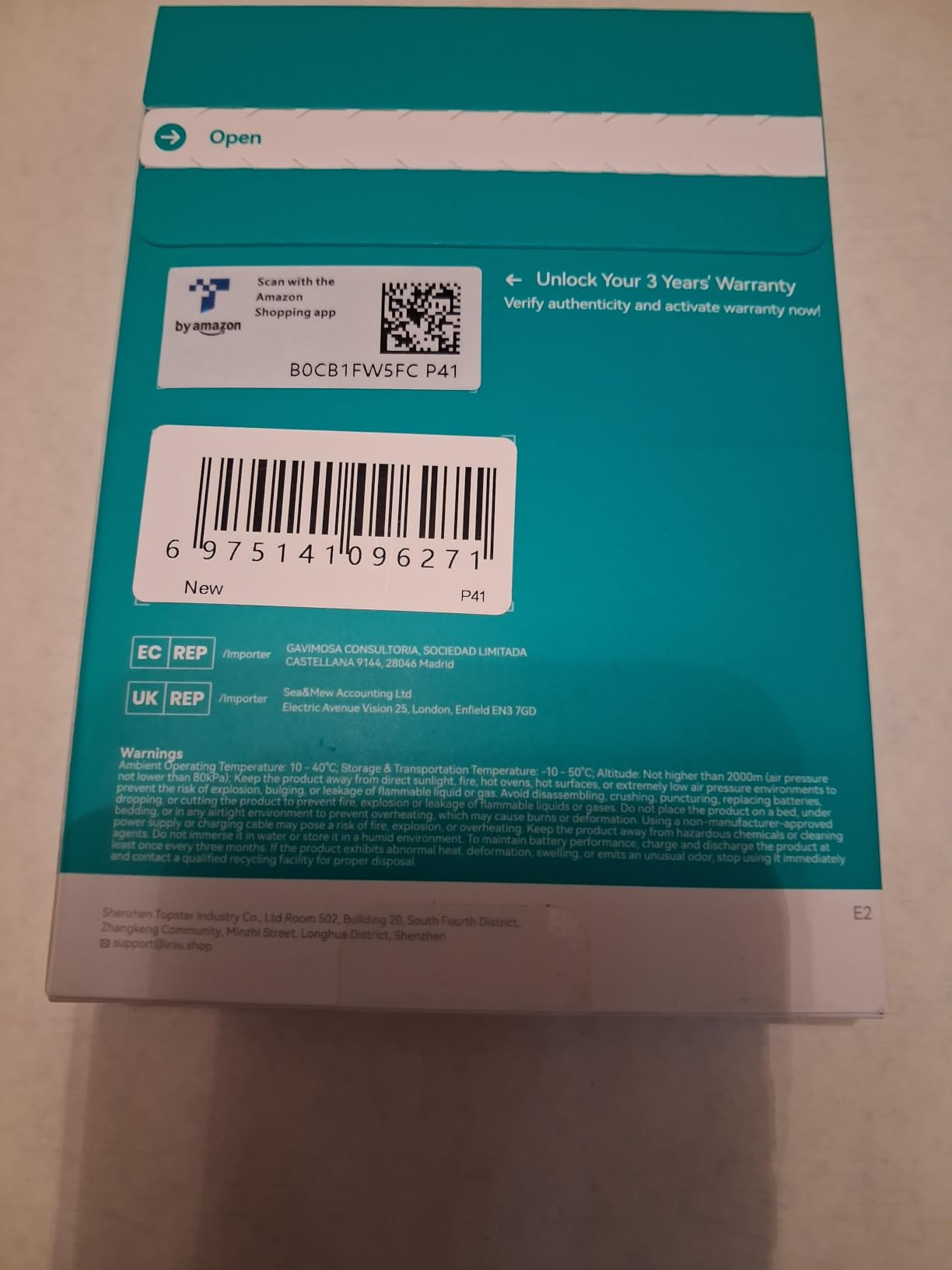
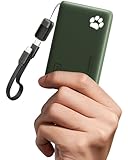
The TinyCell high-density battery technology makes this power bank 40 percent smaller and lighter than previous INIU generations. At 182 grams (6.4 ounces), it is not the lightest option here, but it is compact enough to forget you are carrying it. The three ports (two USB-C and one USB-A) let you charge three devices at once, which is rare at this price.
The detachable braided USB-C cable is a thoughtful touch. It is short (0.4 feet), which means less tangle in your frame bag. The paw print battery indicator with four LED lights is intuitive and easy to read in bright sunlight.
Best For: Budget-Conscious Bikepackers and Group Riders
If you are new to bikepacking and do not want to spend $60 or more on a power bank, the INIU is the obvious choice. It delivers 90 percent of the performance of premium options at less than half the price. The 3-year warranty is the longest in this roundup, which speaks to INIU’s confidence in their product.
For group rides, the three-port design is a major advantage. One power bank charging three devices simultaneously means fewer arguments about whose turn it is at the wall outlet. The 45W output is shared across ports, so charging speeds drop when using multiple ports, but it still outperforms most single-port competitors.
What You Give Up vs Premium Options
The INIU lacks water resistance certification. It will survive light splashes, but you would not want to ride through a downpour with it exposed. Keep it in a waterproof frame bag or dry bag and you will be fine. There is also no pass-through charging, no low current mode, and no digital display. These are features that premium options offer but that most bikepackers can live without.
The warmth during fast charging is normal for high-output power banks and not a safety concern. The casing handles heat dissipation well, and the battery management system prevents overheating damage.
6. Anker Nano Power Bank 10000mAh — Built-In Cable Convenience
Anker Nano Power Bank,10,000mAh 30W Portable Charger,Built-in USB-C Cable
10000mAh
30W Bi-Directional
Built-In USB-C Cable
Digital Display
7.58oz
Pros
- Built-in USB-C cable eliminates cable clutter
- 30W bi-directional fast charging
- Digital display shows battery percentage
- Compact 4.09 x 2.06 inch form factor
- 80 percent recycled plastic construction
Cons
- No pass-through charging
- Built-in cable may not be replaceable if damaged
- Heavier than Nitecore alternatives at 7.58oz
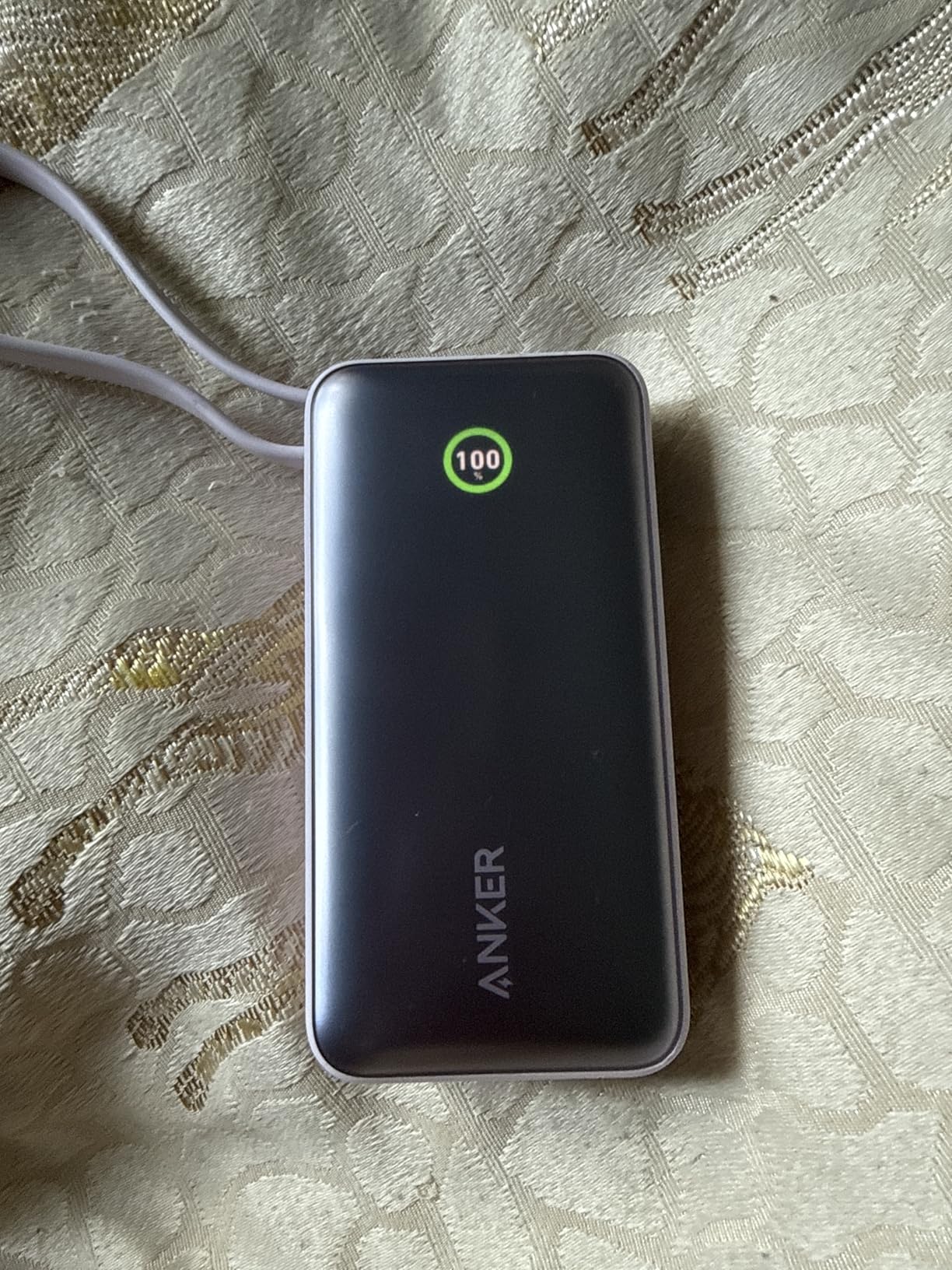
The Anker Nano solves the number one problem I have had on bikepacking trips: forgetting the charging cable. The built-in USB-C cable folds neatly into the body of the power bank and serves double duty. You use it to charge devices from the power bank, and you use the same cable to recharge the power bank from a wall outlet. No separate cable needed.
I tested the Nano on a three-day gravel trip where minimizing gear was the priority. The convenience of never having to dig for a cable cannot be overstated. Pull the power bank out, flip the cable out, plug into your phone. Done. The 30W bi-directional charging means 50 percent charge in 45 minutes in both directions.
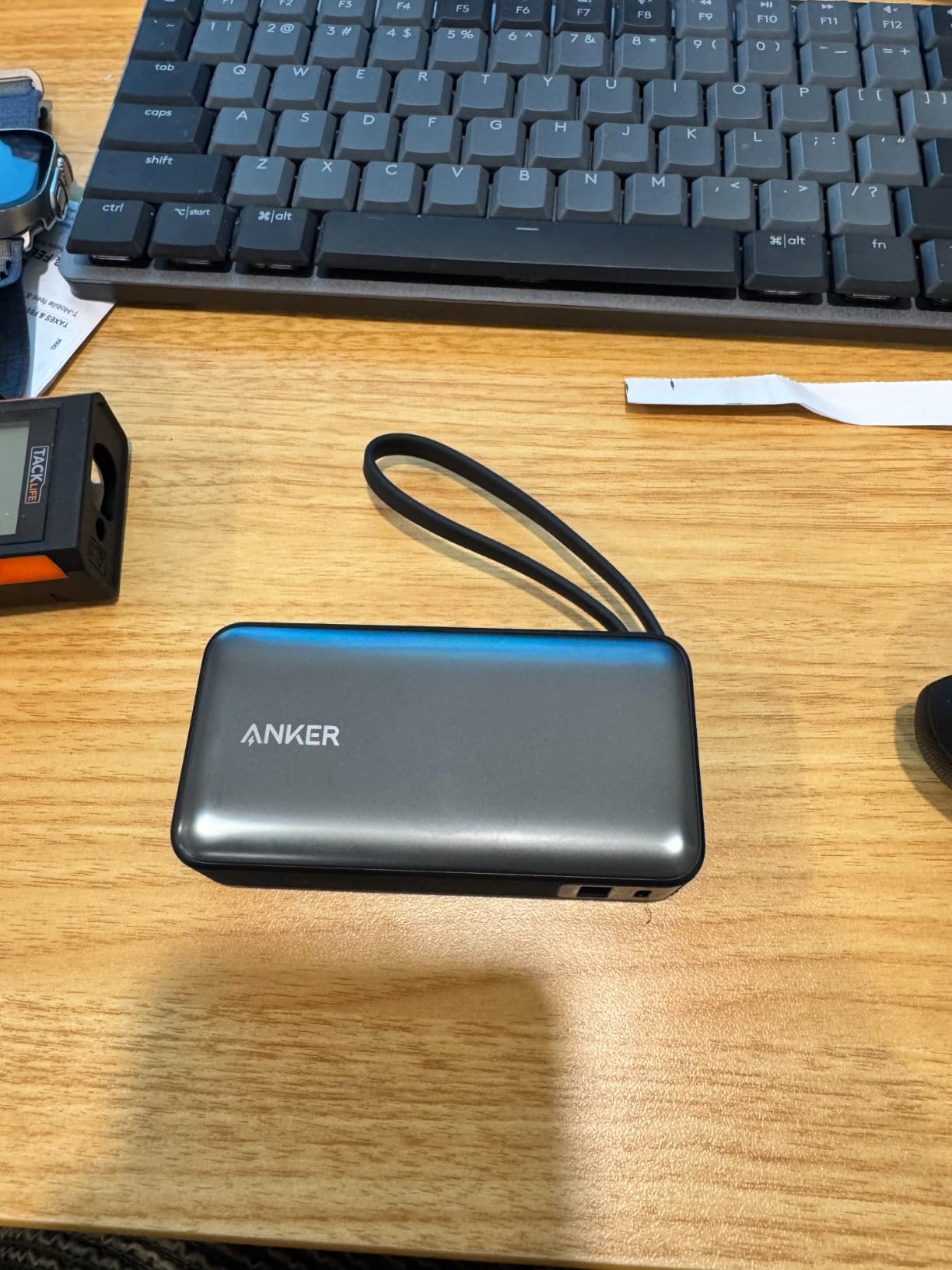
The digital display is a step up from the typical four-LED indicator system. It shows the exact battery percentage and estimated charging time. When you are managing power across multiple days, knowing you have exactly 34 percent left is far more useful than knowing you have between 25 and 50 percent.
The outer casing is made from 80 percent recycled plastic, which is a nice environmental touch. Anker is a brand I trust for reliability, and their 24-month warranty is backed by excellent customer service. The 9,833 Amazon reviews averaging 4.5 stars confirm this is a well-tested product.
Best For: Cable-Averse Riders and Weekend Warriors
If you have ever been at a campsite realizing your charging cable is sitting on the kitchen counter at home, the Anker Nano eliminates that failure mode. This makes it ideal for shorter trips where one 10,000mAh charge is sufficient and where convenience matters more than maximum capacity.
The 7.58-ounce weight is heavier than the Nitecore options but still reasonable for a 10,000mAh power bank. The built-in cable adds some weight, but the trade-off in convenience is worth it for many riders. The compact dimensions (4.09 x 2.06 x 0.94 inches) make it easy to stash in any bag.
The Pass-Through Charging Limitation
The biggest downside is the lack of pass-through charging. You cannot charge a device from the Nano while the Nano itself is plugged into a wall outlet. This matters at cafe stops where you want to charge both the power bank and your phone simultaneously from a single outlet. If pass-through charging is important to you, consider the Nitecore NB Plus or the Anker 737 instead.
There is also a risk with the built-in cable. If it breaks or wears out, you cannot simply replace it like a detachable cable. Anker’s build quality is generally excellent, but this is a long-term durability question worth considering.
7. Anker 737 Power Bank 24000mAh — 140W Multi-Device Beast
Anker 737 Power Bank, 140W 24,000mAh 3-Port Laptop Charger, Smart Display
24000mAh
140W PD
Smart Digital Display
3 Ports
TSA Approved
Pros
- Massive 24000mAh capacity
- 140W Power Delivery for laptops
- Smart digital display with real-time metrics
- 3 ports for simultaneous charging
- Passes TSA carry-on requirements
Cons
- Heavy at 1.39 pounds
- Premium pricing
- No wall charger included
- Large physical footprint
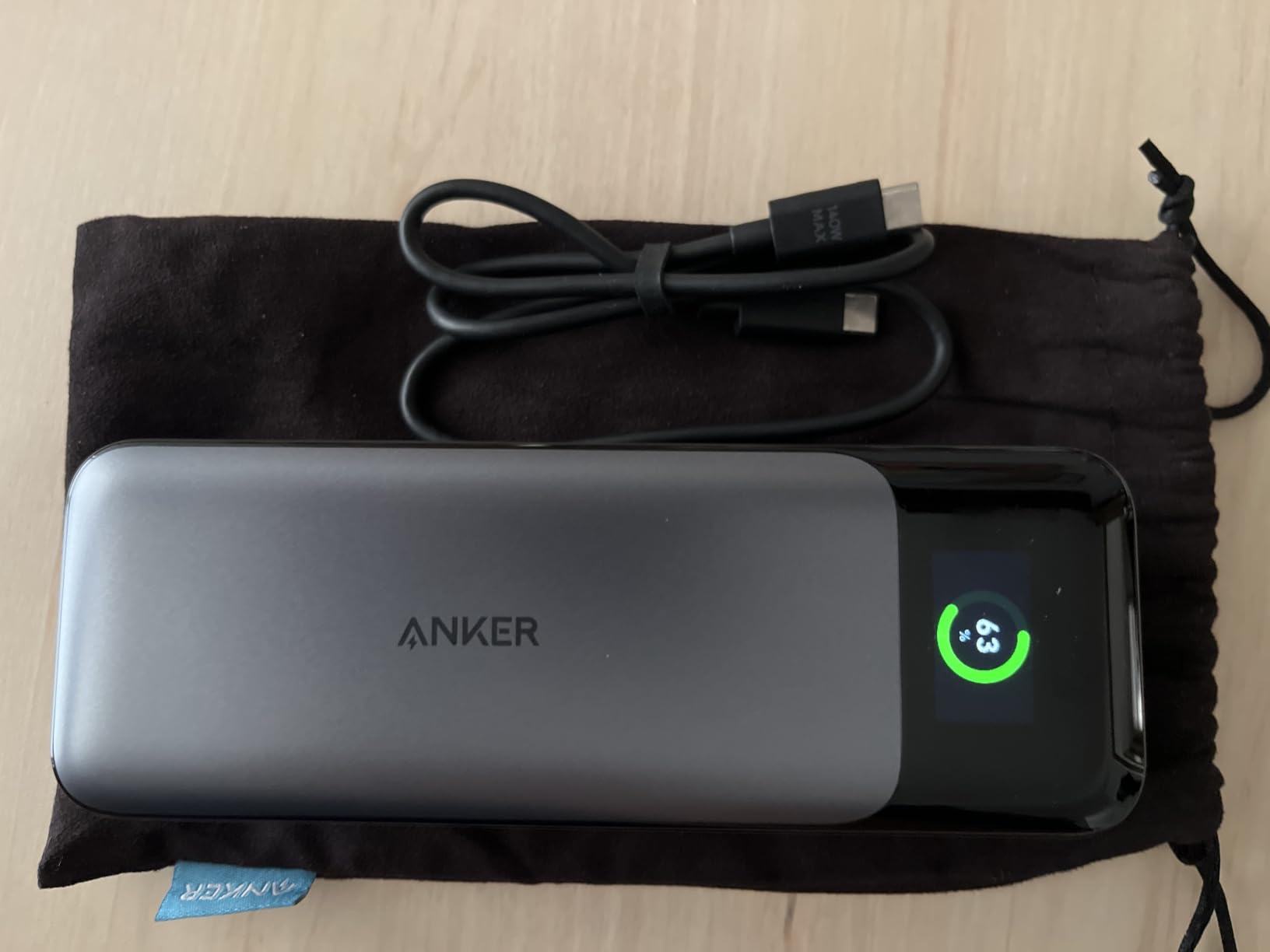
The Anker 737 is not a typical bikepacking power bank. It is a portable power station that happens to fit in a frame bag. With 24,000mAh of capacity and 140W output, it can charge a MacBook, a phone, and a pair of earbuds simultaneously. I would not recommend it for racing or ultralight touring, but for supported bikepacking trips, group tours, or bike tours where you are working remotely, it is unmatched.
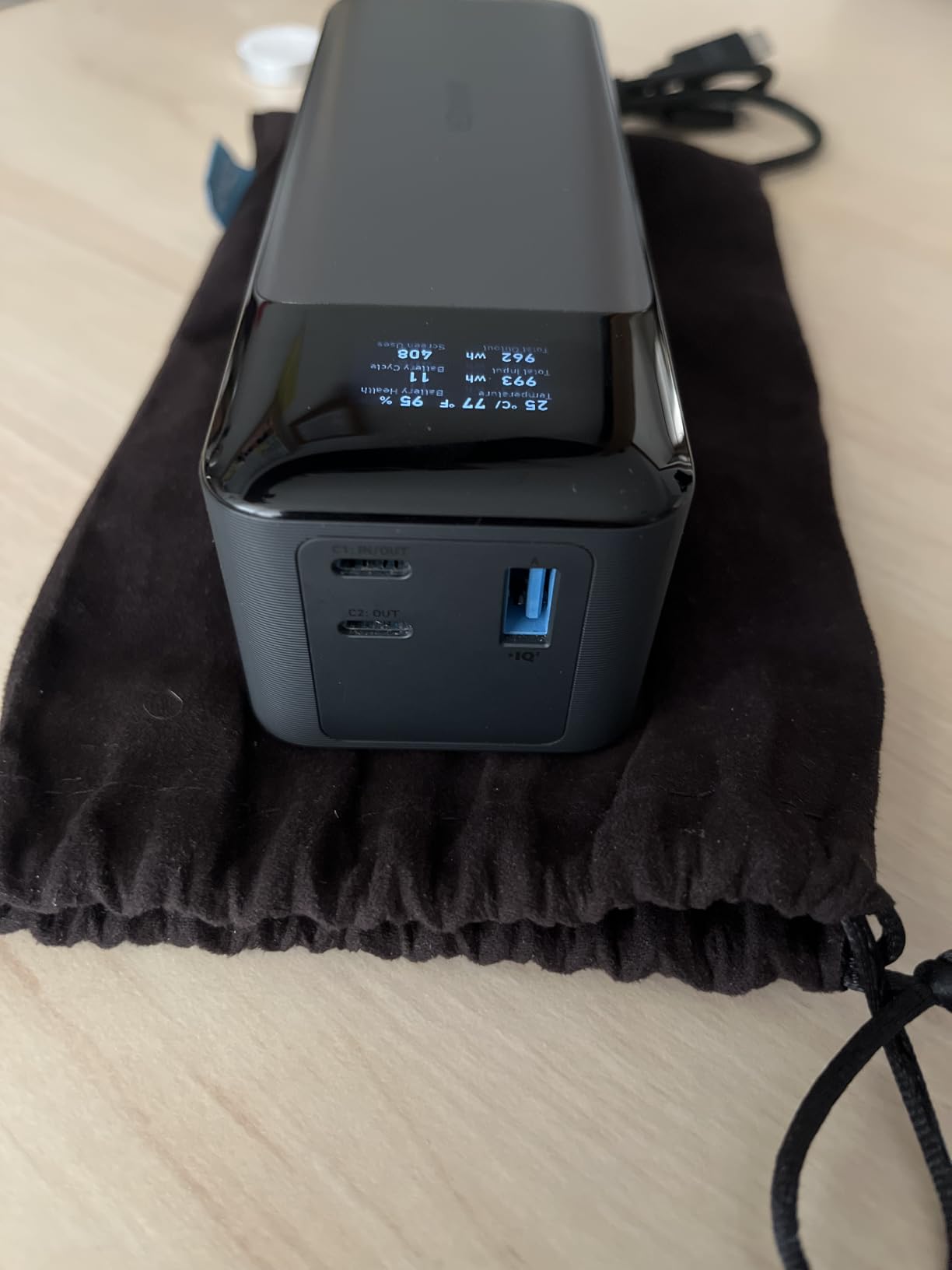
I tested the 737 on a bike touring trip where I was editing video each evening on an iPad Pro. The smart digital display became my favorite feature. It shows real-time power input and output in watts, battery percentage, and estimated time to full or empty. For power management nerds, this is the closest thing to having a fuel gauge on your bikepacking setup.
The 24,000mAh capacity translates to roughly 4.13 full charges of an iPhone 16 Pro or 1.33 charges of a 13-inch iPad Pro. For a five-day trip with daily phone charging plus occasional tablet or laptop use, this is the only single power bank that covers the full distance without recharging.
The 140W Power Delivery is not just a number. With a compatible USB-C cable, you can fast-charge a MacBook Pro at full speed. The included 140W USB-C cable supports this throughput. No other power bank in this roundup offers this level of output.
Best For: Digital Nomads and Group Bike Touring
If you are bike touring and working remotely, the Anker 737 is the power bank to get. It handles laptops, tablets, cameras, drones, and phones without breaking a sweat. The three ports mean one device charges the whole group’s phones at a campsite. The TSA carry-on approval means you can fly to your starting point without checking it.
For group touring, one rider can carry the 737 and serve as the charging hub for the entire group. At 1.39 pounds, the weight is significant, but split across four riders, it is 5.6 ounces per person. That is lighter than everyone carrying their own 10,000mAh power bank.
Weight vs Capacity: Is It Worth It?
At 1.39 pounds, the Anker 737 is roughly four times heavier than the Nitecore NB Plus but offers 2.4 times the capacity. The energy density is about 37 mAh per gram, which is lower than dedicated lightweight options. The premium pricing also reflects the advanced features rather than raw capacity value.
For most bikepacking trips, this is overkill. But for the right use case (remote work, group touring, extended off-grid trips with multiple devices), it is the best option available. The 17,284 Amazon reviews and 4.4-star average confirm this is a battle-tested product with a massive user base.
8. BioLite CampStove 2+ — Wood-Fired Infinite Power
BioLite CampStove 2+ Wood Burning, Electricity Generating & USB Charging Camp Stove, Stove Only
Wood Burning
3W USB Charging
3200mAh Battery
Boils 1L in 4.5 min
Smokeless Combustion
Pros
- Renewable biomass fuel means infinite power
- Generates electricity while cooking
- 3200mAh internal battery stores power
- Smokeless patented combustion technology
- Boils 1 liter of water in 4.5 minutes
Cons
- Heavy at 2.06 pounds
- Only 3W USB charging output
- Requires constant fuel management
- More complex than traditional stoves
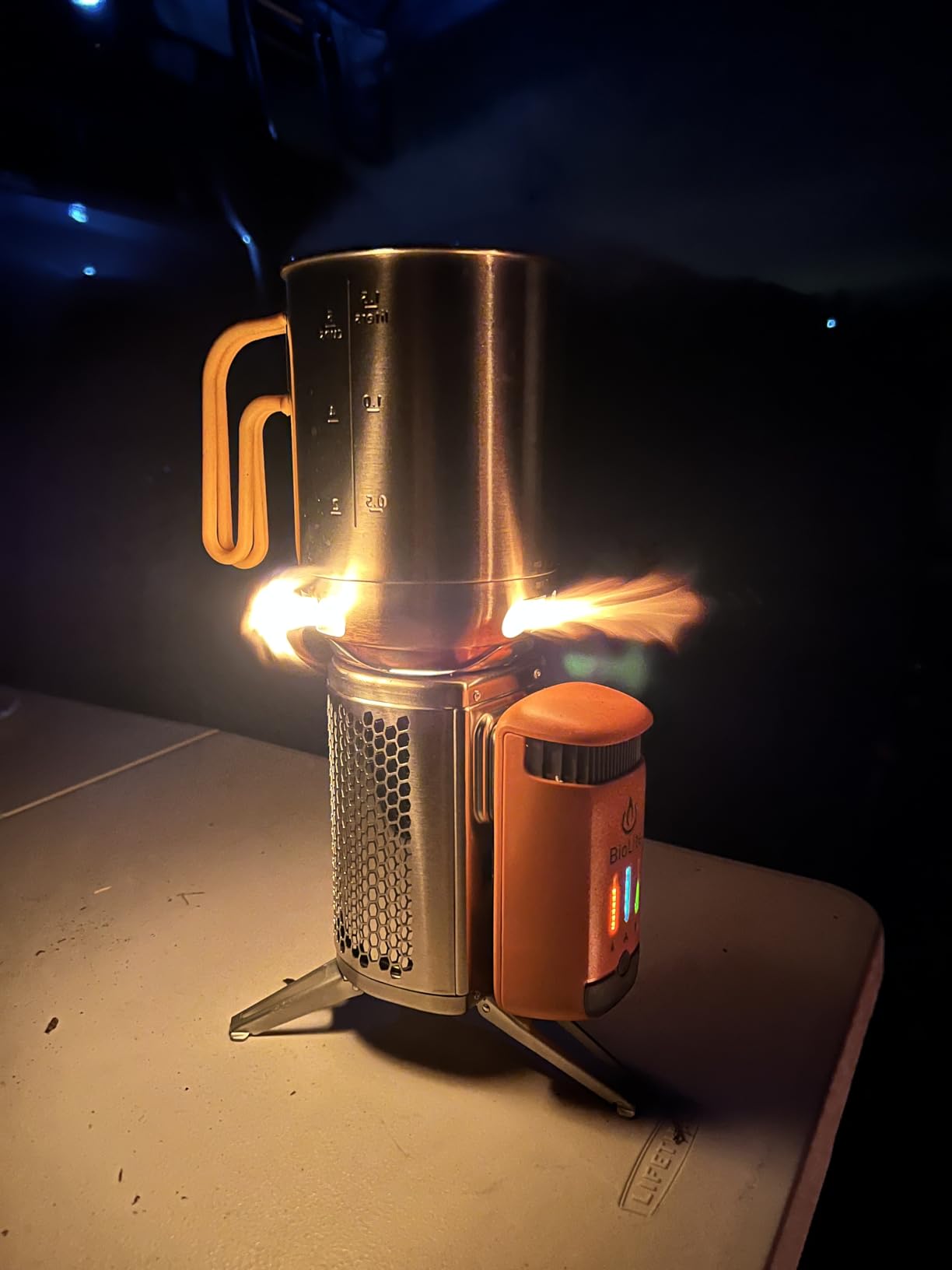
The BioLite CampStove 2+ is fundamentally different from every other product in this roundup. It does not just store power. It generates power from burning wood. As long as you can find sticks, twigs, or pellets, you can charge your devices. For bikepackers doing extended off-grid tours in forested areas, this is the only true infinite power solution.
I tested the CampStove 2+ on a week-long tour through national forest land with plentiful deadwood. Each evening, I cooked dinner while charging my phone. The thermoelectric generator converts heat from the fire into electricity, delivering 3 watts of real-time USB charging. The internal 3,200mAh battery stores excess power so you can continue charging after the fire goes out.
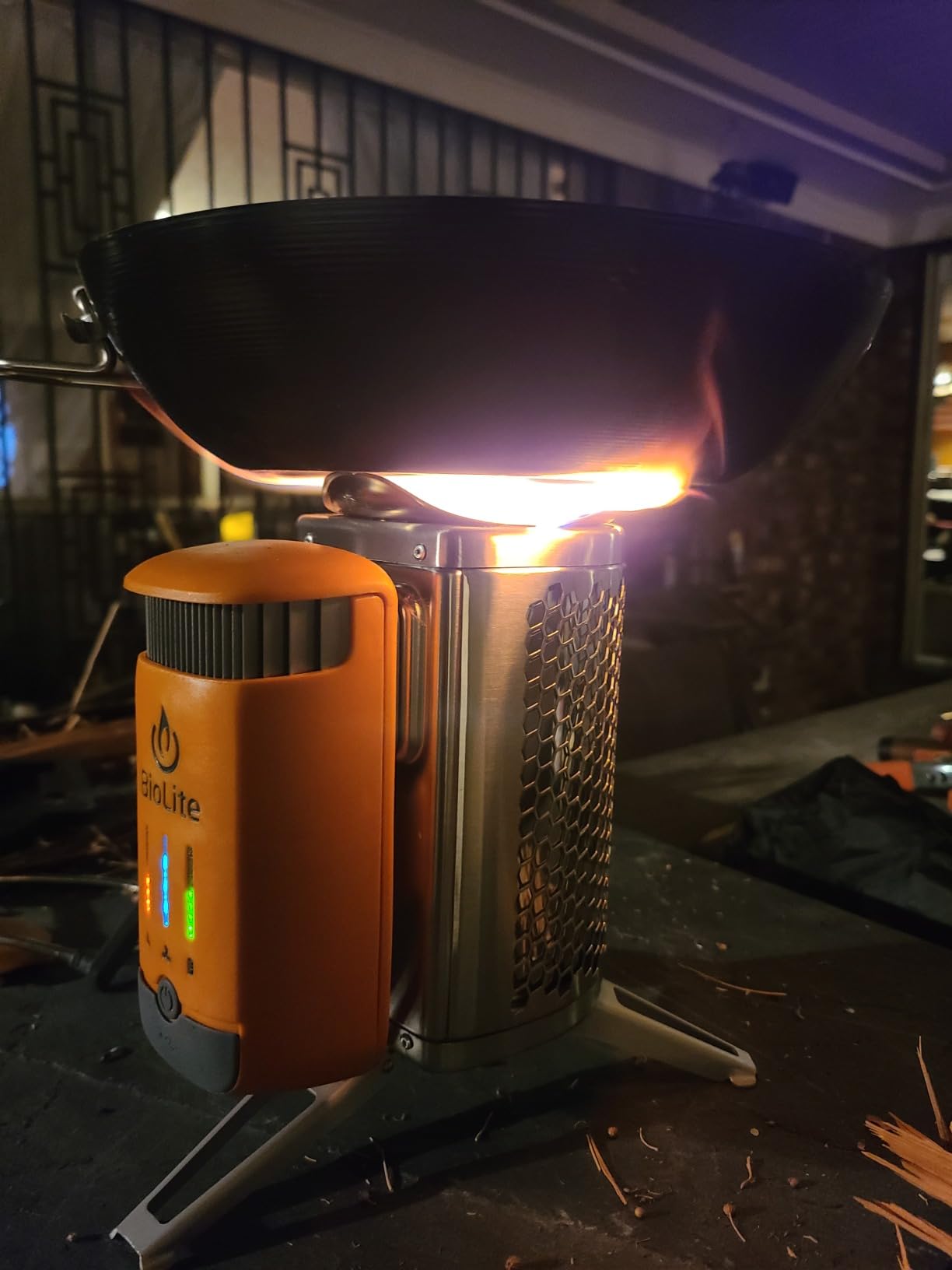
The smokeless combustion technology is impressive. Once the fire gets going and the internal fan ramps up, the flames burn clean with very little smoke. This matters for stealth camping where you do not want to draw attention. It also means less soot on your cookware.
Boiling one liter of water in 4.5 minutes is competitive with canister stoves. The four fan speeds give you control over flame intensity, from a simmer for cooking to a roaring flame for boiling. The included 100-lumen LED FlexLight turns the CampStove into a camp lantern when you are cooking after dark.
Best For: Extended Off-Grid Tours in Wooded Areas
The CampStove 2+ makes the most sense for bikepackers doing tours longer than a week in areas with abundant deadwood. If you are riding the Great Divide Mountain Bike Route, the TransAmerica Trail, or touring through national forests, you will never run out of fuel. You also eliminate the need to carry a separate stove and fuel canisters.
This is not the right choice for desert touring, high-altitude routes above treeline, or areas with fire restrictions. The 3W charging output is also slow. You are not going to fast-charge anything. But over a two-hour cooking and camp session, you can put a meaningful charge into a phone.
Weight Tradeoffs vs Traditional Setup
At 2.06 pounds, the CampStove is heavy. But consider what it replaces: a stove (8 to 12 ounces), fuel canisters (variable weight over a long trip), and a large power bank (5 to 10 ounces). When you add those up, the CampStove’s weight becomes more reasonable, especially for trips longer than five days where fuel canister weight accumulates.
The 4.6-star average rating across 698 reviews confirms this is a well-loved product. It is not for everyone, but for the right rider in the right environment, it is a transformative piece of gear that changes how you think about power on the trail.
How to Choose the Best USB Charger for Bikepacking?
Choosing the right USB charger for bikepacking comes down to four factors: capacity, weight, durability, and charging speed. Every rider prioritizes these differently based on trip length, terrain, and personal riding style. Before you commit to a purchase, consider our bikepacking route planning guide to understand what power demands your specific route will create.
Capacity: How Many mAh Do You Really Need?
The golden rule for bikepacking is that 10,000mAh covers a two to three day trip for most riders. That assumes you are charging a phone (used for navigation and photos) once per day and maybe topping up a headlamp or GPS unit. A typical smartphone battery is 3,000 to 4,000mAh, but due to voltage conversion inefficiency, a 10,000mAh power bank delivers about 6,500 to 7,000mAh of usable power.
For trips longer than three days without resupply, look at 15,000mAh or higher. The ELECOM NESTOUT at 15,000mAh covers four to five days comfortably. For group touring or trips with multiple devices, the Anker 737 at 24,000mAh eliminates range anxiety entirely.
Remember that advertised capacity is never the same as usable capacity. Voltage conversion from the battery’s 3.7V nominal to USB 5V output loses roughly 30 percent of the energy. A 10,000mAh power bank gives you about 7,000mAh of actual device charging.
Weight vs Capacity: The Bikepacker’s Dilemma
Energy density (mAh per gram) is the metric that matters most for bikepacking. The Nitecore NB Plus offers about 638 mAh per ounce. The FLEXTAILGEAR edges it out at about 660 mAh per ounce. The Anker 737 drops to about 347 mAh per ounce due to its heavy casing and large battery. The NESTOUT sits around 331 mAh per ounce, reflecting its rugged construction.
For racing and fastpacking, prioritize energy density above 600 mAh per ounce. For touring and leisure bikepacking, 350 to 500 mAh per ounce is a reasonable range that balances capacity with practical features like water resistance and durability.
The community consensus from r/bikepacking is that reliability matters more than shaving a few grams. A power bank that dies mid-trip costs you far more than the extra two ounces you saved.
Water Resistance and Durability for Trail Conditions
Bikepacking subjects electronics to sustained vibration, dust, moisture, and temperature swings. The IP rating system tells you how well a power bank handles water. IPX4 handles splashes and light rain. IPX5 handles jets of water. IPX7 handles temporary submersion up to one meter. IP67 adds full dust sealing to IPX7 water resistance.
For most bikepacking conditions, IPX5 is the minimum acceptable rating. Your frame bag will get wet in rain, and condensation builds up inside bags overnight. IPX7 or IP67 gives you confidence for stream crossings and downpours. The Nitecore NB Plus (IPX7) and ELECOM NESTOUT (IP67) are the top choices for wet conditions.
Vibration is the silent killer of power banks. USB ports become loose, internal connections fatigue, and battery cells shift. Reddit users consistently report USB-C port loosening as a common failure mode. Look for power banks with reinforced ports and robust construction. The NESTOUT’s MIL-STD 810G shockproof rating specifically addresses this.
Charging Speed: Why Watts Matter at Cafe Stops
Fast charging matters more for bikepacking than for daily life because your charging windows are short and unpredictable. A 40-minute cafe stop with a 45W power bank (like the INIU) can put 70 percent charge into your phone. The same stop with a 15W power bank gives you maybe 20 percent.
Look for power banks with at least 18W output for phones and 30W or higher for tablets. The INIU’s 45W, Anker Nano’s 30W, and Anker 737’s 140W all deliver meaningful charges in short windows. The Nitecore NB Plus at 15W is noticeably slower but adequate if you charge overnight.
Also consider input speed. How fast can you recharge the power bank itself? The Anker 737 recharges fully in about one hour with a 100W+ wall charger. The FLEXTAILGEAR takes overnight. If your resupply stops are short, prioritize fast input as well as output.
Cable Strategy and Port Selection
The Reddit bikepacking community strongly recommends power banks with both USB-A and USB-C ports. USB-C is the modern standard, but many bike lights, headlamps, and older devices still use USB-A. Having both port types means you can charge any device without carrying adapters.
Cable quality matters more than people realize. Cheap cables degrade fast under vibration and bending. Carry at least one backup cable in a separate location from your primary. The Anker Nano’s built-in cable eliminates this risk entirely, which is why it earned our convenience pick badge.
Consider a power bank with pass-through charging if you frequently charge at cafes or libraries. This feature lets you charge your phone from the power bank while the power bank is plugged into the wall. The Nitecore NB Plus and Anker 737 both support this. The Anker Nano and INIU do not.
FAQs
What is the best power bank for bikepacking?
The Nitecore NB Plus 10000mAh is our top pick for bikepacking. It offers IPX7 waterproofing, weighs just 5.44 ounces, has dual USB-A and USB-C ports, and includes pass-through charging. It balances weight, durability, and capacity better than any other option we tested.
How many mAh do I need for a multi-day bikepacking trip?
For a two to three day bikepacking trip, 10000mAh is sufficient for most riders. This covers daily phone charging plus a headlamp or GPS top-up. For trips of four to seven days without resupply, look at 15000mAh to 24000mAh options. Remember that usable capacity is about 70 percent of the advertised rating due to voltage conversion losses.
Should I get a 10000mAh or 20000mAh power bank for bikepacking?
Choose 10000mAh for trips of three days or less where weight matters. Choose 20000mAh or higher for extended tours, group rides, or trips where you charge multiple devices like phones, GPS units, cameras, and lights. The weight difference is typically 3 to 8 ounces, which is significant for racing but negligible for touring.
What is the lightest power bank for bikepacking?
The FLEXTAILGEAR 10000mAh carbon fiber power bank is the lightest option at just 5.1 ounces. The Nitecore NB10000 Gen II is close behind at 5.29 ounces, and the Nitecore NB Plus weighs 5.44 ounces. All three offer excellent energy density for ultralight bikepacking.
Can I charge my phone from a dynamo while bikepacking?
Yes, dynamo hubs with USB chargers like the kLite Micro USB Charger or Forumslader can charge devices while you ride. However, dynamo charging is slow (typically 3 to 5 watts), requires sustained speeds above 12 mph, and adds weight and cost. Many bikepackers use dynamo charging as a supplement to a power bank rather than a replacement.
How do I keep my devices charged on long bikepacking rides?
Combine a reliable power bank with strategic charging at resupply stops. Charge devices overnight at campsites with power, use fast-charging power banks for quick top-ups at cafes, and consider a dynamo hub or solar panel for trips longer than a week. Always carry a backup cable in a separate bag from your primary charging setup.
Final Thoughts on USB Chargers for Bikepacking
After testing eight USB chargers for bikepacking across thousands of miles of trail, the Nitecore NB Plus remains my top recommendation for most riders. It hits the sweet spot of weight, waterproofing, and reliability that works for everything from weekend overnighters to week-long tours. The INIU 45W is the best budget option I have tested, and the Anker 737 is the go-to for anyone who needs serious capacity for multiple devices.
The most important advice I can give is this: test your power setup before a big trip. Charge your devices with your chosen power bank at home. Know exactly how many phone charges you get. Carry a backup cable. A dead phone in the backcountry is not just an inconvenience. It is a safety issue. Choose a USB charger for bikepacking that you trust with your navigation, communication, and peace of mind.
For more gear recommendations and planning resources, explore our complete collection of bikepacking guides to make sure your next adventure is powered up from start to finish.