
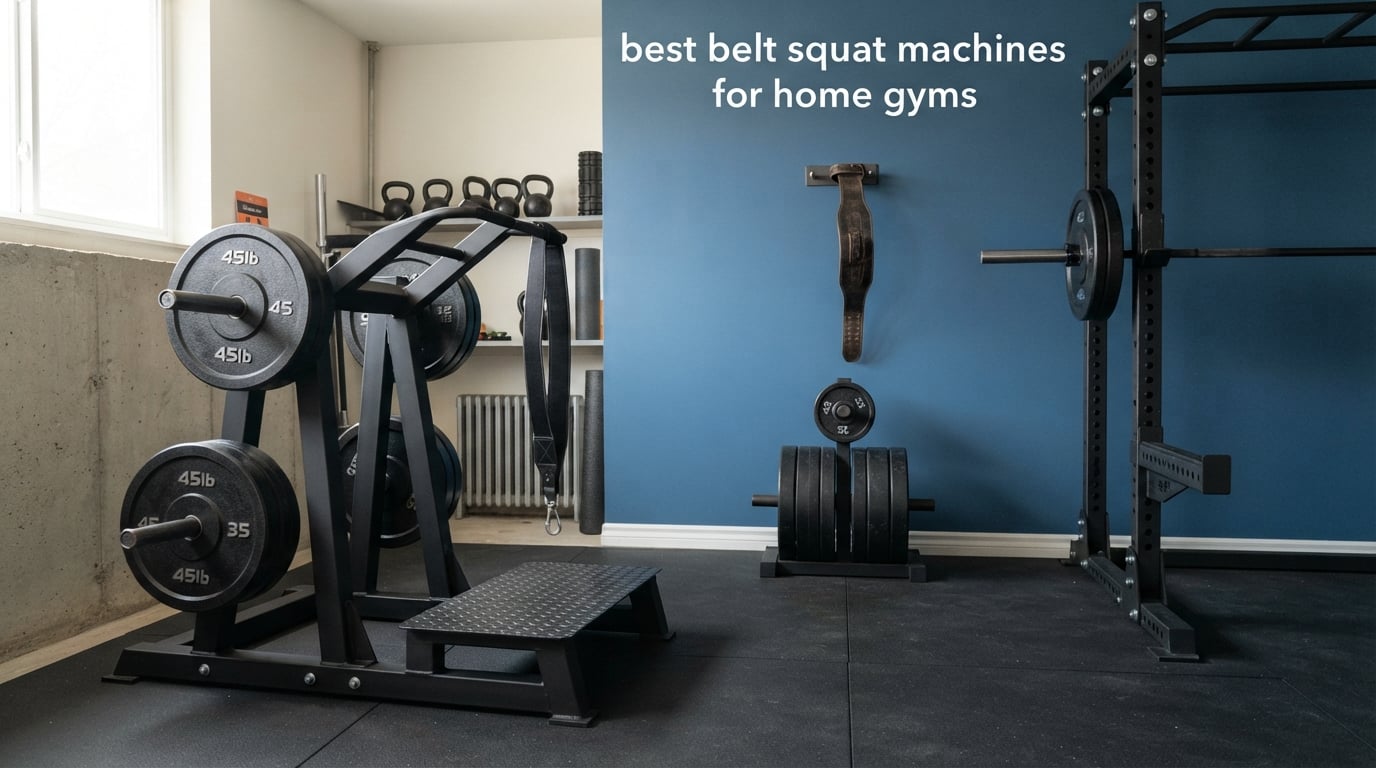
If you have ever braced hard for a heavy squat and felt it in your lower back the next morning, the appeal of a belt squat machine is obvious. The load hangs from a padded belt around your hips instead of resting across your shoulders, so your legs do the work and your spine stays close to neutral. For a home gym that usually means one more machine competing for floor space, which is exactly where most buyers go wrong.
We went through the short list of options that actually exist for home use and split them the way buyers actually shop: rack attachments that bolt to a power cage you already own, and free-standing floor machines. That distinction matters more than any other single spec, because one group costs a fraction of the other and solves a completely different problem. You can read our broader picks for squat racks and cable machines for home gyms if your layout is still open.
Everything below reflects what the machines are actually specified to do and what buyers report after owning them, updated for 2026. We pay attention to four things on every unit: the force path while you descend, the range of travel, whether the capacity figure is loadable or marketing, and what the thing actually occupies in a garage. We also name who should skip each one, because the honest answer for a lot of people is that a rack attachment is the right buy and a floor machine is not.
Table of Contents
Top 3 Belt Squat Picks for Home Gyms (October 2026)

SELEWARE Belt Squat Lever Arm
- Fits 2x2 power cages
- 600 lbs per arm
- Multi-directional swing arm
- Alloy steel
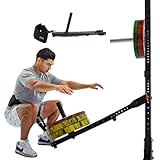
Fringe Sport Mammoth Attachment
- 39-48.75 in lever arm
- Belt included
- Fits 2x2 2x3 and 3x3 racks
- Wall-mountable

Bells of Steel Machine 2.0
- Standalone 700 lb rig
- 11-gauge steel
- Linear bearing straps
- Belt and chain included
Belt Squat Machines Compared in 2026
| Product | Specifications | Action |
|---|---|---|
| SELEWARE Belt Squat Lever Arm |
|
Check Latest Price |
| Fringe Sport Mammoth Belt Squat Attachment |
|
Check Latest Price |
| Bells of Steel Belt Squat Machine 2.0 |
|
Check Latest Price |
 FAGUS H Adjustable Length Belt Squat Attachment FAGUS H Adjustable Length Belt Squat Attachment |
|
Check Latest Price |
 Mikolo Belt Squat Machine 1000 lb Mikolo Belt Squat Machine 1000 lb |
|
Check Latest Price |
 FitForge Belt Squat Attachment FitForge Belt Squat Attachment |
|
Check Latest Price |
 MEGASTAR Belt Squat Lever Arm MEGASTAR Belt Squat Lever Arm |
|
Check Latest Price |
 Bodykore Squat Box PRO Bodykore Squat Box PRO |
|
Check Latest Price |
Belt Squat Machine Types Explained Before You Shop
Every belt squat machine falls into one of four types, and the type decides almost everything else: footprint, cost, setup time and how much else you can do with it. Most buyer regret in this category comes from shopping by price instead of by type, so it is worth two minutes here before the individual reviews.
Rack-mounted and attachment belt squats
An attachment bolts or pins onto a power rack or power cage you already own and swings a lever arm out from the uprights. Footprint is close to zero, cost is a fraction of a floor machine, and installation is usually a matter of lining up holes. The trade-offs are the ones the forums argue about most: the load can sit slightly forward of your hips rather than tracking straight up, and you are often bracing around a fixed frame rather than pushing straight at a fixed handle. Attachments in this roundup cover cages with 1 inch holes, 5/8 inch holes, 2×2, 2×3 and 3×3 patterns, and one can even be wall-mounted.
Lever-arm stand-alone belt squats
A stand-alone lever machine is a floor unit built around a single long arm that rotates through an arc, with the plate horn at the free end and a handle assembly at the pivot. This is the most common floor design and it is the reason belt squats exist as a standalone product. The trade-off versus an attachment is floor space, and versus a guide-rod design is noise and long-term play in the pivot, which is why roller-based units are the ones buyers complain about after a year.
Multi-use belt squat stations
A multi-use station is a larger frame that pairs belt squat capability with cable pulleys, low rows, pulldowns and dip or push-up stations. It is the most versatile option by a wide margin and the most expensive in footprint terms. Home gym owners describe these as overkill when the sole goal is the belt squat, and they are the reason so many people end up buying an attachment instead.
Bench-mounted and squat-box designs
The smallest category is the box or platform unit, where you sit or lie on a low platform and the resistance runs through a short lever or a pulley system. These are the quietest and the easiest to store, and they suit apartments, rentals and very small rooms. What they trade away is loading capacity, since the horns on a compact box hold a fraction of what a full standing rig handles, and the movement is less like a squat than a leg press variant.
Assisted and powered belt squats
Worth naming so you can rule them out. Some commercial machines use a motor or a fan to assist the concentric phase, often marketed for rehab or for older users returning to training. These are not conventional resistance machines and they are not what anyone means when they ask for the best belt squat machine for a home gym. Every unit reviewed here is a free-standing resistance machine with a true eccentric.
What Is a Belt Squat Machine?
A belt squat machine lets you squat with the resistance hanging from a padded belt around your hips rather than resting on your shoulders. You clip the belt to a lever arm, a cable or a plate-loaded horn, and as you descend the load travels down with your body. Your quads and glutes get loaded while your spine sees almost no compression, which is why lifters with lower back problems keep training legs on it.
The biomechanics matter for shopping, not just training. Because the force path is vertical, a well-built machine tracks straight up under you as you stand. A poorly built one pulls slightly forward, and you end up fighting the machine instead of the weight. Buyers in the home gym community consistently rank that tracking quality and a real kickstand above everything else, ahead of brand names.
Two numbers get confused constantly. Plate capacity is how much weight the horns or sleeves will hold, and max user weight is how much the frame and carriage are rated to support in motion. A machine with a 700 lb horn capacity may still list a much lower user limit, and a compact unit with a 270 lb horn rating can be perfectly fine for a lighter lifter. Check both before you order.
One more thing worth clearing up: eccentric loading. A conventional belt squat has a true lowering phase under your control, then a concentric drive. Powered or fan-assisted units only assist the concentric, which makes them a different category entirely and a poor substitute for squat-pattern work. Everything in this roundup is a free-standing resistance machine, not an assisted one.
1. SELEWARE Belt Squat Lever Arm – Most Reviewed Attachment in the Group
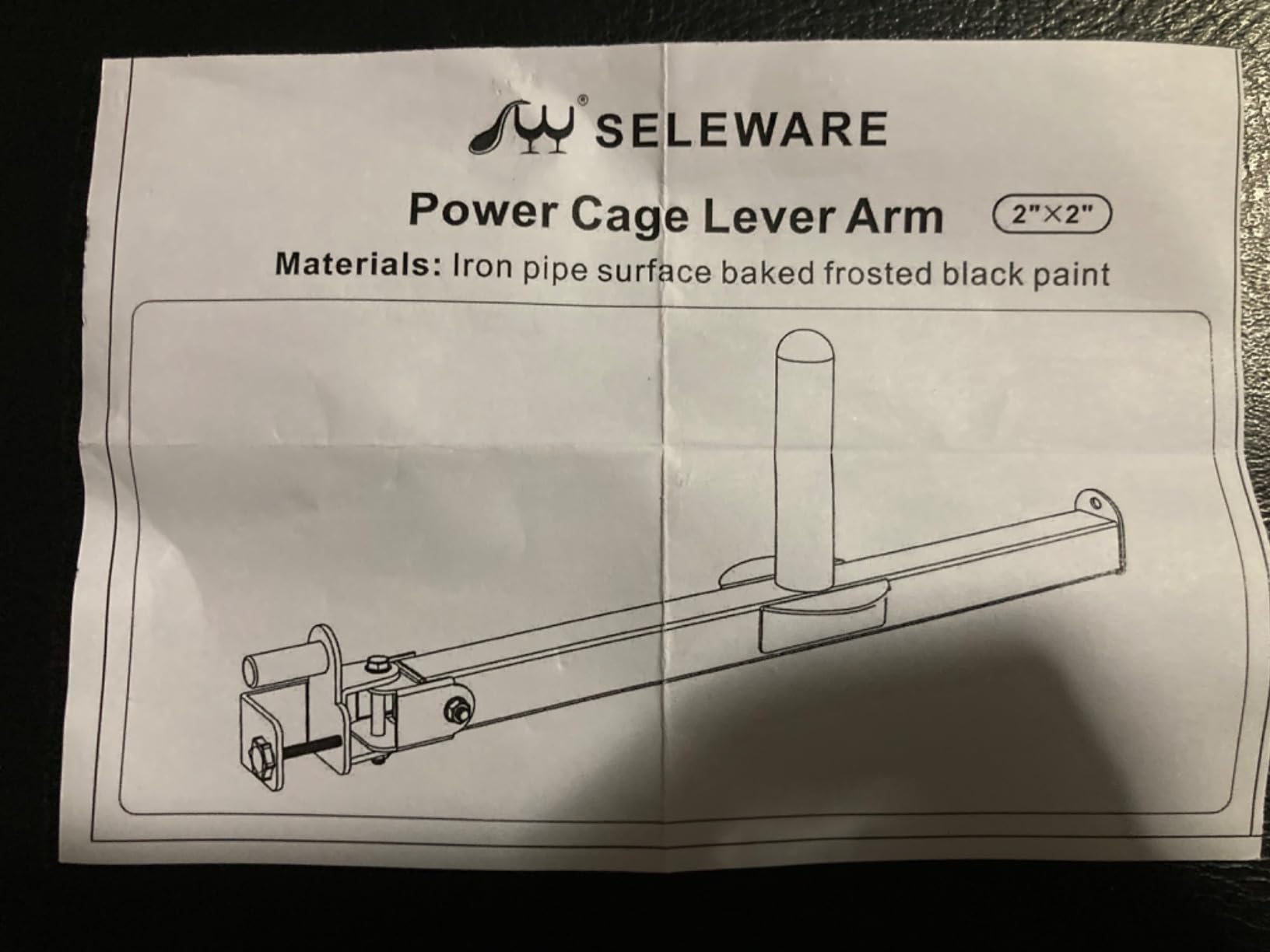
SELEWARE Belt Squat Attachment for 2″ x 2″ Power Cage with 5/8″ or 1″ Hole
Fits 2x2 power cages
600 lbs per arm
Multi-directional swing arm
32.5 in package
Pros
- Widest cage compatibility in its class with 2x2 uprights and 1 inch holes
- Works with both 1 inch standard and 2 inch Olympic plates
- Multi-directional arm doubles for rows and curls
- Alloy steel with black plating resists rust and scratches
- Highest review volume in this roundup at 68 ratings
Cons
- 600 lb per arm sits below the 700 to 1000 lb class of floor machines
- Needs an existing power cage to function at all
- Rating distribution shows a long tail of three and one star feedback
This is the unit we keep coming back to, simply because it has the largest body of owner feedback in the group at 68 ratings. Most people who buy an attachment are not trying to build a complete squat station. They already own a cage, and they want one accessory that adds a belt squat without a second large machine in the garage. The SELEWARE answers that cleanly.
The swing arm is the part that surprised us. It is not locked into a single direction, so the same arm handles belt squats, curls and rows, which means it earns its floor space in a shared rack rather than sitting idle between leg days. The 600 lb per arm rating is genuinely usable for most home lifters, and the frame-protecting connection means the arm does not chew up your cage uprights over time.
The honest limitation is capacity, and buyers say so. Six hundred pounds per arm is fine for the vast majority of home gym users, but it is below the 700 to 1000 lb class the floor machines reach. If you are a heavy lifter already loading a barbell close to your limit, this is not the ceiling you want. The rating distribution also has an 11 percent three-star and 7 percent one-star share, which is normal for hardware this price-sensitive.
Loading is the other friction point. There is no kickstand, so you load the arm at rack height and the whole assembly wants to rotate. Most owners manage, but the ones who complain complain about this first. If you load plates often, budget a few extra seconds or plan the movement so you are loading from a stable height.
Check these details before you buy
Confirm your cage is a true 2×2 with 1 inch hole spacing. The arm mounts to that pattern only, and a 2×3 or 3×3 cage will not accept it without a different unit. Then measure the vertical drop from your lowest crossmember to the floor, because the swing arm needs to clear your hip line at the bottom of a squat.
Also think about your plate inventory. The arm accepts both 1 inch standard and 2 inch Olympic plates, which is rare in this category and means you are not hunting for collars that fit. That single detail removes most of the friction people hit on their first session.
Who should skip this one
Skip it if you do not own a power cage, or if your cage has non-standard hole spacing. Also skip it if you plan to hang heavy plates and belt squat without a barbell to warm up on, since the loading arm has no support post. And if noise matters to you, the swing arm pivots under load and is not the quietest design in the roundup.
2. Fringe Sport Mammoth Belt Squat Attachment – Longest Travel in an Attachment
Fringe Sport Mammoth Belt Squat Attachment (Complimentary Belt Included) – Durable Universal Weight Belt Squat Attachment for Rack with Adjustable Length, Ultimate Lower Body Strength Builder
39 to 48.75 in lever arm
Belt included
Fits 2x2 2x3 3x3 racks
14 in loadable pin
Pros
- Lever arm adjusts from 39 to 48.75 in for deep squats
- Includes a padded adjustable belt for 28 to 48 in waists
- Fits 2x2 2x3 and 3x3 racks and wall mounts on a 3x3 beam
- Handles rows donkey calf raises and RDLs as well
- UHMW contact points protect the rack finish
Cons
- Kickstand is a separate add-on rather than included on every configuration
- Needs assembly and careful reading of the instructions
- A small number of one-star reports involve belt to attachment bolt failure
The Mammoth is the one that comes up most often in home gym forum threads when people compare cheap belt squat attachments, and the reason is travel. The lever arm adjusts from 39 to 48.75 inches, which is a longer usable arc than most lever attachments at this level. Longer travel means you can actually get to depth and shift the target away from your hips.
It is also the most complete package. A padded adjustable belt is included and fits 28 to 48 inch waists, so unlike most rivals you are not ordering a belt separately on day one. The rack compatibility is genuinely broad: 2×2, 2×3 and 3×3 frames with 5/8 or 1 inch holes, and it can be wall-mounted on a 3×3 beam if floor space is the problem.
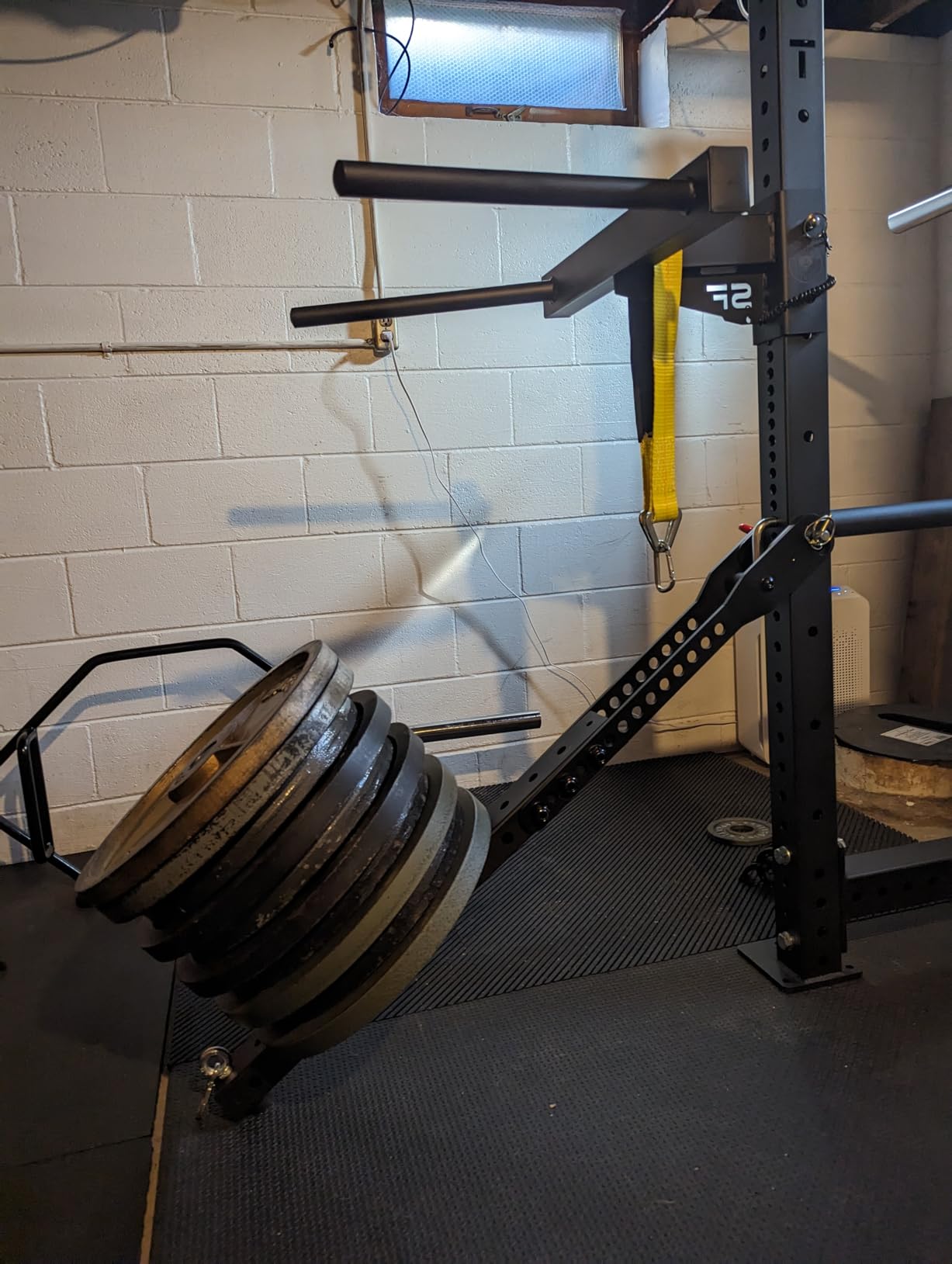
It does more than belt squats. Reviewers use it for rows, donkey calf raises and Romanian deadlifts, and the multiple adjustment points let you change both length and depth for different movements. That versatility is what turns an attachment into a tool you use on more than one day a week, which matters in a small garage where unused equipment is wasted space.
Two practical notes. The kickstand is where the design earns its reputation, and it is a separate add-on rather than included on every configuration, so plan to add it. There is also some assembly involved, and the instructions need a careful read. A handful of one-star reports involve bolt failure where the belt meets the attachment, so check that hardware the day it arrives.
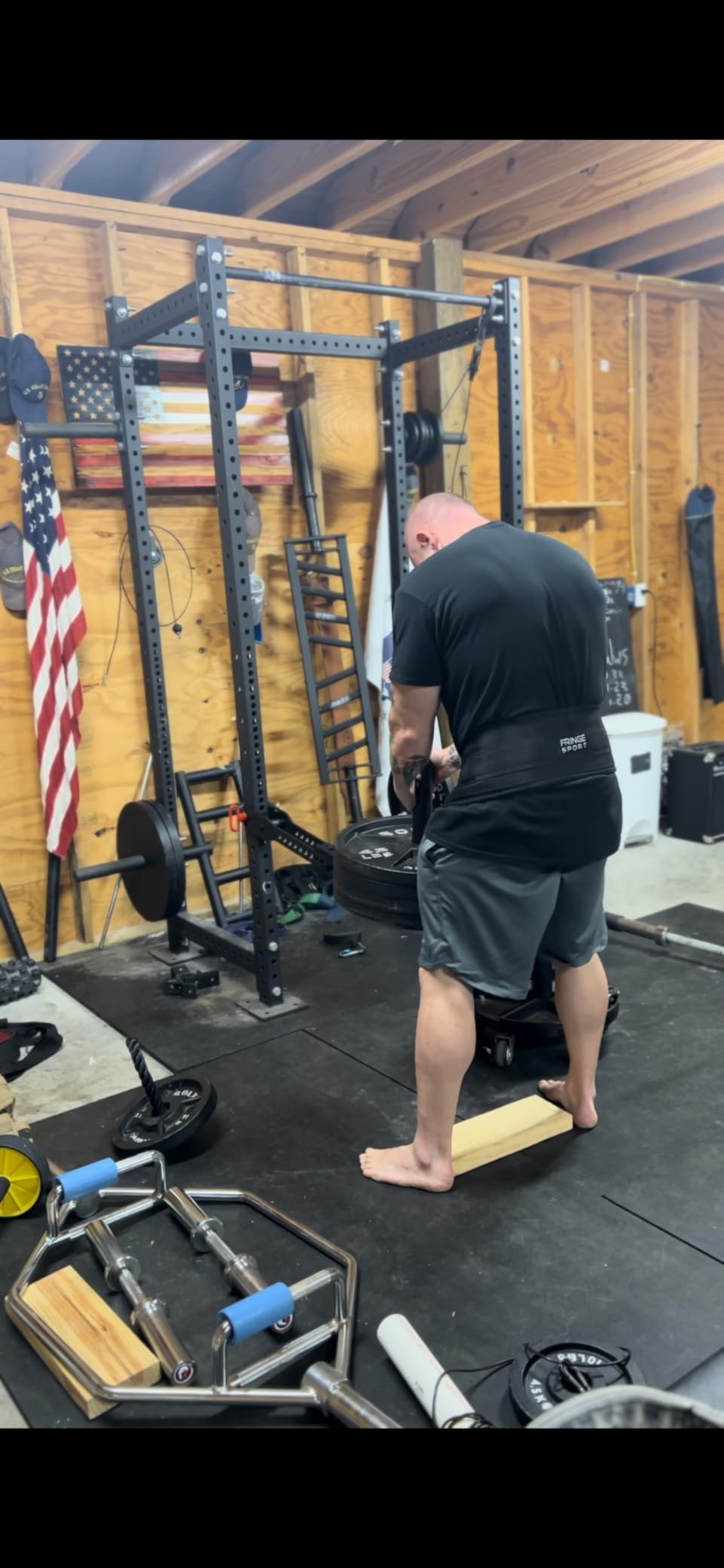
What to verify before installing
Measure the vertical distance from your lowest crossmember to the floor. With a 39 inch lever you need clearance for the arm plus your own height at the bottom, and a shallow mount point is the most common reason people return an attachment like this. Confirm your rack hole pattern too, since the fit is broader than most but still not universal.
Check the belt fit as well. The included belt is adjustable across a wide waist range, but if you are outside it, budget for a replacement before you start. And decide where the lever will sit when you are not using it, because a wall-mounted position exists but only on a 3×3 beam.
Who should skip this one
Skip it if your rack is a light-duty consumer cage with thin uprights and no 3×3 beam to hang from. Also skip it if you want zero assembly. And if you are buying specifically for a heavy lifter, check the material gauge against what you plan to load, because the travel here is the selling point rather than maximum capacity.
3. Bells of Steel Belt Squat Machine 2.0 – Flagship Standalone Rig
Belt Squat Machine 2.0 [Bells of Steel] Robust Leg Press Machine | Leg Workout Equipment Squat Machines for Home | Includes Weightlifting Belt, Top and Bottom Pegs | 11 Gauge Steel, 700 lb Capacity
Standalone 700 lb rig
11-gauge steel
51 in D x 81 in W
Belt and chain included
Pros
- Full standalone machine so no power rack is required
- 11-gauge alloy steel built for heavy use
- Linear bearing strap system gives a smooth consistent ride
- Belt two foot chain carabiners j cups and bushing hardware all included
- No one-star reviews in the rating distribution
Cons
- Largest footprint here at 81 in wide by 51 in deep
- 700 lb capacity is below the Mikolo 1000 lb class
- Needs a dedicated corner of the room
This is the one to look at if you do not own a power cage and do not want to buy one just for leg work. It is a complete floor machine with its own frame, and at 81 inches wide by 51 inches deep it is by far the largest footprint in this roundup. Nobody buys it for a spare bedroom.
What you get for that space is 11-gauge alloy steel, a 700 lb rating, and a linear bearing strap system instead of a roller carriage. That difference shows up on every rep. The travel is smooth and consistent with no grind point, which is one of the things buyers rate this machine highest for and one of the most common complaints about cheaper lever designs.
The box is well filled. The weightlifting belt, two feet of chain, carabiners, adjustable j cups and bushings, plus top and bottom band pegs for accessory work, are all included. The pegs in particular are useful because they turn the machine into a deadlift and glute station on days when you do not want to load the belt.
Measure twice, this is the one that bites
Get a tape measure and map the 81 by 51 inch footprint before anything else. You need the full rectangle plus working room in front for the bar to travel through its arc, and you need to be able to walk past it. Ceiling clearance is not usually the problem here, but lateral clearance is.
Check your total load against the 700 lb figure, including the belt. If your working sets plus warm-up plates approach that number, you are at the limit of the machine rather than the limit of the movement. The 11-gauge steel is the real strength story here, and it is a reason to feel comfortable loading progressively for years.
Who should skip this one
Skip it in any small room where the machine would not leave enough floor to walk around it. Skip it if you plan to load near or above 700 lb. And skip it if you already own a decent power cage, because an attachment gets you the same movement for a fraction of the space and a fraction of the commitment.
4. FAGUS H Adjustable Length Belt Squat Attachment – Widest Rack Compatibility
FAGUS H Adjustable Length Belt Squat Attachment for All Power Racks
28 to 46.5 in adjustable
2x2 and 3x3 rack fit
Doubles as lever arms
Two year warranty
Pros
- Adapts to 3x3 and 2x2 racks with 1 inch or 5/8 inch holes by flipping the body
- Adjusts from 28 to 46.5 in for user height and squat depth
- Converts to standard lever arms with no tools
- Doubles as rows curls and guided deadlifts
- Two year manufacturer warranty
Cons
- Belt is not included with the attachment
- No kickstand for loading the lever
- Top of the adjustment range is shorter than the Mammoth
If your cage is the awkward one, this is the attachment that will probably fit it. It adapts to 3×3 and 2×2 racks with either 1 inch or 5/8 inch hole spacing, and the conversion is done by flipping the main body rather than buying a different unit. For people who already own a rack and have been told their uprights are the wrong pattern, that is the whole value proposition.
Length adjustment runs from 28 to 46.5 inches across multiple adjustment points, which lets you tune the arc to your height and the depth you want. The range is shorter at the top end than the Mammoth, so it will not deliver quite the same deep travel, but for most home gym users it is more than enough for a full squat.
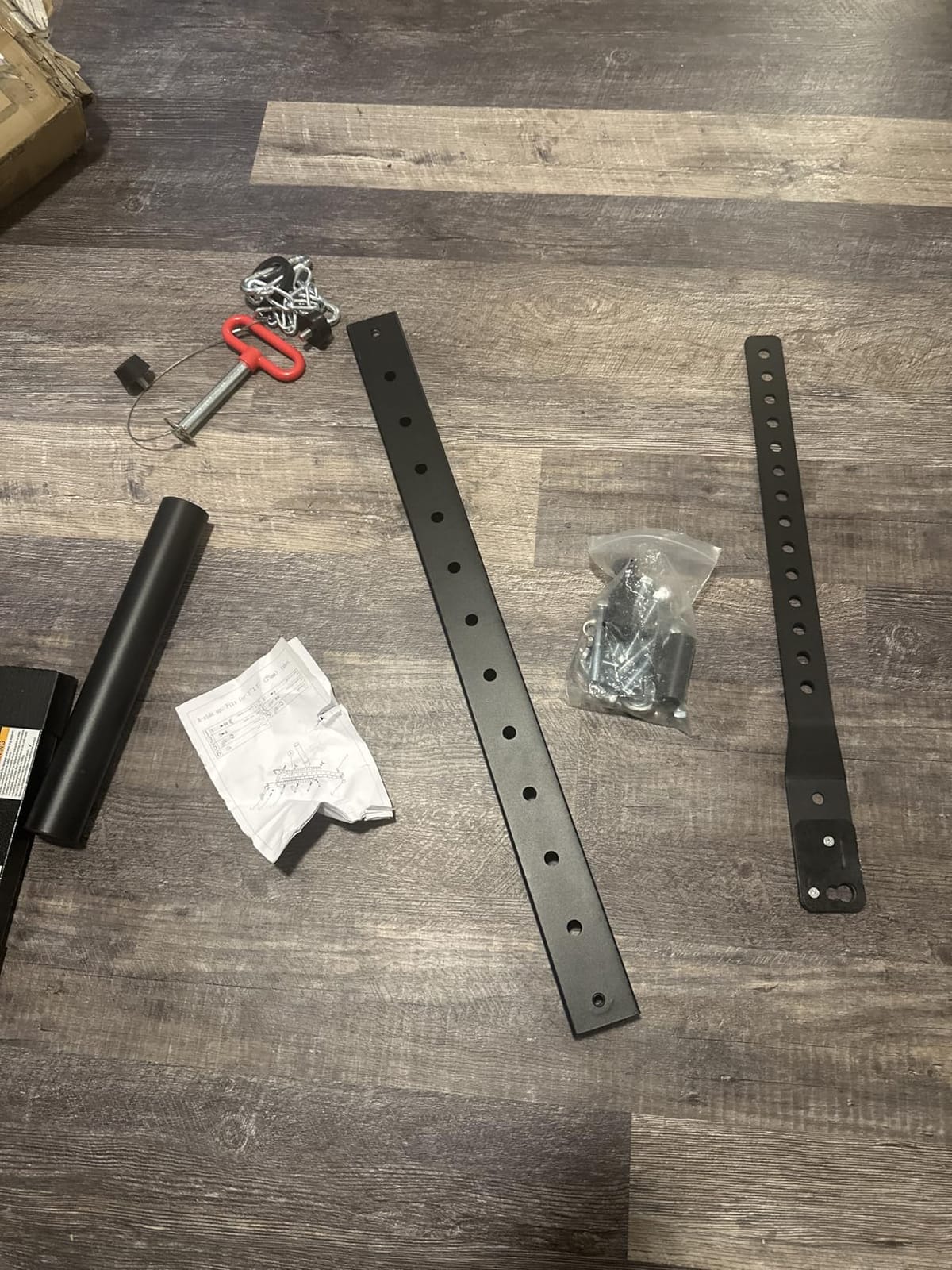
It doubles as standard lever arms, which is genuinely useful because now the same hardware covers landmine-style presses, rows and curls. The steel build is straightforward and the finish is a plain black powder coat, which means it will coordinate with most racks without looking bolted on from another decade.
The two gaps are predictable. The belt is not included, so add that to your order. And there is no kickstand, so you load the arm at rack height rather than from the floor, which is more awkward than it sounds if you are handling several plates at once.
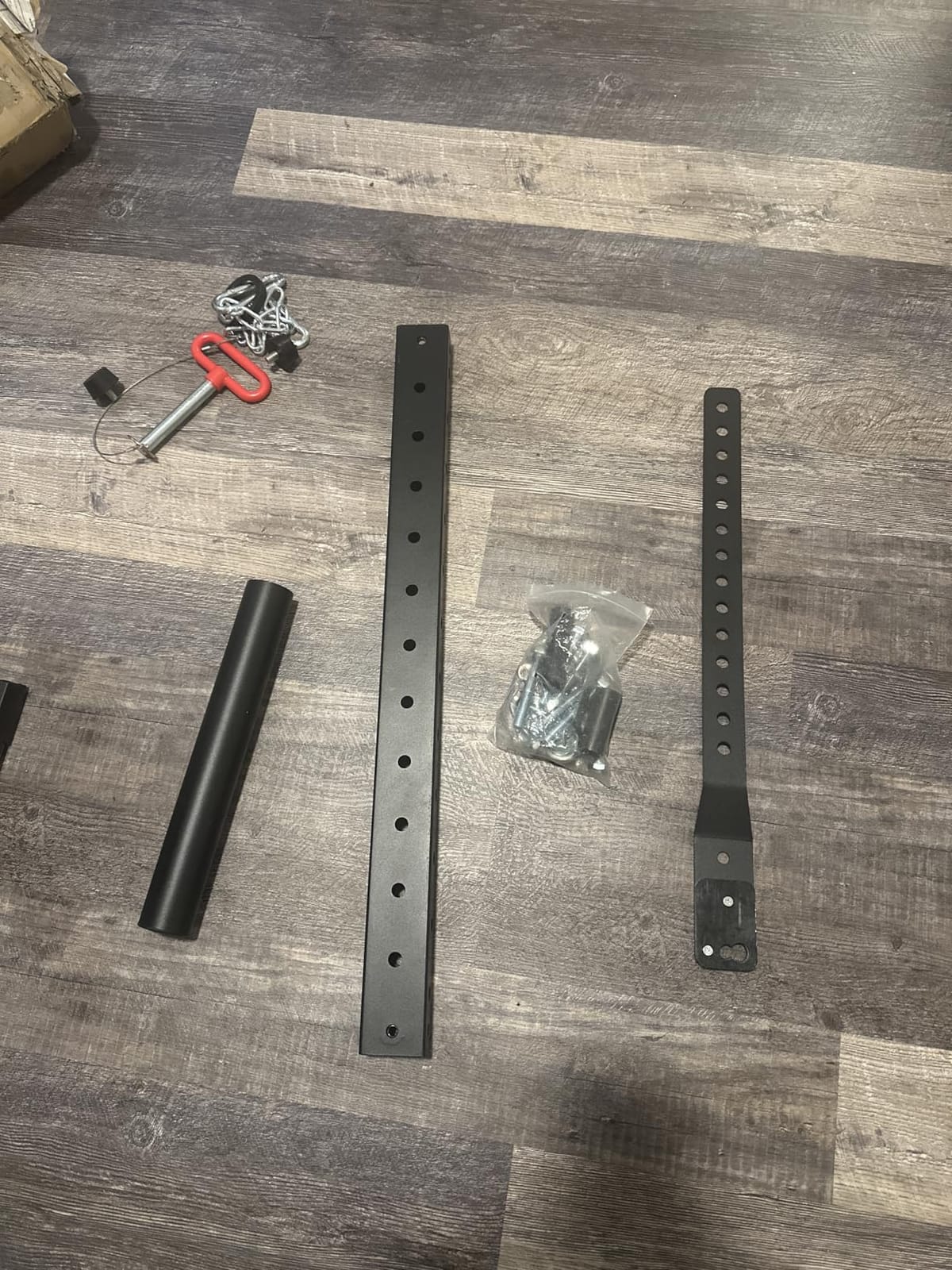
Check the fit details that matter
Confirm the hole pattern on your uprights before ordering, because that is the one specification that decides whether this works at all. Then measure the clearance from your lowest crossmember to the floor at the shortest setting, since a 28 inch lever on a shallow rack is a tight install.
Think about how many plates you will actually load. This is a lever attachment rather than a full machine, so plate horns sit at the end of an arm, and the geometry matters more here than on a floor rig. If you are training heavy rather than moderate, check the arm length against your stance first.
Who should skip this one
Skip it if you want maximum depth, because the Mammoth has a longer arc and this one tops out shorter. Also skip it if you want the belt in the box, and if you are lifting heavy enough that the absence of a kickstand will annoy you every session. Renters who want one item to do everything should note that the lever-arm conversion is a genuine second use, not a marketing claim.
5. Mikolo Belt Squat Machine 1000 lb – Best for Heavy Lifters
Mikolo Belt Squat Machine, Leg Press Machine, Squat Machine with Weightlifting Belf for Home Gym, 11 Gauge Steel, 1000 lb Capacity
1000 lb rated capacity
Two 15 in horns
48 in D x 36 in W x 48 in H
75 lb listed weight
Pros
- Only genuinely 1000 lb loadable capacity in this roundup with two 15 in horns
- Solid 11-gauge alloy steel that owners describe as stout
- Bar racking makes loading far easier than foot stands
- Integrated plate storage rack with four pins
- Works for squats rows and deadlifts
Cons
- The included belt is the weak point with repeated d-ring and strap failure reports
- Listed weight understates the real assembled weight
- Platform could be larger for taller users
This is the capacity answer. It is rated at 1000 lb on two 15 inch horns, and unlike many machines where the headline number is theoretical, owners report the rating is actually loadable. For a lifter who is already pulling four plates on a barbell, the 700 lb ceiling on the other standalone machine in this roundup is a real ceiling, and this one is not.
The build is 11-gauge, 3 mm alloy steel with a black powder coating, and the dimensions are 48 deep by 36 wide by 48 high. There is a bar racking feature for the movement bar, which is the detail that changes daily usability. Loading a foot stand means holding the load while stepping onto it, and racking means you set it down and get in. Owners single that out as the biggest quality-of-life difference on the machine.
There is an integrated plate storage rack with four pins holding four plates each, plus three weight stop positions to adjust squat height and gritted non-slip pedals. The adjustable belt and handles let you use the machine for rows and deadlifts as well, so it earns its footprint across more than one movement.
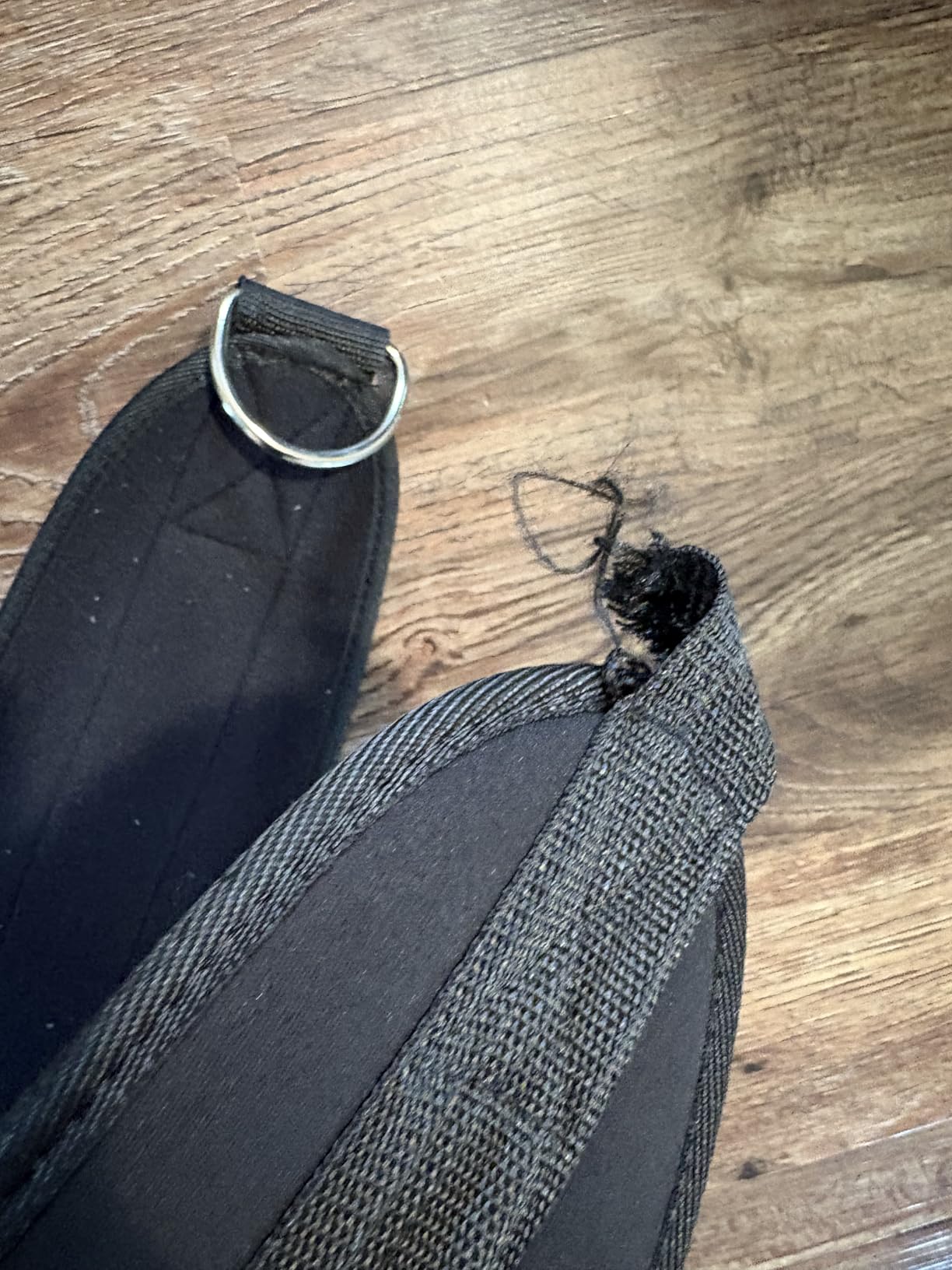
Almost every critical review here traces back to the same place: the included belt. There are multiple reports of d-ring or strap failure, including one belt that broke on first use. Treat the belt as consumable and buy a proper one. The frame is not the problem, and a bent connect tube arriving in transit was a one-off quality control miss rather than a pattern.
Check weight and dimensions carefully
Plan for it to be heavier than the listed 75 lb, because buyers report the assembled machine at roughly 160 to 170 lb. That changes the moving job considerably and it changes where you can put it. If you are not assembling it yourself, this is a two-person job, and it is the main reason people buy a machine like this in the first place.
Measure the 48 by 36 footprint and confirm you can reach the bar racking position without stepping into the plate path. Also decide your ceiling height against the 48 inch frame height plus your own height at lockout. Taller users note the platform could be larger, so if you are over six feet, that is worth thinking about before you commit.
Who should skip this one
Skip it if you are a lighter lifter, because you will be paying for capacity you never touch and living with a 160 lb-plus machine you have to move. Also skip it if you cannot get help assembling it, and if you are sensitive to QC misses, order with the expectation that you may need to inspect the frame on arrival. Anyone who wants the belt included to be reliable should plan to replace it.
6. FitForge Belt Squat Attachment – Highest Rated Unit With Real Feedback
FitForge Belt Squat Attachment for Rack – Space Saving Power Rack Squat Stand Attachment – Power Cage Squat Rack Add On for Home Gym, Compatible with All Hole Plates, Fits 3×3 Racks (No Belt Included)
495 lb load rating
Fits 3x2 and 3x3 racks
11 in load sleeve
Welded metal build
Pros
- Cleanest rating record in the group with no one or two star reviews
- Welded heavy-duty metal build for the money
- Compact add-on that also works as a lever arm
- Works with standard iron calibrated and bumper plates
- Easy to install on common 3x3 racks
Cons
- Chain and belt are not included despite the listing wording
- 495 lb rating is the lowest capacity in this group
- 11 in sleeve limits how many plates you can load
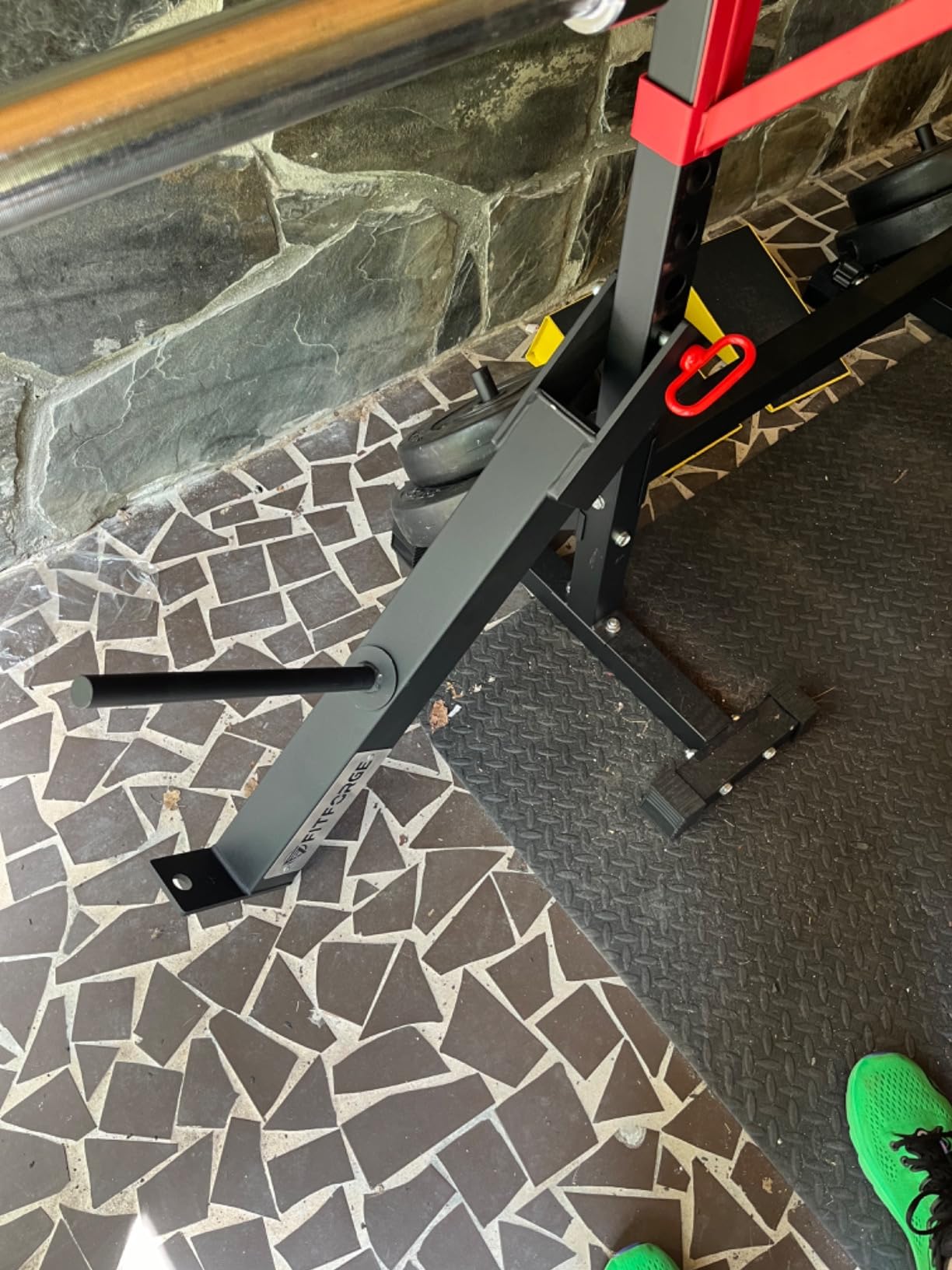
This attachment has the best rating profile in the roundup at 4.6 across 12 reviews, and notably not one one-star or two-star review among them. That is a small sample, so treat it as encouraging rather than proven. What the reviews that exist do highlight is the welded construction, which is the part that usually gives out in a light build.
It fits 3×2 or 3×3 inch tubular racks with 5/8 inch holes, which covers a large share of home racks, and it works with standard iron, calibrated and bumper plates. The build is heavy-duty welded metal rather than a thin stamped arm, and owners describe it as solid-feeling in the hand.
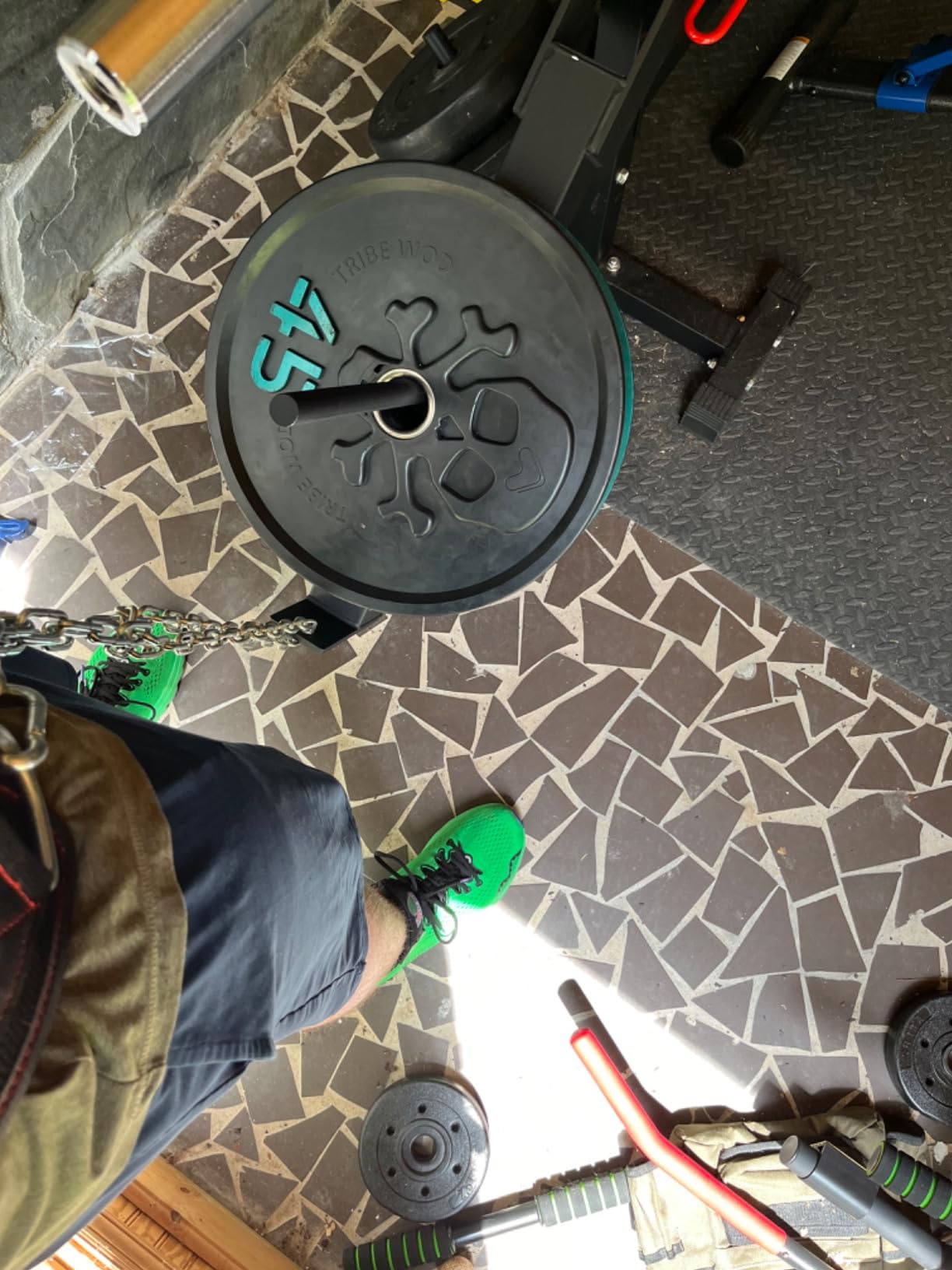
It also doubles as a lever arm for curls, rows and guided deadlifts, so it is not a single-movement commitment. Installation is straightforward on common 3×3 racks, though a few owners find the setup fiddly because the spacer parts could be sized better. That is a five-minute problem, not a dealbreaker.
The capacity is the honest limit here. A 495 lb rating is the lowest in this roundup, and the 11 inch load sleeve restricts how many plates you can actually get on. For a home gym where belt squats are accessory work at moderate loads, that is completely fine. For a lifter chasing heavy singles on the movement, it is not the tool.
Check these two numbers before ordering
First, the listing wording implies a chain and belt while the contents do not include them. Budget for a chain and a padded belt as separate purchases, and do not assume the package is complete. Second, the 11 inch sleeve is the real capacity limit, not the 495 lb headline, because you can only load what physically fits on the sleeve.
Check your rack hole spacing as well. The 5/8 inch pattern covers many racks but not all, so verify before you order. There is no kickstand option, so plan to load the lever at rack height and give yourself a moment to set the plates square.
Who should skip this one
Skip it if you plan to load heavy, because the sleeve length and the 495 lb rating will stop you well before your ambition does. Also skip it if you want the belt and chain in the box, and if your rack uses 1 inch hole spacing rather than 5/8. Anyone who wants a quiet, kickstand-supported loading experience should look at the longer-travel attachments instead.
7. MEGASTAR Belt Squat Lever Arm – Belt and Hardware Included
Belt Squat Lever Arm Attachment for 2×2 & 2×3 Power Racks, Includes Belt
Fits 2x2 uprights
480 lb support rating
14-gauge steel
Tool-free pin system
Pros
- Belt and all mounting hardware included in one package
- Tool-free pin system speeds up install and height changes
- 14-gauge steel with black powder coat finish
- Dual function as a belt squat station and lever arm
- Frame-protecting connection avoids scratching uprights
Cons
- Only one review on record so durability is unproven
- 480 lb support rating is at the low end
- Designed for 2x2 uprights and needs the separate variant for 2x3
This is the newest listing in the group, first available in September 2026, and it has a single 5-star review. We include it because the design answers a real friction point, not because the rating proves anything. One review is not a track record, and we would treat the 5.0 as unproven.
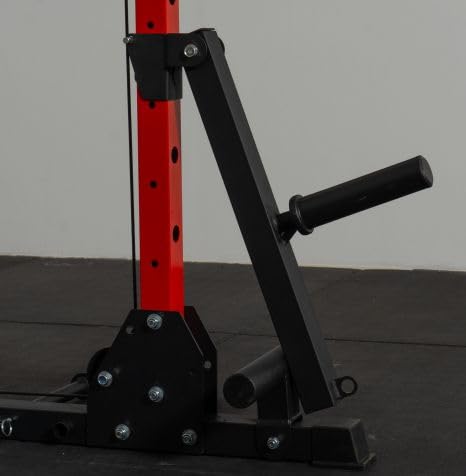
What it does well is completeness. The package includes the lever arm, a premium padded squat belt and all mounting hardware, so unlike most competitors in this price range there is nothing to add on day one. The tool-free pin system means installation and later height adjustments take seconds rather than requiring you to find a wrench between sessions.
The steel is 14-gauge with a black powder coat, rated to support up to 480 lb, and the frame-protecting connection keeps it from scratching your rack uprights. The 2 inch sleeve takes both 1 inch standard and 2 inch Olympic plates, so plate compatibility is not a problem.
Check the fit details first
Measure your uprights before ordering. It is custom-designed for 2 inch by 2 inch racks with 1 inch hole spacing, and a 2×3 rack needs the separate variant, which is a different listing. Getting this wrong is the most likely reason this unit ends up unused.
Also set expectations on the rating. 480 lb is at the low end of the group, which is fine for moderate accessory work and a problem for heavy loading. The tool-free pin system does not change that limit.
Who should skip this one
Skip it if you need proven long-term durability, because one review cannot tell you how the welds or pins hold up over a few years of use. Also skip it if your rack is 2×3 or 3×3, and if you plan to load near the 480 lb ceiling. Anyone with a 2×2 cage who wants everything in one box will find little else missing here.
8. Bodykore Squat Box PRO – Smallest Floor Footprint Option
Squat Box PRO – Portable Belt Squat Station
18 in D x 36 in W x 12 in H
270 lb horn capacity
Built-in pulley
Lifetime frame warranty
Pros
- Smallest floor footprint in the roundup at 18 by 36 by 12 in
- Built-in pulley system for smooth consistent resistance
- Removable weight horns hold up to six 45 lb plates
- Stabilizing handlebar attachment for balance on heavy sets
- Lifetime frame warranty
Cons
- Only one review so there is no durability or noise track record
- 270 lb horn capacity is well below the floor machine class
- Total loading is tied to 70 percent of user bodyweight
This is the machine to look at when floor space is the binding constraint. At 18 inches deep by 36 wide by 12 high it is a squat box rather than a standing machine, and it is small enough to move, transport and store. If the idea of an 81 inch wide frame in your garage is a non-starter, this is the shape of belt squat that fits.
The built-in pulley system is the interesting part technically. Rather than a rigid lever or a sliding carriage, resistance runs through a pulley, which tends to produce a smoother, more consistent pull through the range of motion. The removable weight horns take up to six 45 lb plates, and a stabilizing handlebar attachment helps you balance on heavier sets.
The warranty is the standout detail. A lifetime frame warranty is a stronger commitment than anything else in this roundup, and it changes the calculation for anyone worried about long-term durability. The construction is stainless steel, which is also better for a humid garage than bare painted steel.
Understand the capacity formula before ordering
This one does not have a single capacity number, and that is important. The rating is 270 lb on the platform weight horns plus 70 percent of your bodyweight, so total loading changes with the lifter. A heavier user can load more overall, but the horns themselves top out at 270 lb, which is roughly six plates.
Measure whether 36 inches of width is enough for a comfortable stance. A squat box is compact by definition, so confirm you can stand with your natural foot width and still reach the handlebar without leaning. Check clearance above the platform too, since you will be descending into a floor space rather than standing up from it.
Who should skip this one
Skip it if you are a heavy lifter, because 270 lb on the horns is a real ceiling for most sessions. Also skip it if you want the durability history of an established machine, since one review tells you nothing about long-term pulley wear or noise. Anyone already deep into heavy leg training should look at the higher-capacity standalone machines instead.
How to Choose a Belt Squat Machine for Your Home Gym
1. Attachment or floor machine, and why it is the first question
Everything else depends on this. If you already own a power cage, an attachment costs a small fraction of a floor machine and adds the movement in minutes. If you do not own a cage, or you want the belt squat to be independent of your rack setup, a floor machine is the only option. Home gym buyers who regret these purchases are almost always the ones who bought a floor machine first and discovered the footprint was wrong.
Rack attachments fall into two sub-types. Universal lever arms fit a range of hole patterns and convert to other movements. Cage-specific arms fit one pattern and are usually cheaper. Floor machines range from squat-box styles that occupy little space to full standing rigs with 700 to 1000 lb ratings. Know which type you are shopping before you compare any other spec.
2. Measure the space before you spend anything
Get a tape measure and check six things. First, the machine width at its widest point, which is often not the width of the frame but the width of the loaded lever. Second, the depth including the arc the bar travels through as you descend. Third, ceiling clearance, which matters more for a standing machine than for an attachment. Fourth, side clearance for loading plates. Fifth, the path from your door to the machine, so you can actually get it into position. Sixth, where it will live when you are not using it.
The single loudest complaint in home gym communities is footprint, and it is almost always a measurement failure rather than a quality failure. People buy a machine that technically fits, then discover they cannot walk past it or cannot load it from the side. If the manufacturer publishes dimensions, use those rather than estimating.
3. Loading type, and how it feels in your hands
Plate horns on side arms are the standard and they are easy to load with a normal barbell plate stack. A single vertical loading pin is simpler still but concentrates the load in one place and limits plate variety. Removable horns on a squat box let you clear the platform when you want it for other work. Whatever the type, count how many plates fit on the sleeve or horn, because that number is your real limit and it is usually lower than the advertised capacity.
Loading height matters more than most people expect. A kickstand lets you load at a low, stable height. Without one, you load at rack height and the assembly wants to rotate while you work. If you handle plates more than twice a week, treat a kickstand as a real feature rather than a nice-to-have.
4. Force path, the thing that separates a good machine from a bad one
Watch how the resistance tracks as you descend. A good machine keeps the load travelling straight down and up in line with your hips, so you push straight up into the ceiling. A poor one drifts forward, and you end up leaning back against it with your abs working harder than your quads. This is the most technical complaint in the forums and it is the one most worth testing if you can.
Linear bearing systems and guide rods generally track better than roller carriages over time, and pulley-based designs are smoothest of all because the cable path is constant. Roller-based entry-level arms are the noisiest and develop the most play after a year of use.
5. Max user weight and plate capacity are different numbers
Plate capacity is what the horns hold. Max user weight is what the frame is rated to support while you move. Both matter and the second one is the one heavy lifters forget. If you weigh 250 lb, a machine rated for a 150 lb user is not a machine you should be loading near its limit, regardless of what the horn rating says.
Check the warranty description as well. A stated two-year manufacturer warranty is a reasonable baseline, and a lifetime frame warranty is meaningfully better. Ambiguous or missing warranty information on a large imported machine is a reason to think twice, because freight damage and parts are the two things most likely to go wrong in year one.
6. Noise, and whether you have neighbours
Roller carriages are the loudest and the least consistent. Guide rods and linear bearings are quieter and stay smoother. Pulley systems are quietest but the cable and hardware need periodic checking. Plates dropping on a platform are loud regardless of machine type, so if you are downstairs from a neighbour, load carefully and consider rubber matting under the platform.
7. What the importer-tier check list looks like
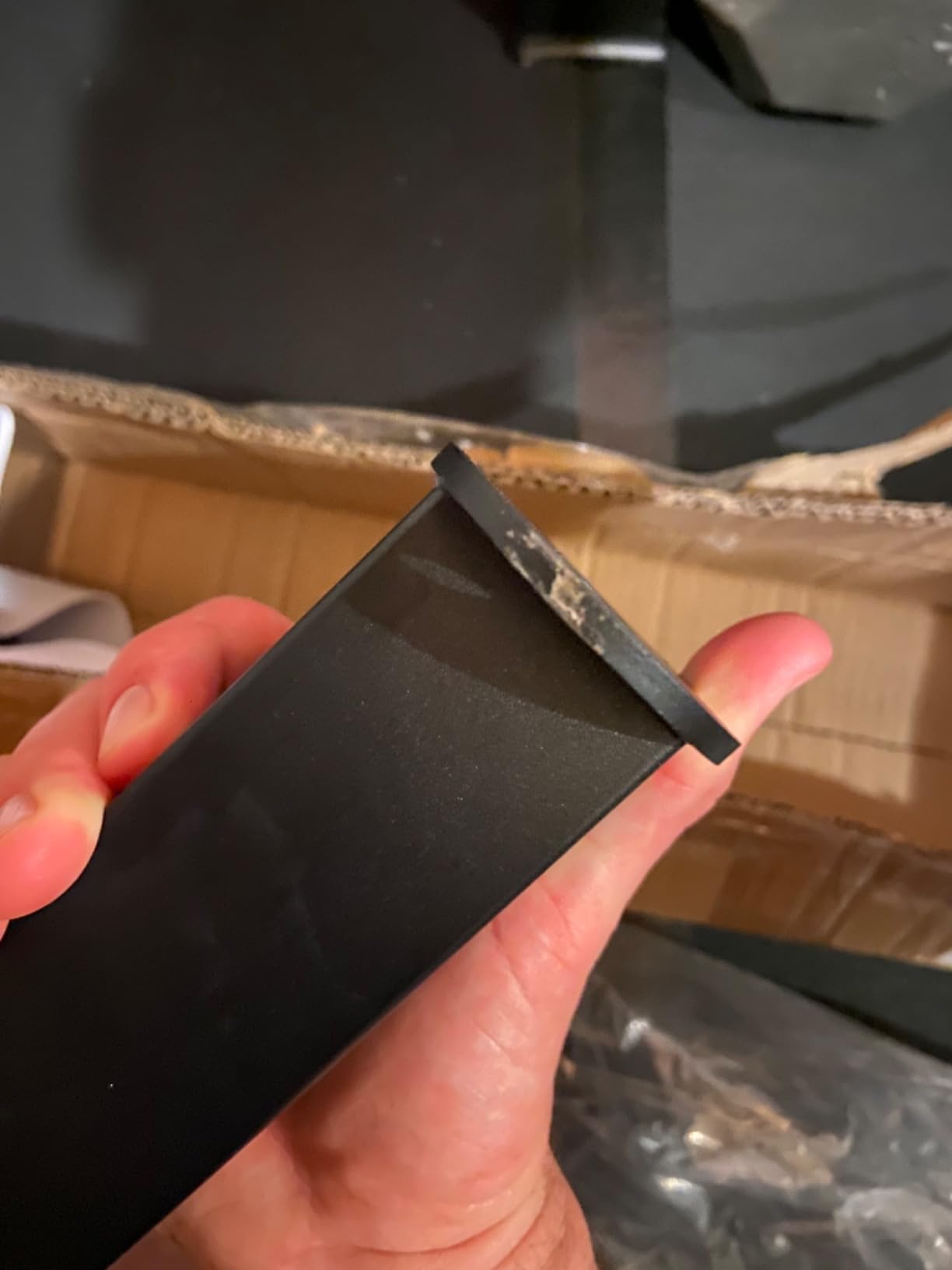
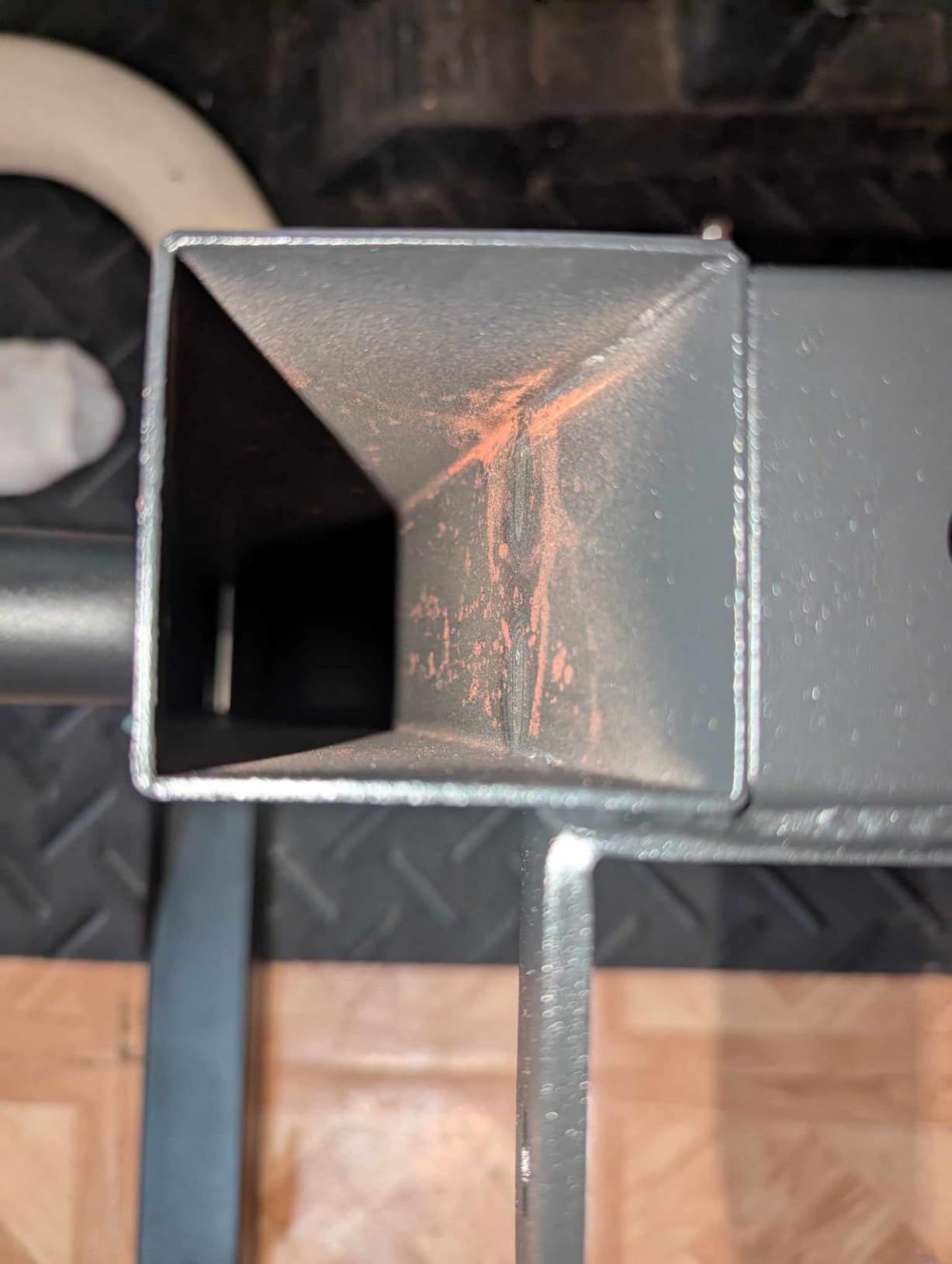
If you are buying a unit with no established brand behind it, check five things when it arrives. Look at the welds closely, especially where the lever meets the pivot. Run a fingernail along the paint and check for chips that expose bare steel. Open the hardware bag and confirm the bolts match the instructions, since mismatched hardware is a common QC miss. Count the plates that actually shipped against the parts list. And read the return window before you assemble anything, because assembly often complicates returns on large machines.
8. Renting, travelling, or a shared space
If you rent or move often, an attachment is the only sensible purchase. It unbolts, it goes on a shelf, and it does not require a floor plan change. Floor machines in the 80 inch width class are effectively permanent, and even a squat-box style unit becomes a problem if you have to clear a room before a new tenant arrives. If the rack itself is part of the problem, our picks for squat racks for small home gyms cover the compact layouts that pair best with an attachment.
9. Total cost beyond the machine
Budget for a proper belt. Several units in this roundup either do not include one or include one that owners replace within weeks, and the belt is what your hips are actually connected to. Add a rubber floor mat, and add plate storage if the machine does not have any. On a floor machine, add a second pair of clips or carabiners as a spare, because losing one mid-session is an easy way to end a session badly.
Setup, Loading and Storage in Thirty Seconds a Session
The biggest gap between advertising and reality with these machines is time. Loading a floor rig with plates is a two-person job on anything over 700 lb, and the time cost is the reason a lot of people stop using theirs. Here is what a normal session actually looks like, and how to make it quick.
Loading a belt squat step by step
Set the hip belt over the iliac crest rather than the waist, which is the single most common technique error and the one that puts pressure on the lower back instead of unloading it. Adjust the belt so it sits flat and the D-ring or clip sits centred at the front of the hips. Set your stance, then load the plates onto the horn or sleeves at a stable height. If the machine has a kickstand, use it. If it has bar racking, use that instead and skip the need to hold the load while stepping into position.
Brace as you would for a squat, tuck the pelvis slightly, and descend under control to the depth your machine’s travel allows. The eccentric should be slow enough that you could stop at any point. Drive up through the mid-foot, keeping your hips under the load rather than drifting forward. The single most common visual error is letting the hips shoot back, which turns a belt squat into a good morning with a machine attached.
Storage and stowability
Attachments are the easy case. Unbolt, hang it on the wall or the rack, done. The Mammoth in this roundup has a wall-mount option on a 3×3 beam, which makes it genuinely disappearable. A compact squat-box style unit can be carried by one person and stored against a wall, though you will be moving it every session. A full standing rig in the 80 inch width class is effectively a permanent fixture, and if you need your floor back for anything else, that machine will not work for you.
A word on noise while you get set up. Plates dropping onto a platform are loud regardless of machine type, so if you are below someone, lower plates onto the horn rather than dropping them and put rubber matting under the platform. A roller-based arm will add mechanical noise on the way down, and that noise grows as the rollers wear, which is the strongest practical argument for a guide-rod or pulley design in a shared building.
Returns, Warranty and Freight Damage on Large Machines
Nobody covers this part of the purchase and it is where expensive mistakes happen. If you are buying a floor machine, read the return window before you assemble anything, because assembled machines are frequently harder to return than boxed ones and the return shipping on a 160 lb unit is rarely the seller’s problem.
Checklist for the day it arrives. Photograph the packaging before opening it, because freight damage on a large machine is a claim you can only make with evidence. Inspect the frame welds, the pivot hardware and the finish for chips exposing bare steel. Confirm the hardware bag matches the instructions. If anything is bent, missing or damaged, raise it before you assemble rather than after, because a bent tube in an assembled machine becomes your problem rather than theirs.
On warranty, two years is the common baseline in this category and a lifetime frame warranty is a genuine differentiator, not marketing. What is not a differentiator is a warranty that does not name a company. For any machine without an established brand behind it, the practical question is who absorbs freight damage, and if the listing does not say, assume you do.
Do You Even Need a Belt Squat Machine?
Honestly, most home gym owners with a rack already have a workable substitute. A safety squat bar on rack pins is a one-bar purchase that loads the same hip-dominant pattern, and home gym builders describe it as doing the job of a hack squat while letting them go heavier. If you own a landmine, you also have most of the accessory value of an attachment already. Our roundup on the best hack squat machines for home gyms covers the other side of that comparison in detail.
What a belt squat machine adds is three specific things. First, loading that does not touch your spine at all, which matters if barbell squats aggravate your lower back. Second, a large quad-dominant load without the axial compression of a barbell, which is exactly what lifters returning from injury look for. Third, a movement you can do at high intensity without a spotter and without a heavy bar path across your shoulders.
Where it does not help is upper back work, general conditioning, or anything where you need a bar on your shoulders. A Smith machine covers that ground in a fixed vertical path, and our picks for Smith machines for home gyms cover the trade-offs there. A hack squat or leg press covers the lower body differently, and if your issue is purely quad volume with no back involvement at all, one of those is a cheaper answer than any machine on this page.
A few people should skip the machine entirely. If your garage is under 8 by 8 feet and the rack already fills it, the footprint is the deciding factor. If you are a renter, an attachment is the only version of this purchase that makes sense. And if you are in the market for a full rack first, buy the rack, live with it, and revisit the belt squat once you know how much room is left.
Frequently Asked Questions
What is the best belt squat machine for home use?
For most home gyms the best choice is a rack attachment if you already own a power cage, because it costs a fraction of a floor machine and adds the movement in minutes. If you do not own a cage and want an independent station, look at a standalone floor machine with at least 700 lb rated capacity and a bar racking feature. The deciding factors are floor space, your bodyweight against the max user rating, and how the load tracks as you descend.
What is the best belt squat attachment for home use?
The best belt squat attachment is the one that matches your rack hole pattern and upright thickness first, because an attachment that does not fit is useless. Universal lever arms that fit 2×2 and 3×3 racks with 1 inch or 5/8 inch holes give you the most flexibility. Look for a long adjustable lever for depth, a kickstand for easier loading, and a padded belt included in the box.
Are belt squat machines worth it?
They are worth it if your priority is high quad loading with almost no spinal compression, if barbell squats aggravate your lower back, or if you are returning from injury and want to keep training legs. They are not worth the floor space if you already own a landmine and a safety squat bar, or if your garage is under 8 by 8 feet. A rack attachment is the low-risk way to find out whether the movement suits you.
How much does a belt squat machine cost?
Price ranges here are very wide, so shop by type rather than by number. Rack attachments are the low-cost option and take almost no floor space, while premium attachments with a belt and kickstand sit in the middle of the range. Standalone floor machines run from compact squat-box designs to full standing rigs rated at 700 to 1000 lb of capacity, and commercial multi-use stations cost several times more again. Budget extra for a proper padded belt and rubber matting on any of them.
Are belt squat machines effective, and do they build quads as well as back squats?
They are effective for the quads and glutes, and they let you load heavily without a bar on your spine. What they do not reproduce is the axial loading and core bracing demand of a barbell back squat, so they are a complement rather than a replacement. Lifters with lower back problems often use them as their primary leg movement because even a leg press can aggravate symptoms at depth. Best results come from pairing belt squats with real squat-pattern work when your back allows it.
How much space does a belt squat machine take up?
It depends entirely on the type. A rack attachment adds almost nothing because it hangs off hardware you already own, and a wall-mountable model can disappear between sessions. A compact squat-box design measures around 18 inches deep by 36 inches wide. A full standing machine can measure 51 inches deep by 81 inches wide. Before ordering, measure the machine, the arc the bar travels through, side clearance for loading, and the path for getting it into the room.
Best Belt Squat Machines for Home Gyms: The Verdict
The best belt squat machines for home gyms in 2026 split cleanly by constraint, and pretending otherwise is how people end up with a machine in a corner. If you own a power cage, the SELEWARE lever arm is the pick: it has the widest feedback base in the group at 68 ratings, works across 1 inch and 2 inch plates, and doubles for rows and curls. If you want more travel and the belt already in the box, the Fringe Sport Mammoth is the better buy, and the kickstand is worth adding.
If you have no cage, the Bells of Steel Machine 2.0 is the strongest standalone rig, with 11-gauge steel, a linear bearing strap system and no one-star reviews, provided you have the floor space. Heavy lifters who need real loading capacity should look at the Mikolo 1000 lb instead and plan to replace the belt. In a genuinely small room, the Bodykore Squat Box PRO gives you the movement at a fraction of the footprint.
Whatever you choose, measure the space first, check your bodyweight against the max user rating, and watch how the load tracks before you load it up. Those three checks prevent almost every regret we see in this category.