
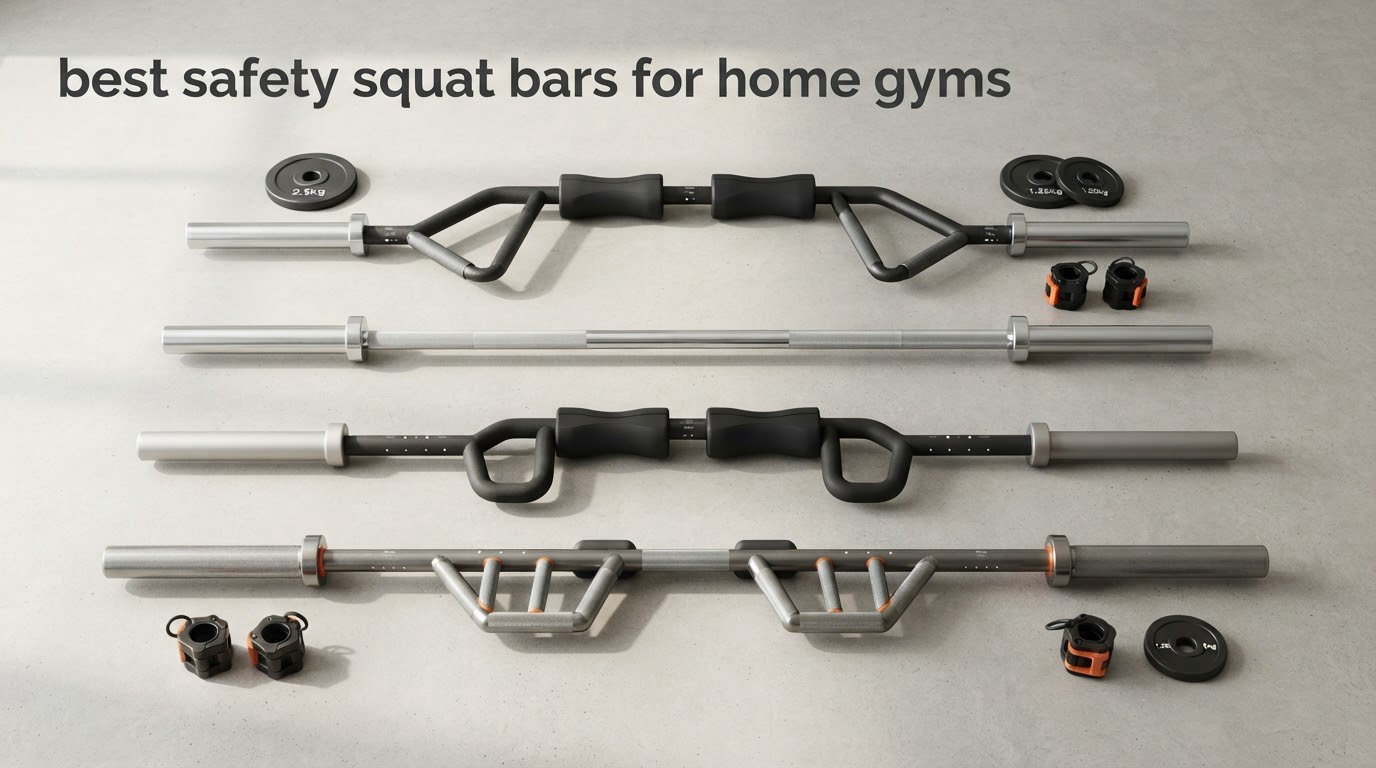
Short answer: the Titan Fitness Rackable Safety Squat Bar is the best safety squat bar for most home gyms, the VEVOR 700 lb bar is the most-reviewed way in, and the Ader Safety Squat Olympic Bar squats the most upright of the group. All three put Olympic plates on a padded yoke instead of across your traps, which is the whole point.
I have been running a rack of specialty bars in a two-car garage for years, and the safety squat bar is the one piece of equipment that keeps showing up even after the novelty fades. It looks odd in a garage, it is awkward to walk to, and it still ends up being the bar I reach for when a shoulder says no.
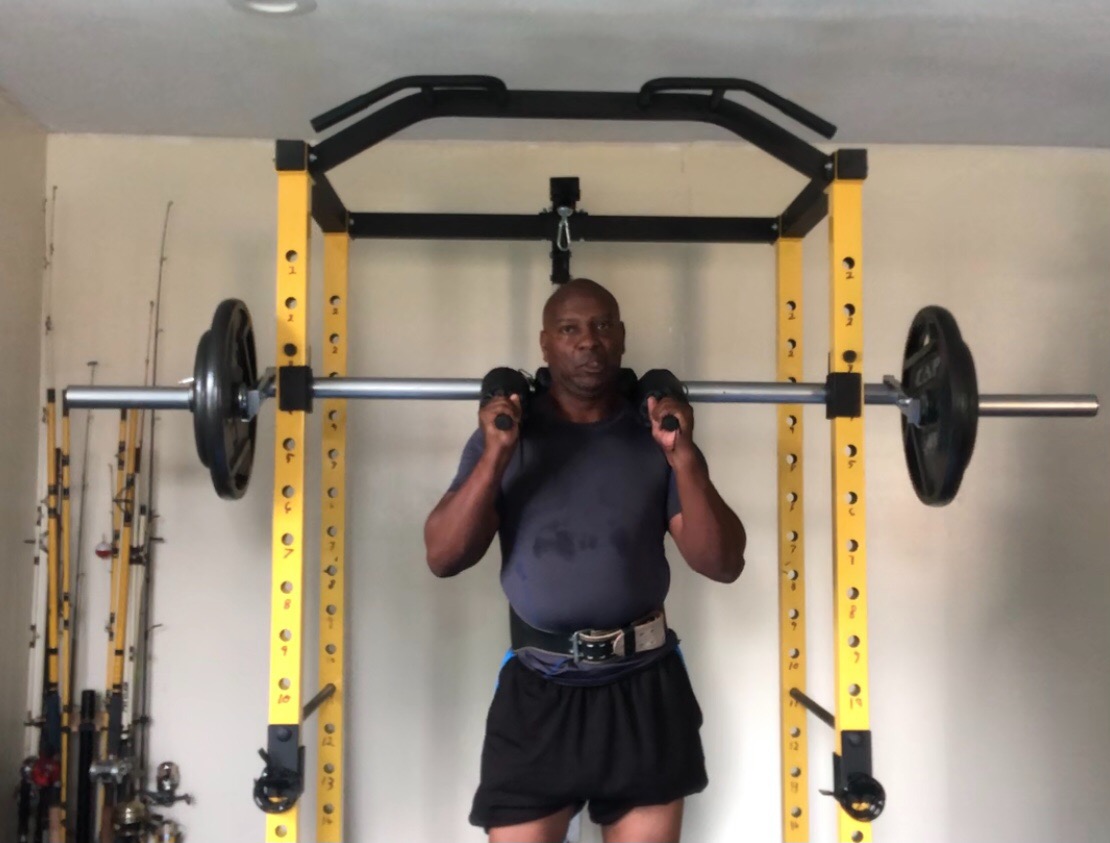
A safety squat bar is a specialized Olympic barbell with a padded yoke that rests across your upper traps and rear delts, plus two cambered handles that hold your hands in front of your chest. Instead of bending your elbows and rotating your shoulders into a painful external rotation to hold a straight bar, you hold handles in front of you and the yoke carries the load. Because the load sits higher and further forward, the movement resembles a front squat more than a back squat, and you will move roughly 10-15% less weight while working your quads and upper back harder.
That trade is worth it for anyone with shoulder pain, limited thoracic mobility, a rotator cuff injury, or a history of being pinned under a straight bar. It is also worth it for healthy lifters who want to squat more often without grinding the same joint pattern every session, and for anyone training alone in a garage with no spotter and no safety arms. If you are pain-free, under 35, and squat two or three times a week, a straight Olympic bar plus a set of safety arms is probably the better use of the same money. We cover that in the buying guide.
One clarification first, because it shows up constantly in forum threads: a safety squat bar is not a safety bar. A safety bar has upright posts and horizontal spotter arms that a training partner catches the barbell on, and it has nothing to do with your shoulders. A safety squat bar has no arms at all, so what it gives you is shoulder-friendly loading rather than catching.
The eight bars below are the ones that cleared our bar for this roundup: a real review history, a real spec sheet, and enough owner feedback to judge the padding and the hardware. We could only find eight that did, and we would rather show you eight bars that hold up than pad the list with near-duplicate size variants. Last reviewed and updated in 2026.
Table of Contents
Top 3 Picks for the Best Safety Squat Bars for Home Gyms (October 2026)
These three cover the three most common buying situations: the best all-round bar, the entry-level bar with the most owner feedback, and the one that feels the least like a compromise.

Titan Rackable SSB
- 5 inch camber
- 1500 lb rated
- one-piece HeftyGrip pads
- rackable at 50 inches

VEVOR 700 lb SSB
- 28mm seamless A3 steel
- 700 lb capacity
- foam shoulder and neck pads
- compact
Titan takes the top spot because of the combination of rating, review volume, and a rackable 50-inch length that drops into a standard power rack without adaptors. VEVOR wins on owner feedback volume. Ader shares the highest rating in the group and has the handle geometry that keeps the torso most upright.
All 8 Safety Squat Bars Compared Side by Side
Capacity and bar weight are the two numbers that decide how much usable weight you have on your sleeves. Everything else is comfort and geometry.
| Product | Specifications | Action |
|---|---|---|
| Titan Fitness Rackable Safety Squat Bar |
|
Check Latest Price |
| VEVOR Safety Squat Bar 700 lb |
|
Check Latest Price |
 Ader Safety Squat Olympic Bar 1000 lb Ader Safety Squat Olympic Bar 1000 lb |
|
Check Latest Price |
 Bells of Steel Safety Squat Bar 4.0 Bells of Steel Safety Squat Bar 4.0 |
|
Check Latest Price |
 Popsport 700 lb Safety Squat Olympic Bar Popsport 700 lb Safety Squat Olympic Bar |
|
Check Latest Price |
 TDS 86 Inch Safety Squat Bar TDS 86 Inch Safety Squat Bar |
|
Check Latest Price |
 TDS 600 lb Safety Squat Bar TDS 600 lb Safety Squat Bar |
|
Check Latest Price |
 E.T.ENERGIC 7FT Safety Squat Bar 700 lb E.T.ENERGIC 7FT Safety Squat Bar 700 lb |
|
Check Latest Price |
Two things jump out. First, bar weight ranges from 30 lb on the TDS 600 to 65 lb on the TDS solid steel model, which is a huge spread when you are trying to hit a number on the bar. Second, the Bells of Steel bar and the VEVOR differ on the question that matters most for a small garage: whether the bar will actually sit in your rack.
1. Titan Fitness Rackable Safety Squat Bar – Best Overall for Home Gyms
Titan Fitness Rackable Safety Squat Bar, Olympic Sleeves, 1,500lb Rated
1500 lb rated
58 lb bar
5 inch camber
Rackable 50 inch length
Pros
- Highest rated bar we tested at 4.8 with 87 percent five-star ratings
- One-piece HeftyGrip pads do not slide during heavy sets
- 5 inch camber drop lowers the center of gravity for easier bracing
- Rackable 50 inch length fits most power racks with no adaptors
- 35mm anti-slip rubber grips take pressure off your hands
Cons
- 58 lb bare bar weight cuts into your plate loading compared to a 45 lb Olympic bar
- Smooth chrome sleeves are slick enough that reviewers recommend adding bar clamps
- Padding is comfortable but reviewers rate it home-gym grade rather than commercial grade for high-frequency use
This is the bar I recommend to almost anyone who asks. Titan’s rackable SSB hits 4.8 stars across 104 ratings, which is the strongest rating-and-review combination in this roundup, and the build details back up the score rather than just riding on it.
The camber is the piece that makes it feel stable. Titan puts a 5-inch drop into the middle of the bar, which pulls the loaded ends down toward your hips and keeps the center of gravity lower and slightly behind you, so when you unrack it the bar wants to stay where you put it. On an uncambered bar the ends swing, and on a bar with a steep camber the load wants to roll forward onto your traps.
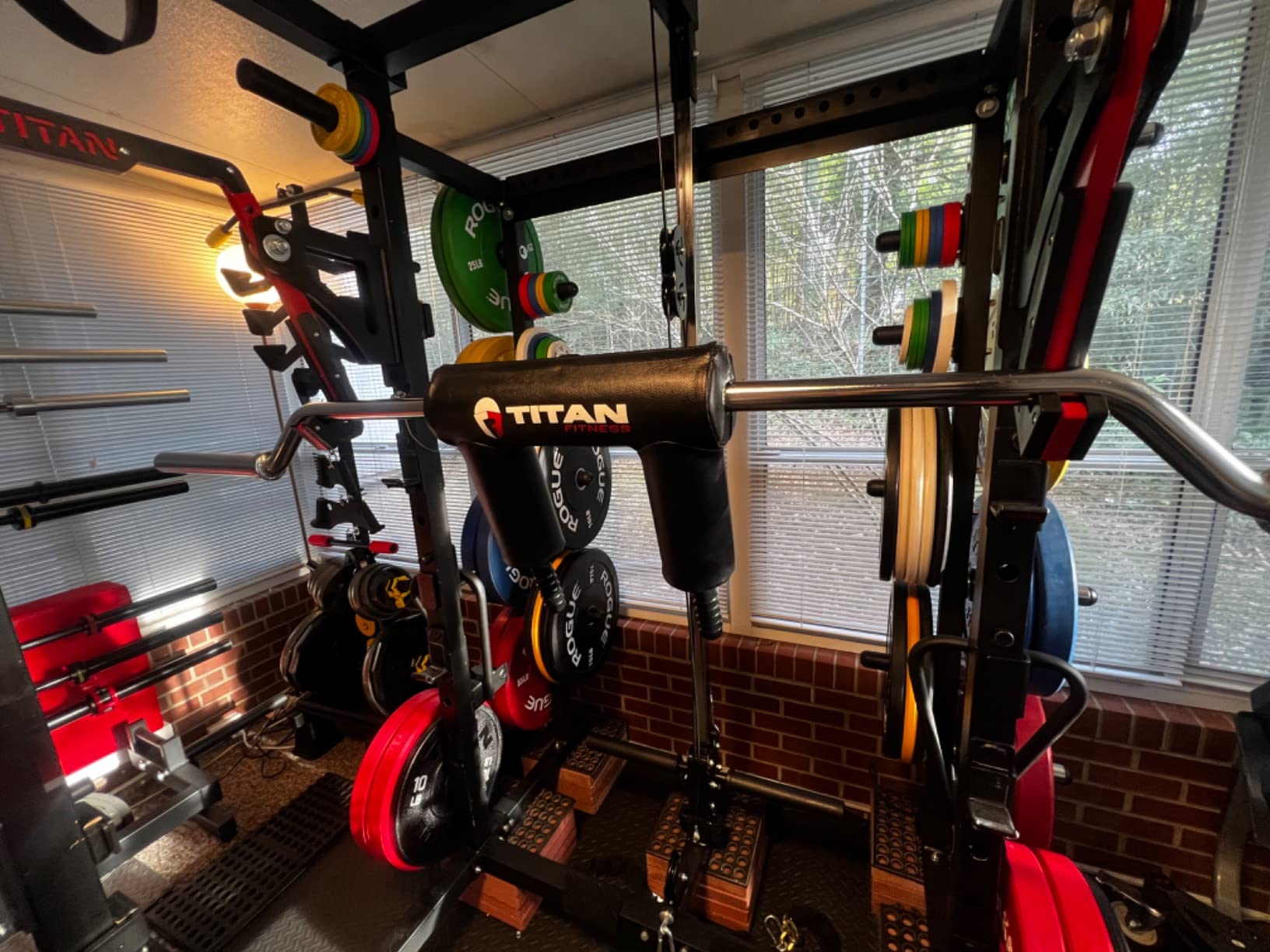
The other detail I like is the padding. Instead of two or three separate foam pieces that can rotate independently under load, Titan uses a one-piece high-density HeftyGrip pad across the shoulder and arm area. In practice that means the bar does not walk sideways off your traps mid-set, which is the single most common complaint we see on cheaper yoke bars.
The grips are 35mm anti-slip rubber, and they are the part owners mention most when they describe switching from a straight bar. Your hands sit forward at about chest height in a neutral position, so there is no wrist extension and no external rotation demand. For anyone whose elbows or wrists have been the limiting factor on a straight bar, that is the whole reason to own one of these.
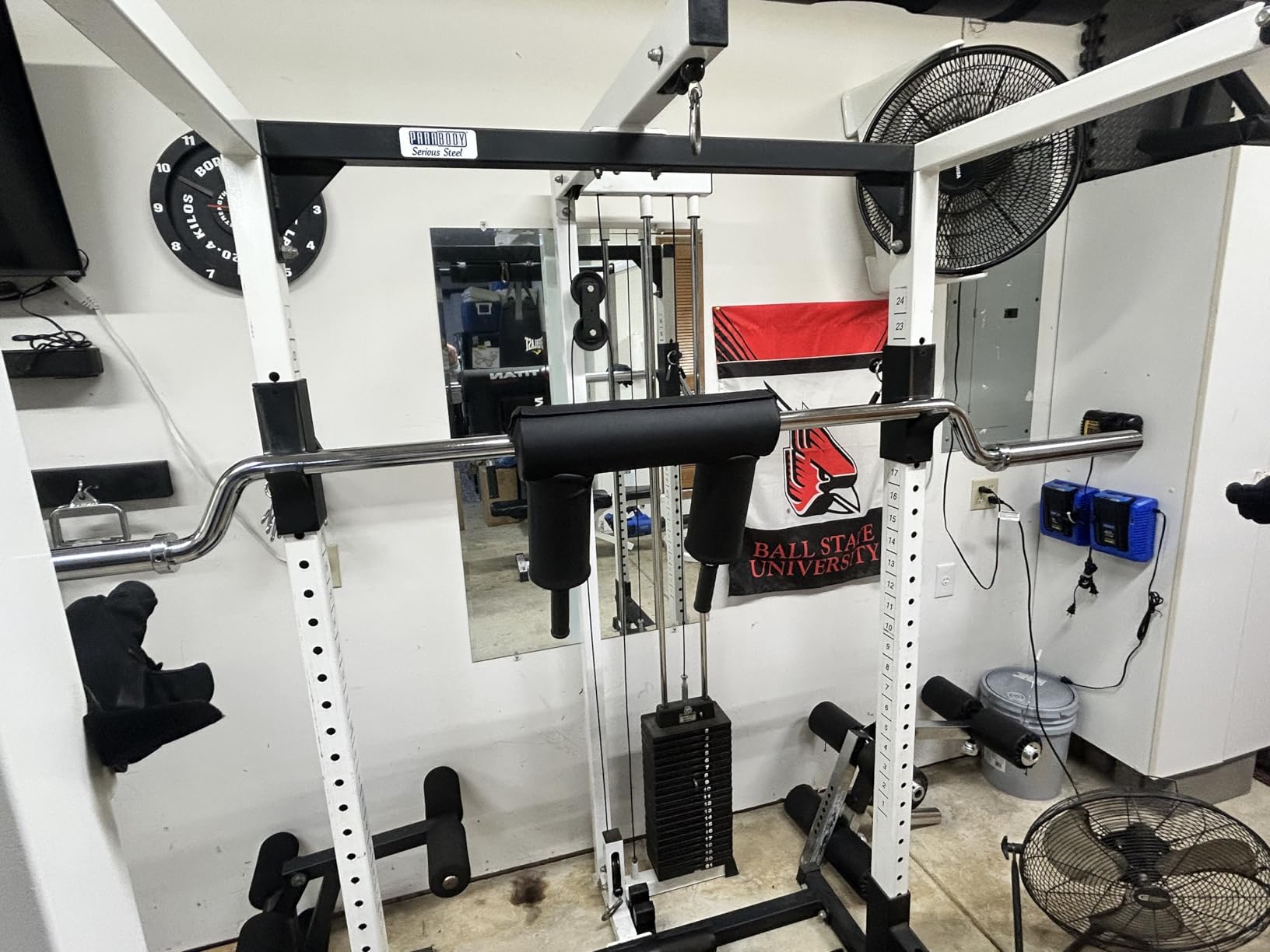
How the Titan SSB handles a real garage session
Set up in a standard power rack, the extended 50-inch rackable length means the sleeves reach the J-cuds without a Spud accessory or a pair of plates under the bar to cheat the height. That matters more than it sounds, because the usual workaround for a short specialty bar is to set the safety arms higher than the J-cups, which quietly removes your ability to rack a failed rep.
Under load it is stable in a way that surprises people. Owners recovering from shoulder surgery describe this bar as the reason they could keep squatting at all, and several reviews compare the build quality to bars at twice the cost. The 1,500 lb rating and the chrome anti-scratch sleeves are not exciting specs for a home gym, but they mean the bar is not the weak link in a room full of heavy plates.
Where the Titan falls short
The 58 lb bare bar weight is the honest catch. Coming from a 45 lb Olympic bar, you are adding 13 lb to every set before you add a single plate, and on a back-heavy program that quietly eats your working weight. Plan your plate math accordingly rather than trying to load the same number as your straight-bar days.
The chrome sleeves are also smooth enough that reviewers consistently recommend adding bar clamps, which is a small extra cost and one more thing to keep track of. And while the padding is very good, a few owners who train in commercial gyms rate it as home-gym grade rather than something you would want on a high-frequency barbell schedule. For a two or three session week, it is more than sufficient.
2. VEVOR Safety Squat Bar 700 lb – Best Budget Entry
VEVOR Safety Squat Bar 700LBS Weight Barbell 28 mm Diameter Cambered Design
700 lb capacity
28mm seamless A3 steel
Foam shoulder and neck pads
85.83 inch length
Pros
- Most reviewed bar in this roundup with 232 ratings
- Entry-level build that is the least costly way to add a yoke bar to a garage
- Foam-cushioned shoulder and neck pads take real pressure off during squats
- Seamless 28mm A3 steel welded construction rated to 700 lb
- Compact footprint that suits a small home gym
Cons
- 9 percent one-star share which is the highest in this roundup
- Wide 17.13 inch listed width makes it bulky for tight rooms
- Short 2 foot loading shaft limits your plate options
- 700 lb capacity in the base variant
VEVOR is the reason most people end up owning a safety squat bar at all. It has 232 ratings, far more owner feedback than anything else in this group, and it is the lowest barrier to entry of any full yoke bar we reviewed. If the question is whether you can get a working SSB into a home gym without a serious equipment budget, this is the answer.
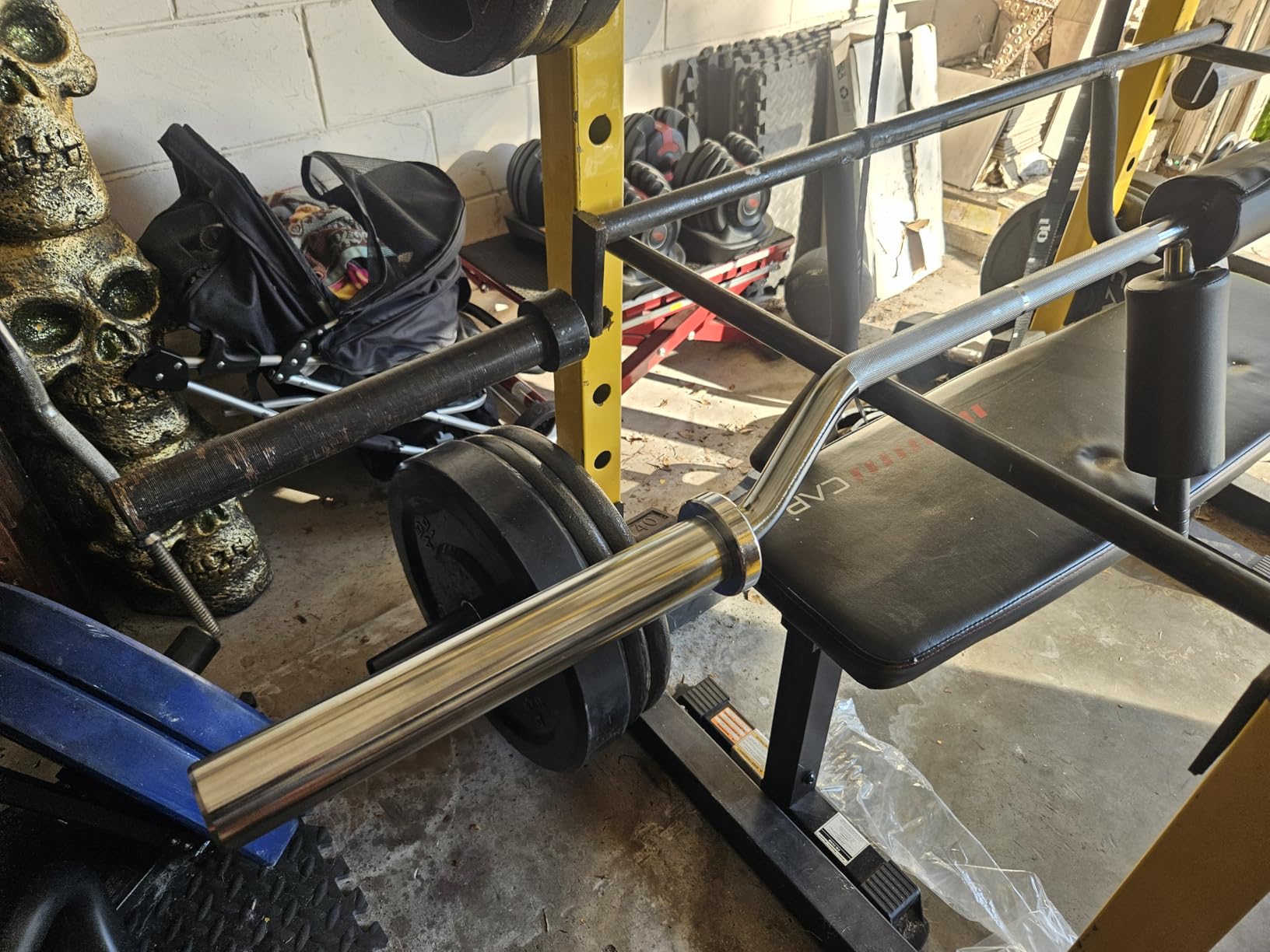
The construction is straightforward: seamless welds from 28mm A3 steel with a 700 lb rating, a nickel finish, and foam-cushioned pads over the shoulder and neck. There is no camber specification listed, and you can feel that in use. The bar sits flatter than a Titan or an Ader, which means more of the load is pressing straight down onto the yoke rather than settling into your traps.
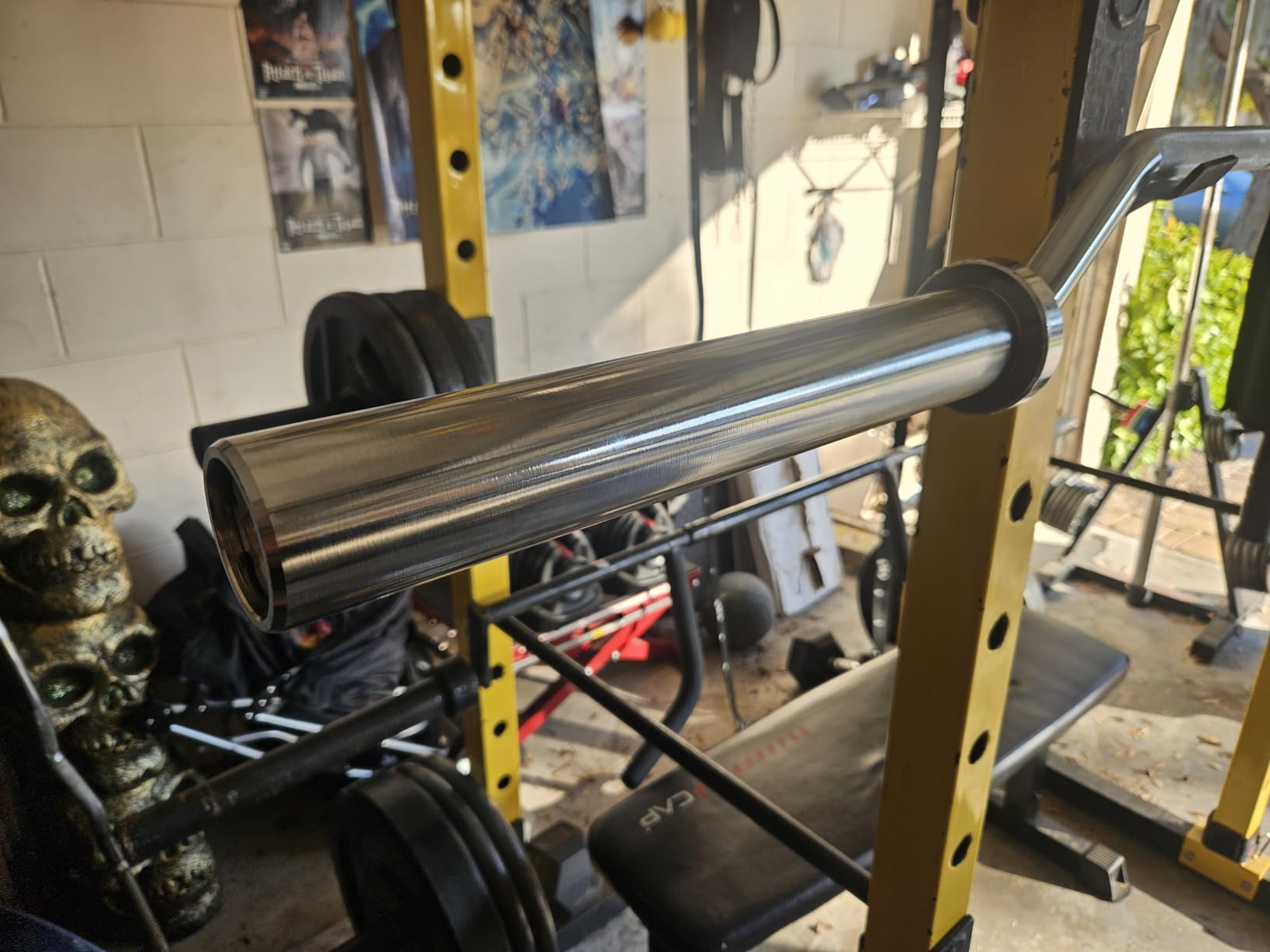
Owners consistently report that the shoulder relief is genuine even on the lower-capacity version. Foam pads on a 700 lb bar are still foam pads, and the yoke does the same job at 400 lb as it does at 600. For a lifter training somewhere in that range, the capacity ceiling is not the first thing to worry about.
The review summary picture is honest: 63% five-star and 17% four-star, with a notable minority reporting assembly or finish inconsistencies. That is the shape of a budget import, and it is why we would not put it in a rack you squat heavy in five days a week.
What the budget bar gets right
Two things stand out. The padded yoke genuinely reduces pressure during squats, which is the entire value proposition, and the compact footprint suits a small home gym better than the long Titan or the 86-inch TDS, so a shorter bar is a real practical advantage in a corner-of-the-garage setup rather than a minor spec difference.
The listed dimensions of 85.83 by 17.13 inches also make it the widest bar here, so plan your storage and your walk-out path before you commit. The 2-foot loading shaft accepts standard weight plates, but it is short enough that you will not be loading competition-sized plate sets on it.
Where the budget bar gets uncomfortable
The 9% one-star share is the highest in this roundup, and the complaints cluster around finish consistency and hardware rather than the steel. A significant share of buyers are happy with how it performs and unhappy with how it looks, and a smaller share found a screw or a weld that needed attention out of the box.
At 700 lb, the capacity rating becomes the binding constraint long before the frame does. If you are already squatting 400 lb and progressing, you are shopping for a bar you will outgrow. And with no listed camber geometry, expect a more front-squat-like feel with a bit more forward torso pitch than the premium bars give you.
3. Ader Safety Squat Olympic Bar – Best Rated and Most Upright
Ader Safety Squat Olympic Bar (1000 LBS)
1000 lb rated
59 lb bar
Rotating sleeves
Offset hand grips
Pros
- Ties for the highest rating in the roundup at 4.8 with 86 percent five-star ratings
- Handles sit offset from the camber in the EliteFTS layout for a more upright squat path
- Rotating sleeves let the handles move for both high-bar squats and good mornings
- Knurling plus padded grips give solid control
- Long review history with multi-year owners reporting continued performance
Cons
- Handles cannot be removed so it cannot double as a straight bench bar
- Slightly smaller frame than an EliteFTS equivalent may not suit larger lifters
- The 1000 lb version is the heaviest bar here so loading it takes planning
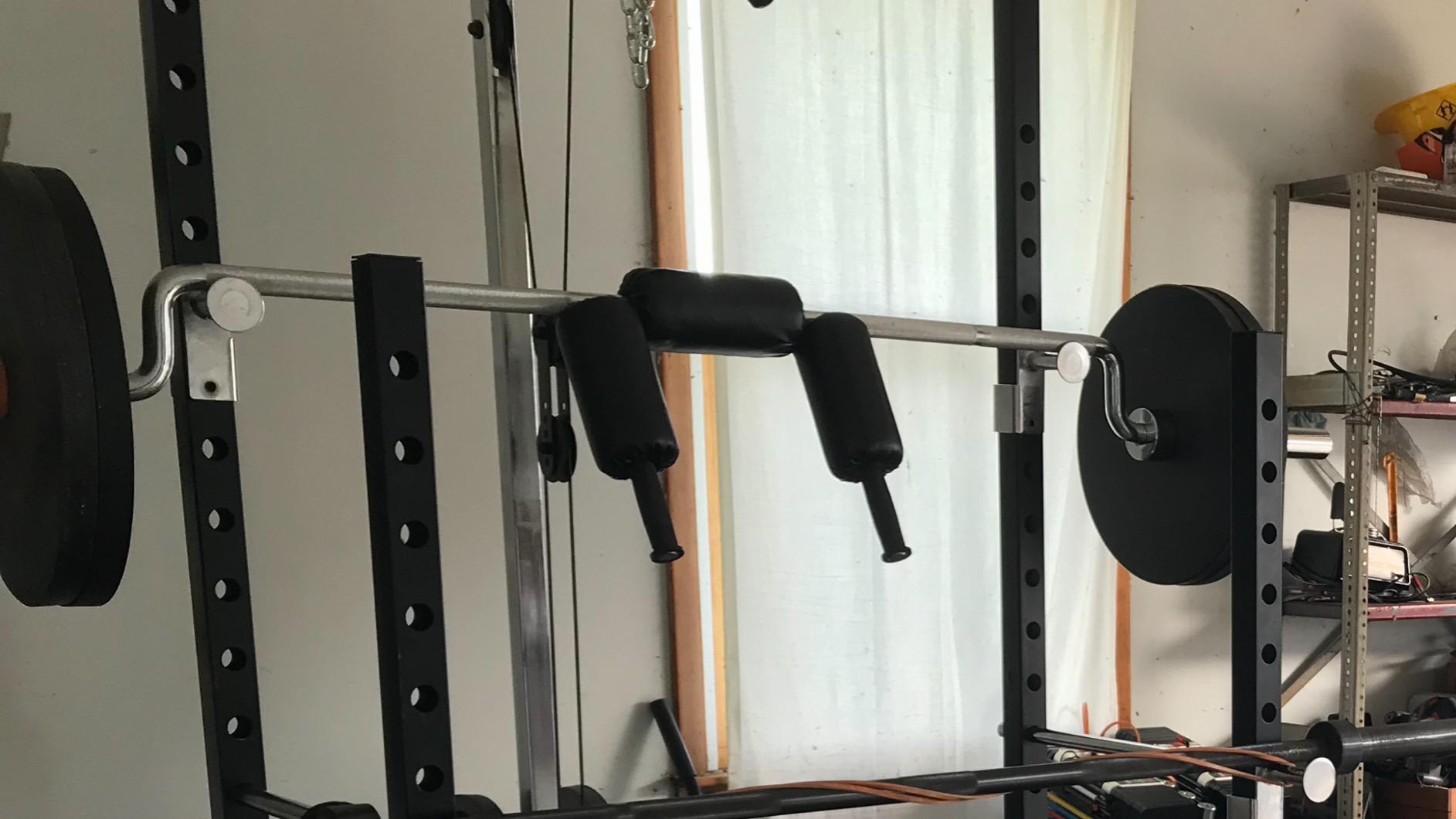
The Ader bar is the one reviewers describe most analytically, and the word that comes up again and again is angle. Ader laid the handles out in the same general geometry as the EliteFTS SSB, with the grips offset from the camber line rather than sitting directly under it. That single design choice lets the bar settle without pitching your torso forward.
At 4.8 stars across 75 ratings it ties Titan for the top rating, with 86% five-star. Unlike most bars in this category, it also has a review history long enough to include multi-year owners describing how it holds up. That is worth something when you are committing a garage corner to a piece of equipment you expect to keep for years.
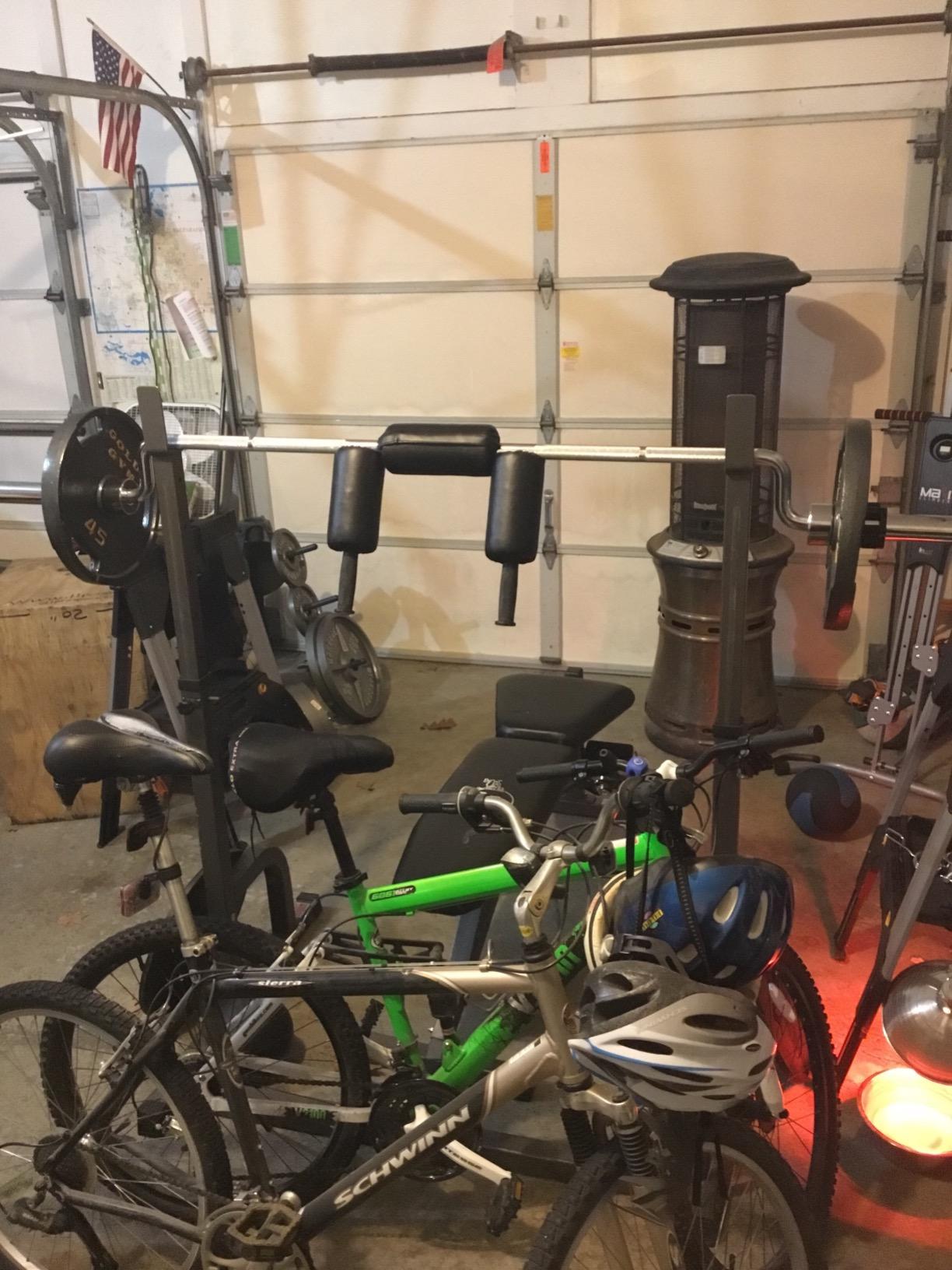
The rotating sleeves are the sleeper feature. Because the sleeves spin, the handle position can shift upward or downward, which means the same bar moves between a high-bar squat and a good morning without you swapping hardware. Several owners use the bar for both, which stretches the value of a single accessory well past squats.
Knurled grip zones combined with the padded yoke means you get control if you want it and a stable platform if you do not. The frame is listed at 59 lb, and the 1,000 lb capacity version is the one most home lifters actually need.
Why the handle angle actually matters
On a bar where the handles sit directly beneath the camber apex, the load wants to roll forward as you descend, so the lifter compensates by pitching the torso and losing the ability to brace. On the Ader layout, the offset handles let the yoke settle on the traps with the hands already forward, and reviews specifically note the absence of that forward torso pitch compared to cheaper competitors.
That upright path is why experienced lifters gravitate to this geometry. It is also why the Ader has a cult following among people who came from EliteFTS and wanted a similar feel with a slightly different frame size, which some larger lifters prefer.
Where you might skip the Ader
The handles are fixed. That is excellent for squatting and good mornings, but it means the bar cannot be stripped down and used as a straight bench bar, so you are committing a full second barbell to your rack rather than repurposing one.
Frame size is the other consideration. The listed dimensions are smaller than an equivalent EliteFTS bar, which works in your favor if you are a compact lifter and against you if you have a longer torso or wider frame and tend to feel crowded on an SSB. At 59 lb it is also one of the heavier bars here, so plan your plate loading around that and expect a longer carry from the storage area to the rack.
4. Bells of Steel Safety Squat Bar 4.0 – Best for Hands-Free Squatting
Safety Squat Bar Bells of Steel – Barbell 4.0 Padded 45.6 lb, 1500 lb
1500 lb rated
45.6 lb bar
Titanized black shaft
7.25 in usable handle length
Pros
- Bar weight of about 45.6 lb is close to a 45 lb Olympic bar so the least plate math
- Ergonomic pads let you squat without holding the handles at all
- 1500 lb capacity rating
- Titanized black shaft finish resists wear
- Longer handles with about 7.25 in of usable grip length
- Brand is responsive on customer support
Cons
- Will not sit correctly in a non-Bells of Steel rack with more than 49 in between the outer edge of the J-cups
- 11 percent one-star share which is the second highest in this group
- Only 65 ratings so the long-term track record is shorter than the budget-tier bars
At 45.6 lb, this is the bar that makes the least sense of the usual complaints. Most owners of an SSB need to strip plates off their normal loading to compensate for a heavy bar, and this is one of the few in this roundup where that adjustment is close to nothing. If you are moving from a 45 lb straight bar, your plate math barely changes.
The ergonomic pads are the headline. They are shaped so the bar is stable enough to squat hands-free, which sounds odd until you try it. On a conventional SSB the handles are optional but you usually want them; here, owners describe setting up, unracking, and doing the set without touching the grips. For anyone who just wants a yoke bar and does not want to think about hand position, that is a real difference.
The handles themselves are longer than most, with roughly 7.25 in of usable length. A longer grip gives you somewhere to go when you want to change your hand position between a squat and a JM press without moving your shoulders.
Check your rack before you order this one
Bells of Steel designs this bar around its own racks, and the brand is upfront about the limit: it will not sit correctly in a non-Bells of Steel rack with more than 49 in between the outer edge of the J-cups. That is the most useful disclosure in this entire category, and it is exactly the number you need before buying.
Measure the distance between the outer edges of your J-cups, not the inside spacing. If you are over 49 in, this bar will sit high and potentially unstable in the hooks, and you should look at the rackable options instead, including the Titan or the TDS 600 lb model. If you are under that, the bar drops in and behaves like it does in the brand’s own frames.
For reference, our picks for full and compact power racks are collected in the best squat racks for home gyms guide, and the tight-space version is in best squat racks for small home gyms.
What you give up
The 11% one-star share is the second highest here, and it is almost entirely about rack fit rather than the bar itself. Buyers who ignored the J-cup measurement and then found the bar sitting oddly in their hooks wrote the negative reviews, which is a fair outcome but not a fault in the equipment.
At 65 ratings, the long-term durability record is shorter than the budget-tier bars with a couple hundred reviews. And while the hands-free pads are excellent for squats, they are less useful for the belt squat and heavy good morning work where you want to actively pull the bar into position.
5. Popsport 700 lb Safety Squat Olympic Bar – Best for Post-Surgery Return
Popsport Fitness Safety Squat Olympic Bar,700LB Capacity Squat Olympic Bar, 7 FT Safety Squat Bar Attachment with Shoulder and Arm Pads for Weight Lifting
700 lb capacity
30mm high-tensile steel
30 degree camber
Vinyl foam roller pads
Pros
- 30mm solid high-tensile steel with a 700 lb capacity rating
- 30 degree camber lets the bar sit low on the back for a preferred spine position
- Vinyl-covered foam roller shoulder pads are genuinely comfortable
- Works with squat stands and racks and bench setups
- Owners consistently praise the value
Cons
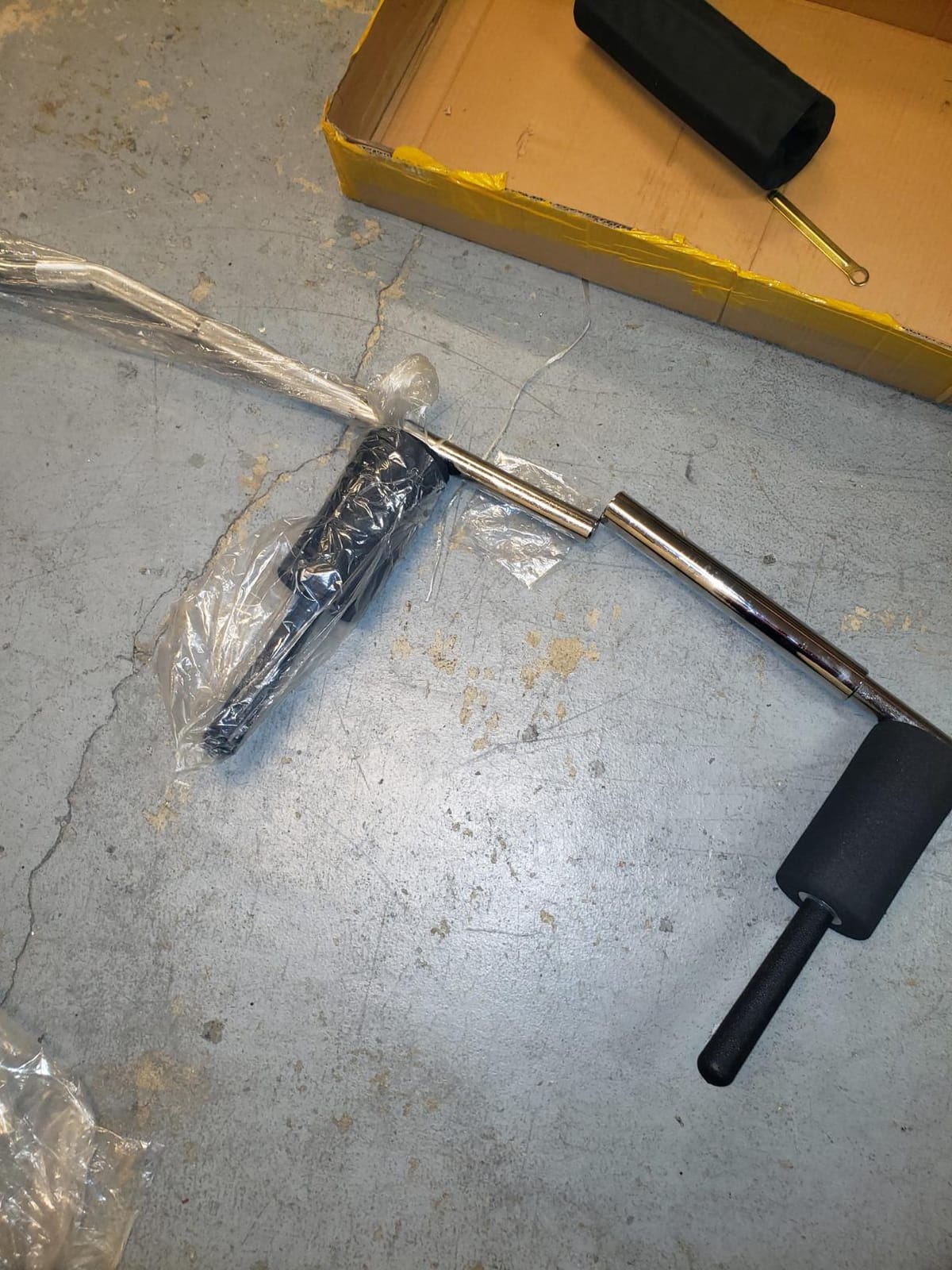
- Three-piece design requires assembly and multiple reviews report missing or undersized hardware screws
- Neck pad is slightly too large in diameter and can roll down the back
- Lowest average rating among the full-size yoke bars here at 4.1
- 12 percent one-star share with at least one report of unevenly welded handles and a loose sleeve
Reading the reviews on this bar, the story that repeats is a lifter coming back from shoulder surgery. Multiple owners describe being told to give up barbell squatting, then finding this yoke bar let them start training again. That is the clearest use case in the whole category, and 148 ratings is a substantial base for a bar in this niche.
The 30-degree camber is the part that makes it work. That angle is steep enough that the bar settles low on the back instead of riding high, and low barbell owners in particular tend to find this geometry comfortable immediately. The 30mm solid high-tensile steel is a step up in raw material from lighter budget imports, and the 700 lb rating covers most home lifting.
The vinyl-covered foam roller pads are the other repeated positive. Rollers distribute the yoke pressure across a wider contact area than a flat pad, which matters when you are doing high-frequency work on a shoulder that is still healing. Compared to flat foam, they also tend not to dig a hard line into the traps at the bottom of a set.
At 4.1 stars across 148 ratings, this is the lowest-rated full-size yoke bar in the roundup, and we would rather explain why than skip it. The rating reflects finish and hardware consistency, not a structural failure story.
Why the assembly matters more than it sounds
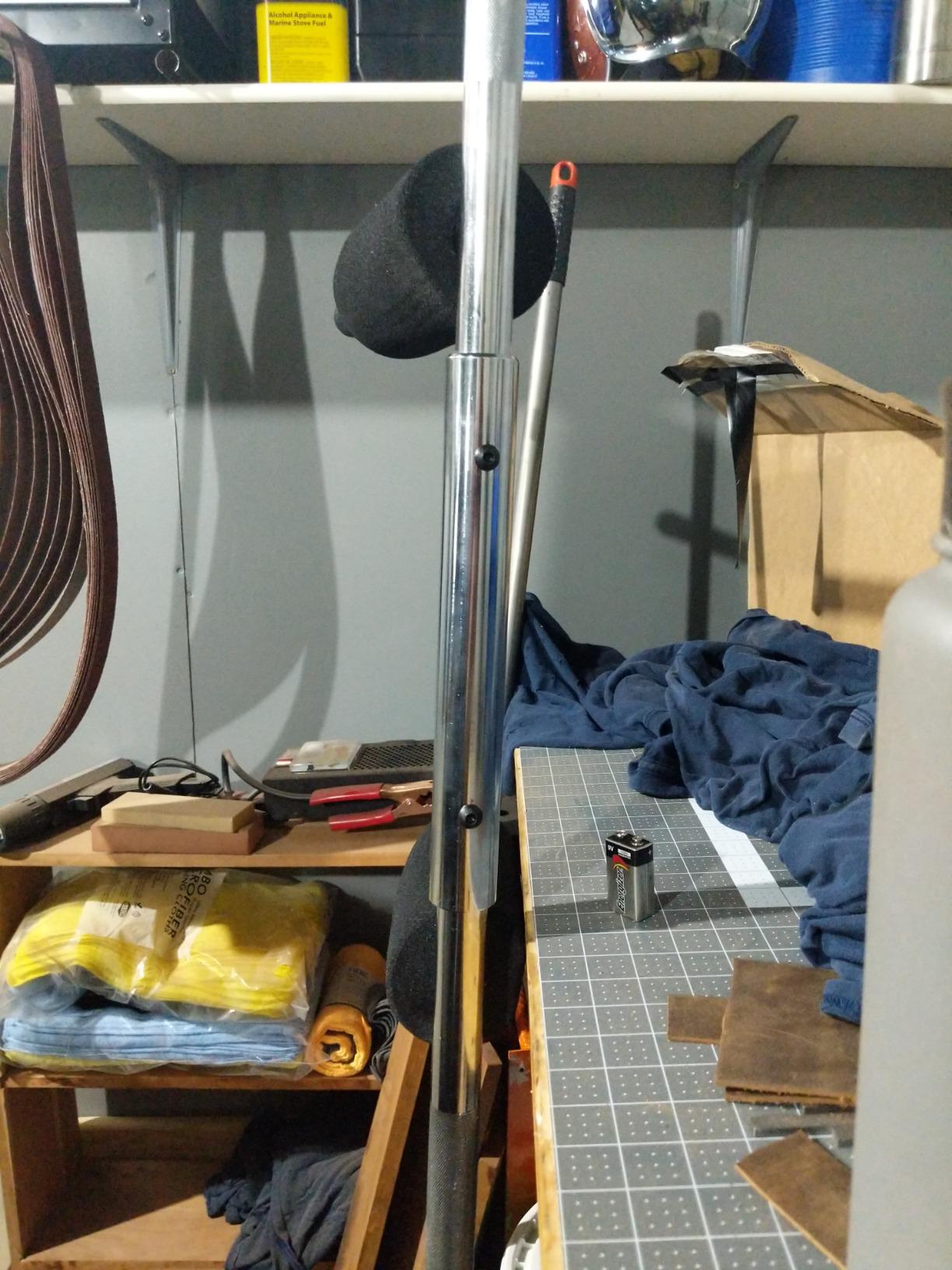
This is a three-piece design that you bolt together, and the most common complaint in the reviews is not the design, it is what arrives in the box. Missing screws and undersized hardware are reported by enough owners to be a pattern rather than bad luck, and unevenly welded handles plus a loose sleeve show up in at least one report.
Plan on twenty minutes with a wrench and a tape measure before your first session, and check every fastener by hand. Bar clamps on the sleeves address the loose sleeve concern once it is assembled. If you are not handy with tools or you want to train this week, read the next entry instead.
Who should pass on it
The neck pad is slightly too large in diameter, and owners report it rolling down the back during the movement. On a light barbell that is a minor annoyance. On a heavy set it is the kind of thing that makes you brace less than you should, which is exactly what you do not want during a post-surgery return where the goal is a clean rebuild.
The listed 9.5 lb item weight is clearly not the bar itself, and the specification is inconsistent enough that we would not rely on it for plate math. Budget your loading around a bar noticeably heavier than a 45 lb straight bar and check the actual weight yourself before you set up a program on it.
6. TDS 86 Inch Safety Squat Bar – Best for Heavy Loading
TDS Safety Squat Bar, 86″ Long, Chrome Plated
1000 lb rated
65 lb bar
1-1/8 inch solid steel
86 inch length
Pros
- Thickest and heaviest bar in the roundup at 65 lb of 1-1/8 inch solid steel
- Dense leather-style padding across the neck and shoulder yoke
- Rotating sleeves and knurling that several cheaper SSBs omit
- Uncambered design tracks a more vertical low-bar squat path suited to longer torsos
- Handles are a snug fit which reduces wobble
Cons
- 13.25 in sleeve length is short for loading pairs of large plates
- Uncambered design feels like a traditional low bar rather than a modern SSB and can confuse buyers used to cambered bars
- Handle angle relative to the camber can push the bar forward for a front-squat feel
- Some owners report neck pressure after sessions
The TDS 86-inch bar is the old-school answer. Where most safety squat bars are a cambered tube with a yoke welded to it, this one is a heavy uncambered 1-1/8 inch solid steel bar with a padded neck and shoulder support, rotating sleeves, and knurling. It is the most physically substantial bar in this roundup at 65 lb bare.
That mass is the point. A bar this heavy has a lot of inertia, so the balance tracks straight without much torsional force from the load. Experienced lifters who prefer a traditional low-bar path say the squat stays more vertical and the torso stays over the bar rather than behind it. For long torsos that is a genuinely better position than a strongly cambered bar gives you.
The leather-style padding is denser and more structured than the vinyl foam used on the budget bars, and the 86-inch overall length gives you room to reposition the yoke for different body shapes. The rotating sleeves and knurling are features several cheaper SSBs simply omit.
Why uncambered is a feature, not a flaw
A cambered bar settles into the traps and stays there. An uncambered bar behaves more like a low barbell that happens to have a pad on it, so the position of the yoke on your back matters more and takes practice to dial in. Owners note that once set, the bar stays in place without gripping the handles for the entire set.
It also stores more easily than a cambered bar. An 86-inch straight bar lies flat against a wall or hooks in a J-cup without the awkward curve that makes cambered bars hard to stack. In a small garage that is a genuine practical advantage, and it is the opposite of the storage complaint we hear most often about this equipment.
Where it will disappoint you
Buyers coming from a cambered bar will feel a distinctly different lift, and reviewers flag that confusion directly. The handle angle relative to the yoke can push the bar forward, producing a front-squat-like feel that some people love and some people find wrong for their anatomy. Try it before you commit if you can.
At 65 lb bare you are carrying more than a full standard bar before you load anything, and it is the most physically demanding bar here to walk out of a rack. The 49-rating review base is the thinnest of the premium group, and some owners report neck pressure after sessions, which usually points to yoke placement rather than padding quality.
7. TDS 600 lb Safety Squat Bar – Best Entry-Level Yoke
Safety Squat Bar – 600lb Rated
600 lb capacity
30 lb bar
1-7/8 inch sleeves
Two 4 inch neck pads included
Pros
- Lightest bar in the roundup at roughly 30 lb which makes the move from a straight Olympic bar easy
- Lowest capacity in the group so it is the least demanding bar to load
- Includes two 4 inch neck pads and chrome-plated collars in the box
- Fits most power racks without adaptors
- 1-7/8 inch sleeves sized for standard Olympic plates
Cons
- 600 lb capacity is the lowest in the roundup and limits progression for heavier lifters
- 9 percent one-star share tied with the VEVOR for the highest here
- Lighter tubing than the 1000 lb TDS model so it feels less planted under heavy loads
- Sparse published specification detail
At roughly 30 lb, this is the lightest bar in the roundup, and that single number is more important than anything else on the spec sheet. If your concern is that a safety squat bar is a heavy, cumbersome commitment, this is the version that minimizes that objection. You add about half of a standard Olympic bar to every set, so your existing plate pairs almost still add up correctly.
The 600 lb capacity is the trade. The 1-7/8 inch sleeves are sized for standard Olympic plates and the bar fits most power racks without adaptors, so mechanically it is a complete piece of equipment. But 600 lb becomes the binding constraint earlier than you might expect if you are already squatting in the mid-300s and progressing.
Two 4 inch diameter neck pads and chrome-plated collars come in the box, which is a better starter package than most competitors at this level. The padding is what you would expect from a budget yoke, and the extra pad gives you a spare or lets you layer coverage over a sensitive area.
TDS is an unusual brand to encounter twice in one roundup because it builds both a heavy solid-steel bar and a light entry yoke. The 1000 lb solid steel model is the enthusiast choice; this 600 lb version is the entry choice from the same maker.
Best use case for a light-capacity bar
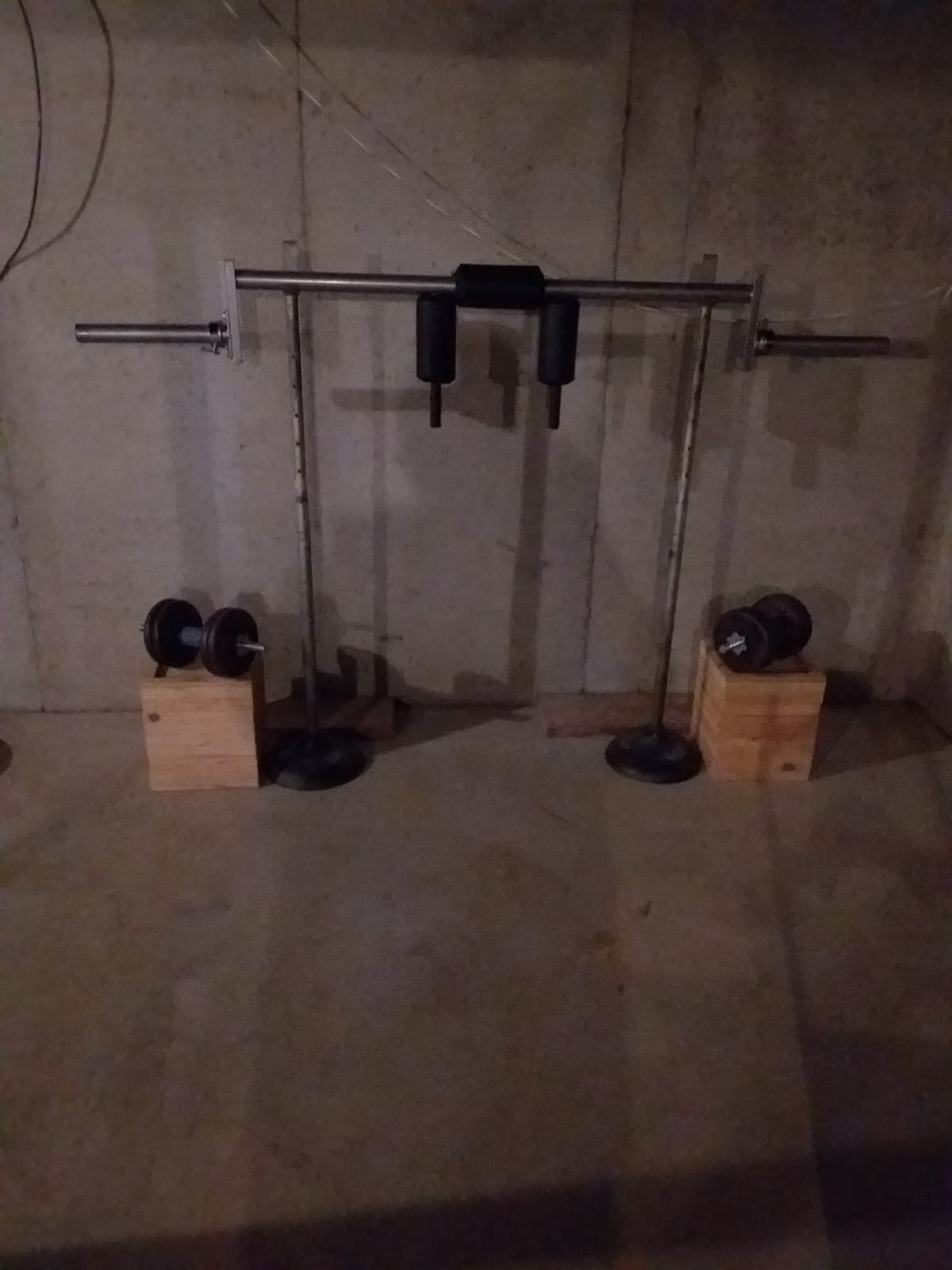
This bar makes the most sense in a specific situation: you are returning to barbell training after time away, your working weights are in the low hundreds, and you want a yoke bar to bridge the gap without rebuying plates. At that loading the 600 lb rating is generous and the 30 lb bare weight means you are not fighting the equipment.
It is also a good bar for a garage that someone else shares. The lower mass makes it far easier to walk out, unrack, and re-rack, and a bar that gets moved by two different people in a small space is a bar that stays in use rather than gathering dust.
When the 600 lb limit bites
At 600 lb rated, you are one bad progression away from a ceiling, and there is no frame weakness that will stop you first, which is exactly the frustration owners describe. The tubing is lighter than the 1000 lb TDS model, so under heavy loads it feels less planted and the bar carries more of its own flex.
The 9% one-star share ties the VEVOR for the highest here, and the published specification detail is sparse beyond weight and dimensions, so you are buying on the simplicity of the design rather than on documented engineering. For a beginner or a comeback trainee that is a fine trade. For a lifter already above 300 lb on the bar, it is not.
8. E.T.ENERGIC 7FT Safety Squat Bar 700 lb – Best With No Assembly Step
E.T.ENERGIC 7FT Safety Squat Bar, 700LB Olympic SSB
700 lb capacity
50 lb bar
Welded and assembled
Knurled handles
Pros
- Entry-level capacity at a level most home lifters never reach
- Comes fully welded and assembled to avoid the hardware and thread problems reported on comparable bars
- Knurled handles and curved sleeves improve balance and grip
- Comfortable neck pad for longer sessions
- One reviewer confirmed the brand resolved a missing-grip shipment quickly through customer service
Cons
- Handle spacing reported as too wide by some users which forces an unnaturally wide grip
- Velcro-style pad edges can dig into the shoulders and neck after a session
- 11 percent one-star share which is the highest percentage in this roundup
- 50 lb bar weight means meaningful plate adjustment from a 45 lb Olympic bar
This bar’s entire pitch is that it arrives ready to use. It is a welded structure that comes assembled, so there is no three-piece bolt-together step, no missing screws, and no thread stripping. If you read the Popsport reviews and thought that sounded like your life, this is the direct answer to that complaint.
The rest of the spec sheet is sensible for the money: 700 lb capacity from alloy steel, a chrome finish, 84 inch length, and curved weight sleeves sized for standard 2 inch Olympic plates. Curved sleeves are a nice touch on a specialty bar because they resist the plates walking outward as you move between reps.
Knurled handles give you grip security under heavy loads, and the neck pad holds up for longer sessions according to owners who use it for high rep accessory work. At 4.3 stars across 23 ratings, this is the thinnest review base in the roundup, and we have weighted that heavily in the ranking.
What makes it different from the other budget bars
Compared to the VEVOR at a similar tier, the E.T.ENERGIC trades review volume for build simplicity. The VEVOR has 232 ratings and a rough finish; this one has 23 ratings and a clean factory build. If you are comfortable being an early owner of a lesser-known brand, that is a reasonable bet. If you want a decade of owner feedback behind the product, it is not.
The curved sleeves and knurled handles are a nicer set of details than most entry-level yoke bars provide, and one reviewer reported that the brand resolved a shipment that arrived without a grip quickly through customer service, which is a small but real signal about support.
The grip width problem to test for
The most substantive complaint from experienced lifters is handle spacing. Some users report the handles sit too far apart, forcing an unnaturally wide grip that in turn changes how the bar sits on the traps. This is a body-shape issue more than a defect, and it is hard to predict from a photo.
The pad edges are the other issue. Velcro-style edging on the neck pad can dig in after a full session, which shows up as redness across the top of your traps. At 50 lb bare the bar also adds 5 lb over a straight Olympic bar, a smaller penalty than most but still worth planning for. The 11% one-star share is the highest in this roundup, though the sample is small enough that it swings on a handful of reviews.
How Much Weight Can You Actually Squat on a Safety Squat Bar?
Expect 10-15% less weight on the bar than the same movement with a straight barbell. That figure comes up constantly in forums and it is the number one objection before purchase, so it is worth being precise about what it does and does not mean.
The reason is biomechanical, not psychological. On an SSB the load sits higher on your back and further forward, which lengthens the moment arm and moves the demand onto your quads and upper back while taking it off the posterior chain. You are doing a more front-squat-like lift, and front squats are lower-load movements by nature, so the difficulty is real even though the intent is the same.
On top of that percentage, add the bare bar weight. A 45 lb straight bar becomes a 58 lb Titan, a 59 lb Ader, a 65 lb TDS solid steel model, or a 30 lb TDS entry bar. If you are moving 315 lb on a straight bar, the same two plates per side on a 65 lb SSB means the bar is carrying 75 lb before you touch the rack.
What you get in return is the ability to keep squatting. If the alternative is a shoulder that makes you stop training legs entirely, a 15% reduction is a bargain. The lifters who regret an SSB are almost never the ones who needed it, they are the ones who bought one to solve a problem they did not have and then resented the lighter numbers.
Will a Safety Squat Bar Fit Your Rack?
Measure before you order. Most safety squat bars are close to 7 feet long, and the ones that are not explicitly sold as rackable will not sit properly in a standard power rack. Two specs decide this: overall bar length and the J-cup spacing in your frame.
The Bells of Steel bar is the clearest example of why to measure. It will not sit correctly in a non-Bells of Steel rack with more than 49 in between the outer edge of the J-cups. A bar that is 5 inches too long for your rack will perch on top of the hooks rather than dropping into them, which is both unstable and awkward to unrack.
Among these eight, the Titan is explicitly rackable at an extended 50-inch length and is designed to drop into a standard power rack with no adaptors, which is why it is our top pick for a home gym. The TDS 600 lb bar states that it fits most power racks, and the Popsport and Ader bars are described as compatible with squat stands, racks and bench setups.
Walk-out clearance is the second half of the fit question. Even a rackable bar needs enough room in front of the rack to clear the yoke and the sleeves. In a tight garage, a bar that fits the hooks can still be a nuisance to walk out with, which is a different problem from rack compatibility and a more common one in a home gym. Our guide to squat racks for small home gyms covers the clearance measurements that matter.
One more thing to check before buying: whether your safety arms are set at the right height for the bar. A specialty bar sitting higher or lower than your straight bar will meet your arms at a different point, and you want the arms at the depth you would catch a failed rep, not wherever the yoke happens to land.
Safety Squat Bar Vs Safety Bar: The Confusion That Costs Buyers
A safety squat bar is not a safety bar. They look similar in a search result and they solve completely different problems, and the mix-up is the most common purchasing error in this category.
A safety bar, sometimes called a squat safety bar or a caster bar, has two vertical posts welded to a straight barbell with horizontal spotter arms at chest height. A training partner grabs those arms and catches a failed rep. It has nothing to do with your shoulders, and the whole point is spotting.
A safety squat bar has a padded yoke and cambered handles. There are no arms and nobody catches anything. What it does is let you squat with the load on your traps instead of across your shoulders, which is what makes it survivable with a shoulder injury.
If you train alone in a garage and your real concern is a failed rep with no spotter, an SSB will not address it. The equipment that does is a set of safety arms on your rack, which you can read about in our best squat racks for home gyms guide, while a hack squat machine is the other direction to go.
How to Buy a Safety Squat Bar Without Regretting It
Most unhappy SSB owners did not buy a bad bar. They bought the wrong bar for their rack, their shoulder, or their squat experience. These seven checks are what separate the good purchases from the return.
Capacity: buy for the load you will actually reach
Stated capacity across this category runs from 600 lb to 1,500 lb, and most home gym lifters never need the top of that range. A 600 lb rating is fine if your working weights are in the low hundreds. It becomes a ceiling fast if you are already squatting 300 lb and adding weight every week.
Forum users are right to be skeptical of inflated claims, and the honest framing is this: a capacity rating tells you when to stop shopping, not when you are safe. Buy for the load you will realistically reach in two years plus a margin, and treat anything above 1,000 lb as a commercial-gym spec rather than a home gym one.
Bar weight and your plate math
The bare bar weight in this roundup ranges from 30 lb to 65 lb, which is a 35 lb spread that completely changes your loading. If you own pairs of 45 lb, 25 lb, 10 lb, 5 lb, and 2.5 lb plates, a 65 lb bar will not let you hit many round numbers at all.
Do the math before you buy. Take your heaviest planned working weight, subtract the bar weight, and see whether what is left is divisible by your plate increments. Lifters moving between 45 lb and 65 lb bars in the same week are the ones who end up with 20 lb jumpers nobody else in the gym has.
Sleeve diameter, J-cup spacing and walk-out clearance
Most safety squat bars use 1-7/8 inch or 2 inch Olympic sleeves, so plate compatibility is rarely the problem. Rack compatibility is. Measure the distance between the outer edges of your J-cups and compare it against the bar length, and remember that the Bells of Steel bar has a documented 49 in limit.
Then check your walk-out path. A cambered bar is wider than it looks and the yoke swings as you step back. In a small garage, walk out far enough to clear your platform and your rack uprights before you load a heavy set.
Padding, yoke shape and handle angle
Padding is where the price difference shows up in daily use. Roller-style pads distribute pressure better than flat foam. One-piece pads do not rotate under load. Velcro-edged pads dig in. If you have a sensitive or healing shoulder, this is the spec to spend your attention on, not the finish.
Handle angle is the other one. A steeply cambered bar settles low and stays put but can push you into a more upright position than you are used to. A gently cambered or uncambered bar behaves like a low bar. Ader and Titan lean toward the first, the TDS solid steel model toward the second. Your anatomy decides which is right, and the only reliable way to know is to try one.
Storage footprint in a small home gym
This is the most under-discussed problem in the category. A 7-foot specialty bar is awkward to store flat, awkward to lean against a wall without damaging the yoke, and it takes up a full rack J-cup position permanently if you leave it there.
The best answers are a wall-mounted horizontal bar holder above the rack, a vertical storage solution in an unused corner, and choosing a shorter bar where the manufacturer offers one. Uncambered bars such as the TDS 86-inch model lie flat more easily than cambered bars, which is worth factoring in if your storage space is tight.
Programming an SSB alongside a straight bar
Treat the safety squat bar as a supplement, not a replacement, for the first few months. Most productive setups keep the straight bar as the primary squat and rotate the SSB in as a secondary movement, because the two patterns train different things.
A simple starting structure is two or three SSB sets of 5 to 8 reps on a squat day once per week, kept 10-15% below the equivalent straight-bar weight, plus a good morning or a walking lunge set where the yoke genuinely outperforms a straight bar. Keep your total weekly squat volume roughly constant and simply swap one set, rotating the yoke work every 4 to 6 weeks before coming back to it.
If you are coming back from an injury, the more common advice in forum threads is to run the SSB as your primary squat for the first block, then reintroduce the straight bar gradually. Members of r/homegym running a shoulder-surgery comeback describe exactly this progression.
Who should skip a safety squat bar entirely
If you are pain-free, under about 35, and squatting two or three times a week with no mobility complaints, a straight bar plus a set of safety arms serves you better for the money. You will move more weight, learn the straight-bar position, and spend your budget on the arms that actually make solo training safer.
Also skip it if your rack cannot hold the bar. A specialty bar that will not seat in your J-cups is a dangerous piece of equipment, and a non-rackable bar in a half-rack with 40 in of clearance will not work no matter how good the bar itself is. Measure first, buy second, and if the numbers do not work, choose a rackable model from this list instead.
Frequently Asked Questions
Are safety squat bars worth it?
Yes, for a specific group. A safety squat bar moves the load onto a padded yoke across your traps so you never bend your elbows or rotate your shoulders into external rotation. It is worth it for anyone with shoulder pain, limited mobility, a rotator cuff injury, or a history of being pinned under a straight bar, and for solo trainers who want to squat heavy. It is not worth it for a pain-free lifter under 35 who squats three times a week, since a straight bar plus safety arms is the better buy at the same price.
Is it harder to squat with a Safety Squat Bar?
Expect to move 10-15% less weight, and the reason is biomechanical rather than motivational. The load sits higher and further forward on your body, which lengthens the moment arm and shifts demand onto your quads and upper back. The movement feels closer to a front squat than a back squat. Then add the bare bar weight, which runs from 30 lb to 65 lb across the bars in our roundup.
Who makes the best safety squat bar?
Among the eight bars we reviewed, the Titan Fitness Rackable Safety Squat Bar is the best all-round choice at 4.8 stars from 104 ratings, with a 5 inch camber and a rackable 50 inch length. The Ader Safety Squat Olympic Bar matches that 4.8 rating and squats the most upright thanks to its offset handle layout. The VEVOR 700 lb bar is the best entry-level bar here, with the most reviews in the group at 232.
Is Titan or Rogue better?
Rogue did not make this roundup, so we cannot compare them on measured data here. What we can say is that the Titan rackable SSB earns its spot on specs and reviews rather than on brand reputation: a 1500 lb rating, a documented 5 inch camber, a 50 inch rackable length, and 4.8 stars across 104 ratings. Forum lifters frequently note that a wider rack span on a premium bar improves stability, so check your own rack clearance before choosing between them.
How heavy is the Titan Safety Squat Bar?
The Titan Fitness Rackable Safety Squat Bar weighs 58 lb bare, with a 1500 lb rated capacity. That is 13 lb more than a standard 45 lb Olympic bar, so plan your plate math accordingly. The bar has 48 inch shafts with about 14.75 in of loadable sleeve per side, chrome anti-scratch sleeves, and a listed overall length of 90.5 in.
What is the best budget safety squat bar for the gym?
The VEVOR 700 lb safety squat bar is the best budget pick in our roundup, with 232 ratings, seamless 28mm A3 steel construction, and foam-cushioned shoulder and neck pads. If you want to avoid assembly hardware problems entirely, the E.T.ENERGIC 700 lb bar comes fully welded and ready to use. The TDS 600 lb model is the lightest bar at roughly 30 lb, which makes it the easiest transition from a straight Olympic bar.
Do safety squat bars fit in a power rack?
Only some of them. You need a model sold as rackable, plus enough J-cup spacing in your frame. The Titan at an extended 50 inch length is designed to drop into a standard power rack with no adaptors, and the TDS 600 lb bar states it fits most power racks. The Bells of Steel bar will not sit correctly in a non-Bells of Steel rack with more than 49 in between the outer edge of the J-cups, so measure before ordering it.
Can you use a safety squat bar for deadlifts?
You can, and the VEVOR listing is marketed for squats, deadlifts, lunges and rehab work, but deadlifts are not what this equipment is for. The yoke across your upper back and the cambered handles make a conventional barbell deadlift position awkward. The yoke is far better suited to good mornings, Hatfield squats, walking lunges, and belt squats with a dip belt, where the padded load path is an advantage rather than a compromise.
Which Safety Squat Bar Should You Buy?
The best safety squat bar for your home gym is the Titan Fitness Rackable Safety Squat Bar, and it is not a close call. It is the highest-rated bar here with enough reviews behind that rating to trust it, its 5 inch camber keeps the load where you put it, and its 50 inch rackable length drops into a standard power rack without an adaptor. If your shoulder is the reason you are reading this, that is the one to buy.
Buy the VEVOR if entry cost is the constraint and you are training in the lower weight ranges, the Ader if you squat long and want the most upright torso position available, and the TDS solid steel model if you want the heaviest, most planted bar in the group.
Measure your J-cup spacing before any of them, and if the numbers do not work, the answer is a rackable model rather than a different brand. Whatever you pick, run it as a supplement to your straight-bar squat for the first few months, keep your weekly squat volume steady, and expect to move 10-15% less weight for the privilege of training your legs without wrecking your shoulders. Our picks for the rack it goes in are in the best squat racks for home gyms guide. Updated for 2026.