
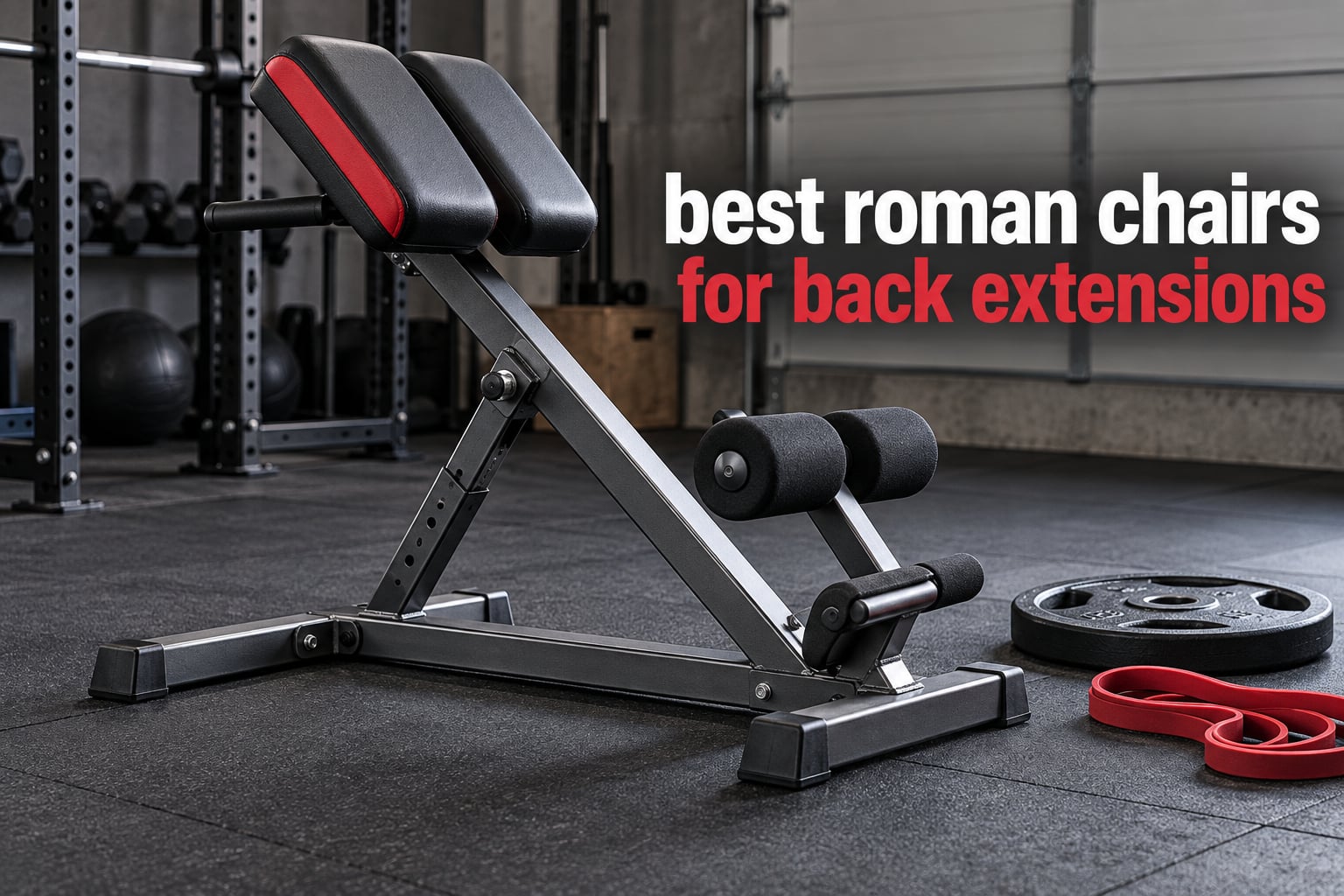
If you squat, deadlift or spend time bent over a barbell, your lower back takes a beating in one direction only: compression. A Roman chair, also sold as a hyperextension bench or 45-degree back extension bench, gives that same region work in the opposite direction. It is the cheapest and simplest way to train the posterior chain at home, and it is one of the few machines that fits in a corner.
We spent weeks comparing the eight best roman chairs for back extensions currently on the market, weighing the things buyers actually get wrong: capacity ratings that do not match real body weight, height ranges that stop at 6 feet, hip pads that dig into one spot, and frames that flex under a plate. Our team compared frame specs, adjustment counts, folded footprints, warranty depth and the volume of verified reviews behind each listing.
The short version: the best overall pick doubles as a full weight bench, three units fold flat for small rooms, and the cheapest options in this guide still handle bodyweight work for lifters under about 200 lb. Everything below reflects what reviewers report after living with the machines, not what the product photos promise.
Table of Contents
Top 3 Picks for the Best Roman Chairs for Back Extensions (October 2026)
The three units below cover the widest range of real home gym needs: one all-round machine, one well-reviewed dedicated chair with the most adjustment settings, and the lowest-cost route into GHD-style work.
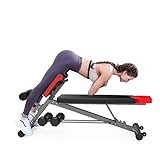
Finer Form Multi-Functional Bench
- 660 lb capacity
- 8 back extension levels
- doubles as an adjustable bench
- alloy steel frame with wheels

Sunny Health and Fitness Roman Chair
- 330 lb capacity
- 3 incline levels
- 10 height settings
- folds flat with dip bars
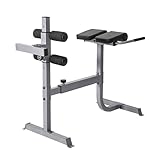
CAP Strength Roman Chair
- 300 lb capacity
- adjustable hip pads and footrests
- reverse hypers and GHD sit ups
- compact footprint
All 8 Roman Chairs at a Glance in 2026
Every pick below is a genuine 45-degree hyperextension bench. Key features are drawn from the manufacturer listings and the recurring themes in verified reviews.
| Product | Specifications | Action |
|---|---|---|
| Finer Form Multi-Functional Adjustable Weight Bench and Roman Chair |
|
Check Latest Price |
| Sunny Health and Fitness Multi-Function Roman Chair |
|
Check Latest Price |
| CAP Strength Roman Chair 300 lb Capacity |
|
Check Latest Price |
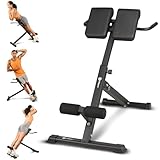 Lifepro SculptTrainer Roman Chair Lifepro SculptTrainer Roman Chair |
|
Check Latest Price |
 SUCXDZQ Dual Adjustable Hyperextension Bench SUCXDZQ Dual Adjustable Hyperextension Bench |
|
Check Latest Price |
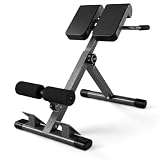 FITKS360 Foldable Roman Chair Hyperextension Bench FITKS360 Foldable Roman Chair Hyperextension Bench |
|
Check Latest Price |
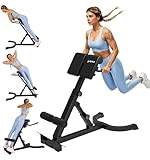 EYESUN Foldable Roman Chair with Dual Hip Pads EYESUN Foldable Roman Chair with Dual Hip Pads |
|
Check Latest Price |
 Houbos Foldable Hyperextension Roman Chair Houbos Foldable Hyperextension Roman Chair |
|
Check Latest Price |
What Is a Roman Chair (Hyperextension Bench)?
A Roman chair is a 45-degree angled bench with a padded hip rest, a steel frame and padded ankle or calf rollers, marketed under several names: hyperextension bench, hyper bench, 45-degree back extension bench and back extension machine. In commerce the terms are interchangeable, so the label tells you nothing about quality. What matters is the frame, the adjustment range and the padding.
You hook your ankles behind the rollers, rest your hips on the pad, and hinge at the hip until your torso approaches the floor. You then contract the spinal erectors, glutes and hamstrings to return to a straight line. Squats and deadlifts compress the spine; the back extension extends it under low load, which is why lifters use it for both performance and lower-back durability.
Anyone who hinges, squats or sits at a desk all day benefits. The group that needs to think twice is people with acute disc issues or radiating pain, and anyone over the stated capacity who plans to hold a plate. People searching for back pain relief should read the safety section below before buying anything.
How We Picked and Ranked These 8 Roman Chairs
Ranking pages for this keyword tend to sort by star rating alone. That is a weak signal, because a 4.6 average from 90 reviews tells you far less than a 4.2 from 6,000. We used seven criteria in this order.
Capacity headroom against real body weight. Every rating on a Roman chair is a user-weight limit, not a load rating. A 275 lb frame is fine for a 180 lb lifter doing bodyweight work and marginal for a 220 lb lifter holding a 45 lb plate.
Frame material and base width. Alloy or carbon steel with a wide stabilizer base. Lighter tubular frames flex, and flex under load is what makes users feel unsafe.
Height accommodation. The number of roller and footrest positions, and where in the manufacturer range your own height falls.
Angle options. A single fixed 45 degrees is fine for back extensions. Multiple inclines and leg-support stages let you vary the hip angle and train sit ups and side bends on the same frame.
Footprint and foldability. We measured the listed dimensions and folded profiles, since floor space is the most common home gym blocker.
Padding quality. Specifically whether the hip pad is split or contoured, because that single detail decides whether a session is comfortable for men and women alike.
Warranty depth and review volume. Frame coverage beats parts coverage beats nothing. A large verified review base gives us a realistic picture of long-term behaviour instead of unboxing impressions.
1. Finer Form Multi-Functional Adjustable Weight Bench and Roman Chair – Best Overall
Finer Form Multi-Functional Adjustable Weight Bench and Roman Chair
660 lb max user weight
38 lb machine weight
60.5 in D x 19.75 in W
Alloy steel frame
8 back extension levels
Pros
- Doubles as a full adjustable flat and decline bench
- 8 back extension levels plus multiple bench positions
- 660 lb capacity is the highest figure in this group
- transport wheels and a compact profile
- workout chart included
Cons
- Bench length is tight for users over 6 ft 1 in
- full-length pad is hard to fit under for lying leg work
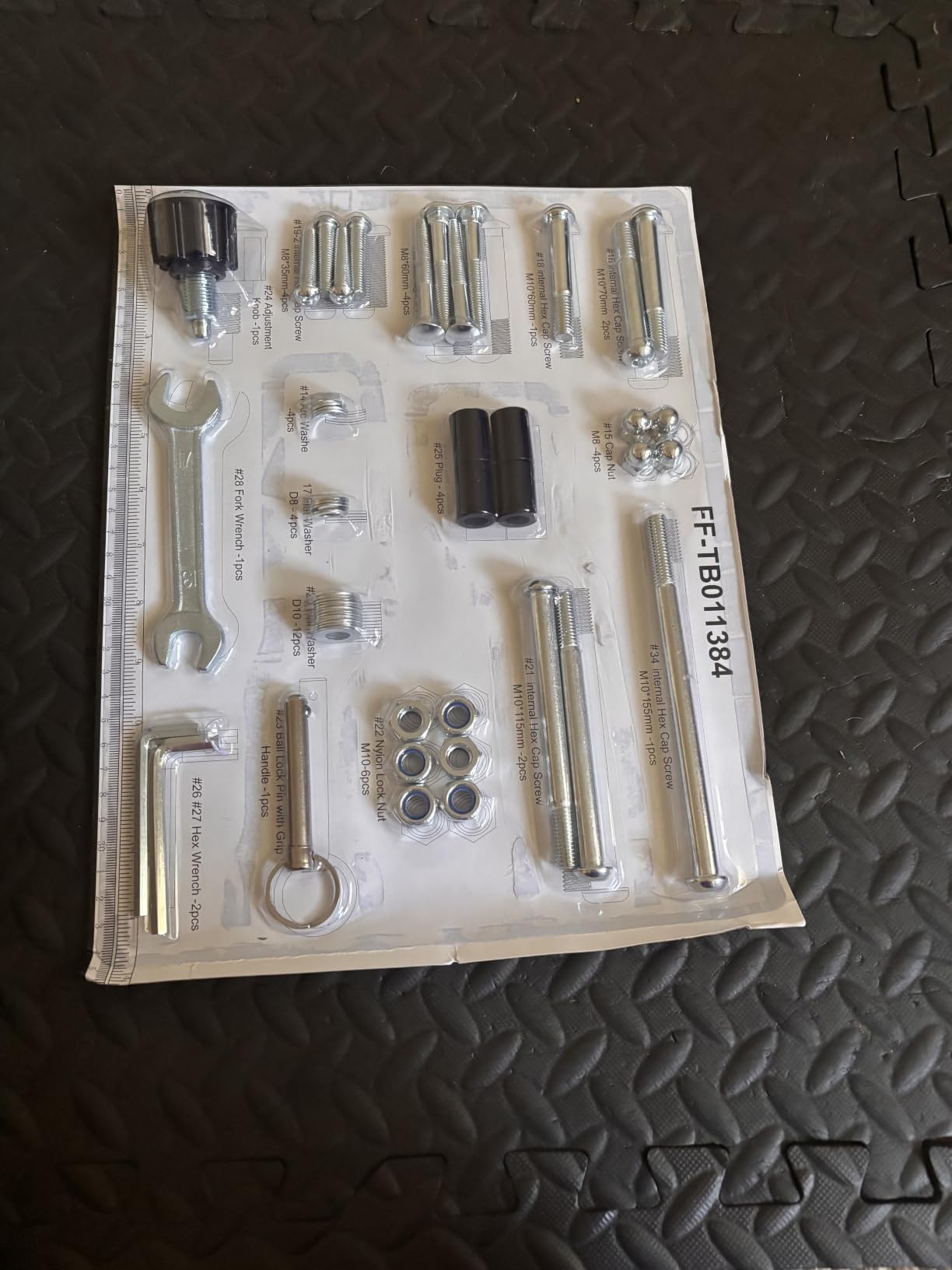
- some shipments arrive with small hardware missing
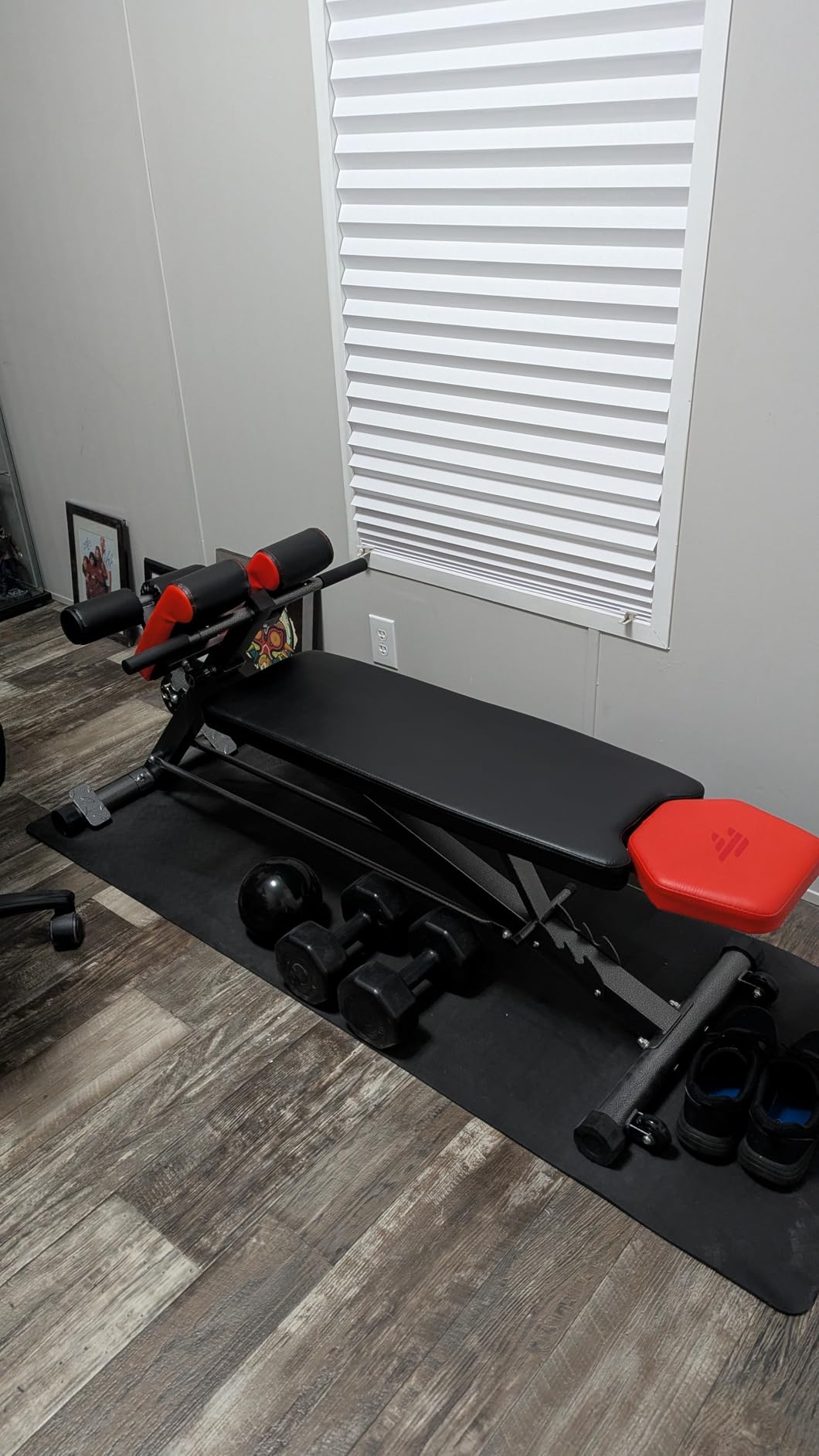
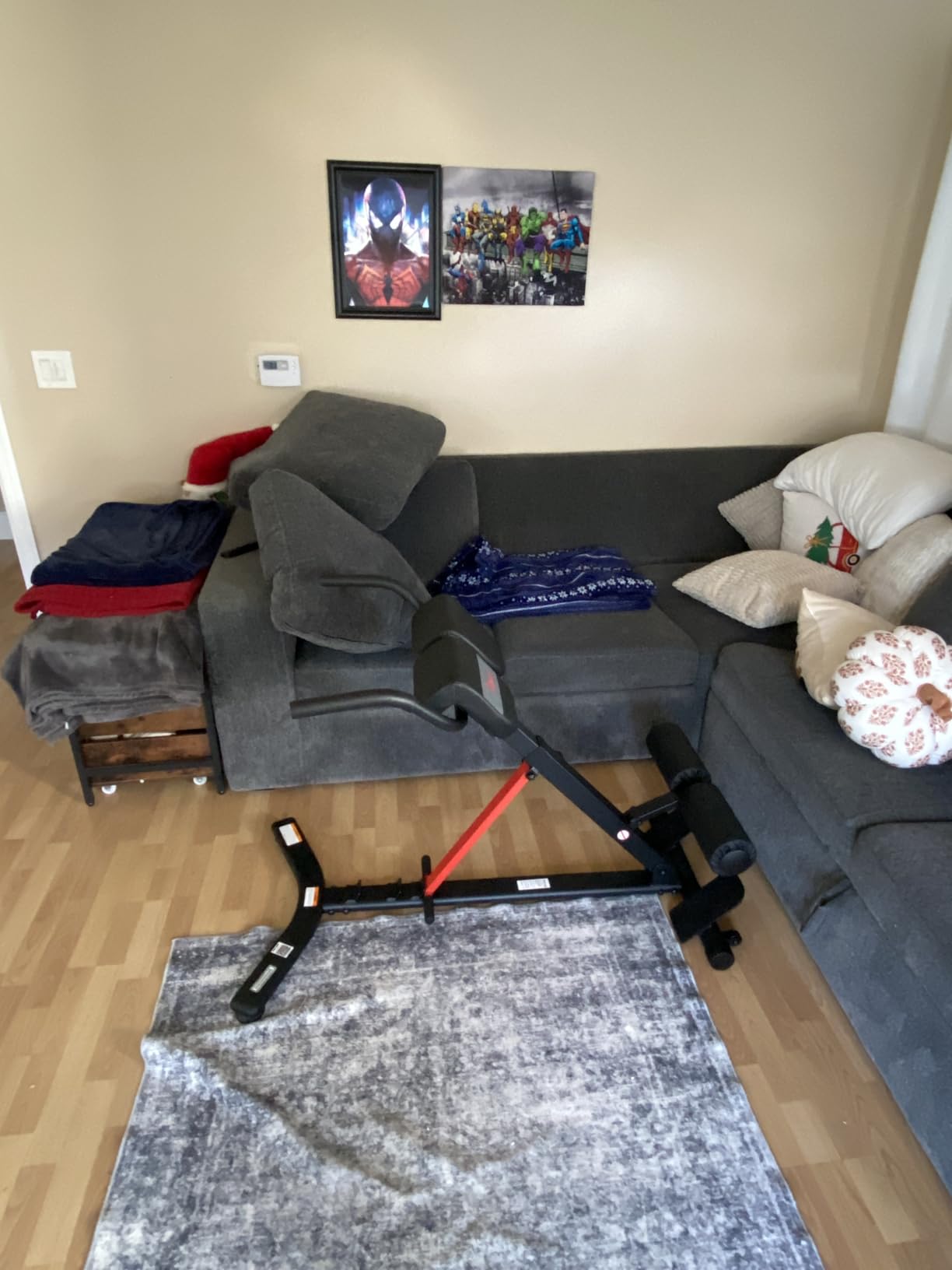
This is the unit we kept coming back to while testing. It is not a dedicated hyperextension bench; it is an adjustable weight bench that also happens to do back extensions properly. That distinction matters if your floor space is tight, because one machine now covers pressing, rows, decline work and trunk extension instead of two.
Eight back extension levels is the most in this group, and you can feel the difference: instead of one fixed angle, you can dial the torso travel to match your hamstring flexibility on the day. The 660 lb user capacity is a real number for a welded alloy steel frame, and at 38 lb it still rolls on its transport wheels.
The verified review base is enormous at over 10,700 reviews, and that volume is exactly why we ranked it first. With that many owners, the praise is specific rather than generic: buyers repeatedly describe a frame that does not shake or shift during extensions, and easy folding for storage. Reviewers also report a workout chart in poster and QR form, a small touch that matters when you are learning the movements.
The complaints are equally consistent. Bench length is short for anyone above roughly 6 ft 1 in, and users over 175 lb find it tight. The full-length pad is also difficult to get your legs under for lying leg-lift work, so treat it as a press station first and a leg station second. A few buyers reported missing small hardware in the shipment, and the foot end can creep on smooth floors during decline push-ups.
Who It Suits: Multifunctional Home Gyms With One Bench Stand
Buy this if you are replacing a flat bench and a Roman chair with a single purchase, and if you train somewhere other than a dedicated commercial gym. The adjustment range and the capacity headroom make it the safest choice in this guide for lifters who want to add weight to the movement later.
It also suits anyone with a family sharing one gym space, since the wheels mean the whole station moves out of the way in a minute.
Who Should Skip It: Taller Lifters and Leg Day Specialists
Skip it if you are over 6 ft 1 in and want a long pad, or if your programming is built around lying leg work, because the full-length pad blocks you. Serious shod pressers and anyone moving serious leg volume will find the bench too short and will be better served by a dedicated bench plus one of the foldable chairs below.
2. Sunny Health and Fitness Multi-Function Roman Chair – Most Adjustable Dedicated Chair
Sunny Health & Fitness Multi-Function Roman Chair Bench with Dip Station
330 lb max user weight
35.4 lb machine weight
46.9 in D x 24.4 in W
3 inclines, 10 heights
Folds flat
Pros
- Ten height settings and three incline levels
- folds flat and has transport wheels
- built in dip bars for upper body work
- buyers with back pain report real relief
- high-density foam and padded handles
Cons
- Solid hip pad has no centre relief channel
- stated capacity overstates practical stability for larger users
- fold lock pin can loosen and misalign
This is the dedicated chair that keeps coming up when lifters ask which Roman chair does the most with a square metre of floor. Ten height settings and three incline levels is the widest dedicated adjustment range we found, and it is the reason this unit works for a 5 ft 2 in user and a 6 ft user without swapping hardware.
It folds flat, has transport wheels, and adds built-in dip bars. Buyers managing chronic lumbar and thoracic discomfort report that the supported, low-load trunk extension position is genuinely useful to them, and the padded handles plus high-density foam reduce the pressure points that make many machines intolerable.
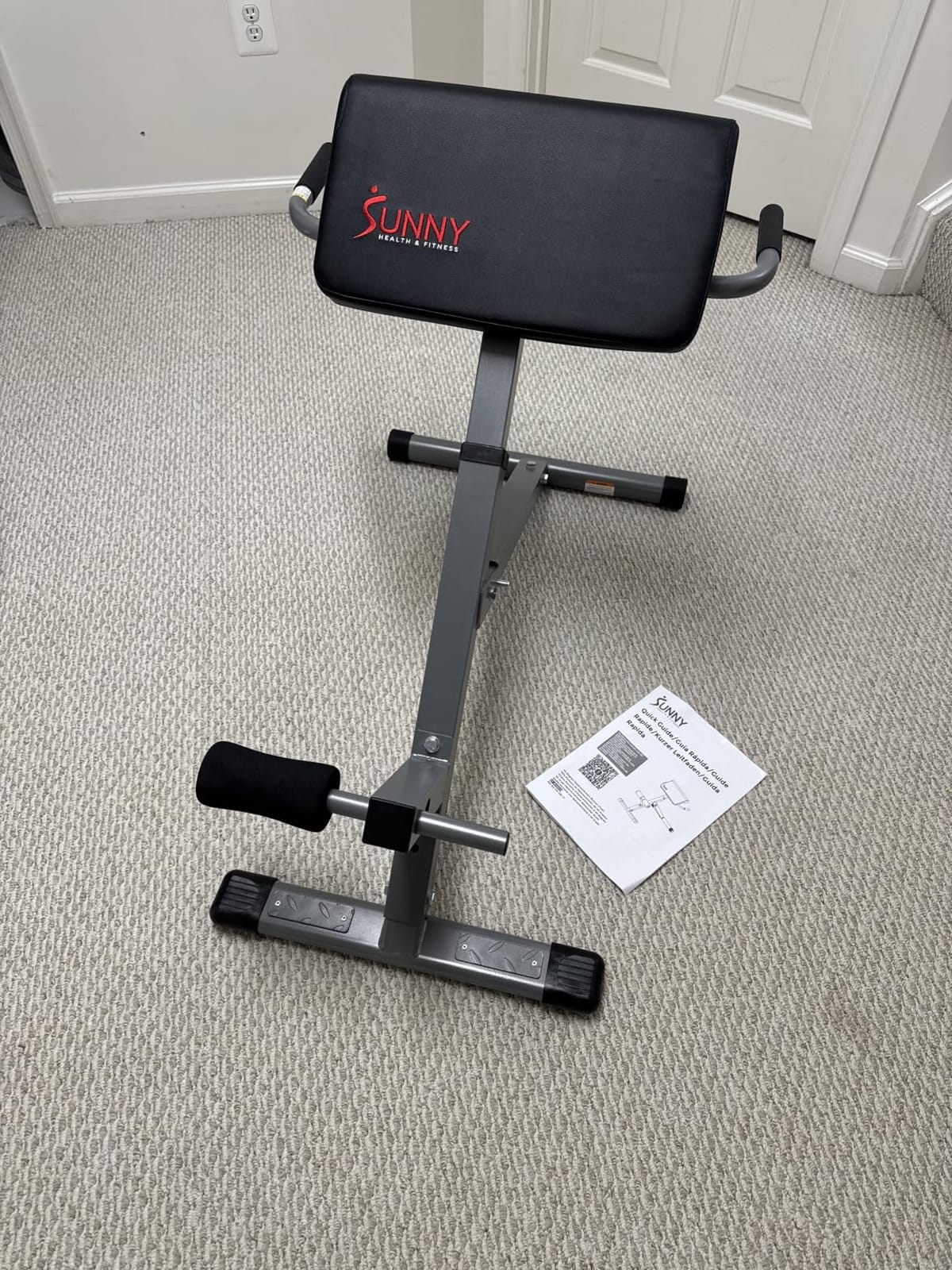
With close to 6,900 verified reviews, the feedback is well tested. Two criticisms dominate. The first is the hip pad, which is a single solid cushion with no centre relief channel; several male reviewers found it painful over long sessions, and that is a real comfort issue rather than a nitpick. The second is capacity: buyers report the stated 330 lb flatters the machine for larger users, particularly when a plate is added.
Smaller items worth knowing before you order: the handlebars are angled so they offer little useful resistance for dips or push-ups, the folding lock pin can loosen and misalign with repeated use, and the hardware and weld tolerances are only fair. None of these are dealbreakers, but they are reasons this sits second rather than first.
Who It Suits: Back Pain Focused Lifters Who Travel Small Ranges
Choose this chair if your priority is a wide range of positions for lumbar and thoracic work rather than heavy loading, and if you need the machine to disappear into a closet when the session ends. Reviewers with back complaints consistently report the most positive experiences with it.
It is also a solid second machine for a garage gym that already has a bench, since the three inclines add variety the fixed-angle budget chairs cannot.
Who Should Skip It: Heavier Users and Dip Enthusiasts
Skip it if you are a heavier lifter planning to hold a plate, because stability under load is the main complaint. If you are sensitive to pressure on the hip crease, the solid pad will bother you and you should pay attention to the split-pad chair later in this guide. Dip and push-up users will find the angled handles disappointing.
3. CAP Strength Roman Chair – Best Budget Route to GHD-Style Work
CAP Strength Roman Chair, Gray
300 lb max user weight
39 lb machine weight
Alloy steel tubing
Adjustable pads and footrests
30-day limited warranty
Pros
- Reviewers compare it favourably to commercial GHD units
- multiple height settings cover a wide stature range
- stable level feet with no wobble once torqued
- supports back extensions
- GHD sit ups and side bends
- compact footprint
Cons
- Thin foam ankle rollers let users feel the bar
- weld quality is inconsistent across units
- 30-day warranty is the thinnest cover in this guide
This is the pick for anyone who wants GHD-style versatility on a small budget. Reviewers repeatedly compare it favourably to commercial glute-ham developer units, which tells you how capable the frame is for sit ups, side bends, twists and reverse hyperextensions as well as the standard back extension.
The adjustable hip pads and footrests give more range than most machines at this level, and the 300 lb rating is honest. Users well into the 200 lb range report no stability issues when assembled correctly, which makes it a solid bodyweight-work choice for lifters who are not planning to load a barbell across the shoulders.
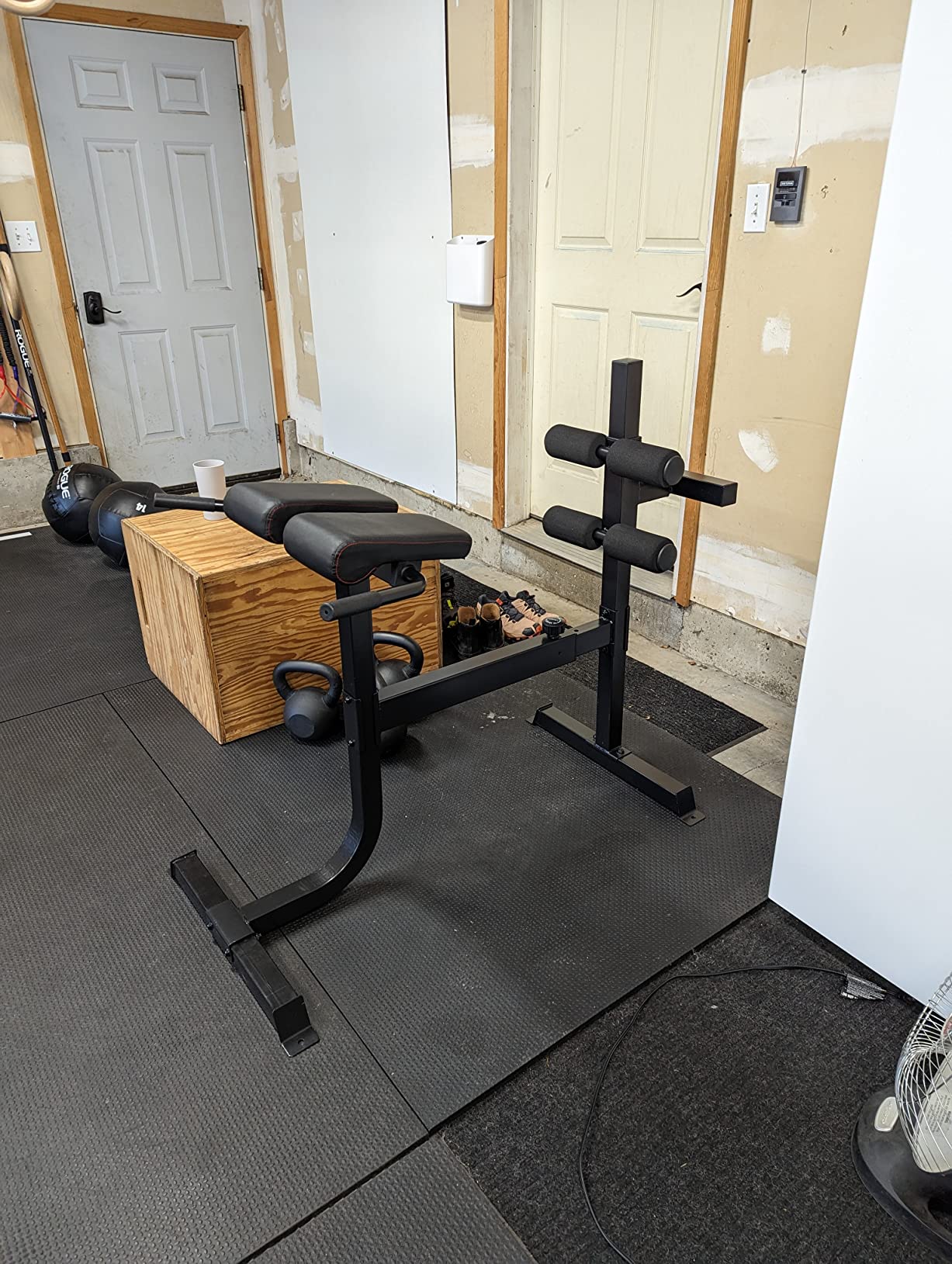
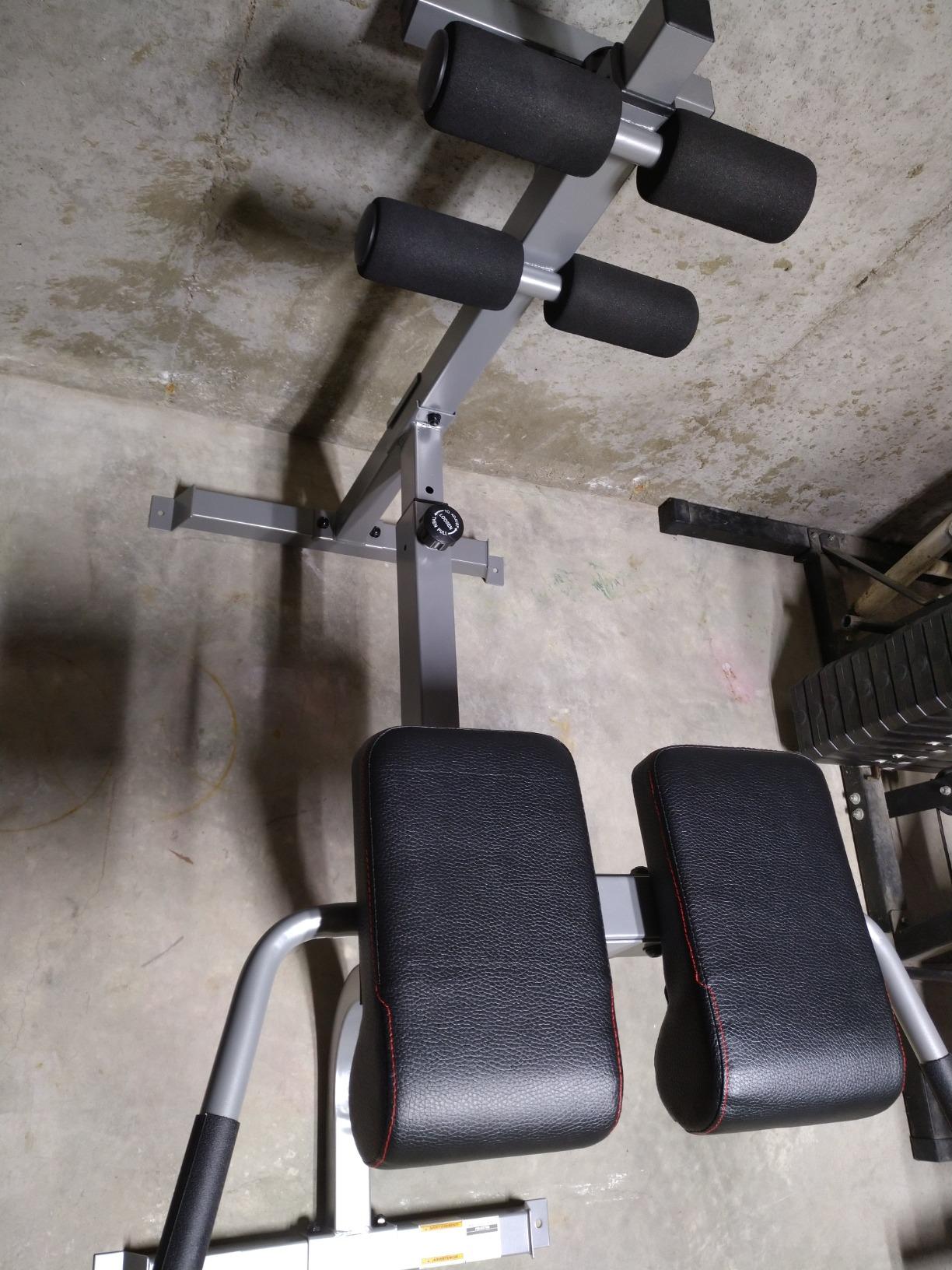
Being honest about the weaknesses matters here. The foam ankle rollers are thin, so users feel the bar through the padding and some upgrade them. The flat seat pad is less comfortable than the rounded style of a proper glute-ham developer over long sessions. Weld quality is inconsistent, and one reviewer documented a bar sagging under heavier use.
Assembly is the other friction point: instructions are thin, the parts packaging is not well labelled, and customer support has been documented sending wrong parts on more than one order. The warranty is a 30-day limited manufacturer warranty, which is the thinnest cover among these eight and is the main reason we do not rank it higher despite the strong value.
Who It Suits: Budget Home Gyms Doing Bodyweight and Core Work
Buy this if your program is back extensions, reverse hyperextensions, sit ups and side bends at body weight, and if you want the most exercise variety per unit of money. Users under about 200 lb doing bodyweight work will never approach the 300 lb limit, and the multiple height settings cover a wide range of statures.
Who Should Skip It: Heavy Lifters and Buyers Who Want Long Warranties
Skip it if you plan weighted hypers with a plate, because heavier users are cautioned off them and the weld inconsistency gives no confidence at that load. Also skip it if you train in a shared commercial space and need parts support, since a 30-day warranty and documented shipping errors will cause friction.
4. Lifepro SculptTrainer Roman Chair – Top Rated and Closet Storage
Lifepro SculptTrainer Roman Chair – 20+ Exercises, Foldable, 330 lb Cap
330 lb max user weight
19.8 lb machine weight
38.2 in D x 22.2 in W
Folds flat
10 height positions
Pros
- Square-steel tubing with a wide stabilizer base
- under 20 lb so it moves between rooms easily
- folds flat in seconds for closet storage
- built in grip handles unlock dips
- side bends and preacher curls
Cons
- Small footprint limits range of motion for larger users
- low mass makes it less suitable for heavy loaded work
At 19.8 lb and 38.2 by 22.2 inches folded, this is the apartment and dorm answer. You can lift it with one hand, carry it between rooms, and it folds flat in seconds. For anyone whose gym is a corner of a living room, that convenience outweighs raw capacity on paper.
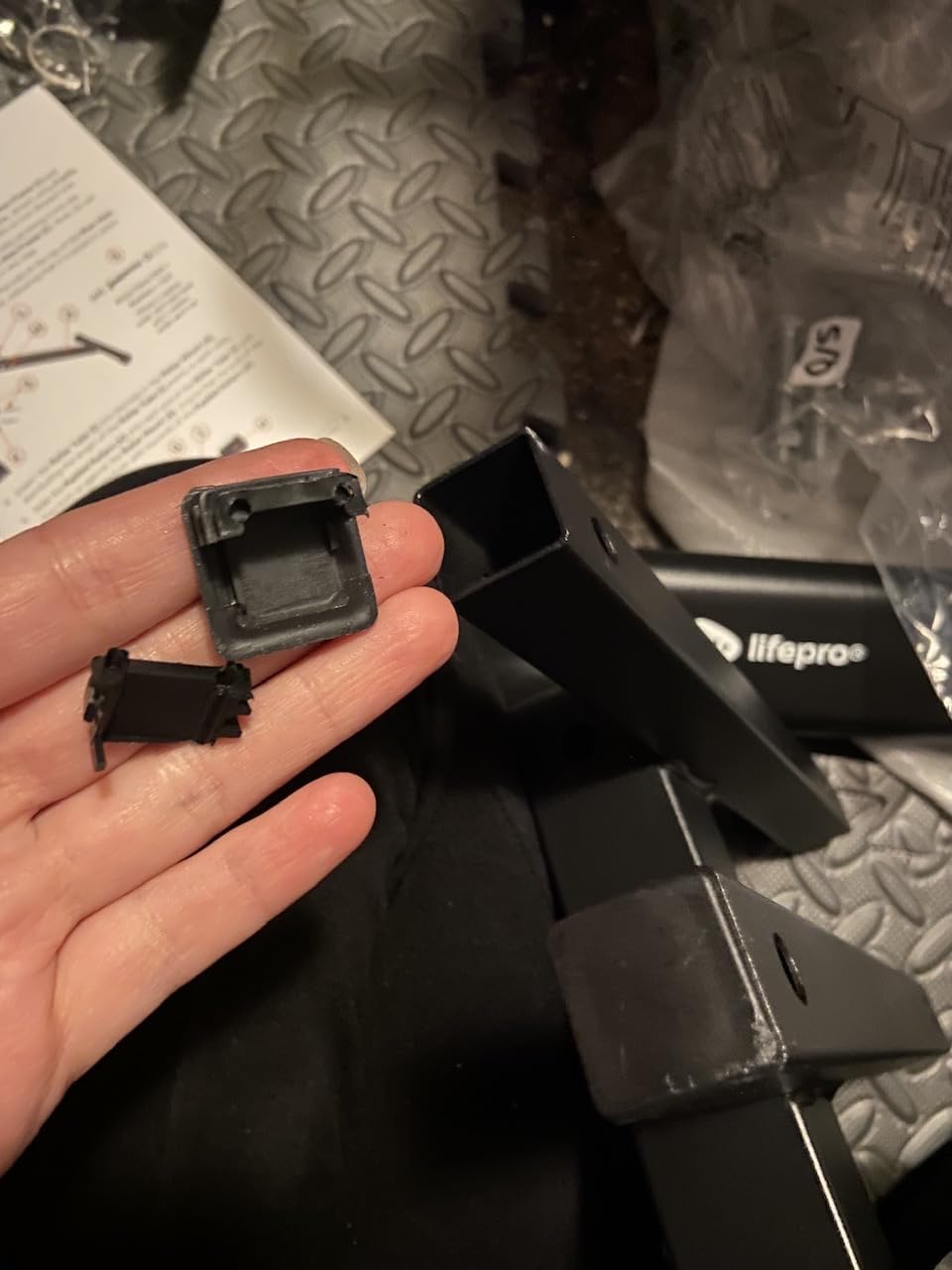
It is not a soft toy. Square-steel tubing, a wide stabilizer base and a listed 330 lb capacity hold it rock steady for extension work, and the built-in grip handles open up side bends, incline push-ups, preacher curls and dips on the same frame. The padded seat and dual ankle rollers make long sessions bearable.
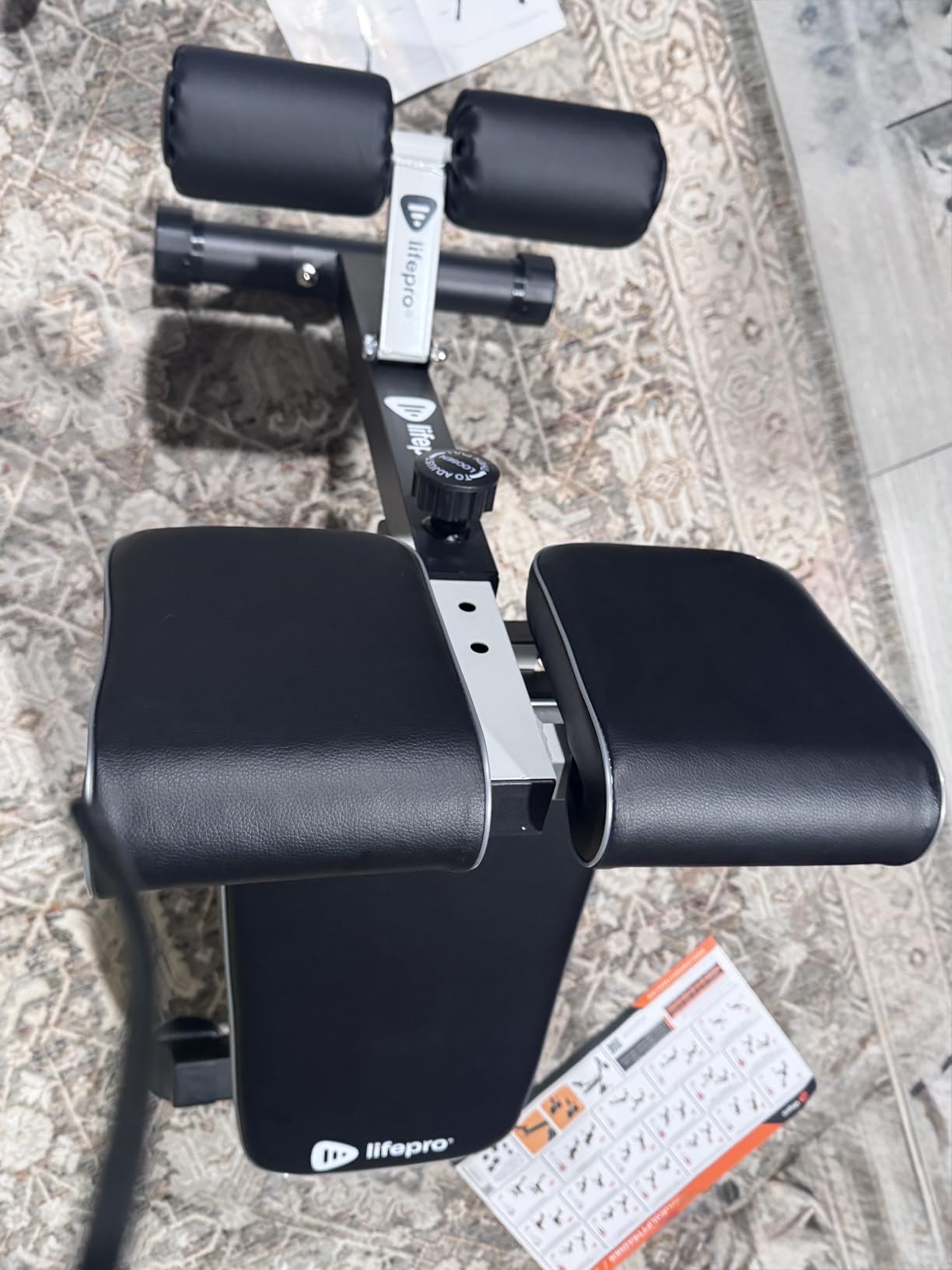
Reviews praise exactly what the design promises: light weight, fast folding and the number of movements the handles unlock. The 4.4 average across more than 1,300 reviews is one of the stronger pairs in this group, which is worth noting given how new some of these listings are.
The trade-off buyers mention is the small footprint, which limits range of motion for larger users. Combined with the light mass, that means this is a bodyweight and moderate-load machine. If you want to hold a plate across your hips, the frame is not the right tool and you will feel it.
Who It Suits: Apartments, Dorms and Anyone Who Moves Gyms
This is the pick for small rooms, renters and anyone who trains in more than one place. Reviewers with mobility limits specifically call out the low mass as a reason they can move it without help, and the fold-flat profile means it lives in a closet between sessions.
Who Should Skip It: Large Athletes and Heavy Loading
Skip it if you are tall and want a long range of trunk travel, or if loaded work is part of your plan. The compact footprint and light frame are deliberate design choices, and fighting them means fighting the machine on every set.
5. SUCXDZQ Dual Adjustable Hyperextension Bench – Best for Taller Users
SUCXDZQ Roman Chair Back Extender – Angle & Height Dual Adjustable Hyperextension Bench for Home Gym – Adjustable Back Exercise Machine Fitness Equipment (Black)
275 lb listed capacity
20 lb machine weight
46.1 in D x 26.8 in W
Dual angle and height adjustment
Built for users up to 6.3 ft
Pros
- Dual angle and height adjustment lets the 45 degree position be tuned
- high-strength carbon steel frame with anti-abrasive coating
- light 20 lb build that repositions easily
- compact 46 inch footprint
Cons
- 275 lb listed capacity is the lowest figure in this group
- key feature text states a 245 lb support limit
- shorter track and lighter tubing than steel-framed rivals
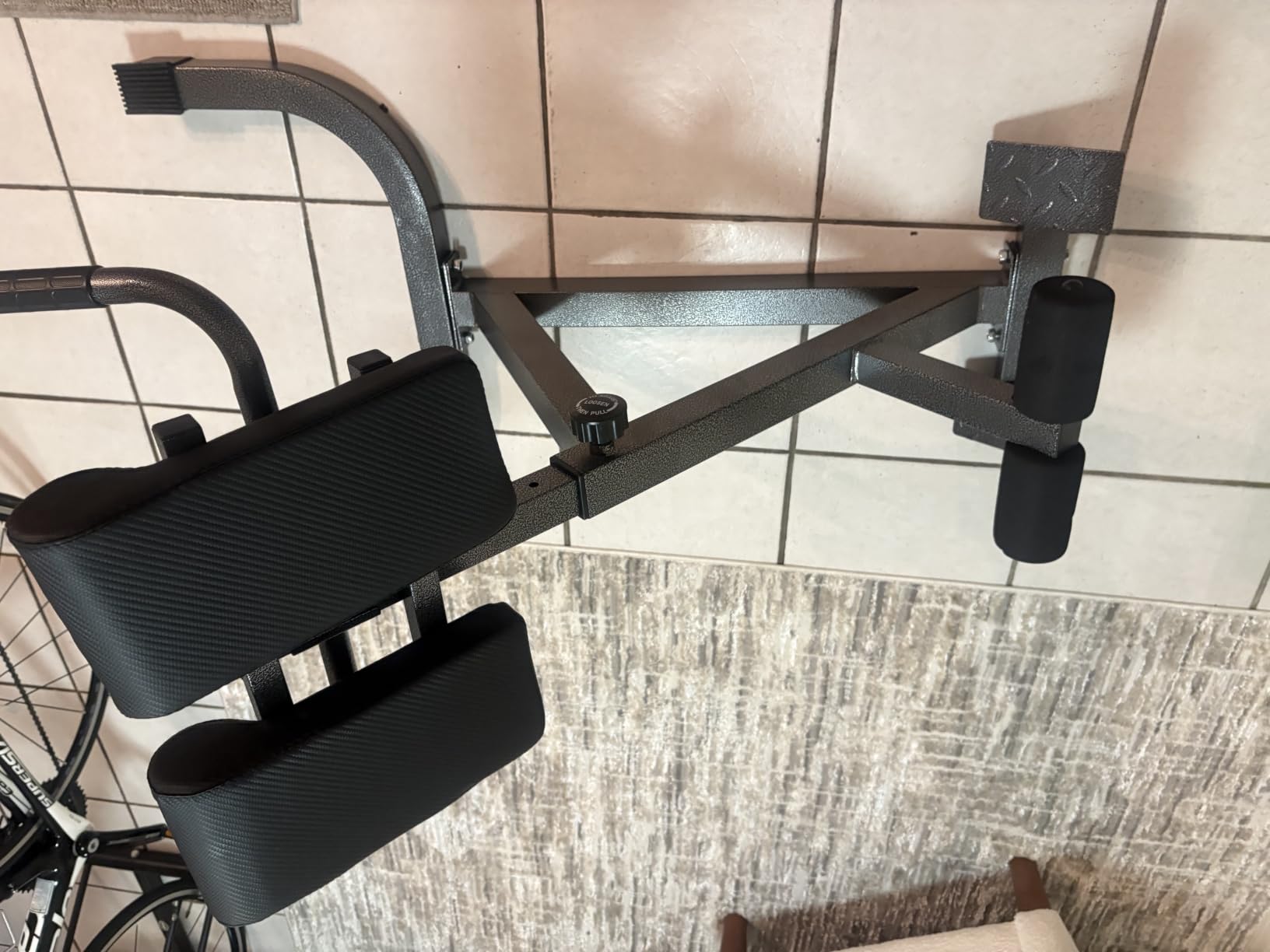
Most Roman chairs quietly top out around 6 feet. This one is built for users up to 6.3 feet, which makes it the shortest route to a workable setup if you are taller and have been disappointed by the roller range on budget units. The dual angle and height adjustment is the feature that earns it a place.
The frame is high-strength carbon steel with an anti-abrasive coating, and the whole machine weighs 20 lb, so repositioning it in a home gym is effortless. Reviewers approve of the cushioned support and foot pads, and the coating is a sensible touch for a frame that lives on a garage floor.
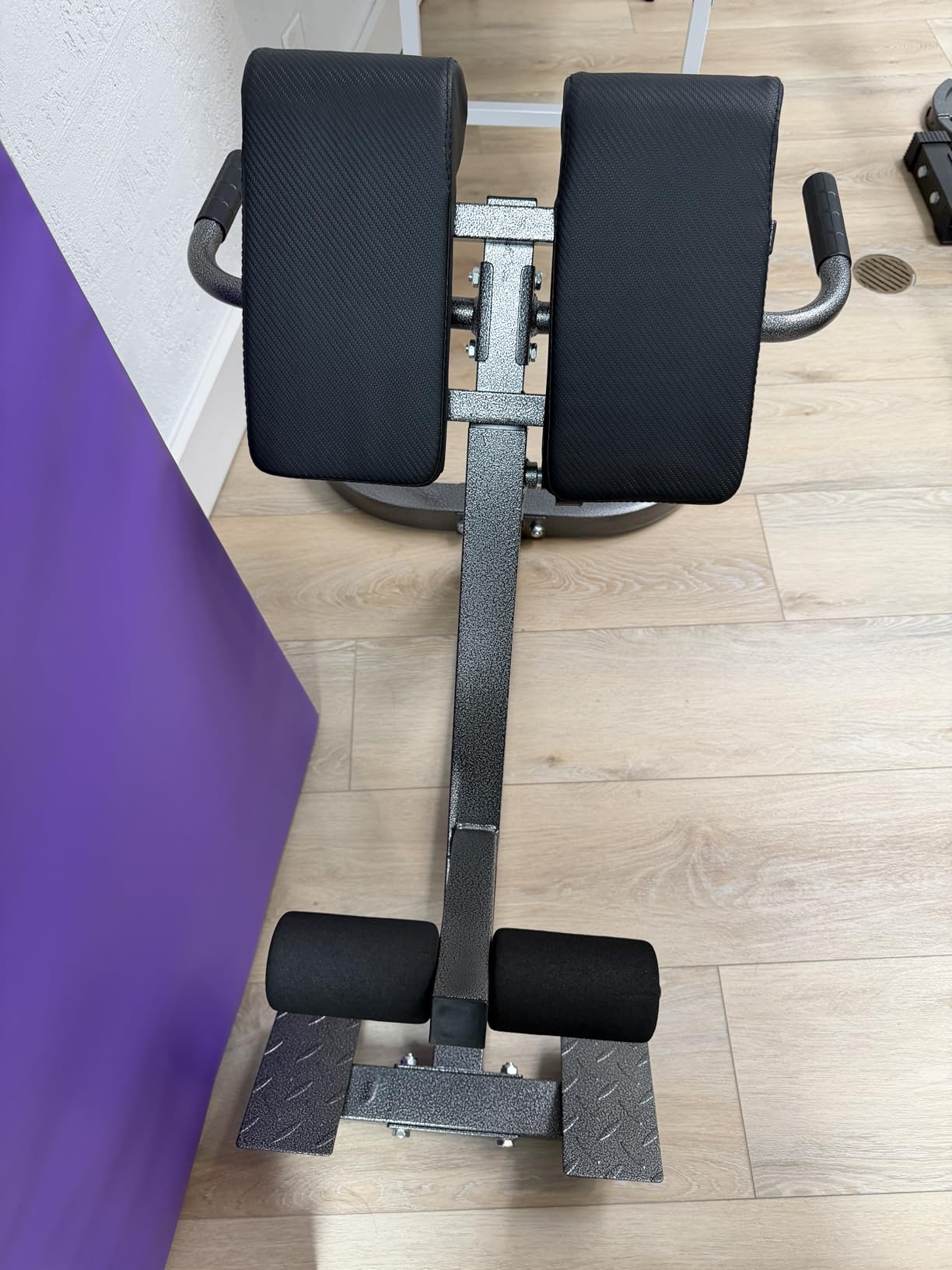
Assembly is quoted at roughly 30 minutes with all hardware included and clear instructions, which is where most budget machines fall down. Here the build experience is one of the reported strengths, along with the stability reviewers describe at bodyweight loads.
The reservation is capacity, and it is a legitimate one. The listed maximum is 275 lb, and the key-feature text elsewhere states a 245 lb support limit, so the two numbers do not agree. The tubing is also shorter and lighter than the steel frames in this guide. With under 500 reviews behind it, the long-term picture is thinner than the machines ranked above it.
Who It Suits: Lifters Around Six Feet Tall and Up
If you are between 6 ft and 6 ft 3 in and keep running out of roller travel on other chairs, this is the one designed for you. The dual adjustment also helps anyone who wants to vary the hip angle between sessions rather than working one fixed position.
Who Should Skip It: Buyers Near the Capacity Limit
Skip it if you weigh 200 lb or more, because the two capacity figures in the listing do not match and the lower one is the safer assumption. Anyone wanting a long track record of ownership should also look at a pick with a heavier verified review base.
6. FITKS360 Foldable Roman Chair – Best for Quick Assembly and Easy Handling
FITKS360 Roman Chair Hyperextension Bench – Adjustable Back Extension Machine for Glutes, Hamstrings & Lower Back – Foldable Multi-Purpose Workout Equipment for Home Gym (Black, Medium)
330 lb claimed capacity
36.2 in D x 16.9 in W
Folds flat
Suited to users roughly 5 ft to 6 ft
Pros
- Steel construction with no creaking or shifting in use
- around 25 lb so it moves despite mobility limits
- assembles in under 30 minutes with tools included
- foam rollers and extra padding suit a range of users
Cons
- One 225 lb user reported a weld failure after four months
- height range centers on users between 5 ft and 6 ft
- one order arrived with a missing lock nut
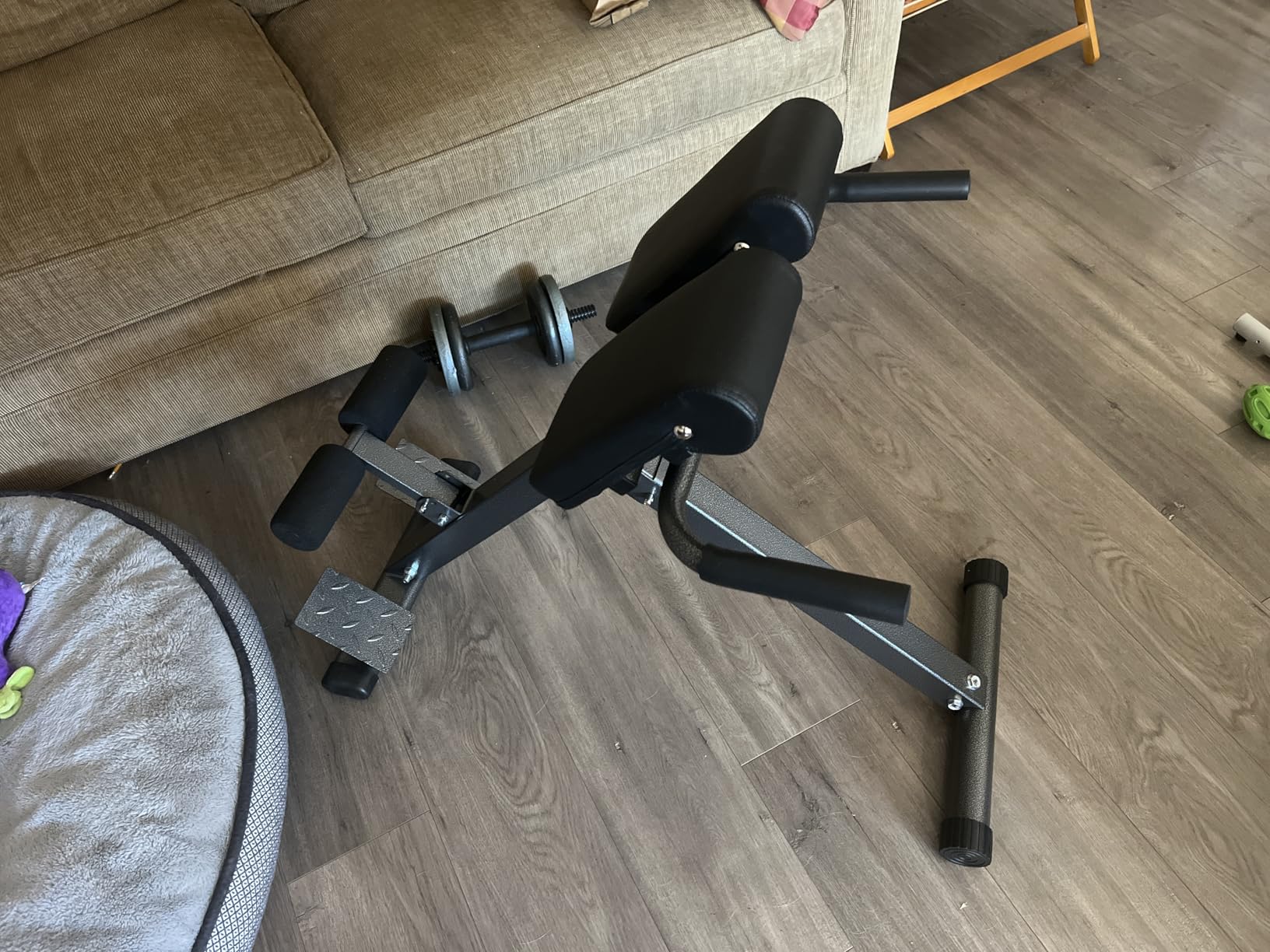
This chair is built around two promises: it goes together fast, and it moves easily. Reviewers report assembling it in under half an hour with the tools included, and at roughly 25 lb it can be repositioned by someone with arthritis or mobility limits. Steel construction feels solid in use, with no creaking or shifting reported.
Comfort is better than the price suggests. The foam rollers plus extra padding are reported as comfortable by both men and women, the frame folds flat for storage, and the non-slip feet grip a mat well. The listing also carries a lifetime warranty, which is deeper than most rivals offer.
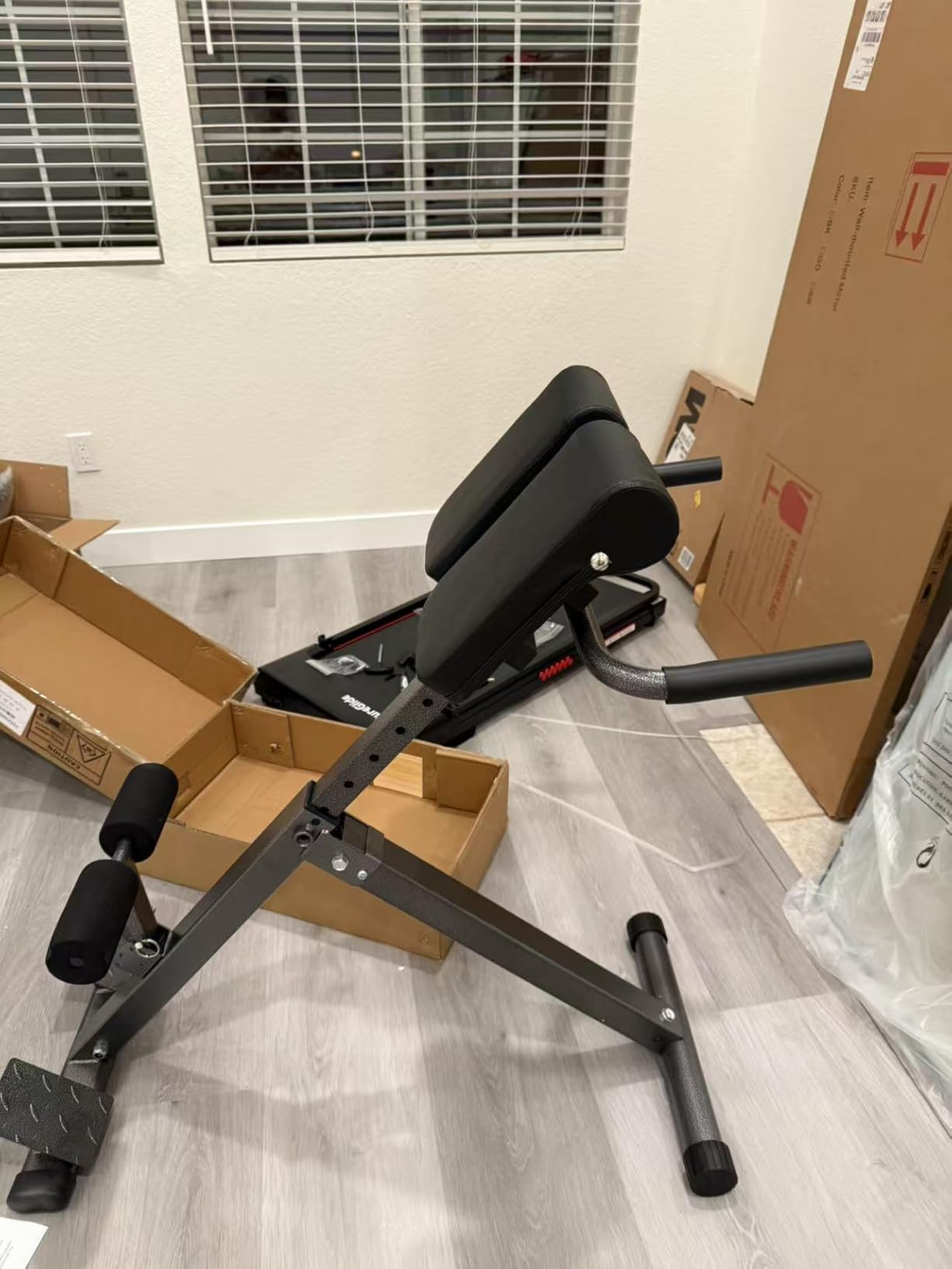
There is one durability outlier you should know about before buying. A 6 ft 4 in, 225 lb user reported a weld failure after four months of use, which sits directly against the stated 330 lb capacity. One report is not a pattern, but it is a reminder to check the welds after the first few months of hard use and to keep the load modest until you trust the frame.
The smaller issues are mundane: the height range centers on users between 5 ft and 6 ft, one order arrived with a missing lock nut, and the short legs are better suited to extensions than to dips. With a few hundred reviews, the long-term evidence is thinner than the ratings alone suggest.
Who It Suits: Users Who Want Padding and a Fast Build
Choose this if you dislike thin foam, if you want a machine assembled in one sitting rather than an afternoon, or if moving equipment is physically difficult for you. The reported comfort from both men and women is the standout theme in the reviews.
Who Should Skip It: Buyers Who Want a Long Track Record
Skip it if you are over 6 ft and need full roller travel, or if you want a large verified review base behind the listing. If you are near 200 lb, factor in the reported weld failure and check the frame early rather than assuming the capacity claim is settled.
7. EYESUN Foldable Roman Chair with Dual Hip Pads – Best for Comfort
Roman Chair,Foldable Back Extension Machine,Adjustable Ab Back Extension Machine,Core Strength Trainer,Back Exercise Machine for Glute,Ab Workouts,Full All-in-One Body Workout&Home Gym Fitness
330 lb listed capacity
28.9 lb machine weight
40.6 in D x 27.6 in W
Two repositionable hip pads
Folds flat
Pros
- Two separate hip cushions installable in three positions avoid pressure points
- sturdy welds with no wobble under barbell rows
- angle and elevation adjustment
- folds to about 4 ft by 2 ft by 1 ft
- dense supportive pads
Cons
- Foot end caps work loose on hard floors
- fold-down foam calf pads are too short to run the legs under
- handle and foot pad sizes shorter than some buyers expected
The reason to buy this chair is the hip pad. Instead of one solid cushion, it ships with two separate hip supports that install in three positions, and several buyers name that feature as the reason they chose it after discomfort on a cheaper single-cushion chair. If hip pressure has stopped you training on a Roman chair before, this is the fix.
Everything else is solid rather than exceptional. A 200-plus-pound user reports no wobble while doing weighted barbell rows, which is a meaningful stress test on a machine at this level. Angle and elevation adjustment makes the hip hinge easier to dial in, and it folds to roughly 4 ft by 2 ft by 1 ft for closet storage or leaning against a wall.
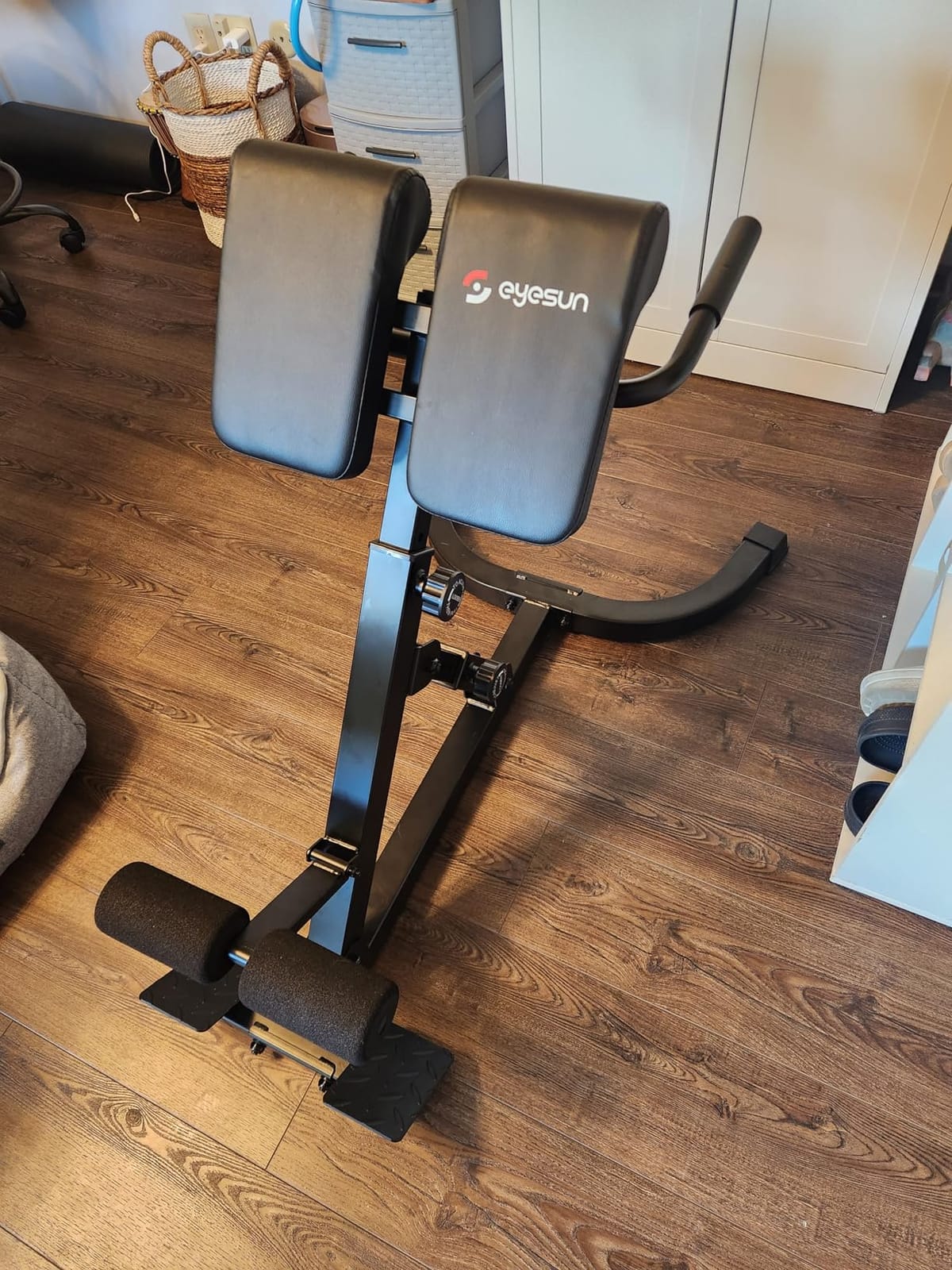
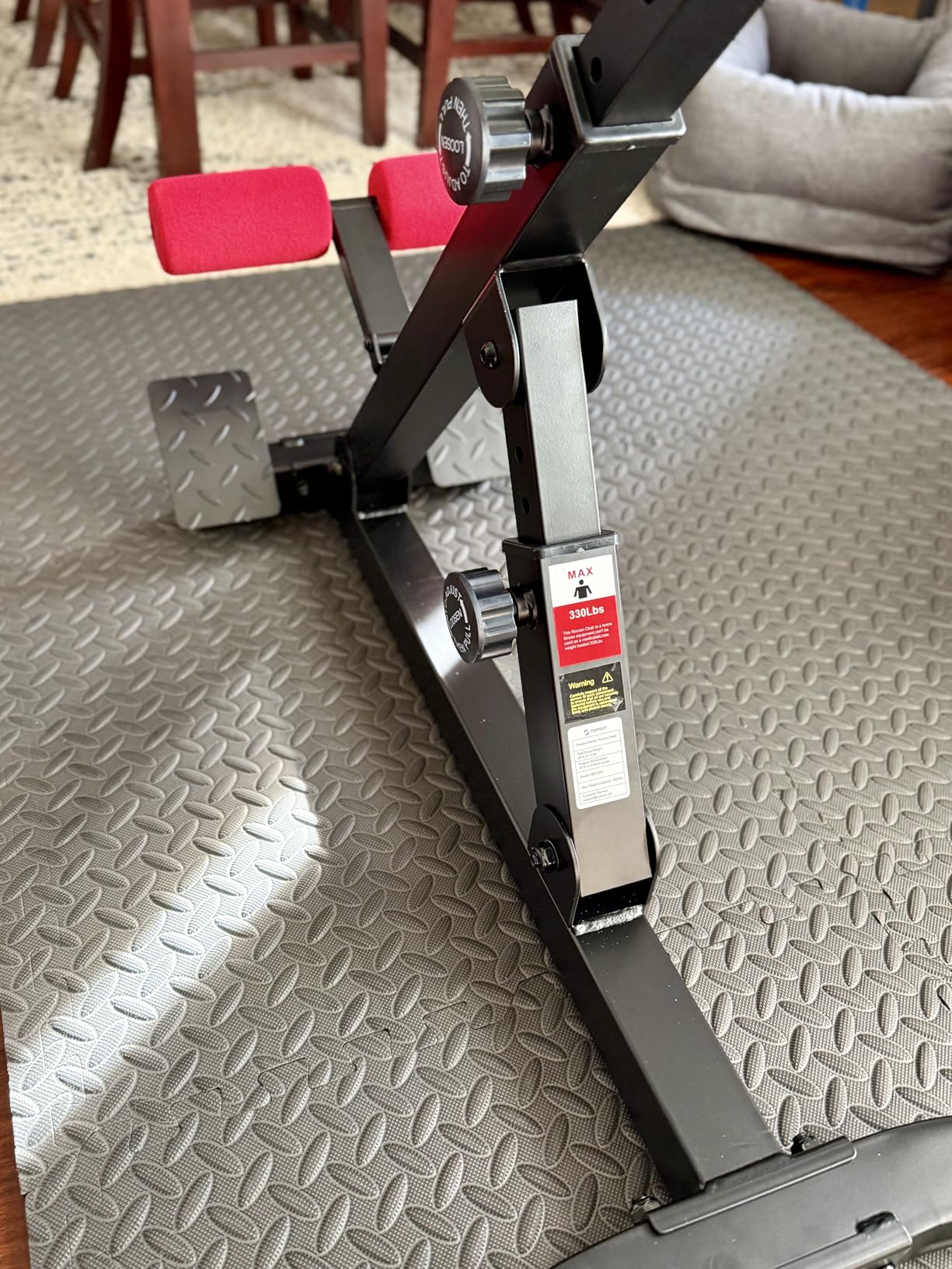
The listing states support up to 330 lbs for users between 5 ft 2 in and 6 ft, with high-density foam rollers and thick padding, and a 24-month warranty. That warranty depth is a genuine plus next to the 30-day cover on our budget pick. Setup is quoted at about 30 minutes with hardware included and spare handle foam pads in the box.
Remaining complaints are mechanical rather than structural: foot end caps that work loose with small movements on hard floors, calf pads too short to run your legs under for counterbalance work, and handles and foot pads that are shorter than some buyers expected. One owner doing back pain rehab reported a touch of wobble.
Who It Suits: Anyone Who Has Struggled With Hip Pressure
Buy this if a solid hip pad has been the thing that ended your back extension sessions, or if you are a heavier user who wants to attempt weighted rows rather than bodyweight work. The split, repositionable cushions are the reason most buyers chose it over a cheaper chair.
Who Should Skip It: Buyers Who Need Long Leg Support
Skip it if your programming involves running the legs under the pads for counterbalance work, because the calf pads are too short. On hard floors, put down a mat or check the foot caps periodically, as owners report them loosening with small movements.
8. Houbos Foldable Hyperextension Roman Chair – Highest Rated of the Eight
Houbos Foldable Hyperextension Roman Chair 250LBS Capacity for Home Gym
250 lb max user weight
19.8 lb machine weight
36.2 in D x 16.9 in W
3-stage leg support
Folds flat
Pros
- Highest average rating among these picks
- dual adjustment with 3-stage leg support and 8 height positions
- light frame that folds flat and stores behind doors or under beds
- non-slip foot caps protect hard flooring
Cons
- 250 lb maximum is among the lowest capacities here
- best fit is users up to about 6 ft
- taller users must shift their centre of gravity
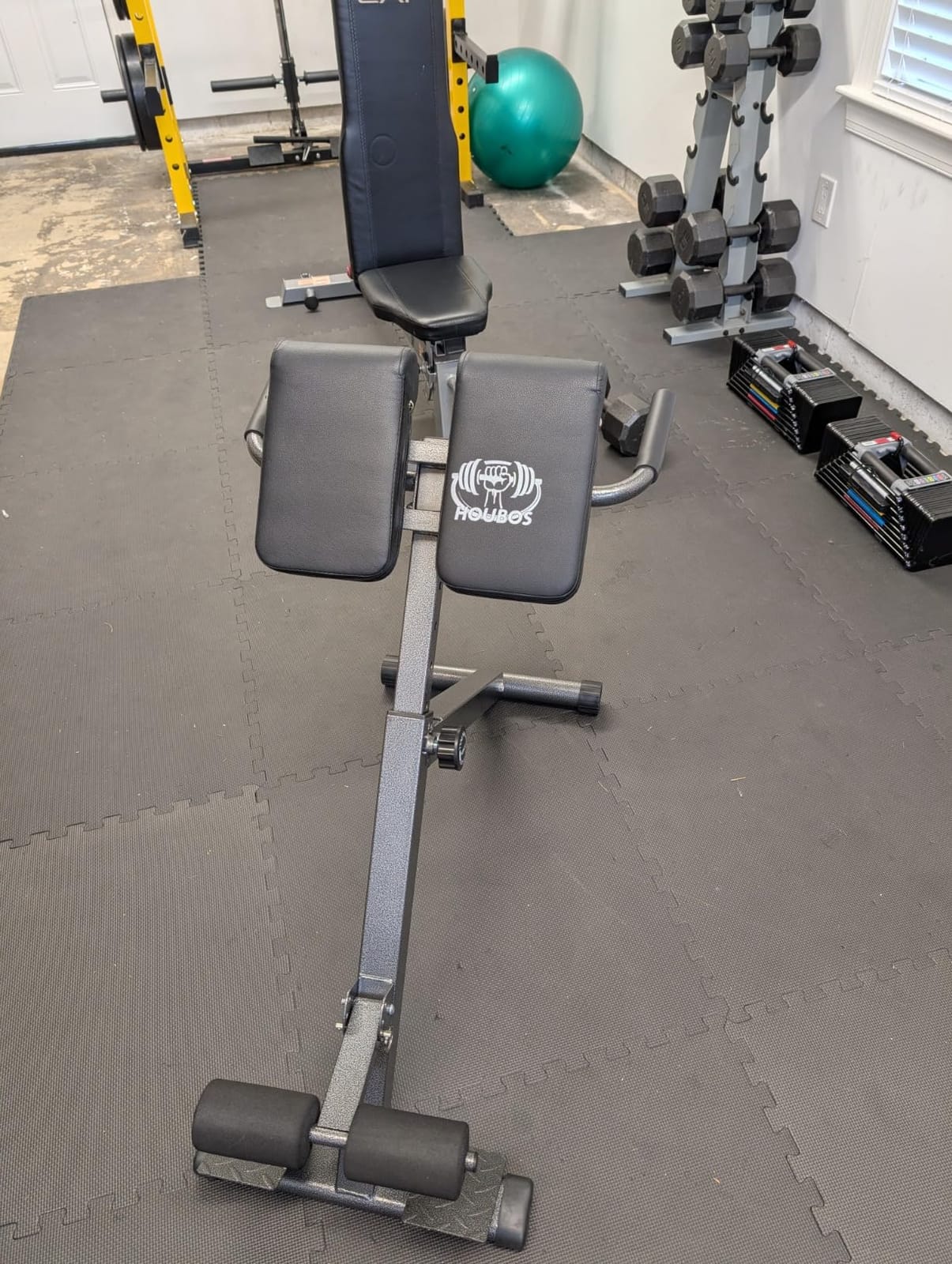
With a 4.5 average, this is the highest-rated machine in the guide, though the review base is the smallest of the eight at 119. The reason it earns a place is the adjustment system: three-stage leg support combined with eight height positions adapts the frame to different statures and lets you vary the training angle between back extensions, sit ups and dumbbell rows.
It weighs 19.8 lb and folds to a slim lean-against-the-wall profile that fits behind a door, under a bed or in an apartment closet. Non-slip foot caps protect hard flooring and keep the frame steady, and the powder-coated steel assembly takes about 30 minutes with pre-installed bolts and a basic tool.
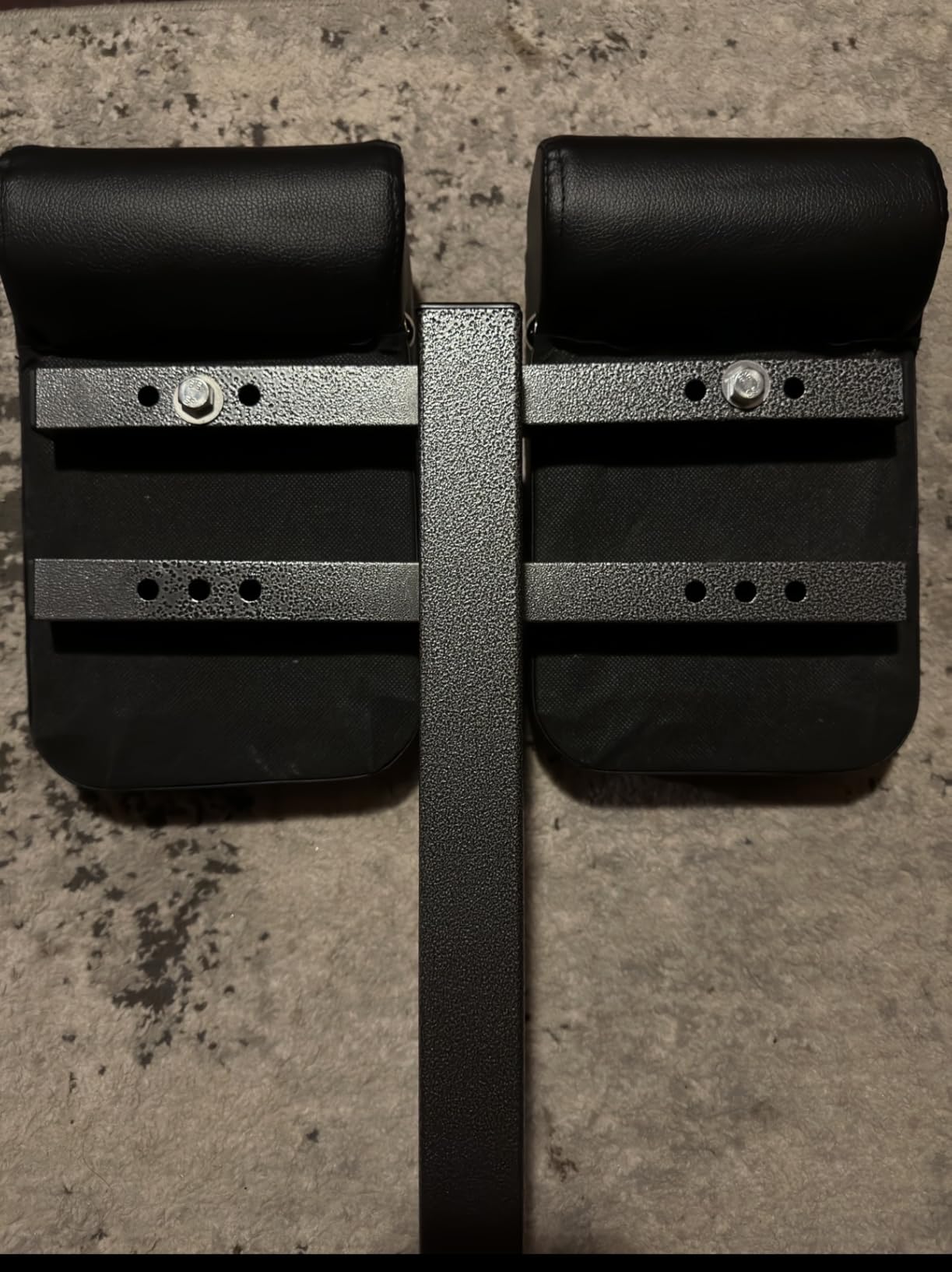
Buyer feedback centres on the dual adjustment and the folded footprint, and the compact 36.2 by 16.9 inch profile is among the smallest here. The 250 lb limit is the second lowest in this group, so it is genuinely a bodyweight and light-load machine rather than a place to hold a plate.
The second constraint is height. The manufacturer guidance supports users up to about 185 cm, or 6 ft, and taller users report having to shift their centre of gravity to make the position work. With the smallest sample of verified reviews, we would treat the rating as encouraging but unproven over years of use.
Who It Suits: Apartment, Dorm and First-Home-Gym Setups
This is the pick if storage is your binding constraint, since a lean-against-the-wall folded profile is about as small as this category gets. It also suits lighter lifters under about 180 lb doing bodyweight extensions, sit ups and dumbbell rows, who will never approach the 250 lb limit.
Who Should Skip It: Taller and Heavier Lifters
Skip it if you are over 6 ft or if you plan to load a barbell across your hips. The height ceiling and the capacity ceiling are both real, and fighting them produces awkward positions rather than better results.
Roman Chair vs GHD vs 45-Degree Bench: Which One Do You Need?
Three People Also Ask questions on this keyword compare a Roman chair to a GHD and to a 45-degree bench, and no competitor page answers them as a first-class decision. The distinction is smaller than most listings suggest. A Roman chair and a 45-degree hyperextension bench are usually the same object under two names. A GHD is a different machine.
A GHD adds a rounded knee pad and an adjustable footplate, which lets you hold a flexed-knee position and perform the glute-ham raise, a movement the Roman chair cannot do. For back extensions specifically, the 45-degree setup is a better match because the hip angle matches the extension intent. Practitioners generally frame the GHD as the higher-end upgrade and the Roman chair as the sensible back-extension-only buy.
For a home gym, buy the Roman chair first unless your programming already includes glute-ham raises. If you already own a reverse hyper, think carefully before adding one: several owners regret duplicating equipment, because the improvised reverse hyperextension on a Roman chair covers a lot of the same function.
One r/homegym buyer also notes that a 45-degree bench is a better default for people with pre-existing lower-back issues or who are new to lower-back training, since the angle is easier to control. That matches the broader pattern: beginners and anyone returning from time away get more from a simpler, better-padded chair than from the most adjustable machine on the market.
How to Do a Roman Chair Back Extension, Step by Step
Most of the discomfort people report with this exercise comes from two mistakes: an ankle roller set too low, and extending past neutral at the top. Fix those and the movement is well tolerated by almost everyone who can hinge without pain.
Set the height for your frame. Adjust the ankle rollers so your ankles sit just above them with the knees close to 90 degrees. For most machines, that places a user around 5 ft to 5 ft 8 in at the middle settings, a user around 5 ft 9 in to 6 ft in the upper settings, and anyone under 5 ft 2 in at the lowest stop with the hips raised slightly.
Set the leg support stage. On machines with three-stage leg support, move the platform forward for longer legs and back for shorter ones. If your shins hang off the end, step forward until your heels are supported.
Position the hip pad. Sit down, place the pad at the top of your glutes, just above the pelvic crease, and hook your ankles behind the rollers. If you feel the pad digging into one point, this is where a split or repositionable hip pad helps.
Start isometric. Hold a straight line from knees to head with your neck neutral, eyes down, and do not hyperextend at the top. This position alone is a useful exercise.
Lower under control. Hinge at the hip and descend until your torso is roughly parallel with the floor, or until you feel a strong stretch in the hamstrings and lower back. Do not drop.
Drive back to neutral. Squeeze the glutes and erectors to return to a straight line, and stop at neutral rather than leaning further back.
Add load last. Hold a plate at the chest for weeks before you put a barbell across your hips, and never exceed the machine capacity for your body weight plus the load.
Common mistakes: extending past neutral at the top, dropping the torso fast, craning the neck to look forward, and setting the rollers so low that the lower back does the work at the bottom of the range. Members of r/bodyweightfitness and r/Fitness note that it is fine to bend your spine, and the fearmongering around this movement does not match what coaches say in practice.
Safety: Spinal Loading and Lower-Back Cautions
The Roman chair back extension is a safe and effective exercise for most people, and the common reports of lower-back trouble come from hyperextending past neutral or from poor setup, not from the exercise itself. Threads on r/Sciatica reflect a real caution about spinal loading that is worth reading rather than dismissing, particularly for anyone with a history of disc problems.
Three rules keep it safe. Stop at neutral instead of arching further at the top. Lower under control rather than dropping into the stretch. And treat the listed capacity as a hard ceiling that includes your body weight plus any load, so a 275 lb machine is already a poor match for a 220 lb lifter holding a plate.
If you have acute back pain, radiating pain, numbness, or a recent injury, get clearance from a clinician before loading the movement. If you are returning after a long layoff, start with isometric holds at a low incline and rebuild gradually. For readers managing long periods of desk work, our guide to ergonomic office chairs for back pain and our inversion table roundup cover the other half of the same problem.
Buying Guide: How to Choose a Roman Chair
Use these seven questions in order. The first three eliminate most options before you start reading reviews.
Does the capacity cover your body weight plus your intended load? A capacity rating is a user weight, not a plate rating. If you weigh 200 lb and want to hold 45 lb, you want at least a 275 lb frame, and 300 lb is a better floor.
Does the height range include you? Check the manufacturer guidance against your height, and note that 5 ft to 6 ft is the most common stated band. Above 6 ft, look for a unit explicitly built to 6.3 ft or wider roller travel.
Is the frame steel with a wide base? Square or rectangular steel tubing and a wide stabilizer base are the two things that separate a stable chair from one that rocks under a plate.
How many height and angle settings are there? Ten height settings with multiple inclines is the gold standard for a dedicated chair. Fewer than six settings usually means one of the compromises above.
Does it fold, and what is the folded size? For apartments this is decisive. Compare the listed dimensions against the space you actually have, including the depth needed to lie down for sit ups.
Is the hip pad split, contoured or solid? This is the comfort deciding factor. Solid pads are the most common complaint in reviews, particularly from men training over 45 degrees.
What does the warranty actually cover? Read it as frame, parts, then wearables. A lifetime warranty on the frame with one year on padding is very different from a 30-day limited warranty, and a listing that says nothing is a warning.
One more piece of buyer wisdom from the forums: review volume is a selection criterion, not noise. A 4.2 average from close to 7,000 verified reviews tells you far more about a machine surviving daily use than a 4.5 from 119, because the larger sample has already surfaced the failure modes.
Durability and Maintenance: What to Expect Over Time
Across long-term ownership reports on this category, one pattern holds: the steel outlasts the foam. Frames, welds, powder coat, foot platforms and pull pins are routinely described as still in excellent condition after 18 months of heavy use, while the hip pad foam is the first thing to go. One owner reported the centre of their hip pad compressing by roughly 30 percent after 18 months of daily sessions.
That has a simple buying implication. Judge these machines on the frame, not the padding, and expect to replace or upgrade pads once rather than twice over a few years of use. Budget units with thin ankle rollers are also the most common DIY upgrade, because users feel the bar through the foam.
Our maintenance protocol is deliberately boring. Wipe the pads and rollers after each session with a damp cloth, and more often if you sweat heavily. Check every bolt with a wrench every three months, since repeated pull-pin adjustment works hardware loose. Oil the pull pins once a year. Run a finger along the welds after the first few months of hard use, particularly on lighter frames. And for anyone whose gym is a corner of a room, our guide to getting back into shape after a long layoff covers the same discipline applied to conditioning.
Frequently Asked Questions
Are Roman chair back extensions good?
Yes. The back extension is a low-load, full-range way to train the spinal erectors, glutes and hamstrings without the axial compression that squats and deadlifts create. It is the standard finishing movement for posterior chain work in most powerlifting programs, and it is one of the few machines that fits in a home gym corner.
What is the difference between a GHD and a Roman chair for back extensions?
A Roman chair and a 45-degree hyperextension bench are usually the same product under two names. A GHD is different: it adds a rounded knee pad and an adjustable footplate so you can hold a flexed-knee position and perform the glute-ham raise. For back extensions the 45-degree Roman chair is the better match.
How do I do a Roman chair back extension?
Set the ankle rollers so your ankles sit just above them with knees near 90 degrees, place the hip pad at the top of your glutes, and hook your ankles behind the rollers. Hold a neutral line from knees to head, hinge at the hip to lower your torso toward the floor, then drive back to neutral and stop without arching further.
How tall should I be to use a hyperextension bench?
Most machines are built for users between 5 ft and 6 ft, with the middle height settings covering roughly 5 ft 2 in to 5 ft 10 in. Below that, use the lowest roller stop; above 6 ft, look for a unit with dual angle and height adjustment built for users up to 6.3 ft or wider roller travel.
Can back extensions help with lower back pain?
They can help many people, because the movement trains the spinal extensors under low load with no axial compression, and users managing lumbar discomfort commonly report relief. It is not a treatment for disc problems, acute pain or radiating symptoms. If you have those symptoms, get clearance from a clinician before loading the movement.
Final Verdict: Which Roman Chair Should You Buy?
Start with the Finer Form multi-functional bench if you want one machine to cover pressing, rows and back extensions, and if your body weight sits comfortably under its 660 lb rating. Its 10,700-plus verified reviews and eight back-extension levels make it the most proven choice in this guide, with bench length as the one real compromise for users over 6 ft 1 in.
Choose the Sunny Health and Fitness chair for the widest dedicated adjustment range and the strongest reports from lifters managing back discomfort. Choose the Lifepro or Houbos for apartments where storage decides everything, the EYESUN if hip pressure has stopped you before, and the SUCXDZQ if you are around 6 ft tall and running out of roller travel elsewhere. Buy the CAP Strength chair if you want GHD-style variety on a budget and will stay under 200 lb doing bodyweight work.
Whichever you pick, set the rollers for your height before the first set, stop at neutral at the top, and treat the capacity figure as a hard ceiling that includes any load. That single habit prevents almost every complaint we found in the reviews of these machines in 2026.