
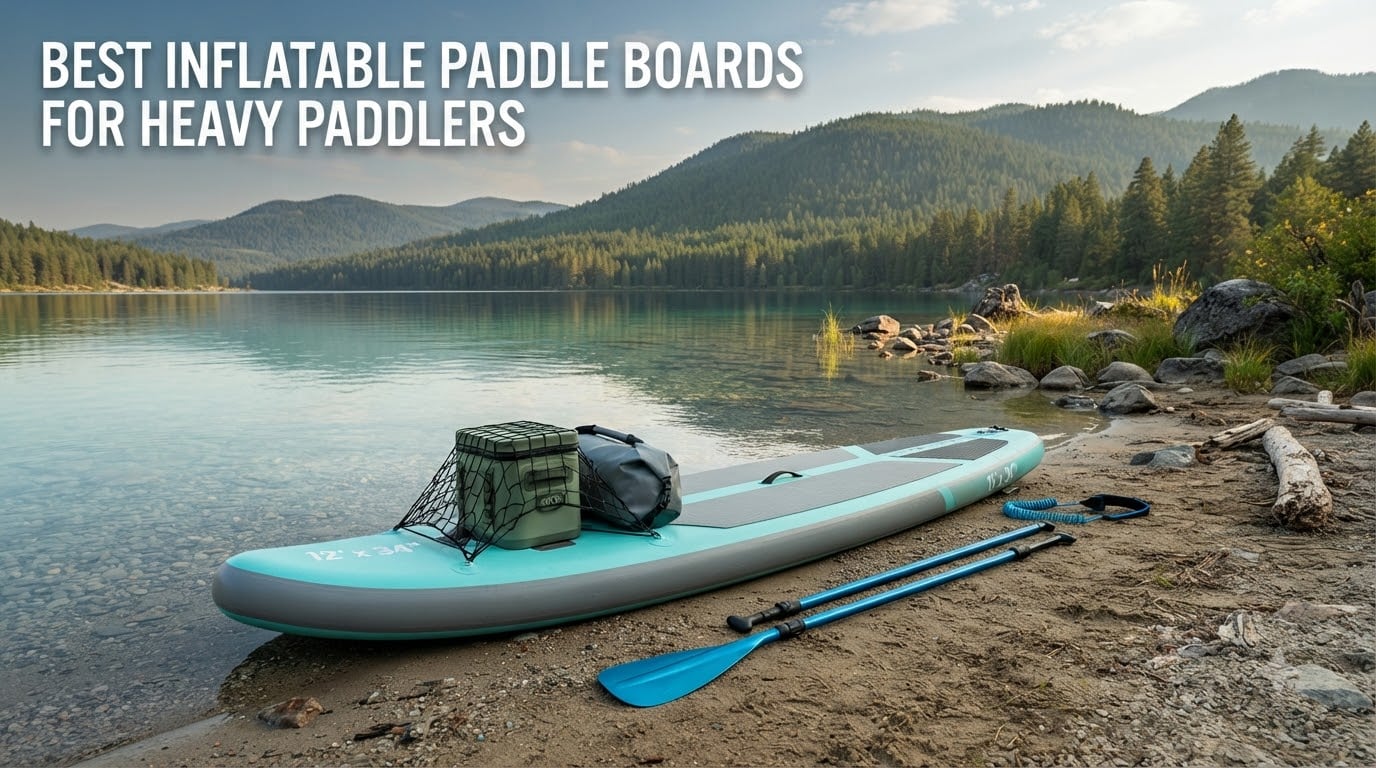
Paddling is not a size-limited sport, and the boards on this list prove it. Every model below is an inflatable stand-up paddle board rated between 400 and 661 pounds, wide enough at the rails to stop a heavy rider from wobbling, and stiff enough through the rails that standing still feels planted rather than springy. I spent weeks reading owner reviews at my own weight band and cross-checking every published specification against what buyers report in the water, because the number on a listing is only half the story.
To answer the question that comes up most often in my inbox directly: yes, inflatable paddle boards work for heavier riders, and the right one will feel completely stable. What matters is matching board width, thickness and rated capacity to your body weight, then adding headroom for a wetsuit, a personal flotation device and any gear you plan to carry. Get that match right and you will not be thinking about your weight at all. Our broader heavy rider board guide covers hard boards and wider use cases if you want the full picture.
The bigger trap is trusting the capacity figure on its own. A board rated for 450 pounds is a laboratory limit, not the number at which it still feels planted under you. I break that gap down later in this guide, because it is the single most useful thing a heavier paddler can know before buying, and no competitor roundup I found explains it. This is the best inflatable paddle board roundup for heavy paddlers I could put together in 2026, covering ten boards that are genuinely wide enough, with a real con on every one of them.
Table of Contents
Top 3 Picks for the Best Inflatable Paddle Boards for Heavy Paddlers (October 2026)
If you want my short answer instead of ten detailed write-ups, these are the three I would choose from right now. The Skatinger is the one I keep coming back to because of its 35-inch width and a review base large enough to trust. The ATPROSS adds a convertible kayak seat to a similar footprint. The FLYPARK is the lighter-feeling option at 11 feet with a 34-inch deck.

Skatinger 11’6 x 35 Super Wide SUP
- 450 lb capacity
- 35 inch width
- 6 inch thickness
- 20 PSI
- 2 year warranty

ATPROSS 11’6 x 35 Extra Wide SUP
- 450 lb capacity
- inflatable kayak seat
- double layer PVC
- 35 inch width

FLYPARK 11 x 34 Wide SUP
- 420 lb capacity
- 5mm EVA deck
- 15 D-rings
- 110L backpack
- 2 year warranty
Best Inflatable Paddle Boards for Heavy Paddlers in 2026
All ten boards below sit between 33 and 36 inches wide and carry ratings from 400 to 661 pounds. Every one comes with a pump, leash and backpack, though kit quality varies more than the boards themselves.
| Product | Specifications | Action |
|---|---|---|
| Skatinger 11’6 x 35 Super Wide SUP |
|
Check Latest Price |
| ATPROSS 11’6 x 35 Extra Wide SUP |
|
Check Latest Price |
| FLYPARK 11 x 34 Wide SUP |
|
Check Latest Price |
 Hiwave 11 x 34 Wide SUP Hiwave 11 x 34 Wide SUP |
|
Check Latest Price |
 CETANA 11’6 x 35 Three-Fin SUP CETANA 11’6 x 35 Three-Fin SUP |
|
Check Latest Price |
 Flyroc 11’6 x 35 Extra Wide SUP Flyroc 11’6 x 35 Extra Wide SUP |
|
Check Latest Price |
 Intermountain Gorge 11 x 34 SUP Intermountain Gorge 11 x 34 SUP |
|
Check Latest Price |
 ATPROSS 10’6 x 33 Golden Ratio SUP ATPROSS 10’6 x 33 Golden Ratio SUP |
|
Check Latest Price |
 NACATIN 12 x 36 Fishing SUP NACATIN 12 x 36 Fishing SUP |
|
Check Latest Price |
 MASTERISH 11’6 x 35 Extra Wide SUP MASTERISH 11’6 x 35 Extra Wide SUP |
|
Check Latest Price |
How We Picked These Boards
I did not test all ten boards on the water personally, so I want to be straight about how this list was built. I compared published specifications against the specifics buyers describe in their own reviews, then kept only the boards that survived all four of these checks.
First, a minimum 33-inch width. Boards narrower than that are built for a reference paddler in the 150 to 180 pound range, and listings routinely bury the capacity number where buyers miss it. Second, 6-inch thickness across the board. Third, a stated capacity at least 60 pounds above the intended rider weight. Fourth, a review base large enough to make the feedback meaningful.
Everything I wrote about handling, rigidity and pump performance comes from what owners report rather than from a lab sheet. Where specifications conflict with each other on a listing, I say so instead of picking the flattering number. If you are new to the sport, our beginner board guide covers the fundamentals of getting on and staying on.
One more practical note before the reviews. Across this whole category, the single most repeated complaint from owners is the hand pump included in the box. Almost everyone ends up buying an electric pump within a season, because getting a 6-inch-thick board to 15 or 20 PSI by hand is a serious arm workout. Budget for one.
1. Skatinger 11ft6 Super Wide SUP – Best Overall for Heavy Paddlers
Skatinger 11’6×35″ Super Wide Inflatable Paddle Board, Ultra Stable Stand Up Paddleboards for 450lb/3 People/Family/Big Size w/Shoulder Strap, 100L Backpack, Ultra-Light All-Round Sup Board, Blue
450 lb capacity
11ft6 x 35 x 6 inch
19.8 lb board weight
20 PSI
2 year warranty
Pros
- 35 inch width holds heavy riders steady in chop
- 450 lb rating with real headroom
- Three handles plus padded shoulder strap for solo carry
- Full kit included with dual action pump and dry bag
- Two year warranty
Cons
- Included hand pump is exhausting past 11 to 13 PSI
- Valve must be engaged quickly or air escapes fast
- Instructions are thin so setup takes trial and error
This is the board I recommend to most people who message me about their weight. It is an 11 foot 6 inch by 35 inch board, 6 inches thick, rated to 450 pounds, and it weighs 19.8 pounds on the scale. That combination of a 35-inch deck and a 450-pound rating puts it in the exact zone where a 250 to 350 pound rider has genuine headroom instead of running the hull at its limit on day one.
Owners consistently credit the width rather than the length for how planted the board feels. That matters more than it sounds. Stability comes mostly from width, because width sets how much of the board sits in the water beneath your stance. Three inches of extra width across an 11-foot platform is the difference between your knees sinking when a boat wake passes and your feet staying dry.

Technically it is a dual-layer PVC build with sidewalls rated to 20 PSI, and that pressure ceiling is the detail most heavy riders care about. Inflatable boards feel soft when they are under-inflated, and at 20 PSI this one has enough headroom to feel properly firm even with a large rider standing still. The listed maximum pressure is higher than what several competitors in this list specify.
The kit is unusually complete for a board at this tier. You get a 1680D backpack with chest, hip and side straps, a dual-action pump, an adjustable aluminium paddle, a 5 litre waterproof bag, a 10 inch US fin, an ankle leash, a phone pouch and a wrench. Three carry handles plus a padded shoulder strap mean you can genuinely solo-carry this 11 foot 6 inch platform to a launch, which is not true of every wide board here.
How it holds up under a heavier rider
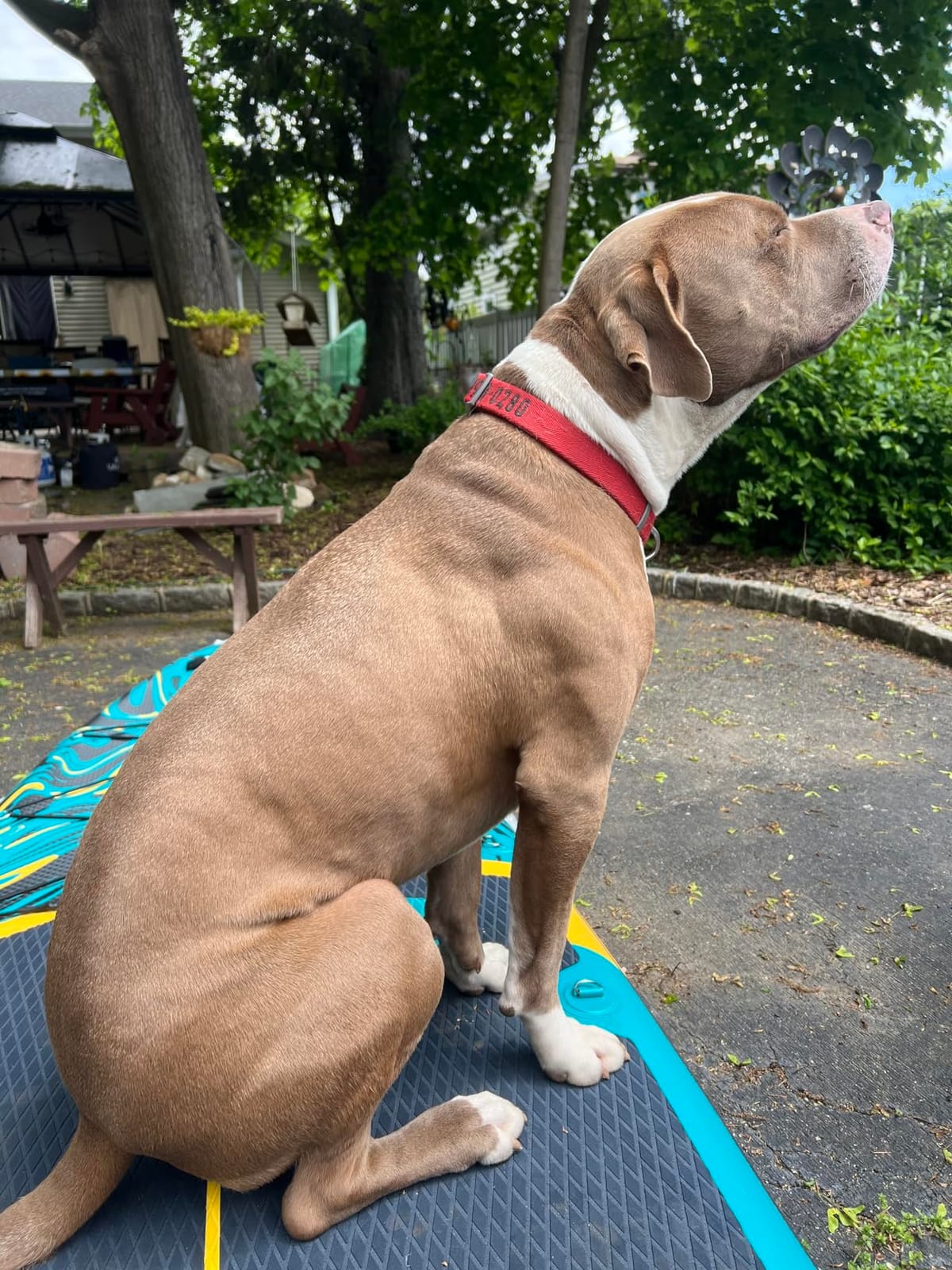
Reviewers describe riding this board with two adults, a child and a dog and report no meaningful wobble, including in choppy water. A board that handles a combined load near its rating has room to spare for a 300 pound paddler plus a cooler. The 6-point front and 4-point rear bungee system also lets you load gear forward and aft, which keeps the centre of gravity over the fin rather than behind it.
Tracking is helped by the 10 inch US fin, which is a longer blade than the small slide-in fins common on budget boards. Longer fin, straighter line, less energy wasted correcting side to side. For a heavy paddler, that matters because every correction stroke is effort you would rather put into going forward.
Where it falls short
The manual pump is the honest flaw. Owners report that pushing this board past roughly 11 to 13 PSI with the supplied dual-action pump is exhausting, and most of them add an electric unit. The valve also needs to be engaged quickly at the start of inflation or air escapes fast enough to leave the board wobbly and under-filled, which is exactly the soft-board feeling heavier riders are trying to avoid.
The bundled paddle is single-sided, which some new paddlers find harder to keep the board tracking straight. Instructions are also fairly thin, so first assembly takes a bit of trial and error. None of that touches the hull, and it is still the pick I send people to.
2. ATPROSS 11ft6 Extra Wide SUP – Best Value With a Convertible Kayak Seat
ATPROSS Inflatable Paddle Board, 450lbs Extra Wide Stand Up Paddleboard
450 lb capacity
11ft6 x 35 x 6 inch
Double layer PVC
Tool free seat attachment
1 year warranty
Pros
- Inflatable seat converts the board to kayak style
- 35 inch width feels planted under a heavy rider
- 450 lb rating with reinforced sidewalls
- Includes single and dual paddles plus a repair kit
Cons
- Only a 1 year warranty
- Hand pump needs real effort to reach full pressure
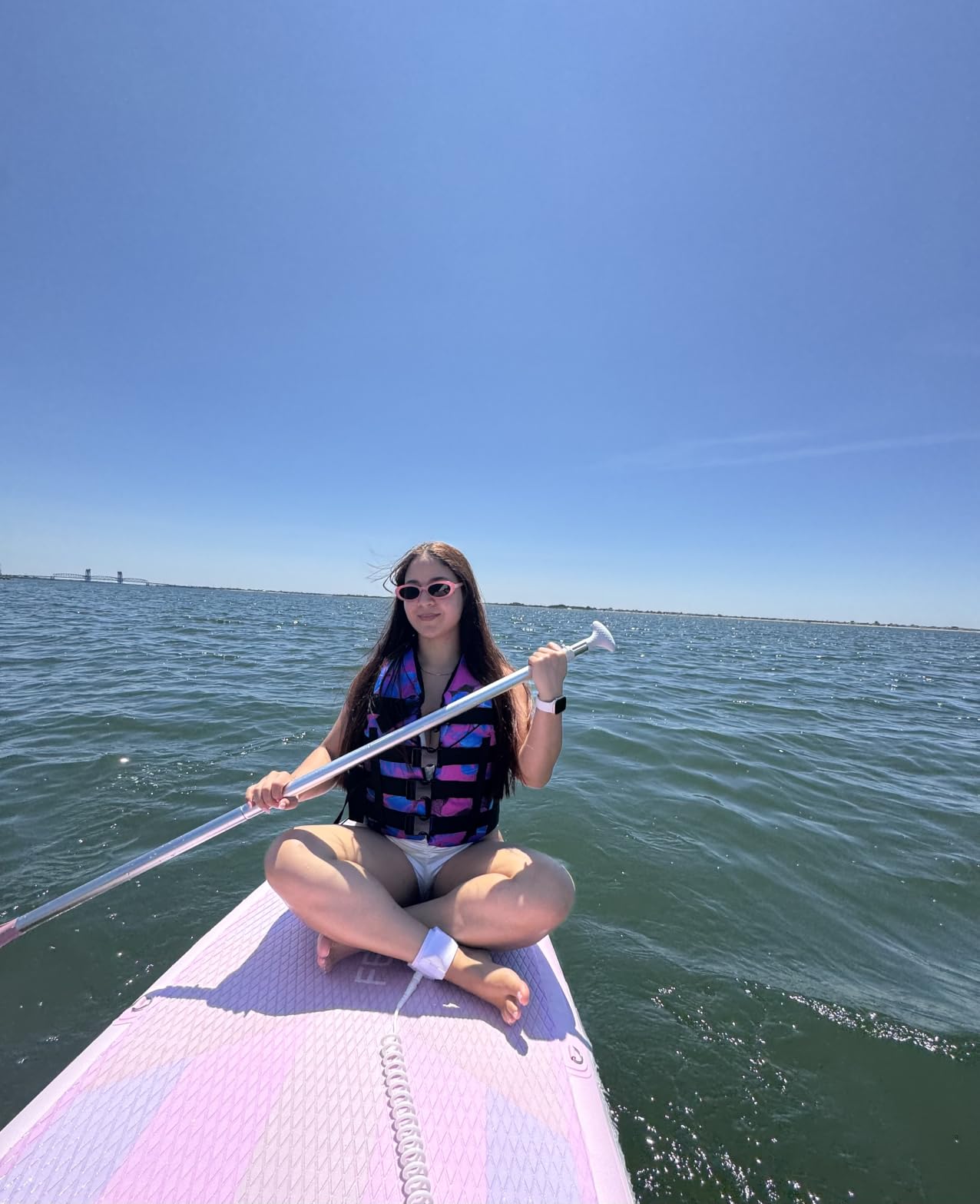
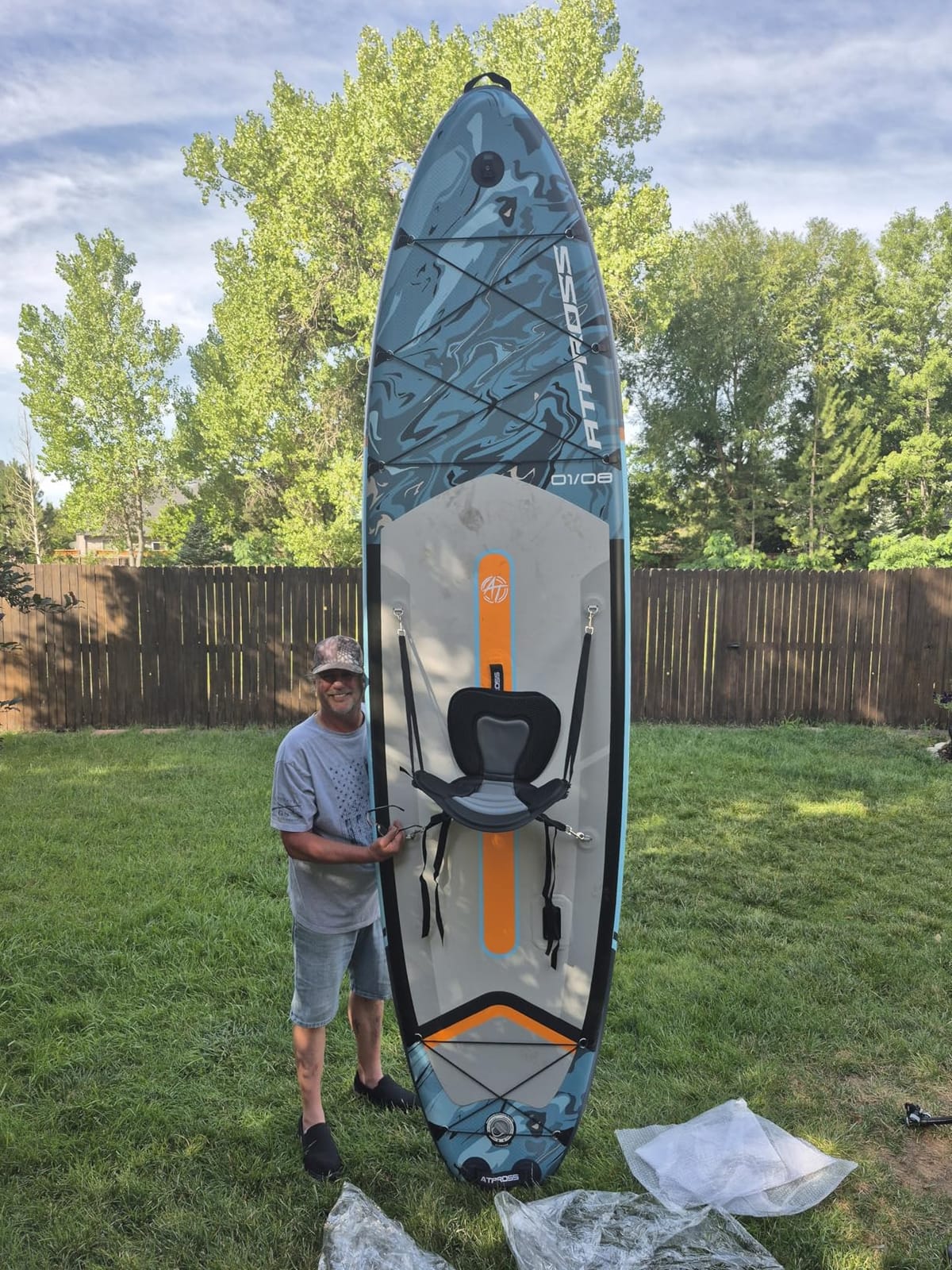
This is an 11 foot 6 inch by 35 inch by 6 inch board rated to 450 pounds, and the reason it stands apart from the Skatinger is the included inflatable kayak seat. The seat attaches through a tool-free QuickLink system, which turns the board into a seated kayak setup in under a minute. If standing fatigues your legs or your back on long outings, this is a meaningful option that most wide boards at this tier do not offer.
The width is the same 35 inches that makes the Skatinger work, and reviewers single out the same thing: the board feels planted under a heavier rider, and it stays that way when carrying a passenger. Double-layer PVC with a reinforced sidewall resists the abrasion that comes from launching off gravel beaches or drifting into rocks, which is a real consideration if you paddle somewhere with a rocky shoreline.
One note on the listing itself. The specification table gives an item weight of 16.31 kg, which is an unusually heavy figure for a board of this size and inconsistent with the dimensions given. Treat the weight spec with caution and check the packed dimensions before you commit, particularly if you plan to carry it any distance solo. The capacity and size claims are consistent across the listing, so those I would trust.
The accessory bundle is the best in this group on paper. You get a 600D Oxford backpack, detachable large and small fins, both single and dual paddles, a leash, a two-way hand pump, a PVC repair kit, a waterproof phone bag and a 5 litre dry bag. Owners frequently describe the seat and the bundle as better value than comparable packages from brands with more familiar names.
When the seat changes the experience
Seated paddling suits cold mornings, long distances and anyone whose knees or lower back object to standing. A high-density cushioned seat spreads your weight across the deck rather than concentrating it through your feet, and a double-sided paddle lets you drive forward without rotating your torso. For a rider above 300 pounds who wants distance rather than a workout, that combination is genuinely useful.
The 35-inch width also gives a seated paddler room to shift position, which matters because seated balance corrections are slower than standing ones. Two detachable fins, large and small, let you tune tracking depending on whether you are sitting still cruising or moving.
What you give up
The warranty is one year, which is on the short side for a hull this large. It is a full year of coverage, not zero, but the Skatinger and FLYPARK both carry two years, and warranty length is a reasonable durability proxy for a PVC hull that will flex under sustained load.
The other repeat complaint is the hand pump, which needs real effort to reach the target pressure. Same category-wide issue as the Skatinger, and the same fix. The 1 year warranty is the only genuine product-level reason to choose the other board instead.
3. FLYPARK 11ft Wide SUP – Best 11 Foot Board for Beginners and Families
Flypark 11’x34 Inflatable Paddle Boards, Extra Wide SUP for 420lbs/3Adults, Yoga Stand Up Paddle Board, 110L Backpack, 15 D-Rings, Shoulder Strap, US-Fin, 2-Action Pump, Bloom Pink
420 lb capacity
11 x 34 x 6 inch
19 lb board weight
20 PSI
2 year warranty
Pros
- 34 inch width and 6 inch thickness feel stable solo or with kids
- 5mm EVA pad grips well in chop
- Light for an 11 foot board
- 15 D-rings and a 110L backpack
- Two year warranty
Cons
- Included shoulder strap clips can break
- Manual pump still takes real effort
- One report of a split seam with warranty declined
The FLYPARK is the one I suggest when someone tells me they are a heavier rider who has never paddled before. It is 11 feet by 34 inches by 6 inches, rated to 420 pounds, and weighs 19 pounds. That is a smaller footprint than the 11 foot 6 inch boards here, and at this width and thickness it still gives a large rider a stable platform without the sluggish handling that comes with an oversized board.
That last point matters more than roundup formats usually admit. An oversized board is not automatically a good board. Extra width and length add drag, and a board that feels heavy in the water is tiring over a long paddle. The FLYPARK sits in the middle of the size range where a 250 to 300 pound rider still has headroom without carrying a board that fights them.
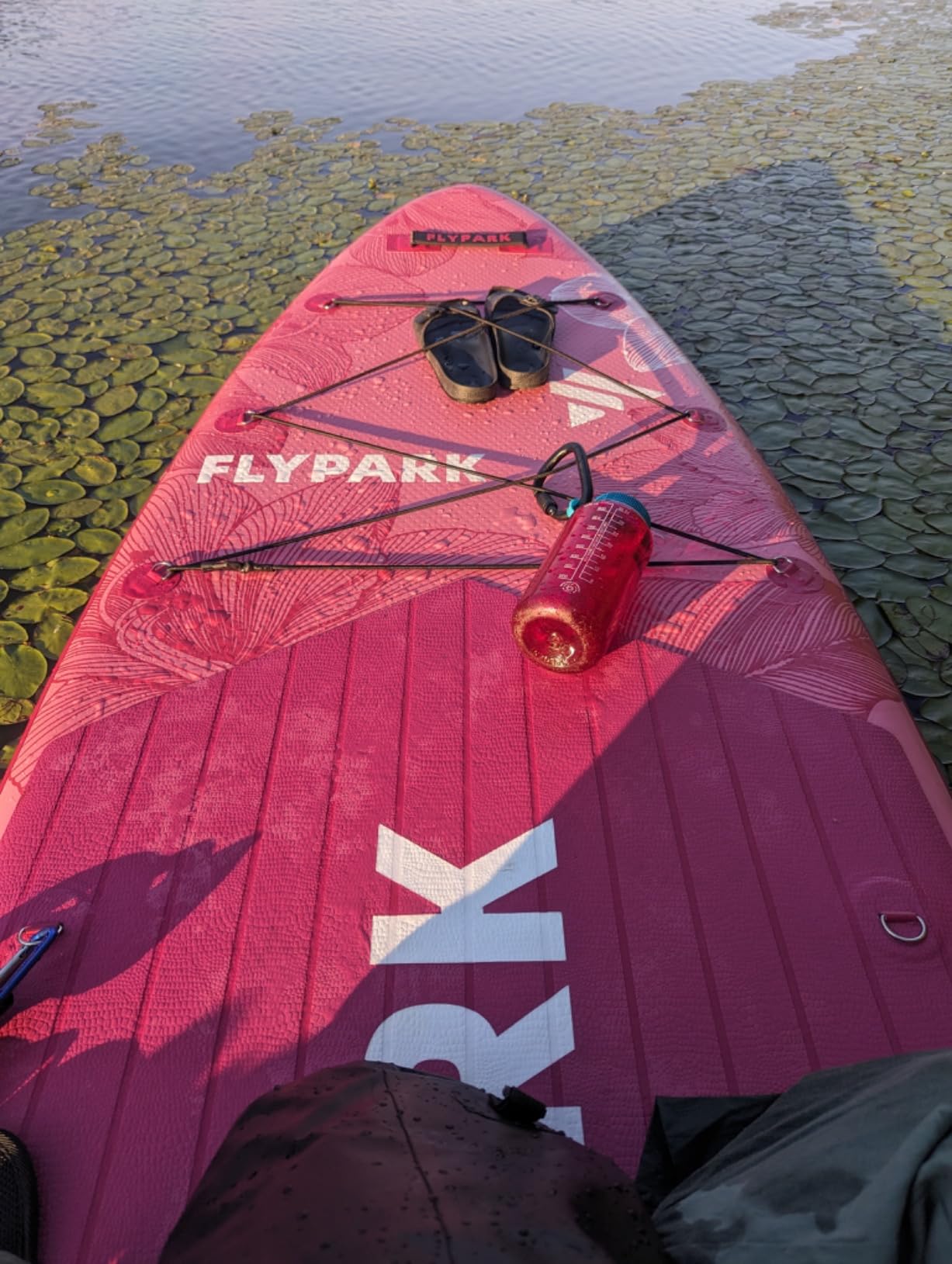
Construction is marine-grade PVC with drop-stitch throughout, and the listing specifically claims the core prevents deck bulging, which is the failure mode that makes cheap inflatables feel dented after a season. It is rated to 20 PSI. The deck is an extra-thick 5mm square-cube EVA pad, and owners on this board mention grip in waves and chop more than they do with other budget boards, which is a good sign for cold hands and a slippery deck.
Fifteen D-rings mean you can mount a kayak seat, a shoulder strap or a fishing rod holder, and the 6-point front bungee plus 4-point rear tie-downs give you somewhere to put a cooler or a bag. The bundled paddle is a 3-piece adjustable aluminium model running 67 to 77 inches, which covers most adult heights in one shaft. The 110L backpack holds the whole kit with spare room.
What makes it a good first board for a larger rider
Owners repeatedly describe the deck as roomy enough for two adults plus children and dogs, and the 420 lb rating covers that with margin. Three carry handles also let two people split the load, which is the practical difference between getting to the water on your own and needing a second car.
The two-year warranty is a genuine plus on a board this size. A wide inflatable sees more flex, more rail stress and more repeated inflation cycles than a narrow one, so coverage length says something about how the manufacturer expects it to be treated.
The accessories are the weak point
Both recurring complaints are about accessories rather than the hull. The supplied shoulder strap can break at the plastic clips after limited use, which is easy to solve by using the three handles or a proper board bag strap instead. And one owner reported a seam that split and lost air, with the manufacturer declining the warranty because the purchase was made through Amazon. That is an isolated report in a large review base, but it is worth knowing that warranty service on a marketplace purchase can be harder than a direct one.
The manual pump still tires your arms on the way to 20 PSI. At 19 pounds the board itself is light, so the pump, not the board, is what you will feel after a session.
4. Hiwave 11ft Wide SUP – Most Versatile and Small Gear Loads
Hiwave Inflatable Stand Up Paddle Board 11’*34”*6” Sup Board,420lbs Capacity Adult&Youth Paddle Board, Pet Friendly for Ocean&Lake, w/Double Action Hand Pump Khaki
420 lb capacity
11 x 34 x 6 inch
Two detachable fins
Paddle adjusts 65 to 82 inch
Two year warranty
Pros
- 34 inch width gives real stability for a new paddler
- Two detachable fins improve tracking and handling
- EVA deck stays comfortable for long sits
- Survived river currents and debris without puncturing
Cons
- Included pump cannot reach the rated 12 PSI
- Telescoping paddle section slips and will not hold
- Some paddles arrive with a broken section
The Hiwave is 11 feet by 34 inches by 6 inches and rated to 420 pounds, and its strongest reviews come from first-time paddlers and smaller-framed riders who say they never fell in. That is a meaningful signal in this category. When the people testing a wide board are beginners, it means the deck is doing its job, and 34 inches of width is enough to make standing up on water feel undramatic.
Two detachable bottom fins are a small detail that improves handling more than most buyers expect. A single small fin drifts; two larger fins track straighter and give you more predictable turns. For a rider learning to shift weight, predictable is worth more than fast.
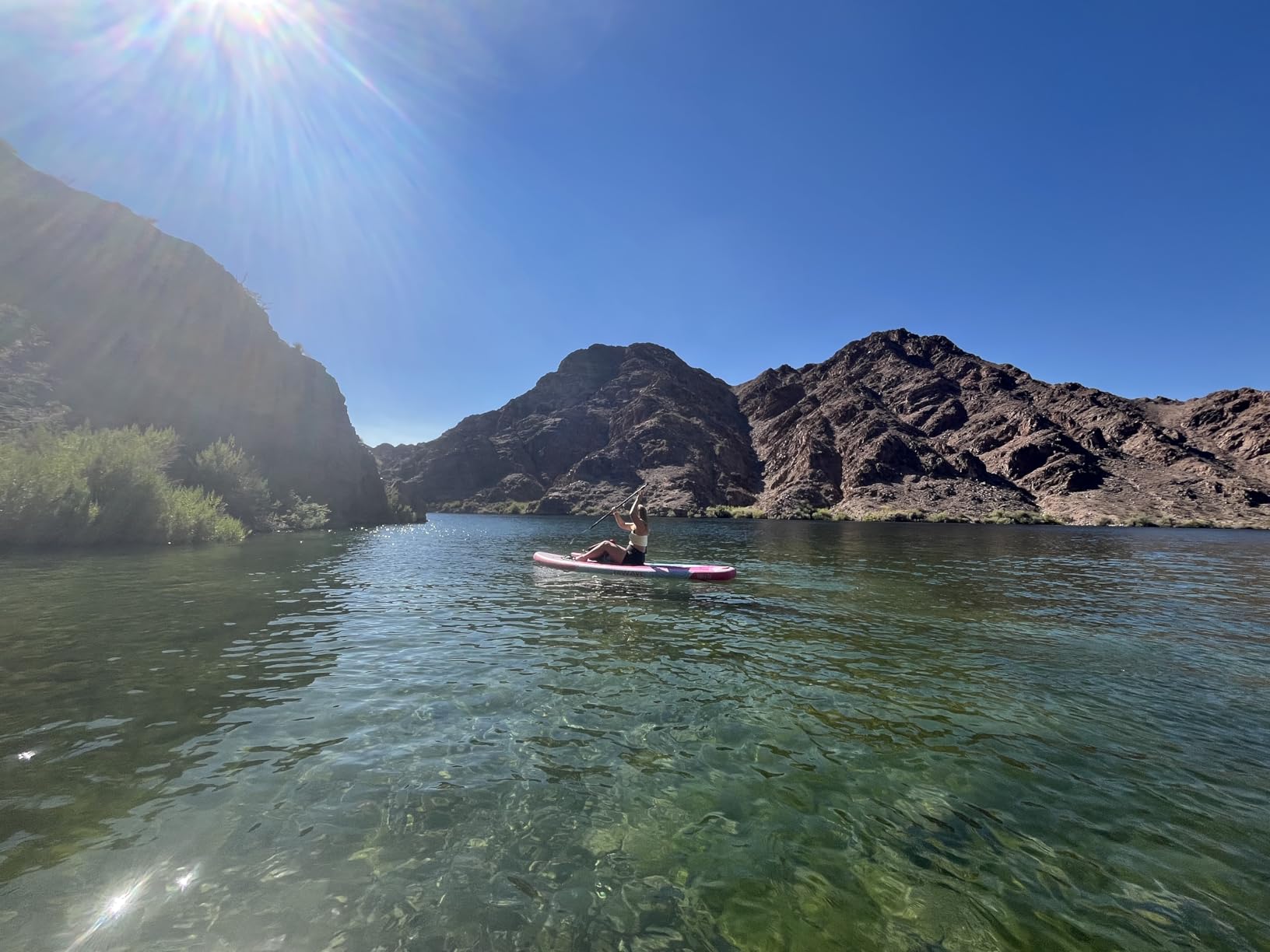
The paddle is the notable inclusion. It adjusts from 65 to 82 inches, which is a wider range than the 67 to 77 inch paddles bundled with several competitors here. That extra reach helps when you are taller, and a taller rider with a short paddle spends real energy failing to get full power from each stroke. The deck is a non-slip EVA pad, and owners mention it staying comfortable for long seated sessions rather than only for standing.
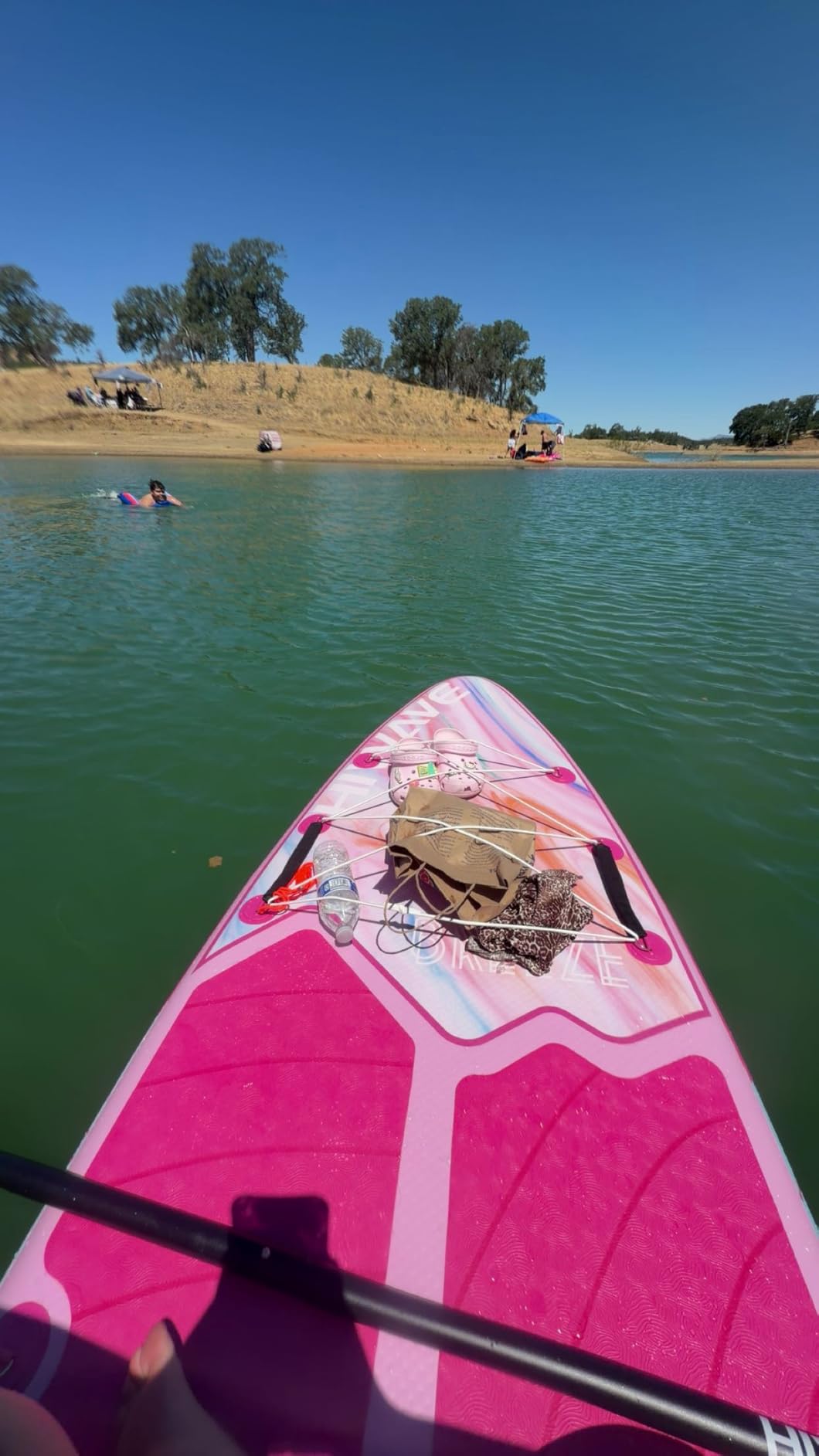
Durability against abuse is the other thing reviewers bring up. Owners report putting it through river currents, branches and floating debris without a puncture. The kit includes removable fins, a backpack, a safety leash, a waterproof phone bag, a pump and a paddle wrench, and the warranty runs two years with a year of parts coverage behind it.
Best for a first season on calm water
This suits a rider in the 200 to 280 pound range who wants a stable board and will mostly paddle lakes, flat rivers and estuaries. The 420 lb rating gives real headroom for a child, a dog or a day of gear. Two front safety handles let a seated rider pull themselves around comfortably, which is useful for anyone who wants to start sitting rather than standing.
The deck is listed for ocean, freshwater lakes and rivers across fishing, touring and yoga, and owners back that up with river use. If you are on moving water, read our touring board guide for the extra gear and leash considerations before you commit.
Both accessory complaints are real
The included hand pump struggles to push past roughly 8 PSI and cannot reach the rated 12 PSI. That is a more serious version of the category-wide pump problem, because a board consistently run at 8 PSI is precisely the board that feels soft and wobbly under a heavier rider. If you buy this one, treat the electric pump as part of the purchase rather than an accessory.
The three-piece paddle also has a documented fault. The telescoping section can slip and will not hold its extension, which hurts control, and some units arrive with a broken paddle section with replacements repeating the problem. Inspect the paddle on arrival. These are accessory issues rather than hull issues, but they are the two things most likely to disappoint you in the first week.
5. CETANA 11ft6 Three-Fin SUP – Best for Seated and Fishing Setups
CETANA Extra Wide Inflatable Paddle Board 11’6 x 35″ x 6″, 450LB High Weight Capacity Wide Stable Stand Up Paddle Board for Beginners, 2–3 Person Large Paddleboard with 3 Fins, Dual Bungee, 15 D Rings
450 lb capacity
11ft6 x 35 x 6 inch
Three fin setup
15 D-rings
15 PSI max
Pros
- Three fins track straight and turn predictably
- 15 D-rings allow a chair or seat to be mounted
- Light for an 11ft6 platform
- Upgraded 1680D backpack
Cons
- Factory bungee cords stretched after a single use
- Included single-blade paddle is not comfortable
- One unit bowed on its first inflation
The CETANA is 11 feet 6 inches by 35 inches by 6 inches, rated to 450 pounds, and the reason it keeps coming up in owner feedback for larger riders is the mounting hardware. Fifteen D-rings, including four centre rings, mean you can strap a chair, a kayak seat or a cooler frame to the middle of the deck. Owners with back pain report doing exactly that and sitting for hours, which is not something most boards in this list support well.
It is also a three-fin board, with a removable centre fin plus two side fins. Owners say it tracks straight and turns predictably, and that is the configuration you want if you are moving a loaded deck around rather than going straight. On a 35-inch platform, a single fin leaves a lot of board swinging from side to side when you step around on the deck.
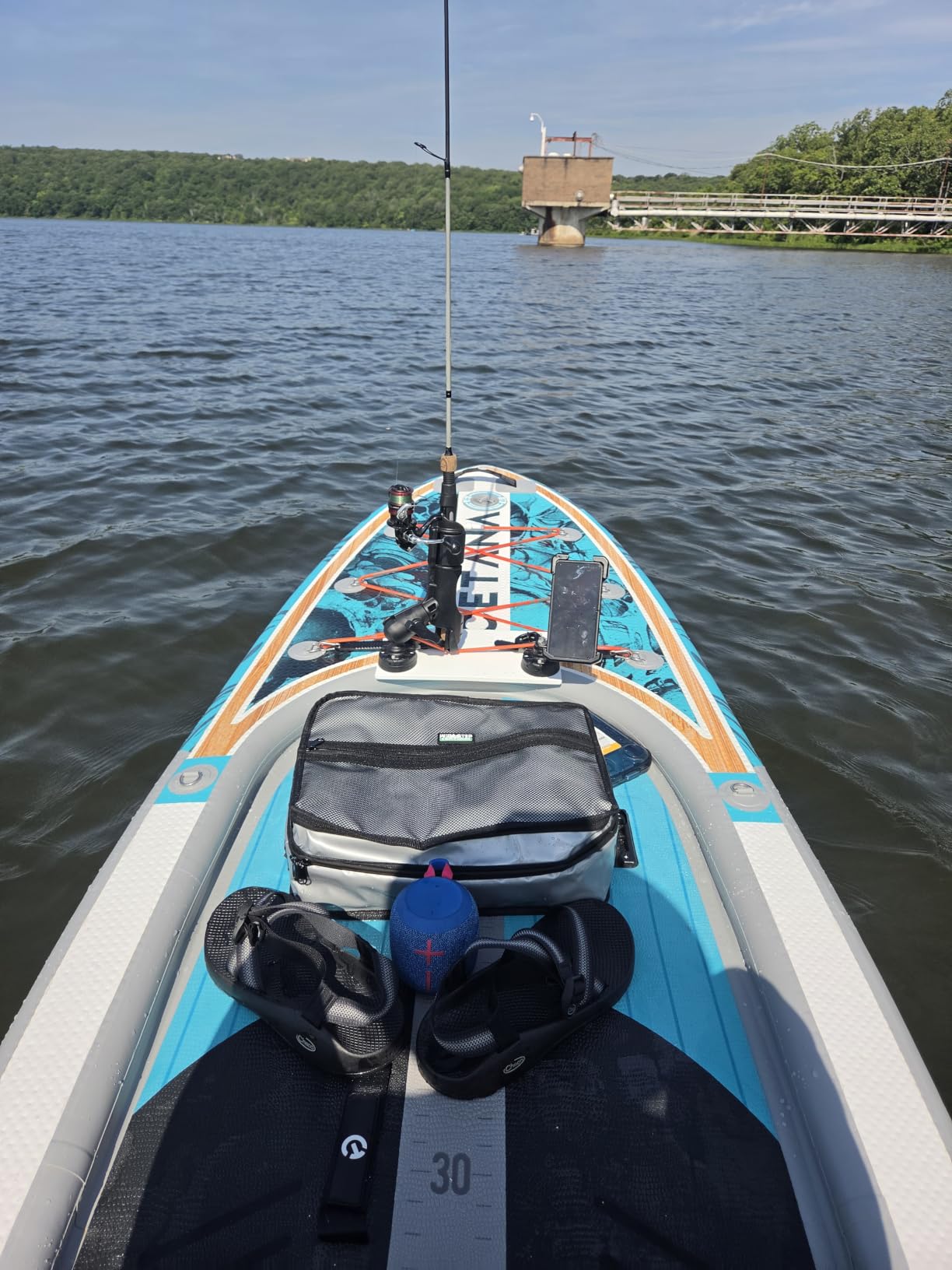
The 450 lb rating carries a heavier rider plus a cooler, a dog and gear without the board feeling overloaded, which is the combination most buyers describe. Three reinforced handles and an upgraded 1680D backpack make it one of the easier boards here to transport despite its length, and the dual bungee cargo system gives you somewhere to lash down that gear.
Watch the pressure specification here. The specification table lists 15 PSI as the maximum, while the product description claims reinforced drop-stitch rated to 22 PSI. Treat 15 PSI as the number you can rely on. That is lower than the 20 PSI listed for the Skatinger, FLYPARK, Flyroc and Intermountain Gorge, and it matters for a heavy rider because a lower ceiling means the board spends more of its range at a pressure where it feels less firm.

Why the D-rings matter more than the fins
Mounting hardware is what separates a board you stand on from a board you work from. If your lower back, knees or hips make standing uncomfortable, a seat mounted to the four centre D-rings turns the same hull into a seated platform without any other change. That matters far more to a 300 pound paddler than another five pounds of capacity would.
For fishing, the wide 35-inch deck is a stable gun platform, and a board that does not rock when you cast is worth more than a longer waterline. Our yoga board guide covers the wider stability question for another common use case.
The quality complaints that are specific to this board
Factory bungee cords stretched after a single use and needed replacing with rubber cord, which is a common and easily fixed complaint in this category. Bring your own tie-downs on the first outing rather than trusting the ones in the box. The included single-blade paddle is also reported as uncomfortable, and the three-fin setup wants a paddle that can steer rather than just push.
More seriously, one unit bowed badly on its very first inflation and was unusable out of the box. That is an isolated report, and inspecting the board fully inflated on arrival is the obvious response to it. The 15 PSI ceiling and a one-year warranty are the reasons this board sits lower in my list than boards with two-year coverage and higher rated pressures.
6. Flyroc 11ft6 Extra Wide SUP – Best for Gear Hauling and Multiple Riders
Flyroc 11’6″×35″ Inflatable Stand Up Paddle Board, Extra Wide Inflatable Stand Up Paddle Board for Adults – 450LB Capacity Stable SUP Paddleboard for Fishing, Yoga & All Skill Levels, Gray
450 lb capacity
11ft6 x 35 x 6 inch
18 lb board weight
Military grade PVC
2 year warranty extension
Pros
- 450 lb rating absorbs coolers tents and dive tanks
- 18 lb board weight is light for its size
- 100L backpack holds the full kit with room
- Three handles plus a shoulder strap
Cons
- Hand pump to 12 PSI is a genuine workout
- Backpack stitching pulled out under strap tension
- No repair kit in the package
The Flyroc is 11 feet 6 inches by 35 inches by 6 inches with a 450 pound capacity, and at 18 pounds it is the lightest stated weight among the 11 foot 6 inch boards in this group. For anyone launching from a marina, carrying to a beach or moving between spots without a roof rack, board weight is a real quality-of-life number rather than a spec-sheet footnote.
What it does well is load carrying. The 450 pound rating absorbs heavy gear, and owners specifically mention tackle boxes, coolers, tents and scuba tanks without the board feeling loaded. With a 6-point front bungee and 4-point rear strap storage, you can distribute weight along the deck rather than piling it in the middle, which is what keeps a big board from feeling like it is trying to stand up on one end.
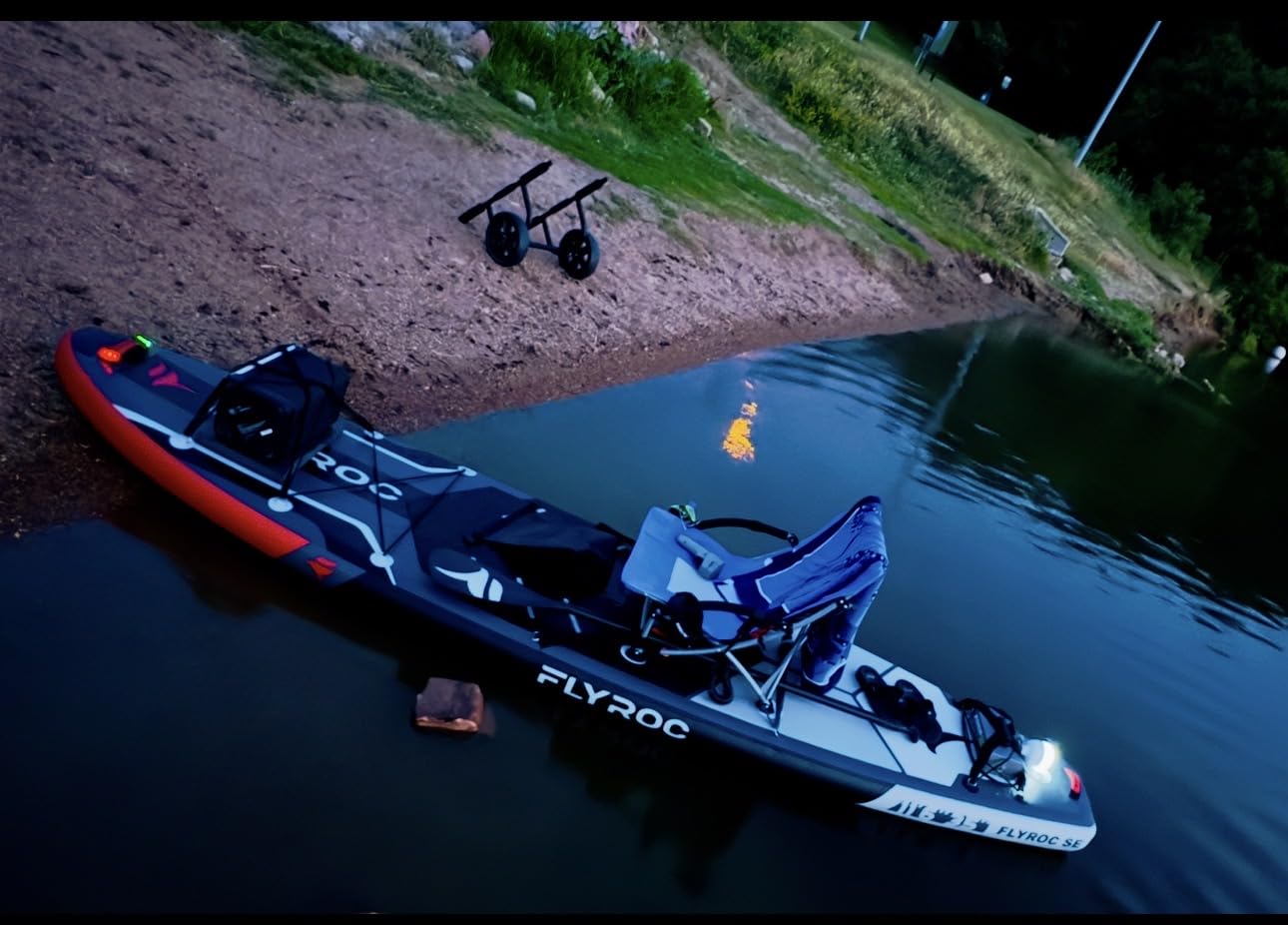
Construction is military-grade PVC with a drop-stitch core and dual-layer sidewalls, described by reviewers as resisting abrasion and leaks. The deck is a 5mm high-density EVA pad, and the hardware is stainless steel D-rings, which is a step up from plated rings on cheaper boards and matters if you plan to hang a seat or anchor trolley off them.
The accessory bundle is generous. You get a 100L backpack with heavy-duty zippers and cinching straps, a 5 litre dry bag, a waterproof phone case, a 10 inch US fin, an ankle strap, a 3-piece paddle, a dual-action pump and a wrench. Warranty is extended to two years, which puts it level with the Skatinger and FLYPARK.
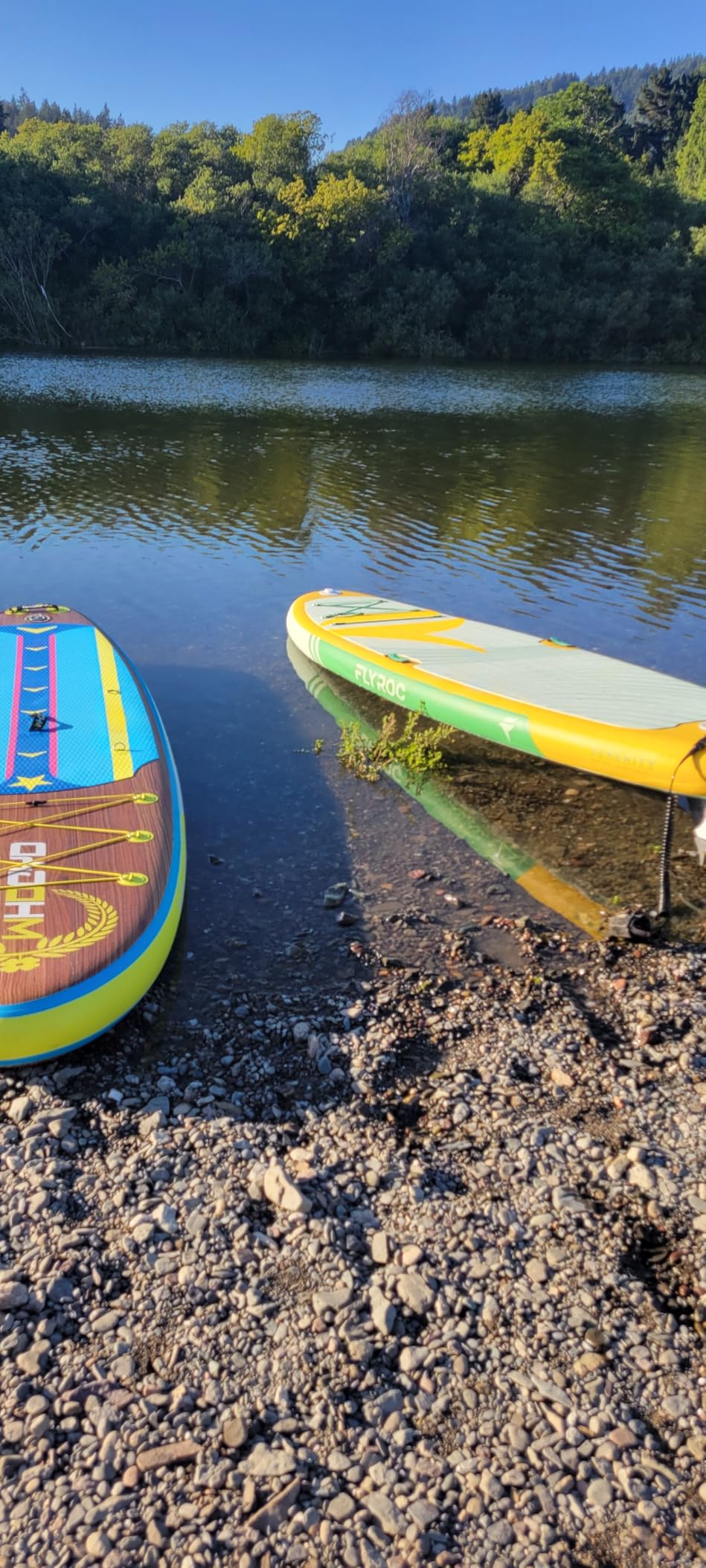
Why weight distribution is the real skill here
A 35-inch wide board carrying a big load will tell you exactly what it thinks you should do, and the answer is usually to put heavy things forward. The 6-point front bungee is positioned for that. Owners carrying multiple children or a dog report no wobble, and the common factor is that the load stayed balanced rather than being centred behind the fin.
That makes this a strong choice for a heavier paddler whose board doubles as a gear platform, and it is also why the long waterline and generous cargo layout are not wasted on someone paddling empty. For tours and longer routes, see our touring picks for the full kit list.
Three practical drawbacks
Pumping an 11 foot board to 12 PSI by hand is a genuine workout, and most owners who paddle regularly add an electric pump. The stitching on the supplied backpack began pulling out of the seams under strap tension, which is a bag problem rather than a board problem, but the bag is what you carry the board in. Pack a repair kit separately, because none is included.
Finally, at 11 feet 6 inches this is a large, awkward thing to hike with, and owners trekking to alpine launches report that trekking poles are advisable. For lake launches and car-based outings, none of that applies.
7. Intermountain Gorge 11ft Wide SUP – Best Bundled Paddle for Tall Riders
11’x34 Ultra Wide Inflatable Paddle Board, Stand Up Paddle Board &420lb Capacity for All Skill, Paddle Board for Yoga/Family, EVA Deck, US Fin, 100L Bag, High-Pressure Pump, Safety Leash
420 lb capacity
11 x 34 x 6 inch
18 lb board weight
20 PSI
Dual layer side rails
Pros
- Paddle quality praised above the norm for bundled kits
- Dual layer side rails add edge strength
- 18 lb board weight at 11 foot length
- 2 year warranty extension
Cons
- Slow included pump
- No rear net storage
- Plastic paddle blade chipped after a few outings
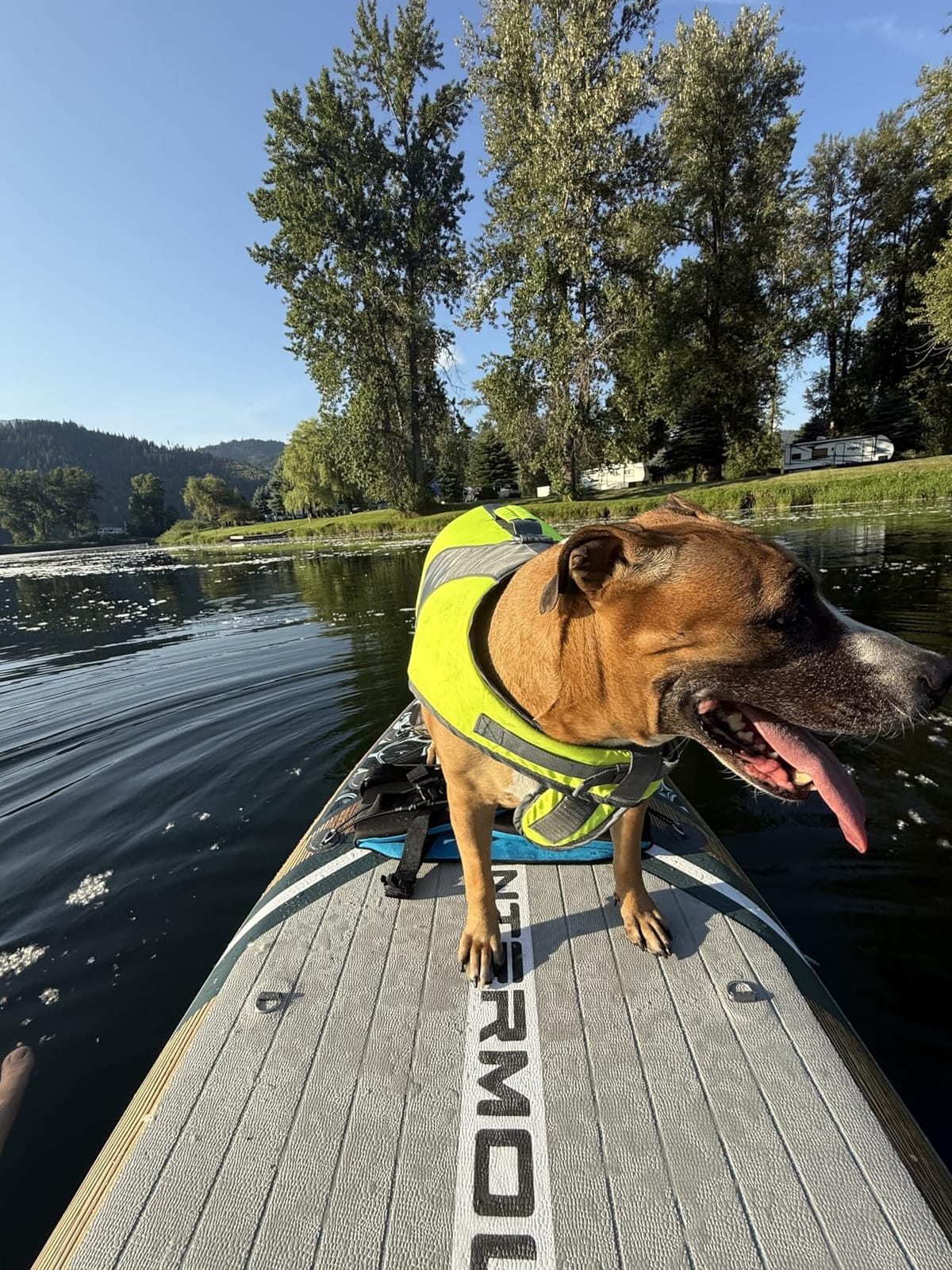
The Intermountain Gorge is 11 feet by 34 inches by 6 inches, rated to 420 pounds, and it weighs 18 pounds. That is light for a board of this length, and owners who replaced a shorter, narrower board report that it deflates and packs into the 100L bag smaller than the board it superseded, which is not what most people expect from an 11 foot platform.
The thing reviewers mention most, and most consistently, is the paddle. Across this category, bundled paddles are the weak link, and this one is repeatedly described as better quality than the norm, with a smooth grip that suits larger hands. If you have a big frame and have struggled with thin standard paddle shafts, that matters. It is a 3-piece adjustable aluminium model running 67 to 77 inches.
Structurally it is high-density polyester drop-stitch with a 5mm non-slip EVA foam deck and dual-layer side rails, which owners credit for a flat, rigid deck that does not dent. Rated to 20 PSI, with the listing recommending 10 to 12 PSI for a solo rider and 12 to 15 PSI for two, it has enough pressure ceiling to feel firm under a larger load.
Tracking and turning are praised directly. A large 10 inch US-style fin handles the thrust that a heavier paddler generates without the board feeling twitchy, and the reinforced 6-point front bungee lets you load gear forward to keep the nose settled.
Where it beats the other 11 foot boards
Against the Hiwave, which shares the same 11 by 34 by 6 footprint, this board wins on the pressure ceiling, the warranty extension to two years, and the paddle. Against the FLYPARK, it is 1 pound lighter and adds dual-layer side rails for edge strength, while the FLYPARK offers a wider D-ring layout and a bigger EVA pad.
For a 250 to 320 pound rider who wants a board that feels substantial without dragging, this is a strong pick here. Four D-rings accept a kayak seat or shoulder strap, and three handles at front, middle and rear make solo carrying realistic for an 11 foot board.
Minor but worth noting
There is no rear net storage, unlike many comparable boards, so rear gear rides on the bungee alone. The included pump is slow, and the plastic paddle blade chipped at the end after a handful of outings, which is a bit contradictory given how good the paddle is otherwise. The included wrench only tightens the valve rather than removing it, a small thing that annoys people who store boards deflated and folded.
None of that touches the hull. This is a stable, well-built 420 pound board with an unusually good paddle, and the criticisms are all about the packaging around it.
8. ATPROSS 10ft6 Golden Ratio SUP – Best for Car Boot Storage
ATPROSS 10’6”x33”Inflatable Stand Up Paddle Board, 400lbs Extra Wide Stand Up Paddleboard with Kayak Seat, Anti-Slip EVA Deck Premium SUP Accessories Kit, Non-Slip Stable Deck Boat Deep Wood
400 lb capacity
10ft6 x 33 inch
15 PSI max
Detachable kayak seat
1 year warranty
Pros
- Shortest length here so it fits a car back seat
- Honeycomb EVA pad grips well in chop
- Detachable seat and dual-use paddle included
Cons
- Included pump could not reach 10 PSI and the hose leaked
- Paddle described as flimsy
- Some units showed glue residue
The ATPROSS 10 foot 6 inch by 33 inch board is the most compact option here, and that is its whole argument. At just over 10 and a half feet it is the shortest board in the list, and owners report it fitting easily in a back seat when deflated. If you do not have a roof rack, that single fact removes the main practical objection to owning an inflatable at all.
It is rated to 400 pounds, which is the lowest capacity rating on the list but still plenty of headroom for a rider in the 200 to 280 pound range with a child and a pet. The 33 inch width sits at the bottom of the range we consider, and the golden-ratio shape is longer relative to its width than the 11 foot boards, which helps tracking.
Owners describe the deck as giving a very stable ride that does not feel like an inflatable once fully pumped, and the honeycomb-textured EVA pad holds grip in choppy water. The detachable kayak seat and a single and dual-use paddle expand the use cases, and removable fins make steering easier at launch where you are usually standing in shallows.
Pressure here is listed at 15 PSI with a built-in gauge on the pump. For a heavy rider, that is the number to watch, because a board with a lower pressure ceiling spends more of its range feeling soft. This is also a one-year warranty, one of the shorter coverages here.
When a shorter board is the right call
Compactness is genuinely under-rated. A board you can get to the water without a roof rack is a board you will actually use on a Tuesday evening, and a 400 pound rated 33-inch platform suits most riders up to about 280 pounds plus a child or a small dog. The fishing and seated use cases work too, since the seat detaches and mounts through the D-rings.
It is not the board to choose if you are 320 pounds and above and want to stand in open water with chop. At that weight you want more width and a higher pressure ceiling, which means one of the 35-inch boards earlier in this list.
Weakest accessories in the group
The included hand pump could not reach 10 PSI and the hose connection leaked on some units, which is the most serious pump complaint in this roundup. Running a 6-inch-thick board two thirds inflated is exactly how you end up with the soft, unstable feeling heavy riders are trying to avoid. Plan on an electric pump from day one.
The paddle is described as flimsy, some units showed glue residue on the board, and the 4.4 rating is the second lowest here, driven by accessory quality rather than hull performance. The hull itself is reported as sturdy, stable and good-looking.
9. NACATIN 12ft Extra Large SUP – Best for Fishing and Multi-Person Loads
NACATIN 12′ Extra Large Inflatable Stand Up Paddle Board with Seat, Wide 36″ SUP Board for Adults & Family, with Single/Double Paddle, Kayak Seat, Pump, Stable Wide Platform for Beginners, Lake, River
Up to 661 lb stated capacity
12 x 36 x 6 inch
Widened tail
Built in rod holder
1 year warranty
Pros
- Widest board here at 36 inches
- Highest stated capacity at up to 661 lb
- Widened tail reduces wobble in sharp turns
- Kayak seat and rod holder included
- Foot rest and fish ruler add real utility
Cons
- 12 foot length is the least packable and awkward to carry
- Only 15 PSI maximum pressure
- Fishing features add weight for casual paddlers
- 1 year warranty
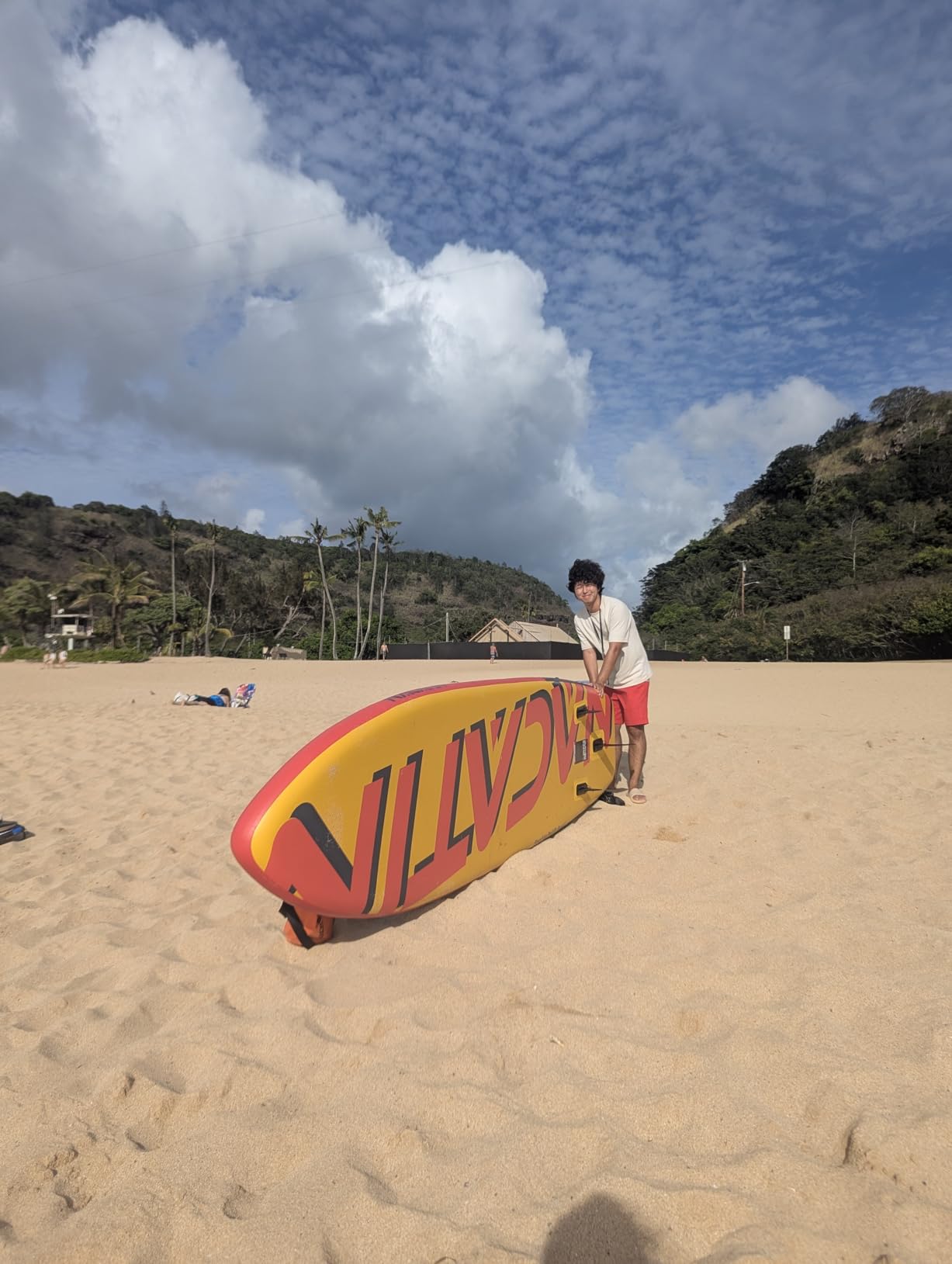
The NACATIN is 12 feet by 36 inches by 6 inches with a manufacturer-stated capacity of up to 300 kg, roughly 661 pounds. It is the widest and longest board in this roundup, and it is built around a specific job: standing on a big platform and working off it. The built-in adjustable fishing rod holder, the fish ruler with both centimetre and inch markings and the front camera mount are not accessories bolted on afterwards, they are part of the design.
For a heavier paddler that matters in a specific way. At 36 inches wide, you have room to move your feet, crouch to land a fish or shift position without the board reacting. The widened tail adds buoyancy and reduces wobble during sharp turns, which is what keeps a platform board from feeling like a boat that tips when you change lanes.
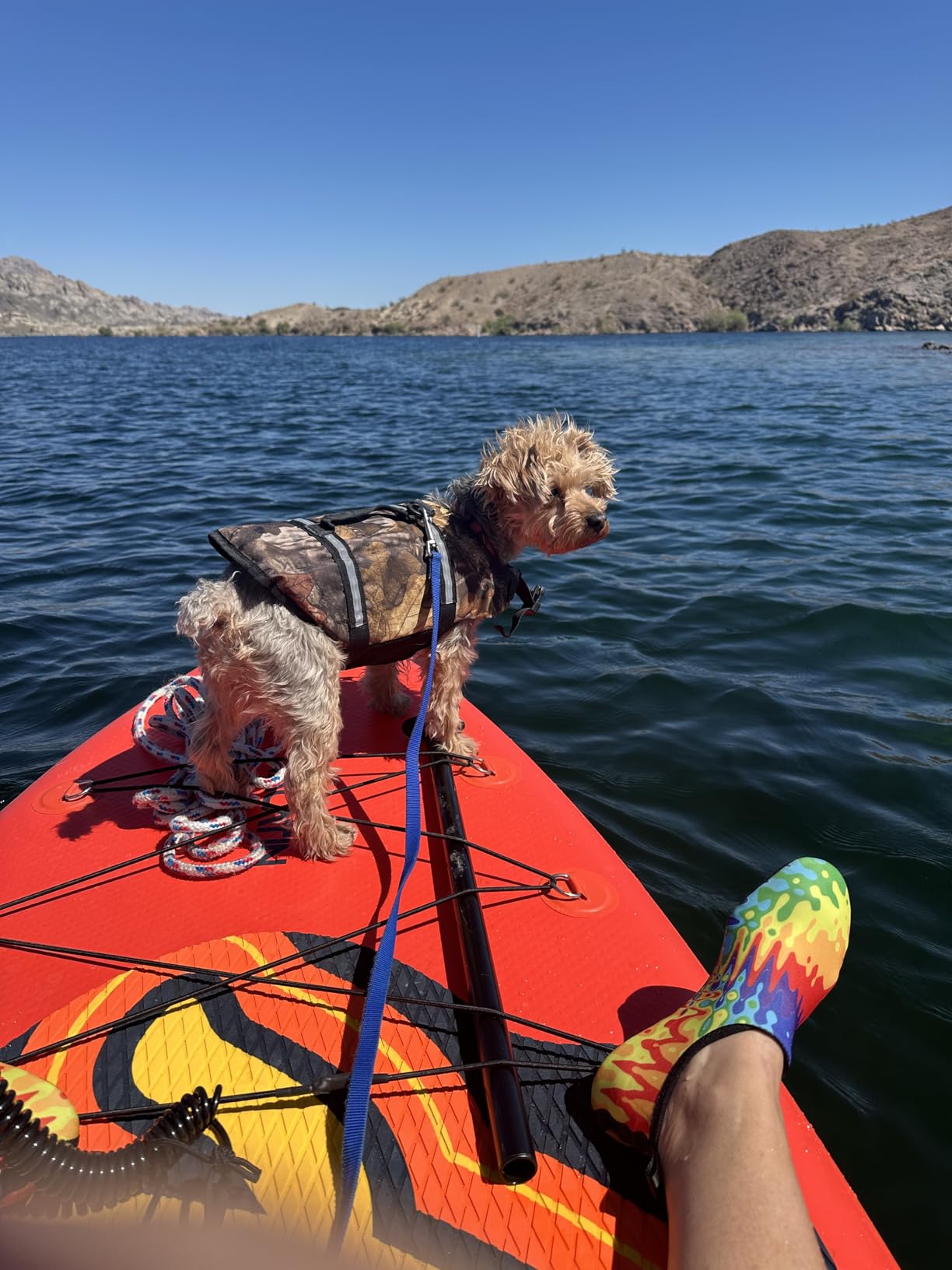
It converts two ways. A kayak seat and a double-sided paddle turn it into a seated craft for slow water, and a foot rest is included so seated paddlers have somewhere to brace. Reinforced D-rings support a fish finder or an anchor trolley, and front and rear bungee cords give you somewhere for a cooler or a net.
One caution on the specification. The listing data is internally inconsistent, with a dimensions field showing 34 inches while the description and model name state 36 inches, and the pressure listed at 15 PSI. Treat the capacity and size numbers here as manufacturer-stated figures rather than independently verified ones, and check the actual board when it arrives. Even taking the 661 pound rating at face value, this is the board to consider if you are a heavier angler who wants a single platform for both standing and seated work.
Best for anglers and gear-heavy outings
Owners value the 36 inch deck, the convertible seat and the fishing hardware as a package, and report the board carrying an angler plus tackle without tipping. If you are heavier than 350 pounds and want to paddle, the appeal here is obvious: no board in this roundup has a stated capacity close to this one, and 36 inches of width gives you the platform to actually stand up and fish from.
The widened tail also helps in a turn, which is where big platforms tend to feel worst. The trade is everything that comes with 12 feet of length, and we get to that next.
Where the extra size works against you
Twelve feet is the least packable board here, and owners describe it as awkward to carry solo. At 17.8 kg listed item weight plus a seat, a foot rest, fins and a rod holder, this is a two-person load for most people, and it needs a car with real cargo space rather than a back seat.
It also tops out at 15 PSI, which is lower than the 20 PSI ceiling on the Skatinger, FLYPARK, Flyroc and Intermountain Gorge. On a board this large, a lower pressure ceiling means more flex under load, and a heavy rider is exactly the load case that exposes it. The fishing features add weight you may never use, and the warranty is one year. If you do not fish, a 35-inch board from earlier in this list gives you a stiffer platform for the effort.
10. MASTERISH 11ft6 Extra Wide SUP – Best Low-Cost Entry Point
MASTERISH Extra Wide Inflatable Paddle Board 11’6 x 35’’ x 6’’, 450 LB High Weight Capacity SUP, Wide Stable Stand Up Paddle Board for Heavy People, Family & 2/3 Person, XL All-Around Paddleboard
450 lb stated capacity
11ft6 x 35 x 6 inch
25 lb listed weight
Three carry handles
1 year warranty
Pros
- Entry-level board in the 35 inch 450 lb class
- Same wide footprint as higher rated boards
- Three handles and 1680D backpack for transport
- 10 inch US fin installs without tools
Cons
- Lowest rating in the group with 8 percent one-star reviews
- Heaviest listed weight at 25 pounds
- Conflicting pressure ratings of 15 PSI and 22 PSI
- Thin material and accessory detail
The MASTERISH shares the same 11 foot 6 inch by 35 inch by 6 inch footprint as several better-reviewed boards here, and it carries the same stated 450 pound rating at the lower end of this group. If your budget is the deciding factor and you are on calm flat water, the geometry on paper is right for a heavier paddler. Three reinforced handles and a 1680D backpack cover the transport side, and the 10 inch US fin installs without tools.
Those are the reasons it is here. I want to be equally clear about the reasons I would steer you elsewhere, and they are not small. The 4.2 rating is the lowest in this roundup, with 8 percent one-star reviews, and the difference against the 4.8 on the Skatinger is not a rounding difference. It reflects a real gap in consistency.
The specification data is also less reliable. The description claims 22 PSI while the specification table lists 15 PSI, and the material is listed as generic plastic with minimal detail rather than a named PVC compound with a stated layer construction. On a board where pressure and shell material are the two things that most affect how it feels under a heavy rider, those are the two fields you least want to be vague about.
A stated item weight of 25 pounds is a genuinely heavy carry for an 11 foot 6 inch board, and it is worth taking seriously. A board that heavy is harder to carry solo to a launch, and solo carry is the moment where a bigger board loses some of its advantage.
When it makes sense
A rider in the 220 to 300 pound range paddling a calm lake, who wants the widest platform available on a tight budget and does not intend to carry the board far, will be broadly satisfied with the footprint. The 4 centre D-rings accept a kayak seat or shoulder strap, dual bungee storage at front and rear handles gear, and the ankle leash is included for open water.
It suits a first board that you will upgrade in a few years rather than a board you build a paddle routine around. The 1 year warranty and thin material detail reinforce that framing. If you expect to keep it, spend the difference on a two-year-warranty board with a 20 PSI ceiling.
Why it sits last in this list
It is last for evidence reasons, not geometry reasons. The width, length and thickness are the right numbers for a heavier paddler, and it would be strange to leave a genuinely capable 450 pound platform out of a roundup like this. But the rating distribution, the 25 pound weight, the conflicting pressure figures and the one-year warranty all suggest you are buying a specification sheet rather than a proven product.
Compare it to the Flyroc, which has the same footprint, a 20 PSI rating, an 18 pound weight and a two-year warranty. If both sit within reach on your budget, that comparison decides it.
How Heavy Is Too Heavy? Sizing Rules for Bigger Riders
There is no universal weight limit, because capacity depends on the board, not on a rule. A 6-inch-thick, 35-inch-wide inflatable rated to 450 pounds will support a 400 pound rider far better than a 5-inch, 32-inch board rated to the same 450 pounds. What matters is rated capacity as a number, and how far your body weight plus gear sits below it.
The first thing to understand is the difference between rated capacity and usable capacity. Rated capacity is a laboratory or manufacturer limit, and it is the number printed on the listing. Usable capacity is the lower, vaguer figure at which the board still feels planted and rigid under you. Boards start to feel soft and springy well before they are at risk of sinking, and a board that feels soft is a board that feels unstable. Aim to sit comfortably inside the rated number rather than just under it.
A practical rule is to stay at 75 to 85 percent of the rated capacity for normal paddling, counting your body weight, your paddle, your leash, your board if you are seated, and any gear on the deck. For cold water, add 10 to 20 pounds for a wetsuit, booties and a personal flotation device. Manufacturers do not count any of that toward the rating.
Here is how those rules translate by body weight, which is the question behind most of the searches that land on this page. For a rider around 200 pounds, look for at least a 300 pound rating, a minimum width of 32 inches, and 5 to 6 inches of thickness. A 420 pound board at 34 inches wide, like the FLYPARK or Intermountain Gorge, leaves comfortable headroom for a child or a dog as well.
At 250 pounds, target a 350 to 420 pound rating, a minimum 33 inches of width and 6 inches of thickness. At 300 pounds, look for 400 pounds and up with 34 inches or more, and treat 6-inch thickness as non-negotiable. At 350 pounds and above, look for a 450 pound rating and 35 inches of width, which is where the Skatinger, ATPROSS, CETANA and Flyroc sit, and read the next section before you buy.
Width is the lever that matters most
Capacity tells you whether the board floats. Width tells you whether you can stand on it. Every board in this roundup is 6 inches thick, so thickness is not a differentiator here, but width ranges from 33 to 36 inches and that spread changes the feel of a session more than any other spec on the list.
Wider is not automatically better, though. Length and width together add drag, and a board that feels heavy in the water is tiring over a long paddle. A 300 pound rider on an 11 foot by 34 inch board is likely to have a better session than a 300 pound rider on a 12 foot by 36 inch platform, even though the bigger board has the higher rating. Pick the smallest board that gives you real headroom.
Pressure, layers and why a board feels soft
Every board here is drop-stitch PVC, and the ones that specify a higher maximum PSI are the ones that will feel firmest under load. If your board sags when you stand on it, three things are usually responsible: it is under-inflated, it is a single-layer build rather than a dual-layer one, or the load is genuinely beyond what it is rated for. Check the pump first, because an under-inflated board is the most common and most fixable cause.
Layers matter more than brand names. Dual-layer construction adds an extra PVC layer bonded to the inside of the rail, which stiffens the edges where a wide board flexes most. Several boards in this list specify it, and boards with a 20 PSI or 22 PSI ceiling generally have more to give than ones capped at 15 PSI.
Paddle sizing and safety weight for larger riders
Most heavier paddlers under-power their board with a stock paddle. A wide, thick board moves more water, and a rider generating more power needs a longer shaft and a larger blade to move it efficiently. Look for a shaft in the 67 to 82 inch range, which most of the paddles bundled here cover, and consider moving up to a double-sided blade if you paddle seated or switch between standing and sitting.
On safety, a personal flotation device is not optional for anyone, and it is heavier than most buyers plan for. Include it, your leash, your paddle, any clothing for the water temperature and any gear in the calculation above. A board loaded to 90 percent of its rating with a body weight alone is a different proposition from the same board loaded to 90 percent with everything, and the second one is what actually tips you over.
When a hard board is the more honest recommendation
Above roughly 350 pounds, a hard board with an EPS foam core is often the better call, and I would rather say that than keep selling inflatables. Hard boards do not flex across the rails, they hold a shape for years, and they are not a compromise on capacity. The costs are storage, transport and what it takes to own one: a hard board lives on a roof rack, not in a closet.
Some paddlers come to stand-up paddle boarding precisely because no sit-in kayak is wide enough for their body. For them the trade is different, because the comparison is not with a hard SUP, it is with no paddling craft at all. In that case a 450 to 661 pound inflatable is a workable answer, and a board that stores in a cupboard is a real advantage.
Frequently Asked Questions
How heavy is too heavy for a paddle board?
There is no single weight limit, because it depends on the board rather than the sport. A 6-inch-thick, 34-inch-wide inflatable rated to 420 pounds suits a rider around 300 pounds with headroom, while a 35-inch board rated to 450 pounds works for riders in the 350 to 400 pound range. Stay at 75 to 85 percent of the rated capacity, counting your body weight, gear, and any wetsuit or flotation device.
Can an overweight person paddle board?
Yes. Board capacity is a rating for combined rider and gear weight, not a judgement about who belongs on the water. Riders regularly paddle boards rated 420 to 450 pounds while carrying a child, a dog or a cooler. What matters is matching board width and thickness to your weight and leaving headroom, which is exactly what this roundup is built around.
What size paddle board is best for someone who weighs 200 pounds?
At 200 pounds, look for at least a 300 pound rated capacity, a minimum width of 32 inches and 5 to 6 inches of thickness. That leaves useful headroom for gear or a passenger. Any 420 pound board at 34 inches wide on this list, such as the FLYPARK or Intermountain Gorge, will feel stable and give you room to bring a child or a dog along.
What is the best paddle board with a 300 lbs capacity?
For a rider near 300 pounds, prioritise a 34 inch or wider deck and 6 inches of thickness over chasing the capacity number. The FLYPARK, Hiwave and Intermountain Gorge are all 11 feet by 34 inches by 6 inches rated to 420 pounds, which is better headroom than a 300 pound rated board of a similar width. Wider and thicker beats a bigger number printed on a listing.
Which paddle board is best for heavy riders?
The Skatinger 11 foot 6 inch by 35 inch board, rated to 450 pounds, is the pick we recommend most often, with 1449 reviews behind it. It pairs 20 PSI with dual-layer PVC sidewalls and a full accessory kit. For a lighter carry, the FLYPARK at 11 feet by 34 inches rated to 420 pounds is a strong alternative, and the NACATIN covers capacities above 500 pounds.
Do inflatable paddle boards work for heavy people?
They do, provided the board is wide enough and inflated properly. Inflatable boards rated 420 to 450 pounds are used every day by riders in the 300 to 400 pound range. The most common complaint from heavy riders is that the board feels soft, and that is usually under-inflation or a low pressure ceiling rather than a capacity problem, so check your pump before you change boards.
Why does my inflatable SUP sag or feel soft when I stand on it?
Three causes account for almost every case. The board is under-inflated, which is the most common and easiest to fix. The construction is single-layer rather than dual-layer, which flexes more across the rails. Or the combined rider and gear weight is genuinely close to or above the rated capacity. Check the pressure first, then the layer construction, then the load.
Final Word: Picking by Rider Weight
If you take one thing from this roundup of the best inflatable paddle boards for heavy paddlers, take the width rule rather than the capacity number. Every board here floats enough for a 400 pound rider, and most of them feel very different under that rider, because 33 inches of deck and 36 inches of deck are not the same platform.
At 200 to 250 pounds, any 34-inch-wide, 6-inch-thick board rated to 420 pounds is a comfortable fit, and the Intermountain Gorge is the one I would pick for the bundled paddle. At 250 to 320 pounds, move to 35 inches of width and a 450 pound rating, which is the Skatinger, the ATPROSS or the Flyroc. Above 350 pounds, the Skatinger is the safest bet in this category, and the NACATIN 12 foot platform is the only board here with a stated capacity above 500 pounds.
Buy the smallest board that gives you real headroom, keep your combined load under 85 percent of the rating, and invest in an electric pump early. If you want the short version, the Skatinger 11 foot 6 inch by 35 inch board is the one to buy, and this roundup of the best inflatable paddle boards for heavy paddlers is updated for 2026 whenever the specifications change.