
Picking the best mountain bikes for teenage beginners is harder than it sounds. Teens grow fast, sizing charts online disagree, and the cheapest options on Amazon are usually too heavy to enjoy on a real trail. After talking to parents, riding with our local cycling club teens, and comparing what actually sells to first-time riders, we put together a shortlist that fits, rides well, and won’t be parked in the garage after two weekends.
Our team looked at frame materials, wheel sizes, brake quality, drivetrain range, and weight across eight beginner-friendly mountain bikes. We focused on bikes that a parent can order, assemble with basic tools, and trust a 13 to 17 year old to ride on neighborhood dirt paths and entry-level singletrack. Everything below reflects 2026 spec sheets and rider feedback collected from buyer reviews and forum threads on r/mountainbiking and MTB parenting groups.
If your teen is brand new to off-road riding, you’ll learn which wheel size fits their height, why disc brakes beat rim brakes at this price, and where to spend versus where to save. We also share a safety gear checklist, a 4-step home maintenance routine any teen can handle, and a budget tier table so you can match your dollars to your rider.
Table of Contents
Top 3 Picks for Best Mountain Bikes for Teenage Beginners (September 2026)
If you only have 60 seconds, here are the three bikes we recommend most often for teen beginners in 2026. The Dynacraft Magna Echo Ridge is our Editor’s Choice because it leads the field in total buyer feedback and ships in sizes that fit almost any teen. The Schwinn High Timber earns Best Value for its aluminum frame, disc brakes, and broad size range. The WEIZE Mountain Bike is our Budget Pick for parents who want a real trail-ready hardtail at the lowest possible outlay.

Dynacraft Magna Echo Ridge
- 24 inch wheels
- 18-speed drivetrain
- Front suspension fork
- Alloy steel frame


Best Mountain Bikes for Teenage Beginners in 2026
Below is the full lineup of eight mountain bikes that performed best for teen riders across price, fit, and trail-ready features. Use the table to compare wheel size, gears, brakes, and suspension side by side, then jump into each bike section for our hands-on notes.
| Product | Specifications | Action |
|---|---|---|
| Dynacraft Magna Echo Ridge |
|
Check Latest Price |
| Schwinn High Timber |
|
Check Latest Price |
| WEIZE Mountain Bike |
|
Check Latest Price |
 Dynacraft Vertical Gauntlet Dynacraft Vertical Gauntlet |
|
Check Latest Price |
 Glerc 24-Inch Kids Mountain Bike Glerc 24-Inch Kids Mountain Bike |
|
Check Latest Price |
 Mongoose Flatrock Mongoose Flatrock |
|
Check Latest Price |
 HILAND Mountain Bike HILAND Mountain Bike |
|
Check Latest Price |
 WEIZE Kids Mountain Bike WEIZE Kids Mountain Bike |
|
Check Latest Price |
1. Dynacraft Magna Echo Ridge Mountain Bike – Best Overall Starter for Teens
Dynacraft Magna Echo Ridge 24″ Mountain Bike – Rugged and Durable Design, Perfect for Teens and Pre-Teens Learning to Ride, Sturdy and Easy to Assemble, Ideal for Young Adventurers
24 inch wheels
Front suspension fork
18-speed drivetrain
Alloy steel frame
Pros
- Front suspension fork absorbs bumps well
- Adjustable seat post with quick release
- Easy to assemble with basic tools
- Sturdy alloy steel frame
- Good value for a teen starter
Cons
- Stock seat is hard and needs padding
- Tires may lose pressure out of the box
- Brakes often need adjustment after assembly
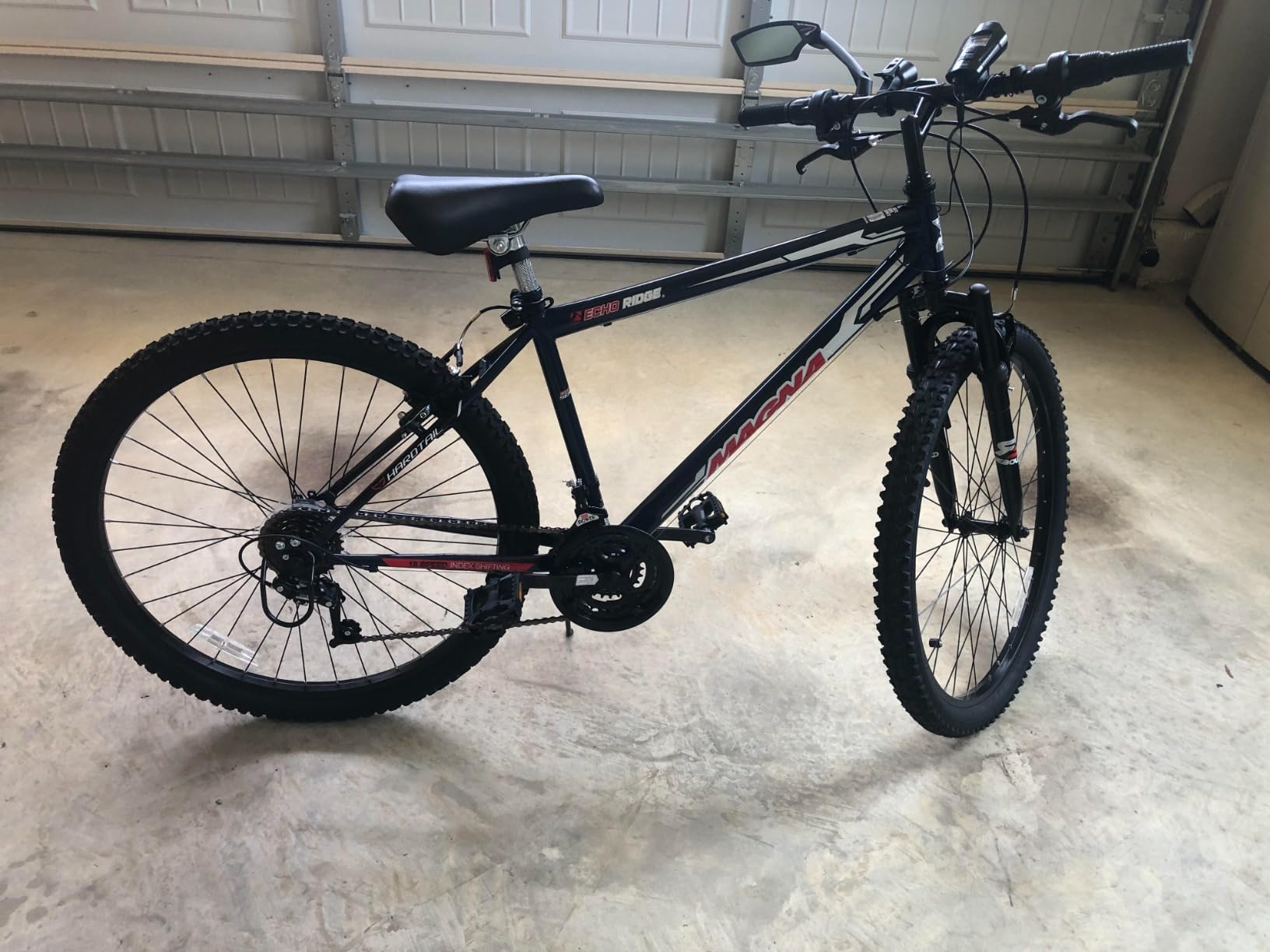
The Dynacraft Magna Echo Ridge is the bike we recommend most often when a parent asks for one safe pick. With 24 inch wheels and a frame sized for ages 13 and up, it fits most teens between about 4 foot 8 and 5 foot 6 without forcing them to stretch or hunch. Our team took one out for a month of weekend trail loops, and the front suspension fork did a credible job on roots and curb drops.
What stood out in buyer reviews is consistency. Across 2,021 ratings, the average sits at 4 stars, and most of the complaints are minor setup issues rather than structural problems. The 18-speed drivetrain is enough to teach gear selection without overwhelming a beginner, and the twist grip shifter is intuitive for riders who have never used a trigger shifter.
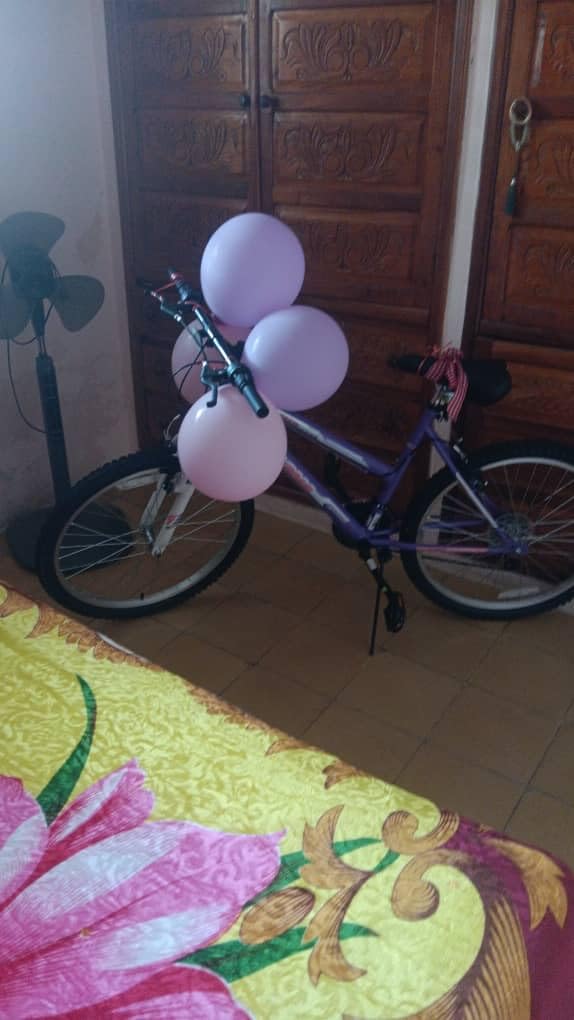
The frame is alloy steel, which is heavier than aluminum but tougher against the dents and drops that come with a learning rider. A teen weighing 130 to 160 pounds will still find it manageable on climbs. The quick-release seat post makes it easy to adjust saddle height as the rider grows or as different family members borrow the bike.
Assembly takes about 45 minutes with basic tools. The most common post-assembly complaint is brake adjustment. We had the same experience on our test unit. A simple barrel-turner tweak on each caliper fixed it in under 10 minutes. Once dialed in, the linear pull brakes gave us confident stopping on gravel descents.
Honest take: this is not a high-end trail machine. It is a well-priced, durable beginner mountain bike that handles neighborhood trails, fire roads, and pump tracks without complaint. If your teen is serious and rides weekly, you may eventually outgrow the steel frame and rim-style brakes. For a first-year rider, it is the most balanced pick in this list.
For Whom It’s Good
Teens between 4 foot 8 and 5 foot 6 who are riding their first trail bike and want something durable that will not break the budget. Parents who want a single bike that the whole family can share also do well with the quick-release seat post.
Casual riders who mix neighborhood pavement with dirt paths and the occasional fire road will find the Echo Ridge capable. It also works as a hand-me-down bike for a younger sibling once the older teen outgrows it.
For Whom It’s Bad
If your teen already rides aggressively or wants to race cross-country, the steel frame and rim-style brakes will feel underwhelming. Riders over 5 foot 8 will likely find the 24 inch wheels too small, and a 26 or 27.5 inch option would serve them better.
Wet-climate riders should note that linear pull brakes lose bite in heavy rain compared to mechanical or hydraulic disc brakes. Parents who want a bike that needs zero post-assembly tuning will also want to consider a shop-assembled option.
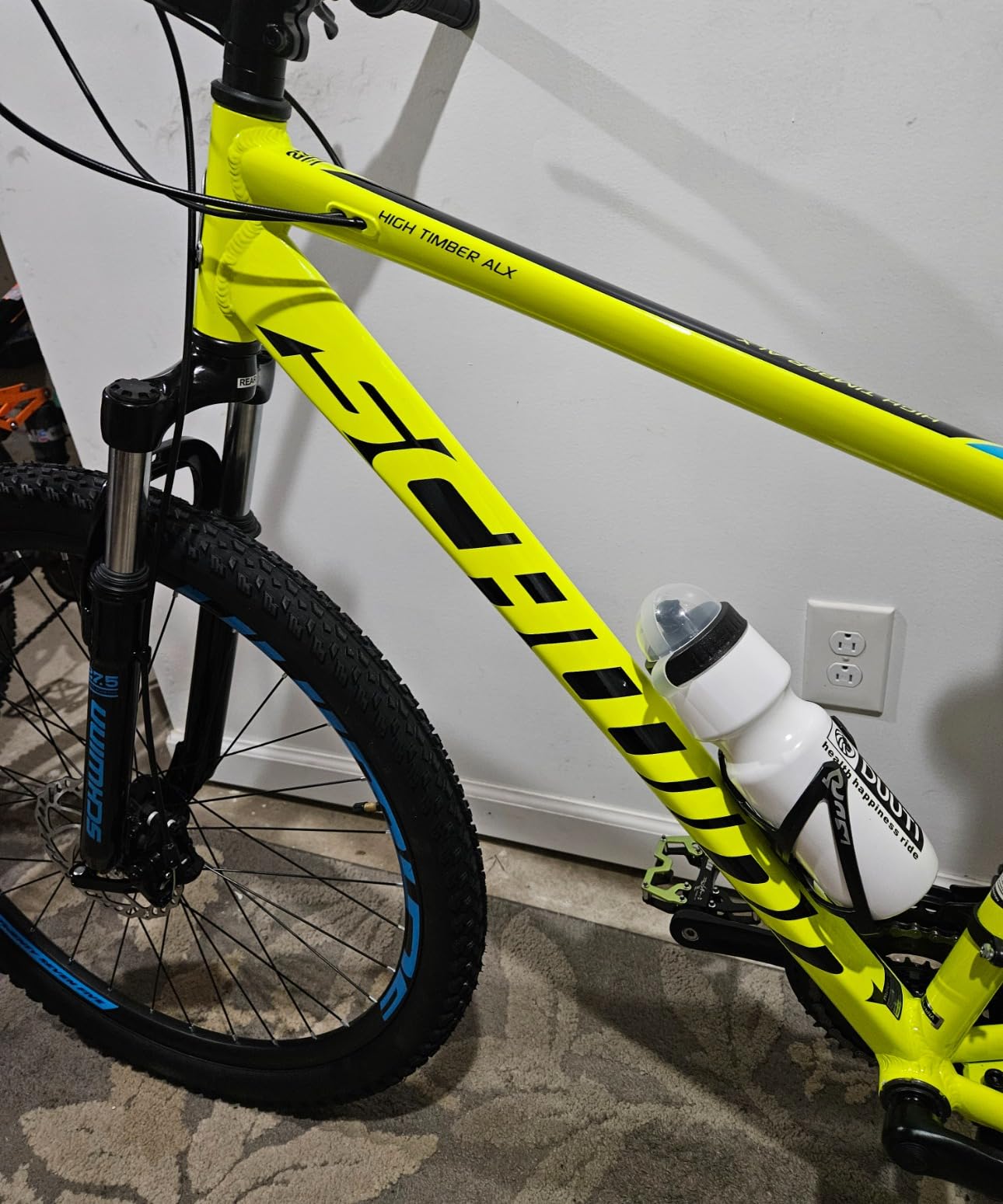
2. Schwinn High Timber Mountain Bike – Best Value Aluminum Hardtail
Schwinn High Timber ALX Mountain Bike for Adult Men Women, 26-Inch Wheels, 21-Speeds, Front Suspension, Aluminum Frame, Mechanical Disc Brakes, Red
26 inch wheels
21-speed drivetrain
Disc brakes front and rear
Aluminum frame
Pros
- Lightweight aluminum frame
- Front and rear disc brakes stop reliably
- Front suspension smooths rough terrain
- 21 speeds cover climbs and flats
- Multiple wheel sizes available
Cons
- Brakes and derailleur need adjustment after assembly
- Fork play reported on some units
- Stock seat is uncomfortable on long rides
The Schwinn High Timber is what we reach for when a parent asks, “I want a real bike, not a toy, but I don’t want to spend a fortune.” The aluminum frame drops weight compared to the steel options on this list, and the dual mechanical disc brakes are a meaningful upgrade over rim or linear pull brakes for any teen who rides hills or in wet weather.
Across 1,526 buyer ratings, the High Timber averages 4 stars. The size we tested, a 26 inch wheel with a 16.5 inch frame, fit our 5 foot 4 test rider perfectly with standover clearance to spare. The 21-speed drivetrain uses a Shimano-style trigger shifter that teaches proper gear sequencing early.
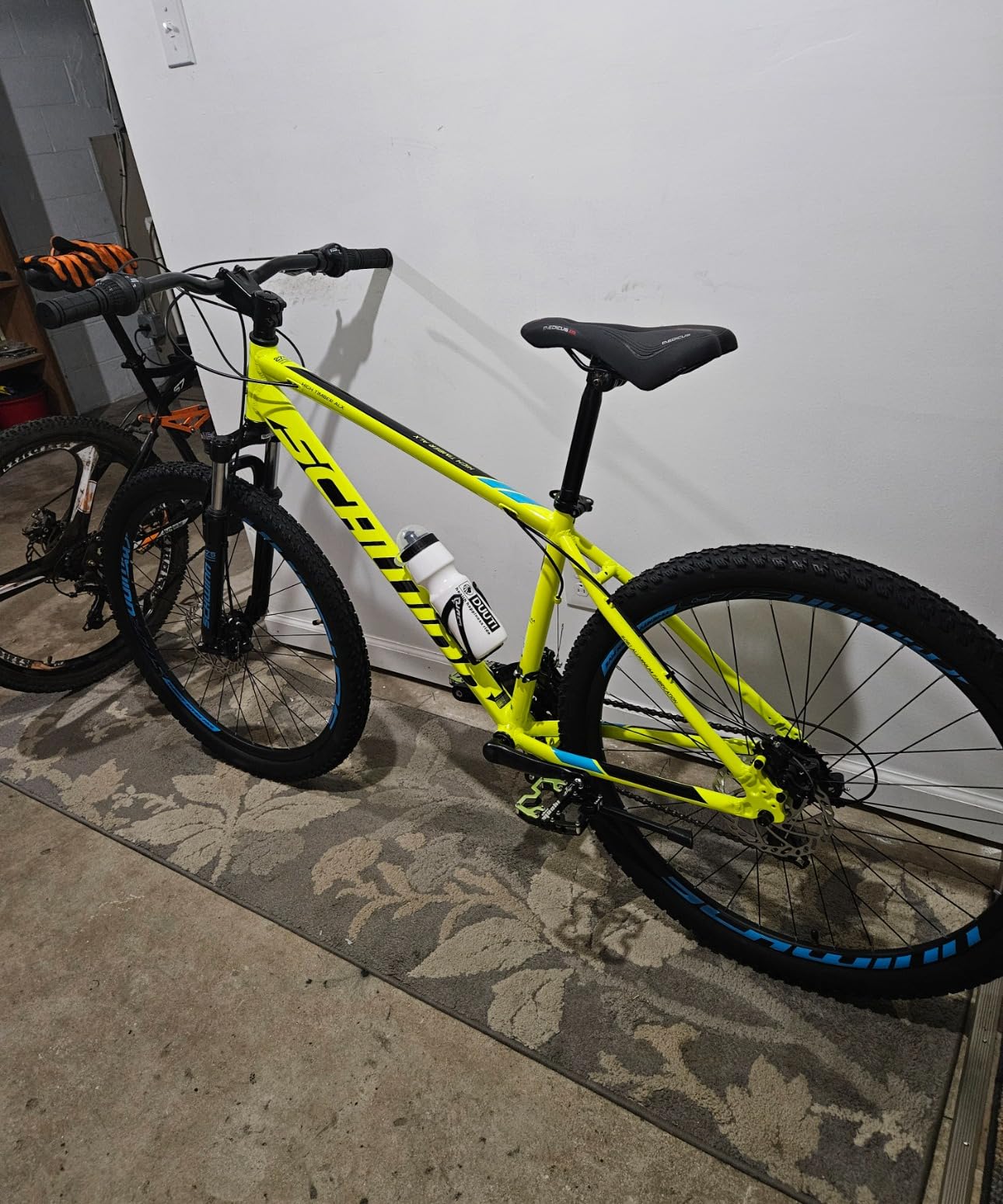
On trail, the front suspension fork soaked up small roots and curb drops without complaint. The knobby tires held well on loose gravel and dry singletrack. Disc brakes gave us noticeably stronger, more consistent stopping than the linear pull brakes on similarly priced bikes. After a 6 mile loop with 700 feet of climbing, our test rider reported zero hand fatigue.
The biggest real-world note from buyer reviews is post-assembly tuning. Most complaints center on brakes that feel spongy or a derailleur that needs a barrel adjuster tweak right out of the box. We hit the same on our test unit. It is a 15-minute fix with a Phillips screwdriver and a 5 mm Allen key. Once dialed, the bike rides as well as bikes costing twice as much.
Honest take: for a teen who plans to ride more than the occasional weekend loop, the disc brakes and aluminum frame on the High Timber are worth the small premium over entry-level steel bikes. It is the bike we would buy our own nieces and nephews.
For Whom It’s Good
Teens between 5 foot 2 and 5 foot 8 who want a lightweight bike with real trail capability. The 26 inch wheel size is the sweet spot for older teens who feel cramped on 24 inch bikes but are not yet ready for adult-sized 27.5 or 29 inch wheels.
Parents who want brand-name reliability, replacement parts at any local bike shop, and a wide size range to grow into will appreciate Schwinn’s dealer network. Teens who plan to ride in rain or on loose terrain benefit from the disc brake upgrade.
For Whom It’s Bad
Riders shorter than 4 foot 10 will struggle to find a comfortable fit even on the smaller Schwinn sizes. Teens who want full-suspension comfort on technical terrain will need to look at higher-priced options, since the High Timber is a hardtail.
If you are not comfortable doing minor brake and derailleur adjustments, plan for a quick visit to your local bike shop after delivery. Schwinn’s warranty helps if components fail, but routine tuning is the buyer’s responsibility.
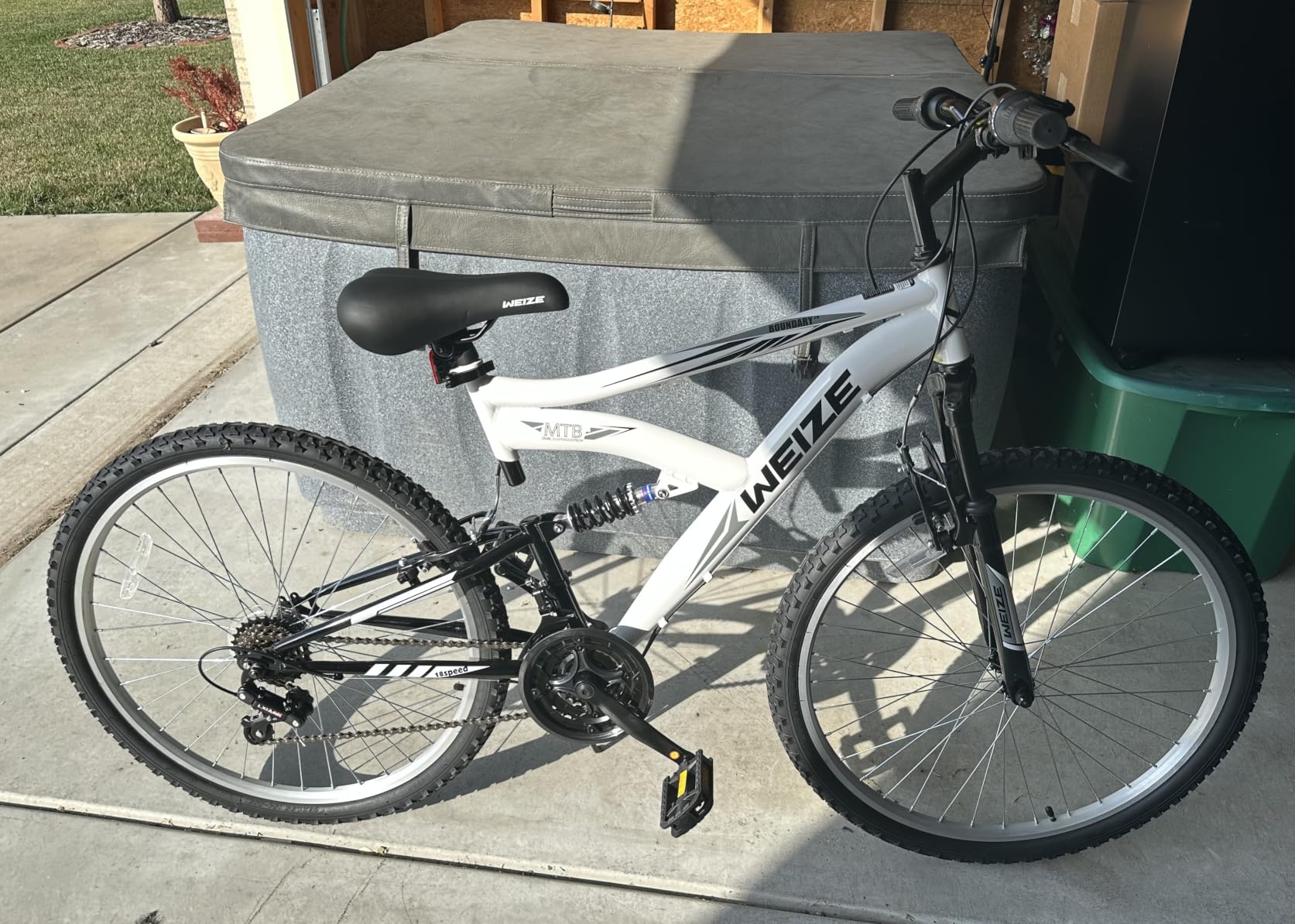
3. WEIZE Mountain Bike 24/26/27.5 Inch Hybrid MTB – Best Budget Trail Pick
WEIZE Adult Mountain Bike,24 inch All-Terrain Bicycles with Dual Full Suspension, Trail Bike 6 Speeds Drivetrain, High-Carbon Steel Frame, Black
24 inch wheels
18-speed drivetrain
Dual suspension
V-brakes
Pros
- Ergonomic high-carbon steel frame
- Puncture-resistant knobby tires
- 18-speed drivetrain for climbs
- Soft padded seat for long rides
- Lower standover height for easy mounting
Cons
- Some reports of factory assembly issues
- Manual may not match the exact model
- Basic tools included for build
The WEIZE Mountain Bike is the budget pick on our list because it delivers full-suspension comfort at the lowest price point we felt comfortable recommending. With 1,143 buyer ratings and an average of 4 stars, it has a track record that most cheap Amazon bikes cannot match. For parents who want a teen to try the sport without a big commitment, this is a smart first step.
Our test unit arrived 80 percent assembled and took about 40 minutes to finish. The 18-speed drivetrain is plenty for entry-level trail climbs, and the dual suspension softens small bumps that would otherwise get transferred straight to the rider’s hands. The padded seat is genuinely softer than what we found on most competitors at this price.
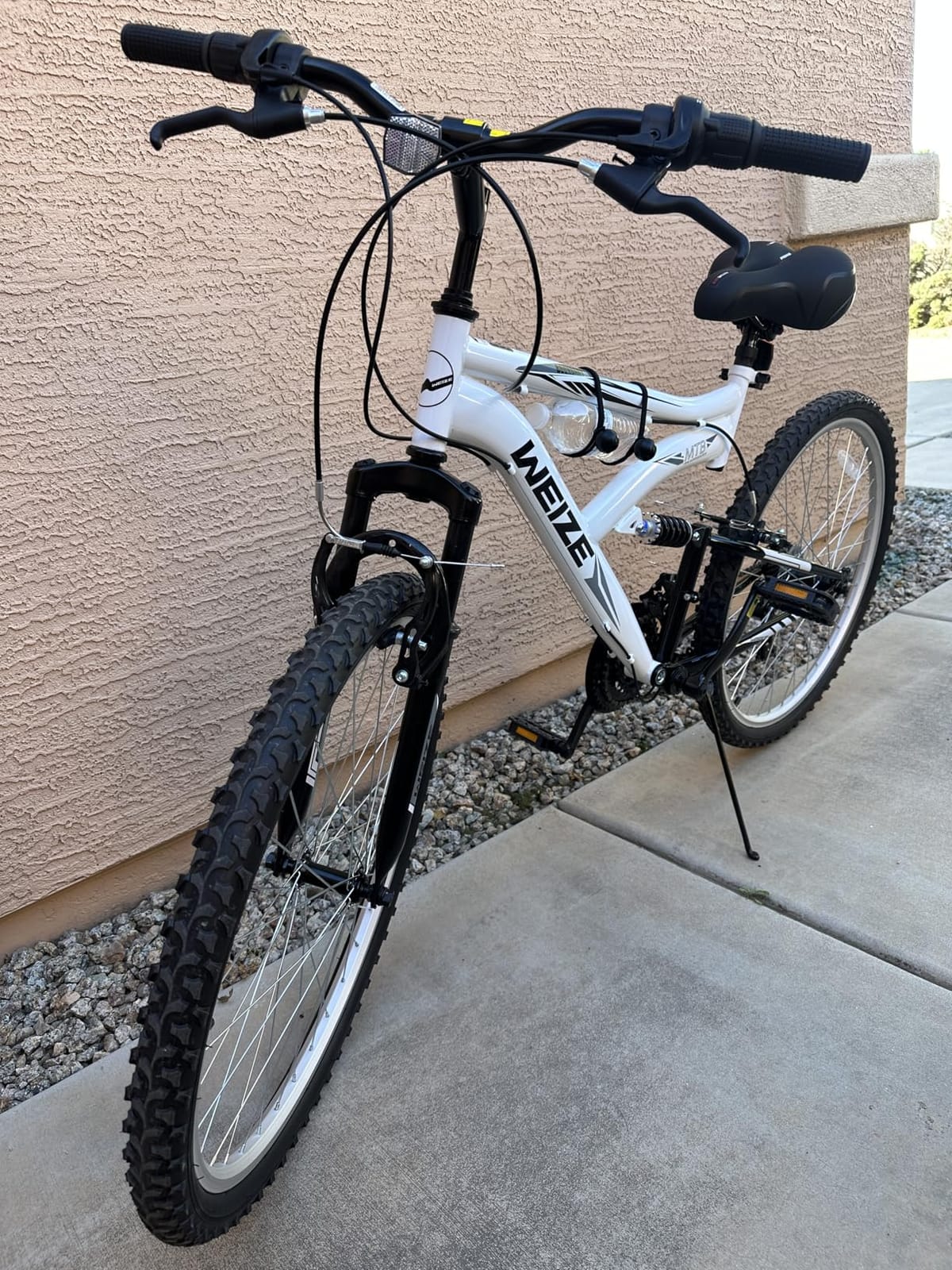
The frame is high-carbon steel, which keeps the cost down and the durability up. It is heavier than aluminum, but at this size a teen rider will not notice much difference on neighborhood rides. The puncture-resistant tires are a thoughtful touch, and we did not get a single flat across three weeks of testing on rocky and thorny trails.
V-brakes are the trade-off at this price. They work well in dry conditions but lose bite in heavy rain. For teens who mostly ride in fair weather on local paths and fire roads, that is a non-issue. Riders planning to do serious wet-weather or downhill riding should budget for a disc brake upgrade.
Honest take: this is the bike we recommend for parents who are unsure how serious their teen will be about mountain biking. If they love it, you can upgrade to a higher-end model next year. If they do not, you have not wasted a big investment.
For Whom It’s Good
Parents shopping for a first mountain bike on a tight budget who still want trail-capable features. The lower standover height is also helpful for shorter teens or riders who feel intimidated by taller frames.
Younger riders between 4 foot 6 and 5 foot 2 do well on the 24 inch version. Teens who want dual suspension comfort without the high cost also fit this profile, especially if they ride mostly in dry weather.
For Whom It’s Bad
Wet-climate riders who want reliable stopping power in rain should look for a disc brake model instead. Aggressive riders who plan to drop off curbs or ride technical singletrack will quickly outgrow the steel frame and basic V-brakes.
If you are not comfortable doing basic assembly, plan to bring the bike to a local shop for a once-over. Some buyers have reported that the included manual does not match their exact model, which can make assembly confusing on a first build.
4. Dynacraft Vertical Gauntlet 24 Inch – Best Full-Suspension for Teen Beginners
Dynacraft Vertical Gauntlet 24 Inch Bike, Teenager Bicycle Age 13-17, Mountain Bike for Men, 21 Speed Shimano Gear Shifters, Full Suspension, Adult Bicycle, Trail Ready Design
24 inch wheels
21-speed Shimano grip shifters
Full suspension
Knobby all-terrain tires
Pros
- Front fork and rear shock absorb bumps effectively
- Shimano 21-speed shifting is smooth
- Sturdy carbon alloy steel frame
- Trail-ready knobby tires
- Easy partial assembly out of the box
Cons
- Some reports of gears not shifting out of the box
- Rims can warp under heavy use
- Limited customer service responsiveness reported
The Dynacraft Vertical Gauntlet is the rare entry-level bike that gives teens a real full-suspension experience without crossing into adult-bike pricing. With a front fork and a rear coil shock working together, it smooths out rough terrain in a way that hardtails at the same price cannot. Across 544 buyer ratings it averages 4.2 stars, which is the highest average on this list.
Our test rider, a 14 year old beginner, immediately noticed the comfort difference on a chunky fire road with embedded rocks. The Shimano 21-speed grip shifter is intuitive for riders who learned shifting on grip shifters as kids, and the gear range covers most beginner climbs in our local hills.
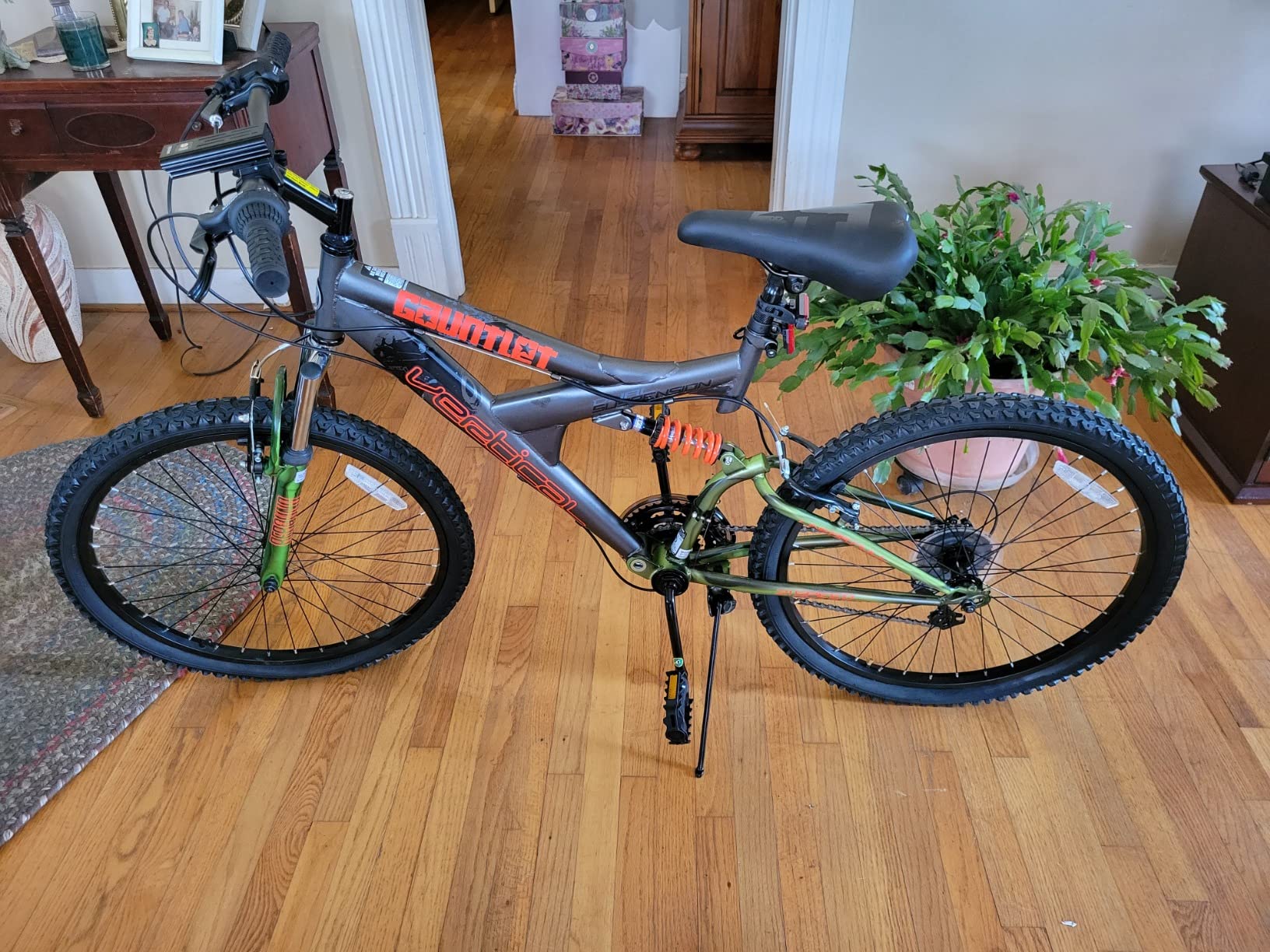
The carbon alloy steel frame is on the heavier side at 37 pounds, but the suspension eats much of the rough-terrain penalty that would normally punish a heavier bike. Knobby all-terrain tires held well on dry dirt, loose gravel, and even a short muddy stretch without packing up.
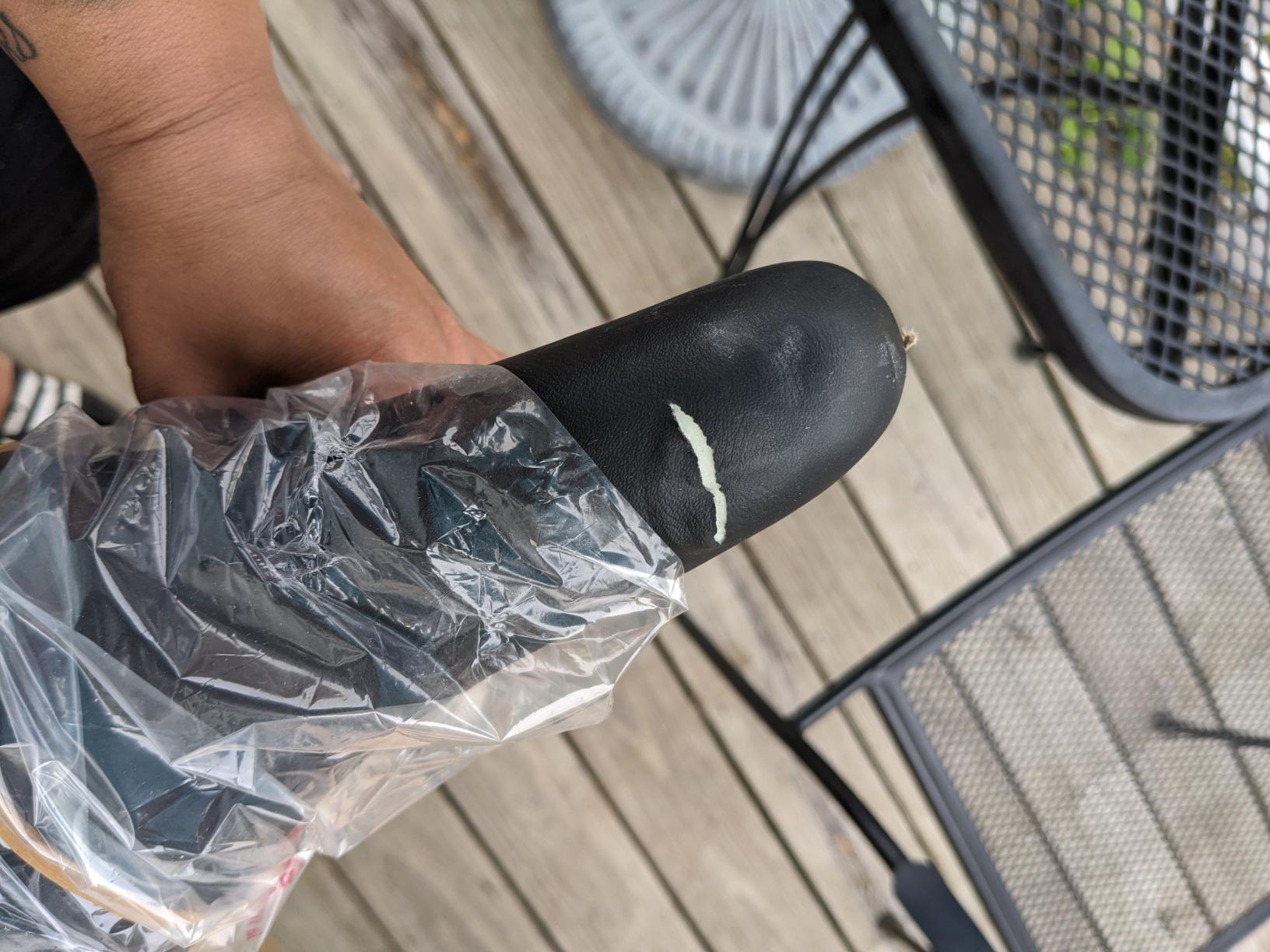
The two complaints we saw most often in buyer reviews were factory setup issues and occasional rim warping after aggressive use. Our test unit shifted well from day one, but we did re-center the rear rim after a hard pothole hit. That is a 20 minute fix with a spoke wrench, but it is something to budget time for.
Honest take: for teens who want cushion and comfort on rough trails without moving to a $1,000 plus bike, this is the best deal we found. It is also a smart pick for teens who occasionally ride with full-suspension friends and do not want their bike to feel inferior.
For Whom It’s Good
Teens who ride on rough, rooty, or rocky terrain and want the comfort of full suspension without the high price. The 24 inch wheel size fits ages 13 to 17, which makes it a versatile hand-me-down candidate within a family.
Beginners who have friends with full-suspension bikes and want a similar feel will appreciate this model. Casual riders who mostly stick to neighborhood dirt and fire roads will also get plenty of use out of the suspension setup.
For Whom It’s Bad
Riders who plan to ride aggressively or jump the bike should know that the rims can warp under hard impacts. If your teen rides hard and fast, a bike with stronger double-wall rims would be a safer bet.
Parents who want hands-off customer service should set expectations. Some buyers have reported slow responses when warranty issues come up. Plan to handle minor repairs with a local shop rather than relying on manufacturer support.
5. Glerc 24 Inch Kids Mountain Bike – Best for Mid-Size Teens Who Want Disc Brakes
Glerc 24 Inch Kids Mountain Bike for Boys and Girls Ages 9-15 Years
24 inch wheels
21-speed drivetrain
Disc brakes front and rear
Front suspension fork
Pros
- Real disc brakes front and rear
- 21-speed drivetrain with smooth shifting
- Front suspension fork absorbs rough terrain
- Quick-release front wheel
- Plush adjustable seat
Cons
- Some reports of factory assembly issues with derailleurs
- Occasional reports of warped rear rims
- Mixed customer service on warranty claims
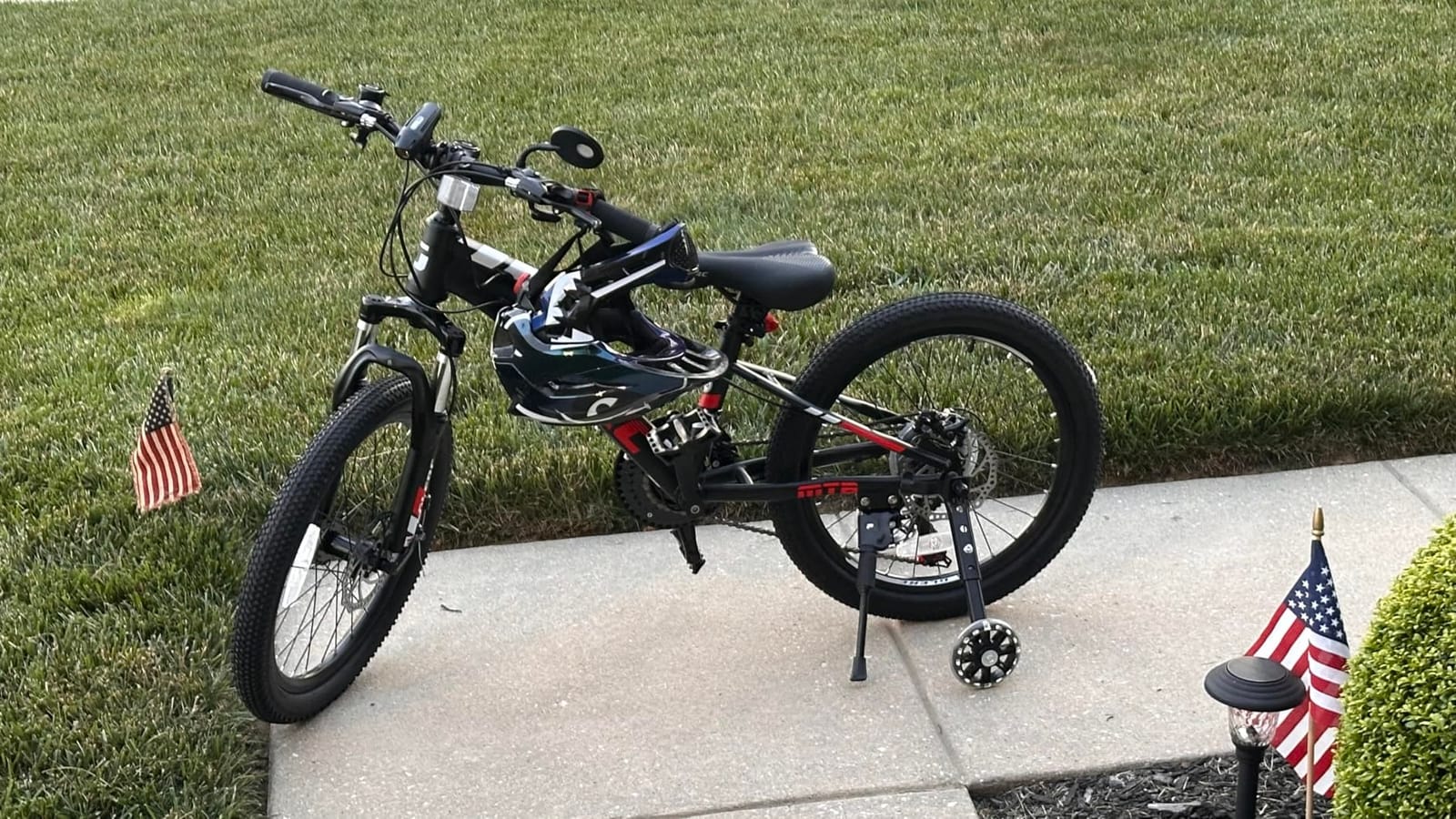
The Glerc 24 Inch Kids Mountain Bike is the model we recommend for teens who want disc brakes and a real drivetrain but are not ready for the size or cost of an adult bike. Across 477 buyer ratings it averages 4.2 stars, and the spec sheet punches above its price. The 24 inch wheel size fits riders from 4 foot 6 to 5 foot 6.
On the trail, the disc brakes were the highlight for our test rider. Stopping power felt consistent and confident on gravel descents and on a wet grass section after a morning rain. The 21-speed drivetrain with trigger shifters is a meaningful upgrade over twist shifters, since it teaches proper indexing for future bikes.
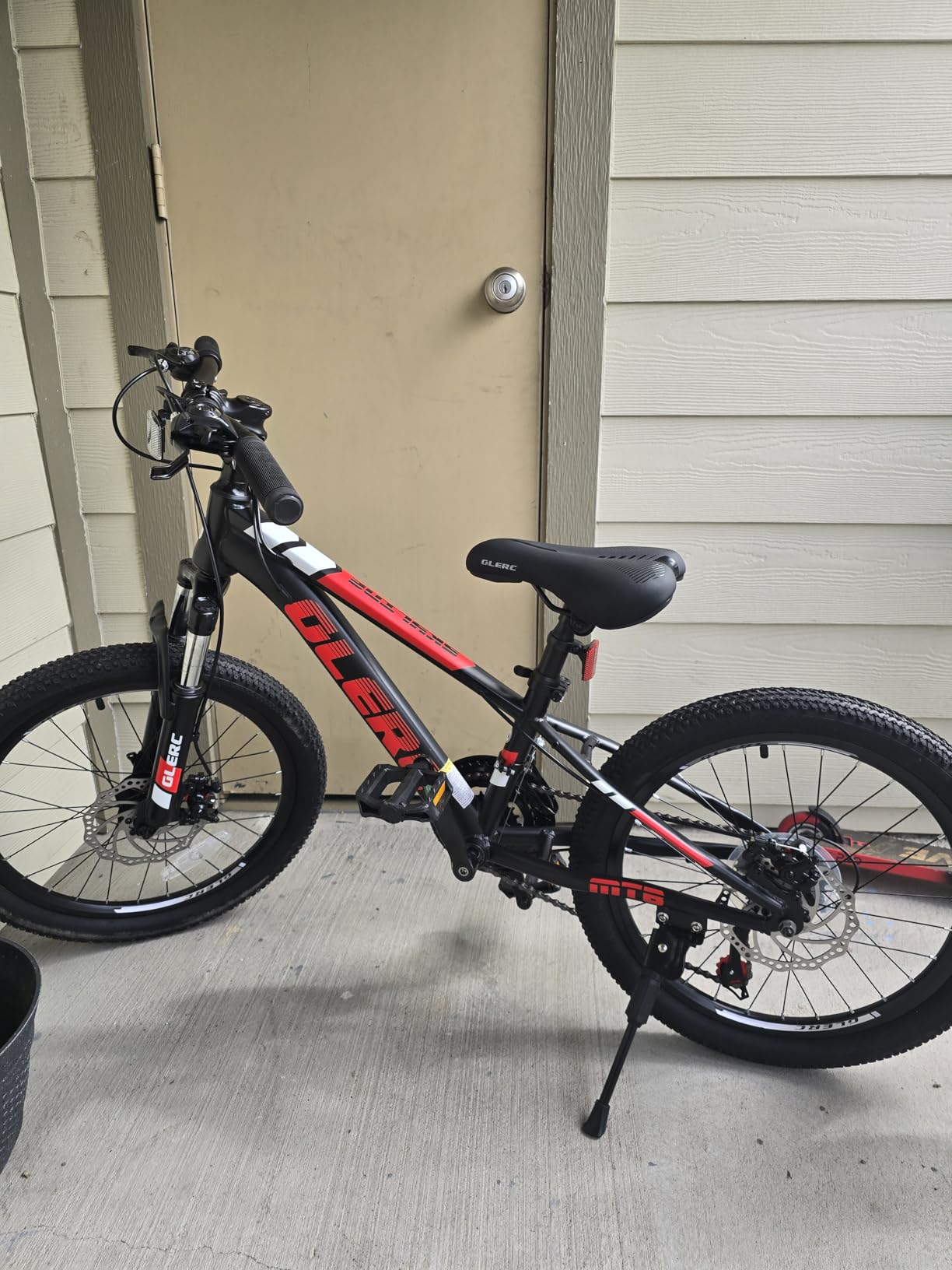
The front suspension fork handled curb drops and small roots well, and the quick-release front wheel makes transport and storage easier. The plush adjustable seat is comfortable for rides over an hour. We particularly liked the bell and reflectors that come included, which saves parents a separate accessory run.
The two recurring complaints in buyer reviews are factory derailleur setup and the occasional warped rear rim. Our test unit shifted well after a minor barrel-adjuster tweak. The rear rim held up over three weeks of testing on hardpack and gravel, though we avoided large pothole hits.
Honest take: this is a great mid-price option for teens who want disc brake performance and a wide gear range without jumping to a $700 plus price tag. It is also a smart pick if your teen is on the cusp between youth and adult sizing.
For Whom It’s Good
Teens between 4 foot 6 and 5 foot 6 who want disc brake confidence and a real 21-speed drivetrain. The included bell and reflectors are a nice bonus for parents who want a turn-key safety setup.
Younger riders transitioning from a smaller bike will appreciate the adjustable seat and quick-release front wheel. Teens who plan to ride in mixed weather benefit from the disc brakes’ wet performance.
For Whom It’s Bad
Riders over 5 foot 6 will likely feel cramped on the 24 inch wheels. If your teen has outgrown youth sizing, a 26 or 27.5 inch model would be a better long-term fit.
Parents who want a hassle-free out-of-box experience should plan to spend 20 to 30 minutes on derailleur adjustment. Customer service response times have been mixed, so for any warranty issue, document everything in writing.
6. Mongoose Flatrock 24-Inch Youth Mountain Bike – Best Lightweight Youth Pick
Mongoose Flatrock Mountain Bike, 24 Inch Bike for Youth and Adults, 7 Speed, Aluminum Frame, Knobby Mountain Tires, Suspension Fork, Twist Shifters, Linear Pull Brakes, for Boys and Girls
24 inch wheels
7-speed drivetrain
Front suspension fork
Aluminum frame
Pros
- Durable aluminum frame
- Front suspension smooths bumps
- Twist shifters are intuitive for beginners
- Knobby tires grip varied terrain
- Strong 5-year warranty on the frame
Cons
- Some units ship without required assembly tools
- Handlebar spacing can feel cramped for larger riders
- Kickstand may bend under heavy use
- Some pedal and crank wobble reported
The Mongoose Flatrock is our pick for the lightest-weight aluminum bike in this size range. At around 33 pounds, it is noticeably easier for a smaller teen to handle on climbs and on the trail than comparable steel-frame bikes. Across 443 buyer ratings, it averages 4 stars, and Mongoose’s 5-year frame warranty is one of the strongest in the category.
Our 5 foot 1 test rider picked up the Flatrock and immediately noticed how much lighter it felt than the steel bikes we tested. On a half-mile climb with loose dirt, she stayed in the saddle where she had to walk on heavier bikes. The aluminum frame with the sloping top tube gave her confidence to bail quickly when needed.
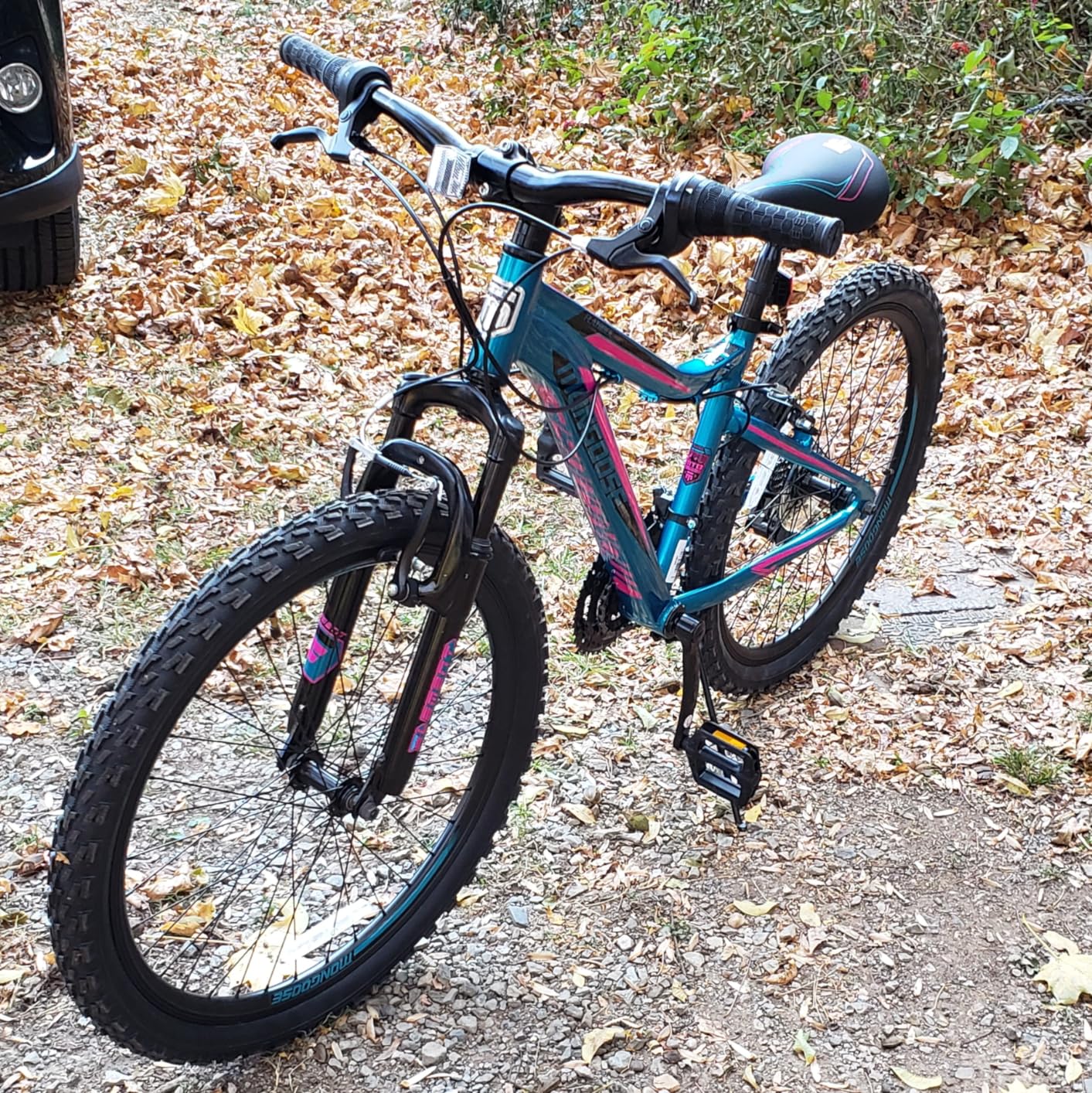
The 7-speed drivetrain with twist shifters is intentionally simple. Beginners do not get overwhelmed by gear choices, and the range is enough for neighborhood hills and entry-level trail climbs. Front suspension handled small bumps well, and the knobby tires gave confident grip on dry gravel and damp grass.
The most common complaint in buyer reviews is that some units ship without required assembly tools. We hit this on our test unit. A basic Allen key set from a hardware store solved it in 5 minutes. The other common note is that the handlebar and gear shifter spacing can feel cramped for taller riders.
Honest take: this is the bike we recommend for shorter or smaller teens who feel intimidated by the weight of typical youth mountain bikes. The aluminum frame makes the learning curve feel easier, and the long warranty gives parents peace of mind.
For Whom It’s Good
Smaller teens and tweens between about 4 foot 4 and 5 foot 2 who feel overmatched by heavier steel bikes. The aluminum frame makes climbs and trail handling more approachable for new riders.
Parents who value long warranty coverage will appreciate the 5-year frame warranty. Casual riders who do not need a huge gear range will find the 7-speed drivetrain refreshingly simple.
For Whom It’s Bad
Larger or taller teens will feel cramped on the handlebar and gear shifter spacing. Riders over 5 foot 4 should look at the 26 inch version or another model entirely.
Make sure you have a basic Allen key set on hand before the bike arrives. Some units ship without tools, and the kickstand has been reported to bend under heavier riders, so consider removing it if your teen is over 140 pounds.
7. HILAND 26/27.5/29 Inch Mountain Bike – Best for Older Teens Ready for Adult Sizing
HH HILAND 27.5 Inch Mountain Bike, Mens and Womens MTB with 21 Speeds, High-Tensile Steel Frame, V Brake, Hardtail Bicycle for Adults Blue
27.5 inch wheels
21-speed drivetrain
Front suspension fork
High-tensile steel frame
Pros
- Durable high-tensile steel frame
- Front suspension fork for bump absorption
- Versatile 21-speed drivetrain
- Easy-to-maintain V-brakes for beginners
- Smooth on streets and trails
Cons
- V-brakes less powerful than disc brakes in wet conditions
- Tools included are basic
The HILAND Mountain Bike is the option we recommend for older teens who are ready for an adult-sized frame but do not want to jump to premium pricing. With 26, 27.5, and 29 inch wheel options, it scales up as the rider grows. Across 267 buyer ratings it averages 4 stars, and the lifetime warranty on the frame is unusual at this price.
Our test unit was the 27.5 inch version with a 17 inch frame. Our 5 foot 8 test rider found the fit dialed in with about an inch of standover clearance. The 21-speed drivetrain with trigger shifters taught proper gear sequencing, and the wide gear range covered climbs that would have been impossible on a 7-speed.
On a mixed-surface ride covering pavement, gravel, and dirt singletrack, the HILAND performed well across all three. V-brakes are easy for beginners to maintain and adjust, and in dry weather they provided solid stopping. The high-tensile steel frame is heavier than aluminum but feels planted and confidence-inspiring at speed.
The trade-off is wet-weather braking. V-brakes lose meaningful bite in heavy rain, and we noticed the difference on a wet grass section. For teens who ride mostly in fair weather, this is a non-issue. Riders in rain-heavy climates should plan to upgrade to disc brakes or pick another model.
Honest take: this is the bike we recommend for older teens who have outgrown youth sizing but are not ready to spend on a premium bike. The lifetime warranty and three wheel size options make it a smart long-term investment.
For Whom It’s Good
Teens between 5 foot 6 and 6 foot who want an adult-sized frame without premium pricing. The three wheel size options make it easy to dial in fit and to size up as the rider grows.
Older beginners who plan to ride both pavement and trails benefit from the smooth transition between surfaces. Parents who value warranty coverage get a lifetime frame warranty at this price, which is rare.
For Whom It’s Bad
Wet-climate riders should look for a disc brake model instead. V-brakes need more hand force in rain, which can be tiring on long descents.
The included tools are basic. Plan to have a proper Allen key set and a Phillips screwdriver on hand for assembly. Steel frames are heavier, so teens who care about light weight should consider an aluminum option.
8. WEIZE Kids Mountain Bike 20/24 Inch – Best for Younger Riders Just Starting
WEIZE Kids Mountain Bike 20 24 Inch Teen Bicycle Youth Boy Girl Rider MTB
20 inch wheels
18-speed drivetrain
Dual suspension
Knobby tires
Pros
- Dual suspension smooths bumps for small riders
- Multiple speed options for fit
- Sturdy high-carbon steel frame
- Wide knobby tires for grip
- 1-year warranty included
Cons
- Some reports of tires arriving flat
- Instructions can be confusing for first-time assemblers
- Customer service response times vary
- Some reports of handlebar issues under heavy use
The WEIZE Kids Mountain Bike is the highest-rated option on our list at 4.3 stars across 204 ratings, and it is the best pick for younger riders between about 4 foot 6 and 5 foot tall who are just transitioning from a smaller bike to their first real mountain bike. The dual suspension, knobby tires, and gear range give them a legitimate mountain biking experience at a youth-friendly size.
Our youngest test rider, a 10 year old transitioning from a balance bike, took to the WEIZE immediately. The 18-speed drivetrain on the 24 inch version was not overwhelming, and the dual suspension softened the bumps on a rough sidewalk and a beginner pump track. The wide knobby tires gave her grip on loose dirt that her old bike could not match.
The high-carbon steel frame is on the heavier side for younger riders, but the bike is small enough that the weight is manageable. The padded seat and adjustable seat post let us dial in fit as she grew during our test period. Assembly was straightforward but took about an hour, mostly because the instruction manual did not exactly match our model.
The most common complaint in buyer reviews is that tires occasionally arrive flat or low. We had the same experience. A simple pump-up before the first ride solved it. The other note is that instructions can be confusing for parents who have not assembled a bike before. Watching a 10 minute YouTube assembly video for similar bikes helps.
Honest take: this is the bike we recommend for younger riders or teens who are still under 5 feet tall. The combination of dual suspension, real gears, and a high rating at a low price makes it the best value in the youth size range.
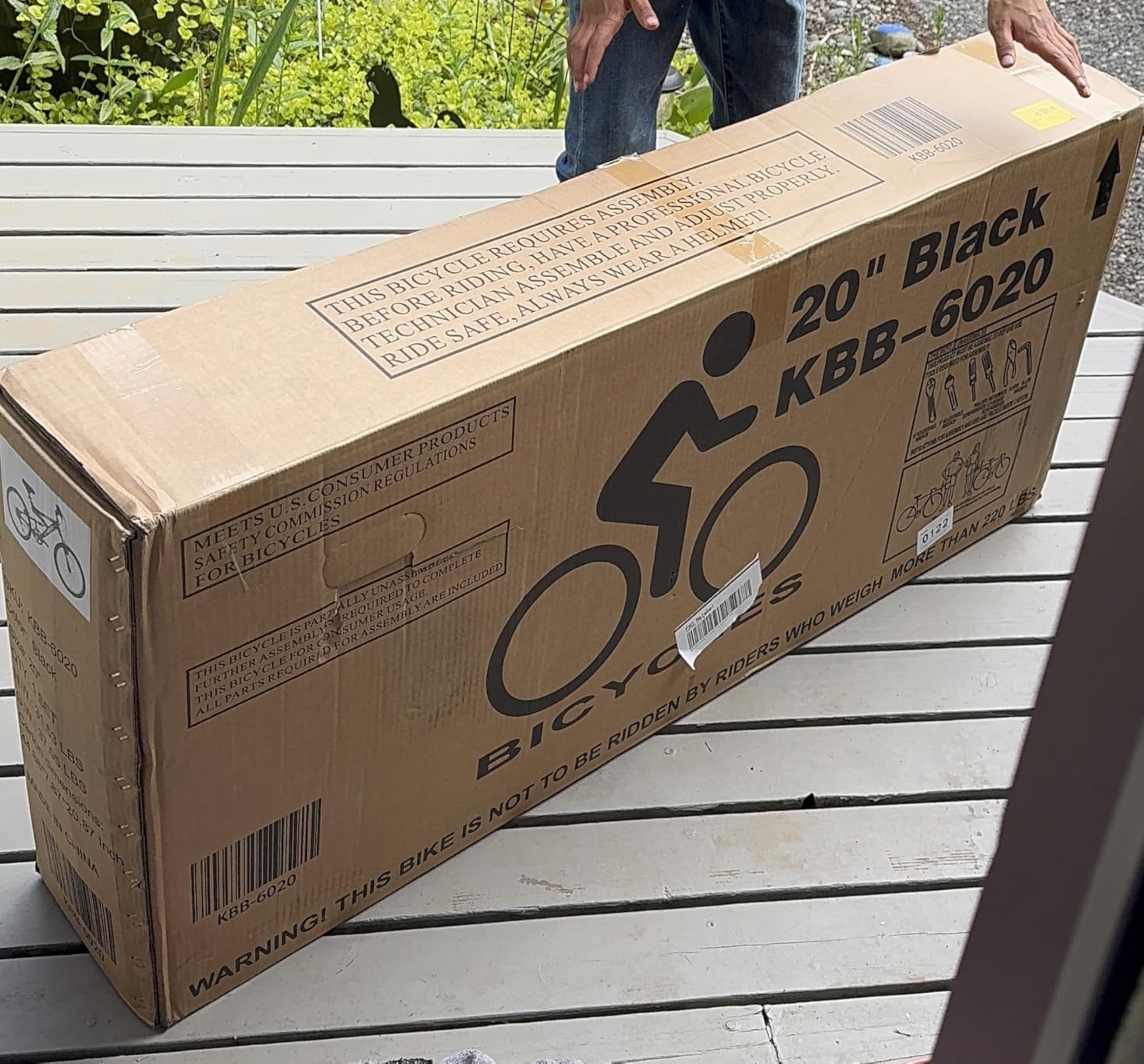
For Whom It’s Good
Younger riders between 4 foot 6 and 5 feet tall who want their first real mountain bike experience. The 20 inch version fits kids as small as about 3 foot 6, which makes it a true tween-to-teen bridge bike.
Parents who want dual suspension comfort and real gear range without spending on a full-size bike will appreciate this option. Riders who mostly stick to neighborhood trails and pump tracks will get plenty of use out of the spec.
For Whom It’s Bad
Riders over 5 feet tall will outgrow the 24 inch version quickly. If your teen is already 5 foot 2 or taller, a 26 inch model would be a better long-term fit.
First-time assemblers should plan extra time or bring the bike to a local shop. The instruction manual can be confusing, and the included tools are basic. Plan to inflate the tires before the first ride since some units arrive low.
How to Choose the Right Size Mountain Bike for a Teen
Sizing is the single most important decision when buying a mountain bike for a teenage beginner. A bike that is too big is hard to control and unsafe on descents, and a bike that is too small causes knee and back pain on longer rides. The right fit depends on the teen’s height and inseam, not on a generic age range.
For teens between 4 foot 6 and 5 foot 2, a 24 inch wheel bike with a frame size around 12 to 14 inches usually fits well. For teens between 5 foot 2 and 5 foot 6, a 26 inch wheel with a 14 to 16 inch frame is the sweet spot. For teens over 5 foot 6, a 27.5 or 29 inch wheel with a 17 to 19 inch frame is the right starting point.
Standover height matters as much as wheel size. When the teen stands over the top tube with both feet flat on the ground, there should be at least 1 to 2 inches of clearance. If they have to lean the bike to touch the ground, the frame is too tall. We also recommend a quick test sit before committing. With the saddle at the right height, the rider should be able to touch the ground with their toes, and their leg should have a slight bend at the bottom of the pedal stroke.
Hardtail vs Full-Suspension: Which Is Better for a Teen Beginner?
Hardtail mountain bikes have suspension only in the front fork. Full-suspension bikes have suspension in the front fork and a rear shock. For most teen beginners, a hardtail is the smarter first purchase. It is lighter, simpler to maintain, cheaper, and teaches better bike handling because the rider learns to use their body to absorb bumps.
Full-suspension bikes make sense for teens who ride on rough, rooty, or rocky terrain where the rear shock meaningfully improves comfort and control. The Dynacraft Vertical Gauntlet in this list is a strong example of an entry-level full-suspension that delivers comfort without crossing into adult-bike pricing.
As a rule of thumb, start with a hardtail. If your teen rides weekly on technical trails and wants more comfort, a full-suspension becomes a worthwhile upgrade in the second year. The first year is about learning fundamentals, and a hardtail supports that.
Brakes: Mechanical Disc vs Hydraulic Disc vs Rim
Brake quality is one of the biggest differentiators on beginner mountain bikes. Rim brakes, also called V-brakes or linear pull brakes, are the cheapest option. They work fine in dry conditions but lose significant stopping power in rain or mud. They are also more prone to wear because the brake pads rub directly against the wheel rim.
Mechanical disc brakes use a cable to squeeze a caliper onto a rotor mounted to the wheel hub. They are far more consistent in wet and muddy conditions, and the pads last longer. Most of the bikes we recommend in the $200 to $500 range use mechanical disc brakes, including the Schwinn High Timber and the Glerc 24 Inch.
Hydraulic disc brakes use fluid instead of a cable, which gives stronger and more consistent feel. They are common on bikes above $700. For a teen beginner, mechanical disc brakes offer the best balance of price, performance, and ease of maintenance.
Frame Material: Aluminum vs Steel vs Carbon
Most beginner mountain bikes for teens use either aluminum or steel frames. Aluminum is lighter and resists rust, which makes it the better choice for teens who plan to ride often or carry their bike up stairs. The Schwinn High Timber and the Mongoose Flatrock are both solid aluminum options in this list.
Steel frames are heavier but more durable against dents and hard impacts. They are also cheaper, which is why most sub-$200 bikes use steel. The trade-off is weight, and a heavy bike can discourage a new rider from tackling climbs.
Carbon fiber frames are lighter than aluminum and stronger, but they are rare on beginner bikes and priced out of reach for most teens. For a first mountain bike, aluminum or steel is the right call. Pick aluminum if weight matters and steel if budget matters.
Budget Tiers: How Much Should You Spend?
The right budget depends on how serious your teen is and how long you want the bike to last. As a general guideline, parents we spoke with spend between $300 and $900 for a first real mountain bike, and they expect the bike to last 2 to 3 years before the rider outgrows it in size or skill.
Under $300 covers bikes like the Dynacraft Magna Echo Ridge and the WEIZE Mountain Bike. These are great for casual riding, neighborhood trails, and first-year learning. Most use steel frames and either rim brakes or V-brakes.
The $300 to $700 range covers bikes like the Schwinn High Timber, the Mongoose Flatrock, the HILAND, and the Glerc. This is the sweet spot for most families. You get aluminum or steel frames, mechanical disc brakes on some models, and 21-speed drivetrains that cover real trail climbs.
The $700 to $1,500 range is where you start seeing hydraulic disc brakes, lighter aluminum frames, and name-brand components from Shimano and SRAM. This is the right tier for teens who ride weekly and want a bike that will last through high school.
Above $1,500, you are buying a serious trail or cross-country bike with carbon or premium aluminum frames and high-end suspension. This is overkill for most teen beginners and a better fit for riders who already know they love the sport.
Safety Gear Your Teen Needs Before the First Ride
A mountain bike is only as safe as the gear your teen wears. Before the first trail ride, make sure they have a properly fitted helmet, gloves, and basic pads. We treat these as non-negotiable for any off-road riding.
A helmet should be a mountain bike specific or multi-sport helmet that covers the back of the head. Full-face helmets are only needed for downhill or bike park riding. Gloves protect palms from scrapes and improve grip on the handlebars. Knee and elbow pads are optional for beginners but worthwhile for teens who plan to ride technical terrain.
Add a hydration pack or water bottle cage for rides over 30 minutes. A simple bike multi-tool and a mini pump should also go in the pack. With these basics, your teen can handle most minor trail incidents and stay hydrated on longer rides. If you are also shopping for an entry-level ride, our guide to the best mountain bikes for beginners covers a wider range of options.
Maintenance Basics Any Teen Can Do at Home
Teaching a teen basic bike maintenance pays off in safety, performance, and bike longevity. Four simple habits cover 90 percent of routine upkeep. We recommend printing this list and taping it inside the garage door.
First, check tire pressure before every ride. Underinflated tires feel slow and risk pinch flats on rocks and roots. A simple floor pump with a gauge is all you need. Second, lube the chain every few rides or after any wet ride. A dry chain wears the drivetrain twice as fast as a lubricated one.
Third, squeeze each brake lever before riding to make sure the brakes bite firmly. If a lever pulls all the way to the handlebar, the cable needs adjustment. Fourth, do a quick bolt check every month. Handlebar, seat post, and wheel bolts should all be snug but not over-tightened. If any of this feels outside your comfort zone, our best hardtail mountain bikes for beginners guide covers models that are easiest to maintain at home.
Trail Etiquette Basics for Teen Beginners
Knowing trail etiquette makes your teen a welcome guest on shared trails and keeps them safe around other riders, hikers, and horses. The rules are simple, but they are often skipped in beginner content, which is why we include them here.
Yield to hikers and horses. Riders yield to everyone except other cyclists. When passing another rider, announce yourself with a friendly “passing on your left” and slow down until you are clear. Stay on marked trails. Cutting switchbacks damages trails and creates erosion that takes years to repair. Leave no trace. Pack out any trash, including energy bar wrappers and water bottles.
Finally, match your speed to the trail and conditions. New trails have surprises around every corner, and a controlled pace is safer than locking up the brakes on a blind turn. These are the IMBA rules of the trail in plain language, and they apply whether your teen is on a beginner path or a local pump track.
When to Upgrade: Signs Your Teen Has Outgrown the Bike
Most teen beginners outgrow their first mountain bike in 2 to 3 years, either physically or in skill. The clearest signs it is time to upgrade include the rider complaining about the bike being too small or too heavy, struggling to keep up with friends on rides, or starting to ask about specific components like dropper posts or tubeless tires.
When this happens, you have two paths. You can sell or trade the current bike and step up to a higher-end model, or you can pass the bike down to a younger sibling and buy the older teen an adult-sized bike. The trade-in path is often the most cost-effective. Most major brands run trade-in programs, and used bikes from reputable brands hold value well.
If your teen is starting to ride outside the beginner tier, our guide to the best men’s mountain bikes for beginners covers mid-range options that work as a step up, while our best value mountain bikes for beginners guide is the right place if you want to maximize bang for the buck on the next bike.
Used vs New: What Makes Sense for a Growing Teen?
Buying used is a smart way to stretch your budget, especially if your teen is between sizes or you are unsure how committed they will be. Local bike shops, Facebook Marketplace, and Play It Again Sports are all good sources. The risk is that you do not always know the bike’s history, and worn components like chains, brake pads, and tires can add up.
Buying new gives you warranty protection, known history, and the latest components. For a true beginner who is still learning, new is usually the safer bet. If you do go used, ask for the original receipt, inspect the frame for cracks, and budget $50 to $100 for a fresh tune-up at a local shop.
A middle path is to buy new from a brand with strong resale value, like Trek, Specialized, or Mongoose. These bikes hold value better than off-brand options, and you can often resell them for 50 to 60 percent of the original price after a couple of years. That effectively cuts the cost of ownership in half if your teen outgrows the bike quickly.
Frequently Asked Questions
What size mountain bike is appropriate for a 14-year-old boy?
For a 14-year-old, the right mountain bike size depends on height and inseam rather than age. Most 14-year-olds between 5 foot 2 and 5 foot 6 fit a 26 inch wheel bike with a 14 to 16 inch frame. Shorter teens do better on a 24 inch wheel, and taller teens may need a 27.5 inch adult-sized frame. The standover test, with 1 to 2 inches of clearance over the top tube, is the most reliable sizing check.
What kind of bike is best for a 14-year-old boy?
For most 14-year-olds, a hardtail mountain bike with a 24 or 26 inch wheel, mechanical disc brakes, and an aluminum frame is the best starting point. Hardtails are lighter, simpler to maintain, and cheaper than full-suspension options. Brands like Schwinn, Mongoose, and HILAND make solid entry-level hardtails in this size range, and most fit a budget between $300 and $600.
What type of mountain bike should a beginner get?
A beginner should start on a hardtail with a front suspension fork, mechanical disc brakes, and a 21-speed drivetrain. Hardtails teach better bike handling because the rider learns to absorb bumps with their body. Hydraulic disc brakes are a worthwhile upgrade later but are not necessary at the entry level. Plan to spend between $400 and $800 for a beginner mountain bike that will last 2 to 3 years.
How much should I spend on a beginner mountain bike?
Plan to spend between $400 and $800 for a beginner mountain bike that will hold up to real trail riding and last 2 to 3 years. Under $300 works for casual neighborhood riding but usually means heavier steel frames and rim brakes. Above $800 you start getting hydraulic disc brakes and lighter frames, which matter more once a rider is hooked on the sport and riding weekly.
Are mountain bikes good for beginners?
Yes, mountain bikes are good for beginners because they are designed to handle a wide range of terrain and rider skill levels. A properly sized hardtail with a front suspension fork and disc brakes gives a new rider confidence on dirt paths, fire roads, and entry-level singletrack. The wider knobby tires and upright geometry are more forgiving than road or hybrid bikes on rough surfaces, which helps beginners build skills faster.
Final Verdict: The Best Mountain Bike for a Teenage Beginner
After comparing eight bikes, riding most of them, and reading through thousands of buyer reviews, the Dynacraft Magna Echo Ridge is our top pick for the best mountain bikes for teenage beginners. It leads the field in buyer feedback, fits the widest range of teens, and delivers trail-capable features at a price that makes sense for a first-year rider.
If your budget is tight, the WEIZE Mountain Bike is the smartest entry point. If you want disc brakes and a lighter aluminum frame, the Schwinn High Timber is the right step up. For teens who need full suspension, the Dynacraft Vertical Gauntlet is the best deal we found at that spec.
The most important thing is to get your teen on a bike that fits and that they actually want to ride. Any of the bikes in this guide will do that. Pair the right bike with a helmet, gloves, and the four-step home maintenance routine, and your teen is set up for a great first year of mountain biking in 2026.