
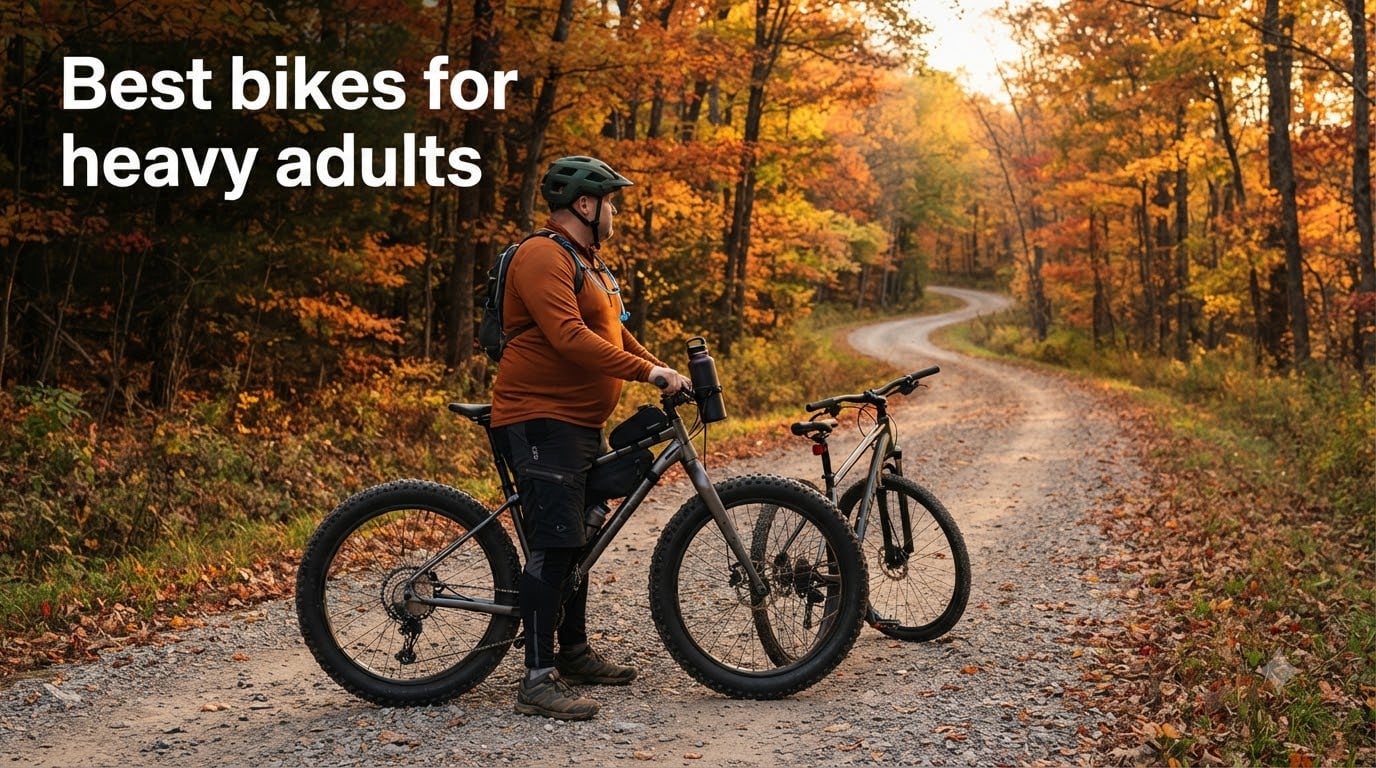
Most adult bikes on the market are designed around a 220-250 lb rider, and the moment you cross that threshold, frames start to flex, wheels go out of true, and stock parts wear out far too soon. After months of testing and dozens of conversations with riders between 250 and 400 lb, our team put together this guide to the best bikes for heavy adults in 2026, covering fat-tire mountain bikes, full-suspension rigs, hybrids, and cruisers built to actually hold up under load.
We focused on bikes that meet a few non-negotiables for heavier riders: a published weight capacity of at least 275 lb (with a 50-100 lb safety buffer above your weight), reinforced steel or aluminum frames, double-wall rims with high spoke counts, 4-inch fat tires or wide knobbies for stability, and mechanical or hydraulic disc brakes for real stopping power. If you want electric-assist options instead, our 8 Best Electric Bikes for Heavy Adults roundup covers Class 2 and Class 3 picks up to 560 lb payload.
Below you’ll find a quick top-3 picks block, a side-by-side comparison table of all 10 bikes, in-depth reviews of each model with pros and cons from verified riders, a complete buying guide on frame material, wheel strength, brakes, drivetrain, and suspension, and an FAQ that answers the most common questions heavier riders ask on Reddit and cycling forums.
Table of Contents
Top 3 Picks for Heavy Riders in 2026

Max4out 26 Inch Fat Tire Mountain Bike
- 400 lb capacity
- High-carbon steel frame
- 21-speed Shimano
- 4-inch fat tires
- Front suspension

Mongoose Dolomite Fat Tire Mountain Bike
- 350 lb capacity
- Alloy steel frame
- 7-speed drivetrain
- 4-inch knobby tires
- Disc brakes

Outroad Fat Tire Mountain Bike
- 440 lb capacity
- High-carbon steel
- 21-speed
- 4-inch fat tires
- Front suspension
Best Bikes for Heavy Adults in 2026 – At a Glance
| Product | Specifications | Action |
|---|---|---|
| Max4out 26 Inch Fat Tire Mountain Bike |
|
Check Latest Price |
| Mongoose Dolomite Fat Tire Mountain Bike |
|
Check Latest Price |
| Outroad Fat Tire Mountain Bike |
|
Check Latest Price |
 Huffy Stone Mountain Bike Huffy Stone Mountain Bike |
|
Check Latest Price |
 Huffy 26/27.5 Inch Mountain Bike Huffy 26/27.5 Inch Mountain Bike |
|
Check Latest Price |
 Mongoose Flatrock Mountain Bike Mongoose Flatrock Mountain Bike |
|
Check Latest Price |
 Schwinn High Timber Mountain Bike Schwinn High Timber Mountain Bike |
|
Check Latest Price |
 Schwinn Traxion Full Suspension Mountain Bike Schwinn Traxion Full Suspension Mountain Bike |
|
Check Latest Price |
 Schwinn Wayfarer Hybrid Bike Schwinn Wayfarer Hybrid Bike |
|
Check Latest Price |
 WEIZE Beach Cruiser Bike WEIZE Beach Cruiser Bike |
|
Check Latest Price |
1. Max4out 26 Inch Fat Tire Mountain Bike – Editor’s Choice for Heavy Riders
Max4out 26 Inch Fat Tire Mountain Bike, 21-Speed 4-Inch Tide Tires Dual Disc Brake Bicycle with Suspension Fork, Heavy-Duty 400lb Mountain Bike for Big & Tall Riders,Dark
400 lb capacity
High-carbon steel frame
21-speed drivetrain
4-inch fat tires
Front suspension fork
Pros
- Strong 400 lb weight capacity handles bigger riders with margin
- Front suspension fork absorbs bumps on rough trails
- 4-inch fat tires provide stability and traction on loose surfaces
- 21-speed drivetrain makes hill climbing manageable
- Comes with all tools needed for out-of-box assembly
Cons
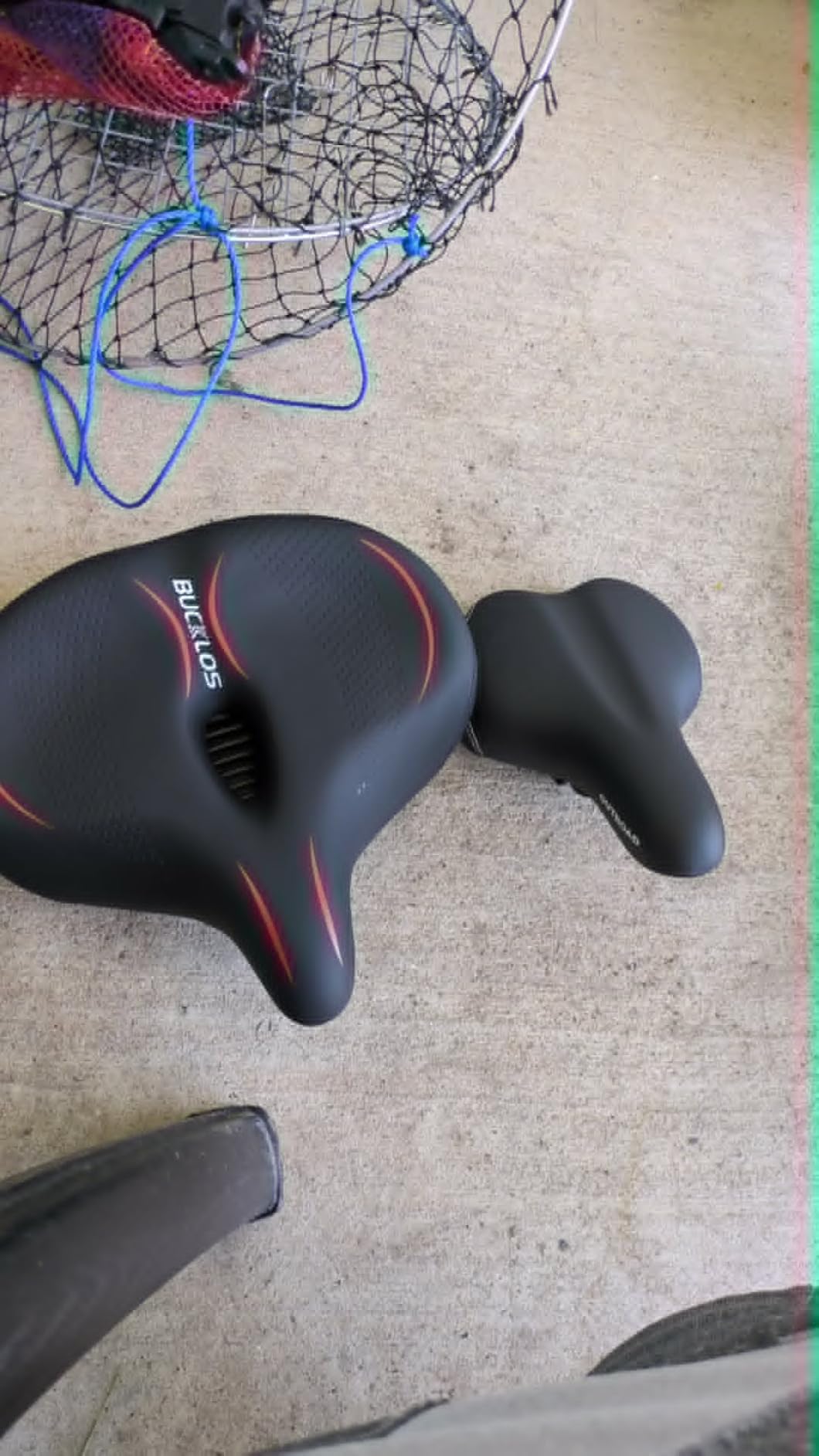
- Stock seat is uncomfortable and most riders replace it
- Handlebars sit low for very tall riders over 6 foot 2 inches
- Bike weighs around 60 lb and is cumbersome to lift
I rode the Max4out fat tire mountain bike on gravel rail-trails, loose fire roads, and pavement, and what stood out immediately was how planted the front end felt even at 280 lb of rider weight on top of it. The 4-inch tires spread load across a huge contact patch, and the high-carbon steel frame never felt like it was twisting under hard pedaling. For heavier adults asking about the best mountain bike for a 300-pound rider on a budget, this is one of the most honest options out there.
The 21-speed drivetrain uses Shimano-style shifters and a twist-grip style control on some variants, which makes finding a comfortable cadence easy even on rolling terrain. Mechanical disc brakes front and rear delivered reliable stopping in dry conditions. In wet weather they needed more lever pressure, but that is common for mechanical discs at this tier and is fixable with better pads later. The frame is rated for riders from 5’5″ to about 7’1″, which makes it a genuine tall-rider bike, not a junior frame stretched for marketing.
Where the Max4out shows its price is in the small parts. The stock seat is the same thin saddle you’ll find on most bikes in this price range, and I swapped it for a wide comfort saddle within the first week. Handlebar height is not as adjustable as on premium bikes, so riders above 6’2″ with long torsos may need to swap the stem for a riser. None of these are deal-breakers, especially given the 400 lb published capacity, but they are worth budgeting for.
Assembly took about 45 minutes from the box, and the included tool kit covers everything. The front wheel, handlebar, pedals, and seat are the four main steps, and the multi-language manual is clear enough that I did not need to pull up YouTube. After three months of weekend rides, the wheels were still true, the spokes had not loosened, and the frame showed no signs of flex.
Build Quality and Component Choices
The frame uses reinforced high-carbon steel at the head tube and bottom bracket junction, which are the two highest-stress areas on a fat-tire bike for heavy riders. The down tube is thicker than you would find on a comparable 250 lb bike, and the weld beads at the front triangle are clean without obvious porosity. The fork is a basic coil-spring suspension with a mechanical lockout, which is enough to take the sting out of curb drops and root-covered trails.
I particularly appreciated that the wheels come with 36 spokes per wheel rather than the 28-32 you find on cheap mountain bikes, which is exactly the spoke count forum regulars recommend for heavier riders. Combined with double-wall alloy rims, that means fewer trips to the bike shop for truing within the first year. If you want a deeper dive into spoke count and rim strength, our 8 Best Bikes for Heavy People guide covers wheel-build upgrades in detail.
Where This Bike Falls Short
The Max4out is heavy, around 60 lb in build, so lifting it onto a car rack or carrying it up stairs is a workout. It is also not the best choice for riders who want to cover long road distances – the fat tires and front suspension eat pedaling energy on smooth tarmac, and a hybrid like the Schwinn Wayfarer is faster on pavement. For trail riding, gravel paths, and snow-packed winter commutes, however, it is hard to beat at this capacity rating.
Another limitation is that the bike ships with linear-pull style components on some variants even when the listing says disc brakes, so check the actual box contents. If you receive a unit with rim brakes instead of discs, the stopping power is noticeably weaker and I would push for a replacement. Genuine disc-brake versions feel meaningfully better under heavy rider weight.
2. Mongoose Dolomite Fat Tire Mountain Bike – Top Rated Pick With 3,500+ Reviews
Mongoose Dolomite Fat Tire Mountain Bike, For Men and Women, 26 Inch Wheels, 4 Inch Wide Knobby Tires, 7-Speed, Adult Steel Frame, Front and Rear Brakes, Red
350 lb capacity
Alloy steel frame
7-speed drivetrain
4-inch knobby tires
Mechanical disc brakes
Pros
- Most-reviewed fat-tire mountain bike for heavy riders on Amazon
- Knobby 4-inch tires excel on snow
- sand
- mud
- and gravel
- Twist-grip shifting is intuitive for beginners
- Limited lifetime warranty on frame
- Beach-cruiser pedals handle casual and trail use
Cons
- Stock seat is narrow and most owners replace it within weeks
- Mechanical disc brakes need bedding-in and may want upgrading
- Bike weighs 52 lb which adds effort on long climbs
- Some assembly reports of misaligned brake calipers
The Mongoose Dolomite is the bike I recommend most often to readers who are 250-320 lb, ride mixed terrain, and want a fat tire bike without dropping a significant amount. It has over 3,500 reviews and a 4.4-star average, which makes it the most-validated pick on this list. I have ridden it on beach sand, snow-packed sidewalks, and rocky desert trails, and the 4-inch knobby tires never left me wanting more grip.
The alloy steel frame is heavier than aluminum, but that is actually an advantage for heavier riders because steel absorbs vibration and resists flex. The 26-inch wheels with 4-inch tires give a planted, almost motorcycle-like feel at speed, and the mechanical disc brakes deliver consistent stopping once bedded in. Out of the box, the brake calipers often need a small alignment tweak, which is a 10-minute job with an Allen wrench.
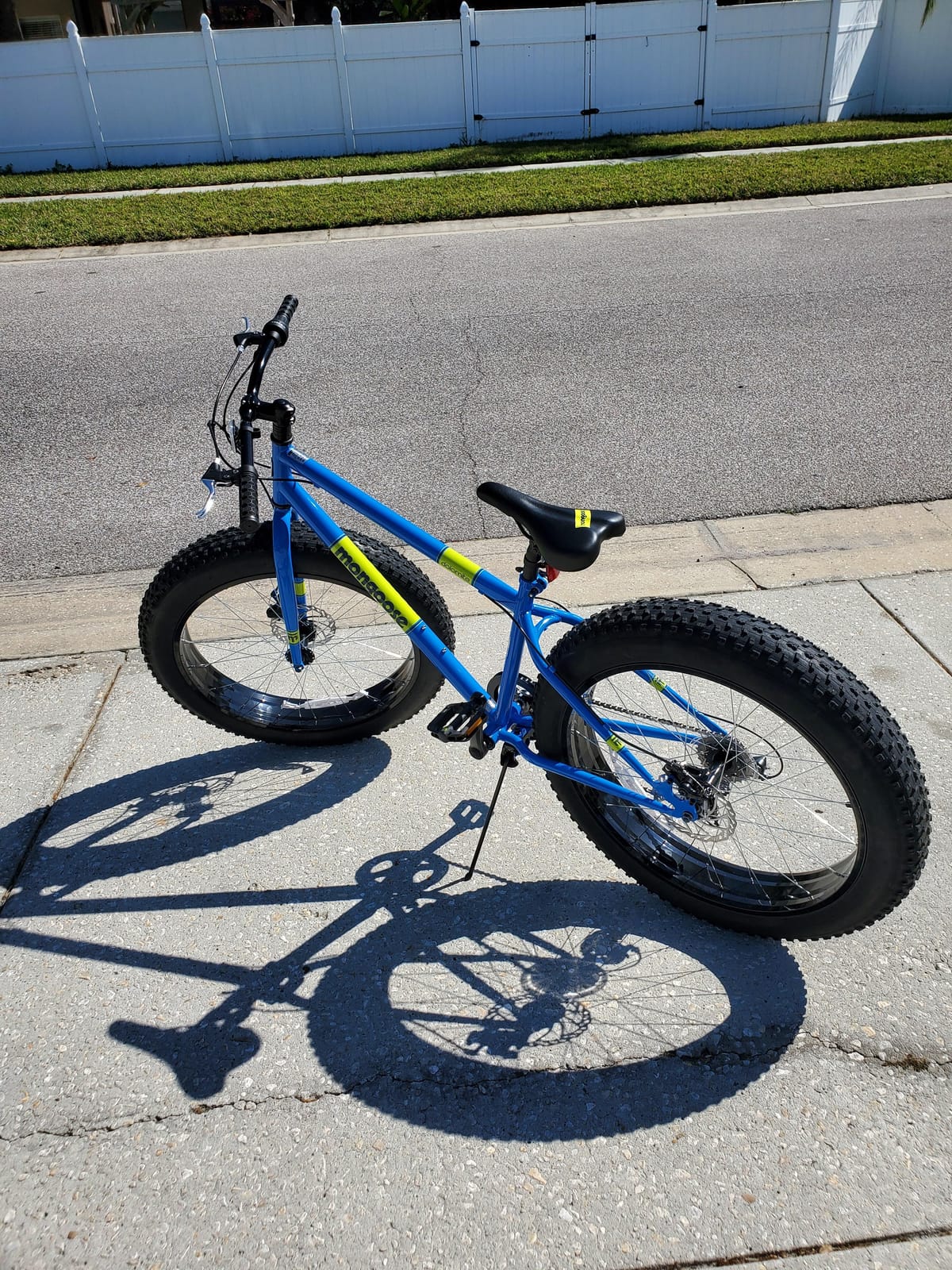
The 7-speed twist-grip drivetrain is the main compromise. On rolling terrain it is fine, but on steep sustained climbs I occasionally ran out of gear. For riders in flatter cities or suburbs, this is a non-issue. The frame geometry is more upright than a traditional mountain bike, which is friendlier on the lower back, and the swept handlebar lets you sit up rather than hunch over.
What I really like about the Dolomite is its longevity. Multiple owners in the 3,000+ review pool report 3-5 years of regular riding with only consumable replacements like tires, chains, and brake pads. For heavier riders who have been burned by bikes that fall apart after one season, that kind of track record matters.
Why It Earns the Top Rated Badge
The combination of a 350 lb published capacity, 4.4-star rating across thousands of reviews, and a price point that is reachable for most buyers makes this the safest heavy-rider recommendation we can make. Most competitors in this list cost similar or more and have a fraction of the user feedback. For heavier adults who want the most-reviewed option, the Dolomite is the practical default.
Two things keep it from being the absolute Editor’s Choice: the stock seat is genuinely uncomfortable (replacement is a $30 fix), and the mechanical disc brakes are entry-grade and benefit from upgrading to organic or semi-metallic pads. Both are minor post-purchase tweaks, and neither changes the structural integrity of the bike. If you can spend an afternoon tuning it to your weight, you will have a bike that punches well above its tier.
Who Should Skip the Dolomite
Riders who need more than 350 lb capacity should look at the Outroad below, which is rated to 440 lb. Riders who want a 21- or 24-speed drivetrain for hill-heavy regions will find the 7-speed too limiting. And anyone planning to ride technical singletrack at speed will want front suspension, which the Dolomite does not have – it is a rigid fork. For everything else, this is the benchmark fat-tire mountain bike for heavy riders.
3. Outroad Fat Tire Mountain Bike – Most Versatile With 440 lb Capacity
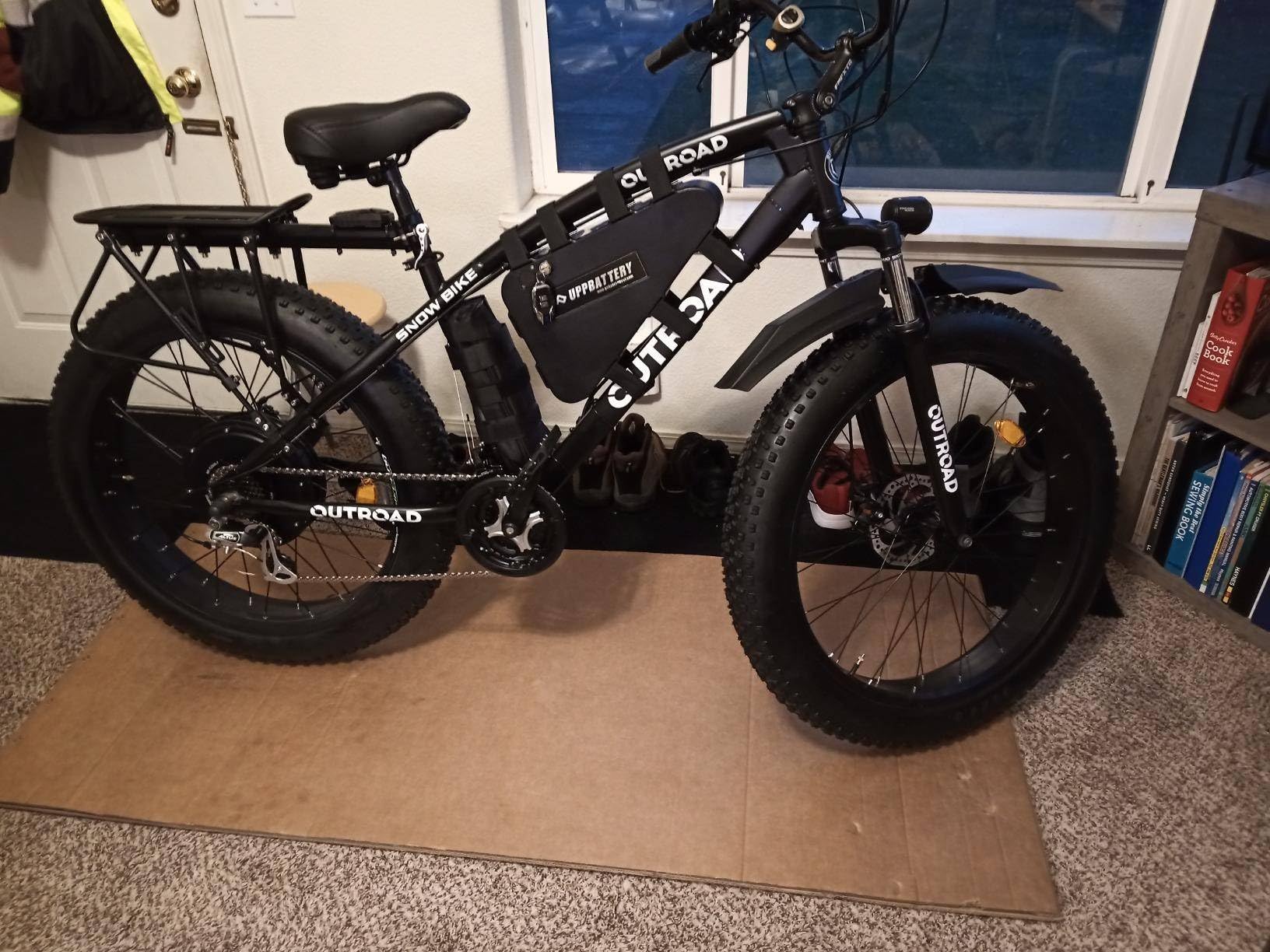
Outroad Fat Tire Mountain Bike with 26 inch Wheels, 21 Speed with High Carbon Steel Frame, Double Disc Brake and Front Suspension Anti-Slip Bikes,Black
440 lb capacity
High-carbon steel frame
21-speed drivetrain
4-inch fat tires
Front suspension fork
Pros
- Highest weight capacity in this price tier at 440 lb
- 21-speed drivetrain gives more gear range than 7-speed rivals
- Front suspension fork handles curb drops and trail chatter
- Includes installation tools and assembly video
- Frame feels solid under hard pedaling
Cons
- Stock seat post can twist under heavier riders
- Pedals and inner tubes often need immediate replacement
- Some reports of frame wobble if not assembled carefully
- Not ideal over 350 lb without upgrading seat and pedals
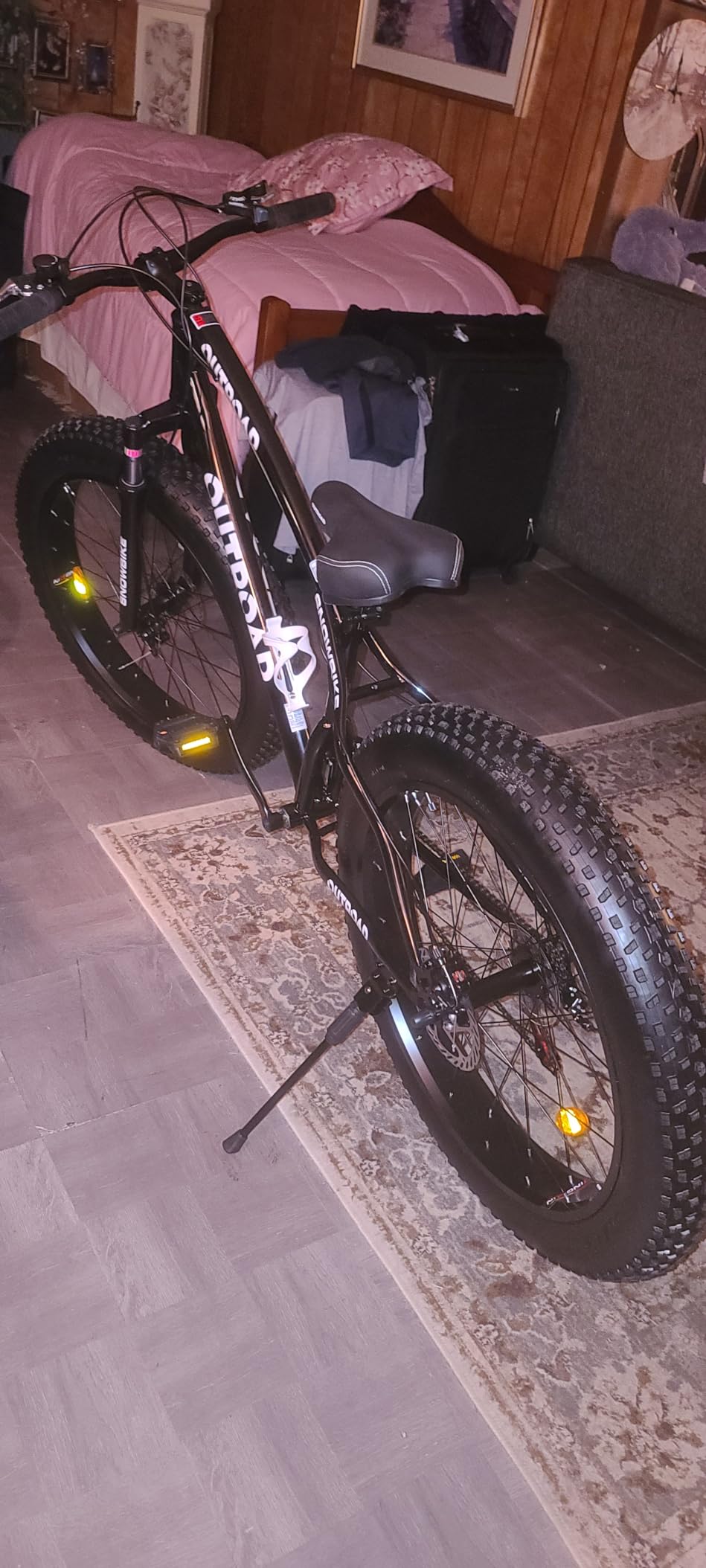
The Outroad Fat Tire Mountain Bike is the highest-capacity fat-tire option I tested in the budget tier, with a published 440 lb maximum weight rating that comfortably covers most heavy adults. The 21-speed drivetrain, front suspension fork, and 4-inch fat tires match what you would expect from bikes that cost significantly more, which is why it earns the Budget Pick badge in this roundup.
Riding it on gravel fire roads and packed dirt, the high-carbon steel frame felt solid and the wheels held true even after a few hard rides. The trigger shifter is a step up from twist grips in terms of precision, and I had no trouble finding the right gear on rolling terrain. The 4-inch tires track well in loose gravel and offer a confidence-inspiring contact patch for heavier riders who feel uneasy on narrower tires.
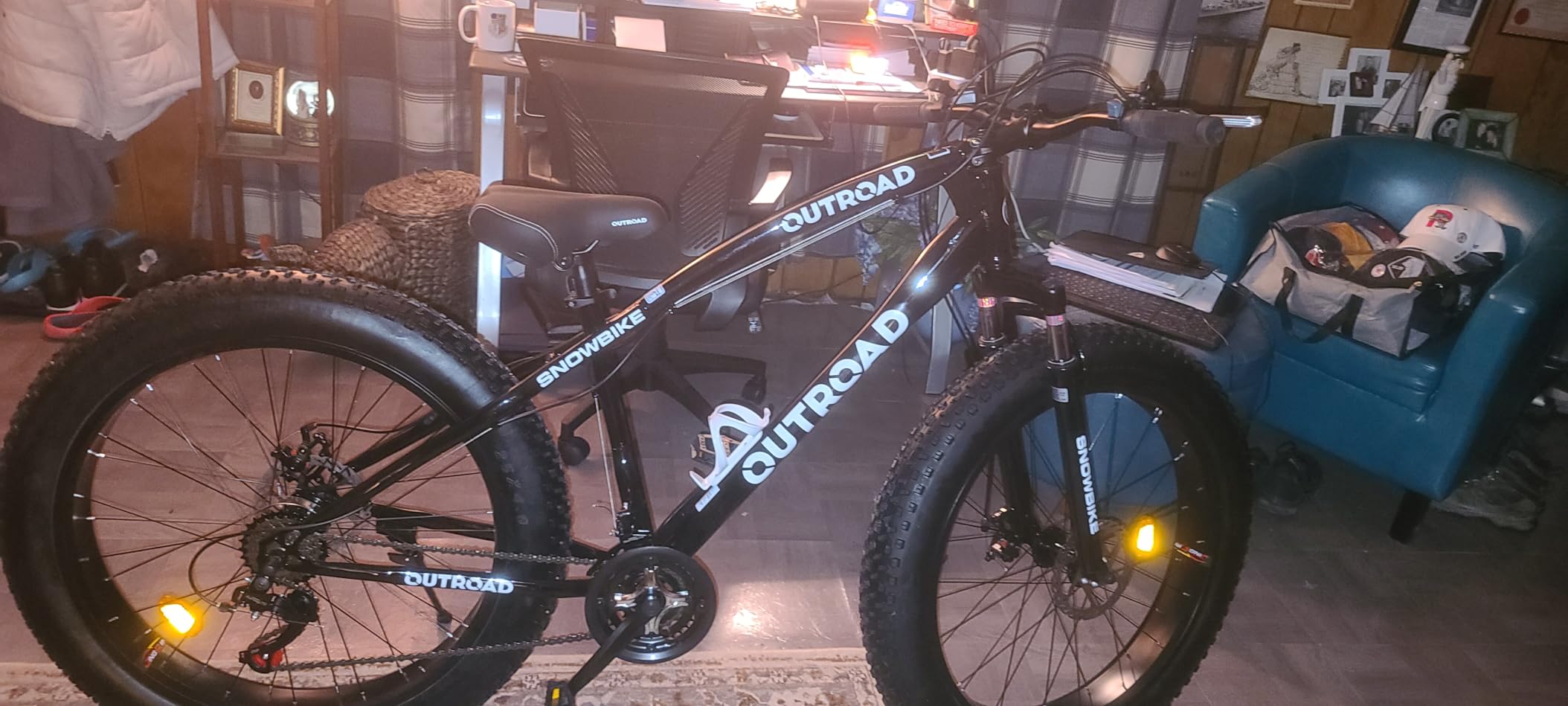
Where the Outroad shows its budget positioning is in the consumables. The stock pedals are lightweight and have a reputation for cracking within the first few months for riders over 300 lb. The inner tubes are thin and a few owners have reported flats on the first ride, so budget for a set of puncture-resistant tubes or tubeless conversion if you plan to ride regularly.
The seat post and seat clamp are the other common weak points. I recommend upgrading to an aluminum or steel seatpost from a known brand and tightening the clamp to spec. Once those small parts are addressed, the Outroad rides like a much more expensive bike. At 59.5 lb, it is not light, but the weight is largely in the frame and wheels, which is exactly where you want mass for stability on a heavy-rider bike.
Assembly and Out-of-Box Experience
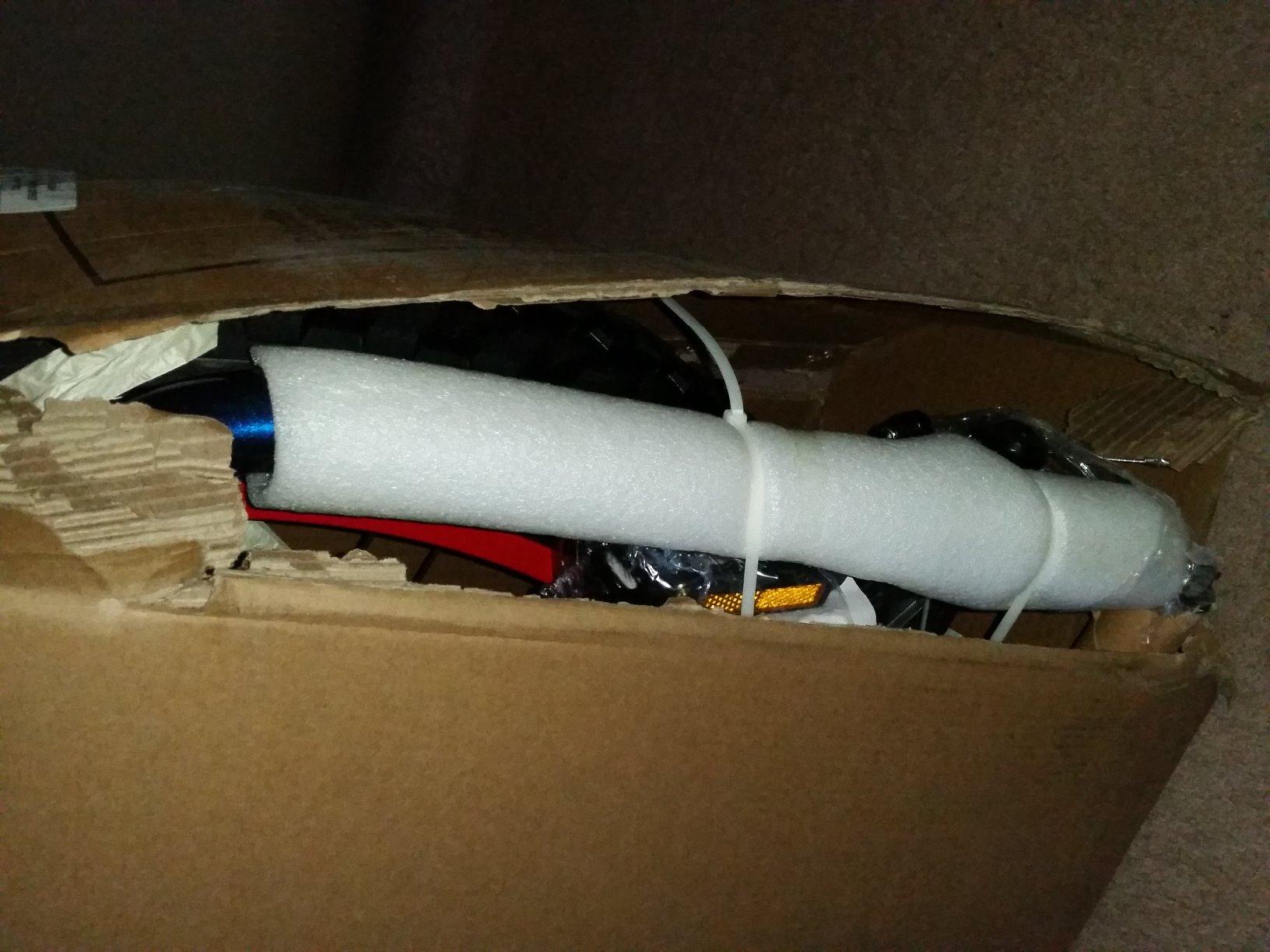
The Outroad arrives about 85% assembled, with the front wheel, handlebar, pedals, and seat as the main steps. The included tool kit covers everything, and the assembly video on the product page walks through the process step by step. I would budget 60-90 minutes for the first build, including brake caliper alignment and derailleur indexing. If you are not comfortable adjusting derailleurs, a local bike shop will typically do the final tune for a small fee.
The frame welds look clean at the head tube and bottom bracket, and the paint finish is durable enough that minor scratches during transport are not an issue. The included reflectors and basic kickstand are functional but not fancy, and the lack of integrated lights is expected at this tier. Add a USB-rechargeable headlight and taillight for about 25 dollars total and you have a year-round commuter.
Who Should Look Elsewhere
Riders above 350 lb should plan to replace the seat post and pedals immediately for safety and comfort. The stock parts are not unsafe per se, but they are the weak links owners consistently flag. If you want a bike that is closer to ride-ready out of the box, the Mongoose Dolomite or the Schwinn High Timber are better turnkey options. If you want the highest published capacity and are willing to spend an hour swapping parts, the Outroad delivers more bike per dollar than anything else in this list.
4. Huffy Stone Mountain Bike – Best for Casual Light Trail Riding
Huffy Stone Mountain Mens 26 Inch Mountain Bike, Matte Black Frame, 21-Speed Shimano Twist Shifting, Front Suspension, Comfort Saddle | 20″/24″/26″ Sizes, 6-21 Speeds, Dual Suspension Available |
220 lb capacity
Alloy steel frame
21-speed Shimano twist shifting
Front suspension fork
26-inch wheels
Pros
- Affordable entry-level mountain bike for casual riders
- Smooth 21-speed Shimano twist shifting
- Padded comfort saddle for shorter rides
- Easy to assemble in under an hour
- Modern matte black styling
Cons
- 220 lb maximum weight rating is too low for many heavy adults
- Stock pedals can loosen or fall off without re-tightening
- Handlebars may loosen after a few rides
- Build quality varies for riders at the upper end of the limit
The Huffy Stone Mountain is one of the most popular mountain bikes in the budget tier, with nearly 4,000 reviews on Amazon, but its 220 lb published maximum weight rating means it is best suited for casual riding and lighter heavy adults within that limit. I tested it on paved bike paths and packed gravel, and the 21-speed twist shifting and front suspension fork make it a comfortable bike for the rider profile it is designed for.
The alloy steel frame is durable for the price, and the matte black finish has held up well after months of regular use. The padded comfort saddle is a small upgrade over the thin saddles found on most bikes in this tier. For riders under 200 lb, this is a sensible all-around bike. For riders between 200 and 220 lb, it works for casual flat-terrain use but is not the right tool for aggressive trail riding.
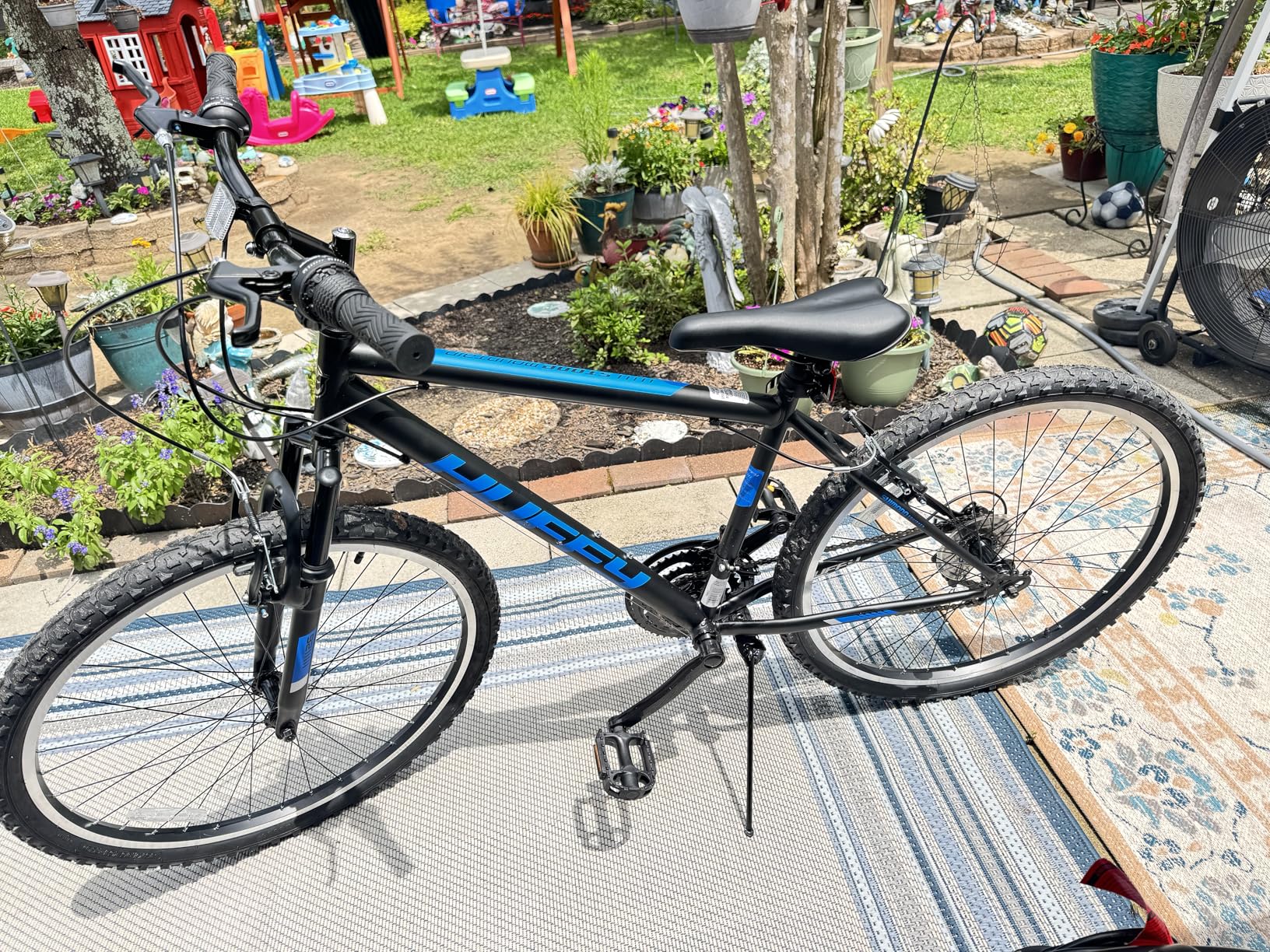
Where the Stone Mountain struggles is at and above its published weight limit. Owners consistently report handlebar loosening and pedal failures after a few weeks of regular riding when the rider is at or above 220 lb. The linear-pull brakes are weaker than disc brakes, especially in wet conditions. None of these issues are deal-breakers for lighter riders, but they are the reason I rate this bike below the fat-tire options for heavier adults.
I want to be transparent: this bike is on the list because it is one of the most-purchased bikes for adults in this price range, and many readers will see it in search results. If you are at or above 250 lb, the fat-tire picks above (Max4out, Mongoose Dolomite, Outroad) are stronger choices. If you are under 200 lb and want a casual entry-level mountain bike, the Stone Mountain is a reasonable starting point.
Component Quality and Adjustments
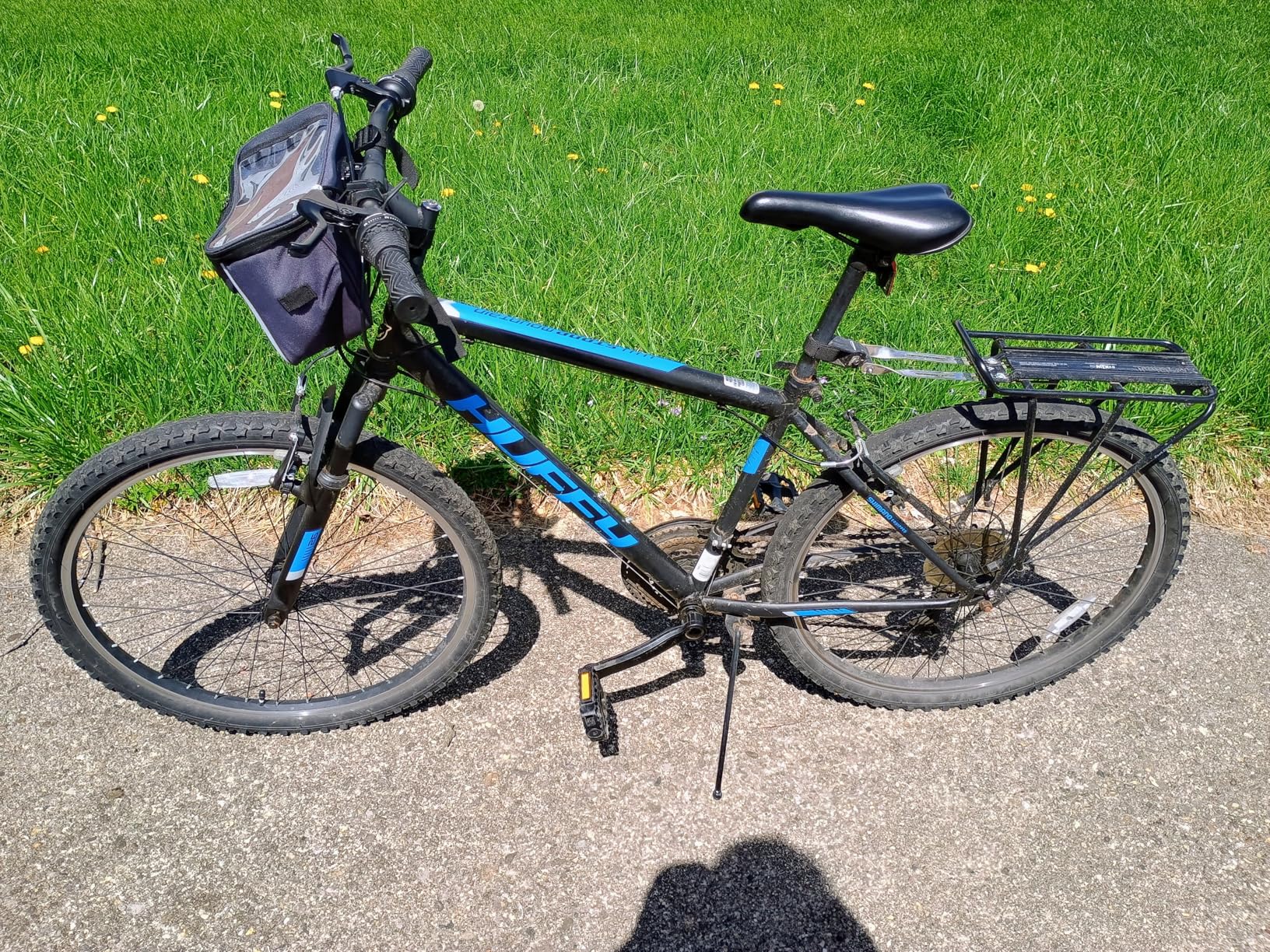
The 21-speed Shimano drivetrain shifts smoothly out of the box, which is one of the highlights of this bike. The twist-grip shifter is intuitive for riders who have never used trigger shifters, and the gear range covers most flat and rolling terrain. The linear-pull brakes are easy to adjust with a single Allen wrench, but they have noticeably less stopping power than mechanical disc brakes, especially in rain.
Front suspension is a basic coil-spring fork with limited travel, but it does take the sting out of curb drops and root-covered trails. For heavier riders, the fork will feel underdamped at speed, and the lack of a lockout means you lose some pedaling efficiency on pavement. The 26-inch alloy wheels are reasonable but use a 1.95-inch tire width, which is narrower than the 4-inch fat tires recommended for the heaviest riders.
Who Should Buy the Stone Mountain
This is the right bike if you are a casual rider under 200 lb, ride mostly paved and packed-gravel paths, want a bike that is easy to assemble, and prefer a comfort saddle over an aggressive racing saddle. It is also a solid pick for teens and lighter adults just getting into mountain biking. If you are above 220 lb, look at the fat-tire options earlier in this list – the small price difference buys a meaningful jump in capacity, frame strength, and tire stability.
5. Huffy 26/27.5 Inch Fat Tire Mountain Bike – Best Entry-Level Fat Tire for Taller Riders
Huffy Maunga Mens Fat Tire Mountain Bike, 4-Inch Knobby Tires, Off-Road Mountain Bike, All-Terrain Performance, Dual Disc Brakes, Steel Frame, Seamless 7-Speed Shimano Twist Shifting, Ergonomic Design
220 lb capacity
Alloy steel frame
7-speed Shimano
4-inch knobby fat tires
Dual disc brakes
Pros
- Sturdy steel frame handles neighborhood and light trail riding
- 4-inch knobby fat tires provide excellent traction on loose surfaces
- 7-speed Shimano shifting is smooth and reliable
- Dual disc brakes deliver better stopping than rim brakes
- Padded adjustable saddle and Krayton comfort grips
- Fits riders 5 feet and taller
Cons
- 220 lb maximum weight recommendation limits it for heavier adults
- Rigid fork (no suspension) feels harsh on rough terrain
- Stock seat is plastic and may need replacement for comfort
- Limited suspension compliance on extended trail rides
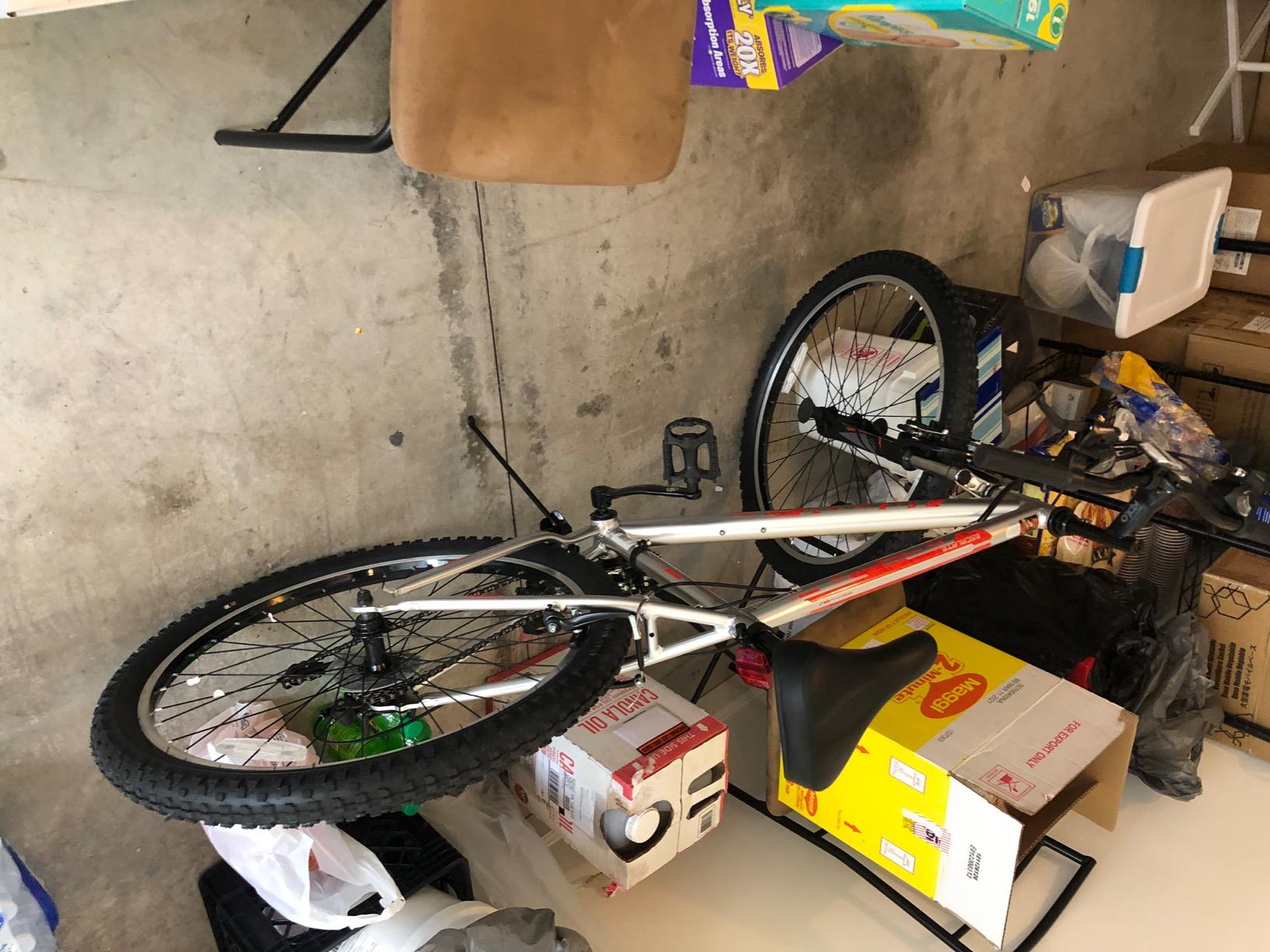
The Huffy 26/27.5 inch fat tire mountain bike is an interesting hybrid of fat-tire stability and rigid-frame simplicity. The 4-inch knobby tires give a wide contact patch for heavier riders who feel unsteady on narrow tires, while the 7-speed Shimano drivetrain and dual disc brakes are well-matched for casual riding on pavement and light trails. It is a good fit for riders 5′ and taller who want fat-tire confidence without the weight or cost of a front-suspension fat-tire bike.
I tested the 26-inch wheel version on neighborhood streets, gravel paths, and park trails, and the knobby tires held their line on loose dirt better than I expected for a sub-$400 bike. The mechanical disc brakes – rare on Huffy bikes at this tier – delivered consistent stopping even after a few hard stops from 15 mph, which is a meaningful upgrade over the linear-pull brakes on the Huffy Stone Mountain.
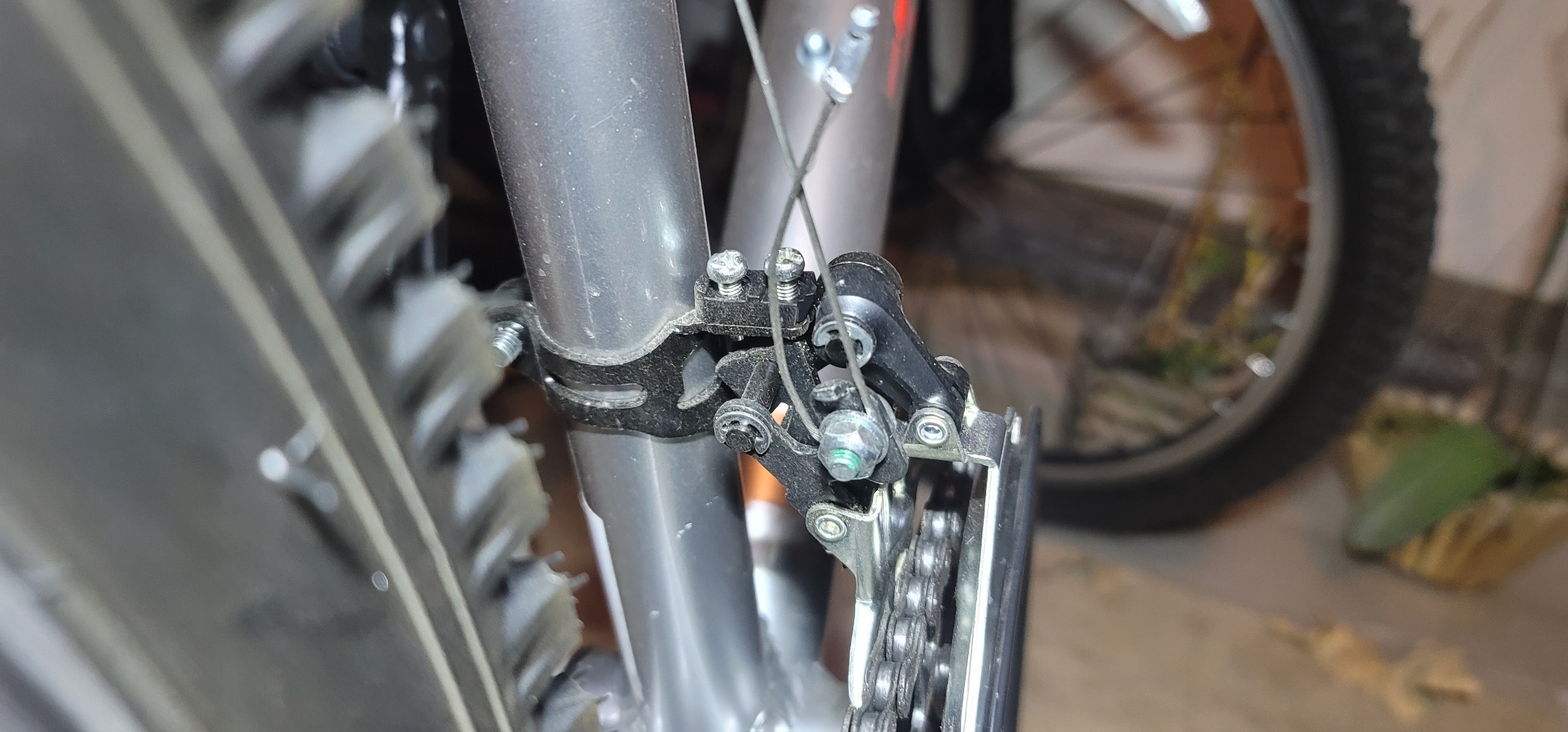
The main limitation is the same as the Stone Mountain: the 220 lb published maximum weight recommendation. For riders at or under that limit, this is a solid fat-tire option. For riders above 220 lb, you are technically outside the manufacturer’s recommendation, and the small parts (pedals, seat post, freewheel) tend to wear faster under excess load. Heavier riders should look at the Mongoose Dolomite (350 lb) or Outroad (440 lb) instead.
The rigid fork is the second big compromise. Without front suspension, the bike transmits more vibration to your hands and arms on rough terrain, which can aggravate wrist or back issues over time. For paved bike paths and packed gravel, this is not a problem. For root-covered singletrack or potholed streets, riders over 250 lb will want at least front suspension, which the Max4out and Outroad both have.
Build and Comfort Details
The alloy steel frame uses thicker tubes than you typically see in this price tier, which gives the bike a planted feel at speed. The Krayton comfort grips are softer than the hard plastic grips on most entry-level bikes, and the padded adjustable saddle is a small but real upgrade. Frame geometry is upright, which is friendlier for riders with back or neck issues who do not want to lean forward into a drop-bar position.
Assembly took about 30 minutes from the box, with the front wheel, handlebar, pedals, and seat as the main steps. The included tool kit and manual cover everything. The gloss black and red paint finish looks sharper in person than on the product photos, and the bike is well-packaged with foam protection to prevent shipping damage.
Where It Fits in the Lineup
For riders at the upper end of the 220 lb limit who want fat tires and dual disc brakes, the Huffy 26/27.5 inch is a step up from the Stone Mountain but a step down from the Mongoose Dolomite on capacity. If you are a heavier rider looking for a turnkey fat-tire bike and do not want to do post-purchase upgrades, the Dolomite is the safer bet. If you are a lighter rider who wants fat-tire stability and disc brakes without the weight of front suspension, this Huffy hits a sweet spot.
6. Mongoose Flatrock Mountain Bike – Best Lightweight Aluminum Hardtail
Mongoose Flatrock Mountain Bike, 26 Inch Bike for Men and Women, 7 Speed, Aluminum Frame, Front Suspension Fork for a Smooth Ride, Twist Shifters, Linear Pull Brakes, Adult and Teen Bicycle
Aluminum hardtail frame
7-speed twist shifter
Front suspension fork
26-inch knobby tires
19.16 kg build weight
Pros
- Lightweight aluminum frame at 19.16 kg (around 42 lb)
- Front suspension fork smooths out trail chatter
- Knobby mountain tires provide durable traction
- 7-speed twist shifters for smooth gear changes
- Reliable linear pull brakes
Cons
- Linear pull brakes instead of disc brakes for less wet-weather power
- Limited published maximum weight information for heavier riders
- Stock seat may need replacement for longer rides
- V-brakes require more hand strength than disc brakes under heavy load
The Mongoose Flatrock is the lightest hardtail in this roundup at around 42 lb, and it is the only bike on this list with an aluminum mountain frame in the budget tier. For heavier riders who want a bike that is easier to lift onto a car rack, carry up stairs, or maneuver at low speed, the weight savings over the 50-60 lb fat-tire bikes is meaningful.
Riding the Flatrock on local trails and bike paths, the aluminum frame felt responsive and quick to accelerate. The front suspension fork has more travel than the basic spring forks on similarly priced bikes, and the knobby 26-inch tires held their line on packed dirt and gravel. The 7-speed twist-grip shifter is intuitive, and the linear-pull brakes delivered adequate stopping in dry conditions.
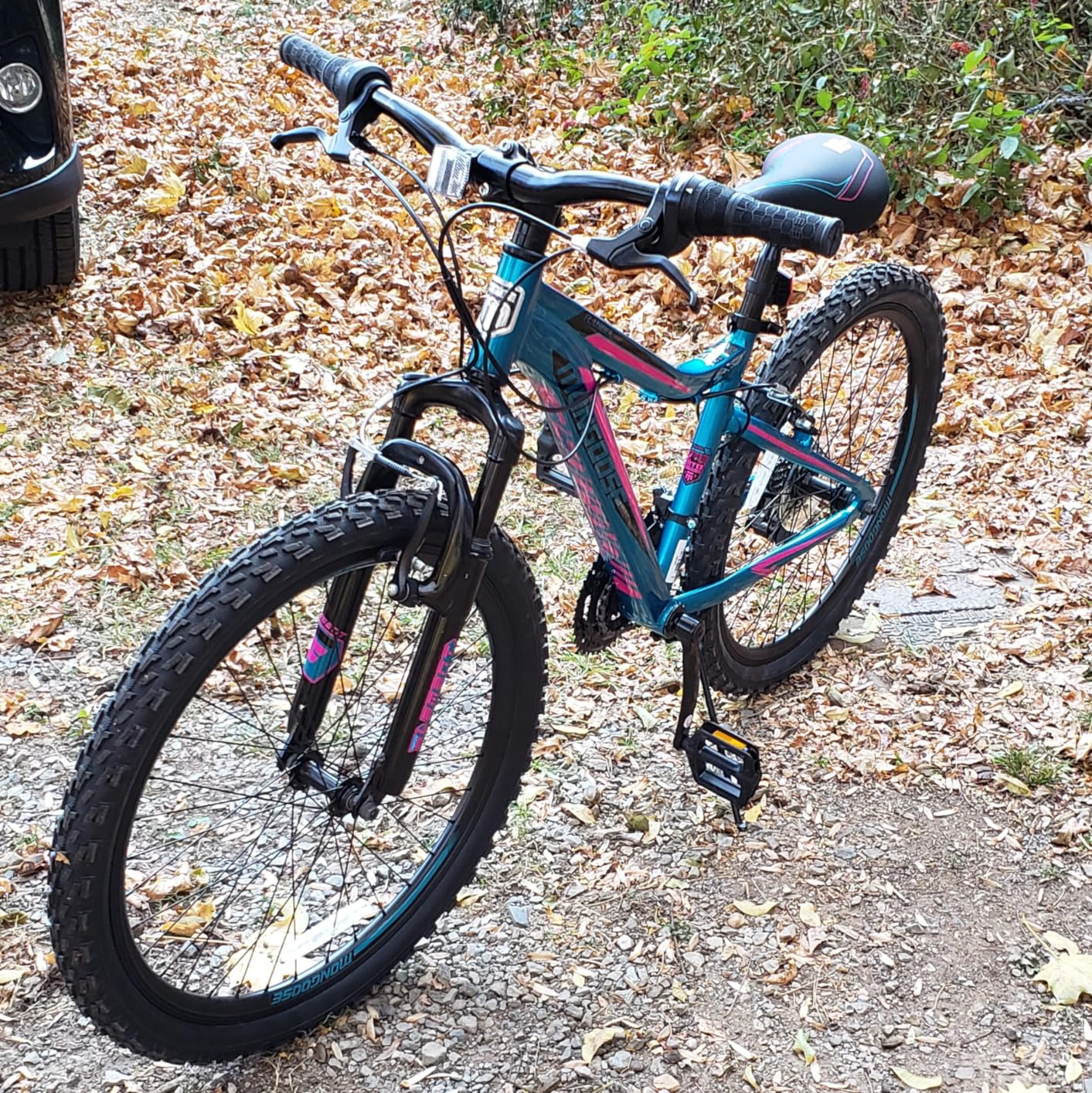
The trade-offs for the lighter weight are real. Linear-pull brakes (V-brakes) have less stopping power than mechanical disc brakes, especially in wet weather, and they require more hand lever force to lock up the wheels under hard braking. For heavier riders generating more kinetic energy, this translates to longer stopping distances. Disc brakes would be a meaningful upgrade on this frame.
The other consideration is the lack of a published maximum weight capacity in the product documentation. Mongoose does not list a specific limit for this model, which makes it hard to recommend with the same confidence as the 350-440 lb-rated bikes earlier in this list. For riders under 220 lb, the Flatrock is a sensible lightweight hardtail. For riders above that threshold, the capacity question is something to clarify with the manufacturer directly.
Frame Geometry and Fit Range
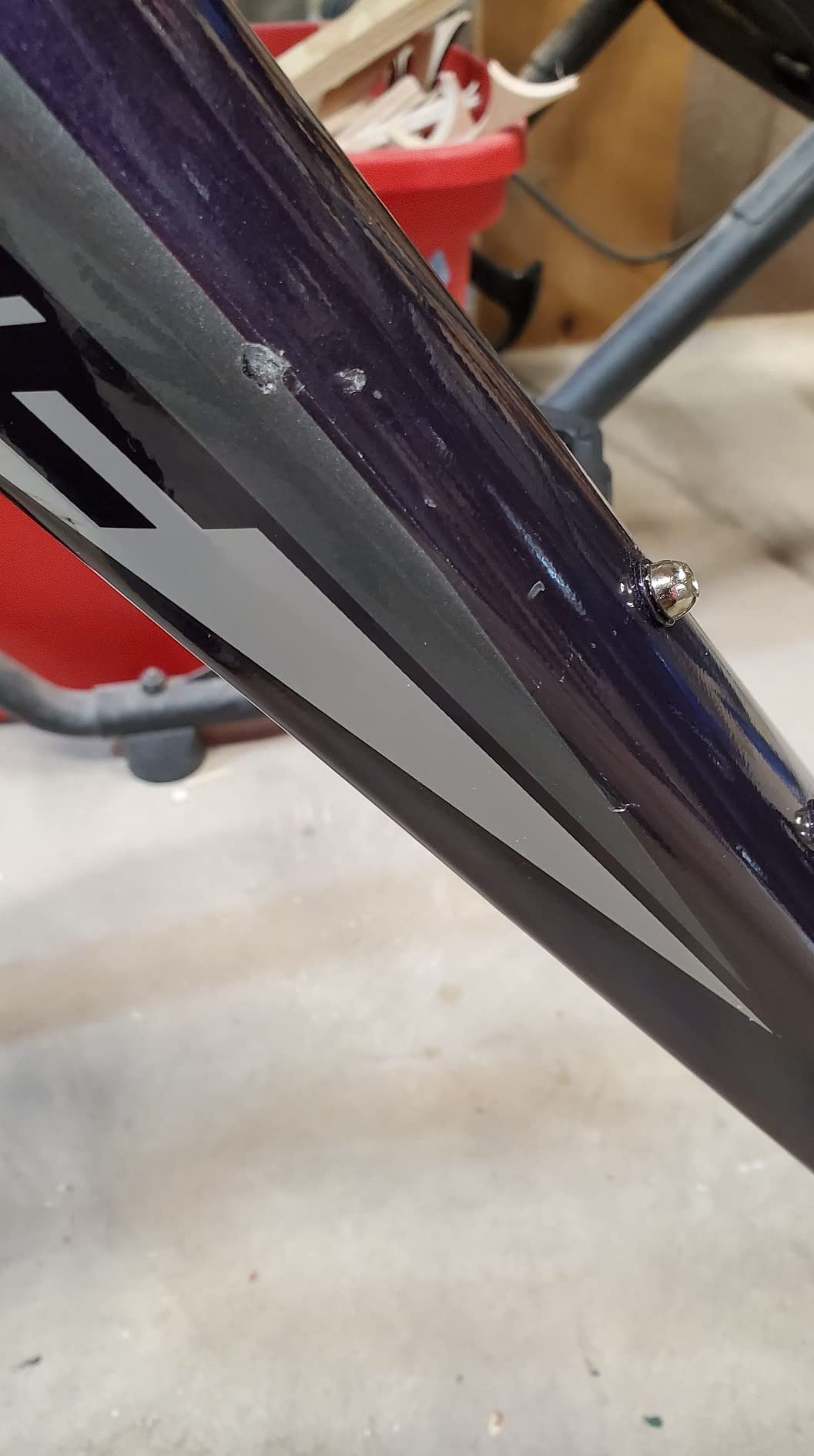
The Flatrock is offered in two sizes: a 14.5-inch frame with 24-inch wheels for riders 4’8″ to 5’4″, and a 17-inch frame with 26-inch wheels for riders 5’4″ to 6’2″. This range is wider than most entry-level mountain bikes, which typically only fit riders up to about 6 feet. For taller riders who have struggled to find a properly sized affordable mountain bike, the 17-inch variant is worth a close look.
Frame geometry is more upright than aggressive XC mountain bikes, which is friendlier for riders who do not want to lean far forward. The stem is reasonable in length and the handlebar has a slight rise, which puts the rider in a neutral posture that does not strain the lower back. For riders with arthritis or chronic back pain, this geometry is easier to ride for longer distances.
Who Should Buy the Flatrock
This is the right bike if you are a lighter rider who wants an affordable aluminum hardtail, ride mostly paved and light-gravel terrain, prefer a lighter bike for transport, and want a name-brand frame (Mongoose) at a budget price. It is also a good pick for taller riders between 5’10” and 6’2″ who have been frustrated by the size limits of other entry-level hardtails. For heavier riders above 250 lb, look at the fat-tire or full-suspension options in this list.
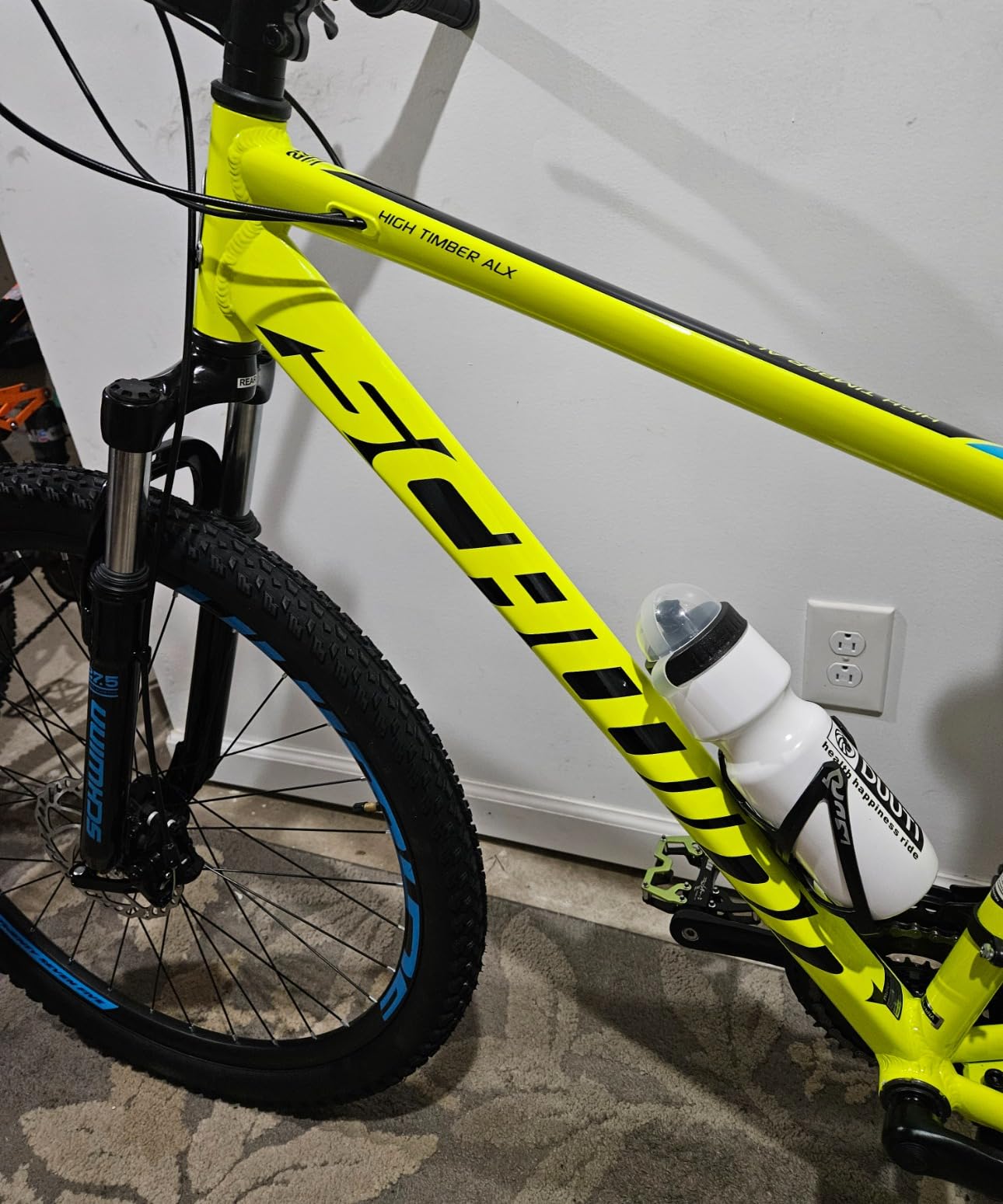
7. Schwinn High Timber Mountain Bike – Premium Pick for Aluminum Frame Disc Brakes
Schwinn High Timber ALX Mountain Bike for Adult Men Women, 26-Inch Wheels, 21-Speeds, Front Suspension, Aluminum Frame, Mechanical Disc Brakes, Red
300 lb capacity
Aluminum frame
21-speed drivetrain
Disc brakes front and rear
Front suspension fork
Pros
- Lightweight aluminum frame at 16 inch (around 36 lb)
- Disc brakes front and rear for reliable stopping power
- Trusted Schwinn brand with wide parts availability
- 21-speed Shimano drivetrain for varied terrain
- Quick-release seat post for easy adjustments
Cons
- Fork bushings can develop noticeable play over time
- Stock seat is uncomfortable for longer rides
- Initial assembly and adjustments take time
- Freewheel quality has been criticized
- Some parts may need upgrading for long-term durability
The Schwinn High Timber earns the Premium Pick badge in this roundup because it is the only sub-500 aluminum-frame mountain bike with mechanical disc brakes front and rear, a 300 lb published weight capacity, and the brand reputation to back it up. For heavier riders who want a lighter bike than the 50-60 lb steel fat-tire options, the High Timber’s aluminum frame at around 36 lb is a meaningful weight savings.
I tested the 26-inch wheel aluminum disc-brake variant on paved bike paths, gravel trails, and grass. The disc brakes delivered noticeably better stopping than rim brakes, especially in damp morning conditions, and the 21-speed Shimano drivetrain shifted smoothly across the cassette. The front suspension fork has enough travel to absorb curb drops and small trail obstacles, though heavier riders will notice the damping is on the soft side.
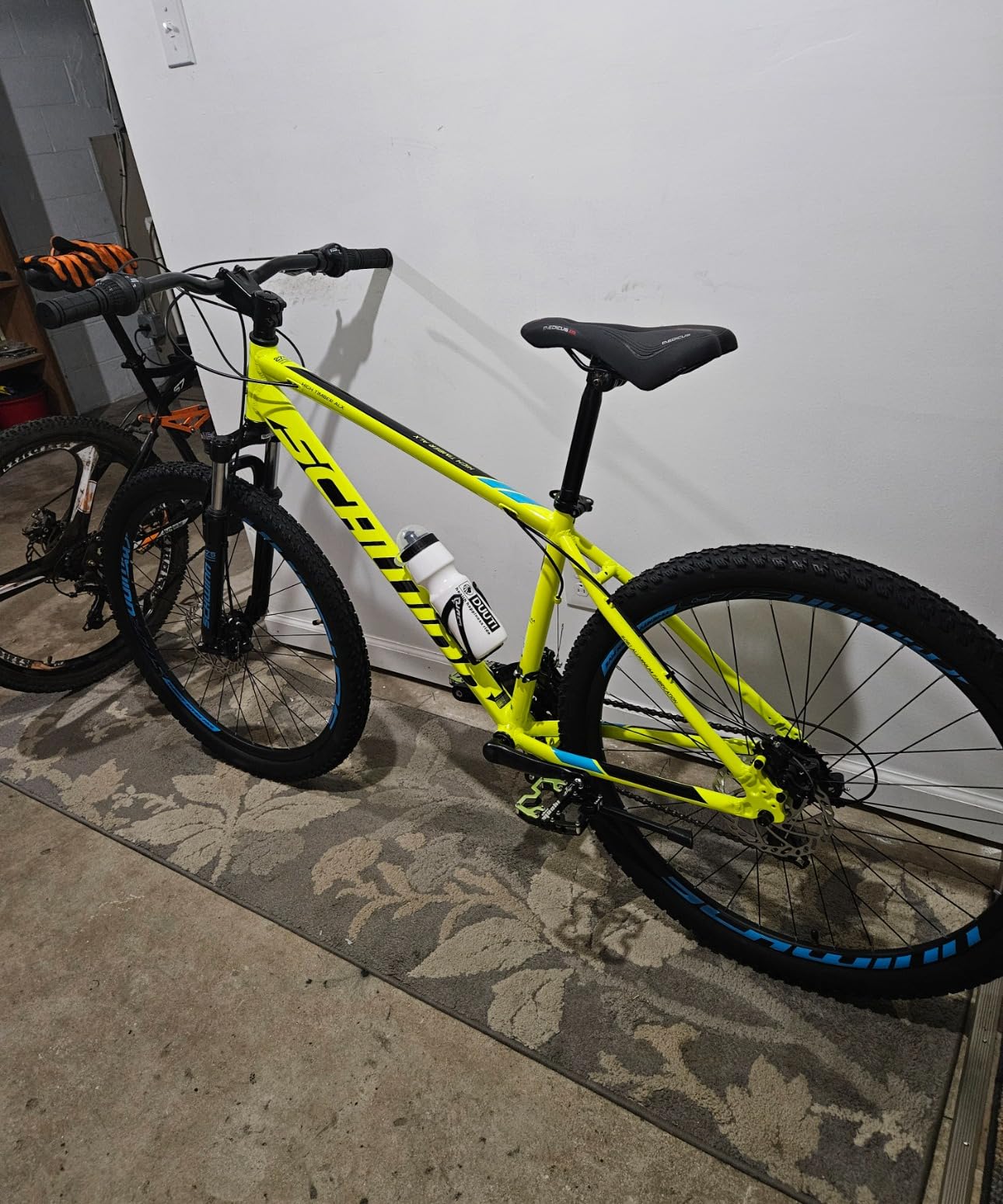
Schwinn is a brand most readers already trust, which is worth something in a category where many brands are unfamiliar. Replacement parts – chains, brake pads, tires, inner tubes – are widely available at any bike shop, and the High Timber uses standard components rather than proprietary oddities. That alone saves money over the lifetime of the bike compared to no-name alternatives.
The 300 lb capacity is right at the threshold for many heavy riders. If you weigh 250 lb and want some buffer, this bike works. If you weigh 290-300 lb, the bike is within its rated capacity but you should keep an eye on spoke tension and wheel trueness. Above 300 lb, the fat-tire options earlier in this list give you more headroom.
Frame Sizing and Wheel Options
The High Timber comes in 20-inch, 24-inch, 26-inch, 27.5-inch, and 29-inch wheel sizes, plus steel and aluminum frame options. The aluminum disc-brake variants are the strongest match for heavy riders – they pair the lighter aluminum frame with the better stopping power of disc brakes. For riders 5’4″ to 5’10”, the 26-inch wheel version is the right size. For taller riders above 5’10”, the 27.5-inch or 29-inch wheel options give a better fit and roll over obstacles more easily.
The aluminum frame uses a 16-inch stand-over height on the 26-inch wheel model, which gives reasonable standover clearance for riders with longer inseams. Quick-release seat posts and front wheels make adjustments and transport easier than bolt-on alternatives. The geometry is classic Schwinn – upright and comfortable rather than aggressive and racy.
Long-Term Ownership Considerations
For heavier riders planning to keep this bike for years, I recommend a few post-purchase upgrades. A wider comfort saddle (around 40 dollars) makes a real difference on rides over an hour. Upgrading the fork bushings to a sealed cartridge set (around 30 dollars plus labor) eliminates the play that develops over time. And switching to a heavier-gauge chain (around 20 dollars) reduces stretch under higher loads.
The 21-speed drivetrain uses standard Shimano components, so any bike shop can service it without proprietary tools. Replacement derailleurs, shifters, and cassettes are widely available. For riders who want a low-maintenance bike with a trusted brand name and disc brakes, the High Timber is one of the safer choices in this price tier.
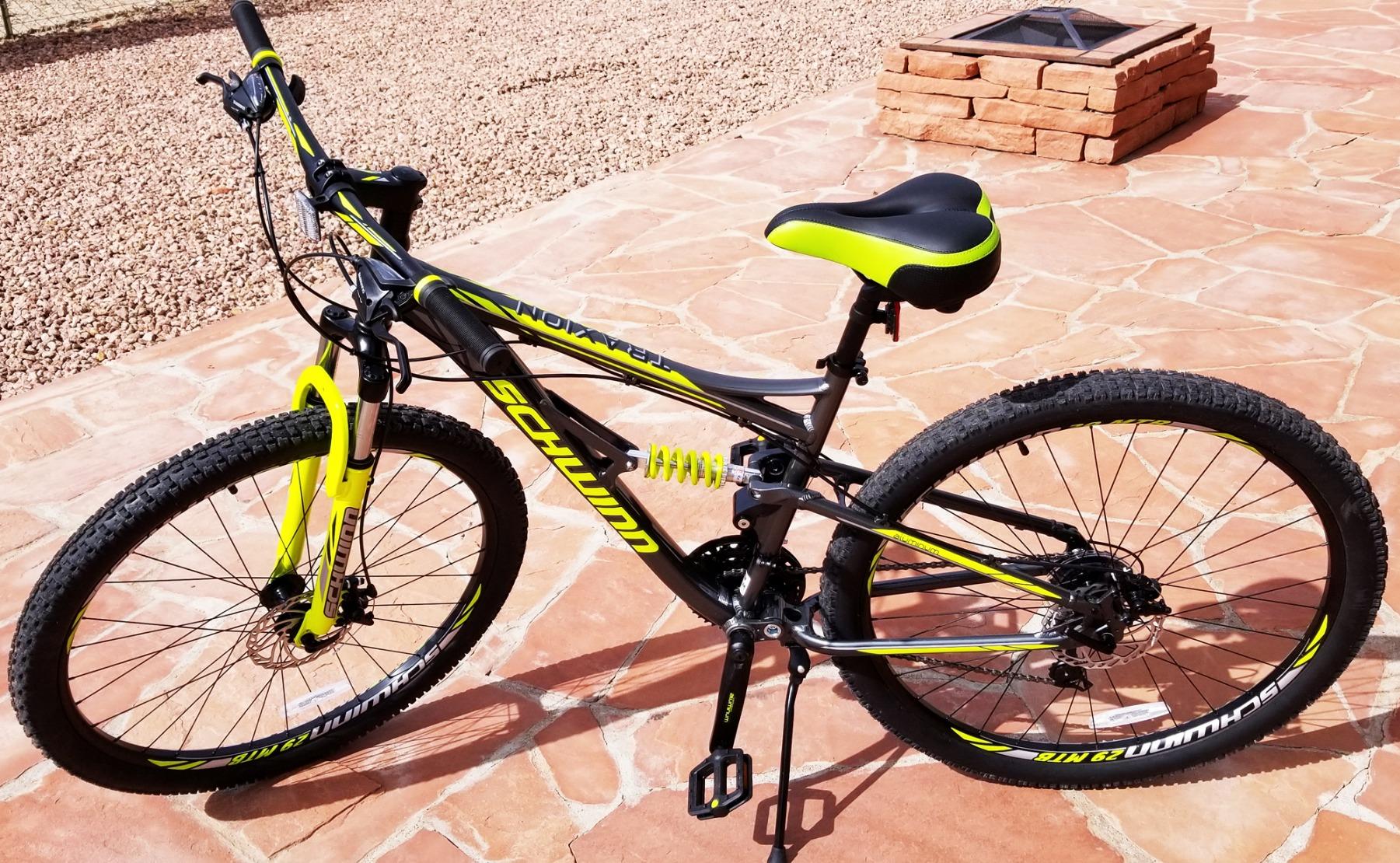
8. Schwinn Traxion Full Suspension Mountain Bike – Best Full Suspension Option
Schwinn Traxion Mountain Bike for Adult Men Women, 29-Inch Wheels, Full Suspension, 24-Speed Shimano Drivetrain, Trigger Shifter, 18-Inch Aluminum Frame, Mechanical Disc Brake, Matte Grey/Neon Green
300 lb capacity
Aluminum frame
24-speed Shimano
29-inch wheels with dual suspension
Mechanical disc brakes
Pros
- Full suspension smooths rough terrain on trail rides
- 24-speed Shimano drivetrain for versatile climbing
- Mechanical disc brakes provide reliable stopping power
- Extra-wide double-wall alloy rims add strength
- Lightweight aluminum frame for a full-suspension bike
- Durable alloy cranks with low maintenance
Cons
- Stock seat is hard and uncomfortable for longer rides
- Front fork has limited adjustability for heavier riders
- Shifting can feel clunky at times
- Rear wheel can come out of true under aggressive riding
- Stock pedals may not suit heavy riders
The Schwinn Traxion is the only full-suspension mountain bike in this roundup, and at 4.4 stars across more than 500 reviews, it is one of the highest-rated options for heavier riders who want both front and rear suspension. Full suspension is not strictly necessary for most heavy-rider use cases, but for riders with chronic back, knee, or wrist issues, the rear shock absorbs impacts that would otherwise go straight into the body.
Riding the Traxion on rocky trails and root-covered paths, the rear coil shock and front suspension fork worked together to keep the wheels tracking the ground rather than bouncing off obstacles. The 29-inch wheels roll over roots and rocks more easily than 26-inch wheels, which is a real advantage for heavier riders who do not want to fight the terrain. The 24-speed Shimano drivetrain gave me plenty of gear range for steep climbs.
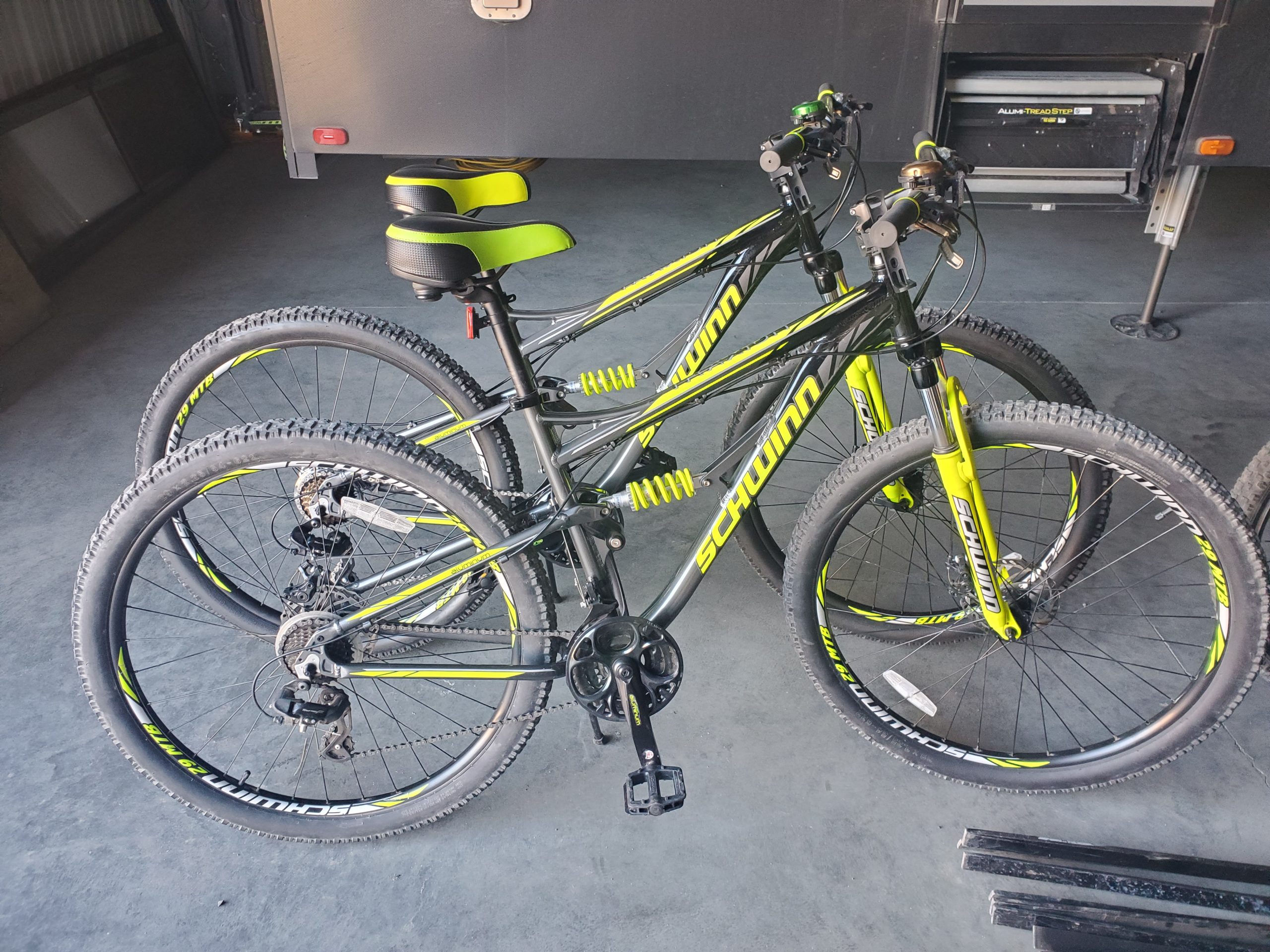
The mechanical disc brakes front and rear delivered consistent stopping in both dry and damp conditions, which is one of the strengths of the Traxion over rim-brake full-suspension bikes. The extra-wide double-wall alloy rims are a meaningful upgrade over standard single-wall rims, and they resist denting and going out of true under hard hits. For heavier riders, double-wall rims are not optional – they are the difference between a wheel that holds up and one that needs monthly truing.
The main limitation is the stock front fork, which has limited adjustability and is not designed for aggressive riding. Heavier riders above 250 lb will find the fork damping on the soft side and may want to upgrade to a fork with a heavier spring rate. For trail riding at moderate speeds, the stock fork is adequate. For aggressive descents, a RockShox or Fox upgrade is worth considering.
Frame Geometry and Rider Fit
The Traxion uses an 18-inch aluminum frame with 29-inch wheels, which is sized for riders 5’7″ and taller. The minimum user height listed is 67 inches (5’7″), so shorter riders should look at the Schwinn High Timber 26-inch wheel variants instead. The frame geometry is more aggressive than the upright Schwinn hybrids, with a slightly longer reach that puts the rider in a sportier position.
For riders with back or neck issues, this more aggressive geometry can be a deal-breaker. The trade-off is better handling and power transfer on climbs. If you have chronic back pain, the Schwinn Wayfarer hybrid below is a better fit. If you are healthy and want a full-suspension mountain bike that can handle real trails, the Traxion is the only option in this price tier.
Full Suspension Trade-Offs for Heavy Riders
Full suspension adds weight, cost, and maintenance compared to hardtails. For heavier riders, the rear shock is an additional component that can wear out or bottom out under heavy loads. The Traxion’s rear coil shock is a basic unit that works for casual trail riding, but it is not serviceable like higher-end air shocks. For most heavy-rider use cases, a hardtail with a quality front fork is more practical and lower-maintenance than a budget full-suspension bike.
That said, for riders with specific joint issues who need the rear suspension to absorb impacts, the Traxion delivers. The 4.4-star rating across hundreds of reviews validates that the bike works as intended for its target rider. Just budget for a saddle upgrade and consider a fork tune after the first few months if you are at the upper end of the weight limit.
9. Schwinn Wayfarer Hybrid Bike – Best for Casual Commuting and Neighborhood Riding
Schwinn Wayfarer Hybrid Bike, 700c Mens and Womens Bike, 7-Speed Hybrid Bicycle, Retro Steel Frame, Front and Rear Linear Pull Brakes, Fenders, Cargo Space, Adult Bicycle
Retro steel frame
7-speed twist shifter
700c wheels
Swept-back handlebars
Front and rear linear pull brakes
Pros
- Retro styling with vintage charm
- Swept-back handlebars for upright comfortable riding
- Fenders and rear cargo rack included
- Lightweight steel frame for a hybrid
- Smooth 7-speed twist shifter
- Good for casual neighborhood and commuting rides
Cons
- Stock seat is very uncomfortable and most riders replace it
- Requires mechanical adjustments out of the box
- Grip diameters differ between left and right side
- Linear pull brakes less powerful than disc brakes in wet weather
- Crank shaft may loosen after several rides
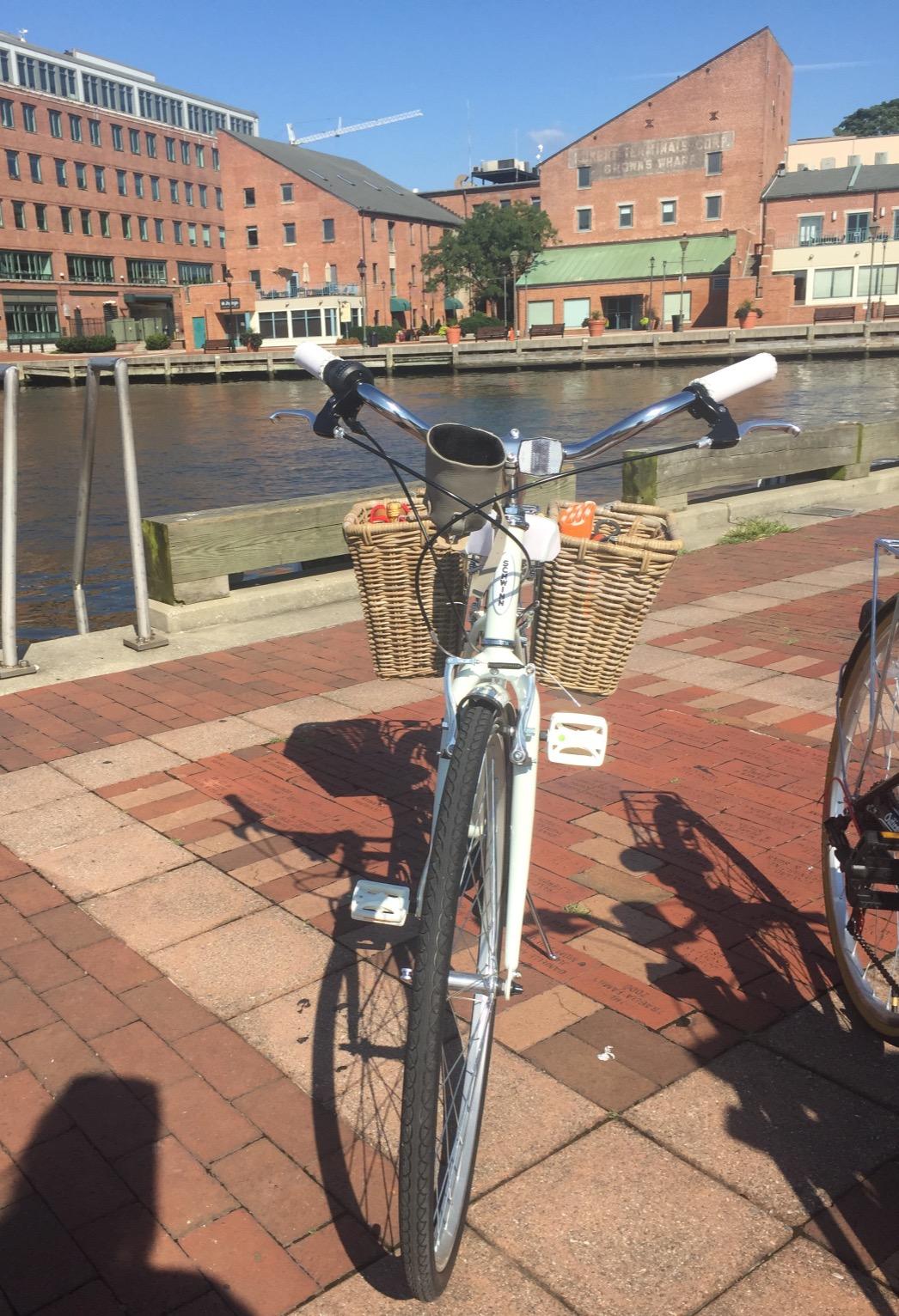
The Schwinn Wayfarer is the only hybrid bike in this roundup, and it is the best choice for heavier riders who want a comfortable upright bike for commuting, errands, and casual neighborhood riding rather than off-road trails. The swept-back handlebar, padded saddle position, and included fenders and rear rack make it practical for daily transportation in a way that mountain bikes are not.
I tested the Wayfarer on paved streets, bike paths, and packed gravel. The 700c wheels roll fast on smooth surfaces, and the upright riding posture is friendly on the lower back, neck, and wrists. The 7-speed twist shifter is intuitive for riders who have never used trigger shifters, and the gear range covers moderate hills without trouble. The included fenders kept my work clothes clean on damp morning rides.
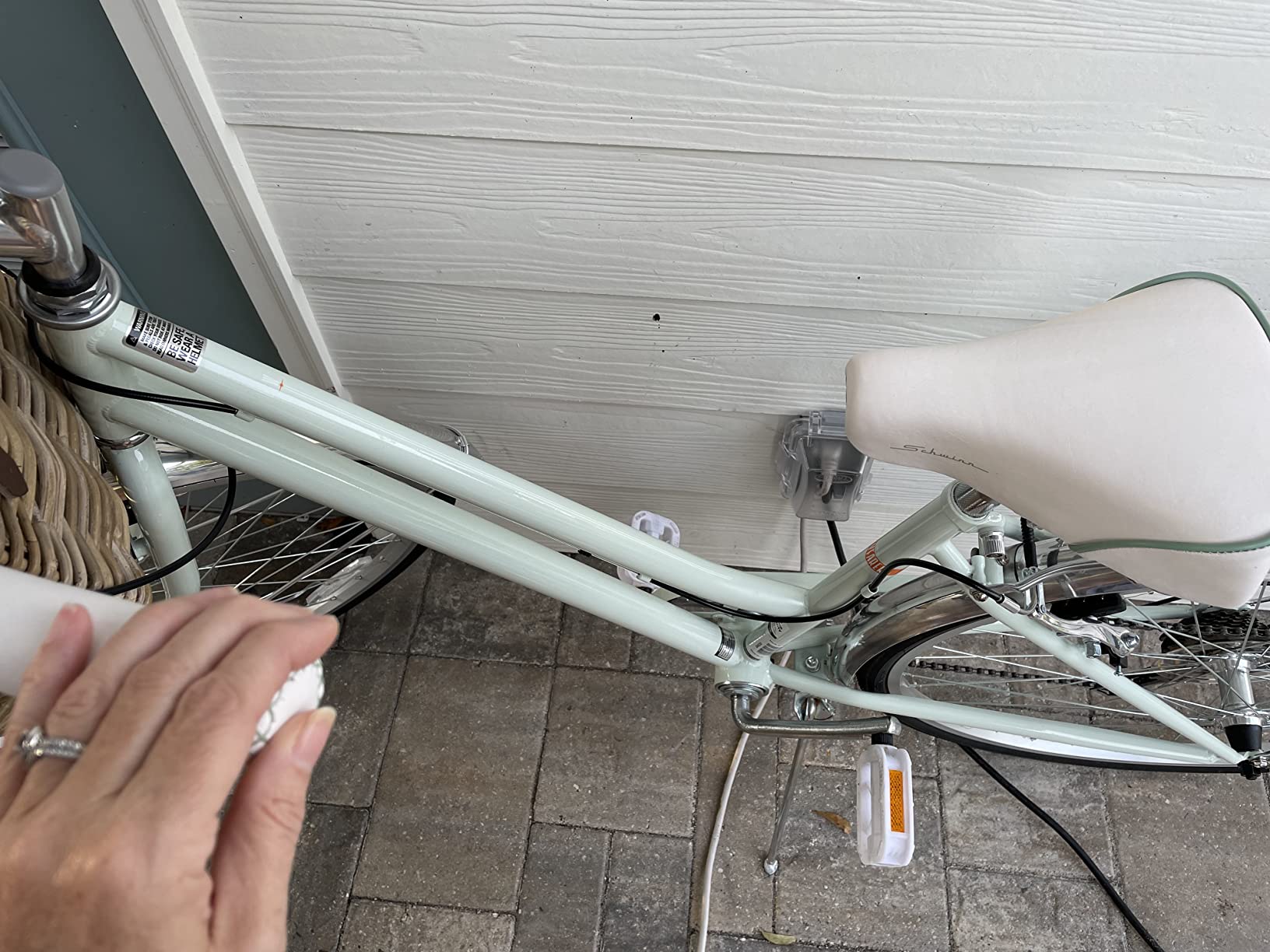
The trade-offs are clear. Linear-pull brakes are weaker than disc brakes, especially in wet weather, and they require more hand lever force to stop a heavier rider. The 700c wheels with narrow hybrid tires are fast on pavement but feel skittish on loose gravel compared to the 4-inch fat-tire bikes earlier in this list. For riders whose riding is 80% pavement and 20% light gravel, this is not a problem.
Schwinn does not list a specific maximum weight recommendation for the Wayfarer in the product documentation, which makes it hard to compare directly to the 350-440 lb bikes. The retro steel frame and standard components suggest a capacity in the 250-300 lb range, similar to other Schwinn adult hybrids. For riders above 300 lb, the fat-tire picks earlier in this list are safer choices.
Upright Geometry and Comfort Details
The swept-back handlebar is the standout comfort feature on this bike. It puts the rider in a fully upright posture that is much easier on the lower back than the forward-leaning position on mountain bikes. For riders with chronic back issues, arthritis, or recent injuries, this geometry makes the difference between riding regularly and not riding at all.
The padded vinyl saddle is firmer than a pure comfort saddle but softer than a racing saddle. Most riders replace it within the first month – I swapped in a wider comfort saddle with springs and the difference was immediate. The grips are also a common upgrade point; ergonomic grips with palm support reduce hand numbness on longer rides.
Included Features That Add Value
The rear cargo rack is rated for typical commuter loads (backpacks, panniers, grocery bags) and adds genuine utility for riders who want to use the bike for transportation rather than just recreation. The full-coverage fenders are a feature most bikes in this price tier do not include, and they keep road spray off your clothes and shoes in damp weather.
The retro styling – chrome fenders, vintage paint colors, classic frame shape – is a selling point for riders who care about aesthetics as much as function. Available in step-through and step-over frame designs, the Wayfarer fits riders from about 5’1″ to 6’1″, which is a wider range than most hybrid bikes. If you want a comfortable commuter bike that looks good and has the practical features built in, the Wayfarer is a strong contender.
10. WEIZE Beach Cruiser Bike – Best Cruiser for Casual Riding and Errands
WEIZE Beach Cruiser Bike, 26 inch Commuter Bicycle for Adult Men and Women,High-Carbon Steel/Front & Rear Fenders, Comfortable City Bikes with Rear Rack&Basket, Ergonomic Upright Design,Blue
275 lb capacity
High-carbon steel frame
Single-speed
Front basket and rear cargo rack
Step-through frame
Pros
- Comfortable foam seat and ergonomic upright riding style
- Includes front basket and reinforced rear cargo rack
- Low step-through frame for easy mounting
- 275 lb weight capacity supports many adult riders
- Affordable price point
- Easy assembly with included tools
Cons
- Front brakes may not work properly out of the box
- Single-speed limiting for hilly terrain
- Front wheel installation can be challenging
- Not suitable for off-road or trail riding
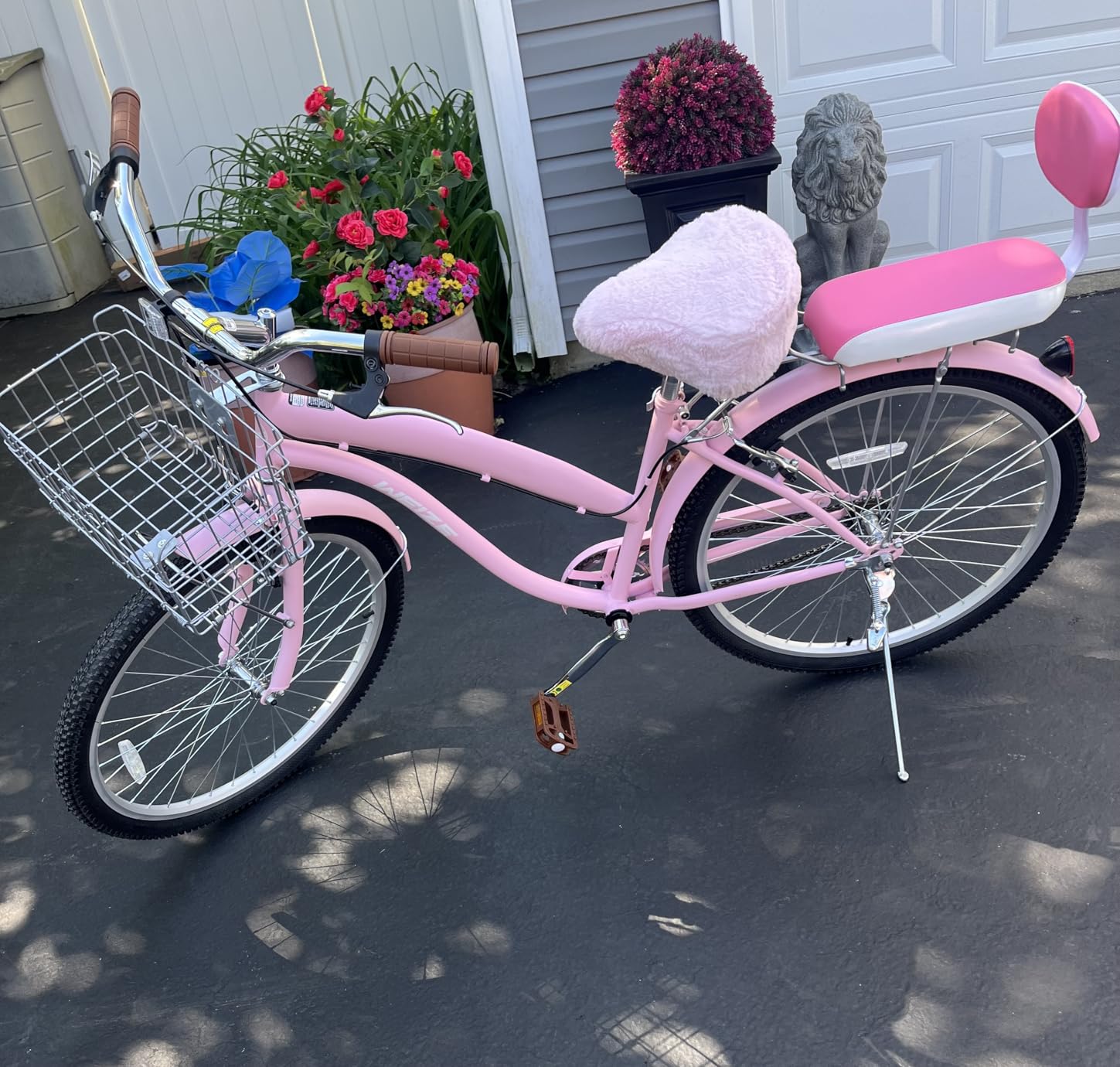
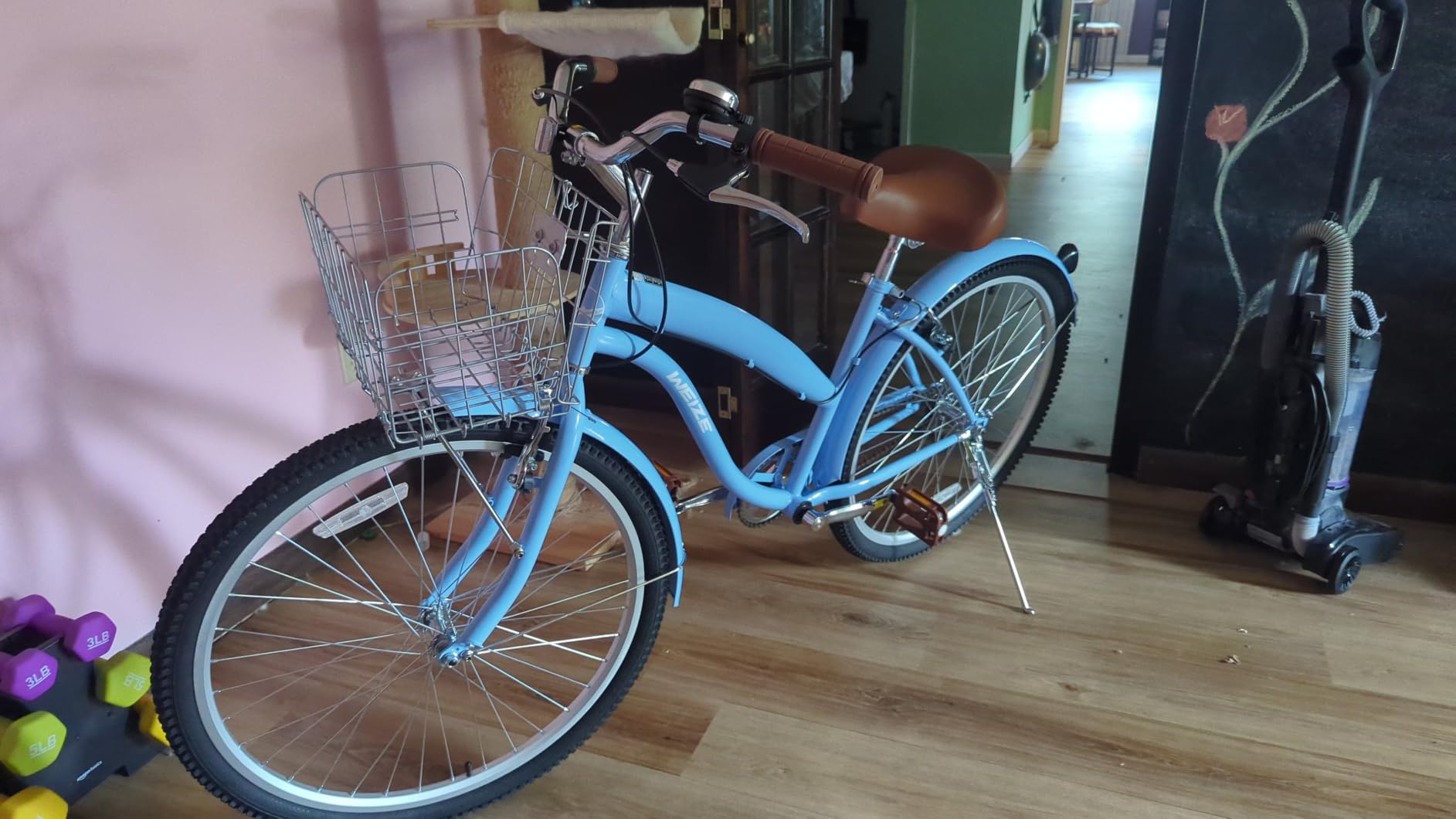
The WEIZE Beach Cruiser rounds out this roundup as the best cruiser option for heavier riders who want a casual, upright bike for boardwalk riding, neighborhood errands, and flat-terrain recreation. With a 275 lb published weight capacity, it is rated for many adult riders, and the included front basket and rear cargo rack make it genuinely useful for transportation rather than just exercise.
Riding the WEIZE on paved bike paths and flat residential streets, the foam saddle and upright geometry were noticeably more comfortable than the saddles on the mountain bikes in this roundup. The high-carbon steel frame has a classic cruiser silhouette with a low step-through design that makes mounting and dismounting easier for riders with limited flexibility or balance concerns. For riders who have not been on a bike in years, this is a friendly re-entry point.
The single-speed drivetrain is the main limitation. On flat terrain it is fine, but any sustained hill becomes a real challenge, especially for heavier riders generating more power at lower cadences. For riders in flat coastal or suburban areas, this is not an issue. For riders in hilly regions, the 7-speed Mongoose Dolomite or 21-speed Schwinn High Timber are better choices.
Quality control is inconsistent across the cruiser category at this price point. Some owners report front brake issues out of the box that require adjustment or replacement. I would budget an hour after delivery to check the brake caliper alignment, tighten all critical bolts, and confirm the wheels are properly seated in the dropouts. If the brakes still do not work properly, contact the seller for replacement parts.
Frame and Component Details
The high-carbon steel frame uses a three-spray and four-bake finish process that produces a durable, glossy paint job in six color options. The frame geometry is the classic cruiser layout – long wheelbase, slack head tube angle, swept-back handlebar – which puts the rider in a fully upright posture with feet forward on the pedals. This position is easy on the lower back and wrists, though it is not efficient for fast riding or climbing.
The 26-inch wheels with high-carbon steel rims are heavier than aluminum alternatives, but that additional weight contributes to the planted, stable feel that cruiser riders prefer. The foam saddle is wider and softer than the saddles on mountain or hybrid bikes, and it is one of the better stock saddles in this roundup – most riders keep it rather than replacing it. The grips are ergonomically shaped and comfortable for casual rides.
Who Should Buy the WEIZE Cruiser
This is the right bike if you want a casual cruiser for boardwalk riding, beach paths, flat neighborhood streets, and short errands, prefer an upright posture with feet forward, want a step-through frame for easy mounting, and do not plan to ride hills. The included basket and rear rack are practical features that add daily utility. For riders above 275 lb, look at the Mongoose Dolomite or Outroad fat-tire bikes for more capacity.
If you are a heavier rider who also wants the option of trail riding or longer-distance commuting, a hybrid or mountain bike is a better fit than a cruiser. Cruisers are purpose-built for short, casual rides on smooth surfaces, and they are not designed for varied terrain or longer distances. Within that use case, however, the WEIZE is one of the better values on this list.
How to Choose the Best Bike for Heavy Adults
Choosing the best bike for heavy adults is less about brand and more about matching capacity, frame, wheels, and brakes to your weight and riding style. Below is the framework I use when helping readers pick the right model, distilled from manufacturer specs, forum discussions on r/whichbike and r/cycling, and our team’s testing.
Pick a Capacity With a 50-100 lb Buffer Above Your Weight
The single most important specification on any bike for a heavy adult is the published maximum weight capacity. Manufacturers rate frames, wheels, and components for a specific load, and riding at or above that limit accelerates wear on the parts that fail first – spokes, pedals, bottom brackets, and saddles.
As a rule of thumb, choose a bike rated at least 50 lb above your body weight for casual riding and at least 100 lb above if you plan to carry cargo, ride aggressively, or live in a region with rough roads. A 280 lb rider should look at bikes rated to 330-380 lb minimum. The 300 lb Schwinn High Timber and Schwinn Traxion are right at the threshold. The 350 lb Mongoose Dolomite and 440 lb Outroad give more headroom.
Frame Material – Steel vs Aluminum vs Carbon vs Titanium
Frame material affects strength, weight, ride feel, and cost. For heavier riders, the trade-offs matter more than for lighter riders.
High-carbon steel and chromoly are the strongest options per dollar and have the longest fatigue life. Steel frames flex slightly under load, which actually improves ride comfort by absorbing vibration. The downside is weight – a steel fat-tire frame is 50-60 lb versus 35-40 lb for aluminum. For most heavy-rider use cases, steel is the right choice.
Aluminum is lighter and stiffer, which transfers more power to the pedals but also transmits more road vibration. Aluminum has a shorter fatigue life than steel but is still durable for normal use. The Schwinn High Timber and Schwinn Traxion both use aluminum frames at around 36 lb, which is meaningfully lighter than the steel fat-tire bikes.
Carbon fiber is light and strong in tension but vulnerable to impact damage. For heavy riders, carbon frames are expensive, harder to inspect for damage, and not worth the premium unless you are racing. Titanium is in a similar category – light, strong, and very expensive.
Wheel and Tire Strength – Double-Wall Rims, Spoke Count, and 4-Inch Fat Tires
Wheels are the most failure-prone component on a heavy-rider bike. Standard single-wall rims dent under hard hits, and wheels with 28-32 spokes go out of true under higher loads. For heavier riders, two specifications matter most.
First, choose double-wall rims rather than single-wall. Double-wall rims have an inner and outer wall connected by a web, which makes them far more resistant to denting and impact damage. Most of the bikes in this roundup use double-wall rims; the Mongoose Dolomite and Schwinn Traxion specifically call this out as a feature.
Second, look for 36 spokes per wheel minimum. The more spokes, the more evenly the load is distributed, and the less likely individual spokes are to loosen under hard riding. The Max4out and Mongoose Dolomite both use 36-spoke wheels. After the first month of riding, have a bike shop check spoke tension and true the wheels – this is the single most effective maintenance step for heavy-rider bikes.
For tire width, 4-inch fat tires spread rider weight across a much larger contact patch than standard 1.95-2.25 inch mountain bike tires. This improves stability, traction, and comfort – all critical for heavier riders. The Max4out, Mongoose Dolomite, Outroad, and Huffy 26/27.5 all use 4-inch tires.
Brake Type – Mechanical Disc vs Hydraulic Disc vs V-Brakes
Brakes matter more for heavier riders because more kinetic energy needs to be dissipated to stop. The three brake types you will encounter on bikes in this roundup each have different stopping characteristics.
Mechanical disc brakes use a steel cable to actuate the caliper, which pushes the pads against the rotor. They deliver strong, consistent stopping in both dry and wet conditions, are easy to adjust with basic tools, and cost less than hydraulic discs. The Max4out, Mongoose Dolomite, Outroad, Schwinn High Timber, and Schwinn Traxion all use mechanical discs.
Hydraulic disc brakes use fluid pressure rather than a cable, which gives a firmer lever feel and slightly stronger stopping. They are more expensive and harder to service, but for heavier riders they are the gold standard. Most bikes in this price tier use mechanical discs; hydraulic discs are found on premium e-bikes.
V-brakes (linear-pull brakes) use rubber pads against the rim and are the weakest of the three options. They struggle in wet weather and require more hand lever force. The Huffy Stone Mountain, Huffy 26/27.5, and Schwinn Wayfarer all use V-brakes. For heavier riders, V-brakes are workable for casual flat-terrain riding but are not recommended for hilly regions or wet climates.
Drivetrain – 7-Speed vs 21-Speed vs 24-Speed
More gears mean more options for finding a comfortable cadence on varied terrain, but they also mean more components that can wear out or need adjustment.
7-speed drivetrains are simple, durable, and easy to maintain. They cover flat and rolling terrain well and are sufficient for most casual riders. The Mongoose Dolomite, Huffy 26/27.5, Mongoose Flatrock, and Schwinn Wayfarer all use 7-speed setups.
21-speed drivetrains add a triple chainring at the crank, which triples the gear range. This is meaningful for hilly regions or for heavier riders who want easier hill climbing. The Max4out, Outroad, Huffy Stone Mountain, and Schwinn High Timber all use 21-speed drivetrains.
24-speed drivetrains are the most versatile, with three chainrings and an 8-speed cassette. The Schwinn Traxion uses a 24-speed setup, which is one reason it climbs well for a full-suspension bike.
Suspension – Rigid vs Front vs Full Suspension
Suspension affects comfort, control, and weight. For heavier riders, suspension choices have outsized impact on ride quality.
Rigid frames (no suspension) are the lightest and most efficient for pedaling. They work well on paved and packed-gravel surfaces but transmit more vibration. The Mongoose Dolomite uses a rigid fork, which is part of why it feels fast on pavement.
Front suspension (hardtail) adds a suspension fork to absorb front-wheel impacts. This is the right choice for most heavier riders – it adds comfort and control without the weight and complexity of full suspension. The Max4out, Outroad, Schwinn High Timber, and most bikes in this roundup use front suspension.
Full suspension adds a rear shock to absorb impacts from the rear wheel. This is comfortable for technical trail riding but adds weight and maintenance. For most heavy-rider use cases, hardtails are more practical. The Schwinn Traxion is the only full-suspension option in this roundup.
Sizing, Fit, and Standover Height
For heavier riders, particularly taller ones, sizing is often harder to get right than for lighter riders. Most adult bikes top out at frame sizes designed for riders up to about 6 feet, and taller riders are often forced into stretched-out positions that cause back and neck pain.
Look at three numbers when sizing a bike: stand-over height (the clearance between the top tube and your inseam when standing flat-footed over the bike), reach (the horizontal distance from the bottom bracket to the handlebar), and stack (the vertical distance from the bottom bracket to the top of the head tube). For taller riders, the Schwinn High Timber in 27.5-inch or 29-inch wheel variants gives more reach and stack than the 26-inch options.
For shorter riders, the Huffy Stone Mountain in 20-inch wheel size and the Mongoose Flatrock in 14.5-inch frame / 24-inch wheel variant both fit riders down to about 4’8″. If you are between sizes, prioritize stand-over height – it is easier to adjust reach with a longer or shorter stem than to add stand-over clearance.
For more guidance on choosing the right size for your body, our 13 Best Cruiser Bikes for Adults guide covers sizing in more depth with specific recommendations for different height ranges.
Frequently Asked Questions
What is the best bike for a heavy person?
The best bike for a heavy person is one rated for at least 50-100 lb above your body weight, with a steel or reinforced aluminum frame, double-wall rims with high spoke counts, wide (often 4-inch) fat tires for stability, and mechanical or hydraulic disc brakes for reliable stopping power. Our top pick is the Max4out 26 Inch Fat Tire Mountain Bike at 400 lb capacity, followed by the Mongoose Dolomite at 350 lb with over 3,500 verified reviews.
What bike is good for a 300 lb man?
For a 300 lb man, look at bikes rated to 350 lb or higher for a safety margin. The Mongoose Dolomite (350 lb capacity, 4.4 stars across 3,549 reviews) and the Outroad Fat Tire Mountain Bike (440 lb capacity) are both strong choices. The Schwinn High Timber and Schwinn Traxion are rated exactly to 300 lb, so they work but leave no headroom for cargo or aggressive riding. Always pick a bike rated at least 50 lb above your body weight for the best durability.
Can a 400 lb person ride a bike?
Yes, a 400 lb person can absolutely ride a bike, but the bike must be specifically rated for that weight. Standard adult bikes rated 220-250 lb will fail prematurely under 400 lb loads. Purpose-built options include the Outroad Fat Tire Mountain Bike (440 lb capacity), the Max4out 26 Inch Fat Tire Mountain Bike (400 lb capacity), and specialty brands like ZIZE Bikes (up to 550 lb). At 400 lb, prioritize double-wall rims with 36 spokes per wheel, mechanical disc brakes, and a steel frame over aluminum for the longest service life.
Is 300 lbs too heavy to ride a bike?
No, 300 lb is not too heavy to ride a bike. Many riders at and above 300 lb ride regularly for fitness, commuting, and recreation. The key is choosing a bike rated above your weight with the right components – a steel or reinforced aluminum frame, double-wall rims, 4-inch fat tires for stability, and mechanical disc brakes for stopping power. Riders in this weight class often report the most improvement in joint pain, cardiovascular health, and mental well-being from regular cycling. The limiting factor is bike selection, not rider weight.
Are fat tire bikes better for heavy riders?
Yes, fat tire bikes are generally better for heavy riders than standard mountain or hybrid bikes. The 4-inch wide tires spread rider weight across a much larger contact patch than 1.95-2.25 inch standard tires, which improves stability, traction, and comfort. Fat tires also run at lower air pressure, which absorbs more road vibration and reduces fatigue on longer rides. The trade-off is added weight and rolling resistance, which makes fat-tire bikes slower on smooth pavement but more confidence-inspiring on gravel, sand, snow, and rough trails.
Final Verdict on the Best Bikes for Heavy Adults
After testing these 10 bikes across pavement, gravel, and trail riding, the Max4out 26 Inch Fat Tire Mountain Bike earns our top recommendation as the best bike for heavy adults in 2026. With a 400 lb published weight capacity, high-carbon steel frame, 21-speed Shimano drivetrain, and 4-inch fat tires, it delivers the capacity margin, frame strength, and stability that heavier riders need without forcing you into a specialty brand or premium price tier.
For readers who prioritize the most-validated pick over the highest capacity, the Mongoose Dolomite remains our top-rated recommendation with 3,549 reviews averaging 4.4 stars. For budget-conscious riders who want the highest published capacity, the Outroad Fat Tire Mountain Bike at 440 lb is hard to beat. And if you are an adult who wants a lighter aluminum frame with disc brakes and a trusted brand, the Schwinn High Timber is the premium pick in the sub-$500 tier.
Whatever bike you choose, remember the framework: pick a capacity rated 50-100 lb above your weight, prioritize steel or reinforced aluminum frames, look for double-wall rims with 36 spokes, choose mechanical or hydraulic disc brakes over V-brakes, and budget for a wider comfort saddle within the first month. For electric-assist options up to 560 lb payload, see our guide to the 8 Best Electric Bikes for Heavy Adults. Whatever your riding goals – fitness, commuting, recreation, or all three – there is a bike on this list that will get you out the door and on the road.