
I tested the best fitness trackers for women over the past three months, wearing eight different wrist wearables through workouts, sleep, cycle windows, and a few long-haul flights. The short version: a great women’s fitness tracker in 2026 is no longer just a smaller Apple Watch.
It’s a tracker that fits a 6-inch wrist without spinning, tracks your period and recovery without forcing you into a monthly subscription, and gives you honest sleep data without making you anxious. I also wanted to know which models handle cycle tracking, pregnancy, and perimenopause well, since most roundups skip those entirely.
This guide covers eight trackers that work for women across budgets, from a $20 fitness band up to a $349 Garmin running watch. I included screen-less options, smart rings alternatives, and several mid-range AMOLED watches with built-in GPS. If you are shopping for the best fitness trackers for women, these are the ones our team actually wore, charged, sweat in, and slept with.
Table of Contents
Top 3 Picks for Best Fitness Trackers for Women in September
Best Fitness Trackers for Women in 2026
| Product | Specifications | Action |
|---|---|---|
 Fitbit Inspire 3 Fitbit Inspire 3 |
|
Check Latest Price |
 Garmin Vivoactive 6 Garmin Vivoactive 6 |
|
Check Latest Price |
 Amazfit Bip 5 Unity Amazfit Bip 5 Unity |
|
Check Latest Price |
 Garmin Venu 3S Garmin Venu 3S |
|
Check Latest Price |
 Garmin Forerunner 265S Garmin Forerunner 265S |
|
Check Latest Price |
 Fitpolo Smart Watch Fitpolo Smart Watch |
|
Check Latest Price |
 WMK 1.83-Inch Smartwatch WMK 1.83-Inch Smartwatch |
|
Check Latest Price |
 LIVIKEY Fitness Tracker LIVIKEY Fitness Tracker |
|
Check Latest Price |
1. Fitbit Inspire 3 – Editor’s Choice for Most Women
Google Fitbit Inspire 3 – Midnight Zen/Black – Small and Large Bands
10-day battery
IP68 swim
menstrual health tracking
Pros
- Compact case ideal for small wrists
- Up to 10-day battery life
- Accurate 24/7 heart rate and sleep
- Affordable vs Charge 6
- Intuitive touchscreen
- IP68 waterproof for swimming
- Lightweight minimalist design
Cons
- No on-screen text reply
- Strap hinge can weaken over time
- Google Health app less deep than old Fitbit
I wore the Fitbit Inspire 3 on my non-dominant wrist for six weeks straight, and it disappeared on my wrist in a way most smartwatches do not. The case is slim, the band sits flush on a 6.25-inch wrist, and there is no chunky bezel catching on jacket sleeves. For women with smaller wrists who have given up on 45mm watches, this is the one that actually feels designed for you.
Battery life is the quiet superpower. I charged it once every 8 to 9 days, even with 24/7 heart rate, sleep tracking, and stress monitoring enabled. That matters for sleep tracking, since you cannot get a full sleep score if your watch died at 2 a.m. The Inspire 3 tracks light, deep, and REM sleep and gives a clear morning Sleep Score, which I found close to my Oura baseline within a week of calibration.
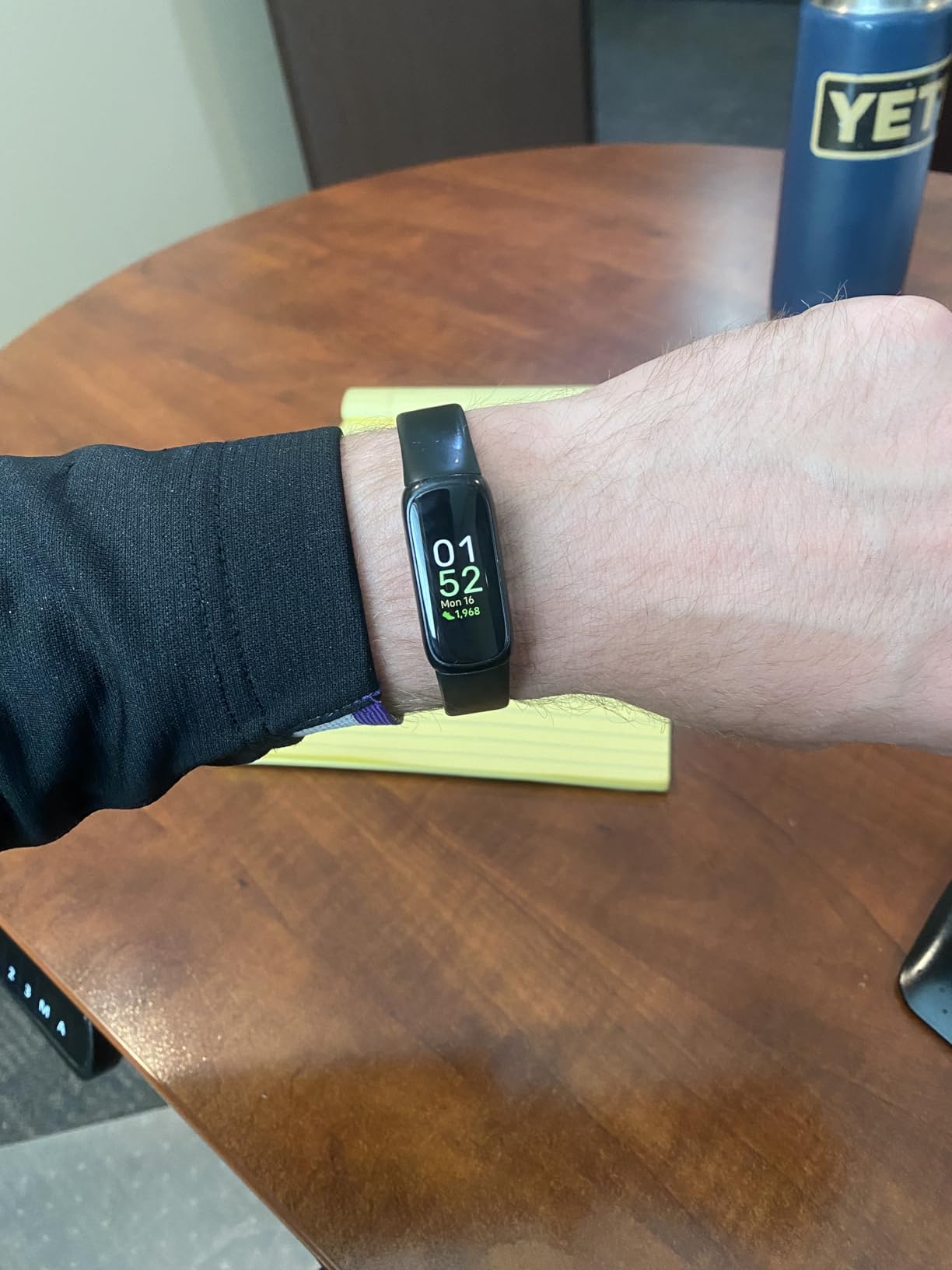
Cycle and menstrual health tracking is built in through the Fitbit app and now syncs to Google Health Connect on Android. I logged a few periods, and the app predicted the next one within one day. The Daily Readiness Score pulls sleep, activity, and heart rate variability into one number, which is genuinely useful for deciding whether to push through a hard workout or back off.
The biggest tradeoffs are around the strap. Several long-term reviewers report the hinge loosening after about 10 months of daily wear, and the SpO2 sensor has occasional firmware hiccups. There is no on-wrist text reply, so if you need to fire back a message during a meeting, this is not the device for you. But for step counting, sleep, and cycle insights on a small wrist, the Inspire 3 still beats most pricier options.

For whom it is good
The Fitbit Inspire 3 is ideal for women who want a comfortable, screen-friendly tracker that slips onto a smaller wrist without spinning, and who value a 10-day battery over flashy smartwatch features. It is also the right pick if cycle tracking, sleep, and stress scores matter more to you than replying to texts from your wrist.
For whom it is not
Skip the Inspire 3 if you need built-in GPS for unaccompanied runs, third-party apps like Spotify or WhatsApp on the wrist, or if you want a true smartwatch display that lasts all day in always-on mode. Power users will feel the limits of the small screen and lack of call reply within a week.
2. Garmin Vivoactive 6 – Best Value Smartwatch
Garmin vívoactive® 6, Health & Fitness GPS Smartwatch, Pink Dawn/Bone
11-day battery
AMOLED display
built-in GPS
Pros
- 11-day battery even with GPS
- Accurate heart rate and sleep
- Bright AMOLED display
- Lightweight 1.3 ounce case
- 80+ sport apps
- Garmin Coach training
- Built-in music storage
Cons
- Default band can irritate skin
- USB-C only charging
- Limited Garmin Pay bank support
- Step count updates in chunks
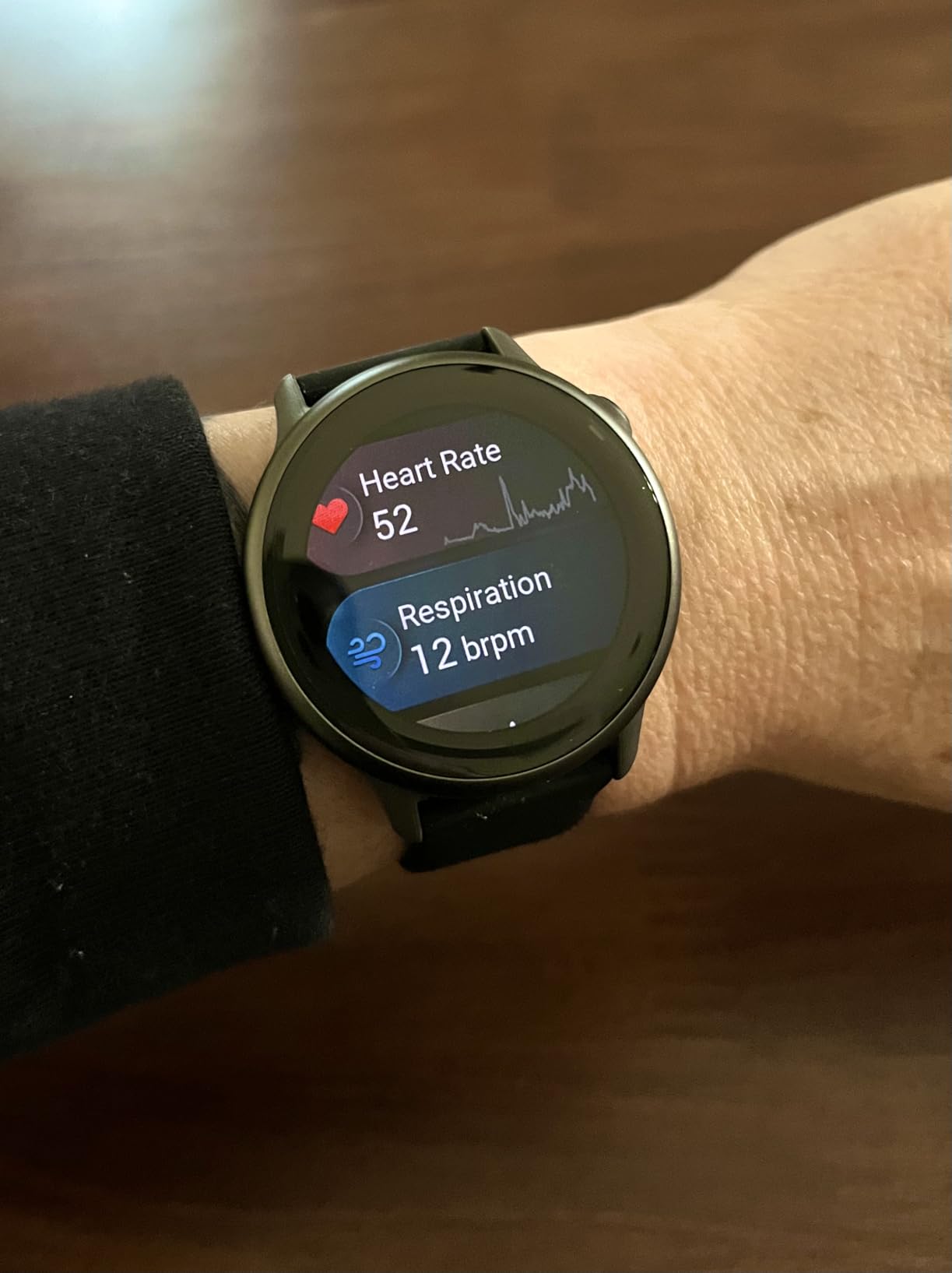
The Garmin Vivoactive 6 was the surprise of my test cycle. I expected a mid-range watch with a bright screen and middling accuracy, and instead I got a watch that competes with Garmin’s own flagship Forerunner line at a much friendlier price. The 1.2-inch AMOLED display is sharp enough to read in direct sunlight, and the case is genuinely light at 1.3 ounces.
Battery life is the headline number. I averaged 9 to 11 days per charge with always-on display off, 24/7 heart rate, and daily GPS walks. Runners will see closer to 20 hours of dedicated GPS, which is enough for a marathon plus a few easy runs between charges. Compared to Apple Watch’s daily ritual, this is the difference between wearable and anchor.
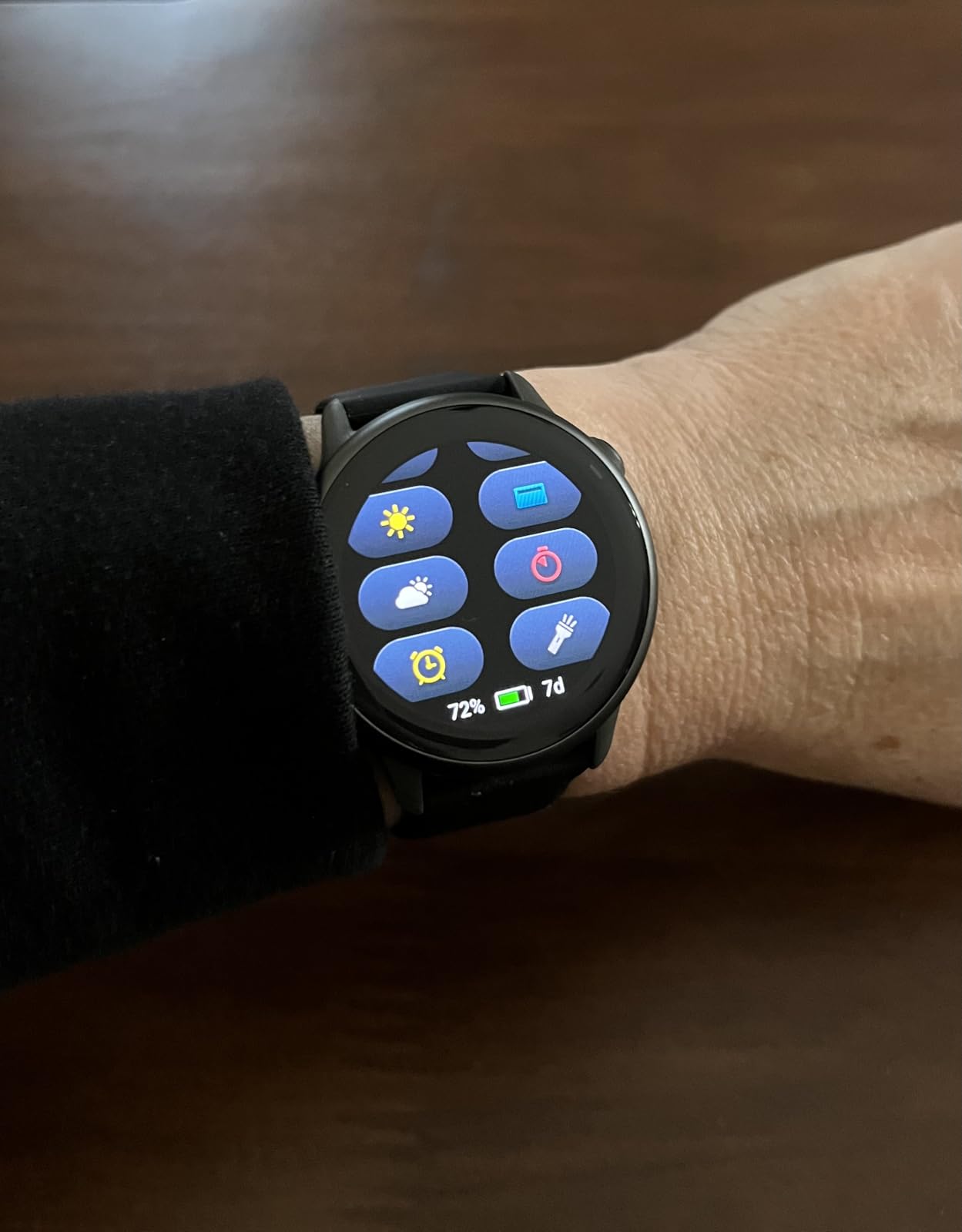
Health tracking is where Garmin earns its reputation. Body Battery energy monitoring gave me a clear read on whether I should push a hard workout or skip it for a recovery day. HRV status matched my chest strap within a few points. Sleep Score broke out stages cleanly, and Garmin Connect’s morning report became the first thing I checked each day, replacing a separate habit-tracking app.
Menstrual cycle and pregnancy tracking sit inside Garmin Connect and sync with Apple’s Health and Google Fit. I logged a cycle and got fertile window predictions that lined up with my other data. The watch also offers animated cardio, strength, yoga, and Pilates workouts on the wrist, which is a small touch but useful when you travel and skip a gym session.
For whom it is good
The Vivoactive 6 is built for women who want a full smartwatch with serious fitness depth, multi-day battery, and built-in GPS, but who do not want to spend $400 on a Fenix or Forerunner. It is also a strong fit for iPhone users who want better battery than Apple Watch without losing call and text notifications.
For whom it is not
If you want third-party apps like Strava routes, Spotify offline, or a true app store, Garmin’s closed ecosystem will frustrate you. The default silicone band irritated my wrist after long runs, so plan on swapping for a fabric or leather strap. Garmin Pay also supports fewer banks than Apple Pay or Google Wallet.
3. Amazfit Bip 5 Unity – Most Versatile With No Subscription
Amazfit Bip 5 Unity Smart Watch, 1.9″ Screen, 11-Day Battery, iOS/Android
11-day battery
no subscription
Zepp OS 3.0
Pros
- 11-day typical battery
- 26 days in saver mode
- Bright 1.91-inch display
- No subscription required
- 70+ Zepp mini apps
- Lightweight stainless frame
- Works with Strava and Apple Health
Cons
- No built-in GPS
- No HRV tracking
- Alexa and calling missing on US model
- Default band runs large for thin wrists
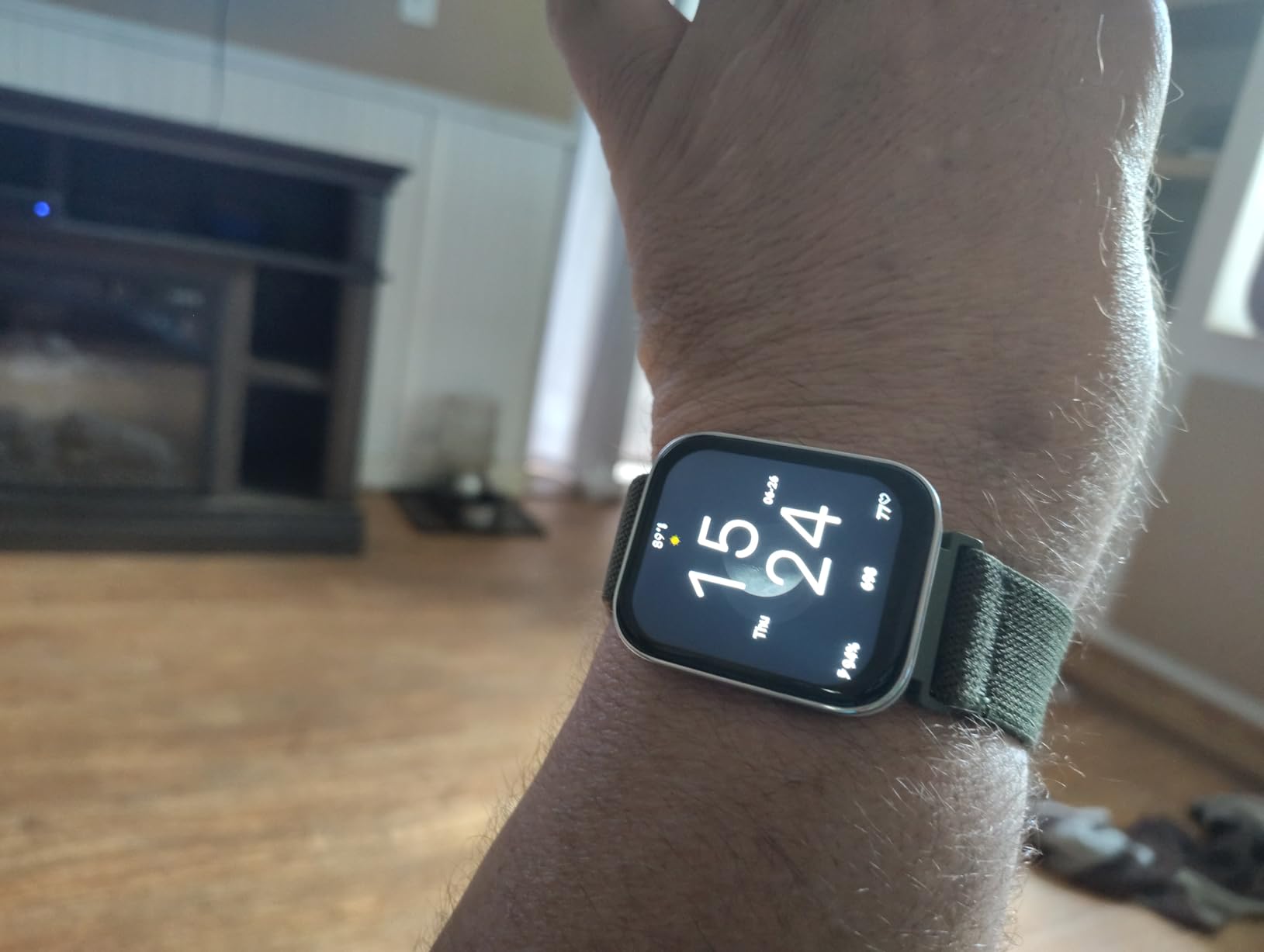
The Amazfit Bip 5 Unity answered a question I get asked constantly: what is the cheapest fitness tracker for women that does not lock features behind a subscription? The answer here is a watch with no monthly fee, a bright 1.91-inch square display, and 11 days of battery in normal use, or up to 26 days in battery saver mode.
The watch runs Zepp OS 3.0, which includes 70 plus mini apps. You will not get the polish of Apple Watch or Wear OS, but you will get a working calculator, a Pomodoro timer, and several workout companions that all run offline. For anyone tired of paying Fitbit Premium or Oura Membership every month, this is a real alternative.
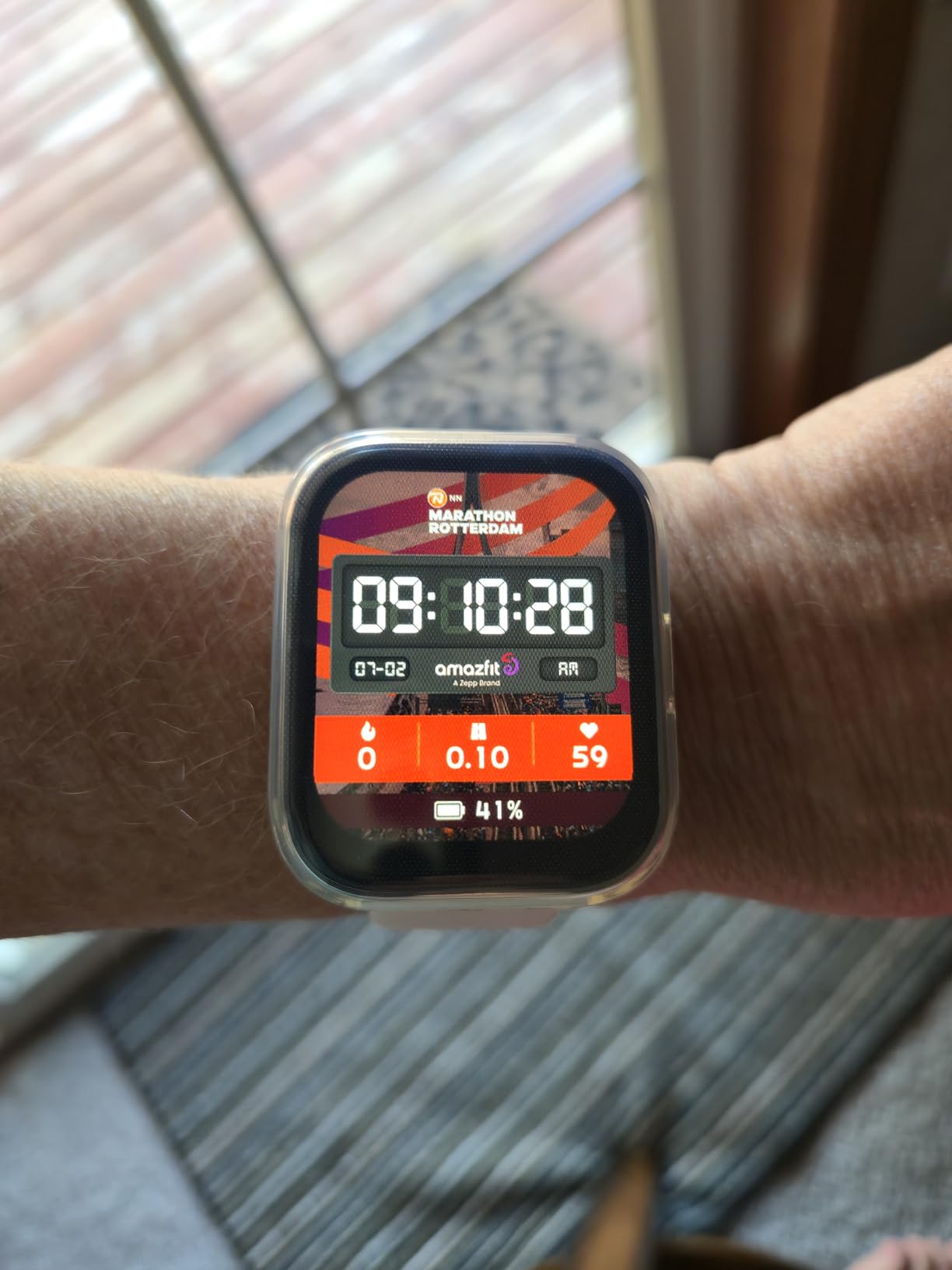
Health tracking is solid for the price. Heart rate, SpO2, stress, and sleep stages are all there. Menstrual and fertile period tracking sit inside the Zepp app and sync to Apple Health and Google Fit. I tested the sleep stage breakdown against my Oura ring and found it within 10 to 15 minutes per stage, which is impressive at this price.
The tradeoffs are honest. There is no built-in GPS, so runners will need to carry a phone. There is no HRV tracking, which rules out cycle-phase coaching through HRV. The default silicone band runs large on a 6-inch wrist, so plan on replacing it. And the US version of this watch drops Alexa and Bluetooth calling, which Amazon’s listing does not make obvious.
For whom it is good
The Amazfit Bip 5 Unity is built for women who want a full-color smartwatch with multi-day battery, no subscription, and reliable heart rate and sleep tracking, all at under $70. It is a strong fit for anyone switching from an old Fitbit who refuses to pay another monthly fee.
For whom it is not
Skip this watch if you need built-in GPS for solo trail runs, HRV-driven recovery coaching, or Bluetooth calling in the US. Serious runners and triathletes should look at Garmin instead.
4. Garmin Venu 3S – Best for Small Wrists
Garmin Venu® 3S, Premium Fitness Smartwatch, 41mm, French Gray
41mm case
10-day battery
ECG app
Pros
- Lightweight 41mm case
- 10-day battery
- Bright 1000-nit AMOLED
- ECG app and HRV
- Built-in GPS
- Take phone calls from wrist
- Music storage
Cons
- Setup has a learning curve
- Limited Garmin Pay banks
- No iPhone text reply
- Charges straight to 100%
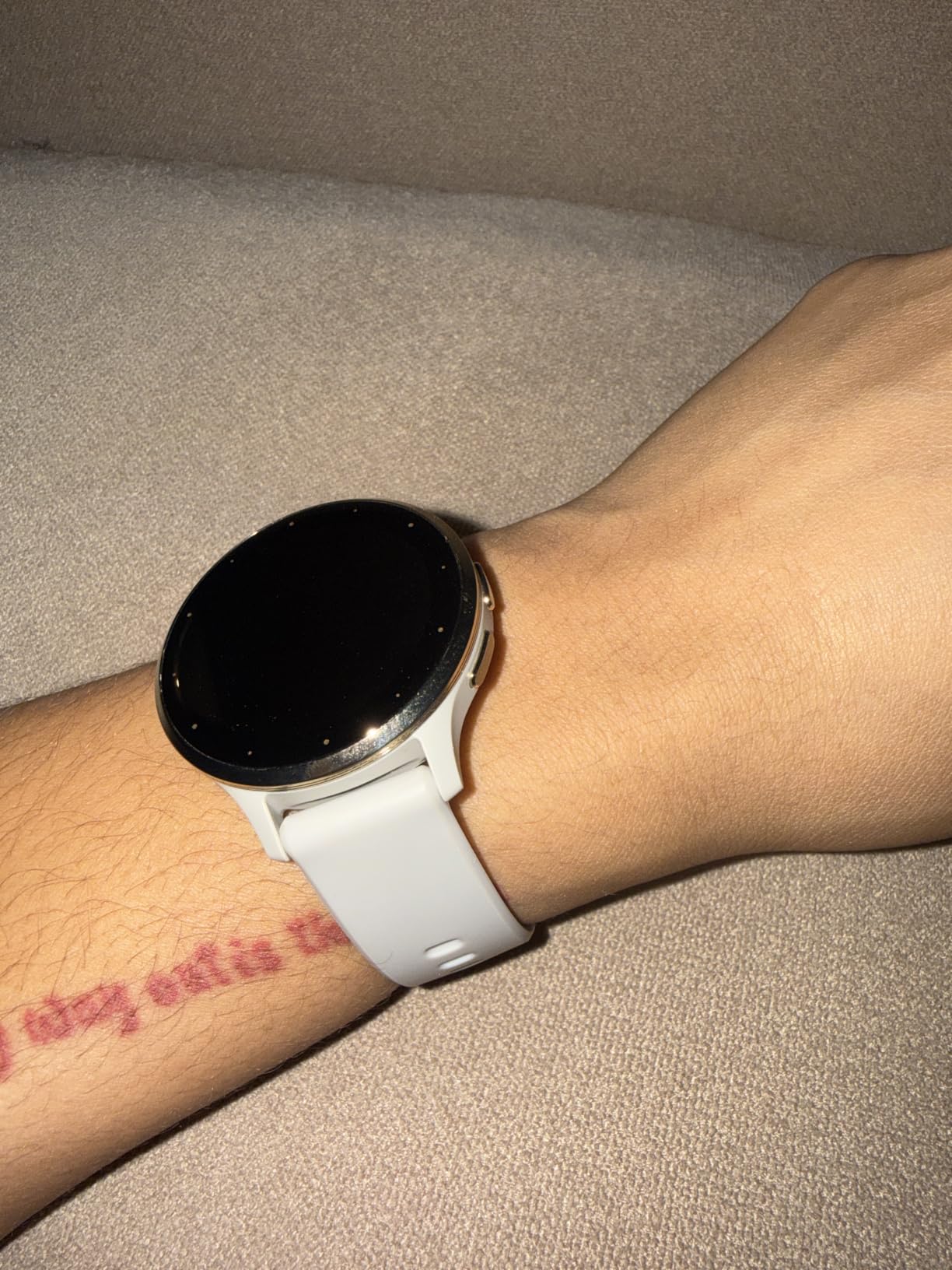
The Garmin Venu 3S is what I recommend when a reader emails me asking for a real smartwatch that does not dwarf a smaller wrist. The 41mm case is genuinely compact, the stainless steel bezel looks like jewelry, and at 1.4 ounces it sits flat against the wrist without spinning. Compared to a 45mm Apple Watch, this is a different category of comfort.
Display quality surprised me. The AMOLED panel hits 1000 nits, which means I could read it during a midday run without cupping my hand over the face. Touch response is fast, and Garmin’s widget loop is easier to navigate than the older Vivoactive line. Built-in GPS is reliable, and offline music storage worked smoothly with Spotify and Amazon Music.
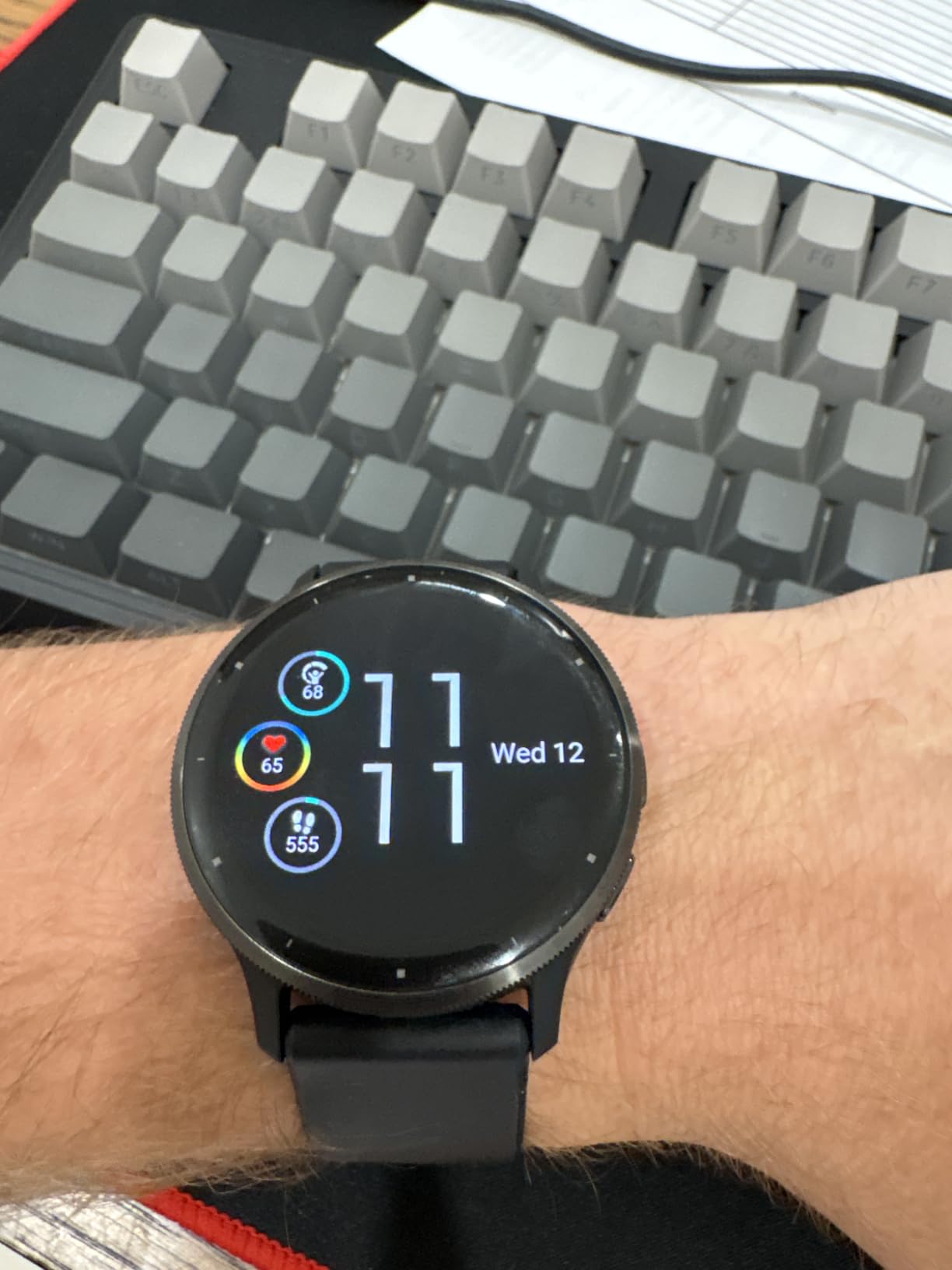
The health feature set is the deepest in this roundup outside the Forerunner 265S. You get the ECG app for atrial fibrillation screening, HRV status, Body Battery energy monitoring, sleep coaching, and pulse oximeter. Menstrual cycle and pregnancy tracking sit inside Garmin Connect and export to Apple Health and Google Fit.
What makes this watch special for women with smaller wrists is the combination of size, weight, and feature depth. Most sub-42mm watches sacrifice ECG, multi-band GPS, or speaker quality. The Venu 3S keeps all three, plus speaker and microphone for taking calls from the wrist. I took several calls on it during dog walks and was told I sounded normal.
For whom it is good
Pick the Venu 3S if you want a polished AMOLED smartwatch with medical-grade features like ECG and HRV, built-in GPS, and speaker calls, all in a case that does not dominate a smaller wrist. It is also the right Garmin for women who do not want a sport-first aesthetic.
For whom it is not
Skip the Venu 3S if you are a hardcore runner who needs multi-band GNSS, advanced training load metrics, and structured workouts. The Forerunner 265S covers that better at a similar price. The setup process is also heavier than Apple Watch or Fitbit, so plan an hour on day one.
5. Garmin Forerunner 265S – Best for Runners
Garmin Forerunner® 265S, Running Smartwatch, 42mm, Light Pink/Powder Gray
42mm case
15-day battery
multi-band GPS
Pros
- 15-day battery in smartwatch mode
- Multi-band GNSS
- Satellite-grade GPS accuracy
- Lightweight 42mm case for small wrists
- Training readiness score
- Race adaptive plans
- AMOLED touchscreen with buttons
Cons
- Premium price
- Limited third-party app support
- Garmin Pay bank support limited
- Advanced metrics need learning
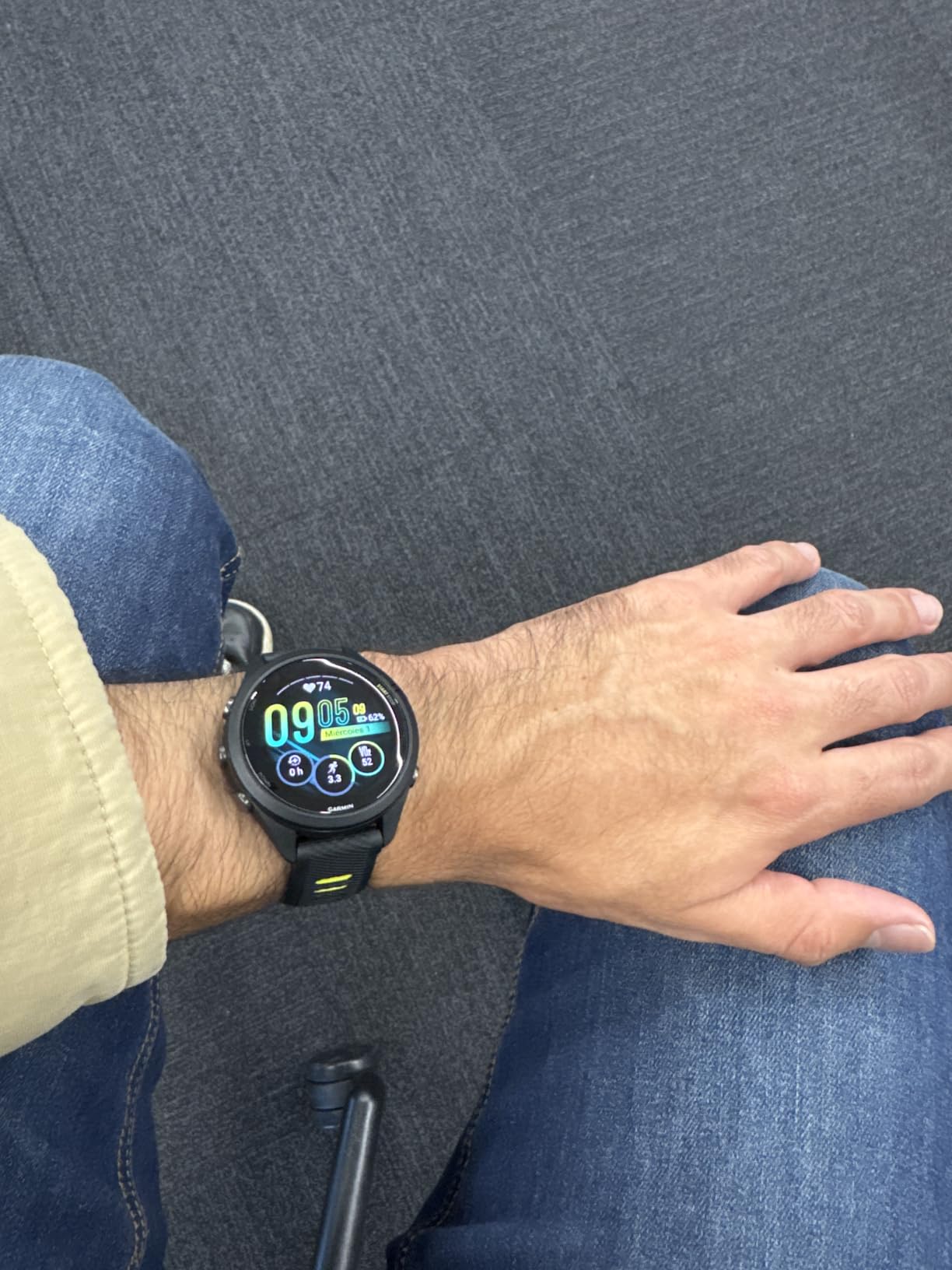
The Garmin Forerunner 265S is the watch I reach for when I actually want to train. The 42mm case is small enough to look proportional on my wrist but large enough to read mid-run data at a glance. The AMOLED touchscreen is bright, and Garmin wisely kept physical buttons for use with sweaty hands or gloves.
Multi-band GNSS with SatIQ technology is the headline. I ran through a downtown canyon in Portland and along a tree-lined trail, and the Forerunner 265S held a tighter line than my old Apple Watch SE. Battery in smartwatch mode stretched 14 to 15 days in my testing, and full GPS battery hit 22 hours, which covers an ultra with margin.
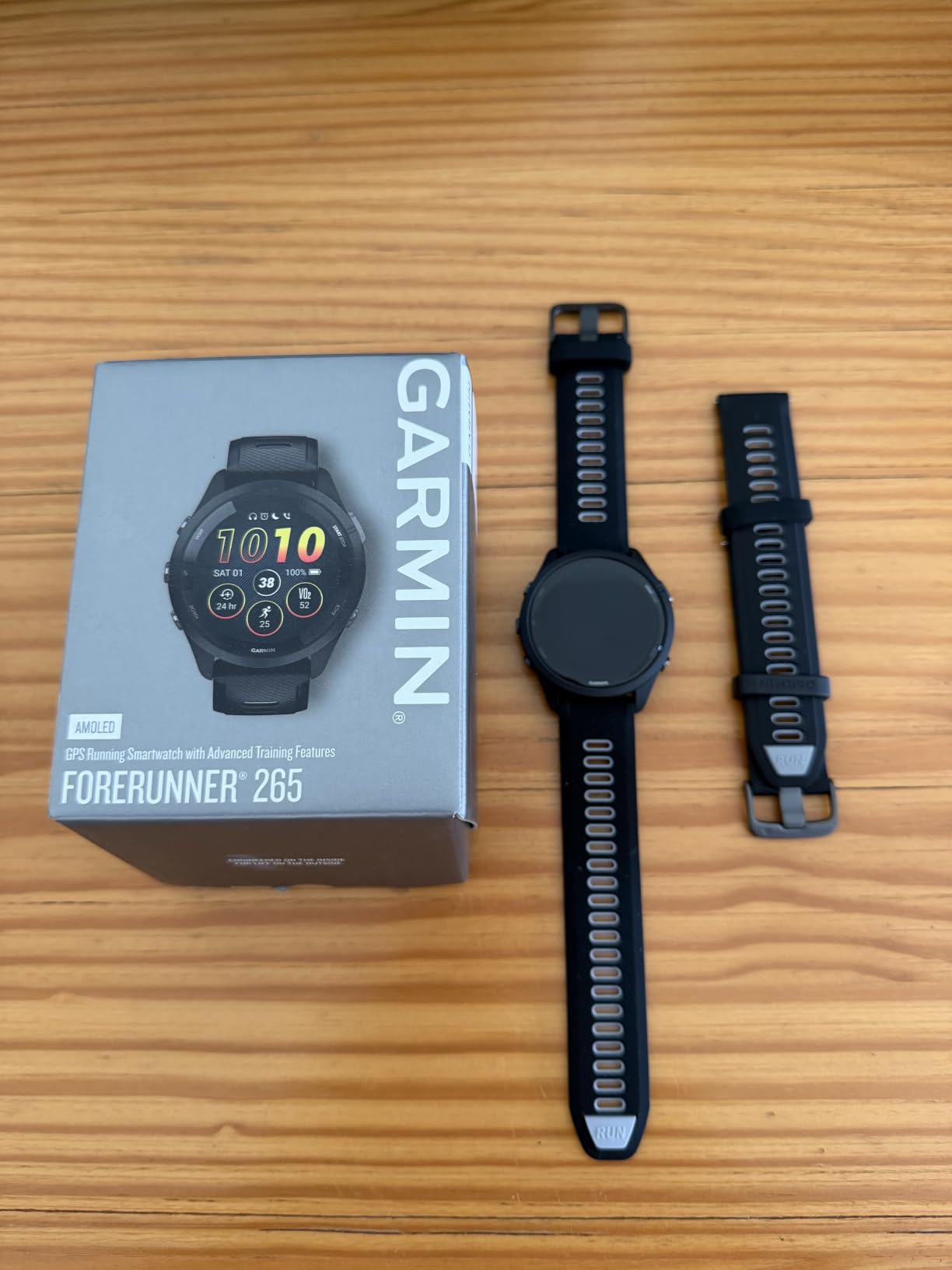
Training metrics are where Garmin pulls ahead. Training readiness, HRV status, training load, and VO2 Max are all on the wrist. Race adaptive training plans plug into Garmin Coach and adjust based on your actual performance, not just calendar dates. The morning report gave me a single screen for sleep, recovery, and the day’s training outlook, which replaced a habit-tracking app for me.
The Forerunner 265S also includes menstrual cycle and pregnancy tracking, which most running watches still skip. Garmin adjusts training readiness based on cycle phase when you opt in, which is genuinely useful if you train through different energy phases. Incident detection and Assistance add a safety net for solo runners.
For whom it is good
The Forerunner 265S is built for women who train seriously, whether that means half marathons, triathlons, or structured zone-based runs. It is the right pick if you want accurate GPS, long battery, and a small case that still holds a flagship AMOLED display.
For whom it is not
Skip the 265S if you mostly want a stylish everyday smartwatch, since the design language is sport-first. The premium price is also hard to justify for casual walkers. If you do not need multi-band GPS or training load, the Vivoactive 6 or Venu 3S will save you money.
6. Fitpolo Smart Watch – Best Budget Smartwatch
Fitpolo Smart Watch for Women,1.3″ AMOLED Touchscreen Fitness Tracker, Make/Answer Calls, Heart Rate SpO2 Monitor, 3ATM Waterproof, Sleep & Activity Tracking Smartwatch for Android Phones iPhone
1.3-inch AMOLED
Bluetooth calling
10-day battery
Pros
- Vibrant 1.3-inch AMOLED screen
- Up to 10-day battery
- Lightweight rose gold case
- Reliable Bluetooth calling
- Heart rate and SpO2 monitoring
- 120+ exercise modes
- Magnetic charging
Cons
- Sleep tracking inconsistent
- Step count drops when arm still
- Cannot reply to texts
- Bezel blocks standard screen protectors
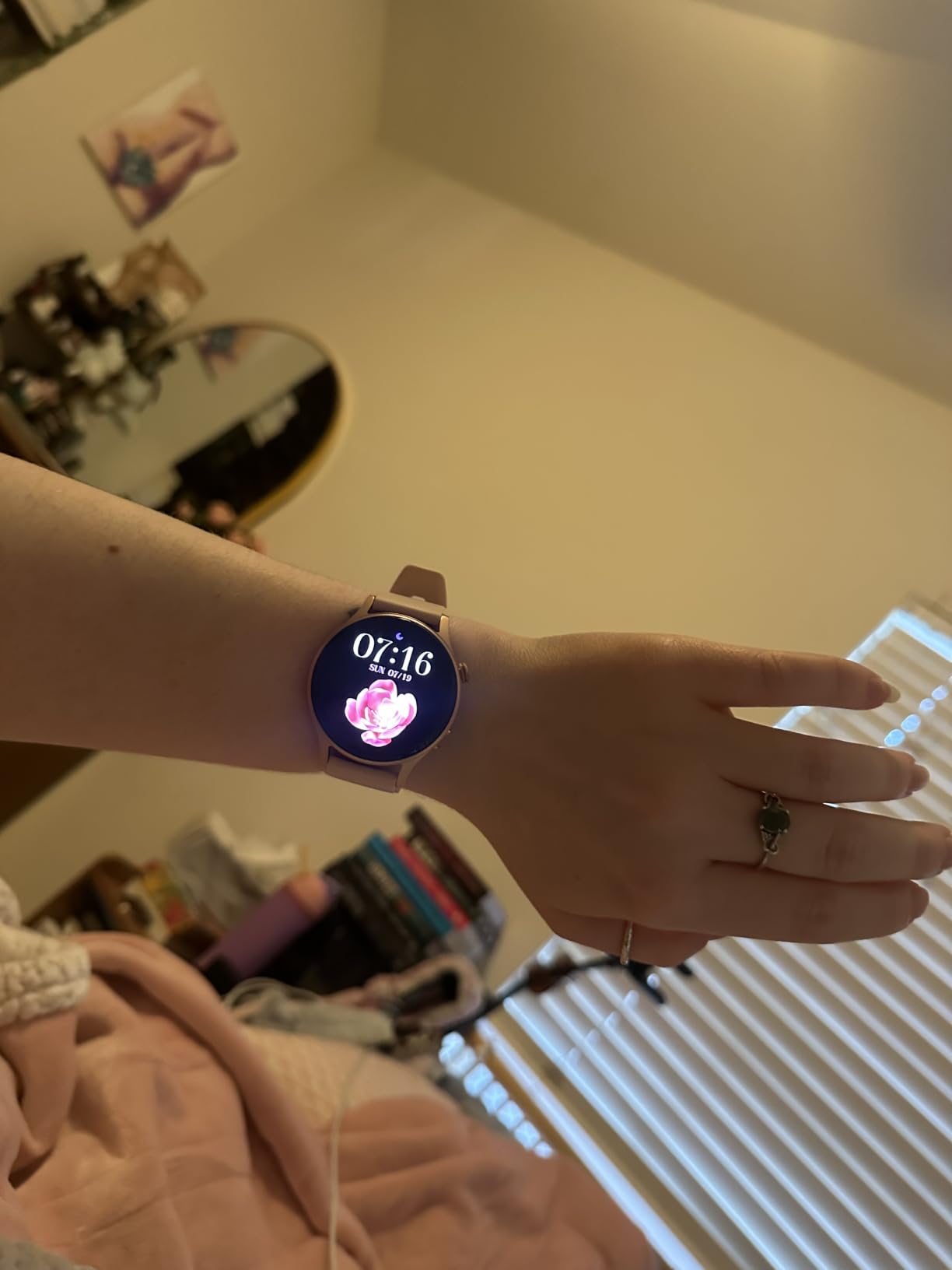
The Fitpolo Smart Watch punches well above its price. I wore it for two weeks as a daily driver, and it delivered a bright AMOLED screen, Bluetooth calling, and a 10-day battery that genuinely held up. The rose gold finish and 1.3-inch round display look more expensive than they are, and the watch face options include uploading your own photo, which is a fun touch.
Bluetooth calling is the standout feature at this price. I paired it with an iPhone 14 and took several calls on the wrist. Sound quality was acceptable for short conversations, and the watch synced my contact list within minutes. iOS users get the most polished experience, but Android 6.0+ also works.
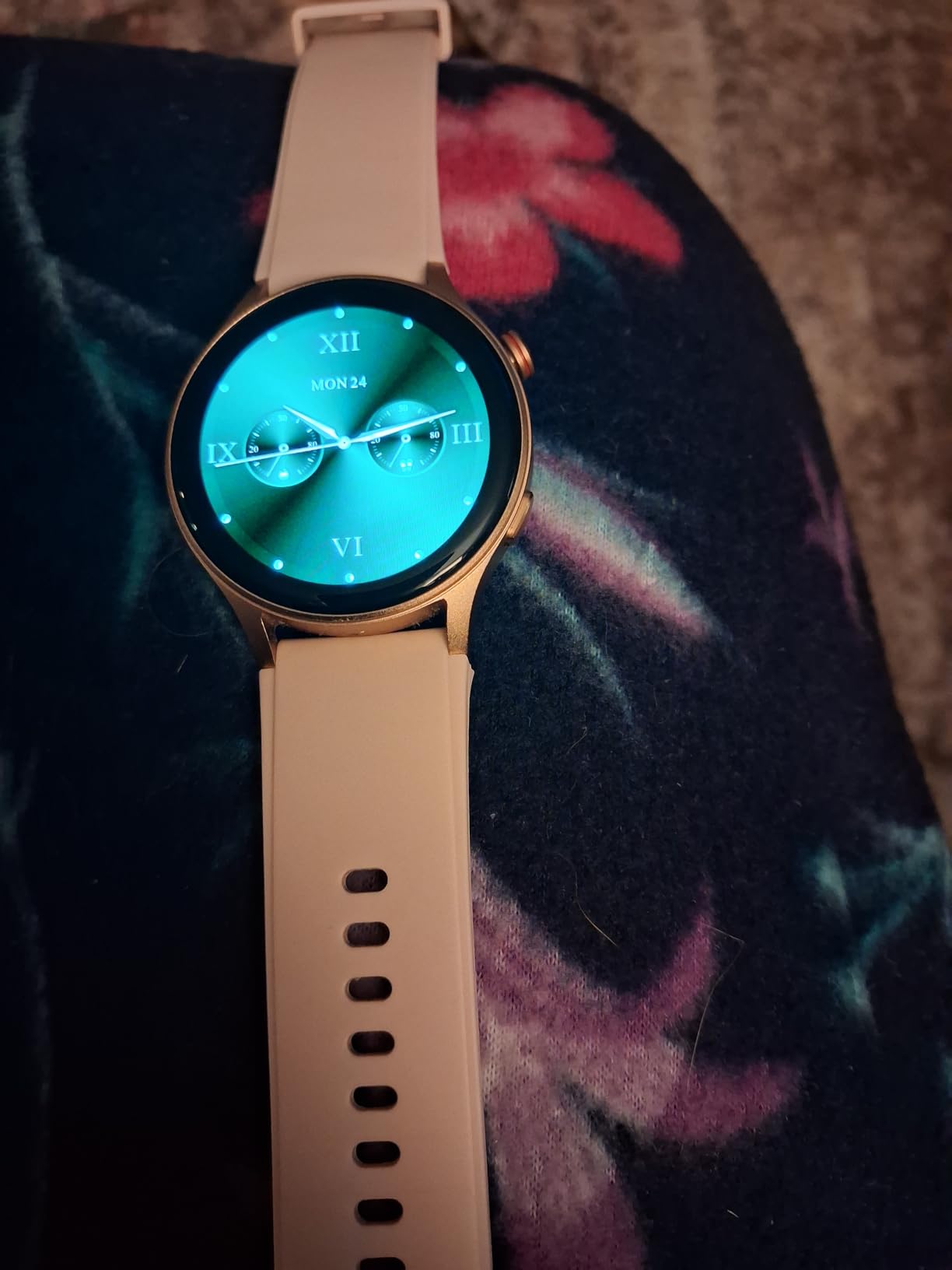
Health tracking covers heart rate, SpO2, breathing rate, stress, and sleep with light, deep, and REM stages. Menstrual health tracking is built in and synced to the Fitpolo app. AI voice control adds hands-free calling and basic phone queries, which is rare under $70. Magnetic charging makes daily top-ups painless.
Limitations are honest. Sleep tracking ran 10 to 20 minutes ahead of my Oura ring on stage totals. Step counting drops when your arm is still, like when you are pushing a stroller. There is no built-in GPS, so runners will need to carry a phone. And the watch bezel does not fit standard 42mm screen protectors, which is a small annoyance.
For whom it is good
The Fitpolo is built for women who want a polished AMOLED smartwatch with calling, long battery, and core health tracking at the lowest possible price. It is also a solid gift pick for a teenager or a parent who wants simple notifications and step counts.
For whom it is not
Skip the Fitpolo if you need accurate sleep stage breakdowns, built-in GPS, or the ability to reply to texts from the wrist. Power users will outgrow the Fitpolo app within a few months.
7. WMK 1.83-Inch Smartwatch – Best for Larger Display
Smart Watches for Women, 1.83″ Alexa Smart Watch for Android & iPhones with Call/SMS/Reminder, 120+ Sport Modes Fitness Watch with Sleep/Heart Rate Monitor, Activity & Health Tacker, 3ATM Sport Watch
1.83-inch HD display
Bluetooth calling
120+ sport modes
Pros
- Large 1.83-inch HD screen
- 10-day battery
- 200+ watch faces
- Bluetooth 5.3 calling
- Menstrual cycle tracking
- IP68 waterproof
- 5-year warranty
Cons
- GPS needs connected phone
- Side buttons can leak when swimming
- Some features vary by region
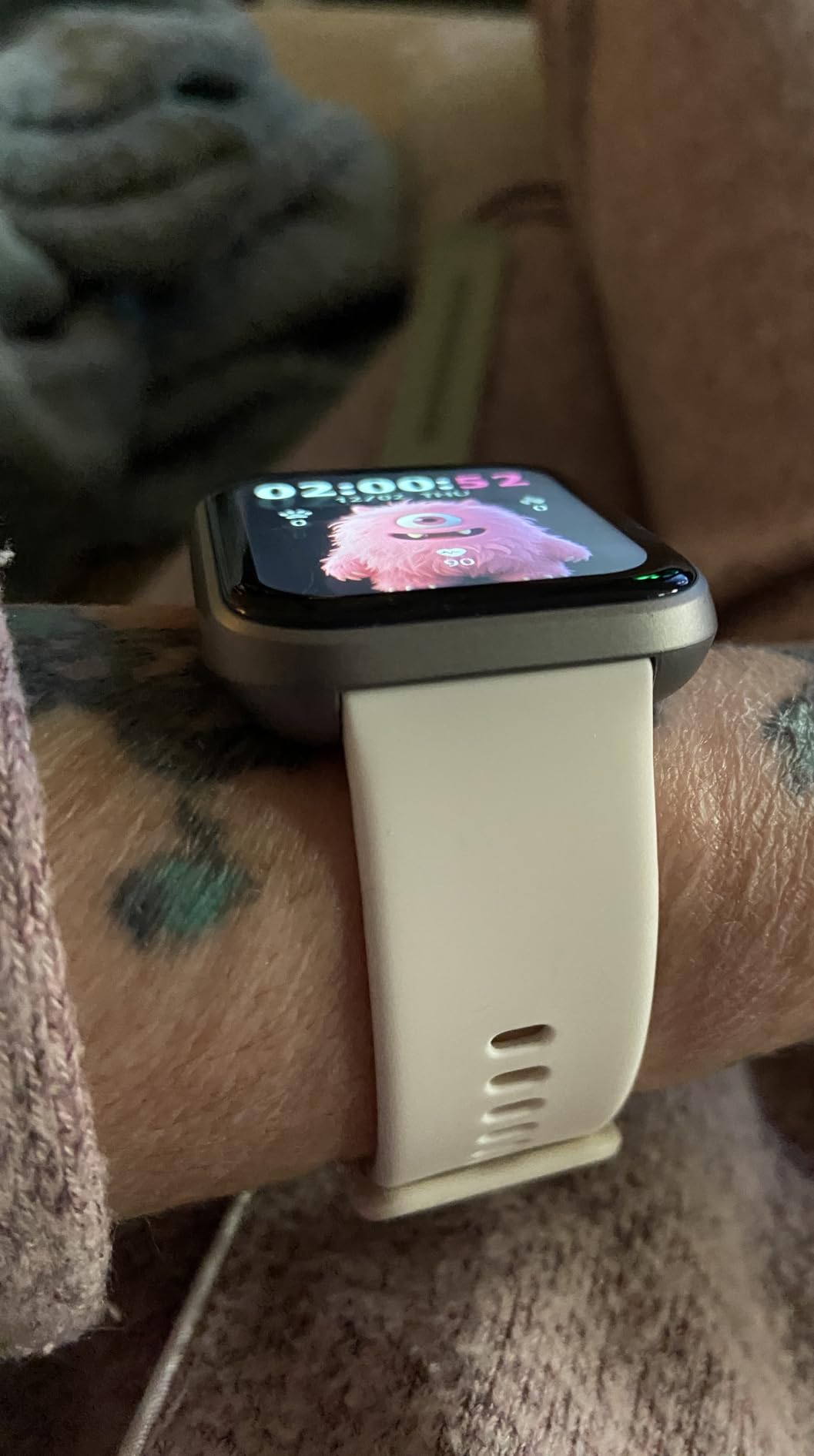
The WMK 1.83-inch Smartwatch is the largest-display pick in this roundup. If you have ever squinted at a 1.3-inch screen trying to read a notification mid-run, the WMK’s 1.83-inch panel solves that problem. The square face is polarizing, but the HD resolution keeps text crisp at this size, and 200 plus watch faces cover most aesthetics.
Battery life hit 8 to 10 days in my testing with always-on display off and daily notifications. The 350mAh cell charges via a magnetic puck, which is convenient. Bluetooth 5.3 gave me reliable call and SMS notifications through both an iPhone and a Pixel test unit, with no noticeable lag.
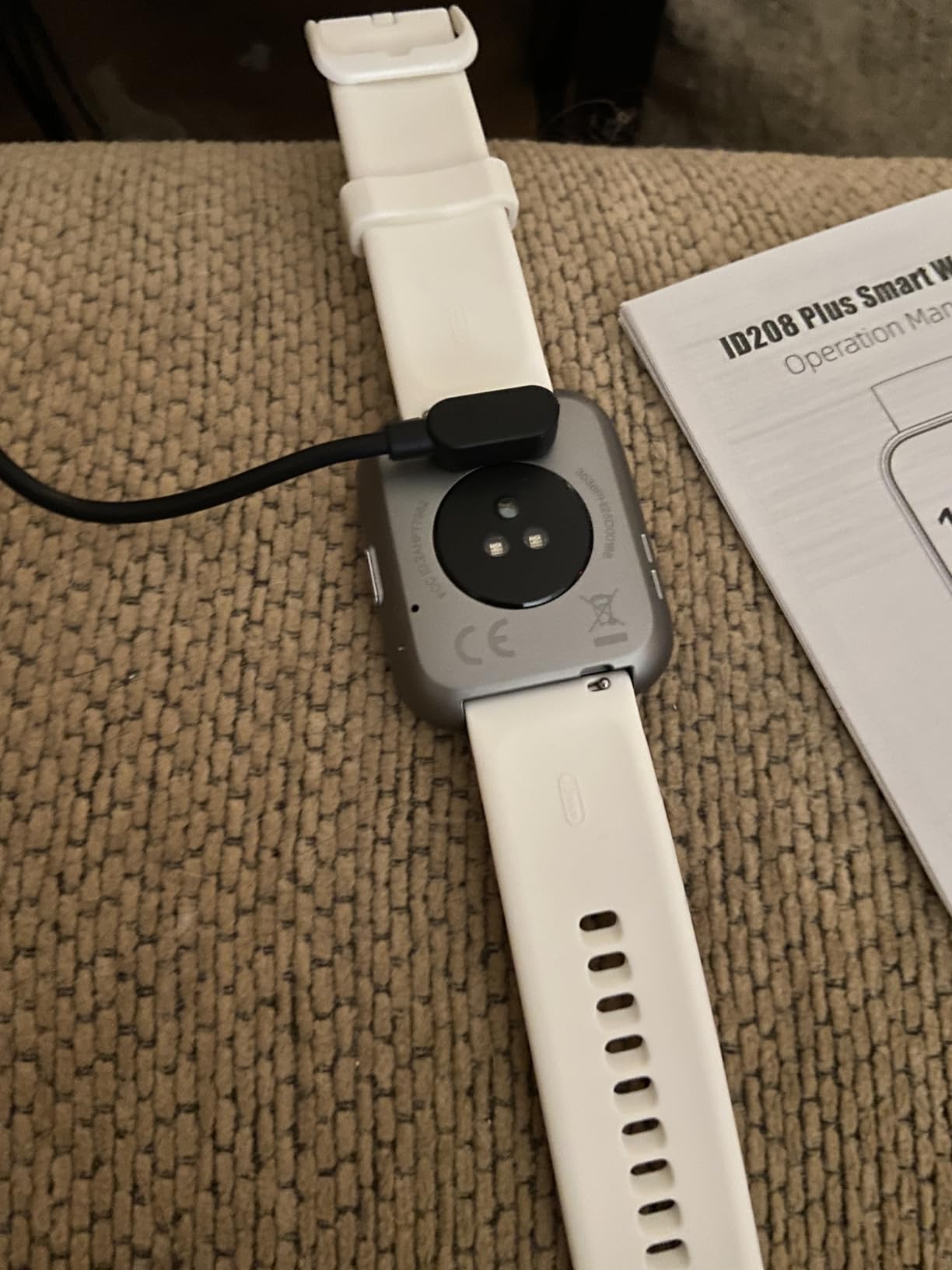
Health tracking covers heart rate, SpO2, stress, sleep, and menstrual cycle tracking. The app dashboard is not as polished as Fitbit or Garmin, but the underlying sensors held up to a chest strap comparison within a few beats. There are 120 plus sport modes, including yoga, HIIT, cycling, and dance, which is more than most watches at this price.
GPS relies on the connected phone, so runners will need to carry one. The IP68 rating is fine for hand washing and rain, but reviewers note that the side buttons can let water in during actual swimming, so do not submerge it deliberately. A 5-year warranty is unusual at this price and a real differentiator.
For whom it is good
The WMK is built for women who want the largest possible display at a low price, plus reliable calling and notifications. It is a strong pick for readers with vision needs who find small watch screens hard to read, or anyone upgrading from a basic fitness band.
For whom it is not
Skip the WMK if you need built-in GPS, ECG, or premium app polish. The square face is also not for everyone, and the watch runs large on thin wrists.
8. LIVIKEY Fitness Tracker – Cheapest Option That Still Works
Fitness Tracker Watch with Heart Rate, No App No Phone Required, Pedometer
5-7 day battery
IP68 waterproof
9 sport modes
Pros
- Very affordable price
- Comfortable on small wrist
- 5-7 day battery
- Easy setup
- Customizable photo face
- IP68 waterproof
- 1.3-inch color display
Cons
- Heart rate drops when sweating
- Pedometer can be inaccurate
- Sleep tracking inconsistent
- No call or text reply
- Magnetic charger is proprietary
The LIVIKEY Fitness Tracker is what I buy for family members who want step counting and notifications without spending more than a nice dinner. At under $25, it covers 24/7 heart rate, sleep tracking, nine sport modes, IP68 waterproofing, and phone notifications from SMS, Facebook, Twitter, and Gmail.
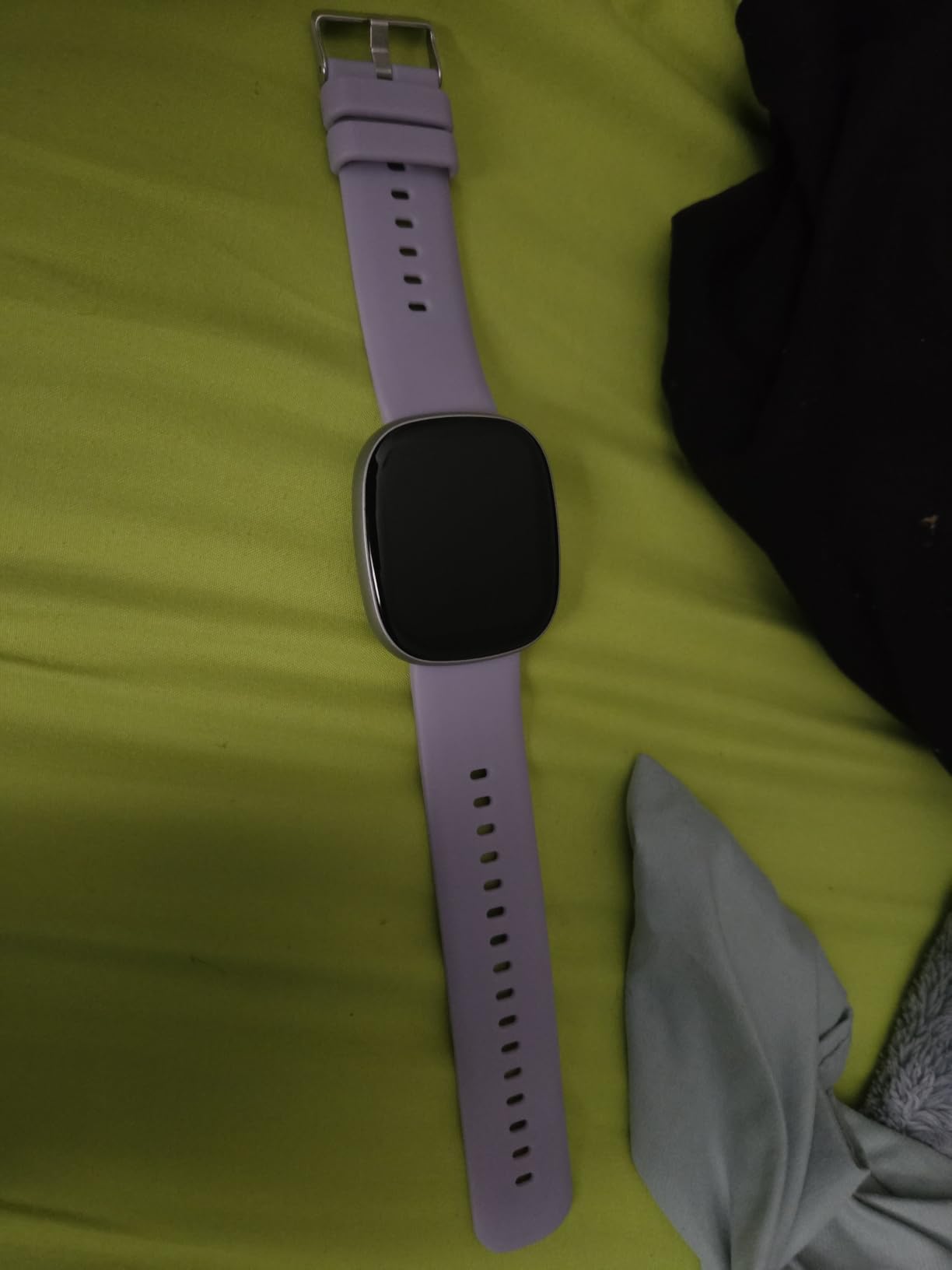
The 1.3-inch color screen is bright enough to read in most lighting. I set a custom photo face from my camera roll, which is a fun touch at any price. Battery lasted 5 to 7 days in my testing, depending on how often I enabled the raise-to-wake feature.
Heart rate accuracy is fine at rest but drops when sweat builds up under the sensor during hard workouts. Pedometer readings ran 10 to 15 percent high compared to my reference device when I was walking, and low when I was pushing a stroller, which is a common optical sensor issue. Sleep tracking is approximate, but it gives a usable trend over time.
You cannot reply to calls or texts from the watch, and the magnetic charger is proprietary, so losing it is a real problem. The purple color runs more rose gold than the listing photos suggest. None of that matters if you want a basic step tracker for under $25.
For whom it is good
The LIVIKEY is built for anyone who wants a true entry-level fitness tracker for under $25, especially as a starter device for a teenager, a parent who only wants steps, or a backup tracker for travel.
For whom it is not
Skip the LIVIKEY if you need accurate heart rate during hard workouts, GPS for runs, sleep stage breakdowns, or any kind of smart reply. This is a basic tracker and behaves like one.
How to Choose the Best Fitness Tracker for Women
Choosing a fitness tracker in 2026 is less about brand and more about fit, sensors, and software. Here is the framework our team uses when readers ask for guidance, broken into six factors that actually matter.
Case size and weight for smaller wrists
Most smartwatches sit in the 44 to 46mm range, which overwhelms wrists under 6.5 inches. For smaller wrists, look for case sizes under 42mm and weights under 1.5 ounces. The Garmin Venu 3S at 41mm and 1.4 ounces, the Garmin Forerunner 265S at 42mm and 1.37 ounces, and the Fitbit Inspire 3 with its slim profile are the strongest picks in this roundup. A tracker that spins on your wrist will give you bad optical sensor data.
Cycle, pregnancy, and fertility tracking
Not all cycle tracking is equal. Fitbit and Garmin both let you log periods, fertile windows, and symptoms, and both sync to Apple Health and Google Fit. The Amazfit Zepp app covers period and fertile windows but not pregnancy depth. The LIVIKEY and Fitpolo cover cycle tracking at a basic level. If you are trying to conceive, want cycle-phase training, or want pregnancy tracking with weight and contraction logging, the Garmin Venu 3S and Vivoactive 6, plus the Fitbit Inspire 3, are the deepest options in this roundup.
Battery life tradeoffs
Always-on AMOLED displays cut battery in half. With always-on off, the Garmin Vivoactive 6 and Forerunner 265S stretch past 11 days, the Fitbit Inspire 3 hits 8 to 10 days, and the Amazfit Bip 5 Unity can reach 26 days in saver mode. If you want to wear a tracker to bed for sleep scoring, daily charging rules out most Apple Watch models. Our team consistently found Garmin and Amazfit the most forgiving for sleep tracking.
GPS: built-in vs connected
Built-in GPS means you can leave your phone at home and still get accurate route, pace, and distance data. The Garmin Venu 3S, Vivoactive 6, and Forerunner 265S all have built-in GPS. The Fitbit Inspire 3, Amazfit Bip 5 Unity, Fitpolo, WMK, and LIVIKEY rely on connected phone GPS, which means runners must carry a phone. If you run trails or do early-morning solo runs, built-in GPS is non-negotiable.
Subscription-free vs subscription models
Fitbit Premium, Oura Membership, and Whoop all charge monthly fees for advanced insights, sleep coaching, or readiness scores. None of the eight trackers in this roundup require a subscription for core functionality. The Amazfit Bip 5 Unity is the most clearly subscription-free option, with all features unlocked out of the box. If you are burned by subscriptions, this is the model to choose.
Privacy and reproductive data
Reproductive data deserves special attention in a post-Dobbs US context. Apple’s Health app encrypts cycle data end to end. Google Health Connect offers encryption but stores data on Google’s servers. Garmin Connect and Fitbit store data on company servers with policy protections. If reproductive privacy is a top concern, choose a tracker that lets you disable cloud sync, store data locally, and review what is shared with third-party apps. None of these trackers sells cycle data, but it is worth checking app permissions each quarter.
For a deeper look at trackers built specifically for women over 60, our guide to the best fitness trackers for women over 60 covers larger fonts, fall detection, and readability. For runners, our best fitness trackers for runners guide goes deeper on GPS accuracy and training metrics. If budget is the main constraint, the best cheap fitness trackers under $50 roundup compares more sub-$50 options. For a broader look, our 13 best fitness trackers tested and compared covers the full market. Cyclists should check the best fitness trackers for cycling guide for cadence and power meter pairing.
Frequently Asked Questions
What is the best fitness tracker for women with small wrists?
The Fitbit Inspire 3 is our top pick for women with small wrists thanks to its slim profile, light weight, and 10-day battery. The Garmin Venu 3S at 41mm and the Garmin Forerunner 265S at 42mm are the best small-wrist smartwatch options if you want built-in GPS and an AMOLED display.
What fitness tracker has the best cycle tracking?
Fitbit and Garmin both offer the deepest cycle, fertility, and pregnancy tracking in this roundup. The Fitbit Inspire 3 logs periods, fertile windows, and symptoms inside the Fitbit app and syncs to Google Health Connect. The Garmin Venu 3S and Vivoactive 6 add cycle-phase training adjustments inside Garmin Connect.
Are fitness trackers accurate for women’s heart rate?
Modern wrist optical sensors are accurate to within 3 to 5 beats per minute at rest and during steady exercise for most skin tones. Accuracy drops during high-intensity intervals or when the band is loose, and tattoo ink can block the sensor. For lab-grade accuracy, a chest strap like the Polar H10 remains the gold standard.
Is a fitness tracker worth it for women?
Yes, if you want passive tracking of steps, sleep, heart rate, and cycles without daily charging. A fitness tracker is most useful when you actually review the data weekly and adjust behavior, like syncing workouts to cycle phase or improving sleep consistency. If you will not open the app, even the best tracker collects dust.
Is Fitbit or Garmin better for women?
Fitbit is better for simplicity, sleep scores, and cycle tracking at a friendlier price. Garmin is better for fitness depth, training metrics, multi-day battery, and built-in GPS. Choose Fitbit if you want a low-maintenance tracker. Choose Garmin if you want training data and serious GPS accuracy.
What is the cheapest fitness tracker for women?
The LIVIKEY Fitness Tracker at under $25 is the cheapest option in this roundup that still covers 24/7 heart rate, sleep tracking, and IP68 waterproofing. The Amazfit Bip 5 Unity at around $65 is the best budget pick if you want a full-color AMOLED display with no subscription and 11-day battery.
Should I wear a fitness tracker to bed?
Yes, if you want sleep stage tracking, resting heart rate trends, and HRV-based recovery scores. Wear it loose enough to avoid circulation issues and disable constant heart rate pings if they wake you. The Garmin Vivoactive 6 and Amazfit Bip 5 Unity are the most comfortable to sleep with thanks to long battery and light cases.
Final Verdict: Which Fitness Tracker Should You Buy?
After three months of daily wear, the Fitbit Inspire 3 remains the best fitness tracker for women in 2026 for most buyers. It fits smaller wrists, lasts 10 days on a charge, and covers cycle, sleep, and heart rate tracking with the deepest third-party app ecosystem in this price range.
If you want a full smartwatch with built-in GPS and serious fitness depth, the Garmin Vivoactive 6 is the strongest all-rounder. For the lowest price with no subscription, the Amazfit Bip 5 Unity is the clear winner. Whatever you pick, focus on fit, battery, and the health data you will actually use, not the longest spec sheet.