
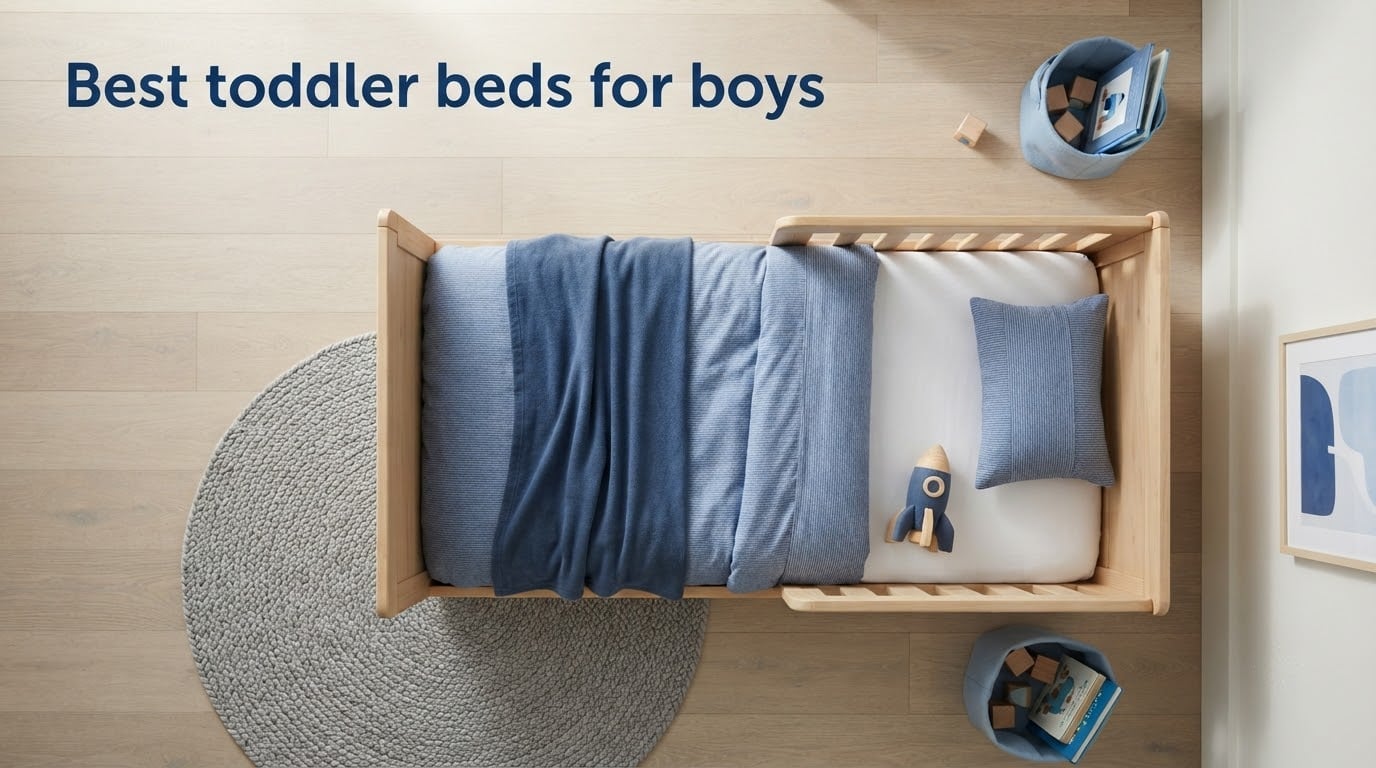
The best toddler beds for boys are low, short, and built so a two-year-old can climb in and out on his own. The switch usually gets forced on you. One day he is asleep in his crib, and the next he is standing on the top rail in his pajamas asking to be let out. That moment is how most families end up here, usually somewhere between 18 and 36 months, usually with a son who treats a crib the way a rock climber treats a cliff face.
Our own trigger was exactly that. We moved the crib mattress to its lowest setting, gave it a week, and watched him scale out anyway. What we needed after that was not a bigger bed. It was a lower one, with rails he cannot get over and a mattress he cannot fall out of.
We spent six weeks comparing the frames, finishes, and rail configurations on this list, and we read the review histories closely enough to know which assembly problems you are going to hit. Nine beds made the cut. They cover the styles boys’ rooms actually get: licensed plastic character frames, solid pine and New Zealand pine wood, an upholstered low floor bed, two Montessori-style floor beds, and one convertible that turns into chairs and a table after the toddler years are over.
If you are still deciding whether to make the move, start with our toddler tricycle buying guide, since most boys who climb out of the crib also need somewhere to burn that energy during the day. Once he is steady on that, our best toddler bikes with training wheels guide covers the balance stage. And if you are already thinking ahead to the year after next, our best bikes for 8 year olds guide covers the next step up.
Table of Contents
Top 3 Picks: Best Toddler Beds for Boys Right Now in October

Delta Children Nick Jr. PAW Patrol Bed
- Low-to-floor frame
- JPMA certified
- Uses a standard crib mattress

Dream On Me Classic Design Bed
- Solid pine frame
- GREENGUARD Gold finish
- Two side safety rails

Delta Children Disney Pixar Cars Bed
- All-steel frame
- Full-size crib mattress fit
- Licensed character graphics
The Best Toddler Beds for Boys in 2026 at a Glance
Every bed below holds a standard crib-size mattress and is rated to 50 pounds unless noted. Sort by what matters most to your family: height off the floor if your son is a climber, rail coverage if he rolls in his sleep, and certification if you are sensitive to finishes and off-gassing.
| Product | Specifications | Action |
|---|---|---|
| Delta Children Nick Jr. PAW Patrol Bed |
|
Check Latest Price |
| Dream On Me Classic Design Bed in Espresso |
|
Check Latest Price |
| Delta Children Disney Pixar Cars Bed |
|
Check Latest Price |
 Dream On Me Sydney Pinewood Bed in Black Dream On Me Sydney Pinewood Bed in Black |
|
Check Latest Price |
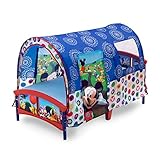 Delta Children Mickey Mouse Tent Bed Delta Children Mickey Mouse Tent Bed |
|
Check Latest Price |
 Dream On Me Portland 3-in-1 Convertible Bed Dream On Me Portland 3-in-1 Convertible Bed |
|
Check Latest Price |
 weeonekids Upholstered Toddler Bed weeonekids Upholstered Toddler Bed |
|
Check Latest Price |
 Ocodile Montessori Floor Bed with Rails Ocodile Montessori Floor Bed with Rails |
|
Check Latest Price |
 Zumspiel Toddler Floor Bed with Storage Bag Zumspiel Toddler Floor Bed with Storage Bag |
|
Check Latest Price |
When Is Your Boy Ready for a Toddler Bed?
Most boys are ready between 18 and 36 months, and the age matters less than the behaviour. The single clearest signal is that he can get out of the crib on his own. Once a child can climb the crib rails, a crib is no longer keeping him contained, and a lower bed with side rails is a better answer than lowering the mattress again.
The second signal is height. If your son is close to three years old and still in a crib, he may be too tall for the crib to be comfortable even if he has not attempted to leave. A standard toddler bed is built for a child roughly 18 months to 3 years, and most are rated to 50 pounds, which lines up with the typical three-year-old.
Those 50 pounds are a hard ceiling rather than a suggestion. If your son is already near it, or if he is a fast grower, a convertible or full-size option is a better purchase than a toddler bed you will replace in a year. Parents on r/Autism_Parenting describe the same pattern with two boys sharing one crib system, keeping the same frame through both toddler stages instead of swapping furniture twice.
Two practical checks before you buy. Measure the room and the door: most frames here run about 53 to 57 inches long and 28 to 32 inches wide, and you need clear floor space to open the door and make the bed. Then think about nighttime wandering, because a boy who can climb out of a crib can also open a door, and that changes which rail configuration you want.
One more thing worth checking. If your son already sleeps well in a full-size crib mattress and the room is tight, a toddler bed that uses a standard crib mattress avoids a second purchase entirely. Several parents on r/toddlers describe the mattress cost as the surprise line item, not the bed.
1. Delta Children Nick Jr. PAW Patrol Bed – Best Overall Toddler Bed for Boys
Delta Children Plastic Toddler Bed, Nick Jr. PAW Patrol
Low-to-floor frame holding 50 pounds
JPMA certified to ASTM standards
Fits a standard crib mattress
Pros
- Low-to-floor design makes the move from crib easy
- Sturdy steel frame with two attached guardrails
- JPMA certified to meet or exceed ASTM standards
- Fits a standard crib mattress
- Light enough to move between rooms
Cons
- Assembly needs every part aligned precisely
- Instructions confuse first-time assemblers
- Support bar can be felt under a thin mattress
This is the frame we would put in the room first. It is a plastic bed on a steel chassis, the sleeping surface sits low, and the two guardrails are moulded into the frame rather than added as a separate part. That single design decision removes the biggest failure mode we found across nine beds, which is a loose or badly aligned rail.
It measures 53.94 by 29.13 by 26.18 inches assembled and takes a standard crib mattress, so if you already own one you are not buying anything else. Recommended for ages 15 months and up and rated to 50 pounds, which covers the whole window where most boys make this move.
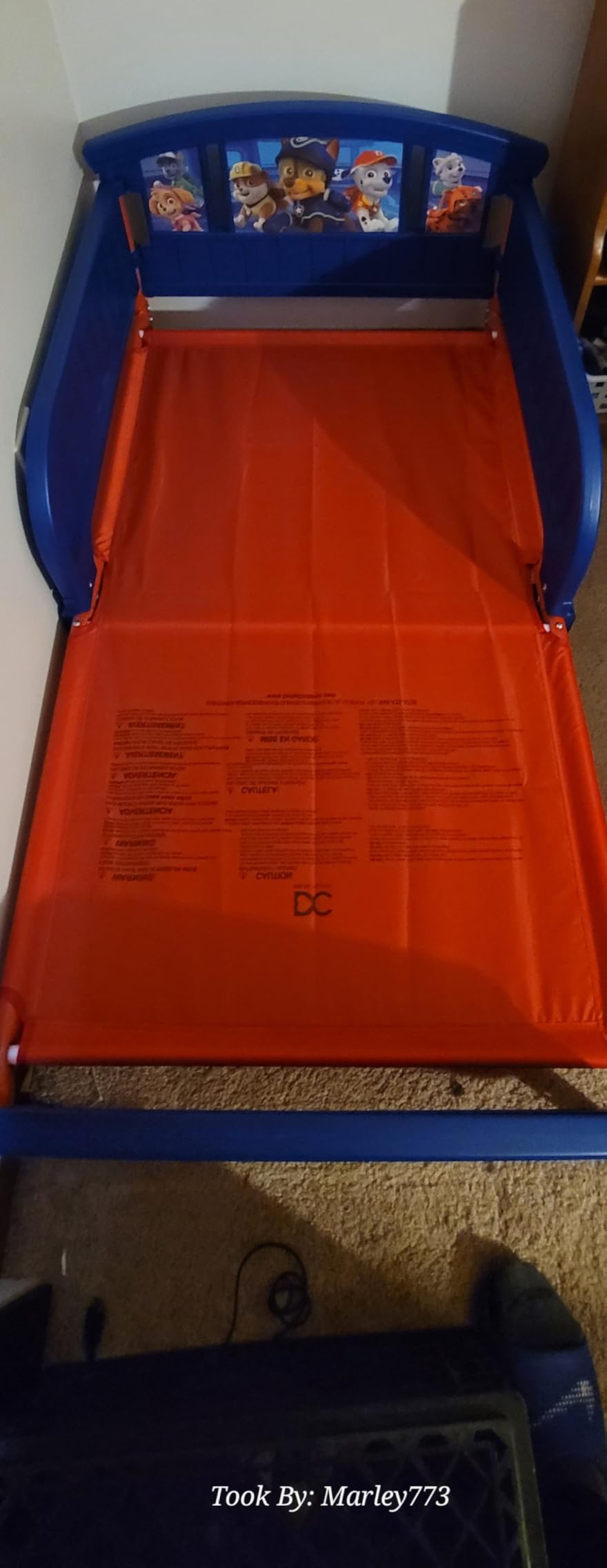
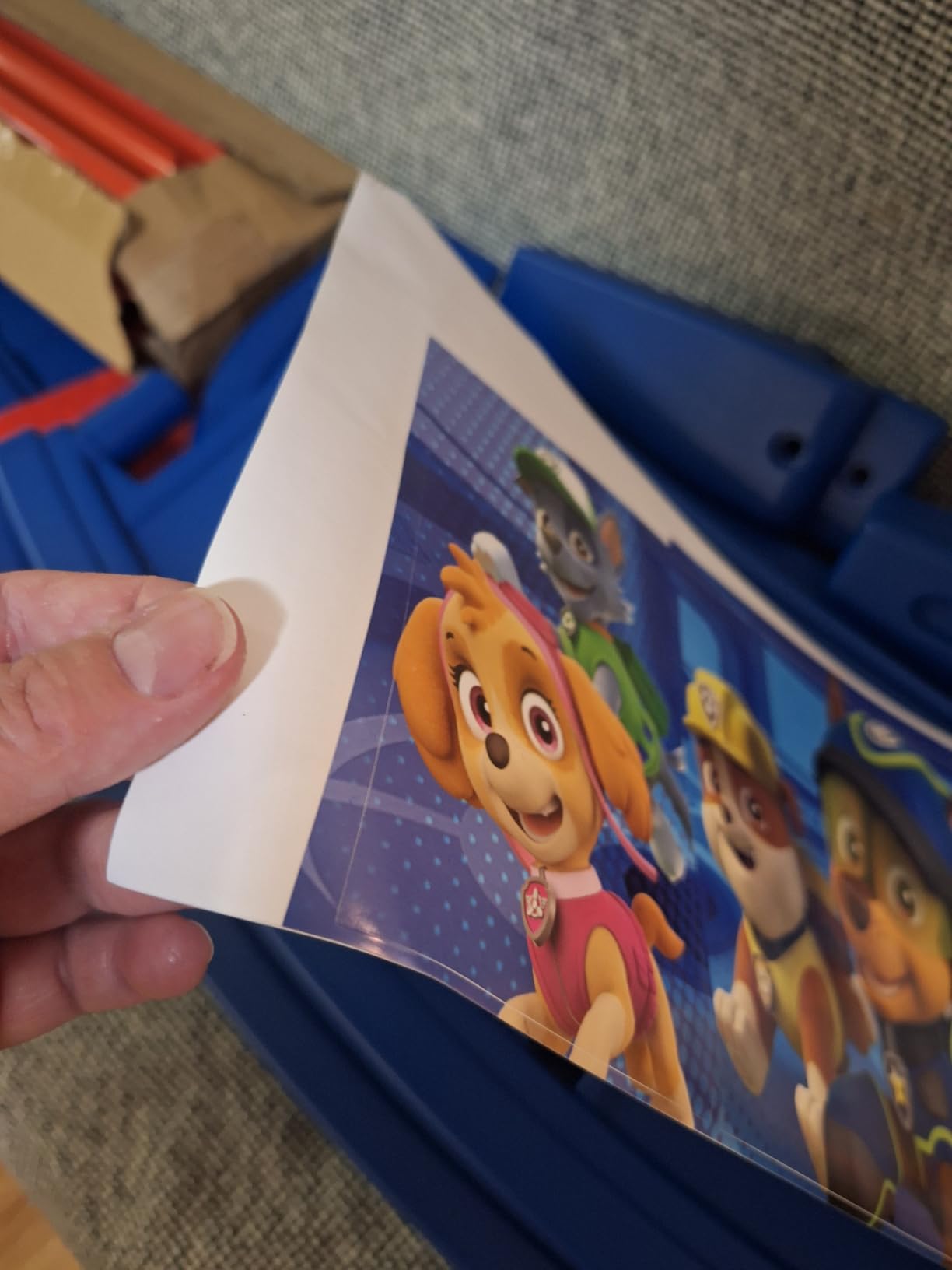
The construction is the reason it holds up. Reviewers consistently describe the steel frame taking jumps, kicks, and a boy treating the mattress as a trampoline, and the guardrails doing real work containing a restless sleeper who rolls across the bed at night. The licensed character graphics are applied well and have not been reported peeling.
It also weighs far less than a wooden frame, which matters more than it sounds. A bed you can lift with one arm is a bed you can move to make a bed, shift for a play tent, or carry to a grandparent’s house for a sleepover. Several parents use it for exactly that.
Who this bed suits
It suits the family whose priority is a bed that works rather than a room that photographs well. There is no finish certification to compare, no grain to look at, and nothing to coordinate. You set it up, you put a fitted sheet on, and it functions for roughly two to three years.
It also suits a boy with a strong grip and a short attention span for instructions. The bed itself assembles simply, but the components have to line up precisely or the frame will not seat. Build it on the floor with the room clear.
Who might not like it
If you are sensitive to plastics and finishes in a shared room, the moulded plastic frame offers nothing to look at, and there is no low-emission certification on this one. It is also not convertible, so the day he passes 50 pounds the bed is finished.
A thinner crib mattress can leave a child feeling the horizontal support bar that runs under the sleeping surface. Several parents solved it with a thicker mattress, but if you already own a thin one, factor that in before you commit.
2. Dream On Me Classic Design Toddler Bed in Espresso – Best Value Toddler Bed for Boys
Dream On Me Classic Design Toddler Bed, GREENGUARD Gold, Espresso
Solid pine frame holding 50 pounds
GREENGUARD Gold finish, JPMA certified
Two rails plus a reinforced center leg
Pros
- Real solid pine rather than MDF
- Timeless arched headboard fits any room
- GREENGUARD Gold finish free of lead and BPA
- Two side rails and a reinforced center leg
- Uses a standard crib or toddler mattress
Cons
- Assembly can run around two hours
- Hardware arrives unsorted in one bag
- Some pieces reported missing from the box
With over 14,000 ratings behind it, this is the most review-proven frame we tested and the one we would point a parent toward who wants wood rather than plastic. The frame is solid pine with a gently arched headboard and footboard, and the espresso finish is dark enough to disappear into most boys’ room schemes and hide the marks that come with it.
It measures 53 by 28 by 30 inches, weighs 16.5 pounds, and supports up to 50 pounds. The arched top rails are smooth, with no sharp corners, and the low profile makes climbing in and out something a small child does without help.
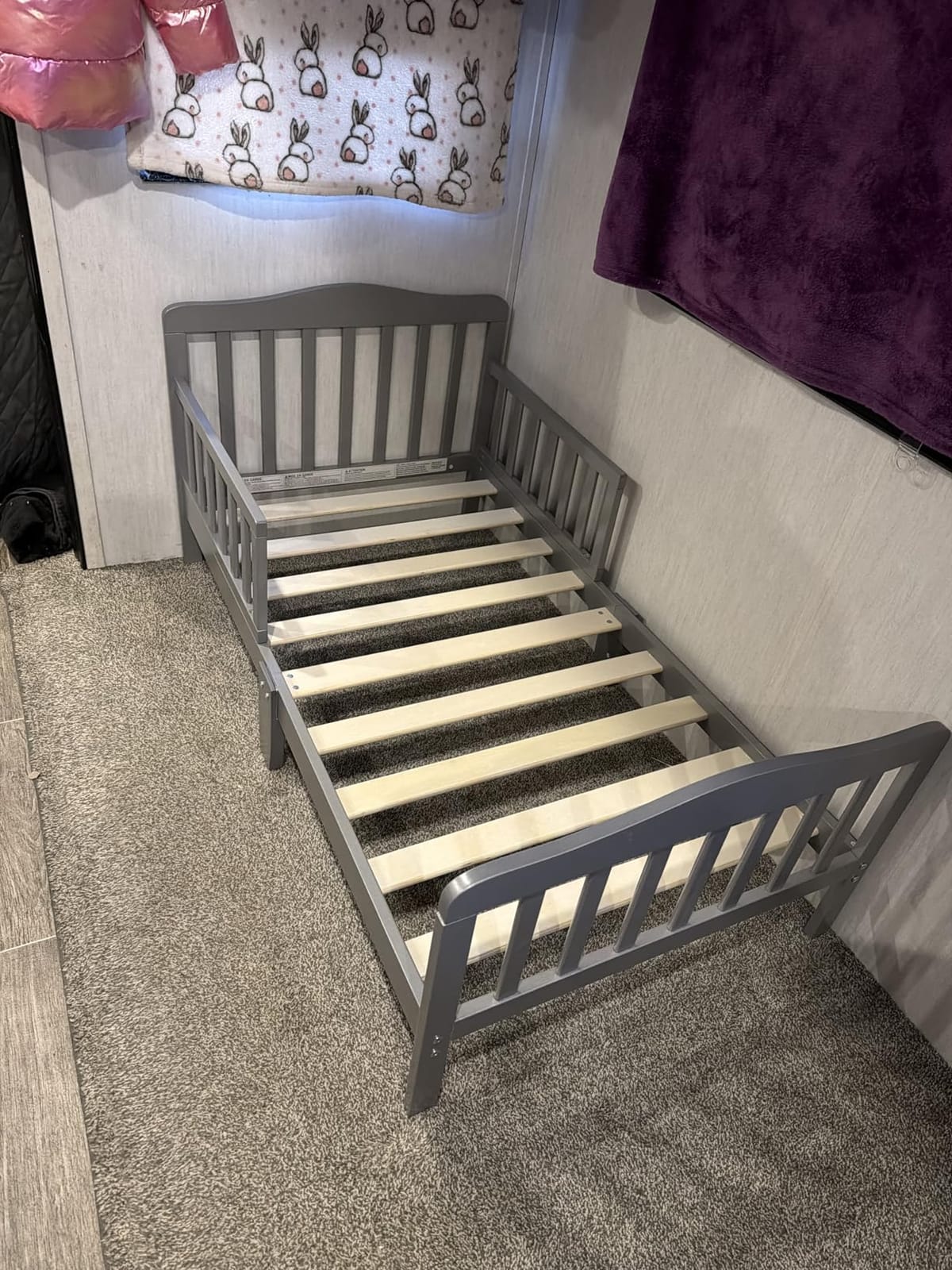
The certification is the real differentiator here. The finish is GREENGUARD Gold certified for low chemical emissions, and the bed is JPMA certified and designed to meet or exceed ASTM and CPSC standards. It is also free of phthalates, latex, lead, and BPA, which puts it ahead of most wood beds in this class for anyone shopping on materials.
Structurally it is solid. Reviewers repeatedly contrast the pine with cheaper MDF competitors, and the reinforced center leg plus the two side rails give it a settled feel that does not rock when a boy pushes on the rail to stand up. Durability over a two-to-three-year toddler stretch is not in question.
Who this bed suits
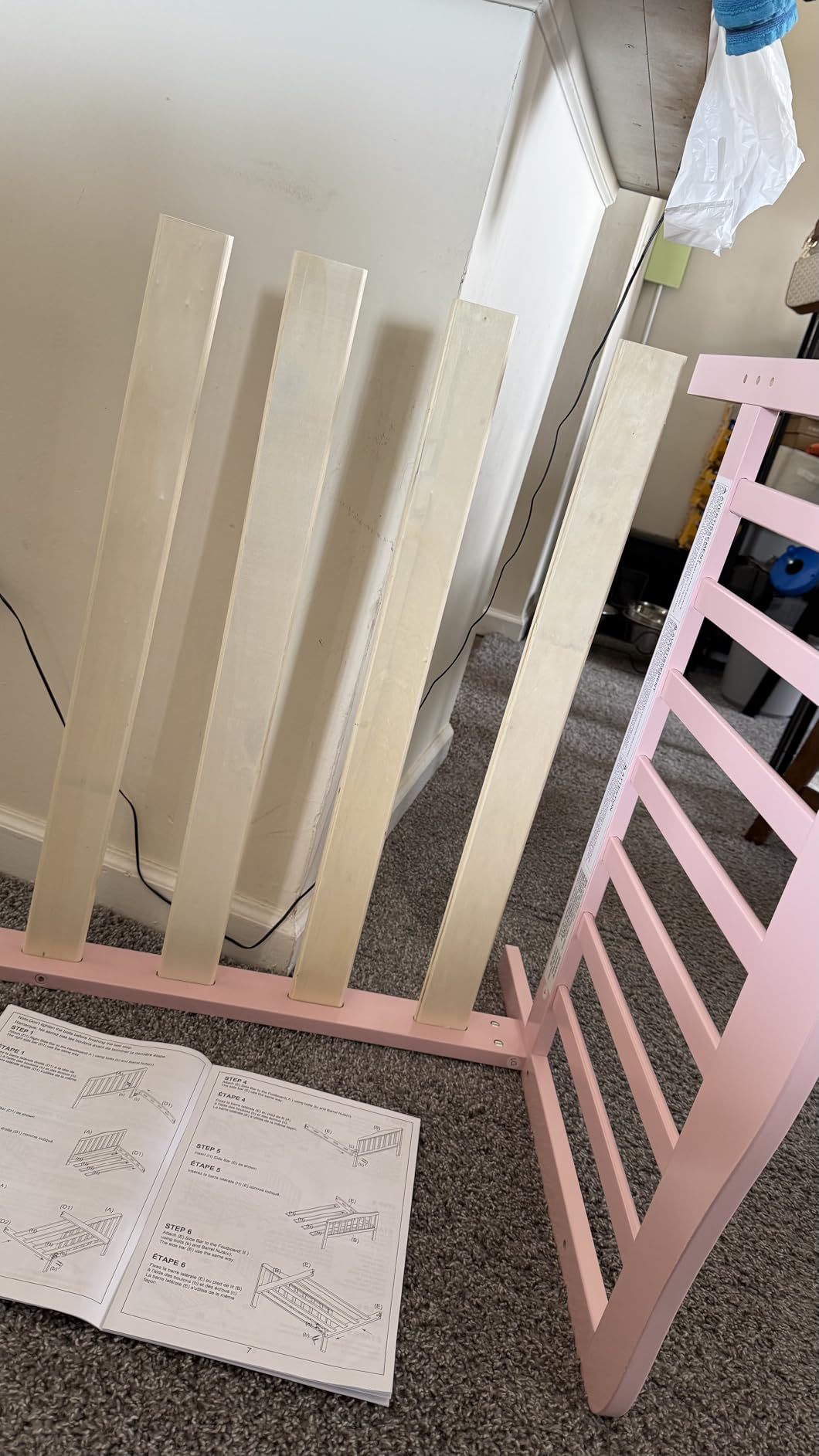
It suits parents who want a wood frame with a low-emission finish and who can budget an evening for assembly. Reviewers describe roughly a two-hour build for a first-timer, more if you work alone. Sort the bolts by length before you start, because they arrive mixed in a single bag and that is where most of the frustration comes from.
It also suits a room that will change. The arched silhouette is not themed, so it moves from a nursery to a shared sibling room to a four-year-old’s room without looking wrong, which is more than we can say for a licensed character frame.
Who might not like it
If you need the bed built in under half an hour, skip it. The hardware sorting and the careful alignment of the side rails are the two steps that take the time, and a small number of buyers report pieces missing from the box or a side assembled backwards.
It is also not convertible. When he reaches 50 pounds you are buying again, so plan for that rather than treating it as a purchase until the big boy bed.
3. Delta Children Disney Pixar Cars Bed – Top Rated for an Active Sleeper
Delta Children Plastic Toddler Bed, Disney/Pixar Cars
All-steel frame holding 50 pounds
Fits a full-size crib mattress
Licensed Disney Pixar graphics
Pros
- All-steel frame tolerates jumping and kicking
- Low floor lets a three-year-old climb out unaided
- Guardrails contain a child who rolls at night
- Fits a full-size standard crib mattress
- Graphics are bright and well applied
Cons
- Every part must be positioned exactly right
- Very tight fit leaves no margin for error
- Under-bed bar is felt by a small sleeper
Structurally this is the same platform as our top pick, in a different skin, and it holds a 4.7 average across more than 7,700 ratings. The frame is alloy steel with high-quality plastic construction, rated to 50 pounds and recommended from 15 months, and it shares the low-to-the-ground profile and two attached guardrails.
Assembled dimensions are 53.94 by 29.13 by 26.18 inches and it takes a full-size standard crib mattress. It carries a 90-day parts warranty, so keep the box for the first few months in case a bracket fails.
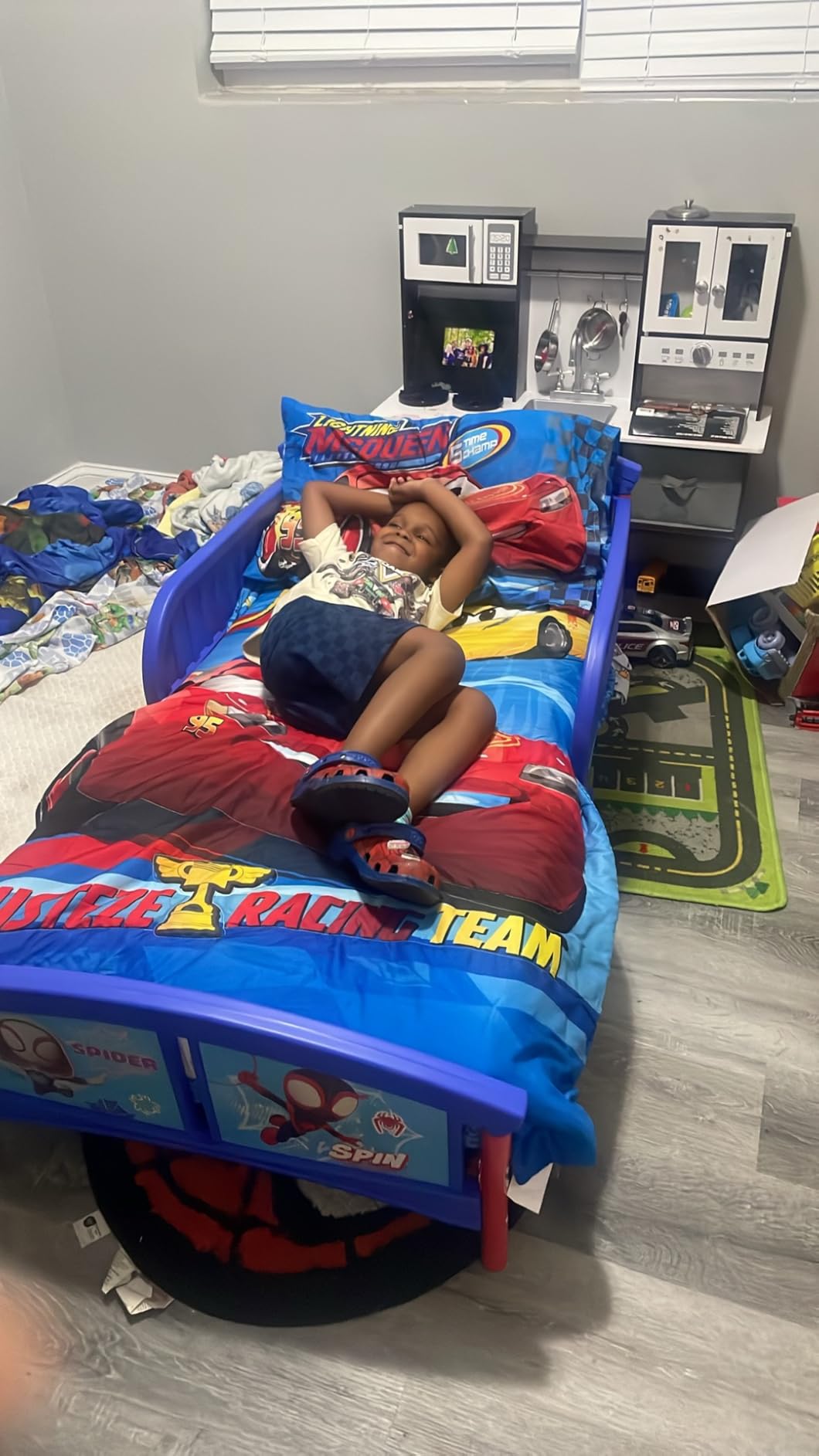
What makes this one our pick for an active boy is the steel frame. Reviewers describe it as the sturdier of the plastic-and-steel frames we tested, taking repeated jumps and play without loosening, and the guardrails do genuine work for a child who rolls or sits up suddenly in the night. The low height means a three-year-old can get in and out without being lifted.
The Cars graphics are bright and properly applied rather than stickered on. Parents note that the design gets used well beyond sleeping, doubling as a reading nook or a sleepover bed, and the licensed theme is the reason most families pick this frame over a plain one.
Who this bed suits
It suits a boy who uses the bed as equipment. Between 15 months and 3 years, that covers jumping, climbing, and rolling, and this is the frame that absorbs it best. It also suits families already committed to a movie theme, because the graphics tie into a room scheme quickly.
If your son is a climber who went over the crib rail repeatedly, the guardrails here are attached to the frame, so there is no third part to work loose during the night. That is the specific thing we checked on every bed in this list.
Who might not like it
If your boy outgrows licensed characters within a year or two, skip it. A themed plastic bed has a shorter useful life than a plain wood frame, and the graphics are not removable.
Be aware of the fit. A thicker mattress raises the guardrails above the sleeping surface, so a tall toddler may need slats or a thinner crib mattress for the rails to sit at a useful height. Assembly is also tight, with little tolerance for parts in the wrong position.
4. Dream On Me Sydney Pinewood Bed in Black – Best Non-Toxic Pick
Dream On Me Sydney Toddler Bed, GREENGUARD Gold, Pinewood, Black
New Zealand pine with water-based finish
GREENGUARD Gold and Baby Safety Alliance verified
Holds up to 50 pounds
Pros
- Real pine rather than the MDF used by cheaper beds
- Handles vigorous use including jumping
- GREENGUARD Gold screened for over 10000 chemicals
- Two wooden side rails and center legs
- Black finish is easy to redecorate around
Cons
- Assembly realistically needs two people
- Bolts of mixed sizes arrive in one bag
- Some slats reported slightly short
If the finish on a child’s bed is the thing keeping you up, this is the pick. It is made from sustainably sourced New Zealand pinewood with non-toxic, water-based finishes, and it carries GREENGUARD Gold certification, which means it was screened for over 10,000 chemicals and VOCs. It is also Baby Safety Alliance verified and CPSIA compliant, with lead and phthalate levels well below federal limits.
It measures 53 by 29 by 28 inches, weighs 19 pounds, and supports up to 50 pounds with a 1-year manufacturer warranty. Mattress support comes from strong wooden slats plus center legs, and two wooden side rails keep a boy contained.
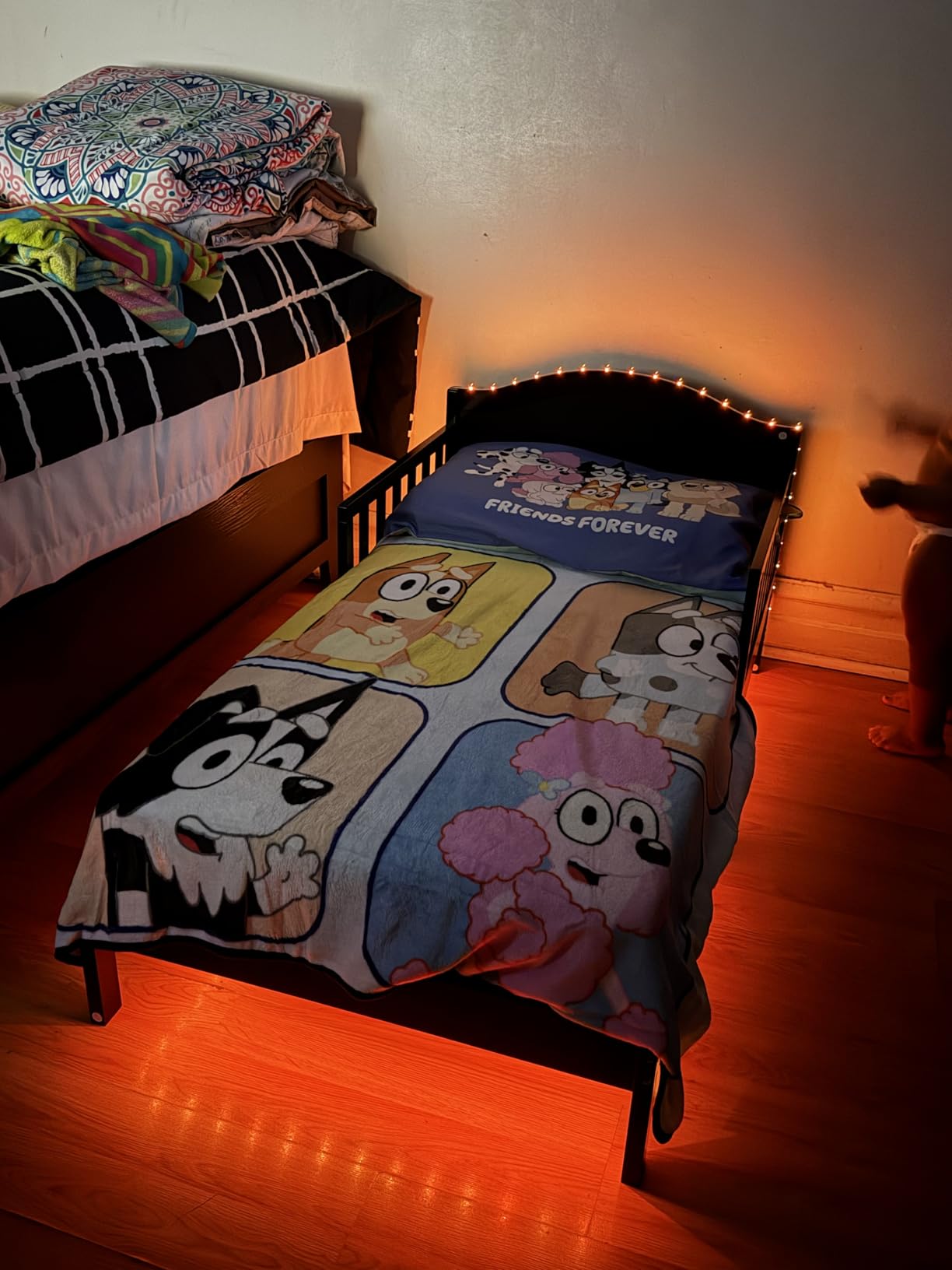
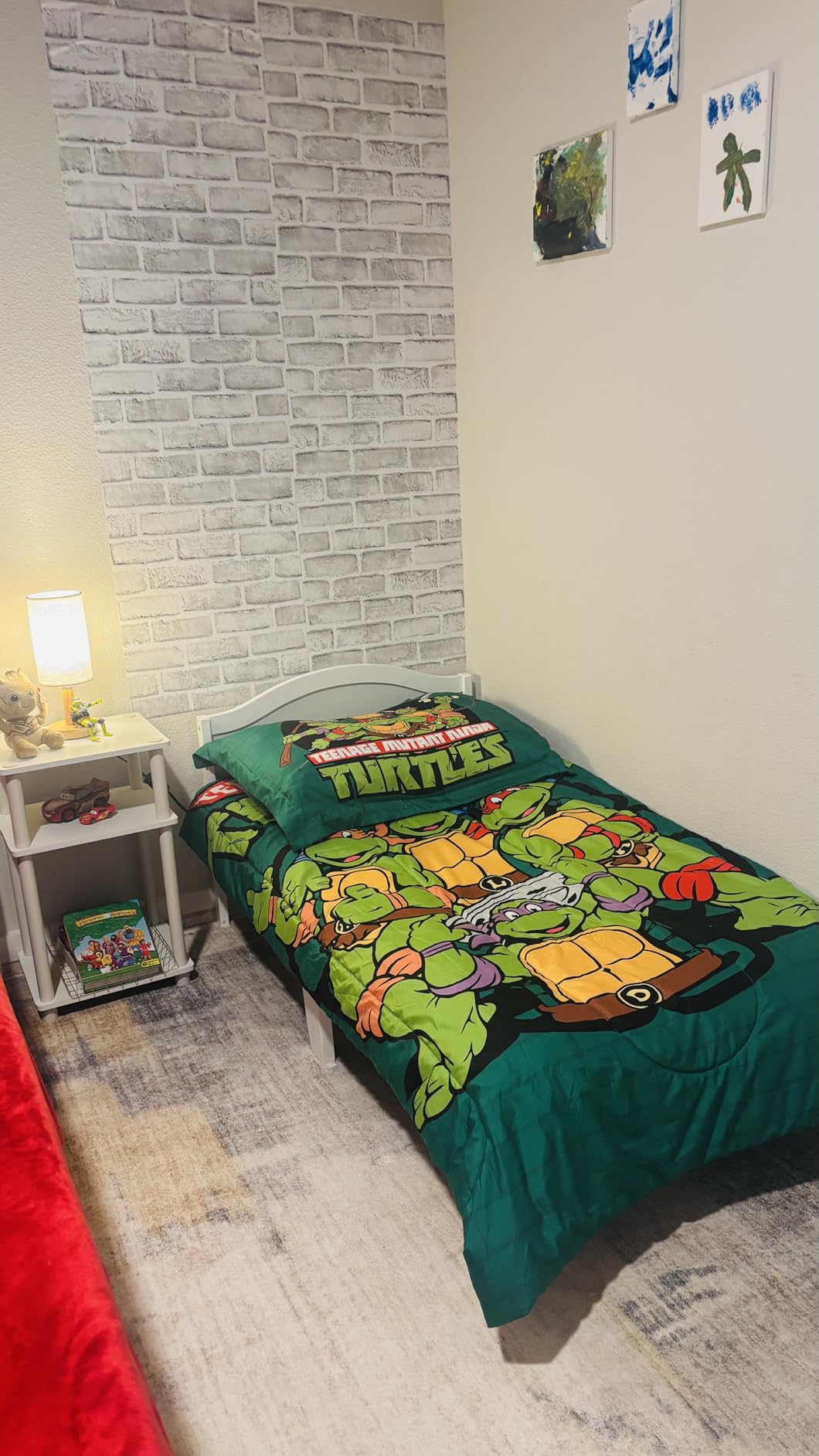
Build quality is the other argument for it. Several buyers compare the pine directly to cheaper MDF beds in the same bracket and find it noticeably more rigid, and it has held up under a toddler who jumps on the frame. The black finish is deliberately neutral, so the room does not need to be decorated around a colour.
It is designed for Dream On Me full-size crib and toddler mattresses measuring 52 by 28 by 5 inches, so check the size before you buy, because that is a specific fit rather than a generic crib opening.
Who this bed suits
It suits a room where a parent has already done research on toxic materials and wants a certification they can point at. On r/moderatelygranolamoms, parents describe searching specifically for non-toxic, GREENGUARD Gold certified beds, and this bed answers that request for a solid wood frame.
It also suits a family planning a second child in the same room. A neutral black wood frame that passes certifications now is one you can hand to a second boy without rebuying.
Who might not like it
Do not expect a quick build. This is realistically a two-person job, the bolts of different sizes arrive mixed in one bag, and a few buyers found slats slightly too short and added their own board. Occasional units also arrive damaged in the box.
It is heavier than the plastic frames at 19 pounds, so moving it between rooms takes two hands. And it does not convert, so 50 pounds remains the end of the road.
5. Delta Children Mickey Mouse Tent Bed – Best Character Bed for Boys
Delta Children Toddler Tent Bed, Disney Mickey Mouse
Removable tent with mesh windows
Holds up to 50 pounds
JPMA certified to CPSC and ASTM
Pros
- Removable tent makes bedtime feel like play
- Mesh windows ease the dark for a nervous sleeper
- Plastic connectors outlast fabric ties
- Light 17 pound frame moves between rooms
- Two attached guardrails
Cons
- Tent is not built for rough play or jumping
- Some boxes arrive damaged or with bad screws
- Frame feels basic for a very active child
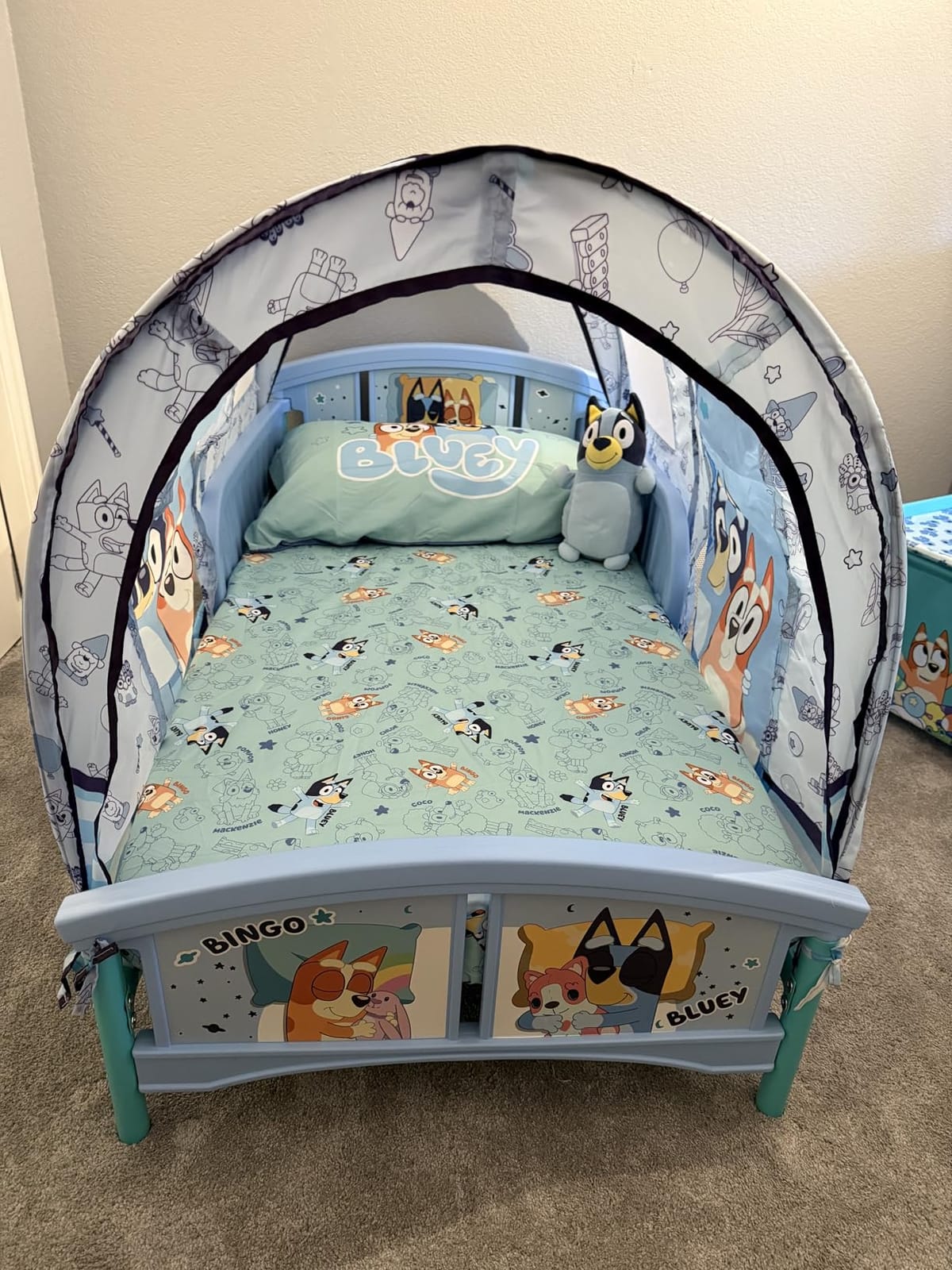
The tent is the whole idea, and it works because it changes what bedtime feels like. The canopy attaches to the frame with plastic connectors rather than fabric ties, so it survives being climbed on, and it has mesh windows and roll-up doors so a child who is uneasy in the dark has a way to see out.
Underneath, the platform is the same low-to-the-floor steel and plastic frame as the other Delta beds here, measuring 53.94 by 29.13 by 37.40 inches with the tent up. It holds up to 50 pounds, is recommended from 15 months, and takes a standard crib mattress.
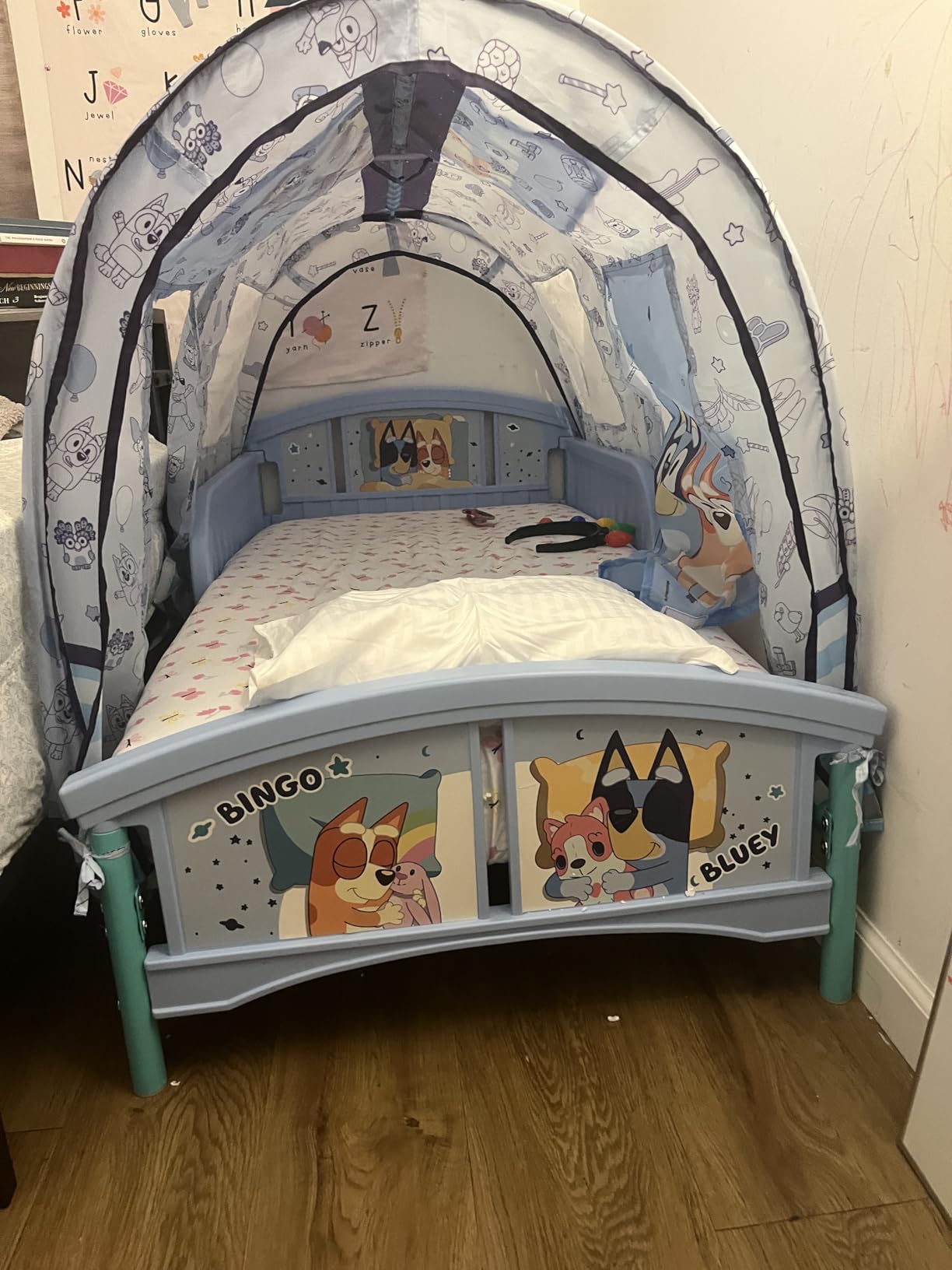
Assembly is the easiest on this list. Parents describe finishing it solo in under an hour, and at 17 pounds the frame is light enough to spin around the room when you are rearranging for a nap in the afternoon. The two attached guardrails are what stop a boy crossing the crib-rail habit, which is often the behaviour that forced the move.
The theme is the draw. A Mickey Mouse tent reads as a private clubhouse to a two-year-old, and that sense of ownership does more for bedtime cooperation than any routine change we have seen described by parents.
Who this bed suits
It suits a boy who resists bedtime or who is uneasy about the dark, because the mesh windows and the roll-up doors turn an open room into a small enclosed space. It also suits families who want the theme to be temporary and removable, since the tent comes off and the frame stays.
It suits a room that will host sleepovers, where a tent over a low platform reads as a fort to a visiting friend.
Who might not like it
Skip it for a boy who jumps. The tent fabric and its connectors are not designed for roughhousing, and the frame underneath is functional rather than heavy duty. A handful of parents also feel it is not quite sturdy enough as a full-time bed for a very active child.
Delivery condition is the other reported weak spot, with some buyers receiving damaged boxes or screws that did not fit, so inspect the box before you start. The warranty is 90 days, parts only.
6. Dream On Me Portland 3-in-1 Convertible Bed – Best Convertible Toddler Bed
Dream On Me Portland 3-in-1 Convertible Toddler Bed, Converts to 2 Chairs & Table, Low Floor Design with 4 Safety Guard Rails, Baby Safety Alliance & Greenguard Gold Certified – Storm Grey
New Zealand pine with four guard rails
GREENGUARD Gold certified
Holds up to 50 pounds
Pros
- Solid pine handles jumping and kicking
- Four rails give the most enclosed sleep
- Low floor for independent access
- GREENGUARD Gold and Baby Safety Alliance certified
- Takes a 52 by 28 by 5 inch mattress
Cons
- Chair and table pieces are sold separately
- Center connection step is very hard with the Allen wrench
- Dowels and hardware can crack during assembly
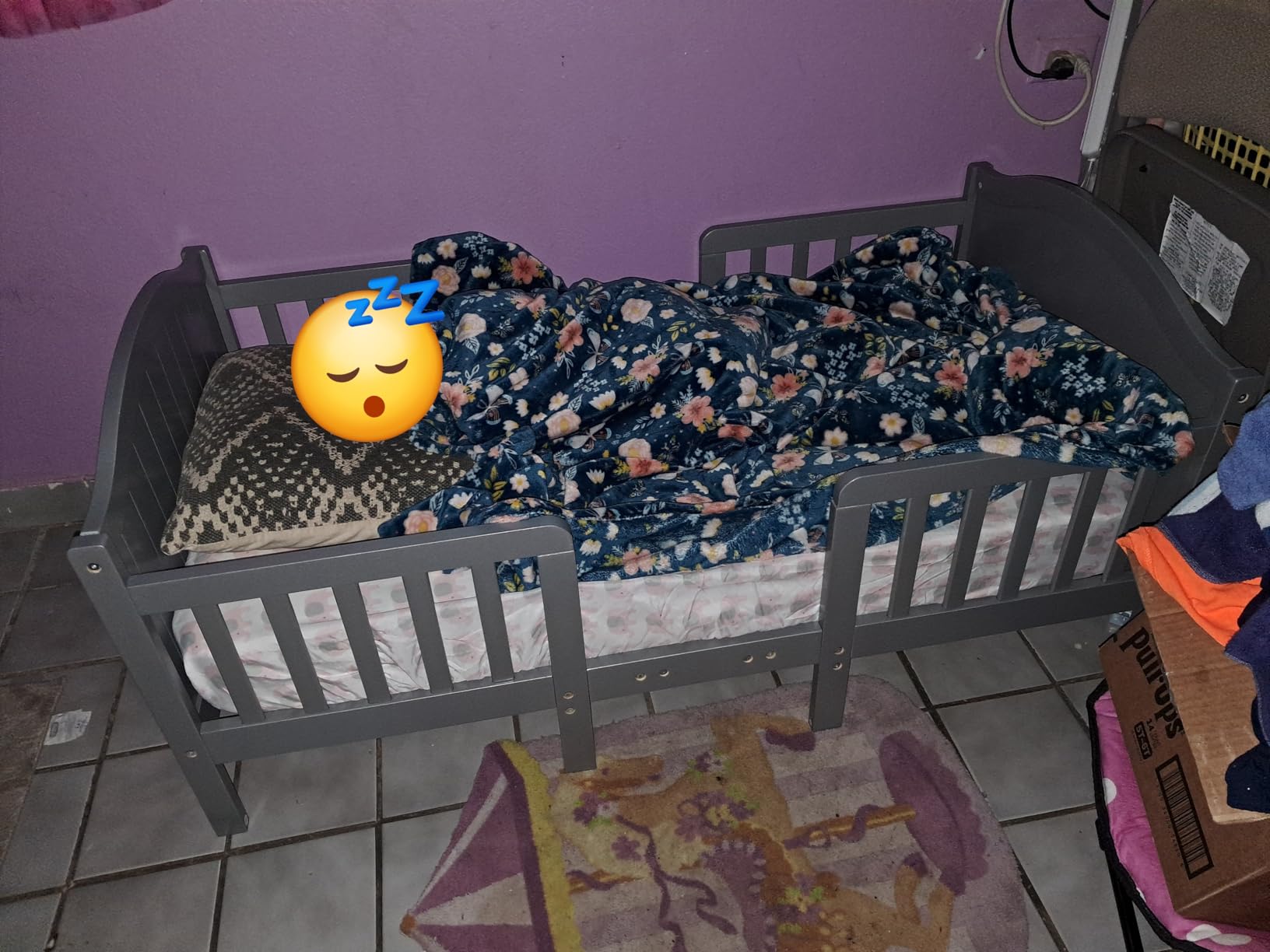
This is the frame that stays useful longest, and it is the one to buy if you know you are near the end of the toddler stage already. In bed mode it measures 56 by 29 by 28 inches with four wooden side rails, the highest rail coverage of anything on this list, and it converts afterward into two chairs and a small table.
Material and certification are the same strong story as the Sydney frame above: New Zealand pinewood with non-toxic, water-based finishes, GREENGUARD Gold certified, Baby Safety Alliance verified, CPSIA compliant, and designed to meet or exceed ASTM and CPSC standards. It is rated to 50 pounds and takes a 52 by 28 by 5 inch mattress.
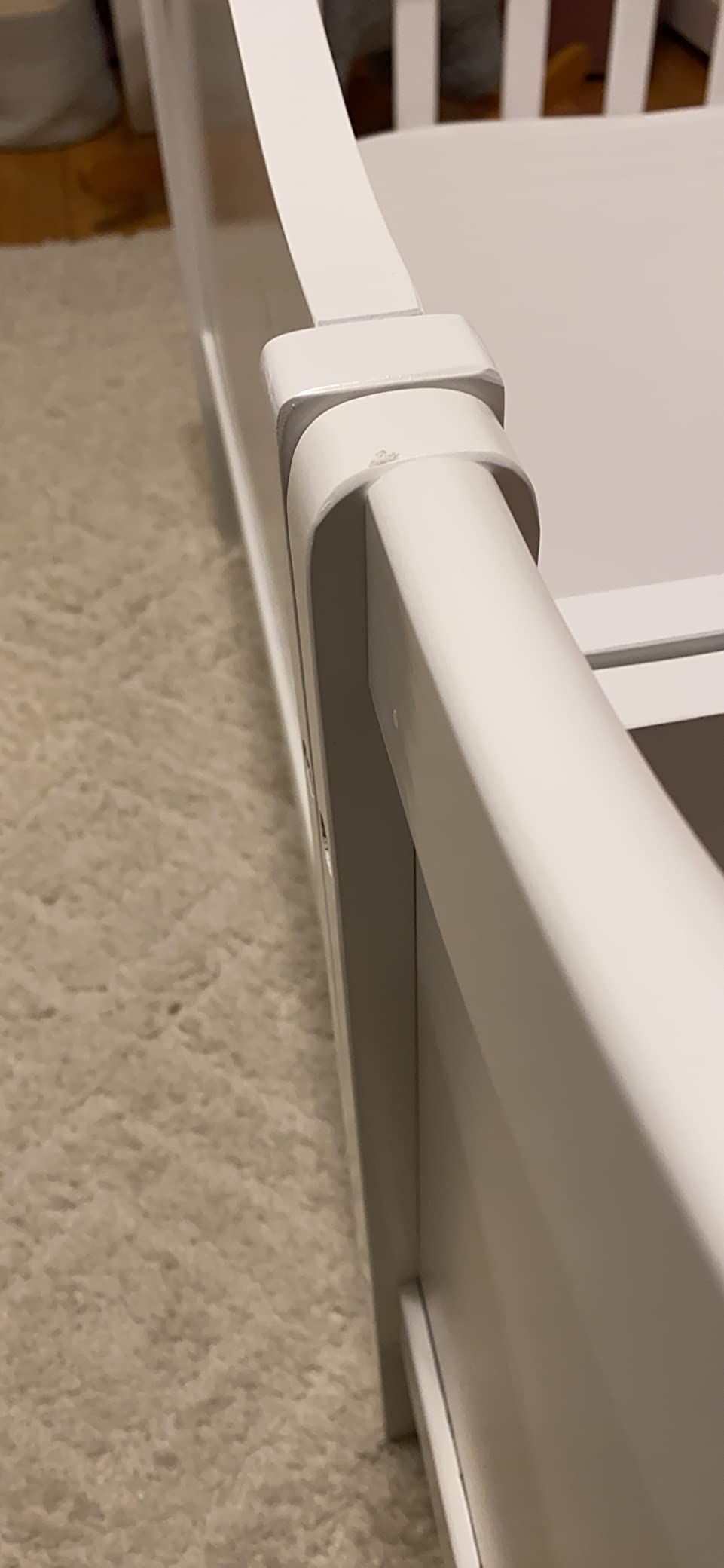
The four rails matter more than the conversion does. A boy who sits up in the night, or who has not yet learned to stay inside a low bed, has rail on three sides plus a footboard, which is the most enclosed configuration we tested. Parents also praise the low floor for letting a toddler climb in and out alone.
Durability is a genuine strength. Reviewers describe solid pine taking jumping and kicking without loosening, and the slat deck with center legs keeps the frame from flexing when a boy stands on the rail.
Who this bed suits
It suits a family trying to buy furniture once. Instead of replacing the bed at three, you reassemble the same pine frame as a chair and table set for a play nook, which is the version of this idea r/Autism_Parenting parents describe when they are outfitting rooms for two boys.
It also suits a boy who stands up in the night or sits up playing, because four rails contain movement that two rails will not.
Who might not like it
The conversion pieces are not included. Reviewers are candid that this functions as a 2-in-1 out of the box, and you need the separate kit to get the chairs and table, so read the listing carefully before you picture a play set.
Assembly has a real problem step. Connecting the center sections with the included Allen wrench at the end is genuinely difficult because of the restricted turning angle, and some buyers report dowels cracking or hardware stripping during the build. The paint finish can also scratch with normal use. It has the lowest average rating on this list at 4.3 stars from 1,736 reviews, and assembly accounts for most of that.
7. weeonekids Upholstered Toddler Bed – Best Toddler Bed for a Small Room
weeonekids Toddler Bed, Child Bed for Kids with Extra Safty Broad, Standard Crib Size Toddler Bed, Certified Fabric Toddler Beds,Toddler Flood Bed (Gray)
Upholstered acacia wood frame
Fits a standard crib mattress
Listed for roughly 18 months to 7 years
Pros
- Soft foam rails are gentle on small arms
- Standard crib mattress fits with no purchase
- Narrow 31.88 inch width saves floor space
- Low profile a young child can climb
- Sturdy enough for ordinary jumping
Cons
- Side rail brackets reported breaking within a month
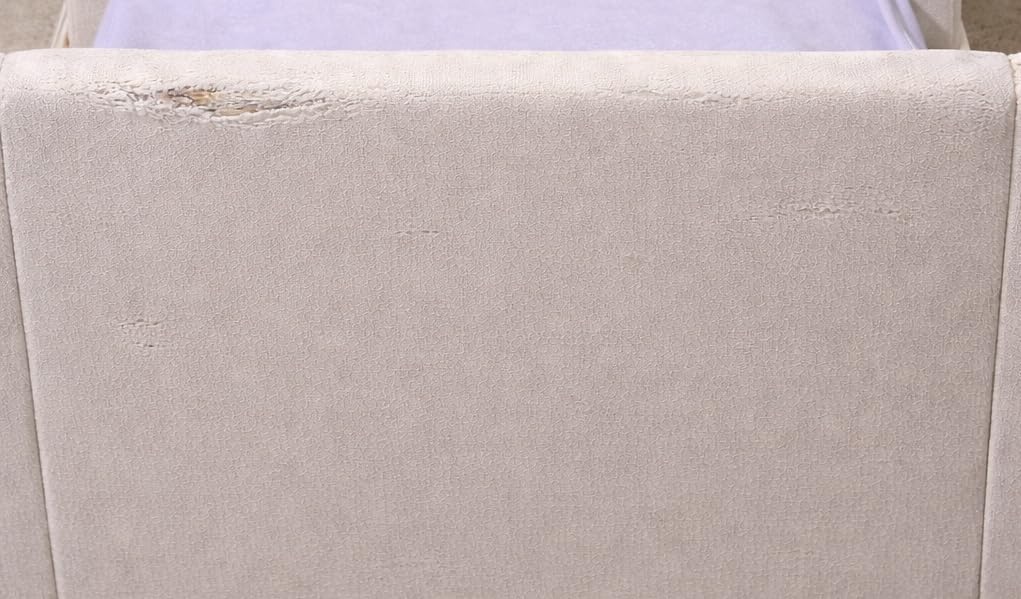
- Fabric tears where a child climbs the footboard
- Two people may be needed to seat the screws
Two things set this one apart. It is upholstered rather than bare wood, with foam-filled side rails under a soft velvet shell, and it is listed for children roughly 18 months to 7 years, which is a longer window than the 50-pound frames on this list.
It is 57.9 by 31.88 by 20.07 inches and weighs 70 pounds, with acacia wood construction under the upholstery. It takes a standard crib-size mattress, and two removable safety rails are included. Finishes run from grey and white to beige, light khaki, and pink, so a boys’ room is not restricted to the darker options.
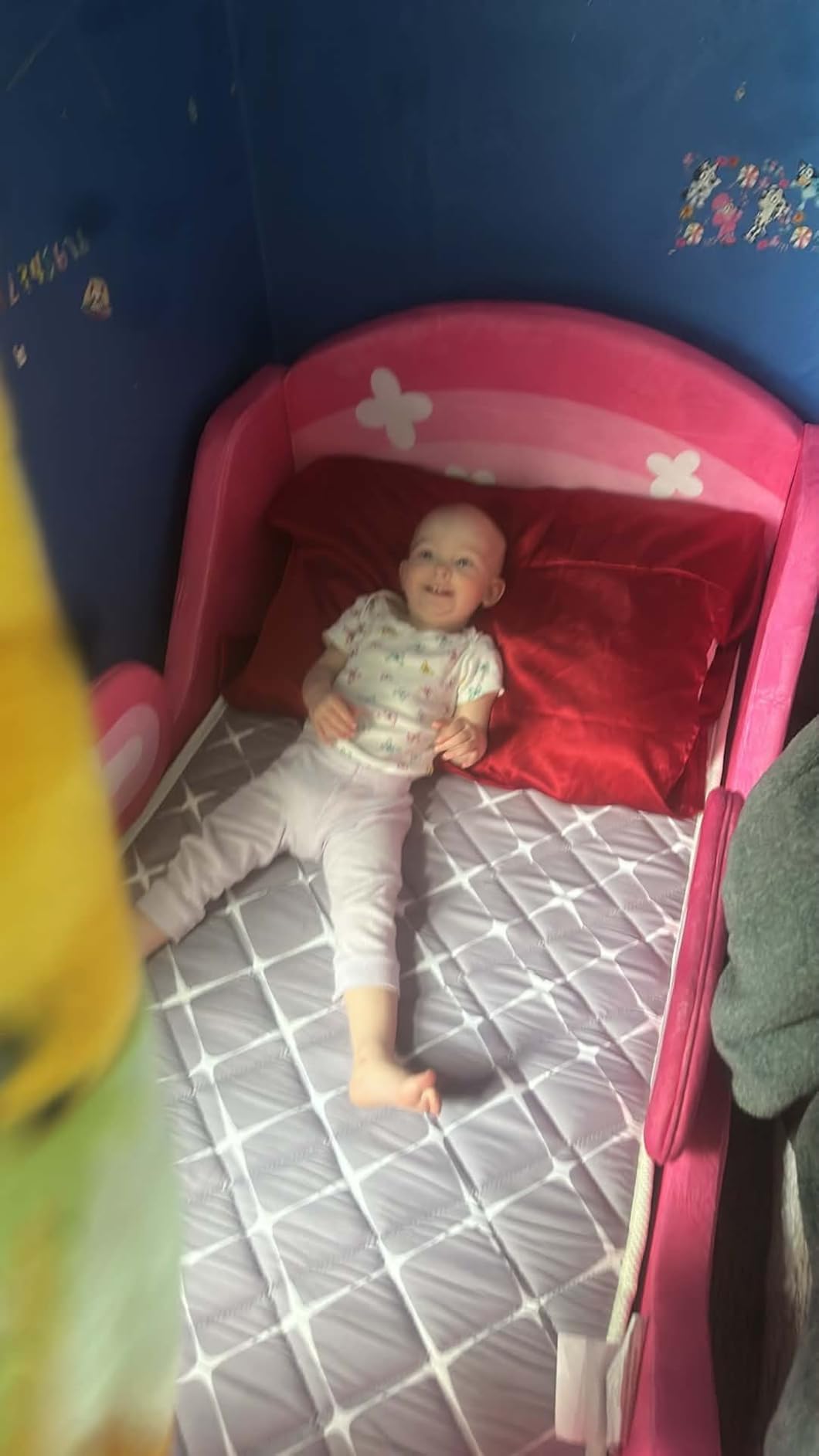
The padded rails are the feature parents mention most. Foam filling across the sides takes the edge off for a small child who rolls into the frame at night, and the low profile means even a one-year-old can crawl in and out. Reviewers also note the wipe-clean velvet surface as practical in a boys’ room.
Assembly comes in well, with brackets that line up rather than fight you, and the fit for a standard crib mattress is exact, which removes the second-purchase problem entirely.
Who this bed suits
It suits a small room where the 31.88 inch width matters, and a boy who is still small enough that hard rails concern you. It also suits a parent who wants one bed to cover both the toddler stage and the first years beyond it, since the listed range runs to about 7 years.
It suits a shared room. Two of these side by side in a small space is a real layout, and the low profile keeps the sightline open.
Who might not like it
Fabric and brackets are the weak points. Reviewers report side rail brackets breaking within a month of use and fabric tearing where a child climbs the footboard, so it is a poor match for a heavy climber. At 70 pounds it is also the heaviest frame here and awkward to move.
Build quality is described as basic rather than premium, there is no certification listed, and a cluster of buyers reported difficulty with the seller’s returns process, so check the return terms before you commit.
8. Ocodile Montessori Floor Bed with Rails – The Lowest Frame We Tested
Ocodile Toddler Bed with Rails | Low Montessori Floor Bed Frame for Kids | Standard Crib Size Wooden Frame for Independent Toddlers 1-3 – Gray
Only 15.4 inches off the floor
Fits a standard crib mattress
Removable middle guardrail
Pros
- Lowest frame height in our test
- Reuses a standard crib mattress
- Labeled parts make assembly quick
- One-piece side frame with rounded edges
- Two entry points and ten airflow slats
Cons
- Rated to 50 pounds only
- Under-bed drawer is a small addition
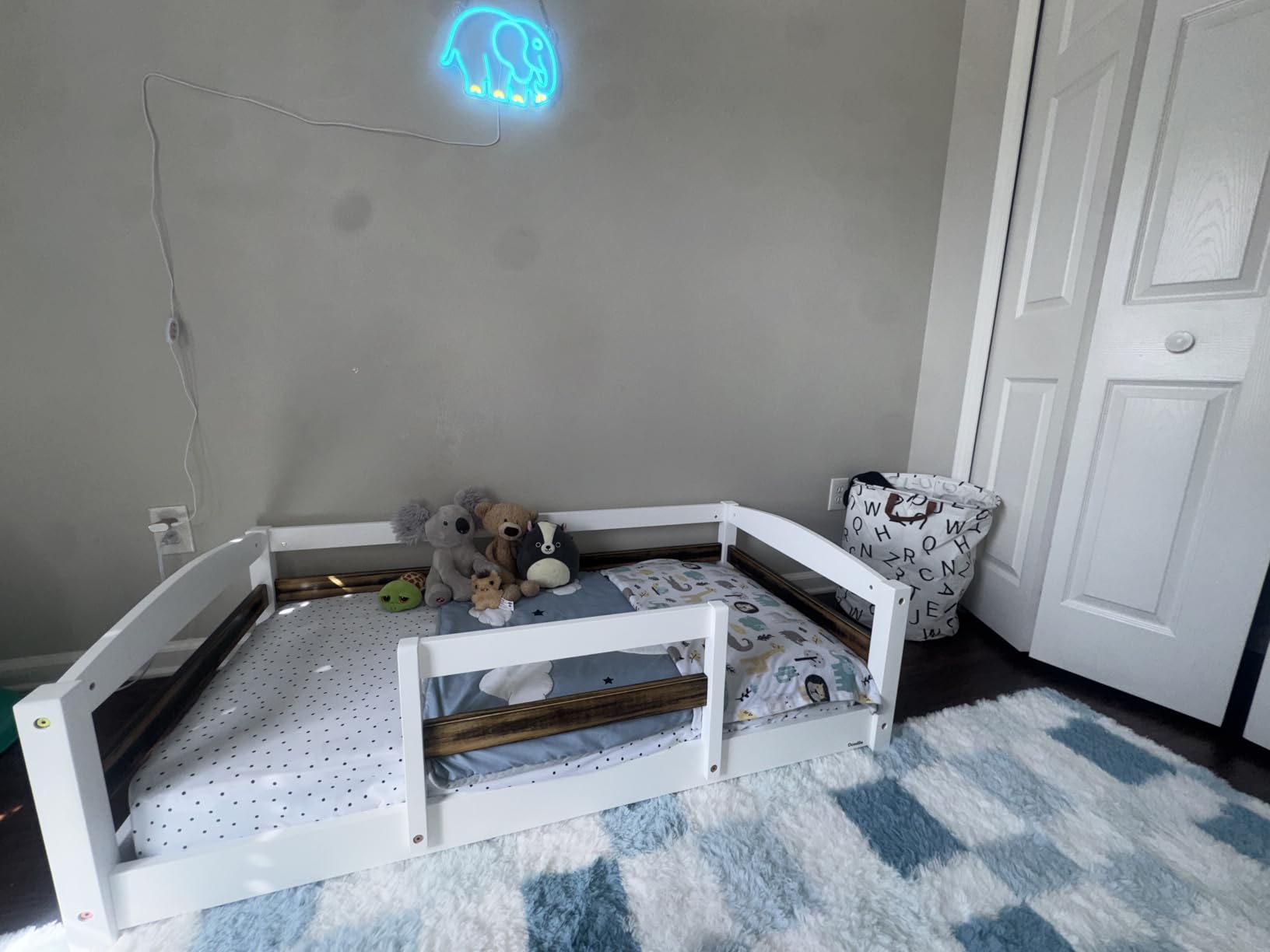
This is the closest thing to a true Montessori floor bed on the list, and the difference is the height. The frame sits 15.4 inches off the floor, so the sleeping surface is barely above a rug. For a child learning to get in and out of bed on his own, that removes the climb almost entirely.
It is 55 by 29.5 by 15.4 inches and takes a standard crib mattress measuring 51 5/8 by 27 1/4 inches, up to 6 inches thick, with a maximum load of 50 pounds. Safety comes from full guardrails, a one-piece side frame with rounded edges, and a removable middle guardrail you can take out as he grows.
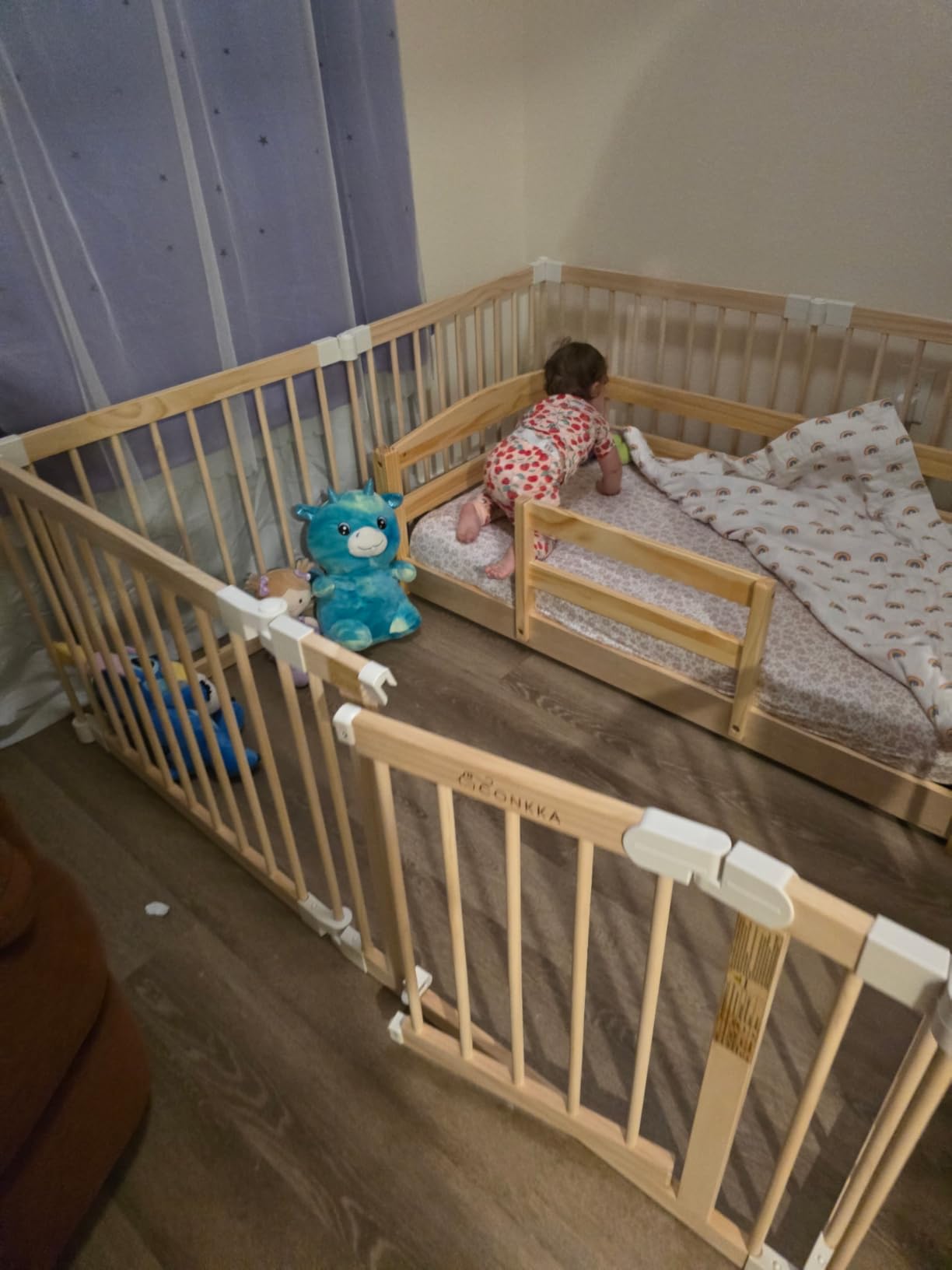
The design details are the ones Montessori setups actually care about. Two entry points mean a child can get in from either side, ten slats under the mattress promote airflow, and the rounded edges reduce the injury risk of a head-first collision that a square-cornered frame would leave. There is also an under-bed drawer for toys and books, which is unusual at this footprint.
Assembly is the easiest here. Parts are labeled and the instructions are clear, so most families put it together in a single sitting rather than an evening. The finish options cover several bedroom palettes, and the frame wipes clean with a damp cloth.
Who this bed suits
It suits a boy whose main problem is climbing, and a family buying a floor bed for independence rather than for safety alone. On r/floorbed, parents describe the goal as teaching a young child to fall asleep independently, sometimes by lying beside them on the frame, which is a realistic use of a bed this low.
It also suits a room where a full-height bed feels like too much furniture, since the footprint is small and the visual weight is almost nothing.
Who might not like it
The 50-pound maximum is the honest limitation, and with only 208 ratings behind it, this is the thinnest evidence base on the list. If your son is already tall for his age, expect to move on sooner rather than later.
The under-bed drawer is smaller than the name suggests, so do not plan on it as closet space, and the low profile means the bed offers no visual separation from a play area in the room.
9. Zumspiel Toddler Floor Bed with Storage Bag – Best Built-In Storage
Zumspiel Toddler Floor Bed with Removable Safety Rails and Storage Bag, Kids Bed for Girl and Boys, Standard Crib Size, Safety Upholstered Child Beds, Low to Floor Design
Low floor design for ages 1 to 6
Fits a standard mattress
Removable rails plus a storage bag
Pros
- Velvet and foam rails are soft and cozy
- Assembles in roughly 10 to 15 minutes
- Removable rails stop a child rolling out
- Low profile saves space in a small room
- Built-in bag keeps toys and books tidy
Cons
- Side rails reported as breaking easily
- Mattress is not included
- Frame is heavy at 62 pounds to move
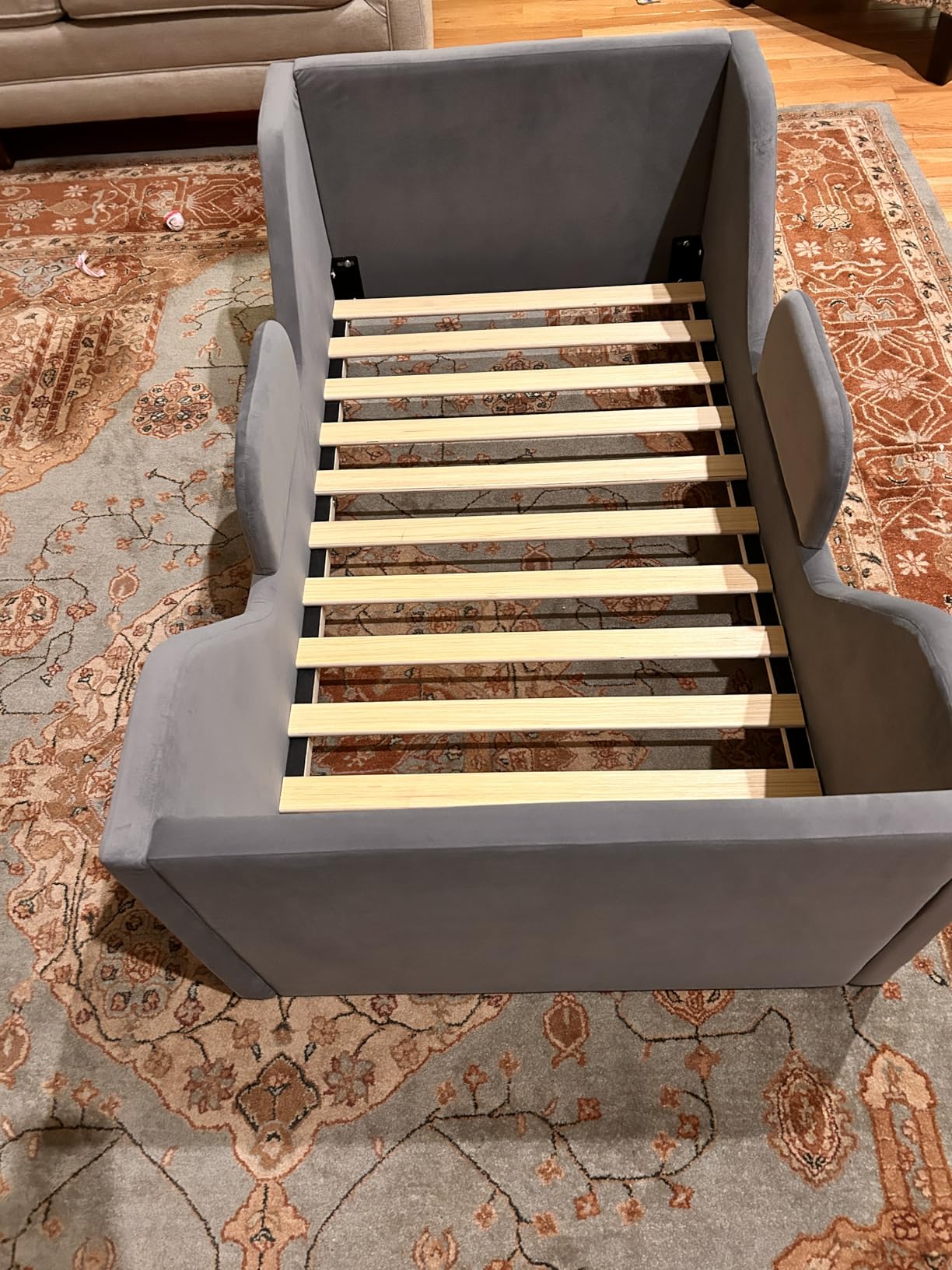
It holds a 4.7 average, the highest rating on this list, across 165 ratings with 84 percent five-star scores. The frame is a low-to-the-floor design listed for children aged 1 to 6, upholstered in high-quality foam under soft velvet, and it includes a built-in storage bag for toys and books.
It measures 56.1 by 31.9 by 20.2 inches and weighs 62.4 pounds, with a sturdy wooden slat base and removable guardrails. It takes a standard size mattress, and adjustable foot pads handle uneven floors while protecting the base from dust.
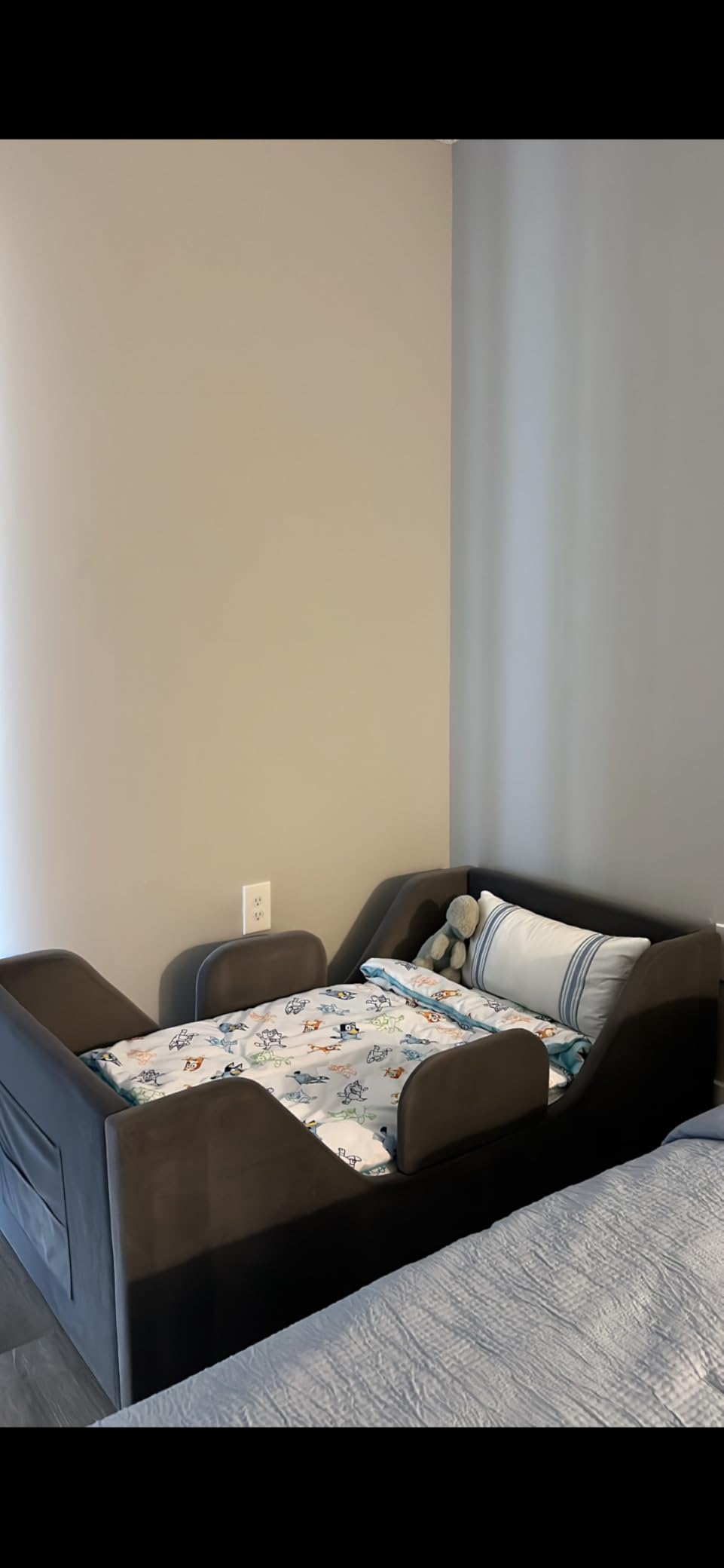
The storage bag is the detail that separates it from the other upholstered floor bed here. It is built into the frame, so books and toys that would otherwise sit on the floor around a low bed have a home, which matters a lot in a small room. Parents also like that the fabric covering takes the sting out of a leg or an arm caught against a rail.
Assembly is quick by the standards of this list, with parents reporting 10 to 15 minutes and simple instructions plus an instructional video. Removable integrated rails prevent a child rolling out during sleep, and reviewers report no visible wear after months of daily use.
Who this bed suits
It suits a small or shared room where a low profile and built-in storage are the two requirements that matter. On r/Parenting, parents with toddlers of 3 and 18 months sharing a room describe toddler beds working well at exactly this scale.
It also suits a family that moves or splits rooms often, since the floor-level footprint and low wall height make it the least visually permanent option here.
Who might not like it
The rails are the recurring complaint, described by owners as breaking easily, so check them early and often in the first months. The mattress is not included, which adds a purchase on top of the frame.
At 62.4 pounds it is a genuine two-person lift and near the limit of what you want to move between rooms. There is also no certification listed, and the 165-rating base is the smallest on this list, so treat the rating as encouraging rather than conclusive.
How We Picked: What Actually Matters in a Toddler Bed
Height off the floor came first in our testing, because it decides whether the bed solves the problem that pushed you to buy it. Every bed on this list sits low, but not equally: the Ocodile Montessori frame is 15.4 inches tall while the Dream On Me Classic sits noticeably higher at 30 inches overall. For a boy who climbed out of the crib in one motion, lower is better.
Rail configuration is the second criterion, and the difference between two rails and four is bigger than it sounds. Two attached guardrails cover the sides and leave the head and foot open, which is fine for a calm sleeper. Four rails enclose a child who sits up to play at night or has not yet learned to stay in the bed at all.
Mattress fit is the third, and it is where a lot of first-time buyers go wrong. Most frames here take a standard crib mattress, but sizes differ: the Ocodile is built for 51 5/8 by 27 1/4 inches, and the Dream On Me wood frames are specified at 52 by 28 by 5 inches. Measure the mattress you already own before you order, and check that it sits snug against the rail.
Material decides how long the bed lasts and how it feels in the room. Solid pine and New Zealand pine hold up to jumping and kicking. Molded plastic on a steel frame absorbs roughhousing just as well and weighs half as much. Upholstered foam and fabric feels gentlest for a small child but wears at the climbing points.
Weight limit is the number parents misread. Almost every bed here is rated to 50 pounds, which matches a typical three-year-old, so a toddler bed has a built-in end date. If your son is tracking tall, buy a convertible or a full size now.
Certification is the fastest way to filter. JPMA certification means the bed was tested to ASTM and CPSC standards. Baby Safety Alliance Verified is an independent check. GREENGUARD Gold means the finish was screened for over 10,000 chemicals and VOCs, which is the label parents on forums ask for by name when toxic materials are a concern.
Assembly deserves its own weight, and it is the one factor that separates an evening of frustration from a good decision. Every review history we read includes assembly complaints. Mixed hardware in one bag, a tight fit that will not seat until the parts align exactly, and a difficult final connection step are the three patterns. Sort hardware by length first, build on the floor, and set aside a couple of hours rather than thirty minutes.
Finally, buying a second-hand or hand-me-down bed, which is common and completely normal. Before your son sleeps in one, check eight things: that every guardrail is present and tight, that there are no loose or missing bolts, that the slats are unbroken and not drilled or notched, that the finish has no peeling paint or exposed wood, that the mattress fits with no gap larger than two fingers anywhere along the rail, that the frame has no cracks or wobble at the joints, that no corded window treatments or blind cords are within reach, and that the original weight limit and certification labels are still attached. If any of those fail, the bed is not worth the saving.
Safety Certifications Explained: ASTM, CPSC, JPMA and GREENGUARD Gold
ASTM International writes the standards that define what a toddler bed has to do. The relevant one is ASTM F1820 for toddler beds, which covers things like rail height, the gap between the mattress and the side rail, the height of the sleeping surface above the floor, and how much force the bed must take. CPSC, the U.S. Consumer Product Safety Commission, enforces the Consumer Product Safety Improvement Act of 2008, which sets lead and phthalate limits and requires third-party testing on children’s products.
JPMA, the Juvenile Products Manufacturers Association, is the certification mark most parents recognise. The JPMA seal means the bed was tested by an independent laboratory to meet or exceed the applicable ASTM and CPSC standards, and that the finish and materials are free of lead and phthalates. It is the single most useful mark to look for on a wooden frame.
GREENGUARD Gold is a different kind of claim, from the UL/GREENGUARD Gold Institute. It means the product’s emissions were screened against over 10,000 chemicals and volatile organic compounds, and it is a statement about air quality rather than about structure. It matters most in a room that a baby and a toddler share.
Baby Safety Alliance Verified is an additional independent test mark that some frames in this list carry alongside the others. It is a stronger signal than a manufacturer’s own claim, and it is worth preferring when two otherwise similar wood frames are the same price.
On entrapment, which is the question parents search for most often in this category: the established cause of injury related to bed rail use is entrapment, where a child’s head or neck becomes wedged in the gap between the mattress and the rail, or between the rail and the headboard or footboard. The fix is not rail removal, it is correct fit. The mattress must sit snug with no gap a child’s head can enter, and the top of the rail must sit well above the sleeping surface. Every bed we recommend here holds up under that test with the right mattress, which is why we checked the specified mattress dimensions on each one.
Keeping Your Boy in Bed: Rails, Bumpers and Nighttime Escapes
What is better for a toddler, a bed rail or a bumper? A properly anchored rail, used with a snugly fitting mattress. A bumper is a soft tube of fabric that sits between the mattress and the rail, and it does nothing about a determined climber, while a well-fitted rail with no entrapment gap does. The concern with rails is a loose fit that opens a gap, not the rail itself.
So the steps that actually keep a toddler in bed, in order:
1. Choose a frame with the rail coverage you need. Two attached guardrails handle a normal sleeper. Four rails handle a boy who sits up at night or does not yet understand staying put.
2. Check the anchoring. A rail that straps under the mattress, or a frame whose rail is moulded into the side, is far better than a rail that rests on the bed frame.
3. Fit the mattress snugly. No gaps anywhere between mattress and rail, and keep the top of the rail well above the sleeping surface once a thicker mattress is in.
4. Room-proof. Cover outlets, remove corded window treatments, lock windows, and gate anything on a staircase. A boy who can open a door is a bigger problem than a boy who can get out of bed.
5. Keep the bedtime routine identical. Same order, same songs, same words, just in a different room. Parents on r/toddlers describe the routine as the thing that actually carries the transition.
6. Gate or close the bedroom door if he escapes, and if you need something engineered for that job rather than a doorknob, a proper door gate rated for the gap is the version to look at.
7. Expect two rough weeks. A toddler who just escaped a crib at night will get out of the new bed too, at first. It usually settles within a fortnight as the room becomes familiar.
What Mattress Goes in a Toddler Bed?
For a 2-year-old, reuse the crib mattress if the bed takes a standard crib size, and buy a new one only if the frame needs a different size. A familiar mattress also removes one variable from the first nights, which helps more than most parents expect. The rule for that age is firm and flat, with no memory foam, no pillow-top, and nothing loose in the bed.
For a 3-year-old, a full-size or transition mattress becomes the sensible next step, because a toddler bed is usually outgrown at the same time. It is still firm, still flat, and still free of loose pillows and bumpers for a child under three, and it is the point where a full-size bed starts costing less than replacing a toddler bed again.
Check the dimensions before you buy rather than assuming. Most frames here take a crib-size mattress, but the specified sizes are not identical: the Dream On Me wood frames are listed at 52 by 28 by 5 inches, the Ocodile at 51 5/8 by 27 1/4 inches up to 6 inches thick, and the upholstered floor beds take a standard size. Measure first, and a mattress that is slightly small in the frame is the main cause of the entrapment gap described above.
Look for a breathable, washable cover and a surface you can wipe down. In a boys’ room, that covers the two most common accidents of the toddler years. If your son is over 50 pounds already, buy the full-size mattress now and skip the toddler mattress entirely.
Designing a Boys Room Around the Bed
Nobody else ranking for this query is writing for the boys’ angle, and it is the part of the purchase parents most often regret. The bed fixes the room’s footprint and its centre of gravity, so choose it before the paint.
A neutral wood frame like the Dream On Me Classic in espresso or the Sydney in black gives you the most freedom. Those take a bold wall colour, a striped rug, and a themed bedding set that you swap out without touching the furniture. The black and espresso finishes also hide the scuffs that come with an active sleeper.
A licensed character frame is a commitment, so plan the room around it. The Cars and PAW Patrol graphics are primary colours, so a mid-tone wall keeps the bed from dominating, and neutral bedding makes the theme readable rather than loud.
For a low floor bed, the wall above it is doing the work. A Montessori-style frame leaves a lot of vertical space, and that is where a colour, a shelf, or a piece of art goes. Keep the floor clear so the low profile reads as intentional.
Two practical finishes for any of these rooms. Blackout curtains matter more in a toddler bed than a crib, because early waking is normal at this age, and a rug that extends at least 24 inches past the bed gives a clumsy three-year-old something softer to land on when he climbs out faster than he should.
Frequently Asked Questions
What is the recommended age for toddler beds for boys?
Most boys move from a crib to a toddler bed between 18 and 36 months, and the readiness signal matters more than the birthday. If he can climb out of the crib on his own, the crib is no longer containing him. A standard toddler bed holds about 50 pounds, which matches a typical three-year-old, so plan a second bed purchase around that limit.
Should my 2 year old sleep in a toddler bed?
Yes, if he is outgrowing the crib or climbing out of it, and his pediatrician agrees. At 2 he is within the 18 to 36 month window most toddler beds are designed for. Two things to weigh first: a toddler who can open a door can wander at night, and a taller mattress raises the guardrail, so check both the rail height and the room before buying.
What type of mattress is best for a 2-year-old child?
Reuse the crib mattress if the bed takes a standard crib size, since it removes a second purchase and one unfamiliar thing from the first nights. The surface should be firm and flat, with no memory foam, no pillow-top, and nothing loose in the bed. Verify the exact dimensions the frame specifies so there is no gap between the mattress and the rail.
What kind of mattress is recommended for a 3-year-old child?
By 3, a full-size or transition mattress is usually the better buy, because most toddler beds reach their 50-pound limit around the same age. Keep the surface firm and flat, and keep loose pillows and bumpers out of the bed for a child under three. A washable, breathable cover matters more in a boys’ room than anywhere else.
What is the main cause of death from bed rail use?
The established cause of injury related to bed rail use is entrapment, where a child’s head or neck becomes wedged in the gap between the mattress and the rail, or between the rail and the headboard or footboard. The mitigation is correct fit: the mattress must sit snug with no head-sized gap, and the rail must sit well above the sleeping surface.
How do I keep a toddler in bed when transitioning from a crib?
Start with a frame whose rails are attached or firmly anchored, then fit the mattress snugly so there is no gap. Room-proof by covering outlets, removing corded window treatments, locking windows, and gating stairs. Keep the bedtime routine exactly the same, and gate the bedroom door if he gets out. Expect about two rough weeks while the room becomes familiar.
Conclusion
These are the best toddler beds for boys for the two situations that come up most often. If your son climbed out of his crib and you want the simplest reliable answer, the Delta Children Nick Jr. PAW Patrol bed takes the frame that absorbs roughhousing and reuses the mattress you already own. If you want wood, low-emission finishes, and the most review history behind it, the Dream On Me Classic in espresso is the one to beat.
For a boy who sleeps low, the Ocodile Montessori floor bed at 15.4 inches is the most forgiving frame on the list, and for a room that needs to grow, the Dream On Me Portland 3-in-1 is the one that stays useful past three. Whichever you choose, check the mattress fit before you order, keep the rails anchored, and expect a two-hour assembly. That planning is what turns this milestone into a good night’s sleep rather than a two-month negotiation.