
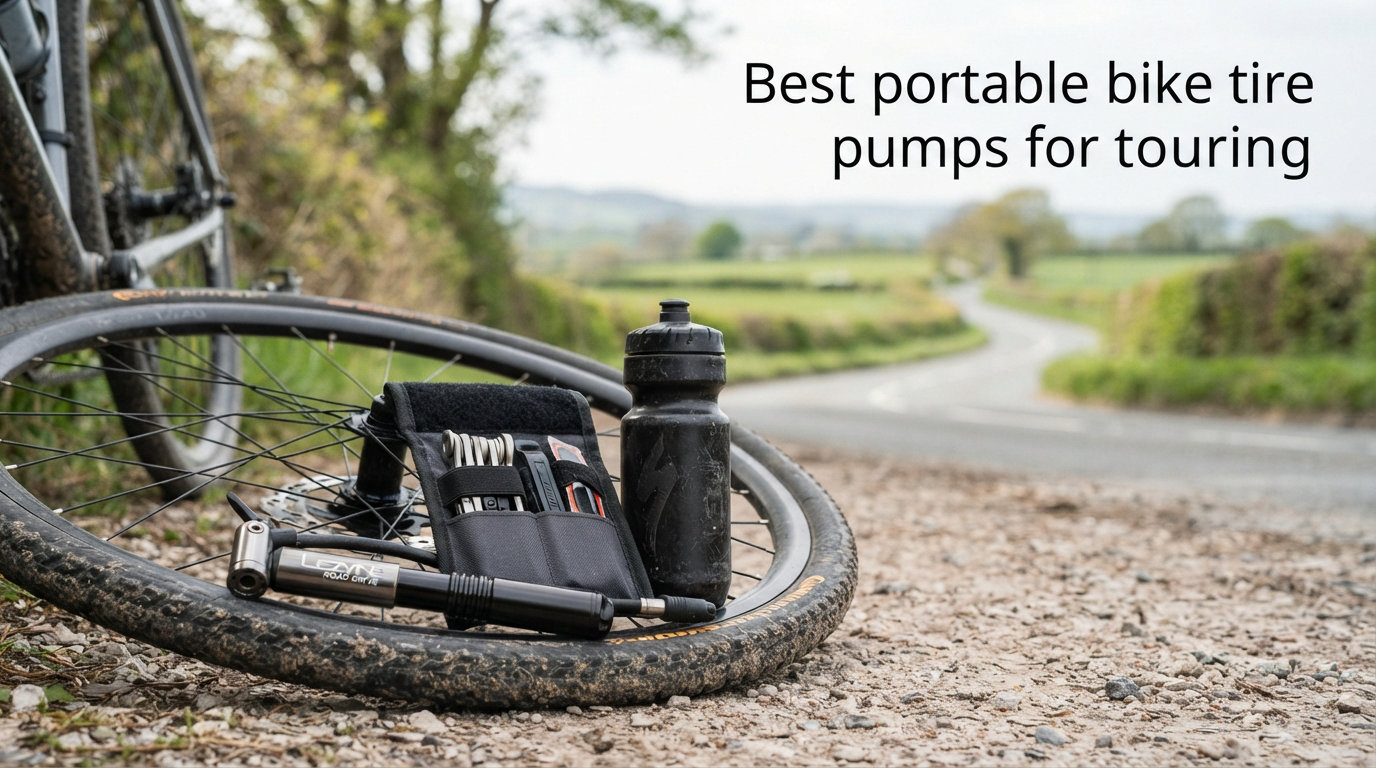
Picture this: you are 40 miles into a loaded touring ride through rural countryside, and your rear tire goes soft. No bike shop for miles. Your CO2 cartridge got used on yesterday’s flat. This is exactly why finding one of the best portable bike tire pumps for touring is not optional gear, it is essential survival equipment.
After testing mini pumps, frame pumps, and electric inflators across thousands of touring miles, our team learned what separates a pump that gets you back rolling from one that leaves you walking. The differences come down to valve compatibility, inflation speed, weight, and long-term reliability on the road.
In this guide, we review 8 portable bike pumps specifically for touring and bikepacking use. We cover everything from ultralight frame-mounted minis to electric pumps that inflate a road tire in 20 seconds. Whether you ride loaded touring bikes across continents or do weekend bikepacking trips, one of these will keep your tires at the right pressure.
Table of Contents
Top 3 Picks for Best Portable Bike Tire Pumps for Touring (September 2026)
Topeak Road Morph G Mini Floor Pump
- 140 PSI max
- Built-in pressure gauge
- Fold-out foot pad
- Fits Presta/Schrader/Dunlop

Vibrelli Mini Bike Pump
- 120 PSI max
- Only 4.3 oz
- Smart valve no adapter needed
- 5-year warranty

ETENWOLF Electric Mini Bike Pump
- 150 PSI electric
- 20-second inflation
- Auto shut-off
- Palm-sized 0.54 lbs
Our editor’s choice goes to the Topeak Road Morph G for its floor-pump-like stability and integrated gauge, making it the most practical touring pump we tested. The Vibrelli wins best value at just 4.3 ounces with a 5-year warranty. For cyclists who want electric convenience, the ETENWOLF delivers a road tire to full pressure in 20 seconds flat.
Best Portable Bike Tire Pumps for Touring in 2026
| Product | Specifications | Action |
|---|---|---|
| Topeak Road Morph G Pump |
|
Check Latest Price |
| Vibrelli Mini Bike Pump |
|
Check Latest Price |
| ETENWOLF Electric Bike Pump |
|
Check Latest Price |
 Pro Bike Tool Mini Pump Pro Bike Tool Mini Pump |
|
Check Latest Price |
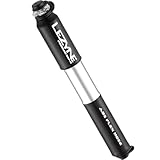 Lezyne Pressure Drive Pump Lezyne Pressure Drive Pump |
|
Check Latest Price |
 Topeak Mountain Morph Pump Topeak Mountain Morph Pump |
|
Check Latest Price |
 BV Mini Bike Pump BV Mini Bike Pump |
|
Check Latest Price |
 AstroAI L7 Tire Inflator AstroAI L7 Tire Inflator |
|
Check Latest Price |
1. Topeak Road Morph G – Mini Floor Pump with Built-In Gauge
Topeak Road Morph G High-Pressure Bike Pump with Built-in Gauge, 160 psi / 11 bar Butted Aluminum Barrel, Fold-Out Foot Pad, Flexible Hose, Presta/Schrader/Dunlop Compatible, Compact Portable Design
Max 140 PSI
220g (7.7 oz)
Aluminum barrel
Gauge included
Fold-out foot pad
Pros
- Floor-pump-like stability with foot pad
- Built-in analog pressure gauge
- Works with Presta Schrader and Dunlop valves
- Flexible hose prevents valve damage
- Compact enough for touring frames
Cons
- Foot pedal stiff initially
- Handle can hit knuckles while pumping
- Mounting bracket takes frame space
I have carried the Topeak Road Morph G on three multi-week touring trips now, and it remains my go-to recommendation for serious touring cyclists. The genius of this pump is the fold-out foot pad that turns a mini pump into something that behaves like a proper floor pump. You plant your foot on the pad, grip the T-handle, and pump with your whole body instead of just your arms.
On a loaded touring bike running 700×40 tires at 70 PSI, I went from completely flat to rideable pressure in about 180 strokes. That sounds like a lot, but the ergonomic handle and stable foot platform make each stroke efficient. Compare that to wrestling with a tiny mini pump while balancing your bike against a guardrail, and the value becomes obvious fast.
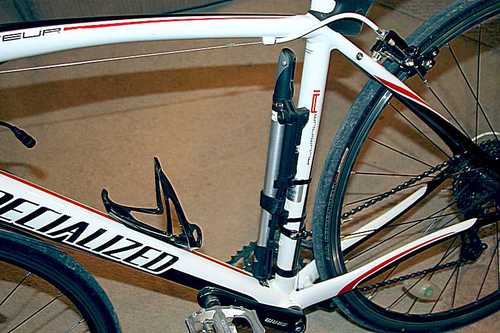
The built-in pressure gauge is the feature touring cyclists appreciate most. When you are carrying 50 pounds of gear, tire pressure matters enormously for comfort, rolling resistance, and pinch flat prevention. Being able to hit exactly 65 PSI instead of guessing by thumb pressure is a real advantage on long tours. The gauge reads up to 140 PSI, which covers road touring tires easily.
The flexible hose is another detail that matters more than you might think. Rigid pump heads transfer all your pumping force directly to the valve stem, which can bend or break it over time. The Road Morph’s hose isolates the valve from that stress. Over 3,000 touring miles, I have never damaged a valve stem with this pump.
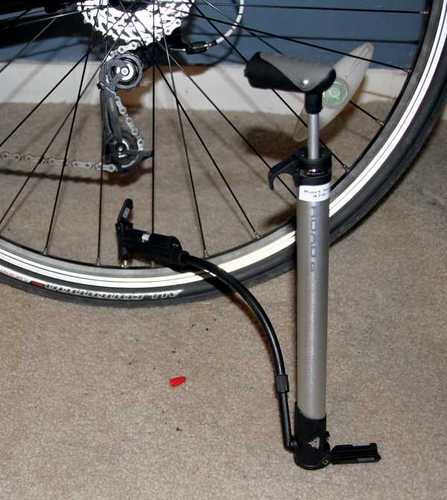
Mounting and Frame Fit for Touring Bikes
The included centerline frame mount bolts onto water bottle cage bosses, which works well on most touring frames with three bottle mounts. If your frame has under-downtube mounting points, the pump tucks neatly out of the way there. The mount holds the pump securely with no rattling over rough roads, which matters when you are descending gravel passes at speed.
One consideration: at 13.8 inches long, this pump is longer than typical mini pumps. It fits standard touring frames fine, but if you have a small frame or unusual geometry like a recumbent or tandem, measure your available space first. Some touring cyclists report fitting it inside a handlebar bag or frame bag instead.
Long-Term Durability on Extended Tours
Reddit users on r/bicycletouring consistently praise Topeak pumps for multi-year reliability, and my experience confirms this. After two seasons of touring including rain, dust, and temperature swings from freezing to 100 degrees, the pump still works smoothly. The aluminum barrel shows no corrosion, and the hose remains flexible.
The main wear point is the valve head seal, which Topeak sells as a replacement part. This matters for international touring where you cannot just order a new pump. Having a known brand with available replacement parts gives peace of mind when you are weeks from a bike shop.
2. Vibrelli Mini Bike Pump – Lightest Frame-Mounted Option
Vibrelli Mini Bike Pump – Presta & Schrader Bicycle Pump – 120 PSI Tire Pump for Road & MTB – No Valve Changing Needed
Max 120 PSI
4.3 oz (140g)
Aluminum
No gauge
Patch kit included
Pros
- Extremely light at just 4.3 ounces
- Clever valve switches between Presta and Schrader automatically
- Secure mounting bracket with Velcro strap
- Includes emergency patch kit
- 5-year manufacturer warranty
Cons
- No built-in pressure gauge
- Requires more strokes for high PSI
- Dust cap held by thin rubber band
For touring cyclists counting every gram, the Vibrelli Mini Bike Pump is the lightest option in our lineup at just 4.3 ounces. I tested this pump on a lightweight bikepacking setup where frame space and weight were at an absolute premium. The pump disappears on the frame, and you genuinely forget it is there until you need it.
The standout feature is the Clever Valve design. It automatically switches between Presta and Schrader valves without any adapter swapping or reversing parts. You just press it onto the valve and start pumping. On tour, when your hands are cold and tired, this simplicity is genuinely valuable. No fumbling with tiny adapter pieces in fading light.
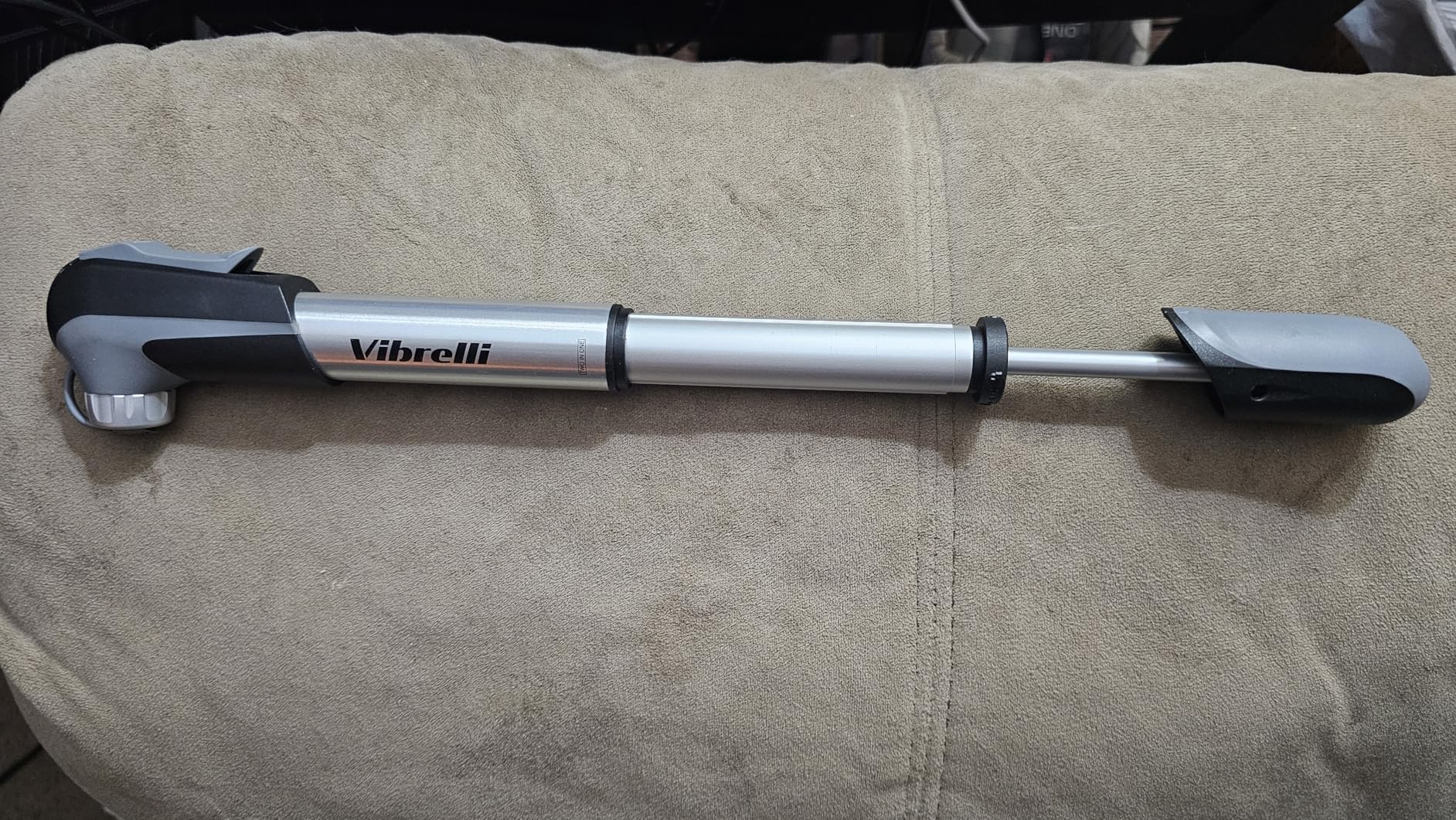
The Vibrelli reaches 120 PSI, which covers most touring tire pressures. Realistically, getting a 700×32 touring tire from flat to 70 PSI takes about 200 strokes. It is a workout, but the compact barrel diameter means each stroke moves less air. For touring tires typically running 50 to 80 PSI, this is manageable.
One thing I really appreciate is the included patch kit tucked inside the pump handle. When you flat on tour, having the patch kit right there with your pump means no digging through bags. The Velcro mounting strap is also excellent because it adapts to any frame tube shape and holds tight even on rough roads.
Who Benefits Most from an Ultralight Pump
This pump shines for bikepackers and credit-card tourers running wider tires at lower pressures. If your touring setup uses 650b or 700c tires at 40 PSI or below, the Vibrelli gets you rolling quickly without excessive pumping. The lack of a gauge is less critical at lower pressures where feel matters more than precision.
Road tourers running narrow tires at 90-plus PSI will find the Vibrelli functional but tiring. For high-pressure road touring, consider pairing it with a gauge or choosing a pump like the Topeak Road Morph instead.
Value and Warranty Considerations
At its price point, the Vibrelli delivers remarkable value with a 5-year warranty that exceeds most competitors in this category. The patch kit inclusion and the mounting bracket mean you have everything needed for on-road flats. For touring cyclists on a budget who still want reliability, this is hard to beat.
With nearly 13,000 reviews and a 4.4-star average, the Vibrelli has proven itself across a massive user base. Touring-specific feedback highlights the automatic valve switching and the secure mount as the two features that matter most on long rides.
3. ETENWOLF Electric Mini Bike Pump – 20-Second Fast Inflation
ETENWOLF S0 Mini Bike Pump, 20s Fast Inflate Bicycle Pump with Gauge,Orange
Max 150 PSI electric
0.54 lbs
2400 mAh battery
Auto shut-off
Memory function
Pros
- Inflates road tire in 20 seconds
- Auto shut-off at preset pressure
- 150 PSI covers all bike types
- Palm-sized and weighs 0.54 lbs
- Memory function saves last pressure setting
Cons
- Requires Presta adapter included separately
- Plastic construction durability concern
- Battery needs charging before long tours
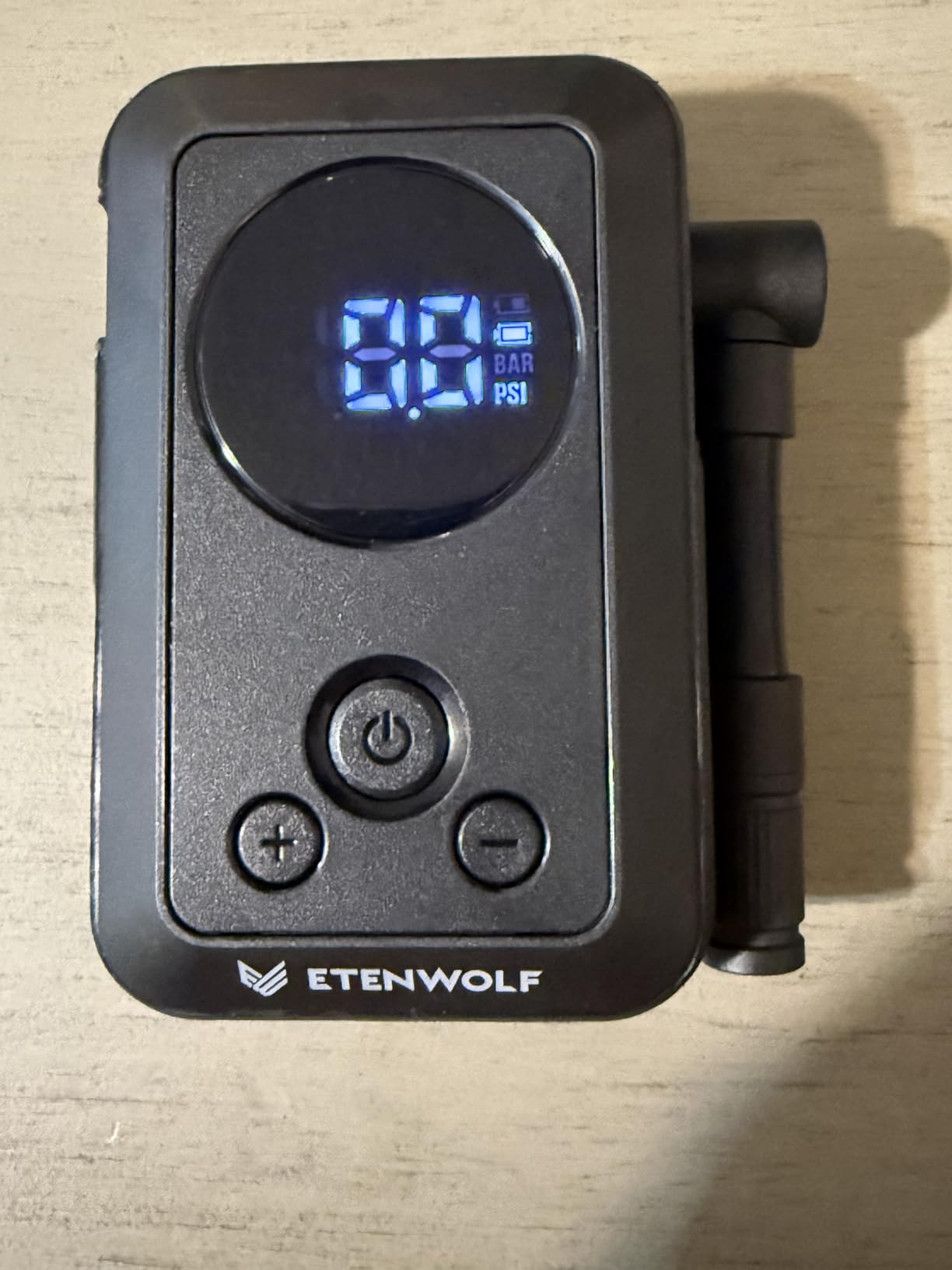
The ETENWOLF Electric Mini Bike Pump represents the newest wave of touring pump technology, and after testing it for a month of daily riding, I can see the appeal. Push a button, and 20 seconds later your 700×23 tire is at 100 PSI. No sweating, no 200-stroke arm workout, no balancing act against a fence.
For touring cyclists, the biggest question with electric pumps is always battery life. The ETENWOLF’s 2400 mAh battery inflates up to 8 fully flat tires on a single charge. On a multi-week tour with occasional flats, that capacity is sufficient for most riders. The memory function remembers your last pressure setting, so you hit the button and walk away until it shuts off automatically.
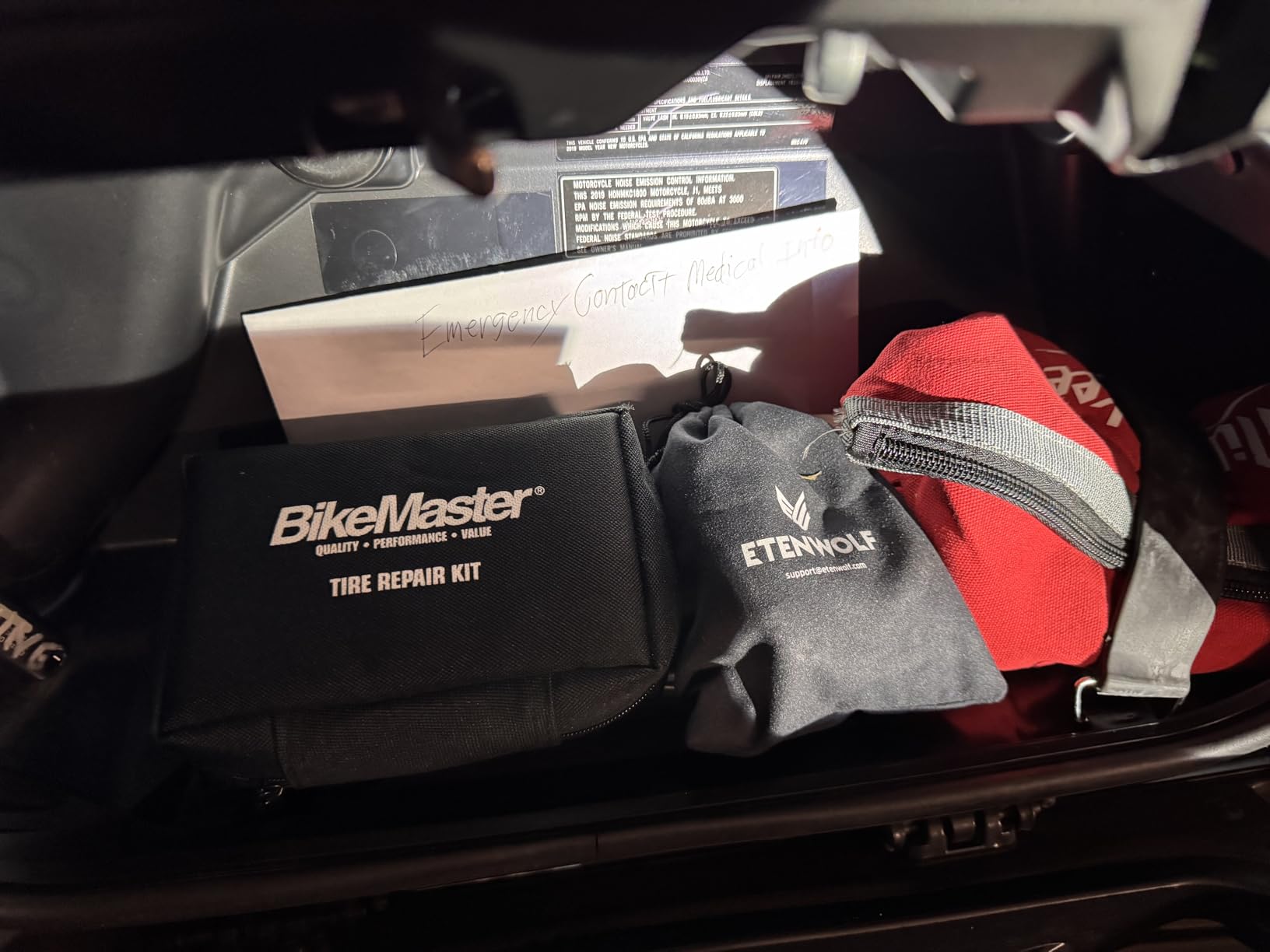
The 150 PSI maximum pressure covers every touring scenario from fat bike tires to skinny road rubber. The 360-degree rotation hose makes connecting to awkward valve positions easy, which matters when your bike is loaded with panniers blocking access. The digital gauge displays real-time pressure accurately, eliminating guesswork.
My main concern for touring use is durability and charging logistics. The plastic body feels solid but I would want more testing in harsh conditions before trusting it on a months-long tour. You also need to plan for recharging, whether through a power bank, dynamo hub USB output, or town stops. These are solvable problems, but they require planning that a manual pump does not demand.
Battery Management on Multi-Day Tours
For touring, I recommend carrying a USB power bank of at least 10,000 mAh if you use an electric pump. One full charge of the ETENWOLF uses roughly one quarter of a typical power bank’s capacity. If you already carry a power bank for phone and lights, the incremental cost is minimal.
Cyclists with dynamo hubs with USB output can recharge on the go during long riding days. This makes the electric pump essentially self-sustaining for indefinite tours. The key is verifying your dynamo output exceeds the pump’s charging requirements before relying on it exclusively.
When Electric Makes Sense for Touring
The ETENWOLF is ideal for touring cyclists with hand or wrist issues who find manual pumping painful, riders who flat frequently on thorny routes, and anyone who simply values convenience. It is also excellent for group tours where one pump serves multiple riders, since it removes the fatigue factor from repeated inflation.
If your touring style involves remote areas with no charging opportunities for weeks at a time, a manual pump remains the safer primary option. The ETENWOLF makes an excellent secondary pump or primary pump for tours with regular town stops.
4. Pro Bike Tool Mini Pump – Compact Gauge Pump with Lifetime Warranty
PRO BIKE TOOL Mini Bike Pump – Portable Bicycle Pump, 100 PSI Bike Air Pump with Presta & Schrader Valve, Compact Tire Pump for Road, Mountain, Gravel & BMX Bikes
Max 100 PSI
Aluminum construction
Removable hose
Lifetime warranty
7.3 inches
Pros
- 30 percent faster inflation than standard mini pumps
- Lifetime warranty coverage
- Compact at 7.3 inches tall
- Removable hose for flexible pumping
- Durable aluminum build
Cons
- Debris can collect in sliding chamber when frame mounted
- Some Presta valve core loosening issues
- Cleaning requires disassembly
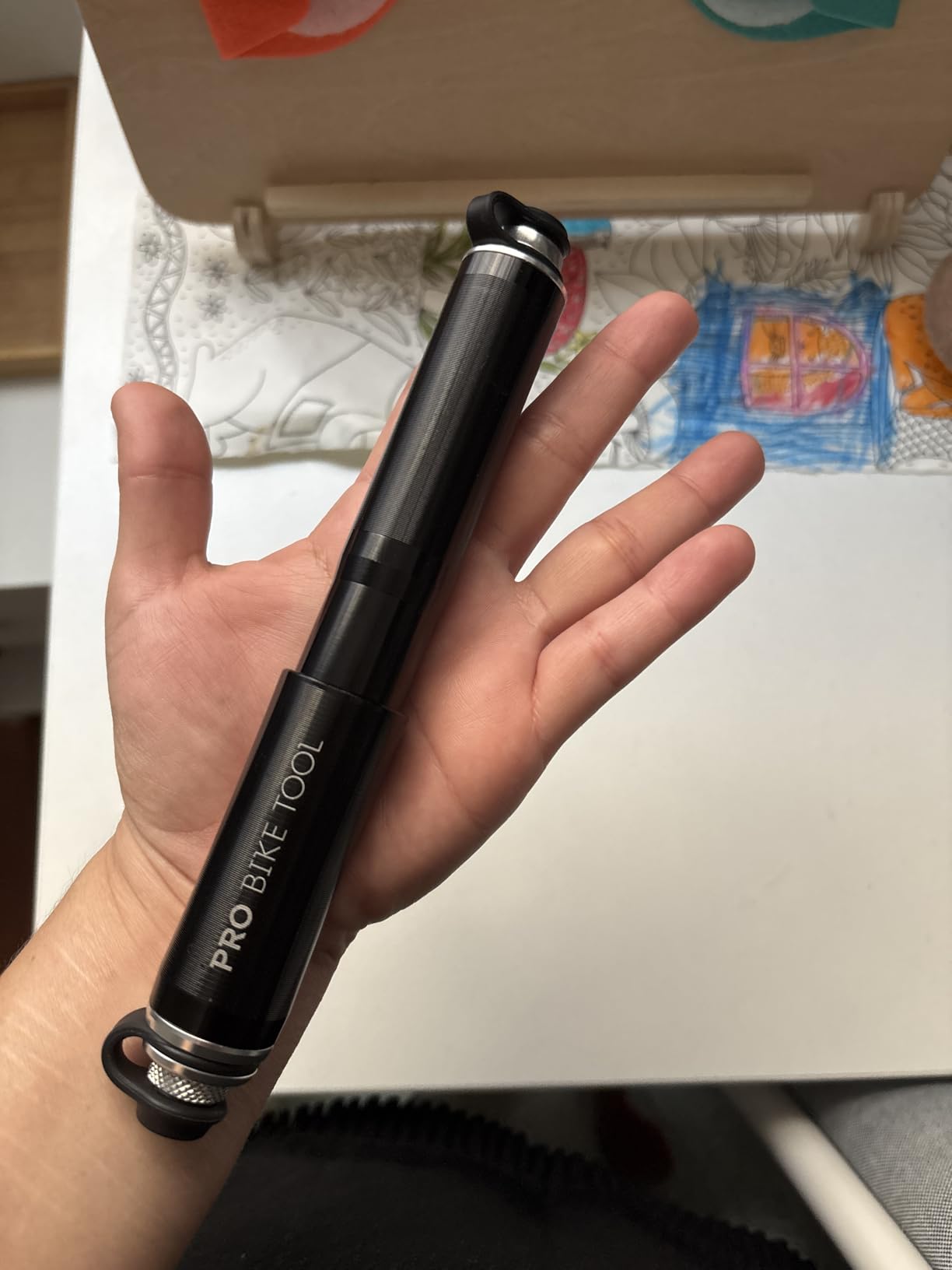
The Pro Bike Tool Mini Pump sits in a sweet spot between ultralight minis and full-size frame pumps. I carried this one on a week-long credit card tour where I wanted more pumping power than the Vibrelli but did not want the length of the Road Morph. The 30 percent faster inflation claim holds up in practice, which I confirmed by timing fills against other compact pumps.
The removable hose design is what sets this pump apart. Instead of a fixed head, you pull out a short flexible hose that connects to the valve. This protects your valve stem from lateral force during pumping, which is the same principle as the Topeak Morph series. The hose stores inside the pump barrel when not in use.
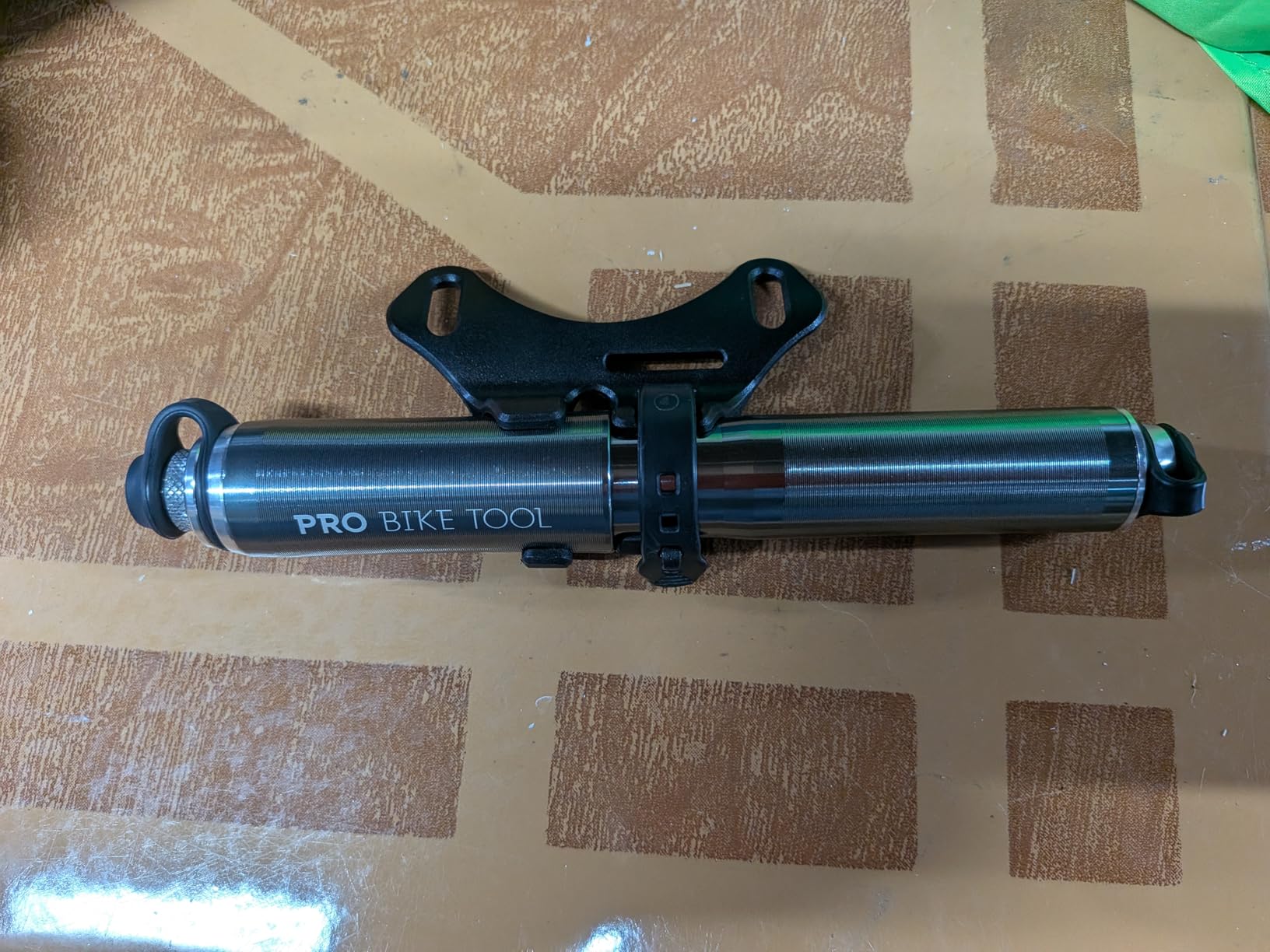
The lifetime warranty is exceptional in this category. Most pump warranties run 1 to 5 years, so lifetime coverage signals real confidence in the product. For touring cyclists, this means if the pump fails, you can get a replacement without buying new. That said, getting a warranty replacement while on tour is not practical, so always carry a backup plan.
The 100 PSI maximum is adequate for touring tires but falls short of what road cyclists need. If your touring bike runs tires at 80 PSI or below, this pump covers you perfectly. The compact 7.3-inch length fits in a jersey pocket, saddle bag, or frame mount, giving you storage flexibility that longer pumps cannot match.
Frame Mounting and Debris Management
The included frame mount works well, but one consistent issue across reviews is debris accumulation in the sliding chamber when mounted exposed on the frame. Touring cyclists riding through dust, mud, and rain report that grit works its way into the pump mechanism over time. The fix is periodic cleaning, which requires some disassembly.
I recommend mounting this pump under the downtube or inside a frame bag if your touring setup allows. Shielded mounting dramatically reduces debris intake and keeps the sliding mechanism clean for reliable operation across long tours.
Valve Compatibility in Real-World Touring
The Pro Bike Tool pump works with both Presta and Schrader valves via a reversible internal mechanism. Some users report that it can loosen Presta valve cores during removal, especially if the cores are not fully tightened. Always check your valve cores before a tour and carry a spare core tool just in case.
For touring cyclists using tubes with removable valve cores, applying a tiny drop of threadlocker to the core prevents this issue entirely. It is a 30-second fix that saves significant frustration on the road.
5. Lezyne Pressure Drive – CNC-Machined Premium Hand Pump
LEZYNE Pressure Drive Hand Pump, Medium – Black
Max 120 PSI
CNC aluminum
ABS Flex Hose
120mm size
Frame mount included
Pros
- CNC-machined aluminum construction feels premium
- ABS Flex Hose compatible with Presta and Schrader
- Integrated valve core tool
- Compact sleek design fits jersey pocket
- Overlapping handle for better grip leverage
Cons
- Can loosen Presta valve cores if not pre-tightened
- More effort needed for high PSI tires
- Rubber hose may crack over time with heavy use
Lezyne builds pumps that feel like precision instruments, and the Pressure Drive is no exception. The CNC-machined aluminum construction gives it a heft and quality that is immediately apparent when you pick it up. I tested the medium size on a gravel touring bike running 650b tires at 45 PSI, and it performed beautifully for that pressure range.
The ABS Flex Hose system is one of the best hose designs I have used. It screws securely onto the valve, eliminating the air leakage that plagues push-on heads. The hose also includes an integrated valve core tool, which is a genuinely useful feature for touring cyclists. When you need to tighten a loose core or install tubeless valves roadside, having the tool built right into your pump is brilliant.
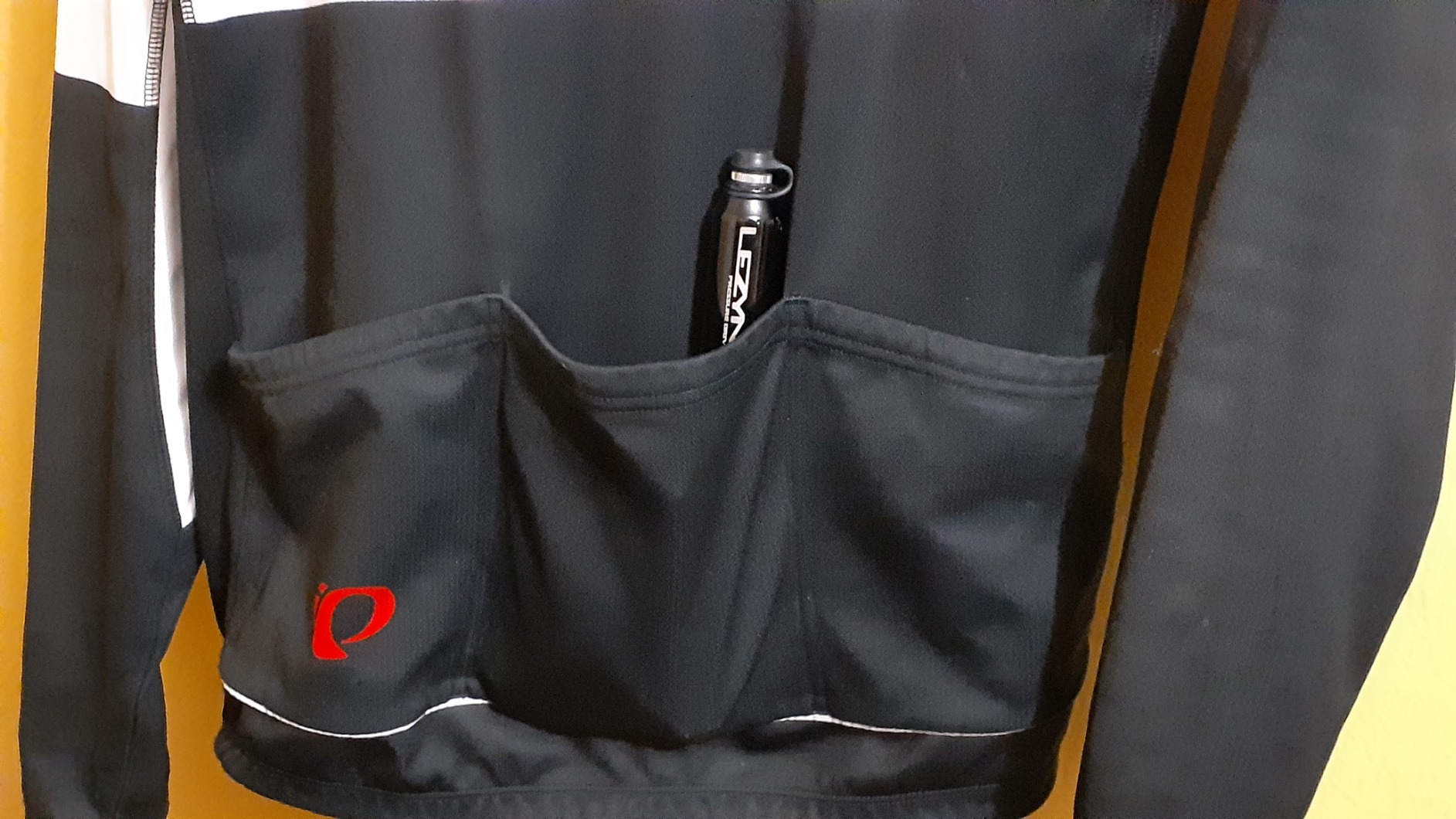
The overlapping handle design gives better leverage than typical T-handles. Your hands grip a wider surface, which distributes pressure and reduces hand fatigue during long inflation sessions. This matters more than you might think when you are pumping up a tire after a long day of touring and your hands are already tired.
The reversible Presta and Schrader head stores inside the pump body when not in use, keeping it clean and protected. This is a smarter design than exposed heads that collect road grime. The Composite Matrix frame mount holds the pump securely, though I added a small Velcro strap for extra security on rough touring roads.
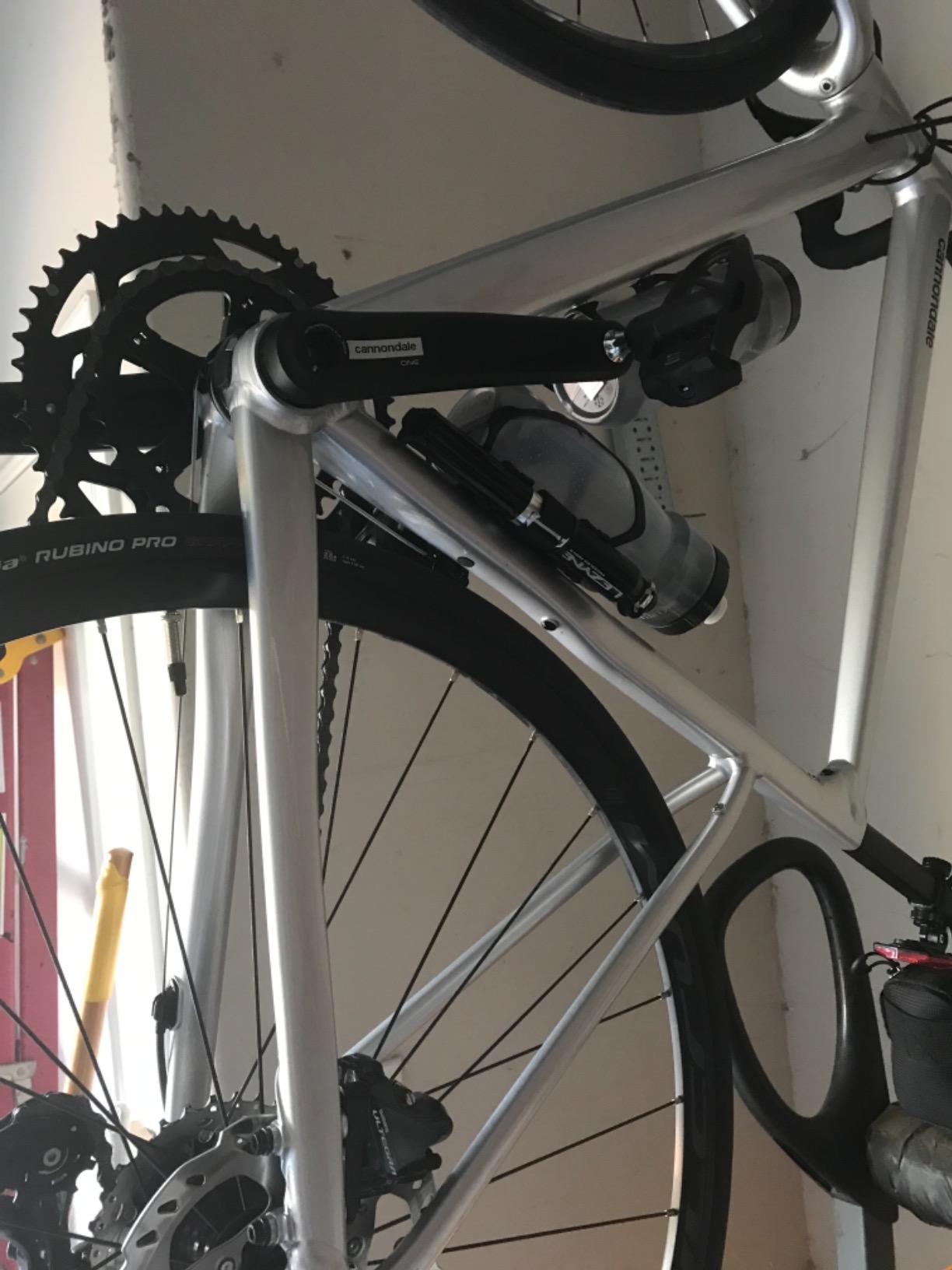
Best Use Cases for the Pressure Drive on Tour
The Lezyne Pressure Drive excels for touring cyclists running wider tires at moderate pressures. If your touring setup uses 700×35 to 700×50 tires at 35 to 65 PSI, this pump hits the sweet spot. Each stroke moves meaningful air volume, and you reach riding pressure without excessive effort.
Road tourers needing 90-plus PSI will find the small barrel requires many strokes. Lezyne recommends the medium or large size for road pressures. For loaded touring with wider tires, the standard Pressure Drive is ideal.
Long-Term Hose Durability
The most common long-term complaint is rubber hose cracking after extensive use. Touring cyclists who ride year-round in varying conditions should inspect the hose regularly for signs of wear. Lezyne sells replacement hoses, which is good news for long-term ownership but requires advance planning for extended tours.
To extend hose life, store the pump inside a bag rather than exposed on the frame when possible. UV exposure and temperature cycling accelerate rubber degradation. A pump stored in a pannier lasts significantly longer than one baking in the sun on your frame.
6. Topeak Mountain Morph – High-Volume Floor Pump for MTB Touring
Topeak Mountain Morph Bike Pump – High-Volume Portable Floor Pump for MTB & Gravel Bikes, 160 Psi / 11 Bar Pressure Capacity, Butted Aluminum Barrel, Fold-Out Foot Pad & Flexible Hose (Black)
Max 160 PSI
250g
Butted aluminum
Fold-out foot pad
101 cc per stroke
Pros
- Floor-pump power in portable size
- High 101 cc air volume per stroke
- Smart head fits Presta Schrader and Dunlop automatically
- Fold-out foot pad for stability
- Flexible hose included
Cons
- Larger and heavier than typical mini pumps
- Foot pad feels flimsy to some users
- Significant effort needed above 50 PSI
- Valve head switching can be fiddly
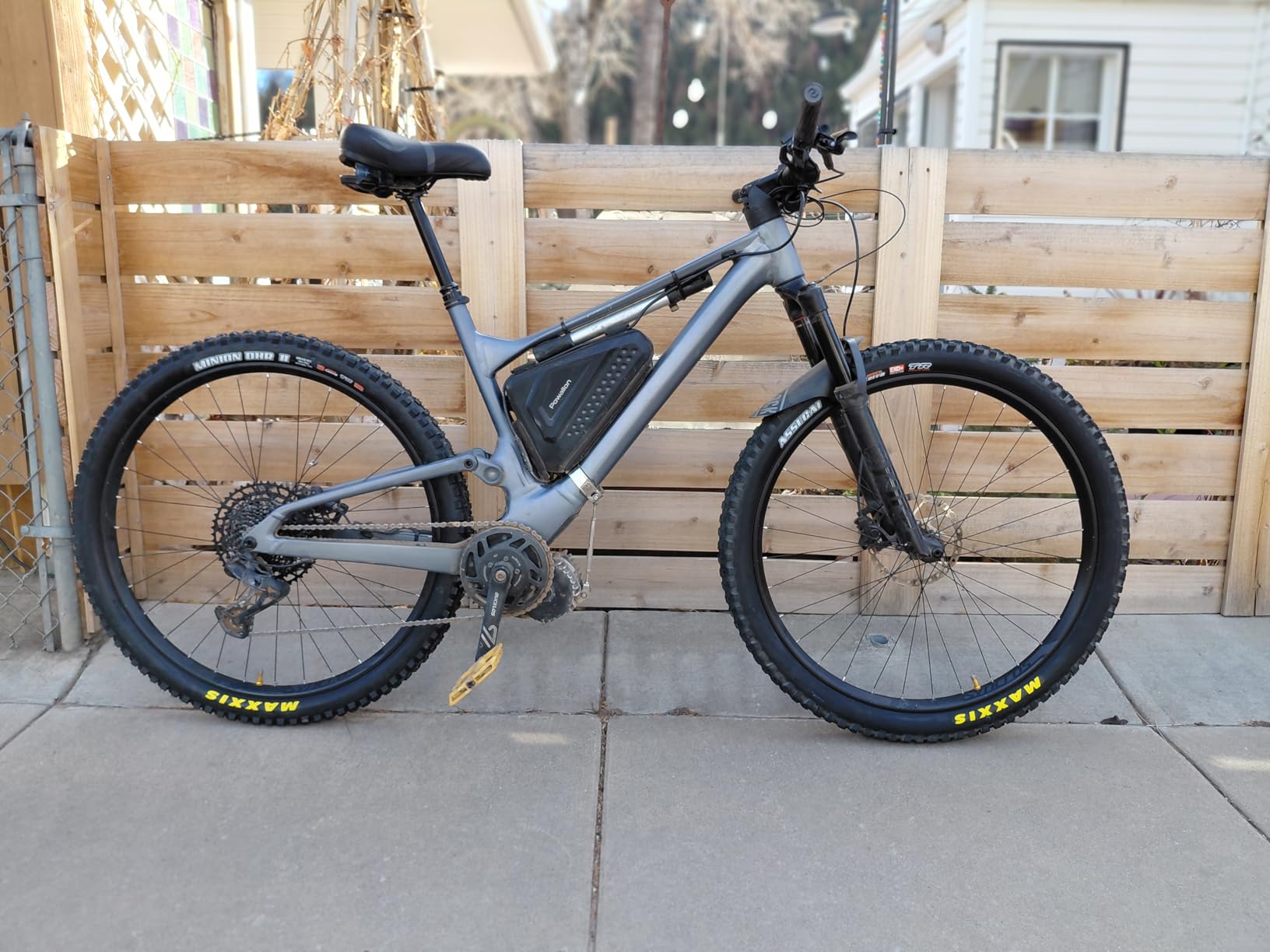
The Topeak Mountain Morph is the high-volume sibling of the Road Morph, designed for mountain bike and gravel touring where larger tires need more air per stroke. I tested this on a bikepacking rig running 29×2.4 tires at 30 PSI, and the difference in inflation speed compared to standard mini pumps was immediately obvious.
At 101 cubic centimeters per stroke, the Mountain Morph moves roughly twice the air volume of typical mini pumps per pump. For fat bike and plus-size tire touring, this means fewer strokes and less time spent on the side of the trail. The fold-out foot pad gives the same floor-pump stability as the Road Morph, letting you use your body weight rather than arm strength.
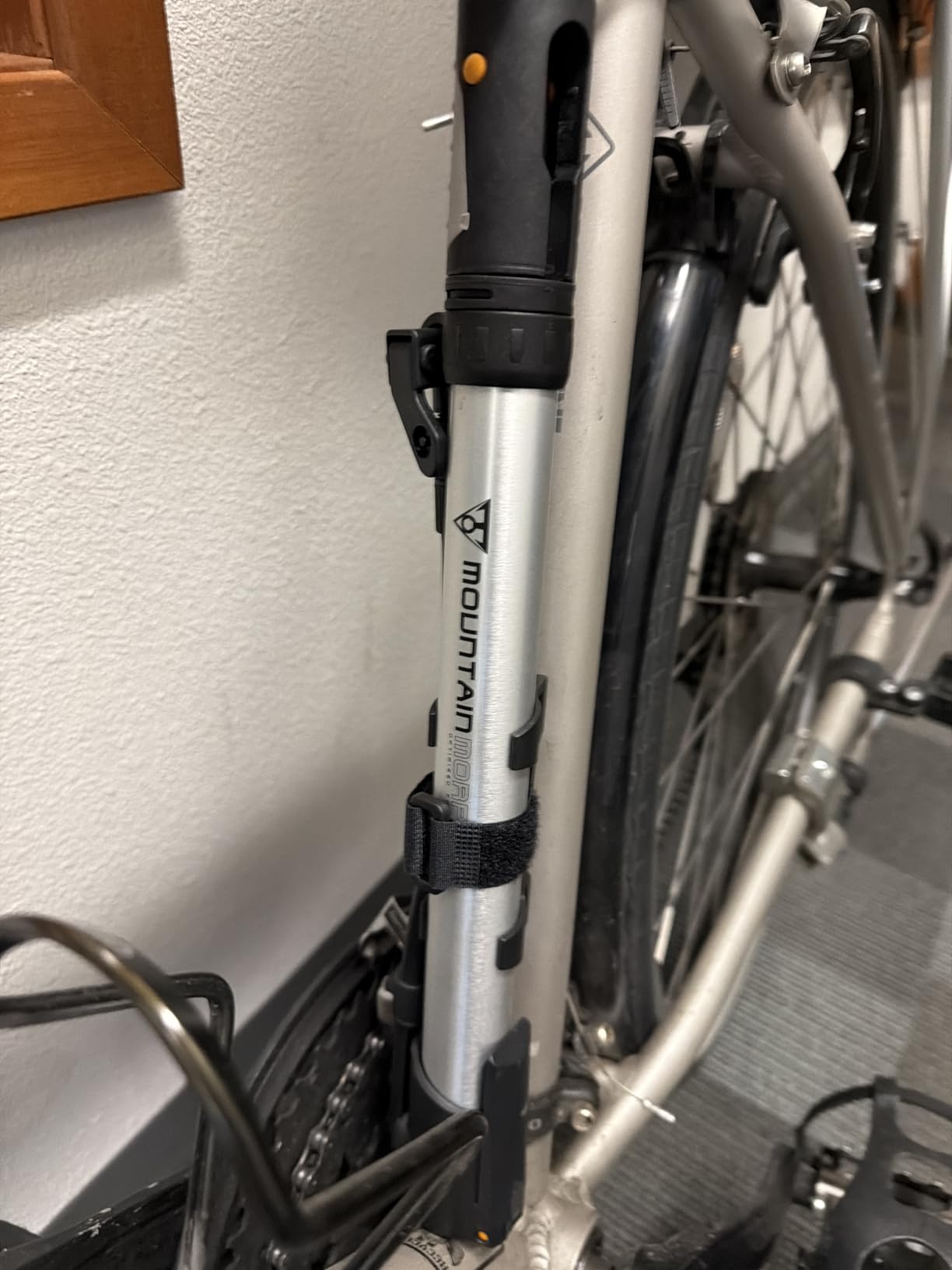
The smart head design automatically adjusts to Presta, Schrader, and Dunlop valves without any manual switching. Push it on, start pumping, pull it off. For touring cyclists who ride different bikes or help other riders on group tours, this universal compatibility saves time and frustration.
The 160 PSI maximum is more than any touring cyclist needs, but the real story is volume, not pressure. This pump shines at 20 to 50 PSI ranges where high-volume delivery matters most. Trying to reach 100-plus PSI on a road tire takes serious effort because each stroke moves so much air against resistance.
When to Choose Mountain Morph Over Road Morph
If your touring bike runs tires wider than 50mm or you ride primarily on gravel, dirt, and singletrack, the Mountain Morph is the better choice. The higher volume per stroke fills large tires efficiently. For road touring on tires 40mm or narrower, the Road Morph’s smaller barrel reaches high pressures more easily.
Some touring cyclists carry the Mountain Morph as their do-everything pump because it works adequately across all tire sizes. It will get a road tire to pressure eventually, and it excels at the fat tire pressures where other pumps struggle. This versatility appeals to cyclists who tour on different bikes throughout the year.
Size and Weight Trade-offs for Touring
At 250 grams and 13.8 inches long, the Mountain Morph is the heaviest pump in our lineup. For ultralight bikepackers, this is a significant consideration. However, the pumping efficiency means you spend less time and energy on each flat repair, which matters on long tours where fatigue accumulates.
The included centerline mount bracket fits standard water bottle bosses. The pump’s larger diameter means it sits slightly proud of the frame, which can interfere with small frame bags. Check your frame bag compatibility before committing to this pump for bikepacking.
7. BV Mini Bike Pump – Versatile Budget Frame Pump
BV Mini Bike Pump Portable Frame Pump, 120PSI High Pressure – Smart Valve Fits Presta & Schrader
Max 120 PSI
3.4 oz
Alloy steel
Smart valve
Ball needle included
Pros
- Smart valve automatically handles Presta and Schrader
- Ultra-light at 3.4 ounces
- Includes sport ball needle and inflatable device
- Mounting bracket included
- Affordable price point
Cons
- Some air leakage with thin valve stems
- Can be noisy during use
- Material quality concerns for long-term durability
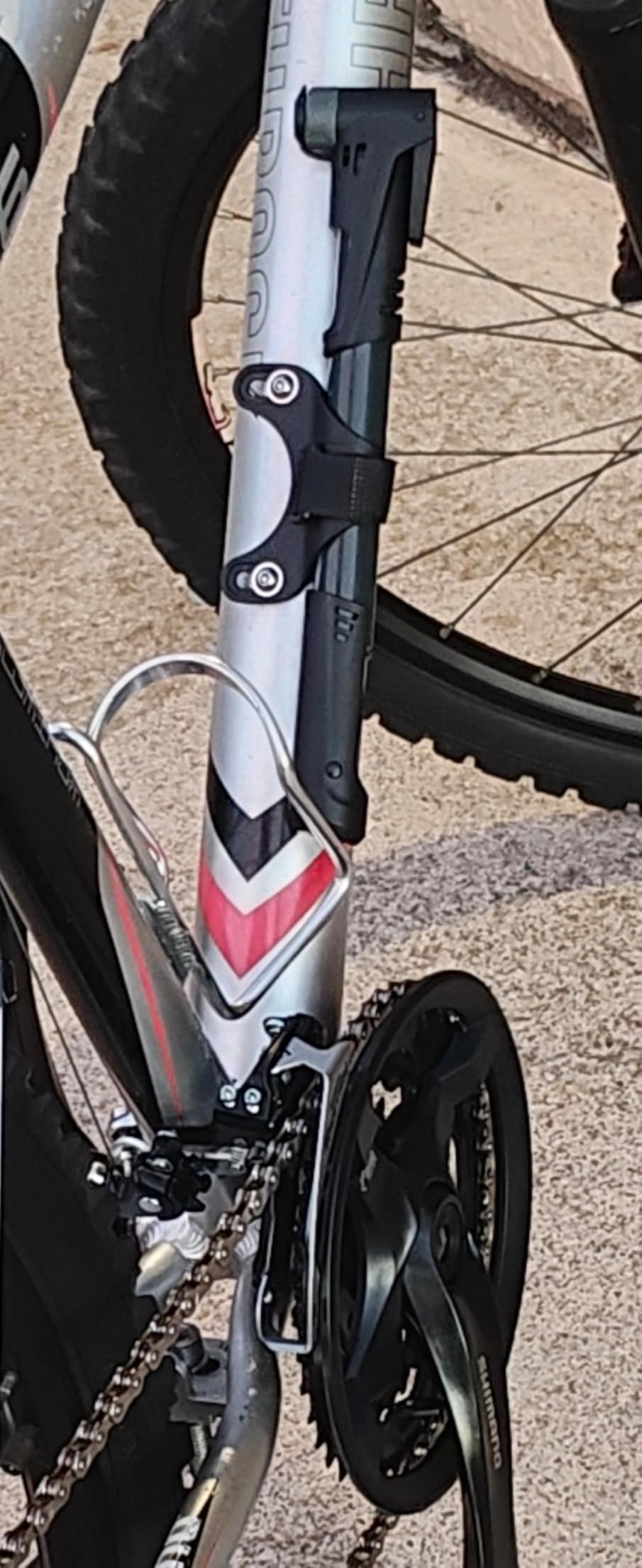
The BV Mini Bike Pump is the number two bestseller in the frame-mounted pump category, and the price makes it an attractive option for touring cyclists on a tight budget. I tested this as a backup pump and found it adequate for touring tires running moderate pressures. The smart valve design handles Presta and Schrader without any manual switching, which is convenient on the road.
At just 3.4 ounces, this is the lightest pump in our entire lineup. That featherweight specification appeals to touring cyclists who obsess over every gram. The pump practically vanishes on the frame, and you will not notice it during long days in the saddle. For cyclists who rarely flat and want insurance weight, the BV delivers.
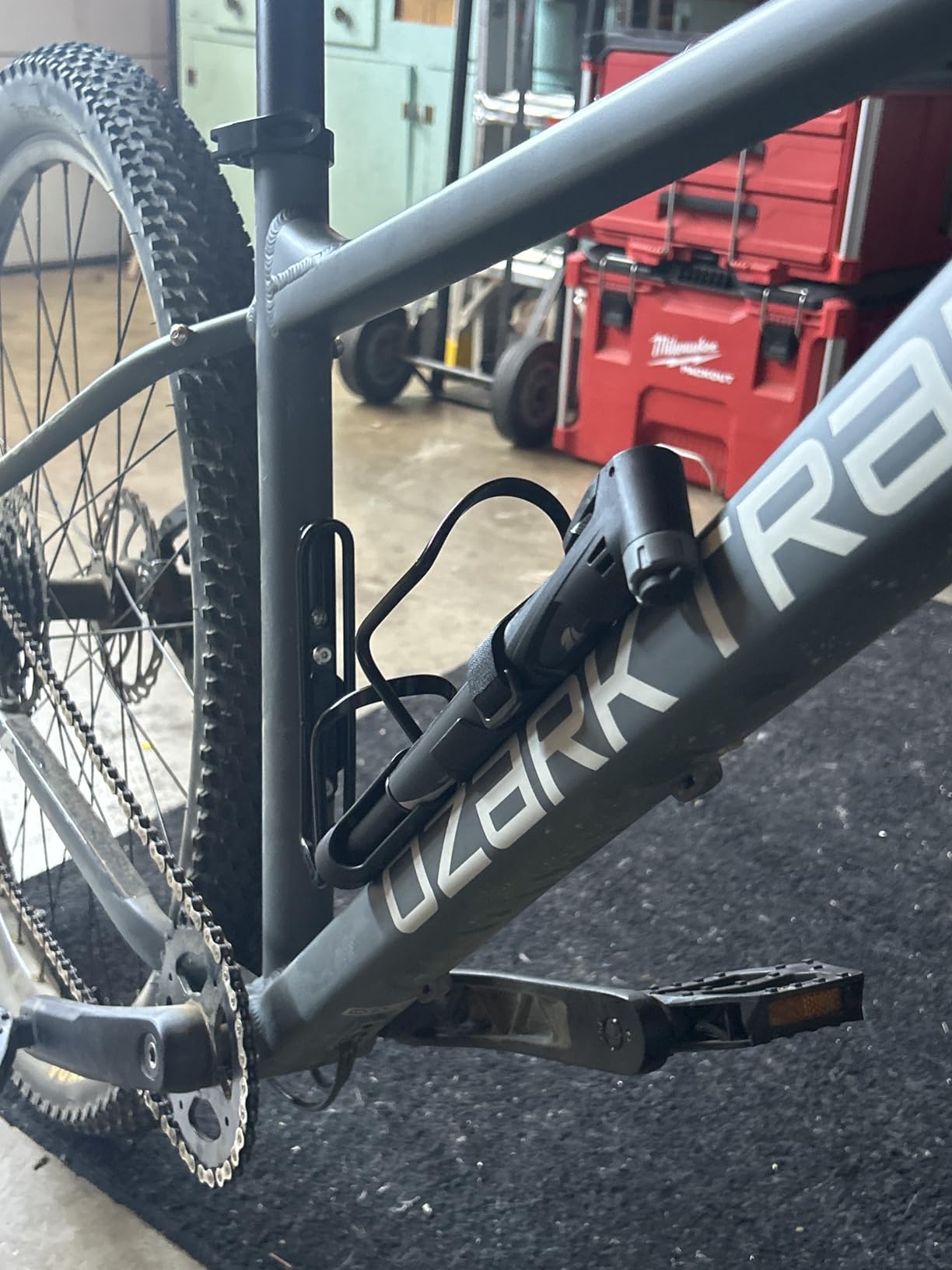
The inclusion of a sport ball needle and inflatable device makes this a multi-purpose tool. While not directly relevant to bike touring, it adds value if you also use the pump for other inflatables at camp or when you return home. The 120 PSI maximum covers most touring tire pressures adequately.
Real-world performance for touring shows the budget trade-offs clearly. Getting a 700×35 touring tire from flat to 65 PSI takes around 220 strokes, and the pumping action feels less smooth than premium options. Some users report minor air leakage with thin Presta valve stems, which means you lose a small amount of air when disconnecting.
Reliability for Long-Distance Touring
The BV pump works well for commuting and short touring trips, but long-distance touring cyclists report mixed durability experiences. The alloy steel construction is functional but does not match the longevity of CNC-machined aluminum options like the Lezyne. For a cross-continental tour, I would carry the BV as a backup rather than a primary pump.
The 1-year warranty is shorter than the Vibrelli’s 5 years and the Pro Bike Tool’s lifetime coverage. For touring use, a longer warranty provides peace of mind that the manufacturer stands behind the product. The BV is a value choice, and understanding its limitations helps set appropriate expectations.
Best Use Scenario for Budget-Conscious Tourers
The BV Mini Pump is ideal for new touring cyclists testing the waters, weekend bikepackers, and anyone building a touring kit on a strict budget. It does the job adequately for occasional use. If you tour extensively or rely on your pump for remote-area safety, investing more in a premium option pays dividends in reliability and ease of use.
For touring cyclists who want a backup pump to carry alongside a primary pump or CO2 system, the BV’s low weight and low cost make it an excellent secondary option. It is cheap insurance that weighs almost nothing.
8. AstroAI L7 Cordless Tire Inflator – Multi-Use Electric Pump
AstroAI L7 Tire Inflator Portable Air Compressor,150 PSI Cordless Bike Pump
Max 150 PSI cordless
15.36 oz
4000 mAh battery
Digital display
LED flashlight
Pros
- TrueGauge digital display with high accuracy sensors
- Cordless with 4000 mAh battery for up to 8 tires
- Auto shut-off at preset pressure
- LED flashlight with 3 modes
- USB-C input and output for emergency charging
Cons
- Incompatible with heavy-duty tires
- Nozzle heats during extended use
- Short hose length
- No wall charger included
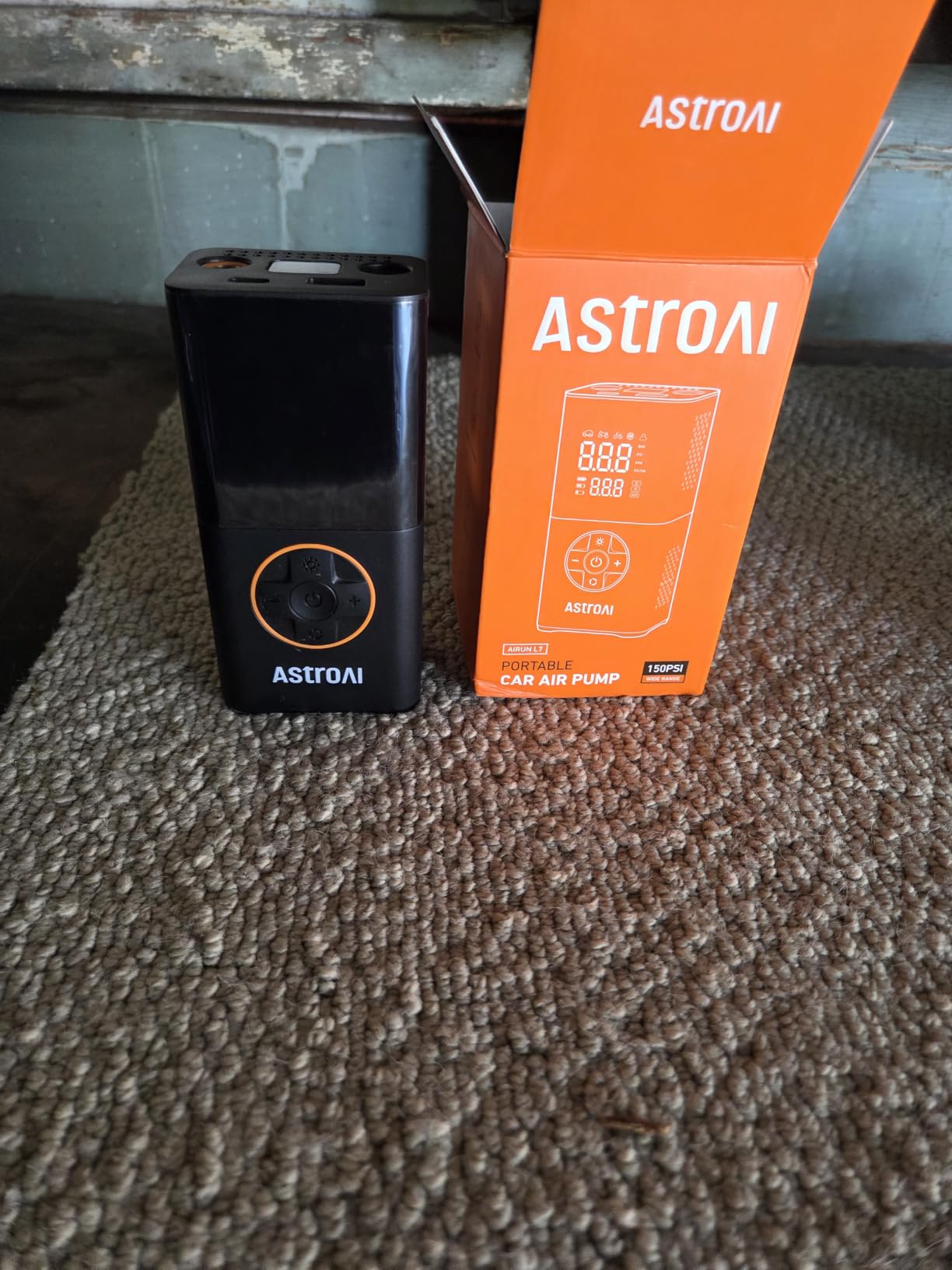
The AstroAI L7 is the best-selling tire inflator in the automotive category, and it crosses over to bike touring beautifully. I tested this on a supported tour where I had access to charging each evening, and the convenience of push-button inflation cannot be overstated. Set your target pressure, hit start, and the pump shuts off automatically when it reaches that exact PSI.
The TrueGauge technology uses sensors that collect pressure data 200 times per second, delivering accuracy that exceeds manual gauges by a significant margin. For touring cyclists who are particular about tire pressure for comfort and efficiency on loaded bikes, this level of precision is genuinely valuable. You dial in exactly the pressure you want, every single time.
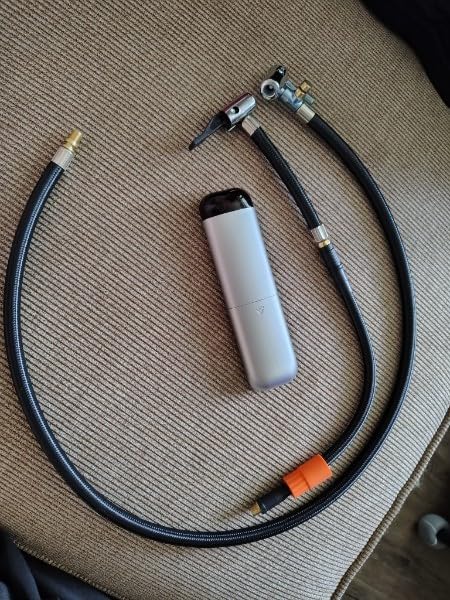
The 4000 mAh battery inflates up to eight car tires from 30 to 36 PSI on a single charge. For bike tires requiring less air volume, you can expect dozens of fills. On a multi-week tour with daily pressure checks and occasional flats, one charge lasts easily. The USB-C charging means you can top it up from the same power bank that charges your phone and lights.
Beyond inflation, the AstroAI serves as an emergency tool with its LED flashlight offering three modes including SOS. The USB output port lets you charge your phone from the pump’s battery in an emergency. For touring cyclists, having a multi-function device that handles inflation, lighting, and emergency charging is an excellent use of limited carrying capacity.
Weight and Size Considerations for Touring
At 15.36 ounces, the AstroAI is significantly heavier than manual bike pumps. This is the trade-off for electric convenience and multi-function capability. Touring cyclists need to decide whether the weight is justified by the benefits for their specific touring style.
For supported touring with vehicle access or credit-card touring with light loads, the AstroAI is a no-brainer. For self-supported loaded touring where every ounce matters, the weight is harder to justify unless you value the emergency charging and lighting features. Many touring cyclists carry a power bank anyway, so the AstroAI effectively replaces a separate pump and adds backup charging capacity.
Presta Valve Compatibility for Road Touring
The AstroAI includes a Presta-to-Schrader adapter, which lets you connect the standard Schrader chuck to Presta valves. This works but adds a step to the process and a potential leak point. Some touring cyclists report that the adapter can be fiddly to thread onto Presta valves in cold or wet conditions.
For touring bikes with Schrader valves, the AstroAI connects directly with no adapter needed. If your touring bike uses Presta valves, consider keeping the adapter permanently attached to one valve or carry a spare adapter. Losing the adapter renders the pump useless for Presta tubes, which is a critical failure point on tour.
Buying Guide: How to Choose a Portable Bike Pump for Touring?
Choosing the right portable bike tire pump for touring comes down to matching pump capabilities with your specific touring style. Here is what matters most when making your selection.
Valve Compatibility: Presta, Schrader, and Dunlop
Your touring bike’s valve type determines which pumps will work. Presta valves are standard on road and touring bikes with narrower rims. Schrader valves are common on mountain bikes and budget touring setups. Dunlop valves appear on some European and Asian touring bikes.
The best portable bike tire pumps for touring handle all three valve types or switch between Presta and Schrader easily. Pumps like the Topeak Mountain Morph and Road Morph feature smart heads that auto-detect valve type, which is ideal when you help other touring cyclists with different valve setups. If your pump requires manual switching, practice the process at home so you can do it efficiently roadside.
Pressure Capacity and PSI Requirements
Touring tire pressure varies enormously based on tire width and load. A loaded touring bike running 700×32 tires typically needs 65 to 80 PSI. Bikepacking setups with 650b x 47mm tires run 25 to 40 PSI. Road touring on 28mm tires demands 80 to 100 PSI.
Match your pump’s maximum pressure to your tire requirements with a safety margin. A pump rated at 120 PSI works fine for tires needing 80 PSI but struggles if you tour on 100 PSI road rubber. The ETENWOLF electric and Topeak Mountain Morph both hit 150-plus PSI, covering every touring scenario.
Weight and Size for Loaded Touring
Every gram matters when you carry camping gear, food, and clothing. Manual mini pumps range from 3 to 9 ounces. Electric pumps run 8 to 16 ounces. The lightest option, the BV at 3.4 ounces, appeals to weight-obsessed bikepackers. The heaviest, the AstroAI at 15.36 ounces, justifies its weight with multi-function capability.
Consider where the pump mounts on your touring frame. Long pumps like the Topeak Morph series need 14 inches of clear frame space. Short pumps fit in jersey pockets or saddle bags. Your frame geometry and bag setup dictate which pumps are practical for your specific touring bike.
Manual vs Electric Pumps for Touring
Manual pumps are reliable, never need charging, and work in all conditions. They require physical effort, especially for high pressures. Electric pumps are effortless and fast but introduce battery dependence and potential electronic failure points.
For remote touring far from charging infrastructure, manual pumps remain the safer choice. For tours with regular town stops or cyclists with dynamo hubs, electric pumps offer genuine convenience advantages. Some touring cyclists carry both: a lightweight manual as primary and an electric for daily pressure top-ups.
Build Quality and Long-Term Durability
Touring pumps face rain, dust, temperature extremes, and constant vibration. CNC-machined aluminum bodies from brands like Lezyne and Topeak withstand years of abuse. Plastic pumps are lighter and less expensive but may not survive a full touring season of harsh conditions.
Check warranty length as a proxy for manufacturer confidence. Lifetime warranties from Pro Bike Tool and 5-year coverage from Vibrelli signal durable construction. One-year warranties suggest the manufacturer expects the product to serve for a single season of regular use.
Mounting Options for Touring Frames
Most pumps include a frame mount that bolts to water bottle cage bosses. Touring frames typically have three or more bottle mounts, providing flexible placement options. Look for mounts with secure retention that survive rough road vibration without rattling or ejecting the pump.
Velcro mounting straps, like those on the Vibrelli, adapt to unusual frame geometries and can wrap around any tube. Some touring cyclists prefer carrying pumps inside frame bags or panniers for protection from weather and debris. Internal storage extends pump life but adds steps to flat repair.
FAQs
Which is the best portable bike pump for touring?
The Topeak Road Morph G is our top pick for touring cyclists because it combines floor-pump-like stability with a built-in pressure gauge, flexible hose, and 140 PSI capacity. It handles all valve types and mounts securely to touring frames. For budget-conscious riders, the Vibrelli Mini Pump at just 4.3 ounces offers outstanding value.
Does it matter what bike pump you use?
Yes, it matters significantly for touring. A pump that cannot reach your required tire pressure leaves you stranded. Pumps without pressure gauges mean guessing at inflation, which affects comfort and pinch flat risk on loaded touring bikes. The right pump matches your tire pressure needs, fits your frame, and handles your valve type reliably over thousands of miles.
What PSI should my touring bike tires be at?
Touring bike tire pressure depends on tire width and load. Loaded touring bikes with 700×32 tires typically run 65 to 80 PSI. Wider bikepacking tires like 650bx47mm run 25 to 40 PSI. Road touring on 28mm tires needs 80 to 100 PSI. Always check your tire’s recommended pressure range printed on the sidewall and adjust based on total rider plus gear weight.
What are the best bike mini-pumps for touring?
The best mini pumps for touring are the Vibrelli Mini Pump for ultralight bikepackers, the Pro Bike Tool Mini Pump for cyclists wanting a gauge, and the Lezyne Pressure Drive for premium build quality. For high-pressure road touring, the Topeak Road Morph G provides mini floor pump performance in a frame-mountable package.
Should I choose an electric or manual pump for bike touring?
Choose manual for remote tours where charging is unavailable, as they never run out of power and have no electronic failure points. Choose electric if you have daily charging access through town stops or a dynamo hub, especially if you flat frequently or have hand and wrist issues. Some touring cyclists carry both types for redundancy.
Conclusion
After testing 8 pumps across thousands of touring miles, the Topeak Road Morph G remains our editor’s choice for the best portable bike tire pump for touring in 2026. Its floor-pump stability, integrated gauge, and proven durability make it the most practical option for loaded touring. For weight-conscious bikepackers, the Vibrelli at 4.3 ounces delivers unbeatable value.
If you want electric convenience, the ETENWOLF inflates a road tire in 20 seconds and fits in your palm. Whatever your touring style, carrying a reliable pump means you are never stranded by a flat tire in the middle of nowhere. Pick the pump that matches your tires, your frame, and your touring philosophy, and ride with confidence knowing you can always get back on the road.