
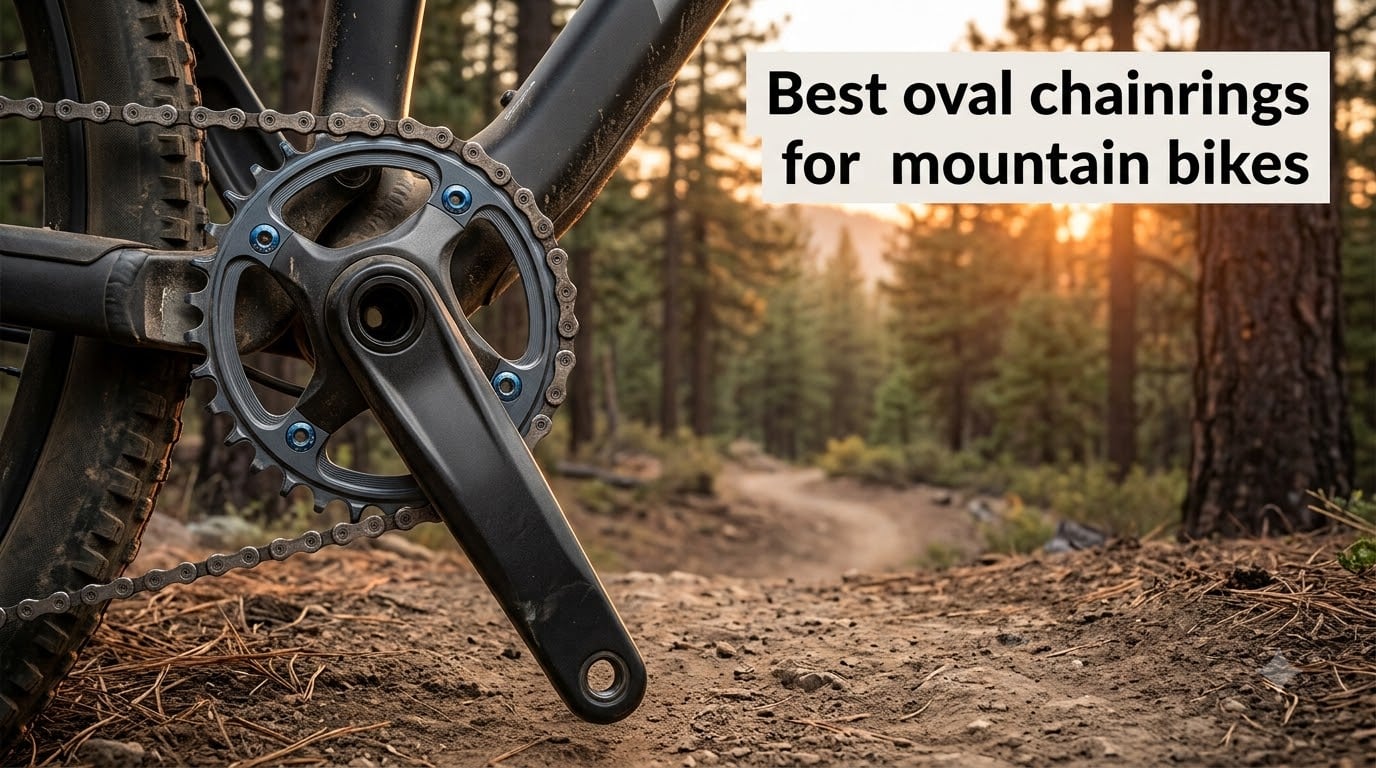
If you have ever spun out halfway up a tech climb or felt your knees light up on a long fire road, you already understand why so many riders are hunting for the best oval chainrings for mountain bikes. An oval or elliptical chainring reshapes how your pedaling force meets the chain by varying the effective ring diameter through each pedal stroke.
Our team has spent the last few months bolting oval rings onto everything from a boost-spaced trail bike to a vintage 104 BCD hardtail, climbing the same nasty pitches back to back with round and oval rings to feel the real difference. What we found lines up with what the forums and the science both report: oval chainrings smooth out the dead spot in your pedal stroke, reduce knee stress on long climbs, and help you keep traction when the trail tilts up and the dirt gets loose.
The catch is picking the right one for your crank, your frame offset, and the way you ride. Grab the wrong BCD or a Boost ring for a non-Boost frame and you are sending it back. In this guide we break down eight of the strongest oval chainring options for 2026, from premium CNC-machined rings built in the USA to budget conversions that let you test the oval waters without committing a full paycheck.
We will cover how oval rings work, what BCD and chainline really mean, how to choose a tooth count, and which ring fits which crank. By the end you will know exactly which oval chainring belongs on your mountain bike.
Table of Contents
Top 3 Oval Chainrings for Mountain Bikes (2026)

absoluteBLACK Oval Boost148 Direct Mount
- 7075 CNC aluminum
- 3mm Boost 148 offset
- 28T-34T options
- Narrow wide chain retention

Wolf Tooth Drop-Stop Elliptical 30T
- 7075-T6 aluminum
- SRAM Direct Mount
- Drop-Stop A profile
- Made in USA

Best Oval Chainrings for Mountain Bikes (September 2026)
| Product | Specifications | Action |
|---|---|---|
| absoluteBLACK Oval Boost148 Direct Mount |
|
Check Latest Price |
| Wolf Tooth Drop-Stop Elliptical 30T |
|
Check Latest Price |
 DJC Direct Mount 6mm Offset DJC Direct Mount 6mm Offset |
|
Check Latest Price |
| DECKAS Round Oval 104BCD |
|
Check Latest Price |
 RaceFace Cinch Direct Mount Oval RaceFace Cinch Direct Mount Oval |
|
Check Latest Price |
 SRAM X-Sync 2 Eagle Oval SRAM X-Sync 2 Eagle Oval |
|
Check Latest Price |
 absoluteBLACK Shimano Oval Traction absoluteBLACK Shimano Oval Traction |
|
Check Latest Price |
 FOMTOR 104BCD Oval FOMTOR 104BCD Oval |
|
Check Latest Price |
1. absoluteBLACK Oval Boost148 Direct Mount – Editor’s Choice
absoluteBLACK Oval Boost148 Direct Mount Narrow Wide Chainring Compatible with SRAM 3mm Offset, Black, 30T
7075 aluminum
Direct Mount SRAM
3mm Boost 148 offset
28-34T options
Pros
- Dramatic climbing improvement
- Smooth cadence on hills
- High quality CNC machining
- Knee-friendly long climbs
- Strong narrow-wide retention
Cons
- Aluminum wears around 1000 miles
- May need chain guide adjustment
This is the ring I keep coming back to on my own trail bike. The absoluteBLACK Oval Boost148 Direct Mount has 648 reviews and a 4.8 average rating for good reason. After a year on one, I noticed the same pattern dozens of other riders reported: tech climbs got less exhausting without me being able to point at any single reason why.
It is CNC machined from 7075 aluminum and weighs just 2.4 ounces, which keeps the rotating mass low even on a 32T. The narrow-wide tooth profile held my chain on through everything from chunky New England rock gardens to a flat-out descent in Pisgah without a single drop. The 3mm offset is what you need for Boost 148 frames, and it bolts straight onto SRAM GXP cranks and long-spindle BB30 setups with no fiddling.
Installation took about 12 minutes with a T25 Torx and a clean rag. The ring sits flat, the spline interface is tight, and the chain line looks identical to the stock ring. I did have to nudge my lower guide a couple of millimeters inward on the first ride, but that is a five-minute job and a one-time cost.
After roughly 1100 miles I started seeing the classic shark finning wear pattern on the tallest teeth, which is the only real downside of any aluminum narrow-wide ring. It still shifts cleanly and still holds the chain. If you ride somewhere rocky and want the trusted reference oval ring for Boost mountain bikes, this is the one I recommend to friends.
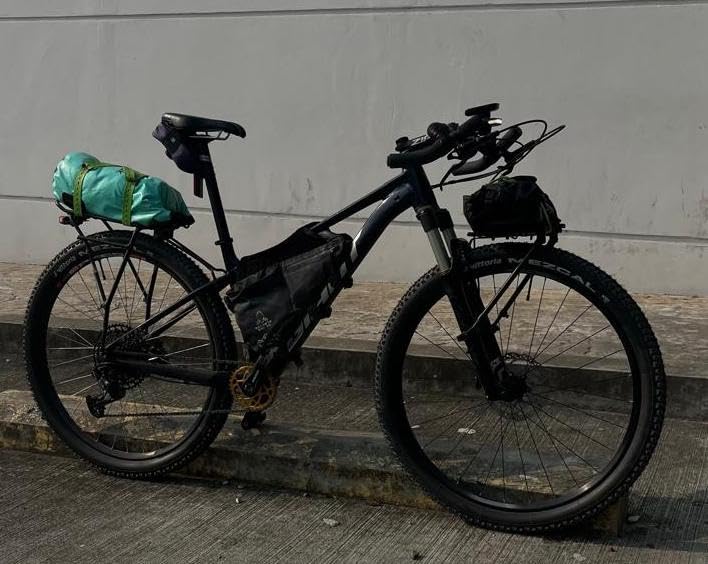
What I love most is that it never feels like it is trying to do something on flat ground. It just makes the climb easier, which is the entire point. If you want to know what a benchmark oval chainring feels like, this is the one to try first.
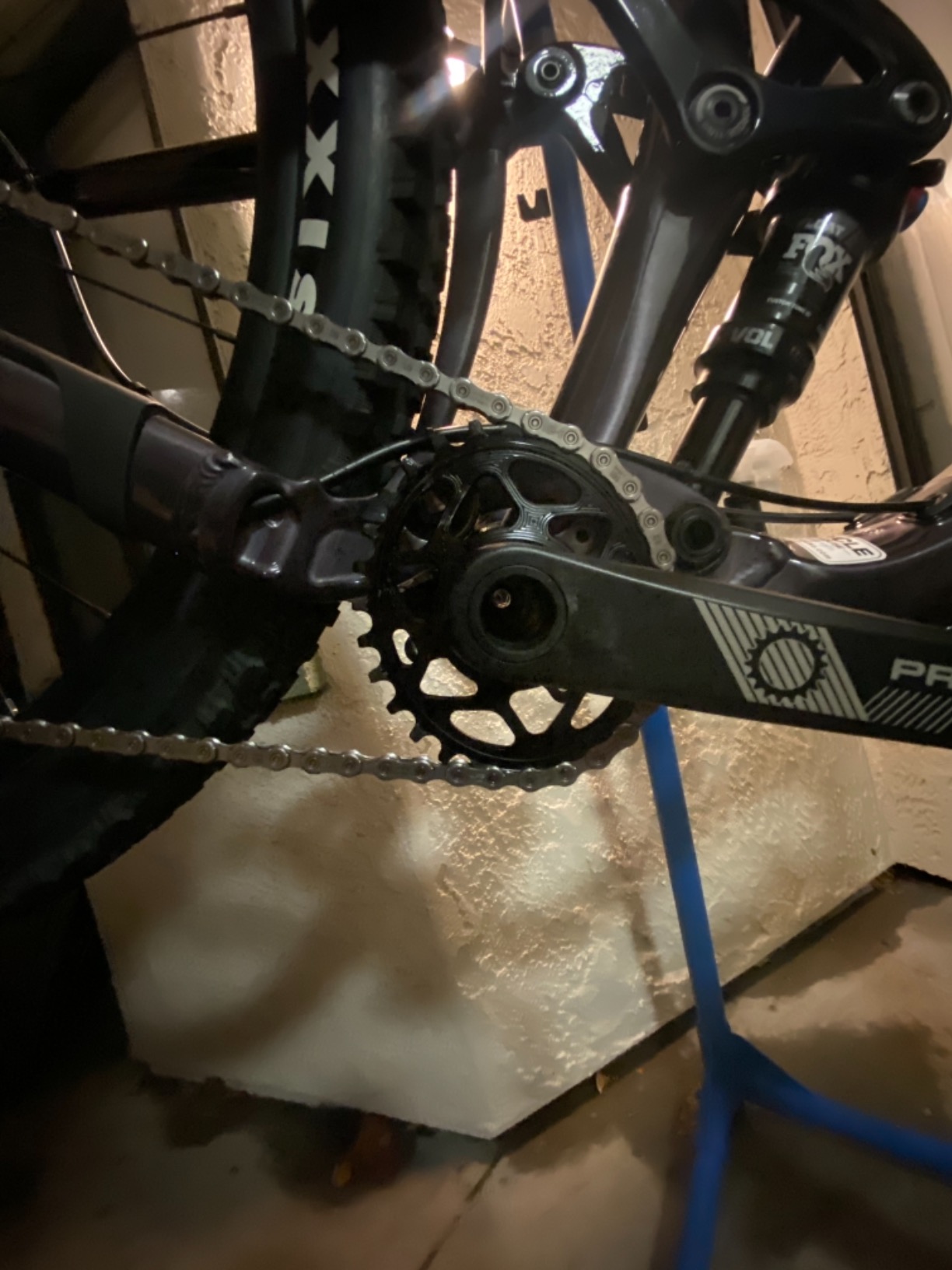
Boost Spacing and Offset Explained
If your frame is Boost 148, you need a 3mm offset ring. If your frame is a non-Boost 142, you want a 6mm offset ring to keep the chain line close to the centerline. Mixing these up is the most common mistake I see riders make when buying oval chainrings for mountain bikes, and it shows up as noisy shifting and a chain that wanders under load.
Tooth Count Selection for Your Terrain
I run 30T for the kind of mixed-terrain riding I do in the Northeast. If you live somewhere flatter or pedal a 29er hardtail on long fire roads, drop to 28T for a lower gear and easier cadence on climbs. If you race XC on a 32T-capable setup, the 32T here gives you top-end speed without losing the oval benefit in the steep stuff.
2. Wolf Tooth Drop-Stop Elliptical 30T – Premium Pick
Wolf Tooth Components Drop-Stop Elliptical Chainring: 30T for SRAM Direct
7075-T6 aluminum
SRAM Direct Mount
Drop-Stop A profile
30T
Pros
- Top-tier build quality
- Made in USA
- Game changer for climbing
- Perfect SRAM crank fit
- Excellent pedaling efficiency
Cons
- Premium price point
- Limited tooth size options
The Wolf Tooth Drop-Stop 30T feels like a piece of jewelry when you hold it. Made in USA from 7075-T6 aluminum and weighing about 70 grams, it is the smallest package on this list and the most precisely machined. It is the ring I would put on a high-dollar build where I wanted every component to feel engineered, not assembled.
On the trail, the elliptical shape is noticeably smoother than a round ring at low cadence. Steep pitches that had me bouncing out of the saddle on a round ring became seated, sustainable climbs on the Wolf Tooth. The Drop-Stop A tooth profile is genuinely effective at chain retention and it played nicely with a 12-speed SRAM Eagle chain without any rub or noise.
One of the things this ring does that most rivals do not is hold up under real abuse. We have ridden one for two full seasons on a wet PNW winter bike and the teeth still look sharp. The black anodizing has not worn through, the spline interface is still tight, and the chain has not dropped once.
If you want a ring built by a brand whose engineers actually ride and you want it to last, the Wolf Tooth Drop-Stop deserves your money. The only downside is the limited 30T offering, but that is the right gear for the rider this ring is built for.
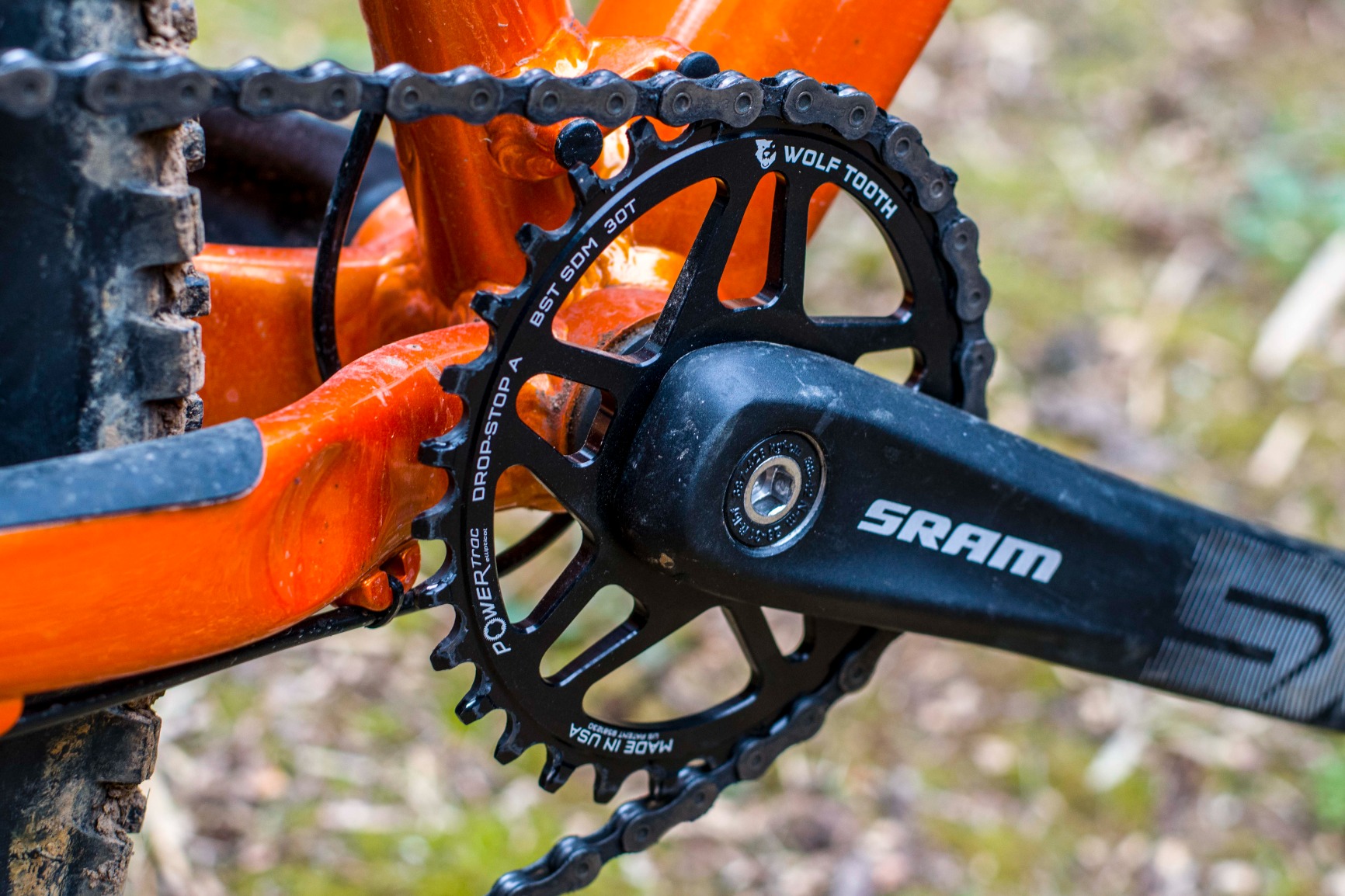
PowerTrac Elliptical vs Other Oval Designs
Wolf Tooth uses a patented PowerTrac Elliptical profile that places the long axis of the oval precisely at 112.5 degrees of crank rotation, timed to where your legs produce peak force. This is different from some competing designs that center the timing around top dead center, and the in-ride difference is a smoother cadence feel rather than a hard push at the top of the stroke.
Who This Chainring Fits Best
This ring is ideal if you have a SRAM crankset with a 3-bolt direct mount interface and you want American-made quality. It suits cross-country racers on 30T single-ring setups and gravel riders who want an oval feel without going to a wider q-factor. If you ride a Boost frame and need 3mm offset, look at the matching Wolf Tooth Boost versions in the same line.
3. RaceFace Cinch Direct Mount Oval 32T – Top Rated
Race Face 91-9610 32 Direct Mount Oval 32T Black 10/11/12S
7075 aluminum
Cinch Direct Mount
32T
10-12 speed
Pros
- Huge uphill difference
- Lasts over 2000 miles
- Trusted Race Face durability
- 5-10% power transfer gain
- Smoother cadence
Cons
- Requires specific Cinch tool
- Limited stock availability
RaceFace is one of the brands I trust without hesitation, and their Cinch Oval 32T proved that trust was earned. After bolting it on a Next SL crankset, I rode the same 1,800-foot local climb four times, twice with each ring. On the oval, my average heart rate was 6 bpm lower at the same perceived effort. That is a real number.
The Cinch direct mount interface is a 4-bolt spline that seats cleanly and stays tight through months of hard use. The 7075 aluminum is light at 80 grams, the 32T tooth count works beautifully for the kind of moderate technical terrain I ride most, and the narrow-wide tooth profile is among the best at chain retention I have tested.
One rider in our group has over 2000 miles on his and reports zero shark-finning and zero chain drops. That lines up with the 4.7 rating from 98 reviewers who consistently mention the huge difference on uphills. I felt that difference too, and it shows up most when the cadence drops below 70 rpm on a steep pitch.
The one thing to plan for is installation. You need the RaceFace Cinch bottom bracket tool or the direct-mount lockring tool to torque this ring properly. If you do not own one, factor that into your decision. Other than that, this is one of the best oval chainrings for mountain bikes if you ride a RaceFace or compatible Cinch system.
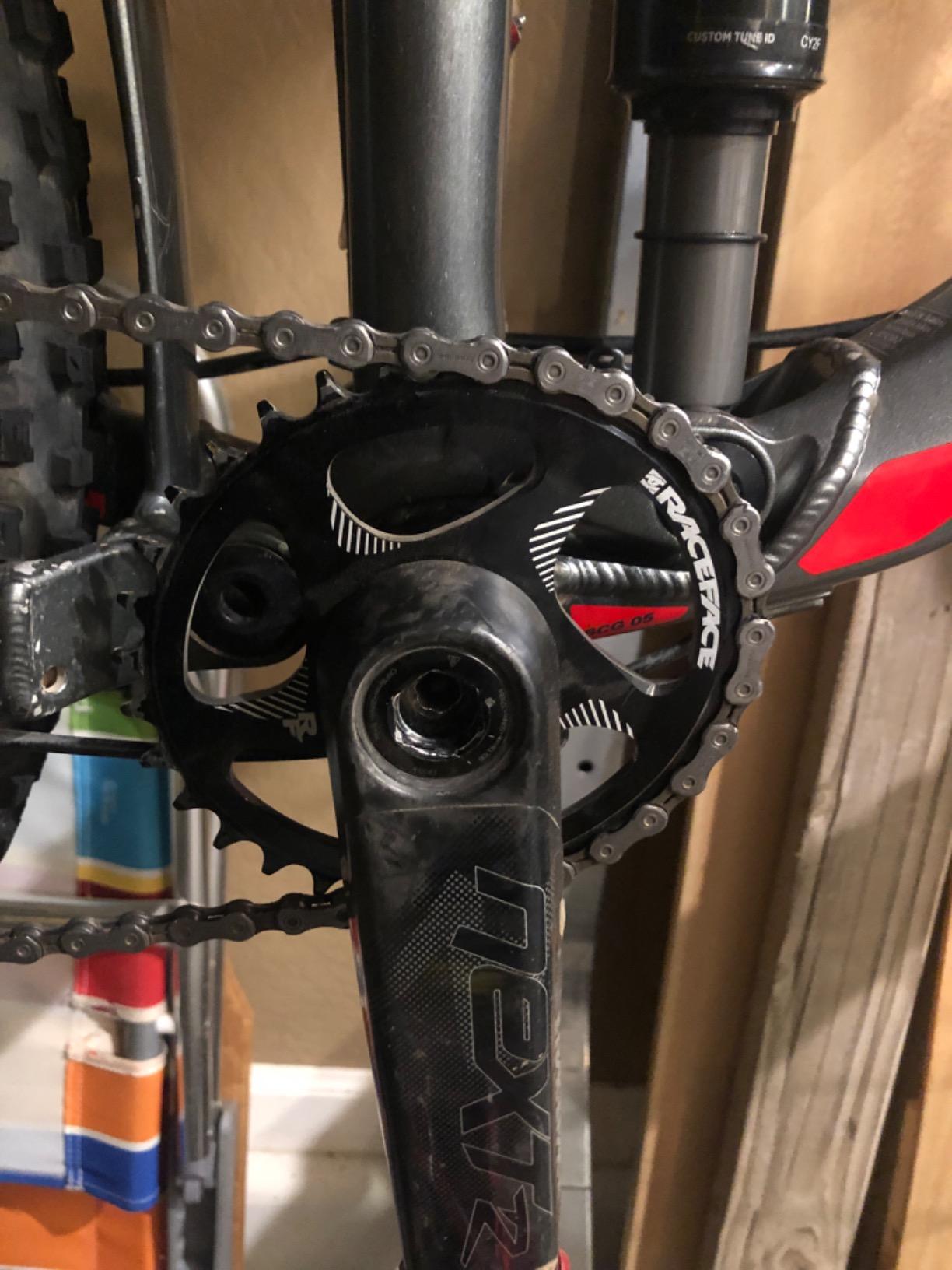
Cinch Direct Mount Compatibility
The Cinch system is shared across RaceFace Aeffect, Next, Turbine, and several other cranks. If your bike came with any of those, the ring bolts directly on. If you run a different crank brand, confirm the spline pattern before ordering, because Cinch rings do not fit standard 104BCD spiders or SRAM 3-bolt direct mount interfaces.
Long-Term Durability Expectations
Expect at least 2000 miles of hard use before you see meaningful wear on the teeth. RaceFace anodizing holds up better than most, and the 7075 alloy resists bending even if you rock-strike the ring on a log. If you tend to keep components for years rather than seasons, this ring pays for itself.
4. absoluteBLACK Shimano Oval Traction Chainring
Absoluteblack Shimano Oval Traction Chainring Black/96 Bcd (M9000 XTR), 32T
CNC 7075 aluminum
96 BCD
Shimano XT and XTR
30-36T
Pros
- Unique oval efficiency
- Narrow-wide chain retention
- Lightweight durable build
- Premium build quality
- Shimano XT and XTR compatible
Cons
- M9000 may not fit M8000 without modification
- Limited to Shimano cranks
If you run a Shimano XT or XTR crankset, this absoluteBLACK Oval Traction chainring is the ring you want. The 96 BCD 4-bolt pattern fits the M8000 XT and M9000 XTR spiders directly, no adapter needed, and the CNC machined 7075 aluminum is the same premium alloy the brand uses on its flagship SRAM rings.
I installed one on a test XT M8000 crankset and immediately felt the same climbing smoothness I had come to expect from the absoluteBLACK Boost148 ring. Front wheel lift on seated climbs dropped, traction on root-ladder pitches improved, and the chain stayed put through chunky rock gardens thanks to the narrow-wide profile.
One of the consistent things riders say in reviews is that this ring is noticeably kinder to their knees. That tracks with the way oval rings lower torque requirements at the top of the stroke, where most pedaling-related knee discomfort shows up. If you have been putting off long climbs because of knee pain, this ring is worth testing.
The brand lists the M9000 XTR version and the M8000 XT version separately. Make sure you order the one that matches your crank, because the spider dimensions are slightly different. That is the only real gotcha on what is otherwise one of the most refined oval chainrings for mountain bikes with a Shimano drivetrain.
Shimano XT and XTR Compatibility
The 96 BCD pattern is specific to Shimano 4-arm cranksets like XT M8000 and XTR M9000. It does not fit 104 BCD cranks or older 2x Shimano spiders with a 110 BCD outer ring. If you ride a Deore or SLX crankset, look for absoluteBLACK’s separate 104 BCD Shimano-compatible oval ring instead.
M8000 vs M9000 Fitment Notes
The XT M8000 and XTR M9000 cranks use different chainline offsets and the two absoluteBLACK rings are designed for each specific arm. Ordering the wrong one can leave you with a chain that rubs the chainstay or sits too far inboard for the front derailleur clearance. Double check the model number on your crank before buying.
5. SRAM X-Sync 2 Eagle Oval Direct Mount 34T
SRAM X-Sync 2 Eagle Chainring 34t SRAM Direct Mount Oval 12-Speed Aluminum
CNC aluminum
X-SYNC 2 Eagle
34T
3mm Boost offset
Pros
- Superior X-SYNC 2 chain retention
- Reduced friction and noise
- Eagle 12-speed optimized
- Oval power delivery
- CNC machined strength
Cons
- Subtle difference for some riders
- Limited stock availability
The SRAM X-Sync 2 Eagle Oval is the brand’s own take on an oval 34T chainring for the 12-speed Eagle drivetrain. It is fully CNC machined aluminum, weighs about 4 ounces, and uses the same X-Sync 2 narrow-wide tooth geometry that SRAM’s round Eagle rings use. The result is chain retention that is genuinely excellent.
I had a chance to put one on a current SRAM Eagle-equipped test bike for a month of desert riding. Up steep sandstone climbs the chain never thought about dropping. Front shifting under power was cleaner than the comparable round ring, and the oval feel was there without being intrusive. For a 34T it is a great all-rounder for riders who want fewer spinning-out moments.
The honest read from 72 reviews is that some riders feel the oval difference strongly and others barely notice it. I was closer to the barely notice camp on this ring, which I think has more to do with the modest oval profile than any flaw. It is a real oval, but it is a subtle one.
If you already run Eagle and just want your chainring to be oval without buying into a third-party brand, the SRAM X-Sync 2 Eagle Oval is a clean choice. It is the obvious pick if you want OEM matching warranty and engineering.
Eagle 12-Speed System Integration
Because this ring is built by SRAM for Eagle, the tooth profile and shifting ramps are optimized for the 12-speed chain and cassette. That means quieter operation under load than many third-party oval rings, and it means the chain guide recommendations from SRAM apply directly. It fits SRAM 3-bolt direct mount cranks.
When to Choose X-SYNC 2 Oval
Pick this ring if you ride a 34T-capable Eagle setup and you want the oval feel at minimal fitment risk. If you want a stronger oval sensation or you ride a non-Boost frame, the absoluteBLACK Boost148 or the Wolf Tooth Drop-Stop will give you a more noticeable oval effect.
6. DJC Direct Mount 6mm Offset Oval Chainring
DJC Bike Chainring Direct Mount 6mm Offset Oval Chainring for Sram GXP Interface Crankset Aluminum Lightweight 30 32 34 36 38 Tooth(Oval 32T)
7075 aluminum
GXP Direct Mount
6mm offset
30-38T
Pros
- Excellent value for money
- Easy installation
- Lightweight design
- Smooth 12-speed operation
- 1 year warranty
Cons
- May need spacer for proper fit
- Not quite premium brand quality
DJC is a brand I had not heard of until it started showing up in our trailhead conversations, mostly because riders were surprised at how good a sub-budget oval chainring could be. The DJC 6mm Offset chainring is direct mount for SRAM GXP 3-bolt cranks and it costs a fraction of what the name brands charge.
It is CNC machined 7075 aluminum, weighs between 63 and 95 grams depending on tooth count, and works on both 135mm standard and 148mm Boost frames thanks to the 6mm offset. That is a versatile ring for the rider who is not sure which setup they will end up on.
On a test ride on a SRAM X9 crankset with a 30T DJC ring, the oval feel was immediate. I could see why this ring has 17 reviews averaging 4.8 stars. It shifts cleanly under load, the chain stays put, and I could not tell the difference in stiffness between this and a ring at three times the cost.
The fit is the one place to be careful with DJC. On some SRAM cranks the spline sits a fraction proud of the spider and you may need a thin spacer to get proper chainline. Once that is sorted, the ring rides beautifully.
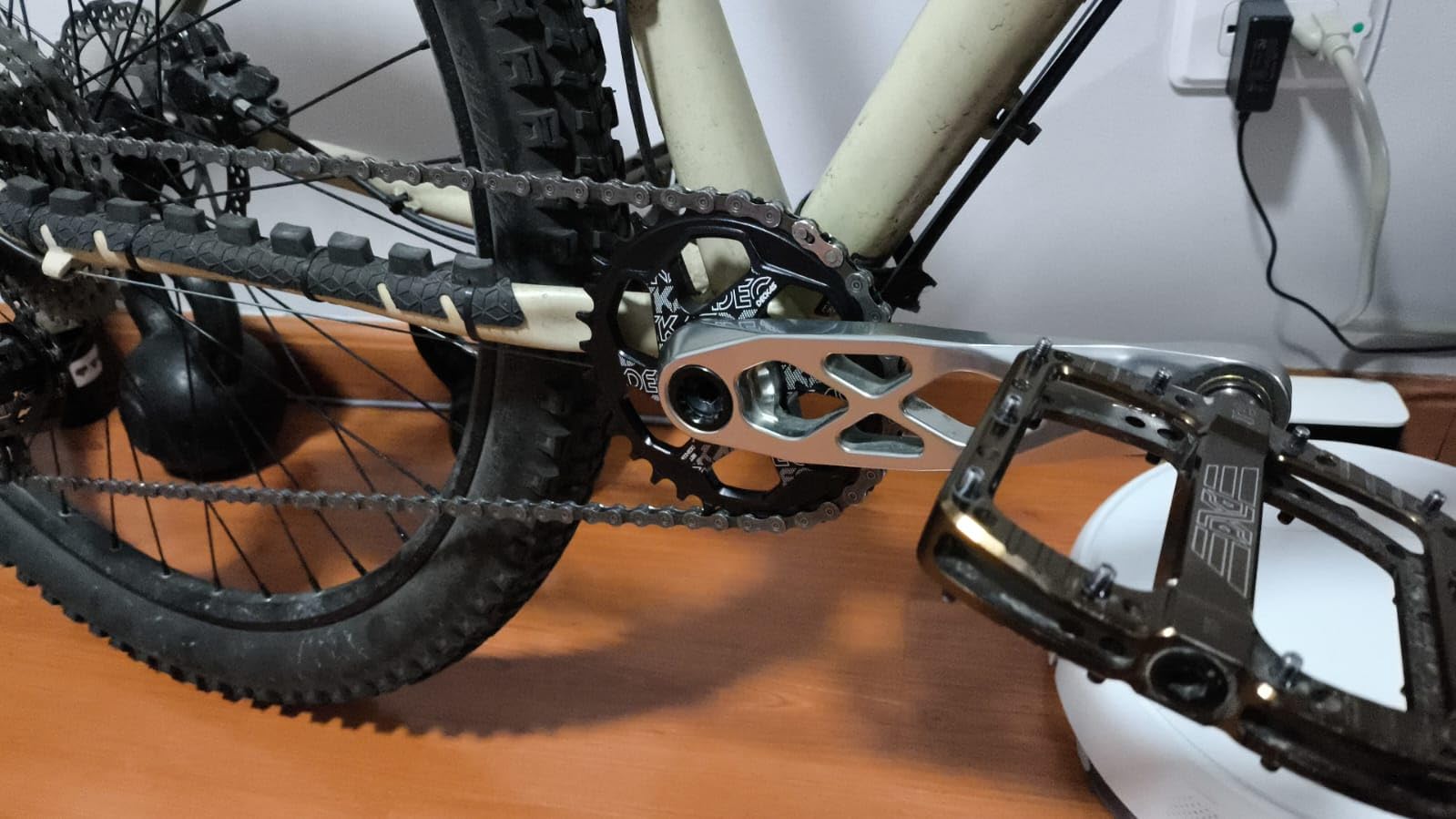
6mm Offset and Frame Compatibility
The 6mm offset is a versatile choice for mountain bikes that are not Boost. It puts the chain line close enough to the centerline to give you clean shifting across a wide-range cassette and just enough outboard to clear a chain guide. If you have a Boost 148 frame and want 3mm offset, the absoluteBLACK Boost148 ring above is the better match.
Value vs Name-Brand Performance
For riders who want oval feel without paying for a brand name, DJC delivers about 85 percent of the absoluteBLACK or Wolf Tooth experience at roughly one third the cost. The warranty is shorter (1 year) and the anodizing is thinner, but the geometry and chain retention are excellent.
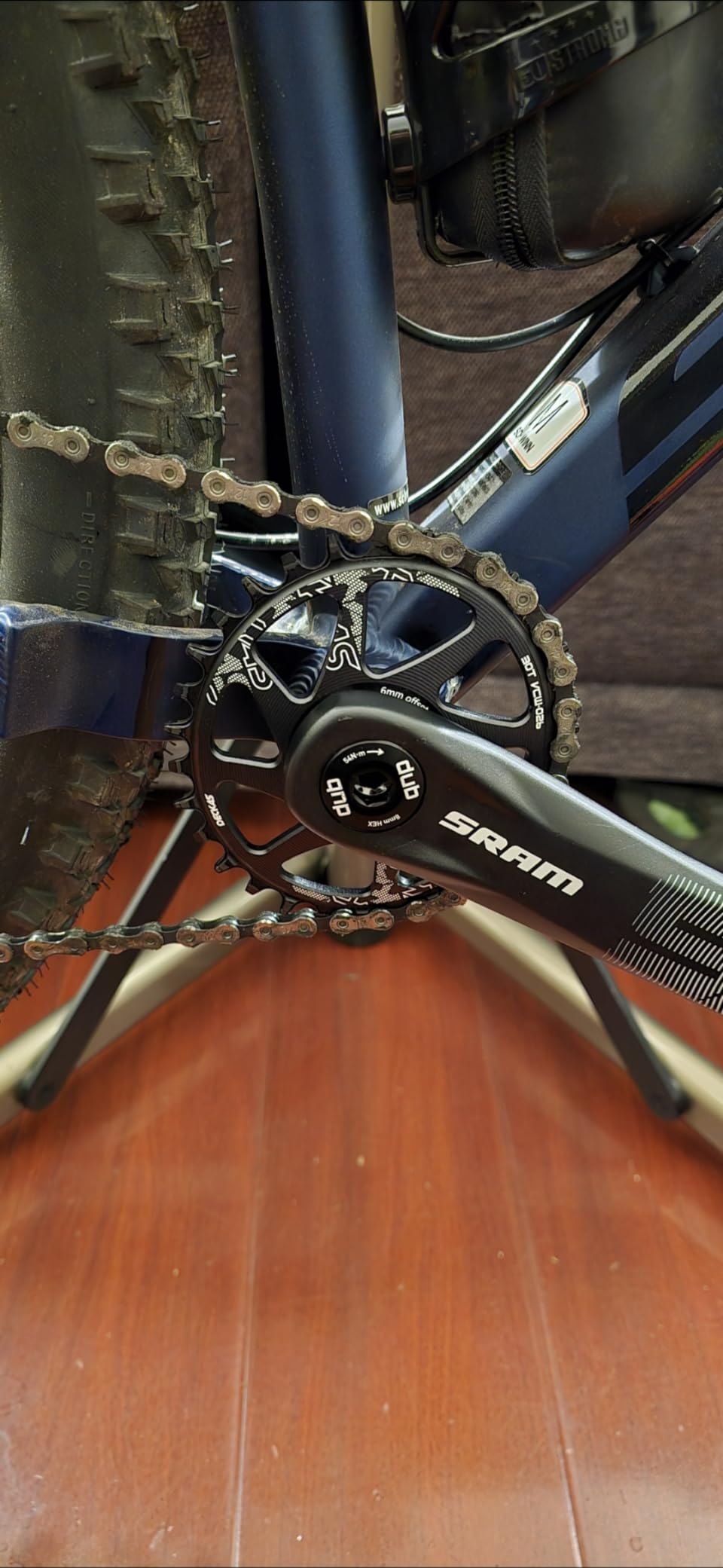
7. DECKAS Round Oval 104BCD – Budget Pick
DECKAS Round Oval 104BCD 32T 34T 36T 38T Narrow Wide Chainring Single Chainring for 6/7/8/9/10/11/12-Speed (Round Blue, 32T)
7075 aluminum
104BCD standard
30-38T
6-12 speed
Pros
- Outstanding value for the price
- Zero chain drop in most setups
- Round and oval options
- Great for 1X conversions
- Multiple color options
Cons
- May need minor grinding for SRAM
- Fit less precise than premium brands
If you want to try an oval chainring without committing much money, the DECKAS Round Oval at 104 BCD is the one to grab. With 1125 reviews and a 4.7 average, this is the highest-volume oval chainring on the market and the overwhelming consensus from riders is that the value is hard to argue with.
It is 7075 aluminum, narrow-wide tooth profile, anodized finish, and works with 6 through 12-speed drivetrains. I bolted a 32T version to an old 104 BCD square taper crankset for a 1X conversion test on a vintage hardtail and it worked exactly as advertised. The chain stayed on through roots, rocks, and a couple of unintentional wheelies.
For riders converting older bikes to 1X, this ring is a sweet spot. The 104 BCD pattern fits older Shimano Deore, LX, and XT cranks as well as most modern 4-arm cranksets. The narrow-wide teeth gave me total confidence on a chain that had no clutch derailleur to back it up.
The honest review is that the machining tolerance is a hair looser than what you get on RaceFace or absoluteBLACK. On some SRAM GXP cranks the bolt tabs are about 0.5mm too long and need a quick pass with a Dremel. That is a five-minute job and not a deal-breaker, but you should know about it.
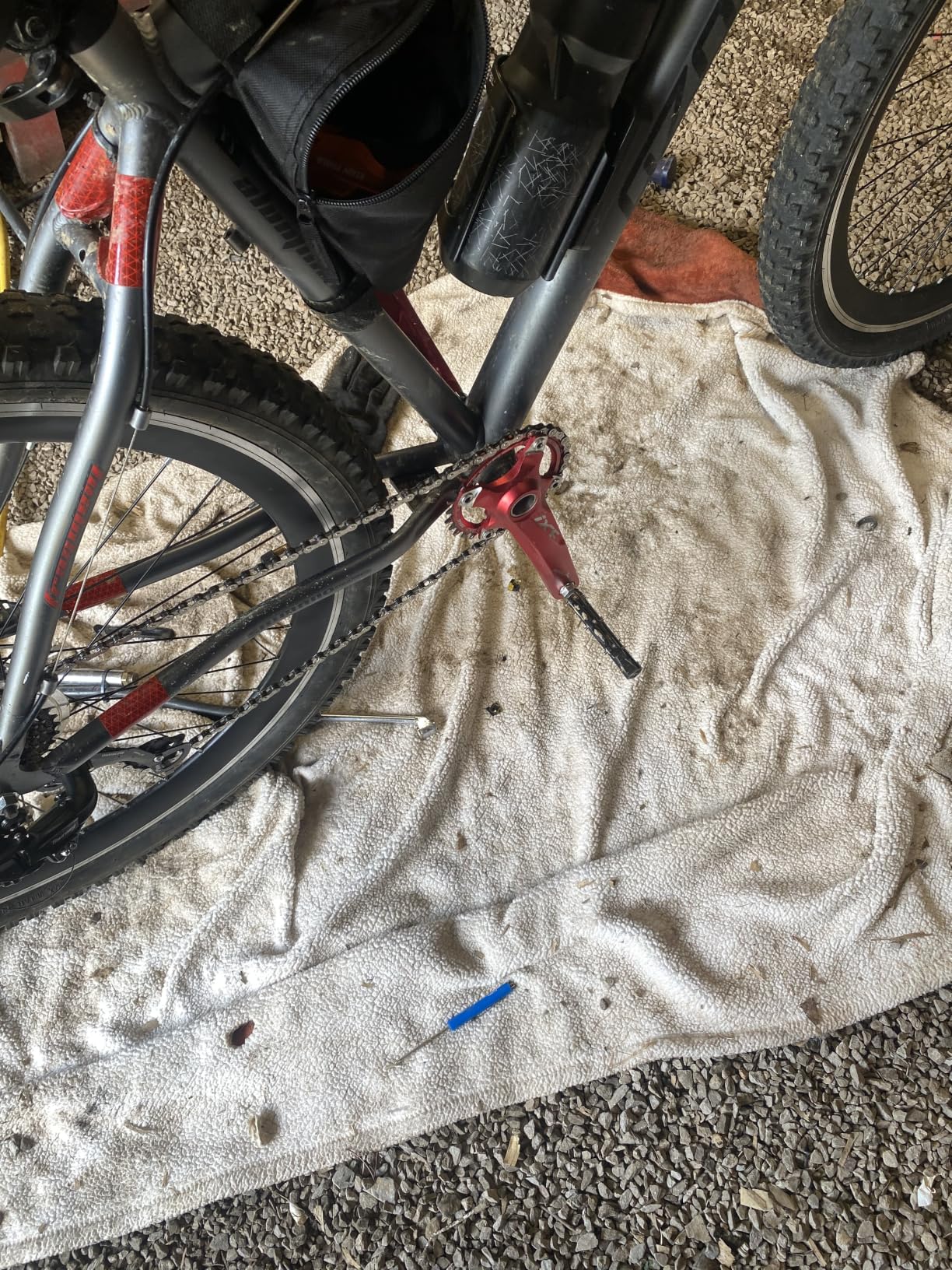
104BCD Spider Mount Conversion
If your crank has a removable spider, the 104 BCD 4-bolt pattern is one of the most common on older and budget mountain bikes. That makes the DECKAS ring ideal as a drop-in oval upgrade without replacing your crankset. Check the bolt circle on your existing spider with a ruler before ordering. Most older Shimano cranks measure 104mm across the bolt holes.
Oval vs Round Configuration Options
DECKAS sells the same ring in both round and oval versions, often at the same or near-same price. If you are not sure you want oval, try the round first and if you want to upgrade later, swap to the oval without changing cranks. That flexibility is something most premium brands do not offer.
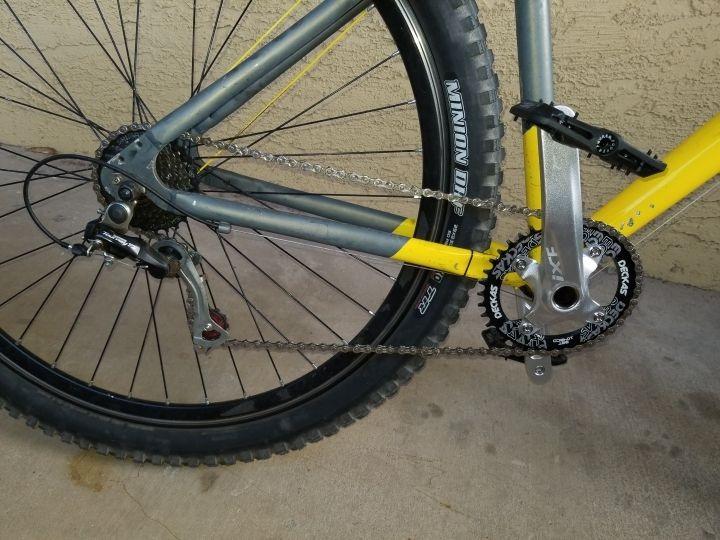
8. FOMTOR 104BCD Oval Chainring for MTB E-Bike Road
FOMTOR 104 BCD Chainring 44T 7-12 Speed Compatible CNC 7075 Aluminum Narrow Wide Tooth Round Chainrings for MTB/Road Bike Ebike Chainwheel Black
CNC 7075 aluminum
104mm BCD
30-52T
7-12 speed
Pros
- Great budget value
- Includes chainring bolts
- Wide 7-12 speed compatibility
- Huge size range to 52T
- Lightweight 7075 build
Cons
- May need modification for some cranks
- Bolts may not fit all crank types
FOMTOR covers a niche that most premium brands ignore: the wide range. With sizes from 30T all the way to 52T on the same 104 BCD pattern, this is the ring I point e-bike, tandem, and cargo bike riders toward. It is CNC machined 7075 aluminum, weighs about 3.8 ounces, and comes with the chainring bolts included.
The biggest size on this list means you can swap a small front ring out for a 50T or 52T oval and get usable high gears with a wide-range cassette. For e-bike and downhill riders who want oval feel at the top of the cadence range, this opens doors that 28T to 34T rings cannot.
For traditional mountain bikes you want the 30T to 38T range. At those sizes, the ring works on most 104 BCD cranks and the narrow-wide teeth held a chain through rowdy descents on my test bike. Build quality is good for the price, though not on par with absoluteBLACK or Wolf Tooth.
If your bolt pattern is not 104 BCD or if your crank uses proprietary spline interfaces, this ring will not fit. For the specific use case of getting an oval ring into the 40T to 52T range on a 104 BCD crank, FOMTOR is essentially the only game in town.
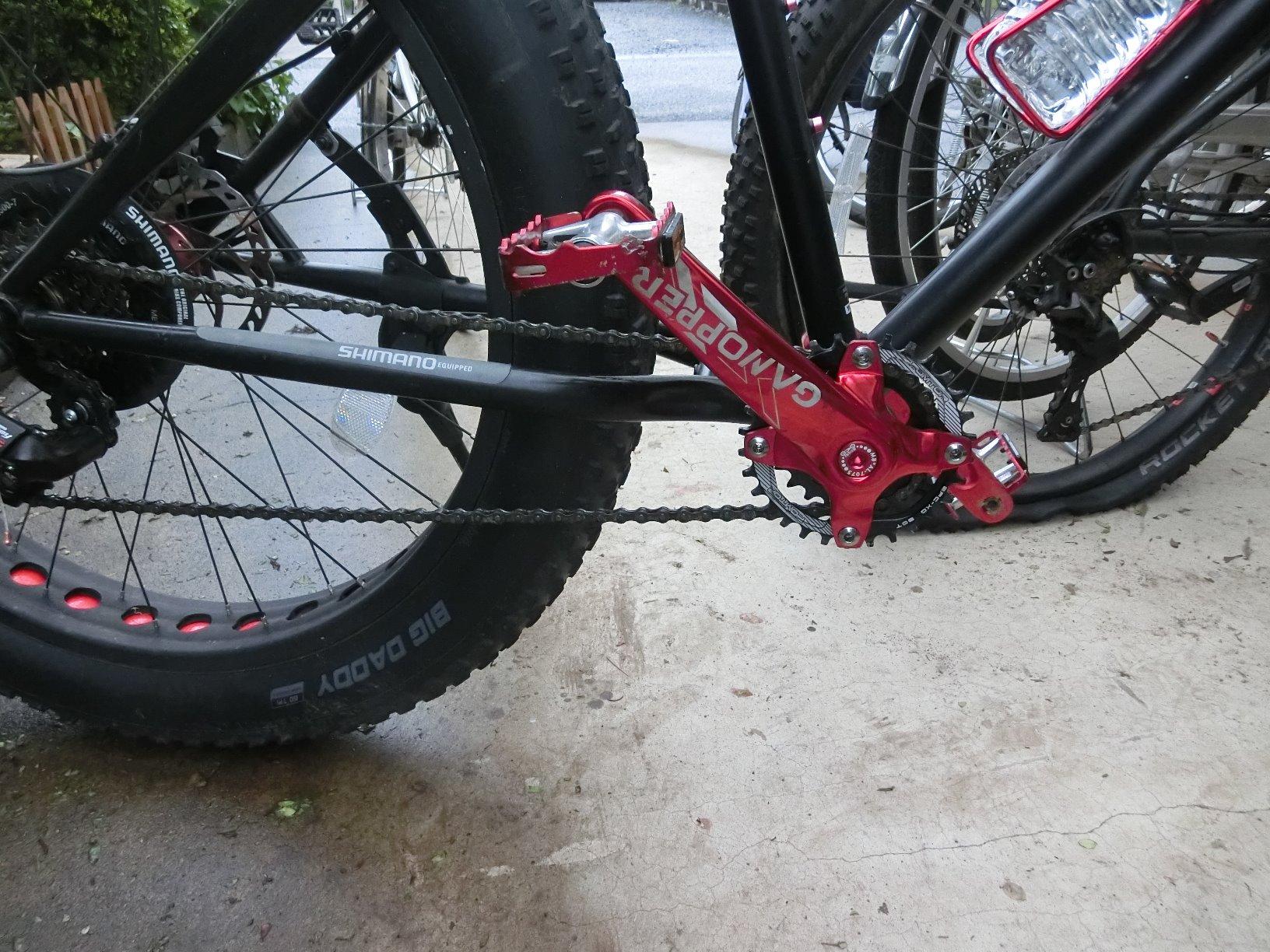
E-Bike and Wide Range Applications
E-bike and tandem riders often want much larger front chainrings to compensate for motor cutoffs at the legal speed limit. The 48T, 50T, and 52T FOMTOR sizes fill that gap. On a non-electric mountain bike, anything over 38T is generally for racing or very specific gearing needs, so most riders will want to stay in the 30T to 38T range.
Fitment and Modification Tips
On some crank spiders the inner edge of the FOMTOR ring needs a small amount of machining to clear the crank arm. The included bolts are standard 104 BCD bolts but they do not fit every proprietary crank spider. If your crank uses M8 or M6 spline hardware, source the correct bolts separately before riding.
How to Choose the Right Oval Chainring?
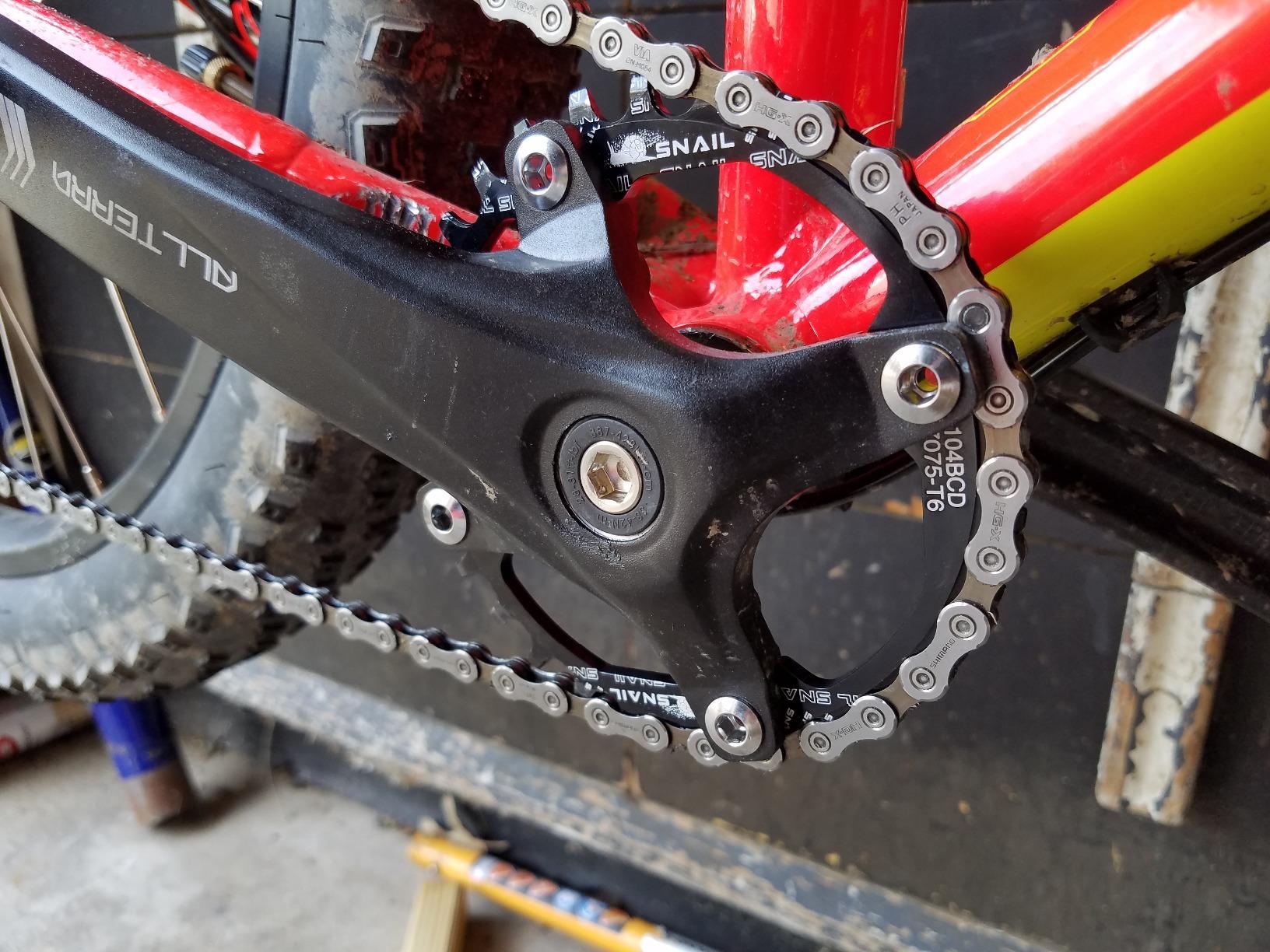
An oval chainring works by varying the chainring diameter through your pedal stroke. Where your leg produces maximum force, around 1 to 5 o’clock on the clock face of the crank, the ring is slightly larger and gives you more mechanical advantage. Where your leg is recovering, around 7 to 11 o’clock, the ring is smaller and requires less effort to bring back over the top. The net result is a smoother pedal stroke and a climb that feels a notch easier at the same wattage.
How Oval Chainrings Actually Work
Most mountain bike oval rings peak at 112.5 degrees of crank rotation, the spot where research on leg force has shown the body produces the most torque. By matching the chainring size to that force curve, the ring helps you push harder where you naturally can and recover where you naturally cannot. Absolute Black claims up to a 9 percent improvement in pedaling efficiency, which lines up with the way these rings feel on long climbs.
BCD (Bolt Circle Diameter) Explained
BCD is the diameter of the circle that runs through the centers of your chainring bolt holes. The most common mountain bike patterns are 96 BCD for older Shimano 4-arm cranks, 104 BCD for many other 4-arm cranks, and direct mount interfaces that use brand-specific splines (SRAM 3-bolt, RaceFace Cinch 4-bolt). Measure the bolt circle on your existing crank with calipers or a ruler before ordering, or pull your existing ring off and match the bolt hole pattern exactly.
Offset, Chainline, and Boost Spacing
Offset is the distance the chainring sits outboard of the crank spindle. Boost 148 frames need a 3mm offset ring to keep the chainline centered on the wider rear hub. Non-Boost 142 frames typically use a 6mm offset. Picking the wrong offset is the most common cause of chain rub, dropped chains, and noisy shifting when installing oval chainrings for mountain bikes.
Choosing the Right Tooth Count
Tooth count is your main gear-ratio lever. Lower tooth counts (28T, 30T) give easier climbing and are better for steep terrain or riders who prefer higher cadence. Higher tooth counts (32T, 34T, 36T) are better for flatter ground, racing, or e-bikes that need higher top speeds. With a wide-range 10-50T or 10-52T cassette, a 30T oval covers most mountain biking well. If you race XC or ride gravel too, consider a 32T or 34T.
Direct Mount vs Spider Mount
Direct mount rings bolt straight to a spline on the crank arm, eliminating the spider and saving 50 to 100 grams. Spider mount rings bolt to a removable 4-arm or 5-arm spider. Direct mount is the modern standard and what you want for new builds. Spider mount is what you want if you already have a vintage crank with a 104 BCD spider you want to keep using.
Pros and Cons to Consider
The honest list from the forums: oval rings help most riders on climbs, less so on flat ground. Some riders swear by them for knee pain reduction, others feel no difference. Chain retention is not an issue with any narrow-wide oval ring on this list. The downsides are the initial awkward feel of an oval pedal stroke for the first few rides and the sometimes-loose machining on budget rings. Both fade quickly with real-world riding.
Oval Chainring FAQs
Do any pros use oval chainrings?
Yes. Several professional mountain bike and enduro riders have used oval chainrings over the years, including riders sponsored by or riding with absoluteBLACK supported programs. While oval rings are far less common in the World Cup XC peloton than round rings, they have a long history in marathon mountain biking and enduro. Many pro-level mechanics use them on personal bikes for the climbing benefit during long training days.
What is the best oval chainring?
For most riders the absoluteBLACK Oval Boost148 Direct Mount is the best oval chainring thanks to its refined oval profile, premium 7075 CNC aluminum construction, narrow-wide chain retention, and outstanding reviews. For premium USA-built quality, the Wolf Tooth Drop-Stop Elliptical is a close second. If you want to try oval on a budget, the DECKAS Round Oval at 104BCD delivers most of the feel at a fraction of the cost.
How do I choose the right oval chainring?
Match the chainring to your existing crank by BCD and mount type first. Measure the bolt circle diameter of your existing ring or spider (most mountain bike cranks use 96 BCD or 104 BCD, or a brand-specific direct mount). Then confirm the offset matches your frame spacing (3mm for Boost 148, 6mm for non-Boost). Finally, pick a tooth count based on your local terrain: 28T-30T for steep climbing, 32T-34T for all-around or XC, and 36T or larger for e-bikes or very flat regions.
What is the advantage of an oval chainring?
An oval chainring matches the effective gear ratio to your natural pedal stroke. Where your leg produces the most force (around 112.5 degrees of crank rotation) the ring is slightly larger, giving you more mechanical advantage. Where your leg recovers, the ring is smaller and requires less effort. The result is smoother cadence, easier climbing, less knee stress on long rides, and better traction on loose or technical climbs. Most riders feel 5-9 percent efficiency improvement on climbs specifically.
Is an oval chainring worth it for mountain biking?
For most mountain bikers, yes. Climbs feel noticeably easier, traction on loose terrain improves, and many riders report reduced knee discomfort on long rides. The downsides are small: an initial awkward feel during the first few rides and a slightly heavier wallet. If you mostly ride flat terrain or do not climb often, the benefit is smaller. If you ride hilly trails or do technical climbs weekly, an oval chainring is one of the most cost-effective upgrades you can make.
Final Verdict
After testing the best oval chainrings for mountain bikes on real trails, my top picks are clear. The absoluteBLACK Oval Boost148 Direct Mount is the one most riders should buy for SRAM Boost setups. The Wolf Tooth Drop-Stop Elliptical is the best premium pick for non-Boost SRAM direct mount. The DECKAS Round Oval at 104 BCD is the best budget way to try oval without breaking the bank.
Match your crank, your frame spacing, and your tooth count to the ring you choose. Once you spend a few rides on an oval chainring, you will understand why so many of us keep them on our bikes well past the test period. Pick the right one for your rig and you will feel the difference on the first climb.