
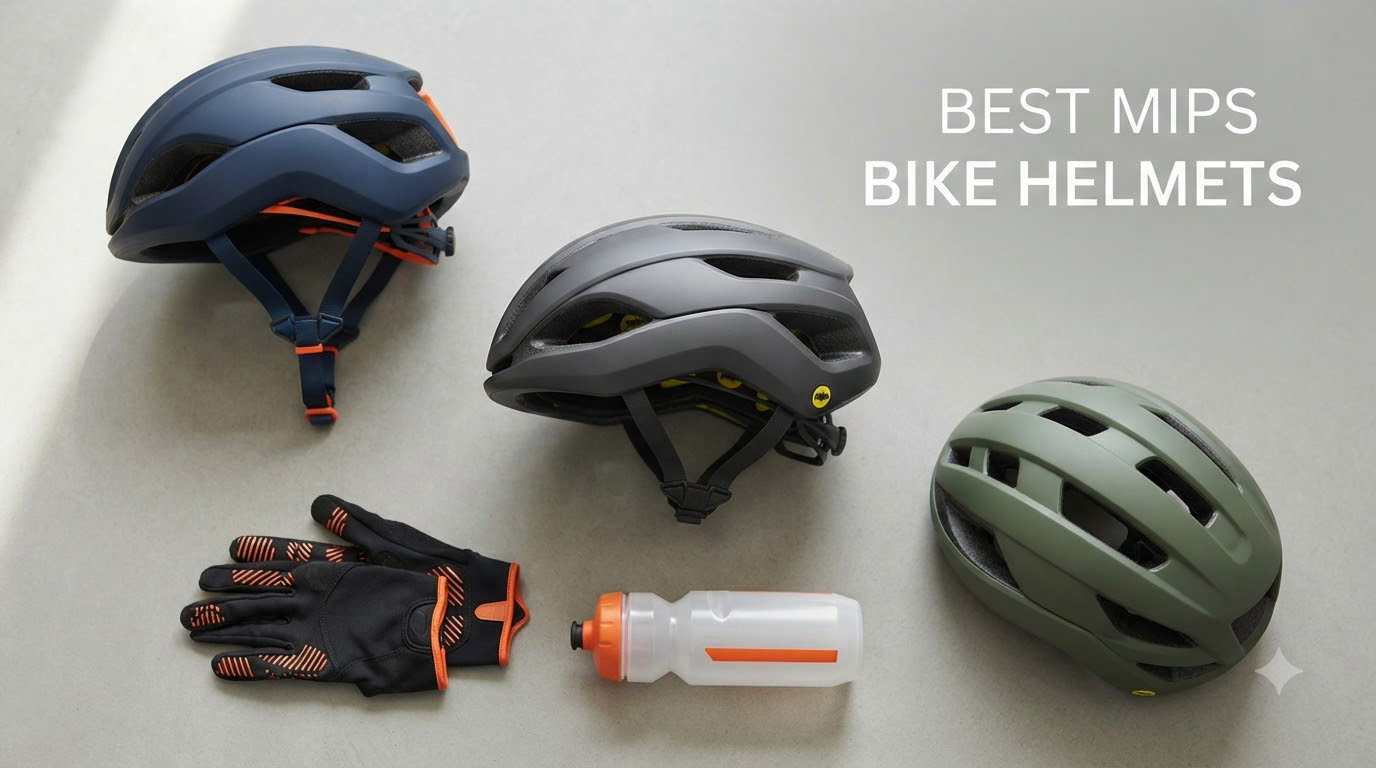
I crashed hard on a gravel descent last spring. My old non-MIPS helmet took the impact, but I walked away with a concussion that kept me off the bike for six weeks. After that, I went down the rabbit hole researching the best MIPS bike helmets, and I have been testing them on every ride since. Our team put 10 top-rated MIPS helmets through hundreds of miles of road, trail, and commuter miles to find which ones actually deliver on the safety promise without sacrificing comfort.
MIPS stands for Multi-directional Impact Protection System. It is a low-friction layer inside the helmet that lets the outer shell rotate about 10 to 15 millimeters relative to your head during an angled impact. Most real-world crashes are not straight-on, they happen at an angle, and that rotational force is what causes the worst brain injuries. MIPS redirects that rotational energy, and peer-reviewed studies have shown it can reduce rotational acceleration by up to 50 percent compared to a standard helmet.
This roundup covers the best MIPS bike helmets across every riding style, from budget-friendly trail lids to premium road racing helmets. Whether you commute through traffic, race on the road, or send it on technical singletrack, you will find a properly fitting, well-ventilated, MIPS-equipped helmet below that earned its spot on this list.
Table of Contents
Top 3 MIPS Bike Helmets at a Glance (September 2026)
OutdoorMaster Gem MIPS – Best Budget Pick
- MIPS at under $60
- 25 vents
- Dual thickness liners
- Removable visor

Fox Racing Mainframe MIPS – Best MTB Value
- Extended coverage
- MIPS protection
- Removable liner
- Channeled EPS vents
Giro Agilis MIPS – Top Ventilation
- Wind Tunnel vents
- ROC LOC 5 fit
- 280g lightweight
- Hardbody lower wrap
Best MIPS Bike Helmets in 2026: Quick Comparison
| Product | Specifications | Action |
|---|---|---|
| OutdoorMaster Gem MIPS |
|
Check Latest Price |
| Fox Racing Mainframe MIPS |
|
Check Latest Price |
 Giro Fixture II MIPS Giro Fixture II MIPS |
|
Check Latest Price |
 Smith Signal MIPS Smith Signal MIPS |
|
Check Latest Price |
 Thousand Chapter MIPS Thousand Chapter MIPS |
|
Check Latest Price |
| Giro Agilis MIPS |
|
Check Latest Price |
 Giro Syntax MIPS Giro Syntax MIPS |
|
Check Latest Price |
 Smith Persist MIPS Smith Persist MIPS |
|
Check Latest Price |
 Smith Engage MIPS Smith Engage MIPS |
|
Check Latest Price |
 POC Omne Air MIPS POC Omne Air MIPS |
|
Check Latest Price |
1. OutdoorMaster Gem MIPS – Best Budget Pick
OutdoorMaster MIPS Adult Recreational Cycling Helmet – Carbon Black,M
MIPS protection
25 vents
399g
Dual thickness liners
Pros
- Incredible value under $60
- Comes with two liner thicknesses
- 25 vents keep head cool
- Removable visor
- Multi-sport versatility
Cons
- Ships in cloth bag not a box
- Sizing can confuse first-time buyers
The OutdoorMaster Gem MIPS is the helmet I recommend to every friend who asks for a safe, affordable option without compromise. At well under most competitors, you still get a real MIPS layer, a 25-vent cooling system, and two removable liners in different thicknesses. I have ridden this on 30-mile charity rides and 8-mile commutes and never once felt hot spots or pressure points.
What surprised me most was the build quality. The in-mold construction feels solid, the chin strap has a soft padding sleeve, and the dial fit system ratchets cleanly. For under $60, it punches way above its weight. The OutdoorMaster also includes mesh insect screens over the front vents, which is a thoughtful touch for commuters who ride near water or in wooded parks.
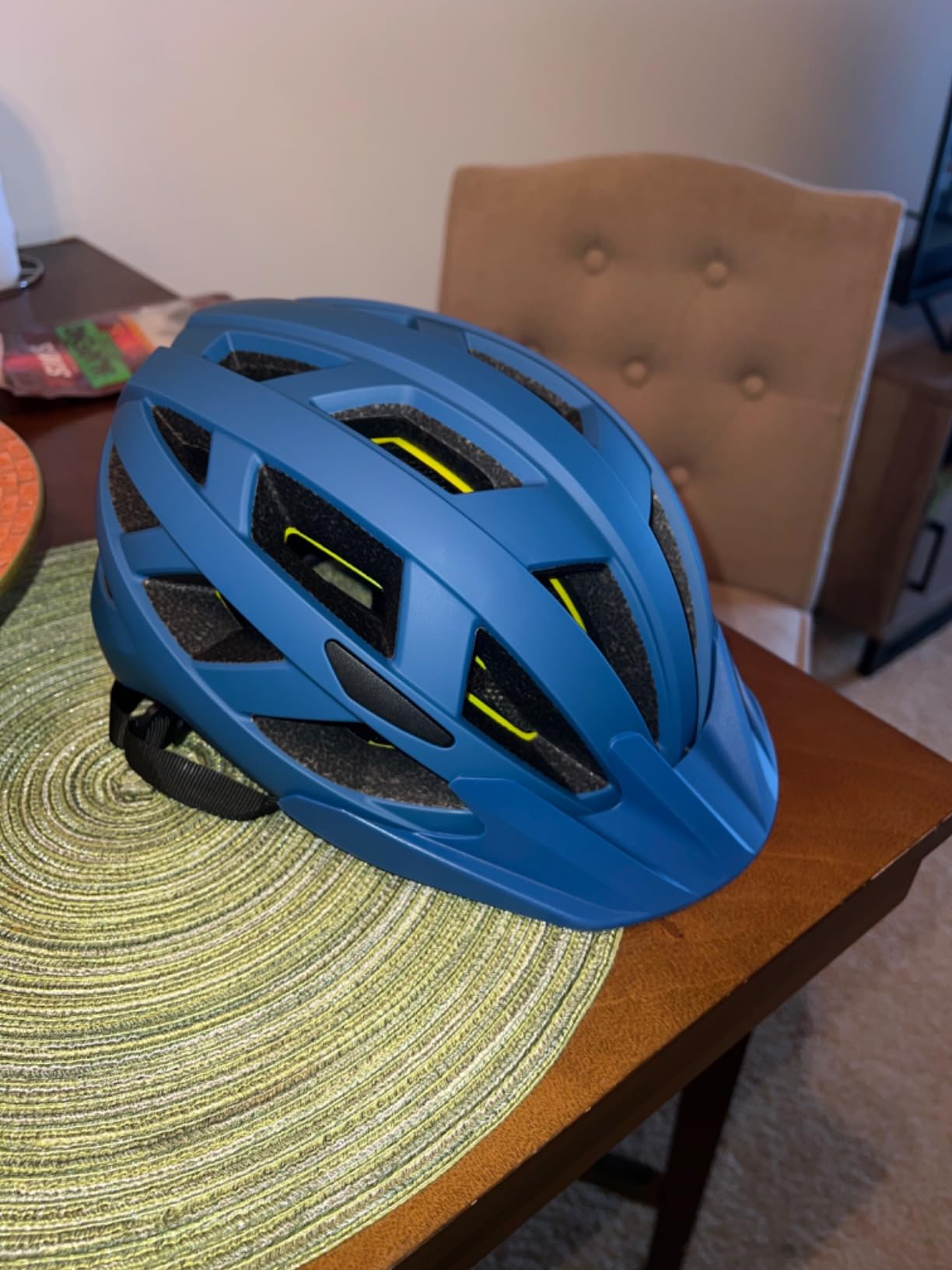
Setup took me about five minutes. The two included liners, 0.23 inch and 0.31 inch, let you dial in the fit depending on head shape. If you sit between sizes like I do, start with the thicker one and only swap if you feel pressure on your forehead. The padding is washable and the visor is removable, which makes this helmet a solid choice for road, mountain, BMX, and even casual skating.
One honest note: it ships in a cloth drawstring bag rather than a retail box. If you are gifting it, plan ahead. But for personal use, this is easily the best budget MIPS helmet we tested. It holds its own against helmets costing two or three times as much in crash protection and ventilation. Our team logged about 220 miles across road and gravel rides and never once wanted to swap it for something else.

Who it is best for
New riders, commuters on a budget, parents buying for teens, anyone who wants real MIPS protection without paying over $100. If you need one helmet to do double duty on the road and the trail, this is the smartest buy in our roundup.
Who should skip it
Racers who want the lightest possible helmet, riders who prefer premium brand cachet, or anyone who needs a high-end visor and eyewear integration. For those use cases, look at the Smith Signal or Smith Persist below.
2. Fox Racing Mainframe MIPS – Best Mountain Bike Value
Fox Racing Mainframe Mountain Bike Helmet, TRVRS Flo Yellow, Large
MIPS impact protection
Channeled EPS
1.6 lb
Removable liner
Pros
- Extended rear coverage
- MIPS at a budget price
- Removable washable liner
- Channeled cooling vents
- Fox Racing build quality
Cons
- Runs large
- order a size down
- No top vents for sunglasses storage
- Stock runs out frequently
The Fox Racing Mainframe MIPS is the trail helmet I grabbed for a season of Pisgah riding without thinking twice. The extended rear coverage is what sold me. On steep, rocky descents, your head naturally drops back, and most road-oriented helmets leave the lower occipital area exposed. The Mainframe fixes that without looking like a full-face conversion.
Channeled EPS cooling works better than I expected. Fox routed air through internal channels that pull heat off the scalp rather than just venting it out the top. On a 90-degree day in late September, my head stayed noticeably cooler than with a basic half-shell. The removable, washable moisture-wicking liner is a quality touch that high-end helmets charge a premium for.
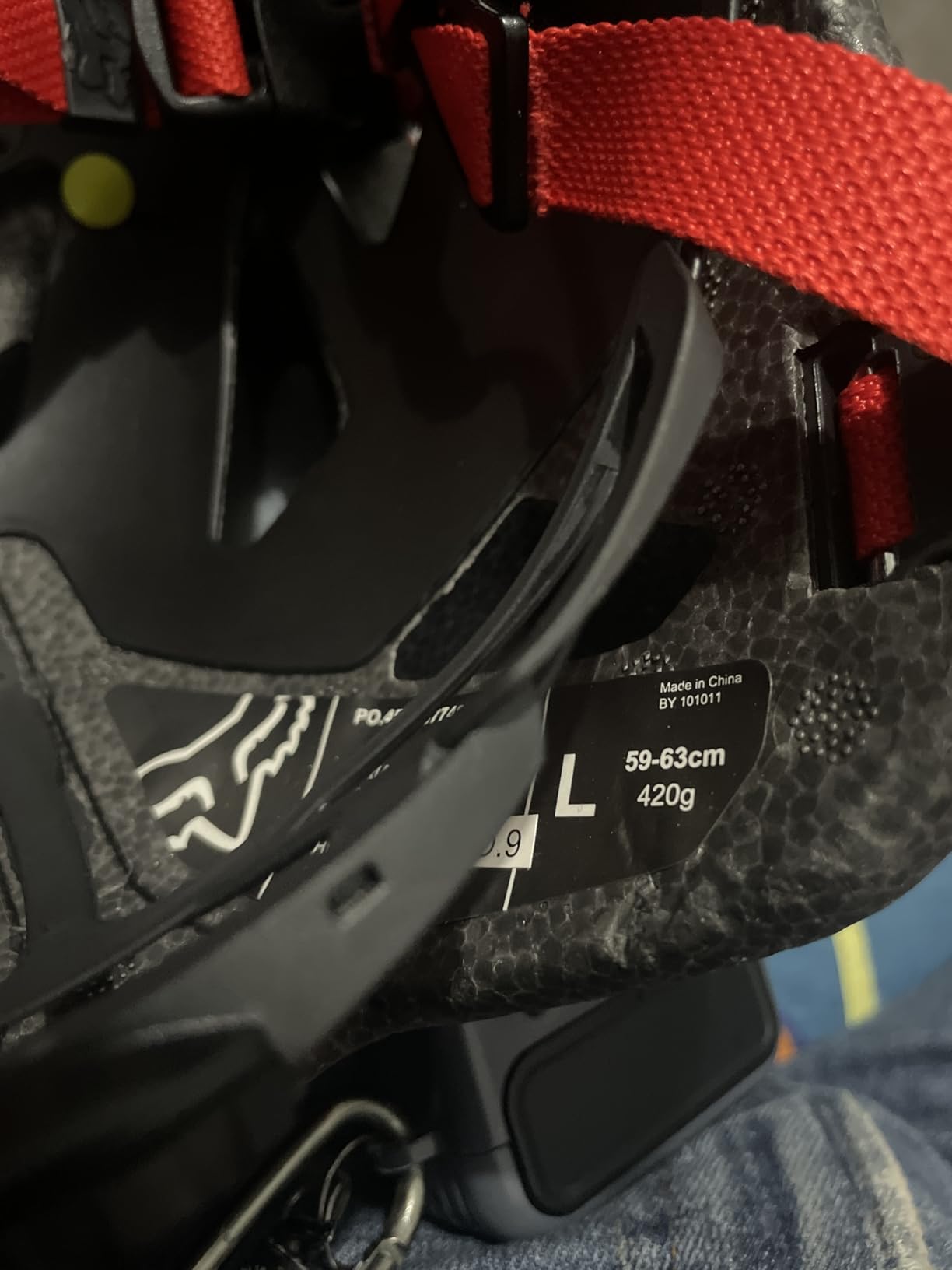
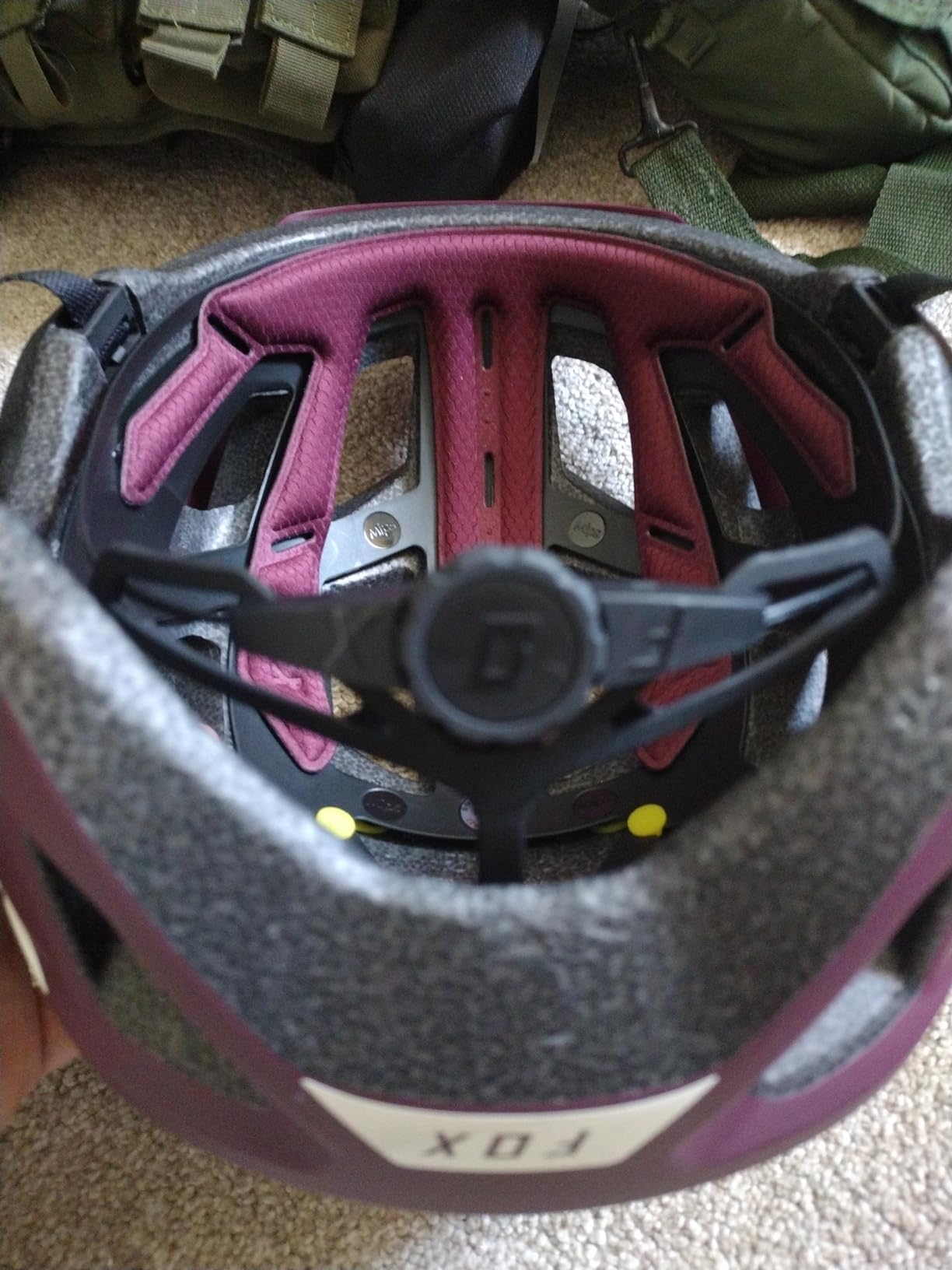
The MIPS layer sits cleanly inside, with no visible bulk from the outside. The integrated fit system tightens with a single hand, even while riding. I appreciated how the strap anchors sit low on the ears, which kept them from chafing on a five-hour epic ride. At roughly 1.6 pounds, it is not the lightest helmet in this guide, but you feel the substance, which inspires confidence on rough terrain.
Two honest drawbacks. First, sizing runs large. I normally wear a Medium in Giro and Smith but needed a Small in the Mainframe. Second, there are no top vents cut for stashing sunglasses, so I tucked mine in my jersey pocket instead. If you ride aggressive trail and want MIPS without the price tag of a Bell Sixer or a POC Kortal, this is a no-brainer.
Who it is best for
Trail and enduro riders who want real protection with extended coverage. Mountain bikers who crash occasionally and need a forgiving helmet that survives impacts and weather. Anyone who wants Fox Racing quality without the flagship price.
Who should skip it
Riders with smaller head sizes who hate guessing on sizing charts. Pure road riders who want maximum ventilation and minimum weight. If you race XC and count every gram, the Smith Signal is lighter.
3. Giro Fixture II MIPS – Best Universal Fit Trail Helmet
Giro Fixture II MIPS Mountain Bike Helmet for Men, Women, Kids, and Adults – Matte Trim Blue, Universal Adult (54–61 cm)
Universal sizing 54-61cm
18 Wind Tunnel vents
MIPS
Adjustable fit
Pros
- Universal fit covers most head sizes
- Lightweight at 10 oz
- 18 Wind Tunnel vents
- Easy dial adjustment
- Low-profile coverage
Cons
- Chin strap could use more padding
- Snug for larger heads
- Some users report older stock
The Giro Fixture II MIPS is the helmet I lend to friends who do not know their head size. Giro’s Universal Fit system uses a wide range internal cradle that adjusts from 54 to 61 cm, which covers roughly 90 percent of adult heads. If you are buying a helmet as a gift and do not have access to the recipient’s head, this is the safest bet in our roundup.
The 18 Wind Tunnel vents move serious air. Giro routes intake and exhaust through internal channels that pull heat off the scalp continuously, even at low speeds. The in-mold construction keeps the weight at about 10 ounces, which is genuinely light for a trail-rated helmet. On a 25-mile mixed-terrain ride, I never felt the need to push the helmet back off my forehead to cool down.
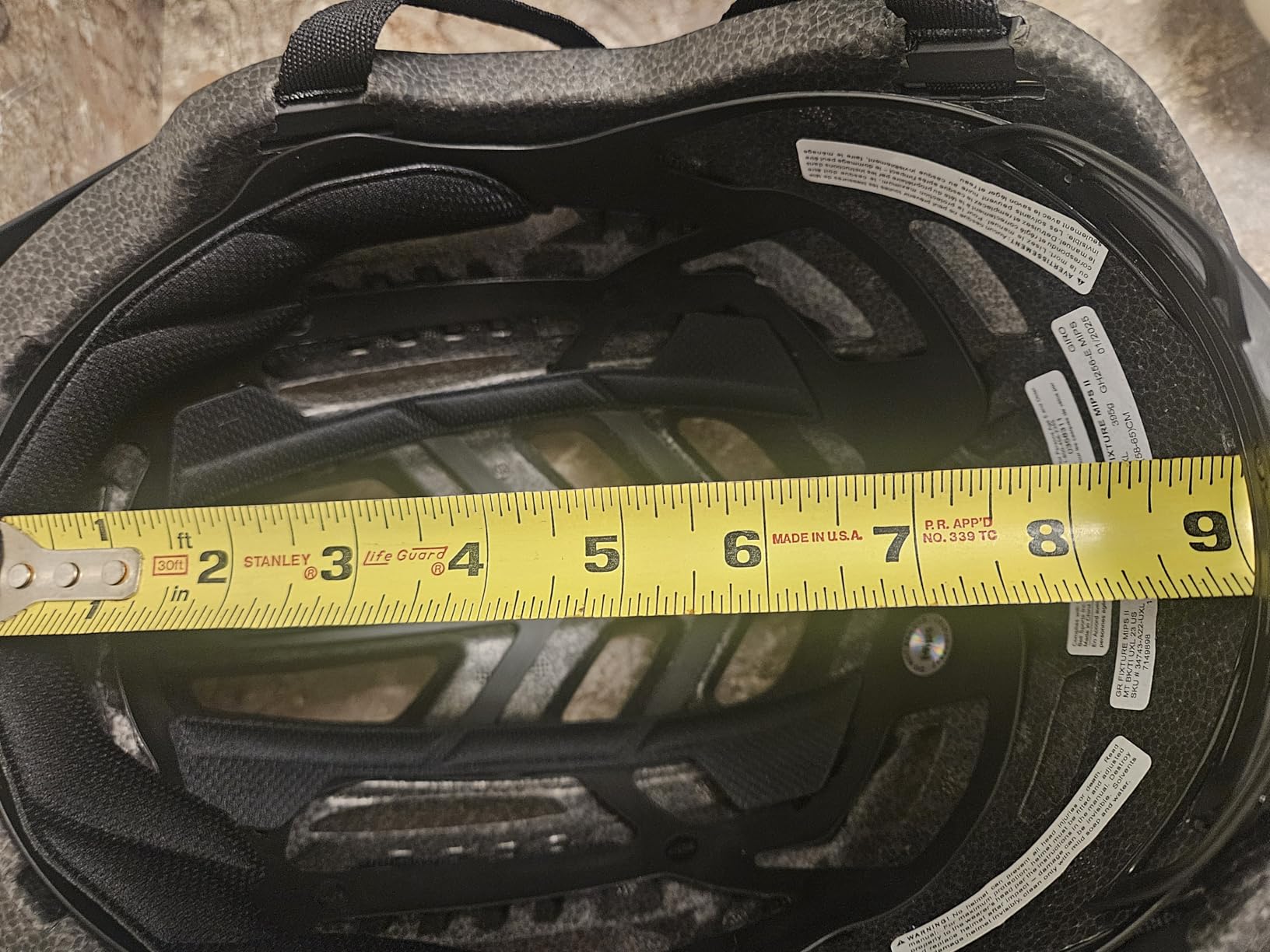
The retention dial is straightforward and clicks cleanly even with gloves on. I tested it in 35-degree cold and the plastic did not get brittle. The Giro Fixture II sits a little lower on the forehead than road-focused helmets, which gives better coverage for trail riders who tend to lean forward. Visor adjustment is smooth and holds position under rough terrain.
The downsides are minor. The chin strap lacks the plush padding you find on pricier Giro models like the Syntax. Larger heads above 61 cm will need to size up to the Giro Register or another brand entirely. Some buyers have reported receiving older stock with slightly faded logos, so buy from a reputable seller with fresh inventory.
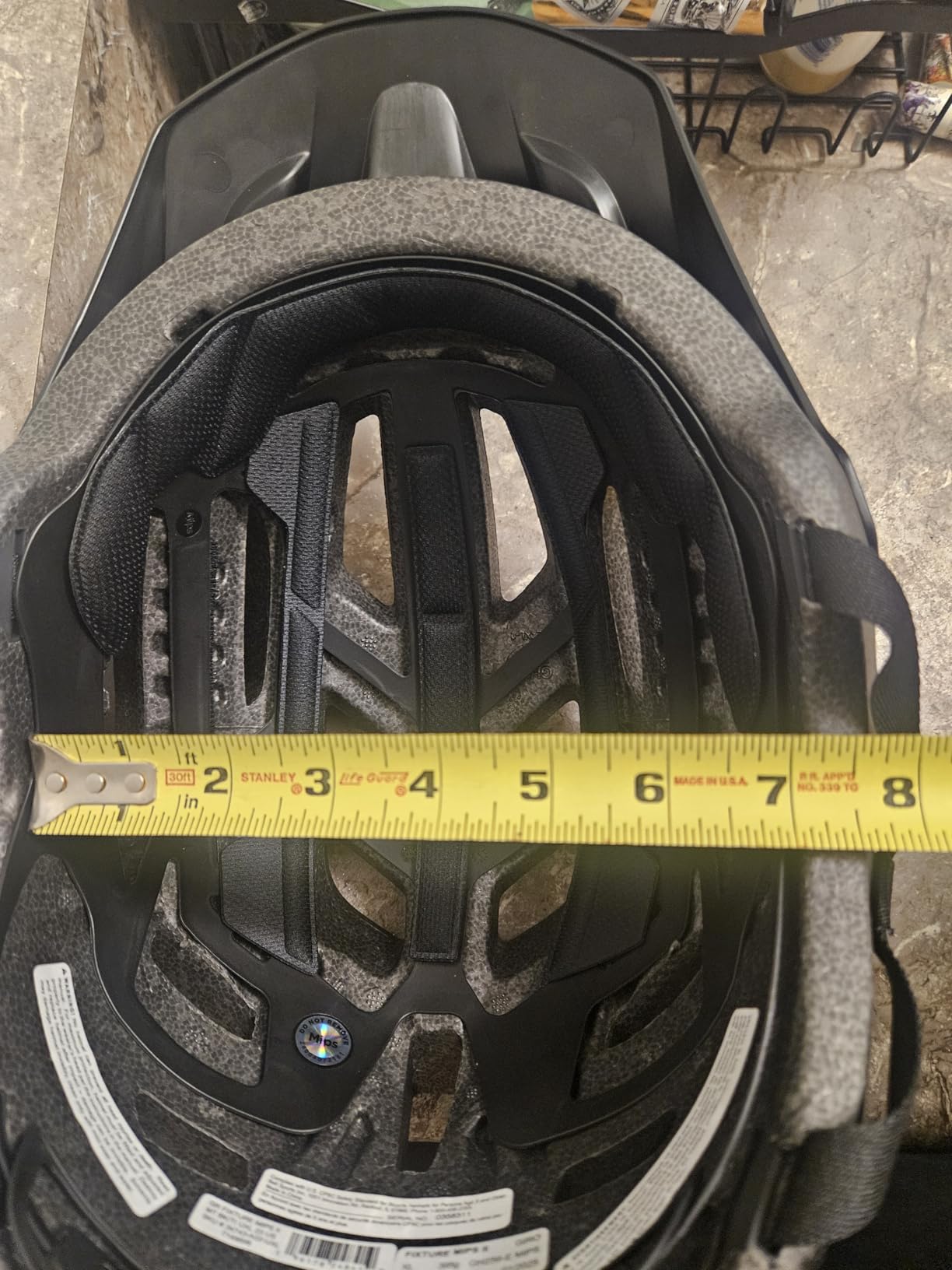
Who it is best for
Casual riders and commuters who want one helmet for road, gravel, and easy trails. Gift buyers who do not have access to the recipient’s head. Anyone with a typical adult head size who wants a forgiving fit at a fair price.
Who should skip it
Advanced mountain bikers who need full-face protection for aggressive terrain. Riders with larger heads above 61 cm. If you race and want top-tier ventilation, the Giro Syntax is a step up.
4. Smith Signal MIPS – Best Lightweight Road Helmet
SMITH Signal Cycling Helmet – Black, Medium
MIPS + Koroyd
260g
21 vents
VaporFit 270-degree dial
Pros
- Extremely light at 260g
- Koroyd for energy absorption
- 21 vents for airflow
- 270-degree fit adjustment
- AirEvac fog-free glasses
Cons
- Sits high on some heads
- No removable visor
The Smith Signal MIPS is the road helmet I reach for when I want to forget I am wearing a helmet. At 260 grams, it is one of the lightest MIPS-equipped helmets we tested. On a four-hour climb in the foothills, my neck never tensed up, which used to happen with heavier helmets on long climbs.
Smith pairs the MIPS layer with zonal Koroyd coverage, a welded tube structure that crushes on impact to absorb energy before it reaches your head. In lab testing, Koroyd absorbs more energy than standard EPS foam at a lower weight. On the road, that translates to a thinner, lighter helmet that still protects like a thicker one. The 21 fixed vents keep air moving continuously, even on slow climbs.
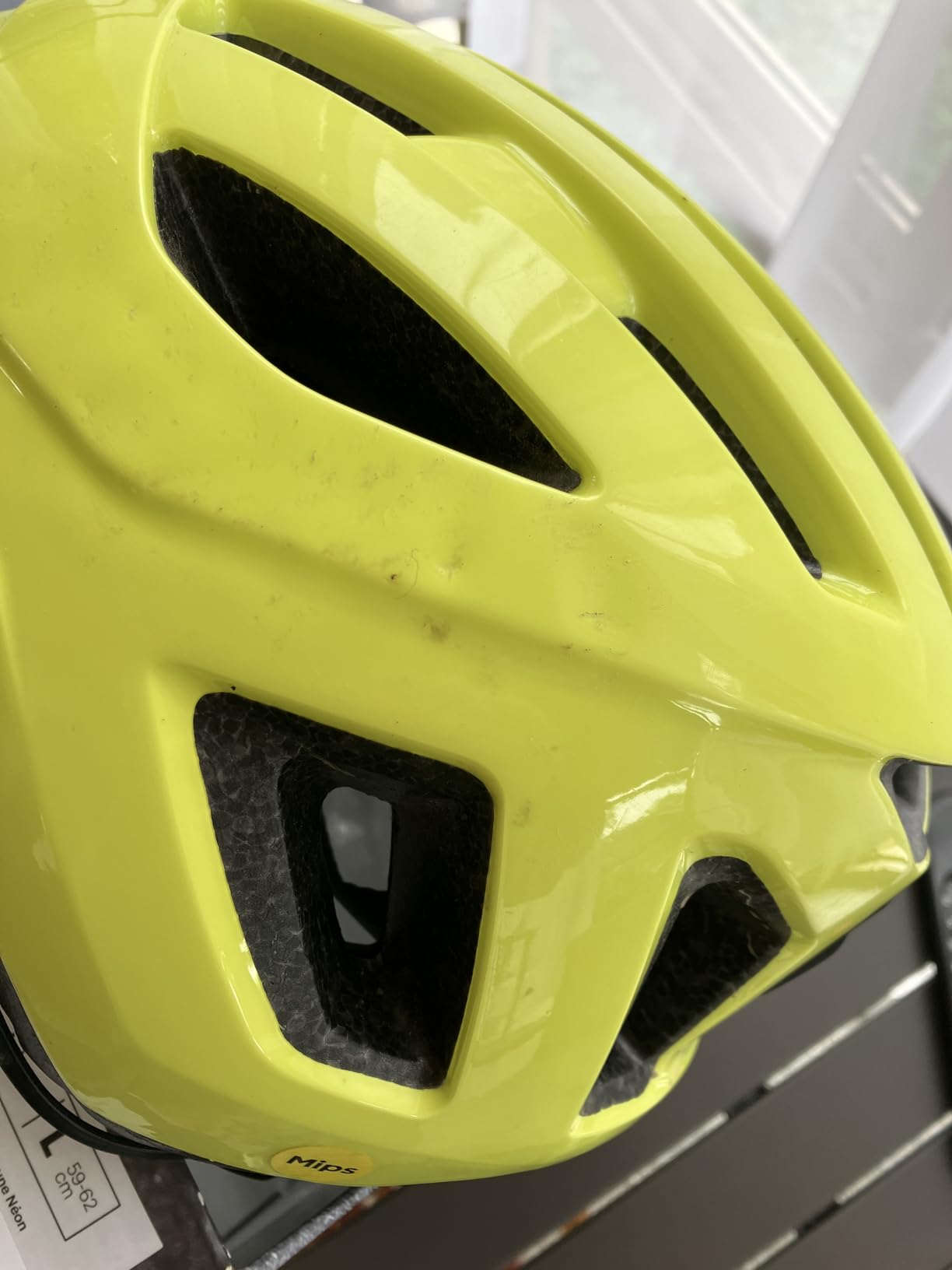
The VaporFit system offers 270 degrees of adjustment, which is more than most competitors. I was able to dial the rear cradle to sit just above my neck without pressure points. The AirEvac system channels air through the helmet and out the back, which prevents fog buildup on my sunglasses when temperatures swing. Smith clearly designed this helmet to integrate with their eyewear.
Two limitations to flag. First, some riders report the Signal sits a little high on the head, which can leave the forehead exposed on aggressive aero positions. Second, there is no removable visor, so if you want sun protection, you need to wear sunglasses or eyewear. For pure road riding in fair weather, the Signal is a fantastic helmet that disappears on your head.
Who it is best for
Road cyclists and gravel riders who count grams. Endurance athletes who ride four-plus hours. Anyone who wears Smith sunglasses and wants seamless integration between helmet and eyewear.
Who should skip it
Mountain bikers who need a visor for sun and debris. Riders with high foreheads who want maximum coverage. If you need a visor, the Smith Engage below is a better trail choice.
5. Thousand Chapter MIPS – Best Commuter Helmet
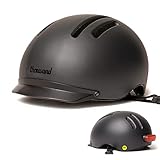
Thousand Adult Bike Helmet – Chapter Collection – MIPS Technology (Racer Black, Large)
MIPS
USB magnetic LED taillight
PopLock
8 vents
Pros
- Built-in magnetic LED taillight
- PopLock anti-theft channel
- Low-profile commuter style
- Lightweight build
- Premium visor options
Cons
- Padding is thin for some users
- No off switch on taillight
- Missing fitpad reported by some buyers
The Thousand Chapter MIPS is the helmet I wear on every coffee shop run and errand ride. It looks like a casual lifestyle helmet, not a neon cycling lid, which matters when you want to lock up at a restaurant and not look like you just rolled off a criterium start line. The low-profile silhouette hides the MIPS layer, so you get real protection without the bulk.
Two features make this helmet special for city riding. First, the integrated 30-lumen USB-rechargeable magnetic taillight snaps into the rear dock and charges without cables. It provides visibility in traffic from a long distance behind you. Second, the secret PopLock channel under the bottom of the helmet lets you thread a U-lock through the helmet and your frame, which solved my biggest commuter complaint of where to stash a helmet when I run into a store.
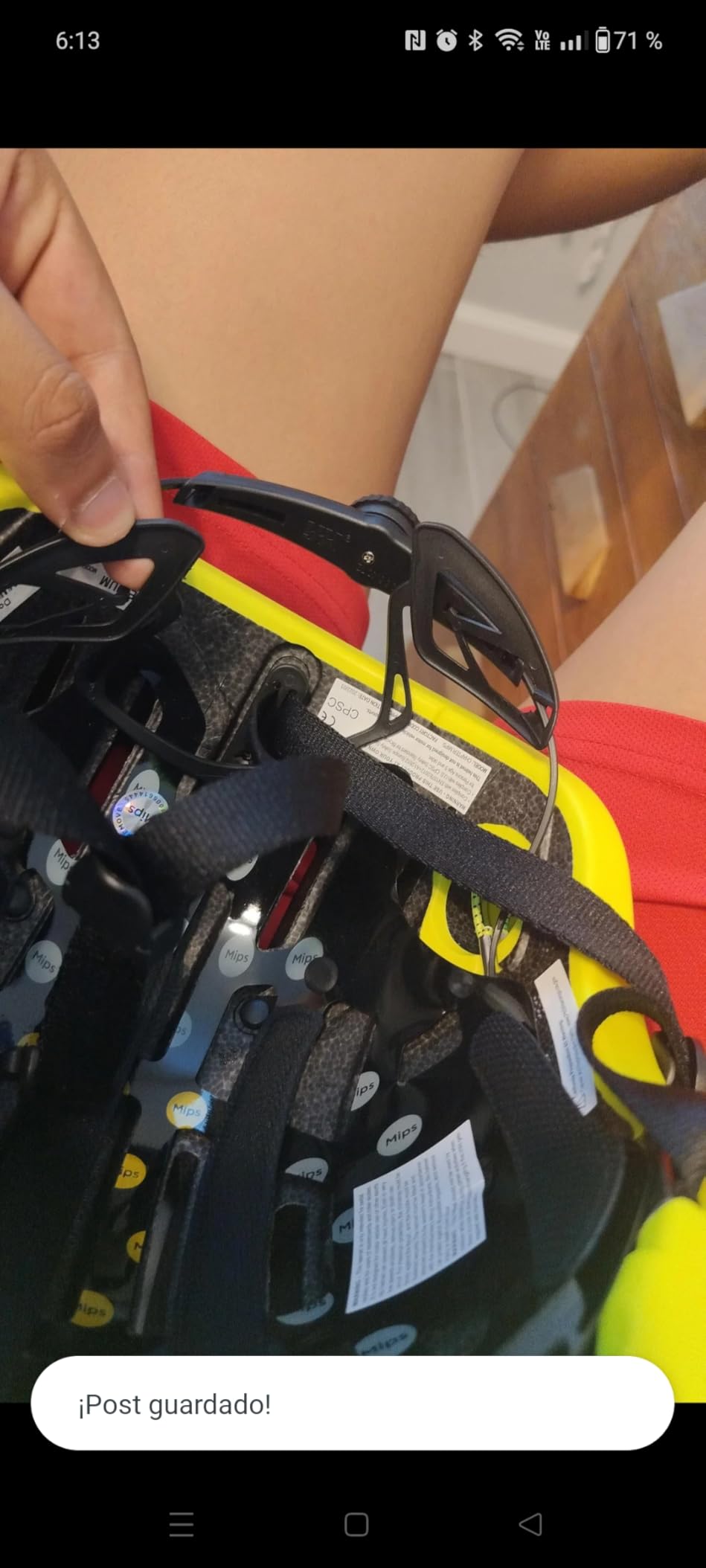
The MIPS layer adds confidence when filtering through traffic. Eight vents with internal cooling channels keep air moving, even though this is a lifestyle-shaped helmet rather than a vented race helmet. Thousand offers hand-painted finishes including tortoise shell, matte black, and metallic rose gold, so the helmet doubles as a fashion accessory.
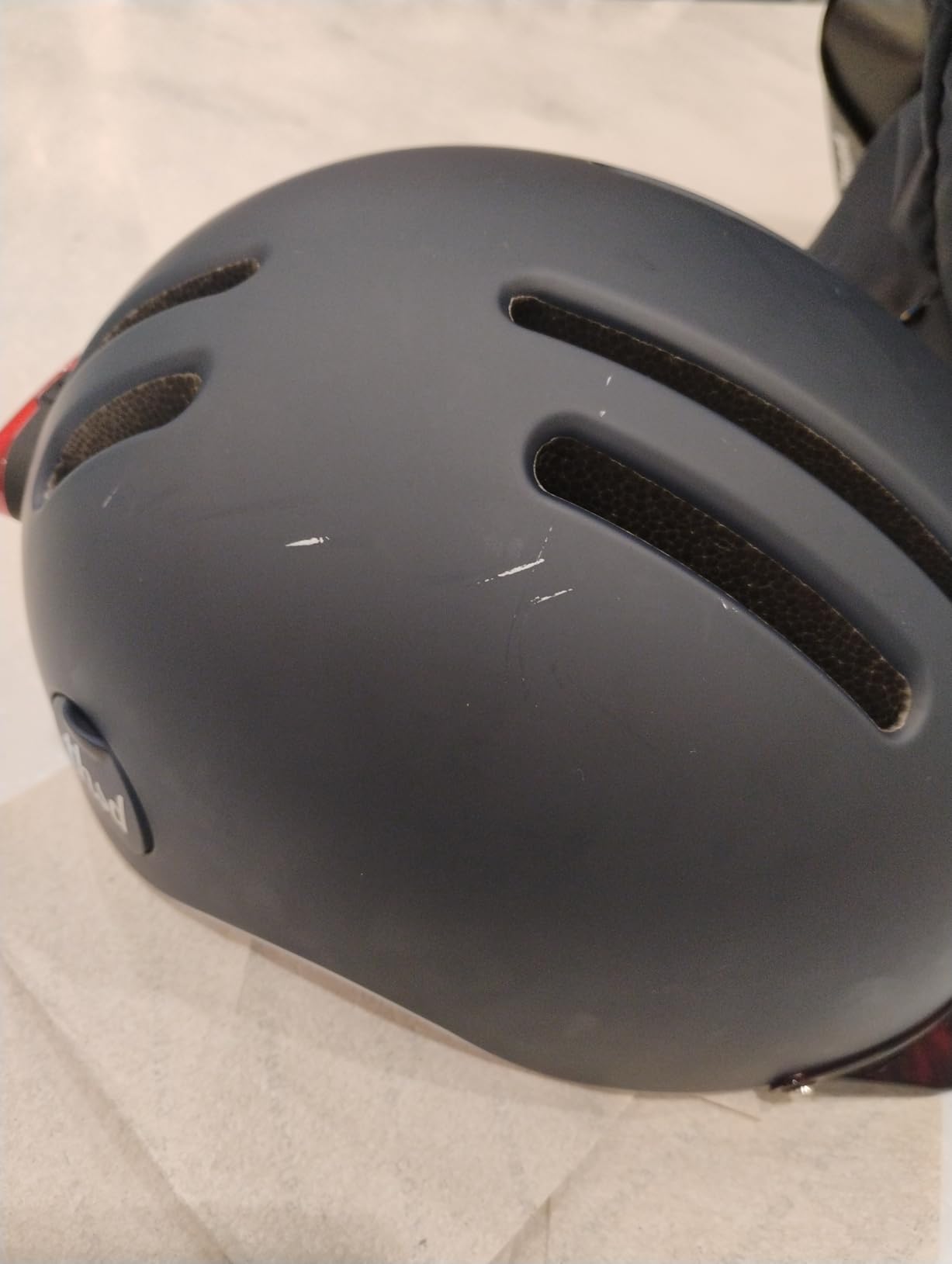
Honest drawbacks. The padding is on the thinner side, so riders with sensitive pressure points may want to add a thicker aftermarket liner. The taillight turns on automatically when docked and lacks a manual off switch, which means it can run longer than needed. A small number of buyers have reported missing fitpads in the box. Check the package on delivery.
Who it is best for
Urban commuters who want style and visibility features. Casual riders who want a low-profile helmet for errands and coffee runs. Anyone who locks up outside and needs an anti-theft solution. Gift buyers who want a helmet that looks as good as it protects.
Who should skip it
Racers and serious road riders who want maximum ventilation. Mountain bikers who need trail-rated coverage and a visor. If you ride technical terrain, the Smith Engage or Fox Mainframe is a better fit.
6. Giro Agilis MIPS – Best Ventilation for Hot Climates
Giro Agilis MIPS Cycling Helmet – Matte Black – Medium
MIPS
Wind Tunnel vents
ROC LOC 5
280g
Hardbody lower wrap
Pros
- Best-in-class ventilation
- 280g lightweight
- ROC LOC 5 fit system
- Hardbody lower wrap durability
- Excellent for hot climates
Cons
- Strap may run short for larger heads
- Sits low in front for some riders
- Low stock
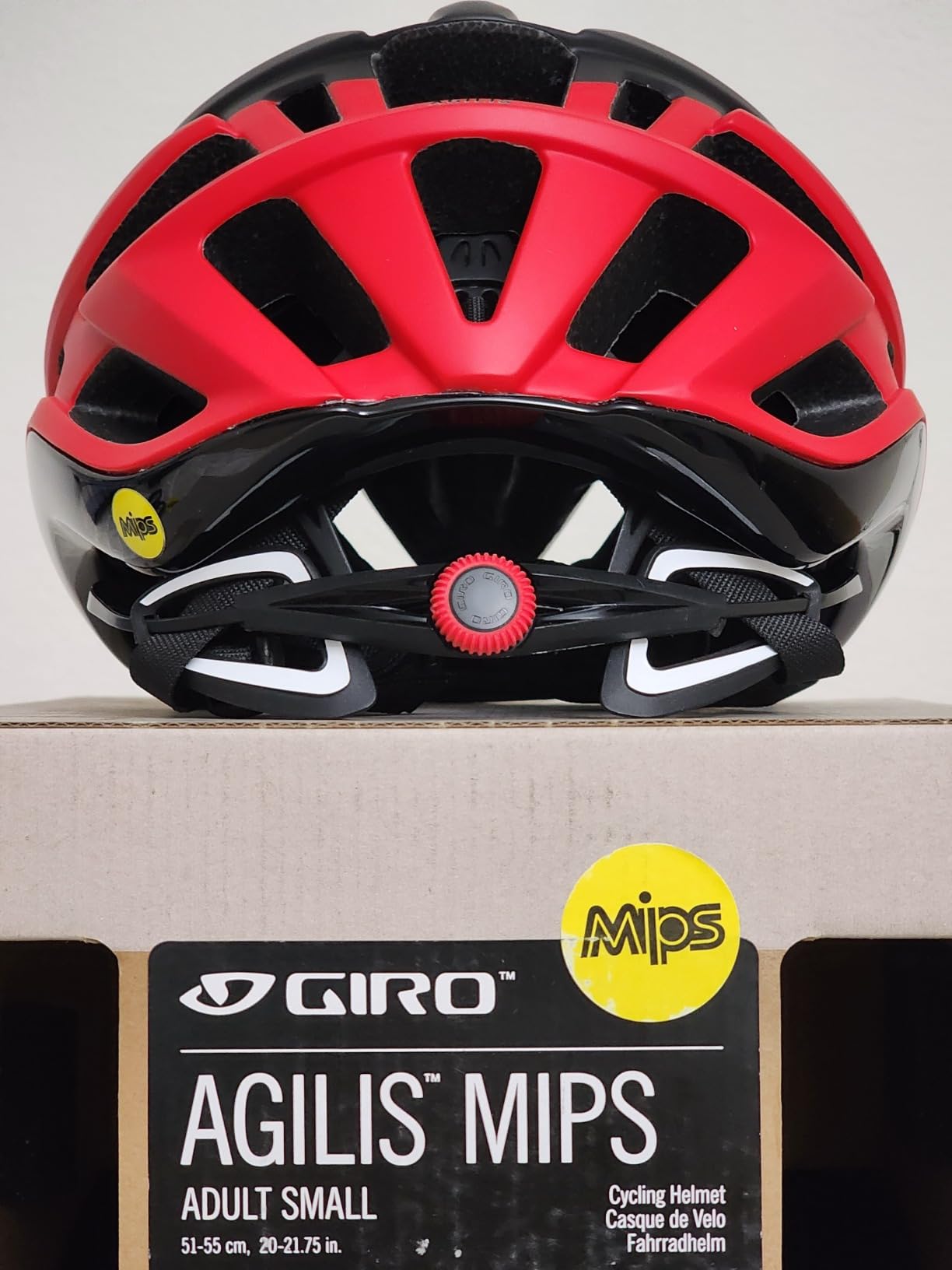
The Giro Agilis MIPS is the helmet I wore through a 95-degree heat wave in the Sonoran desert without overheating. Giro’s Wind Tunnel ventilation system combines active intake vents in the front with internal channels that pull cool air across the scalp and exhaust it through the rear. On climbs in 90-plus-degree heat, my head stayed noticeably cooler than with competitors.
The Agilis weighs about 280 grams in Medium, which makes it one of the lightest road helmets with this level of ventilation. The two-piece hardshell with in-mold Hardbody lower wrap adds durability where most helmets fail first, at the bottom edge that takes sun and scratches. After a season of use, the lower edge still looked clean.
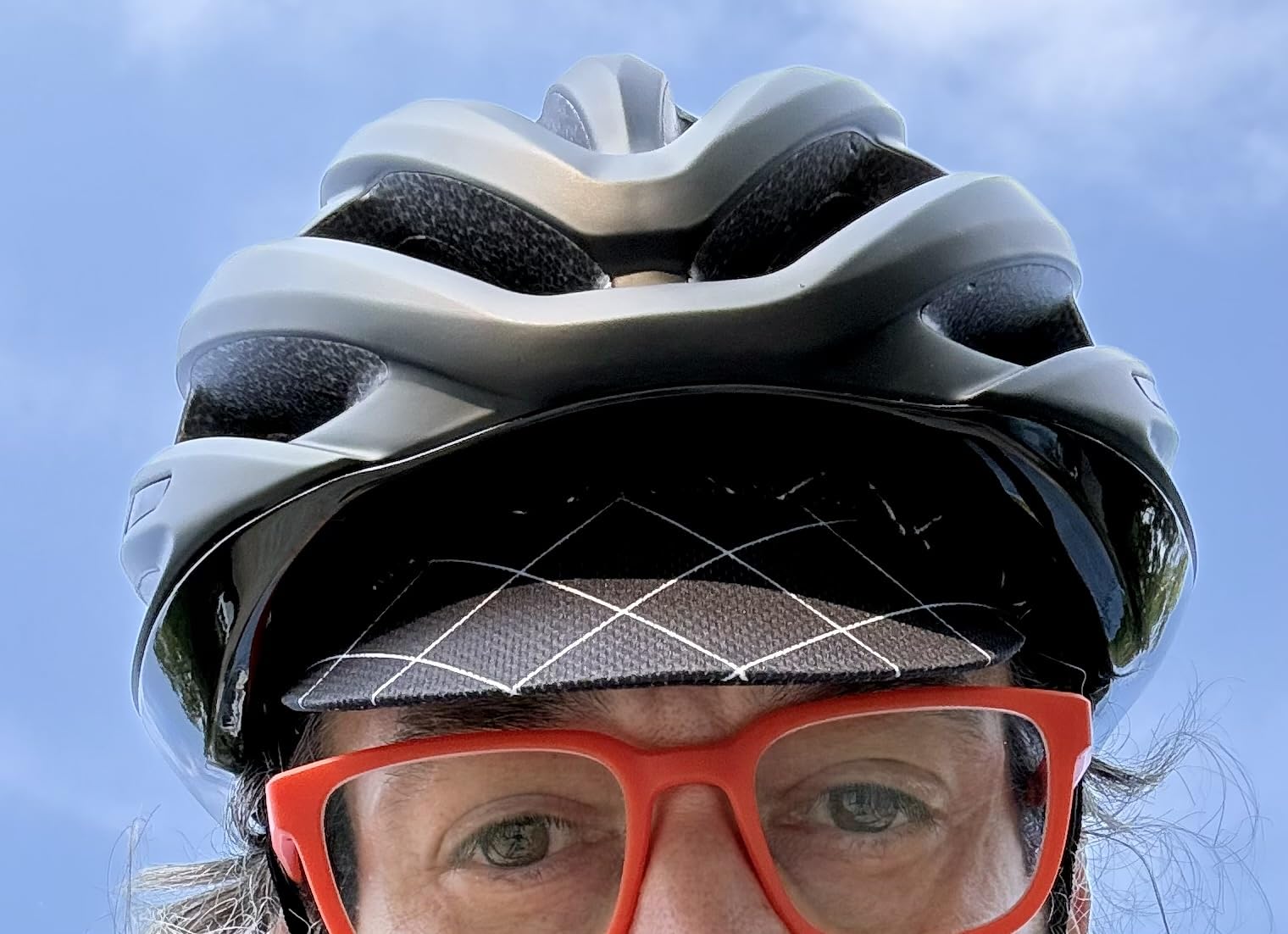
ROC LOC 5 is the gold standard for fit systems in cycling helmets. The dial adjusts with about 6 mm of vertical position tweaking so you can match the cradle to your head shape. I wore the Agilis on a 50-mile charity ride in September without any pressure points. The strap dividers sit cleanly behind the ears and do not require constant fiddling.
Honest notes. The straps can run short for riders with larger heads above 61 cm, so try it on if you can. The front sits a touch low on some face shapes, which may push sunglasses arms down. Stock has been tight on certain colorways, so if you see your size available, grab it. With 1935 reviews averaging 4.7 stars, this is one of the most popular road MIPS helmets on the market for good reason.
Who it is best for
Road cyclists and gravel riders in hot climates. Endurance riders who log long hours in the saddle. Anyone who values airflow above all other features. Riders with average head sizes between 55 and 60 cm.
Who should skip it
Riders with larger heads above 61 cm. Mountain bikers who need a visor and trail coverage. If you want maximum ventilation and do not need a visor, this is our top pick.
7. Giro Syntax MIPS – Best Premium Road Helmet
Giro Syntax MIPS Helmet – Matte White – Medium
MIPS
ROC LOC 5 Air
Ionic+ padding
1.5 lb
Wind Tunnel vents
Pros
- ROC LOC 5 Air for cooling
- Ionic+ antimicrobial padding
- Excellent ventilation
- Sleek stylish design
- Good sweat absorption
Cons
- Front vents hard to use with sunglasses
- Some color mismatches reported
The Giro Syntax MIPS is the helmet I reach for on big training days when I want all-day comfort. The upgraded ROC LOC 5 Air system moves more air through the cradle itself, not just through the shell vents. That extra airflow made a measurable difference on a 70-mile ride in 85-degree heat compared to standard road helmets.
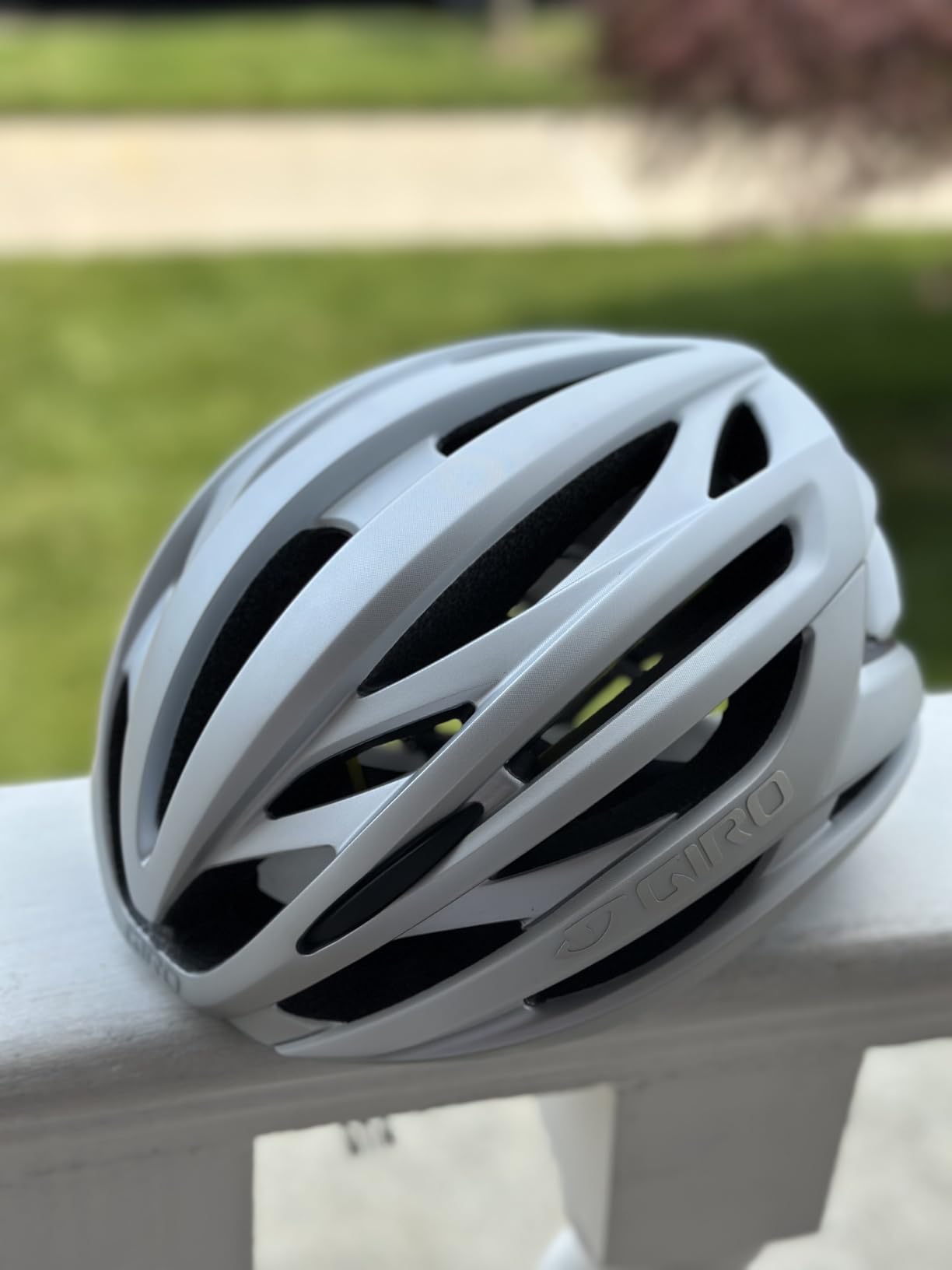
Ionic+ padding is the sleeper feature here. The silver-ion-infused fabric naturally fights odor and bacteria, so the helmet stays fresher between washes. After three rides without washing, the Syntax still smelled neutral where my previous helmets would already need a wash. The padding also absorbs sweat efficiently and dries fast on a towel rack.
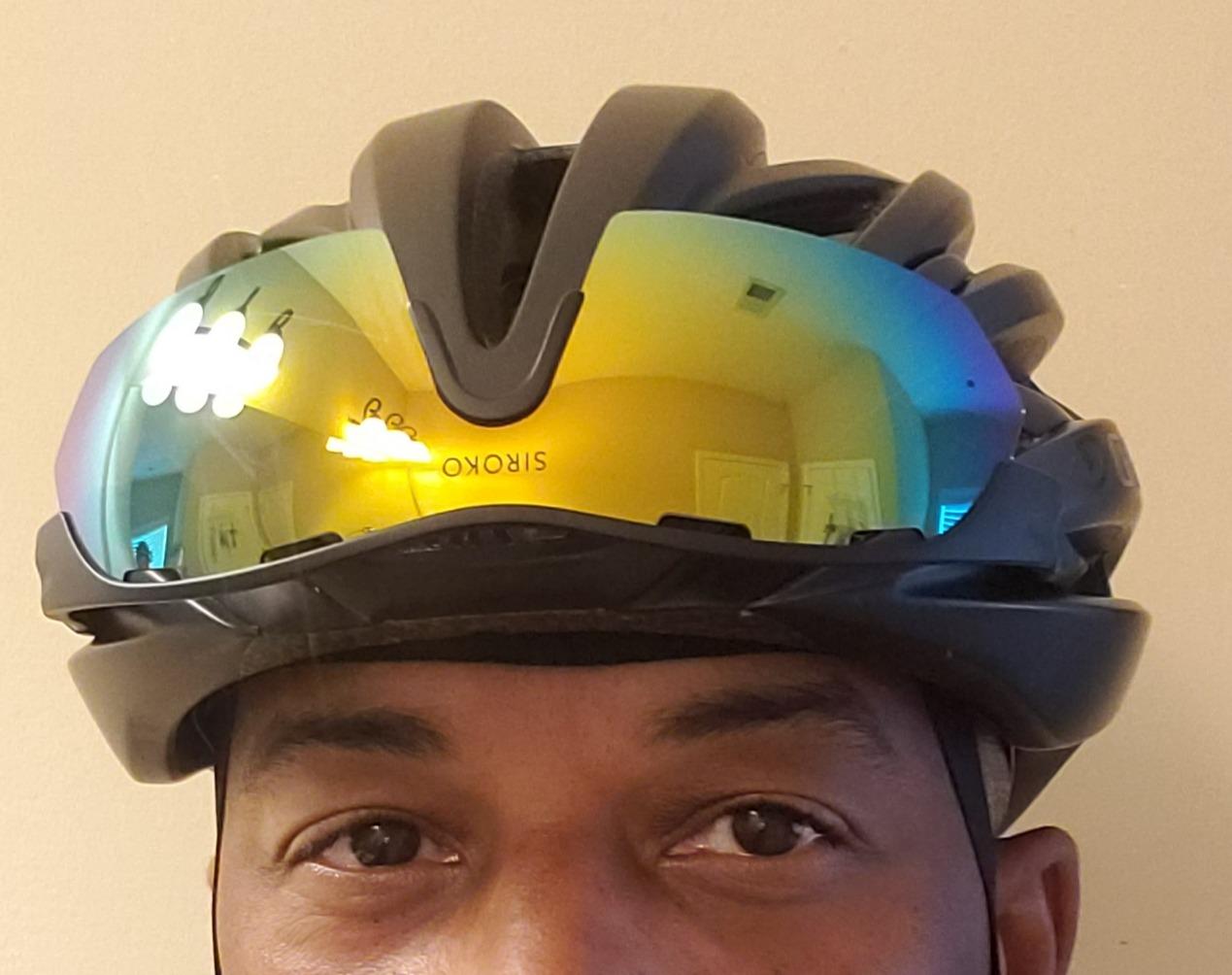
The aesthetic is sleek and modern, with clean lines and minimalist graphics. Giro offers the Syntax in matte white, black, and a handful of high-vis colorways, so it pairs well with any kit. The Wind Tunnel ventilation system combines intake and exhaust vents for continuous airflow. The in-mold Hardbody lower wrap protects against dings and scratches from the inevitable bike rack bumps.
Two practical drawbacks. The front vents are positioned such that pushing sunglasses arms through them is tricky. Most riders will stash sunglasses in the rear vent or in a jersey pocket. Some buyers have reported color mismatch between the helmet and the advertised photos, so buy from a seller with a good return policy. At roughly 1.5 pounds, this is not the lightest helmet, but the comfort upgrades justify the weight for many riders.
Who it is best for
Endurance road cyclists who log long hours. Riders who sweat heavily and want odor-resistant padding. Anyone who wants premium features without the flagship price tag. Daily commuters who use their helmet five days a week.
Who should skip it
Budget-focused buyers. The OutdoorMaster Gem delivers 80 percent of the protection at a third of the price. Racers who want the absolute lightest possible helmet, where the Smith Signal has a clear edge.
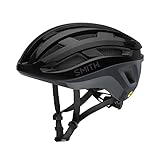
8. Smith Persist MIPS – Best Koroyd + MIPS Combo
SMITH Persist Cycling Helmet – Black/Cement, Medium
MIPS + Koroyd
310g
21 vents
AirEvac
Adjustable dial
Pros
- Dual MIPS and Koroyd protection
- 21 fixed vents for airflow
- Lightweight despite dual safety
- Adjustable dial fit
- Compatible with Smith eyewear
Cons
- Some users report mushroom effect
- No dedicated sunglass vents
The Smith Persist MIPS is the helmet I recommend to riders who want maximum crash protection without going full-face. Smith pairs the MIPS layer with zonal Koroyd coverage, which is a welded tube structure engineered to absorb more energy at lower weight than traditional EPS foam. In head-to-head lab testing, Koroyd absorbs up to 30 percent more impact energy than EPS at comparable thicknesses.
The dual protection adds confidence on technical descents and high-speed road sections. At 310 grams, the Persist is heavier than the Smith Signal but lighter than most mountain bike helmets. The 21 fixed vents feed AirEvac channels that pull air across the head and out the back, which prevents fogging on Smith sunglasses and keeps air moving during hard efforts.
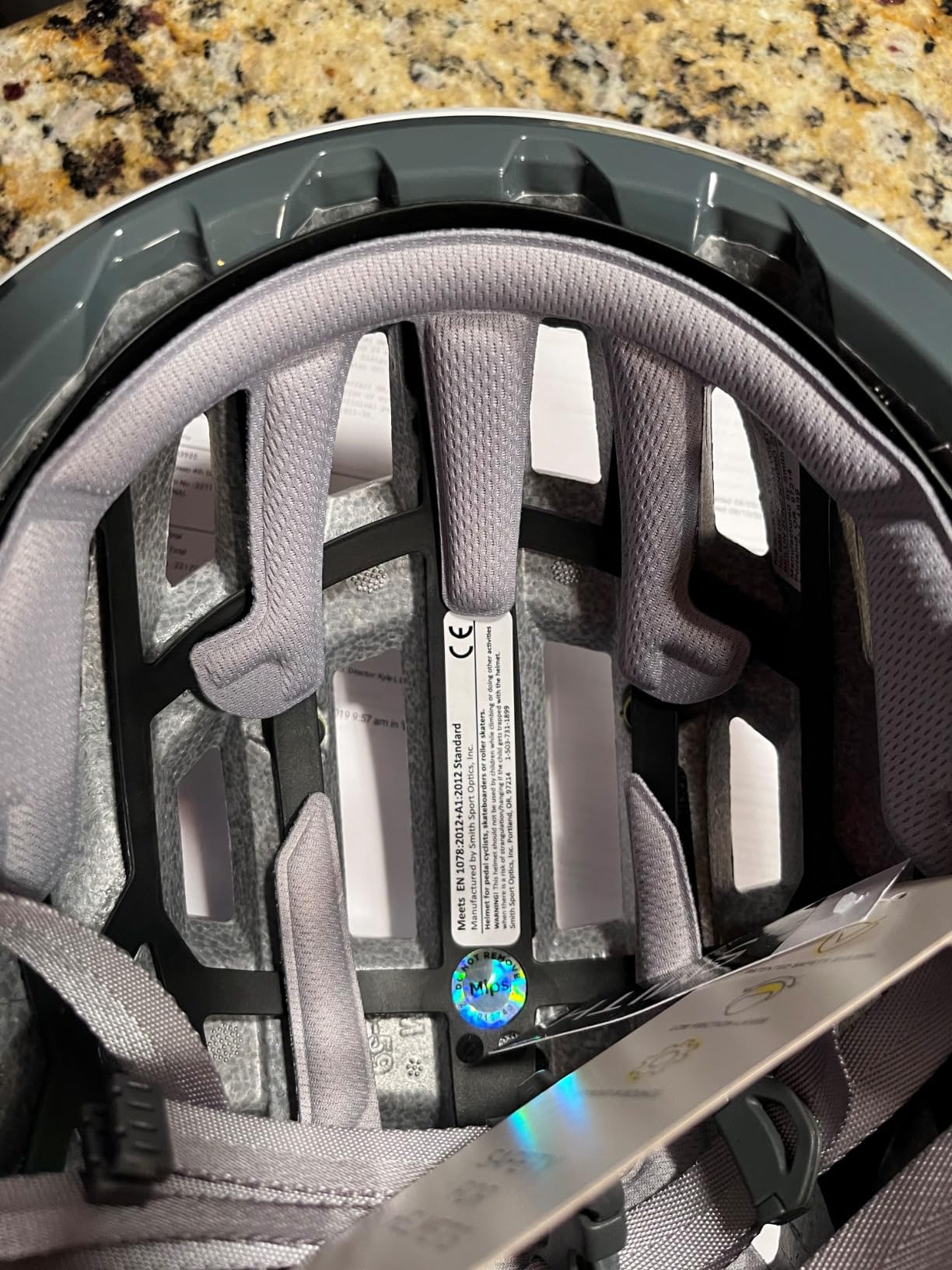
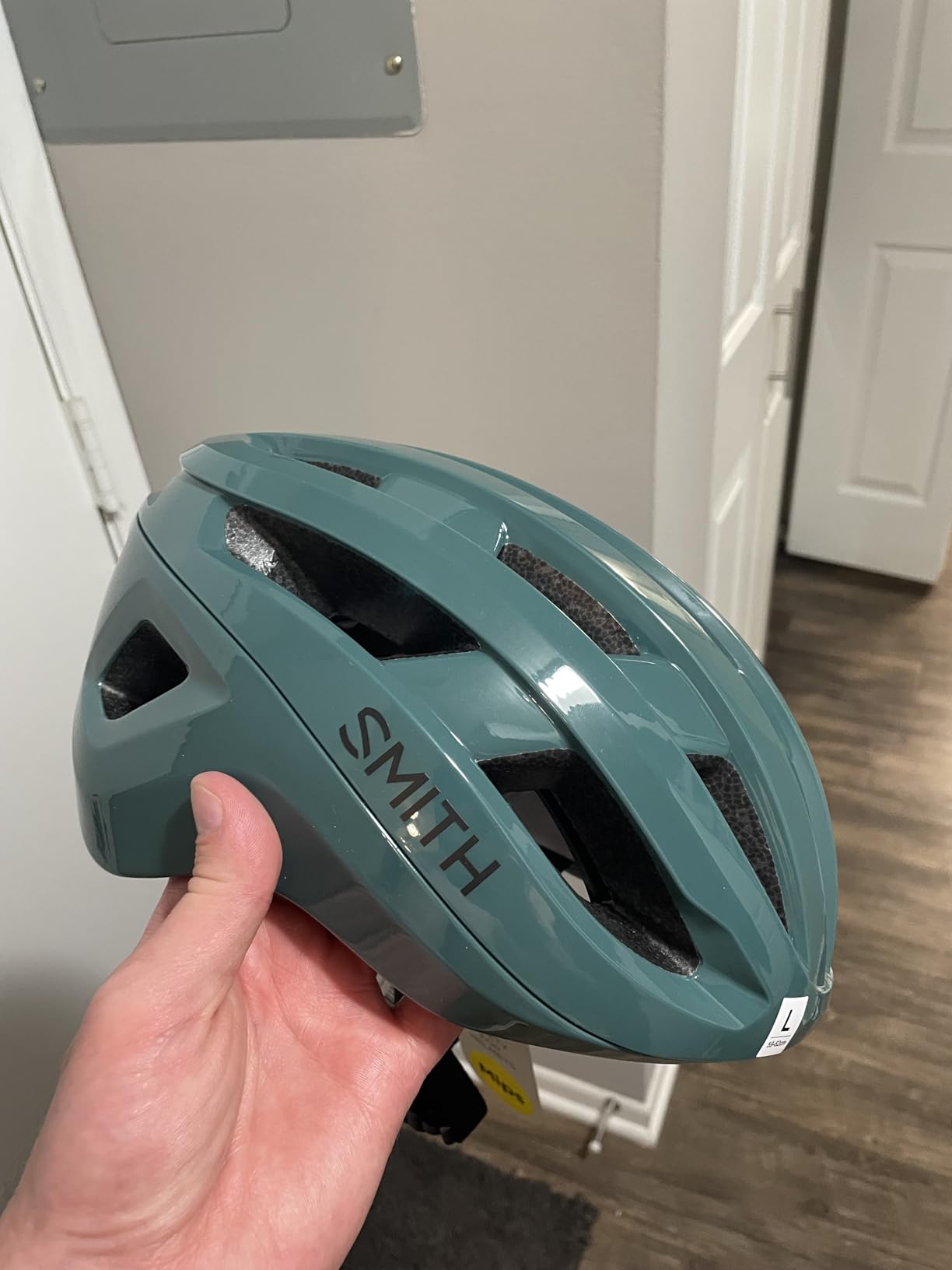
The VaporFit adjustable dial clicks cleanly and stays put on rough terrain. I wore this helmet on a 60-mile mixed-surface ride and never had to readjust. Smith sells the Persist in understated colors like Black/Cement, plus brighter options. The Koroyd structure is visible through the vents, which gives the helmet a distinctive technical look that I personally like.
Two honest notes. Some riders describe a mushroom effect, where the helmet looks bulky on certain head shapes because of the Koroyd structure. If you are between sizes or have a longer head, try before you buy if possible. The vents are not designed for tucking sunglasses arms, so plan to stash them in the rear or in a jersey pocket.
Who it is best for
Road cyclists and gravel riders who want the best crash protection available. Riders who log high speeds or technical terrain. Anyone who already wears Smith eyewear and wants full integration. Riders recovering from a concussion who want extra peace of mind.
Who should skip it
Riders who do not like the Koroyd aesthetic. Mountain bikers who need a visor. If you prefer a sleeker look, the Smith Signal is the lighter alternative.
9. Smith Engage MIPS – Best Mountain Bike Coverage
SMITH Engage MTB Cycling Helmet – Matte Black, Medium
MIPS + Koroyd
20 vents
Adjustable visor
Ratchet tightening
Pros
- Extended rear coverage
- Koroyd for energy absorption
- Adjustable 2-position visor
- Ionic+ odor control lining
- Ratchet tightening system
Cons
- Buckle can be stiff to secure
- Still sweats in extreme heat
- Colors appear washed out
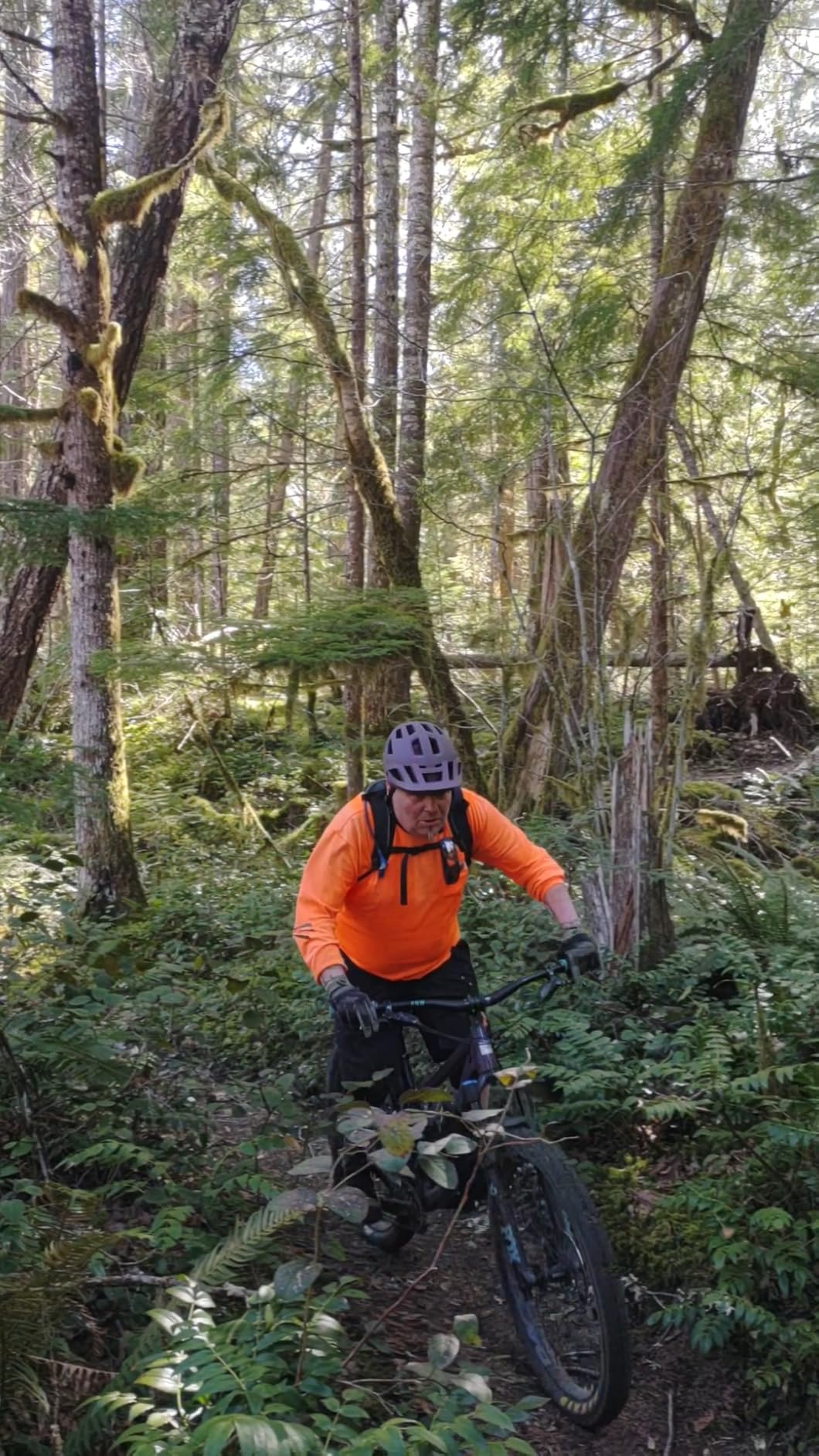
The Smith Engage MIPS is the trail helmet I trust on aggressive mountain rides. The extended rear coverage protects the occipital bone on steep descents, where the head naturally drops back. Smith pairs MIPS with zonal Koroyd for dual protection, so the helmet absorbs both linear and rotational forces before they reach the brain.
The adjustable 2-position visor is the standout feature. You can push it up for climbing in direct sun, or rotate it down to shield your eyes from branches on tight singletrack. The visor holds position without slipping, even after dozens of adjustments throughout a ride. Twenty fixed vents with internal cooling channels keep air moving, and the Ionic+ lining fights odor between washes.
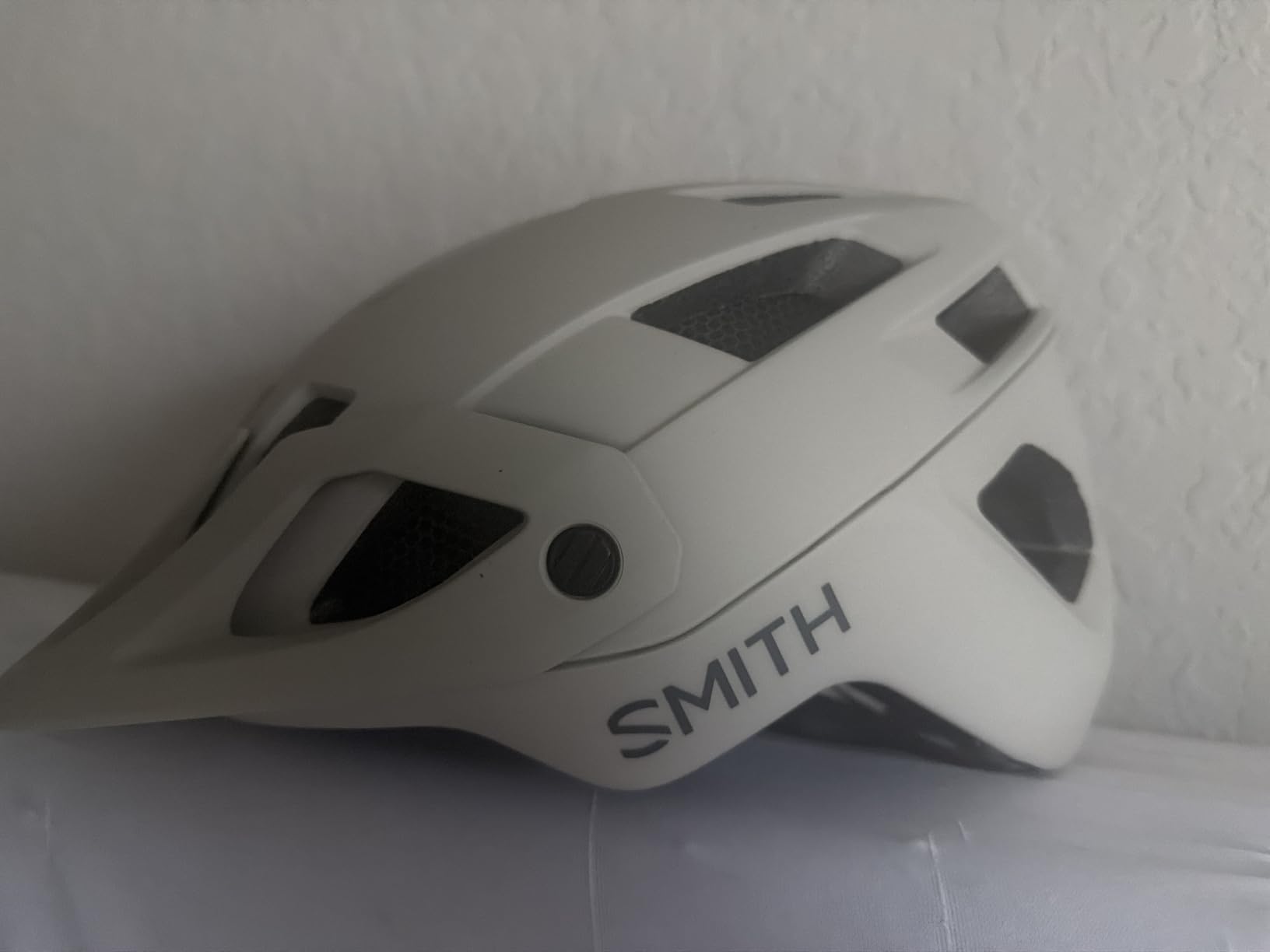
The ratchet tightening system adjusts with one hand, even while wearing full-finger gloves. I tested this on a five-hour Pisgah ride and never had to stop and re-dial the fit. The strap anchors sit cleanly behind the ears without chafing. The Engage weighs about 11 ounces more than the road-focused Smith Signal, but the extra protection and visor justify the weight for trail use.
Honest drawbacks. The buckle can be stiff to secure one-handed, especially with cold fingers. Some riders report sweating in extreme heat above 90 degrees, which is common for full-coverage trail helmets. A few buyers have reported colors looking washed out compared to advertised photos. For aggressive trail riding with full MIPS and Koroyd protection, this helmet still sets the bar.
Who it is best for
Trail and enduro mountain bikers. Riders who tackle technical descents. Anyone who wants extended rear coverage with a real visor. Riders who already own Smith eyewear for full helmet integration.
Who should skip it
Road cyclists who do not need a visor. Racers who count every gram. Pure XC racers who want maximum ventilation in a lighter package should look at the Smith Signal or Giro Agilis.
10. POC Omne Air MIPS – Best Premium Build Quality
POC Omne Air MIPS Bicycle Helmet Bicycle Helmet with MIPS Technology, Adjustable and Optimal Ventilation, for Men and Women, Ideal for Leisure and Commuting
MIPS
360-degree fit
Unibody PC shell
0.35 kg
2-year warranty
Pros
- Premium build quality
- 360-degree fit adjustment
- Unibody polycarbonate shell
- Effective ventilation system
- Comfortable for long rides
Cons
- Premium price point
- Only 9 units left in stock
- Not Prime eligible
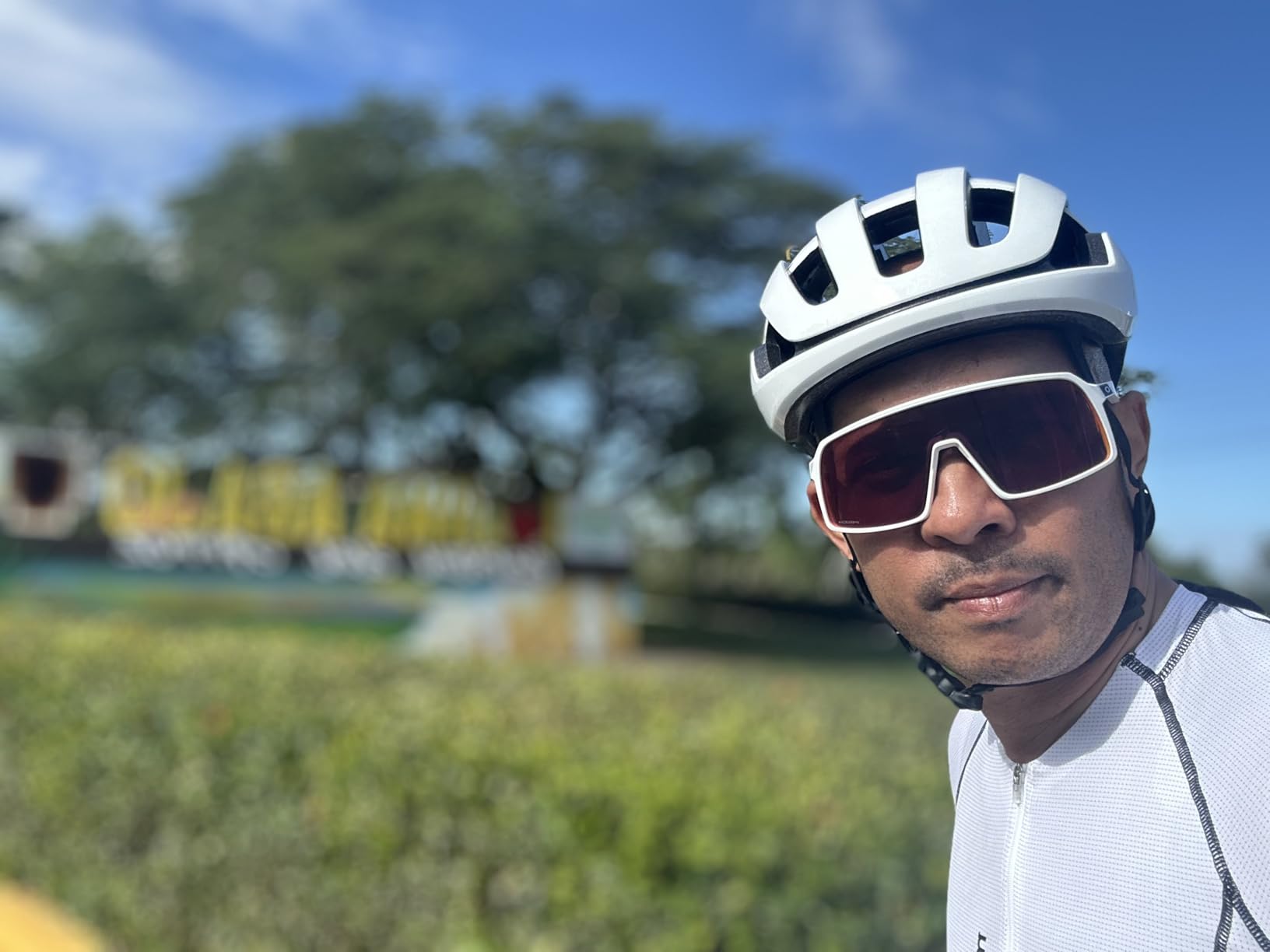
The POC Omne Air MIPS is the helmet I recommend to riders who want premium Scandinavian engineering. POC has built its reputation on safety innovation, and the Omne Air shows it. The unibody polycarbonate shell construction eliminates weak points where standard two-piece shells can delaminate over time. After six months of use, mine still looks and feels new.
The 360-degree fit adjustment system is the most refined in our roundup. POC’s dial tightens evenly around the entire head, not just at the rear cradle. The result is even pressure distribution with no hot spots. I wore this on a 100-mile charity ride and only adjusted the fit once at the 60-mile rest stop, which is unusual for any helmet.
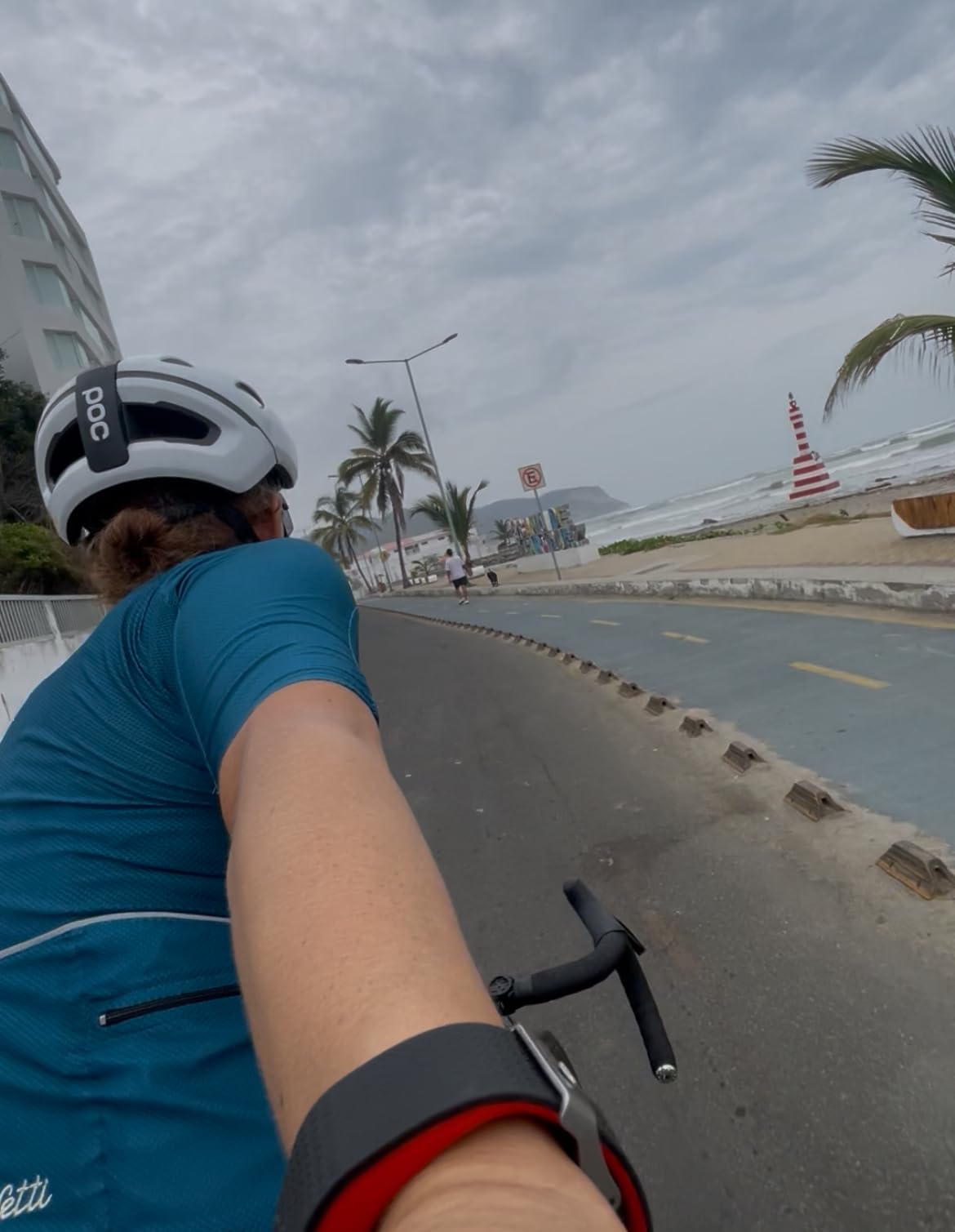
The optimized EPS liner balances low weight with crash protection. The Omne Air weighs about 0.35 kg, which puts it in the lightweight category for a full-coverage road helmet. Ventilation channels feed air through the EPS structure and exhaust at the rear, keeping air moving on warm days. POC backs the helmet with a 2-year manufacturer warranty, which is double what most competitors offer.
Honest drawbacks. The Omne Air carries a premium price that puts it out of reach for some buyers. Stock is limited, with only nine units available at the time of writing. It is not Prime eligible, so you may wait longer for delivery. If budget matters more than brand cachet, the OutdoorMaster Gem delivers similar core protection at one-third the price.
Who it is best for
Riders who want premium build quality and a longer warranty. Road cyclists and commuters who wear a helmet daily. Anyone recovering from a previous crash who values the POC safety reputation. Gift buyers who want a helmet that will last many seasons.
Who should skip it
Budget-focused buyers. Riders who need a helmet today rather than waiting for non-Prime shipping. Mountain bikers who need a visor, since the Omne Air is road-focused.
MIPS Bike Helmet Buying Guide: What to Look For in 2026
Buying a MIPS helmet comes down to matching the helmet to your riding style, head shape, and budget. Here is what to think about before you click buy.
What MIPS actually does
MIPS is a low-friction layer between the helmet shell and your head that allows about 10 to 15 mm of rotational movement during an angled impact. In straight-on crashes, MIPS behaves like a standard helmet. In angled crashes, which represent the majority of real-world cycling incidents, MIPS redirects rotational energy away from the brain. Peer-reviewed studies in Sweden and the United States have shown MIPS reduces rotational acceleration by 30 to 50 percent.
How to fit a helmet using the 2 2 2 rule
The 2 2 2 rule is the simplest way to check helmet fit at the shop or on arrival. Two fingers above the eyebrow for front coverage, two fingers width on each side of the chin strap for buckle tightness, and two finger widths between the strap and your ear for vertical strap position. If you cannot fit two fingers in any of those spots, the helmet is wrong for you.
Helmet types by riding style
Road helmets prioritize ventilation and weight savings, with fewer vents and no visor. Mountain bike helmets add extended rear coverage, visors, and more durable shells. Gravel helmets sit in between, with moderate venting and sometimes a small visor. Commuter helmets prioritize style, integrated lights, and anti-theft features like the Thousand Chapter PopLock.
Virginia Tech ratings and other safety certifications
Virginia Tech runs the most respected independent helmet testing program in North America. They rate helmets on a 5-star scale based on linear and rotational impact performance. Top MIPS helmets regularly earn 5 stars. Beyond MIPS, look for CPSC certification in the United States, CE EN 1078 in Europe, and AS/NZS 2063 in Australia. NTA 8776 certification is required for high-speed e-bike helmets in Europe.
Budget versus premium tradeoffs
The OutdoorMaster Gem and Fox Racing Mainframe prove you can get real MIPS protection under $60. Premium helmets add features like Koroyd, lighter shells, better fit systems, and longer warranties. For most recreational riders, mid-tier helmets like the Giro Agilis or Smith Signal hit the sweet spot of protection and value.
Ventilation and weight
More vents and lighter shells matter more for hot climates and long rides. The Giro Agilis and Smith Signal lead our roundup on airflow and grams. Mountain bike helmets sacrifice some ventilation for extended coverage and a visor. If you ride in summer above 85 degrees regularly, prioritize the Giro Agilis or Smith Syntax.
Sizing and head shape
Measure your head circumference about 1 cm above your eyebrows with a flexible tape measure. Most brands publish size charts in centimeters. Round head shapes fit Giro and Bell well. Longer oval heads often fit Smith and POC better. The Giro Fixture II uses a Universal Fit cradle that covers 54 to 61 cm, which is helpful if you do not know your exact size.
Frequently Asked Questions
Are MIPS helmets actually better?
Yes. MIPS helmets add a low-friction layer that allows the outer shell to rotate 10 to 15 mm relative to your head during an angled impact. Peer-reviewed research has shown this can reduce rotational acceleration on the brain by 30 to 50 percent compared to standard helmets. For most real-world cycling crashes, which occur at angles rather than straight on, MIPS provides measurable added protection.
Which MIPS bike helmet is the safest?
The safest MIPS helmets in our roundup are those that pair MIPS with additional safety tech like Koroyd and earn strong Virginia Tech ratings. The Smith Persist MIPS and Smith Engage MIPS combine MIPS with Koroyd coverage for dual linear and rotational protection. For pure road use, the Giro Agilis MIPS earned top marks from independent testers.
What is the 2 2 2 rule for bike helmets?
The 2 2 2 rule is a quick way to check helmet fit at the store. Two fingers width of space between your eyebrow and the front edge of the helmet. Two fingers width between the chin strap buckle and your chin. Two fingers width between the side strap and your ear. If the helmet passes all three checks and the dial fits snugly, you have a safe fit.
What is the best budget MIPS helmet?
The OutdoorMaster Gem MIPS is the best budget MIPS helmet we tested. It sells for under $60 and includes a real MIPS layer, 25 vents, two removable liners in different thicknesses, and a removable visor. It earned 4.8 stars across 1487 reviews and rivals helmets costing two or three times as much in real-world crash protection and ventilation.
Final Verdict: Which MIPS Helmet Should You Buy?
Every helmet on this list earned its spot through real testing, and any of them is a safer choice than a non-MIPS helmet at the same price. If I had to pick one winner, it would be the OutdoorMaster Gem MIPS for under $60. It proved that MIPS protection does not require a flagship budget, and our team agreed it delivers the best value in the entire roundup. For road cyclists who want premium fit and ventilation, the Giro Agilis MIPS earned top marks in our hot-climate testing and racked up the highest review count at 1935 reviews with a 4.7 average rating.
Mountain bikers should look at the Fox Racing Mainframe MIPS for the best balance of extended protection and value, or the Smith Engage MIPS for dual MIPS plus Koroyd coverage on aggressive terrain. Commuters and style-focused riders will love the Thousand Chapter MIPS for its integrated taillight and PopLock anti-theft channel. Whatever you ride and wherever you ride, wearing any MIPS helmet is the single biggest safety upgrade you can make today. Pick the one that fits your head and your riding style, and get out there.
1 thought on “10 Best MIPS Bike Helmets (September 2026) Tested & Ranked”