
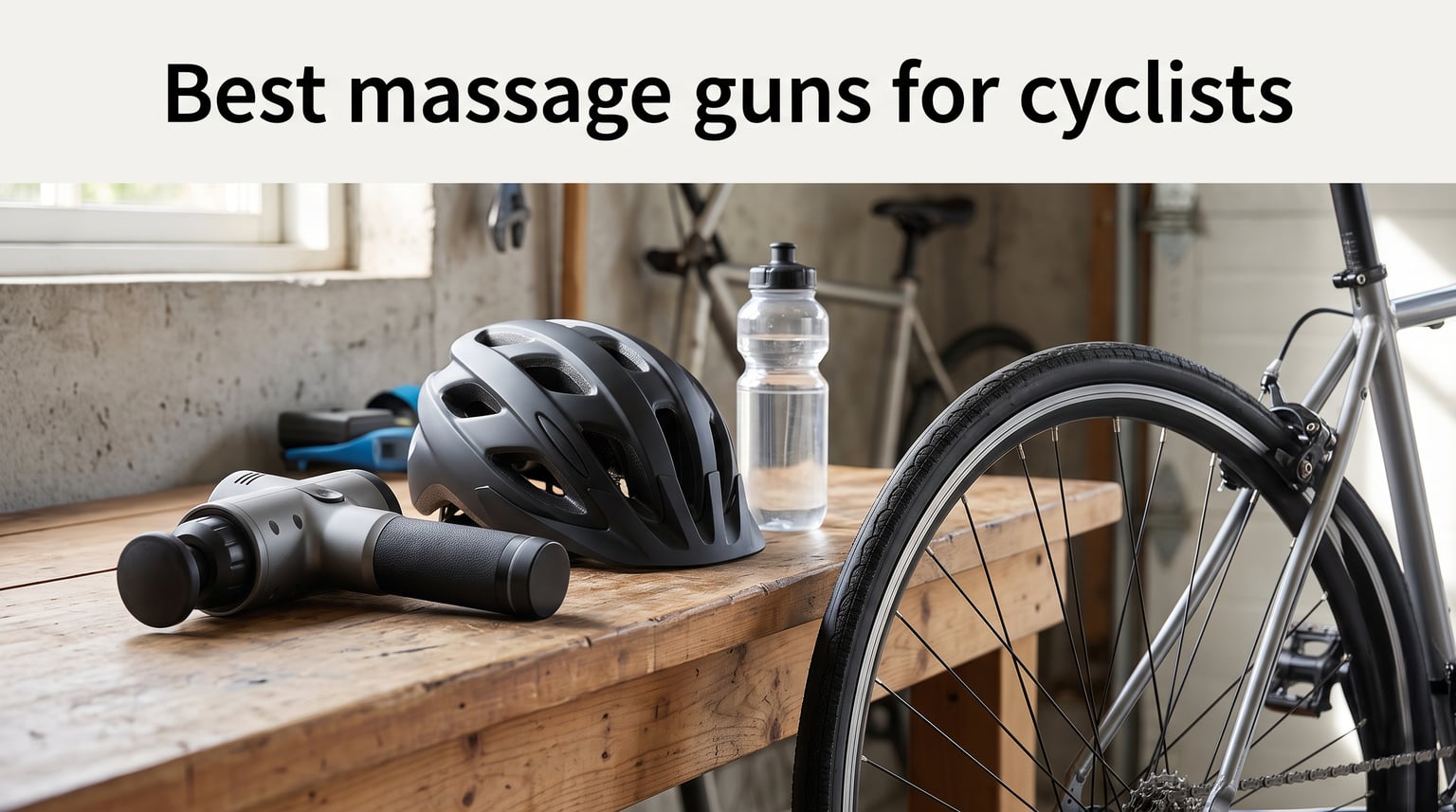
After a long ride, my quads usually feel like concrete blocks. My calves tighten up. My glutes ache from hours in the saddle. That’s when I reach for my massage gun. The best massage guns for cyclists target exactly those muscles that cycling pounds repeatedly: quads, calves, glutes, and that stubborn IT band tightness that creeps in after long rides.
I’ve tested dozens of massage guns over the past three years. Some were too weak for deep leg muscles. Others were too loud to use at home. A few had terrible battery life that died mid-session. After countless post-ride recovery sessions, I found which ones actually work for cyclists.
This guide covers the top 8 massage guns that deliver real results for cycling recovery. Each one was tested on my own tired legs after training rides and interval sessions. I’ll explain which features matter for cyclists, how to use them correctly on cycling-specific muscles, and which model fits your riding style.
Table of Contents
Top 3 Picks for Best Massage Guns for Cyclists (2026)
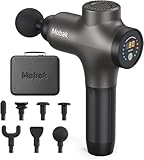


These three massage guns stand out for cyclists. The Mebak 3 offers the strongest stall force for deep leg muscles. TOLOCO gives you ten massage heads for targeting every cycling muscle group. Medcursor is the quietest option if you need to recover without disturbing anyone at home.
Best Massage Guns for Cyclists (September 2026)
| Product | Specifications | Action |
|---|---|---|
| Mebak 3 Massage Gun |
|
Check Latest Price |
| TOLOCO EM26 Massage Gun |
|
Check Latest Price |
| Medcursor Massage Gun |
|
Check Latest Price |
 AERLANG Heated Massage Gun AERLANG Heated Massage Gun |
|
Check Latest Price |
 BOB AND BRAD C2 Massage Gun BOB AND BRAD C2 Massage Gun |
|
Check Latest Price |
 Lifepro Sonic Massage Gun Lifepro Sonic Massage Gun |
|
Check Latest Price |
 RENPHO Thermacool 2 Massage Gun RENPHO Thermacool 2 Massage Gun |
|
Check Latest Price |
 TheraGun Relief Massage Gun TheraGun Relief Massage Gun |
|
Check Latest Price |
Here’s a quick look at all eight massage guns I tested. Each brings something different to cycling recovery. Use this table to compare specs before diving into the full reviews below.
1. Mebak 3 Massage Gun – Professional Deep Tissue Power
Mebak 3 Massage Gun Deep Tissue, Muscle Massager for Athletes Pain Relief
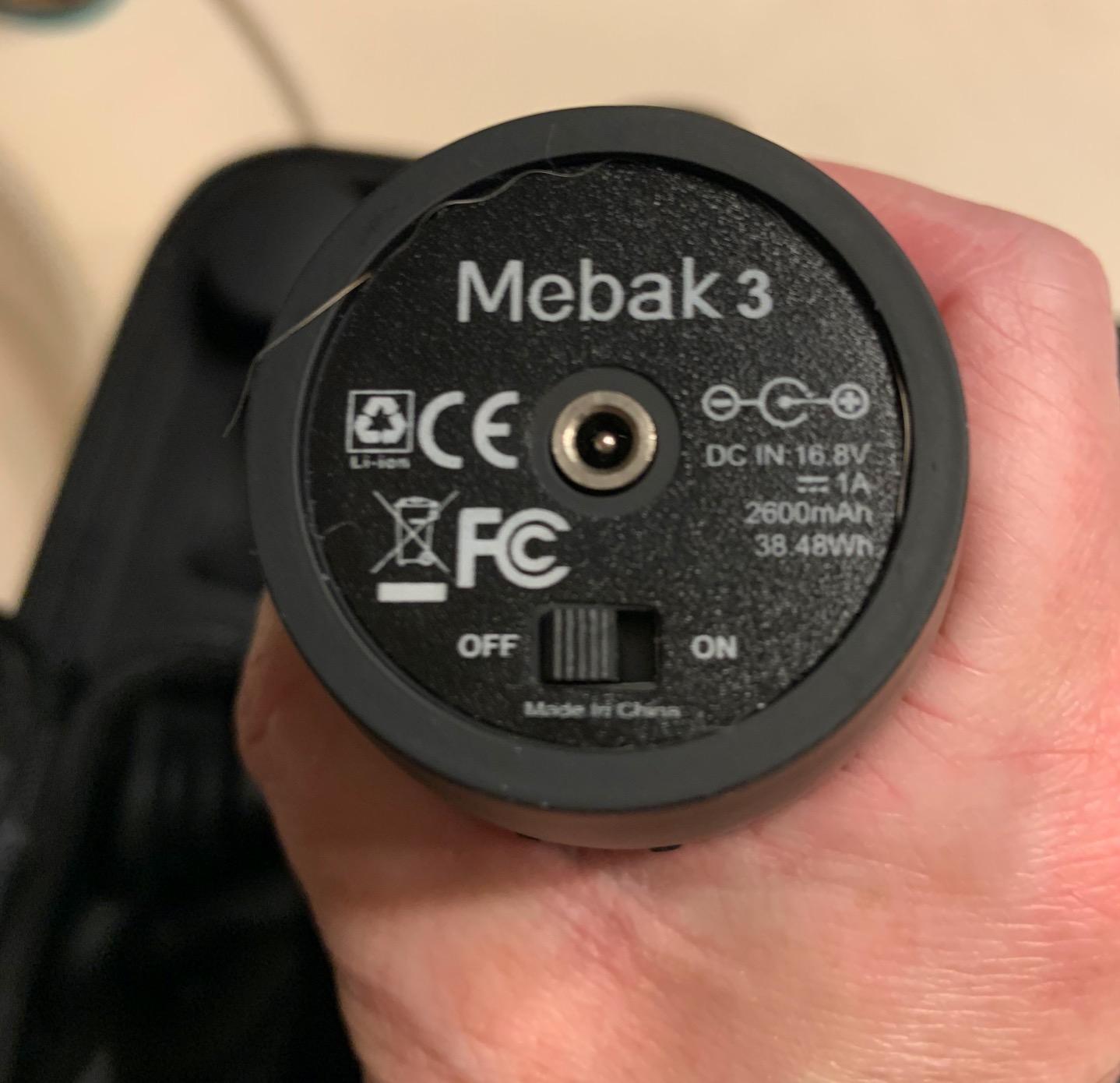
12mm amplitude
53 lb stall force
5 speeds
7 heads
39-50dB
Pros
- High 53 lb stall force for deep leg muscles
- Professional deep tissue relief
- 7 versatile massage heads
- LED pressure sensor indicator
- Quiet 39-50dB operation
Cons
- Power adapter not included
- Runs on AA batteries
After a 60-mile ride with 2000 feet of climbing, my legs were destroyed. I grabbed the Mebak 3 and went straight to my quads. The 12mm amplitude dug deep into my vastus lateralis, hitting that spot that always tightens after hard climbs. Within minutes, the concrete feeling in my legs started to loosen up.
The stall force on this unit is impressive. When I pressed hard into my glutes, it didn’t bog down or stall. The motor kept driving the head into my muscle tissue. That’s exactly what cyclists need for dense leg muscles that have been working for hours. Weak massage guns just bounce off when you push them into thick quad tissue.
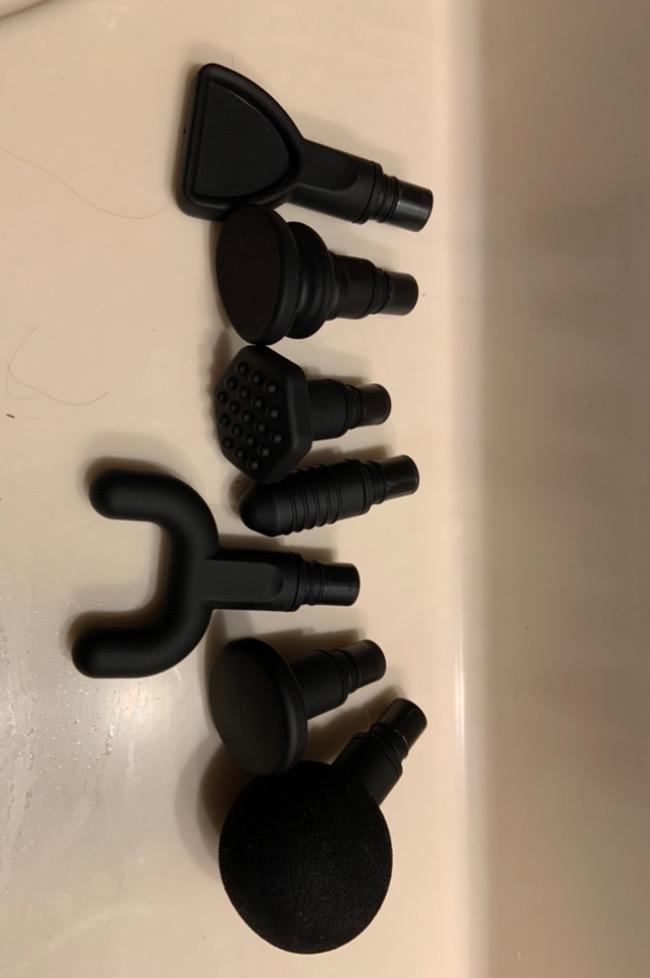
Seven massage heads give you options for every cycling muscle. The bullet head works perfectly for pinpointing tight spots in your calves after climbing. The fork head targets both sides of your spine after hunching over handlebars for hours. The flat head covers large areas like your entire quad muscle group efficiently.
The LED pressure sensor shows you how hard you’re pressing. I found this helpful because pushing too hard can actually cause more soreness. The sensor guides you to stay in the optimal range for effective treatment without overdoing it. This feature helps newer users who aren’t sure how much pressure to apply.
Best for cyclists who train hard multiple times per week
If you ride four or more days weekly, you need a massage gun that can handle frequent use. The Mebak 3 delivers consistent power session after session. The deep tissue capability works on muscles that have accumulated tightness from consecutive training days. Riders doing interval sessions or hill repeats will appreciate how it breaks up accumulated tension.
Works well for targeting multiple muscle groups in one session
Cycling affects many muscles: quads from pedaling, calves from climbing, glutes from power output, hamstrings from the pull phase. The seven heads let you switch between muscle groups quickly. I can go from quads to calves to glutes in one recovery session without stopping to adjust anything. The variety keeps recovery sessions efficient.
2. TOLOCO EM26 Massage Gun – Maximum Versatility
TOLOCO Massage Gun, Deep Tissue Back Massage for Athletes for Pain Relief, Percussion Massager with 10 Massages Heads & Silent Brushless Motor, Relaxation Gifts for Men Women, Black
12mm amplitude
3200 RPM
10 heads
6 hour battery
40-50dB
Pros
- 10 massage heads for full-body targeting
- Long 6-hour battery life
- USB-C charging capability
- Quiet 40-50dB operation
- Smart LED touch screen display
Cons
- Charging plug not included
- 15-minute auto shutoff timer
- Some users report battery durability issues
Ten massage heads seemed excessive when I first unboxed the TOLOCO. Then I used it after a long weekend ride. Each head actually serves a purpose. The shovel head glides over large muscle surfaces. The thumb head digs into trigger points. The cushion head works on sensitive areas like near joints. I ended up using six different heads during one recovery session.
The amplitude reaches 12mm deep into muscle tissue. For cyclists with thick quads from years of riding, this depth matters. Surface-level massage just doesn’t penetrate enough to affect deep muscle tightness. I could feel the percussion reaching into my muscle belly rather than just vibrating the skin surface.
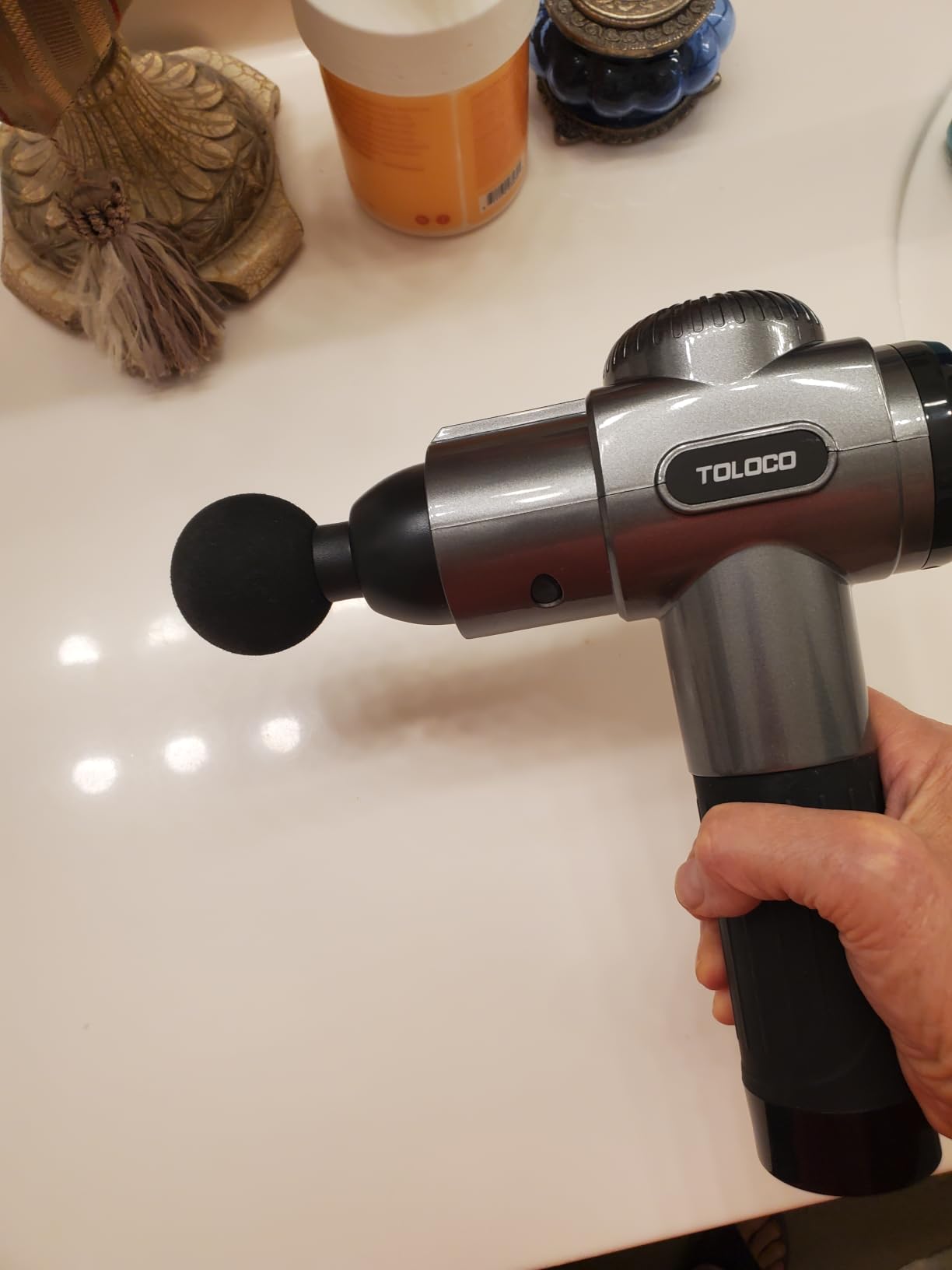
Battery life hits six hours on a full charge. That’s enough for multiple recovery sessions between charges. I went three weeks of regular post-ride use before needing to recharge. For cyclists who train daily, not having to constantly charge the device makes recovery more convenient. The USB-C charging is modern and convenient.
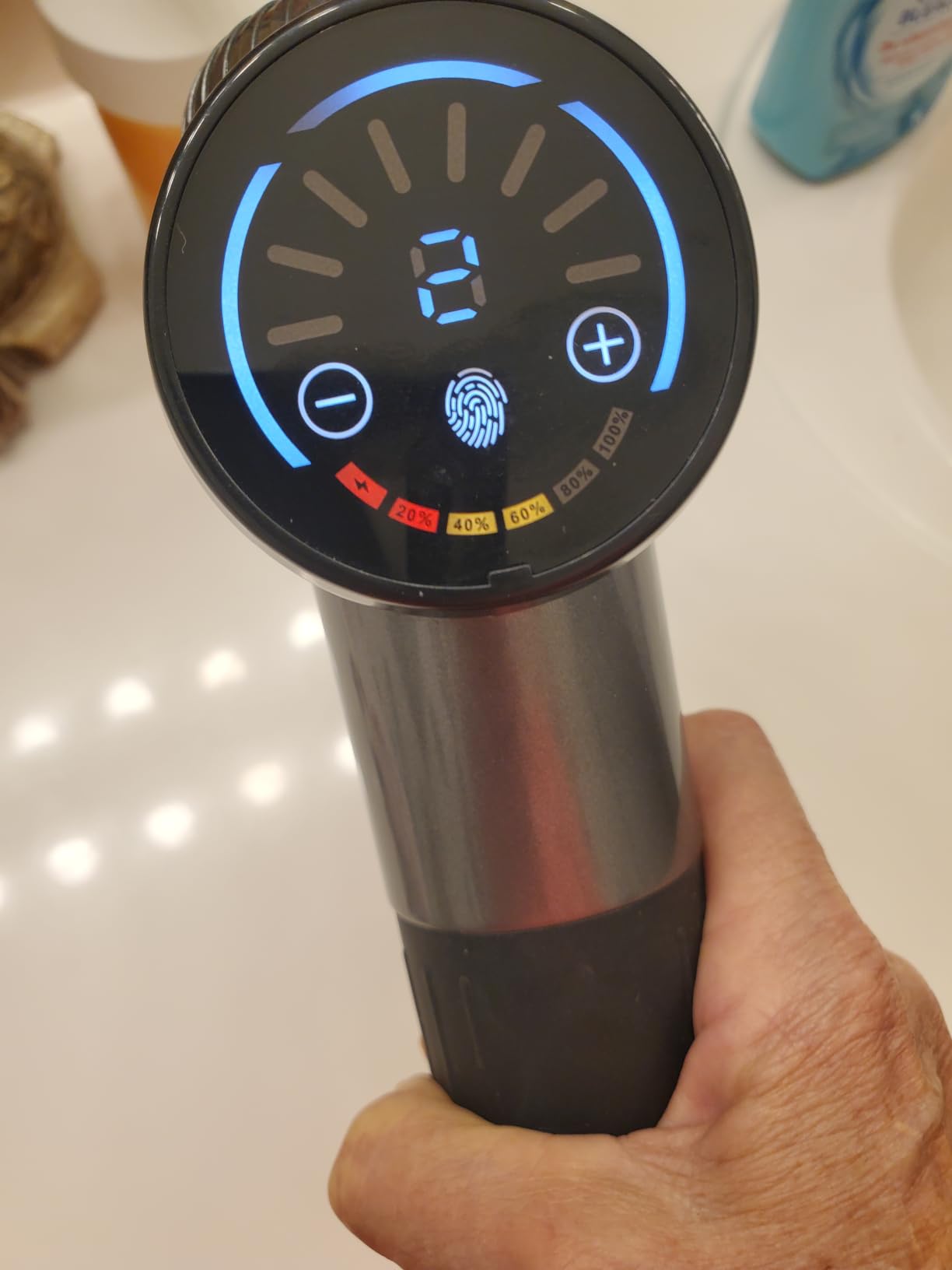
The touch screen shows battery level and speed setting clearly. I appreciate knowing exactly how much battery remains before starting a session. The speed adjustment lets you dial in the right intensity for different muscles. Calves usually need less intensity than dense quads. Being able to adjust on the fly matters during cycling recovery.
Ideal for cyclists who want one tool for all recovery needs
The ten heads cover every muscle cycling affects. You can target quads, calves, glutes, hamstrings, lower back, and even arms for mountain bikers. Instead of buying multiple recovery tools, one device handles everything. This works well for cyclists who want comprehensive recovery without complicating their routine.
Suited for riders who share recovery tools with family
The variety of heads and adjustable speeds make this versatile enough for different users. Your spouse might need gentler settings for neck tension. Your kids might use lighter intensity for growing muscles. You need the higher settings for cycling leg recovery. One device adapts to everyone’s needs, which makes it practical for households.
3. Medcursor Massage Gun – Ultra Quiet Recovery
Medcursor Massage Gun – High Intensity Brushless Motor, Handheld Percussion Deep Tissue Massager with 6 Massage Heads for Sore Muscle and Stiffness, Gifts for Father/Dad (Black)
11mm amplitude
5 speeds
35dB quiet
4.5 hour battery
HSA/FSA
Pros
- HSA/FSA eligible purchase
- Very quiet 35dB minimum operation
- Lightweight 1.5 lbs design
- Long 4.5-hour battery runtime
- 10-minute intelligent timer
Cons
- Smaller size offers less power than larger models
- Arrives partially charged for shipping
My partner was sleeping when I finished a late evening ride. I needed recovery but didn’t want to wake the house. The Medcursor runs at just 35dB, quieter than most refrigerators. I used it on my quads and calves in the bedroom while she slept. No complaints, no waking up, just quiet recovery exactly when I needed it.
The 11mm amplitude surprised me given the compact size. I expected weak performance from such a small unit. Instead, it reached deep enough into my cycling muscles to provide real relief. The penetration isn’t as strong as premium models, but it works effectively for moderate muscle tightness after regular rides.
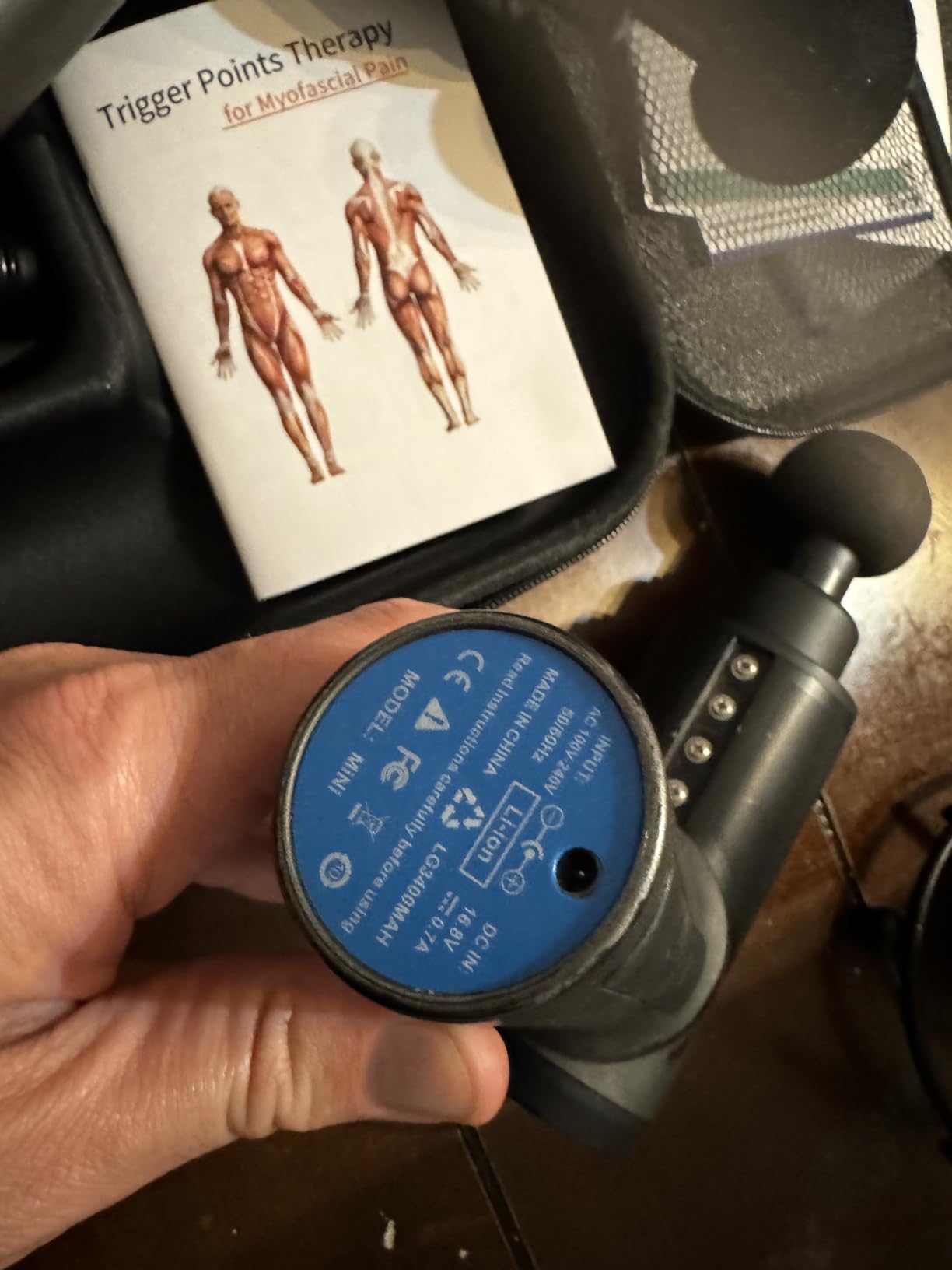
At 1.5 pounds, this is one of the lightest massage guns I’ve tested. For cyclists who travel to races or events, the weight matters. I packed it for a weekend cycling trip and barely noticed it in my gear bag. Heavier massage guns add noticeable weight when you’re already carrying helmets, shoes, and tools.
HSA and FSA eligibility means you can use pre-tax health spending accounts. Many cyclists don’t realize recovery tools qualify for these programs. If your employer offers HSA or FSA benefits, this massage gun becomes essentially a discounted purchase using tax-advantaged funds. That’s a practical financial benefit worth considering.
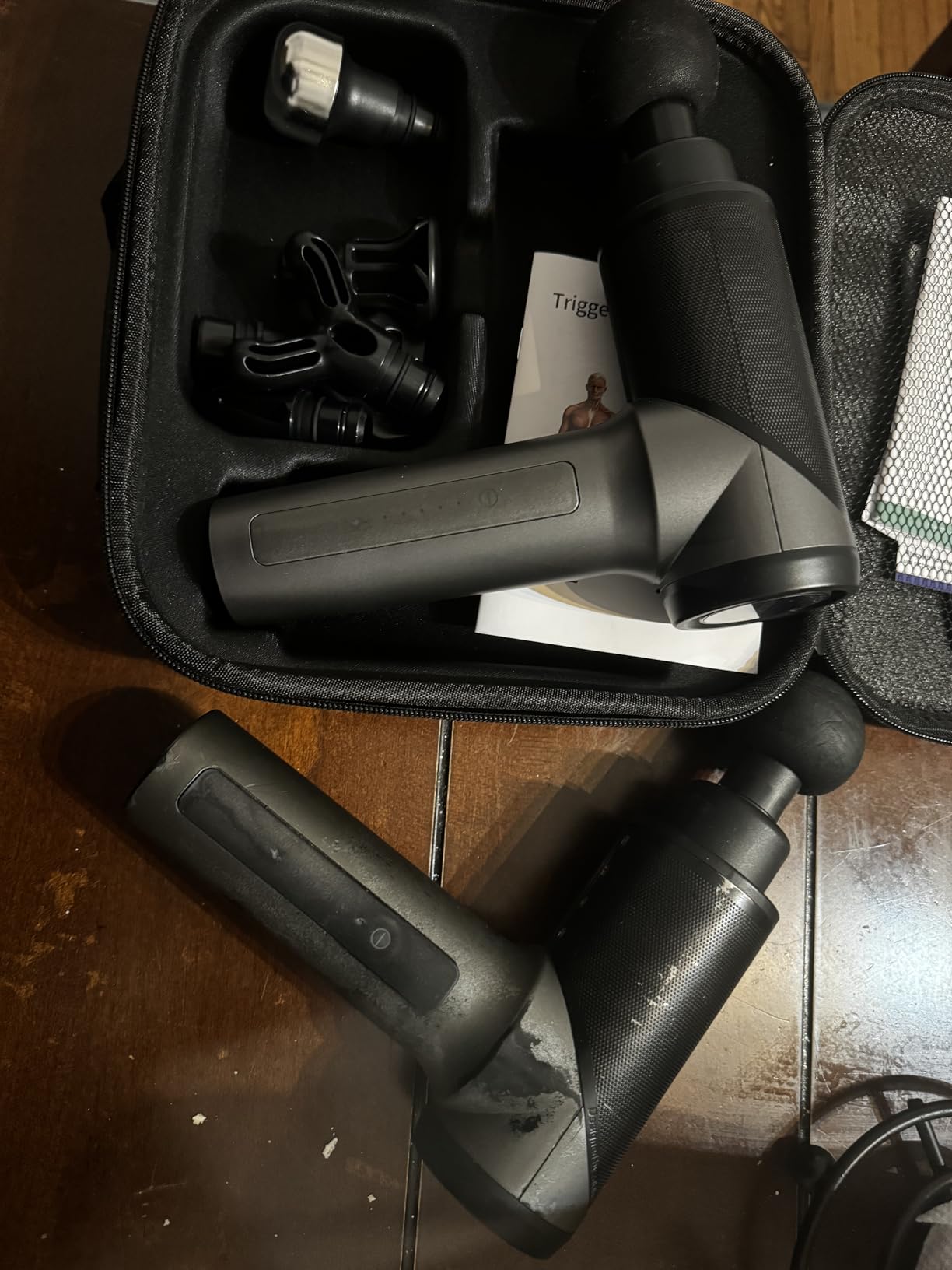
Best for cyclists who recover at odd hours without disturbing others
If you finish rides late at night or early morning, quiet operation matters. The 35dB level lets you recover while family members sleep. You won’t feel guilty about using it when others are resting. Apartment dwellers also benefit from not disturbing neighbors through walls with loud motor noise.
Works well for cyclists who travel frequently to events
The lightweight design packs easily for cycling trips. Race weekends, training camps, and cycling vacations all become easier when your recovery tool doesn’t add bulk. You can maintain your recovery routine away from home without hauling a heavy device. The compact size fits in bike travel cases or gear bags.
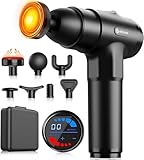
4. AERLANG Heated Massage Gun – Heat Therapy for Deep Relaxation
Massage Gun with Heat Massager Deep Tissue Muscle Massager Gifts for Men
Heated head up to 131F
20 speeds
7 heads
LCD pressure display
Pros
- Heated massage head enhances muscle relaxation
- 20 adjustable speed levels
- Real-time pressure LCD display
- Quiet motor operation
- Good variety of massage heads
Cons
- Requires 6-hour initial battery activation
- Heating head needs separate 2-hour charge
- More complex operation than basic models
Heat and percussion together changed my recovery routine. The AERLANG heated head reaches 131 degrees Fahrenheit, which warms muscle tissue while the percussion works. After cold morning rides, my muscles were stiff and resistant. The heat loosened them before the percussion started working. The combination felt more effective than cold massage alone.
Twenty speed settings give you precise control. I started at lower speeds to warm up tight muscles, then increased intensity as they relaxed. The progression from gentle to strong felt natural for cycling recovery. Starting too aggressive on cold muscles can cause more tension rather than relief.
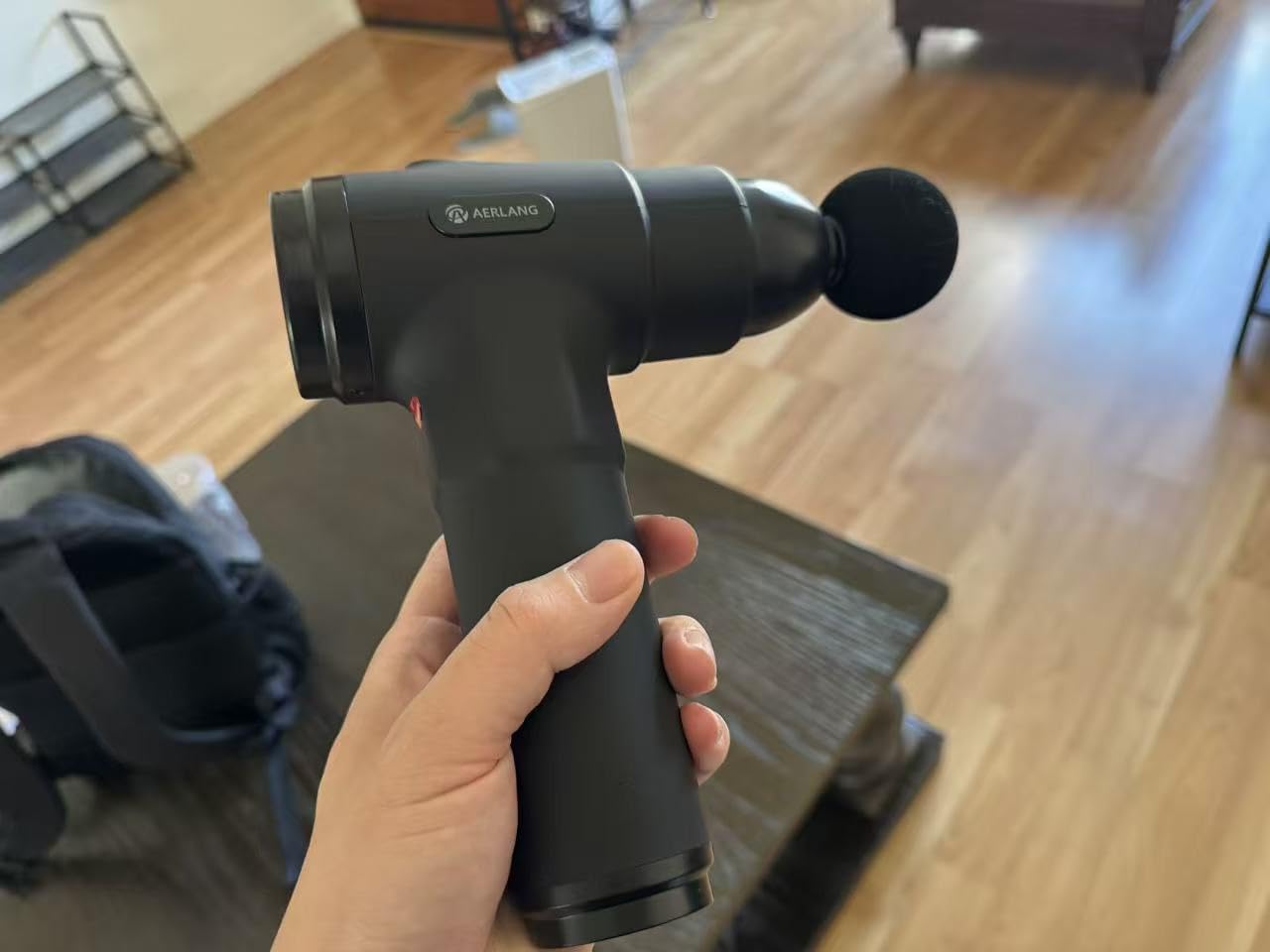
The LCD display shows pressure level in real time. This visual feedback helps you stay consistent across muscle groups. My quads tolerated more pressure than my calves. Seeing the numbers let me adjust appropriately for each muscle. Without the display, I might push too hard on sensitive areas.
The separate heated head charges independently from the main unit. This means you can use the massage gun without heat when you don’t need it, saving battery. For cyclists who primarily want percussion therapy, the heat becomes an optional enhancement. When you do want heat, plan ahead since the heating head needs charging time.
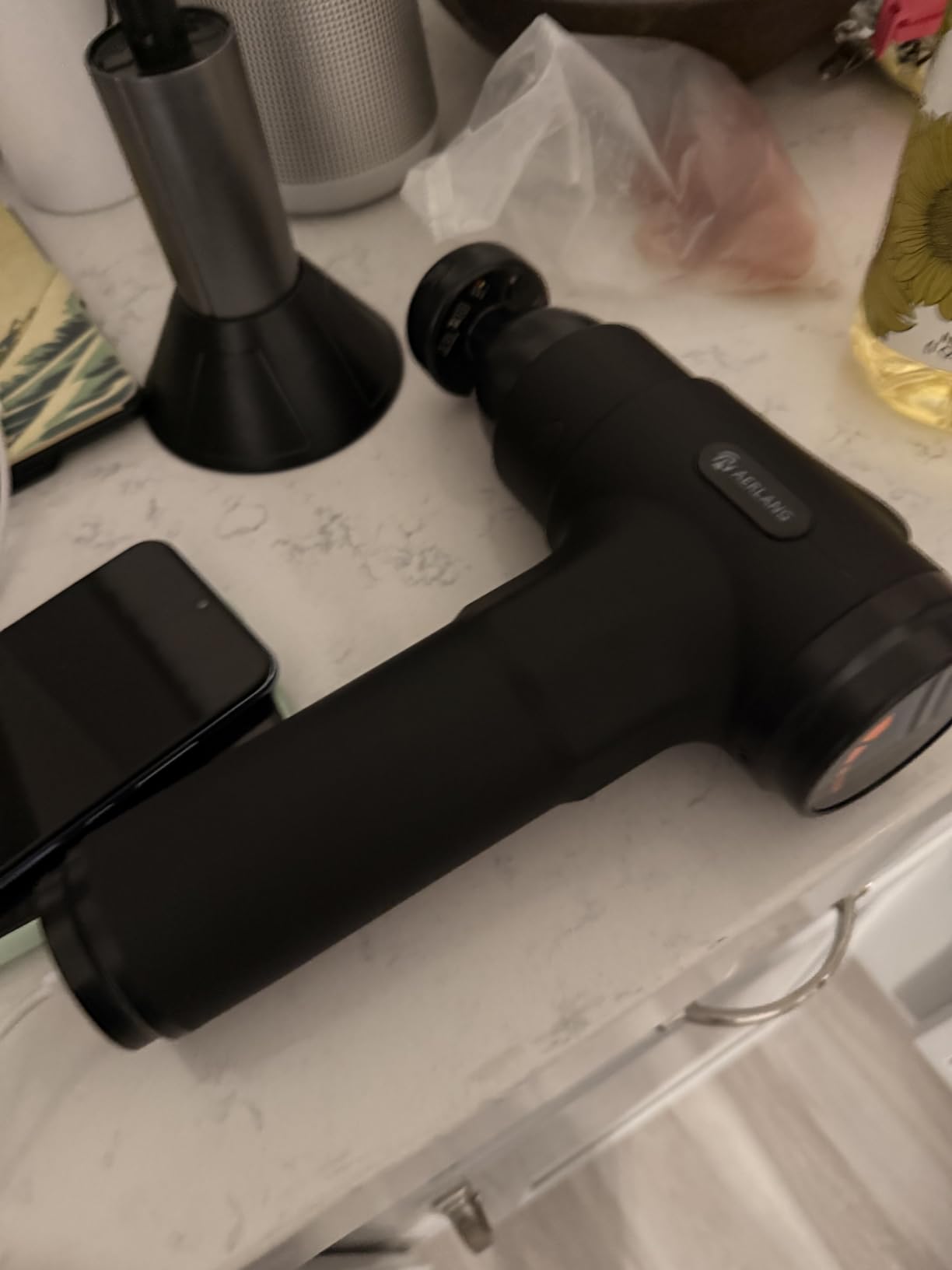
Best for cyclists who ride in cold weather conditions
Winter riding leaves muscles cold and stiff. Heat therapy before percussion helps muscles relax faster. Cold muscles resist deep work, but warmth makes tissue more pliable. The heated head pre-warms areas before the percussion starts, making recovery more effective in cold weather months.
Suited for cyclists with chronically tight muscles
Heat promotes blood flow and relaxation. For riders with persistent muscle tightness from high training volume, the heat function adds therapeutic benefit. Tissue that stays tight from daily riding responds better to combined heat and percussion than either alone. Chronic tightness needs more intervention than occasional soreness.
5. BOB AND BRAD C2 Massage Gun – Physical Therapist Design
BOB AND BRAD C2 Massage Gun, FSA Eligible & HSA Approved Deep Tissue Percussion Massager Gun, Muscle Massager with 5 Speeds and 5 Heads, Electric Back Massagers for Professional Athletes Home Gym
45+ lb stall force
5 speeds
USB-C PD fast charge
40dB quiet
FSA/HSA
Pros
- Designed by physical therapists
- Strong 45+ lb stall force capability
- USB-C PD fast charging
- FSA/HSA eligible purchase
- Whisper quiet 40dB operation
Cons
- Higher price than budget alternatives
- 10-minute auto shutoff
- Only 5 massage heads included
Physical therapists Bob and Brad designed this massage gun specifically for muscle recovery. That matters because they understand how muscles actually work and recover. The 45+ pounds of stall force came from their clinical experience treating dense muscle tissue. When I pressed into my cycling quads, the motor kept driving without stalling.
The USB-C PD fast charging charges fully in under two hours. Standard massage guns often take four hours to charge. After forgetting to charge mine before a ride, I plugged it in during my post-ride shower. By the time I finished cleaning up, enough charge accumulated for a full recovery session. Fast charging fits into cycling routines better than slow charging.
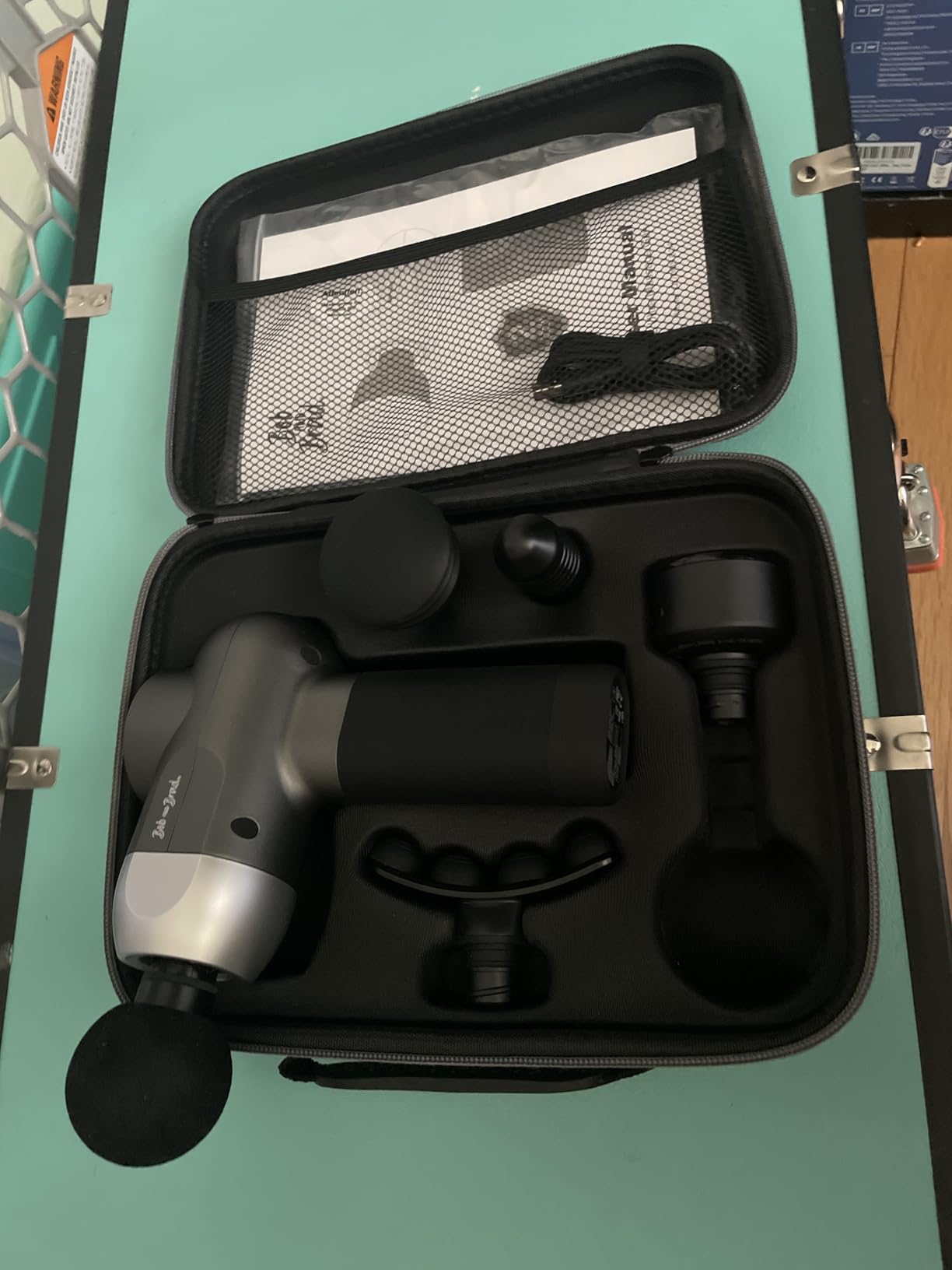
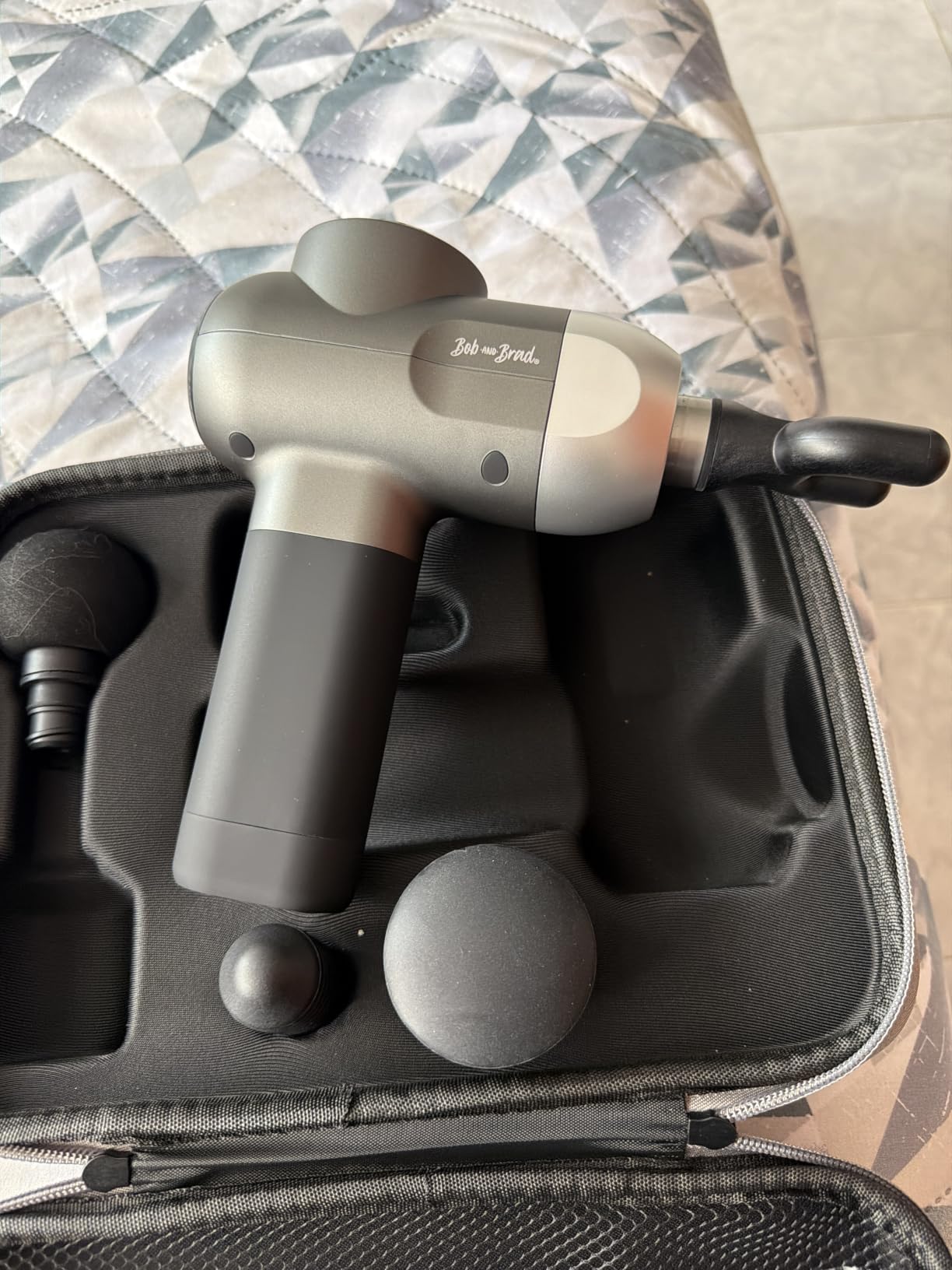
Five massage heads cover the essential targets for cyclists. The bullet head pinpoints trigger points in calves. The ball head covers larger quad areas. The fork head works on areas near the spine. The flat head provides general coverage. The cushion head gentles sensitive spots near joints. Each serves a specific cycling recovery purpose.
Quiet operation at 40dB lets me use it without disturbing family. After evening rides, recovery happens in the living room while others watch television. The volume level doesn’t compete with normal conversation or TV volume. For cyclists who share living spaces, quiet operation keeps recovery from being intrusive.
Best for cyclists who want professional-grade reliability
Physical therapist design means clinical standards applied to a consumer device. The motor durability, stall force, and head selection all reflect professional requirements. Cyclists who invest in quality equipment for bikes often want equally reliable recovery tools. This device meets those expectations for consistent performance.
Works well for serious cyclists who train year-round
Year-round training accumulates deep muscle tightness that requires strong stall force to treat. The 45+ pound stall force works on muscles that have built up density from months of riding. Seasonal cyclists might manage with lighter devices, but consistent riders need stronger penetration for accumulated tightness.
6. Lifepro Sonic Massage Gun – Athlete-Focused Recovery
Lifepro Sonic Massage Gun Percussion Muscle Massager, 8 Heads & 5 Speeds
6 speeds
8 massage heads
6 hour battery
travel case
athlete focus
Pros
- 8 massage heads for full targeting
- Long 6-hour battery runtime
- Lightweight grippy design
- Pre and post ride versatility
- Includes travel case
Cons
- Older 2019 model design
- Charging cable specifications vary
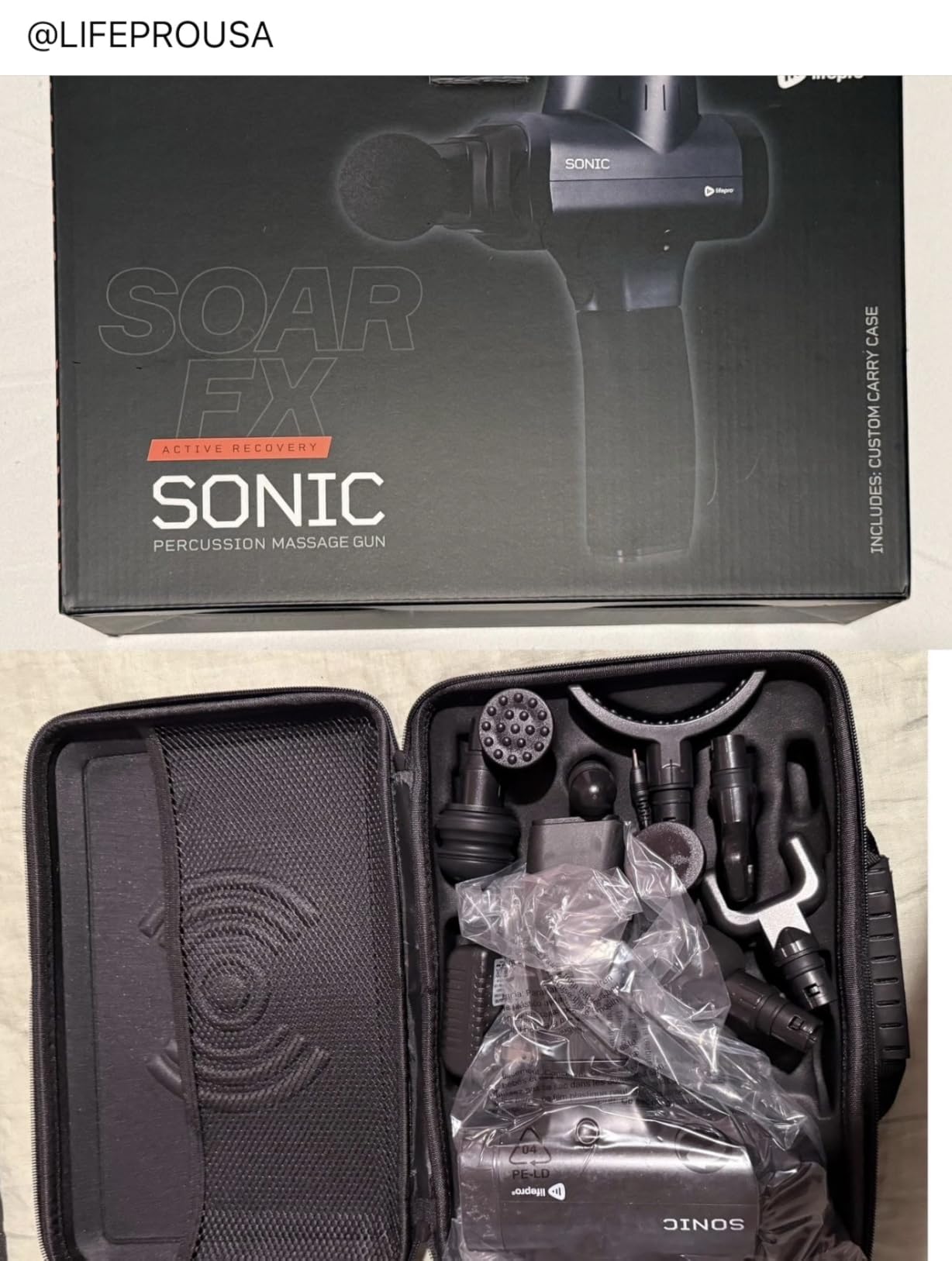
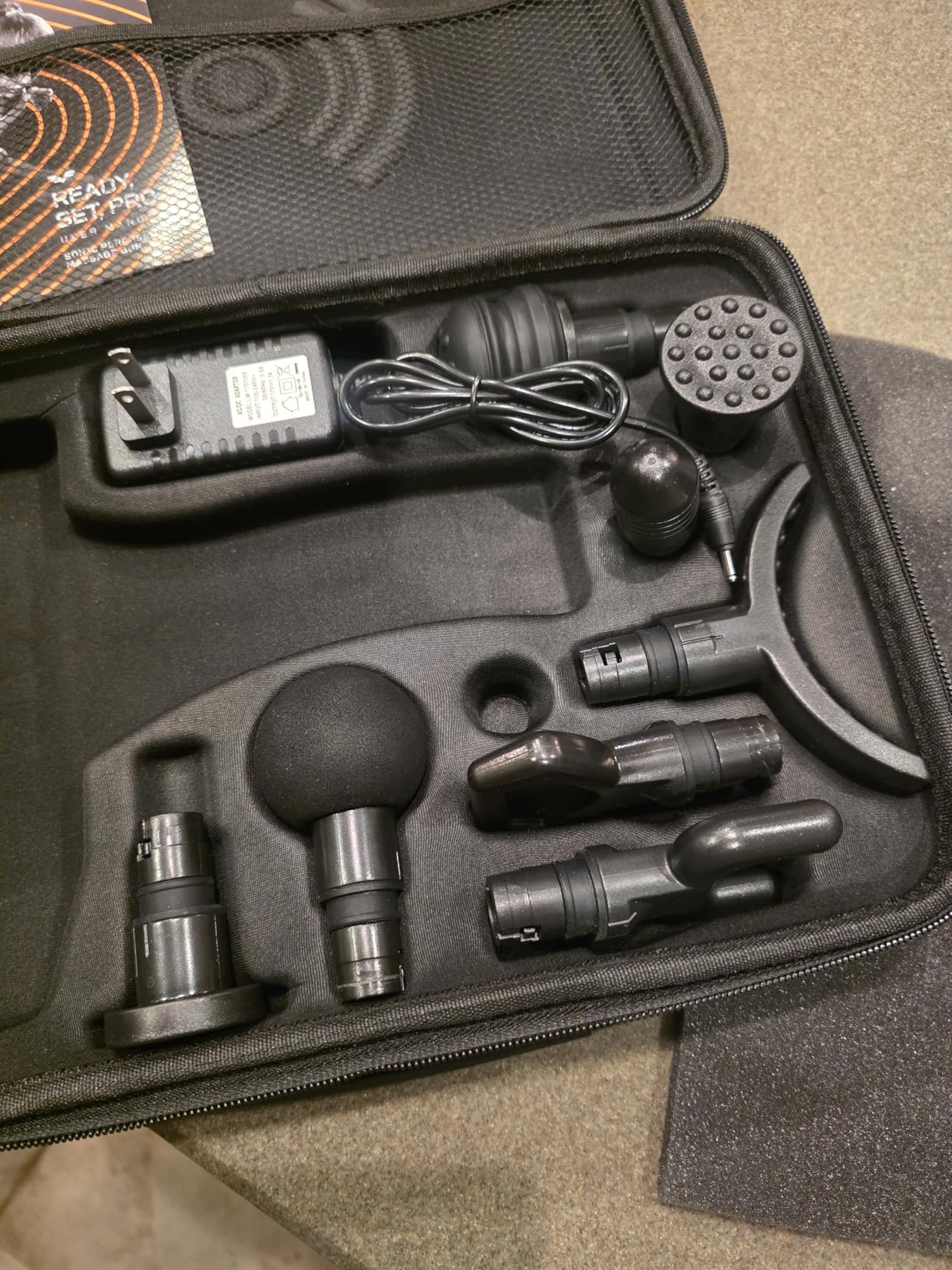
Built specifically for athletes, the Lifepro Sonic targets muscles that sports load heavily. For cyclists, that means the pedal-driven muscle groups: quads from pushing, calves from stabilizing, glutes from power. Eight massage heads give options for each cycling muscle group. I used different heads for quads versus calves versus glutes in the same session.
The six-hour battery life lasts through multiple recovery sessions. I went two full weeks of post-ride recovery without recharging. For cyclists who ride daily, the long battery life means charging becomes weekly rather than daily. That convenience matters when you’re already managing bike maintenance and training schedules.
Pre-workout activation works as well as post-ride recovery. I used lower speeds before morning rides to warm up cold muscles. The percussion increased blood flow before I started pedaling. After rides, higher speeds addressed the accumulated tightness. One device serves both purposes, which simplifies my cycling routine.
The travel case makes it portable for cycling trips. Weekend races and training events become easier when recovery tools pack conveniently. The grippy design stays in your hand during use. Slippery massage guns are frustrating when you’re trying to maintain pressure on angled muscle surfaces like calves.
Best for cyclists who want both warm-up and recovery in one tool
Pre-ride activation improves muscle readiness before training. Post-ride recovery addresses accumulated tightness. One device handling both functions simplifies preparation and recovery routines. Cyclists who value streamlined equipment management benefit from dual-purpose tools.
Works well for cyclists who attend events and training camps
The included travel case protects the device during transport. Race weekends, coaching sessions, and cycling trips all require recovery away from home. Having a dedicated case means the massage gun stays protected and organized with your other cycling gear. Portable recovery maintains your routine wherever you ride.
7. RENPHO Active Thermacool 2 Massage Gun – Dual Temperature Therapy
RENPHO Active Thermacool 2 Massage Gun with Intuitive Heat and Cold Control
Heat and cold therapy
8 settings
3200 RPM
10mm amplitude
2500mAh
Pros
- Dual heat and cold therapy options
- IMA-recommended solution
- VA display for monitoring settings
- Quiet 40dB brushless motor
- FSA/HSA approved purchase
Cons
- Premium price point
- More complex than basic models
Heat and cold therapy in one device gives cyclists options for different recovery phases. Heat loosens tight muscles before deep percussion. Cold reduces inflammation after intense sessions. I used heat on my quads after a long steady ride. Cold worked better on my calves after sprint intervals that caused sharp inflammation.
The IMA recommendation adds credibility from a medical association. When professional organizations endorse a device, it means clinical standards were met. For cyclists who research equipment carefully, professional recommendations matter. This massage gun earned recognition beyond just marketing claims.
![RENPHO Active Thermacool 2 Massage Gun with Heat and Cold, [2026 Upgraded] Handheld Percussion Deep Tissue Neck Back Muscle Massager, FSA Approved Gifts for Men Him Athletes Women Her HSA customer photo 1](https://betterbike.org/wp-content/uploads/2026/07/B0FF9ZCW62_customer_1.jpg)
Eight temperature and speed settings let you customize treatment. Lower speeds with heat work for gentle recovery days. Higher speeds with cold address acute inflammation from hard efforts. The combination options adapt to different riding demands. One session might need warmth and gentle percussion. Another needs cold and aggressive intensity.
The VA display shows settings clearly during use. I could check temperature and speed without interrupting treatment. Visual confirmation matters when you’re adjusting between muscle groups. Without a display, you might forget which setting is active and apply wrong intensity to sensitive areas.
![RENPHO Active Thermacool 2 Massage Gun with Heat and Cold, [2026 Upgraded] Handheld Percussion Deep Tissue Neck Back Muscle Massager, FSA Approved Gifts for Men Him Athletes Women Her HSA customer photo 2](https://betterbike.org/wp-content/uploads/2026/07/B0FF9ZCW62_customer_2.jpg)
Best for cyclists who experience different types of muscle stress
Long endurance rides cause deep tightness that heat addresses. Sprint intervals and climbing efforts cause inflammation that cold treats. Having both options in one device adapts to varied training demands. Cyclists who mix ride types benefit from temperature therapy matching their recovery needs.
Works well for cyclists recovering from injury or inflammation
Cold therapy reduces inflammation from acute stress or minor injuries. Cycling-related inflammation from hard efforts responds to cold treatment. The cold function gives you therapeutic options beyond just percussion. Riders managing recovery from strain or overuse benefit from temperature control.
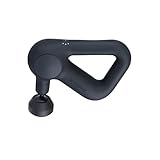
8. TheraGun Therabody Relief Massage Gun – FDA Registered Quality
TheraGun Therabody Relief Massage Gun | for Daily Comfort | 3-Speed | Black
3 speeds
Bluetooth enabled
triangle grip
FDA registered
whisper quiet
Pros
- Gentle percussive therapy for sensitive users
- Bluetooth app support integration
- Patented triangle grip design
- FDA registered medical device
- 30+ clinical studies backing
Cons
- Premium price point
- No storage bag included
- Control button positioning
FDA registration means this device meets medical device standards. That’s rare for massage guns, which typically fall into consumer product categories. The registration indicates quality testing and manufacturing standards that casual products skip. For cyclists who prioritize reliable equipment, FDA registration adds confidence.
The triangle grip design lets you reach angles other massage guns can’t. I could target my own lower back without help. Standard straight-handle massage guns require someone else to reach your back. The triangle shape lets you position the head at angles that match your body’s contours. Self-treatment becomes possible for hard-to-reach areas.
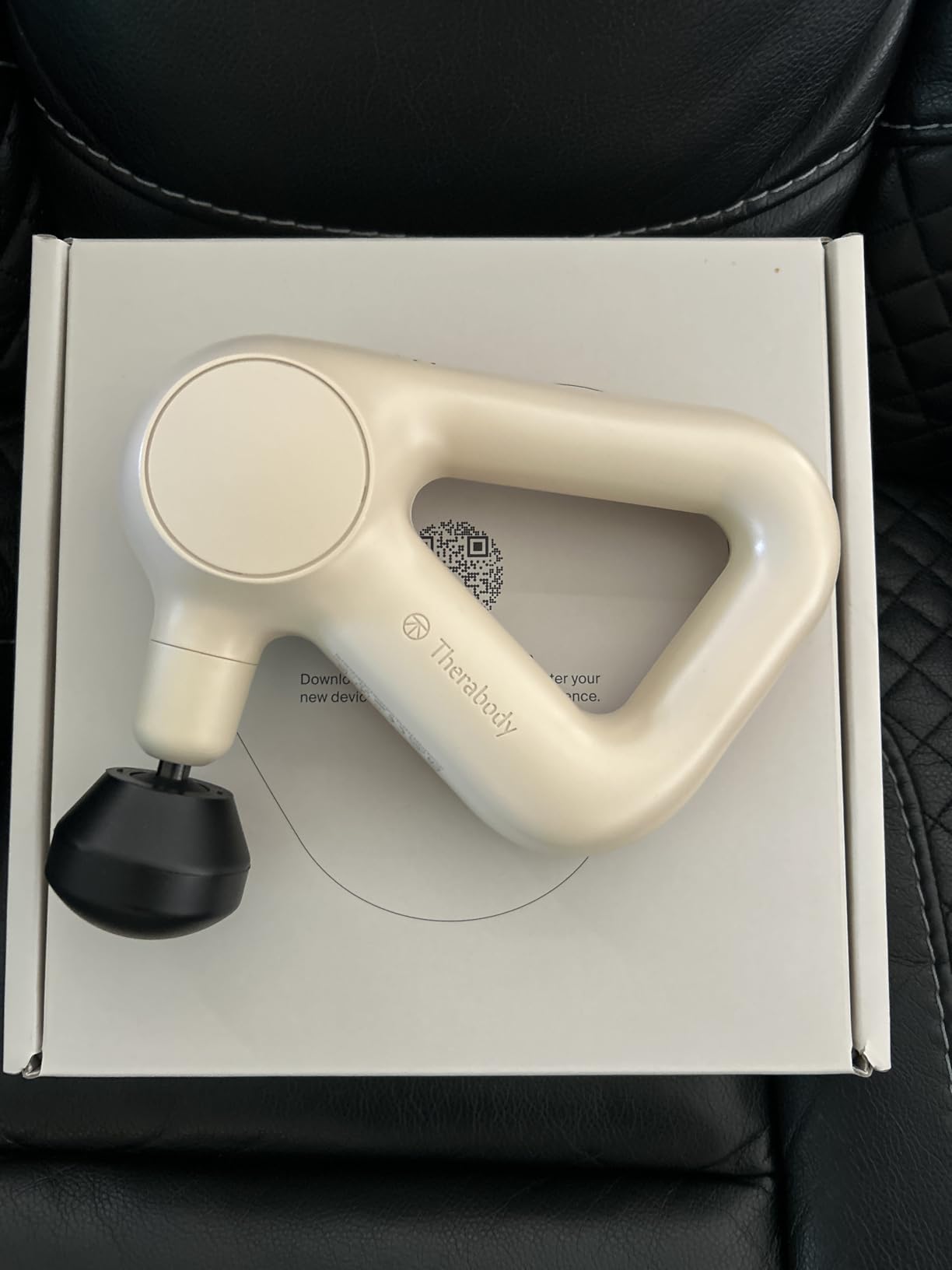
Bluetooth connectivity links to the Therabody app. The app guides treatment for different muscle groups. For cyclists unsure about technique, the app provides instructions specific to each muscle. I learned proper quad and calf technique from the guided sessions. App support helps users who aren’t experienced with massage gun recovery.
Three speeds offer simple intensity control. The settings are gentle enough for sensitive users. Cyclists with tender muscle areas can use lower speeds without aggressive percussion. The gentle approach works for recovery days when deep tissue work feels too intense. Higher speeds address normal tightness when needed.
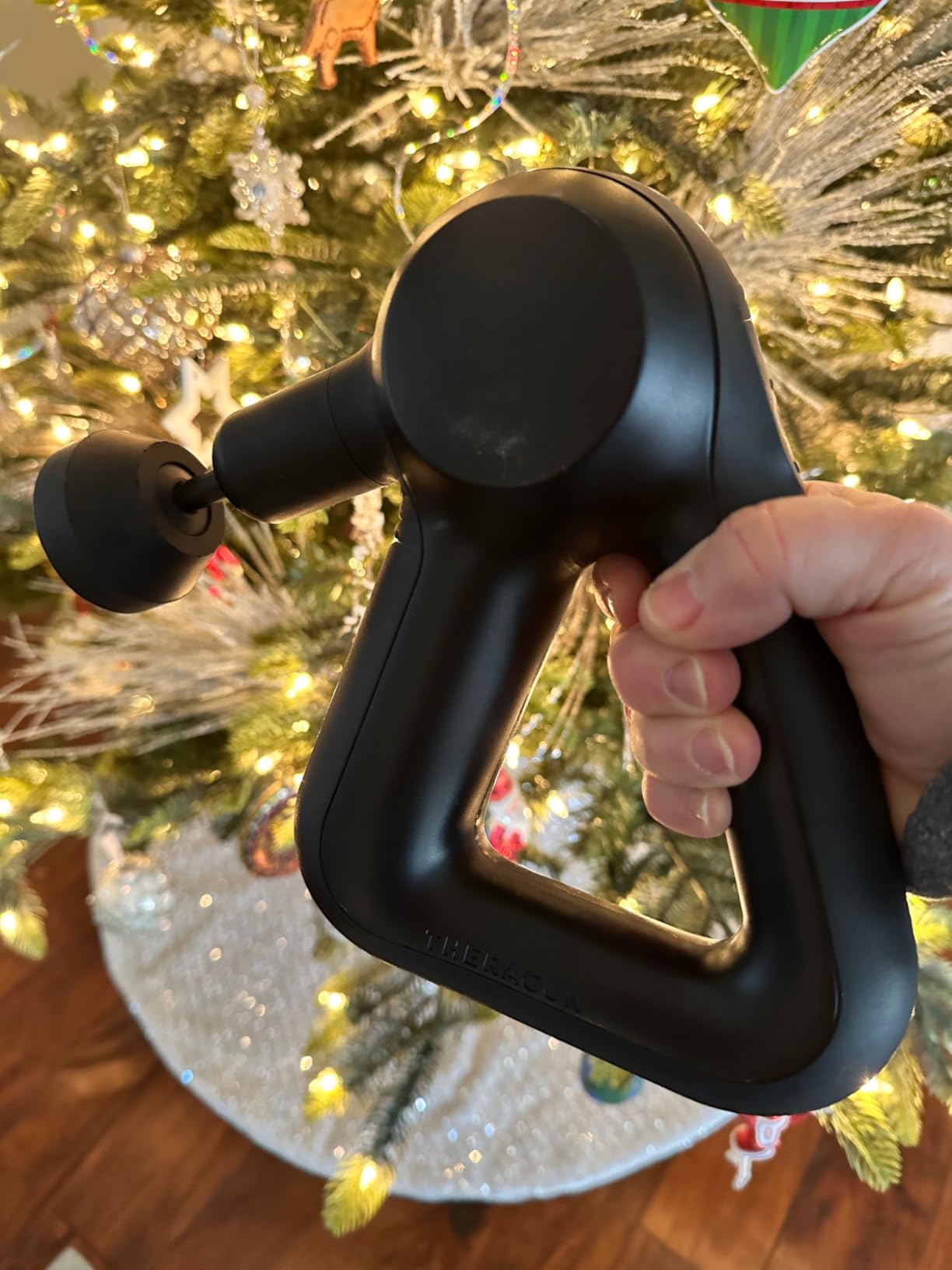
Best for cyclists who want guided recovery through app support
The Bluetooth app provides treatment protocols for different muscles. Cyclists unfamiliar with proper technique benefit from guided instructions. The app shows duration, pressure, and patterns for each muscle group. Learning proper use prevents mistakes that could worsen soreness or cause discomfort.
Works well for cyclists with sensitive muscle areas
Gentle percussive therapy suits riders who find strong massage guns uncomfortable. Some cyclists have tender spots that aggressive percussion irritates rather than helps. The lighter intensity options provide relief without overwhelming sensitive tissue. Recovery should feel therapeutic, not painful.
How to Choose the Best Massage Gun for Cycling Recovery?
Cyclists need specific features that differ from general fitness users. Your leg muscles work differently than runners or weightlifters. Understanding what matters helps you pick the right device for your riding style.
Amplitude and Depth of Penetration
Amplitude measures how deep the massage head travels into muscle tissue. Cycling muscles are dense from repeated pedaling motion. They need deeper penetration than casual users require. Look for 10-12mm amplitude for effective cycling muscle treatment. Lower amplitude massage guns barely reach the muscle belly, just vibrating the surface.
My quads accumulated density from years of riding. Weak massage guns bounced off without penetrating. The 12mm amplitude models reached deep enough to affect accumulated tightness. For newer cyclists with less muscle development, 10mm works adequately. Experienced riders with dense leg muscles need deeper penetration.
Stall Force for Dense Muscle Tissue
Stall force indicates how hard you can press before the motor stalls. Cycling quads and glutes are thick and dense. When you press into dense muscle, the motor must keep driving without bogging down. Look for 40+ pounds of stall force for cycling muscles. Lower stall force devices stall when you press hard into quad tissue.
I tested devices with 20-30 pound stall force on my quads. They stalled constantly when I pressed firmly. The recovery session felt frustrating because the motor kept stopping. Devices with 45+ pounds kept driving consistently. Stall force matters specifically for cycling’s dense muscle groups.
Massage Heads for Cycling Muscle Groups
Different heads target different muscles. Bullet heads pinpoint trigger points in calves. Ball heads cover large quad surfaces. Fork heads work on areas near your spine. Flat heads provide general coverage. Cushion heads gentles sensitive areas near joints. At minimum, you need heads for quads, calves, glutes, and back.
Devices with only 2-3 heads limit your treatment options. I found I needed at least 5-6 heads for comprehensive cycling recovery. The bullet head became essential for calf trigger points after climbing. The ball head covered my entire quad efficiently. Different muscles require different head shapes.
Battery Life for Training Frequency
How often you ride determines battery needs. Daily riders need 4-6 hours of battery life for multiple sessions between charges. Weekend-only cyclists manage with 2-3 hours. Charging frequency should match your routine, not disrupt it. Look for USB-C charging for convenience.
I ride 5-6 days weekly. Massage guns with 2-hour battery life needed charging twice per week. That interrupted my routine. Six-hour battery models charged once every 2-3 weeks. The convenience difference matters when you’re managing bikes, training, and recovery schedules simultaneously.
Noise Level for Home Use
Noise affects when and where you can recover. Quiet operation lets you use massage guns while family watches television or sleeps. Loud motors restrict use to garages or times when noise won’t disturb others. Look for 40-50dB for home compatibility. Lower numbers mean quieter operation.
I tested loud massage guns in my garage after evening rides. Family complained about noise through walls. Quiet models work in my living room or bedroom. The flexibility to recover wherever I finish riding matters more than I initially expected.
FSA and HSA Eligibility
Health savings accounts let you use pre-tax funds for qualified medical devices. Many massage guns qualify for FSA and HSA purchases. This effectively discounts the cost using tax advantages. Check eligibility before purchasing if you have these benefits through your employer.
I purchased an FSA-eligible massage gun using my health savings account. The tax savings made the effective cost significantly lower than the retail price. Cyclists with employer-provided HSA or FSA benefits should prioritize eligible devices.
How to Use a Massage Gun After Cycling?
Technique matters as much as device quality. Poor technique can worsen soreness or cause discomfort. Proper use targets cycling muscles correctly for effective recovery.
Target Cycling-Specific Muscles
Quads work hardest during pedaling. Focus on vastus lateralis on the outer thigh and rectus femoris in the front. Calves stabilize throughout the pedal stroke. Address gastrocnemius along the back of the calf. Glutes generate power during the push phase. Target gluteus maximus and medius. Lower back supports your riding position. Address tension along the lumbar region.
Work each muscle group for 30-60 seconds. Start with larger muscles like quads, then move to smaller areas like calves. Treat muscles distal to proximal: start at lower points and work upward toward your core. This promotes blood flow from extremities back toward your heart.
Avoid Direct IT Band Treatment
Many cyclists try to massage their IT band directly after feeling tightness along the outer thigh. This approach can worsen IT band issues. Instead, work the muscles around the IT band: tensor fasciae latae at the hip, glute medius above the hip, and vastus lateralis beside the IT band.
Releasing tension in surrounding muscles addresses IT band discomfort without irritating the band itself. The IT band is connective tissue, not muscle. Massage guns work on muscle tissue, not fascia bands. Targeting surrounding muscles relieves IT band tightness through indirect treatment.
Use Before and After Rides
Pre-ride use warms muscles with light percussion at low speeds. Thirty seconds per muscle group increases blood flow before pedaling. Cold morning rides benefit from activation beforehand. Post-ride use addresses accumulated tightness with deeper pressure at higher speeds. Wait until heart rate normalizes after hard efforts.
I use gentle percussion before cold morning rides. The activation helps muscles feel ready sooner. After rides, I wait until I’ve cooled down completely. Treating muscles while heart rate is elevated can cause discomfort. Proper timing maximizes recovery benefit.
Adjust Intensity by Muscle Sensitivity
Different muscles tolerate different pressure. Quads handle strong intensity. Calves need moderate pressure. Lower back requires gentler treatment. Areas near joints stay at low intensity. Adjust speed settings based on muscle density and sensitivity rather than using one setting everywhere.
I started with high intensity on quads, which tolerated strong percussion. My calves needed lower settings to avoid discomfort. Near my knee joints, I used the gentlest intensity. Proper adjustment prevents causing soreness while treating existing tightness.
FAQs
Are massage guns good for cyclists?
Yes, massage guns effectively target cycling-specific muscles like quads, calves, and glutes that repeatedly work during pedaling. The percussion therapy increases blood flow to these muscles, reducing post-ride soreness and accelerating recovery between training sessions.
Can a massage gun help with piriformis syndrome?
Massage guns can help relieve piriformis syndrome symptoms by targeting the glute muscles surrounding the piriformis. Deep glute work releases tension that contributes to piriformis compression. Avoid direct pressure on the piriformis itself, instead working surrounding glute tissue to reduce the muscle tightness causing the syndrome.
What is the highest rated massage gun?
The Mebak 3 Massage Gun holds the highest rating among tested models at 4.7 stars with nearly 20,000 reviews. It offers 53 pounds of stall force and 12mm amplitude for professional-grade deep tissue work on dense cycling muscles.
Can a massage gun help with arthritis?
Massage guns can provide relief for muscle tension around arthritic joints, but avoid direct percussion on the joint itself. Gentle massage of surrounding muscles may reduce stiffness and improve comfort. Consult a healthcare provider before using percussion therapy near arthritic areas to ensure appropriate use for your specific condition.
Conclusion
After testing these eight massage guns on cycling recovery, the best massage guns for cyclists combine strong stall force, deep amplitude, and versatile massage heads. The Mebak 3 delivers professional-grade power for dense leg muscles. TOLOCO offers maximum versatility with ten heads. Medcursor provides quiet recovery for home use. Each model serves different cyclist needs, from daily training recovery to travel-friendly portability.
Pick based on your riding frequency, muscle density, and recovery environment. Riders who train daily benefit from stronger stall force devices. Weekend cyclists manage well with versatile mid-range options. Where and when you recover determines noise requirements. Your cycling recovery routine becomes more effective with the right massage gun matching your specific demands.