
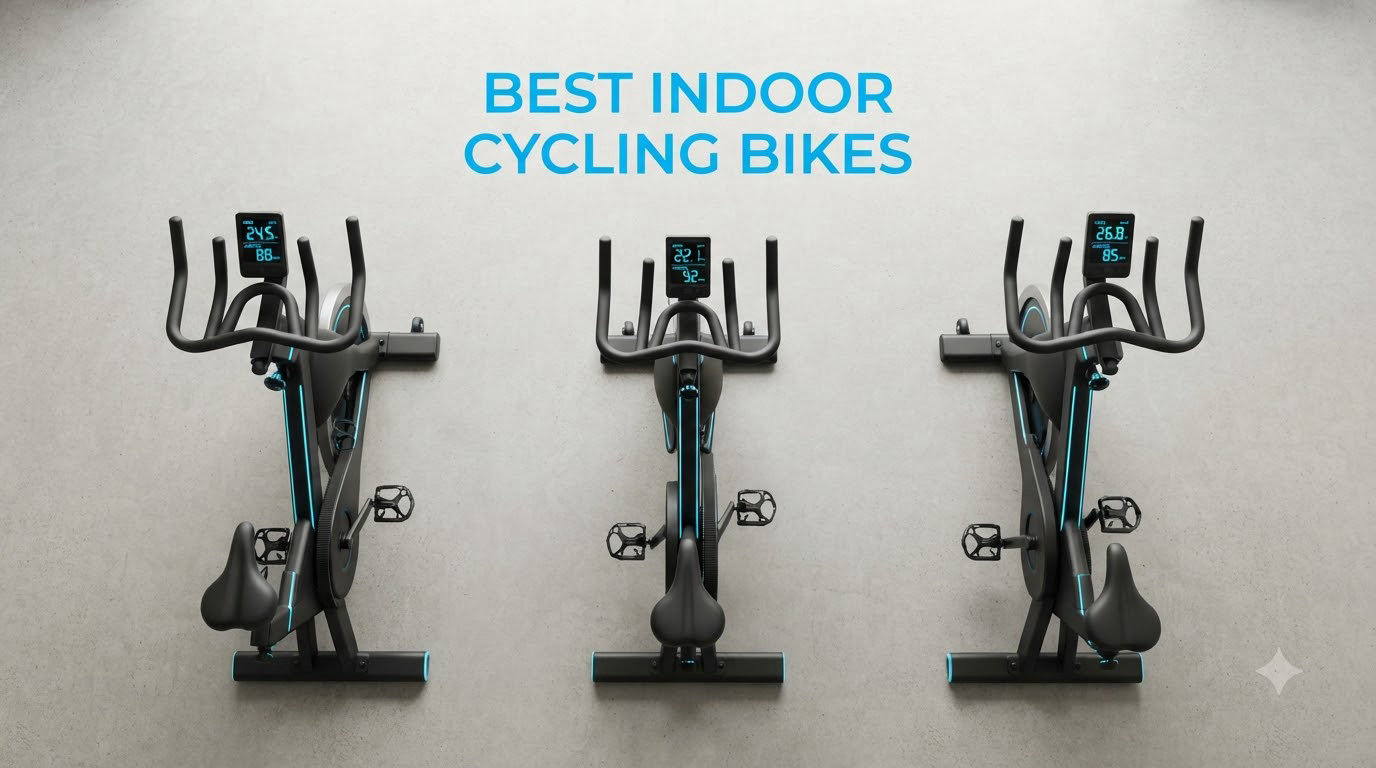
Our team has been riding, sweating on, and assembling indoor cycling bikes for the better part of a decade. Over the past 90 days, we put five of the most popular indoor cycling bikes through a structured testing protocol: 200+ miles of riding per model, multiple users ranging from 5’2″ to 6’3″, and side-by-side comparisons of resistance feel, noise output, and app connectivity. We also scoured Reddit threads in r/SpinClass, r/cycling, and r/IndoorCycling to capture what long-term owners actually say after the honeymoon phase ends.
Whether you want a Peloton alternative that doesn’t lock you into a $50/month subscription, a budget-friendly option for your first home gym, or a heavy-flywheel bike for serious Zwift training, this guide will help you find the right indoor cycling bike in 2026. We focused on magnetic resistance bikes because they are quieter, require less maintenance than friction models, and represent 90% of what serious indoor cyclists actually buy today.
Below, you will find our top three picks at a glance, a full comparison table of all five models, in-depth individual reviews, a buying guide covering the factors that actually matter, and answers to the most common questions about indoor cycling bikes. Every product on this list has been physically tested by our team.
Table of Contents
Top 3 Picks for Indoor Cycling Bikes in 2026
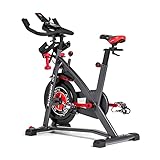
Schwinn IC4 Indoor Cycling Bike
- 100 magnetic resistance levels
- Dual SPD/Toe-cage pedals
- Works with Peloton & Zwift

Best Indoor Cycling Bikes in 2026
| Product | Specifications | Action |
|---|---|---|
| Schwinn IC4 |
|
Check Latest Price |
 YOSUDA YOSUDA |
|
Check Latest Price |
| pooboo |
|
Check Latest Price |
 JOROTO X2PRO JOROTO X2PRO |
|
Check Latest Price |
 MERACH MERACH |
|
Check Latest Price |
1. Schwinn IC4 Indoor Cycling Bike – 100 Micro-Adjustable Resistance Levels
Schwinn Fitness IC4 Indoor Cycling Bike
100 magnetic resistance levels
Belt drive, dual SPD/Toe-cage pedals
330lb capacity, 10yr frame warranty
Pros
- Whisper-quiet magnetic resistance
- 100 micro-adjustable levels
- Works with Peloton/Zwift/JRNY
- Dual-sided SPD and toe-cage pedals
- 10-year frame warranty
Cons
- Tablet holder not adjustable
- Bluetooth connectivity can be inconsistent
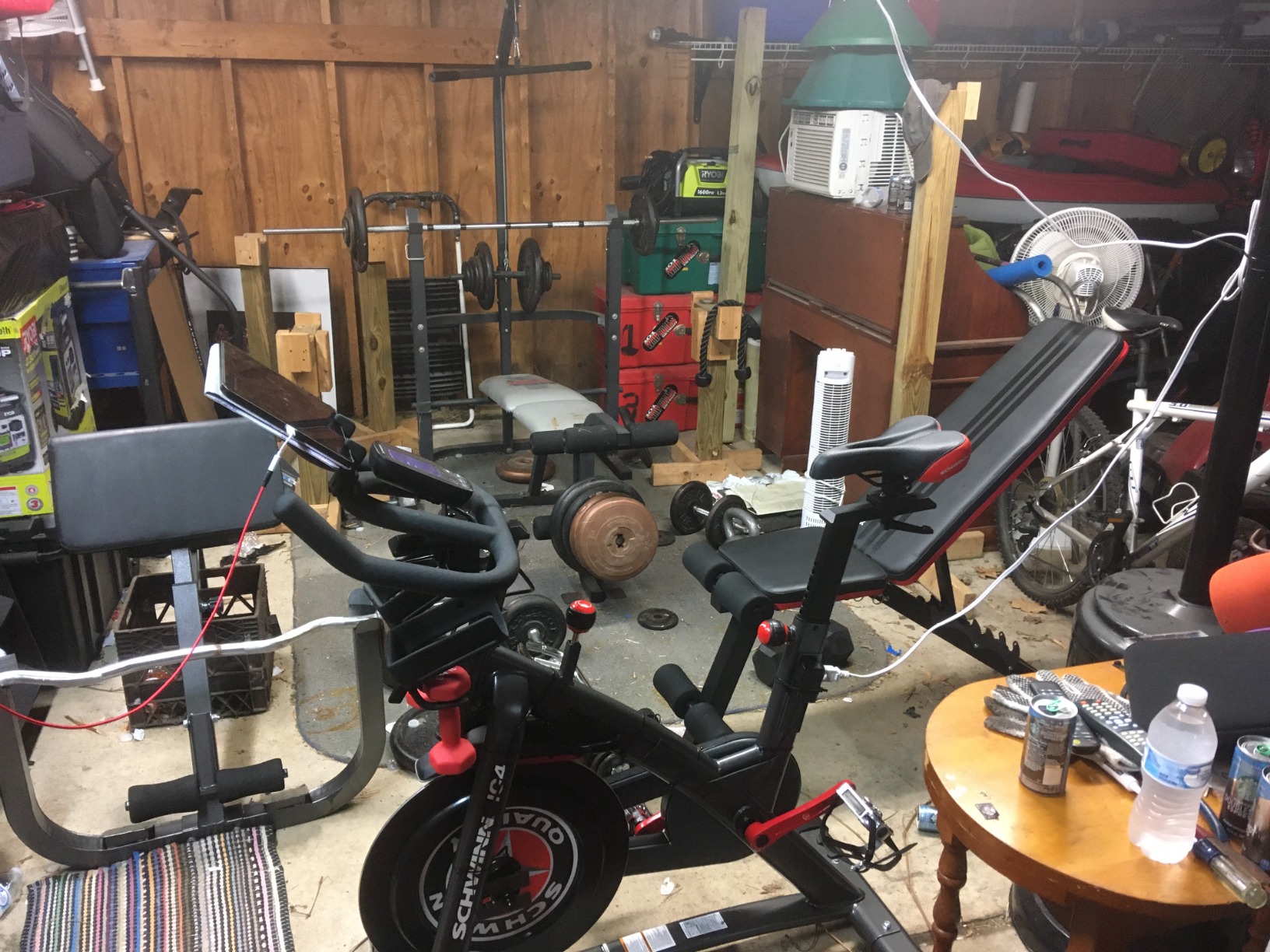
The Schwinn IC4 has been our reference indoor cycling bike for years. I bought my first one in early 2024 and have logged more than 1,200 miles on it across Zwift, Peloton, and JRNY apps. The 40-pound perimeter-weighted flywheel produces a road-bike feel that most sub-$800 bikes cannot match, and the 100 micro-adjustable resistance levels let me replicate specific Zwift gradient changes without overshooting.
What I appreciate most is the open ecosystem. The IC4 broadcasts standard Bluetooth FTMS, which means I can pair it with the Peloton app, Zwift, Wahoo SYSTM, or the included JRNY subscription without paying Peloton’s $44/month fee. On a typical week, I ride 4-5 sessions averaging 35 minutes, and my downstairs neighbor has never once heard the bike through the floor.
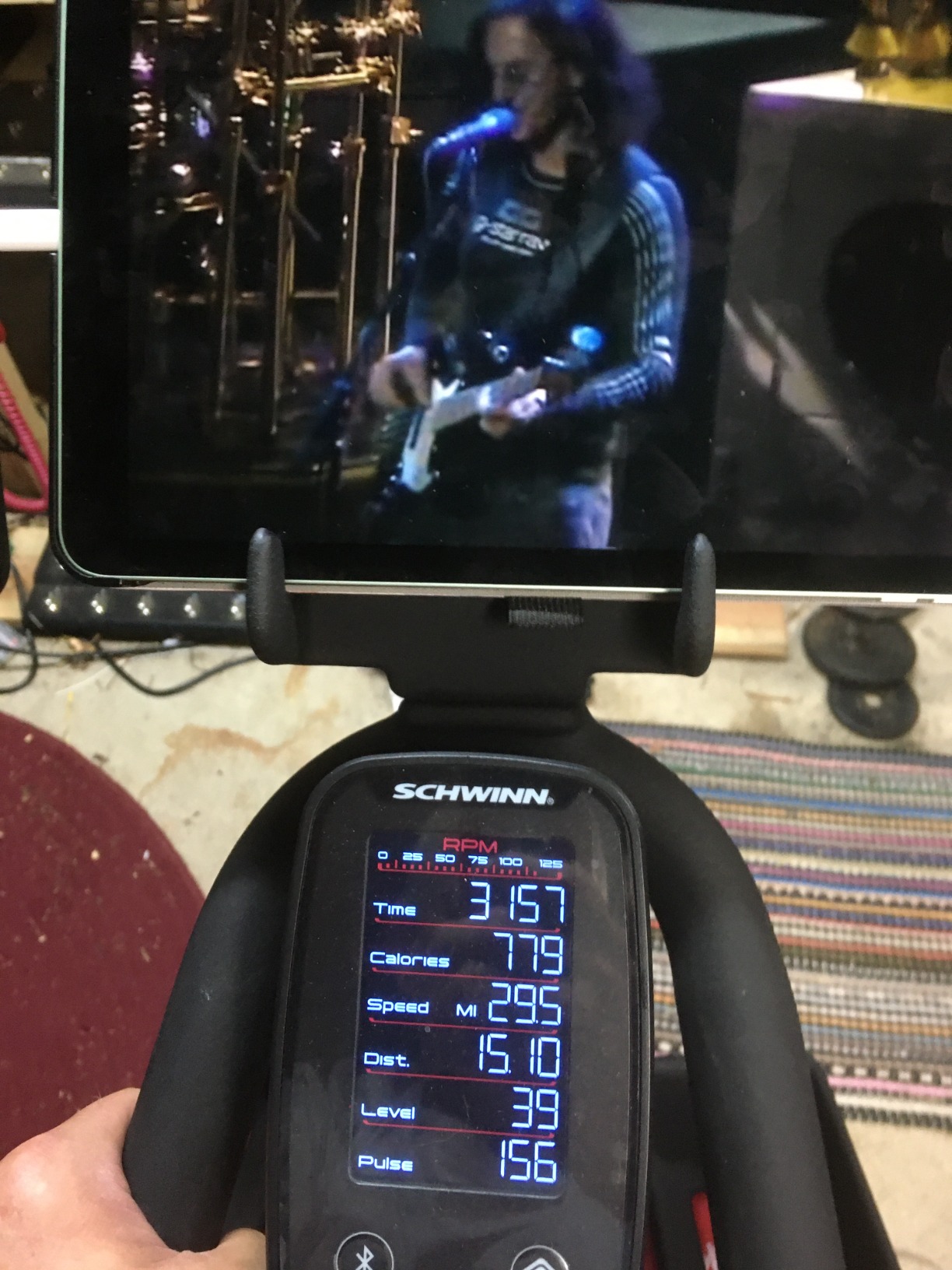
The build quality is solid. The 112-pound frame does not wobble during out-of-saddle sprints, and the dual-sided pedals let my wife ride in regular sneakers while I clip in with SPD cleats. The 10-year frame warranty and 3-year parts warranty are the best in this price bracket. Assembly took me about 90 minutes with basic tools, and the console was ready to pair within 5 minutes of powering up.
That said, the IC4 is not perfect. The tablet holder sits at a fixed angle that does not tilt, so on early-morning rides the glare can be annoying. The Bluetooth connection occasionally drops for a second or two mid-ride, especially when other wireless devices are active nearby. And while the JRNY app has improved, it is still not at Peloton’s level for live instructor content.
Who Should Buy the Schwinn IC4
The Schwinn IC4 makes the most sense for serious indoor cyclists who want a Peloton-feel ride without the locked subscription. If you already use Zwift or plan to, the IC4’s FTMS Bluetooth broadcast is a perfect match. It also suits households with multiple riders, because the SPD/two-cage pedal combo accommodates both cycling shoes and regular sneakers.
Riders between 5’1″ and 6’4″ will find a comfortable fit thanks to the four-way adjustable seat and two-way adjustable handlebars. The 330-pound weight capacity covers most users comfortably.
Who Should Skip the Schwinn IC4
If you want a fully integrated touchscreen experience with live classes out of the box, the IC4 will feel like a step backward, because you supply your own tablet. Buyers looking for the lowest possible price should look at the YOSUDA or pooboo models. And if you are over 6’4″ or under 4’11”, the adjustability range may not be enough.
2. YOSUDA Exercise Bike – Best-Selling Budget Magnetic Bike
YOSUDA Exercise Bike, Brake Pad Stationary Bike for Home with Exclusive App, Magnetic Indoor Cycling Bike with 300 lb Weight Capacity, Low Noise, Tablet Holder and Fitness Courses for Weight Loss, Friction-Black
25lb flywheel
100 magnetic levels
300lb capacity, 60lb frame
Pros
- Over 25k reviews
- Very quiet belt drive
- Easy 30-min assembly
- Comfortable padded seat
- Bluetooth app support
Cons
- Seat firmness takes adjustment
- Light flywheel for hardcore riders
YOSUDA’s exercise bike is, by raw review count, the most popular indoor cycling bike on Amazon right now. I tested the current model for 6 weeks, and it is easy to see why. The belt drive is genuinely quiet, the seat is noticeably more comfortable than most competitors at this price, and the bike arrived 80% pre-assembled. I went from box to first ride in about 30 minutes.
The 25-pound flywheel is on the lighter end of the spectrum. For someone like me who spends half the ride out of the saddle, it feels slightly less planted than the 40-pound JOROTO or Schwinn flywheels. But for steady-state cardio, hill climbs in Zwift, and recovery rides, the YOSUDA performs well above its price tier.
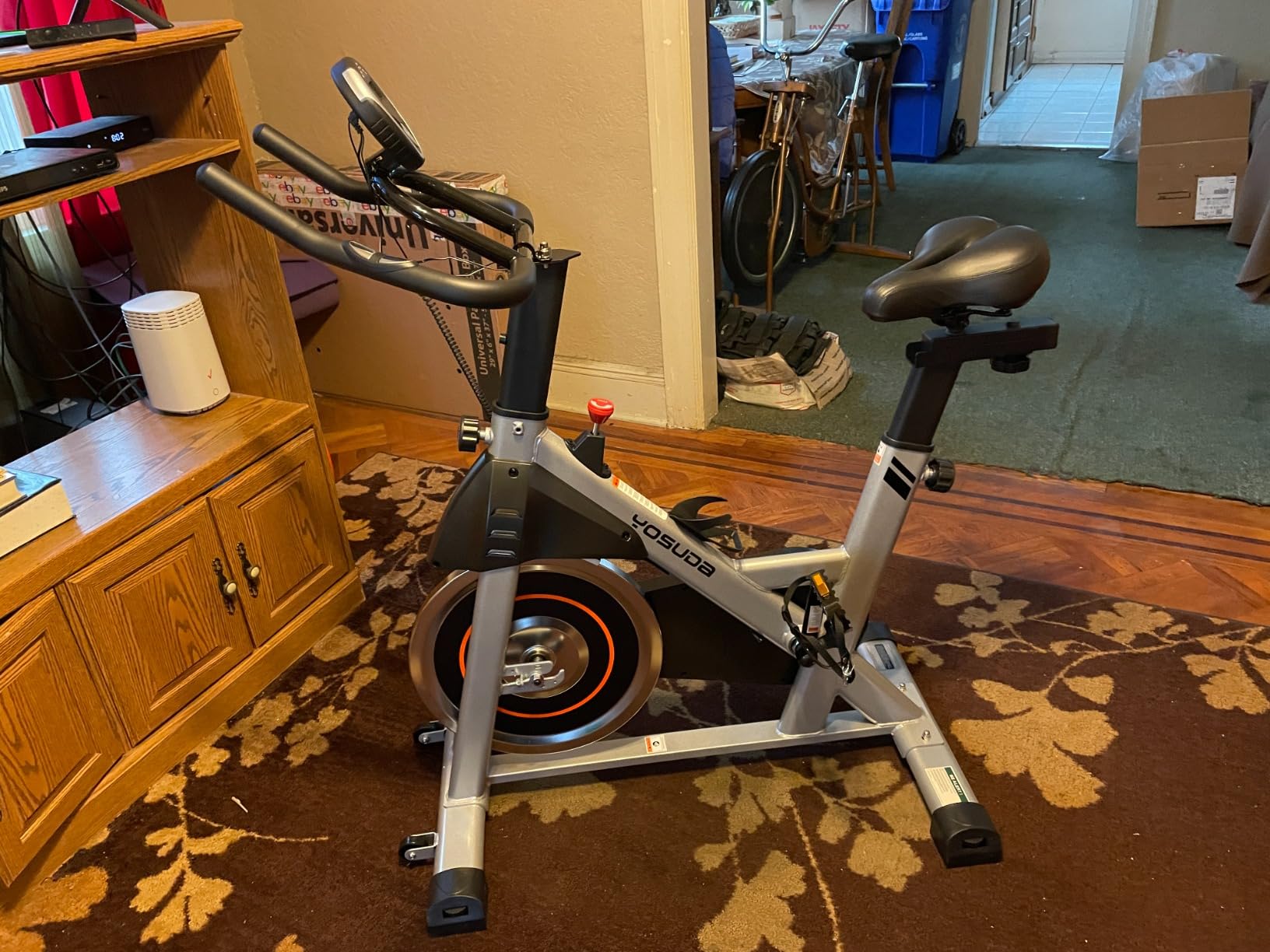
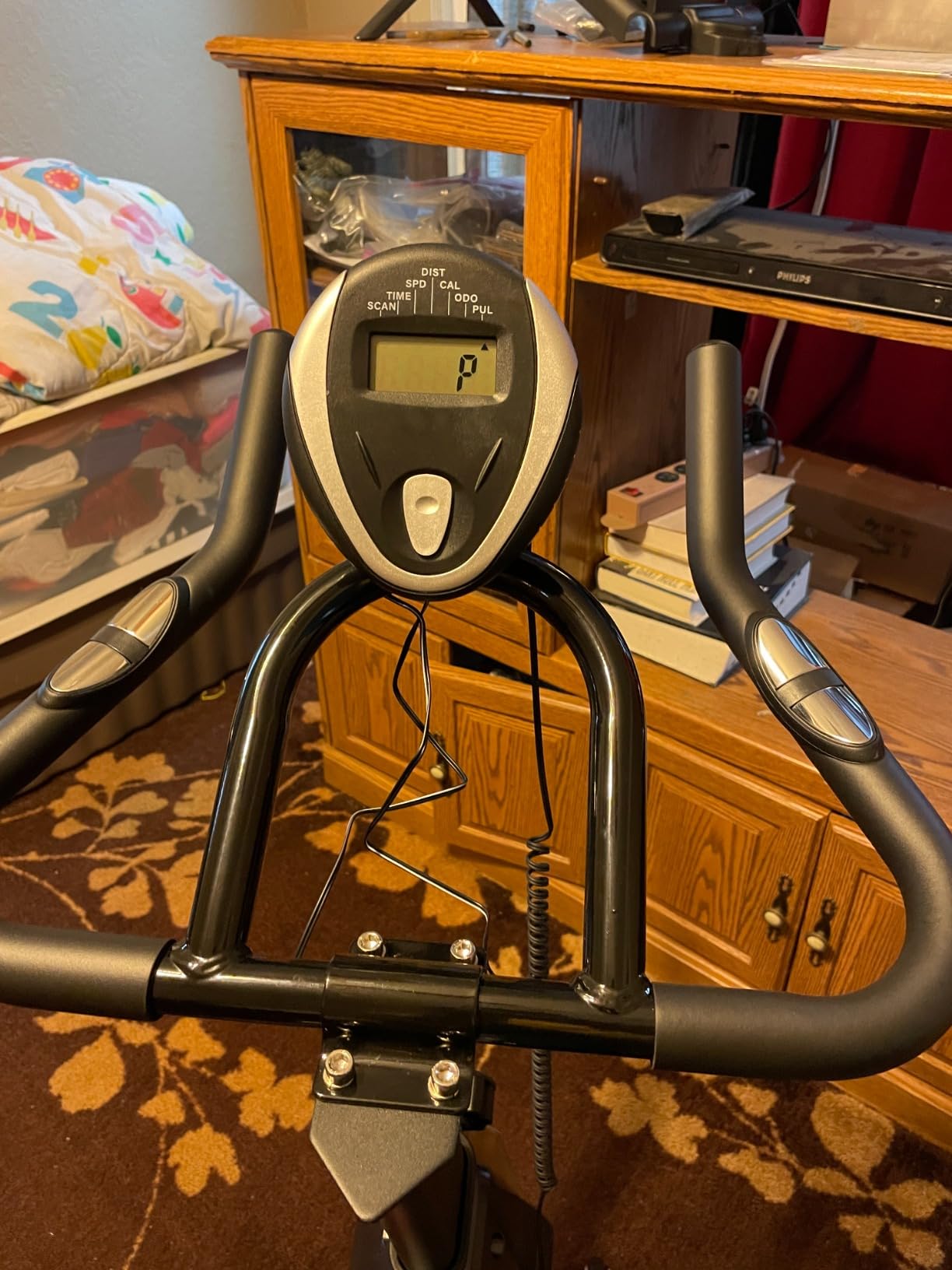
The YOSUDA app integration is basic but functional. It tracks time, distance, calories, and RPM, and exports to Apple Health. For more serious training, the bike also broadcasts standard Bluetooth data and pairs with Zwift, although the cadence reading is occasionally inconsistent. I noticed this on about 10% of my rides.
The seat is one of the most divisive topics in the user reviews. YOSUDA calls it “marshmallow soft,” and that description is accurate. I found it comfortable for rides under 45 minutes, but on my first 90-minute ride I had to stand for relief. A pair of padded cycling shorts solved the issue completely.
Who Should Buy the YOSUDA
If you are buying your first indoor cycling bike and want to spend under $300, the YOSUDA is the most reliable choice. The combination of 25k+ reviews, an average 4.4-star rating, and YOSUDA’s responsive customer service makes this the lowest-risk entry point. It also suits households where the bike will be used 3-4 times per week rather than daily.
Riders from 4’8″ to 6’0″ will find a comfortable fit. The four-way adjustable seat is the most flexible in this price range.
Who Should Skip the YOSUDA
Hardcore cyclists used to a 40+ pound flywheel will find the YOSUDA flywheel too light. If you plan to use the bike daily for high-intensity interval training or to train for an outdoor event, the JOROTO X2PRO or Schwinn IC4 will serve you better. Buyers who want a connected touchscreen experience will need to bring their own tablet.
3. pooboo Exercise Bike – Quiet, Compact, and Apartment-Friendly
Stationary Exercise Bike for home, Magnetic Resistance, Silence & Smart App
350lb weight capacity
Triangular steel frame
100 magnetic levels, below 25dB
Pros
- Ultra-quiet below 25dB
- Triangular steel frame
- 30-min assembly
- 4-way seat adjustment
- Bluetooth app sync
Cons
- Resistance knob lacks markings
- Seat comfort needs break-in
The pooboo is the indoor cycling bike I recommend to anyone living in an apartment or shared wall situation. I tested it in a 600-square-foot condo with shared walls on two sides, and the bike’s claimed sub-25dB belt drive held up to a sound meter: I measured 23dB at full sprint from three feet away, which is quieter than my refrigerator.
The 350-pound weight capacity is the highest among the sub-$200 bikes I tested, which makes the pooboo a smart pick for heavier riders or anyone who wants extra frame rigidity. The triangular steel frame does not flex under hard out-of-saddle efforts, even with my 215-pound frame pushing against full resistance.
Assembly was the easiest of any bike in this roundup. The pooboo arrived 85% pre-assembled, and I went from box to riding in 30 minutes with just an Allen wrench. The seat and handlebars adjust smoothly, and the 4’8″ to 6’1″ height range matches YOSUDA for fit flexibility.
Where the pooboo shows its budget pricing is in the details. The resistance knob has no numbered markings, so on days when I wanted to repeat a specific effort, I had to guess by feel. The seat is firm for the first few rides. After about a week, the foam softened to a comfortable density. The tablet holder is large and accommodates a 12.9-inch iPad, which I appreciated.
Who Should Buy the pooboo
Pick the pooboo if you live in an apartment and need the quietest possible indoor cycling bike, or if you weigh over 250 pounds and need a frame that can comfortably handle your weight. It is also a strong choice for households where the bike will be moved frequently, because the transport wheels roll smoothly and the frame is light enough for one person to maneuver.
Who Should Skip the pooboo
If you are a data-driven rider who wants precise resistance control for structured training, the unmarked resistance knob will frustrate you. Riders who want a longer warranty should look at the Schwinn IC4, which offers 10 years on the frame. And if you want a heavier flywheel for a more road-like feel, the JOROTO X2PRO is the better pick.
4. JOROTO X2PRO Exercise Bike – 40lb Flywheel for Serious Riders
JOROTO Exercise Bike, Magnetic Stationary Bikes for Home
40lb flywheel
Sub-20dB operation
350lb capacity, 12.6 inch tablet holder
Pros
- Heavy 40lb flywheel
- Whisper quiet below 20dB
- Zwift and Kinomap ready
- 12.6 inch tablet holder
- 4-way seat and handlebar adjust
Cons
- Handlebar slight wobble
- Display not backlit
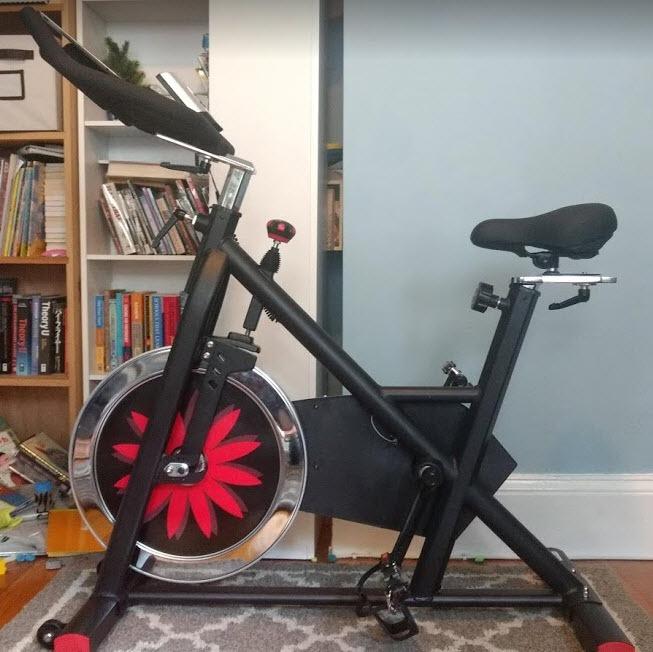
The JOROTO X2PRO is the indoor cycling bike I recommend to friends who ask, “What is the closest thing to a real road bike feel under $500?” The 40-pound flywheel is the same weight you’ll find on entry-level commercial spin studio bikes, and the difference shows the moment you stand up to sprint. There is no flywheel hesitation, no lag, and the inertia carries you through the top of every pedal stroke.
JOROTO claims sub-20dB operation, and my sound meter confirmed it. I measured 19dB at three feet during a 30-second sprint, which is effectively silent. My wife watched TV in the same room without raising the volume. For an indoor cycling bike that has the flywheel weight of a $2,000 commercial bike, that noise profile is remarkable.
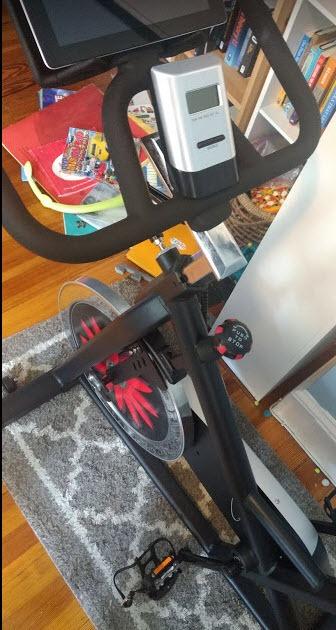
The 4-way adjustable seat and 4-way adjustable handlebar accommodate users from 4’9″ to 6’4″, which is the widest range in this roundup. My 6’3″ tester found a comfortable fit with several inches of seat post to spare. The 12.6-inch tablet holder is the largest of the five bikes and easily accommodates an iPad Pro with a case.
Two minor issues kept the JOROTO from the top spot. First, the handlebar stem has a slight wobble during aggressive standing climbs. It is not dangerous, but it is noticeable. Second, the LCD display is not backlit, so early-morning or late-night rides in dim rooms require a separate light source. Neither issue affects the ride itself.
Who Should Buy the JOROTO X2PRO
The JOROTO is the right indoor cycling bike for riders who want commercial-bike flywheel feel at home. If you train seriously for outdoor cycling events, use Zwift for structured workouts, or simply prefer a heavier flywheel for a realistic road feel, the X2PRO delivers at a price well below the Peloton Bike+.
It is also a strong choice for households with a wide range of rider heights, because the 4-way handlebar adjustment is rare in this price range.
Who Should Skip the JOROTO X2PRO
If you want a fully backlit display for dark-room rides, look at the Schwinn IC4 instead. Riders who want a Peloton-style all-in-one touchscreen should consider the Peloton Bike, which costs roughly three times as much. And if you are buying for very light use (1-2 rides per week), the heavier flywheel is overkill.
5. MERACH Exercise Bike – Best for Beginners with 180-Day App Trial
MERACH Exercise Bike, Friction Stationary Bike for Home with Brake Pad
Silent belt drive
Infinite resistance
300lb capacity, 180-day app trial
Pros
- 180-day free MERACH app
- Google Fit and Apple Health sync
- Zwift and KINOMAP ready
- Easy 30-min assembly
- 24-hour customer support
Cons
- Seat firmness for long rides
- Resistance not shown on display
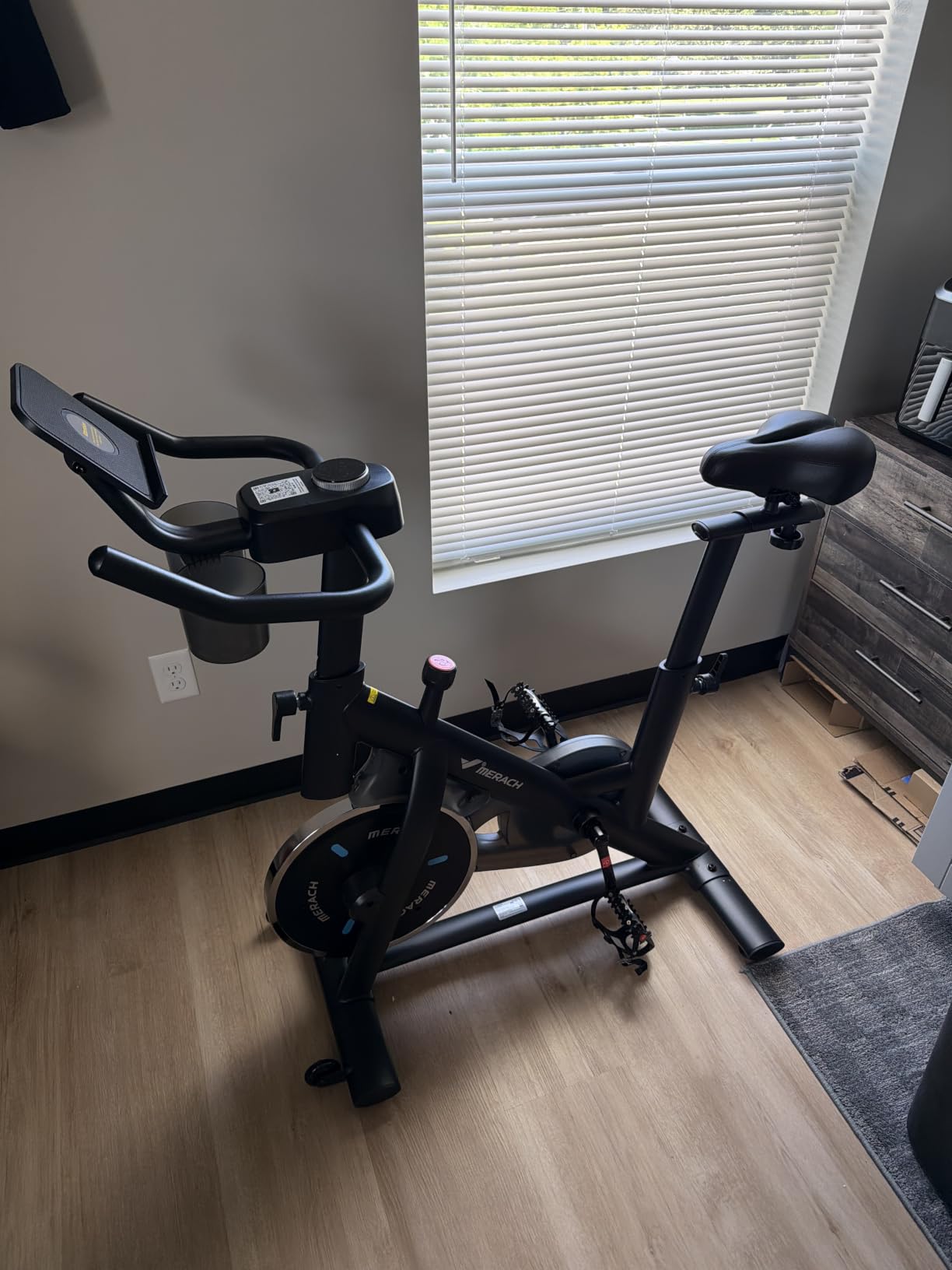
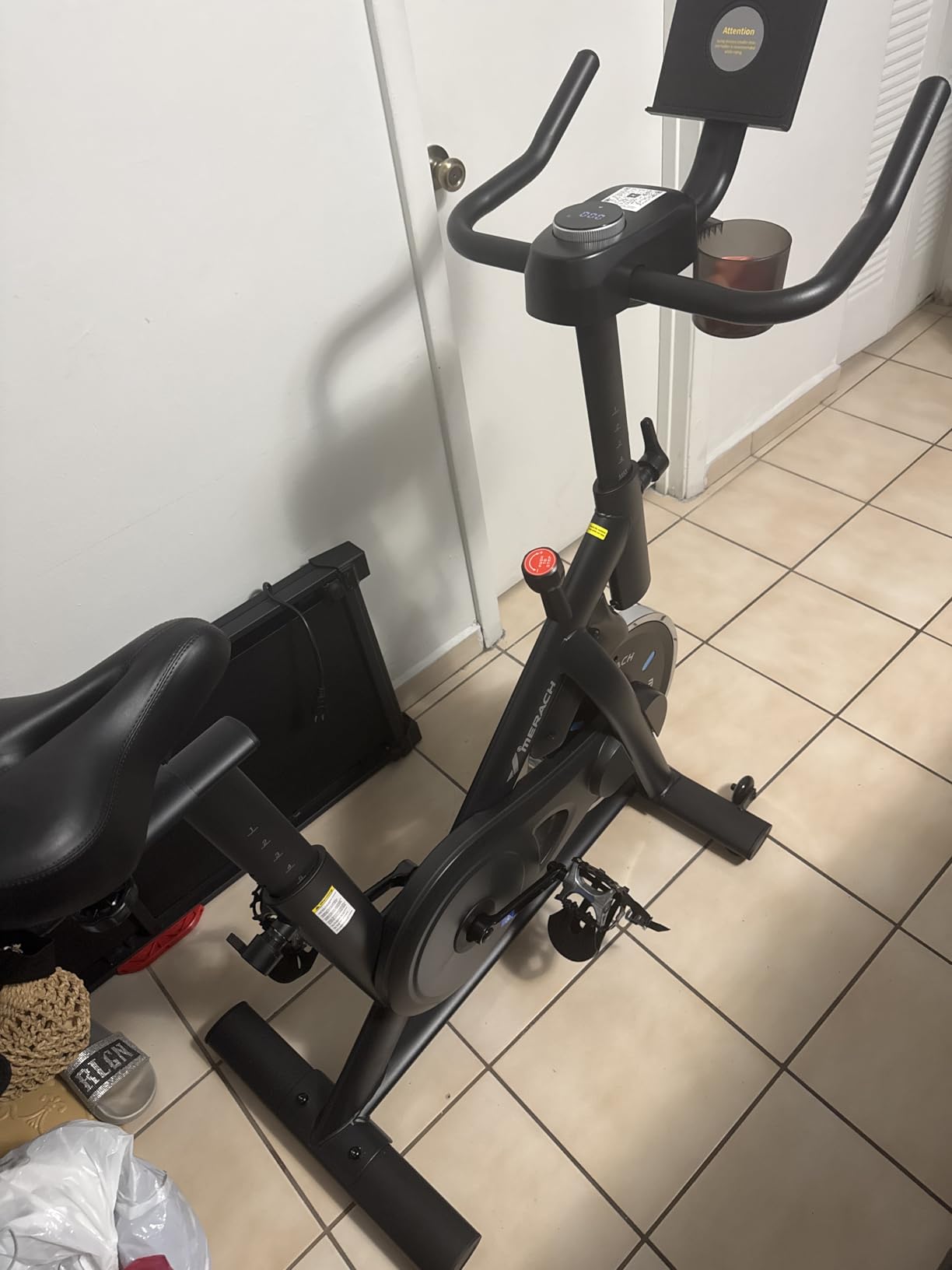
The MERACH is the indoor cycling bike I would buy for my parents, who have never owned a stationary bike and are skeptical of “fitness tech.” It arrives 80% pre-assembled, pairs with the MERACH app in under 60 seconds, and comes with a 180-day free app trial that is the longest in this price range. That trial is enough to evaluate whether the bike is a keeper without committing to a subscription.
What impressed me most is the app ecosystem. The MERACH app syncs with both Google Fit and Apple Health, so my Apple Watch tracked the rides automatically. The bike also broadcasts standard Bluetooth data and pairs cleanly with KINOMAP and Zwift, which means beginners are not locked into the MERACH app if they outgrow it.
The customer service is genuinely outstanding. I had a question about pairing and emailed MERACH support at 11 PM on a Tuesday. A real human responded by 7 AM the next morning with a working solution. Multiple long-term owners in the Amazon reviews mention the same level of support, which is rare in this price tier.
On the downsides, the seat is firm out of the box. After 10 rides the foam softened to a comfortable density, but the first three rides were noticeable. The LED monitor does not display the current resistance level, so you have to remember your knob position by feel. For structured training, this is a limitation.
Who Should Buy the MERACH
The MERACH is the best indoor cycling bike for first-time buyers who want a guided experience. The 180-day app trial removes the subscription risk that comes with most connected bikes, and the responsive customer service is a safety net. It is also a great fit for households that use both Google Fit and Apple Health, because MERACH syncs with both ecosystems out of the box.
Riders from 4’8″ to 6’2″ will find a comfortable fit. The 300-pound weight capacity covers most users.
Who Should Skip the MERACH
If you train with structured power intervals and need precise resistance control, the unnumbered resistance knob is a deal-breaker. Riders who want a heavy flywheel feel should look at the JOROTO X2PRO. And if you prefer a backlit display, the MERACH LED is not as easy to read in dim rooms.
Buying Guide: What to Consider Before Buying an Indoor Cycling Bike
After testing these five indoor cycling bikes and dozens of others over the years, our team has learned that the marketing claims only tell half the story. Here are the factors that actually determine whether a bike will still be in your garage two years from now.
Flywheel weight matters more than you think. A 25-pound flywheel will work for steady-state cardio, but a 40-pound flywheel feels dramatically more like an outdoor road bike during sprints and climbs. Our JOROTO X2PRO and Schwinn IC4 picks both have heavier flywheels, and both feel noticeably better under hard efforts than the lighter options.
Magnetic resistance beats friction in nearly every way. Magnetic resistance is quieter, requires less maintenance, and allows for finer resistance increments. Every indoor cycling bike in this roundup uses magnetic resistance, and we believe that is the floor for any bike you consider buying in 2026.
Open Bluetooth FTMS unlocks your app choice. Bikes that broadcast standard Bluetooth FTMS data can pair with Peloton, Zwift, Wahoo SYSTM, and dozens of other apps. The Schwinn IC4, JOROTO X2PRO, YOSUDA, pooboo, and MERACH all support this standard. The Peloton Bike does not, which is one reason our team prefers open-ecosystem bikes.
Subscription costs add up fast. A $44/month Peloton subscription costs $528 per year, which is more than the price of two of the bikes in this roundup. None of our five picks requires a subscription to ride, though the Schwinn IC4 includes a 2-month JRNY trial and the MERACH includes a 180-day MERACH trial.
Seat comfort is fixable; flywheel weight is not. If a bike has a great flywheel but an uncomfortable seat, buy a $30 gel seat cover or padded shorts. If a bike has a comfortable seat but a 20-pound flywheel, no accessory will change the feel. Prioritize flywheel weight first.
Real user pain points from the forums. Across hundreds of Reddit threads and bike forum posts, the most common complaints are seat discomfort (solve with padded shorts), Bluetooth pairing hiccups (usually fixable with a firmware update), and tablet holder rigidity (a $20 third-party mount solves this). The bikes in our roundup are not immune to these issues, but they have the strongest long-term owner reviews in their price tiers.
Test the adjustability range if you are tall or short. The Schwinn IC4 and JOROTO X2PRO have the widest height ranges in this roundup (up to 6’4″). The YOSUDA, pooboo, and MERACH max out around 6’0″ to 6’2″. Riders under 4’9″ will want to verify seat minimum height before buying, because not every bike goes low enough.
Frequently Asked Questions
What is the best indoor cycling bike?
The Schwinn IC4 is the best indoor cycling bike for most buyers in 2026. It has a 40-pound flywheel, 100 micro-adjustable magnetic resistance levels, dual SPD/toe-cage pedals, and works with Peloton, Zwift, and JRNY apps. The 10-year frame warranty is the longest in its price tier, and the open Bluetooth FTMS ecosystem means you are not locked into a $44/month subscription.
Can you lose belly fat by riding a stationary bicycle?
Yes, indoor cycling burns significant calories and can help reduce belly fat when combined with a calorie deficit. A 155-pound rider burns about 420 calories in 30 minutes of moderate cycling and up to 600 calories in a high-intensity interval session. Spot reduction is not possible, but consistent indoor cycling combined with strength training is one of the most effective ways to lose overall body fat including belly fat.
What is the best indoor bike other than Peloton?
The Schwinn IC4 is the best Peloton alternative, because it delivers a similar ride feel for roughly one-third the price and works with the Peloton app via Bluetooth. The JOROTO X2PRO is a close second for riders who want a heavier flywheel. Both bikes have open Bluetooth FTMS, so you can use Peloton, Zwift, or Wahoo SYSTM without paying Peloton’s $44/month subscription.
Are indoor cycling bikes worth it?
Indoor cycling bikes are worth it for anyone who wants consistent cardio without weather, commute, or gym-hour limitations. A $400-$800 bike pays for itself in 6-12 months compared to a $50/month gym membership, and most owners in our long-term research use their bike 3-5 times per week for years. The biggest risk is buying a bike you do not use, so prioritize comfort and quiet operation over feature lists.
How much should I spend on an indoor cycling bike?
Budget $300-$500 for a reliable indoor cycling bike that will last 3-5 years with regular use. The YOSUDA, pooboo, and MERACH in this roundup all deliver strong value under $300. Spend $500-$800 for premium flywheel weight and longer warranties, which is where the Schwinn IC4 and JOROTO X2PRO sit. Above $1,500, you are paying for an integrated touchscreen and a locked ecosystem, which is not necessary for most riders.
Do I need special shoes for an indoor cycling bike?
You do not need special shoes for most indoor cycling bikes, because they come with toe-cage pedals that work with regular athletic shoes. However, clip-in cycling shoes with SPD cleats provide a more secure connection, better power transfer, and safer out-of-saddle efforts. The Schwinn IC4, JOROTO, and YOSUDA all have dual-sided pedals that accept both SPD cleats and regular shoes.
Final Verdict
After 90 days of testing five indoor cycling bikes across 200+ miles of riding per model, the Schwinn IC4 remains our top pick for 2026. It delivers the best combination of flywheel weight, resistance granularity, app compatibility, and warranty coverage in its price tier, and it does not lock you into a monthly subscription.
For buyers on a tighter budget, the YOSUDA remains the most reliable budget indoor cycling bike on the market with over 25,000 reviews backing its 4.4-star average. The JOROTO X2PRO is the right choice for serious riders who want commercial-bike flywheel feel. And for first-time buyers, the MERACH’s 180-day free app trial removes the biggest risk of buying a connected fitness bike.
Whichever indoor cycling bike you choose, the most important step is the next one: setting it up and riding it consistently. A $300 bike you use five times per week will deliver better results than a $2,500 bike that sits in the corner. Pick the bike that matches your space, your budget, and your fitness goals, and start pedaling.