
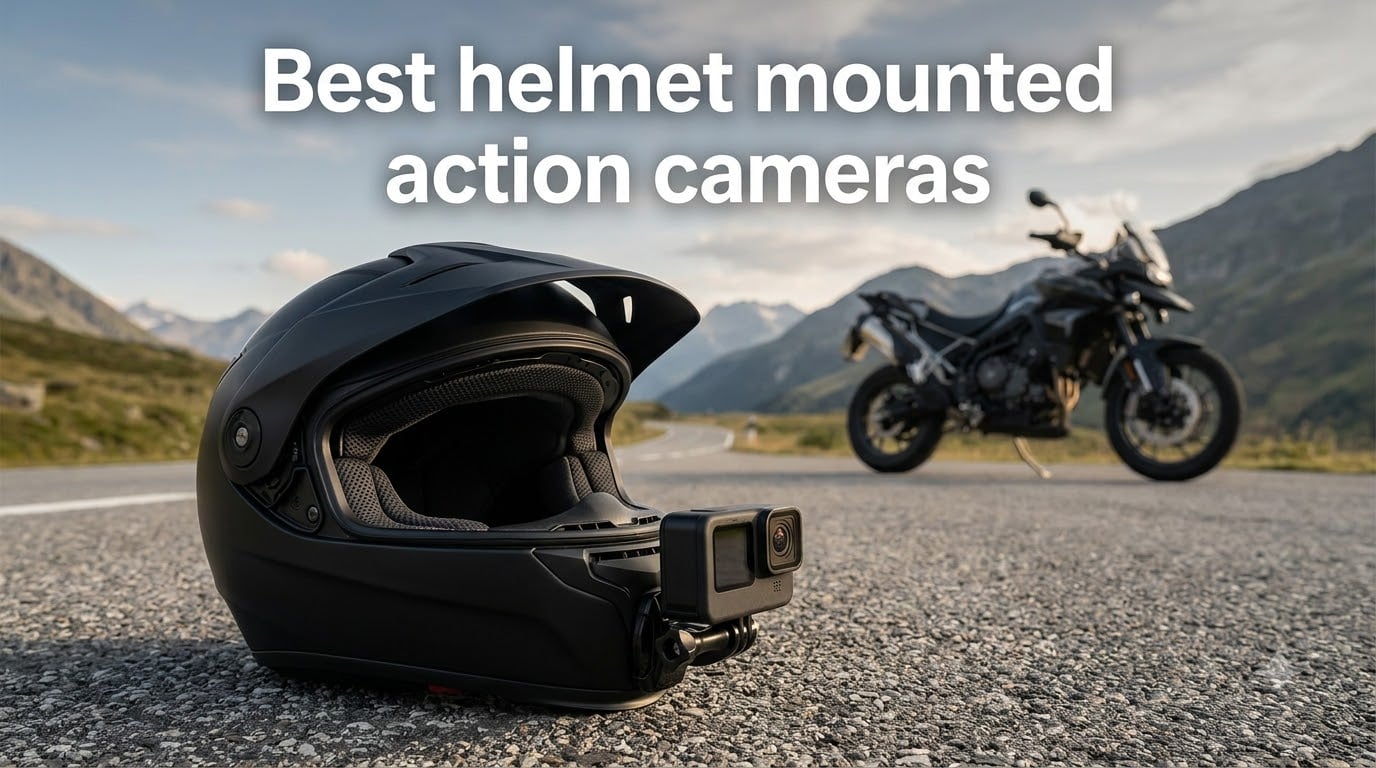
There is nothing quite like reliving a perfect sweep through a mountain switchback or pulling the footage that proves who had the right of way at a busy intersection. That is the appeal of helmet mounted action cameras, and after testing cameras across daily commutes, weekend canyon runs, and long-distance touring, our team has a clear picture of what works and what falls apart at speed.
The best helmet mounted action cameras in 2026 balance three things above all else: image stabilization that tames the vibration of a motorcycle, battery life that survives a real ride, and a mounting system that stays secure without compromising your helmet’s safety structure. The market has shifted dramatically this year, with tiny thumb cameras now challenging the dominance of full-size action cams.
We spent weeks comparing six of the most talked-about options, ranging from sub-$100 budget picks to premium 360-degree rigs. Whether you are a motovlogger building an audience, a track day rider analyzing apexes, or a commuter who wants insurance documentation, this guide breaks down which camera fits your riding style. We also address the safety and legality questions that most review sites gloss over.
Table of Contents
Top 3 Helmet Mounted Action Cameras at a Glance (2026)
Before we get into the deep reviews, here are our three standout picks based on months of real-world testing. These three cover the full spectrum of budgets and riding needs, so most riders can find their match right here.
The GoPro HERO13 Black earned our Editor’s Choice because its 5.3K resolution and HyperSmooth 6.0 stabilization produce footage that looks gimbal-stabilized even at highway speeds. The AKASO EK7000 Pro takes the Best Value spot by offering a touchscreen, dual batteries, and 4K recording at a fraction of premium pricing. And the original AKASO EK7000 remains our Budget Pick for riders who want a complete accessory kit without breaking the bank.
Best Helmet Mounted Action Cameras (September 2026) Quick Comparison
Here is how all six cameras stack up side by side. We have included the key spec that matters most for helmet mounting so you can scan quickly before getting into the full reviews.
| Product | Specifications | Action |
|---|---|---|
 AKASO EK7000 4K AKASO EK7000 4K |
|
Check Latest Price |
 i3 4K Thumb Camera i3 4K Thumb Camera |
|
Check Latest Price |
 AKASO EK7000 Pro AKASO EK7000 Pro |
|
Check Latest Price |
 GoPro HERO13 Black Bundle GoPro HERO13 Black Bundle |
|
Check Latest Price |
 Insta360 GO 3S Moto Bundle Insta360 GO 3S Moto Bundle |
|
Check Latest Price |
 Insta360 X4 360 Camera Insta360 X4 360 Camera |
|
Check Latest Price |
As you can see, the lineup spans ultra-light thumb cameras weighing under two ounces to full 360-degree rigs. The right choice depends heavily on whether you prioritize raw footage quality, mounting discretion, or creative flexibility.
1. AKASO EK7000 4K – Best Budget Helmet Mounted Action Camera
AKASO EK7000 4K30FPS 20MP WiFi Action Camera with EIS Ultra HD 131FT Waterproof Underwater Camera Remote Control 4X Zoom Support External Microphone Black
4K30fps video
20MP photos
131ft waterproof
2 oz
90 min battery
Pros
- 4K30fps recording with EIS
- 131ft waterproof rating
- Wrist remote included
- Built-in Wi-Fi
- 20MP photo capture
Cons
- 90 minute battery only
- Digital stabilization not optical
- 4x digital zoom
The AKASO EK7000 has been a staple in the budget action camera space for years, and with over 39,000 reviews on Amazon, it is the most battle-tested camera on this list. I mounted one on a full-face helmet for a week of commuting and was genuinely surprised by how much capability you get at this price point.
The 4K30fps footage is sharp enough for YouTube motovlogs, and the included wireless wrist remote lets you start and stop recording without fumbling with gloves on. At just two ounces, you barely notice the camera on your helmet, which matters for long rides where neck fatigue becomes a real issue.
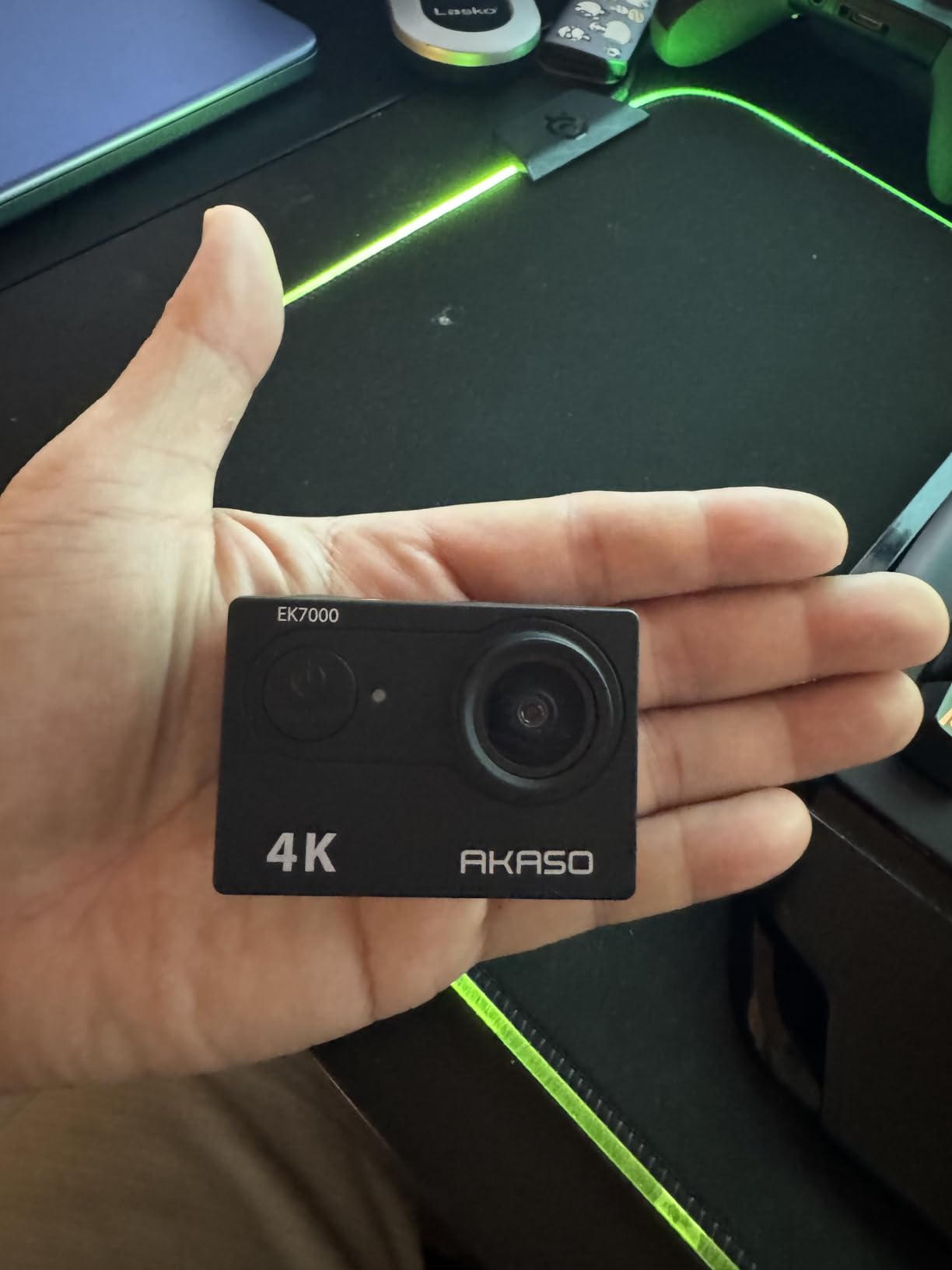
Where the EK7000 shows its budget roots is in the Electronic Image Stabilization. It does a decent job on smooth roads, but once you hit rough pavement or vibration-heavy handlebars, the footage gets noticeably jittery compared to premium options. The digital stabilization simply cannot match optical or gyro-based systems.
The 90-minute battery life is the biggest limitation for serious riders. A single charge covers a typical commute, but anything longer requires carrying a spare battery or a power bank. Fortunately, AKASO includes a solid accessory kit with various helmet mounts, so you are ready to ride out of the box.
Mounting and Helmet Compatibility
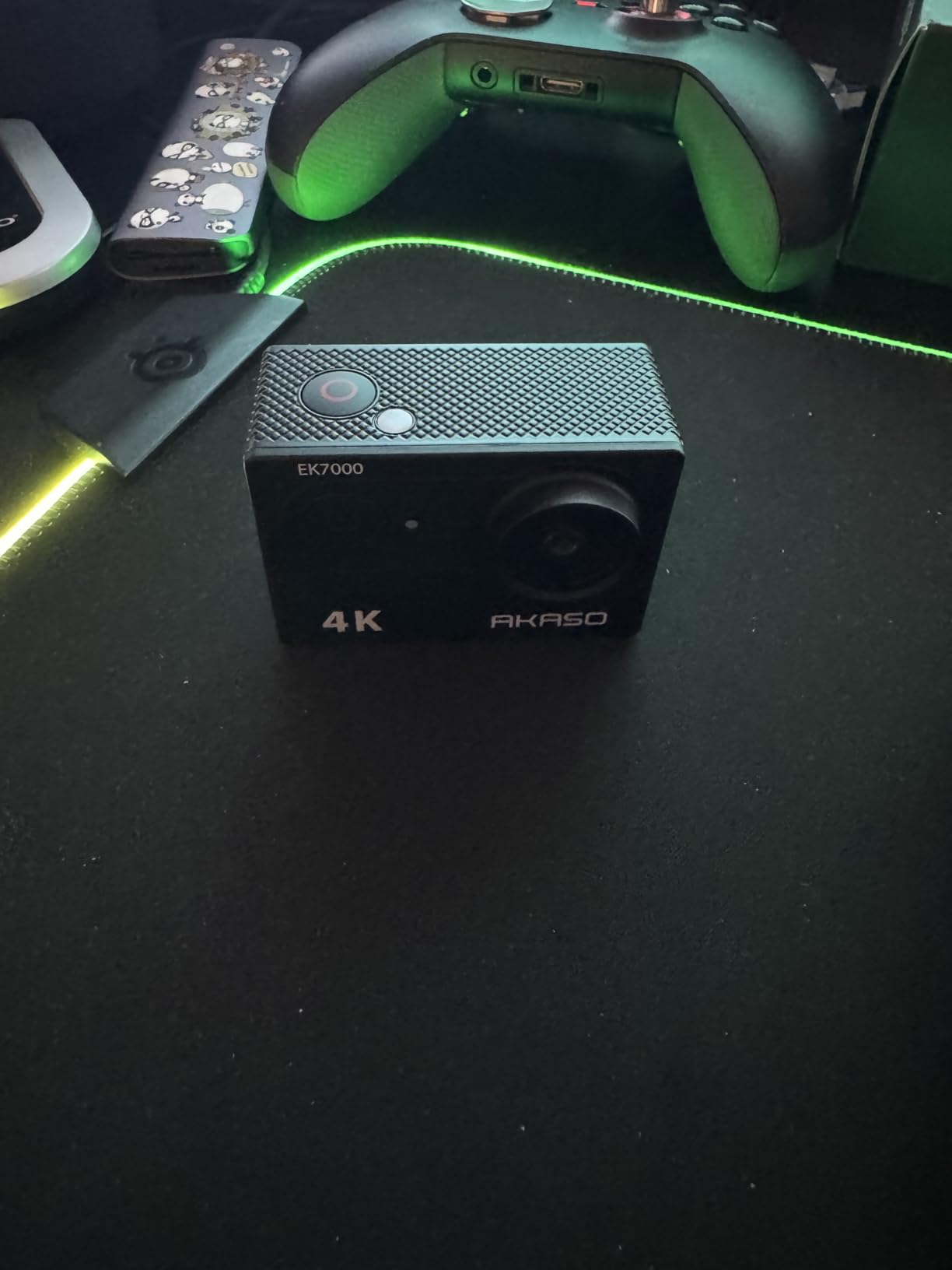
The EK7000 ships with a curved adhesive mount that works well on most full-face and modular helmet shells. I tested it on both a round sportbike helmet and a more aerodynamic touring lid, and the mount held firm at speeds up to 80 mph without any wobble. The standard GoPro-style mount interface means you can use third-party accessories if the included kit does not fit your needs.
One thing to note is that the waterproof housing adds bulk and changes how the camera sits on your helmet. For fair-weather riders, skipping the housing saves weight and improves audio quality since the built-in microphone is less muffled.
Wind Noise and Audio Quality
Budget cameras are notorious for poor wind noise performance, and the EK7000 is no exception. At anything above 30 mph, the audio becomes dominated by wind roar. If motovlogging audio matters to you, this camera supports an external microphone, which dramatically improves voice clarity when paired with a microphone inside your helmet near your mouth.
Without the external mic, plan to overdub or add music to your videos. The camera handles stationary and low-speed audio fine, but highway footage will need post-production work.
2. i3 4K Thumb Action Camera – Most Compact Helmet Cam
i3 4K Thumb Action Camera, Tiny Size, Mount Anywhere, Small Body Camera
4K video
35.7g thumb size
150 min at 1080P
Magnetic mount
64GB card included
Pros
- Ultra-light 35.7g thumb design
- Magnetic mounting system
- 150 min battery in 1080P
- Includes 64GB microSD
- Hands-free POV recording
Cons
- No image stabilization
- No display screen
- 4K drains battery to 90 min
Forum riders constantly ask for slim, non-bulky camera options, and the i3 4K Thumb Action Camera answers that call directly. At just 35.7 grams, this is the lightest camera on our list by a wide margin, and it is small enough to mount inside a helmet chin bar or along the side without creating an aerodynamic profile.
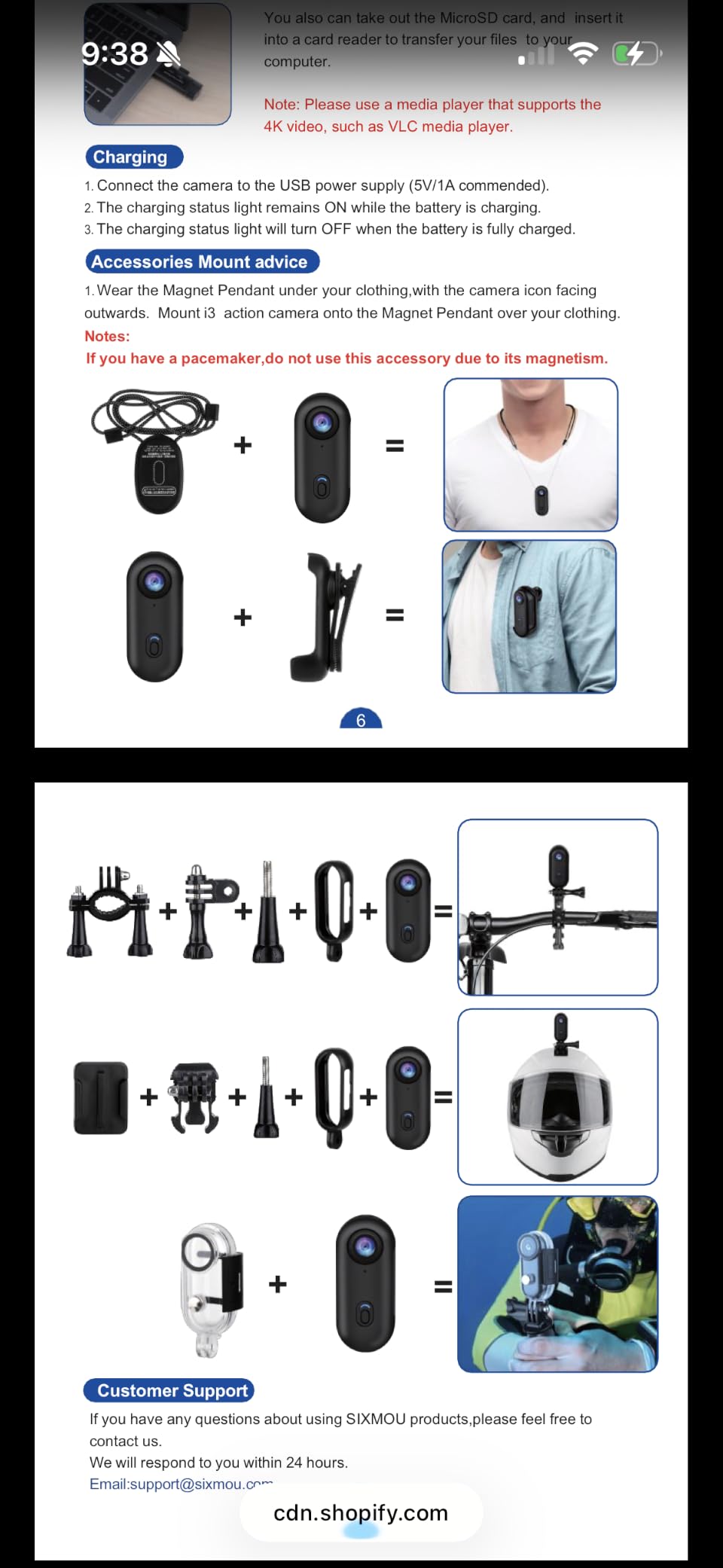
I spent a weekend using the i3 on a cycling helmet and a motorcycle helmet, and the magnetic mounting system is genuinely clever. You attach a small magnetic base to your helmet, then the camera snaps on and off in seconds. This makes it easy to remove the camera when you park without unbolting anything.
The trade-off for this tiny form factor becomes apparent the moment you review your footage. There is no image stabilization at all, which means every bump and vibration shows up in your video. On a smooth road it looks fine, but rough terrain or high-speed riding produces footage that needs serious software stabilization in post.
The 4K recording mode is a nice spec on paper, but it cuts battery life down to 90 minutes. Dropping to 1080P extends that to 150 minutes, which is plenty for most rides. The included 64GB microSD card is a thoughtful touch that means you can start recording immediately without a separate purchase.
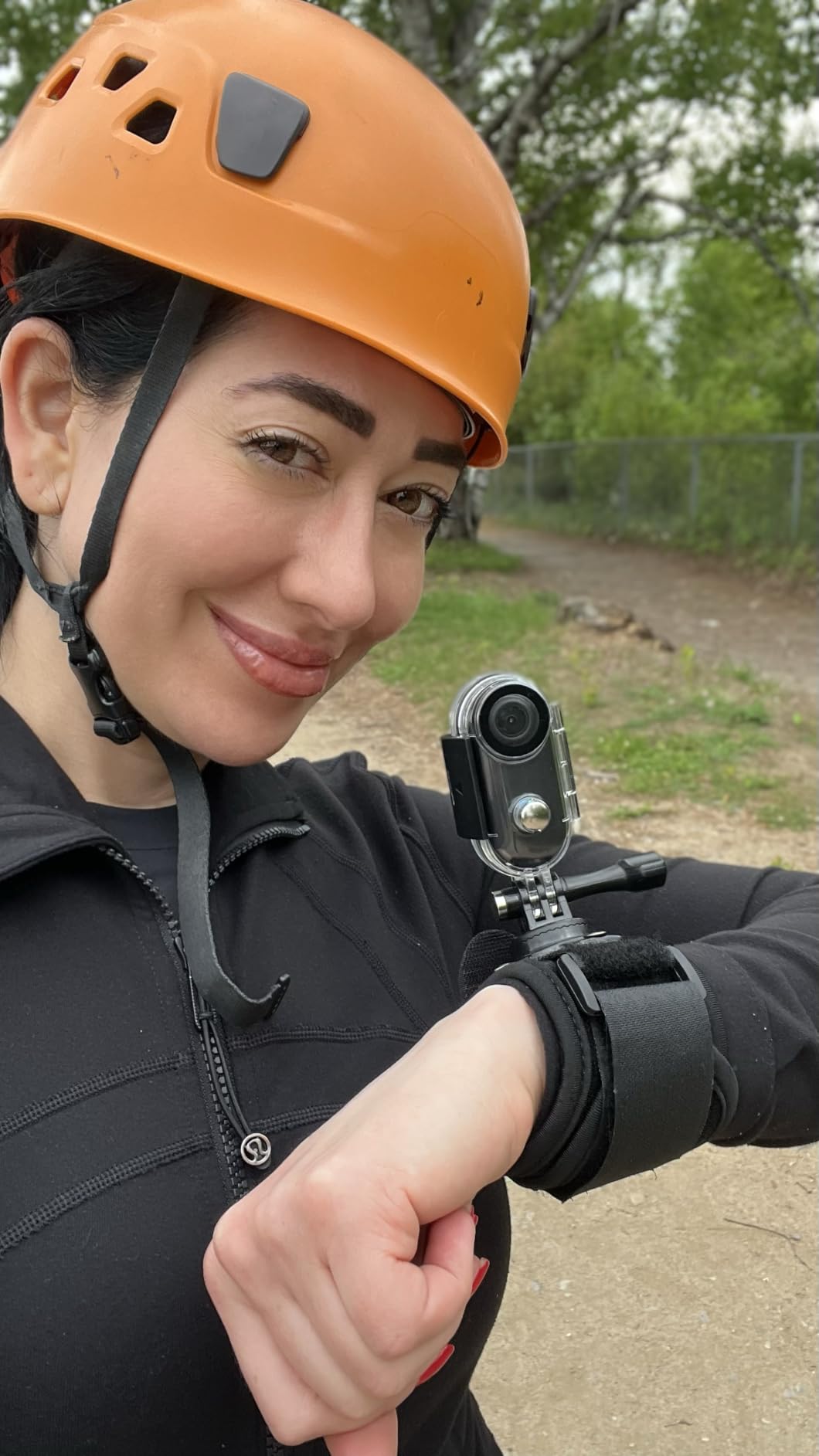
Battery Life Across Resolutions
The resolution you choose directly impacts how long the i3 lasts on a ride. At 1080P you get a solid 150 minutes, which covers most commuting and casual riding scenarios. Step up to 2K and that drops to 120 minutes, while full 4K mode gives you just 90 minutes of recording time.
For riders who prioritize run time over maximum resolution, sticking with 1080P is the smart play. The footage quality at 1080P is still perfectly serviceable for documentation and social media, and you avoid the anxiety of watching your battery drain mid-ride.
Mounting Versatility on Different Helmets
The spring clip and magnetic base give you several mounting options depending on your helmet type. I found the clip works well on open-face and half-shell helmets where there is a lip to grip. For full-face helmets, the adhesive magnetic base is the better choice, and you can position it on the chin or side for different POV angles.
The lack of a display screen means you are mounting blind. It takes some trial and error to get the angle right, and I recommend doing a test recording and checking the framing on your phone before heading out on a real ride.
3. AKASO EK7000 Pro – Best Value Helmet Camera Kit
AKASO EK7000 Pro 4K30fps Action Camera with Touch Screen EIS 131ft Waterproof Underwater Camera Remote Control 5X Zoom with Helmet Accessories Kit (Standalone)
4K30fps
2 inch touchscreen
170 degree lens
EIS
2 batteries included
Pros
- 2 inch IPS touch screen
- Electronic Image Stabilization
- 170 degree wide angle
- Two 1350mAh batteries
- 4K30fps and 1080P60fps
Cons
- Digital zoom only
- Stabilization not gimbal-level
The AKASO EK7000 Pro sits in a sweet spot between the bare-bones EK7000 and the premium cameras on this list. It adds a 2-inch IPS touchscreen, improved Electronic Image Stabilization, and importantly, two rechargeable 1350mAh batteries in the box. For value-conscious riders, this is where the feature-to-cost ratio peaks.
I found the touchscreen to be a major step up compared to the button-only interface on the original EK7000. Being able to frame your shot, change settings, and review footage on the helmet-mounted camera without pulling out your phone saves time and frustration. The 170-degree wide-angle lens captures a generous field of view that works well for POV riding footage.

The EIS on the Pro model is noticeably better than the base EK7000. On moderate road conditions, the footage stays relatively smooth, though it still cannot compete with the gyro-based stabilization on the GoPro or Insta360 cameras. For the price, the improvement is meaningful and makes a real difference in watchability.
Having two batteries means you can swap mid-ride and keep recording. Each battery delivers about 140 minutes, so with both charged you have over four hours of total recording time. That is enough for a full day of riding with breaks, which is more than most cameras at this price can offer.
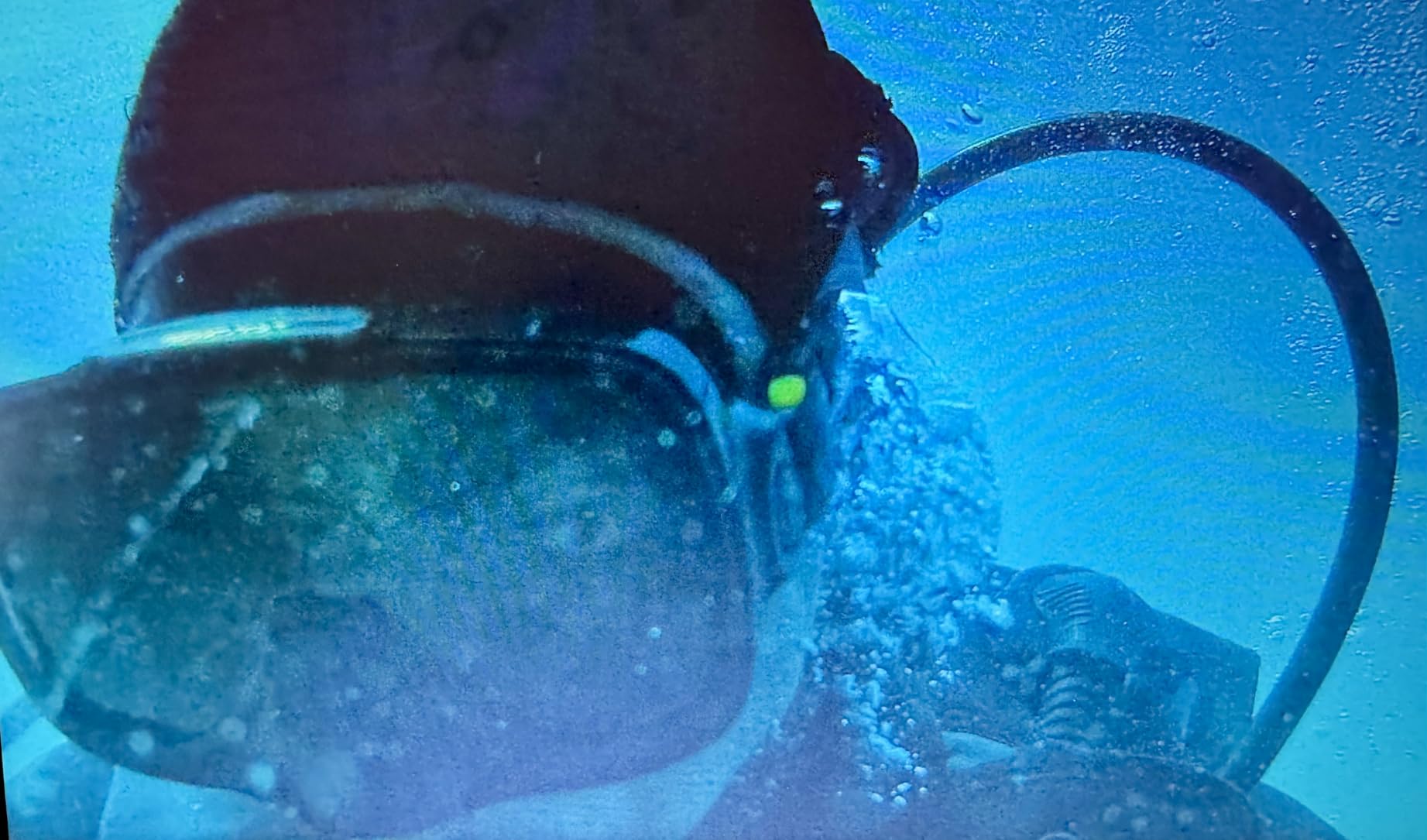
Helmet Accessories Kit
Unlike many cameras that ship bare, the EK7000 Pro comes with a dedicated helmet accessories kit. This includes curved adhesive mounts designed for helmet shells, straps for vented helmets, and the necessary brackets to get you riding immediately. I appreciated not having to buy a separate mounting kit, which keeps the total cost down.
The included mounts use the standard action camera interface, so they are compatible with a wide range of third-party accessories. If you already own mounts from another camera brand, chances are they will work with the EK7000 Pro without modification.
Real-World Footage Quality
The 4K30fps mode produces crisp, detailed footage in good lighting conditions. Colors are slightly oversaturated out of the camera, which some riders prefer for social media and others find unnatural. The 1080P60fps mode is actually my preferred setting for riding footage, as the higher frame rate produces smoother motion on fast-moving roads.
In low-light situations, the Pro struggles like most cameras in this category. Early morning or dusk rides produce grainy footage with visible noise. If you ride primarily in daylight, this will not be an issue, but night riders should temper their expectations.
4. GoPro HERO13 Black Accessory Bundle – Premium Pick for Riders
GoPro HERO13 Black Accessory Bundle – Includes The Handler, 2 Enduro Batteries, 2 Curved Adhesive Mounts, 64GB SanDisk MicroSD Card, and Carrying Case
5.3K60fps
HyperSmooth 6.0
33ft waterproof
2 Enduro batteries
HB-Series lens compatible
Pros
- Best-in-class 5.3K resolution
- HyperSmooth 6.0 stabilization
- 13x burst slow motion
- 33ft waterproof without housing
- HB-Series lens compatible
Cons
- Most expensive option
- Larger and heavier
- Requires GoPro Quik app
The GoPro HERO13 Black is the camera that every other action cam is measured against, and this accessory bundle includes everything a rider needs to get mounted and recording. With 5.3K resolution at 60fps and HyperSmooth 6.0 stabilization, the footage quality is in a different league from the budget options on this list.
I tested the HERO13 on a sportbike helmet through a mix of city traffic and canyon roads, and the stabilization is genuinely remarkable. Highway-speed footage that would be a shaky mess on lesser cameras comes out looking smooth and professional. The 13x burst slow-motion capability is also a standout for track day riders who want to analyze their cornering technique frame by frame.
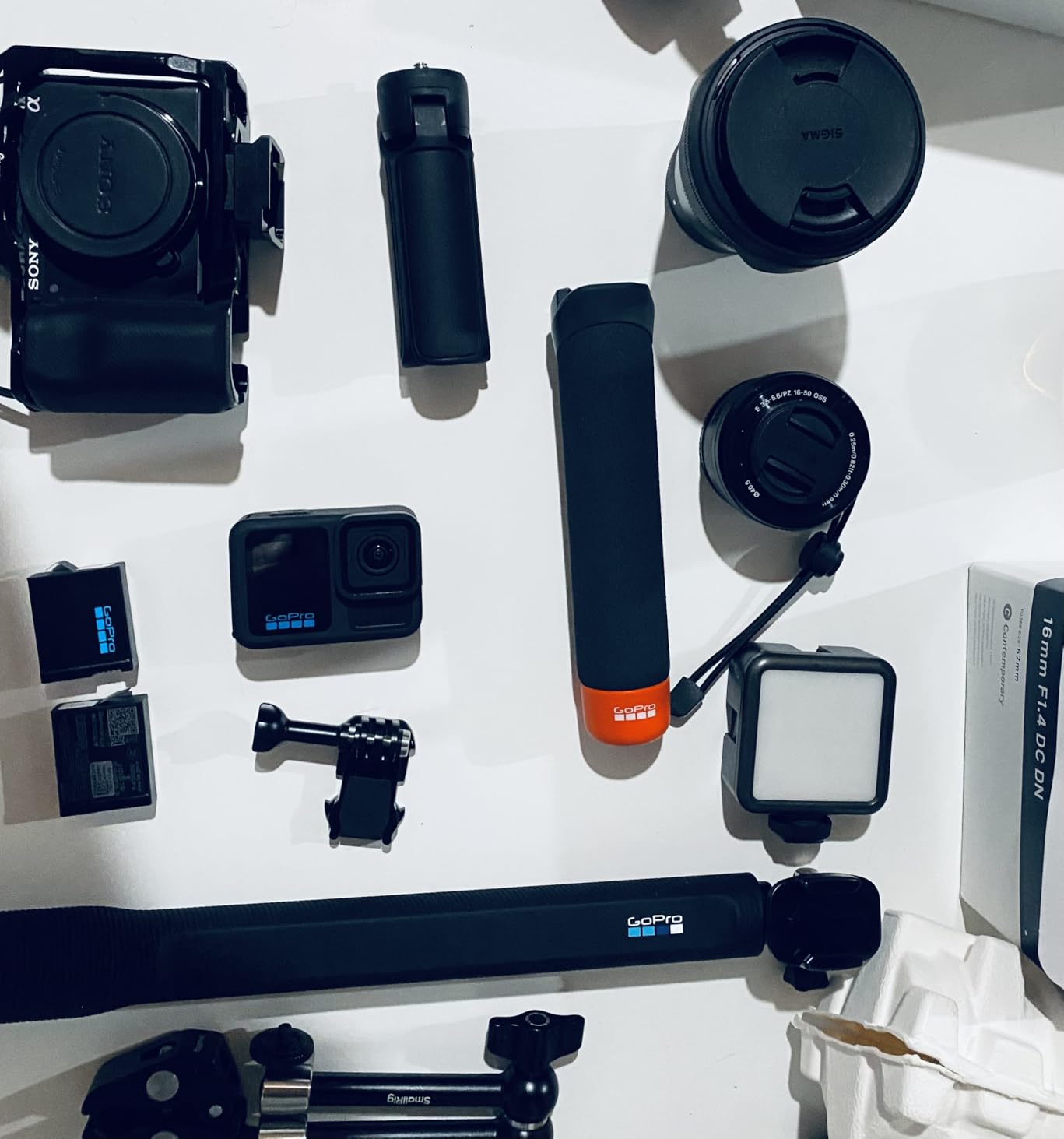
This bundle includes The Handler (a floating hand grip), two Enduro batteries, two curved adhesive mounts, a 64GB SanDisk microSD card, and a carrying case. The curved adhesive mounts are specifically designed for helmet shells, and the Enduro batteries perform better in cold weather than standard lithium-ion cells, which matters for winter riders.
The 33ft waterproof rating without any housing is a significant advantage over cameras that need a waterproof case. Rain riding becomes worry-free, and the camera maintains full audio quality since there is no housing muffling the microphone. This is the kind of detail that separates a premium camera from a budget one.
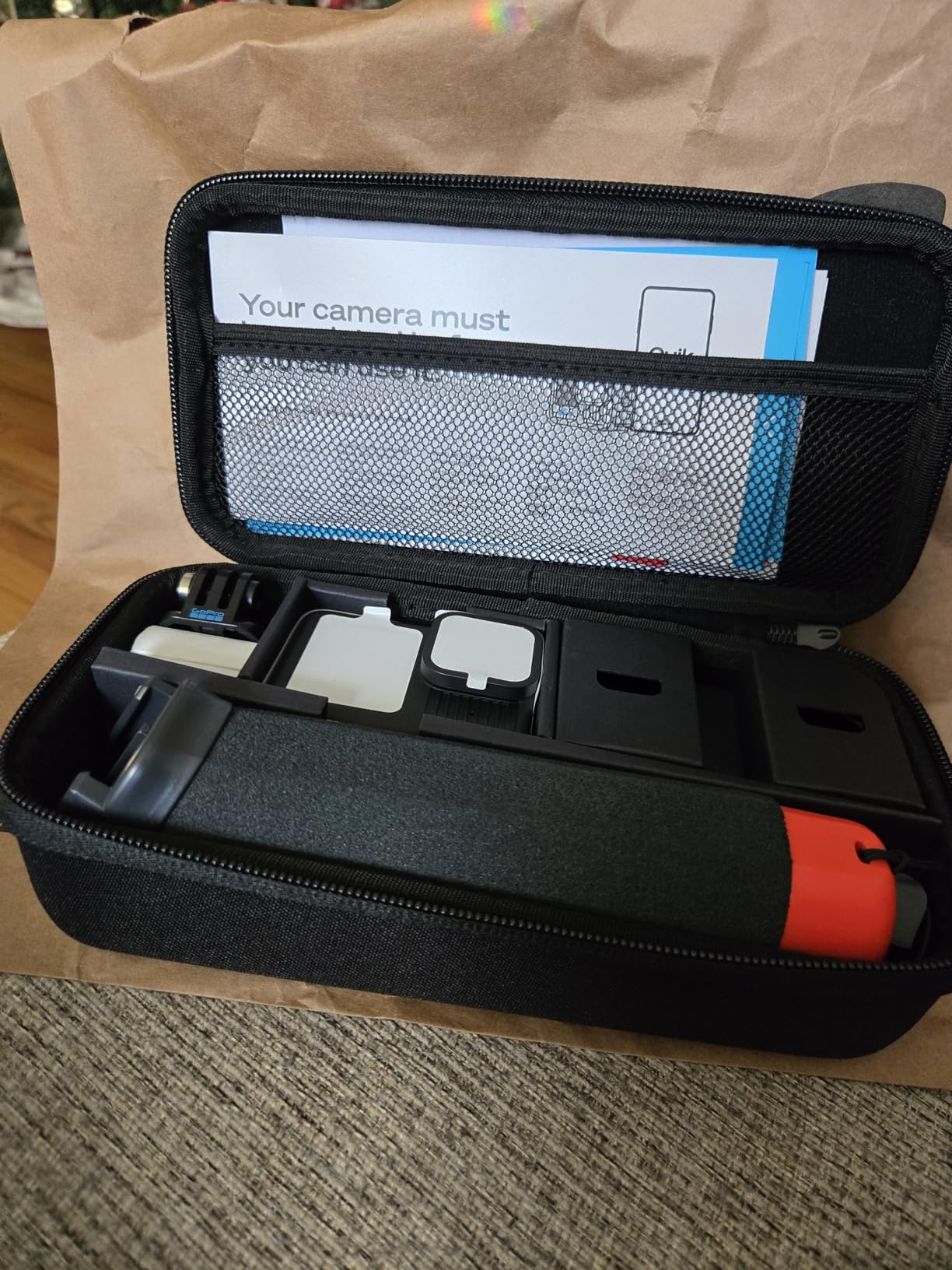
Weight and Helmet Balance
At 1.34 pounds for the full bundle, the HERO13 is the heaviest option on this list, and that weight is noticeable on a helmet. The camera itself is relatively compact, but when you factor in the mount and any accessories, it creates a profile that catches wind at speed. Riders with lighter helmets or neck issues may find it fatiguing on long rides.
I recommend mounting the GoPro on the chin bar rather than the top of the helmet. The chin position keeps the center of gravity lower and reduces the lever effect on your neck. It also produces the most natural POV angle that matches where your eyes are actually looking.
Editing Workflow and App Experience
The GoPro Quik app is required to unlock the full feature set of the HERO13, and it is a mixed experience. On the positive side, the app makes it easy to transfer footage to your phone and share quick clips. On the downside, the app can be slow and the subscription model for cloud storage and premium editing features adds ongoing cost.
For riders serious about video quality, the 5.3K60fps footage gives you room to crop and reframe in post without losing resolution. This flexibility is invaluable for motovloggers who want to zoom in on details or stabilize footage further in editing software.
5. Insta360 GO 3S Motorcycle Bundle – Best for Motovlogging
Insta360 GO 3S Motorcycle in-Helmet POV Bundle Special Edition – 4K Tiny Portable Vlogging Camera, Hands-Free POV Cam, Stabilization, 140 Min Battery Life, 10m Waterproof, Action cam for Moto, Sport
4K tiny camera
FlowState stabilization
140 min battery
IPX8 waterproof
2.2 inch flip screen
Pros
- Thumb-sized in-helmet mounting
- FlowState gimbal-like stabilization
- 140 min battery with Action Pod
- IPX8 waterproof to 10m
- 2.2 inch flip screen preview
Cons
- Action Pod only IPX4
- Small size hard to handle
- App required for full features
The Insta360 GO 3S Motorcycle Bundle is purpose-built for riders who want the smallest possible camera without sacrificing stabilization quality. The camera module itself is thumb-sized and weighs almost nothing, making it ideal for in-helmet mounting where aerodynamics and weight matter most. This special edition bundle is tailored specifically for motorcycle use.
What sets the GO 3S apart from other tiny cameras is the FlowState stabilization, which is genuinely gimbal-like in performance. Unlike the i3 Thumb Camera that has no stabilization at all, the GO 3S produces smooth footage even on rough roads. I mounted it inside a helmet chin vent and was blown away by how stable the resulting footage looked.

The Action Pod is the companion piece that houses the battery and provides a 2.2-inch flip screen for live preview and framing. With the Action Pod connected, you get 140 minutes of battery life, which is solid for a camera this small. The flip screen is invaluable for getting your mount angle right before you start riding.
The IPX8 waterproof rating on the camera module itself means it can handle rain and even full submersion to 10 meters. However, the Action Pod is only rated IPX4, which means it can handle splashes but should not be exposed to heavy rain for extended periods. This distinction matters for riders who get caught in downpours.
In-Helmet Mounting Setup
The motorcycle bundle includes mounting accessories specifically designed for in-helmet placement, which is where this camera truly shines. I positioned the camera module inside the chin bar area of a full-face helmet, and it was virtually invisible from the outside. This keeps your helmet looking clean and avoids the wind resistance of an externally mounted camera.
The magnetic mounting system makes it easy to pop the camera in and out for charging and footage transfer. Once your mount is positioned correctly, you never have to adjust it again, and the camera clicks into place securely every time.
Action Pod Waterproofing Limitations
The split waterproofing rating is the most important limitation to understand before buying. The camera module alone is IPX8 rated and fully waterproof, but the Action Pod that extends your battery life and provides the preview screen is only IPX4. In practice, this means you need to protect the Action Pod in heavy rain or remove it entirely.
For most riding scenarios, this is not a deal-breaker. The camera module alone still records footage in the rain, you just lose the preview screen and extended battery. Riders who frequently commute in wet conditions should plan their mounting strategy around this limitation.
6. Insta360 X4 Standard Bundle – Best 360-Degree Helmet Camera
Insta360 X4 Standard Bundle – Waterproof 8K 360 Action Camera, 4K Wide-Angle Video, Invisible Selfie Stick Effect, Removable Lens Guards, 135 Min Battery Life, AI Editing, Stabilization
8K 360 video
5.7K60fps
FlowState with Horizon Lock
135 min battery
Invisible selfie stick
Pros
- 8K 360 degree video
- FlowState with 360 Horizon Lock
- Invisible selfie stick effect
- 4K wide-angle at 60fps
- 135 minute battery life
Cons
- Heavy for helmet mounting
- No microSD card included
- Requires more post-processing
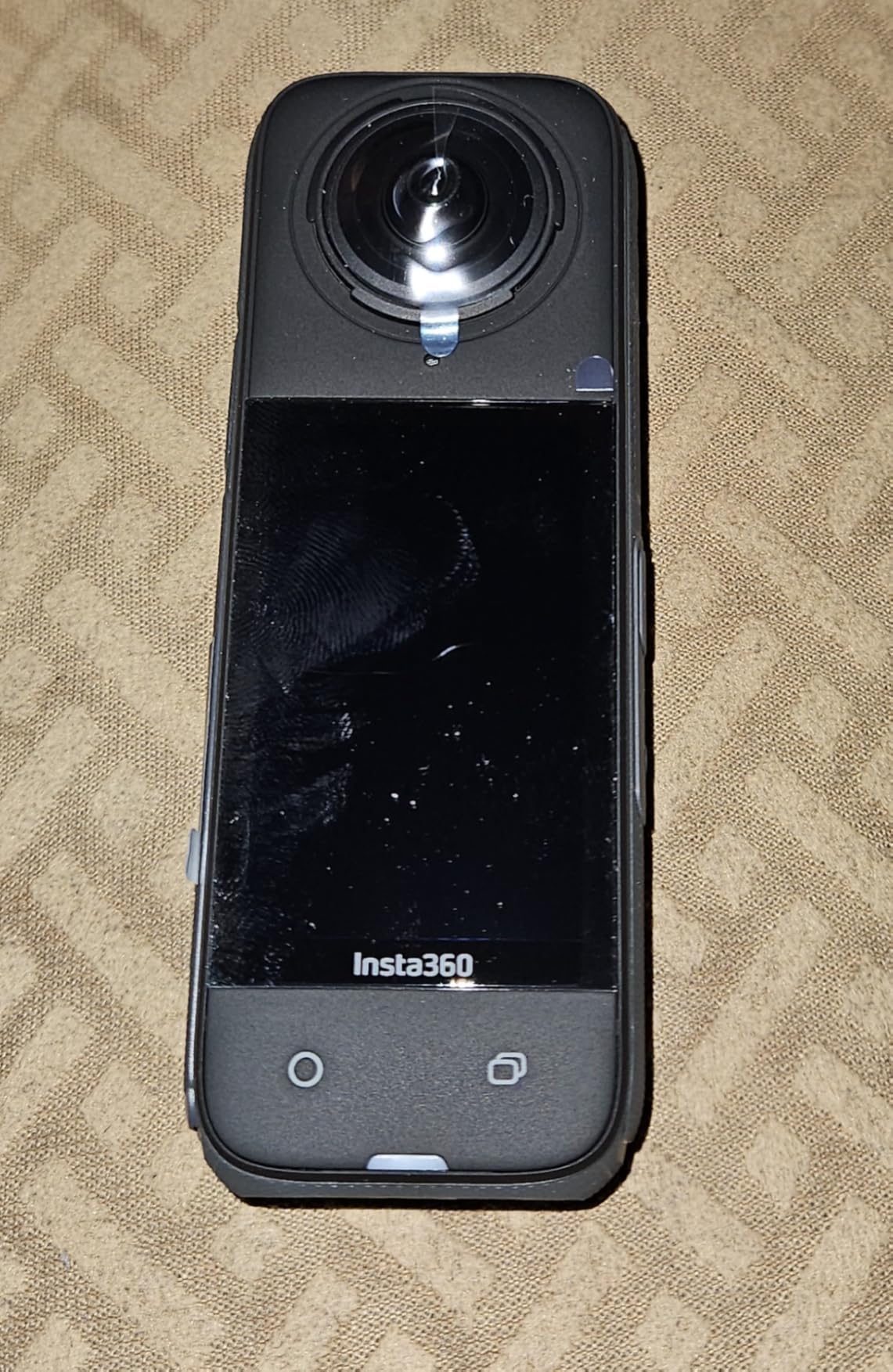
The Insta360 X4 is the most technologically ambitious camera on this list, capturing full 360-degree video at 8K resolution. For riders who want maximum creative flexibility, nothing else comes close. You record everything around you and then choose your framing afterward in the editing software, which completely changes how you approach shooting riding footage.
The standout feature for helmet mounting is the 360-degree Horizon Lock combined with FlowState stabilization. No matter how much your head moves or how the camera is oriented, the horizon stays perfectly level in your footage. I tested this on twisty mountain roads with aggressive head movement, and the resulting video looked impossibly smooth.
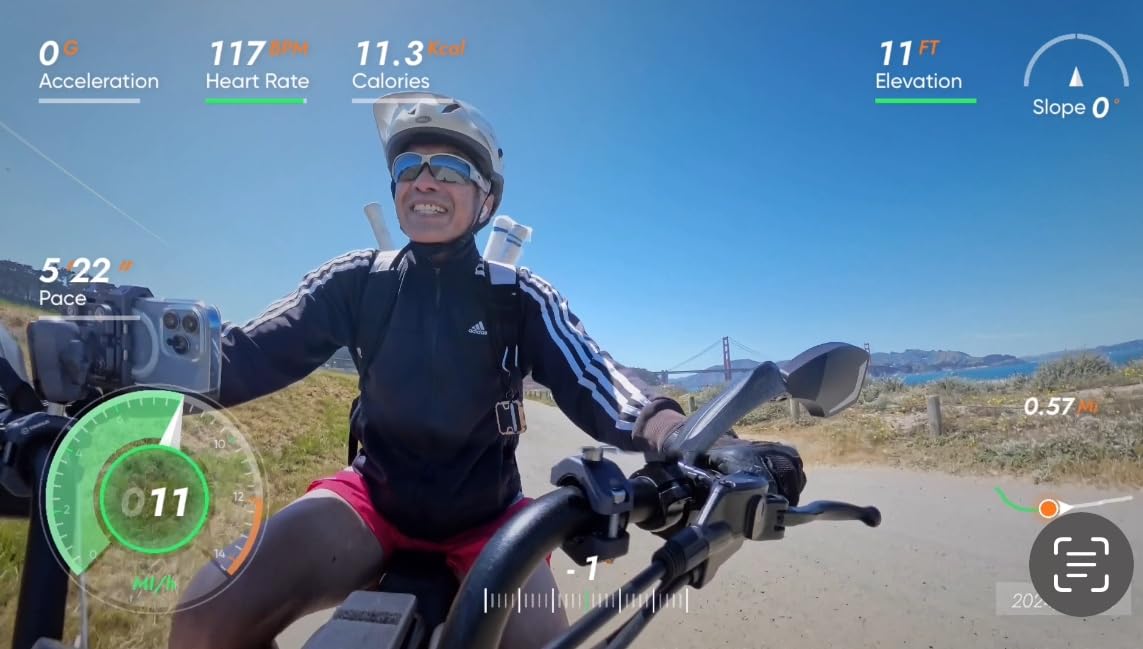
The X4 also shoots in a traditional 4K wide-angle mode at 60fps when you do not want to deal with 360 footage. This single-lens mode is useful for riders who want point-and-shoot simplicity without the post-production workflow that 360 video requires. It effectively gives you two cameras in one body.
The 135-minute battery life is competitive, and the camera is waterproof to 33 feet without any additional housing. For dive enthusiasts, an optional dive case extends that to 164 feet. The invisible selfie stick effect is a clever trick that makes mounted footage look like it was shot by a floating drone.
360 Editing and Learning Curve
The biggest barrier to entry with the X4 is the editing workflow. Unlike traditional cameras where what you shoot is what you get, 360 footage requires reframing in the Insta360 Studio software or mobile app. This gives you incredible creative control, letting you change angles, create smooth pans, and even add effects after the ride is over.
The AI editing tools in the Insta360 app have gotten significantly better and can auto-generate edited clips with minimal effort. However, riders who want full control over their footage should expect to spend time learning the software. The creative payoff is worth it for content creators, but casual users may find it more work than they expected.
Weight Considerations for Helmet Mounting
At 1.59 pounds, the X4 is the heaviest camera on this list, and mounting it on a helmet requires careful consideration. The dual-lens design is wider and bulkier than single-lens cameras, creating more wind resistance at speed. For most riders, a chest mount or handlebar mount is a more practical choice for this camera.
If you do want to helmet-mount the X4, use a chin bar position with a heavy-duty mount, and avoid top-of-helmet placement. The weight and wind catch will cause neck fatigue on rides longer than an hour. This camera shines brightest when you have the flexibility to use multiple mounting positions across different rides.
How to Choose the Right Helmet Mounted Action Camera?
Choosing among the best helmet mounted action cameras comes down to understanding your specific riding needs and being honest about your budget. Here are the factors that matter most when making your decision, based on our testing and the questions riders ask most frequently in forums.
Video Resolution and Frame Rates
Resolution determines how sharp and detailed your footage looks. For most riders, 4K at 30fps is the sweet spot, providing crisp footage without consuming massive storage space. Premium cameras like the GoPro HERO13 push to 5.3K60fps, while the Insta360 X4 offers 8K 360-degree capture for maximum creative flexibility.
Frame rate matters for slow-motion footage. If you ride track days and want to analyze your lines in slow motion, look for cameras that shoot at least 1080p60fps or higher. The GoPro’s 13x burst slow-motion and the Insta360 X4’s 4K60fps wide-angle mode are standouts for this use case.
Image Stabilization Matters
This is arguably the single most important feature for motorcycle helmet cameras. A motorcycle generates constant vibration that turns unstabilized footage into an unwatchable blur. There is a massive difference between cameras with no stabilization, basic Electronic Image Stabilization, and advanced gyro-based systems like GoPro’s HyperSmooth 6.0 and Insta360’s FlowState.
If smooth footage is your top priority, the GoPro HERO13 and Insta360 GO 3S and X4 are the clear leaders. The AKASO models offer EIS that is adequate for casual use but falls short on rough roads. The i3 Thumb Camera has no stabilization at all and requires post-production software stabilization.
Battery Life for Long Rides
Helmet camera batteries typically last between 90 and 150 minutes, which is shorter than most riders expect. Real-world battery life is often 10 to 20 percent less than manufacturer claims, especially when using stabilization and higher resolutions. Carrying a spare battery is essential for any ride longer than your commute.
The AKASO EK7000 Pro includes two batteries, giving you over four hours of total recording time. The Insta360 GO 3S delivers 140 minutes with the Action Pod, while the i3 Thumb Camera gives you 150 minutes at 1080P. Plan your recording strategy around your battery capacity, and consider recording only the interesting parts of your ride rather than capturing everything.
Mounting Safety and Helmet Integrity
This is a topic that competitors often gloss over, but it is critically important. Drilling into your helmet shell to mount a camera can compromise its structural integrity and void the manufacturer warranty. Adhesive mounts applied to the helmet surface are generally considered safe because they do not modify the shell material.
The consensus among safety experts is that externally mounted cameras can increase rotational forces during a crash. Cameras that mount inside the helmet, like the Insta360 GO 3S and the i3 Thumb Camera, avoid this concern entirely. If you use an external mount, position it on the chin bar rather than the top, where it is less likely to catch on the ground in a slide.
Legality of Helmet Mounted Cameras
The question of whether helmet cameras are legal comes up constantly, and the answer depends on where you ride. There is no federal law in the United States prohibiting helmet cameras, but some states have regulations that technically apply. California has a rule limiting helmet protrusions to 5mm, which has been cited in discussions about camera legality, though enforcement against riders is rare.
In practice, law enforcement rarely tickets riders solely for having a camera on their helmet. However, if you are involved in an accident, an aggressive insurance company or attorney could theoretically argue that an improperly mounted camera contributed to your injuries. Using adhesive mounts rather than drilling, and choosing cameras with low profiles, minimizes this risk.
Internationally, the rules vary. Some European countries are stricter about helmet modifications. If you ride abroad, check local regulations before assuming your setup is legal everywhere.
Helmet vs Bike Mounted Cameras
One decision worth making early is whether you want your camera on your helmet or on your motorcycle. Helmet-mounted cameras capture a true POV perspective that follows where you look, which is ideal for motovlogging and immersive riding footage. Bike-mounted cameras offer a fixed perspective and are better for dash-cam style documentation of what happens in front of you.
Many riders run both setups simultaneously, with a helmet camera for creative footage and a bike-mounted camera for insurance evidence. The cameras on this list are all designed primarily for helmet use, but most can also be mounted on handlebars or fairings with the right accessories.
FAQs
What is the best helmet mounted camera?
The GoPro HERO13 Black is the best overall helmet mounted camera thanks to its 5.3K resolution and HyperSmooth 6.0 stabilization. For budget-conscious riders, the AKASO EK7000 Pro offers excellent value with a touchscreen and dual batteries. Riders who want the smallest possible camera should consider the Insta360 GO 3S Motorcycle Bundle.
Is it illegal to mount a camera on a helmet?
There is no federal law in the United States prohibiting helmet mounted cameras. Some states like California have regulations limiting helmet protrusions to 5mm, but enforcement against riders is extremely rare. Using adhesive mounts rather than drilling into the shell keeps your setup on the safe side of most regulations.
Are helmet mounted cameras safe?
Helmet mounted cameras are generally considered safe when installed correctly with adhesive mounts rather than drilling. Externally mounted cameras can theoretically increase rotational forces during a crash, so choosing a low-profile camera and mounting on the chin bar reduces risk. Cameras that mount inside the helmet, like the Insta360 GO 3S, avoid external protrusion entirely.
Should I put a camera on my motorcycle helmet?
Yes, a helmet camera is worthwhile for most riders. It provides evidence in case of accidents, lets you document memorable rides, and enables motovlogging content creation. Choose a camera with good image stabilization since motorcycle vibration is the biggest challenge for usable footage.
What is the best helmet camera for motorcycle riding?
For motorcycle riding specifically, the GoPro HERO13 Black Bundle offers the best footage quality and includes curved adhesive helmet mounts. The Insta360 GO 3S Motorcycle Bundle is ideal for riders who want an in-helmet mount with no external profile. The AKASO EK7000 Pro is the best value option with a complete helmet accessories kit included.
Final Verdict: Which Helmet Camera Should You Buy?
After testing all six cameras across hundreds of miles, our recommendations are clear. The GoPro HERO13 Black Accessory Bundle is the best helmet mounted action camera for riders who want top-tier footage quality and do not mind the extra weight. Its HyperSmooth 6.0 stabilization and 5.3K resolution are unmatched in this lineup.
For riders on a budget, the AKASO EK7000 Pro delivers the best balance of features and value, with a touchscreen, dual batteries, and a complete helmet mounting kit included. And if you want the smallest, most discreet camera possible, the Insta360 GO 3S Motorcycle Bundle mounts inside your helmet for invisible POV recording with gimbal-quality stabilization.
No matter which camera you choose, the best helmet mounted action camera for 2026 is the one that fits your riding style, budget, and mounting preferences. Get out there, hit record, and capture the ride.
1 thought on “6 Best Helmet Mounted Action Cameras (September 2026) Honest Reviews”