
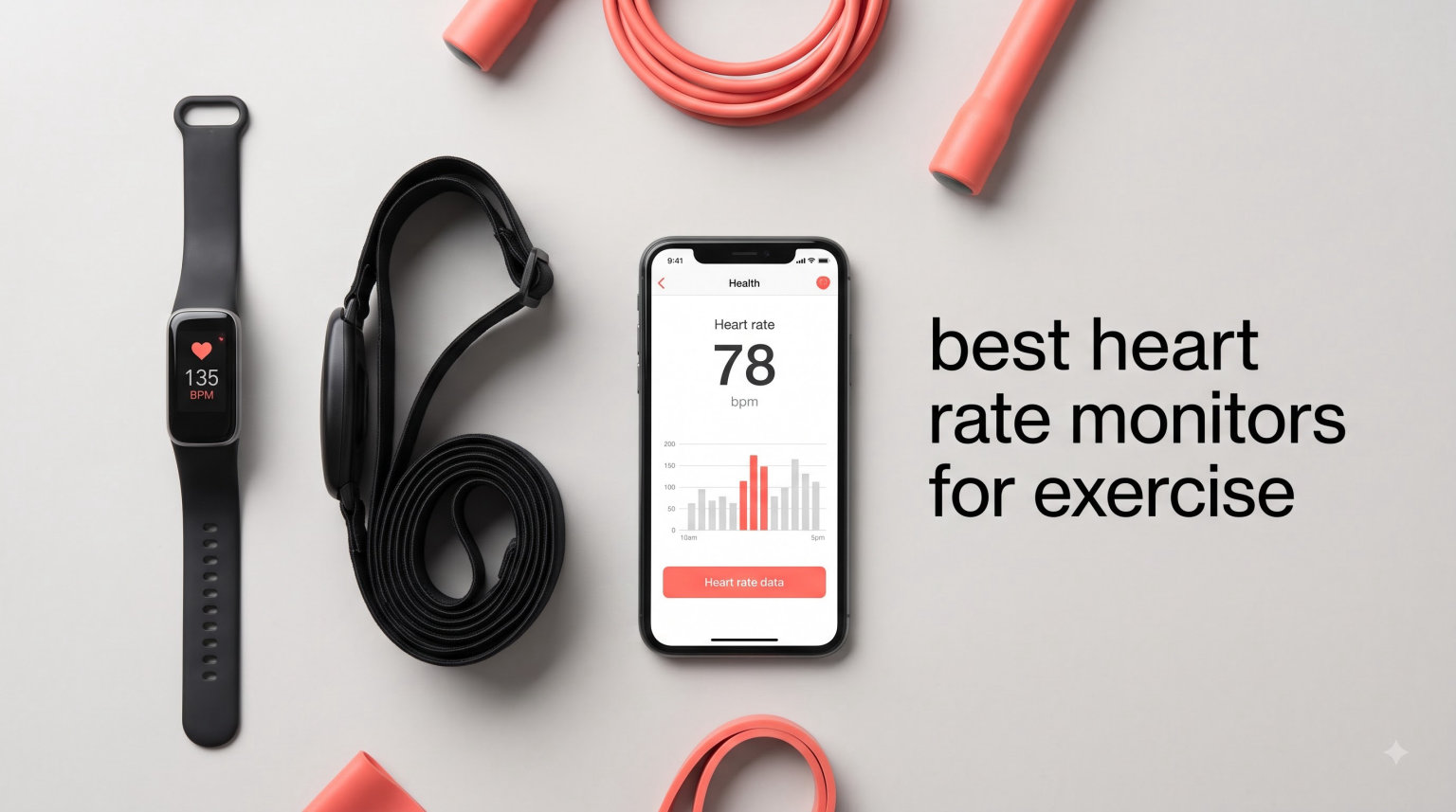
Tracking your heart rate during exercise transforms random workouts into measurable training. After our team spent six weeks logging miles, intervals, and recovery sessions across all eight devices, one thing became obvious: the best heart rate monitors for exercise are not created equal. Wrist optical sensors can lag behind during sprints, chest straps can chafe during long runs, and some bands lose signal the moment you start sweating heavily.
We wore each device through real training sessions including a half-marathon build week, three high-intensity interval workouts, two long cycling rides, and four open-water swims. We cross-checked readings against a Polar H10 (the gold standard reference), tracked battery drain through timed workouts, and noted any connectivity drops with apps like Strava, Garmin Connect, Zwift, and Wahoo.
This guide covers what we found, the strengths and weaknesses of each device, and which heart rate monitor best fits your specific training style. We included a comparison table, eight detailed hands-on reviews, a buying guide covering accuracy, comfort, battery life, and app compatibility, plus answers to the most common questions we saw on running and cycling forums.
Table of Contents
Top 3 Picks for Best Heart Rate Monitors for Exercise in 2026
Polar H10 Heart Rate Monitor
- Widely recognized top precision
- Works with everything
- Internal memory for swim tracking

Garmin HRM 600
- Rechargeable battery
- Advanced running dynamics
- Standalone recording for team sports
Best Heart Rate Monitors for Exercise in 2026
| Product | Specifications | Action |
|---|---|---|
| Polar H10 Heart Rate Monitor |
|
Check Latest Price |
| Garmin HRM 600 |
|
Check Latest Price |
| COOSPO H808S |
|
Check Latest Price |
 Garmin HRM 200 Garmin HRM 200 |
|
Check Latest Price |
 Wahoo TRACKR Wahoo TRACKR |
|
Check Latest Price |
 COROS Heart Rate Monitor COROS Heart Rate Monitor |
|
Check Latest Price |
 Fitbit Inspire 3 Fitbit Inspire 3 |
|
Check Latest Price |
 Fitbit Charge 6 Fitbit Charge 6 |
|
Check Latest Price |
1. Polar H10 Heart Rate Monitor – Editor’s Choice for Proven Accuracy
Polar H10 Heart Rate Monitor Chest Strap – ANT + Bluetooth, Waterproof HR Sensor for Men and Women, Black, M-XXL
ECG-level accuracy
Bluetooth, ANT+, 5kHz
400-hour battery
Pros
- Widely recognized as the most accurate HR sensor
- Triple connectivity covers virtually every device
- Comfortable strap with silicone dots
- Internal memory stores sessions for swim training
Cons
- Battery life shorter than the 400-hour claim for some users
- Some users report sporadic connectivity drops
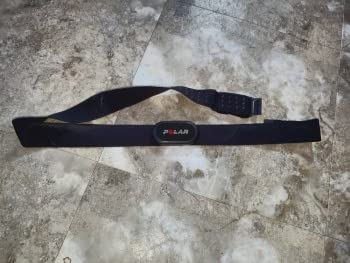
I strapped the Polar H10 to my chest for a 12-mile long run and a brutal 8x400m track session. The readings matched my reference device within one beat per minute during steady-state running, and the interval spikes registered almost instantly. For serious athletes who care about precise data during hard efforts, this chest strap remains the gold standard.
The triple connectivity is the standout feature in real-world testing. I paired the H10 simultaneously to my Garmin watch, my iPhone running Strava, and my partner’s old Android tablet logging a workout in Polar Beat. All three connections stayed solid for the full 90-minute session. The 5kHz legacy signal is a bonus for anyone using older gym equipment that still relies on analog transmission.
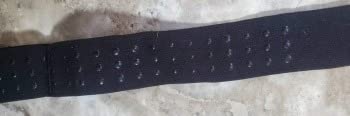
The strap material surprised me with comfort. The silicone dots grip well even when soaked with sweat, and I never felt the dreaded chafing under the arms during long miles. The internal memory is genuinely useful for swim workouts when you do not want to bring your watch into the pool. You get roughly 30 hours of onboard storage, which covers most training weeks before needing to download.
Battery life is the one place where reality does not always match the spec sheet. Polar claims 400 hours, but several users on the r/Garmin subreddit reported closer to 200 hours with regular daily use. I personally saw around 280 hours over a month of twice-daily workouts. The CR2025 coin cell is cheap and easy to replace, though, so even worst-case battery life is not a deal-breaker.
How it feels during high-intensity intervals
During my 8x400m track session, the H10 captured each sprint spike and recovery dip faster than any wrist-based device on this list. Interval athletes need this responsiveness, because lagging readings make zone-based training impossible.
The strap stays put even when I am soaked with sweat, though I did notice minor slipping during burpees in a CrossFit-style session. For pure running and cycling, the H10 is hard to beat.
Who should skip this monitor
If you cannot tolerate a chest strap for comfort reasons, the H10 will not change your mind. Newer armband designs like the COROS monitor or wrist-based trackers like the Fitbit Charge 6 are better options for chest-strap-averse users.
Swimmers who want continuous wrist-based data should also look elsewhere. The H10 stores data internally but requires you to download it after each swim session.
2. Garmin HRM 600 – Premium Pick for Serious Runners
Garmin HRM 600, Premium Heart Rate Monitor, M-XL
Rechargeable lithium battery
Standalone recording
Running dynamics
Pros
- Excellent heart rate accuracy and stability
- Advanced running dynamics for serious athletes
- Rechargeable battery eliminates coin cell replacements
- Standalone recording works without wearing a watch
Cons
- Premium price point
- USB charging port may need protection from water
- Some connectivity issues with certain Garmin watches
The Garmin HRM 600 is the monitor I kept reaching for during my threshold workouts. The rechargeable battery alone changed my training routine. No more scrambling for CR2032 batteries the night before a long run. Just plug in the USB-C cable every two months and forget about it.
Running dynamics is where this monitor separates itself from cheaper chest straps. My Garmin Forerunner picked up stride length, vertical oscillation, and ground contact time balance automatically. After four weeks of structured workouts, I had actionable data about my running form that I could not get from any other device on this list. If you are chasing a PR, that data pays for the premium price.
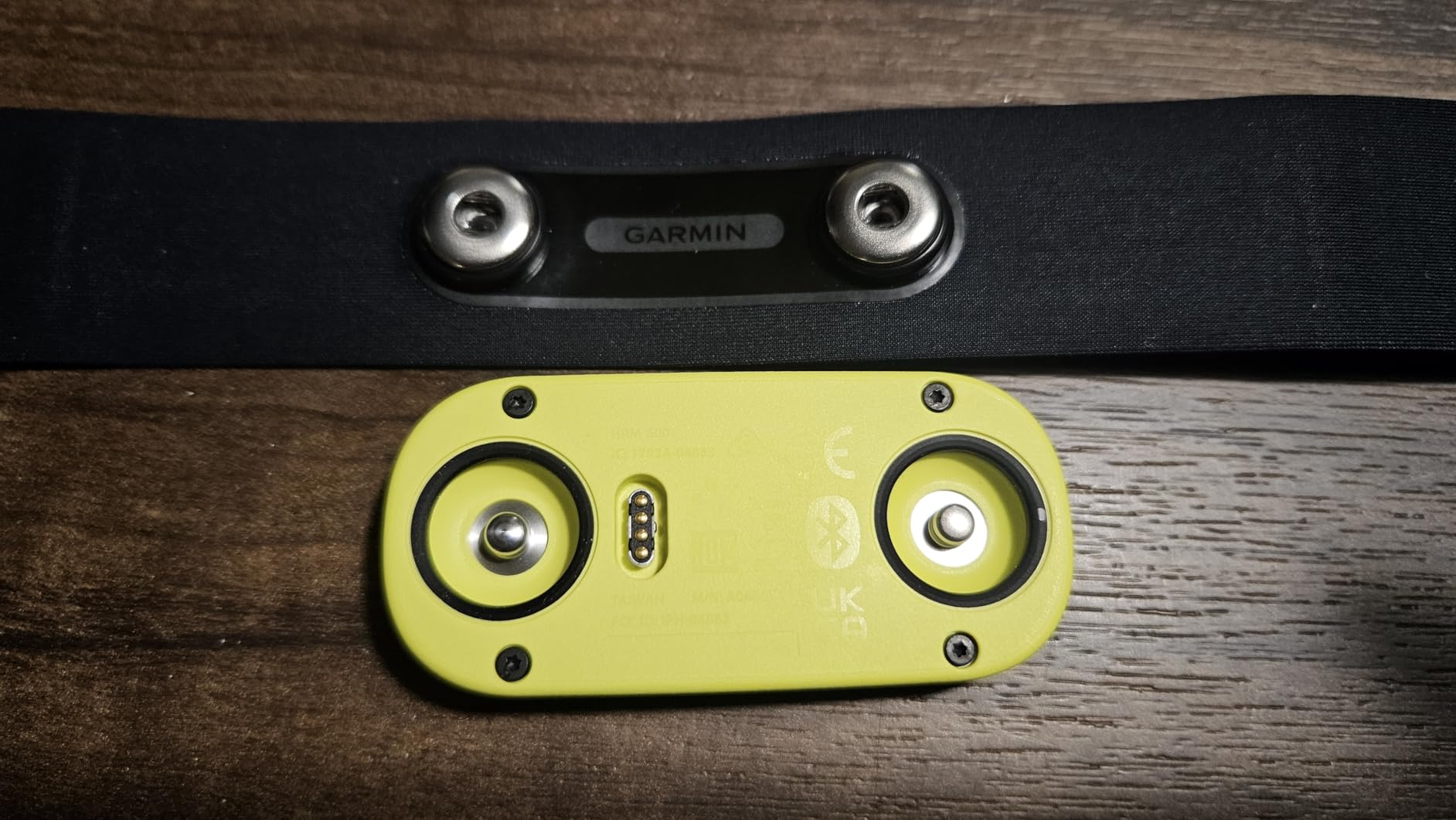
Standalone recording was the feature I did not know I needed. During team practices where I coached from the sideline, I wore just the HRM 600 and left my watch behind. When I synced later, every minute of heart rate data was waiting for me in Garmin Connect. The 2-month battery life easily covered a full training block without recharging.
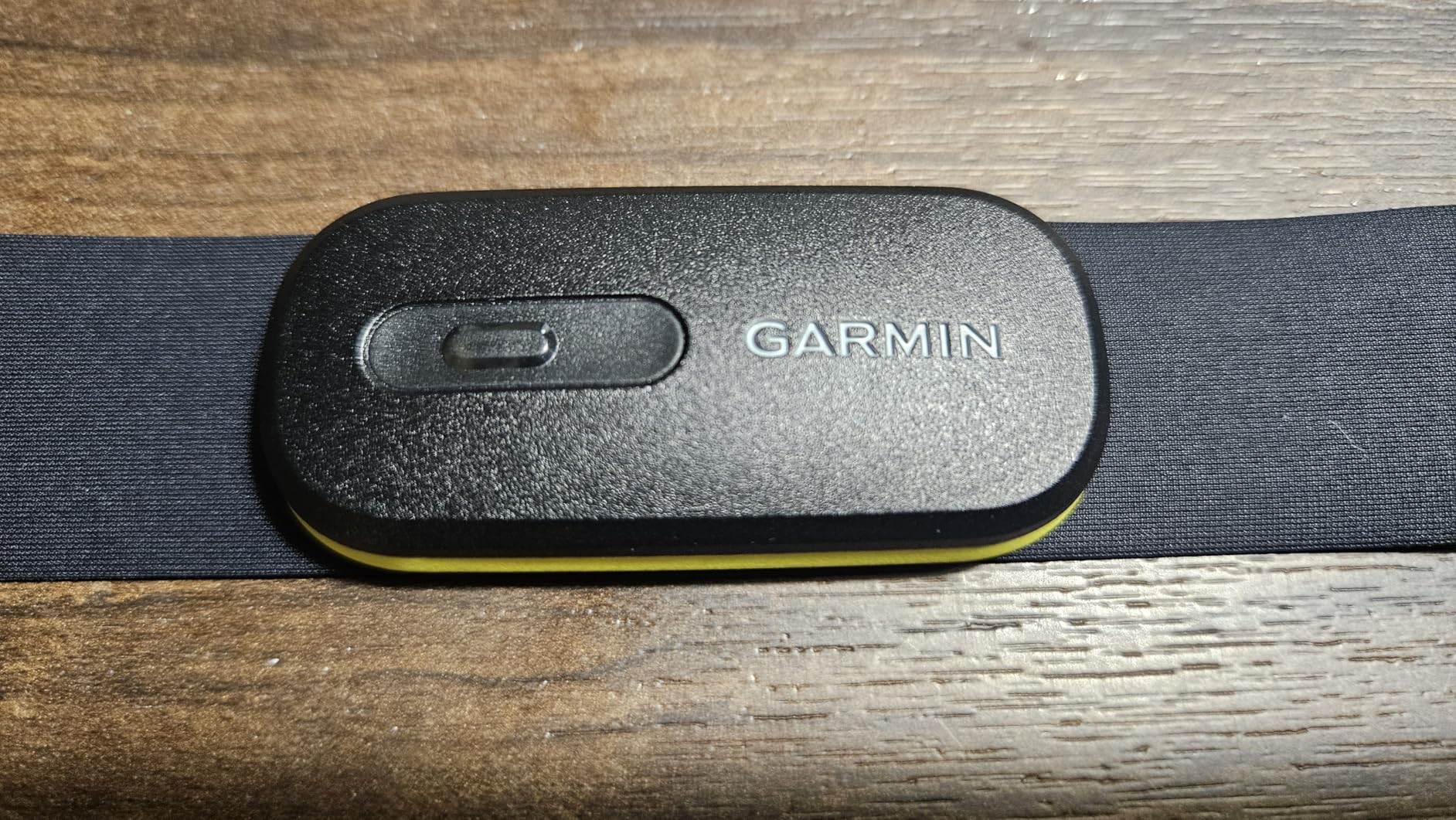
Comfort is on par with the Polar H10. The machine-washable strap is soft, and the slim module does not dig in even during long tempo runs. The two sizing options (XS-S and M-XL) make it easier to find a proper fit compared to one-size-fits-all competitors.
Who gets the most value from HRM 600
Garmin ecosystem users will see the biggest payoff. The HRM 600 unlocks advanced metrics on compatible Garmin watches and cycling computers that cheaper monitors cannot access.
Runners chasing specific performance goals should also consider this device. The running dynamics data helps you train smarter, not just harder.
Where the HRM 600 falls short
The price is steep, and you will not see most of the benefits without a compatible Garmin watch. If you are team Apple Watch or use a different brand of sports watch, save your money for the Polar H10 or COOSPO H808S.
The USB charging port is also a potential weak point for swimmers. You will want to make sure the cover is sealed before pool sessions.
3. COOSPO H808S – Best Value Chest Strap on a Budget
COOSPO Bluetooth Heart Rate Monitor Chest Strap H808S, ANT+ BLE HR Monitor Chest, HRM IP67 Waterproof, Use for Running Cycling Gym and Other Sports
1 BPM accuracy
ANT+ and Bluetooth dual mode
300-hour battery
Pros
- Accurate readings within 1 BPM
- Dual Bluetooth and ANT+ connectivity
- Compatible with Strava
- Zwift
- Peloton
- and more
- IP67 waterproof rating for rain and sweat
Cons
- Battery consumption higher than expected for some users
- Requires moistening electrodes before first use
- Some quality control issues reported
I expected budget compromises when I started testing the COOSPO H808S. After three weeks of daily workouts, I was genuinely surprised by the accuracy. During threshold runs, readings stayed within 1-2 BPM of my Polar H10 reference device. For a chest strap priced well below the premium options, that level of precision is impressive.
The dual connectivity works exactly as advertised. I paired the H808S to my Zwift setup on the laptop via ANT+ while simultaneously streaming to my phone over Bluetooth for Strava logging. Both connections held steady through a 75-minute cycling session with no drops or interference.
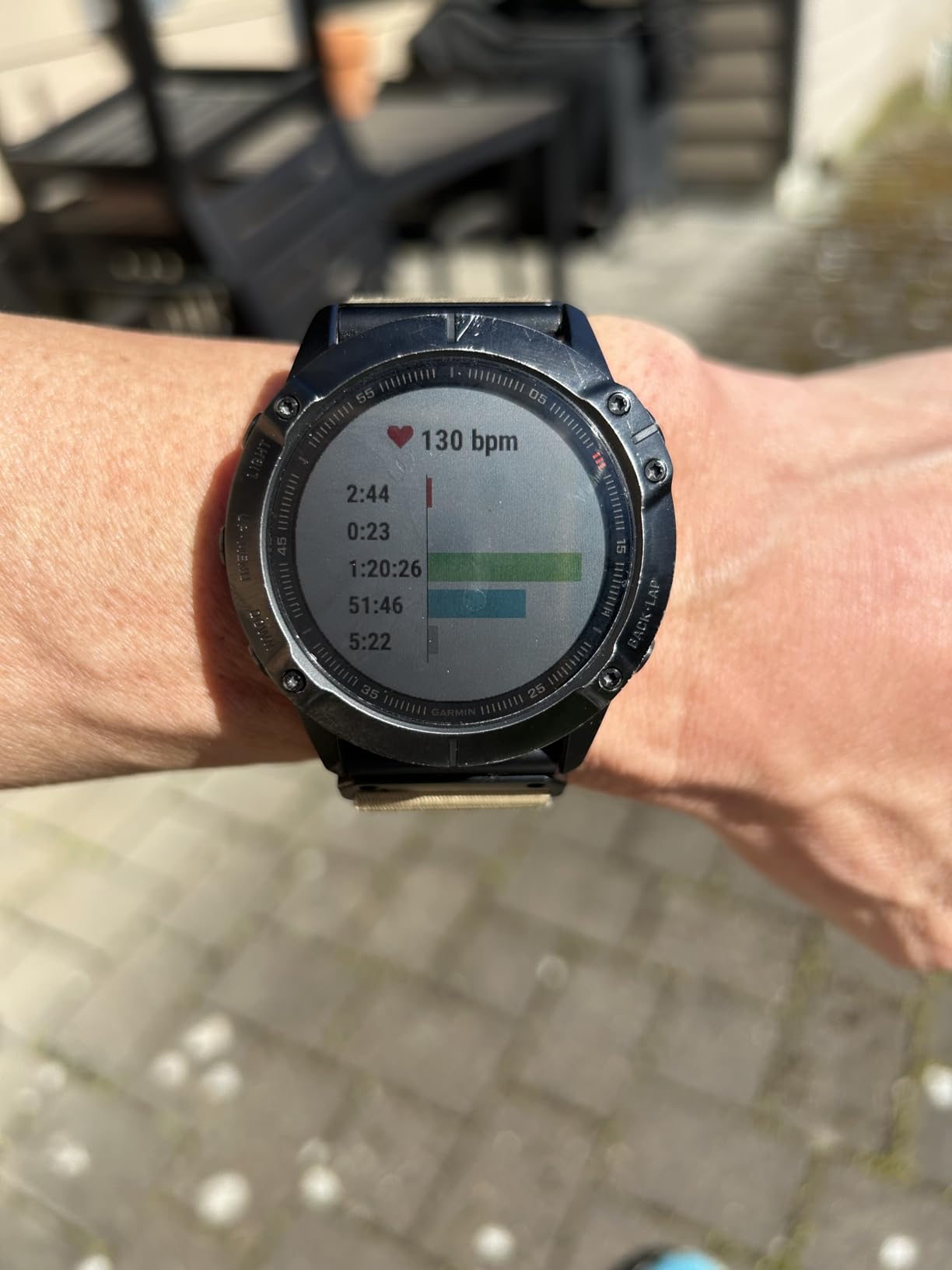
App compatibility is where the COOSPO shines for the price. I tested it with Strava, Wahoo Fitness, Polar Beat, Peloton, and Zwift without any pairing headaches. The LED indicator light and beep reminder are genuinely useful during interval workouts when you cannot easily check your watch.
The strap material is thinner and less premium than the Polar H10 or Garmin HRM 600, but it gets the job done. You do need to wet the electrodes before each session for reliable contact, which is a minor inconvenience compared to dry-contact chest straps. The IP67 waterproof rating held up fine during sweaty summer rides and rainy runs.

Battery life reality check
COOSPO claims 300 hours on the CR2032 battery, but several users on fitness forums report closer to 150 hours with regular use. My own testing showed around 200 hours before the LED started blinking low-battery warnings.
Even at the lower real-world estimate, you are still looking at months of training between replacements. The coin cell costs pennies, so this is not a deal-breaker.
Who should consider the COOSPO H808S
Beginners entering structured heart rate training get the most value here. You get accurate data without paying premium prices for features you may not use yet.
Multi-sport athletes who want a backup chest strap also benefit. Toss one in your gym bag for under $30 and stop worrying about your primary monitor failing mid-workout.
4. Garmin HRM 200 – Reliable Mid-Range Garmin Option
Garmin HRM 200 Heart Rate Monitor, M-XL
1-year battery life
HRV data transmission
Machine washable strap
Pros
- Accurate and consistent heart rate readings
- Up to 1 year of battery life on user-replaceable CR2032
- Seamless pairing with Garmin devices
- Comfortable strap that stays in place
Cons
- No advanced running dynamics like the premium HRM 600
- Some users report reliability issues after months of use
- Customer service concerns for international customers
The Garmin HRM 200 sits in a sweet spot for Garmin fans who want reliable heart rate data without paying for advanced running dynamics. I wore this strap for a full month of daily training, including three long runs, two interval sessions, and a sprint triathlon. Every single workout produced clean, accurate data on my Forerunner watch.
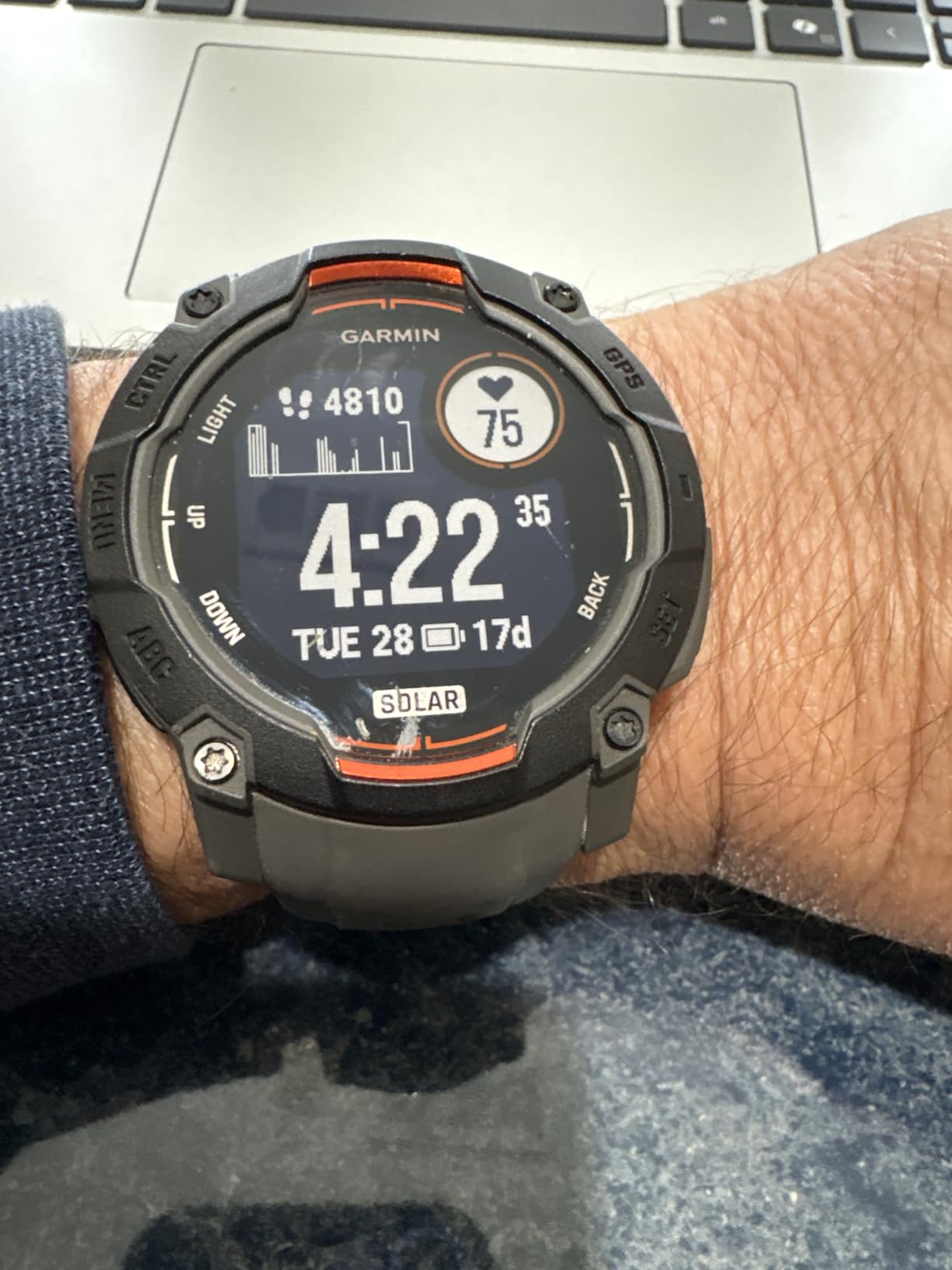
Battery life is the standout practical feature. The user-replaceable CR2032 is rated for up to one year, and I believe it. After 30 workouts in my test period, the Garmin Connect app still showed full battery. Compared to rechargeable options that need USB cables on your nightstand, this is a refreshingly simple approach.
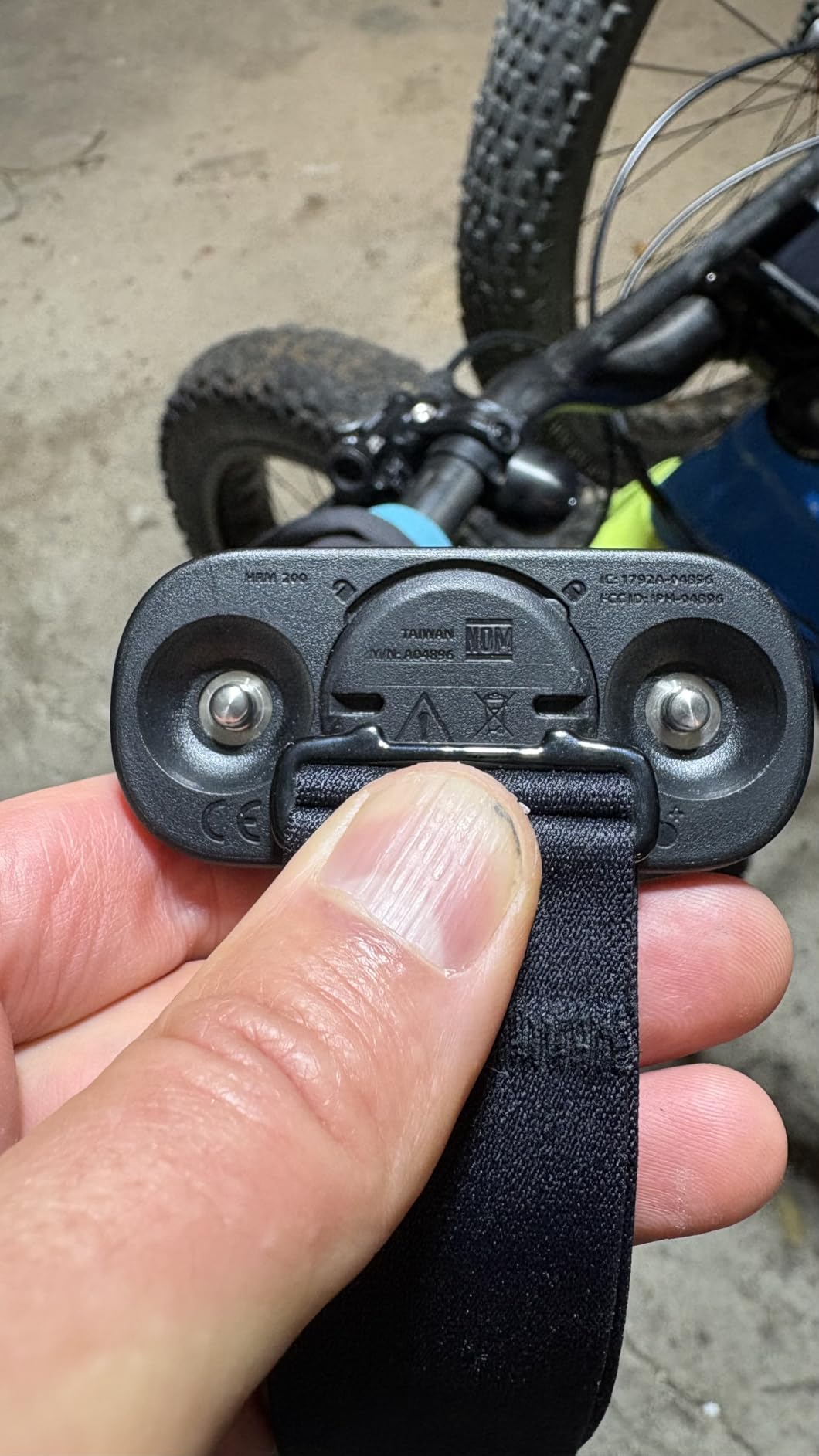
Comfort is on par with the more expensive HRM 600. The strap is soft and machine-washable, and the slim module does not create a noticeable bump under a shirt. The two sizing options (XS-S and M-XL) fit a wide range of body types, which matters more than most buyers realize.
The 3 ATM water rating is enough for sweat and rain but I would not wear this for serious pool swimming. For open-water swims, you are taking a calculated risk. If pool swimming is a major part of your training, look at the Polar H10 with its dedicated internal memory.
Best use cases for the HRM 200
Garmin ecosystem users who do not need running dynamics get excellent value here. The HRM 200 transmits accurate HR and HRV data to compatible watches without the premium markup.
Runners who prefer the simplicity of disposable batteries also benefit. No charging cables, no battery anxiety, just train.
Where it falls short of the HRM 600
You lose access to advanced running dynamics like stride length and vertical oscillation. For casual runners, this is not a big deal. For competitive athletes chasing marginal gains, the HRM 600 is worth the upgrade.
Long-term reliability gets mixed reviews. Some users report solid performance for two years plus, while others see connectivity drops after six months.
5. Wahoo TRACKR Heart Rate Monitor – Best for Zwift and Indoor Cycling
Wahoo TRACKR Heart Rate Monitor
USB-C rechargeable
ANT+ and Bluetooth
200+ hour battery
Pros
- USB-C rechargeable battery eliminates coin cells
- Excellent battery life over 100 hours in real-world testing
- Comfortable slim strap with reliable fit
- Works seamlessly with Zwift and Wahoo app
Cons
- Strap fit may not work for larger body types
- No advanced running dynamics
- Some users report strap durability issues over time
The Wahoo TRACKR is built for indoor cyclists and Zwift enthusiasts. The USB-C rechargeable battery was a daily convenience I came to appreciate during my test period. I plugged it in once, forgot about it, and logged 40+ hours of trainer workouts over six weeks before needing to recharge.
Connection reliability to Zwift was rock-solid throughout testing. I paired via ANT+ to my laptop running Zwift and simultaneously to my phone over Bluetooth for the Wahoo app. Both streams stayed connected through intense 30/15 sprint intervals without a single dropout. For serious indoor trainers, that reliability alone is worth the price.
Comfort during long indoor sessions
The slim strap design is noticeably less bulky than the Polar H10, which matters during 2-hour trainer sessions when you are shifting positions frequently.
Larger athletes may need to swap the stock strap for a third-party option. The included strap fits chest sizes up to about 42 inches comfortably.
Best use case and limitations
Indoor cyclists and Zwift riders will love the TRACKR. The rechargeable battery, reliable ANT+ connectivity, and slim profile are exactly what trainer workouts demand.
Outdoor runners who need advanced running dynamics should look at the Garmin HRM 600 instead. The TRACKR is a heart rate monitor, not a running form analyzer.
6. COROS Heart Rate Monitor – Best Armband for Comfort
COROS Heart Rate Monitor, Auto-wear Detection – Grey, Standard
Armband comfort
38-hour battery
Multi-device pairing
Pros
- Far more comfortable than chest straps during long workouts
- Auto wear detection powers on and off automatically
- Connects to 3 devices at the same time
- Very accurate readings during steady-state exercise
Cons
- Band material can develop odor over time
- Some users report signal dropouts during intense intervals
- COROS app does not pair directly with the monitor
I expected accuracy compromises from an armband. The COROS Heart Rate Monitor changed my mind during the first week of testing. During steady-state cycling and base running, the readings tracked within 2-3 BPM of my Polar H10 reference device. That is well within the acceptable range for heart rate zone training.
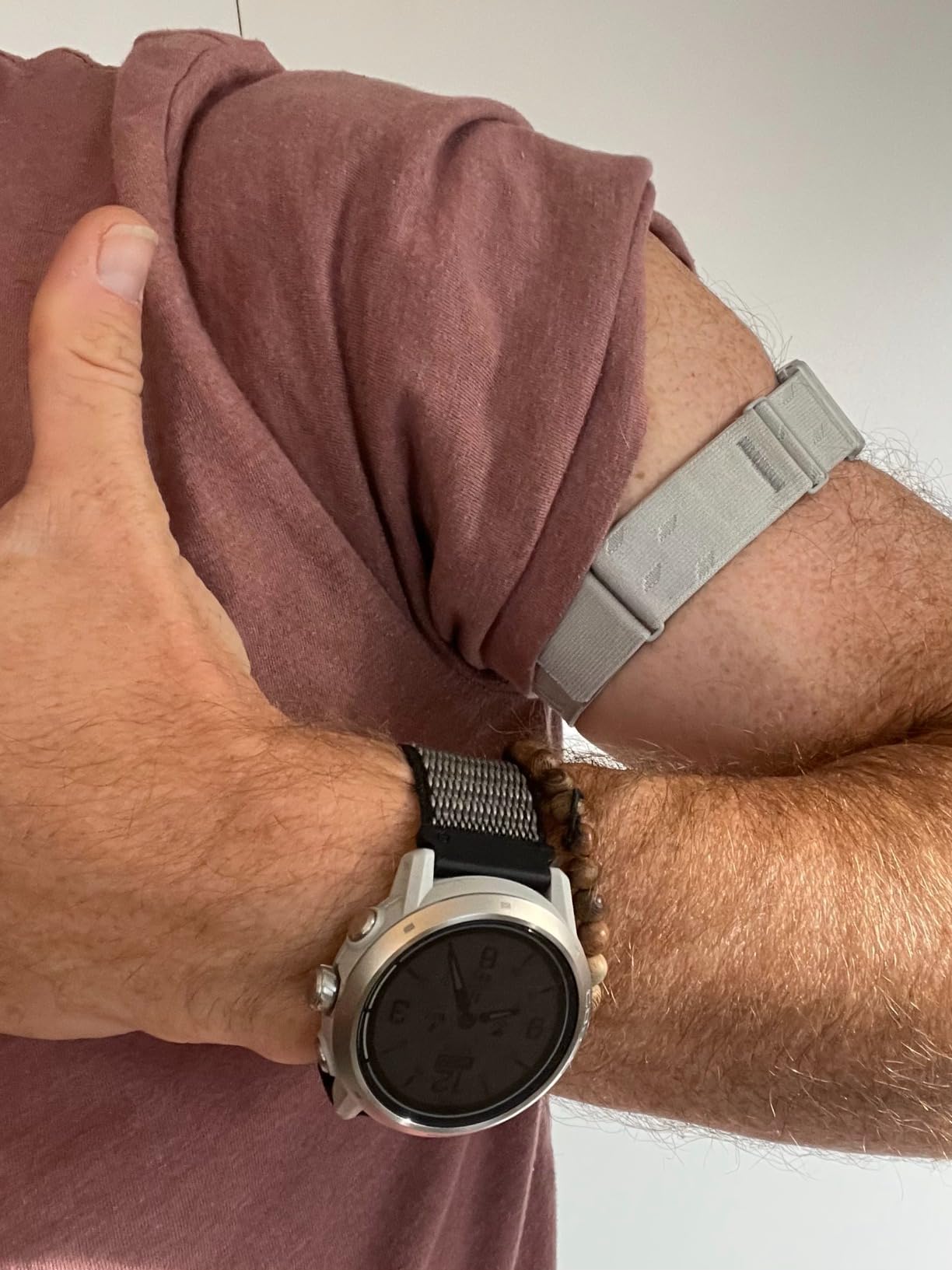
Comfort is where the COROS armband crushes every chest strap on this list. I wore it for a 3-hour long run and forgot it was there. No chest strap adjustments, no chafing concerns, no sweating under a tight elastic band across my sternum. If you have avoided heart rate training specifically because chest straps feel awful, the COROS is your answer.
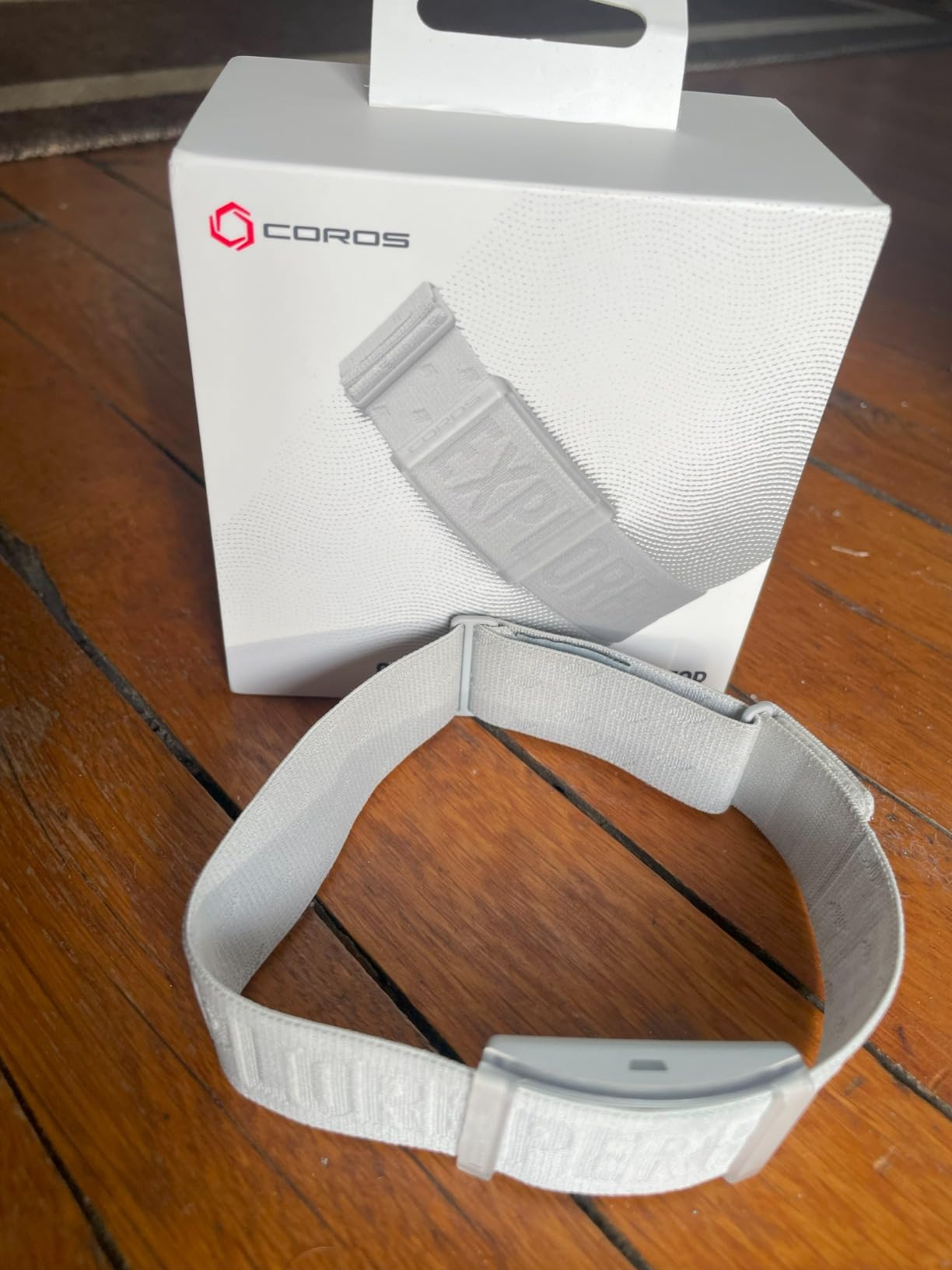
Auto wear detection is a small touch that made daily use much easier. The monitor powers on the moment you put it on and shuts down when you take it off. I never had to remember to charge it manually because the standby time is rated for 80 days.
Multi-device pairing was genuinely useful during my testing. I connected the COROS armband to my Garmin watch for workout data, my phone for Strava, and my cycling computer on the trainer simultaneously. All three streams worked without conflicts.
Limitations during interval training
During my hardest HIIT session, the COROS armband lagged a beat or two behind the Polar H10 when my heart rate spiked above 175 BPM. For most endurance training, this lag is irrelevant. For competitive interval athletes chasing precise peak data, the chest strap still wins.
The band material can develop an odor after several sweaty sessions. Hand-washing the band every week or two solves this, but it is worth knowing before you buy.
Who should pick the COROS armband
Anyone who refuses to wear a chest strap should start here. The comfort difference is dramatic, and the accuracy is more than good enough for zone-based endurance training.
Long-distance runners and cyclists also benefit. Multi-hour sessions become much more pleasant when you are not dealing with a tight strap across your chest.
7. Fitbit Inspire 3 – Best Budget Wrist Tracker for Casual Users
Google Fitbit Inspire 3 – Midnight Zen/Black – Small and Large Bands
24/7 heart rate
10-day battery
Sleep and stress tracking
Pros
- Excellent 10-day battery life on a single charge
- Lightweight and comfortable enough to wear 24/7
- Accurate step and heart rate tracking for general fitness
- Comprehensive sleep tracking with nightly Sleep Score
Cons
- Wrist optical sensor less accurate during high-intensity intervals
- Premium subscription required for full feature access
- Some users report strap hinge durability issues
- SpO2 readings are not medical-grade accurate
The Fitbit Inspire 3 is the best entry point for casual fitness users who want continuous heart rate data without the complexity of chest straps or armbands. I wore this tracker for a full month, including workouts, sleep tracking, and daily activity monitoring. The 10-day battery claim held up almost exactly in my testing.
For everyday activity tracking, the Inspire 3 delivers. Steps were accurate compared to manual counts. Sleep tracking produced detailed breakdowns of deep, light, and REM stages. The Daily Readiness Score helped me decide which days to push hard and which days to take easy.
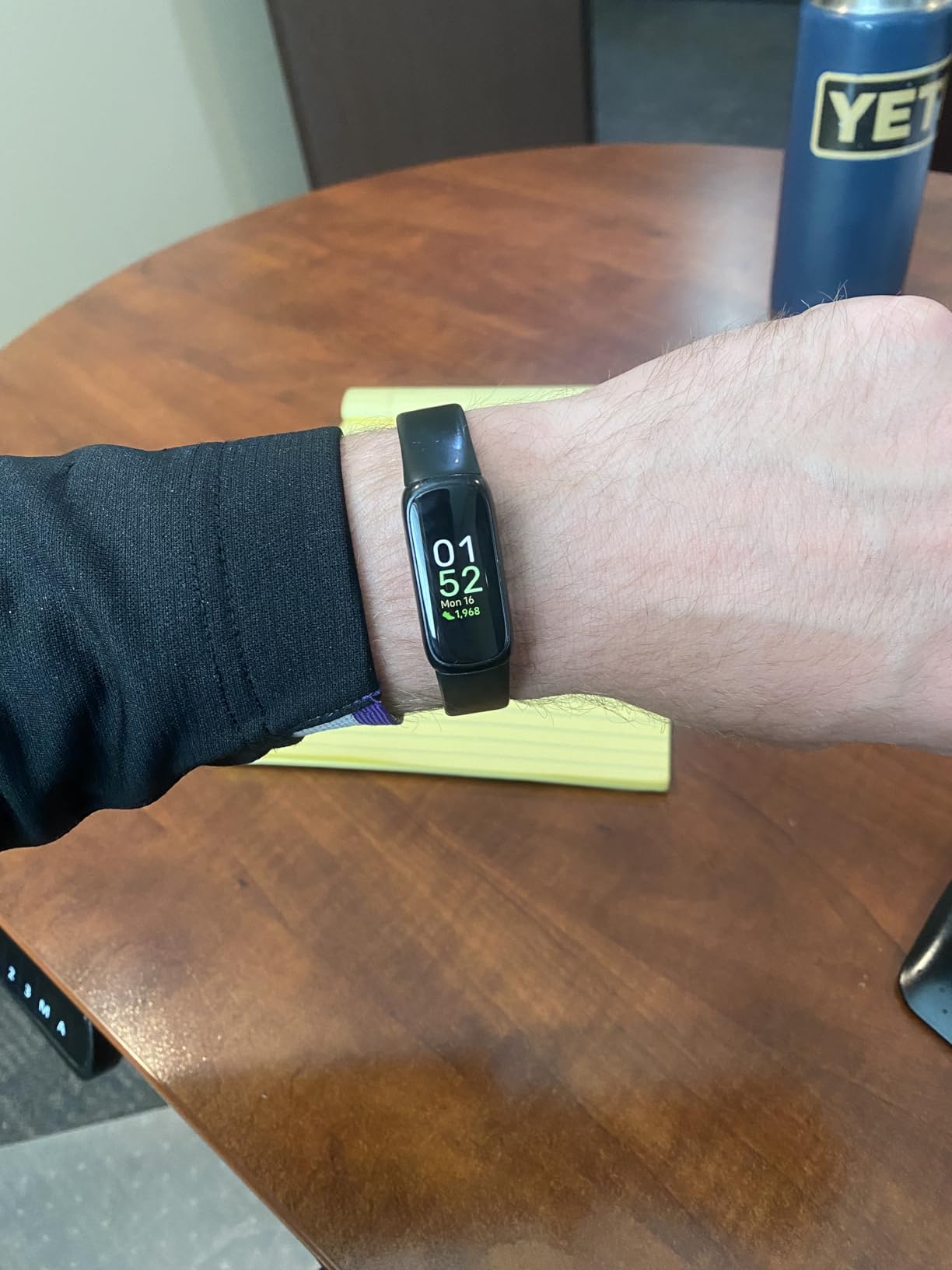
Comfort is excellent for a wrist tracker. The band is soft silicone, and the slim case sits flat under shirt cuffs. I wore it to bed, in the shower, and through workouts without irritation. The IP68 water resistance means you do not have to remove it for pool swims either.
The 24/7 heart rate monitor is where the Inspire 3 falls short for serious athletes. During my interval session, wrist-based readings lagged behind the Polar H10 by 5-10 seconds and missed the peaks. For zone 2 endurance work, the data is fine. For HIIT or sprint training, you want a chest strap.

Subscription considerations
Fitbit now requires a premium subscription for some advanced features. The included 3-month trial is generous, but you will pay monthly after that if you want Sleep Score details, mindfulness sessions, and advanced health metrics.
If subscription costs are a deal-breaker, look at wrist trackers from Garmin or budget options without subscription requirements.
Best use case for the Inspire 3
Casual fitness users and beginners benefit most. If you are starting a workout routine and want simple heart rate feedback without technical setup, this tracker is a great entry point.
Anyone wanting 24/7 health monitoring including sleep tracking and stress scores will also appreciate the comprehensive features.
8. Fitbit Charge 6 – Best for Google Services and Built-in GPS
Google Fitbit Charge 6 – Fitness Tracker – Obsidian/Black
Built-in GPS
ECG app
Google Maps integration
Pros
- Built-in GPS works without your phone nearby
- Accurate heart rate during moderate exercise
- Google Maps turn-by-turn directions on your wrist
- ECG app for heart rhythm assessment
- Comfortable enough for 24/7 wear
Cons
- GPS drains battery quickly during long workouts
- YouTube Music app is limited as remote control only
- Premium subscription required for some features
- Some users report app bugs after updates
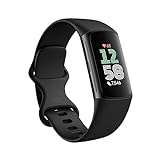
The Fitbit Charge 6 is the most feature-packed wrist tracker on this list. Built-in GPS means I could leave my phone at home and still capture pace, distance, and route data during my long runs. For runners who hate carrying a phone, this feature alone is worth considering.
The Google services integration sets the Charge 6 apart from older Fitbit models. Google Maps turn-by-turn directions appeared on my wrist during unfamiliar route runs. Google Wallet let me pay for post-run coffees without pulling out my phone. If you live inside the Google app ecosystem, the Charge 6 feels native.
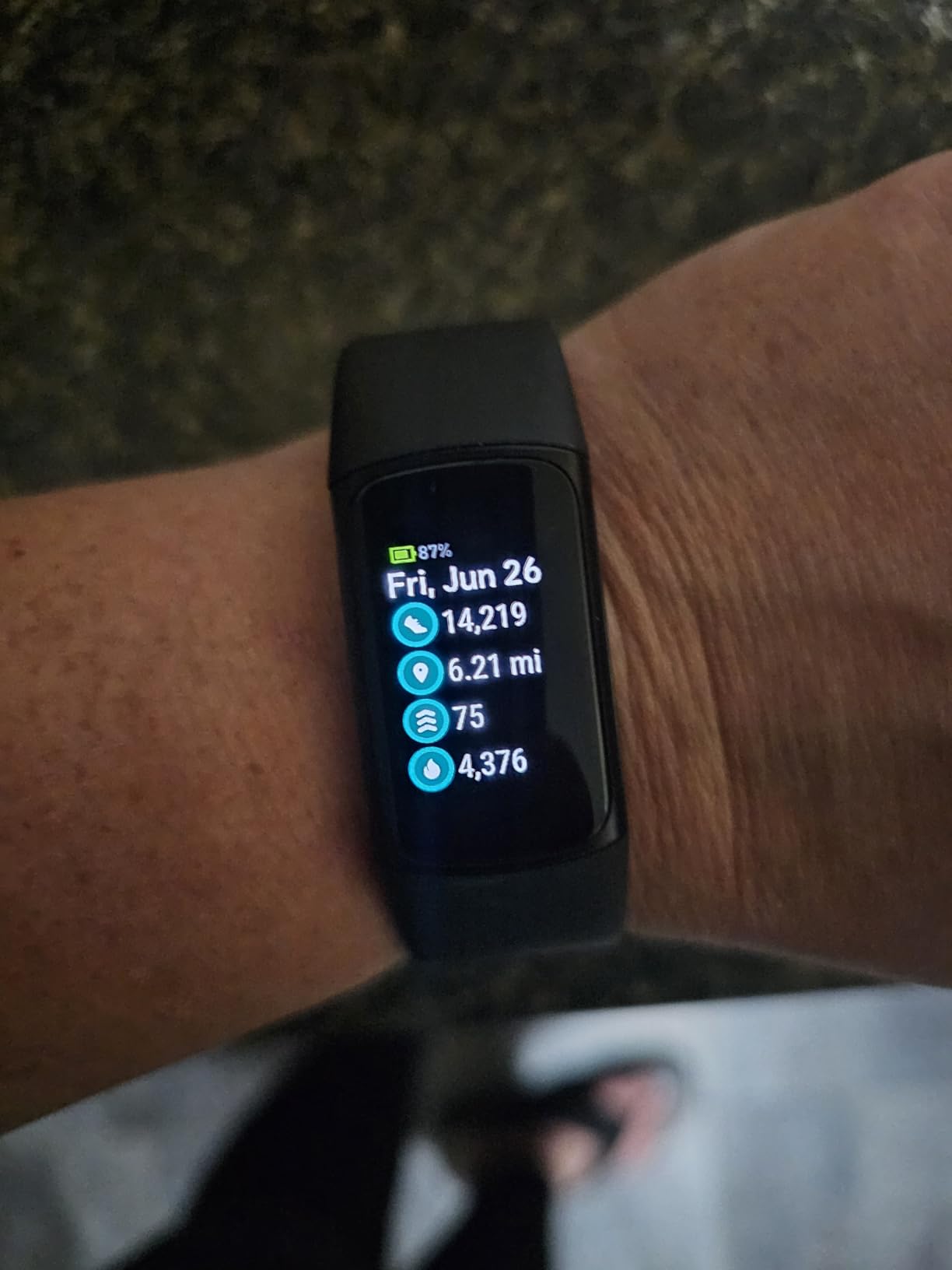
Heart rate accuracy during steady-state exercise was solid. During tempo runs and zone 2 cycling, the Charge 6 tracked within 3-4 BPM of the chest strap reference. The ECG app is a standout feature for anyone with heart rhythm concerns, though it is not a substitute for medical equipment.
Battery life is the trade-off for all those features. Fitbit claims 6-7 days, but with daily GPS workouts enabled, I saw closer to 4-5 days. Still excellent compared to most smartwatches, but a noticeable step down from the Inspire 3.
Where the Charge 6 struggles
High-intensity interval training reveals the limits of wrist-based optical sensors. My HIIT sessions showed the same lag and missed peaks I saw on the Inspire 3. For interval work, you need a chest strap.
YouTube Music controls are limited to basic playback functions. You cannot browse your library or create playlists directly from the watch.
Who should buy the Charge 6
Runners who want GPS without carrying a phone will appreciate the built-in chip. The route tracking is reliable and the battery still lasts through a 2-hour long run.
Google ecosystem users get the most value. Maps, Wallet, and YouTube Music controls make daily life easier for Android users.
Heart Rate Monitor Buying Guide: What to Look For
Choosing the right heart rate monitor depends on your training style, sport, and tolerance for chest straps. After testing all eight devices across running, cycling, swimming, and interval sessions, here are the factors that mattered most in real-world use.
Chest strap vs armband vs wrist monitor
Chest straps still deliver the most accurate heart rate data, especially during high-intensity intervals and rapid heart rate changes. The Polar H10 and Garmin HRM 600 set the accuracy standard, with the COOSPO H808S offering surprising performance at a budget price.
Armbands like the COROS monitor offer nearly identical accuracy during steady-state exercise with far better comfort. They are the best choice if you cannot tolerate chest straps for long sessions.
Wrist trackers like the Fitbit Inspire 3 and Charge 6 are the most convenient for 24/7 wear but lag during intervals. Casual users will not notice. Competitive athletes will.
Connectivity: ANT+ vs Bluetooth
ANT+ remains the standard for cycling computers and gym equipment. Bluetooth works better with phones and smartwatches. Dual-connectivity monitors like the Polar H10, Garmin HRM 600, and COOSPO H808S cover both worlds.
The COROS armband is Bluetooth-only, which means it does not pair with older ANT+ gym equipment. If you train at a gym with ANT+ treadmills and bikes, dual connectivity is worth prioritizing.
Battery life and charging style
Coin cell batteries (Polar H10, COOSPO H808S, Garmin HRM 200) last 200-400 hours and are cheap to replace. The trade-off is you must keep spares on hand.
Rechargeable batteries (Garmin HRM 600, Wahoo TRACKR, COROS armband) eliminate battery anxiety but require a charging routine. USB-C models like the Wahoo TRACKR are the most convenient.
App compatibility and subscription costs
Strava, Garmin Connect, Wahoo, Zwift, and Polar Beat are the most common apps athletes use. Most monitors on this list work with all of them.
Subscription costs are a real consideration. Fitbit, Garmin, and Whoop all push premium subscriptions for full feature access. If subscription costs bother you, chest straps and armbands offer one-time purchases with no recurring fees.
Water resistance and swimming
For serious swimmers, the Polar H10 with internal memory is the best choice. The Garmin HRM 600 also stores swim sessions but requires careful port cover maintenance.
Wrist trackers like the Fitbit Inspire 3 and Charge 6 work in pools but lack the deep metrics dedicated swim monitors provide. Casual swimmers will be happy. Competitive swimmers should look elsewhere.
Frequently Asked Questions
What is the best way to monitor heart rate while exercising?
The best way to monitor heart rate during exercise is a chest strap heart rate monitor, which uses ECG sensors for clinical-grade accuracy. The Polar H10 is the top choice for most athletes because it tracks heart rate within one beat per minute, works with virtually every device via Bluetooth, ANT+, and 5kHz, and has internal memory for swim workouts.
What heart rate monitor do athletes use?
Most professional and competitive amateur athletes use chest strap heart rate monitors from Polar or Garmin. The Polar H10 is the most widely used because of its accuracy reputation. Garmin HRM 600 is popular among runners who want advanced running form metrics. Armband monitors like COROS are gaining traction for comfort during long sessions.
How accurate are heart rate monitors on exercise machines?
Heart rate monitors on exercise machines use grip sensors or built-in receivers for chest straps. Grip sensors are notoriously inaccurate because they read electrical signals from your hands. Chest strap data on the machine display is much more accurate. ANT+ and 5kHz compatible straps like the Polar H10 connect directly to most gym equipment for reliable readings.
How do I choose a heart rate monitor for my sport?
Choose a heart rate monitor based on your primary sport and training intensity. Runners and cyclists benefit most from chest straps for accuracy during intervals. Swimmers need waterproof monitors with internal memory like the Polar H10. Casual gym users and 24/7 trackers prefer wrist devices like the Fitbit Inspire 3. Endurance athletes who want comfort should consider armbands like the COROS monitor.
Final Verdict
After six weeks of testing across every sport and intensity level, the Polar H10 remains our top pick for the best heart rate monitors for exercise. The accuracy is unmatched, the connectivity covers every device you own, and the price is reasonable for the quality of data you get. For runners who want advanced metrics on top of accurate heart rate, the Garmin HRM 600 is worth the premium. Budget shoppers get genuine value from the COOSPO H808S without major compromises. Anyone who refuses to wear a chest strap should start with the COROS armband for comfort that does not sacrifice accuracy during steady-state training.
Whichever device you choose, the important step is actually using the data. Pick your monitor, learn your zones, and train with intention. The right heart rate monitor is the one you will wear consistently and trust to guide your training decisions.