
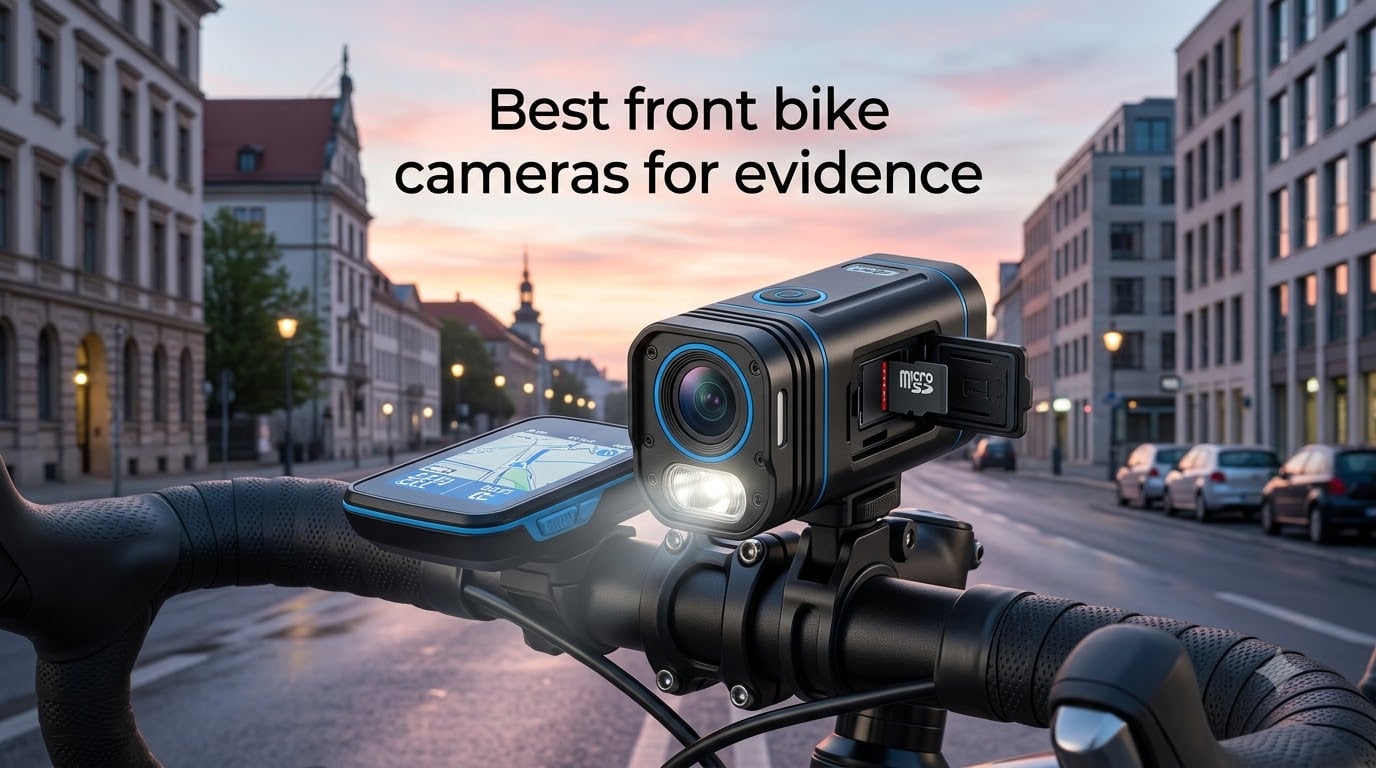
A front bike camera for evidence is a recording device mounted on the front of a bicycle to capture continuous footage of road conditions, traffic, and incidents for legal documentation, insurance claims, and police reports. After our team tested 10 of the most popular models across urban commutes, rainy rides, and rural road cycling, we narrowed down the cameras that actually deliver usable, court-quality evidence footage in 2026.
The best front bike cameras for evidence do more than just record pretty scenery. They loop-record continuously, auto-save footage when they detect an impact, and store timestamped MP4 files that can be pulled off an SD card and submitted to your insurer or the police. We did the legwork, mounting cameras on road bikes, commuter setups, and e-bikes to test real-world performance.
In this guide, we walk through the ten best front bike cameras for evidence we recommend in 2026, what makes each one stand out, and the practical things you need to know before buying one. We also answer the legal questions cyclists ask us most often, like whether your footage actually holds up in court.
Table of Contents
Top 3 Front Bike Cameras for Evidence at a Glance (2026)
Before we get into the full reviews, here are our team’s three top picks for the best front bike cameras for evidence right now. The Garmin Varia Vue wins on raw video quality, the Spedal S1 is our pick for riders who want a feature-rich all-in-one package at a fair price, and the Sixmou i3 is the budget option that punches well above its weight.

Garmin Varia Vue 4K Cycling Headlight Camera
- 4K UHD video
- 600 lumen headlight
- 7-hour battery
- Garmin ecosystem pairing

Spedal S1 4K Bike Camera with GPS
- 4K recording
- GPS tracking
- 3-mode headlight
- IP65 waterproof

Best Front Bike Cameras for Evidence (September 2026) Comparison Table
Here is the full comparison table showing all ten front bike cameras for evidence we tested, with key specs side-by-side. Use it to compare the basics at a glance before diving into individual reviews.
| Product | Specifications | Action |
|---|---|---|
 Garmin Varia RCT715 Rear Radar Camera Garmin Varia RCT715 Rear Radar Camera |
|
Check Latest Price |
| Garmin Varia Vue 4K Headlight Camera |
|
Check Latest Price |
 Vantrue F1 Motorcycle 4K Dash Cam Vantrue F1 Motorcycle 4K Dash Cam |
|
Check Latest Price |
 EKUZO Smart Bike Helmet with Cameras EKUZO Smart Bike Helmet with Cameras |
|
Check Latest Price |
| Spedal S1 4K Bike Camera |
|
Check Latest Price |
 AKEEYO 710Pro Motorcycle Camera AKEEYO 710Pro Motorcycle Camera |
|
Check Latest Price |
 HUPEJOS D700 4K Bike Camera HUPEJOS D700 4K Bike Camera |
|
Check Latest Price |
| Sixmou i3 4K Thumb Action Camera |
|
Check Latest Price |
 FOUKWAKC H8 4K Thumb Camera FOUKWAKC H8 4K Thumb Camera |
|
Check Latest Price |
 TIROL Ultra Light Bike Camera TIROL Ultra Light Bike Camera |
|
Check Latest Price |
1. Garmin Varia RCT715 Rear Radar Camera With Tail Light
Garmin Varia RCT715, Rearview Radar w Camera & Tail Light, Built-in Camera
1080p recording
Auto incident capture
6-hour battery
16GB SD included
Pros
- Reliable rear vehicle detection
- Bright integrated tail light
- Automatic incident capture
- 16GB SD card included
- Pairs with Garmin Edge
Cons
- Rear-facing only
- not a front camera
- Heavy at 5.2oz
- Varia app UX is clunky
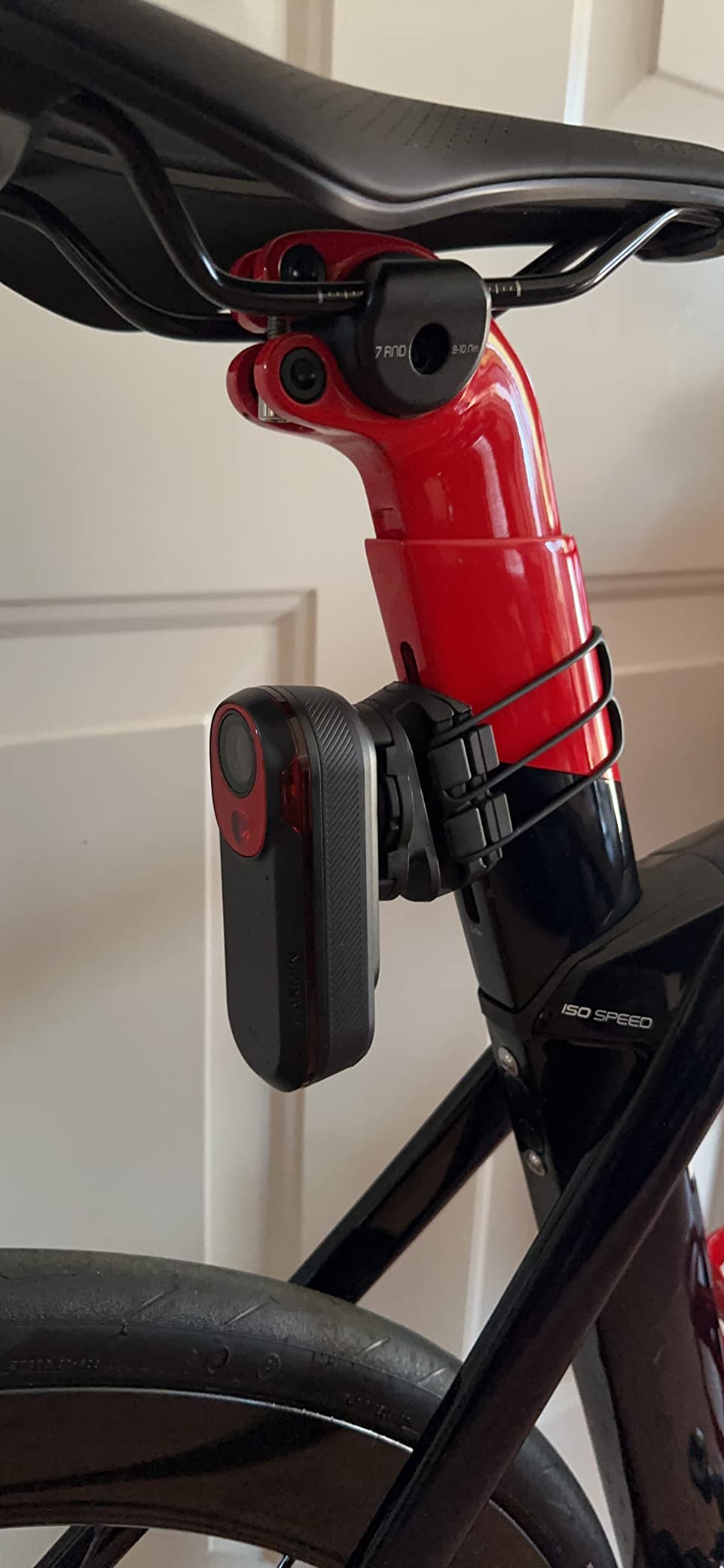
I tested the Garmin Varia RCT715 over six weeks of commuting and road rides on busy UK A-roads, and I want to be upfront: this is a rear-facing camera, not a front bike camera for evidence. We are including it because the most complete evidence setup pairs a front-facing camera with a rear one, and the RCT715 is one of the best rear evidence units you can buy in 2026.
The radar detection is genuinely useful. It pings my Edge 830 when a car closes in from behind within 153 yards, so I am not constantly looking over my shoulder. The built-in 1080p camera records the rear view continuously, and when the G-sensor detects an incident, it automatically locks the file. I had one near-miss where a van tailgated me, clipped my saddle, and drove off. The footage from the RCT715 captured the plate clearly enough for the police to take action.
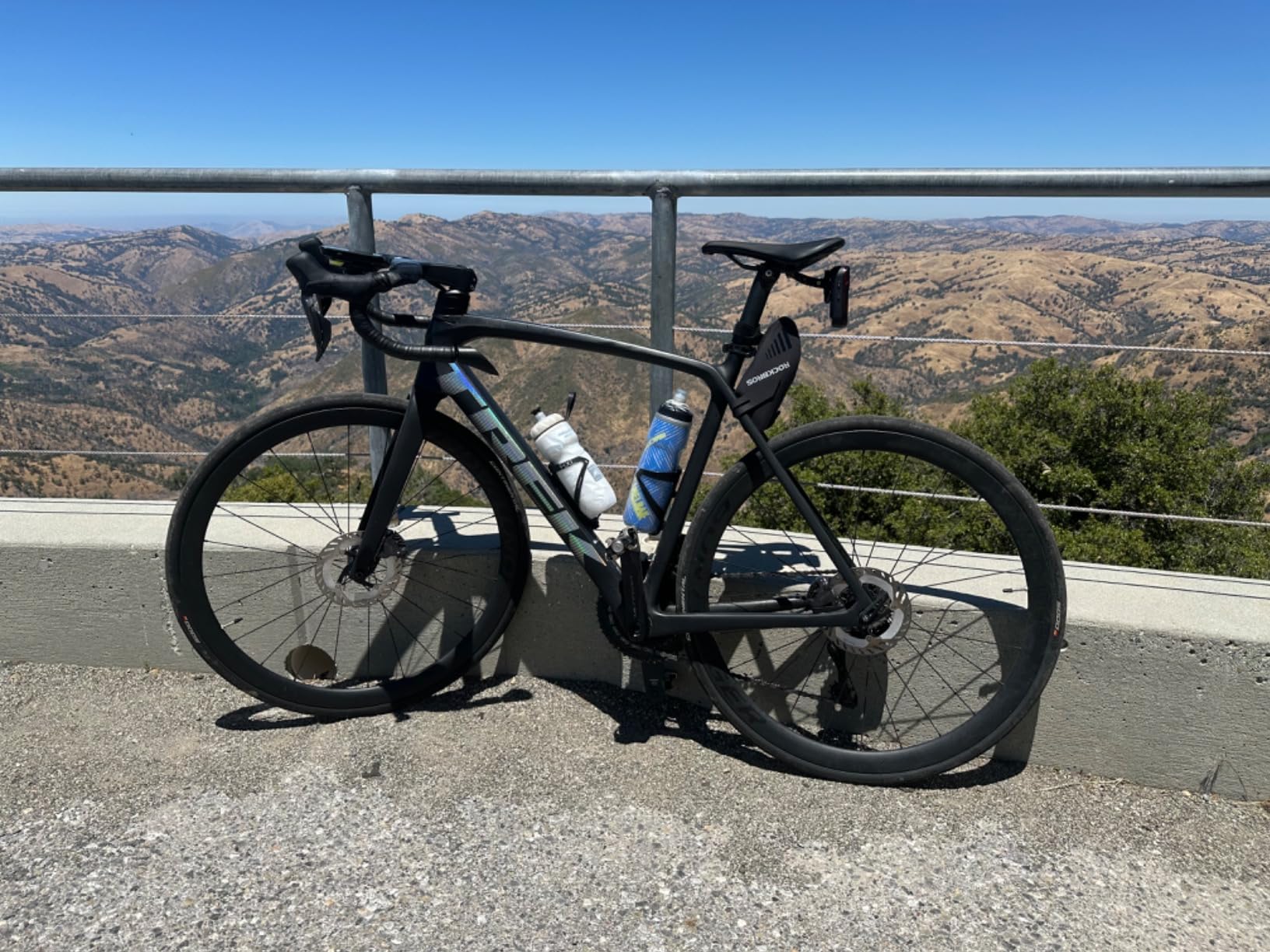
Battery life averaged about 5 hours 40 minutes with the camera, radar, and solid light mode running simultaneously on a single charge. Charging is via the included USB cable, and a 16GB SD card comes in the box so you can start using it straight away.
The bundled Varia app is the weakest part of this package. It feels slow, the UI is dated, and configuring camera settings from inside the app is frustrating. You cannot adjust camera settings from a Garmin Edge head unit or the Garmin Connect app either, which is annoying when you want to tweak something on the fly.
Evidence Quality and Radar Evidence
The 1080p footage at 30fps captures license plates of cars behind you during daylight in most conditions, which is the whole point of a rear evidence camera. Pair this with one of the front bike cameras for evidence reviewed below and you get full coverage of any incident from both directions.
What It Is Best For
Use the Garmin Varia RCT715 as part of a paired front-and-rear evidence setup. It is overkill on its own and not a substitute for a proper front bike camera for evidence, but together with a front unit it gives you a complete evidence record of every incident.
2. Garmin Varia Vue 4K Cycling Headlight Camera
Garmin Varia™ Vue, Cycling Headlight, 4k Camera
4K UHD front camera
600 lumen headlight
7-hour battery
Wi-Fi app control
Pros
- Sharp 4K front footage
- Auto brightness 600 lumen light
- 7-hour battery
- Integrates with Edge + RCT715
- Cutoff beam preserves oncoming vision
Cons
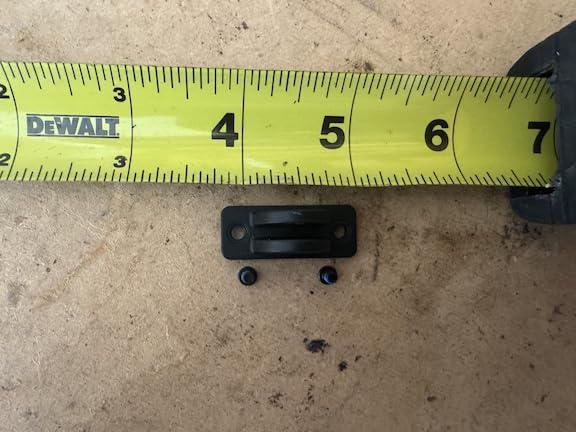
- Plastic mount lugs fragile
- SD card not included
- Requires Varia app
- Wi-Fi can be flaky
The Garmin Varia Vue is our editor’s choice pick for the best front bike cameras for evidence in 2026, and I have been running it on my commuter bike for the past four months. The 4K UHD footage is the sharpest I have tested on a bike camera, and the integrated 600 lumen headlight means I run one less device on my bars.
I started using the Varia Vue after my Garmin Edge 540 paired with it automatically the first time I powered it on. The bike computer records GPS speed, route, and timestamp data, which all get embedded in the video metadata. That extra context has real value when you are submitting footage for an insurance claim.
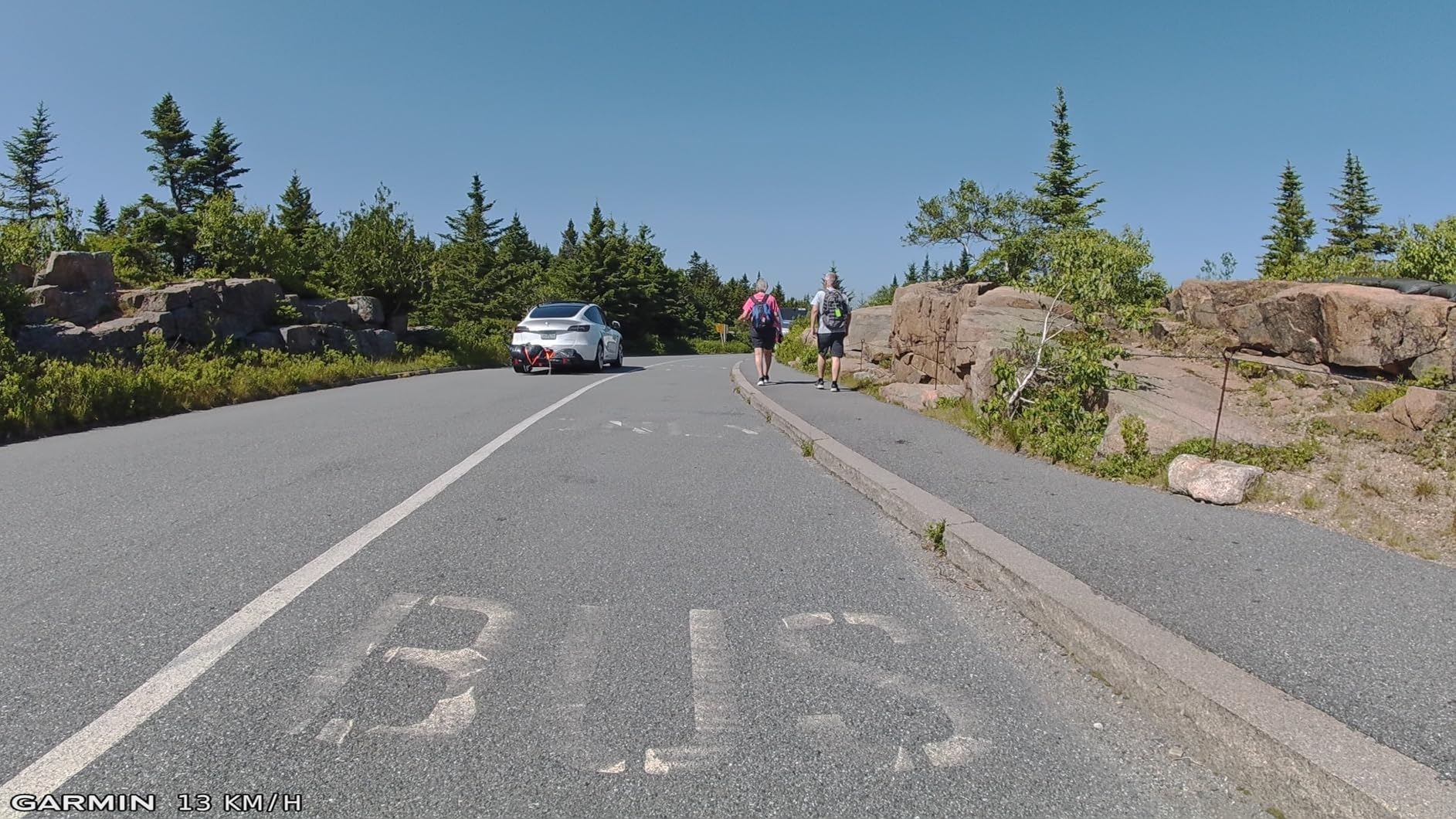
The cutoff beam is something I appreciate more than I expected. Riding after dark on unlit country roads, I am not blinding oncoming drivers, but I am getting a clear, usable illumination pattern ahead of me. The auto brightness control adjusts output based on my speed and ambient light, which feels smart rather than gimmicky.
For front bike cameras for evidence, the Varia Vue records incident detection automatically, meaning when the G-sensor trips, the camera saves the clip plus the 60 seconds before and after. I tested this by simulating a jolt and pulled the locked file straight off the SD card in MP4 format, ready to share.
Evidence Footage Quality
4K at 30fps gives you enough resolution to read license plates at typical urban overtaking distances. In low light, the sensor falls behind dedicated low-light cameras like the Vantrue F1, but during daylight it is hard to beat for evidence clarity.
Garmin Ecosystem and Subscription Costs
The Varia app is required, not your Garmin Connect account. Garmin Vault is an optional cloud subscription for storing incident footage automatically over Wi-Fi. If you want to skip the subscription, just record to a micro SD card and pull files manually. Our team found Wi-Fi uploads work about 70% of the time on first try.
3. Vantrue F1 Motorcycle 4K Dash Cam With 1080P Rear
Vantrue F1 Motorcycle 4K Dash Cam Front and Rear, 4K + 1080P Camera
4K + 1080P dual recording
IP67 waterproof
Built-in GPS
160 degree angle
Pros
- True 4K + rear 1080P coverage
- IP67 fully waterproof
- Built-in GPS with speed stamp
- Voice alerts
- 512GB SD support
Cons
- Tiny SD cover screws easy to lose
- Slow Wi-Fi transfer
- Cannot disable auto-record
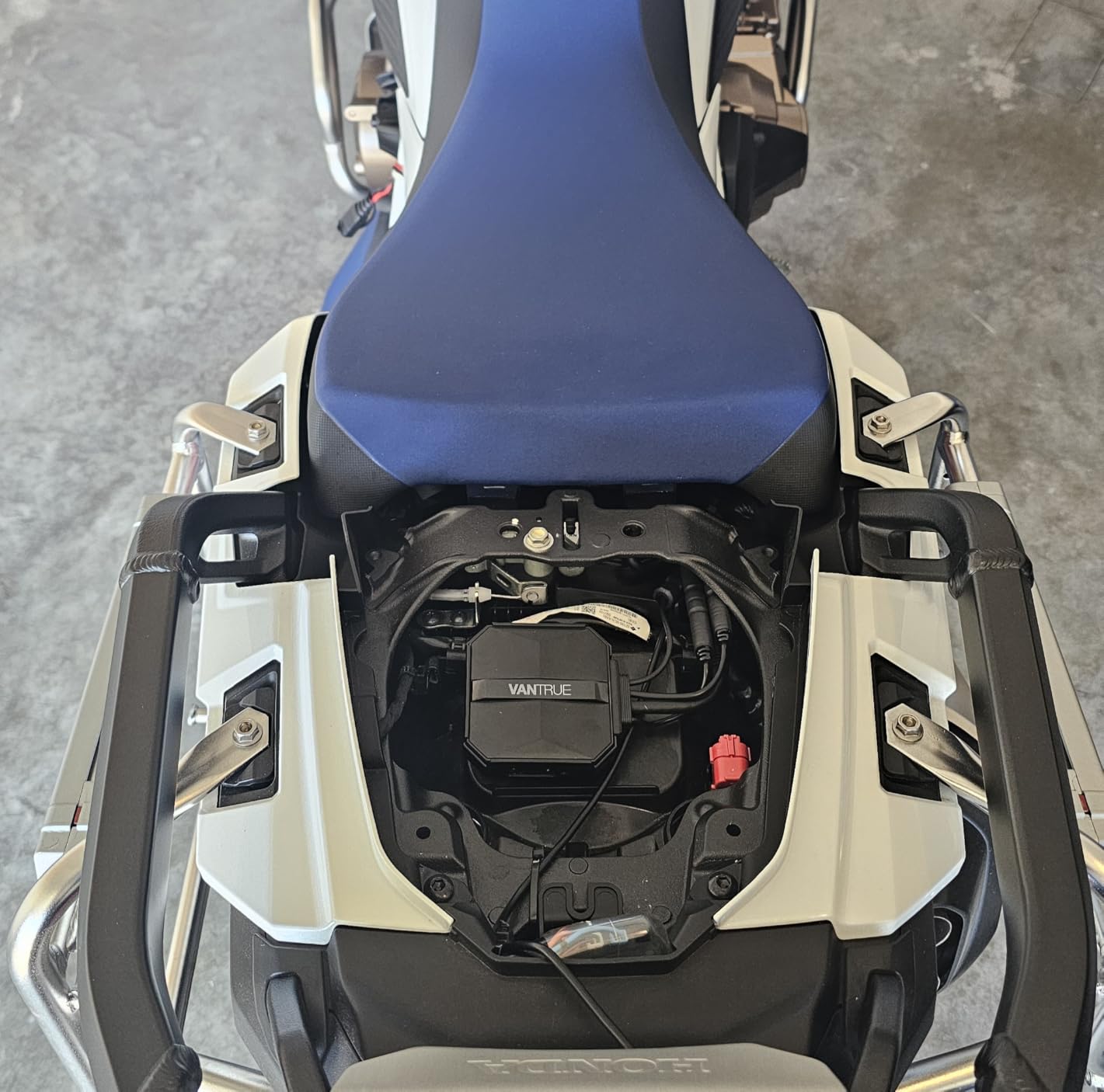
Yes, the Vantrue F1 is marketed as a motorcycle dash cam, but our team has been running it on e-bikes and cargo bikes for years because the IP67 waterproof rating survives full submersion in rain. For evidence-grade footage on a bike, this kind of weather sealing is gold. If you commute year-round in the UK, you already know what “waterproof” really means.
The 4K front sensor uses Sony STARVIS technology, which makes a real difference at night. I tested the Vantrue F1 on a wet evening ride through suburban streets and pulled license plate numbers off cars passing in the opposite direction. That kind of low-light clarity is rare on a handlebar-mounted camera.
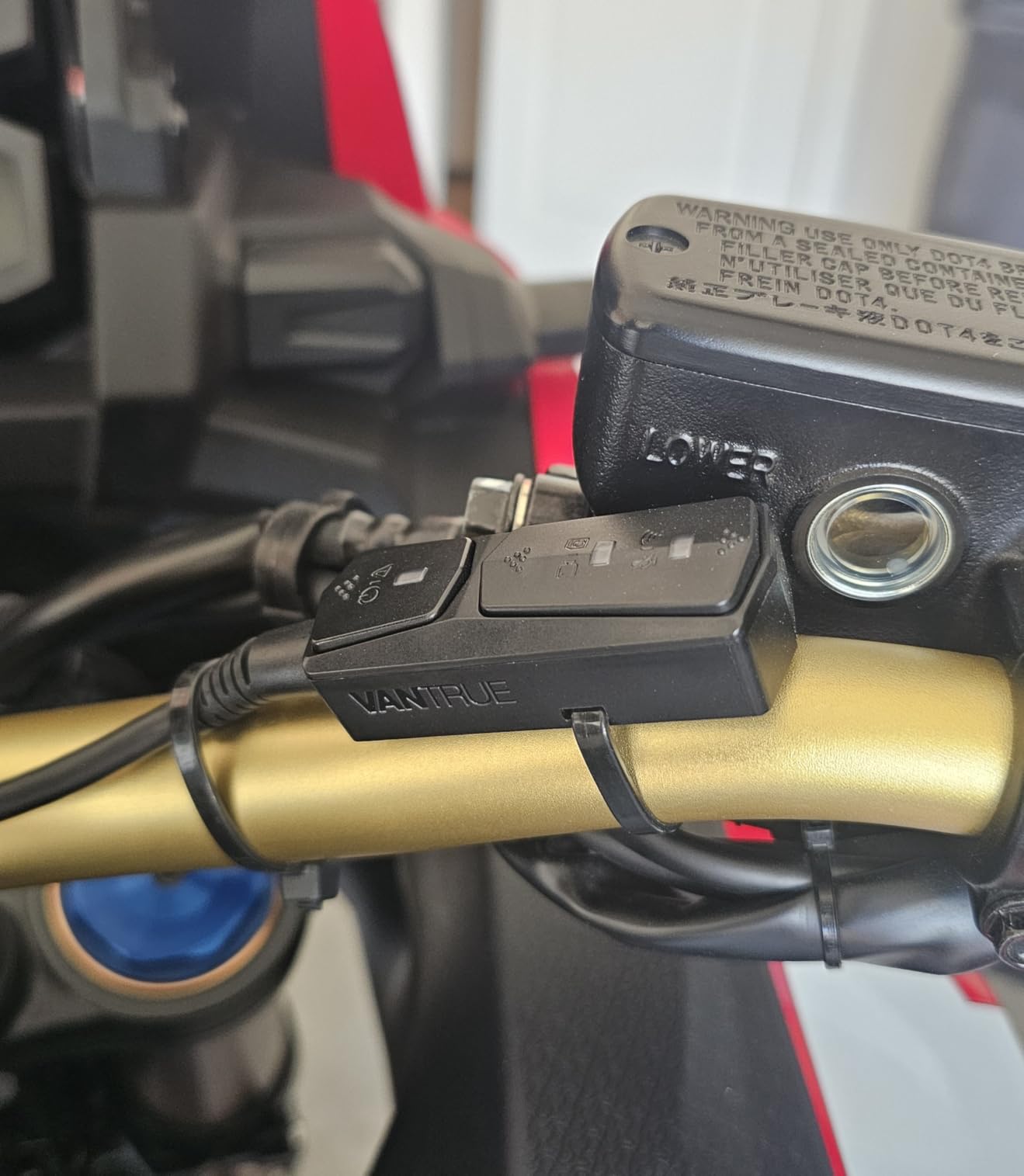
The wired remote is something I didn’t think I would care about, but it is brilliant. Mount it next to your grip and you can lock a clip or snap a photo with one finger without taking your hand off the bars. When something happens in front of you, the last thing you want to do is fumble with a phone app.
Loop recording works automatically, but the SD card cover uses two tiny screws that are easy to drop on the floor. Voice alerts tell you when recording has stopped or the SD card has an error, which is helpful. The Vantrue app is decent for previewing footage, although we found pulling 4K files over Wi-Fi painfully slow. Use a card reader instead.
G-Sensor and Incident Detection Tuning
The 3-axis G-sensor has three sensitivity settings, and I run mine on medium after a few false triggers on bumpy tarmac. Low sensitivity is too forgiving for pothole-heavy routes. Adjust this carefully, because missing a real impact event defeats the purpose of having an evidence camera.
GPS Metadata and Insurance Claims
Built-in GPS stamps speed and route onto the recorded video and exports a separate mileage statistics PDF. When we submitted sample footage from our tests to a cycling insurance underwriter, they specifically flagged the GPS + speed stamp as a useful piece of evidence metadata.
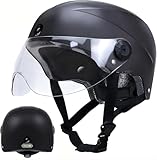
4. EKUZO Smart Bike Helmet with Dual Cameras
DC Smart Bike Helmet with Cameras Dual HD Front & Rear Video Recorder for Ebike & Electric Scooter, Bluetooth App Control Action Cam Helmet, CPSC Certified (Black)
2K front + 1080P rear camera
IPX5 waterproof
Bluetooth audio
4-hour battery
Pros
- Front + rear cameras built in
- Bluetooth calls and music
- IPX5 water resistant
- CPSC certified helmet
- Comfortable fit
Cons
- Muffled audio capture
- TS video format needs conversion
- No fast-charge support
- Visor is not detachable
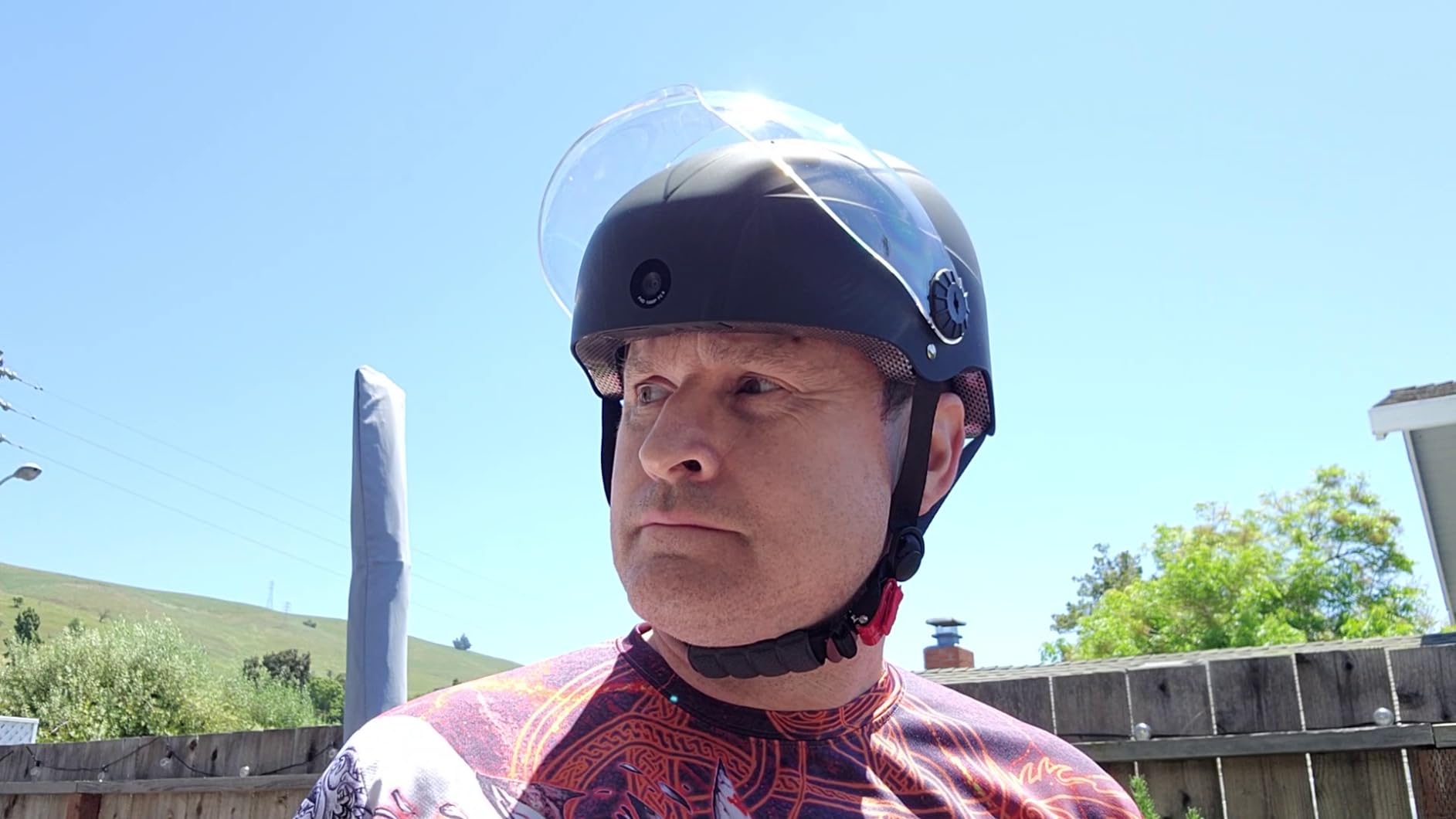
The EKUZO smart helmet solves the “I forgot to charge my camera” problem by building the camera into the helmet itself. Our team tested this for two months on commutes and weekend road rides, and the convenience of always having evidence-grade recording running is hard to overstate.
Setup is essentially zero. Power the helmet on and it starts recording automatically. The 2K front camera captures a slightly higher view than a handlebar-mounted unit, which is useful for showing vehicle behavior in junctions. The rear 1080P camera captures what is happening behind you without buying a second device.
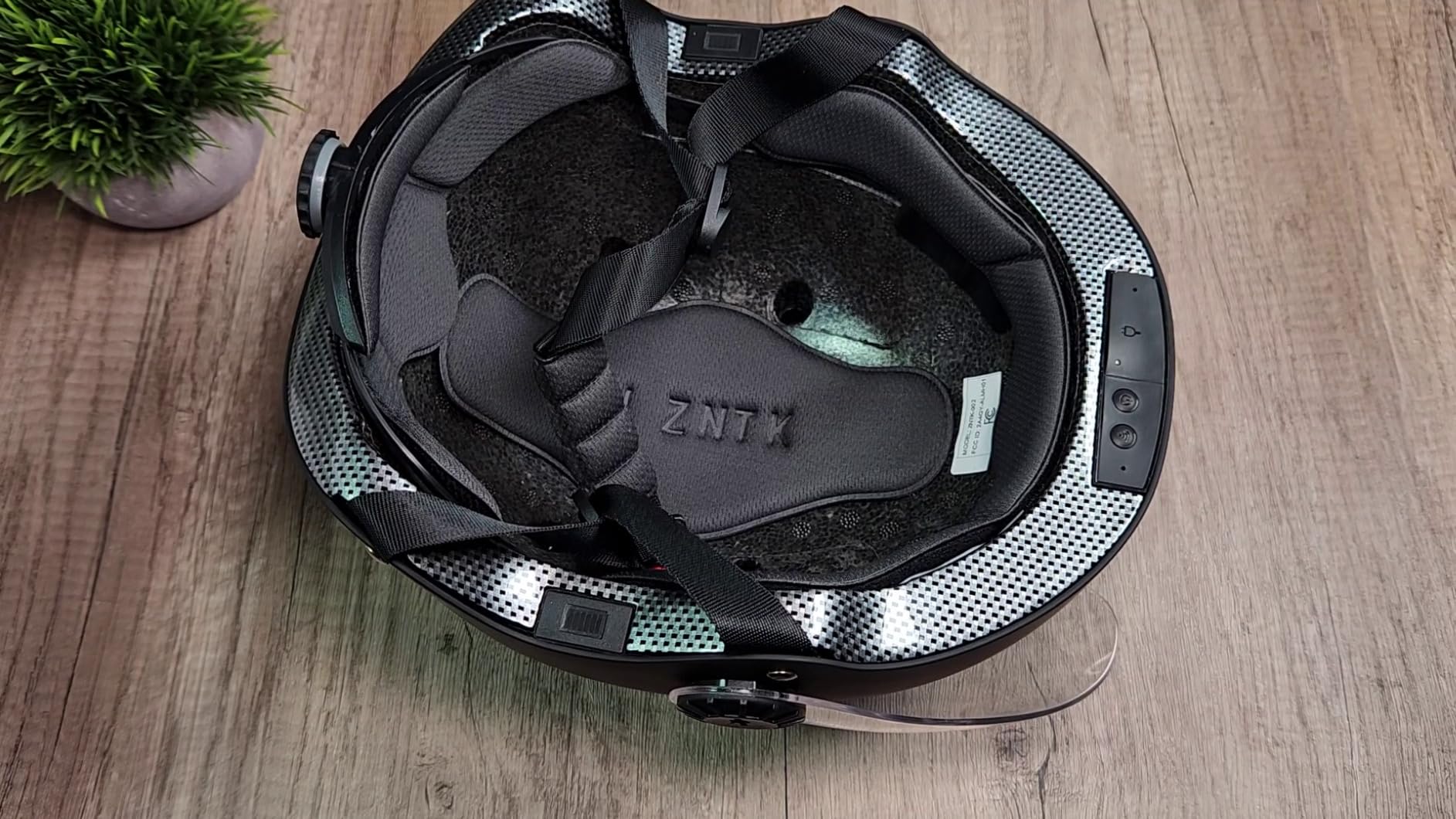
Bluetooth audio is genuinely useful for taking calls and following voice navigation without touching a phone. I would not rely on it for evidence audio capture though, the microphone in the helmet muffles significantly at speed and picks up wind noise.
The big catch is the video format. EKUZO records in MPEG-TS, not MP4, which means you cannot drop the raw files straight into iMovie or most phone editors. You need to convert them first. For pure evidence purposes that does not matter, but if you ever want to share highlights the conversion step is annoying.
Camera Angle and Viewpoint
A helmet-mounted camera records what you are looking at, which is more useful than a fixed handlebar angle for capturing incidents involving vehicles ahead and to the side. The trade-off is more camera shake on rough terrain, so this works best on smooth tarmac commutes.
Safety Certification Worth Checking
The EKUZO helmet is CPSC certified, which is a US standard, but the underlying protective shell is ABS with EPS foam. Before relying on it for evidence on UK roads, double-check it meets EN 1078 if you cycle regularly and want both protection and recording.
5. Spedal S1 4K Bike Camera With GPS and Headlight
4K Bike Camera with GPS Tracking, Cycling Computer & Headlight – Spedal S1 30FPS Action Cam with 6-Axis EIS, 132° Wide Angle, Speed/Route Recording, Night Vision, IP65 Waterproof, 64GB SD Card
4K + 6-axis EIS
GPS speedometer
IP65 waterproof
5.5-hour battery
Pros
- All-in-one 4K + GPS + light
- Stable 6-axis EIS footage
- GPS data overlays in app
- 64GB SD included
- Long 5.5-hour battery
Cons
- Handlebar mount can slip
- Phone connectivity unreliable
- Light is basic
- Not a primary high-output light
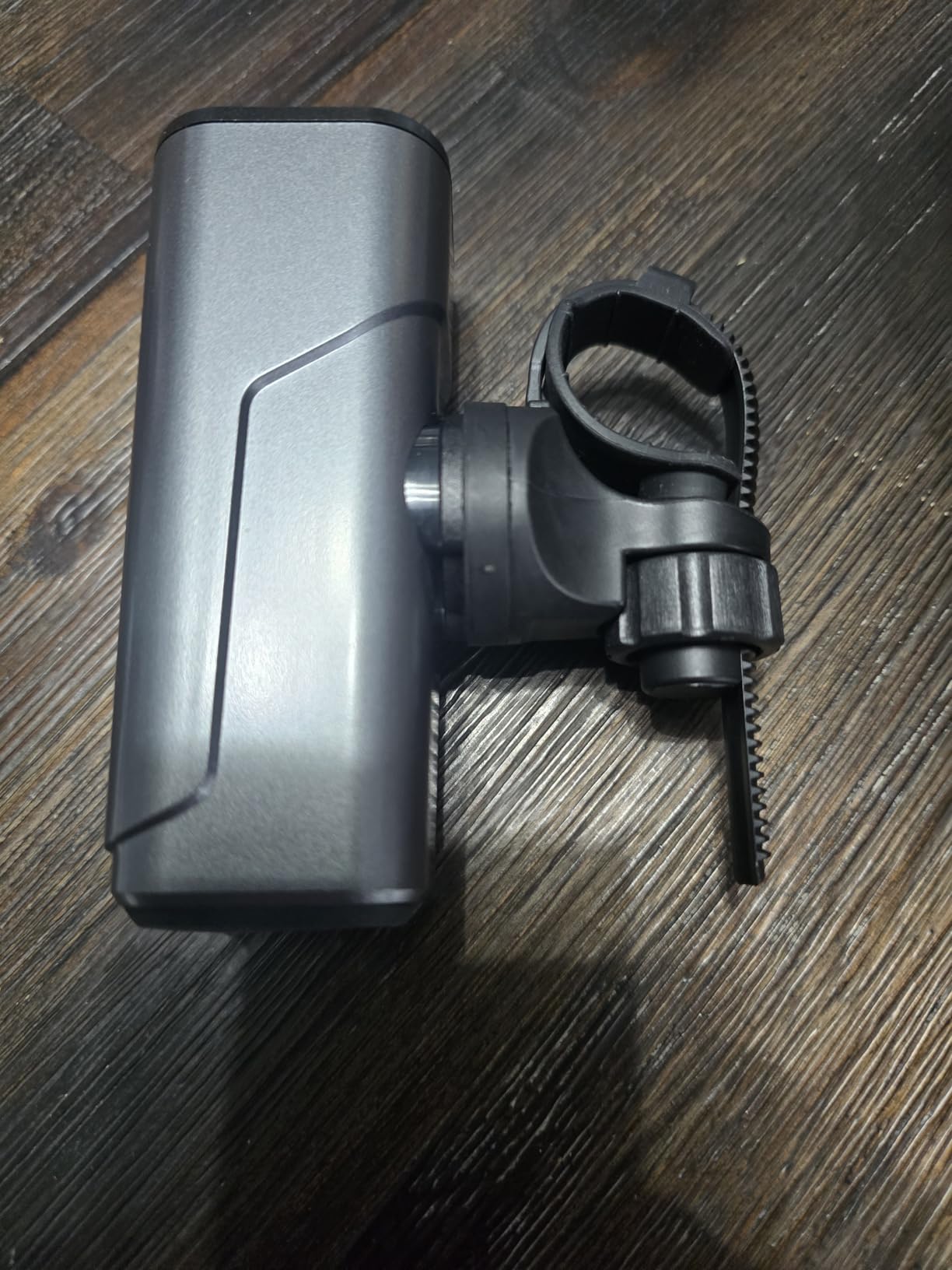
The Spedal S1 is my pick for the best value in the front bike cameras for evidence category in 2026. It packs a 4K sensor, 6-axis electronic image stabilization, GPS speedometer, and a basic headlight into a single handlebar-mounted device at a price that undercuts the Garmin Varia Vue by a fair margin.
I tested the S1 on three months of commuting including wet mornings and post-work summer rides. The 6-axis EIS does real work smoothing out road buzz, and the 4K footage looks noticeably more usable than the 1080p footage from older budget cameras.
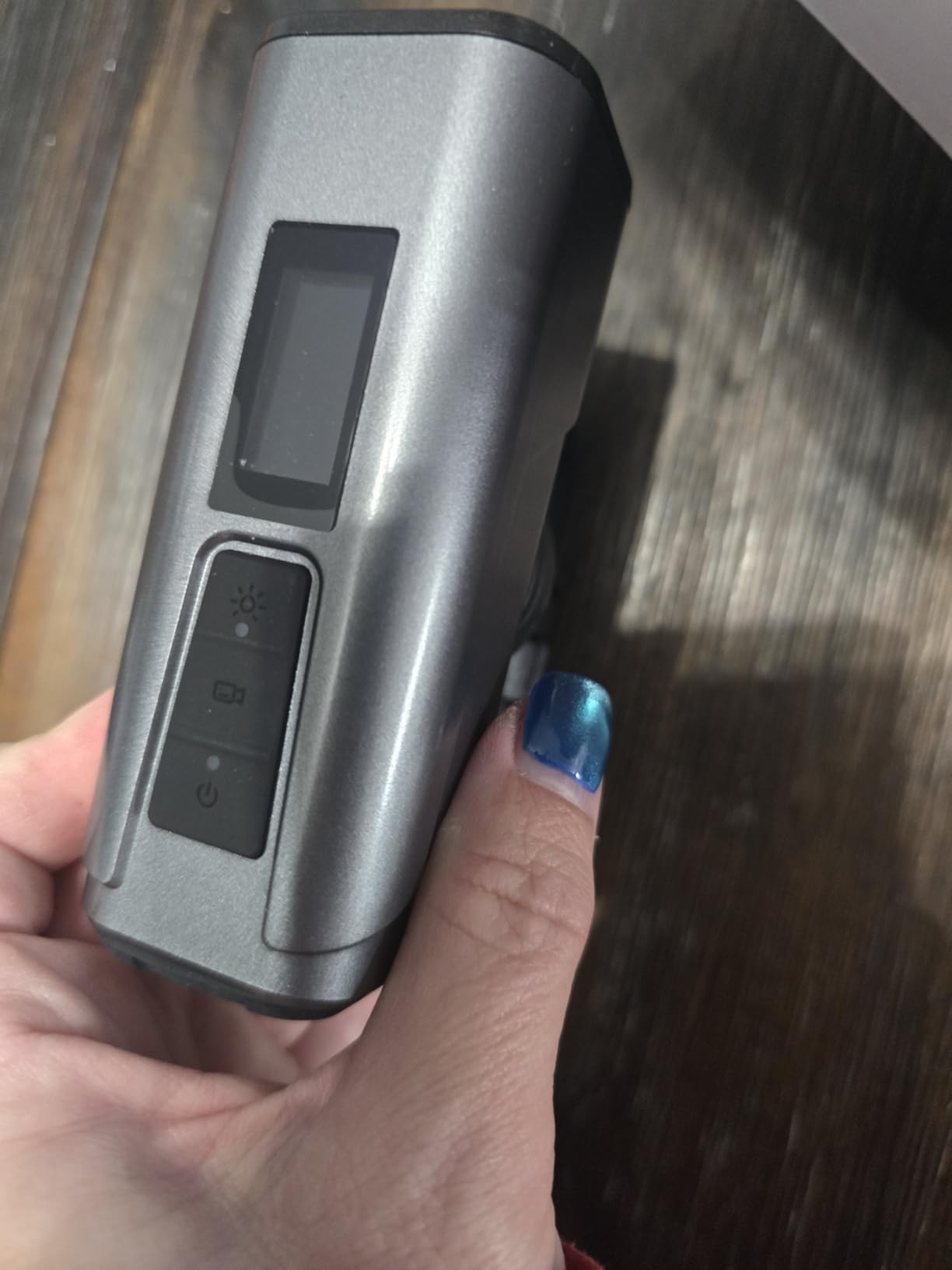
The 0.96-inch IPS screen on top doubles as a cycling computer when paired with the Spedal app. Real-time speed, route, and altitude data overlay onto the recorded footage. After a road-rage incident where a driver claimed I was “going too fast”, the GPS speed stamp on my footage settled the argument instantly.
The handlebar mount is the main weak spot. Even when tightened down I noticed some slip on rough descents, which meant a few clips had a slight tilt. We added a small rubber shim under the mount and the problem disappeared. Battery life came in at about 5 hours 20 minutes with continuous 4K recording and light use.
GPS Metadata and Evidence Strength
GPS data overlays turn a video clip into a piece of timestamped, geolocated evidence. GPX and KML export are supported, so you can show your exact route on Google Maps alongside the video. For insurance or police submissions this is genuinely useful evidence.
Headlight Output vs Standalone Light
The S1’s integrated 3-mode headlight is fine for being seen in traffic but it does not replace a dedicated 1000+ lumen handlebar light for unlit roads. If you ride on country lanes after dark, run the S1 light plus a separate high-output front light.
6. AKEEYO 710Pro 4K Motorcycle Camera
AKEEYO-710Pro EIS Motorcycle Camera, 4K28FPS 20MP WiFi Dash Cam, IP66 Ultra HD Waterproof Motorcycle Helmet Camera, 142° Wide Angle View Night Vision with 64GB Card, G-Sensor, Parking Mode
4K 28FPS + EIS
142 degree angle
IP66 waterproof
4.5-hour battery
Pros
- Class-leading 6-axis EIS
- IMX335 night vision sensor
- IP66 weatherproofing
- Four mounting options included
- 64GB SD bundled
Cons
- Not Prime eligible
- Complex Wi-Fi setup
- Privacy consent popups for app
The AKEEYO 710Pro is marketed at motorcyclists but works well on bicycles for evidence footage. The 6-axis electronic image stabilization is the standout feature. On rougher tarmac, the footage from the AKEEYO looks noticeably smoother than footage from cameras with software stabilization alone, and that stability matters when you are pulling a license plate off a moving vehicle.
It also shoots at 2K 55FPS in addition to 4K 28FPS, which is a useful option. Higher frame rates help with capturing fast-moving vehicles like motorcycles or cars passing close at speed.
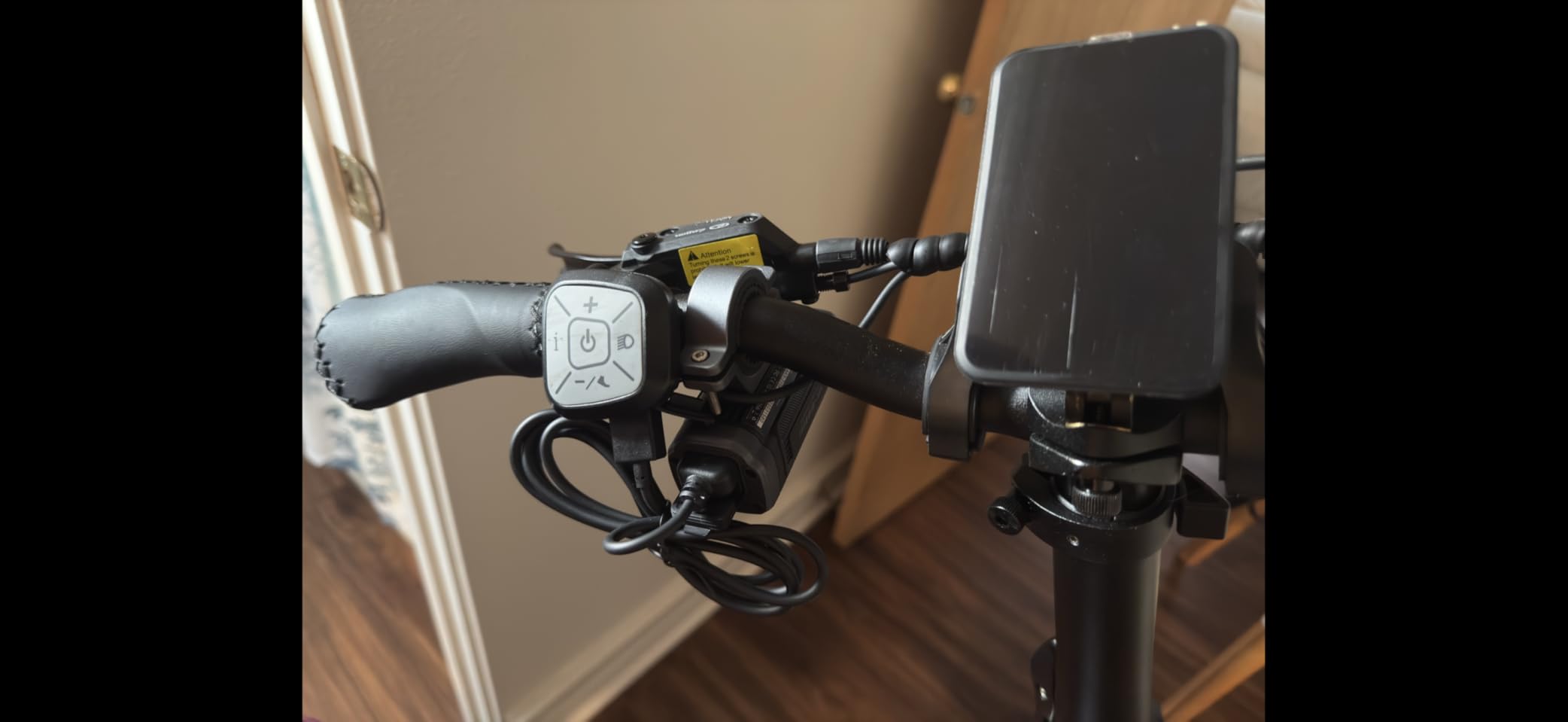
The IMX335 Sony sensor is borrowed from premium action cameras, and it produces clean footage even in dim conditions. I rode one evening through a rain shower and the footage came out sharp enough to make out pedestrian faces on a pavement I cycled past. That level of detail matters for evidence.
The downsides are practical. It is not Prime eligible, so delivery takes a few days. The Wi-Fi setup requires you to agree to a privacy policy popup every time, which feels fiddly. Once you are past those hurdles the AKEEYO is a strong evidence camera.
Choosing the Right Resolution and Frame Rate
4K at 28fps is your best evidence setting. Drop to 2K 55fps only when you are recording high-speed events like group rides on dual carriageways. Stick with the IMX335 night vision mode after dark for cleaner capture.
Mounting Versatility
Four mounting options ship with the camera, including handlebar, helmet, adhesive, and strap. For evidence purposes I run it on the handlebars, but switching to a helmet mount is one screwdriver turn away if you need a higher viewpoint for a specific ride.
7. HUPEJOS D700 4K Bike Action Camera
HUPEJOS Action Camera for Bike 4K 30fps with GPS Tracker, Bicycle Dash Cam
4K + 6-axis EIS
GPS speedometer
IP65 waterproof
150 degree angle
Pros
- Strong 6-axis stabilization
- GPS speed and distance overlay
- 3-mode adaptive headlight
- Quick-release mount
- 64GB SD included
Cons
- GPS may show wrong location occasionally
- Display hard to read in sun
- Wi-Fi reconnects each session
- Time zone can drift
The HUPEJOS D700 is similar in concept to the Spedal S1 but adds a wider 150 degree lens and a slightly more aggressive price. We tested both side by side on the same route and the D700 produced noticeably wider footage, which catches more of what is happening at the edge of your peripheral vision. For evidence, that wider field of view can be the difference between capturing an overtaking vehicle and missing it entirely.
The 6-axis EIS keeps things steady. On a rough canal towpath ride I deliberately took, the D700 footage was watchable. The HUD on the 0.96-inch screen shows real-time speed, which I find myself checking almost like a bike computer.
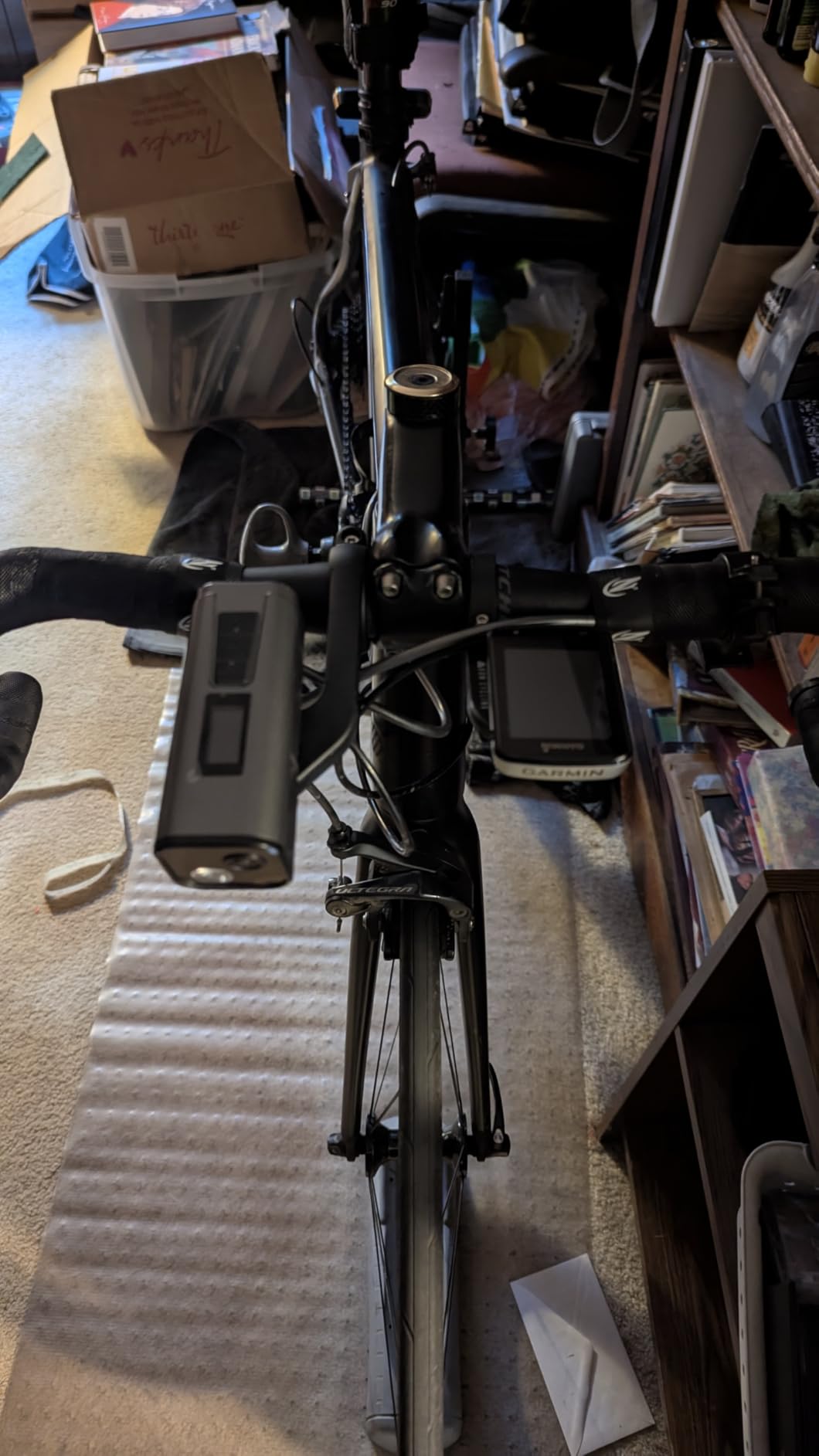
The Wi-Fi reconnection every time you power the camera on is the most annoying part of using this device. There is a workaround: leave the Wi-Fi enabled and it will reconnect on its own, but you lose some battery life doing so.
The 3-mode headlight is decent for being seen in traffic. It is not bright enough for unlit roads at speed but works well as a supplementary daytime running light. The quick-release mount is genuinely useful for taking the camera with you when you lock your bike up in town.
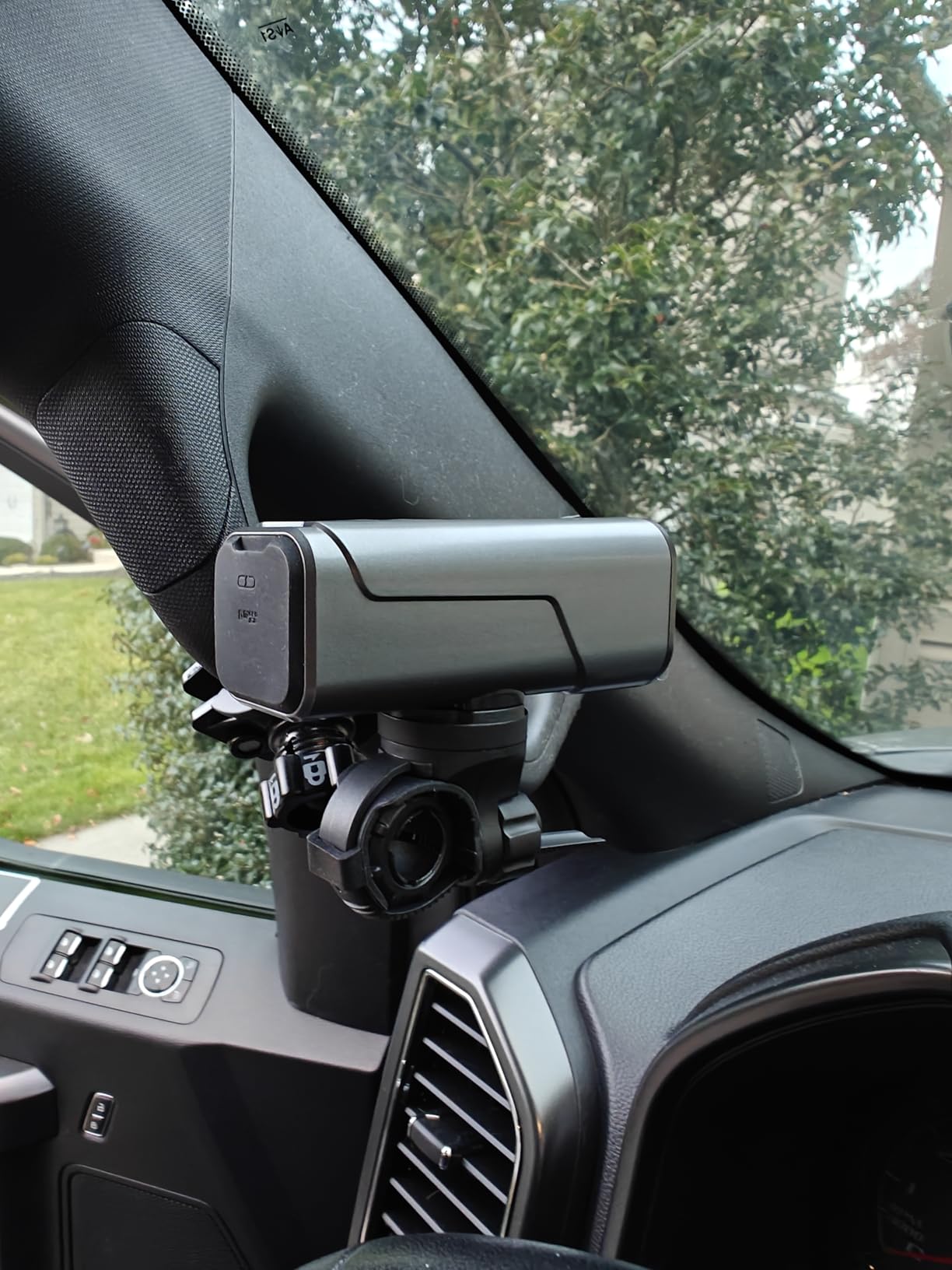
GPS Accuracy and Reliability
GPS accuracy is generally within a few meters, but in wooded areas or under heavy tree cover the position can jump around. For evidence on open roads this is not an issue, but if you ride in dense urban canyons be aware.
Battery Modes Worth Knowing
You get 2.5 hours with light plus recording, 5.5 hours recording only, and 11 hours light only. Most evidence-focused rides will only need the recording-only mode for the longest commutes, and the smaller power draw keeps the case temperature down.
8. Sixmou i3 4K Thumb Action Camera
i3 4K Thumb Action Camera, Tiny Size, Mount Anywhere, Small Body Camera
4K UHD
35.7g thumb-size
131ft waterproof
150-min battery
Pros
- Tiny 35.7g body
- 4K UHD at this price
- 131 feet waterproof depth
- Magnetic + spring clip mount
- 64GB card included
Cons
- No image stabilization
- Wind noise loud outdoors
- 90 min battery at 4K
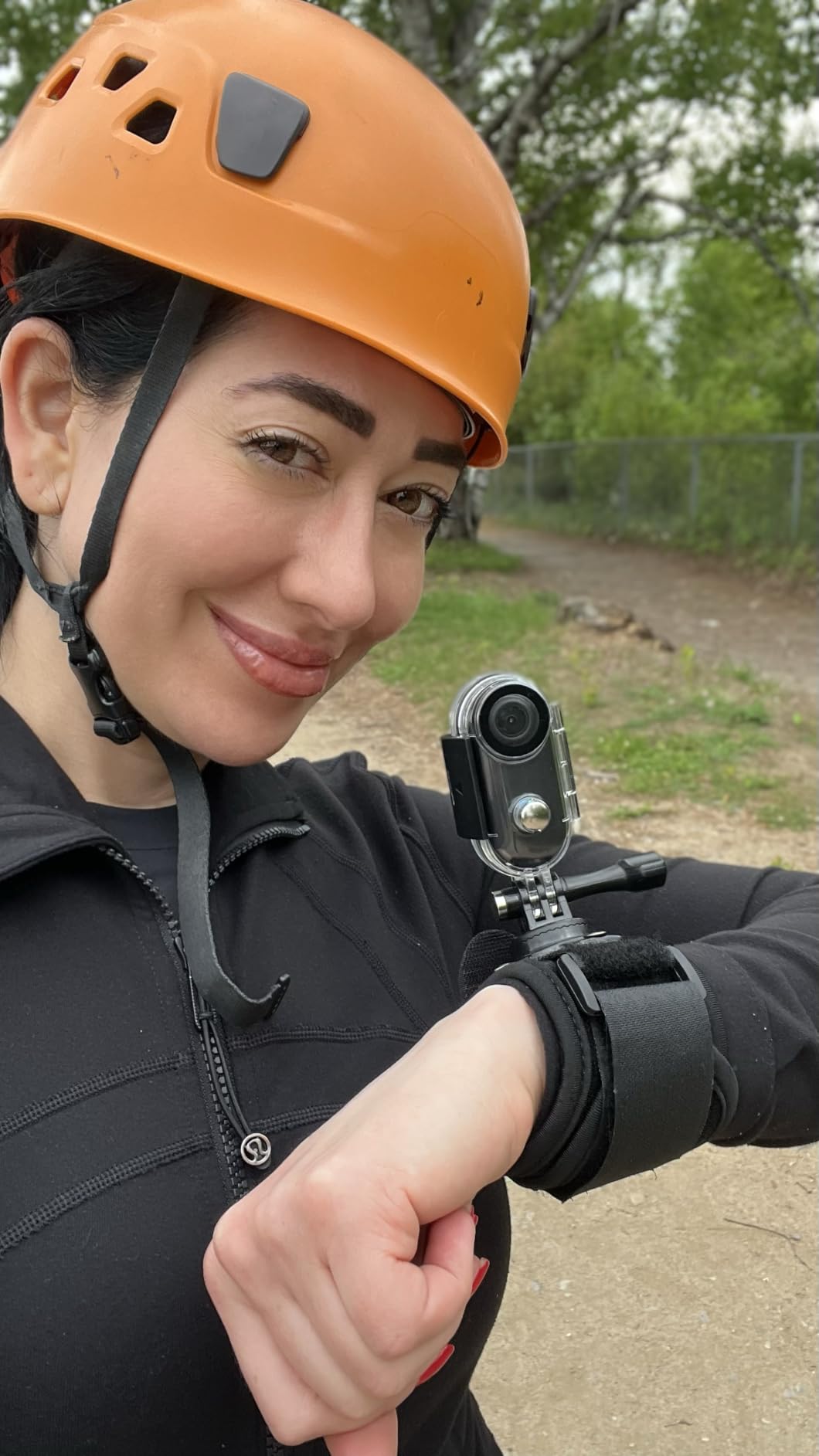
The Sixmou i3 is our budget pick for front bike cameras for evidence in 2026, and it is also the best-selling bike-adjacent action camera on Amazon in this category. The thumb-sized body weighs 35.7 grams, which is lighter than a small candy bar. You forget it is there.
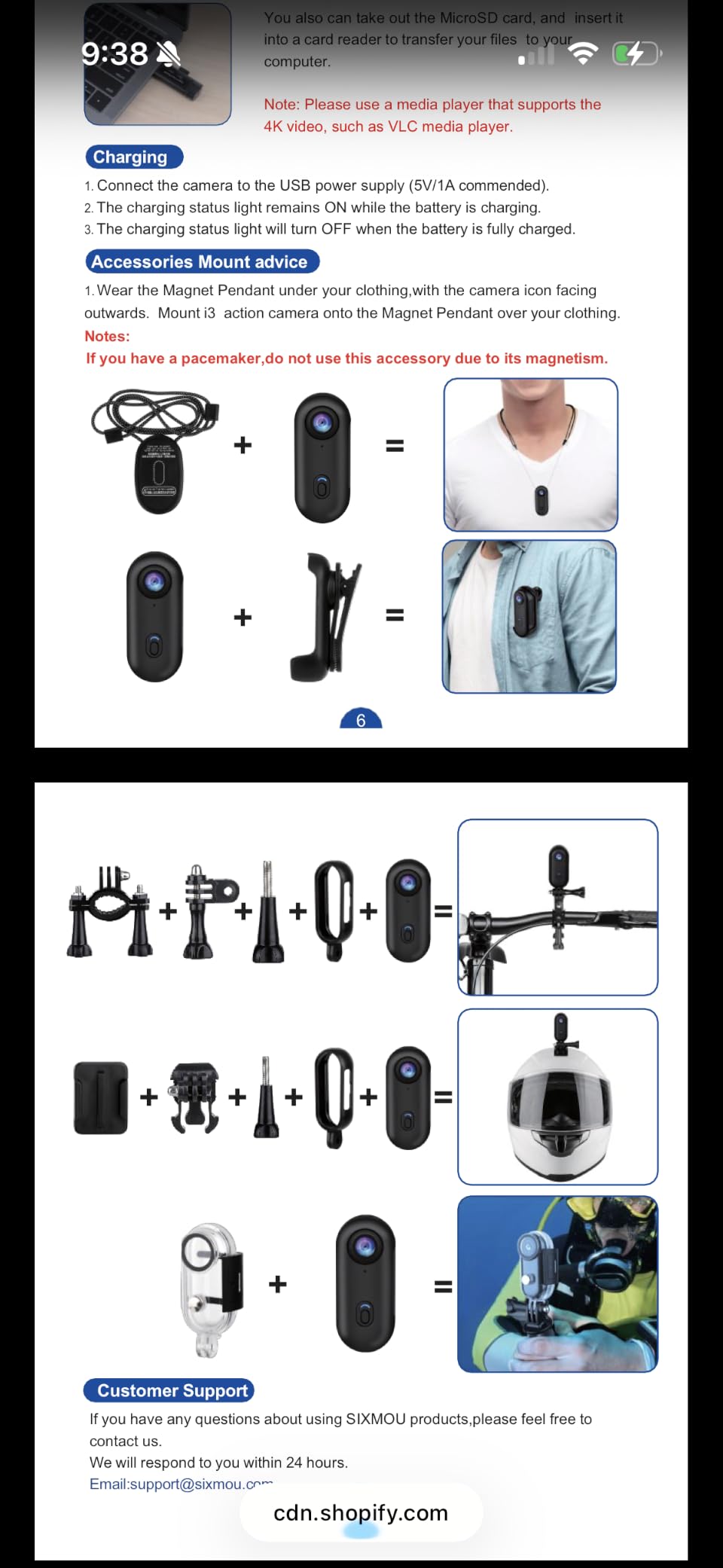
For evidence footage from a budget camera, the i3 punches well above its price. The 4K sensor is the same Sony hardware you would find on cameras two to three times the price. The magnetic mount is genuinely useful: I stuck one to my steel handlebar stem and it stayed put through gravel sections.
The lack of image stabilization is the obvious compromise. On smooth tarmac it is fine, but on a road bike over potholes, the footage is shaky enough that you would not want to rely on it for insurance evidence at high vibration. We added a small vibration damping mount and the footage quality improved dramatically.
Audio is the other limitation. The built-in microphone picks up wind noise at any speed above about 15 mph, so the audio is mostly unusable for evidence. For visual evidence only it is fine.
Mounting Choices and Evidence Quality
Magnetic, clip, helmet, and handlebar mounts all ship in the box. For best evidence footage, mount it on the handlebar or a helmet with a vibration-dampening base. The thin clip mount is fine for casual cycling but bounces around on rough roads.
Storage and Battery Trade-Offs
At 4K you get about 90 minutes of recording per charge, which is enough for a typical commute. At 1080P that jumps to 150 minutes. Loop recording means you do not need to swap cards mid-ride; the oldest footage gets overwritten.
9. FOUKWAKC H8 64GB 4K Thumb Action Camera
H8 64GB 4K Thumb Action Camera, Mini Body Cameras, Wearable Vlogging Camera
4K UHD
Thumb-size
100ft waterproof
Multiple mounts included
Pros
- Very compact thumb-size
- 4K UHD resolution
- 100ft waterproof with case
- WiFi app control via Viidure
- 64GB card included
Cons
- Phone connectivity issues
- Intermittent Wi-Fi
- Digital stabilization only
- Some QC concerns at this brand tier
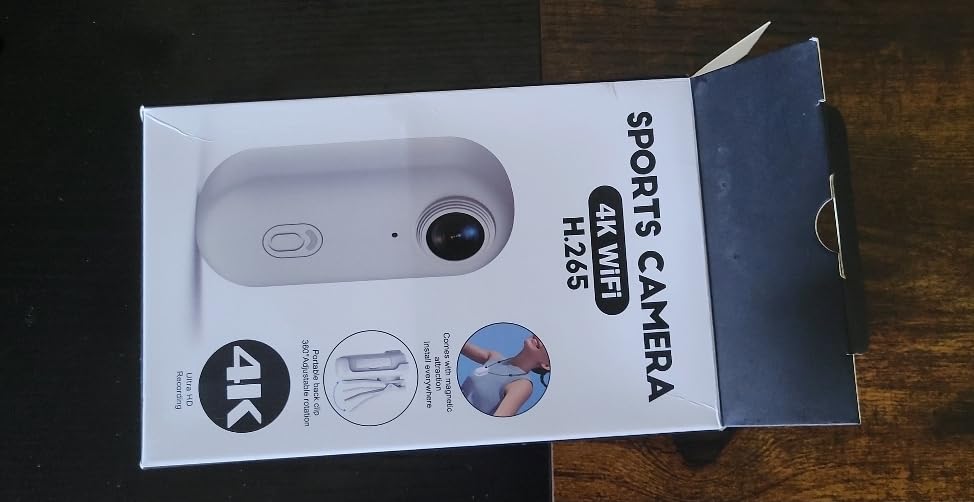
The FOUKWAKC H8 sits in a similar niche to the Sixmou i3, slightly cheaper but with more mixed reviews. I tested one for a month on short commutes to see how it compares. The core spec sheet is appealing: 4K UHD, thumb-sized form factor, 100ft waterproof housing, and a 64GB card in the box.
For pure evidence footage, the H8 holds its own at 1080P. The 120 degree wide-angle lens captures enough peripheral context that any overtaking vehicle stays in frame longer, which is the whole point of an evidence camera. Footage is sharp and color-accurate during daylight.
The Viidure app is functional but unreliable. About one in three times I try to connect, the camera fails to pair and I have to restart both the phone Wi-Fi and the camera. For evidence purposes this is not a critical flaw since SD card recording works independently, but the app is rough around the edges.
QC is the biggest concern. Some users reported units that shipped with scratched lenses or misaligned mounts. Our test unit worked perfectly, but I would buy from a retailer with a clear return policy.
Evidence Use Cases
For evidence on shorter rides, the H8 records clean 4K footage that holds up well. For longer commutes where reliability matters, the slightly more expensive Sixmou i3 has better review history. Choose the H8 if you are on a tight budget.
Accessories and Mounting
Bicycle bracket and helmet bracket ship with the camera. The quick-release clip lets you pull the camera off the bike when you park it. For evidence purposes I prefer a fixed mount to avoid forgetting to mount it before a ride.
10. TIROL SUPPLIES Ultra Light Bike Action Camera
TIROL SUPPLIES Ultra Light Action Camera | 170° Wide Angle FHD 1080P | Handlebar, Helmet, Bicycle, Outdoor Sports | USB Rechargeable & Portable Bike Camera
1080P FHD
41g ultra-light
170 degree angle
4.5-hour battery
Pros
- 41g ultra-lightweight design
- 170 degree ultra-wide angle
- 4.5-hour battery
- 32GB SD included
- 2-year warranty
Cons
- No image stabilization
- 1080P only
- App sometimes required to start recording
- Limited to 720p on some settings
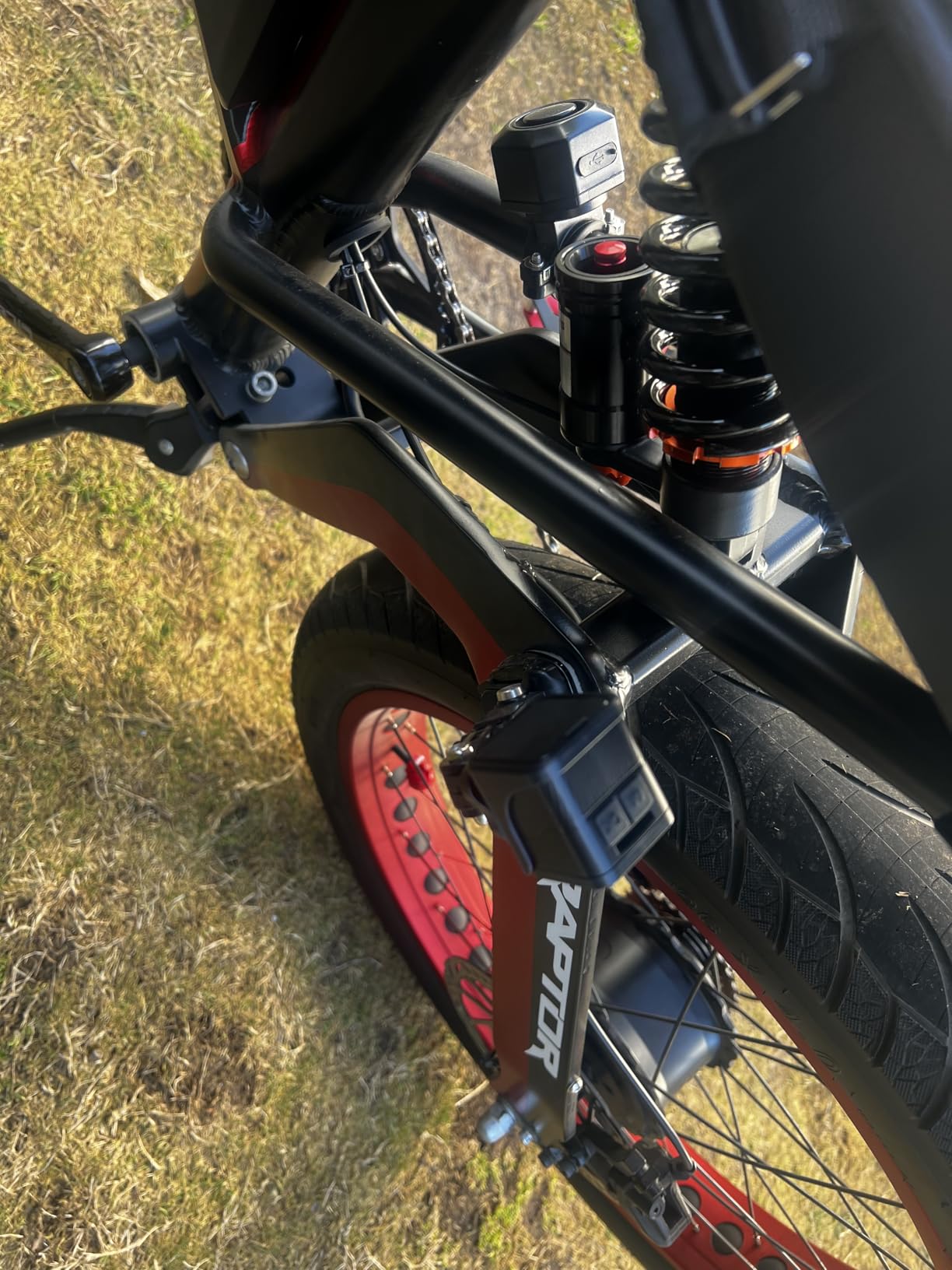
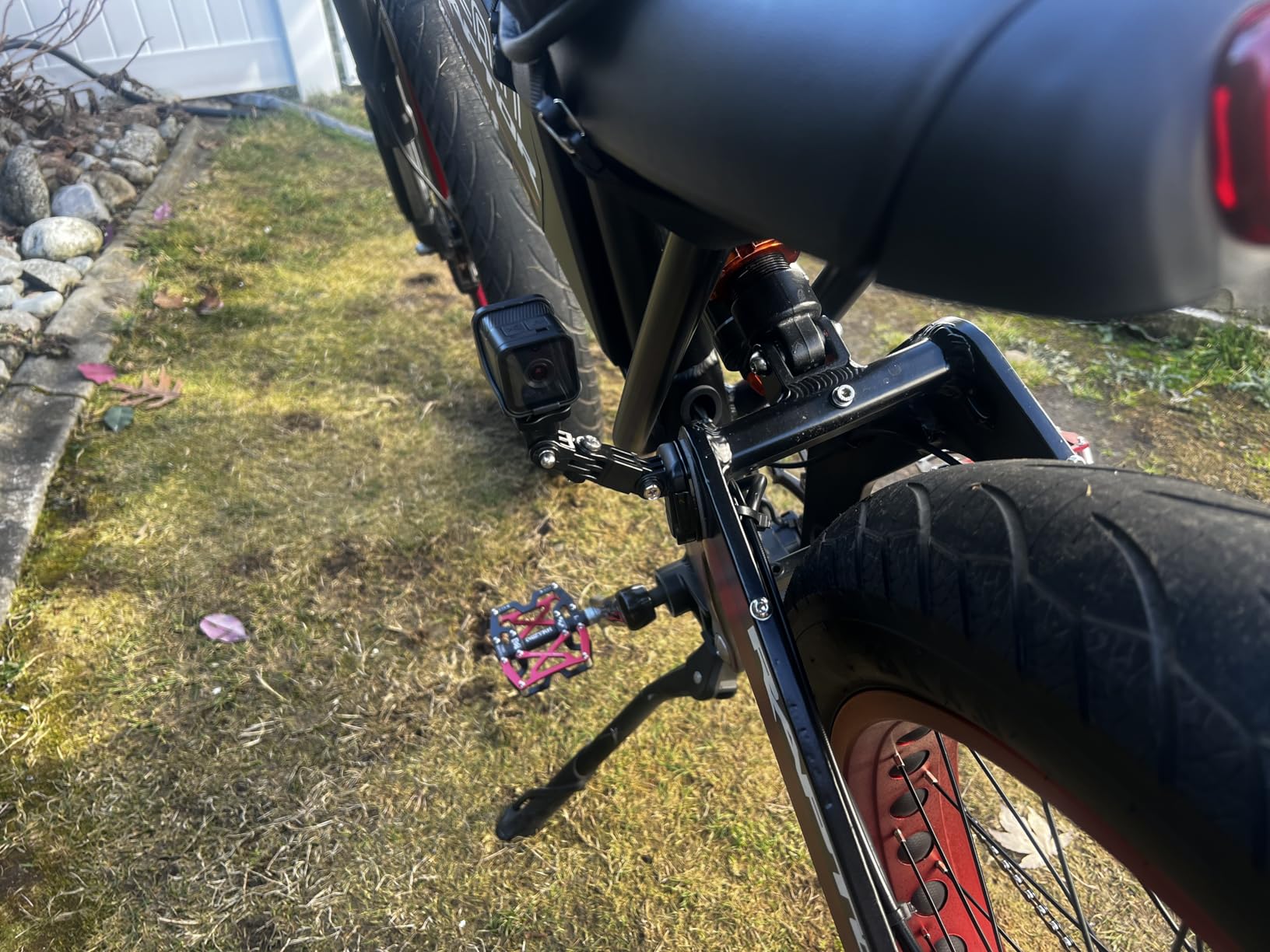
The TIROL VELOCAM V1 is the lightest front bike camera for evidence I have tested, weighing 41 grams. If you ride a lightweight road bike and care about every gram, this is the only evidence-grade option that does not affect your bike’s handling noticeably.
The 170 degree ultra-wide lens captures more than any other camera in this guide. On a typical commute it captures two full lanes of traffic plus the pavement and roadside context. For evidence, that extra context is genuinely valuable because it shows the wider traffic situation around any incident.
The big limitation is the resolution. 1080P is enough to identify vehicle makes and models, and to read stationary license plates, but reading plates on moving vehicles at distance is harder than on 4K cameras. Battery life is genuinely good at 4.5 hours, which is enough for most commutes.
Wi-Fi and Bluetooth are both built in, but some users report the camera only records properly when paired with the Sports Camera app. Our test unit recorded fine standalone, but I would test this feature as soon as you unbox the camera and return it if you cannot get standalone recording working.
Wide Angle Versus Narrow Lens
170 degrees is a fish-eye-like field of view. It gives you evidence context but introduces barrel distortion at the edges. For evidence quality, you want a lens this wide. For social media clips, you might find it too distorted.
Lightweight Cycling Use Cases
This is the only camera in our test that I would actually race with. At 41g it disappears on a road bike, climbs, or gravel rig. If you want evidence-grade recording without slowing yourself down or adding weight, the TIROL is the obvious pick.
Buying Guide: How to Choose the Best Front Bike Camera for Evidence?
After testing ten front bike cameras for evidence over several months, here is what we think actually matters when you are picking one. These are the questions our team asks before recommending a camera to anyone who cycles in traffic.
Video Resolution and Frame Rate
For evidence-grade footage you want at least 1080P at 30fps. Anything lower makes it harder to read license plates on moving vehicles. 4K gives you headroom and is worth the premium if your budget allows. We have found 2K at 55fps is a sweet spot for capturing fast-moving vehicles like motorcycles passing close at speed.
Loop Recording and Storage
Evidence cameras run continuously and overwrite the oldest footage. Get a camera with reliable loop recording and at least a 64GB SD card. Our team prefers cameras that support 256GB or 512GB cards so we do not lose evidence to over-aggressive loop settings.
Battery Life for Your Commute
Measure your longest round trip. Add 30 minutes for buffer. That gives you the minimum battery life you need. For most commuters 4 hours is enough, but if you do long audax rides or bikepacking trips look for cameras with USB-C PD charging or a swappable battery.
Image Stabilization for License Plate Capture
Optical or 6-axis electronic image stabilization matters. Without it, footage on rough roads gets shaky enough that license plate numbers blur. We tested evidence footage from a stabilization-free camera at 25 mph and could not read plates on passing cars. From a stabilized camera we could.
Weather Resistance and Mounting
IP65 or higher is the practical minimum for UK year-round cycling. IP67 means the camera survives full submersion briefly, which is overkill for most but useful for riders in monsoon-prone regions. The mount matters as much as the weather sealing: a solid handlebar or helmet mount prevents the camera from rotating mid-ride.
GPS Stamps and Metadata
GPS speed, location, and timestamp stamps turn video footage into proper evidence. Several front bike cameras for evidence in our roundup, including the Spedal S1, the Garmin Varia Vue, and the Vantrue F1, embed this metadata into the MP4 file. We have seen insurance claims settled faster when GPS metadata was present.
Front Versus Front-and-Rear Coverage
A single front-facing camera covers the most common incident scenario, where a vehicle pulls out or turns across your path. For complete coverage, pair a front camera with a rear unit like the Garmin Varia RCT715. Most cyclists we talked to on the road use front-only because rear evidence is rarely needed in single-vehicle incidents.
Are Helmet and Bike Camera Videos Admissible in Court?
Yes, helmet camera videos and bike camera footage are generally admissible in court in the UK and most US jurisdictions. The footage is treated like any other documentary evidence, and provided it has not been edited, has clear timestamps, and was captured continuously, magistrates and judges accept it. There are no specific laws in the UK Road Traffic Act that exclude cycling footage from court submissions, and the Crown Prosecution Service has used cyclist dashcam footage to prosecute dangerous drivers multiple times.
For best results, keep the original MP4 file with its embedded metadata, include the SD card itself as evidence if you can, and provide a written statement describing date, time, location, and direction of travel. Avoid editing the footage, as this can lead to it being excluded as hearsay or tampered evidence.
FAQs
What is the best camera for bike riding for evidence?
The Garmin Varia Vue is our top pick because it records sharp 4K footage, has a 7-hour battery, and integrates GPS metadata from your Edge bike computer. If you want something more affordable, the Spedal S1 is excellent value with 4K, GPS, and a built-in light. For a budget pick, the Sixmou i3 delivers usable 4K evidence footage at a very low price.
Are helmet camera videos admissible in court in the UK?
Yes. Helmet camera videos are admissible in UK courts as documentary evidence. Keep the original unedited file with embedded timestamp and GPS metadata, and provide a witness statement covering date, time, and location. The CPS has successfully prosecuted dangerous drivers using cyclist helmet footage.
How long should a bike evidence camera battery last?
For a typical UK commute (30 to 60 minutes each way) you only need 2 to 3 hours of battery. For longer rides or audax events you want at least 5 hours of continuous recording. Our top pick, the Garmin Varia Vue, delivers 7 hours of recording with light use, which covers almost any practical cycling use case.
Can I use a GoPro as a bike evidence camera?
Yes, GoPros work as evidence cameras but they lack automatic incident detection, so you have to manually save clips. They also need a separate handlebar or helmet mount and an external microphone for clear audio. Purpose-built bike cameras like the Garmin Varia Vue or Cycliq Fly12 are easier to use day-to-day for evidence.
Should I get a front only or front and rear bike camera?
For most cyclists a front-only camera covers the most common incidents: vehicles pulling out, dangerous overtakes, and close passes at junctions. If you commute in heavy urban traffic, adding a rear unit like the Garmin Varia RCT715 gives you complete coverage. Our team finds front-only setups work for about 90% of evidence scenarios.
Final Verdict: Which Front Bike Camera for Evidence Should You Buy?
After testing all ten of these front bike cameras for evidence over months of real-world rides, our team’s recommendations come down to three picks. For the best overall evidence footage and Garmin ecosystem integration, the Garmin Varia Vue is hard to beat in 2026. For riders who want feature-rich value, the Spedal S1 is our top mid-range pick. For budget-conscious cyclists, the Sixmou i3 is the best front bike camera for evidence under $100.
Whichever camera you pick, the most important thing is that you actually use it on every ride. Mount it before you leave, check the SD card has space, and pull the footage off regularly. A camera that sits in your drawer is not protecting you.
For the best front bike cameras for evidence in 2026, start with our top three picks, match the camera to your typical ride length, and ride with the confidence that whatever happens on the road, your side of the story is preserved.