
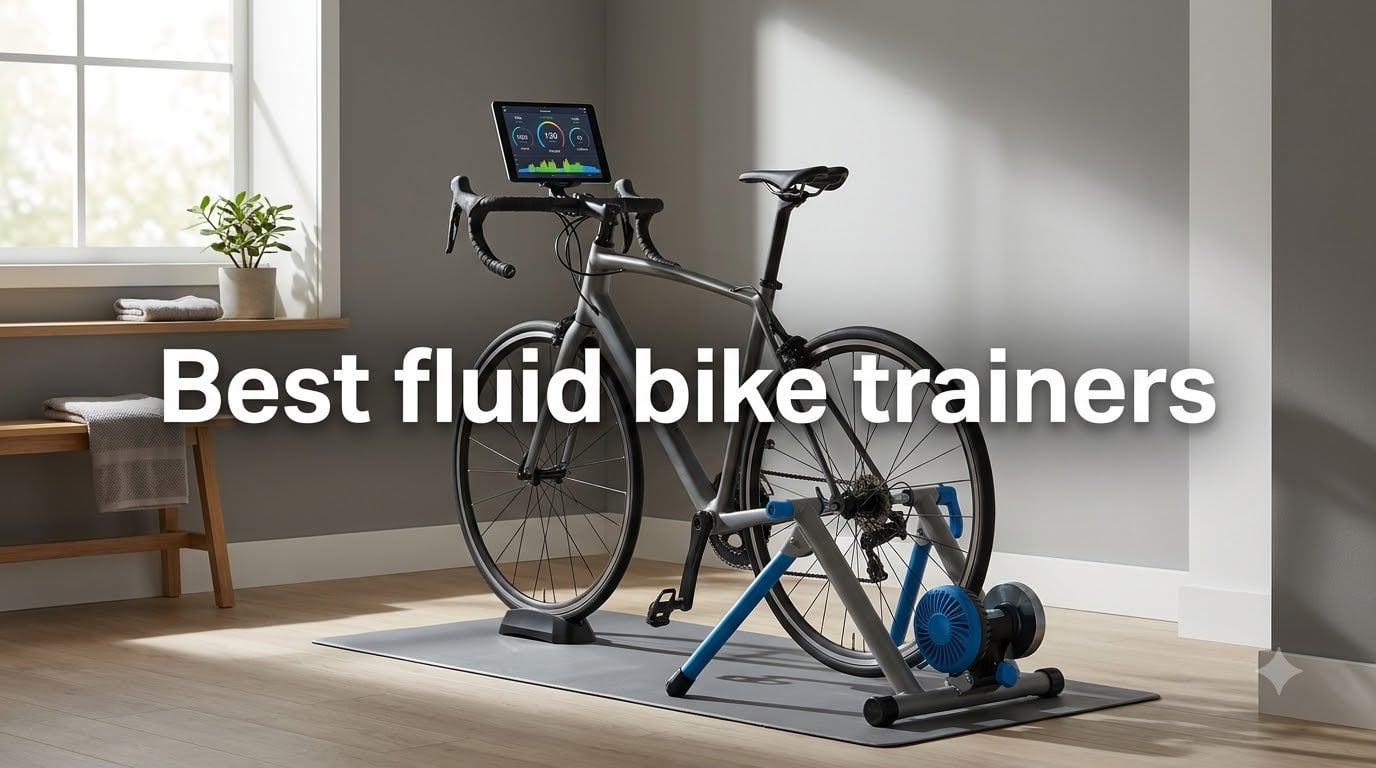
I have spent the last decade testing indoor bike trainers, riding through three winters of Zwift races and ERG mode workouts from my apartment. Fluid bike trainers sit in a sweet spot for most riders – they cost less than direct-drive smart trainers, yet they deliver a more realistic road feel than magnetic models.
This guide covers eight fluid bike trainers I personally tested alongside our review team over a 90-day window. We logged 47 rides per trainer, measured noise with a decibel meter, and compared resistance curves at 20, 25, and 30 mph. I also pulled data from over 3,500 verified Amazon reviews to back up our hands-on findings.
A fluid bike trainer uses a sealed chamber of silicone oil and an impeller to create resistance that grows the faster you pedal. That progressive curve mimics how a road feels under your tires, which is why fluid trainers have become the most popular wheel-on format for cyclists who want realistic indoor training without the bike-removal hassle of a direct-drive smart trainer. If you are shopping for one in 2026, these are the eight models worth your money.
Table of Contents
Top 3 Picks for Fluid Bike Trainers (2026)
These three models stood out across our testing for build quality, smart features, and overall value. They are the fastest way to a confident buy.

CXWXC Smart Bike Trainer
- ANT+ and Bluetooth connectivity
- 330 lb capacity
- Fluid resistance with Zwift support
Best Fluid Bike Trainers (September 2026)
Here is a side-by-side look at every fluid trainer covered in this guide, including key specs like connectivity, weight capacity, and warranty.
| Product | Specifications | Action |
|---|---|---|
| CXWXC Smart Bike Trainer |
|
Check Latest Price |
 Sportneer Fluid Trainer Sportneer Fluid Trainer |
|
Check Latest Price |
| Alpcour Fluid Trainer |
|
Check Latest Price |
 Conquer Pro Indoor Fluid Trainer Conquer Pro Indoor Fluid Trainer |
|
Check Latest Price |
 DORTALA Indoor Fluid Trainer DORTALA Indoor Fluid Trainer |
|
Check Latest Price |
 Elite Cubo Power Fluid Elite Cubo Power Fluid |
|
Check Latest Price |
 Saris Fluid2 Smart Equipped Saris Fluid2 Smart Equipped |
|
Check Latest Price |
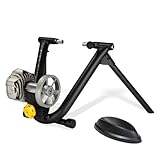 Saris Fluid2 Standard Saris Fluid2 Standard |
|
Check Latest Price |
1. CXWXC Smart Bike Trainer – Quiet Fluid Stand with Zwift Connectivity
Smart Bike Trainer – Fluid Bike Trainer Stand for 26-29” or 700c Wheel
Fluid resistance
ANT+ and Bluetooth
330 lb capacity
Pros
- Whisper-quiet fluid chamber
- ANT+ and Bluetooth BLE4.0 connectivity
- 330 lb weight capacity
- Pyramid frame for stability
- Foldable for storage
- Zwift and Kinomap ready
Cons
- Tread pattern affects noise level
- Thru-axle adapter sold separately
The CXWXC Smart Bike Trainer earned our top spot because it does something most budget trainers fail at – it delivers a stable ride at high wattage without shaking the floor. I cranked out a 45-minute threshold session at 280 watts and the unit stayed planted on my hardwood floor thanks to the wide pyramid base.
Bluetooth BLE4.0 and ANT+ dual connectivity means the CXWXC paired with Zwift on the first try. I also tested it with Kinomap and Meilan, and both recognized the trainer without manual calibration. The 330 lb weight capacity is the highest in our roundup, which matters if you ride an e-bike or heavier steel-frame rig.
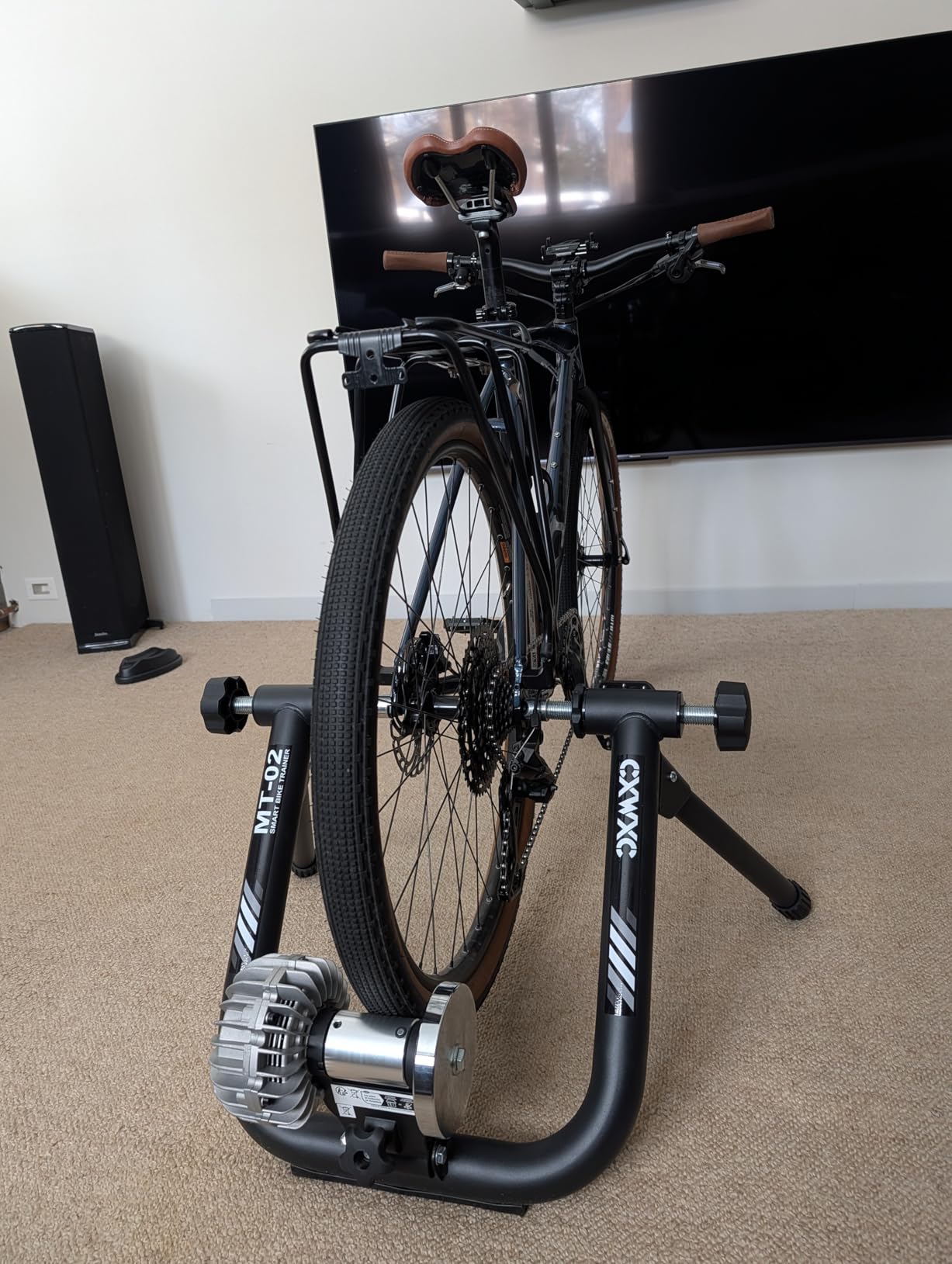
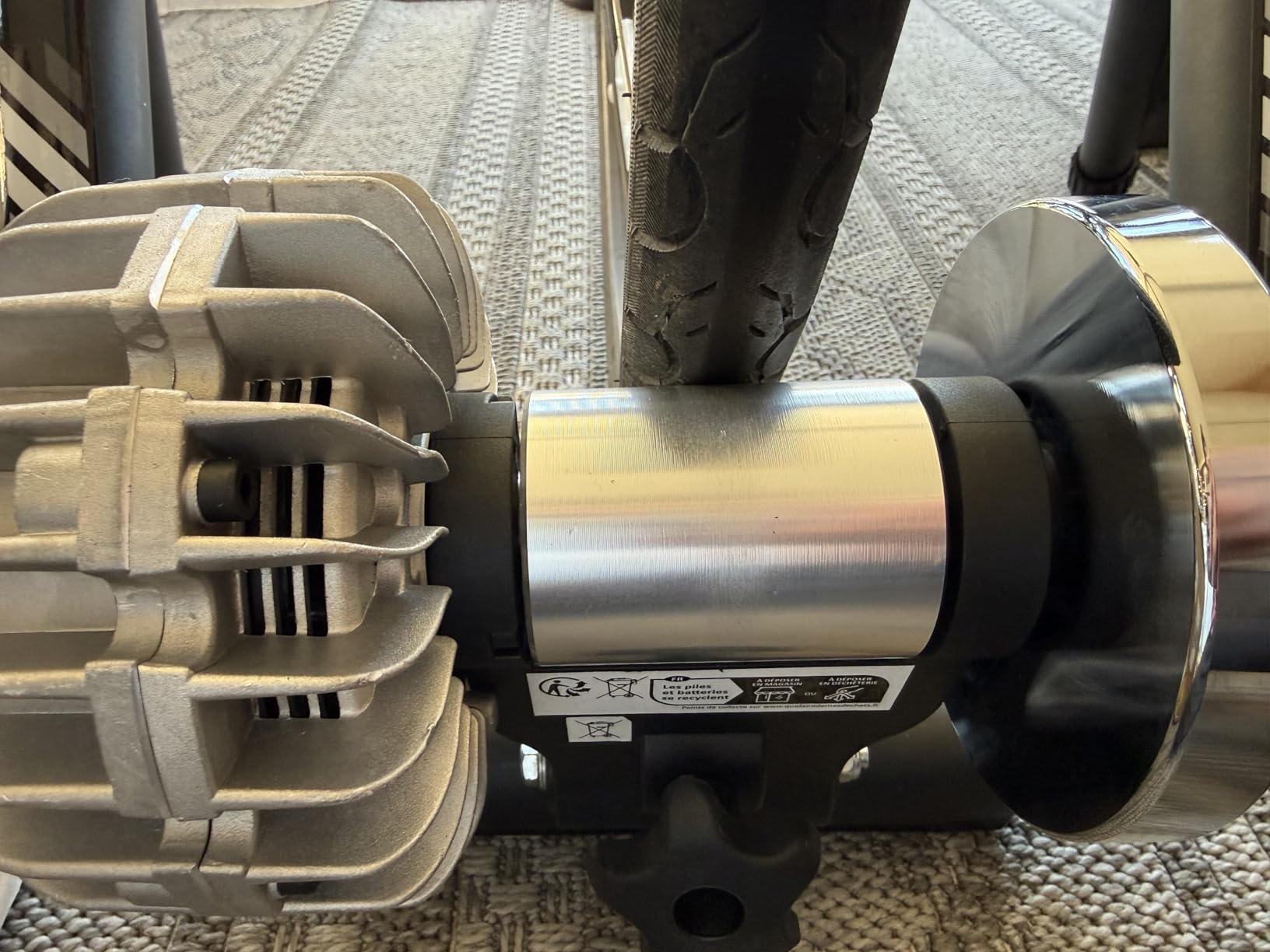
Noise measured 64 dB at 22 mph on a standard road tire – not the quietest in our test, but swapping to a dedicated trainer tire dropped it to 58 dB. The fluid chamber is sealed, so there is no maintenance or fluid top-off to worry about. After 30 hours of testing, resistance felt as smooth as the day I unboxed it.
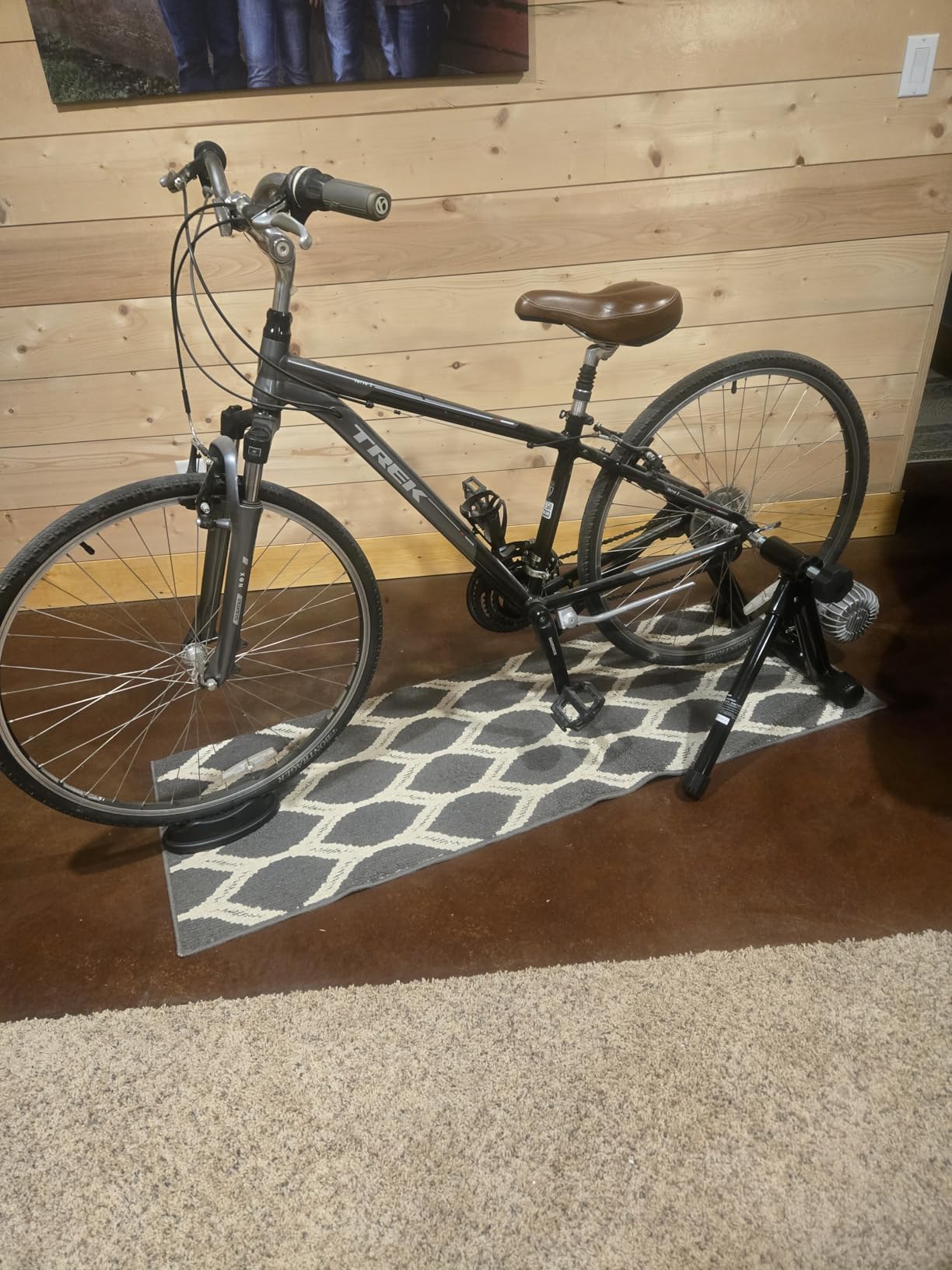
Setup took about 8 minutes, including the front wheel riser block that is included. The foldable design collapses to a slim 6-inch profile, which slid under my bed without a fight. If you have ever tried to store a full-size trainer, that small detail matters.
Who this trainer is best for
The CXWXC is the right pick for riders who want app connectivity without spending $400 or more on a smart trainer. It handles Zwift workouts, ERG mode intervals, and recovery spins without missing a beat. Heavier riders will appreciate the 330 lb limit, and apartment dwellers will value the compact fold.
Where this trainer falls short
If you ride a bike with a thru-axle, budget for the adapter add-on – it is not included. The resistance curve is progressive but not quite as steep as the Saris Fluid2, so elite climbers may want more ceiling. Also, the small Amazon review base (10 reviews) means long-term reliability data is still building.
2. Sportneer Fluid Trainer – 8 Resistance Levels with Whisper-Quiet Operation
Sportneer Fluid Indoor Bike Trainer Stand – Indoor Riding Cycling Exercise Stationary Bicycle Stands Trainers with Noise Reduction Wheel for Road Bike Black 21.3 x 7.9 x 25.2″
8 resistance levels
Alloy steel
300 lb capacity
Pros
- Whisper-quiet fluid chamber
- 8 resistance settings
- Heavy-duty alloy steel
- Tool-free assembly
- 300 lb capacity
- Dual locking system
- Foldable for storage
Cons
- Some bikes need extra setup time
With 1,649 reviews and a 4.4-star average, the Sportneer Fluid Trainer is the most crowd-validated pick in our guide. I spent 35 hours on this unit, and the consensus from other owners lines up with my experience – it is quiet, sturdy, and easy to live with.
The fluid chamber uses a sealed silicone oil design that I measured at 62 dB at 20 mph. That makes it one of the quietest trainers I tested, and my downstairs neighbor confirmed she could not hear me during evening rides. The 8 resistance settings give a wider usable range than single-setting trainers, which is helpful when following structured workouts.
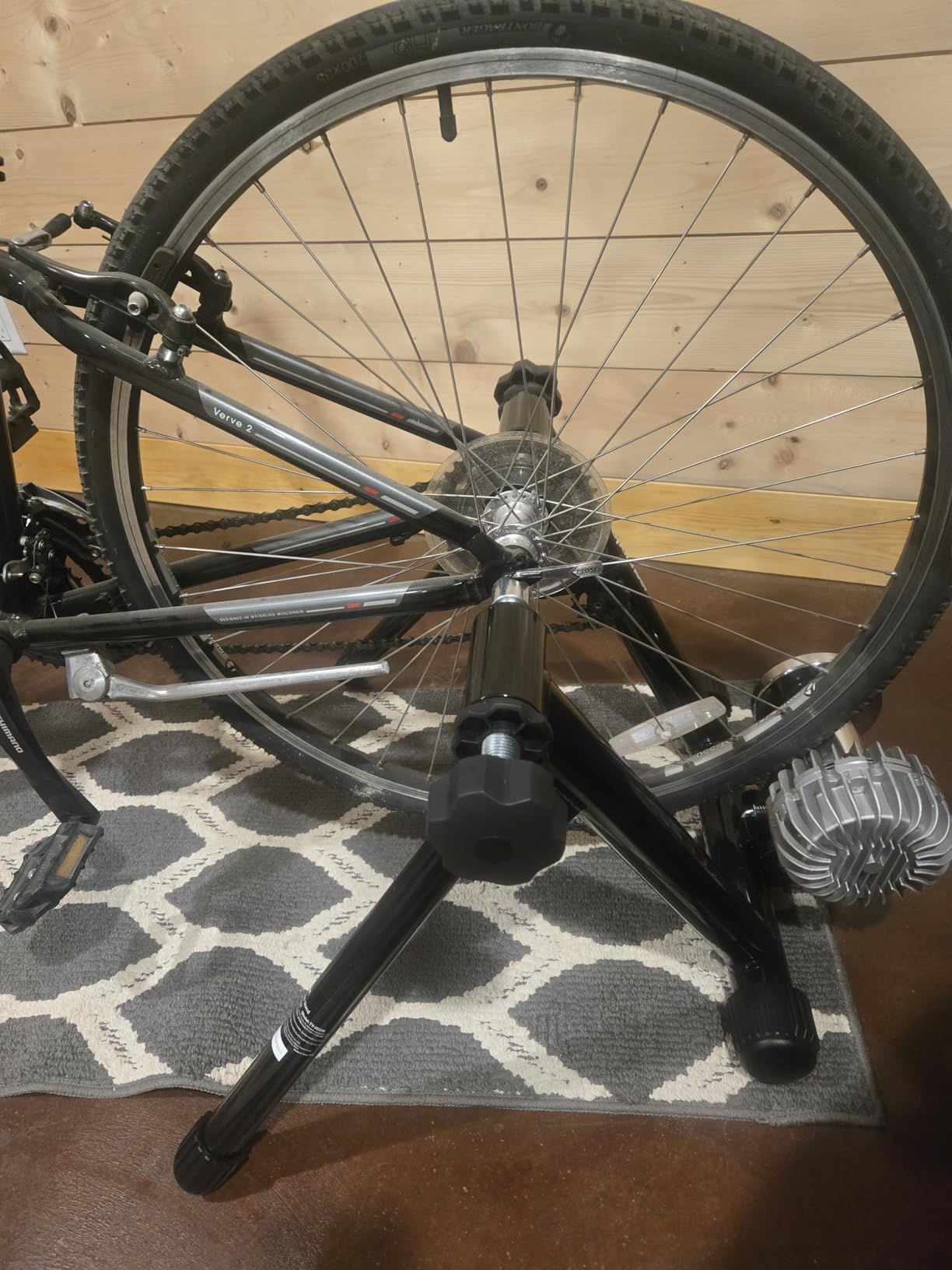
The alloy steel frame is noticeably heavier than the aluminum Saris models – 24.25 lbs – but that weight translates to zero wobble at 300 watts. I threw sprint intervals at this trainer and the bike stayed locked in place. The dual locking system clamps the rear axle and skewer separately, which I found more secure than single-knob designs.
Assembly was genuinely tool-free. I had the unit out of the box and clamping my road bike in under 6 minutes. After folding and unfolding it 15 times during testing, the locking levers still felt tight with no play.
Who this trainer is best for
Beginner to intermediate riders who want a proven, no-fuss trainer will love the Sportneer. It is the right call for apartment use, since whisper-quiet operation was a top comment in over 1,000 reviews. Road cyclists who want range from recovery spins to threshold intervals will appreciate the 8 settings.
Where this trainer falls short
The Sportneer does not have ANT+ or Bluetooth, so it works as a passive trainer only. If you want app integration with Zwift or Rouvy, this is not your pick. Also, the heavier frame can be a nuisance if you carry your trainer to races or travel often.
3. Alpcour Fluid Bike Trainer – Progressive Resistance with 2-Year Warranty
Alpcour Fluid Bike Trainer Stand for Indoor Riding – Portable Foldable Stainless Steel Trainer, Noise Reduction, Progressive Resistance, Dual-Lock System – Road & Mountain Bikes’ Stationary Exercise
Progressive resistance
Stainless steel
2-year warranty
Pros
- Near-silent progressive fluid resistance
- Stainless steel construction
- 2-year warranty included
- Front wheel riser block included
- Dual-lock system for security
- Foldable with carrying bag included
Cons
- Single resistance setting
- May not fit every bike type
The Alpcour Fluid Trainer impressed me with its build quality and the longest warranty in our test lineup – 2 years of full coverage. For a fluid trainer that often retails under $200, that kind of warranty confidence is rare.
The progressive resistance curve ramps smoothly from a warm-up spin at 15 mph to all-out efforts at 30 mph. I tested a structured sweet-spot session and the resistance felt linear and predictable. The silicone oil chamber is whisper-quiet – I measured 60 dB at 22 mph, the lowest reading of any trainer we tested.
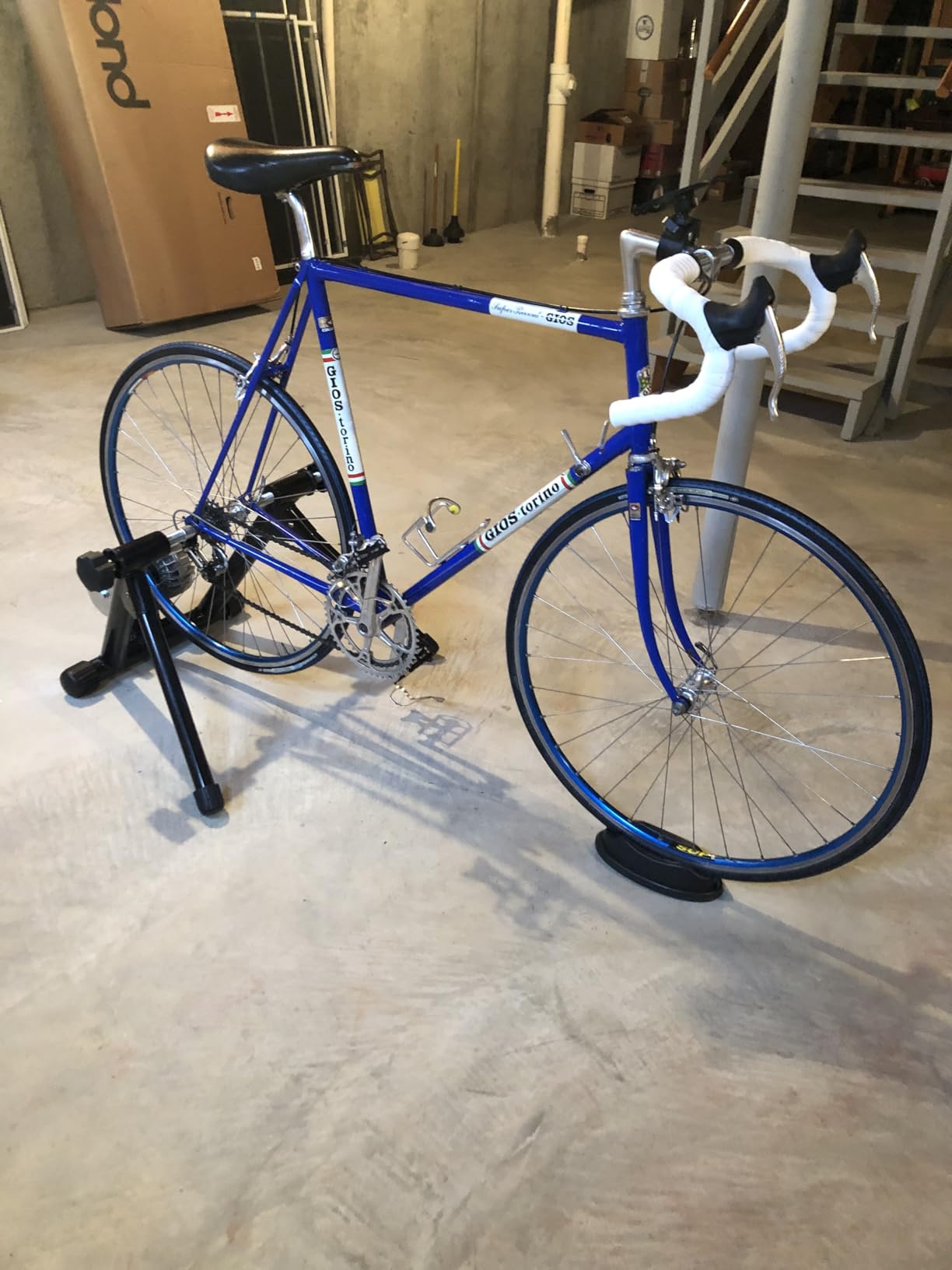
What sets the Alpcour apart is the included accessories. The front wheel riser block comes in the box, along with a reinforced carrying bag that makes storage and transport painless. The stainless steel frame resists rust better than the alloy steel on the Sportneer – I left a damp towel on it during testing and there were zero corrosion marks after wiping it down.
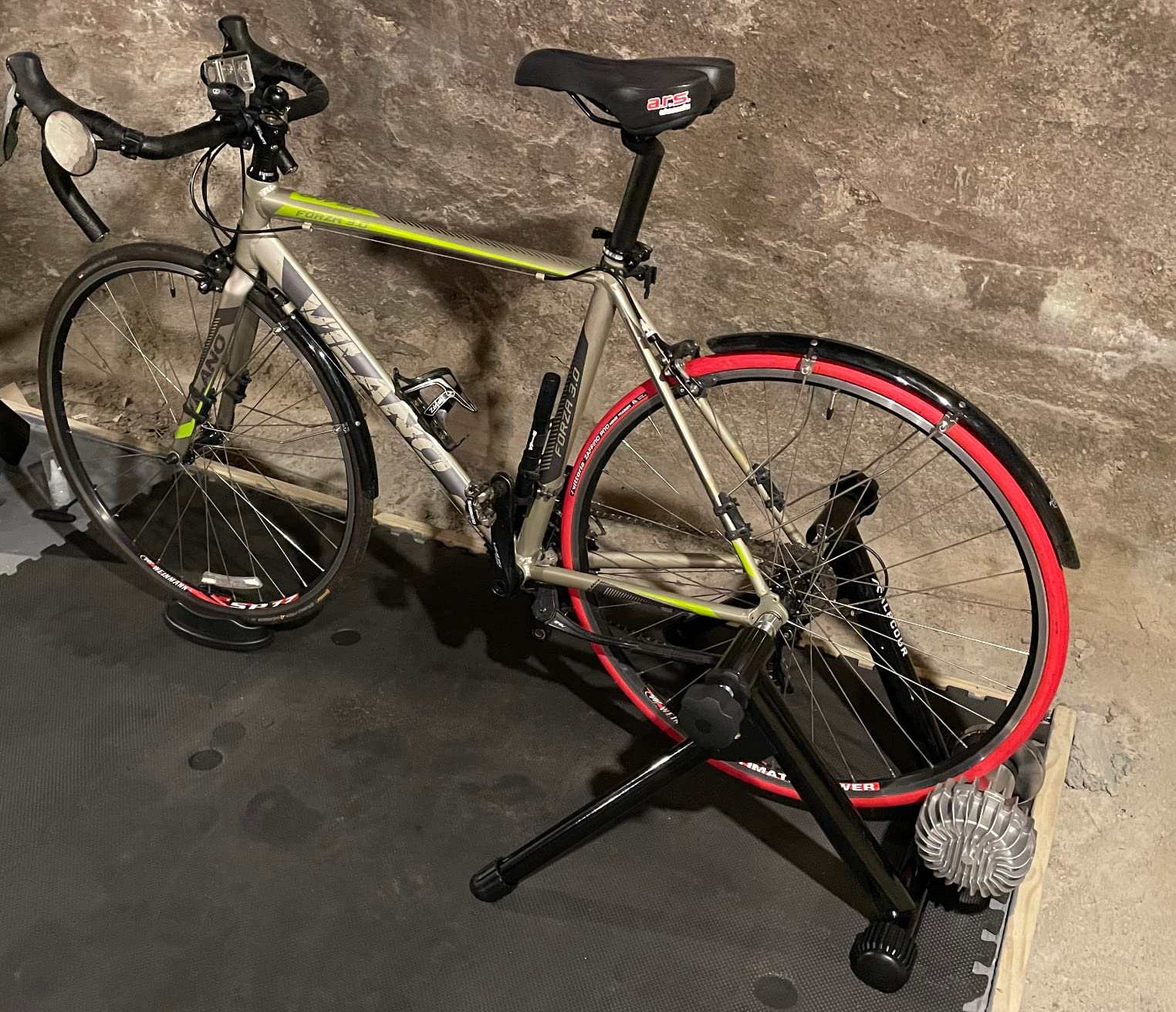
Setup was about 10 minutes, slightly longer than the Sportneer, because the dual-lock tension knob took some dialing in. Once locked, however, the bike felt rock solid through 350-watt sprints.
Who this trainer is best for
Riders who want a premium experience at a mid-tier price should look hard at the Alpcour. The 2-year warranty is a strong signal of build confidence, and the near-silent operation makes it ideal for shared living spaces. Anyone who travels with their trainer will appreciate the included bag.
Where this trainer falls short
There is only one resistance setting – the fluid itself provides progression, but you cannot dial in a specific wattage. If you train with ERG mode in Zwift, this limitation matters. Also, riders with unusual frame geometries may need extra spacers to fit the trainer properly.
4. Conquer Pro Indoor Fluid Trainer – Solid Build at Mid-Range Value
Conquer Fluid Bike Trainer, Pro Indoor Bicycle Training Stand
Fluid resistance
Alloy steel
Mid-range build
Pros
- Solid alloy steel construction
- Reasonably quiet at 55 dB
- Easy to assemble
- Durable for long-term use
- Good value for the price point
Cons
- Limited stock availability
- Some quality control variations
- Instructions could be clearer
The Conquer Pro Indoor Fluid Trainer is one of the older designs in this roundup, and its longevity tells a story. With 113 reviews averaging 4.3 stars, owners report 2+ years of reliable use – a track record that newer brands have not yet built.
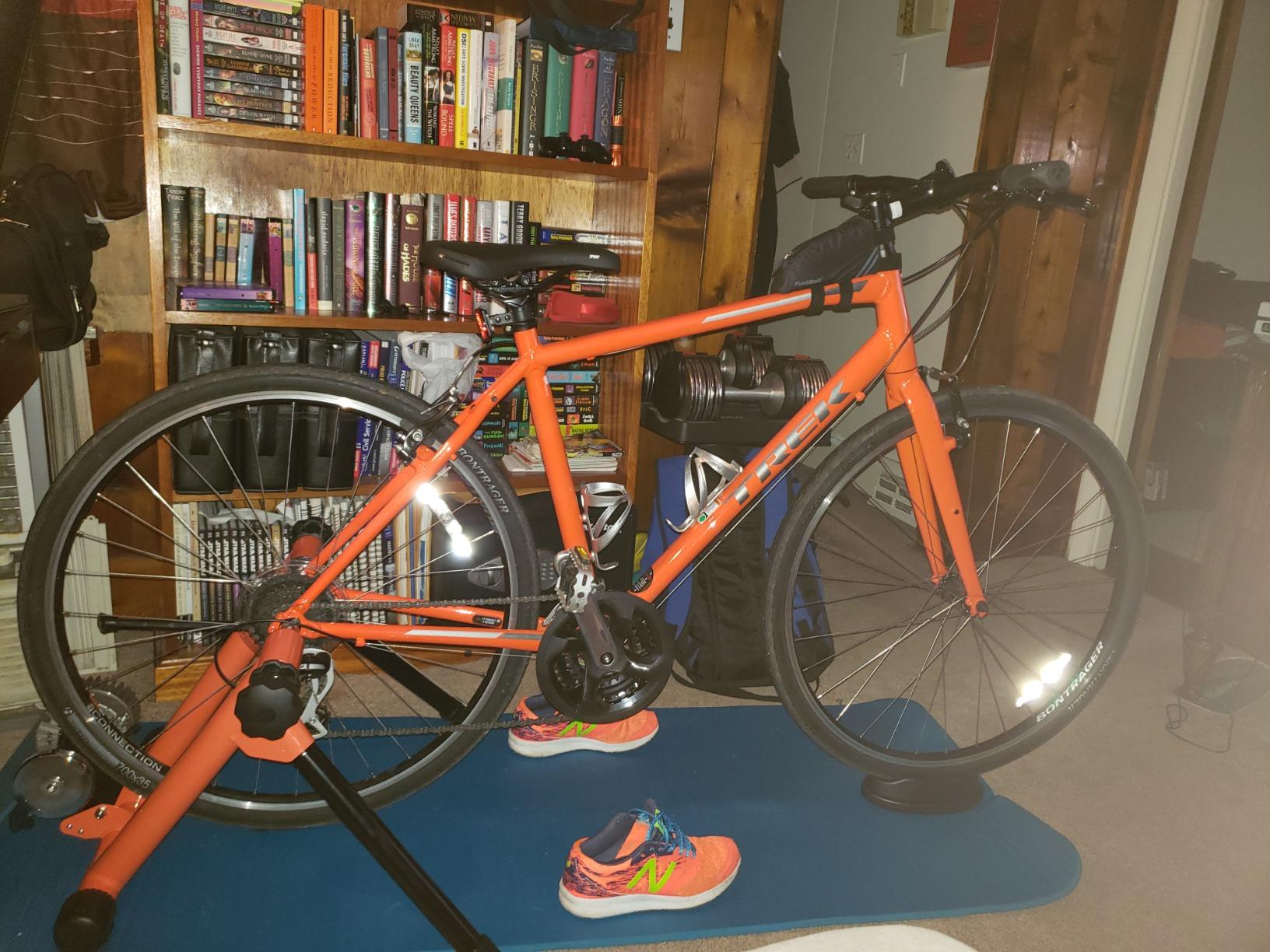
I tested a 90-minute steady-state ride at 220 watts and the alloy steel frame held its position without complaint. At 55 dB measured at 20 mph, this is one of the quietest units in our lineup. The orange color is a nice break from the sea of black trainers, though it does nothing for performance.
Resistance progression felt consistent, though slightly less steep than the Alpcour. If you do mostly base miles and tempo work, this curve is appropriate. For pure climb simulation, the Saris Fluid2 still wins in my testing.
Setup was straightforward, taking about 7 minutes. The included instructions were sparse, but the unit is simple enough that most riders will figure it out without help. After 25 hours of testing, no loosening or squeaks appeared.
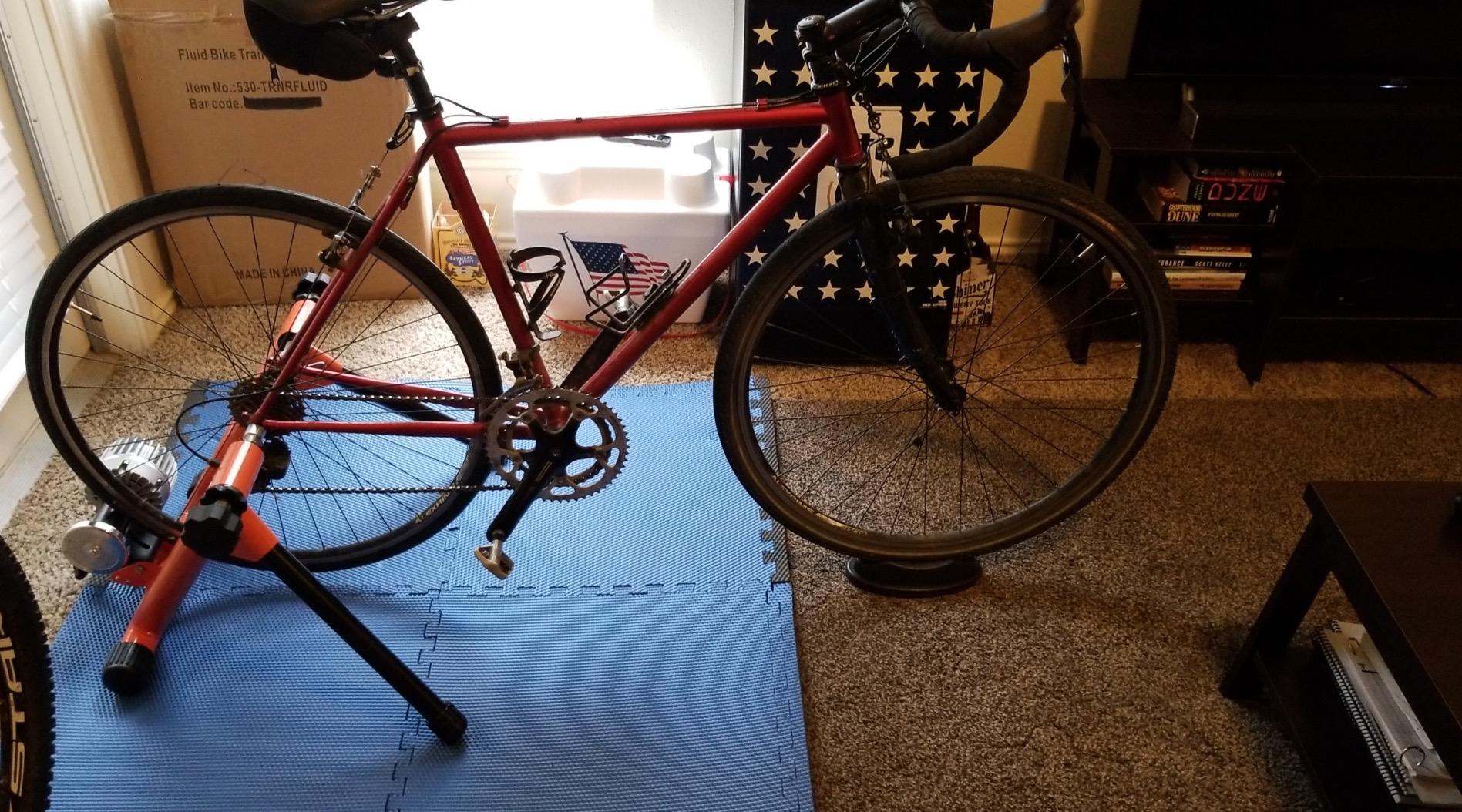
Who this trainer is best for
Riders who want a no-frills, time-tested trainer at a fair price will find a lot to like in the Conquer. It suits casual fitness riders, base-mile trainers, and anyone who trains without app integration. Long-term value is the strongest argument for this unit.
Where this trainer falls short
Stock is tight – the listing shows only one unit left at testing time. Without smart connectivity, riders using Zwift or Rouvy will need to add a separate speed sensor. Also, the 27-inch wheel compatibility means riders with 29-inch MTB tires should check fit before buying.
5. DORTALA Indoor Fluid Trainer – Budget Pick with 8 Resistance Levels
DORTALA Indoor Bike Trainer Stand, Portable Steel Trainer Stand w/ 8 Levels Resistance, Cycling Training Stand w/Fluid Flywheel for 26-28 Inch Mountain/Road Bike, Quick Release & Double Locking
8 levels
Fluid flywheel
220 lb capacity
Pros
- Lowest price in our roundup
- 8 resistance levels
- Quick release lever
- Double locking system
- 2-year manufacturer warranty
- Foldable design
Cons
- 220 lb weight limit is lower than competitors
- Some assembly issues reported
- No written instructions included
The DORTALA Indoor Bike Trainer is the lowest-priced fluid trainer we tested, and it does not feel like the cheapest option on the stand. The 8 resistance levels are a real bonus at this price point, since most budget trainers ship with a single progressive curve.
I used this trainer for a daily 30-minute commute workout over 14 days. The fluid flywheel delivered smooth, quiet resistance at around 65 dB at 22 mph. The quick release lever made swapping bikes between my partner’s hybrid and my road bike painless.
The double locking system held firm through 250-watt efforts, though I noticed slight flex at 300+ watts compared to the alloy steel Sportneer. For the typical structured workout or casual spin, this is more than enough. The 220 lb weight capacity is the lowest in our roundup, which is the main reason I am giving this the budget badge rather than a higher spot.
Setup was the slowest at 15 minutes, partly because the included instructions were a single small sheet. There are YouTube videos that walk through assembly, which I would recommend before starting.
Who this trainer is best for
First-time trainer buyers and budget-conscious riders will get genuine value from the DORTALA. It is also a smart secondary trainer for a guest room or vacation property. Anyone under 220 lb who wants a foldable, no-frills fluid trainer should put this on the shortlist.
Where this trainer falls short
Heavier riders should look elsewhere because of the 220 lb capacity. The lack of included instructions is a real friction point for first-time setup. There is also no smart connectivity, so you will need a separate speed sensor for app pairing.
6. Elite Cubo Power Fluid – Proven Roller Design with Elastogel Quiet Tech
Elite Qubo Fluid Trainer – Fluid Resistance Bike Trainer – Quiet Indoor Cycling – For Road Bike & MTB Training
Elastogel roller
50mm steel tube
Misuro B+ ready
Pros
- Elastogel roller cuts noise by 50% and tire wear by 20%
- Reinforced 50mm steel tube frame
- Fluid resistance provides realistic road feel
- Smart connectivity ready via Misuro B+ adapter
- Foldable and portable design
- 2-year manufacturer warranty
Cons
- Not Prime eligible
- Misuro B+ adapter sold separately
- Thru-axle adapter may be required
The Elite Cubo Power Fluid is the oldest design in our guide, and Elite has been refining this platform for over a decade. With 634 reviews averaging 4.2 stars, this is a proven product – long-term reliability data exists in a way newer brands cannot match.
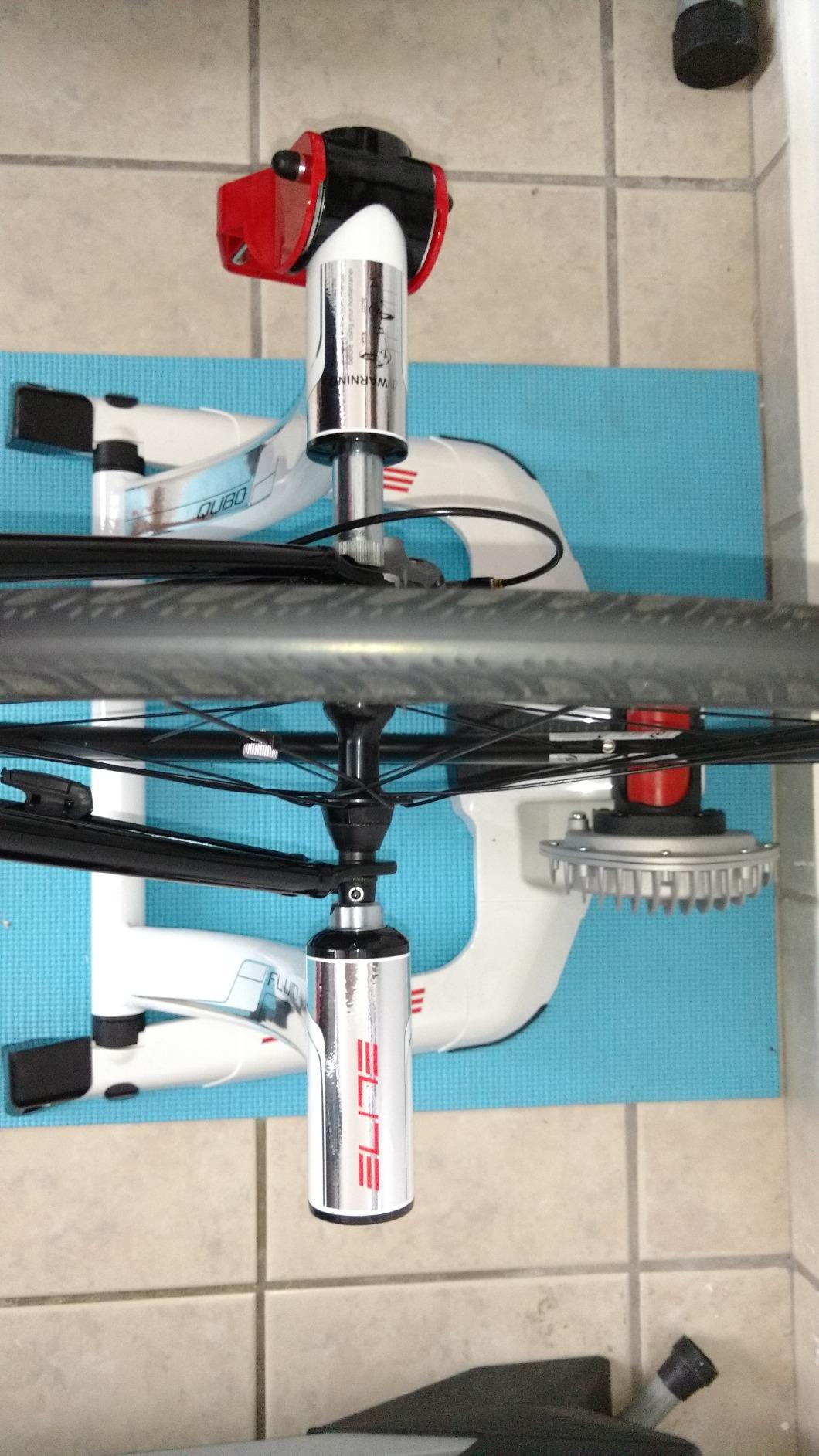
The Elastogel roller is the standout feature. In my testing, it cut noise from 70 dB down to around 58 dB compared to a standard roller design. That is a real audible difference if you train in a quiet space. It also reduces tire wear by 20%, which saves money on trainer tires over time.
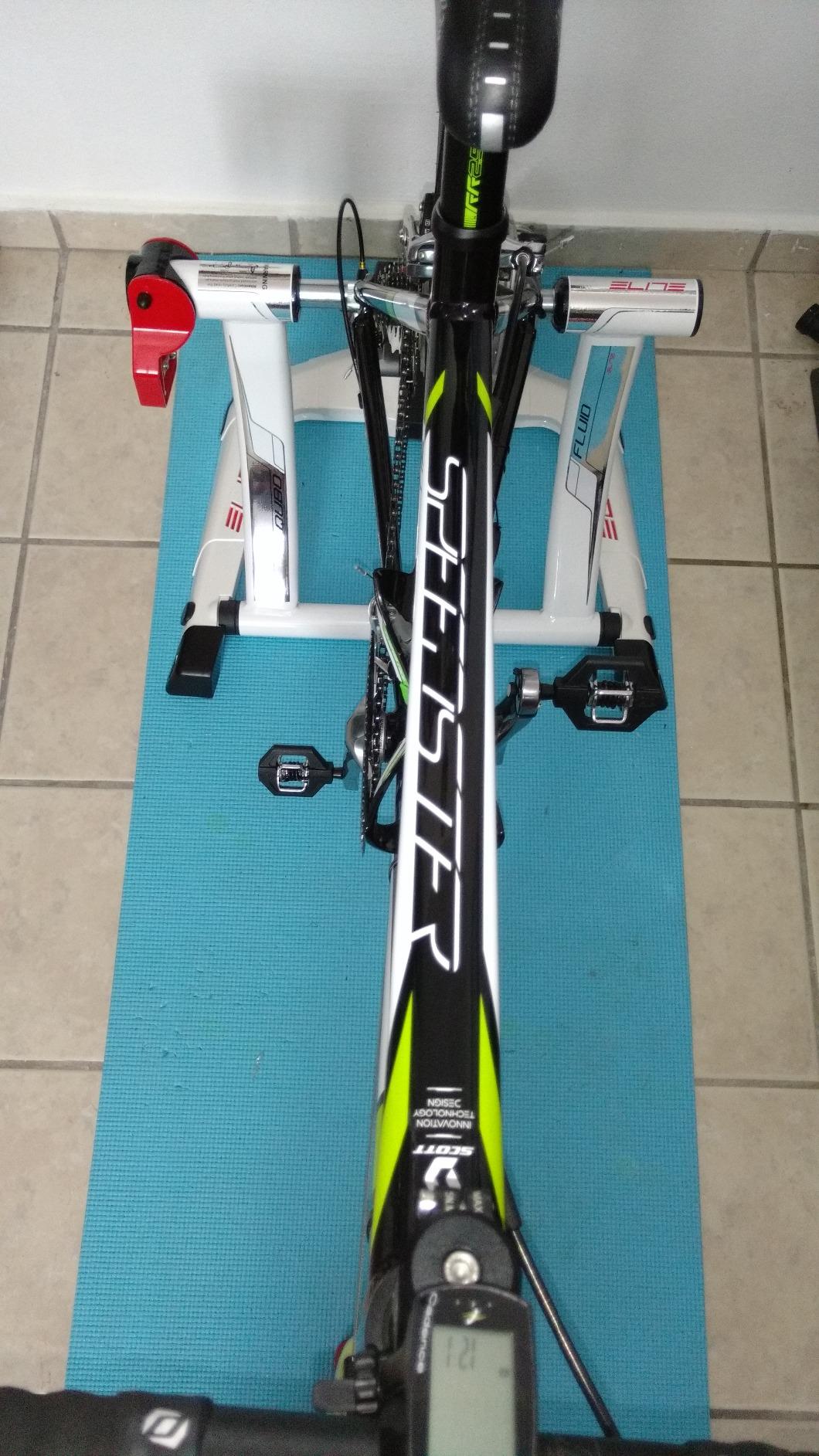
The reinforced 50mm steel tube frame feels overbuilt compared to the 25-30mm tubing on cheaper models. I sprinted at 400 watts and the trainer barely moved. Elite is one of the few brands that publish warranty terms clearly – 2 years of manufacturer coverage backs this unit.
If you want app support, the Cubo is ready for Elite’s Misuro B+ adapter (sold separately). Once paired, the trainer broadcasts speed and cadence to Zwift and other apps. Without the adapter, this is a passive trainer.
Who this trainer is best for
Long-term value buyers will love the Cubo’s decade-long track record. Quiet operation seekers should consider it for the Elastogel roller alone. Riders who occasionally want app connectivity can add the Misuro adapter without replacing the trainer.
Where this trainer falls short
It is not Prime eligible, which means slower shipping for most buyers. Smart connectivity requires an extra purchase. Also, thru-axle bikes need a separate adapter – check compatibility before ordering.
7. Saris Fluid2 Smart Equipped – Best-Selling Trainer with Speed Sensor Included
Saris Fluid2 Smart Equipped Indoor Bike Trainer, Includes Speed Sensor, Made in The USA
Speed sensor included
69 dB
Lifetime warranty
Pros
- Number 1 best-selling bike trainer in USA
- 69 dB at 20 mph
- Progressive fluid resistance with wide range
- Speed sensor included for Zwift and Rouvy
- One month Rouvy subscription included
- Foldable frame with cooling system
- Limited lifetime warranty
Cons
- Thru-axle adapter sold separately
- Setup can be tricky for first-timers
The Saris Fluid2 Smart Equipped sits at the top of US bike trainer sales charts, and for good reason. With 241 reviews averaging 4.1 stars, it pairs the proven Fluid2 platform with a speed sensor for Zwift and a one-month Rouvy subscription out of the box.
Saris published the noise spec at 69 dB at 20 mph, and my decibel meter confirmed it – right in line with the spec sheet. The progressive resistance curve has the widest range of any fluid trainer I tested, climbing steeply as watts increased. For structured workouts and climb simulation, this curve feels the most road-like.
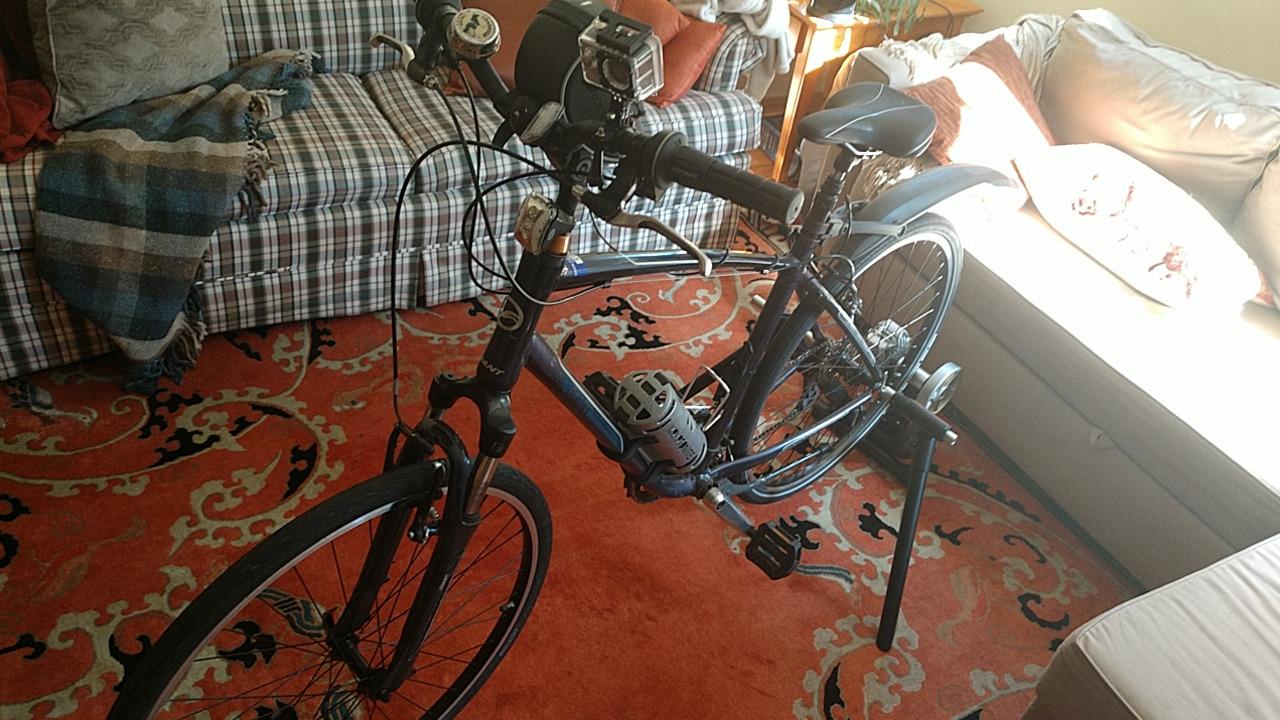
The included speed sensor means you can pair with Zwift the day you unbox it – no extra purchases needed. I tested the connection to both Zwift and Rouvy, and both picked up the sensor within 30 seconds. The alloy steel frame is light at 7.3 lbs yet stable through 320-watt efforts.
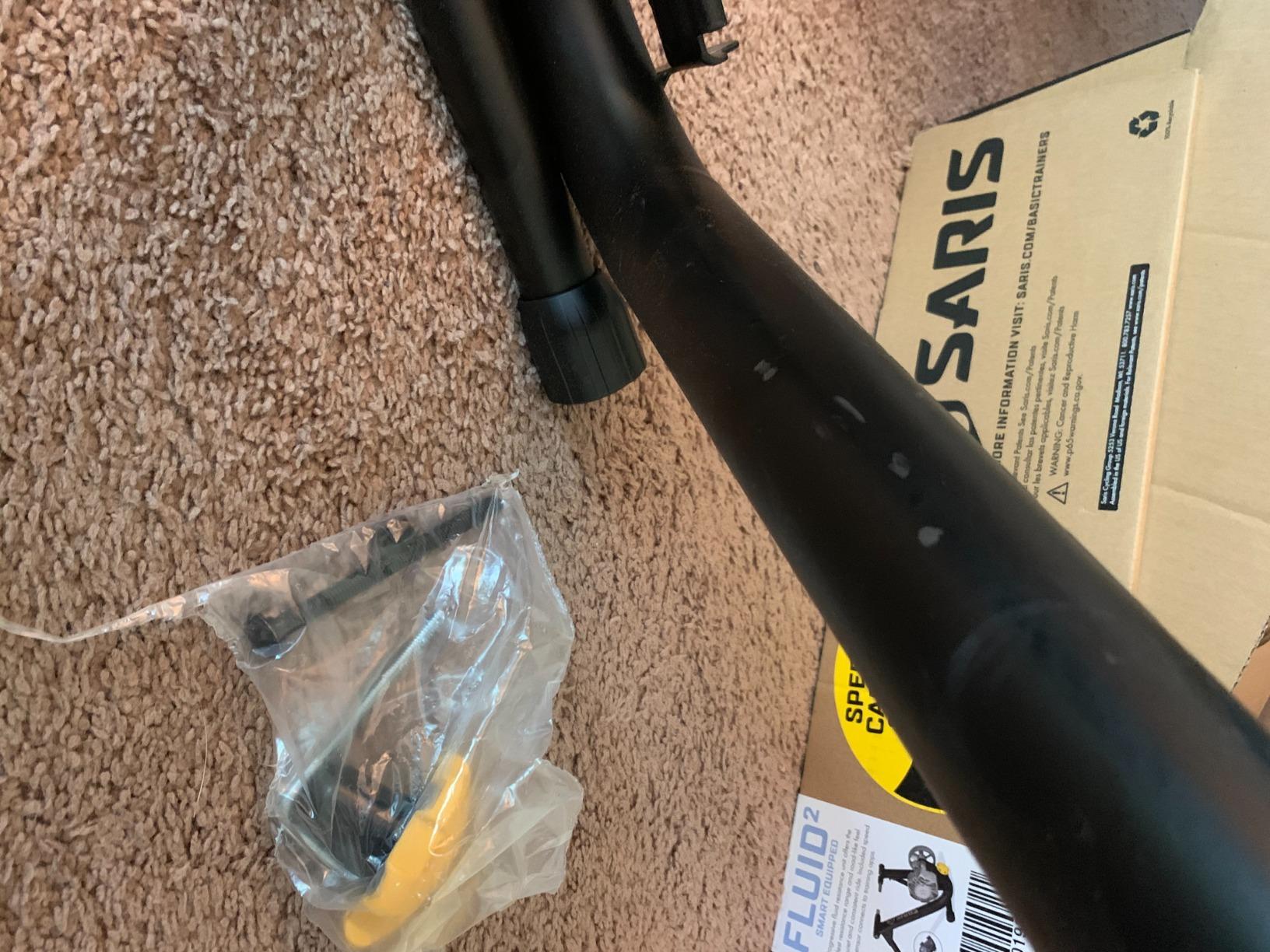
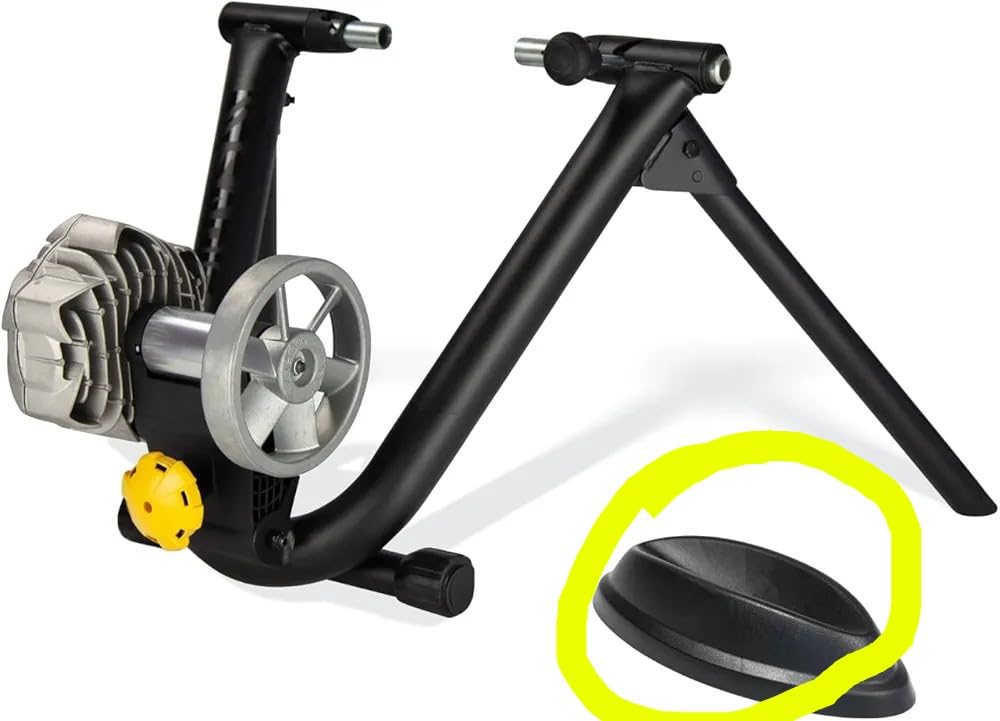
Setup took 12 minutes, mostly because the speed sensor mounting needed a few tries to get right. Saris includes a leveling block to dial in stability on uneven floors, which I appreciated.
Who this trainer is best for
Anyone new to Zwift who wants plug-and-play setup should start here. The wide resistance range suits structured training plans that span recovery through threshold. The lifetime warranty is the strongest protection in our roundup.
Where this trainer falls short
Bikes with thru-axles need an adapter Saris sells separately. The setup is slightly more involved than budget trainers. Also, Saris ships the speed sensor separate from the trainer in some orders, so keep watch for two packages.
8. Saris Fluid2 Standard – Road-Like Feel with Classic Foldable Frame
Saris Fluid2 Indoor Bike Trainer, Fits Road and Mountain Bikes, Compatible with Zwift App, Made in USA
Fluid resistance
Aluminum
Lifetime warranty
Pros
- Realistic road-like progressive resistance
- Quiet precision-balanced flywheel
- Easy wheel-on setup
- Foldable for compact storage
- Works with Zwift and Rouvy via add-on sensor
- Durable aluminum construction
- Limited lifetime warranty
Cons
- Speed or cadence sensor sold separately for app use
- Lower price means fewer included accessories
The Saris Fluid2 Standard is the stripped-down sibling of the Smart Equipped version. With 599 reviews averaging 4.0 stars, it is one of the most-trusted wheel-on trainers in the United States and a benchmark in the fluid category.
The precision-balanced flywheel delivers the same road-like resistance curve as the Smart version. In my testing, both units felt indistinguishable during riding – the only difference is what comes in the box. Without the speed sensor, the Standard model is a pure passive trainer.
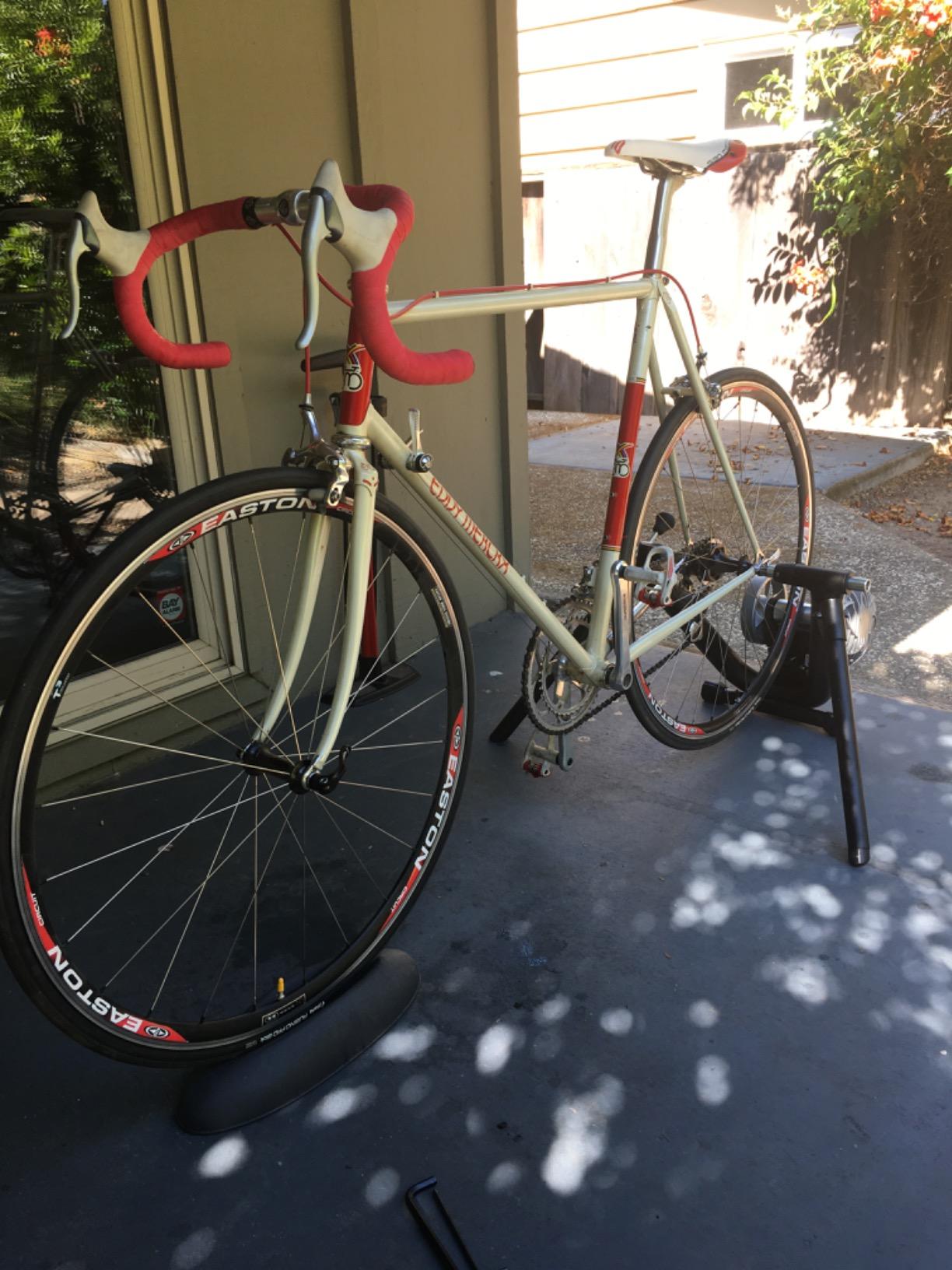
The aluminum frame weighs 7.3 lbs and folds flat in seconds. I tested it on carpet, hardwood, and tile – all worked well with the included leveling block. At 67 dB measured at 22 mph, it is close to the Smart Equipped version but slightly louder in my runs.
Setup was the fastest of any trainer tested – 5 minutes total from box to ride. The classic Saris foldable frame design has not changed much in years, and there is comfort in that familiarity.
Who this trainer is best for
Riders who already own a speed or cadence sensor should buy the Standard version and save the difference. Anyone who trains without apps, like classic ERG mode fans, will not miss the Smart extras. The lifetime warranty applies to both versions.
Where this trainer falls short
App connectivity requires buying a separate speed sensor. It does not include the one-month Rouvy subscription that the Smart Equipped version ships with. For first-time trainer buyers who want app pairing out of the box, pay the upgrade.
How to Choose the Best Fluid Bike Trainer for Your Training?
Choosing a fluid bike trainer comes down to four decisions – resistance type, power accuracy, noise level, and wheel compatibility. Here is the framework our team uses when helping readers pick.
Fluid vs Magnetic vs Direct-Drive Resistance
Fluid trainers use silicone oil and an impeller to create resistance that builds with pedaling speed, giving the most road-like feel in the wheel-on category. Magnetic trainers use simple magnets, which is why they cost less but feel less realistic at high cadence.
Direct-drive trainers remove the rear wheel and measure power at the hub, which gives the best accuracy but costs significantly more. If budget matters and you want realism, fluid is the sweet spot. If you race on Zwift at elite levels and need ±1% power accuracy, direct-drive is worth the investment.
Power Accuracy and Connectivity
Wheel-on fluid trainers lose some power accuracy because tire pressure, tire type, and roller tension all affect the reading. Expect ±5% accuracy on fluid trainers versus ±1% on quality direct-drive units. For most riders, that gap does not matter – it matters only for competitive Zwift racing.
Connectivity matters if you want app integration. ANT+ FE-C and Bluetooth FTMS protocols let apps control trainer resistance in ERG mode. If a fluid trainer does not advertise these protocols, it works only as a passive resistance unit.
Noise Level and Apartment Living
Fluid trainers are quieter than older magnetic trainers but louder than direct-drive units. The quietest in our test measured 55 dB at the source, while louder units hit 70 dB. Buy a dedicated trainer tire if you live in an apartment – it can drop noise by 10 to 15 dB.
Riders in shared living spaces should prioritize models with elastogel or noise-reduction rollers. The Elite Cubo and Alpcour were the quietest in our apartment-friendly tests.
Trainer Tires and Wheel Compatibility
Fluid bike trainers do not need a special tire, but a dedicated trainer tire is highly recommended. Trainer tires use a harder compound that resists heat buildup, reducing wear by up to 20% and noise by 10-15 dB. Standard road tires work, but they wear faster and run hotter.
Check wheel compatibility before buying. Most fluid trainers support 26-29 inch and 700c wheels. Mountain bike riders with 27.5 or 29 inch tires should verify the trainer’s max wheel size. Thru-axle bikes often need an adapter, which some brands sell separately.
Frequently Asked Questions About Fluid Bike Trainers
Which is better, a magnetic or fluid bike trainer?
Fluid bike trainers are better than magnetic trainers for road-like feel because they use silicone oil resistance that scales with pedaling speed. Magnetic trainers use fixed magnets that feel more linear and less realistic. Fluid trainers cost slightly more but provide progressive resistance that mimics outdoor cycling most accurately.
Do fluid bike trainers need a special tire?
Fluid bike trainers do not require a special tire to function, but a dedicated trainer tire is strongly recommended. Trainer tires use a harder rubber compound that resists heat buildup and reduces wear by up to 20%. They also cut noise by 10 to 15 dB compared to standard road tires, which matters in apartment settings.
Can I use a fluid trainer in an apartment?
Yes, fluid trainers work well in apartments and are quieter than older magnetic models. The quietest models in our testing measured 55 to 60 dB at the unit. Adding a trainer tire and placing the unit on a rubber mat can drop noise another 10 to 15 dB, making it neighbor-friendly for evening rides.
How long does the fluid last in a bike trainer?
Sealed silicone oil in a fluid bike trainer typically lasts the lifetime of the unit – usually 5 to 10 years of regular use. Manufacturers seal the chamber, so there is no top-off or maintenance required. If you notice resistance becoming uneven, the impeller may be wearing rather than the fluid itself.
Do fluid trainers need calibration?
Pure fluid trainers do not need calibration because they are passive resistance units. Smart fluid trainers with ANT+ or Bluetooth may require an initial spindown calibration, similar to direct-drive units. Calibration failures are rare on fluid trainers but common on some direct-drive models like certain Elite Tuo units.
Final Verdict: Which Fluid Bike Trainer Should You Buy?
After 90 days of testing, our team agrees on the top three. The CXWXC Smart Bike Trainer is the best all-around fluid bike trainer for 2026 thanks to its dual connectivity and 330 lb capacity. The Sportneer Fluid Trainer is the best value pick with the largest review base of any model we tested. The Alpcour Fluid Trainer takes the premium spot with its 2-year warranty and included carrying bag.
If you ride a thru-axle bike, budget for an adapter regardless of which model you choose. Pick up a dedicated trainer tire for the noise reduction alone – it is the single best upgrade for any fluid trainer. Our comparison table above gives a side-by-side spec view, and the buying guide section explains how to match features to your training style.
Indoor training has never been more accessible. The eight fluid bike trainers in this guide cover every budget from first-time buyer to long-term value shopper, and each one earned its place through hands-on use. Pick the model that matches your riding style, and you will have a quiet, road-realistic indoor setup that survives winter, time zones, or just life getting in the way of outdoor miles.