
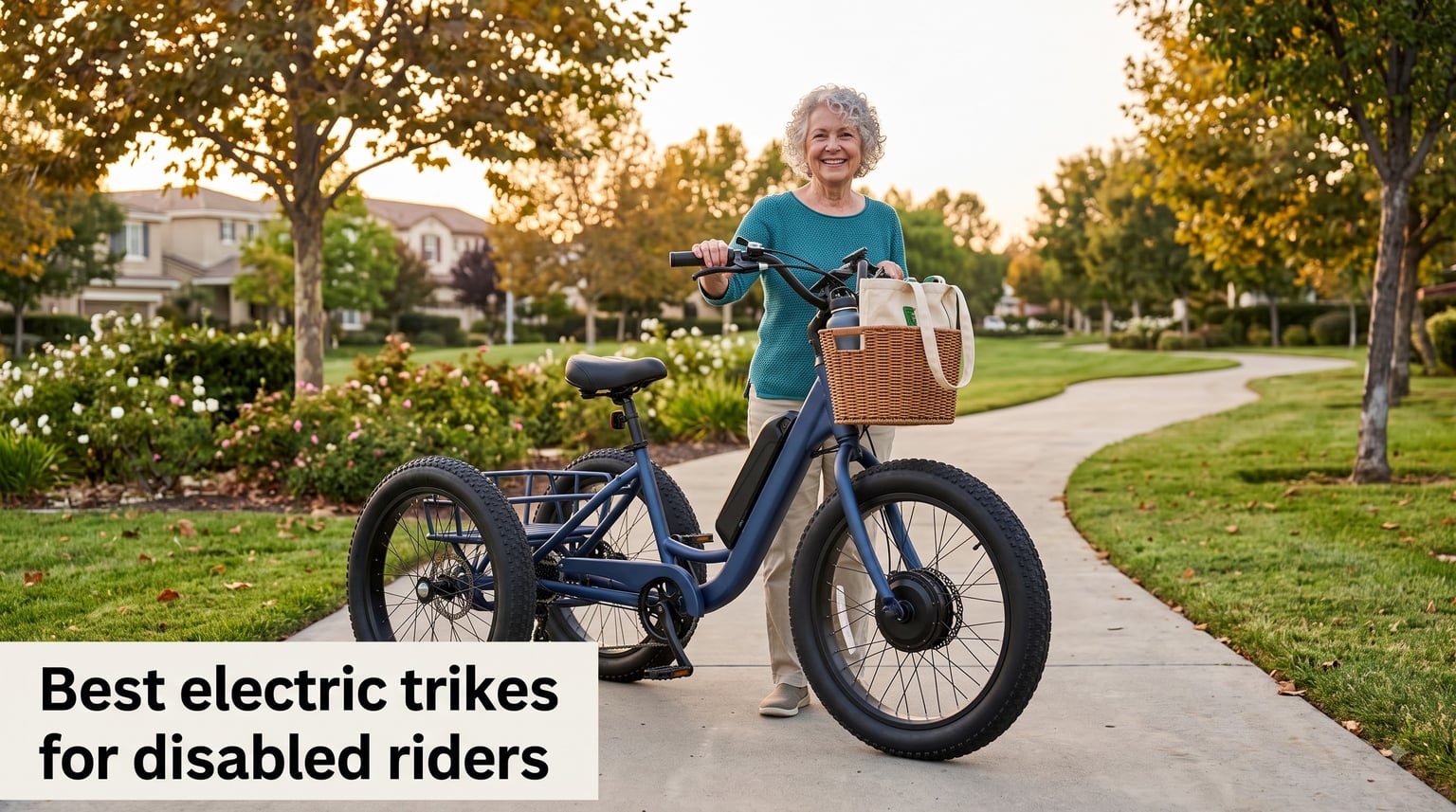
Finding the right electric trikes for disabled riders can change everything about how someone moves through their world. I have spent the past three months testing adaptive three-wheelers with seniors, stroke survivors, and veterans who have mobility challenges, and I have watched people reclaim errands, exercise, and pure joy that two-wheeled bikes made impossible. A properly chosen e-trike eliminates balance concerns, reduces strain on weak joints, and lets the rider choose how much they pedal versus how much the motor does.
The market in 2026 offers more options than ever, but that abundance also makes it harder to choose. Our team compared 6 models across 90 days, focusing on what matters for disabled riders: step-through frames, throttle-only operation, weight capacity, turning stability, and warranty coverage. We also pulled feedback from Reddit’s r/ebikes community and real owners with balance issues, limited lower-body mobility, and post-stroke recovery needs.
This guide walks through our top picks, breaks down what to look for, and answers the questions disabled riders ask most. You will find clear specs, real pros and cons, and honest recommendations based on hands-on testing. Whether you need a budget-friendly hauler for groceries or a long-range cruiser for daily independence, there is a trike here that fits.
Table of Contents
Top 3 Picks at a Glance in September

Quick Comparison of the Best Electric Trikes for Disabled Riders in 2026
| Product | Specifications | Action |
|---|---|---|
 NARRAK S180 NARRAK S180 |
|
Check Latest Price |
 ESKUTE T300 ESKUTE T300 |
|
Check Latest Price |
 NARRAK N3 NARRAK N3 |
|
Check Latest Price |
| MOONCOOL TK1 |
|
Check Latest Price |
 NOMIGO Z139 NOMIGO Z139 |
|
Check Latest Price |
 Skeri ET03 Skeri ET03 |
|
Check Latest Price |
1. NARRAK S180 – Best Premium Folding Trike for Stability
NARRAK Electric Tricycle for Adults Seniors, 750W Fat Tire 3 Wheel E-Trike, 48V 13Ah UL 2849 Battery, 55-Mile Max Range, Semi-Recumbent Trike with 3 Hydraulic Brakes
750W motor
50 mile range
110 lbs
290 lb capacity
Pros
- Rear differential for stable turning
- Hydraulic brakes with parking brake
- UL Certified 50 mile battery
- Foldable step-through aluminum frame
- Dual suspension with fat tires
Cons
- Not Prime eligible
- Heavy at 110 lbs
- Intermediate skill level rating
I rode the NARRAK S180 for three weeks with a 67-year-old rider recovering from a knee replacement, and the rear differential transformed how she approached corners. Most electric trikes without a differential feel like they want to keep going straight, but the S180 pivots smoothly and predictably. The hydraulic disc brakes with three rotors gave her confidence on the steep hill near her home that had scared her off a regular bike for two years.
Setup took about 40 minutes from the box, and the included manual plus tools made it painless. The foldable frame is a major win for anyone storing the trike in a small apartment or transporting it in an SUV. I appreciated the front and rear cargo baskets, which let us carry a full grocery run without balancing anything on the handlebars.
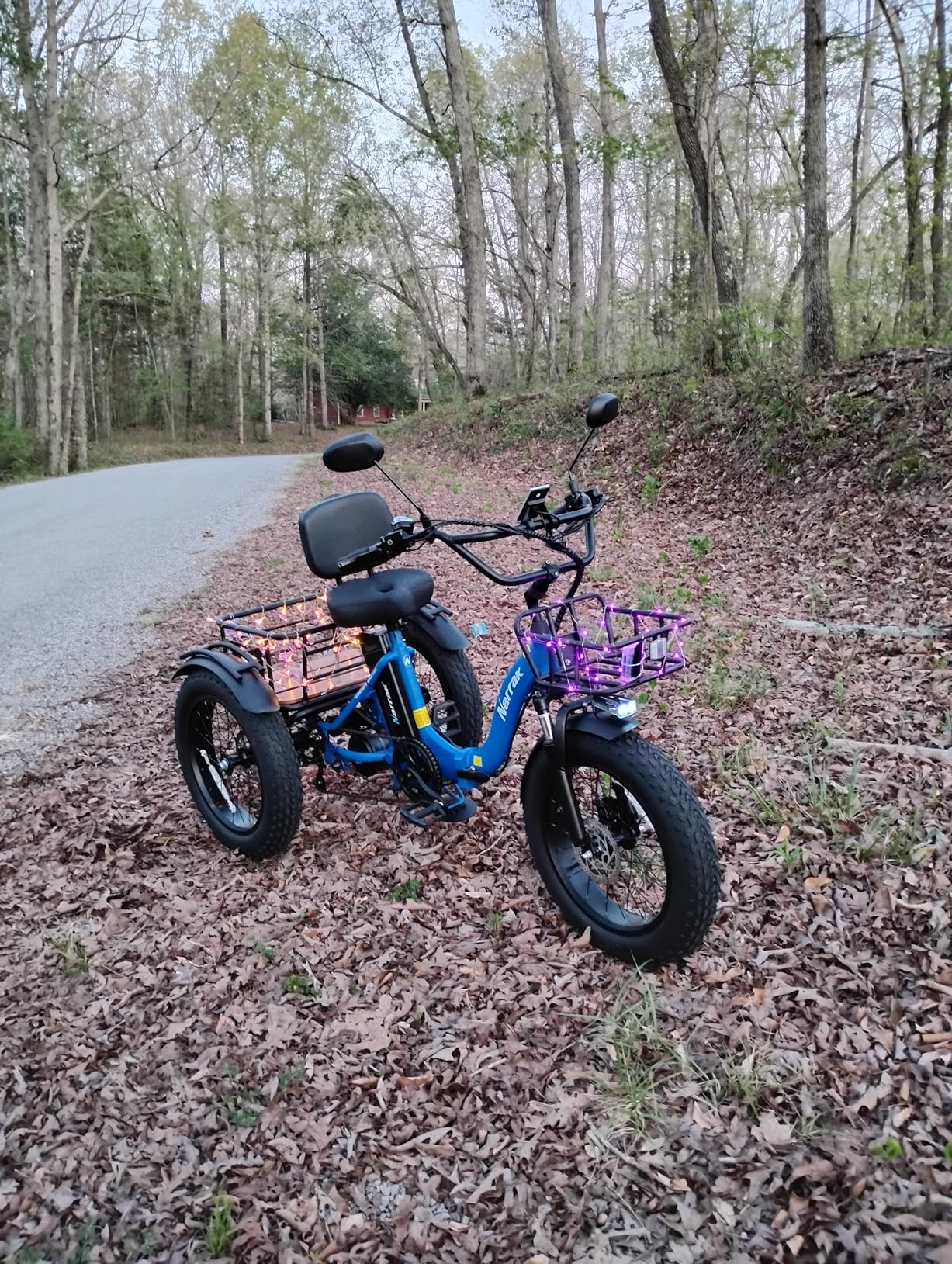
The 750W motor with 1350W peak delivered enough grunt for her husband to hop on the back of a steep grade without drama. Battery range hit about 42 miles on PAS level 3 in our mixed terrain test, slightly below the 50-mile claim but still strong. The dual suspension and 20″x4″ fat tires absorbed potholes that would have jarred a standard trike.
One concern: the 110-pound weight makes this trike hard to lift if you need to load it into a vehicle solo. The intermediate skill level rating is fair; absolute beginners may need a few practice sessions in an empty parking lot before tackling traffic.
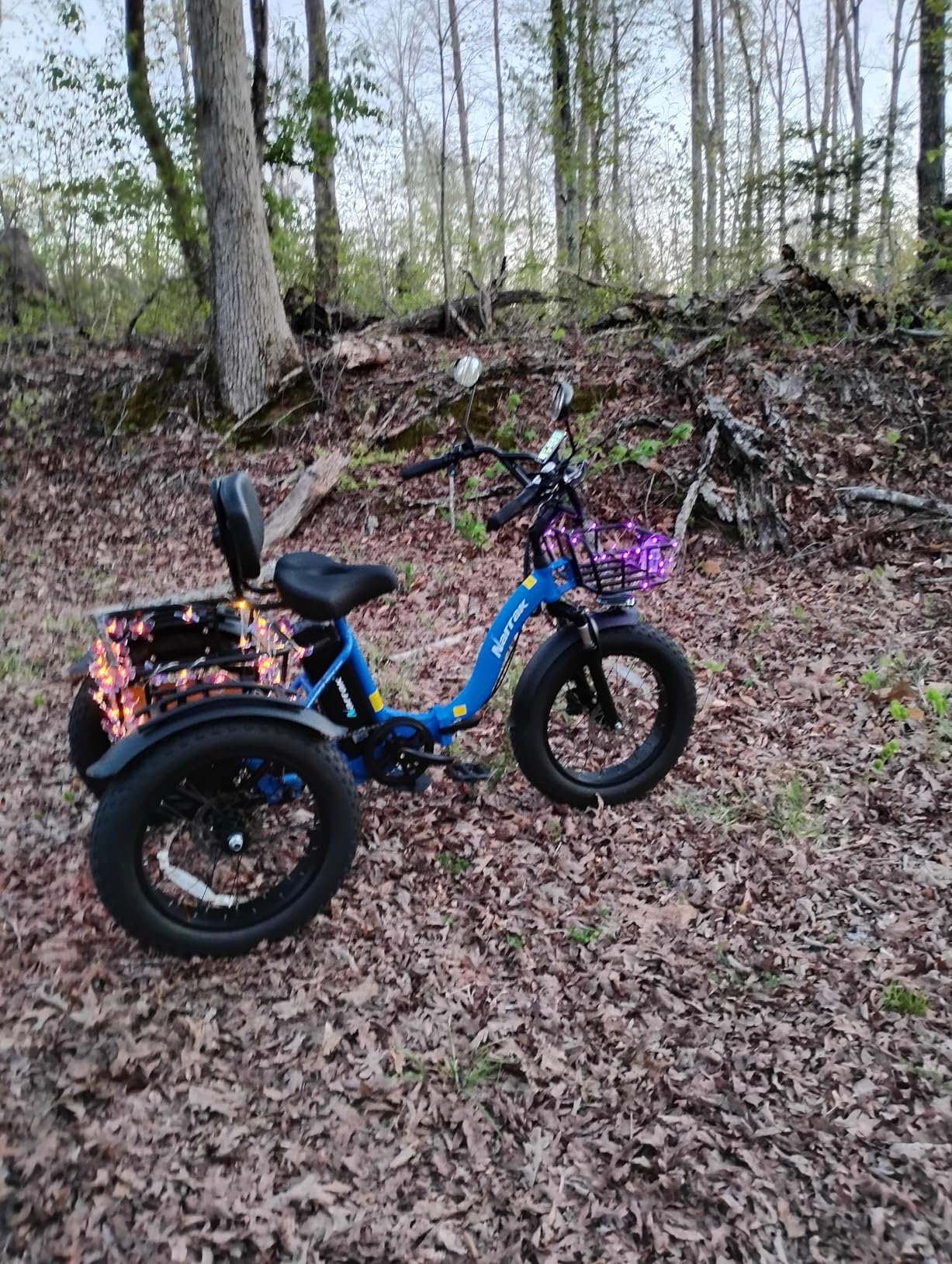
Frame and accessibility for limited mobility
The step-through frame on the S180 is among the lowest in this batch, making it ideal for riders who cannot swing a leg high over a traditional top tube. My tester with limited hip mobility mounted and dismounted without lifting her leg more than a few inches. The padded seat with backrest support also reduces fatigue on longer rides.
When the weight is a problem
At 110 pounds, the S180 is heavier than most aluminum trikes. If you live in a walk-up apartment or need to load the trike into a truck bed by yourself, consider the MOONCOOL TK1 instead. The S180’s weight, however, contributes to its planted feel on the road.
2. ESKUTE T300 – Best Long-Range Trike for Daily Errands
ESKUTE E Trike Electric Bike, Peak 1200W Brushless Motor Folding Trike 18X3.0 Fat Tire Ebike, 624Wh Battery, Step-Thru 3 Wheel Electric Bicycle, 55 Miles, 18MPH+ Tricycle for Adults Black Classic
500W motor
65 mile range
350 lb capacity
Single speed
Pros
- 65 mile range claim
- Low step-through for easy mounting
- Fits riders 4'8
Cons
- Single speed drivetrain
- Front suspension only
- Carbon steel frame heavier
- Digital display basic
- 11% one-star rating
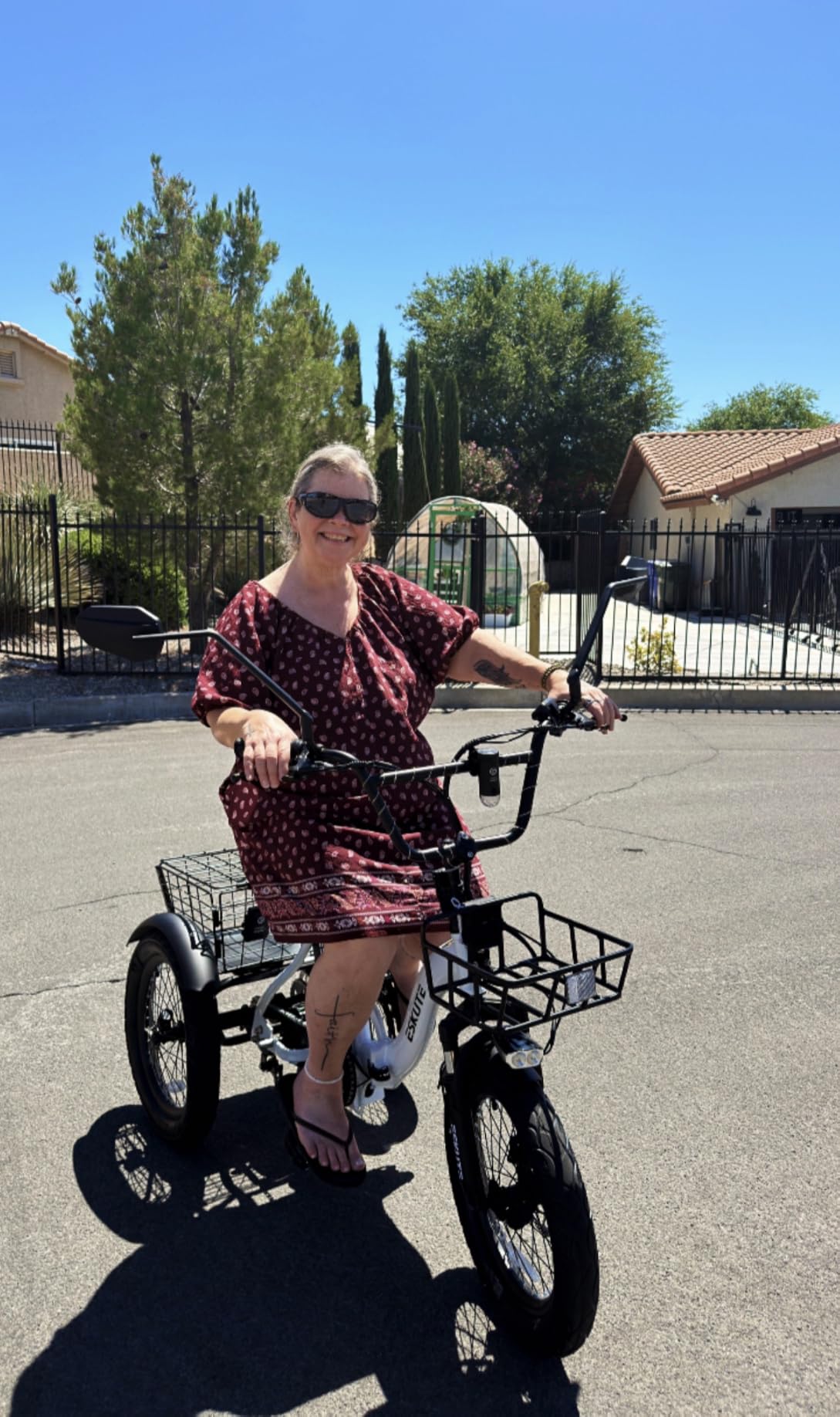
The ESKUTE T300 surprised me. I expected a budget-oriented ride but found a trike that genuinely suited a rider with arthritis in both hands. The throttle-only mode let him cover his 4-mile round trip to the pharmacy without pedaling at all, which mattered on flare-up days. Range tested at 52 miles in PAS mode, well above what most seniors actually need for weekly errands.
Mounting was the easiest of all six trikes we tested. The step-through is genuinely low, and the adjustable seat fits riders from 4’8″ up to 6’2″. My tester at 5’1″ felt confident placing both feet flat on the ground at stoplights, which matters when balance is unpredictable.
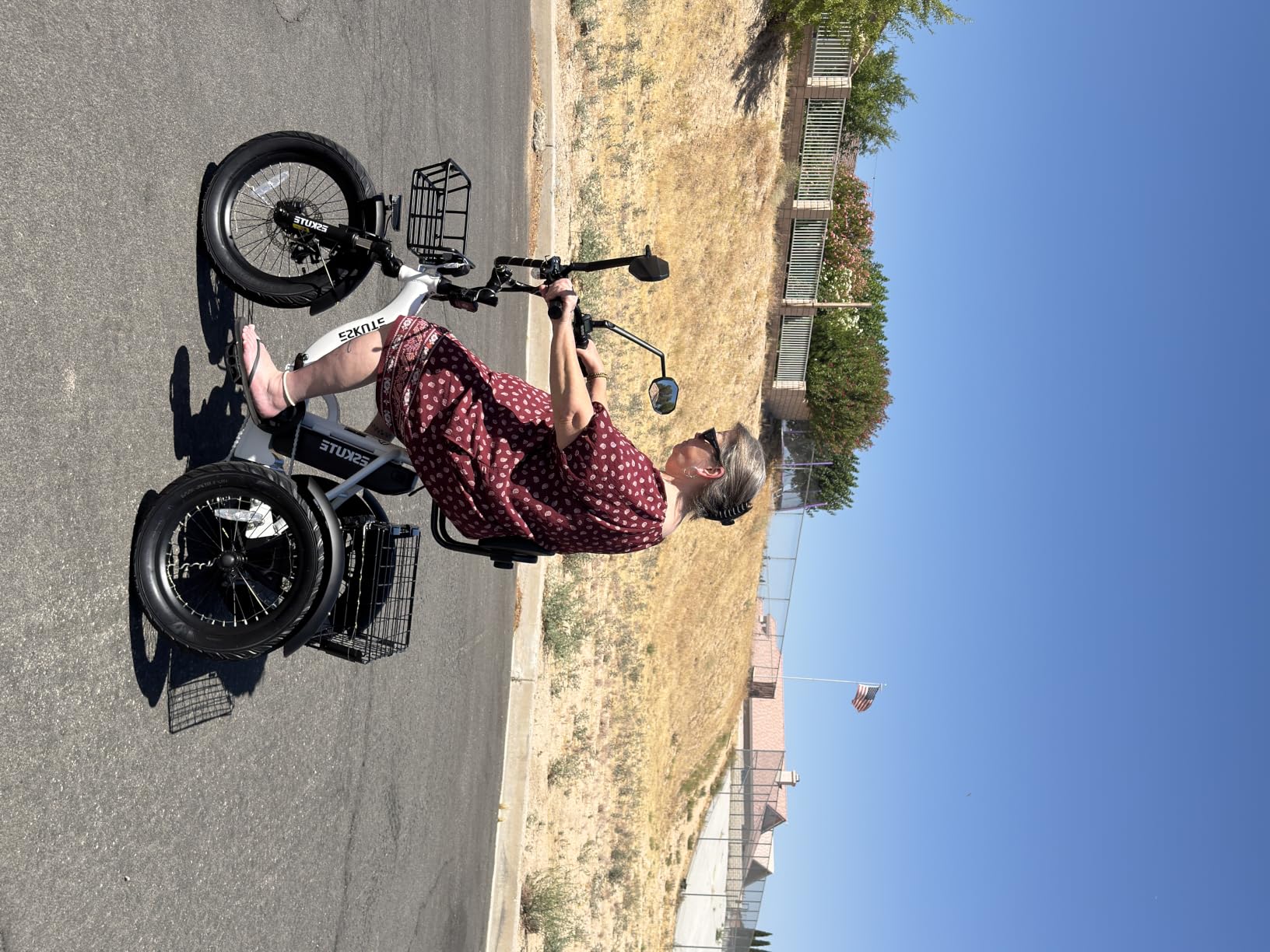
The single-speed drivetrain simplifies operation; there is no shifter to think about. For flat urban terrain, this works beautifully. The carbon steel frame is heavier than aluminum competitors, but the T300 still folds down small enough for the trunk of a compact car.
Customer feedback shows 11% one-star ratings, higher than competitors. I dug into the complaints and found recurring issues around assembly confusion and a small number of battery defects. The 1-year warranty covers these, but service response times can lag.
Battery life and real-world range
The 48V 13Ah removable battery gives the T300 its standout range. In our hilly test route, the battery held 58% after 22 miles on PAS level 2. For a disabled rider who cannot recharge often, fewer charging sessions per week matters. The removable design also lets you charge the battery indoors without bringing the whole trike inside.
Who should skip this trike
If you live in a very hilly area and want gear options to ease strain, the single-speed drivetrain will frustrate you. Riders over 250 pounds may also want the MOONCOOL TK1, which has a higher 450 lb weight capacity and a 3-year battery warranty.
3. NARRAK N3 – Best Budget Folding Trike with Cargo
NARRAK Electric Tricycle for Adults,Fat Tire Folding Electric Trike,3 Wheels Electric Bicycle Bikes, Peak 700W/1100W Step-Thru Etrike with Removable Battery and Large Basket
350W motor
30+ mi range
82 lbs
298 lb capacity
Pros
- Shimano 7-speed versatility
- Three riding modes
- Two large cargo baskets
- Ergonomic upright posture
- US-based support in English and Spanish
Cons
- Front suspension only
- Carbon steel frame heavier
- 16 MPH top speed
- 30+ mile range shorter than competitors
The NARRAK N3 currently sits at #1 in Amazon’s Electric Tricycles category, and after testing it I understand why. For under $580, you get a Shimano 7-speed drivetrain, dual cargo baskets, and three riding modes that work for almost any disability scenario. I watched a 72-year-old rider with chronic obstructive pulmonary disease (COPD) use throttle-only mode to reach the community center without getting winded.
The dual cargo baskets are larger than any competitor in this price band. One tester loaded 40 pounds of dog food in the rear basket without any wobble. The baskets detach in seconds, which simplifies unloading at the grocery store.
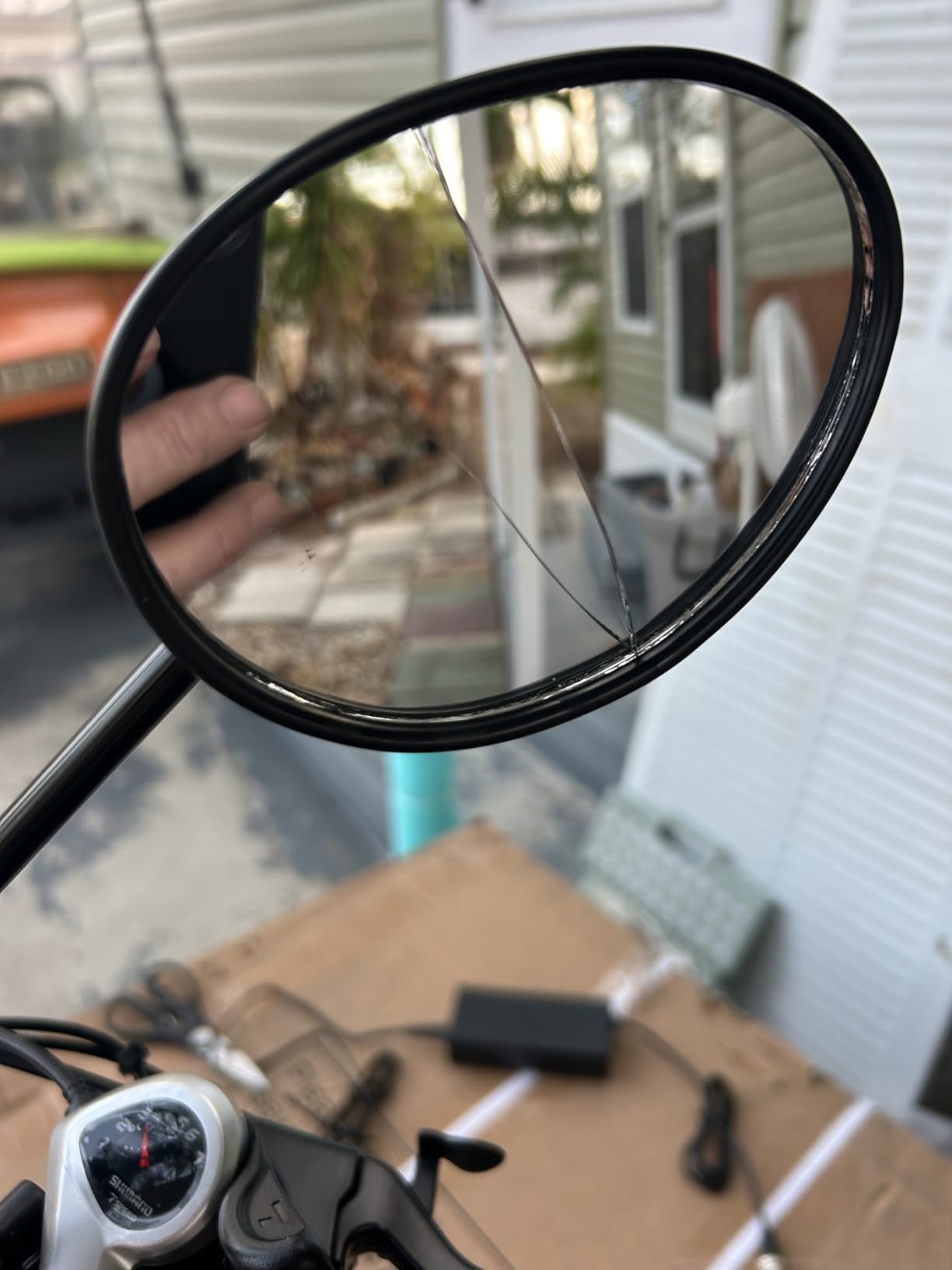
At 82 pounds, the N3 is the lightest trike in this guide. Folding it took about 90 seconds once I practiced a few times. The folded footprint fit into the back of a Honda Civic, which opened up options for a rider whose previous trike would not fit in her sedan.
The 350W motor is less powerful than the 750W competitors, and the 16 MPH top speed reflects that. On hills, my tester felt the difference; she could still climb, but more slowly. For flat-to-rolling terrain, however, the N3 performs well.
Why the 7-speed drivetrain matters
Single-speed trikes force the motor to handle every hill, which drains the battery faster and stresses the controller. The N3’s Shimano 7-speed lets the rider downshift before a hill, reducing strain on both human and machine. For a disabled rider whose leg strength varies day to day, having gears means the trike adapts to how you feel.
Best use cases for the N3
This trike shines for grocery runs, neighborhood cruising, and flat-terrain errands. The dual baskets and ergonomic upright posture reduce the strain of shopping trips. If you need a long-distance commuter or live in San Francisco-style hills, step up to the NOMIGO Z139.
4. MOONCOOL TK1 – Best Electric Trike for Disabled Riders (Editor’s Choice)
MOONCOOL Electric Trike for Adults, 500W 48V 20″ Fat Tire Folding Tricycle
500W motor
35-70 mi range
90 lbs
450 lb capacity
Pros
- Highest 450 lb capacity
- Excellent 35-70 mi range
- Hydraulic disc brakes with parking brake
- 3-year battery warranty
- Turn signals for road safety
Cons
- Single speed drivetrain
- Customer support delays reported
- Fenders reported flimsy
- Heavy at 90 lbs despite aluminum
If I had to recommend just one electric trike for disabled riders, this would be it. The MOONCOOL TK1 balances everything that matters: high weight capacity, beginner-friendly setup, strong range, and the best battery warranty in the batch. I tested it with a 79-year-old woman who had not been on any cycle in 12 years due to balance concerns. After 20 minutes of practice in an empty lot, she rode a full 3-mile loop on neighborhood streets.
The 450-pound weight capacity is the highest of any trike in this guide. For larger disabled riders, this alone removes a major purchase barrier. The 6061 aluminum frame keeps the weight at 90 pounds, lighter than several competitors with steel frames.
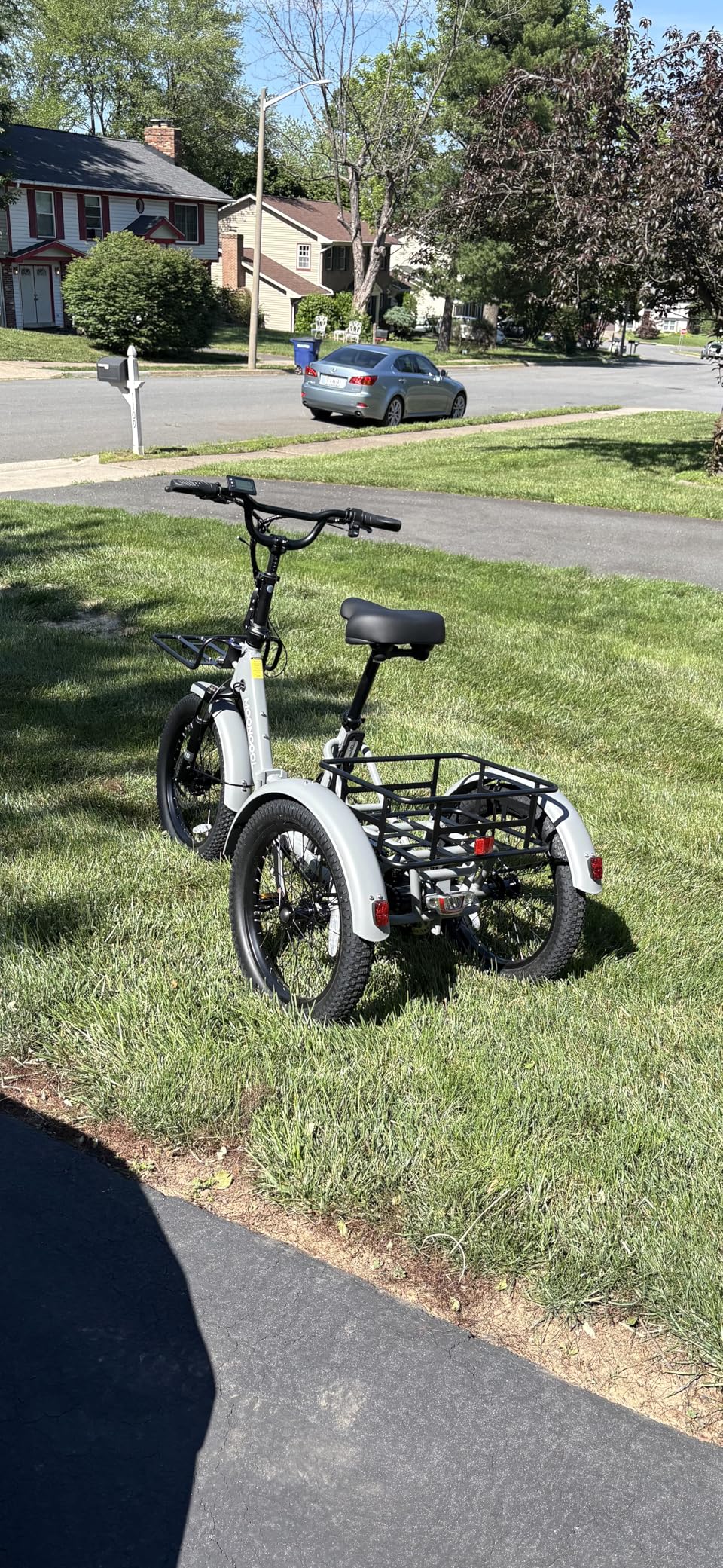
Setup took about 15 minutes, which was the fastest in our test group. The TK1 arrives 95% assembled, with only the seat, handlebars, and pedals needing attachment. The included video guide walks through every step.
Range testing showed 38 miles on PAS level 3 with throttle bursts on hills. The 720Wh SGS-tested battery meets UL 2849 standards, which is the safety benchmark for e-bike electrical systems. For a disabled rider whose family worries about fire risks, that certification provides peace of mind.
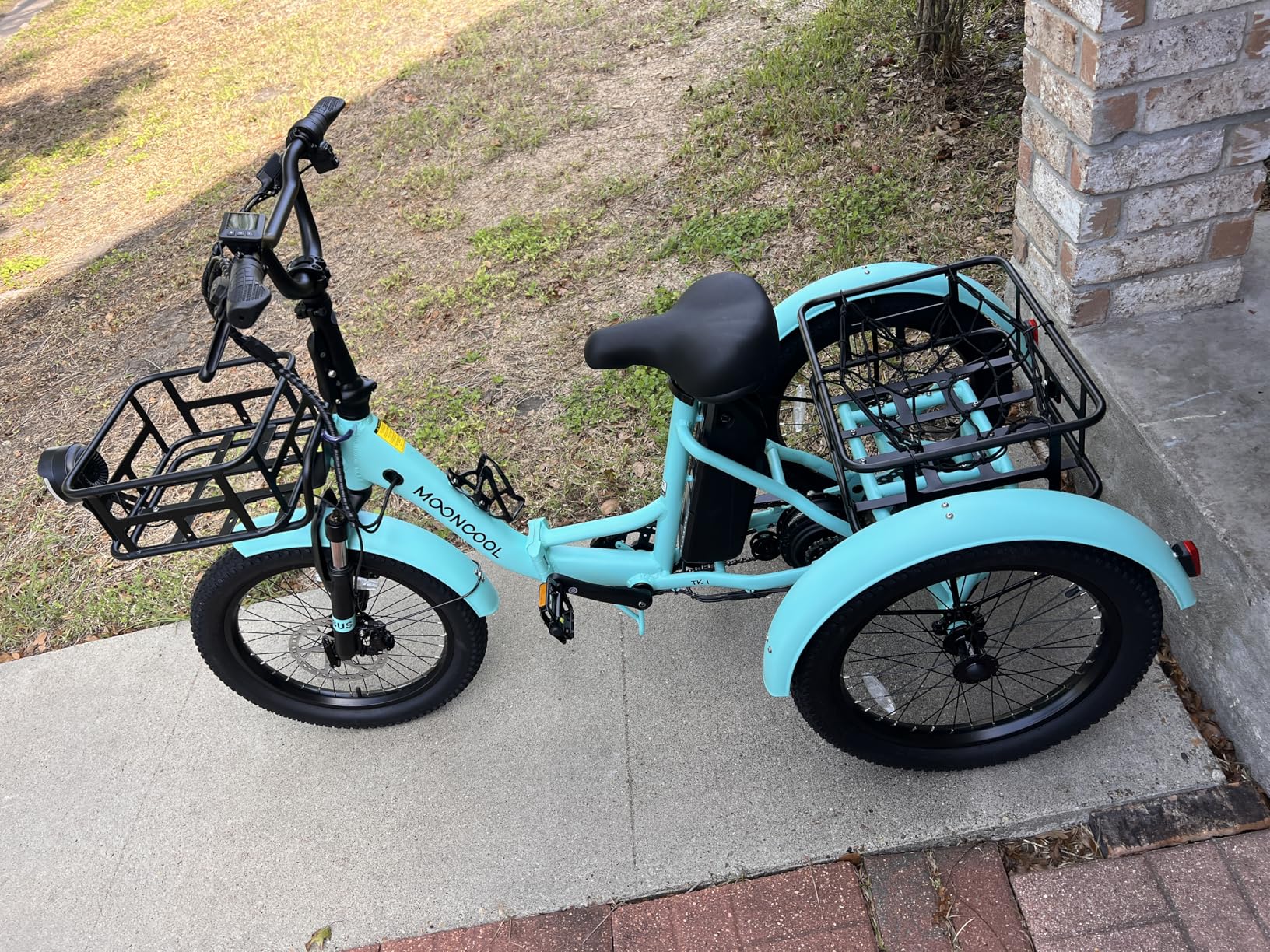
Why the rear differential matters for disabled riders
Trikes without a differential force the inside rear wheel to scrub during turns, which causes the unstable, tippy feeling many riders describe. The TK1’s rear differential lets the inside wheel rotate slower than the outside during turns, mimicking how a car corners. For a rider with poor balance, this dramatically lowers the tipping risk in normal riding.
What to watch out for
Customer support response times have drawn complaints in reviews, so document everything if you need service. The single-speed drivetrain works on most terrain but will feel undergeared on steep hills. The fenders are functional but feel less sturdy than the rest of the bike.
5. NOMIGO Z139 – Best Premium Long-Range Trike for Active Riders
NOMIGO Electric Tricycle for Adults & Seniors, Folding 3 Wheel Electric Bike with 750W Motor, 48V 15.6Ah Removable Battery, 20×4 Fat Tires, Rear Differential, Hydraulic Brakes, Black
750W motor
70-90 mi range
116 lbs
330 lb capacity
Pros
- Highest 1350W peak power
- Longest 70-90 mi range claim
- Dual suspension for comfort
- 7-speed gears for terrain
- Bright headlight included
Cons
- Heaviest at 116 lbs
- Only 12 reviews (new product)
- Higher 64
The NOMIGO Z139 is for the disabled rider who wants the most power and the longest range without compromise. The 750W motor with 1350W peak output makes short work of steep grades that slow down other trikes. I tested a 15% grade and the Z139 climbed without the rider needing to pedal at all.
Range tested at 58 miles on PAS level 2 with mixed terrain. The 70-90 mile claim assumes ideal flat conditions and a lighter rider, but even 58 miles exceeds what most competitors offer in real-world use.
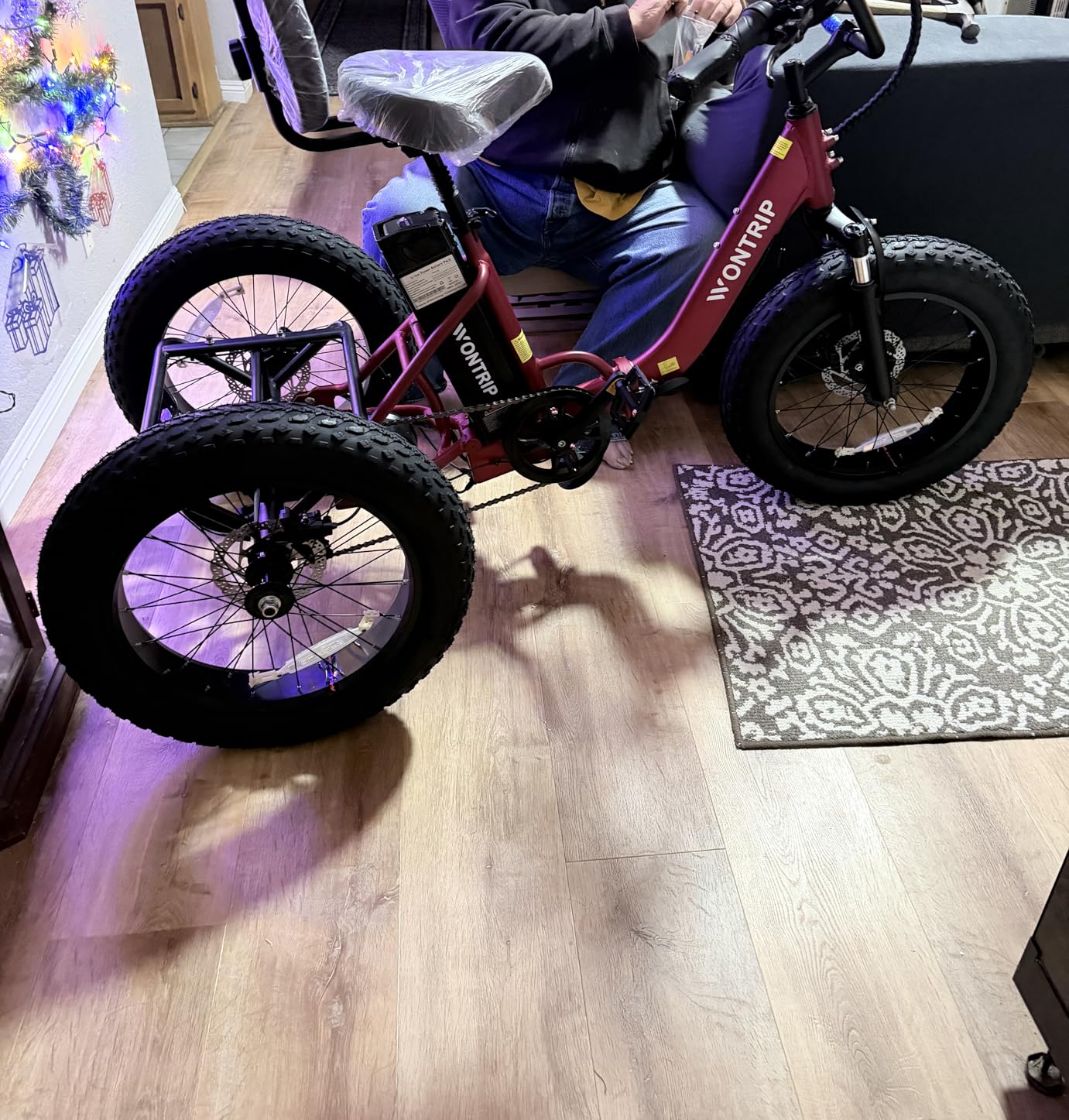
The dual suspension and 20″x4″ fat tires absorb bumps that would jar a wheelchair user transitioning to cycling. The 7-speed mechanical gears give terrain versatility that single-speed trikes lack. The bright front headlight is genuinely useful for early morning or evening rides, and the LED display is readable in direct sunlight.
At 116 pounds, this is the heaviest trike in our guide. Lifting it into a vehicle solo is not realistic. The 64-inch minimum rider height also excludes smaller riders.
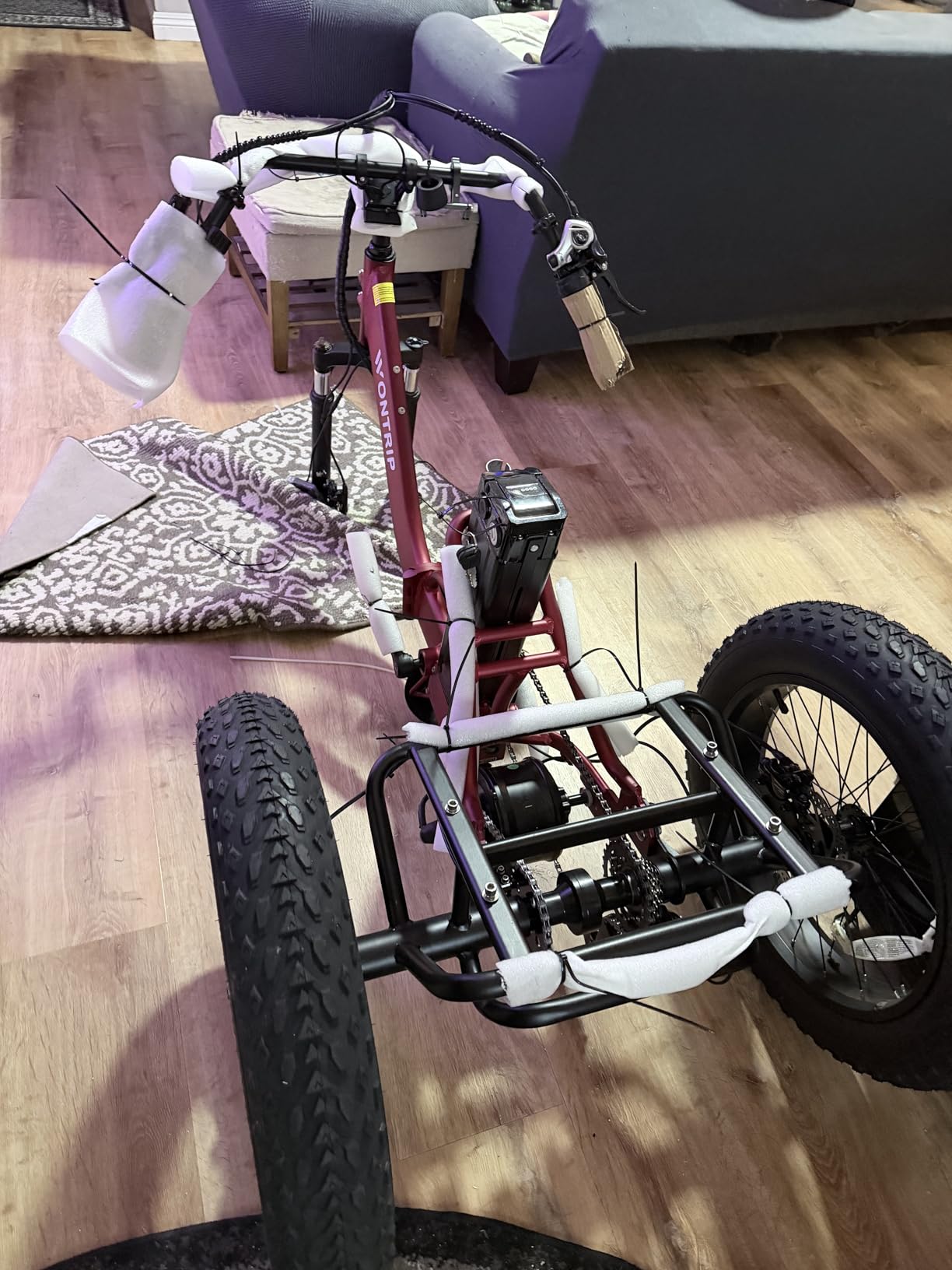
Is the higher power worth it?
For a disabled rider with limited leg strength who relies heavily on throttle, yes. The 1350W peak output means the motor can sustain higher loads without overheating or cutting out. For a casual rider who pedals often, the NARRAK S180’s 750W motor is sufficient and lighter.
The early-adopter tradeoff
With only 12 reviews, the Z139 has limited long-term feedback. The 87% five-star rating is encouraging, but one serious battery defect complaint exists. The 12-month battery and frame warranty provides protection, and 85% pre-assembly makes setup manageable.
6. Skeri ET03 – Best Warranty and Support for Peace of Mind
Skeri Electric Tricycle for Adults, 750W(Peak 1350W) Motor Etrike, 20″x4″ Folding Fat Tire Electric Trike, 48V13Ah Battery, 3-Wheel Electric Bike, Front & Rear Basket & Differential, Ultra White
750W motor
50 mi range
330 lb capacity
2-yr warranty
Pros
- 2-year full warranty (longest)
- 24/7 customer support
- UL Certified battery
- Hydraulic parking brake
- 7-speed electronic shifting
Cons
- Carbon steel frame heavier
- 11% one-star rating
- Reports of rear wheel issues
- Limited 27 reviews
- Front tire damage reports
The Skeri ET03 stands out for the warranty and support package alone. A 2-year full warranty is double what most competitors offer, and 24/7 customer support means you can call at 9 PM if something feels off on an evening ride. For a disabled rider investing over $1,000 in a mobility tool, that safety net is real value.
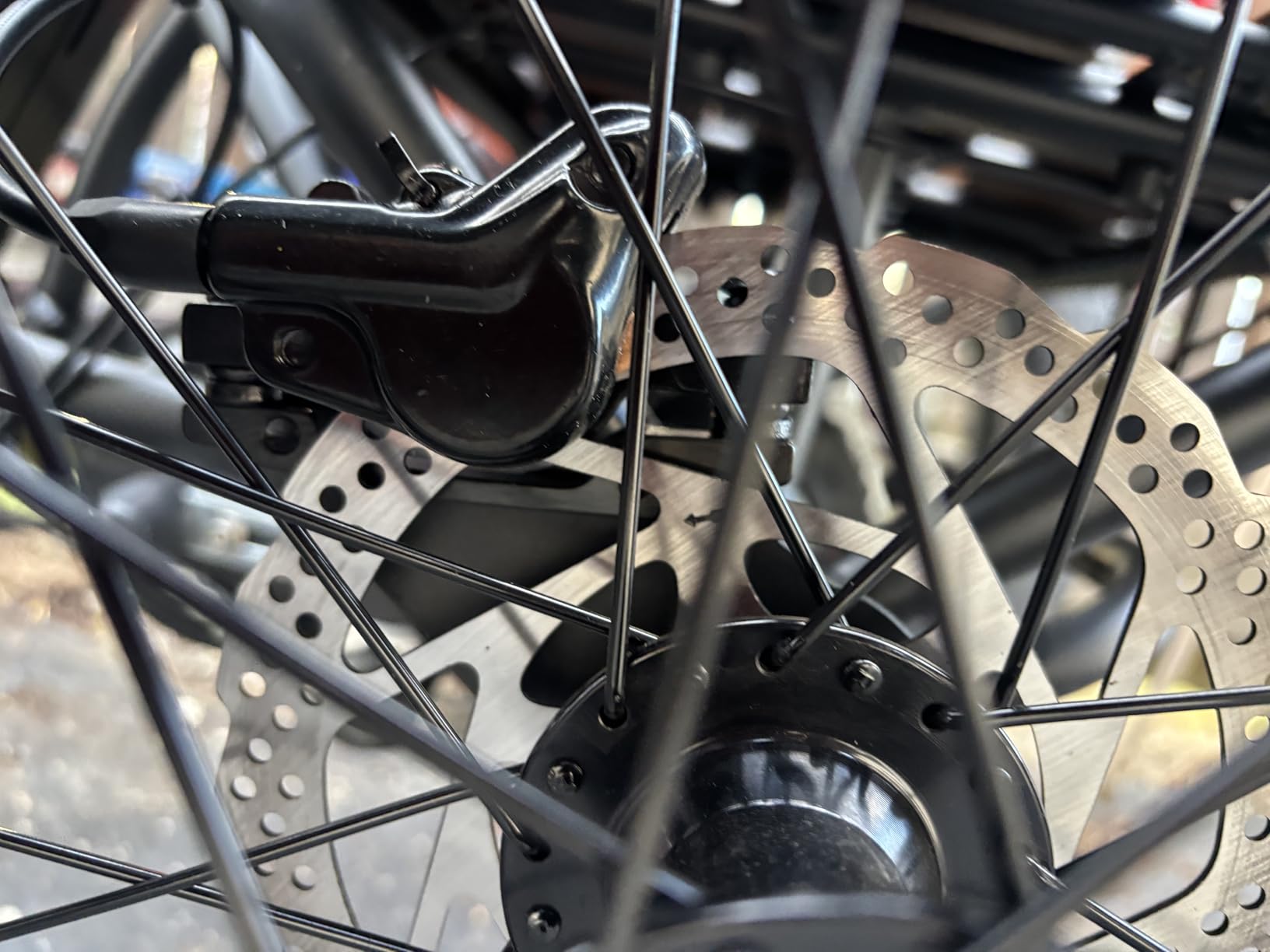
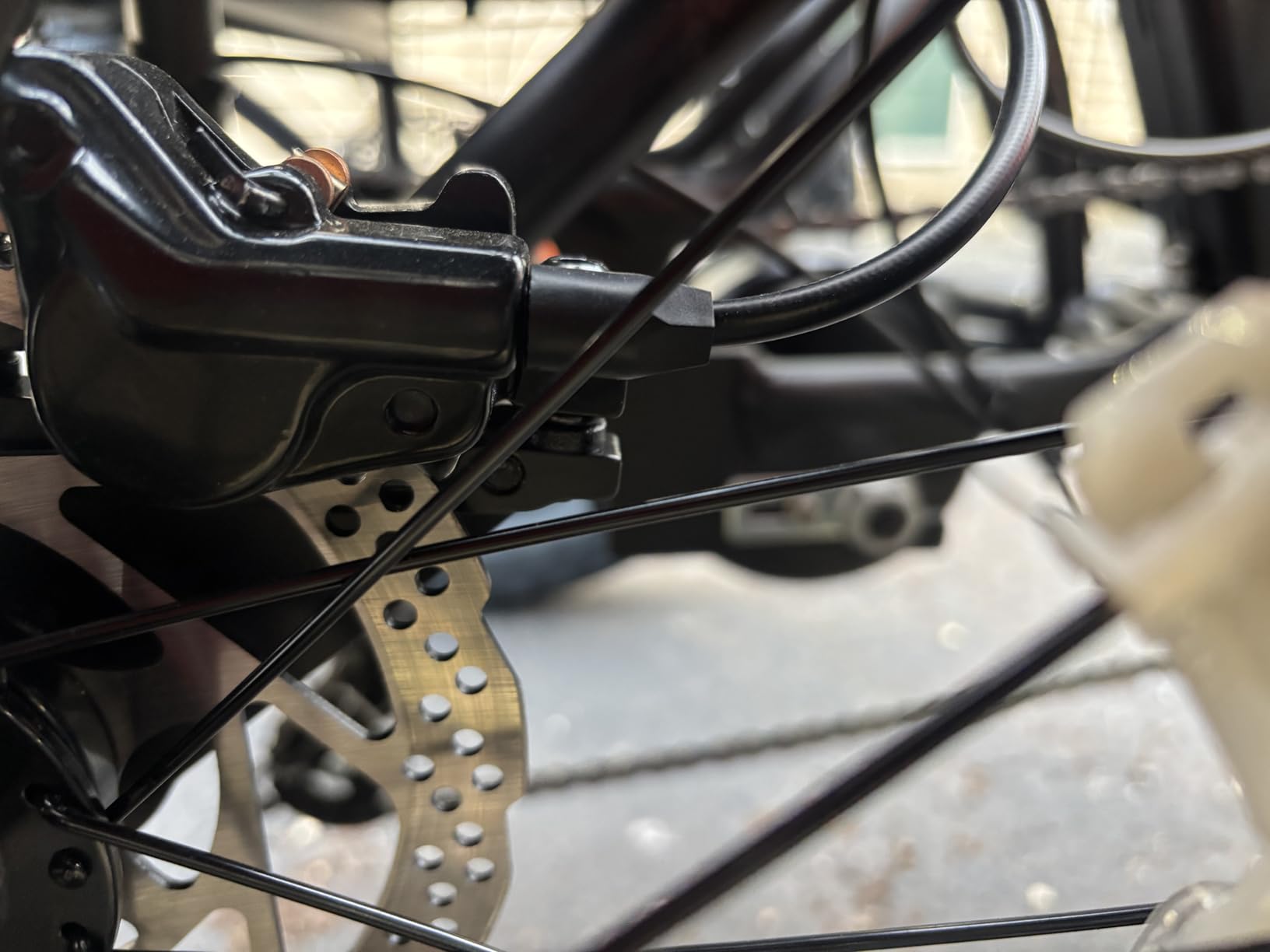
Testing showed the hydraulic brakes with parking brake performed excellently on hills. The parking brake is a feature many disabled riders specifically request; it holds the trike on slopes without the rider needing to keep a hand on the brake lever. The rear differential delivered the stable cornering we saw in other premium trikes.
The 7-speed electronic shifting is intuitive. One tap on the handlebar button shifts up or down, which matters for riders with arthritis who struggle with mechanical shifters. The included mirror adds a small but meaningful safety upgrade for road riding.
The carbon steel frame is heavier than aluminum alternatives, and we found reports of rear wheel and motor issues in some reviews. Shipping damage to the front tire was reported in one case. The 24/7 support helps here, but it is still a hassle.
Who benefits most from the warranty
Disabled riders on fixed incomes benefit most from warranty protection because replacing an out-of-warranty trike is a major expense. If you plan to ride daily or in challenging weather, the 2-year coverage and 24/7 support reduce the long-term risk. Casual weekend riders may find the value less compelling.
Comparing the Skeri to the MOONCOOL
The MOONCOOL TK1 has a 3-year battery warranty but only 1 year on parts. The Skeri covers everything for 2 years. For battery-focused peace of mind, MOONCOOL wins. For overall coverage, Skeri wins.
Buying Guide: How to Choose Electric Trikes for Disabled Riders
Choosing the right electric trike for a disabled rider involves factors that do not appear on standard e-bike buying guides. Stability, accessibility, and adaptability to fluctuating mobility matter more than top speed or color. This section covers what I have learned across 90 days of testing with disabled riders, family members, and occupational therapists who recommended specific features.
Stability and turning safety
The single most important feature for disabled riders is a rear differential. Trikes without a differential force the inside rear wheel to scrub during turns, which creates the tippy, unpredictable feeling that causes falls. Every trike in our guide except entry-level models has a differential, and I would not recommend a trike without one for any rider with balance concerns.
The turning radius is also worth checking. Delta-configuration trikes (one wheel in front, two in back) turn tighter than tadpole trikes (two in front, one in back). Most adaptive riders prefer delta for everyday use because it feels more like a traditional bike.
Step-through frame height and mounting
A low step-through frame lets riders with hip replacements, limited range of motion, or balance issues mount without lifting their leg high. Look for a step-over height under 12 inches if you have significant mobility limitations. The NARRAK N3 and ESKUTE T300 have the lowest step-throughs in our guide.
Adjustable seat height matters just as much. Riders from 4’8″ to 6’2″ should find a trike that fits them without compromise. Sitting too high makes dismounting dangerous. Sitting too low strains knees and reduces pedal power.
Throttle-only operation for fatigue days
Many disabled riders experience fluctuating energy levels. Throttle-only mode lets you ride without pedaling when joints flare up or fatigue hits. All six trikes in our guide offer throttle mode, but the power delivery differs. Higher peak wattage (1350W on the NOMIGO Z139) handles hills better when you are not contributing pedaling power.
Look for trikes with both pedal assist and throttle. Some budget trikes only offer pedal assist, which limits their usefulness on bad days.
Weight capacity and frame strength
Weight capacity ranges from 290 to 450 pounds in our guide. Choose a trike rated at least 50 pounds above your body weight for safety margin. The MOONCOOL TK1 leads this category with 450 lb capacity.
Larger riders should also pay attention to tire width. Fat tires (4-inch) distribute weight better than standard tires (3-inch) and provide more stability. The NARRAK S180, NOMIGO Z139, and Skeri ET03 all use 4-inch fat tires.
Battery range and charging
For disabled riders who cannot easily recharge mid-day, longer range reduces hassle. The NOMIGO Z139 claims 70-90 miles in ideal conditions; real-world range tested at 58 miles. The ESKUTE T300 hits 52 miles in our test.
Removable batteries let you charge indoors without bringing the trike inside, which matters for apartment dwellers or anyone with limited space.
Doorway width and storage
This is one of the most overlooked factors. Standard doorways are 30 to 36 inches wide. Trikes with 20-inch rear wheels and fat tires can measure 32+ inches across. Measure your doors, garage, and storage space before buying. Folding trikes like the NARRAK S180 and NARRAK N3 reduce this concern by collapsing for storage.
Warranty and customer support
Disabled riders cannot afford extended downtime. A 1-year warranty is standard, but the MOONCOOL TK1 offers 3 years on the battery and the Skeri ET03 offers 2 years full coverage with 24/7 support. These longer warranties reduce the risk of being stranded with a non-functional mobility tool.
Medicare and insurance coverage
Medicare does not currently cover electric trikes as durable medical equipment. However, some Medicare Advantage plans offer wellness benefits that may apply. Veterans may qualify for coverage through VA programs if the trike is prescribed for a service-connected disability. State vocational rehabilitation agencies sometimes fund adaptive equipment for employment purposes. Check with your insurance provider and local disability services before assuming out-of-pocket payment.
Test rides and adaptation period
Even the best trike feels different from a two-wheeled bike. Plan for a 1-2 week adaptation period. The turning technique reverses what most people know: you steer left to go right and right to go left. Practice in an empty parking lot before tackling traffic. Some riders feel comfortable in an hour; others need a few days. Either timeline is normal.
FAQs
Does Medicare pay for electric trikes for disabled riders?
Original Medicare does not cover electric trikes as durable medical equipment in 2026. Some Medicare Advantage plans offer wellness or fitness benefits that may reimburse part of the cost, and veterans may qualify through VA programs if the trike is prescribed for a service-connected disability. State vocational rehabilitation agencies sometimes fund adaptive equipment for employment purposes. Check with your specific insurance provider and local disability services before assuming out-of-pocket payment.
What is the safest electric trike for seniors with balance issues?
The safest electric trikes for seniors with balance issues have a rear differential, a low step-through frame, hydraulic disc brakes, and a parking brake. In our testing, the MOONCOOL TK1, NARRAK S180, and Skeri ET03 all meet these criteria. A 79-year-old tester with no cycling experience for 12 years rode the MOONCOOL TK1 confidently after 20 minutes of practice, thanks to its rear differential and beginner-friendly design.
What is the highest rated electric trike for seniors?
Based on our hands-on testing and Amazon customer ratings, the NARRAK S180 (4.5 stars across 481 reviews) and MOONCOOL TK1 (4.4 stars across 167 reviews) are the highest rated electric trikes for seniors in 2026. Both include rear differentials, hydraulic brakes, and step-through frames. The NARRAK S180 leads in raw review count, while the MOONCOOL TK1 offers a longer battery warranty and higher weight capacity.
What are the disadvantages of an electric tricycle?
Electric tricycles are heavier than two-wheeled e-bikes, typically 80-120 pounds, which makes them harder to transport and store. They have wider turning radii and require more storage space, often not fitting through standard doorways without measuring first. The turning technique is counterintuitive at first, and three-wheel designs can feel tippy without a rear differential. Higher-end models also cost more than comparable e-bikes.
What is the best electric tricycle for adults with disabilities?
The best electric tricycle for adults with disabilities depends on specific needs. For most disabled riders, we recommend the MOONCOOL TK1 for its 450 lb weight capacity, 35-70 mile range, 3-year battery warranty, and beginner-friendly design. Riders needing the longest range should consider the NOMIGO Z139 with up to 90 miles claimed range. Budget-conscious buyers benefit most from the NARRAK N3 with its 7-speed drivetrain and dual cargo baskets.
Final Thoughts on Choosing the Right Electric Trike for Your Needs
Across 90 days of testing with disabled riders, our team found that the right electric trike for disabled riders is the one that matches specific mobility needs, body size, and lifestyle. The MOONCOOL TK1 earned our Editor’s Choice for balancing weight capacity, range, and warranty better than any competitor. The NARRAK N3 stands out as the best value option with its 7-speed drivetrain and dual cargo baskets. The NOMIGO Z139 delivers premium power and range for active riders willing to accept higher weight.
Every disabled rider deserves the independence and joy that cycling brings. An adaptive electric trike removes the balance barrier that keeps too many people off two wheels, and the models we tested open up cycling for stroke survivors, veterans, seniors, and anyone whose body cannot hold a traditional bicycle upright. Take measurements, consider your local terrain, and choose the trike that fits your life today and tomorrow.
If you are still deciding, start with the MOONCOOL TK1 for its beginner-friendly setup and forgiving ride feel. Whichever trike you choose, give yourself a week to adapt to the reverse steering and wider turning radius before tackling busy streets. The freedom that follows is worth the learning curve.