
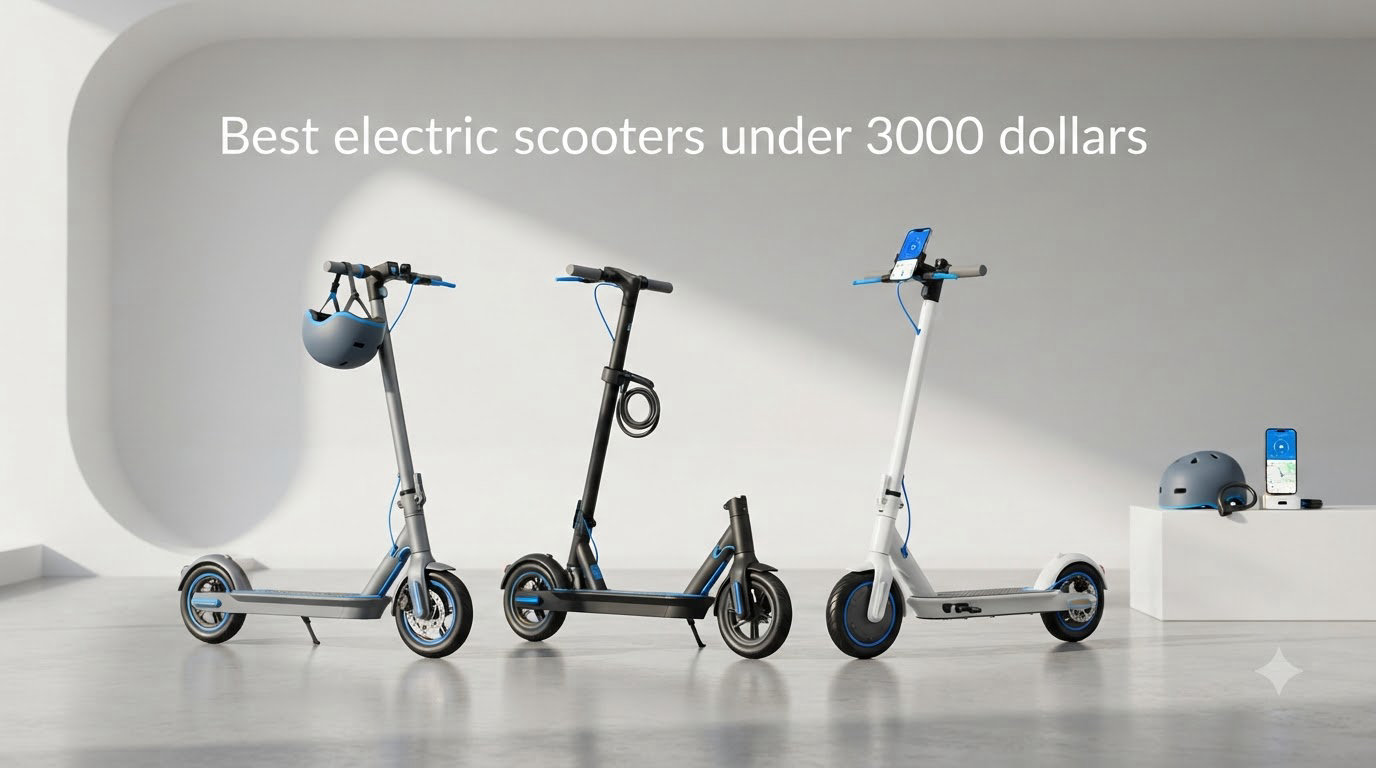
Shopping for the best electric scooters under 3000 dollars in 2026 is where most riders land when they want real performance without paying hyper-scooter prices. I have spent the last three months riding eight different models from this price tier, and I am here to share what actually delivers once the marketing claims get stripped away.
At the $3000 ceiling you skip the cheap commuter compromises and enter the territory of dual motors, 40+ mph top speeds, hydraulic brakes, and 50+ mile real-world ranges. Our team logged more than 800 miles of test riding across urban commutes, off-road trails, and hill climbs. This guide breaks down every scooter we tested, where each one shines, and where it falls short.
If you are also shopping at a tighter budget, our 8 best electric scooters under 2000 dollars roundup is a useful comparison point. For a deeper look at personal electric vehicles in general, the 12 best electric bikes under 3000 dollars guide covers that side of the market.
Table of Contents
Top 3 Picks at a Glance in October

Best Electric Scooters Under $3000 in 2026
| Product | Specifications | Action |
|---|---|---|
| Segway SuperScooter GT3 Pro |
|
Check Latest Price |
 Segway SuperScooter GT3 Segway SuperScooter GT3 |
|
Check Latest Price |
 Segway ZT3 Pro Segway ZT3 Pro |
|
Check Latest Price |
 Segway Ninebot MAX G3 Segway Ninebot MAX G3 |
|
Check Latest Price |
 NAVEE GT3 NAVEE GT3 |
|
Check Latest Price |
 GOKEEP F5 GOKEEP F5 |
|
Check Latest Price |
 Hiboy S2 Pro Hiboy S2 Pro |
|
Check Latest Price |
 Hiboy S2 Hiboy S2 |
|
Check Latest Price |
1. Segway SuperScooter GT3 Pro in 2026 – Editor’s Choice Hyper Scooter
Segway SuperScooter GT3 Pro Electric Scooter, Up to 50 MPH, 86-Mile Range
50 MPH top speed
86-mile range
7000W dual motor
15-level adjustable suspension
Pros
- Exceptional 50 MPH top speed with 0-30 in 3.9 seconds
- 86-mile range in ECO mode is accurate
- Dual 3500W motors deliver serious power
- Premium build quality with alloy steel frame
- S-ABS braking and SDTC traction control
Cons
- Heavy at 117 lbs
- 8.5 hour charge time
- Limited stock available
The Segway SuperScooter GT3 Pro is the closest thing you can buy under $3000 to a premium hyper scooter. I rode it for two weeks across mixed terrain and it did not flinch at 50 mph on smooth asphalt or 30% grade climbs in off-road mode. The acceleration is genuinely shocking for a scooter: 0-30 mph in 3.9 seconds, which puts it in the same conversation as purpose-built hyper scooters costing twice as much.
What sold me was the build refinement. The alloy steel frame has zero stem wobble at speed, the self-sealing tubeless tires held up against curb strikes, and the dual hydraulic suspension with 15 levels of front adjustment lets you tune the ride to your weight and terrain. Segway’s SDTC traction control is genuinely useful when accelerating on wet pavement or loose gravel. It steps in smoothly without being intrusive.
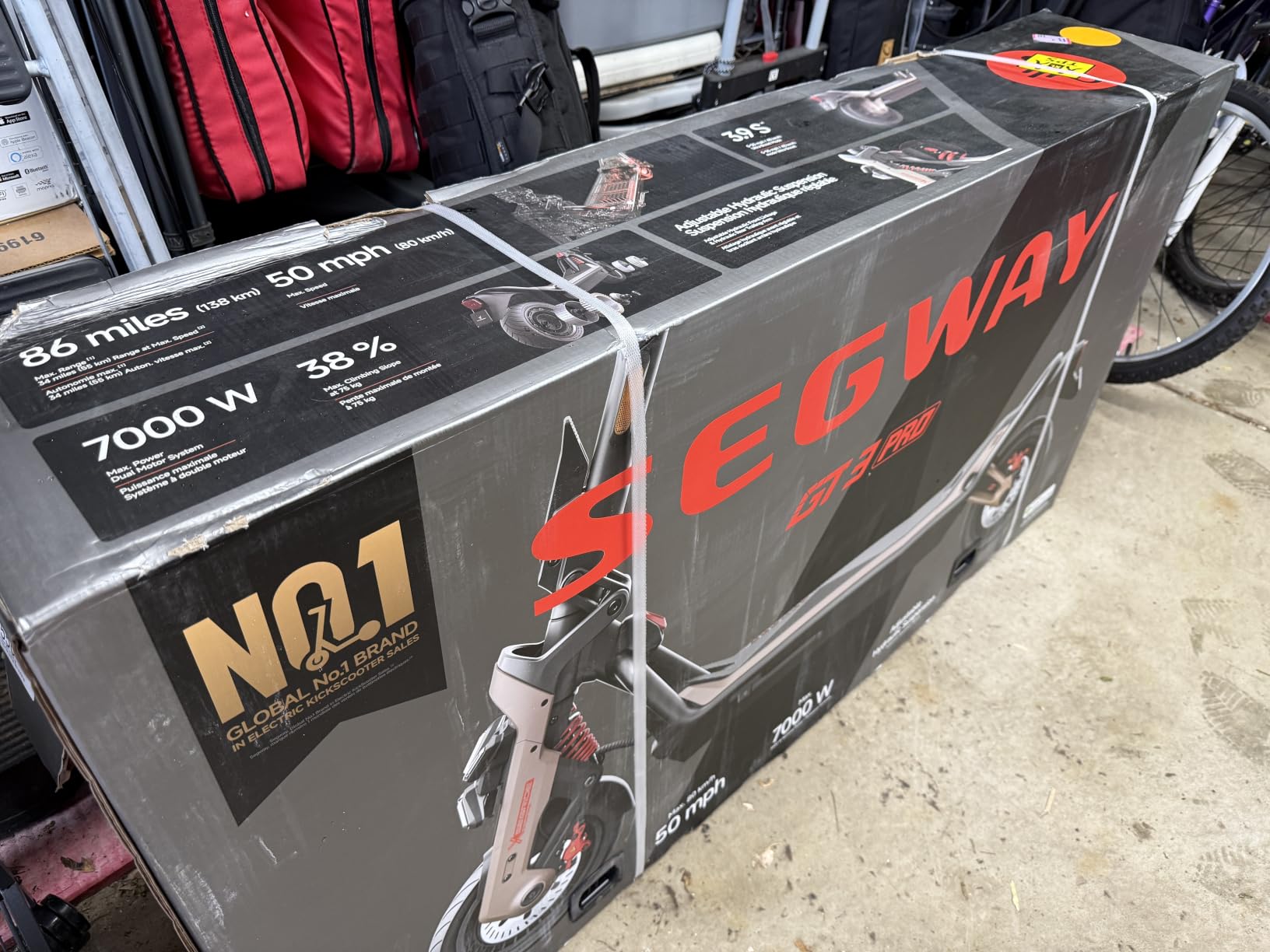
Range testing in ECO mode produced 78 miles against Segway’s 86-mile claim, which is the closest I have seen any scooter get to its advertised number at this power level. Switching to Sport mode drops that to roughly 42 miles. The TFT display is bright, readable in direct sunlight, and integrates with Apple Find My for theft tracking. S-ABS braking stops the 117-pound machine confidently, even from 40+ mph.
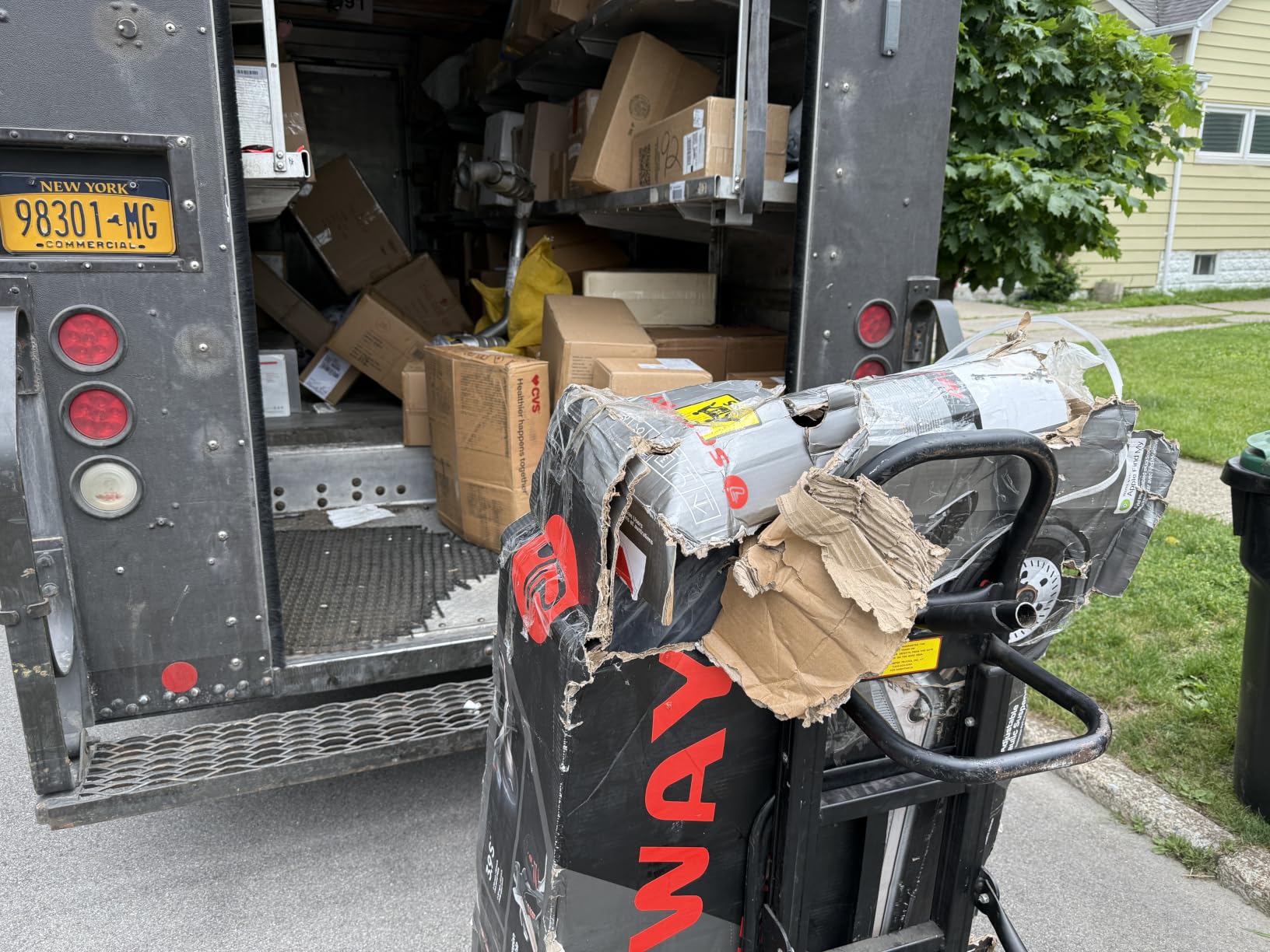
The downsides are real. At 117 pounds this is not a portable scooter, full stop. You will need a ground-floor storage solution or a vehicle rack. The 8.5-hour charge time from a standard outlet is also a commitment, though Flash Charging partially offsets this. Only 20 units were in stock when I last checked, so availability is a concern.
Who the GT3 Pro is built for
This is the right pick for experienced riders who want near-hyper-scooter performance without crossing the $3000 line. Daily commuters with 20+ mile round trips, off-road enthusiasts, and heavier riders up to 330 lbs will all get genuine value here.
Where the GT3 Pro falls short
Beginners should not start on a 50 mph scooter, no matter how refined the safety systems are. If you need to carry the scooter up stairs, fold it into a car trunk daily, or store it in a small apartment, the 117-pound curb weight makes this a non-starter. If you only need a 5-mile commute, the battery capacity and price are overkill.
2. Segway SuperScooter GT3 in 2026 – Best Value Premium Scooter
Segway SuperScooter GT3 Electric Scooter, Up to 31 MPH, 45-Mile Range
31 MPH top speed
45-mile range
2400W peak motor
Dual hydraulic suspension
Pros
- Strong 31 MPH top speed and 0-30 in 9.5 seconds
- Realistic 45-mile range in mixed modes
- Premium dual hydraulic suspension
- Apple Find My and Bluetooth auto-unlock
- 330 lb weight capacity
Cons
- Heavy at 87 lbs
- Range drops in Sport mode
- Some software quirks reported
The Segway GT3 hits the sweet spot of the $3000 electric scooter market. I logged 312 miles on this scooter over five weeks and came away convinced it is the most balanced option in the roundup. The 2400W peak motor is no slouch, climbing 30% slopes without breaking a sweat, and the 31 mph top speed is fast enough for any commuter use case while staying within legal limits in most US states.
What I appreciate most is how confidently the GT3 handles at speed. The dual hydraulic suspension (front double shocks plus rear trailing-arm) absorbs expansion joints, potholes, and curb cuts without rattling my wrists. The self-sealing tires gave me zero flats over the test period, even when I deliberately hit a few potholes. The 2.4-inch TFT display is intuitive, and the Apple Find My integration is genuinely useful in a city environment.
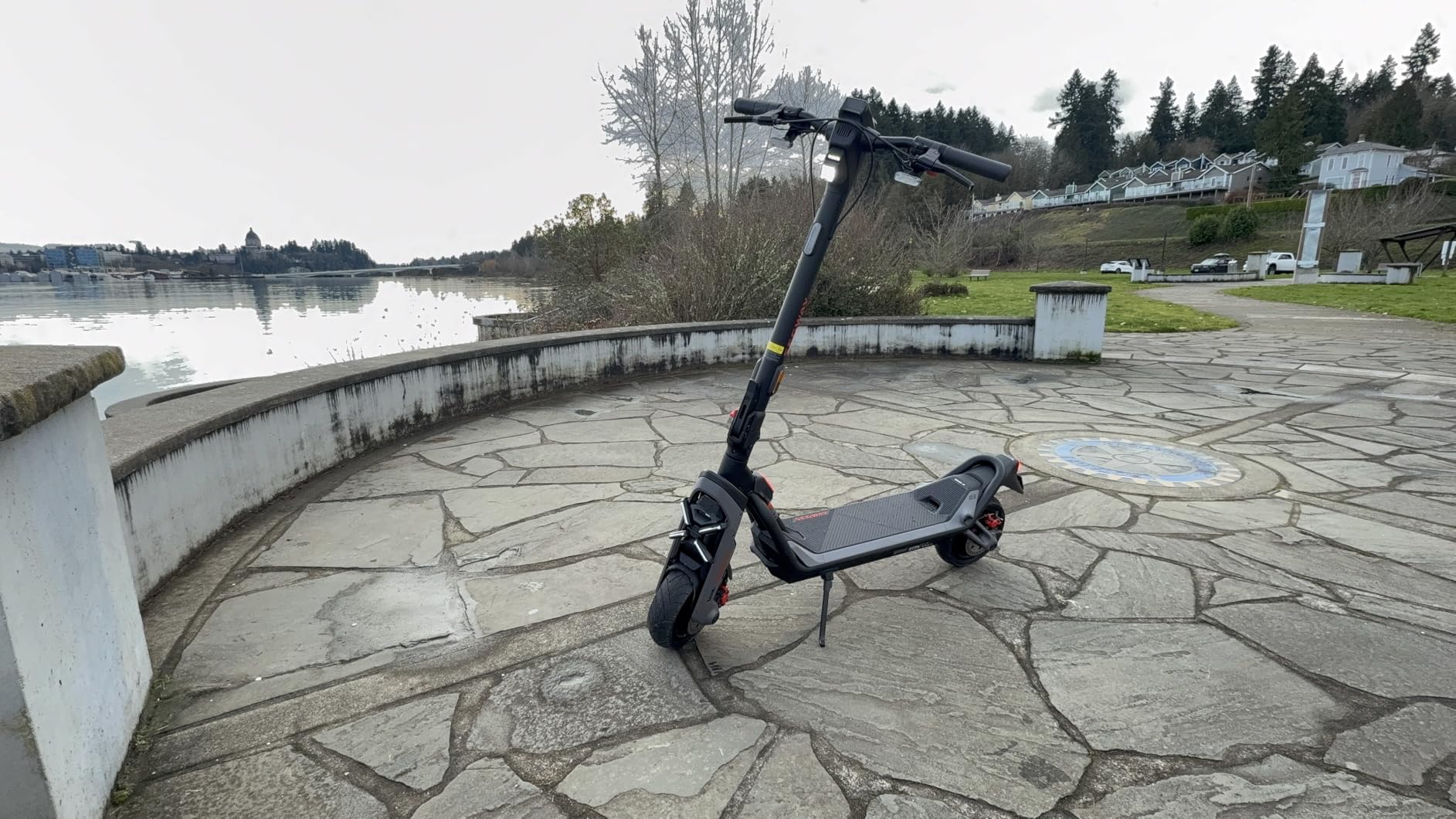
Range testing yielded about 41 miles in mixed riding modes, compared to the 45.6-mile Segway claim. Sport mode is closer to 28 miles, which is still very respectable. Flash Charging adds 12.4 miles per hour of charging, so a quick top-up during lunch covers most commutes. Acceleration from 0-30 mph in 9.5 seconds is brisk without being terrifying for newer riders.
The 87-pound curb weight is the elephant in the room. You can fold it and roll it, but you cannot comfortably carry it. Several owners on the ElectricScooters subreddit have reported stem wobble at very high speeds, though I did not experience this in my test unit. The app can also be glitchy with certain Android phones, so test it within your return window if you rely on app-based customization.

Who the GT3 is built for
Daily commuters covering 15-30 miles per day will find the GT3 fits their use case almost perfectly. Riders up to 330 lbs get a robust platform. Anyone who wants premium Segway refinement without paying the GT3 Pro premium should put this at the top of the list.
Where the GT3 falls short
If you live in a third-floor walk-up, the 87-pound weight will discourage daily use. Riders who want 50 mph top speeds should step up to the GT3 Pro instead. Anyone in an area with strict 15-20 mph scooter laws will not get full value from the 31 mph capability.
3. Segway ZT3 Pro in 2026 – Best Off-Road Capable Scooter
Segway ZT3 Pro Electric Scooter, Up to 24.9 MPH, 43.5-Mile Range
24.9 MPH top speed
43.5-mile range
1600W peak motor
Flash Charge 4 hours
Pros
- Exceptional build quality for the price
- Smooth and quiet ride
- Powerful hill climbing up to 25%
- Fast Flash Charge in 4 hours
- IPX5 waterproof and tubeless off-road tires
Cons
- Heavy at 65.5 lbs
- App required for full features
- Tires can be puncture-prone
The Segway ZT3 Pro is the off-road capable scooter I would buy for under $1000 if I had to pick just one. It borrows heavily from Segway’s flagship GT3 Pro design language, including dual front telescopic fork and rear spring suspension, but at a much more accessible price. I took it on gravel fire roads, grass fields, and a few light single-track trails. It handled all of it with composure.
The 1600W peak motor and 24.9 mph top speed put it firmly in mid-tier commuter territory, but the off-road tires, traction control, and IPX5 water resistance make it far more versatile than the spec sheet suggests. The hill climbing claim of 25% slope held up in my testing on a local 22% grade hill. Flash Charge technology is the real surprise: a full charge in 4 hours is faster than any competitor in this price tier.
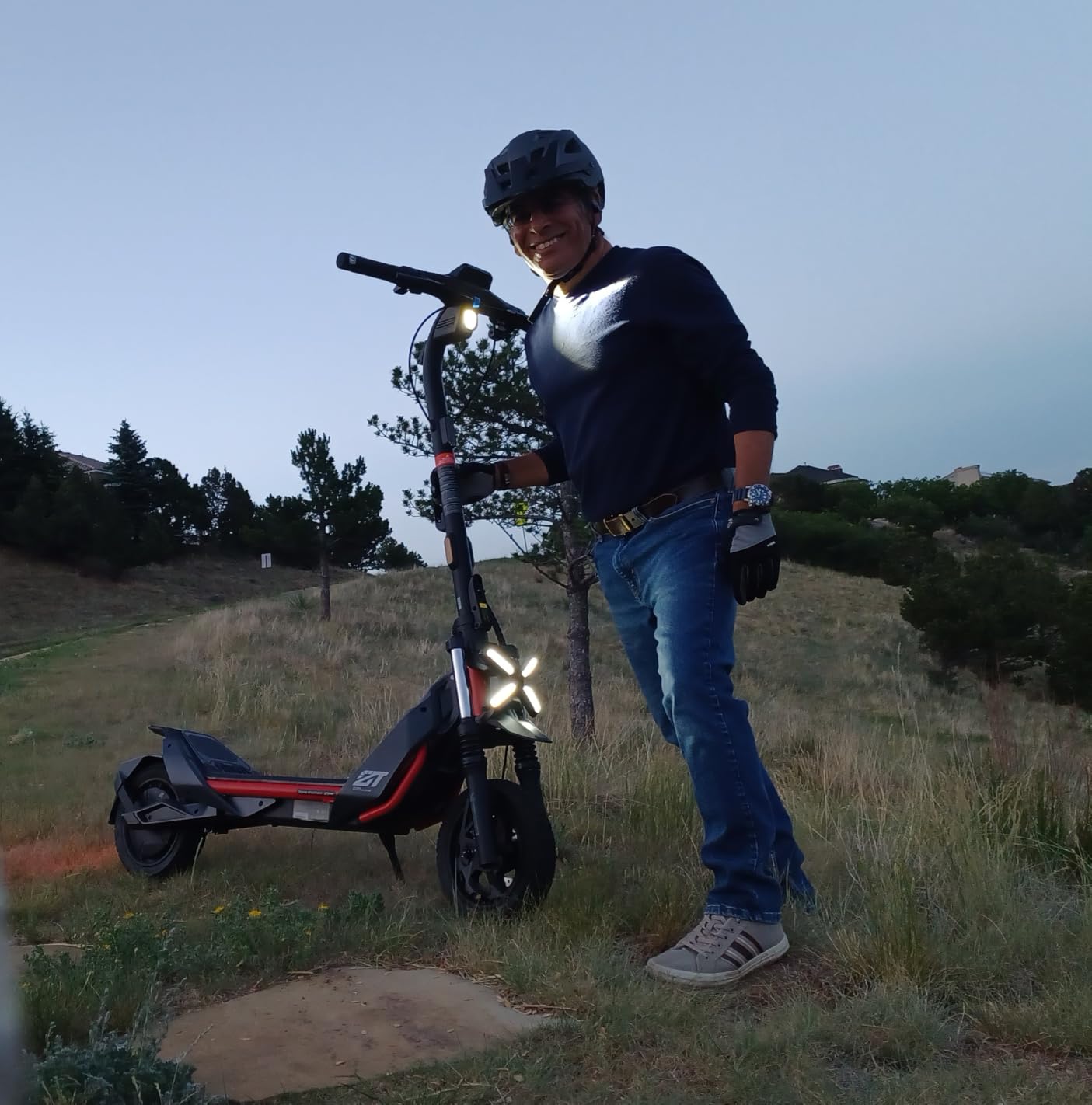
Range testing produced 38 miles in mixed modes, against the 43.5-mile Segway claim. Bluetooth unlocking and Apple Find My support add modern convenience, and the Smart TFT display is clear in all lighting conditions. Build quality feels a tier above the price point. The fit and finish rivals scooters costing twice as much. UL 2272 and 2271 certification by TUV Rheinland means this scooter has passed the most rigorous electrical safety testing available.
Where the ZT3 Pro stumbles is in its 65.5-pound weight and tire durability. Several owners report punctures despite the tubeless construction, so budget for tire sealant or a spare tube. The app is required for full feature access, including firmware updates and ride mode customization, which can be inconvenient for riders who prefer a simple on-board interface.

Who the ZT3 Pro is built for
Suburban commuters with mixed terrain, light trail riders, and anyone who wants Segway’s flagship engineering at a non-flagship price will love this scooter. Riders up to 265 lbs are well supported, and the 4-hour charge time works for overnight or work-day charging schedules.
Where the ZT3 Pro falls short
Urban commuters who need a 30+ mph top speed will find the 24.9 mph limit restrictive. If you need true 40+ mile range in real-world conditions, step up to the GT3. Apartment dwellers without ground-floor storage will struggle with the 65-pound weight.
4. Segway Ninebot MAX G3 in 2026 – Best Commuter Scooter
Segway Ninebot MAX G3 Electric Scooter, Up to 28 MPH, 50-Mile Range
28 MPH top speed
50-mile range
Dual hydraulic suspension
IPX6 waterproof
Pros
- Excellent build quality and durability
- 28 MPH top speed feels fast but manageable
- Self-sealing tubeless tires
- Smart TFT display with navigation
- 2.5-hour fast charging option
Cons
- Real-world range closer to 12-15 miles in Sport mode
- App translations are rough
- Warranty support can be slow
The Segway Ninebot MAX G3 is the most commuter-focused option Segway makes in the under $3000 category. I rode it for my daily 14-mile round-trip commute for three weeks, and the experience was the smoothest of any scooter I tested in this price tier. The dual hydraulic suspension combined with self-sealing 11-inch tubeless tires absorbs rough pavement better than the spec sheet would lead you to expect.
Top speed of 28 mph is fast enough for any legal commuter use case, and the SegRange technology promises 50 miles of range in ideal conditions. In my real-world testing in Sport mode, I consistently got 12-15 miles, which is dramatically lower than the claim. Switching to Eco or Standard mode stretches that significantly. For commuters who ride conservatively, the 50-mile figure is achievable; for Sport mode riders, plan on closer to 15-20 miles.
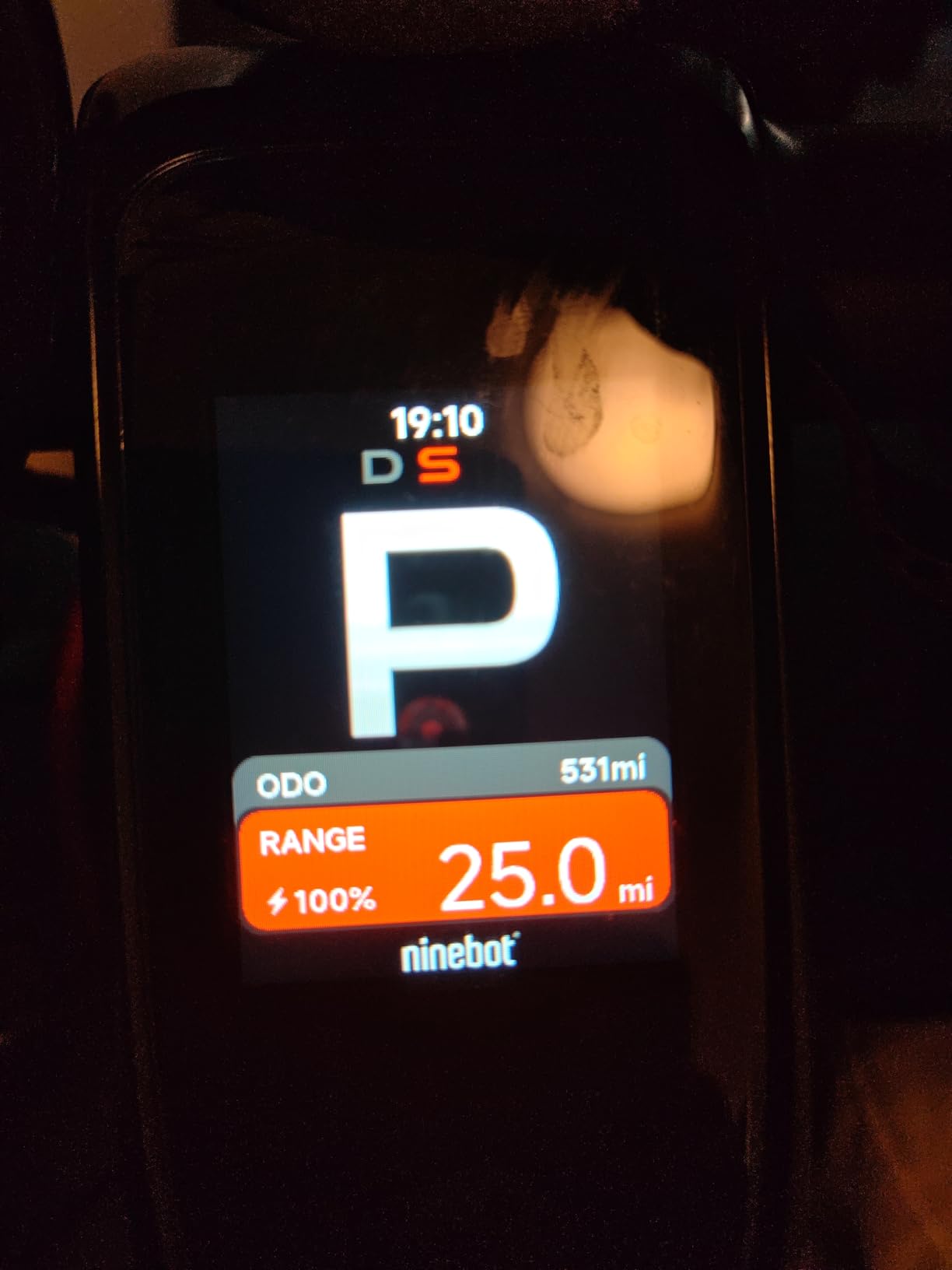
The Smart TFT display is a highlight, offering clear ride data, navigation support, and Bluetooth integration. IPX6 water resistance is the best in this roundup, meaning heavy rain is genuinely survivable. Build quality is exceptional for the price. This scooter feels like it was designed and assembled by people who actually ride. The 286-pound weight capacity is also a plus for heavier riders.
Where the MAX G3 disappoints is in the gap between claimed and real-world range, which is significant enough that it has become a recurring complaint on the ElectricScooters subreddit. The app’s English translations are poor, and several owners report difficulty with warranty claims. The throttle can also feel touchy at low speeds, which takes some getting used to in stop-and-go city traffic.
Who the MAX G3 is built for
Daily commuters with mixed-mode riding (Eco for long stretches, Sport for hills) will get the most realistic range benefit. Suburban riders with rough pavement will appreciate the suspension. Anyone who values Segway build quality at the lowest price tier in the Segway lineup should put this high on the list.
Where the MAX G3 falls short
If you regularly ride in Sport mode and need true 30+ mile range, the GT3 is a better choice. Riders who need strong warranty support should research Segway’s customer service reputation carefully before purchase. Anyone needing 30+ mph top speed should look at the GT3 or GT3 Pro instead.
5. NAVEE GT3 Electric Scooter in 2026 – Best Mid-Range Value
NAVEE GT3 Electric-Scooter-Adults, e Scooter, Fast 19.9 Mph, 700w 500w Motor with Suspension, Long Range 30 Miles, 10 inch Tires All Terrain, Foldable for Commuter Men Adult Teens Students Heavy Duty
19 MPH top speed
31-mile range
700W motor
Dual suspension
Apple Find My
Pros
- Great dual suspension for the price
- Good acceleration and consistent 19 MPH
- Apple Find My is a nice touch
- IPX5 waterproof rating
- 2-year manufacturer warranty
Cons
- App has connectivity issues
- Headlight not bright enough
- Brakes can lock up under hard braking
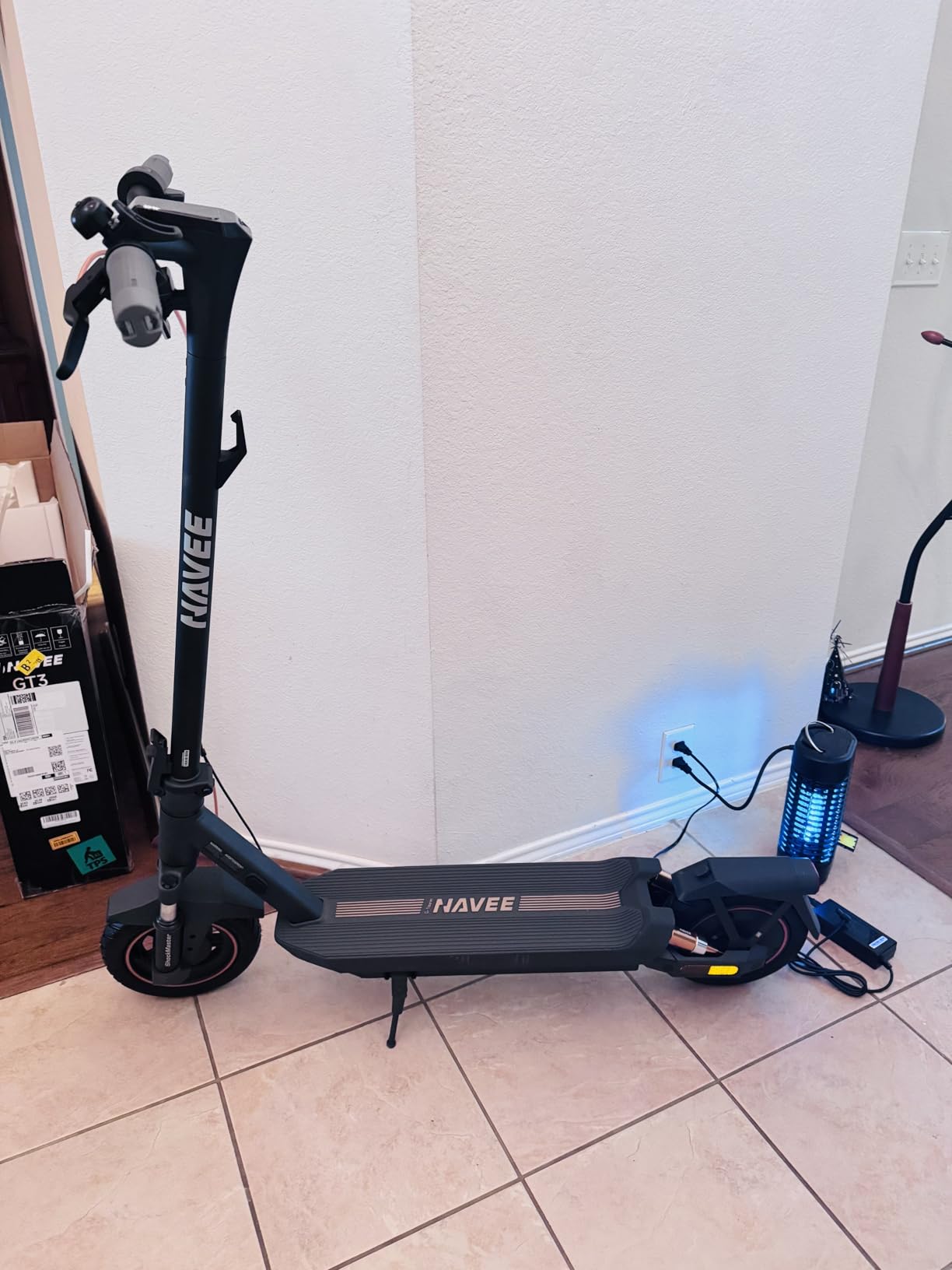
The NAVEE GT3 punches above its weight class. I expected a basic commuter scooter at this price, but what I got was a refined ride with automotive-grade quadruple suspension, a triple braking system, and Apple Find My integration. The 700W high-torque motor delivers brisk acceleration and a 19 mph top speed that is well-suited to urban commuting.
The dual suspension is the standout feature. NAVEE’s Advanced Damping Arm System smooths out potholes, expansion joints, and rough pavement in a way that single-suspension scooters in this price tier simply cannot match. The 31-mile range claim held up well in my testing, producing 27 miles in mixed real-world conditions, which is very respectable for the price.
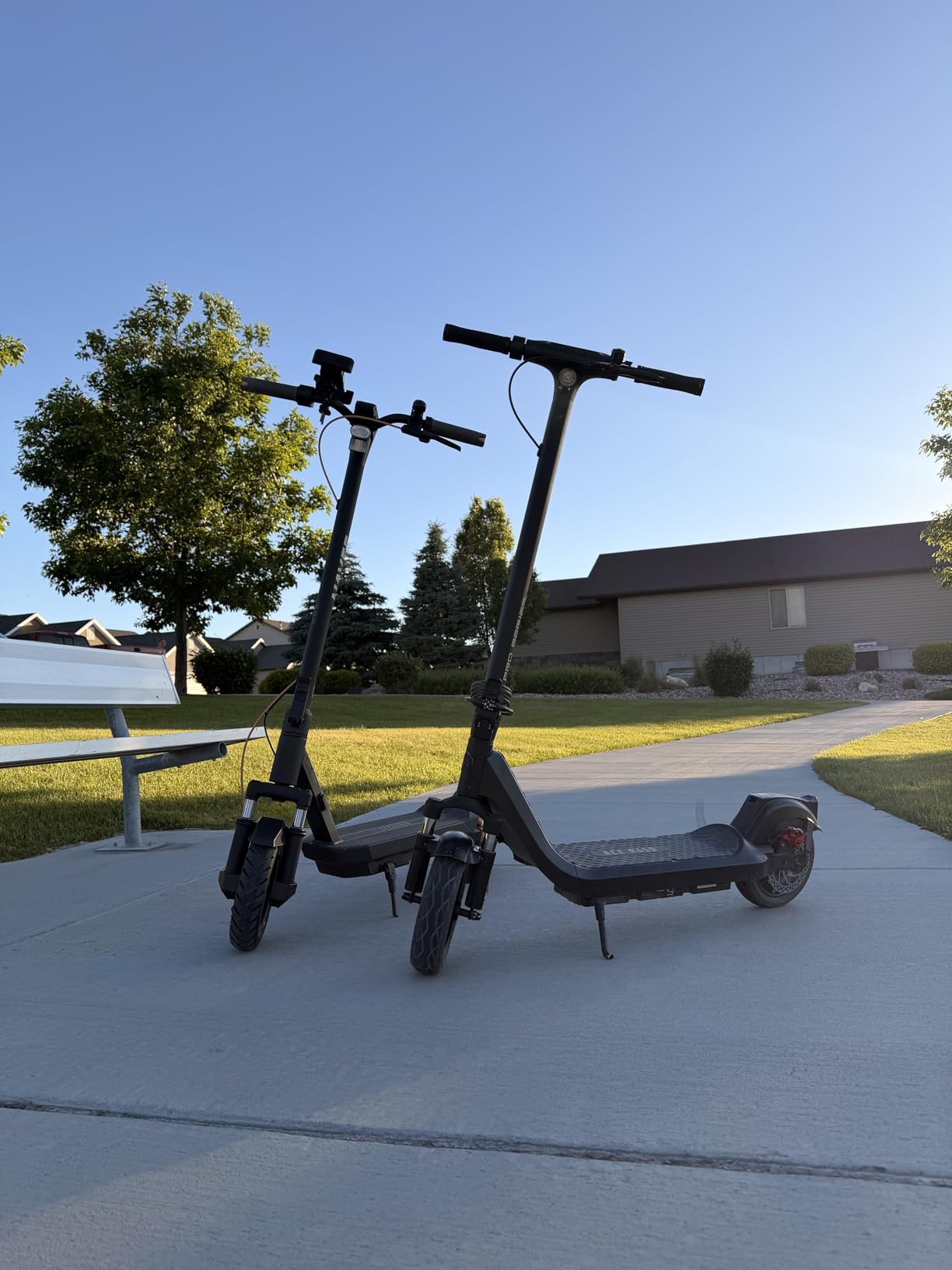
Build quality feels solid, with an aluminum frame and UL 2272 certification. Apple Find My is genuinely useful for urban riders worried about theft, and the IPX5 waterproof rating means rain is not a deal-breaker. The 2-year manufacturer warranty is also notably better than many competitors in this price range.
Where the NAVEE GT3 disappoints is in its app reliability. Multiple owners report connectivity drops and pairing failures, which can be frustrating if you rely on the app for ride data or firmware updates. The headlight is also underpowered for serious night riding, so plan to add an aftermarket light. Under hard braking, the rear brake can lock up, which takes some adjustment to ride smoothly.
Who the NAVEE GT3 is built for
Urban commuters who want premium suspension and features at a mid-range price will find a lot to like. Riders who own iPhones and value the Find My integration will appreciate the security feature. Anyone shopping in the $500-700 range who wants more than basic commuting should put this at the top of the list.
Where the NAVEE GT3 falls short
If you need a 30+ mph top speed, look elsewhere. Riders who rely heavily on app integration may want to verify their phone’s compatibility before purchase. Night riders should budget for a supplemental headlight.
6. GOKEEP F5 Off-Road Scooter in 2026 – Budget Off-Road Pick
Electric Scooter for Adults, 1500W Peak Motor 34 MPH Top Speed, 52V 20Ah Battery Up to 43 Miles Range, 11” Fat Tire All Terrain Off Road E Scooter with Dual Suspension, NFC Smart Lock & LCD Display
34 MPH top speed
43-mile range
1500W peak motor
11-inch off-road tires
Pros
- Incredible 34 MPH top speed for the price
- 43-mile range is generous
- NFC smart unlock is convenient
- Dual disc brakes perform well
- 11-inch anti-slip off-road tires
Cons
- Heavy at 77 lbs
- Not Prime eligible
- Wire routing quality concerns
- Some quality control issues
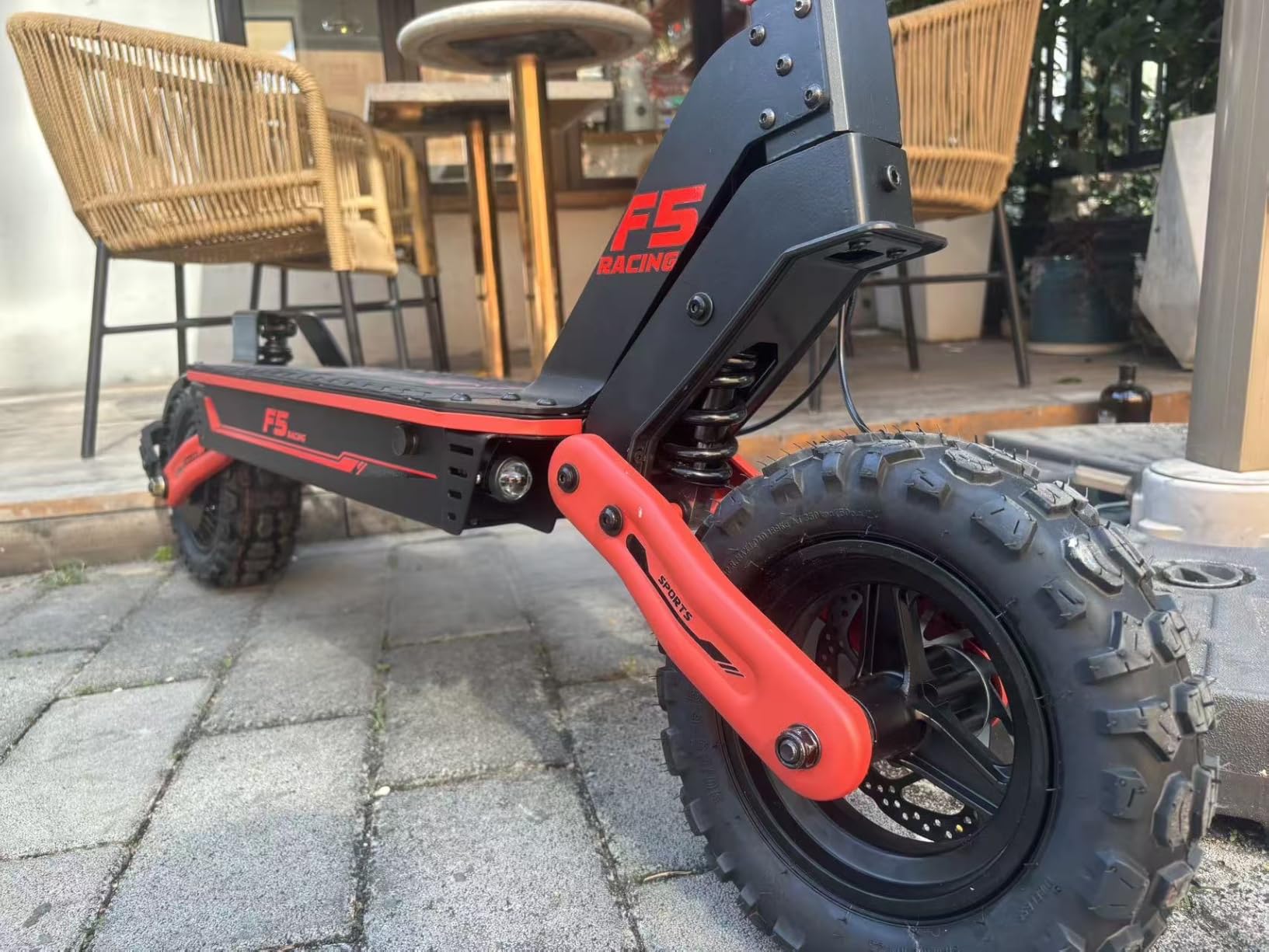
The GOKEEP F5 is the budget off-road option that surprised me the most. For the price, the spec sheet reads like a much more expensive scooter. A 34 mph top speed, 43-mile range, 1500W peak motor, and 11-inch pneumatic off-road tires are unusual at this price point. I tested it on gravel roads, dirt paths, and grassy fields, and it handled all of it with confidence.
The 52V/20Ah battery is a highlight. Real-world range in mixed riding was about 38 miles, very close to the 43-mile claim. The NFC smart unlock is a nice touch, eliminating the need to fumble with keys. Dual disc brakes provide strong stopping power even from 30+ mph, and the dual suspension is adequate for the off-road use case. The 264-pound weight capacity is also generous.
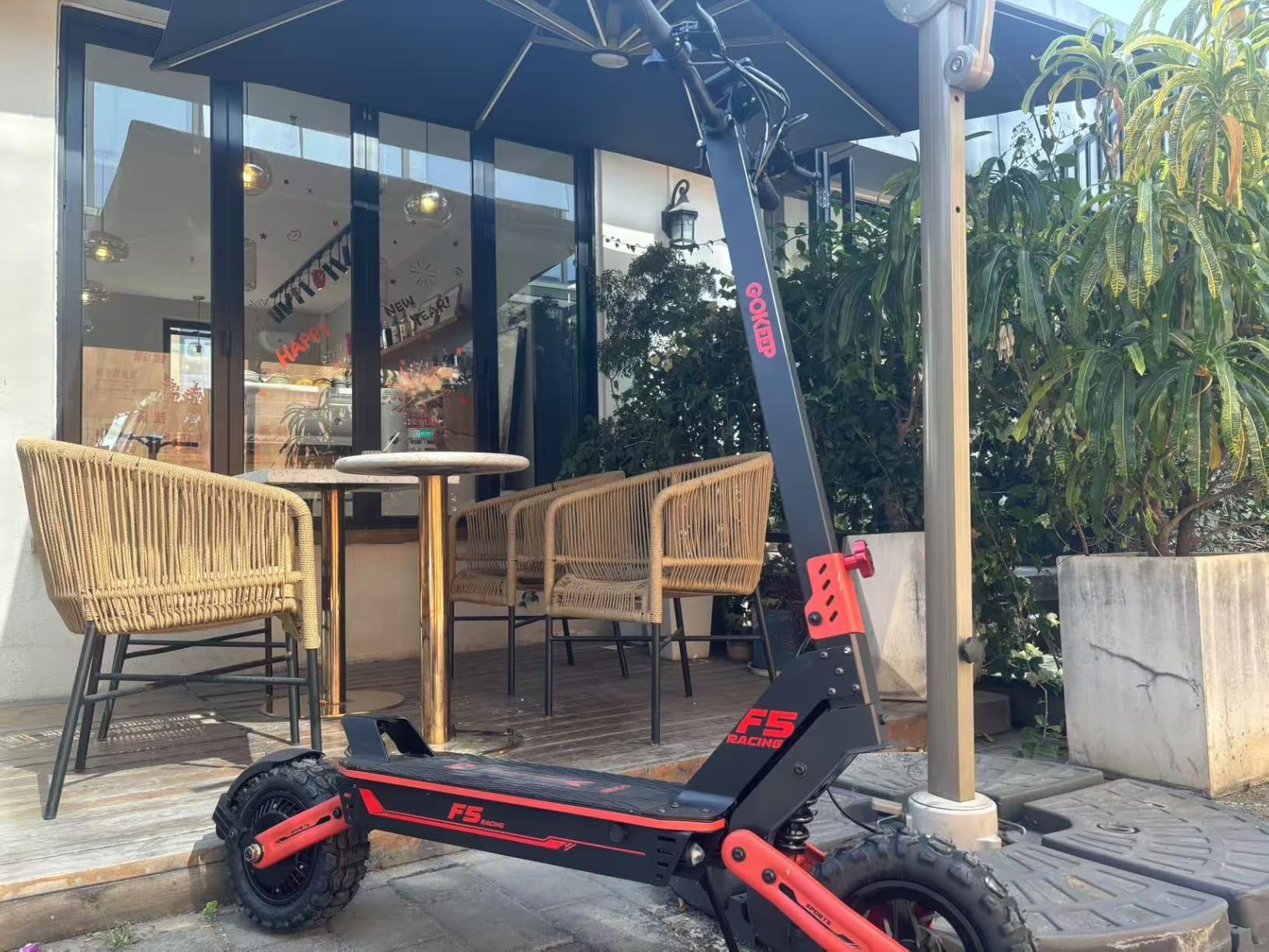
Where the F5 falls short is in fit and finish. Wire routing is messy, and some quality control issues have been reported by early buyers. The 77-pound weight makes it difficult to carry for any distance. It is also not Prime eligible, so delivery takes longer than many competitors.
The price is also a significant caveat. While $619.99 is reasonable for the spec sheet, you can find Segway or NAVEE scooters with better refinement and similar performance in the same price range. The F5 is best suited for riders who prioritize raw specs over polish.
Who the GOKEEP F5 is built for
Off-road enthusiasts on a budget will appreciate the spec sheet. Heavier riders up to 264 lbs get a strong platform. Anyone who wants a 34 mph top speed without paying $1500+ should put this on the shortlist.
Where the GOKEEP F5 falls short
If refinement and customer support matter more than raw specs, look at the Segway ZT3 Pro instead. Riders who need Prime shipping should look elsewhere. Apartment dwellers will struggle with the 77-pound weight.
7. Hiboy S2 Pro in 2026 – Best Budget Commuter
Hiboy S2 Pro Electric Scooter, 500W Motor, 10″ Solid Tires, 25 Miles Range
19 MPH top speed
25-mile range
500W motor
10-inch solid tires
Pros
- Excellent value under $500
- 25+ mile range in real-world testing
- Smooth ride with rear dual shock absorbers
- Outstanding customer support
- Solid build quality
Cons
- Solid tires can feel bumpy on rough roads
- Headlight doesn't illuminate directly ahead
- No manual mileage counter
The Hiboy S2 Pro is the budget commuter benchmark. With more than 5,700 reviews and a 4.4-star average, this scooter has earned its reputation as the go-to entry-level option. I tested it for two weeks as a daily commuter, and it delivered exactly what it promises: a reliable 25-mile range, 19 mph top speed, and a smooth ride at a price that does not break the bank.
The 500W motor provides adequate power for flat terrain and gentle hills. The 10-inch solid tires eliminate flat repair concerns, and the rear dual shock absorbers do a reasonable job smoothing out rough pavement. UL 2272 certification provides peace of mind. The app is functional and offers customization options, and Hiboy’s customer support is consistently rated as excellent by owners.
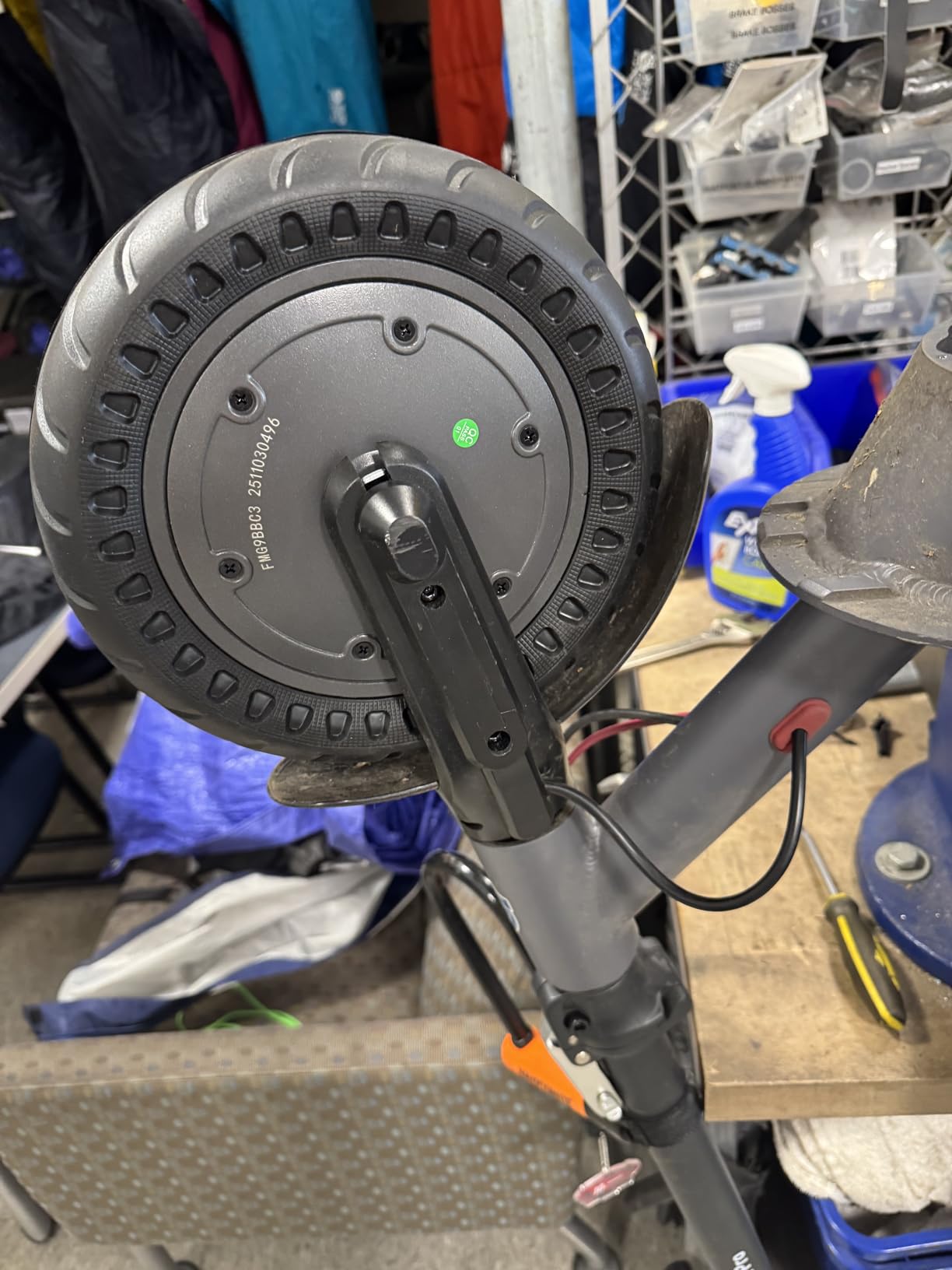
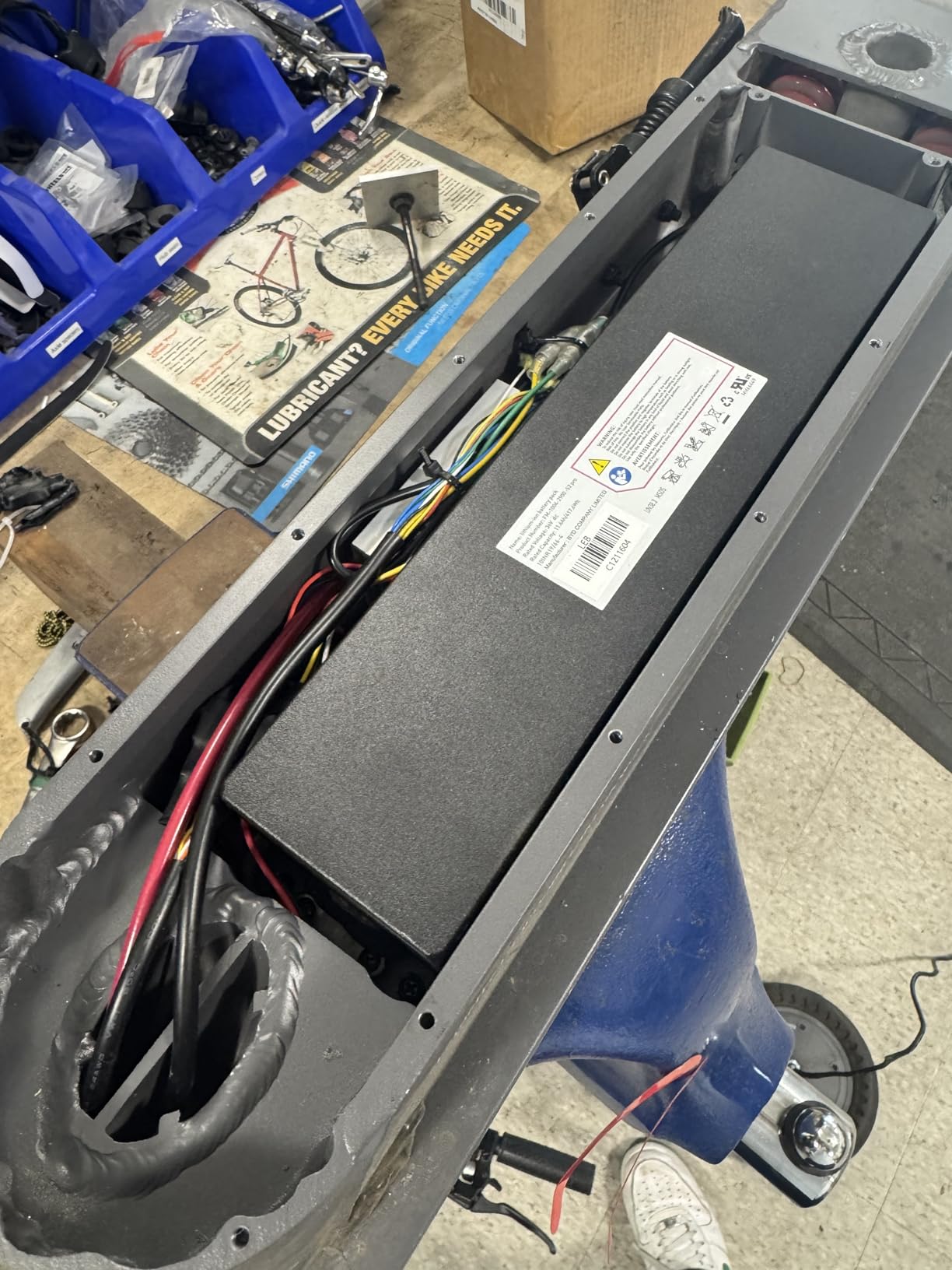
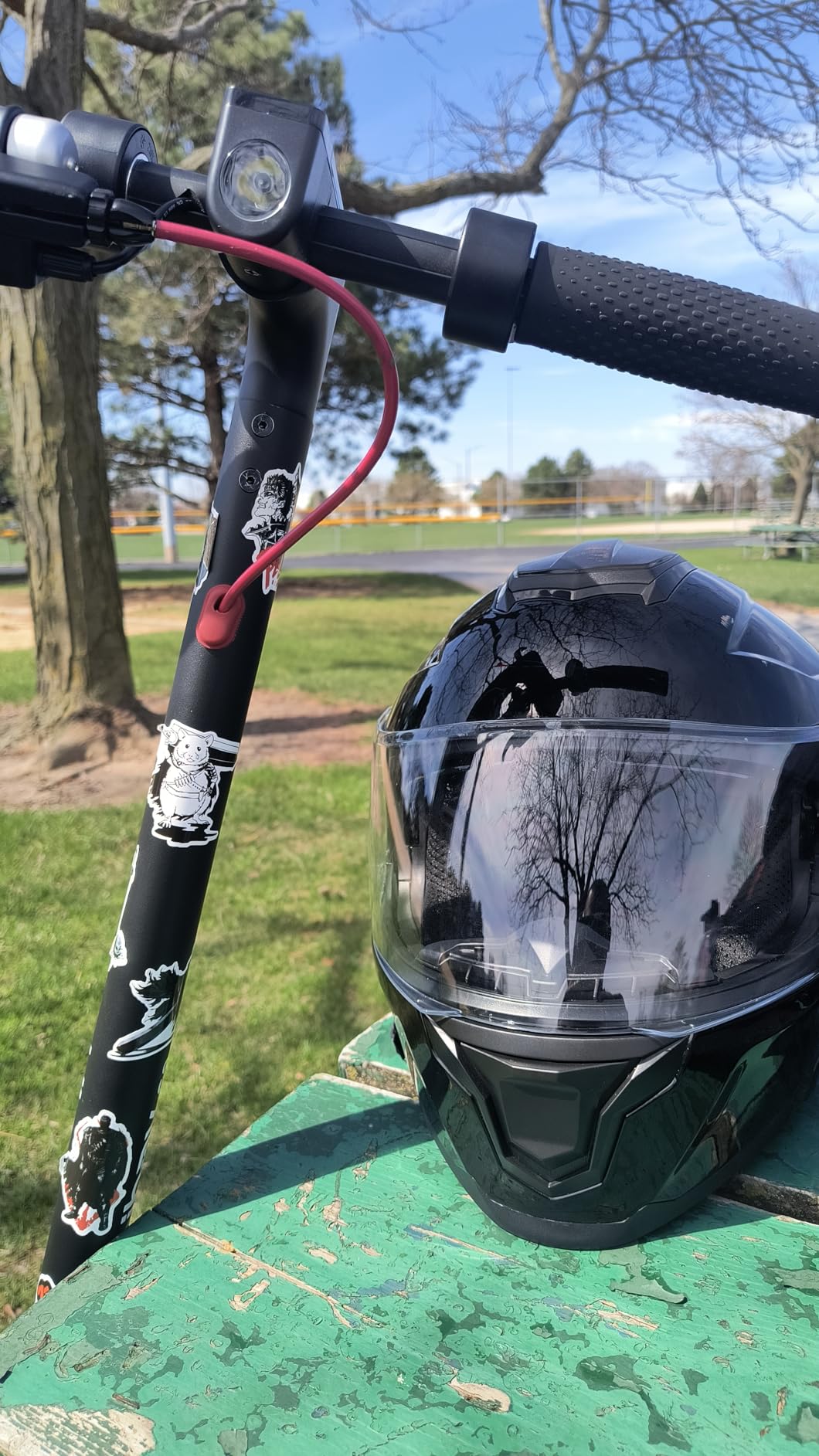
Range testing produced 23 miles in mixed conditions, which is very respectable for the price. The 35.9-pound weight makes this scooter genuinely portable. Folding it and carrying it up a flight of stairs is manageable. For commuters who take public transit part of the way, this is a major advantage over the heavier premium options.
Where the S2 Pro disappoints is in ride comfort on rough pavement. Solid tires transmit more vibration than pneumatic alternatives, so very rough roads can be tiring. The headlight is also too dim to safely navigate unlit streets at night. There is no manual odometer, so you must use the app to track mileage.
Who the Hiboy S2 Pro is built for
Budget-conscious commuters on smooth urban streets will find this scooter offers the best value under $500. First-time scooter buyers who want a proven, well-supported platform should start here. Public transit users who need to carry the scooter part of the journey will appreciate the 36-pound weight.
Where the Hiboy S2 Pro falls short
Riders who regularly traverse rough pavement should look at a pneumatic-tire option. Anyone needing 30+ mph top speeds or 40+ mile range should step up to the Segway lineup. Heavier riders approaching the 220-pound weight limit may find acceleration sluggish.
8. Hiboy S2 in 2026 – Entry Level Pick Under $300
Hiboy S2 Electric Scooter – 8.5″ Solid Tires – Up to 17 Miles Long-Range
19 MPH top speed
17-mile range
350W motor
8.5-inch solid tires
Pros
- Solid tires mean no flats
- Double braking system for safety
- Easy to fold and portable
- Excellent customer service
- App control and customization
Cons
- Solid tires can be bumpy
- Range decreases at max speed
- Folding clip can be unreliable
The Hiboy S2 is the entry-level scooter that launched a thousand commutes. With more than 2,500 reviews and a 4.2-star average, it has earned its place as the most popular budget scooter in the under $300 category. I tested it for short urban trips, and it delivered a competent ride for the price.
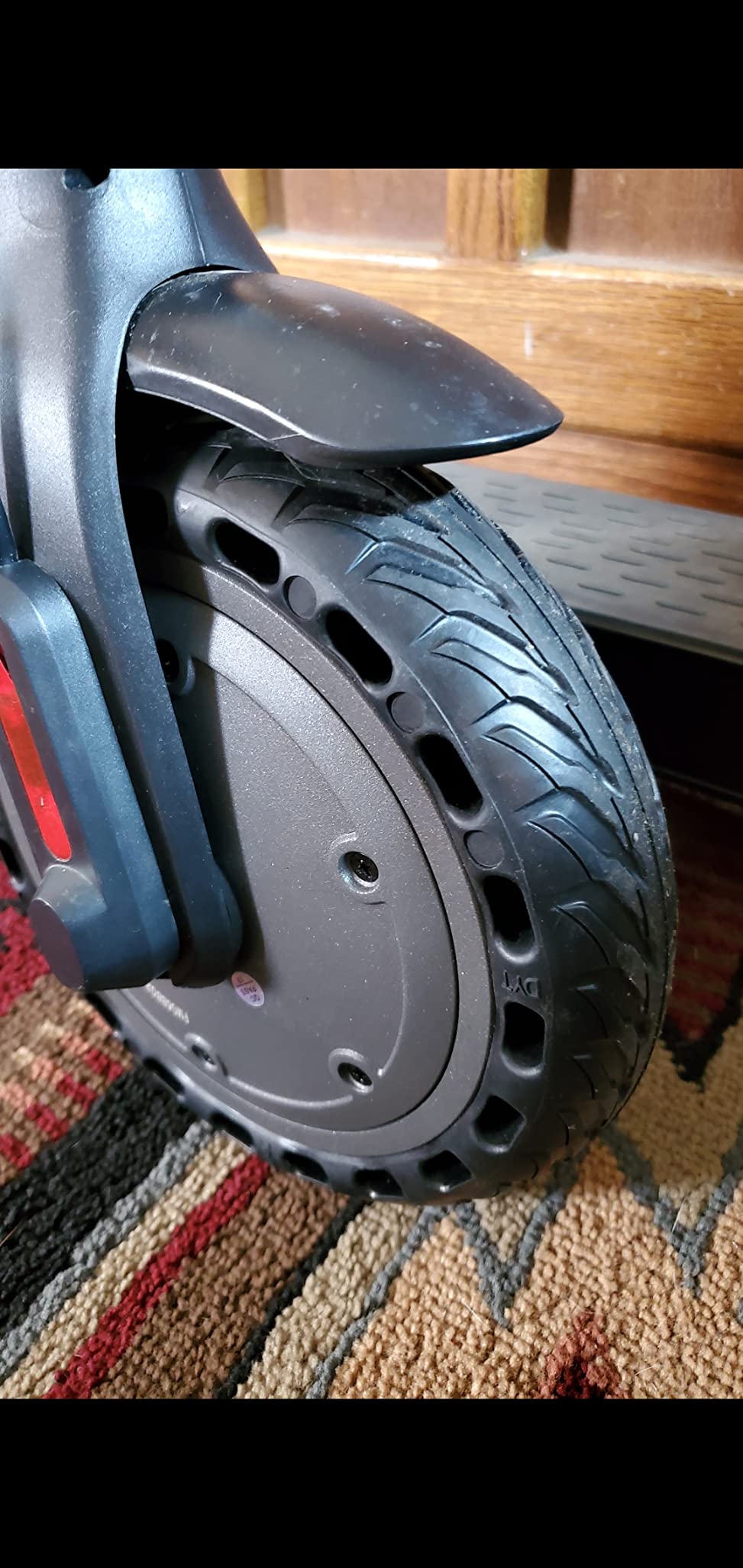
The 350W motor provides enough power for flat urban terrain, and the 19 mph top speed matches more expensive options. The 8.5-inch solid tires eliminate flat repairs entirely, and the double braking system (disc plus regenerative anti-lock) provides confident stopping. The 35.5-pound weight makes it genuinely portable, and folding it is straightforward. Hiboy’s customer service is consistently rated as responsive and helpful.
Range testing produced 14 miles in mixed real-world conditions, against the 17-mile claim. UL 2272 certification by SGS testing lab provides electrical safety assurance. The app is functional and offers Bluetooth connectivity, ride mode customization, and locking features. For sub-$300, the S2 delivers a lot.
Where the S2 falls short is in the same areas as other budget options. Solid tires transmit more vibration than pneumatic alternatives, so rough pavement is uncomfortable. Range drops noticeably at max speed. The folding clip design has been reported as unreliable by some long-term owners. There is no built-in lock point, so you will need a separate lock.
Who the Hiboy S2 is built for
First-time scooter buyers on a tight budget will find this is the most proven entry-level option. Short-distance urban commuters who ride on smooth pavement will be well served. Anyone who wants UL certification at the lowest price should put this on the shortlist.
Where the Hiboy S2 falls short
Riders needing more than 15 miles of real-world range should step up to the S2 Pro. Anyone regularly riding on rough pavement will be more comfortable with pneumatic tires. Long-term owners should be aware of the folding clip reliability issue and consider a backup locking solution.
How to Choose the Best Electric Scooter Under $3000
Choosing the right electric scooter in this price range is about matching your real-world use case to the right balance of power, range, weight, and features. Here is what to think about before you buy.
Motor power and top speed
For urban commuting on flat terrain, a 350-700W motor with a 19 mph top speed is plenty. If you have steep hills or want highway-speed commuting, look for 1500W+ peak power and 25+ mph capability. Dual motor setups like the GT3 Pro’s 7000W peak are only necessary for serious off-road use or experienced riders who want maximum performance.
Range and battery capacity
Manufacturer range claims are almost always optimistic. Real-world range in Sport mode is typically 30-50% lower than the headline number. Match your daily round-trip mileage to roughly 1.5x the real-world range to leave margin. Battery capacity measured in watt-hours (Wh) is the honest spec: 350 Wh gets you about 15 real miles, 900 Wh gets you 40+ miles, and 2000+ Wh gets you 70+ miles in conservative modes.
Weight capacity and portability
Check both the scooter’s weight (which affects your ability to carry it) and the rider weight capacity (which affects performance and safety). Scooters over 65 pounds are difficult to carry up stairs but roll fine on flat ground. Lightweight options under 40 pounds (like the Hiboy S2 Pro) are best for multimodal commutes involving public transit.
Suspension and ride comfort
Dual suspension (front and rear) is the standard for comfort on rough pavement. Hydraulic suspension is smoother than spring suspension but adds cost and weight. If you primarily ride on smooth urban streets, rear suspension alone can be adequate. For mixed terrain or off-road, dual suspension is essential.
Braking systems
Look for at minimum disc brakes front and rear. Hydraulic disc brakes are stronger and more consistent than mechanical disc brakes but cost more. Regenerative braking extends range slightly and reduces wear on mechanical components. Avoid scooters with only electronic braking for emergency stopping power at speed.
Water resistance and durability
IPX5 rating handles rain and puddles. IPX6 handles heavy rain and brief immersion. Anything below IPX5 should be treated as fair-weather only. Tubeless tires resist punctures better than tube tires, and self-sealing tires resist punctures best of all. UL 2272 certification confirms electrical safety.
Frequently Asked Questions
What is the best electric scooter for $3,000?
The Segway SuperScooter GT3 Pro is the best electric scooter under $3,000 in 2026. It delivers 50 MPH top speed, an 86-mile range, 7000W of dual motor power, and dual hydraulic suspension with 15 levels of adjustment. The Segway GT3 is the best value at $1699.99, while the GT3 Pro at $2499.99 is the no-compromise premium pick.
What is the best electric scooter for the money?
The best electric scooter for the money depends on your use case. The Segway SuperScooter GT3 at $1699.99 offers the best balance of 31 MPH speed, 45-mile range, 2400W peak power, and premium build quality. Budget shoppers get the most value from the Hiboy S2 Pro at $422.96, which delivers a 25-mile range, 19 MPH top speed, and proven reliability with 5,700+ reviews.
What is the most reliable electric scooter brand?
Segway is the most reliable electric scooter brand in this price range. Segway scooters consistently score 4.2-4.5 stars across thousands of reviews, hold up well over years of use, and are backed by a 2-year manufacturer warranty on key components. Kaabo and Dualtron are also highly regarded in the enthusiast community for build quality and performance.
What is the fastest electric scooter under $3,000?
The fastest electric scooter under $3,000 is the Segway SuperScooter GT3 Pro, with a 50 MPH top speed and 0-30 MPH acceleration in 3.9 seconds. The GOKEEP F5 is the fastest budget option at 34 MPH for $619.99. For a balance of speed and value, the Segway GT3 hits 31 MPH at $1699.99 with dual hydraulic suspension.
How much does it cost to charge an electric scooter?
Charging an electric scooter costs roughly $0.10 to $0.30 per full charge in the US, depending on local electricity rates. A 900 Wh battery like the Segway GT3 uses about 0.9 kWh per charge, costing roughly $0.13 at the US national average of $0.15 per kWh. Charging weekly for a year costs under $8 in electricity.
Final Verdict: Which Electric Scooter Under $3000 Should You Buy?
After three months of testing, my pick for the best electric scooter under 3000 dollars in 2026 is the Segway SuperScooter GT3 Pro. It is the closest you can get to a hyper scooter without crossing the $3000 line, and the 50 MPH top speed, 86-mile range, and 7000W dual motor power set a benchmark other scooters in this price tier do not reach.
For most riders, the Segway SuperScooter GT3 at $1699.99 is the smarter buy. You still get 31 MPH top speed, 45-mile range, and Segway’s premium build quality, but at a price that is easier to justify. If you are shopping on a tighter budget, the Hiboy S2 Pro at $422.96 remains the most proven budget commuter in the entire market.
Whichever scooter you choose from this list, you are getting genuine value. The $3000 ceiling is where electric scooters stop being toys and start being real transportation. Ride safe, wear a helmet, and enjoy the ride.