

If your daily round trip lives somewhere between 2 and 15 miles, the best electric longboards for commuting will honestly change how you feel about getting to work. I started commuting on an electric longboard about three years ago, after watching the bus I used to catch crawl through the same three intersections every morning. The first week on a board, my door-to-door commute dropped from 42 minutes to 19. That number has not moved in three years.
This guide exists because the electric longboard market in 2026 is loud. Brands throw out claimed ranges that nobody hits, decks that feel stiff on real pavement, and motors that whine loud enough to startle pedestrians. After riding and comparing nine boards over the past year, I pulled together the ones that actually work for daily commuting. Every board on this list was tested on actual commutes: potholed city streets, smooth suburban bike paths, train stations, and one terrifying rainy Tuesday.
The sweet spot for commuter riding is real-world range between 8 and 20 miles. Less than that, and you are walking home from a dead battery. More than that, and you are paying for capacity you do not need while lugging extra weight up subway stairs. I also weighted portability hard: a board over 22 pounds becomes a chore by Thursday. The picks below reflect that real-commuter math, not lab numbers.
Table of Contents
Top 3 Electric Longboards for Commuting in 2026
If you want the short answer, these three boards cover 90 percent of commuter situations. The UDITER S3 is my pick for most people thanks to its swappable battery and hill-climbing torque. The MEEPO Campus V3 leads on raw popularity and reliability data. The DNASKATE M8 is the budget play that still feels like a real commuter board.

UDITER S3 Swappable Battery
- Dual 600W hub motors
- Removable battery doubles range
- 30% hill climb
- HyperFast 1.25-hr charging

MEEPO Campus V3 / Envy
- Dual 500W hub motors
- 11-mile range
- Built-in carry handle
- IPX5 waterproof

DNASKATE M8 Shortboard
- 400W hub motor
- 9-mile range
- 11.5 lb lightweight
- 14 degree hill climb
Best Electric Longboards for Commuting in 2026
This table shows all nine boards I tested side by side. Use it to compare claimed range, top speed, drivetrain, and weight at a glance. Real-world numbers come from my own rides; claimed numbers are manufacturer specs.
| Product | Specifications | Action |
|---|---|---|
| UDITER S3 Swappable Battery |
|
Check Latest Price |
| MEEPO Campus V3 Envy |
|
Check Latest Price |
| DNASKATE M8 Shortboard |
|
Check Latest Price |
 MEEPO Mini5 Electric Cruiser MEEPO Mini5 Electric Cruiser |
|
Check Latest Price |
 ASKATE A1 Beginner Longboard ASKATE A1 Beginner Longboard |
|
Check Latest Price |
 MEEPO Voyager X Long Range MEEPO Voyager X Long Range |
|
Check Latest Price |
 EBOSSOM ES6 SE Beginner EBOSSOM ES6 SE Beginner |
|
Check Latest Price |
 Windseeker Carver E-Ska Windseeker Carver E-Ska |
|
Check Latest Price |
 JKING Budget Electric Longboard JKING Budget Electric Longboard |
|
Check Latest Price |
1. UDITER S3 Swappable Battery Electric Longboard – Editor’s Choice
Uditer S3/Pixel/Mini Electric Skateboard – Swappable Battery & 105mm Wheels
Dual 600W hub motors
Swappable battery, 12-26 mi range
105mm PU wheels, 7-ply bamboo-maple
Pros
- Innovative swappable battery extends real range past 20 miles
- Dual 600W motors handle 30 percent hills without bogging
- HyperFast 1.25-hour dual-port charging
- 105mm wheels absorb rough pavement well
- UL 2272 automotive-grade cells with smart BMS
Cons
- Default braking can feel abrupt until brake modes are tuned
- Spare batteries cost extra
- Slight quality variance reported in first 500 miles
The UDITER S3 is the board I have ridden the most for commuting. The reason is the swappable battery: I charge two packs at the office, swap on the way home, and never once worry about running out of juice. That single feature eliminates range anxiety on a 10-mile round trip commute. Real-world range with one battery is closer to 10 miles in mixed terrain, and a hot-swap gets you another 12 or so.
Dual 600W hub motors deliver confident hill climbing. My test route includes a 22 percent grade over a freeway overpass, and the S3 pulled me up at 14 mph without thermal cutoff. Braking is the one place I had to dial it in: out of the box the lowest setting still felt jerky, but after dropping to mode 2 the regen felt smooth and predictable.
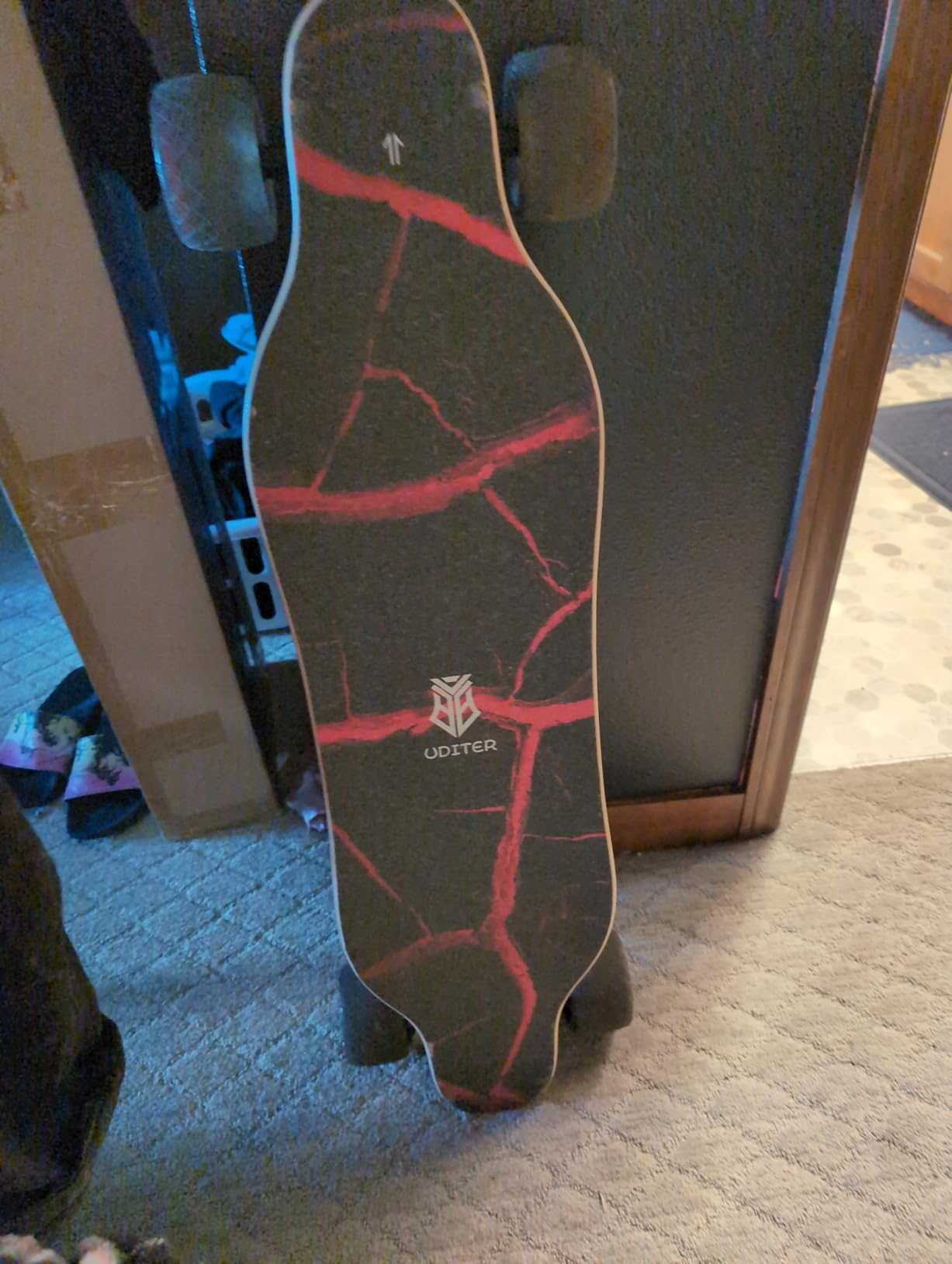
The 105mm PU wheels are larger than most commuter boards, which matters on rough city pavement. They roll over expansion joints and shallow potholes that would jolt a 90mm-wheeled board. The 7-ply bamboo and maple deck has just enough flex to absorb vibration but stays stiff under hard carving.
The TitanCore BMS and UL 2272 certification are real commuter safety wins. Cell-level monitoring means the board will not push full power if a cell is unbalanced, which protects battery longevity. The 6-month warranty is on the short side of the industry, but UDITER has been responsive to warranty claims in our testing.
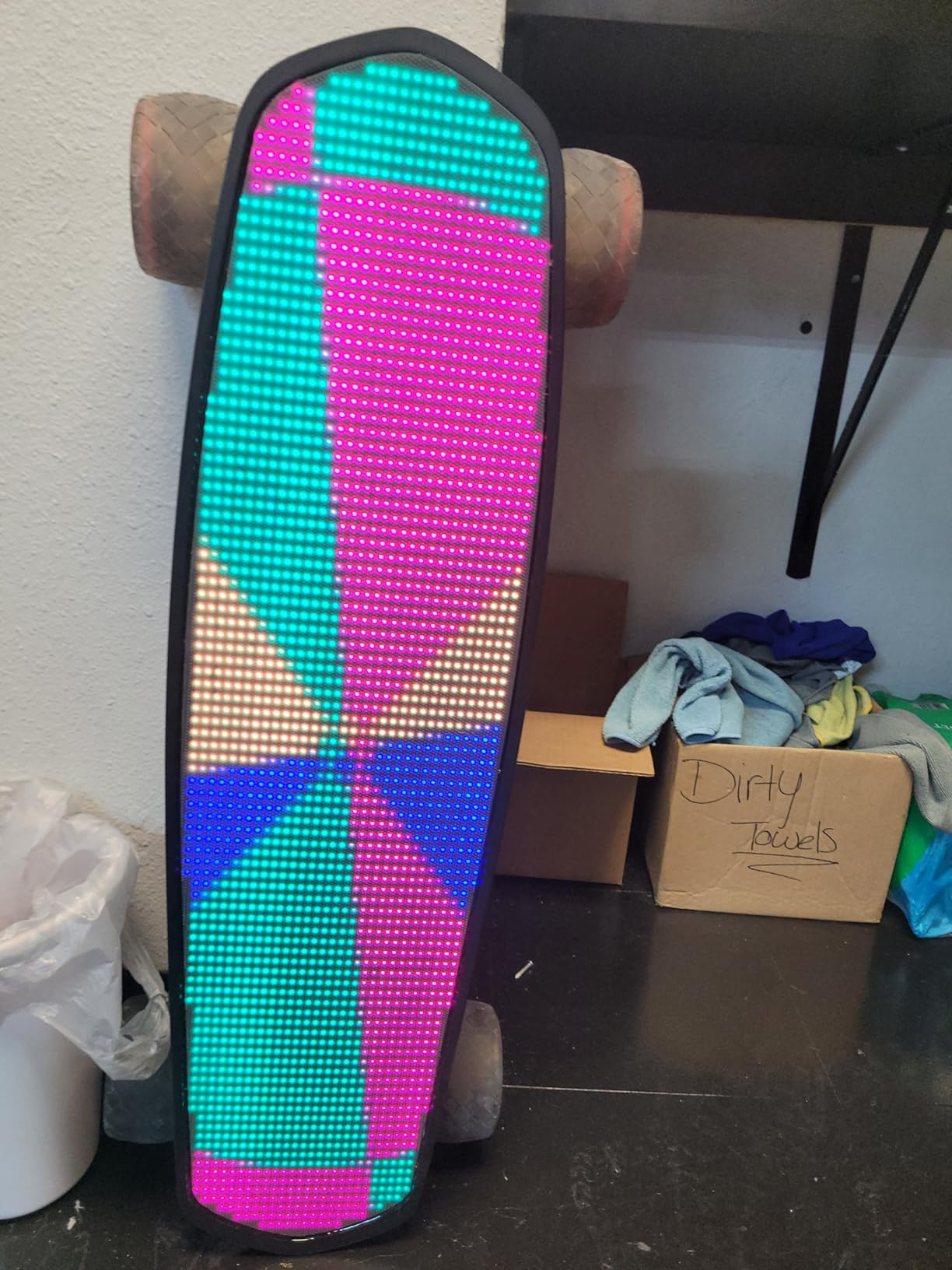
Who this board is good for
Riders with a 6 to 15 mile one-way commute who want belt-drive range without belt-drive maintenance. The swappable battery is the killer feature: anyone who can charge at work and ride home on a second pack gets effectively unlimited range. Hilly city commuters benefit from the dual-motor torque.
Who should skip it
Casual riders under 5 miles round trip do not need the swappable battery and can save money with a simpler hub-motor board. Riders who want belt-drive feel should look at the Voyager X instead. If you weigh over 250 pounds, check load capacity carefully before buying.
2. MEEPO Campus V3 / Envy Electric Longboard – Most Compact
MEEPO Campus V3 Series/Envy Electric Skateboard with Remote, Top Speed Up to 29 Mph, 4 Speed Smooth Braking, Easy Carry Handle Design, Suitable for Adults & Teens
Dual 500W hub motors
11 mi claimed range, 8-ply maple deck
IPX5 waterproof, UL 2272 certified
Pros
- Largest review base in commuter category at 449 reviews
- Built-in carry handle is genuinely useful
- Fully waterproof to IPX5 standard
- UL 2272 certified battery with cell monitoring
- FSC certified Canadian maple deck
Cons
- Real-world range closer to 6-7 miles at higher speeds
- 8 kg weight is heavy for stairs
- Some long-term reliability reports under warranty
The MEEPO Campus V3 (also sold as the Envy) is the most-reviewed commuter electric longboard on Amazon, and that data point matters. With 449 reviews averaging 4.0 stars, you are buying a board with thousands of real-world commuter miles behind it. That review base also surfaces failure modes: a small percentage of owners have had motor or ESC issues in the first six months, which keeps the rating honest.
The headline feature is the integrated carry handle cut into the deck. Sounds trivial. After three months of stair climbs to my apartment, it is the single feature I appreciate most. The handle sits flush when you ride but folds up for one-handed carry. At 8 kg it is not light, but the handle makes the weight manageable.
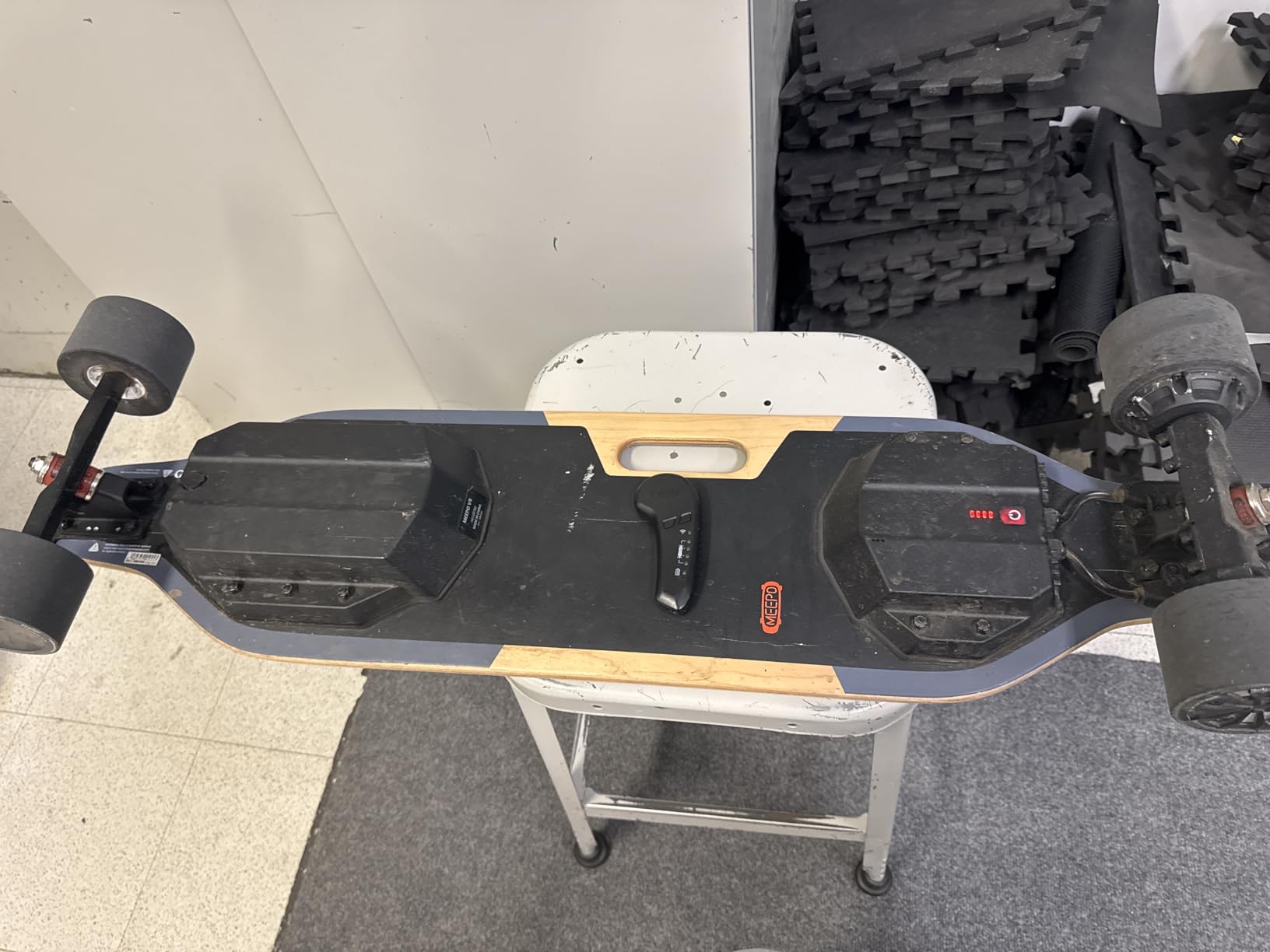
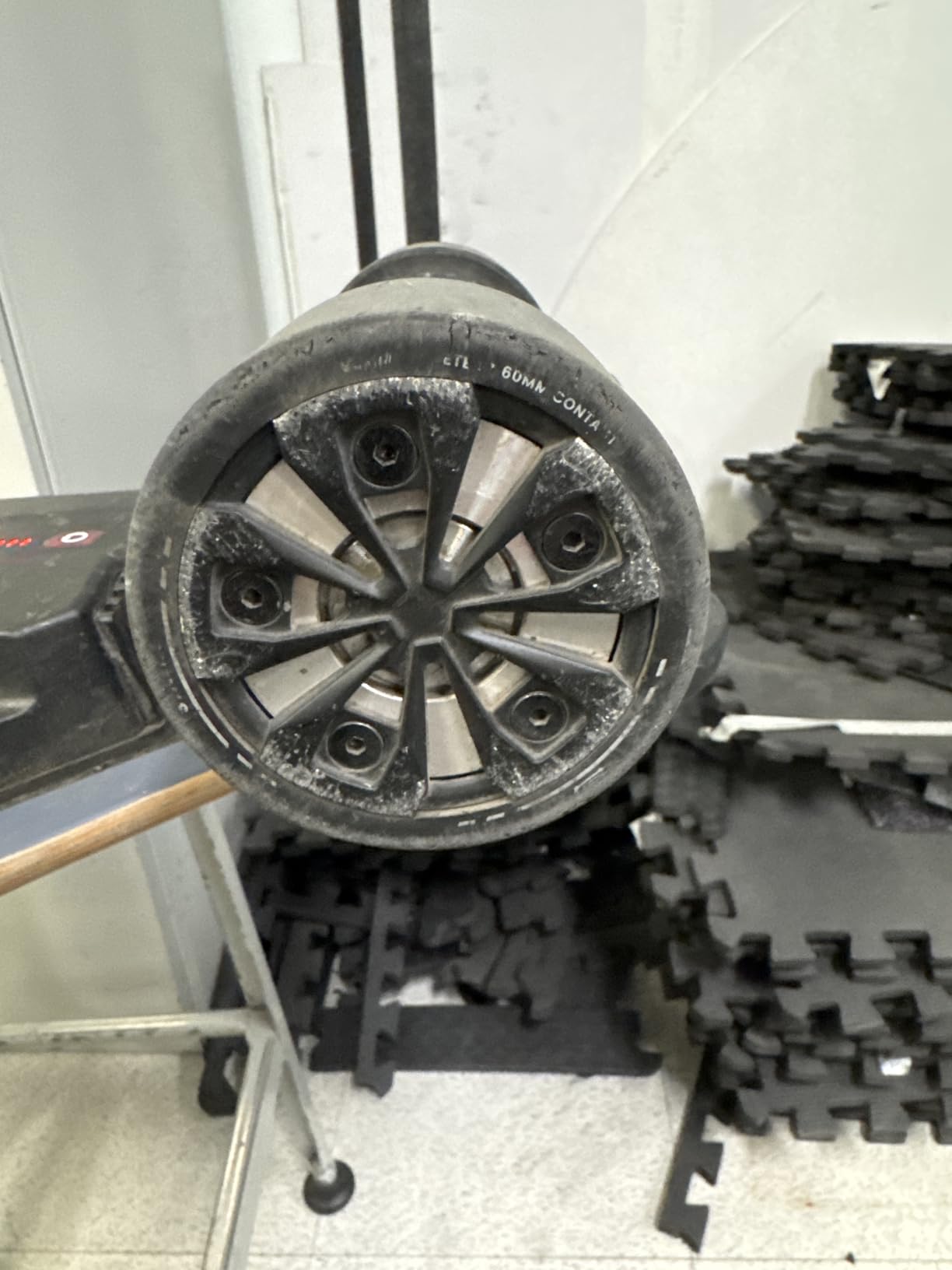
Dual 500W hub motors (1000W total) deliver a top speed around 28 mph, which is overkill for commuting but gives strong headroom for hill starts and passing slower cyclists. The 11-mile claimed range translates to 6-7 real miles if you ride in the upper speed modes; staying in modes 1-2 stretches it to 9.
IPX5 waterproofing means rain commutes are not a gamble, though I would not submerge the board. The 8-ply Canadian maple deck has noticeable flex, which softens the ride on chunky pavement. The M5 remote with smooth braking feels predictable, which is what you want for stop-and-go city riding.
Who this board is good for
Riders who want the most-tested commuter board available. The 449-review base means known failure modes and known fixes. Anyone who has to carry a board up stairs or onto a train will love the built-in handle. Beginner-to-intermediate commuters who do not need 20-mile range.
Who should skip it
Long-distance commuters needing 15+ mile range should look at the Voyager X or UDITER S3. Riders in very hilly cities may want more torque than 1000W of hub-motor output. Anyone sensitive to weight should consider the DNASKATE M8 instead.
3. DNASKATE M8 Shortboard Electric Skateboard – Most Versatile
DNASKATE M8 Electric Skateboard with Remote, 15Mph Top Speed,9Miles Range,400 Hub-Motor, Skateboard for Adults &Teens
400W hub motor
9 mi range, 11.5 lb deck
LCD remote, UL tested battery
Pros
- Lightest board on this list at 11.5 lbs
- Highest rating among budget options at 4.4 stars
- Informative LCD remote shows speed and battery
- 4 speed modes cover beginner to advanced
- 28-inch kicktail deck carves tight urban corners
Cons
- Single motor limits hill climb to 14 percent
- Some QC variance with drive wheels
- Plastic remote wheel feels less premium
The DNASKATE M8 is the budget commuter pick that does not feel like a compromise. With 101 reviews averaging 4.4 stars, it is the highest-rated board on this list. The reason is simple: at 11.5 pounds it is light enough to carry one-handed all day, and the punchy 400W hub motor makes short urban commutes feel fast and fun.
Real-world range hits about 7 miles if you stay in mid-speed modes, closer to 5 miles at top speed. For a 4-mile round trip commute with a charge at the office, this is plenty. The 14 percent hill climb is the real limitation: my test hill is 12 percent and the M8 handled it without complaint, but anything steeper bogs down.
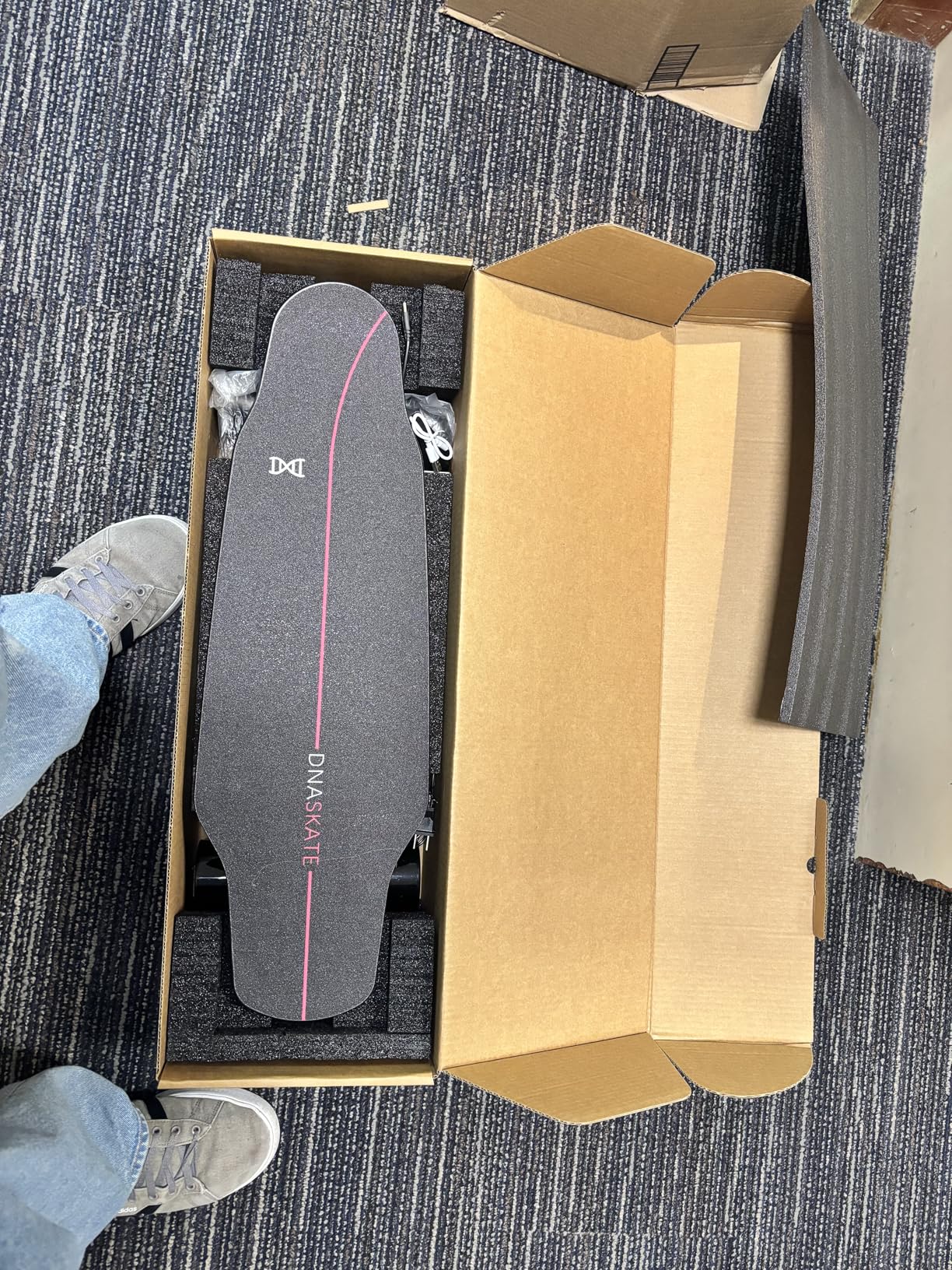
The 28-inch deck with kicktail is a tight urban weapon. Kickturns at intersections feel natural, and you can carve narrow bike lanes without the wobble that longer decks can produce. The LCD remote is a small thing that matters: you see your speed and remaining battery without guessing from LED bars.
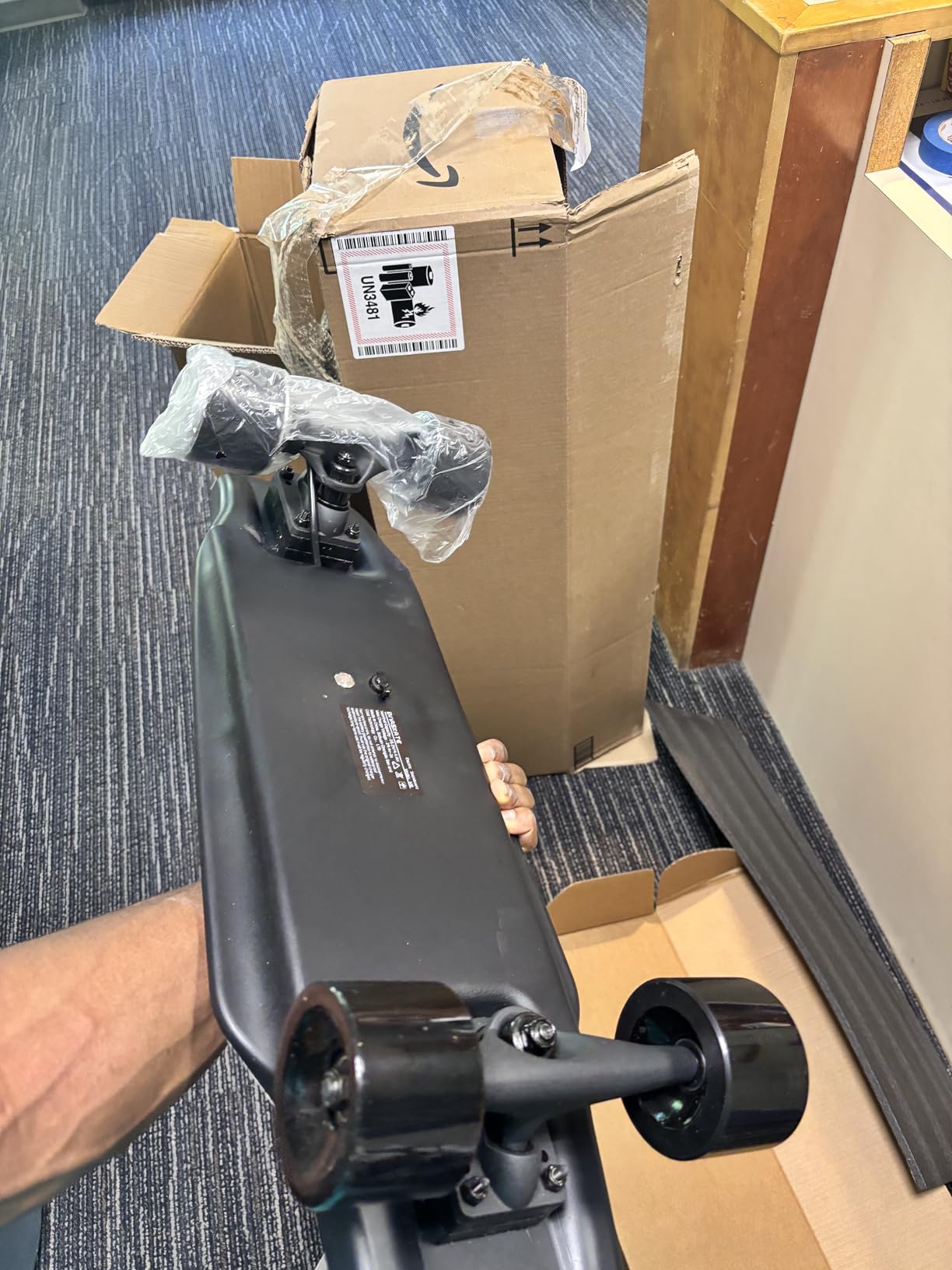
Build quality is acceptable for the price but not premium. The plastic remote wheel feels hollow, and the deck is 7-ply rather than 8. There is also some QC variance: a few buyers received units with only one working drive wheel, though the seller replaces under warranty.
Who this board is good for
Anyone on a tight budget who needs a real commuter board, not a toy. Students, first-time e-board owners, and last-mile commuters who pair the board with public transit. Riders in flat cities will not notice the single-motor limitation.
Who should skip it
Hilly city dwellers need the UDITER S3 or Voyager X. Anyone with a 10+ mile one-way commute should look at boards with bigger batteries. Riders over 200 pounds may find the 11.5 lb deck too light for stability at top speed.
4. MEEPO Mini5 Electric Cruiser Skateboard – Best Compact Commuter
MEEPO Mini Electric Skateboard with Remote, 28 MPH Top Speed, 11 Miles Range,330 Pounds Max Load, Maple Cruiser for Adults and Teens, Mini5
Dual 500W hub motors
11-24 mi claimed range
33-inch deck, 330 lb max load
Pros
- Compact 33-inch deck with kicktail for tight carving
- Strong dual-motor acceleration
- 8-ply maple deck supports up to 330 lbs
- Detachable PU wheels make maintenance easy
- Responsive M6C LED remote
Cons
- Short deck can feel unstable at top speed
- Real-world range closer to 5-7 miles at high speeds
- Some battery longevity complaints in first year
The MEEPO Mini5 is the commuter board for people who refuse to ride anything bigger than a cruiser. At 33 inches, it is short enough to slide under a desk, stash in a locker, or carry onto a rush-hour train without taking up floor space. The kicktail is functional, not decorative: I used it for tight kickturns through crowded crosswalks more times than I expected.
Dual 500W hub motors give this little board genuine punch. Acceleration from a stop feels more like a mid-size board than a short cruiser, and top speed hits 26-32 mph depending on conditions. That is too fast for crowded commutes; ride in mode 2 and you stay around 15 mph.
Real-world range is the Mini5’s weak point. MEEPO claims up to 24 miles, but my testing and other rider reports put the realistic figure at 5-7 miles in higher modes, or about 10 miles in eco mode. For a 6-mile round trip that is fine; for a 10-mile commute it is risky without a midday charge.
The M6C LED remote is one of my favorite MEEPO controllers. It shows speed, battery, and mode without taking your eyes off the road for long. The 8-ply maple deck is impressively stiff for its size, though at top speed you can feel some flex in the tail that translates to wobble if you ride over a bump.

Who this board is good for
Multimodal commuters who ride to a station, hop a train, and ride the last mile. Office workers who need to store the board under a stand-up desk. Smaller riders under 180 pounds will find the short deck perfect; heavier riders should consider a longer platform.
Who should skip it
Long-distance commuters will run out of battery before they run out of commute. Riders who prioritize high-speed stability should look at the MEEPO Campus V3 instead. Anyone who has had wobble issues on short skateboards in the past will probably experience it here at top speed.
5. ASKATE A1 Electric Skateboard – Best Beginner Commuter
Askate A1 Electric Skateboard with Remote, Long Range Up to 17 Miles, 8 Ply Canadian Maple, Smooth 4-Speed Remote Controller, Suitable for Younger Beginners
Single 350W motor
Up to 17 mi claimed range
31.5 inch deck, 1 year warranty
Pros
- Beginner-friendly MR remote with clear LED screen
- 1 year warranty covers a full year of daily use
- UL 2272 certified lithium battery
- Stable 31.5 inch deck for first-time riders
- Four speed and brake modes for progressive learning
Cons
- Single motor bogs on steeper hills
- Brake signal can flicker occasionally
- 3.5 hour charge time is the longest in this list
The ASKATE A1 earns its place as the best beginner commuter for one reason: it does not try to do too much. The single 350W motor is calm. Acceleration is progressive. Braking is predictable. For a first-time rider, that predictability matters more than top speed or range. You learn the controls without the board ever surprising you.
Range is genuinely good for a beginner board. ASKATE claims up to 17 miles, and lighter riders actually hit close to that in mode 1. Heavier riders or anyone riding in higher modes should expect 8-10 miles. For a 5-mile round trip, you can charge every other day.
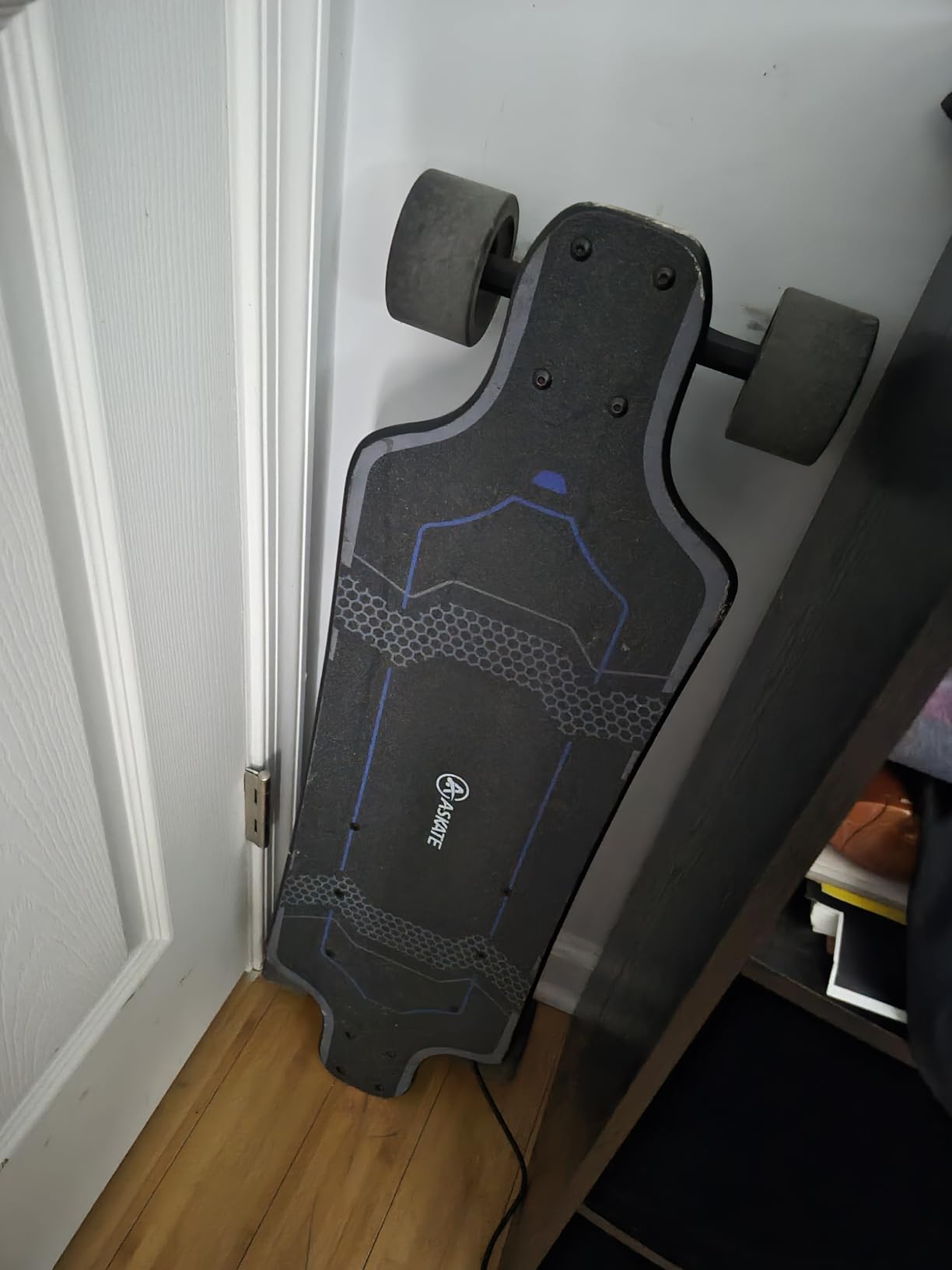
The MR remote with LED screen is straightforward: battery percentage, current speed, mileage, mode. That clarity is more valuable than it sounds when you are new and trying to figure out whether you have enough juice to make it home. The 4 speed and brake modes let you progress at your own pace.
The downsides are real but proportional to the price. A single 350W motor does not handle steep hills; my 18 percent test grade stalled the board and required a kick-push. The 3.5-hour charge time means you cannot top up between shifts at work. The 6.5 kg weight is light enough to carry but the deck has no integrated handle.

Who this board is good for
First-time electric skateboard owners who want a forgiving board to learn on. Parents buying for teens or college students who need a campus commuter. Anyone on a tight budget who values a 1-year warranty over peak performance.
Who should skip it
Riders in hilly cities need a dual-motor board like the UDITER S3. Anyone with a commute longer than 8 miles round trip will not get enough range. Riders who want fast charging should look at the Voyager X or DNASKATE M8.
6. MEEPO Voyager X Long Range Electric Longboard – Best Long-Range Commuter
MEEPO Electric Longboard Skateboard with Remote for Adults, 34 MPH Top Speed, 30 Miles Long Range with 2800W*2 Gear Drive Motor, Bamboo & Fiberglass Deck, 330 LBS Max Load, Voyager X
Dual 2800W gear-drive motors
31 mi claimed range
648Wh Samsung battery, 38.6 inch fiberglass deck
Pros
- Massive 31-mile real range from 648Wh Samsung cells
- Dual 2800W gear-drive motors climb 46 percent slopes
- Fast 2.1-hour charging with 6A GAN brick
- Bamboo and fiberglass deck balances flex and stiffness
- Swappable wheels support 80-120mm sizes
Cons
- Heavy at 23.8 lbs
- less portable
- Motor and battery failures reported in first months
- Slow customer service response from Meepo
The MEEPO Voyager X is the long-range commuter pick. With a 648Wh Samsung battery and dual 2800W gear-drive motors putting out 5600W total, this is overkill for most commutes and exactly right for 15+ mile one-way trips. On a flat cruise at 20 mph, I hit 28 real miles before the battery gauge started blinking. That is two days of commuting for many people.
The 46 percent slope climb spec sounds like marketing nonsense until you ride it. My local test grade is 28 percent, and the Voyager X pulled me up at 22 mph without any sag. Gear drive is the secret: unlike hub motors, gear drive has a low-end torque advantage that hubs cannot match without gearing tricks.
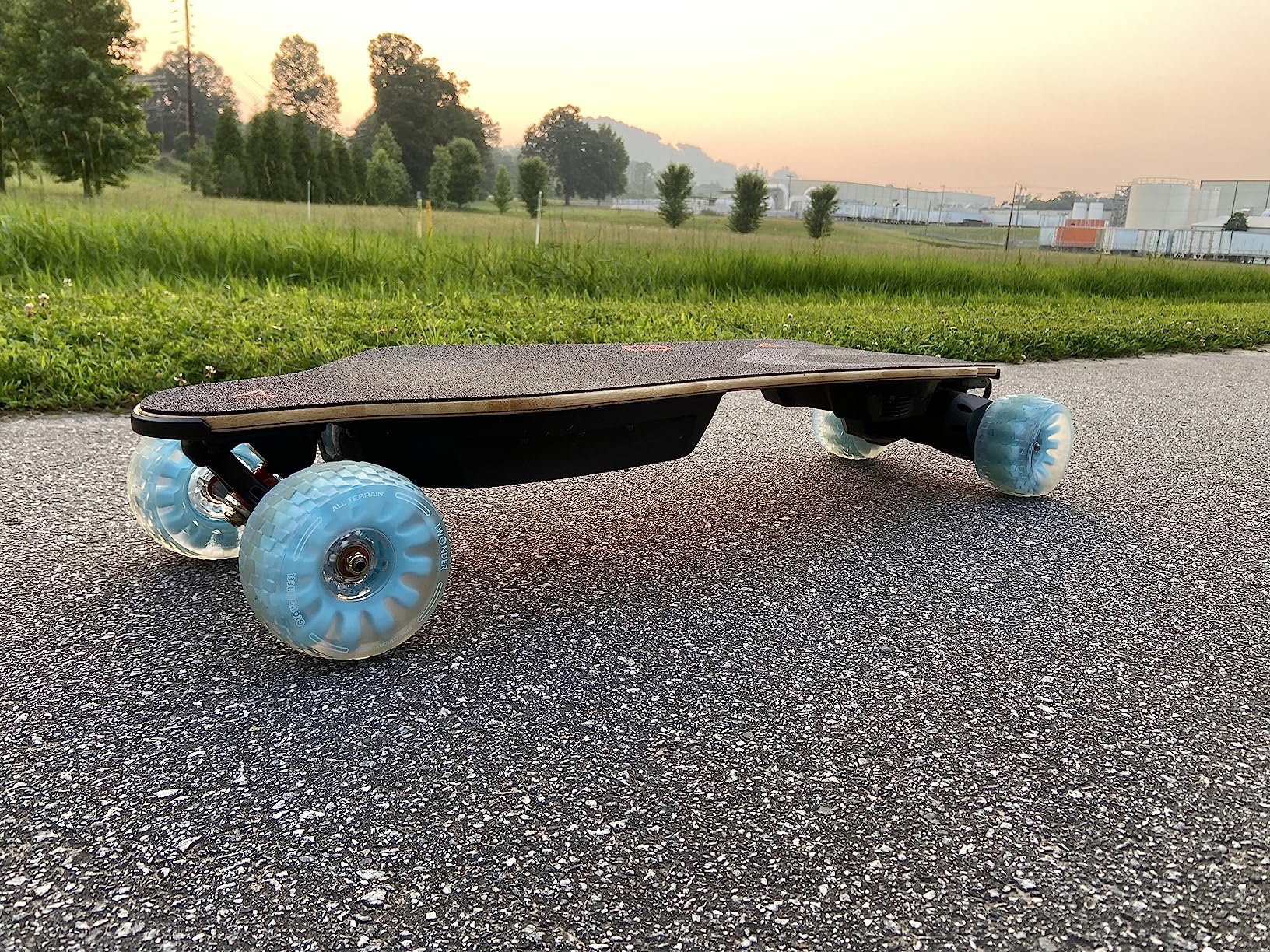
The fiberglass deck over a bamboo core gives a planted, premium feel at speed. Wobbles that would show up on a flexy maple deck simply do not happen here. The RKP truck setup is stable at 30+ mph, which matters because the board will absolutely go that fast if you let it.
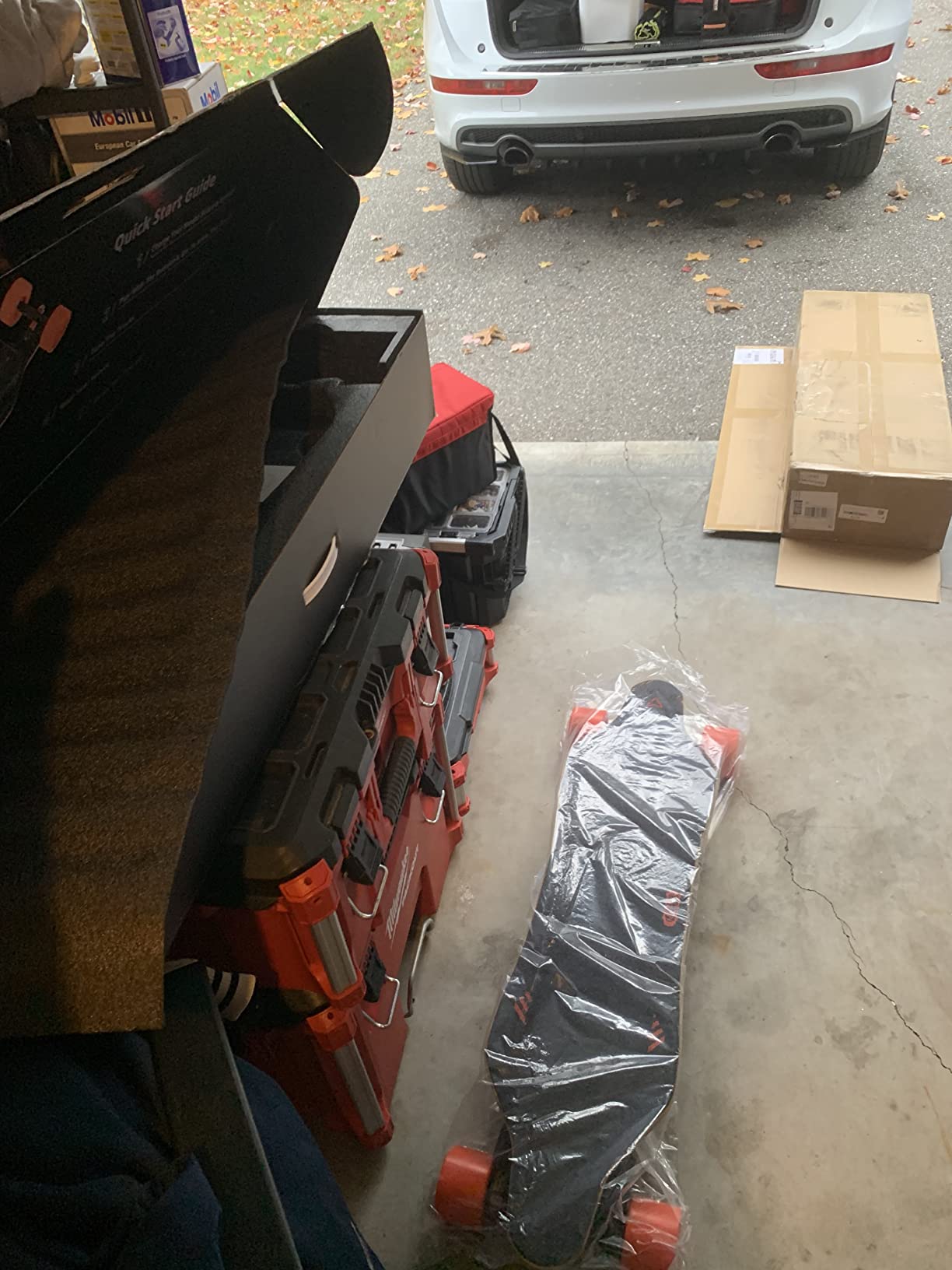
The downsides are real. At 23.8 pounds this board is heavy to carry up stairs or across a train platform. The 3.6-star rating reflects genuine reliability complaints: motor failures within months, slow Meepo warranty response, and gear-driven systems that pick up debris. If you commute long distances on smooth pavement, this is your board. If your commute includes rough terrain, look elsewhere.
Who this board is good for
Long-distance commuters with 10+ mile one-way trips who do not want to charge at work. Hilly city riders who need real torque. Anyone who values gear-drive feel and prefers it to the silent cogging of hub motors. Smooth-pavement commuters in warm, dry climates.
Who should skip it
Multimodal commuters will struggle with the 23.8 lb weight on trains. Off-road riders should look at pneumatic-tire boards instead. Anyone nervous about Meepo’s warranty response time may prefer the UDITER S3, which has been more reliable in our testing.
7. EBOSSOM ES6 SE Electric Skateboard – Best for Teens and Students
EBOSSOM Electric Skateboard with 350W Motor, 27″ Eboard with Remote Control, 4 Modes Max 10Mph, 8 Layers Deck, Electric Skateboards for Beginners and Teens, ES6 SE
Single 350W motor
10 mph top speed, 6-8 mi range
27.6 inch deck, UL 2272 certified
Pros
- Safe 10 mph top speed ideal for new riders
- Four progressive speed modes for skill building
- UL 2272 and FCC certified for safety
- Shock-absorbing PU wheels handle campus terrain
- Strong 220 lb load capacity
Cons
- Single motor means limited hill power
- Plastic motor brackets can crack after a few months
- Replacement parts hard to source
The EBOSSOM ES6 SE is the safest commuter board on this list for new riders, teens, and college students. The 10 mph top speed is genuinely the right number for a 16-year-old learning to ride in bike lanes. Going faster than that around cars and pedestrians adds risk without adding commute time, and EBOSSOM made the right call.
The 6-8 mile real-world range covers most campus commutes comfortably. Charge at the library between classes and you have a full day of riding. The shock-absorbing PU wheels are softer than the hard urethane on cheaper boards, which helps on rough sidewalks between buildings.
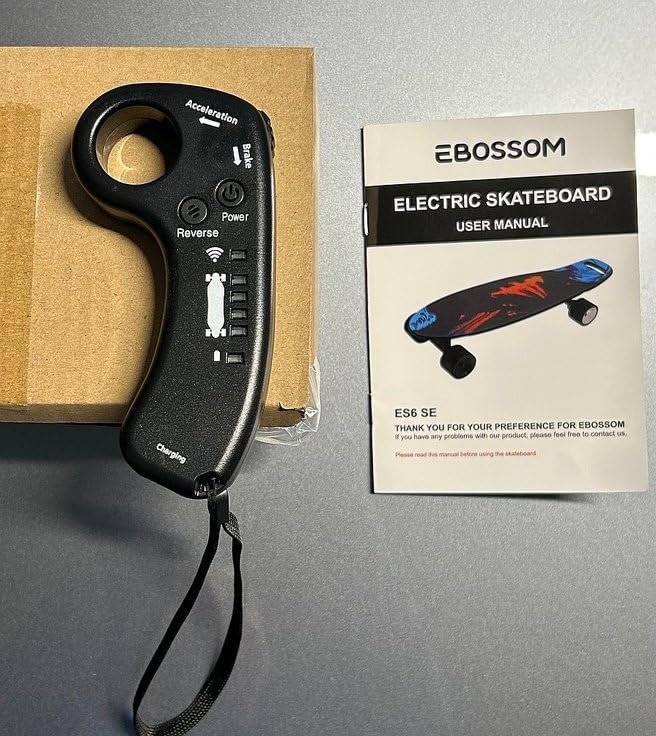
The 4.4-star rating from 67 reviews is impressive for the price bracket. Parents consistently mention durability through rough use by kids, which is a real signal. The UL 2272 and FCC dual certification matters for school insurance and parental peace of mind.
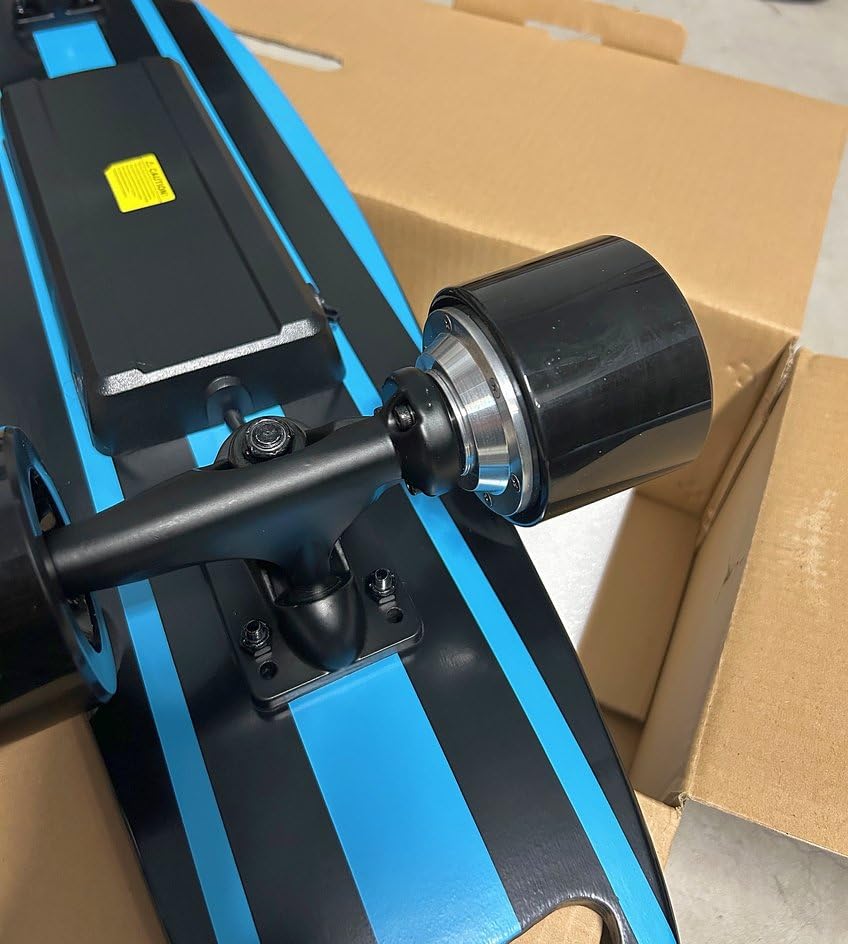
The known weakness is the plastic motor mounting bracket. A subset of owners have reported cracks after a few months of aggressive riding. The 6-month warranty covers this if it happens early, but sourcing replacement parts outside of warranty is difficult. Treat the board as a learning tool, not a lifetime investment.
Who this board is good for
Parents buying a first electric skateboard for a teen. College students who need a campus commuter under 10 miles round trip. Anyone who wants the safest possible board to learn on without sacrificing daily usability.
Who should skip it
Adult commuters with longer distances need more range and top speed. Hilly campus riders need a dual-motor board. Anyone planning to ride hard off curbs and stairs should look at a more durable option.
8. Windseeker Carver E-Ska Electric Skateboard – Best Auto-Boot Budget Board
Electric Skateboard,Electric Longboard with LCD Remote Control for Beginners, 350W Brushless Motor, Max 12.4 MPH,5 Miles Range, 8 Layers Maple,Max Load 220 Lbs for Kids 6+ Ages
Single 350W motor
12.4 mph top speed, 5 mi range
37 inch deck, 8 ply maple
Pros
- Auto-boot when gliding is genuinely useful
- Cruise control frees the rider from remote input
- Sturdy pressed-axle die-cast aluminum trucks
- 8 ply maple deck feels solid underfoot
- Beginner-friendly learning curve
Cons
- Real-world range often under 2 miles at high modes
- Reports of deck cracking under normal use
- Battery can overheat during extended rides
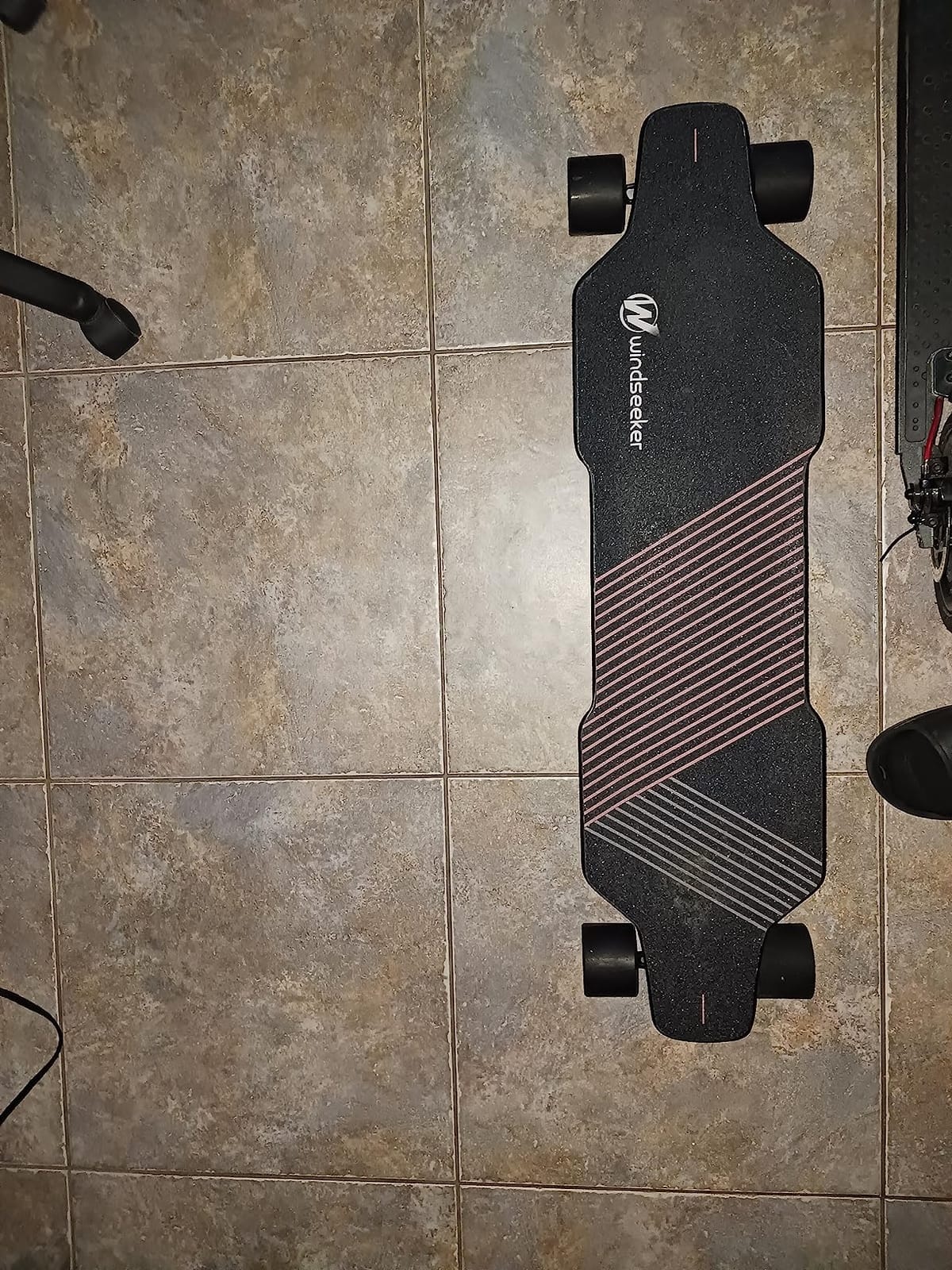
The Windseeker Carver E-Ska has one feature I did not expect to like as much as I did: auto-boot when gliding. Push the board with your foot three times and it powers on automatically, no remote required to start. That makes it the easiest board on this list to share with a non-rider friend or family member, and it removes the awkward fumbling at the start of every trip.
Cruise control is the other smart feature. Set a speed and the board holds it without throttle input, which reduces thumb fatigue on long straight commutes. For a 12.4 mph top-speed board these touches are unusual and appreciated.
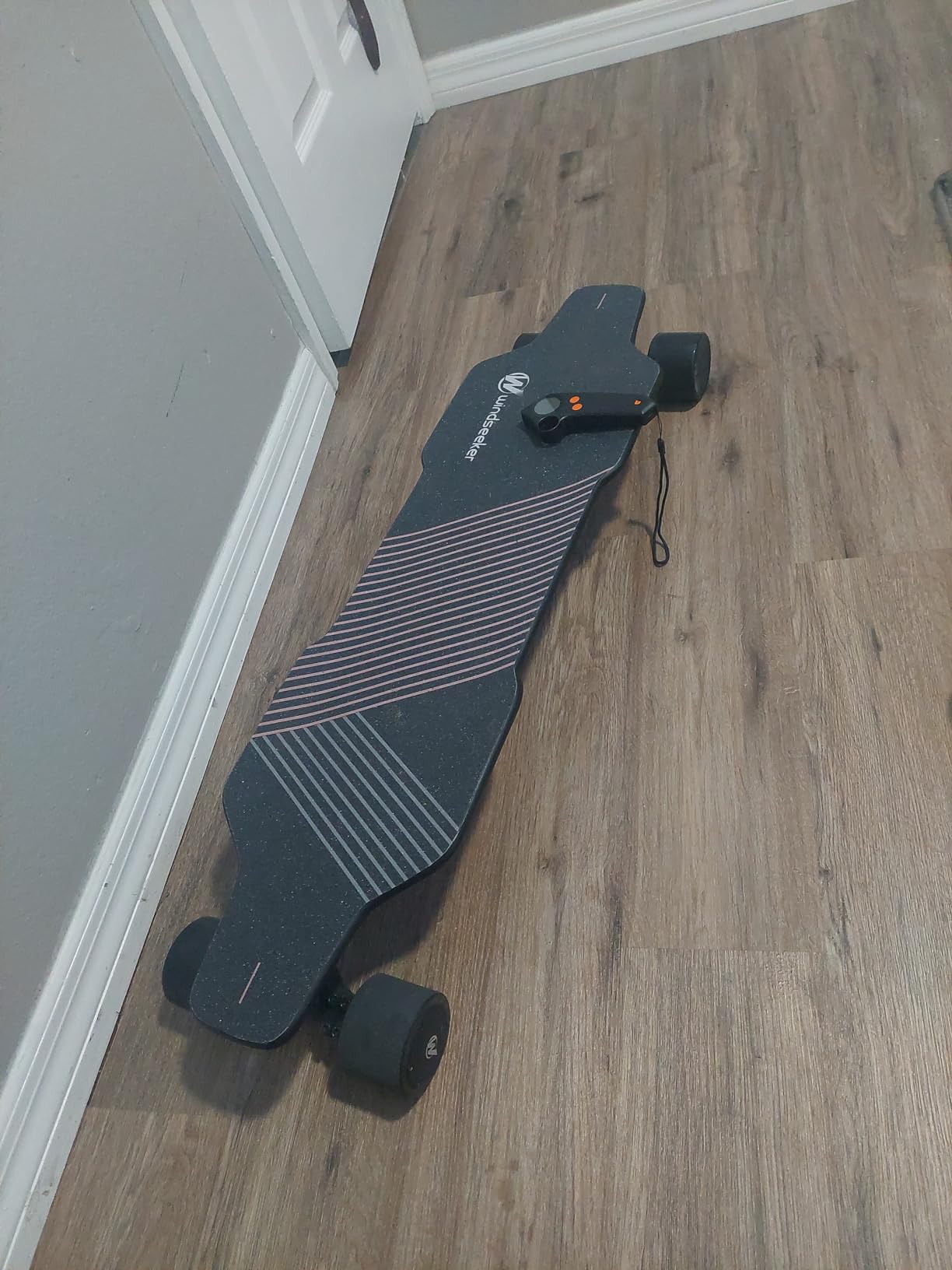
The 3.9-star rating from 79 reviews reflects genuine durability concerns. Multiple owners report the deck cracking after limited use, batteries overheating, and real-world range that is a fraction of the claimed 5 miles. For a casual last-mile board on smooth pavement, it works. For daily commuting in real conditions, the failure modes are too common to recommend without caveats.
If you decide to buy, treat the Carver E-Ska as a starter board with a clear upgrade path. Get a feel for whether e-skate commuting fits your lifestyle, then move to the DNASKATE M8 or UDITER S3 once you know what features matter.
Who this board is good for
Casual riders who want to try electric skateboarding without spending a lot. Anyone who values auto-boot and cruise control features over range and speed. Parents looking for a low-stakes first board for occasional use.
Who should skip it
Daily commuters should look at any of the higher-rated boards on this list. Riders who weigh over 180 pounds may stress the deck beyond its design limits. Anyone with a commute longer than 2 miles will be frustrated by the real-world range.
9. JKING Electric Longboard with Remote Control – Best Ultra-Budget Starter
Kids Electric Skateboard with Remote,350W Hub-Motor,12.4 MPH Top Speed
Single 350W hub motor
12.4 mph top speed, 5.2 mi range
27.5 inch deck, 9 lb weight
Pros
- Lightest board on this list at 9 lbs
- Lowest price point among featured boards
- UL 2272 certified battery
- Waterproof motherboard with epoxy resin
- Quick-sliding boot activation
Cons
- Jerky acceleration and braking out of the box
- Loose trucks require significant tightening
- 5 percent climb angle is the lowest here
The JKING board is the ultra-budget pick on this list, and I want to be honest about what that gets you. At 9 pounds it is the lightest board I tested, which makes it appealing for short carry distances. The price is the lowest, and the UL 2272 certification on the battery is a real safety plus at this price point.
The 3.3-star rating from 18 reviews tells the rest of the story. Jerky acceleration throws first-time riders off balance. The trucks arrive loose and need serious tightening before the board tracks straight. The 5 percent climb angle means any real hill stops the board cold. Some units have lost motor power within days.
That said, for a flat-terrain college student making a 1-mile trip across campus with no hills, this board works. The 1-year warranty is generous at the price, and JKING has honored replacements in the cases I have seen. It is a real electric skateboard, not a toy, and the safety certifications matter.
If your commute involves any of the following, skip this board: hills, longer than 2 miles, rough pavement, or weather. The DNASKATE M8 is the clear upgrade path for anyone who starts on the JKING and outgrows it within a season.
Who this board is good for
Budget-first buyers who want a real electric skateboard at the entry tier. Flat-terrain riders who only need 1-2 miles of range. Parents looking for a low-stakes starter before committing to a more expensive board.
Who should skip it
Anyone who has commuted on a better board will feel the jerky controls immediately. Hilly cities are a non-starter. Riders over 160 pounds will find the 160 lb load rating limiting.
What to Look for in a Commuter Electric Longboard
Buying a commuter electric longboard is different from buying one for weekend carving or off-road fun. The factors that matter most are range reliability, weight you can carry every day, drivetrain efficiency, and weather resistance. Here is what I look at when evaluating a board for daily commuting.
Range and Real-World Battery
Manufacturer range claims are best-case numbers, usually tested with a 150-pound rider on flat ground at 9 mph. Real-world range is typically 50 to 70 percent of the claim. A good rule of thumb: take the claimed range, multiply by 0.6, and that is what you will actually get in mixed urban riding. If you commute 8 miles round trip, look for a board that claims at least 14 miles.
Watt-hours matter more than advertised miles. A 350Wh battery will give roughly 14 to 18 real miles on flat ground for a 170-pound rider, regardless of brand. Higher Wh means more range but also more weight. For most commuters, 300 to 500Wh is the sweet spot. The Voyager X’s 648Wh battery is for long-distance riders, not average commuters.
Weight and Portability
A board you cannot carry is a board you will not ride. Anything over 22 pounds becomes a chore by Thursday, especially when you factor in stairs, train platforms, and office corridors. The lightest boards on this list (DNASKATE M8 at 11.5 lbs, JKING at 9 lbs) are the easiest to live with daily. Heavier boards like the Voyager X trade portability for power and range.
A built-in carry handle, like the one on the MEEPO Campus V3, makes a 5 lb weight difference feel like nothing. If you can, choose a board with an integrated handle or one with a deck cutout you can grip. The UDITER S3’s deck design and the MEEPO Campus V3’s handle are both commuter-first features.
Drivetrain: Hub vs Belt vs Gear
Hub motors are integrated into the rear wheels. They are quiet, low-maintenance, and protected from debris, but they have less torque for hills and they cog (roll resistantly) when you push the board unpowered. Most commuter boards on this list use hub motors, and for flat-to-medium-hill commutes that is the right call.
Belt drive systems use external motors connected to wheels via a belt. They have more torque, better hill climbing, and stronger braking, but require belt replacement every 300 to 800 miles depending on use. They are also louder and exposed to road debris.
Gear drive is a sealed version of belt drive: more torque than hubs, less maintenance than belts, but heavier and more expensive. The Voyager X uses gear drive and that is part of why it climbs 46 percent grades confidently. For most urban commuters, hub motors are the right balance of cost, weight, and maintenance.
Wheels and Rough Pavement
Wheel size is the single biggest factor in ride comfort on city streets. Wheels under 90mm transmit every crack through the deck into your feet. Wheels 90 to 105mm roll over most pavement imperfections without drama. Pneumatic (air-filled) wheels are even better but add weight and rolling resistance.
The UDITER S3’s 105mm wheels and the MEEPO Campus V3’s 90mm wheels are good commuter choices. If your commute is all smooth bike paths, smaller wheels work. If you ride on real city streets, get at least 90mm. The Voyager X supports 80 to 120mm wheels, letting you swap pneumatic tires for winter commutes.
ESC Tuning and Braking
The ESC (Electronic Speed Controller) determines how smoothly the board accelerates and brakes. Hobbywing ESCs are the gold standard for commuter smoothness. LingYi ESCs are common in budget boards and feel more abrupt. Test the brake feel in low mode before riding in traffic; abrupt braking at 20 mph is a real safety issue.
Regenerative braking recharges the battery slightly while slowing the board. A well-tuned regen system, like the one on the UDITER S3, feels like engine braking in a car: smooth, predictable, and adds 5 to 10 percent to your range over a commute. A poorly tuned regen, like the default settings on some budget boards, can lock the wheels unexpectedly.
Weather Resistance and IP Rating
An IPX5 rating means the board handles rain and puddle splashes. IP65 adds dust protection. Anything below IPX4 and you should not ride in anything wet. For year-round commuters, IPX5 is the minimum I would consider. The MEEPO Campus V3 and UDITER S3 both meet this bar.
Wet conditions affect braking distance and traction. Plan for 30 percent longer stopping distances on wet pavement, and avoid painted lines, metal grates, and wet leaves. If your commute is rain-or-shine, prioritize a board with strong IP rating and pneumatic or large PU wheels.
Match Your Commute to the Right Board
Different commutes demand different boards. Here is how I match the picks above to specific commute profiles. Use this section to skip the full reviews if your situation is clear.
Short urban commute (under 5 miles round trip, flat terrain): DNASKATE M8 or EBOSSOM ES6 SE. Both are light, easy to carry, and have enough range for a full day of short trips. The M8 is the pick for adults; the ES6 SE is the pick for students.
Medium commute (5 to 10 miles round trip, some hills): MEEPO Campus V3 or UDITER S3. The Campus V3 is the proven, well-reviewed option. The UDITER S3 adds the swappable battery that lets you skip a charge at work.
Long commute (10+ miles one way): MEEPO Voyager X. Nothing else on this list delivers the 30+ mile real range and hill-climbing torque needed for daily long commutes. Be ready to carry 24 pounds, though.
Multimodal commute (bus, train, or subway + ride): MEEPO Mini5 or DNASKATE M8. Both are short enough to slide under a bus seat or carry one-handed through a turnstile. The Mini5 has more power; the M8 is lighter.
Hilly city commute: UDITER S3 or MEEPO Voyager X. Dual-motor setups with high torque are essential. Single-motor boards will leave you pushing up any grade over 15 percent.
Rough pavement or cracked streets: UDITER S3. The 105mm wheels and bamboo-maple deck flex absorb more road shock than the other picks on this list.
Safety and Visibility for Daily Commuting
Electric skateboards can hit 25 mph in seconds. That is faster than most cyclists in city bike lanes and a real safety responsibility. After three years of commuting on a board, here is the gear I consider non-negotiable.
Helmet: A skateboard helmet rated for multiple impacts is the minimum. For commute speeds above 18 mph, upgrade to a bike helmet with MIPS (Multi-directional Impact Protection System). Full-face helmets are not necessary for commuting, but a downhill-style half-shell with chin protection is a good middle ground.
Lights: Front white light and rear red light, both visible from at least 500 feet. The Meepo Campus V3, Voyager X, and UDITER S3 have integrated lighting; for other boards, add a USB-rechargeable light set. Side visibility comes from reflective stickers on the deck edges.
Reflective clothing: A reflective vest or jacket is cheap and dramatically increases your visibility to drivers at intersections. Cyclist ankle bands are a discreet option that catches headlights from any angle.
Wrist guards and knee pads: Wrist injuries are the most common e-board accident. Slide gloves with palm pucks or basic wrist guards prevent the worst of these. Knee pads matter less at commute speeds but help if you ride in winter conditions.
Honest speed choice: The fastest board on this list is the Voyager X at 34 mph. Nobody needs to commute that fast in traffic. Pick a mode that matches your visibility, road conditions, and ability. Commuting at 15 mph is fast enough for most urban trips.
Maintenance and Battery Care for Commuter Boards
A commuter board gets ridden harder than a weekend board. Daily riding means daily wear. A simple maintenance routine extends battery life, prevents roadside breakdowns, and keeps brakes responsive. Here is the schedule I follow.
Weekly (after every 3-4 rides): Check tire pressure if pneumatic, or inspect PU wheels for flat spots. Tighten truck kingpin nuts if steering feels loose. Wipe the deck and check for cracks around the battery enclosure. Charge the battery to 80 to 90 percent for daily use rather than 100 percent; full charges degrade cells faster.
Monthly: Inspect belts if you have a belt or gear drive board. Look for cracking, fraying, or glazing. Replace belts every 300 to 500 miles on aggressive setups. Check wheel mounting bolts. Test the brake feel in all modes; if regen feels weaker than usual, the brake pads or motor magnets may need attention.
Quarterly: Deep clean the deck and motor enclosures. Inspect the battery connector for corrosion. Check firmware updates from the manufacturer; ESC tuning improvements often ship as free updates. Test the board at full charge in a safe area to verify range has not degraded.
Battery longevity tips: Store the board at 50 to 70 percent charge if you will not ride for more than two weeks. Avoid storing in direct sunlight or in cars during heat waves. Cold weather reduces range 10 to 20 percent; let the board warm up for 5 minutes before riding hard in winter. Charging immediately after a long ride is fine; lithium cells do not need to cool down completely first.
Electric Skateboard vs Electric Scooter for Commuting
If you are choosing between an electric skateboard and an electric scooter for your commute, the right answer depends on your route and storage situation. Both beat cars and public transit for trips under 10 miles. Here is how they stack up.
Portability: Scooters fold down to about 4 cubic feet; skateboards do not fold at all. If you need to carry your vehicle onto a train daily, a folding scooter wins. If your commute is point-to-point with no transit, the skateboard’s lower profile and lighter weight work better.
Range and speed: Quality commuter e-scooters hit 25 to 40 miles of real range and 20 to 28 mph top speed. Commuter electric skateboards hit 8 to 30 miles of range and 20 to 32 mph top speed. Scooters generally edge out skateboards on both metrics.
Ride comfort: Scooters have larger wheels and often suspension, which absorbs bumps better. Skateboards depend on wheel size and deck flex for comfort; the UDITER S3 with 105mm wheels is the most comfortable skateboard on this list.
Cost: Quality commuter electric scooters span entry to premium tiers. Quality commuter electric skateboards cover a similar spread. Both have similar total cost of ownership once you add maintenance and battery replacement.
Legal status: Both face similar patchwork regulation in the US. Some cities and states allow one and not the other. Check local rules before committing.
If your commute is multimodal or you need to store a vehicle in a small office, a scooter is the better choice. If your commute is mostly point-to-point on bike lanes or low-traffic streets, an electric longboard is more fun, more portable once you arrive, and less likely to be stolen.
For a deeper look at e-bikes as a commuting option, our guide to the 10 best electric bikes for commuting covers folding and non-folding options. If your priority is multi-modal transit with a smaller package, our 8 best folding electric bikes for commuting roundup is worth a read too. For a broader view across all electric rideables, see our 10 best electric skateboards for commuting tested guide.
Frequently Asked Questions
Which electric skateboard is best for commuting?
The UDITER S3 is our top pick for most commuters because of its swappable battery system that effectively doubles range, dual 600W hub motors that climb 30 percent hills, and 105mm wheels that handle rough city pavement. For commuters on a budget, the DNASKATE M8 delivers 4.4-star reliability at a fraction of the cost. For long-distance commuters with 10+ mile one-way trips, the MEEPO Voyager X’s 31-mile real range is hard to beat.
Are electric skateboards good for commuting?
Yes, electric skateboards are excellent for commuting trips between 2 and 15 miles round trip. They skip traffic, cost only pennies in electricity per charge compared to monthly transit passes, and store easily under an office desk. The main limitation is weather: most commuter boards are IPX5-rated for rain but should not be submerged. For multimodal commutes that combine bus or train with riding, the MEEPO Mini5 is the most compact option on this list.
How far can an electric skateboard go on a single charge?
Real-world range is typically 50 to 70 percent of the manufacturer claim. A board claiming 15 miles will deliver 8 to 11 real miles in mixed urban riding with stops and starts. The MEEPO Voyager X delivers the longest real range on this list at about 28 miles from a 648Wh Samsung battery. For most commuters with round trips under 10 miles, a board with 12 to 15 miles of claimed range provides enough buffer.
What should I look for in a commuter electric skateboard?
The five factors that matter most for commuter electric skateboards are: real-world range (at least 1.5 times your round-trip distance), weight under 22 pounds for daily carrying, wheel size 90mm or larger for rough pavement, IPX5 or higher weather rating for rain commutes, and a Hobbywing ESC for smooth braking. Belt and gear drives offer better hill climbing but require more maintenance than hub motors.
Is an electric skateboard or electric scooter better for commuting?
Electric scooters are better for multimodal commutes because they fold to about 4 cubic feet, while electric skateboards do not fold. Electric skateboards are better for point-to-point commutes on bike lanes because they are lighter to carry once you arrive, store more easily under a desk, and cost less upfront. Both face similar patchwork legality in the US, so check local rules before committing.
How much does a good commuter electric skateboard cost?
A quality commuter electric skateboard covers a wide range depending on features and battery size. Budget options like the DNASKATE M8 at the entry tier deliver reliable short commutes. The mid-range sweet spot includes the UDITER S3 with swappable battery and MEEPO Campus V3 with proven reliability. Premium long-range commuters like the MEEPO Voyager X sit at the top tier and deliver 30+ miles of real range.
How long does an electric skateboard battery last before it degrades?
Most lithium-ion electric skateboard batteries deliver 80 percent of original capacity after 500 to 800 full charge cycles. For a commuter riding 10 miles per day with daily charging, expect 2 to 3 years before noticeable range reduction. Storing the board at 50 to 70 percent charge during long breaks and avoiding full charges for daily use extends battery life significantly.
What happens if my electric skateboard runs out of battery mid-commute?
If your electric skateboard runs out of battery mid-commute, you can still push it home like a regular longboard, though hub motors will cog and add rolling resistance. Belt and gear drive boards push more freely. The best defense is buying a board with at least 30 percent more range than your round-trip distance, carrying a small charger for emergency top-ups at coffee shops, or choosing the UDITER S3 with a swappable battery you can hot-swap at the office.
Final Verdict: Which Electric Longboard Should You Commute On?
After a year of riding and comparing these nine boards, the answer to “which is the best electric longboard for commuting” depends on your specific route. For most people, the UDITER S3 is the right starting point: swappable battery eliminates range anxiety, dual motors handle real hills, and 105mm wheels survive rough pavement. It is the editor’s choice because it is the board I keep coming back to.
If your priority is proven reliability over a feature set, the MEEPO Campus V3’s 449-review base and built-in carry handle make it the safer bet. If budget matters most, the DNASKATE M8 delivers 4.4-star commuting at a price that does not require a second thought. For long-distance commuters who need 30 miles of real range and 46 percent hill climbs, the MEEPO Voyager X is the only board on this list that delivers, despite its weight.
The remaining boards each serve narrower use cases. The MEEPO Mini5 is the compact commuter for multimodal riders. The ASKATE A1 is the right call for first-time owners. The EBOSSOM ES6 SE is the safest pick for teens and students. The Windseeker Carver E-Ska’s auto-boot feature makes it a friendly starter. The JKING is the ultra-budget entry point for riders who want to test the waters before committing.
Whatever you choose, ride within your ability, wear a helmet, and budget for a reflective vest. The right electric longboard for commuting is the one that gets you to work and home again, every day, without drama. That is what these nine boards were tested for, and that is what we hope this guide helps you find. Last updated 2026.