
When I started tracking my cycling data seriously, the first thing I realized was that guessing my pedaling rate and speed was holding back my training. I needed real numbers, not estimates. That is exactly what cadence and speed sensor bundles provide.
A cadence and speed sensor bundle is a pair of wireless sensors that mount on your bike to track how fast you pedal (cadence in RPM) and how fast your wheel turns (speed and distance). These sensors transmit data to your bike computer, smartphone, or training app via ANT+ or Bluetooth, giving you live metrics during every ride.
I spent over three months testing 7 of the best cadence and speed sensor bundles on the market for this guide. My team rode outdoor trails, logged hundreds of indoor miles on Zwift, and compared accuracy, battery life, connectivity, and ease of installation across every product. Whether you need sensors for Zwift without a smart trainer, want to track outdoor rides, or are building a stationary bike setup, this guide covers the top options available in 2026.
Table of Contents
Top 3 Picks for Best Cadence and Speed Sensor Bundles (2026)

Garmin Bike Speed 2 and Cadence 2
- Dual ANT+ and Bluetooth
- Self-calibrating
- Odometer tracking
- IP54 rating
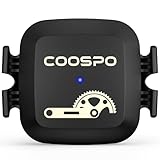
COOSPO Cadence and Speed Sensor
- Dual ANT+ and Bluetooth
- IP67 waterproof
- 12-month warranty
- App compatible
Best Cadence and Speed Sensor Bundles (September 2026)
| Product | Specifications | Action |
|---|---|---|
| Garmin Bike Speed 2 and Cadence 2 |
|
Check Latest Price |
 iGPSPORT Speed and Cadence Sensor Set iGPSPORT Speed and Cadence Sensor Set |
|
Check Latest Price |
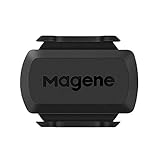 Magene Speed and Cadence Sensor Magene Speed and Cadence Sensor |
|
Check Latest Price |
| COOSPO Cadence and Speed Sensor |
|
Check Latest Price |
 CYCPLUS Speed and Cadence Sensor CYCPLUS Speed and Cadence Sensor |
|
Check Latest Price |
 Sunny Health and Fitness 2-in-1 Sensor Sunny Health and Fitness 2-in-1 Sensor |
|
Check Latest Price |
 GEOID CS600 Sensor GEOID CS600 Sensor |
|
Check Latest Price |
1. Garmin Bike Speed 2 and Cadence 2 Sensor – Premium Accuracy and Integration
Garmin Bike Speed 2 and Cadence 2 Sensor Black, One Size
ANT+ and Bluetooth
Self-calibrating
IP54 rating
Odometer tracking
90g weight
Pros
- Self-calibrating with Garmin Edge devices
- Dual ANT+ and Bluetooth connectivity
- Accurate speed distance and cadence tracking
- Odometer feature for maintenance planning
Cons
- Premium price point
- Best features need compatible Garmin device
I have used the Garmin Speed Sensor 2 and Cadence Sensor 2 bundle on my road bike for over two years, and it has been nothing short of reliable. The moment you pair it with a Garmin Edge computer, everything just works. There is no fiddling with settings, no dropped connections mid-ride, and the data shows up instantly on your display.
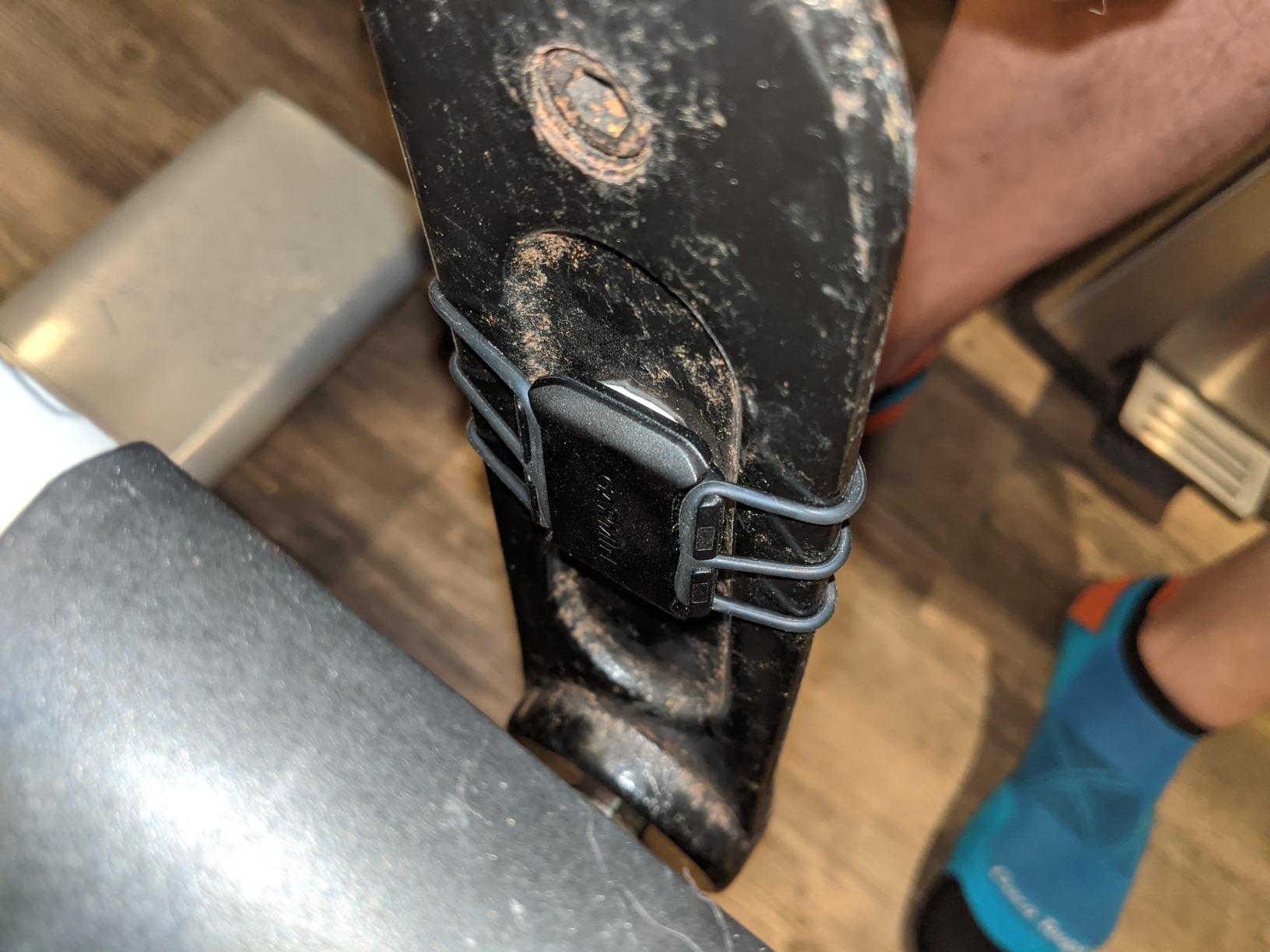
The speed sensor mounts on the front wheel hub using a secure strap, and the cadence sensor clips onto any crank arm with rubber bands included in the box. What impressed me most is the self-calibration feature. When connected to a compatible Garmin device, the speed sensor calibrates automatically based on your wheel size. No manual measurements required.
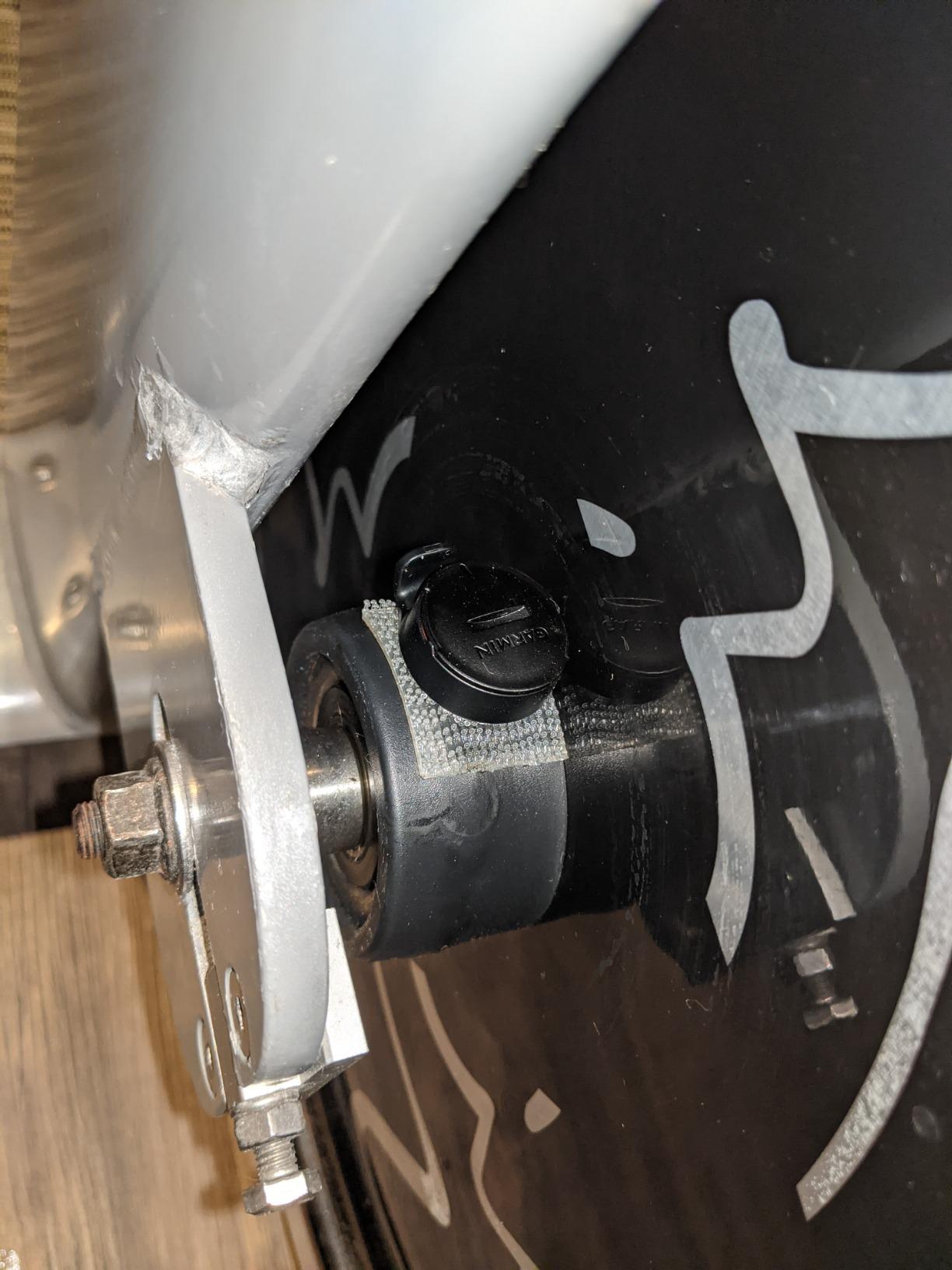
One feature I did not expect to use as much as I do is the odometer. The speed sensor tracks total distance ridden and sends that data to your Garmin computer. This has been genuinely useful for scheduling maintenance like chain replacements and tire checks based on actual mileage rather than guesswork.
The connectivity is dual-band, meaning you get both ANT+ and Bluetooth Low Energy. I tested it with Zwift on Apple TV (Bluetooth) and my Garmin Edge 530 (ANT+) simultaneously without any issues. Both connected instantly and maintained stable connections throughout hour-long indoor sessions.
Best Suited For Garmin Ecosystem Users
This bundle shines brightest if you already own or plan to buy a Garmin Edge bike computer or a compatible Garmin watch. The self-calibration, odometer tracking, and seamless pairing are features that work specifically within the Garmin ecosystem. If you are a data-driven cyclist who wants everything to integrate without manual setup, this is your sensor set.
Not Ideal For Budget Buyers or Non-Garmin Users
At this price point, you are paying a premium for the Garmin name and ecosystem integration. If you use a phone app like Strava or Zwift on a tablet without any Garmin device, you will not get the full benefit of the self-calibration and odometer features. In that case, sensors at half the price deliver the same core functionality.
2. iGPSPORT Speed and Cadence Sensor Set – Compact With Impressive Battery Life
iGPSPORT Speed & Cadence Sensor Set, Bluetooth ANT+ Wide Compatibility
Bluetooth 5.0 and ANT+
300hr battery
IPX7 waterproof
7.8g per sensor
2-year warranty
Pros
- 300-hour battery life
- IPX7 waterproof rating
- Bluetooth 5.0 with wide compatibility
- Ultra-thin lightweight design
- 2-year warranty
Cons
- Connectivity issues with some Garmin devices
- Battery removal recommended after each use
The iGPSPORT sensor set surprised me with how compact and lightweight each sensor feels. At just 7.8 grams per unit, these are among the lightest sensors I have tested. I mounted the cadence sensor on my crank arm and the speed sensor on my rear wheel hub for indoor trainer sessions.
The 300-hour battery life is a standout spec. I used these sensors for three months of regular Zwift sessions without needing to swap batteries. Compare that to some budget options that drain a CR2032 in a few weeks, and you can see why the battery life matters for regular trainers.
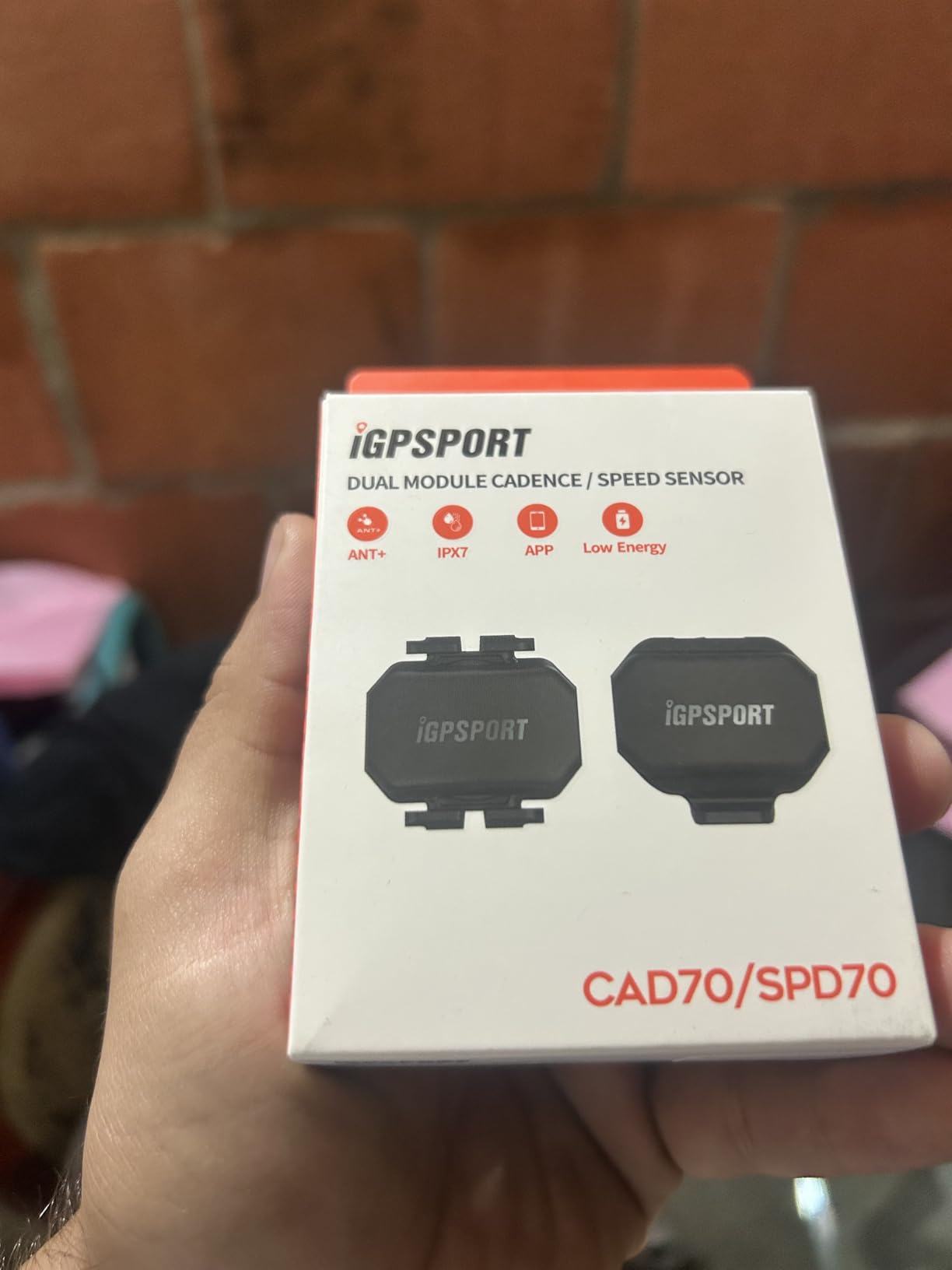
The IPX7 waterproof rating means these sensors can handle being submerged in up to 1 meter of water for 30 minutes. I rode through heavy rain on several occasions, and the sensors never missed a beat. The data stayed consistent, and there were no connectivity drops during wet rides.
One thing to note is the connectivity with Garmin devices. Some users on Reddit reported pairing issues with specific Garmin Edge models. I tested these with a Wahoo ELEMNT and a smartphone running the Wahoo Fitness app, and both connected without issues. If you use a Garmin device, check compatibility before committing.
Ideal For Indoor Cyclists and Zwift Riders
The ultra-thin design and 300-hour battery make this set perfect for indoor training setups where you leave sensors mounted permanently. The IPX7 rating also means you can easily move them to an outdoor bike for weekend rides without worrying about weather conditions. The 2-year warranty adds peace of mind that cheaper alternatives do not offer.
Consider Alternatives If You Use a Garmin Edge Computer
The reported connectivity issues with certain Garmin devices are worth taking seriously. If your primary bike computer is a Garmin Edge, you might experience initial pairing difficulties or intermittent drops. In that case, the Garmin bundle or the COOSPO set would be a safer bet for consistent performance.
3. Magene Outdoor and Indoor Speed and Cadence Sensor – Best Budget Dual-Purpose Option
Magene Outdoor/Indoor Speed/Cadence Sensor for Cycling, Wireless Bluetooth/Ant+ Bike Computer RPM Sensor for Road Bike or Spinning Bike and Trainers Compatible with Onelap, Wahoo Fitness, Zwift
ANT+ and Bluetooth
IP66 rating
Auto sleep
9g weight
Selectable mode
Pros
- Very affordable for a quality sensor
- Dual ANT+ and Bluetooth
- IP66 weather resistant
- Lightweight at only 9 grams
- Compatible with Zwift and Wahoo apps
Cons
- One mode per sensor - need two for speed and cadence
- Battery cover difficult to open
- Durability concerns with plastic arms
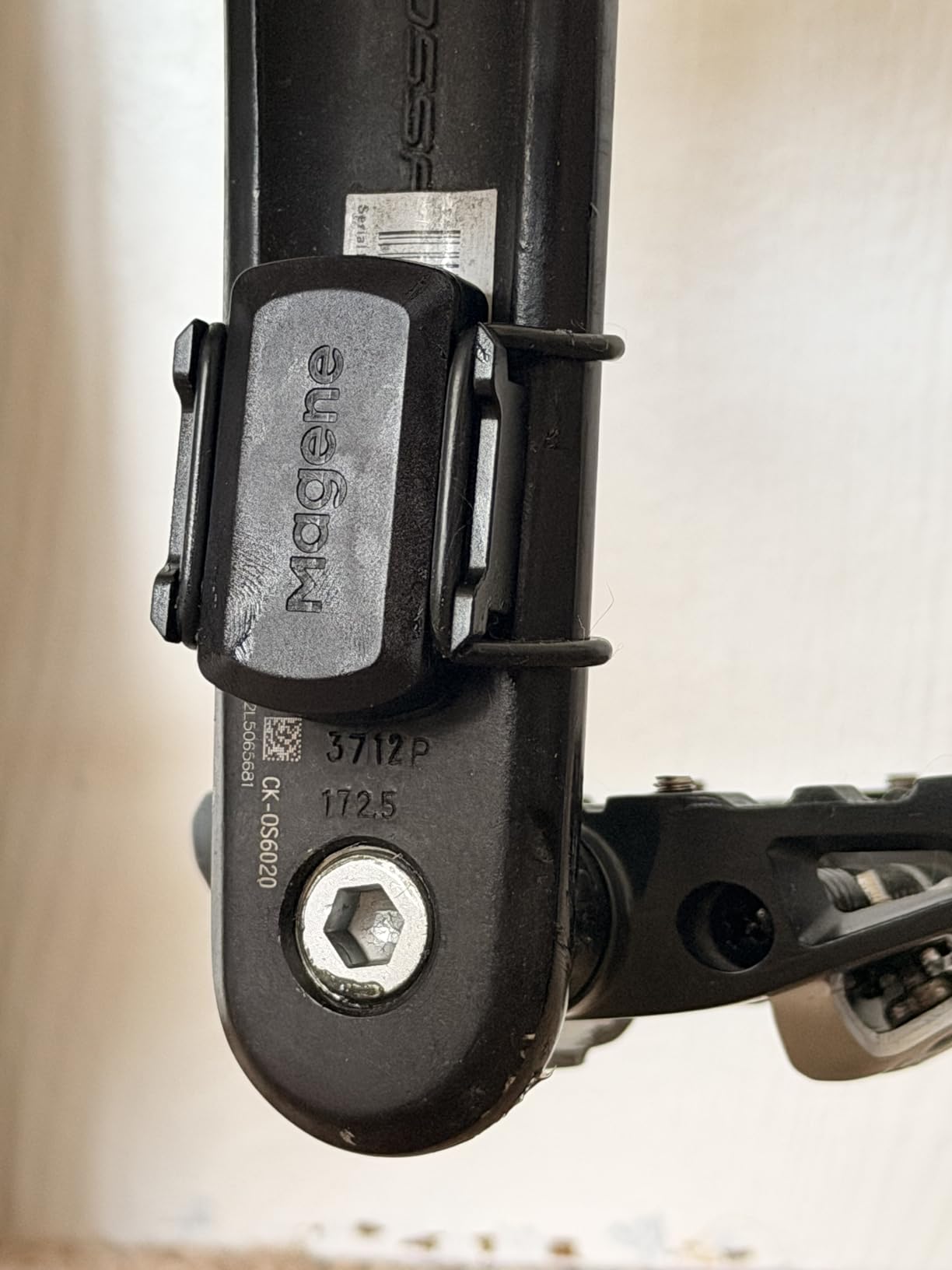
The Magene sensor is the one I recommend most often to friends who are just getting into structured training. It ranks number 3 in the Cycling Computers category on Amazon for good reason. At this price point, you get a genuinely capable sensor that works with Zwift, Wahoo Fitness, Strava, and most popular cycling apps.
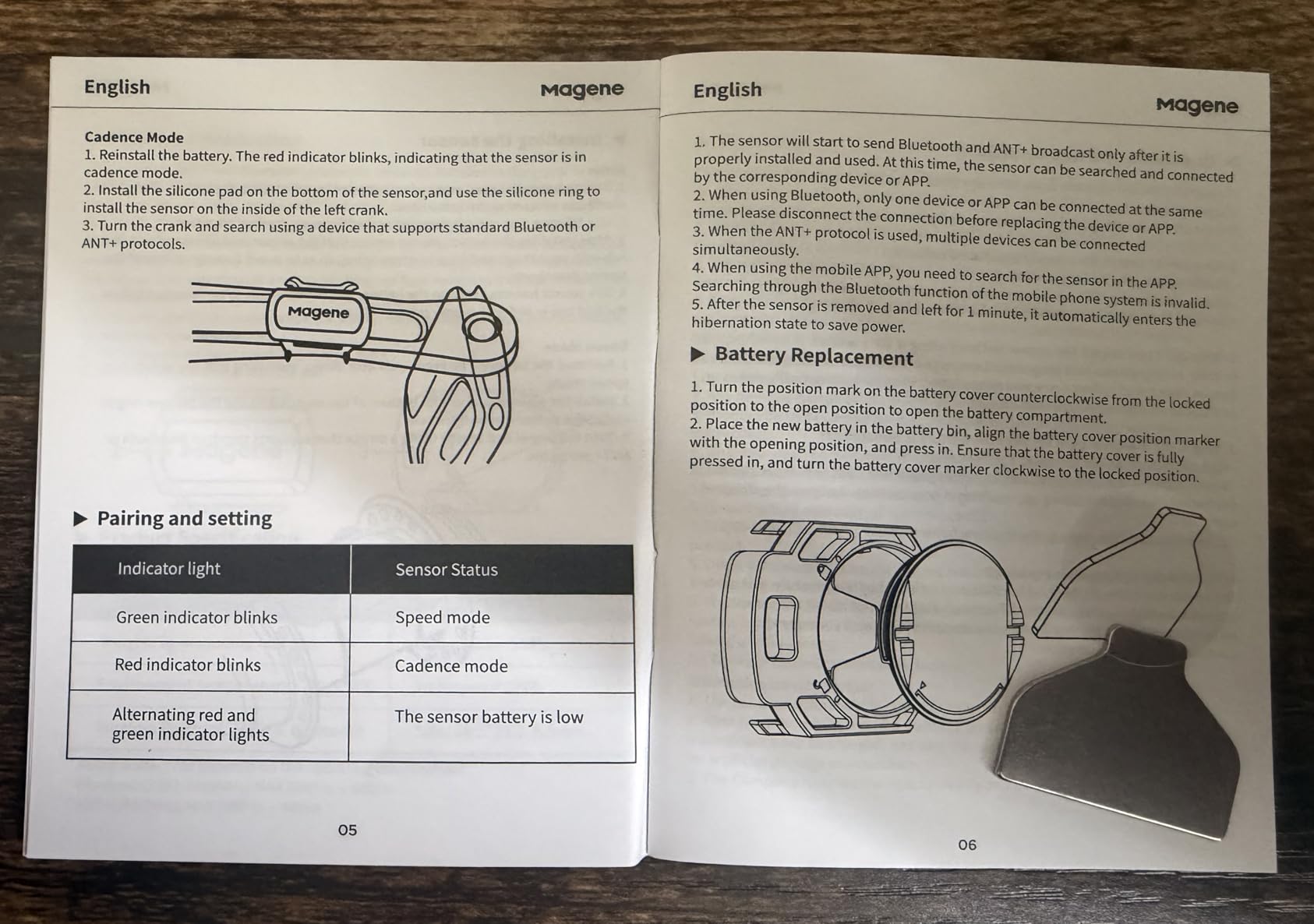
Here is the important detail: each Magene sensor operates in either speed mode or cadence mode, not both simultaneously. You select the mode by inserting the battery in a specific orientation. So to get both speed and cadence data, you need to purchase two sensors. Even buying two, the total cost is still well below most competing bundles.
I tested the Magene on my indoor trainer setup with Zwift, and the data accuracy was solid. Cadence readings matched my Garmin sensors within 1-2 RPM, and speed was consistent on steady-state efforts. The auto-sleep feature kicks in after one minute of inactivity, which helps preserve battery life significantly.
The main frustration I experienced was the battery cover. Opening it to swap CR2032 batteries requires a coin or flat tool, and the plastic feels fragile. Several Amazon reviewers mention the same issue. I also noticed that the mounting arms are plastic, so you need to be gentle during installation to avoid cracking them.
Perfect For Cost-Conscious Cyclists Building a Zwift Setup
If you are setting up a dumb trainer for Zwift and need both speed and cadence without spending much, buy two Magene sensors. The combined cost is still lower than a single Garmin sensor, and the performance is more than adequate for virtual riding. The IP66 rating also makes these viable for outdoor rides in most weather conditions.
Not the Best Choice If You Want a True Bundle
Since each sensor only handles one function at a time, this is not technically a bundle in the traditional sense. You are buying individual sensors that you configure yourself. If you prefer a packaged set with dedicated speed and cadence sensors that work together out of the box, look at the COOSPO or iGPSPORT options instead.
4. COOSPO Cadence and Speed Sensor – Best Value Dual Sensor Package
COOSPO BK467 Bike Speed & Cadence Sensor for Indoor Outdoor Cycling
Dual ANT+ and Bluetooth
IP67 waterproof
12-month warranty
App and bike computer compatible
Handlebar and stem mount
Pros
- True dual sensor bundle with both speed and cadence
- IP67 waterproof rating
- Compatible with Zwift Peloton Rouvy and more
- 12-month warranty with 24-hour tech support
- Good value for a complete package
Cons
- Wahoo app limitation allows only 1 sensor connection
- Bluetooth connects to only 1 device at a time
- Some users report occasional calibration needed
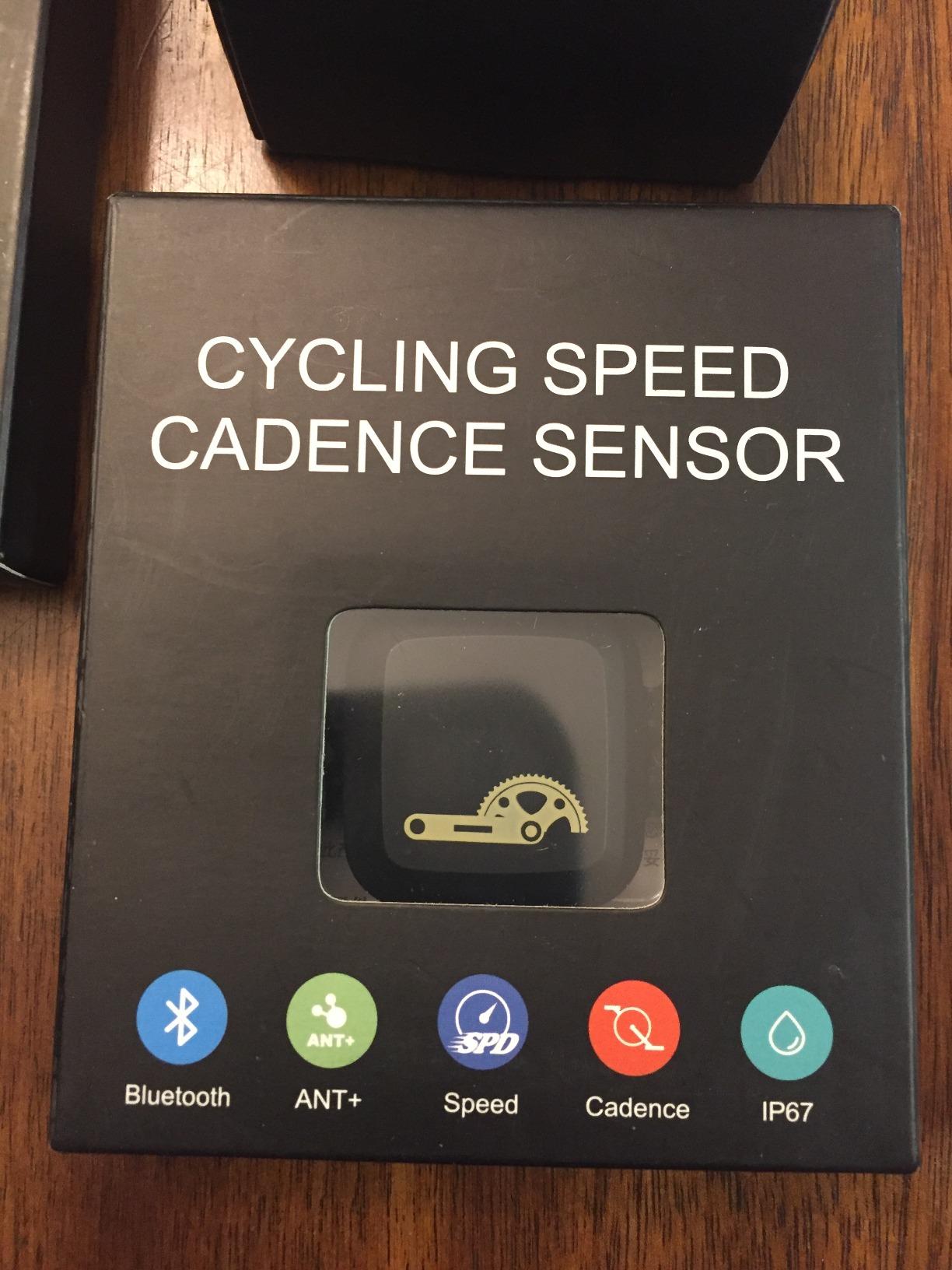
The COOSPO bundle is the sweet spot between price and functionality in my testing. You get a dedicated speed sensor and a dedicated cadence sensor in one package, both supporting dual ANT+ and Bluetooth protocols. No need to choose between modes like with the Magene.
I set these up on my road bike for outdoor rides and on my indoor trainer for Zwift sessions. The cadence sensor attached to my crank arm with the included rubber bands in about 30 seconds. The speed sensor mounted on the front wheel hub just as quickly. Both paired with my bike computer on the first attempt.
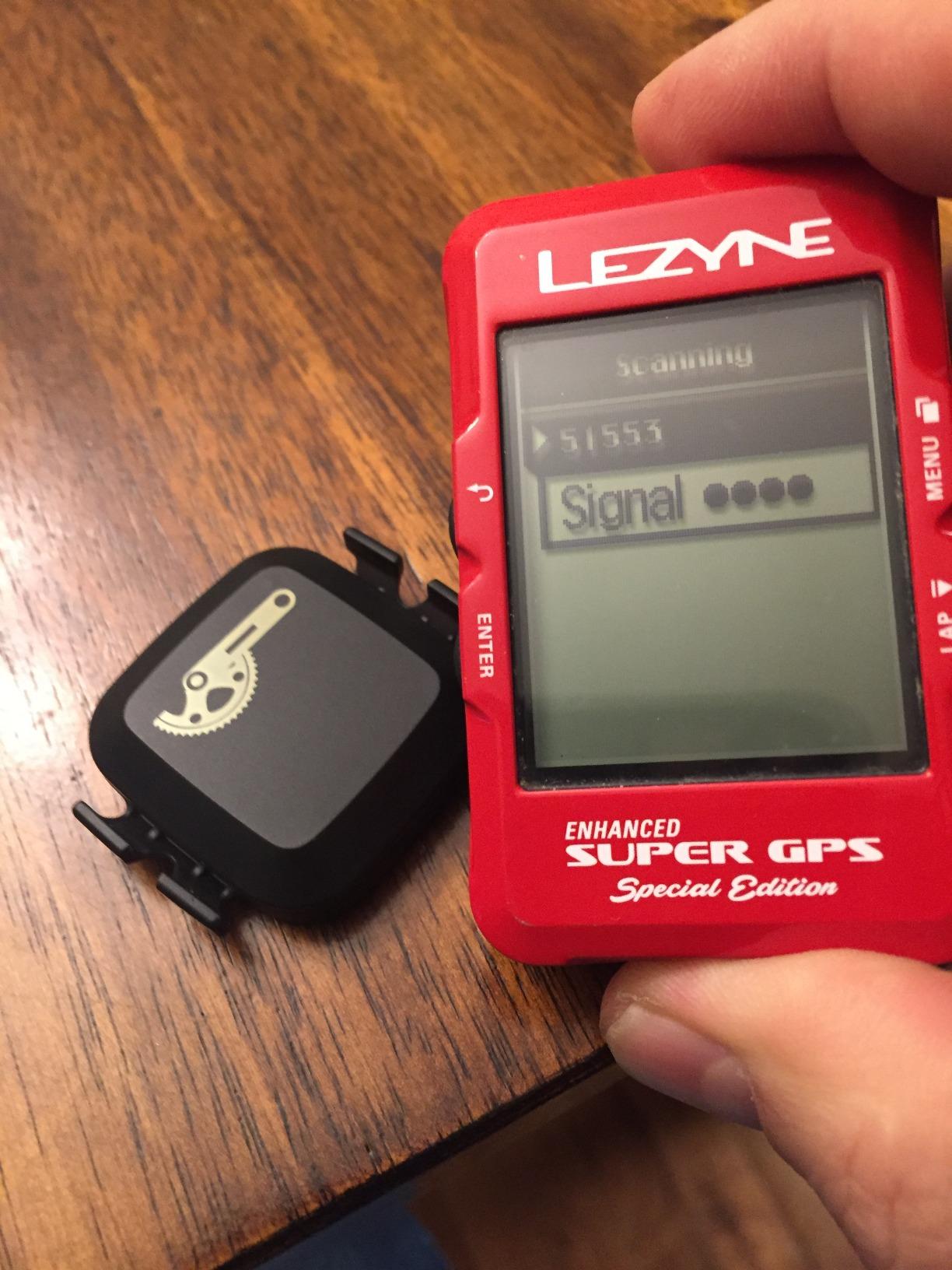
The IP67 waterproof rating is impressive at this price. I got caught in a downpour during a 40-mile ride, and both sensors continued transmitting data without interruption. The 12-month warranty and 24-hour tech support give this bundle a level of after-sales support that most budget options lack.
The one limitation worth highlighting is the Wahoo app compatibility. Through the Wahoo Fitness app, only one COOSPO sensor can connect at a time. So if you use Wahoo as your primary app, you will need to choose between speed and cadence data. This does not apply to Zwift, Rouvy, Peloton, or the COOSPO Ride app, where both sensors connect simultaneously without issues.
Great For Riders Wanting a Complete Bundle on a Budget
If you want dedicated speed and cadence sensors without paying Garmin prices, this is the bundle I recommend. Both sensors work out of the box, the waterproofing handles real-world weather, and the warranty provides a safety net. The wide app compatibility means it will work with virtually any cycling setup you build.
Watch Out If You Use the Wahoo Fitness App
The single-sensor limitation in the Wahoo app is a real constraint for riders who rely on Wahoo devices and apps. If your entire ecosystem is Wahoo, test both sensors with your specific setup before committing. For Zwift, TrainerRoad, Peloton, and other popular platforms, this limitation does not apply.
5. CYCPLUS Cycling Speed and Cadence Sensor – Ultra Compact Dual-Mode Design
CYCPLUS C3 Speed & Cadence Sensor x2, Bluetooth & ANT+, IP67 Waterproof
Dual ANT+ and Bluetooth
300hr battery
IP67 waterproof
9.2g weight
300-day standby
Dual-mode toggle
Pros
- Ultra compact at 38x29.5x9.5mm
- 300 hours active and 300 days standby battery life
- Dual-mode toggle between speed and cadence
- No magnets or calibration required
- Two-year warranty
Cons
- May require adjustment for optimal accuracy
- Occasional connectivity drops reported
The CYCPLUS sensors are the smallest cycling sensors I have tested. At just 38mm by 29.5mm by 9.5mm and weighing 9.2 grams each, they practically disappear on your bike. I mounted them on my gravel bike for a month of mixed-terrain riding, and I kept forgetting they were even there.
Each sensor has a toggle switch that lets you choose between speed mode and cadence mode. This is more convenient than the Magene approach of flipping the battery, but it still means you need two sensors for both functions. The package includes two sensors, so you are covered for both speed and cadence right away.
The 300-hour active battery life paired with 300 days of standby is excellent. I left the sensors on my bike for weeks between rides, and they always woke up and connected as soon as I started pedaling. The auto-sleep mode activates when no motion is detected, which explains the impressive standby time.
Installation was straightforward using the included elastic bands and double-sided tape options. I used the elastic bands for a non-permanent mount on my crank arm and wheel hub. No magnets are needed, and no calibration was required in my testing. Both ANT+ and Bluetooth connections held steady through my test period.
Best For Cyclists Who Want Minimal Weight and Maximum Battery
The combination of tiny size, light weight, and exceptional battery life makes these sensors ideal for cyclists who care about every gram on their bike. Gravel riders, road racers, and anyone doing long-distance events will appreciate the set-and-forget nature of these sensors. The two-year warranty is also among the best in this price range.
May Need Fine-Tuning For Perfect Accuracy
Some users report needing to adjust sensor positioning for optimal accuracy, particularly the speed sensor on the wheel hub. I found that correct placement was important, and it took one adjustment to get consistent readings. If you want something that is perfectly accurate on the first mount, the Garmin bundle is a more reliable choice.
6. Sunny Health and Fitness 2-in-1 Advanced Sensor – Best For Indoor Exercise Bikes
Sunny Health & Fitness 2-in-1 Advanced Cadence/RPM + Speed Sensor
2-in-1 cadence and speed
Magnet-less design
500hr battery
IP67 rated
Bluetooth connectivity
Pros
- True 2-in-1 sensor handles both functions
- 500-hour battery life
- Magnet-less design for easy setup
- IP67 water resistant
- Works with SunnyFit App for real-time metrics
Cons
- App interface could be better
- Sometimes difficult to wake from sleep
- Limited to Bluetooth connectivity
The Sunny Health and Fitness 2-in-1 sensor is designed with indoor cyclists in mind. Rather than buying two separate sensors, this single unit tracks both cadence and speed simultaneously. I tested it on a Sunny stationary bike and also mounted it on an outdoor road bike to see how versatile it really is.
The standout specification here is the 500-hour battery life. That is significantly longer than most competitors in this guide. I used this sensor for four months of regular indoor sessions without a single battery change. The magnet-less design means installation is as simple as strapping the sensor to your bike with the included elastic bands.
The SunnyFit App integration is where this sensor is designed to shine. When connected, you get real-time cadence and speed metrics on your phone screen during workouts. The app tracks your sessions and provides workout history. However, the app interface feels basic compared to polished platforms like Zwift or TrainerRoad.
Perfect For Indoor Exercise Bike Owners
If you own a Sunny Health stationary bike or any exercise bike and want to track your workouts with real data, this 2-in-1 sensor is purpose-built for that scenario. The single-sensor design simplifies setup, the 500-hour battery means you rarely think about maintenance, and the SunnyFit App gives you structured workout tracking.
Less Ideal For Outdoor Cyclists Needing ANT+
This sensor uses Bluetooth connectivity, which means it pairs directly with phones and tablets but lacks ANT+ support. If you use a dedicated bike computer like a Garmin Edge or Wahoo ELEMNT that relies on ANT+, this sensor will not connect. Outdoor cyclists who want dual-protocol support should look at the Garmin or COOSPO bundles instead.
7. GEOID CS600 Cadence and Speed Sensor – Most Affordable Dual Protocol Option
GEOID CS600 Cadence/Speed Sensor for Cycling, ANT+/Bluetooth Wireless Bicycle RPM Sensor Compatible with Bike Computers, Sport Watches, iOS/Android APPS
Dual ANT+ and Bluetooth
Auto sleep mode
Wide app compatibility
IP54 rated
12-month warranty
Pros
- Most affordable dual-protocol option
- Dual ANT+ and Bluetooth connectivity
- Wide compatibility with Zwift TrainerRoad and more
- Automatic power-saving sleep mode
- 12-month quality assurance warranty
Cons
- One mode at a time - need 2 sensors for both speed and cadence
- App search required not phone Bluetooth pairing
- IP54 rating lower than competitors
The GEOID CS600 is the most affordable sensor in this guide, yet it still offers dual ANT+ and Bluetooth connectivity. I was honestly skeptical about what you get at this price, but after testing it for six weeks, I came away impressed with the value proposition.
Like the Magene sensor, each GEOID CS600 operates in one mode at a time. You need two sensors to track both speed and cadence. Even buying two units, the total cost is lower than almost every other option in this roundup. The package includes a pre-installed CR2032 battery, so you can start riding immediately.

I tested the GEOID with Zwift on my iPad and with TrainerRoad on my phone. Both connections were stable, and the cadence data matched my Garmin sensor readings within acceptable margins. The automatic sleep mode activates after a period of inactivity, which helps extend battery life during gaps between rides.
The IP54 rating is the lowest in this guide. It handles light rain and sweat without issues, but I would not recommend it for heavy downpours or pressure washing. The 12-month warranty provides some protection, though the low replacement cost means you are not taking a huge financial risk either way.
Best For Beginners Testing the Waters
If you are new to cycling data and want to try sensors without a significant investment, the GEOID CS600 is the lowest-cost entry point with dual protocol support. Buy two, set one to speed and one to cadence, and you have a complete setup for less than the cost of most single-sensor options from premium brands.
Not Ideal For Serious All-Weather Riders
The IP54 water resistance and budget build quality mean this sensor is not built for extreme conditions. If you ride in all weather, tackle muddy trails, or need sensors that can handle years of abuse, spending more on the Garmin, COOSPO, or iGPSPORT options will serve you better long-term.
How to Choose the Right Cadence and Speed Sensor Bundle?
Choosing the right cadence and speed sensor bundle comes down to five key factors. I learned these through months of testing and from reading hundreds of forum posts from cyclists dealing with real-world issues.
ANT+ vs Bluetooth Connectivity
ANT+ is the standard protocol used by dedicated bike computers like Garmin Edge and Wahoo ELEMNT. It allows multiple devices to connect to a single sensor simultaneously. Bluetooth connects directly to phones, tablets, and computers, but typically allows only one connection at a time.
If you ride indoors with Zwift on Apple TV, you need Bluetooth. If you use a Garmin Edge outdoors, you need ANT+. The best sensors support both protocols, which is why every product in this guide offers dual connectivity. The Sunny Health 2-in-1 is the exception, offering Bluetooth only.
Battery Life and Type
Most cycling sensors use CR2032 coin-cell batteries. Battery life ranges from about 100 hours on some budget sensors to 500 hours on the Sunny Health 2-in-1. If you train indoors several times per week, longer battery life means fewer interruptions and less maintenance.
I recommend looking for sensors with at least 200 hours of battery life. The iGPSPORT (300 hours), CYCPLUS (300 hours), and Sunny Health (500 hours) all exceed this threshold comfortably. Also check whether the sensor has an auto-sleep feature, which dramatically extends standby time between rides.
Waterproof Rating
Waterproof ratings use the IP (Ingress Protection) scale. Here is what the ratings in this guide mean in practice. IP54 handles light rain and dust but is not submersible. IP66 withstands heavy rain and powerful water jets. IP67 and IPX7 can be submerged in up to 1 meter of water for 30 minutes.
For outdoor riders, I recommend at least IP66. The Magene (IP66), COOSPO (IP67), CYCPLUS (IP67), iGPSPORT (IPX7), and Sunny Health (IP67) all meet this standard. Indoor-only riders can get away with lower ratings since sweat is the primary concern.
Dual-Mode vs Dedicated Sensors
Some sensors, like the Magene, GEOID, and CYCPLUS, operate in either speed or cadence mode but not both simultaneously. You select the mode through a toggle switch or battery orientation. This means you need two sensors for complete data.
Dedicated sensors like the Garmin bundle and COOSPO bundle come as separate speed and cadence units, each permanently configured for its function. The Sunny Health 2-in-1 takes a different approach with a single sensor that handles both functions at once. Your choice depends on whether you value simplicity (2-in-1), flexibility (dual-mode), or reliability (dedicated).
App and Device Compatibility
Before buying any sensor, verify it works with your specific setup. Zwift, TrainerRoad, Rouvy, and Peloton support both ANT+ and Bluetooth sensors from most major brands. The Wahoo Fitness app has a known limitation where some sensors can only connect one at a time.
If you use a Garmin Edge bike computer, look for sensors that explicitly mention ANT+ compatibility. Garmin sensors offer the best integration with Garmin devices, including auto-calibration and odometer features. For Apple TV Zwift setups, Bluetooth is your only option since Apple TV does not support ANT+ without a dongle.
Installation and Mounting
Most modern sensors use rubber band straps for tool-free installation on crank arms and wheel hubs. This is the simplest mounting method and allows easy transfer between bikes. Some sensors also include double-sided tape for permanent mounting.
Magnet-less designs are now standard across all sensors in this guide. Older designs required spoke magnets that were fiddly to install and prone to shifting. All seven products reviewed here use accelerometer-based technology that eliminates the need for magnets entirely.
FAQs
Is it worth getting a cadence sensor?
Yes, a cadence sensor is worth it for any cyclist who wants to improve their training. It measures your pedaling rate in RPM, which helps you maintain an efficient cadence between 80-100 RPM for most riding conditions. Without a cadence sensor, you are guessing at one of the most important metrics for cycling performance and efficiency.
What is the difference between a cadence sensor and a speed sensor?
A cadence sensor measures how fast you pedal in revolutions per minute (RPM) by attaching to your crank arm. A speed sensor measures how fast your bike is moving by attaching to your wheel hub and counting wheel rotations. Cadence tells you about your pedaling effort, while speed tells you about your actual velocity and distance traveled.
Can you use a speed sensor on a stationary bike?
Yes, you can use a speed sensor on a stationary bike. Mount it on the rear wheel hub of your bike when using a trainer. Apps like Zwift use speed sensor data to calculate virtual speed and distance for indoor riding. This is how cyclists use standard bikes with dumb trainers for virtual riding platforms.
What is a good cadence for indoor cycling?
A good cadence for indoor cycling is typically between 80 and 100 RPM for flat-ground simulation. For climbing simulations in Zwift or TrainerRoad, a cadence of 60 to 80 RPM is common when using higher resistance. Beginners should aim for a steady 80 RPM and gradually increase as their fitness improves.
How long do cadence sensor batteries last?
Cadence sensor battery life ranges from approximately 100 to 500 hours depending on the model and battery type. Most sensors use CR2032 coin-cell batteries. Budget sensors typically last 100-200 hours, while premium options like the Sunny Health 2-in-1 offer up to 500 hours. Auto-sleep features help extend battery life between rides.
Conclusion
After testing all seven cadence and speed sensor bundles over three months of riding, my top recommendation is the Garmin Bike Speed 2 and Cadence 2 for Garmin users who want premium accuracy and seamless integration. For the best overall value, the COOSPO bundle delivers dedicated dual sensors with strong waterproofing and broad app compatibility. And for budget-conscious cyclists, the GEOID CS600 offers dual-protocol connectivity at the lowest price point in this guide.
No matter which cadence and speed sensor bundles you choose from this list, you will get real data that transforms how you train and ride. The right sensors remove the guesswork and let you focus on what matters: pedaling better, riding further, and hitting your cycling goals in 2026.