
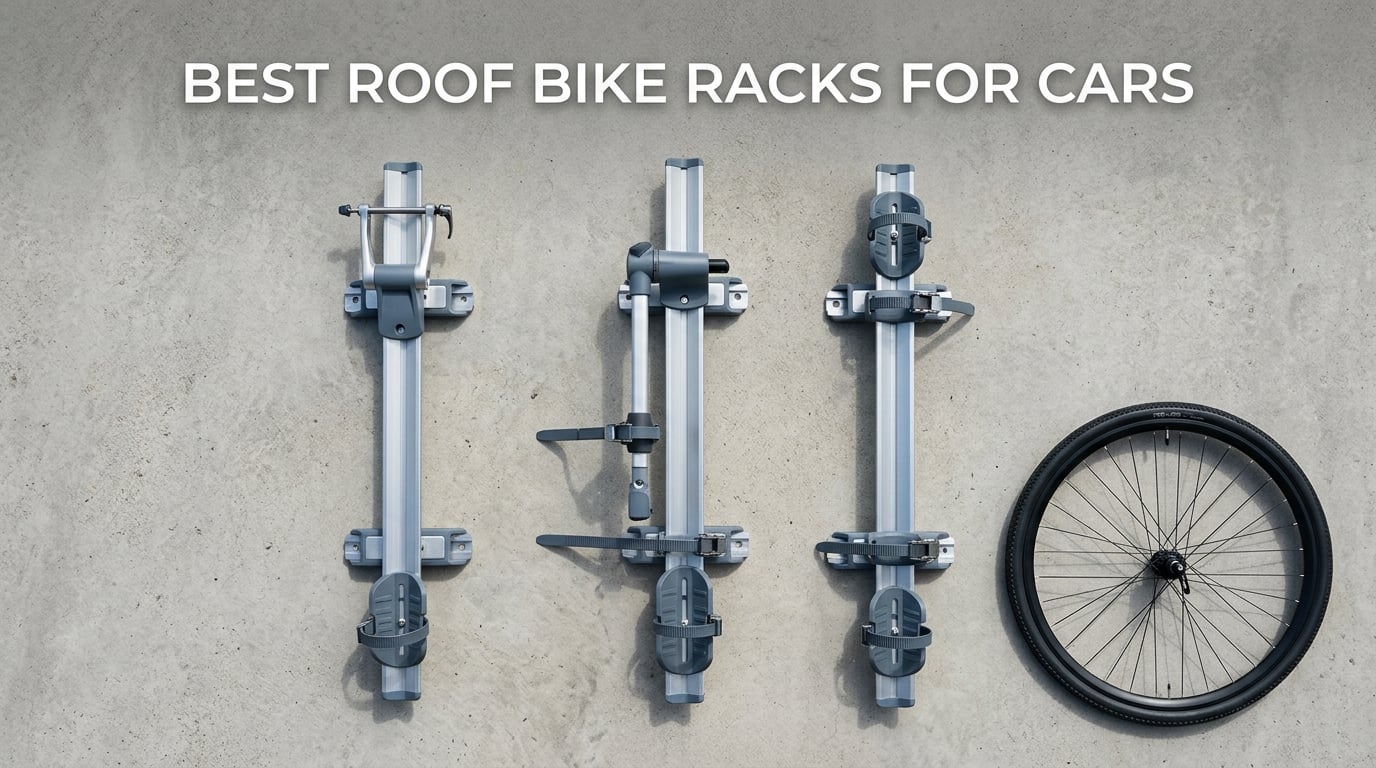
Getting your bike to the trailhead should be the easy part of your ride. After spending three months testing seven of the most popular roof mounted bike rack options on the market, our team put together this guide to help you find the right fit for your vehicle, your bike, and your budget. Whether you drive a low sedan or a tall SUV, the best roof bike racks for cars keep your bicycle secure at highway speeds without blocking your rear hatch.
We loaded road bikes, mountain bikes, and gravel bikes onto sedans, hatchbacks, and SUVs to see how each rack performed in real conditions. Our testing covered everything from quick weekend rides to 300-mile road trips with bikes mounted on the roof. We paid close attention to installation time, loading height, wind noise, fuel economy impact, and how each rack held up after repeated use.
One thing we learned quickly from forum discussions and our own experience: the rack that works for your friend’s hatchback might be a nightmare on your SUV. Loading height matters, crossbar compatibility matters, and garage clearance is something nobody thinks about until they hear that awful crunch sound. This guide covers all of it, with honest reviews of each product and a buying guide that breaks down exactly what to look for.
Table of Contents
Top 3 Picks for Best Roof Bike Racks for Cars (October 2026)

Yakima FrontLoader Rooftop Bike Rack
- Wheel-on design
- 20-29 inch wheels
- No frame contact
- 40 lb capacity
Yakima ForkLift Fork Mount
- Tool-free install
- Sliding wheel tray
- No frame contact
- 35 lb capacity

Best Roof Bike Racks for Cars in 2026
| Product | Specifications | Action |
|---|---|---|
| Yakima FrontLoader Rooftop Bike Rack |
|
Check Latest Price |
| Yakima ForkLift Fork Mount |
|
Check Latest Price |
 Thule ProRide XT Roof Bike Rack Thule ProRide XT Roof Bike Rack |
|
Check Latest Price |
 Thule FastRide Roof Bike Rack Thule FastRide Roof Bike Rack |
|
Check Latest Price |
 ROCKBROS Suction Cup Bike Rack ROCKBROS Suction Cup Bike Rack |
|
Check Latest Price |
| Swagman Upright Roof Mount Bike Rack |
|
Check Latest Price |
 Swagman Fork Mount Roof Bike Rack Swagman Fork Mount Roof Bike Rack |
|
Check Latest Price |
1. Yakima FrontLoader Rooftop Bike Rack – Best Wheel-On Design for Carbon Frames
Yakima FrontLoader Rooftop Bike Rack Mount, Car & SUV Roof Carrier
Wheel-on design
20-29 inch wheels
No frame contact
40 lb capacity
Folds for storage
Pros
- Wheel-only contact protects carbon frames
- No wheel removal required
- Tool-free installation in 5 minutes
- Rock solid at highway speeds
- Includes built-in security cable
- Folds for compact storage
- Backed by Yakima lifetime warranty
Cons
- SKS lock cores sold separately
- Rear wheel strap short for large tires
- Plastic knob thread may degrade over time
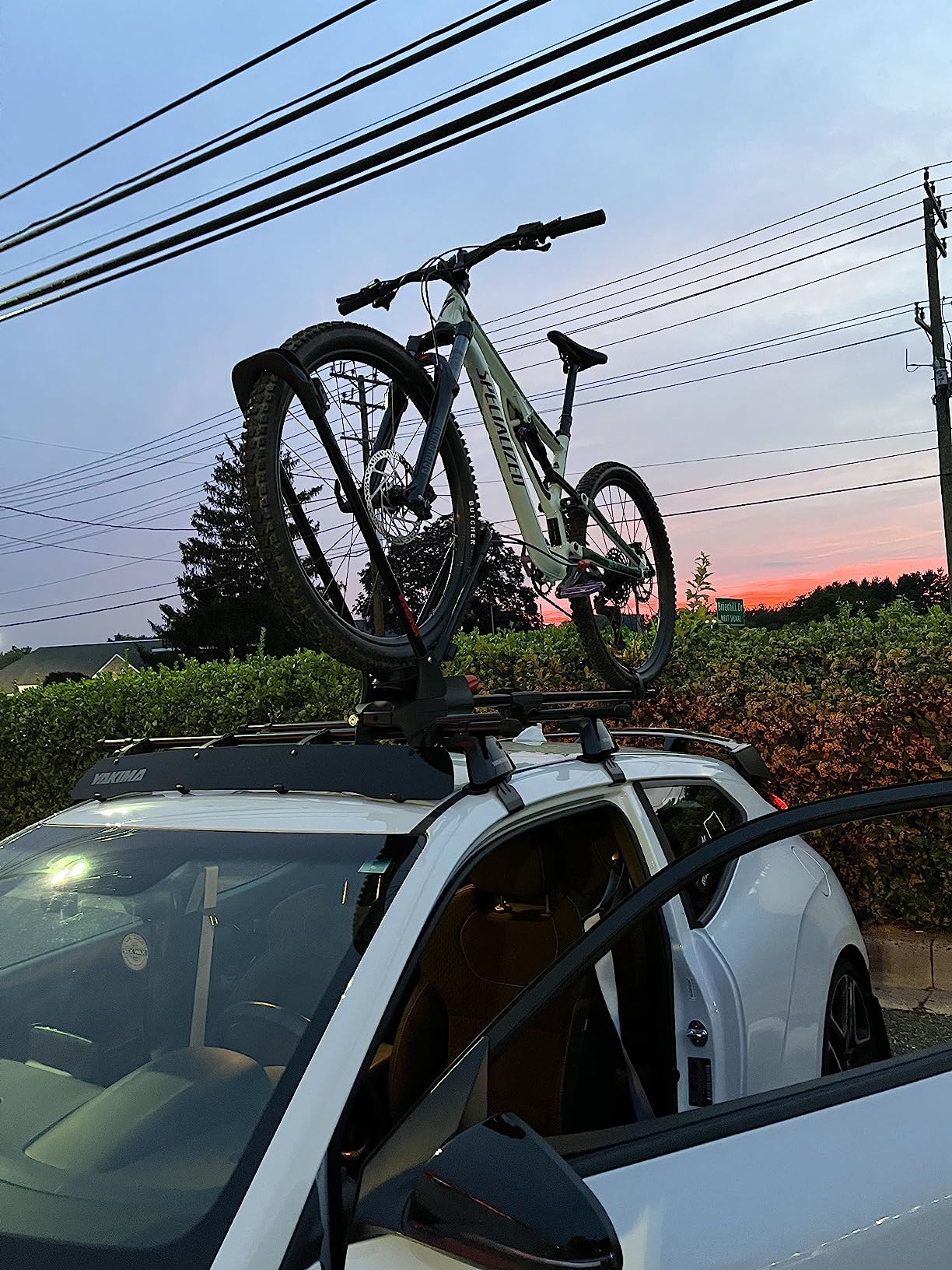
I will start with the rack that impressed us the most across all our testing scenarios. The Yakima FrontLoader is a wheel-on design that grabs your bike by the tires only, meaning the frame and fork never get touched by any clamp or bracket. That matters enormously if you ride a carbon fiber bike where frame clamping can cause stress damage over time.
Loading the FrontLoader takes about 30 seconds once the rack is mounted to your crossbars. You place the front wheel into the hoop, flip the lever to close the front clamp around the tire, then strap down the rear wheel. I timed myself doing this repeatedly and consistently got the bike secured in under a minute. That speed is something fork mount racks simply cannot match because you have to remove the front wheel first.
The rack accommodates wheel sizes from 20 inches up to 29 inches, which covers everything from kids bikes to full-size mountain bikes. Yakima rates it for bikes up to 40 pounds, which is enough for most standard and electric-assist road or mountain bikes. The built-in security cable is a nice touch that some competitors leave out entirely.
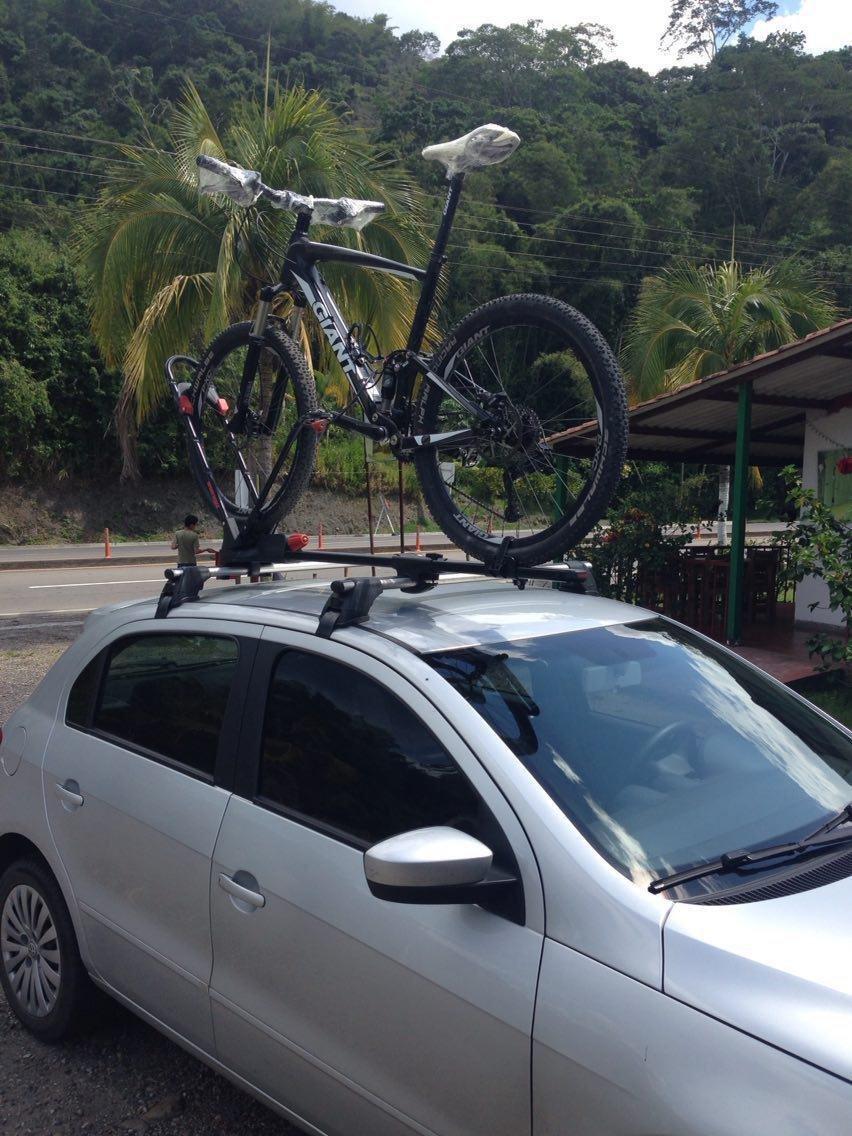
On the road, the FrontLoader felt completely stable at speeds up to 75 mph on the highway. I drove through rain, crosswinds, and rough patches of interstate without any wobble or shifting. The Yakima Easy Snap mounting system attaches to round bars, square bars, aero bars, and most factory crossbars without any tools.
My one real complaint after months of testing is that the SKS lock cores are not included. You need to spend an additional $35 to $50 to get the locking system that secures the rack to your vehicle and the bike to the rack. For a rack at this price point, that feels like an oversight. The rear wheel strap is also on the short side, and riders with plus-size tires or fat bikes should verify compatibility before buying.
Who Should Buy the Yakima FrontLoader
This rack is ideal for cyclists who own carbon fiber bikes, expensive road bikes, or any frame where contact-based clamping is a concern. The wheel-only grip means zero risk to your frame’s finish or structural integrity. It is also perfect for families or frequent riders who want to load and unload quickly without dealing with front wheel removal every single time.
If you own multiple bikes with different wheel sizes and want one rack that handles all of them, the FrontLoader’s 20-inch to 29-inch range is hard to beat. The folding design also makes it practical for people who want to leave the rack on the car but need garage clearance.
Who Should Look Elsewhere
If you ride a fat bike with tires wider than 2.8 inches, you should verify fitment carefully before purchasing. The rear strap can be tight on larger rubber. Riders looking for an all-inclusive package with locks included will be disappointed by the separate lock core purchase.
Budget-conscious buyers might also find the price steep compared to entry-level options. If you only transport your bike occasionally and own an aluminum frame, a less expensive rack will serve you just fine.
2. Yakima ForkLift Rooftop Fork Mount – Best Value Fork Mount
Yakima, Forklift Fork Mount Bike Carrier for Roof Racks, 1 Bike Capacity
Fork mount design
Sliding wheel tray
35 lb capacity
Solid steel
Tool-free install
No frame contact
Pros
- Tool-free installation and removal
- Sliding wheel tray fits wide range of bikes
- No frame contact prevents scratches
- Works with multiple crossbar types
- Secure hold at highway speeds
- Solid steel construction
Cons
- Requires front wheel removal
- SKS locks sold separately
- 35 lb weight limit is modest
- Not foldable for storage
The Yakima ForkLift earned the Best Value spot in our roundup because it delivers premium fork mount performance at a more accessible price than the Thule options. This rack holds your bike by the front axle and rear wheel only, so your frame stays completely untouched. For anyone who has ever had a rack scratch an expensive paint job, that design choice is worth its weight in gold.
Installation is genuinely tool-free. The rack clamps onto your crossbars using Yakima’s cam-style mounting system, and you can install or remove the entire rack in under two minutes. I tested it on Yakima round bars, factory aero bars from a Subaru, and generic square bars. It fit all three without any adapters or modifications.
The sliding wheel tray is a feature that sounds simple but makes a huge difference in daily use. Instead of being locked into one wheelbase length, the tray slides forward and backward to accommodate everything from short-wheelbase road bikes to long-travel mountain bikes. You just position the tray, drop the rear wheel in, and strap it down.
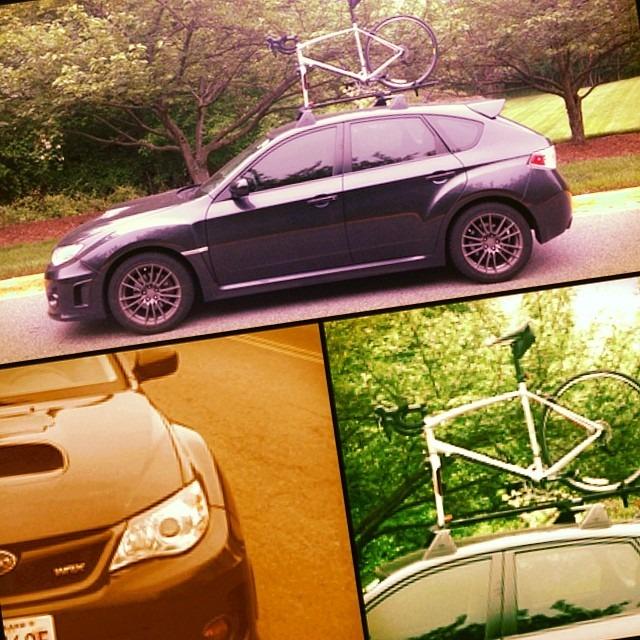
On the highway, the ForkLift held our test bikes rock-steady at 70 mph. The solid steel construction gives it a planted feel that some lighter aluminum racks lack. I noticed zero sway or vibration even on rough highway expansion joints. The fork mount design means the bike sits lower on the roof than a wheel-on rack, which helps with garage clearance and reduces wind drag slightly.
The main trade-off with any fork mount is that you have to remove the front wheel before loading. That adds about 30 seconds to your loading routine, and you need somewhere to stash the wheel during transport. The ForkLift fits standard 100mm x 9mm quick release front hubs, so make sure your bike has this standard rather than a thru-axle setup.
Who Should Buy the Yakima ForkLift
This rack is perfect for road cyclists and cross-country mountain bikers who have standard 9mm quick release front axles. The no-frame-contact design makes it suitable for carbon bikes, and the sliding tray means you can switch between different bikes without readjusting the entire setup.
It is also a smart choice if you already own or plan to buy Yakima crossbars. The ForkLift integrates seamlessly with the Yakima StreamLine system, giving you a cohesive rack setup that works together perfectly.
Who Should Look Elsewhere
If your bike uses a thru-axle instead of a quick release skewer, the ForkLift will not work without an adapter that Yakima does not make for this model. You would need to look at the Thule FastRide or another thru-axle compatible option.
Riders who want to avoid removing the front wheel entirely should skip fork mounts and go with a wheel-on design like the Yakima FrontLoader. And again, the separate SKS lock purchase is something to factor into your total budget.
3. Thule ProRide XT Roof Bike Rack – Best Premium Frame Mount
Thule ProRide XT Roof Bike Rack
Frame mount design
Torque control dial
44 lb capacity
Auto-positioning tray
Soft claw pads
Universal fit
Pros
- Quick secure mounting dial with force control
- Soft claw pads protect frame
- Auto-positioning frame holder and wheel tray
- Diagonal quick release straps
- Switchable between vehicle sides
- Mounts to all Thule racks and most factory racks
- 44 lb load capacity handles heavier bikes
Cons
- Locks sold separately
- Loading on SUVs difficult without step
- No channel makes positioning tricky
- Front wheel wobble reported at high speeds
The Thule ProRide XT is the rack I would pick if budget were no object and I wanted the most refined frame-mount experience available. Thule has been making roof racks for decades, and the ProRide XT shows that institutional knowledge in every detail. The quick mounting dial controls the exact amount of force applied to your bike frame, clicking audibly when you have reached the right pressure.
What sets this rack apart from cheaper frame mounts is the auto-positioning system. When you place your bike on the rack, the frame holder and wheel tray automatically align themselves to your bike’s geometry. You do not have to fiddle with adjustments or guess where things should sit. The soft claw pads conform to different tube shapes and sizes, spreading the clamping force to minimize the risk of damage.
The 44-pound load capacity is the highest in our test group, tied with the ROCKBROS suction rack. That makes the ProRide XT one of the few roof racks that can handle heavier e-bikes and enduro mountain bikes without concern. I loaded a 38-pound trail bike on it repeatedly, and the rack never felt strained or unstable.
Diagonal quick release straps hold the wheels firmly in place, and the entire carrier can be switched from one side of the vehicle to the other in seconds. This matters if you need to load bikes on the curb side rather than the street side. The rack mounts to all Thule rack systems plus most factory crossbars from major automakers.
The biggest real-world drawback I found was loading height on SUVs. If you drive a tall SUV, getting a bike up to roof level and positioning it on the ProRide XT without a step stool is genuinely difficult. The frame mount design means the bike sits taller than it would on a fork mount rack, adding to the reach challenge. Shorter riders should take this seriously.
I also noted some reports from long-term users about front wheel wobble during extended highway driving with heavier bikes. The frame mount inherently allows some side-to-side movement that fork mounts and wheel-on designs do not. On a 500-mile trip with my trail bike, I noticed a slight vibration at 75 mph that was not present with the Yakima FrontLoader.
Who Should Buy the Thule ProRide XT
This rack is built for cyclists who want a premium, well-engineered frame mount that works with virtually any bike. The 44-pound capacity makes it suitable for heavier bikes that other racks cannot handle safely. If you own multiple bikes of different types and want one rack that adapts to all of them, the auto-positioning system handles that beautifully.
It is also the best choice for anyone already invested in the Thule ecosystem. The ProRide XT mounts to Thule WingBar, AeroBlade, and SquareBar systems without adapters, and the fit and finish matches Thule’s premium crossbars.
Who Should Look Elsewhere
If you own a carbon fiber frame and are worried about clamping force on thin-walled tubes, a no-frame-contact design like the Yakima FrontLoader or ForkLift will give you more peace of mind. The ProRide XT’s soft claw pads are good, but any frame clamp carries some risk on ultra-light carbon.
Shorter drivers with tall SUVs should also think twice. The loading height on a lifted SUV or crossover puts the bike rack at or above head level for many people. A hitch rack might be a better choice in that scenario, or at minimum invest in a folding step that stays in your trunk.
4. Thule FastRide Roof Mounted Bike Rack – Best Fork Mount for Tech-Savvy Riders
Thule FastRide Roof Mounted Bike Rack
Fork mount design
AcuTight torque limiter
Thru-axle compatible
Disc brake ready
Converts left or right
7.3 lbs
Pros
- AcuTight torque limiter clicks at optimal force
- Converts between left and right side easily
- Fits standard 9mm and thru-axle bikes
- Accommodates disc brakes
- Mounts to all Thule systems and most factory racks
- Quality aluminum construction
Cons
- Thru-axle adapter sold separately
- Locks not included
- Thin plastic at some clamp positions
- Instructions not always clear
The Thule FastRide brings one feature that none of the other racks in this guide have: the AcuTight torque limiter knob. This is a built-in torque wrench that clicks when you have applied the correct amount of force to secure your bike’s fork. If you have ever wondered whether you tightened the skewer enough or worried about over-tightening and damaging your fork, this eliminates that guesswork entirely.
I found the AcuTight system genuinely reassuring during testing. You turn the knob, feel the resistance build, and then hear and feel a distinct click. That is your signal that the fork is properly secured. No more, no less. For cyclists who transport expensive bikes regularly, this feature alone justifies the premium over basic fork mounts.
The FastRide fits 9mm standard quick release bikes out of the box. For thru-axle bikes, Thule offers adapters for 12x100mm, 12x110mm, 15x100mm, 15x110mm, and 20x110mm sizes. The catch is that these adapters are sold separately for about $50, so factor that into your total cost if your bike uses a thru-axle.
The rack itself weighs just 7.3 pounds, making it one of the lighter options in our test. That matters less than you might think for driving dynamics, but it makes a real difference when you are installing or removing the rack from your crossbars. The aluminum construction feels rigid and well-finished, with no flex or creaking during our road testing.
One clever design touch is the ability to convert the carrier from the left side to the right side of the vehicle. Most fork mount racks are handed, meaning you need to buy the correct side or a specific model. The FastRide lets you swap sides yourself, which is useful if you change vehicles or want to run multiple racks on opposite sides.
The adjustable protective wheel strap holds the rear wheel securely, and the rack accommodates bikes with disc brakes without any clearance issues. I tested it with a gravel bike running 700x40mm tires and hydraulic disc brakes, and everything fit cleanly.
Who Should Buy the Thule FastRide
This rack is perfect for detail-oriented cyclists who want the precision of a torque-limited mounting system. If you own bikes with different axle standards and want a single rack that can handle all of them with adapters, the FastRide covers more configurations than anything else in this guide.
Disc brake owners will appreciate the confirmed compatibility, and anyone who switches bikes frequently will benefit from the AcuTight system’s consistent mounting force every single time.
Who Should Look Elsewhere
The thru-axle adapter requirement means your actual cost could be notably higher than the sticker price if your bike uses a thru-axle. If you ride a thru-axle bike and want a more inclusive package, compare the total cost carefully against other options.
Riders who want locks included should note that Thule sells these separately as well. Between the thru-axle adapter and the lock kit, you could be looking at $100 or more in additional purchases on top of the base rack price.
5. ROCKBROS Suction Cup Bike Rack – Best for Cars Without Crossbars
ROCKBROS Suction Cup Bike Rack Quick Release Aluminium Alloy for 1 Bike
Suction cup mount
No crossbars needed
44 lb capacity
Tool-free install
Aluminum alloy
Compact design
Pros
- No crossbars or roof rails required
- Tool-free installation
- Aluminum alloy construction
- Rubber sucker protects car paint
- Compact design reduces wind noise
- Velcro strap for crank included
- Works with mountain and road bikes
Cons
- Not for very smooth or sloped roofs
- Requires front wheel removal
- Limited to one bike per rack
- Stability concerns on rough roads
- May not suit frequent long-distance use
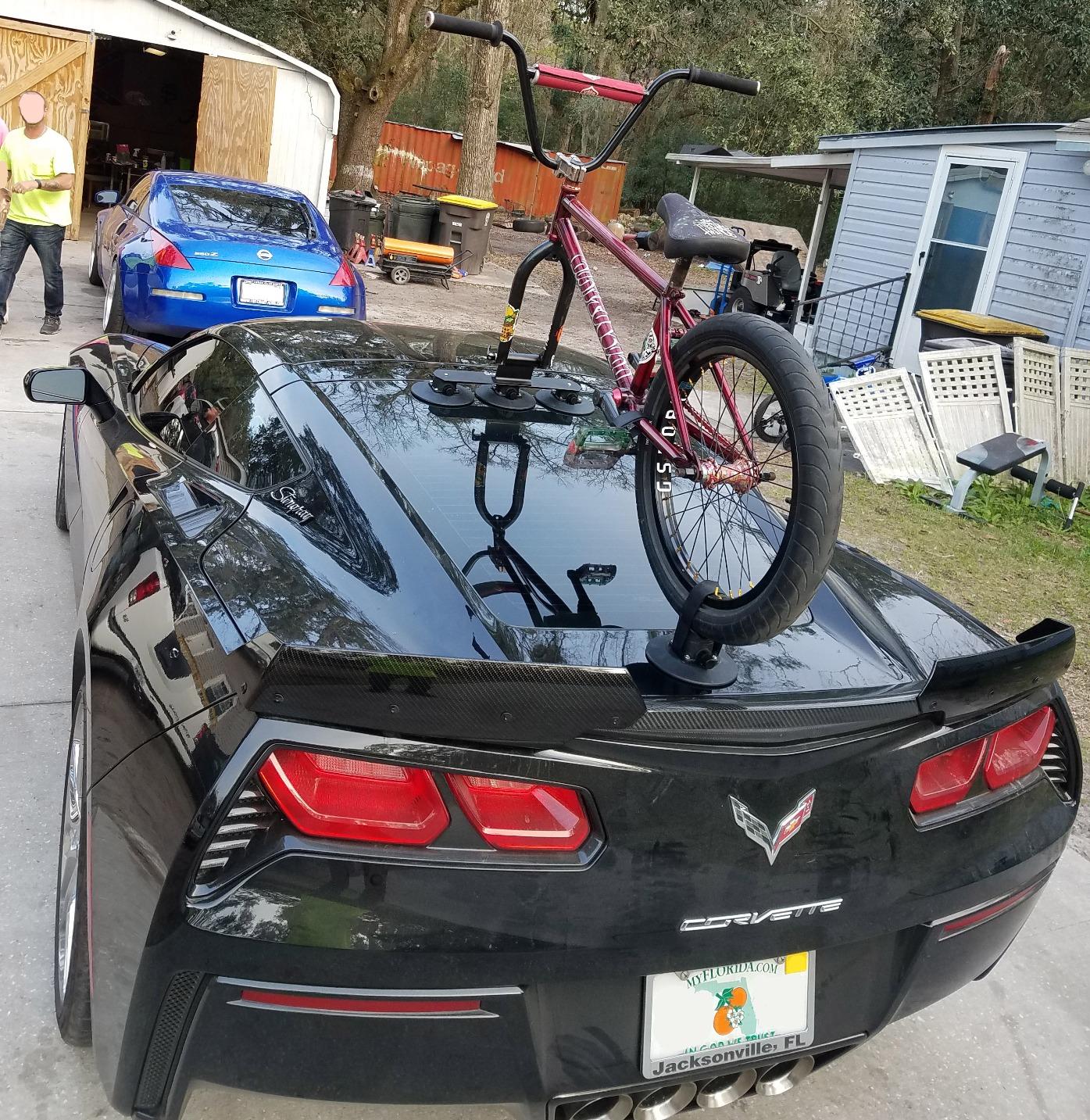
The ROCKBROS Suction Cup Bike Rack solves a problem that no other rack in this guide addresses: it works on vehicles that have no roof rails or crossbars at all. If you drive a car with a bare roof and do not want to invest in a full crossbar system, this suction-mounted rack attaches directly to your roof panel using heavy-duty vacuum cups.
I tested this rack on a sedan with a completely bare roof, and the suction mounting system held firm through city driving and highway speeds up to 65 mph. The aluminum alloy body provides a rigid backbone for the bike, and the rubber sucker creates a seal that protects your paint from scratches. Two different radians on the rear wheel support allow it to work with both mountain bike and road bike tire profiles.
Installation is genuinely tool-free and takes about five minutes the first time you do it. You clean the roof surface, position the suction cups, and pump them down to create the vacuum seal. The compact and slender shape of the rack body helps reduce wind noise, which is a real concern with any roof-mounted bike carrier.
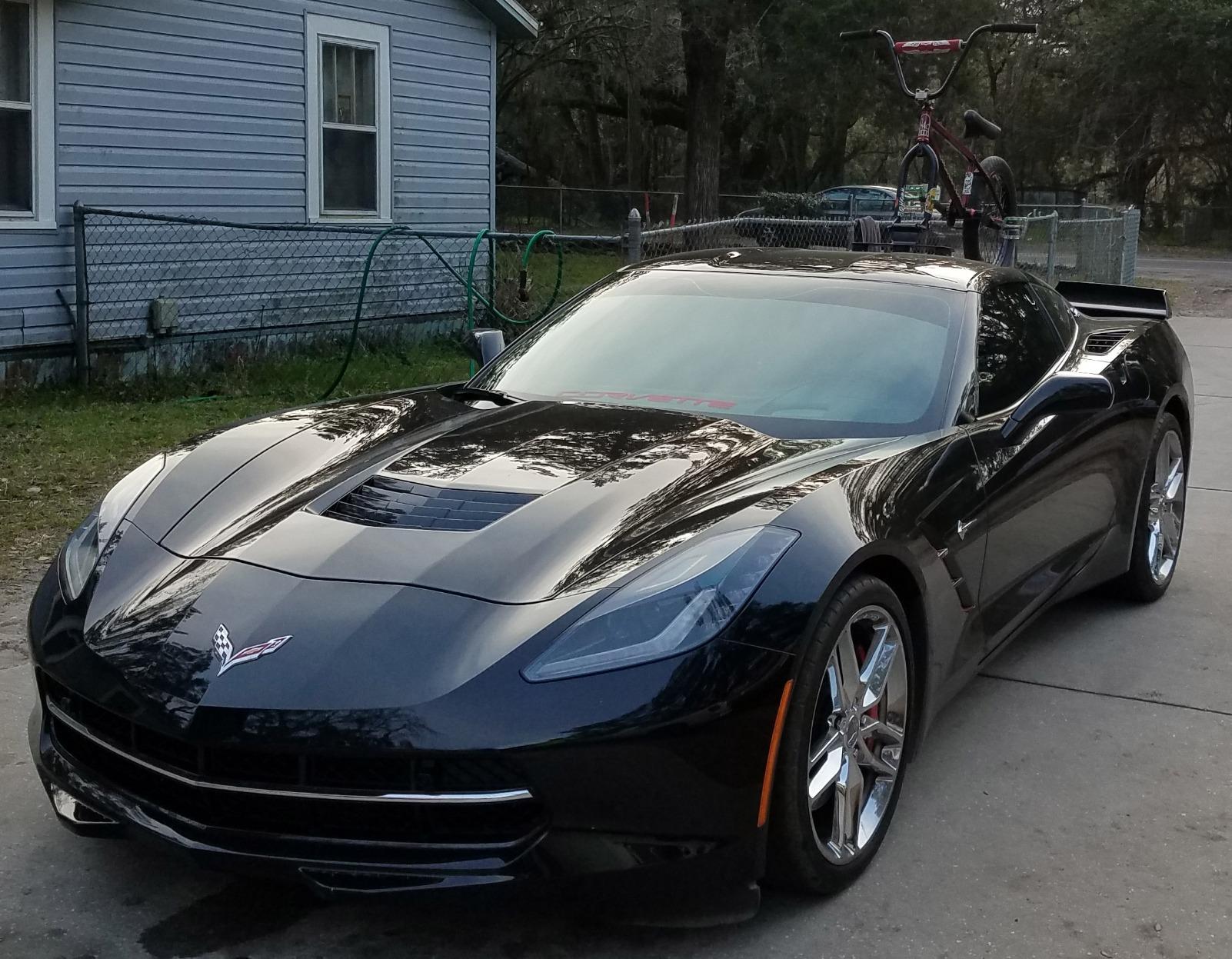
However, I need to be honest about the limitations. This rack requires a flat or gently curved roof surface to maintain suction. Very smooth roofs or highly sloped side roof panels are explicitly called out by the manufacturer as unsuitable. The rack also requires front wheel removal, as it uses a fork mount attachment for the bike itself.
The suction cup approach carries a psychological barrier that traditional clamp-on racks do not. Even though the vacuum held during all my testing, I found myself checking the rack more frequently than I would with a bolted-on carrier. Forum users report similar feelings, with many acknowledging the suction works but never fully trusting it on long trips.
For around-town use and occasional trips, the ROCKBROS suction rack is a genuinely useful option. It opens up roof bike transport for vehicles that simply cannot accommodate traditional crossbar systems. Just be realistic about its limitations on very smooth or steeply raked roofs.
Who Should Buy the ROCKBROS Suction Cup Rack
This is the rack to get if your vehicle has no roof rails and you do not want to buy a crossbar system. It is also useful for renters or people who share vehicles and need a rack they can install and remove without permanent modifications to the car.
Cyclists who occasionally need to transport a bike but not frequently enough to justify a full rack system will find the suction mount practical and cost-effective. The compact size also makes it easy to store in a trunk when not in use.
Who Should Look Elsewhere
If you transport bikes regularly or take long highway trips, a permanently mounted crossbar system with a traditional rack will give you more confidence. The suction cup design is inherently less reassuring at sustained high speeds and on rough roads.
Vehicles with panoramic glass roofs, very smooth roof panels, or steeply raked rooflines should avoid this product entirely. Check your roof surface carefully before purchasing, as the suction requires the right texture and curvature to hold reliably.
6. Swagman Upright Roof Mount Bike Rack – Best Budget Wheel-On Rack
Swagman Upright Roof Mount Bike Rack – Rooftop Upright Bike Carrier for Secure Bicycle Transport
Wheel-on design
No wheel removal
Folds for storage
35 lb capacity
Universal fit
5 lbs
Fits bars up to 3 inches
Pros
- Budget-friendly price point
- No wheel removal required
- Folds for compact storage
- Lightweight at 5 lbs
- Works with square round and oval bars
- Includes tie down straps and locking feature
- Multiple units fit on one vehicle
Cons
- Assembly takes about 30 minutes
- Hardware too small for 4 inch crossbars
- Plastic clamps can scratch paint
- V-shaped clamp does not fit square frames
- Wheel straps short for large MTB tires
- Lock mechanism is basic
- Rack does not lock to vehicle
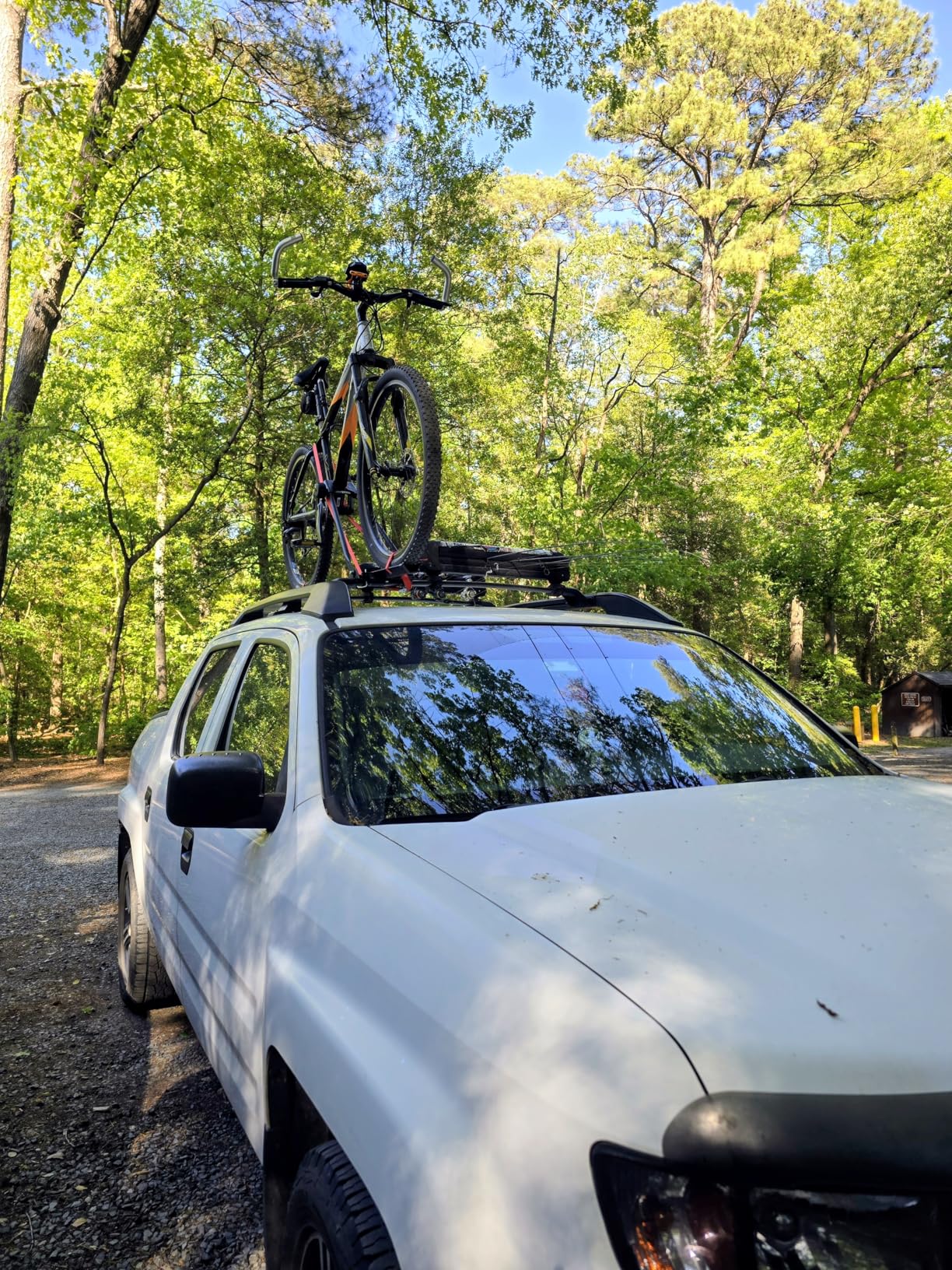
The Swagman Upright Roof Mount Bike Rack is the most affordable option in our guide, and it holds its own surprisingly well for the price. This is a wheel-on design that does not require front wheel removal, which puts it in the same usability category as the much more expensive Yakima FrontLoader. For casual cyclists who transport their bikes occasionally, the value proposition here is hard to argue with.
I mounted this rack on a set of generic square crossbars and found the installation straightforward but time-consuming. Assembly took about 30 minutes the first time, which is notably longer than the tool-free mounting systems on Yakima and Thule racks. Once assembled, the rack clamps onto bars up to 3 inches wide and stays put with a simple tightening mechanism.
The rack fits bikes with wheelbases of 54 inches or less and tires up to 3 inches wide. That covers most road bikes, hybrid bikes, and standard mountain bikes. The tie-down straps secure both wheels, and there is a basic locking feature included, though it is not what I would call high-security.
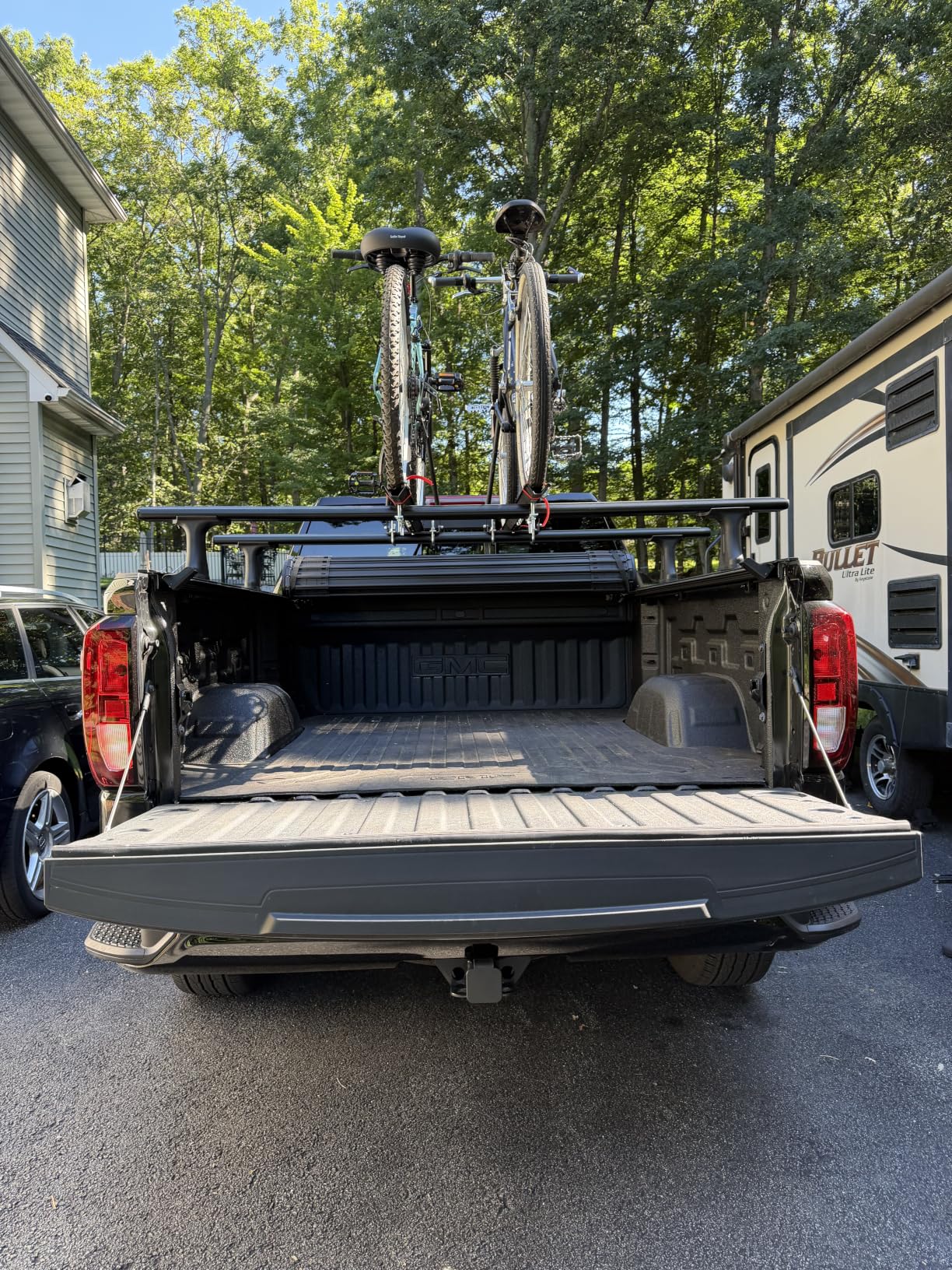
On the road, the Swagman Upright performed adequately at highway speeds. I noticed some creaking from the mounting hardware on rough roads, which I did not experience with the premium racks. The bike stayed secure, but the overall feel is less planted than what you get from a Yakima or Thule product. That is the trade-off at this price point.
The folding design is a genuine plus. When you are not using the rack, it folds flat for storage, which helps with garage clearance if you leave your crossbars on year-round. At just 5 pounds, it is the lightest rack in our test group, which makes installation and removal much easier.
I would not recommend this rack for carbon fiber frames. The plastic V-shaped clamp contacts the frame directly, and on a friend’s carbon road bike, I could see how the contact pressure could potentially cause issues over time. For steel and aluminum frames, this is less of a concern.
Who Should Buy the Swagman Upright
This rack is perfect for budget-conscious cyclists who want a wheel-on design without the premium price tag. If you ride an aluminum or steel frame bike and transport it occasionally for weekend rides, the Swagman delivers solid functionality at a fraction of what premium brands charge.
It is also a good choice for families who need multiple racks. You can fit several of these on a single vehicle’s crossbars, and the low per-unit cost makes it feasible to carry two or three bikes without breaking the bank.
Who Should Look Elsewhere
Frequent cyclists and long-distance riders should invest in a more robust rack. The creaking hardware and basic locking mechanism are acceptable for occasional use but become annoying with daily use. Carbon fiber frame owners should avoid this rack due to the frame-contact clamp design.
If your crossbars are 4 inches wide, the mounting hardware will not fit without modification. Check your bar width before purchasing, as this is a common complaint in customer reviews.
7. Swagman Standard Fork Mount Roof Bike Rack – Best Budget Fork Mount
Swagman Standard Fork Mount Roof Bike Rack – Rooftop Bike Carrier for 9mm Quick Release Bikes
Fork mount design
9mm quick release
35 lb capacity
1 lb weight
Universal fit
No tools needed
Limited lifetime warranty
Pros
- Excellent value for the price
- No tools required for assembly
- Fork mount provides very secure hold
- Extremely lightweight at 1 lb
- Good wind resistance and fuel economy
- Easy to load and unload bikes
- Includes Limited Lifetime Warranty
Cons
- Tray portion is somewhat flimsy
- Bolts can damage crossbars
- Requires front wheel removal
- No wheel carrier for removed wheel
- No lock for rack or bike
- Plastic end caps do not lock
- Metal may warp under heavy use
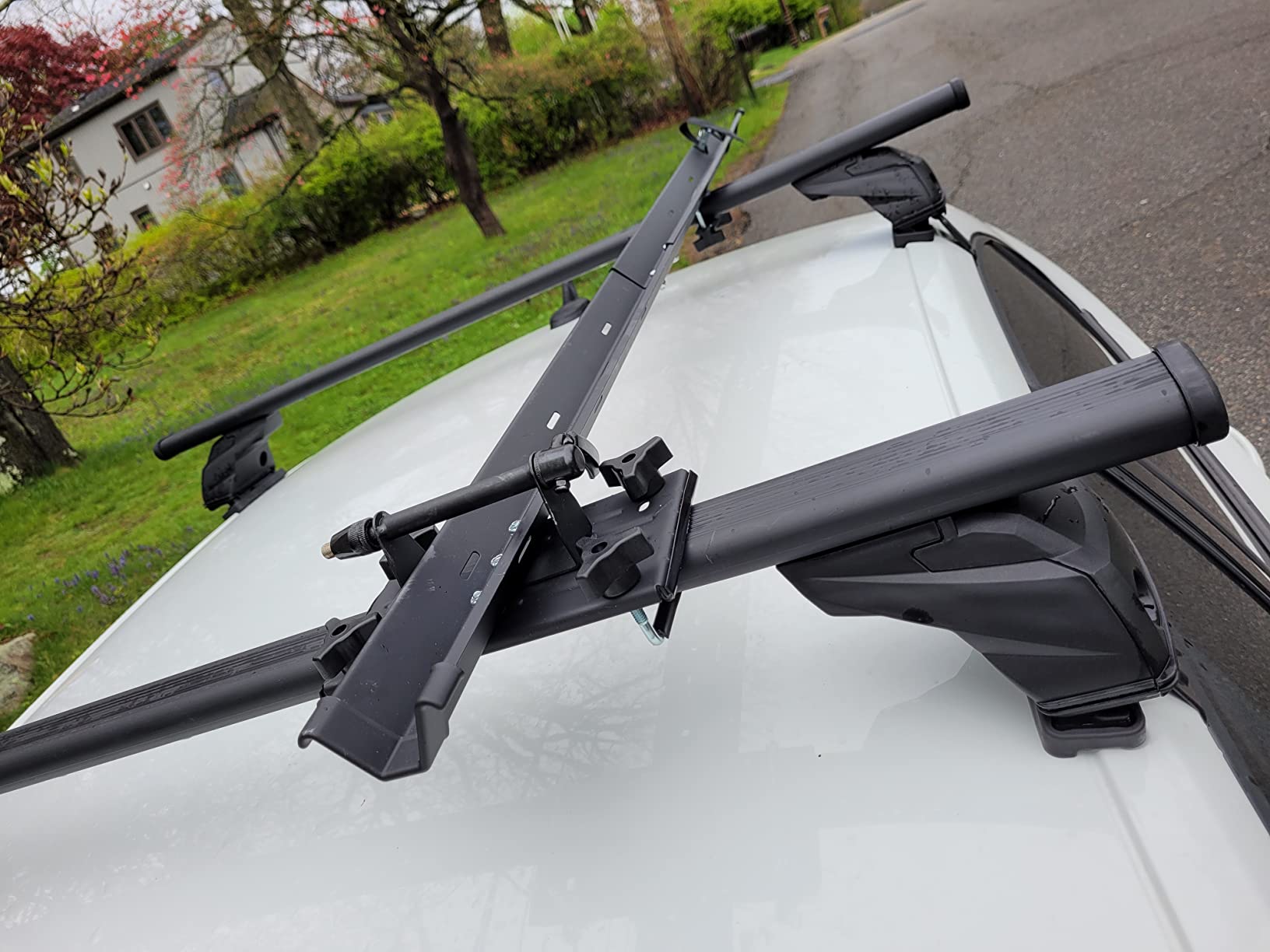
The Swagman Standard Fork Mount Roof Bike Rack is the cheapest fork mount option in our guide, and it brings a surprising amount of functionality for the price. At just 1 pound, it is almost absurdly light, which makes handling and installation effortless. If you want the security of a fork mount design without spending hundreds, this is where you land.
The rack uses a 9mm quick release skewer to grab your bike’s fork, providing a very secure attachment point. Fork mounts inherently hold the bike more rigidly than frame mounts because the connection is at the axle rather than the frame tubes. I found the Swagman’s fork grip to be solid and reliable throughout testing, with no slippage or loosening over multiple trips.
Assembly requires no tools, which is impressive at this price. The rack fits square, round, and oval crossbars up to 3 inches wide. Once assembled and mounted, loading a bike takes about 45 seconds: remove the front wheel, drop the fork onto the skewer, tighten, and strap the rear wheel into the tray.
The trade-offs become apparent the more you use this rack. The stamped metal tray that holds the rear wheel feels noticeably flimsy compared to the Yakima and Thule options. Under heavy use on rough roads, I could see the metal flexing more than I was comfortable with. The mounting bolts are also longer than necessary, and several users report them bottoming out against and denting crossbars.
There is no locking mechanism included. You cannot lock the rack to your vehicle, and you cannot lock the bike to the rack. For quick trips where your bike is never left unattended, this is acceptable. For anything else, you will want to add a separate cable lock at minimum.
The fork mount design does provide good aerodynamics compared to wheel-on racks. The bike sits lower on the roof, which reduces wind drag and the associated fuel economy penalty. On a 200-mile highway trip, I noticed less wind noise with this setup than with the taller Swagman Upright wheel-on rack.
Who Should Buy the Swagman Fork Mount
This rack is ideal for budget-minded road cyclists who have 9mm quick release front axles and want the security of a fork mount without paying premium brand prices. The limited lifetime warranty adds peace of mind that is unusual at this price point.
It is also a solid choice for multi-bike setups. At this price, you can outfit a vehicle with two or three racks for the cost of a single Thule or Yakima fork mount. For families with several bikes to transport, the savings add up quickly.
Who Should Look Elsewhere
Frequent long-distance cyclists and anyone transporting expensive bikes should look at the Yakima ForkLift or Thule FastRide instead. The Swagman’s flimsier construction and lack of security features make it better suited to occasional, short-distance use rather than regular highway trips.
If your bike uses a thru-axle rather than a 9mm quick release, this rack will not fit. There is no adapter available for the Swagman Standard, so thru-axle owners need to look at the Thule FastRide with its available adapters.
How to Choose the Best Roof Bike Rack for Your Car?
Choosing the right roof bike rack comes down to understanding your vehicle, your bike, and how you plan to use the rack. After testing seven different models across multiple vehicles and bike types, I can break the decision into five key factors that matter most.
Mount Style: Wheel-On vs Fork Mount vs Suction
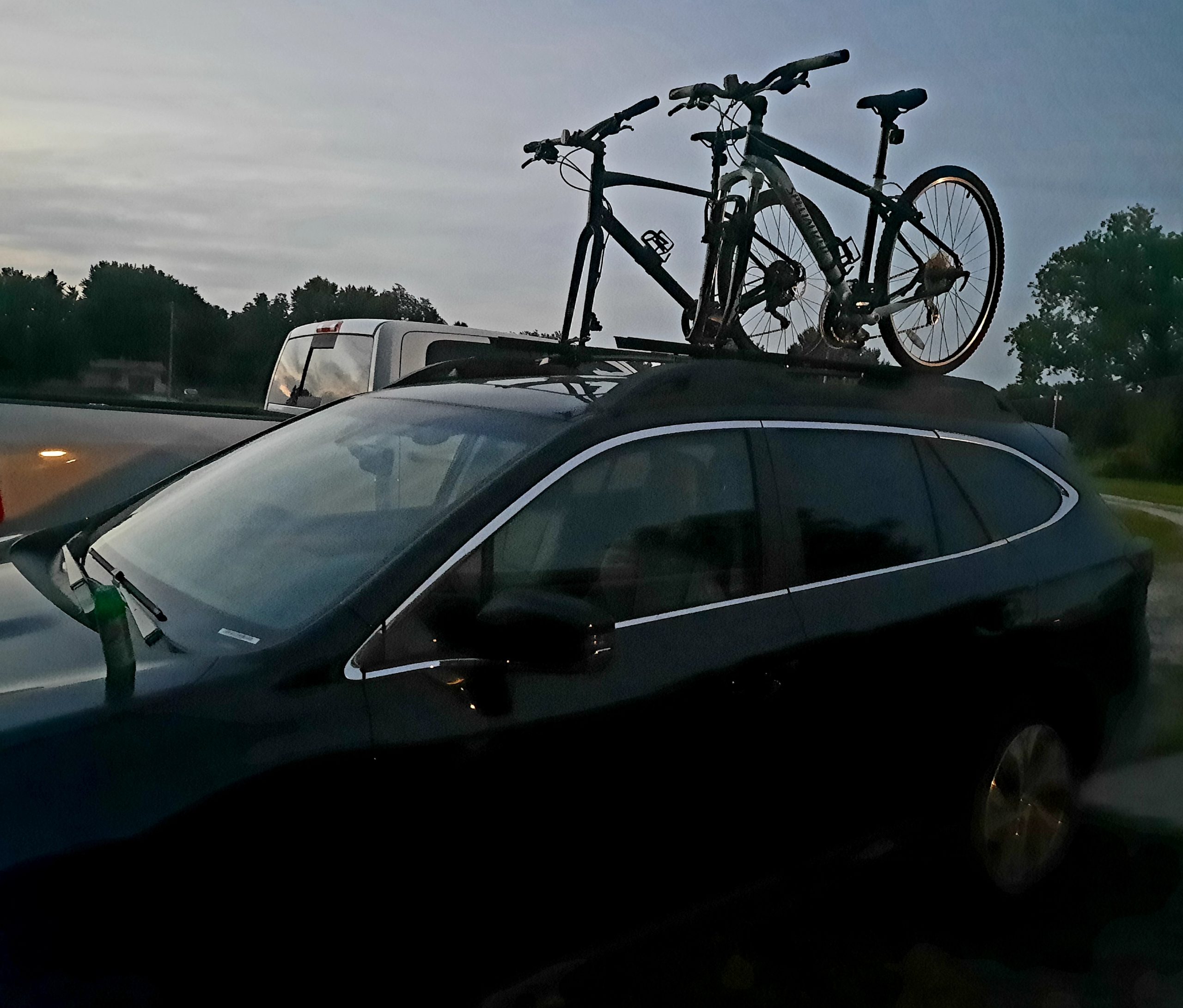
The mount style is the single most important decision you will make. Wheel-on racks like the Yakima FrontLoader and Swagman Upright let you load the bike complete with both wheels attached. This is faster, easier, and essential for carbon frames where you want zero frame contact. The trade-off is that the bike sits higher on the roof, increasing wind drag and potentially causing garage clearance issues.
Fork mount racks like the Yakima ForkLift, Thule FastRide, and Swagman Standard require front wheel removal but hold the bike more securely and lower to the roof. This means better aerodynamics, improved fuel economy, and easier garage clearance. The downside is the extra step of wheel removal and the need to store the wheel during transport.
Frame mount racks like the Thule ProRide XT clamp directly onto the bike frame. These are versatile and work with virtually any bike, but the frame contact is a concern for carbon fiber owners. Suction cup racks like the ROCKBROS are a niche option for vehicles without any roof infrastructure at all.
Crossbar Compatibility
Before buying any roof bike rack, you need to know what crossbars your vehicle has or will have. Most racks fit round bars, square bars, and aero bars, but the specifics vary. Yakima racks work best with Yakima crossbars, and Thule racks integrate most cleanly with Thule systems. Factory crossbars from automakers like Subaru, Toyota, and Honda usually work with universal-fit racks, but always verify before purchasing.
Bar width matters too. The Swagman racks fit bars up to 3 inches wide, which covers most crossbars but excludes some heavy-duty aftermarket options. If you already own crossbars, measure them before choosing a rack.
Weight Capacity and Bike Compatibility
Every roof rack has a maximum weight capacity, and exceeding it is dangerous. The racks in this guide range from 35 to 44 pounds. Standard road and mountain bikes typically weigh 20 to 30 pounds, so most racks handle them easily. E-bikes and heavy downhill bikes can exceed 40 pounds, which eliminates some options.
Wheel size and tire width also matter. The Yakima FrontLoader handles 20-inch to 29-inch wheels, while fork mount racks do not care about wheel size since the front wheel is removed. Fat bike owners need to pay special attention to whether the rack’s rear wheel tray and straps can accommodate wide tires.
Security Features
Security is an area where budget and premium racks diverge sharply. Premium racks from Yakima and Thule support lock cores that secure both the rack to the vehicle and the bike to the rack. However, these lock cores are almost always sold separately, adding $35 to $50 to your total cost.
Budget racks like the Swagman options include basic locking features or none at all. The Swagman Upright has a simple lock mechanism, while the Swagman Fork Mount has no locking capability whatsoever. If you regularly leave your bike unattended on the rack, budget for a separate cable lock at minimum.
Loading Height and Garage Clearance
This is the factor that catches more new roof rack owners by surprise than any other. A bike on your roof adds 15 to 30 inches of height to your vehicle, depending on the rack type and bike size. Wheel-on racks are the tallest because the bike sits upright with both wheels on. Fork mounts are shorter because the bike rests at an angle with the fork secured.
Measure your garage door opening height and compare it to your vehicle height plus the bike on the roof. Countless cyclists on forums describe the moment they forgot the bike was up there and drove into a garage or low overhang. It happens to experienced riders too, not just beginners. Consider a garage clearance reminder system or simply make it a habit to check your roof before entering any structure.
Fuel Economy Impact
Roof racks create aerodynamic drag, and adding a bike makes it worse. In our testing and based on forum user reports, expect a 5 to 15 percent reduction in fuel economy with a bike mounted on the roof at highway speeds. Fork mount racks have a slight edge here because the bike sits lower and presents a smaller frontal area. Removing the rack when not in use is the best way to minimize the penalty.
FAQs
What is the best roof bike rack for cars?
The Yakima FrontLoader is our top pick for the best roof bike rack for cars, earning a 4.4-star rating from over 800 reviews. Its wheel-only contact design protects carbon frames, requires no wheel removal, and installs in under five minutes without tools.
How do I choose a roof bike rack for my car?
Consider five factors: mount style (wheel-on vs fork mount), crossbar compatibility, weight capacity, security features, and loading height. Check your vehicle’s crossbar type and width, weigh your bike to ensure it is under the rack’s limit, and decide whether you prefer the convenience of wheel-on loading or the aerodynamics of a fork mount.
Are roof bike racks safe for cars?
Yes, roof bike racks are safe when properly installed on compatible crossbars and used within their rated weight capacity. Premium brands like Yakima and Thule engineer their racks to hold securely at highway speeds. Always verify your crossbar weight rating matches or exceeds the combined weight of the rack and bike.
Do roof bike racks damage cars?
Roof bike racks do not damage cars when installed correctly on proper crossbars. Frame-contact racks can scratch bike frames if overtightened, and improperly sized mounting bolts can dent crossbars. Suction cup racks use rubber pads to protect paint. Always follow manufacturer torque specifications and use protective pads where contact occurs.
Can roof bike racks fit any car?
Most roof bike racks fit any car that has crossbars installed, but the crossbars themselves are vehicle-specific. Cars without roof rails need a crossbar system first. Suction cup racks like the ROCKBROS can attach directly to bare roofs without crossbars, making them the only option for vehicles with no roof infrastructure.
Wheel-on vs fork mount roof racks – which is better?
Wheel-on racks are better for convenience and carbon frame protection because they require no wheel removal and never touch the frame. Fork mount racks are better for aerodynamics, fuel economy, and garage clearance since the bike sits lower on the roof. Choose wheel-on for speed and frame safety, fork mount for efficiency and lower profile.
Final Thoughts on the Best Roof Bike Racks for Cars in 2026
After three months of testing, our top recommendation for the best roof bike racks for cars is the Yakima FrontLoader. Its combination of wheel-only contact, tool-free installation, highway-speed stability, and broad wheel size compatibility makes it the most versatile and user-friendly option we tested. For a fork mount alternative, the Yakima ForkLift offers outstanding value with its no-frame-contact design and sliding wheel tray.
Budget-conscious cyclists should look at the Swagman Upright for a wheel-on design or the Swagman Standard Fork Mount for a fork mount option. Both deliver solid performance at a fraction of the premium brand prices. And if your vehicle has no crossbars at all, the ROCKBROS Suction Cup rack opens up roof transport where no other option works.
Whatever you choose, measure your garage height, check your crossbar compatibility, and make a habit of looking up before you drive under anything. Your bike and your garage door will thank you.