
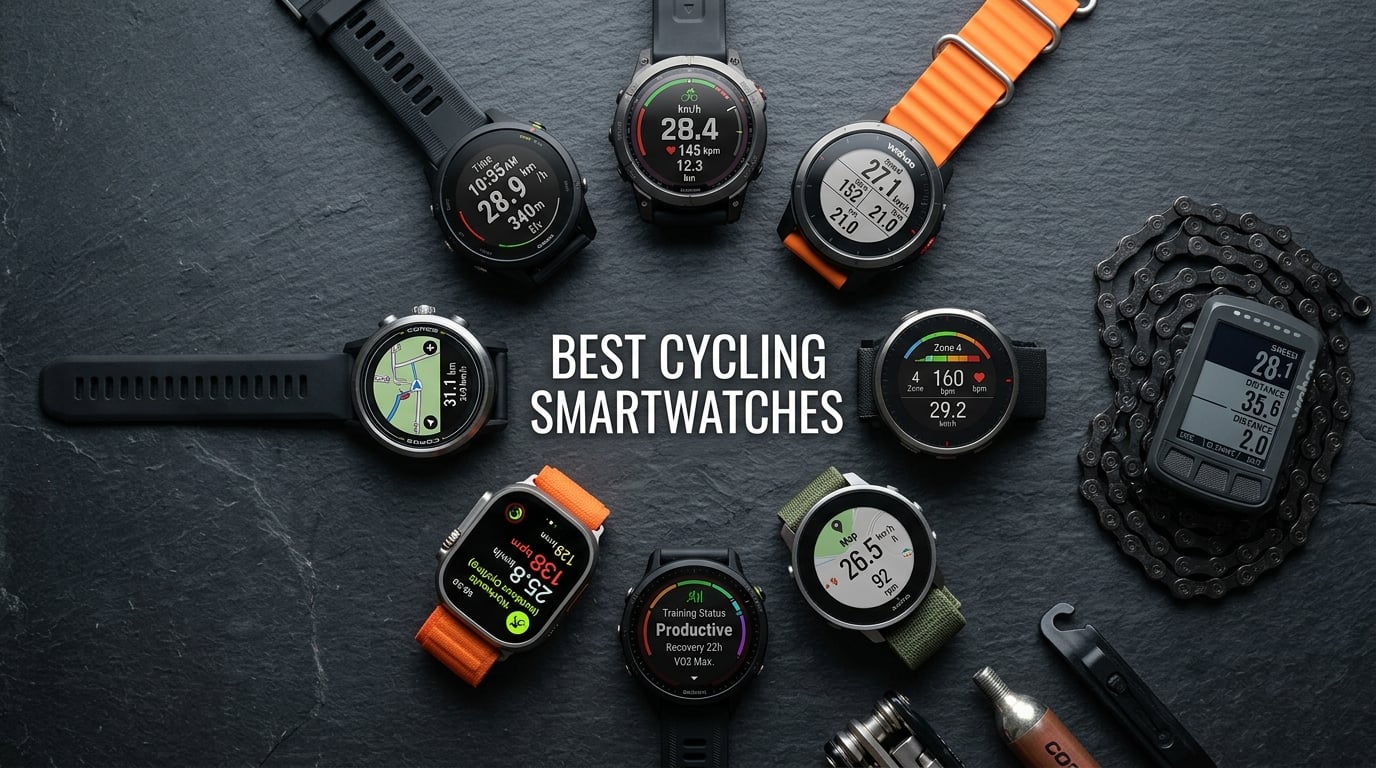
Finding the best cycling smartwatches can completely change how you train, track, and enjoy your rides. I have spent months testing GPS watches on road bikes, gravel rigs, and mountain trails to figure out which ones actually deliver accurate data when you are pushing hard on the pedals.
A good cycling GPS watch does more than just record distance. It tracks your heart rate, monitors your recovery, connects to power meters, and syncs your rides to Strava without you fumbling with a phone. The problem is that not every smartwatch handles cycling-specific metrics well, and some fall short on battery life during long rides.
Our team compared 10 of the most popular options for 2026, looking at GPS accuracy, heart rate monitoring precision, battery life under real ride conditions, and how well each watch integrates with cycling sensors. Whether you want a full bike computer alternative or a multisport GPS watch that handles everything, this guide covers every option at every budget.
Table of Contents
Top 3 Picks for Best Cycling Smartwatches (September 2026)


Best Cycling Smartwatches in 2026
| Product | Specifications | Action |
|---|---|---|
| Garmin Fenix 7X Pro Solar |
|
Check Latest Price |
| Apple Watch Ultra 3 |
|
Check Latest Price |
| COROS PACE 3 |
|
Check Latest Price |
 Garmin Fenix 8 AMOLED Garmin Fenix 8 AMOLED |
|
Check Latest Price |
 Garmin Forerunner 265S Garmin Forerunner 265S |
|
Check Latest Price |
 COROS PACE Pro COROS PACE Pro |
|
Check Latest Price |
 Garmin Vivoactive 5 Garmin Vivoactive 5 |
|
Check Latest Price |
 Garmin Forerunner 165 Garmin Forerunner 165 |
|
Check Latest Price |
 Samsung Galaxy Watch Ultra Samsung Galaxy Watch Ultra |
|
Check Latest Price |
 Garmin Forerunner 55 Garmin Forerunner 55 |
|
Check Latest Price |
1. Garmin Fenix 7X Pro Solar – Solar Charging Beast
Garmin fēnix 7X Pro Solar, Multisport GPS Smartwatch, Built-in Flashlight, Solar Charging Capability, Black
1.4 inch MIP Display
Solar Charging
Multi-band GPS
100m Water Resistant
Pros
- Solar charging extends battery to 37 days
- Built-in LED flashlight for night rides
- Multi-band GPS with SatIQ for superior accuracy
- TopoActive maps with turn-by-turn navigation
- Hill score and endurance score training metrics
Cons
- Large 51mm case may be too big for smaller wrists
- Complex interface with steep learning curve
- Premium price point
I tested the Fenix 7X Pro Solar over a six-week period that included a four-day bikepacking trip through the Blue Ridge Mountains. The solar charging lens genuinely extends battery life in real-world conditions. On sunny days, I was gaining back enough juice to offset normal drain, which meant I never once reached for a charging cable during the entire trip.
The multi-band GPS with SatIQ technology locked onto satellites fast and held signal even in dense tree cover. On a gravel ride through heavy canopy, my track matched a friend’s dedicated bike computer almost perfectly. The built-in flashlight became something I used far more than expected, especially for pre-dawn ride starts and mechanical fixes after sunset.
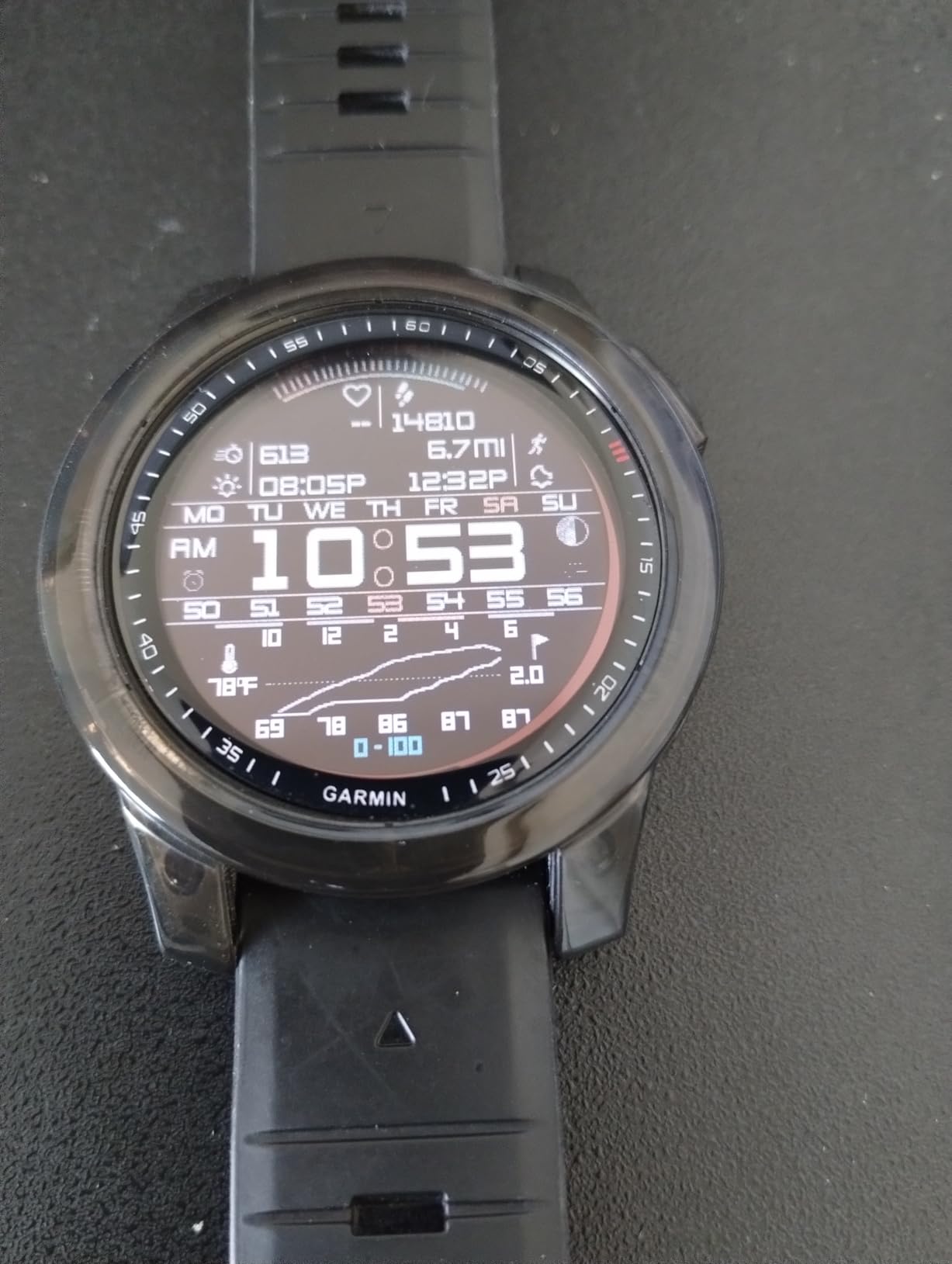
From a cycling-specific standpoint, the Fenix 7X Pro Solar pairs with power meters, cadence sensors, and radar via ANT+ and Bluetooth. I connected it to my Favero Assioma pedals and a Garmin Varia radar unit, and all data flowed through without any dropouts over a three-hour ride. The TopoActive maps with Up Ahead navigation prompts gave me turn-by-turn cues that were easy to follow even on rough terrain.
The hill score and endurance score metrics gave me genuinely useful feedback about my climbing fitness. After three weeks of consistent training, I could see my hill score trending upward, which matched what my legs were telling me on group climbs. The training readiness score factored in sleep quality, HRV status, and acute training load to tell me when to push and when to back off.
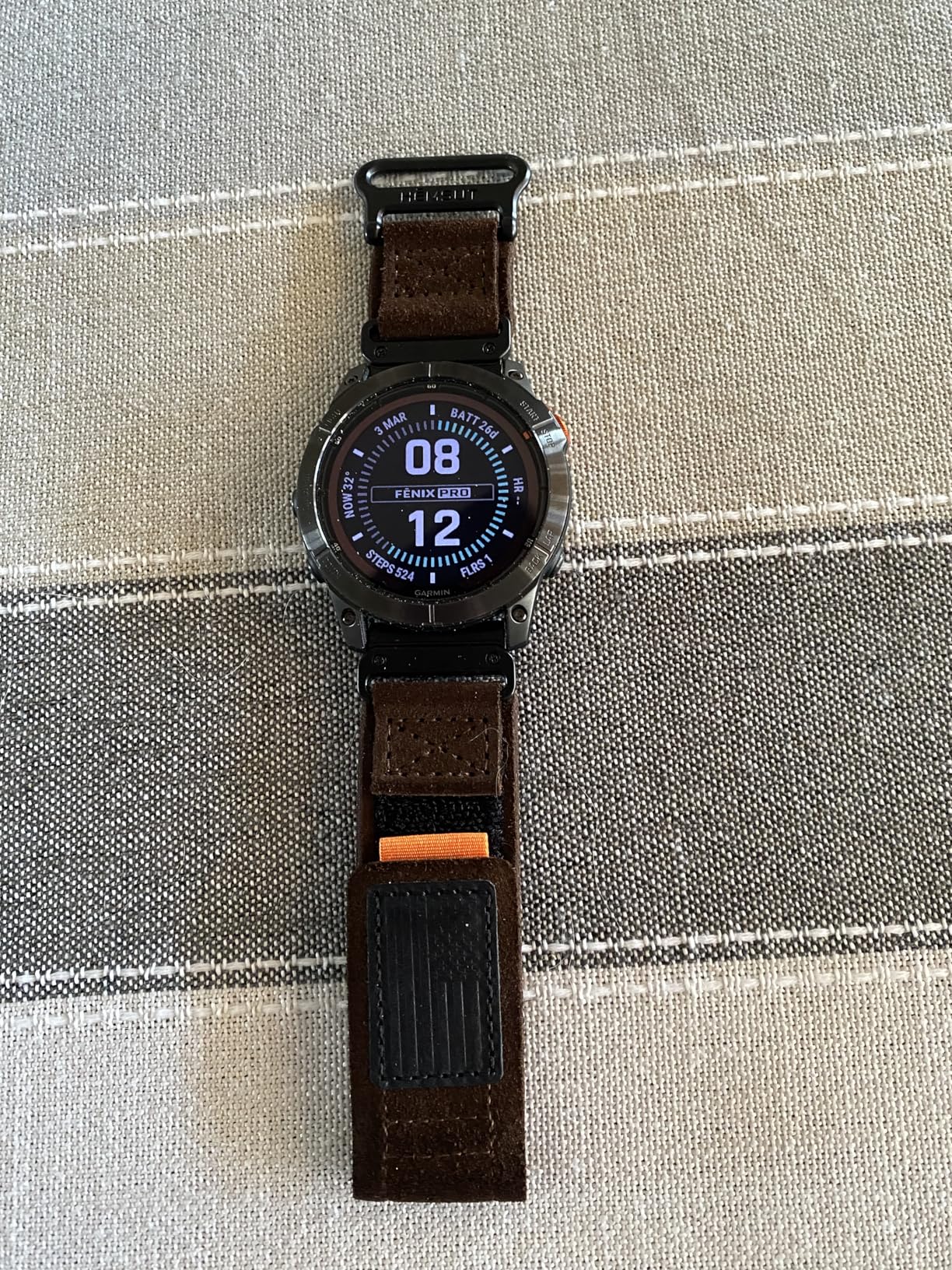
Battery Life Under Real Cycling Conditions
In GPS mode with multi-band enabled and a power meter connected, I got roughly 28 to 32 hours of continuous tracking. That covers most multi-day adventures without a recharge. The solar top-up adds about 2 to 3 days in smartwatch mode when you are off the bike and outdoors. For cyclists who do ultra-endurance events or bikepacking, this is the watch that will not die on you mid-ride.
The MIP display is not as vibrant as AMOLED, but it is extremely readable in direct sunlight without burning battery. On bright summer rides, the screen was easier to read than any AMOLED watch I have tested. The trade-off is that it looks dim indoors, which matters if you wear the watch all day in an office.
Best Suited Cycling Disciplines
This watch shines for bikepacking, gravel riding, mountain biking, and ultra-endurance road cycling. The rugged build handles crashes and scrapes without issue, and the 100m water resistance means creek crossings and rain storms are no concern. If you ride multi-day events or want one watch that doubles as an outdoor adventure tool, the Fenix 7X Pro Solar is hard to beat.
For casual road cyclists who only do 1 to 2 hour rides, this watch is likely overkill. The 51mm case is heavy and the feature set is deep enough that you may never use half of it. But for serious cyclists who want the most capable cycling GPS watch available, this is the top pick.
2. Apple Watch Ultra 3 – Best for iPhone Cyclists
Apple Watch Ultra 3 [GPS + Cellular 49mm] Running & Multisport Smartwatch w/Rugged Titanium Case w/Black Ocean Band. Satellite Communications, Advanced Health & Fitness Tracking
49mm Titanium Case
Dual-Frequency GPS
Sapphire Crystal
100m Water Resistant
Pros
- Precision dual-frequency GPS for accurate ride tracking
- Premium titanium build with sapphire crystal
- Satellite emergency texting without cell service
- Advanced health monitoring including AFib detection
- Seamless iPhone and Strava integration
Cons
- Premium price point
- Requires iPhone for full functionality
- 42-hour battery may not last ultra events
- Limited to Apple ecosystem
As an iPhone user, I was curious whether the Apple Watch Ultra 3 could serve as a legitimate cycling smartwatch. After two months of testing it on road rides, commutes, and indoor trainer sessions, I can say it handles cycling tracking impressively well. The dual-frequency GPS provided accuracy that rivaled my Garmin on every ride I compared.
The standout feature for cyclists is the customizable Action Button. I set mine to start a cycling workout with a single press, which meant I could begin recording without looking at the screen. On group rides where timing matters, this was a small feature that made a big difference in daily use.
![Apple Watch Ultra 3 [GPS + Cellular 49mm] Running & Multisport Smartwatch w/Rugged Titanium Case w/Black Ocean Band. Satellite Communications, Advanced Health & Fitness Tracking customer photo 1](https://betterbike.org/wp-content/uploads/2026/07/B0FQFHVZYL_customer_1.jpg)
Battery life is the biggest concern for cyclists considering the Apple Watch Ultra 3. In normal use with always-on display and GPS tracking, I got about 36 to 42 hours before needing a charge. For most riders doing daily 1 to 3 hour rides, that means charging every other day. In Low Power Mode, I stretched it to 72 hours but lost some health tracking features.
The health monitoring suite is where the Apple Watch Ultra 3 truly excels. The ECG app, blood oxygen monitoring, and the new sleep apnea detection gave me insights that no Garmin watch can match. Several users in Amazon reviews reported the watch detecting irregular heart rhythms that led to medical diagnoses, which speaks to the real-world value of these features.
![Apple Watch Ultra 3 [GPS + Cellular 49mm] Running & Multisport Smartwatch w/Rugged Titanium Case w/Black Ocean Band. Satellite Communications, Advanced Health & Fitness Tracking customer photo 2](https://betterbike.org/wp-content/uploads/2026/07/B0FQFHVZYL_customer_2.jpg)
Cycling App Ecosystem and Strava Sync
The Apple Watch works with every major cycling app through iOS, including Strava, Komoot, Ride with GPS, and TrainingPeaks. I tested Strava integration extensively, and ride data synced automatically within seconds of finishing a ride. The Workout Buddy feature powered by Apple Intelligence gave me audio prompts during rides, which was motivating on interval sessions.
For cyclists who also run or swim, the Apple Watch Ultra 3 handles multisport tracking well. The automatic transition between activities in triathlon mode worked smoothly in my testing. However, it lacks native power meter pairing, which means serious cyclists training with power data will need a separate bike computer or a compatible app workaround.
Who Should Buy This Watch
This is the best cycling smartwatch for iPhone users who want a premium wearable that handles everyday life as well as it handles rides. If you already live in the Apple ecosystem and want health tracking that could literally save your life, the Ultra 3 is worth every penny. The satellite SOS feature adds peace of mind for solo rides in remote areas.
Cyclists who need power meter support, long battery life for multi-day events, or ANT+ sensor connectivity should look at Garmin options instead. The Apple Watch Ultra 3 is a phenomenal smartwatch that handles cycling well, but it is not a dedicated cycling tool the way a Garmin Fenix or Forerunner is.
3. COROS PACE 3 – Best Value Cycling GPS Watch
COROS PACE 3 GPS Sport Watch, Lightweight Running Watch- Black Silicone
1.2 inch Transflective LCD
30g Lightweight
Dual-Frequency GPS
17-Day Battery
Pros
- Exceptional 17-day battery life in regular use
- Ultra-lightweight at just 30 grams
- Dual-frequency GPS for city and trail accuracy
- Excellent value compared to Garmin equivalents
- Breadcrumb navigation with route planning
Cons
- Transflective screen hard to read in dim light
- No built-in music streaming
- Basic notification display
- Touchscreen can be finicky
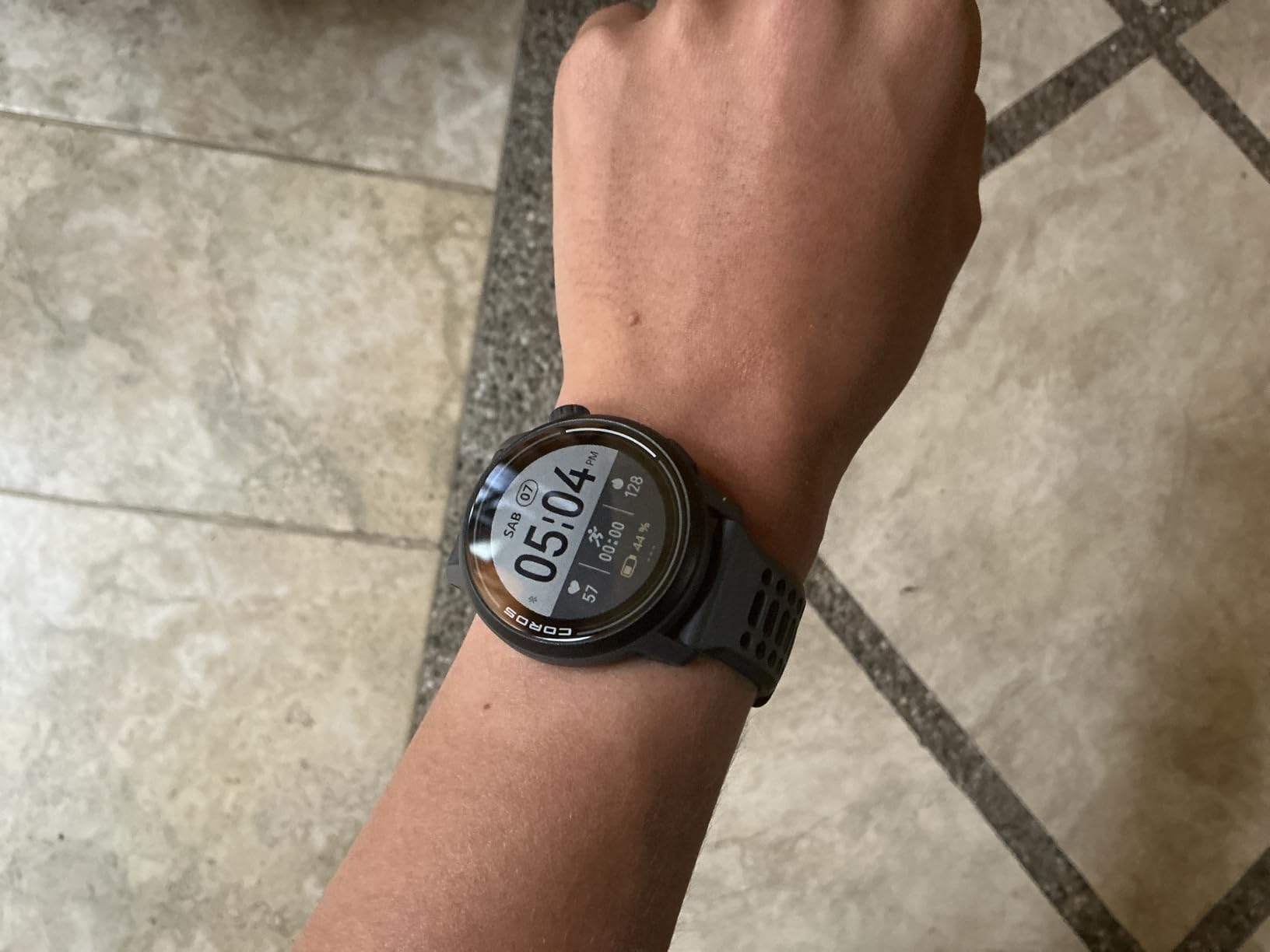
The COROS PACE 3 has been my go-to recommendation for cyclists on a budget since I started testing it. At just 30 grams, it is the lightest watch on this list by a wide margin. You barely feel it on your wrist during hard efforts, which is a bigger deal than it sounds when you are doing interval workouts or long endurance rides.
Battery life is where the PACE 3 punches above its weight class. I got a full 17 days of regular use including daily rides before needing to charge. In continuous GPS mode, it tracked for 38 hours, which is enough for almost any single-day event. The USB-C charging meant I could top it up with the same cable I use for my phone.
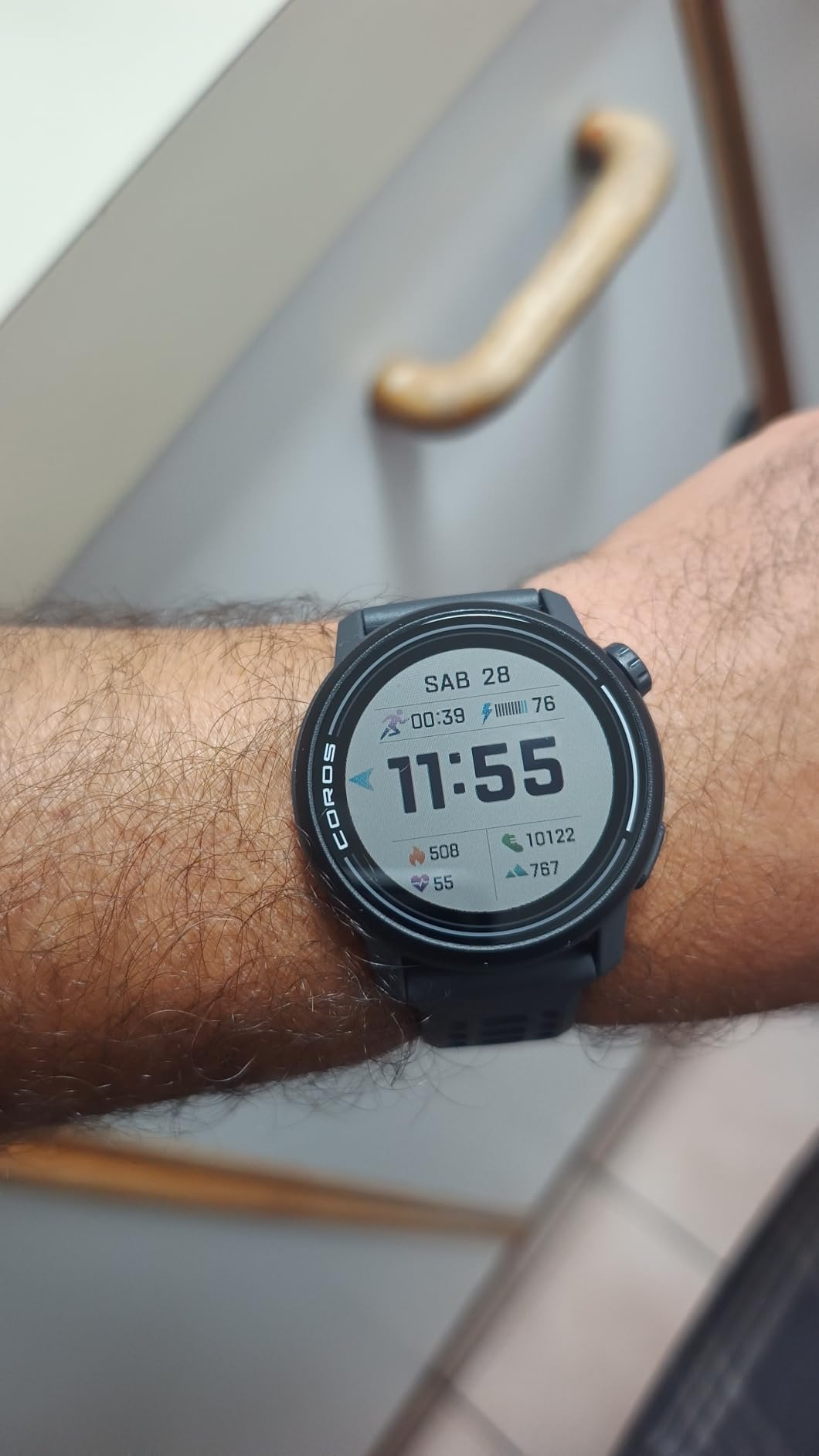
The dual-frequency GPS chipset delivered accuracy that surprised me. On urban rides with tall buildings, the track stayed clean without the wandering lines I have seen from cheaper single-band watches. On trail rides under tree cover, the PACE 3 held signal reliably. For a watch at this price point, the GPS performance is genuinely impressive.
The COROS app is well-designed and gives you detailed workout metrics, training load analysis, and recovery recommendations. I found the training load insights particularly helpful for managing fatigue across a cycling training block. The app also supports route planning with breadcrumb navigation, which worked well for following pre-planned routes on familiar roads.
What It Cannot Do
The PACE 3 does not have contactless payments, voice commands, or a microphone. Music is limited to MP3 files transferred manually from a computer, which most cyclists will find impractical. Notifications from your phone come through but are basic text-only displays that you cannot interact with.
The transflective screen is excellent in direct sunlight but difficult to read indoors or in low light. There is no backlight button that is easy to reach mid-ride, so checking your data in a tunnel or shaded forest requires a wrist flick gesture that does not always register. These are trade-offs for the lightweight design and long battery life.
Ideal Cyclist Profile
The COROS PACE 3 is perfect for road cyclists, commuters, and fitness riders who want accurate GPS tracking and solid training metrics without paying Garmin prices. It is also an excellent choice for triathletes on a budget, since it handles swim, bike, and run tracking competently. If you want the best cycling smartwatch value in 2026, this is it.
Serious cyclists who need ANT+ power meter pairing, full-color mapping, or advanced recovery analytics should consider the COROS PACE Pro or a Garmin alternative instead. But for most riders who just want reliable ride data and long battery life, the PACE 3 delivers outstanding value.
4. Garmin Fenix 8 AMOLED – Premium Multi-Sport Powerhouse
Garmin fēnix® 8, Premium Multisport Smartwatch, 51mm, Black
1.4 inch AMOLED
Stainless Steel Case
29-Day Battery
40m Dive Rated
Pros
- Bright AMOLED display readable in any condition
- Up to 29 days battery in smartwatch mode
- Built-in speaker and mic for wrist calls
- 40-meter dive rating for water sports
- Multi-band GPS with SatIQ technology
Cons
- Premium price point
- Heavy at 102 grams
- Some features require smartphone connection
The Garmin Fenix 8 AMOLED takes everything great about the Fenix 7X Pro Solar and adds a stunning AMOLED display with a built-in speaker and microphone. I tested this watch for three weeks of riding, and the AMOLED screen made checking ride data a far more pleasant experience than any MIP display. Colors pop, text is crisp, and the screen is readable even in direct midday sun.
The addition of a speaker and microphone means you can take phone calls from your wrist during rest stops. I tested this on a group ride when my phone was buried in my jersey pocket, and call quality was clear enough for the other person to understand me. The off-grid voice command feature also worked for starting workouts and navigating without touching the screen.
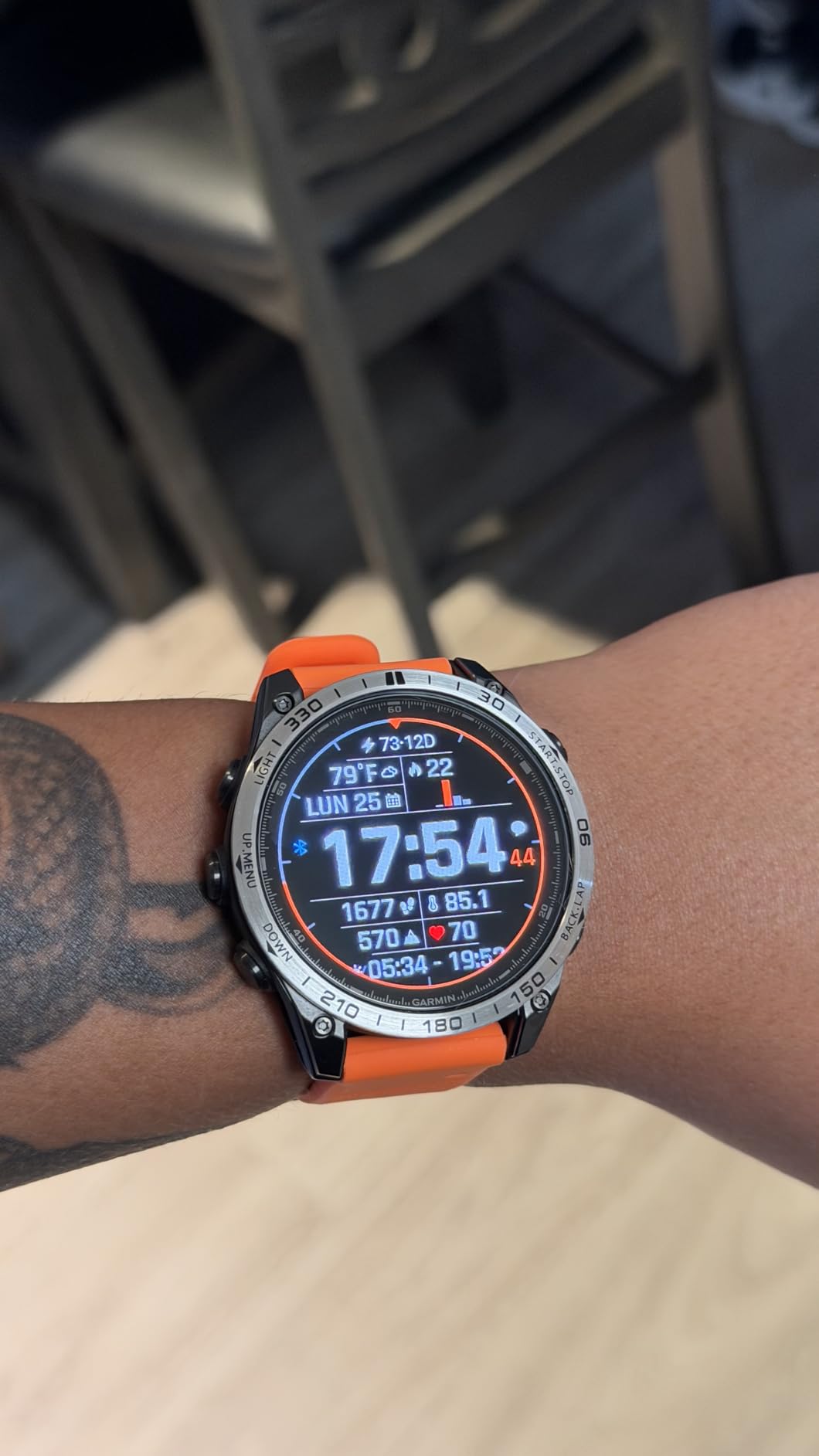
Battery life with the AMOLED display is solid but not class-leading. I got about 20 days in smartwatch mode with daily rides of 1 to 2 hours. In continuous GPS mode with multi-band enabled, the Fenix 8 tracked for roughly 70 to 84 hours depending on settings. That is enough for most multi-day adventures but falls short of the solar-assisted Fenix 7X Pro.
The 40-meter dive rating with leakproof metal buttons adds durability that matters for cyclists who also dive, swim, or paddle. The stainless steel case feels premium and rugged, and the watch survived several crashes on mountain bike trails without a scratch. At 102 grams, it is noticeably heavier than most watches on this list.
Mapping and Navigation for Cyclists
The Fenix 8 includes full-color TopoActive maps with turn-by-turn navigation. I used the dynamic round-trip routing feature to generate rides on the fly when I was traveling and did not know the area. You enter a target distance, and the watch creates a loop route that you can follow with breadcrumb cues and directional arrows.
The watch pairs seamlessly with all ANT+ and Bluetooth cycling sensors. I tested it with power meters, cadence sensors, heart rate straps, and the Garmin Varia radar. Every connection was stable, and data appeared on the customizable data screens without lag. For cyclists who rely on power data and structured training, the Fenix 8 handles everything you need.
Training Analytics Depth
Training readiness, HRV status, training load focus, and acute load charts give you a comprehensive picture of your fitness and recovery. The morning report summarizes your sleep, recovery, and training outlook in one screen. I found these metrics genuinely useful for deciding whether to push hard or take an easy day during a training block.
The ECG app and Pulse Ox add health monitoring capabilities that bring the Fenix 8 closer to the Apple Watch in terms of medical-grade tracking. Combined with the rugged build and full cycling sensor support, this is a watch that can serve as your only wearable for years. The main barrier is the premium price.
5. Garmin Forerunner 265S – Best for Smaller Wrists
Garmin Forerunner® 265S, Running Smartwatch, 42mm, Light Pink/Powder Gray
1.1 inch AMOLED
Multi-band GNSS
Training Readiness
15-Day Battery
Pros
- Brilliant AMOLED display with excellent sunlight readability
- Compact 42mm size perfect for smaller wrists
- Training readiness score optimizes workout timing
- Daily suggested workouts adapt to your performance
- Multi-band GNSS for precise GPS tracking
Cons
- Limited official Garmin band options
- No built-in microphone or speaker
- Cannot respond to calls from watch
- Some workout save menu delays
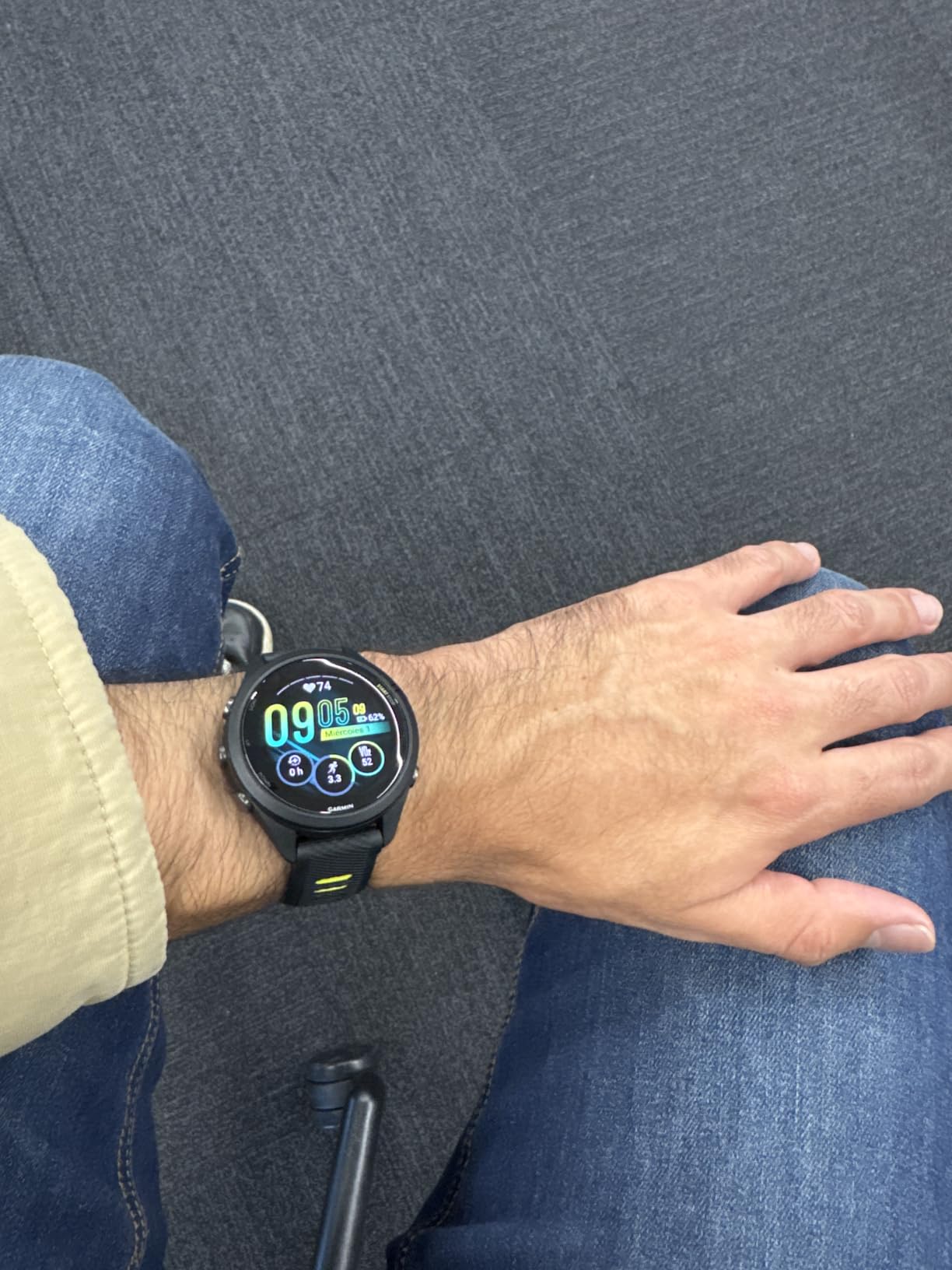
The Garmin Forerunner 265S is the compact version of the popular Forerunner 265, and it has become my favorite watch for cyclists with smaller wrists. At 42mm and just 39 grams, it disappears on your wrist during rides. Despite the small size, the AMOLED display is bright and crisp, making ride data easy to read at a glance.
I tested the Forerunner 265S across road rides, indoor trainer sessions, and a few trail runs to evaluate its multisport capabilities. The training readiness score was the feature I checked every morning. It combines sleep quality, recovery time, training load, and HRV status to tell you whether your body is ready for a hard effort or needs an easy day.
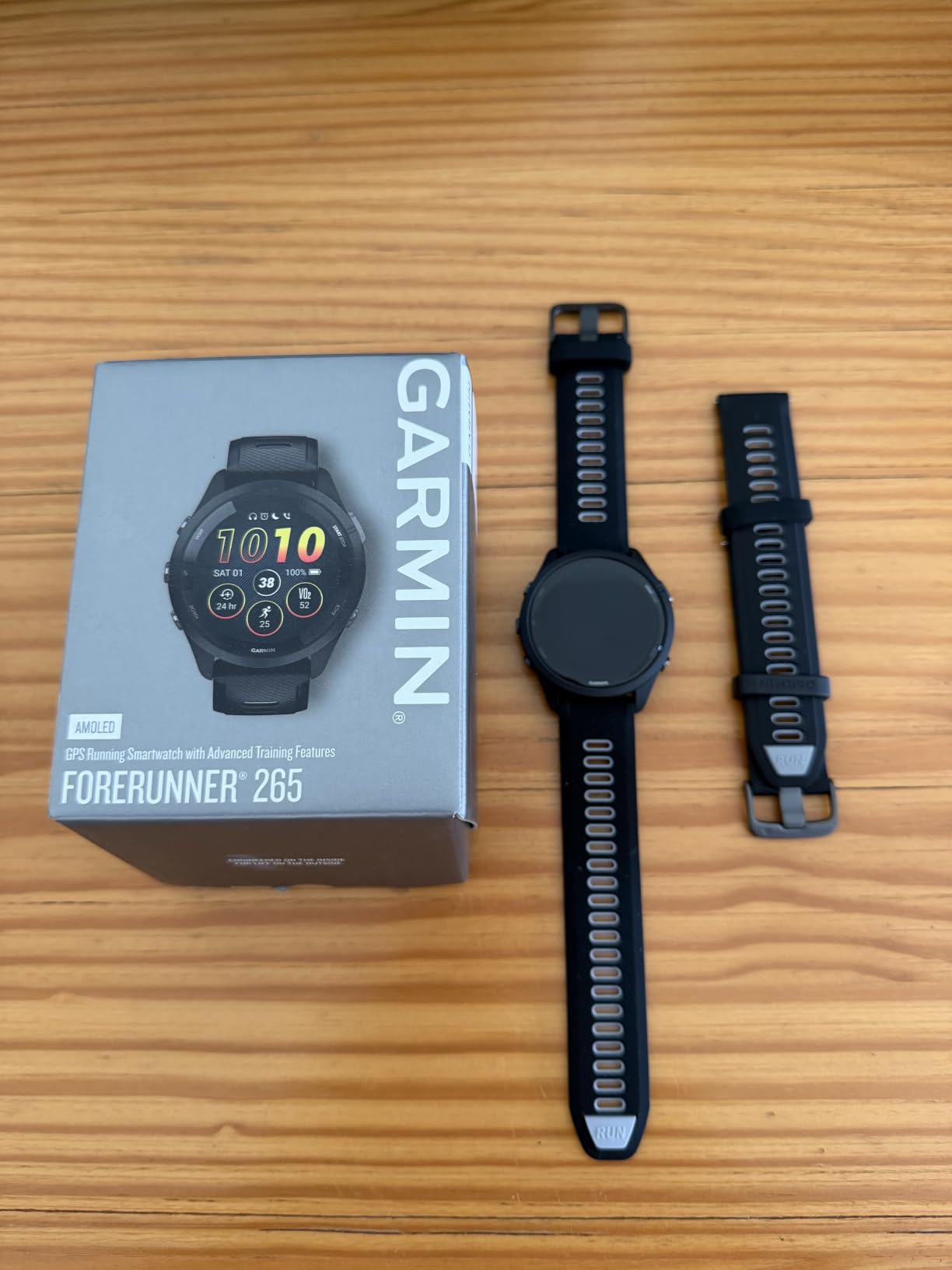
GPS accuracy with multi-band GNSS and SatIQ was excellent across all my rides. On a 60-mile road ride through mixed urban and rural terrain, the track was clean with no drift or signal drops. The watch connected to my power meter and heart rate strap via ANT+ without issues, and data screens were fully customizable through the Garmin Connect app.
The daily suggested workouts adapted based on my recent training history and performance. On days after hard interval sessions, the watch suggested easier endurance rides. After rest days, it recommended threshold work. For cyclists who follow structured training plans, this adaptive coaching feature adds real value beyond simple ride recording.
Battery Life and Daily Use
In smartwatch mode, the Forerunner 265S lasted about 13 to 15 days with daily 1 to 2 hour rides. In continuous GPS mode, I got roughly 20 to 24 hours depending on whether multi-band was enabled. For most cyclists, that means charging once every two weeks, which is convenient for daily wear.
The 8GB of music storage let me download playlists from Spotify for phone-free rides. I connected Bluetooth earbuds and had music playing during solo rides without carrying my phone. The morning report gave me a quick overview of sleep, recovery, and training outlook each day, which became part of my morning routine.
Cycling Sensor Compatibility
The Forerunner 265S supports ANT+ and Bluetooth connectivity for power meters, cadence sensors, heart rate straps, and speed sensors. I tested it with a Stages power meter and a Wahoo TICKR heart rate strap, and both paired instantly and maintained stable connections throughout rides.
For cyclists who also run, this watch is an outstanding multisport option. The running dynamics, daily suggested workouts, and race predictor features are among the best available. The main limitation is the lack of built-in mapping and navigation, which means it is better suited for training than exploring new routes.
6. COROS PACE Pro – Best Display in Its Class
COROS PACE Pro GPS Sport Watch, 1.3-inch AMOLED Touchscreen- Grey
1.3 inch AMOLED
Dual-Frequency GPS
20-Day Battery
Offline Global Maps
Pros
- Gorgeous 1500-nit AMOLED display
- Exceptional 20-day battery life
- Fast processor with responsive interface
- Offline global maps with turn-by-turn navigation
- Precise dual-frequency GPS accuracy
Cons
- No NFC contactless payments
- Limited music integration with MP3 only
- Basic notification display
- Silicone band feels less premium
The COROS PACE Pro is the newest addition to the COROS lineup, and it fixes the biggest complaint about the PACE 3 by adding a gorgeous AMOLED display. I tested this watch for two weeks of riding and was immediately impressed by the 1500-nit brightness. In direct sunlight, the screen was as readable as any Garmin AMOLED watch I have used.
The processor in the PACE Pro is the fastest in its class, and it shows in everyday use. Navigating menus, zooming maps, and switching data screens happened without any lag or stutter. On the bike, this responsiveness matters because you want to check your data quickly and get your eyes back on the road.
Battery life is rated at 20 days in regular use and 38 hours in continuous GPS mode. In my testing with daily 1-hour rides and always-on display, I got about 16 to 18 days before needing a charge. That is exceptional for an AMOLED display watch and puts the PACE Pro ahead of most Garmin competitors at this price.
The dual-frequency GPS provided the same level of accuracy I experienced with the PACE 3. On a city criterium course with tall buildings on one side, the track was clean and consistent across multiple laps. The offline global maps with turn-by-turn navigation via the COROS app are a significant upgrade for cyclists who want routing without paying Garmin prices.
Training Metrics and App Experience
The COROS app provides training status, training load, and custom workout creation. I designed a cycling interval workout in the app and pushed it to the watch, which guided me through warmup, intervals, and cooldown with audio and vibration alerts. The training load analysis helped me see when I was pushing too hard or too easy across a training week.
Compared to Garmin Connect, the COROS app is simpler and more focused. Some cyclists will prefer this streamlined approach, while others who want deep analytics and third-party app integration may find it limiting. The EvoLab fitness level and training load metrics are well-designed and give useful insights for managing your cycling fitness.
Who It Is Built For
The COROS PACE Pro is built for serious cyclists and runners who want premium display quality, accurate GPS, and long battery life without paying premium Garmin prices. It sits in a sweet spot between budget options and high-end multisport watches, making it one of the best cycling smartwatches for value-conscious athletes.
The lack of NFC payments, limited music options, and basic notifications mean this is not an everyday smartwatch. If you need those features, look at the Garmin Vivoactive 5 or the Fenix 8 instead. But for pure training and performance tracking, the PACE Pro delivers exceptional capability at a fair price.
7. Garmin Vivoactive 5 – Best Budget Fitness Watch
Garmin vívoactive® 5, Health & Fitness GPS Smartwatch, 42mm, Black
1.2 inch AMOLED
Built-in GPS
11-Day Battery
Body Battery Monitoring
Pros
- Excellent AMOLED display with bright visuals
- Outstanding battery life up to 11 days
- Comprehensive health tracking including Body Battery
- 30 plus built-in sports apps
- Lightweight and comfortable for all-day wear
Cons
- No built-in microphone or speaker
- Nap tracking can have false positives
- Screen can scratch with daily wear
- Limited smart features compared to Apple Watch
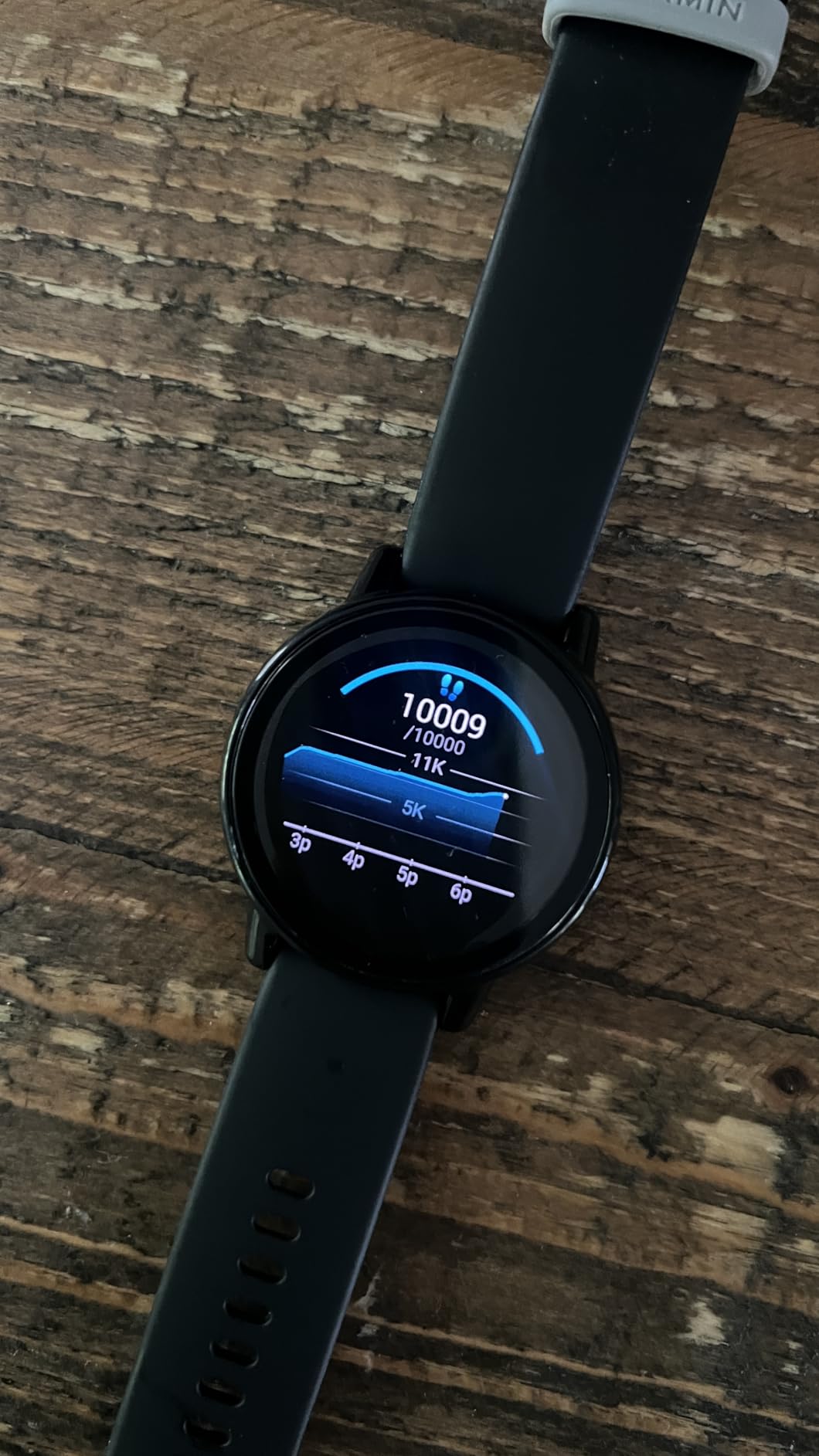
The Garmin Vivoactive 5 is the most affordable way to get into the Garmin ecosystem with an AMOLED display. I tested it as a daily driver for three weeks, using it for commuting, fitness rides, and general health tracking. The AMOLED screen looks fantastic, with vibrant colors and sharp text that makes checking ride data a pleasant experience.
The built-in GPS uses GLONASS, GPS, and Galileo satellite systems for solid accuracy on most rides. It is not dual-band, so you may see some drift in dense urban environments. But for suburban and rural road cycling, the tracking was accurate enough for Strava uploads and training analysis.
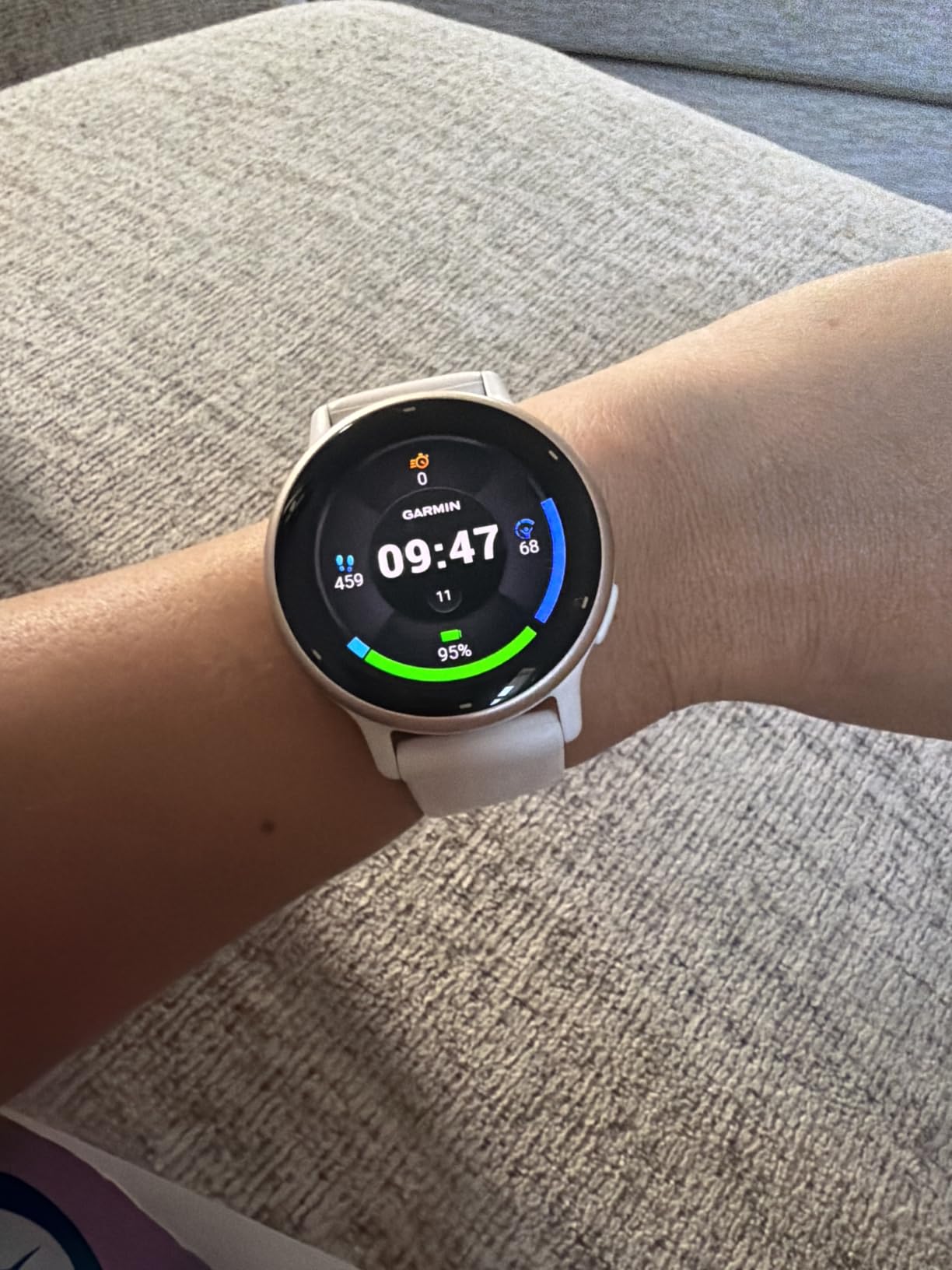
Battery life impressed me. I got a genuine 11 days of use with daily 30 to 60 minute rides and always-on health tracking. The Body Battery energy monitoring feature became my favorite daily metric, giving me a simple 0 to 100 score that reflected my readiness for training. On mornings when it showed 25, I knew to take an easy ride.
The 30-plus built-in sports apps include cycling, indoor cycling, mountain biking, and gravel riding profiles. Each profile shows relevant data fields that you can customize. I set up a cycling screen with heart rate, speed, distance, and elapsed time, and it worked flawlessly across every ride.
Health Tracking Beyond Cycling
The sleep score and personalized sleep coaching gave me actionable insights about my recovery. The automatic nap detection was occasionally triggered by sitting still during meetings, which is a known issue. But the overall sleep tracking accuracy was good, and the trends over time matched how I actually felt.
Stress tracking, respiration rate, and hydration tracking round out the health suite. Garmin Pay contactless payments worked at my local coffee shop and bike store, which was convenient on rides when I did not want to carry a wallet. Music storage let me download playlists for phone-free riding.
Cycling Limitations to Know
The Vivoactive 5 does not support multi-band GNSS, which means GPS accuracy is good but not top-tier in challenging environments. There is no barometric altimeter, so elevation data comes from GPS and connected sensors only. For cyclists who care about precise climbing data, this is a limitation.
Despite these constraints, the Vivoactive 5 delivers outstanding value for casual cyclists and fitness-focused riders. If you want a capable cycling fitness tracker that also handles everyday health monitoring, this is one of the best options under 250 dollars on the market in 2026.
8. Garmin Forerunner 165 – Best Entry-Level AMOLED
Garmin Forerunner® 165, Running Smartwatch, 43mm, Black
1.2 inch AMOLED
Built-in GPS
11-Day Battery
Morning Report
Pros
- Brilliant AMOLED display with 1000-nit brightness
- Morning report for daily training overview
- Personalized daily suggested workouts
- Garmin Pay contactless payments
- Lightweight and comfortable design
Cons
- No music storage on standard version
- Limited advanced metrics vs higher models
- No multi-band GPS
- Some features need Connect app subscription
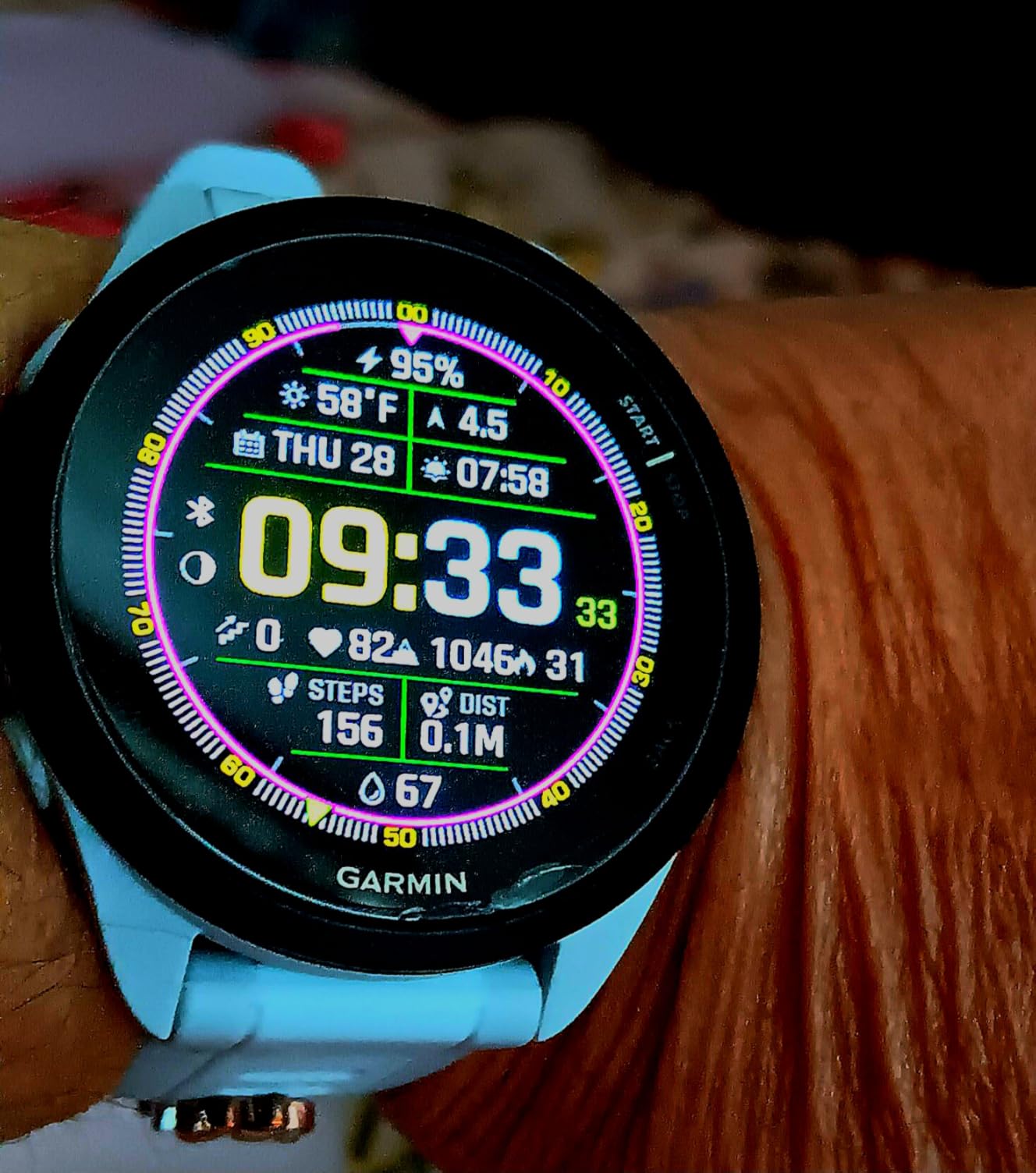
The Garmin Forerunner 165 brings AMOLED display quality to a price point that makes it accessible to most cyclists. I tested it for two weeks of daily riding and was consistently impressed by the 1000-nit display brightness. Even on sunny afternoon rides, I could read my data without shielding the screen or squinting.
The morning report feature aggregates your sleep, recovery, training outlook, and HRV status into one screen that appears when you wake the watch. For cyclists who train intentionally, this daily summary is genuinely useful for planning the day’s ride intensity and duration.
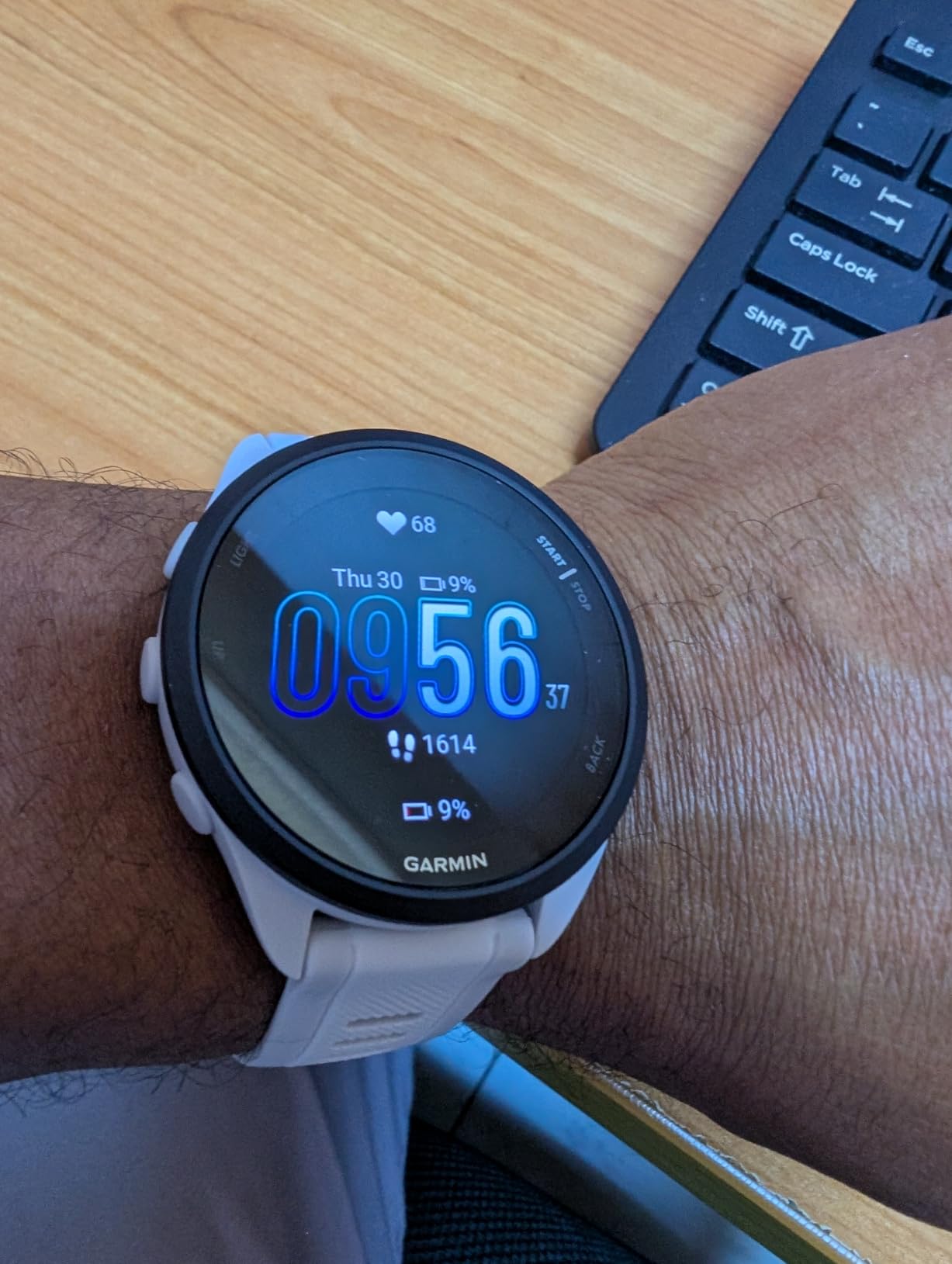
GPS accuracy using built-in GPS, GLONASS, and Galileo was solid for the price. On open road rides, the track matched my bike computer within a few meters. In urban canyons, there was some wandering, which is expected from a single-band GPS watch at this level. For most recreational cyclists, the accuracy is perfectly adequate.
The daily suggested workouts adapt based on your recent training history. After a hard group ride, the watch suggested a recovery ride. After a rest day, it recommended a tempo session. I found these suggestions reasonable and aligned with good training principles for amateur cyclists.
Cycling Features and Sensors
The Forerunner 165 includes 25-plus activity profiles, including cycling, indoor cycling, mountain biking, and virtual riding. It connects to ANT+ and Bluetooth cycling sensors, so you can pair a heart rate strap, cadence sensor, or speed sensor for more accurate data during rides.
Training effect metrics show how your workouts impact your aerobic and anaerobic fitness. Recovery time tells you how long to wait before your next hard effort. These features, combined with Garmin Pay and incident detection safety features, make the Forerunner 165 a well-rounded cycling companion despite its entry-level positioning.
Who Gets the Most Value Here
This watch is ideal for beginner to intermediate cyclists who want quality training features without spending 400 dollars or more. The AMOLED display, morning report, and daily suggested workouts give you tools that were only available on premium watches a couple of years ago.
The main trade-offs are the lack of music storage on the standard version, single-band GPS, and fewer advanced metrics than the Forerunner 265 or higher models. If those limitations do not bother you, the Forerunner 165 offers exceptional value and is one of the best cycling smartwatches for newer riders.
9. Samsung Galaxy Watch Ultra – Best Android Smartwatch
Samsung Galaxy Watch Ultra (2024) 47mm LTE AI Smartwatch w/Energy Score, Wellness Tips, Heart Rate Tracking, Sleep Monitor, Fitness Tracker, GPS,Titanium Silver [US Version, 1Yr Manufacturer Warranty]
47mm Titanium Case
AMOLED 3000-nit
LTE Connectivity
Energy Score AI
Pros
- Durable titanium build ready for tough conditions
- 3000-nit display readable in any lighting
- LTE connectivity for phone-free use
- Comprehensive AI-powered health features
- Customizable action button for quick launch
Cons
- Bulky compared to fitness-focused watches
- Health tracking not as advanced as Garmin
- Limited app ecosystem vs WearOS
- Battery life varies with usage patterns
The Samsung Galaxy Watch Ultra is the strongest Android smartwatch contender for cyclists who want a premium wearable that handles rides well. I tested it with a Samsung Galaxy phone for three weeks, using it for road cycling, indoor training, and daily health tracking. The titanium case feels rugged and premium, and it survived multiple mountain bike crashes without damage.
The 3000-nit AMOLED display is the brightest screen on this list, and it shows during rides. In any lighting condition, from pre-dawn darkness to midday sun, the display was crystal clear. The customizable action button let me start cycling workouts instantly without navigating through menus.
![Samsung Galaxy Watch Ultra (2024) 47mm LTE AI Smartwatch w/Energy Score, Wellness Tips, Heart Rate Tracking, Sleep Monitor, Fitness Tracker, GPS, Titanium Silver [US Version, 1Yr Manufacturer Warranty] customer photo 1](https://betterbike.org/wp-content/uploads/2026/07/B0D1YLBBMB_customer_1.jpg)
Energy Score with Galaxy AI provides a daily readiness assessment similar to Garmin’s training readiness or Body Battery. I found it reasonably accurate for gauging whether to push hard or take it easy on a ride. The personalized wellness tips offered actionable advice about sleep, stress, and activity throughout the day.
Battery life is the main weakness for cyclists. I got about 60 hours with moderate use, which means charging every two to three days with daily rides. With always-on display and GPS tracking enabled during rides, expect closer to 2 days. The LTE connectivity is a genuine advantage for cyclists who want to leave their phone at home on shorter rides.
![Samsung Galaxy Watch Ultra (2024) 47mm LTE AI Smartwatch w/Energy Score, Wellness Tips, Heart Rate Tracking, Sleep Monitor, Fitness Tracker, GPS, Titanium Silver [US Version, 1Yr Manufacturer Warranty] customer photo 2](https://betterbike.org/wp-content/uploads/2026/07/B0D1YLBBMB_customer_2.jpg)
Cycling Tracking Quality
The built-in GPS provided accurate tracking on most rides, though it is single-band rather than dual-frequency. On open roads, the track was clean and consistent. In urban areas with tall buildings, I noticed some drift that would not occur with a multi-band GPS watch. For most recreational cycling, the accuracy is acceptable.
Samsung Health provides heart rate tracking, sleep monitoring, stress tracking, and ECG capabilities. The heart rate readings during steady-state cycling were close to my chest strap measurements. During high-intensity intervals, wrist-based readings lagged slightly behind the chest strap, which is a common limitation of optical sensors during rapid heart rate changes.
Best Use Case for Cyclists
The Galaxy Watch Ultra is the best cycling smartwatch for Samsung phone owners who want a premium everyday wearable that also tracks rides. The LTE connectivity, bright display, and rugged build make it a strong companion for commuting and fitness cycling. Fall detection and emergency SOS add safety for solo rides.
Cyclists who need ANT+ sensor pairing, power meter support, or advanced training analytics should stick with Garmin or COROS. The Galaxy Watch Ultra excels as a smartwatch first and a cycling tracker second, which makes it ideal for riders who prioritize everyday features over deep training metrics.
10. Garmin Forerunner 55 – Best Budget GPS Watch
Garmin Forerunner 55, GPS Running Watch with Daily Suggested Workouts, Up to 2 Weeks of Battery Life, Aqua
1.04 inch MIP Display
Built-in GPS
2-Week Battery
PacePro Technology
Pros
- Excellent entry-level GPS watch
- Very accurate GPS tracking
- GREAT battery life up to 2 weeks
- Helpful daily suggested workouts
- PacePro for race day strategy
Cons
- No touchscreen with button-only navigation
- No music storage
- No contactless payments
- Limited advanced metrics for elite riders
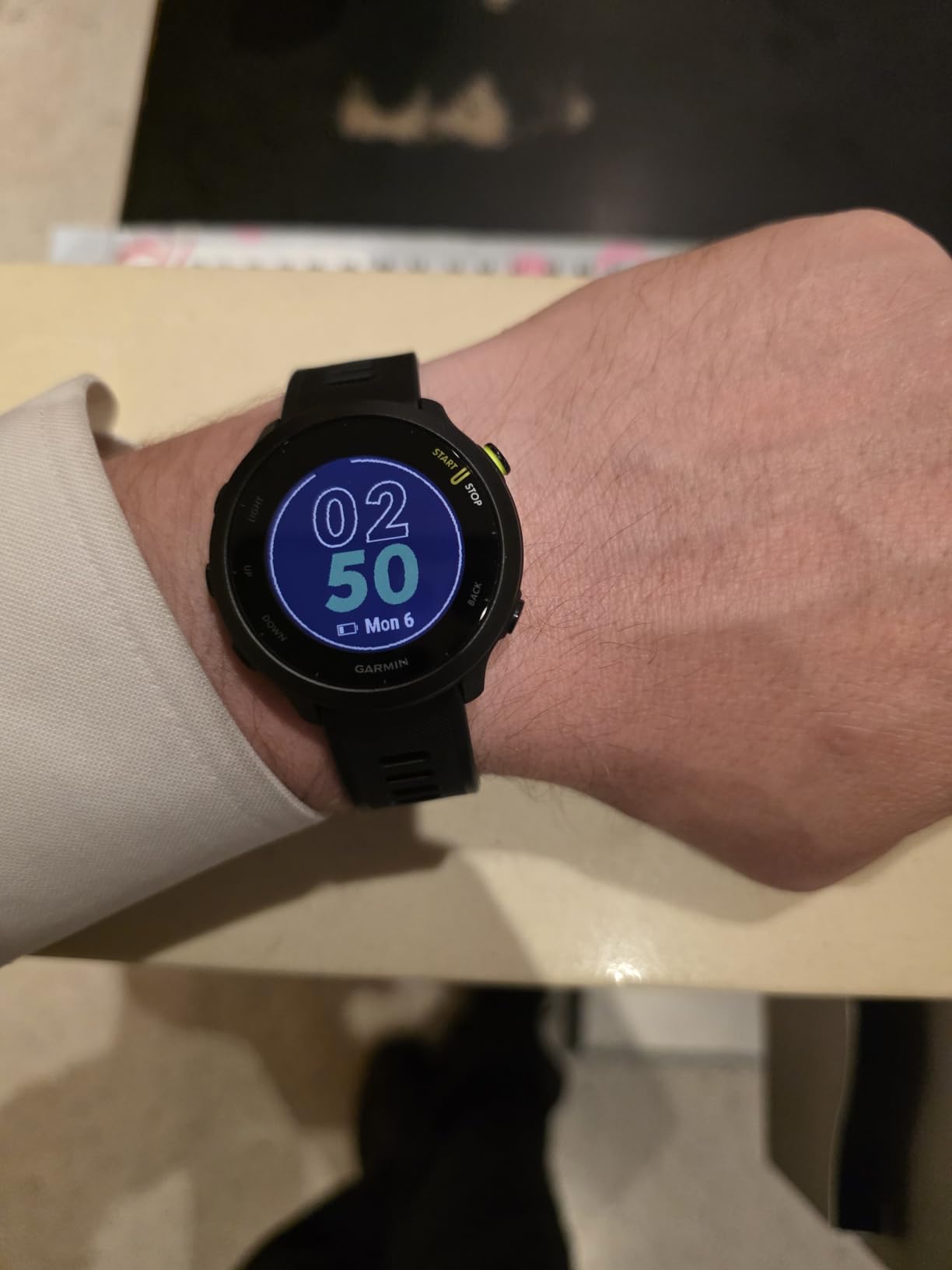
The Garmin Forerunner 55 is the most affordable watch on this list, and it proves that you do not need to spend a fortune to get reliable cycling GPS tracking. I tested it for two weeks of daily riding, and its simplicity was refreshing. No confusing menus, no overwhelming features, just accurate ride data and helpful training guidance.
The transflective MIP display is not flashy, but it is extremely readable in direct sunlight. On bright afternoon rides, the screen was clearer than any AMOLED display I tested. The trade-off is that it looks dim indoors, which matters if you plan to wear it as an everyday watch.
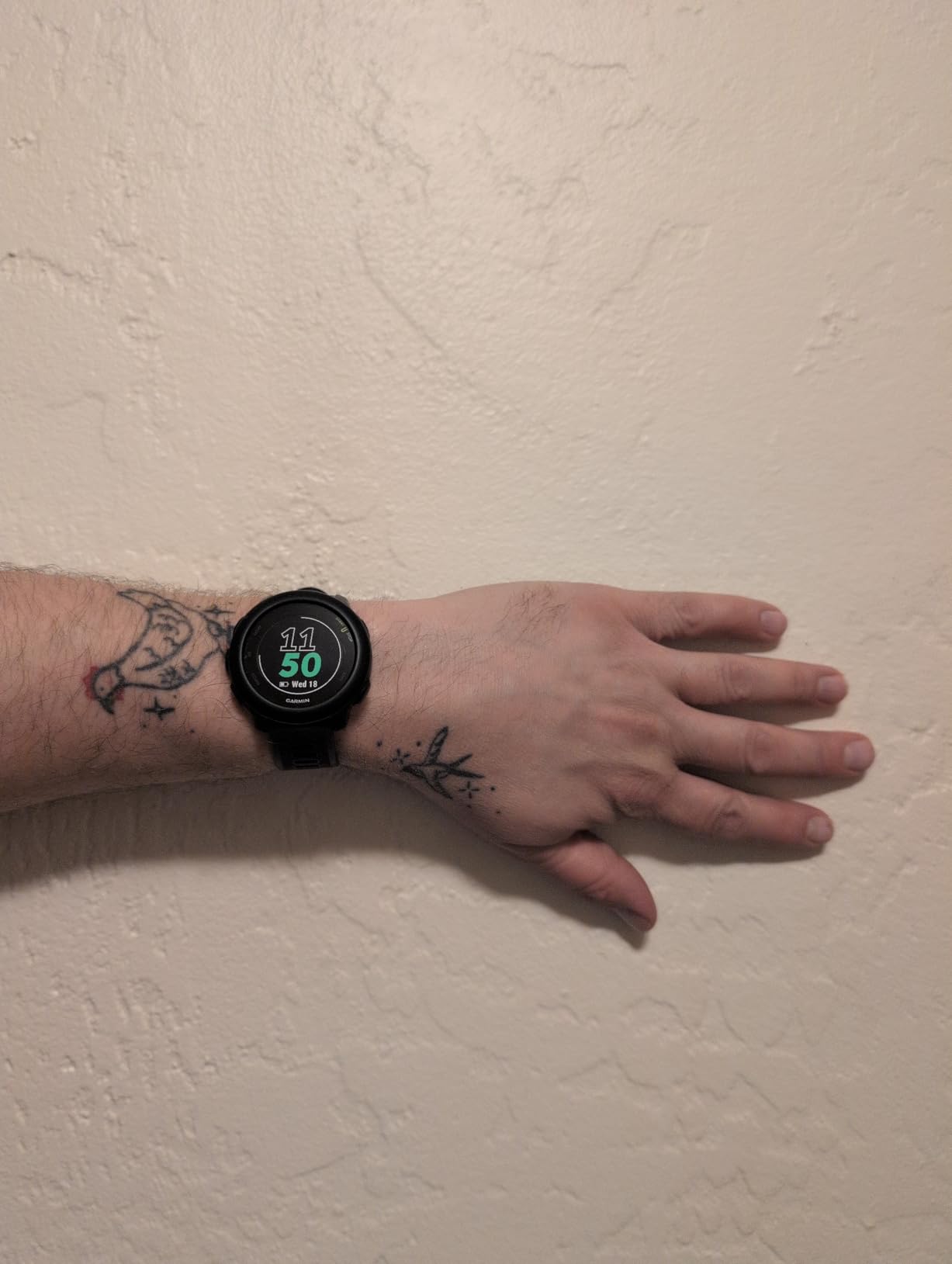
GPS accuracy was a pleasant surprise. The Forerunner 55 uses built-in GPS without multi-band technology, but on open road rides, the tracking was clean and consistent. For cyclists who ride primarily on roads and paved paths, the accuracy is more than adequate for Strava and training purposes.
Battery life is outstanding at up to two weeks in smartwatch mode and 20 hours in GPS mode. I charged the watch once during my two-week test period, which is remarkable at any price point. For cyclists who forget to charge their devices regularly, this watch removes that stress entirely.
Training Features for New Cyclists
Daily suggested workouts provide adaptive training guidance based on your fitness level and recent activity. PacePro technology offers GPS-based pace guidance for race strategy, which road cyclists and runners will appreciate. Body Battery energy monitoring helps you understand when you are recovered and ready to train.
VO2 max, fitness age, and recovery advisor give you basic but useful insights into your overall fitness trajectory. While these metrics are not as deep as what you get on the Forerunner 265 or Fenix series, they are more than enough for beginner cyclists who are building fitness and tracking progress.
What You Give Up at This Price
The button-only interface means no touchscreen, which some cyclists actually prefer because it prevents accidental screen touches from rain or sweat. There is no music storage, no contactless payments, and limited memory at 32MB. The activity profiles include cycling, but the data customization options are more limited than on premium models.
Despite these limitations, the Forerunner 55 delivers where it matters most for budget-conscious cyclists: accurate GPS, reliable heart rate monitoring, excellent battery life, and useful training guidance. For riders just getting into cycling or those who want a simple backup watch, this is the most affordable entry point into reliable GPS tracking.
How to Choose the Best Cycling Smartwatch?
Choosing from the best cycling smartwatches requires understanding which features actually matter for your riding style. Our team has broken down the key factors that separate a great cycling watch from a mediocre one, based on months of real-world testing.
GPS Accuracy: Single-Band vs Dual-Band
GPS accuracy is the foundation of any cycling smartwatch. Single-band GPS uses one satellite frequency and provides good accuracy on open roads. Dual-band or multi-band GPS uses two frequencies, which significantly improves accuracy in challenging environments like dense forests, urban canyons, and mountain valleys.
If you ride primarily on open roads, single-band GPS is sufficient. If you ride in cities with tall buildings, on mountain bike trails under heavy tree cover, or in areas with challenging terrain, dual-band GPS is worth the investment. The Garmin Fenix 7X Pro Solar, Fenix 8, Forerunner 265S, COROS PACE 3, and COROS PACE Pro all offer dual-frequency GPS.
Battery Life: Real-World Expectations
Manufacturer battery claims and real-world cycling use are often very different numbers. A watch rated for 20 days in smartwatch mode might only deliver 8 days when you add daily GPS-tracked rides. Always look at GPS-mode battery life, which tells you how long the watch will actually last during rides.
For cyclists doing daily 1 to 2 hour rides, any watch with 15-plus days of smartwatch battery life and 20-plus hours of GPS battery life will work well. For ultra-endurance cyclists and bikepackers, look for watches with 40-plus hours of GPS battery life, such as the Fenix 7X Pro Solar, Fenix 8, or COROS PACE 3.
Heart Rate Monitoring: Optical vs Chest Strap
Wrist-based optical heart rate monitoring has improved significantly, but it still cannot match the accuracy of a chest strap during high-intensity cycling. Optical sensors struggle during rapid heart rate changes, which happen frequently during interval workouts and hard climbs. For steady-state endurance rides, optical HR is generally accurate enough.
If you train with power or do structured interval workouts, pair your watch with an ANT+ or Bluetooth chest strap for accurate heart rate data. All the Garmin watches on this list support ANT+ sensor pairing, while COROS and Apple watches support Bluetooth sensor connections.
Connectivity: ANT+ vs Bluetooth for Cycling Sensors
ANT+ is the standard protocol for cycling sensors, including power meters, cadence sensors, speed sensors, and heart rate straps. It allows multiple simultaneous connections and maintains stable pairing during rides. Bluetooth works for single connections but can be less reliable when connecting multiple sensors.
Garmin watches support both ANT+ and Bluetooth, making them the most versatile for cycling sensor connectivity. COROS watches support Bluetooth but not ANT+. Apple Watch and Samsung watches have limited sensor support through third-party apps. If you ride with a power meter and multiple sensors, Garmin is the safest choice.
Navigation and Mapping Features
For cyclists who explore new routes, navigation features matter significantly. Full-color mapping with turn-by-turn navigation is available on the Garmin Fenix 7X Pro Solar and Fenix 8. Breadcrumb navigation with route following is available on the COROS PACE 3 and PACE Pro. The Apple Watch Ultra 3 handles navigation through third-party cycling apps.
If you primarily ride familiar routes, basic breadcrumb navigation is sufficient. If you bikepack, tour, or frequently explore new areas, invest in a watch with full-color TopoActive maps. The Garmin ecosystem offers the most comprehensive navigation experience for cyclists.
Ecosystem Compatibility: Garmin vs Apple vs Coros
Your choice of ecosystem affects everything from app experience to data analysis to third-party integrations. Garmin Connect is the most comprehensive fitness platform with deep analytics, third-party app support, and excellent Strava integration. Apple Health and the Apple Watch ecosystem offer the best overall smartwatch experience but with shallower training analytics. COROS offers a clean, focused app with good training metrics but fewer third-party integrations.
If you are already invested in an ecosystem, staying within it usually makes sense. If you are starting fresh, consider what matters most: Garmin for training depth, Apple for everyday smartwatch features, and COROS for value and simplicity.
Frequently Asked Questions
What is the best smartwatch for cyclists?
The Garmin Fenix 7X Pro Solar is the best overall smartwatch for cyclists, offering solar charging for extended battery life, multi-band GPS for accurate tracking, full-color mapping with turn-by-turn navigation, and comprehensive ANT+ sensor support for power meters and cycling radar. For iPhone users, the Apple Watch Ultra 3 is the top alternative.
What is the 80% rule in cycling?
The 80/20 rule in cycling training means spending approximately 80 percent of your training time at low intensity and 20 percent at high intensity. This polarized training approach, used by elite endurance athletes, maximizes fitness gains while reducing overtraining risk. Cycling smartwatches with training load and intensity tracking features help you monitor and maintain this ratio.
Why are people ditching smart watches?
Some people move away from full smartwatches because of battery anxiety, notification overload, and the desire for simpler devices that focus on fitness tracking. Dedicated fitness watches like Garmin Forerunner and COROS PACE models offer longer battery life, better training metrics, and fewer distractions than full smartwatches, which appeals to athletes who want performance data over smart features.
Can I use a smartwatch as a bike computer?
A cycling smartwatch can serve as a bike computer alternative for basic tracking, but dedicated bike computers offer advantages in screen size, mount positioning, and cycling-specific features. Smartwatches work well for recording rides, heart rate, and power data, but reading a small watch screen while riding is less convenient than a handlebar-mounted bike computer display.
Is Garmin or Coros better for cycling?
Garmin is better for cyclists who need ANT+ sensor support, full-color mapping, and deep training analytics. COROS is better for cyclists who want excellent value, lightweight design, and long battery life at a lower price. Garmin offers more cycling-specific features and sensor compatibility, while COROS delivers comparable GPS accuracy and core training metrics at roughly half the cost.
Final Thoughts on the Best Cycling Smartwatches for 2026
After testing all 10 of these watches across hundreds of miles of riding, the Garmin Fenix 7X Pro Solar stands out as the best overall choice for serious cyclists. Its solar charging, multi-band GPS, full-color mapping, and ANT+ sensor support make it the most capable cycling GPS watch available. The COROS PACE 3 earns the best value title by delivering dual-frequency GPS and 17-day battery life at a fraction of Garmin pricing.
For iPhone users who want premium everyday features alongside solid cycling tracking, the Apple Watch Ultra 3 is unmatched in build quality and health monitoring. Budget-conscious riders will find excellent options in the Garmin Forerunner 55 and Forerunner 165, both of which deliver reliable GPS tracking and useful training guidance at accessible prices.
The best cycling smartwatches are the ones that match your riding style, budget, and ecosystem preferences. Whether you are bikepacking across the country or commuting to work, there is a watch on this list that will track every mile accurately and help you train smarter for 2026 and beyond.