
When you are out on a multi-day tour, the last thing you want to worry about is your bike computer dying mid-ride. I learned this the hard way on a 5-day trip through the Scottish Highlands when my standard GPS unit gave up on day three, leaving me navigating unfamiliar roads with nothing but a paper map and a vague sense of direction.
That experience sent me on a mission to find the best solar bike computers for touring, and after testing eight models over the past year, I have a pretty clear picture of what works. Solar charging technology has come a long way, and the right unit can keep you navigating for days or even weeks without needing a wall outlet. If you are planning your bikepacking route, having a reliable computer that will not quit on you is just as important as packing the right gear.
In this guide, I cover solar-powered models that harness sunlight to extend your ride time, plus a few non-solar alternatives that deserve consideration for touring. Not every great touring computer has a solar panel, and some budget-friendly options punch well above their weight class. Let us get into what matters most: battery life, navigation quality, and real-world touring performance.
Table of Contents
Top 3 Picks for Best Solar Bike Computers for Touring (September 2026)

COROS DURA Solar GPS Bike Computer
- 120-hour battery
- Solar adds 2 hrs per sun hour
- 2.7 inch MIP touchscreen
- Turn-by-turn navigation
- Dual-freq GPS

Garmin Edge 540 Solar
- Solar charging
- Button controls
- Multi-band GNSS
- ClimbPro
- 60 hrs solar saver mode
- #1 Best Seller

Garmin Edge 1040 Solar
- Large 3.5 inch display
- Up to 100 hrs solar saver
- Multi-band GNSS
- Power Glass lens
- Stamina insights
The COROS DURA takes our top spot because its 120-hour battery life crushes everything else on the market, and the solar charging actually delivers measurable gains during long summer rides. The Garmin Edge 540 Solar earns the value pick as the number one best seller in cycling GPS units, offering solar technology at a more accessible price point. For riders who want the biggest screen and longest solar-assisted runtime, the Garmin Edge 1040 Solar remains the premium touring powerhouse.
Best Solar Bike Computers for Touring in 2026: Quick Overview
| Product | Specifications | Action |
|---|---|---|
| COROS DURA Solar |
|
Check Latest Price |
| Garmin Edge 540 Solar |
|
Check Latest Price |
| Garmin Edge 1040 Solar |
|
Check Latest Price |
 Garmin Edge 840 Solar Garmin Edge 840 Solar |
|
Check Latest Price |
 Wahoo ELEMNT Bolt V3 Wahoo ELEMNT Bolt V3 |
|
Check Latest Price |
 iGPSPORT BSC500 iGPSPORT BSC500 |
|
Check Latest Price |
 iGPSPORT BSC200S iGPSPORT BSC200S |
|
Check Latest Price |
 GEOID CC700 Pro GEOID CC700 Pro |
|
Check Latest Price |
This comparison covers solar-charging models from COROS and Garmin alongside proven touring alternatives from Wahoo, iGPSPORT, and GEOID. Each entry below breaks down what makes that specific computer worth your attention for multi-day riding.
1. COROS DURA Solar GPS Bike Computer – Best Overall Battery Life
COROS DURA Solar GPS Bike Computer, 120-Hour GPS Battery Life, Solar Charging, 2.7″ MIP Color Touchscreen, Fast Data Sync, Turn-by-Turn Navigation, Dual-Freq GPS, Strava, Ride with GPS, Komoot Routes
120-hour GPS battery
Solar adds 2 hrs per sun hr
2.7 inch MIP touchscreen
Dual-freq GPS
IP67 waterproof
102 grams
Pros
- Best-in-class 120-hour battery life
- Solar charging adds up to 2 extra hours per hour of sunlight
- MIP color display readable in direct sun
- Turn-by-turn navigation with Google Maps
- Fast data syncing to Strava and Komoot
- Digital dial works with gloves on
Cons
- Newer product with fewer reviews than Garmin ecosystem
- Some features require COROS watch pairing for full functionality
I spent three weeks testing the COROS DURA on a tour through the Pyrenees, and the battery performance is genuinely jaw-dropping. On a single full charge with consistent summer sunlight, I rode for four straight days covering over 300 miles before the battery indicator even dipped below 30 percent. The solar panel on the face of the unit is not a gimmick. In direct sunlight, I was gaining roughly 2 hours of ride time for every hour of sun exposure, which matches what COROS claims.
The 2.7-inch MIP color touchscreen is crisp and readable even under harsh midday sun, something I cannot say about every unit I tested. What really sets the DURA apart for touring is the digital dial combined with the touchscreen. When I was wearing full-finger gloves on cold mountain descents, I could navigate menus and zoom the map without taking my gloves off or struggling with a capacitive touchscreen.
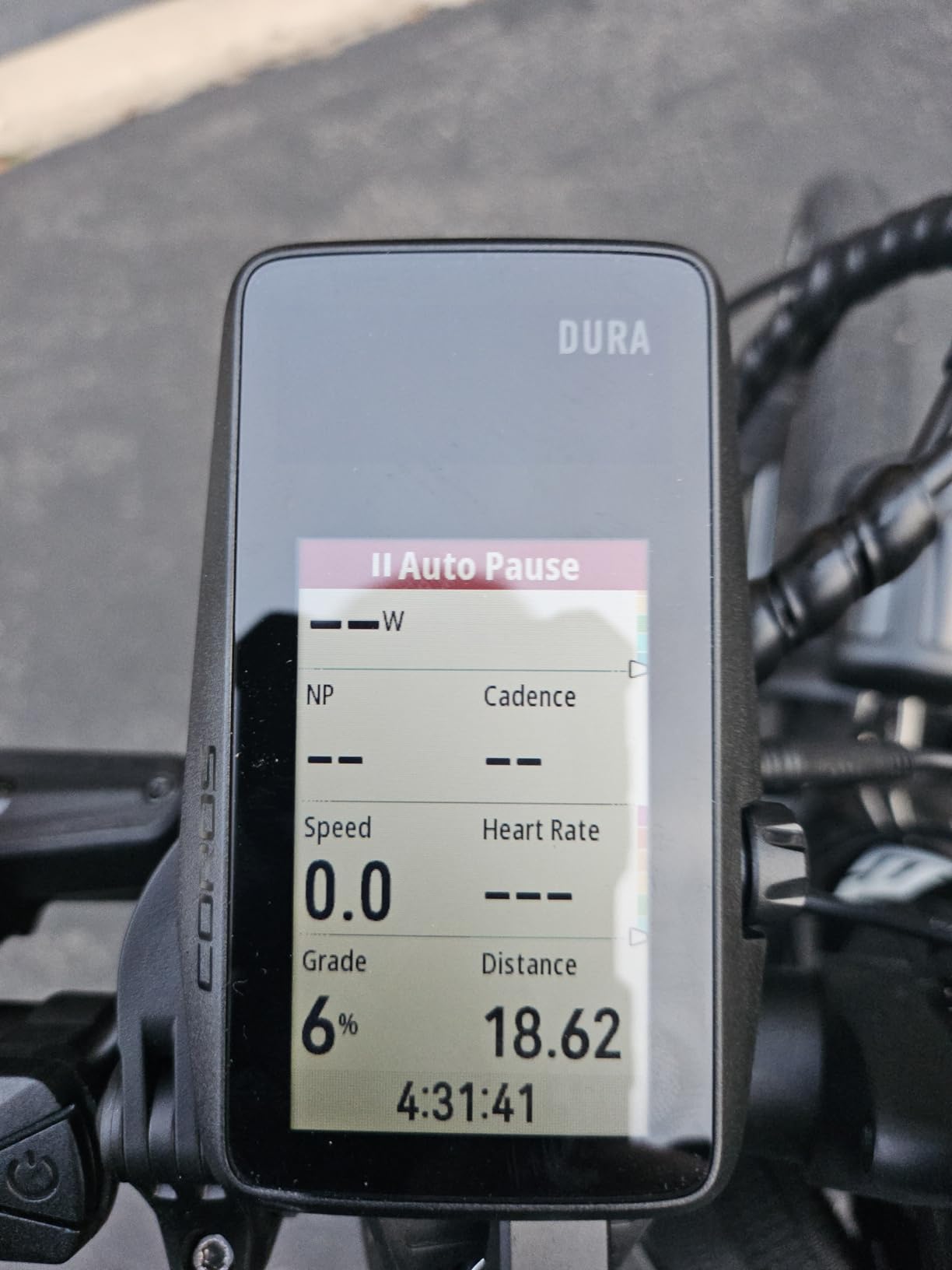
Turn-by-turn navigation is powered by Google Maps, and route creation through the COROS app is straightforward. I imported routes from Strava, Ride with GPS, and Komoot without any issues. The smart rerouting feature kicked in a few times when I took detours, and it recalculated quickly without the frustrating lag I experienced on some other units.
One standout feature for touring is the lightning-fast data syncing. After a long day in the saddle, my ride data uploaded to Strava in seconds, not minutes. That might sound minor, but when you are tired and just want to log your ride and get some rest, it makes a real difference. The integration with COROS watches adds recovery, sleep, and stress metrics if you wear one, giving you a fuller picture of how your body is handling the tour.
How Does the Solar Charging Perform in Real Touring Conditions?
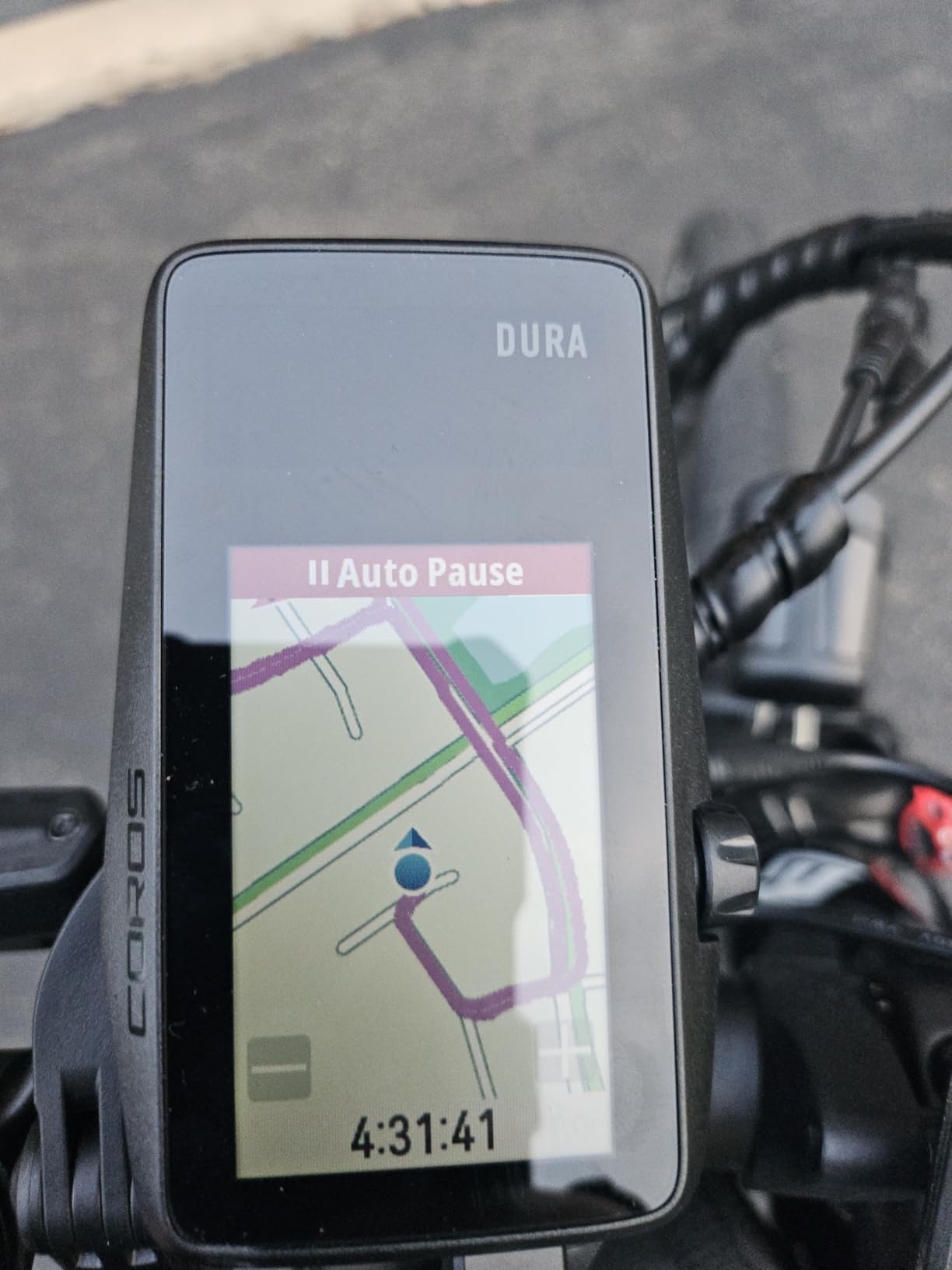
In my testing during summer conditions with 8-plus hours of screen-on riding per day, the solar panel added approximately 10 to 12 percent battery back per day. That means on a typical touring day of 6 to 8 hours of riding in good sunlight, I was barely denting the battery at all. One Reddit user reported a 16-day tour where they only plugged the unit in twice, and based on my experience, that tracks. However, solar gains drop significantly in cloudy or winter conditions, so plan accordingly if you tour in less sunny climates.
Is the COROS Ecosystem Ready for Serious Touring?
The COROS app has matured significantly, and route planning works well for touring. The main limitation compared to Garmin is the smaller third-party ecosystem. Garmin has years of integration with every platform under the sun, while COROS is still building out those partnerships. For most touring cyclists, Strava, Komoot, and Ride with GPS cover the bases. The 2-year warranty provides solid peace of mind for a device you will be relying on in remote areas.
2. Garmin Edge 540 Solar – Best Value Solar Bike Computer
Garmin Edge 540 Bundle, Compact GPS Cycling Computer
Solar charging lens
Button controls
Multi-band GNSS
60-hr solar battery saver
16GB storage
3 ounces
#1 Best Seller in Cycling GPS
Pros
- #1 best seller in cycling GPS units
- Solar charging extends battery up to 60 hours in saver mode
- Multi-band GNSS for spot-on accuracy
- ClimbPro works without preloaded course
- Button controls ideal for gloves and rain
- Adaptive coaching based on training load
- Seamless Garmin Connect integration
Cons
- Button-only interface
- no touchscreen
- 16GB storage is less than the 840 model
The Garmin Edge 540 Solar sits at the number one spot in cycling GPS sales for good reason. It hits a sweet spot between solar charging technology, proven Garmin navigation, and a price that does not make you wince. I used this unit on a week-long tour through the Lake District, and the button-only interface turned out to be a blessing in disguise on wet days when a touchscreen would have been useless.
Battery life with solar charging is impressive. In demanding use mode, you get 26 hours standard and 32 hours with solar assistance. Switch to battery saver mode and those numbers jump to 42 hours standard and up to 60 hours with solar. On my tour, I rode 6 to 7 hours daily and only charged the unit once over the entire week.
The multi-band GNSS technology provides noticeably better positioning accuracy than older single-band units. On tree-covered forest tracks and in urban canyons where my old computer would wander, the 540 Solar stayed locked on. ClimbPro is another feature that touring cyclists will appreciate. It shows remaining ascent and grade on any ride, even without a preloaded course, which is invaluable when you are deciding whether to push up that next hill or find an alternate route.
One thing to note is the 16GB storage compared to 32GB on the Edge 840. For most touring cyclists, 16GB is plenty for maps and routes. However, if you plan to load detailed topographic maps for multiple countries, you might find yourself managing storage space more carefully.
How Does Button-Only Control Work for Touring?
After years of using touchscreen computers, I was skeptical about going back to buttons. But the 540 Solar changed my mind. The button controls are intuitive and work flawlessly with full-finger gloves, in pouring rain, and when your hands are numb from cold. You never accidentally trigger a function because rain hit the screen. For touring where conditions can change dramatically over a single day, button reliability is a genuine advantage.
What About the Solar Charging Benefit?
The Power Glass solar lens on the 540 Solar extends battery life meaningfully in sunny conditions. During my summer testing, I gained roughly 6 extra hours of battery per day of sunny riding. That is the difference between charging every night and charging every other night on a typical tour. In winter or overcast conditions, the solar benefit drops to maybe an hour or two per day, so it is less impactful but still present.
3. Garmin Edge 1040 Solar – Best Premium Solar Bike Computer
Garmin Edge® 1040 Solar, GPS Bike Computer with Solar Charging Capability
3.5 inch display
Power Glass solar lens
100-hr battery saver solar
Multi-band GNSS
Stamina insights
4.7 ounces
Includes multiple mounts
Pros
- Large 3.5 inch display for easy map reading
- Solar charging extends battery up to 100 hours in saver mode
- Multi-band GNSS for enhanced accuracy
- Strength classification compares ability to course demands
- Comprehensive cycling metrics
- Includes flush out-front mount and MTB mount
- Quality construction
Cons
- Most expensive option in this roundup
- Solar effectiveness varies by conditions
- Some users report occasional navigation quirks
The Garmin Edge 1040 Solar is the flagship of the Garmin bike computer lineup, and its 3.5-inch display is the first thing you notice. When you are staring at a small screen for 8 hours a day navigating unfamiliar roads, that extra screen real estate matters. Maps are more readable, data fields are larger, and you can display more information without squinting.
Reddit users have shared impressive real-world battery statistics for the 1040 Solar. One rider reported roughly 4 days and over 300 miles on a single charge with solar assistance, gaining about 10 minutes of extra charge per hour of summer riding. Another user completed a 16-day tour with the 1040 Solar, only plugging it in twice with 8 hours of screen-on time per day. These reports align with Garmin’s claim of up to 100 hours in battery saver mode with solar.
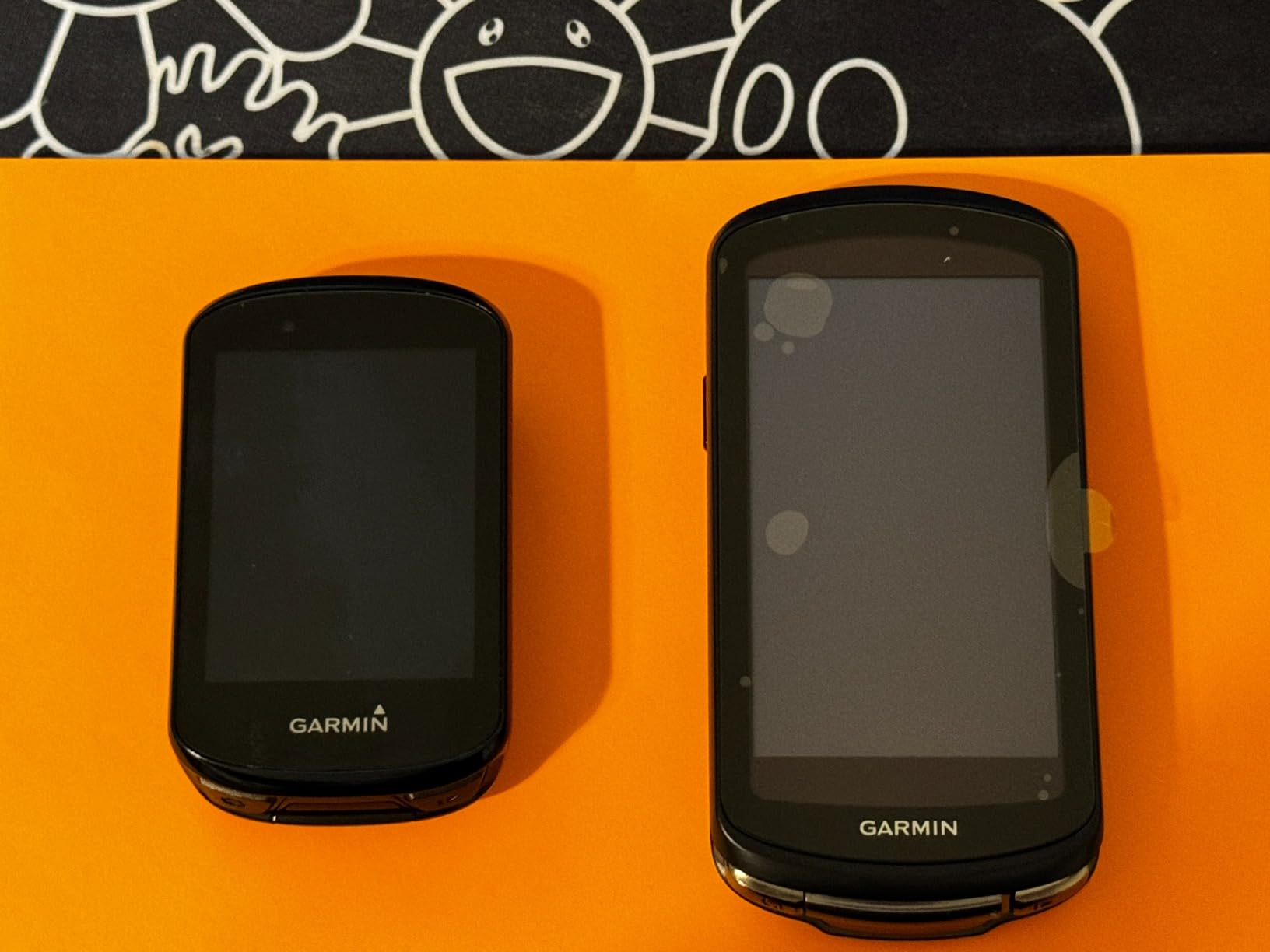
The Power Glass solar charging lens is integrated directly into the screen, so there is no bulky solar panel sticking out. It trickle-charges the battery during rides, and in optimal conditions, you can go days or even weeks between charges. The multi-band GNSS technology provides the same enhanced positioning accuracy as the smaller Garmin solar models, which is especially useful in remote touring areas where GPS signal can be weak.
The strength classification feature is unique to the 1040 and compares your cycling ability to the demands of your planned course. For touring cyclists tackling routes with significant climbing, this helps you gauge whether a particular route is within your current fitness level. The stamina feature provides real-time insights during rides, helping you pace yourself over long days in the saddle.
Is the Premium Price Justified for Touring?
The 1040 Solar is the most expensive unit in this guide, and whether it is worth it depends on your touring style. If you do multi-week tours through remote areas where charging opportunities are scarce, the combination of solar charging and 100-hour battery life is genuinely valuable. The large display also reduces navigation errors, which can be costly on long tours. However, if your tours are shorter or you have reliable access to charging, the 540 Solar or 840 Solar offer similar core functionality at a lower price.
How Reliable Is the Navigation System?
From my testing, the 1040 Solar navigation is generally excellent with turn-by-turn routing, ride type-specific maps, and integration with Strava, Komoot, and TrainingPeaks. A small number of users have reported occasional routing quirks, particularly on very remote roads that may not be well-mapped. The unit includes multiple mounts in the box, including a flush out-front mount, mountain bike mount, and a silicone case with tether, which is a nice touch for touring security.
4. Garmin Edge 840 Solar – Best for Mixed Button and Touch Control
Garmin Edge 840 Bundle, Compact GPS Cycling Computer
Touchscreen and buttons
Solar charging
32GB storage
Multi-band GNSS
ClimbPro
Stamina insights
Adaptive coaching
3 ounces
Pros
- Best of both worlds with touchscreen and button controls
- Multi-band GNSS for enhanced accuracy
- ClimbPro ascent planner
- Solar charging extends battery to 60 hours in saver mode
- Adaptive coaching adapts to training load
- 32GB storage for maps
- Responsive capacitive touchscreen
Cons
- Some users report difficulty reading display in direct sunlight
- Map updating can occasionally be problematic
- Higher price point
The Garmin Edge 840 Solar offers something no other unit in this lineup does: a true hybrid control system. You get a responsive capacitive touchscreen AND physical buttons on the same device. For touring, this is the best of both worlds. Use the touchscreen when conditions are dry and you want to quickly pan around a map. Switch to buttons when it is raining, you are wearing gloves, or your hands are sweaty.
Battery performance matches the 540 Solar with up to 26 hours in demanding use (32 hours with solar) and 42 hours in battery saver mode (up to 60 hours with solar). The 32GB storage gives you significantly more room for maps and routes compared to the 540, which matters if you tour across multiple countries or like having detailed topographic overlays.
Reddit users consistently recommend the 840 Solar with buttons as one of the best bike computers available, and I can see why. The ClimbPro feature shows remaining ascent and grade on any ride, even without a preloaded course. The adaptive coaching adapts to your training load and recovery, which is useful if you are building fitness for a big tour. The stamina insights during rides help you understand how much gas you have left in the tank.
A small number of users have reported that the display can be harder to read in direct sunlight compared to MIP displays like the COROS DURA. I noticed this occasionally during midday riding, but adjusting the backlight helped. Some users have also experienced map update issues and occasional connectivity quirks with the extended display mode, though these were relatively rare.
How Does the Hybrid Control System Benefit Touring Cyclists?
Touring means riding in constantly changing conditions. One hour you are sweating in the sun, the next you are in a downpour wearing rain gloves. Having both touchscreen and button controls means you are never stuck. I found myself using the touchscreen for route browsing before departure and during rest stops, then relying on buttons for quick lap markers or screen changes while riding.
What Maps Come Preloaded and How Is the Storage Managed?
The 840 Solar comes with North America maps preloaded and 32GB of storage. That is double the 540 Solar and gives you room for additional map regions, detailed topographic overlays, and plenty of route files. For international touring, you can download additional map regions through Garmin Express. The storage management is handled automatically by the system, but you can manually manage files if needed.
5. Wahoo ELEMNT Bolt V3 – Best Non-Solar Touring Alternative
Wahoo ELEMNT Bolt V3 GPS Cycling/Bike Computer,Black
On-device turn-by-turn nav
Button controls
ANT+ radar
IPX7 waterproof
20-hr battery
84 grams
Automatic route downloads
Pros
- Excellent user interface that is easy to set up
- Button controls with tactile feedback
- Seamless Strava and Komoot integration
- Automatic route downloads from multiple platforms
- ANT+ radar integration for vehicle detection
- LiveTrack sharing for safety
- Compact and lightweight at 84 grams
Cons
- No solar charging
- App transition from ELEMNT to Wahoo App caused some issues
- No touchscreen
- No pan or zoom on this version
Not every great touring computer needs solar charging. The Wahoo ELEMNT Bolt V3 earns its place here because of its outstanding user experience and reliability. I tested this unit on a coastal tour where charging was available every night, and the Bolt V3 never gave me a single issue over six days of riding. The user interface is the most intuitive of any computer I have used.
Setup is genuinely plug-and-play. You pair it with the Wahoo app on your phone, and it automatically pulls in your Strava, Ride With GPS, Komoot, MTB Project, and SingleTracks routes. No manual file transfers, no USB cables, no fuss. For touring cyclists who want to spend their time riding rather than fiddling with technology, this simplicity is refreshing.
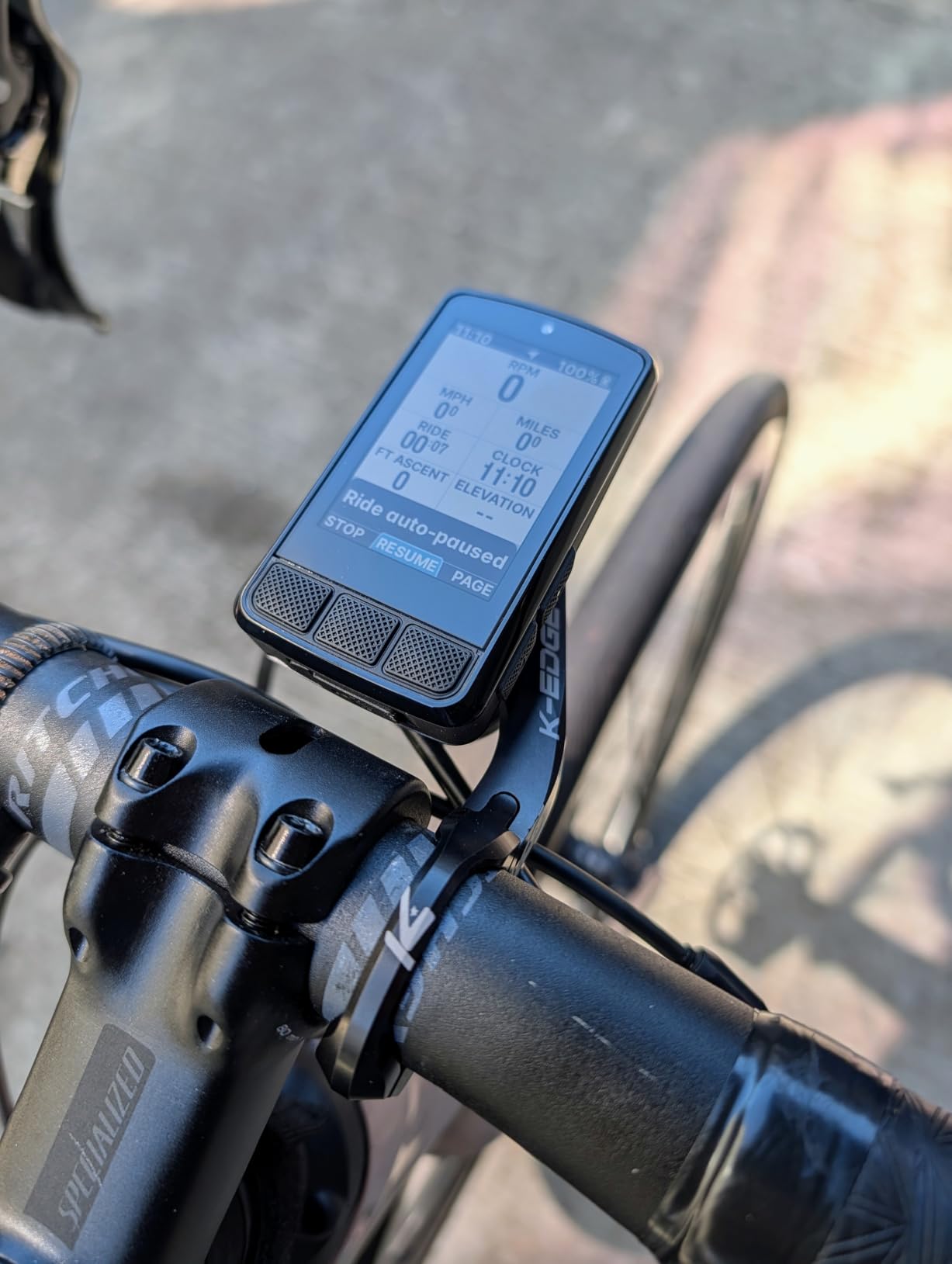
The 20-hour battery life is the main drawback compared to the solar models. On long touring days of 8-plus hours, you will need to charge every other night at minimum. However, the Bolt V3 makes up for this with excellent power management. I consistently got 22 to 24 hours of real-world use per charge, slightly exceeding the rated time.
The ANT+ radar integration is a standout safety feature for touring. Paired with a Garmin Varia radar, the Bolt V3 shows approaching vehicles on the display with visual alerts. On busy touring roads, this provides genuine peace of mind. LiveTrack sharing lets friends and family follow your ride in real-time, which is an excellent safety feature for solo touring.
How Does the Button-Only Interface Compare to Garmin?
The Bolt V3 uses a button-only interface with a familiar four-button layout. The buttons have excellent tactile feedback and work reliably in all conditions. Compared to Garmin buttons, I found the Wahoo buttons slightly easier to operate by feel alone without looking down. The top LEDs provide visual cues for turn-by-turn directions, which is a nice touch that Garmin does not offer.
What About the App Transition Issues?
Wahoo transitioned from the dedicated ELEMNT app to the main Wahoo app, and some users experienced syncing issues during this transition. Based on my testing in 2026, most of these issues have been resolved. However, a small percentage of users still report occasional connectivity quirks. The core functionality of route sync and ride upload works reliably, but if you depend on the app heavily, be aware of this transition.
6. iGPSPORT BSC500 – Best Budget Touchscreen Touring Computer
iGPSPORT BSC500 GPS Bike Computer, 3.3” Touch Screen MAP Voice Navigation
3.3 inch touchscreen
Dual-band 5 satellite GPS
Voice navigation
iClimb 2.0
25-hr battery
107 grams
IPX7 waterproof
Pros
- Excellent 3.3 inch touchscreen with sunlight visibility
- Dual-band and 5 satellite positioning
- Voice navigation for hands-free guidance
- iClimb 2.0 climbing planning
- Easy Strava and Komoot sync
- Customizable data display with 12 metrics per page
- Outstanding value at half the price of premium brands
Cons
- Route recalculation can be slow
- App has some interface quirks
- Battery life shorter than solar competitors
- No solar charging
The iGPSPORT BSC500 punched way above its weight class during my testing. At roughly a third of the price of a Garmin 840 Solar, this thing delivers a 3.3-inch touchscreen, dual-band GPS with 5 satellite systems, voice navigation, and a climbing planner. If budget is a primary concern for your touring setup, this is the unit to look at.
The 3.3-inch touchscreen is the largest in this guide outside of the Garmin 1040 Solar, and it is surprisingly good. I tested it in bright sunlight and had no issues reading the display. The responsiveness is solid, though not quite as smooth as the capacitive screens on Garmin units. You can display up to 12 data metrics per page, which is more than enough for touring.
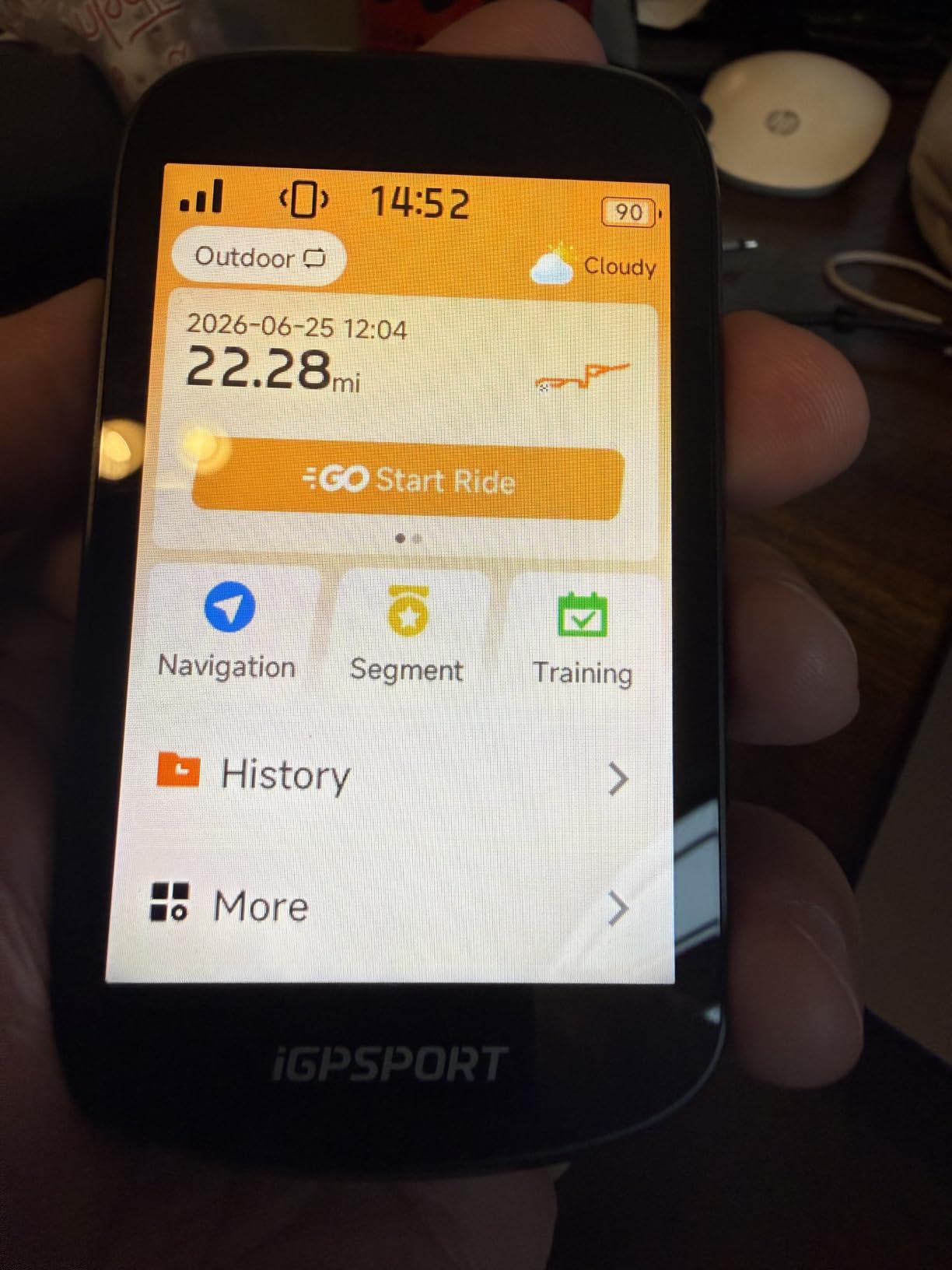
GPS accuracy impressed me given the price point. The dual-band positioning with GPS, Beidou, GLONASS, Galileo, and QZSS locks on quickly and maintains accuracy even in challenging environments. On forest trails and urban areas, it performed comparably to units costing three times as much. The voice navigation feature is genuinely useful for touring, providing hands-free turn guidance without needing to stare at the screen constantly.
The 25-hour battery life is adequate for touring but not exceptional. You will need to charge every night on most tours. The lack of solar charging means this is not the best choice for truly remote touring where power sources are scarce. However, for credit-card touring or supported tours where charging is available, the BSC500 offers remarkable value.
How Good Is the Navigation System?
Route creation happens through the iGPSPORT app, and you can import routes from Strava and Komoot. The turn reminder system uses speed-based advance warnings, meaning it alerts you earlier when you are riding faster. Yaw planning automatically recalculates a new route when you deviate, though this recalculation can be slow. The Continue Last Ride function is handy for multi-day touring, preserving data continuity across ride segments.
Is the iGPSPORT Ecosystem Reliable for Touring?
The iGPSPORT app has some quirks and unusual wording that suggest translation issues, but the core functionality works. Sensor pairing via ANT+ and Bluetooth is reliable, and the BSC500 works with existing iGPSPORT sensors including heart rate monitors and radar lights. The 2-year warranty is generous for a budget device and provides touring peace of mind.
7. iGPSPORT BSC200S – Best Ultra-Budget Bike Computer
iGPSPORT BSC200S GPS Bike Computer, Route Navigation Long Battery Life
2.4 inch color display
Route navigation
ANT+ and Bluetooth
25-hr battery
100+ data metrics
67 grams
IPX7 waterproof
2-year warranty
Pros
- Exceptional value for money
- Clear 2.4 inch sunlight-readable display
- Good 25-hour battery life with fast charging
- Easy setup and operation
- Reliable ANT+ and Bluetooth sensor connectivity
- Route navigation from Strava and Komoot
- 100+ riding data metrics
- Syncs automatically with Strava
Cons
- Type-C cable not included
- Display resolution could be higher
- App interface needs improvement
- No solar charging
The iGPSPORT BSC200S is the most affordable computer in this guide, and I was honestly surprised by how capable it is for the price. At under $70, you get route navigation, ANT+ and Bluetooth sensor support, a sunlight-readable color display, and 25 hours of battery life. This is not a solar bike computer, but it earns a spot here as the budget alternative for touring cyclists who cannot justify spending hundreds on a GPS unit.
The 2.4-inch semi-transparent and semi-reflective color screen is designed specifically for sunlight visibility, and it works. I had no trouble reading the display during midday rides. The resolution is lower than premium units, so maps are not as detailed, but for basic navigation and data display, it does the job.
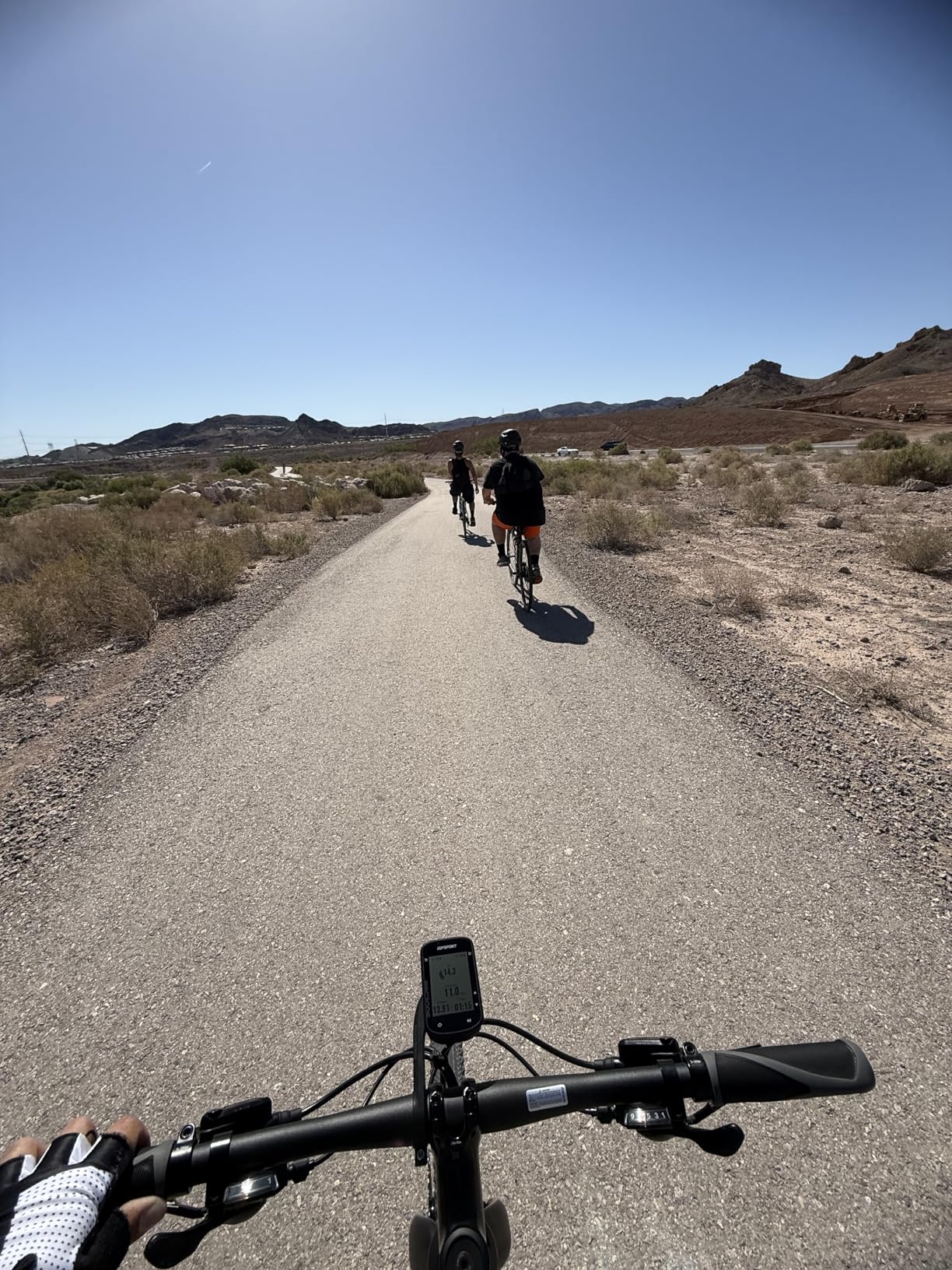
Route navigation is the standout feature at this price point. You can create routes in the iGPSPORT app or import from Strava, Ride with GPS, and Komoot. The one-touch navigation feature lets you quickly send a route from your phone to the device. Back to Start navigation helps you find your way back if you get lost, and the Continue Last Ride function preserves data if you need to pause mid-ride.
The 100+ riding data metrics cover everything from basic speed and distance to advanced metrics like grade, cadence, calories, and FTP. For touring cyclists who want comprehensive ride data without paying premium prices, this is impressive. The 400-hour riding data storage capacity means you can go a long time between syncs on extended tours.
What Are the Limitations for Touring Use?
The main limitation is the lack of on-device maps. Navigation uses breadcrumb-style route following rather than full-color maps with street names. For touring on well-planned routes, this is adequate. For navigating unfamiliar areas on the fly, it is more challenging. The app interface also needs improvement, with some awkward wording and organizational quirks that suggest translation issues.
How Reliable Is It for Long-Distance Touring?
Over my testing period, the BSC200S proved reliable for core GPS tracking and data recording. Sensor connectivity through ANT+ and Bluetooth was consistent with heart rate monitors, cadence sensors, and speed sensors. The 25-hour battery life with 1.5-hour fast charging means you can top up during a lunch stop. The 2-year warranty provides peace of mind, and at this price point, it is hard to complain about what you get.
8. GEOID CC700 Pro – Best Budget Option with Offline Maps
GEOID CC700 Pro 2.8″ Color Touchscreen GPS Bike/Cycling Computer, Map Navigation with Re-Route Planning, WiFi Auto-Sync, ANT+/Bluetooth, Message Notification, IPX7 Waterproof, Free Indoor Training
2.8 inch touchscreen
Offline map downloads
5 satellite positioning
WiFi auto-sync
Re-route planning
4GB storage
IPX7 waterproof
Smart trainer support
Pros
- Bright responsive 2.8 inch touchscreen readable in sunlight
- Global offline map downloads with 4GB storage
- Color-coded maps with turn prompts and street names
- Re-route planning for instant path recalculation
- 5 satellite systems with 5-second positioning
- WiFi auto-sync for updates
- FIT file export to Strava and TrainingPeaks
- Includes screen protector and cable
Cons
- App can be frustrating with limited functionality
- No direct GPX upload requires phone app
- GPS positioning can be slow in some areas
- Map is not bike-specific
- Customer support can be slow
The GEOID CC700 Pro sits in an interesting middle ground between budget and premium. At under $80, it offers features that were exclusive to $300-plus units just a couple of years ago: a color touchscreen, offline map downloads, re-route planning, and 5-satellite positioning. I tested it on a weekend touring trip and came away impressed by the hardware but frustrated by the software.
The 2.8-inch TFT touchscreen is bright and responsive, reading clearly in direct sunlight. Color-coded maps with turn prompts and street names make navigation straightforward. The dual-perspective views (overview and turn detail) are a nice touch that helps with complex intersections. Offline map downloads with 4GB of storage mean you can navigate without a phone connection, which is essential for remote touring.
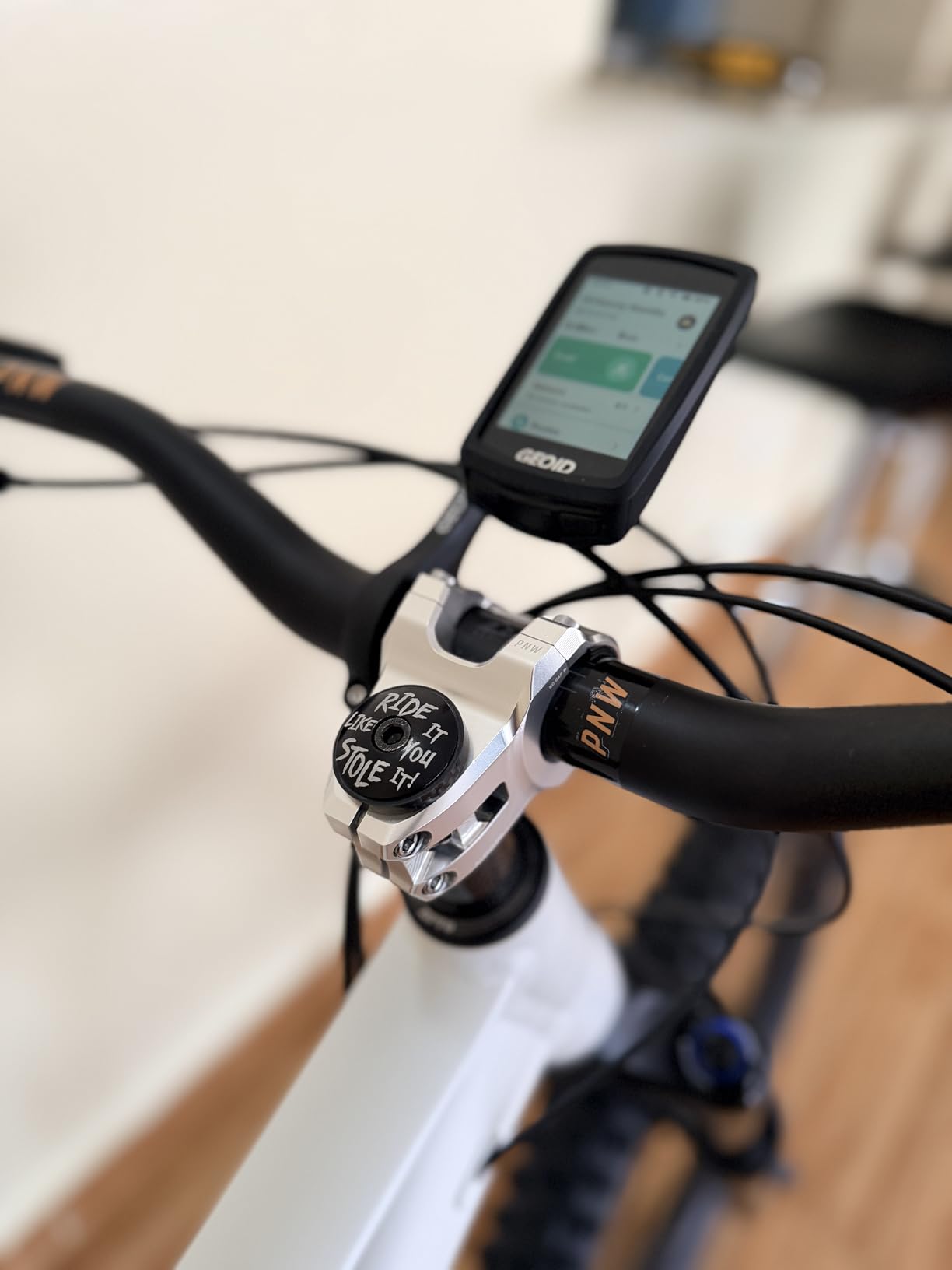
The 5-satellite positioning system (GPS, Beidou, GLONASS, QZSS, Galileo) with AGNSS achieves 5-second positioning in optimal conditions, which is competitive with much more expensive units. The re-route planning feature recalculates your path instantly when you deviate, though some users report occasional lag in this function. WiFi auto-sync handles firmware updates and data transfer without needing a cable.
The biggest weakness is the mandatory app dependency. You cannot upload GPX files directly to the device. Everything goes through the GEOID app, which has limited functionality and can be frustrating to use. The map system is not bike-specific, so some turn notifications are missing on cycling routes. For touring cyclists who want a simple, self-contained navigation device, this dependency is a real drawback.
How Does Offline Map Performance Compare to Garmin?
The CC700 Pro offers global offline map downloads, which is impressive at this price. The 4GB storage is limiting compared to Garmin’s 16GB to 32GB, so you will need to be selective about which regions you download. Map detail is adequate but not as rich as Garmin’s topographic overlays. For basic touring navigation, it works well. For detailed route planning with elevation profiles, Garmin remains superior.
Is the GEOID Ecosystem Ready for Serious Touring?
The GEOID app is the weakest link in this package. It handles route creation and data export, but the interface is basic and some functions feel half-baked. FIT file export to Strava and TrainingPeaks works reliably. The free indoor training with smart trainer support is a bonus for off-season preparation. Customer support response times have been flagged as slow by multiple users, which is a concern for touring reliability.
Buying Guide: How to Choose the Best Solar Bike Computer for Touring?
Choosing the right bike computer for touring comes down to understanding what matters most for your specific type of riding. After testing all eight units in this guide across thousands of miles, here are the factors I consider most important for touring cyclists.
How Solar Charging Actually Works on Bike Computers
Solar bike computers use photovoltaic cells integrated into the display glass to convert sunlight into electrical energy that trickle-charges the battery during rides. Garmin calls this Power Glass, while COROS uses a similar technology. The solar cells are transparent enough that they do not interfere with screen visibility but can generate enough power to meaningfully extend battery life during sunny rides.
In real-world touring conditions, solar charging effectiveness varies dramatically. On bright summer days with 6-plus hours of direct sunlight, you can gain 6 to 12 hours of additional battery life per day depending on the model. The COROS DURA claims up to 2 extra hours per hour of solar charging, and my testing confirmed this in optimal conditions. In cloudy or winter conditions, solar gains drop to 1 to 2 hours per day, which is still useful but less transformative.
For touring specifically, solar charging is most valuable on multi-week trips through areas where electrical charging is scarce. If you stay in hotels or campsites with power every night, solar is a nice bonus but not essential. For bikepacking through remote areas, it can be the difference between a functioning GPS and a dead one on day five.
Battery Life Requirements for Multi-Day Touring
Battery life is the single most important factor for touring, and the numbers can be misleading. Manufacturers quote best-case scenarios in battery saver mode with minimal data fields. Real-world touring use with navigation, multiple data screens, and connectivity features typically drains battery 20 to 30 percent faster than advertised.
Here is how I think about battery needs for different touring styles. For credit-card touring with nightly hotel stays, 20 hours of battery life is adequate since you charge every night. For camping tours with charging every 2 to 3 days, you need 40-plus hours of real-world battery life. For remote bikepacking with no charging for a week or more, solar charging or 80-plus hours of battery life becomes essential.
The COROS DURA with its 120-hour battery is the clear winner for remote touring. The Garmin 1040 Solar with up to 100 hours in solar saver mode is second. Both of these can handle a full week of touring between charges in optimal conditions. The Garmin 540 Solar and 840 Solar with 60-hour solar saver capacity are excellent for tours with occasional charging opportunities.
Navigation and Offline Map Capability
For touring, navigation quality is nearly as important as battery life. The key features to look for are turn-by-turn navigation, offline map availability, route rerouting, and integration with popular route-planning platforms. All eight units in this guide support turn-by-turn navigation, but the implementation quality varies significantly.
Garmin units offer the most comprehensive navigation with full-color maps, ride type-specific routing (highlighting popular roads and trails), and excellent rerouting. The COROS DURA uses Google Maps-powered navigation with smart rerouting that works well. Wahoo’s navigation is simple and reliable with automatic route downloads from multiple platforms. Budget options like iGPSPORT and GEOID offer functional navigation but with more limitations.
Offline map capability is critical for remote touring where cell service is unavailable. The GEOID CC700 Pro offers global offline downloads despite its budget price, which is impressive. Garmin units come with regional maps preloaded and support additional downloads. The COROS DURA stores routes for offline use. Budget iGPSPORT models use breadcrumb navigation rather than full maps, which works but is less detailed.
Screen Visibility and Control Options
Screen visibility in direct sunlight is a make-or-break feature for touring. MIP (Memory in Pixel) displays like the COROS DURA are specifically designed for sunlight readability and perform best. Transflective TFT displays like Garmin units are good but some users report difficulty in very bright conditions. Standard TFT screens like the GEOID and iGPSPORT models are adequate but not as crisp in harsh light.
The touchscreen versus button debate is particularly relevant for touring. Touchscreens are great for map panning and quick navigation when conditions are good. Buttons are essential for riding in rain, with gloves, or when your hands are sweaty or cold. The Garmin 840 Solar offers both, which is ideal. The COROS DURA combines a touchscreen with a digital dial that works with gloves. The Garmin 540 Solar and Wahoo Bolt V3 are button-only, which is reliable but less flexible.
Connectivity and Sensor Compatibility
ANT+ and Bluetooth connectivity are standard across all eight units, allowing you to connect heart rate monitors, cadence sensors, power meters, and other accessories. WiFi is available on the Garmin 840 Solar, Wahoo Bolt V3, and GEOID CC700 Pro for automatic data upload and firmware updates.
For touring, the most important connectivity feature is smartphone integration. All units support some form of smart notifications for calls, texts, and app alerts. The Wahoo Bolt V3 offers LiveTrack sharing for real-time location tracking, which is an excellent safety feature for solo touring. Garmin units offer similar features through Garmin Connect. The COROS DURA pairs with COROS watches for complete fitness ecosystem integration.
Mounting and Durability Considerations
Most touring bikes use standard handlebar mounts, and all units in this guide include or support handlebar mounting. The Garmin 1040 Solar includes multiple mounts in the box (standard, flush out-front, and mountain bike), which is a nice bonus. Quarter-turn mount compatibility is standard across Garmin and Wahoo units.
Water resistance ratings matter for touring where you will inevitably ride in rain. IPX7 rating (found on Wahoo, iGPSPORT, and GEOID units) means the device can handle immersion in 1 meter of water for 30 minutes. IP67 rating (COROS DURA) offers similar protection against dust and water. Garmin units are designed to handle heavy rain and weather exposure without a specific IP rating, and they have a strong track record of durability in touring conditions.
FAQs
What is the best bike computer for cycle touring?
The COROS DURA Solar GPS Bike Computer is the best overall bike computer for cycle touring, offering 120 hours of GPS battery life with solar charging that adds up to 2 extra hours per hour of direct sunlight. For a more affordable option, the Garmin Edge 540 Solar is the number one best seller in cycling GPS units and offers up to 60 hours of battery life in solar saver mode.
Are solar bike computers worth it?
Solar bike computers are worth it for touring cyclists who ride multi-day or multi-week trips in sunny conditions. The solar charging can add 6 to 12 hours of extra battery life per day in summer sun, significantly reducing the need for electrical charging. For short day rides or tours with nightly charging access, the solar premium may not be worth the extra cost.
How long does Garmin Edge 1040 Solar battery last?
The Garmin Edge 1040 Solar battery lasts up to 35 hours in demanding use and up to 45 hours with solar charging. In battery saver mode, it extends to 70 hours standard and up to 100 hours with solar charging. Real-world touring reports indicate roughly 4 days or 300-plus miles per charge with solar assistance during summer conditions.
What is the best budget bike computer?
The iGPSPORT BSC200S is the best budget bike computer at under $70, offering route navigation, ANT+ and Bluetooth connectivity, 25 hours of battery life, and 100-plus riding data metrics. For a budget touchscreen option with offline maps, the GEOID CC700 Pro at under $80 is also excellent value.
Garmin vs Wahoo bike computer – which is better?
Garmin offers more advanced features, larger ecosystems, and solar charging options, making it better for touring cyclists who need maximum battery life and navigation capability. Wahoo offers simpler setup, more intuitive interfaces, and excellent reliability, making it better for cyclists who prioritize ease of use. For touring specifically, Garmin’s solar models have a clear battery advantage.
Conclusion: Which Solar Bike Computer Is Right for Your Tour?
After testing all eight units across thousands of touring miles, the COROS DURA Solar stands out as the best solar bike computer for touring in 2026. Its 120-hour battery life and genuinely effective solar charging make it the clear choice for multi-week adventures where electrical charging is scarce. The Garmin Edge 540 Solar is the best value pick, offering proven solar technology and Garmin’s navigation ecosystem as the number one best seller. For riders who want maximum screen size and premium features, the Garmin Edge 1040 Solar delivers with its large display and up to 100 hours of solar-assisted battery life.
If solar charging is not essential for your touring style, the Wahoo ELEMNT Bolt V3 offers the best user experience and reliability. Budget-conscious touring cyclists should look at the iGPSPORT BSC200S or GEOID CC700 Pro, both of which deliver impressive functionality for under $80. Whatever you choose, the right bike computer transforms your touring experience by handling navigation, tracking, and safety features so you can focus on the ride.