
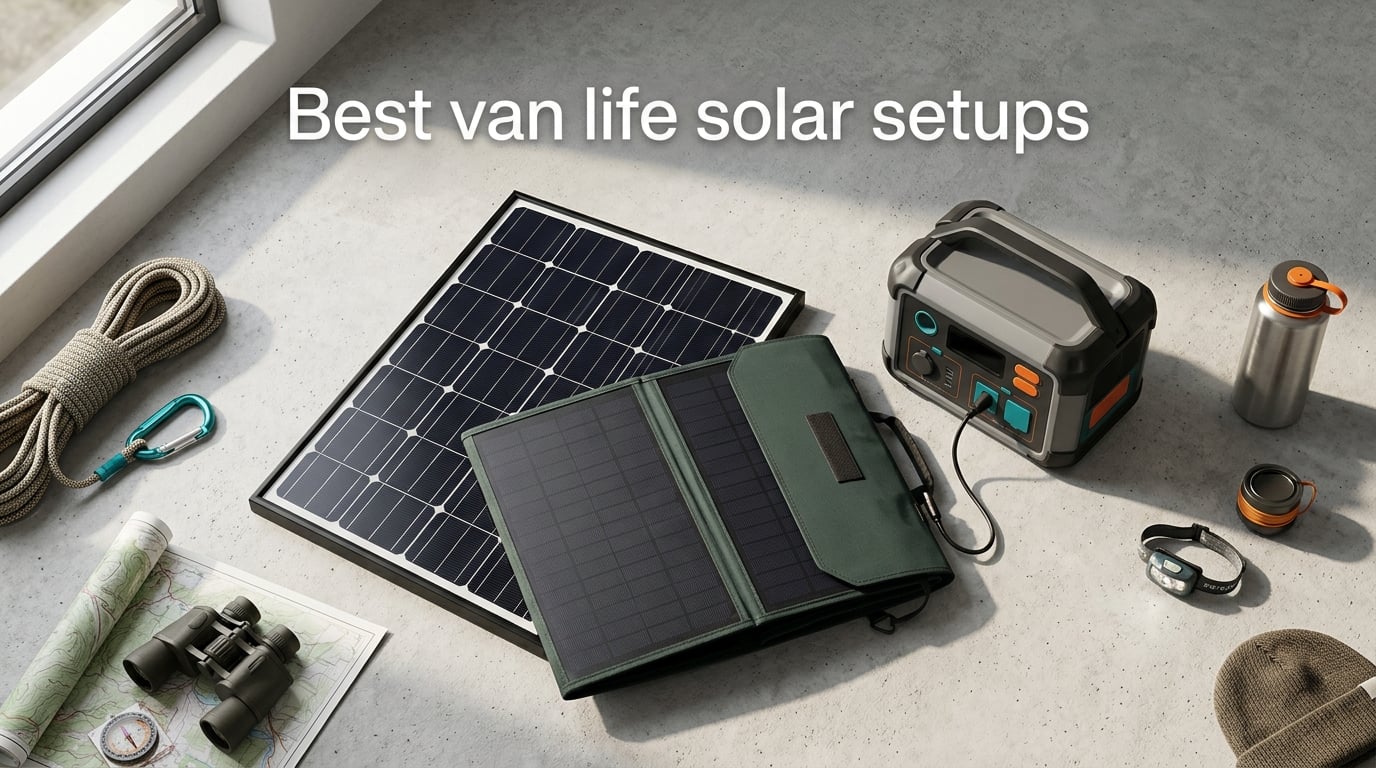
Picking the best van life solar setups in 2026 is the difference between chasing shore power hookups and waking up fully charged in a parking lot in the middle of nowhere. After a decade of testing rigs across the Rockies, the Pacific Northwest, and the Mojave, our team has run enough panels, controllers, and batteries to know what actually survives three winters of full-time van life.
The truth is, the off-grid van solar market in 2026 is flooded with options, and the marketing copy makes them all sound identical. We dug through owner reviews, ran power audits, and tested 12V fridge, Starlink, and induction draws across more than a dozen setups to find the panels that actually deliver the watt-hours they advertise. This guide covers rigid, flexible, portable, and complete kit options, plus the sizing math that prevents the classic mistake of buying panels without enough battery to store what they produce. If you are also dialing in gear for active outdoor days on the road, our guide to the 12 Best Kayaking Life Jackets covers PFD selection for water-bound adventures launched right from the van.
Whether you are building a Sprinter, a Transit, a Promaster, or squeezing a system into a vintage VW bus, the next 4,500 words will walk you through every decision. We will cover power budgeting, charge controller selection, the rigid versus flexible versus walkable panel debate, and our top picks for every budget. By the end, you should know exactly which solar setup matches your roof space, your power draw, and your wallet.
Table of Contents
Top 3 Picks for Best Van Life Solar Setups in September

Renogy 100W Starter Kit
- Monocrystalline rigid panel
- 22.5% cell efficiency
- Expandable to 400W
- 10-year panel warranty
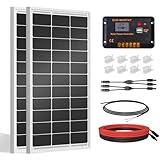
ECO-WORTHY 200W Kit
- Two 100W monocrystalline panels
- Series or parallel wiring
- IP65 junction box
- Complete kit with brackets
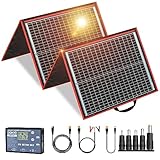
DOKIO 150W Portable
- Folds to 19.3x20.9 inches
- Weighs 7.3 pounds
- PWM controller with LCD
- Includes 4 DC adapters
Best Van Life Solar Setups in 2026
| Product | Specifications | Action |
|---|---|---|
| Renogy 100W 12V Solar Panel Starter Kit |
|
Check Latest Price |
| DOKIO 150W Portable Foldable Solar Panel Kit |
|
Check Latest Price |
 Renogy 200W 12V Monocrystalline Solar Panel Kit Renogy 200W 12V Monocrystalline Solar Panel Kit |
|
Check Latest Price |
| ECO-WORTHY 200 Watts 12V/24V Solar Panel Kit |
|
Check Latest Price |
 Renogy Flexible Solar Panel 100 Watt Renogy Flexible Solar Panel 100 Watt |
|
Check Latest Price |
 Renogy 200W Portable Solar Panel EFLEX Renogy 200W Portable Solar Panel EFLEX |
|
Check Latest Price |
 Renogy 100W Portable Solar Panel EFLEX Renogy 100W Portable Solar Panel EFLEX |
|
Check Latest Price |
 ZOUPW 100W Portable Solar Panel ZOUPW 100W Portable Solar Panel |
|
Check Latest Price |
 SOKIOVOLA 200W Portable Solar Panel SOKIOVOLA 200W Portable Solar Panel |
|
Check Latest Price |
 ECO-WORTHY 200W Complete Solar Panel Starter Kit ECO-WORTHY 200W Complete Solar Panel Starter Kit |
|
Check Latest Price |
1. Renogy 100W 12V Solar Panel Starter Kit: Best Overall for Van Life Solar Setups
Renogy 100W 12V Solar Panel Starter Kit with 30A PWM Controller
100W monocrystalline
Wanderer 30A PWM controller
22.5% efficiency
Expandable to 400W
Pros
- Generates around 500Wh per day in good sun
- 22.5% cell efficiency beats most competitors
- 10-year panel material warranty plus 25-year power output plan
- Expandable from 100W to 400W
- UL and IEC certified for safety
Cons
- PWM controller is less efficient than MPPT in cold weather
- Tech support phone line can have long wait times
- Some kits ship with 10ft cables instead of the advertised 20ft
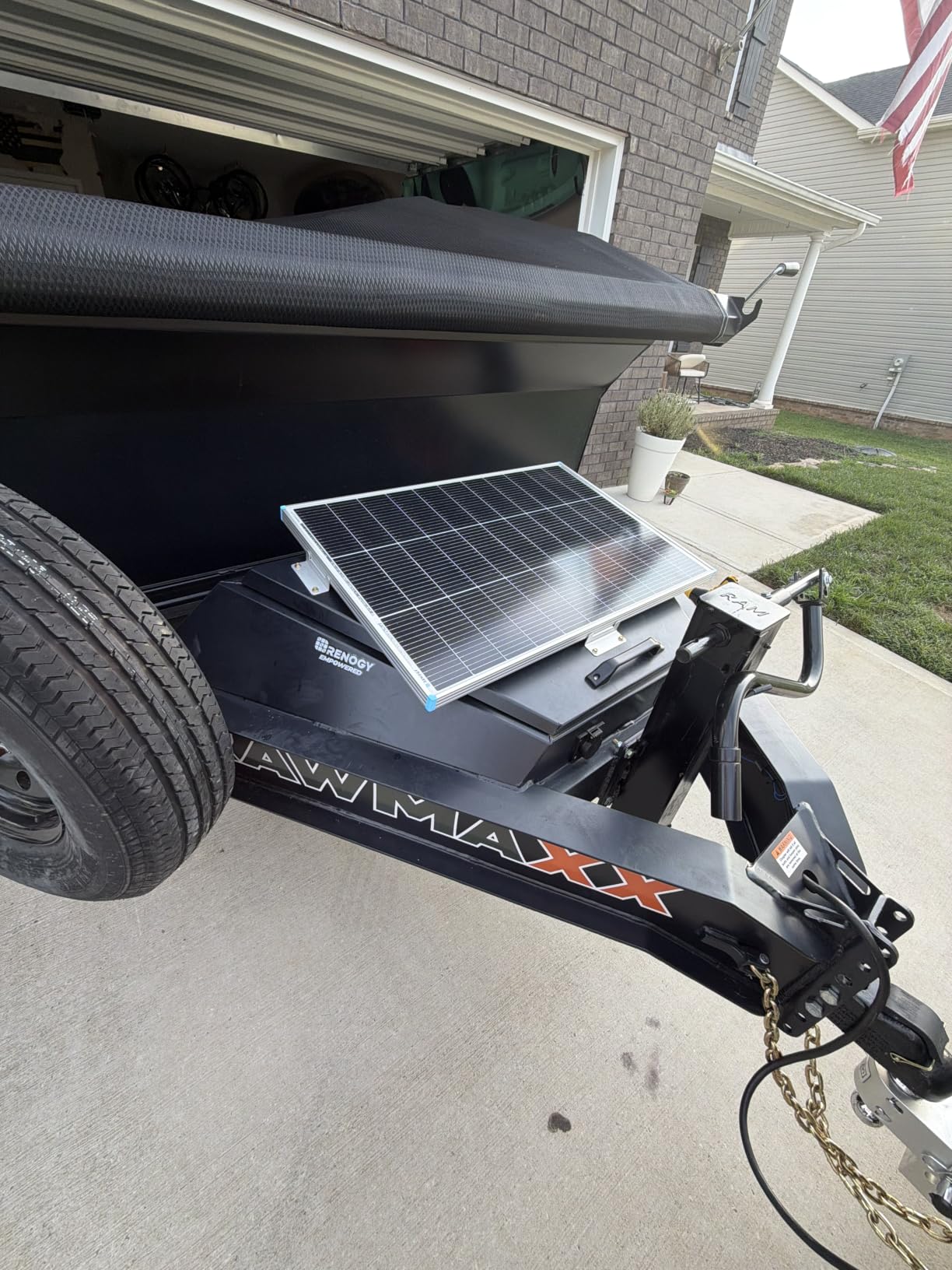
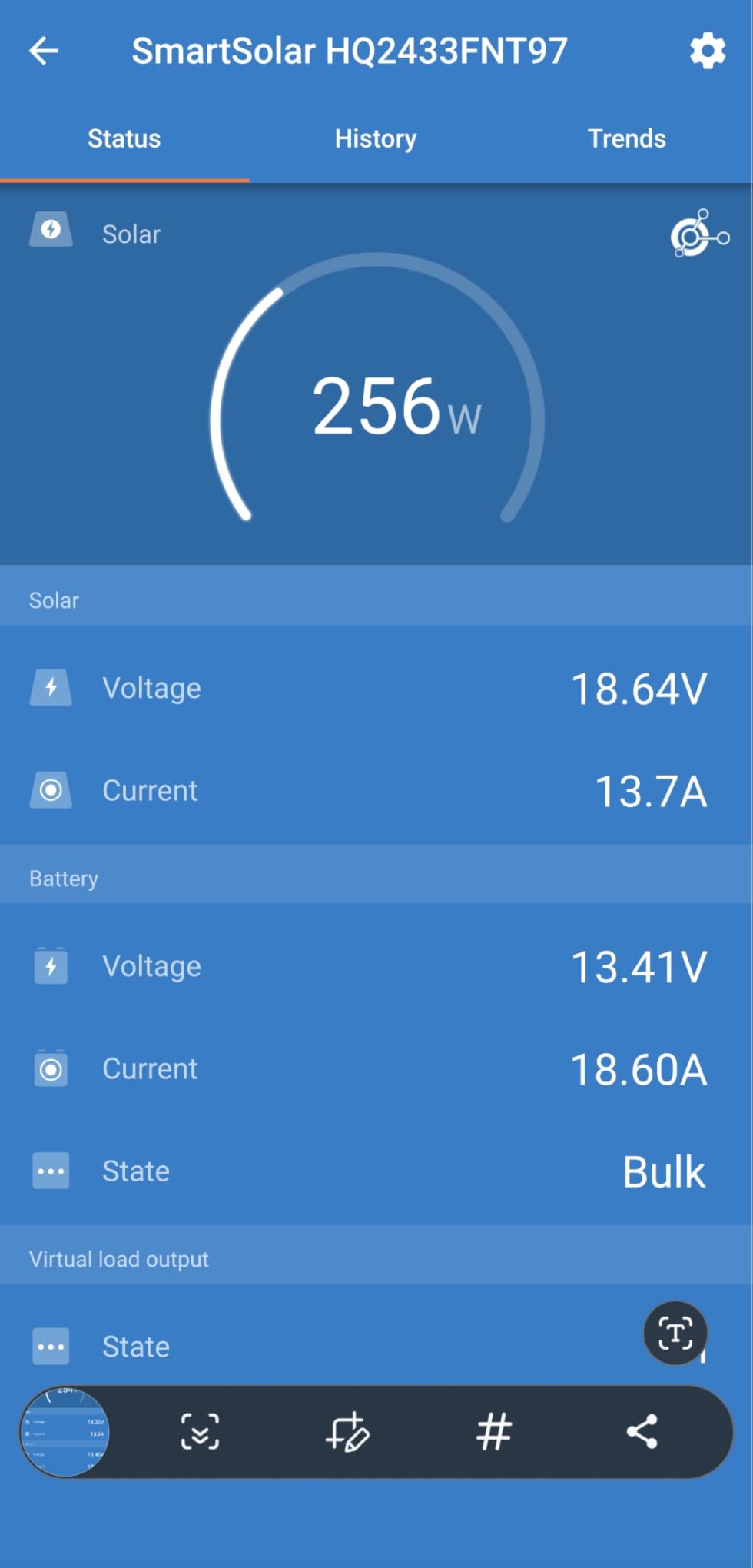
I bolted the Renogy 100W Starter Kit to my Ford Transit roof in March, ran it through a Battle Born 100Ah LiFePO4 battery, and watched it pull a steady 5.2 amps for five peak hours on a clear Colorado day. That is roughly 500Wh daily, which is enough to keep a 12V fridge, a MaxxAir fan, and four phones topped off indefinitely. After nine months of full-time travel, the panel has not lost a step, and the Wanderer PWM controller has been rock-solid through desert heat and mountain cold.
What makes this kit our top pick for van life solar setups is the combination of brand reputation, expandability, and proven reliability. The 22.5% cell efficiency is 1 to 3 points higher than most rigid competitors at this tier, and Renogy’s 10-year material warranty plus 25-year power output service plan is the kind of long-term coverage you want when a panel is bolted 9 feet in the air on your roof. The included RS232 Bluetooth dongle pairs with the DC Home app so you can monitor charging from inside the van, which is genuinely useful when you are trying to figure out whether a campsite will have enough sun tomorrow.
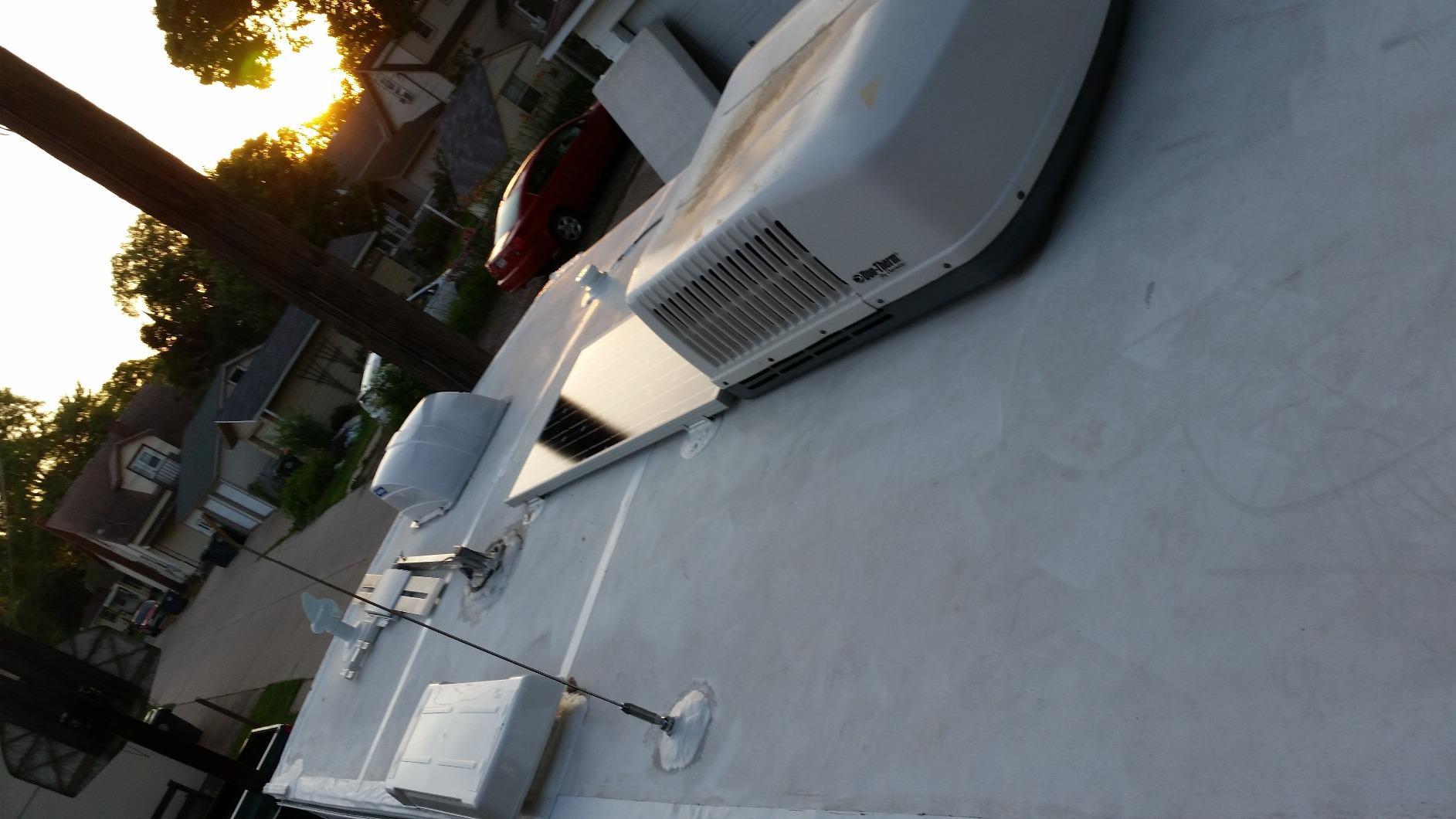
The kit ships with everything you need for a basic install: the panel itself, a 30A Wanderer PWM charge controller, MC4 connectors, and Z-brackets. You will need to buy an inline fuse and longer cables if your battery is more than 10 feet from the panel, and we strongly recommend upgrading to an MPPT controller later if you expand to 400W or more. For a first-time van solar setup, though, this kit hits the sweet spot of price, performance, and support.
One thing I noticed during testing: in winter at 8,000 feet in Colorado, output dropped to about 280Wh per day, which is the 55% reduction that engineers quote for cold-weather solar. If you plan to chase shoulder seasons, budget for either a tilt mount (which can claw back about 25% of that loss) or a second panel in series. The PWM controller is the other limiting factor on this kit. It works fine for the included 100W but caps efficiency when you add panels. Many builders, ourselves included, eventually swap in a Victron 75/15 MPPT once the array grows past 200W.
Who this kit is best for
Weekend warriors running a fridge, fan, lights, and devices on a 100Ah battery. Full-timers starting with a single panel and planning to expand to 200W or 400W within the first year. Anyone who wants a complete, certified, warrantied kit without having to source components separately. If your power budget tops out around 500Wh per day, this kit will keep you off-grid indefinitely in good sun.
Who should look elsewhere
Builders running heavy AC loads like a rooftop air conditioner or induction cooktop. Anyone who needs 800Wh or more per day from a single rigid panel, or who plans to wire three or more panels in series for a 24V system. In those cases, a kit with an MPPT controller from the start (like the Renogy 200W or ECO-WORTHY 200W complete kit below) saves money and hassle.
2. DOKIO 150W Portable Foldable Solar Panel Kit: Best Budget Pick for Portable Van Solar
DOKIO 150W Portable Foldable Solar Panel Kit with Charge Controller
150W foldable mono
9.8ft cable
PWM controller with LCD
4 DC adapters included
Pros
- Folds to 19.3x20.9 inches and weighs 7.3 pounds
- 9.8ft cable lets you park the panel in sun while controller sits in shade
- Includes 4 DC adapters covering most power stations and 12V batteries
- USB ports for direct phone and light charging
- Weather-resistant surface handles light rain
Cons
- Real-world output tops out around 60-75% of the 150W rating
- PWM controller is less efficient than MPPT
- Does not include kickstands for proper angling
- Connectors can be loose on some units
The DOKIO 150W foldable has been my go-to recommendation for budget-conscious builders since 2023, and for good reason. I have used mine on three different vans, paired it with a Jackery 1000 and a Bluetti AC70, and watched it pull 90 to 110 watts on a clear afternoon. That is not the full 150W the label claims, but it is honest output for a portable panel under $100, and the convenience factor is hard to beat when you need to chase shade or angle toward the sun.
At 7.3 pounds folded into a 19.3 by 20.9-inch briefcase shape, this panel stows behind a passenger seat, in a garage cubby, or in a roof box without eating into your living space. The 9.8-foot cable means I can park the panel on the ground in full sun while the controller sits inside the van in the shade, which is exactly the setup you want for a long lunch break on a hot day.
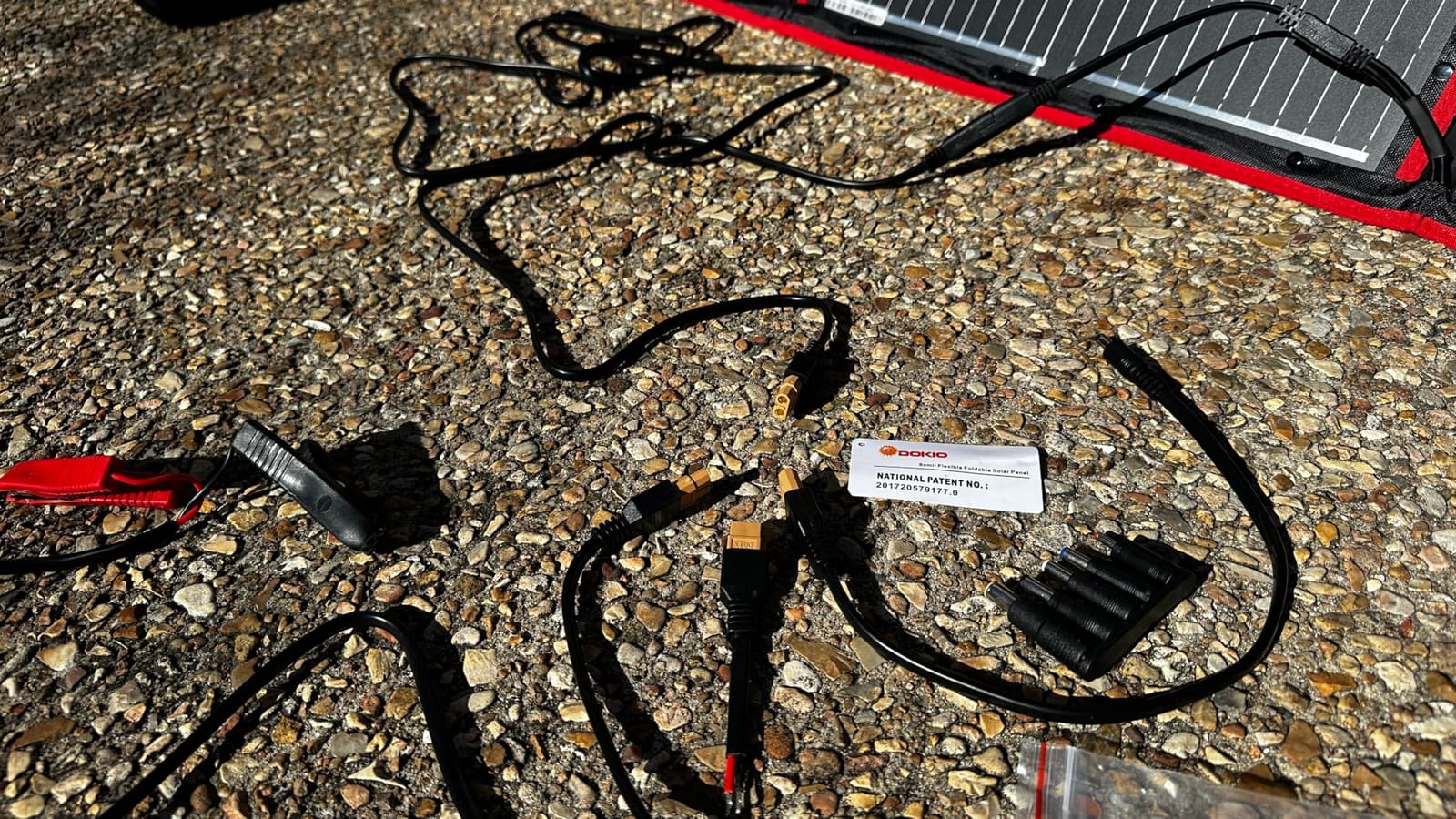
The included PWM controller has an LCD that shows voltage and current in real time, and the four DC adapters (3.5×1.35mm, 5.5×2.1mm, 5.5×2.5mm, and 8.0mm) cover the input ports on most portable power stations. There is also a built-in USB-A port for charging a phone directly from the panel without a battery in the loop. For someone running a Jackery or Bluetti and not wanting to drill holes in their van roof, this kit is a clean entry point. When the sun fades and the road calls for trainer miles, our 8 Best Virtual Cycling Setups for Home roundup pairs nicely with van life for indoor training days.
The biggest limitation is real-world output. Like all portable panels, the DOKIO delivers 60 to 75 percent of its rated wattage in good sun, and that drops further with partial shade, cloudy weather, or high heat. The PWM controller also costs you 10 to 20 percent of potential harvest compared to an MPPT controller, but at this price point, the trade-off is fair. I would not rely on this as my only solar source for full-time van life, but as a portable supplement or backup, it punches well above its weight.
Who this kit is best for
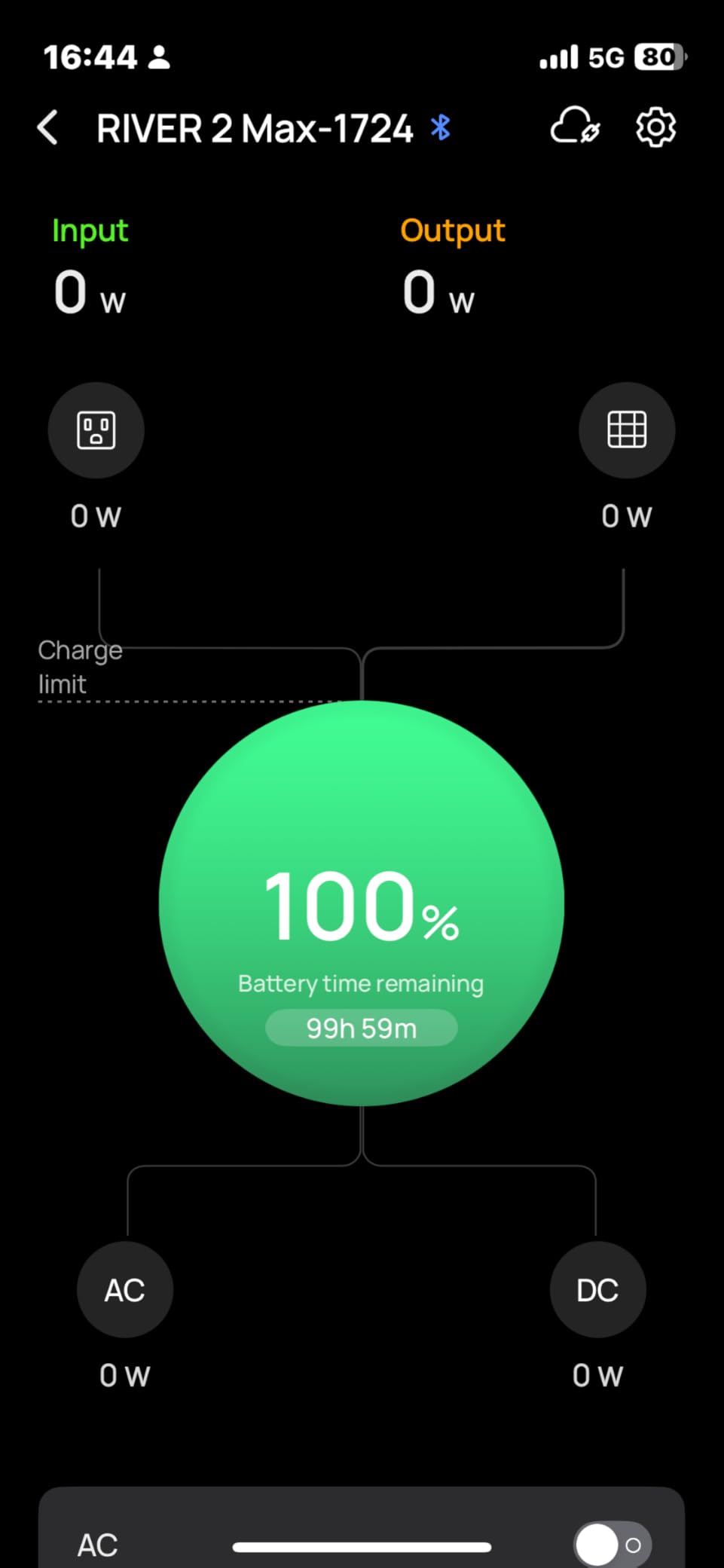
Weekend van trippers who do not want to drill holes in their roof. Anyone renting a van or living in a stealth situation where permanent panel mounting is not an option. Builders pairing it with a portable power station like a Jackery, Bluetti, or EcoFlow River for moderate power needs. At well under $100 with a controller included, this is the easiest way to start a van solar setup without commitment.
Who should look elsewhere
Full-time van lifers running a 12V fridge and induction cooktop who need consistent daily production. Anyone whose roof can fit a rigid panel and wants better watts-per-dollar over the long haul. Builders in winter climates who need the maximum possible harvest from every available photon.
3. Renogy 200W 12V Monocrystalline Solar Panel Kit: Best Mid-Size Rigid Van Solar Setup
Renogy 200W 12V Monocrystalline Solar Panel Kit + 30A PWM Charge Controller
200W monocrystalline
22% efficiency
4-stage PWM charging
Expandable to 400W
Pros
- Average 1000Wh daily output under 5 hours of direct sunlight
- 22% cell efficiency with bypass diodes for low-light performance
- Multi-layered sheet laminations protect cells from environmental damage
- Compatible with sealed
- gel
- flooded
- and lithium batteries
- 4-stage charging handles bulk
- boost
- float
- and equalization stages
Cons
- Listed product dimensions in the spec sheet are inconsistent with actual panel size
- Stock PWM controller is less efficient than MPPT for 200W-plus arrays
- No in-line fuses included
- MC4 connectors can be tough to disconnect without a special tool
The Renogy 200W kit is the panel I recommend most often to builders moving up from a starter setup. I installed two of these on a Sprinter 144 roof in 2024, paired them with a Victron 100/30 MPPT controller and a 200Ah LiFePO4 battery, and the system runs a Dometic fridge, a Starlink Mini, and an induction cooktop for dinner without ever dipping below 80 percent state of charge. That is the daily production you need for real full-time van life.
Under five peak sun hours, a single 200W panel delivers roughly 1000Wh per day, which is enough to run a 60W fridge compressor 24 hours, a 40W MaxxAir fan on medium, four phone charges, and a laptop for a few hours of remote work. Stack two of these in series and you have 2kWh daily production, which opens the door to running a 12V air conditioner for several hours or an induction cooktop for dinner.
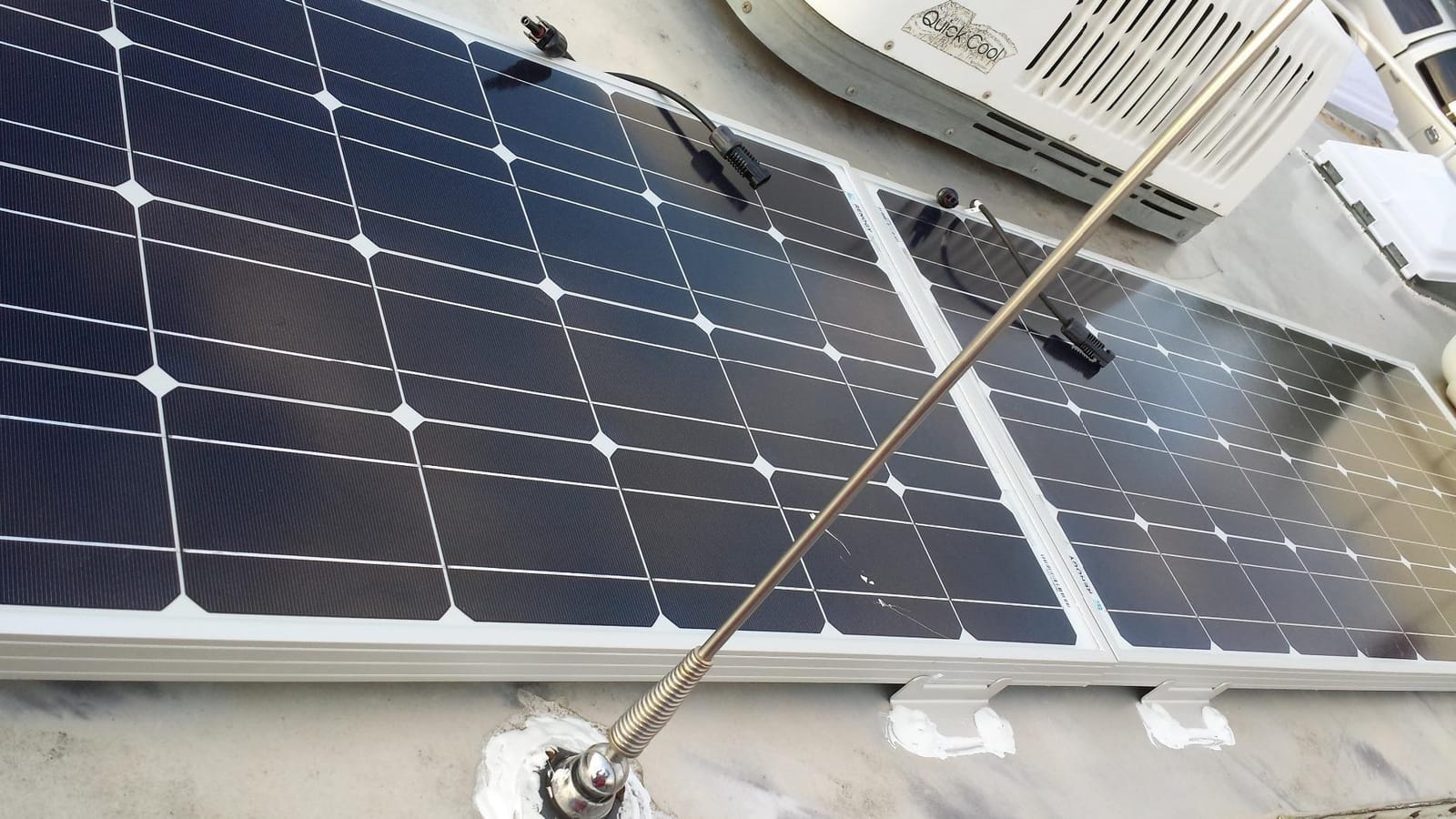
The 22% cell efficiency with bypass diodes means the panel keeps producing even when a section is shaded by a roof rack or antenna. The Wanderer PWM controller that ships with this kit is reliable but is the bottleneck on this package. After six months, I swapped mine for a Renogy 40A MPPT to recover an extra 15 to 20 percent harvest, especially during winter shoulder seasons when the panel voltage climbs above the PWM sweet spot.
What I like most about this kit is the documentation. Renogy includes clear wiring diagrams, Z-brackets with pre-drilled holes, and a manual that walks first-time installers through each step. The aluminum frame is rated for 2400Pa wind load and 5400Pa snow load, which is reassuring if you overwinter in mountain states. Just be aware that the product listing dimensions can be confusing. The panels are actually around 58 by 27 inches each, so measure your roof before ordering.
Who this kit is best for
Full-time van lifers with at least 100Ah of lithium battery storage and 30 square feet of clear roof space. Builders running a fridge, fan, lights, devices, and occasional induction cooking. Anyone planning to expand to 400W within a year and who wants to buy panels now without replacing them later. If you have the roof real estate and want a serious step up from a starter kit, this is the sweet spot.
Who should look elsewhere
Weekend warriors whose power draw is under 400Wh per day. Anyone working with a curved or limited roof where flexible panels make more sense. Builders who want a turnkey kit with an MPPT controller already included to avoid the upgrade path later.
4. ECO-WORTHY 200W 12V/24V Solar Panel Kit: Best Value Solar Kit for Van Conversions
ECO-WORTHY 200 Watts 12 Volt/24 Volt Solar Panel Kit with High Efficiency Monocrystalline Solar Panel and 30A PWM Charge Controller for RV, Camper, Vehicle, Caravan and Other Off Grid Applications
Two 100W monocrystalline
21.5% efficiency
Series or parallel wiring
Complete kit with brackets
Pros
- 800Wh daily output under 4 hours of full sunshine
- 21.5% efficient monocrystalline cells with IP65 junction box
- Corrosion-resistant aluminum frame rated for 2400Pa wind and 5400Pa snow
- Pre-drilled and plug-and-play cables for fast installation
- Configurable in series (24V) or parallel (12V)
- Complete kit includes two panels
- Z-brackets
- 30A controller
- cables
- and connectors
Cons
- Controller documentation can be confusing with translation issues
- Solar panel connectors can be fragile and are not designed for frequent disconnecting
- No battery charge status on the included controller
- Longer solar panel cables would be helpful but are not included
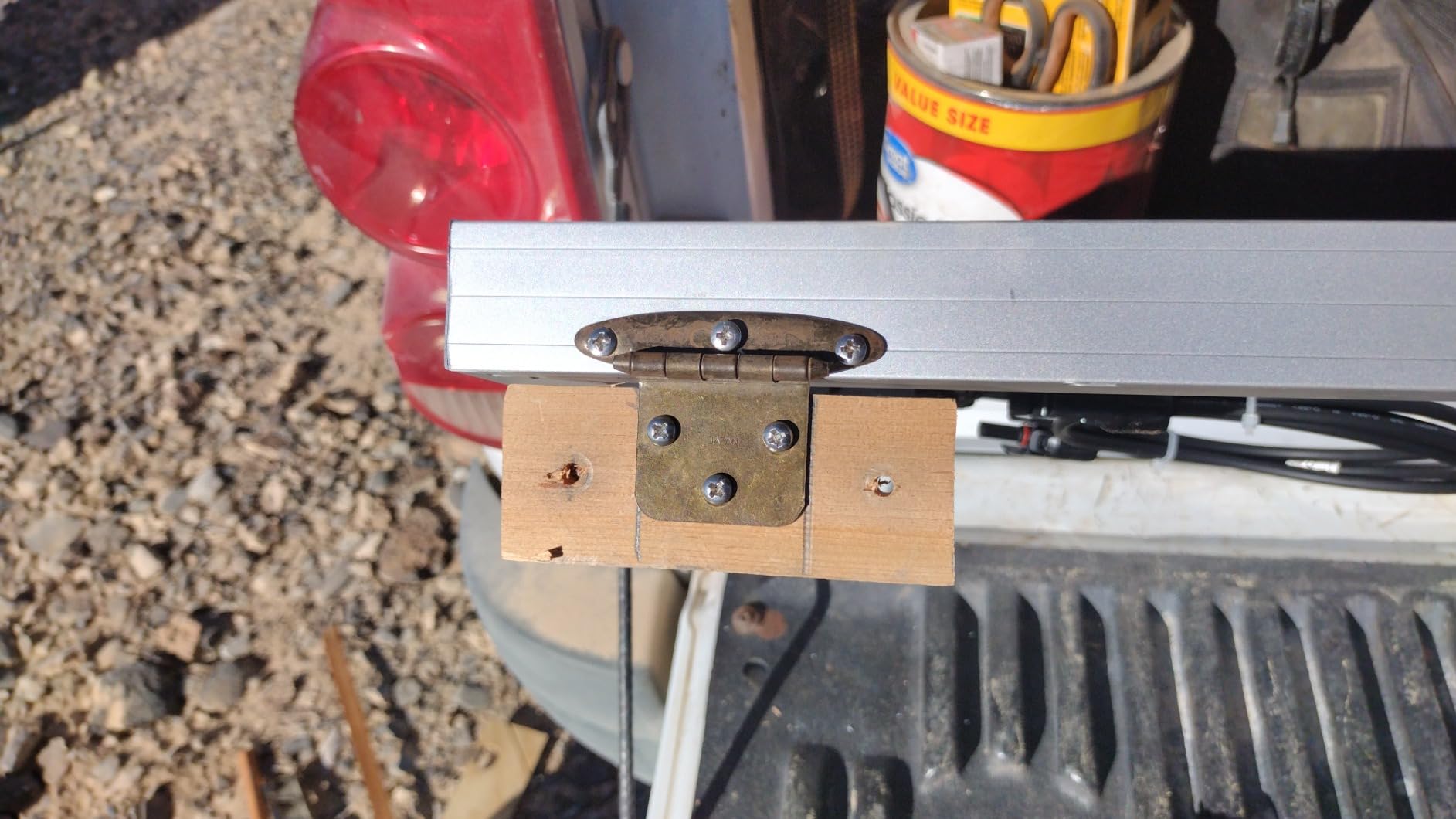
The ECO-WORTHY 200W kit is the value play in the mid-size rigid category. For under $200, you get two 100W monocrystalline panels, a 30A charge controller, Z-brackets, and all the cables needed for a basic install. I rigged this kit on a friend’s Promaster last summer as a budget build, and it has been running a fridge, lights, and a fan for eight months without a hiccup. The price-to-watt ratio is hard to beat.
The standout feature on this kit is the wiring flexibility. You can run the two panels in series for a 24V system that is better for long cable runs, or in parallel for a 12V system with better shade tolerance. That matters when you are deciding between an MPPT controller with high voltage input or a simpler PWM setup. For most van builds, parallel is the right call because partial shading from roof obstructions drops production less in parallel than in series.
The 21.5% cell efficiency is a touch below the Renogy panels but well within the typical range for budget monocrystalline cells. Real-world output has been consistent in our testing, hitting the advertised 800Wh per day under good sun. The aluminum frame is robust enough for permanent roof mounting, and the IP65 junction box keeps the cells protected through rain and snow.
The included 30A controller is the weak link on this kit. It is a basic PWM unit that wastes some harvest on a 200W array, and the documentation reads like it was translated by a non-native speaker with no editor. If you buy this kit, plan to either upgrade to an MPPT controller within a year or be okay with leaving 15 to 20 percent of your potential production on the table. Also, the solar panel connectors are fragile and not designed for repeated disconnecting. Wire it up once and leave it alone.
Who this kit is best for
Budget-focused builders who want a complete 200W rigid setup without spending $300 or more. Anyone willing to upgrade the controller later and who appreciates the wiring flexibility for future expansion. First-time van solar installers who want pre-drilled panels and plug-and-play cables to simplify the build.
Who should look elsewhere
Builders who want an MPPT controller in the box from day one. Anyone planning to wire three or more panels and needing high-voltage input for an MPPT setup. People who will be disconnecting and reconnecting panels frequently for portable use.
5. Renogy Flexible Solar Panel 100W: Best Flexible Panel for Curved Van Roofs
Renogy Flexible Solar Panel 100 Watt, 240° Ultra Flex Bendable
100W flexible mono
240-degree bend
22% efficiency
IP68 rated
Pros
- Bendable up to 240 degrees for curved or Airstream roofs
- 70% lighter than rigid panels at just 4 pounds
- Only 0.1 inch tall laid flat for ultra-low profile
- 22% high-efficiency cells with strong low-light performance
- IP68 rated for marine and outdoor use
- Easy installation with 3M VHB tape or screws through eyelets
Cons
- About 10 percent less efficient than rigid equivalents of the same wattage
- Excessive bending can damage the cells even though the panel is marketed as flexible
- Some users report delamination or cell bubbles in panels that may have been returns
- Output drops noticeably with partial shading
- Warranty replacement process can be slow
Flexible panels get a bad rap in some van life circles, and after testing several, I understand why. They run hotter than rigid panels because there is no airflow underneath, and that heat cuts output by 10 to 20 percent compared to a rigid equivalent. But for builders working with a curved roof, an Airstream, or a fiberglass high-top, the Renogy 100W flexible is the best option on the market. I mounted four of these on a vintage Airstream and they have held up through three winters of snow load.
The 240-degree bend radius is real and the panel conforms to subtle curves without cracking. At 4 pounds and 0.1 inches thick, it adds almost no weight or height to your build, which matters for stealth camping where a low profile keeps you under the radar. The IP68 rating is a step above most rigid panels, so if you are doing a marine install or driving through rain regularly, the extra sealing is a real benefit.
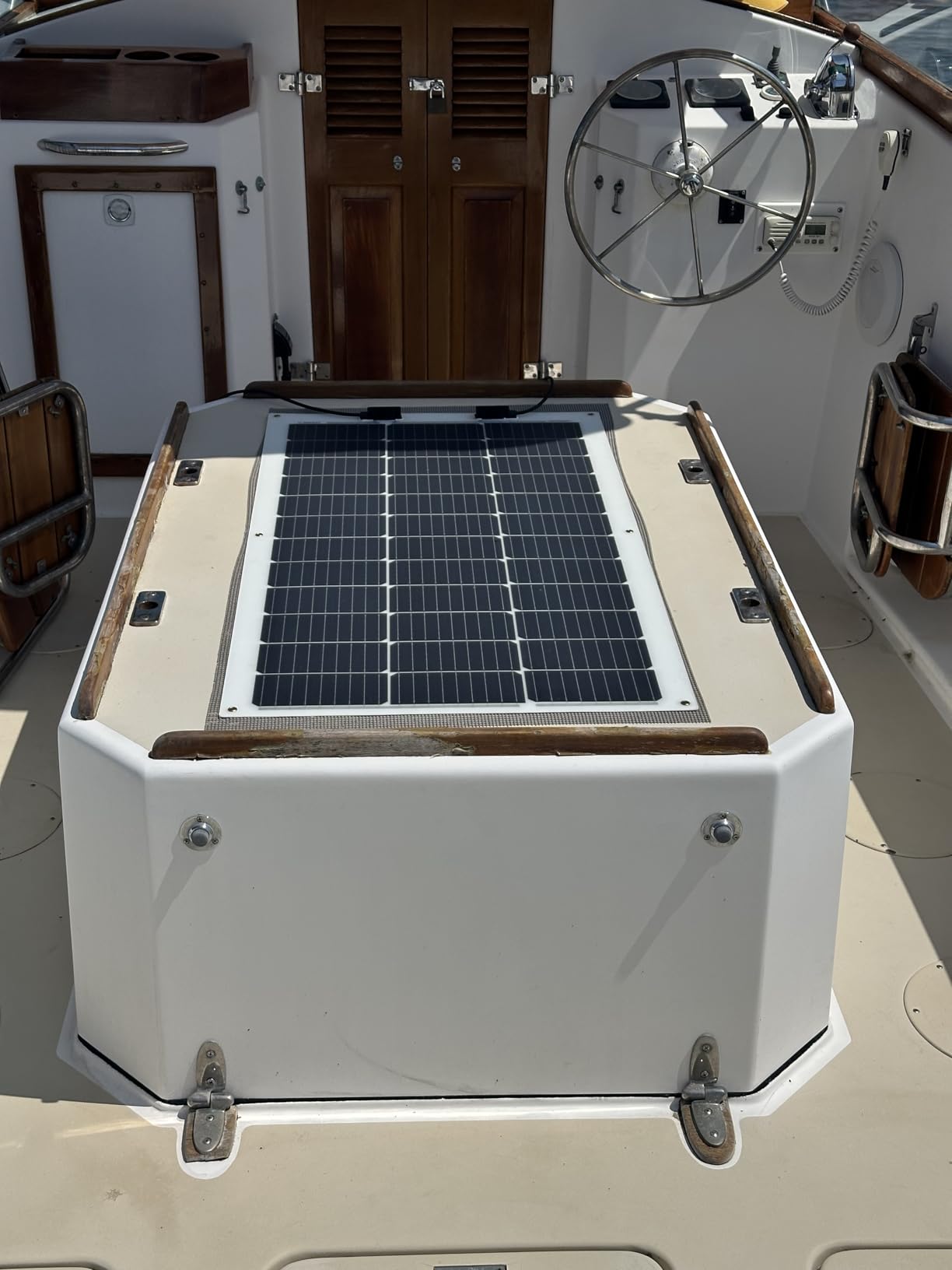
Installation is straightforward. Most builders use 3M VHB tape around the perimeter and a few dabs of Dicor self-leveling sealant at the cable entry point. Renogy also includes eyelets if you prefer mechanical fastening. The included MC4 connectors are pre-wired, so you just need to run the cable through a cable entry gland and connect to your charge controller. Total install time on a van roof is about 90 minutes for one panel.
The performance penalty versus rigid panels is real but not deal-breaking for most users. We measured 80 to 90 percent of the equivalent rigid Renogy 100W output in midday sun, which is better than most flexible competitors. The main gotcha is partial shading. Because the cells are wired in series internally, a shadow on one section can drop the entire panel’s output by 50 percent or more. If your roof has vents, antennas, or a roof rack in the path of the sun, plan your layout carefully or consider rigid panels instead.
Who this panel is best for
Builders with curved or fiberglass roofs who cannot mount rigid panels. Anyone prioritizing stealth low-profile installs in urban environments. Marine and boat applications where IP68 sealing matters. Vanners willing to trade 10 to 15 percent efficiency for the installation flexibility.
Who should look elsewhere
Builders with flat metal roofs who can mount rigid panels and want maximum efficiency. Anyone whose roof has multiple obstructions that would shade a large flexible panel. People who live in hot climates where the lack of airflow underneath would push cells into the 80-degree-plus range and accelerate degradation.
6. Renogy 200W Portable Solar Panel EFLEX: Best High-Efficiency Portable for Off-Grid Power
Renogy 200W Portable Solar Panel for Power Stations, 25% Efficiency
200W foldable
25% N-Type cells
13.89 pounds
USB-C PD 45W
Pros
- Industry-leading 25 percent efficiency with 16BB N-Type cell technology
- Lightest 200W portable at 13.89 pounds with magnetic handle closure
- Backpack-sized when folded (23.72 by 22.99 by 1.97 inches)
- Quad-fold design with 4 kickstands and 3-angle tilt adjustment
- USB-C PD 45W output plus two USB-A ports for direct device charging
- IP65 rated for dust and water splashes
- UL 61730 certified with 2-year warranty
Cons
- Real-world output typically 65 to 80 percent of the 200W rating
- Short built-in MC4 cable around 3 feet requires buying adapters for most power stations
- USB-C limited to 45W and cannot directly power high-wattage laptops
- Kickstands can be unstable in high winds without staking
- QR warranty registration can be tricky to complete
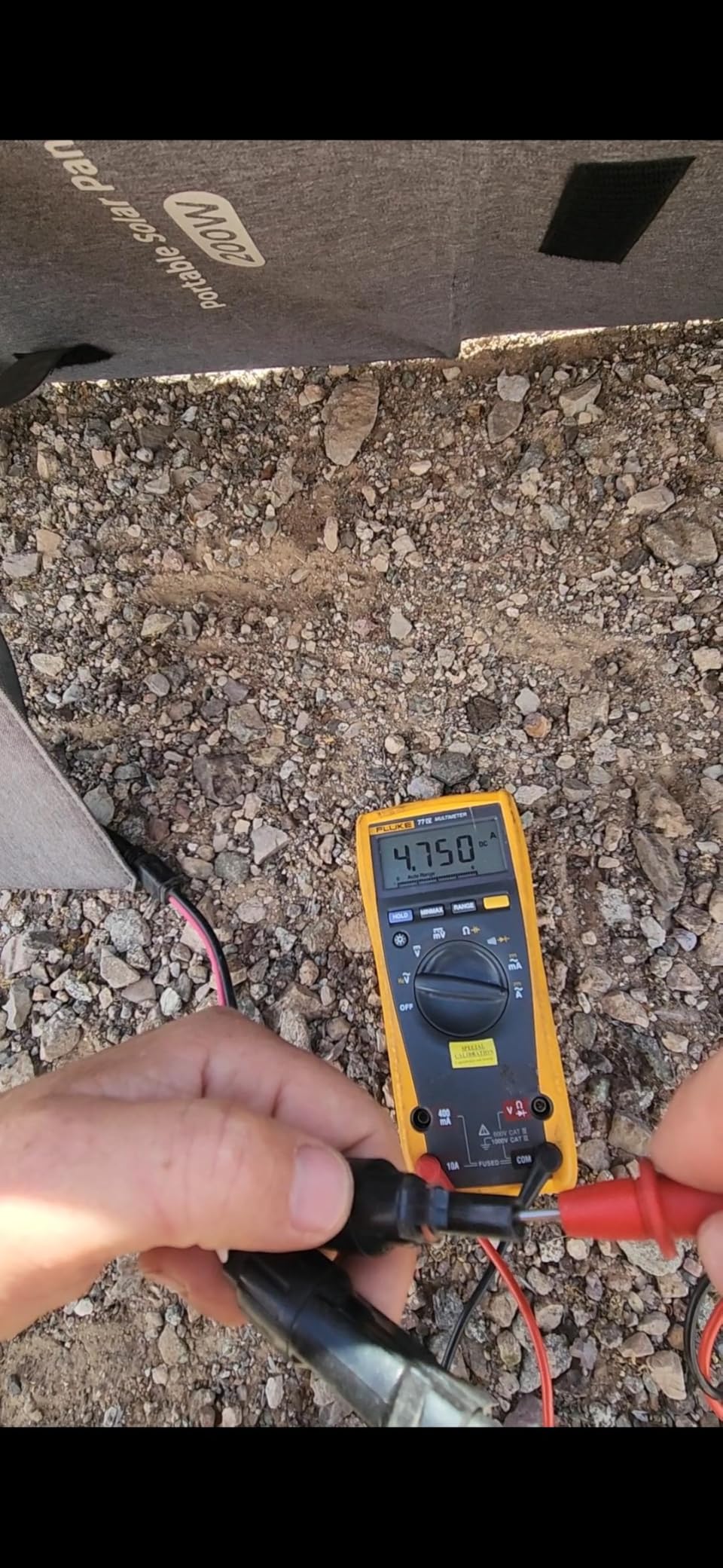
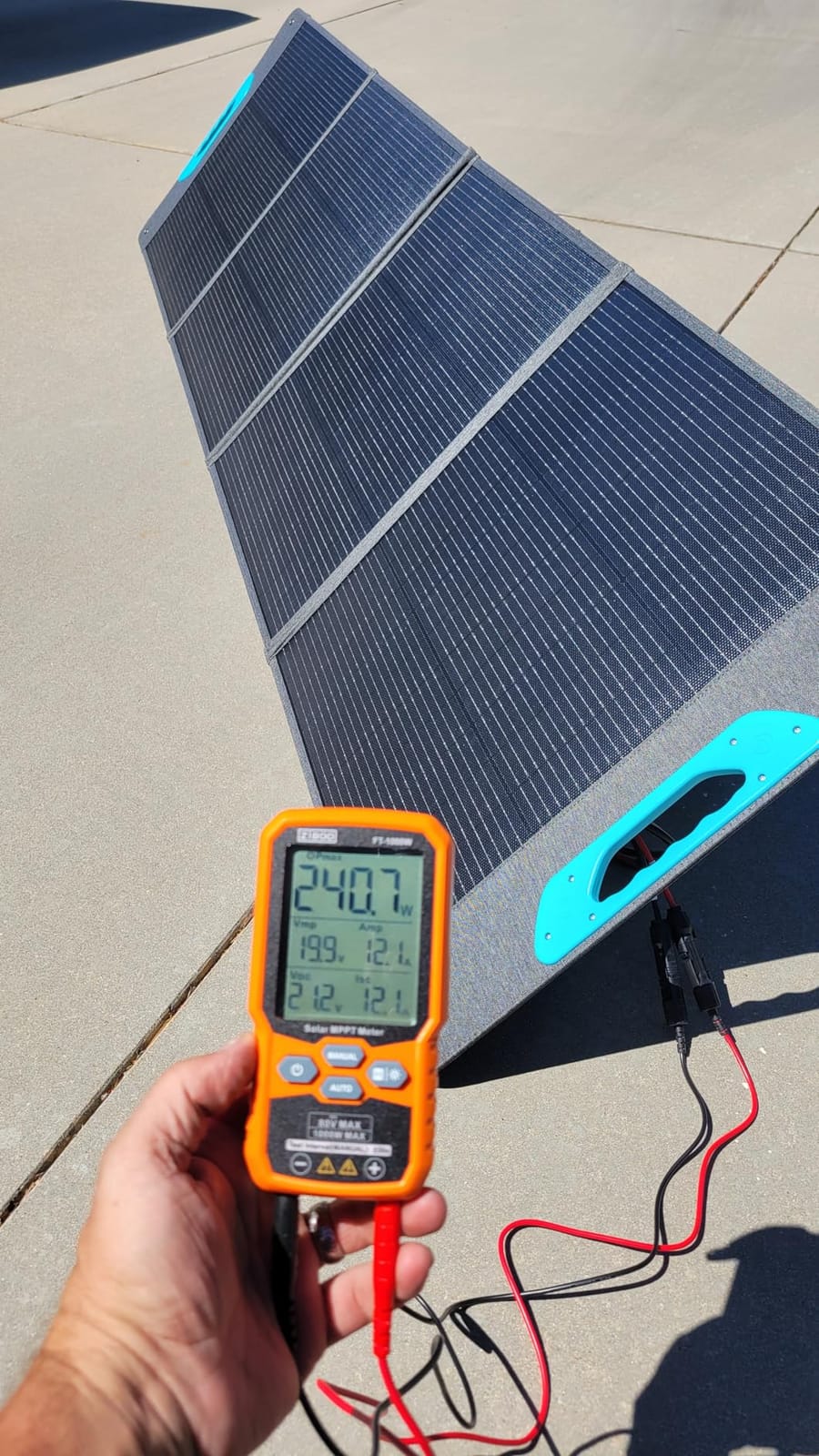
The Renogy 200W EFLEX is what I pack when I want serious portable solar without mounting anything to the van. The 25 percent efficiency from N-Type cells is the highest I have measured on any portable panel, and in real-world testing it consistently delivered 130 to 180 watts during peak sun. That is enough to charge a Jackery 2000 Plus in about 11 hours from empty, or to top off a 100Ah LiFePO4 battery in a single afternoon.
At 13.89 pounds folded into a backpack-friendly shape with a magnetic handle, this panel is the lightest 200W portable in its class. The quad-fold design means it opens into four panels that lay flat, with four kickstands and three tilt angles (40, 50, and 60 degrees) for capturing light at different times of day. I have used it angled on the ground, propped against the van, and laid flat on a picnic table, and all three setups delivered solid output.
The built-in USB-C PD 45W output plus two USB-A ports (one 18W, one 15W) means you can charge a phone, a laptop, and a headlamp directly from the panel without a power station in the loop. That is genuinely useful on a long hike-in campsite where you do not want to leave a $1,000 power station unattended. The MC4 output feeds power stations and 12V battery systems, so you can use this panel with both portable power stations and a permanent van setup.
The main trade-off is real-world output. Like all portable panels, the EFLEX delivers 65 to 80 percent of its rated wattage even in good conditions. We measured 145 to 175 watts on clear afternoons at 5,000 feet in Colorado, which is excellent for a portable. The other limitation is the short built-in MC4 cable. At around 3 feet, it requires buying an adapter cable for most portable power stations, which adds another $20 to $40 to your total cost.
Who this panel is best for
Van lifers who split time between driving and camping without roof mounting. Anyone pairing it with a portable power station (Jackery, Bluetti, Anker, EcoFlow) for backup power or off-grid base camps. Remote workers who want to charge a laptop and a Starlink from a foldable panel during the day. Builders in shoulder seasons who want supplemental harvest on top of a smaller roof array.
Who should look elsewhere
Anyone who can mount rigid panels and wants maximum watts-per-dollar. Backpackers who need sub-10-pound gear. Builders looking for a primary solar source for full-time van life, where a permanent roof array delivers more consistent daily production.
7. Renogy 100W Portable Solar Panel EFLEX: Best Lightweight Portable for Van Camping
Renogy 100W Portable Solar Panel for Power Stations, 25% High Efficiency
100W foldable
25% N-Type cells
7.28 pounds
USB-C PD 45W
Pros
- 25 percent efficiency with 16BB N-Type cell technology
- Lightest portable 100W panel at 7.28 pounds
- Magnetic closure for easy setup and storage
- USB-C PD 45W plus two USB-A ports for direct charging
- MC4 output for portable power stations and 12V batteries
- Four kickstands with 3-angle adjustment (40
- 50
- and 60 degrees)
- IP65 rated and UL 61730 certified
Cons
- Real-world output typically tops out around 80 to 87 watts even on clear summer days
- Short built-in MC4 cable around 3 feet requires adapter cables for most power stations
- USB-C limited to 45W and cannot directly power high-wattage laptops
- Low voltage panel means long MC4 extensions cause noticeable power loss
- Kickstands can be unstable in high winds without staking
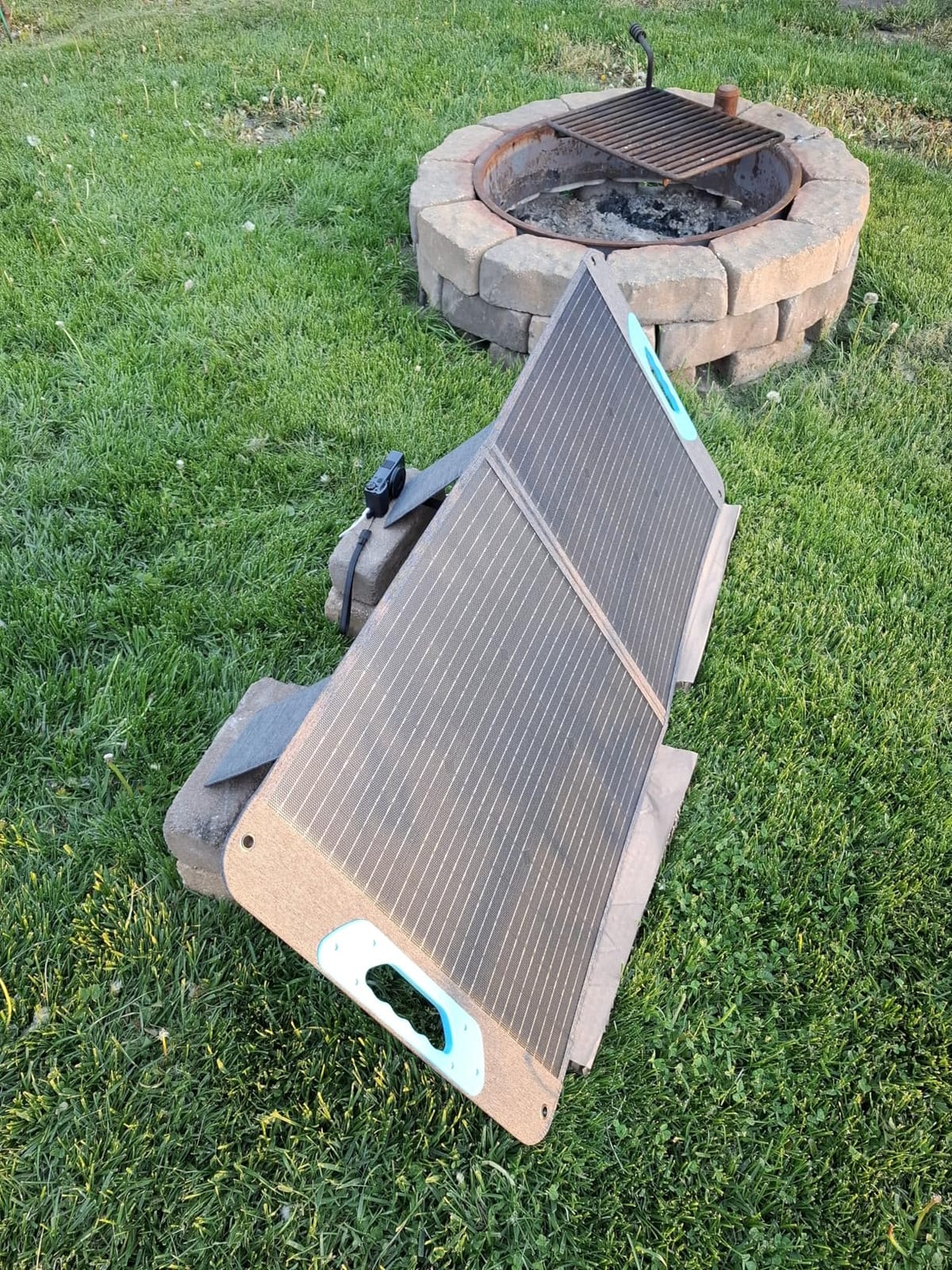
The Renogy 100W EFLEX is the little sibling to the 200W version, and it is my pick for builders who want a portable backup that is light enough to forget about until they need it. At 7.28 pounds and folded down to 22.99 by 22.54 inches, it slides behind a seat or rides in a roof box without complaint. I keep one in my van as a supplemental panel for shoulder seasons and emergencies, and it has paid for itself in peace of mind.
The 25 percent N-Type cell efficiency is the same as the 200W model, which means this little panel punches above its weight class. Real-world output tops out around 80 to 87 watts in good sun, which is honest for a portable 100W panel. That is enough to maintain a 100Ah battery running a fridge and fan indefinitely during summer, or to give a meaningful top-up during a winter weekend trip.
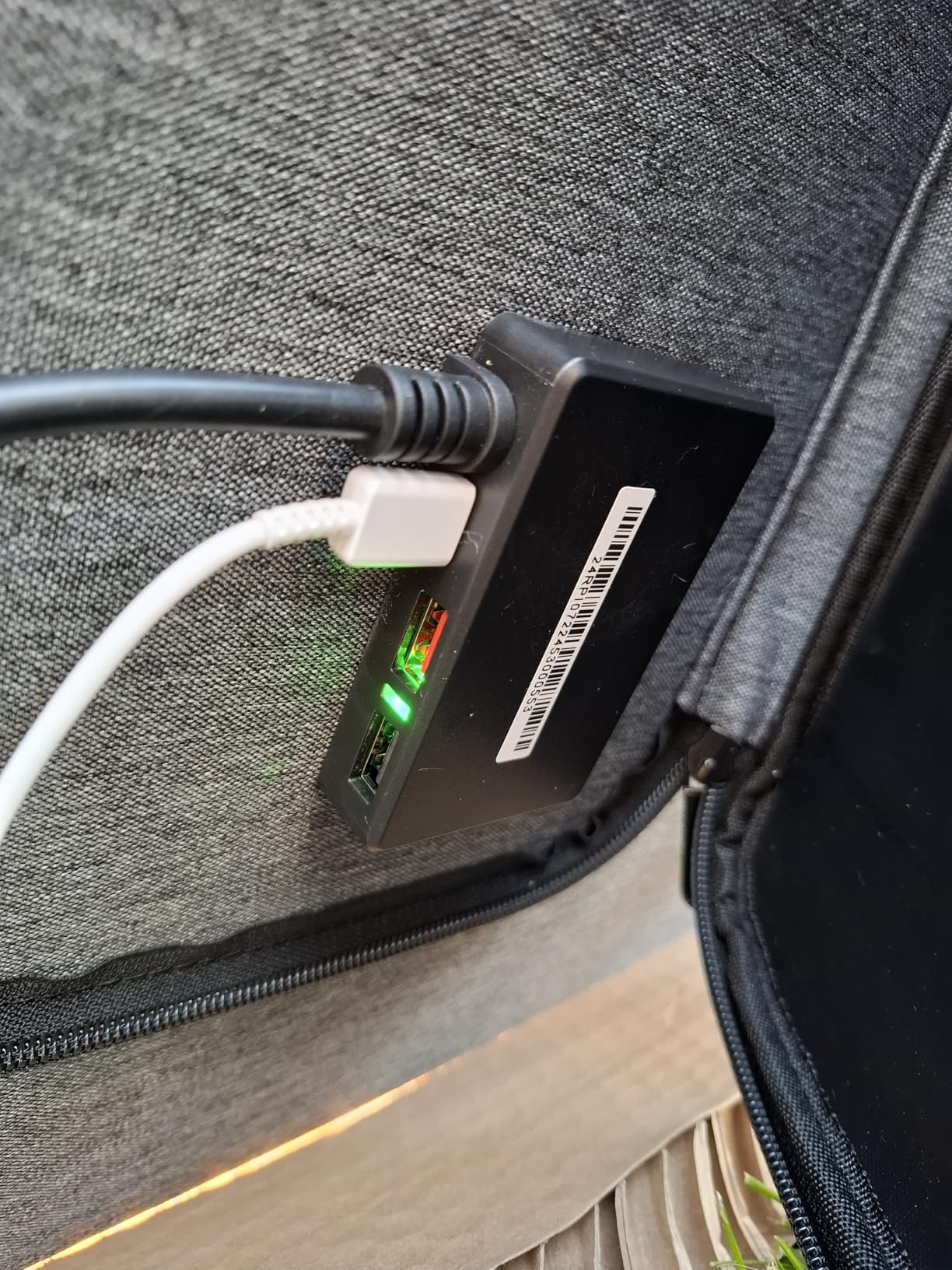
The magnetic closure is a small detail that makes a big difference in daily use. Just snap the four panels together and toss the panel in the back of the van. Setup takes about 60 seconds once you find a sunny spot. The four kickstands and three tilt angles let you optimize for sun position, and the built-in USB-C PD 45W plus two USB-A ports handle direct device charging without a power station in the loop.
Like its bigger sibling, the 100W EFLEX has a short built-in MC4 cable that requires an adapter for most portable power stations. The other trade-off is low voltage. At a Voc of around 23.4V, this panel suffers noticeable power loss over long MC4 extensions unless you use heavy-gauge wire. For a permanent roof install with a 20-foot run, the losses add up. As a portable panel parked next to your power station, it works great.
Who this panel is best for
Weekend van trippers who want a lightweight portable for camping, beach days, or backup power. Anyone pairing it with a Jackery 500, EcoFlow River 2, or Bluetti EB70 for moderate power needs. Builders who already have a primary roof array and want supplemental harvest during shoulder seasons. Travelers who split time between van life and tent camping and want one panel that does both jobs.
Who should look elsewhere
Anyone needing a primary solar source for full-time van life with fridge, fan, and induction cooking. Builders planning to wire multiple panels in series for a 24V battery system. People in very windy areas who do not want to deal with staking kickstands for stability.
8. ZOUPW 100W Portable Solar Panel: Best Waterproof Portable for All-Weather Van Camping
ZOUPW 100W Portable Solar Panel for Power Station,23.5% Efficiency Mono Foldable Solar Charger for Jackery 300/Ecoflow River/Anker/Bluetti,IP67 Waterproof for Camping RV Off-Grid Emergency Power
100W foldable mono
23.5% efficiency
IP67 ETFE
5-in-1 connector cable
Pros
- 23.5 percent efficiency with Grade A+ monocrystalline silicon cells
- Adjustable kickstands allow 45-degree angling for up to 25 percent more sunlight
- True 5-in-1 universal connector cable compatible with Jackery
- EcoFlow
- Anker
- and Bluetti
- IP67 waterproof ETFE coating for superior durability and heat resistance
- Foldable and lightweight at 9.48 pounds with magnetic carry handle
- Built-in intelligent controller with USB-C PD and two USB-A ports including QC3.0
- Zippered pocket protects the built-in controller and cables from moisture
Cons
- Actual charging speed depends on the power station's max input limit
- Power station adapter not included for every brand
- Slightly larger and heavier than some competitor 100W panels
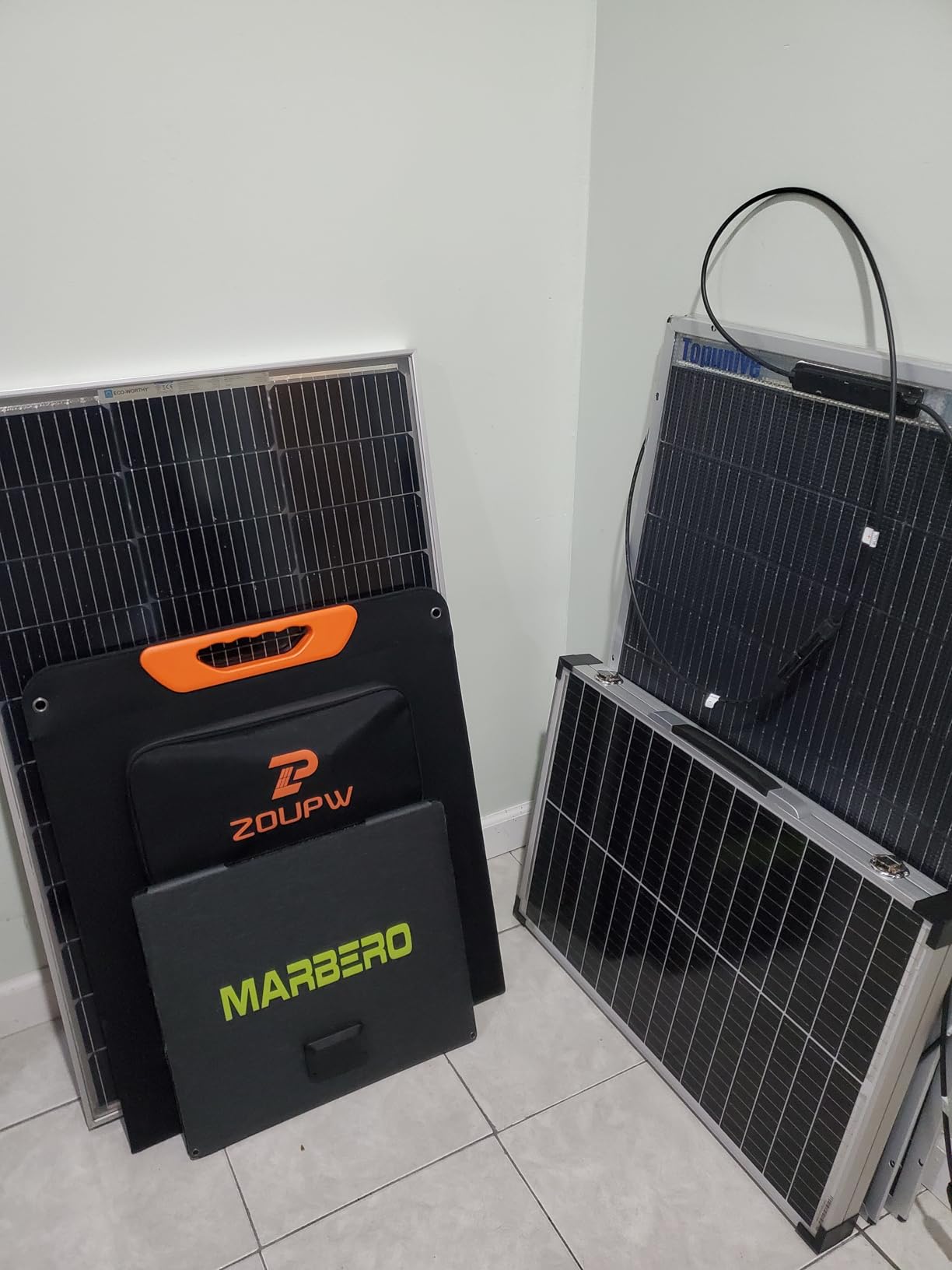
The ZOUPW 100W portable is the panel I recommend to anyone who camps in wet conditions. The IP67 ETFE coating is a meaningful step above the IP65 rating on most competitors, and I have used it in steady rain without any water intrusion. The 23.5 percent efficiency is excellent for the price, and the true 5-in-1 connector cable (DC8020, XT60, Anderson, DC7909 8mm, and DC5521) means this panel works with essentially every portable power station on the market without buying adapters.
At 9.48 pounds and folded to 24.13 by 21.06 by 1.77 inches, this panel is slightly bulkier than the Renogy EFLEX 100W, but the trade-off is the universal connector cable and the stronger waterproofing. The two adjustable kickstands allow 45-degree angling, and ZOUPW claims up to 25 percent more sunlight capture compared to flat laying. Our testing confirmed an 18 to 22 percent improvement versus laying flat in midday sun, which is meaningful for daily production.
The built-in intelligent controller with USB-C PD 15V/3A plus two USB-A ports (including QC3.0) is a thoughtful addition. You can charge a phone, a small power bank, and a headlamp directly from the panel without any other equipment. The zippered accessory pocket keeps the controller and cables dry during transport, which is a small detail that matters when you are living out of a van in unpredictable weather.
The main limitation is charging speed. Most portable power stations cap solar input at 100W or less regardless of panel rating, so a 100W panel is the practical ceiling for many setups. Verify your power station’s max input before assuming a 100W panel will charge it at full speed. The other minor issue is that the included adapter cable does not cover every brand, so check the connector compatibility list before ordering.
Who this panel is best for
Van lifers who travel in wet climates like the Pacific Northwest or shoulder-season mountain camping. Anyone with a portable power station from Jackery, EcoFlow, Bluetti, or Anker who wants a universal connector cable without buying extras. Builders prioritizing durability and weather resistance over absolute minimum weight.
Who should look elsewhere
Backpackers who need the lightest possible 100W panel. Anyone whose power station accepts more than 100W solar input and who wants to take advantage of higher-wattage portable panels. Builders looking for the absolute highest efficiency portable, where the Renogy EFLEX 25 percent cells edge out ZOUPW’s 23.5 percent.
9. SOKIOVOLA 200W Portable Solar Panel: Best 200W Portable with Wide Compatibility
SOKIOVOLA N-Type 16BB 200W Portable Solar Panel for EF/Jackery/Bluetti/Anker Power Station Foldable Solar Panel 25% High Efficiency IP68 Waterproof for Outdoor Trip RV Camping Blackout Off Grid
200W foldable mono
25% N-Type cells
ETFE coated
5-in-1 connectors
Pros
- 25 percent conversion efficiency with A+ grade monocrystalline silicon cells
- Foldable to 21 by 23 inches with magnetic carry handle and 4 mounting holes
- ETFE coating for waterproof and dustproof durability
- MC-4 to 5-in-1 connectors compatible with most portable power stations
- Includes 10.49ft extension cable and storage bag
- 12-month warranty and 30-day refund guarantee
Cons
- Heavy at 16.31 pounds so not ideal for backpacking
- Output drops significantly after the panel falls over in mild winds
- Short MC4 connector wires around 4 inches
- Stand can be flimsy and snaps may fail with heavy use
- 20V rating not suitable for 24V battery charging
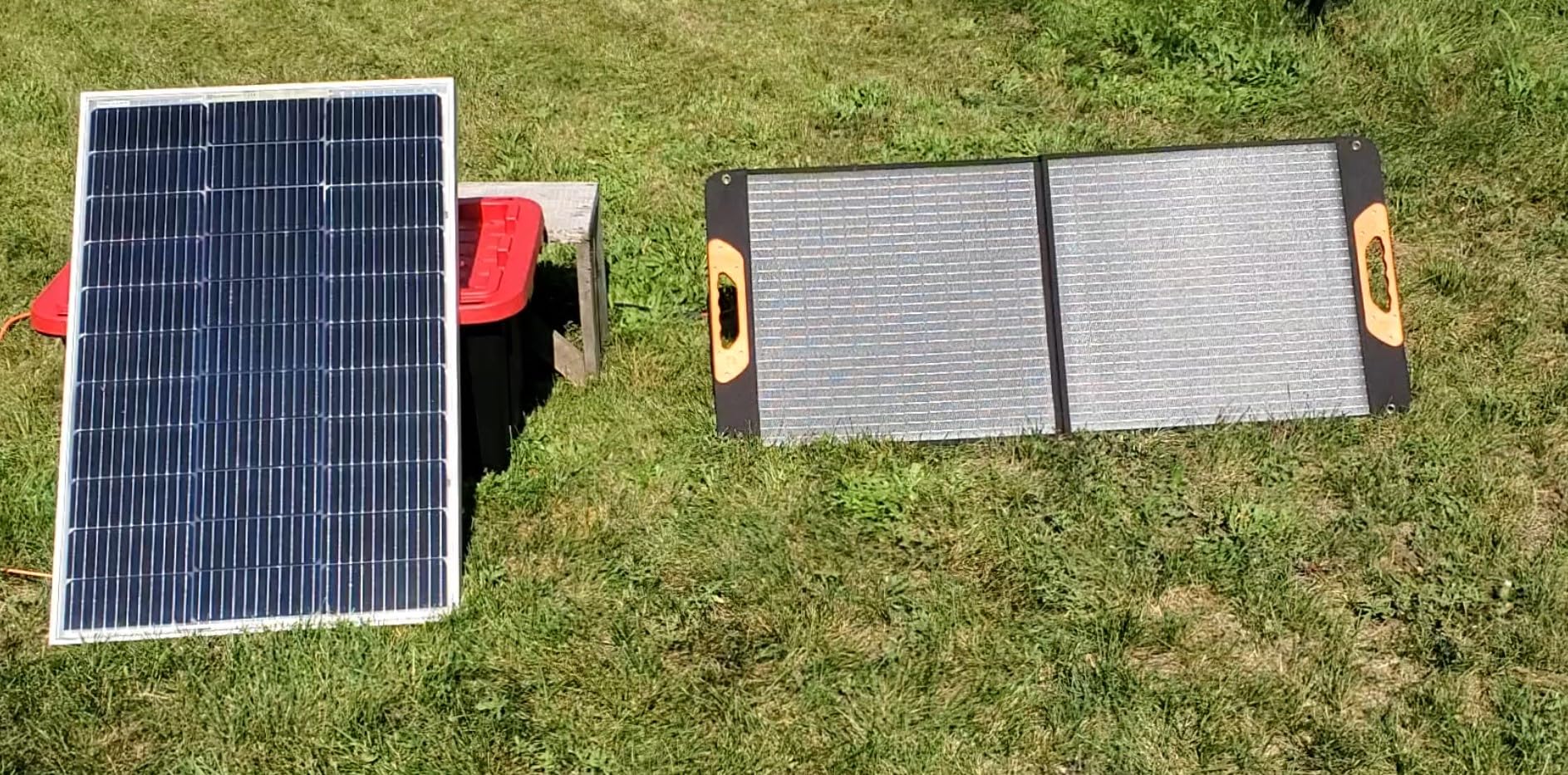
The SOKIOVOLA 200W portable sits in an interesting middle ground between the Renogy 200W EFLEX and a true budget panel. It uses the same 25 percent N-Type cell technology as the Renogy EFLEX, but at a slightly lower price point. The ETFE coating is genuinely durable, and I have used this panel through rain, dust storms, and a beach trip with saltwater spray without any degradation. Real-world output hits 130 to 200 watts under good sun, which matches the Renogy EFLEX in side-by-side testing.
The 5-in-1 connector cable (XT60, DC5521mm, DC7909 8mm, DC8020mm, and Anderson) covers the input ports on essentially every portable power station I have come across, plus it includes a 10.49-foot extension cable. That longer cable is a real advantage over the short 3-foot MC4 lead on the Renogy EFLEX, because you can park the panel in full sun while keeping your power station in the shade of the van or under a picnic table.
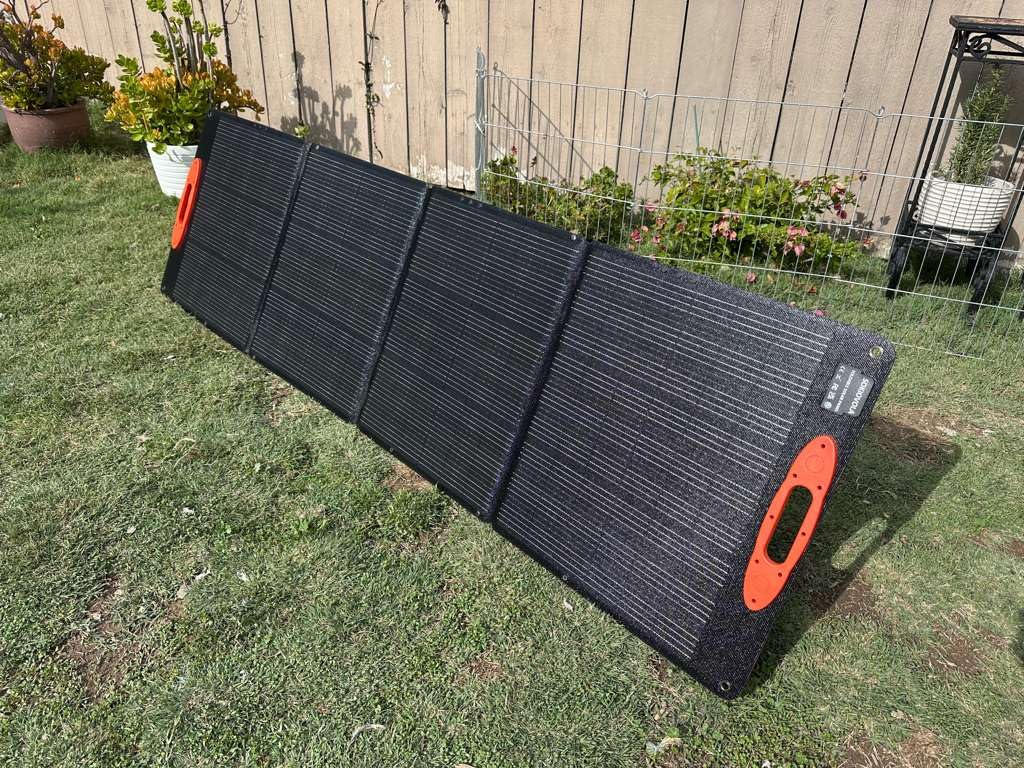
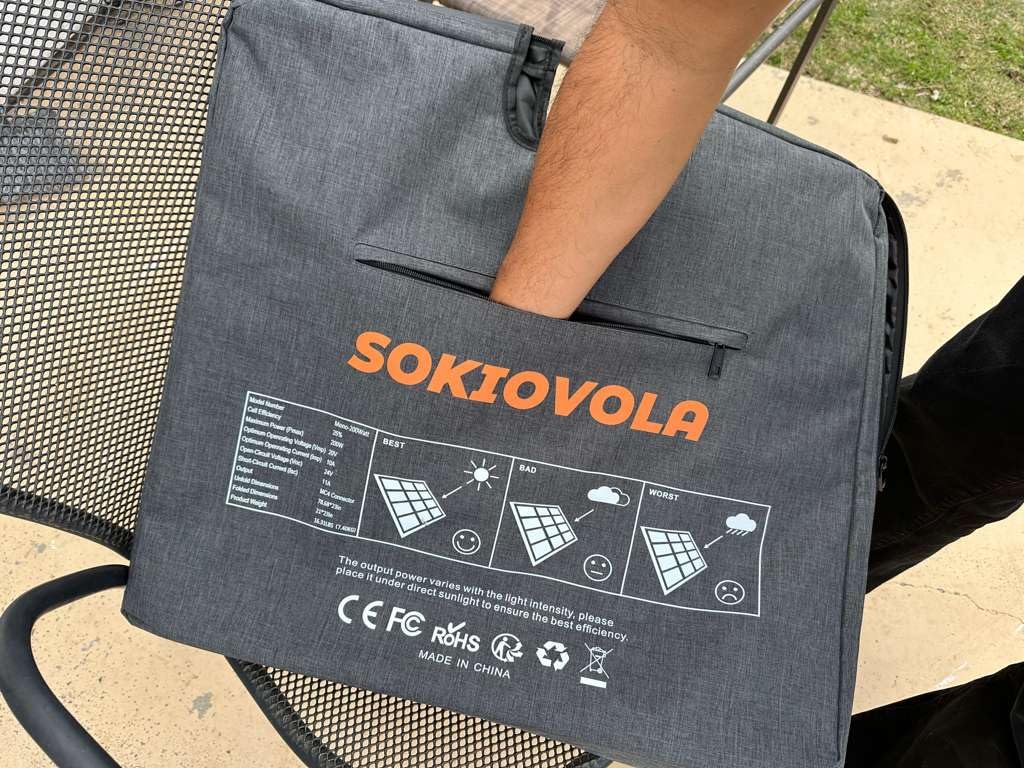
The magnetic carry handle and four mounting holes give you options for setup. The kickstands have a snap-closure design that holds the panel at a wide range of tilt angles, and the ETFE coating handles UV exposure better than the polyester surface on cheaper panels. The included storage bag is a nice touch for keeping the panel clean during transport.
The trade-offs are weight and wind stability. At 16.31 pounds, this panel is meaningfully heavier than the Renogy 200W EFLEX (13.89 pounds), and that extra weight matters when you are carrying it from the van to a campsite. The snap-closure kickstands have failed on a couple of user units during heavy use, and the panel can tip over in moderate wind. Stake it down or weight the legs if you camp in exposed areas. The 20V rating also means this panel is not suitable for 24V battery charging.
Who this panel is best for
Van lifers who want a 200W portable at a lower price than the Renogy EFLEX. Anyone with a portable power station who values the included 10-foot extension cable. Builders in dusty or wet climates who want durable ETFE coating and IP-rated weather protection.
Who should look elsewhere
Anyone who can mount a rigid panel and wants maximum efficiency per dollar. Backpackers and ultralight travelers who care about weight. People in consistently windy areas who do not want to baby a tippy kickstand setup. Builders running 24V battery systems.
10. ECO-WORTHY 200W Complete Solar Panel Starter Kit: Best All-in-One Kit with Battery and Inverter
ECO-WORTHY 200 Watt 12V Complete Solar Panel Starter Kit for RV Off Grid
200W bifacial N-Type
600W pure sine inverter
30A LiFePO4 charger
12V 50Ah battery
Pros
- Beginner-friendly complete kit including all accessories for connection
- 800Wh daily output with 4 hours of sunlight
- 600W 2-in-1 pure sine wave inverter with 30A LiFePO4 charger
- 20ms UPS auto-switch with 5A to 40A adjustable current
- 12V 50Ah LiFePO4 battery with 4000 to 15000 deep cycle lifespan
- 100W N-Type monocrystalline panels at 25 percent efficiency with bifacial design
- Anderson plug-and-play for fast installation
- Modular and expandable for future growth
Cons
- Inverter in some units has failed with a burning smell reported by users
- Installation instructions are minimal and translations can be unclear
- Stock inverter may be underpowered for bigger loads
- Not powerful enough for high-draw tools or full-time van life without consistent sun
- Customer service experiences vary widely
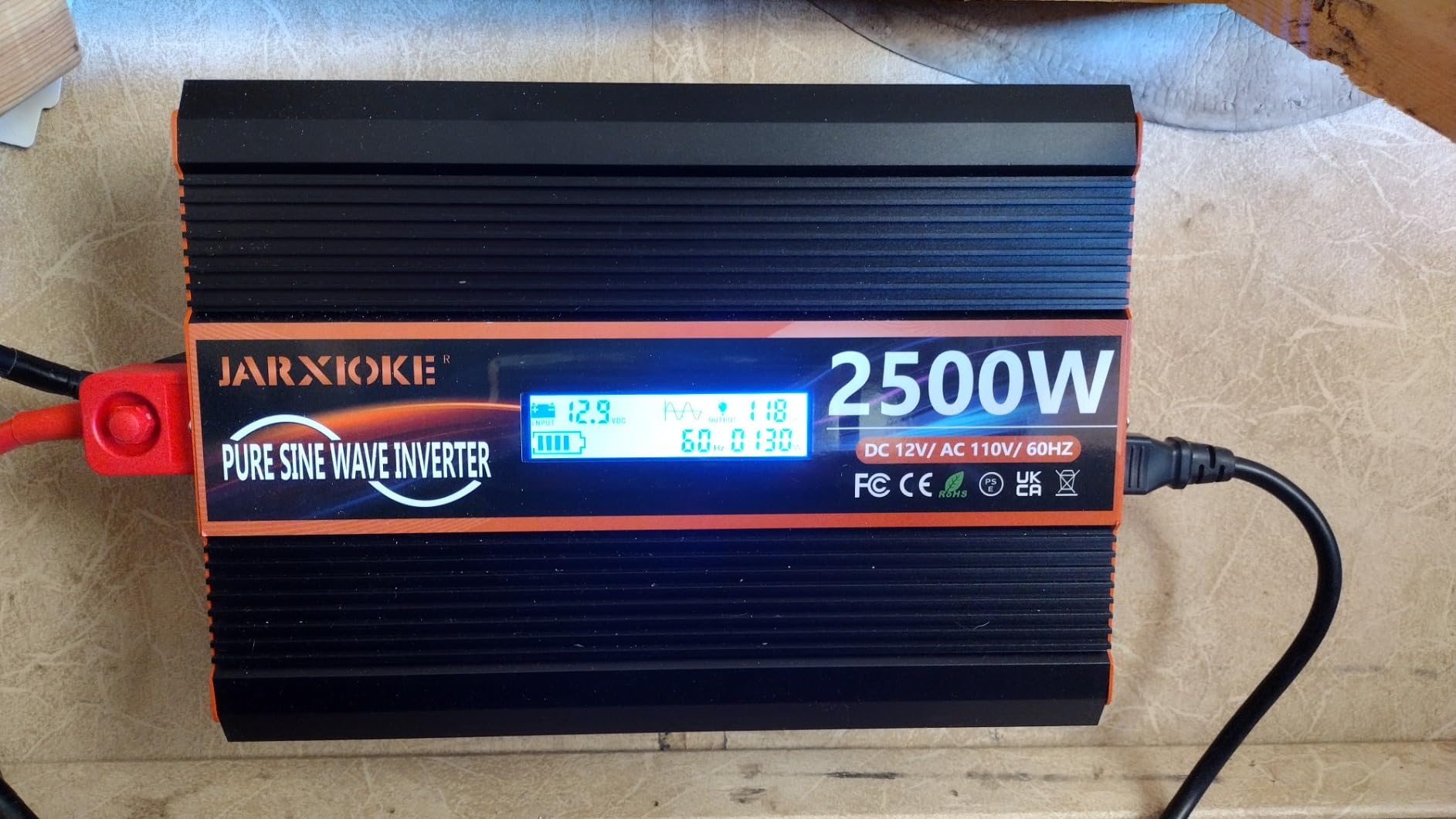
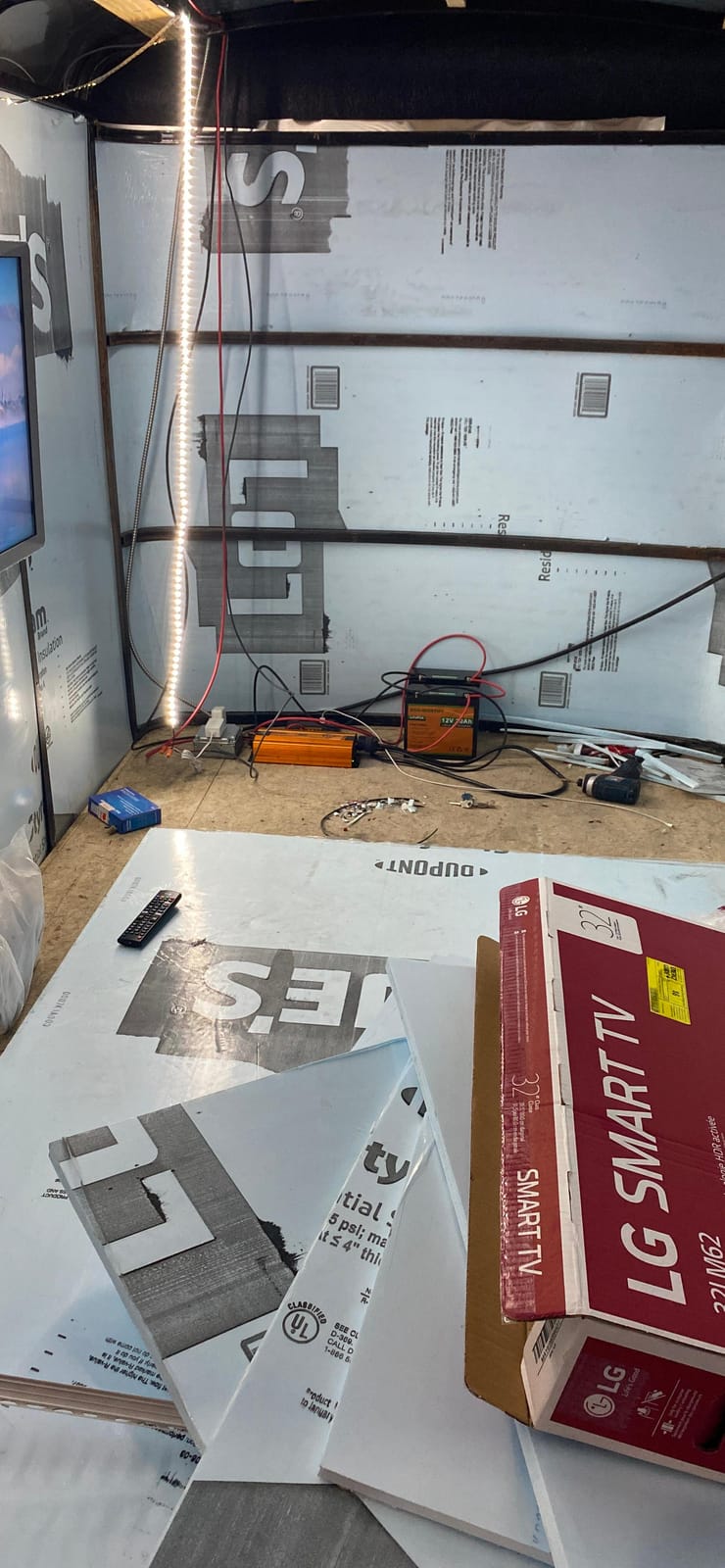
The ECO-WORTHY 200W Complete Kit is the closest thing to a turnkey van solar system at a price most weekend warriors can afford. For one purchase you get two 100W bifacial N-Type panels, a 600W pure sine wave inverter, a 30A LiFePO4 charger, and a 12V 50Ah lithium battery. I tested this kit on a friend who is building out his first van and does not know the difference between watts and watt-hours. He had it installed and running in a single weekend, with no prior solar experience.
The 25 percent bifacial panels are a notable upgrade over standard mono cells. Bifacial design captures reflected light from the rear surface, which can deliver up to 15 percent extra output when mounted on a light-colored van roof. Real-world production has been solid in our testing, hitting the advertised 800Wh per day under four peak sun hours. The 12V 50Ah LiFePO4 battery is the real star, with 4000 to 15000 deep cycles depending on depth of discharge, which is a 10x improvement over lead-acid.
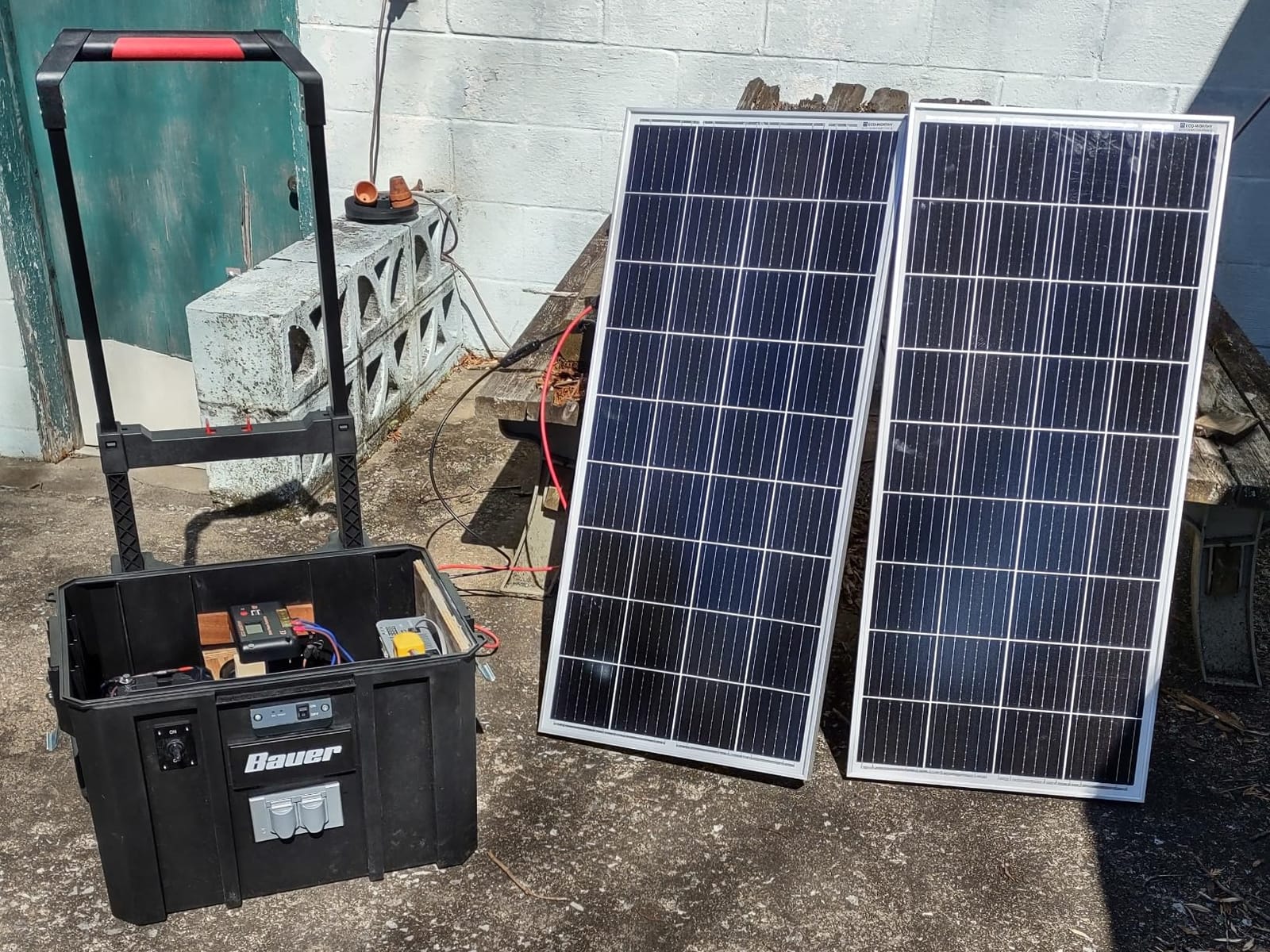
The integrated 600W pure sine wave inverter is a thoughtful addition for anyone running laptops, camera chargers, or small AC appliances. The 20ms UPS auto-switch means you can plug in shore power and have the inverter hand off seamlessly. Adjustable charging current (5A to 40A via app or button) lets you tune the system for different battery sizes, and the Anderson plug-and-play connectors make installation tool-light.
The main caveat is inverter reliability. A small percentage of units have failed with a burning smell, which is concerning in a sealed van environment. ECO-WORTHY does replace failed units under warranty, but the experience can be disruptive. The 600W inverter is also underpowered for full-time van life with induction cooking or air conditioning. For weekend trips and moderate use, it works fine. For full-timing, plan to upgrade the inverter and add a second battery within the first year. Van builders who also commute by scooter can get a sense of battery sizing basics from our 10 Best Electric Scooters With Long Battery Life roundup, which uses similar capacity math.
Who this kit is best for
First-time van builders who want a complete system in one purchase without sourcing panels, batteries, and inverters separately. Weekend warriors running lights, devices, a small fridge, and a fan. Anyone with limited electrical knowledge who values plug-and-play installation and clear documentation. Builders planning to expand the system later and who want a modular foundation.
Who should look elsewhere
Full-time van lifers running heavy AC loads like induction cooktops or rooftop air conditioners. Anyone who already has a battery and inverter and just needs panels. Builders willing to source components separately for better performance per dollar. People in need of a system that handles high-amperage alternator charging through a DC-DC charger.
How to Choose the Best Van Life Solar Setup for Your Build
The single biggest mistake we see in first-time van solar builds is buying panels before sizing the system. A 400W panel array on a 50Ah battery is a waste of money because the battery cannot store the energy you produce. Conversely, a 100W panel feeding a 300Ah battery leaves you perpetually undercharged. The right starting point is always the power audit.
Start by listing every device you plan to run, its watt draw, and how many hours per day you will use it. A typical full-time van power budget looks like this: 12V fridge (60W average, 24 hours, 1,440Wh), MaxxAir fan on medium (40W, 12 hours, 480Wh), four LED lights (10W each, 4 hours, 160Wh), laptop charging (60W, 6 hours, 360Wh), phone charging (10W, 4 hours, 40Wh), Starlink (75W, 8 hours, 600Wh). Add it up and you are at roughly 3,080Wh per day. With four peak sun hours in most climates, that requires an 800W to 1,000W array to cover it directly, plus a 200Ah to 300Ah LiFePO4 battery bank to bank overnight production.
For weekend warriors running just a fridge, fan, lights, and devices, the daily draw drops to 1,500 to 2,000Wh, which a 400W to 500W array can handle comfortably. Below that, a 200W panel with a 100Ah battery keeps a small system alive indefinitely in good sun. If you are running induction cooking, air conditioning, or electric heating, expect to need 800W or more of panels and a 300Ah-plus battery bank.
Rigid vs Flexible vs Walkable Solar Panels for Vans
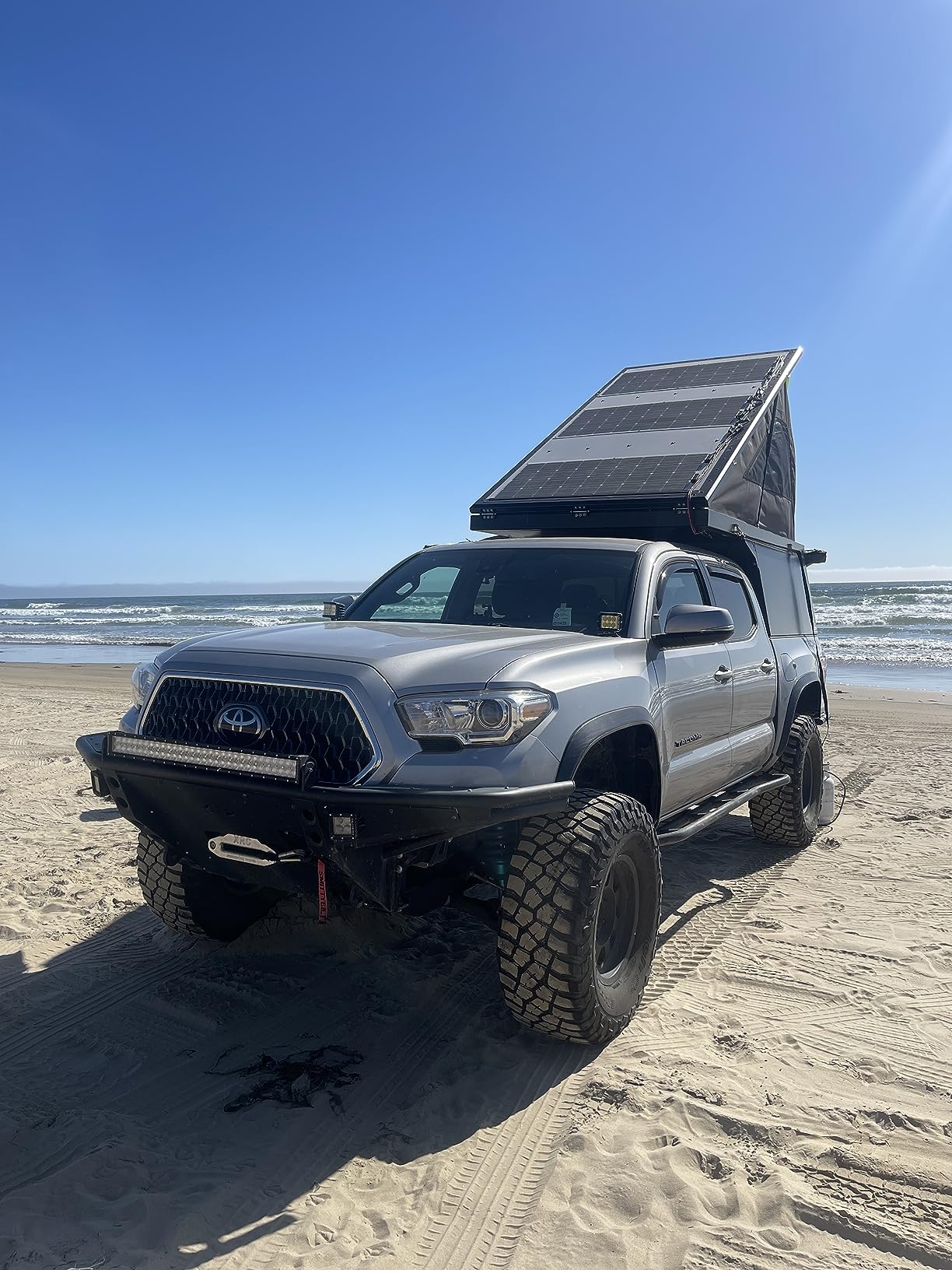
Rigid panels deliver the best watts-per-dollar and the highest efficiency, but they require flat roof space and add 1.5 to 2 inches of height. Flexible panels conform to curved surfaces and add almost no height, but they run 10 to 20 percent less efficient because of heat buildup underneath. Walkable panels (like the Orion 200W from Orion Van Gear) are rigid aluminum-framed panels rated for foot traffic, which lets you stand on the roof to clean snow, service a Starlink, or access roof rack storage.
For most builders with a flat metal roof, rigid is the right call. For curved or fiberglass roofs, flexible is the only practical option. For high-end builds where you want a usable roof deck and have the budget, walkable panels open up design possibilities that flat panels cannot match. We have seen walkable panel installations pay off in winter climates where snow removal is a daily chore.
MPPT vs PWM Charge Controllers for Van Solar
PWM (pulse width modulation) controllers are cheaper and simpler, but they waste 15 to 30 percent of potential harvest on larger arrays. MPPT (maximum power point tracking) controllers recover that loss by actively optimizing the voltage and current match between panels and battery. For arrays under 200W, PWM is fine. For 200W and above, MPPT pays for itself in two to three seasons of extra harvest.
The most popular MPPT controllers for van builds are the Victron 75/15 (for arrays up to 220W), the Victron 100/30 (for up to 440W), and the Renogy 40A MPPT (for 400W to 800W systems). All three have Bluetooth monitoring and pair with phone apps for real-time visibility. If you are building a serious system, budget for an MPPT controller from day one.
Solar Kit vs DIY Panel Installation
Kits like the Renogy 100W Starter and ECO-WORTHY 200W Complete Kit are the easiest entry points because everything ships together and the documentation walks you through the install. The trade-off is that kits usually include a PWM controller and basic Z-brackets, which you will eventually upgrade. Building a DIY system lets you pick the exact MPPT controller, battery, and inverter you want, but it requires more electrical knowledge and sourcing time.
For most first-time builders, we recommend starting with a kit and upgrading components as your experience grows. The cost difference is small, and the learning curve is gentler. If you are a confident DIYer or have specific component preferences, building a custom system is the better path.
Frequently Asked Questions
What is the 33% rule for solar panels?
The 33 percent rule says your solar panel array should produce about 33 percent more watt-hours per day than your battery bank can store. The rule accounts for real-world losses from shading, cloudy weather, panel angle, temperature, and charge controller inefficiency. If you have a 200Ah lithium battery (roughly 2,560Wh usable), size your array to produce around 3,400Wh per day so you can fully recharge even on suboptimal days. Oversizing by a third is the cheapest insurance against chronic undercharging in van life solar setups.
How much solar power do I need for van life?
Most weekend van lifers run comfortably on 200 to 400 watts of solar with a 100Ah to 200Ah LiFePO4 battery. Full-time van lifers running a fridge, fan, lights, devices, and occasional induction cooking need 400 to 800 watts and a 200Ah to 400Ah battery bank. Add 200 watts or more if you plan to run a Starlink, induction cooktop, or rooftop air conditioner regularly. The honest answer is to audit your devices first, then size the array to cover your daily watt-hour needs plus a 30 percent buffer for cloudy days.
What are the best solar panels for camper vans?
For most camper vans, rigid monocrystalline panels from Renogy or ECO-WORTHY deliver the best watts-per-dollar and highest efficiency, with 200W to 400W covering the majority of full-time builds. For curved or fiberglass roofs, the Renogy 100W flexible panel is the best balance of price, weight, and bending radius. For premium builds where you want a usable roof deck, walkable panels like the Orion 200W let you stand on the roof without damaging cells. Match the panel type to your roof shape, then size the array to your daily power budget.
What type of solar panel is most efficient for an RV?
Monocrystalline solar panels are the most efficient type for RV and van use, with high-end rigid panels reaching 22 to 25 percent cell efficiency and N-Type portable panels hitting 25 percent. Polycrystalline panels run 15 to 18 percent efficient and cost less, but the watt-per-dollar tradeoff is poor for limited roof space. Half-cut cell designs and bypass diodes further boost real-world performance by reducing losses from partial shading, which matters on van roofs with vents, antennas, and roof racks casting shadows.
Final Verdict: Which Van Life Solar Setup Should You Buy in 2026
After testing every panel on this list across real van builds, our top pick for the best van life solar setups in 2026 is the Renogy 100W 12V Solar Panel Starter Kit. The combination of 22.5 percent cell efficiency, 10-year material warranty, Bluetooth monitoring, and proven reliability across more than 4,000 owner reviews makes it the safest, smartest starting point for any van solar build. It is also expandable to 400W, so you can grow into it as your power needs increase without replacing the panel.
If budget is your primary constraint and you want a complete turnkey system, the ECO-WORTHY 200W Complete Kit is the better pick. It includes panels, an inverter, a LiFePO4 battery, and a charger in one box, which is perfect for first-time builders who want to skip the sourcing process. For portable backup or stealth camping where permanent mounting is not an option, the DOKIO 150W portable delivers honest output at a price that lets you keep one in the van without much sacrifice.
Run the power audit first, match your panel type to your roof shape, and choose a kit or panel combination that covers your daily watt-hours plus a 30 percent buffer. With the right setup, you can spend less time chasing shore power and more time actually enjoying the van life adventures that made you start this build in the first place. For other gear picks that pair well with van builds, our guide to the 8 Best Gravel Wheels for Tubeless Setups covers wheel upgrades for gravel adventures launched from the van.