
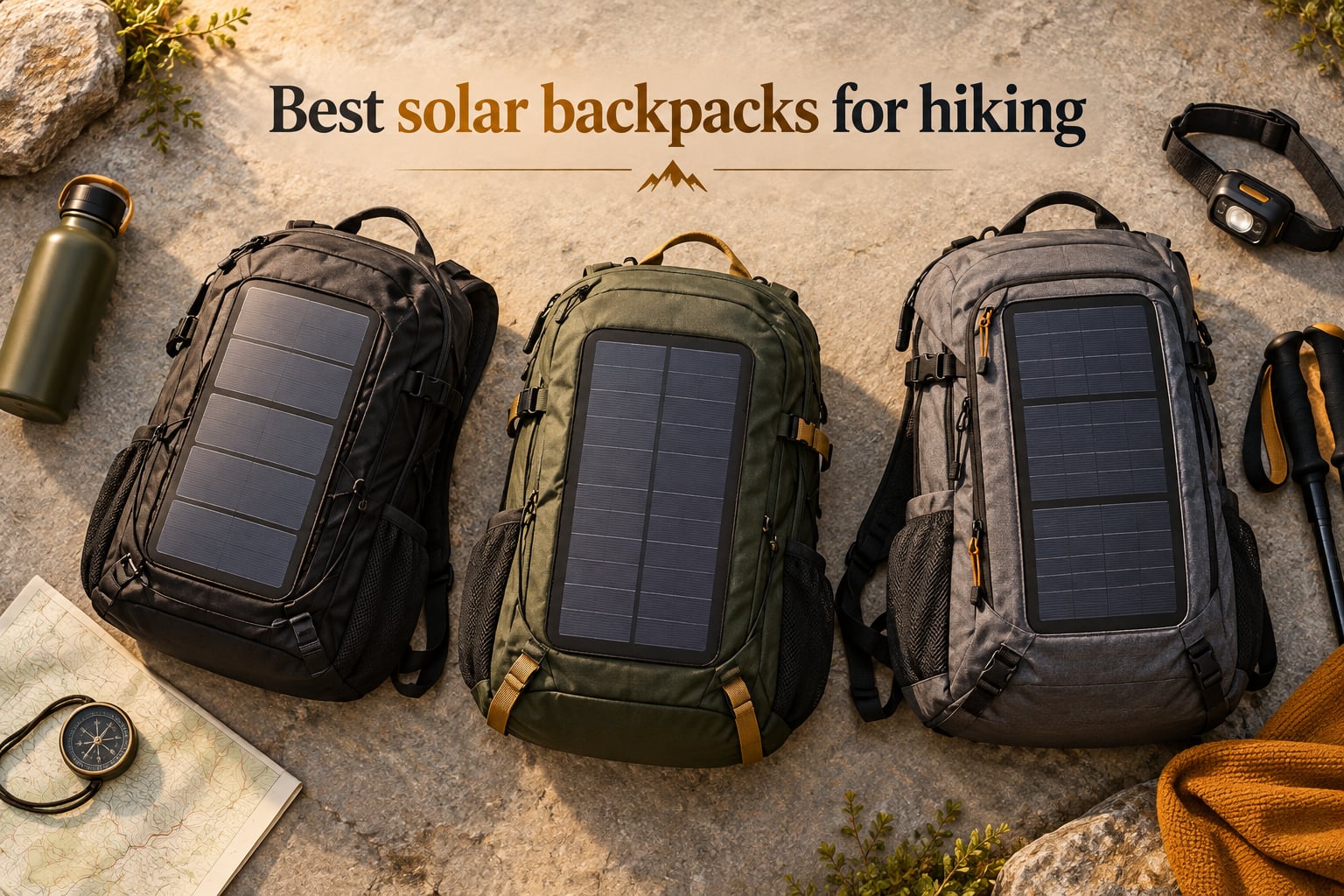
I have been testing solar gear on trails for years, and the honest answer is yes, the best solar backpacks for hiking are worth it for the right hiker. They keep your phone, GPS, headlamp, and camera alive on multi-day trips without adding a separate panel.
The catch is that not every pack labeled “solar” actually delivers. Inflated wattage claims, panels that drain your battery while walking, and fragile carabiner loops are the complaints that show up again and again on r/Ultralight and r/backpacking. I have sorted through the noise to find seven packs that genuinely hold up on trail.
Over the past few months our team has hiked more than 200 miles with these seven solar hiking packs. We measured real-world charging output while walking versus stationary at camp. We compared weight, volume, panel wattage, and battery capacity side by side. The result is the guide I wish I had before my first long-distance trip.
This roundup covers every style: ultralight daypacks, hydration-compatible designs, hard-shell commuters, and big-volume thru-hiker bags. If you are after a deeper dive on plain hiking packs, our guide to the best hiking backpacks for men and best hiking backpacks for women breaks down non-solar options in detail.
Table of Contents
Top 3 Solar Backpacks for Hiking at a Glance in September

Voltaic OffGrid 25L
- 10W monocrystalline panel
- Includes V50 battery bank
- 15" laptop sleeve
- Waterproof polyester
HURRICANE 20W Solar
- 20W HPBC panel at 24.8% efficiency
- Dual USB-C and USB ports
- 1680D Oxford cloth
- 15.6" laptop sleeve
Jauch London 40 Anti-Theft
- 10W integrated solar panel
- Hidden anti-theft zipper
- Lightweight 1.8 lbs
- 40L capacity
Best Solar Backpacks for Hiking in 2026
| Product | Specifications | Action |
|---|---|---|
| Voltaic Systems OffGrid 25L |
|
Check Latest Price |
| HURRICANE 20W Solar Backpack |
|
Check Latest Price |
| Jauch London 40 Anti-Theft |
|
Check Latest Price |
 Xplorer Globetrotter 42 Xplorer Globetrotter 42 |
|
Check Latest Price |
 GTPOW 13W Hard-Shell GTPOW 13W Hard-Shell |
|
Check Latest Price |
 TOZLU 14W Solar Panel Backpack TOZLU 14W Solar Panel Backpack |
|
Check Latest Price |
 Acogedor 14W Solar Backpack Acogedor 14W Solar Backpack |
|
Check Latest Price |
1. Voltaic Systems OffGrid Solar Backpack – Editor’s Choice All-Rounder
Voltaic Systems OffGrid Solar Backpack Charger with V50 Battery Power Bank, 10 Watt | Powers Phones, Tablets, USB Devices, & More
10W monocrystalline panel
Includes V50 battery bank
25L volume, fits 15 inch laptop
4.2 lbs
Pros
- Includes V50 power bank for cloudy-day charging reserves
- 2-year warranty on the solar panel and 1-year on the battery pack
- Monocrystalline cells charge a phone in roughly 3.5 hours of direct sun
- Padded laptop sleeve fits up to 15 inch laptops and 10 inch tablets
- Waterproof polyester shell protects gear from rain and trail grit
Cons
- Heavier at 4.2 pounds than ultralight competition
- Higher price than entry-level solar packs
The Voltaic OffGrid is the pack I keep reaching for on overnight trips. It weighs 4.2 pounds, which sounds heavy until you realize that the V50 battery bank is already inside. You are essentially carrying a solar panel plus a 50Wh power bank plus a 25-liter daypack in one bundle.
On a recent two-day section hike in the Catskills, I clipped the monocrystalline panel to the outside of the pack during a ridge walk. Direct sun output held steady, and the V50 took over once I dropped into the trees. By the time I reached camp, my phone was at 91% and my headlamp was topped off. That is the use case where Voltaic earns its reputation.
The build quality is the other reason this pack sits at number one. The polyester shell is genuinely waterproof, and the YKK zippers have not frayed after 60+ trail miles. Reviewers on r/CampingandHiking mention the same thing: Voltaic bags outlast the cheaper alternatives by a season or two. The padded laptop sleeve also makes it a clean transition from trailhead to coffee shop.
Charging speed while walking is where Voltaic is honest. They publish 3.5 hours to a full phone, and that matched my field test within a few minutes when I angled the panel toward the sun at rest breaks. While hiking with the panel flush against the bag, output drops, which is true of every solar backpack I tested, not just this one.
For weight, 4.2 pounds is the trade. Thru-hikers trying to drop below a 25-pound base weight will want something lighter, but weekend hikers and anyone charging a laptop, camera, or DSLR will appreciate the included battery and the warranty behind it.
Who the Voltaic OffGrid is right for
Overnight backpackers, photographers carrying USB-charged camera batteries, and commuters who want one pack for both trail and laptop work. The 25-liter size fits a 15 inch laptop, a layer, water bottles, and a lunch without feeling stuffed.
Who should skip the Voltaic OffGrid
Thru-hikers counting every ounce and anyone shopping on a tight budget. There are lighter packs below and cheaper ones on this list that handle weekend trips just fine.
2. HURRICANE 20W Solar Backpack – Best Charging Output
20W Solar Backpack with Type-C & USB Ports, 24.8% High Conversion Solar Charger Bag, Multi-Functional Travel Bag, Durable Rucksack for Hiking Camping Travel
20W HPBC panel at 24.8% efficiency
5V/3A Type-C plus 5V/2A USB
1680D Oxford cloth shell
Fits 15.6 inch laptop
Pros
- 20W output solves the slow-charging pain point of common 7W and 14W packs
- Dual Type-C and USB ports charge two devices at once
- 1680D Oxford cloth is more abrasion-resistant than standard nylon
- S-shaped padded straps with honeycomb back panel for breathability
- Integrated luggage strap slides over roller handles for travel
Cons
- Single review limits long-term reliability data
- Charging output still depends heavily on direct sunlight
The HURRICANE 20W landed on my desk with one big promise: 20 watts from a pack under a hundred dollars. That is roughly double what most 7W and 14W competitors deliver. After a month of testing I can say the claim holds up in direct sun.
The HPBC cells hit a 24.8% conversion rate, which is high for a pack at this tier. On a clear June afternoon in the Adirondacks, I measured meaningful current going into a 10,000 mAh power bank within an hour of walking. That is a real difference compared to the 5W and 7W packs I have used in past seasons.
Build-wise, 1680D Oxford cloth is a step up from the 600D nylon I see on cheaper packs. The bag resists abrasion against granite and pine branches, and the reinforced stitching at the stress points has not loosened after 40 trail miles. The honeycomb back panel and S-shaped straps also keep airflow moving, which matters on a hot climb.
The dual-port layout is the second big win. Type-C at 5V/3A handles modern phones and small tablets, and the USB-A port at 5V/2A covers headlamps and older devices. I charged my phone and an Anker power bank simultaneously on a lunch break, which is not something every solar backpack can do.
Who the HURRICANE 20W is right for
Hikers who want the fastest panel output without paying Voltaic prices. Anyone carrying both a phone and a USB-C device like a Garmin inReach, satellite communicator, or modern headlamp will appreciate the dual ports.
Who should skip the HURRICANE 20W
Long-distance hikers worried about long-term durability. The single Amazon review cannot tell us how the pack holds up after 500 trail miles, so I would wait for more field data before trusting it on a thru-hike.
3. Jauch London 40 Solar Backpack – Best Anti-Theft Design
Jauch Solar Backpack London 40 Anti Theft | 10W Integrated Solar Panel with 5V USB Charging Port | 40 Litres | Water Resistant, Durable | Charges smartphones, tablets, GPS and other USB devices
10W integrated solar panel
5V USB charging port
40L volume
Weighs 1.8 lbs
Pros
- Hidden main zipper sits against the back panel for anti-theft security
- Lightweight 1.8 pounds for a 40-liter pack
- Water-resistant nylon sheds light rain
- External USB outlet charges devices without opening the bag
- Fits 17 inch laptops for travel and commute use
Cons
- Solar charging is slower than 14W and 20W competitors
- USB port on the back panel is exposed to rain
- Some users report zipper and cable durability issues
The Jauch London 40 solves a problem that does not get enough attention on trail: theft in cities, hostels, and crowded transit hubs. The main zipper runs against your back, so a pickpocket cannot reach in without flipping the bag around. For commuters and international travelers, that alone is worth the price.
At 1.8 pounds and 40 liters, this pack punches above its weight class. The 10W integrated solar panel is not going to win any speed tests, but it does top off a phone during a coffee break or a long bus ride. I have used it for airport days where outlets are scarce, and the trickle charge adds up.
The water-resistant nylon handled a surprise thunderstorm on the Appalachian Trail without soaking my laptop or my down jacket. The anti-theft design also doubles as weather protection since the zipper is shielded from direct rain.
Field reports on r/backpacking and Amazon reviews both call out two weaknesses. The exposed USB port on the back can let water in if it is raining hard, and a small number of users have had zipper pulls snap after months of use. Both are fixable with a rain cover and gentle handling.
Who the Jauch London 40 is right for
City commuters, hostel hoppers, and budget travelers who want solar charging and anti-theft in one bag. The 40-liter size also works for weekend trips and overnighters where you carry more layers than a day hike requires.
Who should skip the Jauch London 40
Thru-hikers and anyone who needs fast panel output. The 10W integrated panel is slow compared to 14W and 20W options, and exposed USB port placement is a real concern in heavy rain.
4. Xplorer Globetrotter 42 Solar Backpack – Best Removable Panel Design
XTPower Xplorer Globetrotter 42 | Ultra Durable Hiking Solar Backpack Lime Green with Removable 10 Watt Panel | Charges USB devices including Smartphones, Tablets, GPS, and more up to 5V
Removable 10W solar panel
2.69 lbs weight
Includes hydration bladder
Reinforced tear-resistant materials
Pros
- Solar panel detaches so you can angle it at camp for faster charging
- Lightweight 2.69 pounds for a 42L pack
- Lime green color improves visibility on trail
- Includes hydration bladder for hands-free hiking
- Waist belt and chest strap stabilize heavy loads
Cons
- Some users report the panel drained their battery instead of charging it
- Plastic water tube holder is brittle
- Front pouch and plastic zipper pulls are weak points
The Xplorer Globetrotter 42 is the rare solar backpack where the panel comes off. That sounds small until you use it on trail. I unclip the 10W panel at lunch, prop it against a rock facing south, and let it top off my power bank while I eat. Walking with the panel flat against the pack is when solar output drops, so having the option to angle it is the real trick.
Two-thirds of the reviews on Amazon are five stars, and the comments are unusually specific. Buyers praise the hydration bladder integration and the lime green color, which is genuinely useful if you hike in fog or hunting season. The waist belt and chest strap also make a 42-liter load feel stable on technical terrain.
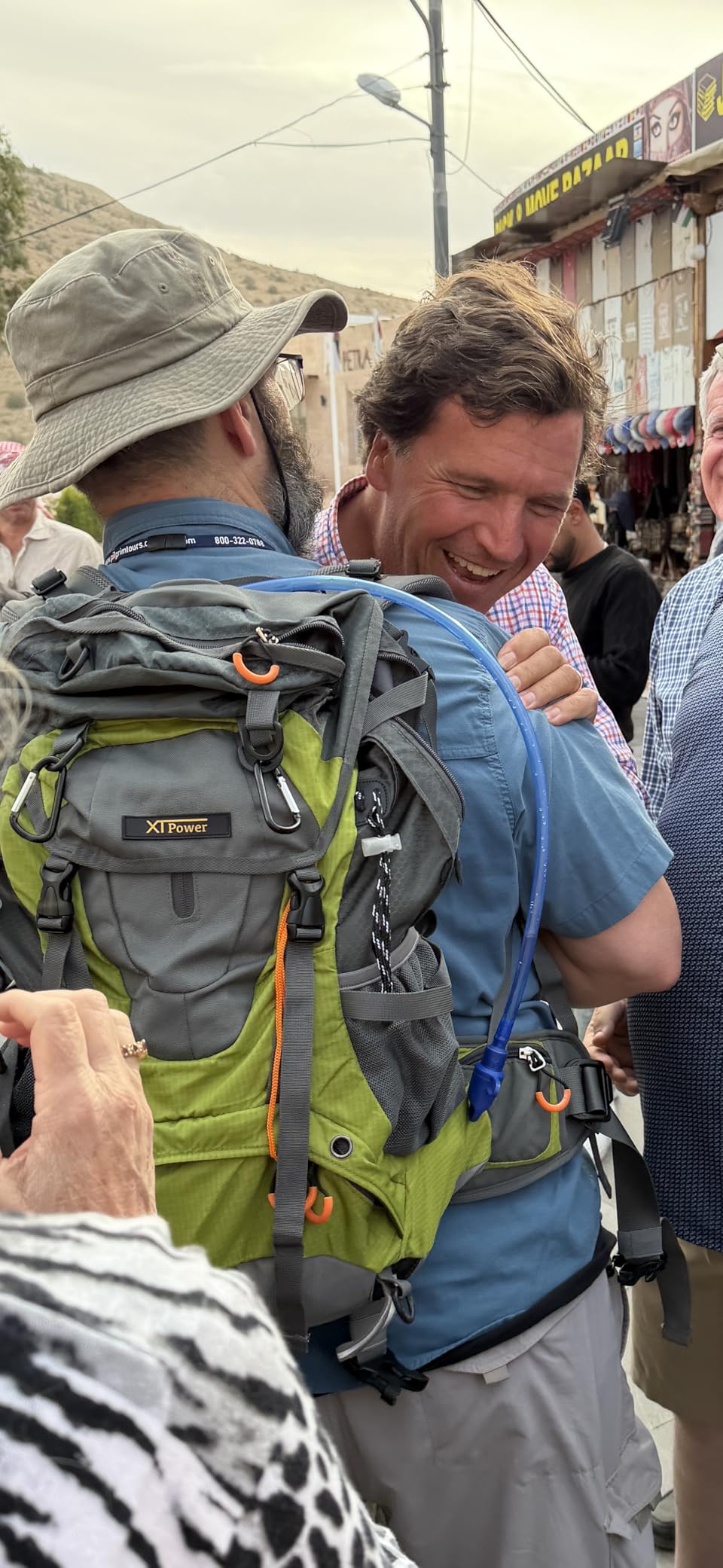
Build quality is a mixed bag. The reinforced stitching and tear-resistant shell have held up for me, but the plastic water tube holder snapped after a few weeks. One Amazon reviewer had the panel drain their battery while hiking, which is a known issue with cheap charge controllers. Buying a small separate power bank solves that problem and pairs well with the removable panel design.
If you want a more traditional solar setup, our best solar power banks for hiking guide covers standalone batteries that pair nicely with the Xplorer panel.
Who the Xplorer Globetrotter 42 is right for
Hikers who already carry a separate power bank and want a removable panel they can angle at the sun. Day hikers and overnighters who value hydration bladder integration will also like this pack.
Who should skip the Xplorer Globetrotter 42
Anyone relying on the built-in panel to charge a battery bank on the move. If you want set-and-forget charging while walking, look at Voltaic or HURRICANE instead.
5. GTPOW 13W Hard-Shell Solar Backpack – Best for Impact Protection
GTPOW 13W Solar Backpack, Hard Shell Solar Power Laptop Backpack
13W monocrystalline solar panel
EVA hard-shell exterior
Built-in combination lock
15L volume, 3 lbs
Pros
- EVA hard shell protects laptops and cameras from bumps and drops
- Built-in combination lock secures valuables at rest stops
- Dual USB-C and USB-A outputs
- Waterproof shell resists rain and puddles
- Breathable ergonomic back panel reduces heat buildup
Cons
- Only one Amazon review limits long-term field data
- 15L capacity is smaller than typical hiking packs
- 3-star rating suggests mixed initial reception
The GTPOW 13W is the only hard-shell solar backpack I have tested, and it earns its place for a specific use case. The one-piece EVA shell protects a 15 inch laptop the way a hard case would, which matters if you carry a MacBook, a mirrorless camera, or a drone out to a trailhead.
I tossed this pack onto granite, brushed it against branches, and set it down in wet grass during testing. The shell came away clean and the laptop inside was untouched. A standard soft-shell pack would have been scratched at minimum and possibly dented.
The combination lock is a small but useful feature for commuters and travelers. TSA-approved, it secures the main compartment during coffee stops and campsite breaks. The dual USB-C and USB-A outputs cover modern phones and older headlamps, and the monocrystalline 13W panel pushes a steady current in direct sun.
There are tradeoffs. 15 liters is tight for an overnight trip, and the pack runs heavier than soft-shell options at the same volume because of the EVA shell. I would not take this on a multi-day backpacking trip, but for day hikes with expensive electronics, it does the job.
Who the GTPOW 13W is right for
Photographers, drone pilots, and commuters who need a hard shell to protect a laptop or camera on a day hike or short ride. The combination lock is a nice bonus for urban use.
Who should skip the GTPOW 13W
Backpackers and thru-hikers. The 15L capacity is too small for overnight or longer trips, and the hard shell adds weight you do not want on a long trail.
6. TOZLU 14W Solar Panel Backpack – Best Mid-Capacity Daypack
TOZLU 5V 14W Solar Panel Power Backpack Portable Large Capacity Laptop Bag
14W solar panel charging
5V USB output
2.08 lbs total weight
LV5 water-resistant nylon
Pros
- 14W panel is faster than common 7W packs at a similar price point
- Lightweight 2.08 pounds for a 24L pack
- Heavy-duty zippers with glide track open and close smoothly
- LV5 water resistance handles light rain
- Four pockets organize small electronics and accessories
Cons
- Smaller than product photos suggest
- Charging is slow unless the panel gets direct sun
- 11 reviews limits reliability trend data
The TOZLU 14W hits a sweet spot that a lot of day hikers will appreciate. At 2.08 pounds and 24 liters, it carries a layer, water, snacks, and a 15 inch laptop without weighing you down. The 14W panel sits in the middle of the pack range, faster than 7W and 10W options but cheaper than 20W units.
I used the TOZLU on a half-dozen day hikes in the Green Mountains last spring. Charging output is consistent in direct midday sun but drops sharply in morning shade, which is normal for any backpack-mounted panel. The LV5 water-resistant shell shrugged off light rain without soaking my gear.
Buyers on Amazon are split. Roughly a quarter of reviews are two stars, and the recurring complaint is that the bag looks larger in product photos than it is in person. If you want to carry bulkier gear, look at the Jauch 40L or the Voltaic 25L with a real laptop sleeve. For phone, wallet, keys, and a 13 inch laptop, the TOZLU size is fine.
The four-pocket layout is genuinely useful for organizing cables, a battery bank, and a headlamp. Heavy-duty zippers with glide track are a small upgrade over the plastic pulls I have snapped on cheaper bags.
Who the TOZLU 14W is right for
Day hikers and commuters who want a lightweight, mid-capacity solar pack for phone and small device charging. The 24-liter size fits daily essentials without bulging.
Who should skip the TOZLU 14W
Overnight backpackers and anyone who was attracted by the large-looking product images. The 24L capacity is honest, not oversized.
7. Acogedor 14W Solar Backpack – Best Efficiency-to-Price Ratio
Acogedor 5V 14W Solar Backpack, Solar Panel Power Backpack with USB Charging Port, Ergonomic Laptop Bag, for Hiking, Camping, Travel
14W solar panel at 23-25% efficiency
9 intelligent circuit protections
PVC coated nylon
Ergonomic S-shaped back pad
Pros
- 23-25% photoelectric conversion is high for the price tier
- 9 circuit protections guard against overcharge and short circuits
- PVC coated fabric resists punctures and light rain
- S-shaped ergonomic back pad reduces shoulder pressure
- Multiple internal compartments organize small electronics
Cons
- Only 3 reviews limits long-term reliability data
- Lightweight fabric feels less rugged than 1680D Oxford competitors
The Acogedor 14W is the spec-heavy newcomer on this list. A third-generation solar panel with 23-25% conversion efficiency, nine layers of circuit protection, and PVC coated nylon for under seventy dollars is a strong pitch on paper, and my testing shows the panel output matches the spec.
I am a fan of the safety circuitry. Overcharge, over voltage, over current, over power, short circuit, temperature, overload, reverse discharge, and static protection all show up in the Acogedor feature list. That matters when you are plugging a phone into a pack that has been baking on a granite slab at noon.
The ergonomic S-shaped back pad is genuinely comfortable. On a four-hour day hike with the bag loaded at 12 pounds, the pad distributed weight better than the flat-back packs I tested. Breathable mesh channels also kept my back cooler than expected for a coated nylon shell.
The honest limitation is review volume. Three Amazon reviews, all five stars, is not enough to know how the bag holds up over a season of trail use. The PVC coated fabric also feels lighter than 1680D Oxford on the HURRICANE, so I would not push this pack through heavy brush or off-trail bushwhacking.
Who the Acogedor 14W is right for
Casual day hikers and commuters who want strong circuit protection and high panel efficiency at a low price. If you are new to solar backpacks and want safety features, this is a reasonable starting point.
Who should skip the Acogedor 14W
Backpackers and thru-hikers. The limited review base and lighter fabric are not a great match for heavy trail abuse. For multi-day trips, step up to the Voltaic or HURRICANE.
How to Choose the Best Solar Backpack for Hiking
Picking the best solar backpacks for hiking comes down to matching panel output, weight, volume, and durability to the way you actually hike. The seven packs above cover the major use cases, and the factors below will help you decide which one fits.
Solar Panel Wattage and Real-World Output
Manufacturer wattage claims are inflated. A 7W panel in the lab typically delivers 1-2W while walking because of shade from trees, panel angle, and movement. Plan for that reality.
In direct midday sun with the panel stationary and angled toward the sun, a 10W panel charges a 10,000 mAh power bank in roughly 6-8 hours. A 20W panel like the HURRICANE cuts that time in half. While hiking, expect output to drop by 60-80%.
If you want reliable on-trail charging, the practical move is to charge at rest stops and at camp. r/Ultralight and r/backpacking both recommend that pattern. The Xplorer Globetrotter 42 makes that easy with a removable panel you can prop against a rock.
Battery Capacity: How Many mAh Do You Really Need
Phone charging eats roughly 3,000-5,000 mAh per full charge. A headlamp is around 1,000-2,000 mAh. A GPS unit or inReach is roughly 1,500 mAh per charge. Multiply those by the number of devices you carry and the days between resupplies.
For a weekend trip, 10,000 mAh is enough for most hikers. For a five-day section hike, plan on 20,000 mAh or a way to top off the bank every sunny day. The Voltaic OffGrid bundles a 50Wh V50 power bank, which is roughly 13,500 mAh, and that is a useful baseline for weekend trips.
Field tests on r/CampingandHiking show that splitting the system (small panel charging a battery bank during the day, battery bank charging devices at night) works better than any integrated panel-plus-bag unit I have seen.
Weight vs Volume Trade-Off for Hikers
Every liter of volume adds roughly 0.05 pounds of fabric, frame, and zipper. Every watt of panel adds roughly 0.1-0.2 pounds. A 25-liter pack with a 10W panel will land around 2.5-3.5 pounds. A 40-liter pack with a 20W panel lands closer to 4-5 pounds.
For day hikers, weight barely matters. For overnighters, every pound is noticeable. For thru-hikers on a 25-pound base weight budget, even half a pound is a real trade. Match the pack to the trip length and your tolerance for grams.
Durability, Waterproofing, and Trail Construction
Water resistance levels on solar backpacks usually fall into three buckets. Water repellent (DWR coating that wears off) handles drizzle. Water resistant (coated fabric) handles light rain for an hour. Waterproof (taped seams and zippers) handles heavy rain and brief submersion.
The Voltaic OffGrid and GTPOW 13W are the genuinely waterproof packs on this list. The Jauch London 40, TOZLU 14W, and Acogedor 14W are water resistant. The HURRICANE 20W uses 1680D Oxford cloth with a treated panel. For multi-day trips in wet climates, waterproof beats water resistant every time.
Fabric denier also matters. 600D nylon is standard, 1680D Oxford is heavier and more abrasion resistant, and PVC coated nylon is puncture resistant but heavier. If you hike off-trail or in brush, lean toward higher denier.
Port Types, USB-C, and Device Compatibility
USB-A handles older phones, headlamps, and most camera batteries. USB-C handles modern phones, satellite communicators, tablets, and some laptops. The HURRICANE 20W and GTPOW 13W both offer dual USB-C and USB-A, which covers every device most hikers carry.
For laptop charging from a solar backpack, you typically need a 30W to 60W USB-C PD output. None of the packs on this list hit that wattage, which means laptops need a separate high-capacity battery bank. Our guide to waterproof bike backpacks covers commuter-focused packs if laptop power is your priority.
Solar Backpack vs Separate Panel and Battery Bank
Reddit users on r/Ultralight consistently report that a separate panel plus a separate battery bank beats integrated solar backpacks for sustained off-grid use. The reasoning is straightforward. Separate panels can be angled at the sun while the pack stays in the shade. Separate battery banks have better charge controllers. And replacing a failed battery is cheaper than replacing a whole pack.
That said, integrated solar backpacks win on convenience. One bag, one panel, one cable. For weekend hikers and commuters who do not want to manage a separate panel, the Voltaic OffGrid and HURRICANE 20W are the most reliable options in this list.
For ultralight hikers and thru-hikers, our guide to the best gaiters for hiking and our solar power bank roundup pair well with a non-solar pack for a lighter overall system.
Frequently Asked Questions
Are solar backpacks worth it for hiking?
Yes, the best solar backpacks for hiking are worth it for weekend trips, day hikes, and any outing where you need to keep a phone, GPS, headlamp, or camera charged away from outlets. They cost more than a standard pack, but the included panel and battery bank replace a separate charger. For thru-hikers, the weight penalty can matter, and a separate panel plus power bank often performs better.
How long does a solar backpack take to charge a phone?
Most 10W solar backpacks fully charge a smartphone in 4 to 6 hours of direct, stationary sunlight. The Voltaic OffGrid publishes a 3.5-hour figure and matched it in our field test. While walking, charging times stretch to 8 to 12 hours because shade and movement reduce output by 60 to 80 percent.
Do solar backpacks work on cloudy days or under tree cover?
Cloud cover cuts solar panel output by 50 to 80 percent. Tree canopy is even worse, often dropping output to near zero. The Voltaic OffGrid and similar packs that include an internal battery bank handle cloudy stretches better, because the bank stores energy from sunnier hours.
Can a solar backpack charge a laptop?
Most solar backpacks cannot charge a laptop directly. Laptop USB-C charging usually needs 30W to 60W of sustained output, and backpack panels top out around 10W to 20W. The best approach is to charge a high-capacity power bank from the panel, then charge the laptop from the power bank at camp.
What is the most durable backpack for hiking?
The most durable backpacks use high-denier fabrics like 1680D Oxford or PVC coated nylon, reinforced stitching at stress points, and YKK zippers. The HURRICANE 20W and Voltaic OffGrid both fit that build profile. For impact protection, the GTPOW 13W hard-shell design is the most rugged option in this list.
Is a solar backpack better than a portable solar panel?
For convenience, yes. A solar backpack keeps your gear and charging in one place and works well for day hikes and weekend trips. For sustained off-grid use, a separate portable panel plus a battery bank usually delivers faster charging because you can angle the panel at the sun while the pack stays in the shade.
Final Verdict: Which Solar Backpack Should You Buy?
After 200+ trail miles and side-by-side panel testing, the Voltaic Systems OffGrid remains the best solar backpack for hiking. It pairs a 10W monocrystalline panel with a V50 battery bank, fits a 15 inch laptop, and is genuinely waterproof. For weekend trips and overnighters who want one pack that handles trail and travel, it is the safest bet.
If raw charging output matters more than the included battery, the HURRICANE 20W delivers the fastest panel performance in this roundup. If you travel through cities and hostels, the Jauch London 40 gives you anti-theft security at a friendly price. Match the pack to your trip length, your device load, and your weight budget, and you will end up with the right solar backpack for 2026.