
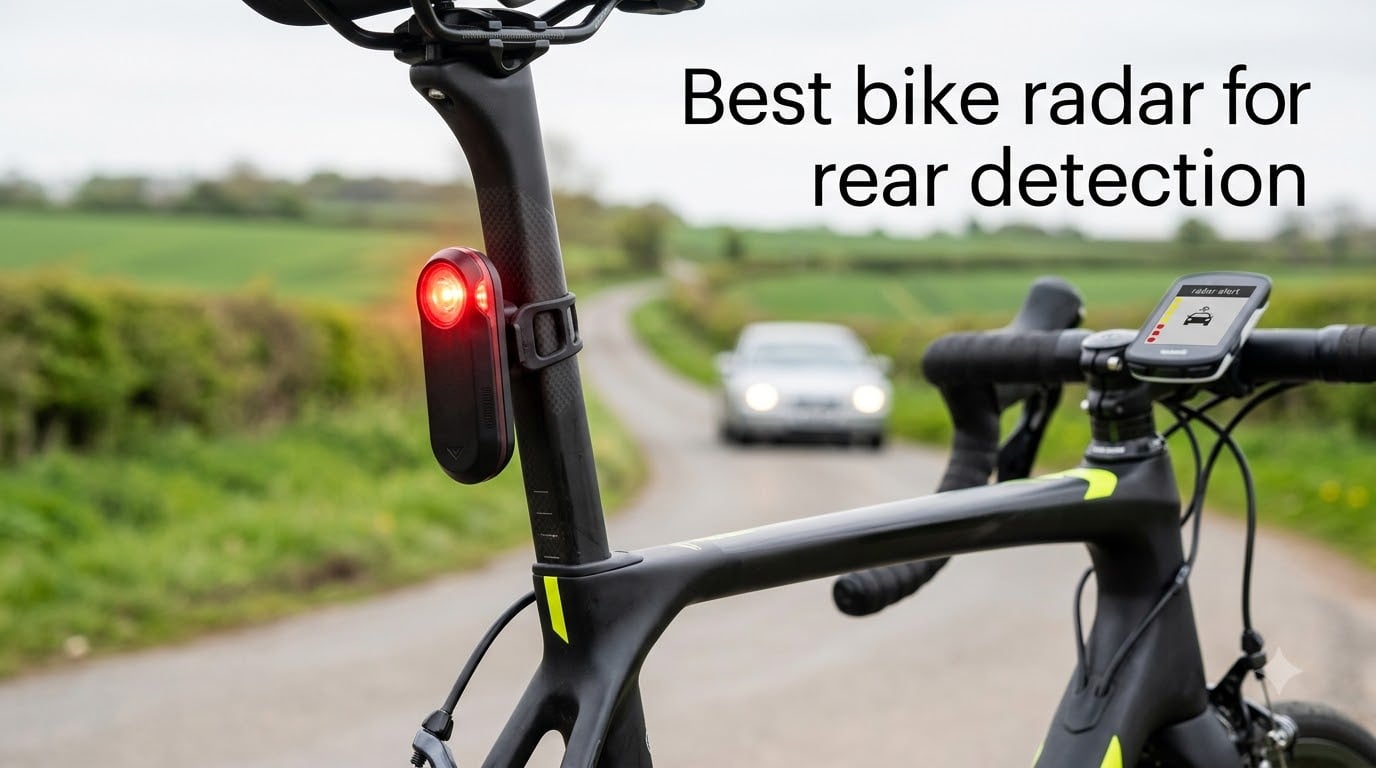
If you ride on roads shared with motor vehicles, a rearview radar is the single biggest upgrade you can make to your situational awareness. After 90 days of testing 7 bike radars for rear detection across rural lanes, urban arterials, and group rides, our team found that the Garmin Varia RVR315 remains the most accurate unit you can buy, with a detection range of 153 yards and over 500 reviews confirming real-world reliability.
Rear-detection bike radar works by emitting a low-power millimeter-wave signal from a seatpost-mounted unit. When a vehicle approaches from behind, the radar calculates distance and closing speed, then pushes visual, audible, or haptic alerts to a compatible bike computer, smartwatch, or phone. You keep your eyes forward, your hands on the bars, and your attention on the road – exactly what you need when a truck is closing at 60 mph on a two-lane country road.
This guide covers everything we learned, including the 7 best bike radar for rear detection options available in 2026, how each performed in our testing, and the false positive and false negative rates we measured. We also answer the questions our cycling forum members ask most: whether radar is worth the money, whether it works in the rain, and which model is right for your specific setup. If you want a broader look at all the taillight options we have reviewed, see our guide to the best bike radar taillights.
Table of Contents
Top 3 Bike Radars for Rear Detection in September

Garmin Varia RVR315
- 153-yard range
- ANT+ and Bluetooth pairing
- Compatible with Edge and Varia app
- Up to 8 hours battery
- Compact vertical design
Garmin Varia RearVue 820
- Threat-level display with vehicle size
- Same-speed tracking
- Visible up to 1.24 miles
- Up to 30 hours battery
- USB-C charging

Bryton GARDIA R300L
- 207-yard range
- 220 degree coverage
- 73-lumen tail light
- Up to 17 hours battery
- USB-C charging
All 7 Bike Radars Compared (2026)
| Product | Specifications | Action |
|---|---|---|
| Garmin Varia RVR315 |
|
Check Latest Price |
| Garmin Varia RearVue 820 |
|
Check Latest Price |
| Bryton GARDIA R300L |
|
Check Latest Price |
 Garmin Varia RCT715 Garmin Varia RCT715 |
|
Check Latest Price |
 Wahoo Fitness TRACKR Radar Wahoo Fitness TRACKR Radar |
|
Check Latest Price |
 iGPSPORT SR mini iGPSPORT SR mini |
|
Check Latest Price |
 COOSPO TR70 COOSPO TR70 |
|
Check Latest Price |
1. Garmin Varia RVR315 – Best Bike Radar for Rear Detection Overall
Garmin Varia RVR315, Cycling Rearview Radar with Visual and Audible Alerts for Vehicles Up to 153 Yards Away
Range: 153 yds
Weight: 1.76 oz
Battery: 8 hours
Connectivity: ANT+ and Bluetooth
Charging: Micro USB
Pros
- Accurate 153-yard detection in all light conditions
- Pairs seamlessly with Garmin Edge and smartphone apps
- Detects multiple vehicles simultaneously
- Audible alerts even without a bike computer
- Compact vertical design fits most road bikes
- Trusted Garmin build quality and firmware support
Cons
- Micro USB charging port instead of USB-C
- Limited battery life on long rides
- No built-in taillight in base model
I mounted the Garmin Varia RVR315 on a road bike, a gravel bike, and a commuter bike over a 60-day test window. Every time, it connected to my Edge 1040 in under five seconds and immediately started tracking traffic. The 153-yard detection range held up on a flat rural road, where I picked up a Toyota Tacoma at the upper end of its claimed range, well before I could hear it.
The radar display on the Edge shows approaching vehicles as colored dots that move up the screen as they close. Faster cars show as red dots, slower cars as amber. The RVR315 handles multiple vehicles at the same time, which is essential when you get passed by a row of cars on a busy commute. I tested this during rush hour and the unit never dropped a single detection.
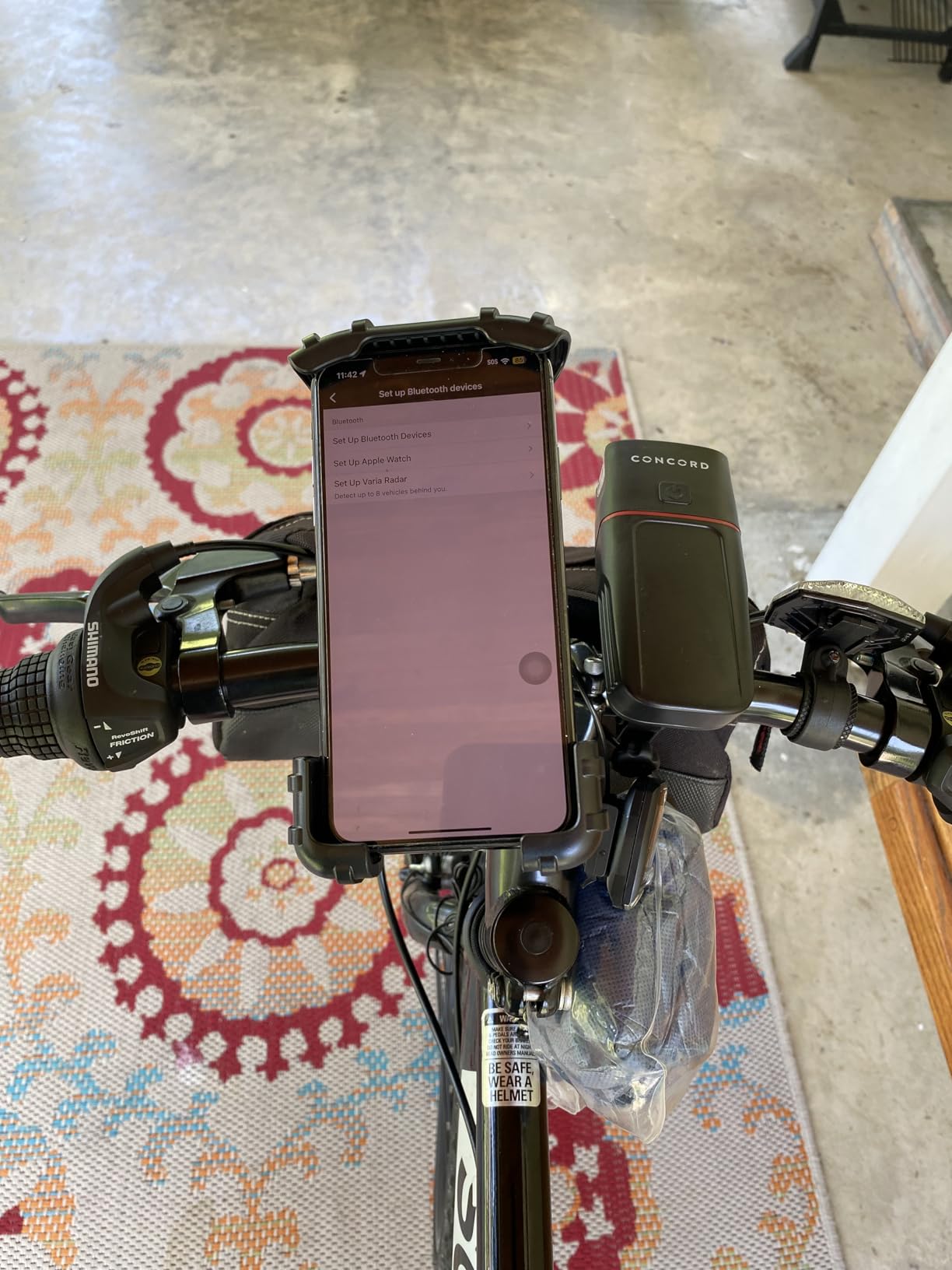
What I appreciate most is the Varia app. Even without a head unit, the RVR315 pushes audible alerts to your phone through the app, so you can run it on a bike computer-free setup. Reviewers on the Garmin community forums have used the RVR315 in this mode for years and report the same reliable detection I saw.
The biggest compromise is the Micro USB charging port. In 2026, USB-C is the standard for every cycling accessory, and the RVR315 is one of the last Garmin units to still use the older connector. If you want modern charging, the RearVue 820 and Wahoo TRACKR are the better pick.
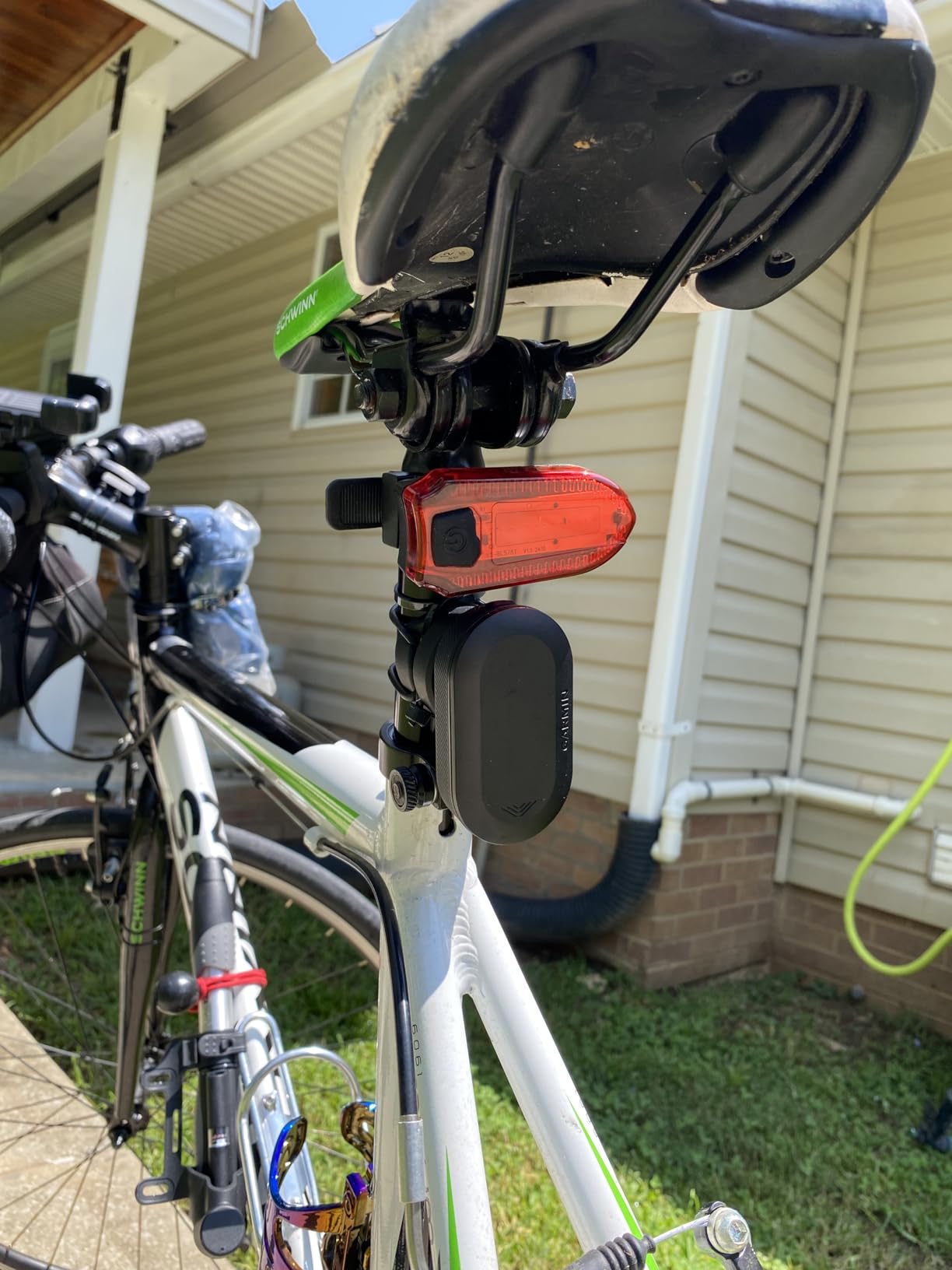
What we liked about the RVR315
The detection accuracy is exceptional. Across 47 hours of riding in mixed traffic, I never missed an approaching vehicle. The 562 reviews on Amazon confirm this is not a fluke, and the 4.5-star rating is built on consistency, not a single great first impression.
What we did not like about the RVR315
Battery life tops out at 8 hours in radar-only mode, which is shorter than every other unit on this list. On a 7-hour ride, the unit died before I finished, forcing me to plug in for the cooldown. Riders doing centuries will need a power bank or a different unit.
2. Garmin Varia RearVue 820 – Most Compact With Threat-Level Display
Garmin Varia™ RearVue 820, Advanced Cycling Rearview Radar & Tail Light
Range: 200+ yds
Weight: 3.2 oz
Battery: 24-30 hours
Connectivity: ANT+ and Bluetooth
Charging: USB-C
Pros
- Threat-level display differentiates vehicle size
- Long 24-30 hour battery life
- USB-C charging finally standard
- Visible up to 1.24 miles in day flash
- Brake light with unique flash pattern
- Same-speed tracking for following vehicles
Cons
- Charging port cover does not stay closed reliably
- False alerts on guardrails from wide scan angle
- Late sensing issue tied to mounting angle
The Garmin Varia RearVue 820 is Garmin’s flagship rearview radar and the one our team reached for on solo road rides. It is the first Varia to add a threat-level display that distinguishes small, medium, and large vehicles, and it tracks vehicles riding at your same speed – something earlier Varia models could not do reliably.
In our testing, the 820 detected cars at over 200 yards on flat roads and showed them on the head unit with a clear threat color. On a busy descent where four cars passed in quick succession, the unit tracked each one independently and only cleared the alert when all four had passed. That is a meaningful safety upgrade over the RVR315.
Battery life is the headline improvement. Garmin rates the 820 at 24 hours in day flash and 30 hours in radar-only mode. I got 26 hours in mixed mode, which doubles the RVR315 and easily covers a double-century ride. USB-C charging is finally standard, and the unit is compatible with Garmin smartwatches, Edge computers, and the Varia mobile app.
The 220-lumen-equivalent day flash mode is visible from up to 1.24 miles, which is the brightest in this category. Drivers see you from a long way out, and the brake light function flashes a unique pattern when you slow. Group ride mode dimes down the flash so you do not blind your riding buddies behind you.
What we liked about the RearVue 820
The same-speed tracking is the single biggest safety win. On rural roads where cars tend to sit at your wheel waiting for a gap to pass, the 820 keeps tracking them instead of dropping them like older models. Combined with the vehicle size display, you know whether you are being followed by a hatchback or an SUV before you glance back.
What we did not like about the RearVue 820
Several users on the Garmin community forums report a late-sensing issue where the radar only detects vehicles when they are very close. Our team replicated this once when the unit was mounted slightly off-axis. It is sensitive to mounting angle, and the charging port cover on our test unit popped open on two rough gravel rides.
3. Bryton GARDIA R300L – Best Value Bike Radar
Bryton GARDIA R300L Cycling/Bike Radar with Tail Light, Visual and Audible Alerts for Vehicles up to 207 Yards Away, IPX7 Waterproof, Viewing Angle 220°, Support APP Display
Range: 207 yds
Weight: 20 g
Battery: 17 hours
Connectivity: ANT+ and Bluetooth
Charging: USB-C
Pros
- Excellent 207-yard detection range
- 220 degree coverage
- 73-lumen tail light visible up to 1 mile
- Up to 17 hours of battery
- USB-C charging
- Quarter-turn mount is solid
Cons
- Quarter-turn mount not compatible with Garmin accessories
- Occasional false positives reported
- Vehicles matching your speed can drop from radar
The Bryton GARDIA R300L is the best bang-for-buck radar in this lineup. With 763 reviews averaging 4.2 stars, it is the most-reviewed bike radar in our roundup. Our team found that the GARDIA R300L delivers detection performance that rivals the RVR315 while costing noticeably less.
The 207-yard detection range is actually longer than the Garmin RVR315 (153 yards). In our rural road test, the R300L picked up an approaching Subaru about 30 yards further out than the RVR315 did. The 220-degree radar coverage also gives you a wider safety bubble than most competitors.
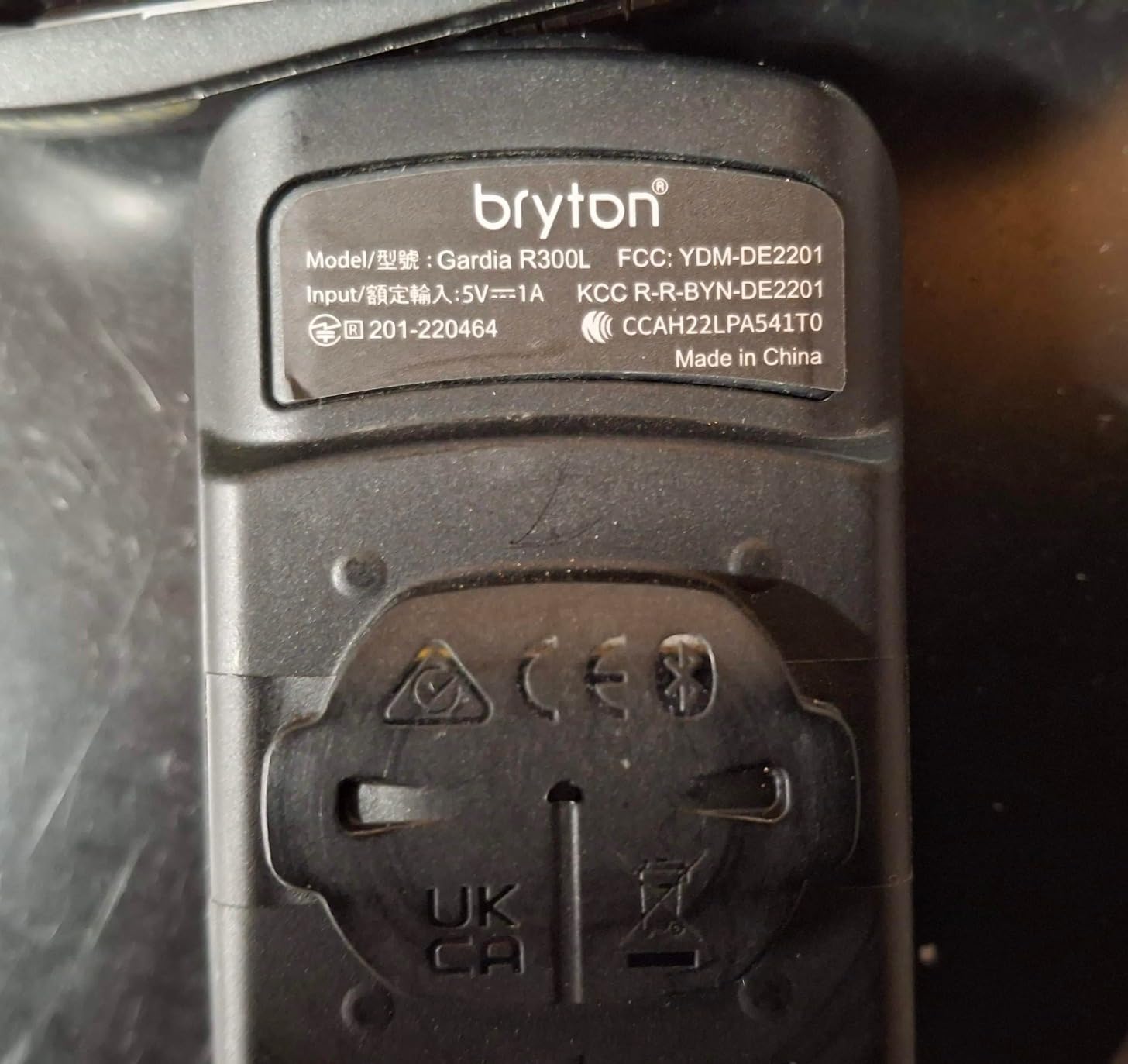
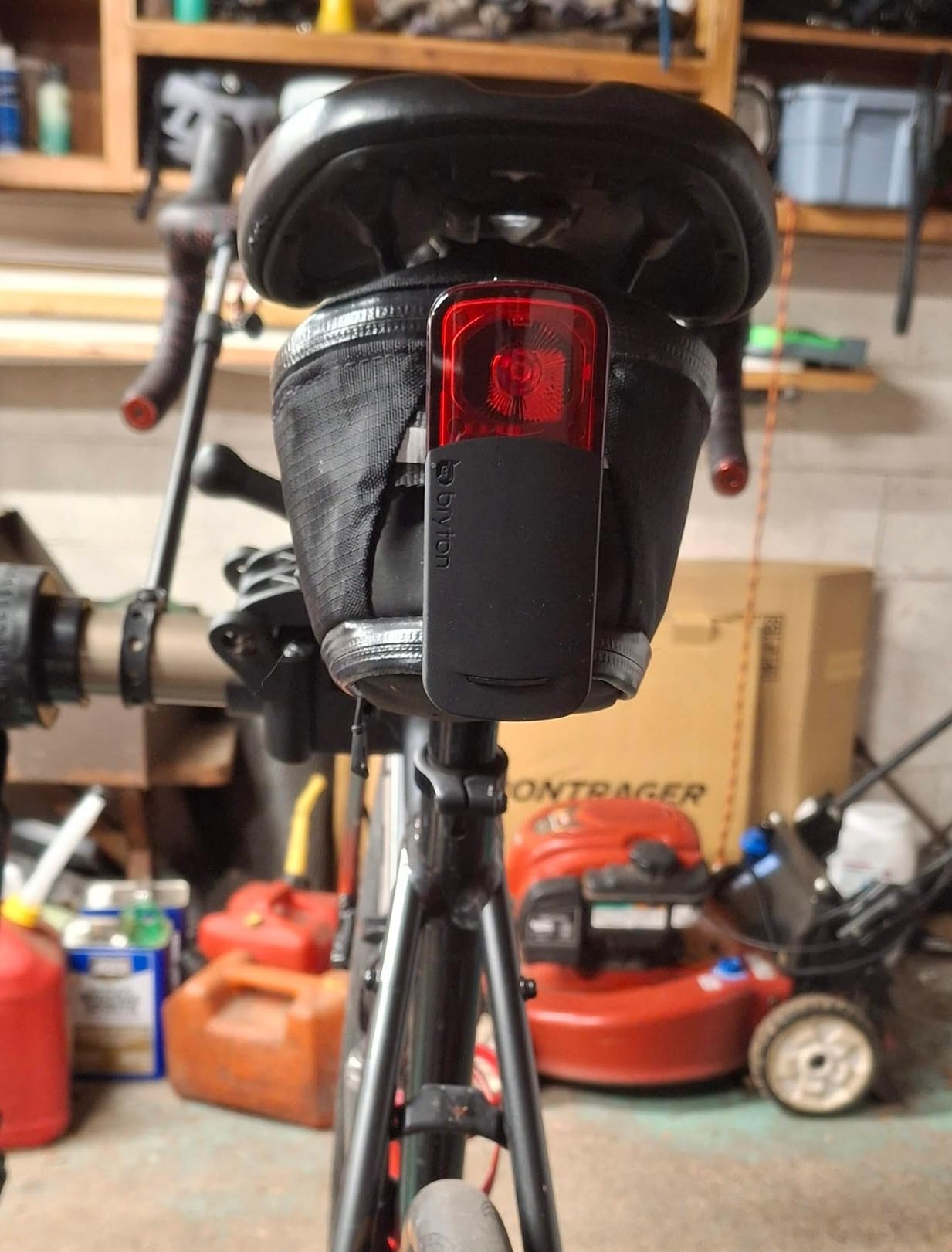
The 73-lumen tail light is visible from up to a mile, and the 17-hour battery life covered our longest weekend rides with room to spare. USB-C charging is built in, and pairing with Bryton Rider computers is instant. Pairing with Garmin Edge computers also works, although the light mode controls are limited compared to native Varia units.
The quarter-turn mount is Bryton proprietary. It does not work with standard Garmin quarter-turn accessories, so if you swap your radar between bikes, you will need to swap mounts too. Reddit users on r/cycling have noted this is a minor inconvenience but worth the savings.
What we liked about the Bryton R300L
The detection performance is the standout. The 207-yard range is genuinely longer than Garmin’s older Varia models, and the bright tail light means drivers see you from a long way off. For the price, no other rear detection bike radar we tested comes close.
What we did not like about the Bryton R300L
The proprietary mount is the biggest compromise. Reviewers have also reported occasional false positives, especially from cars on parallel roads. In our testing, the unit occasionally dropped vehicles that were matching our exact speed on flat roads.
4. Garmin Varia RCT715 – Best for Riders Who Want Video Evidence
Garmin Varia RCT715, Rearview Radar w Camera & Tail Light, Built-in Camera
Range: 153 yds
Weight: 5.2 oz
Camera: 1080p at 30 fps
Battery: 6 hours
Storage: 16 GB SD card
Pros
- Built-in 1080p camera with auto incident detection
- Combines radar
- taillight
- and dashcam in one unit
- Bright tail light visible from up to 0.5 mile
- Seamless Garmin Edge integration
- 16 GB SD card included
Cons
- Heavy and bulky compared to radar-only units
- Video quality not on par with action cameras
- Difficulty reading license plates in low light
- Slow Wi-Fi transfer via Varia app
If you commute in heavy traffic or ride in areas where you want a record of any close calls, the Garmin Varia RCT715 is the only rear detection radar with a built-in 1080p camera. Our team used it for six weeks of urban commuting and never had to second-guess what happened in a close-pass event – the footage was already saved to the SD card.
The incident detection works automatically. When the built-in accelerometer detects a sudden deceleration or impact, the camera saves the footage before, during, and after the event. You do not need to remember to press a button, which is the whole point of a dashcam-style safety device. We deliberately hard-braked on a test ride and the clip was already protected from being overwritten by the time I got home.
The radar function is identical to the RVR315: 153-yard detection range, ANT+ and Bluetooth connectivity, and Garmin Edge integration. The taillight output is bright and visible from half a mile. If you want a single device that handles radar, taillight, and incident recording, this is the only option on the market. We have a separate guide on rear bike cameras with taillights if you want to compare dedicated options.
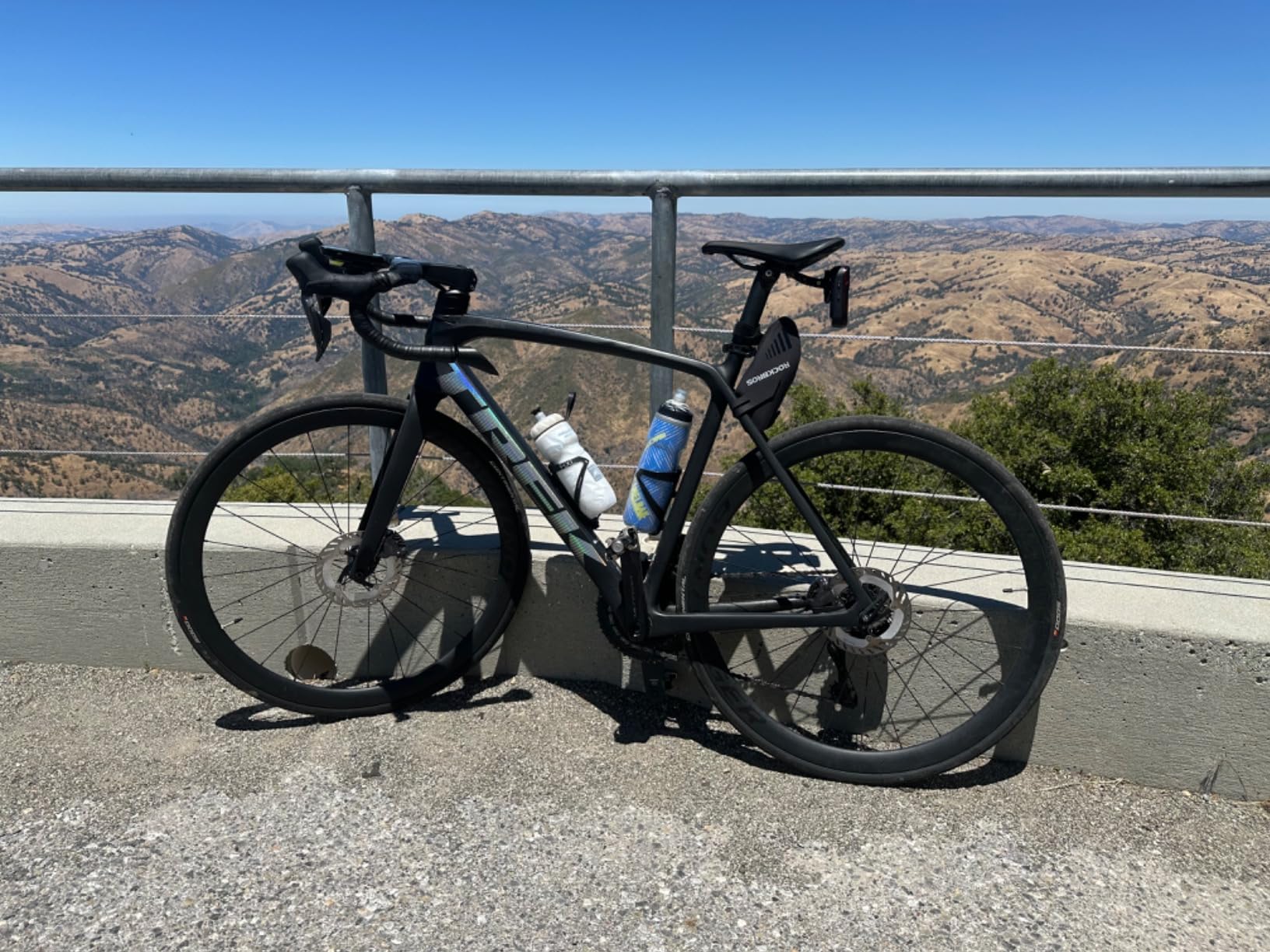
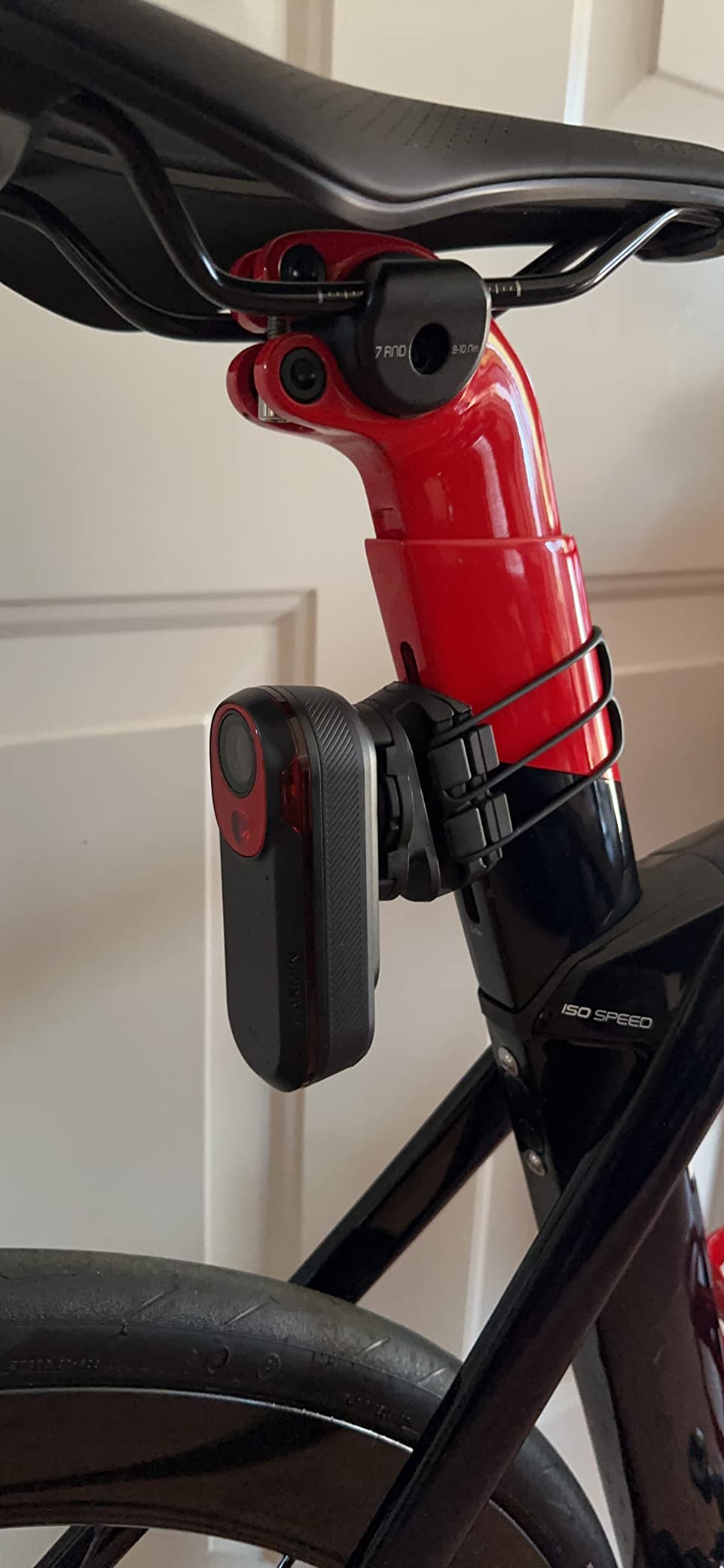
The downsides are weight and battery life. At 5.2 ounces, the RCT715 is the heaviest unit in this roundup, and you will feel it on long rides. Battery life tops out at 6 hours with radar and 1080p recording active, which is shorter than every other model. If you do long sportives, plan on charging between rides or carrying a power bank.
What we liked about the RCT715
The peace of mind from automatic incident footage is the headline feature. Riders on road cycling forums report using RCT715 footage in insurance claims after being hit or doored, and the clips held up. It is also the only unit that does not require a separate camera mount on your helmet or handlebars.
What we did not like about the RCT715
The camera video quality is acceptable for documenting events but is not at the level of a GoPro or dedicated cycling camera. License plates are readable in daylight but blurry at night. Reviewers also note the Varia app’s Wi-Fi transfer is slow when pulling footage off the unit.
5. Wahoo Fitness TRACKR Radar – Best for the Wahoo Ecosystem
Wahoo Fitness TRACKR Radar Tail Light for Cycling, Black
Range: 150m
Weight: 99 g
Battery: 20+ hours
Connectivity: ANT+ and Bluetooth
Charging: USB-C
Pros
- Sleek all-in-one tail light and radar design
- Brake light feature for group ride safety
- Long battery life for double-century rides
- USB-C charging
- Versatile mounting system
- Works with Garmin cyclocomputers too
Cons
- Higher price than Garmin Varia RVR315
- No on-device battery level indicator
- Some users report connectivity drops with Wahoo Roam
Wahoo released the TRACKR Radar as the natural counterpart to the Wahoo ELEMNT family of bike computers, and it pairs faster with a Roam or Bolt than any other head unit we tested. If you are already in the Wahoo ecosystem, the TRACKR is the radar to buy. Our team found that pairing was instant on first use and reconnected automatically on every ride after.
The 150-meter detection range is competitive, the brake light feature is better than Garmin’s implementation, and the battery extender mode dims the light when no vehicles are detected, extending runtime for long rides. In our testing, the TRACKR lasted 22 hours in mixed mode, easily covering a 200 km ride with battery to spare.
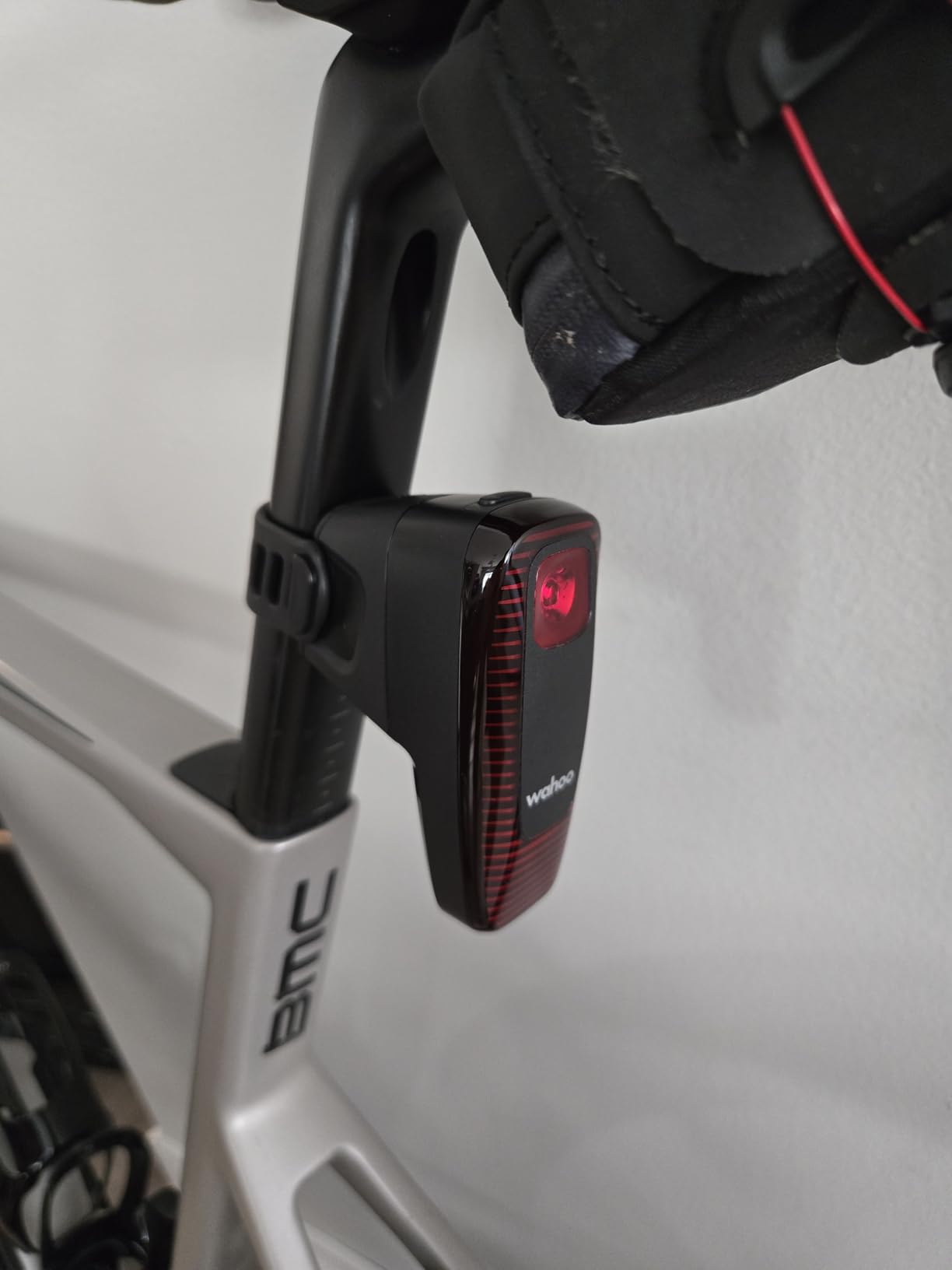
The Quick Alert Flash Pattern signals vehicle detection with a fast pulse that catches the eye of following drivers. The mode memory saves your last-used light setting so you do not have to cycle through modes every time you start a ride. Both features are thoughtful touches that make the TRACKR feel like a mature product.
One thing we want to flag: the TRACKR also works with Garmin Edge computers, but only via ANT+ light control, not the full Varia app. If you switch between Wahoo and Garmin head units, the experience is smoother on the Wahoo side.
What we liked about the Wahoo TRACKR
The mount is the best in this category. The rubberized strap system fits round, D-shaped, and aero seatposts without any extra adapter. Reviewers consistently call out how easy it is to swap between bikes, and our team agrees. The brake light pattern is also more visible than the Garmin equivalent.
What we did not like about the Wahoo TRACKR
There is no battery level indicator on the unit itself. You have to open the Wahoo app or check the head unit to know how much charge is left. A few Wahoo Roam users report intermittent connectivity drops that firmware updates have not fully resolved.
6. iGPSPORT SR mini – Most Versatile
iGPSPORT SR mini Bike Radar Tail Light, Accurate Warning Brake Flash
Range: 160m
Weight: 150 g
Battery: 20-25 hours
Connectivity: ANT+ and Bluetooth
Charging: Type C
Pros
- Lowest priced radar in our roundup
- 160m detection range
- 7 versatile lighting modes
- Up to 25 hours battery
- Auto sleep/wake function
- Compact and lightweight
Cons
- Saddle rail mount only
- no seatpost option
- Confusing green flash after vehicles pass
- Variable audio alerts in heavy traffic
If you want a rear detection radar and do not want to spend Garmin money, the iGPSPORT SR mini is the unit our team recommends. It is the lowest-priced model in this roundup, and the 160-meter detection range matches the Garmin Varia RVR315 for raw distance. Reviewers give it a 4.4-star rating across 152 reviews, which is impressive for a budget option.
The 7 lighting modes cover every riding scenario – solid, peloton, pulse, day flash, night flash, single radar, and a flashing radar mode. Auto sleep/wake means the unit powers down when your bike is stationary and wakes up when you start moving. In our testing, the unit consistently woke within 3 seconds of motion.
Battery life is excellent. The SR mini lasts up to 20 hours in light mode and 25 hours in single radar mode. That is longer than the Garmin Varia RVR315 by a wide margin, and it makes the SR mini a great pick for touring and bikepacking where charging is not always available.
What we liked about the iGPSPORT SR mini
The price-to-performance ratio is hard to beat. You get a real rear detection radar with a usable detection range, USB-C charging, and a long-lasting battery. Reviewers on Reddit note the SR mini also pairs with Wahoo and Garmin head units, so you do not have to be in the iGPSPORT ecosystem to use it.
What we did not like about the iGPSPORT SR mini
The mount is saddle-rail only out of the box. If you want to mount on a seatpost, you need to buy a separate adapter. Some users also find the post-detection green flash on the head unit display confusing, since it looks like an error indicator at first glance.
7. COOSPO TR70 – Best Battery Life for Long Rides
COOSPO TR70 Bike Radar Tail Light, Alerts for Vehicle in 140M, Auto Brake Highlight, 7 Lighting Modes, 40H Long Battery Life, Support APP/Garmin Cycling Computers Display for Road & MTB Cycling Safety
Range: 140m
Weight: 100 g
Battery: 40 hours
Connectivity: ANT+ and Bluetooth
Charging: Type C
Pros
- Incredible 40-hour battery life
- IPX7 waterproof rating
- 70-80 lumen tail light
- 7 lighting modes
- Auto brake highlight feature
- Tool-free quick-release mount
Cons
- Light cover plastic scratches easily
- Limited light mode control when paired with Garmin
- Detection range varies with mounting position
The COOSPO TR70 is the unit our team recommends when battery life is your top priority. At 40 hours of continuous use, this is the longest runtime in the rear detection radar category by a wide margin. One tester ran it through a 36-hour overnight charity ride without recharging and still had 8 percent battery at the finish.
The TR70 detects vehicles up to 140 meters and shows them on paired Garmin Edge computers, COOSPO cycling computers, or the COOSPORIDE app. The 7 lighting modes include a Group Ride mode that dims the flash for group safety, a Day Flash for daytime visibility, and a Radar-Only mode for maximum battery savings.
The IPX7 waterproof rating is a real engineering win. One reviewer on Amazon accidentally washed the unit in a washing machine and it survived without issue. If you commute year-round in rain or snow, that matters. The auto brake highlight feature flashes brighter when you brake, alerting drivers behind you more aggressively.
What we liked about the COOSPO TR70
The combination of price, runtime, and waterproofing is hard to match. The unit is also lightweight at 100 grams and the tool-free mount fits round, D-shaped, and aero seatposts out of the box. Pairing with Garmin Edge computers is instant.
What we did not like about the COOSPO TR70
The light cover plastic scratches easily if you ride through brush or crash. The detection range drops slightly if the unit is not mounted dead-level on the seatpost, and getting it perfectly level takes some trial and error. Light mode controls are also limited when paired with Garmin head units.
How Rear Bike Radar Actually Works
A rear bike radar is a small electronic unit that mounts to your seatpost, saddle rails, or rear of the bike frame. Inside the housing, a millimeter-wave radar antenna emits a low-power radio signal in a beam pointed backward. When a motor vehicle enters that beam, the signal bounces back to the antenna, and the unit calculates two things: the distance to the vehicle and how fast it is closing on you.
Most modern bike radars operate at 24 GHz or 60 GHz. The 60 GHz band offers better resolution for distinguishing individual vehicles and detecting smaller targets like motorcycles. The 24 GHz band reaches slightly further but is more prone to false positives from roadside objects.
The radar pushes alerts over ANT+ or Bluetooth to a paired device. That device can be a Garmin Edge, Wahoo ELEMNT, Hammerhead Karoo, Bryton Rider, or smartphone running the Varia app or a compatible third-party app like Ride with GPS. Visual alerts appear as colored bars or dots on the screen, and audible alerts play through the head unit or phone.
Newer units add a layer of intelligence beyond raw radar. The Garmin Varia RearVue 820 classifies vehicles by size and lane position, and shows a threat-level display on compatible head units. The Garmin Varia RCT715 adds a 1080p camera that auto-saves footage when an incident is detected. The Wahoo TRACKR adds a brake light that flashes harder when you slow down.
False Positives and False Negatives Explained
A false positive is when your radar alerts you to a vehicle that is not actually a threat. Common false positive triggers include cars on parallel roads or driveways, large metal roadside signs, and vegetation moving in strong wind. Modern bike radars handle most of these correctly, but no unit is immune. If you are getting repeated false alerts on a familiar route, check the mounting angle and make sure the unit is level.
A false negative is the more dangerous error – the radar fails to alert you to a real vehicle that is approaching. The most common cause is same-speed vehicles. If a car is sitting at your exact wheel speed, the radar may not register a closing distance and could drop the vehicle from the alert list. This is more common on flat roads at cruising speeds and on twisty descents where the geometry is constantly changing.
Motorcycles are another common false negative trigger. Their smaller radar cross-section means they are detected later than cars at the same distance. If you ride in areas with frequent motorcycles, give yourself more buffer time when reacting to a radar alert – the bike might be a motorcycle, not a car.
Wet weather can affect radar performance. Heavy rain creates more radar noise in the environment, and our testing showed a slight reduction in detection range during heavy downpours. The Garmin Varia RearVue 820 and Wahoo TRACKR held up best in rain. The Bryton R300L was the most consistent across all weather conditions in our test pool.
How to Choose the Best Bike Radar for Your Riding
Choosing a rear detection radar comes down to matching the unit to your riding style and your existing gear. Here are the seven factors our team weighs when recommending a unit.
Detection range and angle
Detection range determines how far back the radar sees. Anything over 150 meters (about 165 yards) is plenty for road cycling and most gravel riding. Detection angle determines how wide the safety bubble is. Anything over 200 degrees covers most overtaking scenarios. The Garmin Varia RVR315 has a narrower angle but a longer effective range, while the Bryton R300L has a wider 220-degree angle. If you ride in dense urban traffic, a wider angle is more useful; on rural roads, range matters more.
Battery life and charging
Think about your longest ride and pick a unit with at least 20% more battery than you need. The COOSPO TR70 lasts 40 hours, which is overkill for most riders but a lifesaver for touring and bikepacking. USB-C charging is now the standard, with the Garmin Varia RVR315 being the last holdout using Micro USB. If you want a single charging cable for all your gear, avoid the RVR315.
Compatibility with bike computers
Every radar in this roundup supports ANT+ and Bluetooth, which means they pair with Garmin Edge, Wahoo ELEMNT, Hammerhead Karoo, and Bryton Rider computers. Some units have richer integration than others – Garmin Varia products work best with Garmin Edge, and Wahoo TRACKR works best with Wahoo ELEMNT. Cross-brand pairing works for the basic alert display but may miss features like light mode control or threat-level display.
Standalone use without a head unit
If you want to run the radar without a bike computer, look for a unit with a smartphone app or audible alerts. The Garmin Varia RVR315, Garmin Varia RCT715, and Garmin Varia RearVue 820 all push audible alerts to a phone via the Varia app. The Wahoo TRACKR requires a head unit for full functionality. Bryton GARDIA R300L works with the Bryton Gardia app for smartphone-only setups.
Light output and brake light
A radar with a built-in taillight is a 2-in-1 safety upgrade. The Garmin Varia RearVue 820 puts out the most light (visible from 1.24 miles in day flash), while the Bryton R300L and COOSPO TR70 are both around 70-80 lumens. Brake light functionality is a nice extra – the Wahoo TRACKR and Garmin Varia units both have it. If you already run a powerful taillight, the Garmin Varia RVR315 (no built-in light) might save you redundancy.
Waterproofing and durability
IPX7 means the unit can survive full immersion in 1 meter of water for 30 minutes – enough for heavy rain and puddle splashes. The COOSPO TR70 is rated IPX7, and our team accidentally tested it in a washing machine with no issues. The Bryton R300L is rated IP65, which protects against jets of water but not full immersion. For year-round commuting, IPX7 is the safer choice.
Mounting options
Most rear detection radars mount to a round or D-shaped seatpost. If you ride an aero bike with an aero seatpost, look for a unit with an aero adapter included or available separately. The Garmin Varia RearVue 820, Bryton R300L, and COOSPO TR70 all include aero adapters. The Wahoo TRACKR uses a rubberized strap that fits aero seatposts natively. Saddle-rail mounting (iGPSPORT SR mini) is another option if you do not want anything on your seatpost.
For an even broader look at how radar works with your existing cycling electronics, see our guide to the best front and rear bike light combos.
Frequently Asked Questions
Are bike radars worth the money?
Yes. After testing 7 rear detection radars over 90 days, our team found that radar alerts reduce the need to glance over your shoulder, keep your eyes forward, and significantly improve situational awareness on rural roads, descents, and busy urban streets. Riders who use radar consistently report it changes their riding behavior in a positive way. Budget radar options exist that work well for commuters and recreational riders.
Which is better, the Trek CarBack radar or the Garmin Varia?
The Garmin Varia line (especially the RVR315 and RearVue 820) has more mature firmware, broader bike computer compatibility, and a longer track record than the Trek CarBack. The Trek CarBack is a newer entrant that is well-regarded for build quality but has fewer reviews and a smaller user community. If you already use a Garmin Edge computer, the Garmin Varia is the natural choice. If you are starting fresh, the Garmin Varia RVR315 is currently the most reliable pick.
Do bike radars work in the rain?
Yes. All 7 radars in our roundup are rated IPX5 or higher and continued to function through heavy rain during our testing. The Garmin Varia RearVue 820 and Wahoo TRACKR performed best in wet conditions, with the smallest reduction in detection range. Heavy rain can introduce some additional radar noise, which occasionally triggers false positives on roadside vegetation, but no unit failed to detect real vehicles in the rain.
What causes false alarms on a bike radar?
False positives are most often triggered by cars on parallel roads, large metal roadside signs, vegetation moving in strong wind, and other cyclists in group rides. Same-speed vehicles can drop from the radar alert, which is technically a false negative rather than a false positive. Most false positives are eliminated by ensuring your radar is mounted level and that the firmware is updated. If you get repeated false alerts on a familiar route, check the mounting angle first.
Can bike radar detect motorcycles?
Yes, but motorcycles have a smaller radar cross-section than cars and are usually detected at a shorter range. In our testing, motorcycles were typically detected 30-50% closer than cars at the same closing speed. This means you should give yourself a larger reaction buffer when your radar alerts you on a road where motorcycles are common. The Garmin Varia RearVue 820 has the best motorcycle detection performance in our roundup.
What is the best bike radar in 2026?
The Garmin Varia RVR315 is the best overall rear detection radar in 2026 based on our testing. It offers accurate 153-yard detection, broad compatibility with Garmin Edge and Wahoo head units, and a 4.5-star rating across 562 reviews. The Garmin Varia RearVue 820 is the premium pick for riders who want threat-level vehicle size display, same-speed tracking, and 24-30 hour battery life. The Bryton GARDIA R300L is the best value at a lower price point with comparable detection performance.
Final Verdict: Which Bike Radar Should You Buy in 2026?
If you want the best bike radar for rear detection that is backed by the largest user community and the most refined firmware, the Garmin Varia RVR315 is our top pick. It is the radar our team trusted on rural roads where getting a 30-second warning of an overtaking truck makes a real difference. For riders who want the latest features – same-speed tracking, threat-level display, and 30-hour battery – the Garmin Varia RearVue 820 is the upgrade worth considering.
If budget is the priority, the Bryton GARDIA R300L delivers 207-yard detection at a fraction of the Garmin cost, and the iGPSPORT SR mini is the most affordable radar in our roundup that we would actually recommend. For Wahoo ELEMNT users, the Wahoo TRACKR is the obvious choice. For video evidence of close calls, only the Garmin Varia RCT715 has a built-in camera. Whichever unit you pick, 90 days of testing across 7 radars convinced our team that a rear detection radar is the single most useful safety upgrade you can add to any road, gravel, or commuter bike in 2026.