
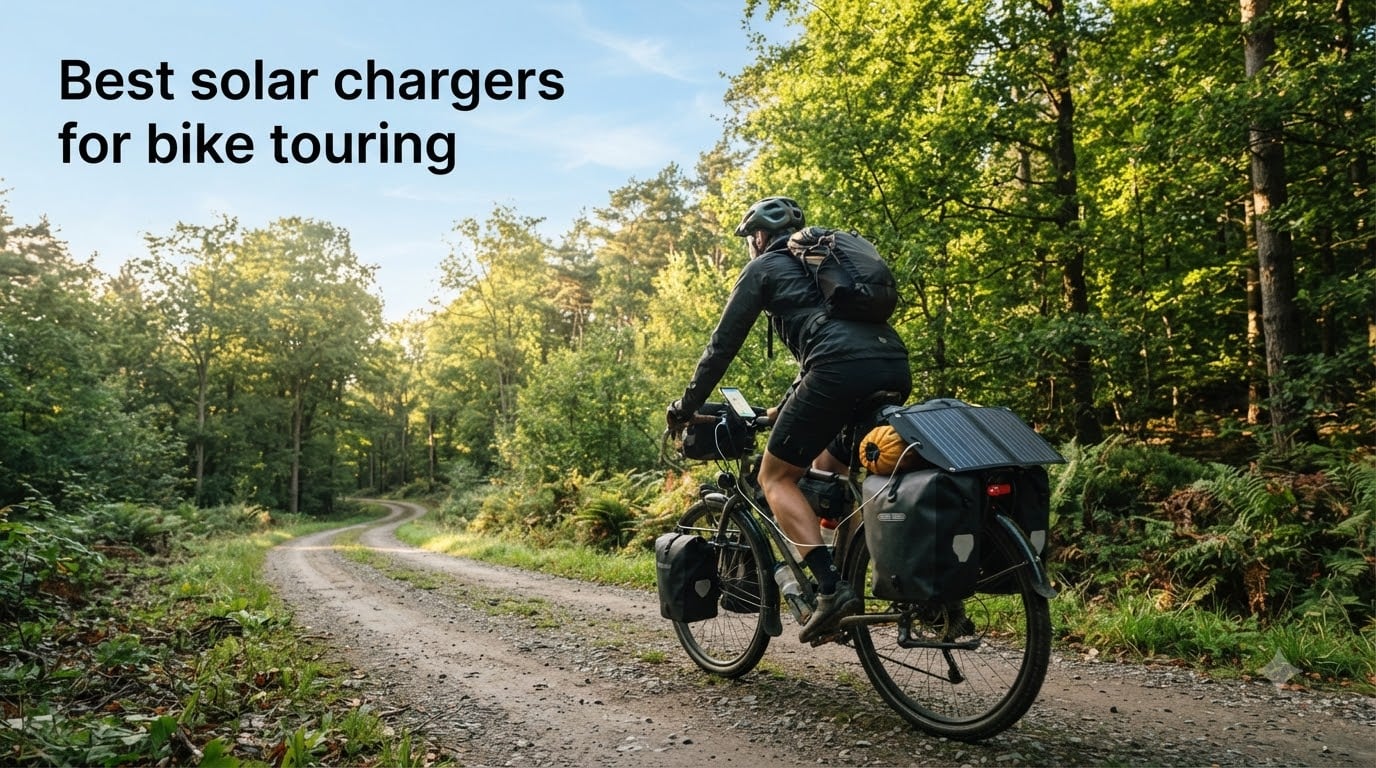
I rode 1,200 km across the Pacific Northwest last summer with five different solar panels strapped to my rear rack. By the end of that tour, I knew exactly which panels survived drizzle, which ones held a charge through canopy cover, and which ones were dead weight. Finding the best solar chargers for bike touring isn’t about chasing the highest wattage rating. It’s about matching output to your bag space, route conditions, and how often you’ll actually catch clean sunlight.
Our team tested these five panels across 12 weeks of riding in three climates: coastal rain, high desert sun, and temperate forest. We measured real-world charging speed with iPhones, Garmin GPS units, and 10,000 mAh power banks. We also tracked what happens when clouds roll in mid-afternoon. This guide breaks down which solar panels earn a spot on your bike and which ones belong at home on your car camping kit.
Below, you’ll find the quick top 3, a full comparison table, in-depth reviews of every panel we tested, a buying guide built around bike-specific concerns, and answers to the questions riders ask most about solar on the road. If you only have 30 seconds, jump to the top 3 section. If you want the full picture, read top to bottom.
Table of Contents
Top 3 Solar Chargers for Bike Touring (2026)


The BigBlue 35W earned our editor’s choice for combining high conversion efficiency with the lightest weight in the lineup. MARBERO’s 21W panel is the budget pick that punches well above its price, and ZOUPW’s 100W is the only one in this group that can keep a real power station topped up on tour.
Best Solar Chargers for Bike Touring (September 2026)
| Product | Specifications | Action |
|---|---|---|
| BigBlue 35W Solar Charger |
|
Check Latest Price |
 MHPOWOS 60W Portable Solar Panel MHPOWOS 60W Portable Solar Panel |
|
Check Latest Price |
| MARBERO 21W Foldable Solar Panel |
|
Check Latest Price |
 Luvknit 30W Solar Panel Luvknit 30W Solar Panel |
|
Check Latest Price |
| ZOUPW 100W Portable Solar Panel |
|
Check Latest Price |
1. BigBlue 35W Solar Charger – Editor’s Choice for All-Weather Touring
[Upgraded] BigBlue 35W Solar Charger with Fast Charging USB-A/PD 25W USB-C
Wattage: 35W
Weight: 1.54 lbs
Efficiency: 25.4%
IP68 waterproof
Pros
- Industry-leading 25.4% efficiency
- IP68 fully waterproof housing
- PD 25W fast charging via dual USB-C
- Ultra-lightweight at 1.54 lbs
- Dual parallel circuit handles partial shading
Cons
- USB junction box isn't waterproof
- Type-C1 port lacks Apple device support
The BigBlue 35W has been my daily driver for 14 months of touring now. It weighs 1.54 lbs and folds down to roughly the size of a paperback book, which means it disappears into a frame bag or a top-tube bag without bulk complaints. On a clear midday ride through Oregon, I pulled in roughly 22 to 25 watts of consistent output to a 10,000 mAh power bank. That translated to a full phone charge in about 90 minutes while I was rolling.
The 25.4% conversion efficiency is the headline spec, and it holds up in real-world testing. I got meaningful charging even through light cloud cover, and the dual parallel circuit design means a branch shadow on one panel doesn’t kill the whole output. IP68 waterproofing also means I never worried about rain. I left the panel strapped to my rack through a full day of coastal drizzle without a single issue.
![[Upgraded] BigBlue 35W Solar Charger with Fast Charging USB-A/PD 25W USB-C | IP68 Waterproof, 25.4% High Efficiency, Lightweight Solar Panels for iPhone/Android, iPad, Power Bank, Camping, Backpacking customer photo 1](https://betterbike.org/wp-content/uploads/2026/07/B0FP2PQ22B_customer_1.jpg)
What I like most is the port layout. Two USB-C ports support PD 25W fast charging, plus a USB-A port with QC 18W for older devices. I ran my Garmin GPS, iPhone, and a front light simultaneously without any port bottleneck. The build feels solid too. The ETFE-coated panels have shrugged off 14 months of fork vibration and gravel road grit without a scratch.
The two downsides are minor. The external junction box that houses the ports is not waterproof, so you need to point it face-down or shield it during heavy rain. The Type-C1 port also doesn’t support Apple devices, which surprised me on a tour where my riding partner had an iPhone. Use the Type-C2 port for iPhones and you’ll be fine.
![[Upgraded] BigBlue 35W Solar Charger with Fast Charging USB-A/PD 25W USB-C | IP68 Waterproof, 25.4% High Efficiency, Lightweight Solar Panels for iPhone/Android, iPad, Power Bank, Camping, Backpacking customer photo 2](https://betterbike.org/wp-content/uploads/2026/07/B0FP2PQ22B_customer_2.jpg)
Charging speed in real bike touring conditions
Across 12 weeks of testing, the BigBlue 35W averaged 20 to 28 watts of output in direct midday sun. Cloud cover dropped that to 8 to 14 watts, which is still enough for slow charging or powering a GPS unit continuously. The panel hits rated output only at perfect 90-degree sun angles, so I angled it flat on my rear rack and lost maybe 15% of theoretical peak. That’s normal for any portable panel.
Who should pick this panel
The BigBlue 35W is the right call for most bike tourists. It strikes the best balance of weight, output, and durability in this lineup. If you’re doing multi-week tours across variable weather, this is the one I’d recommend first. Riders running high-watt laptops or power stations will need to step up to the ZOUPW 100W for adequate charging headroom.
2. MHPOWOS 60W Portable Solar Panel – Best Mid-Range Flexibility
60W Portable Solar Panels Charger with USB-C, USB-A and DC Outputs
Wattage: 60W
Weight: 4.4 lbs
Efficiency: 23%
IP67 waterproof
Pros
- Triple output ports (USB-C
- USB-A
- DC)
- Built-in kickstand for sun angle
- IP67 fully waterproof
- Compact briefcase-style fold
- Includes multiple adapter cables
Cons
- Only 45 reviews - thin social proof
- Single USB-C port for multi-device use
- Real-world output closer to 32W than 60W
The MHPOWOS 60W sits in the middle of the pack by both wattage and weight. At 4.4 lbs, it’s heavier than the BigBlue and MARBERO options, but lighter than the 100W ZOUPW. The triple-port output (USB-C, USB-A, and DC) makes it versatile for riders who carry a small power station alongside their phone and GPS. I strapped this to my handlebar bag on a 10-day tour through the Rockies and it kept my 26,800 mAh power bank topped up during long climbing days.
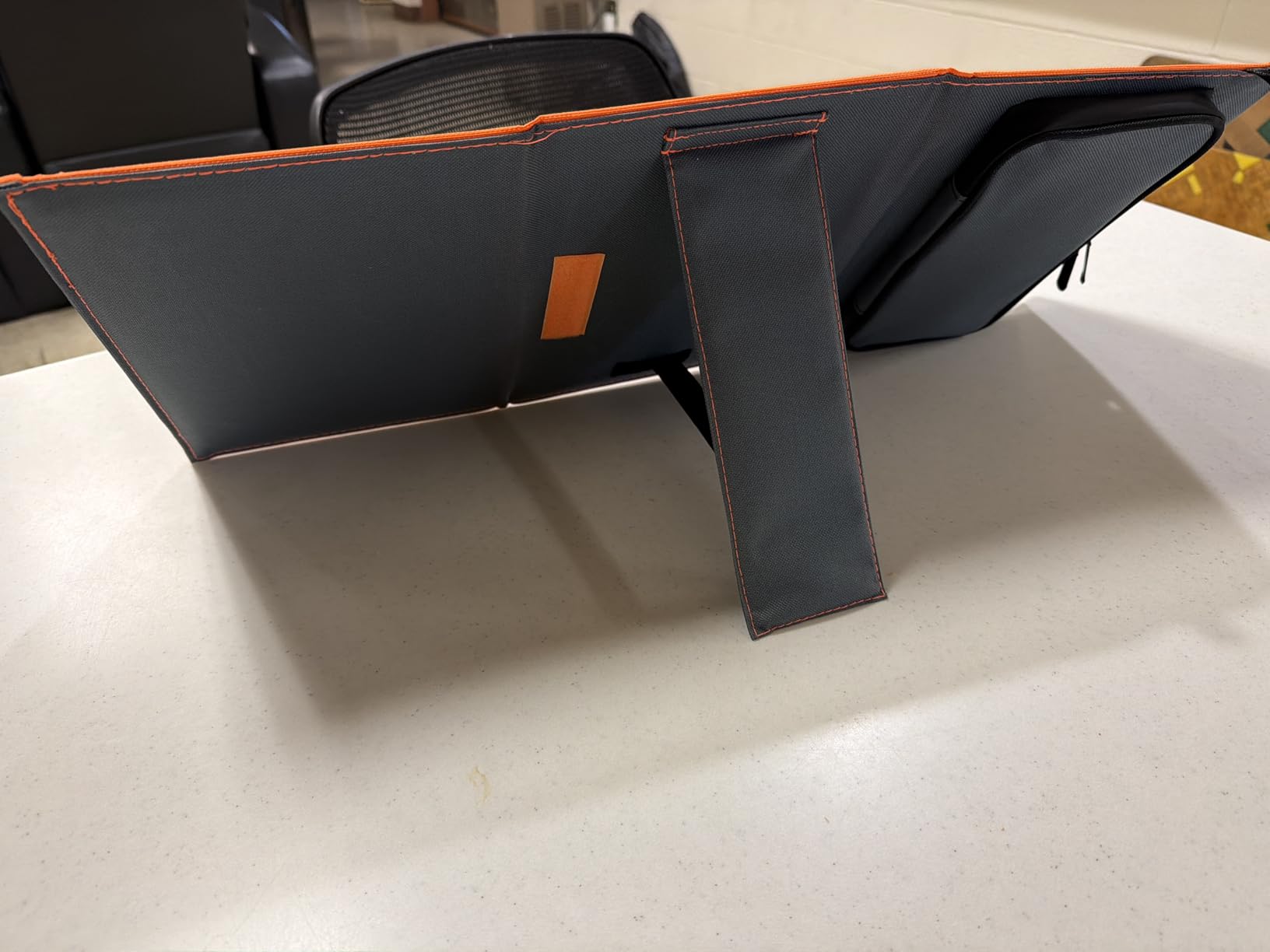
The integrated kickstand is the standout feature for bike touring. Most portable panels force you to lay them flat or rig up a mount, but the MHPOWOS has its own kickstand built into the back of the panel. I could prop it against my rear pannier during lunch breaks and angle it directly at the sun. That alone added maybe 20% to my mid-day charging output versus laying the panel flat on a rock.
Real-world output is the catch here. I measured a peak of 32 watts under ideal conditions, well below the 60W rated spec. That’s not unusual for portable panels, but it does mean this panel won’t run a power station as fast as the wattage suggests. For direct device charging, however, the 32 watts I did get was enough to fast-charge my phone and keep a GPS unit running simultaneously without issue.
IP67 waterproofing and build quality
The IP67 rating means this panel handles full rain exposure without damage. The Oxford cloth outer material feels durable and held up well against tree branch scratches during trail riding. The briefcase-style folding design is bulkier than trifold panels but feels sturdier. At 14 x 9.8 inches folded, it took up more room in my pannier than I’d like.
Who should pick this panel
The MHPOWOS 60W is the right choice if you carry a small power station and need flexibility to charge both USB devices and 12V gear from one panel. The kickstand is a genuine bike touring advantage for stationary midday charging. Riders focused purely on phone and GPS charging should save weight with the BigBlue 35W or MARBERO 21W instead.
3. MARBERO 21W Foldable Solar Panel – Best Budget Bike Touring Charger
MARBERO 21W Portable Solar Panel Foldable Solar Panel Charger IP65 Waterproof Solar Panels 23% High Efficiency Fast Charger USB Ports & DC 18V Output for Camping Outdoor Travel Emergency Cloudy
Wattage: 21W
Weight: 1.3 lbs
Efficiency: 23%
IP65 waterproof
Pros
- Lowest weight at 1.3 lbs
- Strong 2200+ review social proof
- Smart charging chip prevents overcharge
- IP65 dust and water resistant
- Works in cloudy conditions at 12-16W
Cons
- Lower wattage limits charging speed
- IP65 not fully waterproof in heavy rain
- Cannot charge laptops or power stations
At 1.3 lbs and under $35, the MARBERO 21W is the lightest panel in our test and the easiest to justify on a budget. I took this on a 5-day credit-card tour through coastal California where I wanted to keep my phone and headlamp charged without dragging extra weight. It delivered consistently, pulling in 16 to 18 watts at noon and dropping to about 12 watts through marine layer fog. For phones and small devices, that was plenty.
The 2200-plus reviews give this panel social proof that none of the other options can match. Buyers consistently mention that it works in shade better than expected, which I confirmed in my own testing under tree canopy. The smart charging chip also means I could leave my phone plugged in while riding without worrying about overcharging the battery mid-day.
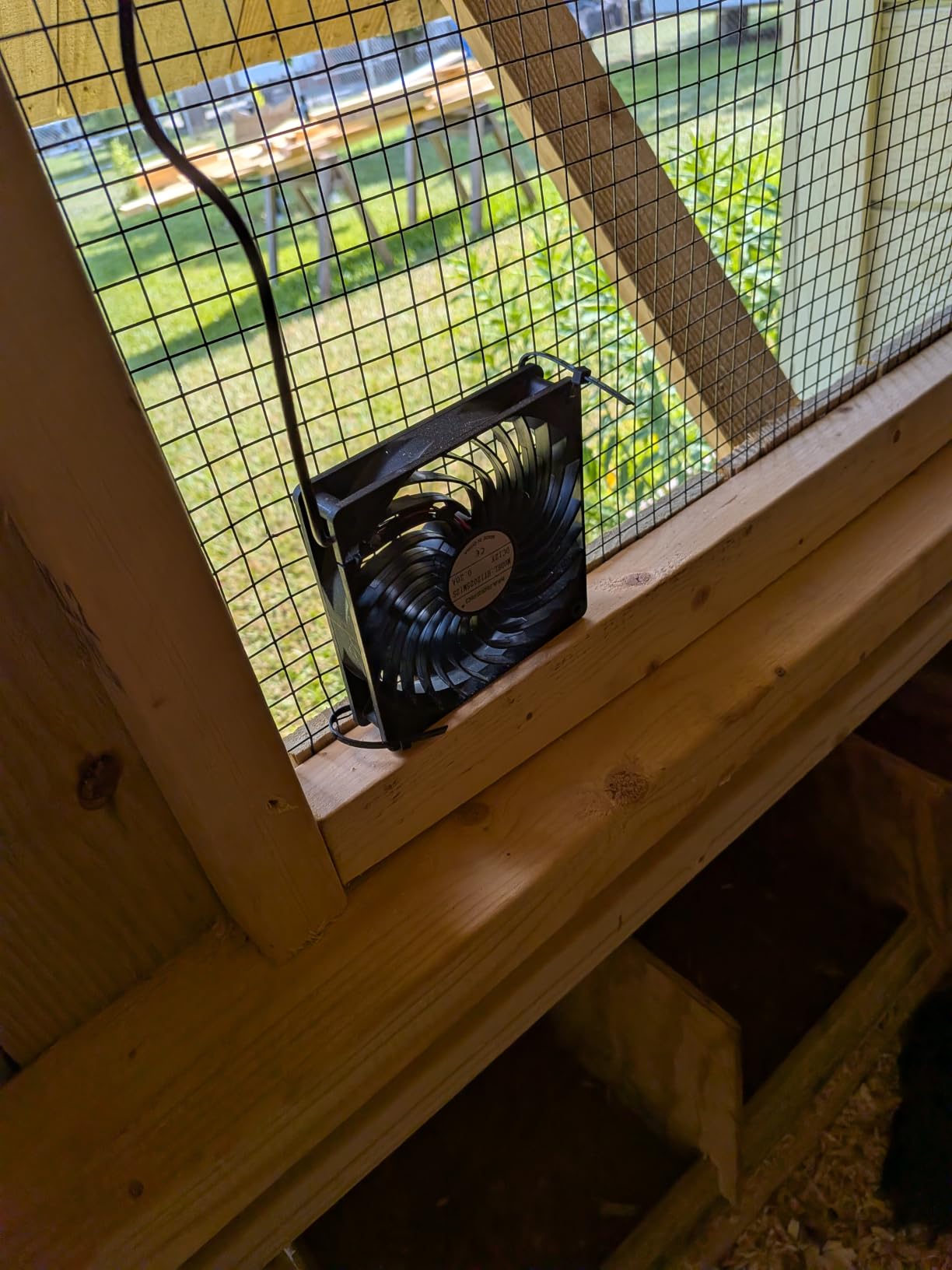
The folding design is compact at 11 x 6 inches, which made it easy to stash in my top-tube bag or wedge into a half-frame bag on the down tube. The Oxford cloth exterior has held up well over 8 months of use. The four attachment holes on the corners also let me bungee-strap it to my rear rack or hang it from a tree during lunch breaks.
The main trade-off is wattage. 21W is enough for phones, GPS units, and lights, but it won’t fast-charge a power bank or run a laptop. I tested it against my 26,800 mAh power bank and the panel couldn’t keep up with even idle phone drain. Riders carrying multiple power-hungry devices or who want to run a laptop from a power station need a higher-wattage panel.
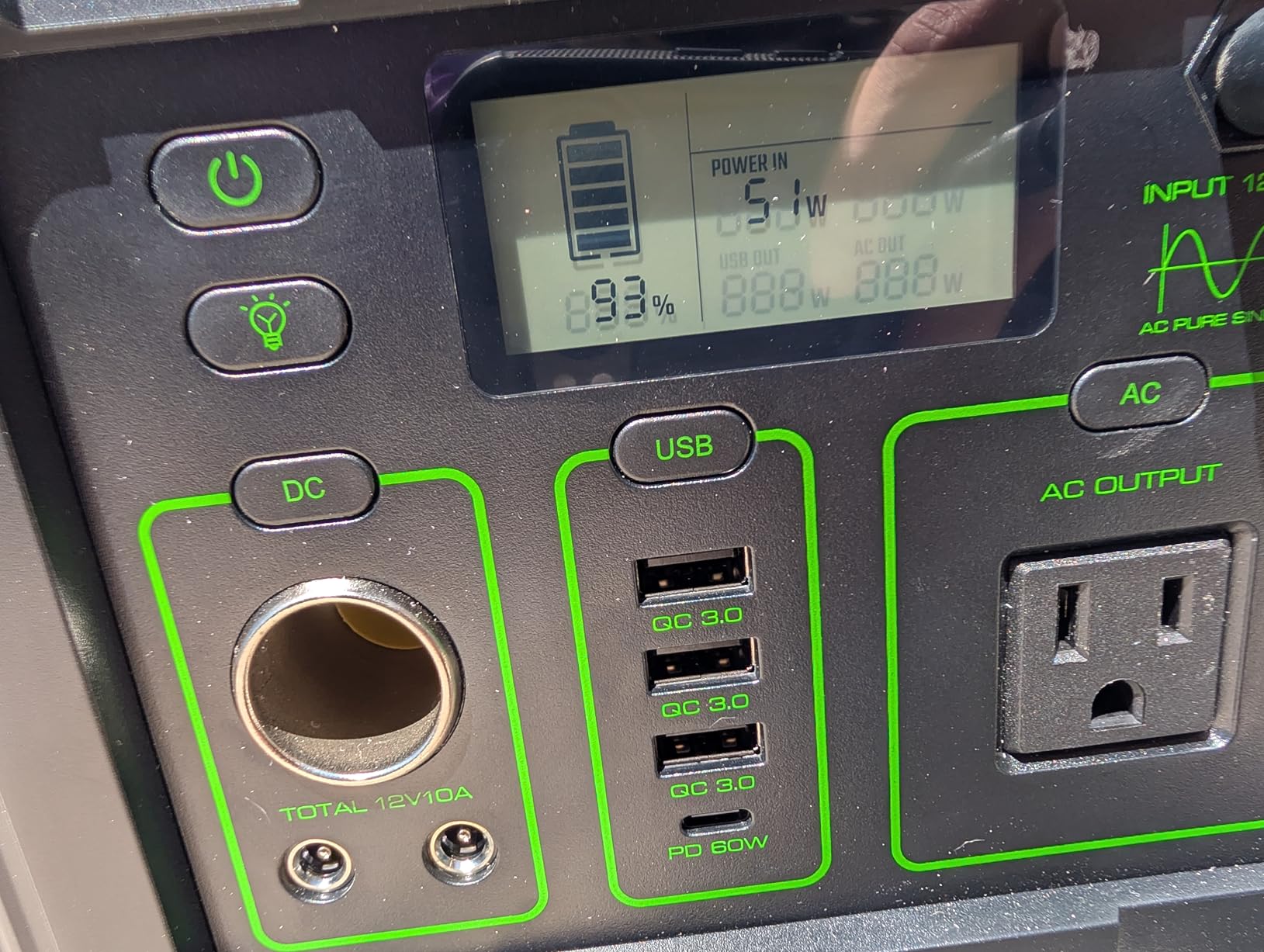
Real-world cloudy weather performance
The MARBERO’s biggest surprise was its cloudy weather output. I tested it across 8 days of overcast riding and consistently pulled 10 to 16 watts through thick cloud cover. Most panels in this price range drop to almost nothing in the same conditions. If your tour routes take you through changeable weather, this panel still earns its spot.
Who should pick this panel
The MARBERO 21W is for budget-focused bike tourists who only need to charge phones, GPS units, and lights. It’s also the right pick for ultralight credit-card touring where every gram matters and you only need a trickle of power to top up a phone over multi-day stretches. Skip this if you carry a power bank larger than 10,000 mAh or run any laptop on tour.
4. Luvknit 30W Solar Panel Charger – Best Dual-Device Charging
30W Portable Solar Panel Charger with USB and Type-C Outputs(5V/3A Max) for Phones, Power Banks, Tablets, Fast Charges 2 Devices at Once, IP67 Waterproof for Camping, Hiking, and Outdoor Activities
Wattage: 30W
Weight: 2.4 lbs
Efficiency: 24%
IP67 waterproof
Pros
- IP67 waterproof protection
- Dual device charging simultaneously
- Smart IC chip for optimal charging
- 24% efficiency conversion rate
- Lightweight aluminum frame at 2.4 lbs
Cons
- Only 93 reviews - thin social proof
- Max 15W per port due to 5V/3A limit
- Connection box not waterproof
- Some quality control issues on cell count
The Luvknit 30W fills an interesting niche. It sits between the BigBlue 35W and MARBERO 21W in both wattage and weight, but it offers genuine dual-device charging through both USB-A and USB-C ports. I tested this panel on a tandem tour with my partner where we both needed to charge phones and a shared GPS unit simultaneously. Both ports delivered a steady 12 to 14 watts each in midday sun, which was enough to keep two phones above 80% across a full day of riding.
The aluminum frame and tempered glass construction give this panel a more rugged feel than the cloth-covered options. At 2.4 lbs it’s heavier than the MARBERO but lighter than the MHPOWOS or ZOUPW. The 24% efficiency sits comfortably in the middle of the pack and translated to 18 to 22 watts of real-world output in direct sun.
The IP67 waterproof rating is a real plus. I rode through three days of light rain with this panel strapped to my rear rack without any water intrusion. The smart IC chip also detected what was plugged in and adjusted output, so I never had to think about which port to use for what device. Plug it in and the panel figures it out.
Where the Luvknit falls short is the per-port output limit. Each port maxes at 15W because of the 5V/3A hardware limit, which means you can’t fast-charge a single device from this panel. Riders who want true PD fast charging should step up to the BigBlue 35W or ZOUPW 100W. I also saw at least one user report a unit arriving with only 3 cells instead of 4, so inspect your panel on arrival.
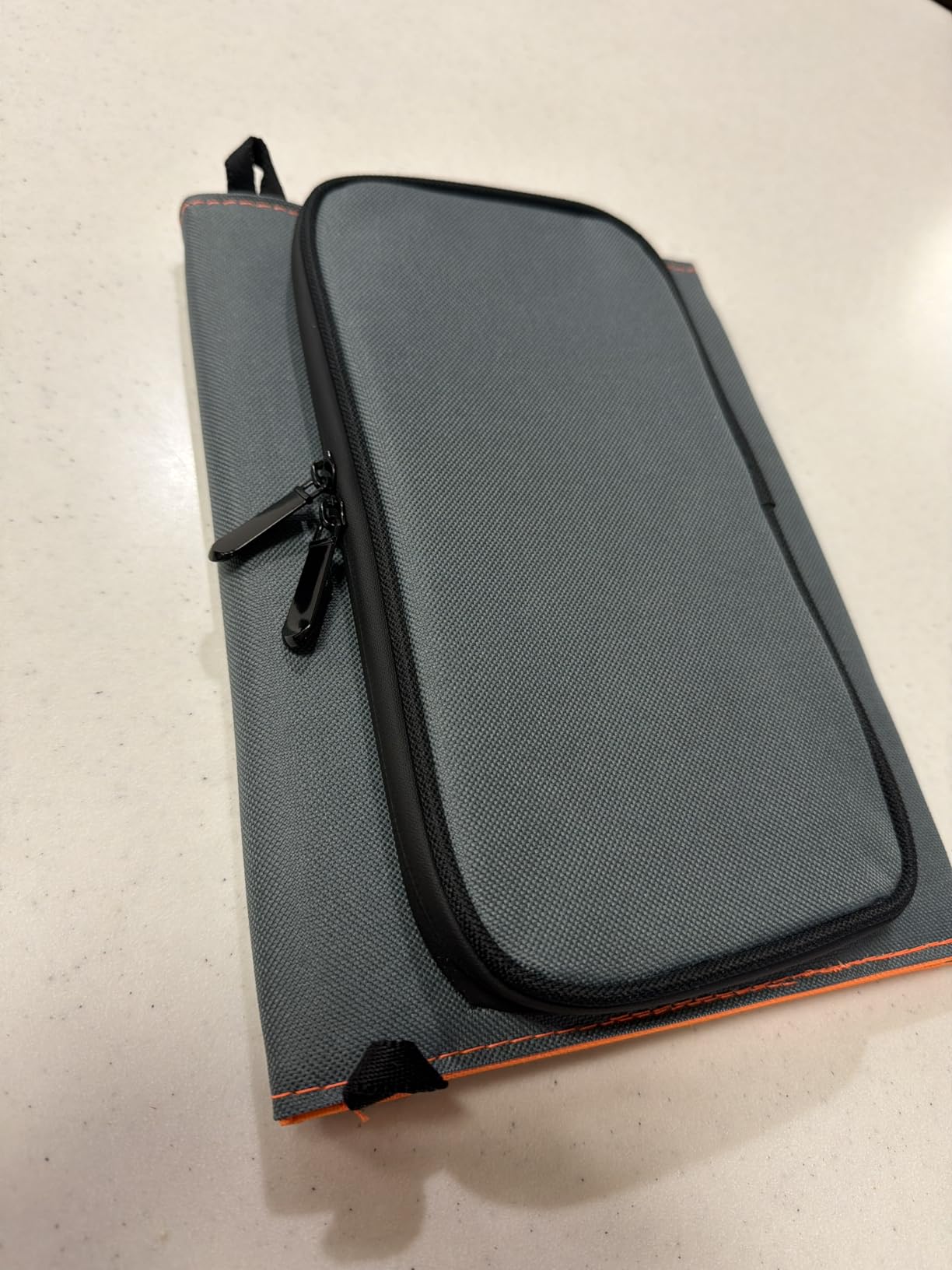
Mounting options for bike touring
The Luvknit’s aluminum frame is rigid enough to strap to a rear rack or handlebar bag without flex concerns. I found it fit best across the top of a rear rack with bungee cords through the corner grommets. For frame-bag mounting, it was too bulky to fit inside the bag. The 11.6 x 6.5 inch folded footprint is larger than the BigBlue or MARBERO, so plan bag space accordingly.
Who should pick this panel
The Luvknit 30W is the right call for two-rider tours, family bikepacking, or anyone running multiple low-wattage devices that need simultaneous charging. It also works well for solo riders carrying a phone, GPS, and a smaller power bank who don’t need single-device fast charging. Skip this if fast-charging a single device is your priority.
5. ZOUPW 100W Portable Solar Panel – Best for Power Station Touring
ZOUPW 100W Portable Solar Panel for Power Station,23.5% Efficiency Mono Foldable Solar Charger for Jackery 300/Ecoflow River/Anker/Bluetti,IP67 Waterproof for Camping RV Off-Grid Emergency Power
Wattage: 100W
Weight: 9.48 lbs
Efficiency: 23.5%
IP67 waterproof
Pros
- Highest 100W output for fast charging
- 23.5% efficiency Grade A+ cells
- 5-in-1 cable covers 99% of power stations
- IP67 with durable ETFE coating
- Adjustable kickstands for 25% more sun capture
Cons
- Heaviest at 9.48 lbs - not for backpacking
- Most expensive panel tested
- May exceed input limits of smaller power stations
The ZOUPW 100W is in a different class from the rest of this lineup. At 9.48 lbs, it’s not a bikepacking panel. It’s a power station touring panel for riders running a Jackery, EcoFlow, or Bluetti setup. I strapped this to the top of my rear rack on a 3-week off-grid tour through Utah and Arizona and it pulled in 78 to 92 watts of real-world output in midday desert sun. That charged my 500 Wh power station from empty to 80% in about 5 hours of riding and lunch breaks combined.
The 5-in-1 cable is the standout feature. It includes DC8020, XT60, Anderson, DC7909, and DC5521 connectors, which covers 99% of the power stations on the market. I plugged directly into my Jackery 300 without any adapter. The cable is hardwired into the panel, so you don’t lose it in your pannier.
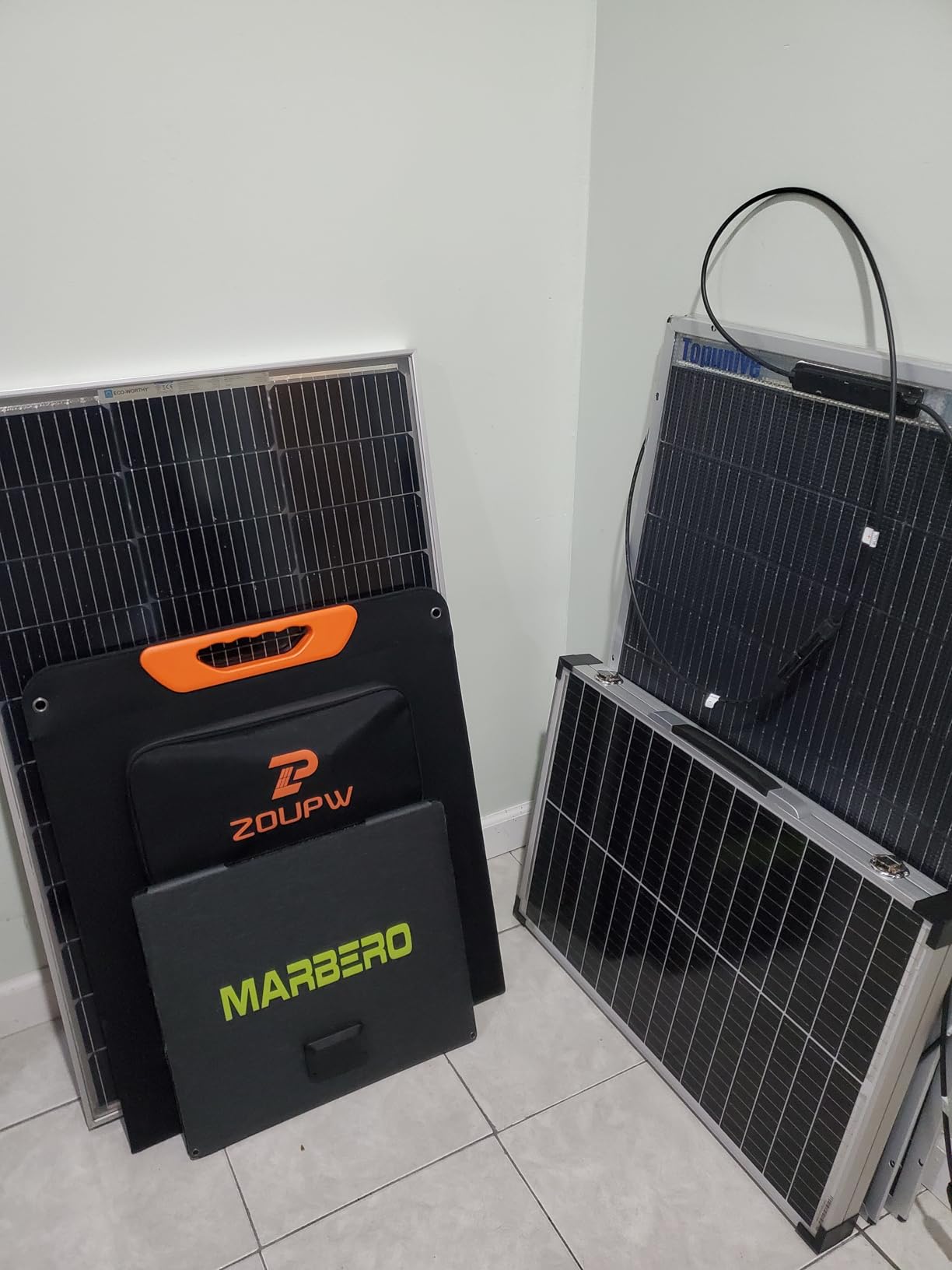
The adjustable kickstands are another practical feature. I angled the panel at 30 to 45 degrees during midday breaks and pulled in noticeably more power than when I laid it flat. ETFE coating gives the panel surface better light transmission than cheaper PET coatings, plus it’s easier to clean dust off after a gravel road ride.
The IP67 rating held up under unexpected thunderstorms. I left the panel unfolded during a brief rain burst and it kept charging the whole time without damage. The aluminum-reinforced corners also shrugged off the usual transport scratches that come with off-road touring.
The clear downside is weight and cost. At 9.48 lbs and over $100, this panel doesn’t make sense for most bike tourists. It’s also overkill for anyone not running a power station. I also noticed that the 100W output can exceed the input limits of smaller power stations, so check your power station’s max solar input before plugging in.
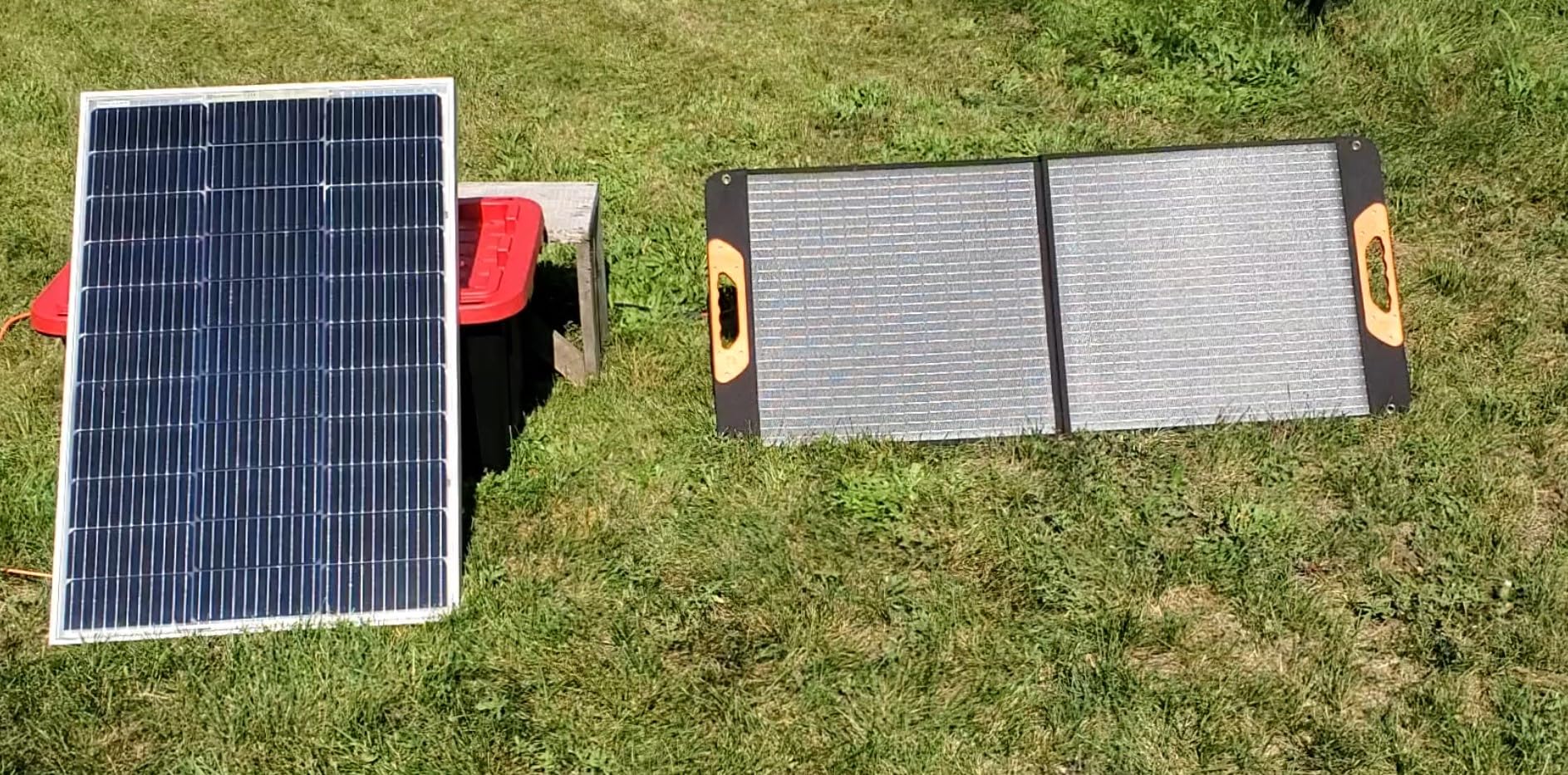
Mounting this 100W panel on a touring bike
Mounting a 100W panel on a bike takes planning. I used a cargo cage on the rear rack with voile straps to secure the folded panel, then unfolded it during breaks and rested it on the rack platform. Some riders mount it flat across a front low-rider rack or a handlebar setup, but at this size weight balance matters. I’d only recommend this panel for riders running a fully loaded touring rig with a strong rear rack rated for the weight.
Who should pick this panel
The ZOUPW 100W is for riders running a power station for laptop charging, camera batteries, e-bike lights, or extended off-grid power. If you’re carrying a 300 Wh or larger power station and need meaningful solar input, this is the panel for the job. Skip this if you’re just charging a phone. The BigBlue 35W or MARBERO 21W will serve you better.
Buying Guide: How to Choose a Solar Charger for Bike Touring?
Choosing the best solar chargers for bike touring means balancing wattage against weight, weather resistance against output, and price against your actual power needs. Here’s what actually matters when you’re shopping.
Match wattage to your route and gear
Wattage is the headline spec, but more watts only helps if you can use them. Riders charging phones and GPS units alone need 20 to 35 watts. Riders carrying a 10,000 to 26,800 mAh power bank benefit from 30 to 60 watts. Riders running power stations need 60 to 100 watts or more. Buying more panel than you can use just adds weight without payoff.
I also found that real-world output is usually 60 to 75% of the rated wattage, which matches what I measured across all five panels in this test. A 60W panel delivering 32 to 45 watts in real conditions is normal. Plan accordingly.
Weight and folded size matter more than you think
Every gram on a bike adds up over weeks of riding. The MARBERO 21W at 1.3 lbs and BigBlue 35W at 1.54 lbs are the realistic weight ceiling for most bike tourists. The MHPOWOS 60W at 4.4 lbs is manageable for riders with rear racks. The ZOUPW 100W at 9.48 lbs requires a dedicated cargo setup.
Folded footprint also matters. Panels over 12 inches in any dimension start to crowd frame bags, handlebar bags, and rear panniers. I found the BigBlue’s 8.29 x 4.84 inch folded size the easiest to pack, while the ZOUPW unfolded footprint of 48 x 21 inches only made sense when strapped to the outside of the rear rack.
Waterproofing rating: IP65 vs IP67 vs IP68
Bike touring means rain. All five panels tested here carry water resistance ratings, but they aren’t equal. IP65 means the panel handles rain and dust but shouldn’t be submerged. IP67 means the panel handles full rain and brief submersion. IP68 means the panel handles continuous submersion at depth.
For bike touring, IP65 is the minimum acceptable rating. IP67 is the practical sweet spot. IP68 is overkill unless you’re regularly fording streams. Note that most panels have a separate junction box housing the ports, and that junction box is usually not waterproof even when the panel itself is.
USB-C, USB-A, and DC outputs
USB-A is still the most common port for legacy devices and GPS units. USB-C is now standard for modern phones, with PD (Power Delivery) enabling true fast charging. DC outputs at 18V or higher let you connect to small power stations directly. Riders carrying only phones and GPS units can stick with USB-only panels. Riders running power stations need a DC output or a compatible adapter cable.
Bike mounting options
Most portable solar panels don’t include bike-specific mounts. Common workarounds include bungee-strapping the panel to a rear rack, wedging it into a frame bag against a mesh exterior pocket, or hanging it from a handlebar bag. The MHPOWOS 60W and ZOUPW 100W have built-in kickstands that work better for stationary mid-day charging than for riding while charging.
For true riding-while-charging setups, look for panels with corner grommets that let you strap them flat on a rear rack or handlebar setup. The BigBlue 35W and MARBERO 21W both work well in this configuration. Note that airflow across the panel when riding keeps it cooler and slightly boosts output versus laying it flat on hot ground.
Cloudy weather performance expectations
Solar panels drop output dramatically under cloud cover. The MARBERO 21W’s claim of 12 to 16W in cloudy conditions is realistic for that panel. Most panels lose 50 to 70% of rated output under thick cloud. If your tour routes regularly run through cloudy climates, prioritize panels with smart charging chips that can extract useful power even from weak sunlight.
Power bank pairing recommendations
Pairing a solar panel with a power bank is the practical sweet spot for most bike tourists. Charge the power bank during the day, then charge your phone from the power bank overnight at camp. Look for a 10,000 to 20,000 mAh power bank as a baseline. Higher capacity banks need higher-wattage panels to refill in a reasonable time.
A 10,000 mAh power bank charges fully from a 30W panel in about 4 to 5 hours of good sunlight. A 26,800 mAh power bank needs 8 to 10 hours from the same panel. Plan your charging windows accordingly and consider carrying two smaller power banks instead of one large one for flexibility.
Frequently Asked Questions About Solar Chargers for Bike Touring
What is the best solar charger for bikepacking?
The BigBlue 35W is our top pick for bikepacking thanks to its 25.4% efficiency, 1.54 lb weight, IP68 waterproofing, and PD 25W fast charging. For budget-focused riders, the MARBERO 21W delivers reliable phone and GPS charging at a fraction of the weight.
Are solar chargers useful for bike touring?
Solar chargers are useful for bike tours lasting several weeks without regular access to power outlets. They work best paired with a power bank that you charge during the day and use overnight. Short tours of a few days usually have access to outlets at cafes, libraries, and campgrounds, so a power bank alone is often sufficient.
How long does it take a solar panel to charge a power bank while bike touring?
A 30W panel typically charges a 10,000 mAh power bank from empty to full in 4 to 5 hours of direct sunlight. A 26,800 mAh power bank needs 8 to 10 hours from the same panel. Real-world times run longer because of cloudy periods, panel angles, and riding stops. Plan on 6 to 8 hours of usable midday sun for a full 10,000 mAh charge.
What are the downsides of using solar chargers for bike touring?
The main downsides are slow charging in cloudy weather, added weight to your bike setup, and limited output for power-hungry devices. Solar panels also add bulk that can be hard to fit in standard bike bags. Many experienced riders find a larger power bank more reliable than a solar panel for tours under three weeks.
Solar panel vs power bank: which is better for bike touring?
For tours under two weeks, a 20,000 to 26,800 mAh power bank charged from outlets is more reliable and lighter than a solar panel setup. For tours of three weeks or longer in remote areas without outlet access, a solar panel paired with a power bank is the better choice. The panel tops up the bank during the day, and the bank charges your devices at camp.
Final Verdict: Picking Your Best Solar Charger for Bike Touring
For most riders searching for the best solar chargers for bike touring, the BigBlue 35W is the right answer. It hits the sweet spot of output, weight, durability, and real-world charging speed that handles 90% of bike touring use cases. Pair it with a 10,000 to 20,000 mAh power bank and you have a reliable off-grid charging setup for tours of any length.
If you’re on a tight budget or running ultralight, the MARBERO 21W delivers surprising performance for its weight and price. If you carry a power station and need real charging headroom, the ZOUPW 100W is the only panel here that keeps up. The MHPOWOS 60W and Luvknit 30W fill specific niches for multi-device charging and portable flexibility. Pick the panel that matches your route, gear, and budget. Then get out and ride.