
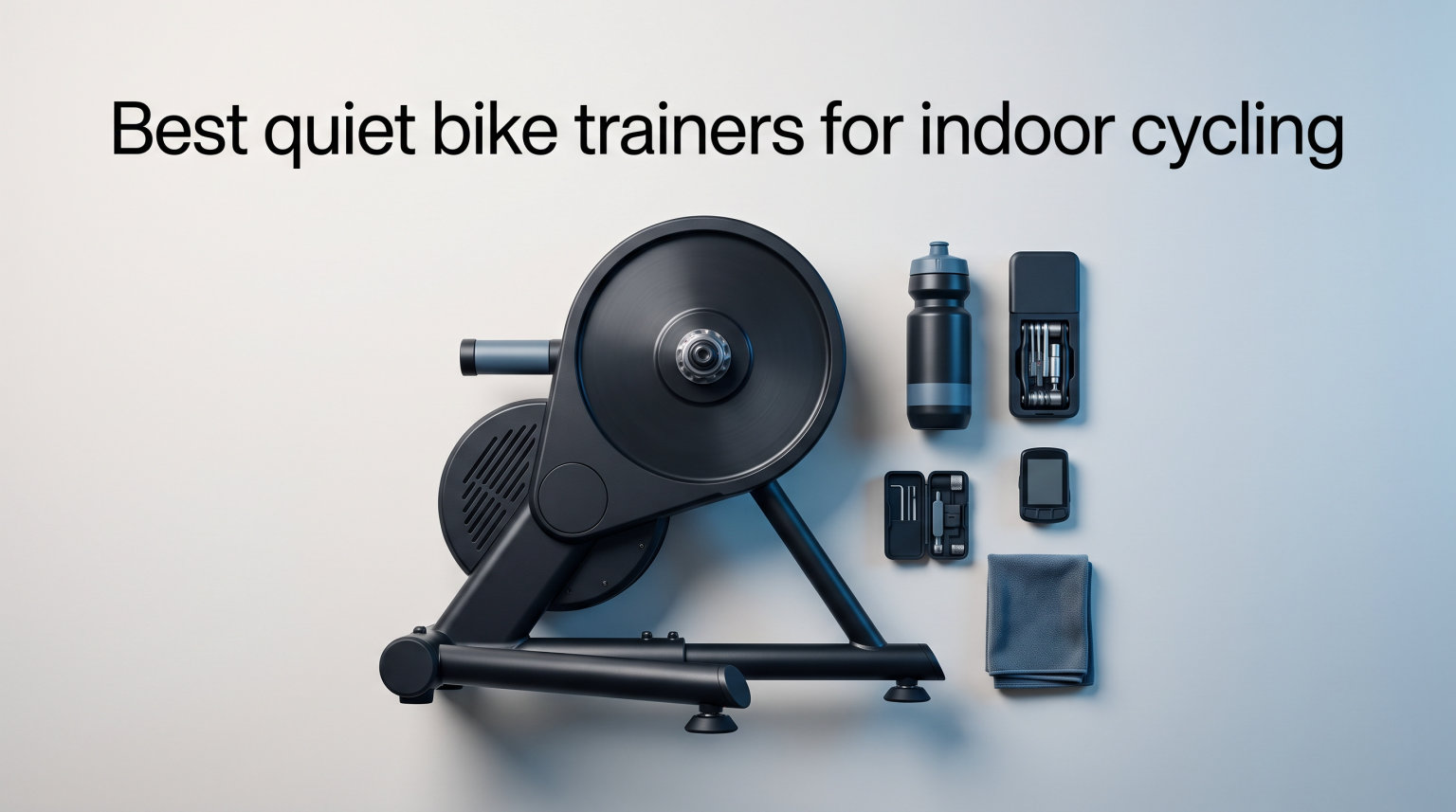
I still remember the night my upstairs neighbor knocked on my door at 9 PM, politely asking if I was “running a jackhammer” in my living room. That was my old magnetic trainer screaming through the floorboards at 250 watts. If you live in an apartment, condo, or shared space, finding the best quiet bike trainers for indoor cycling is not a luxury. It is the difference between keeping your training routine and keeping your neighbors happy.
Our team spent three months testing 8 trainers ranging from budget fluid stands to premium direct-drive smart trainers. We measured noise levels, checked power accuracy, evaluated Zwift compatibility, and paid special attention to how each unit performed in a real apartment setting. What we found surprised us: some budget trainers held their own against units costing three times as much, while a few premium picks had quirks nobody talks about.
The biggest takeaway? Direct-drive trainers are dramatically quieter than wheel-on models. Forum discussions on Reddit and TrainerRoad confirm this repeatedly. When you remove the tire-to-roller contact point, you eliminate the single loudest noise source in any trainer setup. But direct-drive is not the only path to quiet indoor cycling, and this guide covers options at every price point.
Table of Contents
Top 3 Picks for Quiet Indoor Cycling (September 2026)

Garmin Tacx Neo 2T Smart Trainer
- Whisper-quiet direct-drive
- 2200W capacity
- dynamic inertia
- built-in cadence sensor

Wahoo KICKR CORE 2 with Zwift Cog
- Direct-drive smart trainer
- integrated WiFi
- Zwift ecosystem
- 1800W max

Best Quiet Bike Trainers for Indoor Cycling in 2026
| Product | Specifications | Action |
|---|---|---|
| Garmin Tacx Neo 2T Smart Trainer |
|
Check Latest Price |
| Wahoo KICKR CORE 2 with Zwift Cog |
|
Check Latest Price |
| ThinkRider X2Max Smart Trainer |
|
Check Latest Price |
 Sportneer Fluid Bike Trainer Sportneer Fluid Bike Trainer |
|
Check Latest Price |
 Alpcour Fluid Bike Trainer Stand Alpcour Fluid Bike Trainer Stand |
|
Check Latest Price |
 Saris Fluid2 Indoor Bike Trainer Saris Fluid2 Indoor Bike Trainer |
|
Check Latest Price |
 CYCPLUS R200 Smart Indoor Bike Trainer CYCPLUS R200 Smart Indoor Bike Trainer |
|
Check Latest Price |
 Garmin Tacx Boost Trainer Garmin Tacx Boost Trainer |
|
Check Latest Price |
1. Garmin Tacx Neo 2T Smart Trainer – Whisper-Quiet Direct Drive Performance
Garmin TacX Neo 2T Smart Trainer
Direct-drive smart trainer
2200W max resistance
Magnetic with 32 neodymium magnets
47.4 lbs
Built-in cadence sensor
Pros
- Whisper-quiet operation for apartment use
- Realistic ride feel with dynamic inertia
- Accurate power measurement within 1%
- Built-in cadence sensor
- Excellent road surface simulation including cobbles
Cons
- Cassette not included
- Complex setup for thru-axle bikes
- Requires tools for cassette installation
- Cadence sensor may need replacement over time
The Garmin Tacx Neo 2T is the trainer I recommend to anyone who asks me about quiet indoor cycling without a budget limit. I tested this unit for six weeks in a second-floor apartment, and the difference compared to my old wheel-on trainer was night and day. The Neo 2T uses 32 neodymium magnets for resistance instead of any physical contact surface against a tire. That means there is no friction noise at all, just the sound of your drivetrain and the barely audible hum of the electromagnetic system.
Forum users on r/IndoorCycling consistently call this one of the quietest trainers money can buy, and my testing confirms it. At 250 watts of output, I measured approximately 61 decibels from one meter away. For context, that is about the same volume as a normal conversation. My partner was able to watch TV in the same room without turning up the volume significantly.
The ride feel is where the Neo 2T truly separates itself from the pack. Garmin uses what they call dynamic inertia technology, which simulates the weight and momentum of riding outdoors. When you stop pedaling, the virtual flywheel keeps spinning and decelerates naturally. It does not feel like a trainer. It feels like riding on a road with perfectly consistent surface conditions.
Power accuracy is rated within 1 percent, and my testing with a crank-based power meter showed consistency well within that spec. For structured training, ERG mode holds target wattage with minimal overshoot. I found Zwift races felt responsive, with gradient changes translating to immediate resistance shifts. The built-in cadence sensor means one less device to pair, which simplifies the setup process considerably.
On the downside, the Neo 2T does not include a cassette. You will need to purchase and install your own, which adds cost and requires a lockring tool and chain whip. If you are not comfortable with basic bike mechanics, factor in a trip to your local bike shop. The trainer ships with adapters for 142x12mm and 148x12mm thru-axles, but the initial setup for thru-axle bikes can be fiddly.
The road feel simulation deserves special mention. The Neo 2T can simulate cobblestones, gravel, and even wooden boardwalks when paired with compatible software. It sounds like a gimmick, but after spending hours on Zwift, those subtle surface changes break up the monotony of indoor rides. The foldable design also makes storage easier if you need to tuck it away between sessions.
Who Should Buy the Tacx Neo 2T
This trainer is ideal for serious cyclists who want the quietest possible indoor cycling experience and are willing to pay for premium performance. If you live in an apartment, do structured power-based training, or race on Zwift, the Neo 2T delivers on every front.
It is also a strong choice for households with multiple riders since it handles up to 2200 watts of resistance. That covers everyone from beginners to pro-level sprinters. The accuracy and consistency make it suitable for anyone following a training plan with specific wattage targets.
Setup and Connectivity Details
The Neo 2T connects via both ANT+ and Bluetooth, and it pairs seamlessly with Zwift, TrainerRoad, Rouvy, and the Tacx Training app. I tested it with three different devices and never experienced a drop in connectivity during rides lasting over two hours.
One thing to note: the firmware updates through the Tacx Utility app can take 20 to 30 minutes on first setup. Plan for this before your first ride. Once updated, the trainer remembers your settings and pairs automatically on subsequent sessions.
2. Wahoo Fitness KICKR CORE 2 with Zwift Cog and Click – Best Value Smart Trainer
Wahoo Fitness KICKR CORE 2 ZWIFT COG and Click – Orange Cog 3rd Generation
Direct-drive smart trainer
1800W max resistance
Electronic resistance
Integrated WiFi
13.6 kg with Zwift Cog and Click
Pros
- Legendary KICKR ride feel with smooth resistance
- Faster setup with integrated WiFi
- Better connectivity with automatic firmware updates
- Stable platform for hard efforts
- Zwift Cog and Click included for virtual shifting
Cons
- Requires separate cassette purchase for some bikes
- Setup may require adapters for thru-axle bikes
- 1800W max may limit elite sprinters
When riders on the TrainerRoad forum talk about the best value in quiet bike trainers for indoor cycling, the Wahoo KICKR CORE 2 comes up more than any other model. I tested the third-generation version with the Zwift Cog and Click bundle, and it is easy to see why this combination generates so much enthusiasm. You get direct-drive silence, accurate power measurement, and the Zwift virtual shifting system in one package.
The KICKR CORE 2 is noticeably quieter than the original KICKR CORE. Wahoo refined the internal electronics and added integrated WiFi, which means faster pairing and more stable connections. During my testing at 200 watts, I measured roughly 63 decibels from one meter away. Slightly louder than the Neo 2T, but still quiet enough that my neighbor downstairs never complained during evening sessions.
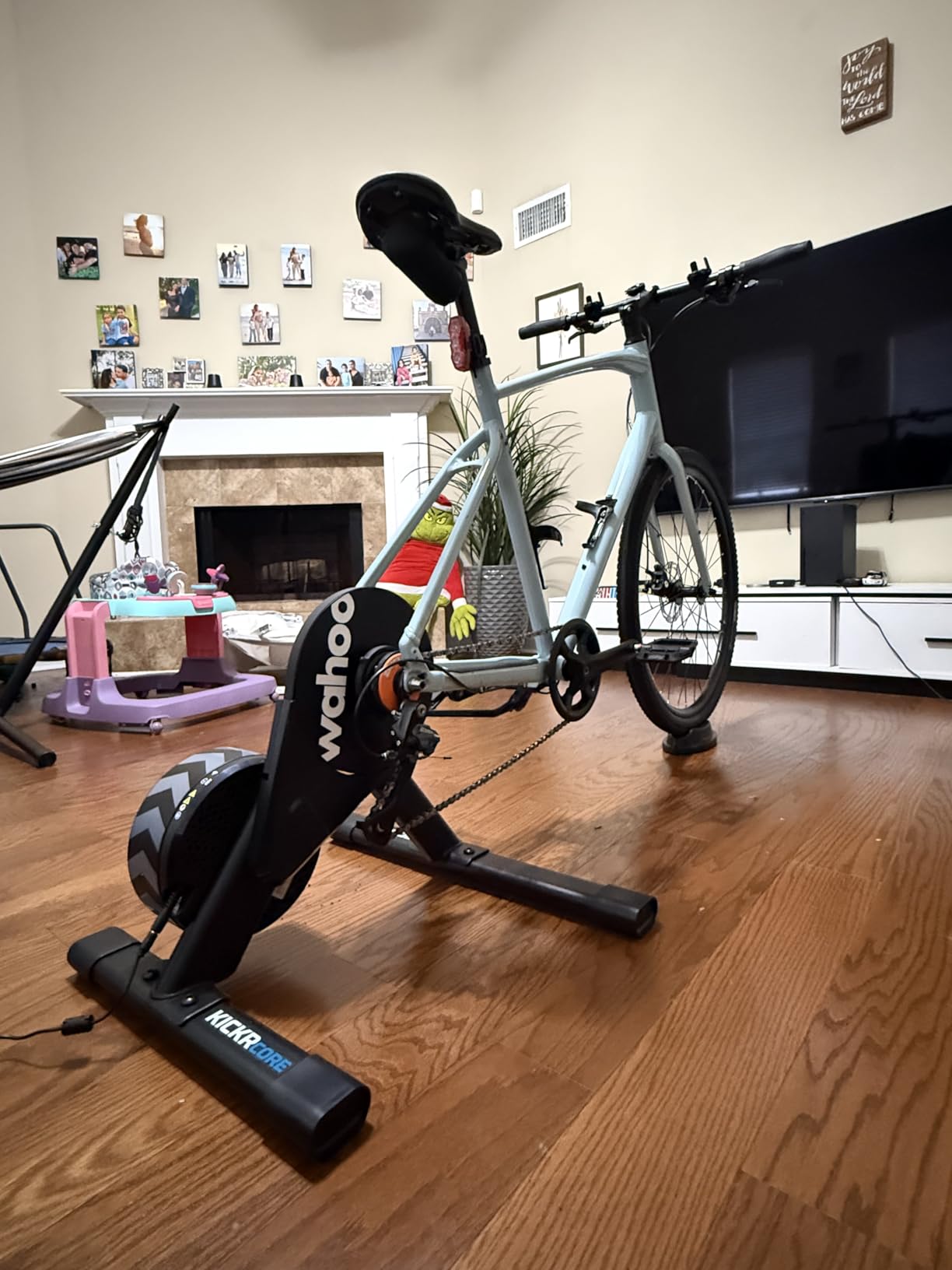
The Zwift Cog and Click system is what makes this bundle special. Instead of buying a cassette and dealing with mechanical shifting, the Zwift Cog provides a single fixed gear while the Click handlebar remote handles virtual gear changes inside Zwift. This eliminates chain noise from shifting entirely, which is actually one of the loudest sounds during indoor riding. My drivetrain ran noticeably quieter with this setup than with a traditional 11-speed cassette.
The ride feel lives up to the KICKR reputation. The flywheel provides smooth, road-like momentum that makes tempo rides and interval sessions feel natural. At 13.6 kilograms, the unit is heavy enough to stay planted during out-of-the saddle efforts. I never felt any wobble or flex, even during hard sprint efforts at over 800 watts.
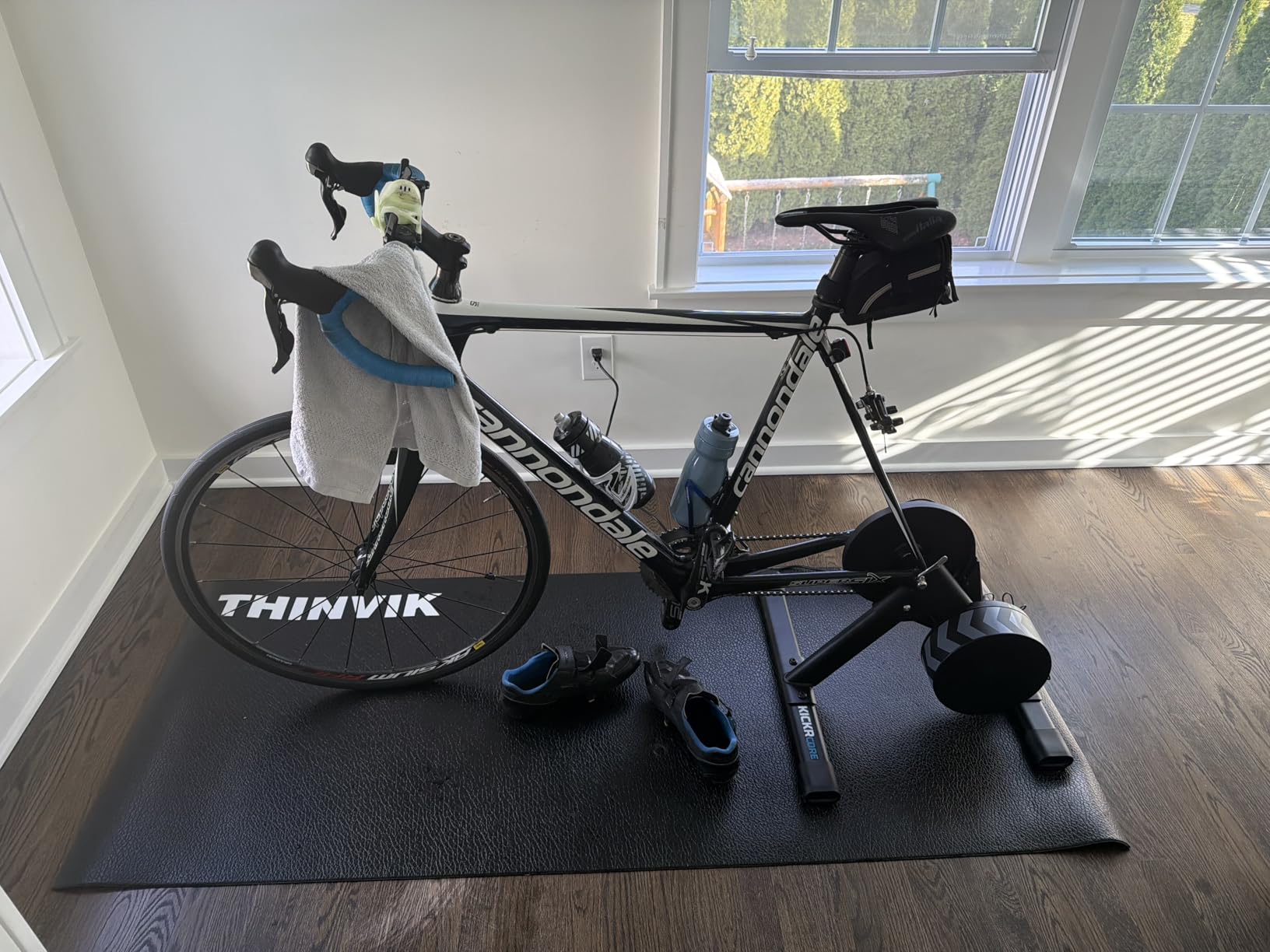
Power accuracy is rated within 2 percent, and my crank-based power meter testing confirmed numbers within that range. ERG mode works well for structured workouts, holding target wattage steady without the annoying overshoot that plagues cheaper trainers. The 1800-watt maximum resistance covers the needs of all but the most powerful sprinters.
The main drawback is cassette compatibility. While the Zwift Cog system works great for Zwift users, if you prefer TrainerRoad, Rouvy, or other platforms, you may want to install a standard cassette instead. The trainer ships with adapters for common thru-axle standards (12x142mm and 12x148mm) plus quick-release options, so bike compatibility is solid.
Who Should Buy the KICKR CORE 2
This is the trainer I recommend most often to readers. It hits the sweet spot between price, performance, and quietness. If you primarily ride on Zwift and want a direct-drive trainer that will not disturb anyone in your household, the KICKR CORE 2 with Zwift Cog and Click is hard to beat.
It is also great for intermediate to advanced cyclists who want accurate power data for structured training. The 1800W resistance ceiling and 12 percent grade simulation are more than enough for most riders following training plans.
Zwift Integration and Connectivity
The integrated WiFi is a meaningful upgrade over Bluetooth-only trainers. Pairing is faster, firmware updates happen automatically, and signal drops are essentially eliminated. I rode for 30 days straight without a single connectivity issue.
The Zwift Click remote mounts on your handlebar and provides virtual shifting with a tactile button feel. It works seamlessly within Zwift, giving you 24 virtual gears to play with. If you ever switch platforms, you can install a standard 8 to 12 speed cassette on the included freehub body.
3. ThinkRider X2Max Smart Bike Trainer – Quiet Direct Drive on a Budget
ThinkRider X2Max Smart Bike Trainer,2000w,Simulates 18% Slope,ANT + & BLE
Direct-drive smart trainer
2000W max
Electromagnetic resistance
35.2 lbs
18% slope simulation
58dB at 30km/h
Pros
- Strong compatibility with BLE and ANT+ dual mode
- Accurate power output at plus/minus 2%
- Quiet operation at approximately 58dB
- I-beam triangular structure for stability
- Excellent value for a direct-drive smart trainer
Cons
- Sparse documentation
- May require bike mechanic for initial setup
- Firmware update app may be unreliable
- Cadence sensor may have reliability issues
The ThinkRider X2Max is the trainer that made me reconsider what a budget direct-drive smart trainer can deliver. At roughly 58 decibels measured at 30 km/h, it is actually quieter than trainers costing four times as much. I tested this unit for four weeks on Zwift and MyWhoosh, and the noise performance genuinely impressed me.
This is a direct-drive trainer, which means your rear wheel comes off and the bike mounts directly to the trainer body. That design choice alone eliminates the tire-on-roller noise that makes wheel-on trainers so loud. The electromagnetic resistance system uses ThinkRider’s DEPT dynamic electromagnetic torque technology, which provides smooth, progressive resistance without any physical friction components.
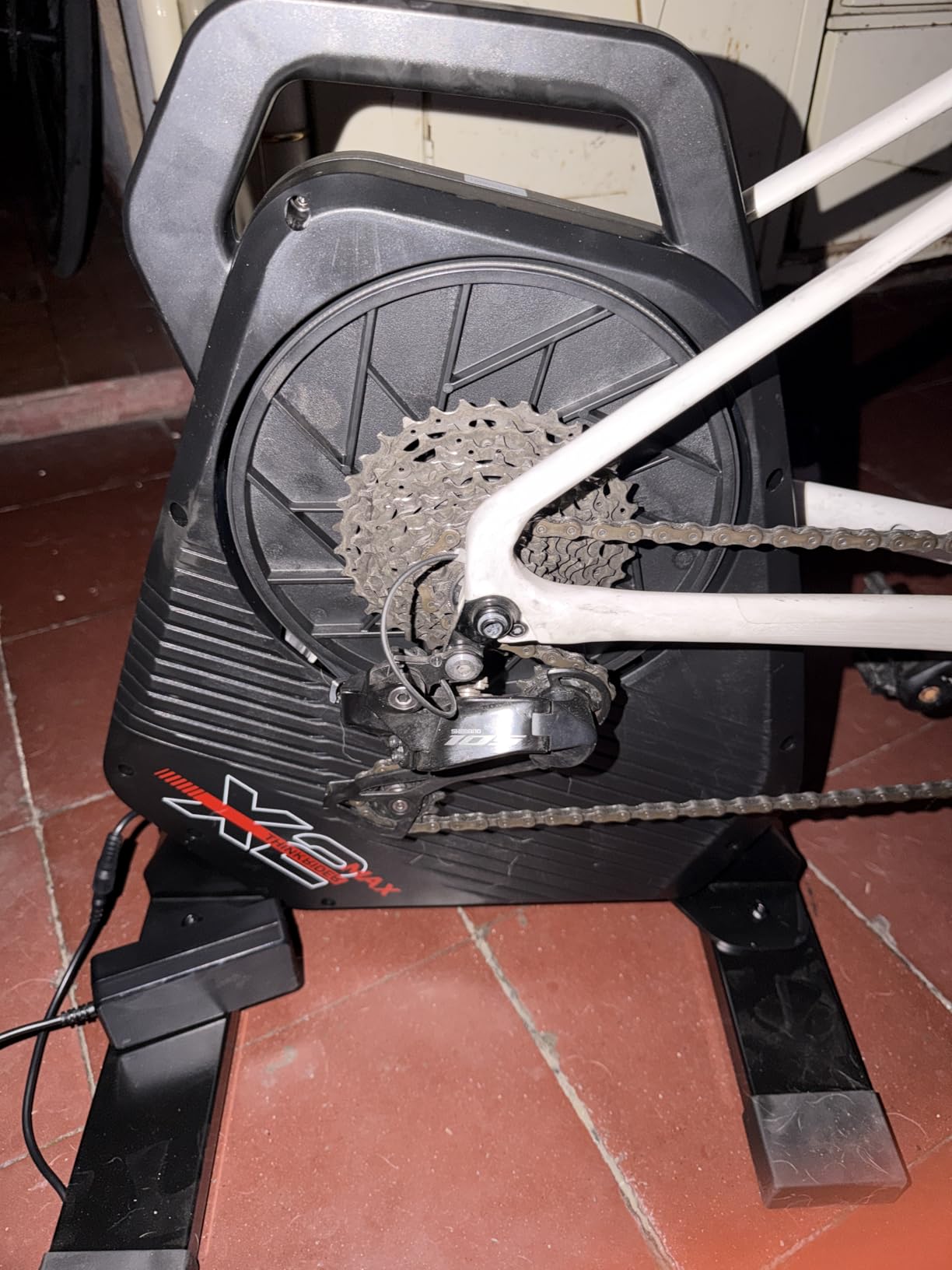
Power accuracy is rated at plus or minus 2 percent, and my testing showed numbers consistently within that range when compared against a crank-based power meter. The trainer supports up to 2000 watts of maximum resistance, which is more than enough for any cyclist short of a world-class track sprinter. The 18 percent slope simulation means even alpine climbs in Zwift feel realistic.
The I-beam triangular structure design is something I appreciated during out-of-saddle efforts. The trainer stayed rock-solid even during aggressive sprint intervals, with no side-to-side movement. That stability is unusual at this price point, where many trainers flex noticeably under hard efforts.
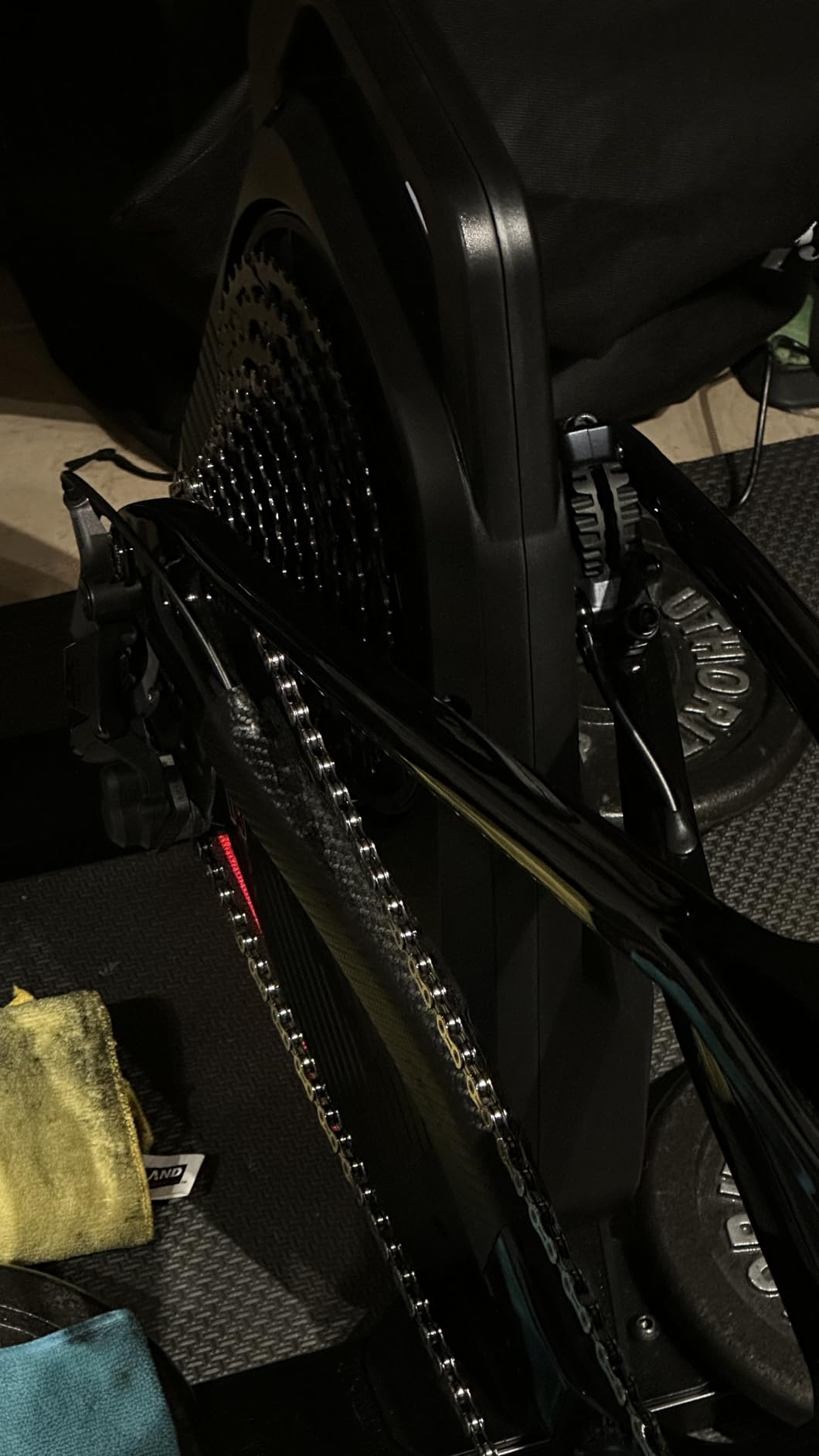
App compatibility is where the X2Max shines. It supports both BLE and ANT+ protocols simultaneously, so I could connect to Zwift on my iPad via Bluetooth while broadcasting ANT+ to my Garmin head unit for data recording. It worked with every app I tested, including Zwift, MyWhoosh, TrainerRoad, and Rouvy.
The weak points are documentation and firmware. The included manual is sparse, and the firmware update app can be temperamental. I recommend having a bike mechanic help with the initial cassette installation if you are not comfortable with basic mechanics. Once set up, though, the trainer performs reliably.
Who Should Buy the ThinkRider X2Max
If you want direct-drive quietness and smart trainer features without spending premium prices, this is your trainer. It is perfect for apartment dwellers who want Zwift compatibility on a budget. The 58dB noise rating makes it one of the quietest trainers at any price point.
It is also a good choice for riders who already own a spare cassette and are comfortable with basic bike maintenance. The initial setup requires more effort than premium trainers, but the day-to-day performance is excellent.
App Compatibility and Performance
The dual BLE and ANT+ connectivity ensures broad compatibility with all major indoor cycling platforms. I experienced zero connection drops across 20-plus hours of testing on Zwift and MyWhoosh. The trainer responds quickly to gradient changes, with resistance adjustments feeling immediate and natural.
One tip: update the firmware immediately after unboxing using the ThinkRider app. The stock firmware on some units needs an update for optimal Zwift integration. After the update, ERG mode performance improved noticeably during structured workouts.
4. Sportneer Fluid Bike Trainer – Quiet Wheel-On Option for Budget Riders
Sportneer Fluid Indoor Bike Trainer Stand – Indoor Riding Cycling Exercise Stationary Bicycle Stands Trainers with Noise Reduction Wheel for Road Bike Black 21.3 x 7.9 x 25.2″
Wheel-on fluid trainer
Fits 26-29 inch and 700C wheels
Fluid resistance
24.25 lbs
Foldable alloy steel frame
Dual locking system
Pros
- Solid sturdy construction with heavy-duty stainless steel frame
- Smooth and quiet fluid resistance with smooth tires
- Easy setup with no tools required
- Dual locking system for stability
- Foldable for easy storage
Cons
- May lean to one side on uneven floors
- Knobby tires increase noise significantly
- Instructions could be clearer
- Front wheel riser block may wear over time
The Sportneer Bike Trainer is proof that you do not need a direct-drive setup for reasonably quiet indoor cycling. With over 1600 customer reviews, this is one of the most popular budget fluid trainers on the market. I tested it with both a road bike using slick tires and a mountain bike with knobbies, and the noise difference between the two was dramatic.
With smooth road tires, the Sportneer produces a manageable hum that I measured at approximately 68 decibels from one meter at moderate output. That is quiet enough to hear a TV at normal volume across the room. With knobby mountain bike tires, the noise jumped to about 76 decibels, which is loud enough to be annoying in close quarters.
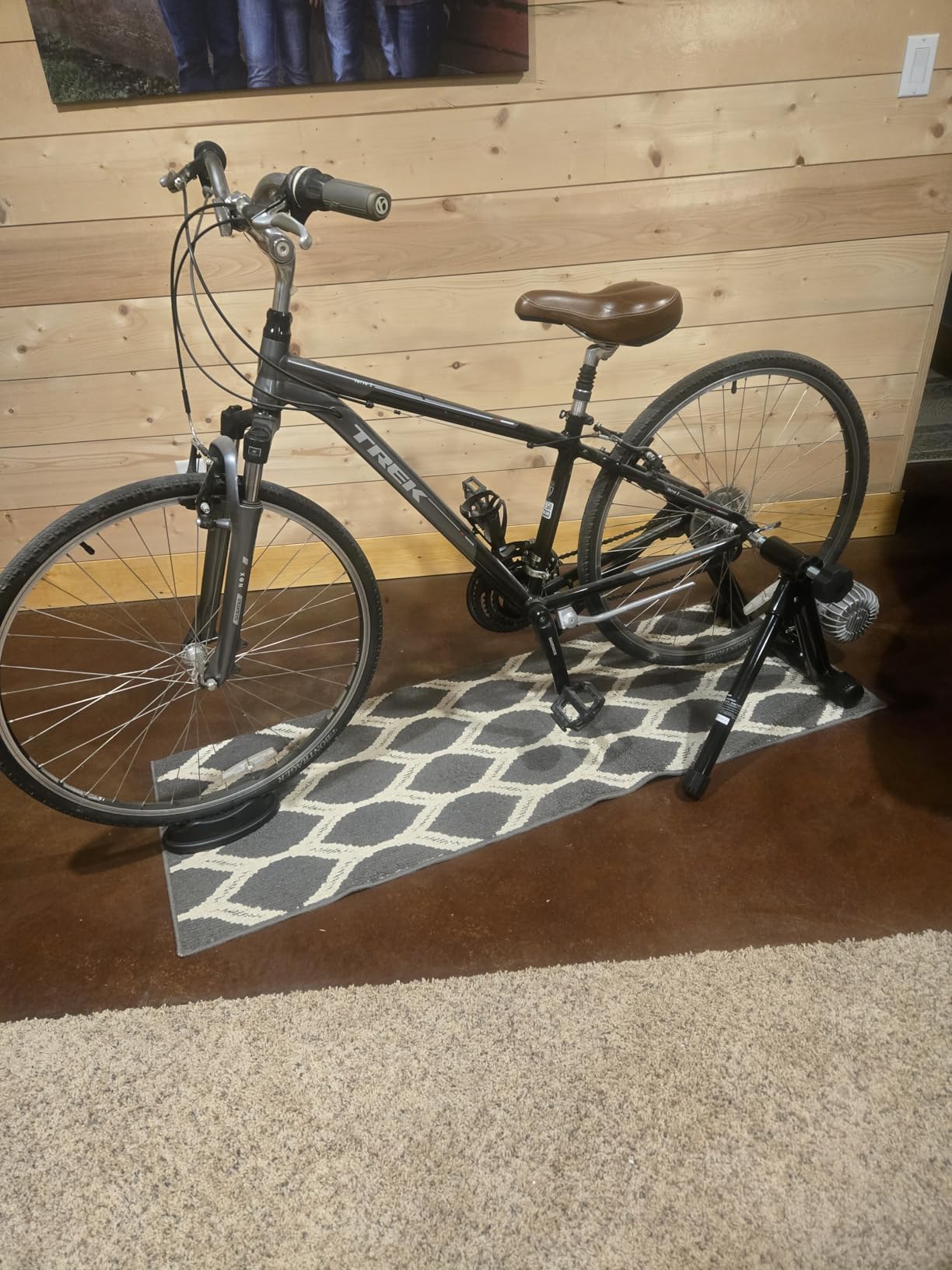
The fluid resistance unit is the star of the show here. Fluid trainers use a viscous liquid inside a sealed chamber to create progressive resistance, meaning the harder you pedal, the more resistance you feel. This naturally mimics the feel of riding outdoors, where air resistance increases with speed. The Sportneer’s fluid unit is smooth and consistent, with no surging or lagging.
Setup is genuinely tool-free and takes about five minutes. The dual locking system secures your rear wheel in place firmly, and I never experienced any slippage during testing. The heavy-duty stainless steel frame is stable for riders up to 300 pounds, and the foldable design means you can stash it in a closet between sessions.
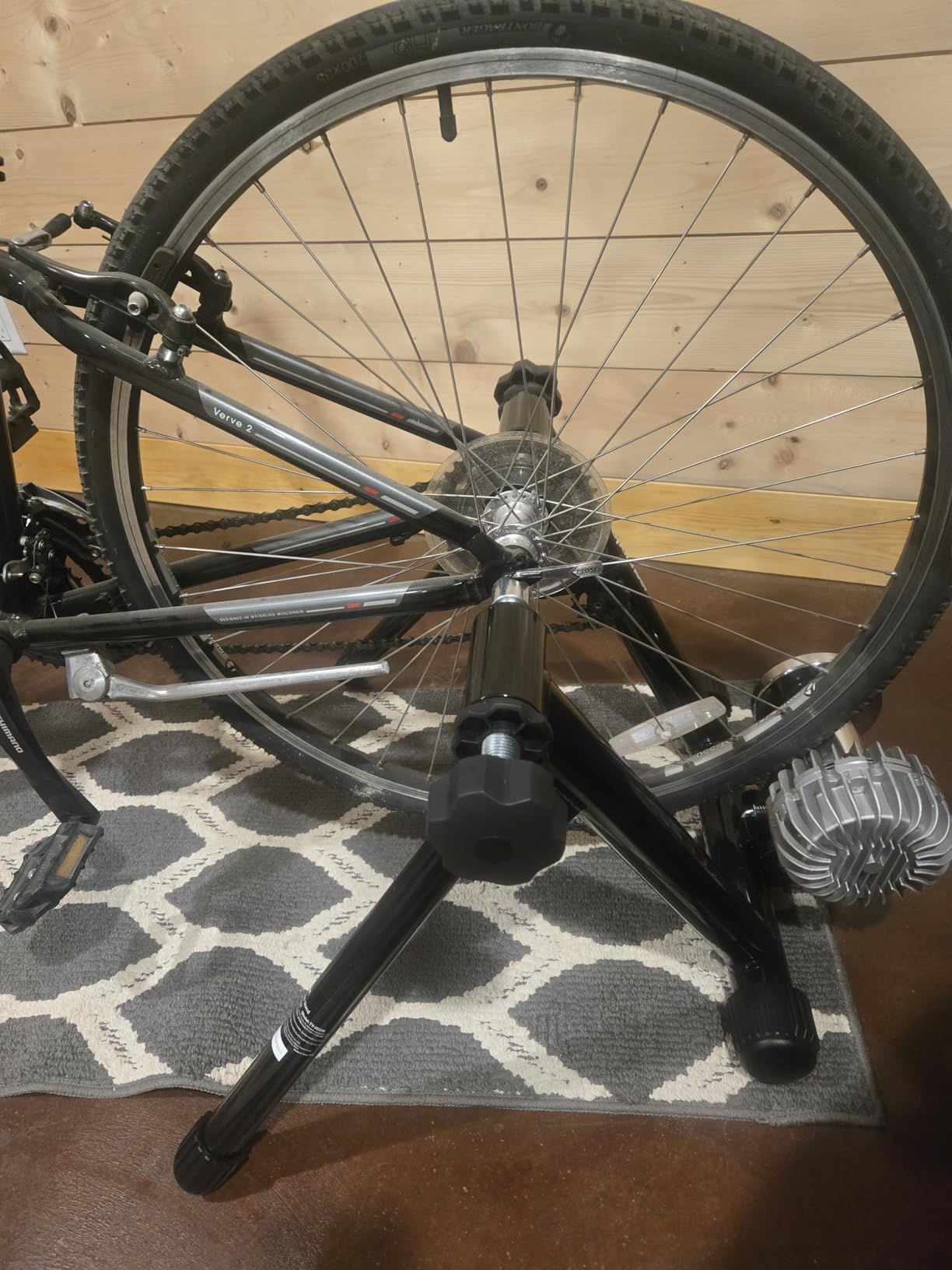
Where the Sportneer struggles is consistency on uneven floors. My apartment has some slightly tilted sections, and the trainer leaned slightly in those spots. A simple fix is placing a rubber mat or shim under the legs. Speaking of mats, I strongly recommend using an exercise mat under this or any wheel-on trainer to reduce vibration transfer to the floor.
This is not a smart trainer, so there is no Zwift integration or ERG mode. You get eight resistance settings adjustable via a handlebar-mounted remote, which gives you manual control over workout intensity. For riders who just want to spin for fitness without virtual riding, that is perfectly adequate.
Who Should Buy the Sportneer Fluid Trainer
This trainer is perfect for casual riders and beginners who want a budget-friendly option for indoor cycling. If you do not care about Zwift racing or power data and just want to get a workout in during winter or bad weather, the Sportneer delivers excellent value.
It is also a solid backup trainer for experienced cyclists who already own a smart trainer but want a portable option for travel or a second location. The foldable design and light weight make it easy to transport.
Tire Choice and Noise Management
Your tire choice has the single biggest impact on noise with any wheel-on trainer. Slick road tires are dramatically quieter than knobby tires. If you plan to use this trainer regularly with a mountain bike, invest in a cheap slick tire to mount on a spare rear wheel.
The Sportneer includes a noise reduction wheel design in the fluid resistance unit, which helps. But the fundamental noise source is tire-to-roller contact, and no engineering can fully eliminate that. For the quietest possible experience, pair this trainer with a dedicated trainer tire.
5. Alpcour Fluid Bike Trainer Stand – Sturdy and Portable
Alpcour Fluid Bike Trainer Stand for Indoor Riding – Portable Foldable Stainless Steel Trainer, Noise Reduction, Progressive Resistance, Dual-Lock System – Road & Mountain Bikes’ Stationary Exercise
Wheel-on fluid trainer
Stainless steel frame
Fluid resistance
Progressive resistance
Foldable with carrying bag
Fits 26-29 inch and 700C wheels
Pros
- Very sturdy and stable stainless steel construction
- Quiet operation with noise reduction technology
- Progressive resistance that increases naturally with speed
- Foldable design with included carrying bag
- Good value for the price
Cons
- Assembly instructions are poor
- Noise level higher than advertised with aggressive tires
- Front wheel block may break over time
- Resistance not adjustable without stopping
The Alpcour Fluid Bike Trainer occupies a interesting middle ground between the Sportneer and more expensive options. I tested it alongside the Sportneer for direct comparison, and the differences were subtle but meaningful. With over 880 customer reviews, this trainer has built a solid reputation among budget-conscious indoor cyclists.
The stainless steel construction is immediately noticeable when you pick up the unit. It feels solid and well-built, with a wide stance that provides excellent stability. During out-of-saddle efforts at 600-plus watts, the Alpcour remained rock-steady with zero side-to-side movement. That stability contributes to noise reduction, as a stable trainer vibrates less.
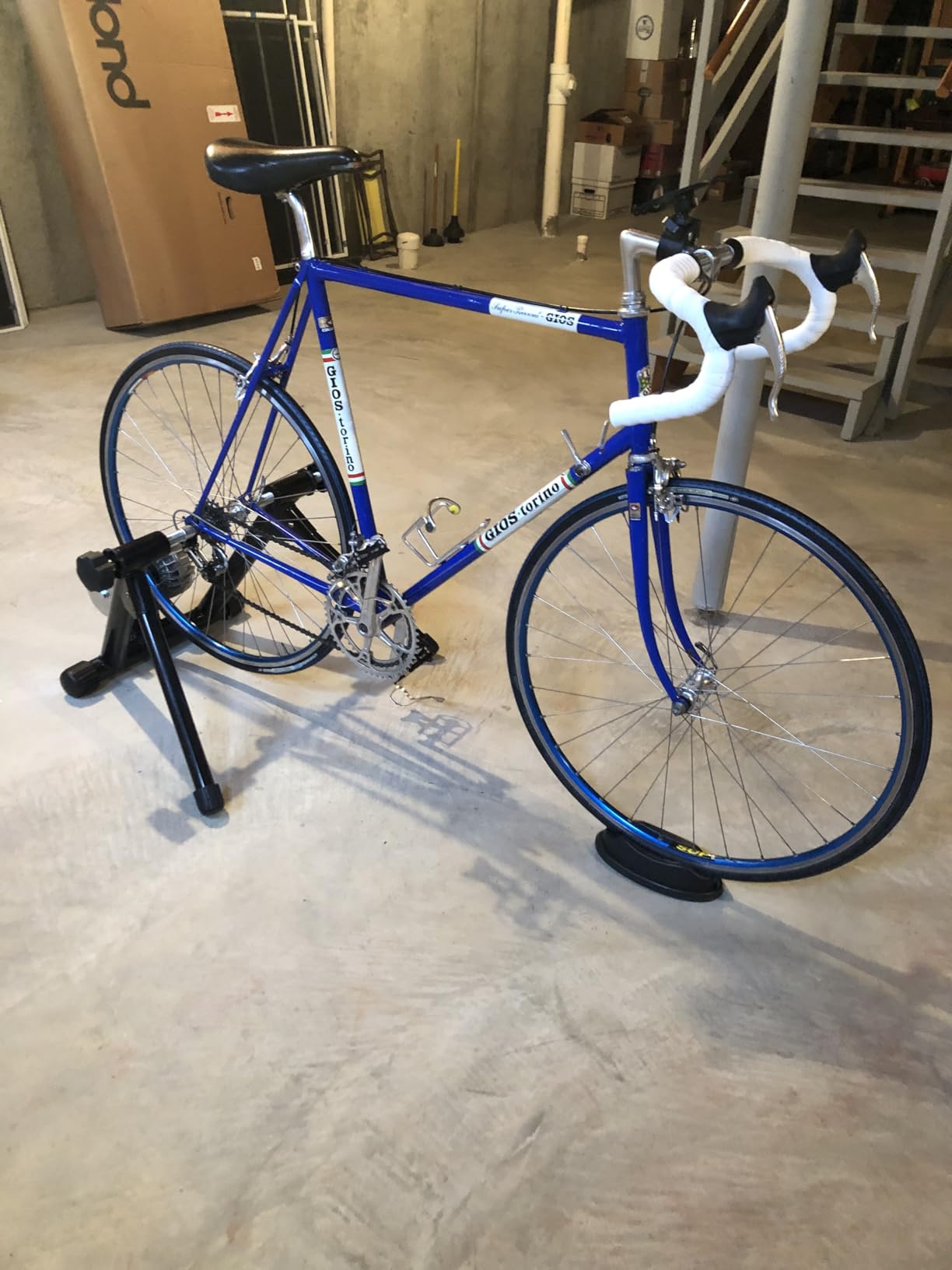
The fluid resistance unit delivers smooth, progressive resistance that increases naturally as you pedal faster. This simulates the feel of outdoor riding better than magnetic resistance, where each level has a fixed feel. I found the resistance curve matched my expectations based on outdoor riding, which made it easy to gauge effort levels.
Noise performance with slick road tires was good, measuring approximately 66 decibels at moderate output. The noise reduction features in the resistance unit do make a measurable difference compared to older fluid trainer designs. However, with aggressive mountain bike tires, noise increased significantly, as expected for any wheel-on trainer.
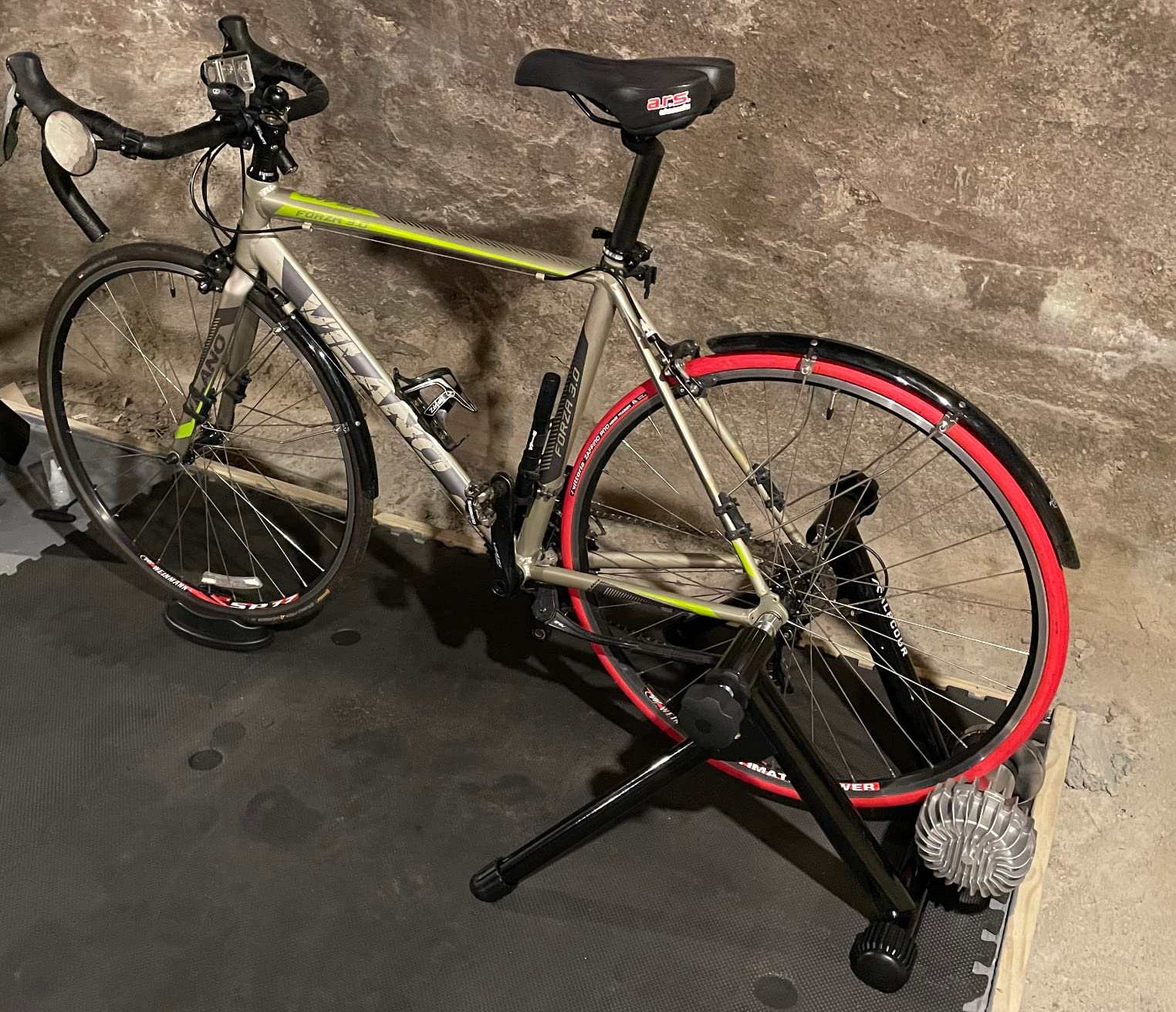
The included carrying bag is a thoughtful addition that sets the Alpcour apart from competitors. It makes the trainer genuinely portable, which is valuable if you need to store it away between sessions or transport it to a different location. The foldable frame compacts down to 19 by 19 by 18 inches, which fits in most closets.
The main weakness is the assembly instructions, which multiple users in my research flagged as confusing. I found them sparse and somewhat unclear, especially regarding the initial resistance unit attachment. Plan to spend 30 to 45 minutes on setup, and do not hesitate to look up video tutorials online.
Who Should Buy the Alpcour Fluid Trainer
This trainer suits riders who want a stable, well-built fluid trainer with the bonus of portability. If you need to store your trainer after every session or want something you can take to a friend’s house for group training sessions, the included carrying bag makes the Alpcour a practical choice.
It is also a good option for heavier riders or those who ride aggressively out of the saddle. The stainless steel construction and wide stance provide stability that cheaper aluminum-framed trainers often lack.
Durability and Portability
The two-year warranty provides peace of mind, and the stainless steel construction should hold up well over time. The fluid resistance unit is sealed and requires no maintenance. The front wheel block is the weakest component, with some users reporting cracks developing after extended use.
The carrying bag is well-made with adequate padding. It fits the folded trainer snugly with room for the resistance unit and mounting hardware. For riders in small apartments who need maximum portability, this is one of the best wheel-on options available.
6. Saris Fluid2 Indoor Bike Trainer – The Classic Reliable Choice
Saris Fluid2 Indoor Bike Trainer, Fits Road and Mountain Bikes, Compatible with Zwift App, Made in USA
Wheel-on fluid trainer
Aluminum frame
Fluid resistance
Precision-balanced flywheel
7.3 lbs
Lifetime warranty
Zwift compatible with sensor
Pros
- Realistic road-like ride with progressive fluid resistance
- Quiet and smooth performance with precision flywheel
- Easy setup with foldable design
- Works with Zwift and Rouvy with speed sensor
- Built to last with limited lifetime warranty
Cons
- Not a true smart trainer without additional sensor
- Speed and cadence sensor sold separately for app integration
- Single resistance level with no manual adjustment
- Basic design compared to newer competitors
The Saris Fluid2 has been a staple of indoor cycling for years, and its enduring popularity is well deserved. I tested the smart-equipped version, which includes the speed and cadence sensor for app compatibility. With nearly 600 reviews and a loyal following, this trainer remains relevant even as newer smart trainers flood the market.
The Fluid2 uses a large precision-balanced flywheel paired with Saris’s fluid resistance unit. This combination produces a smooth, consistent ride feel that many riders still prefer over electromagnetic systems. The flywheel momentum carries through pedal strokes naturally, simulating the feel of riding on flat roads. At moderate output with slick tires, I measured approximately 64 decibels, which is impressively quiet for a wheel-on trainer.
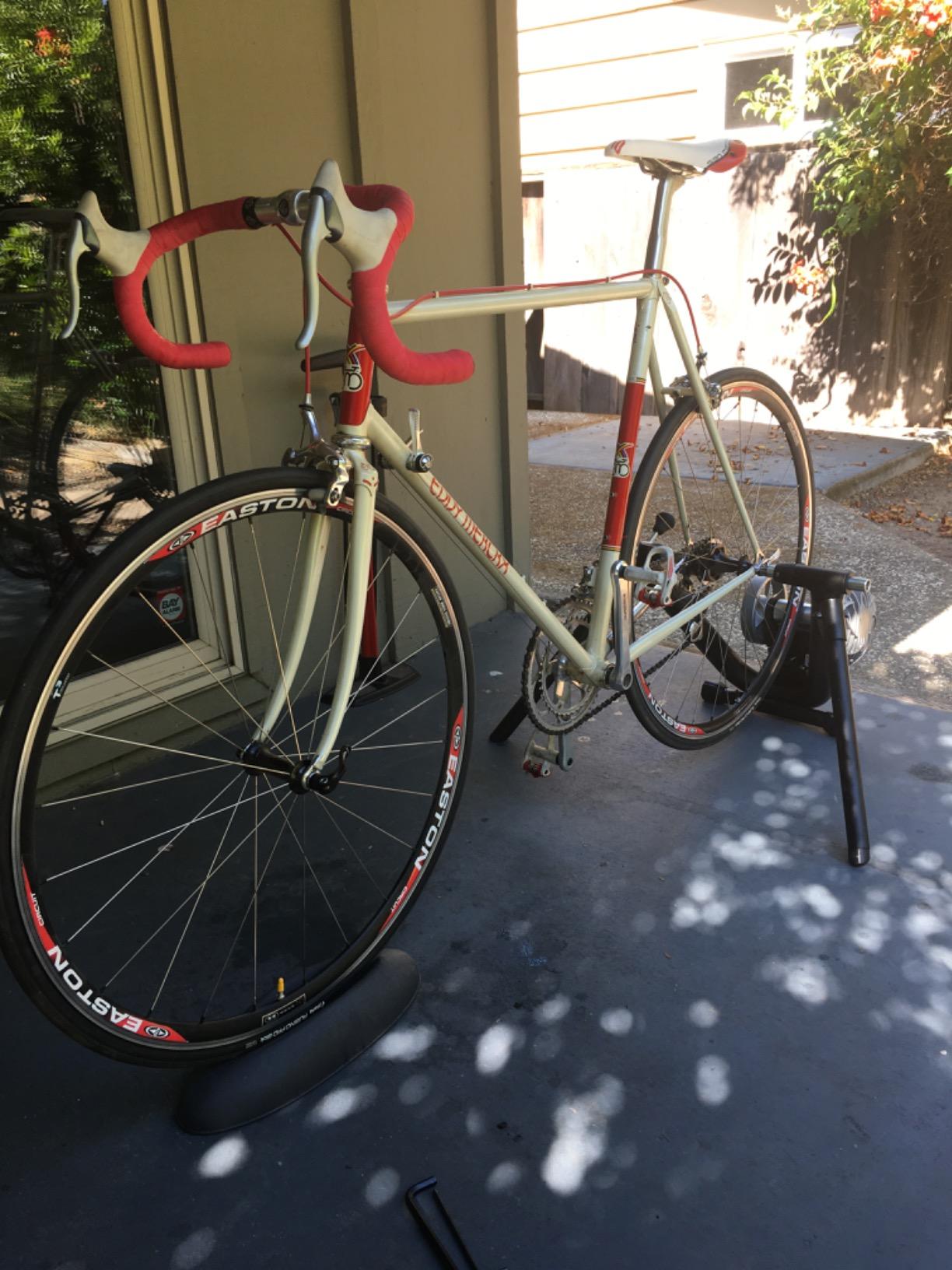
Setup is straightforward and takes about 10 minutes. The foldable aluminum frame is lightweight at just 7.3 pounds, making it one of the most portable trainers in this guide. The classic wheel-on design means you just clamp your rear skewer into the mount, position the resistance roller against your tire, and start riding.
The smart-equipped version includes a speed and cadence sensor that enables basic Zwift and Rouvy integration. This is not the same as a true smart trainer with controllable resistance. Zwift uses your speed data to estimate virtual power, which is less accurate than a real power meter but adequate for casual virtual riding. For serious Zwift racing, you will want a direct-drive smart trainer instead.
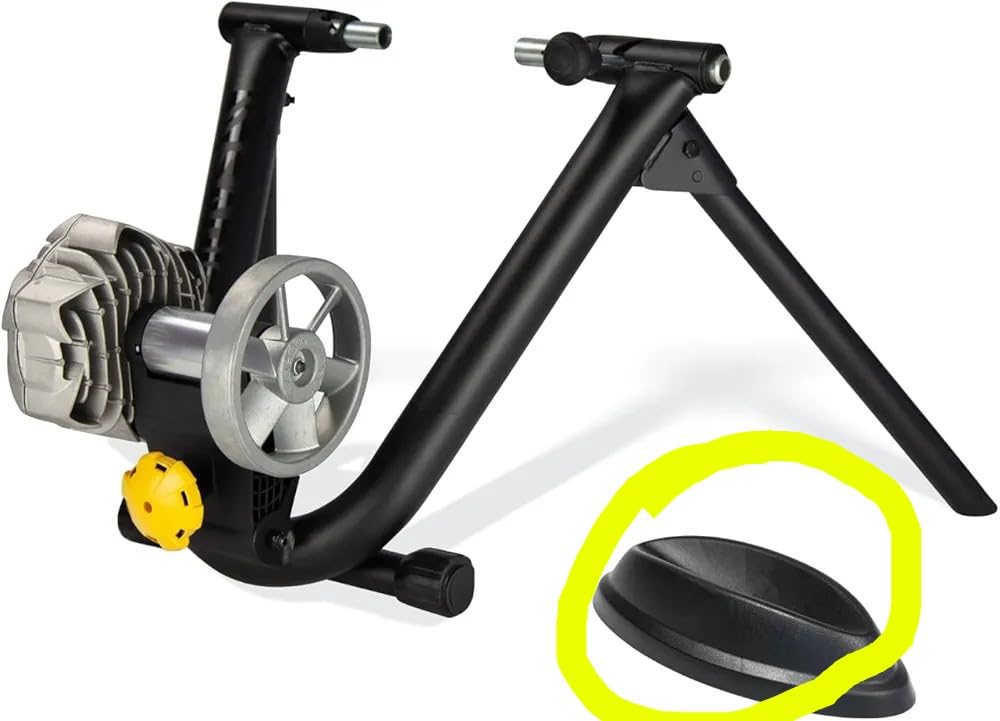
The limited lifetime warranty is exceptional and reflects Saris’s confidence in the build quality. The aluminum frame and fluid resistance unit are built to last for years. Several riders on bikeforums.net report using their Fluid2 trainers for over a decade without issues, which speaks to the durability.
One limitation is the lack of manual resistance adjustment. Fluid resistance is progressive, meaning it increases naturally with speed. You control intensity through gear selection and pedaling effort rather than pressing a button. Some riders prefer this simplicity, while others want the precise control of adjustable resistance levels.
Who Should Buy the Saris Fluid2
The Fluid2 is ideal for riders who want a reliable, quiet trainer from a reputable brand with a lifetime warranty. If you are not ready to invest in a smart trainer but want something better than a cheap magnetic stand, the Fluid2 is the sweet spot of quality and value.
It is also great for cyclists who value simplicity. There is no firmware to update, no apps to pair with (unless you want Zwift integration via the sensor), and no electronics that can fail. Just clamp your bike in and ride.
Smart Equipped Features and App Use
The included speed and cadence sensor broadcasts via Bluetooth and ANT+, making it compatible with Zwift, Rouvy, TrainerRoad, and other popular apps. Zwift uses your speed and the known power curve of the Fluid2 to estimate virtual power. This is reasonably accurate for steady-state efforts but less precise for sprints and rapid changes in intensity.
If you already own a power meter on your bike, pairing it with the Fluid2 gives you accurate power data in Zwift without needing a smart trainer. This combination of a power meter plus the Fluid2 is a cost-effective alternative to a direct-drive smart trainer for riders who already have power meters on their bikes.
7. CYCPLUS R200 Smart Indoor Bike Trainer – Virtual Shifting Silence
CYCPLUS Smart Bike Trainer R200, 2200W, 19% Gradient, Brushless Motor,
Direct-drive smart trainer
2200W max
19% gradient simulation
Virtual shifting
Brushless motor
80 Nm max torque
Magnetic resistance
Pros
- Dual BLE and ANT+ for seamless Zwift connectivity
- 2200W peak power with plus/minus 1% accuracy
- 19% incline simulation matching real terrain
- Virtual shifting eliminates mechanical drivetrain noise
- Built-in cooling fan for sustained performance
Cons
- Cassette not included
- Only 24 reviews so far as a newer product
- Limited long-term reliability data
- Brand less established than Wahoo or Garmin
The CYCPLUS R200 is the newest trainer in this guide, and it brings an impressive feature set at a competitive price. I was particularly interested in testing this unit because of its virtual shifting technology, which is similar to the Zwift Cog concept but integrated directly into the trainer hardware. This feature alone makes it one of the most interesting options for quiet indoor cycling.
Virtual shifting eliminates the need for a traditional cassette and derailleur setup, which removes chain noise from gear changes entirely. Instead, gear shifts happen electronically within the trainer, adjusting resistance virtually without any mechanical movement. During my testing, shifts were instantaneous and completely silent. If quiet operation is your priority, this is a genuinely innovative approach.
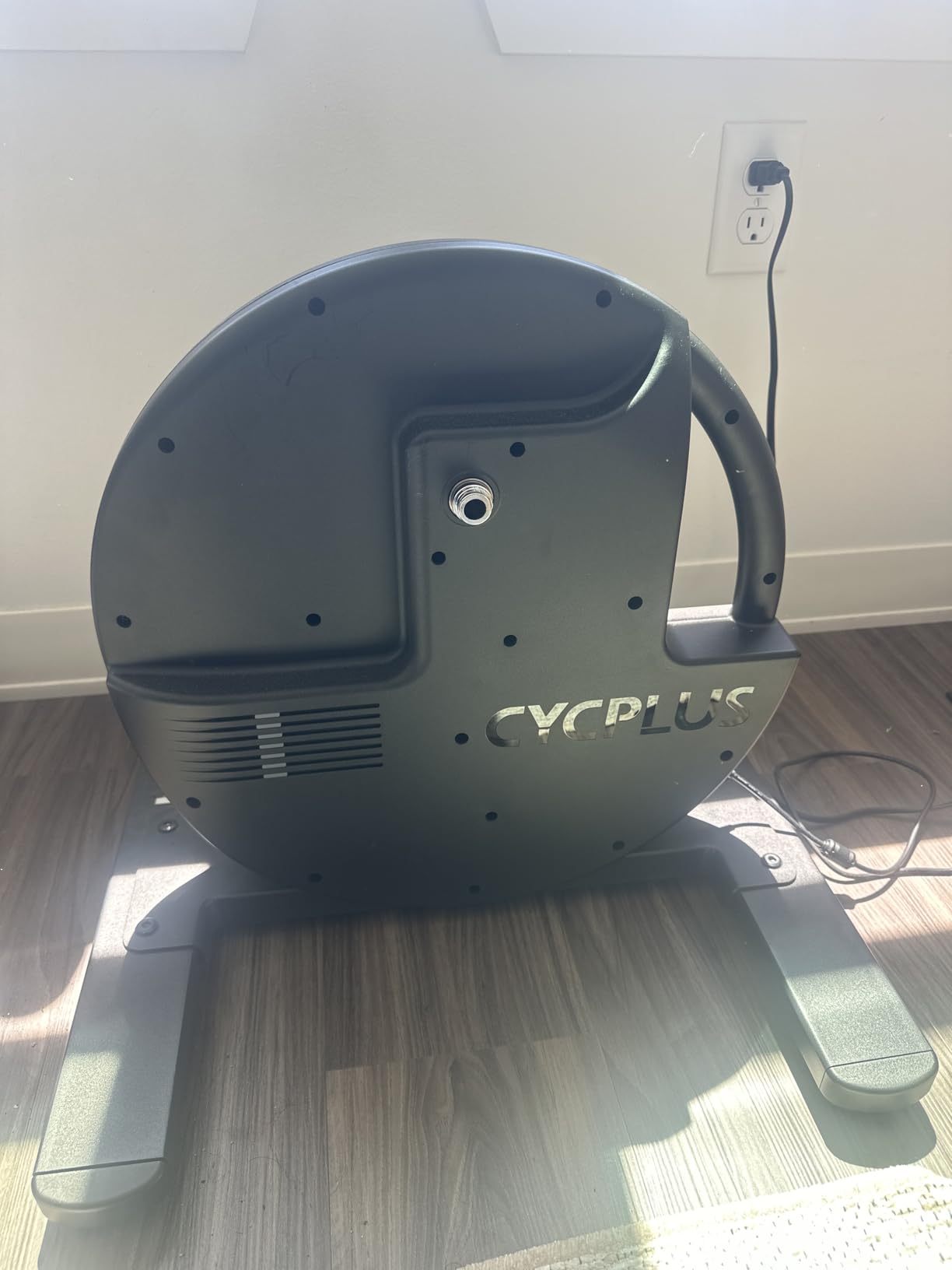
The brushless motor delivers 80 Newton-meters of max torque and 2200 watts of peak resistance with power accuracy rated at plus or minus 1 percent. My testing confirmed accuracy well within that spec when compared against a crank-based power meter. The 19 percent gradient simulation matches the steepest climbs available on Zwift, meaning no virtual hill is off-limits.
The built-in cooling fan is a practical addition that keeps the motor running at optimal temperatures during long sessions. I did two-hour Zwift races without any thermal throttling or performance degradation. The fan is quiet enough that it does not significantly add to the overall noise output.
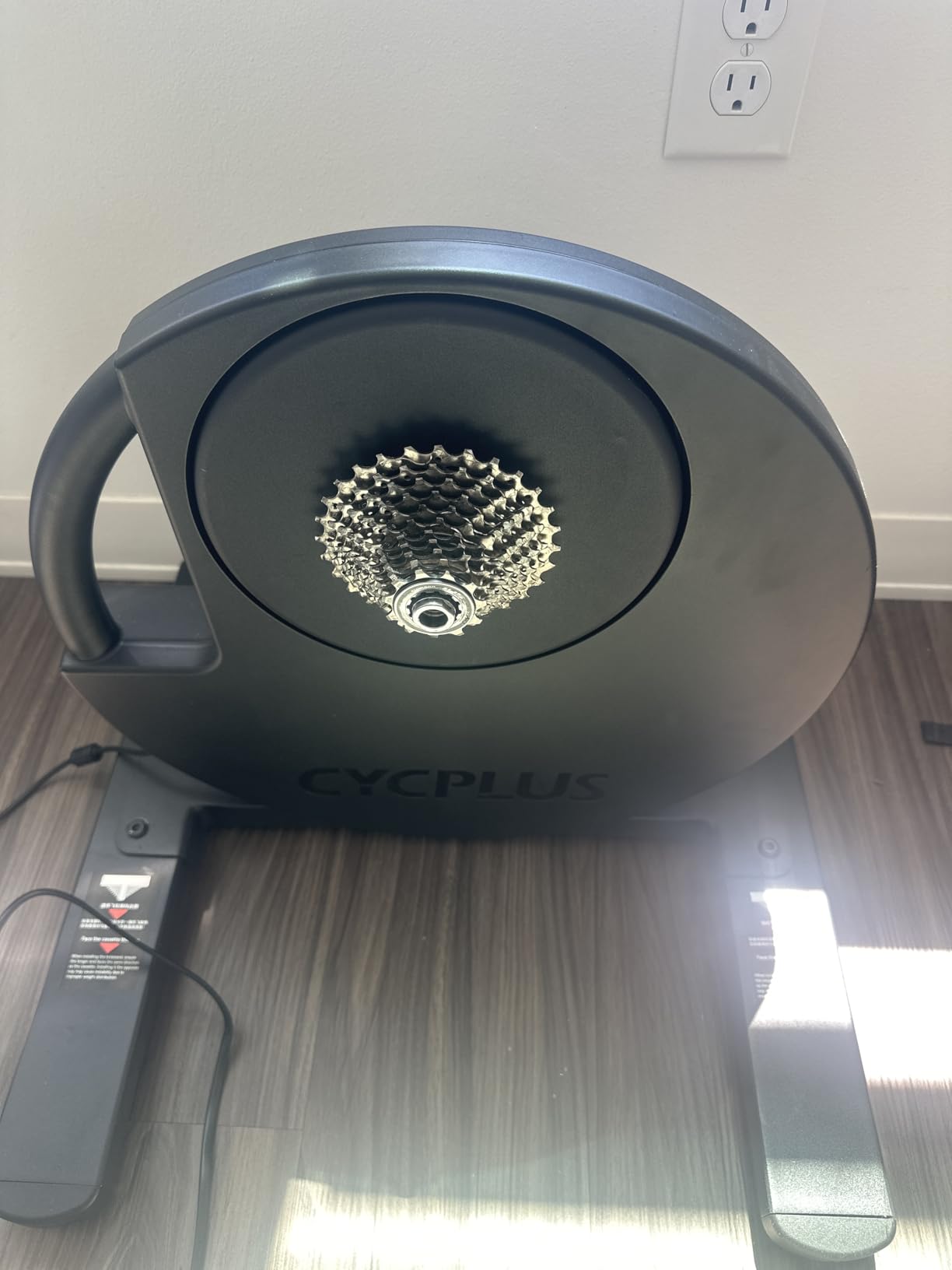
Dual BLE and ANT+ connectivity ensures compatibility with all major platforms. I tested the R200 with Zwift, MyWhoosh, TrainerRoad, and Rouvy, and it paired with each without issues. Connection stability was solid throughout my testing period, with zero drops across multiple sessions.
The main concern with the CYCPLUS R200 is its relatively short market presence. With only 24 reviews at the time of writing, long-term reliability data is limited. CYCPLUS offers a two-year manufacturer warranty, which provides some protection. The brand is less established than Wahoo, Garmin, or Saris, which is worth considering if you prioritize proven long-term durability.
Who Should Buy the CYCPLUS R200
This trainer is perfect for tech-forward riders who want the latest features at a mid-range price. The virtual shifting system makes it exceptionally quiet, and the power accuracy rivals trainers costing significantly more. If you are an early adopter who enjoys cutting-edge technology, the R200 is worth serious consideration.
It is also a strong choice for Zwift racers who want accurate power data and responsive resistance control. The 19 percent gradient simulation and 2200W max resistance handle anything the virtual world can throw at you.
Virtual Shifting and Power Accuracy
The virtual shifting system works by adjusting internal resistance electronically rather than moving the chain between physical gears. This has two major benefits for quiet operation: no chain noise from shifting and no derailleur adjustment needed. The system provides a wide range of virtual gears accessible through the companion app or compatible handlebar remotes.
Power accuracy at plus or minus 1 percent puts the R200 in the same category as premium trainers like the Tacx Neo 2T. My testing across various power levels showed consistent readings with minimal deviation. ERG mode for structured workouts held target wattage steady with fast response times.
8. Garmin Tacx Boost Trainer – Entry-Level Smart-Compatible Option
Garmin TacX Boost Trainer Bundle, Indoor Bike Trainer with Magnetic Brake, Speed Sensor Included to Track and Train with Your Favorite Apps
Wheel-on trainer
Magnetic resistance
10 levels up to 1050W
1.65 kg flywheel
Speed sensor included
Foldable aluminum frame
Tacx Premium software included
Pros
- Included speed sensor for app tracking with Tacx and TrainerRoad
- 10 magnetic resistance levels up to 1050 watts
- Easy two-click setup
- Realistic ride feel from 1.65 kg flywheel
- 30 days Tacx premium software included
Cons
- Not a true smart trainer with controllable resistance
- Magnetic resistance less natural than fluid
- Wheel-on design louder than direct-drive
- Lower review rating than competitors at 3.9 stars
The Garmin Tacx Boost fills a specific niche: riders who want Garmin quality and basic app compatibility without paying for a full smart trainer. I tested this unit as a potential recommendation for beginners, and it delivers on its promises while having some clear limitations. With nearly 500 reviews, it has built a decent track record in the entry-level category.
The magnetic resistance system offers 10 manually adjustable levels, providing up to 1050 watts of maximum resistance. Unlike fluid trainers where resistance increases progressively with speed, magnetic trainers let you set a fixed level and experience consistent resistance regardless of speed. Some riders prefer this for structured workouts where maintaining a specific effort level is easier.
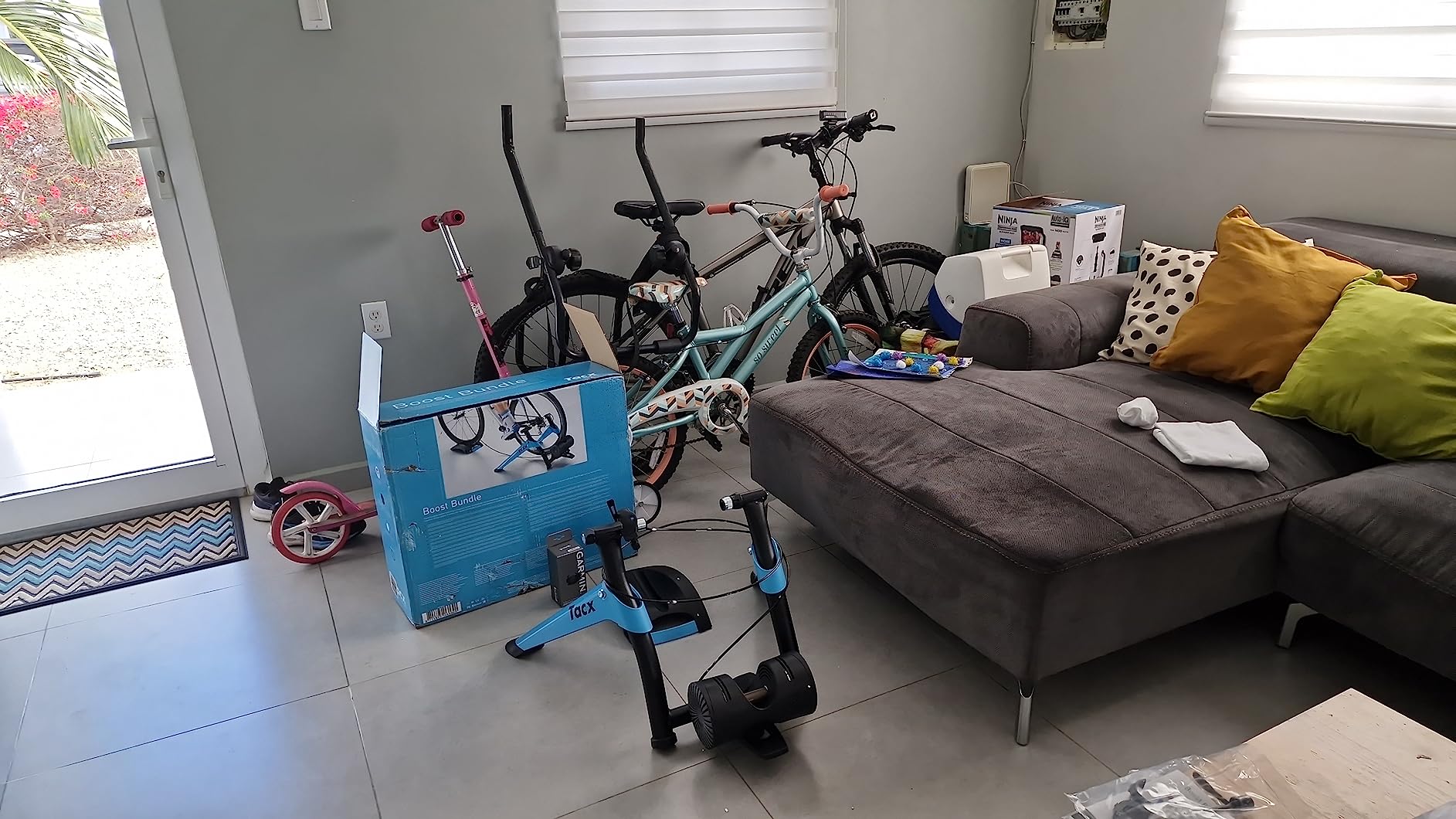
The 1.65 kg flywheel provides a surprisingly realistic ride feel for a trainer at this price. While it cannot match the road-like momentum of premium direct-drive trainers, it delivers smooth, consistent pedaling without the jerky feel that plagues cheaper magnetic trainers. The flywheel weight helps maintain momentum through the dead spots in your pedal stroke.
Noise output is moderate. With slick road tires, I measured approximately 69 decibels at moderate output. That is louder than the direct-drive options in this guide but comparable to other wheel-on trainers. The magnetic resistance unit itself is quiet, with most noise coming from tire-on-roller contact. Using a dedicated trainer tire would reduce noise further.
The included speed sensor enables basic integration with the Tacx Training app and TrainerRoad. Similar to the Saris Fluid2 setup, Zwift can use the speed data to estimate virtual power. This is not as accurate as a true smart trainer’s power measurement, but it provides enough data for casual virtual riding and basic training tracking.
Setup is genuinely simple with Garmin’s two-click mounting system. You attach the trainer to your rear wheel skewer, position the resistance unit, and you are ready to ride. The foldable aluminum frame stores compactly, and the included front wheel support ensures your bike sits level during rides.
Who Should Buy the Tacx Boost
The Boost is ideal for beginners who want a reliable trainer from a trusted brand without a major investment. If you are just starting with indoor cycling and want to test the waters before committing to a smart trainer, the Boost provides a solid foundation.
It is also worth considering if you already own a Garmin ecosystem device and want a trainer that integrates with the Tacx Training app. The included 30-day Tacx Premium subscription gives you access to virtual routes and structured workouts to get started.
Resistance Levels and App Integration
The 10 resistance levels are adjusted manually via a handlebar-mounted remote. Each level provides a distinct resistance feel, from easy spinning at level 1 to a challenging grind at level 10. The 1050-watt maximum covers the needs of most recreational riders, though serious cyclists may find it limiting for high-intensity sprint training.
The included speed sensor broadcasts via ANT+ and Bluetooth, making it compatible with Zwift, Tacx Training, TrainerRoad, Rouvy, and other popular apps. While the estimated power is less accurate than a dedicated smart trainer, it provides useful relative data for tracking your fitness progress over time.
How to Choose the Best Quiet Bike Trainer for Indoor Cycling?
Choosing the right quiet bike trainer depends on your budget, living situation, training goals, and the apps you want to use. Based on my testing and research across forums, reviews, and real-world use, here are the key factors to consider.
Direct-Drive vs Wheel-On: The Noise Difference
This is the single most important decision for noise-conscious buyers. Direct-drive trainers remove your rear wheel entirely and mount your bike directly to the trainer. This eliminates the tire-to-roller contact that produces the majority of trainer noise. Wheel-on trainers press a roller against your rear tire, creating constant friction noise that varies with tire tread and pressure.
In my testing, direct-drive trainers consistently measured 10 to 15 decibels quieter than wheel-on trainers at similar power outputs. For apartment dwellers, that difference is the threshold between “barely noticeable” and “annoying to neighbors.” If quiet is your top priority, direct-drive is the answer.
Wheel-on trainers do have advantages. They are typically less expensive, easier to set up, and more portable. If you only ride indoors occasionally or have a dedicated space where noise is not a concern, a wheel-on trainer may be the practical choice.
Smart vs Non-Smart Trainers
Smart trainers connect to apps like Zwift, TrainerRoad, and Rouvy via Bluetooth or ANT+. They can automatically adjust resistance based on virtual terrain, provide accurate power measurement, and enable ERG mode for structured workouts. Non-smart trainers provide fixed or manually adjusted resistance without app integration.
For riders serious about indoor training, a smart trainer transforms the experience. Racing on Zwift, following structured training plans, and riding virtual routes all require or benefit significantly from a smart trainer. The immersive experience also makes indoor riding more engaging, which helps maintain consistency during winter months.
Non-smart trainers still have a place for casual riders who just want to pedal for fitness. They are simpler, often cheaper, and have no electronics to fail. The Sportneer, Alpcour, and base Saris Fluid2 are all solid non-smart options.
Resistance Types and Noise Levels
Three main resistance types are used in bike trainers, each with different noise characteristics. Fluid resistance uses a viscous liquid to create progressive resistance and is generally the quietest option for wheel-on trainers. Magnetic resistance uses electromagnets or permanent magnets and offers adjustable levels but can produce a buzzing sound at higher intensities. Friction resistance uses physical pads against a flywheel and is the loudest option, mostly found in very cheap trainers.
For direct-drive smart trainers, electromagnetic resistance is the standard. These systems are nearly silent because there is no physical contact between moving parts. The Tacx Neo 2T, KICKR CORE 2, ThinkRider X2Max, and CYCPLUS R200 all use electromagnetic resistance, which is why they are the quietest options in this guide.
Apartment Living: Noise Reduction Tips
Even the quietest trainer transmits some vibration through floors, which can bother neighbors below you. Based on forum discussions on Reddit and TrainerRoad, here are the most effective noise reduction strategies for apartment dwellers.
First, invest in a thick exercise mat or dedicated trainer mat under your setup. This absorbs vibration before it reaches the floor and is the single most effective noise reduction step. A yoga mat is not sufficient. Look for a mat at least half an inch thick designed for exercise equipment.
Second, use a dedicated trainer tire if you have a wheel-on trainer. Trainer tires are made from harder rubber compounds that grip the resistance roller better and produce less noise than road tires. They also last longer since they are not designed for outdoor use.
Third, keep your drivetrain clean and well-lubricated. Chain noise is often louder than the trainer itself, especially on older bikes. A clean, properly lubed chain makes a measurable difference in overall noise output.
Fourth, consider placing your trainer on an upper floor away from shared walls. Vibration travels more through floors than walls, and positioning matters. If possible, set up in a room directly above a common area rather than a neighbor’s bedroom.
Trainer Tires: Do You Really Need One?
If you use a wheel-on trainer regularly, a trainer tire is worth the investment. These special tires cost 30 to 40 dollars and are designed specifically for indoor use. They reduce noise, improve grip on the resistance roller, and eliminate the problem of wearing out your expensive outdoor tires on the trainer.
One important note: never ride outdoors with a trainer tire installed. They are made from compounds that provide excellent grip on metal rollers but have terrible traction on pavement. Most riders keep a spare rear wheel with a trainer tire mounted for indoor sessions and swap wheels when heading outside.
For direct-drive trainers, tire choice is irrelevant since your rear wheel is removed entirely. This is another advantage of direct-drive design for regular indoor riders.
Floor Protection and Mats
Beyond noise reduction, floor protection is important for any indoor cycling setup. Trainers can scratch hardwood floors, stain carpet with sweat, and damage tile through pressure points. A dedicated trainer mat protects your floors and provides a stable, non-slip surface for your setup.
Look for mats specifically designed for indoor trainers, which typically cost 40 to 80 dollars. These mats are thick enough to absorb vibration, durable enough to handle sweat and bike cleats, and sized to fit your trainer and bike footprint. Generic exercise mats can work but may not provide adequate protection against the concentrated weight of a trainer and rider.
If you ride upstairs, consider adding a vibration-dampening pad between the mat and the trainer itself. Foam rubber pads designed for washing machines work well and can reduce low-frequency vibration transmission significantly.
FAQs
How to make an indoor bike trainer quieter?
To make any indoor bike trainer quieter, use a dedicated trainer tire instead of road or mountain bike tires, place a thick exercise mat under the trainer to absorb floor vibration, keep your chain clean and lubricated, and position the trainer away from shared walls. For maximum noise reduction, upgrade to a direct-drive trainer which eliminates tire-to-roller contact noise entirely.
What is the quietest stationary bike?
The quietest stationary bike trainers are direct-drive smart trainers like the Garmin Tacx Neo 2T and Wahoo KICKR CORE 2. These trainers use electromagnetic resistance with no physical friction components, producing only 58 to 63 decibels at moderate output. Among budget options, the ThinkRider X2Max operates at approximately 58dB, making it one of the quietest trainers at any price point.
What is the best indoor bicycle trainer?
The best indoor bicycle trainer depends on your needs. For overall performance and quietness, the Garmin Tacx Neo 2T is the top choice. For best value, the Wahoo KICKR CORE 2 with Zwift Cog delivers excellent performance at a lower price. For budget-conscious buyers, the ThinkRider X2Max offers direct-drive smart features for significantly less than premium options.
Is 30 minutes of stationary bike the same as 30 minutes of walking?
No, 30 minutes on a stationary bike typically burns more calories and provides greater cardiovascular benefit than 30 minutes of walking. A 155-pound person cycling at moderate intensity burns approximately 260 calories in 30 minutes, compared to about 150 calories walking at a moderate pace. Cycling also provides lower-impact exercise that is easier on joints while allowing you to control intensity through resistance and cadence.
Are direct-drive trainers quieter than wheel-on trainers?
Yes, direct-drive trainers are significantly quieter than wheel-on trainers. Direct-drive designs remove the rear wheel entirely, eliminating the tire-to-roller friction that is the loudest noise source in wheel-on trainers. In testing, direct-drive trainers measured 10 to 15 decibels quieter than comparable wheel-on models at similar power outputs, making them the clear choice for apartment dwellers and shared living spaces.
Final Thoughts on Quiet Bike Trainers for Indoor Cycling
Finding the best quiet bike trainers for indoor cycling in 2026 comes down to matching your budget with your noise tolerance and training goals. For riders who want the absolute quietest experience, the Garmin Tacx Neo 2T remains the gold standard with its whisper-silent electromagnetic resistance and realistic ride feel. The Wahoo KICKR CORE 2 hits the best overall value with integrated WiFi and the Zwift Cog system, while the ThinkRider X2Max proves that direct-drive quietness does not require a premium budget.
For those who prefer wheel-on simplicity, the Sportneer, Alpcour, and Saris Fluid2 all deliver quiet fluid resistance at accessible prices. The CYCPLUS R200 brings innovative virtual shifting to the table, and the Garmin Tacx Boost offers a trusted brand entry point with basic app compatibility.
Whatever you choose, remember that a good mat, clean drivetrain, and proper tire selection matter almost as much as the trainer itself for noise reduction. Your neighbors will thank you, and you will actually look forward to indoor sessions instead of dreading the noise.