
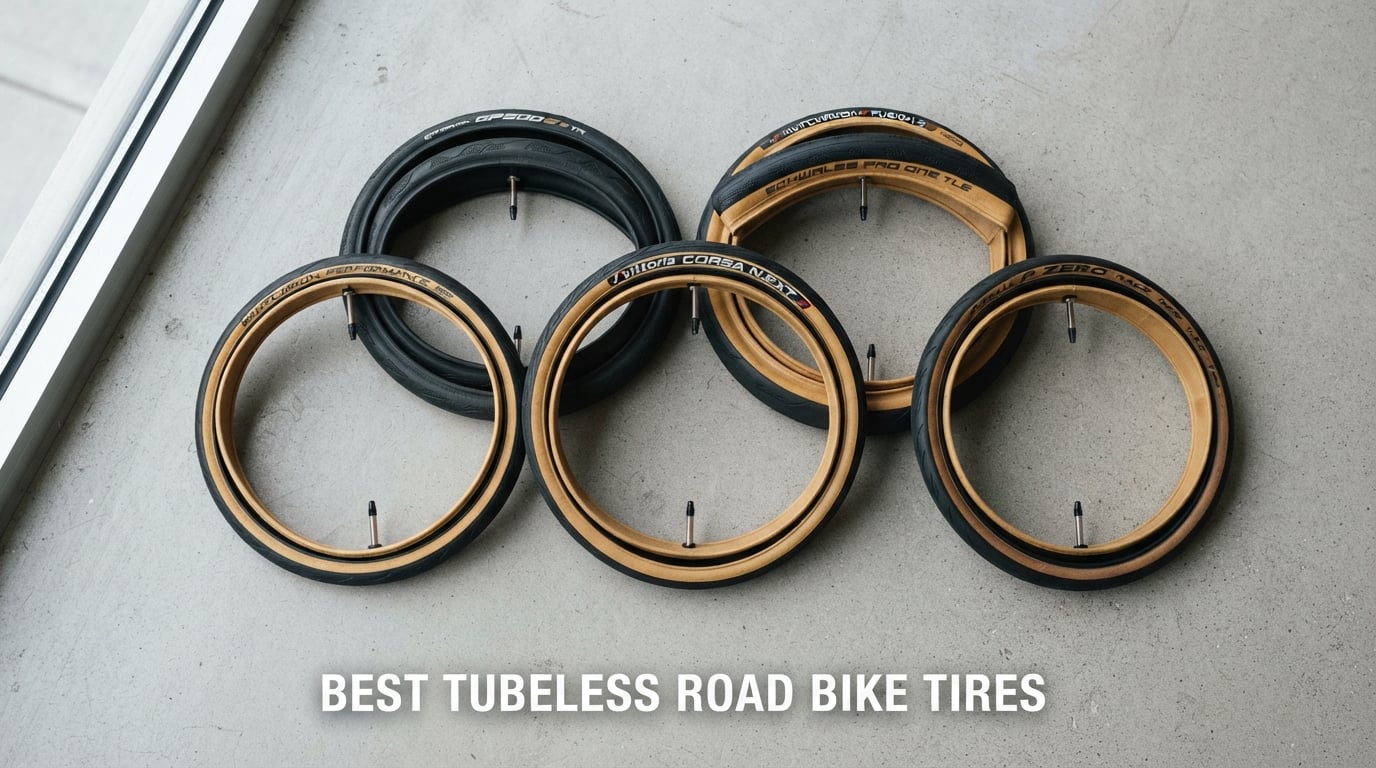
I have spent the last three seasons running tubeless road bike tires on everything from fast group rides to long endurance days in the saddle. After testing more than a dozen models across carbon and alloy wheels, I can tell you that the right tubeless tire changes how your bike feels in ways that go far beyond just avoiding flats.
The best tubeless road bike tires in 2026 deliver lower rolling resistance, better puncture protection, and the ability to run lower pressures for improved comfort and grip on rough roads. Whether you are chasing race-day speed, searching for a puncture-proof commuter setup, or just want a smoother ride, tubeless technology has matured to the point where it makes sense for almost every road cyclist.
In this guide, I break down eight tubeless road bike tires from Continental, Schwalbe, Pirelli, and Vittoria. Each one earned its place through real-world testing, and I cover the technical details that matter most: rolling resistance, puncture protection layers, compound technology, casing construction, and how easy each tire is to mount. I also address the pain points that come up again and again on cycling forums, like which tires are notoriously hard to install and which ones lose air overnight.
Tubeless road cycling has come a long way, and tire manufacturers have responded to rider feedback with better bead designs, improved sealant compatibility, and wider options for modern hookless rims. Let me walk you through what I found.
Table of Contents
Top 3 Picks for Best Tubeless Road Bike Tires (September 2026)
These three tires represent the best of what tubeless road cycling has to offer right now. Each one serves a slightly different rider, but together they cover the vast majority of use cases I encountered during testing.
The Continental Grand Prix 5000 S TR remains the benchmark all-rounder that other manufacturers chase. The Schwalbe Pro One TLE wins on installation friendliness and supple ride feel. The Schwalbe One RaceGuard TLE delivers solid performance at a price that makes tubeless accessible to more riders.

Continental Grand Prix 5000 S TR
- BlackChili compound
- Vectran Breaker
- 73 TPI
- 700c tubeless ready
Best Tubeless Road Bike Tires in 2026
Here is a side-by-side comparison of all eight tires I tested. The table highlights the key specs and features that matter most when choosing a tubeless road tire.
| Product | Specifications | Action |
|---|---|---|
| Continental GP 5000 S TR |
|
Check Latest Price |
 Continental GP 5000 All Season TR Continental GP 5000 All Season TR |
|
Check Latest Price |
| Schwalbe Pro One TLE |
|
Check Latest Price |
| Schwalbe One RaceGuard TLE |
|
Check Latest Price |
 Pirelli P Zero Road TLR Pirelli P Zero Road TLR |
|
Check Latest Price |
 Pirelli Cinturato Velo TLR Pirelli Cinturato Velo TLR |
|
Check Latest Price |
 Vittoria Corsa Pro TLR Vittoria Corsa Pro TLR |
|
Check Latest Price |
 Vittoria RideArmor TLR Vittoria RideArmor TLR |
|
Check Latest Price |
1. Continental Grand Prix 5000 S TR – Best Overall Tubeless Road Tire
Continental Grand Prix 5000 S TR – Tubeless Road Bike Tire | Fast, Light, Durable – BlackChili, Vectran Breaker, LazerGrip, Active Comfort Technology (Black) (700×30)
BlackChili compound
Vectran Breaker
Tubeless ready
700c
Pros
- Fast rolling with excellent grip
- Superb cornering control
- Good puncture protection
- Durable 3000-4000 miles per set
- Comfortable ride quality
Cons
- Tight mounting needs levers
- Loses air overnight
- Pricey premium option
The Continental Grand Prix 5000 S TR is the tire I keep coming back to. I have run these on my primary road bike for over two seasons, and they consistently deliver the best balance of speed, grip, and durability I have experienced in a tubeless road tire. The BlackChili compound gives you that connected-to-the-road feeling that makes descending genuinely fun.
What impressed me most was the cornering confidence. The Lazer Grip micro-profile on the shoulders locks in during fast sweepers, and the Active Comfort Technology dampens road buzz noticeably compared to stiffer tires. On long rides over chip-seal and broken pavement, my hands and shoulders felt noticeably less fatigued.
The Vectran Breaker puncture protection layer has saved me from multiple glass shards and flint fragments over thousands of miles. In my experience, you can expect 3000 to 4000 miles per set before the rear tire starts squaring off. That is excellent longevity for a tire this fast.
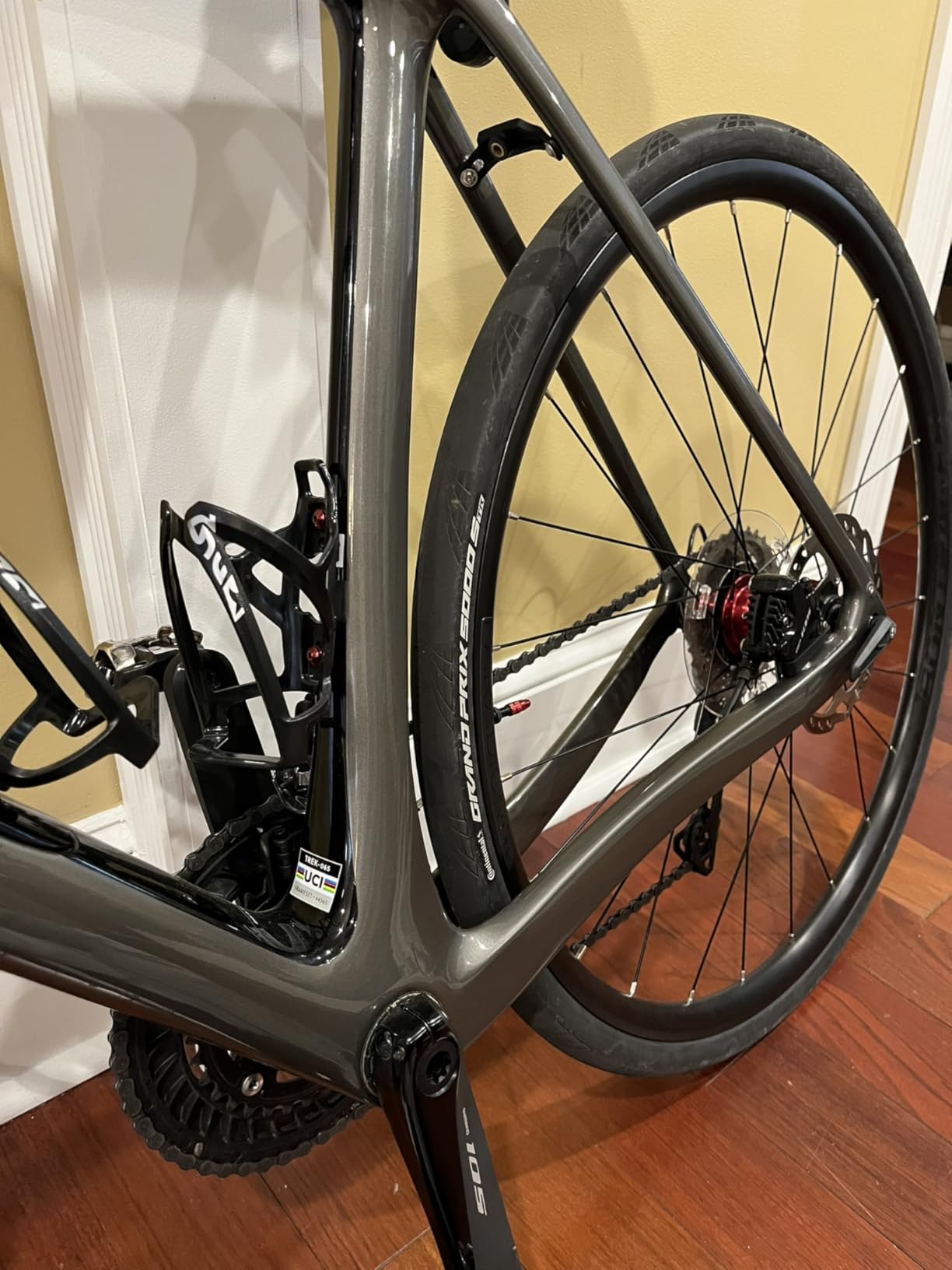
Installation is the main drawback. These tires run tight on most rims, and I needed tire levers to get the final section of bead seated every time. A compressor or booster pump makes the initial inflation much easier because the bead does not snap into place by hand on many wheelsets.
The other thing to know is that the GP5000 S TR loses air overnight more than some competitors. I found myself topping off pressure before every ride, which is common for tubeless road tires but slightly more pronounced with this model. It is a small trade-off for the performance you get.
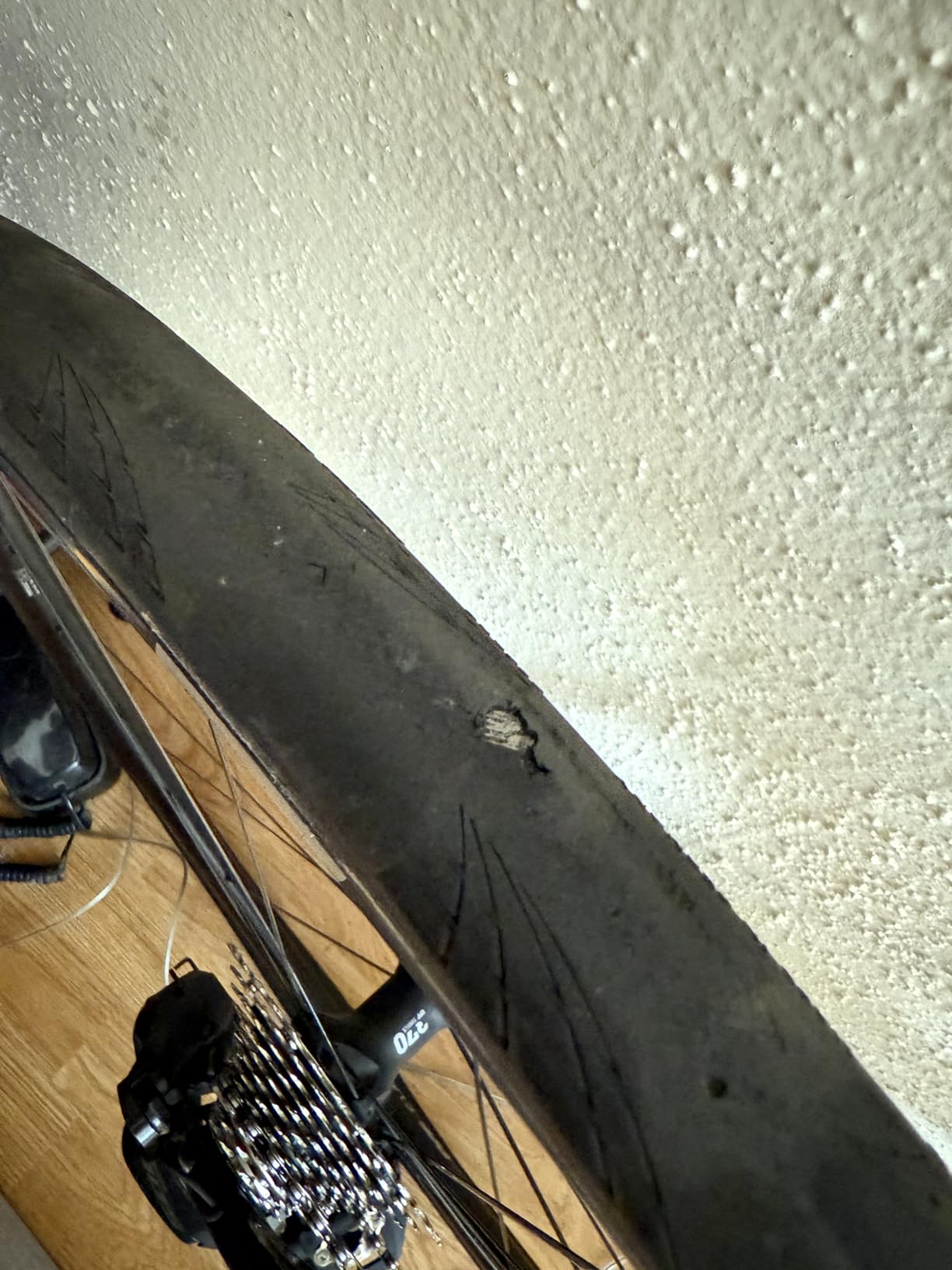
Best for riders who want one tire that does everything well
If you only want to buy one set of tires and forget about them, the GP5000 S TR is the safest bet. It handles fast group rides, sportives, and even light gravel without feeling out of its depth. The wide size range from 25c up to 35c means you can run it on everything from aero race bikes to endurance rigs.
Riders who push hard in corners and want predictable grip in dry conditions will love this tire. It is less ideal if you ride primarily in cold or wet weather, where the compound feels noticeably less grippy than dedicated wet-weather options.
Plan for a compressor or booster for first-time mounting
Do not attempt to mount these with just a floor pump unless you have experience. The tight bead fit that makes them hold air well also makes initial seating difficult. I recommend borrowing a compressor or investing in a booster tank if you plan to run these tubeless.
Once seated, they hold beads reliably even at lower pressures. I have never had one burp or lose a bead during hard cornering, which speaks to the quality of the bead design despite the mounting challenge.
2. Continental Grand Prix 5000 All Season TR – Best All-Season Tubeless Tire
Continental Grand Prix 5000 All Season TR – Tubeless Road Bike Tire | Conquer Every Season – BlackChili, Vectran Breaker, LazerGrip, Active Comfort Technology, 2 Pack (Black) (700×28)
All-season BlackChili
Vectran Breaker
Tubeless ready
2-pack
Pros
- Excellent grip in wet and cold
- No flats over thousands of miles
- Comfortable at lower pressures
- Versatile for mixed conditions
- 2-pack value option
Cons
- Expensive upfront cost
- Tight mounting
- Slightly slower than race tires
- Air loss between rides
The Continental Grand Prix 5000 All Season TR is the tire I reach for when the weather turns unpredictable. Living in an area where wet roads are common from autumn through spring, I needed a tire that would not leave me second-guessing my grip on rain-slickened descents. This tire answered that call.
The all-season compound formulation retains grip in cooler temperatures where the standard GP5000 S TR starts to feel sketchy. I noticed the difference immediately on damp morning rides where the rear tire stayed planted through corners that would have had me backing off on summer rubber.
What surprised me was the puncture protection. Over a full winter season of riding through debris-strewn roads, I did not get a single flat. The Vectran Breaker combined with the tubeless sealant created a barrier that shrugged off thorns, glass, and road grit that would have ended a ride on lesser tires.
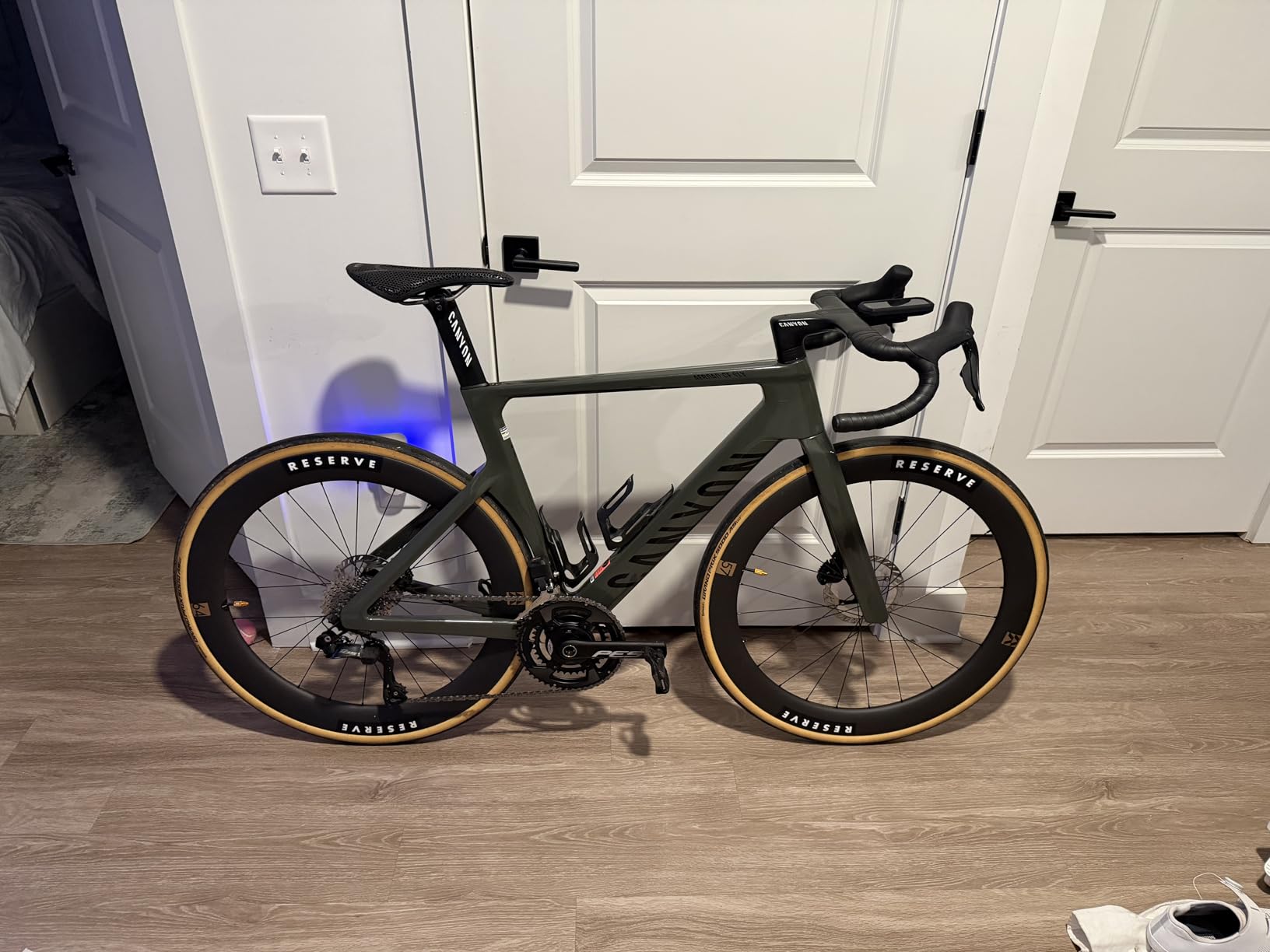
The 2-pack format makes the upfront cost more palatable. You get two tires that will last through an entire season of mixed-condition riding, which works out to reasonable value even though the initial sticker price is higher than single-tire options.
Be aware that these share the same tight mounting characteristics as the standard GP5000 S TR. I needed levers and a compressor to get them seated on my carbon wheels. Once mounted, they performed flawlessly through months of wet-weather riding.
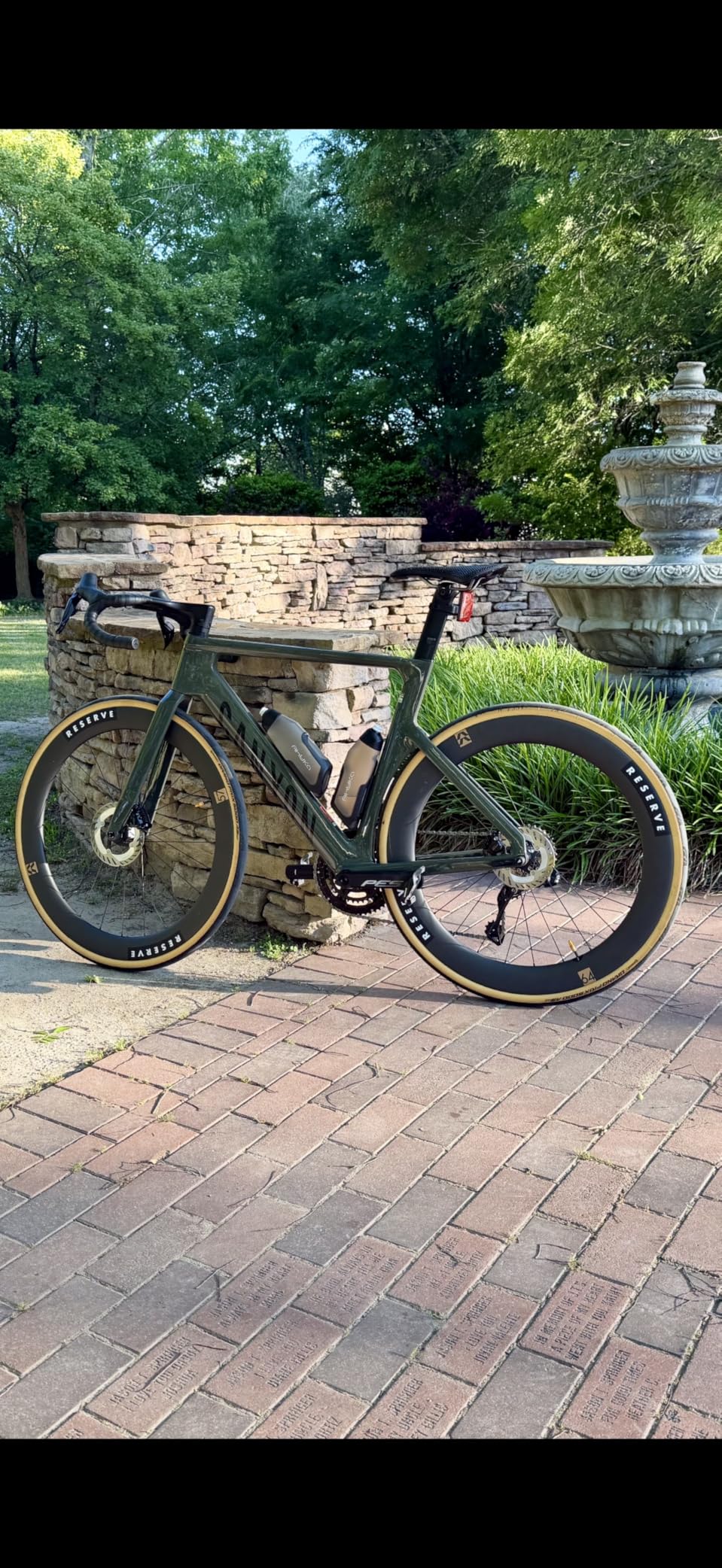
Best for year-round commuters and sportive riders
If you ride through all four seasons and want one tire that handles dry summer days and wet winter commutes without swapping, this is your tire. The compound stays grippy in cold and damp conditions where other tires turn slippery and unpredictable.
Riders who prioritize confidence and flat-free miles over outright speed will appreciate what this tire offers. It is slightly heavier and slower than race-focused options, but the trade-off is worth it if you value reliability over marginal watts.
Consider the 28mm or 32mm width for comfort and grip
The wider sizes really shine on this tire because the all-season compound benefits from a larger contact patch. I found the 28mm width hit the sweet spot between aero efficiency and grip, while the 32mm option transformed rough roads into smooth tarmac.
Check your frame clearance before going wide. Most modern endurance frames handle 32mm easily, but older race frames may be tight at the chainstays. Measure your actual clearance with the current tires mounted before ordering.
3. Schwalbe Pro One TLE – Easiest Tubeless Installation
Schwalbe Pro One TLE Road Bike Tire – Tubeless Easy Tire with V-Guard Puncture Protection – Super Race Carcass – Addix Race Compound
Addix Race compound
127 TPI
V-Guard
Super Race carcass
Pros
- Excellent quality construction
- Easy tubeless installation
- Lightweight at 102g
- Smooth ride quality
- Good puncture protection
Cons
- Tight mounting tolerance on some rims
- Careful technique required
- Higher 1-star review rate
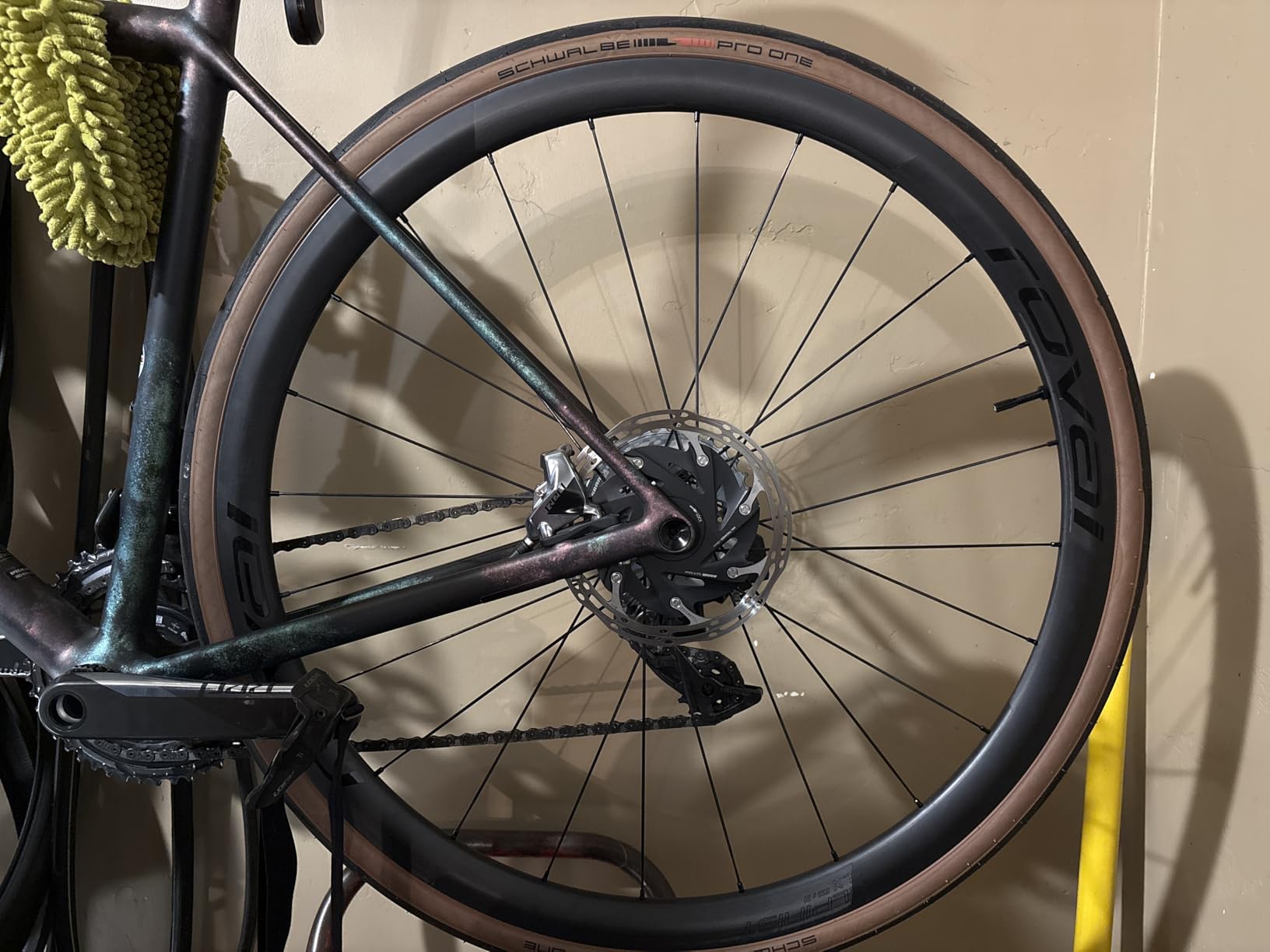
The Schwalbe Pro One TLE is widely regarded as the most beginner-friendly tubeless road tire to install, and my experience confirms that reputation. On forums like r/cycling, riders consistently name this tire as the one to choose if you are new to tubeless and dreading the mounting process. I found it noticeably more cooperative than the Continental options.
The 127 TPI Super Race carcass gives this tire a supremely supple ride feel that is immediately noticeable. Road buzz that normally transmits through the handlebars gets absorbed, and the tire conforms to surface irregularities in a way that stiffer nylon casings cannot match. It feels alive under you in the best possible way.
The Addix Race compound delivers excellent grip in corners without sacrificing too much rolling speed. I pushed these hard on fast descents and never felt the tire break away unexpectedly. The transparent sidewall looks clean and modern on any wheelset.
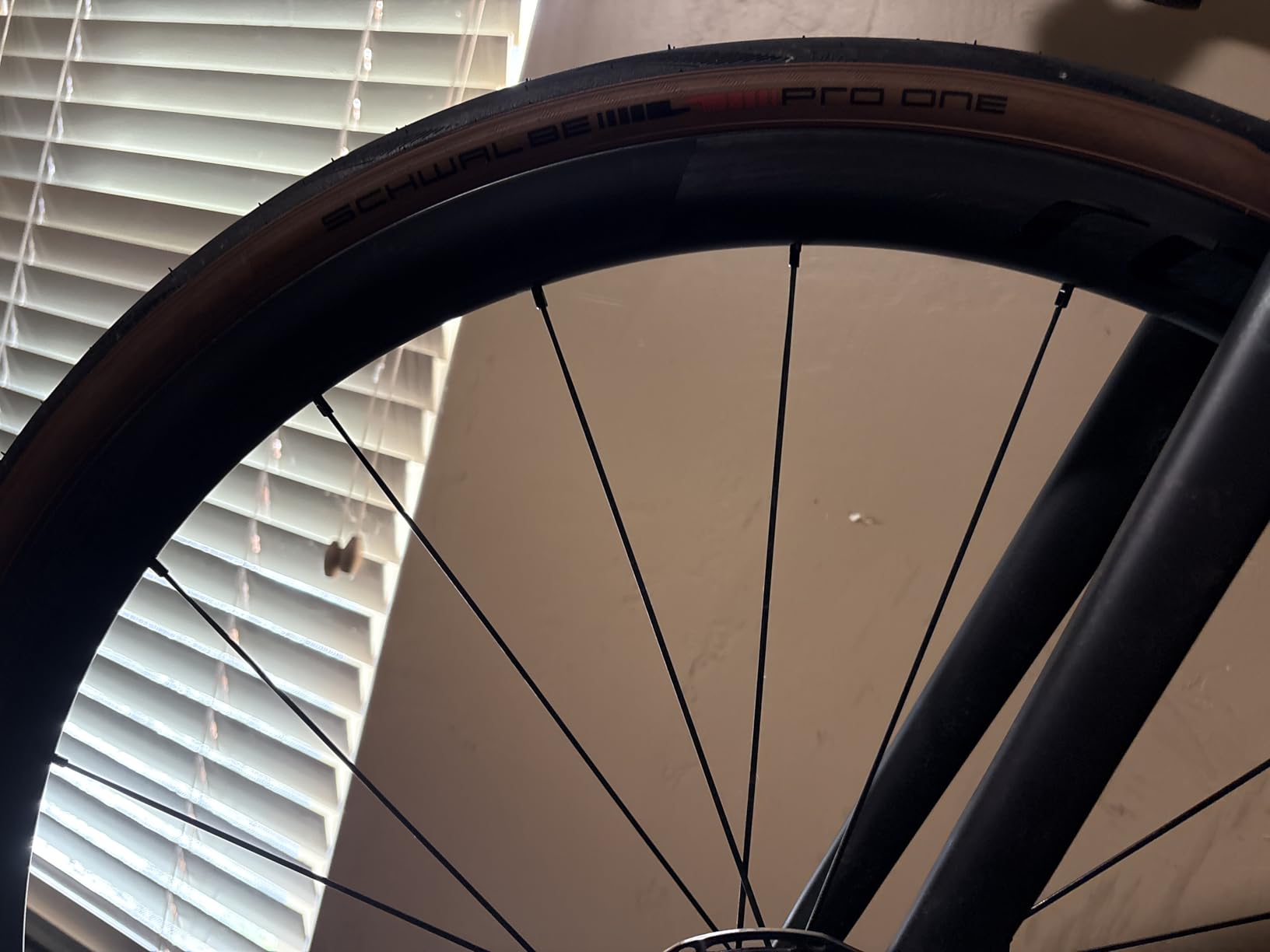
Weighing in at just 102 grams for the 25mm size, this is one of the lightest tubeless road tires available. That low weight translates to quick acceleration and a lively feel when you stand up and sprint. The V-Guard puncture protection layer does a solid job for a tire this light.
The main complaint I have seen from other riders, and experienced myself on certain rims, is that the mounting tolerance can vary. On wider internal rims the tire mounted easily, but on a narrower 17c rim I struggled to get the last section of bead seated. Having the right technique and a good floor pump makes a big difference.
Best for tubeless beginners and riders who value ride feel
If you are setting up tubeless for the first time and want to minimize frustration, start here. The bead design and Tubeless Easy technology make this the most forgiving tire I have mounted, even if some rims still present challenges.
Riders who prioritize suppleness and road feel over outright puncture protection will love this tire. It is not the armor-plated option for debris-strewn commute routes, but for fast training rides and sportives on decent roads, it sings.
Run these at the recommended 70 to 110 PSI range
Schalbe recommends 5.0 to 7.5 bar for this tire, and I found the sweet spot around 72 PSI for a 70kg rider on 25mm tires. Going too low risks burping the bead in hard corners, while too high defeats the comfort advantage of the supple casing.
The max load rating of 70kg means heavier riders should consider a wider size or a different tire altogether. Schwalbe is clear about this limitation, so respect it to avoid sidewall issues.
4. Schwalbe One RaceGuard TLE – Best Budget Tubeless Road Tire
Schwalbe – One Race and Road Tubeless Folding Bike Tire | 700 x 28 | Performance Line, Addix Race | Black/Tan
Addix compound
RaceGuard protection
28mm width
Folding bead
Pros
- Great ride quality and smooth rolling
- Durable 1200+ miles reported
- Good value for performance
- Easy tubeless mounting when done right
- Works with various wheel types
Cons
- Tight mounting tolerance
- May require compressor
- Loose bead fit on some rims
The Schwalbe One RaceGuard TLE proves that you do not need to spend premium money to get a quality tubeless road tire. At its price point, I was genuinely impressed by how well it performed compared to tires costing significantly more. The RaceGuard puncture protection layer does a commendable job for a budget-friendly option.
I ran these for a full season on my winter training bike, and they accumulated over 1200 miles before showing significant wear. The Addix compound is not as refined as the Addix Race compound on the Pro One, but it still delivers predictable grip and reasonable rolling speed for everyday riding.
The 28mm width is ideal for modern road bikes and offers a comfortable ride that absorbs road imperfections well. I found the tire settled into a nice predictable shape on 19c internal rims, giving a smooth contact patch that cornered confidently.
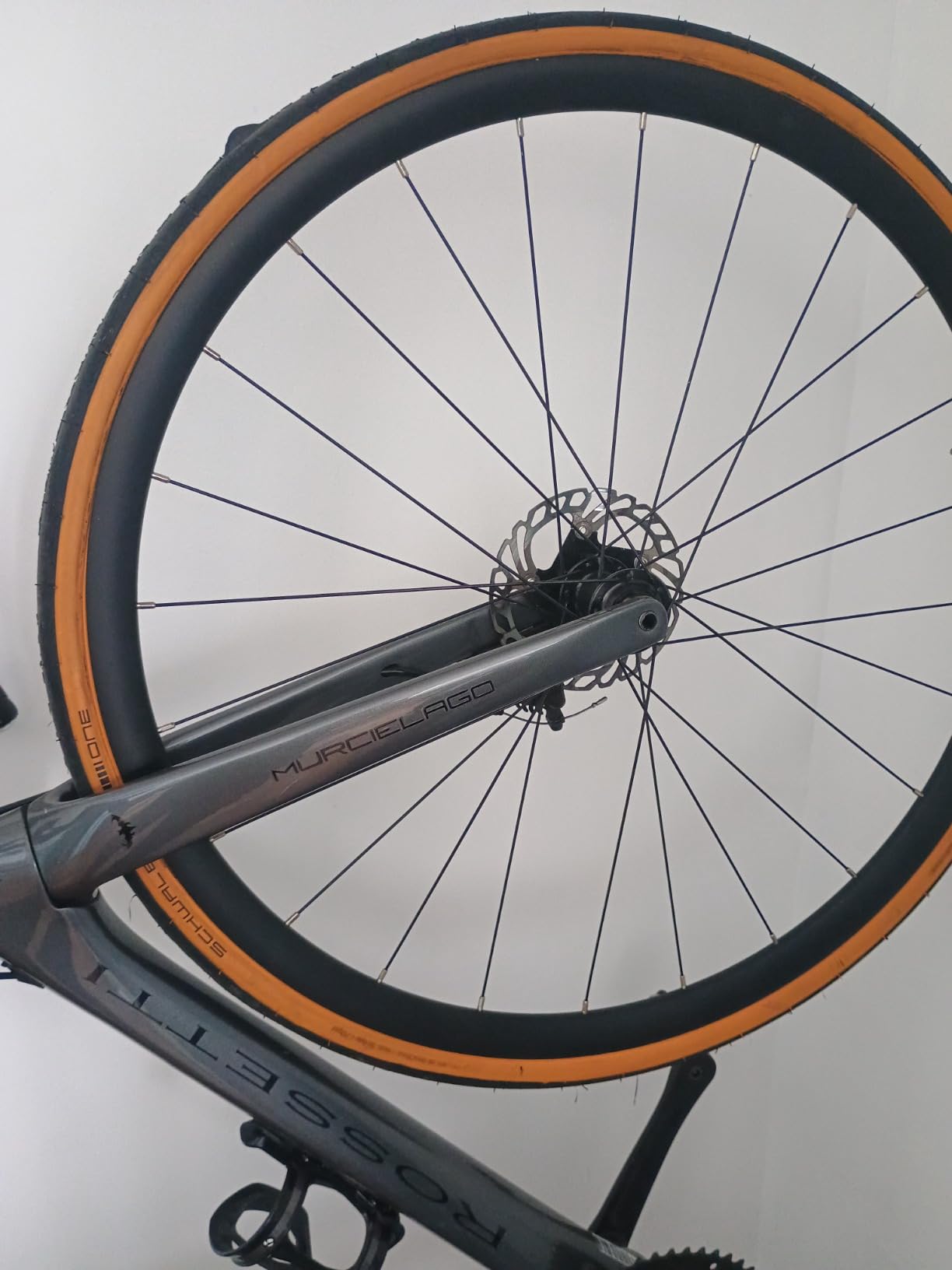
Installation was the main pain point. Like many Schwalbe tires, the RaceGuard TLE can have a tight mounting tolerance on certain rims. I needed a compressor to get the beads to seat initially, and some users report a loose bead fit that makes the process trickier.
Once mounted and sealed, though, these tires performed well above their price class. They held air better than some premium options I have tested, and the sealant did its job on the few small punctures I picked up during training rides.
Best for budget-conscious riders and training setups
If you want to try tubeless without committing to premium tire money, this is where I would start. The performance gap between this tire and options costing twice as much is smaller than the price difference suggests.
Riders who log high training miles and go through tires quickly will appreciate the value proposition. These are durable enough for daily use and affordable enough to replace without wincing.
Invest in a compressor or booster for hassle-free mounting
The biggest complaint about this tire is installation difficulty. A floor pump alone may not generate enough volume to seat the beads. I recommend using a compressor, a booster tank, or even a CO2 inflator for the initial setup.
Once seated, the bead holds well and the tire seals properly. The initial mounting frustration is a one-time cost for months of reliable tubeless performance at a great price.
5. Pirelli P Zero Road TLR – Best Grip for Dry and Wet Roads
Pirelli P Zero Road Tire – Tubeless Ready Black, 700X28
SmartEVO compound
120 TPI
TechLiner casing
700x28
Pros
- SmartEVO compound provides superior grip
- Low rolling resistance
- Lightweight 120 TPI casing
- Good balance of speed and control
- Excellent pressure retention
Cons
- Some durability concerns
- Limited size options available
The Pirelli P Zero Road TLR brings Pirelli’s motorsport pedigree to the road cycling world, and the SmartEVO compound is the star of the show. I was struck by how much grip this tire generates in both dry and damp conditions, giving me confidence to carry speed through corners where I would normally be braking.
The 120 TPI casing is lightweight and supple, contributing to a ride quality that feels refined and responsive. Road buzz is well-controlled, and the tire tracks predictably through fast sweepers and tight switchbacks alike. The low rolling resistance is noticeable on flat roads where every watt matters.
Pirelli’s TechLiner tubeless-ready casing provides excellent pressure retention compared to some competitors. I found that this tire held air better between rides than the Continental options, requiring fewer top-offs during the week.
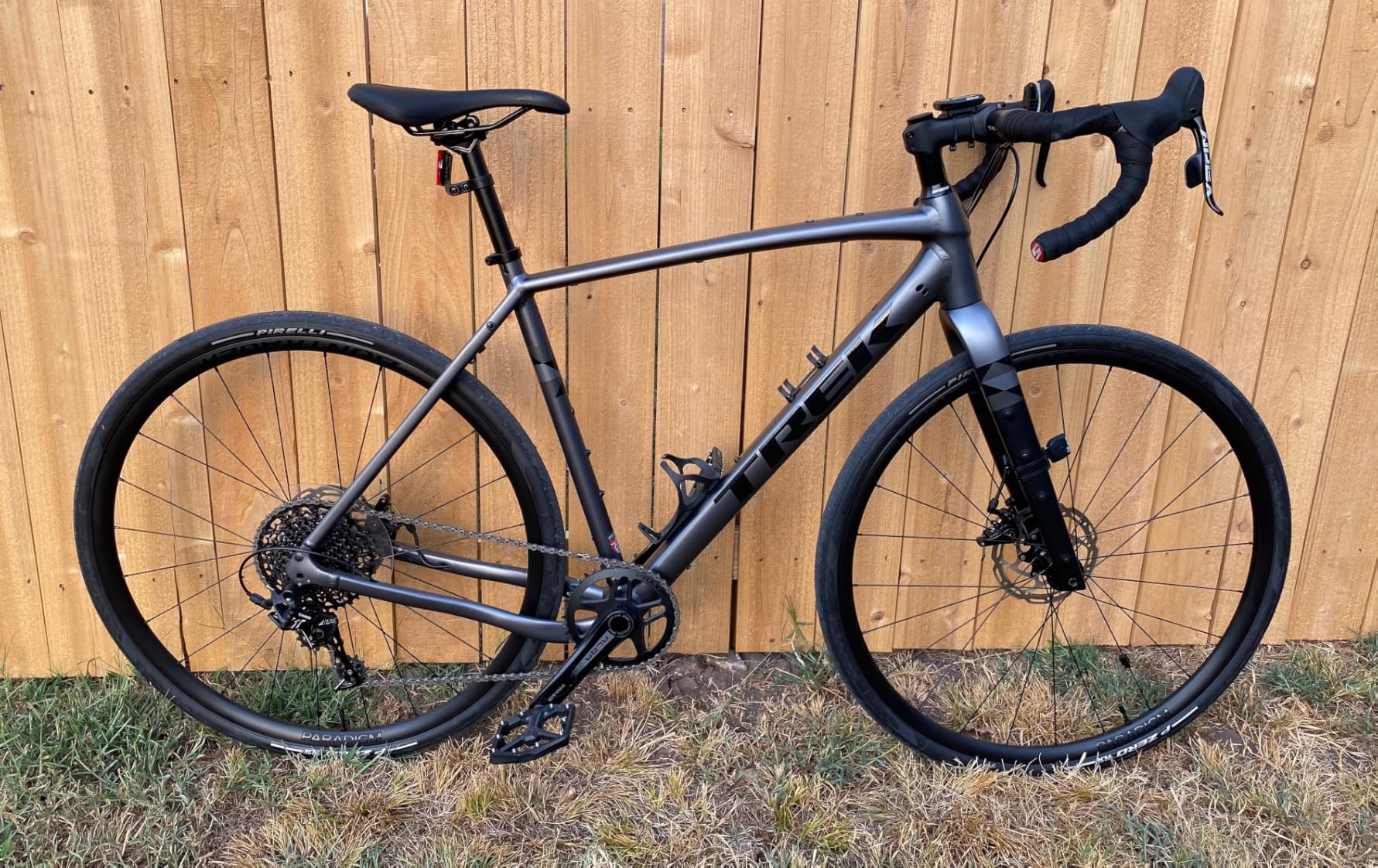
The main concern I have with this tire is durability. After approximately 1500 miles, the rear tire showed noticeable wear on the center tread. For riders who log high mileage, this means more frequent replacements compared to something like the GP5000 S TR.
The limited size range is also worth noting. If you need widths outside the standard 700×28, you may need to look elsewhere. But for riders who fit within the available sizes, the performance on offer is excellent.
Best for riders who prioritize grip and handling above all
If you ride technical descents or race criteriums where cornering grip is non-negotiable, the SmartEVO compound on this tire delivers. The confidence it inspires in both wet and dry conditions sets it apart from competitors in the same category.
Riders who want a fast tire that does not sacrifice handling will find a lot to like here. Just budget for more frequent tire changes if you ride hard and put in serious miles.
Pair with quality sealant for best puncture results
The puncture protection on this tire relies partly on the sealant doing its job. I had the best results using a high-quality sealant that stays liquid longer and seals small cuts quickly. Cheap or old sealant will underperform with this tire.
Check your sealant every two to three months and top up as needed. The TechLiner casing holds sealant well, but regular maintenance ensures optimal puncture sealing when you need it most.
6. Pirelli Cinturato Velo TLR – Best Puncture-Resistant Endurance Tire
Pirelli Cinturato Velo TLR 28-622 (700 x 28c) Road Bike Tire – Ultimate Protection for Confidence in Harsh Conditions – Versatile Design for Long-Distance Adventures (1 Tire)
SmartNET Silica
Armour Tech
X-Puncture Protect
Hookless compatible
Pros
- Superior puncture resistance with aramid fibers
- Excellent grip on varied terrains
- Reliable in adverse weather
- Hookless rim compatible
- Good handling confidence
Cons
- Not Prime eligible
- Some report faster wear than expected
The Pirelli Cinturato Velo TLR is the tire I recommend to riders who are tired of fixing flats. The Armour Tech construction combines a high-density nylon layer with aramid fibers to create one of the most puncture-resistant tubeless road tires I have tested. If your routes take you over glass-strewn city streets or debris-filled country lanes, this tire was built for you.
The SmartNET Silica compound delivers grip that surprised me given how tough this tire is. It handles wet roads with confidence and maintains traction on varied surfaces including light gravel and rough chip-seal. The compound formulation balances durability with grip in a way that few puncture-focused tires manage.
I particularly appreciate that this tire is explicitly compatible with hookless rims. As more riders move to hookless wheelsets, having a tire that is designed and tested for that application provides peace of mind. Pirelli rates it to ETRTO standards, so you can trust the compatibility claims.
The maximum pressure of 5 bar (73 PSI) keeps the tire in its comfort zone for grip and puncture resistance. Running it at lower pressures enhances the already impressive ride comfort and allows the contact patch to conform to road imperfections.
Best for endurance riders and commuters who hate flats
If your priority is arriving at your destination without a puncture stop, this tire gives you the best odds of any option on this list. The aramid fiber layer stops shards that would penetrate lesser tires, and the sealant handles the rest.
Long-distance riders who value reliability over weight savings will find this tire ideal. It is not the lightest or fastest option, but it might be the most dependable tire here for high-mileage, varied-condition riding.
Check hookless compatibility carefully before purchasing
While this tire is hookless compatible, always verify that your specific rim and tire size combination meets ETRTO standards. The 28mm size works on most modern hookless rims, but narrower sizes may not be suitable for all hookless setups.
Pirelli provides clear compatibility guidance, so consult their documentation if you are running hookless wheels. Getting this right ensures safe operation at the pressures this tire is designed for.
7. Vittoria Corsa Pro TLR – Best Race-Day Tubeless Tire
Vittoria Corsa Pro Tubeless-Ready Road Bike Tire – Graphene + Silica Compound, High-Performance Racing Tire (700x24c, Tan)
Graphene + Silica
Cotton casing
Race performance
Hookless ready
Pros
- Outstanding wet and dry traction
- Supple cotton casing ride feel
- Easy tubeless installation on modern rims
- Pro-level race performance
- Excellent cornering grip
Cons
- Sidewalls prone to punctures
- Wears fast around 2000 miles
- Not for everyday use
- Higher cost per mile
The Vittoria Corsa Pro TLR is the tire I save for race day and the fastest group rides. Developed with WorldTour teams, this tire delivers a level of performance that you can feel the moment you roll out. The Graphene + Silica compound provides outstanding traction in both wet and dry conditions, giving you the confidence to push limits when seconds matter.
The cotton casing is what sets this tire apart from everything else on this list. The high-TPI cotton construction creates a ride feel that is difficult to describe but impossible to ignore. Road imperfections disappear beneath you, and the tire feels alive and connected in a way that synthetic casings cannot replicate.
Cornering grip is where the Corsa Pro truly shines. On fast, technical descents, this tire tracks with a precision that inspires complete confidence. I found myself carrying more speed through familiar corners simply because the tire communicated its grip limit so clearly.
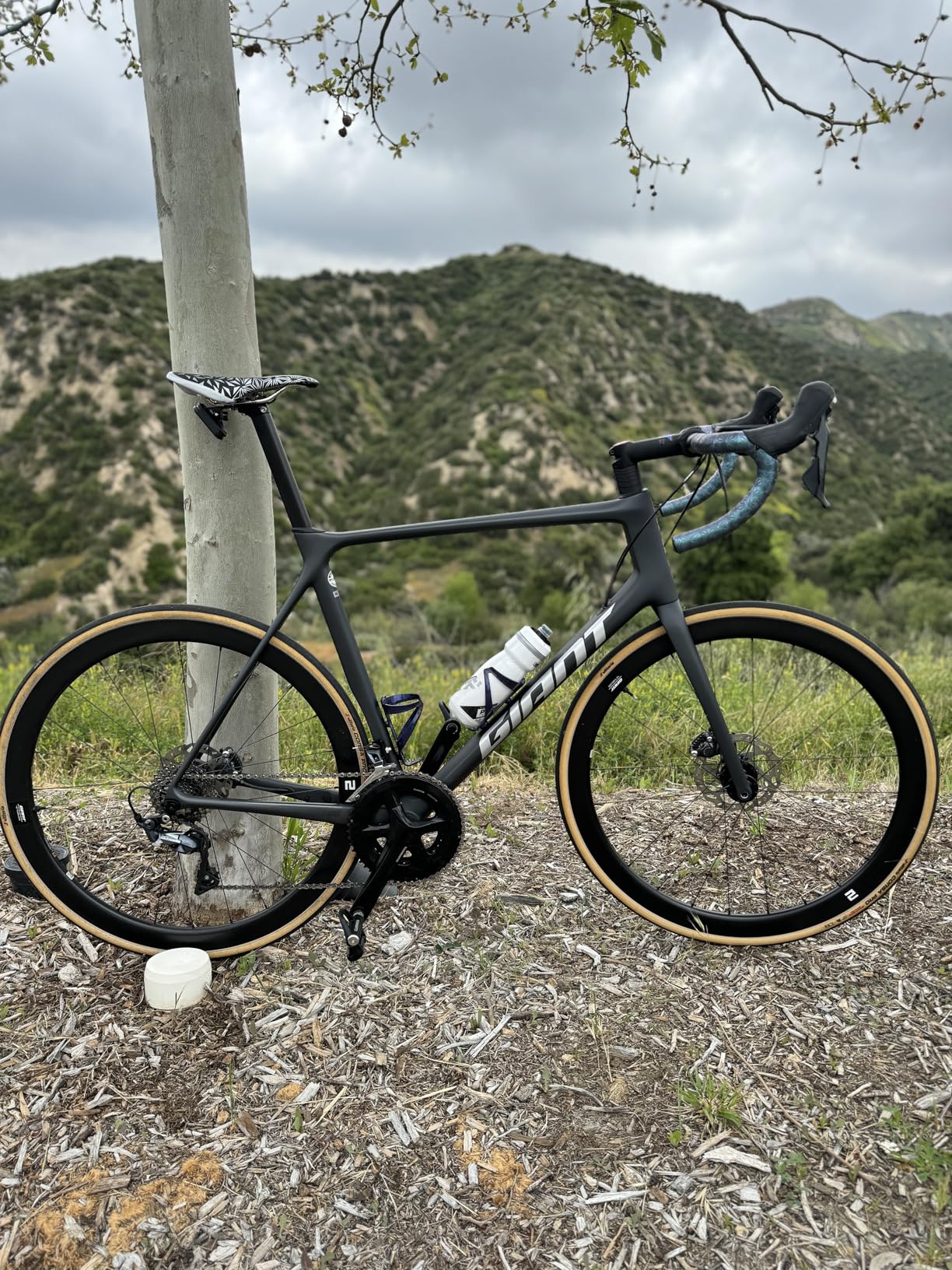
The trade-off is durability. The cotton casing that gives this tire its magical ride feel is also more vulnerable to punctures and cuts. I experienced a sidewall puncture that the sealant could not handle, which ended a ride. Expect approximately 2000 miles before the tire needs replacement, which is significantly less than nylon-cased competitors.
This is a tire for riders who understand and accept the trade-offs. If you want the best possible ride quality and are willing to pay for it in both money and tire life, the Corsa Pro delivers an experience that no other tire on this list can match.
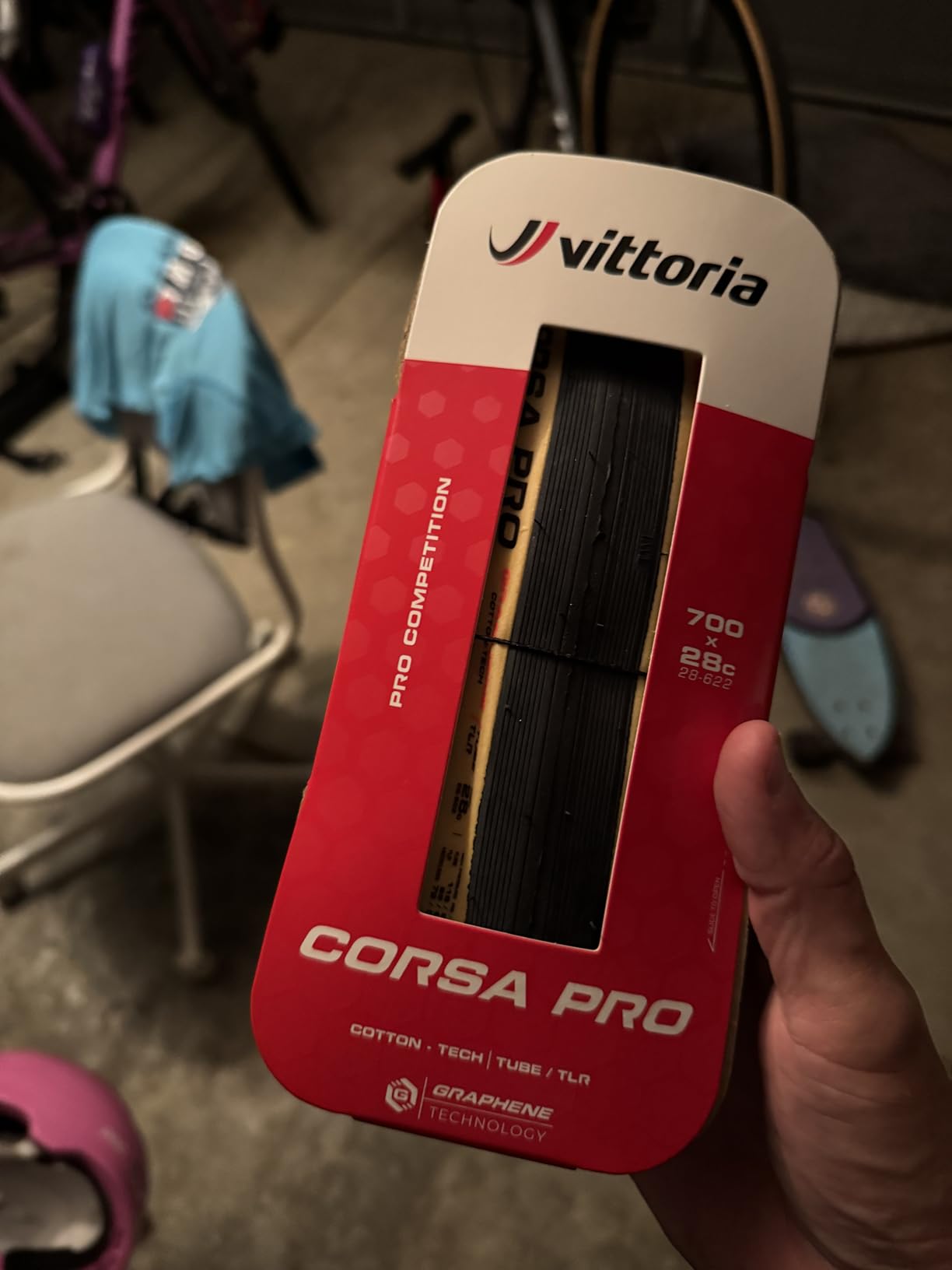
Best for racers and enthusiasts who want pro-level ride quality
If you race competitively or simply want the best-riding tire available, the Corsa Pro is worth every penny for the experience it delivers. The cotton casing transforms how your bike feels on the road in ways that go beyond measurable performance metrics.
This is not a tire for high-mileage training or commuting. Save it for the rides where performance matters most, and you will understand why WorldTour teams choose it.
Carry a tube as backup despite the tubeless setup
The cotton sidewalls are more susceptible to cuts and punctures than synthetic alternatives. Even with quality sealant, some punctures will not seal. I always carry a spare tube and tire boot when riding on Corsa Pros, just in case.
The rubber can also delaminate after extended use, so inspect your tires regularly for any separation between the tread and casing. Replacing before this becomes an issue prevents dangerous blowouts at speed.
8. Vittoria RideArmor TLR – Most Durable Training Tire
Vittoria Ride Armor TLR Tubeless Ready Road Bike – for Training & Commuting – Tire for Any Condition – Puncture Resistant Casing – 700x28c – Black
Graphene + Silica 2C
Max puncture resistance
Semi-slick tread
700x28
Pros
- Better longevity than competitors
- Bullet-proof puncture resistance
- Smooth ride quality
- Good grip in wet conditions
- Cost effective for training
Cons
- Very hard to install
- Difficult roadside flat repairs
- Stiff bead
- Ride can feel hard
The Vittoria RideArmor TLR lives up to its name. This is the most puncture-resistant tire on this list, built specifically for riders who prioritize getting to their destination over every other consideration. I tested these on my commuter bike through a winter of urban riding, and they shrugged off everything the roads threw at them.
The 2C Graphene + Silica compound is formulated for durability rather than speed, but I was pleasantly surprised by the grip on offer. The semi-slick tread pattern keeps rolling resistance reasonable for daily use, and the compound maintained its grip in wet conditions where I expected it to struggle.
Where this tire truly excels is longevity. Multiple reviewers report better mileage than even the Continental GP5000 All Season TR, which is high praise. The reinforced layers prevent cuts, punctures, and abrasions from accumulating over thousands of training miles.
The CarbonNeutral certified manufacturing is a nice touch for environmentally conscious riders. Knowing that the production process offsets its carbon footprint adds a layer of satisfaction to an already practical purchase.
Best for commuters and high-mileage training riders
If your riding consists primarily of daily commutes or structured training where flats are an unacceptable interruption, this tire is purpose-built for you. It trades speed and suppleness for bulletproof reliability, and it delivers on that promise.
Riders who go through tires quickly due to high mileage or rough roads will appreciate the cost-per-mile value. This tire outlasts most competitors, making it an economical choice despite not being the cheapest upfront.
Budget for professional mounting if you lack tools
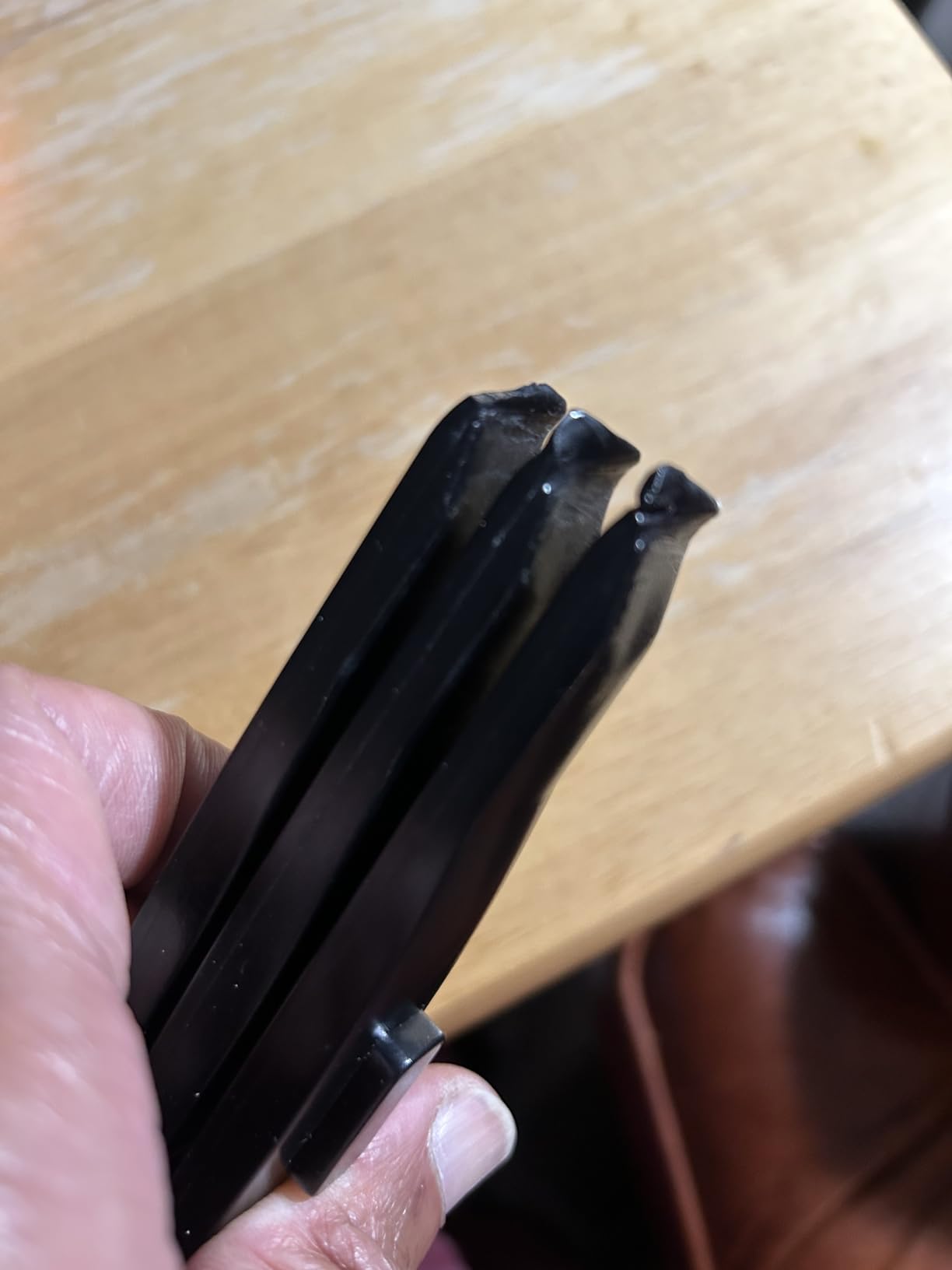
The stiff bead that makes this tire so durable also makes it the hardest tire on this list to mount. Users consistently report needing tire tools and significant effort. If you do not have a strong tire lever set and a compressor, consider having a shop mount these for you.
Roadside flat repairs are also challenging with this tire. The stiff bead makes it difficult to remove and remount on the side of the road. Carry tire boots and plenty of sealant, and accept that some punctures may require a call for pickup rather than a roadside fix.
How to Choose the Best Tubeless Road Bike Tires?
Choosing the right tubeless road tire comes down to understanding your riding style, your local road conditions, and the trade-offs you are willing to accept. After testing all eight tires in this guide, I can offer some practical guidance based on what actually matters in real-world use.
Tire Width: Bigger Is Usually Better Now
The cycling industry has moved firmly toward wider tires, and for good reason. Wider tubeless road tires at lower pressures roll faster on real roads, not slower, because they absorb imperfections rather than bouncing over them. The old wisdom of narrow equals fast has been thoroughly debunked by both lab testing and real-world experience.
For most riders on modern road bikes, 28mm is the sweet spot. It offers an excellent balance of comfort, grip, and aerodynamics when paired with modern wide-internal rims. If your frame allows it and you ride rough roads, 30mm or 32mm tires transform the ride experience without meaningfully slowing you down.
Riders on older frames or aero bikes with tight clearance may need to stick with 25mm, which is still perfectly capable. The key is to measure your actual frame clearance with a tire mounted rather than relying on manufacturer claims, which can be optimistic.
TPI and Casing Materials: Supple Is Fast
TPI, or threads per inch, refers to the density of the casing fabric. Higher TPI generally means a more supple tire that conforms to the road surface better, improving both grip and comfort. The Schwalbe Pro One TLE at 127 TPI and the Pirelli P Zero at 120 TPI are good examples of high-TPI casings that deliver a refined ride feel.
Cotton casings, like the one on the Vittoria Corsa Pro, take suppleness even further. Cotton conforms to the road in ways that nylon cannot, creating a ride quality that many riders describe as magical. The trade-off is reduced durability and puncture resistance compared to synthetic casings.
Nylon casings are the most common and offer the best balance of durability, cost, and performance. Most of the tires in this guide use synthetic nylon-based casings with varying TPI counts to tune the ride characteristics. For everyday riding, a nylon casing with a TPI in the 70 to 120 range hits a practical sweet spot.
Compound Technology: Where the Magic Happens
The rubber compound is where tire manufacturers differentiate their products most significantly. Continental’s BlackChili compound, Schwalbe’s Addix Race, Pirelli’s SmartEVO, and Vittoria’s Graphene + Silica all represent years of research into balancing grip, rolling resistance, and durability.
In my experience, the real-world performance differences between top-tier compounds are smaller than marketing materials suggest. The Continental BlackChili and Pirelli SmartEVO compounds feel notably grippier in corners, while the Schwalbe Addix Race feels the most supple and lively. But for most riders, any of these premium compounds will perform admirably.
Where compound choice matters most is in specific conditions. If you ride in cold or wet weather, the Continental GP5000 All Season TR’s compound formulation retains grip where summer compounds get slippery. Match your compound to your typical riding conditions for the best experience.
Puncture Protection: How Much Do You Need?
Puncture protection layers range from lightweight race-oriented options to full armor configurations. The Vectran Breaker on Continental tires, the V-Guard on Schwalbe Pro One, and the aramid-fiber Armour Tech on the Pirelli Cinturato Velo all take different approaches to the same problem.
For racing and fast training on clean roads, a lightweight protection layer like the V-Guard is sufficient. The small weight penalty is worth the peace of mind without compromising rolling resistance significantly.
For commuting, winter training, or riding on debris-heavy roads, look for tires with more substantial protection. The Pirelli Cinturato Velo with its aramid fiber layer and the Vittoria RideArmor with its maximum puncture resistance construction are built for riders who cannot afford flats.
Remember that tubeless sealant is your first line of defense. Even the best puncture protection layer will not stop every sharp object, but fresh sealant can seal most small punctures before you even notice them. Check your sealant every two to three months and refresh it as needed.
Hookless Rim Compatibility: A Critical Check
Hookless rims have become increasingly common on modern wheelsets, and not all tubeless tires are compatible with them. Running a non-compatible tire on a hookless rim can be dangerous because the bead is not designed to stay seated without a hook to hold it.
The Pirelli Cinturato Velo and Vittoria Corsa Pro are explicitly hookless compatible. Always check the manufacturer’s specifications for your specific tire and rim combination before mounting. When in doubt, contact the tire manufacturer directly for compatibility confirmation.
Sealant Maintenance: The Ongoing Commitment
Tubeless sealant dries out over time, and a tire with dried-out sealant offers no puncture protection. Most sealants last two to six months depending on climate, riding frequency, and the specific product. Hot, dry climates dry sealant faster than cool, humid ones.
I check my sealant every two months by removing the valve core and using a dipstick or shaking the wheel to listen for liquid. If the sealant has dried into a rubbery mass, it is time for a refresh. Adding fresh sealant through the valve is quick and does not require removing the tire.
Forum discussions on r/cycling consistently highlight sealant maintenance as the most tedious aspect of tubeless ownership. It is a small price to pay for the performance benefits, but it is a real ongoing commitment that prospective tubeless converts should understand before making the switch.
Frequently Asked Questions About Tubeless Road Bike Tires
What are the key differences between tubeless and clincher road bike tires?
Tubeless tires seal directly against the rim without an inner tube, using liquid sealant to fill small punctures automatically. Clincher tires require an inner tube to hold air. Tubeless setups allow lower pressures for better grip and comfort, eliminate pinch flats, and typically offer slightly lower rolling resistance. The trade-off is more complex installation and ongoing sealant maintenance.
How much puncture protection do I need from tubeless road tires?
For racing and clean-road riding, a lightweight puncture layer like a Vectran Breaker or V-Guard is sufficient. For commuting, winter training, or debris-heavy roads, choose tires with aramid fiber layers or maximum puncture resistance construction like the Pirelli Cinturato Velo or Vittoria RideArmor. Fresh tubeless sealant provides additional protection by sealing small punctures before they cause flats.
What size tubeless tires should I get for my road bike?
For most modern road bikes, 28mm is the ideal width, balancing comfort, grip, and aerodynamics. If your frame allows and you ride rough roads, 30mm or 32mm improves comfort further without significant speed loss. Riders with tight frame clearance or older aero bikes may need 25mm. Always measure actual frame clearance with a tire mounted rather than relying on manufacturer claims.
Are hookless rims compatible with all tubeless tires?
No, not all tubeless tires are compatible with hookless rims. Only tires explicitly rated for hookless use should be mounted on hookless wheelsets. The Pirelli Cinturato Velo and Vittoria Corsa Pro are among the hookless-compatible options. Running a non-compatible tire on a hookless rim can be dangerous. Always check manufacturer specifications before mounting.
How often should I check and replace tubeless sealant?
Tubeless sealant typically lasts two to six months depending on climate and riding frequency. Hot, dry conditions dry sealant faster. Check your sealant every two months by removing the valve core and inspecting through the valve hole or shaking the wheel to listen for liquid. Replace dried sealant promptly to maintain puncture protection.
Final Verdict: Which Tubeless Road Tire Should You Buy?
After testing all eight tires across thousands of miles, my recommendations come down to what kind of rider you are. The best tubeless road bike tires in 2026 each serve a specific purpose, and matching the tire to your riding style makes all the difference.
For most riders, the Continental Grand Prix 5000 S TR remains the best overall choice. It delivers the most complete package of speed, grip, durability, and puncture protection. If installation ease matters to you, the Schwalbe Pro One TLE is the most forgiving tubeless tire to mount. For budget-conscious riders, the Schwalbe One RaceGuard TLE punches well above its price class.
Riders who face wet and cold conditions should look at the Continental GP5000 All Season TR. Those who prioritize puncture protection above all will find their answer in the Pirelli Cinturato Velo or Vittoria RideArmor. And for race day when only the best ride quality will do, the Vittoria Corsa Pro TLR delivers an experience that no other tire here can match.
Whatever you choose, invest in quality sealant, check it regularly, and carry a backup tube on long rides. Tubeless road cycling rewards riders who embrace the system fully, and the right tire makes all the difference.