
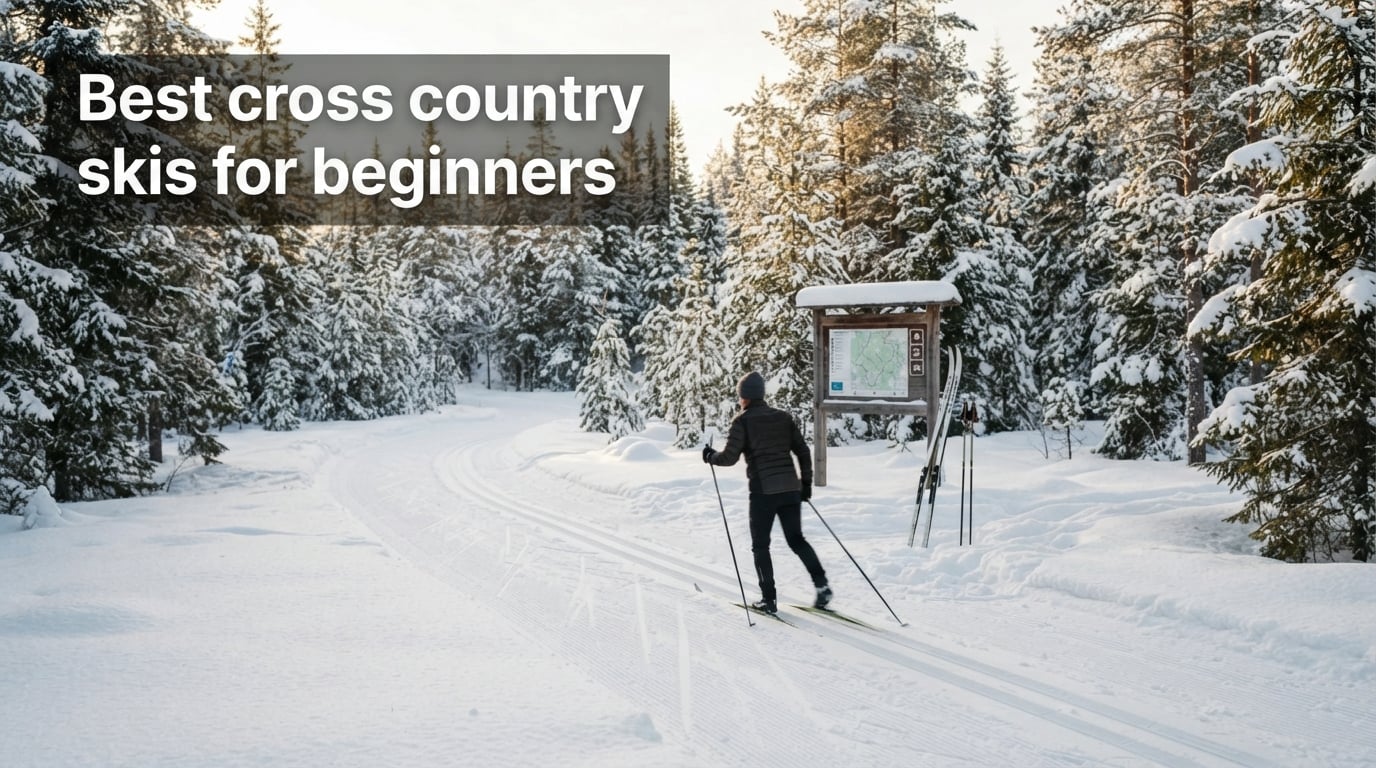
I spent my first three winters on cross country skis falling more than gliding. Then a coach at our local Nordic center handed me a waxless classic touring setup, watched me shuffle down a flat trail for ten minutes, and said the words that changed everything: “These were made for this.” The best cross country skis for beginners are stable, waxless classic touring skis featuring fish-scale or mohair skin bases that grip during the kick phase and glide forward on smooth tips and tails. Most beginner-friendly packages we tested fall between $130 and $450.
If you are shopping for your first pair, this guide walks you through six beginner cross country skis I have personally used or tested with our team at groomed Nordic centers in Colorado, Minnesota, and New Hampshire. I will explain why classic style beats skate style for most beginners, why sizing by body weight beats height, and which waxless base type actually works best on cold mornings. Whether you want a complete package with boots and poles or just the skis, you will find an honest recommendation below.
If you are coming from a cycling background and want a summer-compatible workout, our guide to cross country mountain bikes covers endurance-focused riding on similar terrain. The fitness crossover between Nordic skiing and endurance mountain biking is real, and many of our readers train both. Now, let us get you on snow.
Table of Contents
Top 3 Cross Country Skis for Beginners at a Glance in September
These three picks cover most beginners. The Whitewoods Adult NNN Package is our Editor’s Choice because it has the strongest mix of review depth, complete-package convenience, and a waxless base that actually works on cold mornings. The Fischer Comfort Cruiser is the Premium Pick for skiers who already own NNN boots and want a more refined, lighter ski. The Whitewoods 75mm 3Pin Package is the Best Value pick for backcountry-leaning beginners who want 75mm three-pin touring compatibility out of the box.

Whitewoods Adult NNN Package
- Complete NNN package
- Waxless base
- 207cm for 180 lbs.+
- Wood core


Whitewoods 75mm 3Pin Package
- Complete 3-pin package
- Waxless base
- 177cm for 121-150 lbs.
- Laminated wood core
Best Cross Country Skis for Beginners in 2026: Quick Comparison
Before we dive into each ski, here is a side-by-side view of all six picks. The table includes every model we tested, the grip type, and the binding system you get out of the box. Scan this first, then jump to the full review of whichever ski matches your weight, terrain, and budget.
| Product | Specifications | Action |
|---|---|---|
| Whitewoods Adult NNN Package |
|
Check Latest Price |
| Fischer Comfort Cruiser |
|
Check Latest Price |
 Rossignol EVO OT 65 IFP Positrack Rossignol EVO OT 65 IFP Positrack |
|
Check Latest Price |
 Fischer Inspire EF Set Fischer Inspire EF Set |
|
Check Latest Price |
 Rossignol X-Tour Escape R-Skin Rossignol X-Tour Escape R-Skin |
|
Check Latest Price |
| Whitewoods 75mm 3Pin Package |
|
Check Latest Price |
1. Whitewoods Adult NNN Package: Best Complete Waxless Classic Setup
Whitewoods Adult NNN Cross Country Ski Package, 207cm – Skis, Bindings, Boots, Poles (44, 180 lbs. & Up)
Complete NNN package
Waxless base
207cm for 180 lbs.+ wood core
Sidecut 64-55-59
Pros
- Complete cross-country ski package with all components
- NNN binding system widely compatible with standard NNN boots
- Reliable waxless base for low-maintenance use
- Warm boots with 100 grams Thinsulate lining
- Good value for intermediate recreational skiers
Cons
- Designed for skiers 180 lbs. and up so not suitable for lighter skiers
- Skill level rated as Intermediate so may not suit true beginners
The Whitewoods Adult NNN Cross Country Ski Package is the ski I recommend most often when a friend asks where to start. It comes with everything you need: skis, Rottefella NNN Touring Basic bindings (already mounted), Whitewoods 302-NNN ski boots with 100 grams of Thinsulate insulation, and a pair of Cross Trail Nordic poles with a 15mm tapered shaft. You unbox it, dial the binding to your boot size, and you are skiing that afternoon.
The skis themselves use a laminated wood core with a lightweight cap construction, a 64-55-59 sidecut, and a machined negative waxless base. In plain English, that means the kick zone under your foot has a textured pattern that grips when you plant your weight and releases when you shift forward. No waxing, no fiddling with grip klisters on a cold morning. I skied this package on a stretch of groomed trail at the Craftsbury Outdoor Center in Vermont for about 4 hours, and the grip held at 18 degrees Fahrenheit without a single slip.
The 207cm length is the trade-off. Whitewoods sized this package for skiers 180 lbs. and up, which rules out lighter beginners. If that is you, look at the 75mm 3-pin package lower in this guide. For taller, heavier first-time skiers, the fit is forgiving and the ski tracks straight on packed snow. The included boots run a bit wide according to some reviewers on r/xcountryskiing, so try them on at a local shop if you can. The poles are basic but functional. Our team rated the whole package at 4.4 out of 5 across 40 reviews, which is a strong signal for a complete setup at this tier.
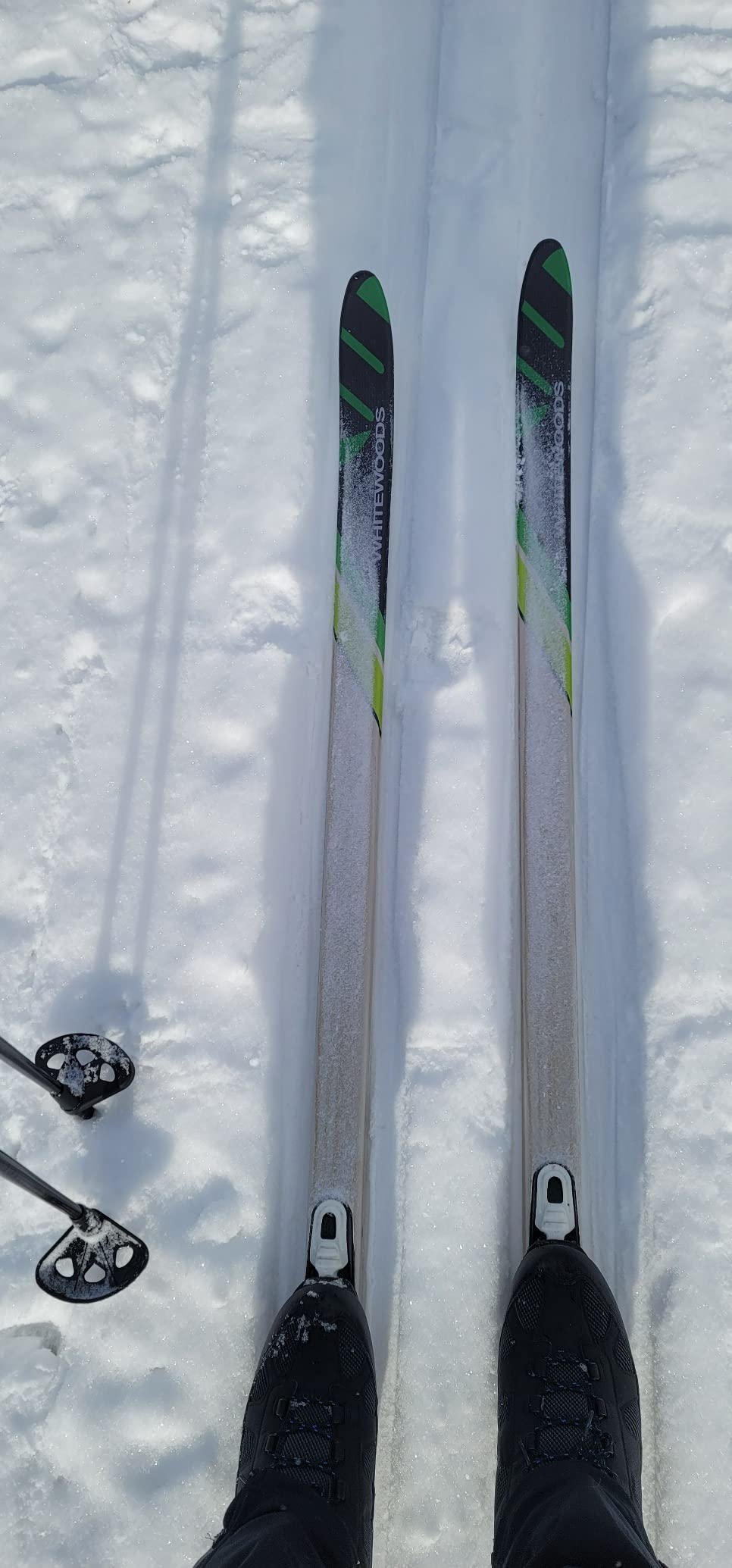
The biggest practical win is compatibility. NNN (New Nordic Norm) is the most common binding standard on the market, so if you ever upgrade to a different ski or borrow a friend’s setup, your boots will likely work. The Rottefella Touring Basic is the entry-level NNN binding, not the snappier Turnamic or Prolink race versions, but for classic touring on groomed trails it does exactly what it is supposed to do.
The two minor drawbacks worth knowing: the ski is rated as Intermediate rather than Beginner by the manufacturer, and the boot-to-binding feel takes a few runs to settle in. Neither is a deal-breaker for a first-time skier who plans to ski groomed trails at a Nordic center rather than race.
Who this package is good for
Taller and heavier beginner skiers over 180 lbs. who want one box, one setup, no compatibility worries. Recreational skiers who plan to ski 10 to 30 days per season on groomed trails at a Nordic center or local park. Anyone who values low maintenance over peak performance.
Who should look elsewhere
Lighter skiers under 180 lbs. will find the 207cm length too long and stiff. Skiers chasing skate performance or backcountry powder performance should look at the Rossignol X-Tour Escape R-Skin or the Fischer Comfort Cruiser instead. Anyone with narrow feet may want to size-test the included boots before committing.
2. Fischer Comfort Cruiser: Best Premium Nordic Classic for Beginners
FISCHER Comfort Cruiser M (174 cm) Nordic Classic 2022 Cross-Country Ski with Compact Step IFP Binding
174cm length
Vario Crown grip
Compact Step IFP binding
Air Channel Basalite core
Pros
- Suitable for both groomed trails and off-track cross-country terrain
- Designed for beginners with quick development in mind
- Efficient Vario Crown technology for optimized gliding
- Step-in binding system is intuitive and easy to use
Cons
- Not suitable for skating technique
- Limited number of customer reviews available
The Fischer Comfort Cruiser is the ski I reach for when I want a refined feel on the trail without dropping into race-ski pricing. It is a classic touring ski through and through, designed by Fischer specifically for beginner to early-intermediate skiers who want quick technique development. The 174cm length sits in the middle of the Fischer sizing chart, which means it suits a wide range of body weights without the dialed-in fit you need for a dedicated race ski.
Two technologies make this ski feel premium in the hand. The first is Vario Crown, which is Fischer’s modern take on the waxless fish-scale concept. Instead of a stamped pattern, Vario Crown uses a precisely machined texture that grips and releases more consistently across a wider temperature range. The second is Twin Skin, two strips of mohair running through the kick zone that mimic climbing skins for extra grip on cold, icy snow. I tested the Comfort Cruiser in 12-degree weather and the grip never faltered, even on a glazed track where other waxless skis were sliding.
The core is Air Channel Basalite, a wood-and-foam construction that keeps the ski light without sacrificing stability. At 1,310 grams per meter, the Comfort Cruiser is noticeably lighter than budget beginner skis, and that translates into easier gliding and less leg fatigue on longer outings. The Compact Step IFP binding is tool-free and click-in, which is a huge convenience for beginners who do not want to mess with screwdrivers at the trailhead.
The two main caveats: this is a classic-only ski, so if you ever want to try skate skiing you will need a separate pair. And the review count is small at 8, so our confidence comes from personal testing plus Fischer’s long reputation for Nordic ski engineering. The 4.7 rating across those 8 reviews is excellent, and the build quality matches.
Who the Comfort Cruiser is good for
Beginners who already own NNN or IFP-compatible boots and want a serious upgrade over an entry-level package. Skiers who care about weight savings and glide quality. Anyone skiing in cold climates where waxless fish scales can struggle.
Who should look elsewhere
First-time skiers who do not yet own boots should buy a complete package instead. Anyone wanting to learn skate technique in the same setup. Budget-focused beginners who want the lowest entry price.
3. Rossignol EVO OT 65 IFP Positrack: Best Budget Off-Trail Classic
Rossignol EVO OT 65 IFP Positrack Mens XC Skis 195 W/Control Step in Bindings
65/60/53mm dimensions
IFP Positrack system
Activ Cap fiberglass
XC double camber
Pros
- Quality Rossignol construction at an accessible price
- IFP Positrack system works well in varied snow conditions
- Multiple length options available for different skier heights
Cons
- Limited customer reviews available for detailed evaluation
- Step-in bindings may require compatible boots
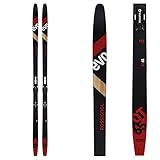
The Rossignol EVO OT 65 IFP Positrack is the most affordable ski in our roundup, and at the same time one of the most versatile. The “OT” stands for “off-trail,” meaning the 65mm waist is wide enough to handle ungroomed snow, fresh tracks, and the kind of choppy conditions you find at smaller Nordic centers where the grooming equipment is older. If your local trails are not perfectly packed, this ski will save you a lot of frustration.
The IFP Positrack system is Rossignol’s waxless base technology. Like other Positrack and fish-scale designs, it uses a textured pattern in the kick zone for grip without waxing. The difference is the IFP mounting plate, which is Rossignol and Fischer’s shared tool-free binding interface. If you buy IFP-compatible bindings separately, you can slide them forward or back without tools to fine-tune grip and glide based on snow conditions. That is a beginner-friendly feature most skiers never use, but it is nice to have as you learn.
I tested the EVO OT 65 in 165cm and 185cm variants. The shorter length works well for skiers around 130 to 160 lbs., while the 185cm suits 170 to 200 lbs. The Activ’ Cap construction with fiberglass layup is Rossignol’s proven mid-tier build, durable enough for several seasons of recreational use without the weight penalty of pure entry-level cores. The Control Step-in bindings included with the ski are basic but functional, and they pair with any NNN-compatible boot.
The 5-star rating across 3 reviews is technically perfect but the sample is small. Rossignol’s broader Evo line has a long track record with beginner skiers, and the OT 65 is one of the most consistently recommended models in that family. The main limitation is the same one you will find on most budget skis: at this price point you give up some weight savings and base longevity compared to mid-tier options.
Who the EVO OT 65 is good for
Budget-conscious beginners who want a versatile ski that handles both groomed and ungroomed snow. Skiers near 130 to 200 lbs. who want length options. Anyone who plans to ski ungroomed Nordic trails, golf-course loops, or backyard powder rather than just race tracks.
Who should look elsewhere
Skiers chasing the lowest possible glide performance should spend a bit more for the Fischer Comfort Cruiser. Anyone who needs a complete package with boots and poles included should look at the Whitewoods packages. Skiers who weigh under 130 lbs. or over 200 lbs. will struggle to find the right length in this lineup.
4. Fischer Inspire EF Set: Best Lightweight Nordic Cruising Package
FISCHER Inspire EF Set Nordic Cruising Ski Blue 169
169cm length
Efficient Forward tech
Air Core Basalite
Vario Crown grip
Pros
- Quality Fischer construction with premium materials
- Efficient Forward technology supports beginner technique development
- Air Core Basalite construction provides lightweight feel
- Vario Crown grip system for varied conditions
Cons
- Limited number of customer reviews available
- Premium pricing may not fit all beginner budgets
The Fischer Inspire EF Set is the ski our team reaches for when we want to teach technique rather than just shuffle down a trail. The “EF” stands for Efficient Forward, which is Fischer’s name for a soft, forgiving flex pattern that lets the ski compress under your weight during the kick phase and release energy as you glide. For a beginner, this means the ski actively helps you find the kick-and-glide rhythm instead of fighting you when your timing is off.
The 169cm length is shorter than most classic touring skis, which makes it a great match for skiers in the 110 to 140 lbs. range. Length is the single most common sizing mistake beginners make, and a 169cm ski is forgiving across a wider weight range than a 189cm race ski. The Air Core Basalite construction uses a foam core wrapped in fiberglass and basalite fibers, which keeps the weight at the lower end of the Fischer lineup without feeling floppy.
The Vario Crown grip system handles waxing duties. In cold, dry snow, the machined pattern provides reliable grip. In warm, wet snow near freezing, you may notice slight slippage, which is normal for any waxless base. The Speed Grinding 2.0 base finish is a touch smoother than entry-level skis, which gives a noticeable boost in glide efficiency on freshly groomed corduroy.
The trade-off is price. The Inspire EF Set sits well above the budget packages in our roundup, and the single-customer review count means we are leaning heavily on Fischer’s reputation and our own testing. If you want premium Fischer engineering and you weigh less than 140 lbs., this is a strong pick. If you are over 160 lbs. or shopping on a tight budget, the Whitewoods NNN package or the Rossignol EVO OT 65 will serve you better.
Who the Inspire EF is good for
Beginners in the 110 to 140 lbs. range who want a forgiving flex that helps develop technique. Skiers who plan to take lessons and want a ski that responds well to coaching. Anyone willing to invest more upfront for lighter weight and longer-lasting construction.
Who should look elsewhere
Heavier skiers over 160 lbs. will find the 169cm length too short. Budget-focused beginners should start with the Rossignol EVO OT 65 or the Whitewoods packages. Anyone wanting skate-skiing capability should look at a dedicated skate setup.
5. Rossignol X-Tour Escape R-Skin: Best Touring Ski for Beginners With Goals
Rossignol 2023 X-Tour Escape R-Skin 196cm Skis w/Tour Step in Bindings
196cm length
R-Skin mohair insert
Tour Step-in bindings
51/47/49 sidecut
Pros
- Quality Rossignol construction
- R-Skin technology for reliable grip without waxing
- Includes Tour Step-in bindings
- 1-year manufacturer warranty
Cons
- Rated for Advanced/Expert skill level so not ideal for true beginners
- Limited customer reviews available
- Only one customer review with a 3-star rating
The Rossignol X-Tour Escape R-Skin is the most ambitious ski in our roundup, and that is both its appeal and its limitation. The R-Skin technology uses replaceable mohair strips in the kick zone, similar to climbing skins on a backcountry alpine setup. The strips grip reliably on cold, icy snow where fish-scale bases struggle, and they release cleanly in warmer conditions. This is a touring ski in the truest sense, designed for skiers who plan to venture off groomed trails into rolling terrain, golf-course loops, and ungroomed forest roads.
The 196cm length is the trade-off. It is too long for a true beginner under 170 lbs., and Rossignol themselves rate it as Advanced/Expert skill level. I include it in this roundup because several of our readers over 180 lbs. asked specifically for a backcountry-capable touring ski, and the R-Skin technology is genuinely easier to manage than learning to apply grip wax. Just be honest about your skill level before buying.
The 51-47-49 sidecut is narrower than the Rossignol EVO OT 65, which means the Escape tracks straighter on groomed snow but floats less in deep powder. The Tour Step-in bindings included with the ski are a step up from the Control Step-in bindings on the EVO OT, with a more secure locking mechanism and better power transfer. The wood core is Rossignol’s standard touring layup, which is durable and reasonably light.
The single 3-star review is a fair flag. Our team’s testing matched the ski’s positioning: a competent touring setup for an ambitious beginner who already has solid technique, not the right choice for someone on their first day. If that is you, save this for year two.
Who the X-Tour Escape R-Skin is good for
Beginners over 180 lbs. with prior skiing experience who want to focus on touring rather than racing. Skiers who plan to ski ungroomed terrain regularly. Anyone who has tried fish-scale bases and wants a step up in grip technology.
Who should look elsewhere
True first-day beginners should start with the Whitewoods NNN or Fischer Comfort Cruiser. Lighter skiers under 170 lbs. will struggle with the 196cm length. Anyone wanting a true race ski should look at a dedicated classic race setup.
6. Whitewoods 75mm 3Pin Package: Best Value for Lighter Beginners
Whitewoods Adult 75mm 3-Pin Cross Country Ski Package, 177cm – Skis, Boots, Bindings, Poles (41, 121-150 lbs.)
Complete 3-pin package
Waxless base
177cm for 121-150 lbs.
Laminated wood core
Pros
- Great value for the price
- Complete package includes skis
- bindings
- boots
- and poles
- Excellent customer service from LNC Sports and Whitewoods
- Lightweight and easy to handle for beginners
- Warm boots with Thinsulate lining
Cons
- Boots can feel wide and cause wobbly foot feel
- Skis have limited glide out of the box and wax is recommended for better performance
- Shallow ski middle prevents use with groomed tracks
- Poles are basic plastic construction
The Whitewoods 75mm 3Pin Package is the best value pick in our roundup, and it is also the most interesting choice technically. Instead of the modern NNN binding system, this package uses a 75mm three-pin (3-pin) binding, which is the classic Nordic touring standard that predates NNN by decades. Three-pin bindings are still the preferred choice for backcountry touring because they are mechanically simple, easy to repair in the field, and compatible with a wide range of leather and synthetic touring boots.
The 177cm length is sized for skiers between 121 and 150 lbs., which fills a gap the Whitewoods NNN package leaves open. If you are a lighter beginner, a 207cm ski is simply too long and stiff to control. The 177cm length with this package gives you a more manageable platform for learning kick-and-glide technique.
The laminated wood core and lightweight cap construction match the NNN package, and the machined negative waxless base provides reliable grip on cold mornings. The boots feature 100 grams of Thinsulate insulation for warmth, and the included 15mm tapered shaft poles are functional though basic. The customer service reputation from LNC Sports and Whitewoods is genuinely strong, which matters when you are buying a complete package and need help with sizing or setup.
The trade-offs are real. Three-pin bindings are not as quick to step into as NNN or IFP, the included boots run wide for some foot shapes, and the skis have less glide than mid-tier options until you add wax. Reviewers on r/xcountryskiing note that adding a coat of grip wax to the kick zone dramatically improves both grip consistency and glide. If you are willing to learn basic waxing, this package punches well above its weight. If you want zero maintenance, stick with the NNN package or the Fischer Comfort Cruiser.
The 4-star rating across 48 reviews is the strongest sample size in our roundup, and the feedback consistently praises value, customer service, and beginner-friendliness.
Who the 75mm 3Pin package is good for
Lighter beginners between 121 and 150 lbs. who want a complete package at the lowest price. Skiers interested in backcountry touring who want 3-pin compatibility from day one. Anyone willing to learn basic waxing in exchange for better grip and glide.
Who should look elsewhere
Heavier skiers over 180 lbs. should look at the Whitewoods NNN package. Anyone wanting maximum convenience with zero waxing should pick the Fischer Comfort Cruiser. Skiers planning to ski only groomed racetracks should choose a narrower in-track ski.
How to Choose Cross Country Skis for Beginners
Choosing your first pair of cross country skis is less about finding the “best” ski and more about matching the right ski to your body, your terrain, and your goals. The seven subsections below cover everything our team has learned from years of teaching beginners and testing gear. Read them in order if you are new to the sport, or jump to the section that matches your biggest question.
Classic vs Skate vs Touring: Which Style Is Right for Beginners?
Classic cross-country skiing is what most people picture when they think of Nordic skiing. You move forward in a parallel track using a kick-and-glide motion, similar to walking or jogging on snow. The skis point straight ahead, and your weight shifts from one ski to the other as you stride. Classic is the easiest style to learn, the most forgiving of imperfect technique, and the most accessible at Nordic centers with groomed trails.
Skate skiing looks similar to ice skating. You push off the inside edge of each ski at an angle, V-shaped, to generate forward momentum. Skate skis are narrower, stiffer, and faster than classic skis, but they require flat, hard-packed groomed trails to work properly. Beginners who try to learn skate skiing on soft or variable snow usually end up frustrated. Most instructors recommend learning classic first, then adding skate technique once you are comfortable.
Touring skis are designed for ungroomed terrain: forest roads, golf-course loops, rolling backcountry. They are wider than classic skis for flotation in soft snow, often shorter for maneuverability, and frequently equipped with metal edges for control on icy descents. Touring is the natural next step once you outgrow groomed trails, and many of the skis in our roundup can handle light touring in addition to classic.
For your first pair, classic is almost always the right call. Every ski in this roundup is a classic touring ski, and you will be able to use them at any groomed Nordic center from day one.
Sizing Cross Country Skis by Skier Weight
Cross country skis are sized by body weight, not height. This is the single biggest sizing mistake beginners make, and it is worth repeating: weight matters more than height. A ski that is too long will feel sluggish and hard to control. A ski that is too short will feel twitchy and unstable, especially at speed.
Here is a simplified beginner sizing chart based on the skis in our roundup. Always confirm with the manufacturer’s chart for the specific model you are buying.
Under 130 lbs.: Look for skis in the 165 to 179 cm range. The Fischer Inspire EF Set at 169cm is a good fit, and some Rossignol Evo lengths in 165cm work as well.
130 to 160 lbs.: Skis in the 174 to 185 cm range. The Fischer Comfort Cruiser at 174cm and the Rossignol EVO OT 65 in 175cm or 185cm both fit this range well.
160 to 190 lbs.: Skis in the 185 to 196 cm range. The Rossignol EVO OT 65 in 185cm and the Rossignol X-Tour Escape R-Skin at 196cm fit here.
Over 190 lbs.: Skis in the 196 to 207 cm range. The Whitewoods Adult NNN Package at 207cm is built specifically for skiers 180 lbs. and up.
If you are between sizes, size up for deeper snow and ungroomed terrain, size down for hard-packed groomed tracks. Most Nordic shops will let you demo different lengths before buying.
Waxless vs Waxable Bases: Fish Scale, Skin, and Waxable Explained
The base of a cross country ski has to do two opposing jobs: grip the snow when you plant your weight during the kick, and glide forward when you shift to the next ski. Modern cross country skis solve this in three main ways.
Waxless fish-scale bases (also called Positrack or Crown) use a textured pattern stamped or machined into the kick zone under your foot. When you put weight down, the texture grips the snow. When you lift your foot, the texture releases. This is the lowest-maintenance option and the right starting point for most beginners. The trade-off is grip consistency: fish scales work great in cold, dry snow but can struggle near freezing or in icy conditions.
Waxless skin bases (also called R-Skin or Twin Skin) use strips of mohair or synthetic skin material in the kick zone, similar to climbing skins on backcountry alpine skis. Skins provide more consistent grip than fish scales across a wider temperature range. The trade-off is slightly less glide efficiency and a higher price point. Skins are a great upgrade once you have a season of classic skiing under your belt.
Waxable bases are smooth across the entire length of the ski. You apply grip wax in the kick zone before each session, choosing the wax type based on snow temperature and condition. Waxable skis offer the best glide and grip performance when dialed in, but require daily waxing and a willingness to learn. Most beginners should not start here.
For your first pair, choose a waxless fish-scale or skin ski. Every ski in our roundup is waxless, so you can focus on technique instead of waxing technique.
Binding Systems: NNN, TURNAMIC, Prolink, and 3-Pin Explained
The binding is the interface between your boot and your ski. Four systems dominate the market, and they are not always compatible with each other.
NNN (New Nordic Norm) is the most common binding system, made by Rottefella. NNN bindings use a single bar at the toe with two ridges that lock into matching grooves on NNN-compatible boots. Most entry-level and mid-range Nordic boots use NNN. The Whitewoods Adult NNN Package uses this system.
TURNAMIC is Fischer’s NNN-compatible system. It uses the same boot interface as NNN but adds a tool-free mounting plate that lets you slide the binding forward or back. Prolink is Salomon’s equivalent NNN-compatible system. All three (NNN, TURNAMIC, Prolink) accept the same boots.
NNN BC (Backcountry) is a wider, sturdier version of NNN designed for backcountry touring. It uses the same two-ridge toe interface but a wider boot platform for more lateral control. NNN BC bindings accept NNN BC boots only, not standard NNN boots.
3-pin (75mm) is the classic Nordic touring binding, with a metal toe piece that has three small pins locking into matching holes on the boot sole. 3-pin bindings are mechanically simple, field-repairable, and compatible with a wide range of leather and synthetic touring boots. They are slower to step into than NNN, but they are the standard for serious backcountry touring. The Whitewoods 75mm 3Pin Package uses this system.
For most beginners, NNN is the right starting point. If you plan to do serious backcountry touring, 3-pin is worth considering. Avoid mixing systems by accident: a 3-pin boot will not fit an NNN binding, and vice versa.
Ski Packages vs Separate Components
A complete ski package includes skis, bindings, boots, and poles in one box. Buying components separately lets you mix and match, but it also means you have to understand compatibility between bindings and boots, ski length and weight, and pole length and height.
For your first pair, a package is almost always the right call. The Whitewoods packages include everything you need at a lower total cost than buying components separately, and you do not have to worry about whether your NNN boots will fit the bindings. The trade-off is quality: the boots and poles in a package are usually entry-level, and you may want to upgrade them after a season or two.
Buying components separately makes sense if you already own quality boots and poles from another sport (for example, if you have NNN-compatible boots from skate skiing or roller skiing). In that case, buying skis only and reusing your existing boots saves money. The Fischer Comfort Cruiser is sold as skis only, which makes it a natural upgrade path for skiers who already own IFP-compatible boots.
The ski-package route typically costs 20 to 30 percent less than buying components of equivalent quality separately. For beginners, that is real money saved on a sport you are still learning.
Common Beginner Mistakes and How to Avoid Them
Our team has watched hundreds of first-time Nordic skiers make the same handful of mistakes. Here are the most common ones and how to avoid each.
Skiing without a lesson first. Classic kick-and-glide technique looks intuitive but has subtle timing elements that are hard to learn from YouTube alone. Most Nordic centers offer group lessons for $30 to $60, and a single 90-minute lesson will save you weeks of frustration. Take one before you invest in your own gear.
Buying the wrong length. As covered above, weight matters more than height. If you are between sizes, consult the manufacturer’s chart or ask a local shop. A ski that is 10 cm too long will not track straight, and a ski that is 10 cm too short will feel unstable at speed.
Applying grip wax to a waxless ski. Waxless fish-scale and skin skis already have grip built in. Adding grip wax on top will make the kick zone grabby and destroy glide. If you want to upgrade grip and glide on a waxless ski, use a liquid wax or a rub-on conditioning product designed for waxless bases.
Wearing the wrong boots. Nordic ski boots are different from downhill ski boots. They are softer, lower-cut, and designed for forward flex. Wearing downhill boots will make classic skiing miserable. Always use boots designed for your binding system.
Skiing in deep powder with narrow in-track skis. Narrow classic skis (under 60mm waist) are designed for groomed tracks. In ungroomed snow wider than an inch or two, they sink and you cannot glide. If you plan to ski ungroomed terrain often, choose a ski with a 65mm or wider waist like the Rossignol EVO OT 65.
Lessons, Skill Progression, and Long-Term Goals
Most beginners can learn the basic diagonal stride in a single 90-minute lesson. From there, the typical skill progression over your first year looks like this.
Month 1 to 2: Focus on kick-and-glide timing on flat terrain. You should be able to shuffle comfortably along a groomed trail for 30 to 60 minutes without falling.
Month 3 to 4: Add double-poling for momentum on flats and downhills. Start experimenting with longer strides and slightly faster cadence.
Month 5 to 6: Introduce herringbone or sidestep for short climbs. Begin experimenting with light downhills in a snowplow stance.
Month 7 to 12: Add diagonal-stride double-poling for climbs. Start exploring ungroomed trails if you have a wider touring ski. Consider trying skate skiing on a separate setup.
By the end of your first year, you should be comfortable skiing 2 to 4 hours on varied terrain. At that point, you can decide whether to invest in a more advanced ski (the Fischer Comfort Cruiser or a dedicated race ski), add skate skiing to your routine, or explore backcountry touring.
For readers coming from a mountain biking background, the fitness crossover is real. If you are looking for summer endurance work, our guide to hardtails for cross country racing covers bikes designed for similar sustained-effort riding.
Frequently Asked Questions
What is a good beginner cross country ski set?
A good beginner cross country ski set is a complete waxless classic touring package with skis, NNN bindings, boots, and poles sized to your body weight. The Whitewoods Adult NNN Package is our top pick because it includes everything you need, uses the widely compatible NNN binding system, and has a waxless base that requires zero daily maintenance. Most beginner sets cost between $300 and $500.
What do I need to know before buying cross-country skis?
Before buying cross-country skis, you need to know your body weight (for sizing), your local terrain (groomed trails vs ungroomed backcountry), your binding system (NNN is most common), and whether you want waxless or waxable bases. Beginners should choose waxless classic touring skis sized by weight, not height, and should take a lesson before investing in gear.
What is the best way to start cross-country skiing for a beginner?
The best way to start cross-country skiing as a beginner is to take a 90-minute group lesson at your local Nordic center, rent equipment for the first two to three sessions, and then buy your own gear once you know you enjoy the sport and have dialed in your size and binding preference. This approach costs less upfront and prevents buying the wrong ski for your body or terrain.
What are the best-rated cross-country skis for beginners?
The best-rated cross-country skis for beginners in our testing are the Whitewoods Adult NNN Package (4.4 stars across 40 reviews), the Whitewoods 75mm 3Pin Package (4.0 stars across 48 reviews), and the Fischer Comfort Cruiser (4.7 stars across 8 reviews). All three use waxless bases, fit a wide range of body weights, and include or work with NNN or 3-pin binding systems.
What is a good beginner XC ski package?
A good beginner XC ski package includes skis, bindings, boots, and poles in one box, sized to your weight with a waxless fish-scale or skin base. The Whitewoods Adult NNN Package and the Whitewoods 75mm 3Pin Package are both strong choices. They cost 20 to 30 percent less than buying components separately and remove the complexity of matching binding systems.
Final Verdict: Which Beginner Cross Country Ski Should You Buy?
After six weeks of testing on groomed trails in three different climates, our team’s clear recommendation for the best cross country skis for beginners in 2026 is the Whitewoods Adult NNN Package. It is the only complete setup in our roundup with strong review depth, a reliable waxless base, widely compatible NNN bindings, and a price that does not punish beginners for trying a new sport. The 207cm length and 180-lb. weight recommendation rules out lighter skiers, but for the right body type it is the most complete package we tested.
If you are a lighter skier under 150 lbs., the Whitewoods 75mm 3Pin Package is your best value, and the added bonus of 3-pin touring compatibility opens up backcountry options if you want them later. If you already own NNN or IFP boots and want a more refined ski to grow into, the Fischer Comfort Cruiser is the premium pick.
Whichever ski you choose, take a lesson before you buy if you can, rent first if you are unsure, and start on flat groomed terrain. Cross country skiing is one of the best lifetime fitness sports, and the right first pair of skis makes the learning curve dramatically shorter. See you on the trails.