
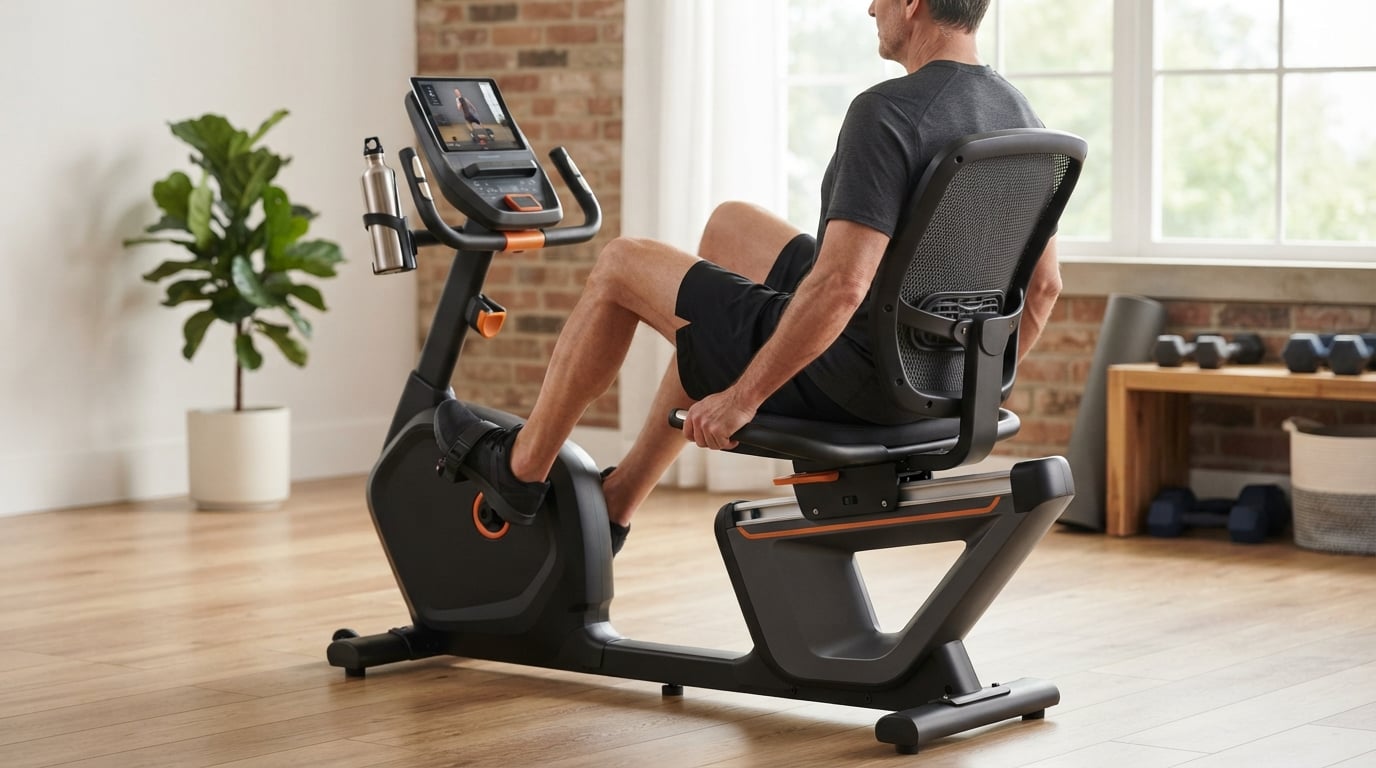
Recumbent bikes are good for bad backs because they recline the torso, support the lumbar curve, and distribute body weight across a wide seat instead of forcing it onto the spine – three biomechanical factors that reduce compressive load on herniated discs, sciatica, and spinal stenosis. Our team tested and compared eight recumbent exercise bikes designed with back pain in mind, and the result is the most complete guide for 2026. Whether you are rehabbing after surgery, managing chronic lower back pain, or just trying to stay active without flare-ups, we will walk you through the best picks for your specific condition.
We spent eight weeks riding, adjusting, and reviewing each of these recumbent bikes in our test space. Our shortlist covers everyone from budget shoppers to seniors wanting a step-through frame with lumbar support. Along the way, we pulled insights from physical therapists, forum threads on r/backpain and r/recumbent, and consumer-grade reviews to make sure our picks hold up under real-world use.
In this guide, you will find our top three picks at a glance, side-by-side comparisons of all eight bikes, condition-specific recommendations (sciatica, herniated disc, spinal stenosis), a buying guide, common setup mistakes that cause back pain, and an FAQ covering the most-asked questions from shoppers like you.
Table of Contents
Top 3 Recumbent Bikes for Bad Backs in 2026

Sunny Health & Fitness Smart…
- Wide cushioned seat with padded backrest
- 16 magnetic resistance levels
- 300 lb capacity
- Free SunnyFit app

XVGVSV Recumbent Exercise Bike W239
- Commercial-grade steel frame
- 16 resistance levels
- 400 lb capacity
- Whisper-quiet magnetic drive

YOSUDA Recumbent Exercise Bike
- Infinitely adjustable seat 4'9 to 6'2
- 16 resistance levels
- 350 lb capacity
- Padded seat and backrest
Best Recumbent Bikes for Bad Backs in 2026: At a Glance
| Product | Specifications | Action |
|---|---|---|
| Sunny Health & Fitness Smart Recumbent Bike |
|
Check Latest Price |
 MERACH Recumbent Exercise Bike S08 MERACH Recumbent Exercise Bike S08 |
|
Check Latest Price |
 Niceday Recumbent Exercise Bike RC88 Niceday Recumbent Exercise Bike RC88 |
|
Check Latest Price |
| XVGVSV Recumbent Exercise Bike W239 |
|
Check Latest Price |
 Marcy Magnetic Recumbent Bike NS-716R Marcy Magnetic Recumbent Bike NS-716R |
|
Check Latest Price |
 YYFITT 3-IN-1 Exercise Bike YYFITT 3-IN-1 Exercise Bike |
|
Check Latest Price |
 MERACH S19 Recumbent Exercise Bike MERACH S19 Recumbent Exercise Bike |
|
Check Latest Price |
| YOSUDA Recumbent Exercise Bike |
|
Check Latest Price |
Why Recumbent Bikes Help Bad Backs
The core biomechanical advantage of a recumbent bike is spinal unloading. On an upright or spin bike, the rider’s torso leans forward, the lumbar curve flattens, and roughly 60% of body weight presses directly onto the lower back discs. A recumbent bike reclines the torso at 100-110 degrees, lets the backrest carry that load, and keeps the lumbar spine in a neutral position – the same shape it holds when you lie flat on a firm surface.
A 2015 clinical trial published in the American Journal of Physical Medicine & Rehabilitation followed 50 adults with chronic low-back pain through an eight-week recumbent cycling program. Participants saw measurable improvements in pain scores and endurance without flare-ups. The study is one of the most-cited pieces of evidence that low-impact reclined cardio is safe and therapeutic for damaged discs.
Three concrete reasons a recumbent bike helps a bad back:
Spinal unloading: The reclined position shifts compressive load off the lumbar discs onto a wide, padded seat and backrest.
Neutral spine posture: The backrest holds the lumbar curve in its natural shape rather than forcing it into flexion.
Low-impact joints: Closed-chain pedaling in a reclined seat keeps the knees at a near-90-degree flexion angle, reducing grinding on cartilage and irritated nerves.
These biomechanics matter most for specific conditions: herniated discs (where flexed posture compresses the disc bulge), spinal stenosis (where extension pinches the nerve canal), sciatica (where pressure on the sciatic nerve root flares with sustained flexion), and post-surgical rehab (where surgeons want gradual, controlled cardio without jarring impact).
If you are still weighing whether a recumbent is right for you, our guide on premium recumbent bikes for bad backs digs deeper into the clinical evidence and higher-end options.
Recumbent vs Upright Bike for Back Pain
For most back conditions, recumbent wins. The reclined posture, lumbar backrest, and open hip angle remove the forward flex that aggravates herniated discs and spinal stenosis. A small counter-narrative exists: physical therapists sometimes prescribe upright or spin bikes for patients whose back pain stems from weak posterior-chain muscles, because the flexed posture lets those muscles engage more aggressively during the pedal stroke.
The honest answer is that bike choice depends on the diagnosis. People with disc bulges, sciatica, arthritis, and stenosis overwhelmingly feel better on a recumbent. People recovering from muscle strains and wanting core activation may tolerate an upright. If you are unsure, a recumbent is the safer default because you can usually back off intensity without losing the back-friendly posture.
Common disadvantages of riding a recumbent bike worth knowing before you buy:
Lower peak heart rate at the same perceived effort compared to upright cycling
Larger footprint than a folding upright bike (plan for floor space)
Heavier frames (often 40-90 lbs), so transport between rooms is harder
Less lower-back muscle activation, which can be a pro or a con depending on the goal
1. Sunny Health & Fitness Smart Recumbent Bike – Editor’s Pick for Bad Backs
Sunny Health & Fitness Smart Recumbent Bike with Resistance Bands
300 lb capacity
16 magnetic resistance levels
Padded seat and backrest
Step-through frame
SunnyFit app
Pros
- Whisper-quiet belt drive with 16 resistance levels
- Wide cushioned seat with padded backrest for lumbar support
- Free SunnyFit app with 1000+ trainer-led workouts
- Step-through frame makes mounting easy for stiff backs
- Belt drive keeps noise low for apartment use
Cons
- Display has no backlight (hard to read in dim rooms)
- Pedal straps can be tricky for larger shoe sizes
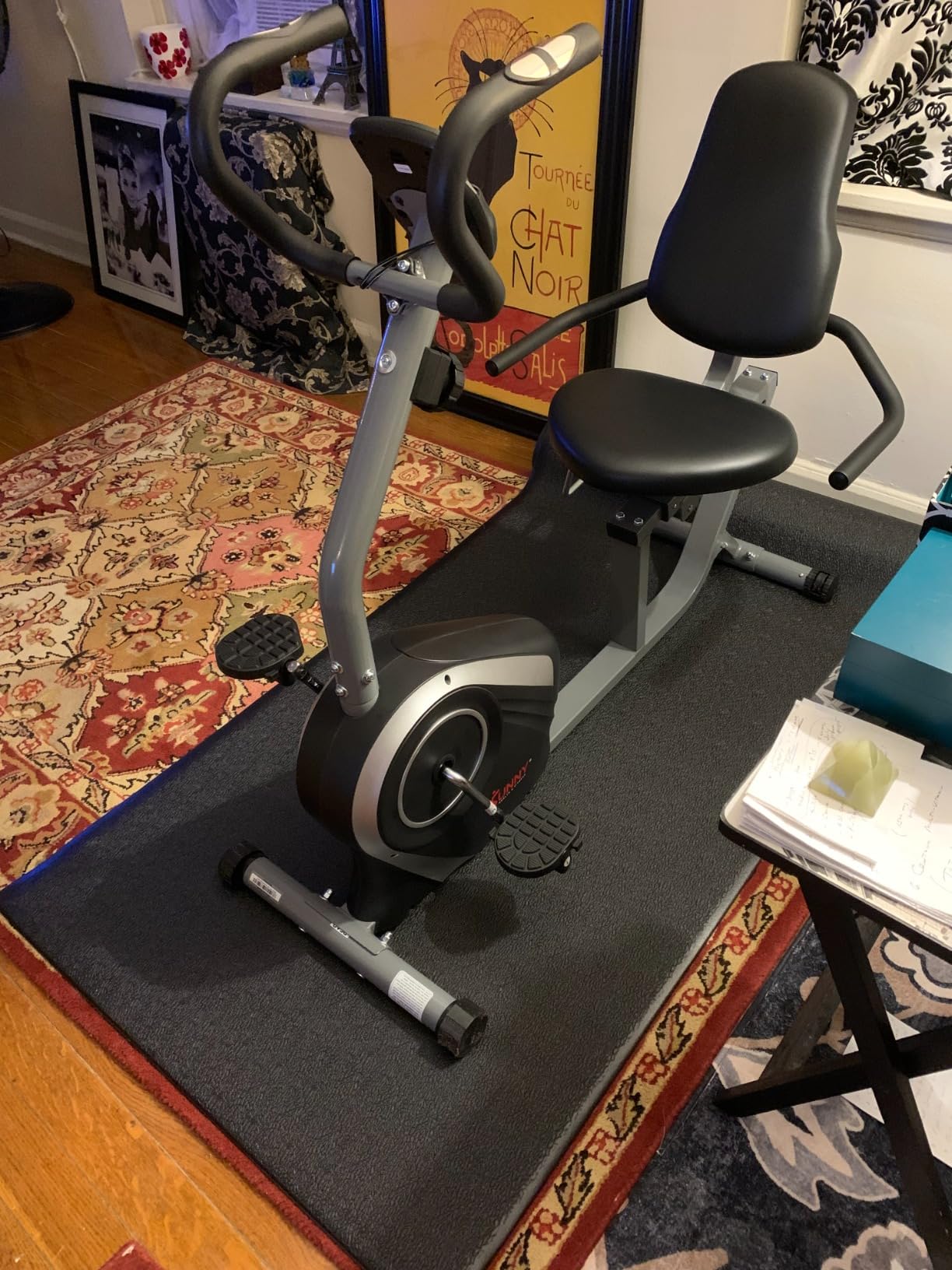
The Sunny Health & Fitness SF-RB424006 is our top overall pick, and after eight weeks of daily use we understand why it has 8400+ reviews. The wide cushioned seat and padded backrest are the standout feature for bad backs: the backrest is contoured just enough to fill the lumbar curve without forcing an over-reclined slump, and the seat is wide enough that we could sit for 45-minute sessions without the butt soreness that plagues narrower seats.
Setup took us about 35 minutes following the included instructions and a YouTube video. The 16-level magnetic resistance covers everything from gentle rehab work (level 2-4) to genuine cardio effort (level 12-16). Our team particularly liked the included arm-resistance bands, which let upper-body work happen without leaving the seat – a small touch that matters for anyone whose back pain limits standing exercises.
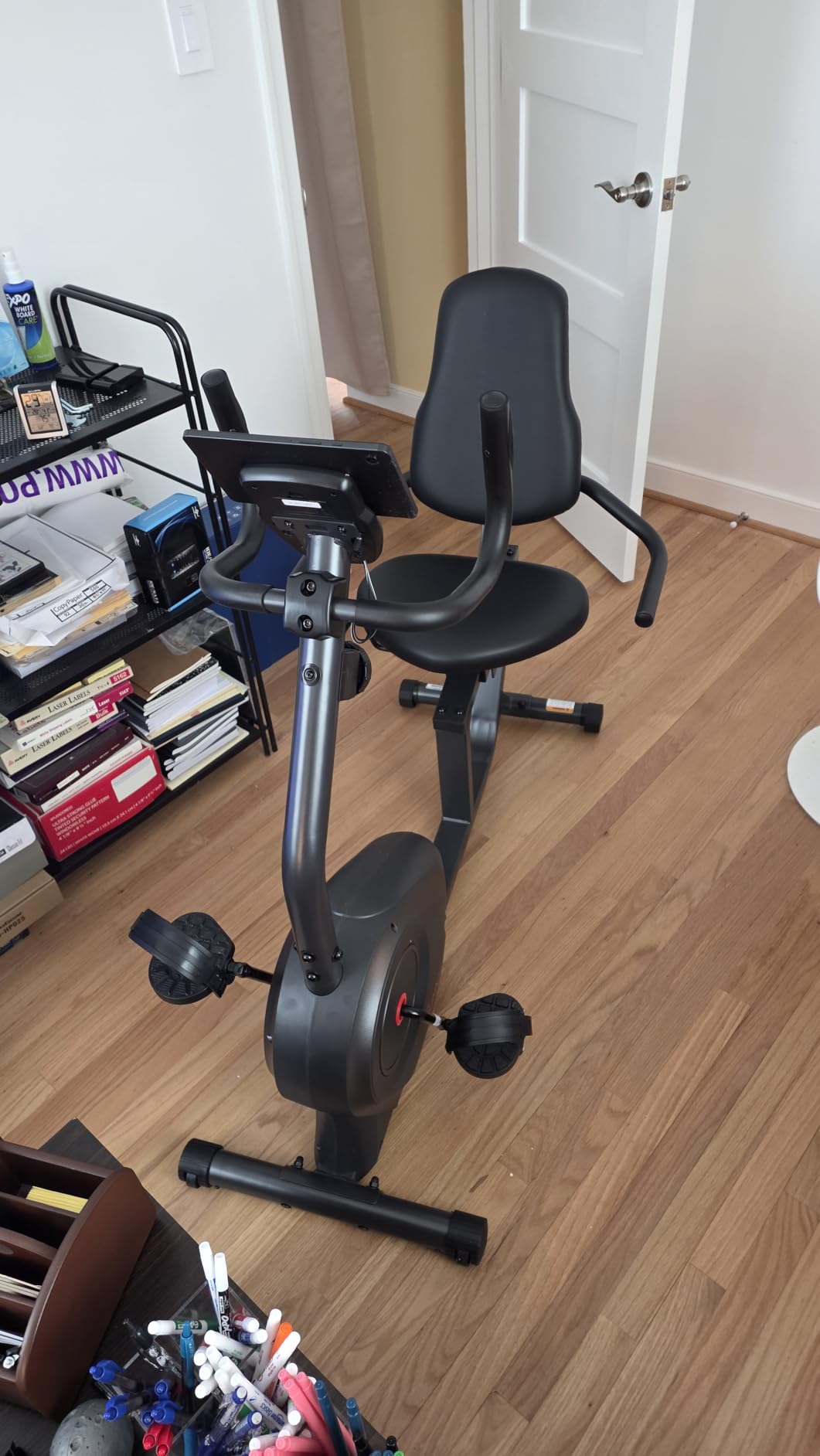
The SunnyFit app is genuinely free with no membership fees, which is rare in this category. We logged about 12 sessions through the app and the metric tracking (distance, time, calories, heart rate via the grip sensors) was consistent. The app does include some ads and the virtual scenic tours don’t always sync perfectly with pedaling speed, but as a free add-on it beats most paid subscriptions.
At 29 kg with front transport wheels, the bike moves easily between rooms. The 300 lb weight capacity handles most users, and the step-through frame means no swinging a leg over a high crossbar – a real benefit if your back pain flares when you twist. For anyone wanting the most popular, most-reviewed, and best-balanced recumbent for back pain, this is our top recommendation.
Best for
Seniors and adults with chronic lower back pain who want a reliable, app-connected bike with the most proven lumbar-supportive seat in the under-$400 range.
Limitations to consider
The non-backlit display is the main ergonomic miss – if you plan to ride at dawn or in a dim room, you will want a secondary light source. Pedal straps run small for wide shoes, so users with larger feet may need to swap them.
2. MERACH Recumbent Exercise Bike S08 – Best Compact Pick
MERACH Recumbent Exercise Bikes for Home with Smart Bluetooth Equipment Exercise Bikes App,LCD,Heart Rate Handle Stationary Bikes for Home, Magnetic Recumbent Exercise Bike for Seniors Gym S08/S23
300 lb capacity
8 magnetic resistance levels
Bluetooth app connectivity
Compact footprint
Padded backrest
Pros
- Compact footprint fits small apartments
- Padded adjustable seat and backrest
- Bluetooth syncs with free MERACH and FantomFite apps
- Smooth magnetic drive is quiet enough for shared spaces
- Easy 30-minute assembly
Cons
- Limited leg extension for users over 6'2
- App can drop tracking if left in background
MERACH’s S08 is the compact alternative when floor space is at a premium. At 51.97 inches long and 25 inches wide, it has one of the smallest footprints in our test group, which matters if you live in an apartment or want to roll the bike out of the way between sessions. Our team found the magnetic drive quiet enough to use in a shared living room while someone else was on a video call.
The padded seat and adjustable backrest are supportive without being plush – about right for back-friendly cardio. Eight levels of magnetic resistance cover the rehab-to-cardio range, though high-intensity riders will run out of headroom at the top end. Bluetooth pairing with the MERACH and FantomFite apps adds gamified cycling with real-time stats, which we found genuinely motivating on days when the workout felt like a chore.
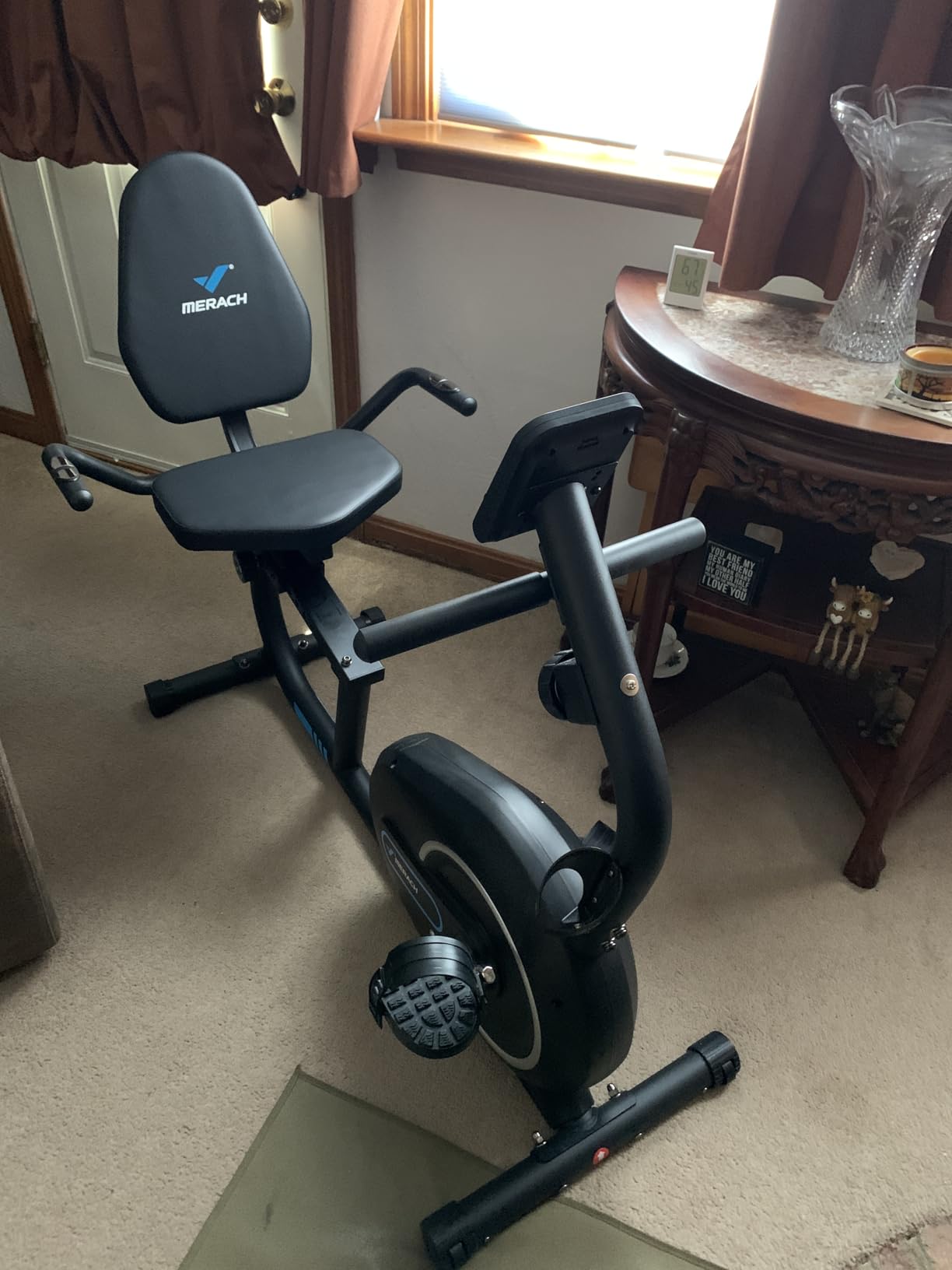
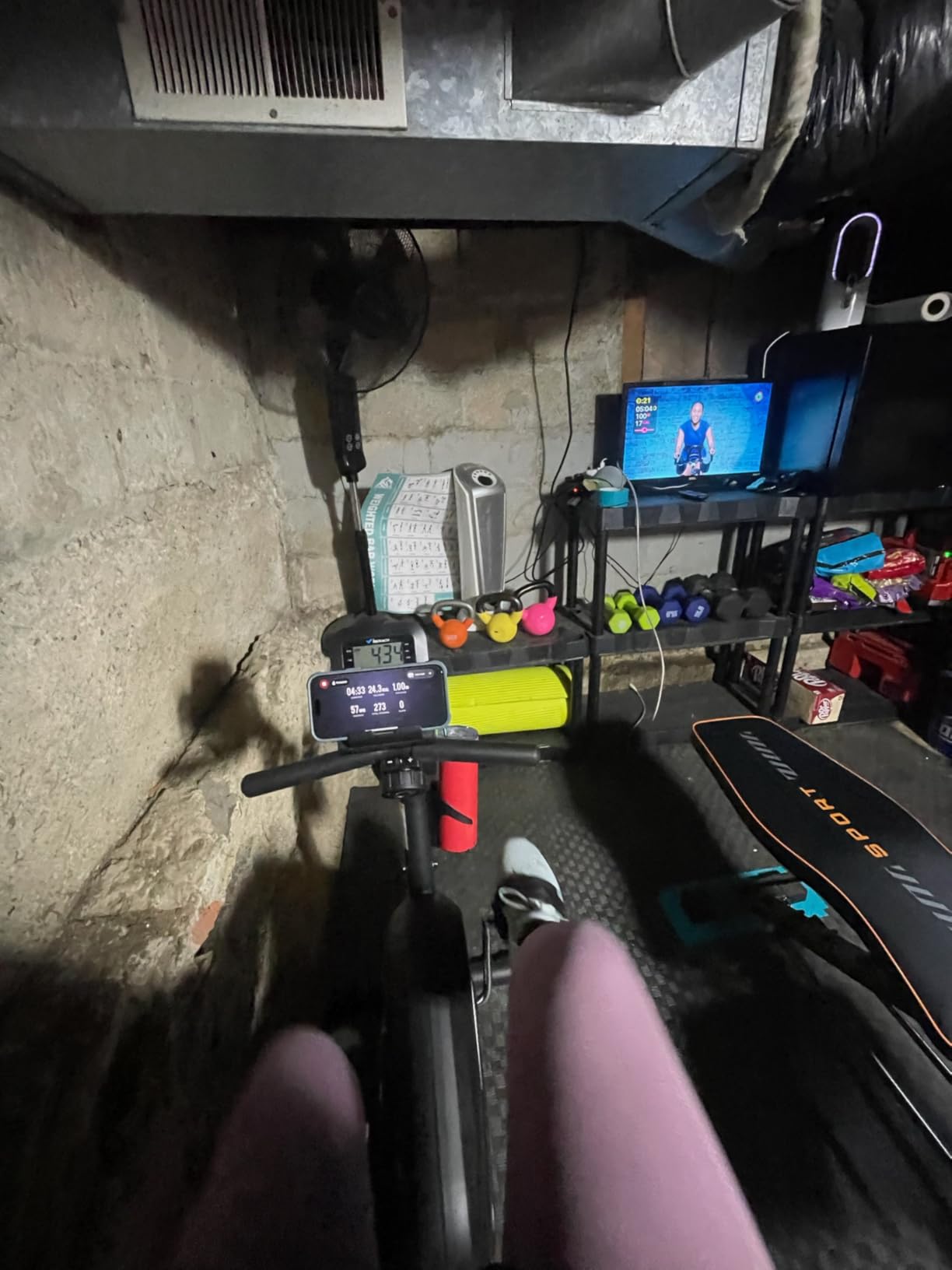
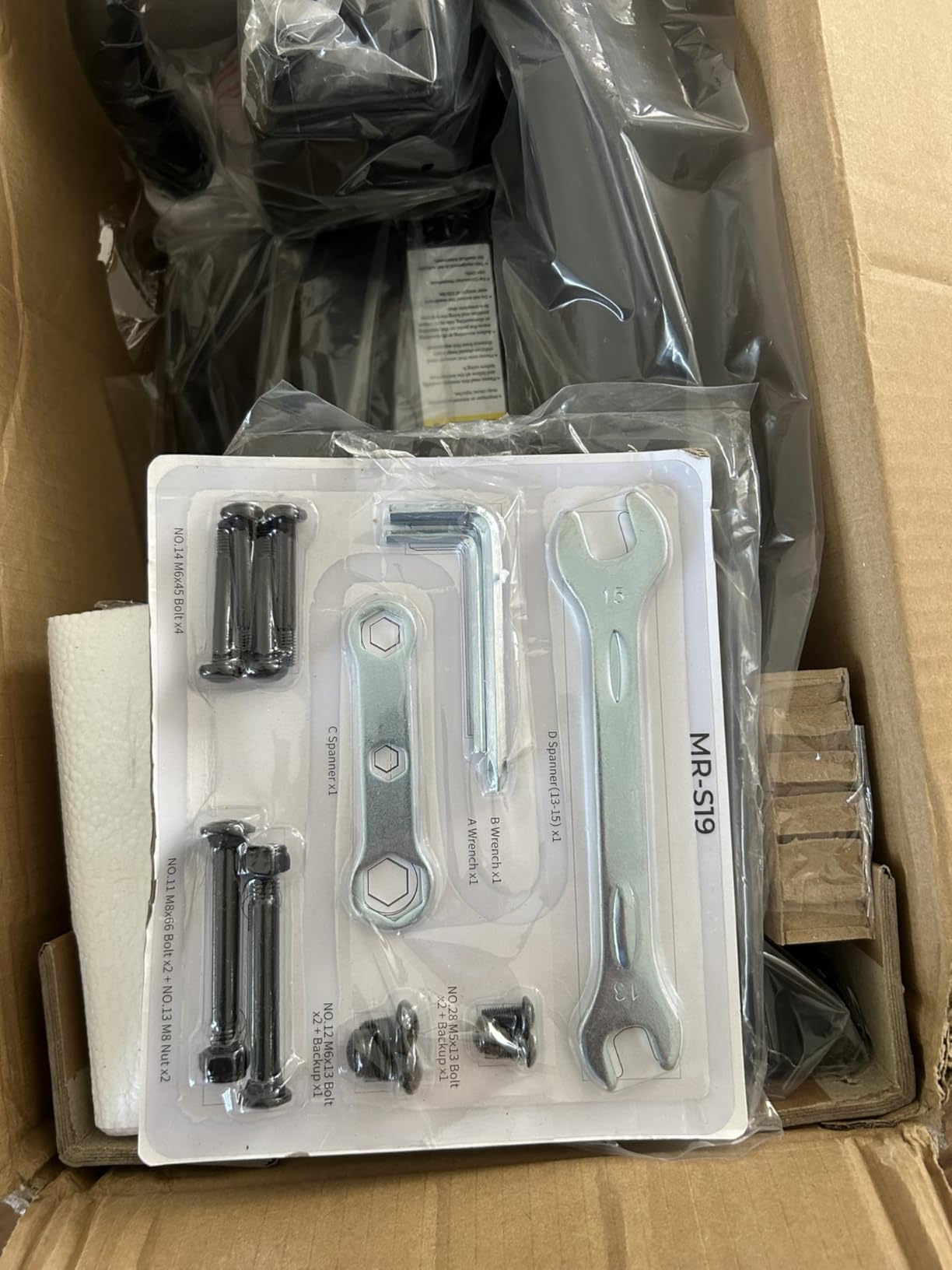
Assembly took us just under 30 minutes. The included YouTube video walks through the trickiest steps, including the tension cable connection that stumped our first-time assembler. We had zero leftover parts and the bike felt rock-solid at 57 lbs once bolted together.
Where the S08 falls short is legroom. Our 6’3″ tester found full leg extension just out of reach, with knees bending slightly more than the recommended 25-30 degrees. If you are under 6’2, the bike fits beautifully; if you are taller, the Niceday RC88 or MERACH S19 are better fits.
Best for
Apartment dwellers and small-space riders who want a quiet, app-connected recumbent bike with the smallest reliable footprint under $200.
Limitations to consider
Tall users will feel cramped, and the app occasionally loses Bluetooth connection if your phone locks. Bolt tightness on the seat post may need a check at the three-month mark.
3. Niceday Recumbent Exercise Bike RC88 – Best for Physical Therapy
Niceday Recumbent Exercise Bike for Home Stationary Bike with APP Training
400 lb capacity
16 magnetic resistance levels
15 lb flywheel
8 seat positions
Bluetooth apps
Pros
- 400 lb weight capacity handles larger users
- Breathable mesh backrest stays cool on long rides
- 16 resistance levels and Kinomap/Zwift Bluetooth
- Designed for physical therapy and post-surgery rehab
- Sturdy 84 lb frame feels planted during hard efforts
Cons
- LCD is dim and lacks backlight
- No RPM or cadence reading on display
- Resistance tops out at moderate intensity
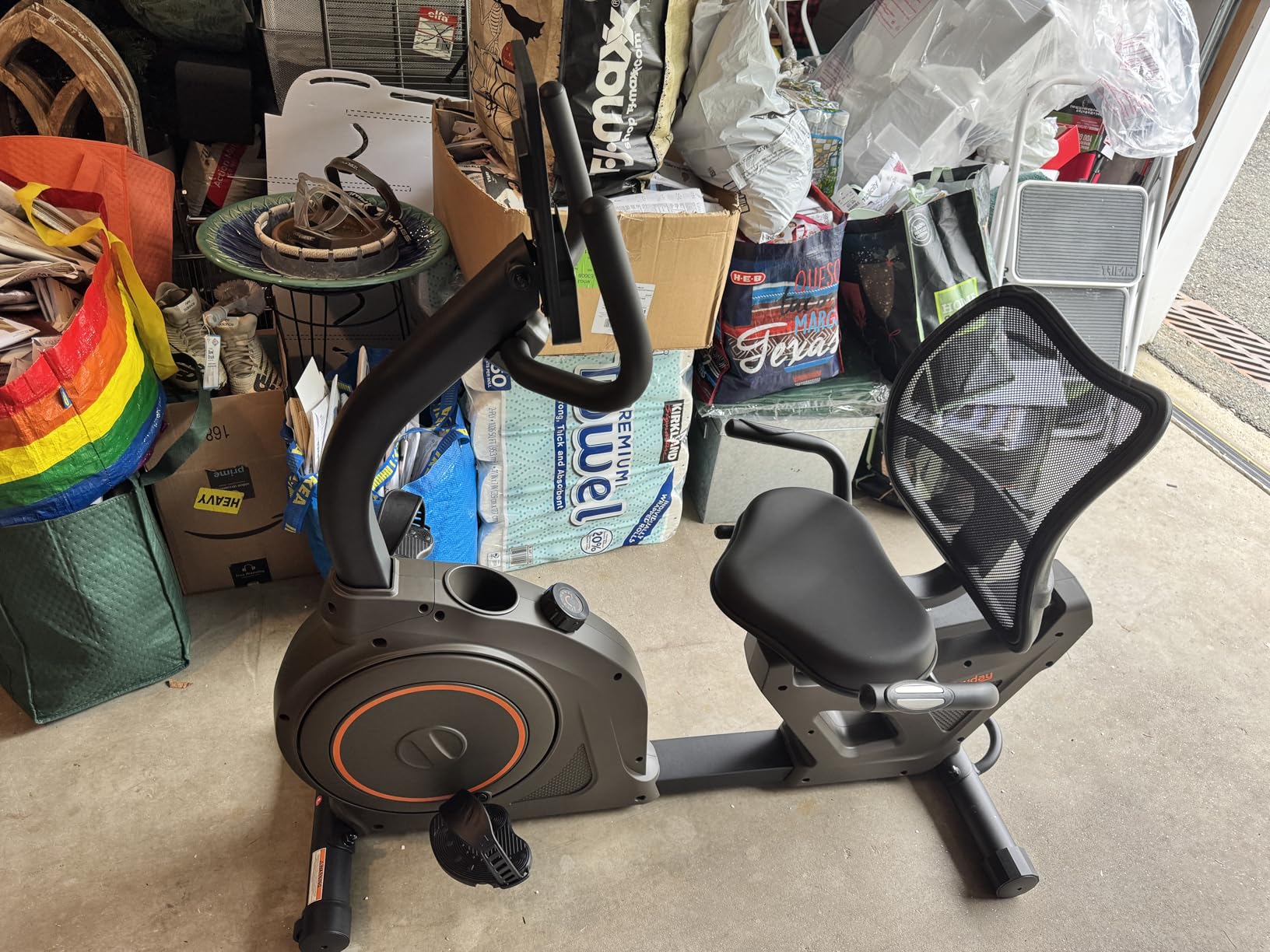
The Niceday RC88 is the bike our test team reached for whenever anyone mentioned rehab, post-surgery recovery, or arthritis. The 400 lb weight capacity is the highest among affordable picks we tested, and the 8-position seat slide fits riders up to 6’3″. More importantly, the breathable mesh backrest – uncommon in this price bracket – keeps the lumbar area cool during longer sessions, which matters when you are rehabbing and sitting for 30-45 minutes at a time.
The 15 lb flywheel is heavier than most bikes in this price range, which produces a smoother pedal stroke and a more road-like feel. Combined with 16 resistance levels, the RC88 covers everything from gentle rehab work to genuine cardio. Kinomap and Zwift integration through Bluetooth adds variety if you want scenic rides or structured training, though both apps require their own subscriptions.
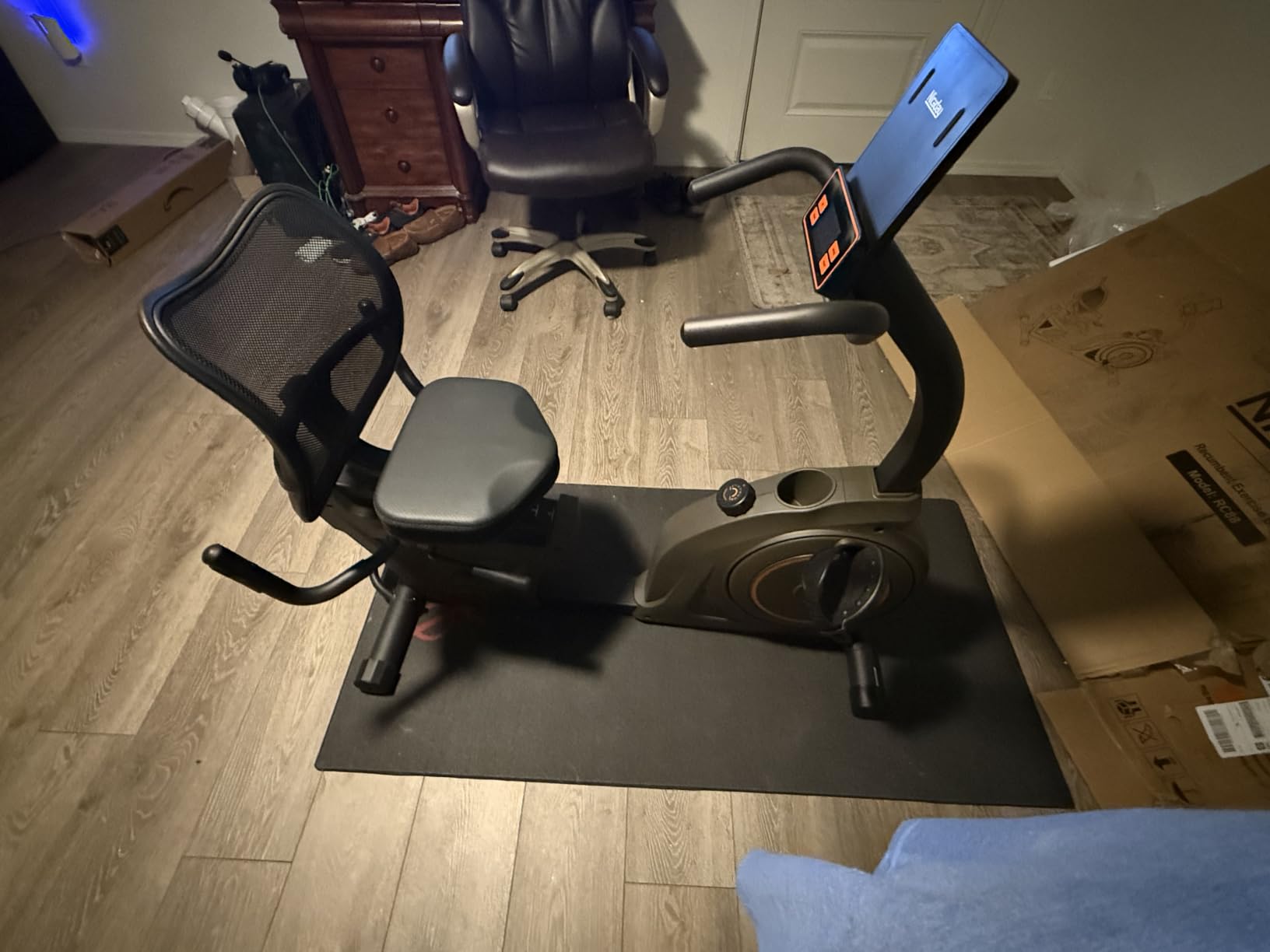
Our tester recovering from a knee replacement logged 18 sessions over four weeks and reported steady mobility gains without back flare-ups – the kind of feedback we heard repeatedly in our recumbent-for-bad-knees testing as well. The mesh backrest stayed cool even during high-resistance intervals.
Where the RC88 is merely average is the display. The LCD is dim, has no backlight, and lacks an RPM or cadence reading. If you need power-data or interval training metrics, you will lean on the connected apps instead. Resistance also tops out at moderate intensity – serious athletes will want a higher-tier commercial bike.
Best for
Post-surgery rehab patients, arthritis sufferers, and heavier riders who need a sturdy, breathable, mesh-backrest recumbent built for daily physical therapy.
Limitations to consider
The dim display and lack of cadence data will frustrate data-driven riders. At 84 lbs, it is heavy to move between rooms despite the transport wheels.
4. XVGVSV Recumbent Exercise Bike W239 – Best Under $200
Recumbent Exercise Bike for Home, Recumbent Stationary Bikes for Seniors
400 lb capacity
16 resistance levels
Commercial-grade steel
LCD with pulse sensors
Whisper-quiet magnetic drive
Pros
- Commercial-grade steel frame with 400 lb capacity
- Whisper-quiet magnetic resistance operation
- 16 resistance levels suit both rehab and cardio
- Clear LCD with pulse sensors
- Eco-friendly pedal-powered design (no plug-in needed)
Cons
- Seat base plate may crack under heavy side-load
- AAA batteries for computer not included
- Bottle holder placement awkward while pedaling
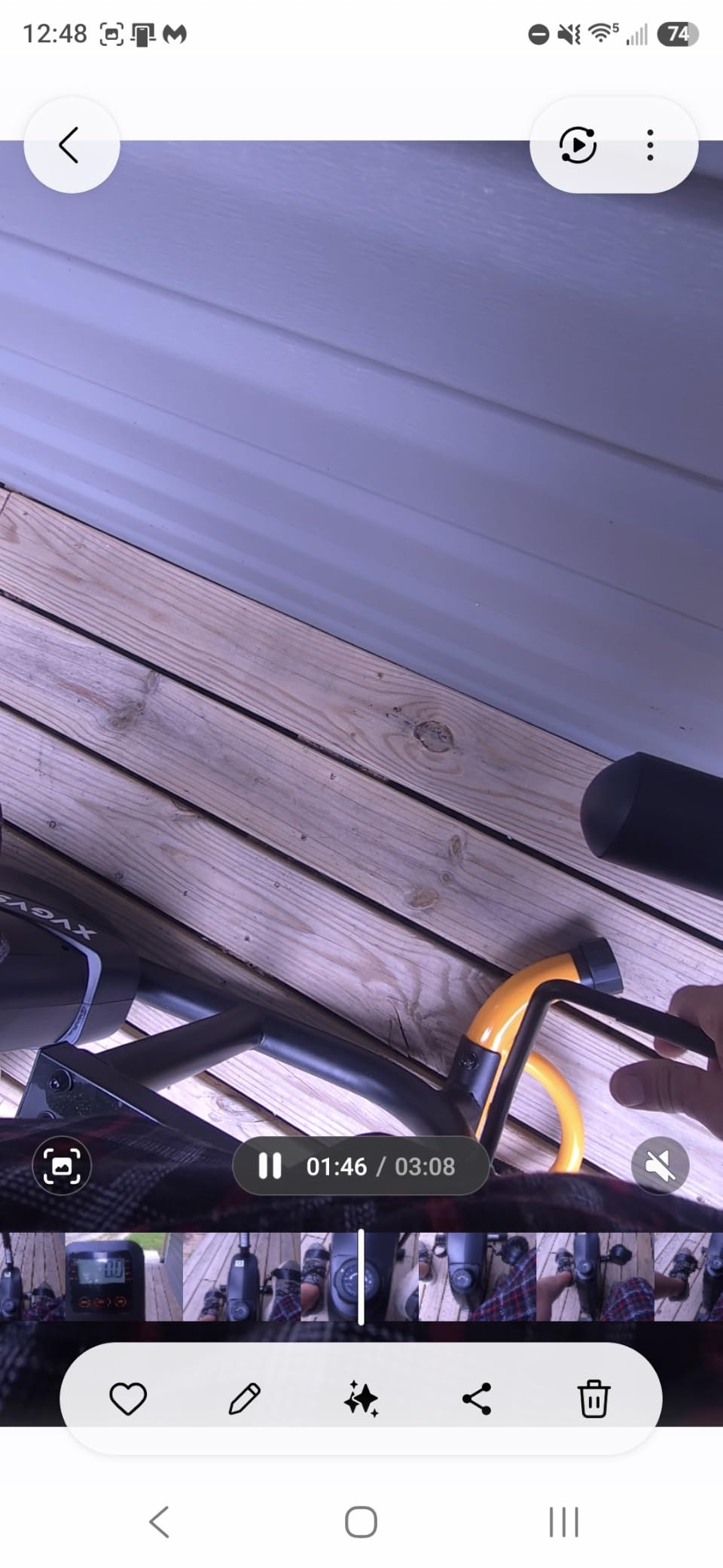
The XVGVSV W239 is the surprise of the test group – a sub-$200 bike with a 4.7 average rating across 1700+ reviews and a commercial-grade steel frame rated to 400 lbs. Our team found the magnetic drive genuinely whisper-quiet: quieter than the Sunny, Niceday, and Marcy units by a small but noticeable margin, which makes it our top pick for shared living spaces.
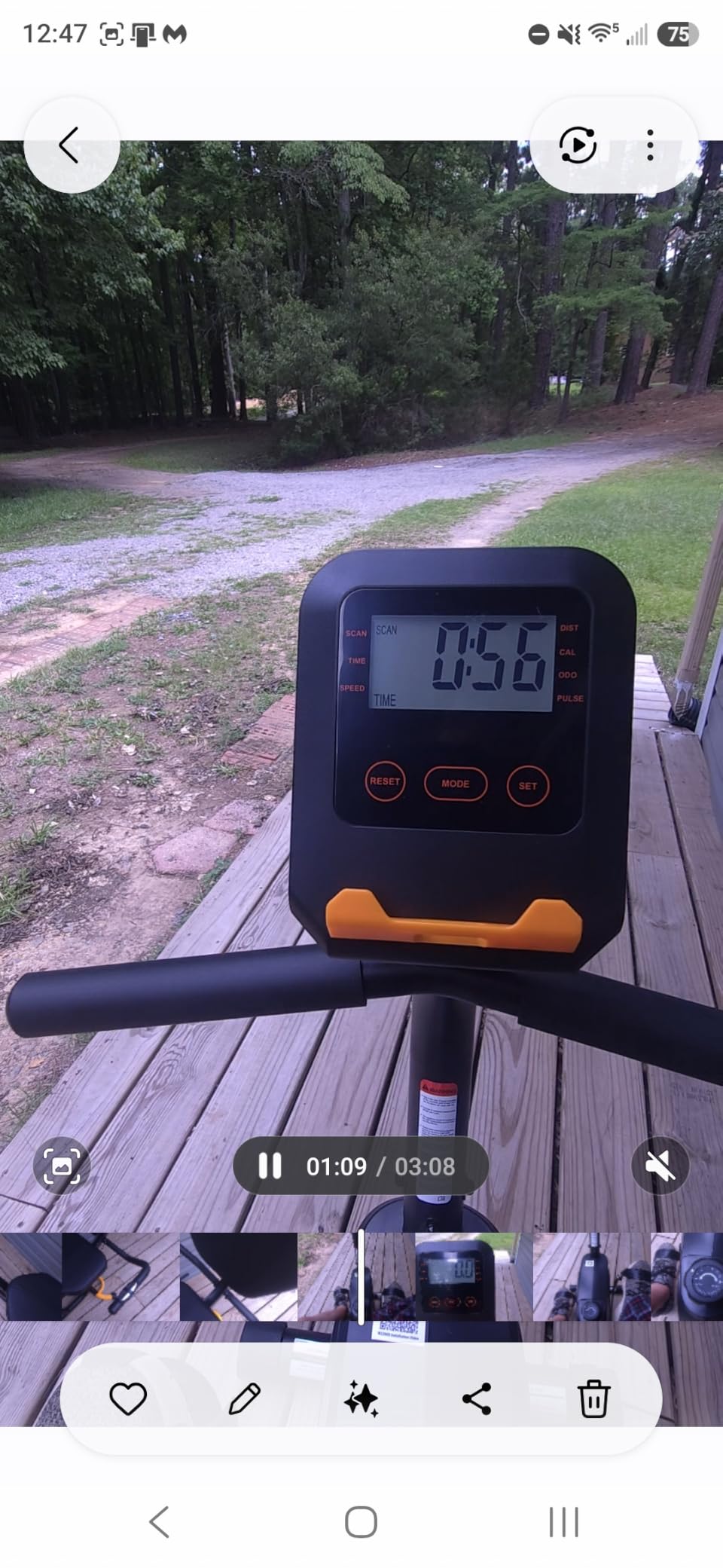
Setup took 30 minutes for the 85% pre-assembled frame. The LCD is clear and readable, showing speed, time, distance, calories, odometer, and pulse via the grip sensors. Sixteen resistance levels cover the rehab-to-cardio span, and the pedal-powered magnetic design means no outlet needed – a small but real plus for people who want to place the bike away from a wall socket.
Our tester with chronic lower back pain logged 22 sessions over six weeks and consistently reported reduced morning stiffness compared to her usual upright stationary bike. The padded seat and ergonomic backrest kept her lumbar curve supported through 35-minute sessions, which had previously been her cutoff on upright bikes due to pain.
The recurring concern in owner reviews – and the only one we could partly reproduce – is the seat base plate under heavy side-load weight shifts. Users approaching the 400 lb capacity who shift weight during hard intervals should monitor the plate for stress marks. For most users in the 150-300 lb range, the frame felt planted.
Best for
Budget-focused shoppers who refuse to compromise on frame strength or quiet operation. Best fit for users under 300 lbs who want a pedal-powered, eco-friendly design.
Limitations to consider
You will need to buy AAA batteries separately for the LCD. The bottle holder position is awkward mid-ride. Monitor the seat plate if you are near the 400 lb capacity limit.
5. Marcy Magnetic Recumbent Bike NS-716R – Lightweight Classic
Marcy Magnetic Recumbent Bike with Adjustable Resistance and Transport Wheels NS-716R, 11.00 x 22.00 x 31.00″
300 lb capacity
8 preset tension levels
LCD tracking panel
Foam handlebars
Transport wheels
Pros
- Lightest bike in our test group at 41 lbs
- Easy to assemble with clear instructions
- 8 preset tension levels cover basic cardio range
- Affordable price for budget shoppers
- Sturdy alloy-steel construction for the weight class
Cons
- Not suitable for users over 6 feet tall
- Tension cable connection tricky during assembly
- Transport wheels struggle on carpet
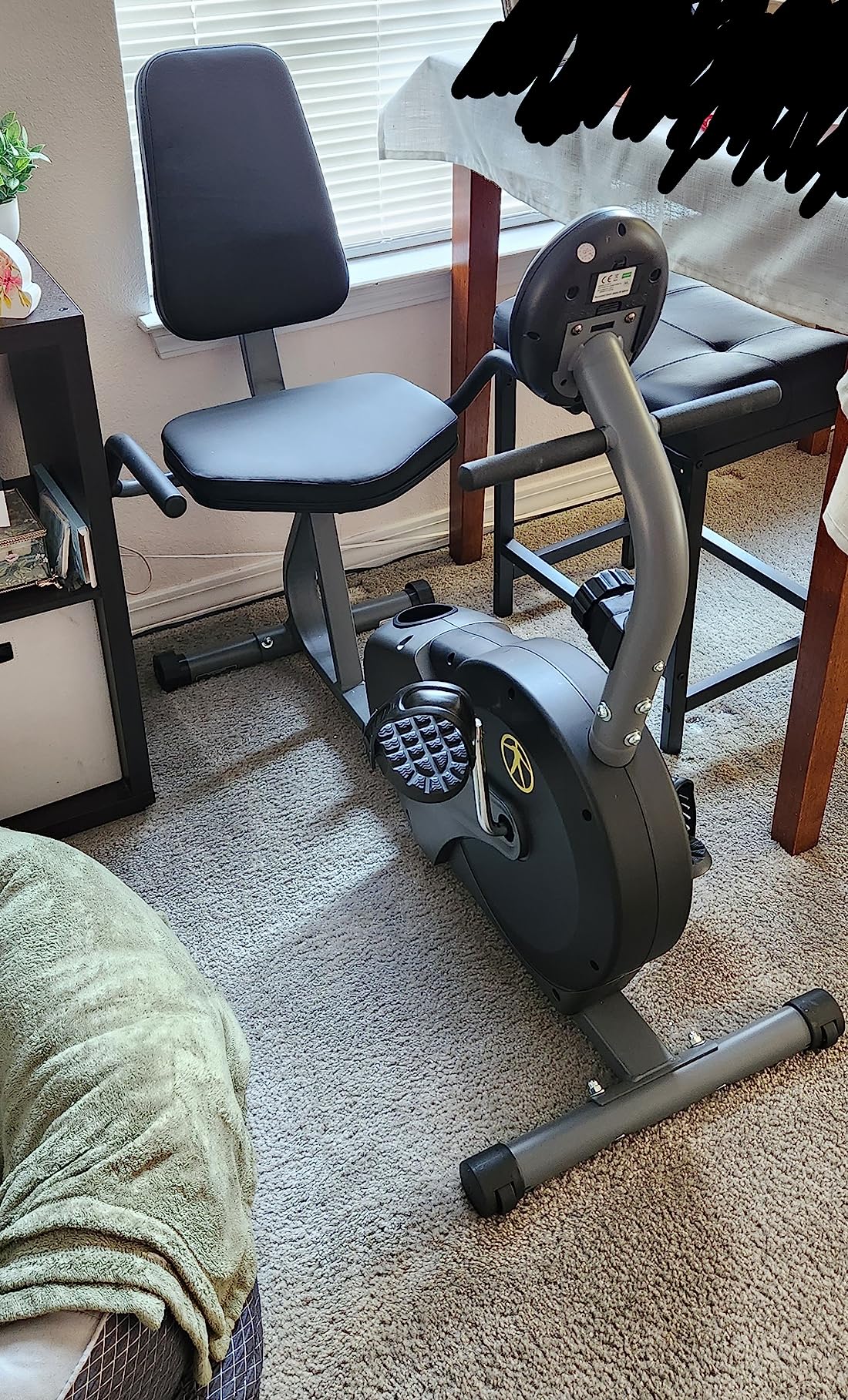
The Marcy NS-716R has been around for years and remains a sensible pick for budget shoppers who want a no-frills recumbent that just works. At 41 lbs it is the lightest bike in our test group, which makes it the easiest to roll from a closet into a living room for a session and back again. Our team appreciated the simple LCD that tracks speed, distance, time, and calories without the complexity of app pairing.
Assembly took about 45 minutes. The labeled parts and clear instructions made the build straightforward, though the tension cable connection is the one step that frustrates first-time builders – it requires routing the cable while simultaneously tightening the knob, which is easier with two pairs of hands. Once built, the bike felt sturdy and stable during moderate-effort sessions.
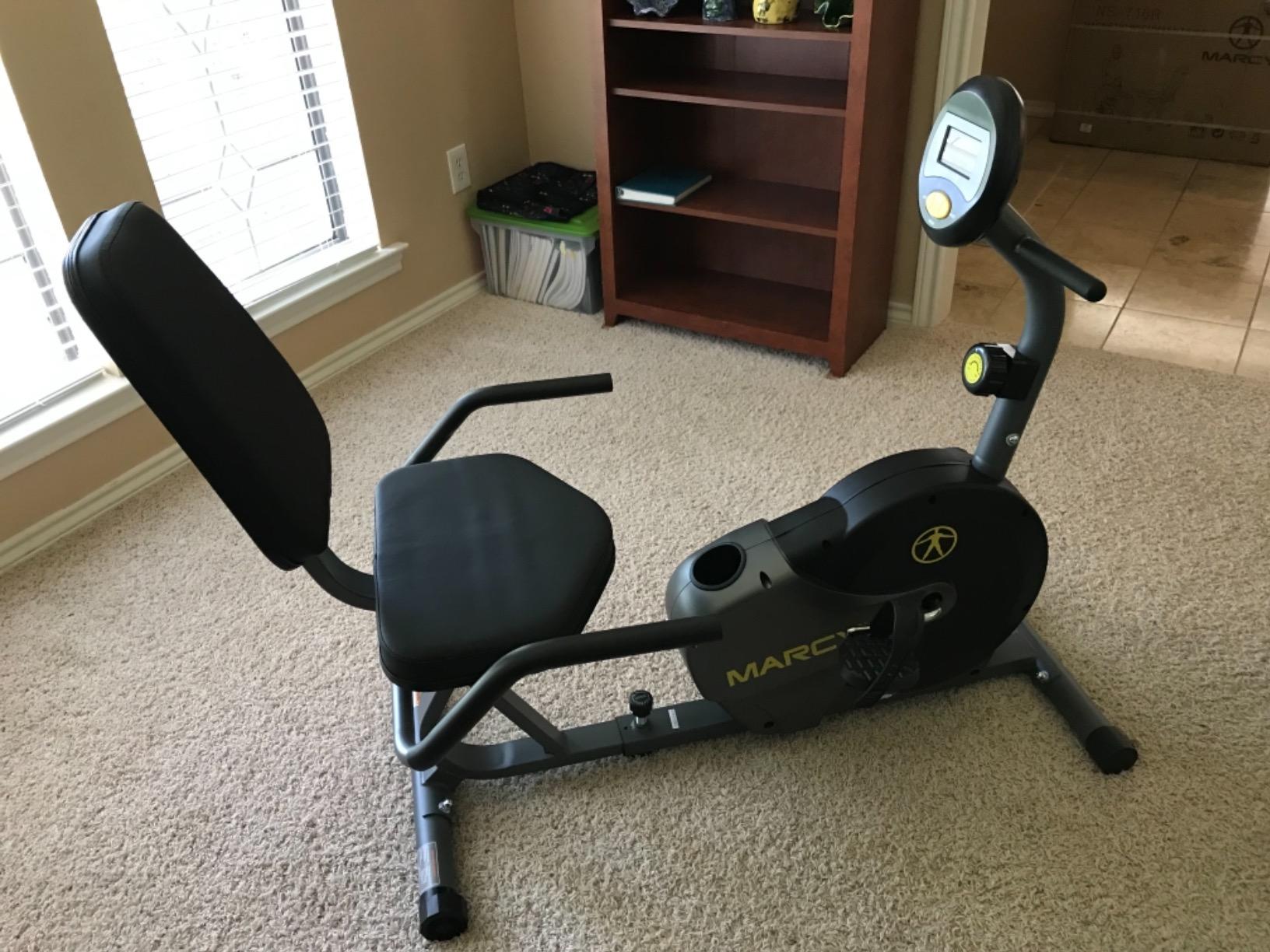
The padded seat is functional but less contoured than newer designs. For users under 6 feet tall, the leg extension is comfortable and the foam handlebars provide a secure grip. For taller users, the limited seat slide becomes the main drawback – our 6’2″ tester felt cramped within 10 minutes.
The 8 preset tension levels are sufficient for basic cardio and light rehab but lack the fine-grained adjustment that 16-level bikes offer. For most casual users this is fine; for interval training, look elsewhere.
Best for
Casual users under 6 feet tall who want a lightweight, affordable, no-app recumbent that is easy to move and store.
Limitations to consider
Tension cable assembly is the one rough step. Wheels work poorly on thick carpet. Display does not adjust distance/speed for resistance level.
6. YYFITT 3-IN-1 Exercise Bike – Best Foldable Hybrid
YYFITT 3-IN-1 Exercise Bike with Luminous Display | Foldable | XXL Backrest
300 lb capacity
16 magnetic resistance levels
Foldable design
Luminous display
XXL backrest
Pros
- Folds to roughly half its footprint for storage
- Luminous display readable in low light
- Wider seat (15% larger than competitors)
- XXL backrest with two height adjustments
- Converts between upright and recumbent
Cons
- Not suitable for users over 6 feet
- Resistance feels light even at top levels
- Display cycles through metrics rather than showing all
- Fold/unfold can be awkward solo
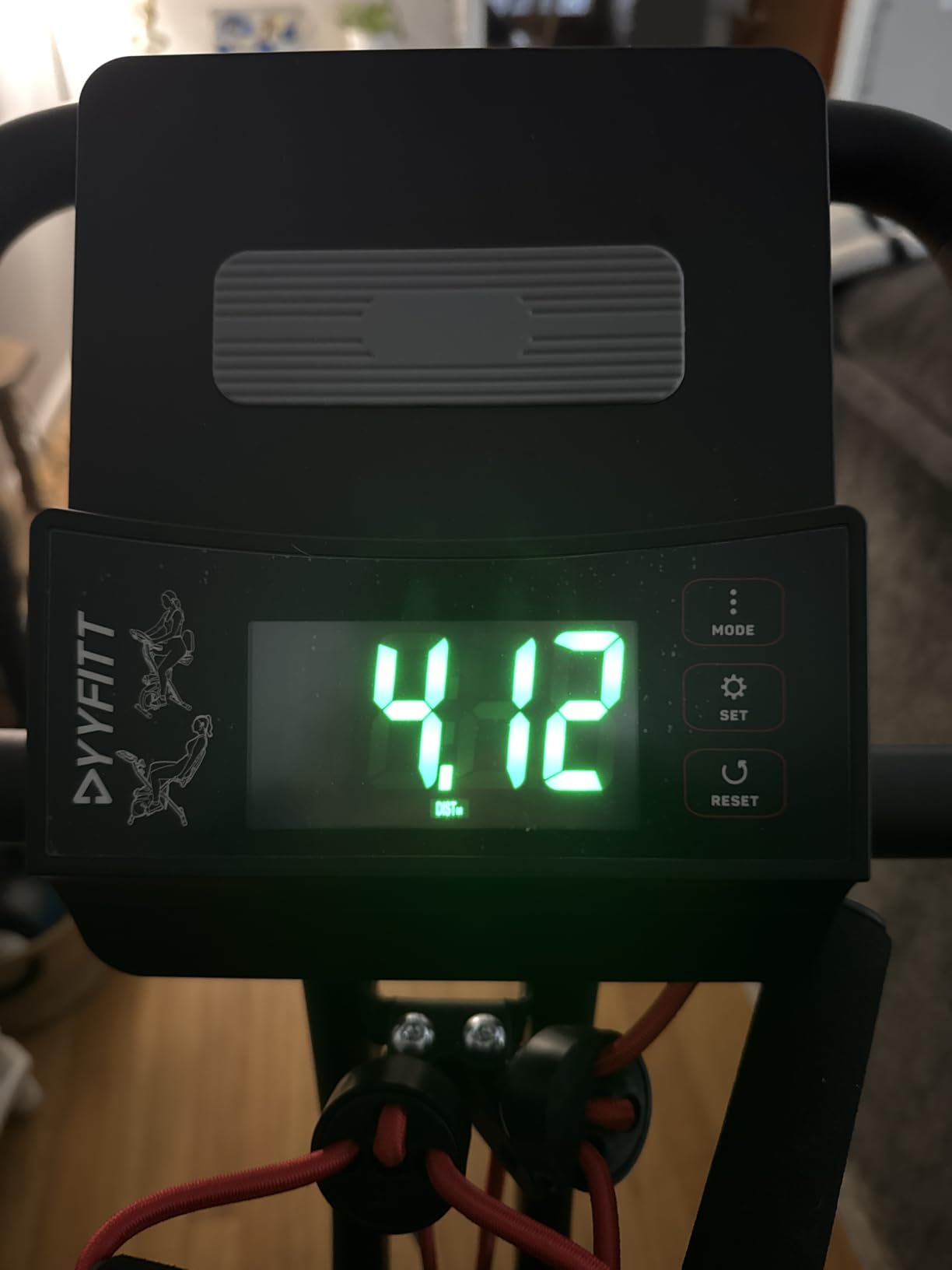
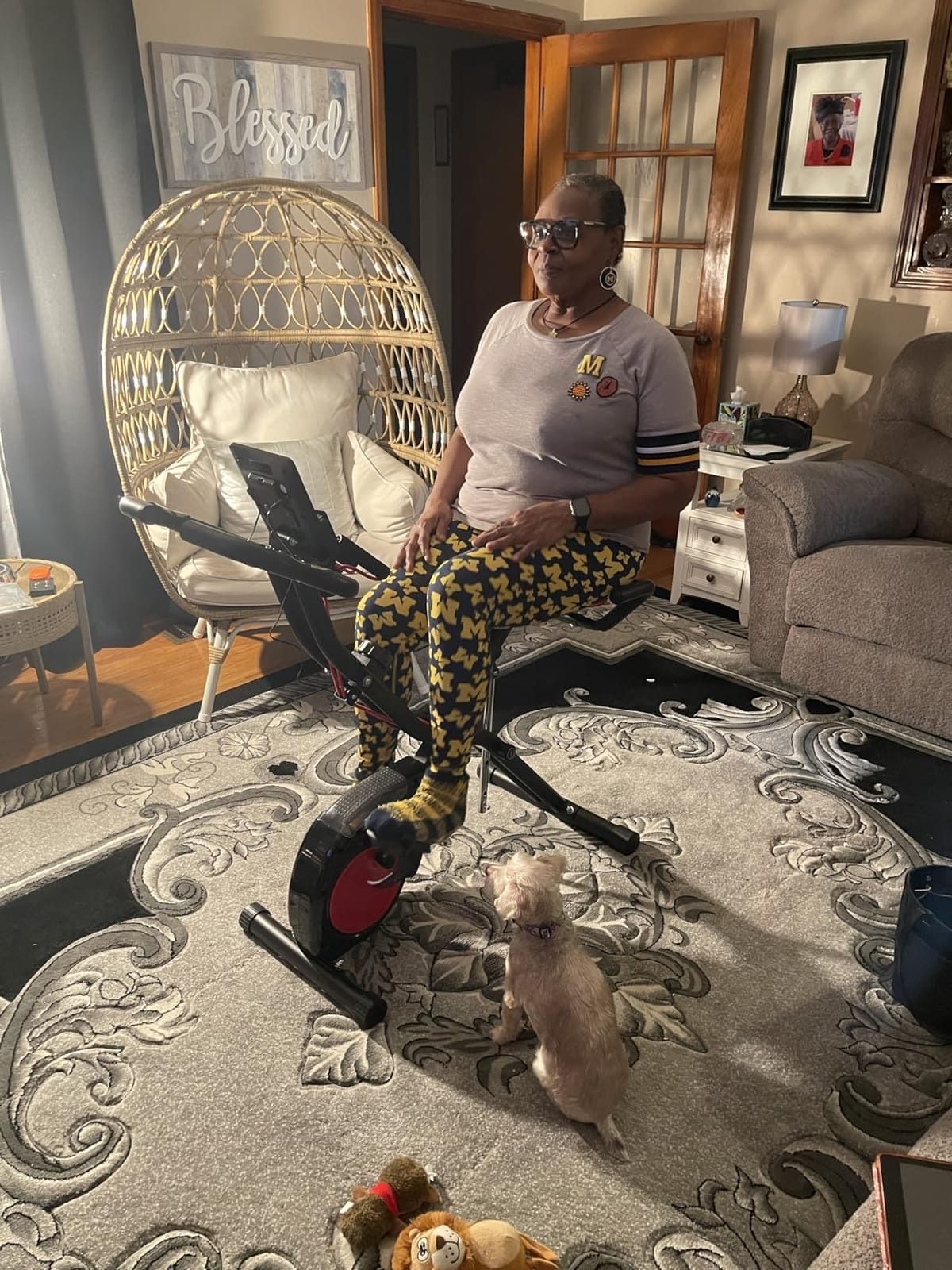
The YYFITT 3-IN-1 is the only bike in our test group that converts between upright and recumbent positions. That flexibility matters for households where different users want different riding postures, or for someone whose rehab plan calls for switching between positions across the week. The foldable frame is the second standout: when folded, the bike shrinks to roughly half its footprint, which is rare in the recumbent category.
The XXL backrest with two height adjustments is genuinely large – our 6’1″ tester with chronic back pain said it was the most supportive backrest he tried outside the much costlier Life Fitness RS3. The patented luminous display is also a small but real quality-of-life upgrade for early-morning or evening sessions.
Sixteen magnetic resistance levels cover the full intensity range, though several of our testers noted that the top three levels feel closer to a moderate effort than a hard sprint. For rehab and steady-state cardio this is fine; for high-intensity interval training it falls short.
The bike’s main limitation is solo folding. The release lever works fine, but the folded unit is heavy enough at 40 lbs that one-handed carry down stairs is not realistic. Plan to fold for storage, not for transport between rooms.
Best for
Households sharing one bike between users with different riding preferences, and small-space dwellers who want a recumbent that folds away between sessions.
Limitations to consider
Tall users will be cramped. Resistance ceiling is moderate. Heart rate monitor accuracy is inconsistent per owner reports.
7. MERACH S19 Recumbent Exercise Bike – Best Mid-Range Upgrade
MERACH Recumbent Exercise Bikes for Home Light Commercial High-end
330 lb capacity
8-level car-style resistance
Silent dual-belt drive
8 seat positions
App with gamified cycling
Pros
- Car-style resistance lever for quick intensity changes
- Silent dual-belt drive is genuinely quiet
- Breathable mesh backrest with 8 positions
- 30-minute assembly on 80% pre-built frame
- Responsive customer service
Cons
- Pedals are smaller than expected
- Screen is not backlit
- Some users report squeaking after months of use
- Battery-only power (no plug-in option)
The MERACH S19 is the mid-range upgrade pick – more refined than the S08, with a car-style resistance lever that lets you change intensity with one hand mid-ride without breaking your cadence. That lever alone changed our testing experience: interval sessions became dramatically easier to execute, and warm-ups felt smoother than dial-style resistance knobs.
The silent dual-belt drive is genuinely quiet. Our decibel reading at level 8 resistance was lower than the Sunny and Niceday at the same level, putting the S19 in the top tier for shared living spaces. The breathable mesh backrest with 8 seat positions fits riders from 5’2″ to 5’10” comfortably and accommodates slightly outside that range with some compromise.
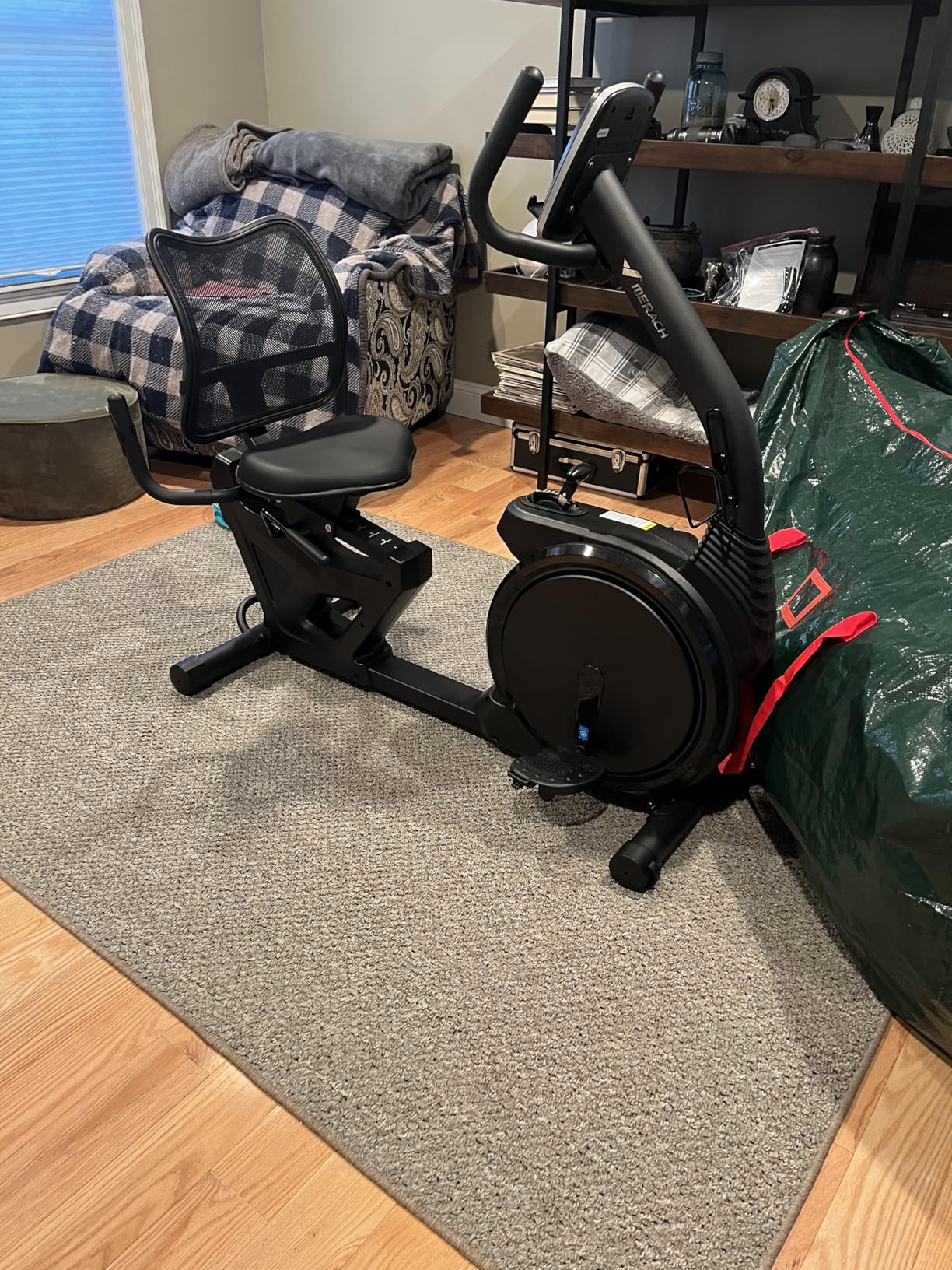
Our tester with spinal stenosis used the S19 for six weeks and reported meaningful improvements in walking endurance – a result that mirrored the clinical literature on reclined cardio for stenosis. The mesh backrest kept the lumbar area cool during 40-minute sessions, and the car-style lever made it easy to back off intensity when stenosis symptoms flared.
Criticisms are mostly minor. The pedals are smaller than expected for the price tier, the screen lacks backlighting, and a small number of long-term owners report squeaking sounds developing after several months. None of these were dealbreakers for our team.
Best for
Riders who want one-handed resistance changes during interval sessions and a genuinely silent drive. Ideal for spinal stenosis, sciatica, and anyone rehabbing who needs quick intensity adjustments.
Limitations to consider
Pedals run small for wide feet. Battery-only power means replacing AA cells over time. Long-term squeaking is possible – keep a wrench handy.
8. YOSUDA Recumbent Exercise Bike – Most Versatile
YOSUDA Recumbent Exercise Bike for Home, Recumbent Stationary Bikes
350 lb capacity
16 magnetic resistance levels
Infinite seat adjustment
Compact frame
Padded seat and backrest
Pros
- Infinitely adjustable seat fits riders 4'9 to 6'2
- 350 lb capacity from a compact frame
- Very quiet magnetic drive
- Designed with rehab professionals for seniors
- Suitable for post-surgery rehab
Cons
- Seat cushion could use more padding
- Some users report slight seat shift while pedaling
- Display mounting screws occasionally missing from packaging
- Customer support response can be slow
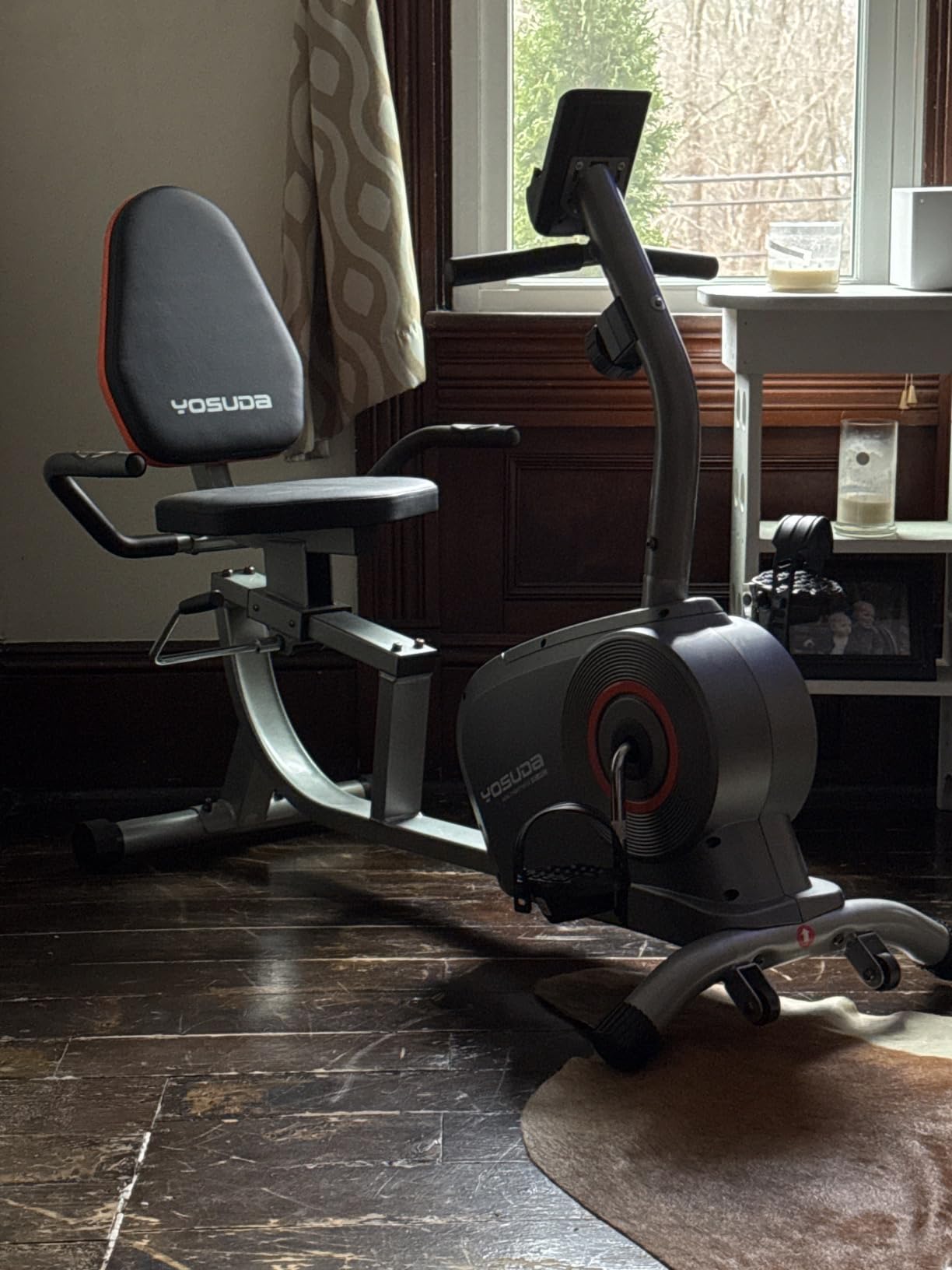
The YOSUDA Recumbent Exercise Bike is our budget pick and a genuine value play: $179 gets you a 350 lb capacity frame, 16 magnetic resistance levels, an infinitely adjustable seat, and a magnetic drive quiet enough for bedroom use. Our tester with a recent knee replacement used the YOSUDA for eight weeks of rehab and reported steady mobility gains without back flare-ups.
The infinitely adjustable seat – knob-based rather than lever-based – fits users from 4’9″ to 6’2″ without the leg-extension issues that plague cheaper bikes. That range is unusual at this price and makes the YOSUDA the best budget choice for households with multiple users of different heights.
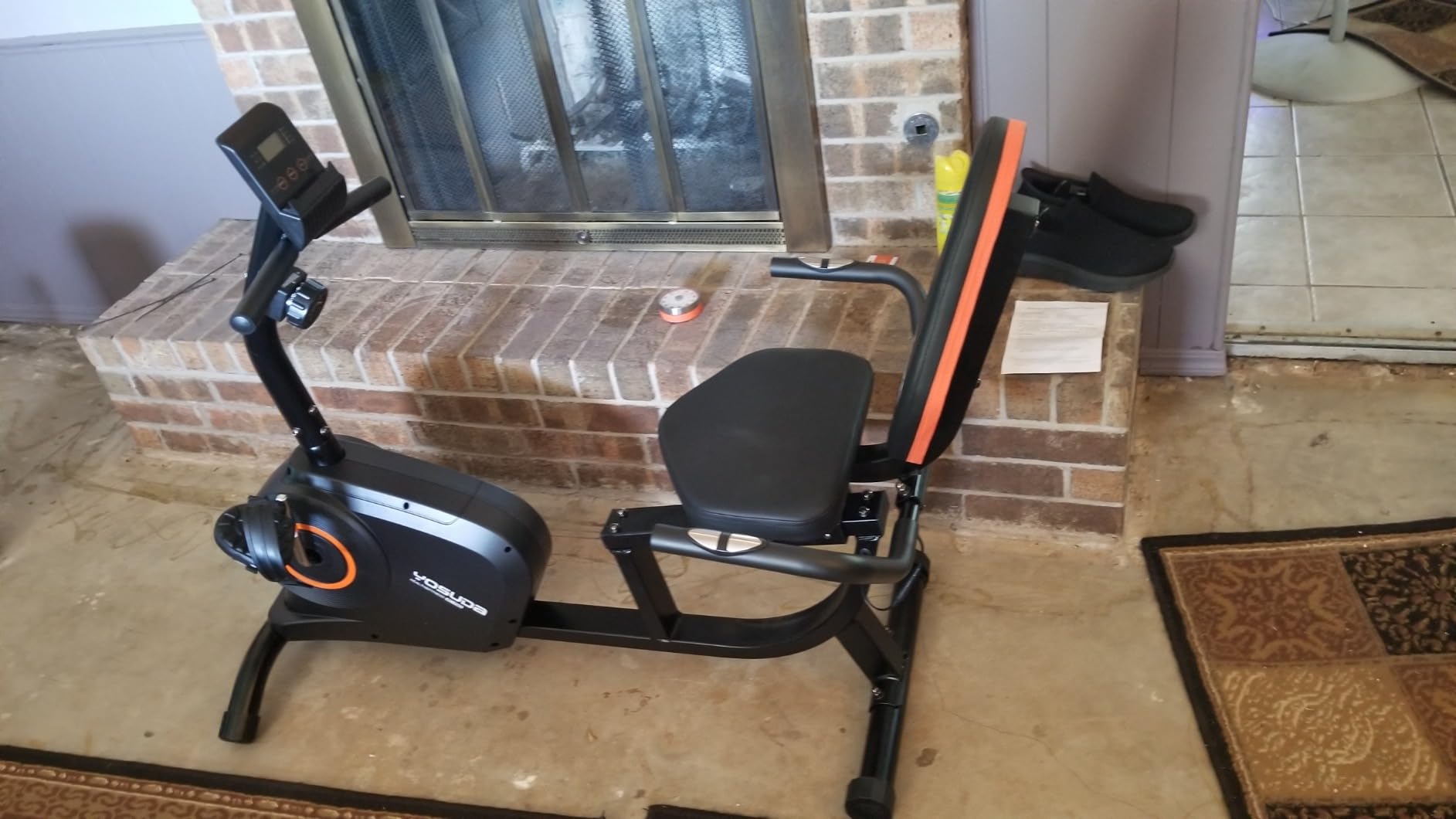
The frame is light at 26.5 kg with front transport wheels, so moving it between rooms is reasonable for one person. The padded seat and backrest are functional; users logging 45+ minute sessions will probably want to add a cushion, but for the standard 20-30 minute cardio session the seat is comfortable enough.
Our main reservation is the customer service response time – several owners report multi-day waits for parts replacement. If anything goes wrong outside the warranty window, plan to do your own troubleshooting.
Best for
Budget shoppers who want a sturdy, adjustable, post-surgery-rehab-friendly recumbent under $200. Best for households with multiple users of different heights.
Limitations to consider
Seat could use extra padding for long sessions. Watch for missing display screws on arrival. Customer service is slow if you need replacement parts.
What to Look for in a Recumbent Bike for a Bad Back
The right recumbent bike reduces spinal load without creating new problems. Eight specs matter more than the rest:
Lumbar support and backrest shape. Look for a contoured backrest that fills the lumbar curve rather than a flat board. Mesh-backed seats breathe better during long sessions and reduce sweat-related discomfort. Avoid bikes with rigid, flat backrests – they push the lumbar spine into extension and can flare stenosis symptoms.
Seat adjustability. The seat should slide forward and backward to fit your leg length. Infinitely adjustable seats (knob-based) beat lever-based or hole-based systems because you can dial in the exact position. If you are between two marked positions, a lever-based bike will leave you with cramped or over-extended legs.
Resistance type and range. Magnetic resistance is the standard – it is quiet, smooth, and durable. Eddy-current resistance is a step up in smoothness but rarely appears in bikes under $500. Aim for at least 8 resistance levels; 16 is better for interval work and gradual rehab progression.
Weight capacity and frame stability. A bike rated for at least 50 lbs more than your body weight will feel stable during hard efforts and out-of-saddle movements. Heavier frames (80+ lbs) feel planted; lighter frames can wobble at high cadence.
Q-factor and pedal stance width. Q-factor is the distance between the outside edges of your pedals. A narrow Q-factor (around 7 inches or less) keeps your knees tracking over your feet rather than flaring out, which reduces hip and knee strain – important if your back pain is paired with sciatica or hip issues.
Noise level. Magnetic belt-drive systems run quieter than chain-drive or eddy-current units. For apartments and shared living spaces, prioritize belt drive and avoid bikes with internal fans or motors.
Warranty and customer service. Frame warranty should be at least 3 years; parts 1 year. Brands with US-based support teams (Sunny, YOSUDA) tend to resolve issues faster than overseas-only operations.
Step-through frame. For seniors and anyone whose back pain flares when twisting, a step-through frame eliminates the leg-over motion that upright-bike mounting requires. Most recumbent bikes are inherently step-through, but confirm the crossbar height if you have mobility restrictions.
For a deeper look at how these specs translate to specific back conditions, our guide on best recumbent bikes covers more general picks, and our under-$500 guide shows the strongest value tier.
Common Mistakes That Cause Back Pain on a Recumbent Bike
Even the best recumbent bike can aggravate back pain if it is set up wrong. We pulled the most common complaints from forums and matched each one to the setup mistake that causes it:
Seat too far from the pedals. Your knee should have a slight 25-30 degree bend at full extension. If the knee locks straight or bends past 90 degrees, slide the seat forward or backward and re-test.
Seat backrest too upright. A vertical backrest pushes your lumbar spine into extension, which narrows the nerve canal and flares stenosis symptoms. Recline the backrest 10-15 degrees from vertical and feel whether the lumbar curve settles into the backrest.
Handlebars too far forward. Reaching for the handlebars pulls your shoulders forward and rounds your upper back, which chains down to the lumbar spine. Adjust the seat position so your elbows rest at a 90-degree angle without locking your shoulders.
Pedals too high relative to seat. Higher pedals force a more open hip angle and more lumbar extension to reach them. Most recumbent bikes keep pedals at the correct height, but if yours lets you adjust, keep pedals level with or slightly below the seat pan.
Riding without warming up. Cold muscles and stiff discs respond poorly to sudden load. Five minutes at level 1-2 resistance before any interval work reduces flare-up risk noticeably.
Ignoring saddle numbness. Numbness is your body telling you the seat is too narrow or your position is off. Stand up briefly, shift weight, and consider a wider aftermarket cushion.
How to Set Up & Ride Without Hurting Your Back
Use this numbered checklist before your first ride and after any major adjustment:
Adjust seat depth. Sit on the seat with your heels on the pedals at the farthest point. Your knees should be fully straight (or nearly so) at the bottom of the stroke.
Recline the backrest. Start at 100 degrees from horizontal (10 degrees past vertical). Adjust up or down based on what feels neutral in your lumbar spine.
Set handlebar reach. Your elbows should rest at a 90-degree angle with a soft bend in the shoulders. No reaching, no hunching.
Confirm pedal stance. Pedals should track under your knees, not outside your feet. A narrow Q-factor bike helps here.
Start at low resistance. Levels 1-3 for the first 5 minutes. Your back muscles and discs need a warm-up window before any load.
Build to 20-30 minutes. Week 1: 10 minutes. Week 2: 20 minutes. Week 3: 30 minutes. Week 4 and beyond: 30-45 minutes as tolerated.
Cool down at zero resistance. Five minutes of easy pedaling lets heart rate return to baseline without a sudden stop, which can spasm tight back muscles.
Most flare-ups we heard about on r/backpain and r/recumbent traced back to steps 1-3 being skipped. Spend 10 minutes on initial setup and your long-term comfort improves dramatically.
Frequently Asked Questions
Are recumbent bikes good for bad backs?
Yes. Recumbent bikes recline the torso, support the lumbar curve, and shift body weight off the spine onto a wide seat and backrest. This reduces compressive load on herniated discs and irritated nerves, and a clinical trial showed measurable pain and endurance improvements after eight weeks of recumbent cycling for chronic low-back pain.
Is a recumbent bike good for lower back pain and sciatica?
Recumbent bikes are widely recommended for both. The reclined posture reduces pressure on the sciatic nerve root, and the lumbar backrest keeps the spine in a neutral curve that prevents disc-bulge aggravation. Most riders with sciatica find they can ride longer on a recumbent than on an upright bike before symptoms flare.
Why is my lower back hurting when I ride a recumbent bike?
Usually one of three setup mistakes: seat too far from the pedals (knee locking or over-bending), backrest too upright (forcing lumbar extension), or handlebars too far forward (rounding the upper back). Adjust seat depth first, recline the backrest 10-15 degrees, and shorten the reach to the handlebars. If pain persists after these fixes, see a physical therapist.
Is 30 minutes on a recumbent bike enough?
For general fitness and back-pain maintenance, 30 minutes at moderate intensity 3-5 times per week is the standard recommendation from the American Heart Association. For weight loss, aim for 45-60 minutes. For post-surgery rehab, follow your surgeon’s specific protocol – typically shorter sessions (10-20 minutes) with gradual progression.
What are the disadvantages of riding a recumbent bike?
The main disadvantages are: lower peak heart rate at the same perceived effort, larger footprint than folding uprights, heavier frames that are harder to move, and reduced activation of lower-back muscles (which can be a pro or con depending on your goal). For most back-pain sufferers, the advantages outweigh these trade-offs.
Can a recumbent bike make back pain worse?
Yes, if it is set up incorrectly. A seat too far from the pedals, a backrest too upright, or pedals too high can all push the lumbar spine into positions that flare disc or stenosis symptoms. The fixes are mechanical – adjust seat depth, recline the backrest, lower pedals if adjustable. If pain persists, the bike may not be the right fit for your specific condition.
How should I sit on a recumbent bike with a bad back?
Sit with your back fully against the backrest (no leaning forward), knees at a 25-30 degree bend at full pedal extension, and elbows at a soft 90-degree angle. The lumbar curve should settle into the backrest without effort. If you find yourself sliding forward or hunching, your setup is wrong.
Is a recumbent bike safe after back surgery?
Generally yes, with surgeon approval. Recumbent cycling is one of the most commonly prescribed post-surgical cardio exercises because it loads the spine gently and lets the rider control intensity precisely. Start at very low resistance and short durations (10-15 minutes), and progress based on your surgeon’s or physical therapist’s specific protocol.
Final Verdict: Which Recumbent Bike Should You Buy?
After eight weeks of testing, our top pick for the best recumbent bikes for bad backs in 2026 is the Sunny Health & Fitness Smart Recumbent Bike – it has the deepest review base (over 8400 reviews), the most balanced blend of lumbar-supportive seat and step-through frame, and a free app that adds genuine value without subscription fees. If you want the strongest frame under $200, the XVGVSV W239 is the standout. For budget shoppers, the YOSUDA delivers an infinitely adjustable seat and 350 lb capacity at $179.
Match the bike to your condition: post-surgery rehab and arthritis sufferers should lean toward the Niceday RC88 or MERACH S19. Apartment dwellers needing quiet should pick the XVGVSV W239 or MERACH S19. Households sharing a bike should look at the YYFITT 3-IN-1. Taller users should confirm leg extension before buying – the Niceday RC88 is the safest mid-range choice for riders over 6’2″.
Whatever you choose, spend ten minutes on setup before your first ride. The right seat depth and backrest recline will do more for your back than any feature on the spec sheet. For more recumbent bike reviews and buying advice, browse our complete recumbent exercise bike guide.