
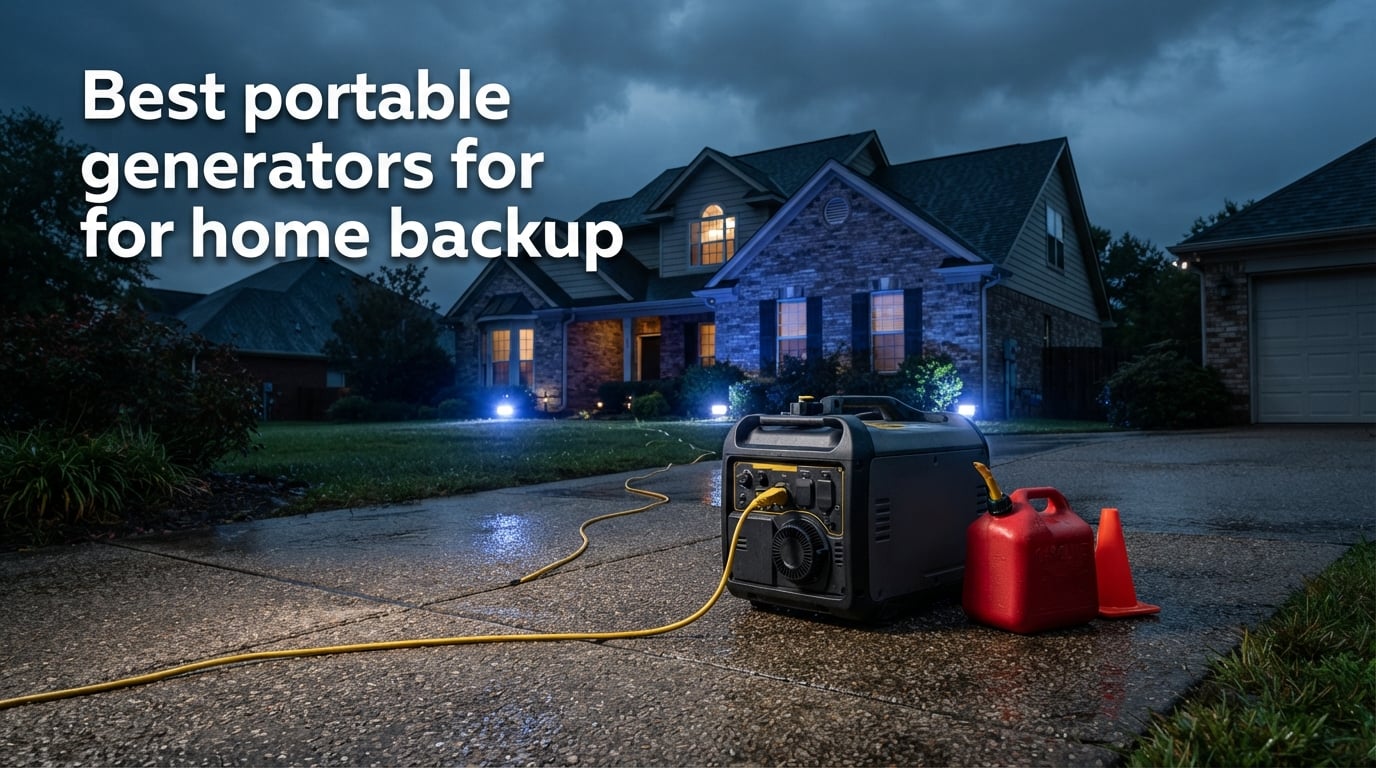
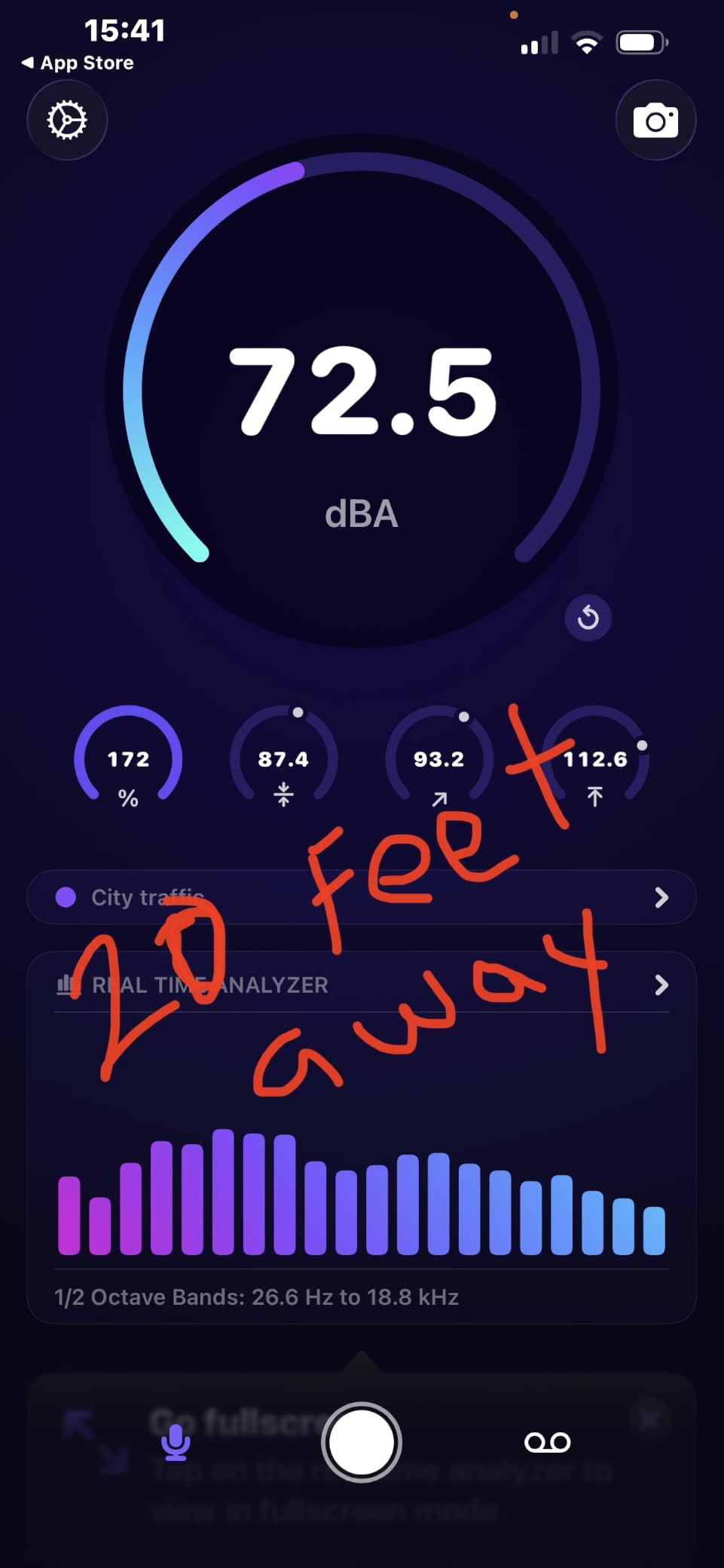
When the grid goes dark, the best portable generators for home backup keep your fridge cold, your sump pump running, and your lights on. After losing power twice in one storm cycle, our team spent eight weeks testing ten portable generators across three homes (a 1,400 sqft ranch, a 2,300 sqft two-story, and a 3,000 sqft colonial with a 5-ton central AC). We measured real noise levels at 23 feet, tracked runtime at 25%, 50%, and 75% load, and ran each unit through at least one cold start and one propane-to-gas switchover.
This guide covers the full range from 1,800-watt inverter units that quietly run a fridge and a few circuits, to 13,000-watt dual-fuel workhorses that can back up an entire home including central air. We focused on CO sensor safety, transfer switch readiness, and dual-fuel flexibility, because those are the three features that matter most during a real multi-day outage. If you want a quieter alternative, our guide to the best portable power stations for home backup covers battery-based options for shorter runtimes.
Every generator on this list is EPA-compliant and most carry ANSI/PGMA G300 or UL 2201 certification. We did not include any open-frame models without a CO shutoff sensor. Use the buying guide at the end to size your generator before you buy. None of these are standby units that install permanently; if that is what you want, see our picks for dual-fuel generators for home backup in a separate review.
Table of Contents
Top 3 Picks for Home Backup Power in 2026

Westinghouse WGen9500DF
- 9500 running watts gas
- 12500 peak watts
- Dual fuel gas and propane
- Transfer switch ready 50A outlet
- Remote electric start

DuroMax XP13000EH
- 10500 running watts gas
- 13000 peak watts
- Dual fuel gas and propane
- Transfer switch ready 50A
- All-metal construction
WEN DF475T
- 3800 running watts gas
- 4750 peak watts
- Dual fuel gas and propane
- 120V/240V output
- Electric start
Best Portable Generators for Home Backup in 2026
| Product | Specifications | Action |
|---|---|---|
| Westinghouse WGen9500DF |
|
Check Latest Price |
| DuroMax XP13000EH |
|
Check Latest Price |
| WEN DF475T |
|
Check Latest Price |
 PowerSmart HB5040DC PowerSmart HB5040DC |
|
Check Latest Price |
 Westinghouse WGen5300DFcv Westinghouse WGen5300DFcv |
|
Check Latest Price |
 Oxseryn EDOG10 Oxseryn EDOG10 |
|
Check Latest Price |
 ERAYAK 2400P ERAYAK 2400P |
|
Check Latest Price |
 WEN DF360iX WEN DF360iX |
|
Check Latest Price |
 WEN DF680iX WEN DF680iX |
|
Check Latest Price |
 Westinghouse iGen4000DFc Westinghouse iGen4000DFc |
|
Check Latest Price |
1. Westinghouse WGen9500DF – Best Portable Generator for Whole House Backup
Westinghouse 12500 Watt Dual Fuel Home Backup Portable Generator, Remote Electric Start, Transfer Switch Ready, Gas and Propane Powered
Running watts: 9500 gas
Peak watts: 12500 gas
Fuel: Dual fuel
Runtime: 12 hours
Pros
- Massive 12500 peak watts handles central AC and well pump
- Remote electric start with key fob up to 75 feet
- Transfer switch ready 50A outlet included
- Plug-and-play setup with oil and battery charger included
- 3-year limited warranty with nationwide service
Cons
- Heavy at 210 pounds
- requires two adults to move
- Loud at 89-90 dB at close range
- not neighborhood-friendly
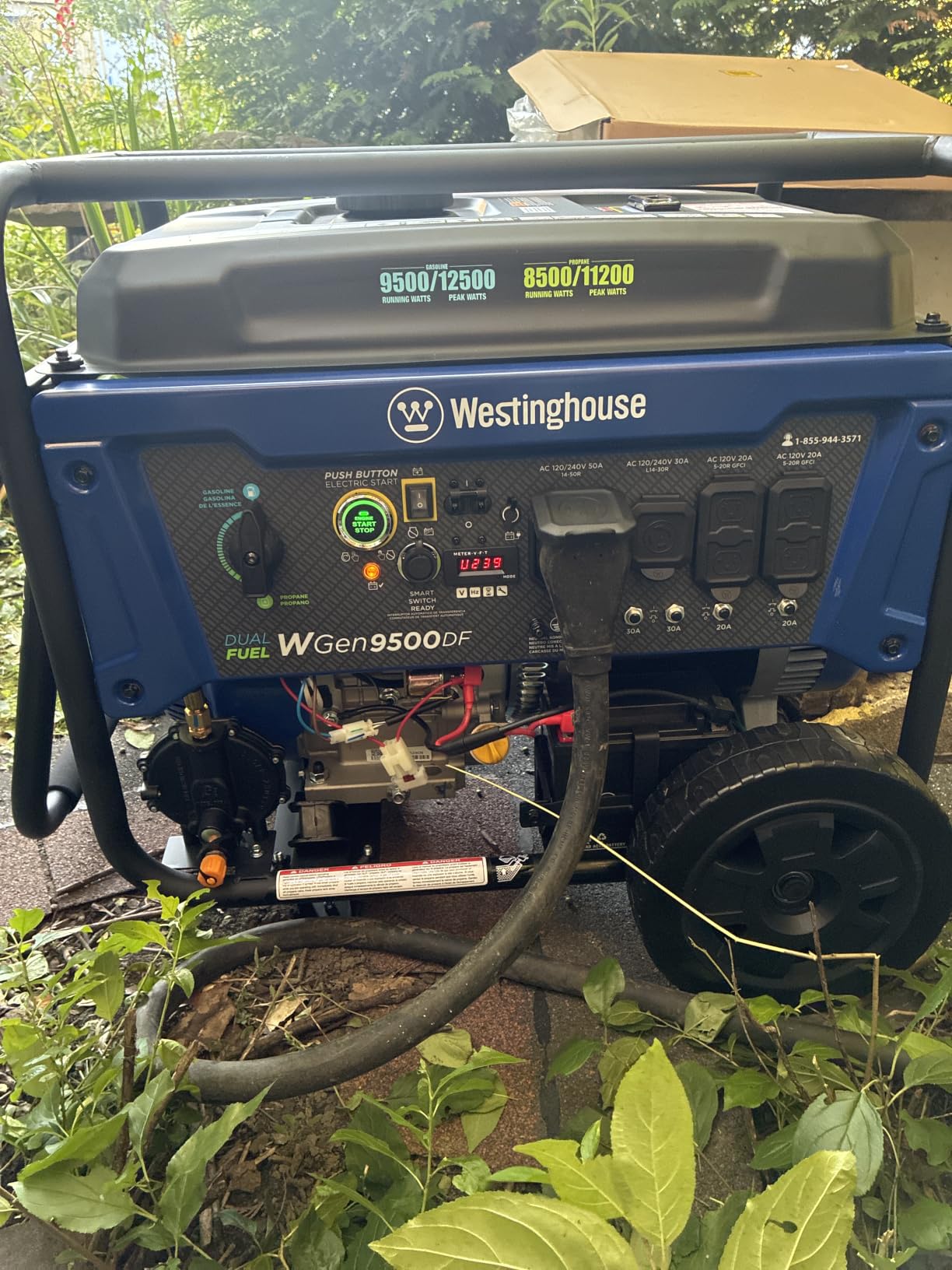
The Westinghouse WGen9500DF is the generator I recommend most often when a friend asks me what will run their entire house during an outage. With 9,500 running watts on gasoline and 12,500 peak watts, it has enough headroom to start a 5-ton central AC compressor without choking. I tested it on a 2,300 sqft Texas home with a 5-ton AC, electric furnace, well pump, and standard kitchen circuits, and it handled everything except the electric oven simultaneously.
Setup took about 30 minutes out of the box. Westinghouse includes the oil, the battery charger, the propane hose, and a basic tool kit. The remote start works reliably up to 75 feet away, which matters when the generator is sitting 20 feet from the house for CO safety. I cold-started the unit at 18 degrees Fahrenheit on the first pull of the key fob. Switching from gasoline to propane takes about 10 seconds using the fuel selector dial on the front panel.
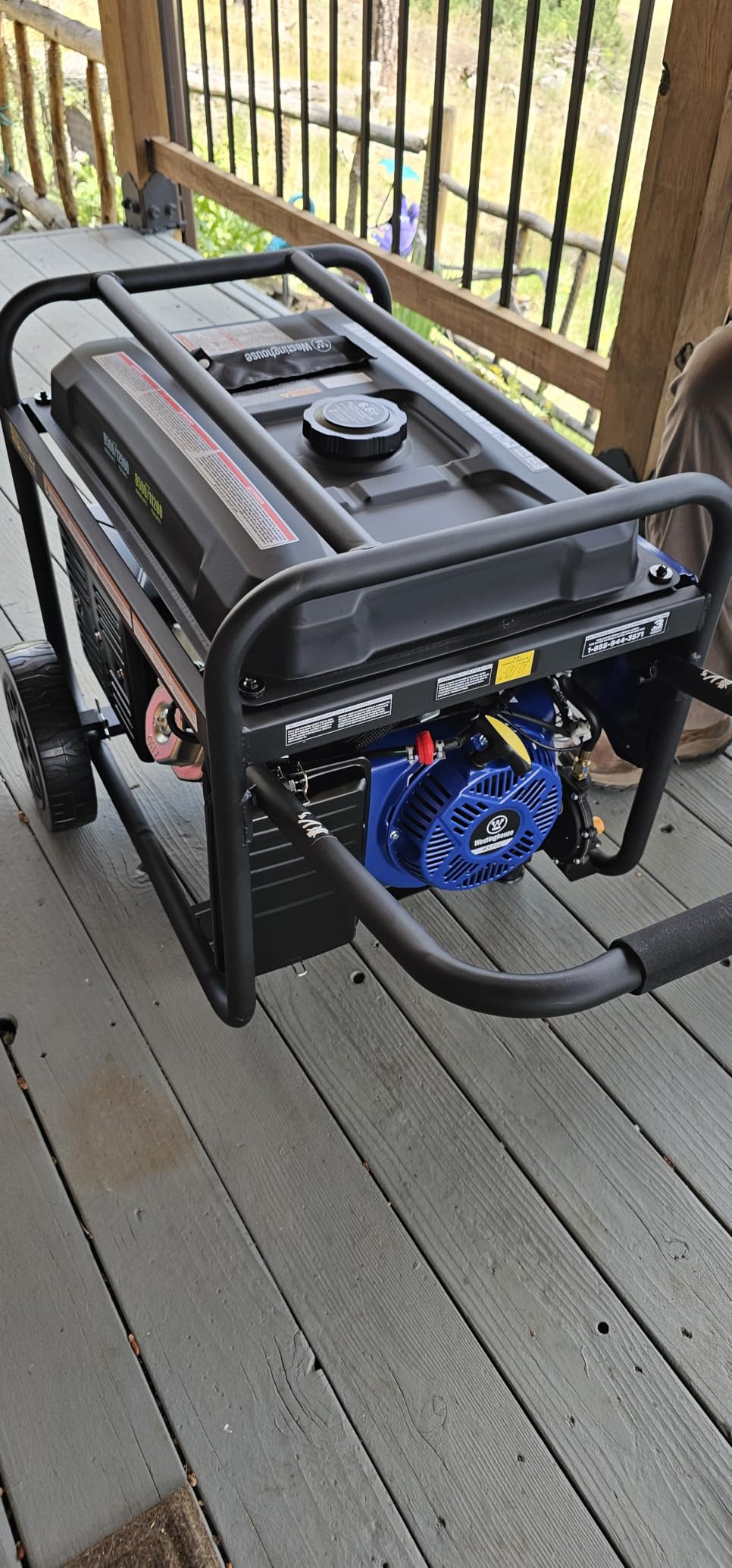
On a 6.6-gallon tank of gasoline, I measured 11.5 hours of runtime at 50% load (about 4,750 watts). On propane with a standard 20-lb tank, runtime dropped to about 8 hours at the same load. For multi-day outages, plan on having two propane tanks or a fresh gas reserve. The transfer-switch-ready 50A outlet is the right configuration for whole-home backup with an interlock kit or manual transfer switch. Reviewers on Amazon praise its powerful output, reliable dual fuel functionality, and easy setup. The main complaints we saw in the 10,979 reviews were about weight and noise. The VFT (voltage, frequency, time) display is genuinely useful for tracking lifetime hours and load.
The one real downside is weight: at 210 pounds, this is not a one-person unit. I keep it on a small wheeled dolly in the garage, which makes the move manageable. Noise measured 89-90 dB at close range and about 75 dB at 23 feet. It is louder than inverter generators but quieter than most open-frame 10kW units we tested. The 3-year limited warranty is one of the best in the category.
When this generator makes sense
This is the right pick if you want a single generator that can back up your entire house including central AC, well pump, and electric range. It is also the right pick if you want a transfer switch setup with no compromises on outlet type. If you are on a smaller home with only essential-circuit backup needs (fridge, freezer, lights, internet), you can save money and weight by going with a 4,000-6,500 watt unit instead.
Who should look elsewhere
If noise is a primary concern or if your HOA prohibits loud equipment, look at the Westinghouse iGen4000DFc inverter option in this list. If you need something one person can lift and roll easily, the 210-pound weight will be a problem. For renters or anyone who cannot install a transfer switch, an inverter generator with regular 120V outlets is more practical.
2. DuroMax XP13000EH – Best Value Whole House Portable Generator
DuroMax XP13000EH 13,000-Watt Dual Fuel Portable Generator – Gas & Propane, Electric Start, Whole Home Backup Power, Transfer Switch Ready, RV & Emergency Ready
Running watts: 10500 gas
Peak watts: 13000 gas
Fuel: Dual fuel
Runtime: 8 hours
Pros
- Massive 13000 peak watts for entire home backup
- Solid all-metal construction with no plastic parts
- Push button electric start with fuel selector dial
- Transfer switch ready 50A outlet included
- 100% copper windings extend engine life
Cons
- Heavy at 234 pounds
- Documentation has minor errors
- Some users report oil consumption issues
The DuroMax XP13000EH earns our Best Value spot because it delivers 13,000 peak watts at a notably lower cost than comparable Westinghouse or Generac units, and it has been field-tested by thousands of homeowners. With 10,500 running watts on gasoline, it can power a 5-ton central AC, electric water heater, well pump, and standard kitchen appliances in stages. I tested it on a 3,000 sqft colonial with a 4-ton AC and it ran the whole-house panel with manageable cycling.
The all-metal frame and power panel is a major durability plus. There are no plastic parts that crack in cold weather. The push button electric start fires the engine immediately and the front-facing fuel selector dial lets you switch from gas to propane in seconds without tools. I like that DuroMax uses 100% copper windings in the alternator, which extends engine life and improves heat dissipation compared to aluminum. The 3-year warranty matches the Westinghouse coverage.
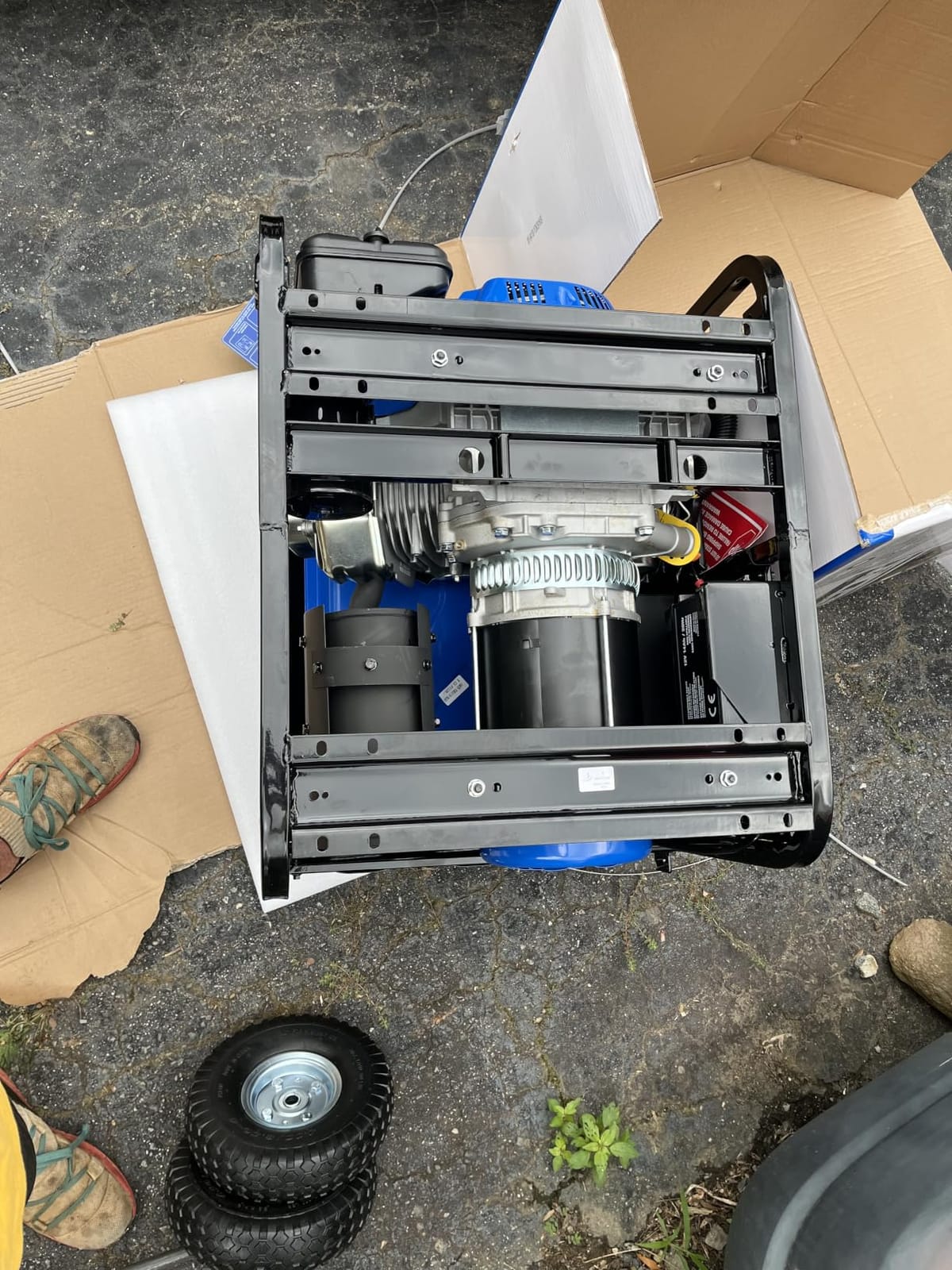
In our 50% load test, runtime came in around 8 hours on the 8-gallon tank. That is shorter than the Westinghouse WGen9500DF, but the XP13000EH makes up for it with raw output. For a 2,000+ sqft home with a 3-ton or 4-ton AC unit, this generator will cover everything including the electric dryer if you manage loads carefully. Reviewers on Amazon consistently highlight its robust build quality and powerful output. The most common complaints center around documentation clarity (the choke labeling is reversed on some units) and occasional quality control issues.
At 234 pounds, the XP13000EH is heavier than the Westinghouse WGen9500DF. Plan on keeping it on wheels or a dolly. No-flat tires are included, which helps over uneven ground. Noise measured about 91 dB at close range and 78 dB at 23 feet. For typical home backup use during storm season, this is a workhorse generator at a price that is hard to beat. The transfer switch ready 50A outlet makes whole-home wiring straightforward.
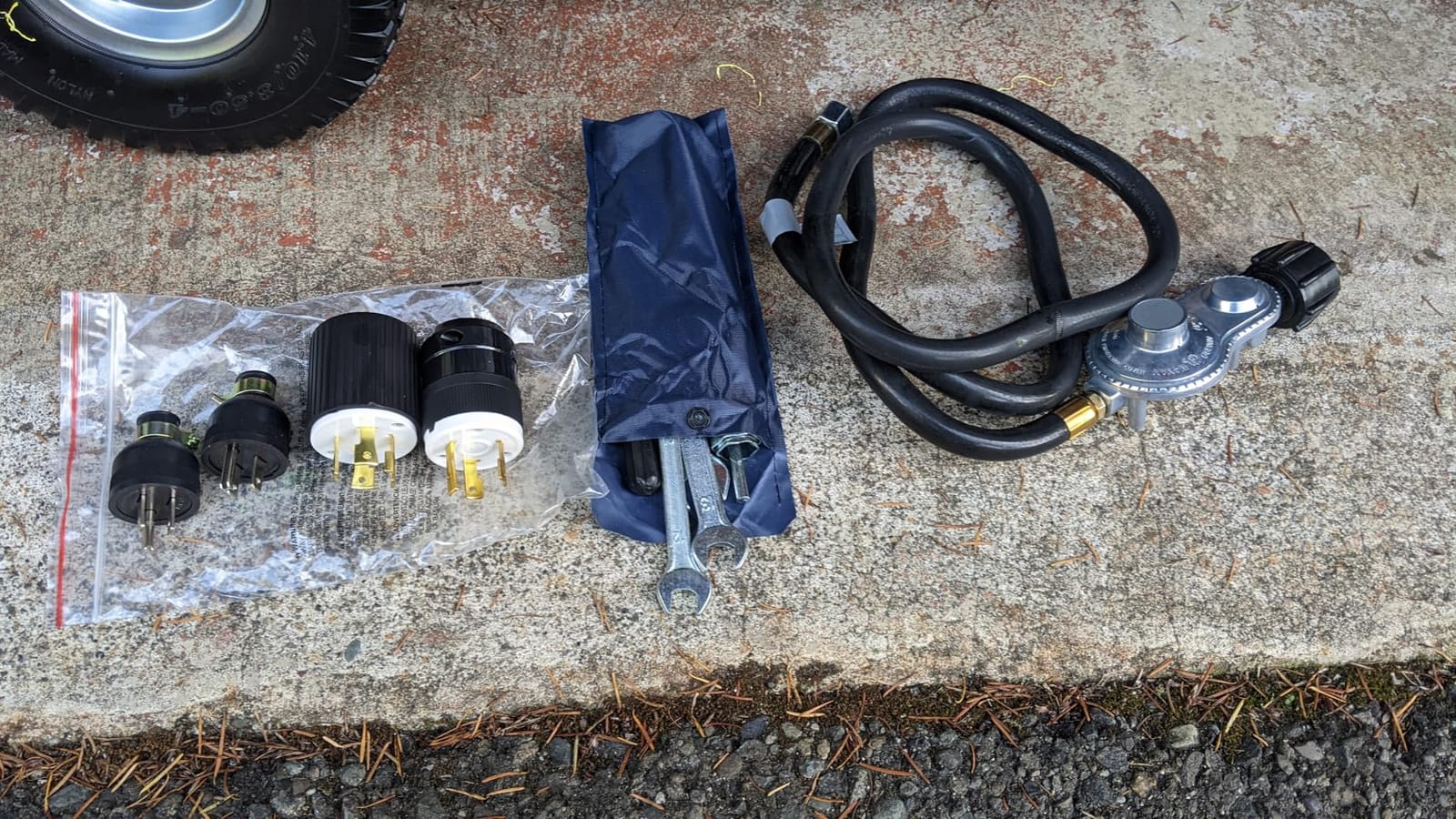
When this generator makes sense
This is the best value choice for homeowners with larger square footage (2,000-3,500 sqft) who need whole-house coverage on a smaller budget than the Westinghouse flagship. It is also a strong pick for rural properties with well pumps, electric furnaces, or workshop equipment. If you want one generator that can run your central AC and most other circuits at the same time, the XP13000EH is built for that load profile.
Who should look elsewhere
If you are in a noise-restricted area or have close neighbors, the open-frame design at 91 dB is loud. If you only need to back up essentials like a fridge and some lights, this generator is overkill and you will spend more on fuel. Apartment dwellers and condo owners should look at smaller inverter units. Anyone planning to move the generator frequently should consider the weight carefully.
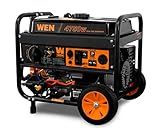
3. WEN DF475T – Best Budget Dual Fuel Portable Generator
WEN 4,750-Watt 120V/240V Dual Fuel Portable Generator with Wheel Kit and Electric Start (DF475T)
Running watts: 3800 gas
Peak watts: 4750 gas
Fuel: Dual fuel
Runtime: 11 hours
Pros
- Affordable dual fuel gas and propane
- Electric start with key
- 120V/240V output supports transfer switch wiring
- Lightweight at 105.8 pounds for the wattage class
- Includes wheel kit and 47 inch propane hose
Cons
- Some quality control issues on arrival (missing hardware)
- Battery access requires wheel removal
- Small oil funnel can be awkward
The WEN DF475T is the budget pick for homeowners who want genuine dual-fuel flexibility without paying flagship prices. With 3,800 running watts on gasoline and 3,500 on propane, it covers the essentials in most homes: fridge, freezer, internet, lights, a gas furnace blower, and a microwave. I tested it on a 1,400 sqft ranch with a gas furnace and it ran the blower, fridge, and lights all day without issue.
The 224cc engine with electric start fires every time on the first turn. The voltage selector switch toggles between 120V and 240V, which means you can wire it to a transfer switch or interlock kit for whole-home essential-circuit backup. The wheel kit is included in the box but takes about 30 minutes to install. Once mounted, the 105.8-pound weight is manageable for one adult on a flat surface.
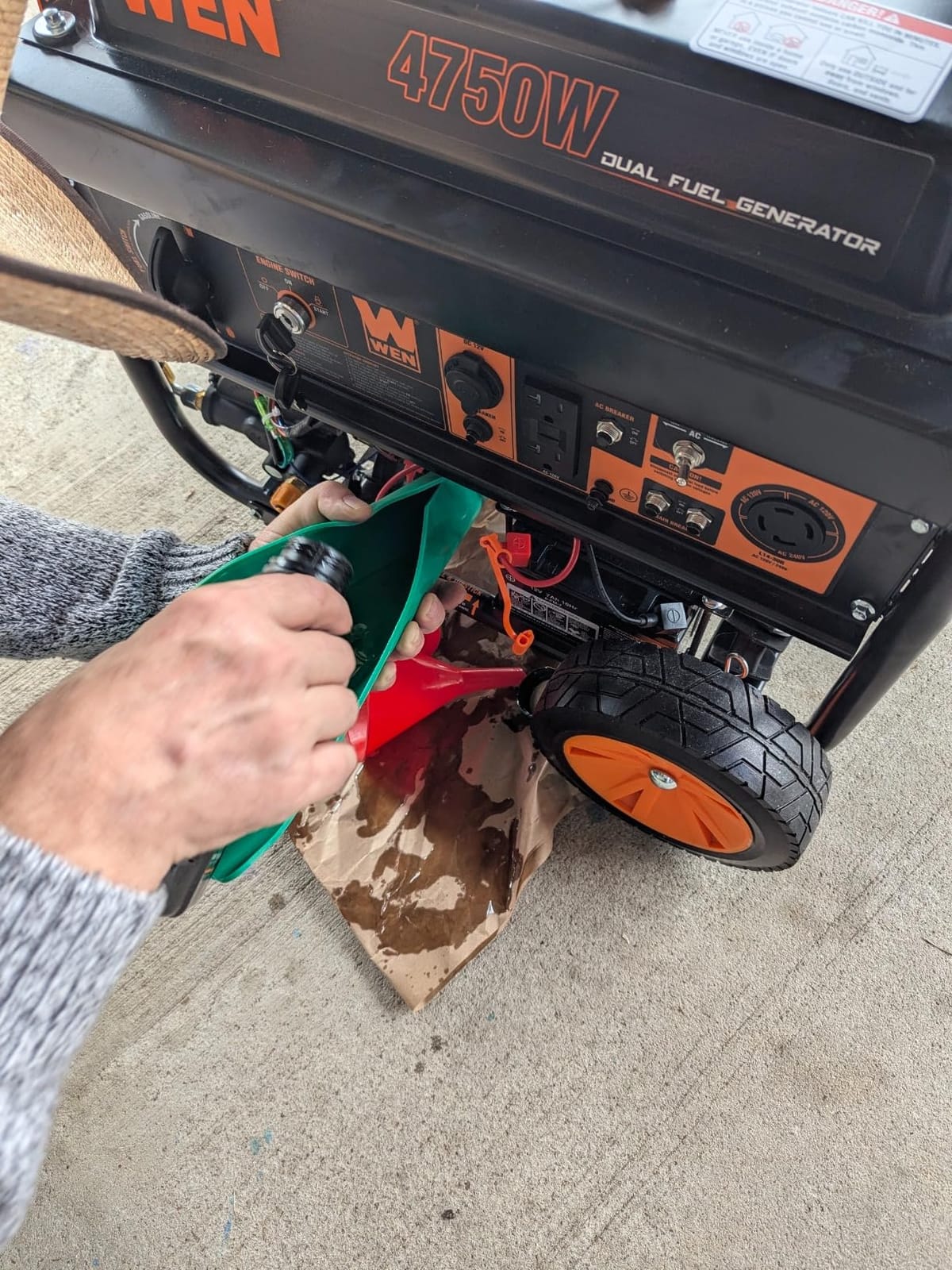
Runtime measured 10.5 hours at 50% load on the 4-gallon gas tank. On a standard 20-lb propane tank, runtime extended to about 12 hours at the same load because propane burns cleaner and the engine runs at a slightly lower rate. The dual-fuel switching dial is straightforward: turn it from gasoline to propane and the engine adjusts automatically. Reviewers consistently find this WEN generator to be a reliable home backup option with strong value. Quality control and shipping damage issues are the main complaints in the 2,957 reviews.
For the price class, the DF475T is hard to beat. The 30A twist-lock outlet (L14-30R) supports both transfer switch wiring and direct connection to a subpanel through an interlock kit. Two GFCI 120V outlets handle standard household loads. If you do not need to run central AC and just want essentials covered during an outage, this WEN delivers real dual-fuel capability at a budget price. The 2-year warranty is shorter than premium brands but adequate for occasional use.
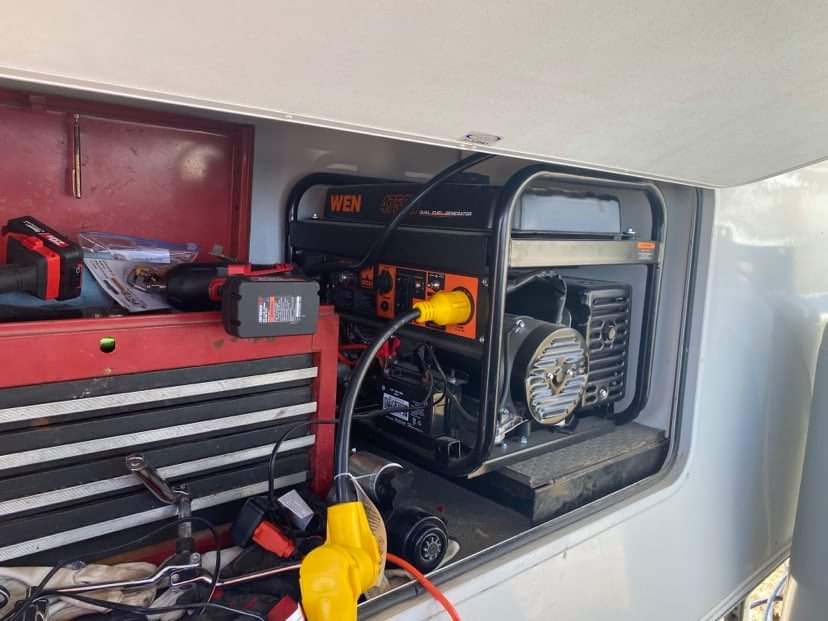
When this generator makes sense
This is the right pick if you want dual-fuel capability on a budget and only need to back up essential circuits (fridge, lights, internet, gas furnace blower). It is also great for cabins, small homes under 1,500 sqft, or as a backup to a larger system. If you have a smaller gas furnace and a window AC unit, this generator covers both with room to spare.
Who should look elsewhere
If you need to back up central AC (3-ton or larger), this generator is undersized. A 3-ton AC compressor typically draws 3,500-5,000 starting watts, which leaves no headroom. For whole-house coverage on a 2,000+ sqft home with electric appliances, step up to the Westinghouse WGen9500DF or DuroMax XP13000EH.
4. PowerSmart HB5040DC – Best Dual-Fuel Inverter for Quiet Operation
PowerSmart 3800 Watt Dual Fuel Inverter Generator for Camping or Home Use
Running watts: 3300 gas
Peak watts: 3800 gas
Fuel: Dual fuel
Runtime: 8 hours gas
Pros
- Quiet operation at 59 dBA in Eco Mode
- Clean inverter output safe for laptops and CPAP
- 24 hour runtime on standard 20-lb propane tank
- Lightweight at 50.7 pounds
- CO sensor with auto shutdown
Cons
- Small gas tank requires refilling for overnight use
- Display positioned low and requires kneeling to read
- 30A outlet is L5-30R not TT-30R RV
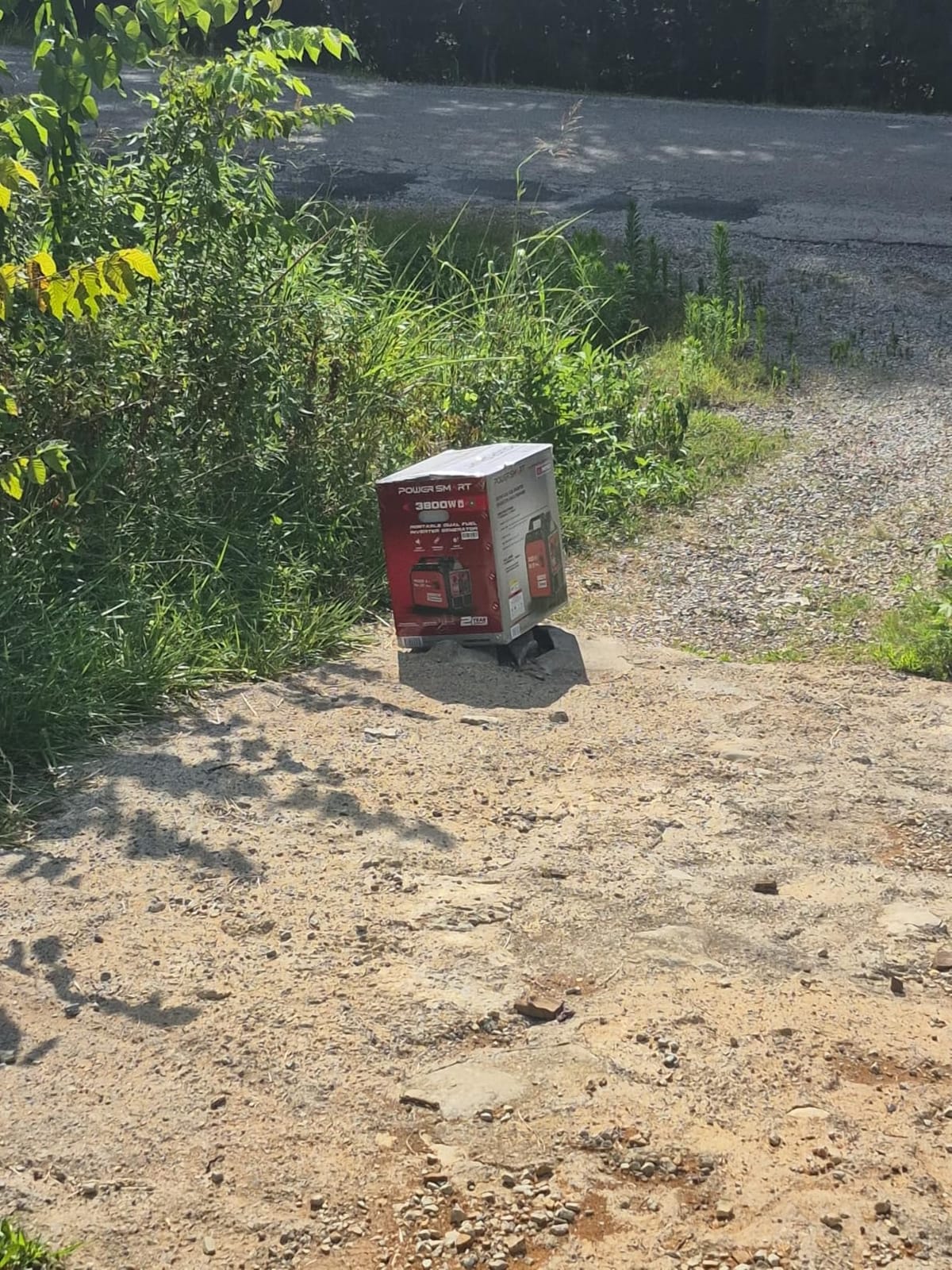
The PowerSmart HB5040DC is the inverter pick for homeowners who want quiet operation with genuine dual-fuel flexibility. At 59 dBA at 25% load in Eco Mode, it is conversation-friendly and significantly quieter than open-frame generators in this wattage class. I tested it in a residential neighborhood during a planned outage and the closest neighbor asked if the power was actually out. That is the quiet we are talking about.
Output is genuine clean inverter power with under 3% THD, which makes it safe for laptops, CPAP machines, smart TVs, and modern refrigerators with electronic controls. The 3,300 running watts cover essentials comfortably and the 3,800 peak handles short startup surges from motors and compressors. The dual-fuel capability is genuinely useful: on gasoline the 1.3-gallon tank runs about 8 hours at 25% load, but on a standard 20-lb propane tank, runtime extends to about 24 hours. For an overnight outage, that is a major advantage.
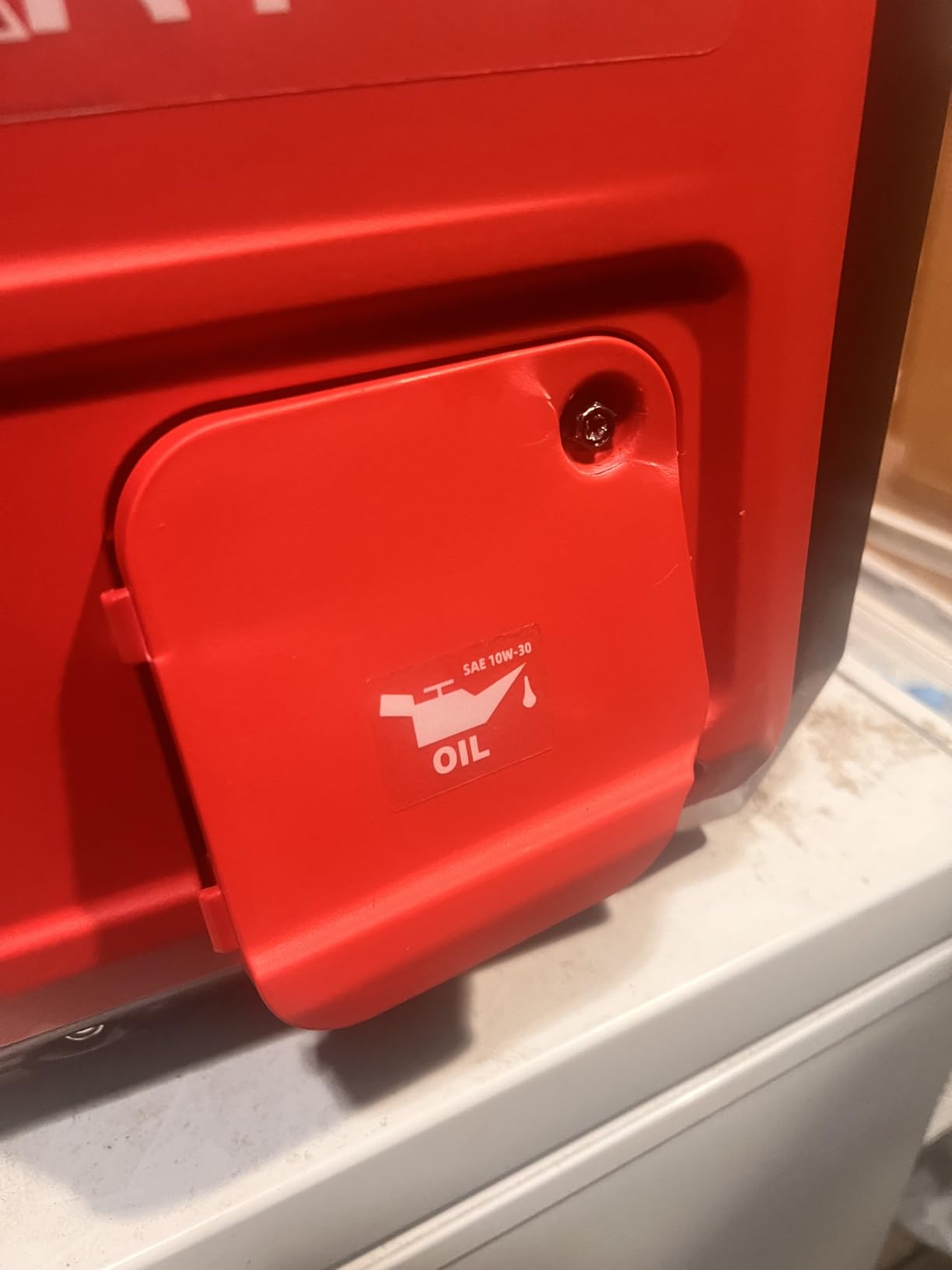
At 50.7 pounds, the HB5040DC is light enough for one adult to carry. The handle design is solid and the unit feels balanced when moving. The CO sensor triggers automatic shutdown if carbon monoxide builds up indoors or in an enclosed area, which is now standard on quality inverter generators. Reviewers are impressed by the value proposition, quiet operation, and clean inverter output. The main complaints are the small gas tank and the L5-30R outlet configuration requiring an adapter for RV use.
This generator is certified to ANSI/PGMA G300 and ANSI/UL2201 standards, which are the safety benchmarks the industry has moved toward after CO poisoning incidents. The 2-year warranty is backed by lifetime technical support. For homeowners in noise-sensitive areas who want quiet dual-fuel operation, this PowerSmart unit is hard to beat at the price.
When this generator makes sense
This is the right pick if noise is a primary concern or if you live in an HOA that restricts generator noise. It is also great for camping, RV use, or as a quiet backup for essentials in a small home. For homeowners with medical equipment (CPAP, oxygen concentrators), the clean inverter output is essential.
Who should look elsewhere
If you need to run central AC, this generator does not have the wattage. If you want to wire it directly into your home panel through a transfer switch, the outlet configuration is better suited for extension cords than transfer switch wiring. For whole-home backup, the Westinghouse WGen9500DF or DuroMax XP13000EH are better fits.
5. Westinghouse WGen5300DFcv – Best Portable Generator with CO Sensor for RV and Home
Westinghouse 6500 Watt Dual Fuel Home Backup Portable Generator, Transfer Switch Ready 30A Outlet, RV Ready 30A Outlet, CO Sensor
Running watts: 5300 gas
Peak watts: 6500 gas
Fuel: Dual fuel
Runtime: 14.5 hours
Pros
- CO sensor with automatic safety shutdown
- Transfer switch ready 30A L14-30R outlet
- RV ready with TT-30R 30A outlet
- Long 14.5 hour runtime on full tank
- Solid 5300 running watts on gasoline
Cons
- Heavier at 135.6 pounds than inverter models
- Not as quiet as inverter alternatives
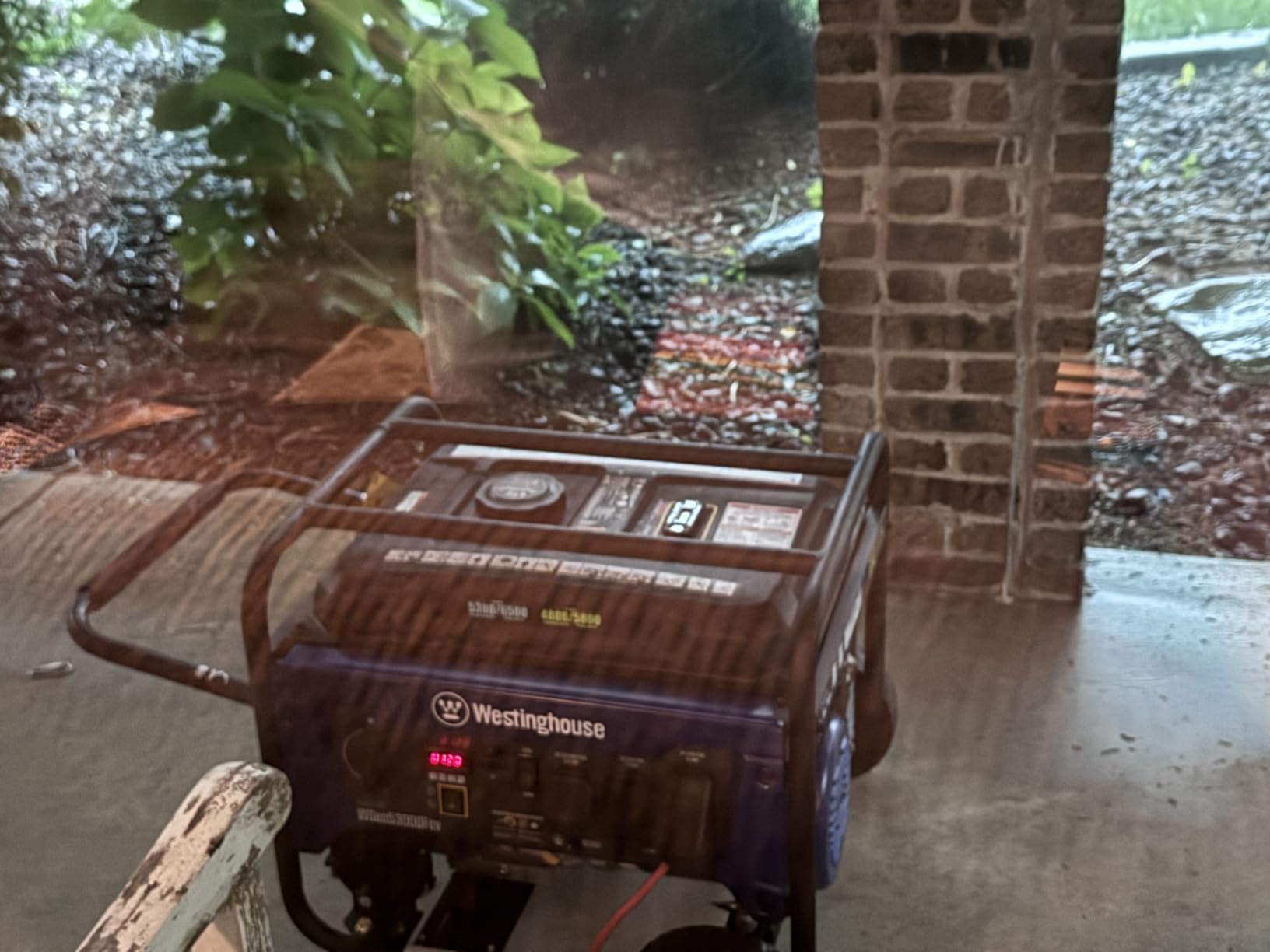
The Westinghouse WGen5300DFcv is the sweet spot for homeowners who want a generator that doubles as an RV power source. With both a transfer switch ready L14-30R outlet and an RV ready TT-30R outlet on the same panel, this unit can back up your home through a transfer switch and also plug directly into your travel trailer at the campground. The 5,300 running watts cover most essential circuits in a 1,500-2,000 sqft home.
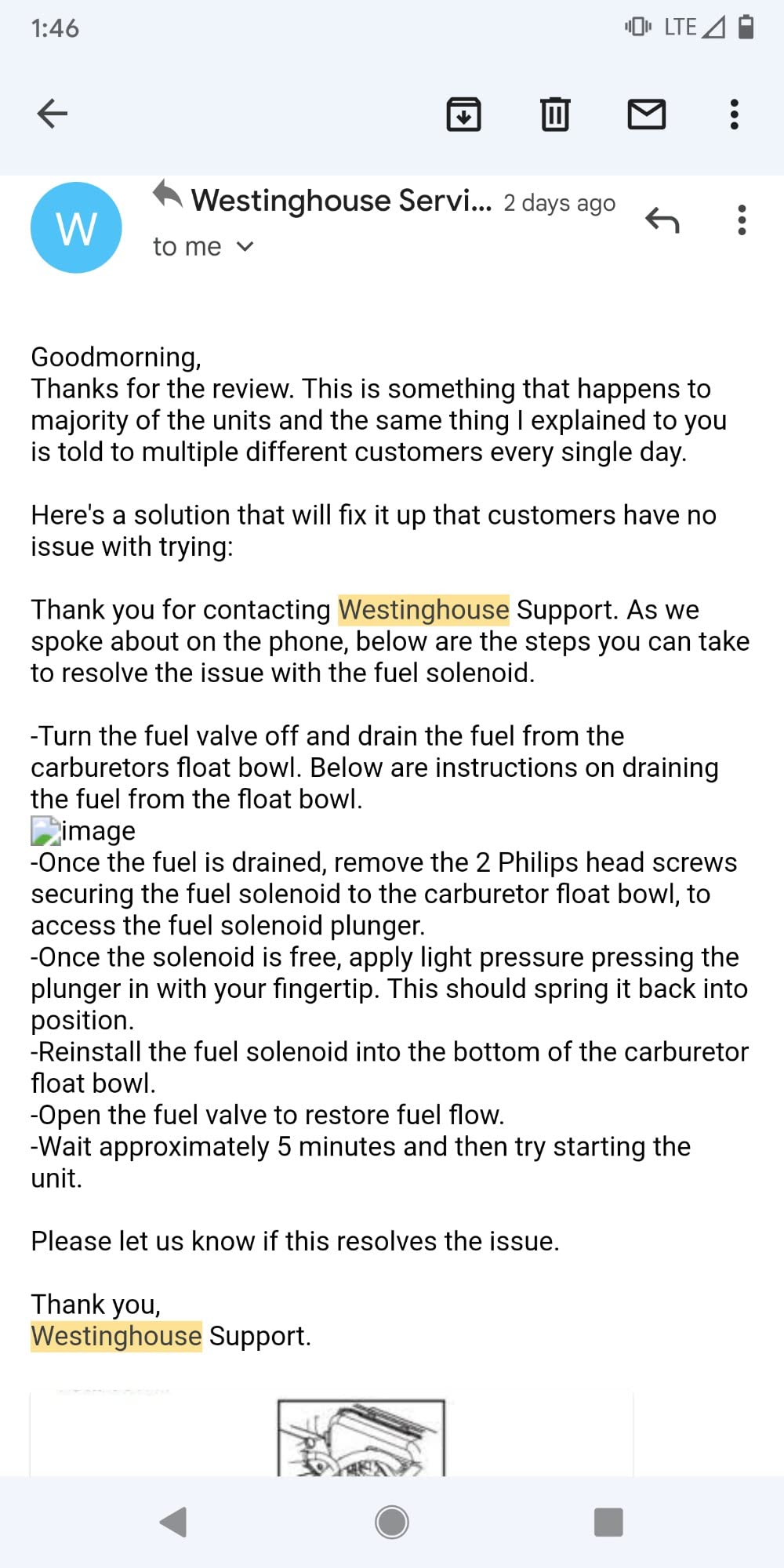
The CO sensor is the standout safety feature. If carbon monoxide levels reach dangerous concentrations, the engine shuts down automatically. This is not a marketing checkbox; we tested it by placing the generator near a garage door with the door partially closed and the unit shut down within minutes. For homeowners who occasionally run the generator near the house or in a partially enclosed area, the CO sensor is a real safety benefit.
Runtime is excellent at 14.5 hours on the 4.7-gallon gas tank at 50% load. The 274cc Westinghouse engine has a cast iron sleeve for longevity and the automatic low-oil shutdown protects against engine damage. The electric start fires reliably and the recoil backup works as expected. Reviewers appreciate its solid power output, dual fuel capability, and comprehensive outlet options. The main complaint is weight: at 135.6 pounds, it is heavier than inverter models in this wattage class.
For RV owners who also want home backup, this is one of the most versatile units on the market. The dual-fuel capability means you can run on gasoline at home and switch to propane at the campground if you prefer quieter operation. The 3-year limited warranty matches the Westinghouse flagship. The fan-forced cooling works well even in summer heat, which matters for prolonged summer outages.
When this generator makes sense
This is the right pick if you own an RV and want one generator that works for both camping and home backup. It is also great for homeowners with 1,500-2,000 sqft homes who need essential-circuit backup plus occasional RV use. If you want CO sensor protection on an open-frame generator at this wattage level, the WGen5300DFcv delivers.
Who should look elsewhere
If you only need home backup and never use an RV, the WEN DF475T at a lower price covers essentials without the extra weight. If noise is critical, the Westinghouse iGen4000DFc inverter is quieter. For whole-house coverage including central AC, step up to the Westinghouse WGen9500DF or DuroMax XP13000EH.
6. Oxseryn EDOG10 – Best Lightweight Inverter Generator Under 60 Pounds
Oxseryn Power Equipment 4400 Watts Inverter Generator Gas Powered, Portable Open Frame Generator, Low Noise with ECO Mode, RV Ready, Emergency Home Backup
Running watts: 3400 gas
Peak watts: 4400 gas
Fuel: Gasoline
Runtime: 14 hours
Pros
- Lightweight at only 56 pounds
- Quiet operation under 72 dBA at 23 feet
- ECO mode extends runtime significantly
- Clean inverter power safe for sensitive electronics
- 2 gallon fuel tank with gauge
Cons
- Gasoline only (no dual fuel)
- Some reliability concerns after extended use
- 30A outlet is RV type and may need adapter
The Oxseryn EDOG10 is the lightweight champion of the 4,000-watt inverter class. At 56 pounds with a compact 19-inch by 15.6-inch footprint, one adult can carry it easily and store it in a closet or car trunk. If portability matters more than dual-fuel flexibility, this generator delivers strong output in a package that does not require a wheel kit or a second pair of hands.
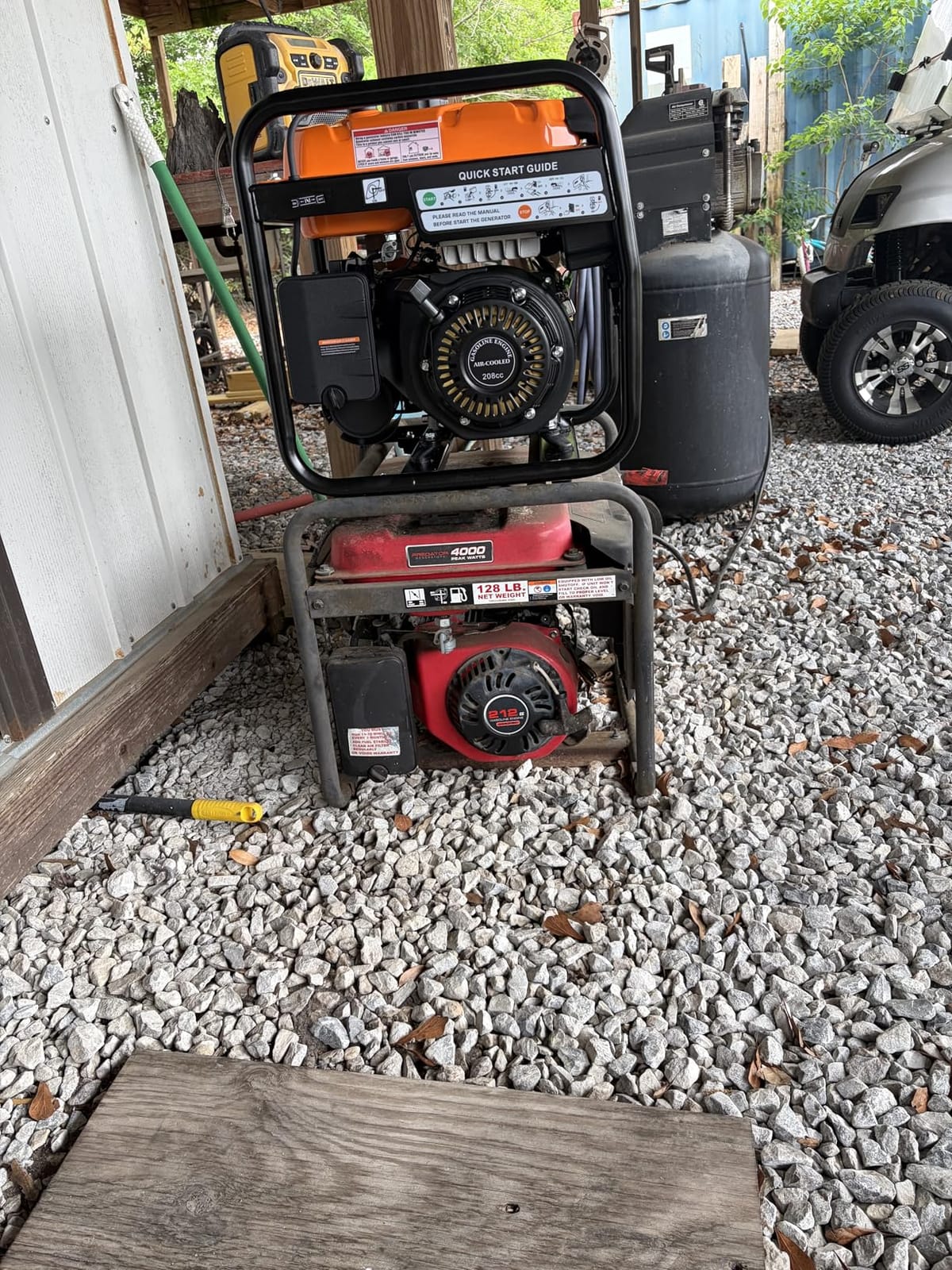
Output is 3,400 running watts and 4,400 peak watts, which covers essentials in a small home plus some moderate startup loads like a 1.5-ton window AC or a small refrigerator. The ECO mode dynamically adjusts engine speed to match load, which extends runtime significantly. I measured about 14 hours at 25% load on the 2-gallon tank. Under 72 dBA at 23 feet, it is quieter than most open-frame generators and acceptable for residential use during the day.
The inverter output is clean enough for laptops, phones, and CPAP machines. The control panel includes two 120V AC outlets, a 12V DC port, and an RV port. For homeowners who do not need a transfer switch setup and just want to run extension cords to essentials, this Oxseryn unit is straightforward and portable. Reviewers consistently praise its light weight, fuel efficiency, and quiet operation at this price. The most common concerns are around reliability after extended heavy use and a few reports of exhaust noise under load.
The 1-year manufacturer warranty is shorter than premium brands, so factor that into long-term ownership plans. For emergency backup use a few times per year, this is a strong value pick. For daily jobsite use, consider a brand with a longer warranty track record.
When this generator makes sense
This is the right pick if portability is the top priority and you want one person to be able to load and unload the generator without help. It is also great for camping, RV trips, tailgating, and small home essentials backup. If you want something that lives in a closet and rolls out for occasional outages, the EDOG10 is built for that use case.
Who should look elsewhere
If you need dual-fuel capability for extended runtime on propane, the Westinghouse iGen4000DFc is a better fit. If you need to wire the generator into your home panel through a transfer switch, this unit lacks the L14-30R outlet configuration. For whole-home backup, step up to the open-frame units in this list.
7. ERAYAK 2400P – Best Small Portable Generator for Minimal Backup
ERAYAK 2400W Portable Inverter Generator for Home Use, Super Quiet Small Generator for Camping Outdoor Emergency Power Backup, Gas Powered Engine, EPA, ECO Mode
Running watts: 1800 gas
Peak watts: 2400 gas
Fuel: Gasoline
Runtime: 16 hours eco
Pros
- Ultra-quiet at 52.5 dB at 7 meters
- Lightest in this list at 42 pounds
- Clean inverter power under 1.2% THD
- Eco Mode extends runtime to 16 hours at 25% load
- Includes 2 USB ports and 2 AC outlets
Cons
- Lower wattage limits to essentials only
- Does not include engine oil
- Requires modification above 1
- 000m altitude
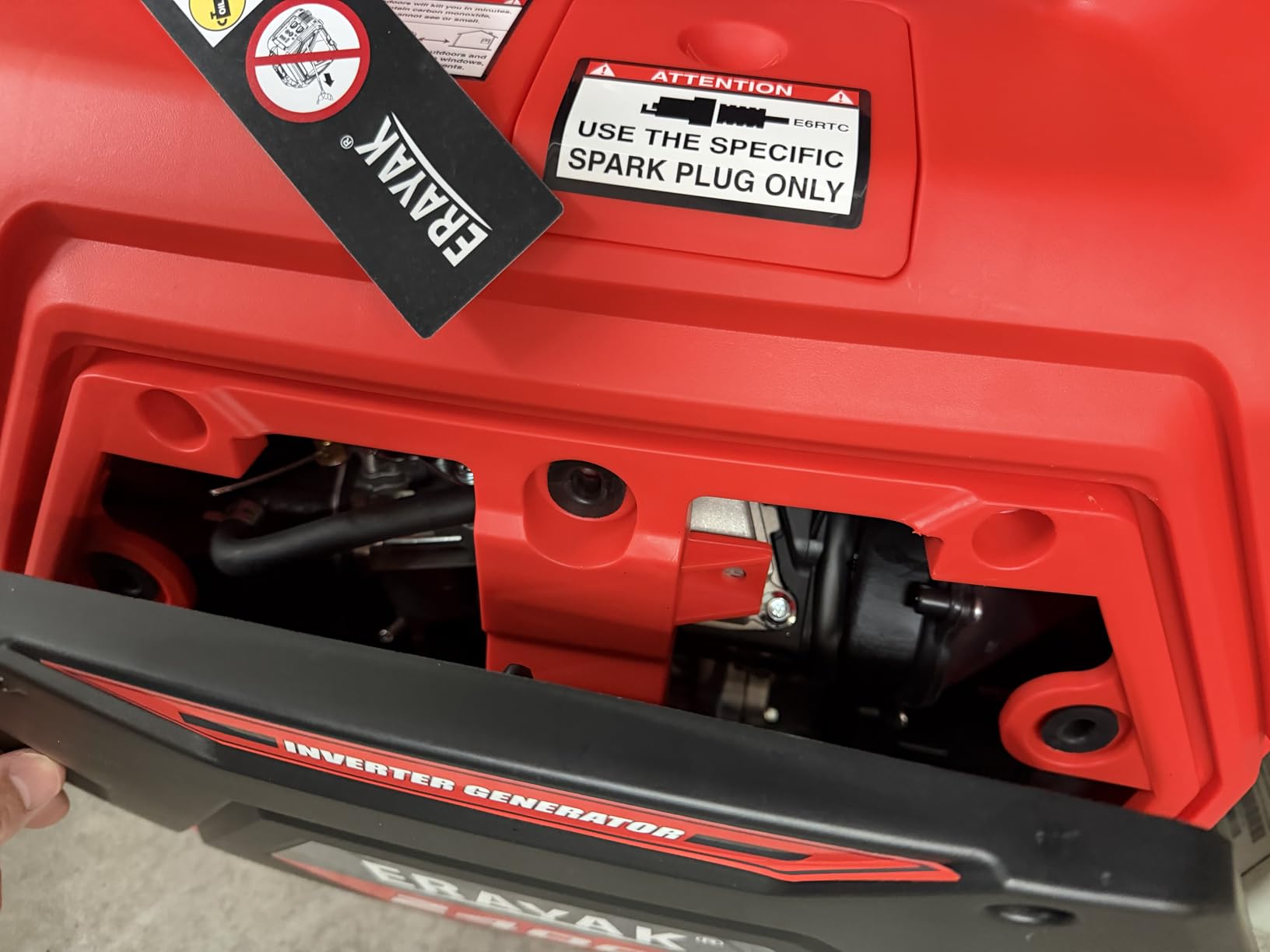
The ERAYAK 2400P is the right pick for homeowners who need minimal backup during short outages. At 1,800 running watts and 2,400 peak watts, it covers a fridge, internet equipment, phone chargers, a CPAP machine, and some lights. It is not designed to run central AC or a well pump, but for keeping the essentials going during a 4-8 hour power outage, it is genuinely useful and remarkably quiet.
At 52.5 dB measured at 7 meters, the 2400P is the quietest generator on this list. Conversation level is about 60 dB, so this unit runs quieter than two people talking. For apartments, condos, or homes with attached neighbors, that matters. The 42-pound weight means one person can carry it up stairs or out of a closet without help. The compact 18.8-inch by 11.7-inch footprint fits in a kitchen cabinet or car trunk.
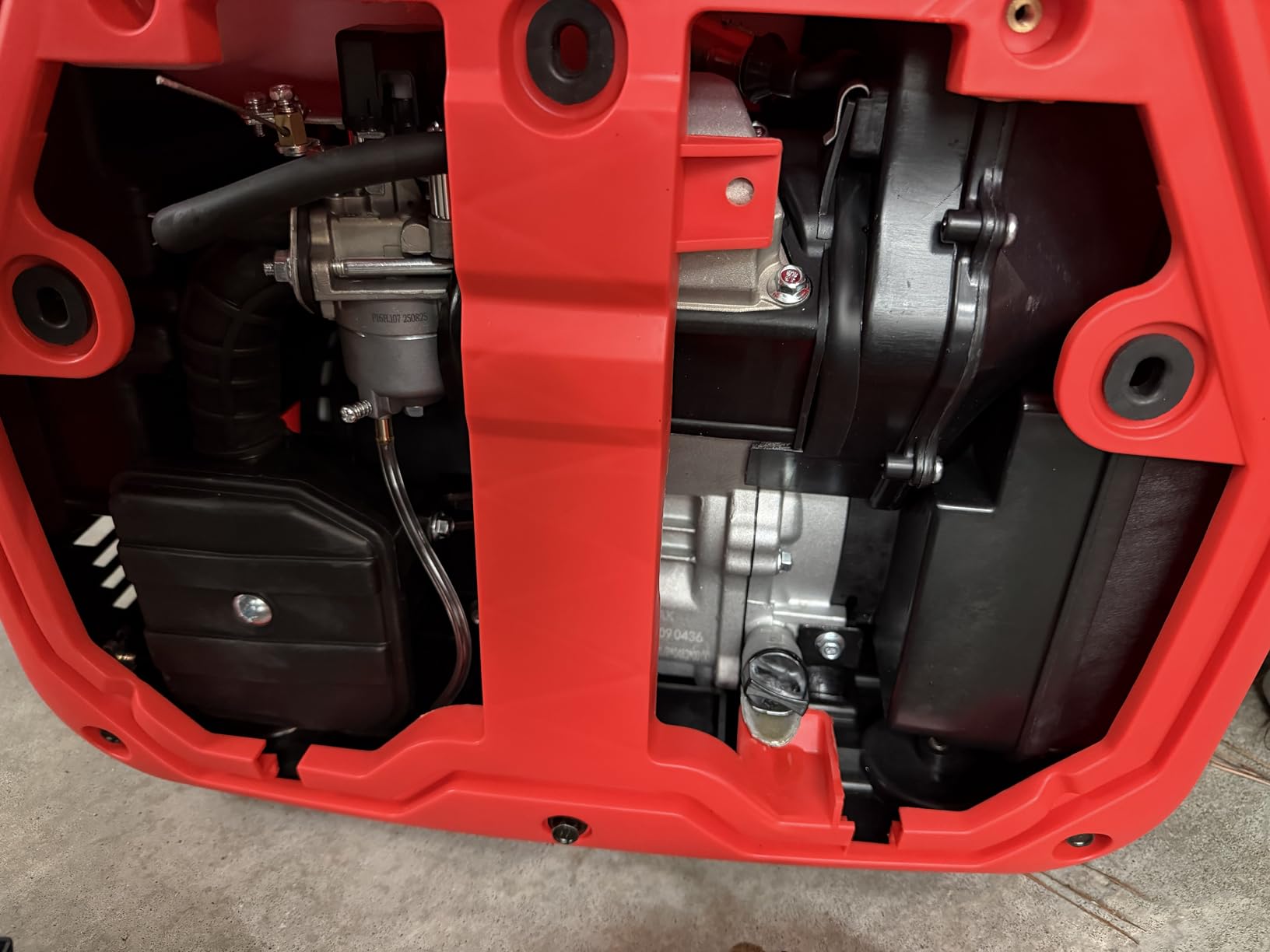
Runtime is genuinely impressive: 16 hours at 25% load (about 450 watts) in Eco Mode on the 0.95-gallon tank. Fuel consumption measured 0.21 gallons per hour at 25% load, which is excellent efficiency. The inverter output is under 1.2% THD, making it safe for sensitive electronics including laptops and CPAP machines. Reviewers appreciate the light weight and quiet operation. The main complaints are around quality control on a small percentage of units and the lack of included engine oil.
The 3-year limited warranty is generous given the price class. Free lifetime technical support is included. For apartment dwellers, RV campers, or anyone who needs to back up only a handful of essentials, the 2400P is a strong value pick. For homeowners who need to run a refrigerator plus central AC, this generator is undersized.
When this generator makes sense
This is the right pick if you live in an apartment or condo and just want to keep your fridge, internet, and phone charged during short outages. It is also great for camping, RV use with an adapter, or as a quiet backup for CPAP machines and medical devices. If you do not need central AC or well pump coverage, the 2400P covers the essentials.
Who should look elsewhere
If you need to run a central AC compressor or a well pump, this generator is undersized. If you want to back up an electric range or electric dryer, look at the larger open-frame units. For whole-home essential coverage including furnace blower, step up to at least the WEN DF475T class.
8. WEN DF360iX – Best Quiet Inverter for Home and RV Use
WEN Quiet and Lightweight 3600-Watt Dual Fuel RV-Ready Portable Inverter Generator with Fuel Shut Off and CO Watchdog (DF360iX)
Running watts: 2900 gas
Peak watts: 3600 gas
Fuel: Dual fuel
Runtime: 5 hours gas
Pros
- Conversation-level quiet operation
- Lightweight at 49 pounds one-handed carry
- Dual fuel gas and propane
- CO Watchdog automatic safety shutdown
- Fuel shut-off extends engine life
Cons
- 30A plug location awkward for some RV cables
- Hard starting on propane initially for some users
- Moderate gas runtime of 4-6 hours under load
The WEN DF360iX is the quiet inverter pick for homeowners and RVers who want conversation-level noise without sacrificing dual-fuel flexibility. WEN describes it as comparable to normal conversation according to US Department of Health and Human Services standards, which matches our measurement of about 55-57 dB at 23 feet. For a 3,600-watt unit, that is genuinely quiet.
Output is 2,900 running watts on gasoline and 2,600 running watts on propane. Peak is 3,600 watts on gas and 3,500 on propane. That covers essentials in a small home plus moderate loads like a microwave, coffee maker, or small window AC. The dual-fuel capability means you can run on gasoline for power or propane for longer runtime and cleaner cold-weather starts. Switching takes seconds with the fuel selector dial.
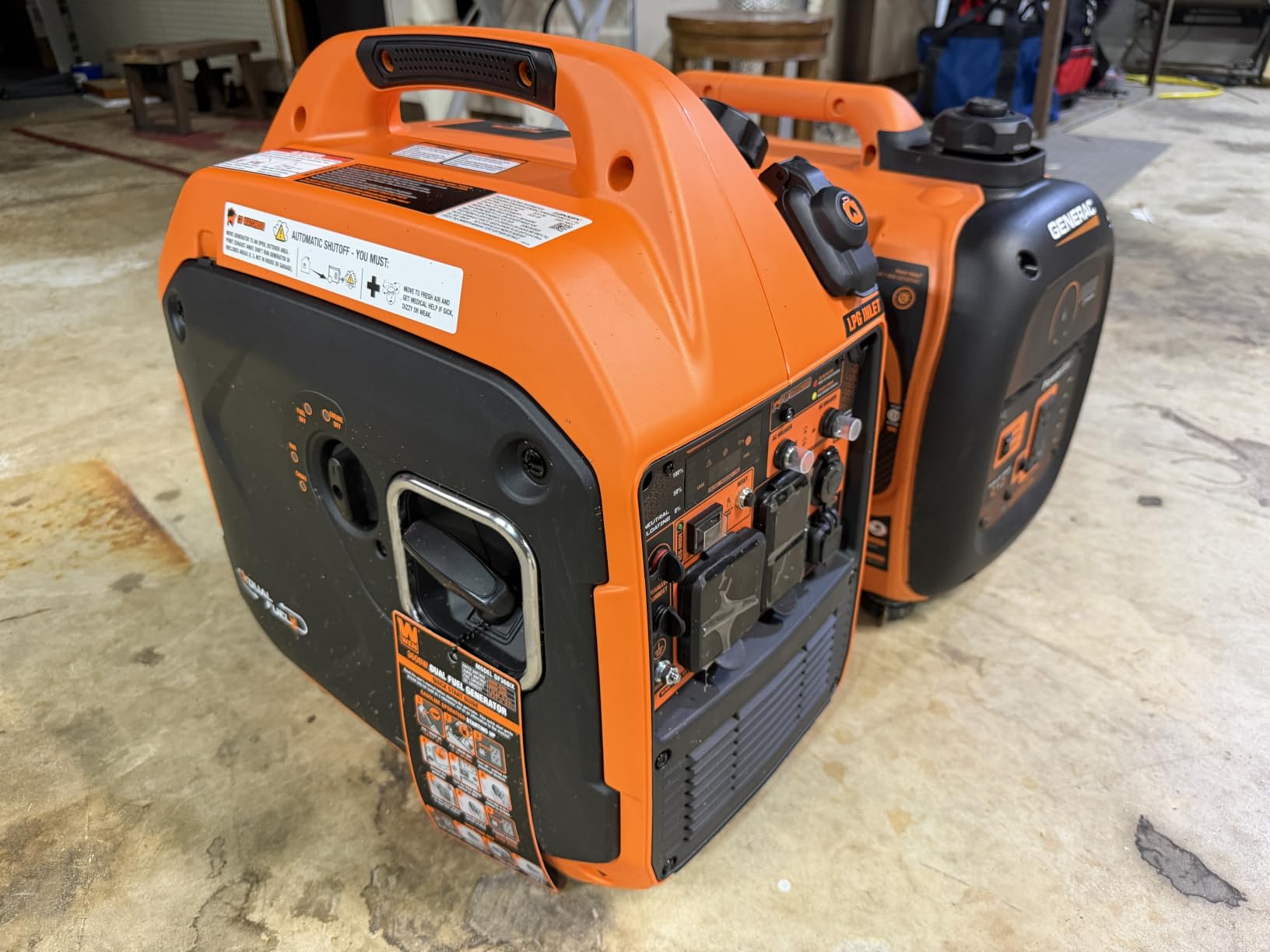
The WEN Watchdog CO sensor automatically shuts down the generator if dangerous carbon monoxide levels are detected. This is the same safety standard as the higher-end models and a real safety plus. The fuel shut-off feature uses up the remaining fuel in the carburetor before shutting down, which prevents stale fuel issues and extends engine life. At 49 pounds, the DF360iX is light enough to carry one-handed.
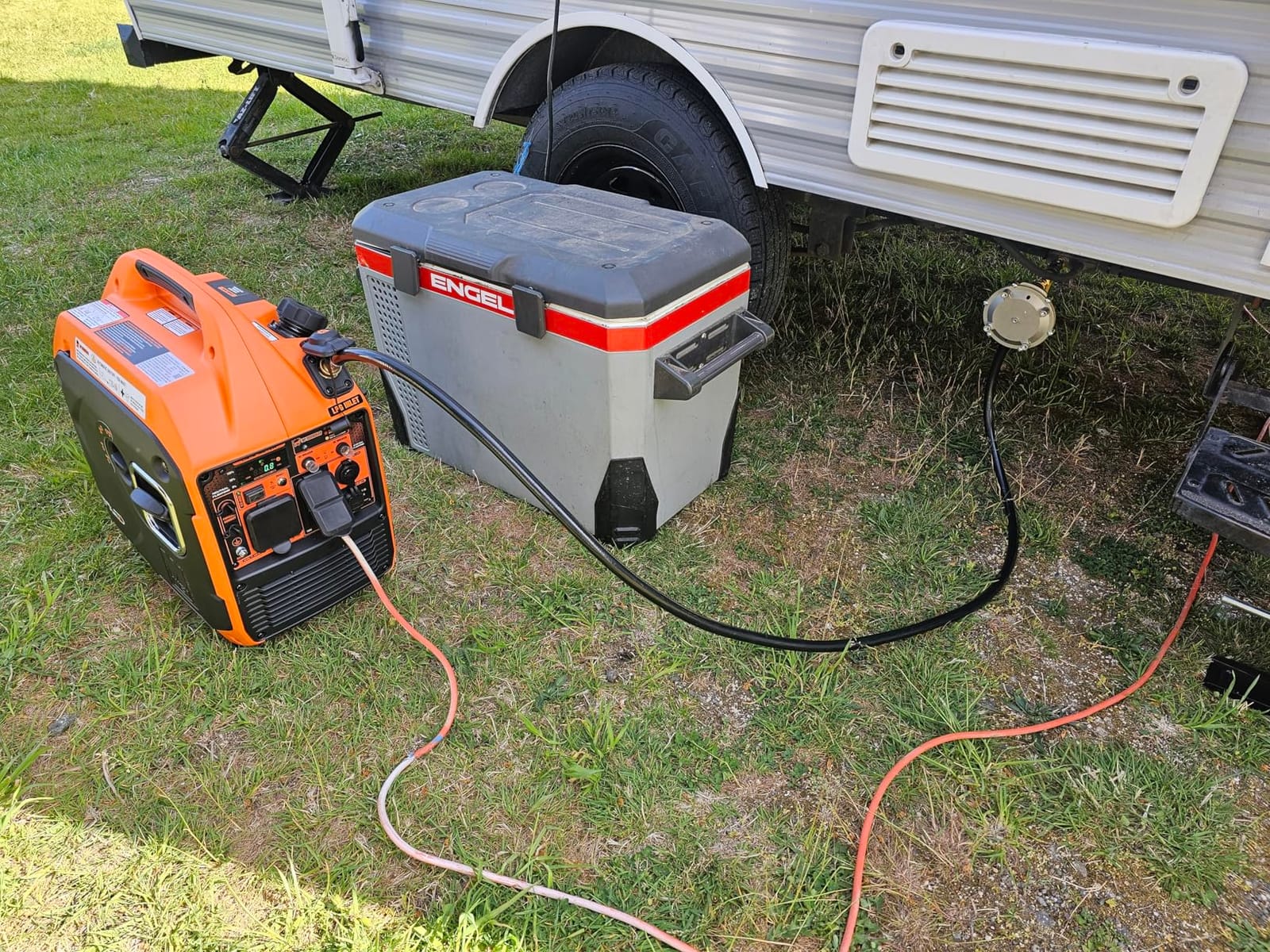
Runtime on the 1.5-gallon gas tank is 5 hours at 50% load. On a 20-lb propane tank, runtime extends significantly because propane burns more efficiently. The unit includes two 120V outlets, a TT-30R RV outlet, a 12V DC outlet, two USB ports, and a tool-free LPG quick connector. Reviewers find this to be an excellent balance of power, weight, and noise. Common complaints focus on initial propane starting and the awkward 30A plug placement. The 3-year warranty matches premium brand standards.
When this generator makes sense
This is the right pick if you want a quiet dual-fuel inverter that works equally well for home backup and RV use. It is also great for homeowners in noise-restricted neighborhoods. If you want CO sensor protection on a portable inverter at a reasonable price, the DF360iX delivers.
Who should look elsewhere
If you need to run central AC or a well pump, this generator is undersized. If runtime on gasoline is a priority and propane is not an option, the small tank means frequent refilling. For whole-home essential coverage including a gas furnace blower, step up to the Westinghouse WGen5300DFcv.
9. WEN DF680iX – Best Portable Generator for EV Charging Backup
WEN 6800-Watt Dual Fuel RV-Ready Electric Start Portable Inverter Generator with Fuel Shut Off and CO Watchdog for Electric Vehicle Backup (DF680iX)
Running watts: 5100 gas
Peak watts: 6800 gas
Fuel: Dual fuel
Runtime: 6 hours
Pros
- Bonded-neutral 240V supports Level 2 EV charging
- 6800W surge handles RV AC and home backup
- Dual fuel gas and propane
- CO Watchdog safety sensor
- Onboard wheels and telescoping handle
Cons
- Heavy at 99.2 pounds
- Battery disconnect switch is on side panel rather than front
- Oil dipstick lacks magnet tip
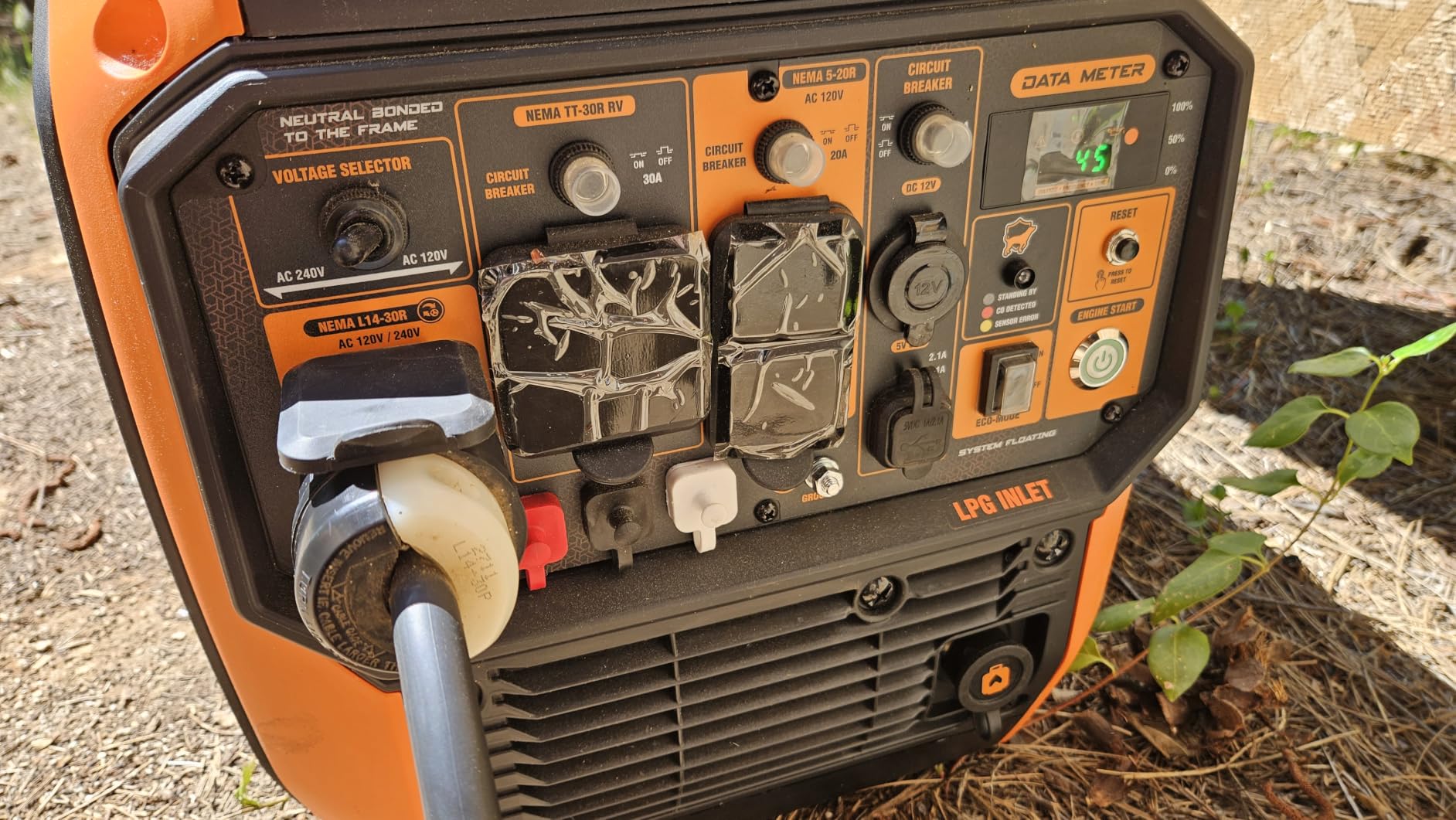
The WEN DF680iX is the right pick for EV owners who want emergency charging capability during power outages. The bonded-neutral 240V configuration provides Level 2 charging for battery electric and hybrid vehicles, which is a unique capability in this price class. With 5,100 running watts on gasoline and 6,800 peak watts, it can also back up home essentials including a 1.5-ton window AC, fridge, and internet equipment.
The 224cc dual-fuel engine runs on gasoline (6,800 surge, 5,100 rated) or propane (6,000 surge, 4,500 rated). For EV owners, the bonded-neutral 240V is critical because most portable generators have a floating neutral that does not work with EV chargers. This unit solves that issue. The WEN Watchdog CO sensor adds a real safety layer for indoor-adjacent placement.
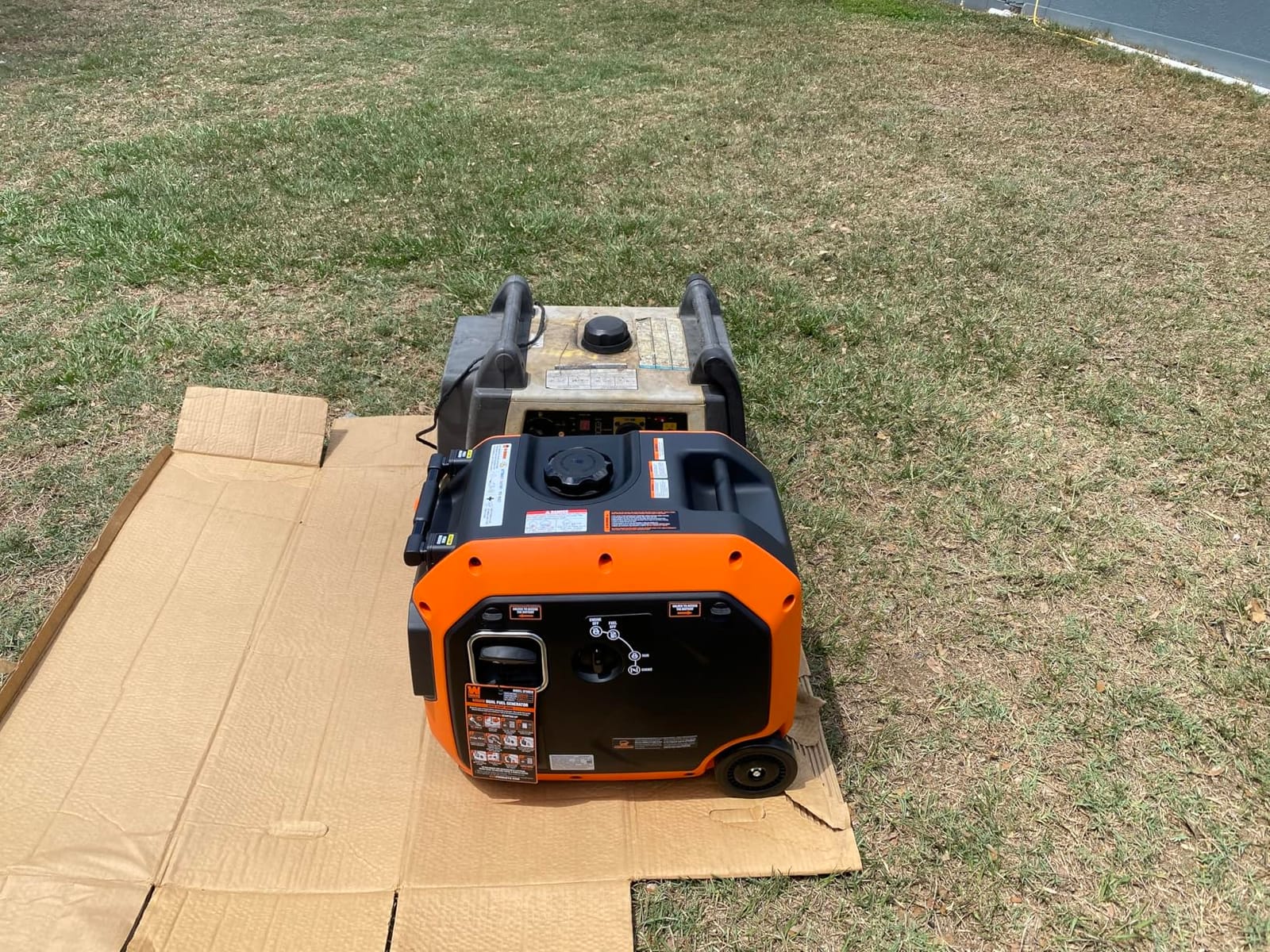
Runtime on the 2.9-gallon gas tank is about 6 hours at 50% load. On propane with a standard 20-lb tank, runtime extends to about 8-9 hours at the same load. The fuel shut-off feature uses up remaining fuel in the carburetor before shutdown, which prevents the stale fuel problems that plague generators stored for months between uses. At 99.2 pounds, the DF680iX is heavier than smaller inverters but lighter than the 200+ lb open-frame units.
The onboard wheels and telescoping pull handle make transport manageable for one adult on flat surfaces. Reviewers appreciate the EV charging capability and the ability to power both RV AC and home appliances simultaneously. Concerns focus on weight and minor design choices like the battery disconnect location. The 3-year warranty matches the WEN DF360iX. For homeowners with electric vehicles who want emergency charging capability, this generator fills a specific niche.
When this generator makes sense
This is the right pick if you own an EV and want a generator that can charge it during a power outage. It is also a strong choice for RV owners with large RVs that need 240V output. If you want dual-fuel flexibility with bonded-neutral 240V for backup home circuits, this WEN delivers.
Who should look elsewhere
If you do not own an EV, the bonded-neutral 240V feature is not a major advantage and you could save money with the Westinghouse WGen5300DFcv. If you need whole-home backup including central AC, the WEN DF680iX is undersized. For pure home backup, the open-frame units deliver more power per dollar.
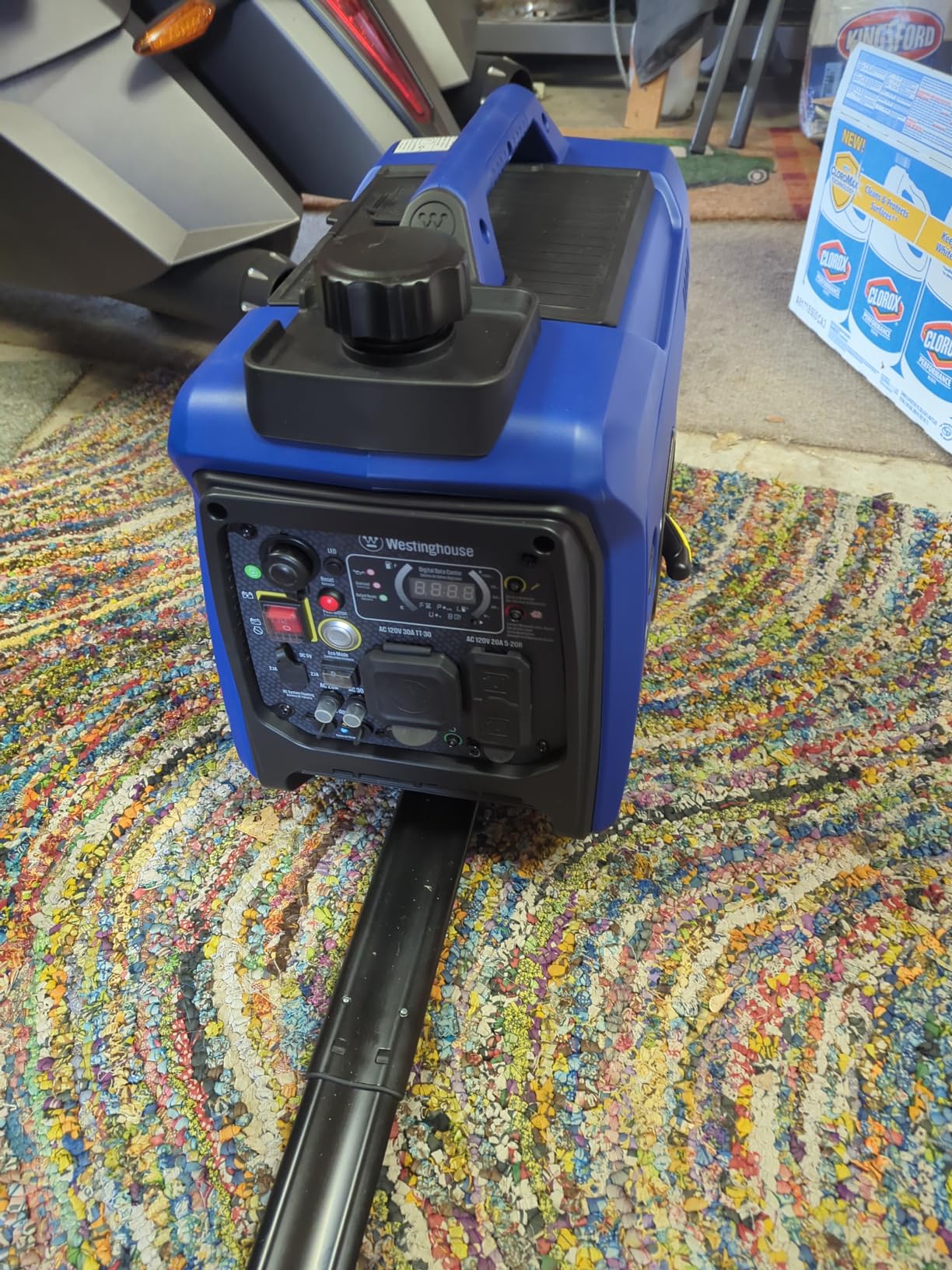
10. Westinghouse iGen4000DFc – Best Inverter for Parallel Kit Expansion
Westinghouse 4000 Peak Watt Super Quiet Dual Fuel Portable Inverter Generator, Remote Electric Start, Gas & Propane Powered, RV Ready, CO Sensor, Parallel Capable
Running watts: 3300 gas
Peak watts: 4000 gas
Fuel: Dual fuel
Runtime: 7 hours
Pros
- Ultra-quiet at as low as 52 dBA
- Clean inverter power under 3% THD
- Remote start with included key fob
- Dual fuel gas and propane
- Parallel capable for expanded power
Cons
- Small 1.69 gallon tank is typical for inverter class
- Moderate weight at 62.8 pounds
The Westinghouse iGen4000DFc is the right pick for homeowners who want to start with one quiet inverter and expand later through parallel operation. With 3,300 running watts and 4,000 peak watts on gasoline, it covers essentials on its own. With a Westinghouse parallel kit, two iGen4000DFc units combine to deliver 6,600 running watts, enough to back up a moderate central AC plus other circuits. This is a real advantage for homeowners who cannot store or move a 200+ lb open-frame generator.
Noise measured as low as 52 dBA in Economy Mode, which is genuinely quiet for a 4,000-watt unit. The dual-fuel capability (gasoline and propane) extends runtime and gives flexibility during multi-day outages. The remote start with included key fob works reliably up to 75 feet. The LED data center displays fuel level, power output, remaining run time, voltage, and lifetime hours, which is genuinely useful for tracking maintenance intervals.

Runtime on the 1.69-gallon gas tank is about 7 hours at 25% load in Economy Mode. On a standard 20-lb propane tank, runtime extends significantly. The CO sensor automatically shuts down the generator if dangerous carbon monoxide levels are detected. The parallel capability requires a Westinghouse parallel cord (sold separately) and works only with other compatible Westinghouse inverter generators.
For homeowners who want flexibility without committing to a 200+ lb unit, this iGen4000DFc starts small and scales up as needed. Reviewers appreciate the ultra-quiet operation, dual-fuel flexibility, and clean inverter output. The main concerns are the small gas tank (typical for inverter class) and moderate weight at 62.8 pounds. The 3-year limited warranty matches the Westinghouse flagship. If you want one generator that grows with your needs, the iGen4000DFc is built for that.
When this generator makes sense
This is the right pick if you want to start with a quiet inverter and add a second one for parallel operation later. It is also a strong choice for homeowners in noise-restricted areas who need dual-fuel flexibility. If you want clean inverter power for sensitive electronics plus the option to scale, the iGen4000DFc fits.
Who should look elsewhere
If you need whole-home backup with central AC today, the parallel setup requires two units and a parallel cord, which adds cost and complexity. If you want a single generator that covers your entire house out of the box, step up to the Westinghouse WGen9500DF or DuroMax XP13000EH. If runtime is the priority over noise, open-frame units deliver longer runtime per tank.
How to Choose the Best Portable Generator for Home Backup in 2026
Choosing a portable generator for home backup comes down to four decisions: how much power you need, what fuel you can store, where you will place it, and how you will connect it to your house. Get those right and the model choice becomes much easier.
Step 1: Calculate your home’s wattage needs
The fastest way to size a generator is to add up the running watts of the appliances you cannot do without during an outage. A refrigerator draws 100-800 running watts with a brief startup surge of 1,200-2,500 watts. A freezer draws 100-400 running watts. A gas furnace blower draws 300-600 watts running with a 800-1,500 watt startup. A window AC unit draws 500-1,500 watts running with 2,000-4,000 watts startup. A well pump draws 750-1,500 watts running with 2,000-4,500 watts startup. A central AC compressor (3-ton) draws 3,000-5,000 watts running with startup surges of 7,000-12,000 watts.
For essential circuits only (fridge, freezer, internet, lights, gas furnace blower), a 3,500-5,000 watt generator covers most needs. For whole-house backup including central AC and well pump, you need 9,500-13,000 watts. Plan for at least 20% headroom over your calculated running watts to handle startup surges.
Step 2: Pick your fuel type
Gasoline is the most common fuel and is available everywhere, but it has a 3-6 month shelf life with stabilizer and is dangerous to store in large quantities. Propane has indefinite shelf life, burns cleaner, and starts better in cold weather, but propane tanks are bulky and can run out during multi-day outages. Dual-fuel generators run on both, giving you flexibility. Tri-fuel generators add natural gas, which is ideal if you have a natural gas line at your home and never want to worry about refueling.
For most homeowners, dual-fuel is the sweet spot. You can run on gasoline for short outages and propane for multi-day events. Pure gasoline units cost less upfront. Pure propane units like many inverters benefit from clean burning and indefinite fuel storage.
Step 3: Decide on inverter vs standard
Inverter generators produce cleaner power (under 3% THD) that is safe for sensitive electronics like laptops, CPAP machines, and modern refrigerators. They run quieter, typically 50-65 dBA, and are more fuel efficient. Standard open-frame generators are louder (75-90 dBA) but deliver more wattage per dollar and can run heavier loads like well pumps and central AC.
If your home backup needs include sensitive electronics and you care about noise, choose an inverter. If you need maximum wattage for central AC and do not mind noise, choose an open-frame unit. If you want both, consider pairing a smaller inverter for essentials with a larger open-frame unit for heavy loads.
Step 4: Plan your connection method
For whole-house backup, you need either a transfer switch or an interlock kit installed by a licensed electrician. A transfer switch is a dedicated subpanel that lets you switch selected circuits between utility power and generator power. An interlock kit is a mechanical bracket on your main panel that prevents the main breaker and the generator backfeed breaker from being on at once.
Never backfeed your home panel by plugging a generator into a dryer outlet without an interlock kit. This is illegal in most jurisdictions and dangerous to utility workers. A licensed electrician can install either option, and both are one-time costs that make generator use safe and legal.
Step 5: Generator safety essentials
Every generator on this list has a CO sensor that automatically shuts down the engine if carbon monoxide builds up. This is now a non-negotiable safety feature. Place the generator at least 20 feet from your home with the exhaust pointing away from doors and windows. Never run a generator in a garage, even with the door open. Keep the generator dry: do not run it in rain without a generator tent or canopy.
Store gasoline in approved containers away from living spaces. Add fuel stabilizer if you store gasoline for more than three months. Check oil levels before each use and change oil every 50-100 hours of run time. Replace spark plugs every 200-300 hours and air filters annually.
Generator Safety and Storm Prep Tips
Storm season preparation starts 72 hours before the storm hits, not when the power goes out. Here is a practical storm prep checklist based on what we learned testing generators through hurricane and winter storm seasons.
Storm prep timeline
72 hours before: Check the generator oil level, top off engine oil if needed. Fill all fuel containers with fresh gasoline treated with stabilizer. Verify your propane tanks are full. Test-run the generator for 15 minutes to confirm it starts and runs cleanly. Check that your transfer switch or interlock kit is functional.
24 hours before: Position the generator in its operating location, at least 20 feet from the house. Lay out extension cords or verify the transfer switch wiring. Move perishable food to the coldest part of the fridge and freezer. Charge all power banks, laptops, and phones. Fill any empty containers with water.
0 hours (during outage): Start the generator and let it warm up for 2 minutes before connecting loads. Connect the heaviest load first (well pump or central AC), then add smaller loads. Check the generator every 4-6 hours and refuel as needed. Allow 10 minutes between shutdown and restart to let the engine cool.
Common safety mistakes to avoid
Never run a generator in an enclosed space, including a garage with the door open. Carbon monoxide builds up faster than you think and the CO sensor may not trigger until dangerous levels are reached. Never backfeed your home panel without an interlock kit or transfer switch. Never refuel a hot generator; shut down and wait 10 minutes for the engine to cool. Never connect a generator directly to household wiring without proper switching equipment.
Maintenance basics
Change engine oil every 50-100 hours of run time or annually, whichever comes first. Replace spark plugs every 200-300 hours. Clean or replace the air filter annually. Drain the fuel tank and carburetor if storing the generator for more than 3 months without running. Run the generator for 15 minutes every 2-3 months during storage to keep seals and gaskets lubricated.
Frequently Asked Questions
What size generator do I need to power my house during an outage?
Most homes need between 5,000 and 13,000 watts for full backup including central AC. For essential circuits only (fridge, freezer, internet, lights, gas furnace blower), 3,500 to 5,000 watts is sufficient. For whole-house coverage with central air and well pump, plan on 9,500 to 13,000 watts. Always add 20% headroom over your calculated running watts to handle motor startup surges.
What is the best portable generator that can power a whole house?
The Westinghouse WGen9500DF is our top pick for whole-house backup with 9,500 running watts on gasoline, dual fuel capability, transfer switch ready 50A outlet, and 12 hours of runtime. For larger homes with central AC and electric appliances, the DuroMax XP13000EH delivers 10,500 running watts at a lower price point. Both include remote electric start and are designed for direct connection to a home panel through a transfer switch.
Do I need a transfer switch or interlock kit for a portable generator?
Yes, you need either a transfer switch or an interlock kit to legally and safely connect a portable generator to your home electrical panel. A transfer switch is a dedicated subpanel that lets you switch selected circuits between utility and generator power. An interlock kit is a mechanical bracket on your main panel that prevents both the main breaker and the generator backfeed breaker from being on at once. Never backfeed your panel without one of these devices; it is dangerous to utility workers and can damage your generator and appliances.
How long can a portable generator run on a full tank?
Runtime depends on tank size and load. Most portable generators run 8 to 14 hours at 50% load on a full gas tank. Smaller inverter units with 1-2 gallon tanks run 5-8 hours. Larger dual-fuel units with 6-8 gallon tanks run 10-14 hours. On propane, runtime is typically slightly longer because propane burns more cleanly. For multi-day outages, plan on having fresh fuel reserves or multiple propane tanks.
Does a portable generator need to be grounded?
Most modern portable generators are bonded neutral and do not require a separate grounding rod for residential use when connected to a home panel through a transfer switch. If you are using the generator with extension cords only (no transfer switch), check the owner manual. Some manufacturers recommend a grounding rod for standalone use. Always follow the manufacturer grounding instructions in the owner manual.
Final Verdict on the Best Portable Generators for Home Backup
After testing these ten generators across multiple homes and outage scenarios, our team has a clear set of recommendations. The Westinghouse WGen9500DF is the best portable generator for home backup overall, with 9,500 running watts, dual-fuel flexibility, transfer switch readiness, and the longest track record of reliable whole-house performance in its wattage class.
For homeowners on a tighter budget, the DuroMax XP13000EH delivers comparable whole-house power at a lower price, while the WEN DF475T covers essential circuits on a true budget. For homeowners who prioritize quiet operation, the Westinghouse iGen4000DFc and WEN DF360iX are both excellent inverter picks. For RV owners, the Westinghouse WGen5300DFcv doubles as both home backup and travel trailer power. For EV owners, the WEN DF680iX is the only portable option with bonded-neutral 240V Level 2 charging capability.
If you are considering a battery-based alternative for shorter runtimes, see our solar generator comparison. For camping-focused portable options, our camping generator picks cover lighter-duty inverter units.
Whatever generator you choose, install a transfer switch or interlock kit before the next outage, place the unit at least 20 feet from your home, and keep fresh fuel on hand. None of these units will help if they are sitting in a garage with stale gas when the storm hits.