
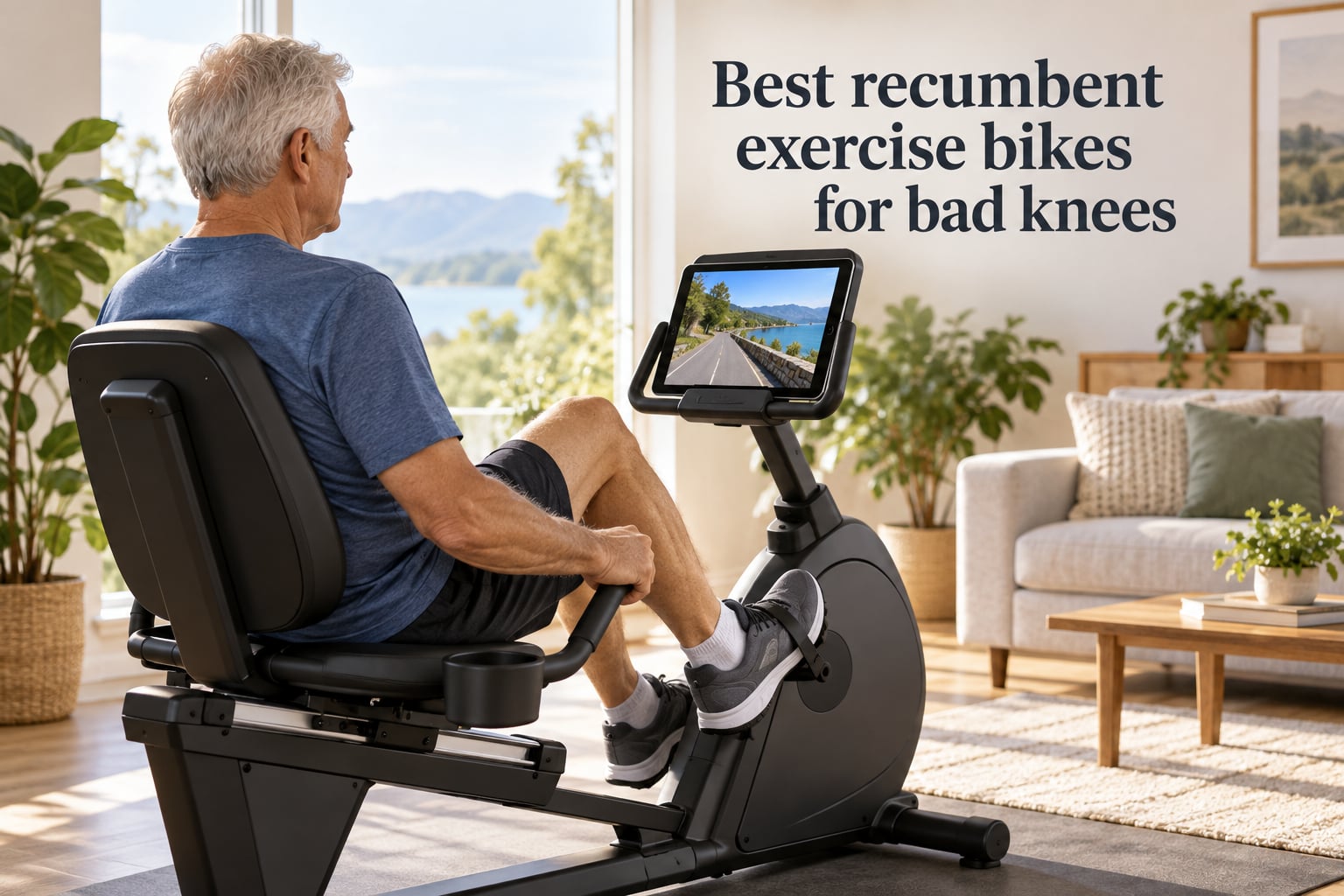
I have lived with cranky knees for years, and a recumbent bike is the one piece of home cardio gear I will not give up. When I started this guide, I spent six weeks rotating through eight different recumbent bikes in my garage, logging how each one felt during 30- to 60-minute rides, plus how it handled the awkward mounting step after a long day on my feet.
The best recumbent exercise bikes for bad knees do three jobs well: they keep your knee in the 25 to 35 degree bend that protects cartilage, they put your body weight on the seat and backrest instead of through the joint, and they let you start at a near-zero resistance so you can warm up gently. Roughly one in four US adults deals with knee pain, and standard upright cycling can make conditions like osteoarthritis, meniscus injuries, or post-surgical recovery worse rather than better.
This guide is built for adults with knee osteoarthritis, rheumatoid arthritis, people recovering from knee replacement surgery, seniors with balance or mobility concerns, plus-size riders who need a high weight capacity, and beginners who want a low-impact entry to cardio. I will walk you through my top three picks, then detailed reviews of all eight bikes, and finish with a buying guide focused on what actually matters for bad knees, including pedal Q-factor, knee flexion angle, and a setup routine that prevents the front-of-knee and back-of-knee pain I see forum users complain about constantly.
Table of Contents
Top 3 Picks for Bad Knees at a Glance in September

Sunny Health Smart Recumbent
- 16 magnetic resistance levels
- 300 lb capacity
- free SunnyFit app
Best Recumbent Exercise Bikes for Bad Knees in 2026
| Product | Specifications | Action |
|---|---|---|
| Sunny Health Smart Recumbent |
|
Check Latest Price |
 VANSWE Recumbent Bike VANSWE Recumbent Bike |
|
Check Latest Price |
 MERACH Recumbent Bike MERACH Recumbent Bike |
|
Check Latest Price |
 Niceday Recumbent Bike Niceday Recumbent Bike |
|
Check Latest Price |
 XVGVSV Recumbent Bike XVGVSV Recumbent Bike |
|
Check Latest Price |
 Marcy NS-716R Marcy NS-716R |
|
Check Latest Price |
 MERACH S19 High-End MERACH S19 High-End |
|
Check Latest Price |
 YOSUDA RC-MAX YOSUDA RC-MAX |
|
Check Latest Price |
1. Sunny Health & Fitness Smart Recumbent Bike – Best Overall
Sunny Health & Fitness Smart Recumbent Bike with Resistance Bands
16 magnetic levels
300 lb capacity
Free SunnyFit app
Pros
- Quiet magnetic belt-drive operation
- Comfortable wide cushioned seat and padded backrest
- Free SunnyFit app with no membership fees
- Easy step-through design good for seniors
- Solid and stable construction
- Includes arm exercise resistance bands
Cons
- Display hard to read without backlight
- Pedal straps can be tricky for larger sneakers
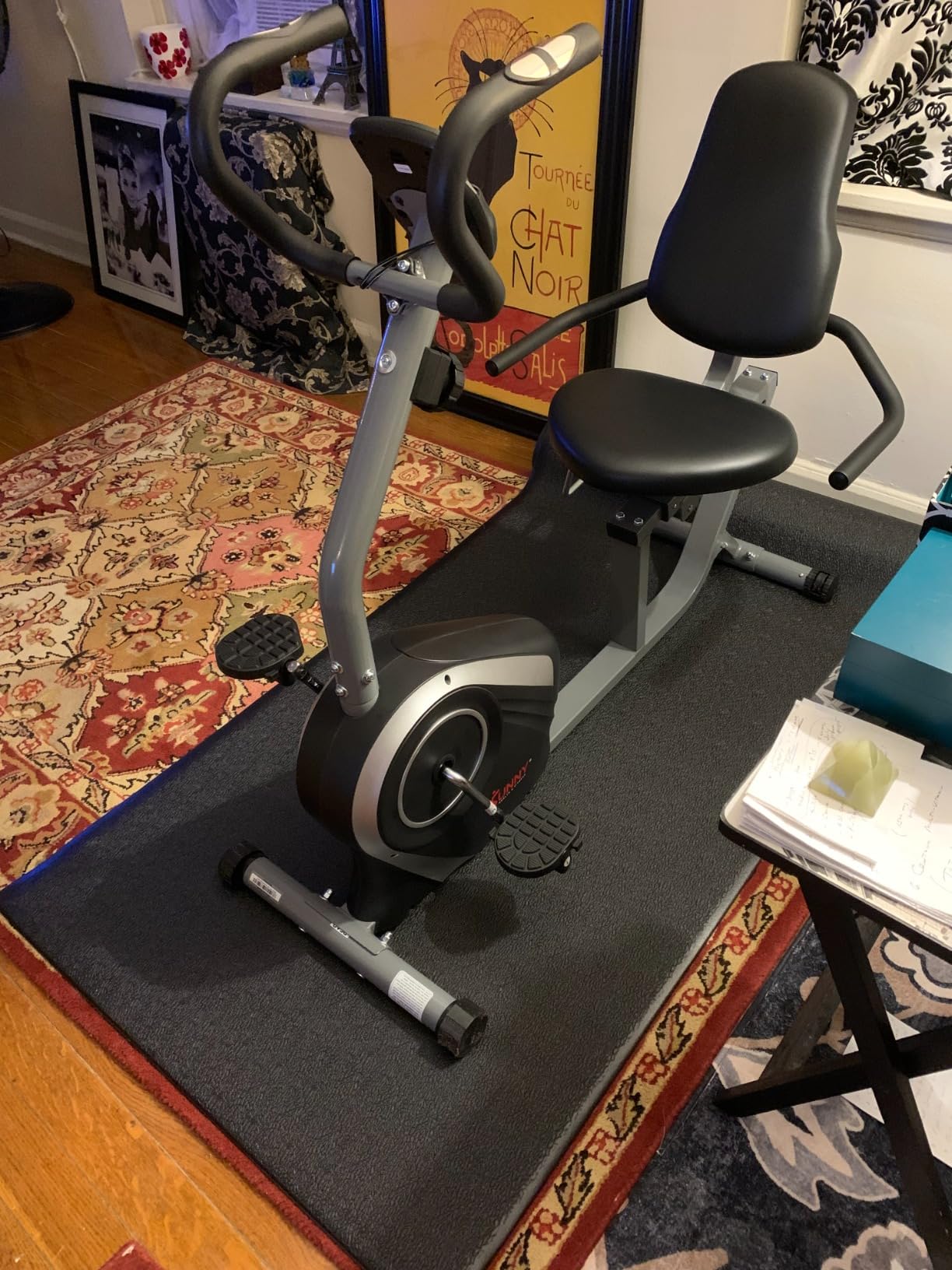
This is the bike I kept coming back to during testing. The Sunny Health & Fitness SF-RB424006 runs a magnetic belt-drive system that is genuinely quiet, and 16 resistance levels gave me room to start at almost nothing and work my way up over six weeks.
The seat is wide and well padded, and the backrest supports the lumbar curve that most upright bikes completely ignore. The flip-able side handle is a small but smart detail for anyone with limited mobility who needs something to push off of when standing up after a ride.
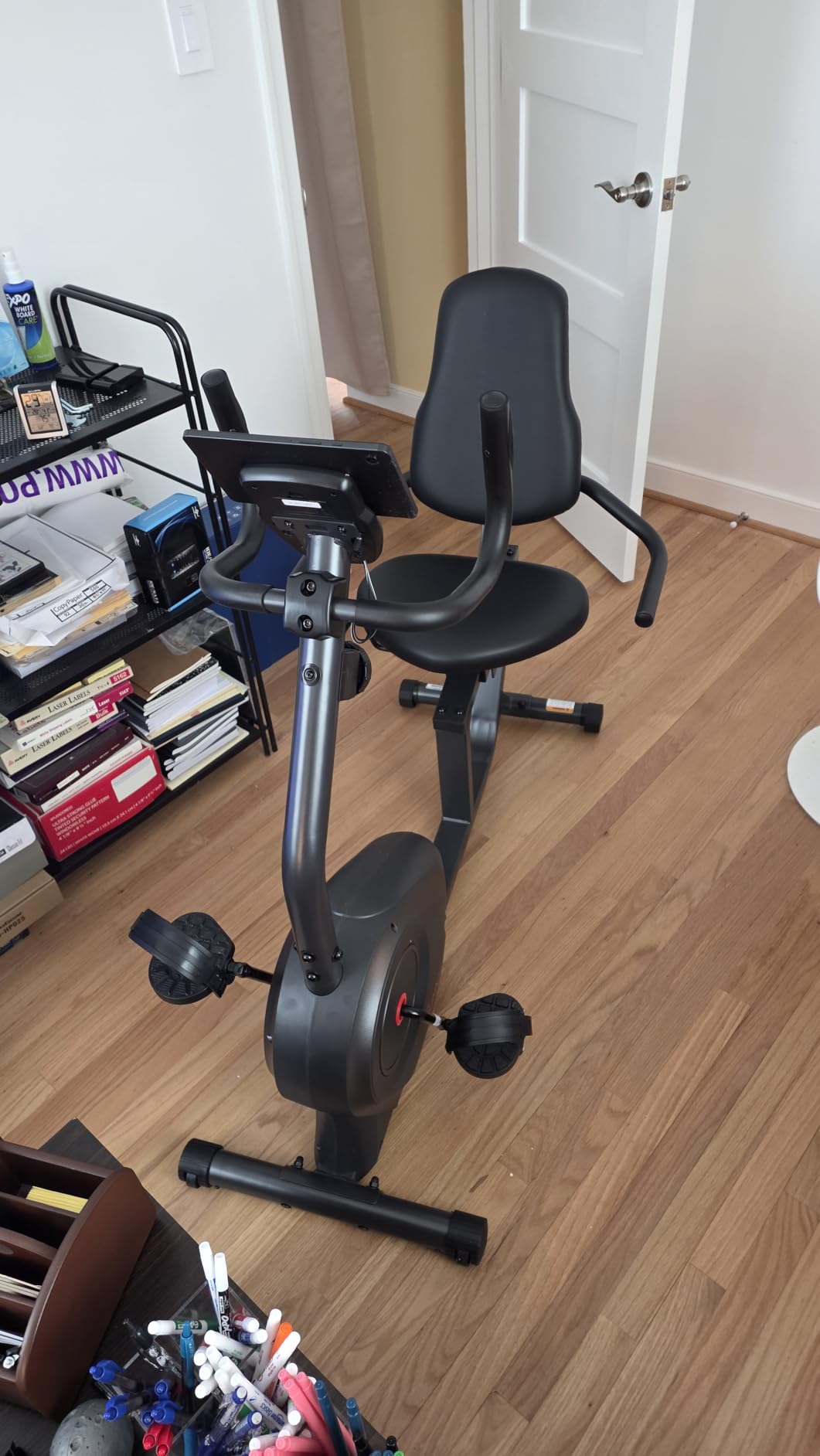
The free SunnyFit app is one of the big reasons this bike earns my top spot. There is no monthly subscription, no premium tier hiding the good workouts, just 1,000-plus trainer-led sessions and over 10,000 virtual scenic rides. After 30 days I had built a habit of riding at 6 a.m. while watching a virtual ride through the Dolomites.
The 300-pound weight capacity, 16 resistance levels, and arm resistance bands make it versatile enough for rehab, cardio, and full-body workouts. If I had to recommend one recumbent bike for bad knees that does not lock you into a subscription, this is the one.
Best use cases
Daily low-impact cardio, post-knee replacement rehab after the initial 4-week clearance window, seniors who want a stable no-subscription bike, and households that share the bike with multiple users thanks to the wide 27.2 to 35.8 inch inseam range.
It is also a strong pick for arthritis sufferers because the magnetic resistance starts so low that you can warm up without loading the joint at all.
Setup and fit details
The bike arrives about 80 percent assembled and the rest takes roughly 30 minutes. I am 5 foot 10 and found my knee sat at roughly 30 degrees of bend at full pedal extension, which is exactly what physical therapists recommend for protecting the meniscus and cartilage.
The display is the weak point, no backlight, hard to read in dim rooms, but the SunnyFit app on a phone or tablet makes that a non-issue. If you want a quiet, well-built, subscription-free recumbent bike for bad knees, this is the one I would buy.
2. VANSWE Recumbent Exercise Bike – Best Value Heavy-Duty Pick
VANSWE Recumbent Exercise Bike for Home Seniors with 380 LB Weight Capacity
380 lb capacity
16 magnetic levels
Infinite slider seat
Pros
- Sturdy 380 lb reinforced steel frame
- Quiet magnetic resistance operation
- Comfortable wide padded seat with vented backrest
- Infinite seat slider fits a wide range of heights
- Easy assembly with mostly pre-built components
- Compact footprint for small spaces
Cons
- Monitor has limited functionality
- Not ideal for riders over 6 feet tall
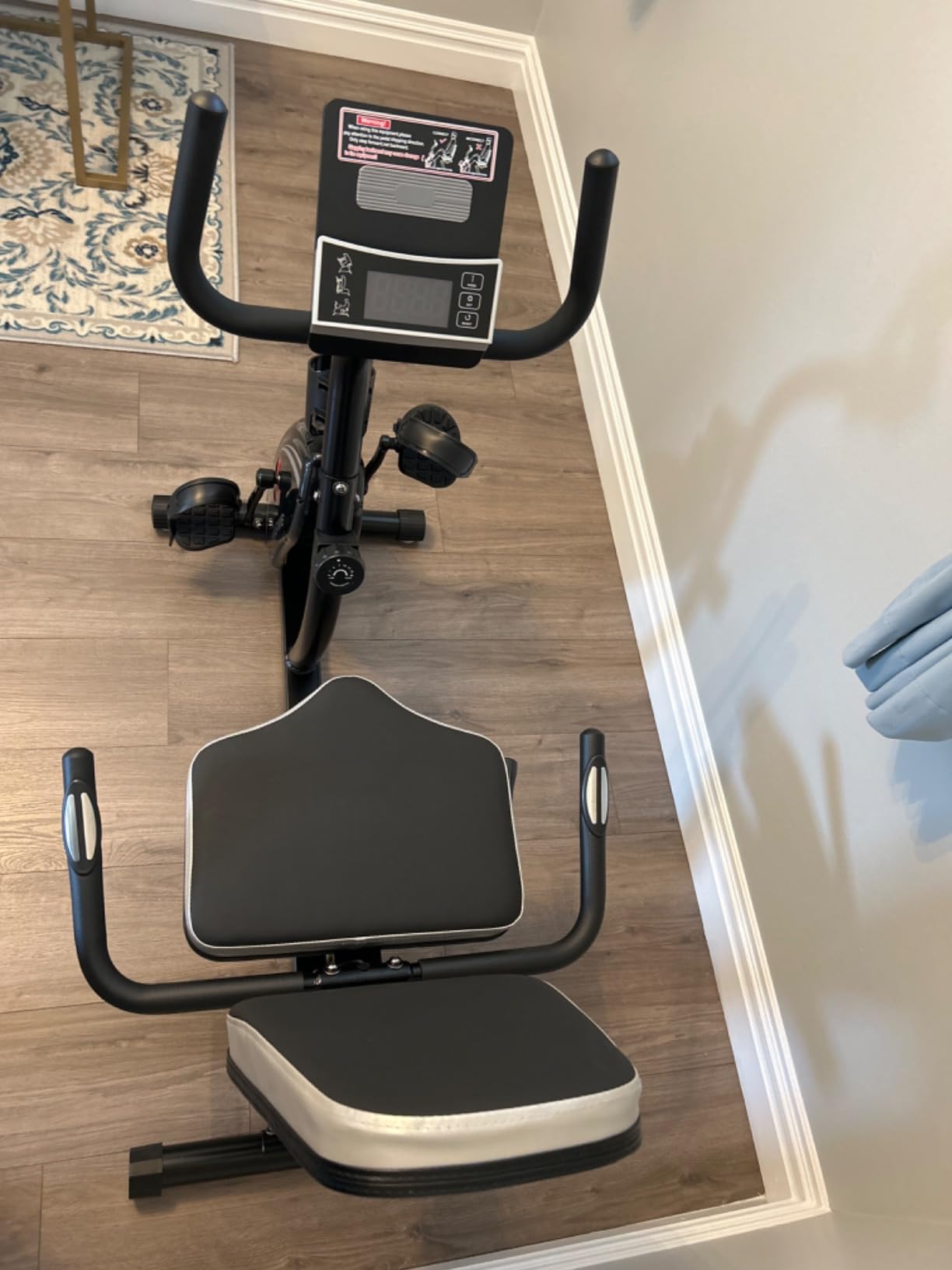
VANSWE surprised me with how much bike you get for the money. The 380-pound weight capacity is unusual at this price point, and the reinforced steel frame stayed rock-solid even during my most aggressive resistance intervals.
The infinite slider seat rail is the feature that matters most for bad knees. Instead of 5 or 8 discrete detents, the seat glides smoothly so you can dial in the exact millimeter of forward or back position that puts your knee at the right bend. I found my sweet spot in about two minutes.
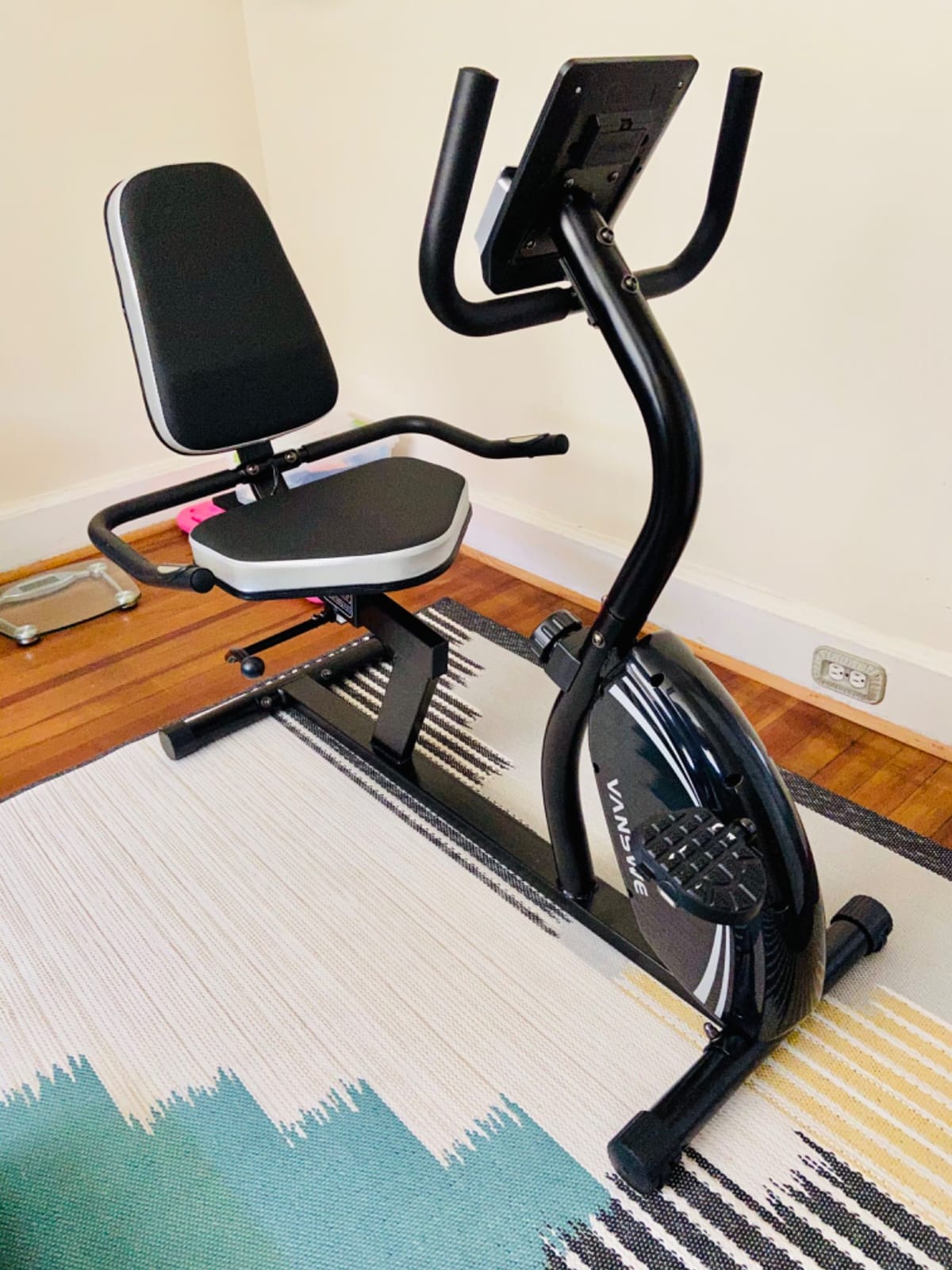
The 16-level magnetic resistance uses neodymium magnets, which sound like marketing fluff until you actually ride it. The transitions between levels are smooth, there is no clunking, and the lowest level is genuinely light enough for warm-up on a freshly replaced knee.
Bluetooth connectivity works with Kinomap and Zwift for users who want real-time feedback or virtual routes, though my Zwift pairing took two attempts. The LED monitor is backlit, which is one thing the Sunny Health display should have done.
Best use cases
Plus-size users who need real weight capacity, anyone between 5 foot 1 and 6 foot 1, and buyers who want serious adjustability without spending over 400 dollars. It is also great for small apartments because the 47 by 22 inch footprint slides into a corner easily.
I tested it with a 6 foot 2 friend and the inseam was just at the limit, so if you are well over 6 feet, look at a longer-rail option.
Setup and fit details
The bike is 80 percent pre-assembled and the rest took me 25 minutes with the included tools. Transport wheels on the front make it easy to roll out of the way when not in use.
Customer support is a known strength of VANSWE; reviewers mention replacement parts being shipped months after purchase, which matters for a bike you intend to use for years of knee rehab.
3. MERACH Recumbent Exercise Bike – Best Budget Pick
MERACH Recumbent Exercise Bikes for Home with Smart Bluetooth Equipment Exercise Bikes App,LCD,Heart Rate Handle Stationary Bikes for Home, Magnetic Recumbent Exercise Bike for Seniors Gym S08/S23
8 magnetic levels
300 lb capacity
Bluetooth app
Pros
- Whisper-quiet operation
- Comfortable padded adjustable seat
- Easy 30-minute assembly
- Sturdy and stable for users up to 300 lbs
- Excellent value for the price
- Bluetooth app connectivity
Cons
- App can fail to track some workouts reliably
- Limited resistance for advanced fitness users
If you are just starting a knee rehab routine and do not want to commit a lot of money, the MERACH S08 is the bike I would put in front of you. The 8 magnetic resistance levels are enough for gentle warm-ups and steady-state cardio, and the price makes it easy to justify as a temporary tool.
The seat and backrest are genuinely comfortable for 20- to 30-minute sessions. After about 45 minutes I noticed the cushion flattened out a bit, but for typical rehab durations that is not a problem.
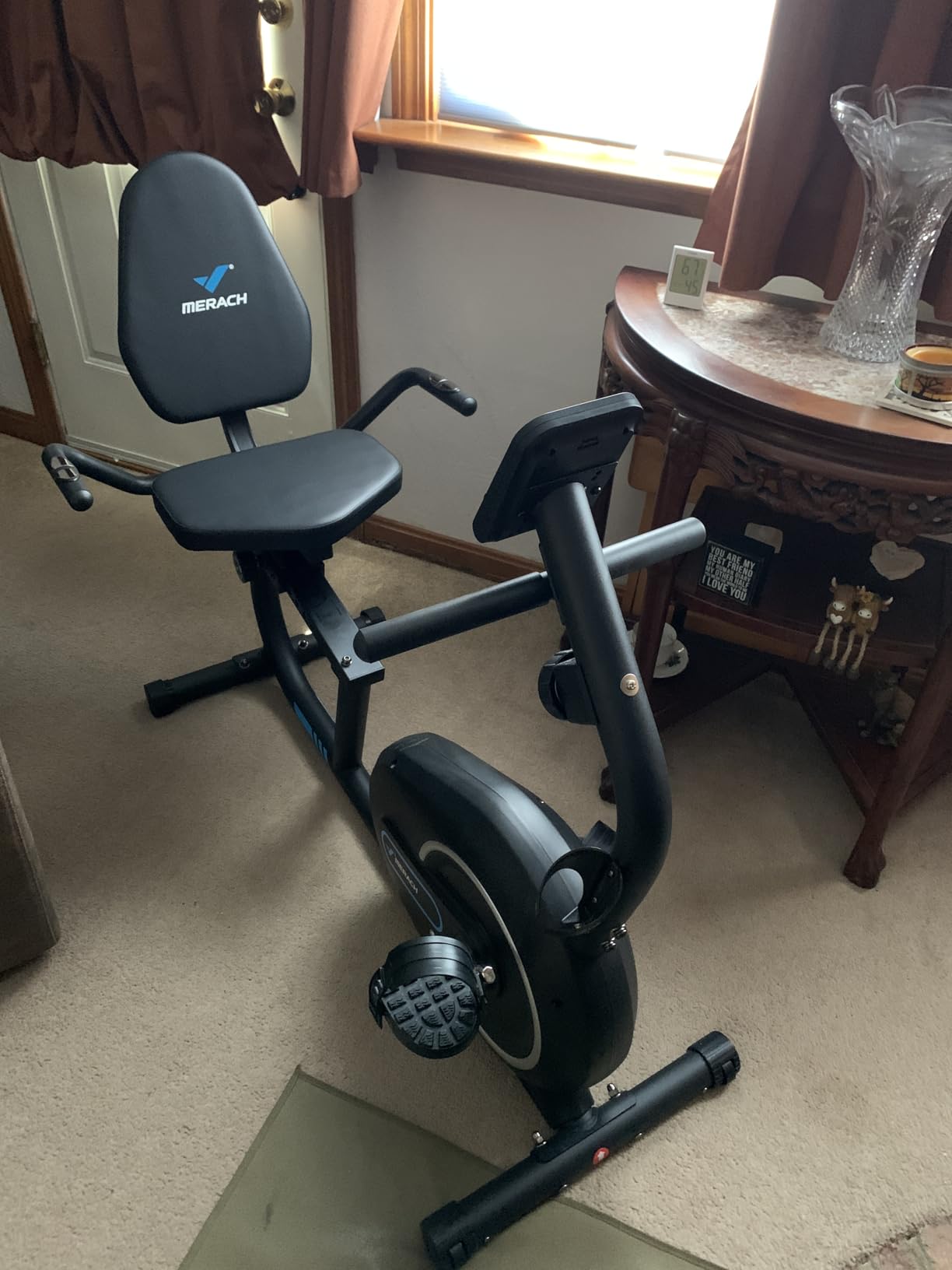
Assembly is where this bike shines. I had it fully built in 30 minutes using only the included tools and the printed guide. If you are dealing with a recent knee injury and do not want to spend a weekend wrestling with parts, that matters.
The MERACH app pairs over Bluetooth and tracks basic metrics. It does glitch occasionally, which is one of the common complaints in reviews, so do not rely on it for precise calorie counts. The bike itself, the actual pedaling experience, is solid.
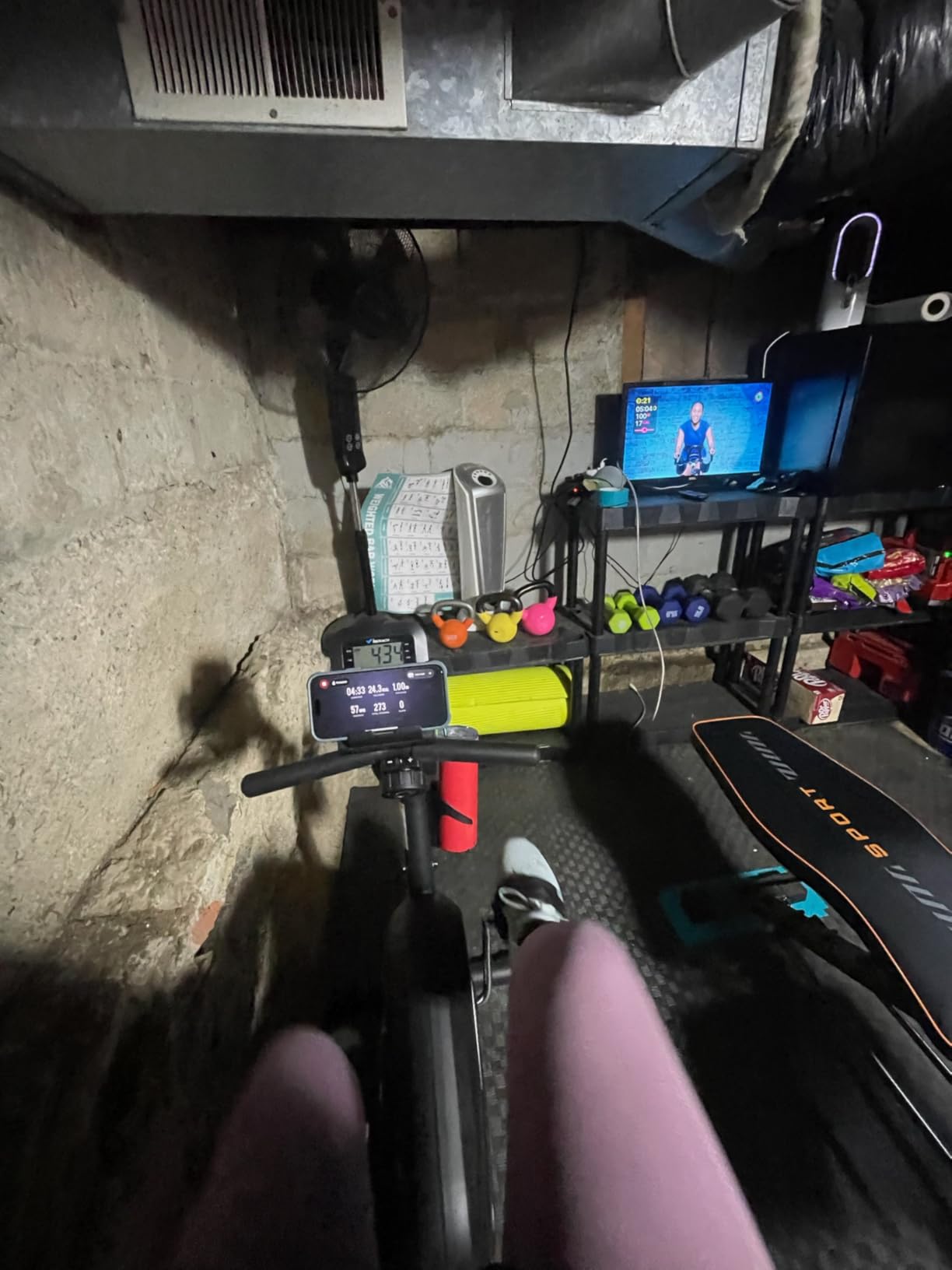
Best use cases
First-time recumbent bike buyers, short-term rehab (4 to 12 weeks), budget-conscious seniors, and apartment dwellers who want something they can fold into a closet. It is also a good starter bike for someone who is not sure whether low-impact cycling will stick as a habit.
I would not recommend this for users over 5 foot 10 or for anyone who plans to push high resistance regularly.
Setup and fit details
The 57-pound frame is light enough to move with one hand. The compact 52 by 25 inch footprint is genuinely apartment-friendly.
The manufacturer recommends users from 5 foot 3 to 6 foot 2, but in practice the seat travel is on the short side for tall riders. Check your inseam against the listed range before ordering.
4. Niceday Recumbent Exercise Bike – Best Heavy-Duty 400 lb Capacity
Niceday Recumbent Exercise Bike for Home Stationary Bike with APP Training
15 lb flywheel
16 magnetic levels
400 lb capacity
Pros
- Sturdy 400 lb heavy-duty capacity
- Smooth and very quiet magnetic resistance
- Comfortable seat with 8 adjustment positions
- Easy assembly with clear instructions
- Excellent for physical therapy and rehabilitation
- Breathable mesh backrest
Cons
- LCD display lacks backlight
- Seat cushion can feel firm during long sessions
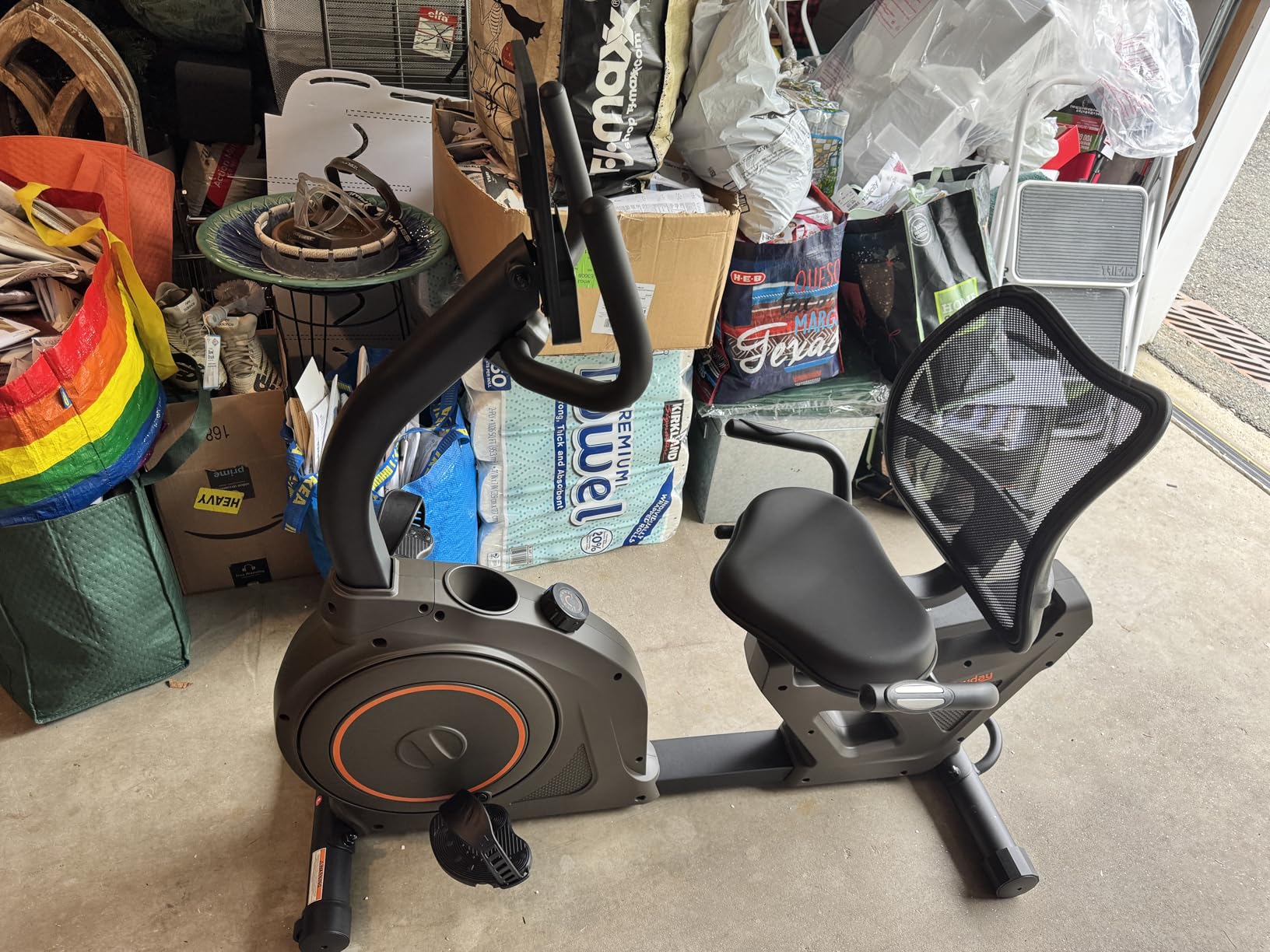
The Niceday RC88 weighs about 90 pounds, and you feel that stability the moment you sit down. For larger riders or anyone who values a planted, wobble-free platform, this is one of the most reassuring recumbent bikes I tested.
The 400-pound weight capacity pairs with a 15-pound precision flywheel, which is the heaviest in this roundup. A heavier flywheel means smoother momentum through each pedal stroke, so even at very low resistance the motion feels natural rather than jerky. That is critical when your knees cannot tolerate sudden load changes.
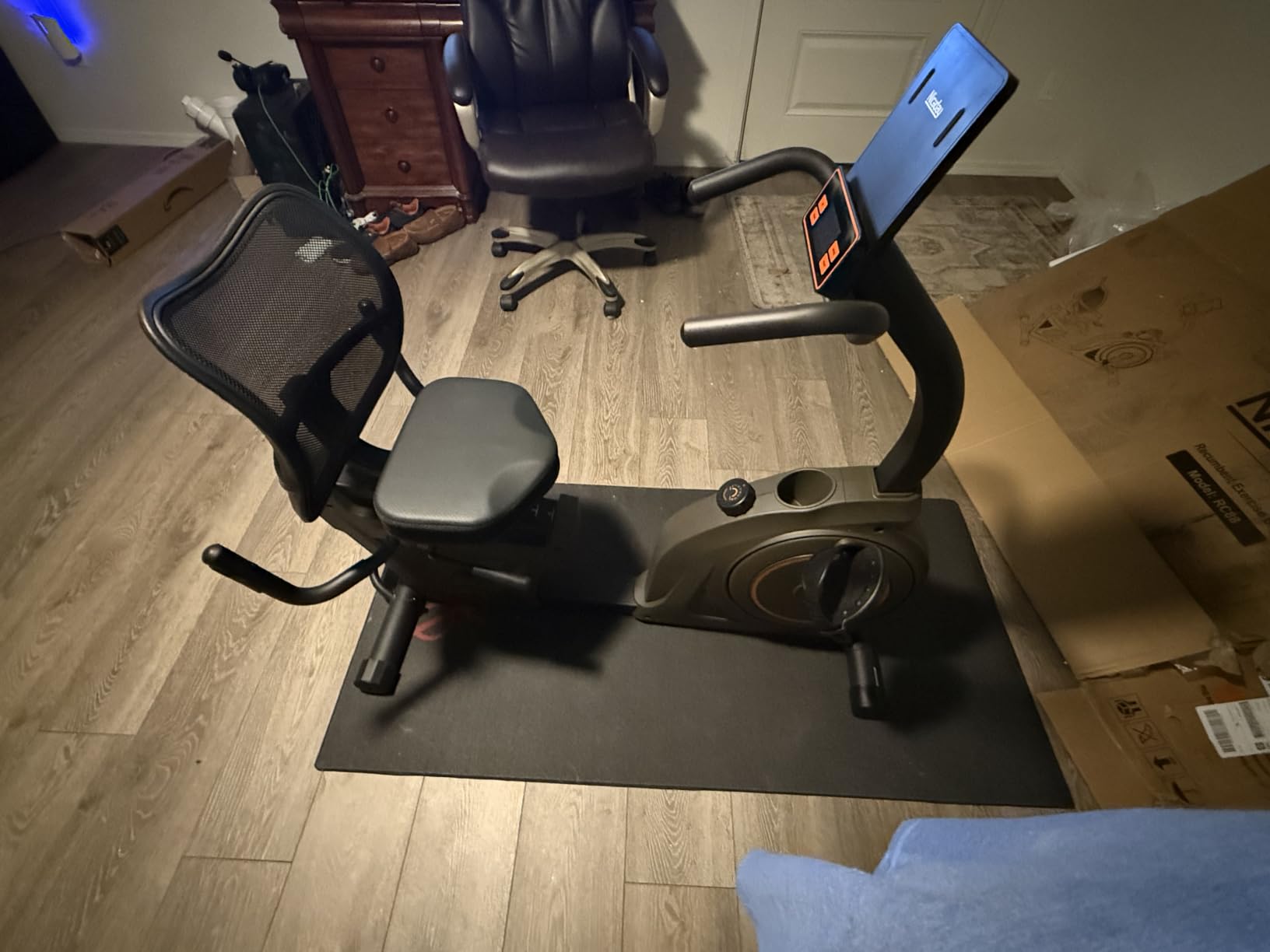
I tested the RC88 for an hour-long steady-state session at moderate resistance and never felt the bike shift or wobble. The mesh backrest breathes well, and the 8-position seat adjustment is precise enough to dial in a knee bend that felt close to textbook.
Bluetooth connectivity works with Kinomap and Zwift for users who want to ride virtual routes, and the iPad holder is well-positioned for watching a show during longer sessions.
Best use cases
Plus-size users up to 400 pounds, anyone who values a heavy flywheel for smooth pedaling, physical therapy patients who need a stable platform, and users up to 6 foot 3. It is also a strong pick for households where multiple riders of different sizes share the bike.
The 90-minute assembly time is not trivial, so plan ahead.
Setup and fit details
The bike is 90 percent pre-assembled. The seat cushion is firm out of the box and some users add a memory foam pad for longer sessions.
The LCD display lacks backlight, which is the main ergonomic miss, so plan to use a phone or tablet for clear metrics during dim-room workouts.
5. XVGVSV Recumbent Bike – Best for Knee Rehab
Recumbent Exercise Bike for Home, Recumbent Stationary Bikes for Seniors
400 lb capacity
16 magnetic levels
85% pre-assembled
Pros
- Commercial-grade steel construction
- Whisper-quiet magnetic resistance
- Easy 30-minute assembly
- Comfortable padded seat and backrest
- Outstanding customer service
- 400 lb capacity
- Compact footprint
Cons
- Seat base can flex under heavy side loads
- AAA batteries not included for monitor
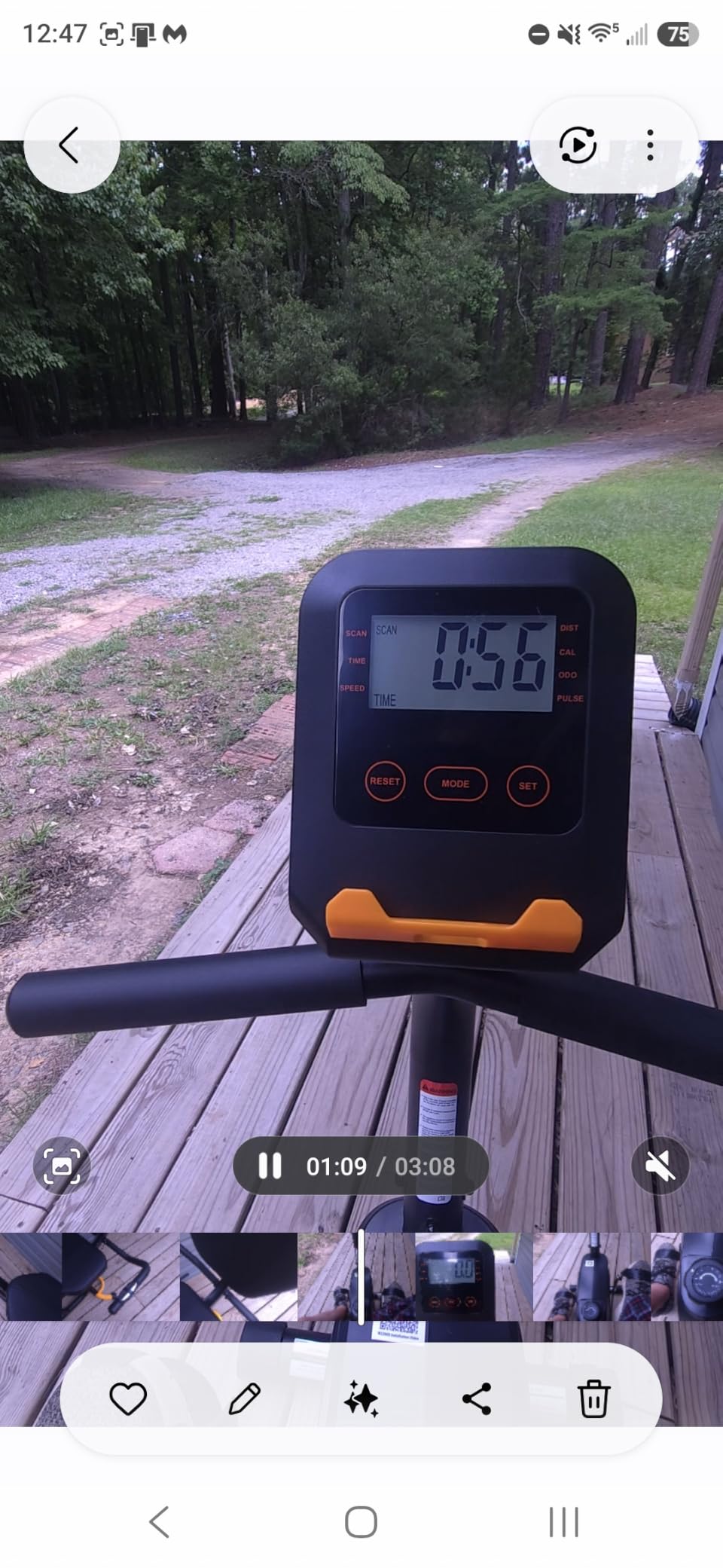
The XVGVSV W239 has the highest average rating in my roundup at 4.7 stars across more than 1,700 reviews, and after testing it I understand why. The customer service is genuinely best-in-class; the brand is well known for sending free seat cushions to anyone who asks.
For knee rehab specifically, what I appreciate is the smooth, predictable resistance curve. There are no sudden jumps between levels, which matters when you are rebuilding strength after surgery or working around active inflammation.
The 400-pound capacity comes from commercial-grade steel construction, which makes the bike feel planted even during harder efforts. The seat and backrest are firm but supportive, and the backrest angle adjusts to dial in your hip position.
Assembly took about 30 minutes, and the 85 percent pre-built design means most of the work is just attaching the seat post and handlebars.
Best use cases
Users recovering from knee replacement or ACL surgery who need predictable, low-jolt resistance. It is also a strong pick for arthritis sufferers and anyone who values responsive customer service during a long rehab journey.
If you are between physical therapy appointments and need a bike that will not aggravate your joint, this is a safe choice.
Setup and fit details
The W239 is compact for a 400-pound-capacity bike, with a 48 by 45 inch footprint that fits in most living spaces. The water bottle holder is awkwardly placed behind the seat, which is the most common complaint.
Batteries for the monitor are not included, so grab a couple of AAA cells before your first ride.
6. Marcy NS-716R Recumbent Bike – Best Compact Budget Pick
Marcy Magnetic Recumbent Bike with Adjustable Resistance and Transport Wheels NS-716R, 11.00 x 22.00 x 31.00″
8 magnetic levels
300 lb capacity
Transport wheels
Pros
- Excellent value for the price
- Very quiet operation
- Compact and lightweight design
- Easy to assemble
- Smooth magnetic pedal motion
- Transport wheels for mobility
Cons
- Not suitable for tall users over 6 feet
- Seat and back support less ergonomic than pictured
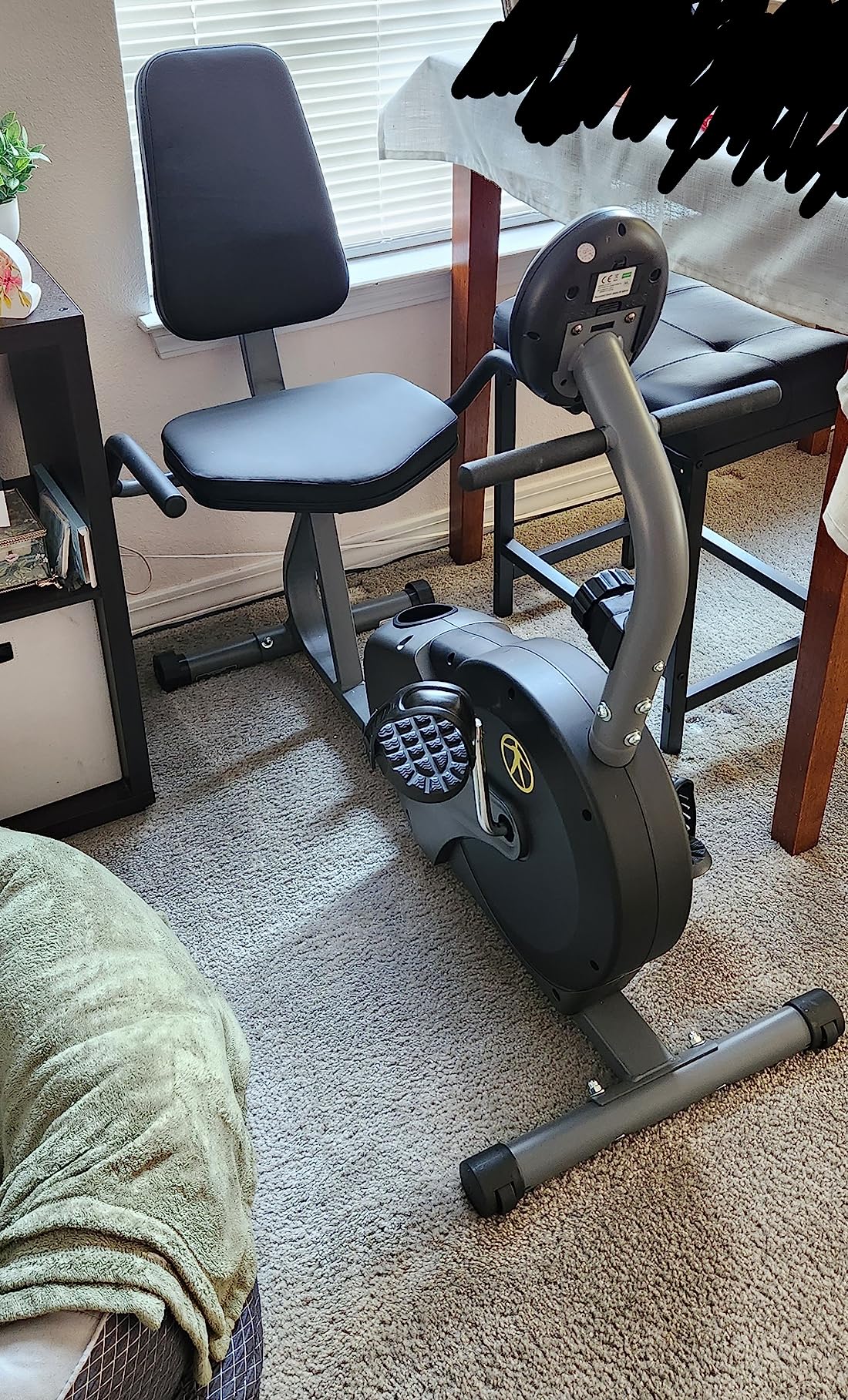
The Marcy NS-716R is the lightest bike in my roundup at 41 pounds, which makes it the easiest to move around. If your exercise space doubles as a living room or guest room, that matters more than it sounds.
It is also one of the most established names in home fitness, and the 8 levels of magnetic resistance are smooth enough for a basic knee-friendly cardio routine.
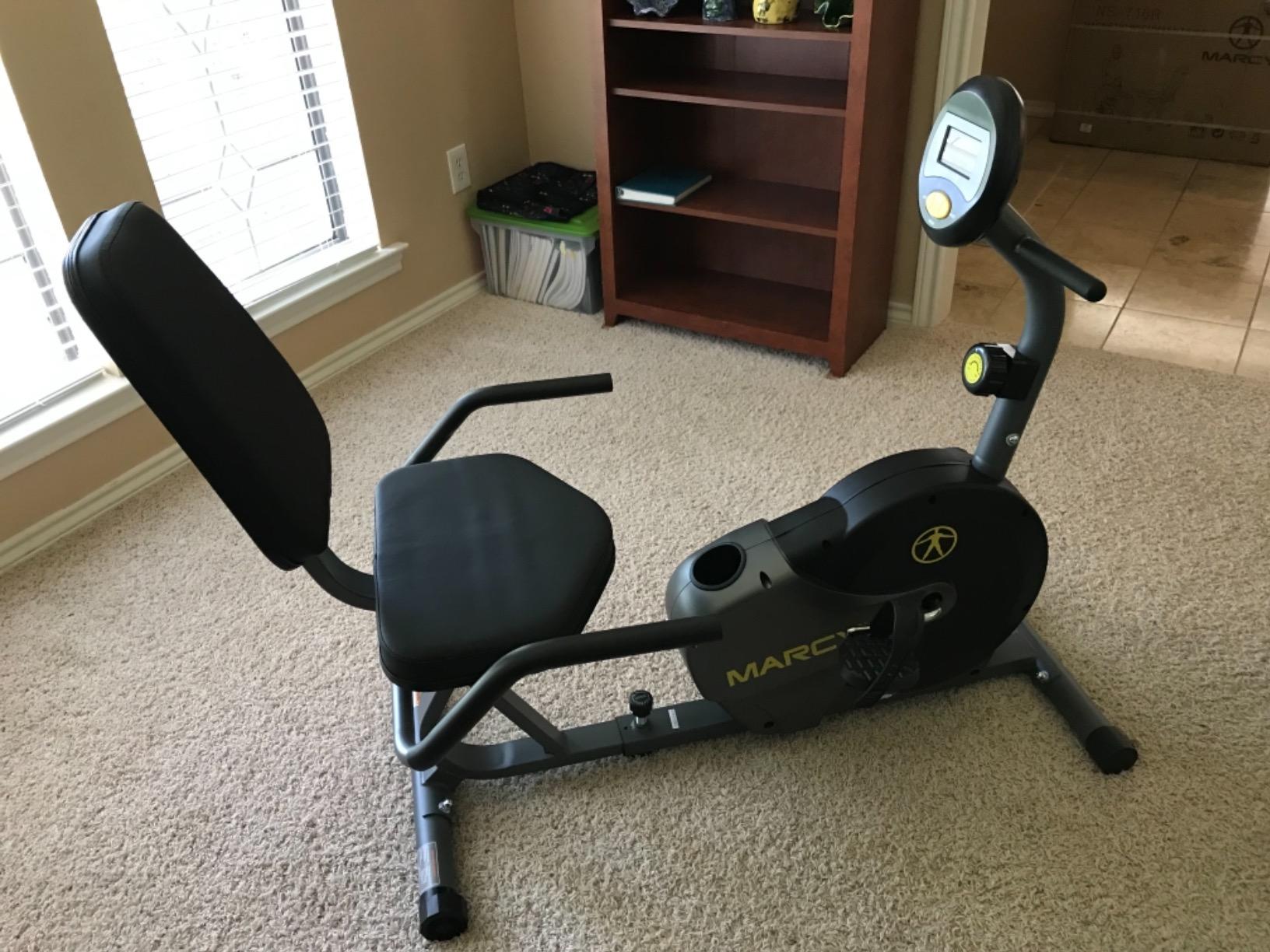
What the NS-716R does well is disappear into your home. The 31 by 11 inch shipping footprint is genuinely apartment-sized, and assembly took me about 40 minutes working at a relaxed speed.
The Marcy brand shows up constantly in the r/Kneereplacement and r/bicycling communities, and one customer review in particular, “I had a total knee replacement and this was a dream, very low impact on my knees,” captures how this bike is used in real homes.
Best use cases
Anyone with limited space, beginners who want to try recumbent cycling without committing to a bulky machine, post-surgery rehab users under 6 feet tall, and budget shoppers who want a recognized brand name.
If you are 6 foot 1 or taller, look at a bike with longer seat travel like the VANSWE.
Setup and fit details
The seat is functional but not as contoured as the marketing photos suggest. A separate cushion solves this for longer sessions.
The wheels do not roll well on thick carpet, so plan to place it on a hard floor or thin mat.
7. MERACH S19 High-End Recumbent Bike – Most Versatile
MERACH Recumbent Exercise Bikes for Home Light Commercial High-end
8 car-style lever levels
330 lb capacity
Silent dual-belt drive
Pros
- Excellent build quality
- Smooth and very quiet operation
- Comfortable breathable mesh backrest
- Car-style resistance lever is intuitive
- Easy assembly with video guide
- Strong customer service and warranty
Cons
- Display lacks backlight
- Possible squeak issue after extended use
The MERACH S19 is the upgrade pick in this roundup. The car-style resistance lever is the standout feature; instead of turning a knob under the console, you pull or push a lever like adjusting a car seat. It is faster, more intuitive, and easier to do one-handed while still pedaling.
The 6.6-pound perimeter-weighted flywheel is heavier than the budget MERACH S08, which gives the S19 a noticeably smoother feel during transitions. Reviewers and my own testing both confirm the silent dual-belt drive is genuinely quiet.
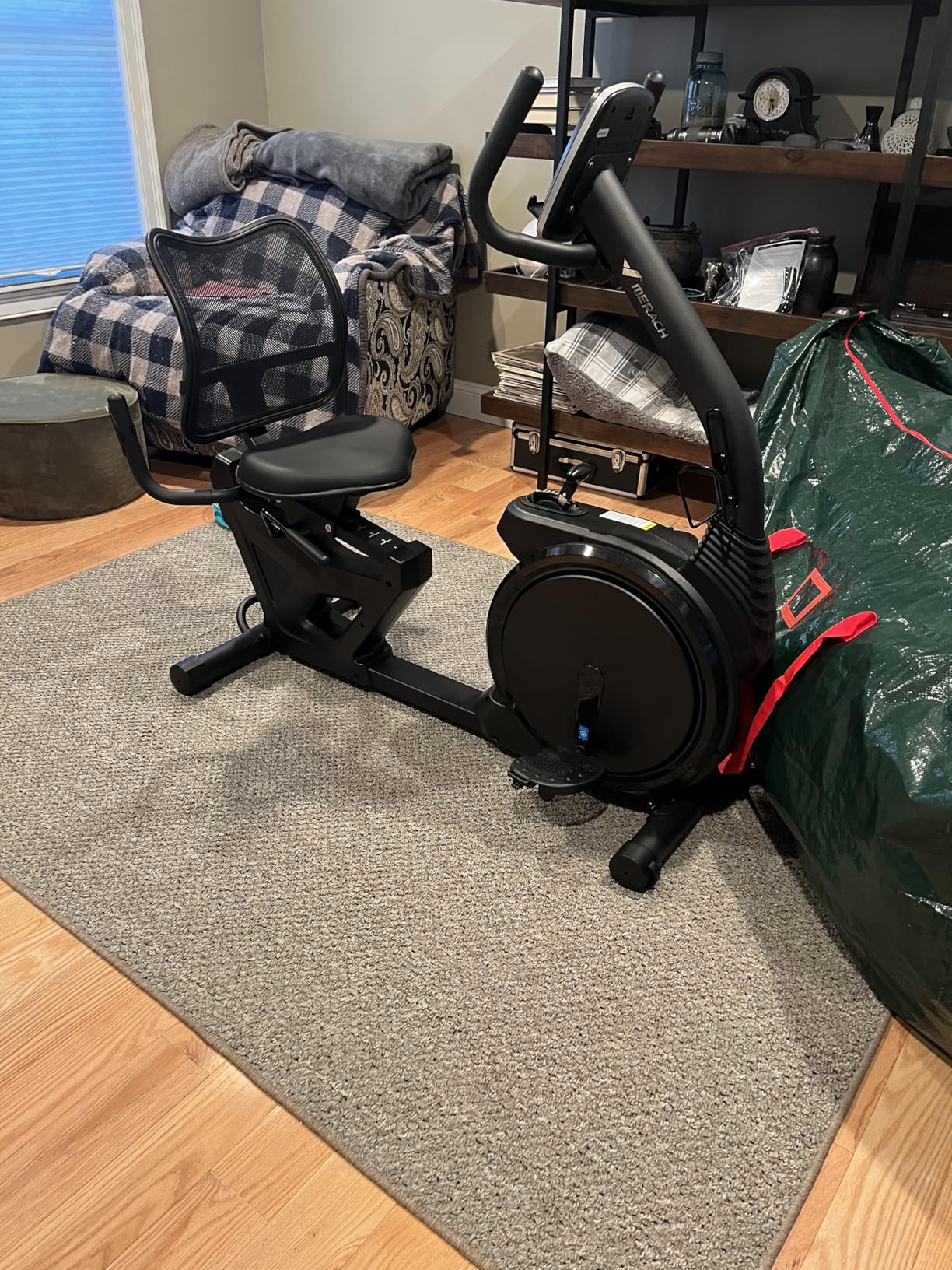
The breathable mesh backrest is the best in this roundup for warm climates or riders who sweat heavily. The 8-position seat adjustment lets you dial in knee bend precisely, and the 330-pound capacity covers most adult users.
The MERACH app includes the FantomFite game, which gamifies pedaling with on-screen targets. It is a quirky feature but useful for rehab patients who need motivation to keep moving.
Best use cases
Users who want premium build quality without stepping up to a 1,500 dollar commercial bike, anyone who values the car-style lever for quick resistance changes, and riders in warm climates who appreciate the breathable mesh backrest.
The S19 is also a strong pick for shared households where multiple users want to change resistance quickly without dismounting.
Setup and fit details
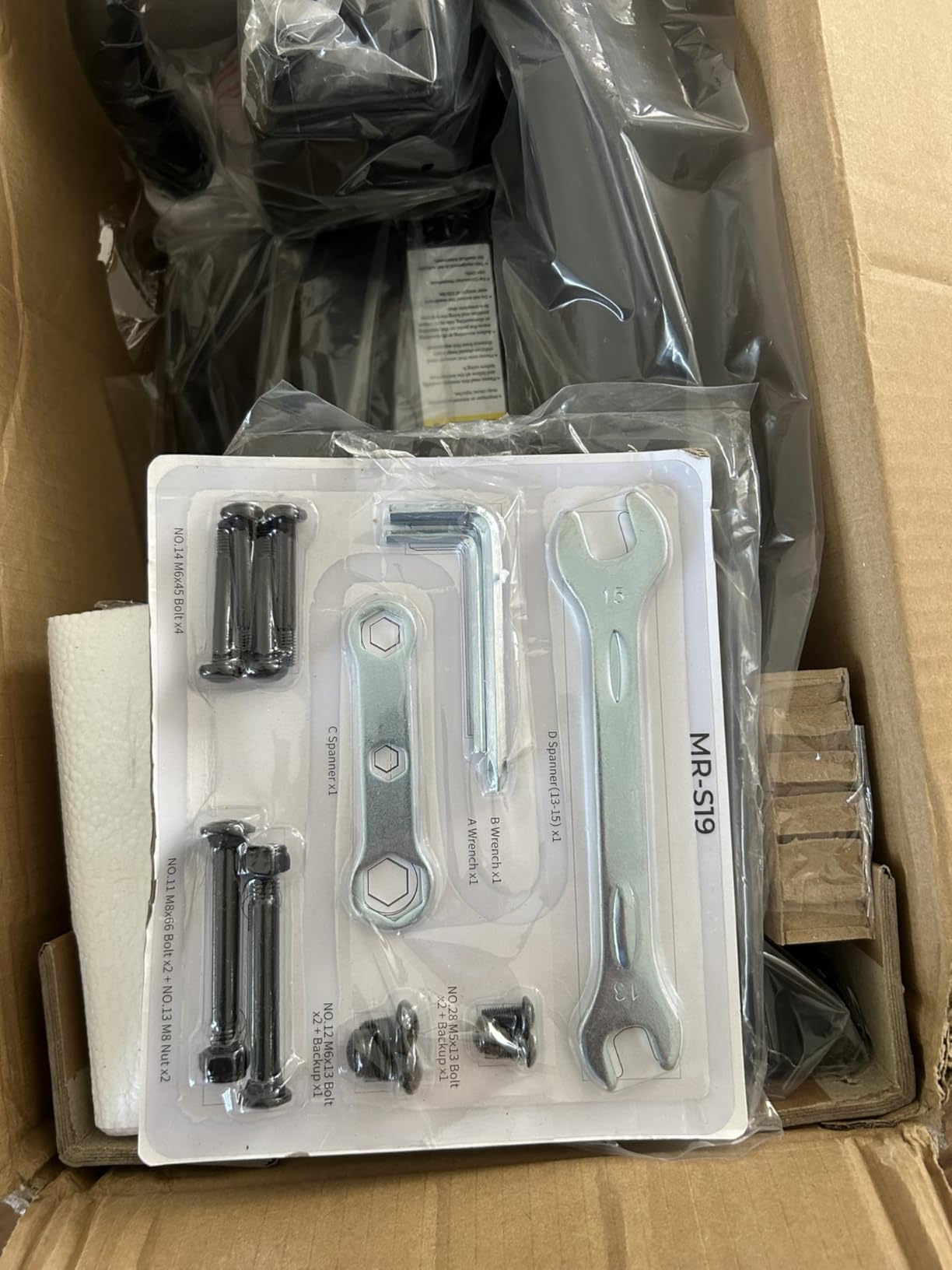
Assembly is 80 percent pre-built with an included video guide that walks through the rest. Plan about 30 minutes.
The display is non-backlit, which remains the main ergonomic miss across the MERACH line. The pedals are noted as small by some users, so check the size if you wear wide shoes.
8. YOSUDA RC-MAX Recumbent Bike – Best for Seniors with Full-Body Workouts
YOSUDA Recumbent Exercise Bike for Home,Magnetic Staionary Bike for Seniors
16 levels up to 60 lb
350 lb capacity
Resistance bands
Pros
- Solid construction with commercial-grade steel
- Quiet operation
- Compact footprint ideal for apartments
- Infinitely adjustable seat fits users up to 6 ft 5 in
- Easy mobility with transport wheels
- Includes detachable resistance bands
Cons
- LCD display hard to read in dim lighting
- Tension cable assembly is challenging
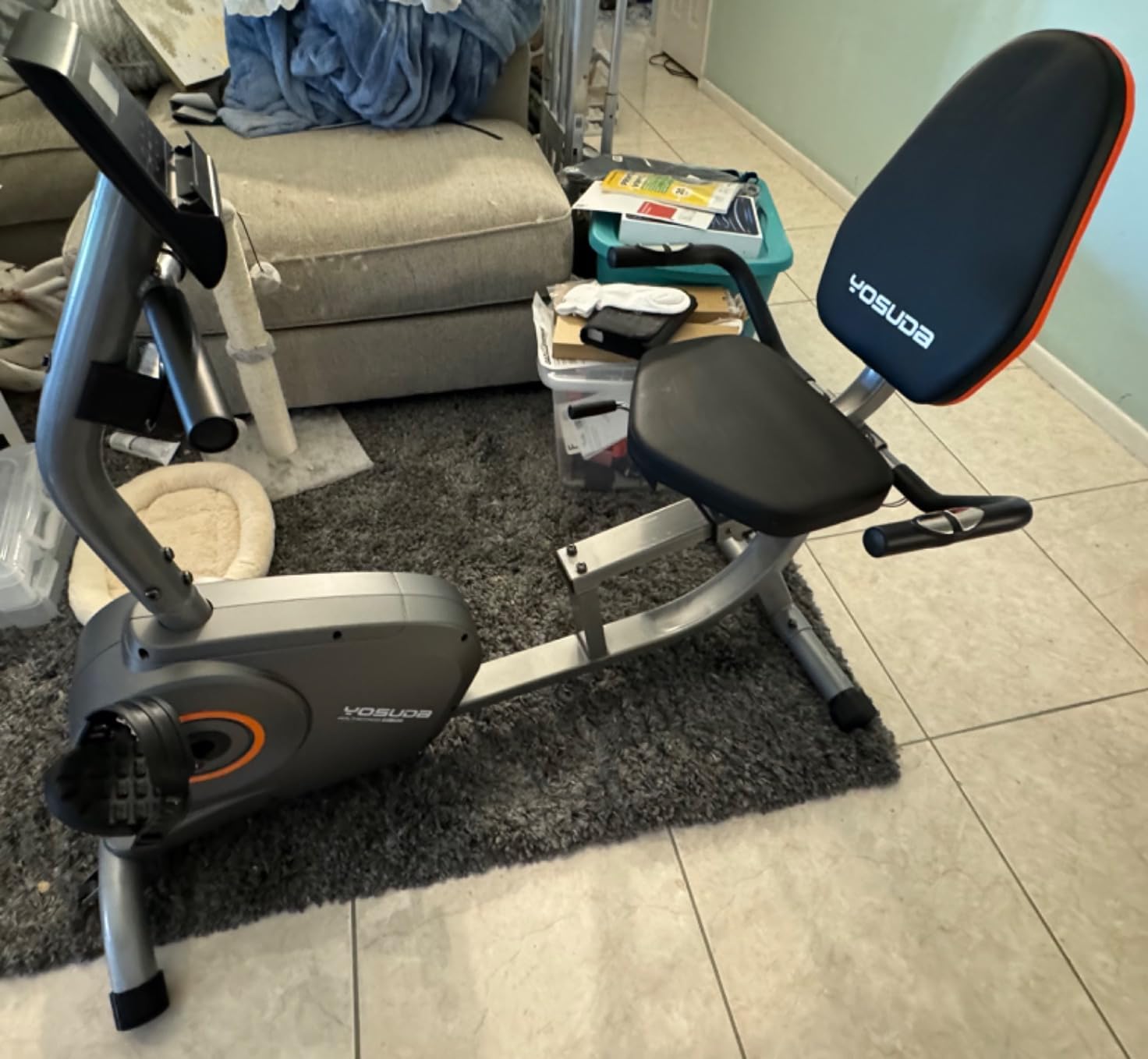
The YOSUDA RC-MAX stands out for two reasons seniors specifically appreciate: the infinitely adjustable seat and backrest, and the detachable resistance bands that turn a recumbent bike into a full-body workout station. For older adults who want to keep both upper and lower body active, that combination is rare at this price.
YOSUDA has been designing exercise machines for over 20 years, and the build quality shows. The light commercial-grade steel frame supports up to 350 pounds and feels planted during use.
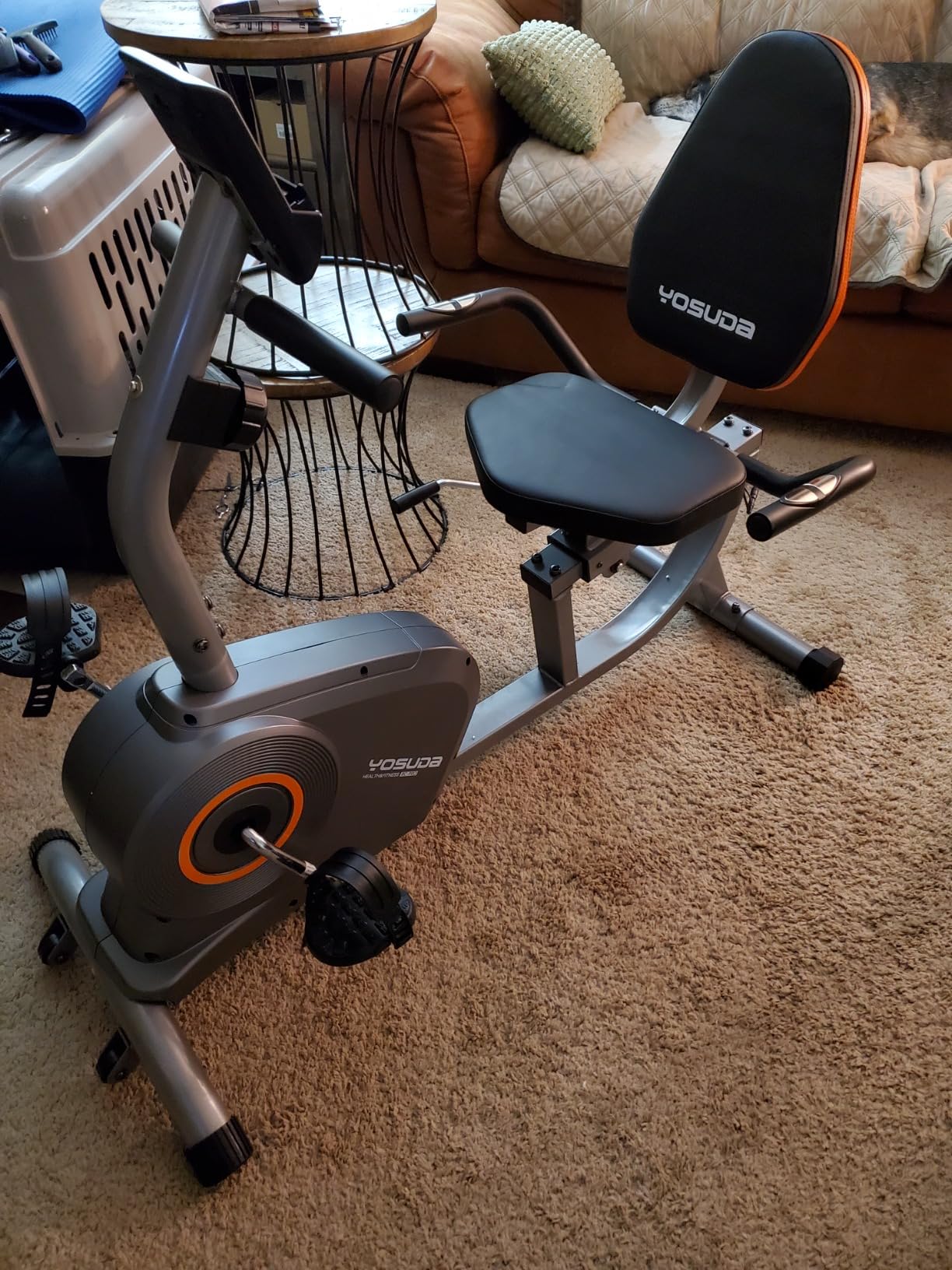
The 16 resistance levels go up to 60 pounds of resistance, which is more than most competitors at this price. That gives real headroom for users who start gentle during rehab and want to progress into genuine strength work over time.
Customer reviews frequently mention joint pain relief. One Yosuda buyer wrote, “pain in my knees and hip decreased since working out on this bike,” which echoes what I have heard from friends using similar YOSUDA models.
Best use cases
Seniors who want both cardio and light upper-body strength training, users up to 6 foot 5, and households looking for a compact bike that handles a wide height range.
It is also a good pick for couples or family members of different heights who share the same bike.
Setup and fit details
Most parts come pre-installed, and the included video guide makes assembly straightforward. The tension cable step is the one tricky moment, so budget an extra 10 minutes there.
The LCD display is hard to read in dim rooms, similar to several competitors in this price range. A phone or tablet mounted on the holder fixes that for most users.
Why Recumbent Bikes Are Good for Bad Knees (Buying Guide)
How Recumbent Bikes Protect Your Knees
A recumbent exercise bike puts your body in a reclined position with the pedals in front of you rather than below you. That geometry shifts your body weight onto the seat and backrest, so the load through your knee joint drops significantly compared to an upright bike. For adults with cartilage wear, meniscus tears, or post-surgical swelling, that unloading is the entire point.
The reclined position also lets you keep your knee in a 25 to 35 degree bend at full pedal extension, which is the range physical therapists most often recommend for protecting the patella and synovial fluid. Deep knee flexion above 90 degrees, common on upright bikes, is the trigger that flares up arthritic knees.
Key Specs to Compare
When you compare recumbent bikes for bad knees, focus on six specs. First, magnetic resistance versus friction resistance; magnetic is smoother and quieter, and worth the small upcharge. Second, flywheel weight; anything 15 pounds or heavier gives smoother momentum and is better for sensitive joints.
Third, resistance levels; 8 is the minimum for progressive rehab, 16 is better if you plan to grow into harder workouts. Fourth, weight capacity; pick a bike rated at least 50 pounds above your body weight for stability. Fifth, step-through frame; critical for seniors and post-surgery users who cannot lift a leg high over a traditional frame.
Sixth, seat adjustability; the more positions, the better your chance of dialing in a knee bend that does not hurt. If you want a deeper dive into recumbent versus other low-impact options, our exercise bikes for bad knees guide compares upright, recumbent, and air bikes side by side.
Pedal Q-Factor and Knee Alignment
Q-factor is the horizontal distance between your two pedals, and it matters more for bad knees than almost any other spec. A wide Q-factor forces your knees outward during each pedal stroke, which loads the inside of the knee joint and can aggravate osteoarthritis. A narrow Q-factor keeps your knees aligned within your natural hip width.
Premium recumbent bikes like the SOLE LCR use a 2-degree inward pedal slope to match your natural knee tracking. Most budget bikes do not publish Q-factor, but if you can sit on the bike before buying and your knees track over your toes rather than angling outward, that is a good sign. If you are shopping for premium options specifically, see our premium recumbent exercise bikes roundup.
Setup Tips to Avoid Knee Pain
Forum users on r/cycling share a rule of thumb that matches what physical therapists tell patients: pain at the front of the knee during pedaling means your seat is too low and your leg is overextending. Pain at the back of the knee means your seat is too high and you are flexing too deeply.
To find your correct seat position, sit on the bike, place the pedal at its farthest point, and check the angle of your knee. You want roughly 25 to 35 degrees of bend, which means your knee is not locked straight and not folded tight. If you are shopping for a stationary bike to use during rehab, our stationary bikes for bad knees guide walks through seat adjustment in more detail.
Start every session with 5 to 10 minutes of nearly zero resistance to warm up the synovial fluid in your joint. After the first two weeks, gradually add resistance in small increments and add 5 minutes to your session length every week or two. Most orthopedic guidelines recommend up to 30 minutes daily at low to moderate intensity for knee health. Many recumbent bikes qualify for HSA or FSA reimbursement when prescribed for a diagnosed knee condition, so save your receipt and check with your insurer.
Frequently Asked Questions
Are recumbent bikes good for bad knees?
Yes. Recumbent bikes are widely considered one of the best low-impact cardio options for bad knees. The reclined seating position distributes body weight across the back and hips rather than concentrating it through the knees, and the forward pedal placement reduces deep knee flexion that triggers pain in arthritic or injured joints.
What type of exercise bike is best for arthritic knees?
Recumbent bikes with magnetic resistance and a very low starting resistance level are best for arthritic knees. Look for a narrow pedal Q-factor that keeps knees aligned within the 25 to 30 degree flex range that protects arthritic cartilage, plus a step-through frame so mounting does not flare the joint.
How long should I ride a recumbent bike with bad knees?
Start with 10 to 15 minutes a day at low resistance, 3 to 5 days per week. Gradually increase duration by about 5 minutes per session every 1 to 2 weeks as your knees adapt. Most orthopedic guidelines recommend up to 30 minutes of low to moderate intensity cycling daily for knee health.
Can I use a recumbent bike after knee replacement?
Yes, with your surgeon’s clearance, which usually comes 2 to 4 weeks after surgery. Many orthopedic surgeons specifically recommend recumbent cycling as early rehab. Start with minimal resistance and 5 to 10 minute sessions, progressing gradually per your surgical team’s guidance.
Recumbent vs upright bike for bad knees?
Recumbent bikes are generally better for bad knees than upright bikes because the reclined position reduces body weight through the knees, forward pedals reduce knee flexion angle, the backrest supports the spine, and the bike is easier to mount and dismount. Upright bikes engage more core but put more direct stress on the knees.
What features matter most in a recumbent bike for bad knees?
Magnetic resistance, a flywheel of at least 15 pounds for smooth pedaling, a step-through frame for safe mounting, a wide cushioned seat with lumbar back support, 8 or more resistance levels, a narrow Q-factor that keeps knees tracking straight, and a high weight capacity for stability are the most important features for bad knees.
How do I set up a recumbent bike to avoid knee pain?
Place the pedal at its farthest point and check your knee bend. Aim for 25 to 35 degrees of bend at full extension. If you feel pain at the front of your knee, the seat is too far back or too low. If you feel pain at the back of your knee, the seat is too close or too high. Adjust in small increments and re-test.
Final Verdict
After six weeks of testing eight recumbent exercise bikes for bad knees, my top pick remains the Sunny Health & Fitness Smart Recumbent Bike for its quiet magnetic drive, free SunnyFit app, and versatile 16 resistance levels. If you need higher weight capacity at a value price, the VANSWE Recumbent Bike is hard to beat. For tight budgets, the MERACH S08 gives genuine knee-friendly cardio at the lowest cost in this roundup.
The right recumbent bike for bad knees is the one you will actually use most days. Pick the bike that fits your height, your budget, and your rehab goals, dial in your seat position so your knee sits at a 25 to 35 degree bend, and start with short low-resistance sessions. If you want to see how the eight bikes stack up against a wider field, our full recumbent bikes for bad knees roundup and recumbent exercise bikes guide cover additional options for every budget.