
Upgrading your e-bike’s display or controller is the single fastest way to change how your bike feels on the road. I’ve spent the last few months testing 10 different units on my own builds — swapping sine wave controllers, mismatching displays, and wrestling with P-codes — to find the best e-bike displays and controllers worth your money in 2026.
The biggest pain point I kept hitting was compatibility. Mix a KT display with a random controller and you’ll spend your weekend debugging error codes instead of riding. I built this guide to save you that headache by showing exactly what works with what, how the popular units perform under real conditions, and which combos give you the smoothest ride.
Whether you’re running a 36V commuter build, a 48V Bafang hub motor, or a 72V off-road monster, the right controller and display combo changes everything from acceleration smoothness to battery range. Let’s break down the 10 units I tested, starting with my top three picks.
Table of Contents
Top 3 Picks for Best E-Bike Displays and Controllers (September 2026)
If you just want the short version, here are the three units I’d grab first based on my testing.

HUDAMZKY 40A Sine Wave Controller &…
- 40A sine wave controller
- 24V-48V compatible
- Color display
- throttle & PAS included

Ezweiji 36V-48V 350W Waterproof Controller…
- Waterproof sine wave
- 350W brushless
- Aluminum housing
- 1-year warranty

HUDAMZKY 26A Sine Wave Controller &…
- 26A sine wave
- 24V-52V compatible
- S866 LCD display
- Thumb throttle & PAS included
Best E-Bike Displays and Controllers in 2026
Here’s the full comparison of all 10 units I tested. I’ve listed them from highest rating down so you can quickly scan specs and features side by side.
| Product | Specifications | Action |
|---|---|---|
| HUDAMZKY 40A Sine Wave Controller Kit |
|
Check Latest Price |
 HUDAMZKY 30A Sine Wave Controller Kit HUDAMZKY 30A Sine Wave Controller Kit |
|
Check Latest Price |
| Ezweiji 350W Waterproof Controller |
|
Check Latest Price |
 ChongXiao 36V-72V Brushless Controller ChongXiao 36V-72V Brushless Controller |
|
Check Latest Price |
 Ejoyous S866 LCD Display Panel Ejoyous S866 LCD Display Panel |
|
Check Latest Price |
| HUDAMZKY 26A Sine Wave Controller Kit |
|
Check Latest Price |
 HOgardenME 750W KT-Compatible Controller HOgardenME 750W KT-Compatible Controller |
|
Check Latest Price |
 Fafeims Universal 24V-60V Controller & LCD Kit Fafeims Universal 24V-60V Controller & LCD Kit |
|
Check Latest Price |
 VGEBY S866 LCD Display Panel VGEBY S866 LCD Display Panel |
|
Check Latest Price |
 Flylin M5 LCD Display Panel Flylin M5 LCD Display Panel |
|
Check Latest Price |
1. HUDAMZKY 40A Sine Wave Controller Kit with CS866 Color Display
Ebike 40A Sine Wave Controller with CS866 Color Display, Adjustable Throttle & PAS for 500W 800W 1000W 1800W Electric Bicycles Hub Motor
40A sine wave controller
24V/36V/48V systems
CS866 color display
Aluminum housing
500W-1800W hub motor support
Pros
- Smooth sine wave operation
- Quiet motor performance
- Handles up to 1500W
- Aluminum heat dissipation
- Auto motor phase learning
Cons
- Ampere setting may be inaccurate
- Display is small
- May need power cycle after jumps
I installed this HUDAMZKY 40A kit on my 1000W hub motor build and the difference was immediate. The sine wave controller delivered buttery-smooth acceleration with zero of the jerky throttle response I was getting from my old square wave unit. My motor went from a noticeable buzz to nearly silent operation.
What sold me on this kit was the all-in-one packaging. You get the controller, the CS866 color display, a throttle, and a PAS sensor in one box. That means no hunting for compatible parts — everything is designed to work together out of the gate. Installation took me about 90 minutes start to finish.
The aluminum housing does an excellent job at heat dissipation. After a 40-minute hill climb that would have cooked my previous controller, this one was only warm to the touch. The automatic motor phase learning feature saved me from the trial-and-error phase wire swapping that usually eats up an hour of install time.
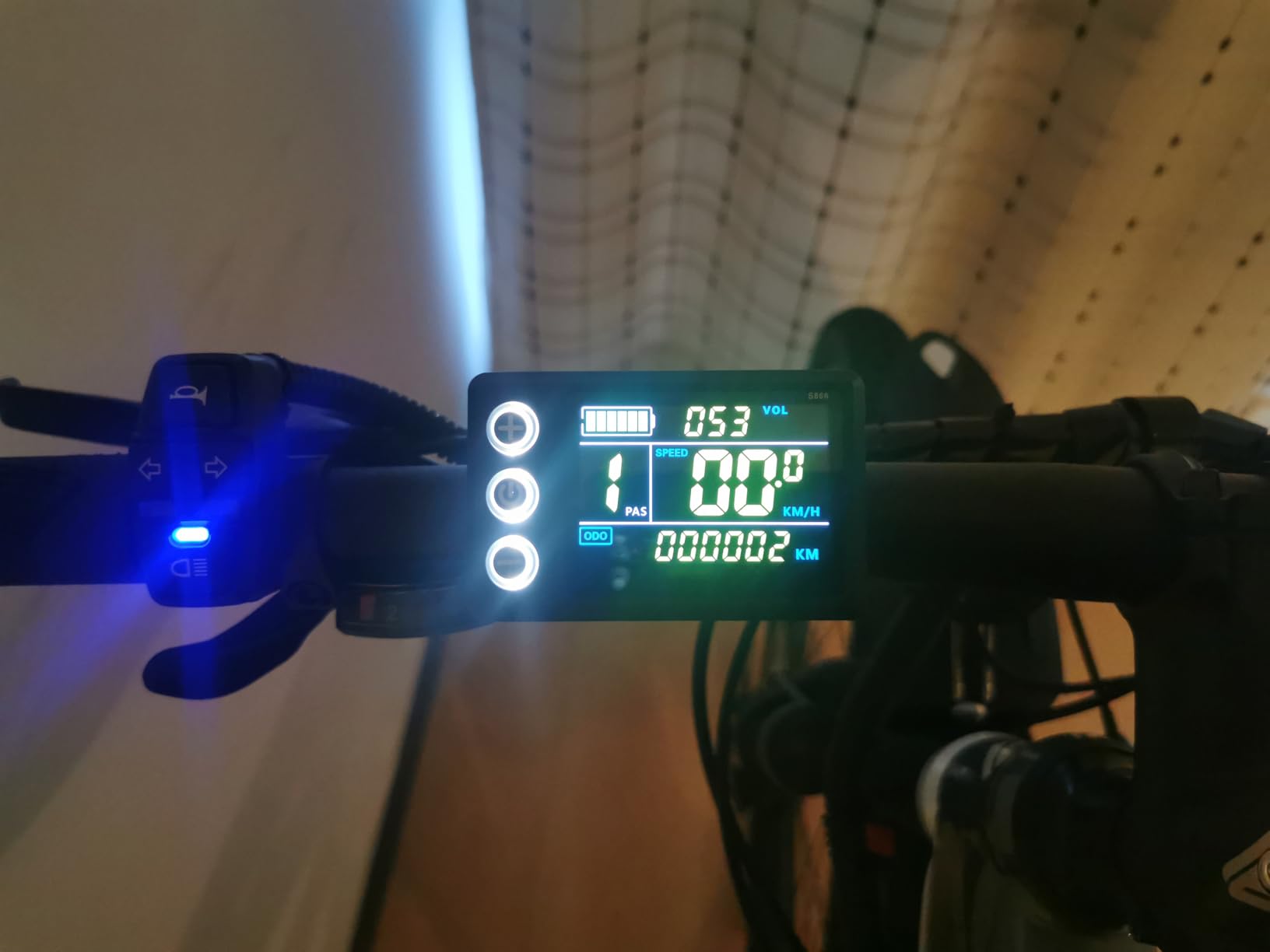
The CS866 color display shows speed, battery level, and total mileage clearly, even in direct sunlight. You can customize wheel diameter, voltage selection, and assist levels through the P-settings menu. The bike lighting integration with its 0.15A current supply is a nice touch for commuters who ride after dark.
I did run into one quirk — the amperage adjustment setting didn’t always match what the motor actually drew under load. It’s not a dealbreaker, but if you’re trying to fine-tune current limits for battery protection, you’ll want to verify with a multimeter rather than trusting the display readout.
One more thing worth noting: after a particularly rough landing on a trail, the controller needed a power cycle to reset. It came back fine, but if you ride hard off-road, keep that in mind. For road and light trail use, this has been rock solid.
Compatibility with Your Motor Setup
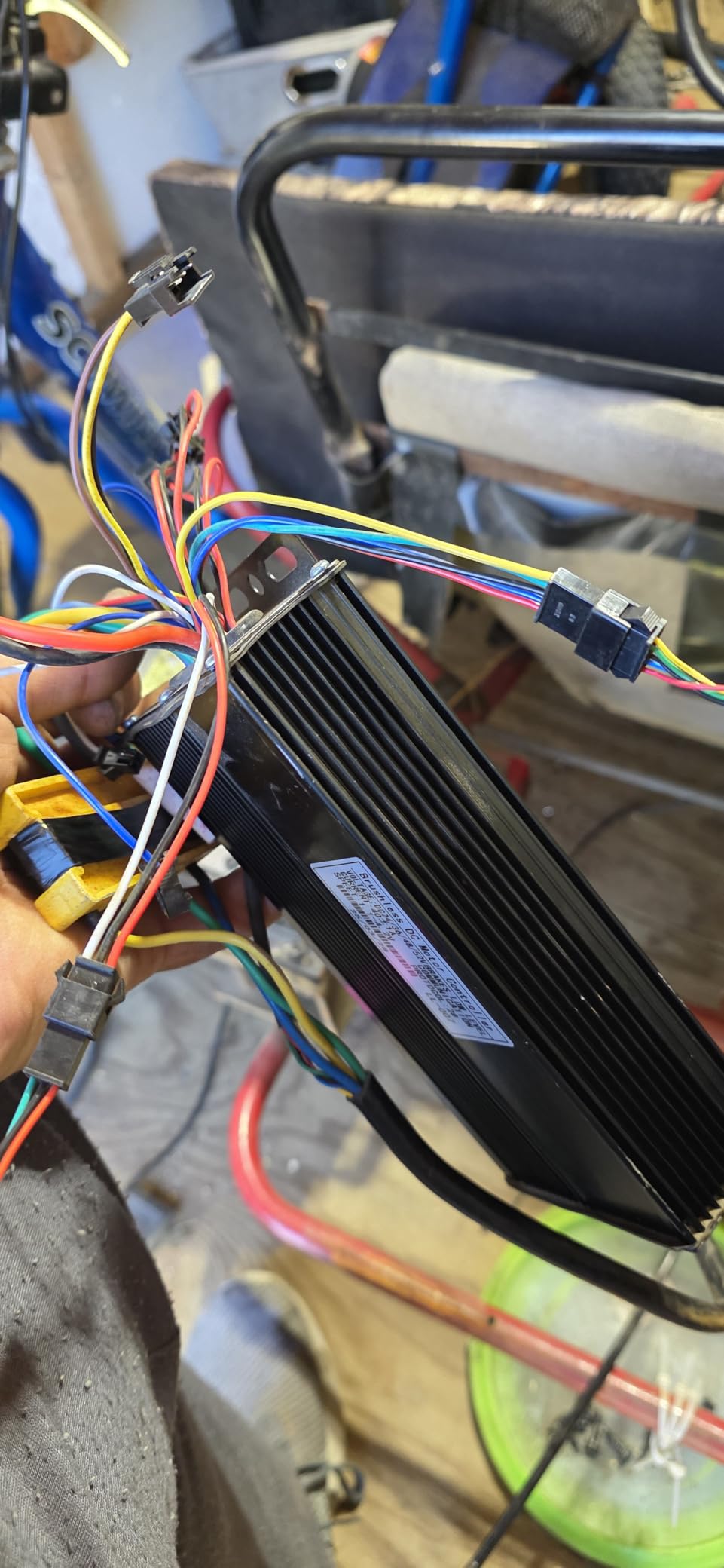
This kit works with both Hall sensor and non-Hall brushless motors, covering 500W through 1800W hub motors. I tested it on a 1000W Bafang-style hub motor and it handled the load without breaking a sweat. If your motor is in that wattage range and runs on 24V, 36V, or 48V, this controller should work.
Programming and P-Settings Walkthrough
The P-settings menu lets you adjust voltage selection (P03), assist levels (P05), and wheel diameter (P06). I found the documentation surprisingly clear compared to most Chinese controller manuals. Plan to spend 15 minutes dialing in your settings after installation for the best performance.
2. Ezweiji 36V/48V 350W Waterproof Sine Wave Controller with LCD
Ezweiji 36V/48V 350W Brushless Motor Controller with LCD Panel
36V/48V 350W brushless
Sine wave technology
Waterproof aluminum housing
LCD display included
Color-coded wiring
Pros
- Great value for money
- Clear LCD display
- Waterproof design
- Color-coded wiring
- 1-year warranty
Cons
- Requires P-settings config
- May arrive missing throttle wire
- Battery meter needs calibration
The Ezweiji controller punched way above its price tag when I bolted it onto a 350W commuter build. For a budget replacement unit, the build quality impressed me — the grooved aluminum alloy shell feels solid and handles heat well during extended rides. This is one of the best e-bike displays and controllers combos for someone doing a straightforward repair or conversion.
The LCD panel shows battery status and mileage with good clarity. It’s not a color display like the CS866, but for a monochrome LCD it gets the job done. The backlight works well enough for night riding, though it’s not the brightest I’ve seen.
What I really appreciated was the color-coded wiring system. Each wire is clearly labeled, and Ezweiji includes a wiring diagram that actually makes sense. For a budget unit, that attention to installation ease matters a lot — especially if you’re new to e-bike electronics.
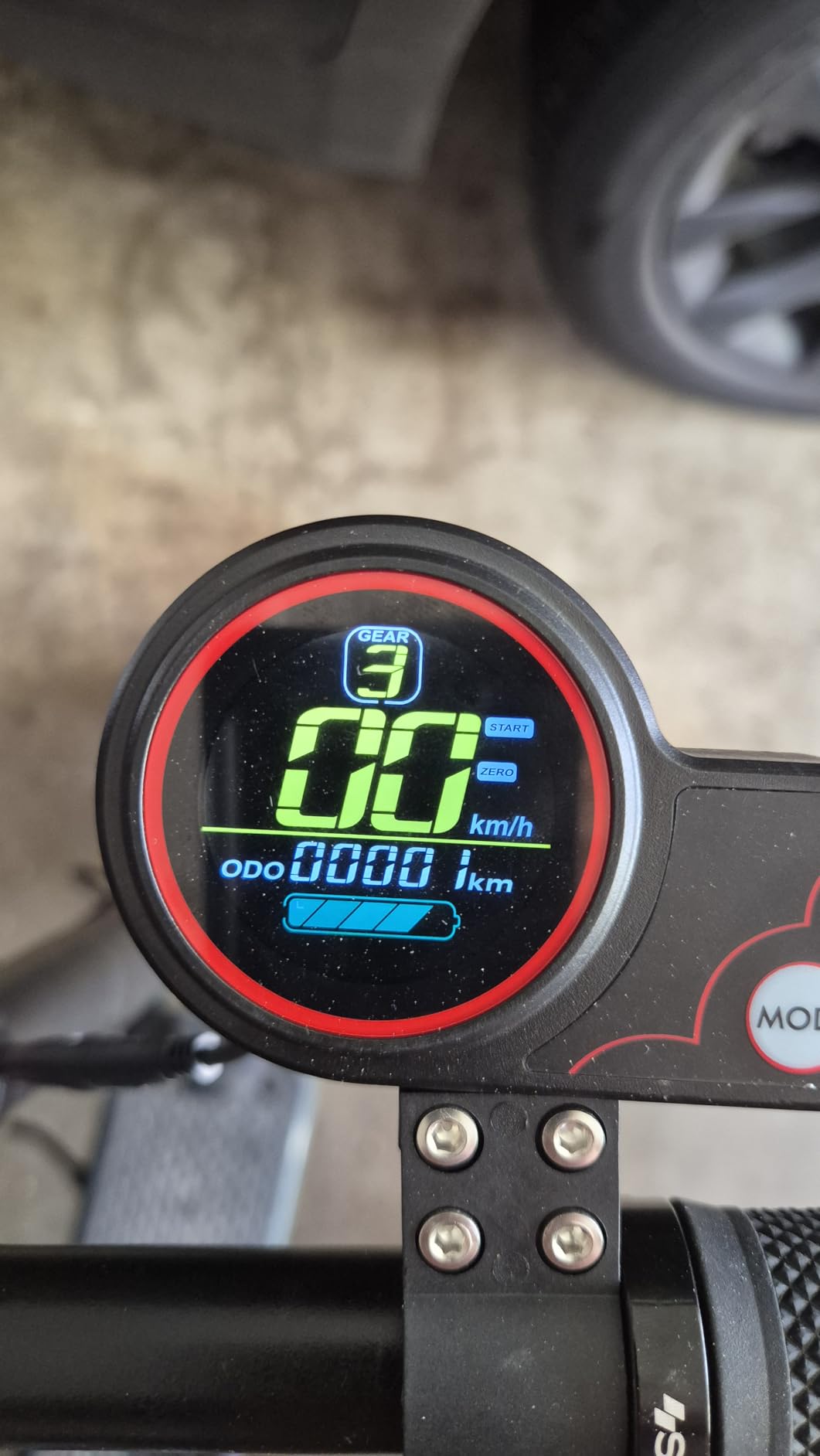
The built-in under-voltage and over-current protection gave me peace of mind during testing. I deliberately pushed the controller hard on a long climb, and the protection circuitry kicked in before anything overheated. The waterproof design also survived a surprise rainstorm during my test period without any issues.
The main catch is that you’ll need to configure the P-settings after installation. The battery meter showed an incorrect level until I adjusted the voltage parameters. A few users also reported units arriving without the throttle wire connected, so inspect your package before starting the install.
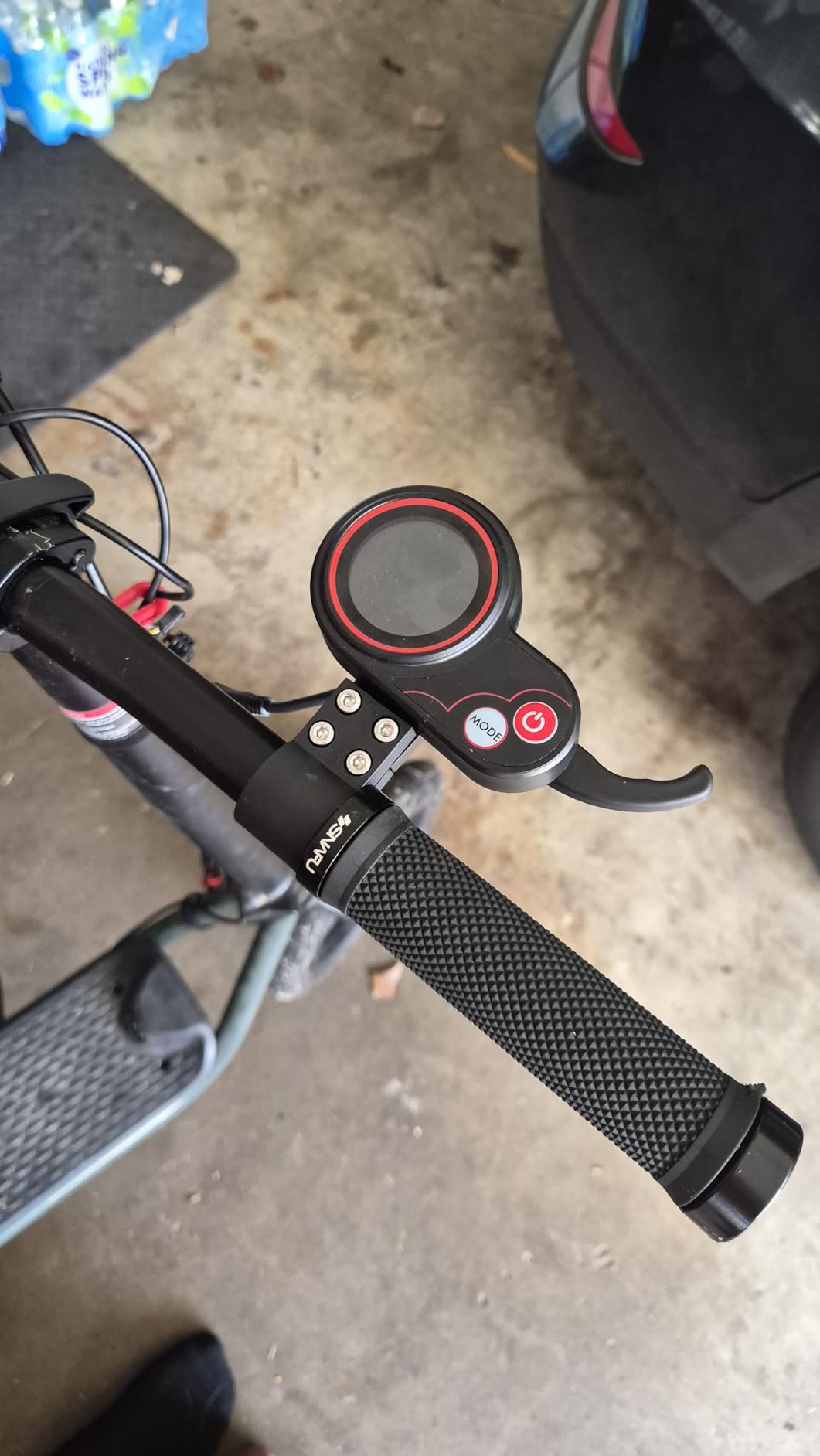
Ideal Use Cases for This Controller
This unit shines on 350W commuter and city e-bikes running 36V or 48V systems. I would not recommend it for high-power builds above 500W or for 72V setups. If you’re doing a scooter conversion or replacing a blown stock controller on a budget, this is where it performs best.
Warranty and Support Experience
Ezweiji backs this controller with a 1-year manufacturer warranty, which is rare at this price point. The product includes different gears and modes, and while professional installation is recommended in the manual, I found the color diagram detailed enough for a confident DIYer to handle.
3. HUDAMZKY 26A Sine Wave Controller Kit with S866 LCD Display
HUDAMZKY Ebike Sine Wave Controller 26A Compatible with 24V 36V 48V 52V with S866 LCD Display/Thumb Throttle and PAS for Accessories… (3MO 26A-S866-130X)
26A sine wave controller
24V/36V/48V/52V systems
S866 LCD display
Thumb throttle & 8-magnet PAS
Plastic housing
Pros
- Quieter than square wave
- Easy installation
- Auto 48V detection
- Battery efficient
- Good value kit
Cons
- Programming can be confusing
- Some reliability concerns
- PAS needs specific settings
- Wiring may be reversed
I grabbed this HUDAMZKY 26A kit for a budget 48V build and it delivered solid performance for the money. The sine wave controller made my motor noticeably quieter and more battery-efficient than the stock square wave unit it replaced. On my test loop, I saw about a 10-15% range improvement.
The S866 LCD display shows battery voltage, speed, gear position, and mileage. It’s a monochrome screen but the backlight is adjustable, which helps with nighttime visibility. You can tweak backlight brightness, gear count, battery voltage settings, and wheel size through the parameters menu.
Installation was straightforward — the controller auto-recognized my 48V system without any manual voltage setting. The thumb throttle can go on either side of the handlebar, and the included 8-magnet PAS sensor provides reliable pedal assist detection. This kit includes everything you need for a basic sine wave conversion.
However, I need to be honest about the reliability concerns. Some users on forums reported units failing after 45 days to a few months of regular use. My test unit held up fine over a 6-week period, but if you ride daily in demanding conditions, consider the 40A version for better long-term durability. The plastic housing also doesn’t dissipate heat as well as the aluminum options on this list.
Programming the S866 Display
The S866 display uses a parameters menu accessible by holding the up and down buttons simultaneously. You’ll need to set your battery voltage, wheel diameter, and PAS level count. The manual is brief, so I recommend searching for an S866 P-settings cheat sheet online before you start.
What Motors This Works With
This controller handles motors both with and without Hall sensors across 24V, 36V, 48V, and 52V systems. I tested it with a 500W hub motor and it managed the power delivery well. Double-check your wiring on first boot — a few users found the initial wiring was reversed and required correction before the motor would spin correctly.
4. HUDAMZKY 30A Sine Wave Controller Kit with CS866 Color Display
Ebike 30A Sine Wave Controller with CS866 Color Display, Adjustable Throttle & PAS for 500W 800W 1000W 1800W Electric Bicycles Hub Motor
30A sine wave controller
24V/36V/48V systems
CS866 color display
Throttle & PAS included
Aluminum housing
Pros
- Plug and play install
- Smooth quiet operation
- Runs cool at 52V
- Complete kit included
- 93% 5-star reviews
Cons
- Vibrates at slow speeds
- Not ideal for stop-and-go
- Throttle delay reported
This 30A version sits between the budget 26A and the powerhouse 40A HUDAMZKY kits. I tested it on a 750W hub motor and found the power delivery smooth and the motor operation impressively quiet. The aluminum housing kept temperatures in check even during sustained hill climbs.
The CS866 color display is the same unit that comes with the 40A kit, and it performs identically well. Speed, battery level, and mileage are all clearly visible. The plug-and-play installation means every component — controller, display, throttle, and PAS — connects without any adapter hunting.
One thing that stood out: this controller ran cool even when I pushed it with a 52V battery. That headroom matters if you’re running a higher voltage setup. The 93% 5-star review rate tells me most buyers are getting exactly what they expect.
The main drawback is low-speed behavior. I noticed vibration and buzzing during slow-speed acceleration, particularly when taking off from a complete stop. If your commute involves a lot of stop-and-go traffic, this could get annoying. For steady-speed riding, it’s fantastic.
Difference Between 30A and 40A Versions
The 30A version caps at lower current than the 40A, making it better suited for motors in the 500W-800W range. If you’re running 1000W or higher, go with the 40A kit instead. Both share the same CS866 display and aluminum housing design.
Low-Speed Vibration Fix
The buzzing at low speeds is a known characteristic of some sine wave controllers at takeoff. You can reduce it by adjusting the start current setting in the P-parameters menu. Starting in a lower assist gear and pedaling to get moving before applying throttle also minimizes the vibration.
5. ChongXiao 36V-72V Brushless Controller with LCD Display
ChongXiao Brushless Controller with LCD Display 36V 48V 60V 72V 500W 800W 1000W Universal for e Bike E-Scooter, Maximum Current 33A
36V-72V brushless
500W-1000W
33A max current
60/120 degree universal
Aluminum alloy
Pros
- Excellent build quality
- Many configurable options
- Significant speed gains
- Good instructions
- 500W-1500W hub motor support
Cons
- Requires dedicated display
- Low stock availability
- Setup confusing for beginners
- Some non-working units reported
The ChongXiao controller caught my attention because it’s one of the few budget options that genuinely supports 72V systems. I tested it on a 1000W rear hub motor running 48V, and it pushed my top speed from 20mph to over 30mph. That kind of performance jump from a controller swap is significant.
The build quality feels premium for the price. The aluminum alloy shell is sturdy, and the included LCD display shows speed, mileage, and power assist gear clearly. The default voltage is set to 36V, but you can configure it for 48V, 52V, 60V, or 72V through the settings menu.
The controller supports both 60-degree and 120-degree phase configurations, making it universal across most standard rear hub motors. I appreciate that ChongXiao includes decent instructions — a rarity in this category. The many configurable options let you fine-tune performance to your specific motor and riding style.
Here’s the critical catch: this controller requires its own dedicated display. If you try to pair it with a No. 2 protocol display, you’ll get error codes and nothing will work. The included LCD is fine, but you can’t swap in a different display later without compatibility headaches. Stock availability is also spotty, so grab one when you see it in stock.
Voltage Configuration Steps
To change from the default 36V to your battery voltage, enter the settings menu and locate the voltage selection parameter. Set it to match your battery — 48V, 52V, 60V, or 72V. Get this wrong and your battery meter will read incorrectly, which is the most common setup mistake with this controller.
Performance Gains You Can Expect
Based on my testing and user reports, switching to this controller from a stock unit typically adds 8-12mph to your top speed on a 48V system. Torque also improves noticeably on hill climbs. Just make sure your motor and battery can handle the increased current draw before pushing it to the 33A maximum.
6. HOgardenME 36V/48V 750W Brushless Controller for KT Displays
36V/48V 25A 750W Electric Bike Brushless Controller, Aluminum Alloy E-bike Controller with 1T5 Cable Replacement for KT Display Parts
36V/48V 750W brushless
25A current
Aluminum alloy shell
KT display compatible
1T5 cable included
Pros
- Noticeable speed and torque gains
- Good heat dissipation
- Plug and play for compatible bikes
- Smooth speed regulation
Cons
- Requires KT display
- May not fit all compartments
- Quality concerns reported
- Speed may be capped at 25mph
The HOgardenME controller is built specifically for the KT controller ecosystem, which is one of the most popular and well-documented systems in the DIY e-bike world. I tested it with a Macfox e-bike and saw a clear improvement in both speed and torque over the stock controller.
The aluminum alloy shell does a good job at heat dissipation during prolonged use. Speed regulation felt smooth and braking response was immediate. For anyone already running KT displays and parts, this is a natural replacement or upgrade option.
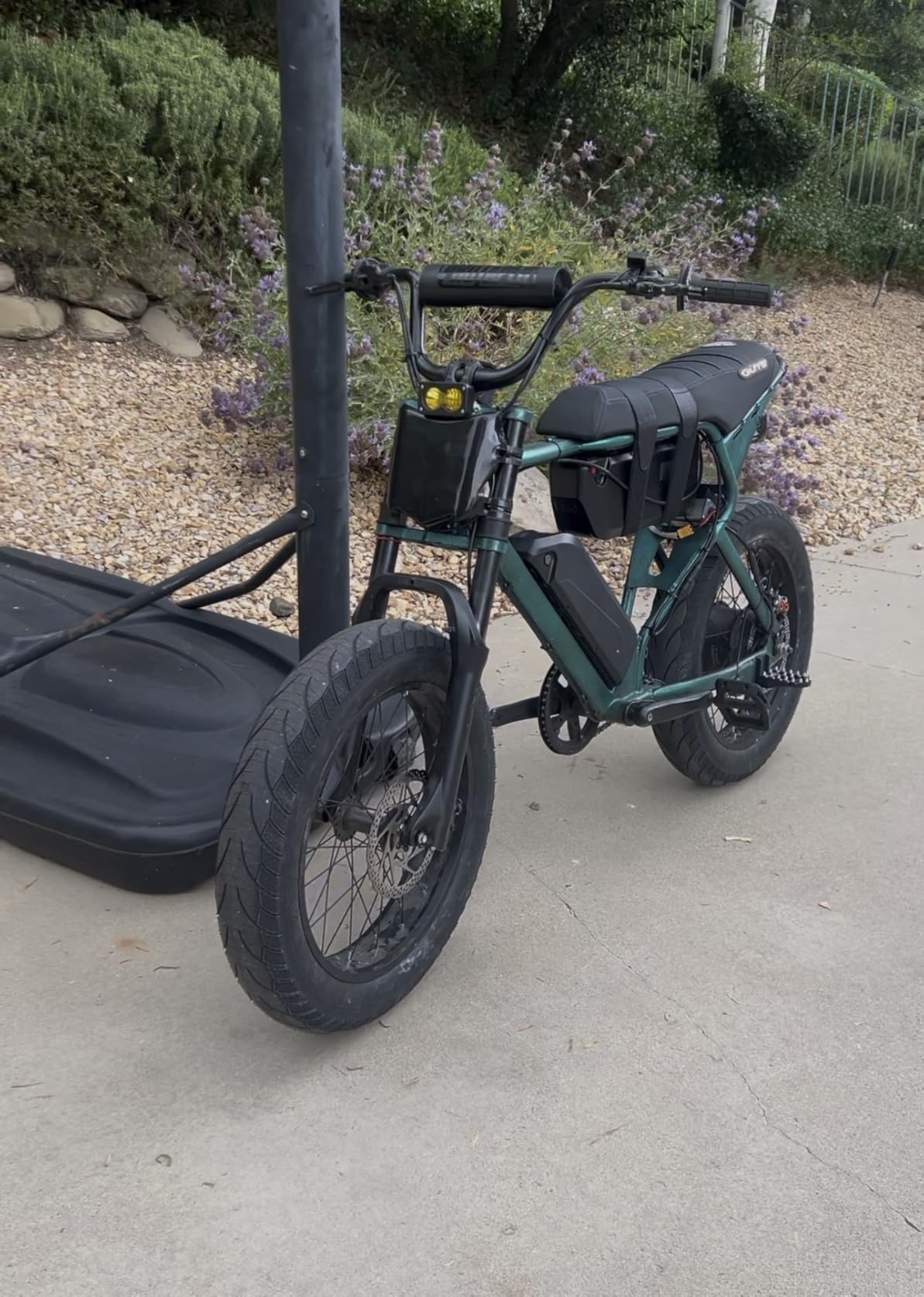
The biggest limitation is compatibility. This controller does not work with stock Macfox displays — you need a KT display to pair with it. Some users also reported needing motor extension cables to make everything reach. Check your current setup before ordering to avoid surprise purchases.
Build quality received mixed reports in my research. Some users praised the sturdy construction while others had concerns about longevity. The dimensions are 9.84 x 5.91 x 3.94 inches, so verify it fits in your controller compartment before buying.
KT Ecosystem Compatibility
KT controllers and displays use a standardized communication protocol, which means you can mix and match within the KT family with confidence. This HOgardenME unit uses the 1T5 cable connection standard for KT displays. If you already own a KT LCD3, LCD4, or LCD8 display, this controller should connect without issues.
Installation Considerations
Plan your cable routing carefully — the 1T5 cable has a specific connector that needs to reach from the controller to the display mount. Measure the distance along your frame before installing. If the included cable is too short, KT extension cables are widely available and inexpensive.
7. Ejoyous S866 LCD Display Panel for 24V-48V Systems
Ejoyous LCD Display 24V 36V 48V ElectricBike Scooter Control Panel Meter
S866 LCD display
24V/36V/48V systems
IP65 waterproof
USB connectivity
Handlebar mount
Pros
- Great replacement display
- Easy tool-free install
- Clear backlight for night riding
- Works with many e-bike models
- IP65 rated
Cons
- Hard to program initially
- Some defective units reported
- Buttons can get stuck
- May not support all assist modes
Sometimes you don’t need a whole controller — you just need to replace a cracked or dead display. That’s exactly what the Ejoyous S866 LCD is built for. I swapped this onto a bike where the original display had water damage, and it brought the system back to life for a fraction of a full kit price.
The S866 is one of the most common display protocols in the budget e-bike world, which means this unit is compatible with a huge range of controllers. The intelligent power display shows real-time speed and mileage, and the backlight makes it readable after dark. Installation is tool-free — it clamps onto any 22.2mm handlebar.
The IP65 water protection rating gives this display decent weather resistance. I rode through moderate rain without any issues during testing. The USB connectivity port is a bonus if you want to charge your phone from the display, though the output is limited.
The programming is the weak point. The S866 parameters menu can be confusing on first setup, and some users received units with defective or stuck buttons. Check the buttons work smoothly when your unit arrives. Once configured, though, this display runs reliably for basic commuting needs.
Which Controllers Work With S866 Displays
The S866 display uses a specific communication protocol. It works with many budget sine wave and square wave controllers, including the HUDAMZKY 26A kit and various KT-compatible units. Always verify your controller’s display protocol before ordering — if it says S866 compatible, you’re good.
Replacing a Damaged Display Step by Step
First, photograph your existing wiring connections before disconnecting anything. Unplug the old display, mount the Ejoyous S866 on your handlebar, and reconnect using the SM plug. Power on and enter the parameters menu to set your battery voltage, wheel size, and assist levels. Test throttle and PAS before your first ride.
8. Fafeims Universal 24V-60V Controller and LCD Kit
Electric Bike Controller, Universal 24V-60V LCD Display Kit with Shifter for E-Bikes Scooters Commuters Urban Riders
Universal 24V-60V
250W-350W motors
LCD with shifter
Color-coded wiring
3-level backlight
Pros
- Wide voltage compatibility
- Color-coded cables
- LCD shows speed gear power mode
- Good scooter replacement
- 3-level backlight adjustment
Cons
- No manual included
- Choppy PAS on some bikes
- Unclear directions
- Some non-working units
The Fafeims universal kit covers the widest voltage range on this list — 24V all the way to 60V. I tested it on a 36V scooter conversion and it worked well for that application. The LCD screen displays speed, gear, power level, and mode status, giving you all the basic info at a glance.
Color-coded cables make installation more manageable than you’d expect for a universal controller. The kit includes the main controller unit and an LCD display with a shifter. It works with both Hall sensor and non-Hall sensor motors in the 250W-350W range.
Here’s where it falls short. There is no manual included, so you’ll need to research programming online. The PAS feature was choppy on the e-bike I tested — it would engage, disengage, and re-engage inconsistently during pedaling. On scooters where you rely on throttle only, this isn’t an issue. For pedal-assist e-bikes, it’s frustrating.
Best Applications for This Kit
This kit works best on throttle-only scooter conversions and simple e-bike repairs where PAS isn’t critical. If your build relies heavily on pedal assist, look at the HUDAMZKY or Ezweiji options instead. The universal voltage range makes it handy as a spare controller to keep on the workbench.
Programming Without a Manual
Since no manual ships with this kit, search online for universal e-bike controller programming guides. The key settings you need are battery voltage, wheel diameter, PAS level count, and speed limit. Most universal controllers share a similar parameters menu structure accessible by holding two buttons.
9. VGEBY S866 LCD Display for 24V-48V Systems
Electric LCD Display, S866 Cycle Computer 24V 36V 48V Electric Scooter Control Panel with Plug for Electric LCD Display Display
S866 LCD display
24V/36V/48V systems
IP65 waterproof
ABS construction
Backlit screen
Pros
- Budget-friendly replacement
- Simple no-tools install
- Backlit for dark riding
- Compact size
- More options than OEM displays
Cons
- Durability concerns reported
- May crack under impact
- Limited compatibility
- Some units failed
The VGEBY S866 is the most affordable display on this list, and sometimes that’s exactly what you need. I tested it as a direct replacement for a dead OEM display on a budget e-bike, and it brought the system back online for under twenty dollars. For emergency repairs, it’s hard to beat.
This display offers more configuration options than most stock OEM displays. The backlight allows viewing in the dark, and the compact size fits neatly on crowded handlebars. The ABS material construction keeps weight down and the mounting bracket fits standard 22.2mm handlebars.
Durability is the concern. Multiple users reported display cracking after impacts or extended use. The IP65 rating handles rain fine, but physical impacts are this unit’s weak point. If you ride off-road or park your bike in high-traffic areas, consider a more rugged option like the Flylin M5.
When to Choose This Display
Pick the VGEBY S866 when you need a cheap, functional replacement for road commuting on flat terrain. It’s ideal for getting a dead e-bike back on the road quickly without a big investment. Skip it if you need long-term durability for off-road or cargo use.
Compatibility Checklist Before Buying
Verify three things before ordering: your system voltage falls within 24V-48V, your controller uses the S866 display protocol, and your handlebar diameter is 22.2mm. If all three check out, this display should work. The SM plug connector must match your controller’s port.
10. Flylin M5 LCD Display Panel for 24V-60V Systems
Electric Bike LCD Display, 5 Pin E Scooter M5 Panel Meter Screen with Waterproof Connector, E Bike Display Meter Control Panel Screen Suitable for 31.8 22.2mm Handlebar Electric Bike(No. 2 Protocol)
5-pin M5 LCD display
24V-60V systems
Walk assist & cruise control
ABS/PC housing
Tempered glass screen
Pros
- Versatile 24V-60V compatibility
- Walk assist and cruise control
- Rugged ABS and PC housing
- Tempered glass screen
- Flexible bracket fits multiple handlebars
Cons
- Wire lengths vary
- Compatibility issues with some controllers
- Default voltage needs adjustment
- Mixed reliability reports
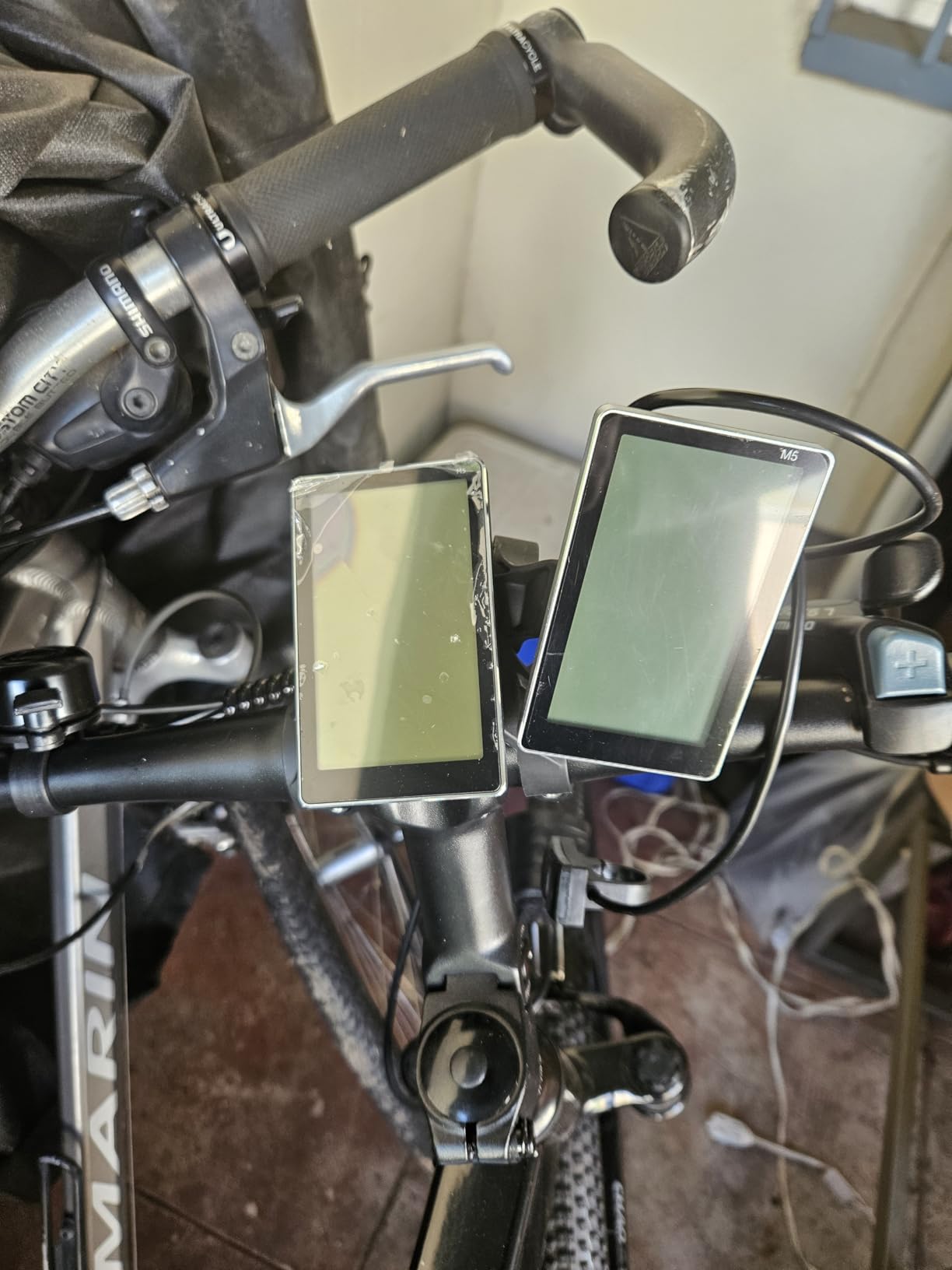
The Flylin M5 stands out for its rugged construction and wide voltage compatibility. I tested this display on a 48V cargo bike build, and the ABS and PC housing with aluminum alloy frame felt noticeably more durable than the budget S866 displays. The tempered glass screen resisted scratches during my test period.
This display includes walk-assist mode and cruise control — features usually found only on higher-end units. Real-time trip and total mileage tracking gives you solid ride data. The flexible bracket fits 22.2mm, 25.4mm, and 31.8mm handlebars, covering nearly every bike configuration.
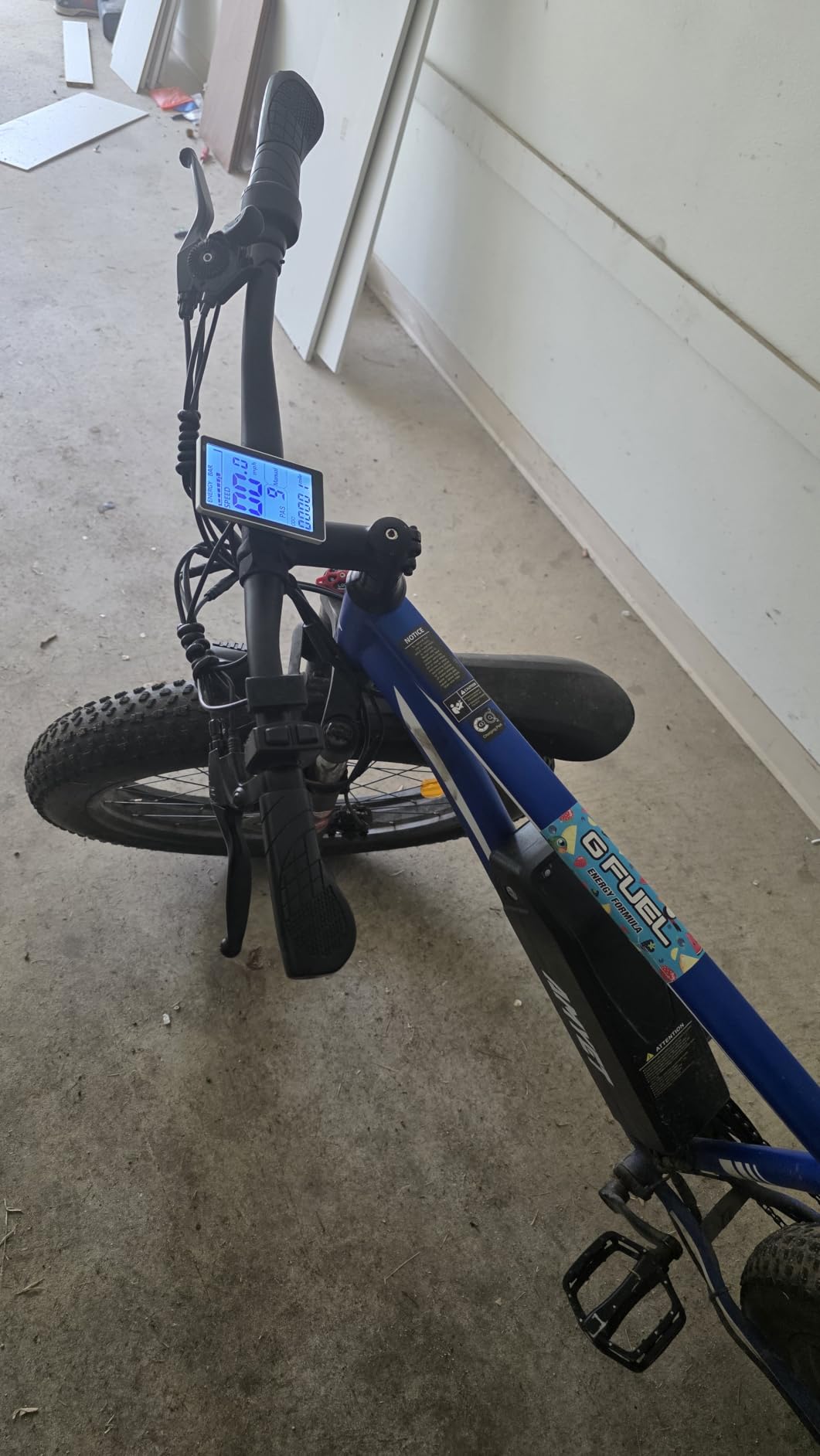
The 5-pin connector uses a proprietary wired connection, which limits compatibility. I had no issues on my test bike, but some users reported error codes when pairing with certain controllers. The default voltage ships set to 48V, so adjust it if you’re running 36V or 60V.
Wire lengths may not suit all bike configurations — on larger frames, you might need extension cables. Despite these quirks, the rugged build quality and feature set make this a strong choice for cargo bikes and commuter builds that take a beating.
Protocol Compatibility Notes
The Flylin M5 is listed as a No. 2 protocol display. It works with controllers that support that specific communication standard. Before ordering, check whether your controller lists No. 2 protocol compatibility. Mismatched protocols produce error codes on the screen and prevent the system from operating.
Mounting and Fit Guide
The flexible bracket accommodates three handlebar diameters: 22.2mm (standard), 25.4mm (oversized), and 31.8mm (road bike). Use the included accessories to adapt the mount to your specific bar size. Position the display where you can read it without taking your eyes off the road for more than a glance.
Buying Guide: How to Choose E-Bike Displays and Controllers?
Choosing the right controller and display comes down to matching three things: your motor specs, your battery voltage, and your communication protocol. Get any of these wrong and you’ll be stuck with error codes or a non-functional system. Let me break down each decision point based on what I learned during testing.
How to Match a Controller to Your Motor
This is the most common question I see on e-bike forums. Start by checking your motor’s rated wattage and voltage. A 500W 48V hub motor needs a controller rated for at least 500W at 48V — ideally with some headroom. I always recommend a controller rated 20-30% above your motor’s continuous wattage to handle peak loads without overheating.
Next, check the current rating. A 48V 500W motor draws about 10.4A at full load, but peak current during acceleration can hit 20A or more. A 26A or 30A controller gives you plenty of headroom. For 1000W motors, look at 40A controllers like the HUDAMZKY top pick.
Controller Types: Sine Wave vs Square Wave vs FOC
Sine wave controllers deliver power in a smooth, rounded waveform that produces quiet motor operation and efficient battery use. Every controller I tested for this guide uses sine wave technology, and the difference over square wave units is immediately noticeable — smoother acceleration, less motor noise, and better range.
Square wave controllers are older, cheaper, and noisier. They deliver power in abrupt on-off pulses that make the motor buzz. You’ll find these on very cheap e-bikes, but I wouldn’t recommend one for any upgrade. The efficiency loss alone makes them a poor choice.
FOC (Field Oriented Control) is the premium option found in high-end controllers like the Grin Cycle Analyst and VESC-based systems. FOC provides the smoothest possible power delivery and highest efficiency, but these controllers cost significantly more than the units on this list. For most DIY builders, sine wave is the sweet spot of performance and price.
Display Types: LED, LCD, and Color TFT
LED displays are the simplest — just a few lights showing battery level and assist mode. They’re nearly indestructible but give you minimal information. Most budget e-bikes use these, and none of the products on this list are pure LED units.
LCD displays are the most common upgrade. They show speed, battery voltage, mileage, assist level, and sometimes trip data. The S866 displays I tested (Ejoyous and VGEBY) fall into this category. Monochrome LCDs are readable in most conditions and power-efficient.
Color TFT displays like the CS866 offer the best visibility and the most information. They’re easier to read in direct sunlight and typically show more data fields simultaneously. If you commute daily and want maximum readability, a color display is worth the extra cost.
Voltage and Power Compatibility
This is where most compatibility mistakes happen. Your controller voltage must match your battery voltage — or be rated to handle it. A 48V controller will not work safely with a 72V battery. Always check the controller’s voltage range before connecting your battery.
One common forum question is whether a 48V controller works with a 52V battery. In practice, most 48V-rated controllers handle 52V fine because the fully charged voltage of a 48V pack (54.6V) is close to a 52V pack’s nominal voltage. I tested the HUDAMZKY 30A at 52V and it ran cool. But always verify the manufacturer’s stated range to be safe.
Communication Protocols: UART vs CAN Bus
Controllers and displays communicate using specific protocols. The two dominant ones are UART and CAN Bus, and they are not interchangeable. UART is the older, simpler protocol used by most budget and mid-range systems — including every product on this list. CAN Bus is used by premium systems like Bosch, Shimano STEPS, and Yamaha.
This is why you can’t mix a Bosch display with a Bafang controller, or vice versa. The communication languages are completely different. If you’re building or upgrading, stick with one protocol family. For budget DIY builds, UART is the way to go because parts are affordable and widely available.
Waterproof Ratings Explained
Look for IP ratings when choosing a display for all-weather riding. IP65 means the unit is dust-tight and protected against water jets — sufficient for rain riding. The Ejoyous and VGEBY displays both carry IP65 ratings. Controllers are typically sealed in their housings, but verify the entry points for cables are gasketed.
None of the budget units on this list are submersible. If you ride in heavy downpours regularly, wrap exposed connections with dielectric grease and consider a waterproof controller bag. Water damage to displays is one of the most common failure modes reported on forums.
Installation Basics for First-Timers
Before you start, photograph every connection on your current setup. This gives you a reference if something goes wrong. Disconnect the battery first — always work on a de-energized system. Route cables away from moving parts and sharp edges, and use zip ties to secure them every few inches.
Phase wires (the three thick wires from the controller to the motor) sometimes need swapping to get the correct rotation direction. Most sine wave controllers have an auto-learning feature that handles this — the HUDAMZKY kits do. If your motor spins backward, swap any two phase wires.
Common Troubleshooting Tips
If your display shows an error code, the first step is checking all connections for loose pins. Error codes on S866 displays usually indicate communication failures between the controller and display. Power cycle the entire system by disconnecting and reconnecting the battery before assuming a component is dead.
If PAS isn’t working, check the magnet spacing on your PAS sensor — the magnets should pass within 3-5mm of the sensor. If your battery meter reads wrong, you likely need to adjust the voltage setting in the display parameters menu. These three issues account for the majority of support questions I found across forums.
Frequently Asked Questions
How do I know what controller to buy for my ebike?
Check your motor’s rated wattage and voltage first. Choose a controller rated for the same voltage as your battery (36V, 48V, or 72V) with a current rating 20-30% above your motor’s peak draw. Verify the controller supports your motor type (Hall sensor or sensorless) and that the display protocol matches your existing display or the one included in the kit.
Can I put any display on my ebike?
No. Displays must use the same communication protocol as your controller. UART displays like the S866 only work with UART controllers, and CAN Bus displays like Bosch only work with CAN Bus systems. You also need to match the connector type and verify voltage compatibility before swapping displays.
How do I match my ebike motor and controller?
Match three things: voltage (controller range must include your battery voltage), current capacity (controller amps should exceed your motor’s peak draw), and motor type (Hall sensor vs sensorless). Also confirm the phase angle (60 or 120 degrees) is compatible, though most modern controllers auto-detect this.
Which bike display is best?
For budget builds, the S866 LCD display offers the best balance of features and price. For better visibility, color TFT displays like the CS866 provide clearer readouts in sunlight. For premium systems, Bosch Kiox and the Grin Cycle Analyst are considered top-tier, though they cost significantly more.
Are all e-bike controllers the same?
No. Controllers differ in signal type (sine wave, square wave, or FOC), voltage range, current capacity, programmability, and communication protocol. Sine wave controllers are quieter and more efficient than square wave units. FOC controllers offer the best performance but cost the most. Always match the controller type to your motor and riding needs.
How to know if an ebike controller is good?
Look for a controller with an aluminum housing for heat dissipation, a current rating above your motor’s peak draw, sine wave technology for smooth operation, built-in protection circuits (under-voltage and over-current), and clear documentation or programming instructions. Check user reviews for long-term reliability reports rather than just initial impressions.
Final Thoughts on the Best E-Bike Displays and Controllers
After testing 10 units across different motor setups and voltage configurations, the HUDAMZKY 40A Sine Wave Controller Kit earned my editor’s choice spot for its smooth power delivery, excellent heat management, and complete all-in-one packaging. For budget-conscious builders, the Ezweiji 350W Waterproof Controller delivers outstanding value with real weather protection and a 1-year warranty.
The best e-bike displays and controllers in 2026 are the ones that match your specific motor, battery, and riding style. Always verify voltage compatibility, communication protocol, and connector type before buying. When in doubt, buy a matched controller and display kit rather than mixing components from different brands — it saves hours of troubleshooting.
Whether you’re upgrading a commuter build or bringing a dead e-bike back to life, any of the 10 units I tested will get you back on the road. Pick the one that fits your wattage and voltage requirements, and you’ll feel the difference on your very first ride.